Operator
Good morning. My name is Rob and I will be your conference operator today. At this time, I would like to welcome everyone to AdCorp's fourth quarter fiscal year 2025 earnings conference call. All lines have been placed in a listen-only mode. After the speaker's remarks, there will be a question and answer session. If you'd like to ask a question during this time, simply press star followed by the number 1 on your telephone keypad. If you would like to withdraw your question, again press star 1. As a reminder, this conference is being recorded. Thank you. I would now like to turn the conference over to your host, Matt Klein, Vice President of Treasury and Investor Relations. Thank you. You may begin.
Thank you, and good morning, everyone. I'm joined today by Bill Wolf, President and CEO, John Deitzer, Chief Financial Officer, and John Fergennis, Chief Operating Officer and President of Electrical. We will take questions at the conclusion of the call. I would like to remind everyone that during this call, we may make projections or forward-looking statements regarding future events or financial performance of the company. Such statements involve risks and uncertainties such that actual results may differ materially. Please refer to our SEC filings and today's press releases, which identify important factors that could cause actual results to differ materially from those contained in our projections or forward-looking statements. In addition, any reference in our discussion today to EBITDA means adjusted EBITDA, and any reference to EPS or adjusted EPS means adjusted diluted earnings per share. Adjusted EBITDA and Adjusted Diluted Earnings Per Share are non-GAAP measures. Reconciliations of non-GAAP measures and a presentation of the most comparable GAAP measures are available in the appendix to today's presentation. With that, I'll turn it over to Bill.
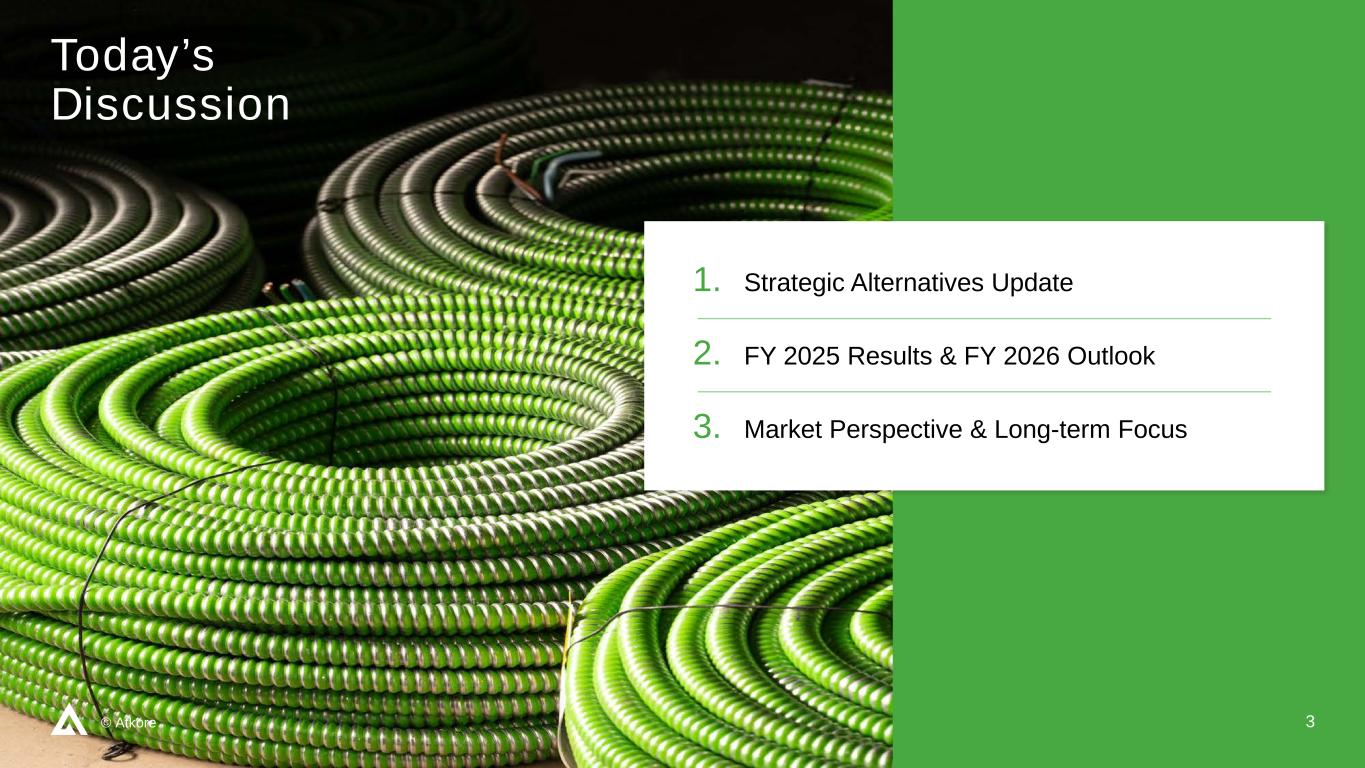
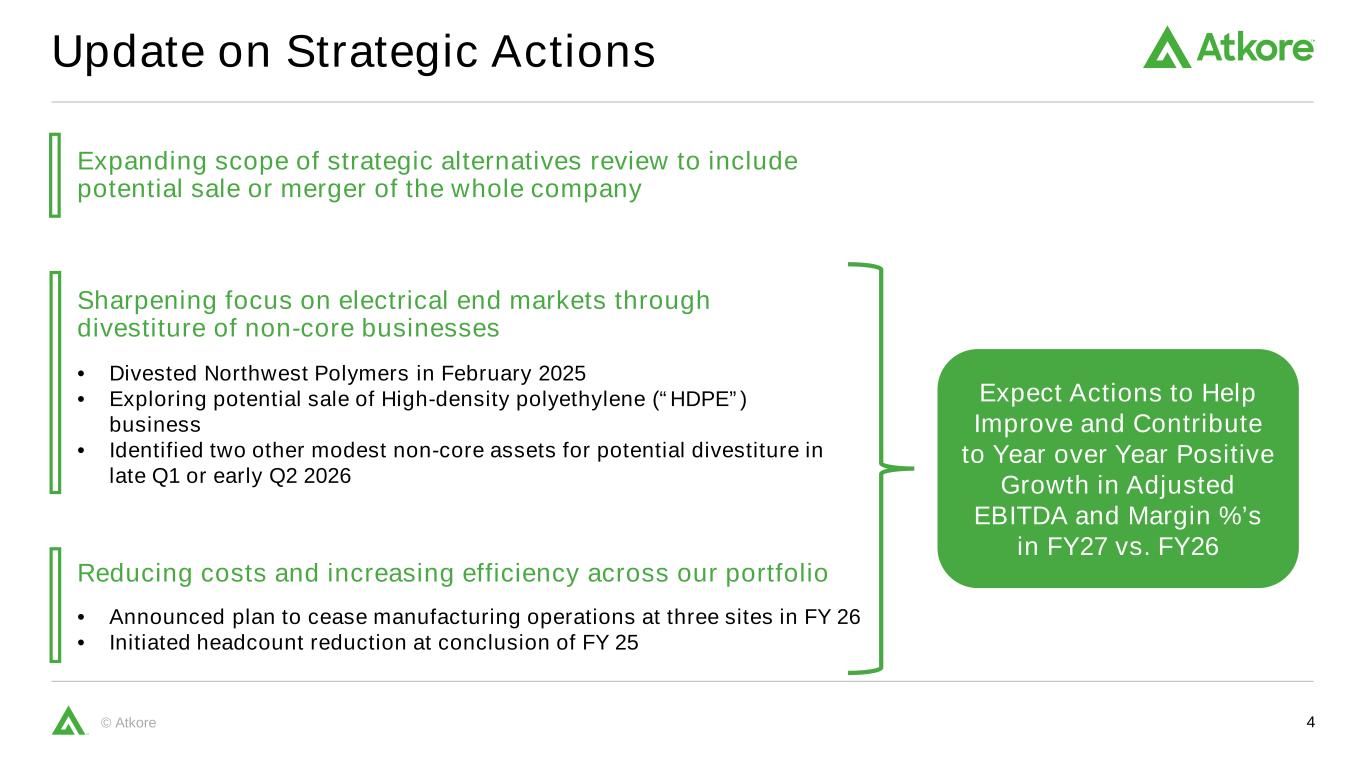
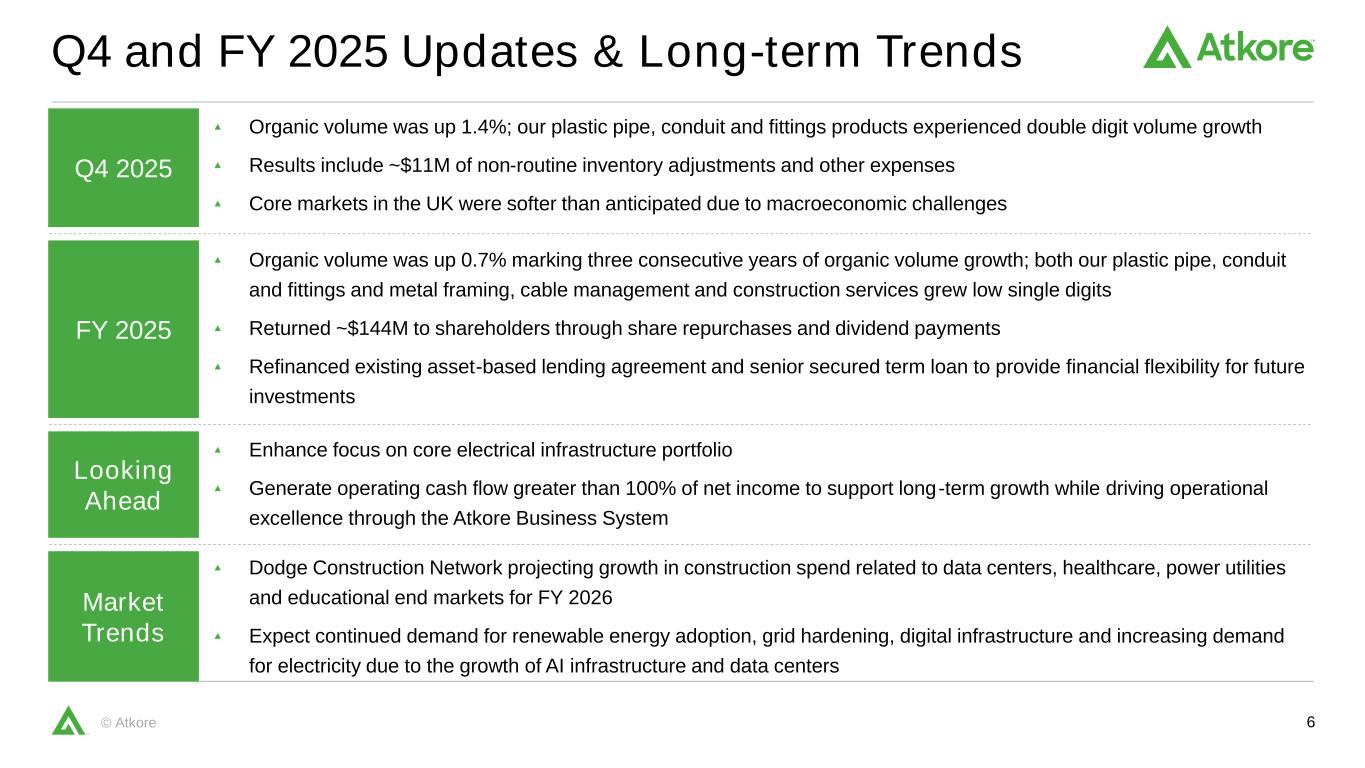
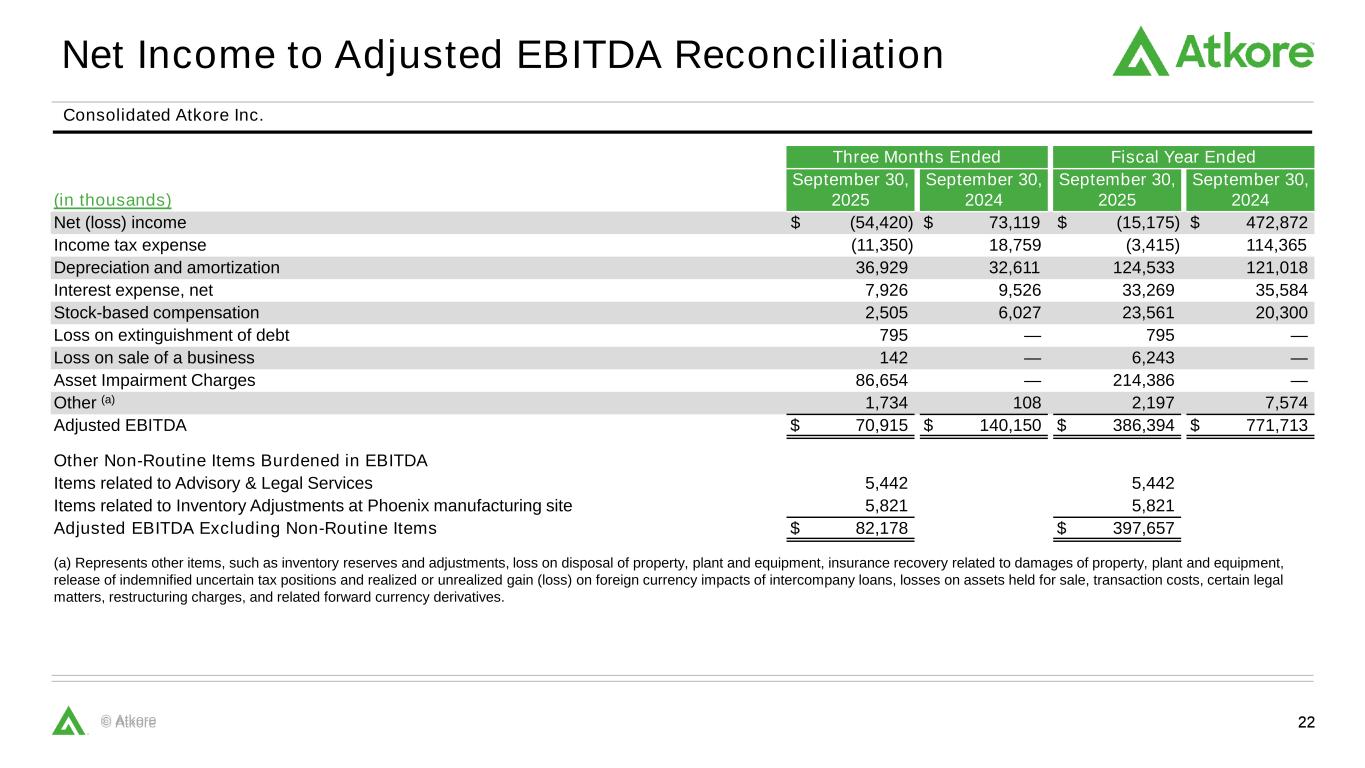
Bill Meyer Thanks, Matt, and good morning, everyone. Starting on slide three, today we will provide an update on strategic actions, discuss our fiscal 2025 fourth quarter, our full-year financial results, and our outlook for fiscal 2026. We will share our perspective on the end markets we serve and our long-term strategic focus. Turning to slide four, before we discuss our results, I want to highlight the announcement we made this morning related to the strategic actions we are pursuing with the goal of maximizing shareholder value. Back in September, we announced that the Board of Directors and the Executive Leadership Team were evaluating a broad range of alternatives to enhance focus on ACOR's core electrical infrastructure portfolio. These alternatives included a potential sale of her HDPE business and the decision to close three manufacturing facilities. The board has now decided to expand the scope of the strategic alternatives to include a potential sale or merger of the whole company. As a result of the board's decision, I have agreed to stay at ACOR as CEO through at least the conclusion of this strategic review. To date, ACOR has core is identified and is executing upon a series of actions that we believe will improve the long term financial returns of the company. The process of selling our HDP business is ongoing and we have identified two other modest non-core assets that we anticipate being able to successfully divest in late Q1 2026 or early in the second quarter. In addition, we plan to cease manufacturing operations at the three manufacturing facilities previously announced in the second quarter of fiscal 2026. By delivering on these actions and the planned divestitures, we expect to improve our financial profile of the company and return to year-over-year growth and adjusted EBITDA in FY27. Expanding our strategic alternatives also allows us to consider multiple scenarios with the intention of creating shareholder value while positioning ACOR to succeed for the years to come. Turning to our results on slide six. Organic volume was up 1.4 percent in the fourth quarter with contributions from both segments. Notably, we saw double-digit growth in our plastic pipe conduit infinites product category. This includes our PVC, fiberglass, and HDP products, which all delivered double-digit volume growth in the quarter. Overall, our net sales of $752 million in the quarter exceeded the outlook that we presented in August. Our adjusted EBITDA of $71 million in the quarter includes approximately $6 million of one-time inventory adjustments related to one of the sites that has been previously announced for closure as part of our planned strategic actions. This inventory adjustment impacted our safety and infrastructure segment. Our results also included approximately $5 million of additional non-routine items related to advisory and legal expenses. Excluding the impact of the inventory adjustment and the non-routine items in the quarter, our adjusted EBITDA would have been $182 million and within our expectations set forth in August. Reflecting on the totality of the year, volume was up approximately 1%. This marks three consecutive years of organic volume growth for our company. As we explained in the past, the breadth of our portfolio prevents overexposure to specific end markets. This is particularly important in years where certain end markets may be growing at a slower rate or even contracting. Our cash flow generation has been and continues to be a strength of our business. This year, we returned $144 million to shareholders through share repurchases and dividend payments. We also preserve financial flexibility by refinancing our existing asset-based lending agreement, as well as our senior secure term loan, which moves out our maturity dates beyond fiscal 2030. Looking ahead, our focus remains on creating shareholder value, which we believe will be accomplished with an emphasis on our core electrical infrastructure portfolio. We anticipate generating strong cash flows, which provide us with optionality on how to best deploy capital and create shareholder value. We are encouraged by the growth projected across several construction and markets in FY2026, including data centers, health care, power utilities, and education, while remaining focused on Accor's ability to participate in long-term trends related to the adoption of renewable energy, grid hardening, digitization, and the increasing demand for electricity. I'd like to take a moment to recognize ACKOR's talented teams for their efforts and dedication to our company. Thank you. Now, I'll turn the call over to John Deitzer to talk through the results from the fourth quarter and full year in more detail.
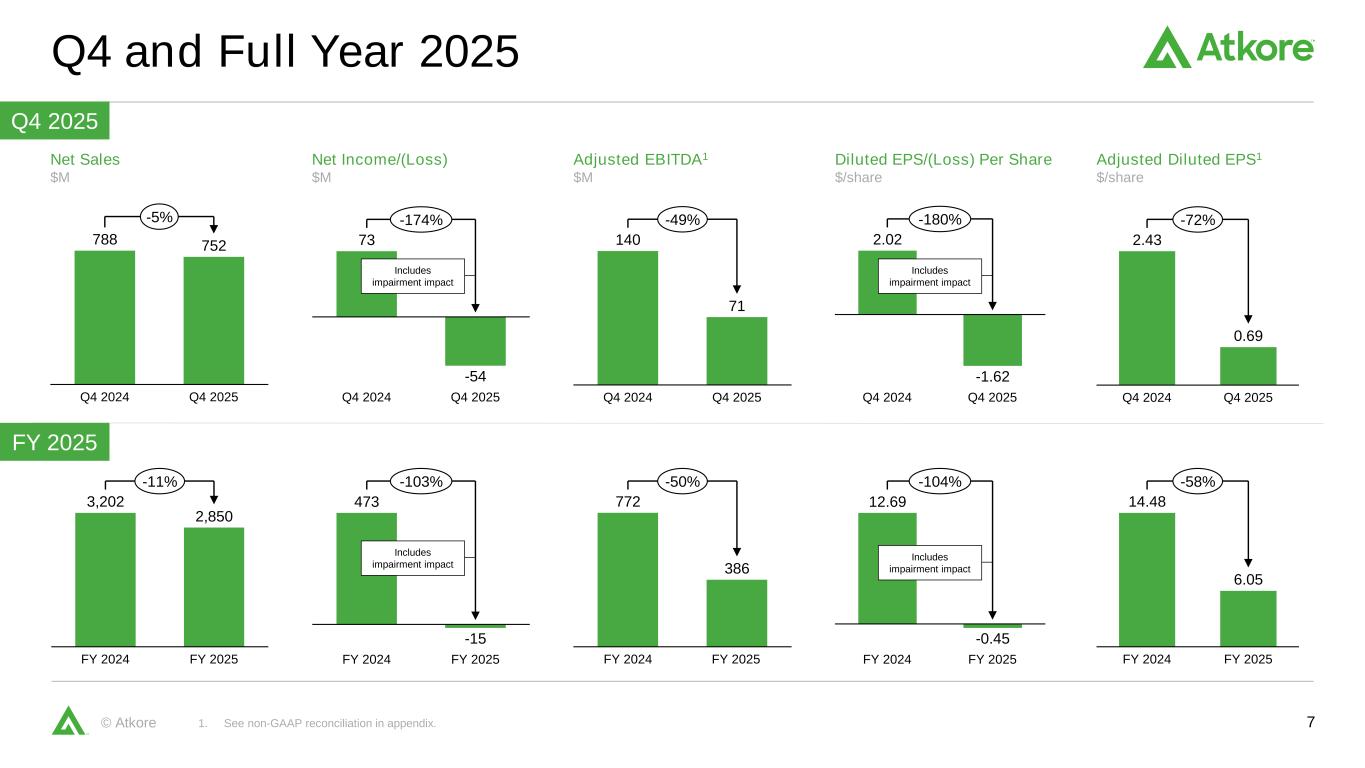
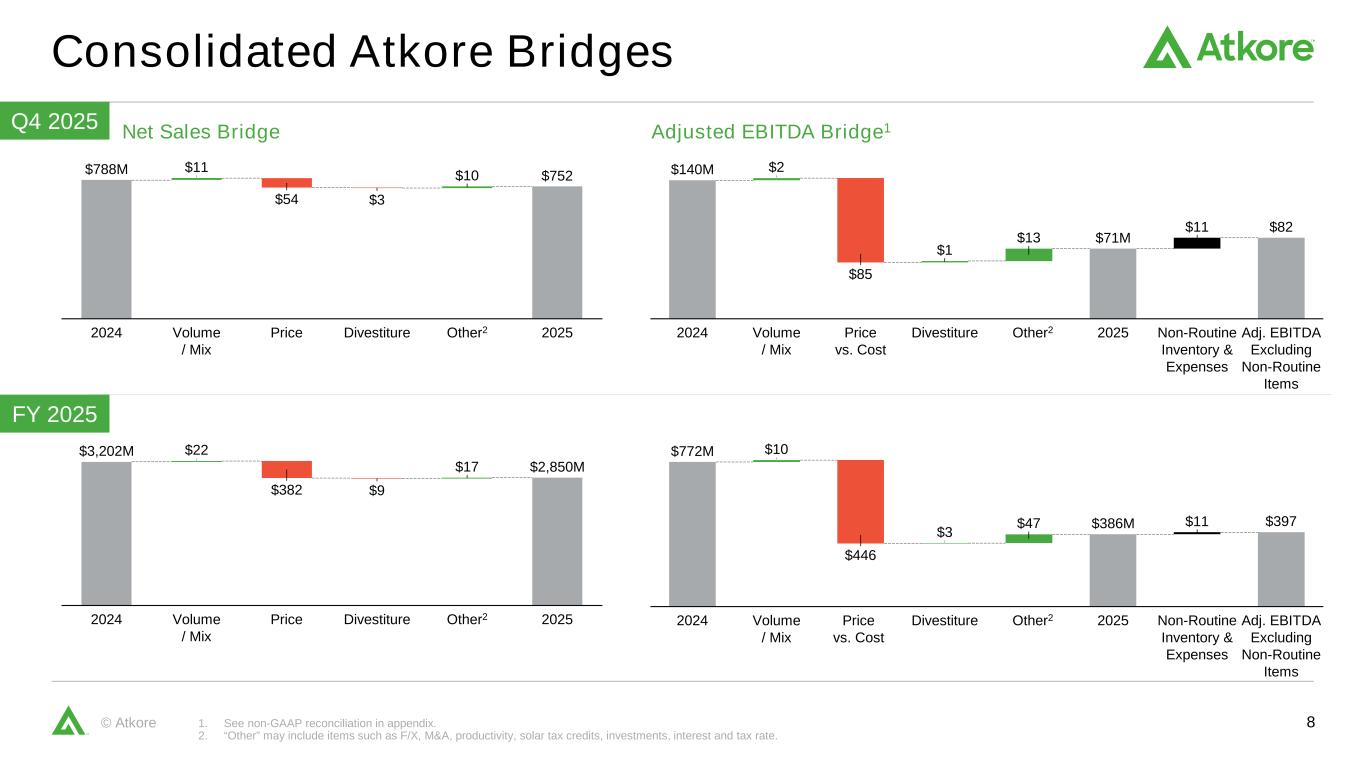
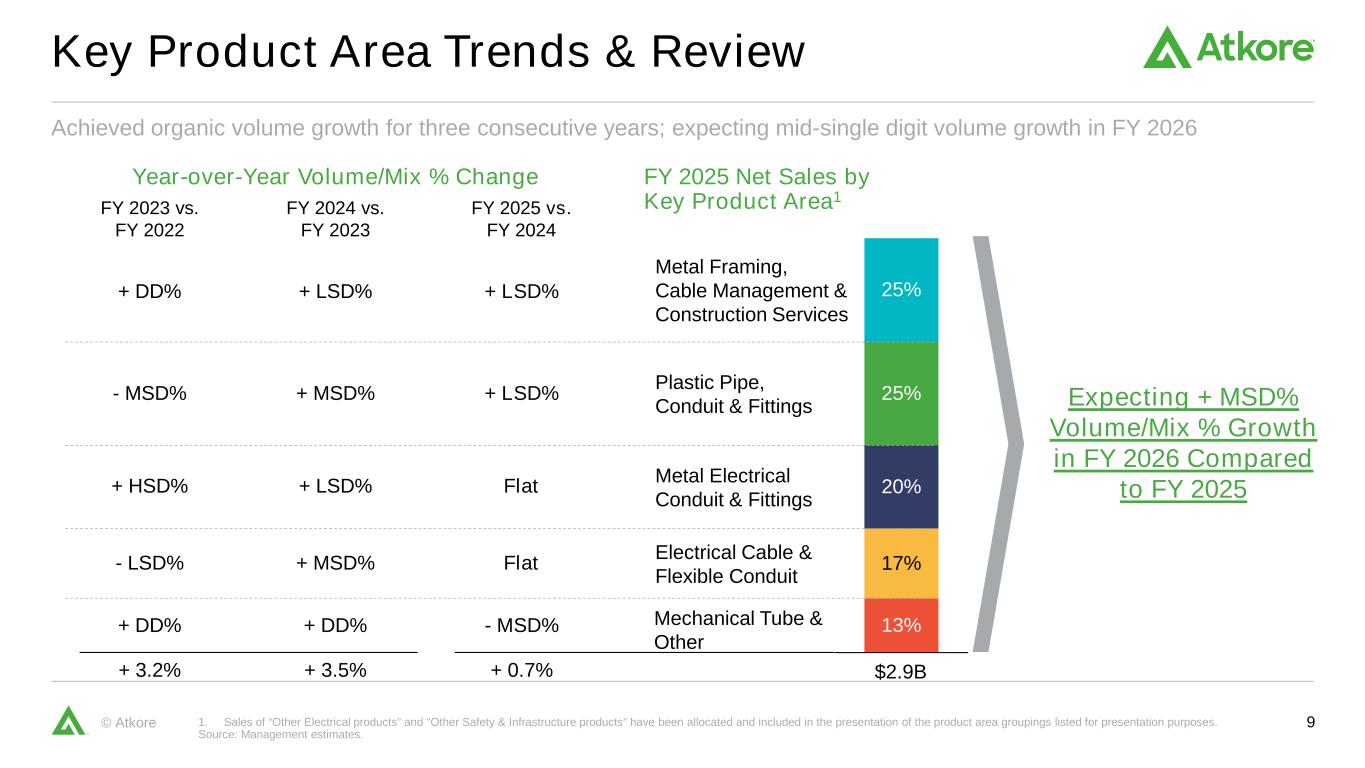
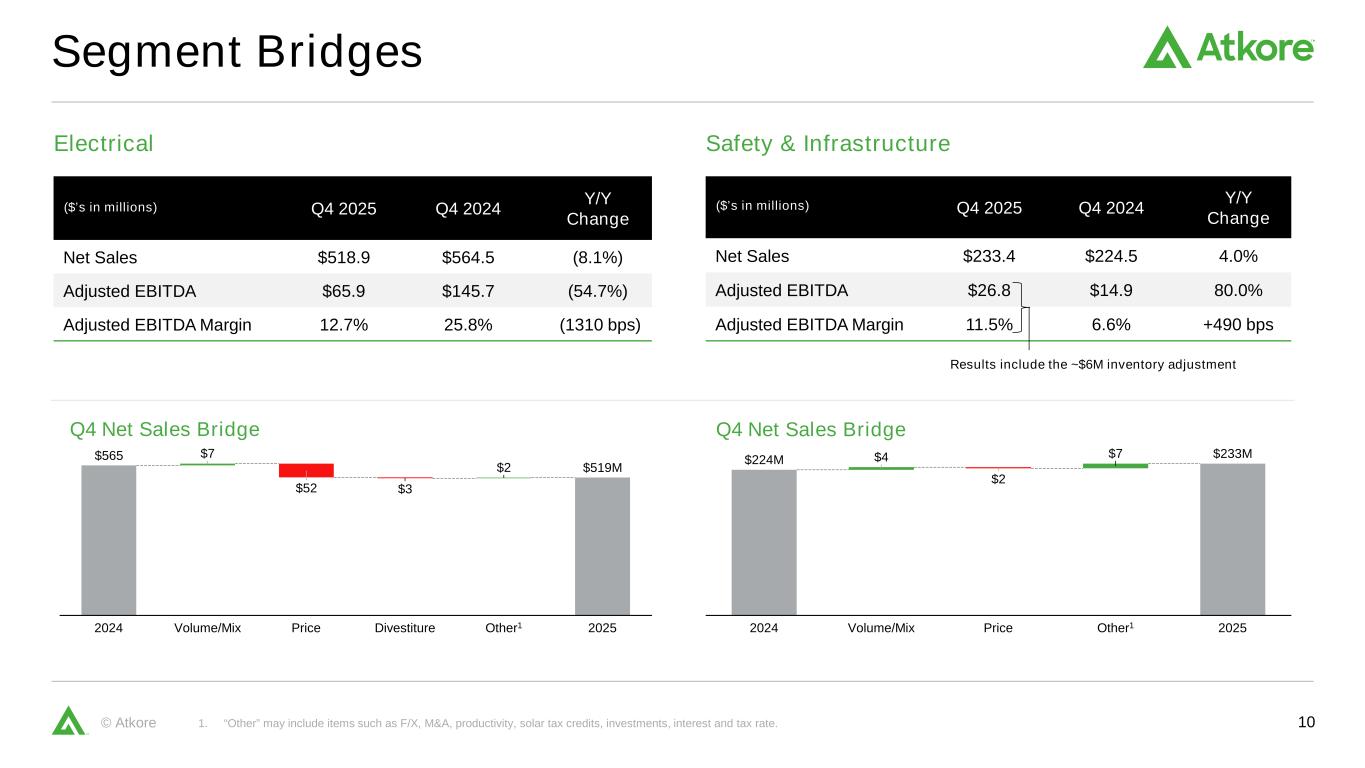
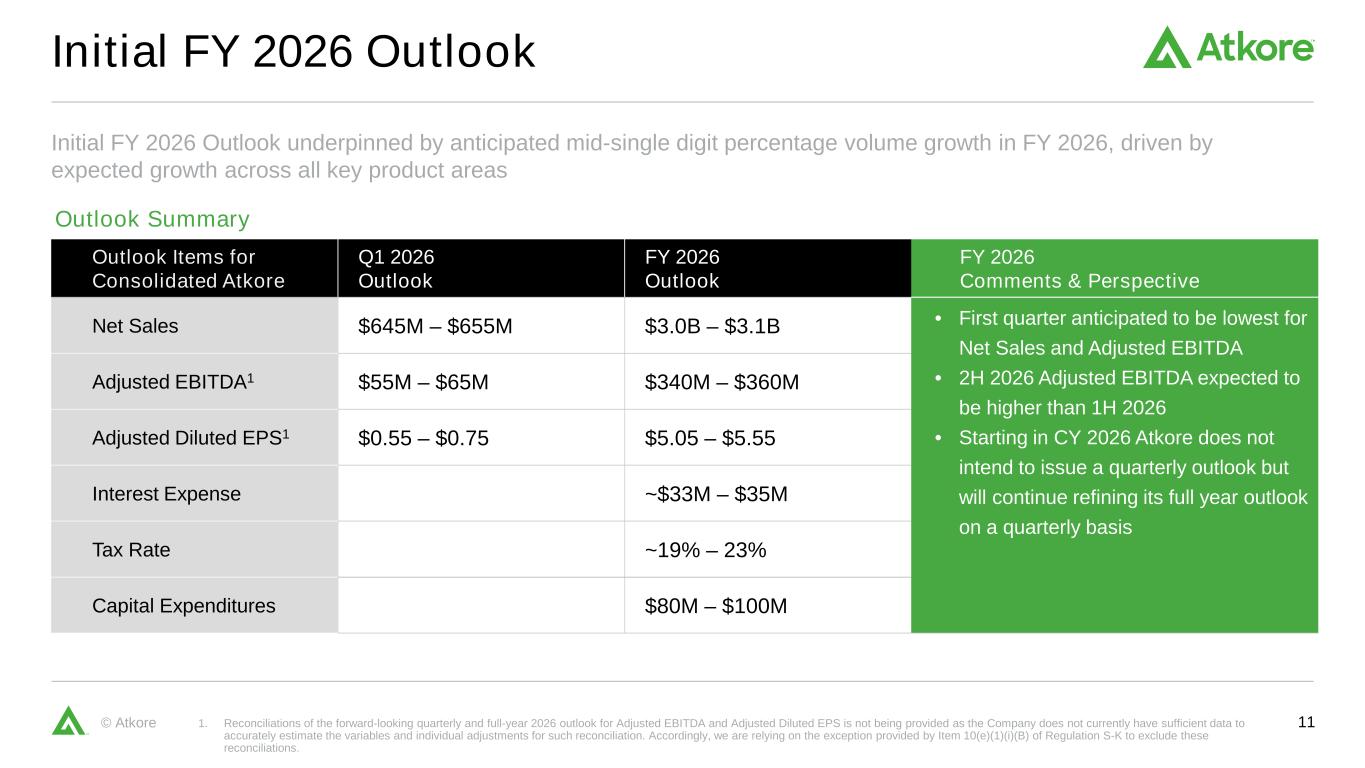
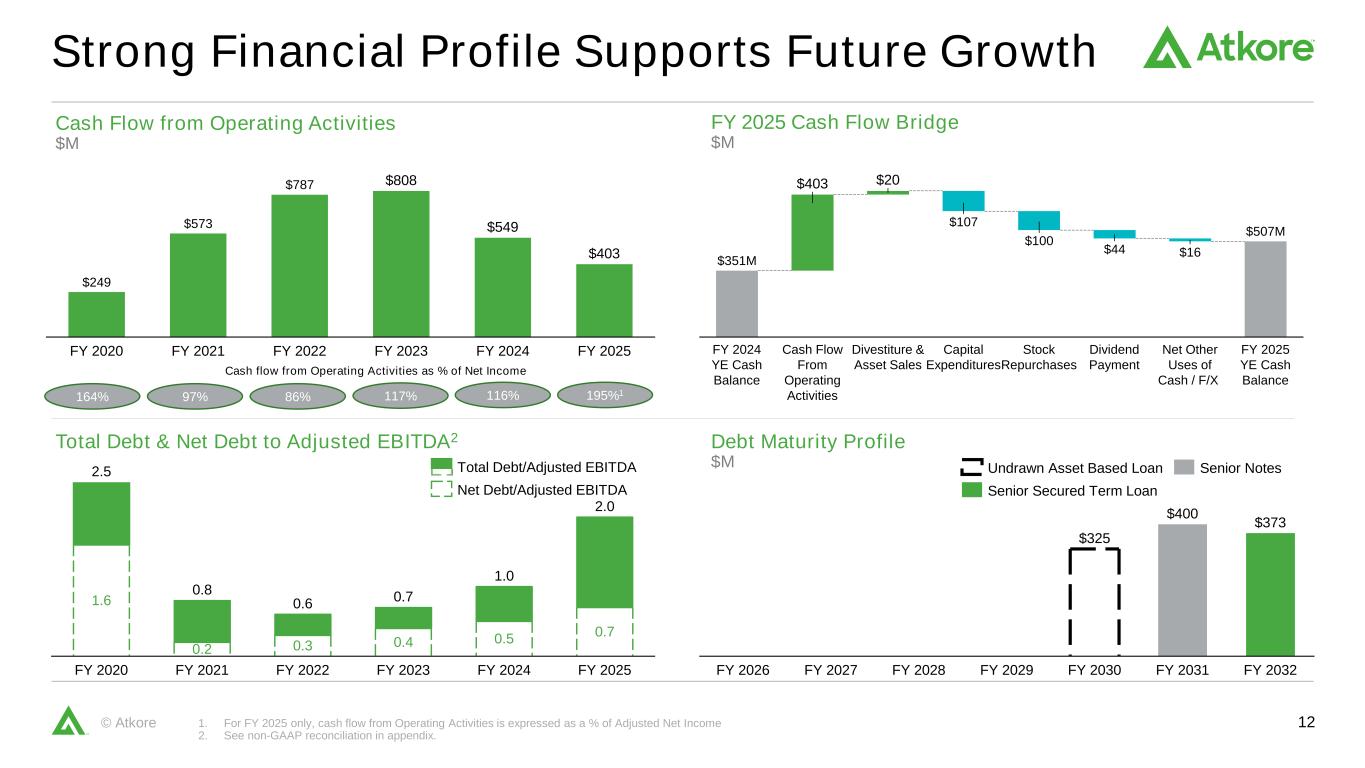
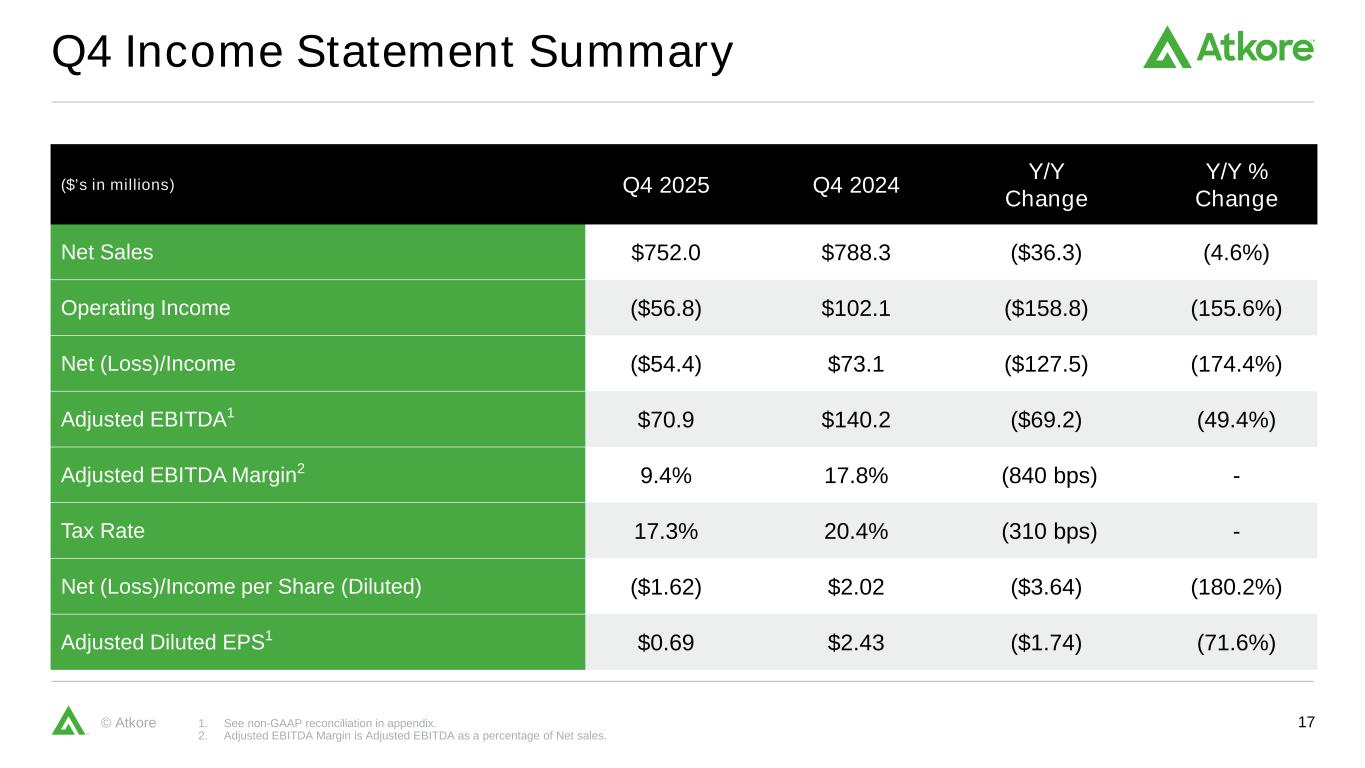
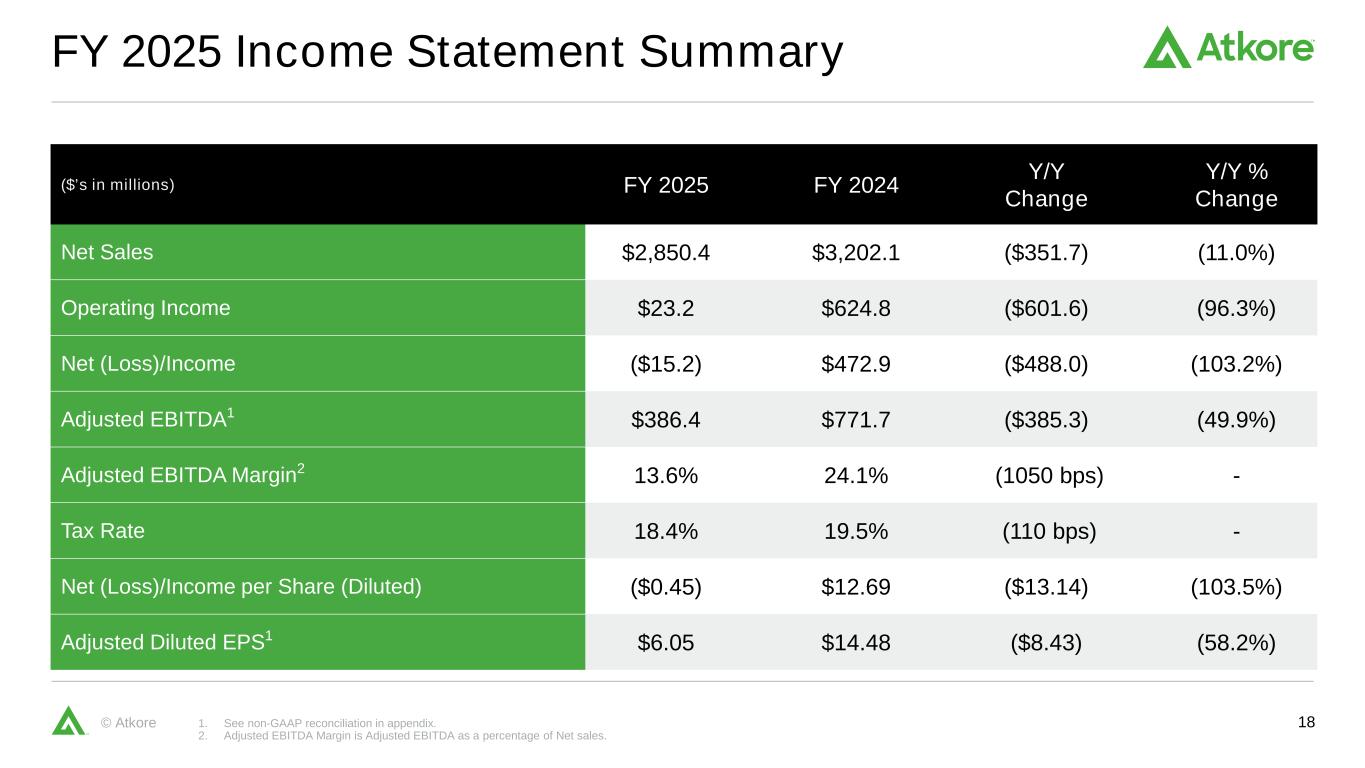
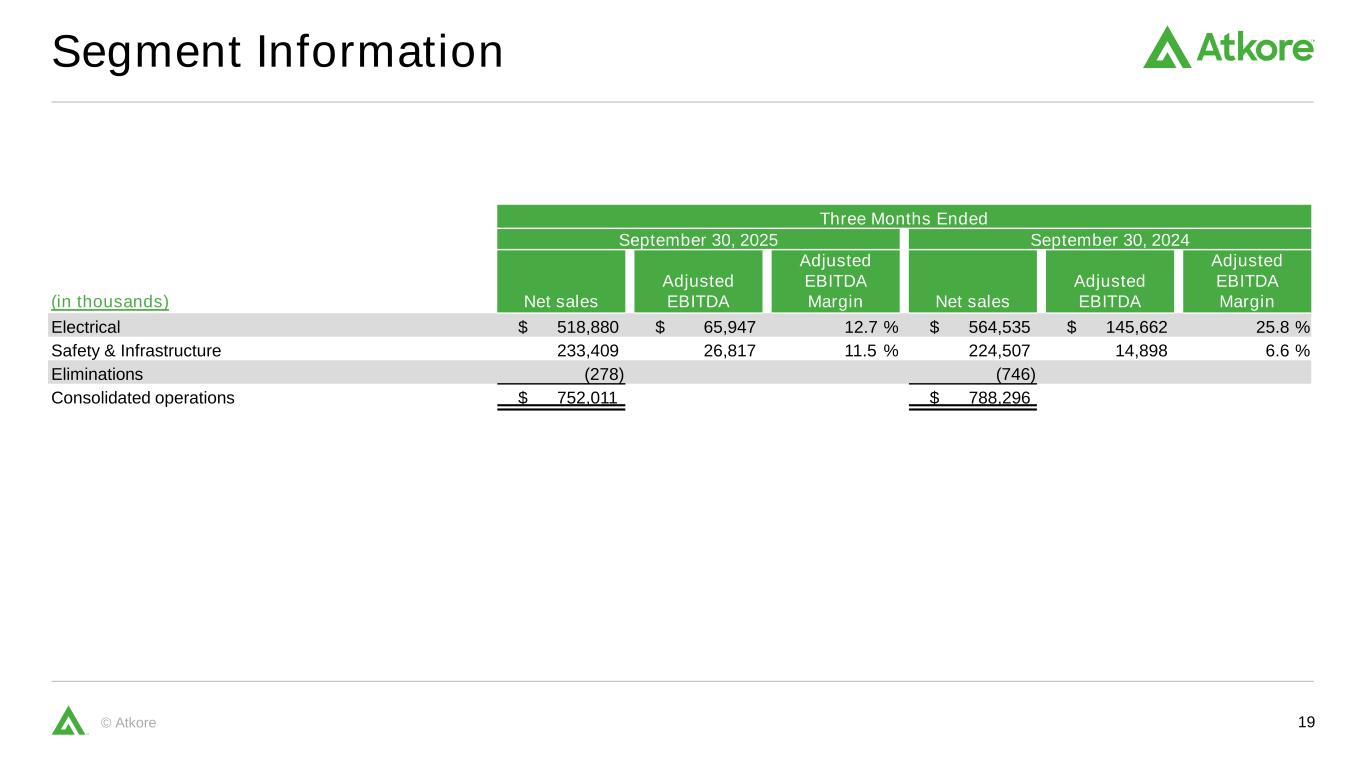
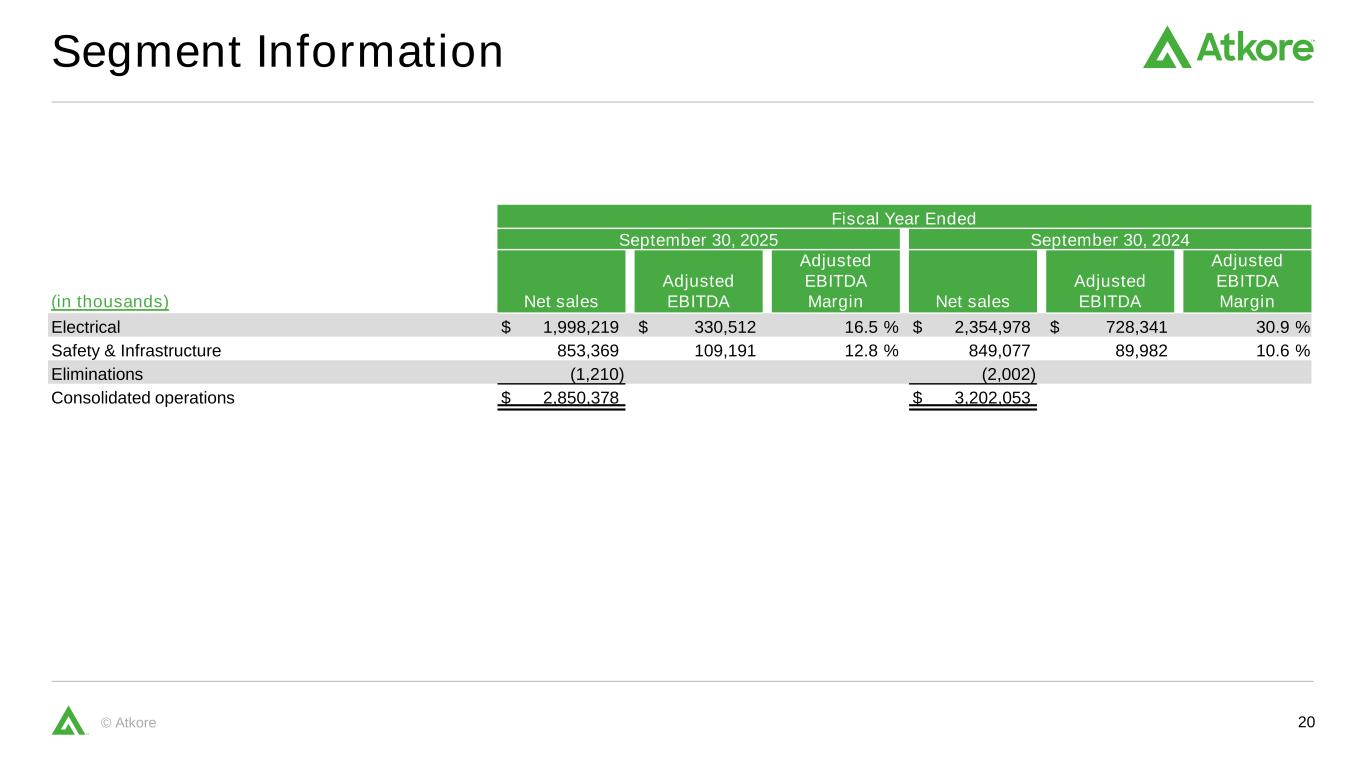
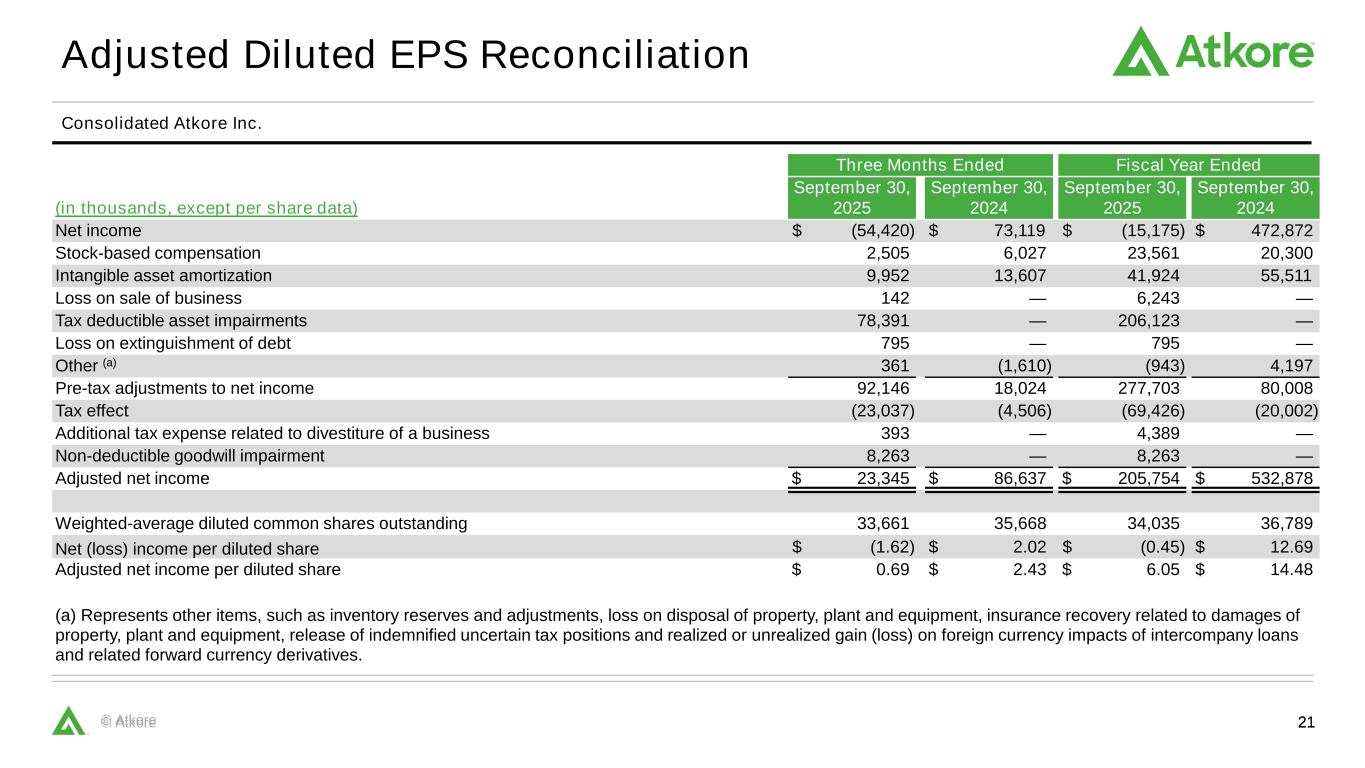
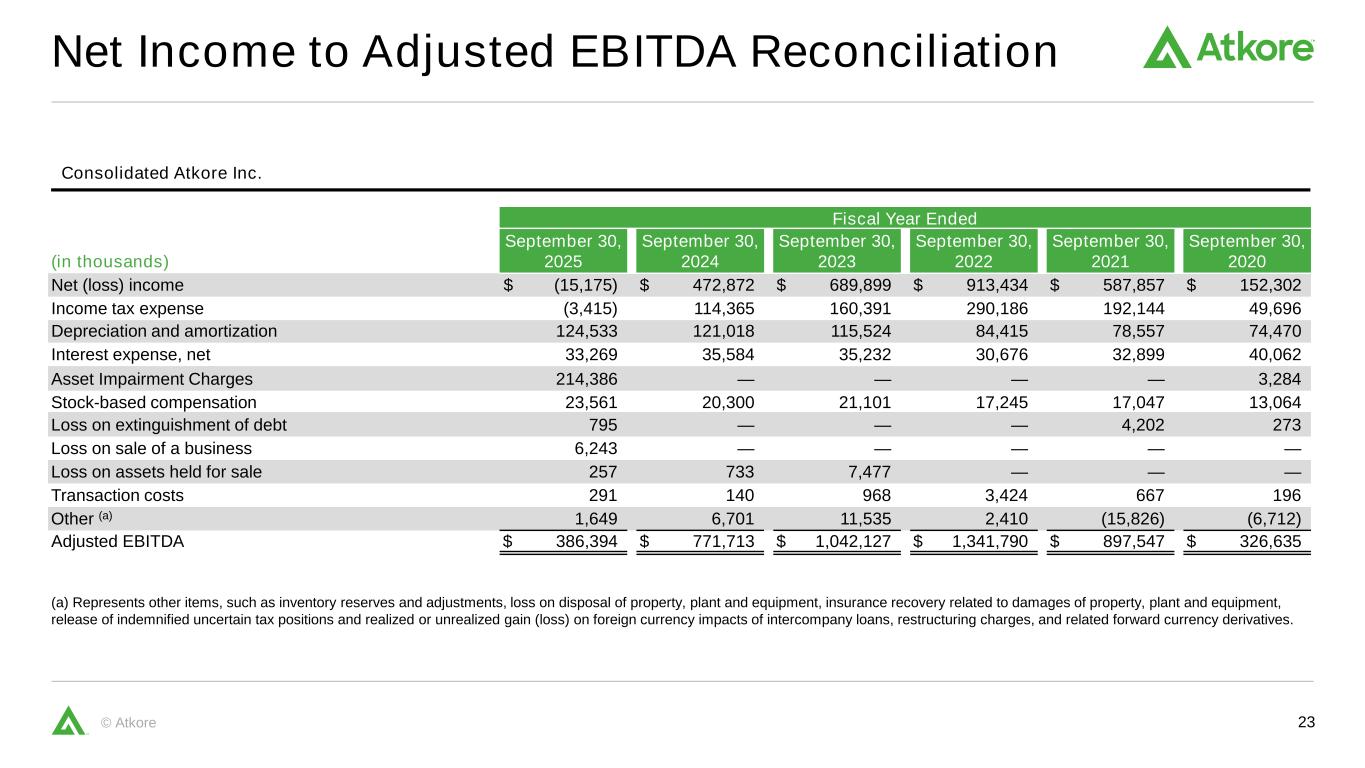
Thank you, Bill, and good morning, everyone. Turning to slide seven and our consolidated results. In fiscal 2025, we stayed focused on executing our strategy while also exploring additional ways to strengthen our company for the future. The year was not without its challenges, but we are working to meet these challenges by announcing and completing certain actions in the fiscal year while pursuing additional opportunities to strengthen our financial profile for the future. Net sales in the fourth quarter were $752 million, and our adjusted EPS was $0.69. Adjusted EBITDA for the fourth quarter was $71 million. We generated a net loss of $54 million in the fourth quarter. Within our quarterly net loss was a $19 million non-cash goodwill impairment charge related to our mechanical tube business, as well as a $67 million impairment charge related to certain HDPE assets. The goodwill impairment related to our mechanical tube business reflects forward-looking cash flows, which now assume lower volumes. The mechanical tube products are made in one of the three facilities that was previously announced to close, as well as another facility that shares capacity with steel conduit. By shifting our focus and priority towards electrical products, we plan to use the available capacity in favor of a higher concentration for our electrical infrastructure portfolio of products. The impairment charge related to our HDPE assets was triggered by the announcement of our intention to explore the sale of our HDPE business at the end of the fourth quarter. The impairment reflects an adjustment of the net assets relative to the forward-looking cash flows across various scenarios. For the full year, net sales were $2.9 billion and our adjusted EPS was $6.05. Adjusted EBITDA for the full year was $386 million. Turning to our consolidated bridges on slide 8, in fiscal 2025, net sales increased $22 million due to volume growth, contributing incremental adjusted EBITDA of $10 million. Our average selling prices decreased by $382 million. Bill mentioned that our fourth quarter results included select one-time inventory adjustments and additional non-routine items totaling approximately $11 million. Excluding the impact of those items, our adjusted EBITDA would have been $82 million in the quarter and $397 million for the full year. Moving to slide nine, as Bill mentioned, we are proud to highlight that ACOR has achieved three consecutive years of organic volume growth. We grew volume 3.5% in fiscal 24 after growing volume 3.2% in fiscal 23, exemplifying the strength and resilience of our portfolio, even in times of fluctuating end market conditions. As we look forward, construction end markets are expected to grow, and we anticipate our volume growth in fiscal 2026 to be mid-single digits. In FY25, our metal framing, cable management, and construction services products grew low single digits due to increased support for megaprojects, including data centers. In FY25, we grew our PVC business, which included high single-digit growth in PVC conduit, and especially strong double-digit growth from our fiberglass conduit products, which are increasingly being used for data center projects and included in our plastic pipe conduit and fittings product category. Turning to slide 10 and our segment results in the fourth quarter, Net sales in our electrical segment were $519 million, with $7 million contributed by organic volume growth, offset by continued pricing normalization in our PVC products. Our steel conduit products saw sequential price increases for the third consecutive quarter. Shifting over to our S&I segment, net sales increased 4% during the quarter compared to the prior year. Our S&I segment EBITDA dollars and margin were both meaningfully higher than the prior year, in large part due to better cost management and productivity improvements. As Bill mentioned, we recorded an inventory adjustment in our S&I segment of approximately $6 million at one of the facilities that has been previously announced for facility closure. Turning now to our outlook on page 11, we anticipated mid-single-digit volume growth in FY26, driven by expected growth in all five of our product areas. For the first quarter of FY26, we are expecting net sales in the range of $645 to $655 million and adjusted EBITDA between $55 and $65 million. dollars. We expect adjusted EPS to be in the range of 55 cents and 75 cents. For the full year, we expect FY26 net sales in the range of 3.0 to 3.1 billion dollars and adjusted EBITDA between 340 and 360 million dollars. Adjusted EPS is expected to be in the range of $5.05 and $5.55. As we have discussed in the past, our business experiences short lead times and limited visibility to end customer demand. To shift more focus to the medium to long term, we have made the decision not to provide a quarterly outlook starting in calendar year 2026 with our fiscal first quarter earnings call. However, we will continue to refine our full year outlook during each quarterly call as we progress throughout the fiscal year. We expect the first quarter of fiscal 26 to be the softest quarter of the year and for performance to ramp as the year continues. At this time, we expect the back half of the year to be higher than the first half of fiscal 26 on an adjusted EBITDA basis. Next, slide 12 summarizes our solid financial profile. Our cash flow generation has always been a strength, which helps support a healthy balance sheet. Our liquidity provides the foundation that enables us to execute key strategic opportunities while returning capital to shareholders. With that, I'll turn it to John Progenzer to give an update on our end markets and our long-term strategic focus.
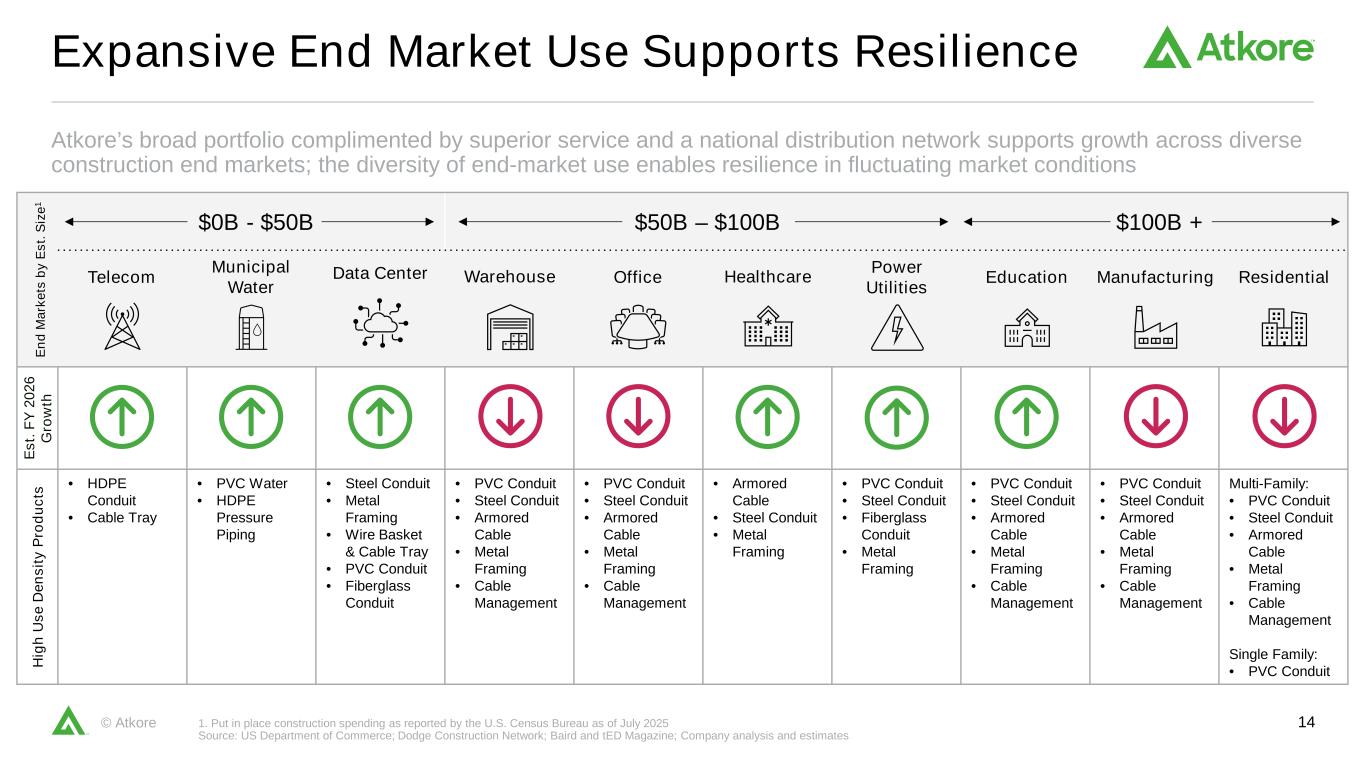
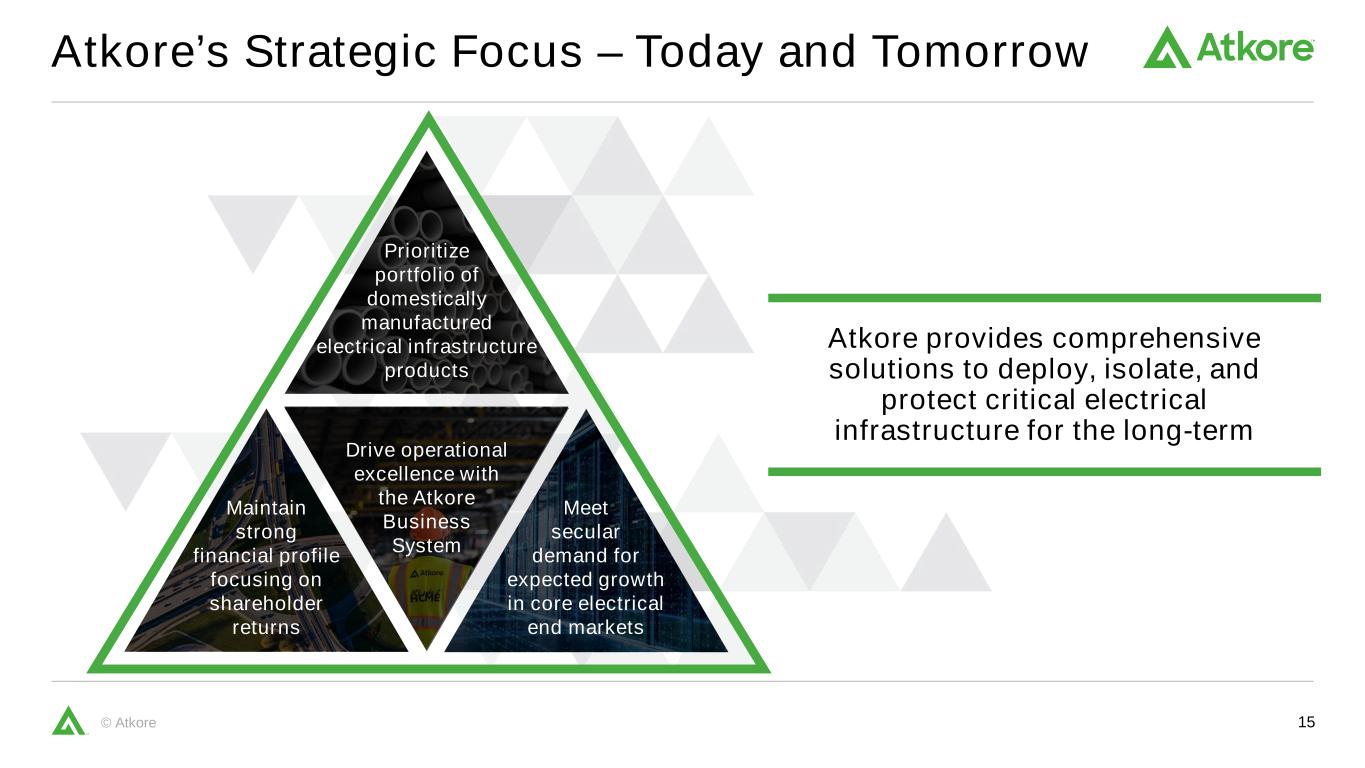
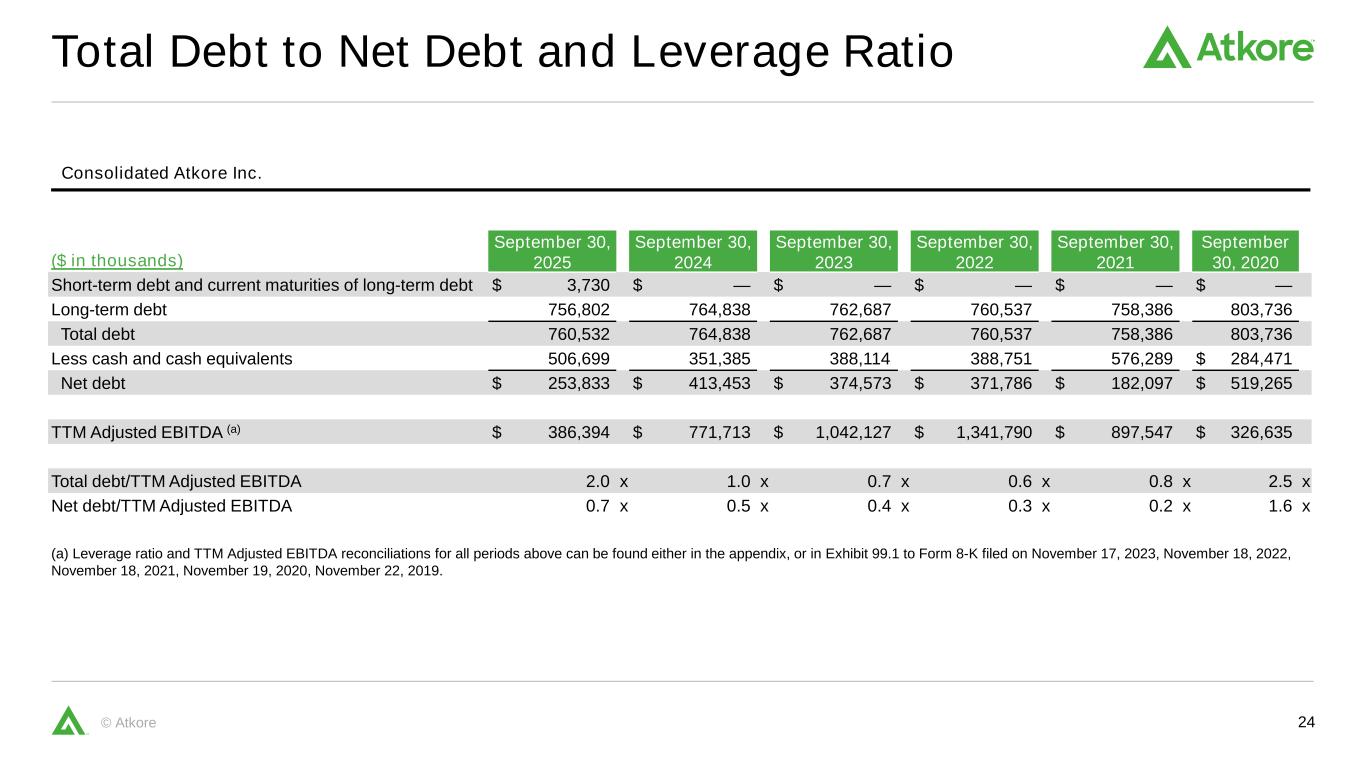
Thanks, John. Turning to slide 14, the breadth of our product portfolio is a differentiator for AdCorp. AdCorp's products broadly serve construction activities making their way to each of the relevant end markets. Demand for electricity continues to increase. The need for power centers around the expansion of data centers to support AI. We are now in what some are calling the data era, with reshoring efforts and demand for data centers to help power the expansion of AI, contributing to an expected 2.6% compound annual growth rate for electricity consumption through 2035. Electrification is required in most areas of construction. Our products provide comprehensive solutions to deploy, isolate, and protect critical electrical infrastructure, emphasizing that ATCOR really is all around you. The demand outlook for FY26 reflects strength in most end markets. It's important to understand both expected growth rates as well as the relative size of the market. While data centers continue to draw most of the attention within the construction community, that end market in total is still smaller than several other end markets. Nonetheless, data center construction is growing significantly and we participate in that growth. Renewable energy is expected to increase from approximately 20 percent of the power generation mix today to 28% by 2035. And solar continues to be the quickest path to online production available to the market, a key advantage for meeting the expected increase in U.S. energy demand. Finally, turning to slide 15, today and into the future, we are focused on prioritizing our portfolio of domestically manufactured electrical infrastructure products and delivering on the strategic actions that we believe will maximize shareholder value. We remain committed to maintaining a strong balance sheet and financial profile that enables us to return capital to shareholders while making modest capital investments that support operational excellence aligned to the ad core business system. Our positioning in key electrical end markets gives us confidence in our ability to grow volume over the mid to long term while our diverse portfolio enables us to maintain resilient while navigating headwinds in certain end markets. We, as a management team, have conviction on our teams and are focused on delivering to our plan. We recognize our recent performance challenges and we are determined more than ever to drive improved results that create greater value for our shareholders, employees, and stakeholders. With that, we'll turn it over to the operator to open the line for questions.
Operator
At this time, I would like to remind everyone, in order to ask a question, press star, then the number one on your telephone keypad. We'll pause for just a moment to compile the Q&A roster. And your first question today comes from a line of Justin Clare from Roth Capital Partners. Your line is open.
Hi, good morning. Thanks for the time here. So I wanted to start out with the guidance. So for fiscal 26, you're calling or you see mid single digit volume growth. I think the midpoint of the revenue guide implies 7% year over year growth. So that would suggest you could see some pricing benefit through the year. So wondering if you could just comment on is that expectation, the expectation and whether or what is driving that potential price improvement? it.
Yeah, Justin, you're aligned there. I mean, as I think we said in some of the prepared remarks, we've seen sequential price increases in our steel conduit business. There's some other businesses where we've had pricing growth as well that impacts the sales line, but it's really that price versus cost dynamic too. Well, we do anticipate continuing to have price versus cost headwinds, but where we're looking at where some of the underlying raw material commodity inputs are, where they were versus historically, we are seeing some ASP and sales growth as well, but there is sometimes some price versus cost compression there too. So that's some of the dynamics, but there would be some embedded benefit or increase, I should say, at the ASP line with some of those raw material inputs at an elevated level this year versus last year, meaning 26 versus 25.
Got it. Okay. And then just also on the guidance, when I look at your Q1 guidance and then the full year for Q1, the implied EBITDA margin, I think is about 11% and then closer to 12% for the full year. What do you expect to drive the margin improvement through the year? How much visibility do you have there? And is it really the pricing dynamic that's driving that?
Yeah, it's a great question. So we are seeing a little bit of softness here in the first quarter as we sequentially move down here from the fourth quarter. We do have a positive expectation as we ramp throughout the year, meaning we do have line of sight to a lot of the construction services and the mega projects in Q2 to Q4. So that's positive as we see throughout the year. We're also seeing real strength coming through. I think in John Pergenser's comments, he talked about the growth in solar, and we do anticipate that in 2026, as opposed to 2025, which has had a lot of volatility in the year with that industry and what was going to happen with or without some of the subsidies associated with the Inflation Reduction Act. So we see some positive elements here contributing. Bill, I'm not sure if you wanted to add anything.
No, I think that's it. I mean, the cost actions we're taking to help with the, you know, the, you know, margin and so forth that, again, I think even my prepared remarks and what we sent out September 29th or whatever, that second half this year, you know, as we do get the three facilities closed and continue to drive extra productivity off a really strong 2025 productivity that I do think things are lined up, especially as we go into the second half of the year here. Okay. I appreciate it. I'll pass it on. Yeah, thanks, Justin.
Operator
Your next question comes from a line of David Tarantino from KeyBank Capital Markets. Your line is open.
Hey, good morning, everyone.
Maybe could we start with the strategic review and maybe just kind of walk us through kind of the range of outcomes we could expect and maybe what's the magnitude of the three divestments you outlined and how should we be thinking about a suitable situation where you would consider a sale or a merger?
Okay. Well, obviously it's earlier on. I'll start and then either, especially John Deitzer, I guess here, if there's any add-ons, but it's earlier on. But there has, since we made our announcements, we're still pursuing HDP. I don't think we can get in any more specific, but there's obviously interest there that us with our banks and so forth are working through so that continues to move forward just like the other actions that we you know kind of discussed even here with Justin and then from there since that time well let me back up the board always looks at you know what's the best outcome for our shareholders so you know it's part of our discussions but since we did our announcement you know at late September there has been you know some interesting inbound calls. So, you know, again, it's early on in the process, but the board reflected and it's a, I say a good time, but to make sure we're pursuing what is best for our shareholders. So, you know, we'll keep obviously investors and everybody else informed as we kick off the process here. So, and then from outcomes, obviously it can be the full range from, you know, as we said in announcements, and I think I covered this morning from selling the whole co to the other end is, you know, the board decides that, you know, the best thing is continue to run it as is. But right now we're focused on the strategic alternatives and, you know, we'll see how that plays out over the next several months.
Okay, great. That's helpful color. And maybe could you give us some color on the cost savings initiatives? What should we be thinking about around the magnitude of the savings? And maybe should we be thinking about this as a first step? Do you feel that there are more opportunities to take more meaningful cost actions within the core business? Any color that would be helpful?
Yeah, David. Obviously, the three plants, we've started the process of shutting those down. The teams are well organized. We're still in the early stages, but expect all production to cease by the end of Q2.
And I think on an annualized basis, we would expect to see about 10 to 12 million in cost reductions um across across the fiscal year okay great i think david just to add on to that i think these are just key contributors that we anticipate 2027 to be up versus 2026 and so um you know i think that's really the the balance here where some of these actions are plus some other things we're starting to line up and maybe just follow up on that comment And within that assumption, should we be thinking about kind of the items you outlined today getting you there, or should we expect some more down the line?
I think without any additional items, just the fact of these actions, you know, HDPE, and then the growth initiatives that are underway that we kind of alluded to that, you know, whether it's solar where, you know, I forget if we have POs, but verbal commitments from customers to be ramping up here early in the calendar year to the global mega projects that are expanding. into, you know, with some well-known customers from one region of the continent to the second region of the continent here, that we see enough pathways right now without additional things to get there. But again, that doesn't roll out. We'll continue to do other actions. So again, I don't want to be giving specific guide, David, for next, you know, for next fiscal year, but, you know we're optimistic both for this year and definitely as we get into 2027 that's helpful thank you guys thank you your next question comes from the line of andy kaplowitz from city group your line is open hey good morning everyone good morning andy biller john i just want to focus on And Lesquire, I think you told us about this $50 million headwind for 26.
So as you sort of rolled out your guide, like, is that still what the amount is? And maybe you can update us on, you know, imports in general. Like, you know, what have you seen from, you know, the steel conduit side and the PVC side? Steel was getting better, you know, PVC maybe a little more slowly. So what have you seen there?
Yeah, Andy, I'll start with some of the outlook expectations and commentary. and then I'll turn it to Bill and John here to give some more specifics around what's happening in some of the markets that you're talking about. I would say we definitely have continued price versus cost headwinds going in 26 versus 25. We talked about that. And in the third quarter call back in August, we said kind of 50 million of unmitigated headwinds. So we had expected some volume and some productivity benefits to mitigate some of that. And so, you know, and our outlook this year is still within kind of, you know, 340 to 360 million. So we're right around that $350 million midpoint. So kind of triangulates versus where we said in August. That being said, I think, you know, we are seeing additional improvements we're taking. So as I think about the year, the price versus cost dynamics really going to impact the first quarter the most. You know, and then as we go through the year, the price versus cost dynamic will probably ease. Also, as we think about the year, there's going to be a real quarterly ramp in EBITDA, meaning, you know, kind of, you know, we've laid out the first quarter here. So the first and second quarter, definitely the expectation is year over year unfavorable. And then we'll continue, you know, the second half collectively will, we anticipate to be up year over year. So, you know, that's kind of how we expect the year to ramp. I'll turn to Bill here, John, to give some comments on the steel conduit market and PVC.
Yeah, Andy, so steel conduit is relatively strong. You know, on the import side, which obviously influences a lot of what we're doing, we have seen a slight reduction in import volume this year. So it's down about 2% over last year. But, you know, it's positive in regards to the many years of double-digit growth. So looking at the impact of tariffs in regards to what's happening, probably not as strong as we would have expected. And so spending some time and ensuring that tariff policy is being effectively enforced and working with some different groups there, because we would have expected to see slightly stronger year-over-year reductions in steel conduit imports. But the market's fairly good. PVC has been strong. I think it's been influenced by data centers. There's a strong demand for large diameter PVC conduit in that space, which will drive the volume numbers or overdrive the volume numbers for that product line. So we've seen good growth there and expect that to continue.
Yeah. And then I'll just add to John's comment both on two things. So to go, obviously, we're still working, the administration's still working on how we can enforce tariffs better. But if you look, Andy, and for the rest of the investors, You know, both of these product categories were growing. I'm giving round numbers here over the last couple of years, but 20 percent a year. And to John Perginzer's point, steel is now for the year down 2 percent with imports. So it's going from growing to flat to slightly down. So more to come, hopefully, to make it even stronger for U.S. companies and blue-collar workers in the U.S., but that has been semi-effective. PVC, where, to John's point, we're growing, we called out in our prepared remarks, strong double-digit around numbers. PVC, from recollection, I think was up 6% for the year. So imports are still coming in, but even there, not what I perceive the market is, and also not nearly as much as previous years.
So it's there, but it's, you know, it's the tariffs have had a good effect, and we're hoping to make them an even greater effect going forward. helpful and then look i can understand john p's comments about data center markets maybe not being the biggest but at the same time we've seen you know as you guys know massive orders across the industrial space you know over the last couple quarters so like when you think about your business like i know you've talked about construction services in the past like and maybe you know they're on the com you know and it takes a while but why shouldn't we see a bigger impact on 26 or maybe we will from data centers? Because again, there's a massive amount of money there, as you guys know.
Yeah. So no dispute on the massive growth or massive. I'm making my own number, Andy, depends on who, but you're like 15% or something. So definitely strong double digit growth for anybody making any products. I do think as we get in kind of the answer I gave to an earlier question that we are going to see obviously our fair share within the products we have relative to the market. We covered that one in John Perkinson's charts, but I also do see our global construction business that's focused on this growing this year at also a very strong, call it double-digit rate. Now, again, it's how much of our company is that compared to PVC in the chart that John begins are in residential, that's still anemic. But I think, Andy, that's why, again, numbers here, I don't want to get ahead of myself, but from our 340 to 360 guide, our volume guides, are there pathways to potentially be stronger here? Yeah. So we're going to see how things play out. So I'm still optimistic here as we go forward.
Yeah, I think that the product lines that line up with data centers in our portfolio, we see them growing in those type of rates. When you say data centers are up, you know, 20% or whatever the numbers are, we're seeing that in certain parts of the portfolio. I think when the global mega projects that we have lined up and we've already started to get orders from and letters of intent from start to kick in the second half of the year, then that'll have more influence on our overall growth rates that I think John Deitzer alluded to in regards to the overall revenue growth. We'll see on the back end of the year.
Operator
Your next question comes from a line of Chris Moore from CJS Securities. Your line is open.
Good morning, Chris. Chris, your line is open.
The three plants that are closing. Just trying to understand a little bit better, you know, what's being produced there. Or is there, will there be any learning curve, you know, when those products are shifted to other facilities?
Yeah, I'll start. So we have a, we've discussed all, I mean, I'll give more color, but with Phoenix, yeah, it's all public. I just want to say something wasn't crisp. But we have our Phoenix operation that makes things like metal pipes and so forth that, you know, metal conduit and also for our safety and infrastructure. So we will be moving that production back to plants here, for example, in Harvey, Illinois, Hobart, stuff like that. So we have that capability. Most of the capacity from lines, I think we'll be moving one production line out to do this. But most of the capacity is already here. So and then so, you know, I don't think there's going to be a lot of trying to move machines and so forth for my 40 year career. I've done that before and there are going to be challenges here. It's just ramping up. Now, some of it are also back to pruning, focusing on electrical products and keeping that market, which we think has the best growth, to the small charge we took in the quarter is we are going to narrow some of the scope, which I think, quite frankly, is exciting purely from one of the things we're going to drive a lot harder is the 80-20 principle and truly focus on our key products with key customers and so forth. So I think there's a double win there. Then the next facility is a PVC facility in Fort Mill. And that, again, we don't have to move with our lean production and everything else. We don't have to move any of the production lines. So, again, we have to ramp up other locations, but I think the risk is mitigated purely from the standpoint of, you know, investments, productivity. We have that, and we can get rid of the cost of infrastructure without moving machinery. Final facility is we have an operation in Chino, which is around Los Angeles, that makes cable products, and we're moving that back into our facilities here on the, you know, kind of the East Coast. So, again, we have the capacity there. So, obviously, I think it's the right thing to do where we'll continue to work driving productivity. As I mentioned already, we had one of our strongest years last year in productivity. And as we continue to drive lean and so forth, and I think as John already mentioned, he's driving with, you know, monthly formal calls, but obviously following up with teams that have a lot of rigor and structure. So I think it's a great thing to do for our customers and our shareholders here. So hopefully I gave you everything you were looking for.
No, very, very helpful. Maybe just to follow up, HDPE, obviously that is, you know, one of the areas in the strategic, it sounds like you're in discussions. I'm just trying to understand, you know, not specific numbers, but the potential value to be gained from ATCOR here. What's the bull case scenario for HDP for someone outside of ATCOR?
Yeah, so I'll give a highlight, but I won't give numbers, Sean Deitzer, if you want to provide, but I don't think we want to get that specific. So I think in this scenario, the good news for anybody in this market is volumes are coming back. We called out and, you know, our prepared remarks at how we're seeing double digits. So, you know, and I think that's consistent with anybody else that I'm aware of, or public corporations, fiber companies, and so forth. So the markets are growing, and we are getting our fair share, if not more. And they do anything for us, but then I'll get for the, you know, whoever they were to make the acquisition of people is to go. One of the things we needed to get to was filling up the factory. It's hard to run a factory efficiently when you're not running long runs, you're doing changeovers, you don't have a full absorption. So I think we even have over time a pathway to get there, to, you know, I say get there, but continue to, you know, increase year over year, you know, productivity and profits and so forth there. But from the standpoint of is it strategic for us to look forward, announcing all these other things, you know, obviously, at least some people think that it's better in their hands to be run than ours. And we're exploring that. And we'll see where it goes over the next couple of months here.
I will leave it there. Thanks, guys. Thanks. Good to talk to you, Chris.
Operator
Your next question comes from a line of Dean Dre from RBC Capital Markets. Your line is open.
Thank you. Good morning, everyone. Hey, good morning, Dean.
Hey, is there any explicit intention now to run the business more for cash? You know, it looks like you've pulled back a bit on CapEx. Would you consider suspending the dividend here? Your balance sheet's in great shape, but just the idea of running the business more for cash at this stage.
So, Dean, let me do it this way. have a good we'll have a good discussion on have a good discussion with the board but as of now no we're we're running i'm going to make it clear like one of the calls this morning is our employees and so forth we're running this business that i'm proud of and i see to all the other questions how this is you know even you get to the second and i'll get back to cash in a second but you know as we implicit in our guide if you walk through numbers the second half of the year will be up year over year and profits and so forth and where we drive that into next fiscal year that we already kind of alluded to and the growth in issues so and i'll tie it back to cash but no we're running this business like we would without any change now to your point so therefore no with no discussion in the board meeting on suspending dividends to to go um you know what we've always said, at least in my mind, is with the CapEx, we made a bunch of investments on all these things like solar and even behind the scenes, the ERP systems. But a lot of those things are coming to fruition now. So we just don't need the amount of CapEx and we're getting back more to historical trends. And that's where I do think to prepare remarks and in the charts with very comfortable, great performance on cash that we're comfortable that we'll continue to deliver strong cash flows here. But no, it's not because of exploring strategic alternatives. It's just the right thing to do for the company and our investors.
You mentioned the board a couple times, and I know you're limited in what you can say here, but can you just give us a sense of The activists' engagement at this stage, the additions to the board, how aligned are you? You know, is there a cooperative tone here? And just kind of, you know, if you just walk us through whatever you can, we'd appreciate it.
I'm glad you're asking, because that's probably the biggest softball question of the questions asked. No, totally cooperative. I don't know. I won't mention their names or it's in the press like Adam and so forth. But I'm not suggesting anybody calls, but you would find out that we're aligned. Back to my prepared remarks, and I think of beginning question, is, you know, as we look through, the board's always looking to do what's best for the corporation, its stakeholders, its investors, and so forth. So as inbound calls came in, it made sense to, you know, formally do this. And also for us, I think it's the best thing to do, you know, after robust discussion to formally announce it versus, you know, you I'm sure you're aware of other companies have sold, but you don't know till they announce it versus let's cast a wide net. So whether it's a PE firm, strategic, whatever is there. So from that standpoint, you know, dealing with, you know, Adam, Andy, their Rennick team, there we've been aligned since day one. And we also believe in the, you know, board refreshment and so forth that we were planning to do, you know, just as some of our board members now are within a couple years of retirement. So bringing on Frank to the board that our whole NOM and GOV team has met with, I've met with, our chairman has met with, I'm excited that Frank's willing to join. So, you know, we'll have immersion with him and jump into strategic reviews here. And we're totally good. It's the right thing to do.
Operator
Your next question comes from a line of Chris Dankert from Loop Capital Markets. Your line is open. Chris, your line is open.
Sorry about that. Thanks for taking the questions, guys.
I guess on the back half-weighted nature of the guide, forgive me if I missed it, but I mean, there's some seasonality dynamic there. can you kind of walk us through the other components as we think about why the back half is stronger the first half and kind of how that could change potentially yeah i'll start and then kind of let um the rest of the team jump in here on what i miss in the first quarter to one item is where you know we'll end on december 26th and so we have a little bit of a short week at the start of the fiscal first quarter and a short week at the end here and so that's a little bit of the compression dynamic in the first quarter that we're seeing, I think, you know, it's 10% less shipping days in the first quarter versus the fourth quarter, right? So that's, you're seeing that. And then we always have a normal seasonality decline of a couple of percent, you know, from Q4 into Q1. So that's the dynamic there. And as we look forward, though, the rest of the year, we do see strength coming back from a lot of the investments that we've made. And, you know, we have invested heavily in this business. And that's also why we're seeing some of the investments you know come down as we had talked they would come down but you know some of those investments we're seeing come through or expect to come through this year would be the solar investments um you know that industry is really looking poised to have a strong recovery in calendar 2026 and so that'll be you know you'll see that come through in the q2 to q4 we do have some better line of sight on some of these larger mega projects that we've talked about and they are chunky. When they come, they come in kind of chunks, but they're not as consistent as, you know, everyday stock and flow orders. And so we have better line of sight to some of those. And I think John P had mentioned that, you know, we have some letters of intent and things like that with some big customers. So we're excited about that. And then the initiatives, whether it's, you know, on the PVC water side, et cetera, we have made some investments and we're expecting those to come through. You know, we have that equipment in place. So, you know, it's a combination of those factors of, you know, as we look forward into the back end of the year that, you know, the second half in totality, but really the fourth quarter here as we look should be up, you know, we anticipate it to be up year over year.
Yeah, I'm just going to add color to that to go just like John Deicher mentioned, where either orders, letter, intent with global mega project. Same thing. I think some of the orders and versus verbal commitment from solar customers, you know, a significant ramp up here starting in the first quarter of the calendar. And for the public, you know, there's a couple public solar companies. If you read their earnings, they're both bullish in that case and then other private ones, you know, as they look forward into next year. So, again, the solar market should be growing. We've had verbal, if not purchase orders there and then it's there's some organic things like the regional service centers as we continue again with john perginzer and other leaders um guide on just how we make it more efficient with the oh and even 80 20 like what are the real critical products that we have to drive and continue to perform even better there that that's a winning proposition with one order one delivery one invoice that i think you're going we're going to see um a good maximization as we get into next year. So not that it hasn't worked yet, but even better. So I think it's a whole cross-section there that makes us excited, Chris.
No, that's extremely helpful. Thank you for all the details there, guys. I guess just as a follow-up, I mean, John, you mentioned the water investments there. I guess we've been talking about that in the past and then frankly raised a couple eyebrows.
I guess any comments you can give in terms of number of locations that have been changed over to to water pvc from electrical capacity expected contribution and anything at all you can kind of give us to put arms around that piece of the business yeah so let me handle this one because i do think and i own it like everything else our communication on this so we have around well if we reduce the factor here but like eight facilities geographically dispersed as we continue to drive productivity. We are getting more throughput in our lines. And these are simple things like less scrap. I won't get too geeky here, but single minute exchange of dyes, the turnover time, that we have extra capacity here across our facilities. We buy, and I'll hit then your specific question. We buy resin effectively. We, in several of our facilities, were already in these markets. So we're not looking at all to cut down our electrical growth. Actually, we see electrical conduit for all the things we mentioned from data centers to grid harding continue to grow. Just like we called out, they grew double digit here in Q4 to continue to grow well. So like electrical conduit is our main focus. On the same hand, just as an edge out strategy, let's invest in making one or two additional products. You know, I could say C900 because that's the product, but like, let's make this one other product that we have the capacity on to further absorb, you know, the line, the overhead, it's a good profitable product here. So we've made those types of investments in the factory, but it's not like a new factory. It takes nothing away from our primary focus on electrical. And we are seeing growth here now in those new products like C900. I'm saying good, solid double-digit growth in those type of things. So again, I think from an investor standpoint where we're focused on electrical is absolutely all I say I'm doing at work is how we utilize an edge-out strategy for something that should add some organic growth to the corporation's additional profits and so forth. And that's But it is, to John Deitzer's point, with that ramp up, we see strong enough growth that it's going to help us drive the second half of the year.
Yeah, I think to Bill's point, I think we're happy to see the growth in PVC conduit that we've had here in the last couple quarters. I mean, it's been really positive to see the penetration we've had growing that product line while we expand some capabilities in a handful of our PVC plants that were already doing non-electrical or water products in the past. They can do some additional product lines and have some additional capacity, but we really feel that we're on the back end of that investment, and then we'll start to see the commercial benefits as we execute that plan going forward. But again, the primary activity in all of our plants is PVC conduit. Got it. Thanks so much, guys. Thank you.
Operator
And this concludes the question and answer session. I will now turn the call back over to Bill Waltz for some closing remarks.
Before we conclude, let me summarize our key takeaways from today's discussion. First, ACOR has a solid financial profile, differentiated product portfolio, and placement in key electrical end markets, projecting growth into the next decade. Second, ACOR continues to evolve and drive towards excellence. Our announcement to support strategic alternatives is intended to chart the best path forward. Finally, our decisions now and in the future will be made with a steadfast commitment to creating and maximizing shareholder value over the long term. With that, thank you for your support and interest in our company, and we look forward to speaking with you during our next quarterly call. This concludes the call for today.
Operator
This concludes today's conference call. You may now disconnect.