Operator
Good morning, and welcome to the Axsome Therapeutics Third Quarter 2025 Earnings Conference Call. My name is Daryl, and I will be your operator for today's call. Please note that this call is being recorded. I would now like to hand the call over to Darren Opland, Senior Director of Corporate Communications. Please go ahead.
Speaker 1
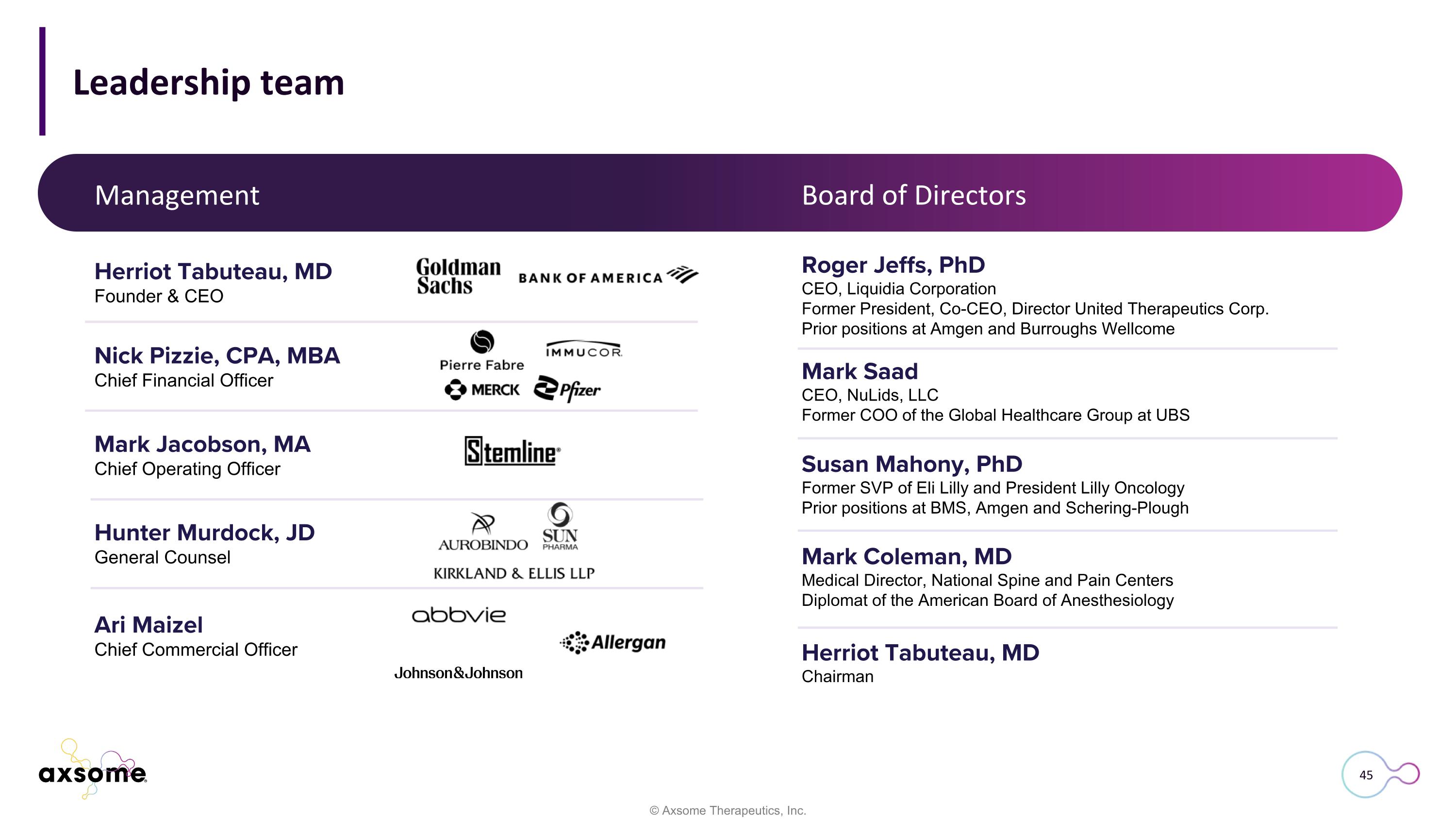
Thank you, Daryl. Good morning, everyone. Thank you for joining us for Axsome's Third Quarter 2025 Earnings Conference Call. With us today are Dr. Herriot Tabuteau, our Chief Executive Officer; Nick Pizzie, our Chief Financial Officer; and Ari Maizel, our Chief Commercial Officer, who will begin our call with prepared remarks. Mark Jacobson, our Chief Operating Officer, and Hunter Murdock, our General Counsel, will also be available for Q&A. This morning, we issued our press release providing a business update and detailed financial results for the quarter. I encourage everyone to visit the Investors section of our website to find the press release and accompanying presentation to today's call. Please note that today's discussion includes forward-looking statements regarding our financial performance, commercial strategy and operational plans, including research, development and regulatory activities. These statements are based on current expectations and assumptions and are subject to risks and uncertainties that may cause actual results to differ materially. Please refer to our SEC filings, including our quarterly and annual reports for a description of these and other risks. You are cautioned not to rely on these forward-looking statements, which are made only as of today, and the company disclaims any obligation to update such statements. And now I'll turn the call over to Herriot.
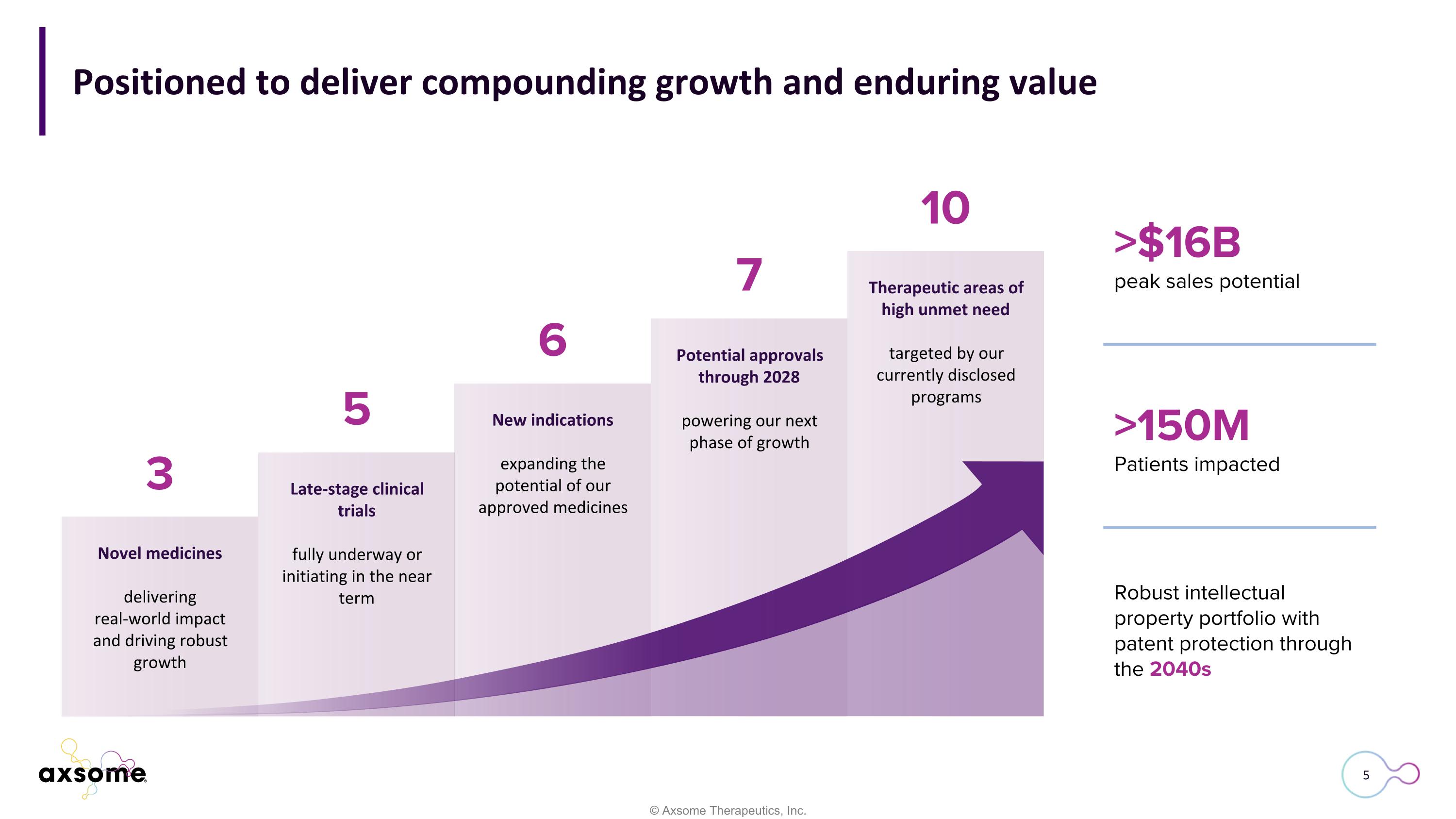
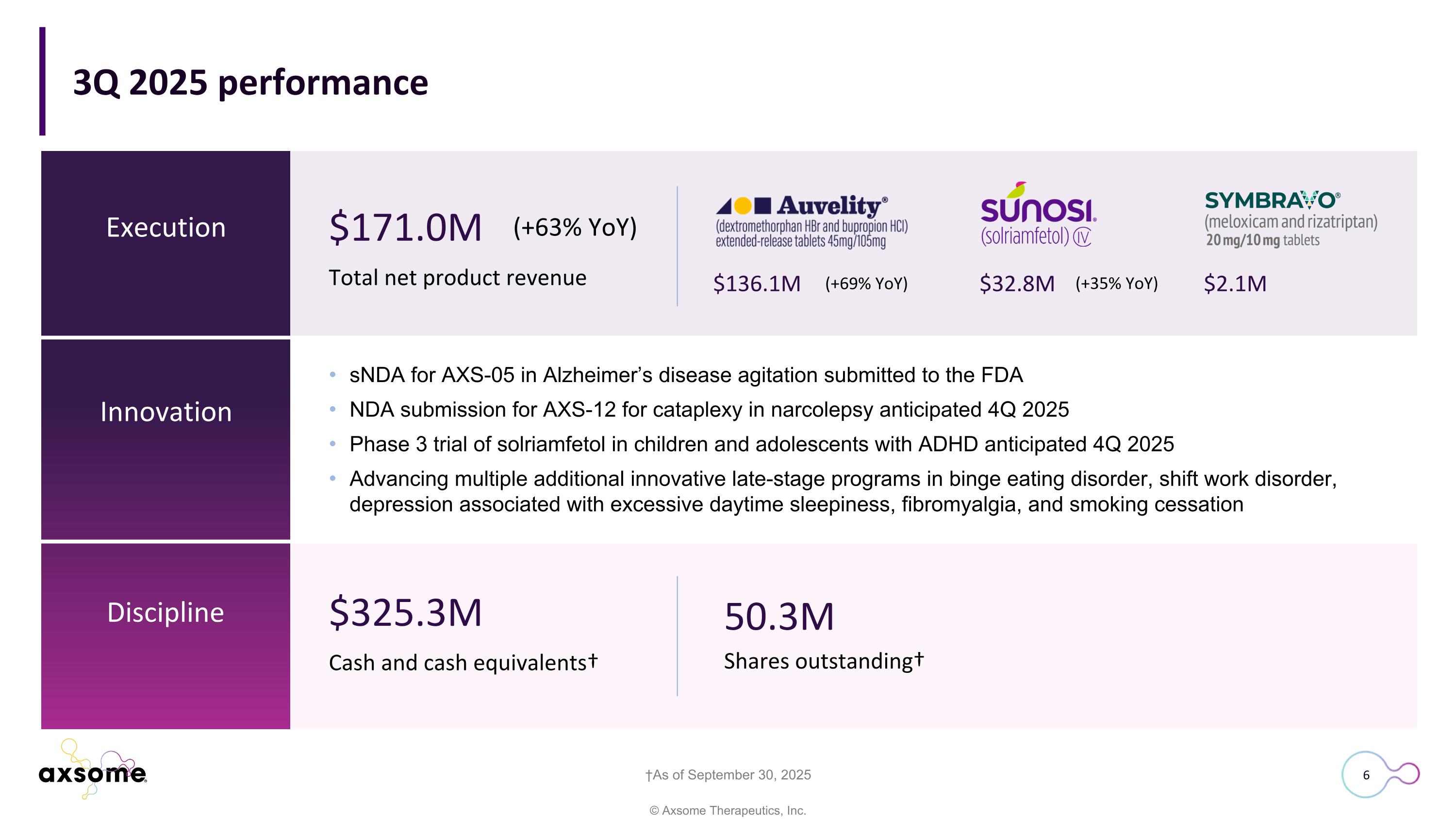
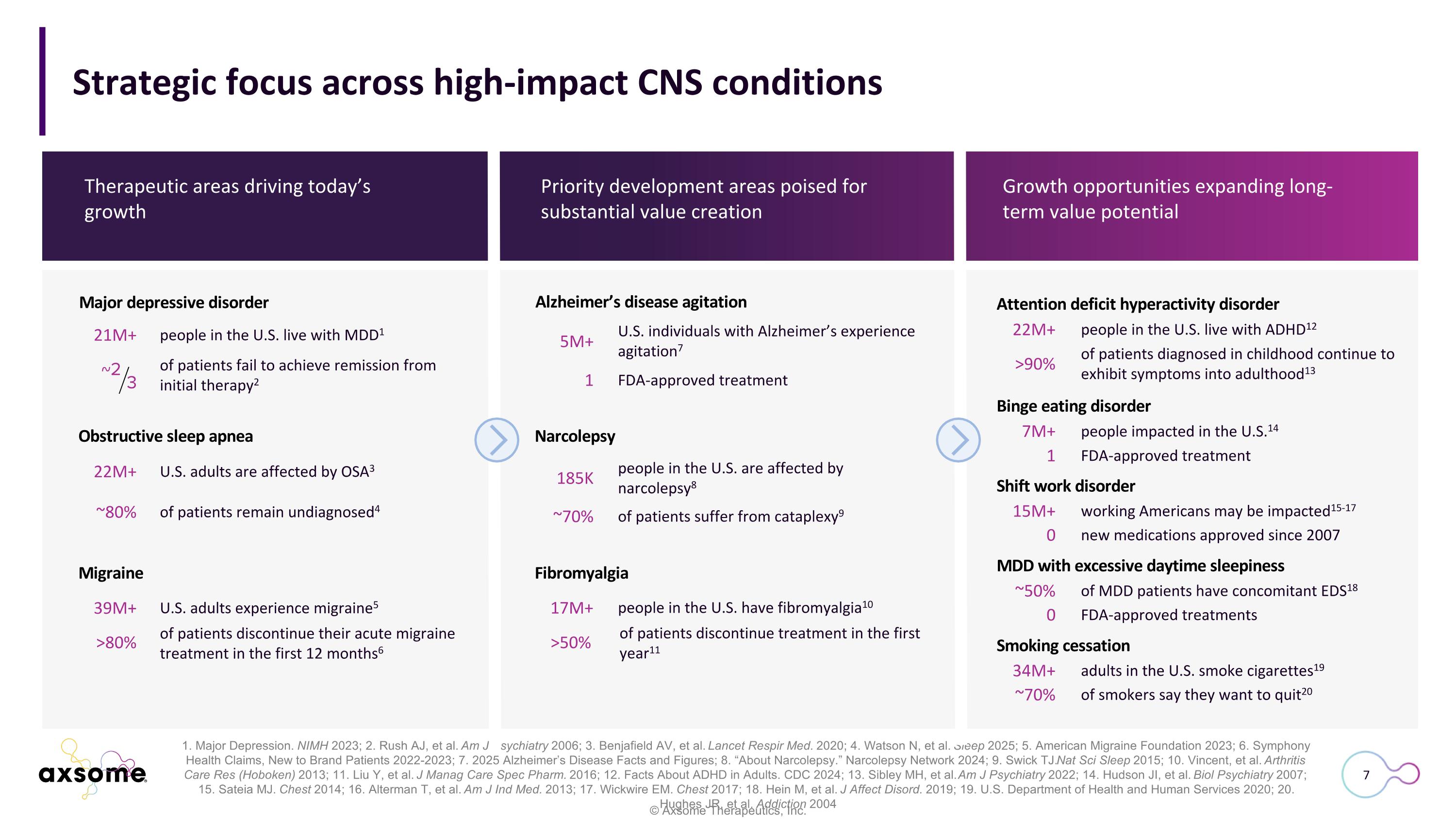
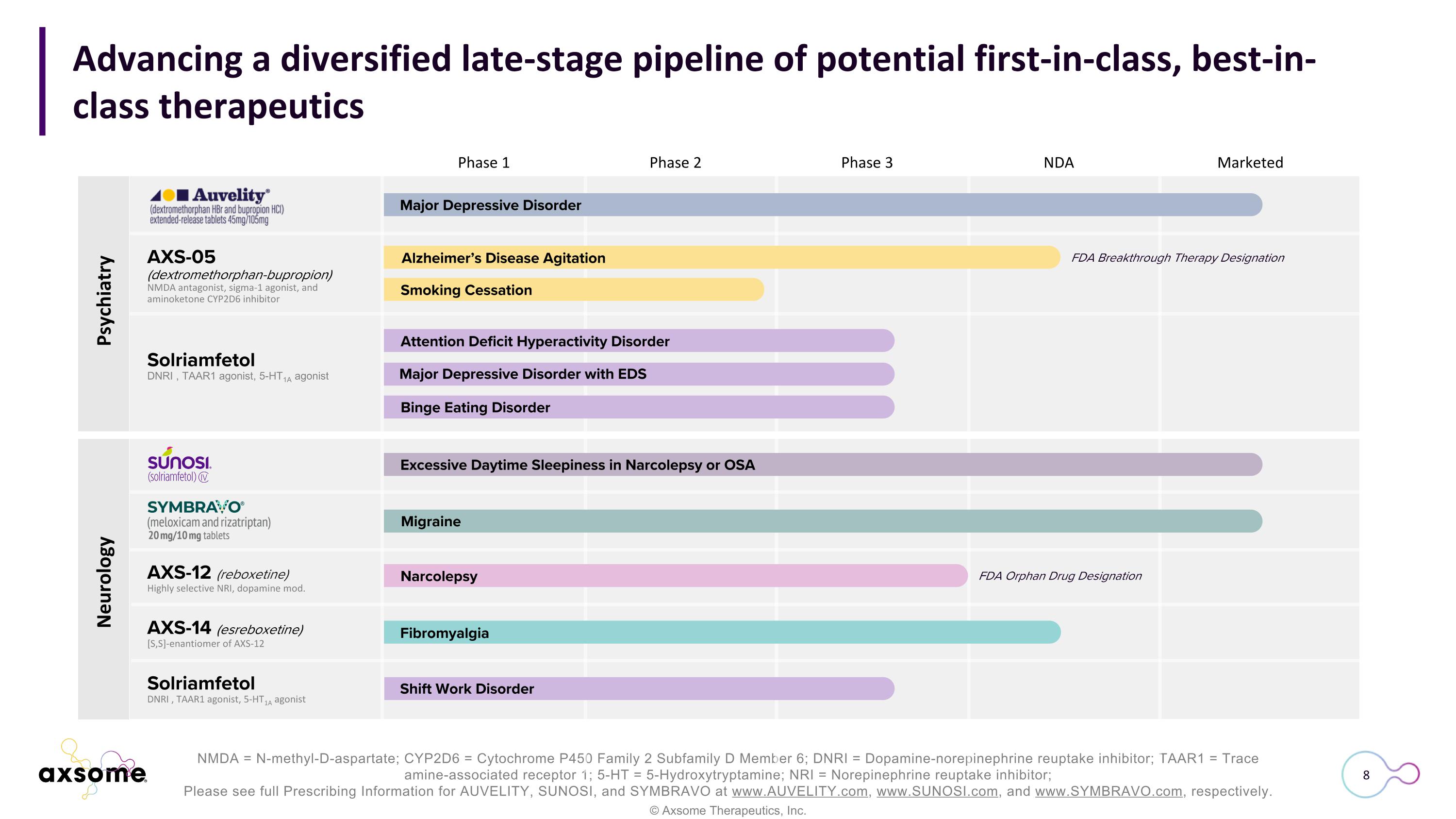
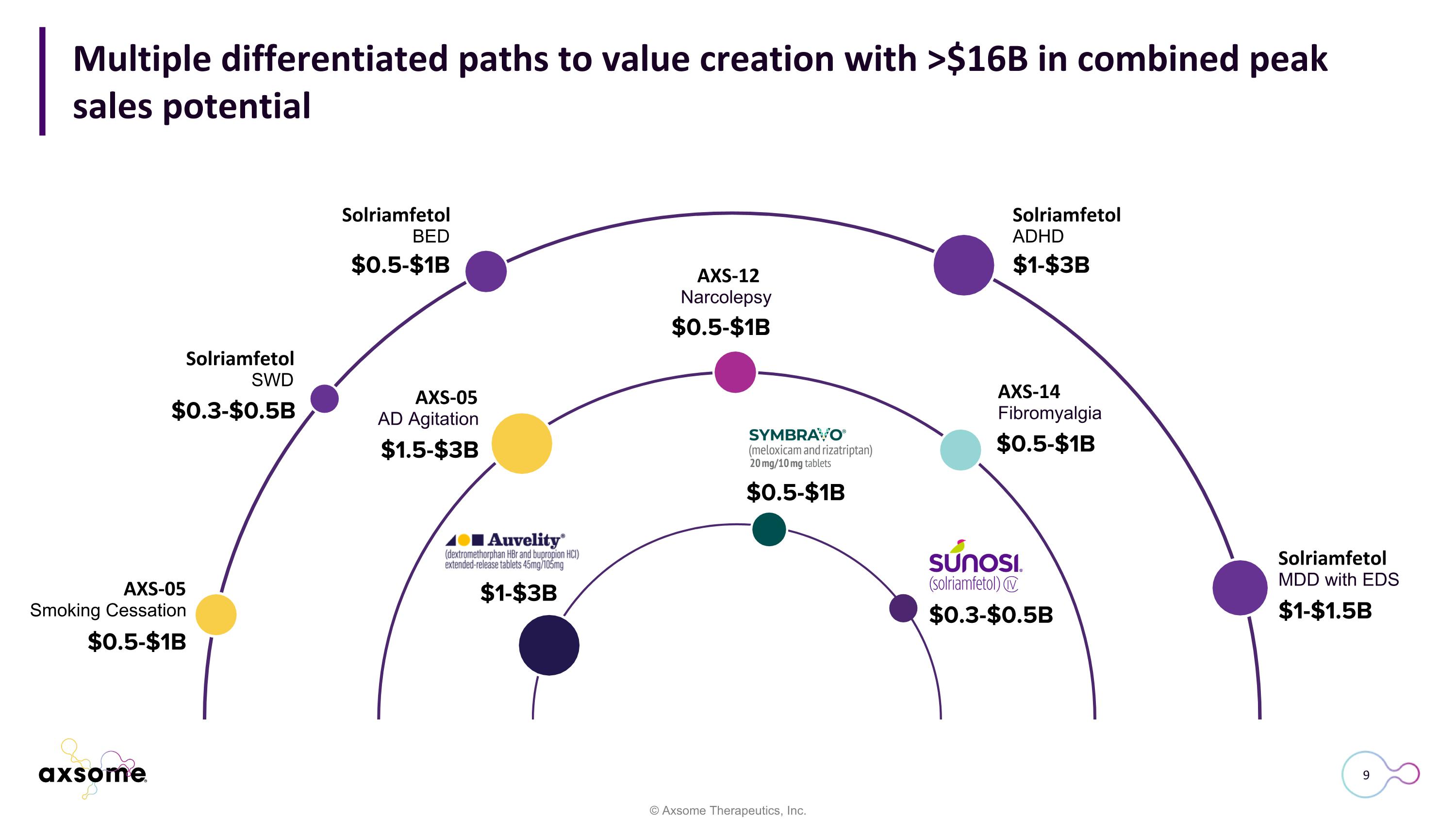
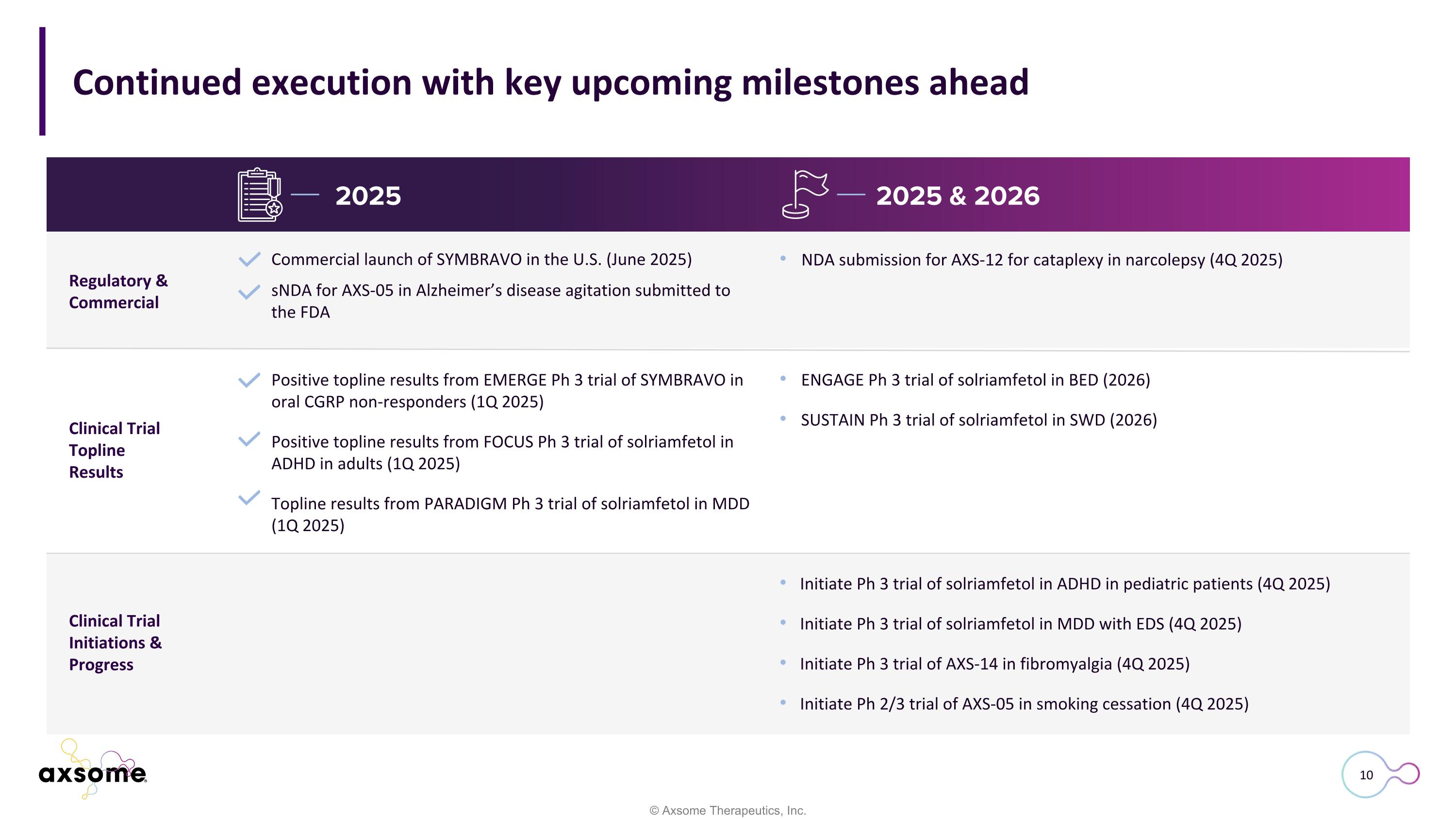
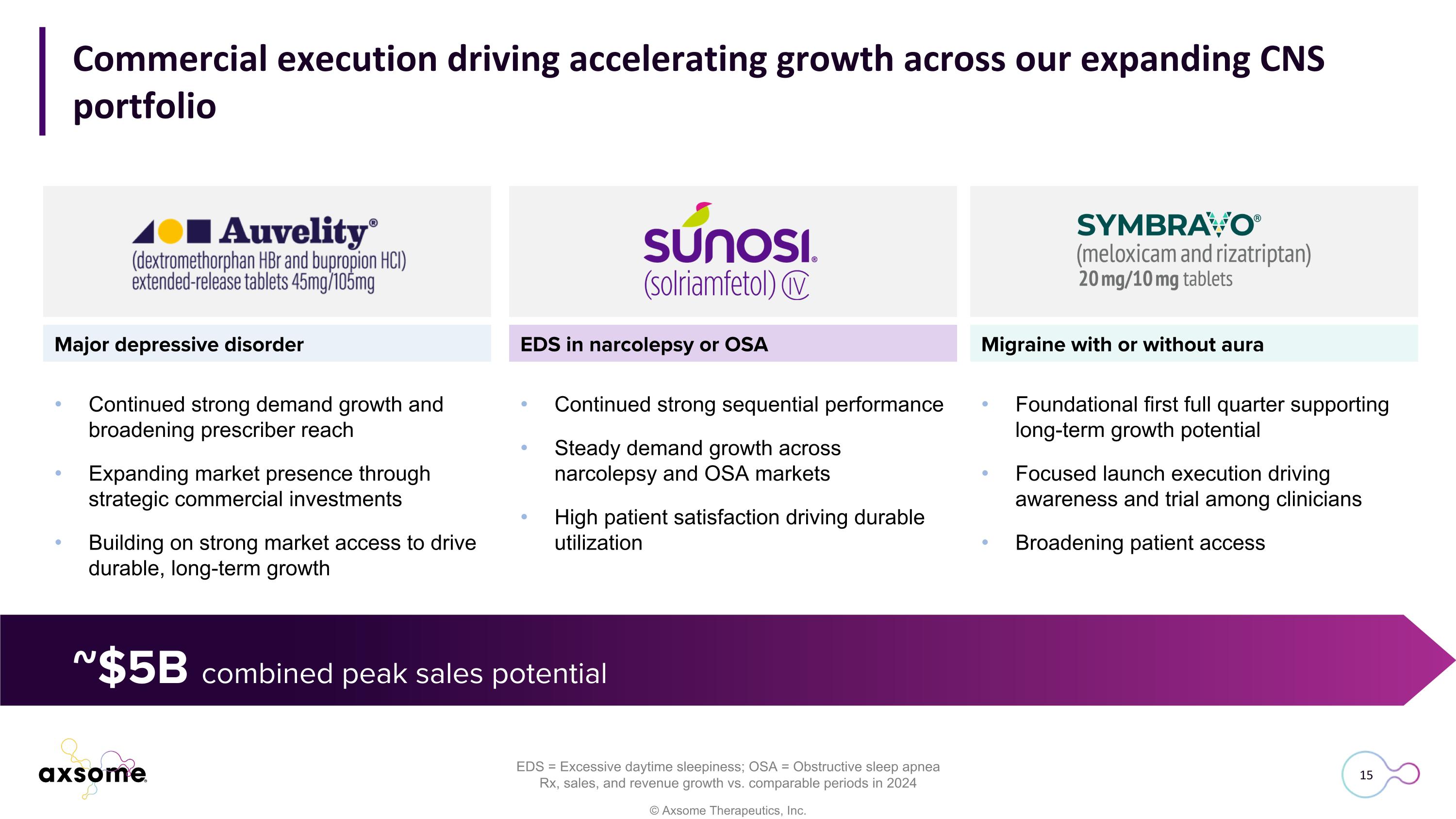
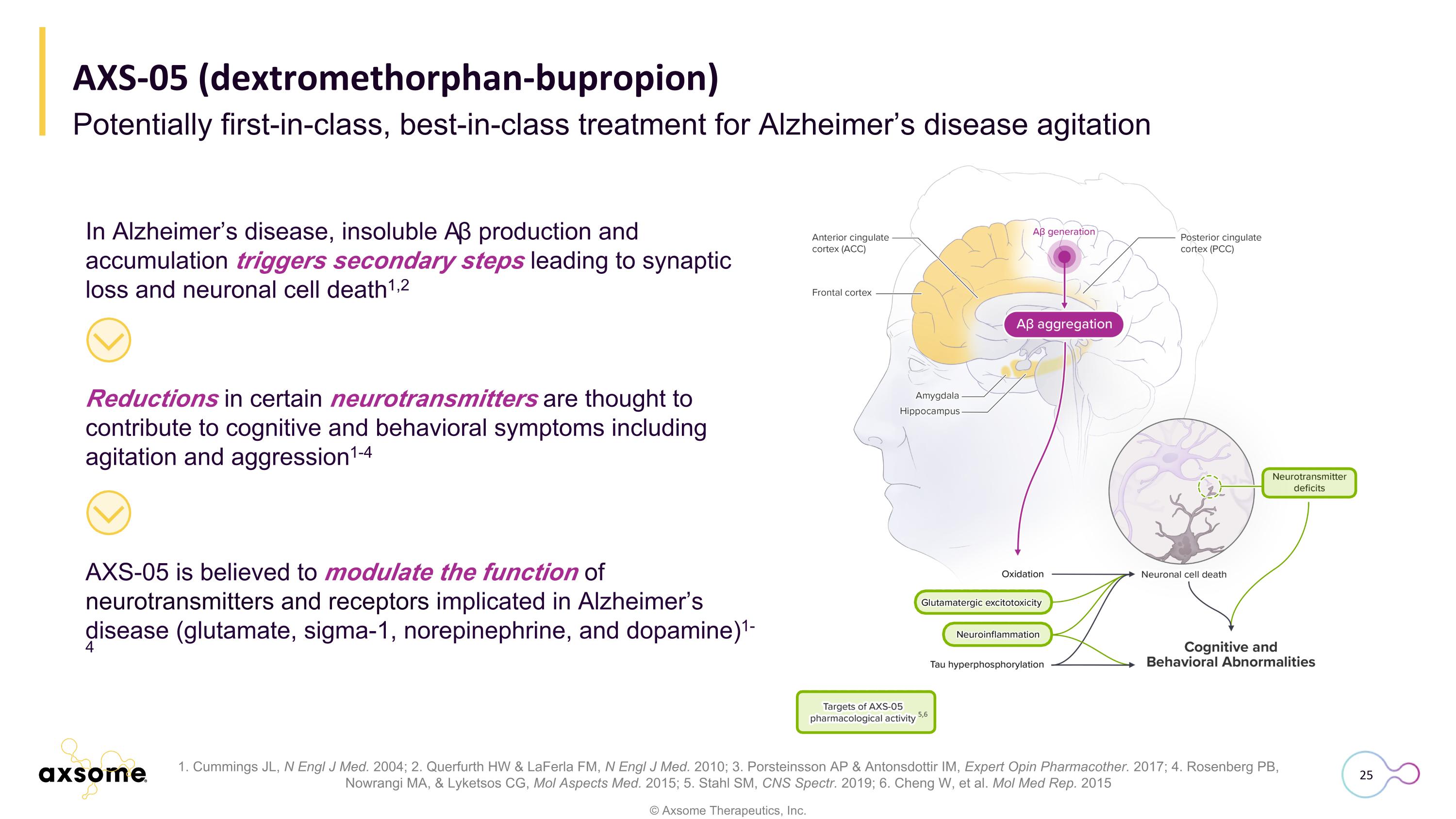
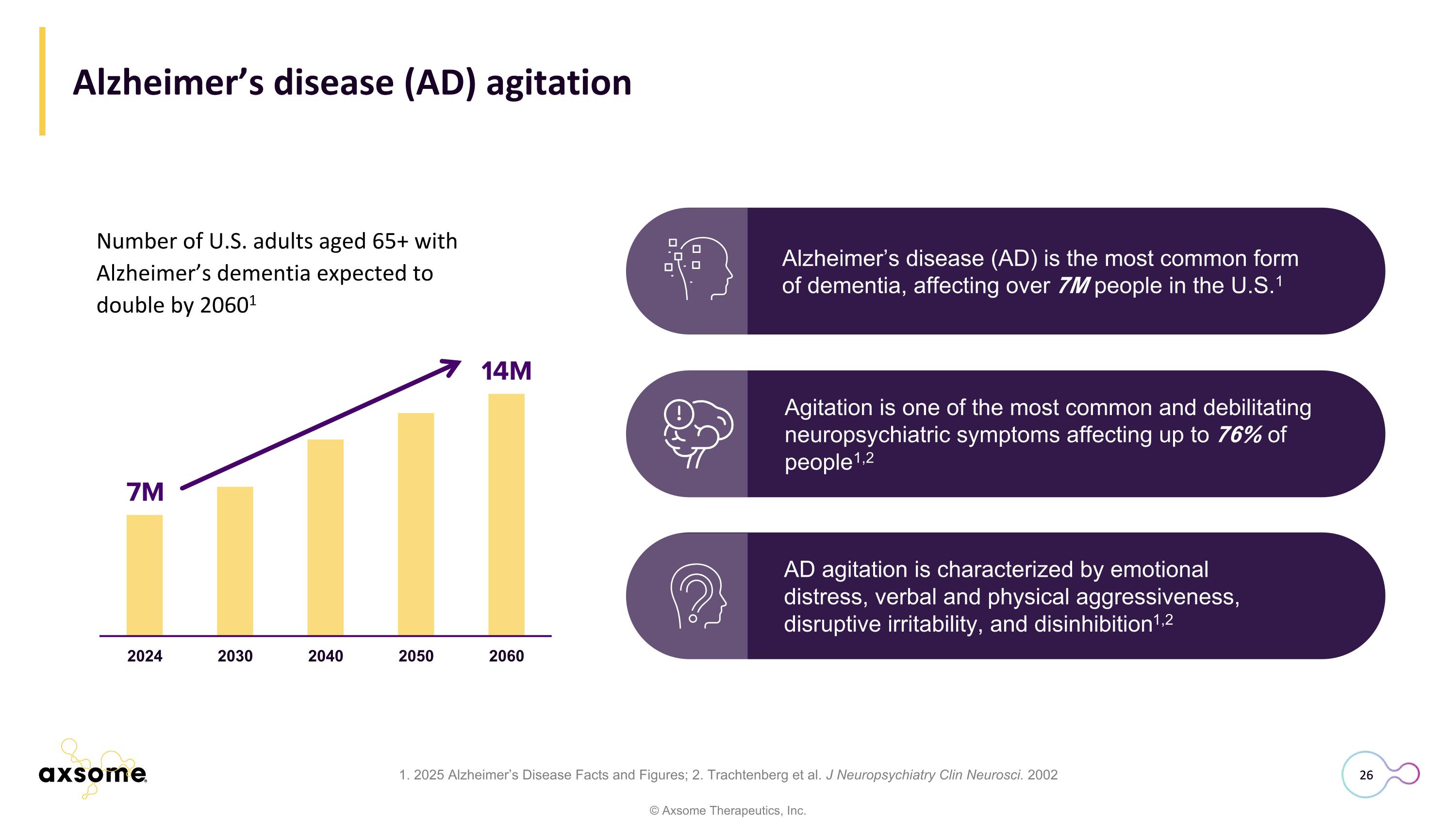
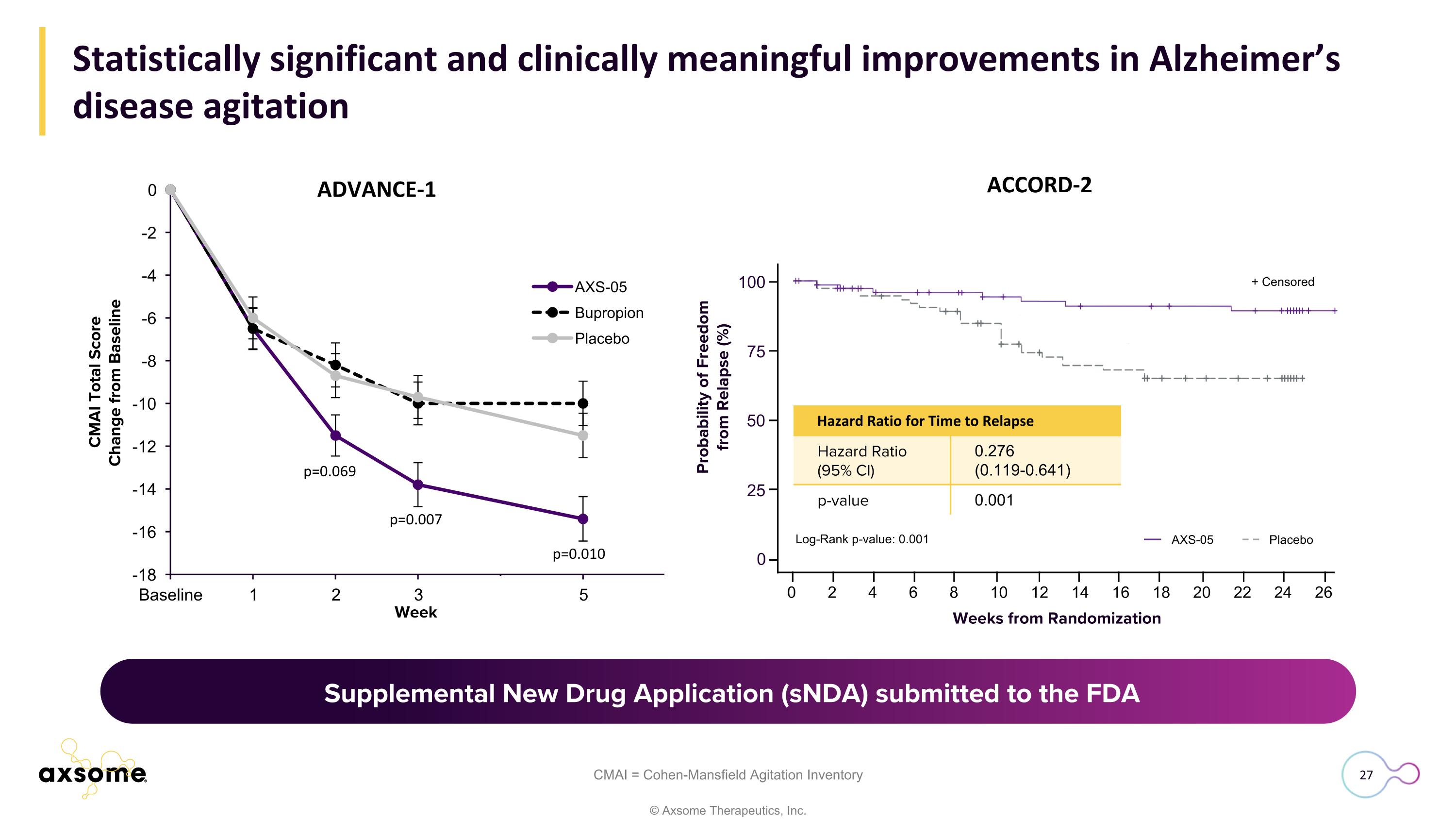
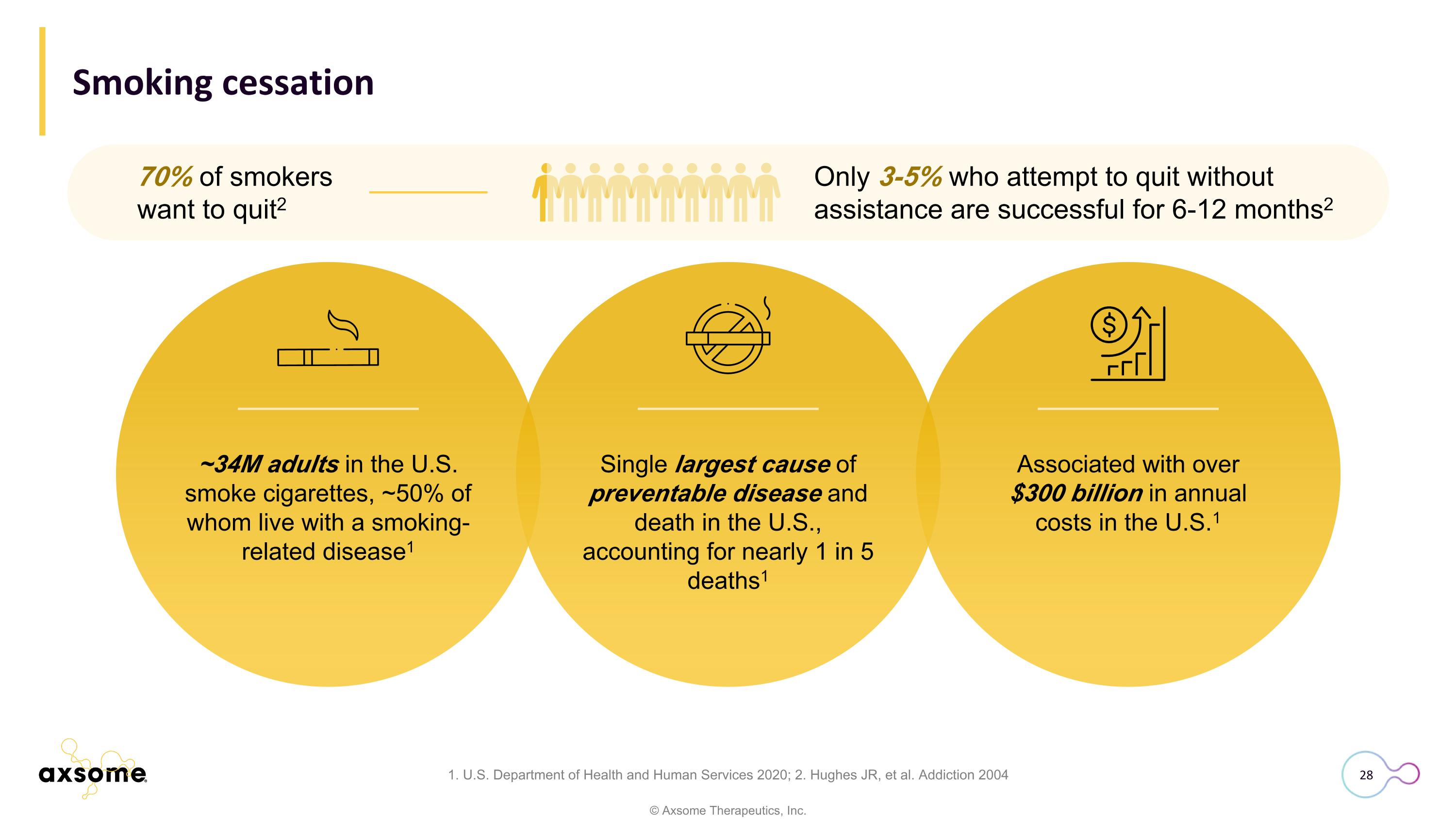
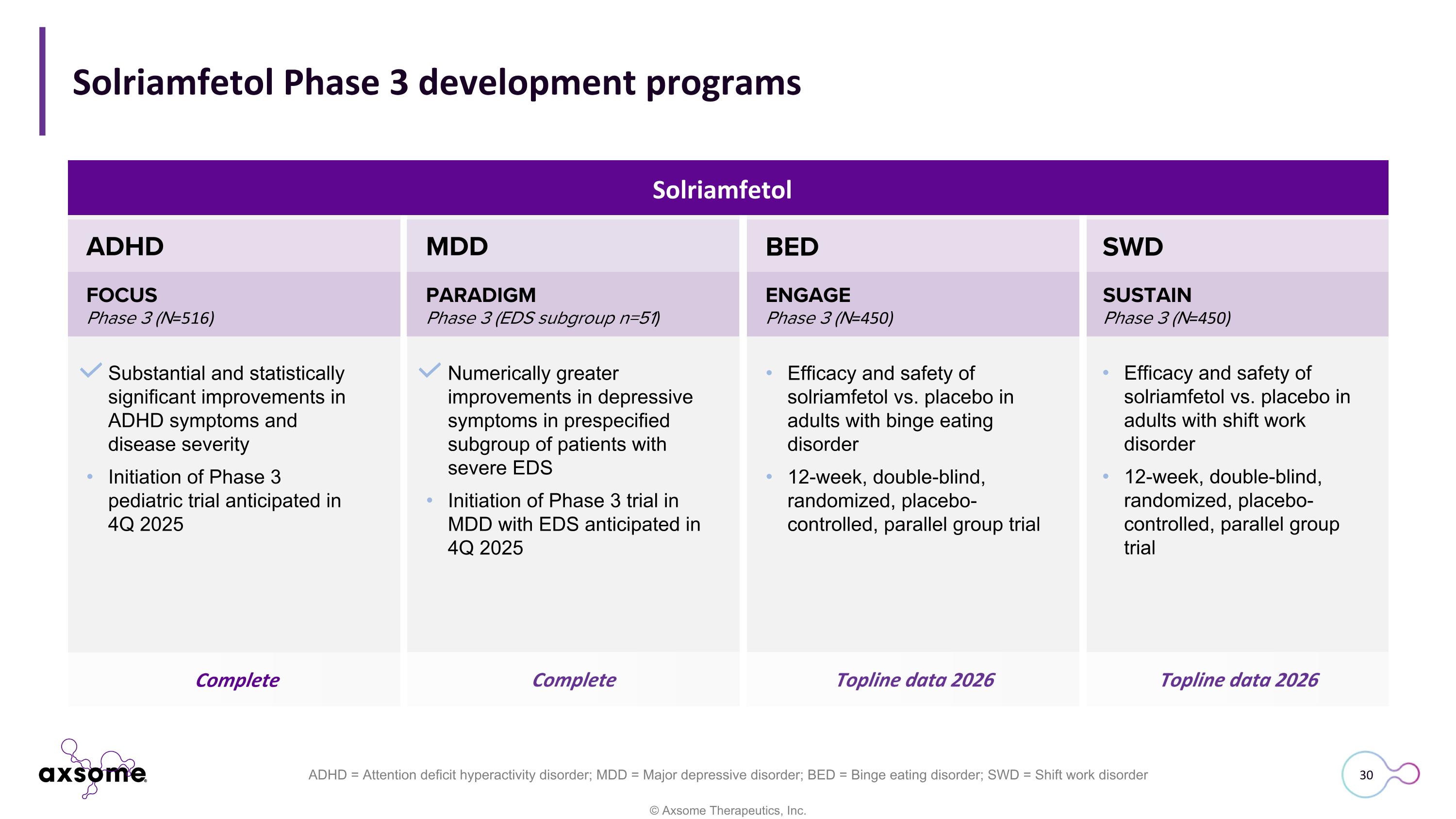
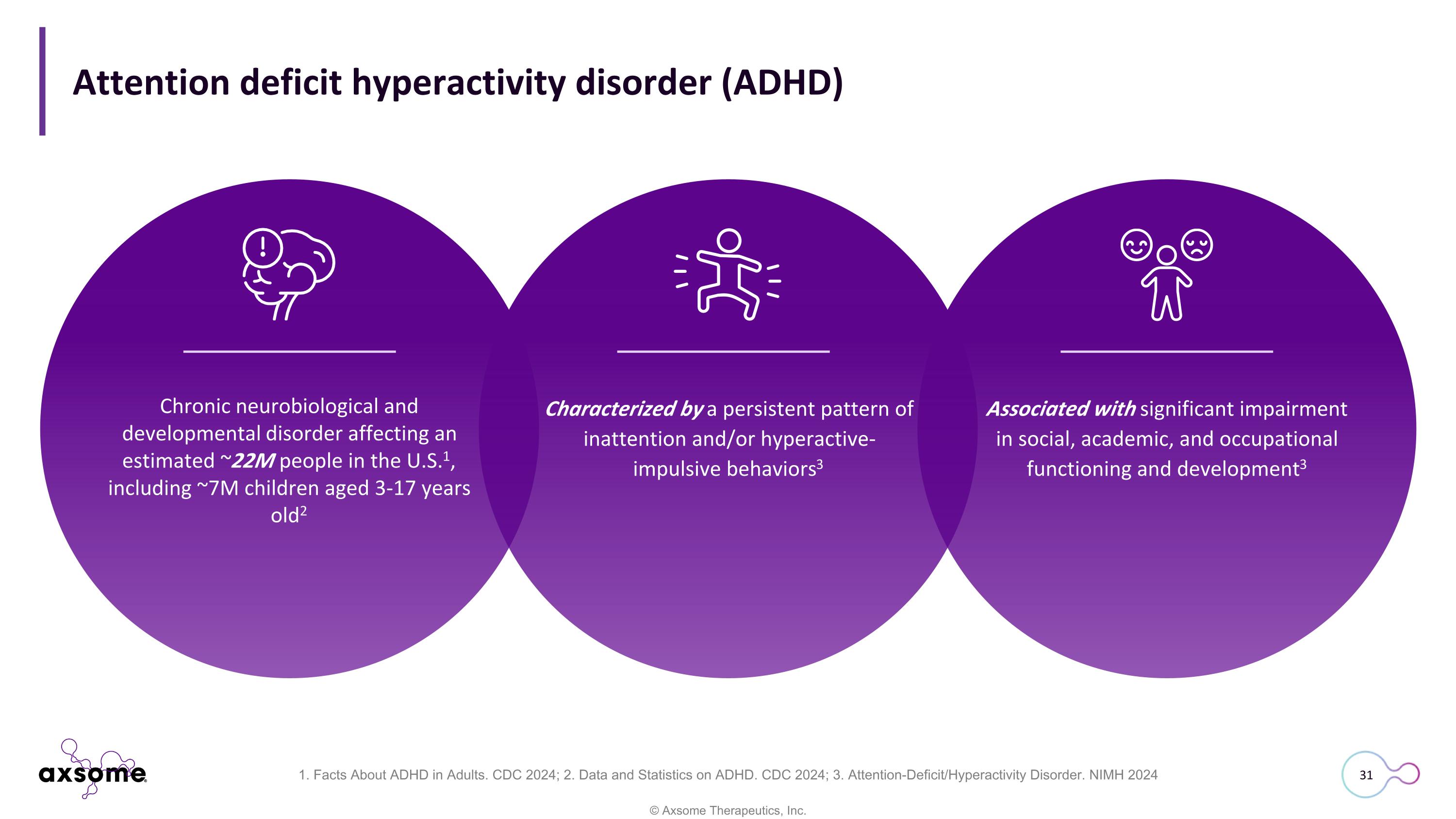
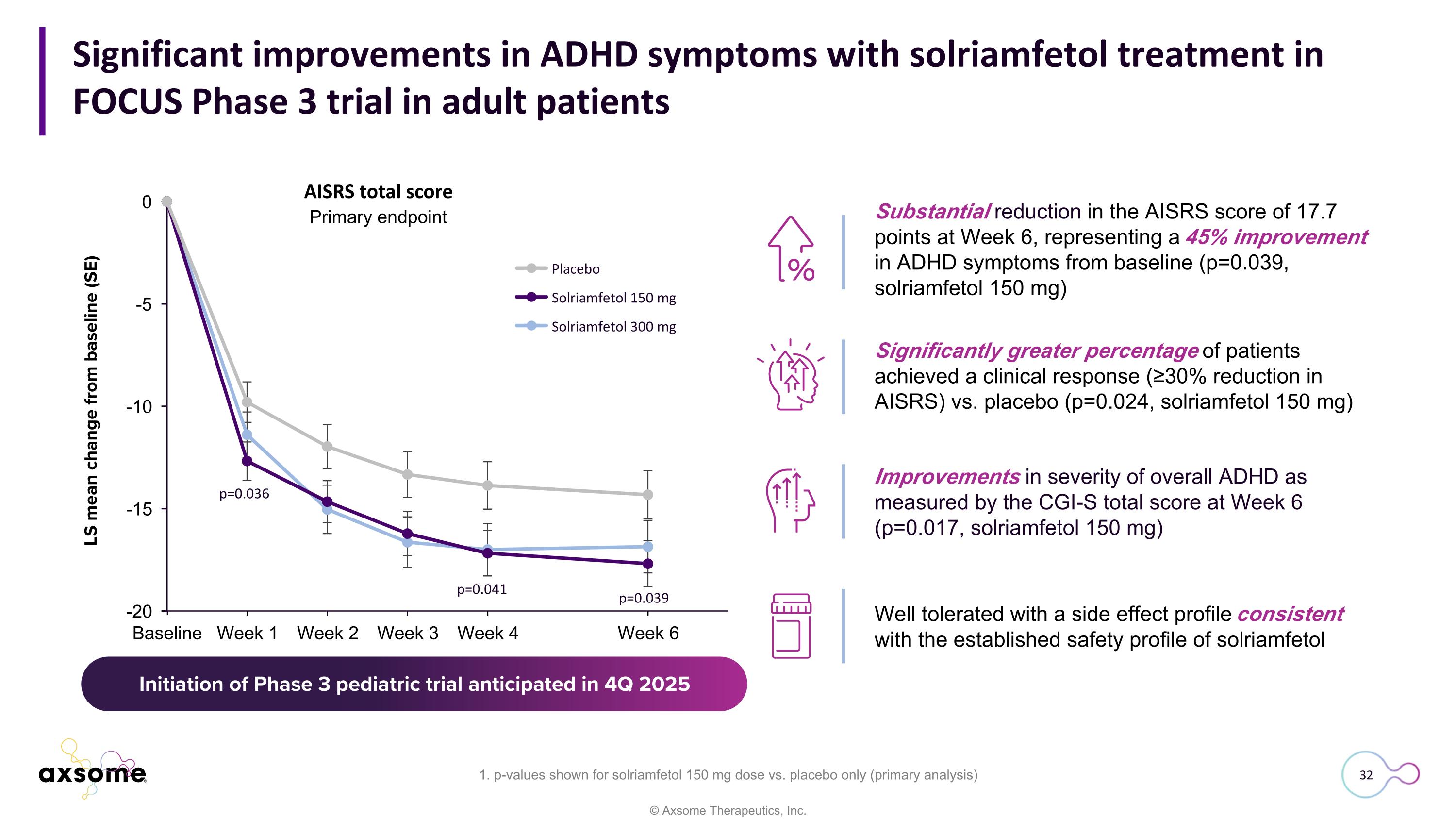
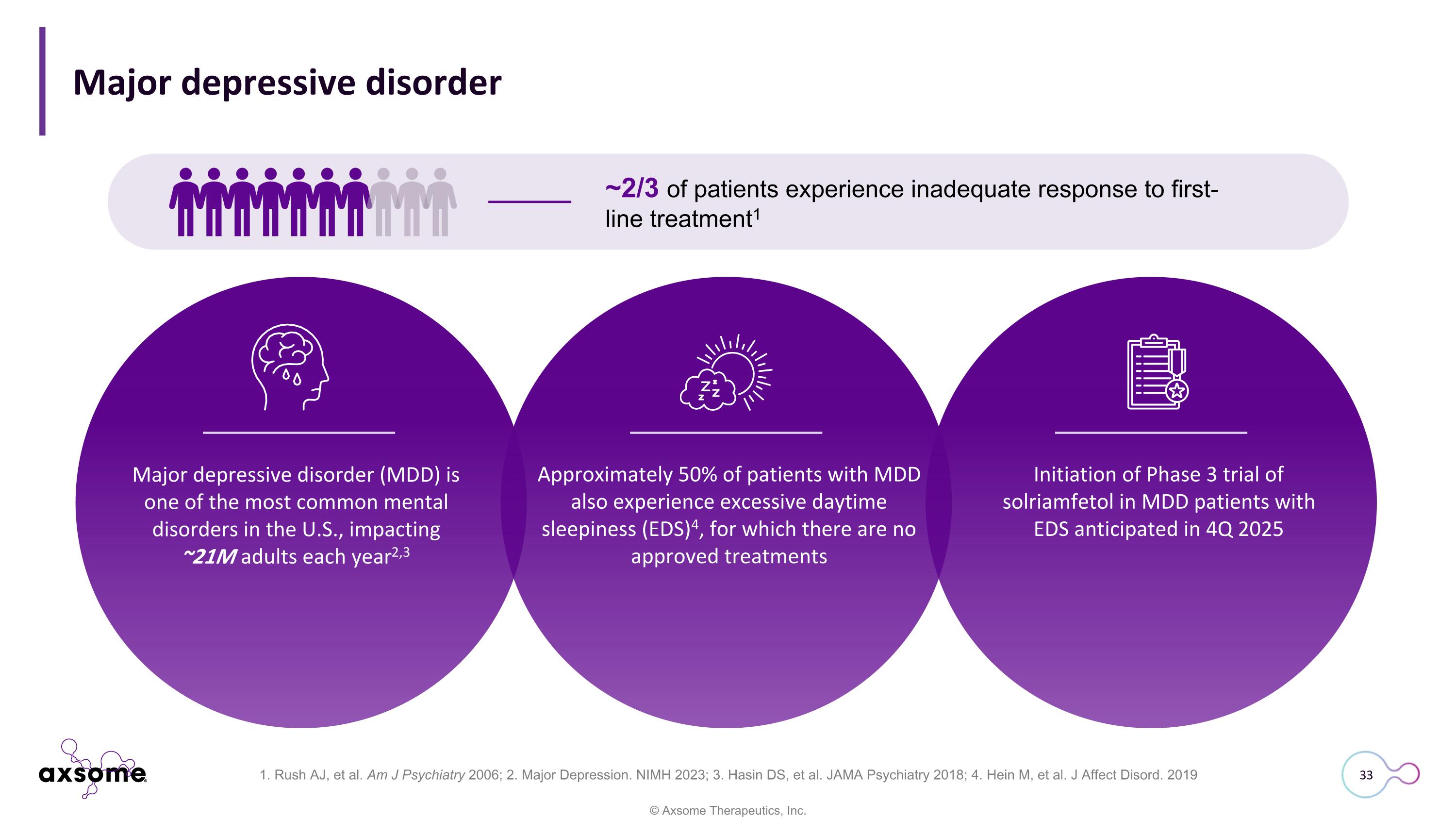
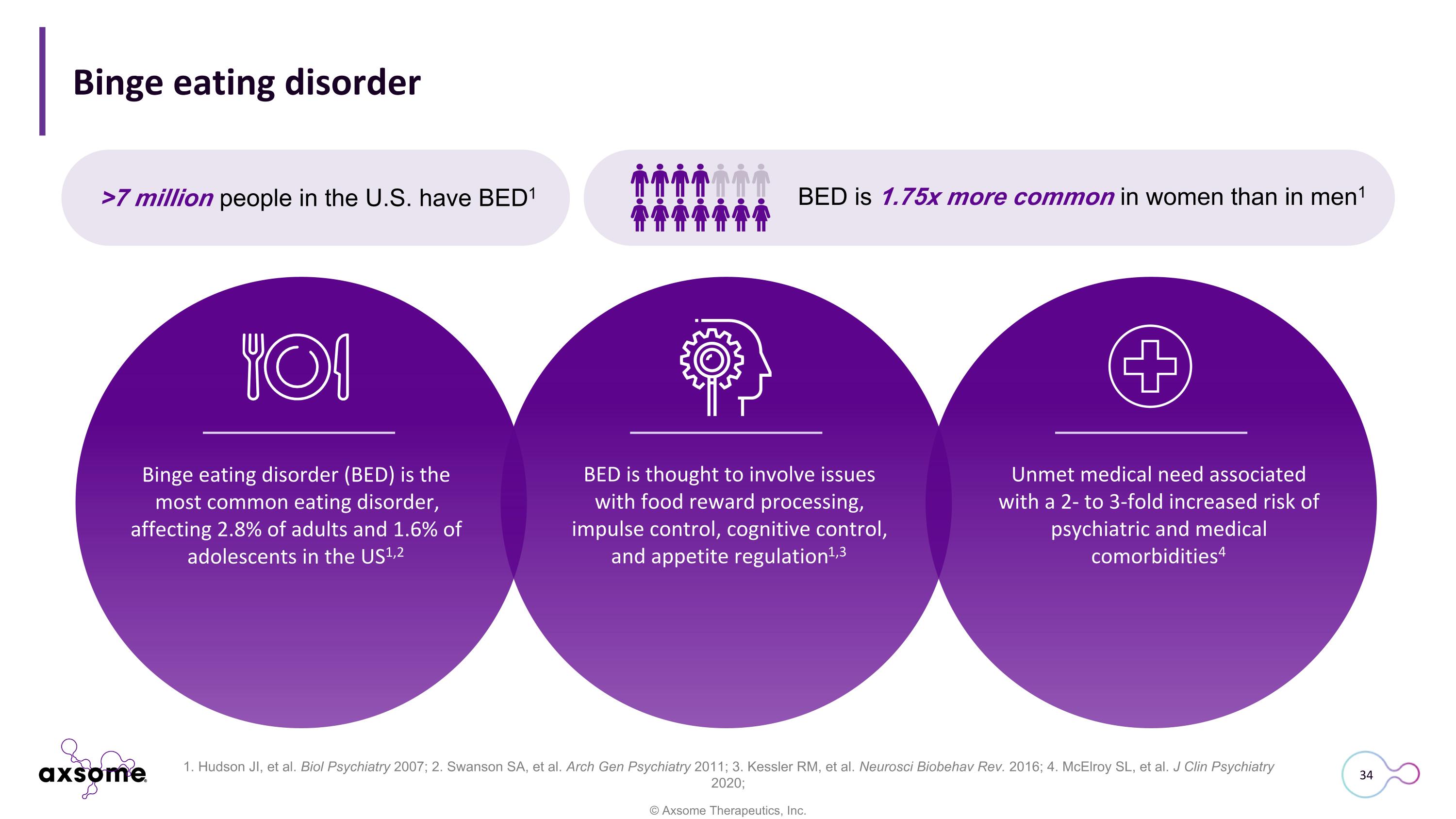
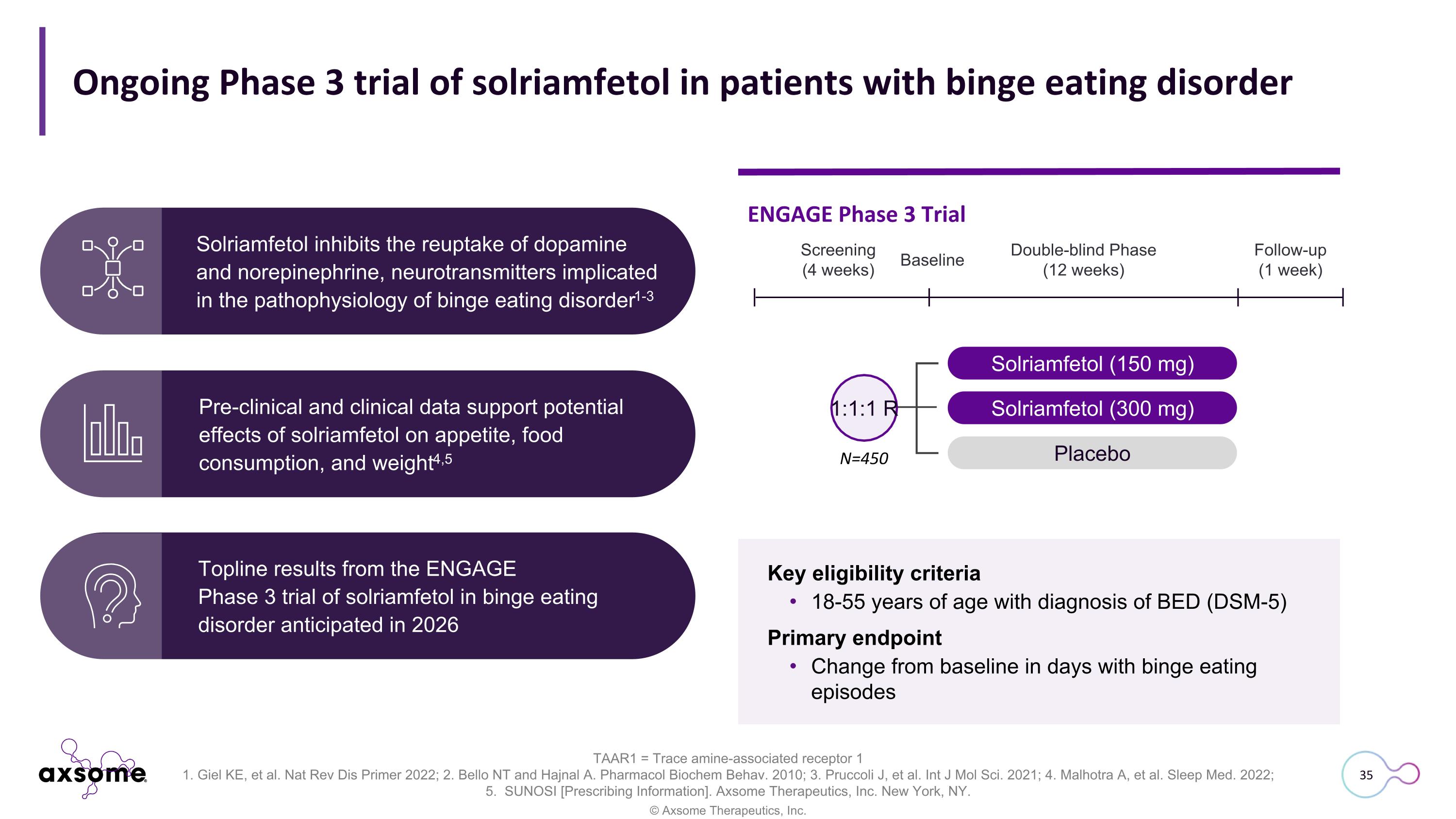
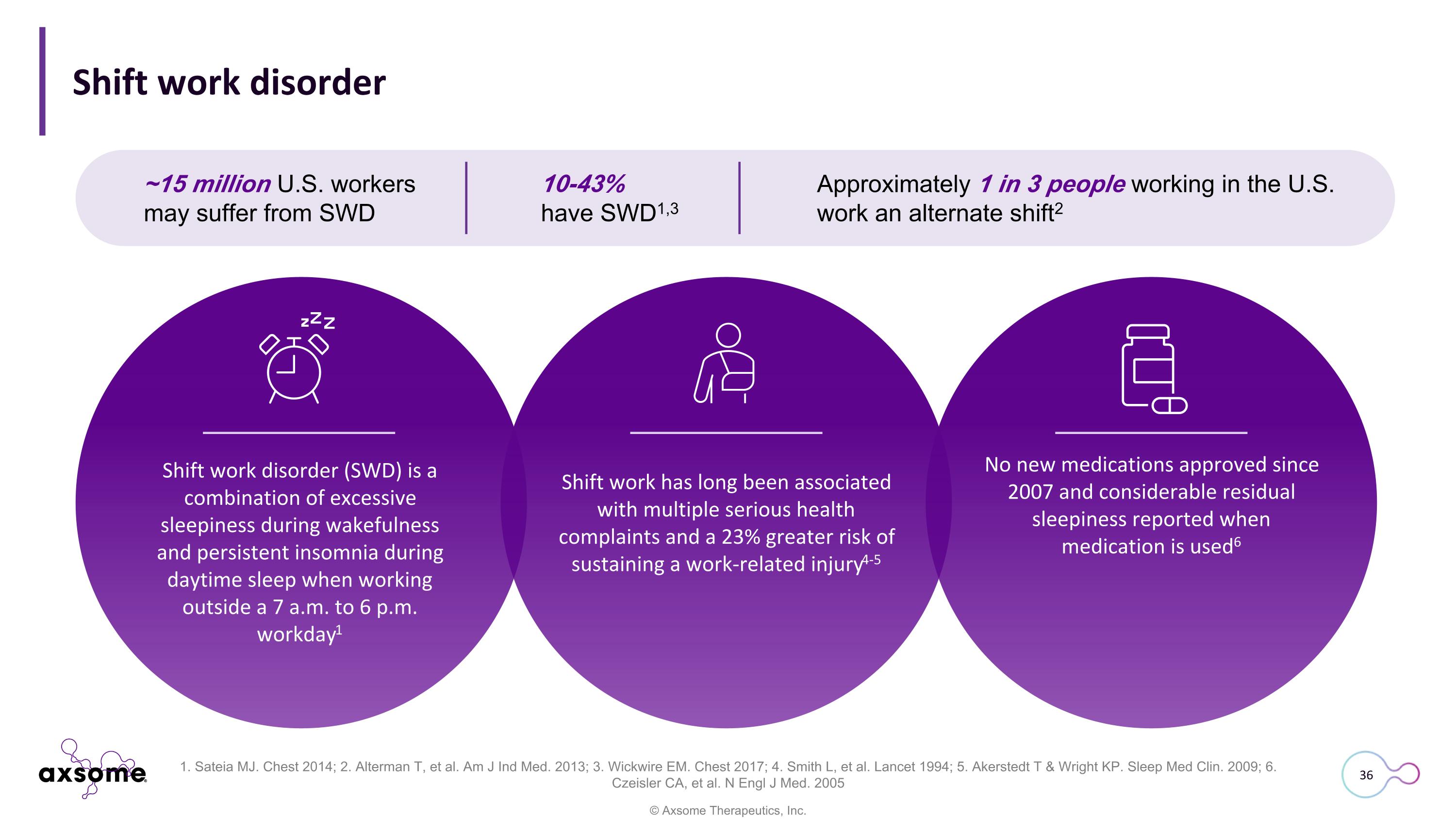
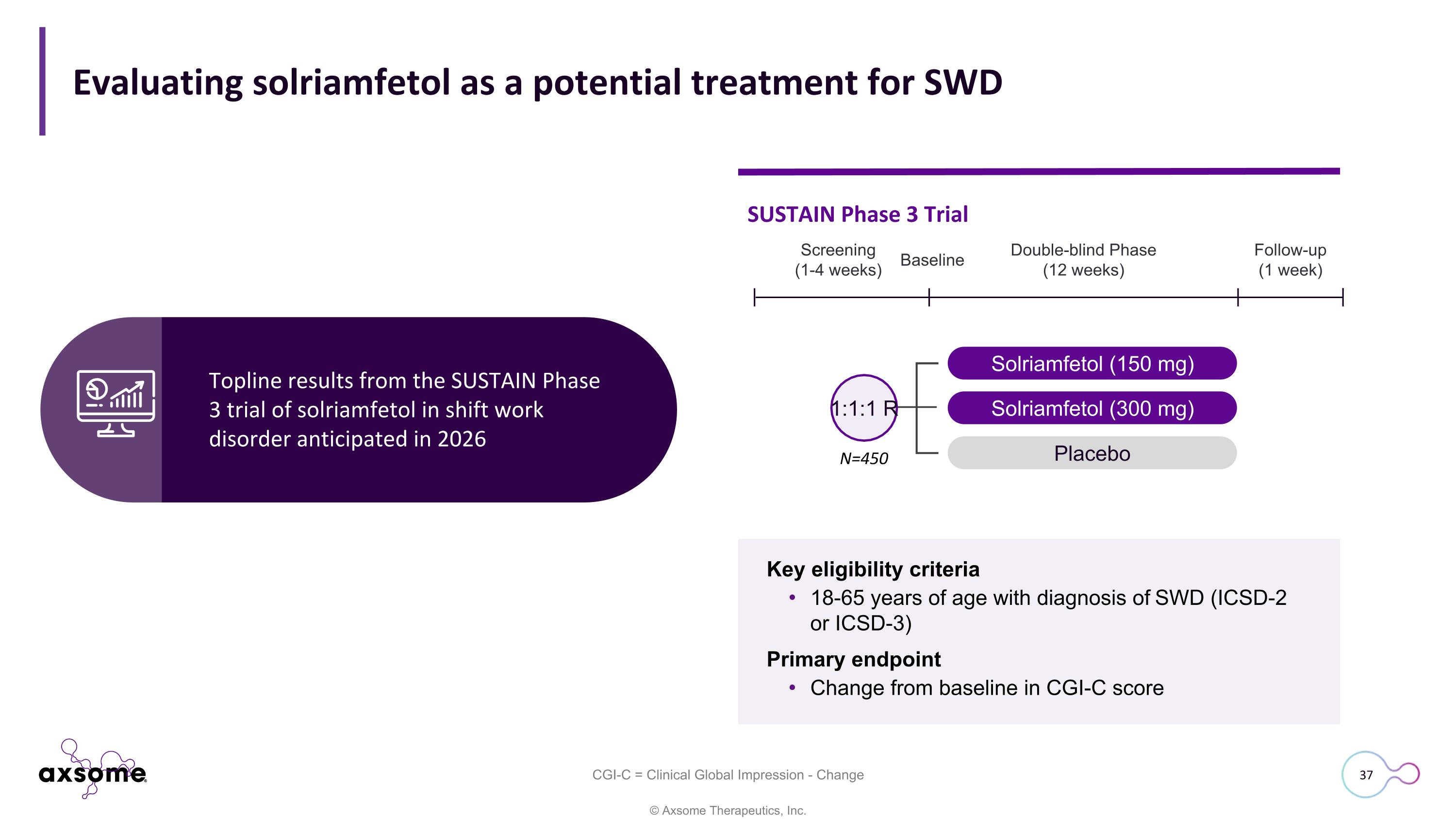
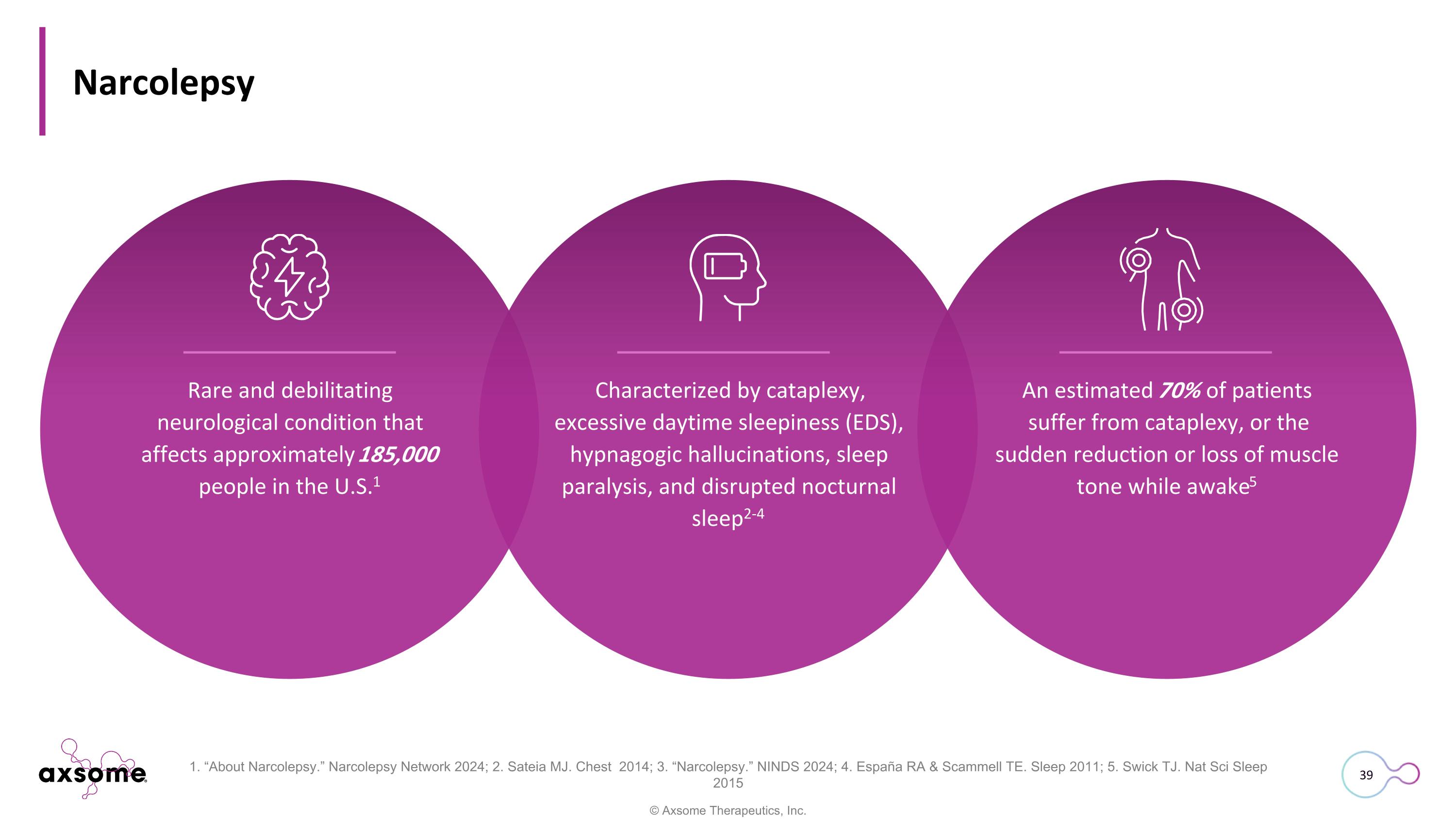
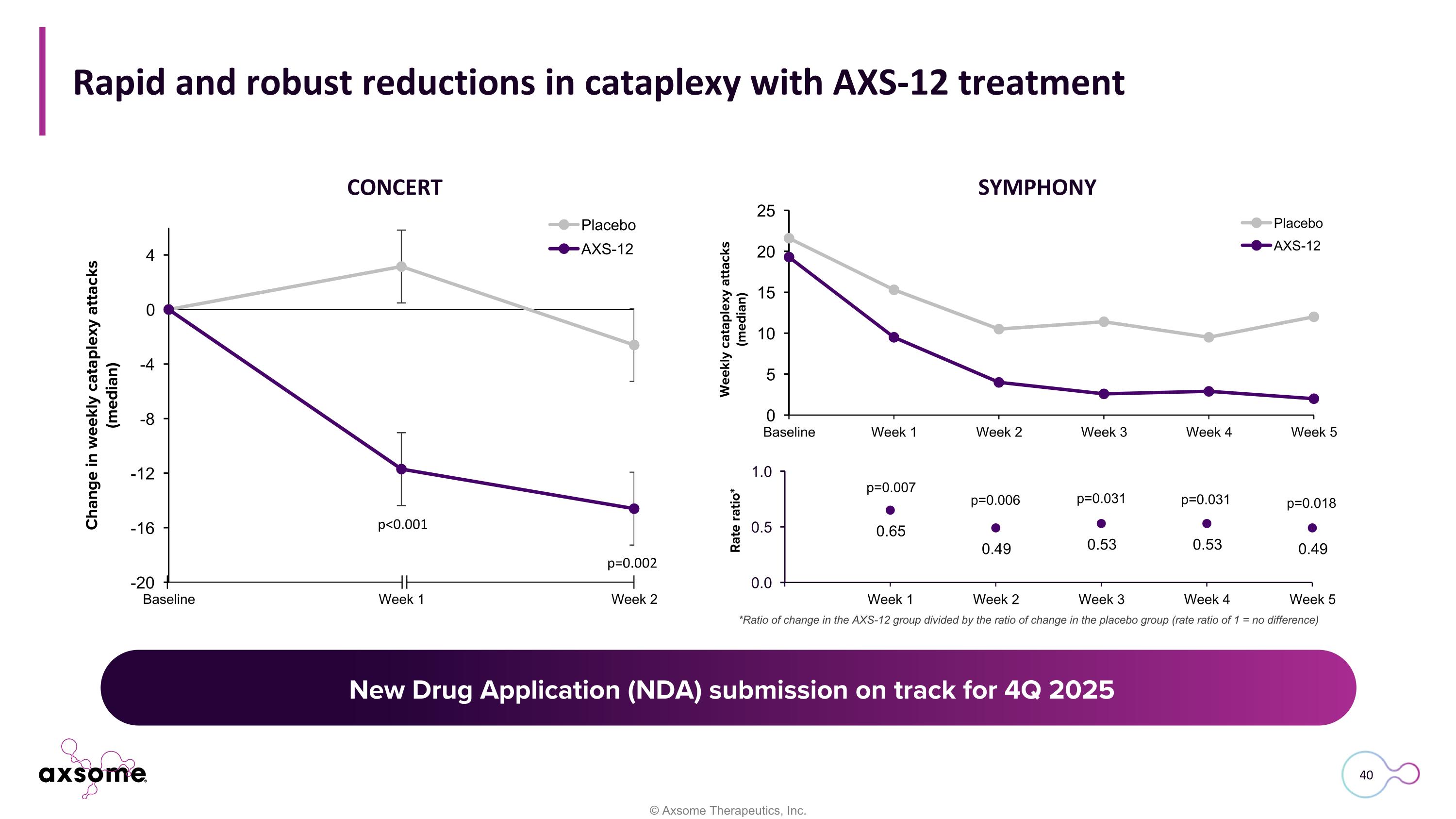
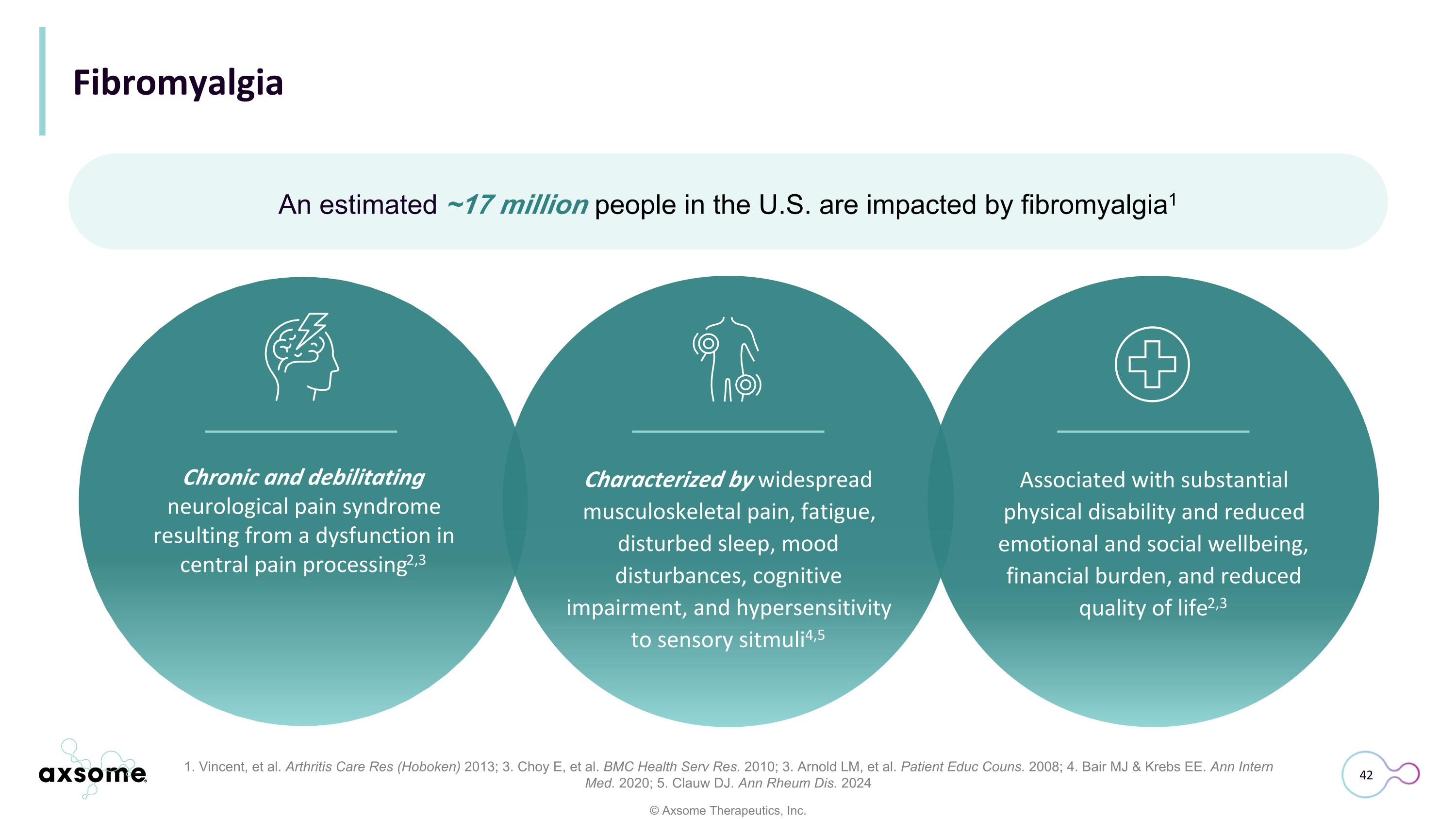
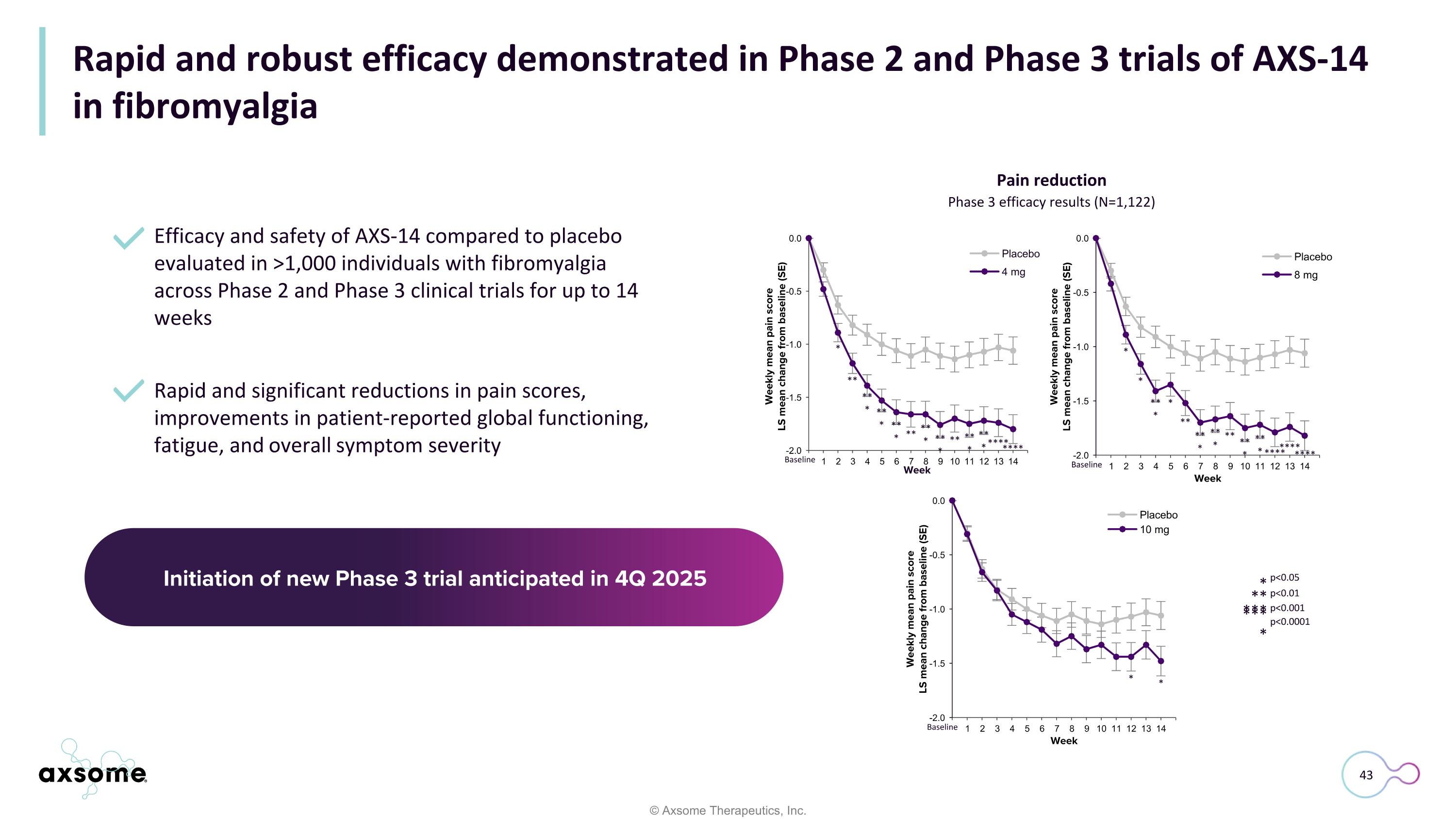
Thank you, Darren, and good morning, everyone. Axsome continues to lead in CNS innovation, driven by disciplined execution and a clear focus on sustained growth and value creation. In the third quarter, we delivered strong revenue growth with total revenue of $171 million across our 3 marketed products, representing a 63% increase year-over-year. AUVELITY continues to gain traction as a differentiated treatment for major depressive disorder, driven by strong underlying demand. We're pleased with the pace of AUVELITY's performance, which is tracking well against our long-term expectations and underscores the significant opportunity for continued growth ahead. SUNOSI remains on a steady trajectory with year-to-date sequential growth nearly double that of the same period last year, a testament to the product's durable performance and expanding adoption. SYMBRAVO completed its first full quarter of commercial launch in Q3. Our focus now is to continue strengthening the foundation for long-term success by broadening patient access and driving awareness with clinicians. Nick and Ari will speak in more detail about our financial and commercial performance and the strategic execution driving momentum across Axsome's portfolio. Beyond our continued commercial growth, Axsome's R&D engine is advancing a robust pipeline of late-stage programs with the potential to deliver transformative therapies for patients and significant value to our shareholders. Over the coming months, we expect meaningful activity across our late-stage programs, including 2 NDA stage programs and multiple registrational trials underway or initiating. I'd like to start with our top priority areas in psychiatry and neurology, Alzheimer's disease agitation, narcolepsy and ADHD. These are areas where we see substantial opportunity to transform patient outcomes, leverage our commercial infrastructure and unlock significant value. First, we are pleased to share that we have submitted our supplemental NDA for AXS-05 in Alzheimer's disease agitation. And we look forward to announcing the FDA's decision on acceptance of the filing. This submission is an important milestone for AXS-05 and for the millions of patients and caregivers affected by the serious and underserved condition. The addressable market for Alzheimer's disease agitation is substantial, and the unmet need is high with currently only one product approved. AXS-05 represents a first-in-class mechanism of action that has the potential to set a new standard in the treatment of AD agitation. Work is already underway to efficiently scale our commercial platform to deliver an impactful launch if approved. As a reminder, we are also developing AXS-05 in smoking cessation, and we are on track to initiate a Phase II/III trial in this indication this quarter. Our next pipeline priority area is narcolepsy. We continue to target the submission of our NDA for AXS-12 for the treatment of cataplexy in narcolepsy in the fourth quarter of this year. AXS-12 represents a highly differentiated opportunity to address critical gaps in current treatment. Up to 70% of patients suffer from cataplexy and many continue to experience inadequate relief or poor tolerability to existing treatment options. We are excited about AXS-12's potential to make a meaningful difference for patients living with narcolepsy. We also like its strategic fit with our existing sleep franchise, which we anticipate will enable highly efficient and synergistic launch, if approved. For ADHD, solriamfetol has demonstrated positive results in adults in the FOCUS Phase III trial completed earlier this year. The next step is a Phase III trial in children and adolescents, which we plan to initiate in the fourth quarter of this year. If successful, this indication could substantially expand the opportunity for solriamfetol beyond its currently approved indications. As a reminder, we are also developing solriamfetol in 3 additional indications, MDD with excessive daytime sleepiness, binge eating disorder and shift work disorder. For MDD, we anticipate the initiation of a Phase III trial in adults with MDD with excessive daytime sleepiness this quarter. Next year, we expect top line results from the ongoing ENGAGE Phase III trial in binge eating disorder and the SUSTAIN Phase III trial in shift work disorder, and we look forward to providing progress updates in the near future. Turning to AXS-14, we are finalizing preparations for our planned Phase III trial in fibromyalgia, which we expect to launch before year-end. These milestones highlight the continued expansion of Axsome's leading neuroscience pipeline, spanning multiple psychiatry and neurology indications with significant unmet medical needs and substantial long-term growth potential. All in all, our portfolio of novel medicines is robust and diverse and our late-stage pipeline is deep and rapidly advancing, uniquely positioning Axsome to deliver substantial near- and long-term value through multiple highly differentiated paths. With just 3 years as a fully integrated R&D and commercial organization, Axsome is shaping the frontier of differentiated innovation in brain health. The fundamentals of our business have never been stronger, and we are excited to continue building on this foundation to drive further growth. With that, I'll hand the call over to Nick to review our financial results for the quarter.
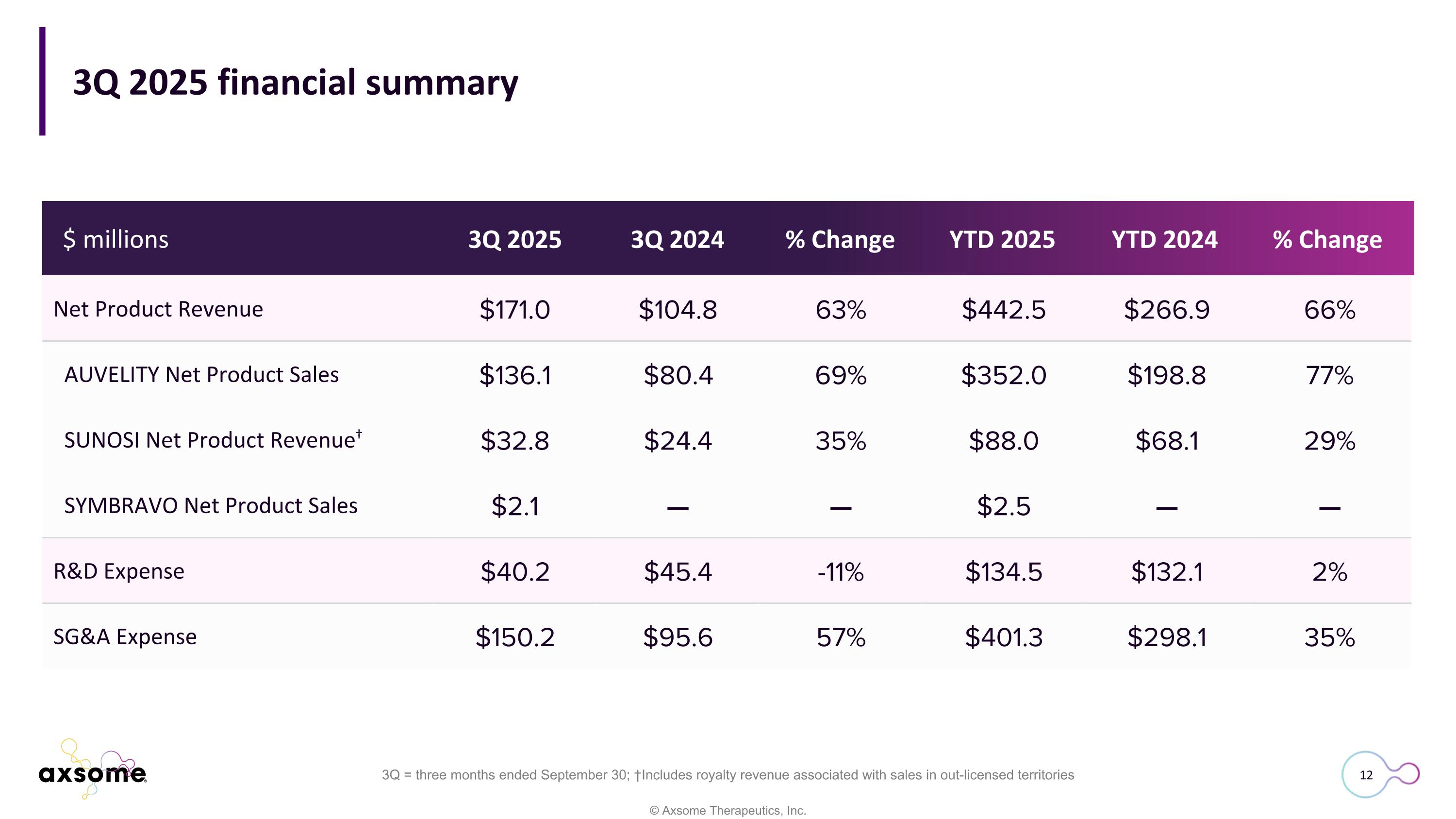
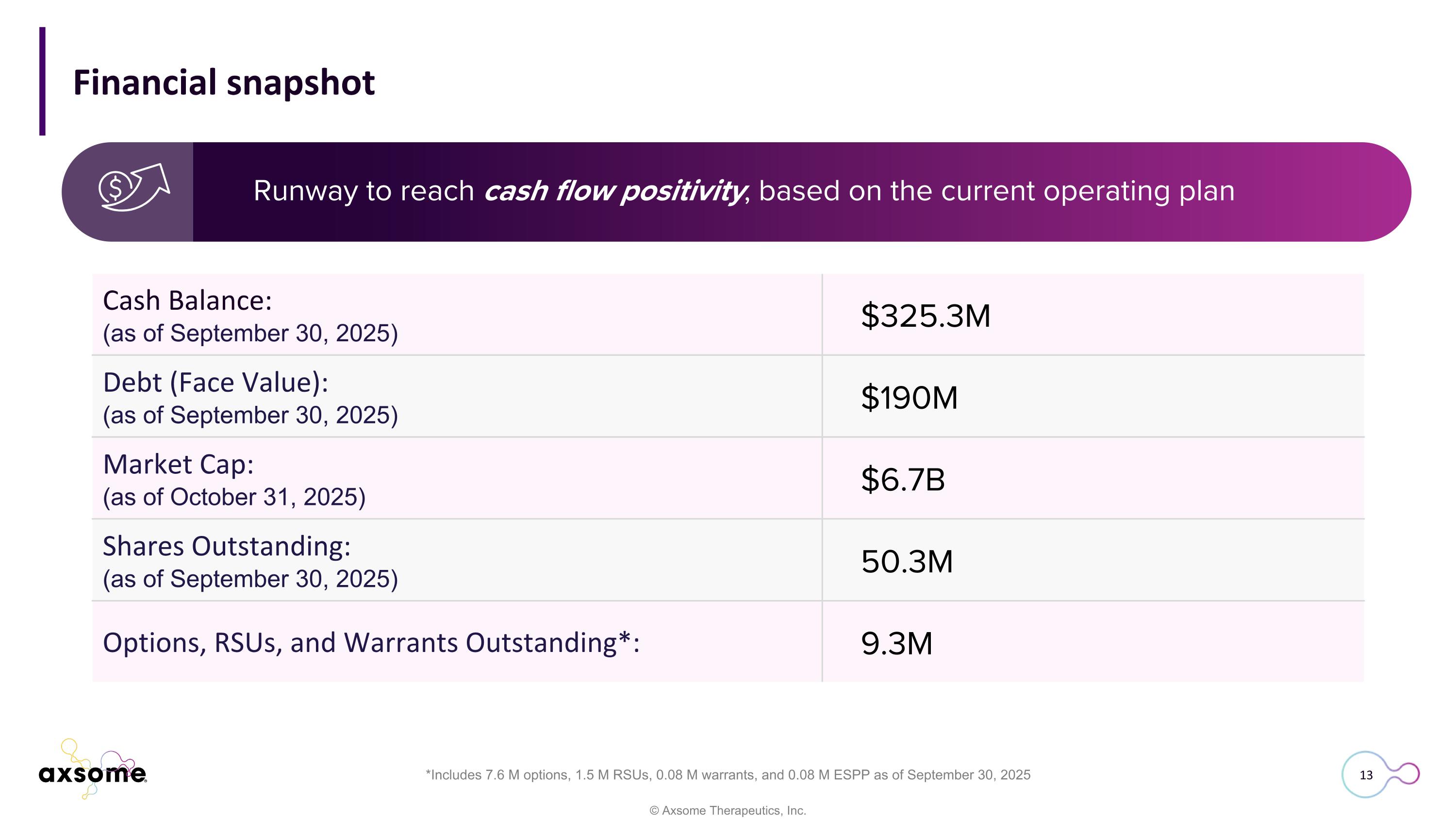
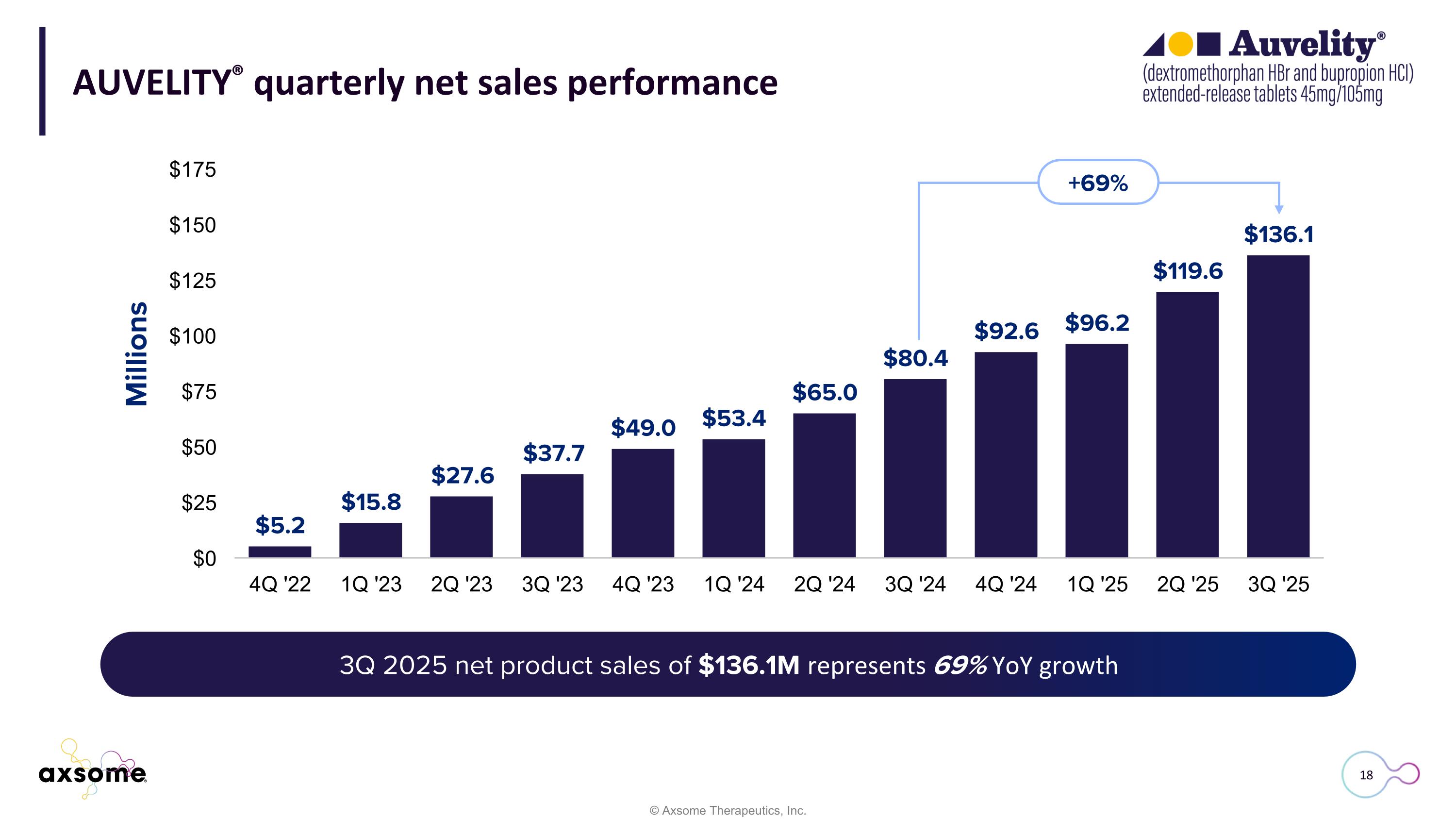
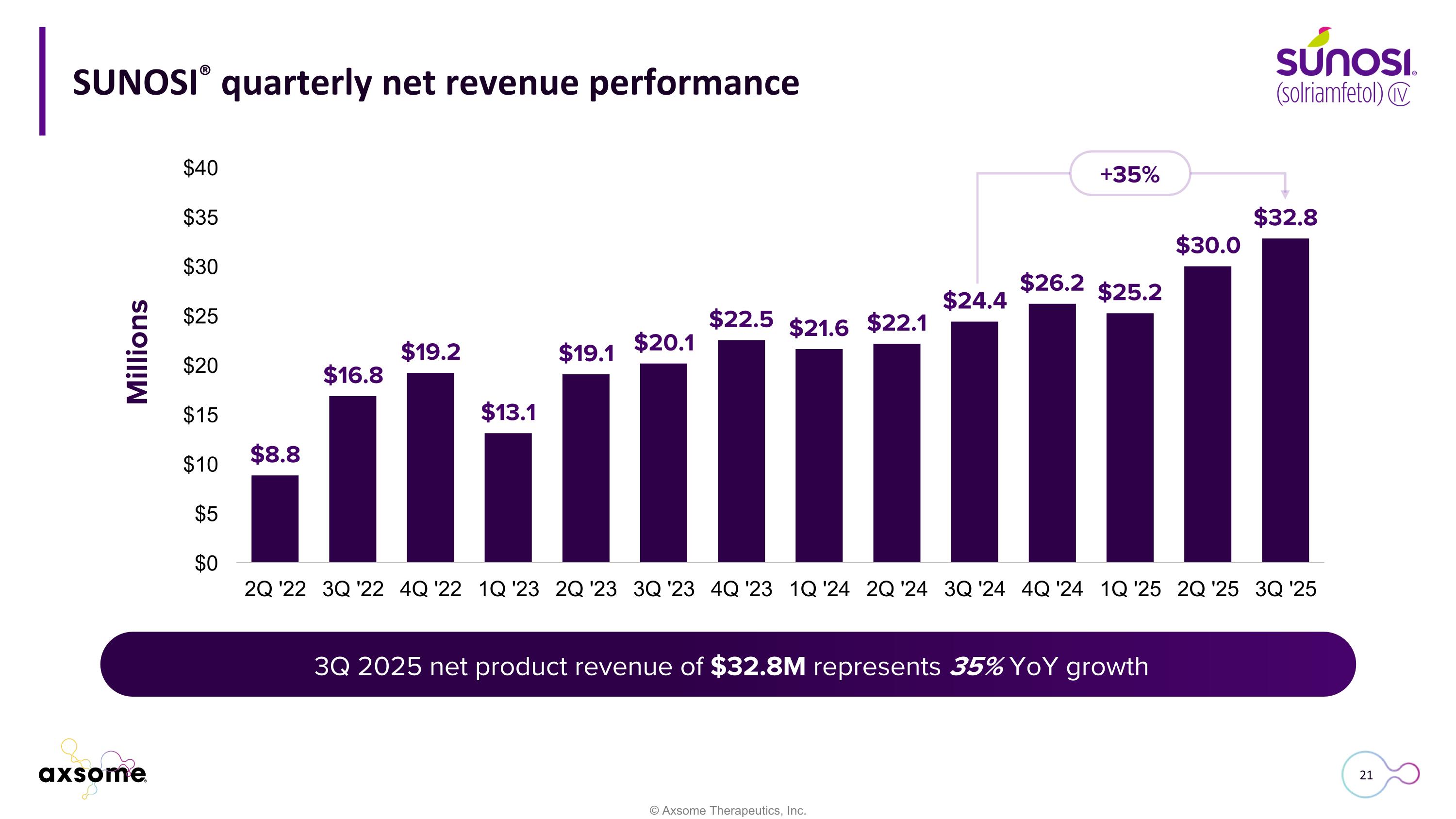
Thank you, Herriot, and good morning, everyone. Our third quarter performance underscores the continued momentum of Axsome's commercial portfolio and the breadth of our capabilities as an organization. We continue to advance multiple innovative therapies addressing diverse and critical needs in brain health, a foundation that is driving meaningful growth across our entire business. As Herriot mentioned, total product revenues for the quarter reached $171 million, representing a 63% increase year-over-year. AUVELITY continues to demonstrate impressive growth. Net product sales for the quarter were $136.1 million, up 69% versus last year. SUNOSI net product revenues for the quarter were $32.8 million, up 35% versus the prior year. SUNOSI revenues consisted of $31.6 million in net product sales and $1.2 million in royalty revenue associated with SUNOSI sales in out-licensed territories. SYMBRAVO in its first full quarter on the market generated $2.1 million in net sales. These results reflect our continued top line growth and focused execution, driving increasing operating leverage across the business. AUVELITY and SUNOSI gross-to-net discounts for the third quarter were both in the high 40% range. We anticipate that AUVELITY and SUNOSI gross-to-net discounts will increase in Q4 to the low 50% range. SYMBRAVO gross-to-net discount for the quarter was in the mid-70% range, which we anticipate will remain elevated during the launch phase. Turning now to expenses. Total cost of revenue were $11.9 million compared to $8.4 million for the third quarter of 2024. Our research and development expenses of $40.2 million decreased 11% compared to last year, primarily driven by the completion of our clinical trials for solriamfetol in ADHD and MDD. Our selling, general and administrative expenses of $150.2 million increased 57% compared to last year, primarily driven by commercialization activities for AUVELITY including the sales force expansion and our recently launched direct-to-consumer advertising campaign, along with the commercial launch of SYMBRAVO. Our net loss for the quarter was $47.2 million or $0.94 per share compared to a net loss of $64.6 million or $1.34 per share for the same period last year. The $47.2 million net loss this quarter includes $23.1 million of noncash stock-based compensation expense and a $13.2 million noncash charge related to contingent consideration. We ended the third quarter with $325.3 million in cash and cash equivalents compared to $315.4 million at the end of 2024. We continue to believe that our current cash balance is sufficient to fund anticipated operations into cash flow positivity based on the current operating plan. And with that, I'd like to turn the call over to Ari, who will now provide a commercial update.
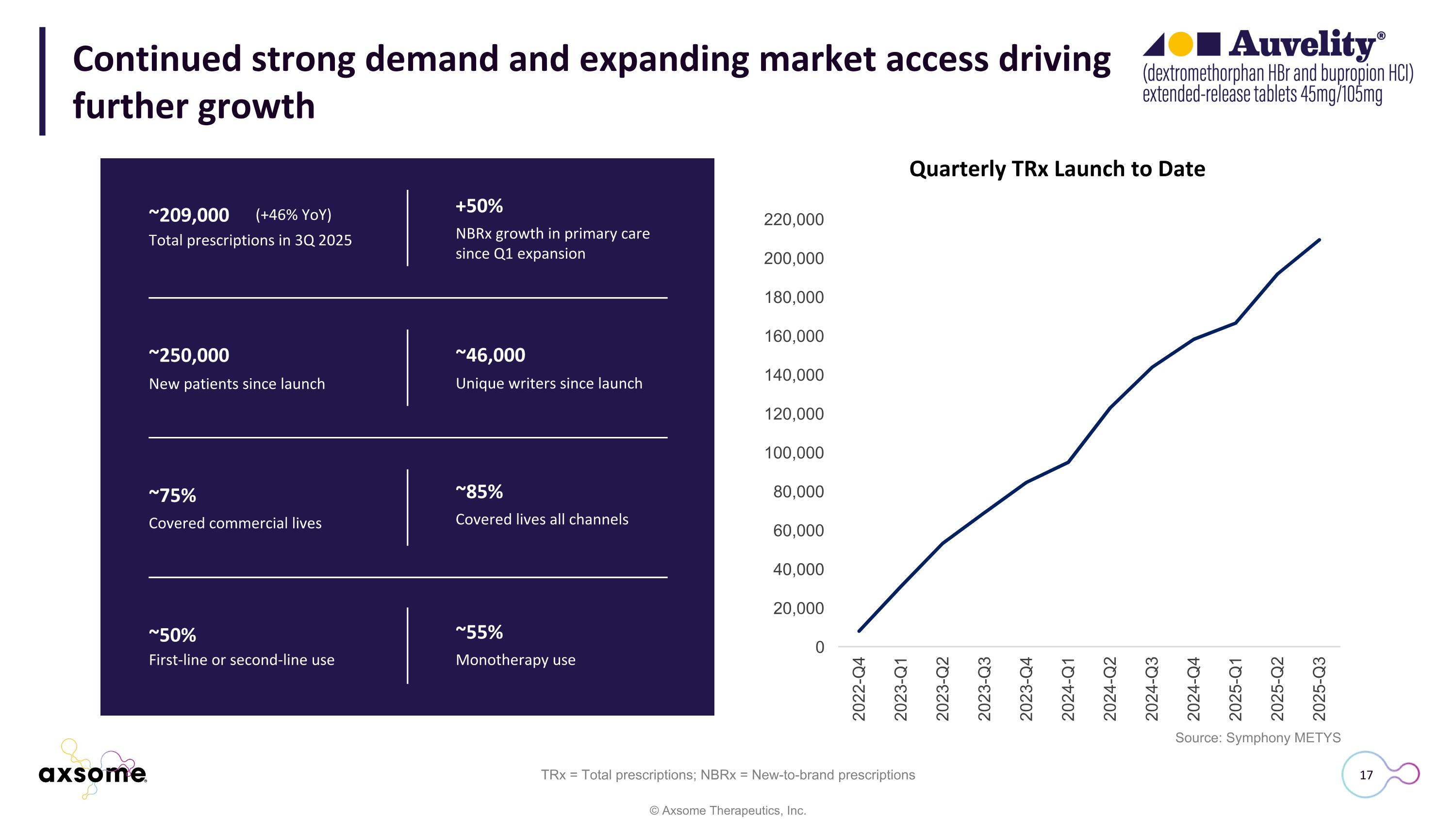
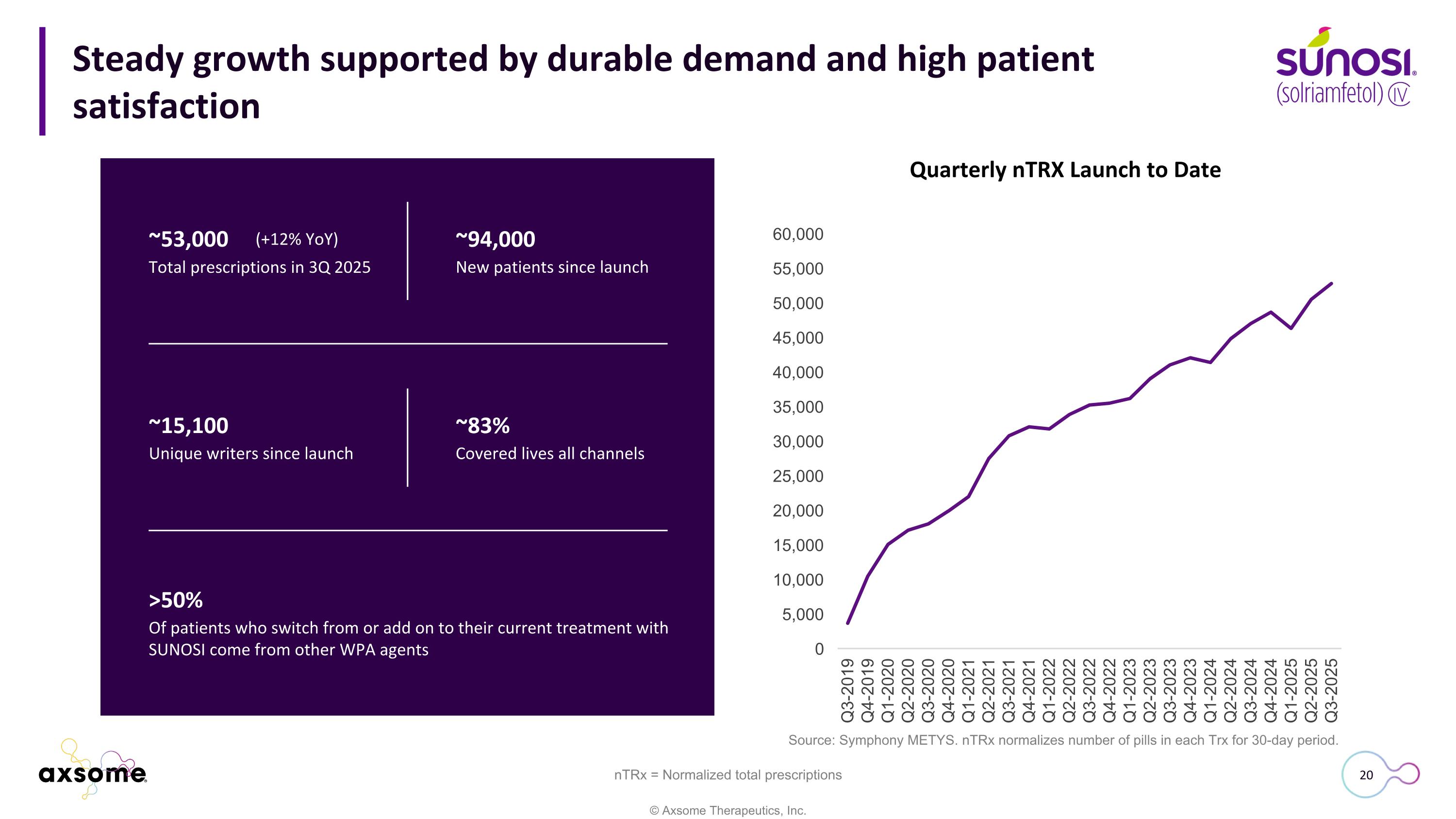
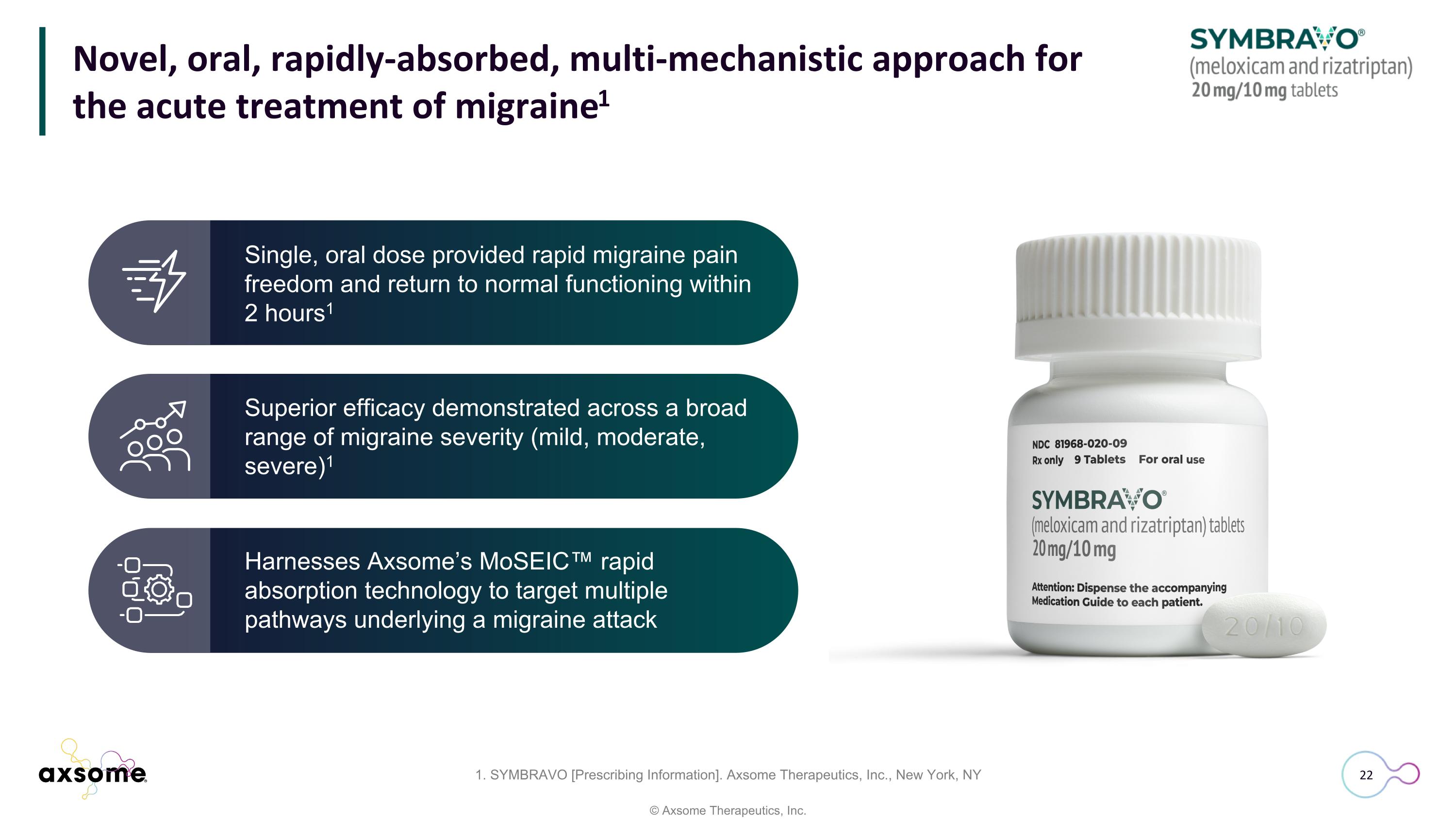
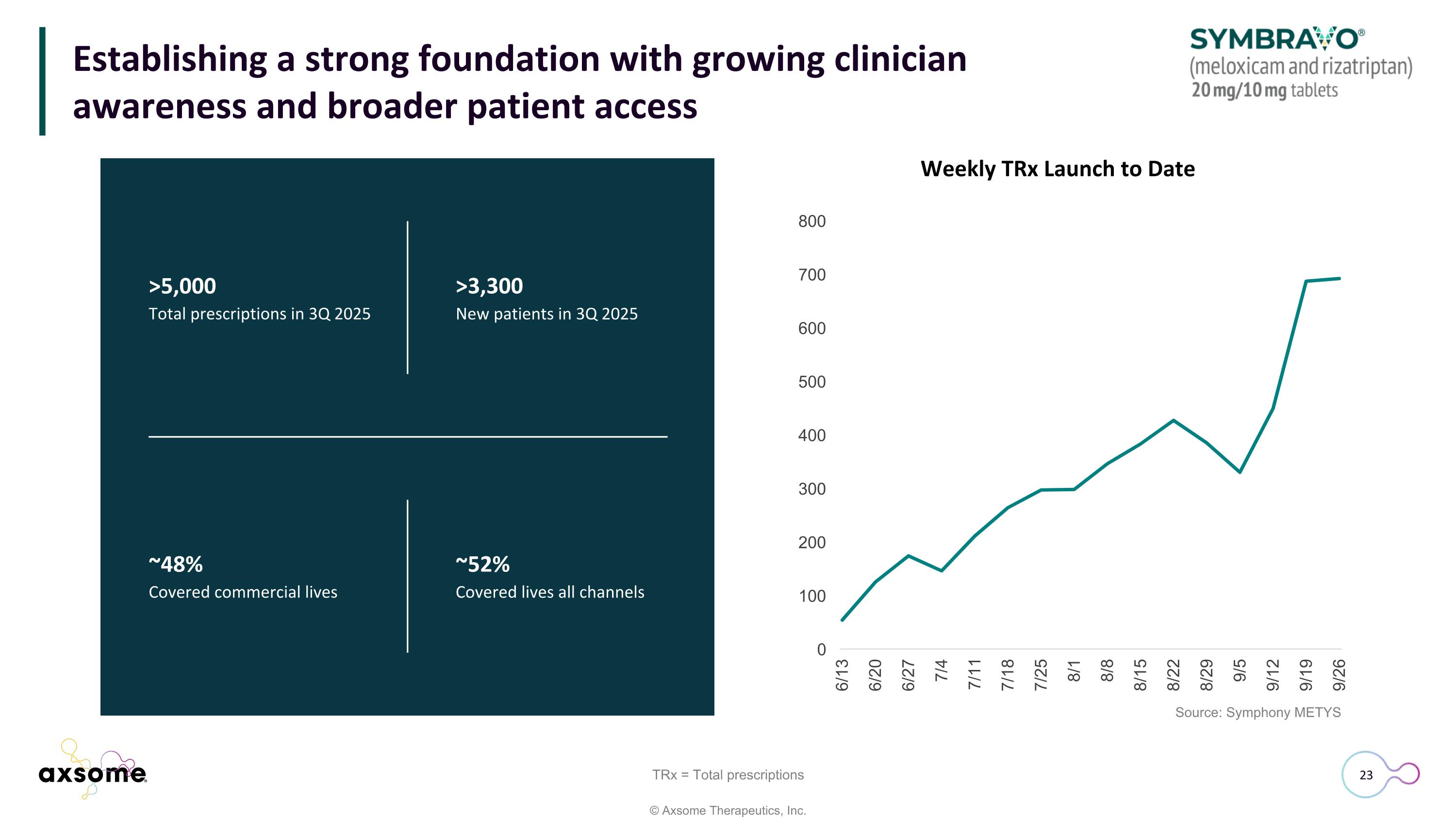
Thank you, Nick. Q3 represented Axsome's first full quarter with 3 products, and our commercial team advanced efforts across multiple fronts of Axsome's commercial business highlighted by strong performance for AUVELITY, a foundational first full quarter for SYMBRAVO and steady growth for SUNOSI. AUVELITY's momentum in major depressive disorder continues to build with strong prescription growth, increased new writer activation and the initiation of strategic commercial investments. For the quarter, approximately 209,000 prescriptions were written for AUVELITY representing 46% year-over-year growth and 9% sequential growth. By comparison, the antidepressant market grew 1% year-over-year and was flat versus the second quarter of 2025. Since our expansion of the psychiatry sales force earlier this year, average weekly new-to-brand prescriptions or NBRx has increased by approximately 35%. Our expanded team continues to drive broader and deeper engagement across prescriber segments, and we have made meaningful progress in the primary care setting. Approximately 1/3 of AUVELITY prescribers are primary care clinicians, and NBRxs from the primary care setting have increased by approximately 50% since the expansion. Approximately 5,000 new prescribers were activated this quarter, bringing the total number of unique prescribers to 46,000 since launch. In addition to strong demand growth, we continue to make progress with market access for AUVELITY. Commercial coverage increased from 73% to 75% this quarter, bringing total coverage to 85% of all lives across channels. Importantly, we have also contracted with a third large commercial group purchasing organization or GPO effective August 1, which will support continued coverage efforts moving forward. Turning now to SYMBRAVO. The third quarter marks SYMBRAVO's first full quarter on the market with early progress that is helping to establish a strong foundation for long-term growth. More than 5,000 prescriptions were written and over 3,300 new patients started SYMBRAVO in the quarter. Our targeted approach, including focused sales and marketing activity among headache specialists who drive the majority branded migraine prescriptions is effectively building awareness and driving trial. Feedback from patients continues to reinforce SYMBRAVO's robust clinical profile. SYMBRAVO's MoSEIC technology, which enables rapid absorption while maintaining a long half-life resulting in strong efficacy is resonating with HCPs. In a recent survey of migraine treaters, key drivers of prescribing include SYMBRAVO's multi-mechanistic targeting of the CGRP and prostaglandin pathways, fast migraine symptom relief, improvements in patient functioning and sustained freedom from migraine pain. We continue to make progress with SYMBRAVO market access and coverage with overall payer coverage at approximately 52% of all lives as of October 1. The proportion of covered lives in the commercial and government channels is 48% and 56%, respectively. We have also contracted with a second large GPO effective August 1 for potential coverage of SYMBRAVO. We anticipate coverage for SYMBRAVO to expand and evolve throughout the balance of the year and into 2026. And finally, SUNOSI delivered another quarter of strong and steady performance with approximately 53,000 prescriptions representing 12% year-over-year and 5% sequential growth. By comparison, the wake-promoting agent market grew 4% year-over-year and 3% quarter-over-quarter. More than 460 new clinicians prescribed SUNOSI in the quarter, bringing the total cumulative prescriber base to approximately 15,100 since launch. Payer coverage for SUNOSI remains at approximately 83% of lives covered across channels. Overall, the third quarter represented another period of strong commercial performance across Axsome's growing portfolio of differentiated CNS products. With continued execution on AUVELITY and SUNOSI and the establishment of the growth foundation for SYMBRAVO, Axsome is driving increased demand, growing prescriber and patient engagement and expanding access to our products. We remain confident in Axsome's continued growth potential and look forward to sharing future updates on our commercial progress. I will now turn the call back to Darren for Q&A.
Speaker 1
Thanks, Ari. That concludes our prepared remarks. Daryl, please open the line for Q&A.
Operator
Our first questions come from the line of Leonid Timashev with RBC Capital Markets.
Speaker 5
Congrats on the quarter. I actually wanted to ask on SYMBRAVO and your ability to extrapolate what you're seeing in the third quarter out to fourth quarter in 2026. I guess maybe can you talk about the increased depth of prescribing you're seeing and maybe what you'd like to see on the ground before you invest more in the launch and potentially in areas of bottleneck that are stopping additional patients from coming on therapy?
Leon, thank you for your question. This is Ari. It's still quite early in the SYMBRAVO launch, but we're seeing very positive responses from healthcare providers and patients. The drug is performing as we anticipated in real-world scenarios. We've adopted a targeted approach, focusing on the leading 150 headache centers and major neurology practices nationwide. Our goal is to reach as many of those providers as we can. As we evaluate the impact, we will make further decisions about expanding or investing more in SYMBRAVO. Currently, we're pleased with the initial response, but there is much work ahead, and we are just getting started. Our aim is to enhance prescribing among the clinicians we are targeting. Additionally, we've noted improvements in market access, which is another critical focus for us, and we will provide more updates as the brand develops.
Speaker 6
This is Basma on for Marc. We have a question on AUVELITY regarding the primary care segment, which seems to be contributing more and more to the scripts right now. Do you see this segment as a key growth driver for AUVELITY? And how do you envision growing this segment? Is it mainly through sales force expansion? That's it for us.
Yes. Thanks so much for the question. Yes, we believe primary care is a really important specialty area for AUVELITY in MDD, is largely because most patients in the U.S. present to primary care office upon diagnosis and many stay with primary care throughout the course of their depression episodes. As you mentioned, we are seeing very positive response in the primary care setting. It now represents roughly 1/3 of our subscriber base, and we're seeing strong performance in terms of new patient starts as well as overall prescriptions. In terms of how do we further grow the primary care segment, part of that is just our focused sales force effort. Obviously, we've expanded the team several times, and that has enabled us to reach more primary care clinicians on a routine basis. We believe the expanded market access that we've been able to accomplish over the past couple of years is also helping to ease the prescribing path for a primary care treater that may not have as many resources to support prior authorization processing. And then finally, our direct-to-consumer campaign, which launched in the quarter, we're seeing early positive signals in terms of patient awareness, patient requests for the product, and we expect that to facilitate further growth in the primary care setting along with the psychiatry setting.
Speaker 7
Congrats on the quarter. There is a clear distinction in the clinical profile of AXS-05 versus antipsychotic. Given the differences in clinical data for Alzheimer's agitation and the mechanisms, what are your expectations for AUVELITY adoption if approved? And how do you plan to drive uptake in the various channels? And have you identified key elements from REXULTI commercialization and marketing strategy, you would do differently to ensure a greater uptake and success?
Thank you for the question. We are very optimistic about the potential impact AXS-05 could have in the Alzheimer's agitation market. As we prepare for the launch, we've identified various specialties involved in treating agitation, with primary care being the largest. There are also geriatric psychiatrists, neurologists, and traditional psychiatrists involved. Long-term care is a crucial setting for Alzheimer's patients, and we aim to address all these specialties with our initiatives. We notice significant overlap between Alzheimer's agitation and major depressive disorder regarding the prescriber base, which allows us to utilize our current sales force effectively. We anticipate strong synergies in our promotional efforts. Additionally, we recognize the need to invest in long-term care promotion, which we currently do not have but plan to implement if the drug is approved. Regarding REXULTI's promotion, we typically do not comment on other companies' strategies. However, we are aware of their success with REXULTI and will take valuable lessons from their approach to inform our launch strategy for AXS-05, if approved.
Speaker 8
I'm just wondering on the sales force expansion. I think you just mentioned on the call, you're up to 46,000 prescribers, added 5,000. Given the bump in SG&A, I'm wondering how much capacity you think you've got in the existing sales force and when you might have to go again and how that ties into your thinking about the time to cash flow positivity?
Yes, I'll take the first part of the question. We are pleased with the size of our sales force at the moment. It is driving considerable growth in terms of new prescribers as well as new patients. We previously shared that we intend to add some additional representatives in support of the Alzheimer's agitation approval. And we have started our efforts in terms of laying the groundwork for future expansions, although we haven't quite settled on a final number. That is something that we're looking to do early in 2026.
Yes. Maybe just a little bit on the SG&A for the quarter. This is Nick. So in Q3, the SG&A increased slightly. That was really driven by our launch of the DTC campaign that we launched in September. Additionally, we had a full quarter of commercialization activity for SYMBRAVO. So even with that, if you take a look at our net loss on a cash basis, we continue to improve quarter-over-quarter as well as on a GAAP basis, continue to improve on the net loss. So no changes as it relates to our outlook for cash flow positivity.
Speaker 9
Just on the AD agitation application, can you comment on how many days past you are after the application filing? Are there some investor discussion going on whether you're past the 60 days and that's unlikely to get a priority review? And then any implications that you can draw from the government shutdown to your filing application process review and how this may play out?
Sure. As is our practice, we haven’t disclosed the date of the submission, but the FDA typically informs sponsors about potential acceptance up to 74 days after submission. We do not anticipate any impact from the shutdown on the timing. As mentioned, the next update we expect to share is regarding the potential acceptance decision.
Speaker 10
Great execution this quarter. Now, shifting gears to the pipeline, you have two Phase III readouts with SUNOSI for binge eating and shift work disorder. Can you discuss the study designs and what positive data would be needed for you to file two more sNDAs next year or in 2027?
Sure. As it relates to binge eating disorder, it's a standard parallel-group study design. And that would be the first study that we would need in order to be able to file an sNDA. So then based upon the results of that study, we would intend to initiate another trial, so we would need 2 studies for that. Other indications for solriamfetol include ADHD and where we currently have one positive Phase III trial for that in adults, and we're looking to start our second study, which would be in pediatric subjects or pediatric patients in the fourth quarter.
Speaker 11
My question is just sort of broader, stepping back. You've got a couple of products in the market, making your way towards cash flow positively and several other late-stage assets. Sort of from a long-term strategic perspective, where are you in terms of your thinking around the portfolio? Are you looking to add additional assets to drive sort of operational efficiencies over the next couple of years? Or do you think that you've got enough in late stage that focuses really more on execution on those assets?
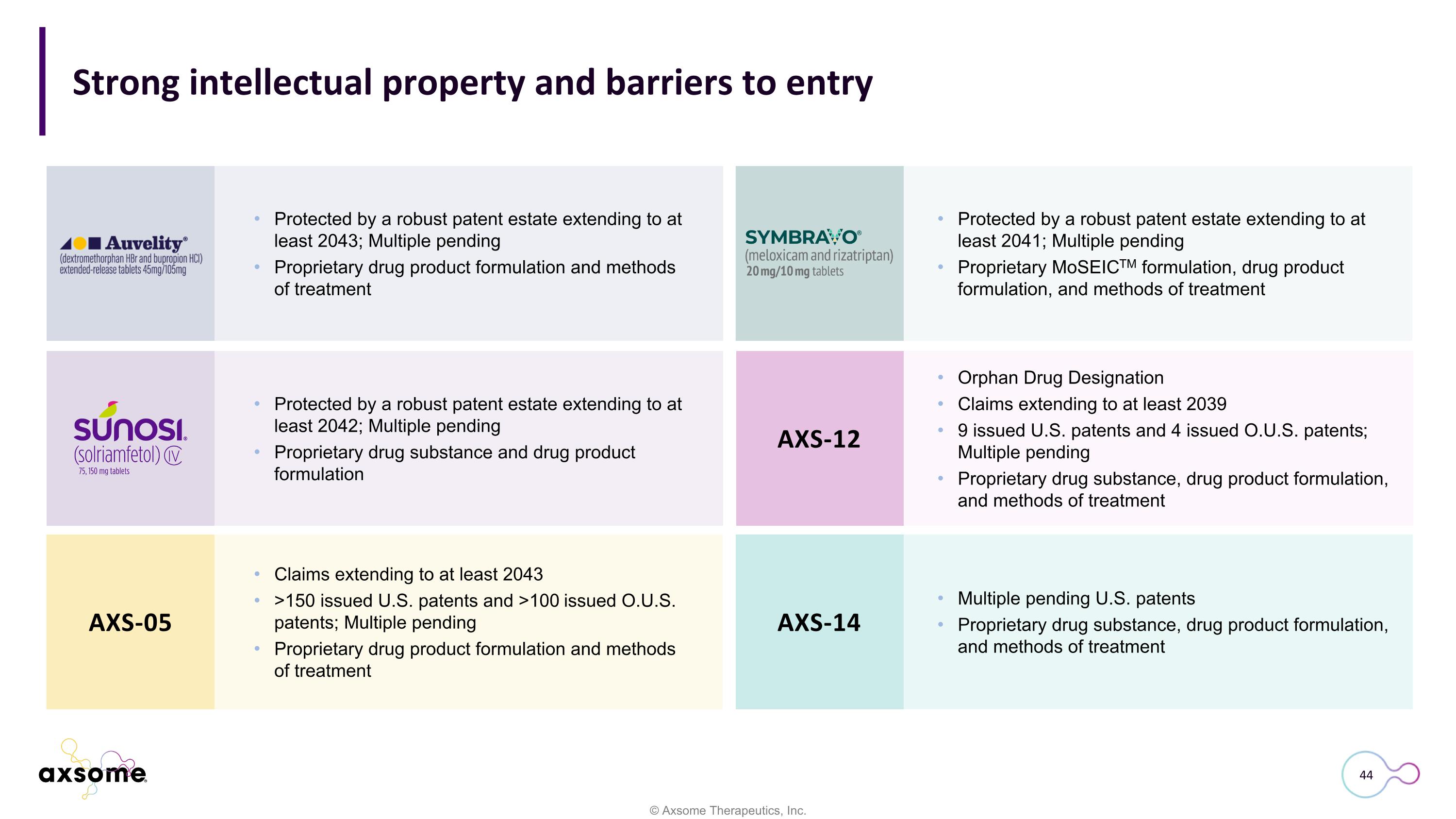
Thank you for the question. We find ourselves in a unique situation with three marketed products that are still in the early stages of launch, presenting significant growth opportunities ahead. Additionally, the exclusivity period for these products extends into the next decade or even longer, which puts us in a favorable position. Alongside this, we anticipate the next wave of products and indications to be approved in the coming years. We've mentioned the sNDA filing for Alzheimer's disease agitation and the planned NDA filing for AXS-12. Furthermore, we plan to initiate our next Phase III trial for AXS-14. This means we do not need to take any immediate action regarding the pipeline. However, our standard approach is to stay proactive. Therefore, we are leveraging our current position to explore possible complementary additions to the pipeline. We will continue to make thoughtful strategic decisions regarding enhancements to our pipeline, and we are in a position to be selective about the opportunities we pursue.
Speaker 12
I had a question on reboxetine. I wanted to get your latest thoughts on how you're thinking of the commercial opportunity, particularly given that you'll be entering the market more or less around the same time as oveporexton, the first orexin 2 receptor agonist. So how are you thinking about the competitive dynamics here? How are you thinking about sizing this opportunity? Just wanted to get your latest thoughts on the product.
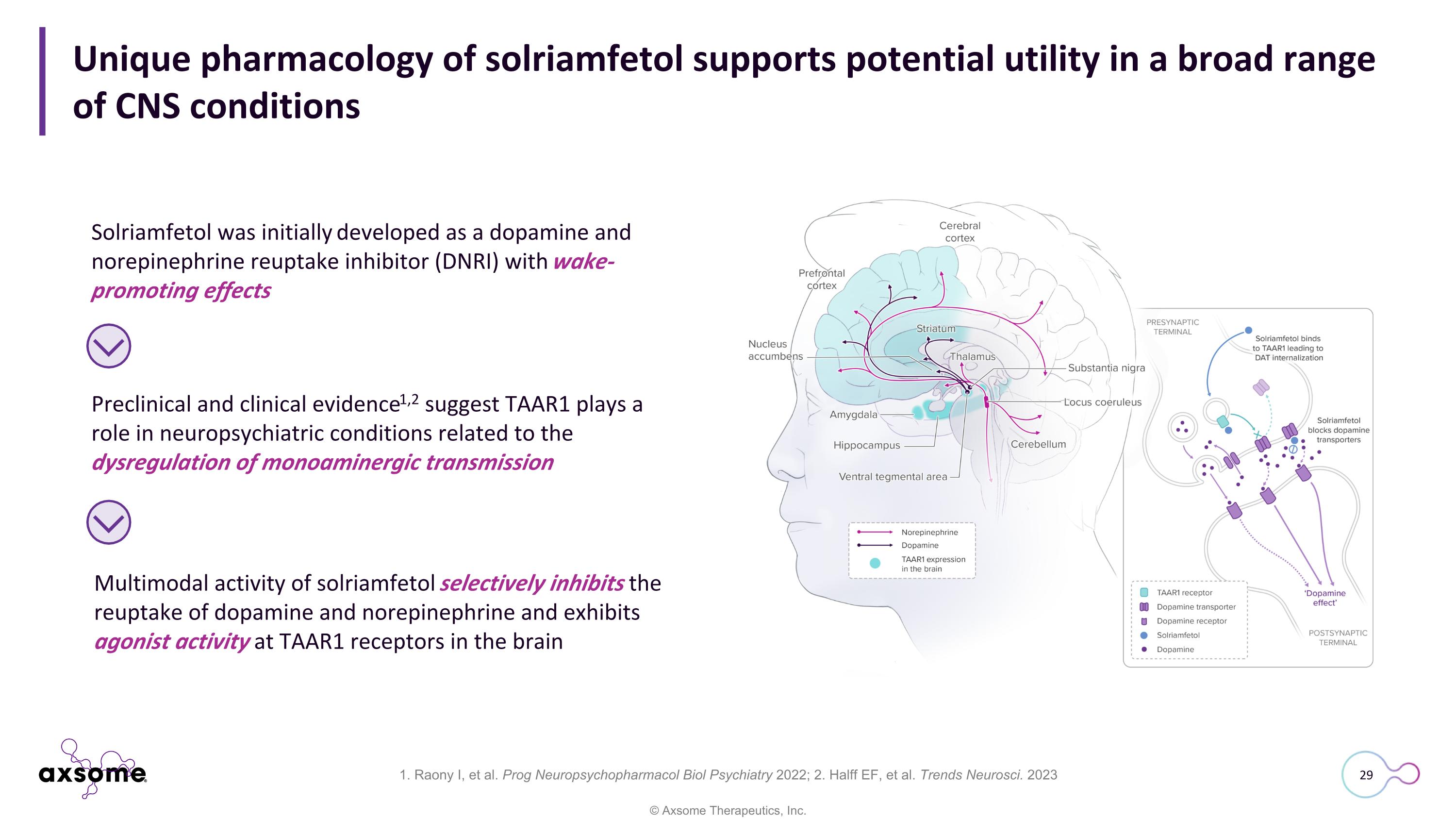
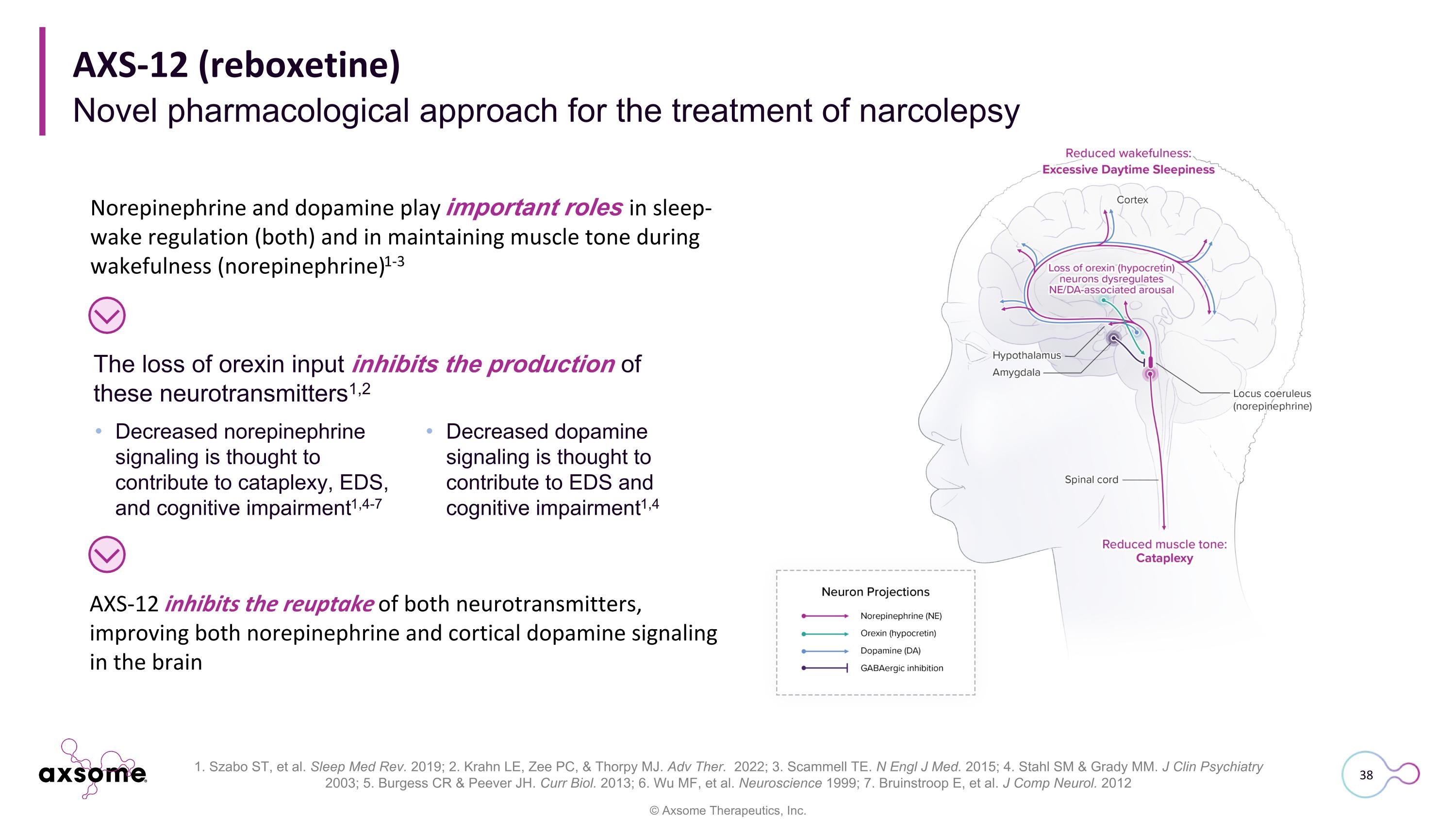
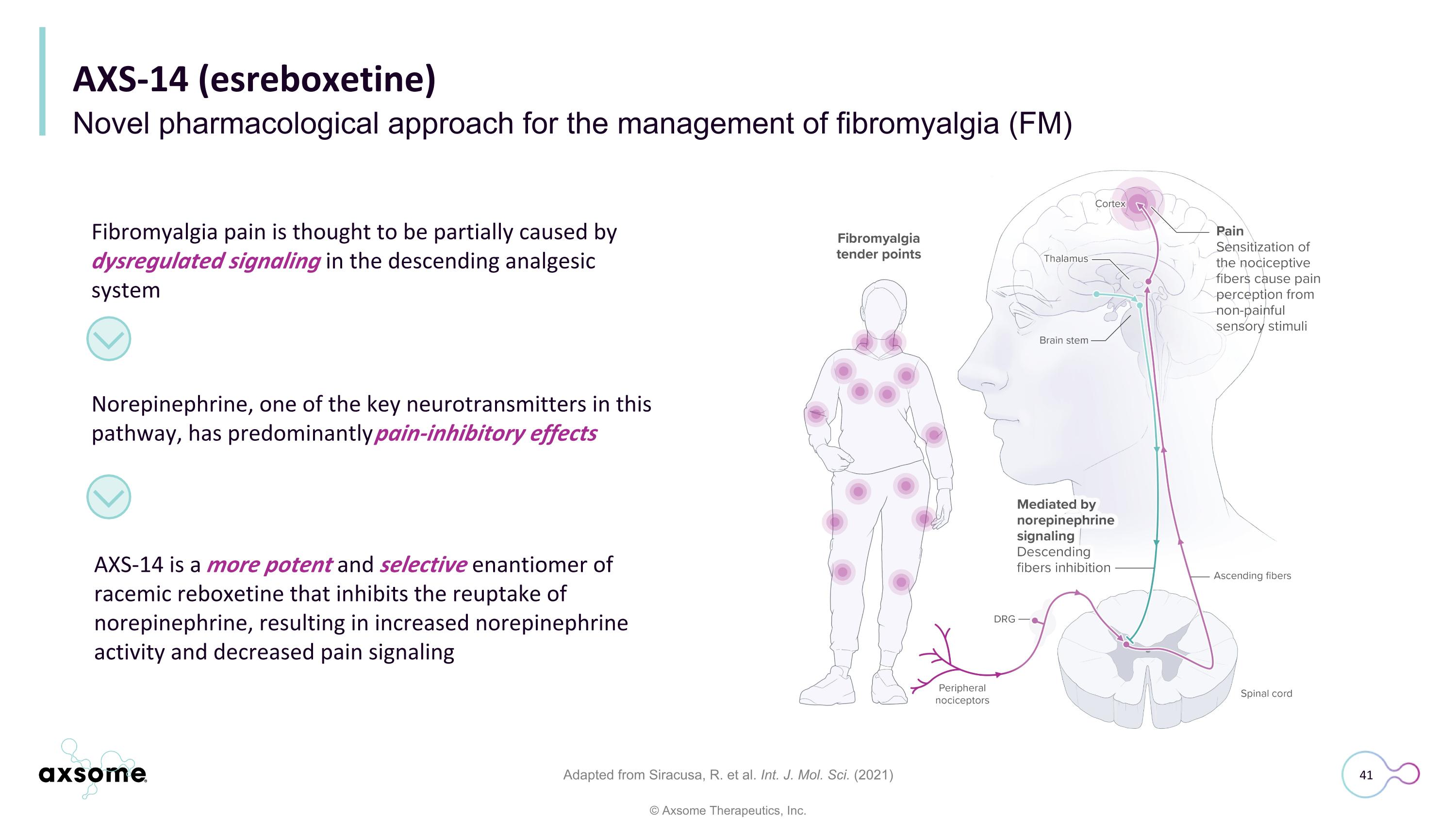
Yes, I believe we can all address that. One interesting aspect of reboxetine is its action on norepinephrine reuptake inhibition, which aligns with the pathways affected by orexins. The disease involves loss of orexin neurons, leading to decreased norepinephrine production. Consequently, reboxetine operates in a logical way that corresponds to the disease's underlying mechanisms. We are very enthusiastic about the product profile because our experience in the sleep sector with SUNOSI has shown us that there remains a significant unmet medical need. Ari?
Yes. And I'll just add, when you look at the clinical profile that was observed in the Phase III trials, great efficacy in cataplexy, nonstimulant daytime treatment, favorable tolerability profile. These is a lot to like about it, and what we hear from KOLs and sleep experts is that many patients require a polypharmacy. There's a lot of trial and error. And even with the entry of a new mechanistic approach, we believe that there will still be significant unmet need, which creates opportunity for AXS-12 in those patients.
And maybe just one other add is with respect to sizing, we see incredibly high synergy, almost near perfect synergy with the current sales and marketing infrastructure that we have in place for SUNOSI right now. So very, very, very complementary to what's already in place. So we're excited about that.
Speaker 14
Congrats on the strong quarter. Your commercial execution on SUNOSI is quite impressive. Any idea where the demand for SUNOSI is coming from? Is it NT1, NT2, IH or something else? And given your strength in combining products, any thoughts on combining SUNOSI with AXS-12 to address both EDS and cataplexy? Or do you think it's just better to keep them a la carte?
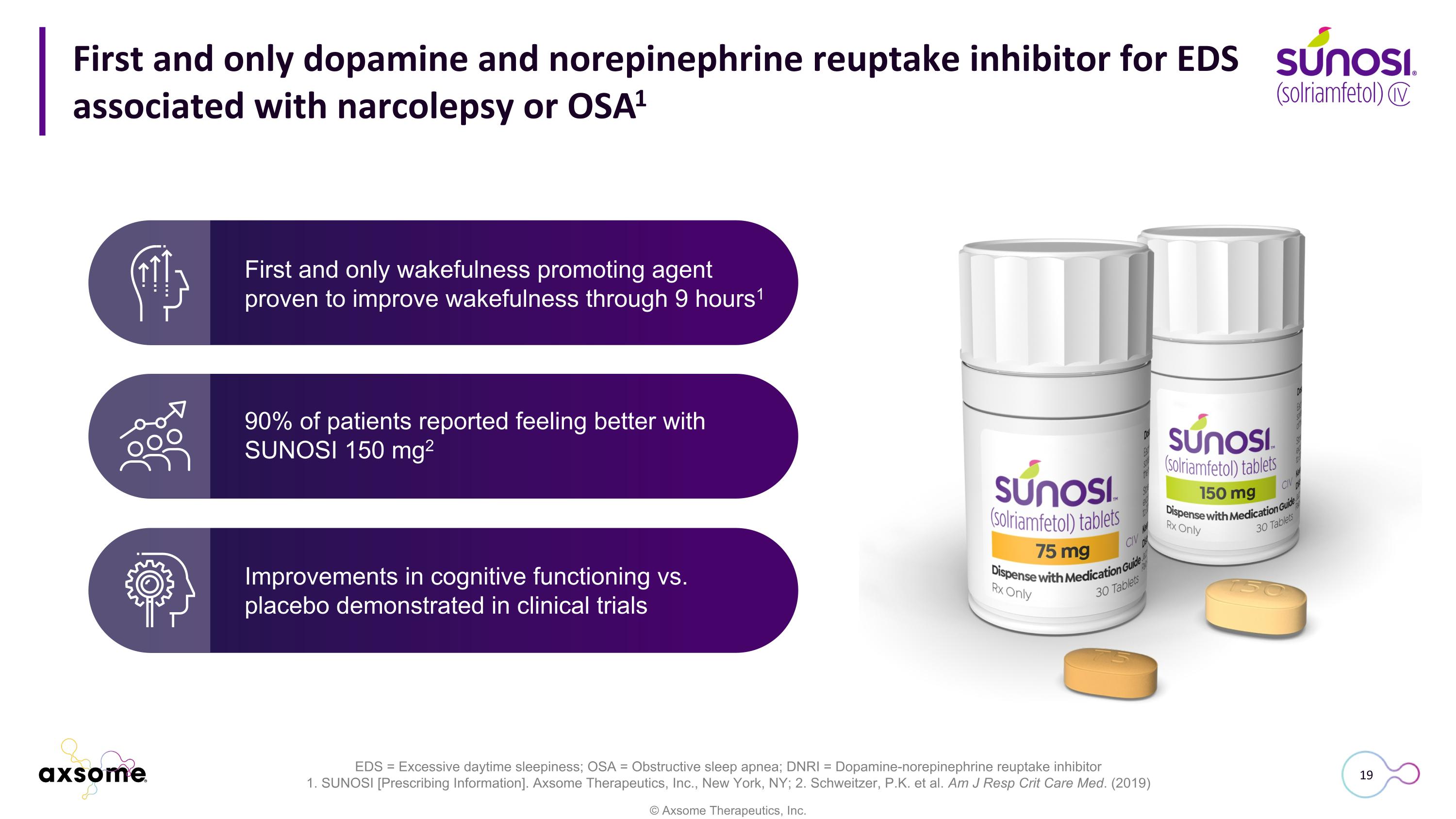
I'll address the first part of your question. The main growth is coming from the OSA segment, which has a significant unmet need related to excessive sleepiness in OSA patients. This segment accounts for about two-thirds of the total prescriptions for SUNOSI, and we're experiencing strong demand from these patients. Narcolepsy also plays a vital role in SUNOSI's sales, but we've noticed increased awareness of excessive sleepiness in OSA patients over the past couple of years, leading to higher usage.
Yes. And as it relates to your question about whether it should be an a-la-carte approach for AXS-12 and SUNOSI, given how complementary the planned indications are. Our priority is to make sure that we get the product approved. That's first and foremost. So let's start with that. And that's going to accomplish our main goal, which is to provide clinicians extra treatment options. And clearly, given how the patients are treated with narcolepsy, given the varied symptomatology, probably undoubtedly, there would be patients who receive both SUNOSI and AXS-12. And our goal is to provide clinicians the data such that they can treat the patients in the best way that they see fit.
Speaker 15
Congratulations on all the progress. Just with respect to SYMBRAVO, I was wondering if you could elaborate on the number of centers that you expect to target in the next wave after the initial 150 headache centers. And also if you could tell us a little bit about the timing with which you expect the DTC campaign for SYMBRAVO to be engaged, if we should be thinking about the time line as being similar to the time line with which you initiated the DTC promotional activity in support of AUVELITY.
Thanks, Ram. So regarding the, I guess, increase in number of centers, the way to think about it is right now, we are really focused on the predominant headache centers and headache specialists in the country. A future expansion would enable us to actually expand out more into the primary care market where you might have a heavy proportion of migraine treaters. And so right now, we feel very good about our coverage of headache centers and headache specialists, but that next wave would really be more about primary care expansion. As it relates to DTC, I think it's a little premature to talk about potential timing. If you look at AUVELITY and our timing related to our DTC launch, it really was a function of ensuring we had a strong foundation of HCP prescribers support from a prescriber perspective. We have reached a critical mass in terms of market access, and we had a sales force size that was big enough to support the increase in patient requests coming from a DTC campaign. So when that might happen, obviously, we're focused on execution across all fronts, and we'll evaluate as the brand progresses.
Speaker 16
It's Dina on for Jason. Congrats on the quarter. Just on AXS-05 for Alzheimer's disease agitation, could you maybe share your understanding of the clinical profile bar that's necessary for priority review under breakthrough designation? Is there a requirement that AXS-05 shows efficacy benefit relative to REXULTI? And maybe how do you think investors should think about that scenario and the read-through to the ACCORD trial? And then just a quick follow-up on your comment on AXS-05 ADA long-term care promotion. Could you just maybe detail what those efforts look like? Are there docs that are affiliated with long-term care facilities? I appreciate any additional color there.
Our base case is always to expect a standard review for the application. We are also eligible for a potential priority review, but we understand that the FDA typically defaults to a standard review for any application. Regarding quantitative efficacy benchmarks, the agency does not operate that way, so it’s challenging to provide specific details on what might be included in an analysis like that. However, our baseline expectation remains a standard review. We will update everyone on any acceptance decisions as that will be the next step we anticipate during the review process.
Yes. And Dina, in terms of your long-term care question, it's a little different than traditional outpatient facilities where you may be calling on MDs, NPs, PAs along with office staff. In long-term care facilities, there's a significant nursing staff, pharmacy directors, medical directors. Of course, there are physicians, NPs and PAs that will make rounds in long-term care, but they also are treating patients in the community. And so there is a synergistic effect of the community-based promotion for those clinicians that go into long-term care. So it is a little bit of a different approach, which is why we feel it's necessary to have a dedicated team focused on long-term care facilities if the drug is approved.
Speaker 17
One more question on the ADA. How do you think about the AdCom? Is that going to be required given that we already had one for the space with REXULTI? Just curious to hear your thoughts on how you are thinking about it.
In AdCom, that's something companies find out on potential acceptance decisions for FDA. So stay tuned on that.
Speaker 18
Congrats on the continued success across the board, both commercially and on the pipeline. Just want to talk about AUVELITY commercially. I just wanted to revisit the gross to net and its evolution. I think you mentioned that the gross to net was in the high 40s in the third quarter. I'm wondering what led to that happening and whether there are any unique onetime events or items that contributed to that. And also just looking forward on the progress you've made with contracting. Are there any other significant gains that you're looking forward to? I mean it seems like you're in a pretty good place, but just wondering just in the future, how we should think about that dynamic.
Graig, this is Nick. Thanks for the question. You're correct, AUVELITY discount for the quarter improved from the mid-50s to the high 40s in Q3. So pleased with the net price improvement around AUVELITY. And something that did change during the quarter is that we received additional 28 million lives in Q3. And so we were able to see those lives covered in an improved fashion in first-line or first switch. So improved access, improved amount of patients covered along with improved net price from a GTN perspective. Ari, do you want to take the second question?
Yes. So I think, first and foremost, we're at 85% total lives covered, which we're really pleased with. We shared on the opening remarks that we signed the third large GPO. Our expectation is to continue to add additional covered lives. Our goal is to try to get to as close to 100% as we can. Obviously, with the third GPO signed, that will enable additional covered lives moving forward. As you know, it's very difficult to predict exactly when those new PBM contracts will come online. But we do feel optimistic that there's great interest and the team is continuing to focus on driving additional covered lives moving forward.
Speaker 19
Congrats on the quarter. I just wanted to go back to the planned sales force expansion for ADA. Recognize that it's early days, but could you maybe bookend or at least point us towards maybe a minimum number of reps that you think would be sufficient to execute a successful launch in that indication? And are those numbers already contemplated in your guidance for reaching cash flow positivity?
Thank you, David. The plan is to grow the team if the drug receives approval. We are still determining the specific number of additional staff needed, as there are two main considerations. First, we need to identify any clinicians we currently don't cover but would like to include, which will inform our hiring requirements. Second, we’ll have to evaluate the staffing necessary to effectively educate and engage within the long-term care sector. While it’s too early to provide an exact figure, the intention is to expand the team if AXS-05 is approved, and we will provide more updates in the future.
Speaker 20
And David, would you mind just repeating, I think you had a question about cash flow positivity.
Speaker 19
Yes, is the expected expansion of the sales force already included in the current guidance or cash flow positivity?
Yes, David, it's Nick. Absolutely, it's included in our forecasts. We base our cash projections on a positive clinical and regulatory outlook and the associated costs. Clearly, post-launch, there will be significant capital expenditures in the initial quarters. Ultimately, we expect to see a return on investment. So yes, the answer is that we've already factored this into our cash flow.
Speaker 21
Congrats on all the progress in the quarter. Just with respect to AUVELITY, approximately how many quarters do you think it will take to see an impact from the recently launched DTC campaign on prescriptions? And do you think we'll see any sort of inflection in the current trajectory of prescriptions? Or do you think we'll see just more of a continued gradual upward trend?
Yes. Thanks, Troy, for the question. In terms of number of quarters, it's hard to predict exactly when the most significant impact from DTC will hit. But one of the things that we're looking at is changes in our weekly new patient starts. We have begun to see an increase in new patient starts. In general, it's sort of 8 to 12 weeks is when we'd be looking for anything significant in terms of DTC impact. Right now, we feel like it's still early days, but we're pleased with some of the trends that we've observed, and we'll continue to provide updates.
Speaker 22
Just the first on the third GPO contract in those P&T meetings coming online. Would you expect that commercial covered lives moving from 75% to somewhere in the mid-90% to have a similar favorable gross to net impact, as you saw with the 28 million lives coming online in the third quarter there? And then secondly, just given the FDA news this morning with uniQure and then George Tidmarsh, obviously, resigning. Just anything you can say about the confidence of the FDA as you work through the regulatory process on the CDER side?
Myles, I'll address the first question regarding GTN. It's too soon to determine the final outcome for GTN with the additional contract now in place. However, we are happy with the progress we've made in GTN, particularly in terms of the number of lives covered and access to the formulary. Please stay tuned for updates on our progress. We will continue our negotiations in the same manner as before, focusing on maintaining long-term value and maximizing patient coverage.
And on the FDA side, right now, things are status quo for us in terms of our dialogue and interactions with the various divisions that we engage with.
Speaker 23
Congrats on the quarter. On AUVELITY and SUNOSI as well, but more so AUVELITY, are you seeing per prescriber activity trending upward? Just trying to kind of get a sense of how much growth here is sensitivity to promotion versus more organic growth? Obviously, the sensitivity to promotions is great. But my sense is that there's also some organic growth here as well. If you could just comment and then maybe a follow-up.
Thank you for the question, Madison. When considering our growth, it's important to look at two factors: the productivity of our existing writers, which refers to the number of prescriptions each writer is generating, and our success in bringing on new writers into the prescriber pool. We are experiencing positive developments in both areas for our brands, which highlights the significant impact these medications are having on patients' lives, the positive feedback clinicians are receiving from their patients, and our team's ongoing efforts to engage and educate them consistently. We will continue to focus on these aspects moving forward.
Yes. So with 4 Phase III trials launching, there are a lot of moving parts from an operational perspective to make sure that, that happens. So it's very unlikely that they're all going to happen on the very same day. So do expect a natural cadence. It's nothing that we're preplanning. However, we are working towards and are on track for the initiation of those studies in the fourth quarter.
Speaker 24
This is Craig on for Ben. So just a couple from us here. So given your successful track record of getting products through the finish line, I'm curious, can you provide a little bit of color of how your regulatory interactions in regards to the sNDA for AXS in ADA has maybe differed from some of those past programs? And I guess second question, in regards to narcolepsy, I feel like we're seeing a lot of estimates of the epidemiology of those indications kind of expanding and expanding further. So out of curiosity, what do you guys think is driving that? And are you seeing growth in IH, NT1, NT2, any one particular area? Yes, any color there would be helpful.
I'll take the first part. So it's ordinary course at the moment based on where we are in the cycle, in terms of the submission for AXS-05 in AD agitation.
Yes. And from an epidemiological perspective, for narcolepsy you've got to look at the surveys that are done and the quality of the surveys. And however, one aspect of the market that we've always pointed to is the fact that in this orphan indication, there's still a large percentage of patients who, one, have remained undiagnosed in the past; and secondly, who are treated. So certainly, as there is more interest in the space as more products are being developed and coming to market, one would expect that there would be an increase in awareness and maybe that's what you're seeing. Anything that you would add, Ari?
No. I think you mentioned NT1, NT2, IH, I think that there's a lot of symptomatology overlap in different formalized diagnoses, which may muddy the waters a little bit. But from our perspective, we feel good about our current estimates, which is around 185,000 people in the U.S. suffering from narcolepsy, and that's what we're building our plans around.
Speaker 1
There are no further questions at this time. I would now like to hand the call back over to management for any closing comments.
Thank you, and thank you to everyone for joining us this morning. As we've highlighted today, Axsome delivered another strong quarter. We continue to drive robust growth across our commercial portfolio and are well positioned to deliver significant long-term value through our advancing pipeline. We look forward to sharing our continued progress over the coming months. Thank you.
Operator
Thank you. This does conclude today's teleconference. We appreciate your participation. You may disconnect your lines at this time. Enjoy the rest of your day.