Operator
Hello, and thank you for standing by. My name is Mark, and I will be your conference operator today. At this time, I would like to welcome everyone to Business First Bancshares Q3 2025 Earnings Call. I would now like to turn the call over to Matt Sealy. You may begin.
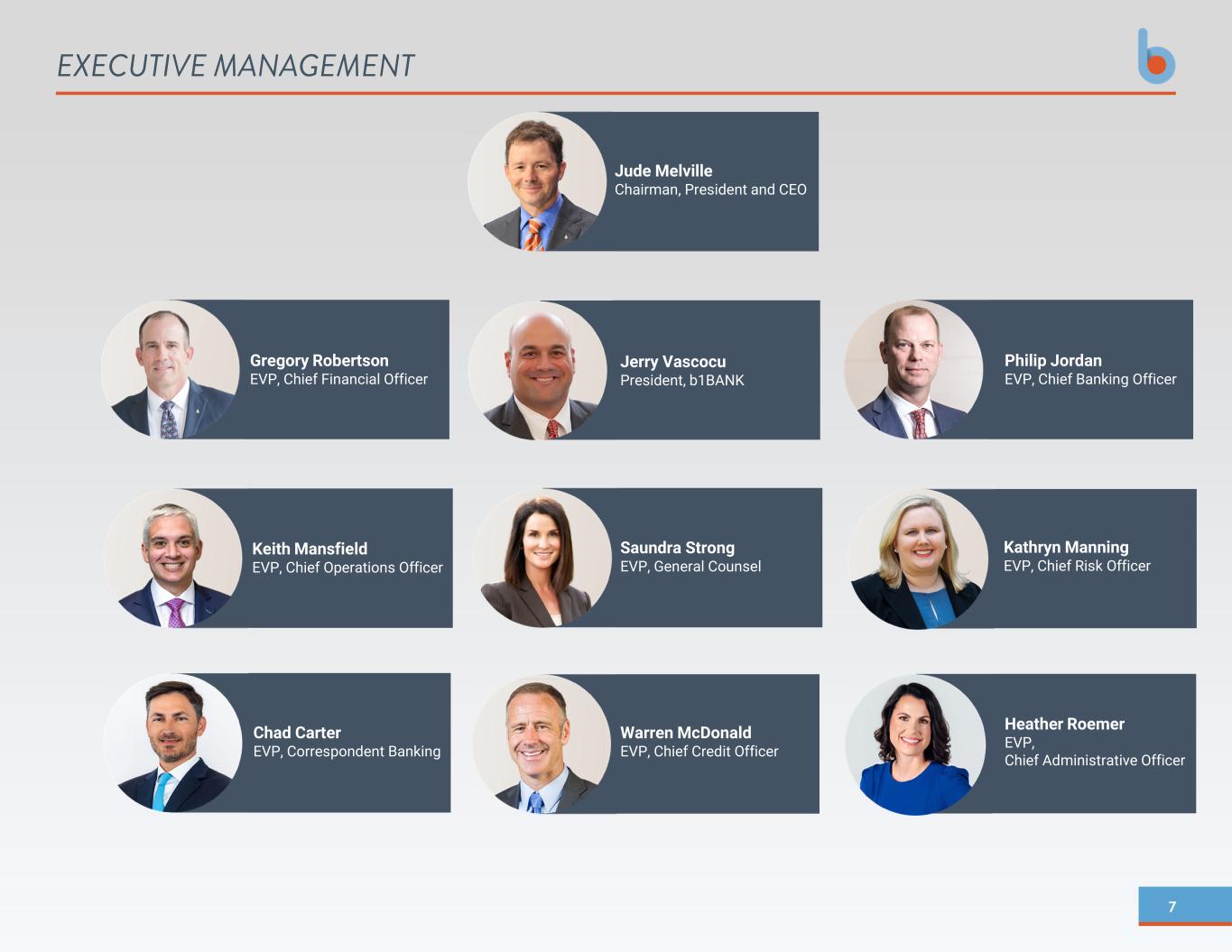
Thank you. Good afternoon, and thank you all for joining. Earlier today, we issued our third quarter 2025 earnings press release, a copy of which is available on our website, along with the slide presentation that we will reference during today's call. Please refer to Slide 3 of our presentation, which includes our safe harbor statements regarding forward-looking statements and the use of non-GAAP financial measures. For those of you joining by phone, please note the slide presentation is available on our website at www.b1bank.com. Please also note our safe harbor statements are available on Page 7 of our earnings press release filed with the SEC today. All comments made during today's call are subject to the safe harbor statements in our slide presentation and earnings release. I'm joined this afternoon by Business First Bancshares' Chairman and CEO, Jude Melville; Chief Financial Officer, Greg Robertson; Chief Banking Officer, Philip Jordan; and President of b1BANK, Jerry Vascocu. After the presentation, we'll be happy to address any questions you might have. And with that, I'll turn the call over to you, Jude.
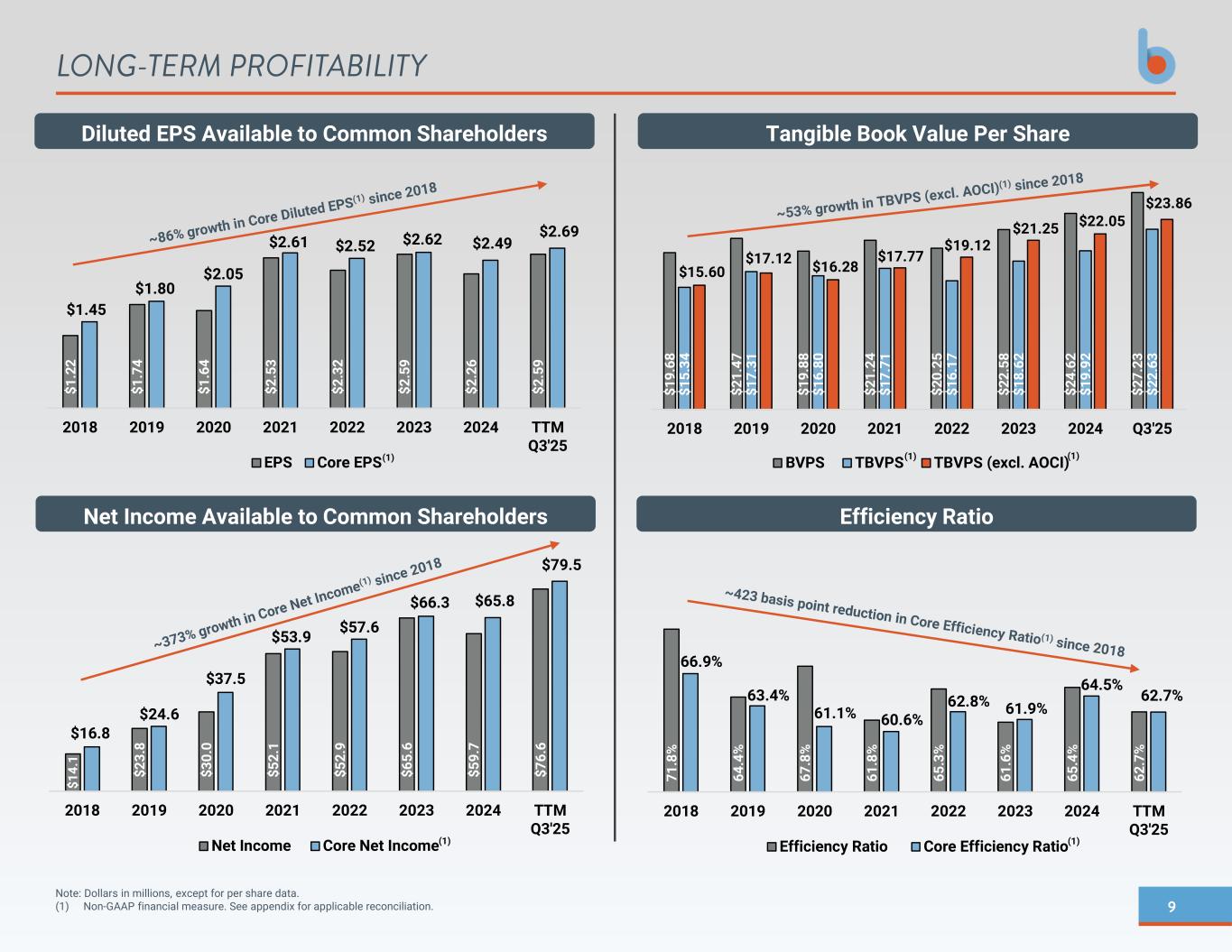
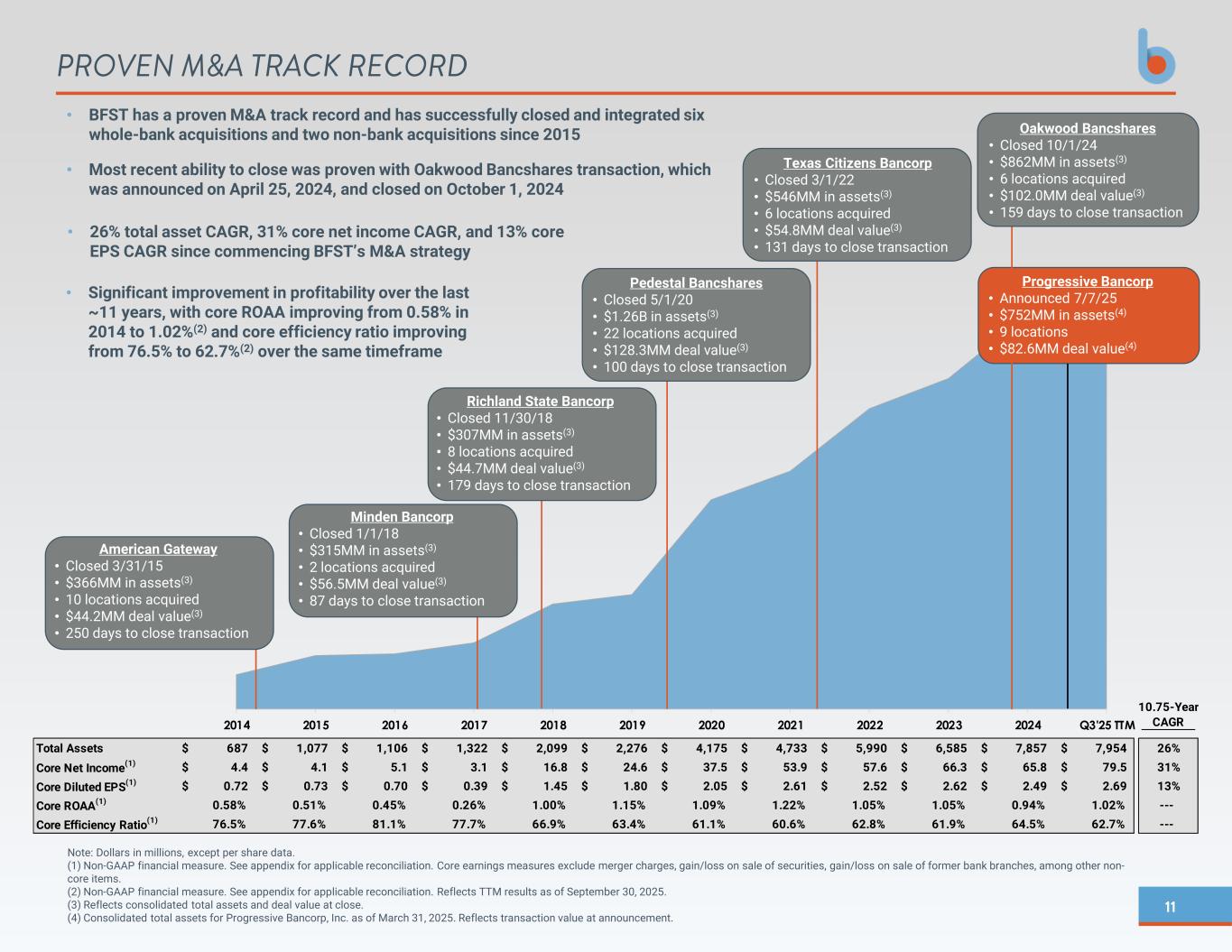
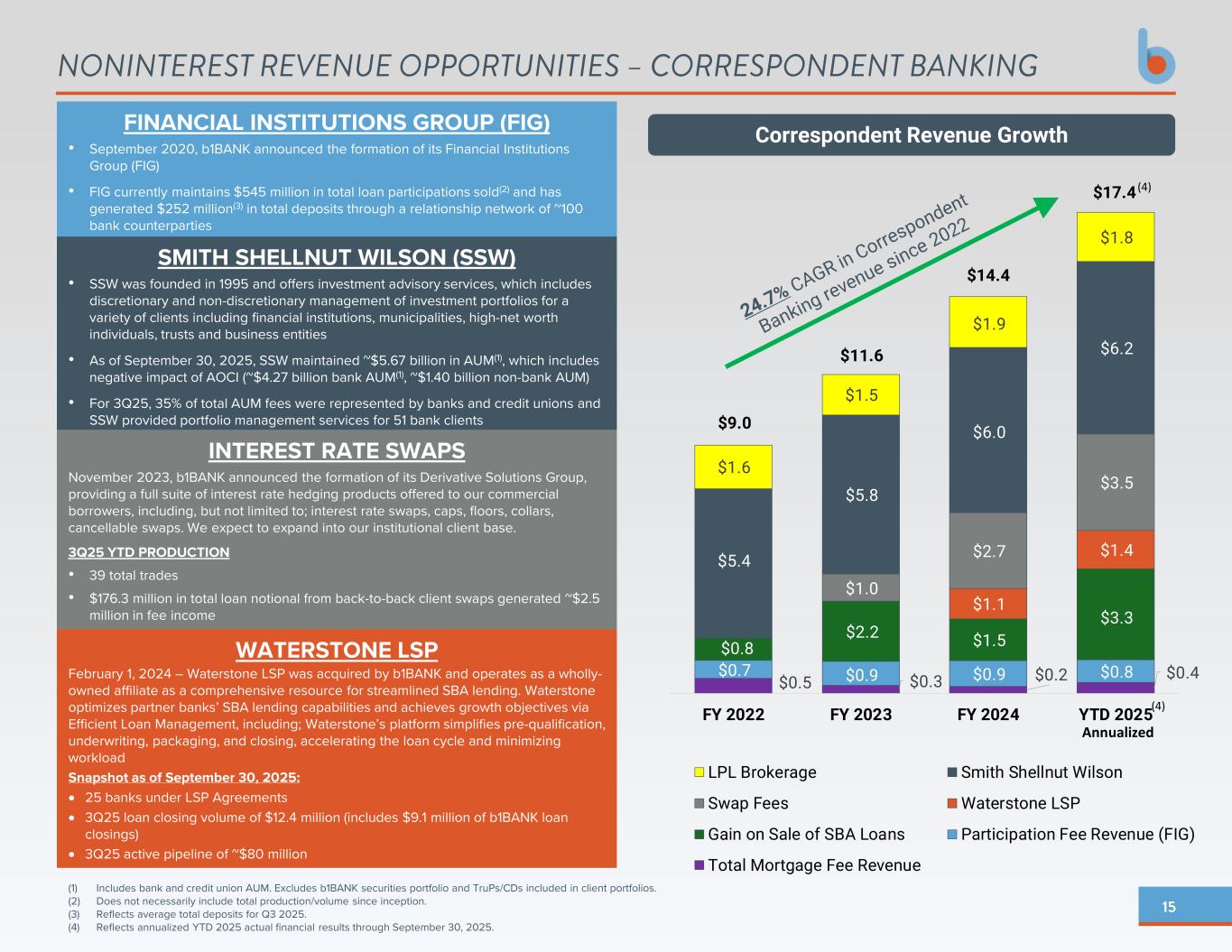
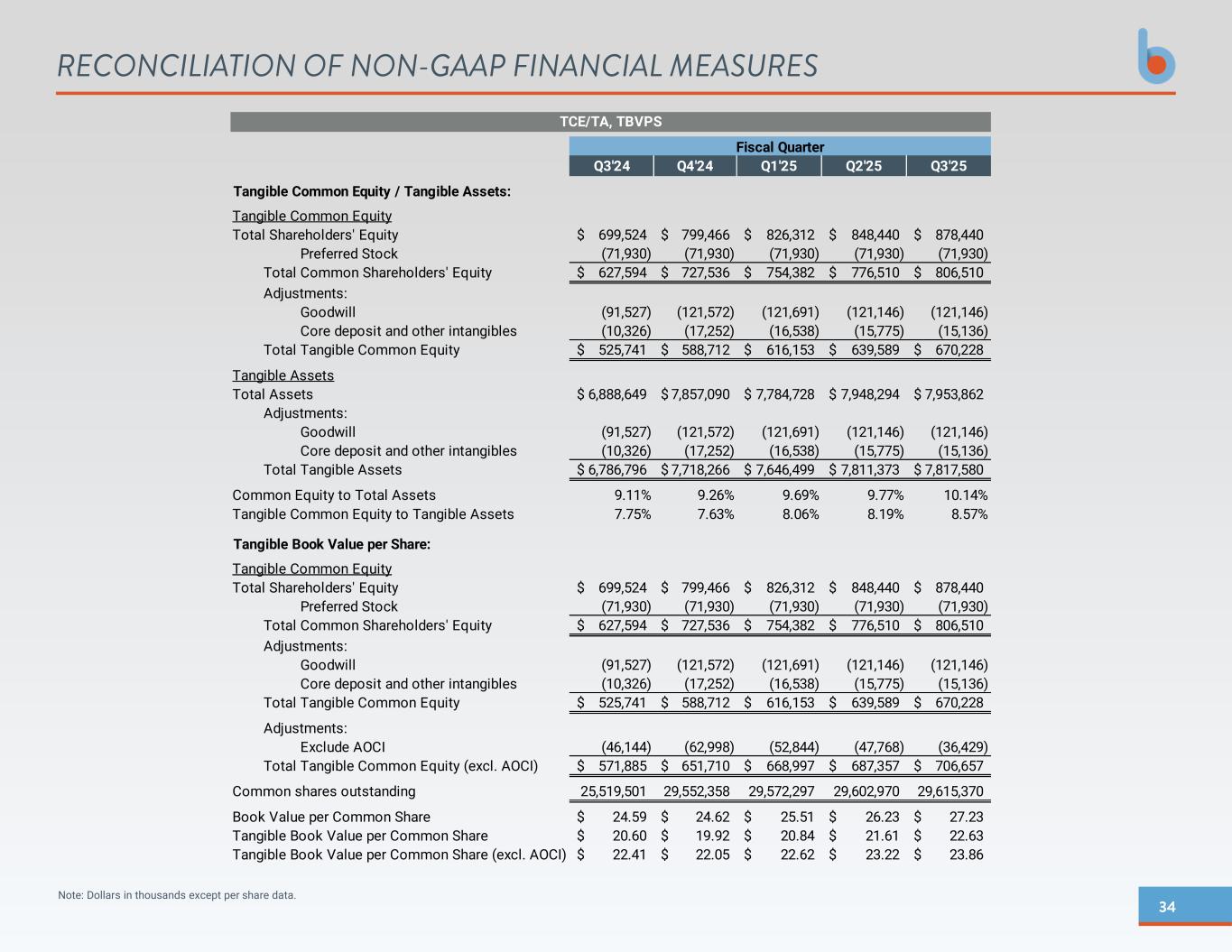
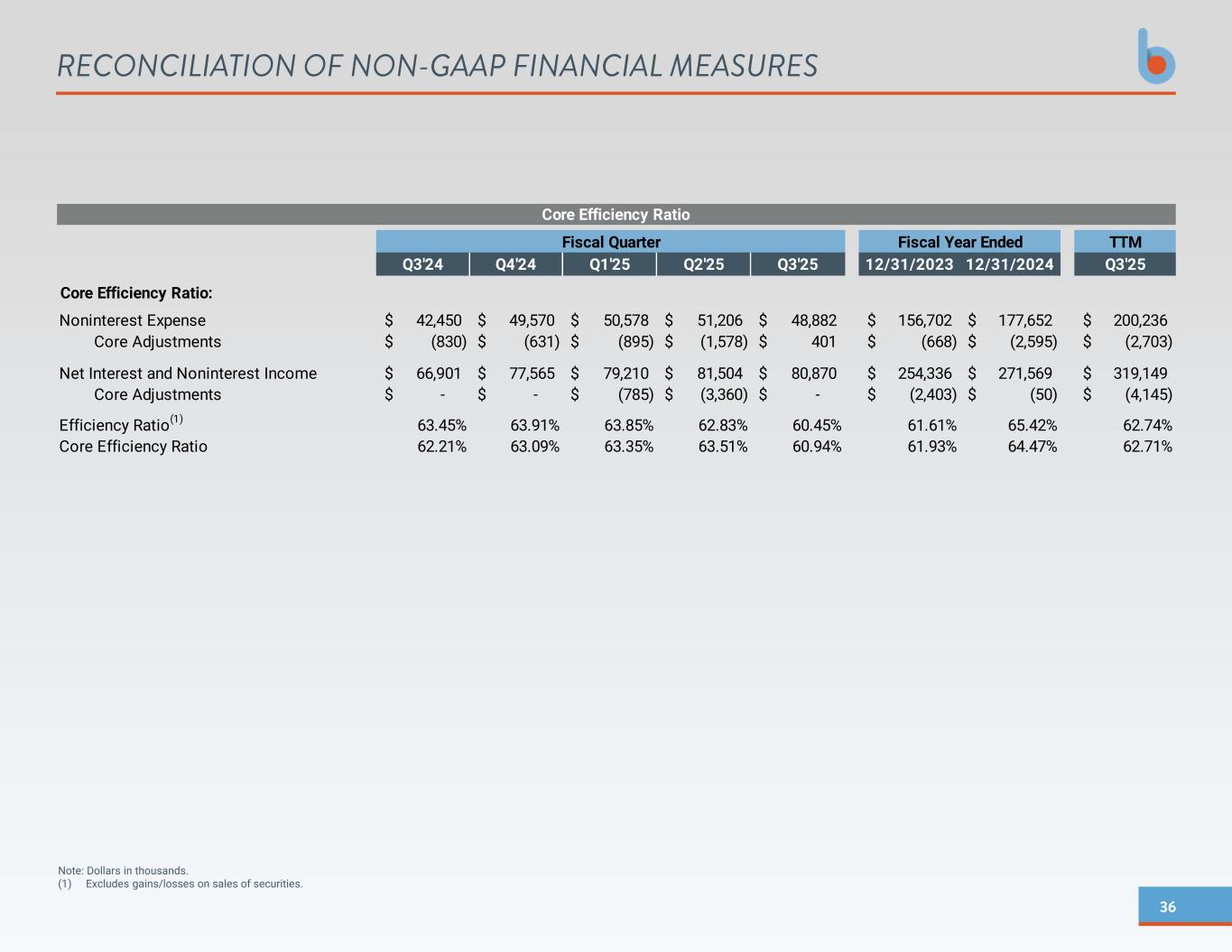
Okay. Thanks, Matt, and good afternoon, and thank you all for being with us today. It was another solid working day quarter for our company. Greg will follow my remarks with specific numbers that I know you're eager to dive into, but I'd like to use my time to highlight three themes on which we are focused. First, we continue to show incremental quality earnings improvement, and importantly, that improvement has been driven in large part by our strong expense control. To be specific, three quarters of essentially flat core noninterest expenses. We've made significant investments over the past few years in our effort to reach a meaningful asset size, distributed over what we consider to be an attractive footprint. Having done so, we have been pivoting our focus to the generation of operating leverage and expect it to remain there. As a result, our aggregate earnings, our capital ratios, our tangible book value levels, and our efficiency ratio all showed material improvement over the quarter and year-to-date, trends we expect to continue. Second, our team has executed magnificently on the operational challenges we committed to this year, converting our entire core bank at the end of the second quarter to a new processor. Following that, we quickly converted Oakwood Bank to the new system at the end of the third quarter. Although this aspect of performance doesn't easily fit into an earnings model, it's critical to our ongoing performance as an institution, preparing to be better as we get bigger creates value that may only be recognized over time, but I want to be sure to congratulate our team now on a job excellently done. In addition to system-wide efficiencies, operational excellence is also what allows us to feel confident that we can reap the financial potential associated with our two current M&A initiatives. We expect to see much more of the all-in economic benefit from the Oakwood transaction achieved by the first quarter of 2026. We also remain on pace to close the Progressive Bank transaction early in the first quarter and are scheduled to convert that asset in August, enabling us to fully incorporate both institutions and demonstrate unified post-integration financials in full for the fourth quarter of '26. We are focused on execution as we optimize the partnerships and opportunities on our plate. Third, we have included a new chart in our deck on Page 15, illustrating the momentum we are experiencing in revenue generation from our young correspondent banking unit. We have about 175 banks that we partner with in some form and expect to generate over $17 million in revenue this year, leading to the unit contributing roughly $5 million towards our combined net income over the course of the year. We're only getting started on this front and believe the investments we've made towards this initiative will lead to even more capital-efficient earnings production as we grow operating leverage within the unit, much as we're beginning to see the efficiency benefit of scale across our entire bank. So our job for the next few quarters is relatively straightforward and clear: remain committed to effective expense control, fully execute on our recent acquisitions, maintain our historically stable and relatively strong net interest margin as we grow within our retained capital, and continue the progress we've been building on an alternative source of noninterest income through the building of our correspondent banking unit. As we execute on these priorities, we're confident the combined effect will create steady profitability and tangible book value increases over the course of 2026 on both an aggregate and per share basis with visibility into our roughly 1.2% core ROAA run rate by the end of the fourth quarter. It's an exciting time, and we look forward to answering any questions you might have. With that, I'll turn it over to Greg.
Speaker 3
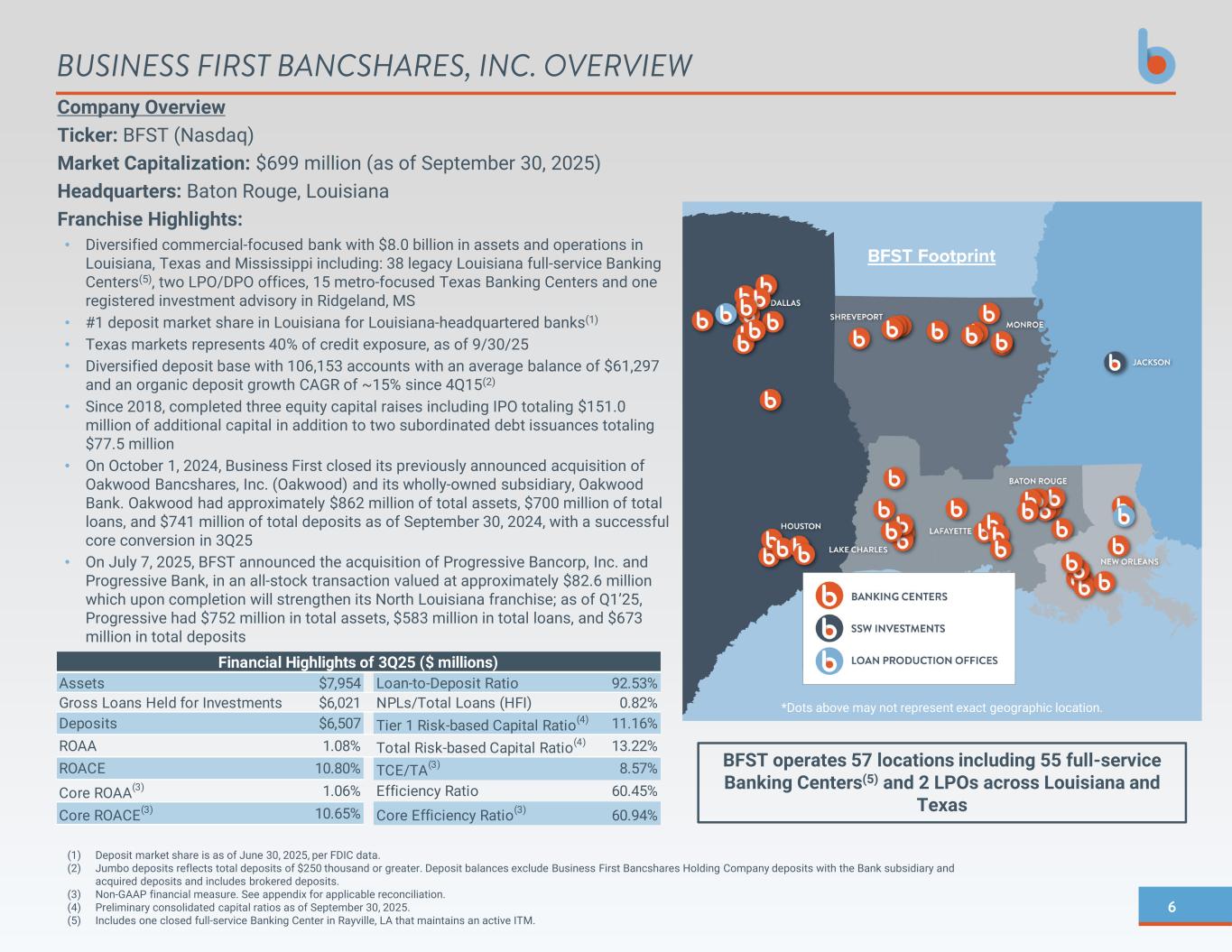
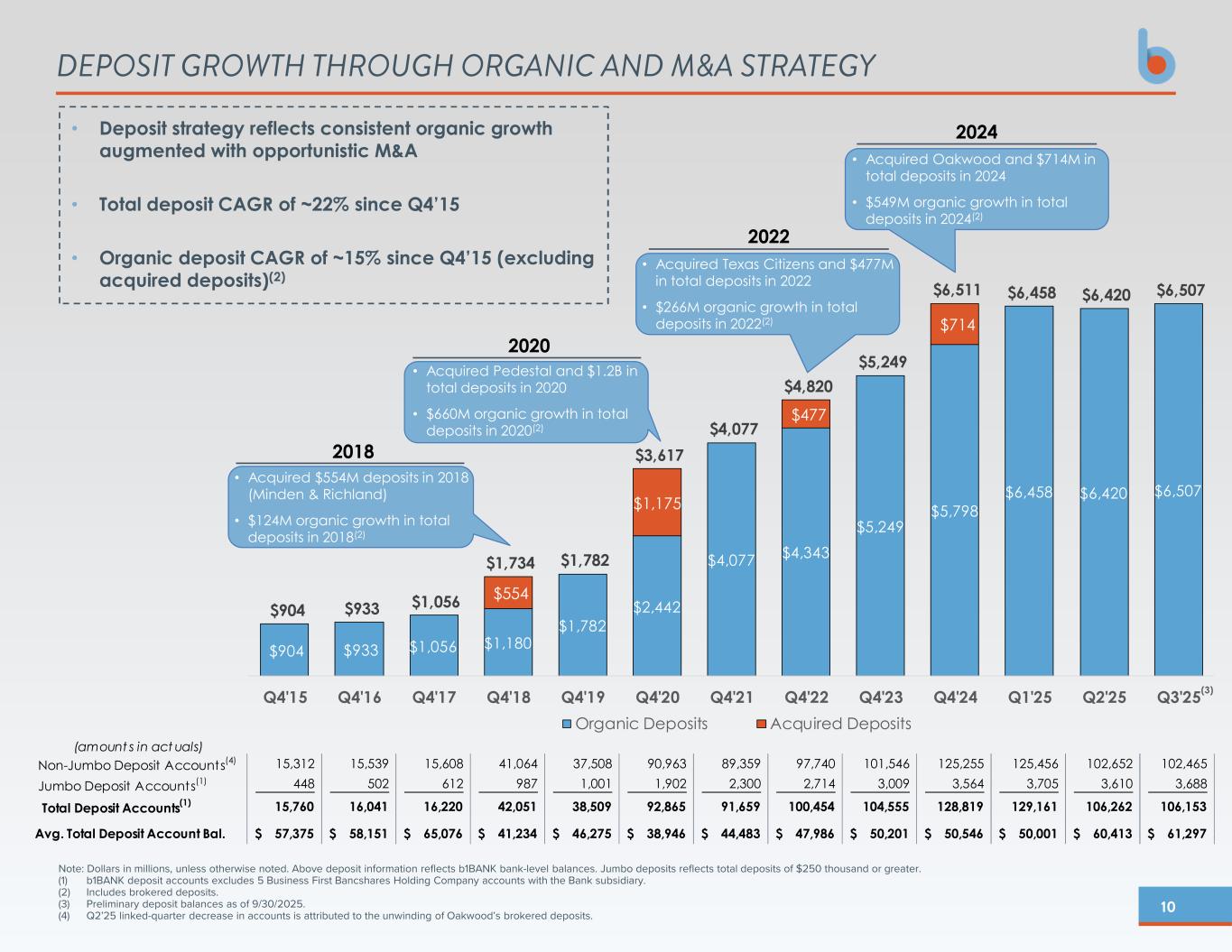
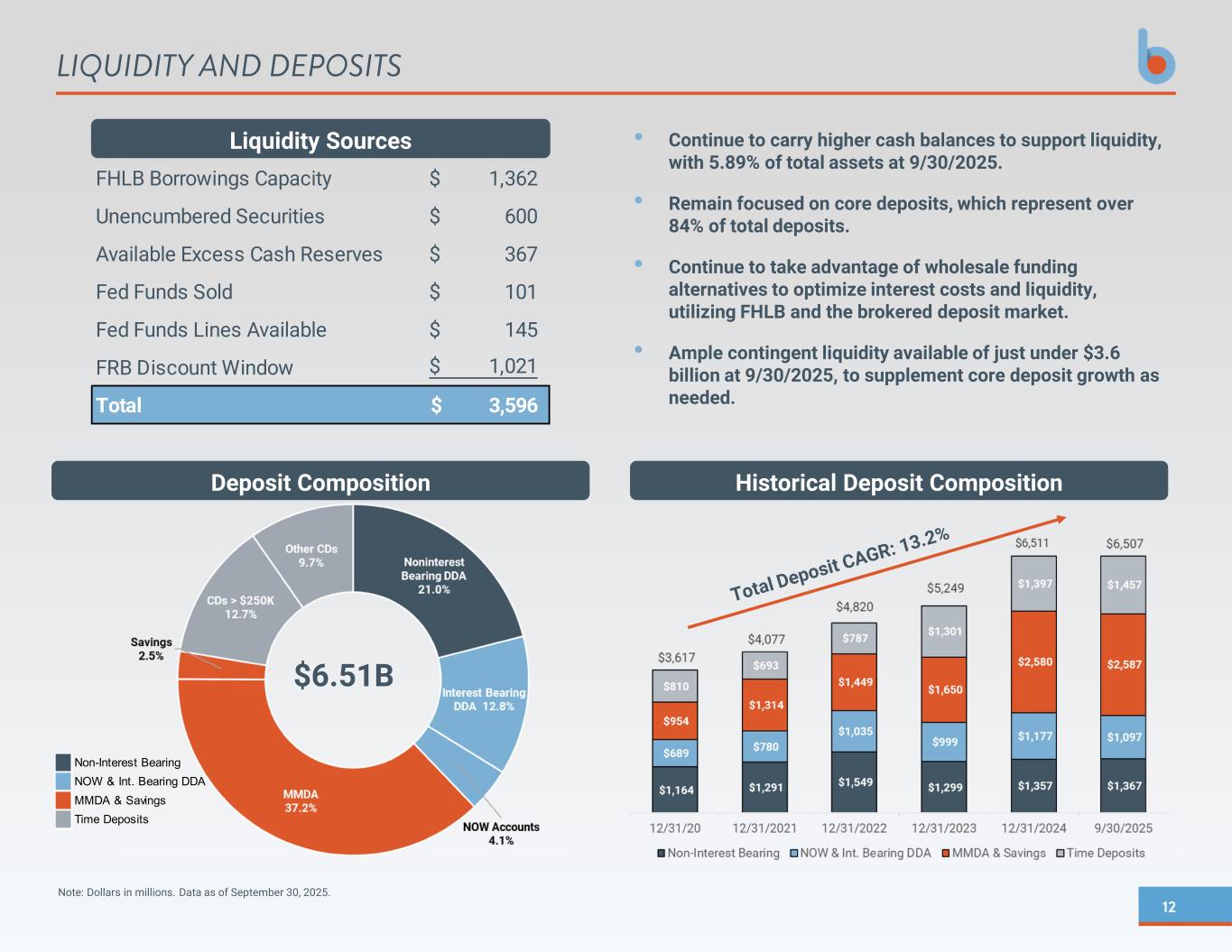
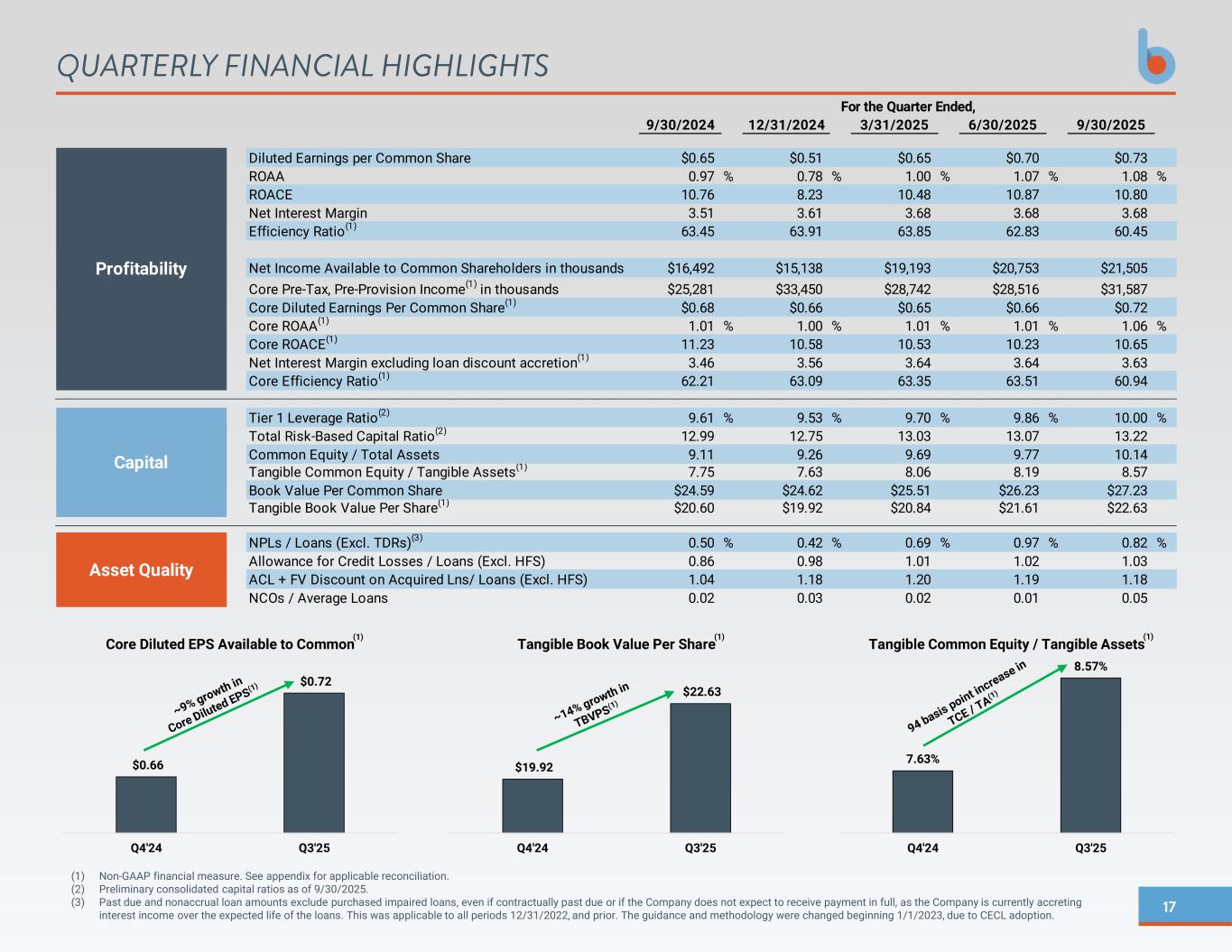
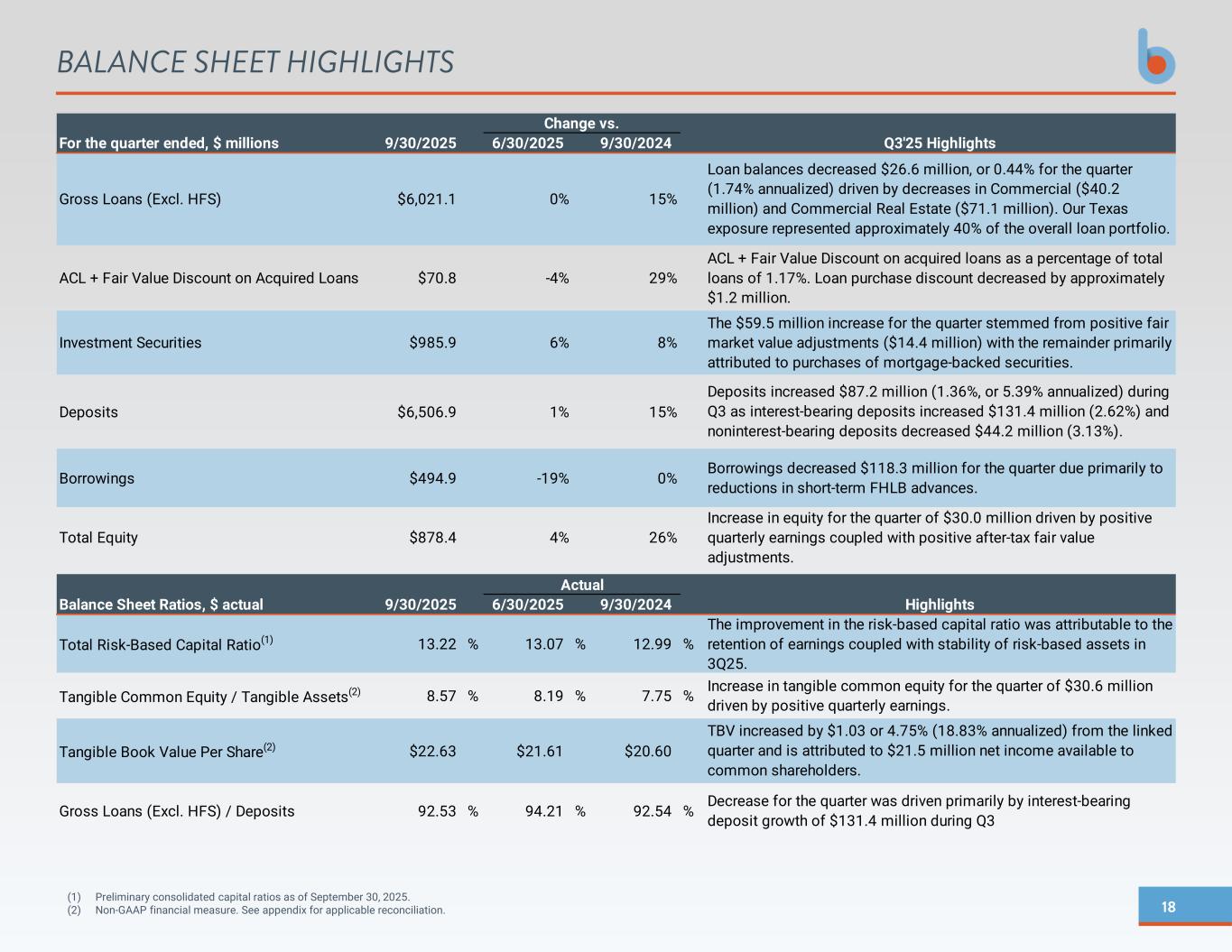
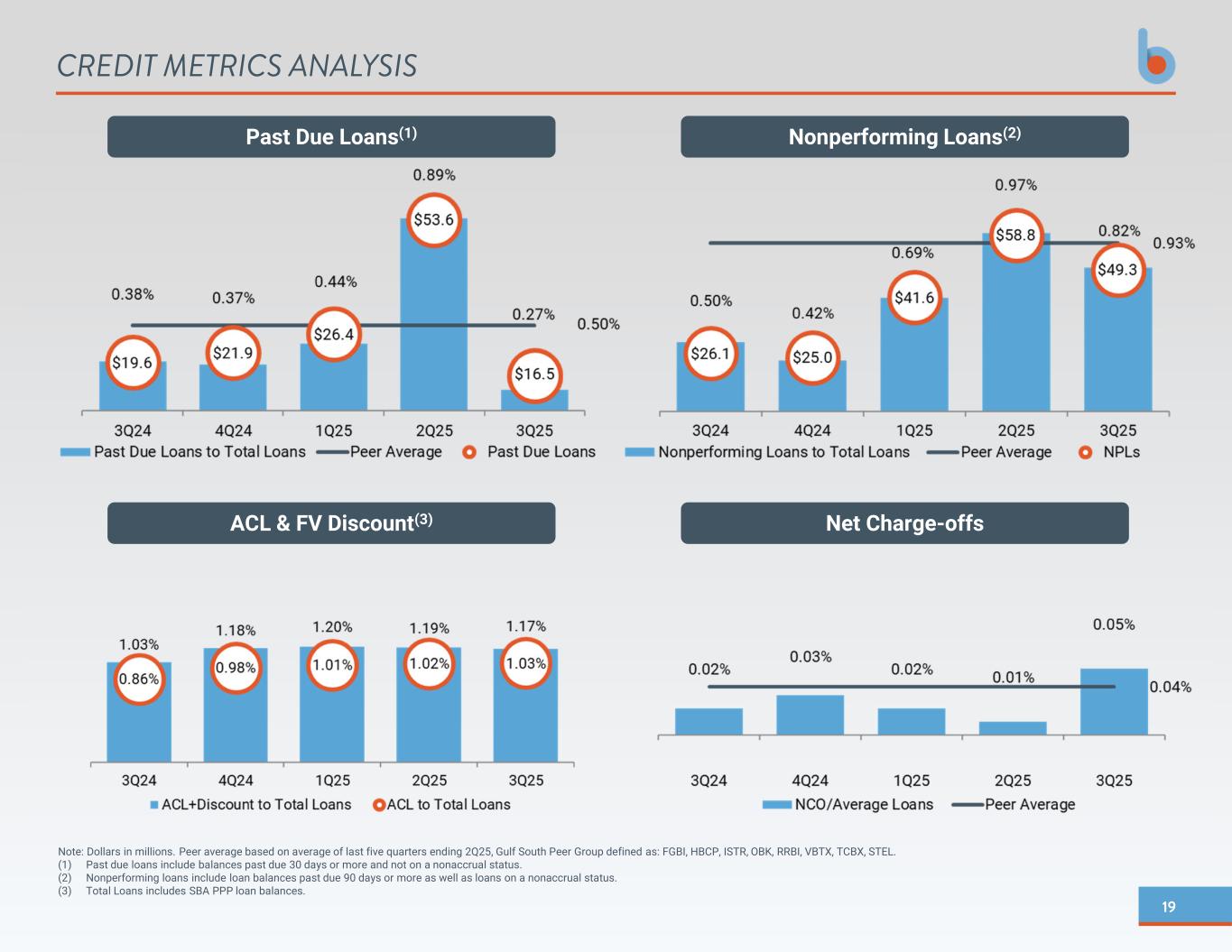
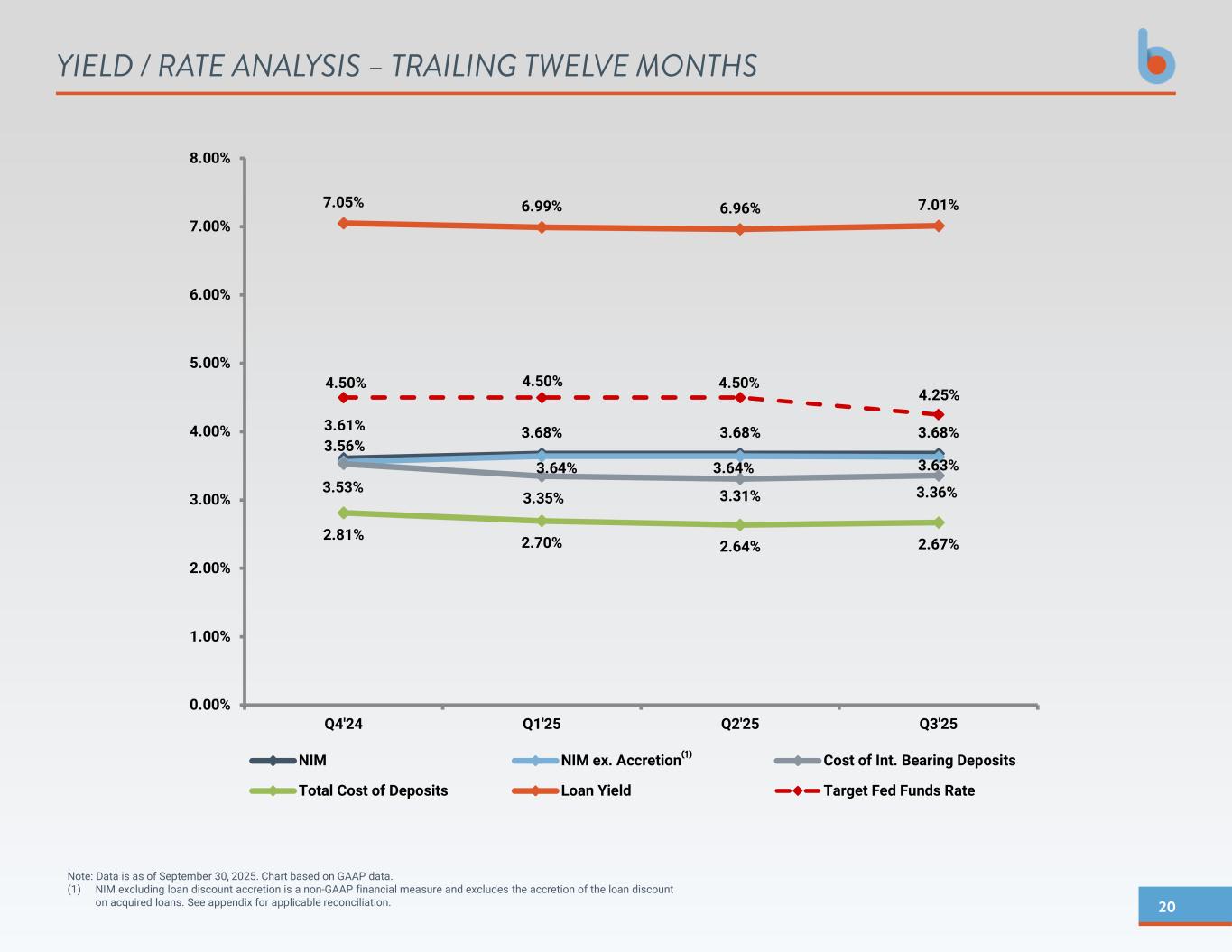
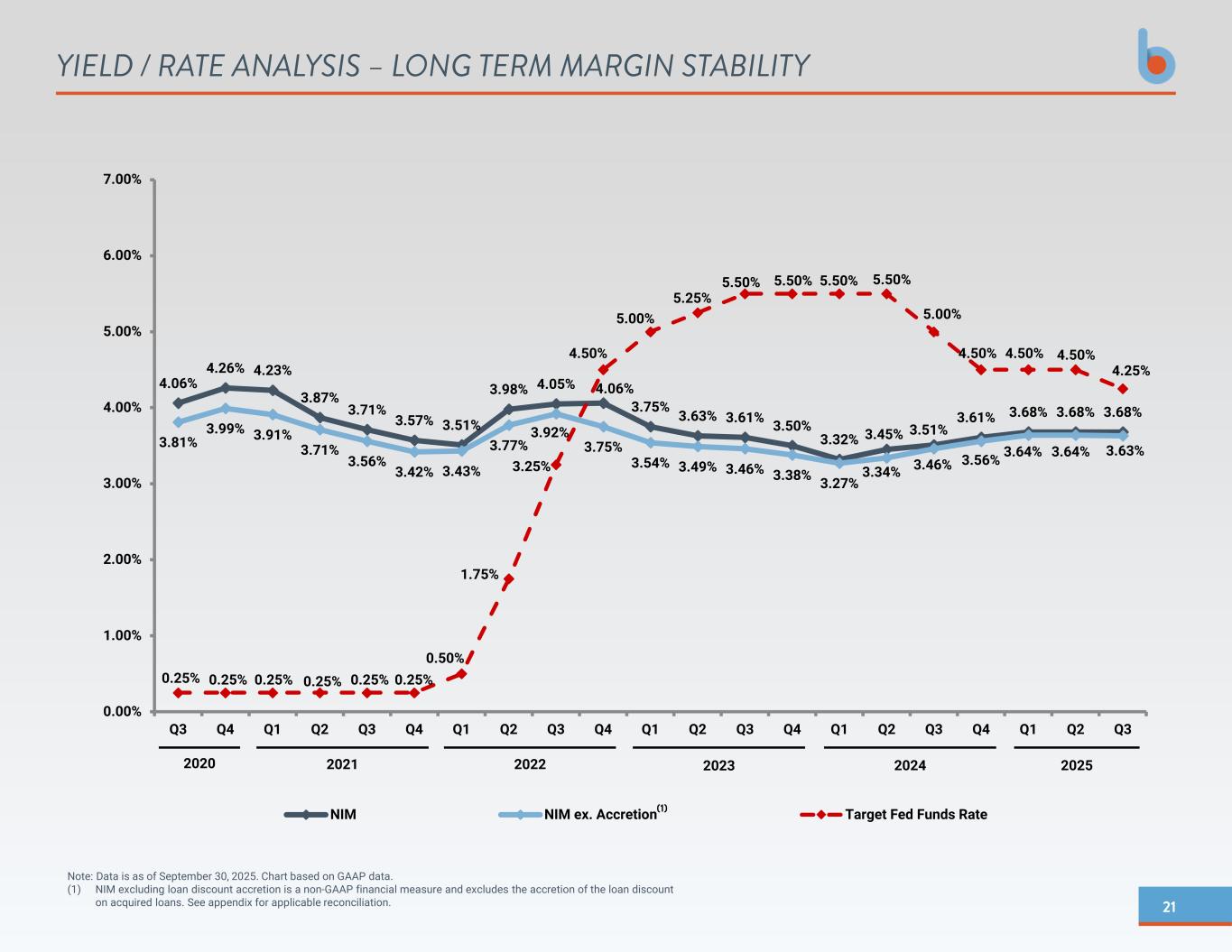
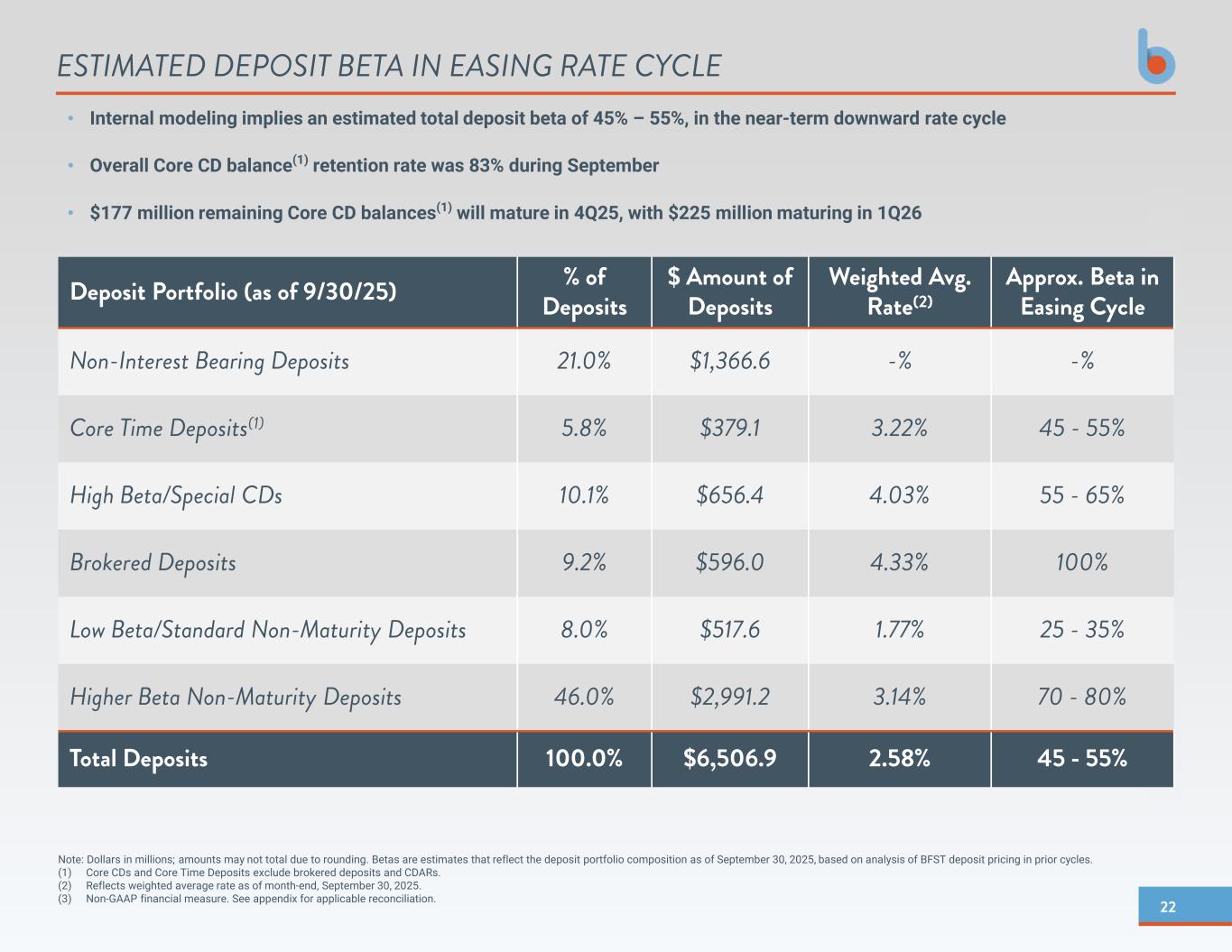
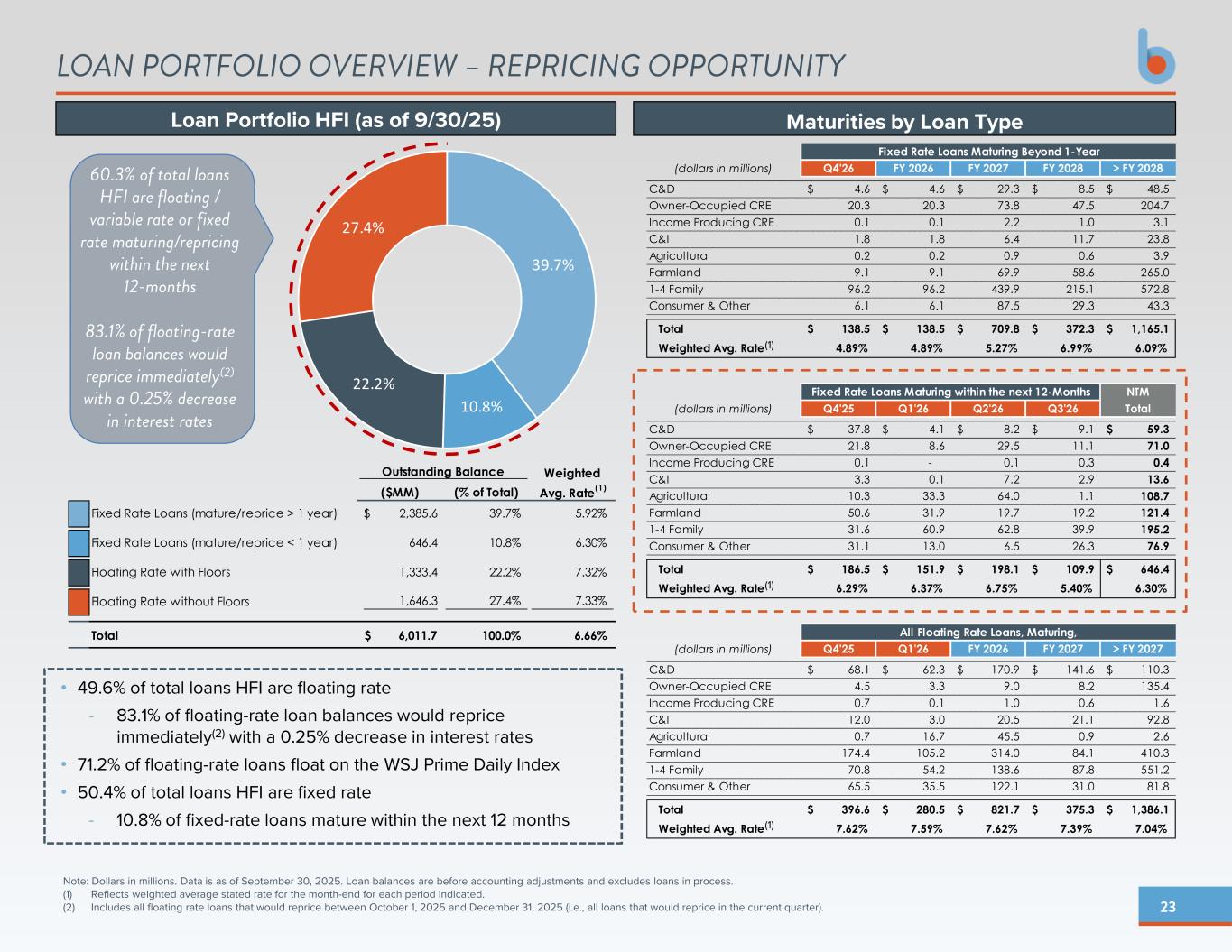
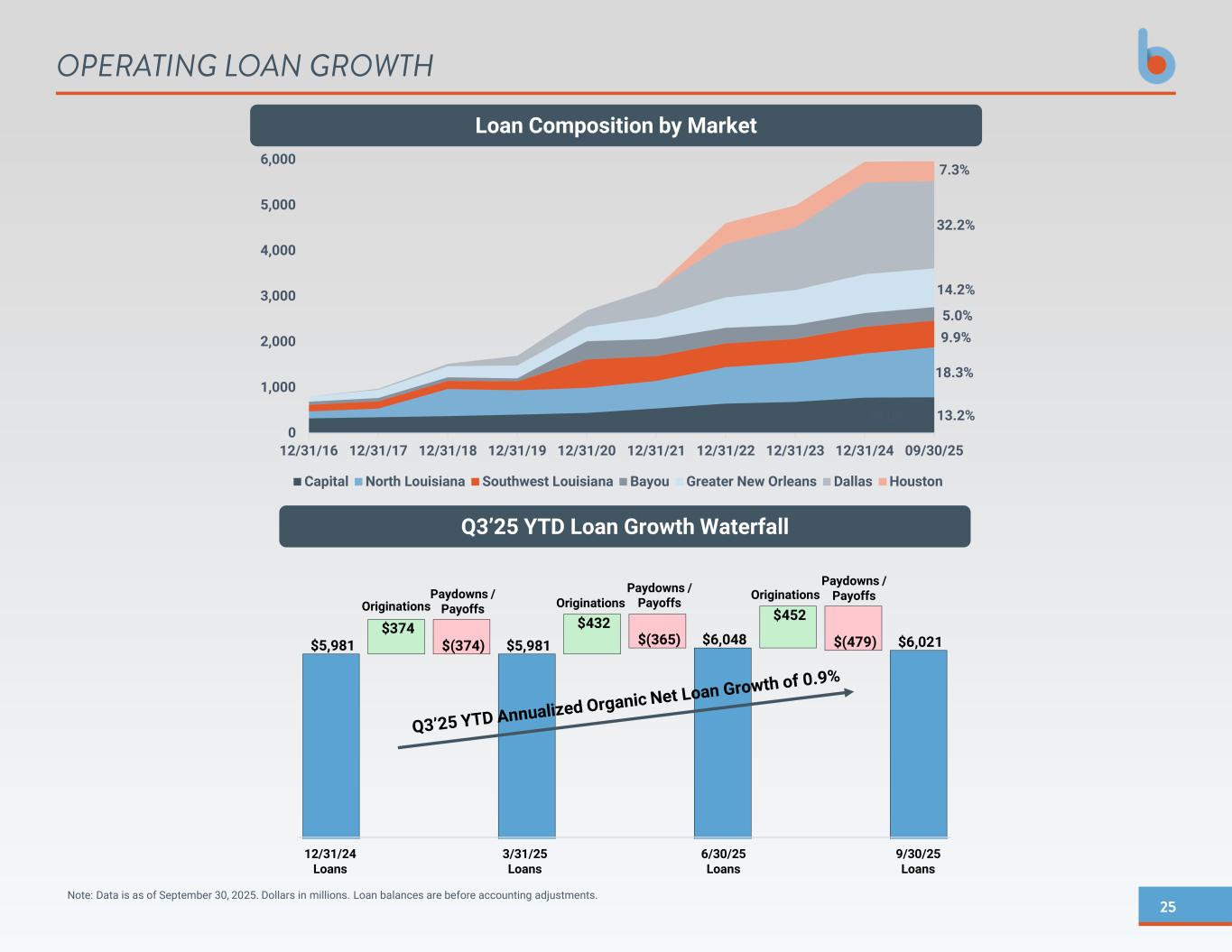
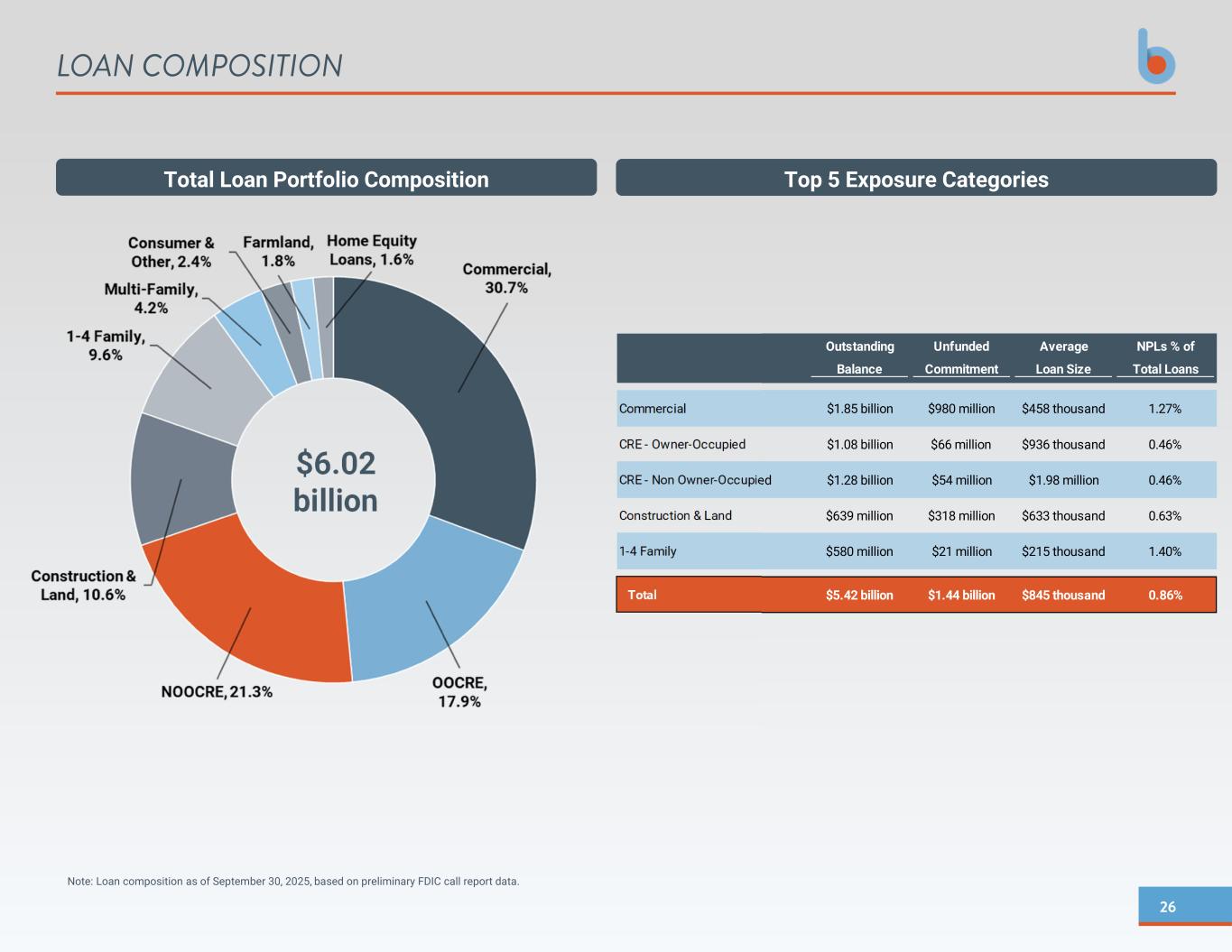
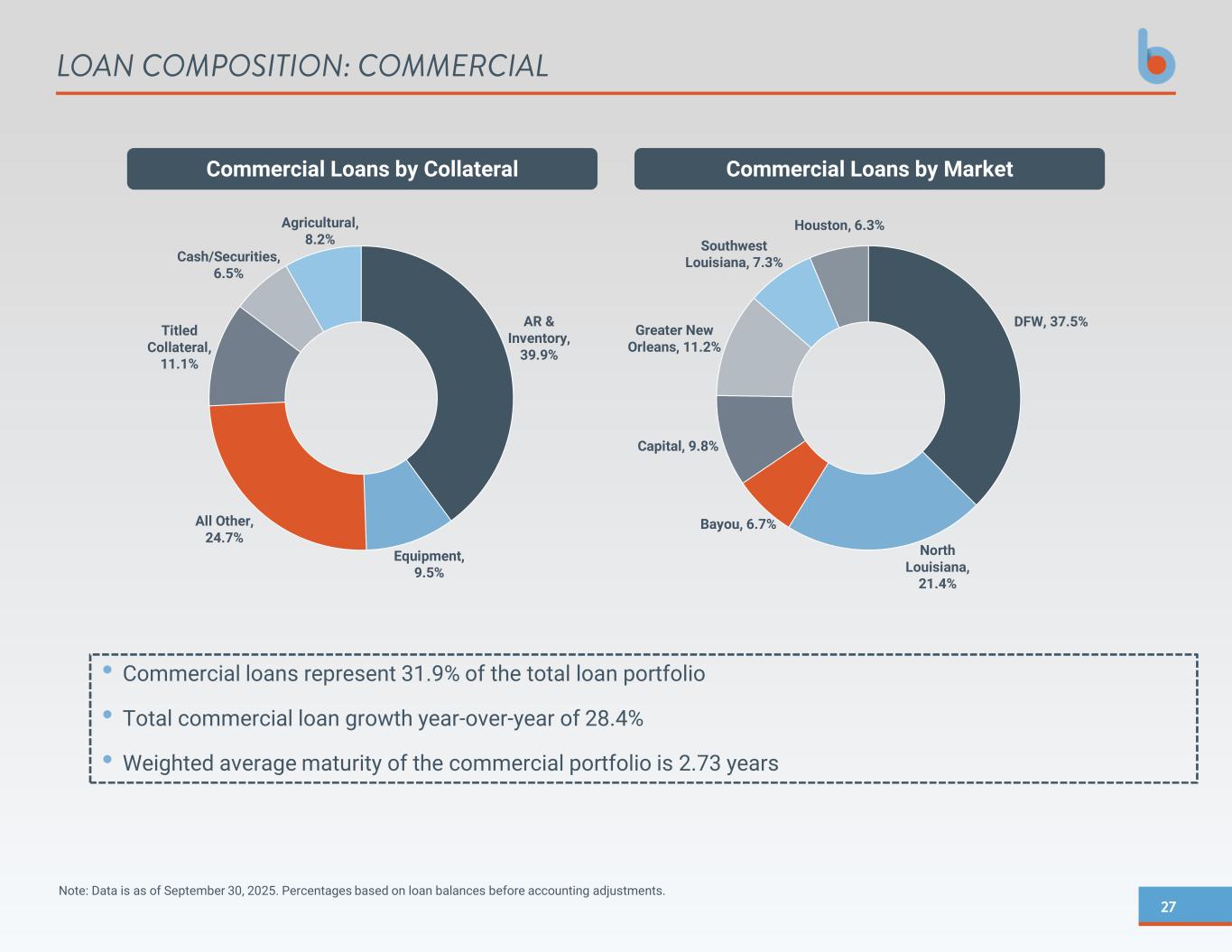
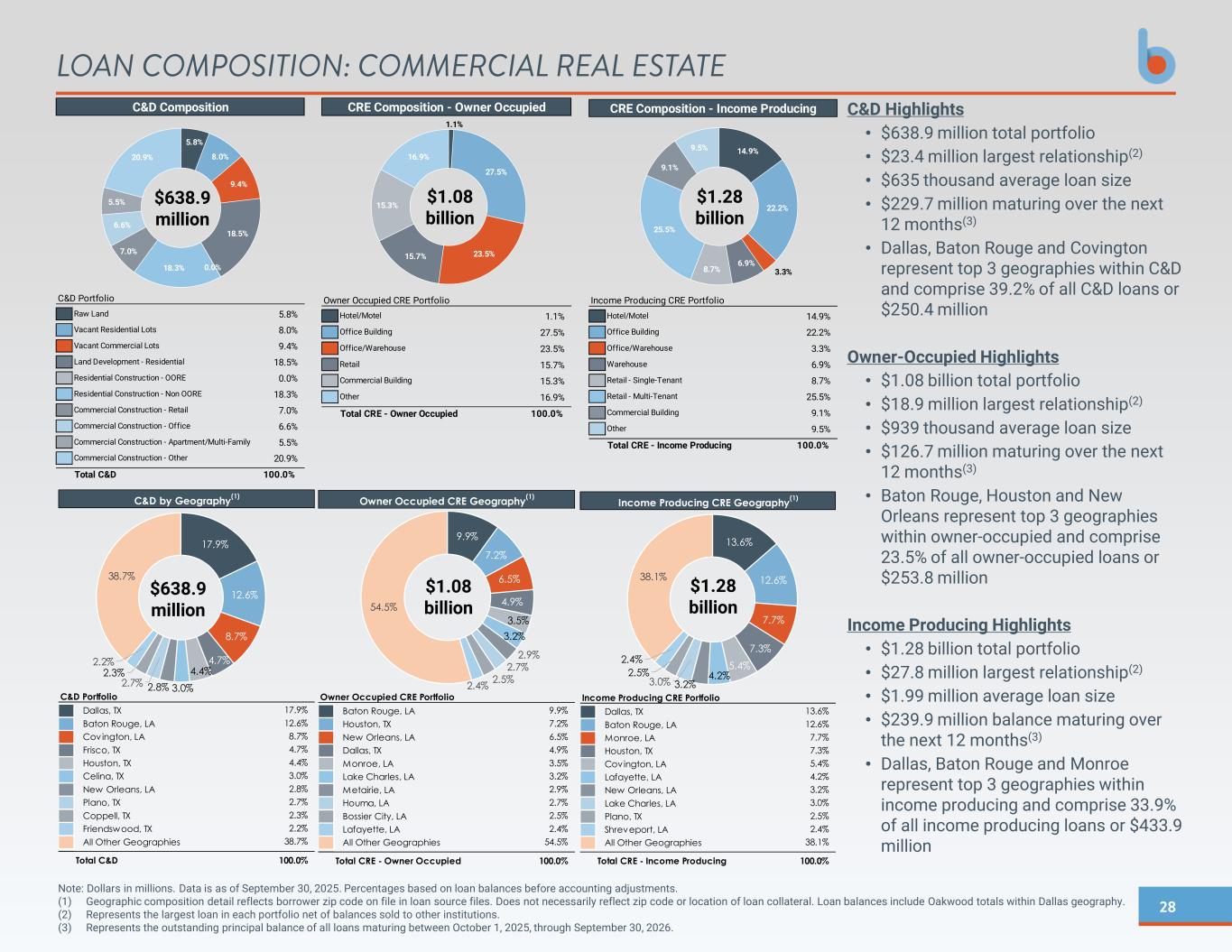
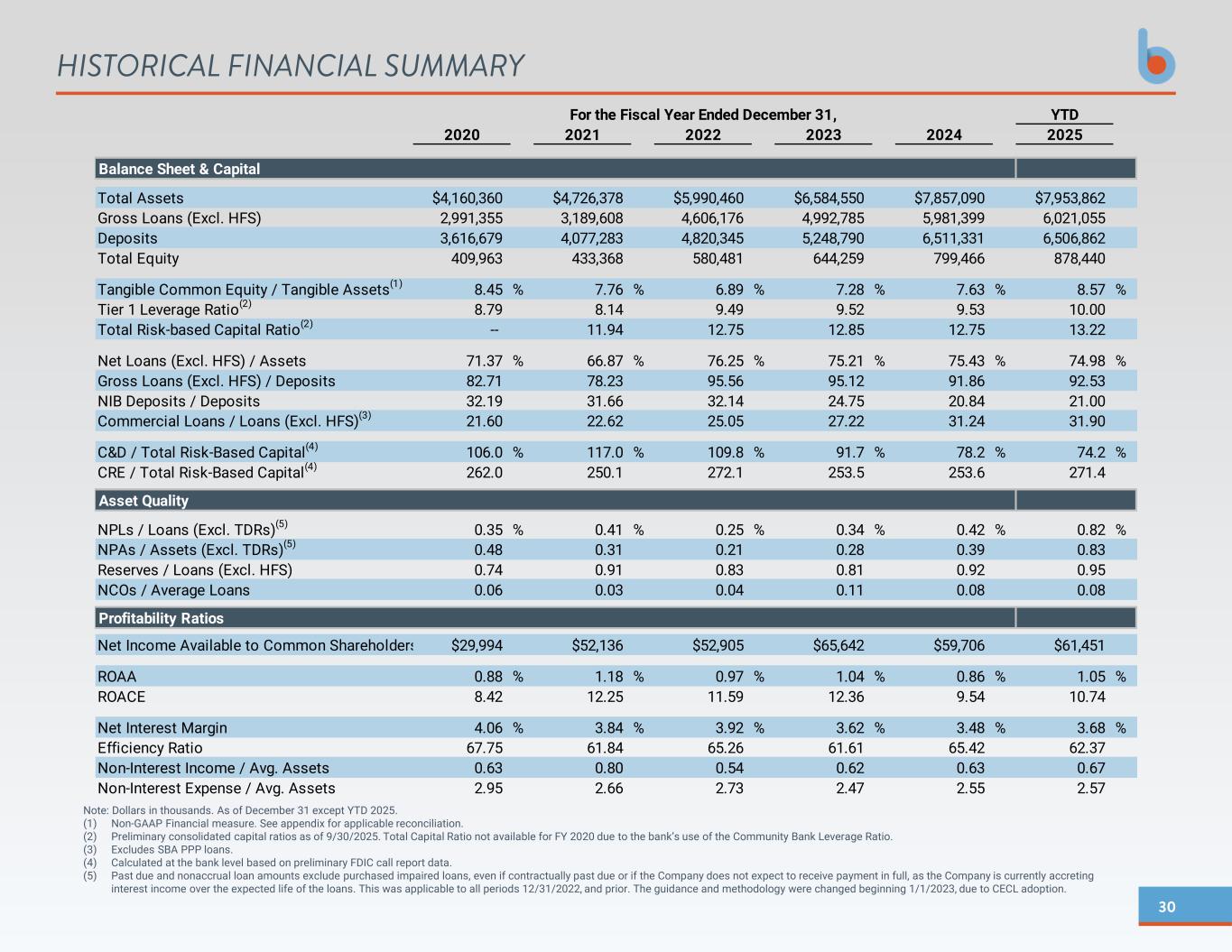
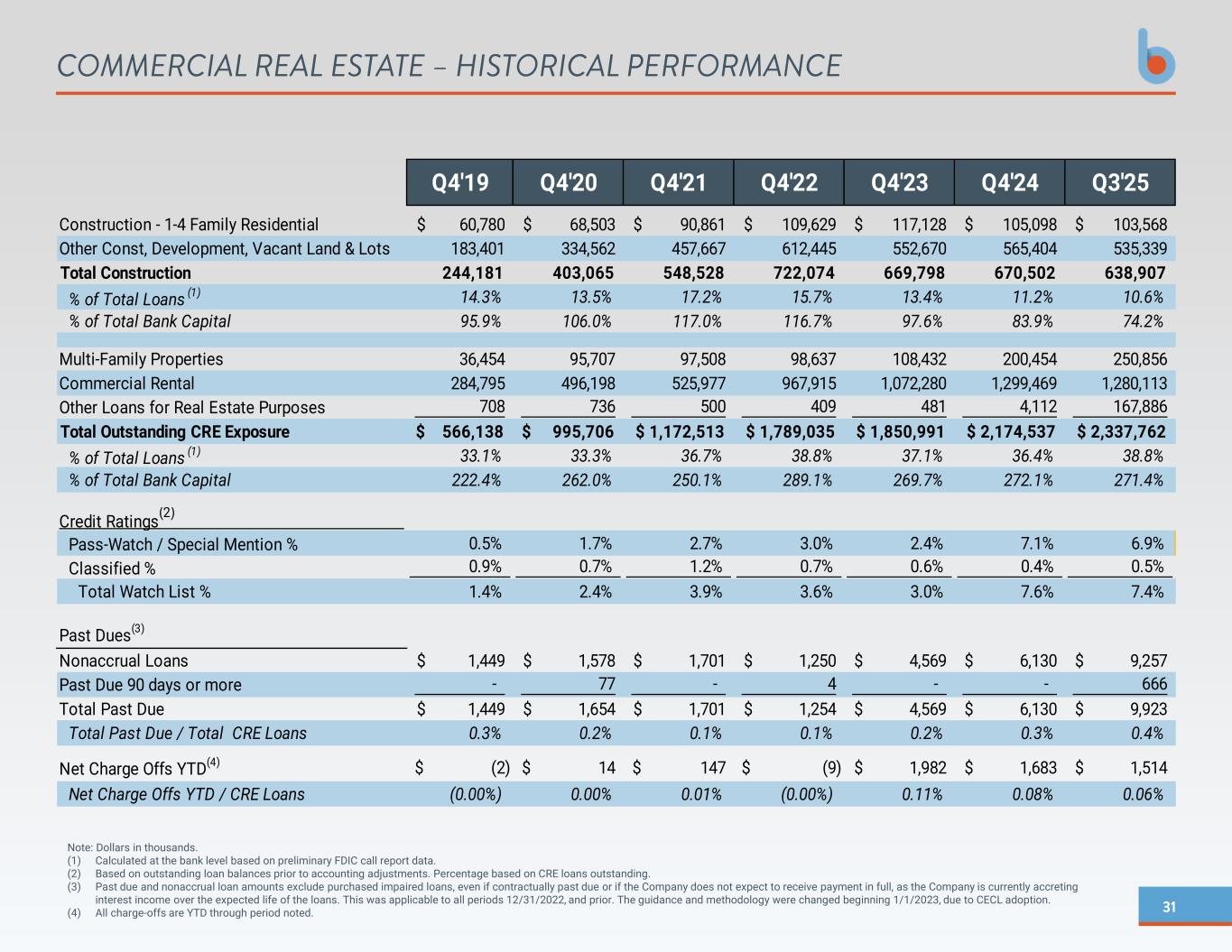
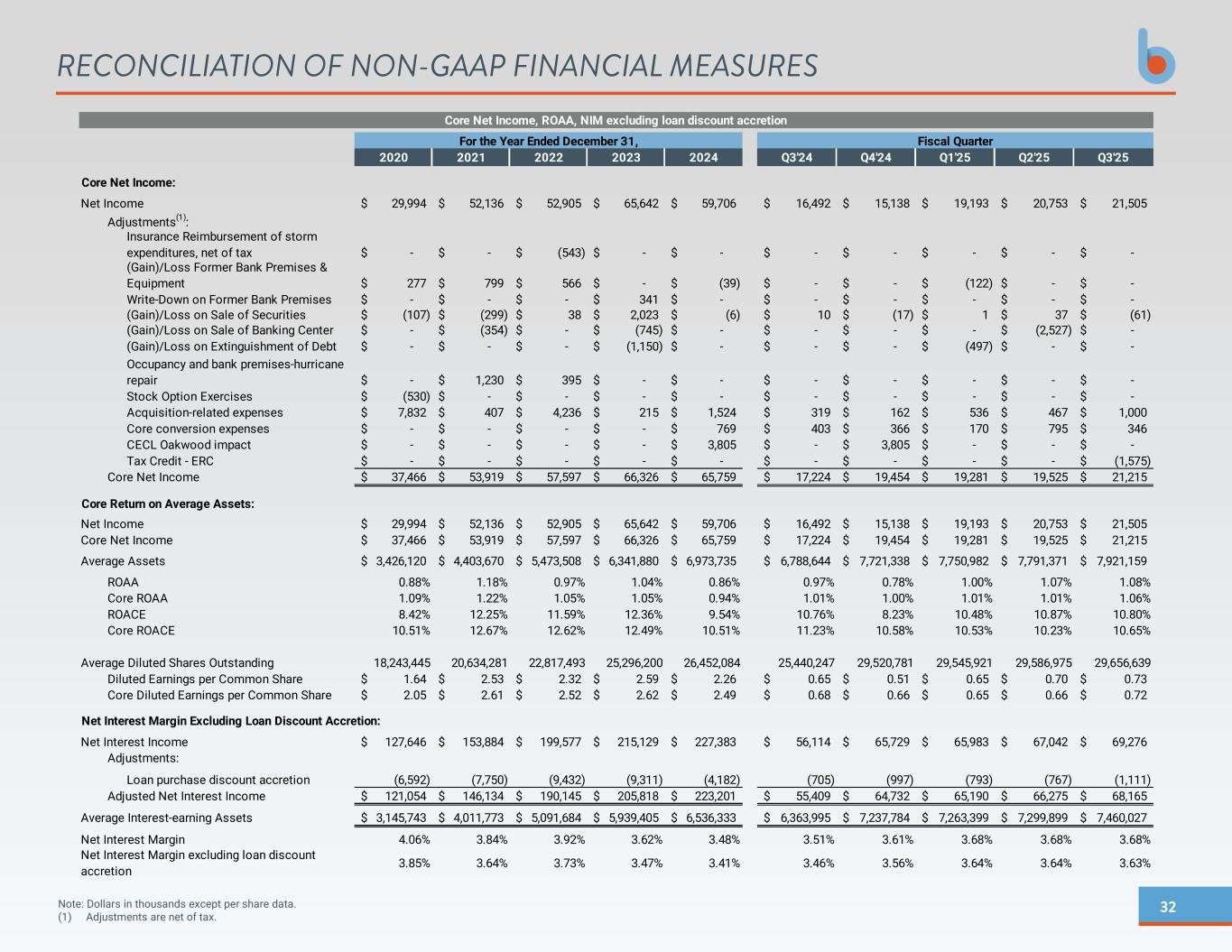
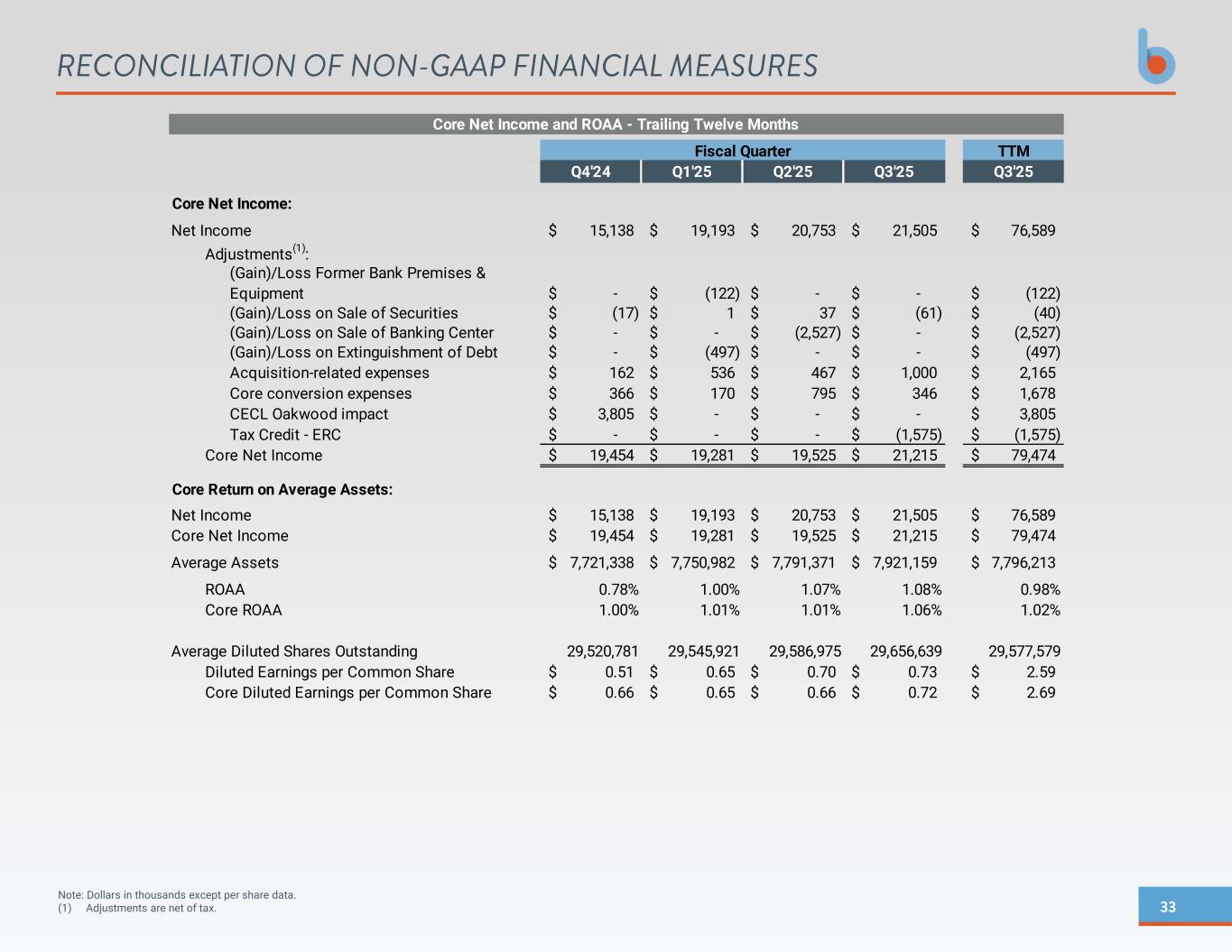
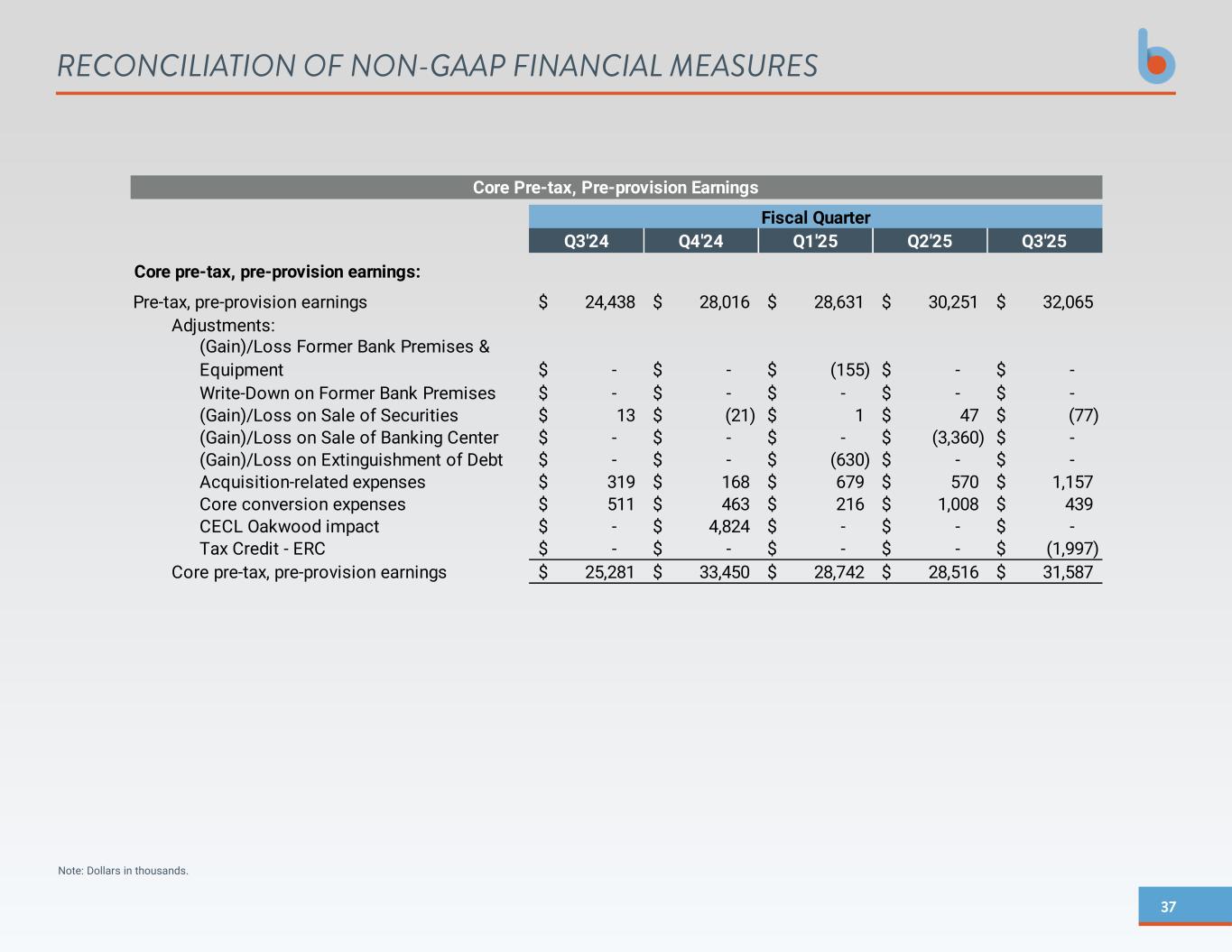
Thank you, Jude, and good afternoon, everyone. I will take a few minutes to review our results and discuss our updated outlook before we transition to the Q&A session. In the third quarter, our GAAP net income was $21.5 million, translating to earnings per share of $0.73. This figure includes $1.6 million in expenses related to mergers and core conversions, a $2.0 million employee retention tax credit, and a $77,000 gain from the sale of securities. When excluding these noncore items, our non-GAAP core net income was $21.2 million, or $0.72 per share. We consider the third quarter to reflect another strong period of consistent profitability, with a core return on average assets of 1.06% and a core efficiency ratio of 60.45% for the quarter. From a corporate standpoint, we were active during the quarter, successfully converting the Oakwood bank systems at the end of September. We also announced an increase in our quarterly common stock dividend by $0.01. Looking at our balance sheet, total loans held for investment decreased by $26.6 million, or 1.7% on an annualized basis linked to the prior quarter. Scheduled and nonscheduled paydowns and payoffs accelerated somewhat during the third quarter, totaling $479 million, while new loan production amounted to $452 million. On a linked-quarter basis, residential 1-4 family and construction and development loans increased by $47.6 million and $38.6 million, respectively. This was offset by a decrease in total commercial real estate loans of $71.1 million and a decline of $40.2 million in total commercial and industrial loans from the second quarter of 2025. Texas-based loans held steady at approximately 40% of our overall portfolio as of September 30, 2025. Total deposits grew by $87.2 million, primarily due to a net increase in interest-bearing deposits of $131.4 million, somewhat offset by a decrease in noninterest-bearing deposits of $44.15 million from the previous quarter. The drop in noninterest-bearing balances was anticipated, as we experienced a significant influx of $60 million related to a single noninterest-bearing account at the end of the prior quarter. This was a temporary deposit expected to withdraw in early Q3, which indeed occurred, influencing our overall growth in the third quarter. Despite this outflow, noninterest-bearing deposits have increased by $58.2 million since March 31, 2025, equating to roughly 9% annualized growth. At the end of the third quarter, noninterest-bearing deposits constituted 21.0% of total deposits, up from 20.3% at the end of Q1. On the funding side, we deliberately reduced our Federal Home Loan Bank borrowings by $125.5 million from the prior quarter. Our reported GAAP net interest margin for the third quarter remained stable at 3.68%, while the non-GAAP core net interest margin, excluding purchase accounting effects, saw a slight decline from 3.64% to 3.63%. This margin performance was influenced by lower net loan growth and the influx of interest-bearing deposits, alongside the outflow of noninterest-bearing deposits mentioned earlier. Loan discount accretion for the quarter was slightly higher at $1.1 million, which we expect to decrease to the $800,000 to $900,000 range in the future. On a linked-quarter basis, the cost of total deposits rose by 3 basis points, while total loan yields increased by 5 basis points. Core loan yields, excluding loan discount accretion for the third quarter, stood at 6.94%, and the total cost of deposits for September was 2.65%, compared to the third quarter’s overall average of 2.67%. We are pleased to maintain a strong new loan yield of 7.46% for the quarter, and effectively manage funding costs, with the average rate on new accounts in September dropping to 3.32% from June’s 3.34%. I'd like to highlight a few key points from our investor presentation. We believe achieving an overall deposit beta of 45% to 55% is realistic with any future rate cuts. Additionally, our core certificate of deposit balance retention rate was 83% in September, reflecting our commitment to core deposit relationships. As illustrated in our presentation, we hold around $3 billion in floating rate loans at an average rate of 7.33%, in addition to approximately $646 million in fixed rate loans maturing in the next 12 months, which we anticipate repricing in the mid- to low-7% range. Regarding net interest margin, we have introduced a new slide in our quarterly presentation providing a long-term view of our GAAP and core net interest margin alongside Fed funds rate fluctuations since 2020. We are proud of our consistent ability to maintain margins within a relatively tight range, with the core margin reaching a peak of 3.99% at the end of 2020 and a low of 3.27% at the beginning of 2024. Turning to our income statement, GAAP noninterest expense was $48.9 million, which included $1.16 million in acquisition-related costs, $439,000 in conversion expenses, and a $2 million employee retention tax benefit reflected in payroll taxes and salaries. Our core noninterest expense for the third quarter was slightly lower than the previous quarter. We expect a modest increase in Q4, mainly due to the timing of various investments beginning in Q4. We anticipate partial recognition of cost savings from Oakwood in the current quarter. Our third-quarter GAAP and core noninterest income stood at $11.7 million and $11.6 million, respectively, with GAAP reflecting a $77,000 gain from the sale of securities. Noninterest income was generally in line with our forecasts. We continue to expect growth in our core noninterest income over the long term, despite anticipated fluctuations from quarter to quarter. Finally, regarding credit migration from the second quarter, the percentage of loans past due by 30 days or more decreased from 0.89% to 0.27%, totaling about $38 million as of September 30, 2025. The nonperforming loans ratio fell by 15 basis points to 0.82%, while the ratio of nonperforming assets to total assets edged up by 7 basis points to 0.83% from the prior quarter. This slight increase was due to some nonaccrual loans being transferred to other real estate owned. That covers my prepared remarks for today. I'll turn it back to you, Jude, for any additional comments before we proceed to the Q&A session.
I think I'm good. We'll go and answer your questions. I will mention real quick that Greg mentioned the $0.01 dividend increase, and I will mention that we started paying a dividend in 2015. So this marks our ninth year in a row of increasing the dividend, and we're proud of that. We still have a very strong retail shareholder base, about 50-50 retail versus institutional with a diverse set of interests and reasons for being partners with us. And I know the steady increase of that dividend over the years has been important, and we remain committed to trying to keep doing that. So excited about that news and wanted to be sure we highlighted that. So with that, I'm certainly ready to answer any questions that we might have in the queue.
Operator
And your first question comes from the line of Matt Olney with Stephens Inc.
Speaker 4
I want to ask about expectations around the core margin for the fourth quarter in light of the recent September Fed cut and your expectations regarding any impact from additional Fed cuts that we could see in coming weeks? And then on the deposit cost side, Greg, you disclosed the September interest-bearing deposit costs. I appreciate that. It sounds like there's some good momentum there. Just any other general commentary you can share with us within your marketplace with respect to deposit pricing competition?
Speaker 3
I'll answer your first question first on the margin. We expect to pick up a couple of basis points in the fourth quarter in margin for that to expand again, primarily because of the momentum on the deposit side. We also think that the loan growth will come back and normalize. I think it's worth pointing out, I mentioned in the remarks that the paydowns were about $479 million against originations of $452 million for the quarter. So the origination for the third quarter was very strong. Really, that was about an elevated payoff-paydown quarter of about $100 million more from the previous two quarters. So we feel like, with the normalization of loan growth and our management of deposit cost, we feel like we'll have a little margin expansion. We're seeing deposit costs are still competitive in the markets we're in. So I would think we'll continue to have to be nimble and be aware of the competition set out there. We do a pretty deep dive on evaluating competition in our markets every week. So we'll continue that.
Speaker 4
Okay. I appreciate that, Greg. And then on loan growth, it sounds like, like you just mentioned, you think loan growth will rebound in the fourth quarter. Are you seeing some evidence of this in the first few weeks of the fourth quarter? Just trying to appreciate what you're seeing that gives you the conviction.
Speaker 3
Yes. I think a little bit of both. I think, as I mentioned, we had a steady clip of originations that slightly built over the years. I think Page 25 on our investor presentation kind of highlights that. We had some early success in the quarter that lead us to believe we'll be back to the low to mid-single-digit loan growth in the fourth quarter.
We also had some success with unfunded line commitments in the third quarter that wouldn't have appeared in our net numbers. We will have the opportunity to see some of that materialize in the fourth quarter.
Operator
And your next question comes from the line of Feddie Strickland with Hovde Group.
Speaker 5
I just wanted to touch back on the noninterest income piece again real quick. It sounds like you've still got some momentum there from the various businesses. It sounds like it's still going to grow, but Greg, I think you said it will be a little bumpy. As we think about the fourth quarter, do you think that you can kind of grow it quarter-over-quarter? And it sounds like you definitely think you can grow it year-over-year in 2026, considering you also have the deal in there as well, right?
Speaker 3
Yes. I'll take you back to Slide 15 in our presentation to give you a little bit more insight into that. Specifically on the fourth quarter, we feel like the momentum is building with a little caveat. The government shutdown greatly impacts the ability to sell the guaranteed portion of SBA loans. So there could be some influence on our performance in the fourth quarter with that. Outside of that, we feel comfortable that our performance will continue to grow in those other areas. But I just want to note that. Because of that, it might be more realistic to think that noninterest income quarter-over-quarter may be flat. We're quickly approaching the midway point of the quarter, and the government still hasn't resolved their issues.
Which still gives us an annual number that's over 20% above last year and no reason to think, at this point, that we wouldn't be able to achieve a similar level of accelerated growth over the course of next year. It's just a little harder to predict on a quarter-by-quarter basis than the spread businesses.
Speaker 5
Understood. That makes sense. And then just shifting gears more strategically. Now you have Oakwood behind you, and Progressive on the horizon, do you still anticipate doing additional M&A near term in the next 12 months? Or do you really feel like organic growth and integrating these might be more of the priority? And a follow-on to that is, is there the opportunity to maybe do share repurchases down the road if the stock price doesn't pick up as much?
Yes, I was trying to convey in my opening comments that we have an exciting path ahead focused on executing what we currently have. We need to ensure we prioritize our acquisitions alongside our growing organic opportunities, especially as others engage in M&A. In several of our markets, especially Dallas, there's been significant M&A activity that presents recruitment and production opportunities for us. Our priority will be to let this play out. While I'm not dismissing the idea of a perfect acquisition that strategically enhances our market position with core deposits, we're not actively pursuing any acquisitions at the moment. We’re focused on operational efficiency and prioritizing profitability rather than seeking growth for its own sake. We’re satisfied with our current footprint and aim to deepen our presence and boost productivity within it. Regarding capital allocation, we’re pleased with our capital ratios, which we’ve increased significantly over the past couple of years. Following the Progressive acquisition, we will have gained over $2 billion in assets and will actually have higher capital ratios than we did after our last capital raise in 2022. We feel good about our ability to accumulate capital, which provides us with more options for capital deployment, including potential buybacks. It’s certainly something we might consider in the coming years as we strive to achieve our capital goals, which would give us maximum flexibility. We're also optimistic about our trading price, which makes the idea of buybacks appealing. When evaluating M&A opportunities, pricing is a crucial factor, and I find our current trading price quite attractive for future buybacks. This certainly increases the importance of giving it some serious thought over the next few quarters.
Operator
And your next question comes from the line of Christopher Marinac with Janney Montgomery Scott.
Speaker 6
Greg and Jude and team, I just wanted to ask a little bit more about kind of pricing new loans and from your standpoint, as interest rates fall in months ahead, can you still get pricing for risk? Do you have to look at that differently as we move along?
Speaker 3
Yes. I think we have a pricing model we stick to that values our risk-adjusted capital, and so pricing for risk is part of the equation. As rates continue to move, we'll have to be competitive, and we'll have to understand pricing relative to the type of credits we want. That's logical, that it's going to move down from the, let's just say, mid-7s, where we are today, into the lower 7s to high 6s as the rate environment moves and the competition set moves as well.
Speaker 6
And have you had any feedback from your customers just in recent weeks? Are they feeling more bullish about the next few quarters? Or is there more caution? I mean perhaps just a little bit of a temperature check, comparing now with earlier in the year.
Speaker 3
Yes. I would say that the feedback we're getting from our markets is that customers are feeling more optimistic with the lower rate environment or the prospects of rates continuing to fall. I don't know that they're bullish would be quite the word, but maybe more optimistic.
Speaker 7
Yes, they remain active. I mean, we see a lot of forward planning from the client base as they forecast their own interest rate environment.
Operator
And your next question comes from the line of Michael Rose with Raymond James.
Speaker 8
Just wanted to touch on expenses. Core expenses flat, really good expense control this quarter. I believe last quarter, you guys had talked about kind of somewhere in the low 50s. So just trying to better appreciate the delta there. Then more broadly, if you can discuss hiring plans, it seems like a lot of banks are out there trying to hire lenders. Just wanted to see if there's been any shift in your strategy at this point and how that could translate into an early read on expenses for next year.
Speaker 3
Yes. I would say, in the first part of the question, Michael, for the year, we made a concerted effort to evaluate our expense base. The largest part of that in this business is personnel, and being thoughtful about those positions is something we've done all year. The third quarter was really just a continuation of being mindful when we talk about employees and roles and efficiency in those roles. I think the fourth quarter will see a slight increase. The fourth quarter is typically noisy anyway, but we will continue to look at investments to bolster production. As for '26, with the disruption in the markets, mainly in Texas, it would be easy to understand that if the opportunity presented itself, we would want to hire good bankers.
Yes. Having discipline along the way does two things. One, it means that we don't reach a point where we have to think of expenses as being on the edge of the cliff. If we can kind of make good decisions along the way, whether it be not hiring as much or thinking about the life cycle of branches, we've shown a good record of closing branches over time outside the timeframe of an acquisition. If we can keep doing that, we don't have to make drastic cuts. On the flip side, it gives us the opportunity to be poised to take advantage of opportunities, as Greg alluded to, when they show up. We have had a lot of disruption in the Texas markets, where we now have a solid footprint and foundation. Dallas is actually our largest market, so we feel that we'll get our fair shot at opportunities in the aftermath of M&A that's taken place there. We'll be ready for that, but it won't be because we're exercising discipline along the way, and we'll continue to do that. Those kinds of decisions won't be year-end decisions—normal taking care of business type investments. We certainly want to position ourselves to take advantage of the organic opportunities we'll have in the next few years, and we think they are there.
Michael, one other thing I'd add is there's a bit of a correlation between the balance sheet dynamics and the overall expense investments. We were expecting a little more balance sheet growth during the third quarter that didn't come through on a net basis. Part of that speaks to a lower overall expense build in the third quarter. We started seeing a little more in terms of the Oakwood cost savings coming through, so a combination of those things helped in expenses being flat, down just slightly in the third quarter. Lastly, there's a little timing in certain IT investments that just didn't hit in the third quarter, which could come around in the fourth quarter.
Speaker 8
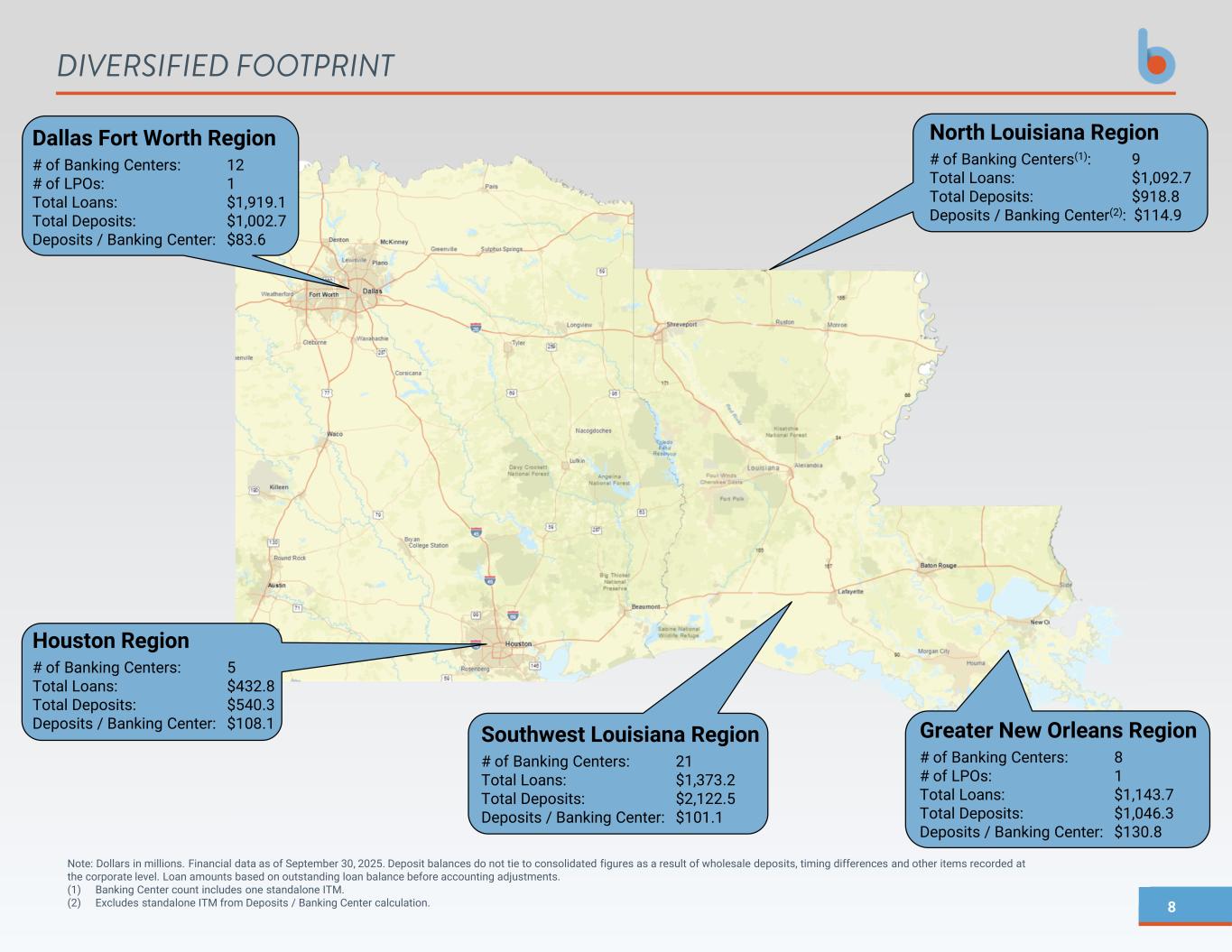
Really appreciate all that color; it really frames it out. Maybe just a follow-up. It did look like some of the paydown activity did happen in Dallas and Houston, if I look at one of the beginning slides versus last quarter. Loan production was up a little bit Q-on-Q, about 4.5%. But any sort of competitive dynamics there that maybe drove those paydowns, just trying to get more color on this quarter's paydowns.
Speaker 3
I think, Michael, the biggest driver of the paydowns this quarter or a significant portion of those paydowns also correlates with past dues at the end of the second quarter. There was a fairly large relationship that was past due, and we commented on that last time we talked, which effectively paid down during the quarter. I don't know that...
And we had a couple of strong C&I relationships where the company was sold to another company. So I wouldn't say that we've lost much in either of those markets or any of our markets through competitive pressures. I think it's been more of the kind of natural life cycle of the good credits; you often want them to pay off because it means they've been successful. The bad credits you want to pay off because it means we don't have to deal with it anymore. So it's more related to that than any kind of material competitive posture, I would say.
Operator
And your next question comes from the line of Matt Olney with Stephens Inc.
Speaker 4
Greg, I think it was your comment around the SBA sales that could potentially slow in the fourth quarter should this government shutdown be extended. I'm looking at that slide deck, and it looks like the SBA sales have been around just over $3 million so far this year, so call it $1 million per quarter. Is that the right way to think about the risk under the scenario of a government shutdown for most of the quarter? And if that's the case, help us appreciate, does this just delay the SBA sales, so it's more of a delayed income into the first quarter? Or is that not the right way to think about that?
Speaker 3
No, you're exactly right. That just delays the income stream into potentially the first quarter. Those are loans that are closed that are really waiting to be sold, so it just delays the revenue opportunity.
Speaker 7
Matt, we've got a pretty good pipeline of loans that can't get approved until they open back up, right? So there's some kind of demand for sure.
One other thing to point out about the slide is that $3.3 million is annualized through nine months, through the three quarters, so it's a little bit—it's not exactly $1 million per quarter; that's just the annualized figure.
Speaker 4
Okay. I see that now. Okay. And then also, I want to ask about Progressive Bank. Any updates on recent trends you're seeing or hearing there? And then just an update on the M&A application process and expectations of deal closing.
Yes. I think all positive, and they've been doing what they said they would do in terms of continuing to incrementally improve profitability over the course of the year, in line with their budgets and our projections. I feel very good about that. We feel really good about the people interaction. We've had an opportunity to spend a lot of time with them, and I'm more excited today than we were originally, and that's all going well. They did achieve a positive shareholder vote last week, which is one of the hurdles you have to get over to get a deal. We were excited about the positive reception afforded to the opportunity by the shareholders of Progressive and excited about the trust in the management team and Board's judgment. So it's a big step. We're in the process of having our regulatory application reviewed and feel really good and confident about the positive outcome there in the next few weeks as well. We feel we're still on pace to close in early January as we've been projecting, so excited about that. I think I mentioned in my opening remarks that we have a conversion date of August for the Progressive bank, so as we think about projecting out the economic benefits, that might be valuable information to you as well.
Operator
There are no further questions at this time. I will now turn the call back over to Jude Melville for closing remarks. Jude?
Okay. We appreciate all the questions, and we appreciate everybody's time. As I started off by saying, it's just a good solid kind of grinded-out quarter. In a lot of ways, those are the ones that you're proudest of and most excited about. We're taking care of business on a daily basis. I love to see that one of our core values is built around incremental improvement, and so we certainly are doing that and look to continue that. We believe we have a clear track to significantly increase profitability over the next few quarters as we capitalize and optimize the opportunities we have in front of us. So thanks again to all of you, and thanks to all of our partners. I look forward to seeing you and talking to you in a few months.
Operator
This concludes today's call. You may now disconnect.