Operator
Welcome to the Bristol-Myers Squibb Fourth Quarter 2024 Earnings Conference Call. Please note, this event is being recorded. I would now like to turn the conference over to Chuck Triano, Senior Vice President and Head of Investor Relations. Please go ahead.
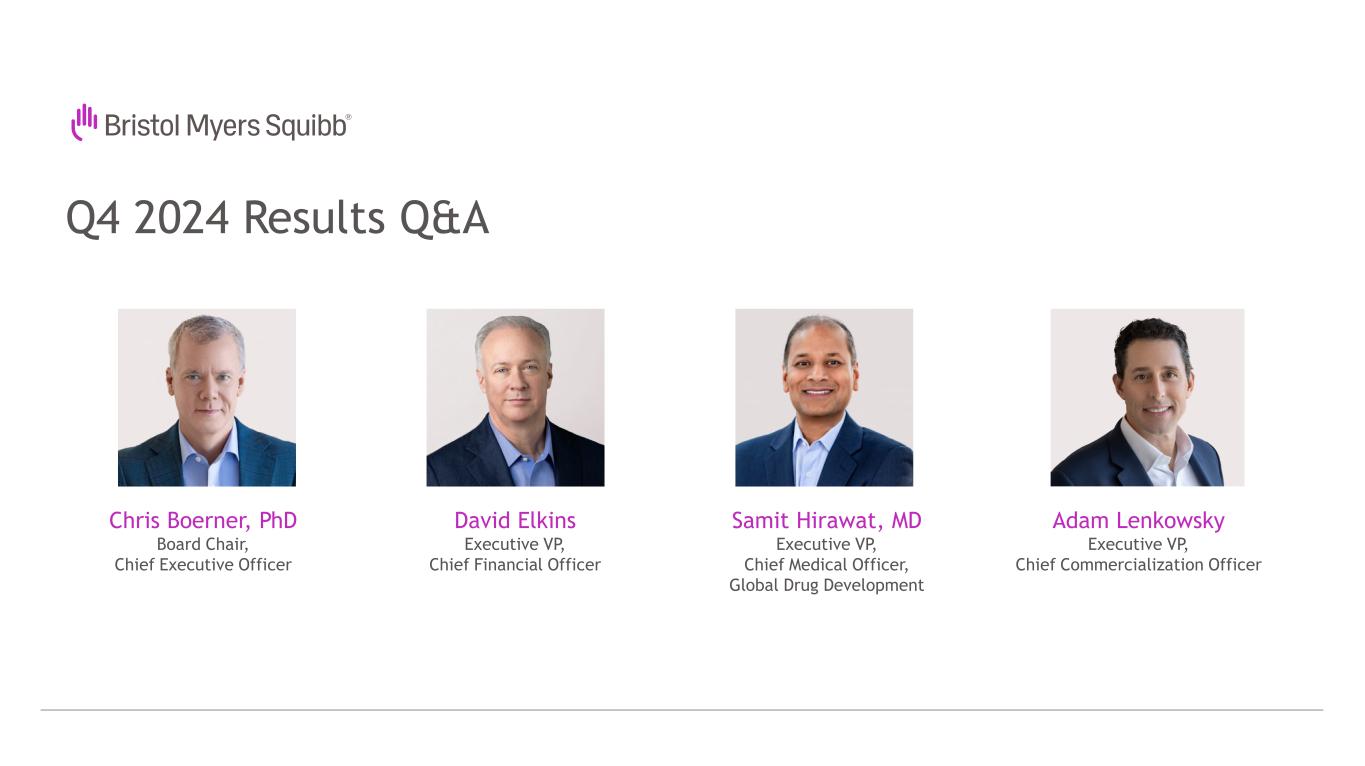
Thank you, and good morning, everyone. We appreciate you joining our fourth quarter 2024 earnings call. Joining me this morning with prepared remarks are Chris Boerner, our Board Chair and Chief Executive Officer; and David Elkins, our Chief Financial Officer. Also participating in today's call are Adam Lenkowsky, our Chief Commercialization Officer; and Samit Hirawat, our Chief Medical Officer and Head of Global Drug Development. Earlier this morning, we posted our quarterly slide presentation to bms.com that you can use to follow along with Chris and David's remarks. Before we get started, I'll remind everybody that during this call, we will make statements about the company's future plans and prospects that constitute forward-looking statements. Actual results may differ materially from those indicated by those forward-looking statements as a result of various important factors, including those discussed in the company's SEC filings. These forward-looking statements represent our estimates as of today and should not be relied upon as representing our estimates as of any future date, and we specifically disclaim any obligation to update forward-looking statements even if our estimates change. We'll also focus our comments on our non-GAAP financial measures, which are adjusted to exclude certain specified items. Reconciliations of certain non-GAAP financial measures to the most comparable GAAP measures are available at bms.com. Finally, unless otherwise stated, all comparisons are made from the same period in 2023 and sales growth rates will be discussed on an underlying basis, which excludes the impact of foreign exchange. All references to our P&L are on a non-GAAP basis. And with that, I'll hand it over to Chris.
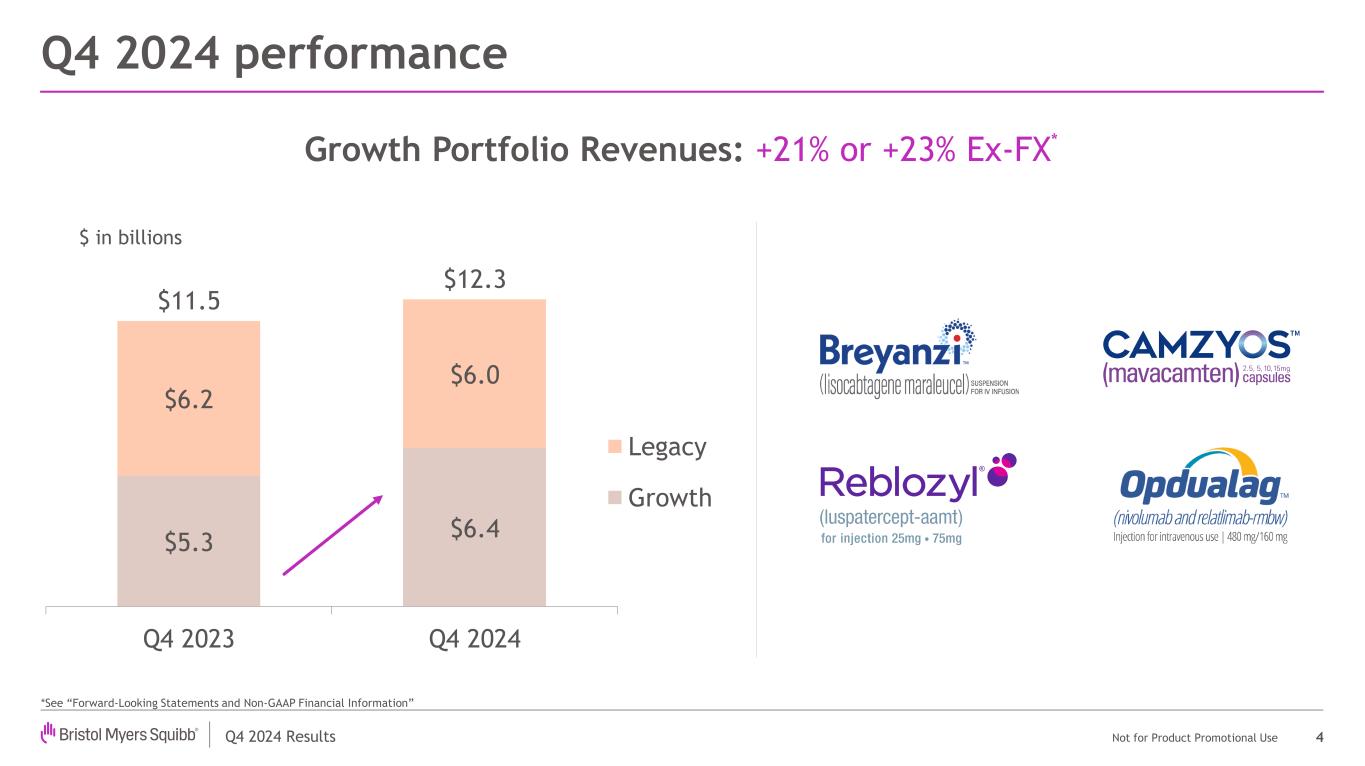
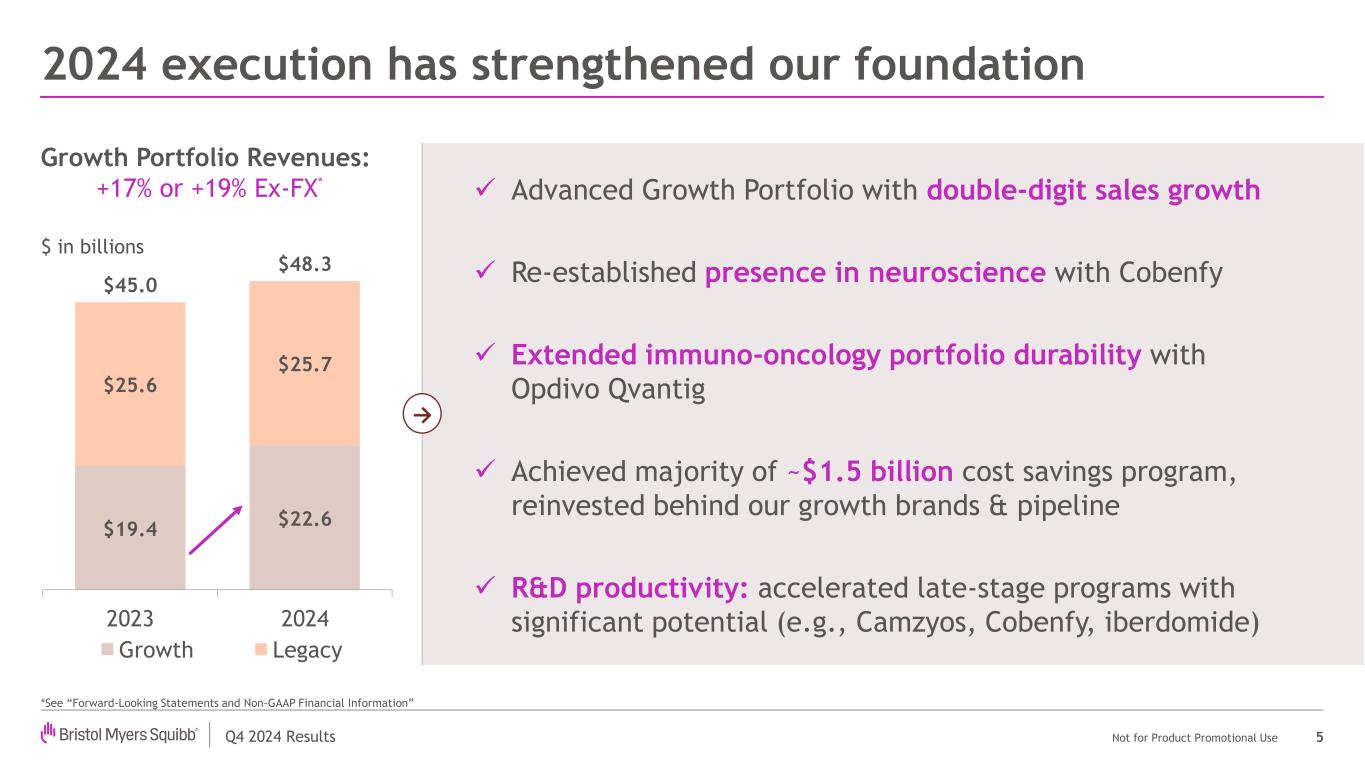
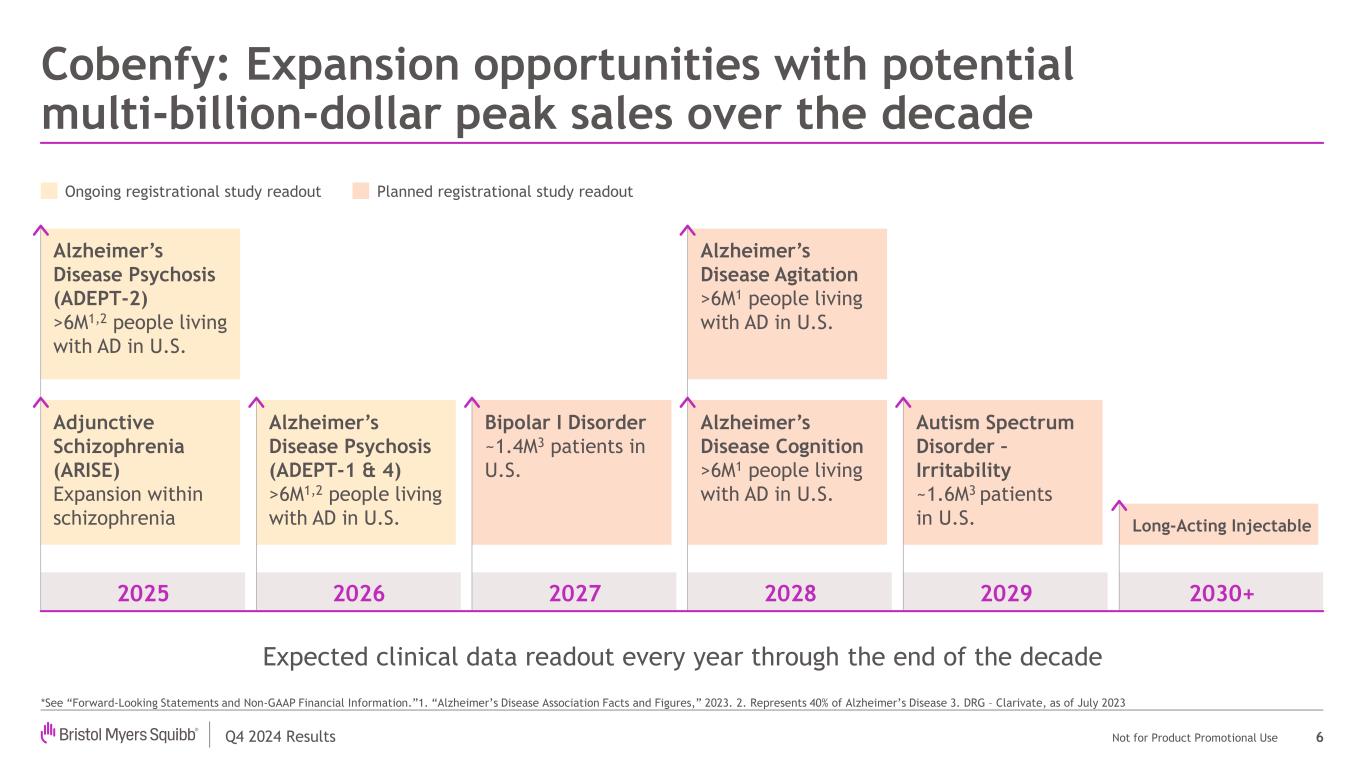
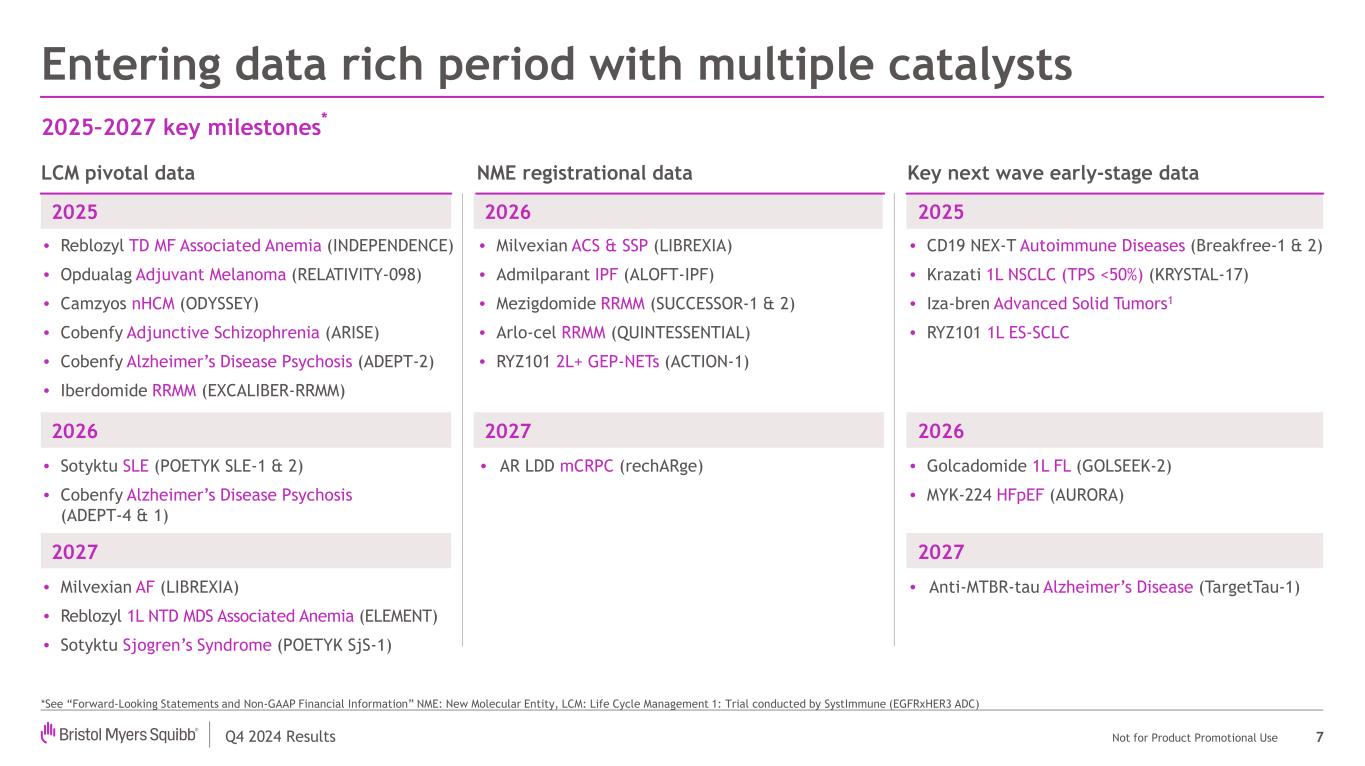
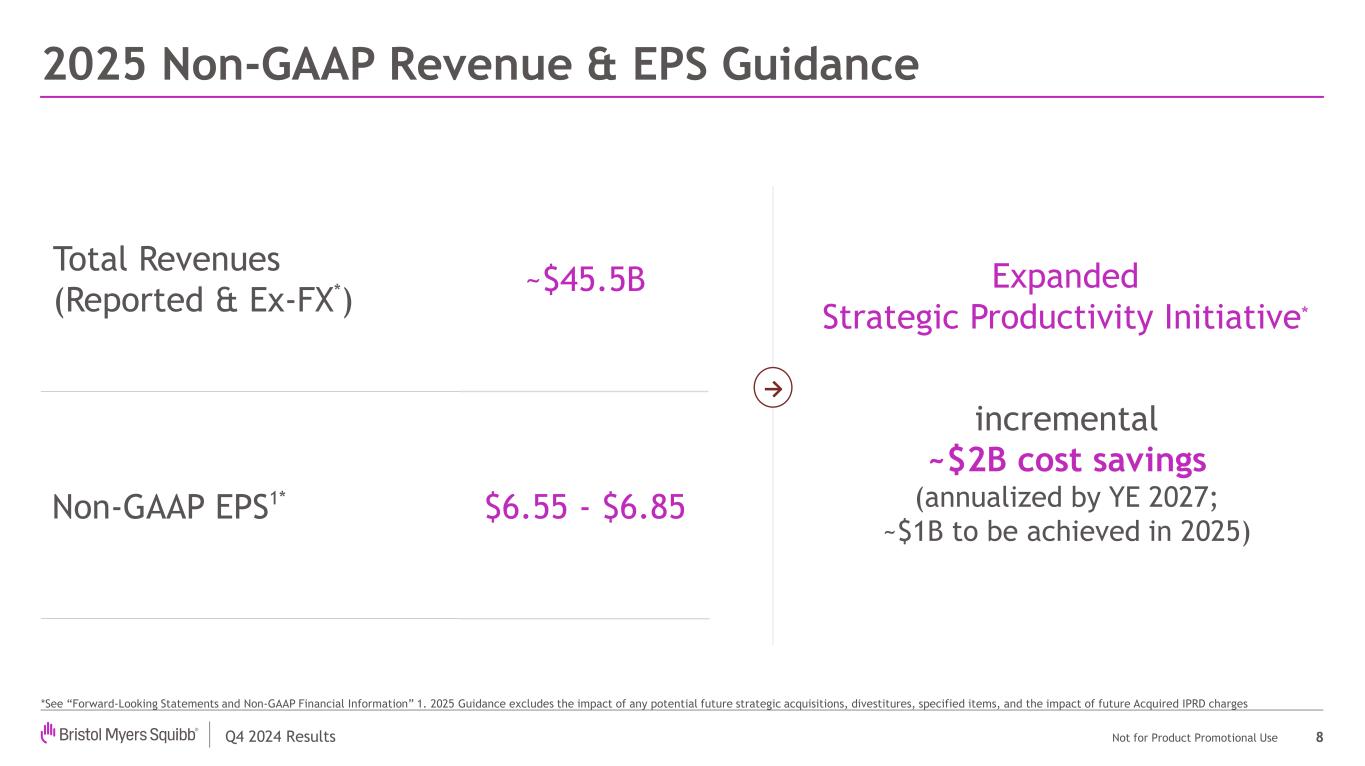
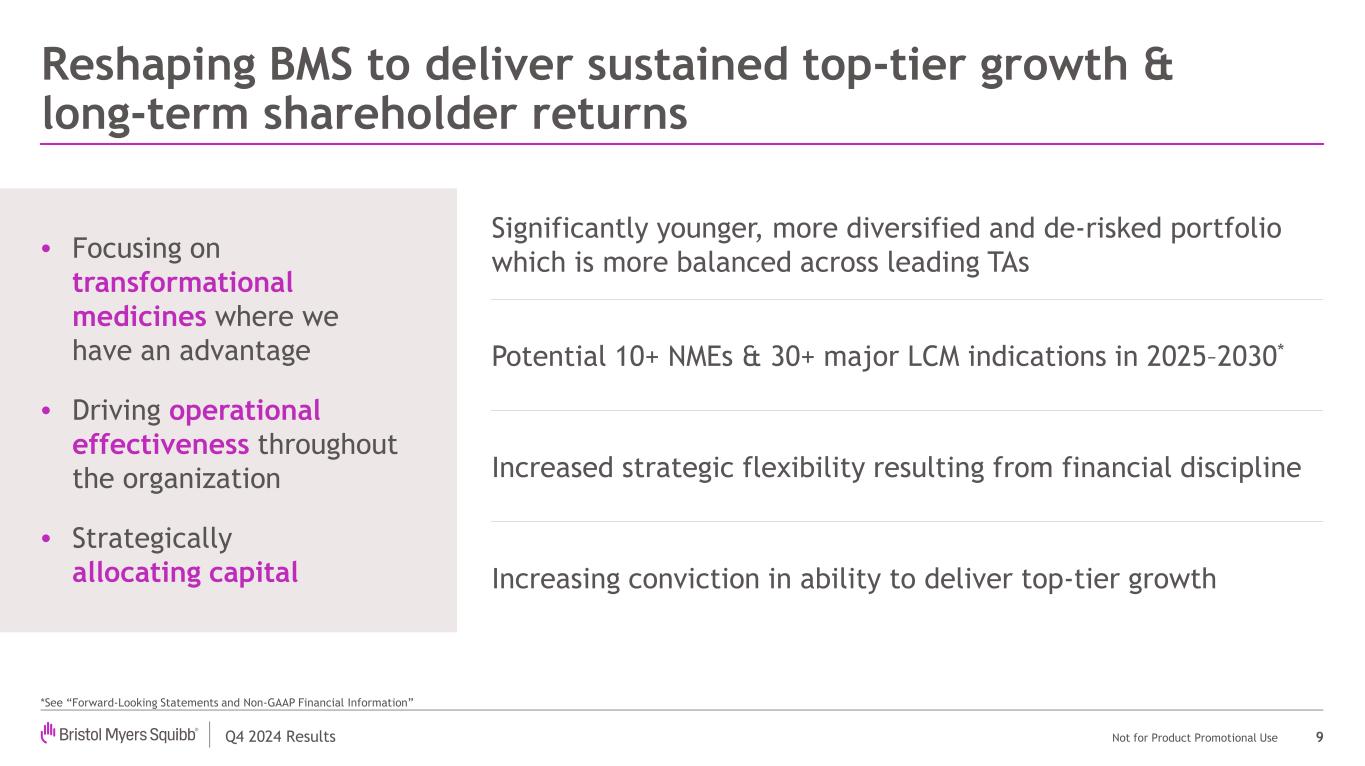
Thank you, Chuck, and thank you all for joining us this morning. As we'll discuss today, 2024 was a year of good execution across multiple fronts. Importantly, our performance last year establishes a solid foundation to continue our multiyear journey to achieve top-tier sustainable growth by the end of the decade. I will begin with some comments on our fourth quarter and full year accomplishments. Then I will speak to the promise we see with Cobenfy and the steady cadence of clinical data catalysts that will begin this year, further defining our future growth potential. I will end with an overview of our 2025 guidance. Starting on Slide 4. We closed 2024 with strong fourth quarter performance, reflecting another quarter of double-digit percentage increase for our growth portfolio. In addition, we saw strong performance across key parts of the company and achieved notable commercial and R&D milestones. Looking at the full year, let's turn to Slide 5. I'm pleased with the progress we have made executing on our multiyear plan. For the year, the growth portfolio delivered double-digit revenue growth led by BREYANZI, Krazati, Reblozyl and Opdivo. In the latter part of the year, we reestablished our presence in neuroscience with the U.S. approval and launch of Cobenfy which is the first novel mechanism for the treatment of schizophrenia in decades. We also received U.S. approval of Opdivo Quvantic in late December. This new subcutaneous formulation of nivolumab will help extend the reach and impact of our immuno-oncology franchise to patients into the next decade. Throughout 2024, operational excellence and financial discipline were top priorities for us. As part of this effort, we reallocated significant spend towards high potential growth opportunities, achieving most of our targeted $1.5 billion in savings. We expect to capture the remainder of this year. Additionally, we put considerable focus in 2024 on improving R&D productivity. As a result, we have been able to accelerate several programs in our late-stage pipeline. Notable examples include CAMZYOS, where we completed enrollment in the ODYSSEY non-obstructive HCM study 6 months earlier than expected and now anticipate topline results next quarter. With Cobenfy, the ADEPT 2 study in Alzheimer's disease psychosis is expected to have a topline readout in the second half of this year versus our original expectation of 2026. This is due to our focus on accelerating patient recruitment following the acquisition of Karuna. And with our iberdomide excaliber trial in relapsed/refractory multiple myeloma, enrollment is complete, and we have an opportunity for a data readout this year, also ahead of schedule due to the recent addition of MRD as a co-primary endpoint. Looking ahead, we will continue to sharpen our focus on operational excellence. You saw the early steps of this strategy last year. As a continuation of that, we are taking deliberate steps to become a leaner, more focused company and have identified an additional $2 billion in savings. We expect approximately $1 billion of these savings to be realized this year and the remainder by the end of 2027. David will provide more detail shortly. These actions are consistent with our strategy of investing in our growth portfolio and promising areas of science while maintaining financial discipline. As I've said, this is a journey, but we're already seeing progress. I'm confident the actions we are taking are the right ones that will further advance our long-term sustainable growth strategy. Turning to Slide 6. The U.S. approval of Cobenfy for schizophrenia was an important achievement in 2024, and the launch is off to a great start. While we're focused on delivering on the schizophrenia indication today, we see the potential for additional benefit to patients and have made strategic investments in a broad clinical development program. We expect to have important data readouts starting this year and every year thereafter for the remainder of the decade. This year, we're initiating 7 Phase III studies across 3 indications: Alzheimer's disease agitation, Alzheimer's disease cognition and bipolar I disorder. And next year, we plan to begin Phase III studies in autism spectrum disorder irritability. The significant ramp-up in spending on Cobenfy illustrates our focus on continuing to invest behind key growth drivers while simultaneously maintaining financial discipline. Moving to Slide 7. We are entering a data-rich period with multiple catalysts over the next 24 months across a significant number of assets. In 2025, we have multiple important registrational catalysts, as you can see on this slide, including several that I already mentioned as well as the Cobenfy-ARIE study in adjunctive schizophrenia. Then in 2026, we expect to have registrational data for numerous potential first and/or best-in-class medicines, including Milvexian in acute coronary syndrome and secondary stroke prevention, Admiral parent in idiopathic pulmonary fibrosis, and mezigdamide in multiple myeloma. We also expect to have registrational data for ArloCell, our GPRC5D CAR-T in multiple myeloma and for RAISE101 in GEP-NETs. We believe these data readouts will further derisk the pipeline and provide meaningful insight into the future growth profile of the company. Now let me give you an overview of our 2025 guidance and how we see this year playing out on Slide 8. In terms of the top line, we estimate revenue to be approximately $45.5 billion, reflecting, as expected, the near-term impact of generics across multiple products and the continued strength of our growth portfolio. As it relates to the bottom line, we expect our 2025 non-GAAP earnings per share to be in the range of $6.55 to $6.85. This reflects the expanded savings program I mentioned earlier. David will provide more details on our guidance. Finally, turning to Slide 9. BMS is evolving into a fundamentally different company with a clear multiyear plan, strong execution and an accelerating pipeline. We now have a younger and more diversified growth portfolio. This includes Cobenfy which has the potential to be a significant contributor to growth over the coming years. We have a multitude of important data readouts over the next 24 months with the potential to launch 10 or more new medicines and pursue over 30 indication expansion opportunities over the next 5 years. And we remain focused on the therapeutic areas where we have a long track record of success and delivering transformational medicines to patients. We are confident in the steps we are taking to reshape BMS. And by the end of the decade, we expect to have a transformed portfolio of marketed products driving top-tier sustainable growth. Now I'll turn it over to David.
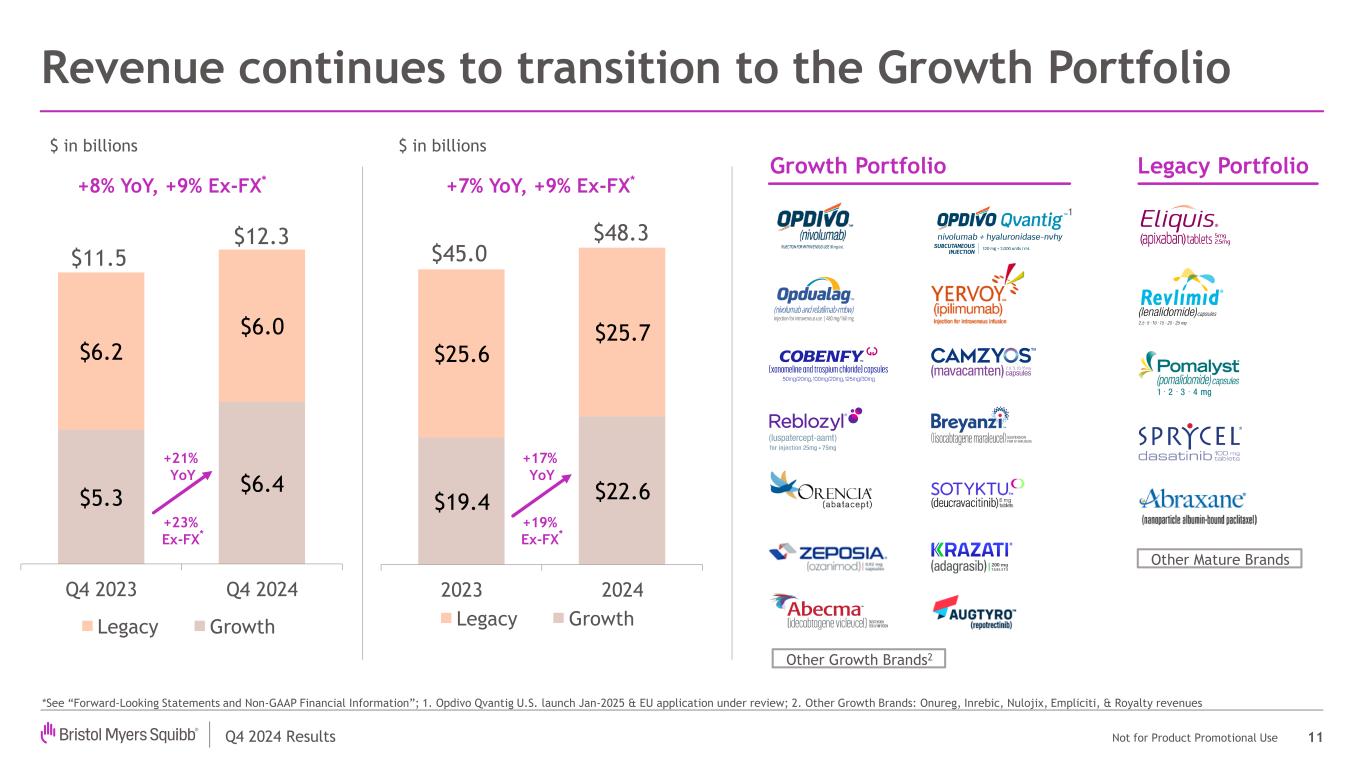
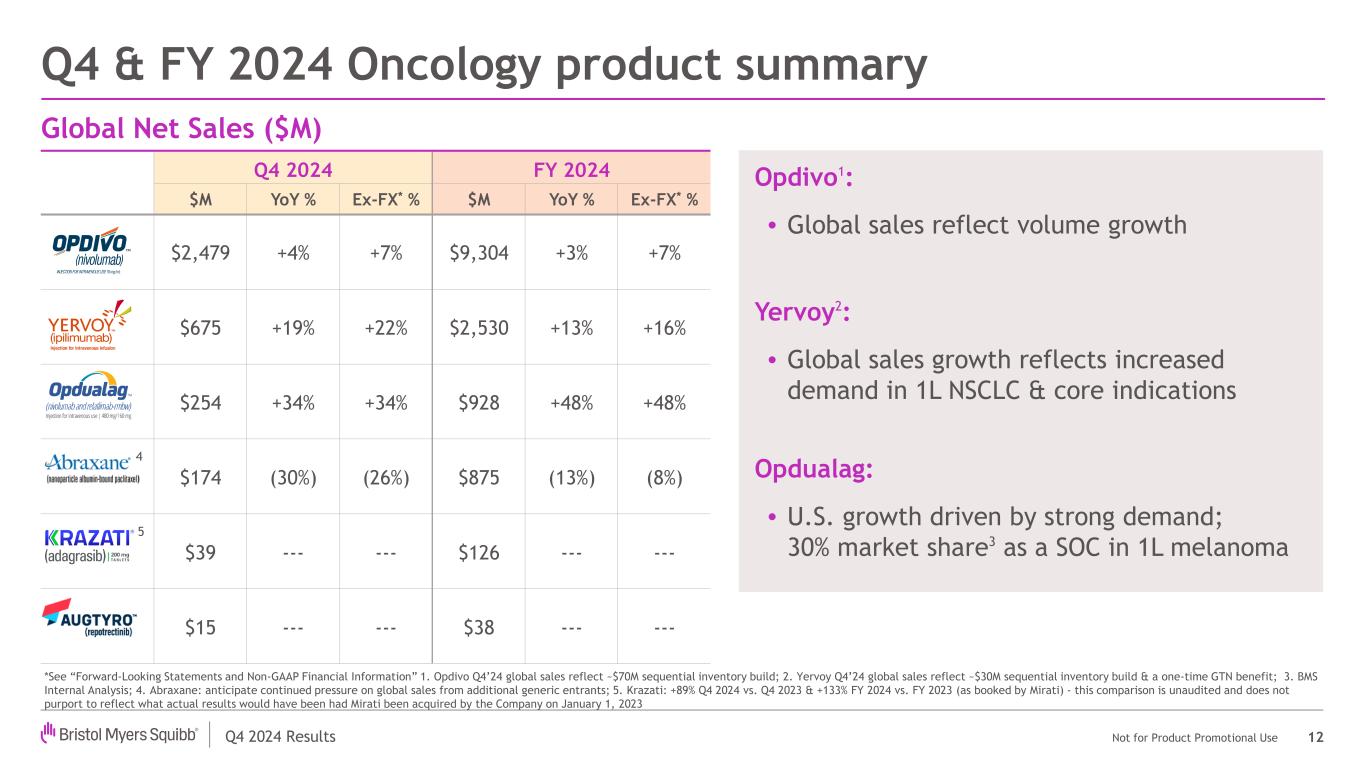
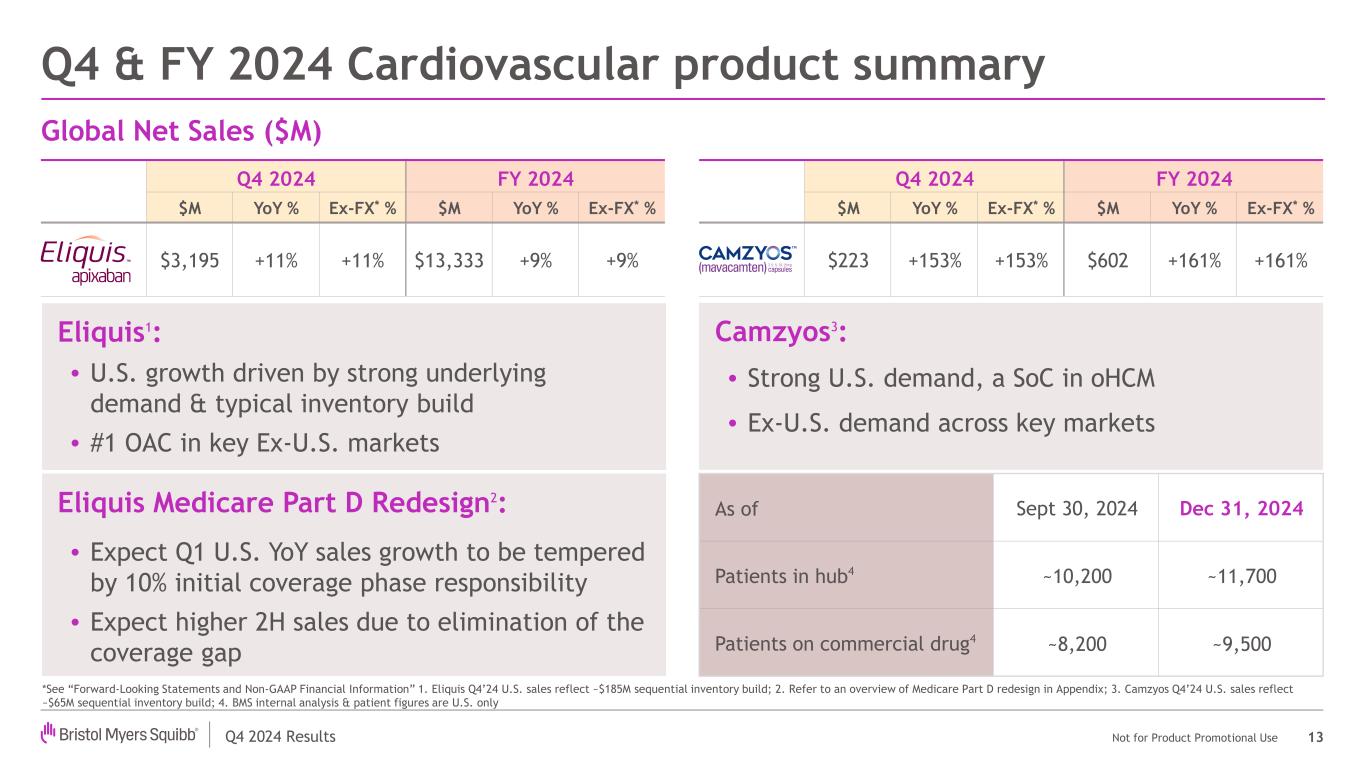
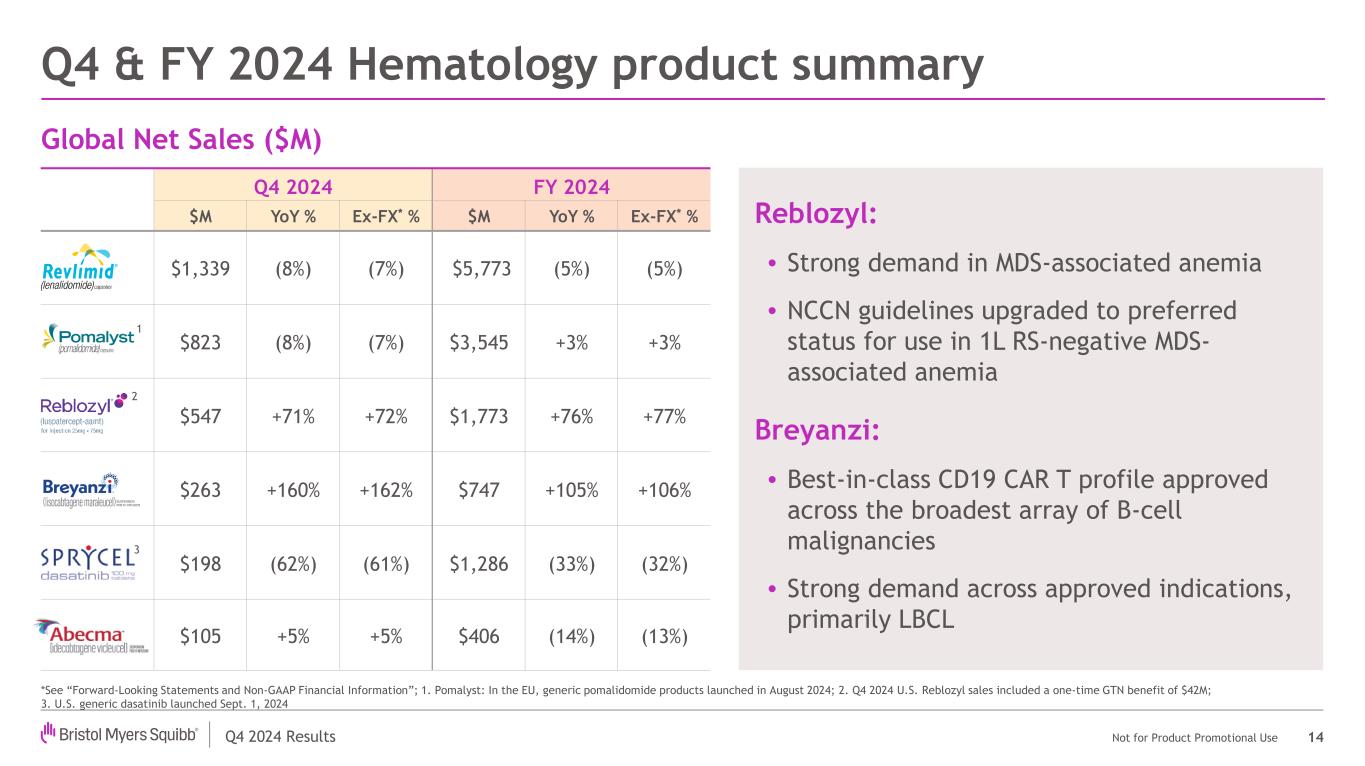
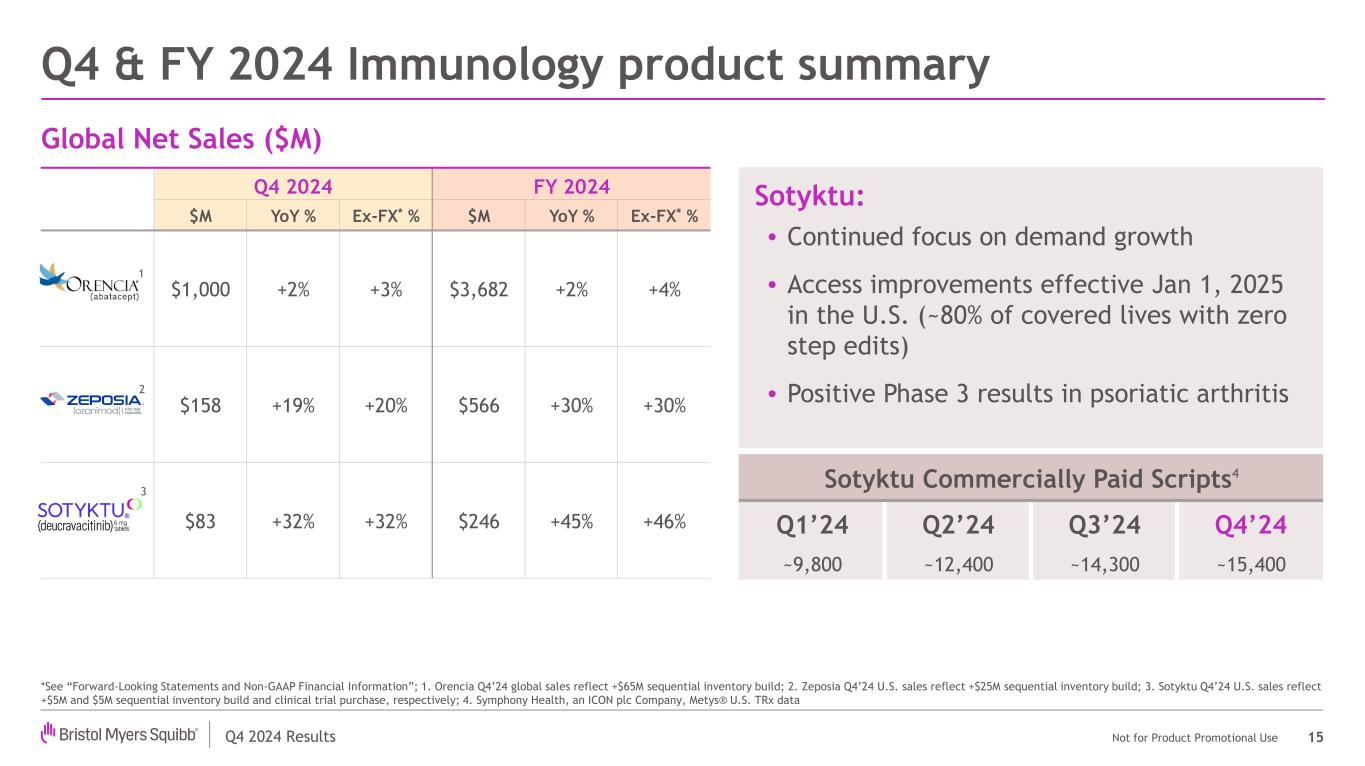
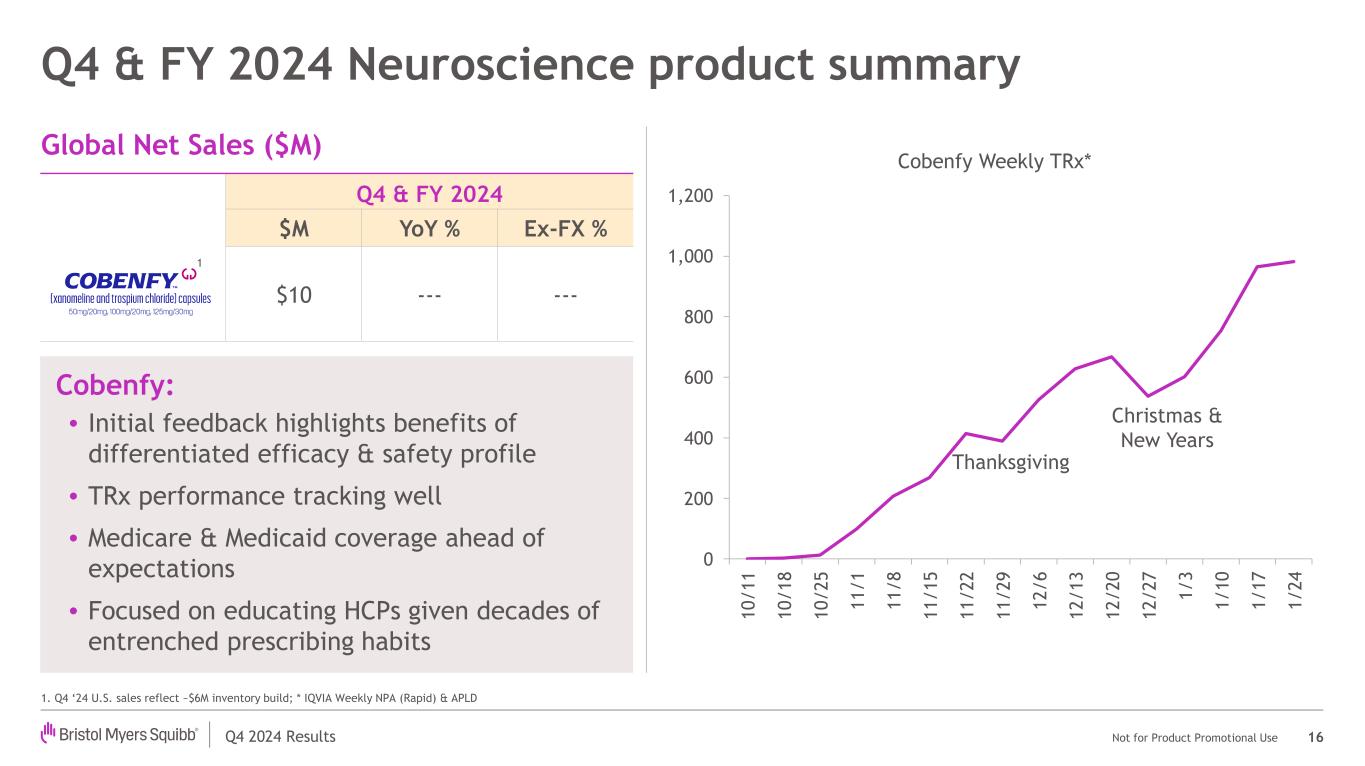
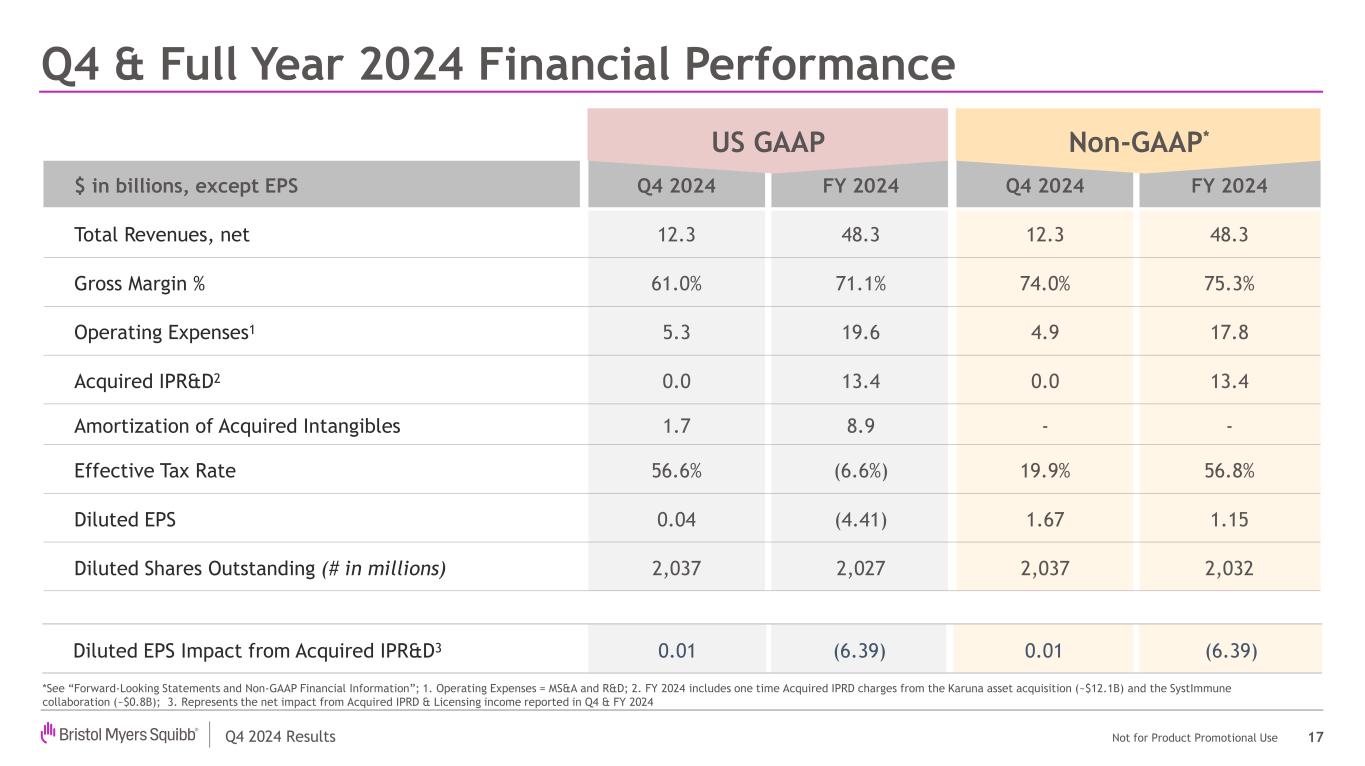
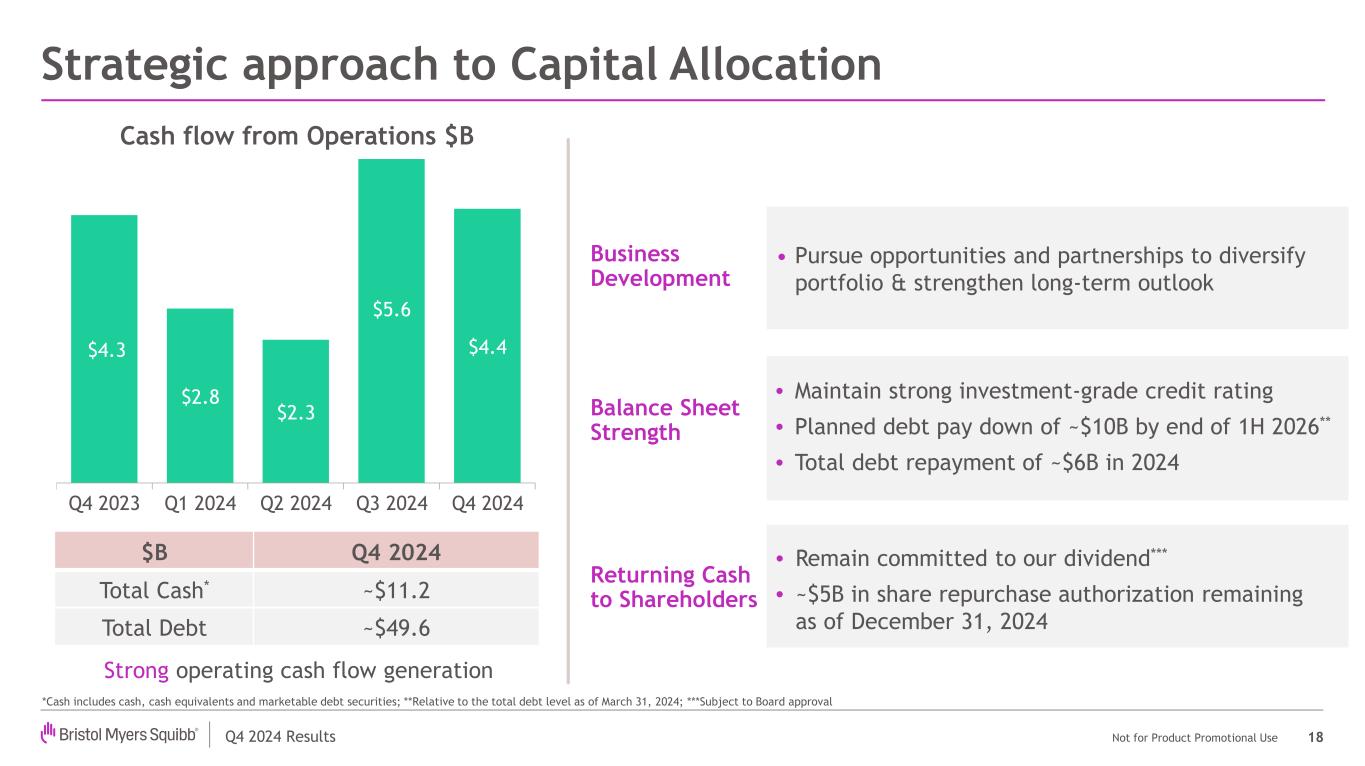
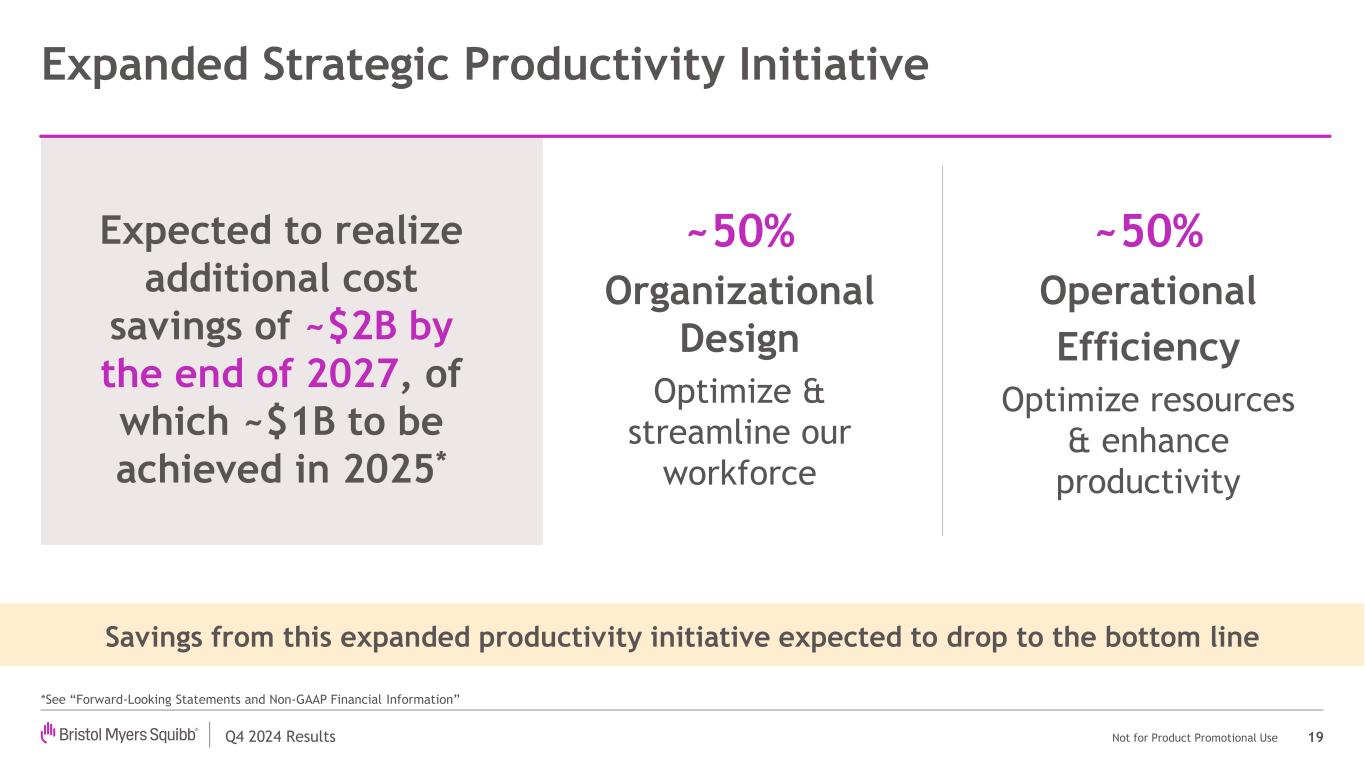
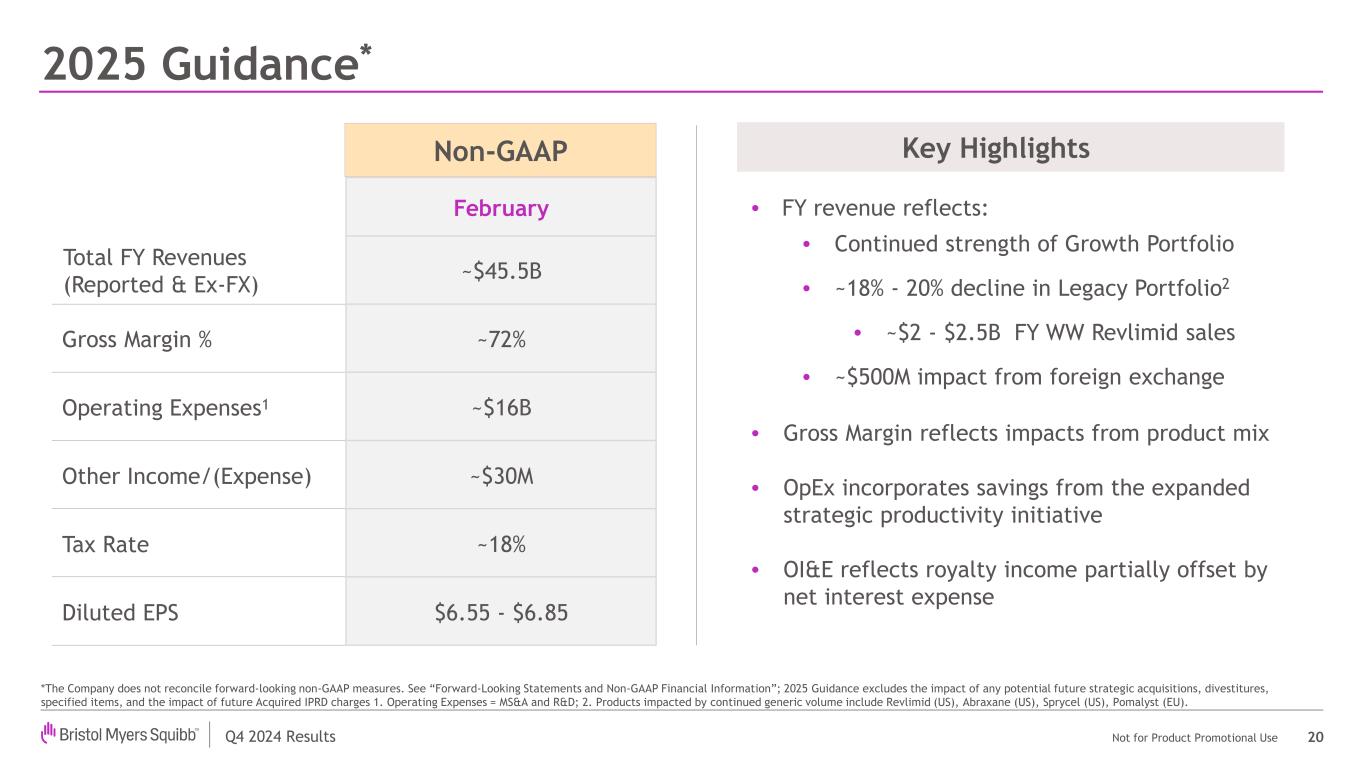
Thank you, Chris, and good morning, everyone. I will begin my review of our 2024 financial results, focusing on our fourth quarter performance. I will follow up with the introduction of our non-GAAP financial guidance for 2025 and some important considerations to help you better understand our financial outlook for this year. Our performance in 2024 is marked by focused execution on driving top line growth, generating strong cash flow and managing our cost structure. We have entered 2025 with a stronger foundation to deliver on our long-term growth strategy. Starting with Slide 11. Sales in the fourth quarter grew 9% to approximately $12.3 billion, driven by volume growth across the portfolio and higher inventory levels in the market. Our growth portfolio delivered another strong quarter with sales up 23% and represented slightly more than half of our revenue. Key brands like Reblozyl, Krazati and Opdualag all achieved significant growth. Within the legacy portfolio, higher sales of Erelzi were offset by the expected impact of increased generic volumes across several other brands including REVLIMID, ABRAXANE, SPRYCEL and POMALYST. Overall, our performance in the fourth quarter capped off a very good year for our company, making progress in building a foundation for long-term sustainable growth. Turning to product performance on Slide 12, starting with oncology. Opdivo delivered solid growth in the fourth quarter, primarily due to higher volume. In 2025, we are focused on conversion and educating the U.S. market on the benefits of Opdivo Quvantic, and we expect low single-digit growth for this product and Opdivo taken together. With Opdualag, we delivered another quarter of double-digit growth driven by demand in the U.S. where it remains a standard of care in first-line melanoma. Ex-U.S. sales benefited from uptake in newly launched markets. Moving to cardiovascular on Slide 13. Eliquis delivered over $3 billion in fourth quarter sales. U.S. sales grew 19%, benefiting primarily from continued strong demand and the typical inventory build. Importantly, as you think about the impact to Eliquis from Medicare Part D redesign, Q1 U.S. sales growth will be tempered sequentially due to the implementation of the 10% manufacturer responsibility in the initial coverage phase. The remaining quarters of 2025 should steadily increase, particularly in the second half of the year due to the elimination of the coverage gap. Turning to Camzyos, sales in the fourth quarter more than doubled, benefiting from higher demand and a large inventory build. Camzyos continues to show strong momentum as evidenced by the approximately 1,300 new patients added to commercial therapy in the fourth quarter. Additionally, we recently received a label update for Camzyos in Europe to ease the echo monitoring requirements in the maintenance setting for obstructive HCM. Importantly, we are pleased to announce today that we have a PDUFA date in April for a similar easing of the REMS echo monitoring requirements in the U.S. Let's turn to hematology on Slide 14. Reblozyl delivered more than 70% growth, reflecting solid uptake across first and second line MDS-associated anemia patients. Sales in the U.S. benefited from demand and included a one-time gross-to-net benefit outside the U.S. Reblozyl sales more than doubled, driven by demand across newly launched markets in Europe and a strong launch in Japan. In cell therapy, BREYANZI's fourth quarter sales more than doubled, driven by its best-in-class profile and strong demand growth across all its approved indications. Now moving to immunology on Slide 15. Global sales of our immunology franchise grew more than 30% and U.S. sales benefited from higher demand, tempered by gross-to-net impacts from higher rebates associated with expanded access coverage. Starting in 2025, we further improved our access position with 80% of covered lives having zero step edits, which will help us drive demand growth. As a result of this improved access position, however, we expect additional headwinds from higher rebates notably across the immunology franchise. Regarding this dynamic specifically, this will temper our reported sales in the first half of the year until demand volume can offset these impacts. I will wrap up reviewing our performance for the quarter on Slide 16 with neuroscience and Cobenfy. Cobenfy sales in the fourth quarter were approximately $10 million and represent roughly two months of sales and initial stocking. And we've seen strong prescription uptake during these early months of launch. Feedback from both patients and physicians has been favorable, highlighting the benefits of Cobenfy's differentiated efficacy and safety profile. Let's now move to the P&L on Slide 17. As expected, gross margin declined about 240 basis points in the fourth quarter, driven primarily by product mix. Excluding in-process R&D, operating expenses increased approximately 8%, largely driven by R&D investments, partially offset by our ongoing cost savings program. Regarding our operating expenses, we made significant progress during 2024 against our $1.5 billion strategic productivity initiative. As of the end of the fourth quarter, we realized approximately $1.1 billion in savings and expect the remaining $400 million to be realized in 2025. Our effective tax rate for the quarter was 19.9% compared to 14.9% in the prior year, primarily driven by earnings mix. For the full year, excluding in-process R&D charges, our effective tax rate was 18%. Overall, diluted earnings per share were $1.67 for the quarter and full year diluted earnings per share came in at $1.15. Turning to the balance sheet and capital allocation highlights on Slide 18. Our financial position remains strong with approximately $11.2 billion in cash equivalents and marketable securities as of December 31. We generated strong cash flow from operations of approximately $4.4 billion in the fourth quarter. In terms of capital allocation, we continue to ensure we employ a strategic and balanced approach. Business development remains a priority, as does our plan to pay down debt. As of the end of 2024, we have repaid approximately $6 billion of the $10 billion of debt we committed to pay down relative to our March 31, 2024 balance. Our capital allocation priorities also include returning cash to shareholders through a commitment to the dividend. 2025 marks our 93rd consecutive year of dividend payments. On Slide 19, I'll provide more detail on our expanded strategic productivity initiative that Chris mentioned earlier. Building on the work we did to capture cost savings last year, we identified additional opportunities to streamline operations, further leverage technology and drive greater efficiency in our ways of working. As a result, we expanded the existing program to include approximately $2 billion of incremental run rate operating expense savings with approximately $1 billion to be achieved in 2025 and the remainder by the end of 2027. Under this expanded initiative, savings will be driven by changes in organizational design and efforts to enhance operational efficiency with each accounting for roughly 50% of the targeted savings. Within organizational design, we will continue to optimize and streamline our workforce to better align with the future needs of the business. To further optimize resources and enhance productivity, we will drive operational efficiencies across multiple areas of the business. In contrast to the initial $1.5 billion cost savings program, where savings were mainly reinvested, this expanded program will see the incremental $2 billion in savings drop to the bottom line. Overall, our focus is to become a leaner, more efficient company while investing behind our growth portfolio and promising areas of science. With that in mind, let me walk you through our non-GAAP 2025 guidance on Slide 20, starting with revenue. As Chris said earlier, we estimate revenue in 2025 to be approximately $45.5 billion, primarily reflecting the near-term impact of generics across multiple products and the continued strength of our growth portfolio. We expect an 18% to 20% decline in the legacy portfolio due to the stacking of LOEs and anticipated headwinds from foreign exchange of approximately $500 million. This will be partially offset by higher revenue and continued strong performance of our key growth brands. Now continuing with our 2025 guidance for certain P&L line items, we expect our gross margin to be approximately 72%, which reflects the impact of product mix. Excluding in-process R&D, we expect total operating expenses to show a meaningful decline to approximately $16 billion, driven by the expanded cost savings program I just mentioned. We anticipate our overall expenses to be more evenly phased throughout the year. Operating margin is expected to be approximately 37% for 2025. We're expecting OI&E income of approximately $30 million and we expect to maintain our tax rate of approximately 18%. Considering these factors, we expect to deliver non-GAAP earnings per share in the range of approximately $6.55 to $6.85. Before closing, let me provide some insight regarding our expected quarterly progression of revenue for 2025. As it relates to quarterly phasing, we expect the first quarter to be impacted by the typical inventory destocking we see each year following the build in Q4, as well as the additional gross-to-net pressures from Medicare Part D redesign, which will be accentuated within Eliquis. As I said earlier, we expect Eliquis revenue for the remaining quarters of 2025 to steadily increase, particularly in the second half. As a result of this, we expect the legacy portfolio to decline approximately 10% to 12% on a sequential basis, reflecting these dynamics and continued generic impacts as previously communicated. However, on a total company basis, we expect the inventory and gross-to-net dynamics to normalize beginning in Q2, with second half revenues to be higher than the first half of the year. In closing, our strong performance in 2024 has strengthened our confidence in our ability to deliver long-term value for our patients and shareholders. We remain focused on executing our growth strategy and rightsizing our cost structure. We also look forward to multiple data catalysts, which will accelerate over the next 24 months and will derisk our pipeline and provide more certainty on the future shape of our company. And with that, I'll now turn the call back over to Chuck for Q&A.
Thanks, David and Chris for the prepared remarks. Alison, could we please poll for questions?
Operator
The first question today will come from Chris Schott of JPMorgan.
Speaker 4
Just two quick ones for me. First on Cobenfy. It seems like feedback and coverage dynamics are progressing well. Can you just elaborate on how you're thinking about the ramp of the drug from here as we balance, as you highlight, entrenched physician prescribing habits against what seems like a relatively poor standard of care and pretty large unmet need in the space. I'm just trying to get a sense for the ramp, how you're thinking about it for '25? And the second one is just on the cost program. Once you're done with this incremental $2 billion, should we think about additional cost opportunities as you go through that 2028 LOE cycle, or is this going to really put the company in the right place as we think about the longer-term model and longer-term business? So basically thinking about is the 27% run rate kind of a good way to think about this? Or is there another step down as we head into Eliquis and Opdivo?
Thanks for the questions, Chris. I'll have Adam take the first question, and then I'll take the second.
Speaker 5
Great. Thanks, Chris. So regarding Cobenfy, we're very pleased with what we're seeing with Cobenfy three months post launch, and the launch is really off to a strong start. We're now at approximately 1,000 TRx per week. And we made very good progress achieving our access goals. For Medicaid and Medicare, we're tracking ahead of our expectations. We've achieved over 90% Medicaid access and over 80% Medicare access; recall those two payers represent over 80% of the covered lives in this category. And as expected, the majority have one step edit post-generic. We're also making very good progress with commercial payers. The feedback over the last several months has been very positive. There's been a lot of enthusiasm around the efficacy and safety profile. I'm also pleased with the number of trialists that we're seeing since launch, and we have an opportunity to further expand and increase adoption with roughly 30,000 psychiatrists. So as you said, this is the first new mechanism of action in decades in the treatment of schizophrenia. And so we're out with our teams educating customers on Cobenfy's differentiated profile and we're breaking reflexive prescribing habits, and that's going to take some time. So we would expect to see continued strong uptake through 2025, with the ramp in the back half of this year. But taken together, we are really pleased with what we're seeing so far, and we plan to make this a very big product for the company over time.
Thanks, Adam. And Chris, with respect to the second part of your question on the cost program, let me say a few things. First, as you think about this cost program keep in mind that our focus as a company continues to be on investing for growth. That's investing in the products that we have today, investing in the pipeline, both the late-stage pipeline as well as promising early areas of science. And maybe just give you quick vignettes on that. We plan to initiate 7 Phase III programs starting this year on Cobenfy, clearly illustrating that we'll continue to invest in our pipeline. And then Adam can speak to this, but we made significant up investments in commercial last year which explains, we believe, part of the progress that we've made on products like CAMZYOS, Opdivo and BREYANZI. So investing in growth is a priority for us, and that's the top priority. With respect to the cost programs, just a bit of context. As we were executing on last year's program, we cataloged a number of opportunities for us to become a more agile company, to become more nimble and speedy in terms of how we operate. And given where we are on that program as well as where we are with respect to LOEs, we think that it makes sense for us to capitalize on those opportunities now. So that's really driven the timing of this announcement, and we think it puts us in a good position going forward. With respect to this — the follow-up to that, which is, will there be additional cost-cutting efforts — I think we're always going to align the organization to the needs of the business. This is an extension of last year's program. It gives us more financial flexibility. That financial flexibility gives us strategic flexibility but we're always going to be focused on ensuring that we've rightsized the organization, and we've got the right level of spend, given where the business is.
Thanks, Chris. Alison, can we go to our next question.
Operator
Next question will come from Luisa Hector of Berenberg.
I just wanted to take your assumption for Part D redesign, if you can quantify it in 2025. And then just an update on cendakimab, I don't see it on the slides, but any updates on the filing plans there?
Thanks for the question, Luisa. I'll have Adam take both of those questions.
Speaker 5
Thanks, Luisa. As relates to Part D redesign, there are pushes and pulls. Overall, we're going to see favorability with Eliquis due to the elimination of the coverage gap and with that, we're not going to see the historical dynamics with Eliquis, where first half sales have been higher than the second half sales. In fact, what we're going to see in Q1 is going to be the lowest quarter of sales for Eliquis with mid-single-digit sequential decline from Q4 to Q1 globally. And we'll see second half sales be higher than first half sales. But for the full year, we expect strong year-over-year growth for Eliquis. Now when you look at products like REVLIMID, POMALYST, ORENCIA and CAMZYOS, for example, that's going to offset the Eliquis favorability as we see increasing gross-to-net pressure starting as patients enter the catastrophic phase. And as you know, we're responsible for 20% in the catastrophic phase and 10% in the initial coverage phase. But as we've said previously, we project it to be roughly net neutral across our portfolio this year. As it relates to cendakimab, given the data that we have seen, we've made the decision not to commercialize cendakimab. We're going to continue to prioritize investments and opportunities where we have a competitive advantage. We can deliver the highest return for the company in areas where we believe that we have an opportunity to deliver potentially transformational outcomes for patients. We made a similar decision late last year with Zeposia in UC as we saw the unsuccessful trial in Crohn's disease. And based on our competitive position with other agents in IBD, we made that decision as well.
Operator
The next question will come from Geoff Meacham of Citi.
Thanks so much for the question. I had another one on Cobenfy. I know, Chris, you highlighted the expansion opportunities on Slide 6. I guess, are there others that you could add or accelerate beyond what you have? I guess the main question is, since the emracladine failure are there changes to the investment plan that you're contemplating? And then on the policy front, I want to get your perspective as RFKJ's nomination or a confirmation looks I think fairly imminent, what are the potential puts and takes on IRA revisions? Obviously, there's been a lot of chatter on what discounting could look like in the outer years.
Sure. I'll take the first part of that question and then turn it over to Samit and Adam, and then I'll come back and talk about the policy bit. Just let me give you a top line on Cobenfy. Obviously, the competitive dynamics and changes on the competitive front haven't impacted the short term on that product. We have always been focused on delivering that product as quickly as possible to patients. However, we do believe that those competitive dynamics provide a more significant long-term opportunity for us and so we have put a full court press on ensuring that we do everything we can to capitalize on that opportunity in the long term, and that includes accelerating programs where possible. So maybe Samit and Adam want to comment.
Speaker 8
Yes, it's absolutely true what Chris just said because if you think about the dual muscarinic agonism mechanism of action that Cobenfy carries, it opens up the door for investigating and exploring many of the dementia-associated psychosis and agitation disorders. So we will continue to explore where the drug could be applied, where additional indications could be added and how we can accelerate the development of this molecule as well as continue to look into our pipeline for other molecules we can bring forward in the neuropsychiatric space to manage the unmet clinical need that exists for these patients at this time.
Speaker 5
I'll just add, Samit. Our focus has been on ensuring a successful launch where generic atypicals have about 80% market share, and Cobenfy has significant safety and efficacy advantages there. As Samit just mentioned, we see the unique efficacy advantages around the three domains of schizophrenia — hitting on positive symptoms, negative symptoms and cognition due to its unique mechanism of action. So we didn't expect competition from other muscarinic agents in schizophrenia until late '26, early '27. And the failure of emracladine, we have a clear path forward in schizophrenia and we're excited about the opportunity with Cobenfy. And we believe that we're going to drive meaningful growth for Cobenfy into the middle of the next decade.
On the policy front, maybe a few things. First, as a company, as you well know, we have a long history of working across both sides of the aisle. We actually look forward to working with the new Congress as well as the next administration. Our focus as a company is going to continue to be on policies that strengthen the ecosystem for innovation to make sure that we're ensuring to address the needs of patients and our employees. Also, I would add ensuring that the FDA has what it needs to fulfill its mission. And so that's going to be our focus as a company. With respect to the IRA specifically, I do think there's an opportunity for us to address in the coming administration some of the challenges as one of the first companies to go through the IRA price setting process. We've been very clear on concerns that we have with that law. And we see the need to have a number of fixes that will avoid some of the more damaging aspects of the law and some of the more perverse incentives and I would highlight addressing the bill design and addressing the spillover impact as two of the most important areas that we'll be focused on. And of course, there are other policy priorities — but in general, we look forward to working with this administration, and we think we've got some opportunities to do so.
Operator
The next question will come from Chris Shibutani of Goldman Sachs.
I'm struck by the ability to do several things at the same time while trying to realign your costs and integrate these businesses. There have been several advancements of timelines in terms of data readouts. I guess there's also been an absence of slippage across integrating aspects of the pipeline that are very important. What are the keys in your opinion to being able to deliver on this progress and in particular, the advancement of timelines?
Maybe I'll start and then turn it over to Samit. I think, Chris, you've correctly pointed out there are a lot of moving parts. But I would say one of the reasons that we've been fixated on operational excellence, becoming a more nimble and focused organization is making sure that we're staying absolutely focused on those things that are going to drive value to the company and value to shareholders. And so one of those things has been a very laser-like focus on R&D productivity. The work that we've done in that regard has enabled us to accelerate a number of programs that are going to add value for the company. In fact, one of the reasons we have this wave of catalysts that are coming forward over the next 24 months is that we have been focused on ensuring we hit the timelines that we set internally and where possible, accelerate and Samit and the team has done a nice job of helping us do that. So Samit, do you want to comment on specifics.
Speaker 8
Yes, absolutely. Thank you for the question, Chris. As Chris said, the laser focus is the start. But then again, following the principles we laid out a few years back from the research and discovery perspective, the cause was biology to discover the drugs matching the modality to the mechanism and then picking the right diseases. And then after that, accelerating that proof of concept generation. But then if you look at the late development, we broke down the process into multiple pieces and dug deeper into where we were doing well versus where the space is where we had the opportunity to shorten the timelines. And there, we identified several opportunities, and then we started to dig deeper into it. The other thing we did last year is also prioritize our portfolio and made certain decisions about what we will pursue versus what we will not pursue. Some assets, some trials were stopped and then we started focusing on where the most amount of scientific rigor was there to be able to achieve the proof of concept. And once that was achieved, how do we then accelerate that into generation of the data to bring the drug to the patients and to commercialization — all of that has helped. And the examples that are right in front of you, last year, we were able to accelerate and deliver the psoriatic arthritis data early — this year, we'll be able to give CAMZYOS data early. This year, we'll be able to bring in ADEPT. And now we are working on the next trial as well as we think about multiple myeloma, LPA1 and IPF as well as SLE trials for our immunology assets. And of course, that mindset will go into all of these seven trials that we've talked about for Cobenfy as well. So overall, very pleased with the progress we've made, but we have a little bit more distance to go, and we'll continue to focus on our portfolio to deliver.
And just to put a finer point on what Samit said, Chris, we have the potential for 15 or more registrational trials that will read out by the end of next year. And so the work that Samit's team is doing to ensure that those are delivered on time is, we think, critical, and we've made good progress in 2024. And as Samit said, we're heads down continuing to execute on that.
Operator
And the next question will come from Tim Anderson of Bank of America.
Speaker 10
I have a couple of questions. So the revenue guidance for '25 is about $1 billion less than consensus. As much as you've looked at consensus, where are you seeing the biggest differences? Could Cobenfy be one of those contributors to the delta? And then a longer-term question on earnings. In the past, Chris, you've suggested trough earnings would really be in the very late 2020s. And to me, it felt like maybe 2028, 2029. Is that still the right way to think about it? And could a product like Cobenfy or some of these other programs possibly pull that forward?
Thanks for the questions, Tim. Maybe I'll start and then turn it over to David for the first part of your question, and then I'll come back for the second part. Look, with respect to how we thought about guidance and the outlook for this year, I think you as well as I think everybody knows the LOE exposure that we have as a company as expected. This year, we're seeing the increased step down on Revlimid as well as the stacking of full year impacts from products like POMALYST, which lost exclusivity in Europe as well as the U.S. Our guidance reflects that. But keep in mind, those are short-term impacts. And the long term, which is what we're focused on, we feel good about the progression that we're making on the new product portfolio. And then as we discussed just in the last question, we have an exciting set of assets that are going to be reading out that will frame out what the company looks like in the back part of the decade. And maybe I'll ask David to fill in some of the specifics on the LOEs and the guidance.
Yes. Tim, thank you for the question. And just as a reminder, Bloomberg's consensus for the total company is sitting around $46.2 billion; we're guiding approximately $45.5 billion. If you remember in my prepared remarks, so there's a headwind of currency, which we don't believe has been built in, which is around $500 million. So as we look at where we are versus consensus from a revenue perspective, we're broadly in line with where it is. Any minor differences really, as we keep highlighting, are around the legacy portfolio, in particular, REVLIMID coming down to $2 to $2.5 billion as well as the other generic impacts that we mentioned on the call. But overall, we feel pretty good where we are versus consensus.
With respect to the trough question, first, I think the way you're thinking about the drop in general is the right way to think about it. As we've said before, we're not going to be giving long-term guidance as a standard course. This reflects the philosophy that we have that we're going to guide to what we and you can hold us accountable for. But what we've also been very clear on is that our focus continues to be on driving top-tier growth exiting this decade. And specifically, that means increasing the velocity of growth that we have in the last couple of years exiting this decade and into the next. So as it relates to trough, we're working to do everything we can to change the timing, the depth and duration of that. And how we do that is to continue to do more of what we frankly did last year: drive brand growth and pipeline productivity, accelerate the pipeline so that we derisk some of these future catalysts as quickly as possible, and use our capital to accelerate growth. Frankly, that's what we did when we acquired Karuna to bring a product like Cobenfy into the portfolio. And in fact, as a result of that and what we see as the long-term potential, we believe we've accelerated the velocity of growth as we exit this decade. So we're going to continue to be focused on finding ways to use capital to continue to accelerate the growth profile. And we're going to become more nimble as a company so we can move quickly to capitalize on those. That's what we're focused on, and that's what we're going to be transparent about our performance against on these calls.
Great. Thank you, Tim. Alison, let's move to the next question.
Operator
Next question will come from Mohit Bansal of Wells Fargo.
My question is regarding Eliquis. So there were some thoughts about Eliquis getting some tailwind because of design given that there's no donut hole now, and maybe given the price point the impact of Part D redesign may not be a lot. So in the context of that, how are you thinking about the growth for this brand for this year?
Thanks for the question, Mohit. Adam, do you want to take that?
Yes. Thanks Mohit, for the question. As I mentioned, we're going to see favorability with Eliquis this year in the U.S. due to Part D redesign with the elimination of the coverage gap. And so I talked about the dynamics historically, where the first half sales were higher than the second half sales. So we're going to see something very different this year, where Q1 sales will be the lowest quarter for Eliquis, and we'll see higher sales in the second half of the year. For the year, we expect strong double-digit growth for Eliquis overall. And when we look at where we are positioned in the market in the U.S., we have a market share that continues to grow linearly. Our share in the U.S. NBRx is roughly 75% and we know that with Xarelto out of the market, we've got a great opportunity to continue to drive this important brand for the company.
Operator
Next question will come from Trang Han of UBS.
Speaker 12
Just two, please. So firstly, can you just give us some color on the gross margin cadence for 2025? You touched upon 1Q dynamics, but should we just follow the REVLIMID step downs for the year — is there any other considerations that we should think about here? And then just wondering if you can give us any early insights into the access and coverage of Opdivo Quvantic — and any thoughts on the uptake for '25.
Thanks for the questions, Trang. David, do you want to take the first one and then Adam can comment on the second?
As we said, the step down will be mainly driven by REVLIMID and POMALYST volumes coming through with those gross margins being slightly higher than the average. And the only other consideration obviously is Eliquis. And I think as Adam had covered typically Eliquis is larger in the first half of the year than the second half of the year. This year, that's going to be inverted in that our lowest quarter for Eliquis is the first quarter but our sales will be higher in the second half of the year than the first half of the year. So that would be the other consideration as you think through the gross margin of the company in total.
Speaker 5
Yes. As it relates to Opdivo Quvantic, these are very early days. The team is out in the field educating health care practitioners on the benefits of subcutaneous versus IV. As we said previously, we believe physicians will convert at least 30% to 40% of the IV business ahead of our LOE in late 2028, which will extend the franchise into the 2030s. We have seen so far very positive feedback early on; usage is around patients in the adjuvant setting, patients who are treated in combination with YERVOY, like in first-line metastatic melanoma, first-line RCC. The feedback specifically has been positive regarding the three- to five-minute infusion time taking all that treatment burden for both physicians and for patients. We've also seen a number of NCCN guidelines updated to include Opdivo Quvantic within just a few weeks after approval. And I think the most common question that we're getting is around the reimbursement dynamics here. Conversion from IV to subcutaneous in the first half of the year is going to take some time, mainly due to a temporary J-code, which is routine for any new product in this category. Conversion will accelerate in the second half of the year once we transition to a permanent J-code on July 1. And so we're excited about the launch and what this means for patients, physicians and importantly, the durability of our IO franchise.
Operator
Next question will come from Evan Seigerman of BMO Capital Markets.
One on BD, more specifically, now that we're on this side of the muscarinic debate with Cobenfy approved and emracladine not showing efficacy, can you walk us through kind of your process in determining why you went for Karuna when you wanted to get into schizophrenia? And on kind of a more mechanistic perspective, what's happening with Camzyos? We saw a nice step up. What are you seeing in the field that's driving the uptake there?
Thanks for the questions, Evan. I'll start and then turn it over to Adam. There's no magic bullet with respect to how you approach business development from our standpoint. But I think there were a few things that we did well with the Karuna acquisition that will frame how we continue to do business development. First, I would note that the senior leadership team of the company owns the decision to move forward with that acquisition. Capital allocation is critically important as we've discussed. Business development is a top priority for us as a company. It's important as we navigate the back part of this decade, and when you're allocating investor capital at that scale, it's critical that senior leaders take ownership and accountability for it. So we did that. Second, we were very disciplined in the approach. It started with making sure that we really liked the science, we considered multiple options and we zeroed in on the science that was coming out of Karuna as compelling in our view. And beyond that, we felt strongly that this had an opportunity to strengthen our therapeutic areas as well as to give us opportunities to accelerate growth in the back part of the decade. And of course, we were very disciplined on the financials. We needed to make sure that we could put a compelling case together that it would add value to the company and ultimately to shareholders. You actually saw how we executed against that post the decision to acquire in that we spent a lot of time with the heritage Karuna team to fully develop this asset in ways that they were unable to do so. And we think that's important in terms of how we think about the long-term opportunity. And maybe the last lesson learned that I'd highlight is we moved very quickly — and so those lessons, I think, will frame out how we continue to do business development at the company. And then Adam, do you want to take the second question?
Speaker 5
Yes. Evan, regarding Camzyos, we've seen strong and consistent growth from Camzyos — as you heard from David's opening remarks, year-end 2024, there were approximately 12,000 patients in the hub and roughly 9,500 patients on commercial drug. So we've established a strong revenue base, and we expect continued growth from the expansion of our prescriber base. We're seeing high persistency and duration of therapy. And we're continuing to add new patients each and every week. So our focus is now on increasing depth of prescribing in the larger centers of excellence while at the same time increasing breadth in some of the smaller institutions and larger community practices, and we're making some good progress there. We also have a couple of things. David mentioned, one, we look forward to the PDUFA date that's coming in April. So similar to what we've seen in Europe, our goal is to ease the burden of echo requirements for patients and physicians, and we expect that to open up additional capacity at the centers of excellence. And as a result, physicians will be able to treat more patients. And as you're also aware, we have a data readout in nonobstructive HCM, and we're looking forward to seeing the ODYSSEY data in Q2, and that will expand the eligible patient population by about 30% or so. And so that's going to allow Camzyos to have a nice first mover advantage in both indications and across the full spectrum of patients with symptomatic HCM.
Operator
Next question will come from Akash Tewari of Jefferies.
So what's the risk around the adjunct schizophrenia trial for Cobenfy? Because we haven't seen a lot of companies run that specific trial. And if they have, they've often failed. So why wouldn't the probability of success for this trial be more like a 50-50 coin flip? And on the Camzyos label update, are you aiming for six months echo monitoring requirements? And if so, how do you think that will help expand access into the community setting?
Thanks for the question. Samit and Adam?
Speaker 8
Sure. Thank you for the question. On the adjunctive schizophrenia study, I remember where we started off and how patients are treated in the real world. So we obviously have developed the drug as a monotherapy, but these patients were primarily before they got onto the trial receiving a D2 antagonist and thereafter, there was a washout period, patients came on the drug and then, of course, the trial evaluated the primary endpoint in the earlier weeks. But remember, longer term data have now read out with a 52-week follow-up. Many of those patients obviously are also taking concomitant medications in the background. So we've seen that efficacy continued to be maintained as we look towards the 52-week data point as well. So overall, from that perspective, we are confident on the overall safety profile that is emerging. And then, of course, from a blinded data perspective, the study has continued at this point. So now we are only a few months away from the readout for that trial. And of course, on top of that, we'll look at ADEPT trials also reading out beginning at the back end of this year. Coming to Camzyos, a point that I would like to make is it is very important that we continue to decrease the burden on the site, on the patients and the treating physicians. And from that perspective, the data that we've collected from the real world as well as in the clinical trials suggest that the overall safety profile of Camzyos is maintained. Many of the patients are treated actually at the lowest doses of 2.5 and 5 milligrams and considering all of that data is where we approach the health authorities, and you've already seen the action taken in Europe and now looking forward to the April action as we think about the maintenance for these patients with a longer duration in between echos as we look to the U.S. reviews as well.
Speaker 5
Just adding one bit, and point you to the European label. The label was updated late last year to reduce the frequency of echo monitoring for patients taking Camzyos from every 12 weeks to once every six months when patients are in the maintenance phase. So that's after week 12. And what we would expect is not so much expansion into the community initially, but this will open up additional capacity at the centers of excellence. And as a result, physicians will be able to treat more patients.
Operator
Next question will come from Terence Flynn of Morgan Stanley.
Great. Maybe two for me. David, I just wanted to clarify on the new productivity initiative, should we think about the run rate year-end '27 as being $15 billion? So an incremental $1 billion off of the $16 billion now. I just wanted to make sure I understand it correctly. And then on iberdomide, the addition to the MRD endpoint, did FDA sign off on that? And if so, are you able to get approval on just an MRD endpoint? Or do you need follow-up data from the PFS? And anything you can say about what kind of efficacy delta you'd need on MRD?
Yes, thanks for the question. Yes, you have that right. So we said an incremental $2 billion program, all that dropping to the bottom line. We said $1 billion of that which drops this year with operating expenses at $16 billion; the further $1 billion achieved by 2027 would get you to operating expenses of $15 billion.
Speaker 8
In terms of thinking about iberdomide, of course, quite excited that based on the discussions that you probably followed from the ODAC setting perspective, MRD as an endpoint is more and more becoming important because in multiple myeloma, there are multiple lines of therapies that are available, but still no cure available for patients with multiple myeloma. So it is important that we continue to figure out how to accelerate the process of drug development and that's why newer endpoints are needed. So of course, we've discussed with the FDA the ability to include MRD as one of the primary endpoints in the clinical trial, and we'll certainly be reading that out most likely this year. Now everything in the regulatory world will be dependent on the risk-benefit ratio and the overall magnitude that we'll observe at the end of the day. So when the data is available, that's when we will engage with the regulators in terms of how they will see that data and what else they would need. Remember, we have not taken out PFS as the second primary endpoint within the trial as well. So of course, the patients will be followed for PFS and as well as the secondary endpoint, which is overall survival as well. So we are going to collect maximum data from the clinical trial and engage the authorities based on the magnitude and the timing of the readout.
Thanks, Samit. The only thing I would add is that as I said earlier on this call, keep in mind that as we think about the overall cost structure, as we see compelling opportunities for growth that exist, we're going to make sure that we continue to invest in those — so just keep that in mind as framing all of this discussion around cost.
Operator
Our next question will come from Courtney Breen of Bernstein.
Speaker 16
I think you spoke a little bit about business development in an answer before and referenced it as a top priority from a capital allocation perspective. Can you just talk a little bit about TA alignment, kind of what good looks like, particularly in the context of the organization you have right now? I think last year was a little bit of digesting the deals that you've done quickly. So wanting to understand kind of how you're thinking about that appetite now and over the course of the year? And then the second was just around Cobenfy and specifically kind of gross-to-net evolution as we're thinking about this access evolving from kind of initial private pay to more of the government setting to then adding on a little bit of the commercial environment; that would be really helpful to understand how you're expecting that to flow.
Both good questions. I'll start and then turn it over to Adam. As we said earlier, and as you reiterated, business development is a top priority for us. Think about that both in terms of partnerships where it makes sense and acquisitions. And the way we think about therapeutic areas is that we're really focused on strengthening our position in the core therapeutic areas that we have today, and that we can do by bringing promising areas of science into the company as well as looking for assets that can improve the growth profile of the company. And I think you saw shortly after I became CEO in 2023, we did both of those things. What's important and the way we think about it is that we need to like the science and feel that we're the rightful owners of it, the financials have to make sense. And again, we've included in that thinking strengthening the growth profile as a key factor we're considering. And we have to believe that we can drive value for the company and ultimately for shareholders. And as we look across the core therapeutic areas that we have today, we see opportunities as we see opportunities to strengthen our position in those therapeutic areas. The nice thing is that we're in a very strong financial position. And as I said earlier, that financial strength and flexibility gives us strategic flexibility and that flexibility includes doing business development where it makes sense.
Speaker 5
I believe I'll just answer the question around gross-to-net, Courtney. Thanks for the question. Relates to gross-to-net for Cobenfy. The brand is going to continue to lean heavily towards the public sector — Medicare and Medicaid. And you think about the evolution of schizophrenia and certain indications or our Alzheimer's indications, whether it be Alzheimer's psychosis or Alzheimer's cognition. These are patients who are going to be in Medicare and Medicaid. Commercial patients are less than 10%; you will see that more commonly in some of the indications such as autism and in bipolar disorder, but the majority of the brand will largely be in the public where there is Medicaid best price.
Operator
Next question will come from Seamus Fernandez of Guggenheim Securities.
Speaker 17
So just quickly on Cobenfy, I was hoping you could talk about the patient experience that you're seeing so far in the field. We know that patients certainly feel better cognitively, but there are questions around the tolerability and the BID dosing. So just interested to know if there's any early signs of tolerability issues and how you're managing the GI profile that's been talked about a bit by some thought leaders in that regard. And then the second question is just as we think about the overall multiple myeloma opportunity, just hoping to get a sense of where you think novel oral drugs like iberdomide or next-gen agents could appropriately fit within the context of the overall multiple myeloma market given the availability of generic REVLIMID and POMALYST?
Thanks, Seamus. Adam, and then Samit, you can chime in as well.
Speaker 5
Yes, Seamus, thanks for the questions. We've been really pleased with what we're hearing from both physicians and patients. The feedback has been very positive with a lot of enthusiasm on the efficacy and the safety profile. So what we're hearing is patients are seeing improvement in positive symptoms as early as the first week of treatment and on really the lowest dose of 50 milligrams. And we're also hearing good successes on negative symptoms and what we were really excited about is this asset's improvement in clarity of thought, improvement of cognition, patients being able to reengage with their families and even start thinking about going back to work. The adverse events, what we've heard from physicians, they're manageable, including the nausea and vomiting because what we're seeing is the majority of physicians in the real world are treating patients at the lowest dose — just starting with 50 milligrams — they're taking a week or two before they titrate up to the next dose at 100 unlike what you saw in the clinical trials, which moved to 125 milligrams within the first eight days of the trial. So that has been incredibly positively received, and so we're not hearing a lot of the top tolerability issues from physicians. But our teams are out there making sure that we're educating on what to expect. As it relates to BID dosing, we know that on average, patients are on seven pills per day. And so we're not hearing this as a major objection to prescribing. And last thing I'll mention is we've got an ongoing study looking at taking Cobenfy with food that will read out this year. So that will also improve the ease of prescribing for physicians and make it easier for patients as well.
Speaker 8
So I'll just take it off from there. One thing I would add is that prior to Cobenfy, the drugs were treating the symptoms of schizophrenia, meaning primarily the positive symptoms. With Cobenfy, now we are treating schizophrenia more broadly, meaning also impacting the negative symptoms, and we are seeing the impact on cognition as we have recently published the data. Switching gears to multiple myeloma, it's important to understand where the patients are treated and what the drugs are available. If you think about the cell therapies and the T-cell engagers or bispecifics, they are primarily used in academic settings whereas most of the patients with multiple myeloma, especially with relapsed/refractory disease, are being treated in the community setting, where it is more difficult to deliver these therapies with the side-effect management and the REMS programs that go along with them. That's where it's important to continue to develop small molecules, which are easy to deliver and can be combined with the standard of care therapies. And that's exactly where iberdomide might sit. And you know mezigdamide is being compared head-to-head versus pomalidomide and that's how you replace pomalidomide. And then, of course, there's another trial looking head-to-head iberdomide versus REVLIMID, which will read out later, but it is a very important component of the overall development plan.
Operator
Our next question will come from David Risinger of Leerink Partners.
Speaker 18
Congrats on all the updates. Sorry, I have another call coming in here. So my apologies. I have two quick questions. First, with respect to the performance in '25. Obviously, the worse that the LOE products perform in '25, the better the setup for the trajectory of growth for the company in '26. But if the loss of exclusivity products performed better than expected, then it makes it a little bit tougher to grow in '26. Could you just discuss that a little bit and provide some initial context for '26? I know that you're not providing guidance at this time. And then second, just with respect to YERVOY, it's been performing very strongly, growing roughly 20% in the fourth quarter and roughly 20% for full year 2024, can you comment on growth prospects for YERVOY going forward as well?
Thanks, David. David Elkins and then Adam.
Yes. So just on your question around '25 and what to think about heading into '26. First, REVLIMID, as we said, we have additional generic entry coming. So about 70% of the market will be supplied by generics. Remember, for REVLIMID, full generic entry is expected in January of 2026. So we'll be through that by the end of next year. And we have generic entry for POMALYST next year as well. And the only other headwind that I would mention is we provided that guidance on IRA, which really took out the worst-case scenario for Eliquis as we head into the IRA. But really, our focus remains on investing in the growth drivers. You saw the strong execution in that growth portfolio that's now greater than 50% of our business. We exited double-digit growth last year. We feel really good about the position that we're in this year. And then as you think about going into 2026 with that growth portfolio, you heard Adam talk about the additional indications in Cobenfy and other assets as well as the important data readouts that we're going to be able to add up to six new NMEs here over the next two years. So that growth portfolio is really coming together. We're adding to that. And then you've heard all the commentary around Cobenfy further adding to that growth portfolio. So there are pushes and pulls there. But what's becoming clear is the strength of the growth profile as we go into the second half of the decade here.
Speaker 5
As it relates to YERVOY, we're seeing solid demand growth across our core indications — first-line lung, first-line RCC as well as first-line melanoma, where YERVOY is used in combination. And that growth is coming both from the U.S. and from our international markets. In the U.S., we continue to see good adoption in the community. And as you know, last year, we presented a remarkable 10-year long-term data in first-line melanoma. We're also preparing for launches this year in first-line HCC and first-line MSI-high colorectal cancer, both in combination with YERVOY, which will help drive YERVOY performance. And we also have Opdivo plus YERVOY lung approval pending in China. So taken together, we would expect continued growth from YERVOY in '25.
Operator
Next question will come from Matt Phipps of William Blair.
Following up on the MRD primary endpoint for the iberdomide trial, is there a time course that the FDA wants as far as how much durability on that MRD? And why not add MRD endpoints to the other CELMoD trials? It does look like you already have MRD on the ArloCellEssential II and then similarly, in multiple myeloma, is there a point at which iberdomide's profitability breakpoint for iberdomide and the success of ArloCell really gate the need for a bispecific?
Thanks, Matt. Samit then Adam.
Speaker 8
Sure. Thank you, Matt, for the question. So for multiple myeloma, MRD as an endpoint is new from the perspective of using it as a registration trial endpoint. That's why we have to continue to follow the patients and provide durability in terms of not only an MRD result, but also overall response rates and CR rate that we will see, and these will be the points of discussion with the FDA as we get into those time points once the magnitude is known for this endpoint as well as the events occur in the iberdomide trial. In terms of how we are thinking about use of this particular endpoint for other trials, we are continuing to evaluate the potential to leverage an earlier MRD endpoint readout to accelerate the development of our multiple myeloma assets across the board, but it will all depend on the timing, the population as well as how the event accrual is occurring. Some studies target a more difficult-to-treat patient population. So we'll see how the event occurrence happens and that may become one of the studies that we may consider an MRD endpoint for in the future, but not at this time.
Speaker 5
As it relates to iberdomide, we know multiple myeloma is going to remain a very crowded and competitive space, and there are multiple treatment options available. We remain committed to iberdomide, but we're going to see continued intensity and competitive pressures. So our focus is making sure that we're optimizing the value of iberdomide and we're going to remain competitive in the space. As you heard earlier from Chris and David, we're very excited also about GPRC5D which we believe is going to play a critically important role in the treatment of post-BCMA CAR-T with a single infusion and an improved safety profile.
Operator
Next question will come from Steven Scale of TD Cowen.
I have two questions. First, Bristol's second-generation TYK2 completed Phase I in psoriasis in August of 2024, but hasn't progressed. So curious what the profile of this agent is, what are plans and is IBD within those plans? And secondly, Milvexian Phase III readouts in stroke and ACS are expected in 2026, but later in the year. Curious if events are tracking for that 2026 readout and is there any possibility at all for a 2025 readout for either trial?
Speaker 8
Thanks, Steve, for both the questions. So first of all, for the backup TYK2, we completed those studies. We have the data, but we are continuing to progress our overall plans for that program. As you know, we are continuing to prioritize where we focus within our pipeline and at the current time, our focus is truly squarely on programs like sotika and maximizing that opportunity from a development and commercial perspective. So at this time, that TYK2 asset is not in active late development. From the Milvexian Phase III readouts, events are tracking as well as the enrollment is going really well. We do not expect that readout in 2025. We expect that readout as we have stated at the back end of 2026.
Operator
The question will come from Kripa Devarakonda of Truist Securities.
Speaker 21
Congrats on getting the label update in EU. I was wondering with the label change in EU and potentially a change in the U.S. as well, how do you see the peak opportunity now? And with ODYSSEY data upcoming this year, can you help set expectations for the readout? And then week one in Cobenfy, one of the tellers we recently spoke to said that there was an issue with drug availability at average pharmacies. I was wondering if this is just a one-off or does it just take time to ramp up availability?
Speaker 5
Yes. I can certainly take those. So as it relates to the label for Camzyos, as I said, we expect to have a PDUFA date in April of this year. And our goal is to continue to ease the burden of the echo requirements for both patients and physicians, and it's going to open up additional capacity at the centers of excellence. What we are seeing for Camzyos is steady growth. We have a very large revenue base that's building, and we continue to expect growth from the expansion of prescribers and high persistency. Patients are staying on treatment for a very long time because they're feeling better. And so that's going to help with the duration of therapy, and we're focused on continuing to add new patients each and every week. As it relates to the ODYSSEY readout, Samit can speak a little bit more about it, but as I mentioned, we're looking forward to seeing topline data in Q2. This is going to add a positive around a third more of patients in HCM and have an opportunity to build upon the success of Camzyos with a strong first-mover advantage across both indications, and we're certainly looking forward to that data readout. On the drug availability point for Cobenfy, we're not hearing that broadly. Our teams are out both with physicians and at the pharmacies as well. So I do think that is potentially a one-off. And we want to make sure that Cobenfy is available broadly across the U.S., so patients can get access to this really important product.
Speaker 8
I'll just address the ODYSSEY question very quickly. The paper from a methodology perspective as well as the baseline characteristics of the patients was published in JACC: Heart Failure. So you can certainly review that. The primary endpoints of KCCQ and peak VO2 are well described as well as what the statistical methodology is. So we are looking forward to the readout in the next quarter and we'll share that with you.
Operator
Next question will come from Olivia Brayer of Cantor Fitzgerald.
Speaker 22
What data did you submit to the FDA for the less restrictive Camzyos requests? Did that include anything additional versus what was submitted to EMA — and are you asking the agency for the same two updates that were proposed in the December agenda? I think those are around monitoring frequency and the use of LVOT gradient — and then, Adam, I just wanted to clarify one point you made earlier. You said the European label was updated to reduce frequency. I think you said from every 12 weeks to once every six months. I just wanted to clarify that I heard that correctly.
Speaker 8
Maybe I can start off. Thanks for the question, Olivia. We will not be able to give you the specifics at this time in terms of the asks to the FDA. Certainly, there are several of them, and then we'll see which ones we are able to discuss and get relief for from a patient perspective. And in terms of the data that were submitted, they come from both clinical trials as well as from real-world evidence. So overall the data package was very strong, and we continue to have the dialogue with the regulatory agencies.
Speaker 5
Yes. Olivia, just to clarify, again, the label in Europe was updated to reduce the frequency of echo monitoring for patients taking Camzyos post week 12. So after week 12, as patients move into the maintenance phase instead of once a quarter, they are able to now have echos once every six months.
Operator
Next question will come from James Shin of Deutsche Bank.
I just wanted to follow up on the RAISE question. What are BMS's expectations for the PANG score benefit? And then any color on how ADEPT 2 will be disclosed? Will the topline be in a PR? And will this be followed by a full data set at a medical congress?
Speaker 8
Thank you for the questions. Let me start with ADEPT. As has been previously done, at topline if we read out positive, we will put out a press release. But generally, we do not disclose the detailed data in a press release; those will be presented at a medical conference appropriately. For RAISE, the magnitude that we are going to be looking for is going to be the difference between the two arms and also the change from baseline to the time of readout. So both of those endpoints are going to be important, apart from the secondary endpoints. Right now, we are not commenting on the overall magnitude. But here, even small differences in terms of the points would be very important and clinically meaningful, as you know, in the neuropsychiatric space.
Operator
Our next question will come from Sean McCutcheon of Raymond James.
Speaker 24
Can you speak to the expectations for the cadence of data for the targeted radiotherapeutic portfolio and prioritization of further investment in BD and internal development following that investment in the infrastructure in that segment?
Speaker 8
Yes. From the RAISE portfolio perspective, the Phase III is already ongoing in GEP-NETs. The Phase I data was very strong, and we'll continue to look for not only the response rate, but progression-free survival is going to be important to continue to observe in this program as we look to the readout in 2026. As you know, we are also exploring the activity of this drug in patients with small cell lung cancer in a Phase I study, and we recently started the breast cancer program as well. From the portfolio perspective, we are looking forward to initiation of our Phase I program for GPC3 as a new target. And then, of course, there's a pipeline behind it in the research space as well.
And the only thing I would add is that we continue to be looking for opportunities to enhance the acquisition of RAISE; we believe in this platform. And if it's appropriate and it makes sense for us, both financially and scientifically, we would consider business development as well.
Great. Thanks, Chris. Operator, we'll take our last question, and then we'll turn it to Chris for some closing remarks.
Operator
Next question will come from Alexandra Hammond of Wolfe Research.
Speaker 25
Bristol's long-term growth potential — the team has mentioned an underappreciation of the pipeline. Can you imply the key assets you expect to drive revenue looking at the back end of the decade, maybe your favorite child or two?
Well, I'll take that one. We feel great about the pipeline. We have a number of really exciting assets that are coming — we've spoken at length, obviously, about Cobenfy. Clearly, we also are very excited about our CELMoD programs. We have multiple CELMoDs that we've spoken about today, including iberdomide and mezigdamide, and there's also goncotamide which is potentially very meaningful in lymphoma. Milvexian is important in cardiovascular disease. So it's very difficult to pick a favorite when there's such a wealth of opportunity in the late-stage pipeline. And we haven't even talked about the next wave of assets, which include some really exciting opportunities, including products like CD19 CAR-T, ArloCell in multiple myeloma as well as others. And by the way, I forgot to mention in the first wave of assets, LPA1, which is also a very exciting opportunity. So a plethora of potential catalysts that will be playing out over the next 24 months, and we look forward to seeing them then play out and going from there. So with that, we'll close today's call. I appreciate everyone staying on. I know we went a bit long, but hopefully, we're able to get to virtually all of the questions. Let's take a step back and maybe summarize where we are. Our priorities as a company, hopefully you've seen on this call, are clear: we're focused on continuing to deliver very strong commercial execution and to deliver on the upcoming pipeline catalysts, some of which we just discussed. We're going to continue to have the ability to enhance value creation through business development and all the while maintaining strong financial flexibility. As I look at 2024, we made very good progress and I want to recognize our colleagues for all the hard work that they had last year. We continue to take decisive action to further rightsize our cost structure and invest in future growth. We believe these are important next steps in continuing to execute on the multiyear journey that we're on. And of course, we remain committed to our overarching goal, which is to reshape BMS to deliver top-tier growth by the end of the decade and most importantly, generate attractive returns for shareholders. So thanks again for tuning in today. And as always, the team is available for follow-ups. Have a good rest of the week.
Operator
Conference has now concluded. Thank you for attending today's presentation, and you may now disconnect.