Operator
Welcome to the Bristol-Myers Squibb First Quarter 2026 Earnings Conference Call. All participants will be in a listen-only mode. Should you need assistance, please signal a conference specialist by pressing the star key followed by zero. After today's presentation, there will be an opportunity to ask questions. To ask a question, you may press star, then 1 on your telephone keypad. To withdraw your question, please press star, then 2. Please note this event is being recorded. I would now like to turn the conference over to Chuck Triano, Senior Vice President and Head of Investor Relations. Please go ahead.
Operator
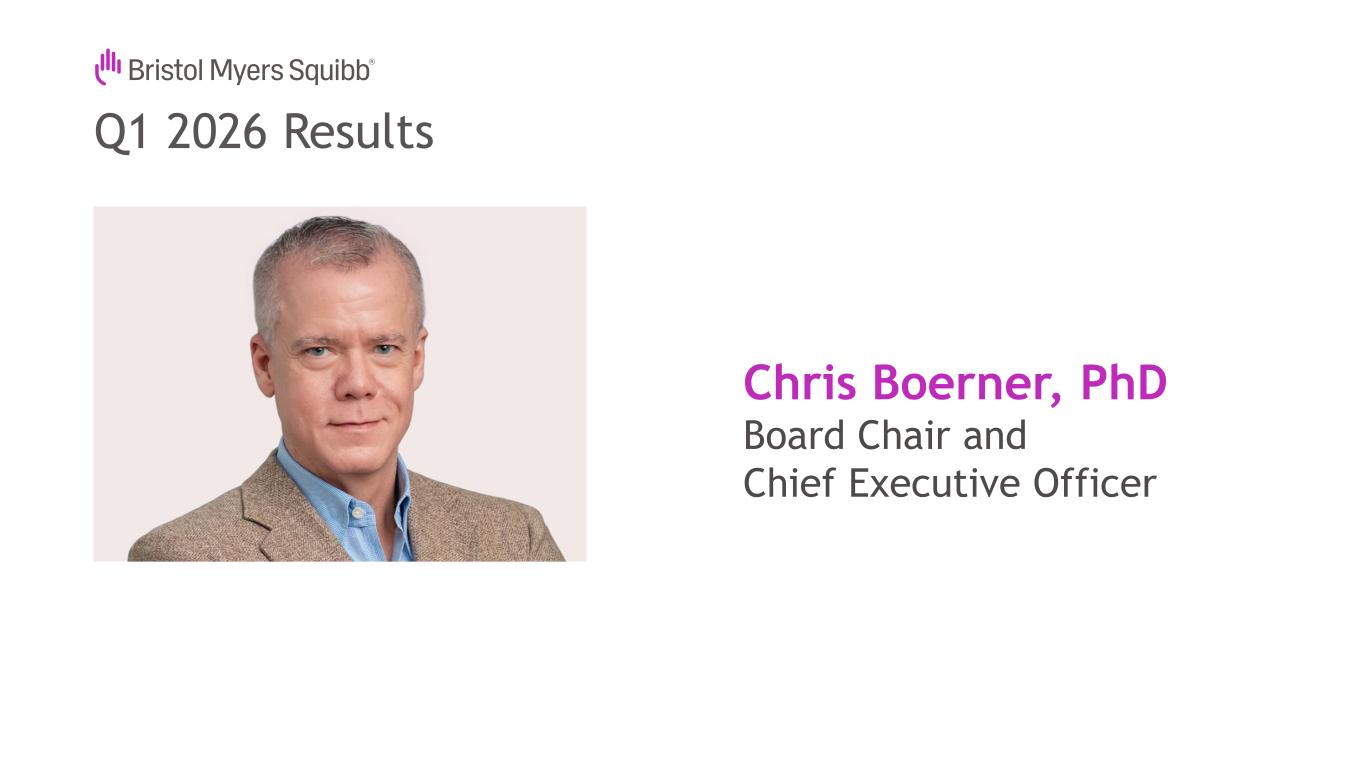
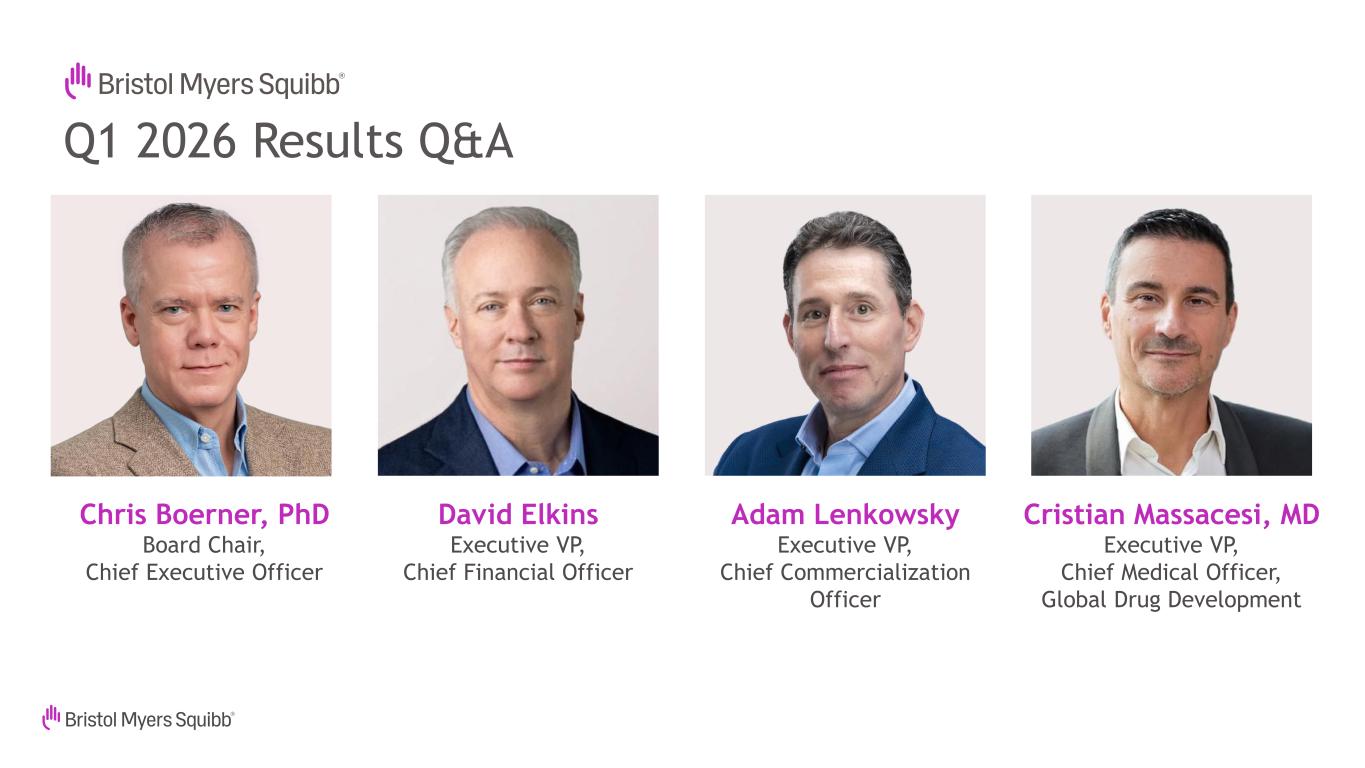
Thank you and good morning, everyone. We appreciate you joining our first quarter 2026 earnings call. With me this morning with prepared remarks are Chris Berner, our Board Chair and Chief Executive Officer, and David Elkins, our Chief Financial Officer. Also participating in today's call is Adam Lenkowski, our Chief Commercialization Officer, and Christian Masacezzi, our Chief Medical Officer and Head of Global Drug Development. Earlier this morning, we posted our quarterly slide presentation to BMS.com that you can use to follow along with Chris and David's remarks. Before we get started, I'll remind everybody that during this call, we will make statements about the company's future plans and prospects that constitute forward-looking statements. Actual results may differ materially from those indicated by those forward-looking statements as a result of various important factors, including those discussed in the company's SEC filings. These forward-looking statements represent our estimates as of today and should not be relied upon as representing our estimates as of any future date, and we specifically disclaim any obligation to update forward-looking statements, even if our estimates change. We'll also focus our comments on our non-GAAP financial measures, which are adjusted to exclude certain specified items. Reconciliation of certain non-GAAP financial measures to the most comparable GAAP measures are available at BMS.com. Finally, unless otherwise stated, all comparisons are made from the same period in 2025, and sales growth rates will be discussed on an underlying basis, which excludes the impact of foreign exchange. All references to our P&L are on a non-GAAP basis. And with that, I'll hand it over to Chris.
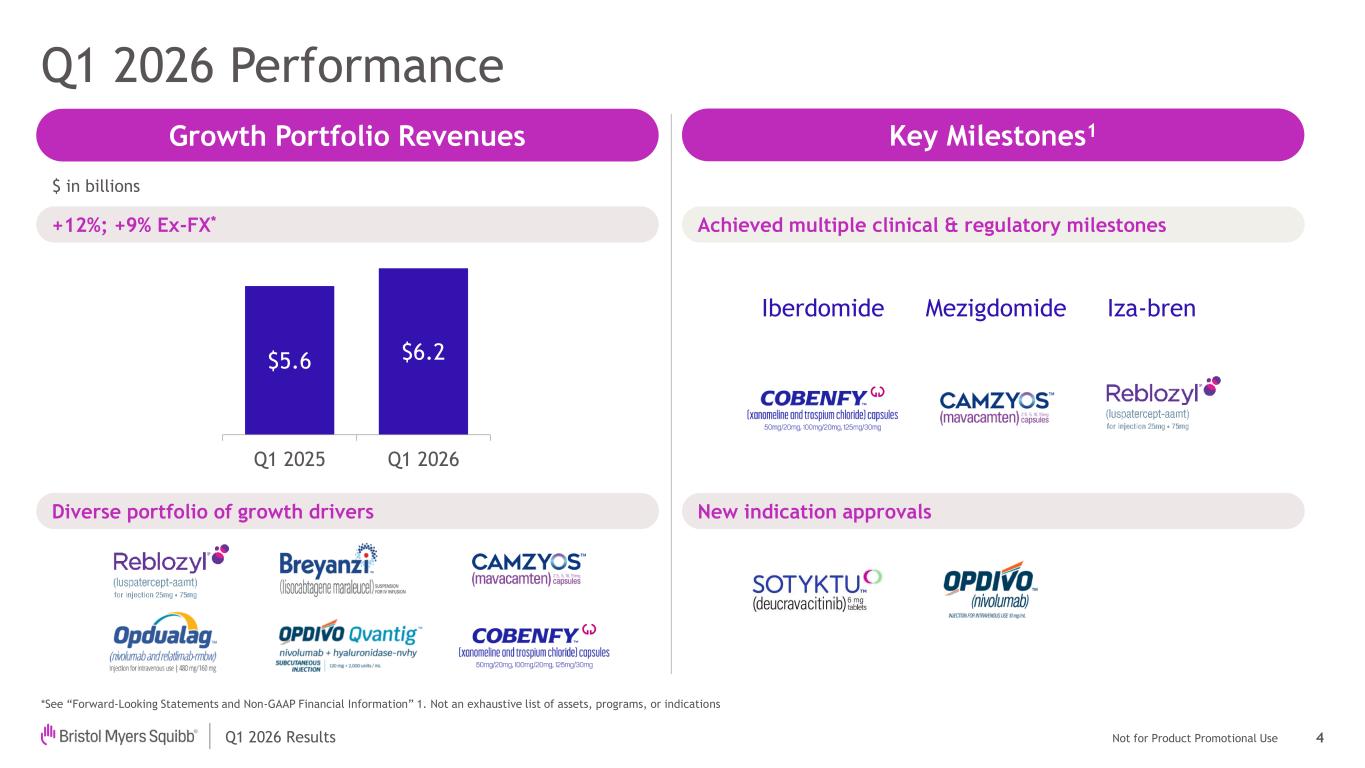
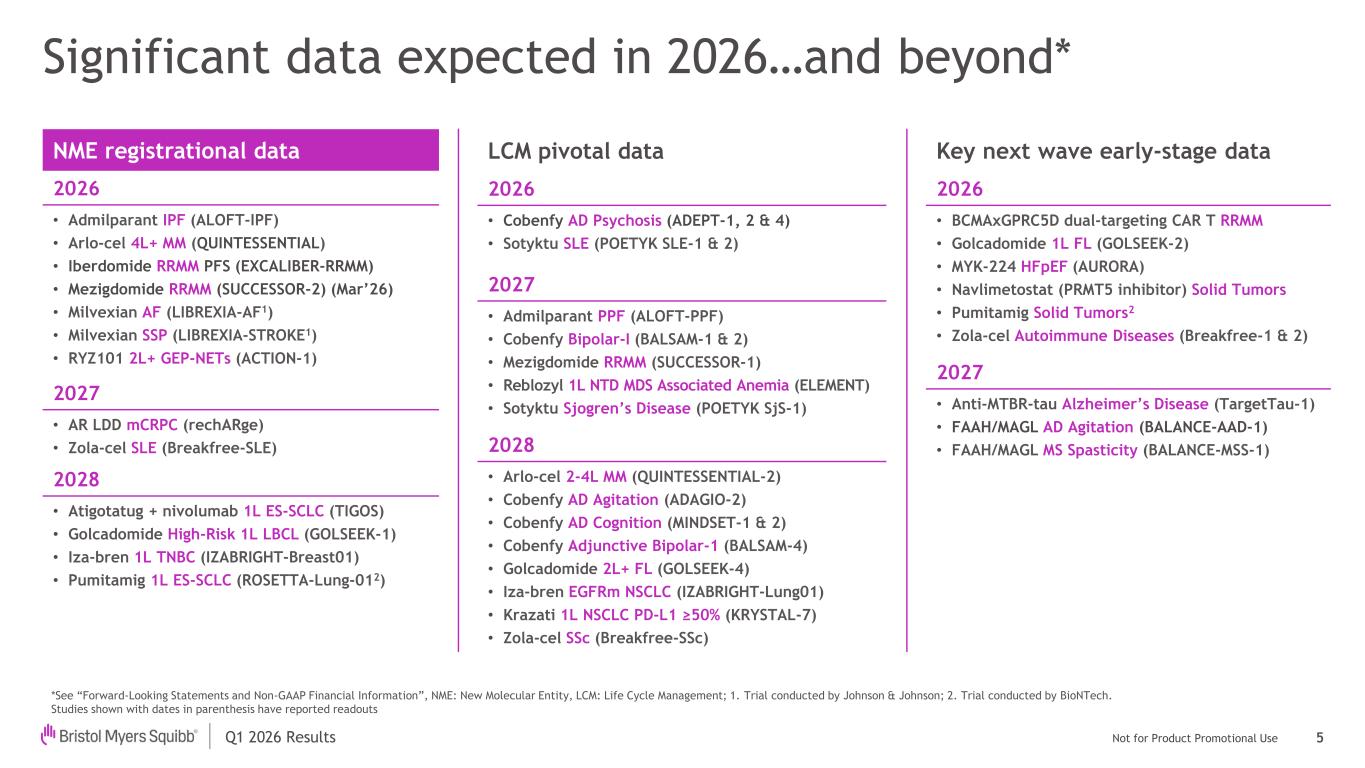
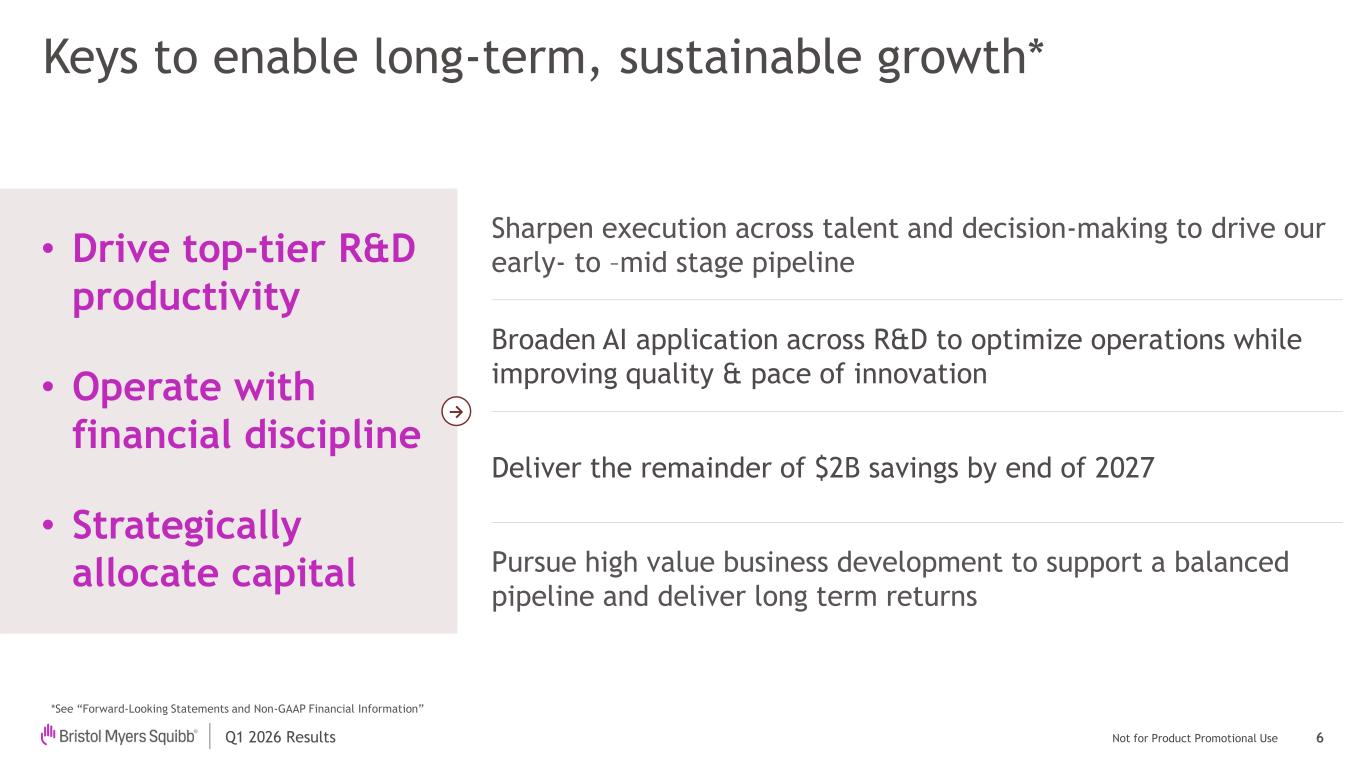
Thanks, Chuck. Welcome and thank you for joining our first quarter earnings call. We delivered a solid Q1 and continue to improve our say-to-do ratio with disciplined execution across the business as we continue to best position the company for long-term sustainable growth. Our strategy remains grounded in three priorities, focusing R&D on life-threatening diseases, driving strong execution across the organization to build momentum in our growth portfolio, and maintaining disciplined, shareholder-friendly capital allocation. We saw progress across all three in the quarter. Let me start by highlighting our performance on slide four. We started off the year with solid results across our key marketed products. In the quarter, growth portfolio sales were up 9% year-over-year, with contributions from a broad range of assets, including Reblazil, Brianzi, Kamsayos, Optulag, Kuvantic, and Kobenvi. These are differentiated, durable assets that treat serious diseases and remain early in their life cycles. and they continue to strengthen our foundation for long-term growth. Overall, our growth portfolio performed in line with our expectations for this quarter. Outside of the growth portfolio, Eloquist performed well and grew in line with the range we provided on our Q4 call. David will provide more details on the financials shortly. Turning to our recent regulatory and clinical milestones. In Q1, we made progress advancing our broad and diversified pipeline. Regarding our cell mods, ibertamide and mesignamide, our ibertamide filing for relapsed or refractory multiple myeloma was accepted by the FDA with breakthrough therapy designation and priority review, with a PDUFA date of August 17. This is an important step for our protein degradation platform, potentially enabling us to bring the first cell mod to market. For mesignamide, we reported positive Phase III interim data from the Successor II study, demonstrating a meaningful improvement in progression-free survival in patients with relapsed or refractory multiple myeloma. This marks the second positive pivotal readout from our oral CellMOD program and further strengthens our conviction in the platform. We will also present the full data at ASCO and are actively planning regulatory submissions based upon the data. For our ADC isobren, we shared positive Phase III interim top-line results in patients with previously treated triple-negative breast cancer based on a study conducted in China. We will present these exciting data along with the positive Phase III China study results for isobren in previously treated esophageal squamous cell carcinoma at ASCO. At the same time, we continue to broaden the reach of our in-market portfolio through lifecycle expansion. We received approvals for SOTIC-2 and psoriatic arthritis, and OPDIVO for two new classical Hodgkin lymphoma indications. We also reported positive Phase 4 switch data for COBENPHE, positive Phase 3 data for CAMSIOS in adolescents with obstructive HCM, and positive Phase 2 data for Reblozillin alpha thalassemia. Stepping back, these updates reflect the diversity and breadth of our pipeline, both in terms of therapeutic areas and modalities, as well as continued execution across the business. Moving to slide five, as we've said, the latter part of 2026 is shaping up to include an increasing cadence of pivotal readouts that are expected to further define and de-risk our long-term growth profile. Among the phase three readouts expected late in the year are milvexian and atrial fibrillation and secondary stroke prevention, cobenphy and Alzheimer's psychosis, admilperent and IPF, and ibertamide PFS data. We anticipate these readouts will help us further diversify and broaden our portfolio and are part of our efforts to deliver more than 10 new medicines and 30 meaningful lifecycle management opportunities by the end of the decade. Turning to slide six, central to delivering on these opportunities and enabling sustained long-term growth are our efforts to drive top-tier R&D productivity. In our development organization, we continue to improve execution across drug development by upgrading talent, streamlining decision-making, and instituting tighter management of core clinical activities. We are also focused on enhancing the quality and depth of our early to mid-stage pipeline. Underpinning these efforts are investments we are making in core R&D infrastructure, including broadening the use of AI tools together with laboratory automation and people trained in the right ways of working. In research and early development, target selection and molecule design can have an outsized impact on long-term value. We've set a target to reach lead molecule identification approximately 50% faster, while applying greater rigor so that only the most differentiated molecules advance. In late development, we're using AI to streamline clinical operations, compress development timelines, and enhance quality oversight. Over time, we expect these efforts to deliver a 30% reduction in cycle times versus just a few years ago. Among others, we have ongoing partnerships with FARO, enabling us to design trials more efficiently, and Evanova's cost optimizer tool. These ongoing efforts across R&D are top priorities for 2026. The organization's continued focus on financial discipline enables us to make these and other important investments. We remain on track to deliver the remainder of our $2 billion in cost savings from our strategic productivity initiative by the end of 2027. With respect to capital allocation, business development remains an important focus. As always, we will continue to index on opportunities where we add strategic value and where we can deliver attractive returns. As our post-LOE growth profile becomes clearer, we'll naturally place greater emphasis on expanding our early and mid-stage portfolio to support growth into the 2030s. In summary, based on our performance, we see the business currently tracking towards the upper end of our guidance ranges. Looking forward, we have continued momentum in our growth portfolio, broad potential in our pipeline, and the ability to invest in our business while becoming more focused and efficient in how we operate. With that, I'll turn it over to David.
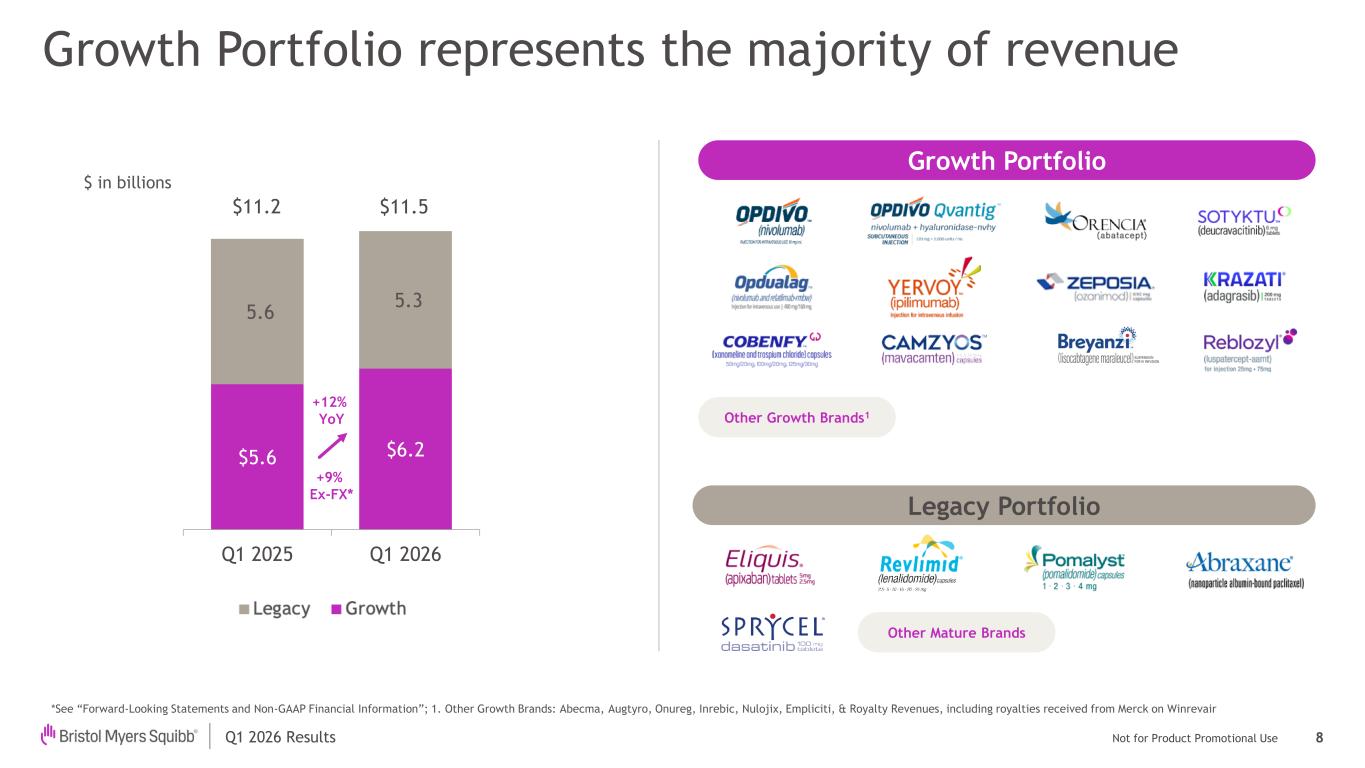
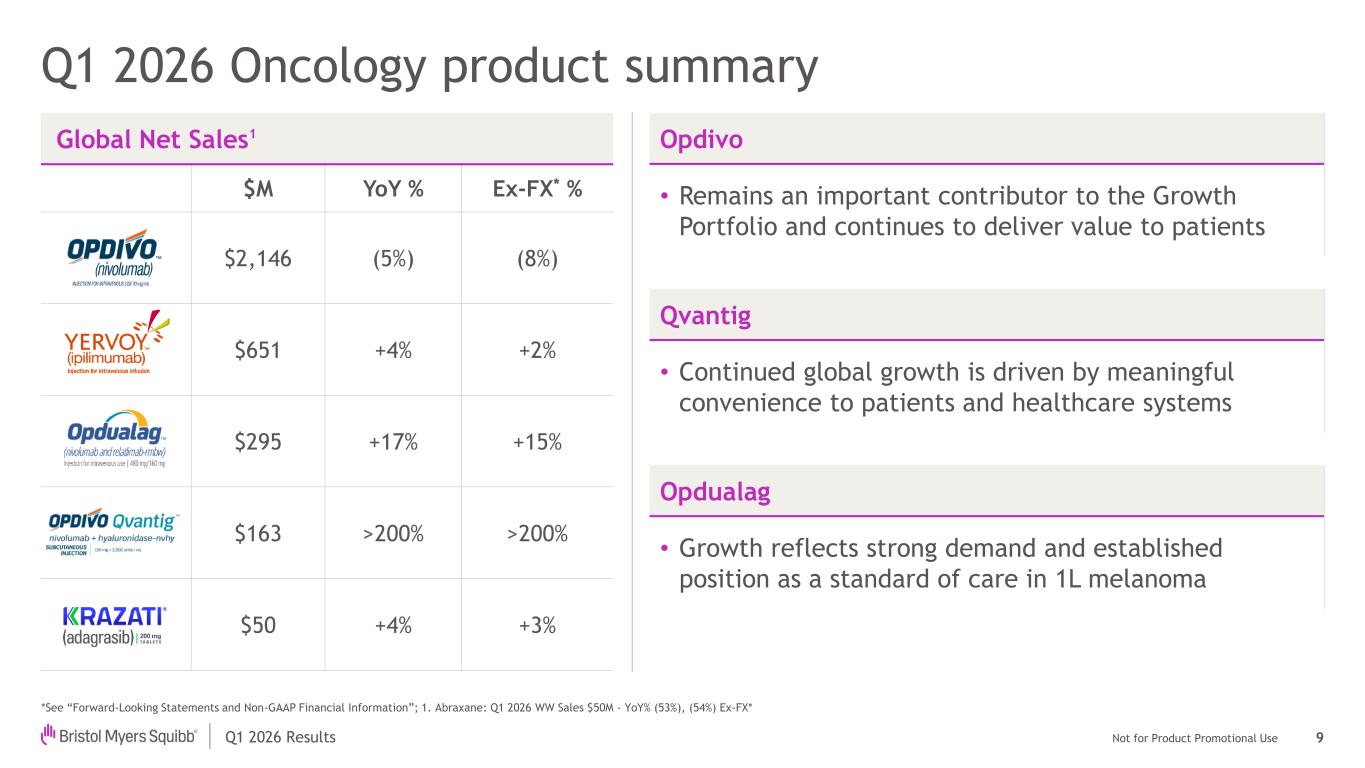
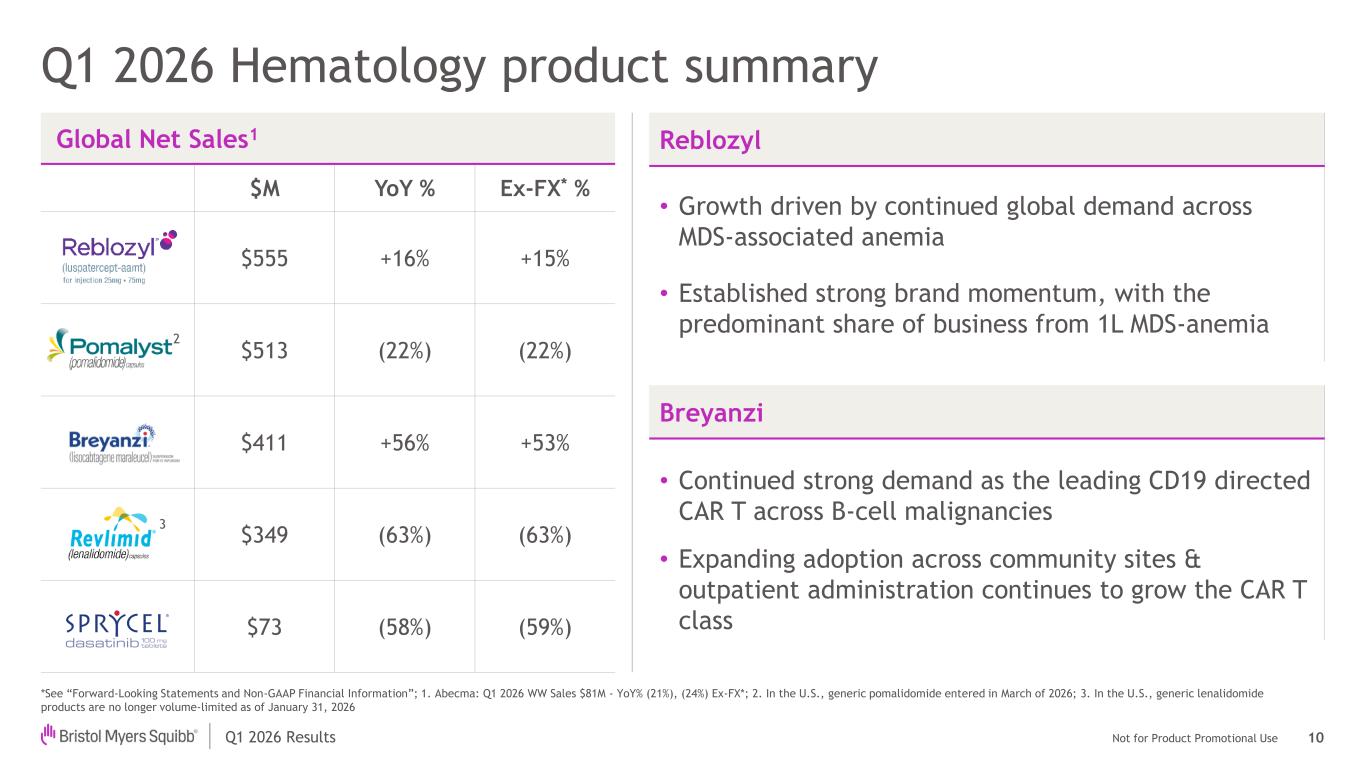
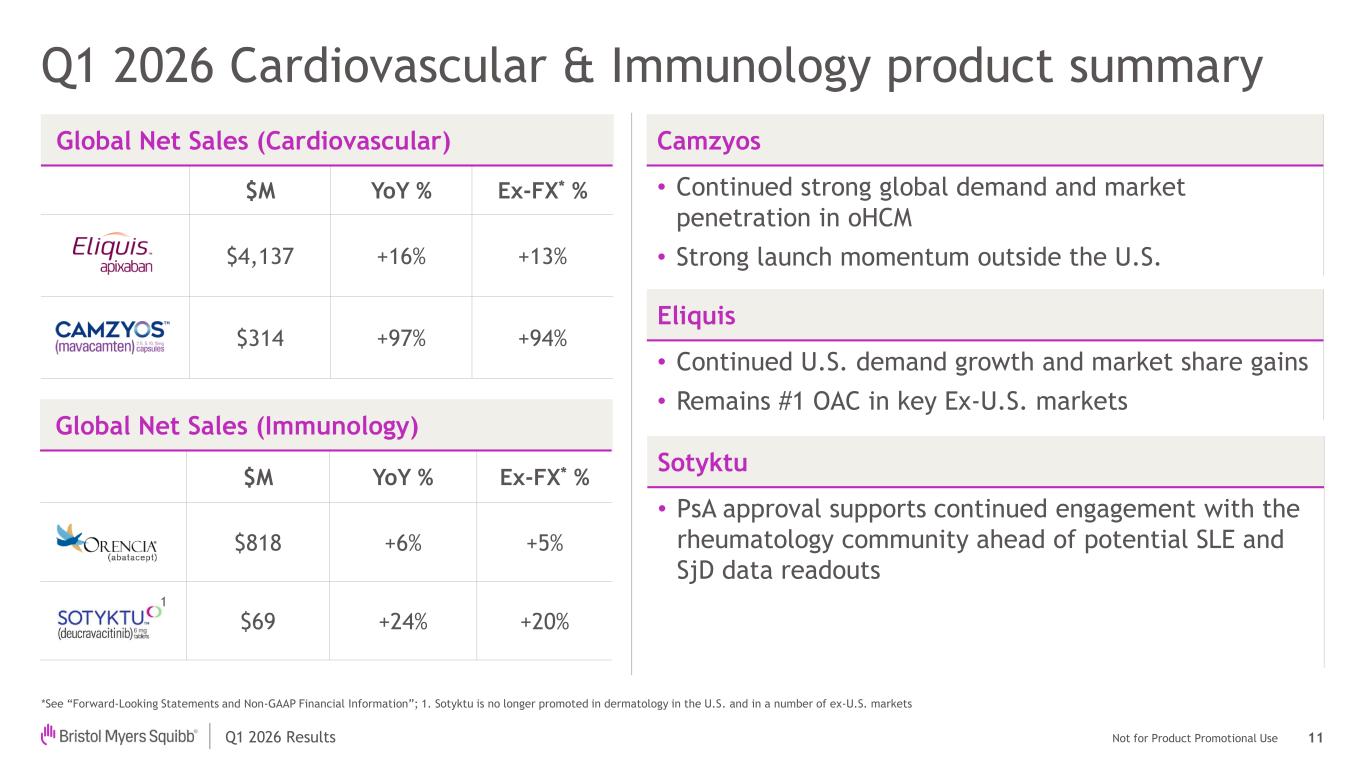
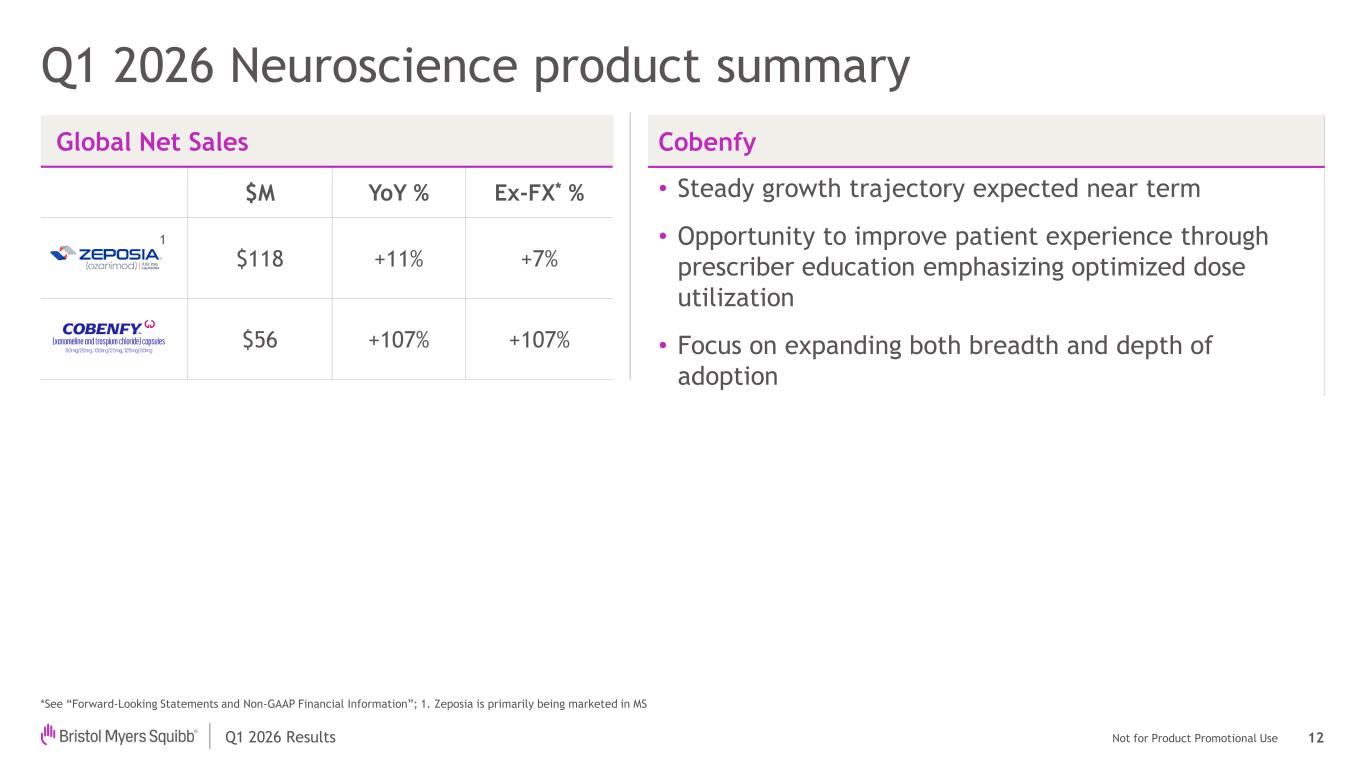
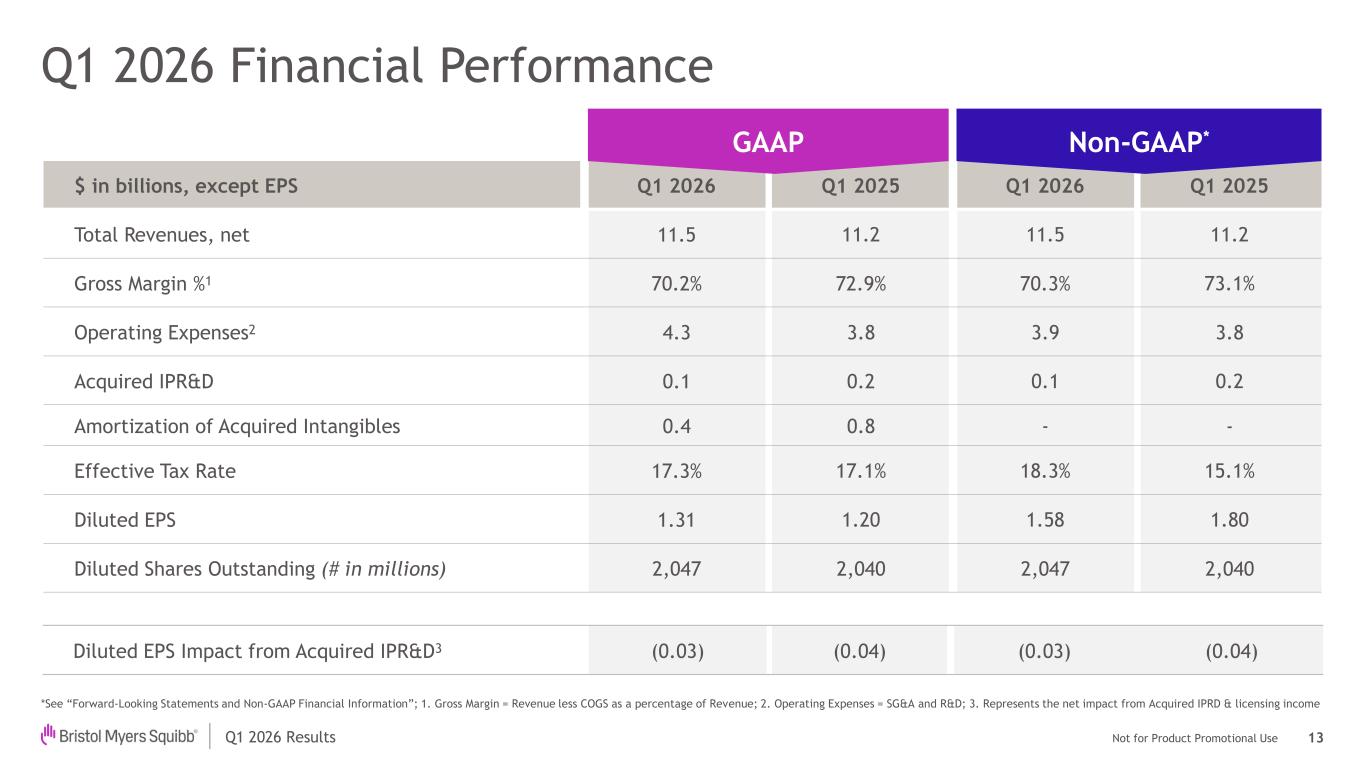
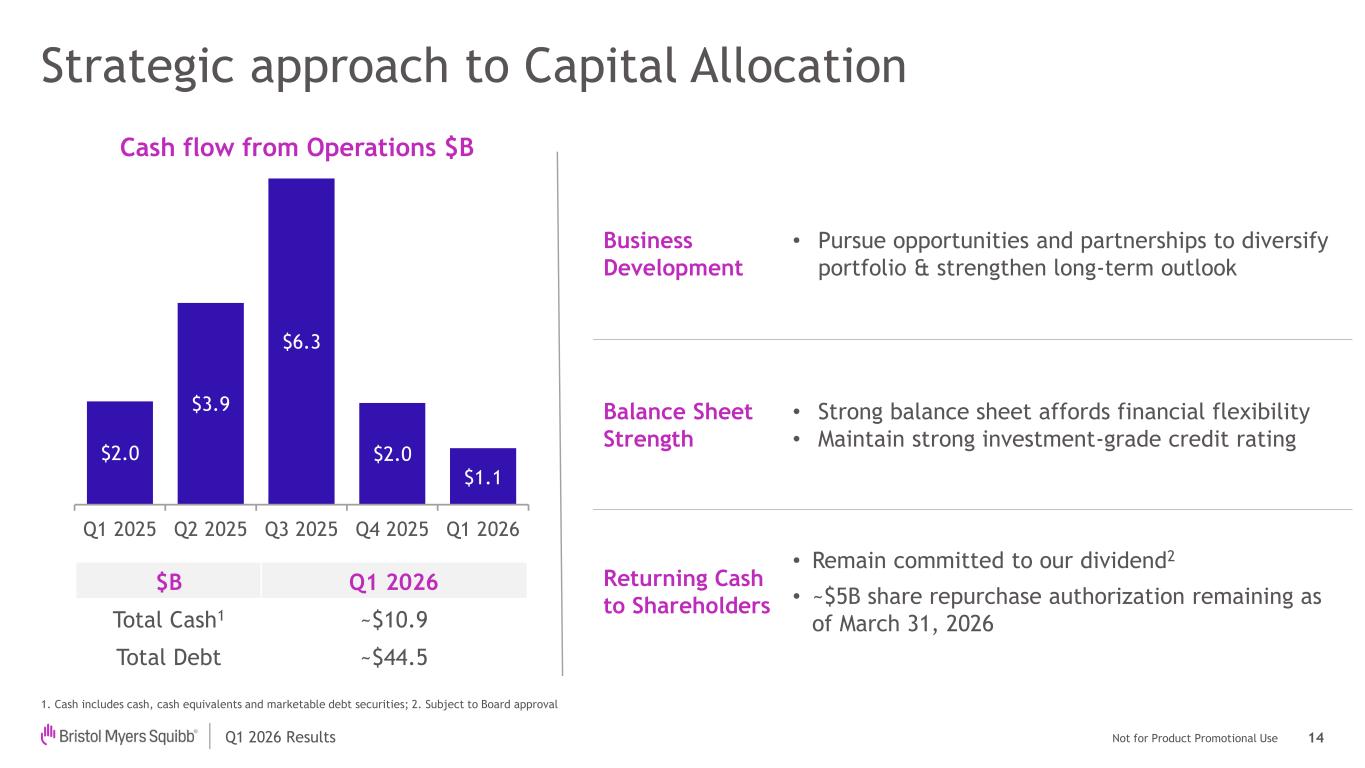
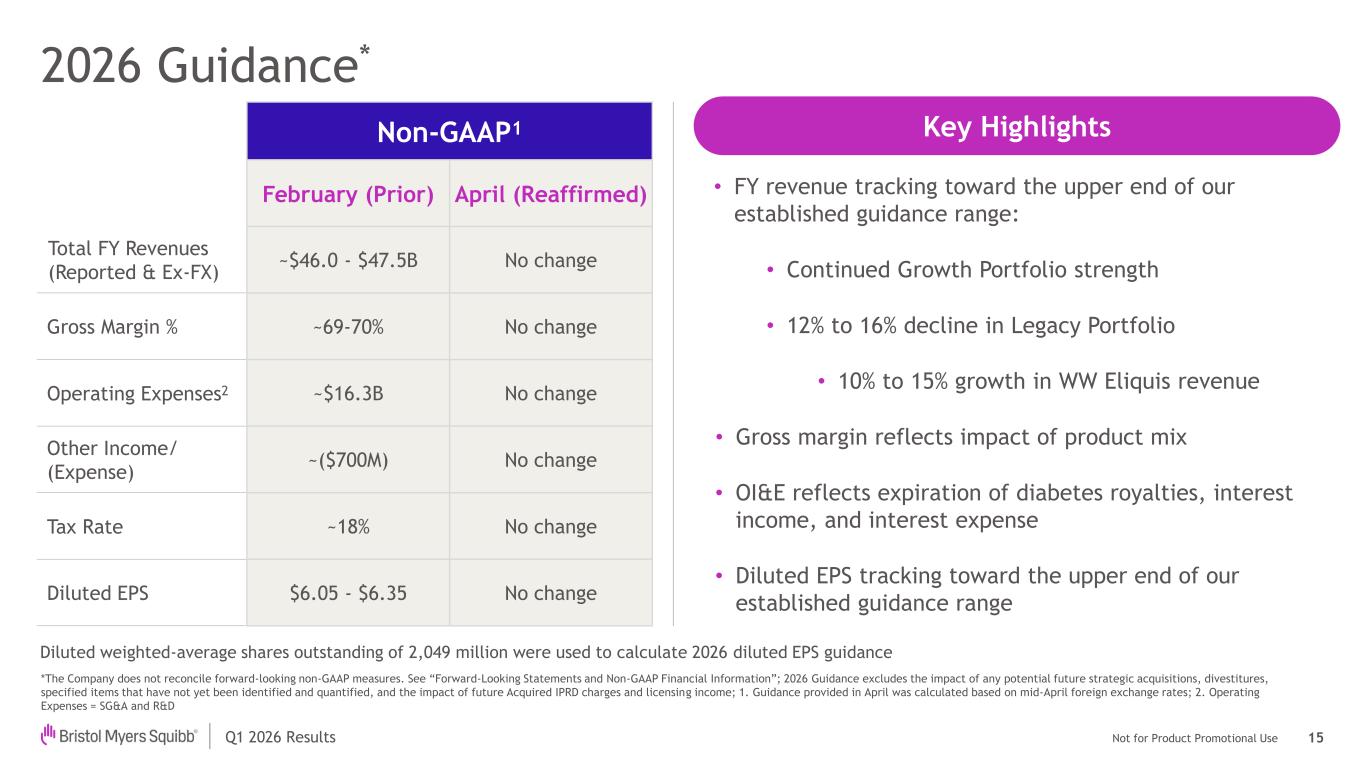
Thank you, Chris, and good morning, everyone. Our performance in 2026 is off to a strong start as highlighted by our first quarter results. We delivered solid R&D, commercial, and financial performance while continuing to manage our cost structure. Our persistent focus on execution has further strengthened our foundation as we position the company for long-term sustainable growth. I will begin with a review of our first quarter results and then discuss our financial outlook for the remainder of the year. Starting with slide 8, total revenue in the first quarter was up 1% year-over-year at approximately $11.5 billion. Our growth portfolio continued to perform well, with global revenue increasing 9% to $6.2 billion. As Chris mentioned, several products that are still early in their life cycles are driving growth, as we intentionally expand our business across a wider range of key assets. Within the legacy portfolio, we saw solid growth from Eliquis, which was offset by the continued impact of increased generic entry across several other brands. All in, we are very pleased with our results in the quarter as we build upon our objective to reshape and redefine BMS as one of the fastest-growing pharmaceutical companies into the next decade. Turning to product performance on slide 9, starting with oncology, Omdiva revenue decreased 8% to approximately $2.1 billion. dollars, with most of this decline coming from the U.S. This was primarily driven by an Opdivo inventory drawdown at the wholesaler level, where inventories are at the low end of the typical range. We continue to monitor whether these levels will normalize over the balance of the year. In addition, we saw continued conversion to Kvantik, where the launch continues to progress well with revenues of $163 million. With Optilag, we delivered another quarter of strong double-digit growth driven by demand globally, where it remains a standard of care in first-line melanoma. Turning to slide 10, Rebezel delivered 15% growth, with performance continuing to reflect solid uptake across first- and second-line MDS-associated anemia. In cell therapy, Breonze's first-quarter growth of 53% reflects its best-in-class profile and continued strong demand across its approved indications in both the U.S. and international markets. We remain encouraged by Brianzi's continued momentum and growth prospects. Moving to cardiovascular and immunology on slide 11, Eloquist's revenue was approximately $4.1 billion in the quarter, an increase of 13%. We continue to see strong demand, and given our U.S. price reduction that took effect at the beginning of the year, we also saw some wholesaler inventory build in the first quarter. We anticipate this build to reverse in the second quarter. Turning to Kamsayas, revenue in the first quarter nearly doubled to $314 million, benefiting from continued demand growth globally. Now moving to immunology, global revenue of CITIC2 grew 20%. The recent approval on ceratoc arthritis represents a continued presence in rheumatology while we await our Phase III readouts in lupus and Sjogren's disease. I will wrap up our product performance on slide 12 with Neuroscience, where Caben Fee revenue in the first quarter was $56 million, representing continued steady growth. Now let's move to the P&L on slide 13. As expected, gross margin declined 280 basis points in the first quarter to 70.3%, which was primarily driven by product mix. Excluding in-process R&D, operating expenses for the first quarter were $3.9 billion, slightly above the same period last year. As compared to a year ago, the incremental investment related to Pumidemig, Kuvantig, and Kobemfi was largely offset by savings from our Strategic Productivity Initiative. This continues to provide additional flexibility to invest behind these growth-oriented opportunities. Our effective tax rate in the quarter was 18.3%, reflecting jurisdictional earnings mix. Overall, diluted earnings per share was $1.58 for the quarter, which includes a net charge of $0.03 a share related to in-process R&D and licensing income. Turning to the balance sheet and capital allocation highlights on slide 14, our financial position remained strong, with approximately $11 billion in cash equivalents and marketable securities as of March 31st. In the first quarter, we generated approximately $1.1 billion in operating cash flow. This quarter's cash flow reflects roughly $1.2 billion in lower net cash collections due to Eloquist list price reductions. We expect this to be more than offset later in the year through lower rebate payments. In terms of capital allocation, we continue to take strategic and a balanced approach to deploying our strong cash flows. Business development reigns a priority, and we are regularly evaluating opportunities in the therapeutic areas we know best, while continuing to return cash to shareholders through our commitment to the dividend. Now moving to guidance on slide 15, we are reaffirming our financial guidance for the full year of 2026. Based upon the first quarter results and our current projections, we see our financial performance tracking towards the upper end of our established revenue and EPS guidance ranges. We will continue to provide updates as the year progresses. In closing, our strong performance in the quarter reinforces our confidence in our ability to deliver long-term value for our patients and shareholders. And to reiterate Chris's comment, our strategy remains grounded in three priorities, focusing R&D on life-threatening diseases, driving strong execution across the organization to build momentum in our growth portfolio, and maintaining disciplined, shareholder-friendly capital allocation. And with that, I'll now turn the call back over to Chuck for Q&A.
Operator
We will now begin. We will now begin the question and answer session. To ask a question, you may press star then 1 on your touchtone phone. If you are using a speakerphone, please pick up your handset before pressing the keys. If at any time your question has been addressed or you would like to withdraw your question, please press star then 2. We ask that you limit yourself to one question. At this time, we will pause momentarily to assemble our roster. The first question today comes from Asad Hader with Goldman Sachs. Please go ahead.
Great. Thanks for taking the question. Maybe just to open, just given how consequential the clinical readouts at the end of this year are going to be for the company, Christian, just starting with you, can you just level set us on your confidence in the key programs, specifically for Milvexian AF and the Cobenphia DEP trials, just any quantitative bars for success? And then related for Chris, you know, how do the timing of these readouts impact the company's BD strategy as you think about the different outcomes that could unfold with the results of each of these readouts? And where do you see opportunity as you scan the landscape ahead of these readouts? And any framing on potential size of the BD aperture would be helpful.
Thanks for the question, Azzad. Christian, you want to start, and then I'll take the BD question.
Thank you. Thank you, Azzad, for the question. Let me start with the fact that we have a very data-rich 2026 and even probably more 2027. And let me start with what we already achieved. Because in him, I think we had a positive MRD with iberdomide in Excalibur in 25, and we are expecting the PFS later this year. You know, as Chris mentioned in his opening remarks, the PREDUFA date for this filing is August 17. We got a breakthrough designation, priority review, so it's progressing a pace. We achieved mesignomide this year with successor to oral representation at ASCO. Really looking forward to show you guys the data. In NIM, we will have a redoubt also with our ArloCell, that is a GPRC 5D CAR-T, that is happening later this year. Moving cardiovascular, Malbexian, as you were mentioning, are an important redoubt. Both AFib and SSP continue to be expected by the end of the year. We are recruiting the events. It's an event-driven. Of course, we are mind-blinded. We are recruiting the events as fun. And we have the DMC that regularly is reviewing the data, and even in the most recent, they're recommending to continue the studies. So BMS will be the only factor 11 company with factor 11 inhibitor in AFib, of course, with the presence also in SSP. This can allow us to continue to remain absolute. In neuroscience, we continue to expect by the end of the year, based on very, we are managing the studies and moving the studies more or less with the same timelines, so they are lining up quite nicely. We need two studies probably for an approach. The confidence remains unchanged also for COBENPHY, study designs, trial conduction, under control, and according to believing COBENPHY in this space are very clear. Prior data, the data that we have seen in schizophrenia, and of course the open label in ADEPT-1 where patients before being randomized received COBENPHY for 12 weeks. give us confidence in potentially bringing this drug in patients with Alzheimer's disease and psychosis. Last but not least, to me, critical redout this year is Amilparant in immunology, in IPF and PPF. You know, this is a novel mechanism, LPA1. This is an inhibitor that can bring a novel mechanism to patients with this very, very difficult to treat disease. is a first-in-class asset with a very differentiated profile, not only on the efficacy side, but also on the safety side. IPF is guided by the end of the year. PPF will be just a few months later, probably beginning in 27. Very solid phase 2 data. I'm very pleased on the execution of the phase 3 programs. So this is another important therapy. As Chris mentioned, there is much more this year, next year. I have to say, it's an exciting time to be a BMS.
Thanks, Christian. And then, Asad, just on your BD question. Look, BD continues to be a top capital allocation priority for us. It's not impacted by the end-of-year readouts. We have a very strong late-stage pipeline. We certainly don't need to chase deals. But as we've said consistently, if there are opportunities that make sense for us to enhance near-term growth, we have the financial flexibility to be in the mix. At the same time, we're building for the long term, and we're going to continue to add to our early and mid-stage pipeline as well. And, of course, given the size of those DEPA phase of development, though, the opportunities we're looking for are in areas we know well scientifically where we can add clinical and commercial value, and ultimately we can deliver value to patients and to our shareholders. We're size agnostic as we've been, and we certainly have the financial horsepower to go after multiple size deals.
Thanks, Chris. Let's take our next question, please, Operator.
Operator
The next question comes from Jeff Meacham with Citi. Please go ahead.
Morning, everyone. Thanks for the question. Christian, on PeminaMeg, I wanted to check on the cadence of data in, say, the next 6 to 12 months. And would you wait for more mature data on PFS before you really expand the number of trials, or are you ready to go right now? And then real quick for Adam, just to talk through the QVANTIC dynamics versus Optivo and where you're seeing the biggest demand. Thanks, Jeff. Christian and Adam.
Thank you, Jeff, for the question on Pumitami. Let me start with ASCO. ASCO will be an important meeting this year for PD-1 VGF inhibitors. You know, there are some competitor data in plenary that, of course, increase the confidence in the class. And we are presenting, as an oral, our phase 2 data in nozmocellular cancer, in front line, as a global data set after the China data we presented previously in other indications. In a few days, the abstract will be released. Our strategy, we permit, Amiga, is replace and expand. We want to replace PD-1, PD-1 inhibitors, and we want to expand beyond them. We announce and we deliver seven pivotal studies across indications. All of them are ongoing and all of them are recruiting actively. What is very important, in my view, is also what we are doing beyond the first wave of trials. The confidence, in my view, is becoming more and more tangible in terms of a level of activity, a combinability that you have with PD-1 VGF, PD-1 VGF inhibitors by specifics. And in my view, this is potentially translatable across indications. Now the next step in our strategy is novel, novel combinations. And, you know, BMS has a very rich oncology portfolio. BioNTech has also an important portfolio of oncology assets. And what we are doing, we are combining now, we started the combination of Pumetamig with these other drugs that represent an enabler for novel regimens, also using some combination with external partners. On our internal side, we started the combination with our Isabren ADC, which is an EGFR R3 ADC. You will see data, as Chris was mentioning, at ASCO, in esophageal, in triple negative, is a very active ADC. And I think with Pumitamig can represent a very powerful regimen. We started a combination with our PRMT-5 inhibitor, our nabalimetostat, a very dutile drug. So in summary, I have to say that the partnership with BioNTech is moving very well because we are progressing the development of this drug with speed. We think we are very well positioned to make this drug as a potential new backbone in immune oncology and generating the next regimens of very powerful cancer patients across indications.
Jeff, thanks for the question. As relates to Kevantig, we're pleased with the Kevantig launch performance. Our teams are executing well. We're seeing use across multiple tumor types. We're seeing uptake in our monotherapy indications as well as in combination treatment, so in RCC, in gastric cancer, and in melanoma. We're continuing to hear positive feedback from community oncologists that QVANTIG improves practice efficiency with a three-minute in-office injection and that patients prefer QVANTIG when offered the opportunity versus the IV formulation. So we've now delivered over 10% conversion from IV to QVANTIG in the U.S. in just over a year on the market, and we're tracking well against our expectations, and we remain confident in our expectation that physicians will convert approximately to 30% to 40% of IV business in the next two years.
Thanks, Adam. Can we move to our next question, please, operator?
Operator
The next question comes from Alexandra Hammond with Wolf Research. Please go ahead.
Hey, guys. Thanks for taking the question. On Novexian, given the size and breadth of the Labrexia program, it seems like there's probably a rich set of outcomes between a clean win and miss. Can you help us think through how you'd approach a subgroup analysis, particularly for patients where the risk-reward calculus might be more favorable for factor 11 and to the extent that the top line doesn't meet that primary endpoint cleanly? Is there a path where a specific patient population still supports a meaningful commercial opportunity? Thank you.
I'll have Christian take that and then Adam, you can add any color commentary as you need to.
I mean, Alex, let me start to tell that we continue to be on track by the end of the year with both AFib and SSP. You know, these trials are event-driven. We remain blinded. As said, the DMC continues to oversight to both studies. we are at a point in which we give us confidence that we are progressing on the right on the right way with both efficacy and safety everything is continuous plan you know in a fee but in a fee but the study will test the non-inferiority that's a pixaban and then we will have a superiority testing for bleeding. Based on what we have seen in other trials recently, and based on the expectation and how we size and power the study, I think we are very much on track with both. ...opportunity.
The vaccine represents a significant opportunity commercially. There's a need for a medicine with low bleeding risk, both we would expect. As we talked about previously, Fear of bleeding continues to be the main reason why physicians, and despite the highly effective DOFs like Eliquis, they're either untreated. And as a reminder, this study in AFib was designed to demonstrate a superior bleeding profile compared to Eliquis. As Christian said, we're looking forward to the data readout at the end.
Let's move to the next question, please.
Operator
The next question comes from Chris Schott with J.P. Morgan. Please go ahead.
Great. Thanks so much for the question. Just two for me. Maybe first, can you just talk about Camzaios staying in the market and just how you're thinking about that evolving? And the second one for me was coming back to this little data that's read out. Can you just elaborate a little bit more?
Adam, I think you take a ball.
Yeah, thanks, Chris. So Camzaios continues to, again, our commercial teams are executing very well in the field. We are seeing continued strong new patient starts. Physician and patient feedback are significant and rapid improvement in symptoms, and we're seeing very low job upgrades. In fact, you know, we are approaching 25,000 patients now prescribed CAMZIOS in the U.S. As far as, you know, we'll continue to reinforce the differentiation of two patients on the competition, and, you know, they are still operationalizing their own REMS program. But we also hear consistently that the CAMZIOS REM and the infrastructure, and thus TLS have shared sales on CAMZIOS of our business, which is effective for the majority of patients. Kimzio's patients feel better in a matter of weeks, where we see from the competition requires multiple titration steps. And so, you know, our teams were well prepared for the launch of athecamptin, and we remain. So as it relates to, you know, and have talked about this, and so I think there are a few areas that, you know, I should point to. Number one, for highly competitive, it's a fragmented market, but there remains manageable toxicity. the combinability with their longer-term serving as partners for T-cell redirecting therapies and cell therapy.
So, you mentioned the question on camzius, because the non-obstracting, I think, first of all, let me start at the level of benefit expecting in non-obstracting. We know better who are the patients and which diseases they are affected by that can benefit most from a myosin inhibitor like camzius. So I want to announce that we are planning now to run a new, more focused study in non-obstructive.
Operator
The next question comes from Evan Singsbergen with BMO Capital Markets. Please go ahead.
Hi, guys. Thank you so much for taking my question. And another one for Christian. So you really inherited the design and kind of the Milvexian trials. Can you walk me through the aspects of the trial design, patient selection, that, you know, increased your confidence in a potentially successful readout later this year?
Thank you, Evan, for the question. I think your question is referring to AFib specifically, I imagine, because SFP, yeah. Yeah. So in AFib, let me tell you that, first of all, the data are solidly based on a phase two studies that we run in total knee replacement that is a very good surrogate for antithrombotic drugs. So we learned a lot from Eloquist. We know the predictivity value of that. I think the best done with Mervexian was in selecting. In that trial, we tested multiple dose levels, and ultimately we landed with 100 milligrams twice a day. It is a much higher dose, for instance, that we are using in SSP. But it's a dose that gives us the confidence, based on all the work that has been done, the modeling and the bringing of efficacy, observing, of course, the non-inferiority and head-to-head comparison in a very well 20,500 patients. So very well power for an inferiority margin. So we disclose these margins, of course, related to 1.3. And we will then, when an inferiority will be met, and no measure clinical error. And being able to show that the drug provides benefit in terms of decreasing the bleedings will be very important. As I said, the study is fully powered, well designed, and the criteria should meet.
Move to our next question, please, Operator.
Operator
The next question comes from Michael Yee with UBS. Please go ahead.
Thank you. Following up on the design of the Milvexian study, if you take a look at the recent AFib results, you can see that these are a lot lower than they were back in the original days of Eliquis. So, just thinking about whether you've taken that into consideration and to what extent you think that impacts the study design and whether you think that there's any chance that the study results will ultimately end up in 2027, which could end up being more positive for you than in 2026. Thank you.
Okay. Thank you, Michael, for the question. You know, we cannot disclose baseline characteristics and which kind of events that we are recruiting. By the way, where am I blind is, of course, to the study. What I can tell you, again, is that the AFib study, Librexia study, has the right sample size and, of course, has a predefined number of events. We are recruiting the events as expected. And the event's predefined number is for efficacy and, of course, for safety. So we are on track by year end. It's event-driven. We are in April. We will see later in the year if this event rate will change or not. For the moment, we are on track for an year end readout.
Thanks, Christian. Thank you, Christian. Next question, please, operator.
Operator
The next question comes from Akash Tawari with Jeffries. Please go ahead.
Hey, thanks so much. So for your CABENFI Alzheimer's psychosis studies, you have several trials, but I know ADEPT-4 requires patients to have a confirmed Alzheimer's diagnosis using both imaging and blood-based biomarkers. Can you talk about why you added that criteria for the study, and was it based on any issues you saw with the ADEPT-2 trial conduct? And then just on cell mods, can you talk about your confidence on the successor one study, which goes head-to-head against pomalus, showing a clinically meaningful effect size based on the results you saw in successor two. Thank you. Christian?
So the – thank you, Akash. The COBENFI ADEPT-4 decision to go into a biomarker-selected population was based in a try to decrease heterogeneity in the patient population. As you know, ADEPT-2 was a study that was already ongoing in the moment we acquired Cobenphy, and we wanted to have a more predefined patient population to be recruited into an Alzheimer's disease psychosis setting. This is why we took this approach of biomarker positivity. It can be done through plasma or radiologically. And I think, of course, this is increase the confidence that the right patients are treated in the trial, even if it increases a little bit the operational challenges, because, of course, we need a predefined number of patients biomarker positive to run. So the screening faders are a little bit higher. This doesn't take out any confidence of the potential benefit that you can see also maybe in a trial like ADEPT-2, where we do not have a biomarker positive study, because ultimately you treat symptoms, but give more confidence that you have Alzheimer's patients. This is the main reason. We are not the only ones taking this approach in this space. Going back to your second question on Selmoth, I think Successor 2 was a very good news, not only because it, and as you mentioned, Successor 2 is an add-on study on top of KD, but because it came earlier than expected. We eat an interim PFS. You will see the data at RASCO, but you already know that when you eat an interim PFS, it means that you eat a bar that is higher, according to what the study was designed for. This is answering your question on successor one. We believe mesignomite is a very potent cell mode. It's more potent than iberdomite, for instance. is a drug that can be very well combined with the standard of care regimens that we see, a little bit less with anti-CD38. This is why Iberdomide is doing that job. But I believe that the level of efficacy we have seen of the study let us believe that this drug can be better than revlimid and pomalidomide. So the confidence of success of one is high and of course is higher bar because it's not an add-on replacement strategy.
I'm glad to hear so many questions on cell mods. The cell mod program we're quite excited about. You're going to see exciting data at ASCO on Iber and Mezi. We shouldn't forget you'll also see data on Golcotomide which continues in my view to be a sleeper in the program just because of the high-quality data that we've seen thus far. You'll see more of that data at ASCO. Of course, behind this, we've got additional degraders, BCL-6-LDD, AR-LDD, and this program and this platform is quite deep, and it's nice to see these data maturing as they are across each and every one of these programs, so it's exciting to see, so stay tuned for that at ASCO and beyond.
Thanks, Chris. Let's take our next question, please.
Operator
The next question comes from Louise Chen with Scotiabank. Please go ahead.
Hi, thanks for taking my questions. I wanted to ask you, in addition to your ADP study for CoVenC, I know you have several additional potential indications for CoVenC, and which of those additional indications are you most excited by? And then secondly, you have a lot of different modalities in your self-therapy, franchise, and pipeline, and how do you see these all coming together to give Bristol a more comprehensive hold on the market.
Christian, and then Adam, you can provide color commentary.
So ADP, because we believe this is a huge medical need, and we believe that co-benefit can bring benefit based on what we have seen in schizophrenia, you know we are focusing our strategy in psychosis specifically assessing hallucination delusion delusions and this is something that we have seen a patient really having an improvement in schizophrenia we wanted to have multiple shots on goal this is why we have a depth two and a depth four that are similar studies with a difference of one is biomarker selected population the other one not, and we have ADEPT-1 that is more a study that will assess how co-BENFY will avoid relapses, but we also designed ADEPT-5, so we are now four shots on goal in this program because the base case I was mentioning before is adding at least two positive, things are changing maybe, and we believe this is an important setting, co-BENFY can bring benefit to patients, we want to really have a multiple shots on goal. When thinking of the other indication, bipolar disorder is the next one in line because we are expecting results in 2027. We are testing co-benefit specifically in mania in the context of bipolar disorders. And you know if you think this is very similar in terms of the productive symptoms that we see in AD psychosis. And then we have AD agitation. AD agitation is very related to psychosis because this is one symptom that we have seen Cobenth already providing benefit. So the confidence is high also for this. Agitation is coming in 2028, like cognition, AD cognition. And cognition is probably a different mechanism. Psychosis is probably mediated by Muscarinic receptor. for cognition probably by Muscarina Receptor 1. But COBENFY is working on both. So this is where the confidence is. So I would say the COBENFY, we believe, can bring benefit in controlling these kind of symptoms in Alzheimer's, in bipolar patients, and is an anchor. We are building, I really would like you to start to see how we are building our portfolio in Alzheimer's with a phase 2 asset and multiple phase 1 assets that show the commitment that BMS has for these issues.
Just to add, Christian did a great job covering, you know, much of our life cycle management program. But from a commercialization standpoint, I would say, you know, stepping back, there are probably 7 million patients. Roughly 30% to 50% have psychosis, and that's hallucinations and delusions. And the vast majority have cognitive impairment. So this presents a real significant unmet need where there are no approved treatments today. And, you know, we know that antipsychotics have significant safe disorders. They carry a box warning, ADP, and Alzheimer's disease cognition.
Let me, thank you, Adam. Please, let me go back to your second question. You know, I could have therapy strategy in hematology or in autoimmune disease. I want to focus on autoimmune disease because probably it's newer, and I think it's more important that we explain the strategy that we want to put in place. on the development, maybe on the commercial side. You know, I believe that BMS has a very powerful platform and with one aim, a resected immune system. I decided to have a multimodal approach. This is why we have an autologous, an allogenic, and an in vivo. I think these products, this can be transformative for patients without immune disease because if you can eradicate B cells, you can provide benefit to patients with a severe or moderate state of the disease, But the vision can be to use this one-time treatment by the autoimmune diseases. The most advanced program is ZolaCell. We have two ongoing pivotal studies, one in lupus and one in scleroderma. In clinic now, an allogenic, that of course actually, but the real transformative thing can be in vivo. We acquire Orbital, an mRNA in vivo platform that can really broaden up and give scalability the necessity.
Let's move to our next question, please.
Operator
The next question comes from Terrence Flynn with Morgan Stanley. Please go ahead.
Great. Thanks so much for taking the question. I'll keep it to one. You know, Christian, appreciate the details on the Milvaxian AFib trial in terms of non-inferiority on the efficacy endpoint, but just was wondering if you could elaborate in terms of what differential it's powered for on bleeds for superiority or Or, if you don't want to answer that question, what you think is a clinically relevant Delta versus Eliquis that would drive reimbursement coverage. Thank you.
Maybe I start, and then Adam, you can step in as you want. So, Terrence, again, the study is designed to show non-inferiority. Non-inferiority has margins that goes, as I was mentioning, we disclose this margin, why I can speak about it. They go from 0.8384 to 1.3 something. So we believe in the study and the preclinical and clinical work done in phase two is set to show that the non-inferiority is met to have a similar activity on efficacy versus apixama. It is possible that Malvexian can have another ratio less than one, but it's not needed because clinically, maybe commercially, the success required to be similar and having a better bleeding profile in measured bleedings and clinically meaningful bleedings. And this is where the study, I think, is extremely well set in power to show the non-inferiority and superiority on the bleeding rates.
Just from a coverage standpoint, Terrence, what payers consistently tell us is that bleeding, and particularly major bleeding, is the single largest cost driver associated with oral anticoagulation therapy today. It's why Eloquist has significant share in the market. And payer discussions are suggesting that the potential of an improved benefit-risk profile will be a strong value proposition, particularly around economic benefits. and payers aren't necessarily anchored to a specific percentage threshold. What they're looking for is a clinically meaningful and statistically credible reduction in major bleeds that translates into fewer hospitalizations, phenomenally important.
Thanks, Adam. Thanks, Christian. Let's take our next question, please.
Operator
The next question comes from Seamus Fernandez with Guggenheim Securities. Please go ahead.
Thanks for the question. So, if I may, just wanted to drill in a little bit on Ed Milperant and the opportunity there. Just from a commercial perspective, you know, we're seeing a very robust potential combination market poised to emerge here. But obviously, the key is success in clinical programs. So just wanted to get maybe Christian a little bit more of your sense of, you know, what are the key risks as we evaluate Phase 2 to Phase 3, and how do you see the opportunity beyond that? When we look back at the phase two, it incorporated a Bayesian analysis from a statistical perspective. There weren't that many patients on background therapy. So just trying to get a better understanding of how you see, you know, the risk reward heading into the IPF results and the PPF results. And then just for Adam, you know, as you look at the evolution of this market, how are you looking at the impact of the current antifibrotic standard of care and the dropout rate that patients experience and suffer from versus some of the emerging data sets for other combinations in this setting like the Trapostanel data? Thanks so much.
Shemos, let me start with the target. LPA1 inhibition is important because it's working in three dimensions in the fibrotic process in IPF and PPF. Fibrosis, inflammation, also repair. So this is the novelty of the target. And I think Armin Parant is the first in class in this space. for both IPS and PPS. The goal here is to improve upon efficacy, but also to have a differentiated tolerability. You know there are drugs that the patient can use today that have some GI issues, some calf issues, so amyparant profile is very different, very differentiated. The conviction on this program is sitting on the phase two results. In both IPF and PPS, we have more than 60% improvement versus placebo in the lung function decline with 60 milligram BID. And you know we tested different doses, and the dose relationship is very clear. This is another nuance very important that we put in the phase three. They gave me confidence in what we are doing, because we are running both studies, IPF and PPF, with two doses, 60 and 120. The dose relationship and the benefit of having higher dose was very clear. Deeper efficacy while the dose is increasing. DMC, also for these trials, continues to monitor and reviewing the conduction of the study, safety and efficacy, and tell us to continue as planned. So we do not see any flag, especially on safety side, in terms of hypotension, syncopal events, even overall in the trial. So two shots on goal with 16th and 120 in a very well-designed power study. The Phase II and the Phase III population are very similar. We tried and the teams did a very good job in ensuring consistency and in trying to have as much as possible in Phase III what we did in Phase II. In your question on the design of the trial, in both trials in IPF, we stratify based on prior treatment, perfenidona and entenamide, or nothing. So we can use add-on or receive any treatment, and in PPF, there is stratification based on usage or not of antifibrotics. So the studies will answer that question, and the drug can be used on top of standard care or as a single agent.
Very high confidence on how this program has been delivered on the target In both IPF and PPF, there remains a significant need for improved therapies, that slow disease progression that are well-tolerated and ultimately help patients manage. GI tolerability remains significant. The newest diarrhea rate is at Milperon potentially be foundational as a first-line option and given the expected FNM needs in the marketplace. So we've got important prelaunch activities that are underway now, and we are very much looking forward to it.
Can we please take our last question?
Operator
The last question today will come from Mohit Bansal with Wells Fargo. Please go ahead.
Thank you very much for squeezing me in. So I have a question on Primetamig. So your competitor has signaled that a VEGF PD-1 compared to an IO or a PD-1 may be able to show a minimal regression in hazard ratio when you go from PFS to OS. We saw a regression when we compared it to chemo, but with the IO combo, it may not be the same situation. How are you thinking about that, given that Bristol is probably the only company with two IO combos on the market and you have seen data for both LAC3 as well as CTLA4 on top of PD-1? So, how are you thinking about this sort of regression from PD-1 to – or from BFS to OS, given in the context of RGPD-1? It's kind of an important investor debate right now. Christian?
Thank you, Moet, for the question. Let me start on the way we deliver these two mechanisms. I truly believe biospecifics are a better way to deliver two different mechanisms than using two different antibodies, because you are much more on target, you are much more selective in delivering them, and potentially you can decrease also the off-target issues like adverse events. So there is another important learning that we have had, that we are having every day with these drugs. Our Pumitamig is a safe drug. The safety is very predictable. The combinability is very high. So we know VGF is impacting PFS. This is what also you are mentioning. And I think that we will see where the data are maturing. we'll see even in a few weeks at ASCO, what this PFS improvement can translate in terms of OS. My base case, Moita, is that if I have a drug that gives me a good PFS gain and statistical significance OS gain, that will be without increasing the safety in a dramatic way, is good enough because then I can use this as a backbone and I can improve even further pairing other mechanisms that can continue to increase the PFS gain and potentially translating it even in a better OS. I don't think we can simplify so much like in the past the VGF inhibitors did not translate in OS because here we have the IO component and we still don't know how much the DGF part of the drug is giving us the upside for the IO. And it's possible, actually, that this gives us an uplift also for OS. So I'm excited by this, by specifics. I'm excited very much about pomitamib and the plan that we are putting in place because I truly believe that this can be the backbone for future regimens for cancer patients across indications.
Thanks, Christian. And thanks, everyone, for the questions. In closing, I just want to come back to where we started. We're doing what we said we would do. We're executing across the business, advancing a really differentiated pipeline that we think is going to strengthen the growth profile for the company and operating consistently with financial discipline. And, of course, that discipline enables us to have flexibility to invest in growth, to pursue business development where it makes sense, and ultimately deliver long-term value. There's always more work to do, but the foundation we've built and the momentum we're seeing gives us confidence in the trajectory of the business. So with that, thanks for joining us today. And as always, the team is available for follow-ups. Have a good rest of the day.
Operator
The conference is now concluded. Thank you for attending today's presentation. You may now disconnect.