Operator
Greetings. Welcome to the BOK Financial Corporation's Third Quarter 2025 Earnings Conference Call. If you would like to ask a question during the Q&A session, please press star, then the number 1 on your telephone keypad. If you would like to withdraw your question, please press star 1 again. As a reminder, this conference is being recorded. I would now like to turn the presentation over to Heather King, Director of Investor Relations for BOK Financial Corporation. Please proceed.
Good afternoon, and thank you for joining our discussion of BOK Financial's third quarter 2025 financial results. Our CEO, Stacey Kimes, will provide opening points and cover the loan portfolio and related credit metrics. Scott Brower, Executive Vice President of Wealth Management, will cover our fee-based results, and our CFO, Marty Gruntz, will then discuss financial performance for the quarter as well as our forward guidance. Slide presentation and press release are available on our website at BOKF.com. We refer you to the disclaimers on slide two regarding any forward-looking statements made during this call. I will now turn the call over to Stacey Kimes, who will begin on slide four.
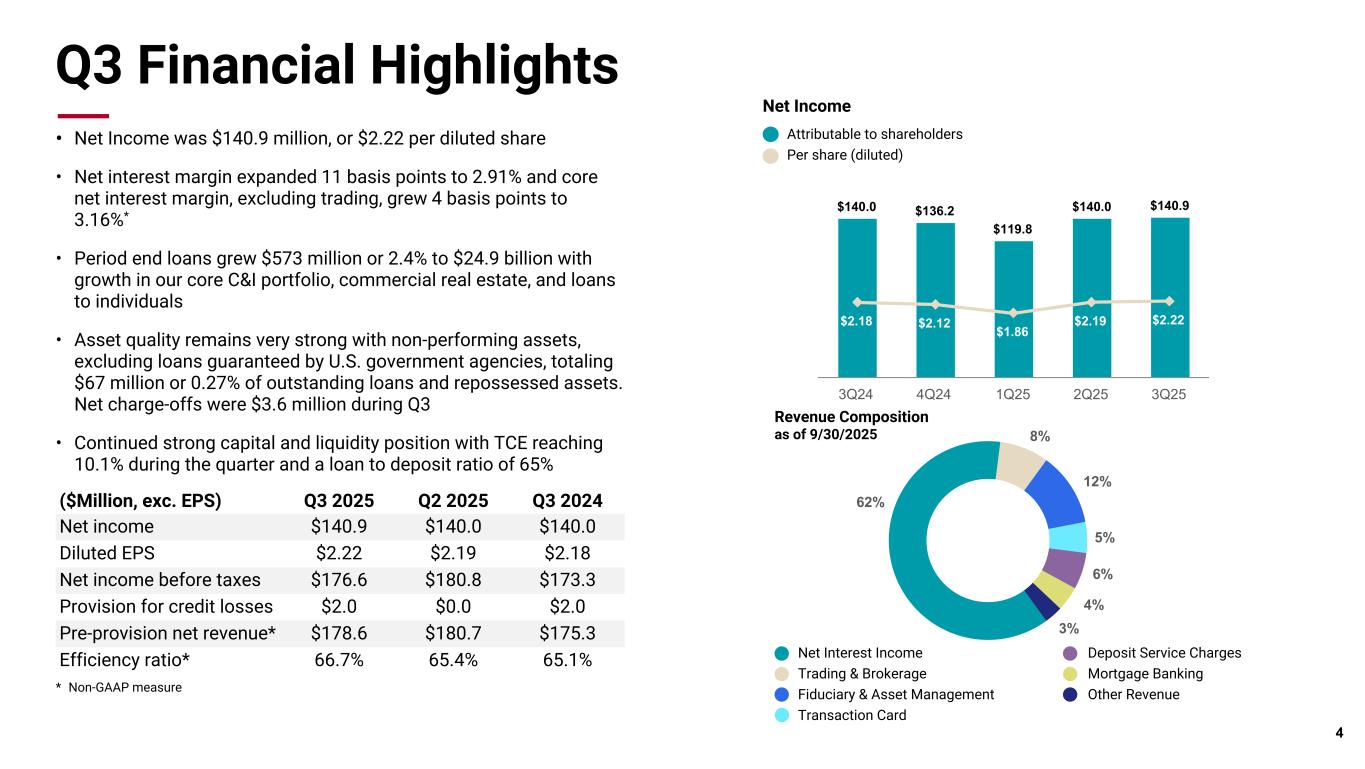
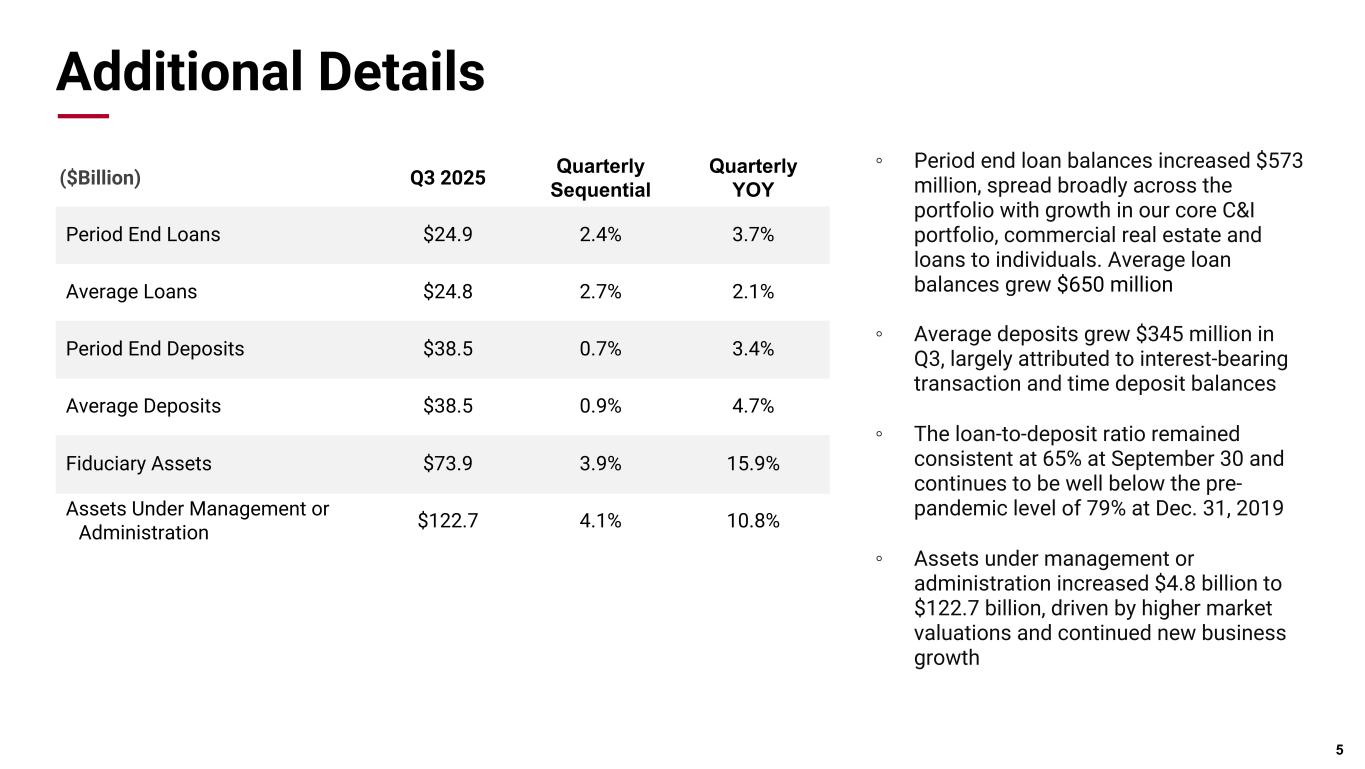
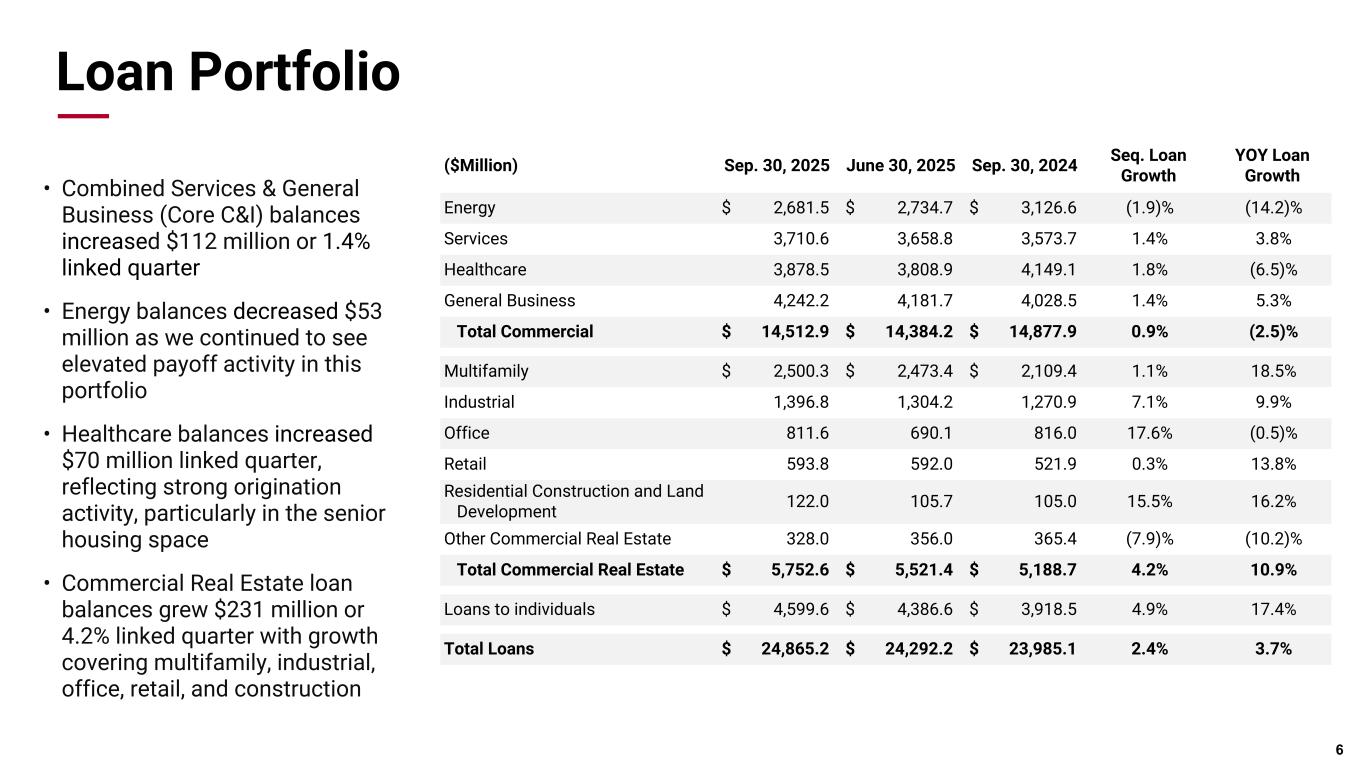
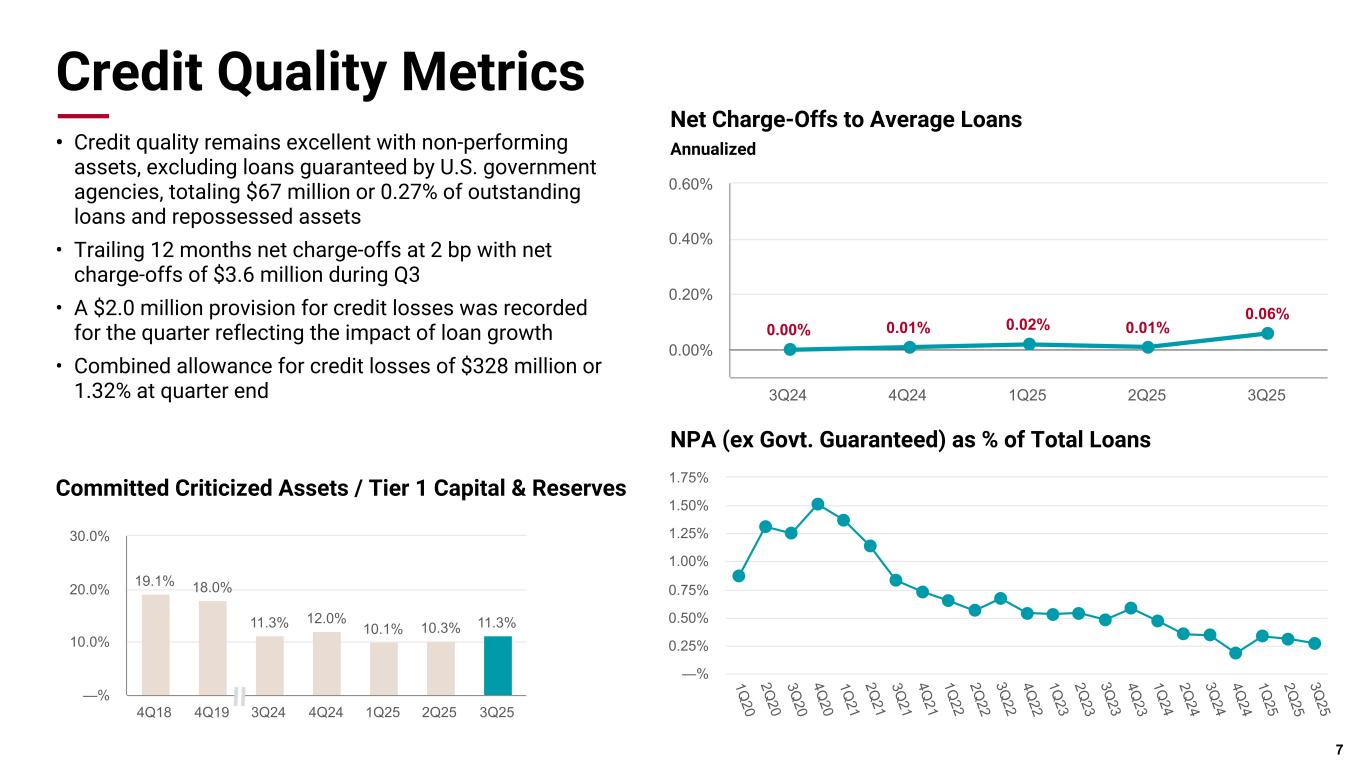
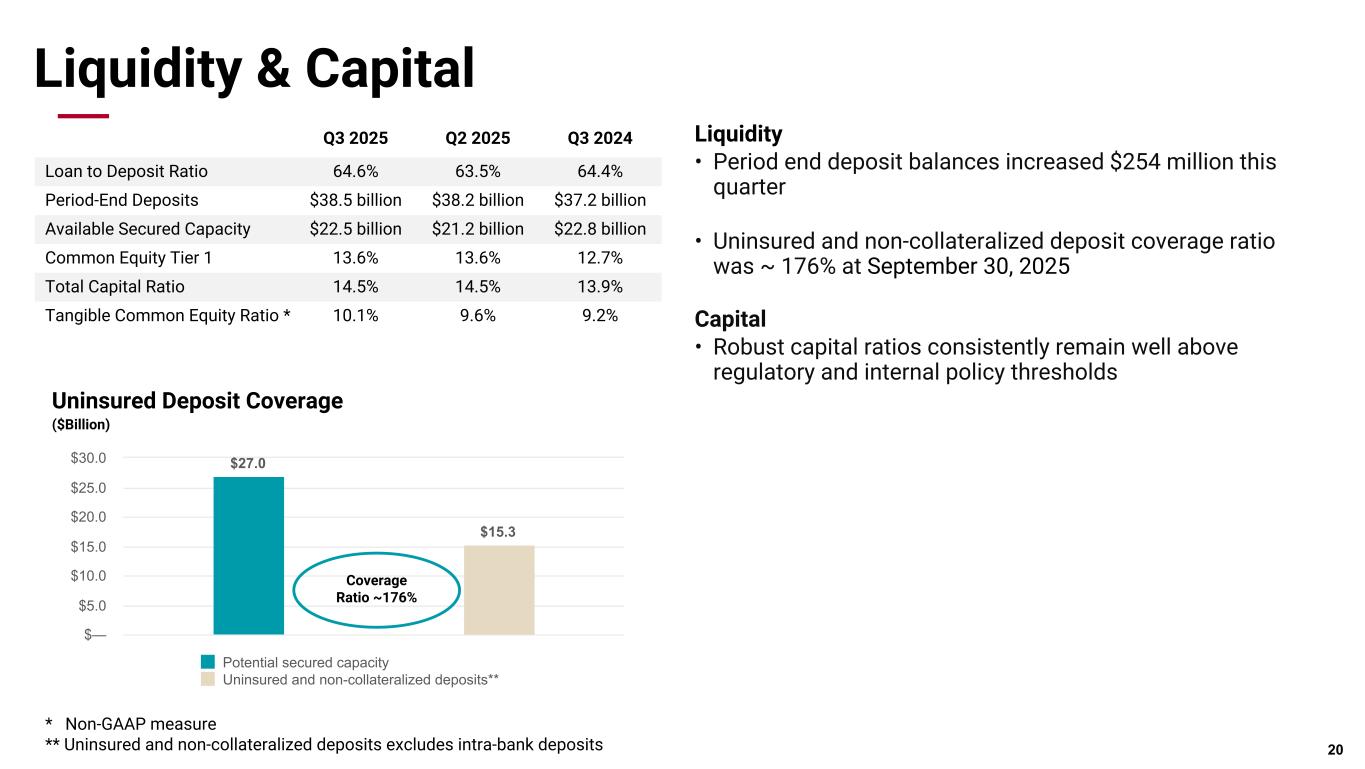
Thank you, Heather. we appreciate you joining the call this afternoon. We are pleased to report earnings of $140.9 million or EPS of $2.22 per diluted share for the third quarter. On our last quarterly call, I spent a lot of time talking about momentum. This quarter, we built on that progress and remained confident in the trajectory we're on and the solid foundation we've established for future growth. During the quarter, we delivered broad-based growth across our loan portfolio with total outstanding balances up 2.4% sequentially, adding almost $1.2 billion in outstanding loan balances over the past two quarters. Our core CNI portfolio posted strong results for the second consecutive quarter, while specialized businesses remained stable. CRE balances expanding meaningfully as commitments from late 2024 and early 2025 have continued to fund up during their construction life cycles. Importantly, this momentum is independent of our mortgage finance launch, which began generating fundings in the third quarter, with more meaningful outstandings expected during the fourth quarter. The interest margin continued to expand this quarter, increasing 11 basis points. We believe the key elements are in place to sustain strength in this area, regardless of whether the Fed catch rates faster or slower than expected. Our strong liquidity profile, with a loan-to-deposit ratio in the mid-60% range, provides strategic flexibility. Going into this interest rate cutting cycle with a strong liquidity profile should enable us to achieve effective pricing outcomes. This position does well to build upon our already attractive early cycle total liability beta. It remains relatively neutral to interest rate risk, which is consistent with our long-held philosophy of managing rate risk. This neutral positioning helps protect margin whether cuts are more or less aggressive than anticipated. Importantly, while we are neutral to interest rates, we are not neutral to the shape of the yield curve. Current market implied forward suggests the yield curve will continue to steepen over the next 12 months. This should provide a further tailwind to margin. Fee income was another solid contributor to overall performance this quarter, growing 3.6% sequentially. We recognized a record quarter for investment banking revenue, bolstered by municipal bond underwriting activity, a key strength in our fee income and advisory business. We also saw significant growth in AUMA this quarter, reaching more than $122 billion. Our capital levels remained peer-leading and were further reinforced this quarter as TCE grew to 10.1% and CET1 reached 13.6%. We repurchased over 365,000 shares at an average price of $111 per share during the quarter. This reflects our continued commitment to providing value to our shareholders. It continues to be a core strength for us. We remain well-reserved with a combined allowance representing a healthy 1.32% of outstanding loans. Chris size and classified levels remain well below their pre-pandemic levels, reflecting our disciplined approach to risk management. Slide six provides a closer look at our loan portfolio. Total outstanding loans grew 2.4% this quarter, led by growth in our core C&I portfolio, commercial real estate, and loans to individuals. Our core C&I loan portfolio, which represents our combined services and general business portfolios, grew 1.4% quarter over quarter. Our specialty lending portfolio, consisting of our energy and healthcare books, increased slightly this quarter, with growth in healthcare loans partially offset by contraction in the energy portfolio. Healthcare loans increased 1.8%, driven by strong origination activity, particularly within the senior housing space. The growth was not limited to outstanding balances. We saw a notable rise in commitments, reinforcing our confidence in long-term sustainable growth in this portfolio. This is despite normal refinancing churn. Both of our specialized lending books continue to demonstrate resilience, supported by healthy pipelines that indicate sustained performance ahead. Our CRE business increased 4.2% quarter over quarter, with growth curbing multifamily, industrial, office, retail, and construction. We expect growth and outstanding balances to continue for the remainder of the year as our commitments established in the previous few quarters spun out. We remain well below our internal concentration limits on this portfolio. Let's move to slide seven. I'll keep this brief. Credit quality continues to be very strong. MPAs not guaranteed by the U.S. government decreased $7 million to $67 million. The resulting non-performing assets to period loans and repossessed assets decreased four basis points to 27 basis points. Committed criticized assets increased this quarter, but remained very low relative to historical standards. We had net charge-offs of $3.6 million during the quarter, averaging two basis points over the last 12 months. Importantly, the limited charge-offs we've seen recently show no patterns or concentrations that raise concerns about specific business lines or geographies. Looking ahead, we expect net charge-offs to remain well below historical norms. We took a provision of $2 million this quarter, primarily reflecting loan growth. Our combined allowance for credit losses is $328 million, or 1.32% in outstanding loans, which is a healthy reserve level. Our exposure to NDFIs is approximately 2% of total loans, with a vast majority in the two highest credit quality subcategories, subscription lines and residential mortgage warehouse lines. Exposure outside of these categories is very granular, with an average loan size of $8 million. We have no credit exposure to companies recently publicized. Our strong performance in the credit space speaks volumes about our disciplined approach. We've built a strong reputation through consistent execution and excellence in credit over time. I now turn the call over to Scott.
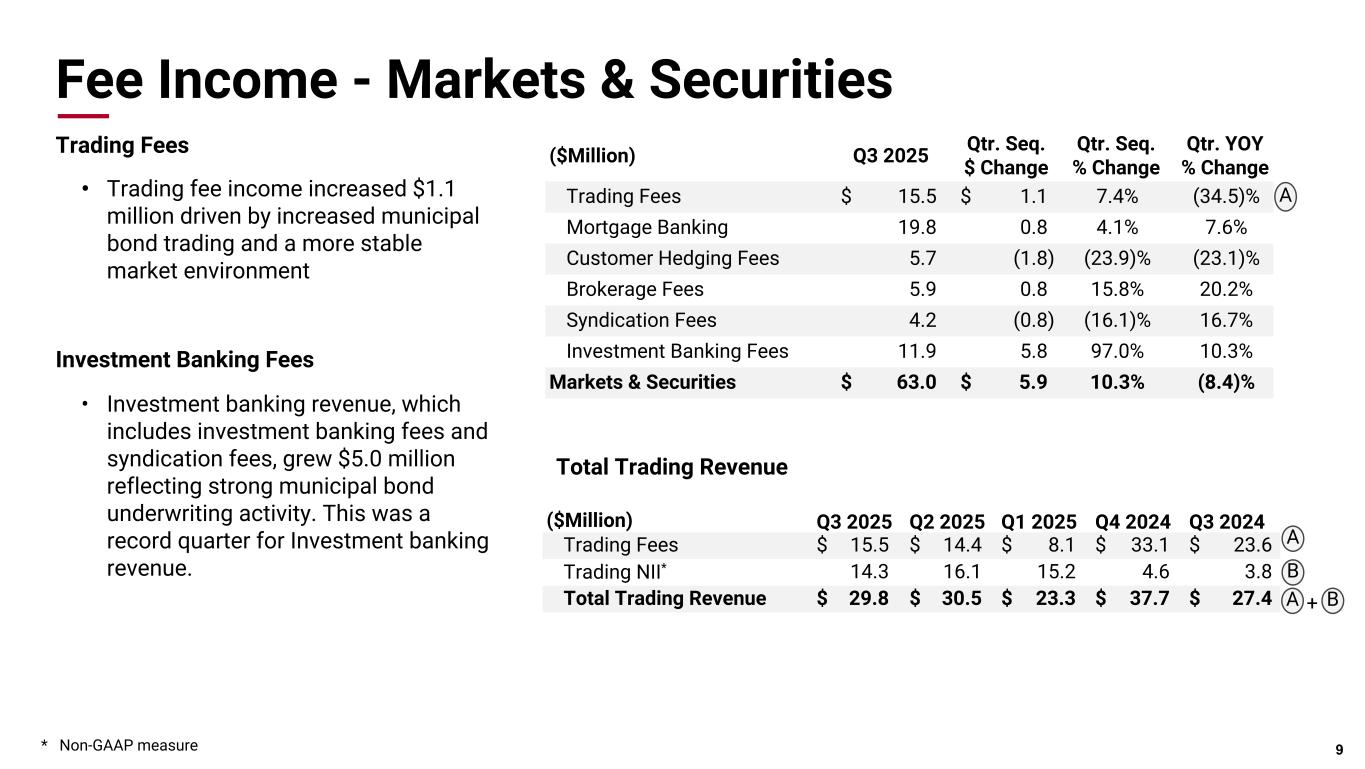
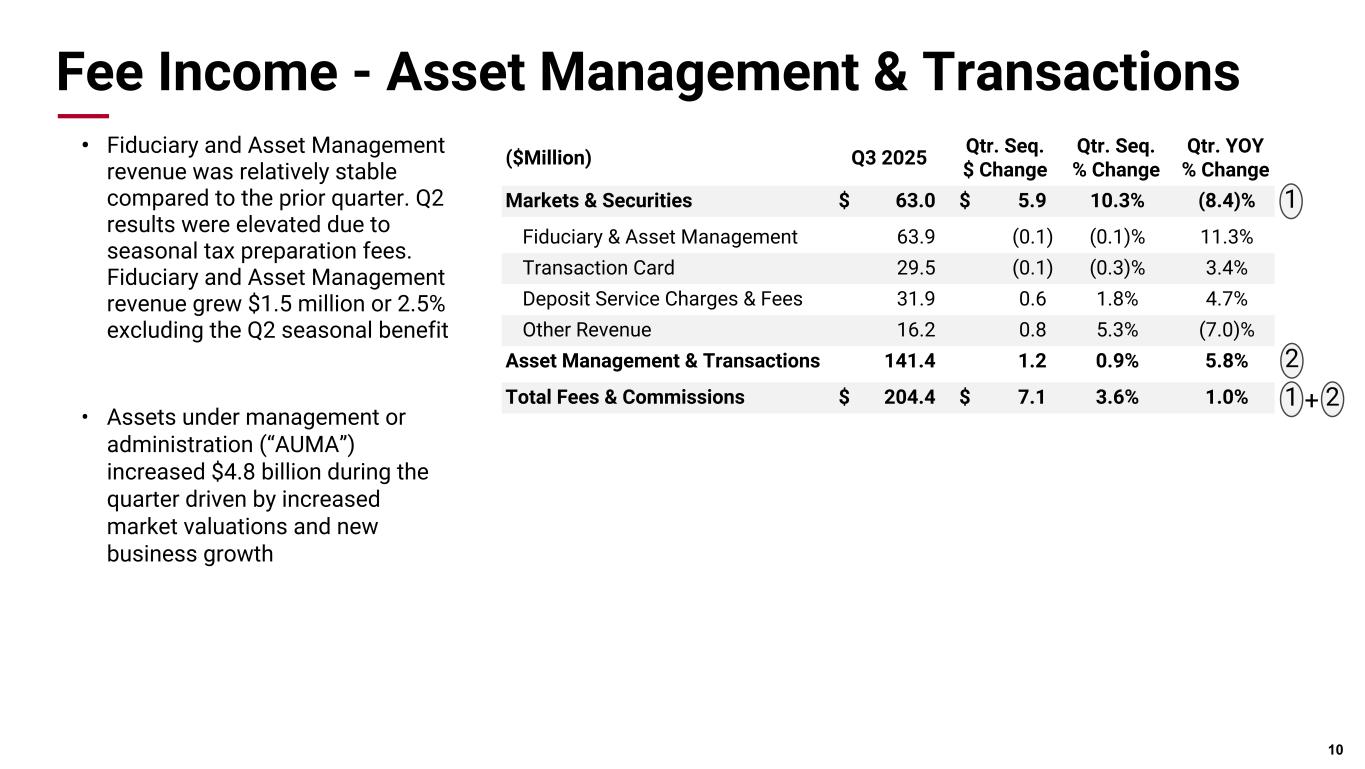
Turning to our operating results for the quarter on Slice 9 and 10, Total fee income increased $7.1 million on a linked quarter basis, contributing $204.4 million to revenue. Total trading-related net interest income was $29.8 million, relatively consistent with the prior quarter. Trading fees were up $1.1 million, largely driven by increase in a more stable market environment. Our trading business is focused on very high-quality fixed-income products, largely agency MBS. As Stacey mentioned, investment banking revenue, which includes investment banking fees and syndication fees, has increased $1.2 million. Very brief here, because as you can see, each of these businesses has produced strong and consistent results quarter over quarter. While third-quarter revenue remained relatively flat, it's important to note that second-quarter results were elevated by seasonal tax. The third-quarter performance was more reflective of typical run rate, excluding seasonal items, resulting in continued customer expansion, $7 billion in the future over many years. Thank you, Scott.
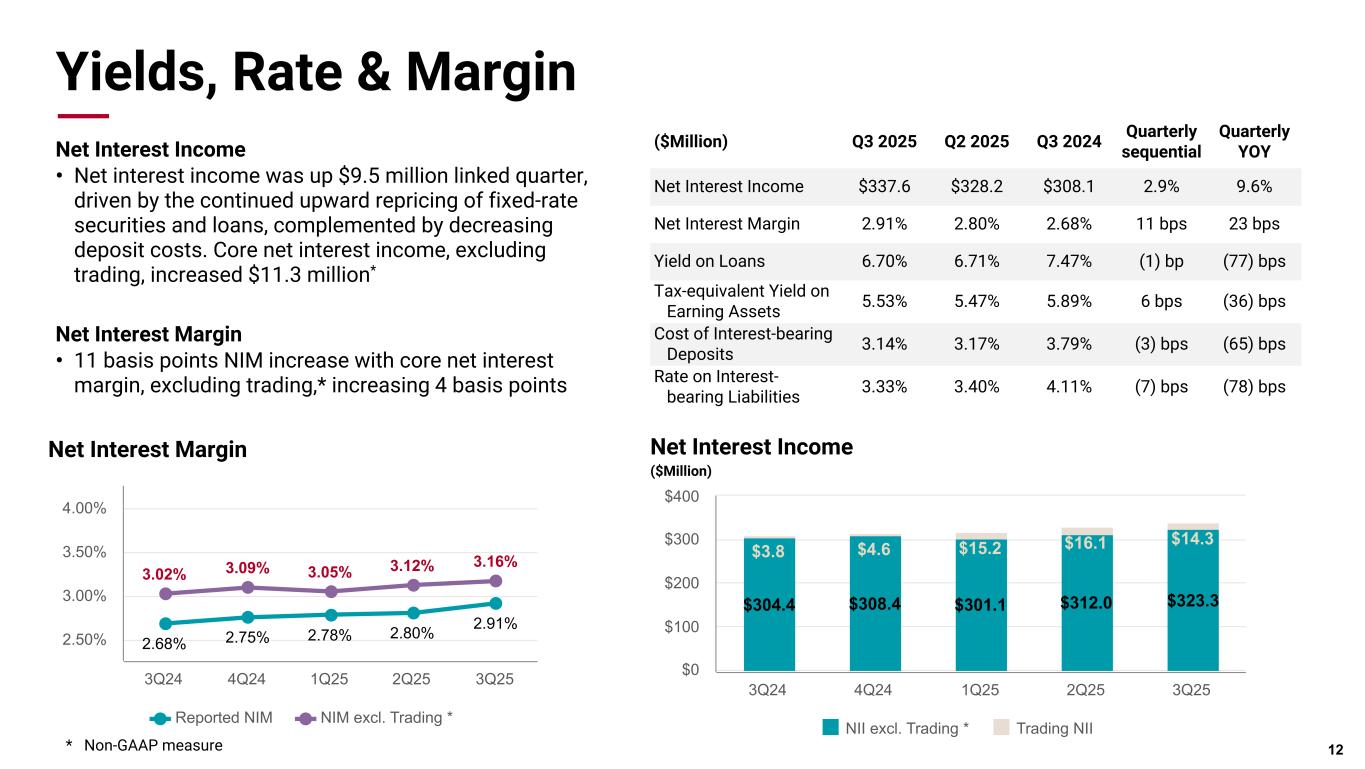
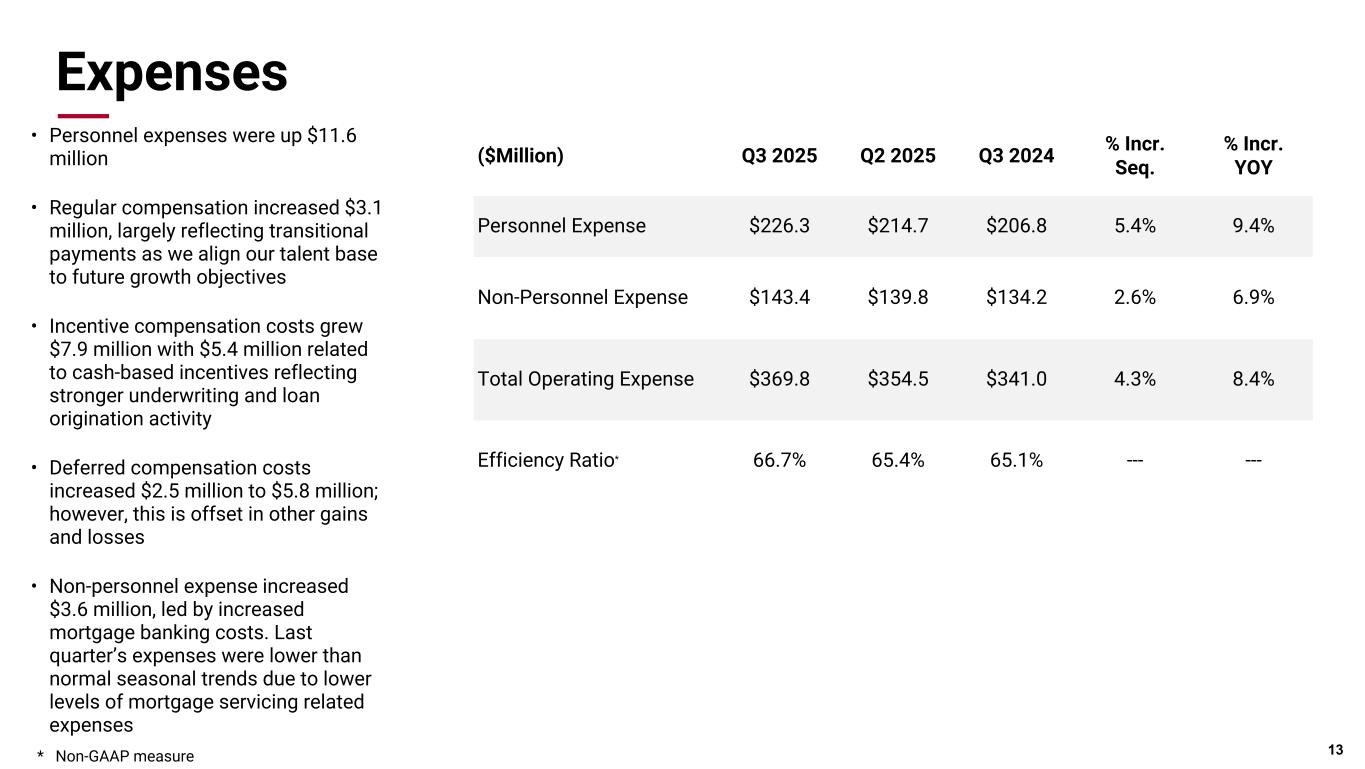
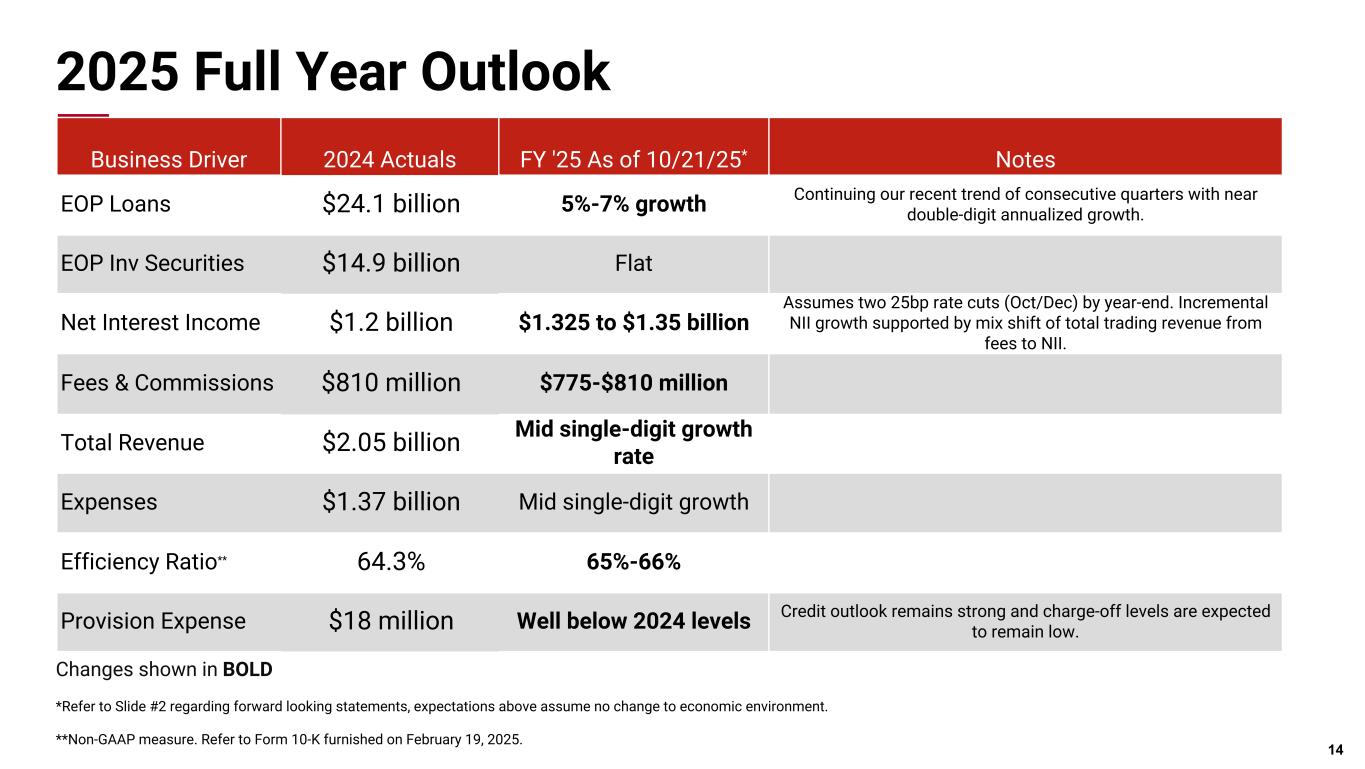
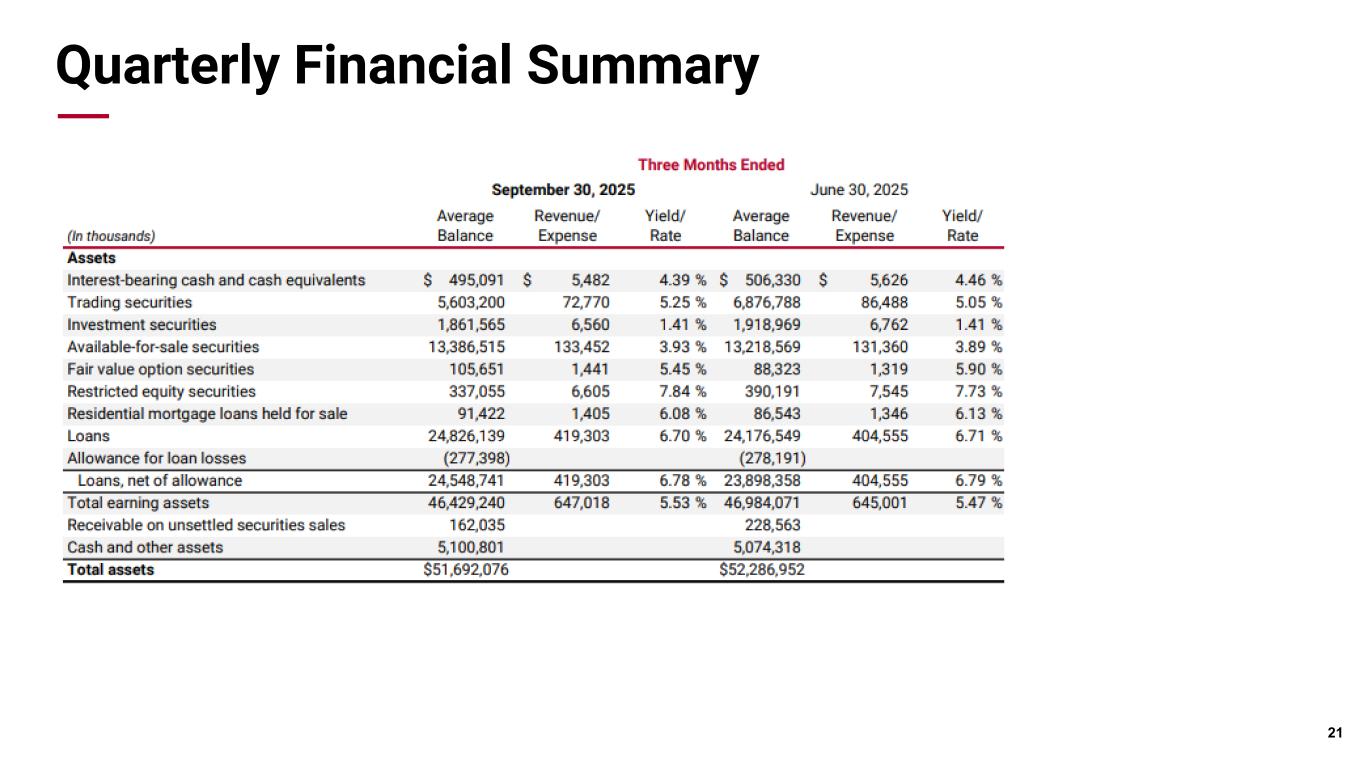
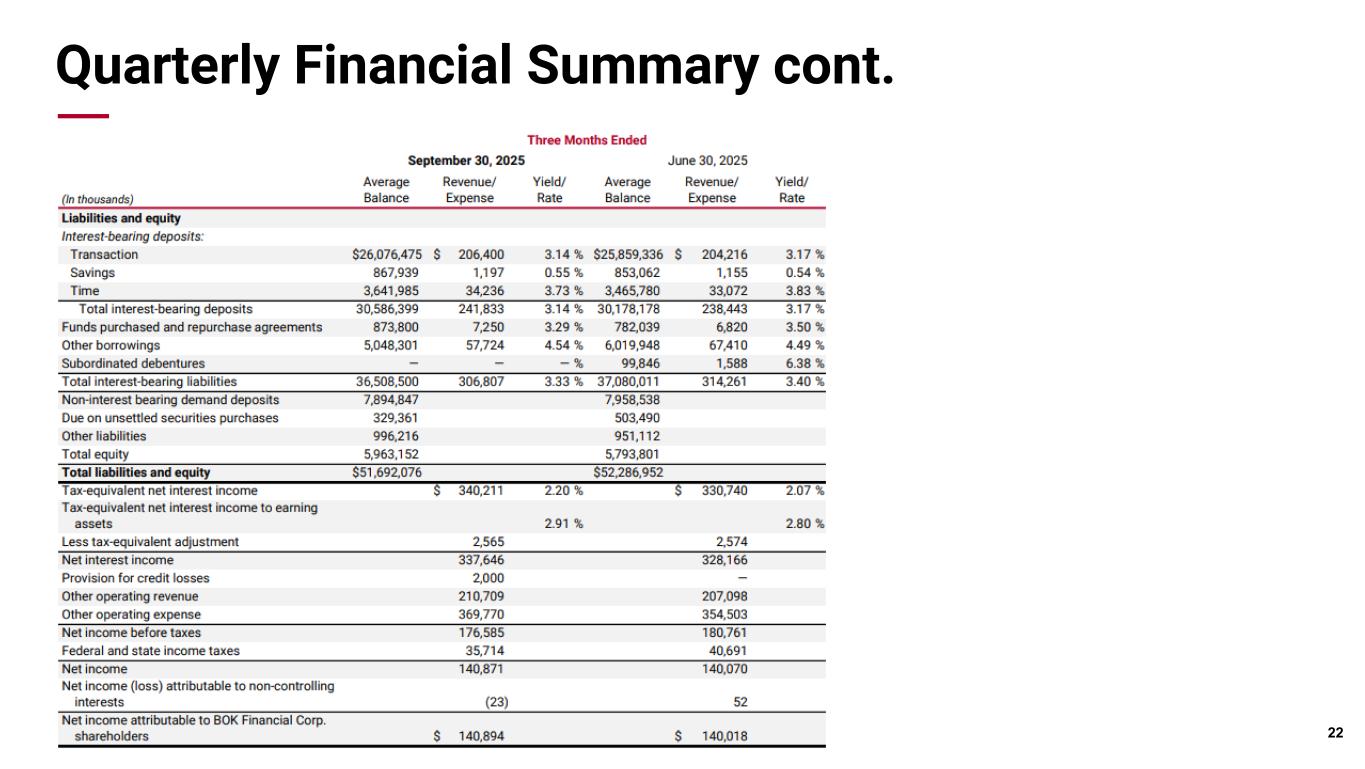
Turning to slide 12, net interest income increased $9.5 million and reported net interest margin expanded 11 basis points. Excluding trading, core net interest income increased to $11.3 million, and core margin grew four basis points, driven by several factors. First, fixed-rate asset repricing in both the securities portfolio and the fixed-rate portion of the loan portfolio. Second, incremental deposit repricing opportunities in both CDs and interest-bearing core deposit categories. And third, growth in loans and deposits. Since Q2 of 24, core margin has grown 22 basis points in total, which is an average of 4 to 5 basis points per quarter. We expect those drivers to continue to support both margin and NII growth in future quarters. Looking at headline net interest margin growth of 11 basis points, and specifically the 7 basis point incremental growth over the 4 basis points we saw in core margin, that was largely driven by the denominator effect of the decline in the average balance of the trading book quarter over quarter. Given the thinner spread on the trading book, the NII impact of the balance decline was very small. We typically expect average trading assets to be near the levels we had in the third quarter, although from time to time, our desk will hold more or less driven by market conditions and expectations of customer demand. Turning to slide 13, total expenses increased $15.3 million. Personnel expenses were up $11.6 million. Regular compensation increased $3.1 million, largely reflecting transitional payments as wheel, realign our workforce to meet the current and future needs of the business. Incentive compensation costs grew $7.9 million with $5.4 million related to cash-based incentives reflecting stronger underwriting and loan origination activity. The remaining $2.5 million increase reflects higher deferred compensation costs, which are offset in other gains and losses. Deferred compensation expense totaled $5.8 million for the quarter. Non-personnel expense rose $3.6 million, mainly due to mortgage banking costs. Last quarter's expenses there were lower than normal seasonal trends due to lower levels of mortgage servicing-related expenses. Slide 14 provides an update on our outlook for full year 2025. We have tightened up our ranges for most categories since we are farther through the year. Loan growth has been robust over the last two quarters, and our pipelines are strong across both C&I and CRE. We feel very good about our full-year loan growth projections of 5% to 7%. For net interest income, we expect $1.325 to $1.35 billion. And for fees and commissions, we expect $775 to $810 million, reflecting good momentum in that set of businesses. for total revenue is mid-single-digit growth versus prior year. As a reminder, I will note, interest rate levels and especially curve steepness can affect the geography of total trading revenue between NII and fees, but that shift would be neutral to total revenue. We expect our full-year efficiency ratio to be in the 65% to 66% range, reflecting the higher quarter-specific actual expenses we saw in Q3. Finally, regarding credit, non-performing assets declined sequentially, and portfolio credit quality is exceptionally strong. This reinforces our expectation that charge-offs will remain low in the near term, and 2025 provision expense will be well below 2024 levels. With that, I would like to hand the call back to the operator for Q&A, which will be followed by closing remarks from Stacy.
Operator
At this time, I would like to remind everyone, if you have a question, please press star 1 on your telephone keypad. We will pause for just a moment to compile the Q&A roster. Your first question comes from the line of Michael Rose with Raymond James. You may go ahead.
Hey, good morning, everyone. Thanks for taking my questions. Maybe we could just start on, you know, loan growth. You guys have had, you know, pretty high expectations, you know, for the bulk of the year. that's largely come through. You've talked about the pipelines being relatively strong. Can you just talk about some of the competitive forces maybe that you're seeing by market? And we have seen some mergers announced within some of those markets. Can you just discuss maybe some of the opportunities there and maybe too early, but is there any reason to expect that you shouldn't be able to generate the same level of growth next year as you did this year? If you can just talk about the puts and takes.
Michael, thank you. I think loan growth has been really a big story for us. I mean, the first quarter, we were tracking pretty well and kind of the noise around the tariffs kind of slowed sentiment a little bit, but second quarter, third quarter, both quarters consistently around 2.5%, so 10% annualized growth without a significant contribution from mortgage finance, which is obviously we hope to see on the outstanding side more so in the fourth quarter. But we feel really good about where we're at. We've got room on commercial real estate. Obviously, we limit more so than others are much commercial real estate will do, but we're under our concentration limits there. Energy's been a headwind this year. I don't expect it to be a tailwind next year, but I also don't expect it to be a headwind. And so that underlying growth that you see in just core C&I, personal loans on the wealth side has really done very well. We're very well positioned to be able to grow at a very strong level. We're obviously not providing guidance for 2026, but obviously feel good about where we're at and feel good about sustaining that into the fourth quarter. Obviously, as you think about merger activity in our footprint, that disruption creates opportunity for us. And obviously, we feel very well positioned to take advantage of that. Some of the fastest growing periods of my career have been when there was great disruption in the market from M&A. And so we're working very hard to position ourselves and I think being a source of strength and stability and growth during a time of disruption should position us well, both with talent and with prospects in the market.
Thanks, Stacy. Appreciate the question. And maybe just as a flip side of that, you know, just given where, you know, capital levels are, given where the stock is and buybacks, can you just frame kind of capital use? And, you know, given that we are seeing pretty quick approval times and a more favorable regulatory backdrop. Does M&A, you know, enter the equation for you guys again, or is there just too many buyers out there searching for too few deals?
From my perspective, the order of capital allocation remains. Obviously, we want to grow organically. We are at our core an organic growth company, and so that's our primary use of capital. Secondary, you know, we'll look at share repurchases. We'll look at the dividend levels and things like that over time. You saw we printed over 10% PCE this quarter. I'm not sure that's a good thing or a bad thing, but, you know, obviously proud to have very strong capital. But we did that and repurchased a reasonably large amount of shares this quarter. And then obviously M&A is something that exists for us that we'll look at. We're focused on, you know, strong core deposit franchises. as we've kind of identified in the past the types of things that would be interesting to us. And if those things become available, then we'll be interested. But we're not interested in doing a deal just for the sake of doing one or because somebody else did it or because the regulatory environment is more conducive to it. There are a lot of work, and they're very disruptive. And so they need to be worth the effort and really add strategic value long term. And so we're interested, but I think we're going to be very cautious about how we think about that.
I really appreciate it, Stacey. And just finally, I just want to wish Heather a happy birthday.
Operator
Thank you. Your next question comes from the line of John Armstrong with PPC Capital Market. You may go ahead.
Hey, good afternoon. Hey, Marty, maybe for you, you touched on it a little bit in your prepared comments, But on slide 12, on the core margin, how do you feel about that trend in the core margin excluding trading? Is it still that kind of grind higher? You just kind of give us some of the puts and takes in terms of what you expect there.
Yeah, we do still think that that is a grind higher trend. You know, the repricing of the fixed rate portion of the loan book and the fixed rate securities book, you know, those are trends that will continue. We had just over $600 million of securities basically priced up around 100 basis points this quarter and around $200 million of fixed-rate loans priced up similarly. Those trends don't last forever, but those are durable for a number of quarters over time. And on the deposit pricing, we were able to do a little bit more on just repricing around the edges on the core deposit book earlier in the quarter and saw no adverse impact on that from, you know, we still think that those trends have legs.
And then you're also saying the trading book probably stays relatively flat in the fourth quarter. Is that right?
Yeah, I mean, that's our base expectation. You know, we need to have, our desk needs to have a specific reason to want to move higher or lower than that kind of point that they are typically at. But, you know, that's a reasonable assumption based on what we can see today.
And then, Stacey, you mentioned it a couple of times, so I want to give the opportunity to talk about it. But you talked about the mortgage finance launch and that business funding up and maybe making contributions, you know, greater contributions in the coming quarters. Can you talk a little bit more about what's possible there in the timeline so we can understand that?
So I think we've previously talked about having $500 million in commitments by the end of the year. I think that's very doable. I think the utilization there will be, you know, plus or minus 50 percent. You know, as it matures, we'll kind of get a better feel for that. But that's kind of how we're modeling it today. I think we ended the third quarter with about $70 million plus or minus in mortgage finance loans outstanding. And so that kind of gives you a little bit of the runway. Obviously, we intend to grow that, and so we expect as we get out into 26 that the commitment level will increase pretty materially from there. We're very comfortable with that. The recourse there, the nature of the collateral and how we perfect on the collateral makes it a very safe lending aspect for us that we like, fits our profile well. Well, in addition to fitting our kind of mortgage ecosystem here with mortgage trading and mortgage TBA hedging that we do, and then just the core mortgage finance that we're adding here is an important leg of that. So we see real growth opportunity here for the foreseeable future here, for sure. Helpful context.
Operator
Your next question comes from the line of Peter Winter with DA Davidson. You may go ahead.
Thank you. I wanted to ask about just the fee income range. You know, it's still pretty wide with just one quarter left, and maybe if you could talk about the puts and takes within that range, because you did tighten the range on net interest income. Yeah, Peter, we did tighten the range on
fee income as well a bit, but as you know, you know, those are just great businesses to be in. and they've got, you know, really nice growth dynamics over time. It is a little bit more challenging to pinpoint any given quarter in those fee businesses, but, you know, we think that, you know, we've got good activity going across the board, whether that's, you know, fiduciary has good, you know, backdrop for both production of new volume and, you know, so far our market's behaving pretty well. transaction card, that has a nice growth rate year in and year out. You know, brokerage and trading, that's the most difficult to really, you know, be able to give any solid guidance on. But I will say this, you know, with the expectation for some, you know, lower rates in the fourth quarter, you know, that at least gives you a constructive backdrop for that line of business.
And then, you know, just on the updated expense guidance, does it imply you're expecting expenses to be down in the fourth quarter? And, you know, if you could buy maybe some expense growth color for next year, just, you know, would you expect expenses to moderate? And, you know, I guess what's a normal expense growth rate for BOK?
Yeah, we'll probably stop short of doing any 2026 guidance, but I think it might be helpful to just talk about Q3 expense levels, and especially within the personnel, because, you know, that was a little off-trend for us. And so if you look at that $226 million expense for personnel in Q3, you know, a couple components in there that I think are just good to understand. And so $5.8 million was the level of deferred comp in that $226 million. And as you know, Peter, you know, deferred comp, some quarters that's positive, some quarters it's negative. The average is small. But it's truly inconsequential to EPS because it is always offset in the other gains and losses. And so, you know, if you're going to – some people adjust out the gains and losses in total. But if you do that, you really have to adjust it out of personnel anyway. In fact, when we do our guidance, we leave it out of both sides. But, you know, the $5.8 million, that doesn't recur. You know, that's the task. So that's one. Deferred comp two, you know, there's a little bit of workforce realignment there. So that's nearly $3 million in the current period. So you want to be thoughtful about that. And then third, the incentive comp, you know, $5.1 million cash incentive comp, higher quarter over quarter. And that's, you know, production-driven, some iBanking, some loan production, and really, you know, throughout the wealth business and other businesses. I mean, that's kind of spread throughout the company. So that will give you a little bit of sense for how to think about that Q3 number going forward.
Just one last question. Casey, I'll give it a shot. I just want to follow up with John's question with the mortgage finance. You know, just I'm wondering if you could put some guardrails around, you know, materially higher next year. It just seems with the Fed starting to cut rates, I mean, really could be a significant grower for you next year.
I agree with that assessment. I think I indicated it would be 500 commitments by the end of the year, roughly 50% utilization, and then materially higher in 2026. Obviously, we're going to be very careful here about providing any 2026 guidance because we're not prepared to do that. We'll do that when we get together in January. We'll provide very detailed guidance around that. But we're obviously very optimistic. We have a strong appetite to grow it. we believe it's very low credit risk. And so I think you'll see us be very open about growing
Operator
that very aggressively in 2026. Thank you. So our next question comes from the line of David Chivirini with Jeffrey. You may go ahead. I think so. I wanted to follow up on Peter's
question there. To ask it a different way, you know, how high as a percent of loans could mortgage finance eventually get, say, over two to three years?
Yeah, we typically look at, if you look at kind of the areas that we have our concentrations in, you think about things, we think about things in terms of percent of capital. And so, you know, obviously, we have lots of capital and we have lots of capacity to grow that. You know, when we start in any area, you know, we don't start where we want to end up. We learn from it. We get better. We grow. We understand what the client selection opportunities are and what the market gives us. And so it's hard to look out and say with great certainty, but we have a very long runway here in mortgage finance. And we don't see where we're necessarily going to be constrained internally in the next couple of years around this. At some point, we would be. There would be a point in time where we would reach our kind of interim risk appetite, if you will. But we're nowhere close to that today. We're very excited about the possibilities here and see a pretty long runway to grow it.
In terms of the competitive environment for mortgage finance, are you seeing competitors pull back from that business at all?
Not particularly. I mean, not today. I mean, there have been some who pulled out, you know, over liquidity issues, call it a couple of years ago. But if you think about the environment specifically to today, not necessarily. Although, you know, it does fall under the non-depository financial institution lending. And so I think that there will be folks who look at that and think about that maybe a little bit differently because of the scrutiny that's evolved from that. But this is one of the most secure areas of lending, in our view, no matter how it's classified, that we can do. And so we feel very comfortable with that. We're, you know, we are bringing to market a very experienced team, a very strong leadership group who's well-known by the participants in the market. We have synergies with our existing businesses that most do not have. So with our mortgage trading business, with our mortgage TBA hedging business, there's enormous synergy with the same clients that are our mortgage finance prospects. And so we really think there's enormous opportunity here where one plus one is three. Mortgage finance is going to grow on its own, but we also think it will enhance other businesses as well. And, frankly, even on the Treasury side, the cash management side, the corporate Treasury side, we're seeing opportunities that perhaps we didn't foresee as we entered this business. We have a very strong delivery platform on the Treasury side that, as those begin to explore a full relationship, are very impressed with relative to where they are. And so we're seeing much more traction there than perhaps we anticipated. So this is – we talk about the loans, and I understand why. They're a strong driver of earning assets. But this is about a complete and full relationship. And so that's part of why we've entered this business in the way we have with hiring a very experienced team, investing in the technology tools to be successful. And so I think you're going to see a lot of success here.
Operator
Your next question comes from the line of Brett Rabotin with Hobbit Group. You may go ahead.
Hey, good afternoon, everyone. Thanks for the question. Wanted to just go back to loan growth. And I noticed that you guys grew quite a bit in office. this quarter. And so I was just curious if you were seeing opportunities where others maybe were trying to reduce exposure relative to certain CRE buckets, kind of given you're a lot lower relative to some peers on concentration. And then maybe just any other segments that you're seeing people pull back from, whether it be multifamily or construction, that might also
be an opportunity. Yeah, I would say from, you know, Office is really consistent with where it was the same quarter a year ago. The balances are going to ebb and flow a little bit from period to period just based on activity. We're not afraid of office. Obviously, it depends on who the tenants are, what the lease role looks like, the term of the leases, those types of things. I think much like everything was going to go away in retail because of Amazon, that didn't prove to be true. I think office is going to prove to be a better class than people originally were concerned about because of changing work preferences. But I think people are returning to the office. Workspace is important. And we're not leading with office per se, but for the right deal, for the right opportunity, with the right tenant profile, we are in the business of making office loans. And so you see a little bit of that this quarter. Obviously, our focus is multifamily and industrial primarily, and we're seeing good opportunities there. We see kind of a good runway to kind of fill out the bucket, if you will, in commercial real estate and continue to grow the outstanding there.
Okay. That's helpful, Stacey. And then the other question I wanted to ask was just around the strong growth this quarter and really the past year, AUMA, and just, you know, how much of that might be the market versus new clients, new customers, any fee changes that might drive the revenue relative to flattish going forward, 3Q to 2Q.
Sure. So this quarter specifically, as we have on slide 10, we're getting both. And, you know, we have a fair amount of planned distributions and natural churn in that business. So our actual new asset attraction is significant. But if you look at the net at the end of the quarter, it was half and half. We had, of the $4.8 billion increase for the quarter, it was increased by both market valuation improvements, accounted for about half of that, and the other was new business growth, net new business growth. So it's a combination of the two. We feel good about it, and it's really across the broad spectrum. It's safekeeping assets. It's fiduciary assets across all the business lines inside of wealth. from retail brokers to the institutional side.
Okay, that's helpful. I appreciate all the color, guys.
Operator
Your next question comes from the line of Woody Lay with KBW. You may go ahead.
Hey, thanks for taking my question. Just wanted to start on trading income. How do you think about the mix shift of trading income between fees and NII based on the expectation of the deepening yield curves?
yeah so just marty so to the extent that you get a little more steepness in the curve you're going to see a little bit more of that revenue be in the nii category and a little bit less in fees and um so you know that's a reasonable thing to assume but the total you know we're really paying attention to how the business performs and adding those two together that's really the
right way to think about uh trends in the business um okay and then maybe shifting over to credit Obviously, really clean, but it did look like criticized assets picked up just a touch. Do you have the dollar amount that it increased in any color you can give there?
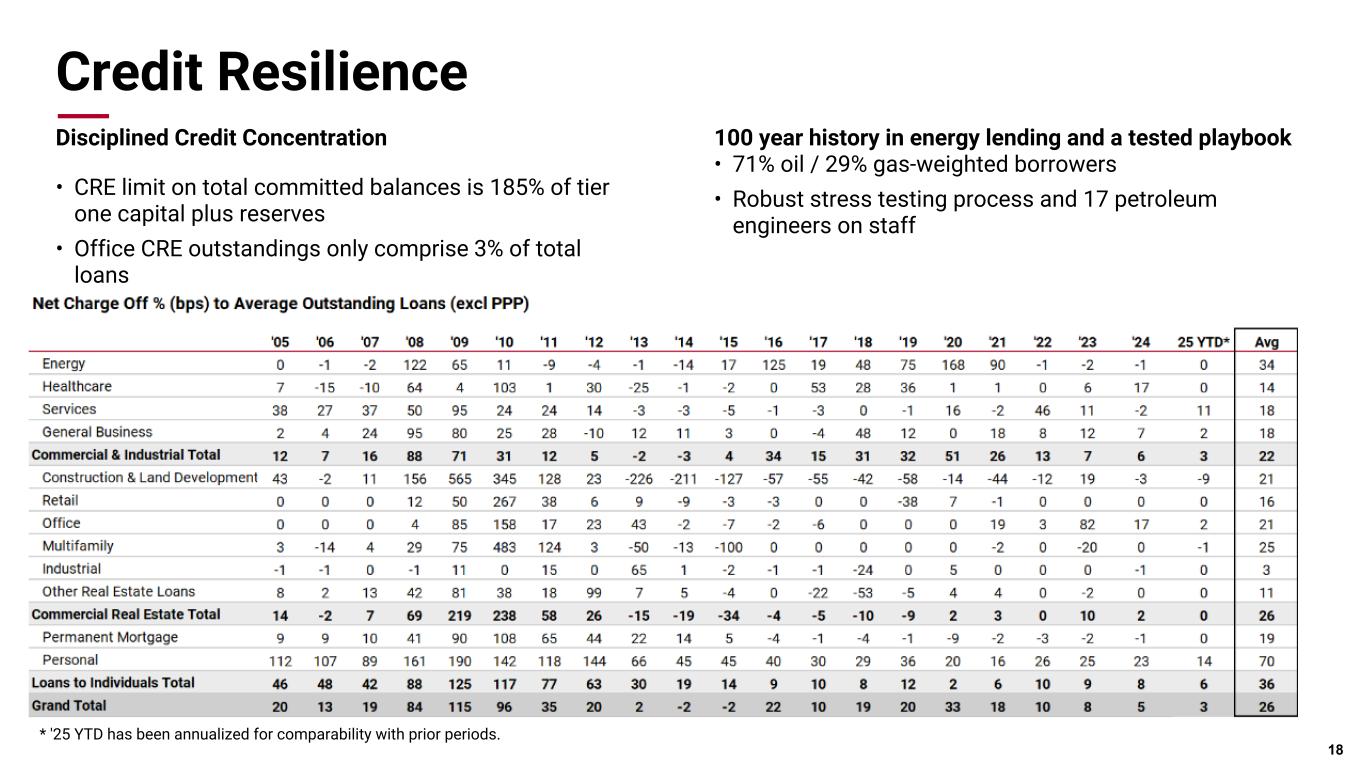
It increased like $50 million, you know, on almost $25 billion in loans. If you look at, you know, criticized levels as a percentage here when a capital, I mean, it crept up a little bit. But it's too small to move. I mean, one loan can move the number here a little bit. So if you think about we're at 11.3% at the end of the third quarter, we were at 12% at the end of the fourth quarter last year, kind of at a similar level we were at the third Obviously, we saw improvement in the first half of the year, but these numbers are so small that, you know, one or two loans can move these percentages here a little bit. And I guess this is a good segue for me to remind everybody, this is not normal. These are abnormally strong credit numbers, and we include kind of that fourth quarter 18, fourth quarter 19. That is the mean, if you will. That is a normal – those look good for us. We were happy with those levels, and so there will be a time where both charge-offs and criticized levels and non-performing levels kind of revert to the mean, and that doesn't mean credit's deteriorating. It just means that there's been kind of a reversion back to kind of a more normal period of time. These are abnormally good credit periods, and, you know, we're kind of looking under every rock trying to find where we think the next, you know, risk element can come from, and we're not seeing it in a line of business. We're not seeing it in geography, and everybody's kind of jumping on the next credit thing, but there will be a reversion to the mean, but we're not seeing any deterioration, really meaningful deterioration at all in asset quality today.
Yeah, and that was going to go into my next question. I mean, if I just look at the past, you know, on average over the past three years, you're averaging a net charge-off rate of about six basis points, which is just pretty remarkable considering, you know, you're a commercially focused business. Do you think, just based on where you see the macro economy today, do you think we get a more normalized environment in the year ahead, or is it really just too unpredictable to tell?
It's really hard to say. I mean, we include in the appendix, I think it's slide 18, and I always kind of refer people to that because we get caught up in these, you know, one year to one year, and you don't really pick up a credit cycle when you do that. We've included in our, you know, essentially a 20-year loss history that picks up, you know, the worst of the great financial crisis embedded in that history. And we've got basically a 26 basis point average charge off over that period of time, which includes the pretty significant losses if you think about coming out through the great financial crisis. And so I think as we think about through the cycle, we kind of think 20 to 25 basis points is average losses for us. Maybe we do a little bit better. We think our asset quality has differentiated itself in a very positive way. But as you try to look out in the near term, it's hard to see that we revert back to that mean quickly. Just based on what we see today, there's as much positive going on as there is negative. And so, you know, I don't foresee that, certainly. But, you know, there's so many factors that can predicate that. It's typically something that we didn't expect or kind of an extrogynous shock that creates the stress. And so it's very difficult with real certainty to predict. And so as we model, as we think about our business through a cycle, we really focus on that long-term loss rate, which we think is somewhere around 20 to 25 basis points. But we're nowhere near that today and don't certainly foresee that in the near term.
That's great, Collard. Thanks for taking all my questions.
Operator
Your next question comes from the line of Tamur Braziler with Wells Fargo. Go ahead.
Hi. Good afternoon. Hi, there. A couple more on the warehouse finance business. I guess, what do the typical line sizes look like today, and how does that progression grow potentially as you build out that business?
Line sizes, loan sizes are going to be, you know, loan commitments here are going to be larger than maybe a typical, you know, loan commitment would be. So let's call it $75 million to $100 million, plus or minus. You know, and some are going to be smaller, some are going to be bigger, But, you know, generally speaking, they're going to be a little bit larger there, mostly because the quality of the credit is, in some cases, correlated to the size of the facility. And so we want to be sensitive about adverse selection. But it is less granular than the typical CNI portfolio for sure. But the asset quality is much, much better over a long period of time.
And then, Marty, I talked to you three months ago, and your comments were a bit prophetic. You had mentioned essentially the risk of double pledging some of this collateral. You had also said that the mortgage registration system that are in places today kind of eliminates some of these risks. I guess the events of these last couple weeks, does that potentially make you reconsider how you think about that statement? Or does that give you, you know, even greater conviction around the process?
Yeah, no, that's a great question because there's a distinction between the situations that are in the news. Those are not residential mortgage warehouse lines where those loans are all registered at MERS. I mean, that's the beauty of the component of mortgage warehouse that we're doing. So all of that collateral, not only do we have a very strong team that's very experienced, but we've got the leading platform to operate that business, and that gives us the ability to ensure that all the individual loans, we have clear title to all the loans that are securing our warehouse line through MERS. And so there are other flavors of warehouse finance that aren't like that. But what we're doing is 100% what I just described, where our ability to have clear line of sight on title so that we know we've got those loans that's collateral. Not only that, we've got the ability to deal with them if we ever needed to, just given the talent we've got on board. So we are as convicted as ever that the way we're going into this business and the portion of this business that we're doing is the right one that meets our risk appetite.
Great. That's good color. Thank you. And then just last for me, just a clarifying question. The comment on trading assets being more or less in line with 3Q, is that on average basis or period end?
Yeah, average. Yeah, we always talk about average there. you can almost ignore the period end on trading because just one day isn't representative. So as you're thinking about that business, it's always the most sensible thing to look at the averages.
Operator
This thing comes from the line of Jared Schall-Barclay. You may go ahead.
Hey, good afternoon. Hey, Jared. Hey, so just, you know, I guess going back to the overall loan growth, if we look at the high end of that range, it feels like that's just driven by the optionality or the potential of mortgage warehouse. Is that right? And I guess what are your assumptions for energy payoff activity or pay down activity? Is that going to slow going into the end of the year, or could we still see pressure on those balances?
Yeah, I think we're growing. The last two quarters, we've grown loans at 10% without really any meaningful contribution for mortgage finance. And so I think that there's – and that's with some headwind in the energy space. So I feel very confident about, you know, where we are from a long-growth perspective. We've got a good momentum. We look at the sales pipeline, obviously, going into – we look at it, you know, more frequently, but particularly coming into the call to be able to feel good about talking about that here. Sales pipelines are very strong right now. And so we feel good about where we're positioned from that perspective as we think about the future. I mean, energy lending, you know, the commodity prices are low. There's consolidation happening in space. I do think, you know, plus or minus a little bit, we've kind of hit the bottom in terms of the risk of material payoff activity. But I don't think it's going to grow at 10% either. And so, you know, I think from our perspective, having stable balances there is a positive. We do expect it to grow a little bit. But, you know, we're close to bouncing off the bottom here a little bit on the energy balances, which is helpful. Obviously, we like that space, feel very good about the asset quality there. But the growth has been more challenged in the last 12 to 18 months as there's been lower commodity prices and a more merger and acquisition activity in that space.
We do see the stronger growth in the mortgage side. Is that going to be enough to impact sort of the expected growth in loan yields? And I'm guessing that's tighter spreads on that lending, right?
It is tighter spread. It's really going to depend on what the mix is at that particular point in time. It's a hard question to answer until we get a little farther along. I mean, just overall, yes, the spreads on mortgage warehouse are, say, a typical C&I deal. The flip side of that, we've still got lots of room to grow in commercial real estate. Those spreads tend to be wider than a typical C&I deal. And so it really just depends on the mix at that particular point in time.
Yeah, and Jared, one thing to think about is that business also brings deposits. And so when you think about the combination of the loans, deposits, the treasury management revenue and incremental trading revenue, broadly speaking, that's bringing a pretty standard margin to the bottom line for us. So I think overall, it's not going to be diluted to overall returns. That's sort of what you're thinking about.
Thanks. And then how should we think about maybe your internal thoughts around loan-to-deposit ratios and funding this growth? Should we assume that you're comfortable with that ratio, which is pretty low, starting to grow back to where we maybe saw in prior years?
Yeah, we have, as you know, and as you just said, a very strong loan-to-deposit ratio. That can drift up, and that's fine. That's not our central case is that we'll continue to grow loans. We'll continue to grow deposits. Maybe loans are a little higher than deposits, and that could drift up, and that'd be fine. But, you know, we've got a lot of balance sheet flexibility, and that'll put us in very good position for the next couple of years.
Operator
Your final question comes from the line of Matt Olney-Steven. Go ahead.
Yeah, thanks for taking the question, guys. Guys, I guess sticking with Jared's first question on the loan yields, are there any material loan floors that would become effective as the Fed continues to cut rates?
Yeah, not really. I mean, and certainly, you know, in these, you know, we still have, you know, pretty high rates here in the grand scheme of things. So, yeah, floors are not going to be a factor in the foreseeable future.
Thanks for that, Marty. And then, I guess, going back to the credit discussion, you gave us some great details, and I'm looking at the allowance ratio, call it 132, which I think is the low end of what we've seen since the CECL adoption of the last few years ago. It feels like it's going to be really tough to keep that flat, and we could see that start to – or continue to drift lower. Am I interpreting the commentary there right on the allowance ratio?
I mean, that's really predicated on asset quality at the point in time and loan growth and lots of other factors there. You know, content being material, that's going to help. But if you look at, you know, the reserve relative to criticized levels or relative to non-performing levels or relative to charge-offs, obviously it's very healthy. And we've got something that we'll continue to look at there.
Operator
Your final question comes from the line of Newer Braziler with Wells Fargo. You may go ahead.
Hi, thanks for the follow-up. Just one more for me. You had called out a couple times that you're looking to align talent base with future growth initiatives. Can you just maybe put some context around that statement and maybe how far in the process we are there?
So we're constantly, I mean, you know, we're part of our corporate DNA is we're always looking to see, you know, where are the growth opportunities, where are the highest returns on our capital, and where are areas that are mature. And so we've been very focused as we have these expansion areas like San Antonio, like Mortgage Warehouse, where we're making big investments. We have big technology investments in wealth and in the corporate bank. And obviously, as we think about that, we also think about where are some areas that are mature that we need to be more efficient in and focus on that. And so as we've worked through that over the course of the year, we've taken actions in both the third quarter and in the fourth quarter that will result in transitional payments that are non-recurring that will impact personnel expenses principally, but create benefit in future periods as we right-size the workforce with the areas that we think provide the most opportunity for us to grow. Okay. Thank you.
Operator
This concludes today's Q&A session. I would now like to turn the call back over to State's close remarks.
Thank you. This was another strong quarter marked by solid performance across our core businesses. The additional momentum we built this quarter reflects the strength and resilience of our team. We're entering the final quarter of 2025 with a clear focus on sustaining the positive trajectory. We appreciate your interest in BOK Financial and your willingness to spend time with us this afternoon. Please reach out to Heather King if you have any questions at h.king at bokf.com.
Operator
That concludes today's conference call. You may disconnect.