Operator
Good day, and welcome to the BrightSpire Capital Inc. First Quarter 2025 Earnings Call. All participants will be in a listen-only mode. After today’s presentation, there will be an opportunity to ask questions. Please note that this event is being recorded. I would now like to turn the conference over to David Palame, General Counsel. Please go ahead.
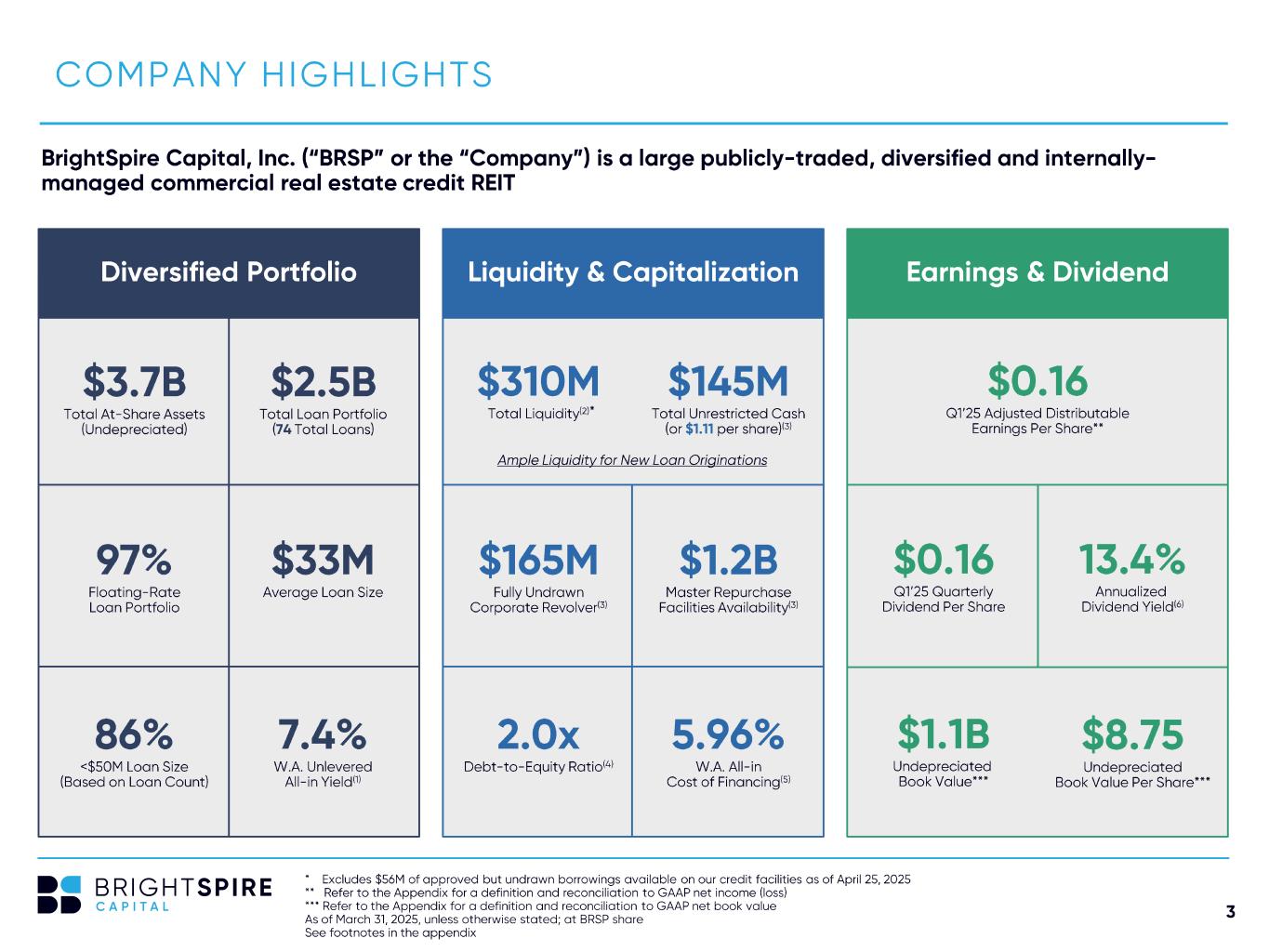
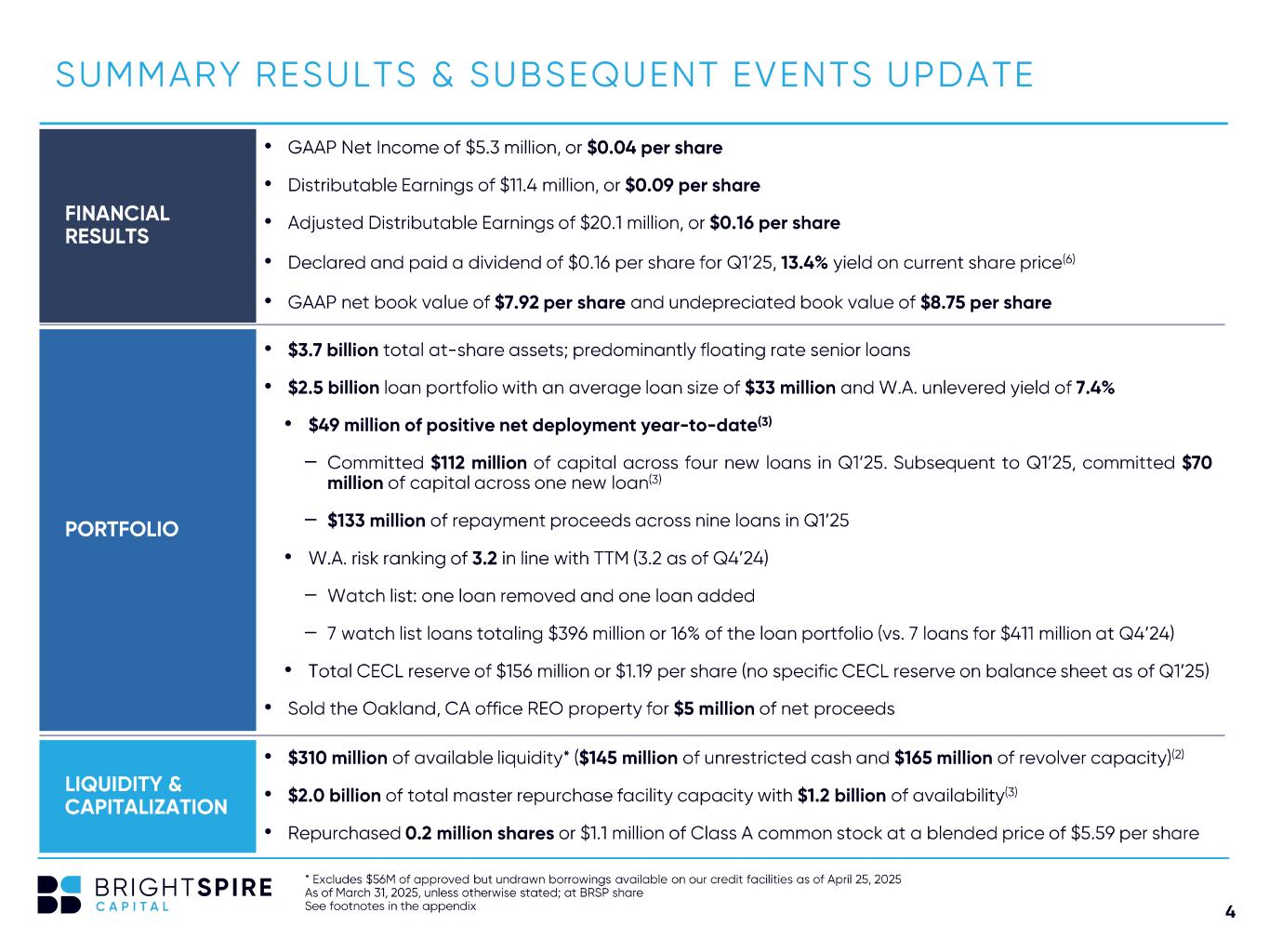
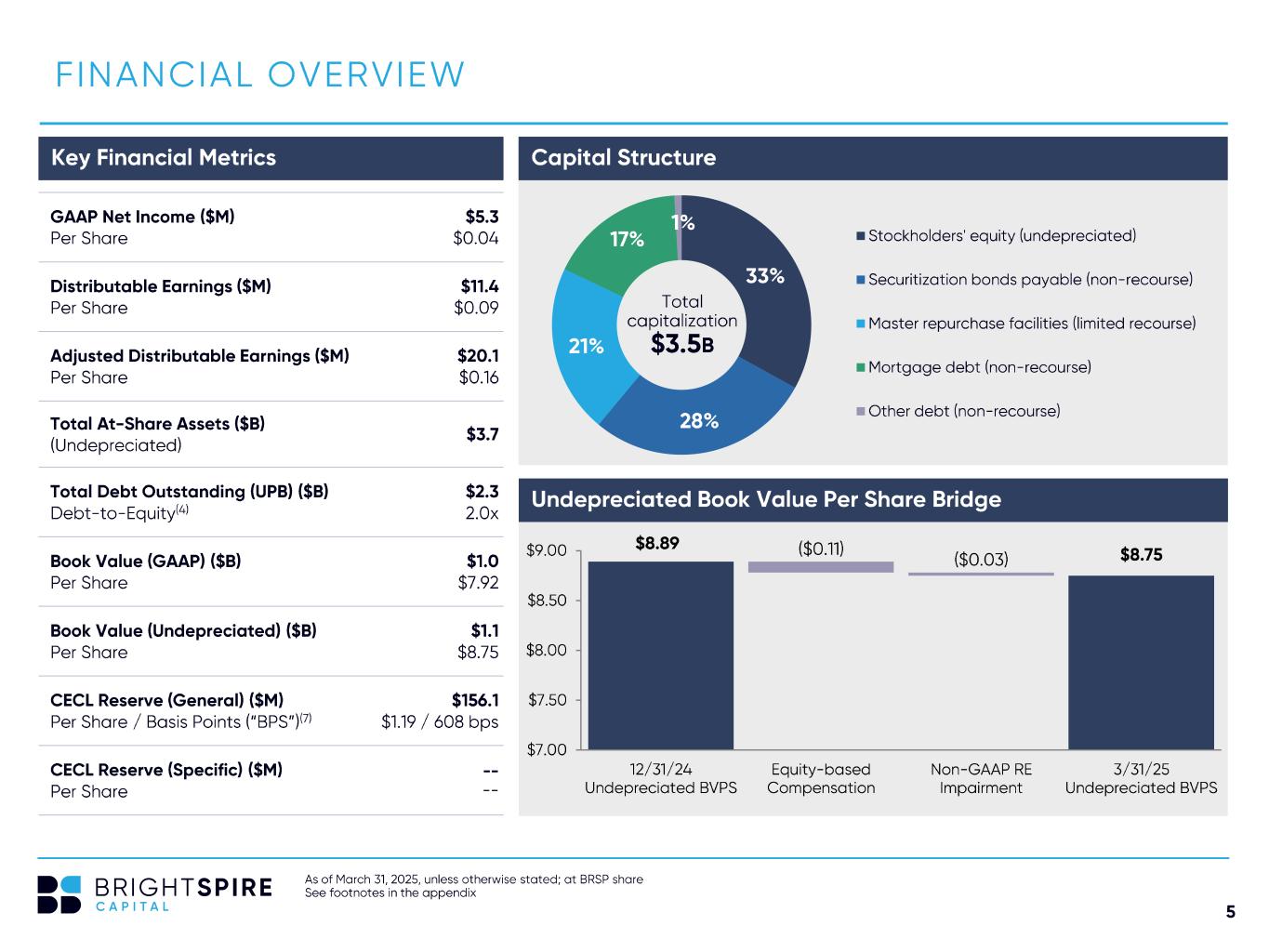
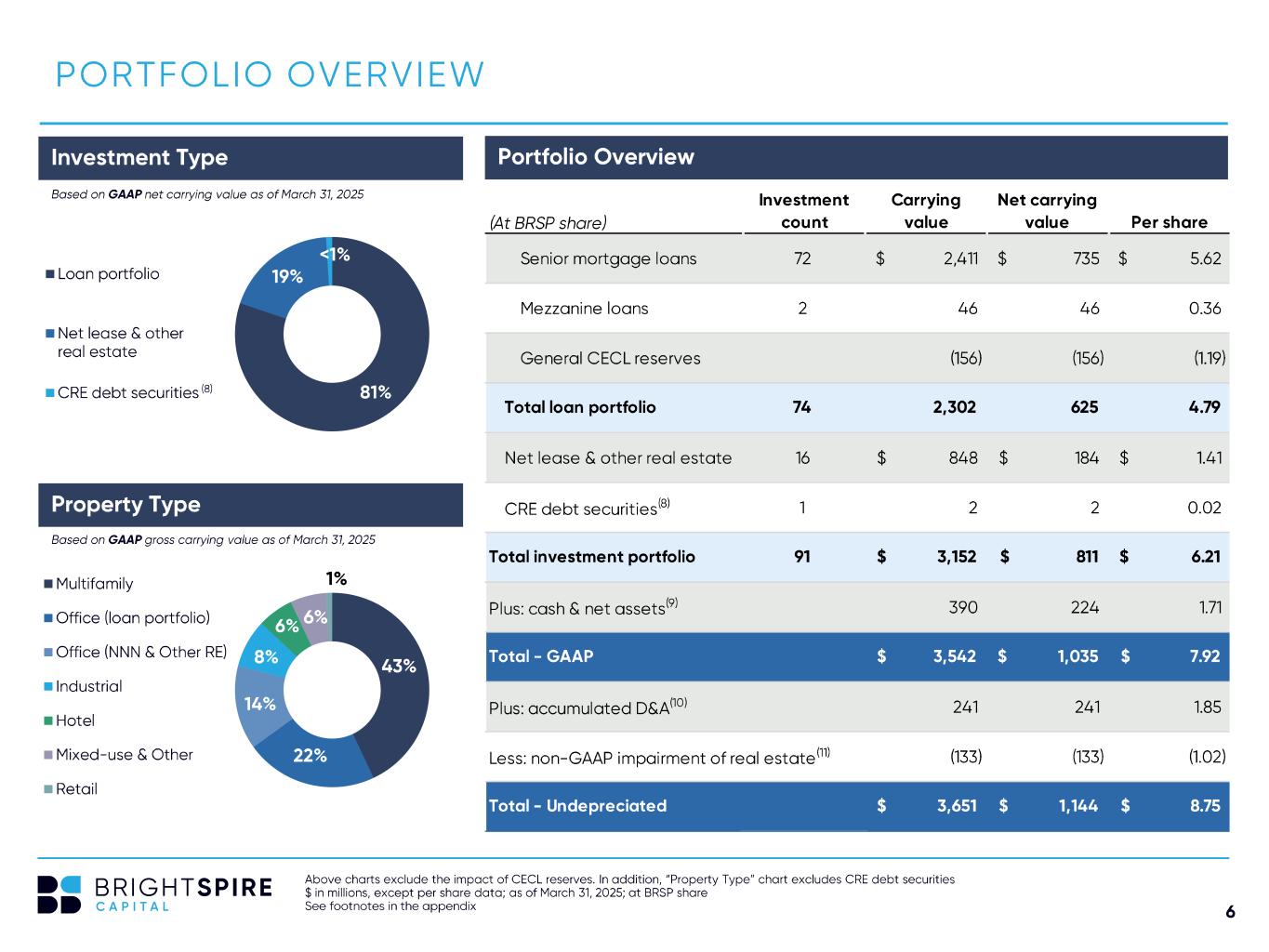
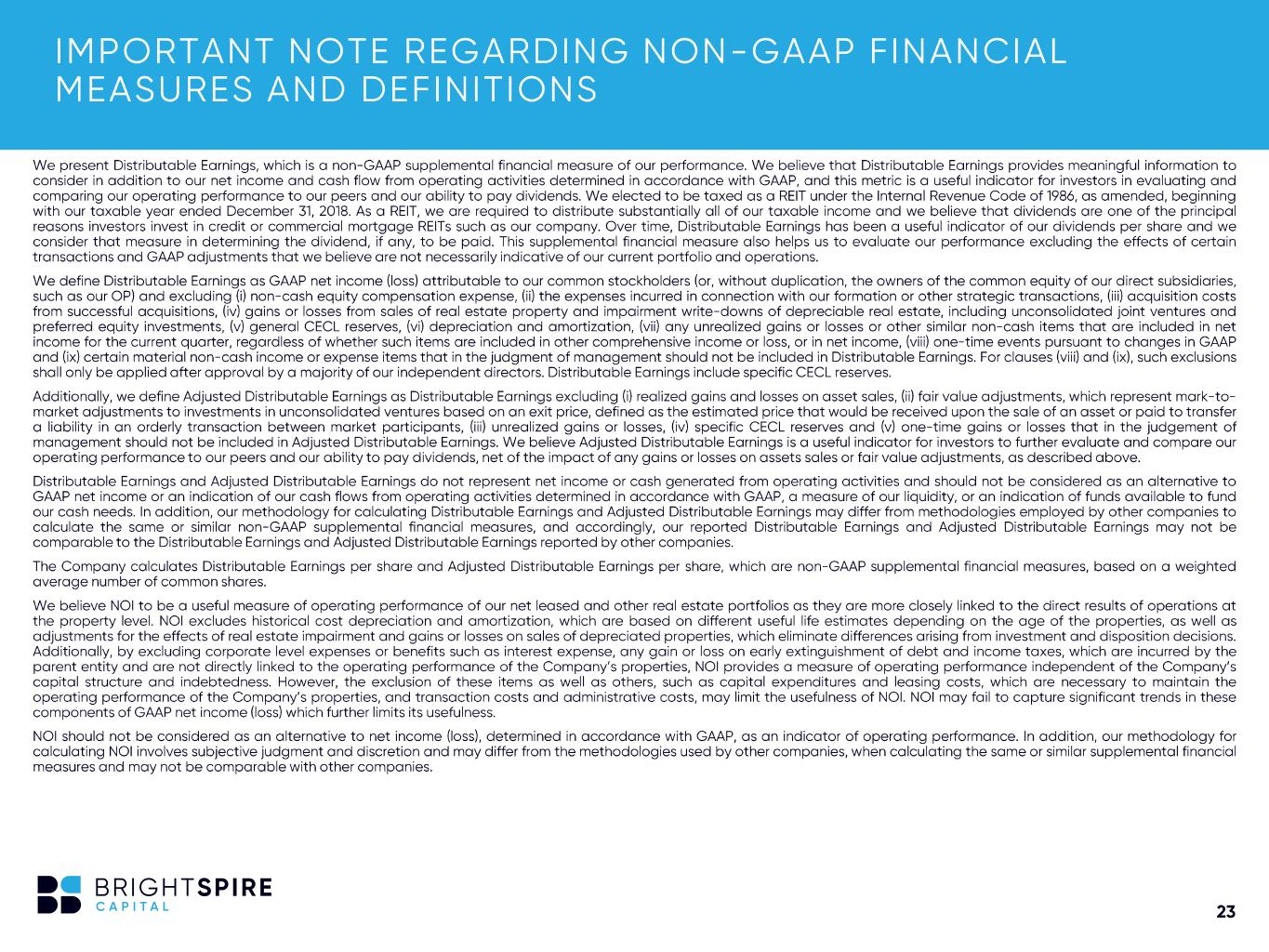
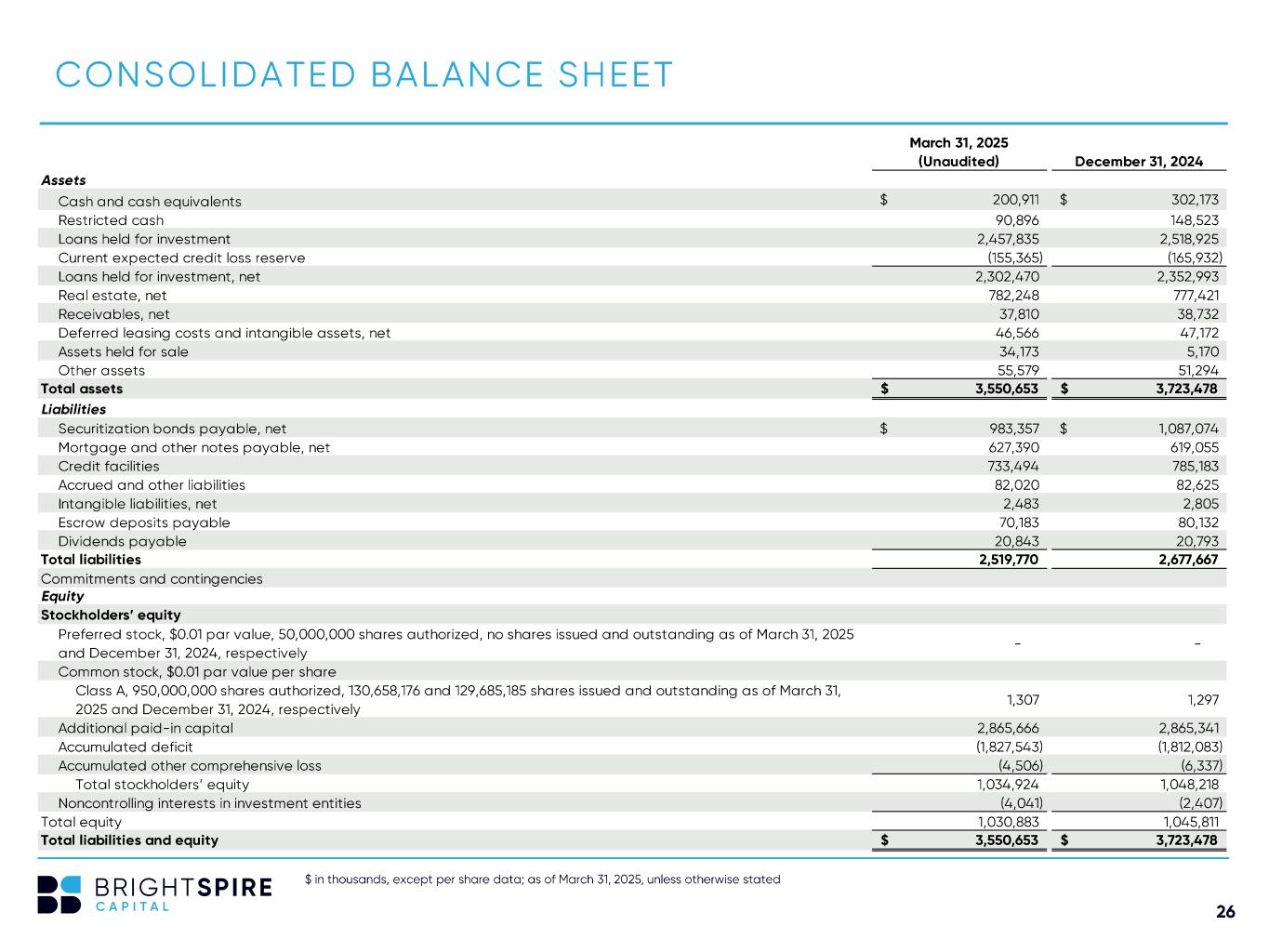
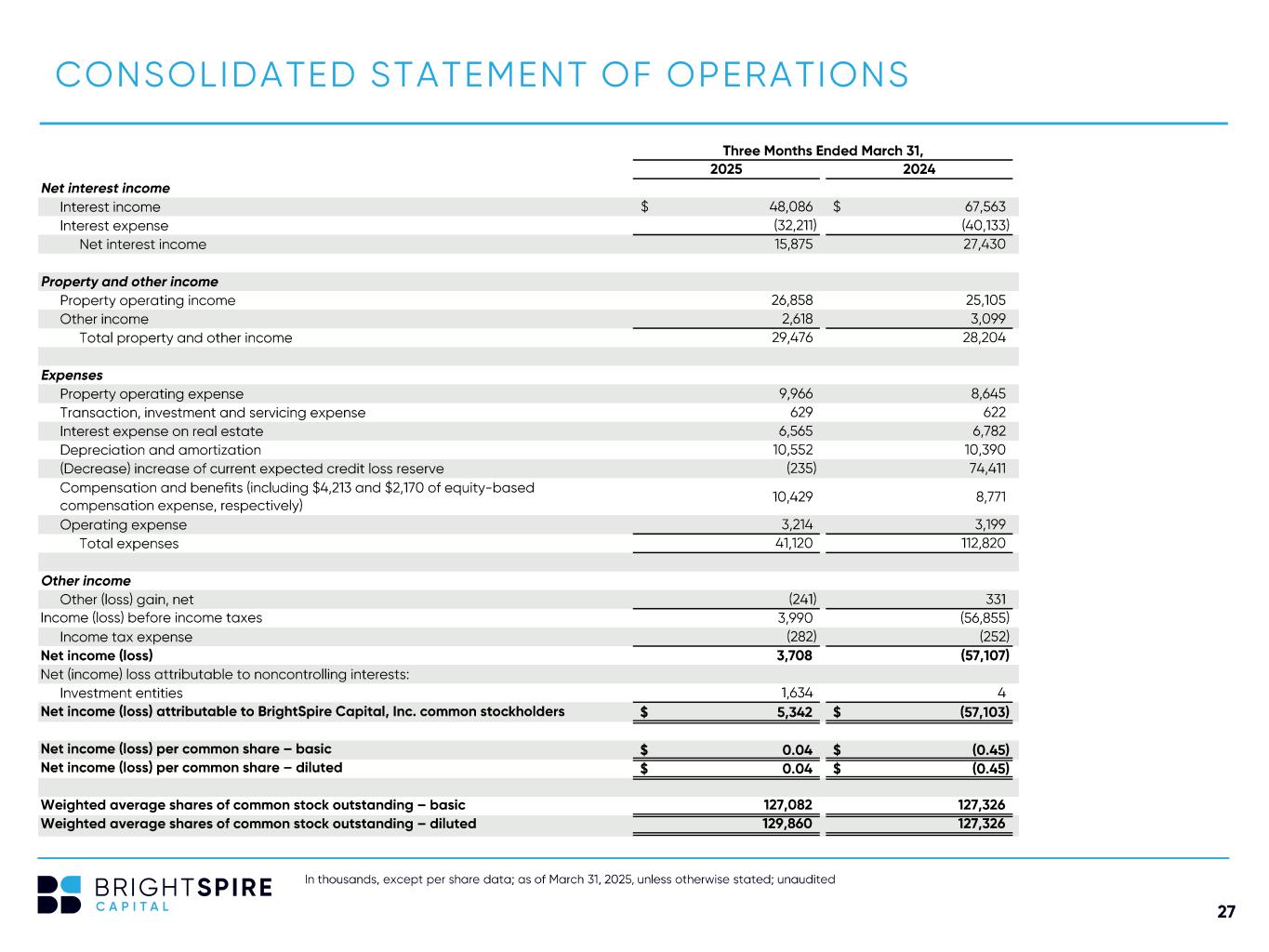
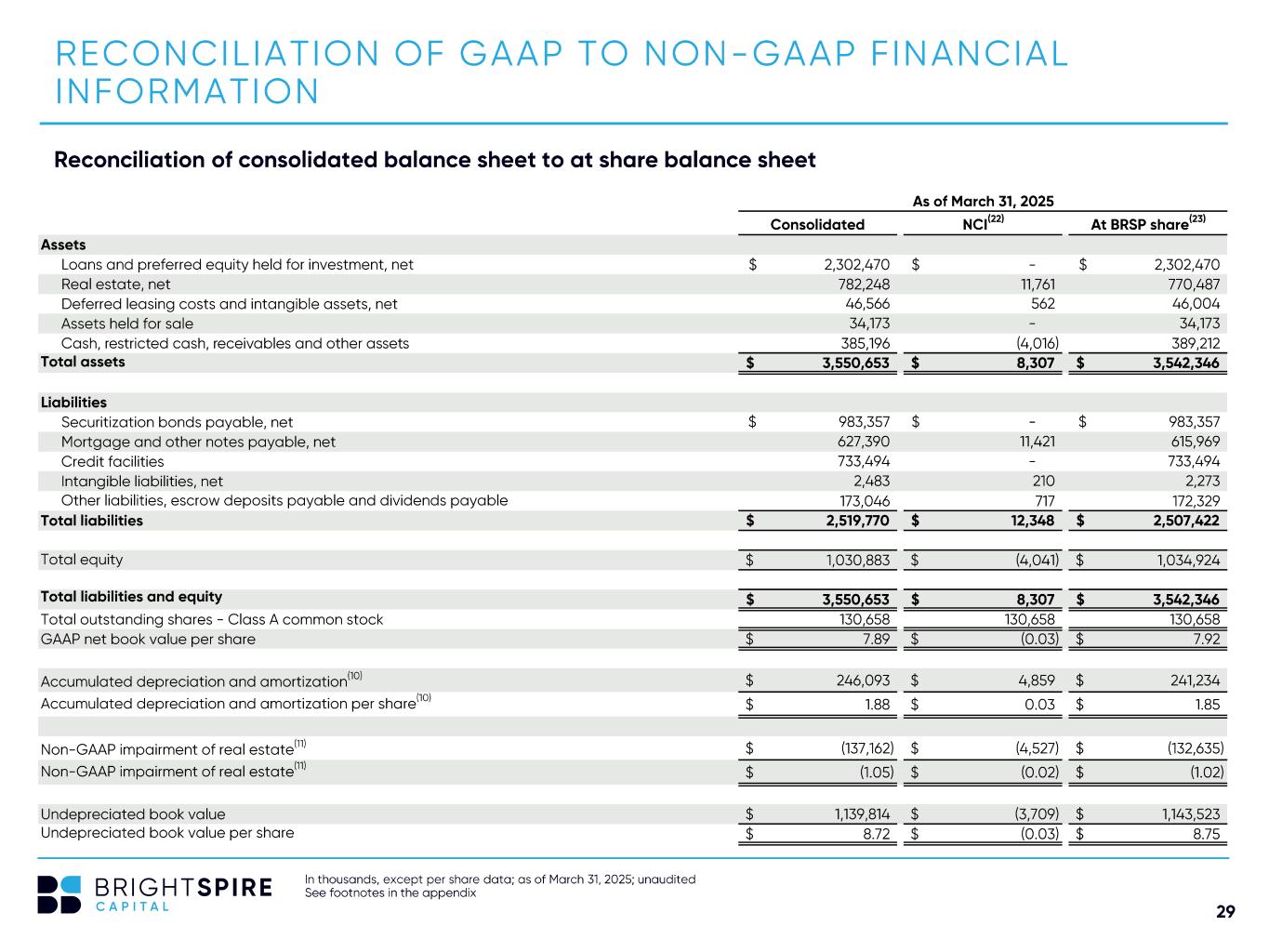
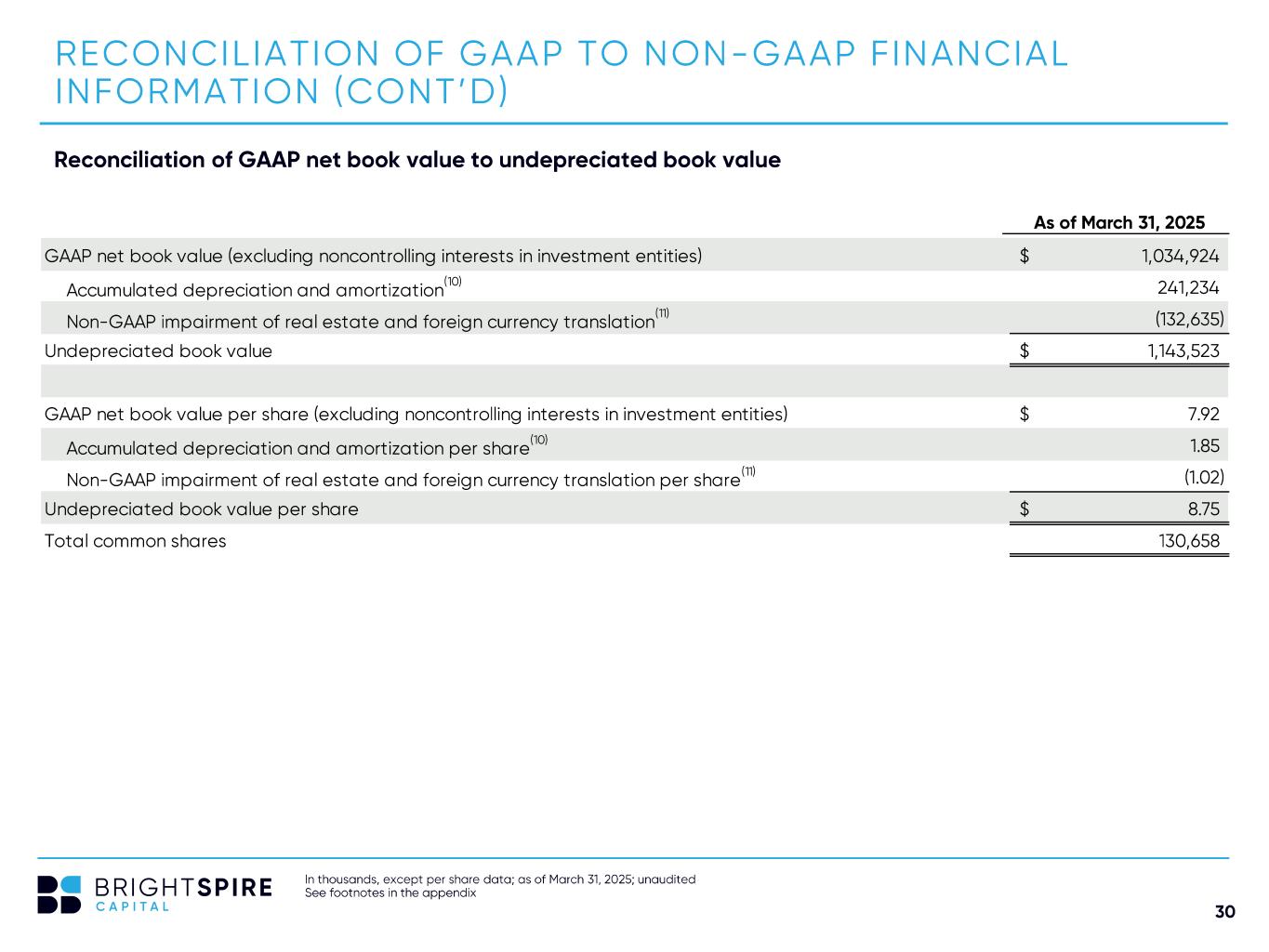
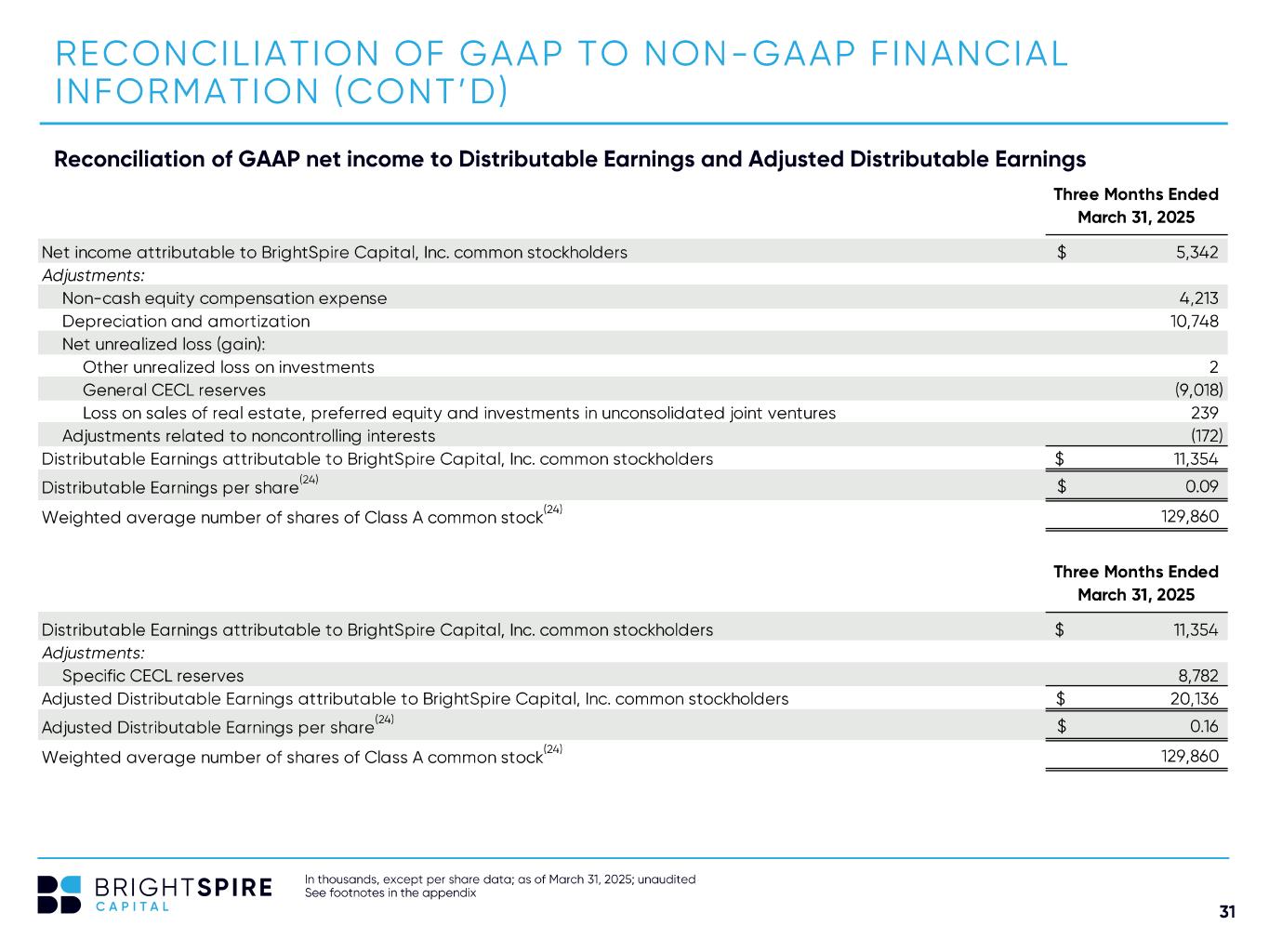
Good morning and welcome to BrightSpire Capital’s first quarter 2025 earnings conference call. We will refer to BrightSpire Capital as BrightSpire, BRSP, or the Company throughout this call. Speaking on the call today are the company’s Chief Executive Officer, Mike Mazzei; President and Chief Operating Officer, Andy Witt; and Chief Financial Officer, Frank Saracino. Before I hand the call over, please note that on this call, certain information presented contains forward-looking statements. These statements, which are based on management’s current expectations, are subject to risks, uncertainties, and assumptions. Potential risks and uncertainties could cause the company’s business and financial results to differ materially. For a discussion of risks that could affect results, please see the risk factor section of our most recent 10-K and other risk factors and forward-looking statements in the Company’s current and periodic reports filed with the SEC from time-to-time. All information discussed on this call is as of today, April 30th, 2025, and the company does not intend and undertakes no duty to update for future events or circumstances. In addition, certain financial information presented on this call represents non-GAAP financial measures. The company’s earnings release and supplemental presentation, which was released yesterday afternoon and is available on the company’s website, presents reconciliations to the appropriate GAAP measures and an explanation of why the company believes such non-GAAP financial measures are useful to investors. Before I turn the call over to Mike, I'll provide a brief recap on our results. The company reported first quarter GAAP net income attributable to common stockholders of $5.3 million or $0.04 per share; distributable earnings of $11.4 million or $0.09 per share; and adjusted distributable earnings of $20.1 million or $0.16 per share. Current liquidity stands at $310 million of which $145 million is unrestricted cash. This is exclusive of approximately $56 million of approved but undrawn borrowings available on our warehouse lines. The company also reported GAAP net book value of $7.92 per share and undepreciated book value of $8.75 per share as of March 31, 2025. Finally, during this call, management may refer to distributable earnings as DE. With that, I would now like to turn the call over to Mike.
Thanks David and welcome to our first quarter earnings call. Since our last call a couple of months ago, there has been tremendous market volatility, primarily due to ongoing tariff discussions. The credit markets experienced spread widening across the board. We have all witnessed the neck-breaking swings in both the equity and U.S. Treasury markets. But at this very moment, given the headwinds commercial real estate has already been facing these past two-plus years, we feel CRE lenders are much better positioned for this current environment. And while CRE credit spreads are wider, direct lenders and warehouse banks have not withdrawn from the market. So, despite these post-quarter uncertainties, we're off to a productive start, and our priorities and goals remain unchanged. Starting at the end of 2024 and continuing into this year, we have seen a considerable increase in loan inquiries. We are now actively evaluating and quoting new loans daily. However, the CRE debt markets are still falling out from the interest rate bubble where many owners are dealing with their current debt levels. Borrowers are frequently seeking transactions that are equity-neutral to their existing financing, which poses some challenges for refinancing. On the acquisition financing side, we are seeing a pickup in investment sales. However, transaction volume remains substantially below historic levels. That said, we remain optimistic as we continue to see more lenders encouraging borrowers to go to market to sell or refinance, thus steadily increasing pipeline volume across the board. After years of loan modifications and credit reserves, this is now increasingly becoming a lender-driven transaction market. Shifting gears to portfolio management, we are very encouraged by the progress we have made thus far. For the first time since 2022, we have experienced year-to-date deployments outpacing repayments. Additionally, our CECL levels have remained stable quarter-over-quarter, and we reduced our watch list exposure on the margin. Regarding REO assets, we are in the final stages of exiting our Phoenix multifamily property and anticipate selecting a buyer imminently. We are also experiencing an uptick in leasing inquiries for our Long Island City properties. The Manhattan leasing market continues to recover. On the supply side, ongoing office to residential conversions, combined with a decrease in sublet space, and along with the fact that many office owners lack the necessary capital to retain or compete for tenants, have all contributed to a tightening of available space. These factors, along with the return to work trends, are leading to an increase in marginal demand for Class B buildings, both inside and outside of Manhattan, including Long Island City. Finally, as I touched on earlier, we are currently navigating complex market dynamics. Since the start of April, the mortgage REIT sector has experienced a significant decline in valuation. At quarter end, we repurchased approximately 200,000 shares at an average price of $5.59. Specifically, BrightSpire is currently trading at a roughly 45% discount to its undepreciated book value. This equates to a discount of over $500 million to a book value, which is already inclusive of a CECL reserve of $1.19 per share. Needless to say, at a 13% dividend yield, we find our stock price to be extremely compelling and we'll express ourselves accordingly. In closing, this quarter was steady and in line with our expectations. Our CECL and risk ratings remain stable and we continue to deploy capital into new loans. Despite recent turbulence, we remain very optimistic about continuing to improve our balance sheet and maintaining our dividend while regrowing earnings. And with that, I will turn the call over to our President, Andy Witt.
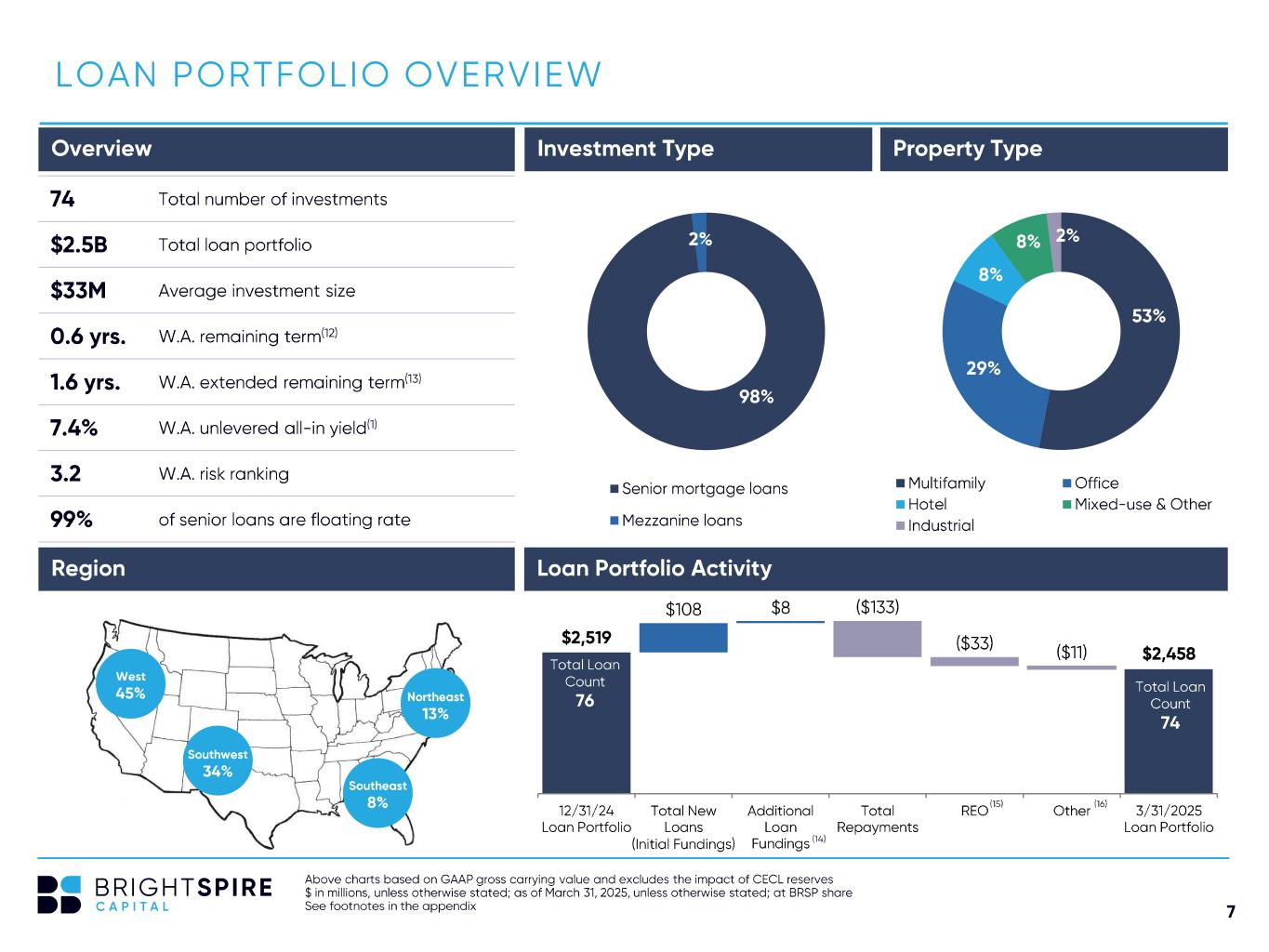
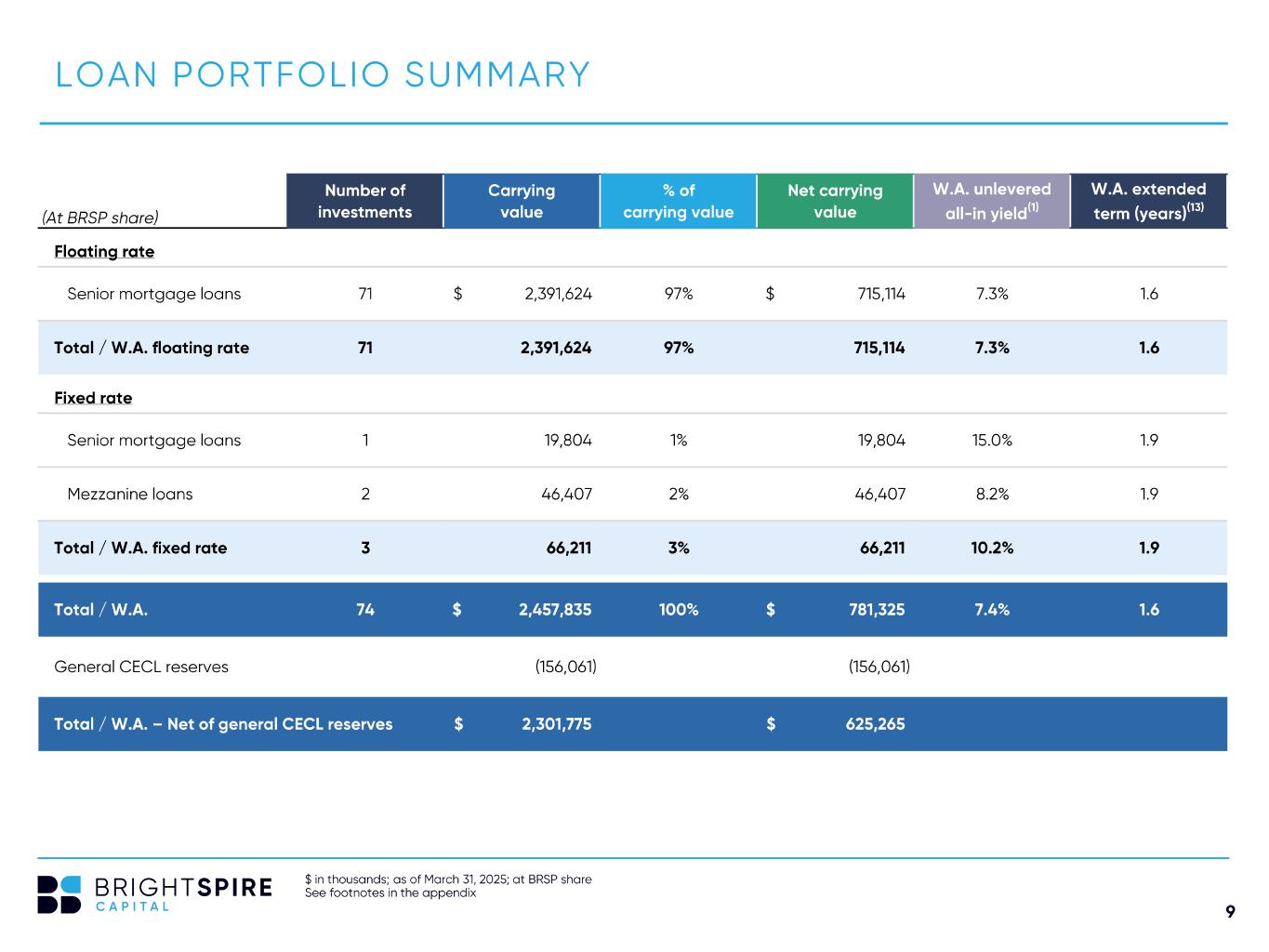
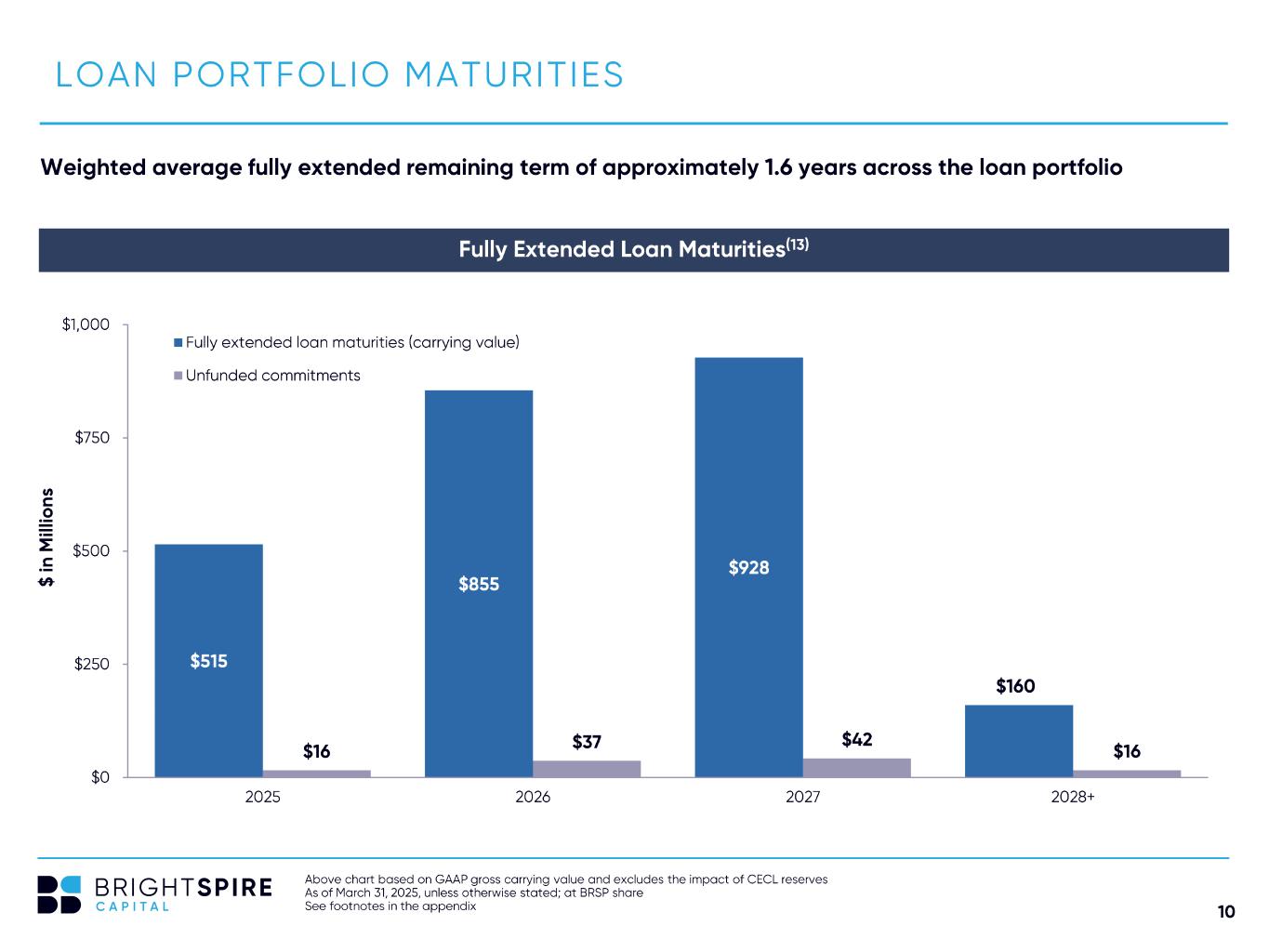
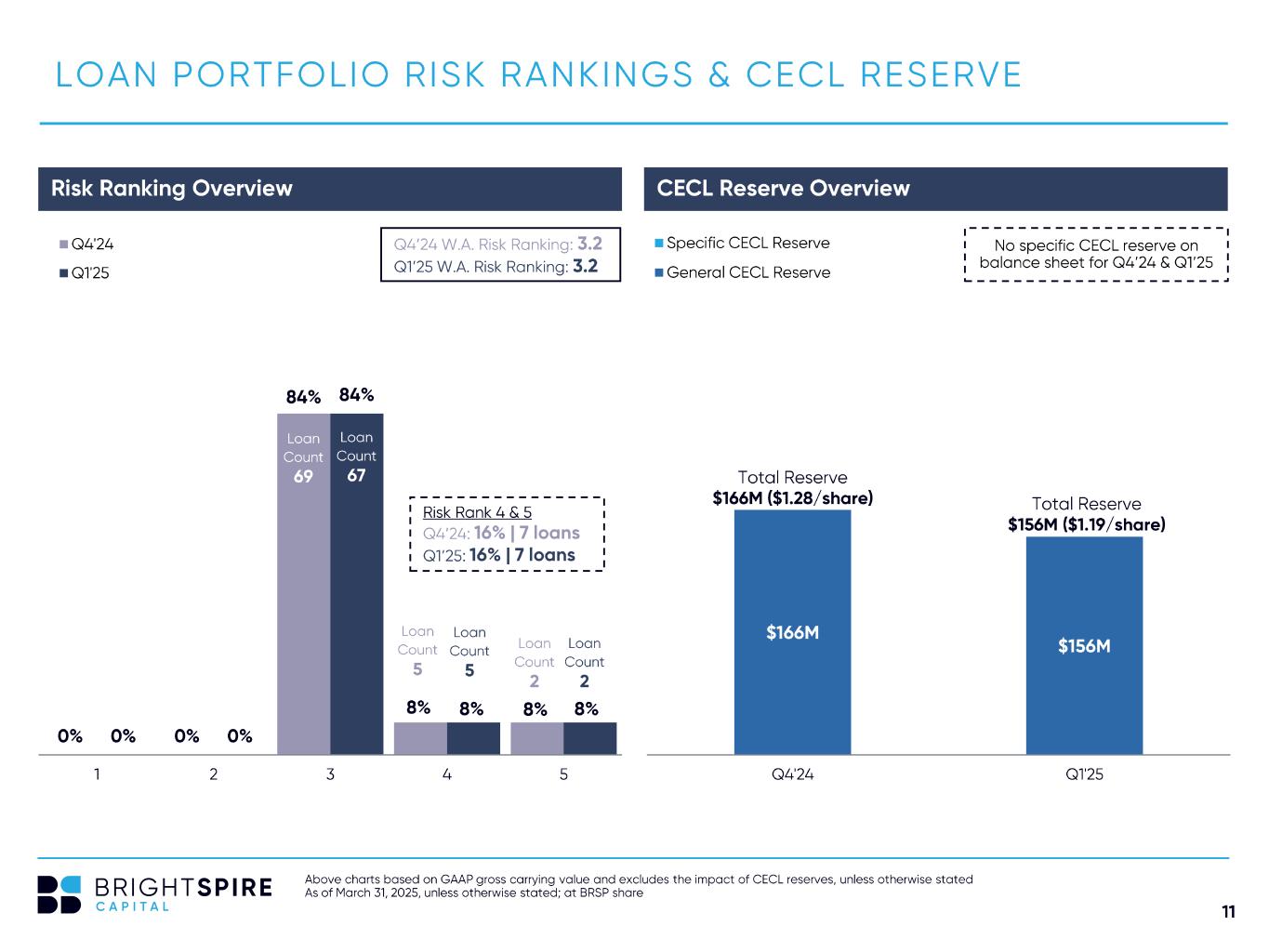
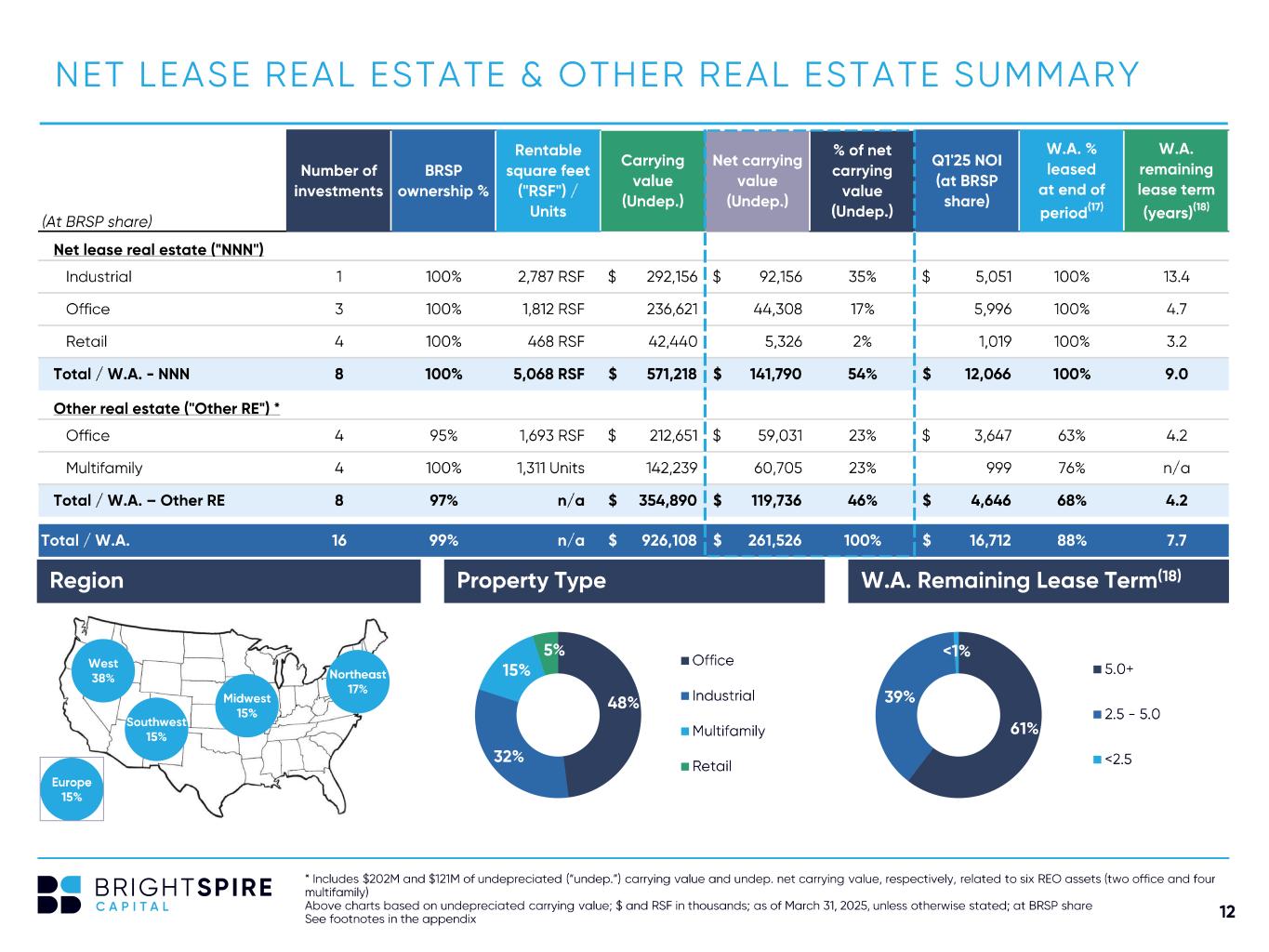
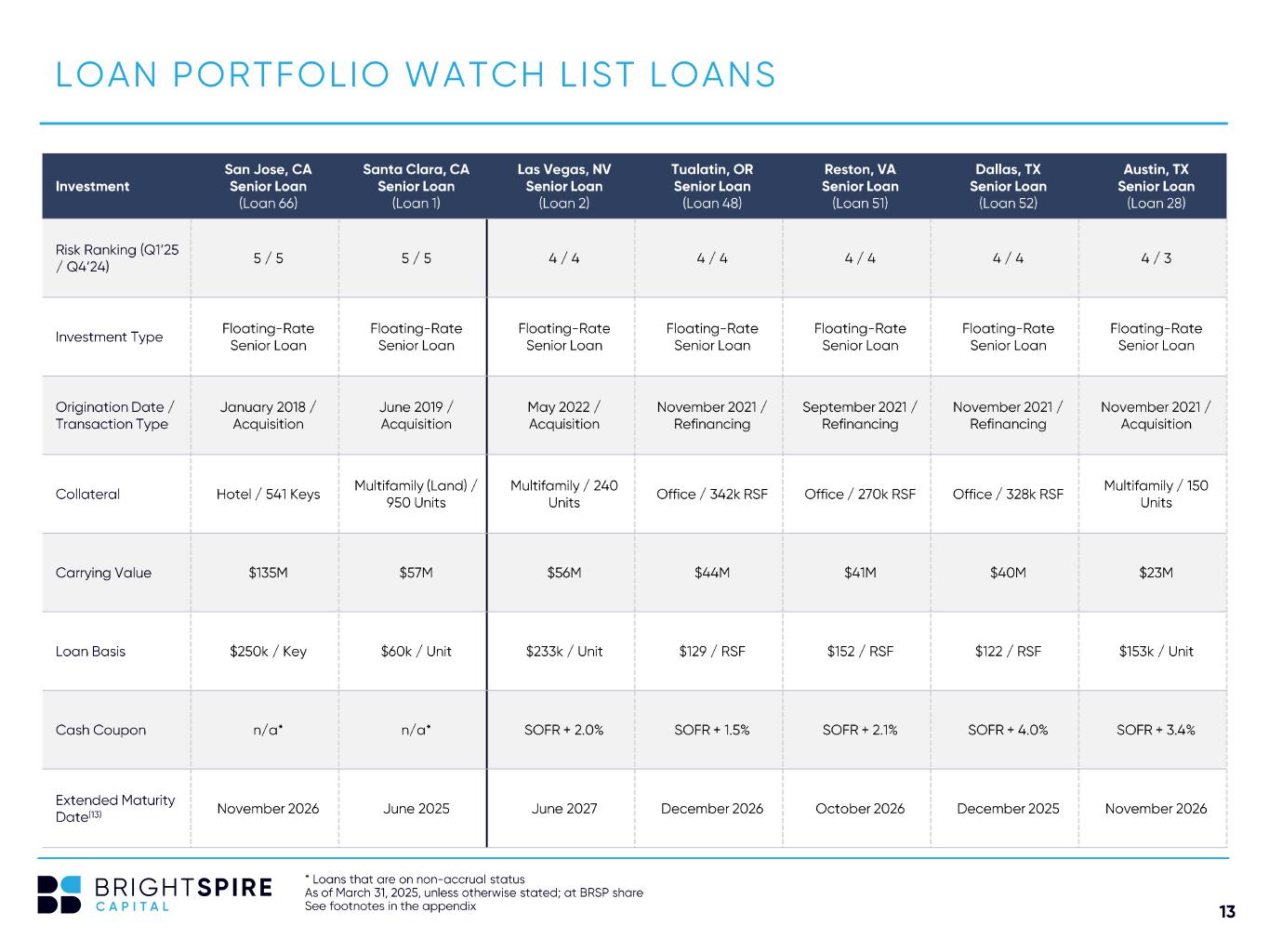
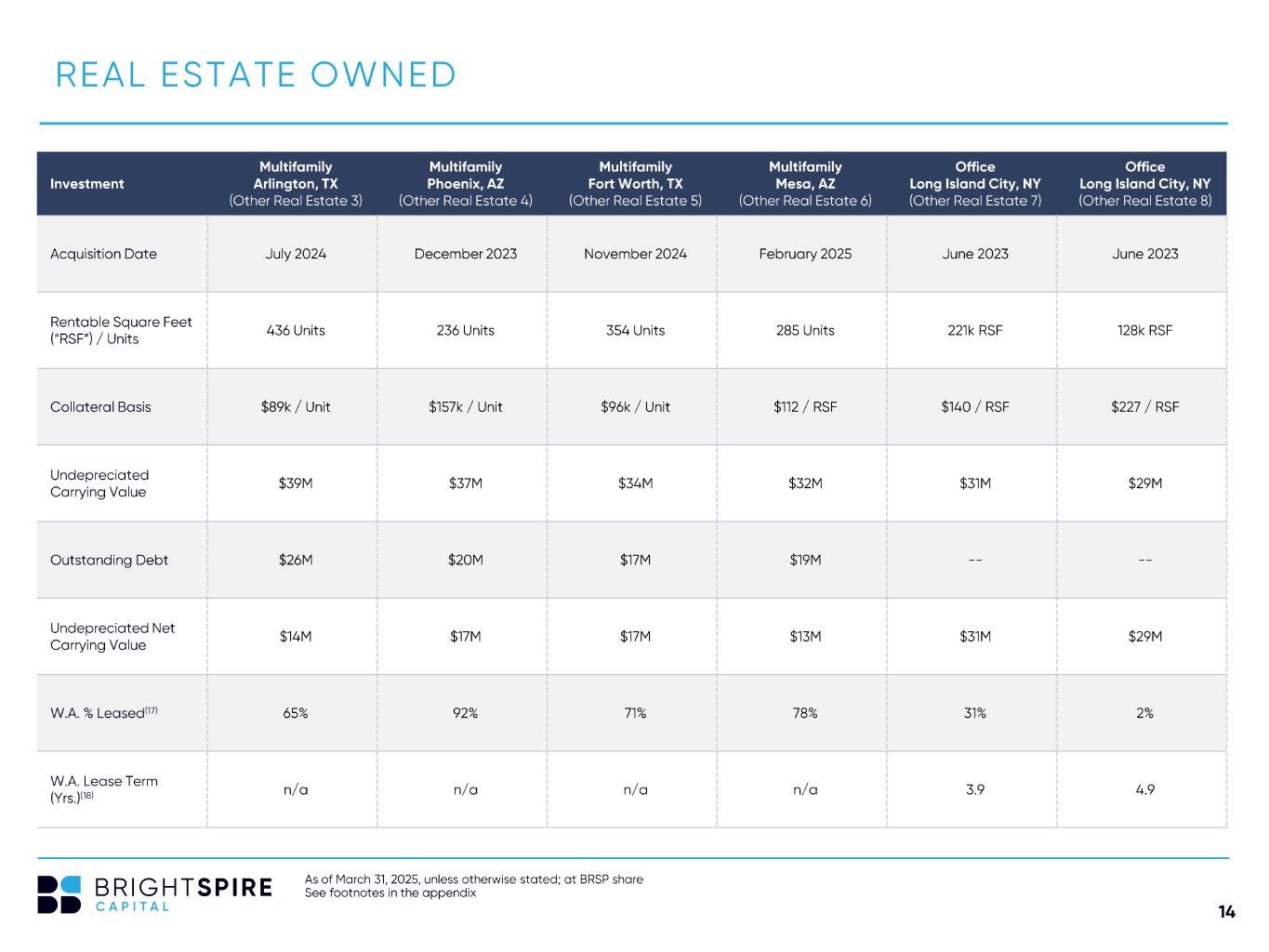
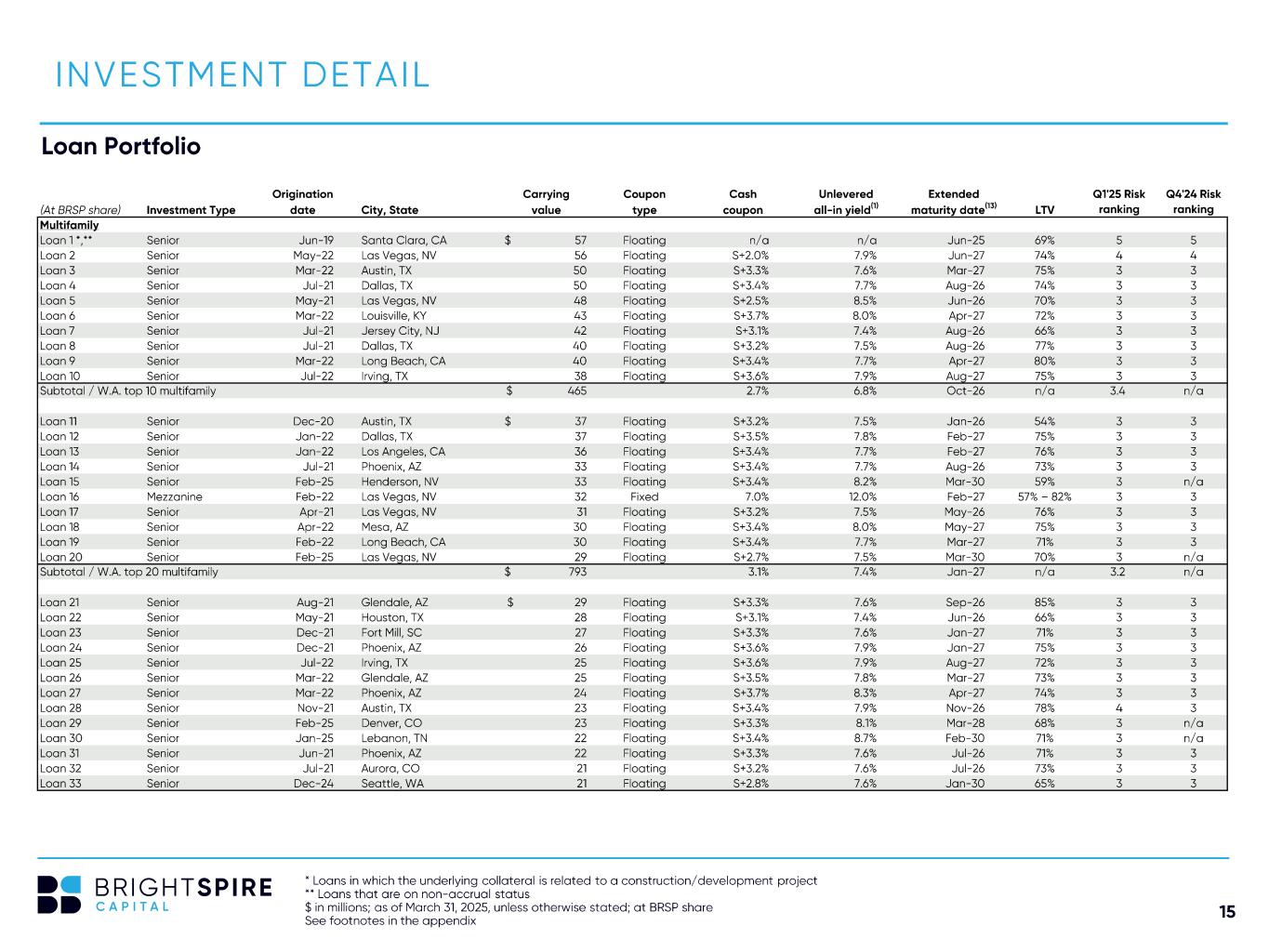
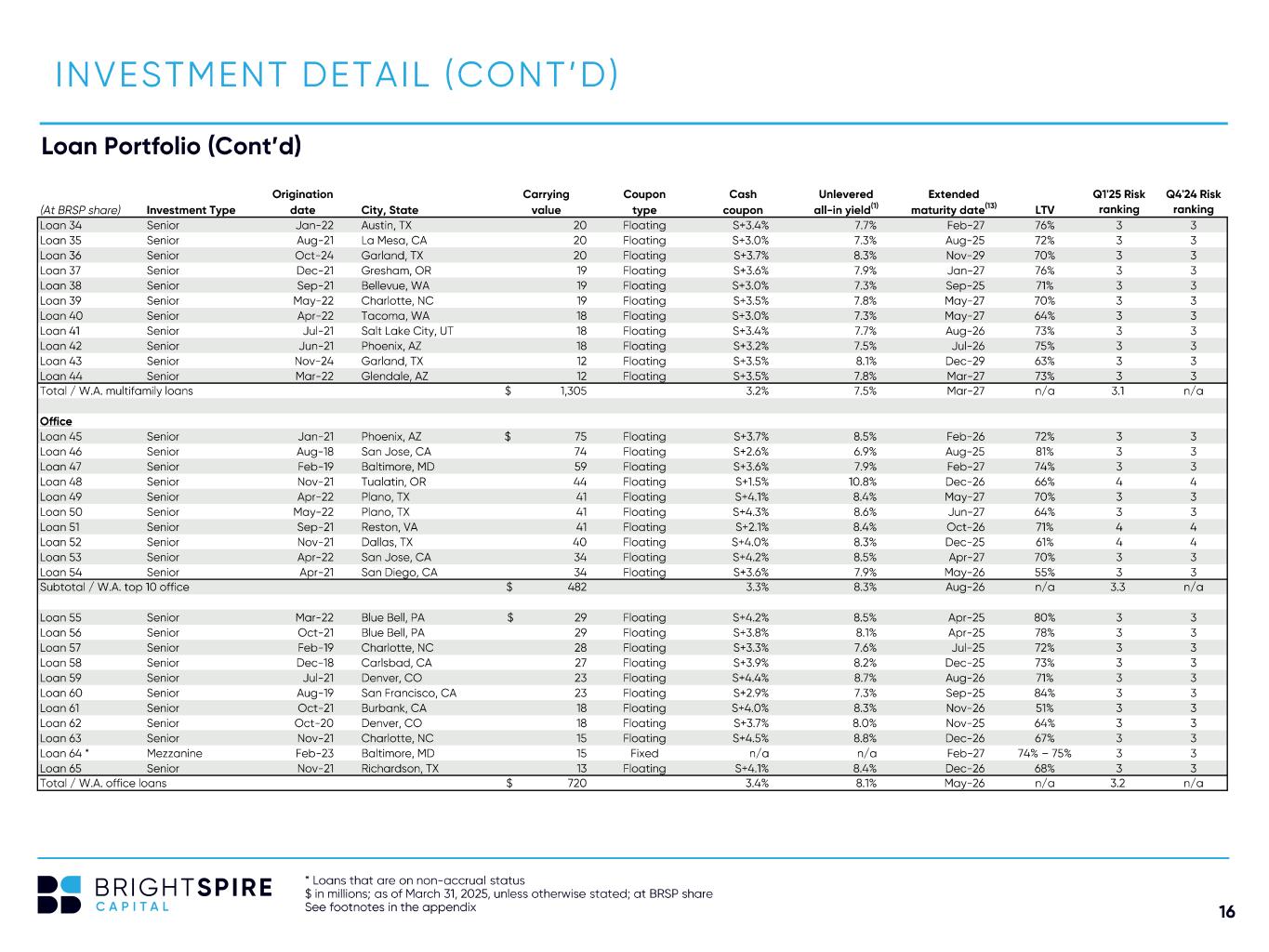
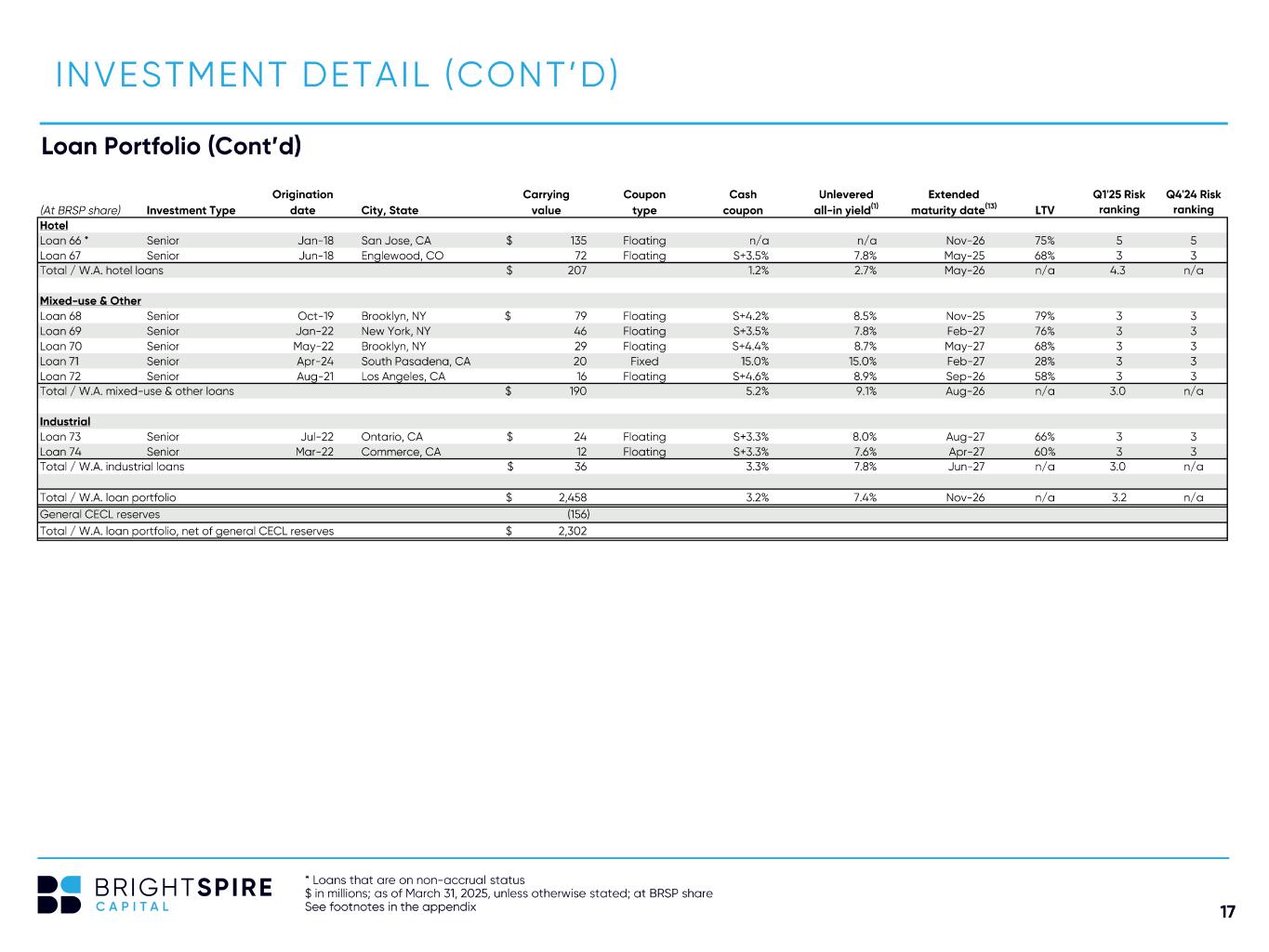
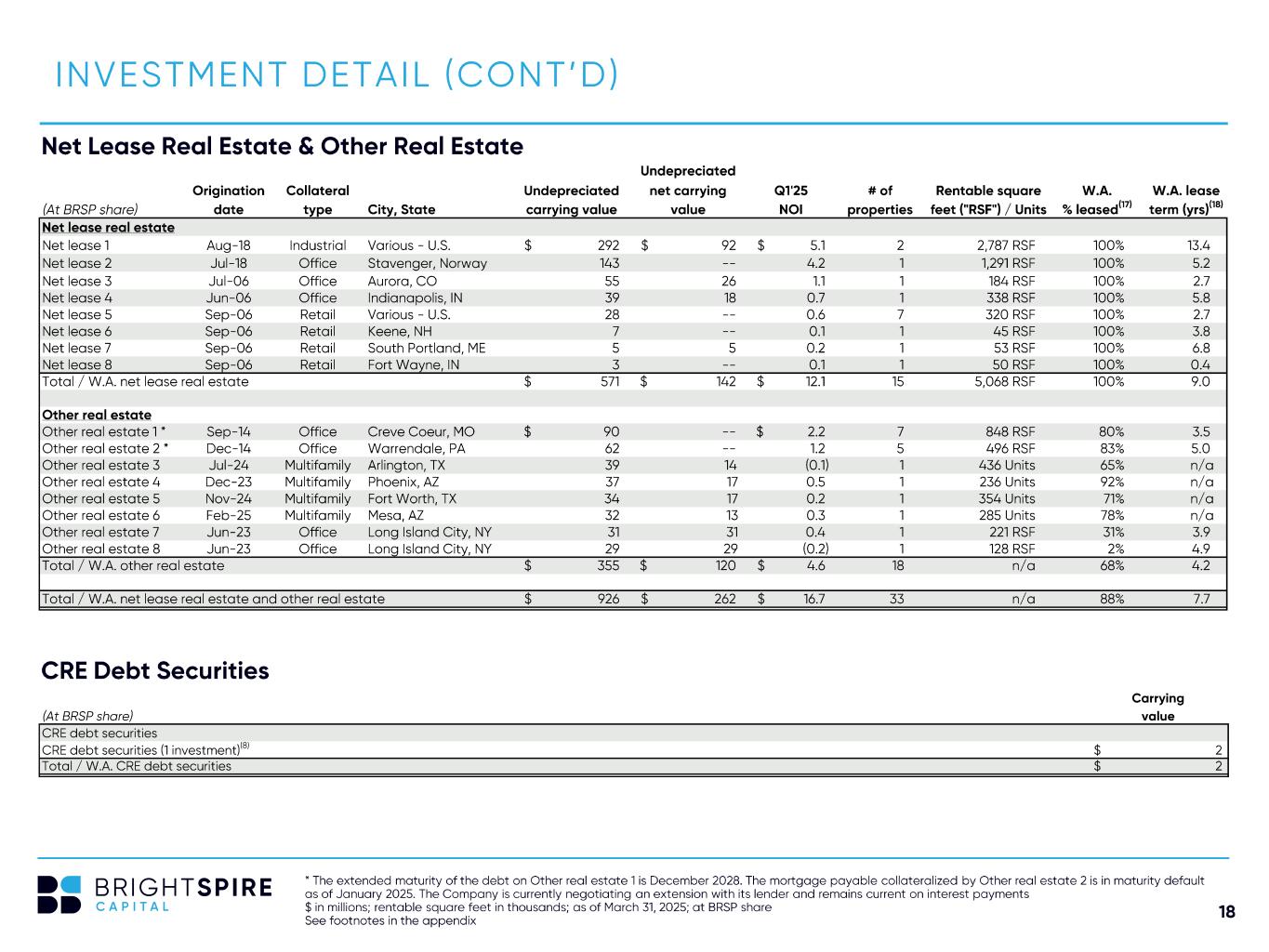
Thank you, Mike. Focusing on the first quarter, we received $133 million in repayments across nine loans, including five full payoffs, of which two were office loans totaling $50 million. Additionally, we sold one REO office property for $5 million, resulting in aggregate repayments and resolution proceeds of $138 million. New loan commitments during the quarter and subsequent to quarter end totaled $182 million across five new loan originations. In addition, we funded $8 million of future fundings during the first quarter. As of quarter end, future funding obligations stand at $111 million or 4% of outstanding commitments. The loan portfolio consists of 74 investments with an average loan balance of $33 million. During the quarter, we continued to make progress on the watch list loans and REO, although most of the tangible results of those efforts will flow through our reporting in subsequent quarters. As it relates to the owned real estate investments, the Phoenix multifamily property sales process garnered significant interest from the investment community, evidencing robust demand for the property type. We believe the value-add plan executed under BrightSpire's ownership, stabilizing the asset at market occupancy, contributed meaningfully to the interest level received during this marketing process. At present, we are in the process of selecting a buyer and anticipate closing the transaction this summer. We anticipate the resolution of this investment will be substantially in line with our stated net asset value. We are using the successful execution of the Phoenix multifamily property value-add plan as the blueprint for driving value concerning two remaining REO multifamily properties located in Arlington, Texas and Fort Worth, Texas, as well as another property in Mesa, Arizona. In all cases, we have taken control of the property, inserted new property-level leadership, and initiated value-add business plans. The business plans, which are well underway, include rebranding, improving curb appeal, addressing deferred maintenance, and renovating units, all of which will drive increased occupancy and cash flow. We anticipate marketing the properties for sale upon stabilization in late 2025. On the office front, we are encouraged by the recent leasing momentum in Long Island City. We have signed one full floor lease and are in very early-stage negotiations with a tenant for multiple floors. The New York City office market is becoming increasingly tight, and this should trickle over to Long Island City. We continue to make steady progress toward enhancing the value of the properties with the goal of ultimately disposing of our own real estate investments. Lastly, as it relates to the watch list, our San Jose hotel loan remains in default, although we have made substantive progress towards foreclosure. The borrower was successful in obtaining a TRO, which is expected to be resolved in short order. The total number of watch list loans for the quarter was unchanged at seven loans. However, the composition of our watch list changed due to one resolution and one addition to the watch list. BrightSpire, in cooperation with the borrower, executed on the sale of the Denver, Colorado multifamily loan, in line with our CECL-adjusted basis, and we added an Austin, Texas multifamily loan due to uncertainty around the borrower's commitment to the property in the face of a pending interim maturity. As of quarter end, watch list loan exposure stands at $396 million in aggregate or 16% of the loan portfolio, a reduction of $15 million quarter-over-quarter. As a reminder, the San Jose hotel loan accounts for approximately one-third of the remaining aggregate watch list loan balance. With that, I will turn the call over to Frank Saracino, our Chief Financial Officer, to elaborate on the first quarter results.
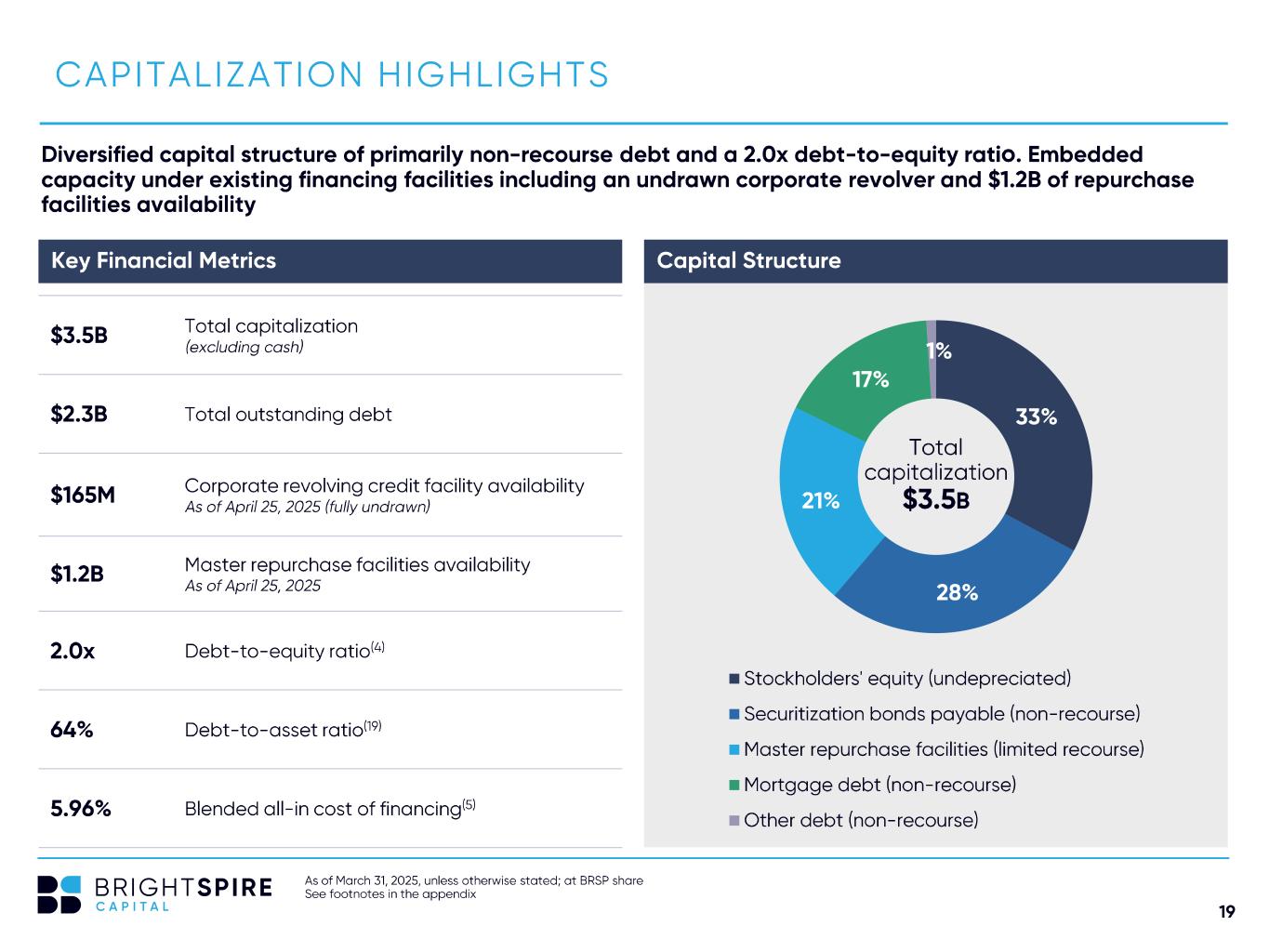
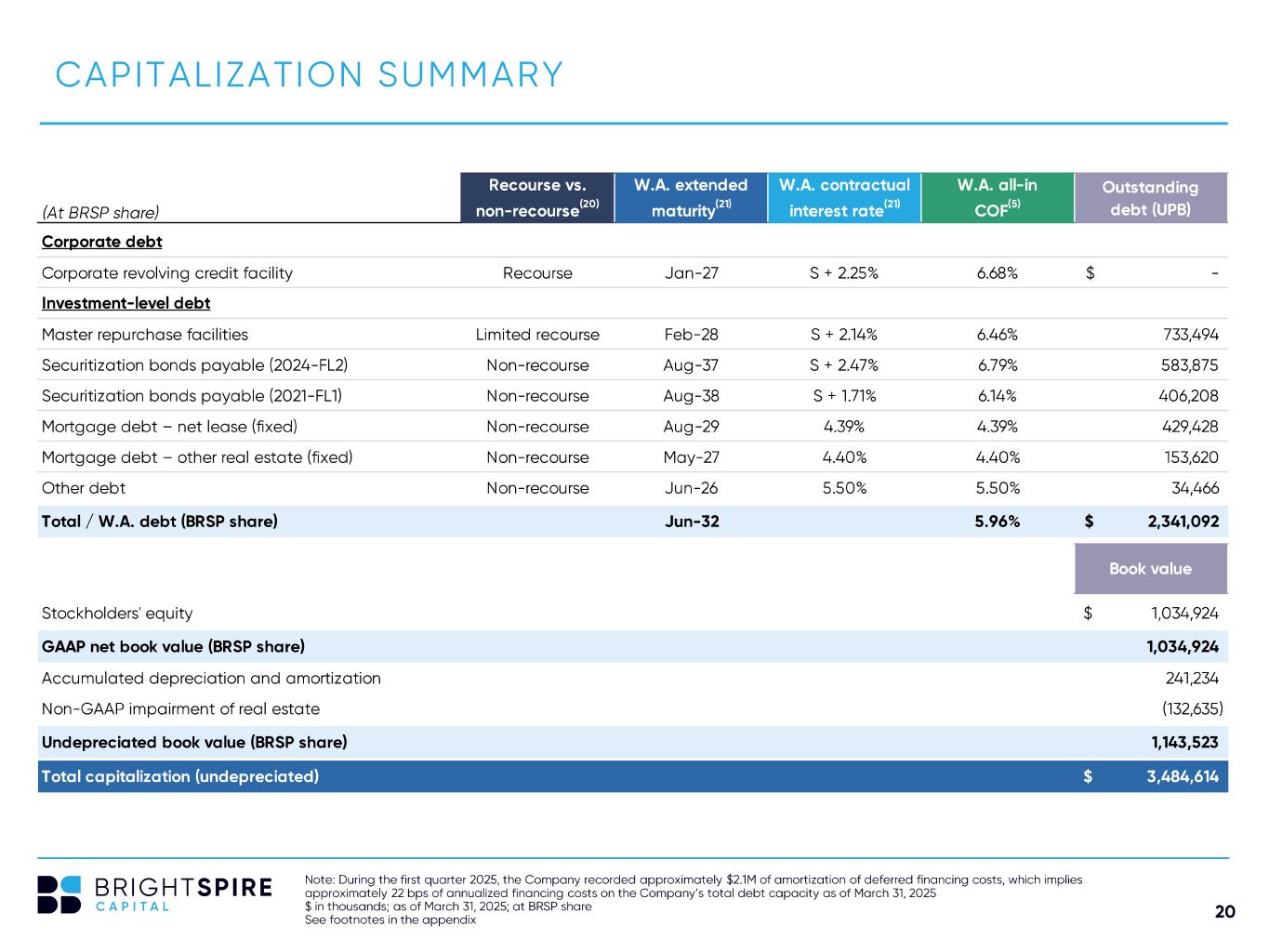
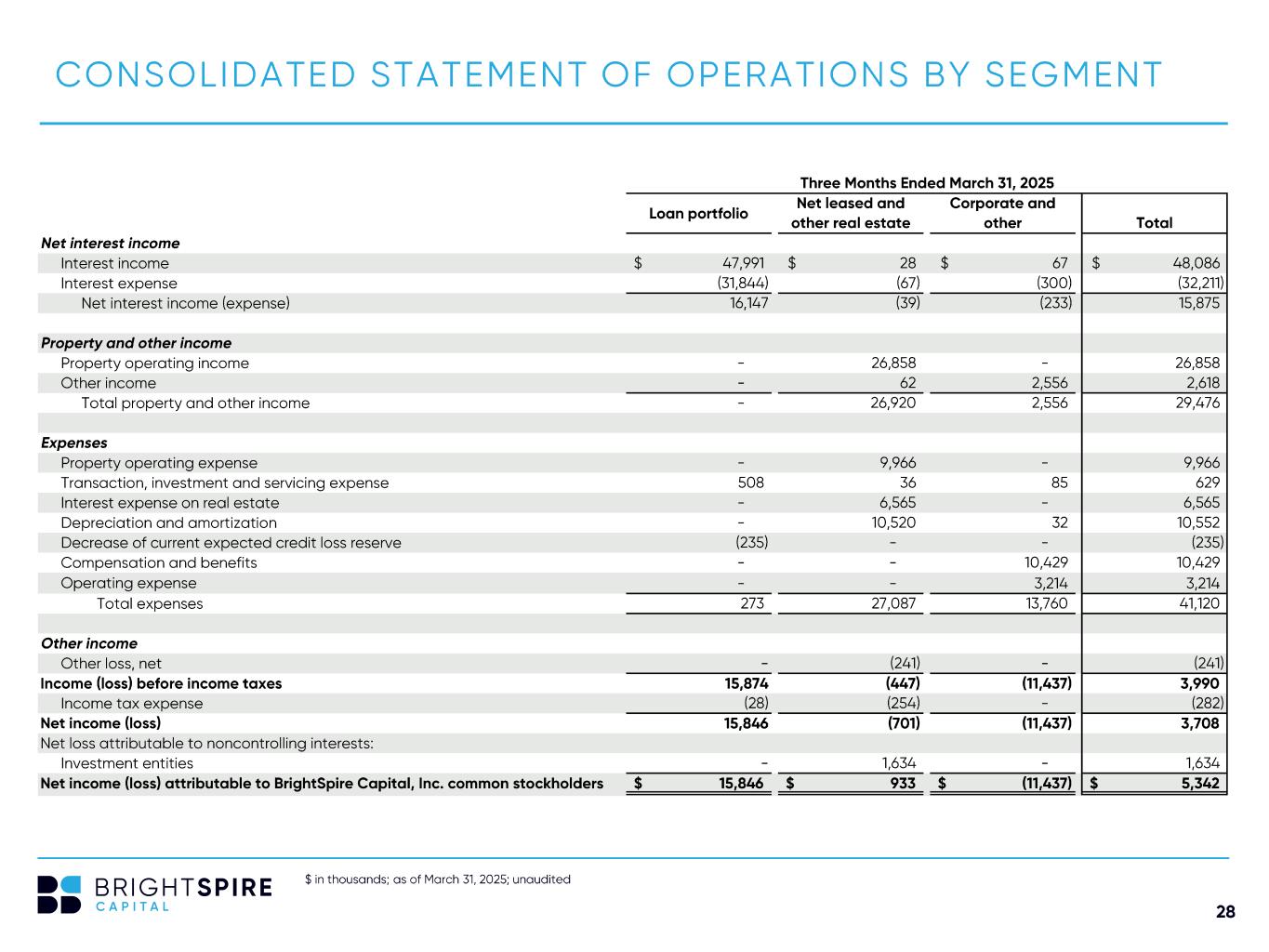
Thank you, Andy, and good morning, everyone. For the first quarter, we generated adjusted DE of $20.1 million or $0.16 per share. First quarter DE was $11.4 million or $0.09 per share. DE includes a specific reserve on a senior loan of approximately $9 million. Additionally, we reported total company GAAP net income of $5.3 million or $0.04 per share. Quarter-over-quarter, total company GAAP net book value decreased to $7.92 per share from $8.08 in the fourth quarter. Undepreciated book value decreased to $8.75 per share from $8.89. The change is mainly attributable to equity granted as part of our annual compensation program and consistent with past practice. I would like to quickly bridge the first quarter adjusted distributable earnings of $0.16 versus the $0.18 recorded in the fourth quarter. The change is primarily driven by lower interest rates, repayments, and placing our risk rank five V Santa Clara, California multifamily predevelopment land loan on non-accrual, offset by lower borrowing costs and new originations. Looking at reserves, during the first quarter, we recorded specific CECL reserves of approximately $9 million related to the resolution of the Denver, Colorado multifamily loan Andy mentioned. As the loan was resolved, we charged off the reserves. Additionally, we charge off reserves associated with the Mesa, Arizona loan, where we took control of the property through a preferred equity instrument and moved it to REO. Our general CECL provision stands at $156 million or 608 basis points on total loan commitments. This is a decrease of approximately $10 million from the prior quarter. As the CECL provision is flat quarter-over-quarter, the decrease is primarily driven by the charge-offs. Our debt-to-assets ratio was 64% and our debt-to-equity ratio is 2.0 times, a small decrease from Q4. We have no corporate debt or final facility maturities due until 2027. Our debt-to-equity ratio for our senior loan portfolio only is 2.8 times, a decrease from the 3.5 times leverage we had in Q4. The decrease is mainly a result of deleveraging. Lastly, our liquidity as of today stands at approximately $310 million. This comprises $145 million of current cash as well as $165 million under our credit facility. This excludes approximately $56 million of approved but undrawn borrowings available on our warehouse lines. This concludes our prepared remarks. And with that, let's open it up for questions.
Operator
Thank you. We will now begin the question-and-answer session. And your first question today will come from Steve Delaney with Citizens JMP. Please go ahead.
Speaker 5
Good morning everyone. Thanks for taking the question. Could you first let me know what the remaining buyback authorization was at March 31 or as of today? That would be appreciated. Thanks.
The share repurchase program was repurchased at $50 million, reapproved at $50 million for the upcoming year.
Speaker 5
That's for all of 2025, right?
Extending from now for a year from the end of this month.
Speaker 5
Thank you very much. Looking at the bigger picture, Mike mentioned the macroeconomic factors we've been monitoring over the last few weeks. Interest rates have declined by nearly 50 basis points during that time and seem poised to drop to 4. With lower rates affecting the real estate sector, can you discuss the overall impact of these lower rates on your portfolio? More importantly, how is this influencing your borrowers' demand for new loans and the effect on your discounted cash flows and property values, especially concerning your real estate owned properties? Thank you.
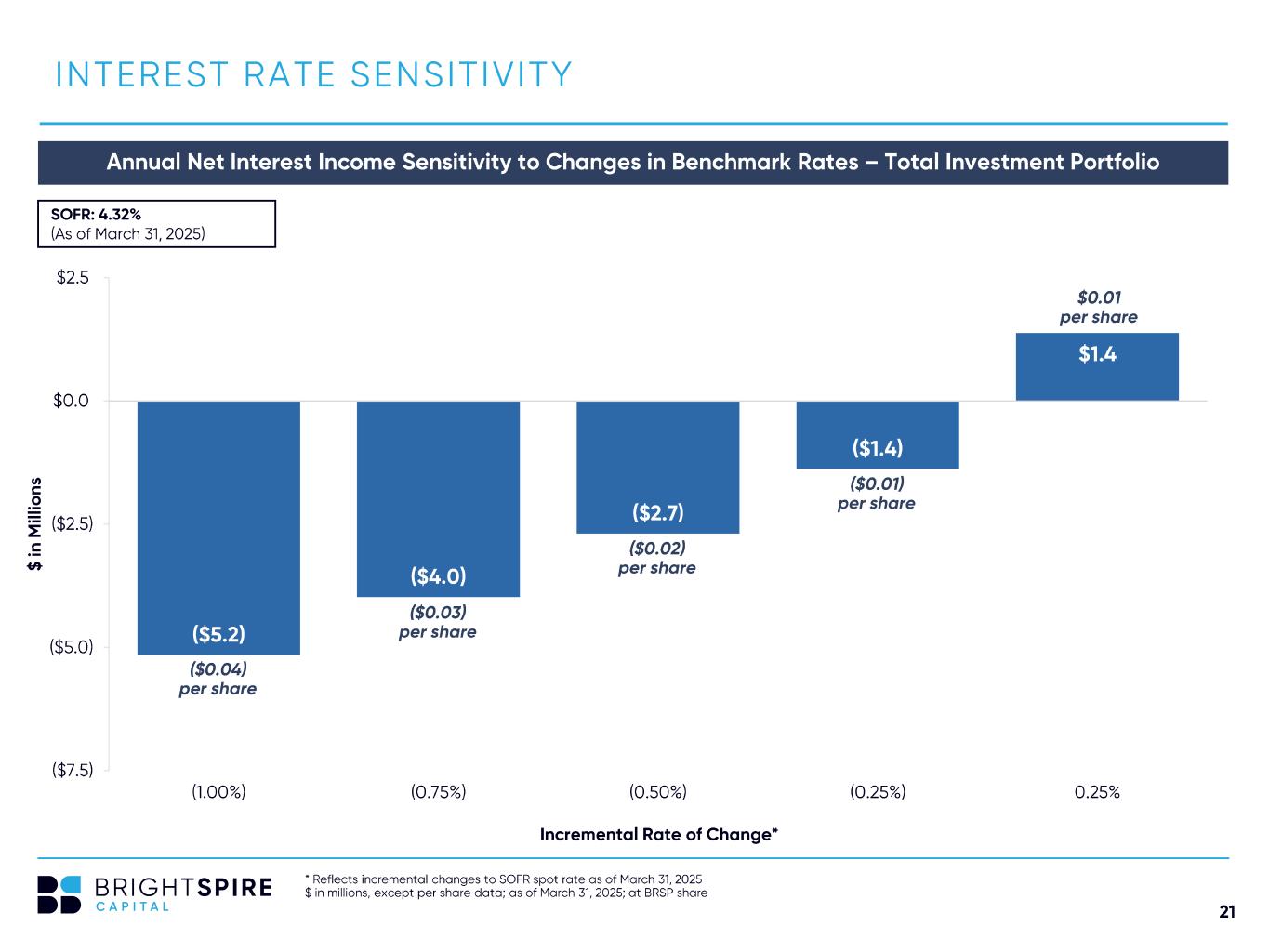
Thank you. As we've said before, lowering the short end of the curve, which we think has to happen given where, and I believe my friend, Brian Harris made this comment on his call, where the two-year treasury is now 70 basis points lower than Fed funds. And that's kind of a signal that we think the Fed is going to follow suit, if not in May but certainly, we think in July. And with the GDP contraction number this morning. And the employment number, which everyone has eyes on for Friday, which could be weak, we expect that the Fed will move in July and start easing more on the front end. With regard to the long end, the Secretary of Treasury has made comments that they want to help Main Street and get long rates down. We think that there are headwinds against that with the amount of supply that has to come and the deficit we still have. But with these recessionary winds out there and the behavior of consumers and corporate CEOs who are pausing on CapEx, we're concerned that those workings of a recession are starting to go into place now where there's a pullback. So, you could start to see that be reflected in rates. And all that is very good unless we get into an employment situation where we're seeing unemployment levels go up much higher, and that will affect all of real estate. So, as long as we don't see any massive pop in unemployment, generally coming back on these rates is going to help borrowers get refinancing. Spreads may widen as rates come down, spreads tend to widen, but that will be great for borrowers unless there's something underlying the economy that's really showing some weakness. And it's better for the credit performance of our portfolio. The fact that our borrowers are short-term borrowers with maturity dates or extension dates where they can go out and purchase interest rate caps at much lower levels than they're doing today, that's all super positive.
Speaker 5
Thanks Mike. Appreciate everybody's comment.
Operator
And your next question today will come from Jason Weaver with JonesTrading. Please go ahead.
Speaker 6
Hey good morning guys. Thanks for taking my question. First, you mentioned in your prepared remarks the sense of a healthy pipeline out there. But I'm curious if you've had any conversations or any sort of indications among borrowers in terms of hesitancy to take down loan demand with all the sort of macro uncertainty they're seeing?
Borrowers need to get out from their existing debt today. And so there's a need. There's definitely a need for refinancing. As I said on the call, the issue is the inquiry is pretty massive. But in terms of actionable deals, we're finding that borrowers really obviously want to get out without putting equity into the properties, and that's been the headwind right now. The question is, how much is an existing lender requiring from that borrower from a paydown versus what that borrower can get in the open market? Can the borrower get better terms than what an existing lender is asking for in terms of reduction in debt at a maturity date or reserves or things like that or equity in the deal? So, we're seeing a lot of inquiry. The amount did pause a little bit with the tariff issue that we had in April. And certainly, we had two weeks of a holiday. So, we are going to see a little bit of a dip on our side in originations for Q2. But by and large, the inquiry is there. It's just a matter of finding the right deals where we feel like the borrowers are either putting in equity or we feel that the aspirations for the property are positive enough where we can take them out of that current debt.
Speaker 6
Thanks. That's very helpful, actually. And then for the $182 million you originated during the quarter, where would you ballpark just levered return there, ROE?
We're always targeting a 12%.
Speaker 6
Got it. Thank you very much.
Operator
And your next question today will come from John Nicodemus with BTIG. Please go ahead.
Speaker 7
Morning everyone. You mentioned on your last call that based on your repayment schedule at the time that you need to do about $1 billion in originations this year to sustain and hopefully grow your dividend. So, two questions. Is that still the case based on the current repayment schedule? And then if so, how is your origination pipeline trending to meet this goal? Thanks.
Thank you. It's somewhat challenging to make predictions. As I mentioned earlier, the market is very dynamic and increasingly influenced by lenders. The factors at play are quite different from a typical market, making it difficult to forecast accurately. Loan inquiries have increased, but securing actionable deals remains a challenge, as borrowers are hesitant to invest equity to recapitalize their properties. To simplify matters, we need to raise our portfolio from $2.4 billion to $3.5 billion to aim for around $0.20 per share. To achieve this, we need to have a net increase of about $1 billion in the portfolio over the next year. If we reach that target, we would be looking at a leverage ratio of roughly 3.3 times. Throughout the year, we anticipate there may be some setbacks due to factors like the timing of new loans and resolving issues related to our watch list and real estate owned properties. Although we prefer to avoid setbacks by accelerating origination, we expect Q2 to be calmer compared to Q1. Our current strategy is to maintain our dividend without any cuts, increase our portfolio to $3.5 billion, and adjust our leverage to the lower 3 times range. This, along with resolving the watch list and REO issues, should help us return to approximately $0.20.
Speaker 7
Great. Thanks so much Mike. That's super helpful. And then my follow-up also has to do with the originations going forward, specifically the $70 million you committed subsequent to quarter end on one new loan. We noticed that this is now one of your largest loans in the first you've done of this size since early 2021. Just be curious to hear about this deal, kind of how it came about and what compelled the team to pursue such a large loan for the first time in years? Thank you.
Andy, do you want to take that?
Sure, Mike. So, related to this loan, this is a repeat sponsor on a stabilized property. And it really does fall within our loan size range. We're usually targeting loans somewhere between $50 million and $80 million. So, I think it's very consistent with what we're doing. And it's a stabilized property. The business plan is to hold the asset, do some things at the margin, and then ultimately sell.
This was a transaction that was done at a slightly tighter spread than what we were seeing in the market. But regarding tight spreads, we agree that spreads have gotten very tight, and we were skeptical about transacting at these levels. But the bank warehouse lenders have really kept abreast of the market. And so we were able to get financing on this asset that kept the ROE targets in line with our goals.
Speaker 7
Great. Thank you so much Mike and Andy. Appreciate the color.
Operator
And your next question today will come from Randy Binner with B. Riley. Please go ahead.
Speaker 8
Hey, good morning. Thanks. Just looking at Page 13 of the deck and the San Jose hotel property, we've seen some reports in the media that there could be some progress happening for refinancing there. And so just wondering if we can get an update on that particular property just because it is a relatively large size of the overall watch list?
Yes, thank you. It makes up one-third of the watch list. We have reduced debt on that asset and paid off its financing, making it unlevered. This is one of the larger cash outflows this quarter, which is why we are eager to bring that capital back. I prefer not to go into much detail because discussing it further would not be appropriate, especially with the ongoing foreclosure process. As Andy mentioned earlier, a temporary restraining order has been granted, and we anticipate a resolution soon. I cannot comment on the borrower's actions; we support their efforts, but it's not appropriate for me to elaborate further. We believe this situation has persisted for some time, and while we may sound repetitive since we've been addressing this for several quarters, we genuinely think we are close to resolving the matter regarding the asset.
Speaker 8
Thank you. I have a question about the model. The property operating expense this quarter was a bit higher than we expected, especially as a percentage of overall NII. Was there anything unusual this quarter that we should consider non-trendable?
Not. I mean, remember, we foreclosed on a property in the fourth quarter, so you'd have some of that. And then there is the one that we took ownership of or took control of during the quarter. So, that added operating expense as well. So, two kind of new items that you only had part of in the fourth quarter and a new one in the first quarter.
Speaker 8
That’s helpful. Thank you.
Operator
And your next question today will come from Gaurav Mehta with Alliance Global Partners. Please go ahead.
Speaker 9
Thank you. Good morning. I wanted to follow up on your comments around leverage. I think on the last earnings call, you talked about expectations of a new CLO issuance maybe in the second half of 2025. Just wanted to get an update on the CLO market and if it's still your expectation to have a CLO issuance this year?
That's still the goal. We do think that we'll get more done in the second half of the year in originations. And it's always a plan to clean out the warehouse lines where we can and execute on a CLO. And I think executing on a CLO in the fourth quarter of the year is all part of getting the portfolio levered to the point where we can get back to that $0.20 a share in earnings. So, the expectations are that we'll continue to do that. We do recognize that the CLO market widened during the month of April, but that has slowly started to tighten over the course of the end of the month and into today. So, expectations are that we will plan to do a CLO in the fourth quarter.
Speaker 9
Okay. And then the second question I wanted to ask on the earnings. I don't know if I missed in your prepared remarks, but what were the earnings from cash flow this quarter?
I'm sorry? The earnings from cash flow this quarter were $0.11.
Speaker 9
Okay. All right. Thank you. That’s all I had.
Operator
This concludes our question-and-answer session. I would like to turn the conference back over to Michael Mazzei for any closing remarks.
Well, thank you for joining us. We want to post you that we will be at NAREIT on June 3rd and 4th. For those that are here in the city and would like to schedule a meeting or a virtual meeting, please don't hesitate to reach out. Otherwise, we will see you again in July. Thank you.
Operator
The conference has now concluded. Thank you for attending today's presentation. You may now disconnect.