Speaker 0
Thank you. I would like to remind everyone that in the course of this call, we will be making certain forward-looking statements. These statements are based on current conditions, currently available information, and management's expectations, assumptions, and beliefs. They are not guarantees of future results and are subject to numerous risks, uncertainties, and assumptions that could cause actual results to differ materially from such statements. For information concerning these risks and uncertainties, see Capital Southwest's publicly available filings with the SEC. The company does not undertake any obligation to update or revise any forward-looking statements, whether as a result of new information, future events, changing circumstances, or any other reason after the date of this press release, except as required by law. I will now hand the call off to our Chief Executive Officer, Bowen Diehl.
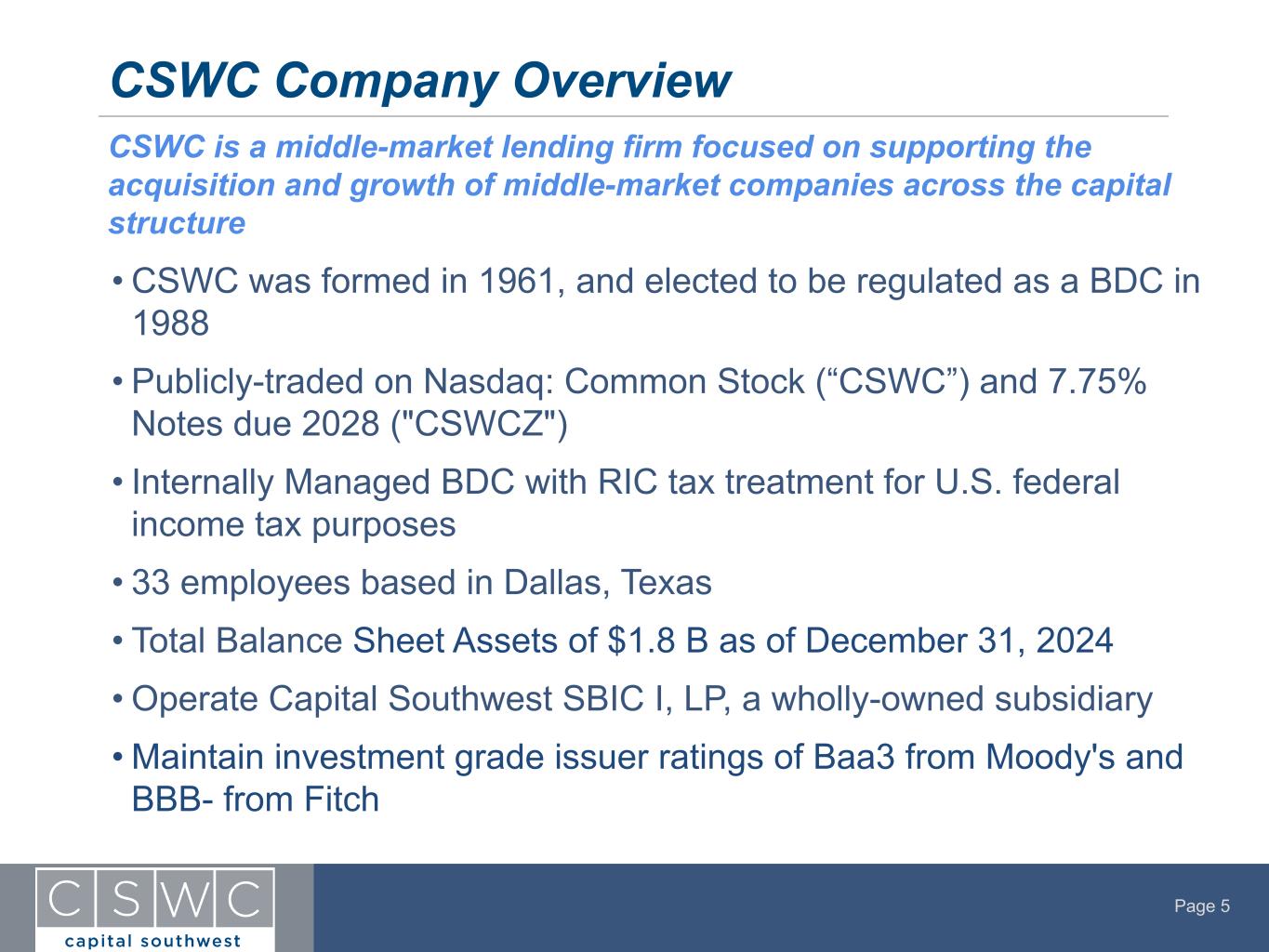
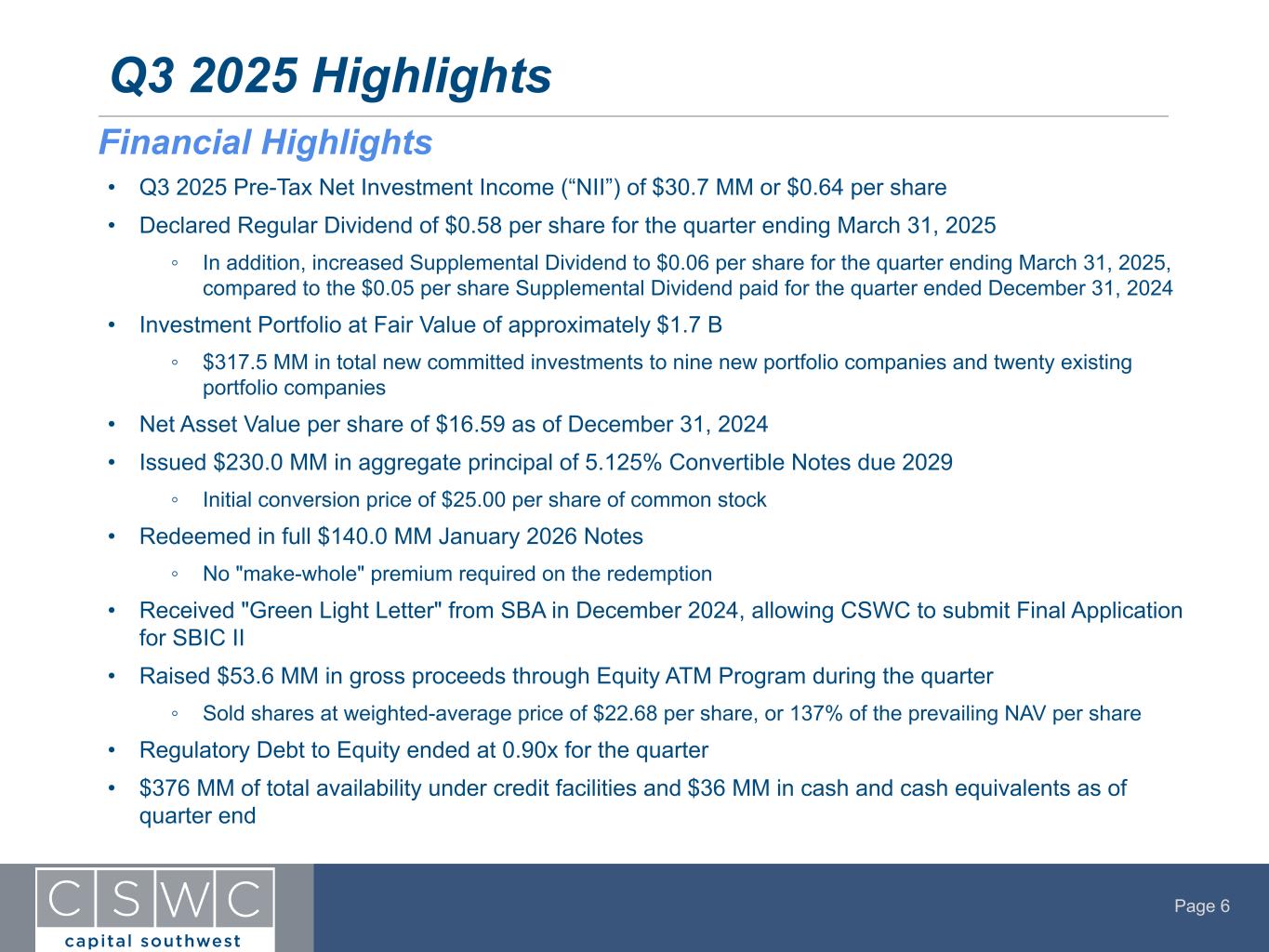
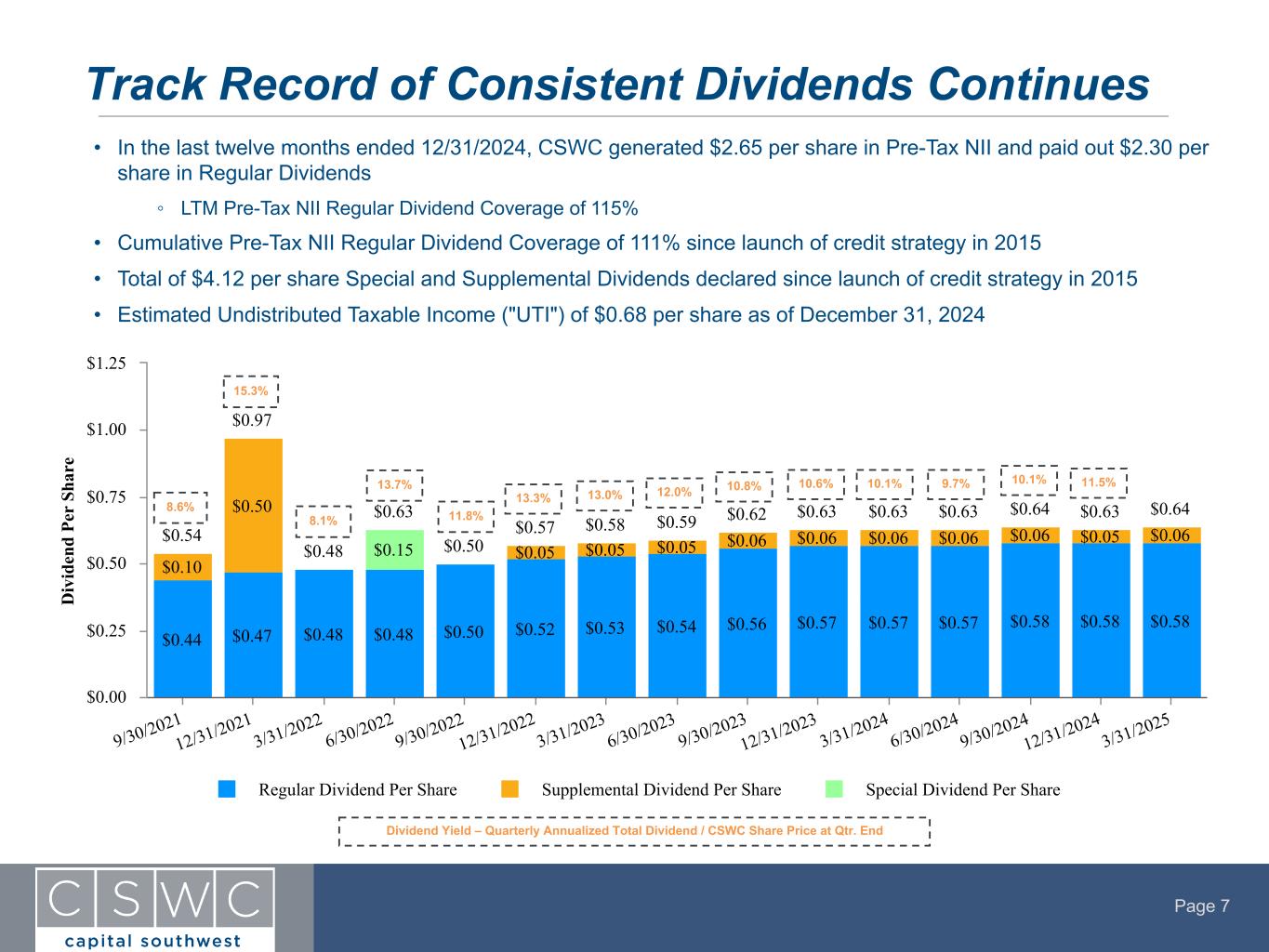
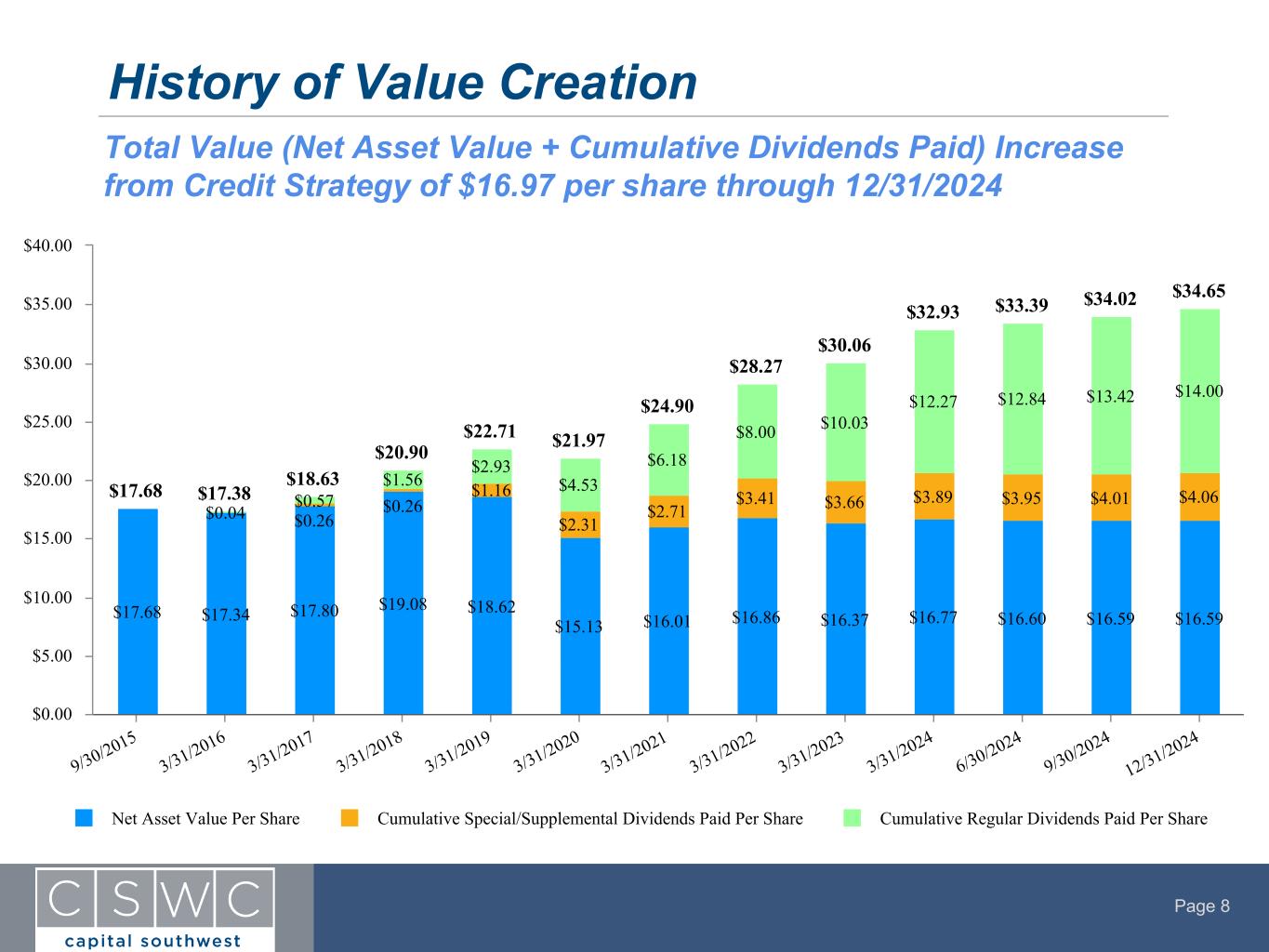
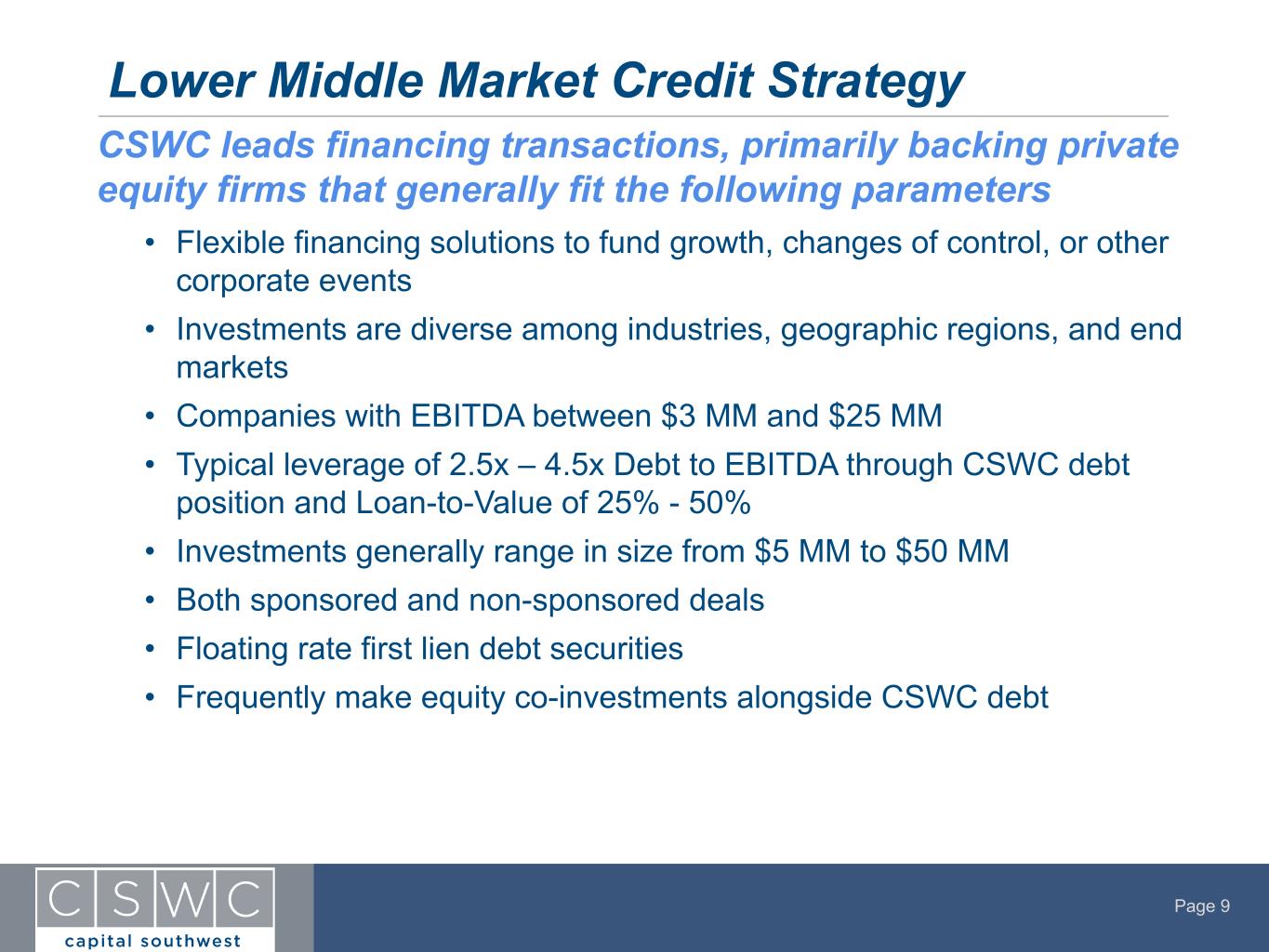
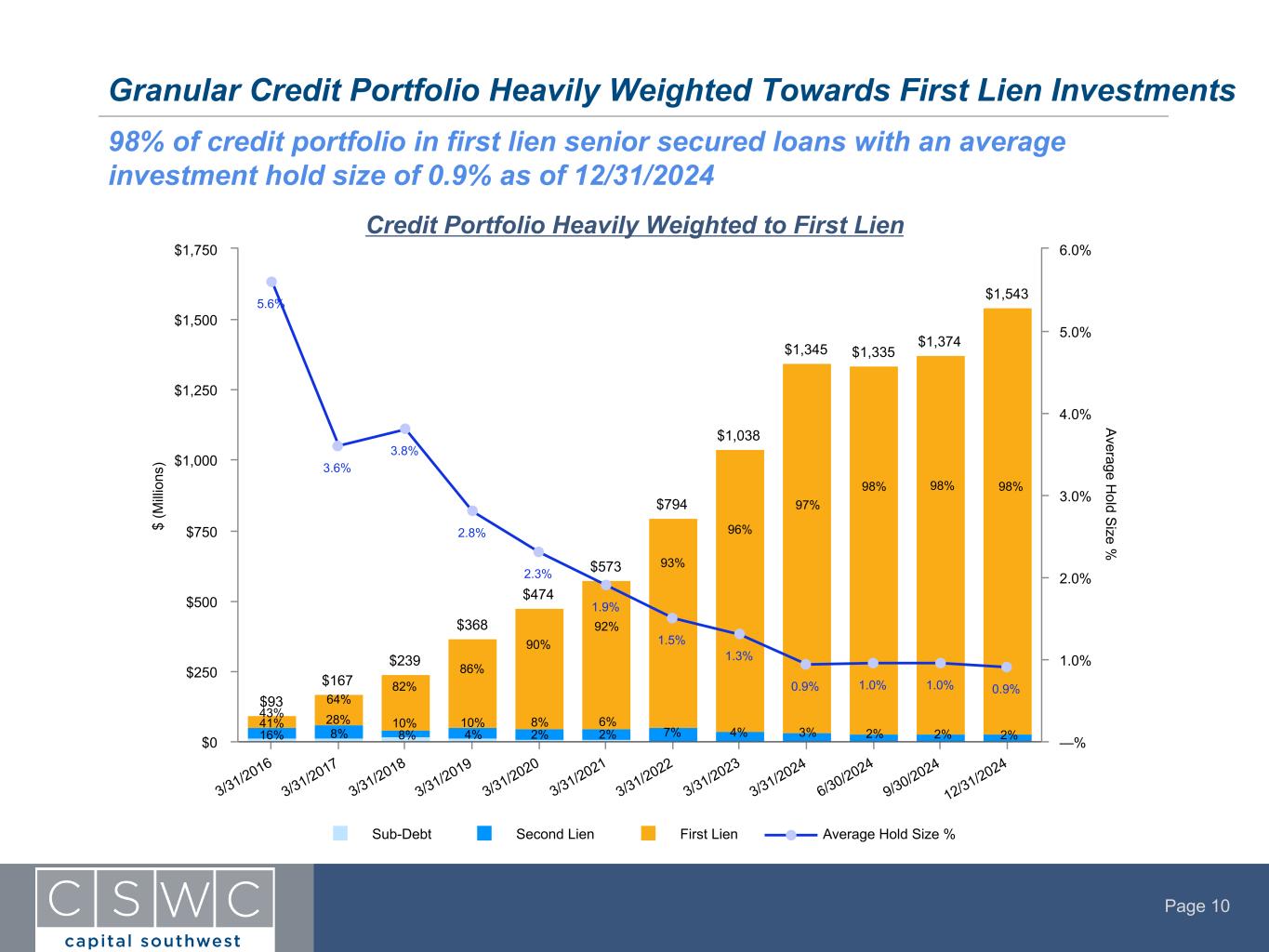
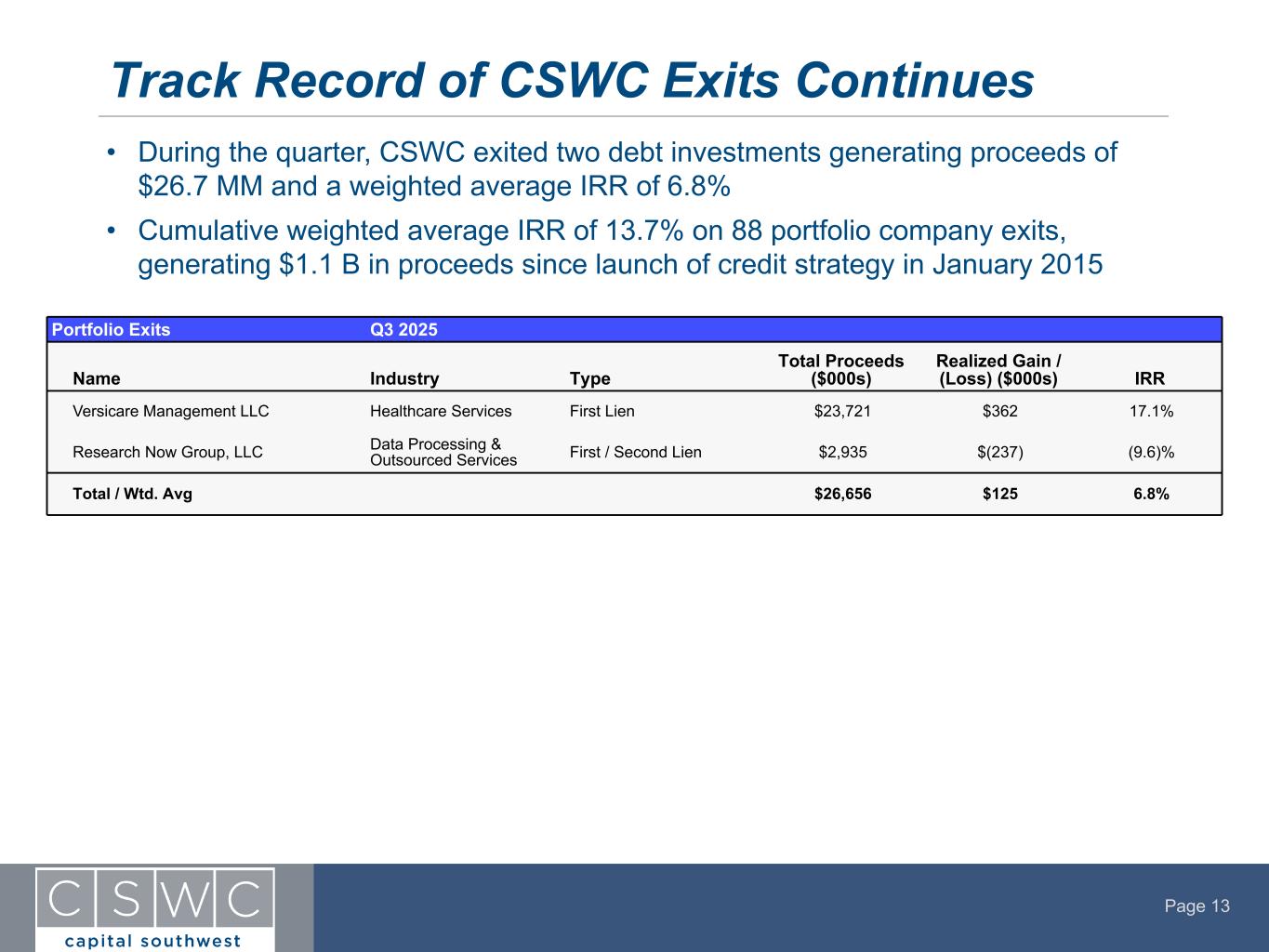
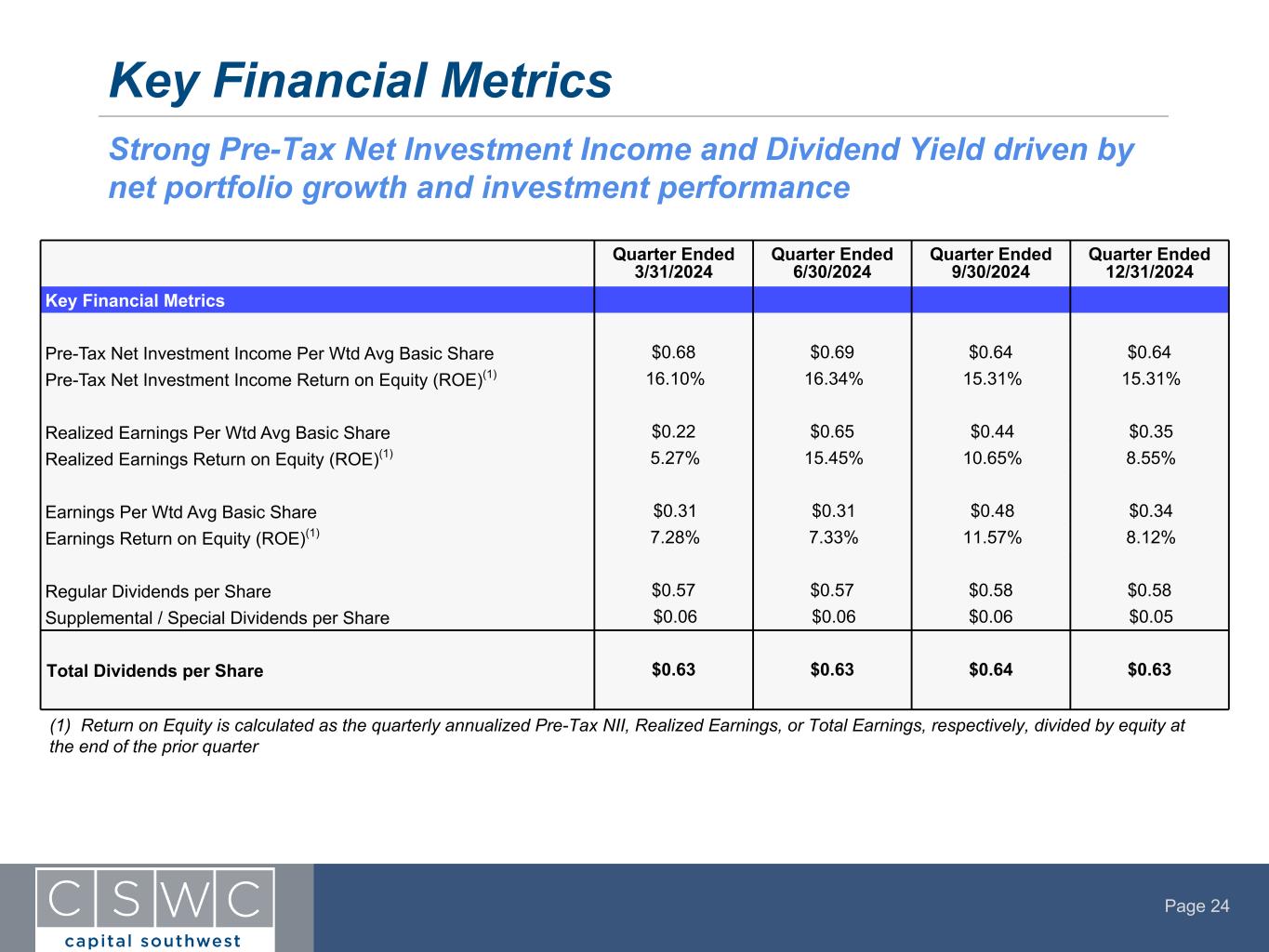
Thanks, Chris, and thank you, everyone, for joining us for our third quarter fiscal year 2025 earnings call. We are pleased to be with you this morning and look forward to giving you an update on the performance of our company and our portfolio as we continue to diligently execute our investment strategy as stewards of your capital. Throughout our prepared remarks, we will refer to various slides in our earnings presentation, which can be found in the Investor Relations section of our website at www.capitalsouthwest.com. You will also find our quarterly earnings press release issued last evening on our website. We'll now begin on Slide 6 of the earnings presentation, where we have summarized some of the key performance highlights for the quarter. During the quarter, we generated pre-tax net investment income of $0.64 per share, which fully covered both our regular dividend of $0.58 per share and our supplemental dividend of $0.05 per share paid during the quarter. Portfolio earnings continue to be strong, and as of the end of the quarter, we estimate that our undistributed taxable income was $0.68 per share, which is up from our prior quarter estimate of $0.64 per share. As we look forward to the March quarter, we are pleased to announce that our Board of Directors has declared a regular dividend of $0.58 per share for the quarter ending March 31, 2025. Additionally, our Board has declared an increase in the supplemental dividend to $0.06 per share from the $0.05 per share in the December quarter, bringing total dividends declared for the March quarter to $0.64 per share. Deal flow in the lower middle market was very strong this quarter and the competitive environment around quality deals continued at the feverish pace we have seen for the past few quarters. Portfolio activity during the quarter consisted of $317.5 million in new commitments to nine new portfolio companies and 20 existing portfolio companies. Add-on financings continued to be an important component of many private equity firms' investment theses and a highly attractive source of originations for us. In fact, over 41% of total capital commitments during the quarter were follow-on financings in performing companies. The deals we are currently underwriting continue to have loan-to-value levels ranging from 35% to 50%, resulting in significant equity capital cushion below our debt and reasonable leverage levels of around 3.5x debt to EBITDA. Josh Weinstein will provide additional color on the market, our investment activity, and the performance of our portfolio later in our prepared remarks. On the capitalization front, during the quarter, we issued $230 million in aggregate principal of convertible notes with a coupon of 5.125% and an initial conversion price of $25 per share. Net proceeds from these convertible notes were used to redeem in full the $140 million January 2026 notes, as well as pay down our senior secured revolving credit facility. Importantly, there was no make-whole payment associated with the repayment of the January 2026 notes. Michael will walk through some additional important mechanics of the convertible bond offering in a moment. Additionally, we received a green light letter from the SBA allowing us to submit our final application for our second SBIC license and we have been informed by the SBA that we will receive final approval any day. We are excited about our continued participation in the SBA program, as this program has been and will continue to be a very important component of our capitalization strategy. Finally, we raised approximately $54 million in gross equity proceeds during the quarter through our Equity ATM Program at a weighted average share price of $22.68 per share or 137% of the prevailing NAV per share. We have remained diligent in ensuring that we have strong balance sheet liquidity while also funding a meaningful portion of our investment activity with both unsecured debt and accretive equity issuances. We continue to maintain a conservative mindset regarding both BDC leverage and balance sheet liquidity. Balance sheet liquidity at Capital Southwest remains robust, which Michael will provide additional commentary on in a moment. Ensuring strong balance sheet liquidity affords us the ability to continue to invest in new platform companies as well as provide financing for both growth capital and add-on acquisitions for our existing portfolio companies. We believe this strategy allows us to continue to grow our balance sheet through any capital markets environment while also maintaining the flexibility to opportunistically repurchase our stock if it were to trade meaningfully below NAV. On Slide 7 and 8, we illustrate our continued track record of producing steady dividend growth, consistent dividend coverage, and solid value creation. Since the launch of our credit strategy, we have increased our quarterly regular dividend 29 times and have never cut the regular dividend, all while maintaining strong coverage of our regular dividend with pre-tax net investment income. In addition, over the same period, we have paid or declared 27 special or supplemental dividends totaling $4.12 per share, all generated from excess earnings and realized gains from our investment portfolio. Dividend sustainability, strong credit performance, and continued access to capital from multiple capital sources are all core to our overall strategy. Our track record in all these areas demonstrates the strength of our investment and capitalization management strategies as well as the absolute alignment of all our decisions with the interests of our fellow shareholders. As a reminder, Slide 9 lays out the core tenets of our investment strategy in lending and investing in the lower middle market. The vast majority of our portfolio and deal activity is in first lien senior secured loans to companies backed by private equity firms. Currently, approximately 94% of our credit portfolio is backed by private equity firms, which provide important guidance and leadership to the portfolio companies as well as the potential for junior capital support if needed. In the lower middle market, we often have the opportunity to invest on a minority basis in the equity of our portfolio companies, highly pursuant to the private equity firm when we believe the equity thesis is compelling. As of the end of the quarter, our equity co-investment portfolio consisted of 77 investments with a total fair value of $159 million, representing 9% of our total portfolio at fair value. Our equity portfolio was marked at 143% of our cost, representing $47.9 million in embedded unrealized appreciation or $0.96 per share. Our equity portfolio continues to provide our shareholders participation in the attractive upside potential of these growing lower middle-market businesses, often resulting from the institutionalization of the businesses by experienced private equity firms, as well as the significant value accretion potential of strategic add-on acquisitions. Equity co-investments across our portfolio provide our shareholders with the potential for asset value appreciation as well as equity distributions to Capital Southwest over time. To that end, I would note that we have two equity investments currently in the final stages of sale processes, which should provide meaningful realized gains for Capital Southwest in the March 2025 quarter. Additionally, we are seeing some increased visibility in our portfolio on companies beginning sales processes in 2025, several of which could result in material realized gains later this year for Capital Southwest. We look forward to providing you updates as appropriate as they develop. As illustrated on Slide 10, our on-balance sheet credit portfolio ended the quarter at $1.5 billion, representing year-over-year growth of 31% from $1.2 billion as of December 2023. For the current quarter, 100% of our new portfolio debt originations were first lien senior secured, and as of the end of the quarter, 98% of the credit portfolio was first lien senior secured with a weighted average exposure per company of only 0.9%. We believe our portfolio granularity speaks to our continued investment discipline of maintaining a conservative posture to overall risk management as we grow our balance sheet. I will now hand the call over to Josh to review more specifics of our investment activity, the market environment, and the performance of our portfolio for the quarter.
Speaker 2
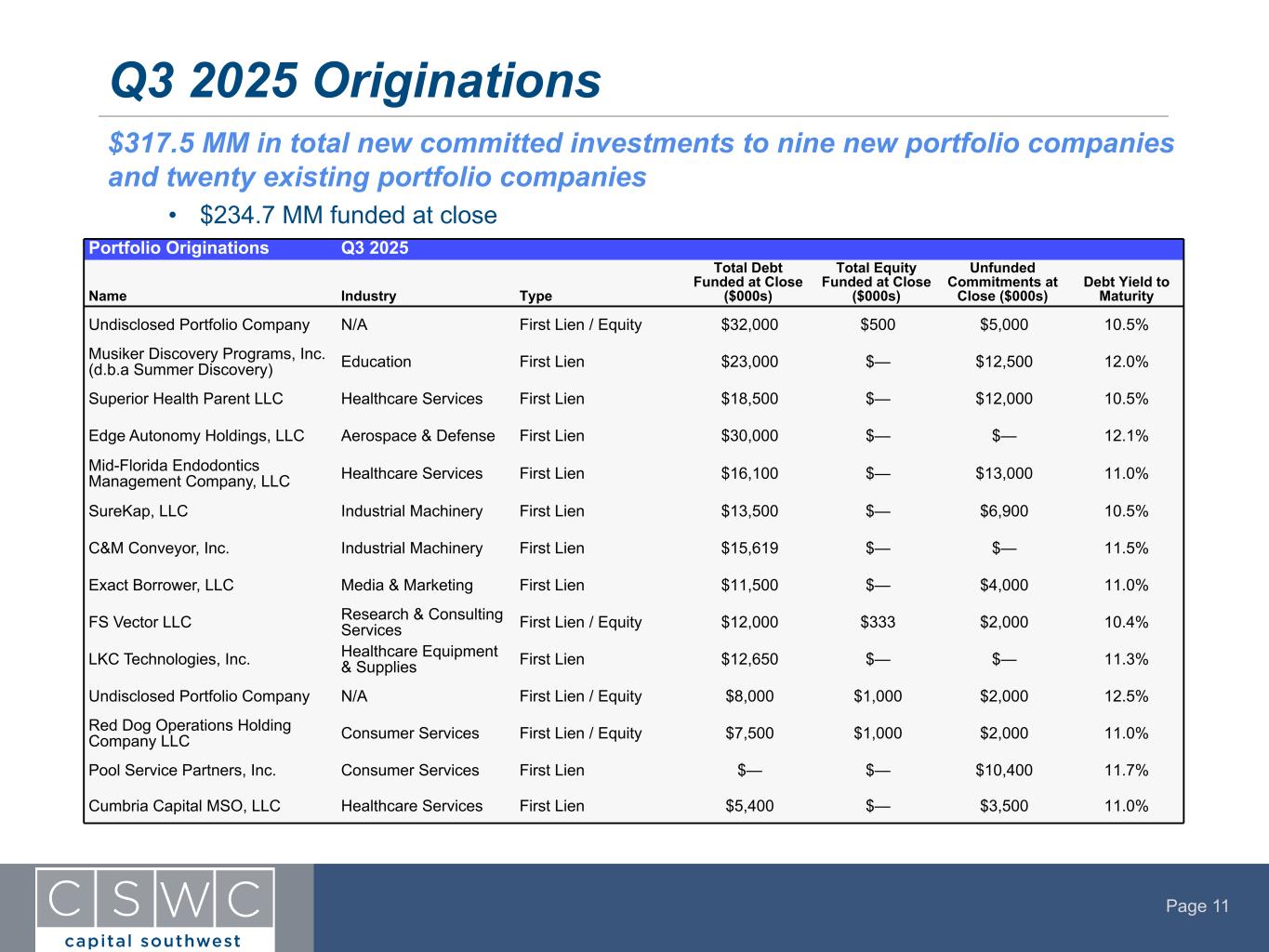
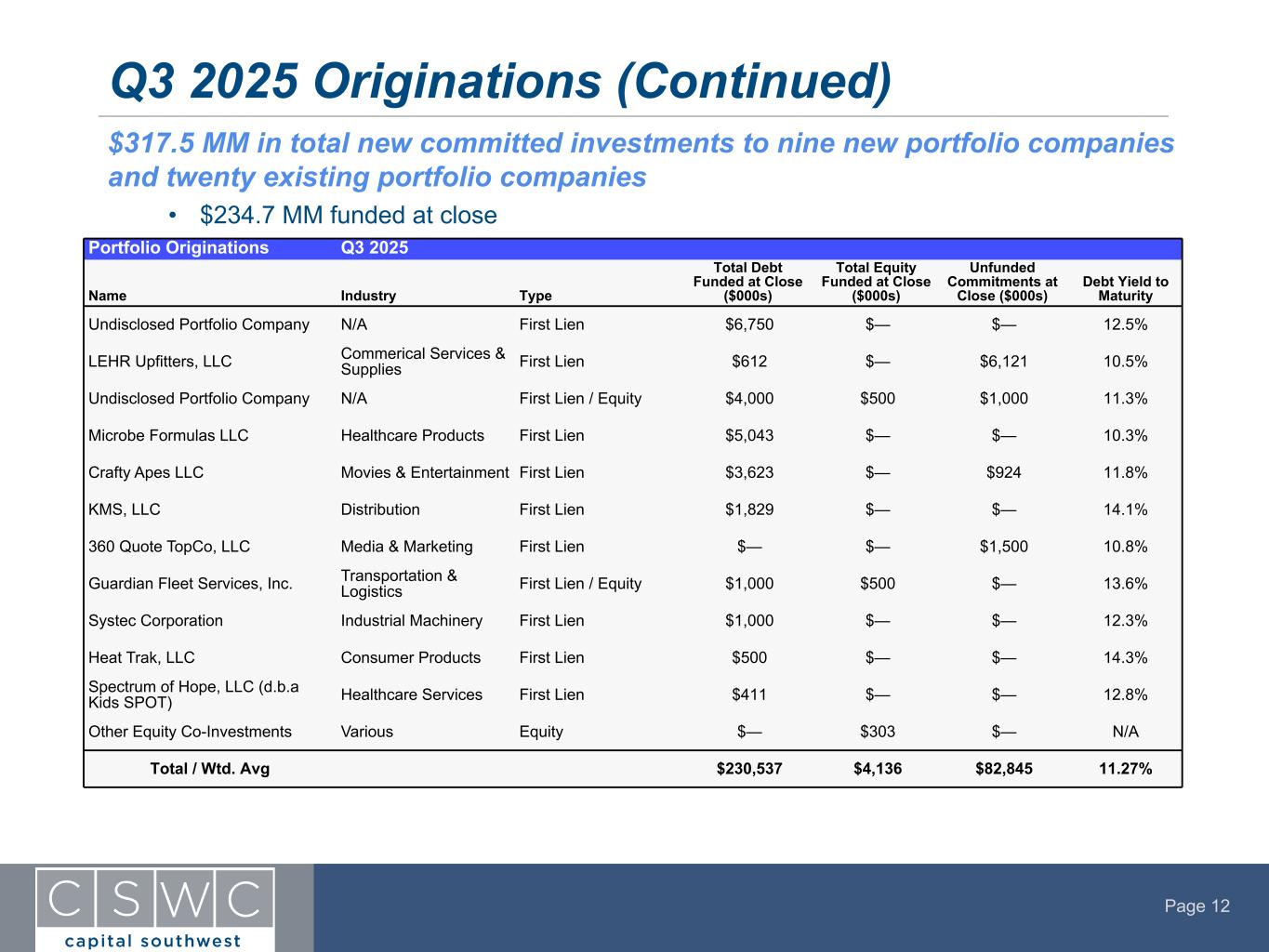
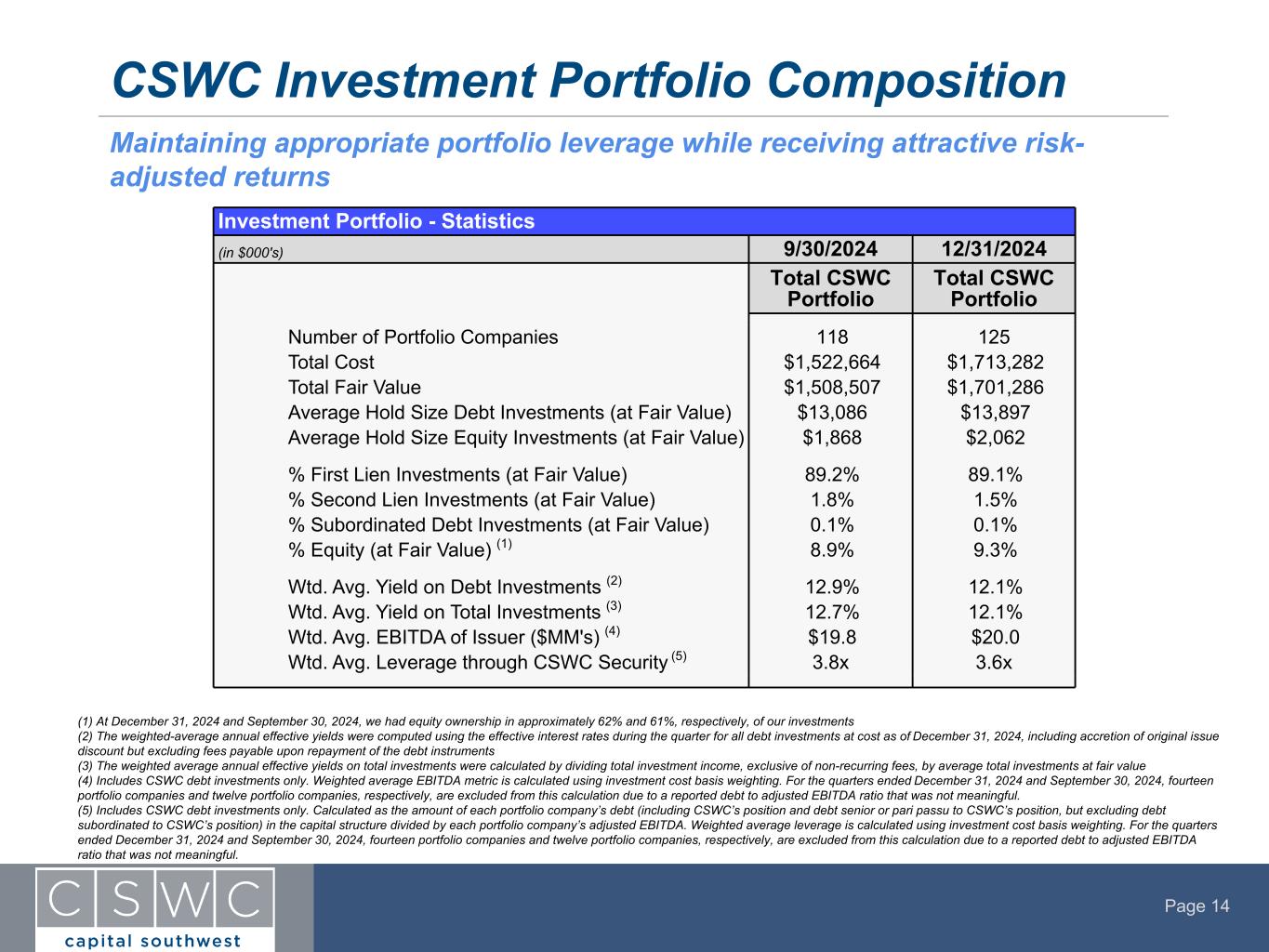
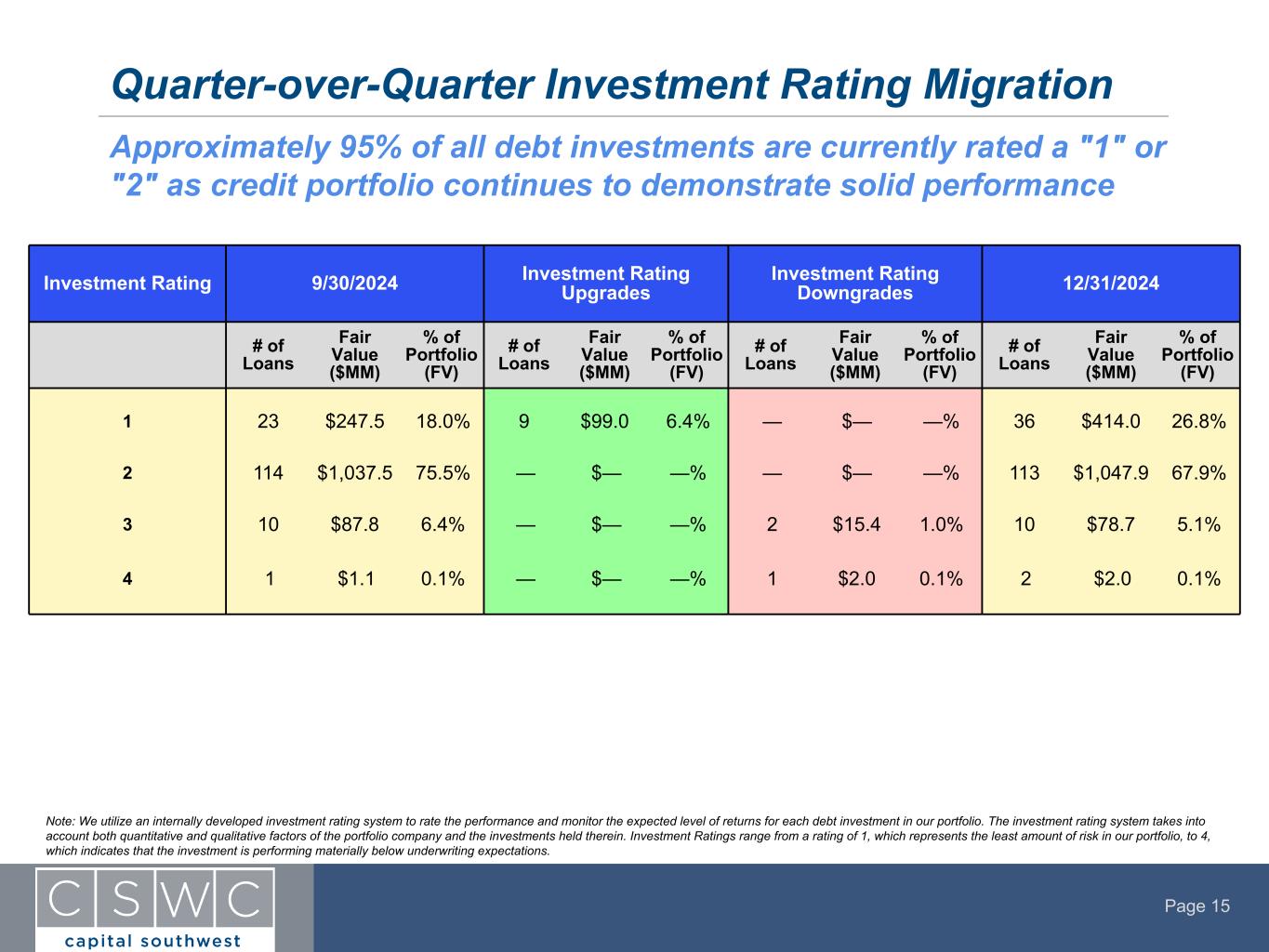
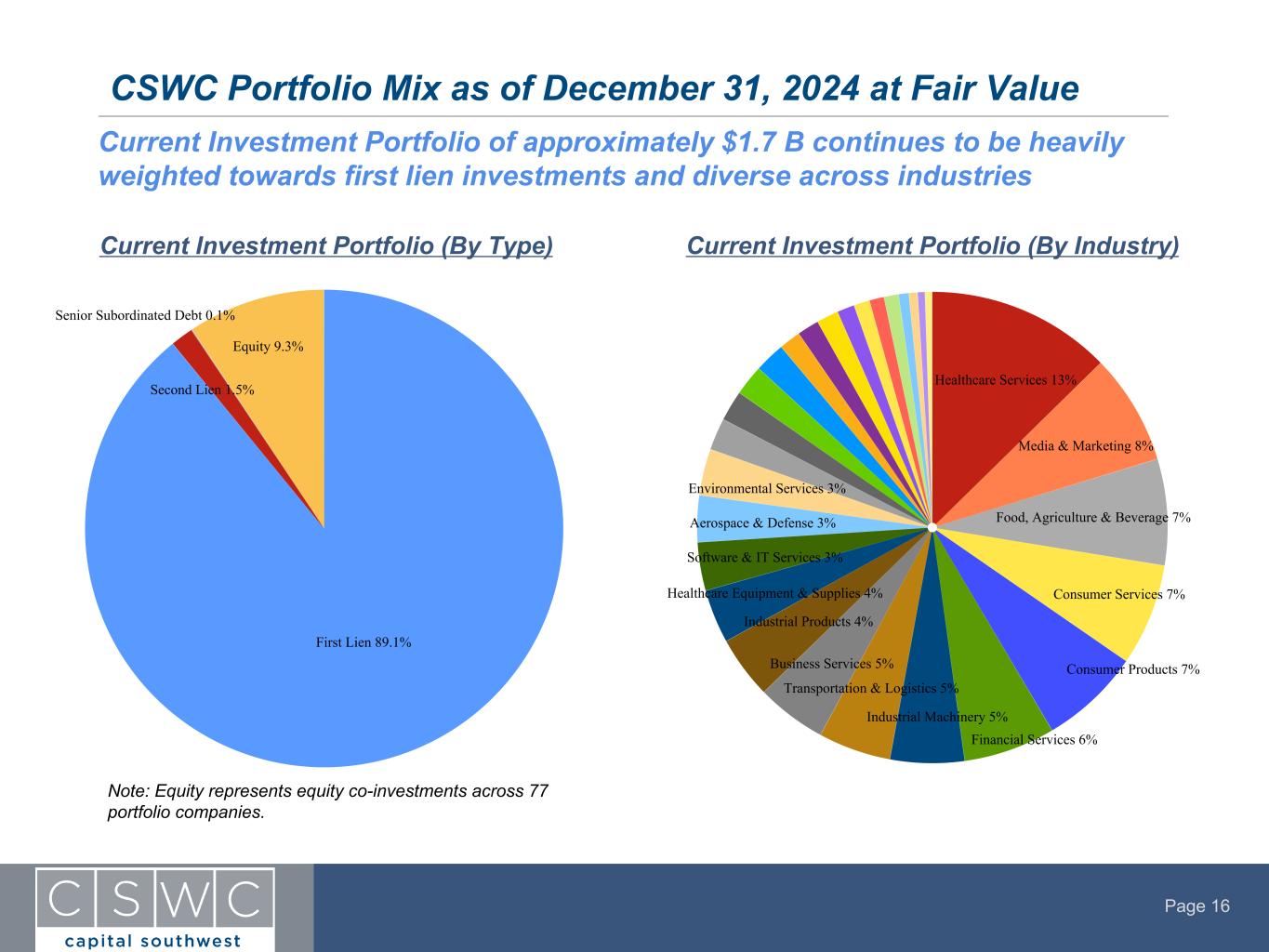
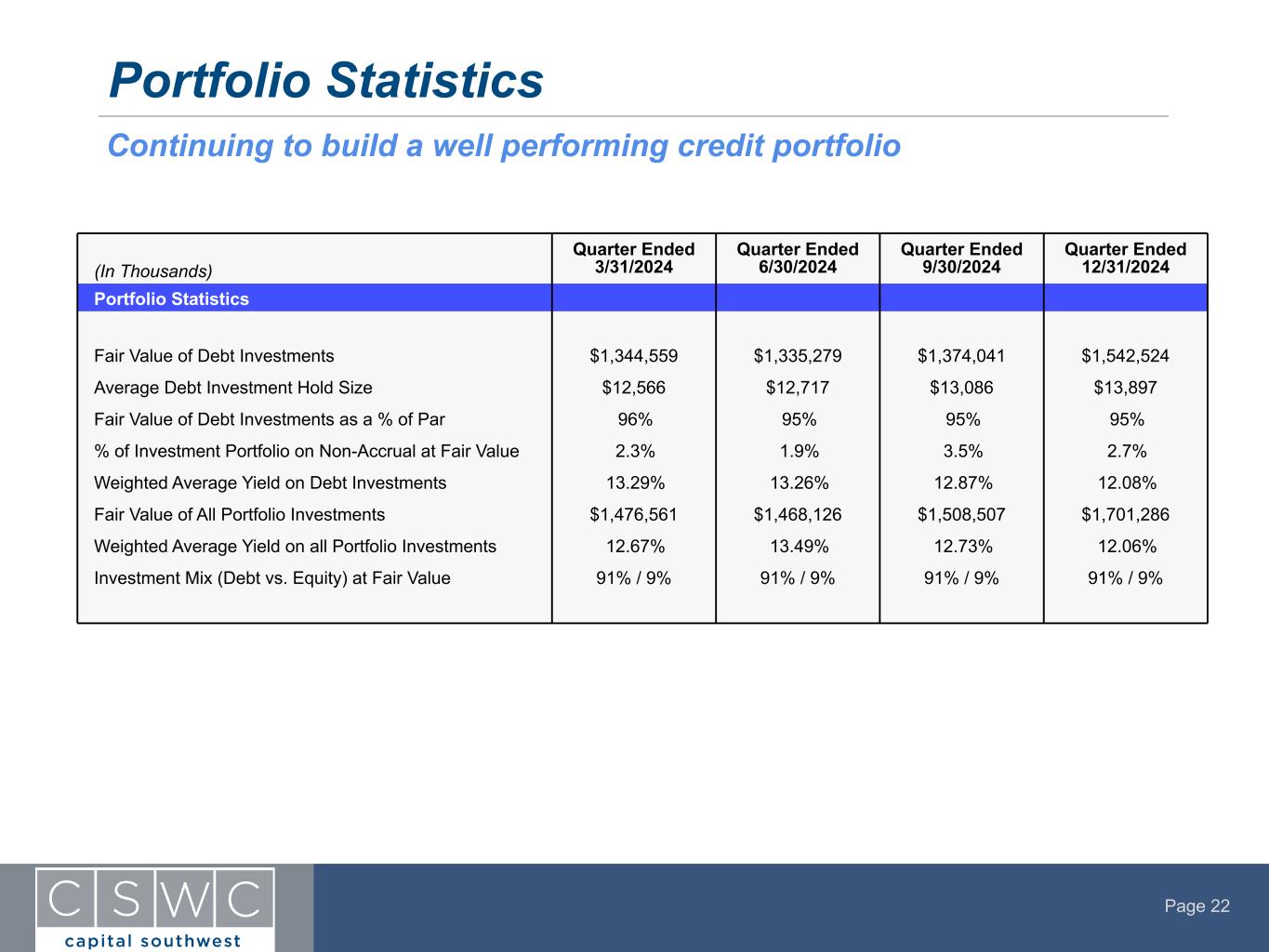
Thanks, Bowen. On Slide 11 and 12, we detail the $317.5 million of capital invested in and committed to portfolio companies during the quarter. Capital committed during the quarter included $172.3 million in first lien senior secured debt across nine new portfolio companies, in which we also invested a total of $3 million in equity. In addition, we closed add-on financing for 20 existing portfolio companies consisting of $141.1 million in first lien senior secured debt and $1.1 million in equity. We are pleased with the strong market position that our team has established as a premier lender to the lower middle market. This is evidenced by the broad array of relationships across the country from which our team is sourcing quality opportunities. As a point of reference, currently, there are 80 unique private equity firms represented across our investment portfolio. Additionally, in the last year, we closed 17 new platforms with financial sponsors with which we had not previously closed the deal, demonstrating our continued penetration in the market. Since the launch of our credit strategy, we have completed transactions with over 110 different private equity firms across the country, including over 20% with which we have completed multiple transactions. As Bowen mentioned, the lower middle market continues to be quite competitive as this segment of the market is highly attractive to both bank and non-bank lenders. While this has resulted in tight loan pricing for high-quality opportunities, the depth and strength of the relationships our team has cultivated over the years has continued to result in our sourcing and winning opportunities with attractive risk-return profiles. On Slide 14, we detail key statistics for our portfolio as of the end of the quarter. The total portfolio consisted of 125 different companies with a fair value as of the end of the quarter weighted 89.1% to first lien senior secured debt, 1.5% to second lien senior secured debt, 0.1% to subordinated debt, and 9.3% to equity co-investments. The credit portfolio had a weighted average yield of 12.1% and weighted average leverage through our security of 3.6x EBITDA. Overall, we are pleased with the operating performance across our loan portfolio. In fact, as shown on Slide 15, the number of portfolio upgrades was meaningfully more than the downgrades this quarter. As a reminder, all loans upon origination are initially assigned an investment rating of two on a 4-point scale, with one being the highest rating and four being the lowest rating. We had nine loans in five portfolio companies representing $99 million in fair value upgraded during the quarter, while having three loans in three portfolio companies representing approximately $17.4 million in fair value downgraded during the quarter. Overall, the portfolio remains healthy with approximately 95% of the portfolio at fair value rated in one of the top two categories, 1 or 2, and approximately 5% of the portfolio in the 3 or 4 category. Cash flow coverage of debt service obligations across the portfolio remains at a healthy 3.5x with our loans across our portfolio averaging approximately 41% of the portfolio company enterprise value. Quarter-over-quarter revenue and EBITDA growth on a weighted average basis were each approximately 3%. As seen on Slide 16, our portfolio continues to be broadly diversified across industries with an asset mix, which provides strong security for our shareholders' capital. In addition to industry diversification, our average exposure per company is less than 1% of assets, which gives us great comfort in the overall risk profile of our portfolio. Our investment committee members utilize our cumulative experiences navigating through various economic cycles to continually assess risk both on a company-by-company basis as well as on the overall portfolio. In the current environment, that includes being in close contact with our sponsors and portfolio companies to proactively assess any anticipated effects of recent and future policies on tariffs and immigration. I will now hand the call over to Michael to review the specifics of our financial performance for the quarter.
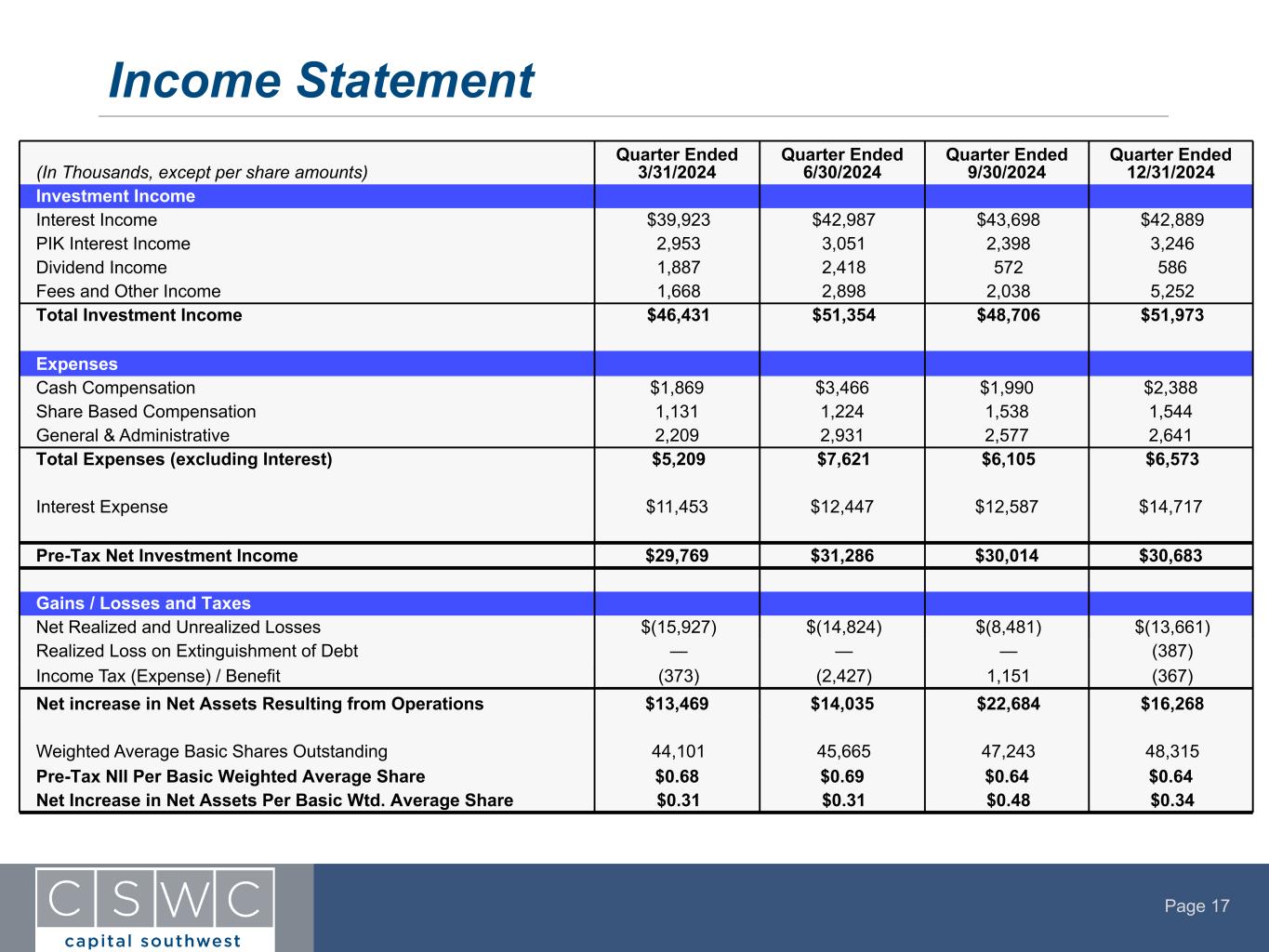
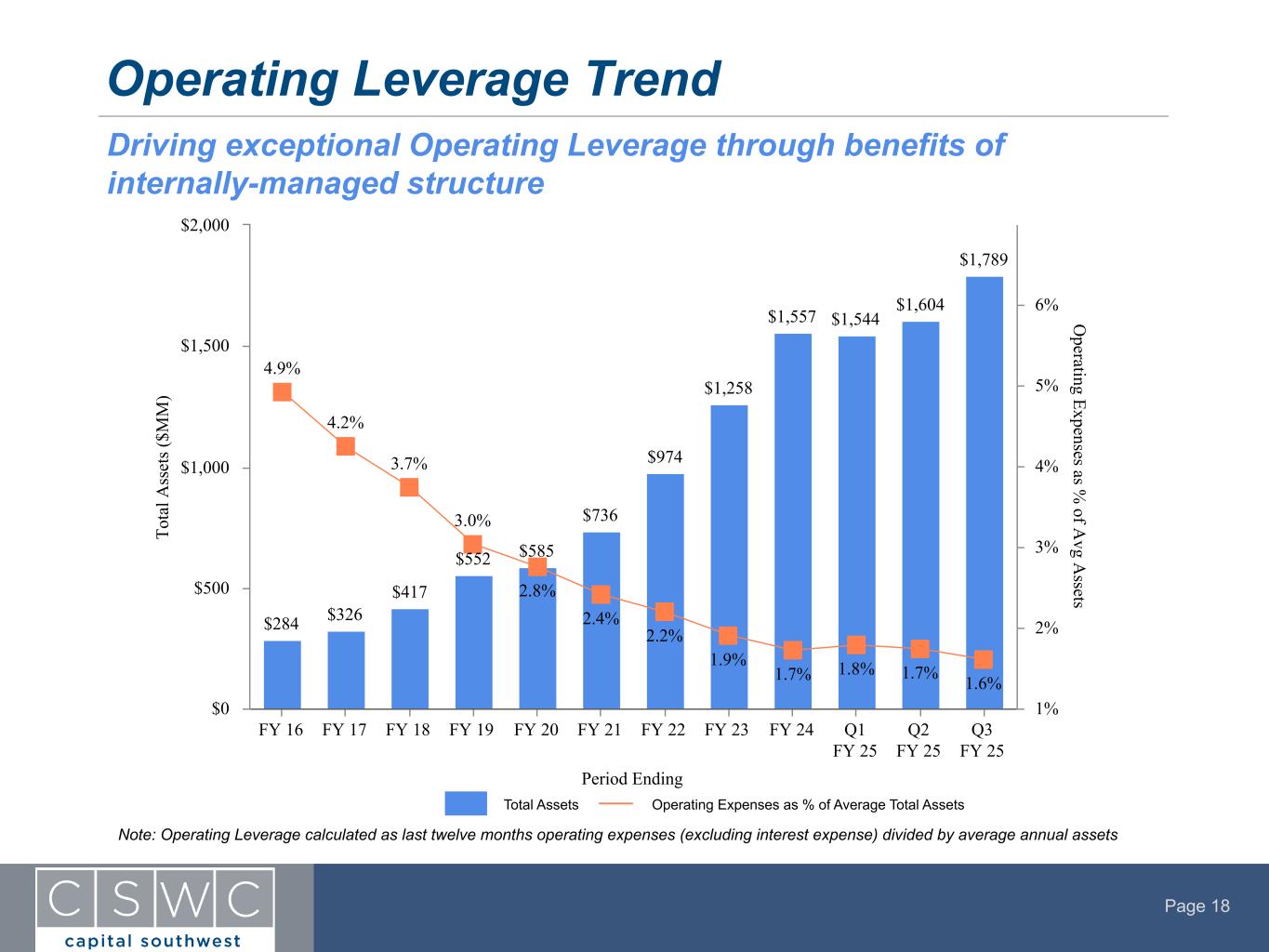
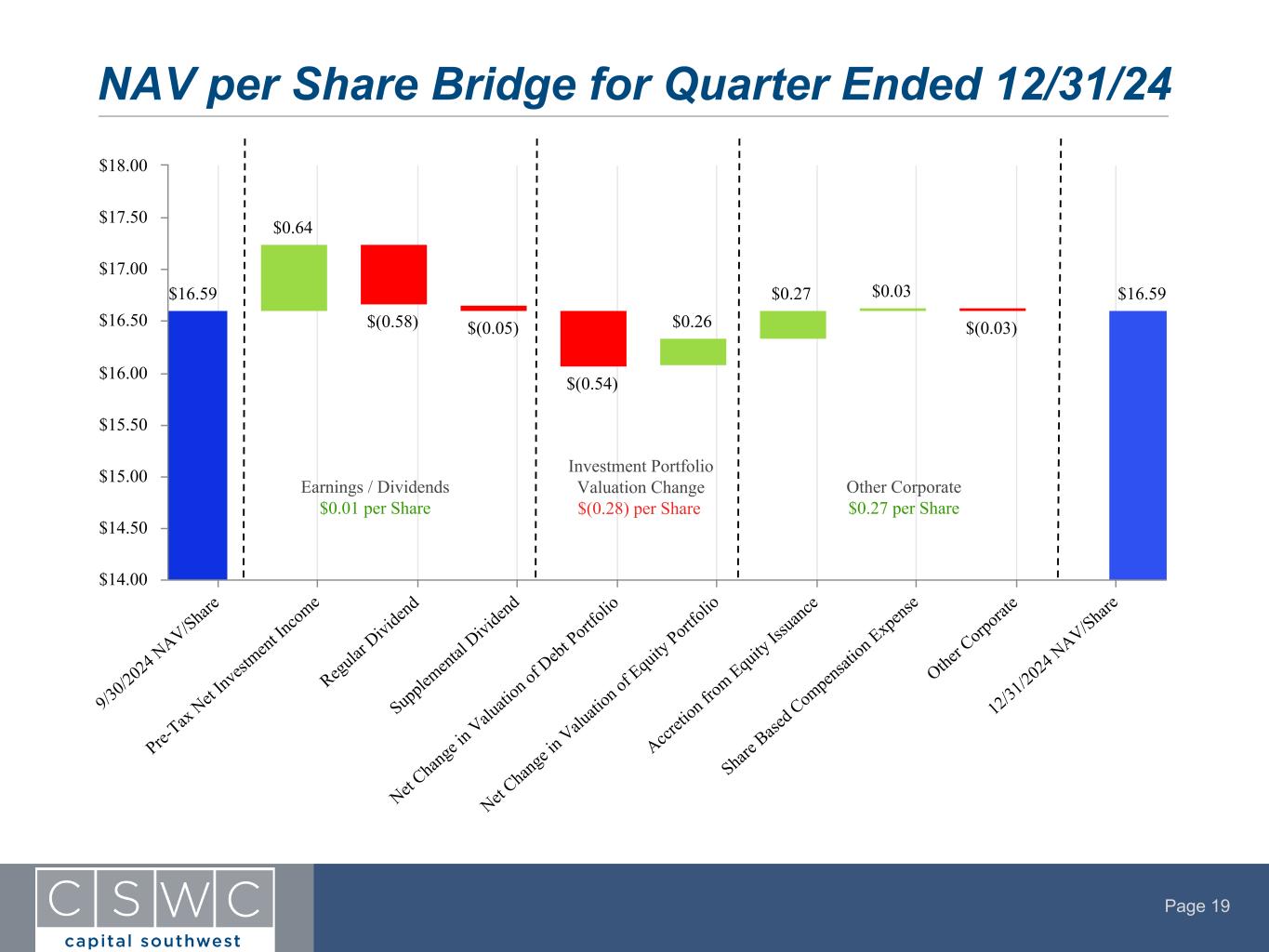
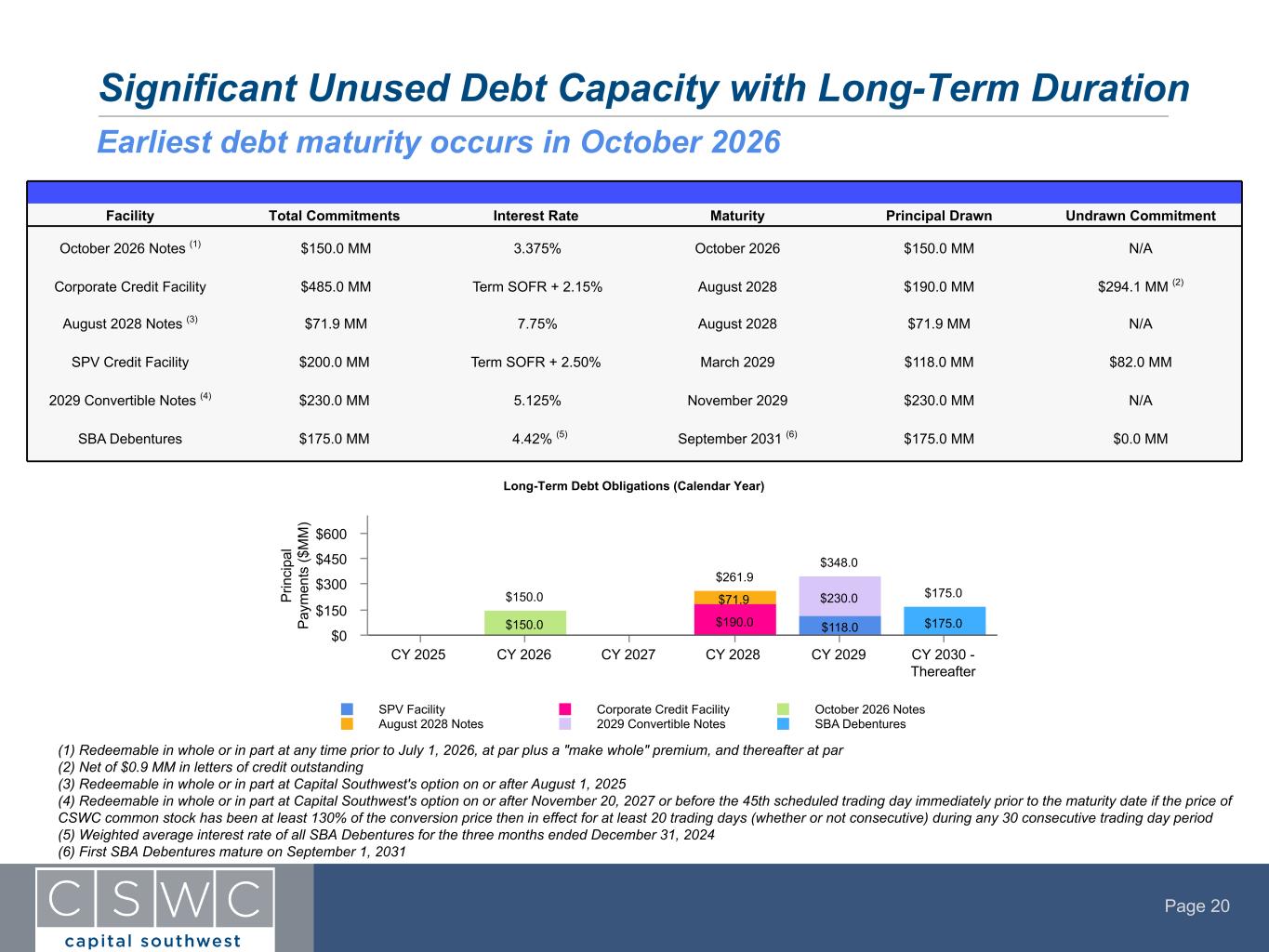
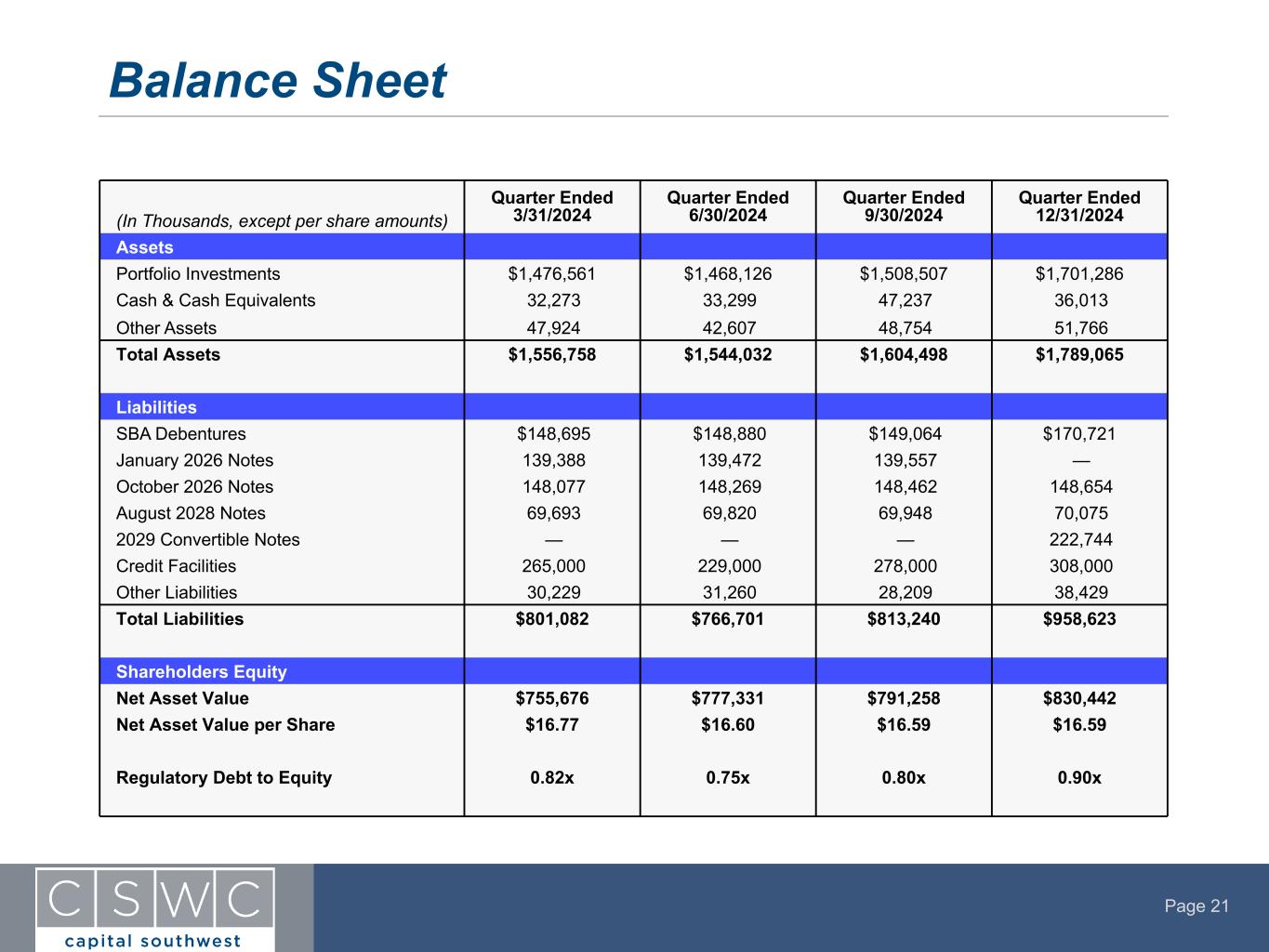
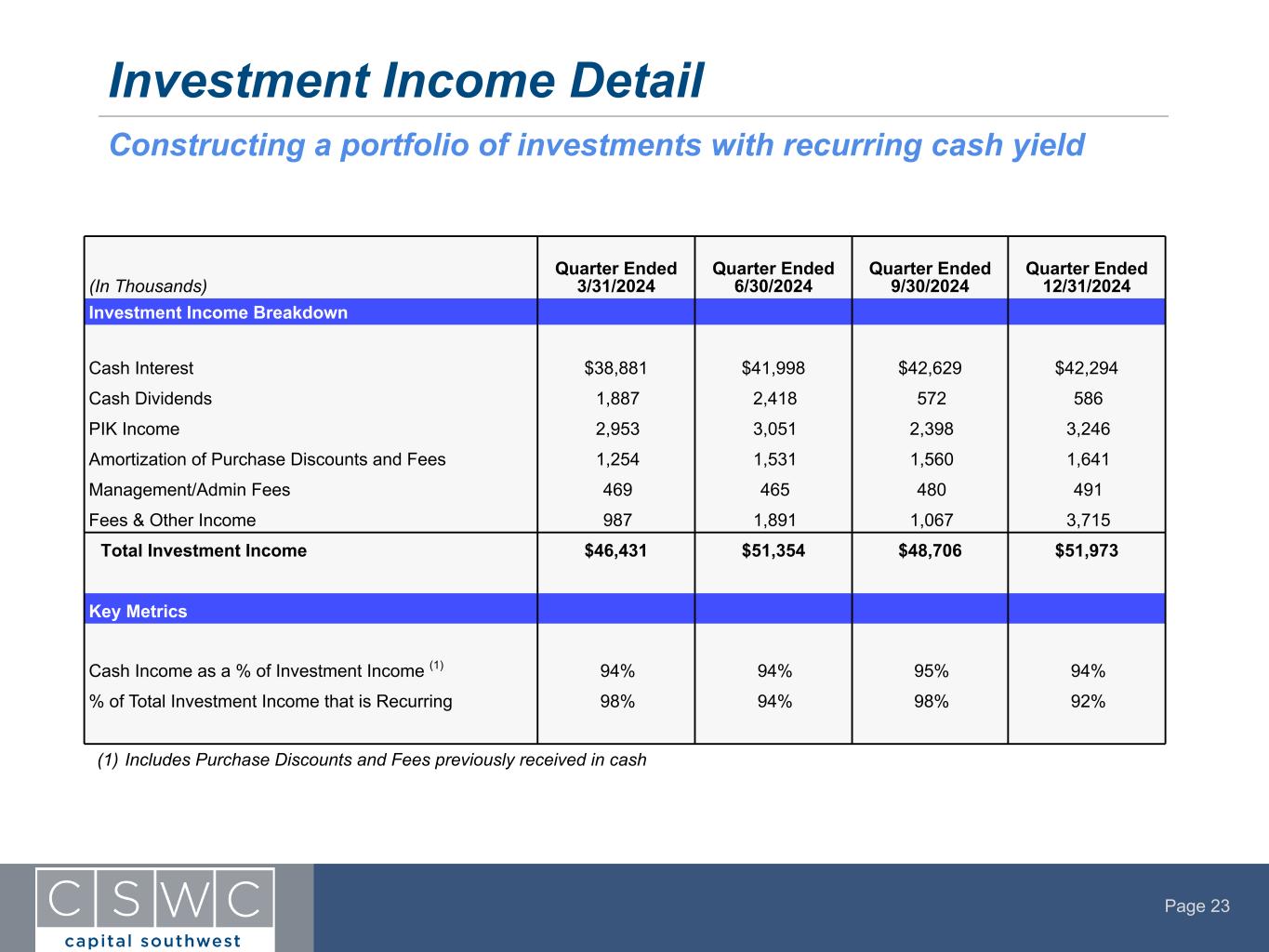
Thanks, Josh. Specific to our performance for the quarter, as summarized on Slide 17, pre-tax net investment income was $30.7 million or $0.64 per share, as compared to $30 million or $0.64 per share in the prior quarter. For the quarter, total investment income increased to $52 million from $48.7 million in the prior quarter. The increase was driven primarily by a $3.2 million increase in fees and other income compared to the prior quarter. As of the end of the quarter, our loans on non-accrual represented 2.7% of our investment portfolio at fair value and the weighted average yield in the portfolio on all investments was 12.1%. During the quarter, we paid out a $0.58 per share regular dividend and a $0.05 per share supplemental dividend. As mentioned earlier, our Board has declared a regular dividend of $0.58 per share while also increasing the supplemental dividend to $0.06 per share for the March quarter. Management and the Board have spent significant time contemplating the impact of a lower interest rate environment on future earnings. We have consistently maintained that setting a regular dividend at a level that we believe will never be cut in any foreseeable interest rate environment is key to generating stable, attractive shareholder returns over the long term. We continued our strong track record of regular dividend coverage with 115% coverage for the 12 months ended December 31, 2024, and 111% cumulative coverage since the launch of our credit strategy. We are confident in our ability to continue to distribute quarterly supplemental dividends for the foreseeable future based upon our current UTI balance of $0.68 per share and the expectation that we will harvest gains over time from our existing $0.96 per share in unrealized appreciation on the equity portfolio. As Bowen mentioned earlier, we have two equity investments in sale processes, both expected to close within the next two weeks. These realized gains, all else equal, should increase our UTI balance by a further $0.10 to $0.15 per share as of the end of the March quarter. As seen on Slide 18, LTM operating leverage ended the quarter at 1.6%. Our operating leverage of 1.6% continues to compare favorably to the BDC industry average of approximately 2.8%. We believe this metric speaks to the benefits of the internally managed BDC model and our absolute alignment with shareholders. The internally managed model has and will continue to produce real fixed cost leverage while also allowing for significant resources to be invested in people and infrastructure as we continue to grow and manage a best-in-class BDC. Turning to Slide 19, the company's NAV per share at the end of the quarter was flat at $16.59 per share. The primary drivers of the NAV per share bridge for the quarter were accretion from the issuance of common stock at a premium to NAV per share, offset by the net realized and unrealized depreciation on our investment portfolio. Turning to Slide 20, we are pleased to report that our balance sheet liquidity is robust with approximately $412 million in cash and undrawn leverage commitments on our two credit facilities, which altogether represented 2.1x the $193 million of unfunded commitments we had across our portfolio as of the end of the quarter. As Bowen mentioned earlier, in the December quarter, we issued $230 million in aggregate principal of 5.125% convertible notes due 2029 with an initial conversion price of $25 per share. These net proceeds were used to redeem in full the $140 million January 2026 bonds, as well as pay down our revolving credit facility. As of the end of the December quarter, 48% of our capital structure liabilities were in unsecured covenant-free bonds, with our earliest debt maturity in October 2026. Delving a bit deeper into the convertible bond issuance, we believe there's been some confusion in the market regarding the issuance, which I would like to address. First, we did not incur any make-whole premium in the takeout of the January 2026 bonds. Second, we have always stressed the importance of balance sheet flexibility and staying well ahead of our debt maturities. Using this convertible issuance to redeem our January 2026 bonds as well as to pay down our credit facility gives us further dry powder to continue to originate attractive investment opportunities in all market environments. Moreover, based on today's five-year treasury rate, the rate on the convertible note is approximately 200 basis points cheaper than the current market for a traditional unsecured bond, resulting in significant interest expense savings which flow directly to pre-tax NII. Additionally, the convertible notes have a flex settlement mechanism. This means that to the extent our stock trades significantly above the conversion price and certain holders of the notes elect to convert, Capital Southwest would have the option to redeem the notes in cash, shares, or any combination thereof. This gives us the ability to actively manage balance sheet leverage, the impact of any dilution, and the opportunity in this instance to issue equity at share prices that would be significantly above net asset value and thus be highly accretive to our shareholders. Turning to our SBIC program, in early 2024, we submitted a MAC application to the SBA, which began the process towards a second SBIC license. In December 2024, we received a green light letter from the SBA, allowing us to submit our final application, which we completed in January 2025. We expect to receive final approval for SBIC II imminently. Our regulatory leverage, as seen on Slide 21, ended the quarter at a debt-to-equity ratio of 0.9 to 1, up from 0.8 to 1 as of the prior quarter. While our optimal target leverage continues to be in the 0.8 to 0.95 range, we are weighing the impact of future base rate reductions and maintaining adequate cushion levels to allow us the flexibility to potentially increase leverage to support future earnings and dividend growth. We will continue to methodically and opportunistically raise secured and unsecured debt capital as well as equity capital through our ATM program to ensure we maintain significant liquidity and conservative balance sheet leverage with adequate covenant cushions. I will now hand the call back to Bowen for some final comments.
Thank you, Michael, and thank you, Josh. And again, thank you, everyone, for joining us today. As always, we appreciate the opportunity to provide you with an update on our business, our portfolio, and the market environment. Our company and portfolio continue to perform well, and we are pleased with the company's robust asset base, deal origination, and portfolio management capability, as well as flexible capital structure. The overall health and security of our portfolio is strong. Our credit portfolio is predominantly made up of first lien senior secured loans allocated across a broader array of companies and industries with weighted average exposure per company under 1%. The vast majority of our portfolio is backed by private equity firms, interest coverage of the debt obligations across our portfolio was solid at 3.5x with strong equity value cushion supporting lower debt investments. Additionally, our equity co-investment portfolio gives our shareholders participation in the equity upside of many of these growing lower middle-market businesses, providing further enhancement to our long-term shareholder returns. Last but not least, we have a very well-capitalized balance sheet with multiple capital sources and significant balance sheet liquidity, all of which provides our company an exciting runway to continue to grow and generate strong shareholder returns. This concludes our prepared remarks. Operator, we are ready to open the lines up for Q&A.
Operator
Thank you, sir. Our first question comes from Mickey Schleien from Ladenburg. Please go ahead.
Speaker 5
Yes. Good morning, everyone. Bowen, you mentioned that follow-on investments were an important part of your investment activity this quarter. But could you also give us some insight into the trends you're seeing in terms of new investment M&A activity in your market, considering that the election is behind us now and maybe there's a little bit more certainty in the direction of interest rates?
Yes. The M&A market in our sector was active in the fourth quarter, and that activity has continued into the first quarter. As we mentioned, we have some visibility on possible exits in our portfolio for 2025, including some immediate ones and others further out. Many in the industry are hopeful that M&A activity will increase in 2025, and we are beginning to see some early signs that this might happen. I'm not sure if you have anything to add to that, Josh?
Speaker 2
Yes. I mean I think you covered most of it, but I think we've obviously worked really hard over the last 10 years or so to create and cultivate relationships in that lower middle market, and we feel like we're while it remains competitive, and we're continuing to be well-positioned to participate in that M&A activity in 2025.
We committed $320 million in investments in the quarter ending December 31, which included 11 new platform companies and over 20 add-ons. In the current quarter, we are seeing a continuation of this trend with a lot of detail in the deals we are exploring, and we expect to be able to add more platform companies. We anticipate that our baseline originations in the near term will be higher than before.
Speaker 5
Even though this tends to be a seasonally slower quarter, Mike?
Yes. For this quarter, I believe our typical range would be around $125 million to $150 million. However, considering the significant number of new sponsors we've added and the strong market traction, I expect our originations to be closer to $150 million to $200 million for the upcoming quarter.
We had a number of deals that we're targeting closing by the end of the fourth quarter that leaked into the first quarter that helped mitigate some of that seasonality this year.
Speaker 5
I understand. You also had really low repayment activity. To what extent did call protection keep prepayments low? And how much refinancing risk do you see in the portfolio given all the pressure there is on spreads?
Well, I mean looking ahead, I would tell you that we have had calls. I mean, I think we do expect to see some level of prepayments into the future. To your point on call protection, we had one repayment of size in the previous quarter that had call protection where we generated, I think, approximately $600,000 in fees. But some of the deals we're looking at are probably 2022 and 2023, where you have some of that call protection either winding down or maybe it's only 1%, and they're willing to pay that and get out of the credit. So I think a rule of thumb for us, I mean, we're expecting probably to see 10% to 15% of the portfolio rotate in the 2025 calendar year.
Speaker 2
Based on the respect we've created over the years, we usually get the call before there's a repricing where we have the opportunity to lower our pricing a deal, and we obviously assess that situation on a case-by-case basis to see if we want to stay in the deal at a lower pricing. So we would expect some pressure just given potential competitive factors, but we feel like we're pretty well-positioned to continue to stay in the deals and not having to reprice down.
I would add, Mickey, that as we referenced the UTI increase and the potential exits this year, those are obviously well-performing companies, but oftentimes, they also have debt, and if we haven't already been recapped out. So I think it's probably fair to expect that a meaningful portion of our prepayments will be driven by M&A activity, which is not really a function of prepayment penalties and opening the private equity firms selling the business but was time to sell the business, not because of the prepayment.
Speaker 5
Yes, I understand. That's helpful. Last question, and then I'll get back in the queue. You have investments in sectors like food, and consumer, machinery. How do you see tariffs, which I know are a moving target, but we seem to be moving in the direction of tariffs. How do you see those tariffs impacting these companies or the portfolio in general?
Speaker 2
Yes, as you mentioned, we have about 120 to 125 portfolio companies. Based on our preliminary analysis, it appears that around 10% of our portfolio could be affected. However, since we are first lien senior secured lenders, we believe that our position in the capital structure will reduce the impact on our portfolio. We're continuously monitoring and analyzing the situation in real-time. With our diverse portfolio and first lien position, we feel well-equipped to manage that risk.
The other point I'd make, too, is during the 2016 Trump administration, they did increase tariffs as well then particularly with China. And so we saw that impact with some of our portfolio companies. And honestly, they were still able to thrive under the environment. Obviously, it's a moving target, as you said, Mickey, so we'll have to see where those go on a go-forward basis. But I think Josh's point's a good one. We're also in the boardroom during investment committee meetings; we're certainly discussing the impacts to make certain deals we're looking at on a prospective basis. We're taking that into account on a downside scenario.
I mean, it's all happening kind of real-time. Obviously, as we all know, goalposts are moving around, but there's a lot of communication gathering, as we referenced, Josh referenced from our sponsors and our portfolio companies. But like Josh referenced that was kind of our initial take over the weekend.
Speaker 5
Understand. I have some more questions, but I'll get back in the queue and let some other folks take the microphone. Thanks.
Operator
Thank you. And I show our next question comes from the line of Doug Harter from UBS. Please go ahead.
Speaker 6
Thanks. I was hoping to get a little bit more on the SBA license, I guess, how do you think about how long it might take to fill that up? And what type of funding costs do you anticipate that being?
Yes. I think, well, first of all, I mean I'll start by the second part. We're expecting that license to come in any day now. However, what's going on with the government right now, we understand that there's sort of a freeze for the next week or two, or actually they don't really have a good timing on it before they come back to us. Let's just assume that we do see that license in the next few weeks. We’d expect to be able to ramp that fairly quickly. I mean a majority of our deals when we break it down, 80%-plus of our deals are in the lower middle market that fit the SBIC perfectly. So I think our previous license we got in April of 2021, and it took us, what, two-and-a-half, three years to fill it up. I assume the same cadence, maybe slightly quicker just because of the number of sponsors we've wanted and the deals we're doing. In terms of an expectation on pricing, I would expect somewhere, and this is a big range, but I would imagine that we'd be borrowing somewhere between 4% and 5%, which if you compare that to our credit facility or what the bond market is, that's exceptional. I mean it's certainly not the 2% or 1% that you saw five years ago, but it's still net accretive to our shareholders.
Speaker 6
Great. And I appreciate the details you gave around the convert. Just wondering how you think about the option cost of the convert when you're factoring that into it? And maybe any sort of short-term impact it has on the trading of the stock when into the calculus of the decision to do convert or forms of capital?
I believe that when considering the convertible bonds over the long term, it’s important to note that it’s quite rare for bondholders to convert to equity or to request cash or shares from us. If the conversion price is set at $25 while our trading price is around $22.50 or $23, there is a substantial buffer before conversions would occur. Convertible holders would need to see a significant increase above $25 before they would initiate a conversion. At that moment, they would be taking a risk by assuming that we might just redeem their bonds, which means they could lose any potential upside. From our view, this situation seems to present low risk. Comparing this to 12 months or 6 months ago, we observed market uncertainty due to the change in administration and shifts in the macro economy. This uncertainty has settled, and if we were to go to market now, the risk premium on five-year treasuries would likely fall in the 7.5% to 8% range, potentially slightly better for institutional bonds. Furthermore, considering that SOFR has dropped over 100 basis points in the past nine months, our stance from an accretion perspective is beneficial for our shareholders, as it lowers interest expenses and increases dividends. If there happens to be some dilution over two or three years, it could occur at a share price of $26 or $27, which would be advantageous for shareholders. Overall, we believe they stand to benefit during this process, and they will continue to gain should a conversion happen.
Speaker 6
Thank you. Great. Appreciate it.
Operator
Thank you. And I show our next question comes from the line of Erik Zwick from Lucid Capital Markets. Please go ahead.
Speaker 7
Thank you. Good morning, everyone. I wanted to start by discussing the competition in the market, as it seems to be causing some spread compression. Could you provide some details on that? Specifically, I'm interested in the current pipeline and the average spread as compared to six months ago.
Speaker 2
I would say the market changed about nine months ago, and it probably could shift between 50 basis points to 100 basis points.
Overall, it has remained quite stable this quarter compared to the last quarter. Looking back six to nine months, it has generally been consistent.
Speaker 7
Thanks for the color there. And maybe just is the competition spreading into structure at all as you go out and potentially compete with others in the market? Are you seeing some bending there? And if so, how are you dealing with that?
Speaker 2
We have not seen as much pressure on the structure. Loan-to-value still remains pretty consistent from where they've been in the last year or two, and it's mostly been focused on the pricing.
Speaker 7
That's good to hear. And if I just switch gears a little bit, could you provide an update on the relationships that are currently on non-accrual? Have there been any changes over the past three months in terms of anything maybe getting closer to a resolution or any companies improving performance that could potentially move them off non-accrual in the next quarter or two?
Yes. We've had a non-accrual, one of our non-accruals restructured in the December quarter, one of the other non-accruals is now restructured in this quarter that's in non-accrual as of the end of December. So it's now restructured. The non-accrual group is the vast majority of the depreciation this quarter. That depreciation is not okay with us. It's very frustrating. At the same time though, the main depreciation is coming from companies that aren't in NII. So it's more of a NAV effect on us as opposed to an earnings effect, but that's hopefully helpful general color on what's happening.
Speaker 7
And for those that did restructure, are they currently back to accrual? Do you have any equity positions or how did this play out?
Yes. So we restructured into varying levels of debt and the remainder of the debt is equity. So we have the ability as the company recovers to retain or recoup our NAV.
Speaker 7
Great. Thank you for all the answers today. That's all for me.
Operator
Thank you. And I show our next question comes from the line of Robert Dodd from Raymond James. Please go ahead.
Speaker 8
Good morning. Congrats on the quarter. A couple of questions. First, I mean, very, very busy, right? I mean somewhere around, I think, 30 deals between follow-ons and new platforms this quarter. How do you feel about the improvement? How do you feel about the staffing levels with expanding the number of sponsors you're working with and the number of add-ons? I mean, you're incredibly active. And is the staffing of a sufficient level to keep going on that kind of pace because it sounds like Q1 pretty active as well. So I mean can you give us any color about that needs there? Do you need more increases in staffing? Could that, in the short term, impact the expense ratio?
Yes, I'll make a general comment. We believe that our current position is strong and we're continually considering this matter. Staffing is extremely important. One reason our deal flow has been affected is due to various factors we've previously discussed. However, our network has grown nationwide, thanks in part to Josh effectively training new team members over the past few years. This has helped us gain traction, which in turn has resulted in a lighter network presence in the market. I would say that we are not significantly off track, but it's something we are always evaluating, and we would likely expand as our business grows.
Yes, we typically add a minimum of three junior professionals each year and usually bring in a more senior associate or VP every other year. On the accounting back office side, we generally add one to two people depending on volume. I don’t believe there’s a point where the volume exceeds our capacity. We are continually assessing our needs, and we consistently add to our team. When we started, we had six or eight employees, and now we have around 36. So, the asset base might be growing slightly faster than the employee base, which is contributing to our decreasing operating leverage. This isn’t due to a lack of hiring or compensation, as we prioritize promoting from within. This approach has been very successful over the past decade, enabling us to train new lower-level staff effectively under the guidance of those who have gone through our system and understand our underwriting process.
Yes, Michael mentioned it. It's partly due to activity, as you pointed out, Robert, but we're also continuously assessing the size of our portfolio, especially the number of companies involved. As Josh's team evaluates who's monitoring these companies and managing the loans, we need to ensure we have enough personnel. Additionally, on the back office side, as Michael indicated, we need to consider if we have the necessary infrastructure to handle a portfolio of 125 companies, which is expanding—with some companies getting prepaid and new ones being added. This is how we are approaching the situation.
Speaker 8
Thank you for that information. I appreciate it. Regarding tariffs and immigration, what percentage of your portfolio is exposed to federal contractors? It seems there are efforts to reduce some payments, and while the longevity of those cuts is uncertain, do you have any significant portfolio companies that have more favorable contracting than standard government contracts?
Yes. So I'm sitting here on the fly thinking about that, looking at my colleagues here. I mean, just imagine the 125 companies, I can come up in my head, three of them, two definitely have do business with federal contracts with the federal, I guess, government. The other one indirectly, so I mean…
Most of those are subcontracts. So they're actually not federal government workers. So I think as Bowen's points probably it's very small and even within those three, I'm not sure if it's going to have a direct impact.
If I'm at the CE level, thinking about the portfolio at risk to the company, I think that is not the first thing we're worried about. But it's a good question, definitely what you should ask.
Speaker 8
Yes. Got it. Thank you. One last one, if I can. I mean, obviously, spillover still back up $0.68. Sounds like that's going to go up again in Q2 in the March quarter. In the past, you did run that up and then you distributed it like maybe 2021. I didn't want me interrupt, but to keep the absolute level of spillover down and reduce your excise tax, etc. So have you changed your mind and now you're going to build it back up? Or is there some level where you'd want to distribute that again to keep the spillover level down? And just the existence to convert now change any dynamics there, obviously, extra dividends impact that.
Yes. I don't really want to say there was a change. I think like if you go back to the first program we put in place, we had an extremely large gain that we couldn't even hold all of it just from REC and BDC restrictions. And so we distributed what we had to upfront and then we paid over time. And when we no longer thought we had the pathway to continue the program, we decided to distribute it back to shareholders. So that was sort of the natural evolution. I would tell you now, like, we're at $0.68, we see ourselves climbing into the $0.80 range by next quarter. And we do anticipate distributing probably a little more than our run rate today. We've gone down to 5%, we went to 6%, we anticipate walking that up slowly. And then I think the point that we've all made today is that there's a pathway to some sizable gains towards the end of the year. And if that was the case, we'd be back in sort of the same territory where we have a significant UTI bucket, which we would intend to increase the supplemental and continue to pay our shareholders on a quarterly basis, and that would be a larger percentage of the total distribution. So that's sort of the plan going forward.
Speaker 8
Thank you for that color. That's it for me.
Operator
Thank you. And I show our next question comes from the line of Mickey Schleien from Ladenburg. Please go ahead.
Speaker 5
Yes. To follow up, I wanted to get a sense of what drove the increase in fee income this quarter.
Sure. There are several factors to consider. Firstly, we incurred a prepayment penalty of approximately $600,000. Additionally, we raised $230 million through bonds, most of which was used to pay down or redeem the 2026 bonds. There was a 30-day redemption period where we held cash on our balance sheet, resulting in about $1.2 million in income. This totals to $1.8 million when combined with the prepayment penalty. Furthermore, there were some fees from member amendments, waivers, and arranger fees related to certain deals we led.
Speaker 5
Okay. And my other follow-up is what were the main drivers of the realized loss this quarter?
The realized loss was a restructured deal.
The deal was around $12.7 million. Most of that, to clarify, was in reversed depreciation, with a portion being new depreciation recorded during the quarter.
Speaker 5
Understand. You observed a divergence in portfolio company performance, with some companies exceeding expectations while others fell short. Can you help us understand the trends that contributed to this movement?
So to look down the list here, I mean it's a bit idiosyncratic, honestly, the upgrades and downgrades. There's one that's in the shipping space where spot rates have moved to the company's detriment. So that was a negative to that. Another company is a little bit weather-related, probably cover some based on the snow of recent. And then the other downgrade was just one of our non-accruals, which continue to struggle.
Speaker 5
Okay. And lastly, I think Michael provided guidance on regulatory leverage targets. Could you also give us an idea of where you're expecting your economic leverage or total leverage to land as your target in the current market environment?
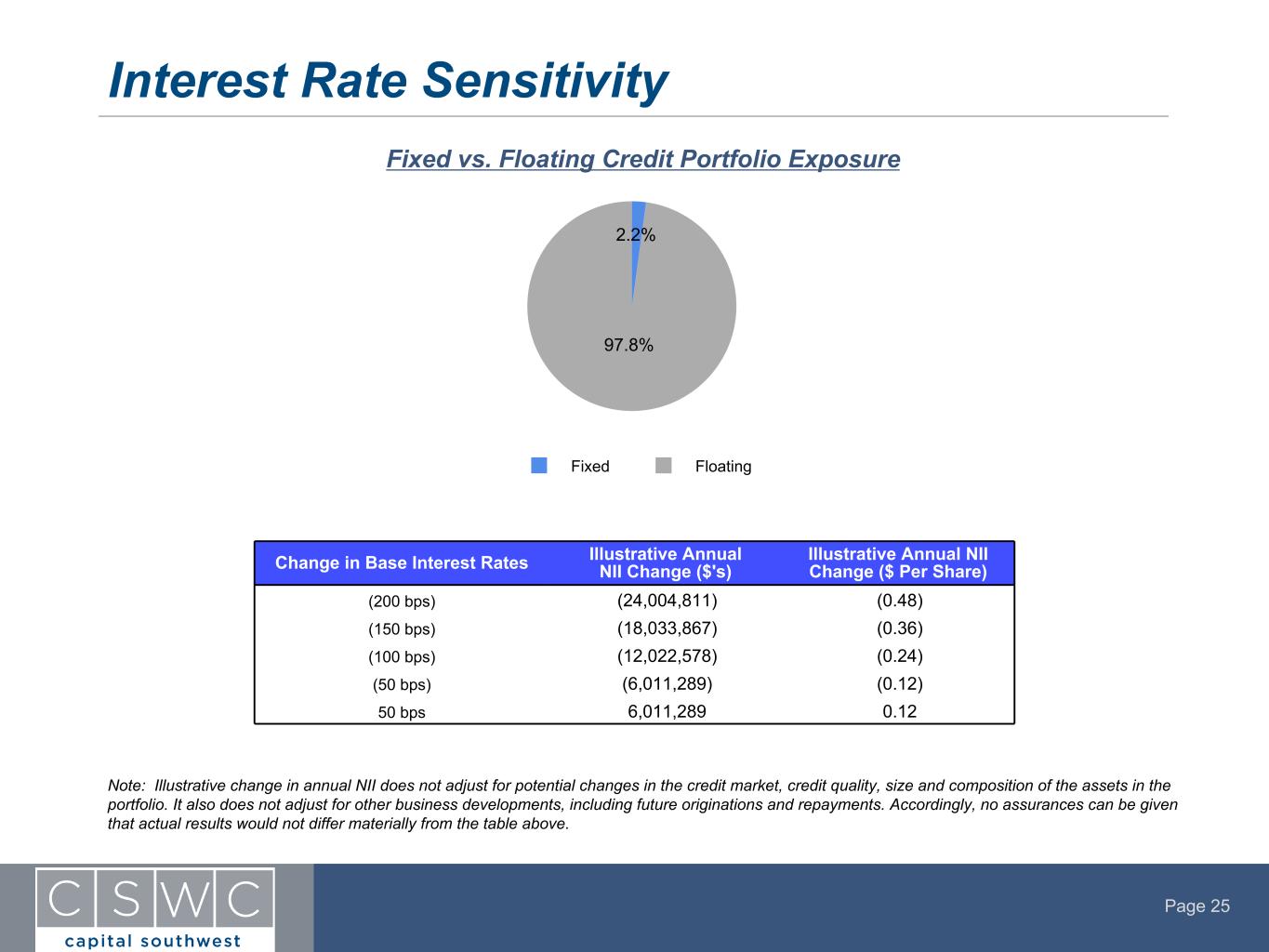
We've been seeing our economic leverage between 1.0 and 1.1. On the regulatory side, it has been around 0.8 to 0.9, and currently, we're at 0.9. We will continue to monitor the macroeconomic and geopolitical situation to assess any risks. At this moment, we feel that having a leverage of 0.9 and 1.08 is a suitable position for us. Looking back at our recent convertible bond offering and the ongoing global developments, we decided to take some risk off the table by incorporating bonds into our balance sheet, which will help us make informed decisions regarding leverage in the future. We believe we are in a strong position, especially since we are trading significantly above book value. Therefore, we are active in the ATM market to manage that metric moving forward.
Speaker 5
Okay. And just to make sure I understand the income on idle on your cash, some of that's accruing into fee income as opposed to other income…?
I think the line item you're referring to is labeled fee and other income. The other income, since it's not from portfolio interest, actually comes from money market interest income. That's why it falls under other. I would say that I don't expect to see this happen again; it's a one-time occurrence. That's the reason it fits into the other category rather than being classified as interest income.
It was a good quarter overall for our companies involved.
Speaker 5
Okay. Those are all my follow-ups. I appreciate your time. Thanks so much.
Operator
Thank you. And I show no further questions in the queue. At this time, I would like to turn the call back to Bowen Diehl for closing remarks.
Thank you, Operator. Thank you, everybody, for joining us. We appreciate it. Appreciate your time and look forward to giving you further updates in the future. Have a great rest of the week.
Operator
Thank you. This concludes today's conference call. Thank you for participating. You may all disconnect.