Operator
Hello, and thank you for being here. My name is Regina, and I will be your operator for the conference today. I would like to welcome everyone to the Customers Bancorp, Inc. Second Quarter 2025 Earnings Webcast and Conference Call. I will now turn the conference over to David Patti with Customers Bank. Please proceed.
Speaker 1
Thank you, Regina, and good morning, everyone. Thank you for joining us for the Customers Bancorp Earnings Webcast for Q2 of 2025. The presentation deck you will see during today's webcast has been posted on the investor's webpage of the bank's website at customersbank.com. You can scroll to Q2 '25 results and click Download Presentation. You can also download a PDF of the full press release at this spot. Our investor presentation includes important details that we will walk through on this morning's webcast. I encourage you to download and use the document. Before we begin, we would like to remind you that some of the statements we make today may be considered forward-looking. These forward-looking statements are subject to a number of risks and uncertainties that may cause actual performance results to differ materially from what is currently anticipated. Please note that these forward-looking statements speak only as of the date of this presentation, and we undertake no obligation to update these forward-looking statements in light of new information or future events, except to the extent required by applicable securities laws. Please refer to our SEC filings, including our Form 10-K and 10-Q for a more detailed description of the risk factors that may affect our results. Copies may be obtained from the SEC or by visiting the Investor Relations section of our website. Now at this time, it's my pleasure to introduce Customers Bancorp Chair, Jay Sidhu. Jay?
Speaker 2
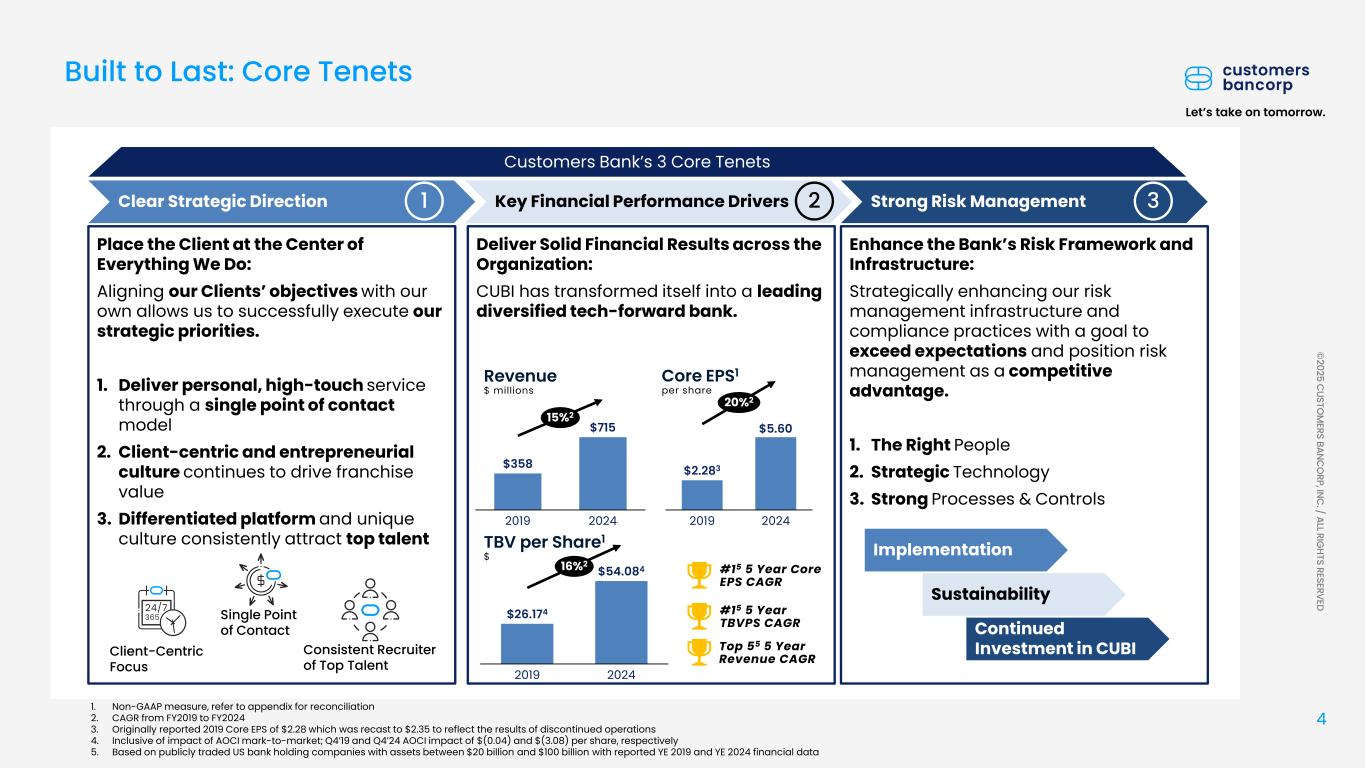
Thank you, Dave, and good morning, ladies and gentlemen. Welcome to Customers Bancorp Second Quarter 2025 Earnings Call. I'm joined this morning by our President and Chief Executive Officer of the bank, Sam Sidhu; and Customers Bancorp CFO, Phil Watkins; and Customers Bank CFO, Mark McCollom. First, I'm thrilled to welcome Mark on the call. Mark and I were partners at Sovereign Bancorp, and I'm thrilled he is now on the Customers team. And you know, Mark joined us in early June and will complete the transition to CFO of Customers Bancorp in the coming weeks. We are very excited about the continued depth of leadership we are building as our franchise grows. I also wish to thank Phil Watkins for his exceptional performance as Chief Financial Officer of Customers Bancorp over the past few quarters. He will continue to be a part of our top team. We are pleased to report another strong quarter, reporting results that materially exceed the consensus estimates. Before we dive into the results from the quarter, I'd like to take a few minutes to reflect on some of the incredible accomplishments of this organization. As many of you know, we founded Customers Bank in 2009 and then a year later, Customers Bancorp, all with an objective of creating a company with a bold idea to build a client-centric, tech-forward, high-performing business bank that could compete and win in the fast-evolving industry. Since then, we've grown from a small troubled $200 million asset bank in 2009, which had become a $3.2 billion asset bank by 2012 and today is a $22 billion commercial bank with national reach, high-performing, and I'm incredibly proud of our team and what we've accomplished together. Over the past 15 years, we've built a differentiated model, anchored in disciplined growth, innovation, and exceptional client service. Over the last 5 years, since Sam Sidhu joined the executive team, our transformation has meaningfully continued to accelerate. Under his leadership, the Customers Bank team has expanded into high-growth verticals, launched cutting-edge payment platforms like cubiX, and delivered industry-leading growth in tangible book value, revenue, and earnings per share. This has resulted in incredible value for our shareholders as our stock price has increased nearly 500% over the last 5 years. Most importantly, we've attracted and developed what I believe is the best management team I have had the privilege to work with, and I was a CEO of a $90 billion asset company and served on the Board of a multinational top 5 bank in the world. I am excited this morning to share that effective January 1, 2026, I will be transitioning to the role of Executive Chairman of Customers Bancorp, and Sam will assume the position of Chief Executive Officer of Customers Bancorp. Sam is a visionary leader with deep conviction in our strategy and culture, and we have every confidence in his ability to take this institution to even higher levels. Six years ago, the Board of Directors of Customers Bancorp and Customers Bank embarked on its responsibilities for choosing a successor for our incredible COO at that time, Dick Ehst, who had expressed his desire to retire. One of the best decisions, in my opinion, that Dick and the Board made at that time was to select and convince one of their fellow directors, Sam Sidhu, to join the bank as Chief Operating Officer in 2020. A year later, upon Dick's retirement, Sam was named the CEO of the bank, and we have been thrilled with Sam's leadership style, and we couldn't be more excited to have a thoughtful, strategic, and dynamic leader like Sam to be the CEO of Customers Bancorp, Inc. and lead us into the future. We are all convinced that our best years are ahead of us. I remain the largest individual shareholder of the company. For the past several years, I have taken my short-term annual bonus completely in Customers Bancorp stock. Even our Board receives the majority of their compensation in company stock. Our interests are totally aligned with the interest of our long-term shareholders. Our mission remains unchanged, to strive to deliver above-average long-term value for shareholders and our communities by putting clients first and executing superbly. The Board and I look forward to continuing to work closely to support Sam and our exceptional management team as they take on tomorrow. Please join me in congratulating Sam. With that, I'll turn the call over to Sam on Slide 4.
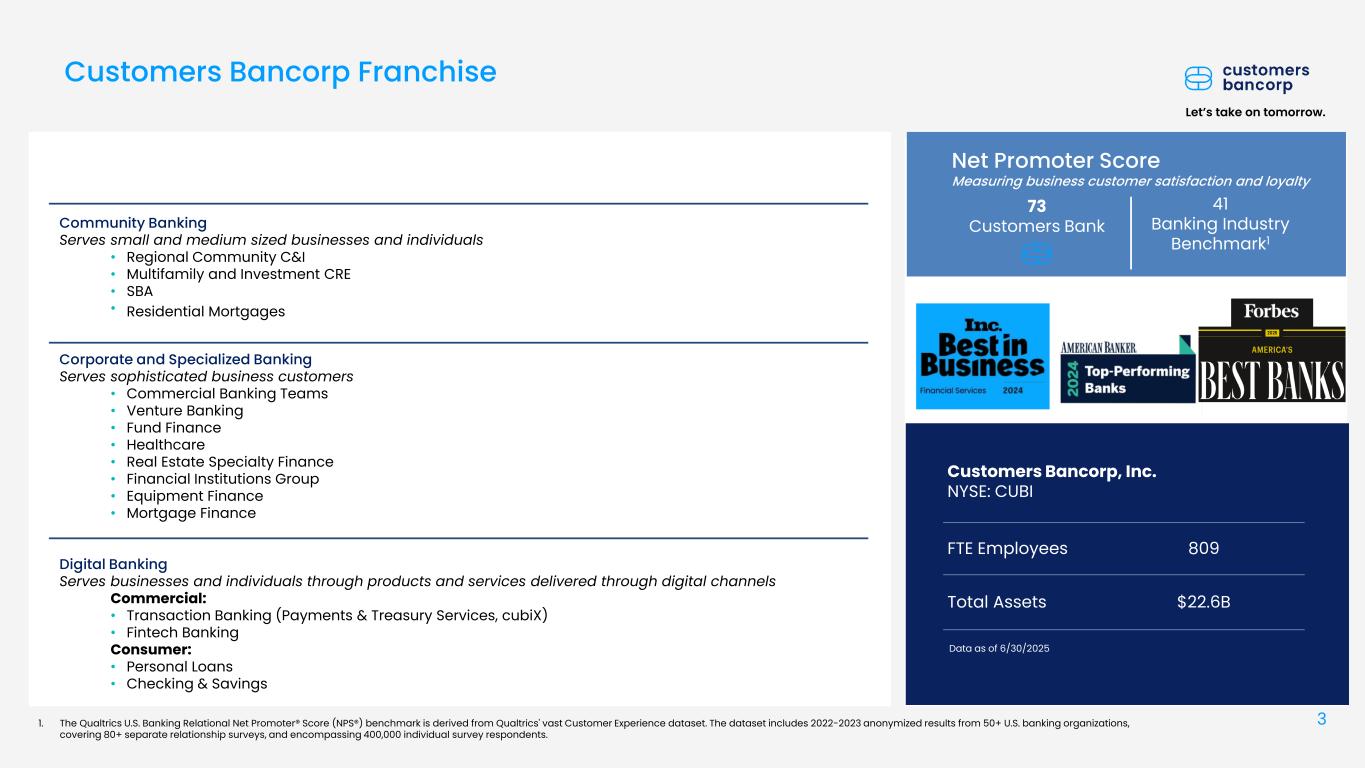
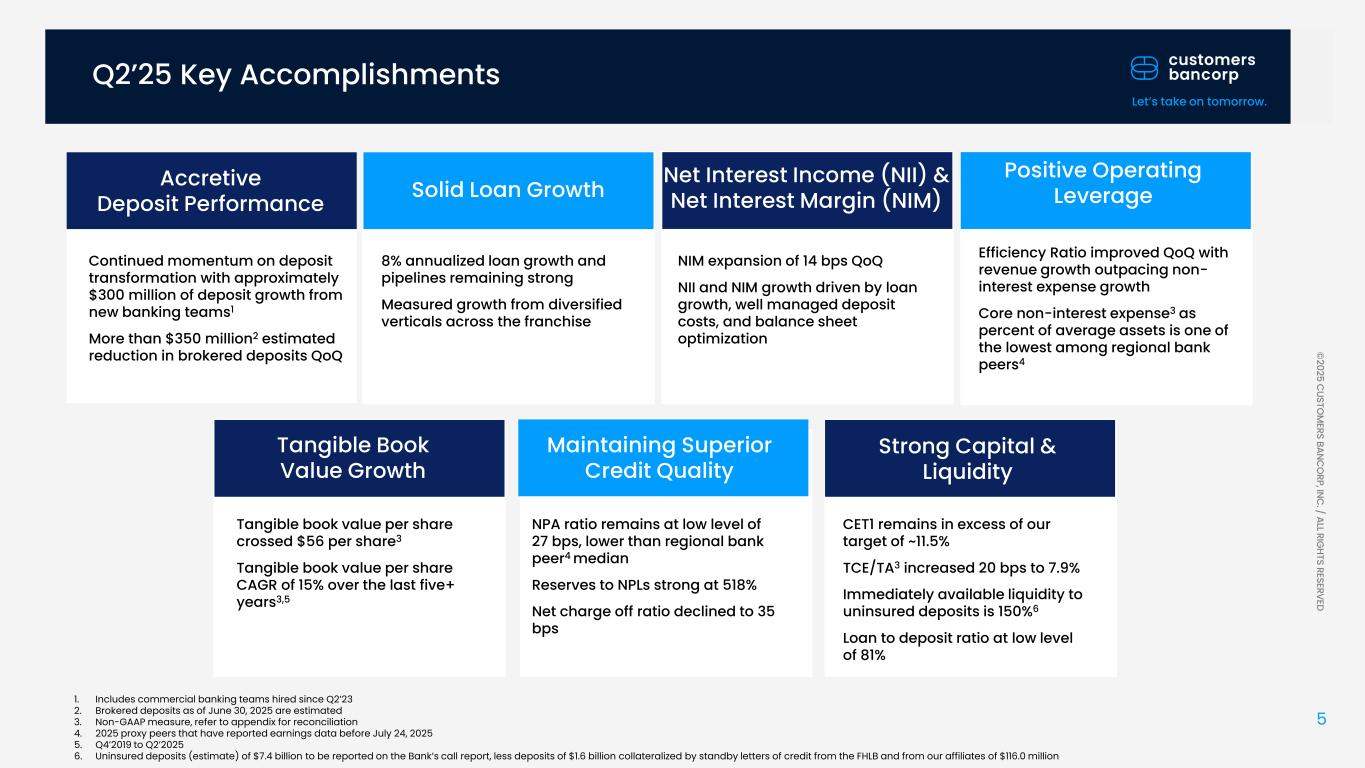
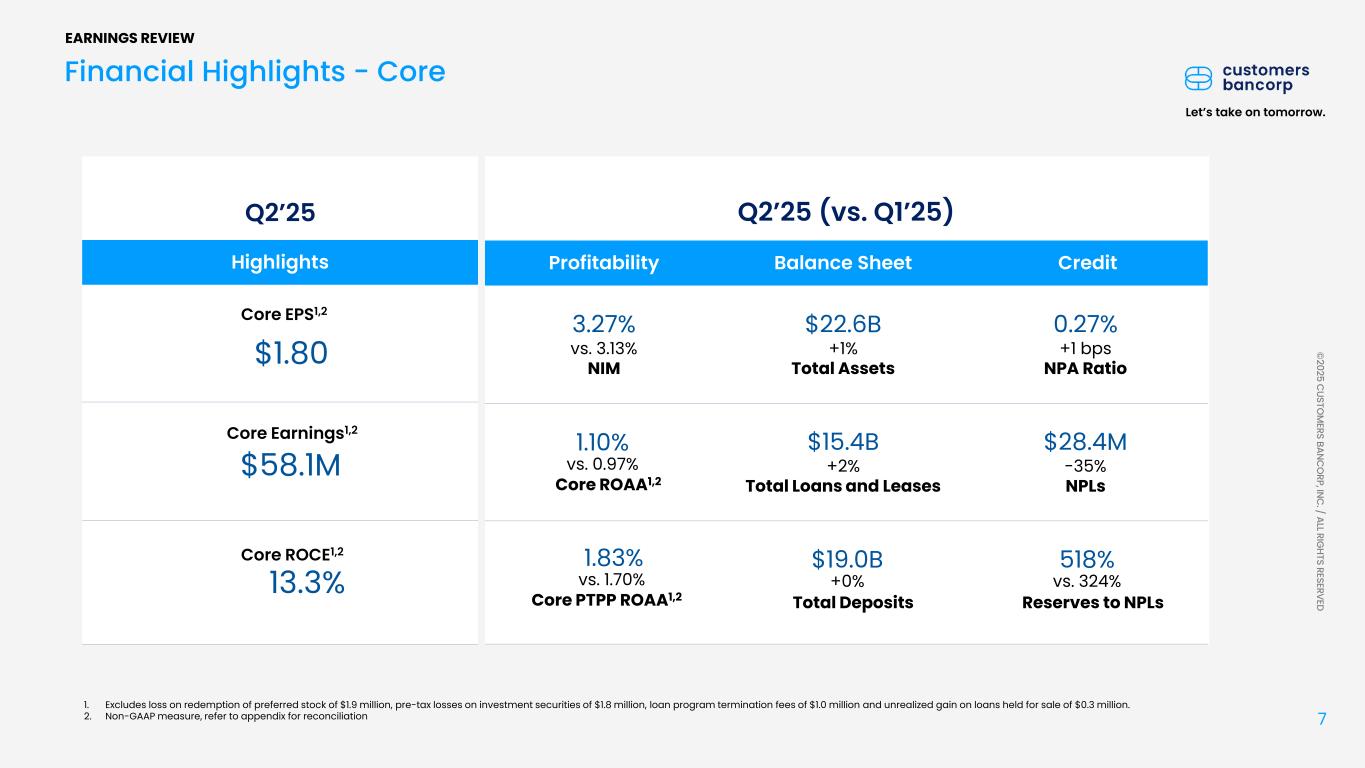
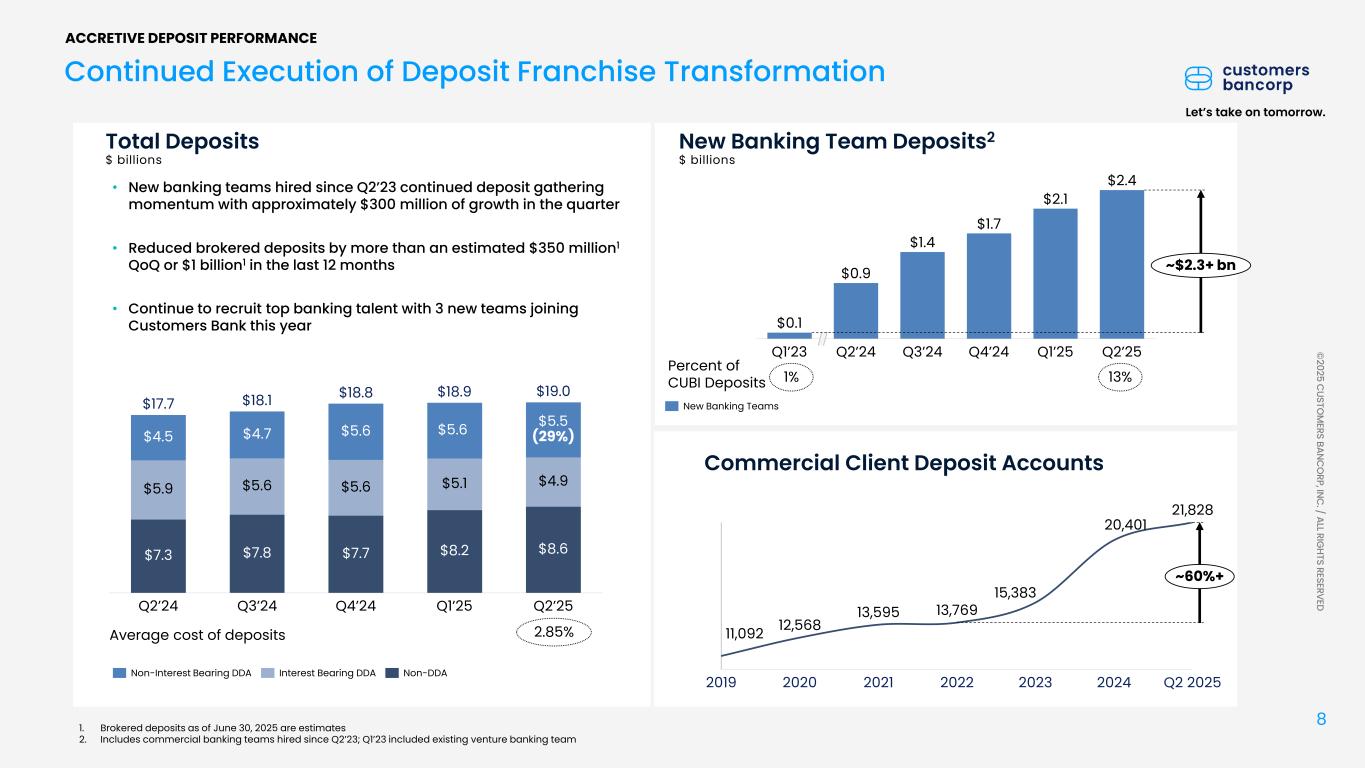
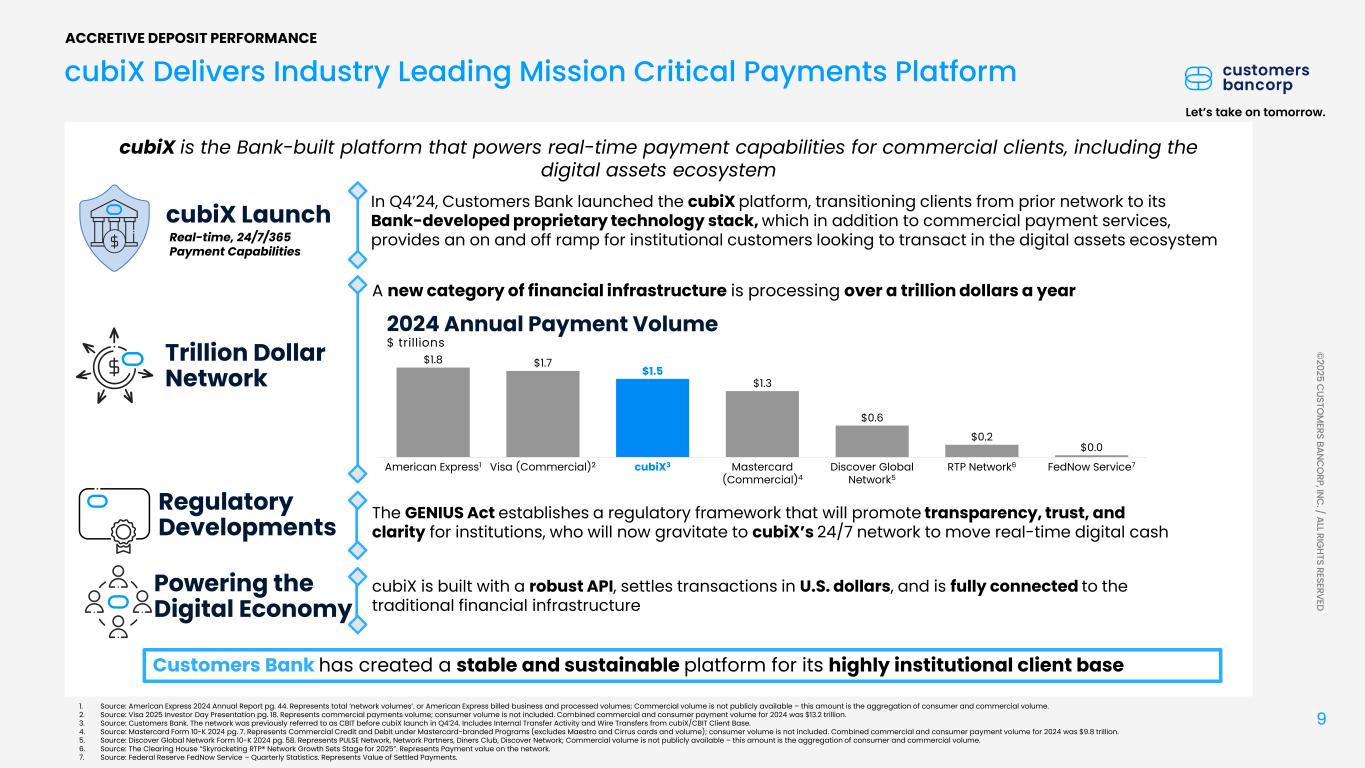
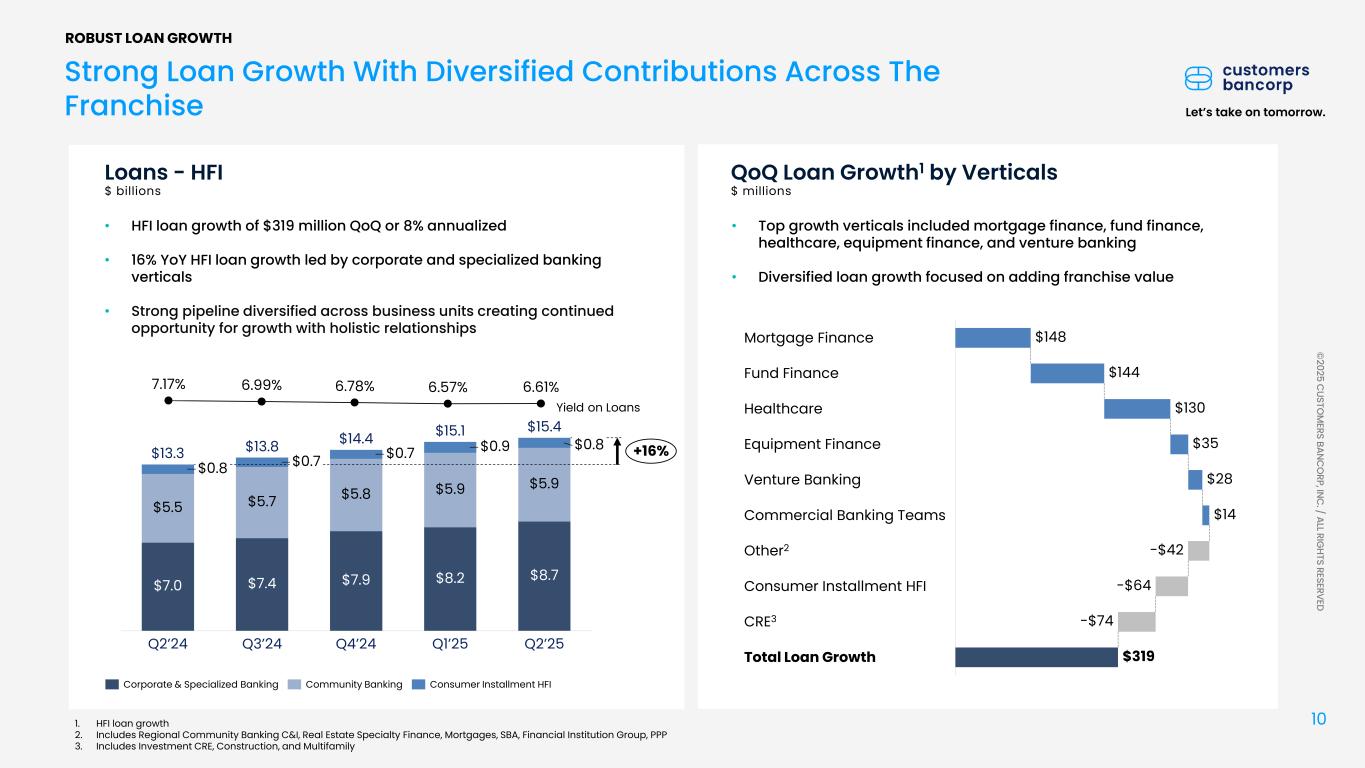
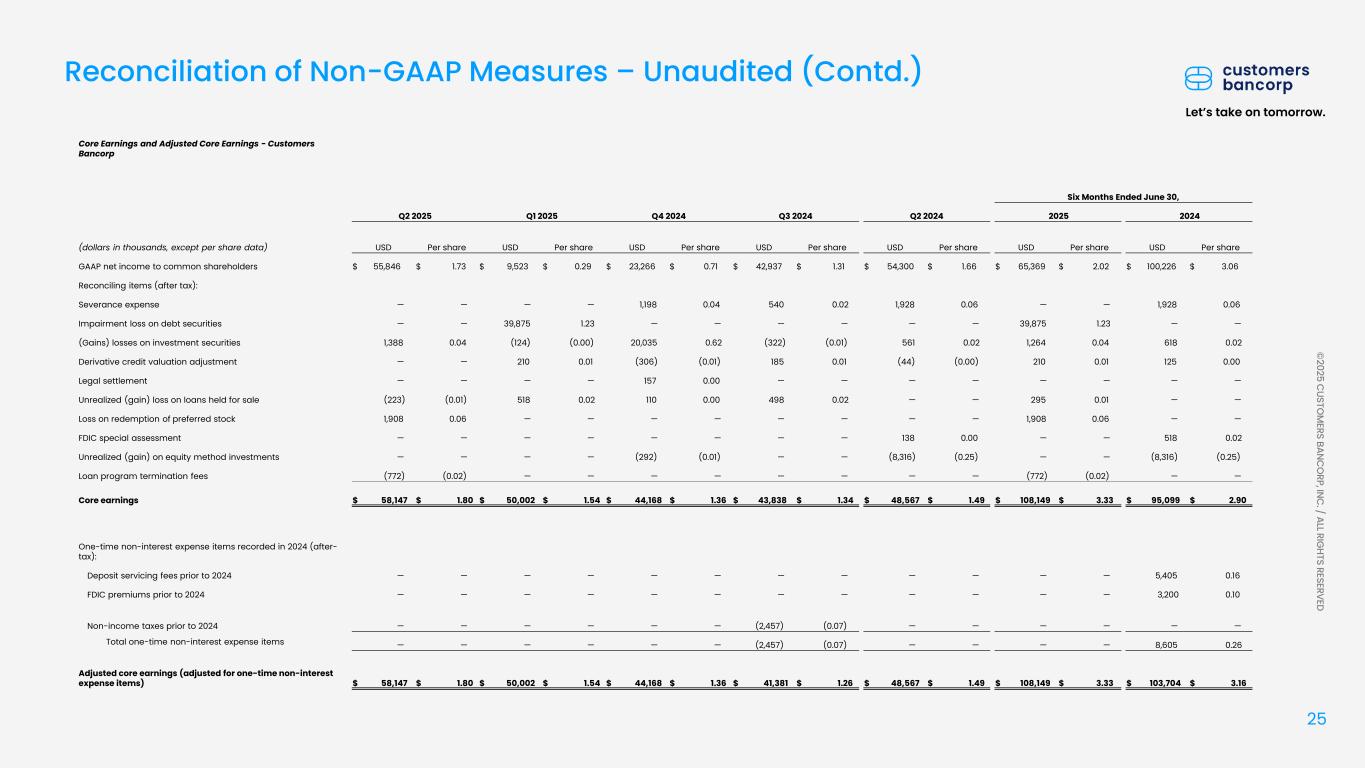
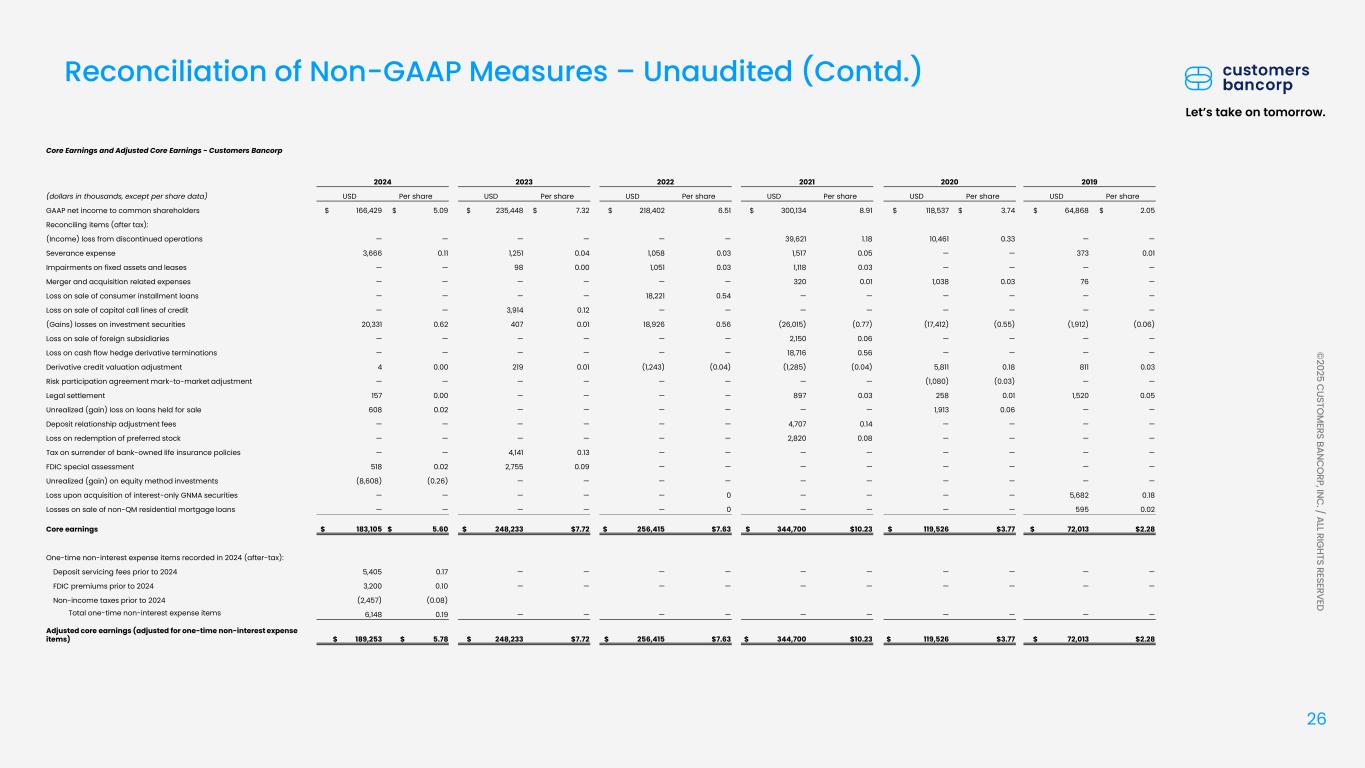
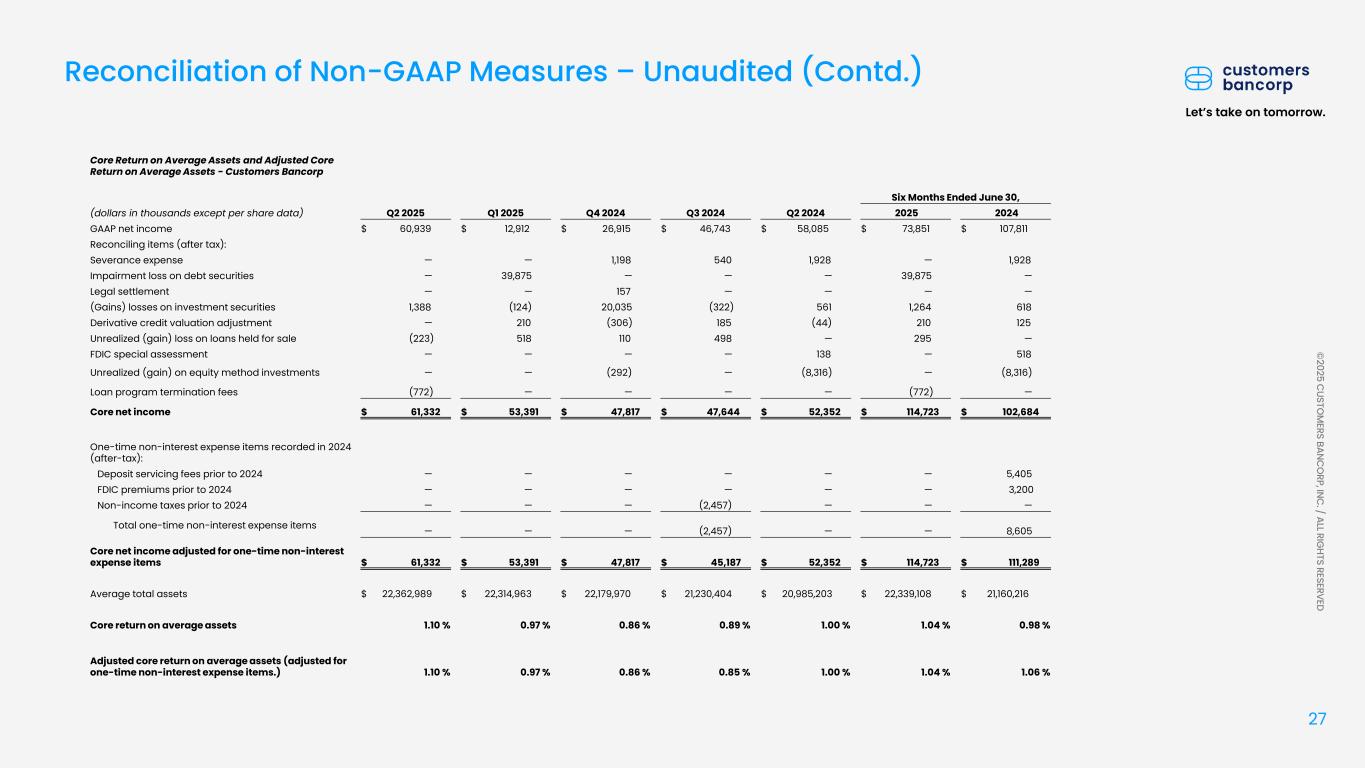
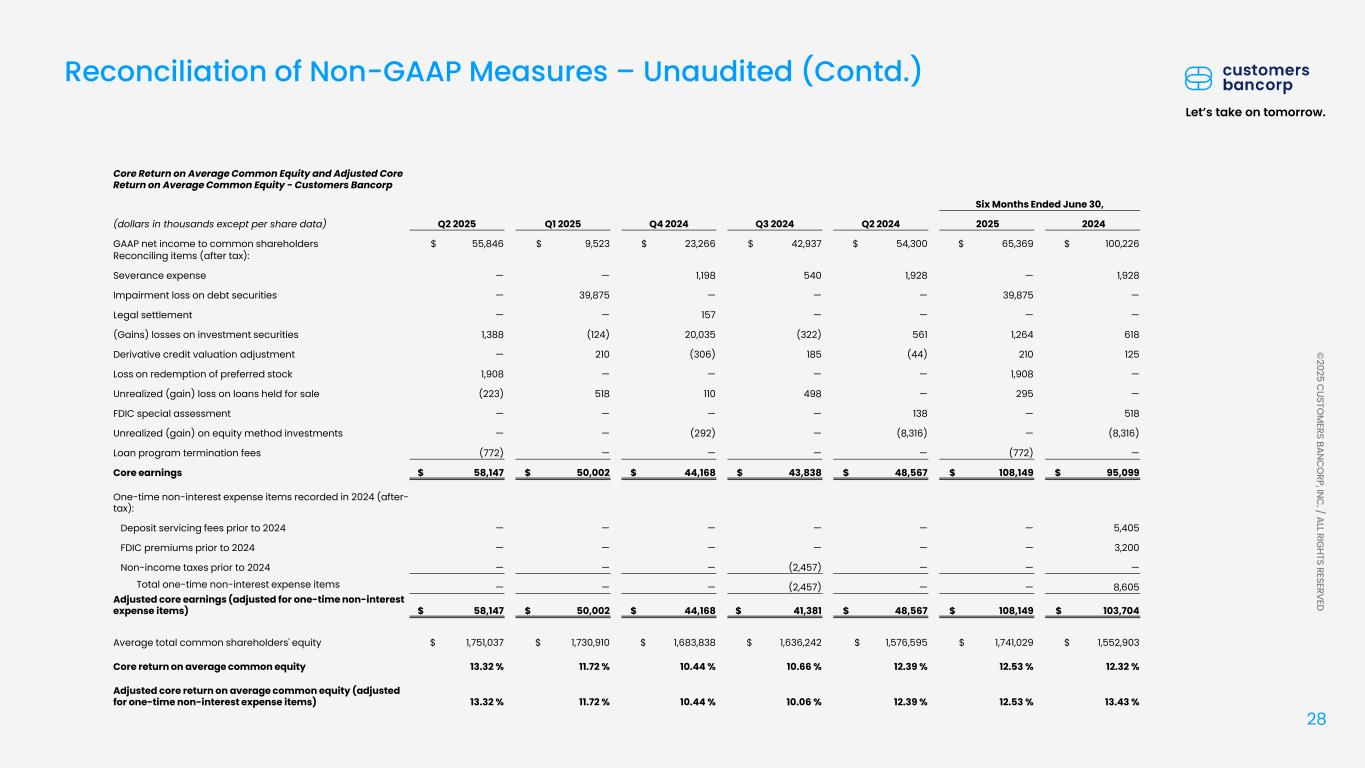
Good morning, Jay. I want to start by thanking you and our Board of Directors for trusting me with the role of CEO of Customers Bancorp. It’s an honor to take on this position and continue building on the strong foundation that Jay and his team have created since the bank's founding in 2009. This moment is particularly significant for me as I lead alongside such a remarkable team. Throughout the organization, from our commercial bankers to our operations, technology, risk, finance, and other departments, there is a united drive to innovate, serve with purpose, and strive for excellence. This entrepreneurial culture defines us and gives me great confidence about our future. While we are proud of our achievements and the momentum we have, we recognize that greater opportunities lie ahead. Our foundation is solid, we have a clear roadmap, and we boast an exceptionally talented team. We will maintain our focus on strengthening client relationships, executing with discipline, and providing lasting value to all stakeholders. We firmly believe that our long-term success depends on three key factors: a client-first approach, consistent financial performance, and a top-tier risk and operating framework. These principles will ensure our longevity and will guide our future actions. Our entrepreneurial, client-centric, and performance-driven culture reinforces these pillars, enabling us to attract and retain top talent consistently. The results and the trust we’ve gained from our clients, team, and shareholders reflect this. Financially, Customers Bank has been the top performer in EPS and book value growth for the last five years, translating these successes into long-term returns for our shareholders. As noted by Jay, we have also been the top-performing bank stock in the U.S. over a five-year span. In the second quarter, we achieved another strong performance. Highlights include nearly $300 million in deposit growth from our new commercial banking teams in what is typically a slow quarter, and an annualized loan growth of 8% supported by diverse contributions across the franchise. Our net interest margin increased by 14 basis points quarter-over-quarter, and we further improved our efficiency ratio while continuing investments. We also grew tangible book value, surpassing $56 per share, all while keeping strong credit quality and liquidity metrics. In terms of GAAP financials and core performance, our figures exceeded expectations driven by widespread strong results. We recorded core EPS of $1.80 with core ROE and ROA of 13.3% and 1.1%, respectively, indicating substantial strength across the business. Our credit metrics remained robust, which Phil will explain in more depth later. Previously, during our third quarter 2024 earnings call, I mentioned the potential for achieving 30% core EPS growth in a year if we followed our strategic priorities. I am proud to announce that we've surpassed that with about 35% core EPS growth from those levels a quarter ahead of schedule. Moving to our deposits, we are effectively transforming our deposit base towards high-quality sources. Total deposits were stable at $19 billion, but the significant contributions came from our new banking teams, which generated nearly $300 million in high-quality deposits this quarter. These teams currently manage $2.4 billion in granular funding, representing around 13% of our total deposits in less than two years, which is exceptional. To highlight the granularity of this growth, commercial account openings increased by 14% this quarter and over 60% since the end of 2022. The planned reduction in deposits serviced by BMTX had a slight effect on our average cost of deposits this quarter. Without this impact, interest-bearing deposit costs would have decreased by five basis points, illustrating the success of our deposit remix strategy. We reduced brokered deposits by another $350 million this quarter, totaling a reduction of approximately $1 billion over the past year, and continuing this decline is a priority for us. Non-interest-bearing deposits remained strong at about 29% of total deposits. A key advantage in our deposit transformation is our ability to attract top-tier banking talent and provide them with the resources and platform to thrive and deliver results quickly. When we mention team recruitment, we're focused on strategically enhancing the franchise by hiring experienced professionals with substantial market knowledge, existing client relationships, and a solid performance record. Recently, we onboarded three new teams to the bank and we are actively recruiting high-performing deposit-focused teams. Two more teams will be starting soon, and we are in advanced discussions with several others. Our reputation as a high-performance, tech-forward institution with an entrepreneurial culture is drawing more talented bankers seeking to leave traditional legacy institutions for a platform that allows them to serve clients more effectively. Team recruitment is central to our strategy, fundamental for relationship building, and essential for expanding our franchise with intention, ultimately creating long-term shareholder value. Now, regarding cubiX, our in-house developed payments platform, it is specifically designed for institutional clients looking for a tech-oriented, service-focused, and reliable banking partner. cubiX has become a critical payments platform for our commercial clients. It offers value through 24/7 payment capabilities, constant product enhancements from client feedback, and a growing network of unique trading pairs. cubiX is not merely a tech platform; it strengthens relationships and provides us with a competitive advantage. It is primarily utilized by the digital asset industry as a means for institutional players wanting to trade and settle on our network. In 2024, we processed about $1.5 trillion in payment volume, ranking us #3 among well-known payment networks, just behind Amex and Visa Commercial. This aligns with our goal of being a top contender in the franchise businesses we are involved in and achieving leading performance. We are building a scalable, compliance-focused platform that aligns with the long-term evolution of digital finance, positioning Customers Bank as a preferred partner for the industry’s future. cubiX has proven to be a valuable asset in our franchise, and we believe it has been historically undervalued. Now regarding loan growth, we achieved approximately $320 million in net held-for-investment loan growth this quarter, reflecting a robust annualized rate of 8%. This growth was strategic, diversified, and relationship-driven, with our corporate and specialized sectors leading the way. Mortgage financing added to our success, thanks to our established leadership in that area. Fund finance had a strong performance, and healthcare lending is gaining momentum. Our equipment finance division continues to see consistent growth with solid yields and credit structure. Although our commercial banking teams focus primarily on deposits, they are also generating high-quality loan volume featuring healthy relationship economics. We maintain pricing and credit discipline while ensuring we have a diverse platform that isn’t overly dependent on any single geography, industry, or client segment. This flexibility allows us to pursue opportunities where credit exists. Looking ahead, our loan pipelines are strong across various sectors, and we are well-positioned to attract high-quality clients and relationships, often from larger institutions. Now, I'll pass the call over to Phil.
Speaker 4
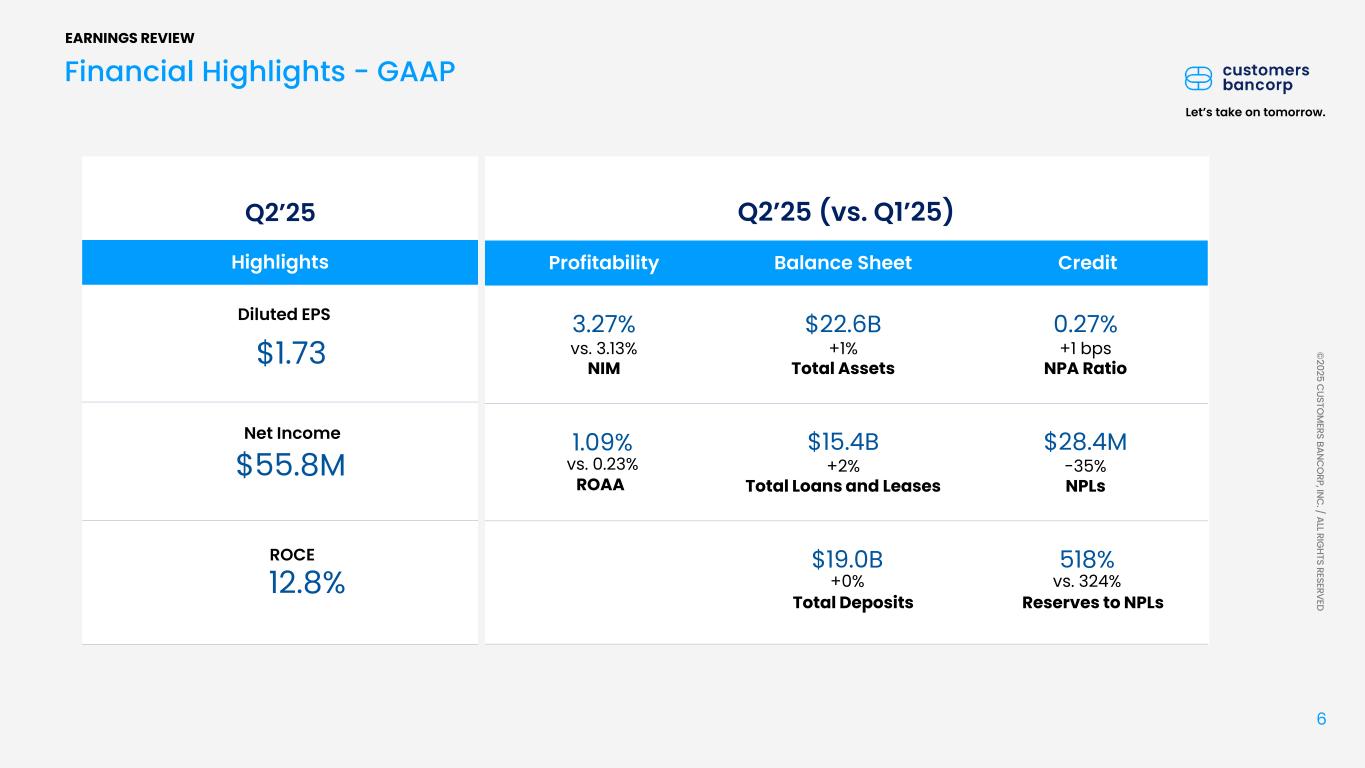
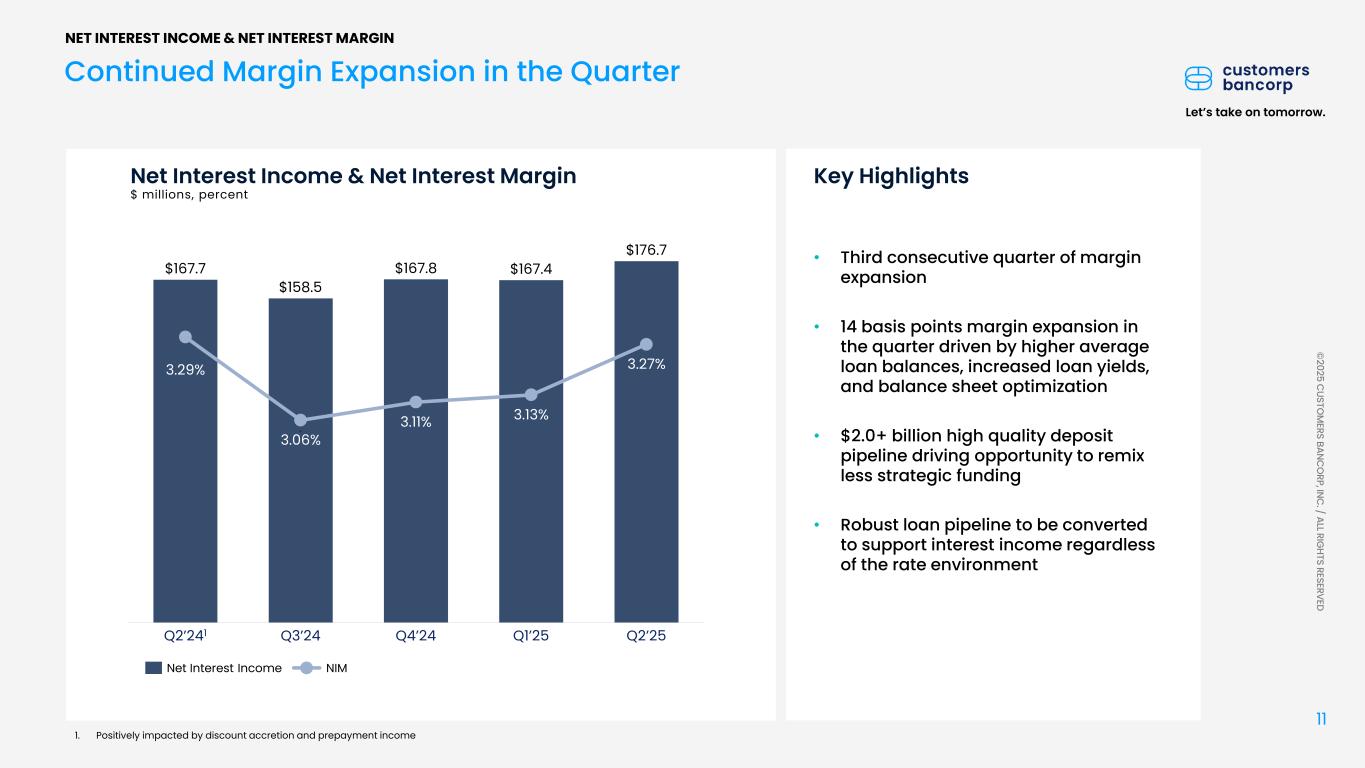
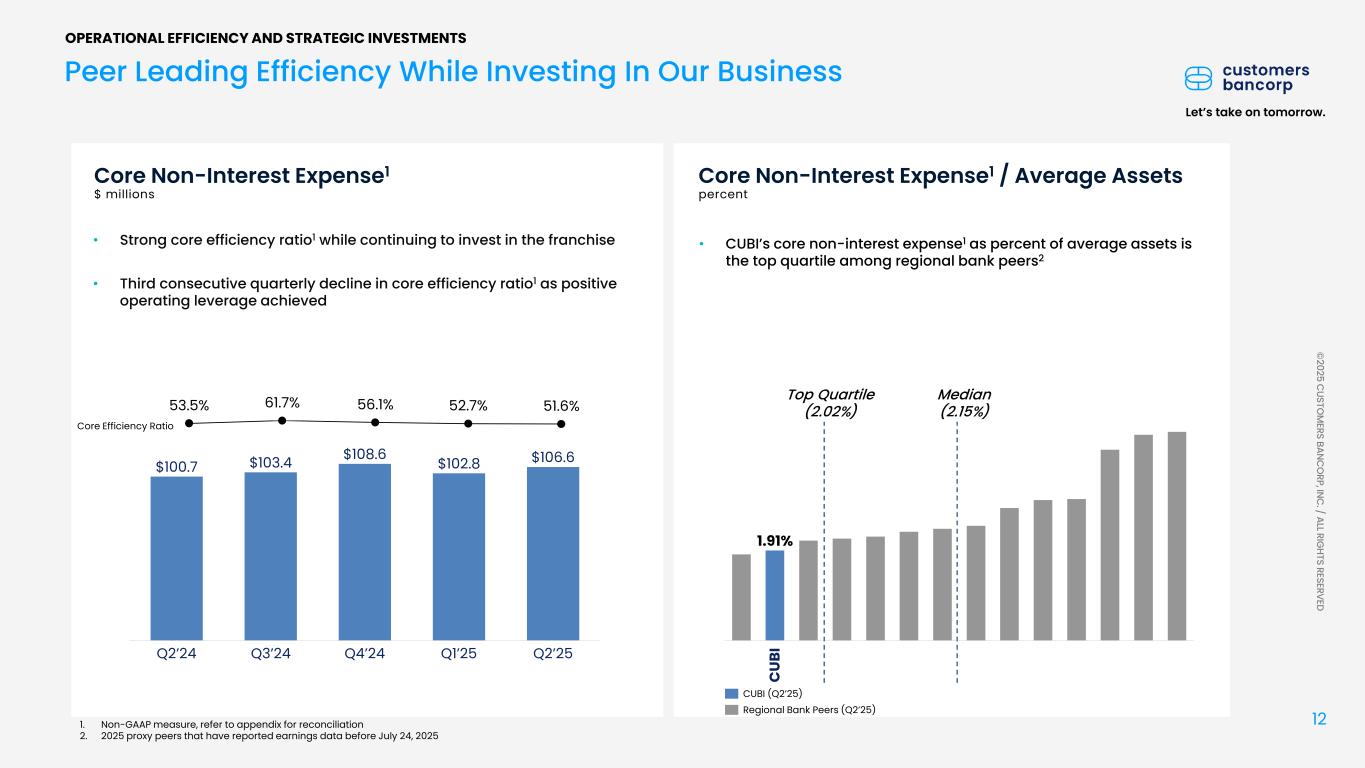
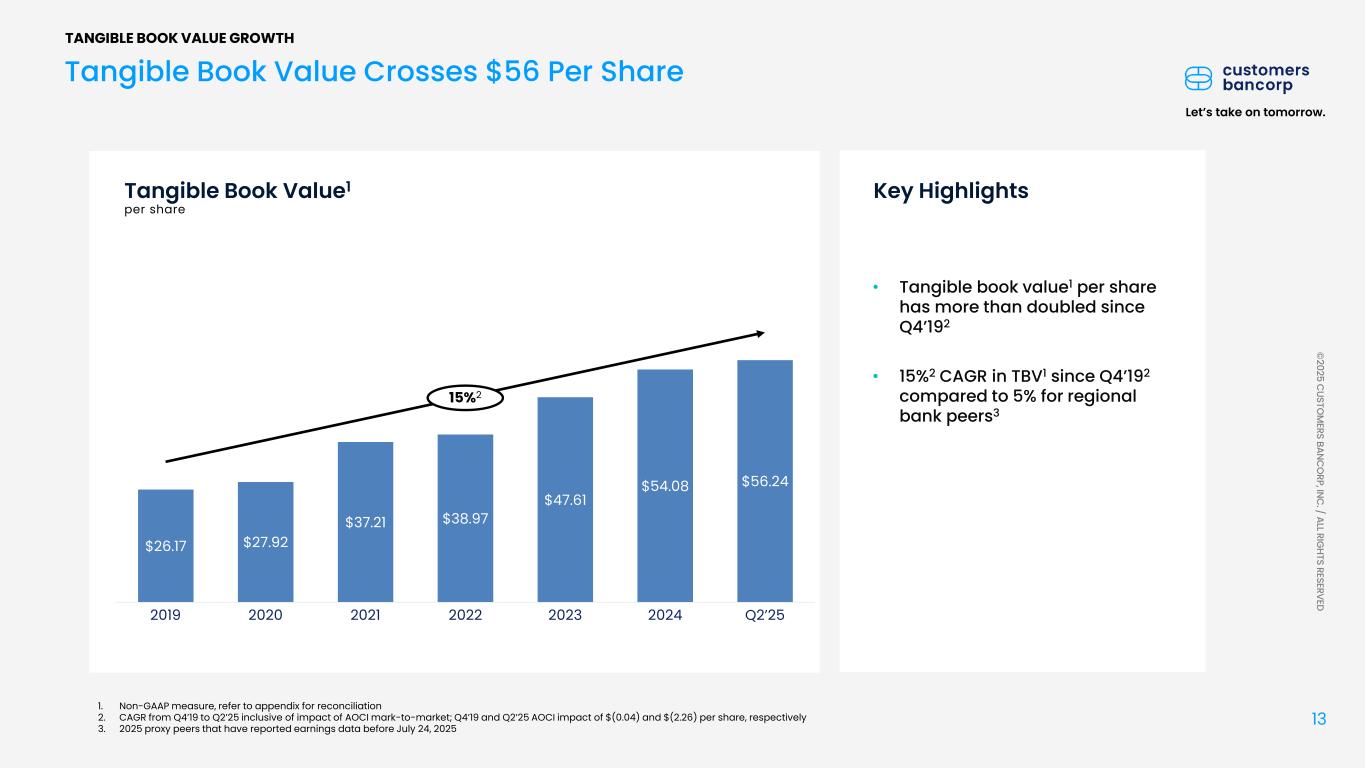
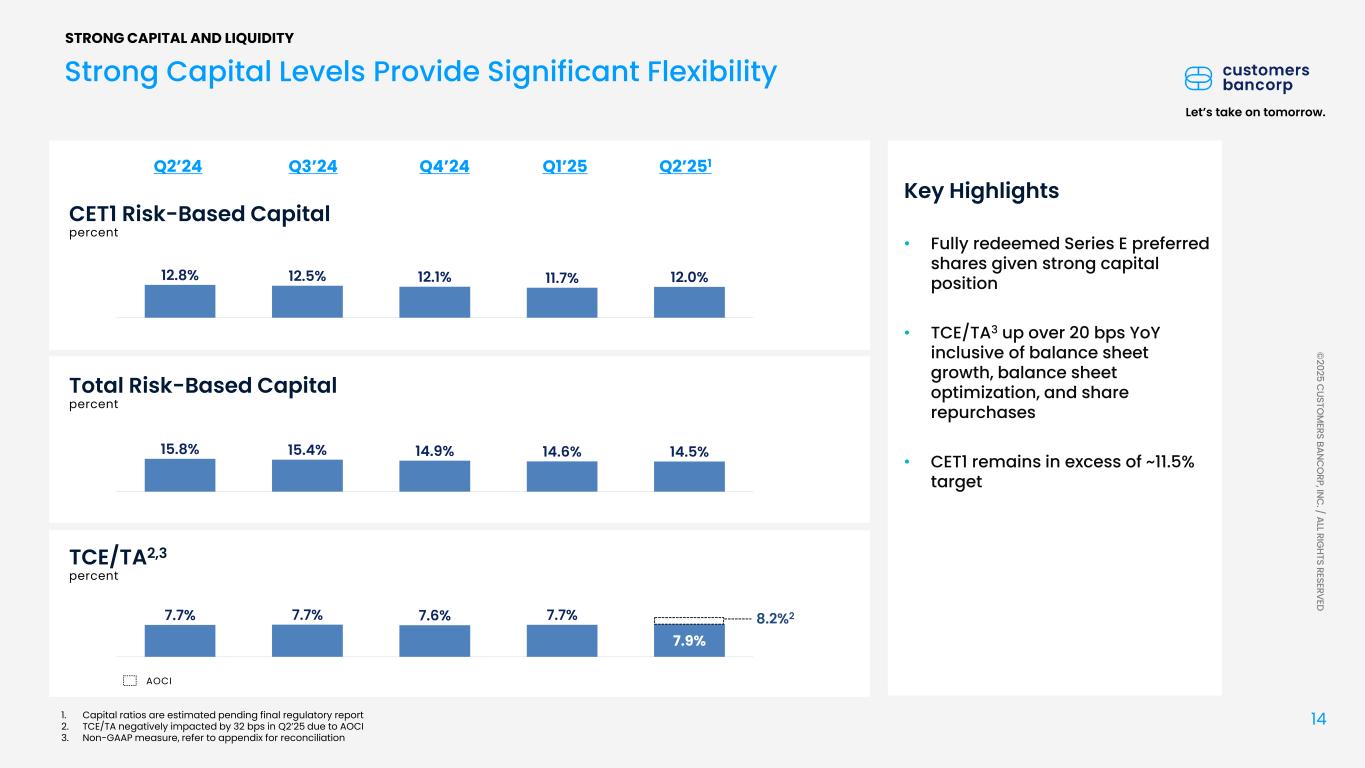
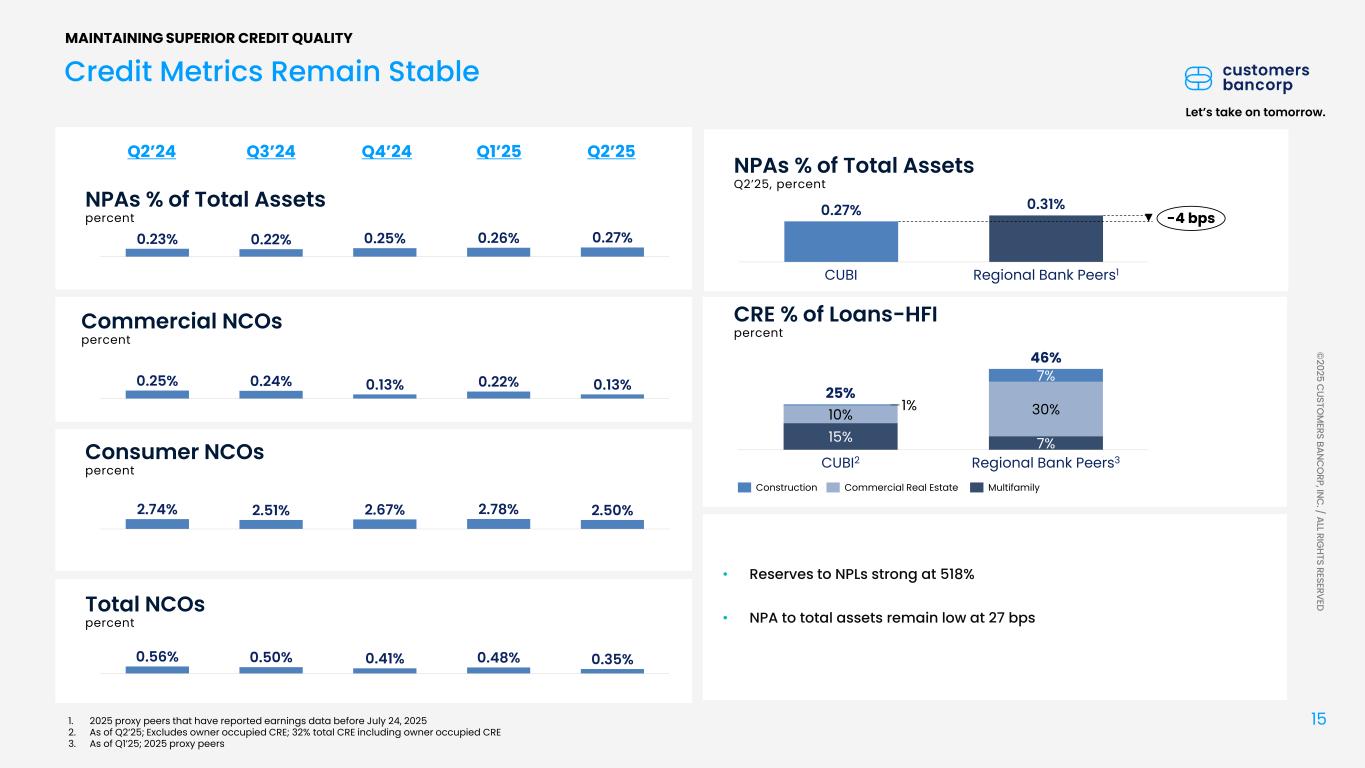
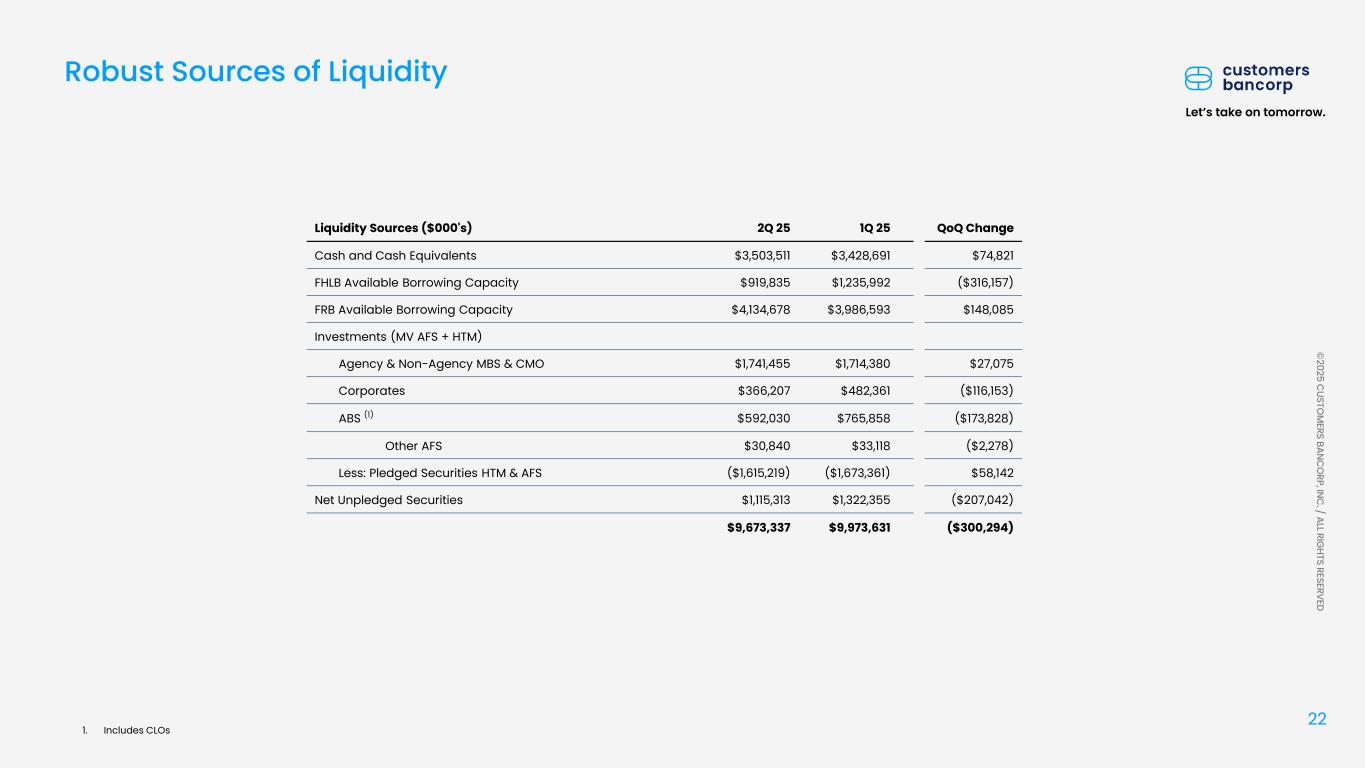
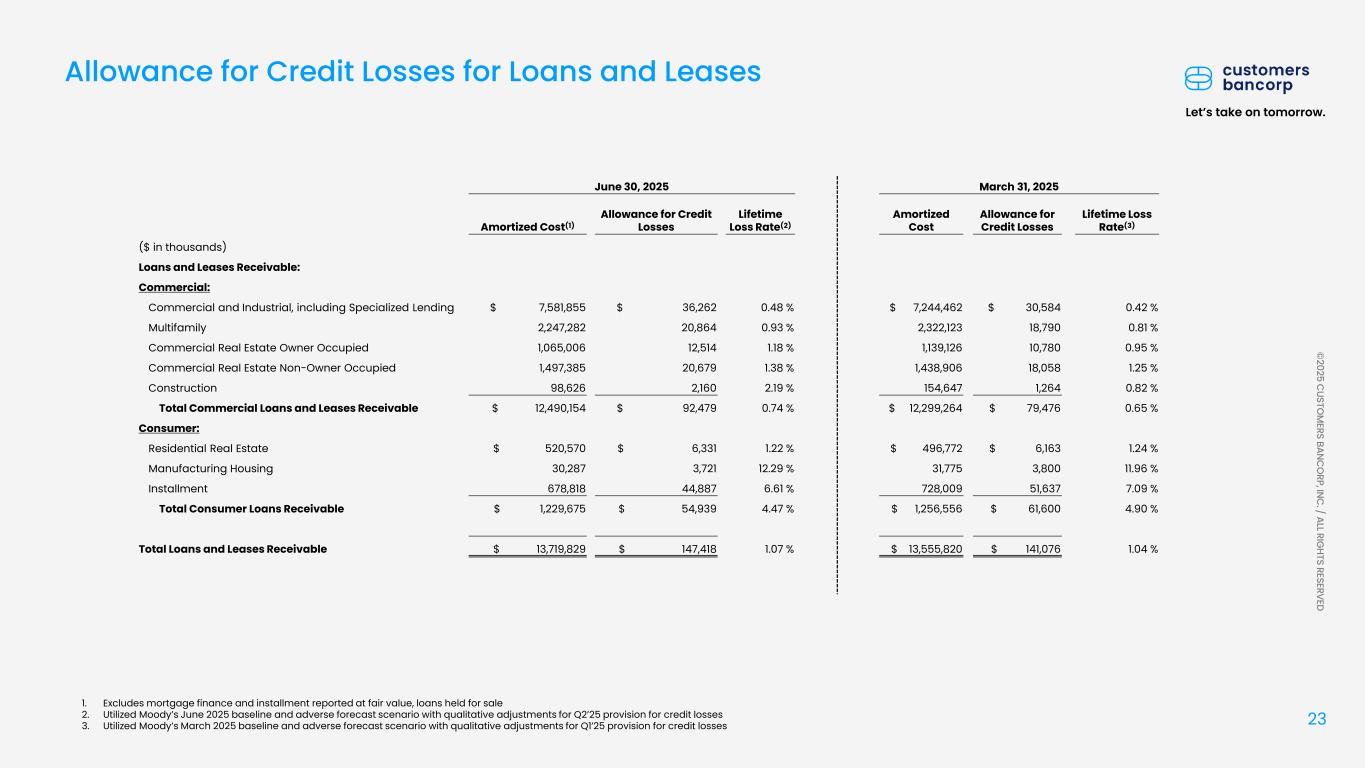
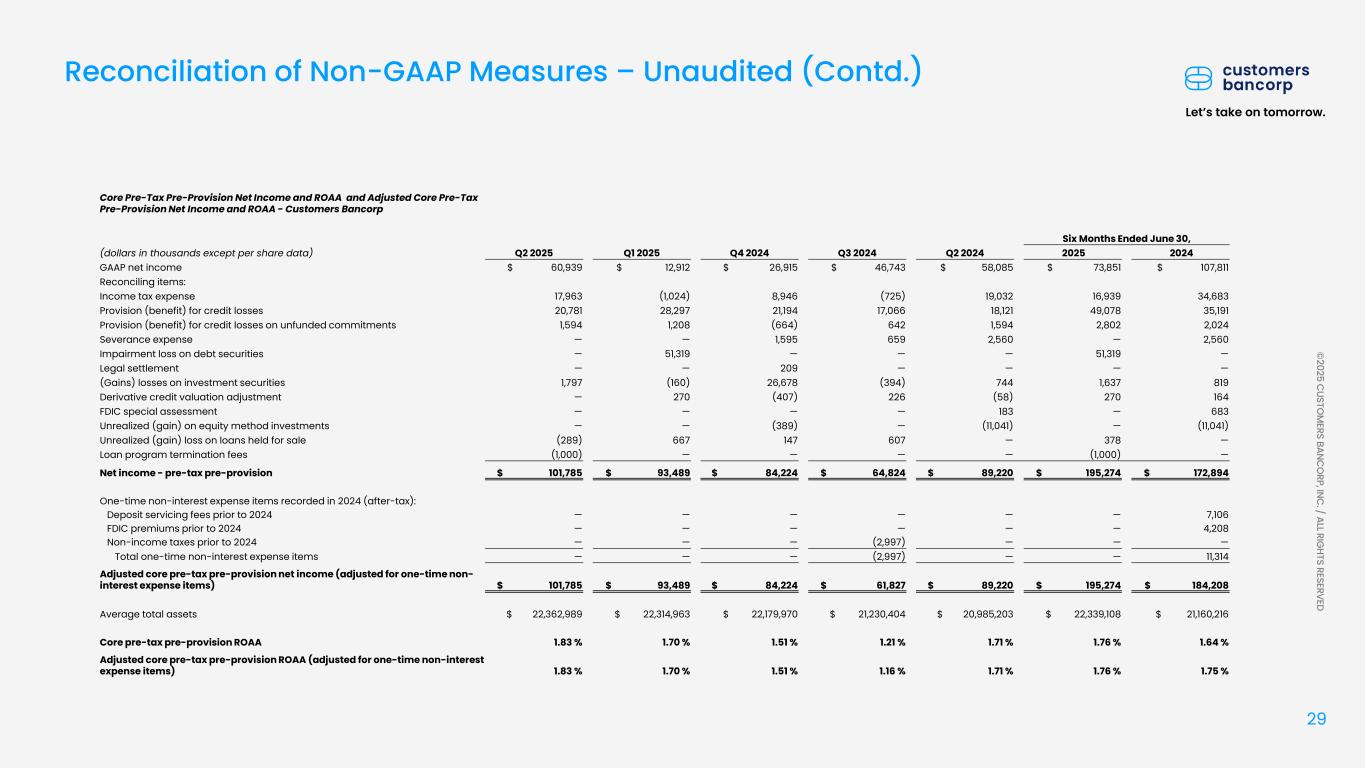
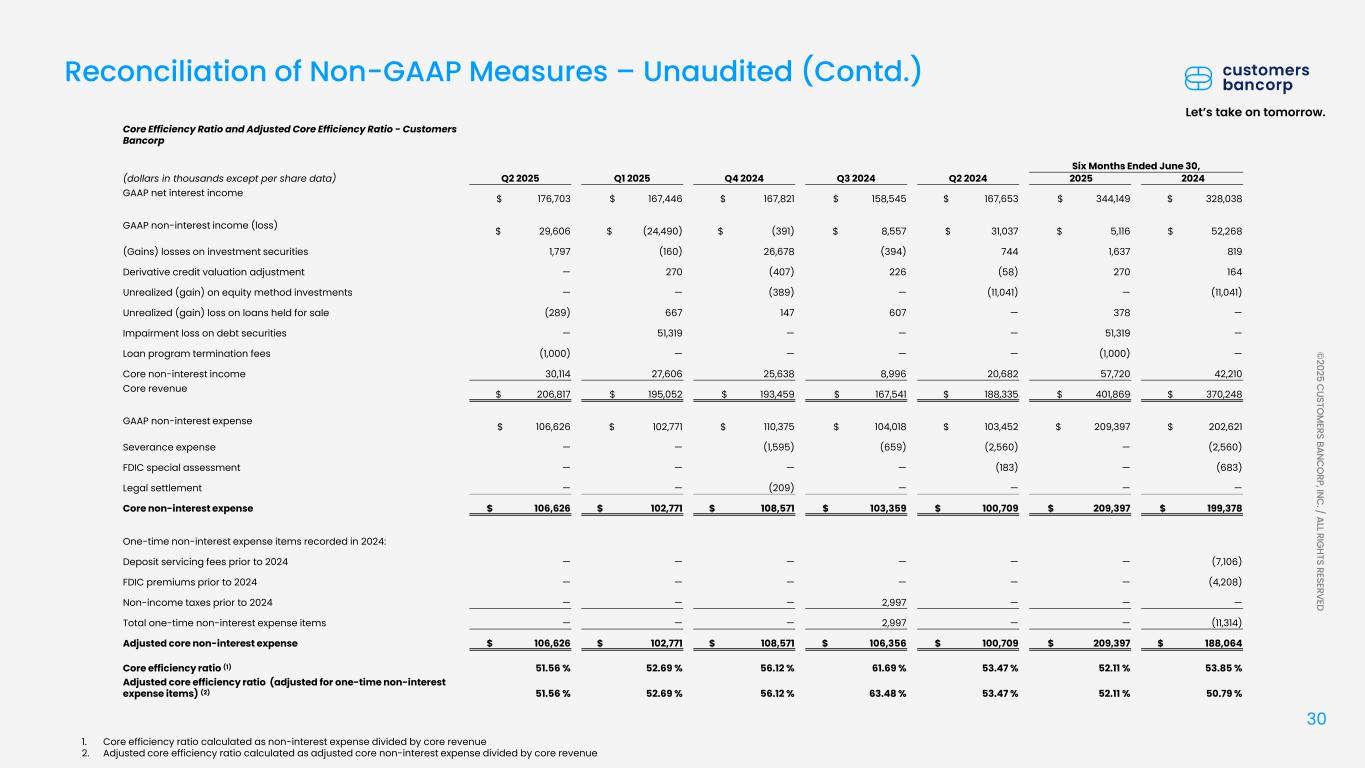
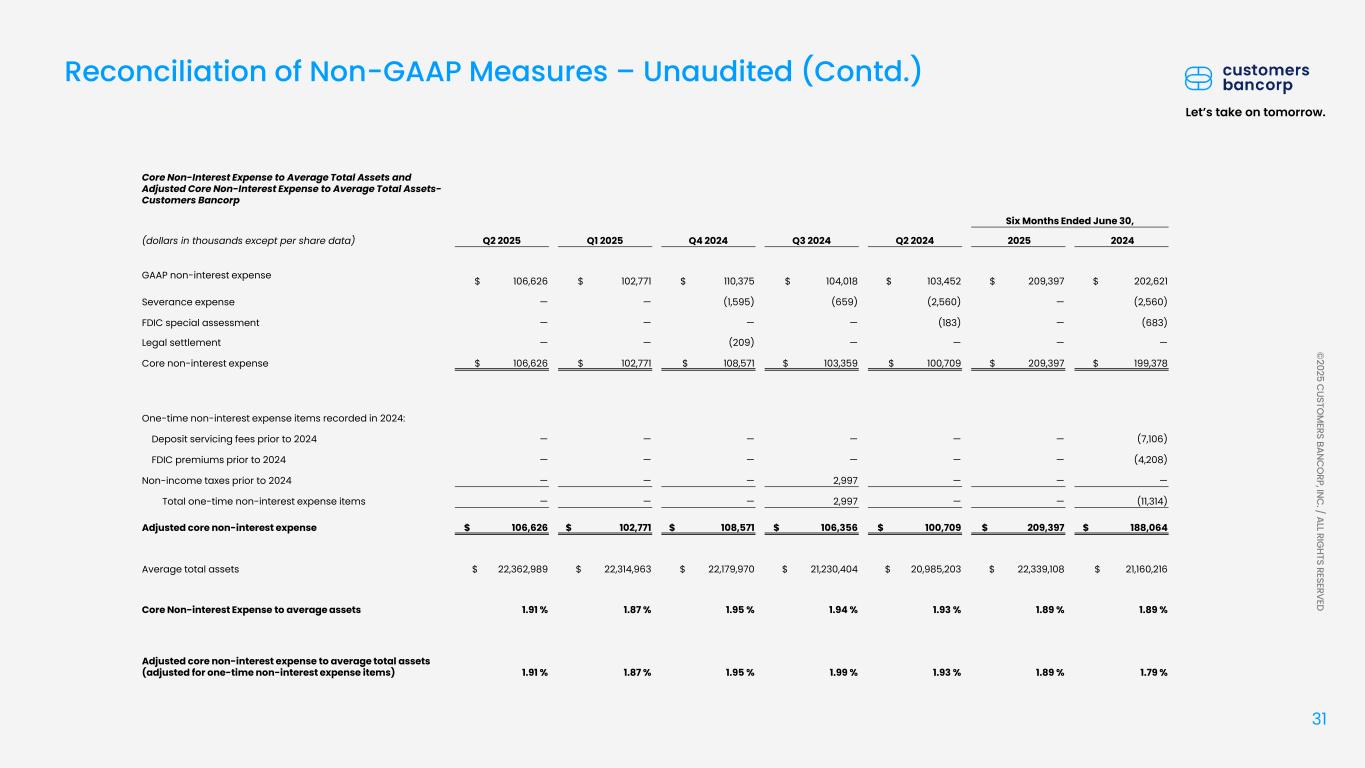
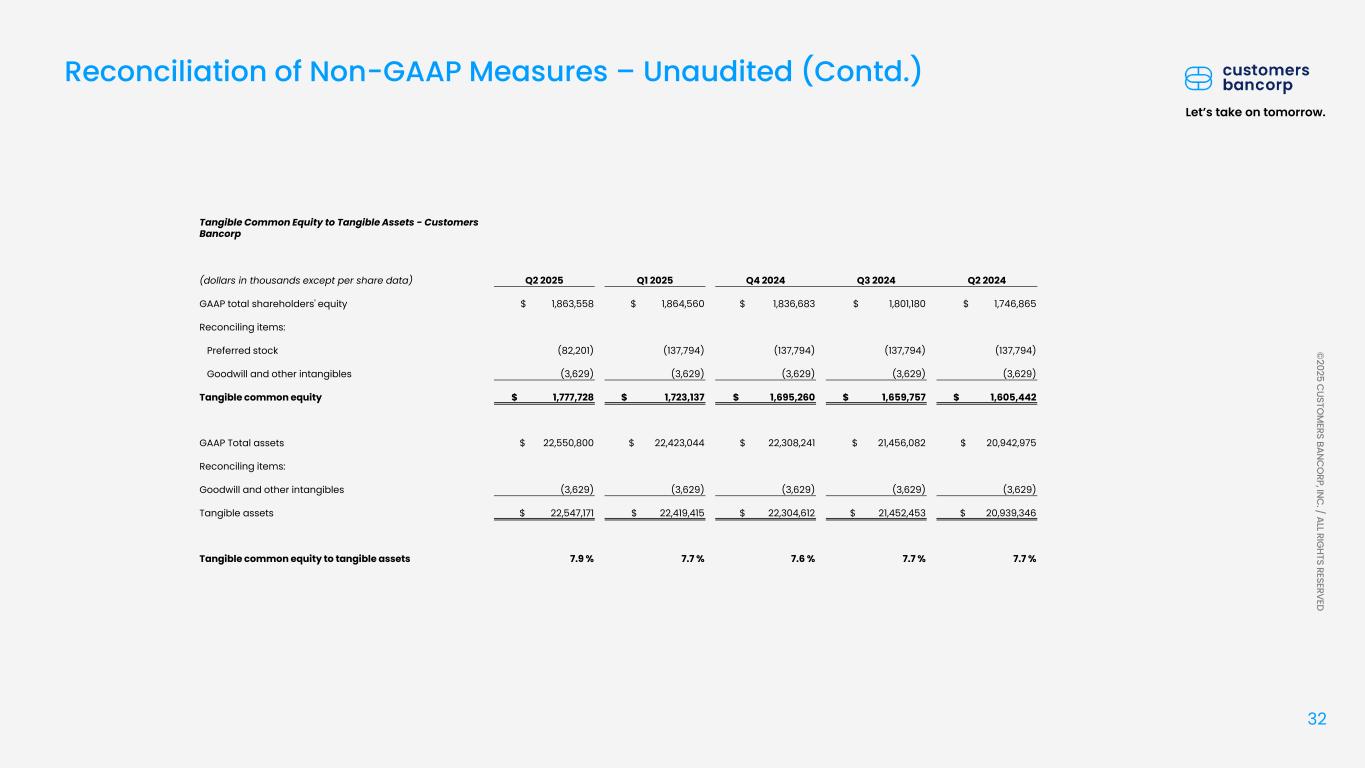
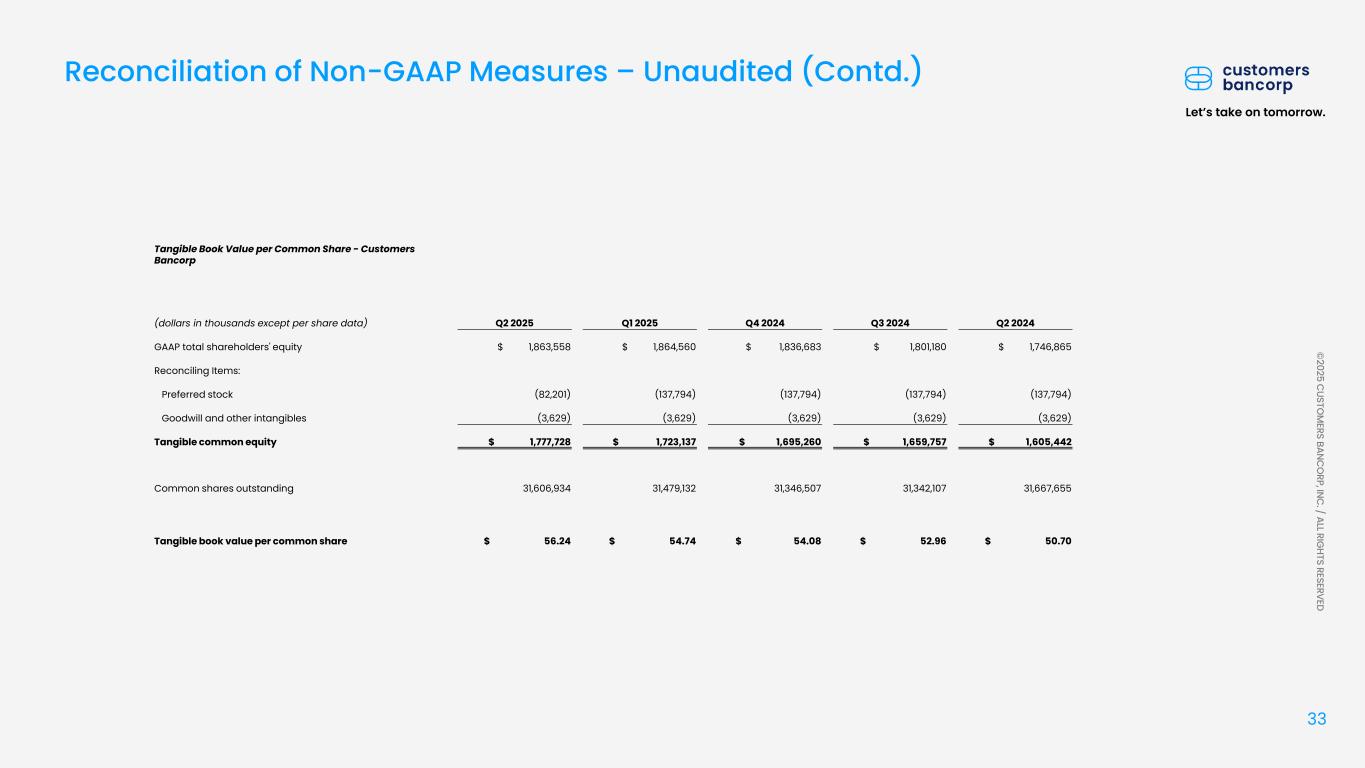
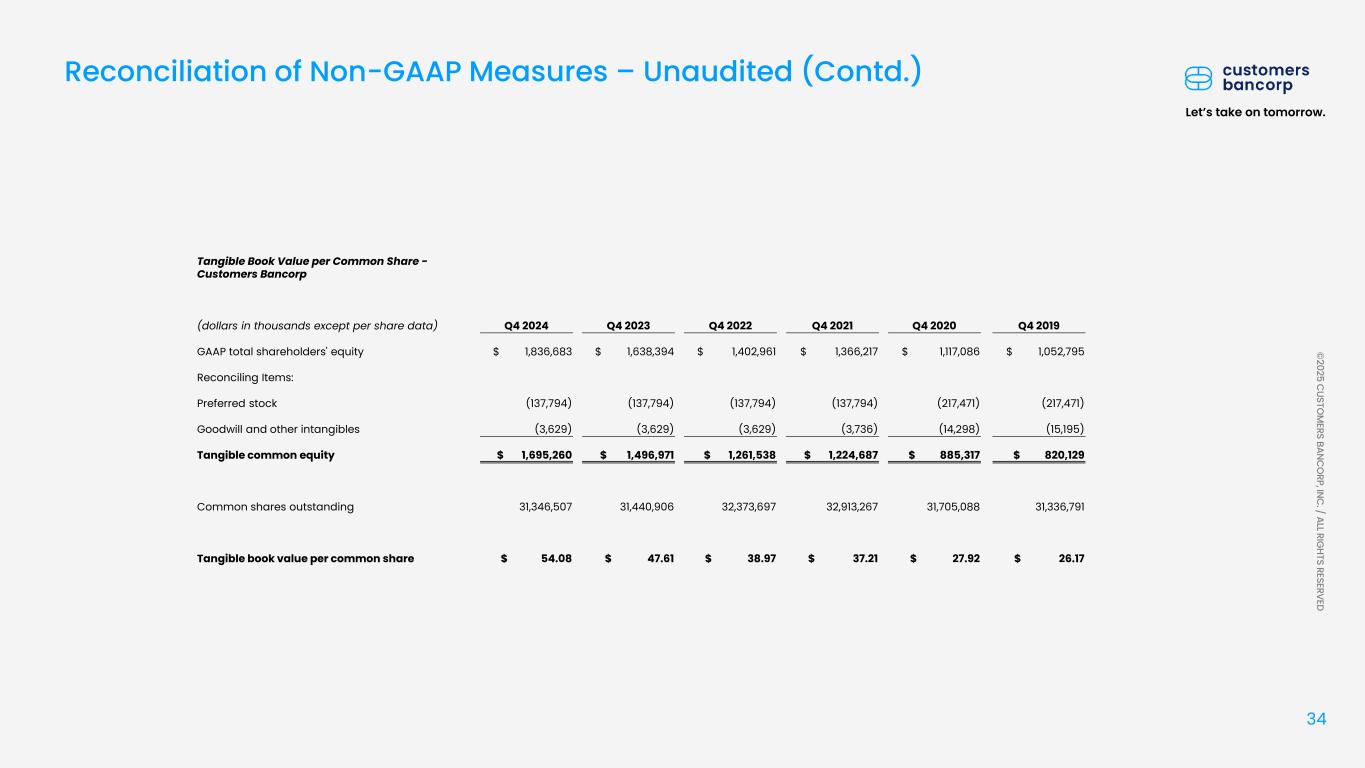
Thanks, Sam, and good morning, everyone. I'll start on margin, where our disciplined execution continues to deliver meaningful results. In Q2, our net interest margin expanded by 14 basis points to 3.27%, marking the third consecutive quarter of NIM improvement. Our net interest income increased by about 6% to $176.7 million in the quarter. On the asset side of the balance sheet, we saw positive impacts from an increase in average loan balances of more than $500 million in the quarter. This growth, along with slightly higher loan yields and the impacts from the balance sheet optimization efforts we undertook, collectively drove interest income higher. On the liability side, our interest expense was well managed. Thanks to our robust deposit and loan pipelines, we're well-positioned to continue expanding net interest income. One item to note was that late in the quarter, we bought out a participant at a discount in an existing portfolio of loans that will positively impact interest income and margin through the remainder of 2025. The purchase closed in mid-June, so there wasn't a significant benefit in Q2, but we expect this to increase to about $10 million in each of the next two quarters. In short, we believe we've built a business that has positive drivers for NII and NIM on both sides of the balance sheet. Moving on to Slide 12, we'll cover noninterest expenses. In Q2, noninterest expenses were $106.6 million. As we previously communicated, these increased as we reinvested a portion of the operational excellence proceeds back into the franchise. Even with this investment, our core efficiency ratio improved for the third consecutive quarter to 51.6% as we drove positive operating leverage in the business. Our core efficiency ratio is well below the industry average, even with the investments we've made. Our noninterest expense to average asset ratio of 1.91% is in the top quartile of peers. On Slide 13, we will talk about tangible book value, which we believe is one of the clearest markers of long-term shareholder value creation in bank stocks. At the end of Q2, tangible book value per share reached $56.24 and continues our multiyear trend of double-digit annual growth. Since Q4 of 2019, we've more than doubled tangible book value per share, a 15% compound annual growth rate, significantly outperforming peers and positioning us at the top of the industry. We've achieved this level of compounding through a period marked by a global pandemic, historic rate volatility, and a regional banking crisis. We accomplished this as a result of our differentiated business model and by being strategically nimble in order to best capitalize on market opportunities. Now let's move to Slide 12 to discuss capital. Our capital ratios remain strong and provide us with substantial flexibility for organic growth opportunities. As previously announced, we fully redeemed our Series E Preferred Stock in the quarter, utilizing a portion of our organically generated capital. Our TCE ratio increased by about 20 basis points in the quarter, even with some growth in the size of our balance sheet. At 12%, we remain in excess of our CET1 target, even while utilizing some risk-based capital for loan growth in the quarter. On Slide 15, we continue to be pleased overall with our credit performance. Nonperforming assets remained low at 27 basis points of total assets. Our commercial and consumer portfolios are both performing well. You can see this as total net charge-offs improved, down about 25% quarter-over-quarter. Additionally, special mention and substandard loans were down 7% in the quarter. While we continue to closely monitor any emerging risks, we feel the portfolio is well-positioned. With that, I'll pass the call back over to Sam before we open up the line for Q&A.
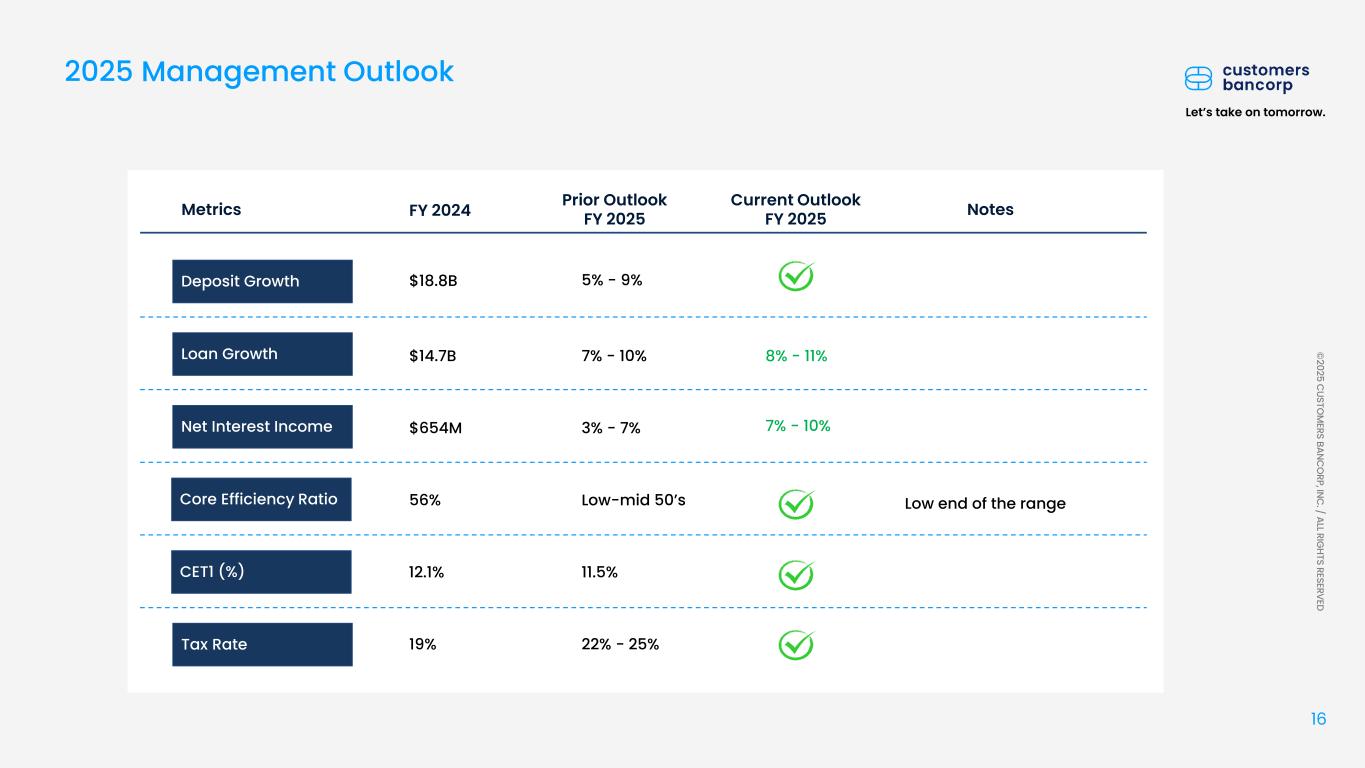
Thanks for that, Phil. As we look ahead to the rest of 2025, though there is some continued market uncertainty, we're excited about our positioning and confident in our ability to navigate the current environment. We're positively updating a few of our guidance items this quarter as an outcome of the strong results we've achieved in the first half of the year. On full year loan growth, we're raising the range to 8% to 11% from 7% to 10%. We now project net interest income to grow between 7% to 10%, up from 3% to 7% previously. This increase reflects a strong performance on both sides of the balance sheet and driving increased revenue and the benefits Phil discussed earlier. Lastly, as a result of the stronger revenue growth and well-managed expenses, we now have a bias towards the low end of the efficiency ratio range. I'd also like to echo Jay's sentiment and thank Phil for his leadership as Customers Bancorp's CFO. We're excited for him to be spearheading strategic initiatives to support the company's long-term growth. In closing, we're building on a strong foundation, one defined by disciplined execution, strategic growth, and a relentless focus on our clients. With the right talent, technology, and operating model in place, we're confident in our ability to sustain this momentum, and we remain committed to delivering long-term value for our clients, communities, and shareholders. With that, I'd like to open up the line for questions, please.
Operator
Our first question will come from Peter Winter with D.A. Davidson.
Speaker 5
Congratulations, Sam, on your promotion, and Jay, on your future plans. To start off, Phil, you mentioned the increase of about $10 million in the next two quarters. Could you please go over that again in your prepared remarks?
Speaker 4
Yes, Peter, I hope you're doing well. It was a small portfolio of loans that we originated with the partner. We had the opportunity to buy out the interest at a discount and did. The results of that will flow through net interest income over the next couple of quarters.
Speaker 5
And it's a $10 million benefit each quarter?
Speaker 5
Got it. And then, Sam, if I could just ask, just with the passage of the GENIUS Act, just how maybe are you thinking about crypto-related deposits going forward? And it seems like it's going to be incredibly competitive with stablecoins. I mean we've seen JPMorgan step into this. PNC announced a joint partnership as well. So I'm just curious if you could talk about this.
Yes. Sure, Peter. Thank you so much for your comments earlier. The net takeaway is this is incredibly exciting for Customers Bank. The recent legislation from Washington reinforces what we at Customers Bank have believed for a long time, which is that digital assets are here to stay. I think that we have really established ourselves as the leaders in digital asset banking. We have and will continue to benefit from regulatory clarity. You heard me talk about the ETFs early last year. You had a bump with the election last November. You have GENIUS coming out now from a stablecoin perspective. There are further market structure legislation that is penciled out for later this year. Each of these milestones has resulted in increased activity, deposits, and fee income at Customers Bank. Regarding your question about stablecoins, this legislation benefits a number of our existing customers. They will likely benefit from more AUM today and in the future. This will mean new institutional issuers, starting with nonbanks. If you continue to pull this thread, all major institutional issuers that launch a stablecoin will need to be a customer of Customers Bank. We are the leading stablecoin infrastructure and payments provider in the country. We only have about 10% or so of our deposits that come from stablecoin issuers today out of our overall cubiX deposits, so we could very well see that increase over time. Getting back to your question about big banks, at the end of the day, if you're a large bank, this is something you have to be involved in. If you have a large network of customers that need to move money, whether it's driven by your customers today, you will need to have this as a means of payment. Meanwhile, large banks make money when there's friction and inefficient flow in the banking system, whether that's FX, payments, or capital markets, and a stablecoin, if it proves to be more efficient, cheaper, and faster, cannibalizes existing revenue. There's a lot of pros, cons, and a lot to be determined. I think there's going to be a long runway over the medium to long term. The most important thing is that this is going to be a huge benefit for Customers Bank in the near to medium and the long term. The pie is going to increase, and regardless of increased competition, we have the strongest payments network. July, as I mentioned, will actually be our most active month to date on the platform.
Speaker 5
Got it. That's helpful. And just one last quick question. The professional fees increased by $2 million this quarter, quarter-over-quarter. Could you just talk about that and maybe the outlook?
Speaker 4
Yes. Peter, I'd say, generally, if you look back, they were actually pretty consistent with where they were two quarters ago. Q1 was probably a bit lower. We actually saw some increases broadly across the platform. From the risk management sort of investment side, they were largely consistent quarter-over-quarter.
And I would just add, Peter, if you're asking about regulatory expenses, we're on track with what we guided towards and expect that portion, which is not contributing to the growth this quarter, to drop off significantly, if not completely in the next 90 days.
Operator
Our next question comes from the line of Kelly Motta with KBW.
Speaker 6
I would like to continue discussing cubiX. I believe investors are curious about its potential impact on your business. I know you previously capped these deposits at 15%, but that cap has been loosened. Could you share the size of the cubiX deposits for this quarter? Additionally, from a broader perspective, as you evaluate the potential opportunities and manage risks related to concentrations, how do you envision this business growing within the industry? Any overarching insights would be appreciated.
Yes. Kelly, happy to take that. First of all, I think you asked about where we were at the end of the quarter. From a spot basis perspective, we were at $3.2 billion, which is roughly in line with where we were last quarter. It's about $100 million lower. That being said, a spot basis is not the best indicator of thinking about where that is. That puts it probably at 16% or 17% as of 6/30, which is above the prior cap. When we had that cap, we were not initially in February 2023 holding these all in cash, which is what we're doing today. The cap has been removed. To kind of put that in perspective, as of the 25th of July, we've had the most active month on cubiX to date. Our deposit balances are up about 20% in July. Increased activity leads to increased deposits, and increased deposits lead to higher interest income and fee income. We expect that these deposit balances will potentially increase as we get more institutional flow. We have about 20% of our flow today coming from traditional finance players who are active in the digital asset trading and settlement space. We expect that percentage to increase over time, but our goal is not to grow the deposits first; it's to grow the strength of the network.
Speaker 6
That's really helpful. I guess, as a follow-up, as you mentioned several times now, you hold these deposits in cash. I think some larger players are considering lending against such related deposits. Given the softening regulatory tone in the industry, is this something that's coming up with discussions on the Board? Any change in terms of how you're viewing it potentially longer term with regards to how you hold these deposits?
Sure. The short answer is we're not looking to change how we approach and hold these deposits. Over time, we'll gather more internal data on how these deposits operate and fluctuate. We'll maintain longer-term relationships with our customers and can work on structure, as you have a sense of a minimum amount of payments float. The answer over the medium term is we will likely consider but this will be customer driven and business driven. Sitting where we are today, it is appropriate to hold these in cash.
Speaker 6
Got it. Maybe last question for me, and then I'll step back into the queue is, on Slide 9, where you draw the payment volume is super powerful. I know this is a huge benefit of this platform is the payments-related fee income potentially generated. Can you elaborate how much that contributed to 2Q? And any commentary about the potential for further monetization of payment fees longer term?
Yes. Late last year, we instituted traditional wire fees and platform fees to some of our customers. That has resulted in about an $8 million run rate of fees. It was similar in the second quarter, so nothing material there. Moving forward, we could see that increase over time. Our objective is not to materially drive fees; the majority of our income today is coming from interest income. We’ll likely see that shift from a mix perspective, especially with the potentially changing rate environment. The volume of $1.5 trillion last year, and we're at about $1 trillion year-to-date, shows that activity and the strength of the network are only growing.
Operator
Our next question comes from the line of Harold Goetsch with Riley Securities.
Speaker 7
Congratulations for all the changes in the leadership there. I hope you all succeed and are happy with where things are heading. My question is still on the cubiX, and the payment flows across the rails are just enormous. The monetization is quite low. Is this really a vehicle outside of even digital assets, just increased banking relationships and the size of connections to many commercial accounts? I appreciate your comment on how big banks make money; they make it through friction. This seems to be a low-cost producer or option, and because of that, volume is coming your way. Could you comment on your strategy with your current pricing and the related volume gains you're getting?
Yes. Hal, happy to take that. The cubiX platform is software that sits on top of our existing core and payments infrastructure, allowing customers, particularly commercial ones more institutional and tech-savvy, to operate. Prior to cubiX, we had something called CBIT, which was a blockchain tokenized deposit. That was a lot tougher of a sell, but now with the digital deposit format we are using, 24/7, 365, with a comprehensive set of products and payment rails, we're seeing a tremendous amount of use cases from commercial customers. This is really to strengthen relationships and provide incremental service. Think of it as a software-as-a-service type solution. We see this as an opportunity to strengthen relationships, drive incremental deposits, and open up more traditional finance type opportunities.
Operator
Our next question comes from the line of David Bishop with Hovde Group.
Speaker 8
Yes. A quick question, Sam. In terms of the loan mix here, you guys have been pretty successful the past couple of quarters in growing commercial real estate, maybe taking some share, given your capacity. Just curious your appetite to grow some of those commercial real estate segments. As we look at the loan mix in terms of the breakdown for segments, does that stay relatively consistent, you think, over the next year? Or do you continue to see specialty lending and C&I build as a percent of loans?
Speaker 4
Yes, Dave. It's Phil. I'd say we've opportunistically stepped into a void, especially in our New York markets or Northeast markets in real estate. As others pulled back in Q4 and Q1, we were able to win not just transactional but full relationship-based opportunities. We still see some opportunities in the pipeline and will continue to be disciplined, avoiding chasing transactions for the sake of it. We are still well-positioned to take advantage as participants start to step back in. We can give you the outlook of the pipeline, which does include commercial real estate but also continued contributions from the specialized C&I.
I would just add, David, we have about $500 million or so in the loan backlog right now.
Speaker 8
Got it. Appreciate the guidance there. Just curious in terms of the BMT deposit runoff. Is there any more plans in the near future? Will that be a headwind, or is that mostly behind you?
I think we well telegraphed that; that was a Q2 headwind, and anything like it is behind us.
Operator
Our next question comes from the line of Steve Moss with Raymond James.
Speaker 9
Sam, congratulations on the promotion here. Maybe just on the deposit side, with the pipeline remaining strong there, would the expectation rates come down here at some point over the short to medium term? Is that entering the conversation with the deposit customers you're bringing on these days?
Yes. The good news is that we're continuing to bring on new deposit customers at similar levels, 20-30% non-interest-bearing component, blending at about that 2.5% plus or minus. We feel privileged to do that, and much credit goes to our existing and future teams at the bank. When in competition, you may have to match the top dollar as rates decline. A receding tide brings all boats down, and those conversations are expected by customers, especially when it's not connected with account migration.
Speaker 9
Okay. Appreciate that. And just in terms of the teams you hired here, same and the ones you're about to bring on, just kind of curious if you could size up their potential deposit books?
I don't want to get premature in sizing up the deposit books. But I will say we'll have about half a dozen teams this year based on where we are in discussions, with 5 already onboarded, 3 commercial banking teams, 2 starting this quarter, and another 1 or 2 more in negotiation. Each one of our teams, we expect to be at a minimum in sort of a couple of hundred million dollars on the high end.
Speaker 9
Okay, I appreciate that. Regarding NII growth, I'm curious about your thoughts on the margin. I understand there are many factors involved, but do you expect stability at current levels, or is there potential for more margin expansion considering the improvements in your deposit base?
Speaker 4
Yes, Steve. There are moving pieces on both sides. We've got positives on the loan growth side and some momentum on the remix side. Much depends on the rate outlook. We remain modestly asset-sensitive; we've moved closer to neutral over the last year. I'd say we likely have an upward bias, but it will be dependent on that outlook. You will see benefits in Q3 and Q4 from the additional interest income flowing through.
Speaker 9
Great. Well, I appreciate all the color here today, and thank you very much.
What I would like to say is I forgot to congratulate you on the new baby at the beginning.
Operator
Our final question comes from the line of Matthew Breese with Stephens.
Speaker 10
I had a few questions. First of all, how much more room do you have to remix securities into loans? And how should we be thinking about the overall balance sheet size over the next year?
Speaker 4
Yes. Matt, overall, we feel good about where our securities portfolio as a percent of average assets stands. As we talked about from some of the sales, the cash flow-driven modeling may lead to asset growth. We would expect more growth on our balance sheet in the back half of the year and into '26.
Speaker 10
Okay. Is it safe to say that we should expect more loan growth to transition into total asset growth at this point? That's a fair statement?
Speaker 10
Okay. And then in the presentation and in the earnings release, you noted that the deposit mix shift resulted in about $350 million less brokered deposits. Per the call report last quarter, I thought you had around $6.6 billion in brokered deposits. Is it fair to take those two numbers and figure out the net number, or what is your brokered deposit balances today? Is there a targeted goal there? Where would you like the brokered deposits to total deposits?
Yes. You can do the simple math, Matt. Yes, they have declined, about $1 billion over the last year. Those deposits are being deemphasized and remixed out. We want them to be below 30% in the near to medium term.
Speaker 10
Okay. And then I had a couple of questions on cubiX myself. I guess the first one is just on the stablecoin bill. Can you help me better understand one of the inherent things is that all stablecoins will need to be backed by U.S. treasuries, which invites global usage. For yourselves and others in the banking system, how do you protect yourself from a BSA/AML, know your customer standpoint? Who bears responsibility for making sure that there are good incremental actors in the system, especially if this extends beyond U.S. borders?
Yes. It's incredibly helpful to have our customers come into a federal regulatory framework. This provides a cohesive roadmap on compliance side BSA/AML and liquidity management. There will be an implementation phase for these customers, with a lot of detail coming out. This is about 10% of our existing deposits today. The federal framework will also strengthen the flow to the bank and our overall business. We've invested significantly to build our BSA/AML infrastructure and view it as a strength of the organization.
Speaker 10
And you said stablecoin is 10% of the existing deposits. Is that total deposits or just the cubiX deposits?
Speaker 10
Okay. And then the other thing I was curious about is just in terms of your cubiX customers, could you talk a little bit about the granularity of those deposits? How many accounts are frequent users of cubiX? I just wanted to get a sense of whether this is an upside-down pyramid with a small number of large deposit holders or if it is granular across the board?
Yes. We have all major exchanges, stablecoin providers, market makers, and digital asset institutional investors in the digital asset space. The users of our network are diverse, and the folks that bank with us come to us for our payments network first. The larger the exchange and AUM with the stablecoin provider results in larger activity, which leads to larger deposit balances. Our deposit balances are diversified across major thresholds, including large deposits and smaller ones.
Operator
That will conclude our question-and-answer session. I will hand the call back over to Sam Sidhu for any closing remarks.
Thanks so much, everyone, for your continued interest and support of Customers Bancorp. We appreciate you being a part of this incredible franchise that we're building, and we look forward to speaking with you next quarter. Thank you so much, and have a great day and weekend.
Operator
And this concludes today's call. Thank you all for joining. You may now disconnect.