Operator
Hello, everyone. Thank you for joining us, and welcome to the Darling Ingredients Incorporated conference call to discuss the second quarter 2026 financial results. After today's prepared remarks, we will host a question and answer session. If you would like to ask a question, please press star one to raise your hand. To withdraw your question, press star one again. I will now hand the conference over to Ms. Sue Ann Guthrie, Senior Vice President of Investor Relations. Please go ahead.
Speaker 3
Thank you for joining the Darling Ingredients second quarter 2026 earnings call. Here with me today are Mr. Randall C. Stewie, Chairman and Chief Executive Officer, and Mr. Bob Day, Chief Financial Officer. Our second quarter, 2026 earnings news release and slide presentation are available on the investor page of our corporate website, and it will be joined by a transcript of this call once it is available. You can also find reconciliations and disclosures with respect to non-GAAP financial measures in our earnings news release and slide presentation. During this call, we'll be making forward-looking statements, which are predictions, projections, or other statements about future events. These statements are based on current expectations and assumptions that are subject to risks and uncertainties. Actual results can materially differ because of factors discussed in today's press release and the comments made during this conference call and in the risk factor sections of our Form 10-K, 10-Q, and other reported filings with the Securities and Exchange Commission. We do not undertake any duty to update any forward-looking statements. Now I will hand the call over to Randy.
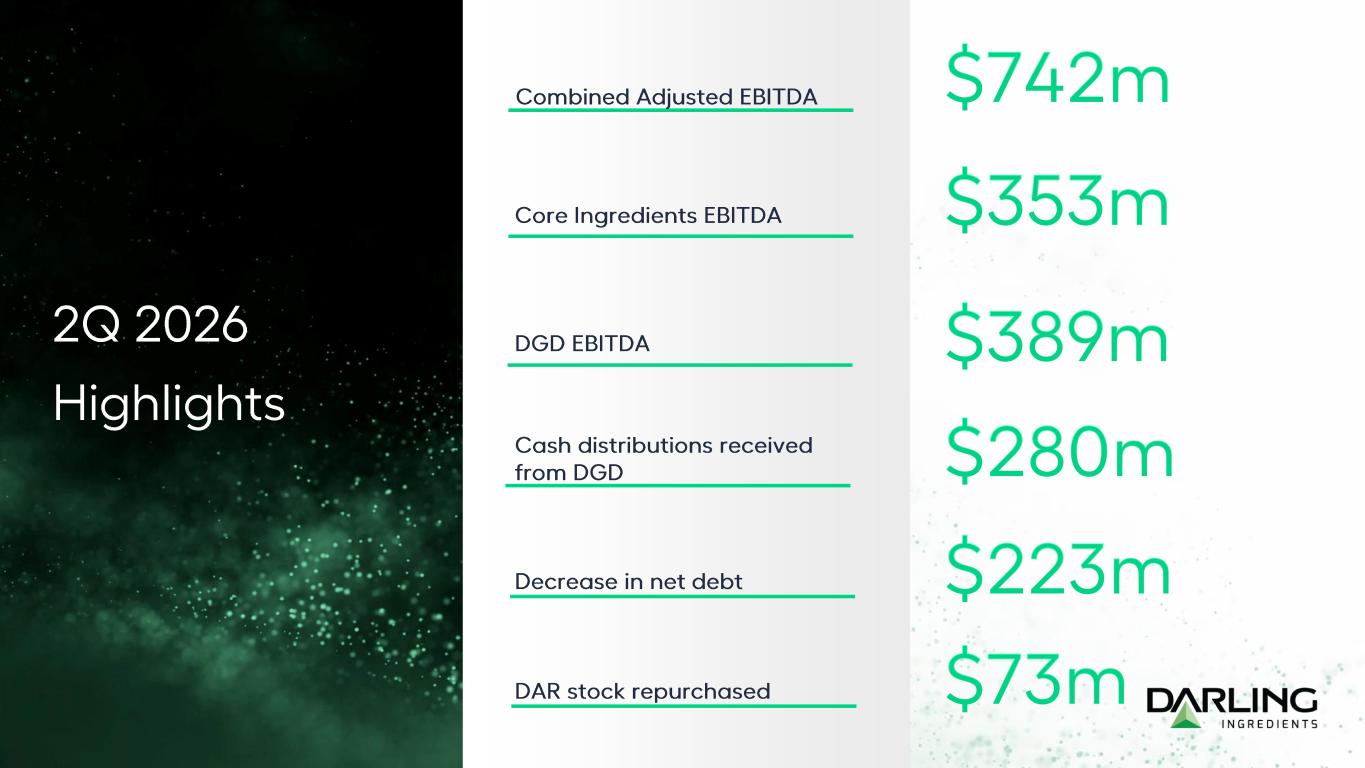
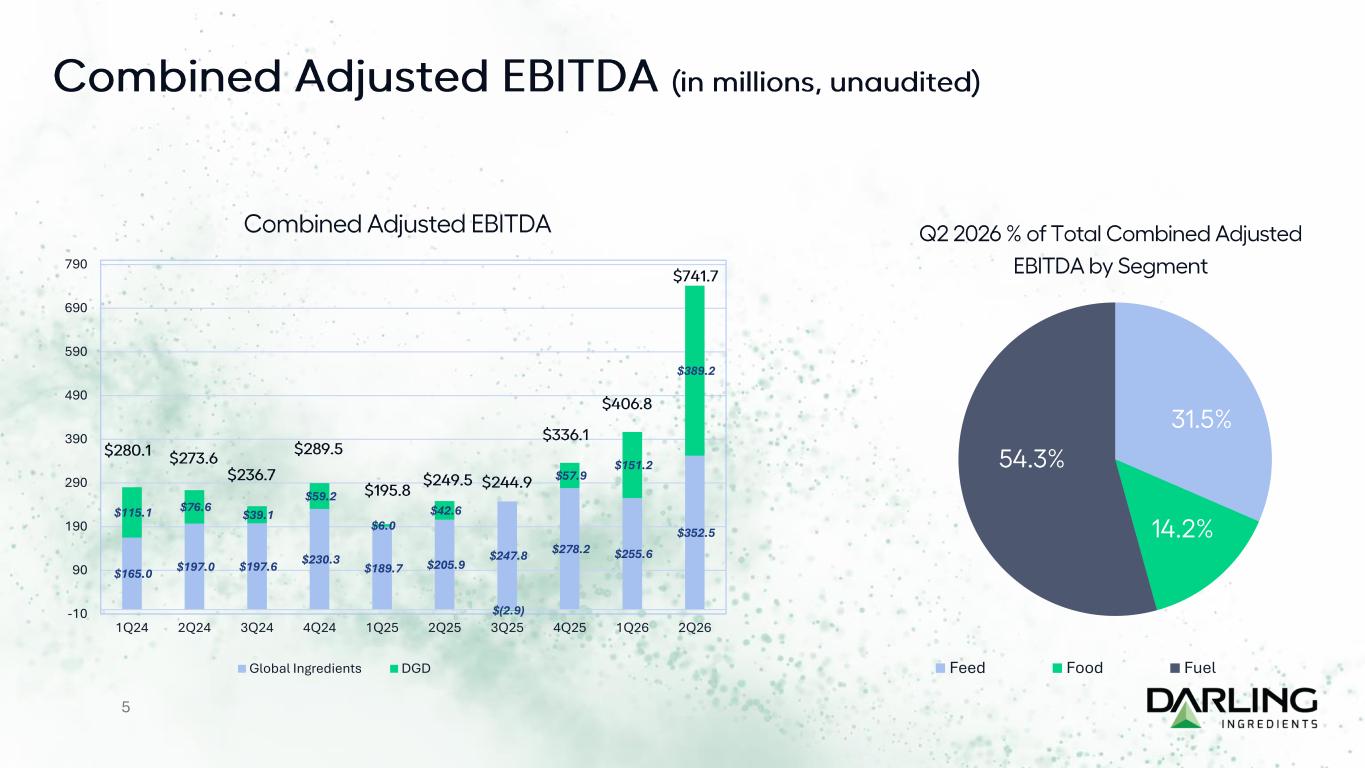
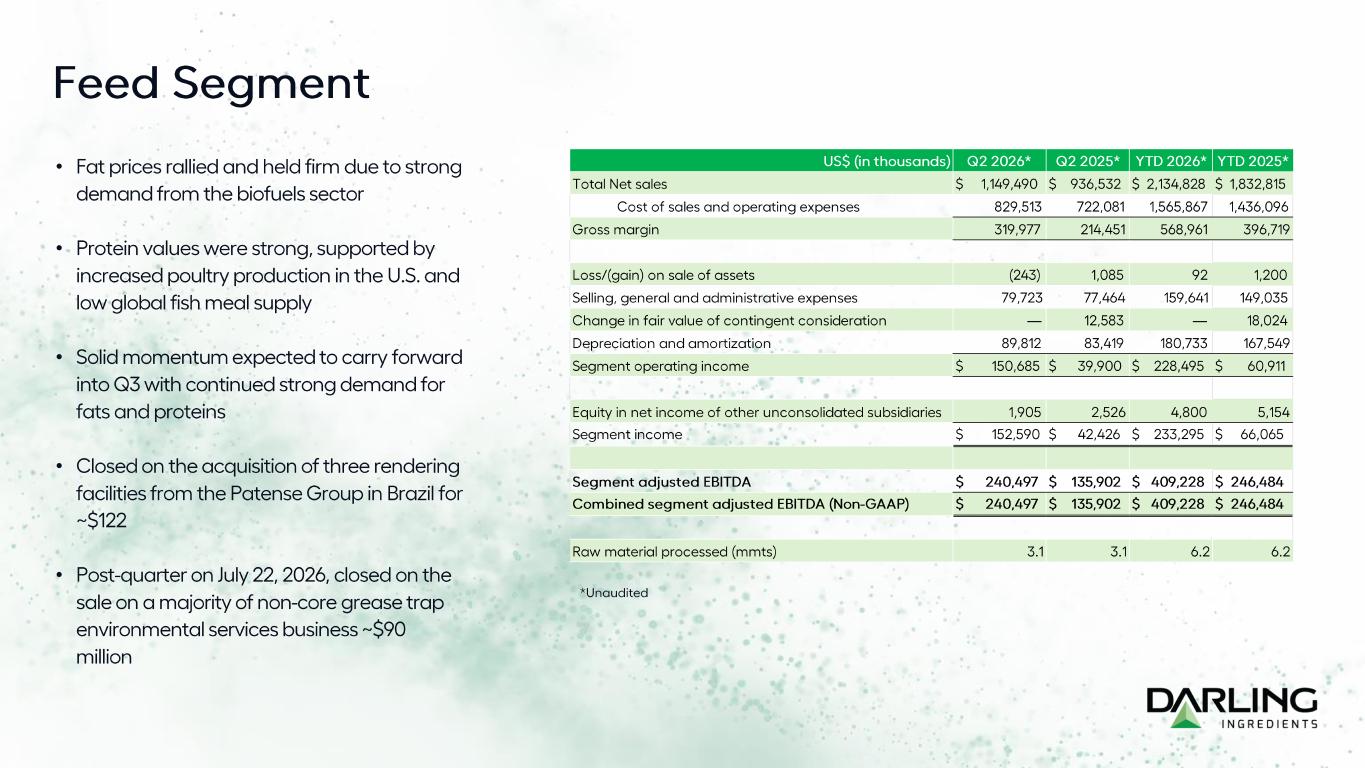
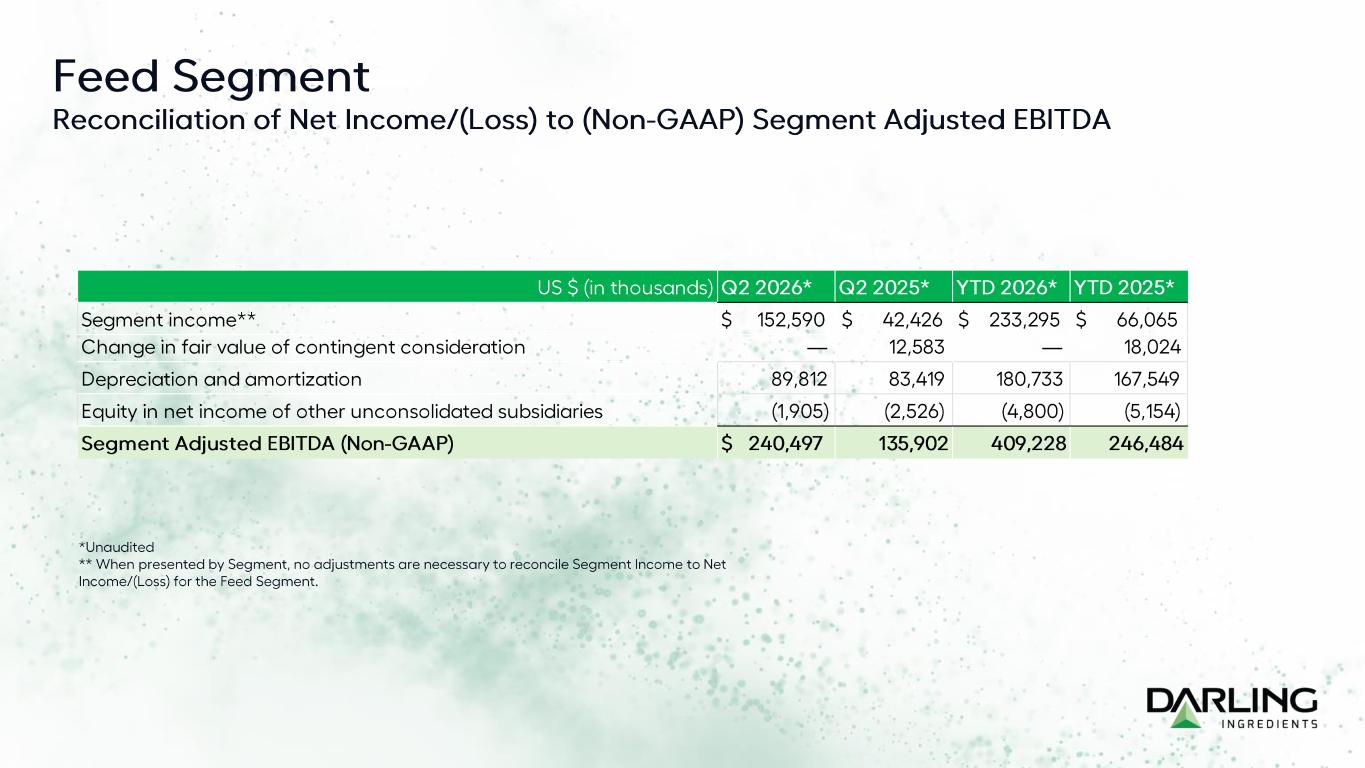
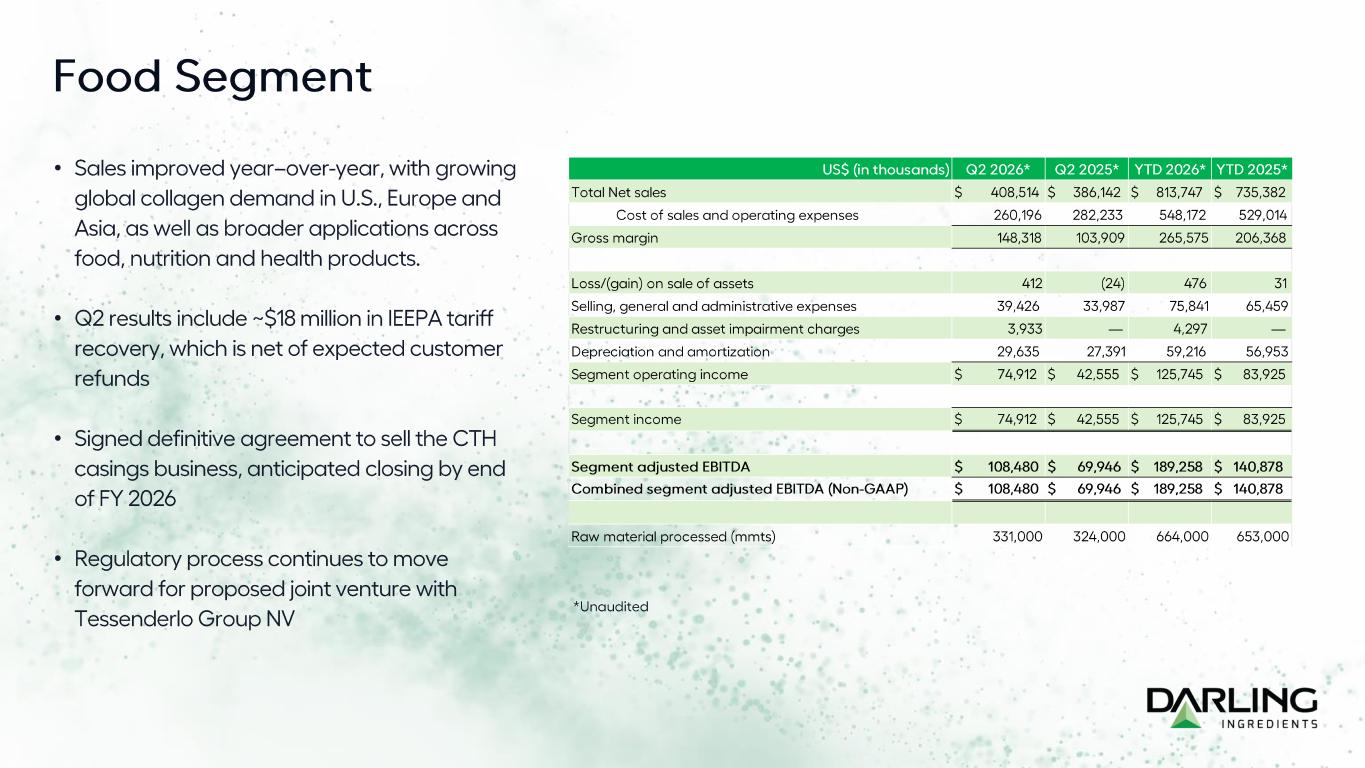
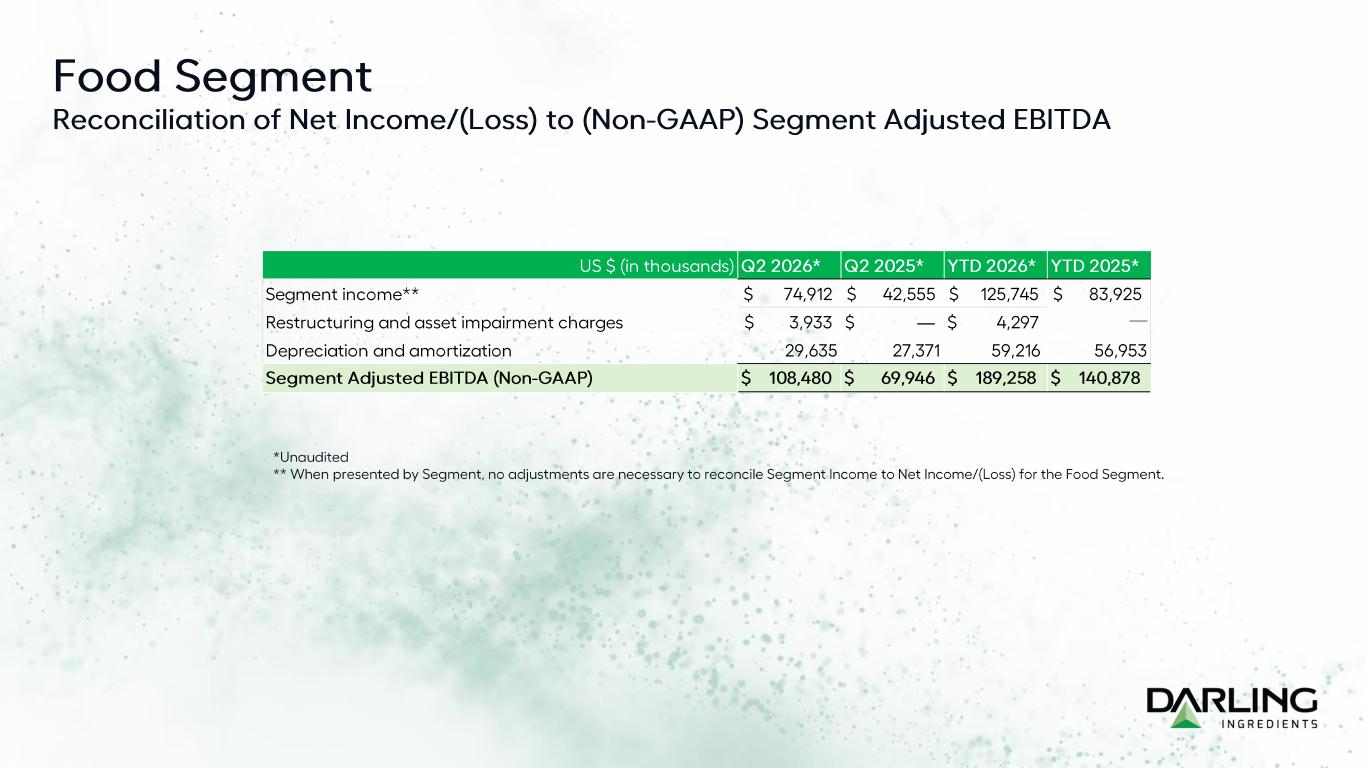
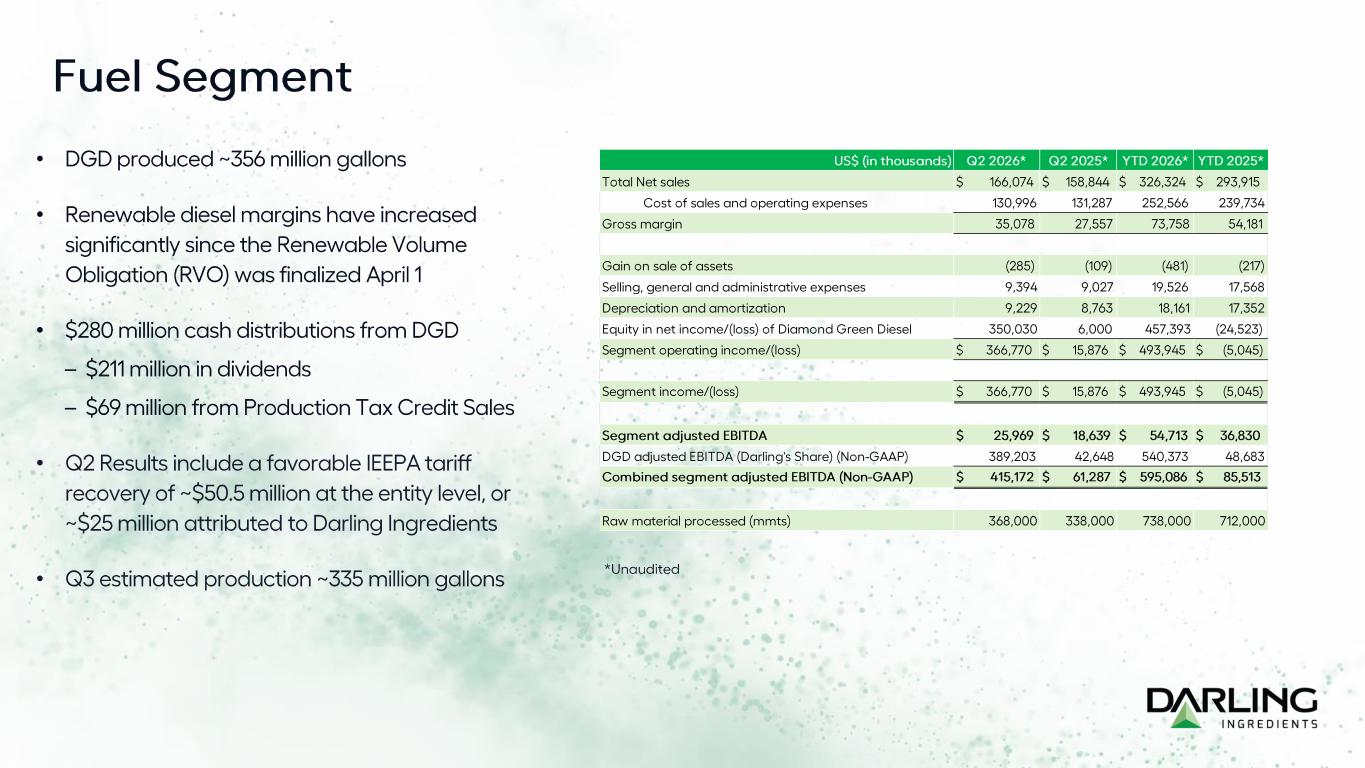
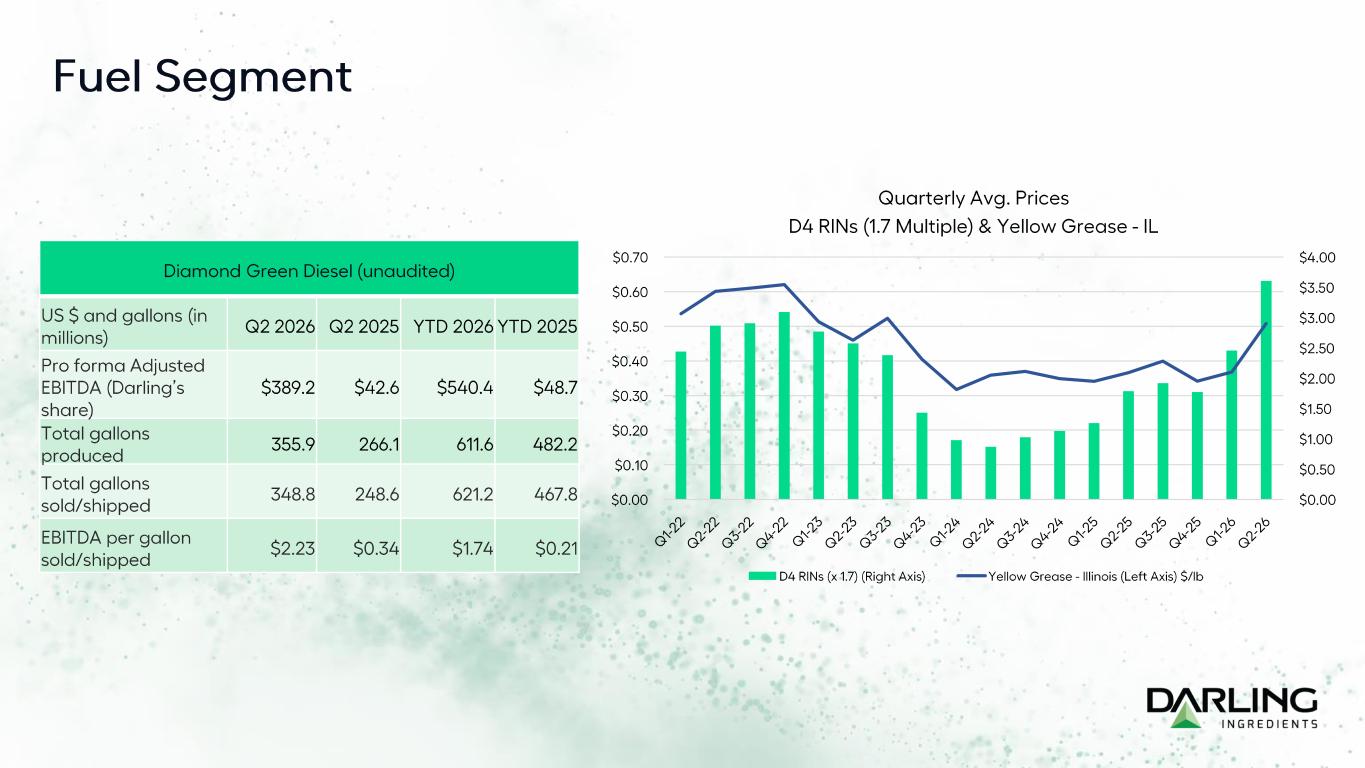
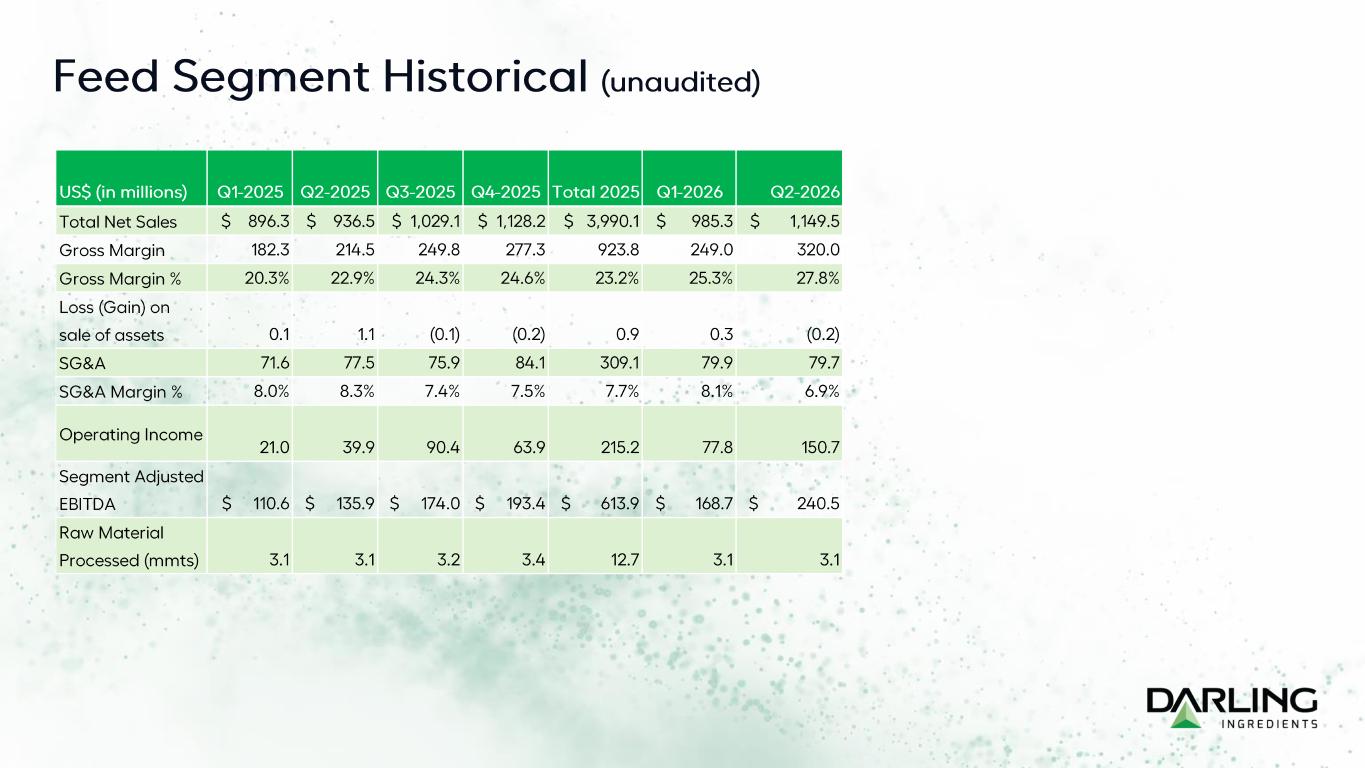
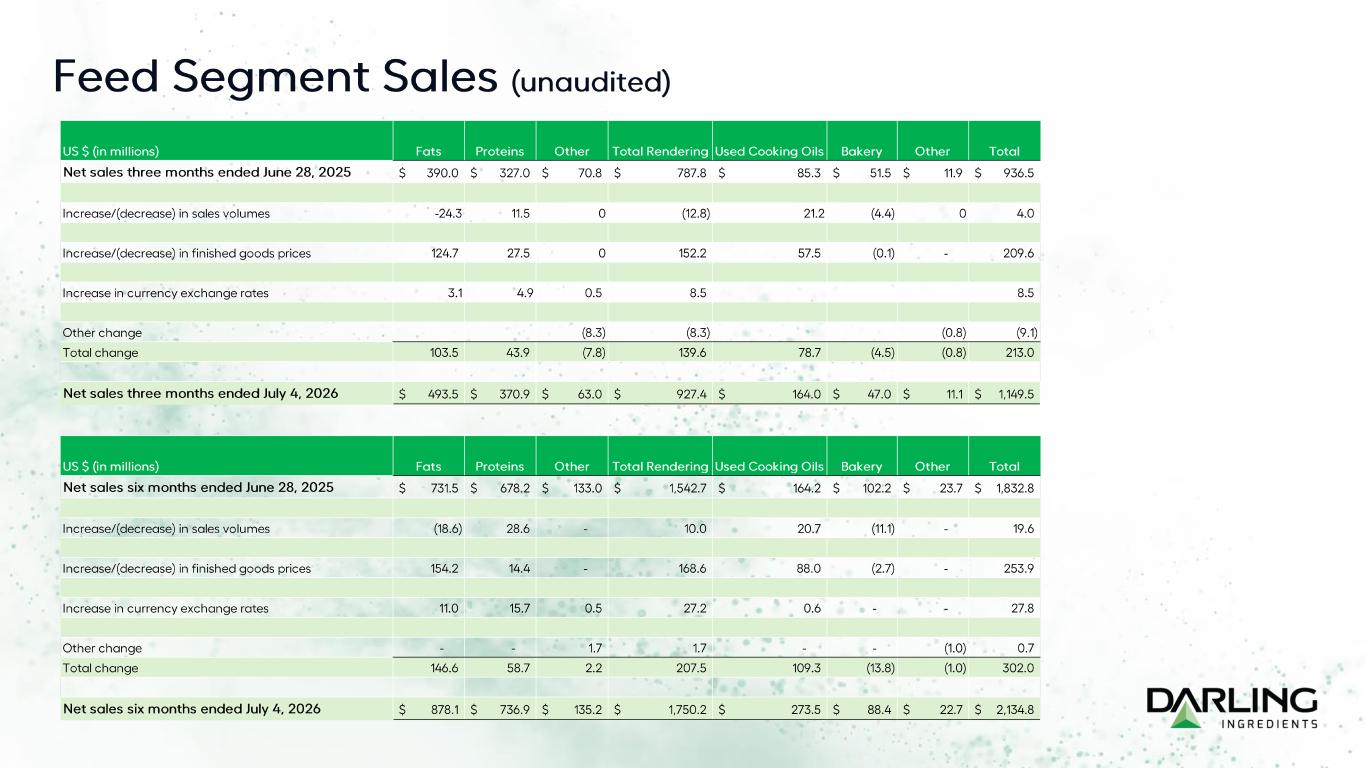
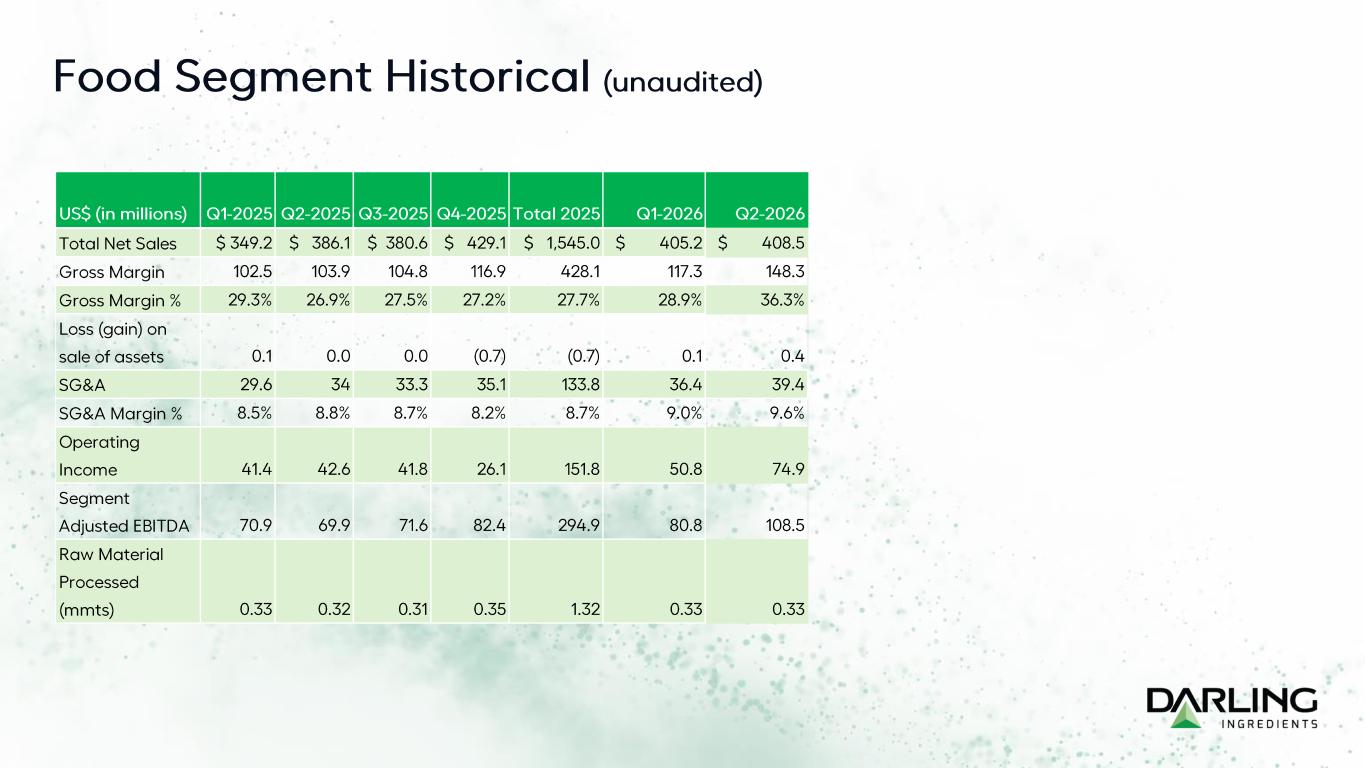
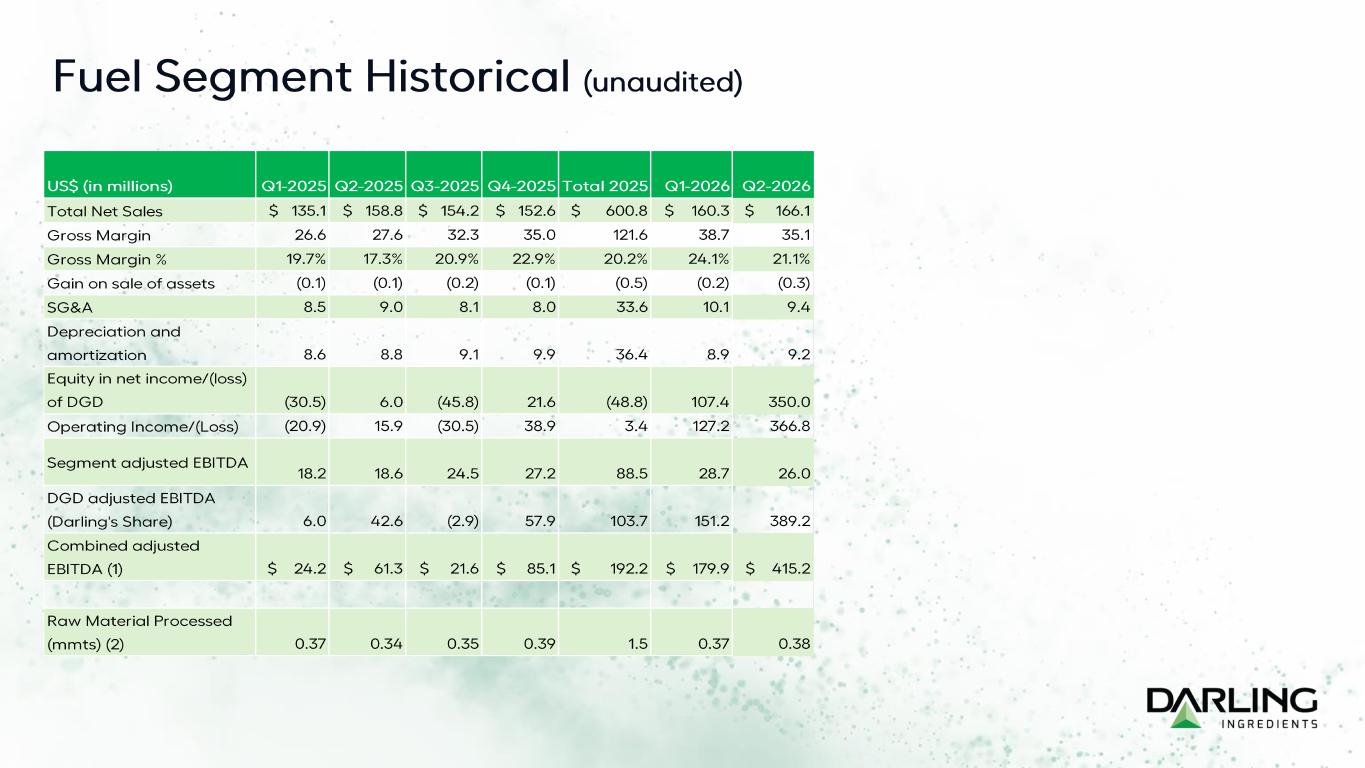
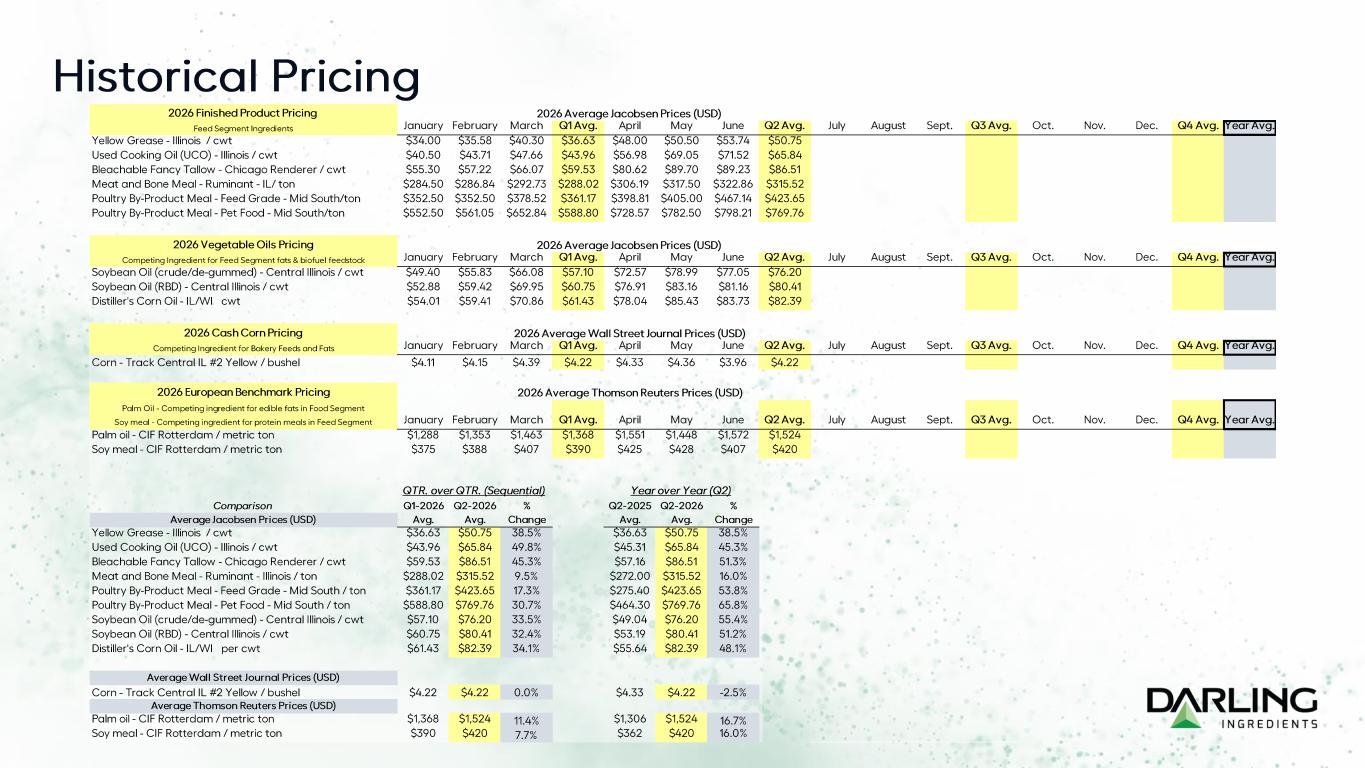
Randy D. Thanks, Sue Ann. good morning everyone and thank you for joining us today. Before we get started, I want to thank everyone who participated in our Investor Day in May. During that event, we highlighted the global foundation we have built, the transformation of our business, and the opportunities we see to accelerate returns to our shareholders. We also outlined how our business is positioned to create consistent cash generation regardless of market condition and public policy environments. When we provided our outlook for the second quarter in April, we based that guidance on our March performance. As the second quarter progressed, finished product market strengthened considerably, fat and protein prices rallied, and several trade-related developments created a more favorable operating environment than we anticipated at that time. That, combined with our strong operational excellence and margin management programs, ultimately drove our results. During the quarter, we received $280 million in cash distributions from Diamond Green Diesel. We used that cash to decrease our debt by $223 million, closed on the purchase of the Potence plants in Brazil, and repurchased $73 million of stock. Darling's core ingredients business really delivered this quarter, with improved global operations, margin expansion, and focused commercial execution. Combined adjusted EBITDA for the second quarter was approximately $742 million, including about $353 million from our global ingredients business and $389 million from Diamond Green Diesel. Our feed ingredients segment delivered improved results as fat prices rallied and sustained momentum in the quarter fueled by robust demand from the biofuel sector. We saw protein value strengthen due to tightening global fish meal supplies and increased poultry production in the United States. We continued our focus on operational efficiency, commercial optimization, price risk management, and contract management, which contributed to improved gross margins. Also in the quarter, we closed on the acquisition of three rendering facilities for the Pintense Group in Brazil. These are great assets and great locations, which we believe will be immediately accreted. Now turning to the food segment. Collagen sales have improved year over year, reflecting not only increased customer demand, but also new applications for collagen across food, nutrition, and the health space. As prices of whey continue to increase, companies are turning to collagen as a protein with benefits to complement their whey products. We remain very excited about our next high-to-glucose control product, which continues to have repeat sales and also is now being sold in Asia. Turning to the fuel segment, Diamond Green Diesel delivered outstanding operational and financial performance during the quarter, reinforcing its position as the leading renewable diesel producer in the world. During the second quarter, we produced over 1.3 million metric tons of renewable fuel, maintaining DGD's position as the largest producer of advanced biofuels globally. Also in the quarter, we sold approximately 350 million gallons at $2.23 EBITDA per gallon, delivering $389.2 million of EBITDA to Darlene. This includes a favorable IEPA tariff recovery of approximately $51 million at the entity level. Our non-DGD green energy businesses also perform very well due to the increased energy prices in Europe. Now, with that, I'd like to turn the call over to Bob, take us through some financials, then I'll come back and talk about the third quarter and what we see coming forward. Bob?
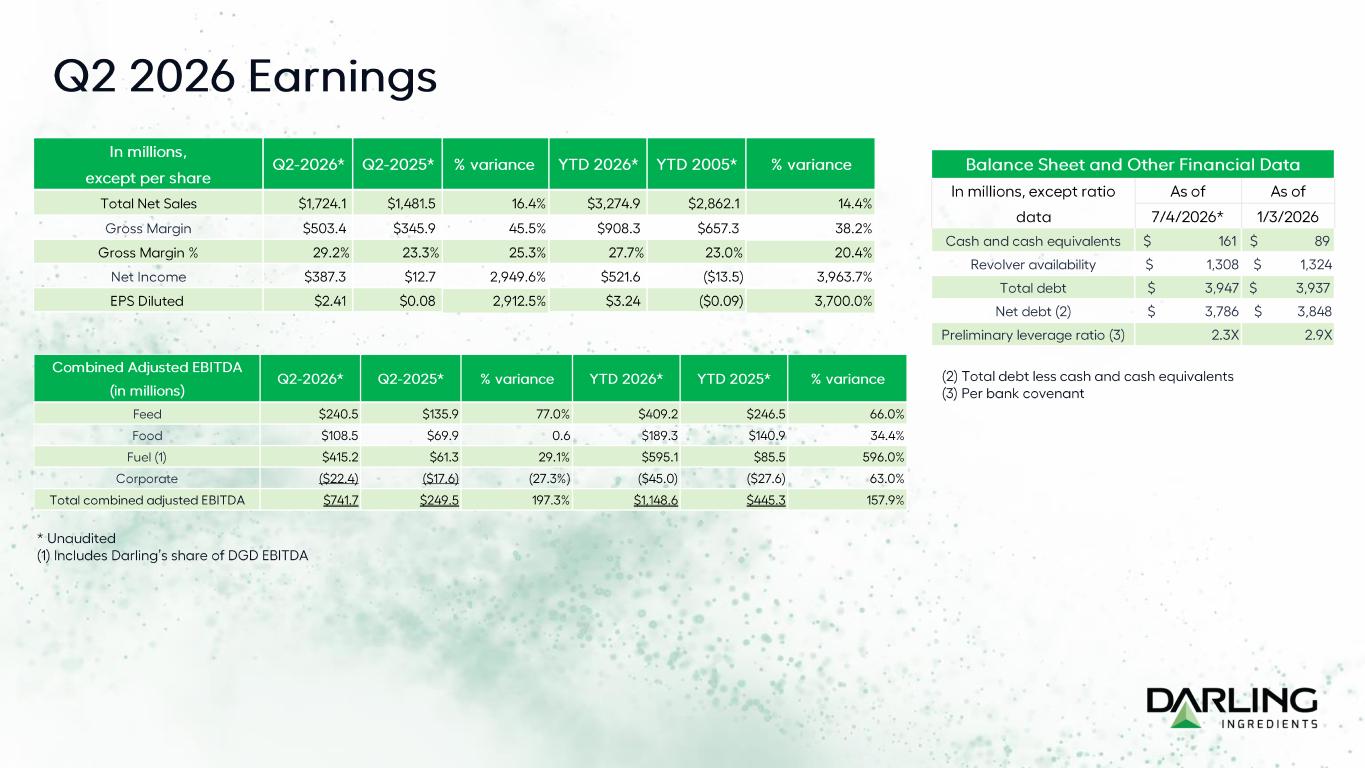
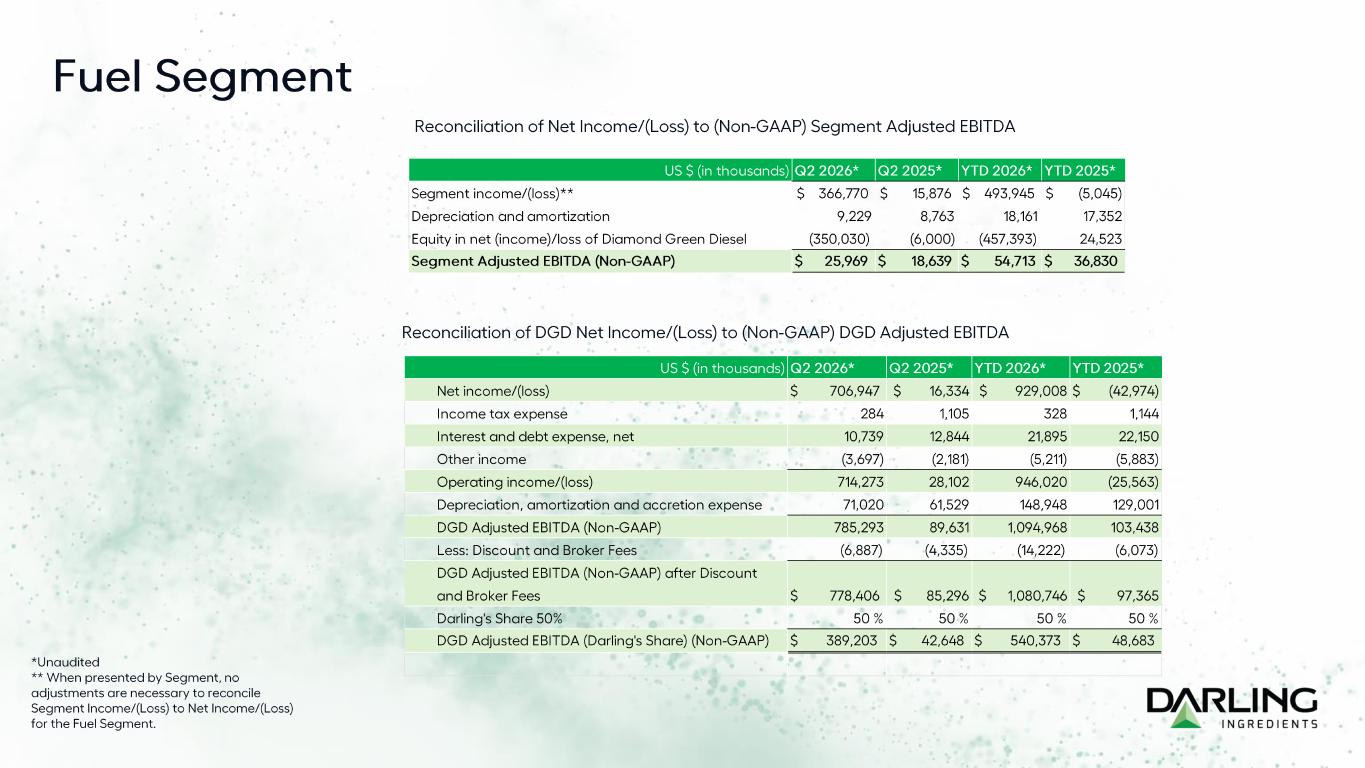
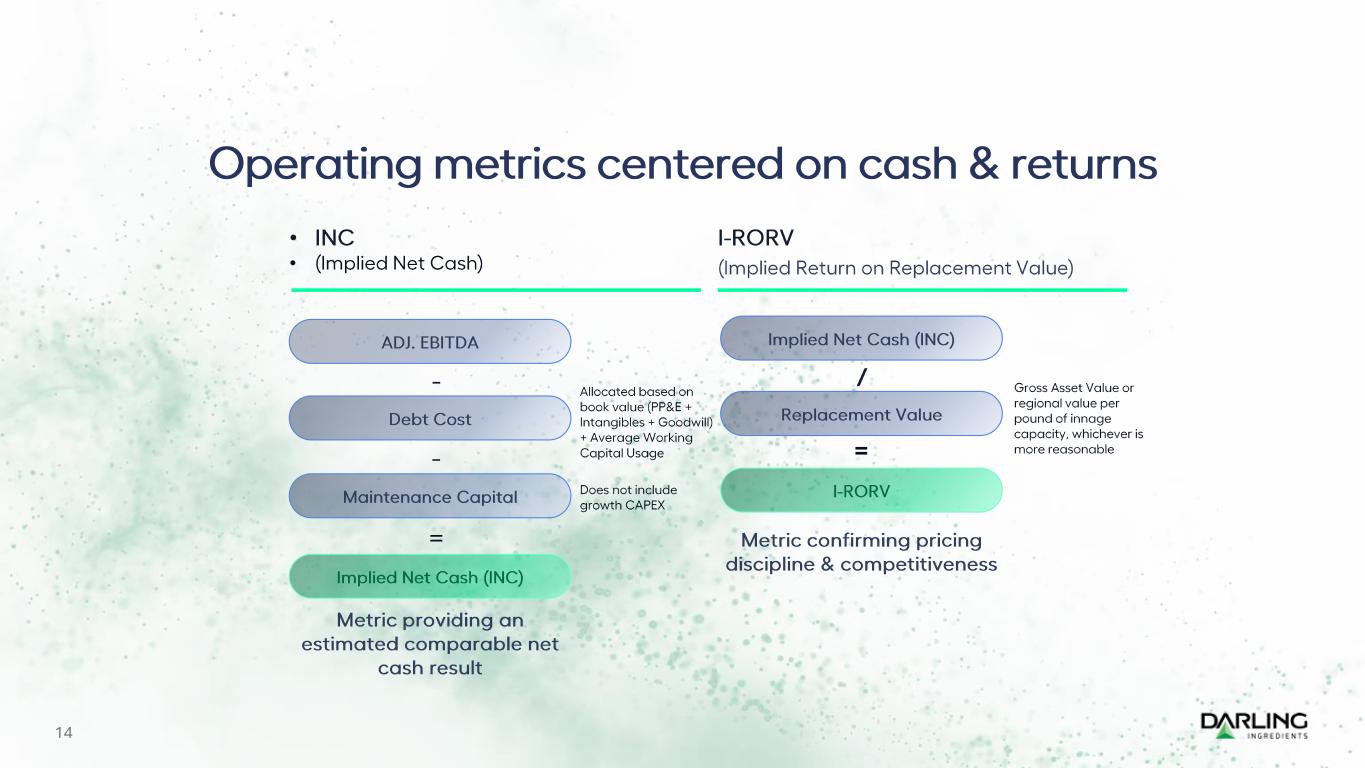
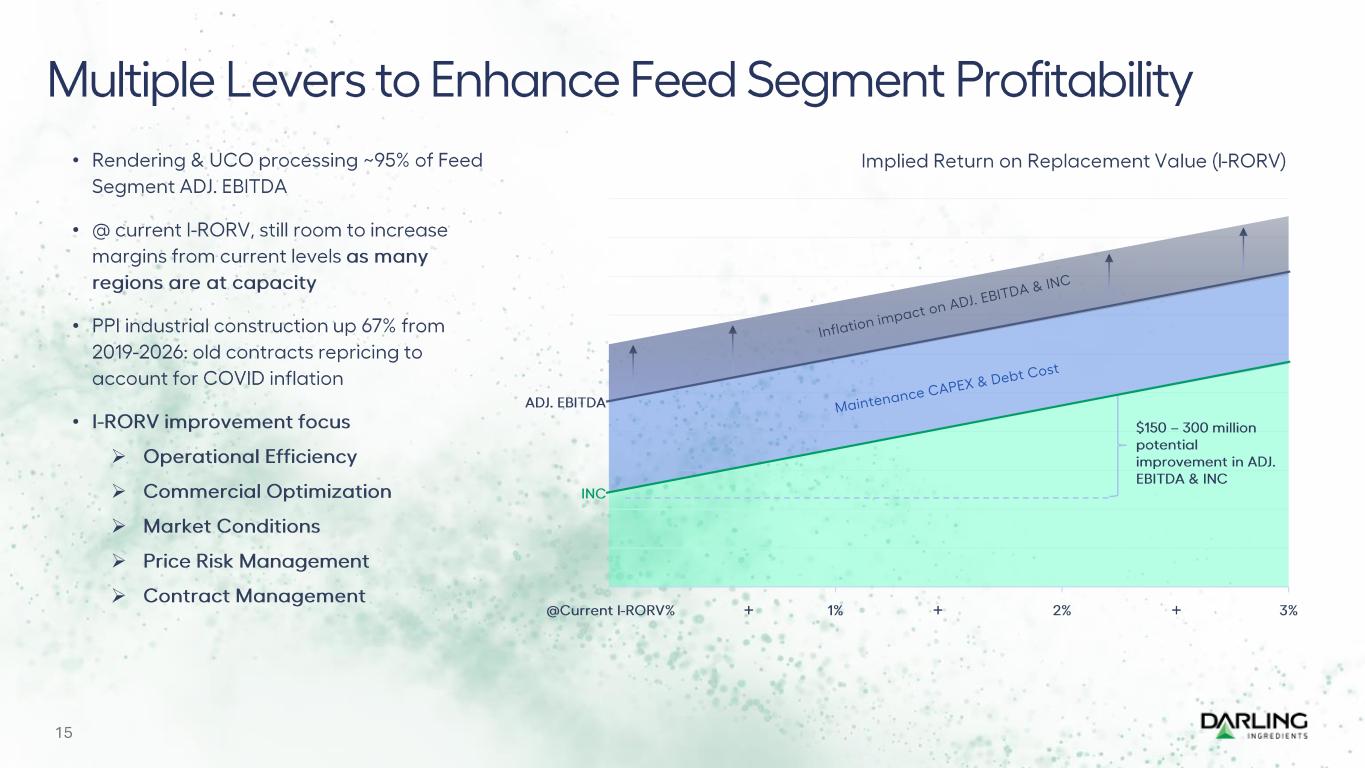
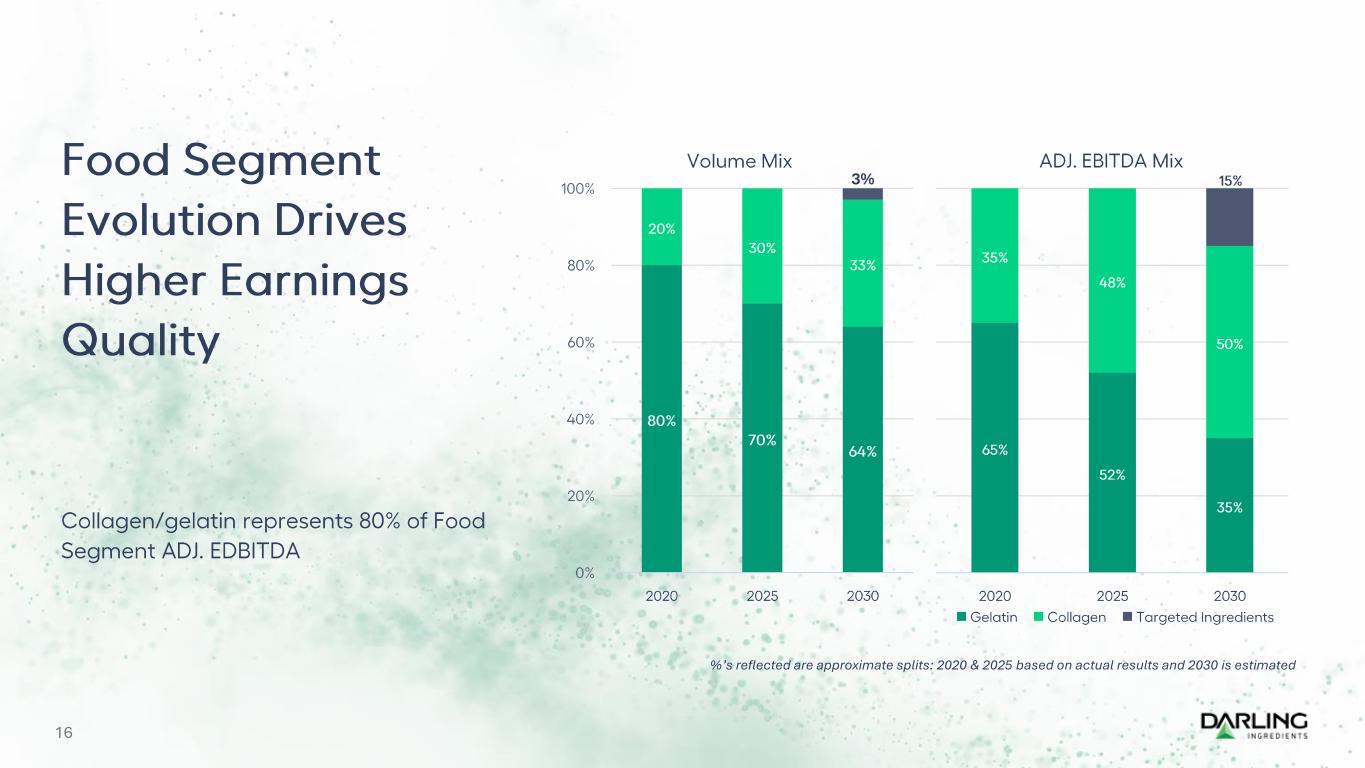
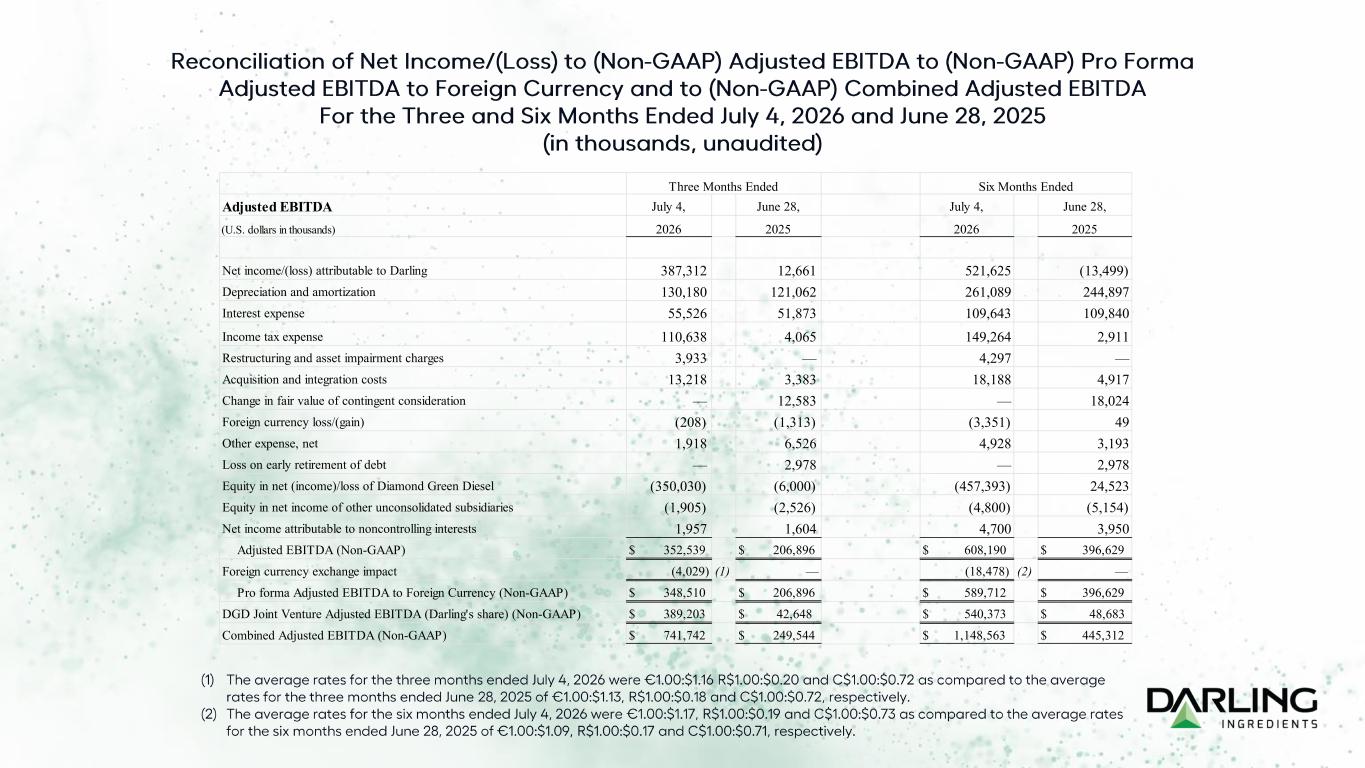
Thank you, Randy. Good morning, everyone. As Randy said, we significantly increased earnings, cash generation, and balance sheet strength this quarter. Net income was $387 million, or $241 per gap diluted share, compared to $13 million, or $0.08 per gap diluted share in the second quarter last year. For the first six months of 2026, net income was $521.6 million, or $324 per gap-diluted share, compared to a net loss of $13.5 million, or negative $0.09 per gap-diluted share a year ago. Net sales in the second quarter were $1.7 billion, compared to $1.5 billion for the second quarter last year, and $3.3 billion for the first six months of 2026, versus $2.9 billion for the same period a year ago. Second quarter combined adjusted EBITDA was $742 million compared to $250 million in second quarter 2025. For the first six months of 2026, combined adjusted EBITDA exceeded $1.1 billion versus slightly under $450 million a year ago, reflecting strong contributions from both our global ingredients business and Diamond Green Diesel. The earnings power of our global model demonstrated the value added from some of our more recent acquisitions, such as Valley Proteins, Gelnex, and FASA. Overall, core ingredients EBITDA increased to $353 million in the quarter, up significantly from the prior year at $207 million, and last quarter, $256 million. During Investor Day last May, we highlighted two important advantages about the core ingredients business that have gained meaningful traction this year. The first is measured by the operational metric implied return on replacement value, included as page 15 in this quarter's slide deck. This framework illustrates how we create value by increasing cash generated from our existing asset base, most recently through negotiation of contract terms that allow us to keep pace with construction cost inflation, commercial optimization across our global network, and a more targeted approach to managing price risk. Together, these actions support the opportunity we previously outlined to generate an additional $150 to $300 million in adjusted EBITDA over the following three years. More importantly, this framework shows how Darling can increase earnings and cash generation from its core business consistently over time. Our results so far in 2026 demonstrate real progress toward that objective. The second advantage is our ability to increase EBITDA and our operating metric implied net cash from Russelo's existing fixed asset infrastructure. As this business represents the majority of our food segment, Rousseau Lowe provides significant opportunity to enhance earnings and cash flow through product mix optimization, as illustrated on page 16 of this quarter's slide deck. As we continue to increase our mix of collagen and collagen with targeted health benefits like NextData, we're using the same factories and infrastructure to produce products with meaningfully higher margins. In today's market environment, collagen generates roughly two and a half to three times the margin of gelatin, and targeted ingredients can generate 7 to 11 times. This gives us a powerful built-in earnings lever, positioning the business to consistently grow EBITDA and net cash generation on an as-is basis, even before factoring in future growth initiatives. Diamond Green Diesel delivered an outstanding quarter, both operationally and financially. Darling's share of DGD EBITDA for the quarter was $389 million, compared to $43 million in the second quarter of 2025, supported by strong production of 356 million gallons favorable market conditions and the benefit of 51 million in IEPA tariff recoveries at the entity level. More importantly, DGD generated substantial cash. During the quarter, Darling received approximately $280 million in cash from DGD, roughly $211 million as dividends and $69 million from 2025 production tax credit sales. This allowed us to reduce net debt by over $220 million during the quarter, and as a result, our leverage ratio improved to approximately 2.3 times at quarter end, compared to 2.9 times at the end of last year. This debt reduction, however, doesn't illustrate the true impact of second quarter's performance and how it sets up our balance sheet as we move through 2026. Specifically, we had some cash demands over the second quarter that prevented us from paying down more debt, but we expect most or all of that will be offset in the second half of 2026. Examples are the acquisition of the potence rendering assets in Brazil for around $122 million and $73 million in stock buybacks. And DGD's current assets minus current liabilities have increased substantially from the beginning of the year, mainly resulting from a strategic build of feedstock inventories to support high run rates and operational and commercial flexibility. With that context, lowering net debt by over $220 million in the second quarter was a great achievement. Meanwhile, we expect to offset most of the acquisition and stock buyback costs with sales of our trap and casings businesses. Subsequent to quarter end on July 22nd, we closed on the sale of the majority of our trap business for approximately $90 million. We also signed an agreement to sell our European casings business, which we expect will close by the end of 2026. Regarding DGD working capital, we anticipate a significant portion of this will flow through as cash by the end of 26, as inventories naturally draw down during that time. We also expect the majority of this year's production tax credits will be sold and paid for over the last half of 2026, and we believe the core ingredients business will continue to perform at a high level and generate meaningful cash. With all that, we believe our net debt will be very close to or below $3 billion by the end of 2026, and our leverage ratio well below two times. We recorded an effective tax rate of approximately 22% during the quarter, excluding the impact of production tax credits and certain discrete items. Our tax rate was approximately 27%. For the full year, we continue to expect an effective tax rate of roughly 25%. With that, I will turn the call back over to Randy.
Thanks, Bob. As we shared at Investor Day, our global scale enables us to generate cash across down, mid, and even up cycle environments. We have built an essential business with a global footprint that is difficult to replicate, creating advantages that continue to strengthen. As Bob said, our debt net leverage continues to improve and we're on target to be below $3 billion in debt by year end with a leverage ratio of well below two times. This is a true inflection point for our company and will create multiple opportunities for the future. We remain focused on operational excellence, disciplined capital allocation, and returning capital to shareholders. As we look ahead, we continue to see strong momentum in the third quarter and remain confident in the outlook for the balance of 2026 and even 2027. While the current market conditions are supportive, the fundamentals underpinning our business give us confidence beyond this year. Importantly, we do not view the progress we have seen in this quarter as a one-time event. The opportunities we outlined at Investor Day remain well ahead of us. In feed, we continue to see opportunities through contract management, commercial optimization, and price risk management. In food, we continue to improve our product mix towards higher value collagen and targeted health ingredient applications. Combined with our ongoing portfolio optimization and balance sheet improvement, we believe the business is positioned to continue increasing earnings and cash generations over the next several years. The strategic actions we have taken to strengthen the business, improve margins, and simplify the portfolio position us to create value well beyond the current cycle. For the third quarter, we expect corn ingredients EBITDA to be between $325 and $340 million. Included in the second quarter results were approximately $18 million in the net recovery of IEPA tariffs for the Ruslo business. Excluding that benefit, our third quarter outlook implies underlying performance that is generally consistent with the strong earnings level we delivered in the second quarter. We continue to see support from growing global poultry production, strong global demand for our proteins and specialty products, and robust demand for our low-carbon fuels. On the DGD front, margins remain attractive, and we intend to produce approximately 335 million gallons in the third quarter. With that, let's go ahead and open it up to questions.
Operator
We will now begin the question and answer session. Please limit yourself to one question and one follow-up. If you would like to ask a question, please press star one to raise your hand. To withdraw your question, press star one again. We ask that you pick up your handset when asking a question to allow for optimum sound quality. If you are muted locally, please remember to unmute your device. Please stand by while we compile the Q&A roster. Your first question comes from the line of Heather Jones with Heather Jones research. Heather, your line is now open.
Good morning. Thanks for the question, and congratulations on the quarter. I guess I wanted to start with protein meals. Randy, I think you mentioned something about exports, but I just noticed a rally throughout the quarter, and particularly in the latter part of the quarter, just strengthened pretty dramatically. So just wondering if you could flesh out those comments about what specific changes, Was it related all to the tariffs, and have you seen that strength continue into Q3?
Yeah, Heather, this is Randy and Bob, and Carlos can comment if they want to. But, you know, really you're seeing a very strong protein market globally, and it's ultimately driven, at least on the chicken side, by the tightness in the fish meal off of the super El Nino or whatever you want to call it. we're just seeing very, very strong demand on all continents for proteins. You know, we just see that continuing through the balance of the year. I don't see anything interrupting it.
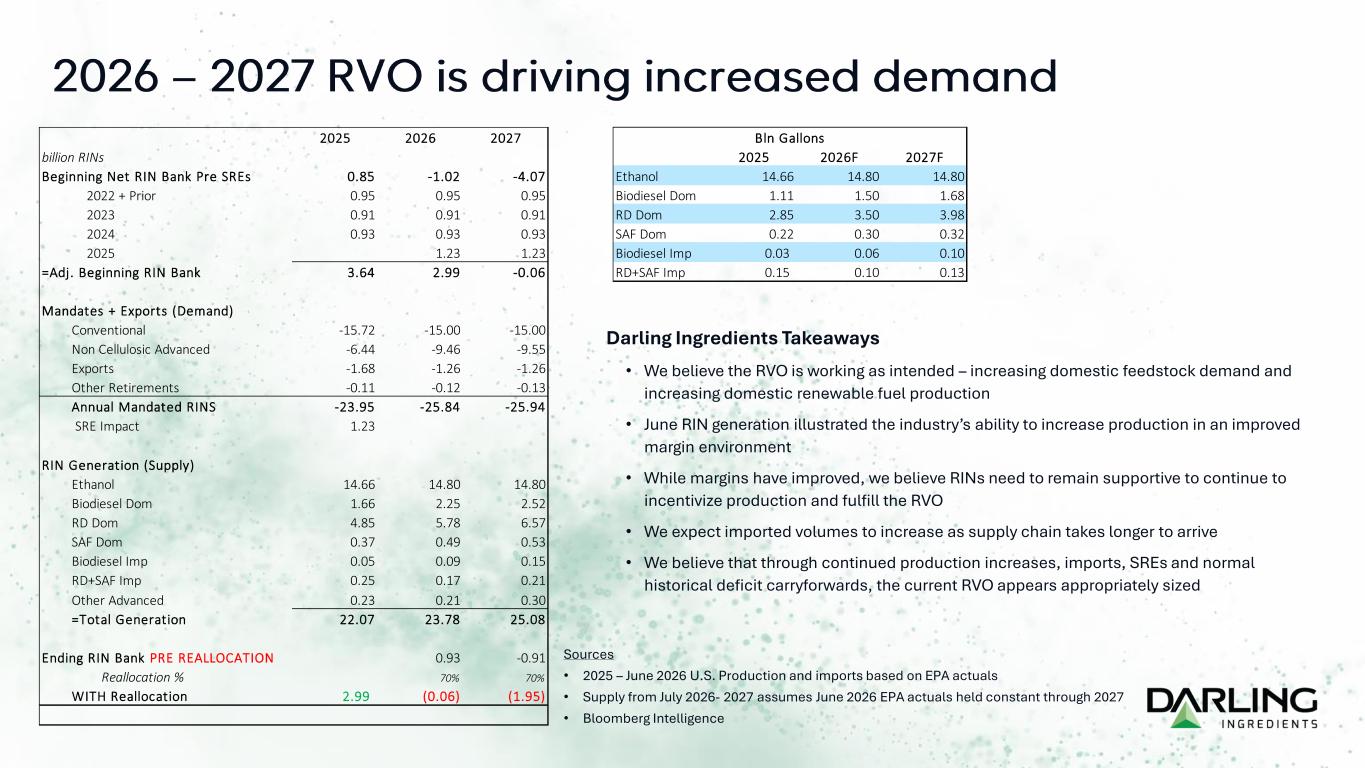
Okay, perfect. And then I wanted to pivot to Diamond Green and just, we've seen a lot of nervousness in the REN market over the last few days, and it seems to be related to a lot of concerns related to 2025 SREs and just was wondering, what are y'all's expectations as to timing when we get that resolved and like what are your thoughts as to whether we get a number that's higher than what's outlined in the finalized RVO?
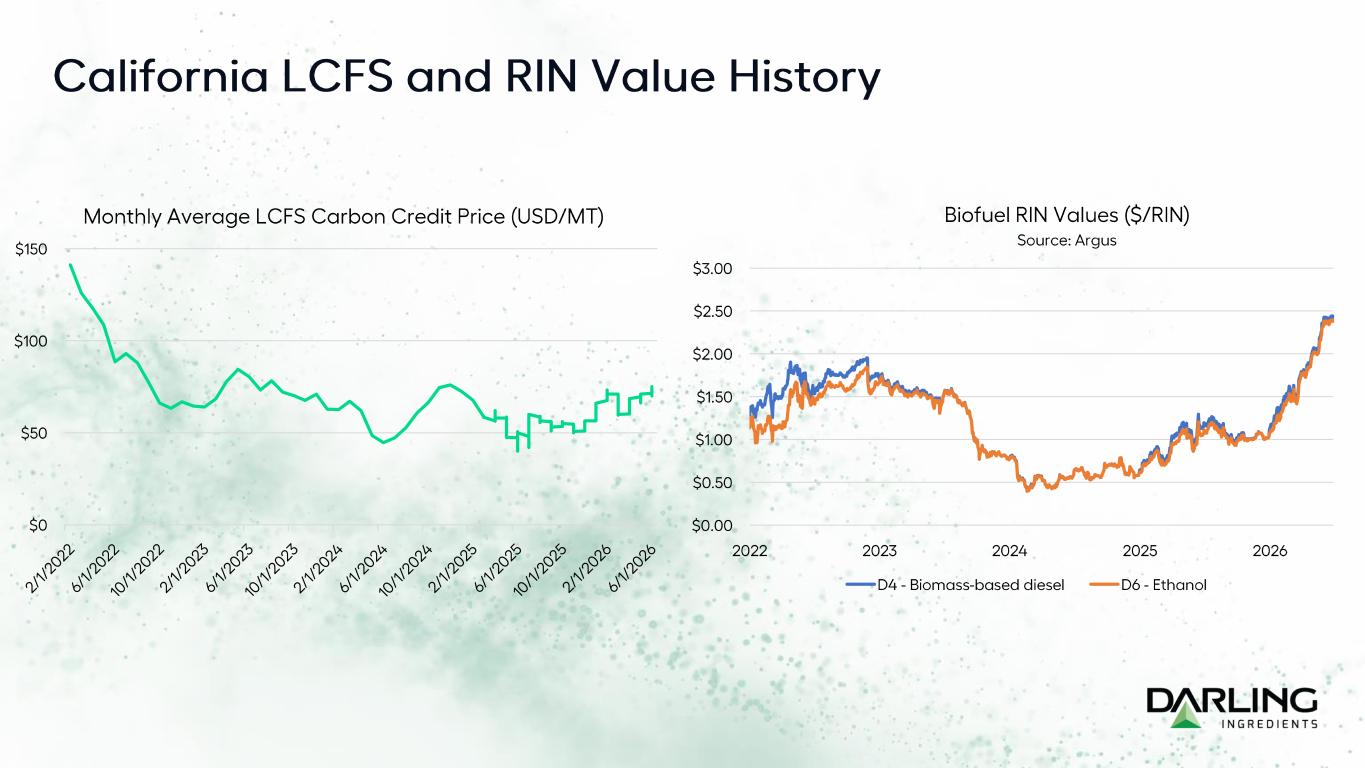
Yeah, thanks Heather, this is Bob. Um, we're not expecting, uh, any meaningful change, um, in SREs and SRE volumes that would, that would impact the, the overall RIN S and D. Um, you know, I think, you know, our view is the worst thing that the administration could do right now is, is negatively impact supply. Um, this policy, which was only implemented April 1st, um, has, has essentially achieved, or it's achieving the objectives of the EPA and the administration as a whole. It's leading to higher prices at the farm gate, which is what they wanted. And the industry responded, you know, within the third month of its implementation by making enough product that shows it can meet the mandate. So, you know, we're not expecting a significant change that would overall impact this picture. And, you know, we think RIN tightness is going to continue, and that's what's required in order to maintain the kind of production that we saw in June and what we need to meet the mandate.
Thanks so much for that, Carla. Have a good day.
Operator
Your next question comes from the line of Manav Gupta with UBS. Manav, your line is now open.
Morning, team. Exceptionally strong quarter. Want to congratulate everybody on it. My first question is on the overall renewable diesel macro. I think world is short diesel. You have seen a strong support from the government on RVO. The way we think about renewable diesel margins and mid-cycle margins, should we think of a higher mid-cycle, given all the dynamics that are playing on, including global diesel inventory depletion? And would that mean higher sustained earnings from your renewable diesel business for a longer period of time? If you could talk a little bit about that.
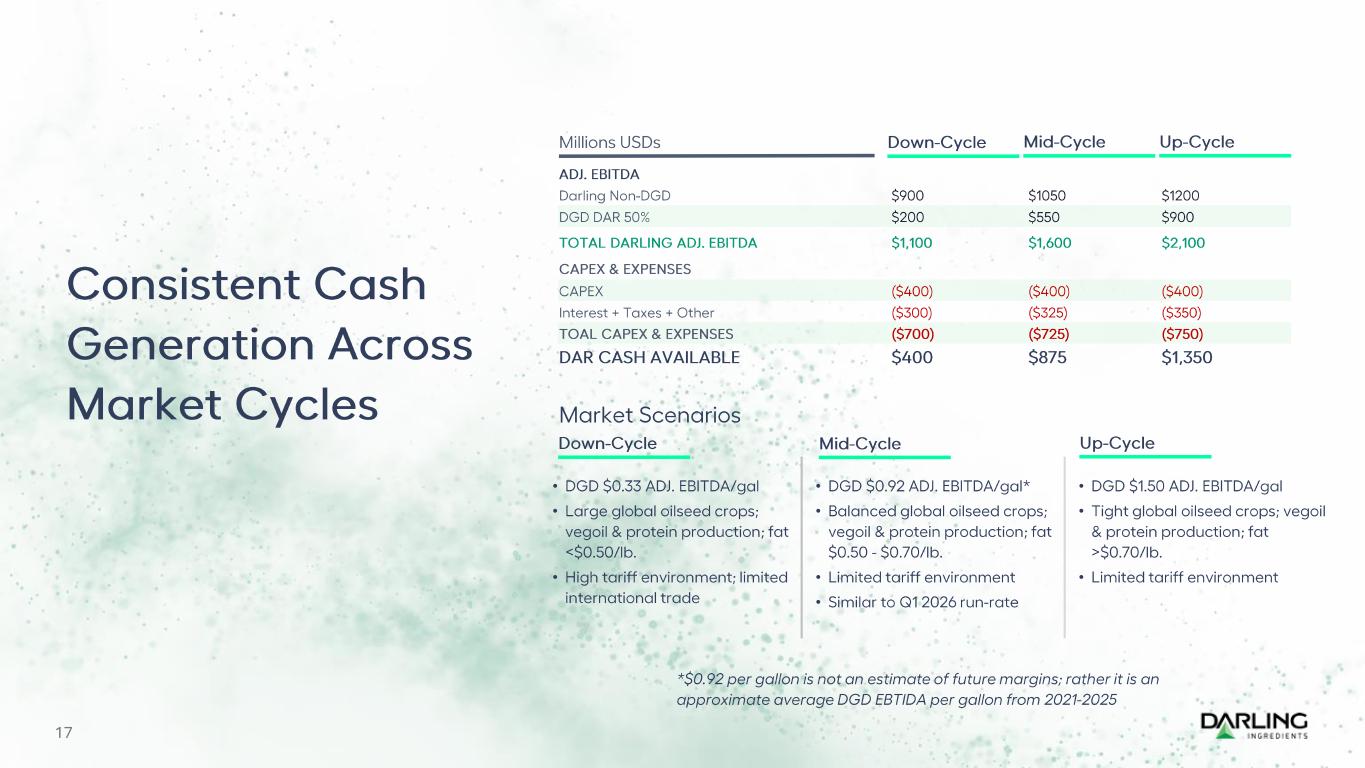
Yeah, thanks, Manav. This is Bob. So I just want to be clear, there is a page in our deck where we talk about our businesses as a whole, down cycle, mid cycle, and up cycle environments. And the mid cycle makes reference to 92 cents a gallon. And that's really just an approximate average of what the price per gallon was from 2021 to 2025. It's not a suggestion about what a future mid cycle margin would be. You know, I think to answer your question, first, I would just point out that the Boho spread is tighter than we've seen in a long time, which suggests that, you know, as you point out, conventional fuel prices, conventional diesel prices globally are really, you know, allowing renewables to be more competitive from a cost standpoint than we've seen in a long time. And if you look at spot margins today and the RVO and the mandate, what we have through 2027, it certainly suggests an attractive margin environment for the foreseeable future, and that's what we expect.
Perfect. Thank you, Bob. Probably the next one also for you. Congrats on lowering, bringing the leverage down, I think, from 3.2 to like 2.3 in a single quarter. At the analyst day in April, you had said you want to be below two. Most likely, you will be below to by the end of the third quarter, and probably you could continue to lower it. My thought process here is what level would you be comfortable getting to and probably building a buffer where in addition to the share repurchase that you did this quarter, you could also possibly contemplate a dividend just to reward your shareholders?
Yeah, thanks, Manav. So yeah, you're right. Our objective is to get down below $3 billion of debt. I think, you know, given the the EBITDA run rate that we're on right now, that would comfortably put us below two times leverage. You know, I think what we're more focused on is total debt level because we want to be, you know, in a comfortable leverage position, even in a mid-cycle environment. And so that's what we're striving for. We did highlight at Investor Day that once we achieve our goals in terms of total debt level, then we can evaluate a different type of capital strategy that potentially could include shareholder value initiatives that we really haven't considered as much in the past, but we now are able to do, you know, since we've built out the global network that we have, and, you know, we have more stable earnings than what we've had in the past.
Thank you, and congrats on a great quarter. Thank you.
Operator
Your next question comes from the line of Derek Whitfield with Texas Capital. Derek, your line is now open.
Thank you. Good morning, guys, and congrats on a banner quarter. I wanted to start with DGD. Given the strength of really U.S., Canada, and international markets, how are you guys thinking about the allocation of RD and SAF volumes across those markets to optimize margins?
Yeah, thanks, Derek. This is Bob. I think, you know, what you're alluding to is margin attractiveness in RD relative to SAF. That's better than what we had seen previously. You know, that really depends on which market you're selling into. I think RD is more attractive relative to SAF, more so in Europe than what we have in the United States for our existing sales book. You know, as everyone knows, Europe is a mandated market. The United States is a voluntary market. But in the mandated market, you know, those prices can move up and down depending on supply and demand, and we're not seeing a huge advantage in SAF in that market. But in the U.S., in our voluntary market, certainly with, you know, sales on our books, those SAF sales command a premium over RD and continue to earn a more attractive margin than RD. So, you know, we're certainly going to take advantage of that. you know, and we expect to produce SAF at a similar rate to what we've been doing over the past 12 to 18 months.
Great. And then on my follow-up, just with the capital increase for 2026, so you guys did initially message that during one key earnings, but maybe could you speak to some of the investments and the expected uplift in business results associated with investments?
Yeah, so I'm not sure I totally understood the question, Derek. So are you talking about investments from 22 and 23 or more recently?
So with the increase in 2026 capital, you guys initially messaged that during one view. Could you maybe speak to some of the investments that you guys are undertaking and then expected to split the business results?
Yeah. Okay. So yeah. And I think when we started the year, we estimated that maintenance CapEx would be around $400 million. We revised that slightly higher to $450 million. You know, that's really just a function of, you know, increased cash flow into the business and identifying opportunities to just increase, you know, de-bottleneck in certain locations, slightly increased capacity, improved efficiencies.
You know, I wouldn't say it's a material change to our capex plan for the year but in a year like this we're certainly going to take advantage of the opportunity to do a little bit more and and just increase efficiencies i mean derek this is randy clearly in 24 and 2025 we had to we had to pull back the reins on the capital spin and you you never want to put these factories into a run to fail mode and so you know we're a little bit of makeup capital in here and then ultimately we're the poultry expansion in the southeast least in the United States. We're running the Valley system wide open, full now, and we've been able to expand it and optimize it, and we're getting the earnings out of it, and that's the inflection point that's very different than last year.
Makes complete sense. Great quarter, guys. Thank you.
Operator
Your next question comes from the line of Andrew Strelzik with BMO Capital Markets. Andrew, your line is now open.
Hey, good morning. Thanks for taking the question. And I apologize. I dropped for a minute accidentally. So I apologize if I ask something that's already been asked. But you talked about your enthusiasm for the balance of the year and 27. And obviously, we saw the base business guidance for 3Q. But with the volatility in market fundamentals recently and coming off the strength in 2Q, can you frame kind of current spot run rate margin structures relative to the high medium low framework from the investor day are we kind of still at the high scenario that you talked about previously are we above how do you see that kind of on a go forward yeah and you know i've gotten to sit in the seat of quite a while here and if you live long enough in this business you see some of these cycles and and ultimately we don't you know we're very enthusiastic through the end the 26 and even 27.
And what we're saying is the core ingredient business, the acquisitions we made in the past have been rationalized, optimized. We've done some divestitures. And so the core ingredients business is going to roll, you know, at that 325, 340 level. That number, it was very, very simple. For us, that was just basically, once again, the June run rate and, you know, multiplied times 13 for the the quarter and we see nothing you know the third quarter typically can be a little challenging because of weather summer weather it's hot here and hot and in europe but but ultimately the strong protein strong fat markets continue to go um dgd you know we we feel very positive about the the margin environment that's out there yeah yes heating oil's up one day. Yes, rents are down one day. The crushing industry and the soy side's running wide open full, but yet soybean stocks come down. So soybean oil. So you can't exactly get bearish on fats and oil. So we feel just really, really good about it. We, you know, as we said in our investor day, where we're at today is where we wanted to be a couple of years ago, taking big money off of the balance sheet such that we have the flexibility to have darling looked at as a different company there there's we we have a very very prestigious place in the world in in our business and and i think it's really delivering now it's set up to to continue to grow organically and through de-bottlenecking as bob's words in different places and you know i i just see the the the, I just see it as a really positive outcome as we go into 27. You know, I think our comments that we don't see the risk that in the RVO, that maybe some in the market want to impute out there. It's doing what it's supposed to do. In second quarter, we produced the gallons that it's needed to fulfill it. And that was the, that was the naysayers that were out there. So, you know, I think the environment's very solid. Demand in the world is very robust for renewables with the higher oil prices. And so, Bob, you want to add anything before I look?
I think the last thing I would say is, you know, if you look at those margin environments, if we talk about down mid and up cycle environments, yeah, we're not in a mid cycle environment right now. No, it's if you look at spot margins, it's it's it's more towards that up cycle as we sit here today. And as Randy said, we're optimistic about what that's going to continue to look like here over the next few quarters.
Okay, great. That's helpful. And maybe to your point about the evolution of the balance sheet, it feels like, you know, given the results and the outlook, you're going to be to your targets and through your targets sooner rather than later. So, can you just, obviously, we saw the buyback in the quarter. Can you kind of just give us your updated thoughts on capital allocation once you do get to those target levels? And is that kind of a tell on which way you're leaning? Just curious for some updated thoughts around capital allocation.
Thanks. yeah it's a you know number one it's above my pay grade so we'll go there but it allows discussion in the boardroom to go where we've wanted to go and that is you know making sure that people view a yield under darling not as a commodity company but one that can deliver a dividend and share repurchases on a consistent basis bob laid out the the blow or the low the mid and the upcycle environments. And it gives enough cash flow to do what we want to do going forward. So we've stayed laser focused on bringing the debt down to below $3 billion, getting the leverage ratio below $2 billion, put a capital policy or a max debt policy in it two and a half times. And we're able to do everything at that time. So like I said, this was our dream two years ago, and then we hit a pretty solid and difficult cycle. We didn't see the cycle coming on in DGD. It came. We lived through it. We paid down debt while we were there. We maintained the plants and very happy with the acquisitions we made during the time. And so we're in a different, you know, different setting point now than where we've ever been. And so that's where our enthusiasm is. And it gives me the chance then to have the discussion in the boardroom about how to transform Darling going forward. Great.
Operator
Your next question comes from the line of Ben Kahlo with Baird. Ben, your line is now open.
Maybe if you guys could talk a little bit about the supply side for RD, if you guys see any capacity coming online or new capacity uh intend to be built um i think you guys did good job talking about the demand side but just if you could yeah thanks ben um i i think it's you know we're we're impressed by what the industry was able to achieve in june and it's it's it's the classic uh the best cure for high prices or high prices in these type of markets um you know what we're seeing is nameplate capacity is a number, and most companies are able to overachieve that when the operating environment is positive, and that's what we're seeing. We're not necessarily seeing a lot of new capital for increased capacity in renewable diesel, at least in the United States. I think if we were to get set three that provides a longer-term outlook for the RVO and mandated volumes, then we would likely see that. But what we do see is that with existing capacity and performing capabilities that we're able to make enough product as an industry to meet the and satisfy the mandate.
Great. Thank you. Just on the next item side, you mentioned that you're starting sales in China, I believe. Could you just talk about, you know, that market and the opportunity there?
And then just, you know, if there's any kind of, if it's more competitive there, if there's other kind of products they're competing against and how it's different than uh thank you yeah as we look around the world ben and it's great to have you back as a believer here um you know ultimately you know we're looking at a transformation of the gelatin to the collagen business that's out there you know gelatin was pretty much commoditized you know could make a euro per kilogram a kind of market to market. And then, as Bob said, hydrolyzed collagen, which has way more applications in the universe as, you know, two and a half, three times. And so, you know, we transitioned our extraction capacity to the hydrolyzed collagen market. And we've seen that take off in Asia. That kind of got, you know, was a slow to grow in both Europe and Asia, got shut down in the COVID era. So we've come out of that now. Asia is rapidly growing. We've approved projects for a spray dryer to make collagen now in Kaiping, China, and we're going to add extraction and spray drying capacity in Paraguay. And so the marketplace there is growing in the mid to upper single digits right now. And then ultimately, our next TIDA portfolio is kind of the 2.0 of the hydrolyzed collagen for a specialty health and wellness application. We continue to see reorders now in the next tie to glucose control. I mean, it's really fascinating as you watch the, you know, some of the side effects of the GLP-1 drugs out there that are now becoming in the narrative in the media. You know, this protein product has very similar applications without those side effects, as we're aware today. Very shortly here, you're going to see a launch and a new naming of our next TIDA brain product. We believe after the clinical trials that it has some pretty incredible health benefits going forward. So the portfolio is poised. And so, you know, the next TIDA line isn't a one-year deal. It's a five-year bill, maybe longer, because there's another half dozen products underneath it. But, you know, we see that space as something where it's very attractive to us. We're a large global player in it. And the margin structure is just going to continue to improve over time for us. Great. Thank you, guys.
Operator
Your next question comes from the line of Connor Fitzpatrick with Bank of America. Connor, your line is now open.
Good morning, everybody. Thanks for taking my question. So it has been apparent that the RINs market has been pretty difficult to balance, which is a good problem for producers of RINs to have. I wanted to just get a kind of check on what's going on with domestic utilization and where net imports could progress. It looks like biodiesel utilization in the United States has been rising. That's been kind of late as a result of probably ramping up difficulties, rehiring staffing, also methanol and input costs. So I was wondering how far from max biodiesel utilization are we in the United States? And what is the opportunity or possibility that net exports of biodiesel and renewable diesel out of the U.S. could flip and supply the market just to make sure the RINs market is balanced.
Yeah, thanks, Connor. So I think as far as our, you know, how far away are we from max biodiesel production in the United States? We're probably getting somewhat close to that. There's certainly room for more imports. But overall, I think we're, you know, we're running at a very high rate overall with biodiesel and renewable diesel in the United States. You know, imports have a longer supply chain. They take longer to show up into the market. We expect that we'll see more imports July and beyond. And that's really important to meeting the overall mandate. In order for exports to slow down, we would need to see margins in the United States increase from where they are today. But, you know, ultimately, given the run rate we saw in June, what we expect to see from a slight increase in imports, you know, we're in a position right now where we're probably going to be able to meet the mandate. But margins have to remain strong in order for that to happen.
Makes sense. And then have noticed an increase in animal-based protein, meat and bone meal protein value per ton surging relative to soybean meal and other vegetable-based protein meals. So it looks like as an animal-rendering focused company, Darling is benefiting from some advantages versus more agriculturally focused, um vegetable focused um companies uh and clearly that's a big benefit to the feed ingredient segment maybe you could just comment on the drivers of the relative value of different um protein meals um how that sets up the cycle for feed ingredients going forward yeah connor this is randy it clearly you know thank you for differentiating us from the crushers in the ag services businesses.
You know, we have a very unique position in the world. And, you know, ultimately, we're, you know, provide fats to the fuel business. And then all the proteins end up in, you know, three different segments, really, you end up in aquaculture and aquaculture is very strong in the world right now. And with the tightness and fish meal, it's adding value to our low ash poultry meal products. The pet food business, while it had a really big up cycle during the COVID era when you needed a new friend at home, it loosened up a little bit and the prices moved up with the high-end pet foods and ultimately some of the private labels are taking a little share back now. But globally, pet food demand remains very, very strong and continues to grow. And then the balance of it would be the commodity protein side of the mixed species products. And that's really reflective and being consumed in the strong global protein business. Everybody knows red meat's expensive. And so ultimately, you know, the poultry is growing very rapidly, especially in the U.S., strong in Canada, strong in Europe, Poland predominantly, and strong in China. So, and the other APAC countries. So, you know, it's really a pretty balanced thing right now for us around the world as we provide protein and energy sources.
Operator
Your next question comes from the line of Matthew Blair with TPH. Matthew, your line is now open.
Thanks, and good morning and congrats on the strong results. You mentioned some of the positive trends in your food segment. I think there was a comment that you're using collagen in whey protein applications. Could you just expand a little bit more on this? Why is this happening? And is this temporary, or do you think it's a structural shift?
Yeah, thank you, Matthew. No, look, today we're able to compete on a cost basis with whey protein. And I think what the market has realized is that collagen can act as a replacement for that, and we're finding a home there. As we move forward, given the overall demand for proteins in food products, we expect this tightness to continue, and we're finding a nice spot there that is a little bit different from where our core demand had existed prior to that.
Sounds good. And then have you applied for any additional tariff recovery? Like, should we expect anything coming in in Q3 or Q4 of this year?
Yeah, we have, you know, the tariff recoveries, you know, are classified into different categories based on likelihood of recapture. And so the ones that we have recognized are ones that we've largely been paid for. And then there are others that are remaining that, you know, we will recognize later if it gets to the point where the probability meets that standard.
Operator
Your next question comes from the line of Jason Gableman with TD. Jason, your line is now open.
Good morning. Thanks for taking my questions. You highlighted another divestment, I believe, this quarter. Are there more non-core assets you could sell in the business? And conversely, as net debt approaches your target levels, will you declare the kind of M&A holiday over and look to inorganically expand the business?
Yeah, Jason, we continue and as always have looked at the portfolio. And yeah, there's a couple more out there that can qualify there if the numbers are met that we want. The M&A holiday, yeah, it's kind of a fun word. You know, we have a list globally of multiple expansions. And, you know, as we've done historically, you know, it's really once you build the platform, the network, the model here, you now look at where you can, you know, minimize freight, maximize margins and help your customers and your suppliers. And so we've got a list of expansions around the world that need to happen over the next three years. But what we want to make sure we're telegraphing, we're writing, and, you know, crayon and big chief pad here is that, you know, we're not out there looking for that next big deal. We're out here trying to make sure that we optimize and manage the darling model that we've been trying to build for the last 20 years. you know we declare that we're there and you know ultimately we'll add businesses that make sense that are accretive but end of the day i would say over the next you know three to five years it's it's more organic and growth and expansion for collagen and and some rendering we're you know we're out of capacity on rendering in in brazil today we need to look at that what you know the chicken industry as you know in the u.s was approved to speed up their line speeds, that's going to push us at all of our factories. And so we've got to be ready to go and anticipate with our suppliers. And I think that provides some really fundamental and strong growth for the next three to five years.
Great. Thanks for that. And my follow-up is just on the DGD results in the quarter. The margin was extremely strong. I'm wondering if there were any kind of abnormal benefits in the quarter, or was some of the strength due to maybe selling to markets outside of California, like the Pacific Northwest, British Columbia, Europe, just any more color on what drove that really strong number? Thanks.
Yeah. So, you know, we announced the 51 million of IEPA tariffs. So that's part of it. But yeah, there had more to do with it than that. I think, you know, I just say, we do well, whether it's at DGD or in Darling, we do well in volatile markets. I think our supply chain is extremely well positioned to take advantage of selling to the optimal market from buying the lowest cost feedstock on a CI score adjusted basis and take advantage of when to price the different elements that go into a renewable diesel product. That volatility, it generally works in our favor. It worked in our favor, you know, in the second quarter for sure. I think as the market stabilizes, you know, more like we are now, you know, we expect a margin environment for our business to look more like the spot market, which is very healthy. But as you point out, $2.25 a gallon average for the quarter and second quarter, that was on average higher than what we saw in the spot market environment. And that's just DGD taking advantage of the volatility and running a very solid supply Thanks for that.
Operator
Our last question comes from the line of Carla Casella with J.P. Morgan. Carla, your line is now open. Thank you for taking the question.
In the past, you've talked about looking to get to investment grade.
And I'm just wondering if there's any update in terms of your leverage targets or thoughts about a potential investment grade rating yeah carla this this is randy when you when you look at it um we've got about a half billion dollar bond that's out there that's current now maturing in april um you know clearly the cash generated this year we have and and the revolver we have the capability of paying that off and then we're down to like a billion eight of unsecured debt out there as I look forward here. One maturing in 2030, I believe, and one a little after that. But yeah, essentially, we will be investment grade if we want to be. And that's, you know, as we decide that the cap structure going forward, as we, you know, look at the different options of repatriating cash to shareholders, you know, we're looking at the whole thing for darling right now and you know investment grade is one of those things that like we said we want to reiterate a two and a half times leverage ratio so yeah all implied with that is the investment grade rating okay great and just kind of one one quick follow-up on the tariff question um i know you you're not including anything that is in that basket until it's likely but do you have the value of what's the potential?
We have not made that public, no. Okay, great.
Operator
Thank you. There are no further questions at this time. I will now turn the call back to Randall Stewie for closing remarks.
Hey, thanks everybody for all your questions today and as always, if you have additional questions, please feel free to reach out to Sue Ann. Stay safe, have a great day and we thank everybody for joining us today.
Operator
This concludes today's call. Thank you for attending. You may now disconnect.