Operator
Good afternoon and welcome to Diodes Incorporated's 2nd Quarter 2026 Financial Results Conference Call. At this time, all participants are in a listen-only mode. At the conclusion of today's conference call, instructions will be given for the question and answer session. If anyone needs assistance at any time during the conference call, please press the star key followed by the zero on your touchstone phone. As a reminder, this conference call is being recorded today, Wednesday, August 5, 2026. I would now like to turn the call over to Leanne Sievers of Shelton Group Investor Relations. Leanne, please go ahead.
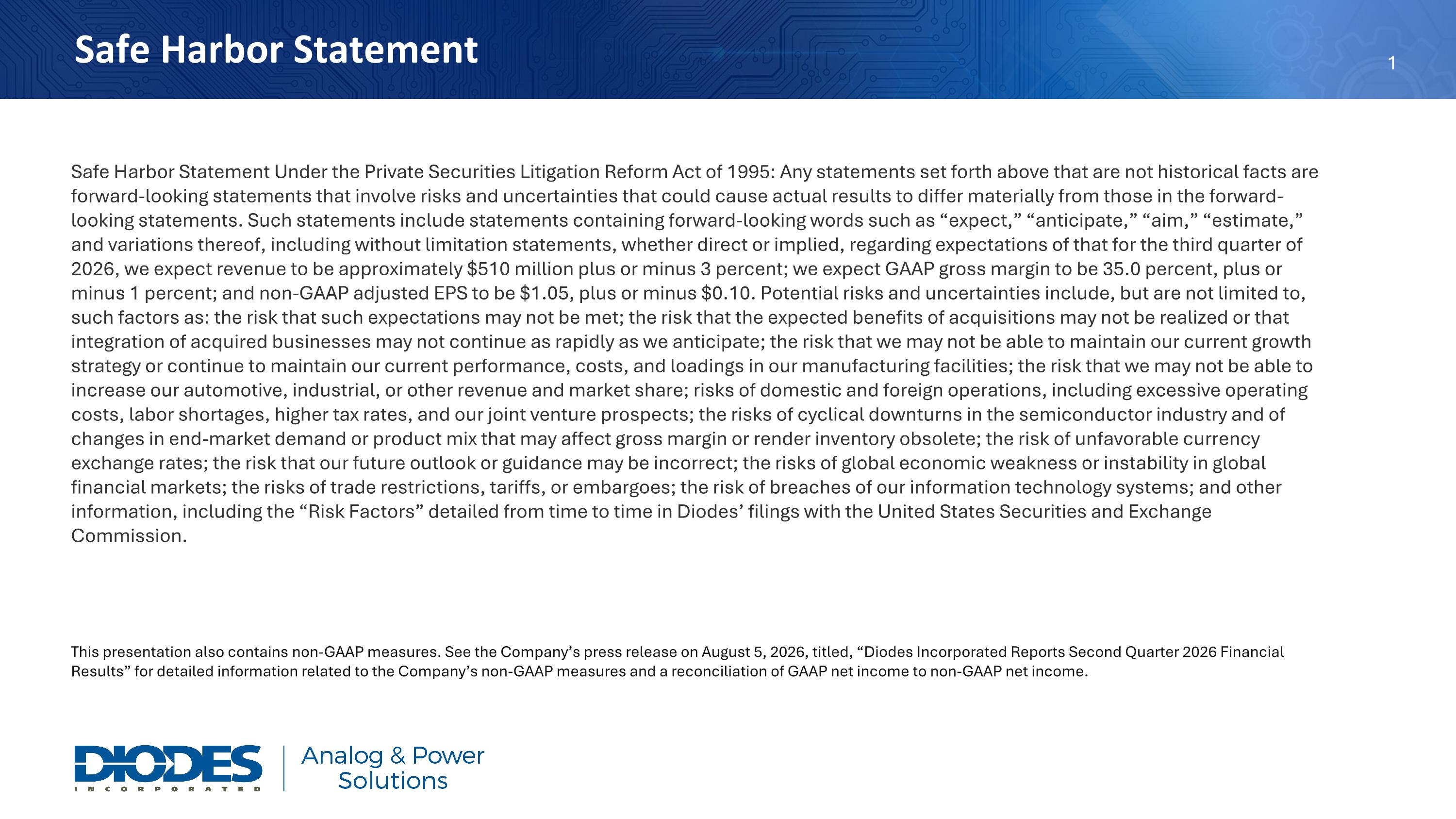
Good afternoon and welcome to DIODE's second quarter 2026 financial results conference call. I'm Leanne Sievers, president of Shelton Group, DIODE's investor relations firm. Joining us today are Diod's President and CEO, Gary Yu, CFO, Brett Whitmire, Senior Vice President of Worldwide Sales and Marketing, Emily Yang, and Vice President of Marketing and Investor Relations, Grameet Dhaliwell. I'd like to remind our listeners that the results announced today are preliminary as they are subject to the company finalizing its closing procedures in customary quarterly review by the company's independent registered public accounting firm. As such, these results are unaudited and subject to revision until the company files its Form 10-Q for its quarter ended June 30, 2026. In addition, management's prepared remarks contain forward-looking statements which are subject to risks and uncertainties, and management may make additional forward-looking statements in response to your questions. Therefore, the company claims the protection of the safe harbor for forward-looking statements that is contained in the Private Securities Litigation Reform Act of 1995. Actual results may differ from those discussed today, and therefore, we refer you to a more detailed discussion of the risks and uncertainties in the company's filings with the Securities and Exchange Commission, including Forms 10-K and 10-Q. In addition, any projections as to the company's future performance represent management's estimates as of today, August 5, 2026. DAODS assumes no obligation to update these projections in the future as market conditions may or may not change, except to the extent required by applicable law. Additionally, the company's press release and management statements during this conference call will include discussions of certain measures and financial information in GAAP and non-GAAP Included in the company's press release are definitions and reconciliations of GAAP to non-GAAP items, which provide additional details. Also throughout the company's press release and management statements during this conference call, we refer to net income attributable to common stockholders as GAT net income. For those of you unable to listen to the entire call at this time, a recording will be available via webcast for 90 days in the Investor Relations section of Diodes' website at www.diodes.com. And now I'll turn the call over to Diodes' President and CEO, Gary Yu. Gary, please go ahead.
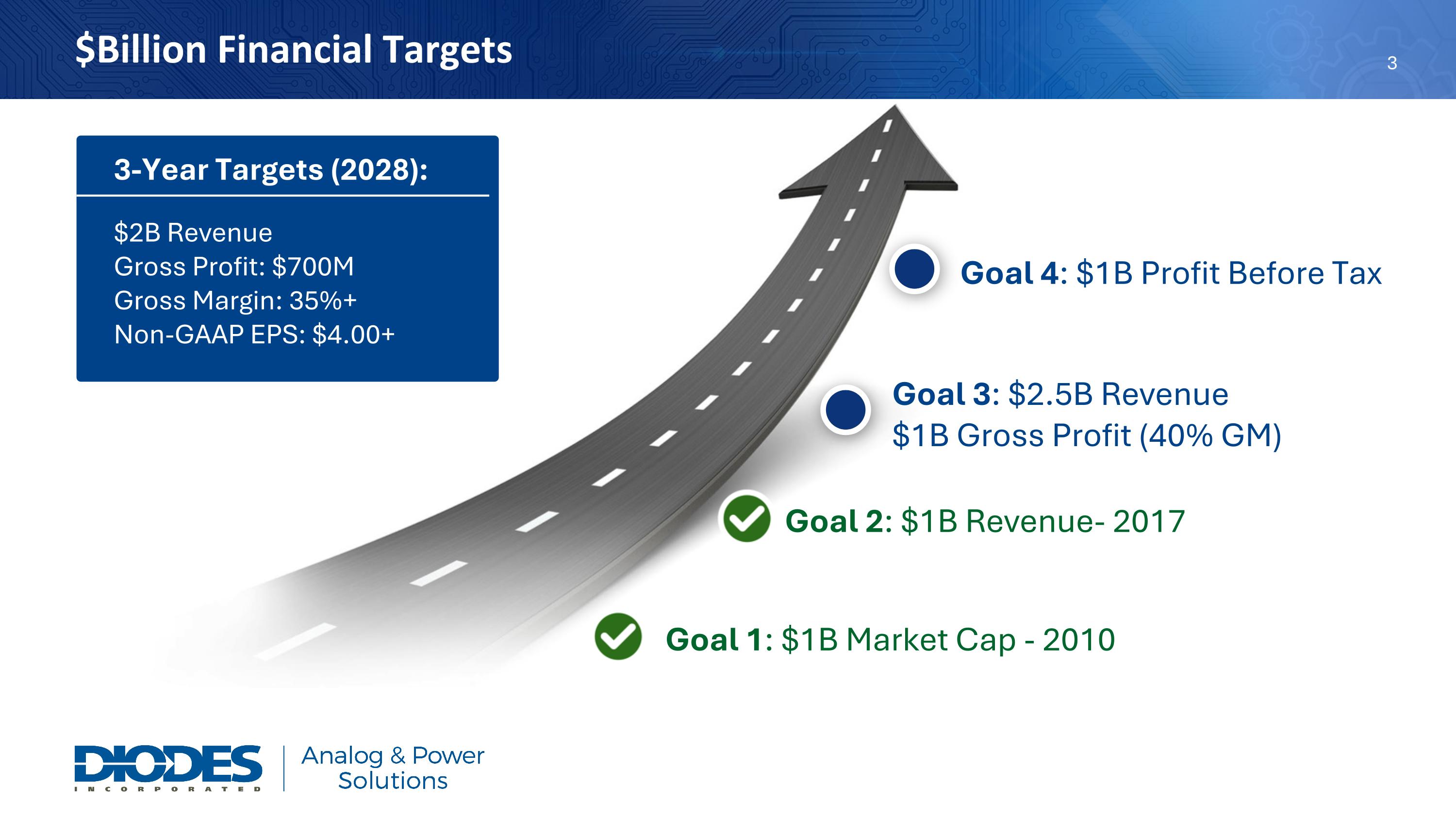
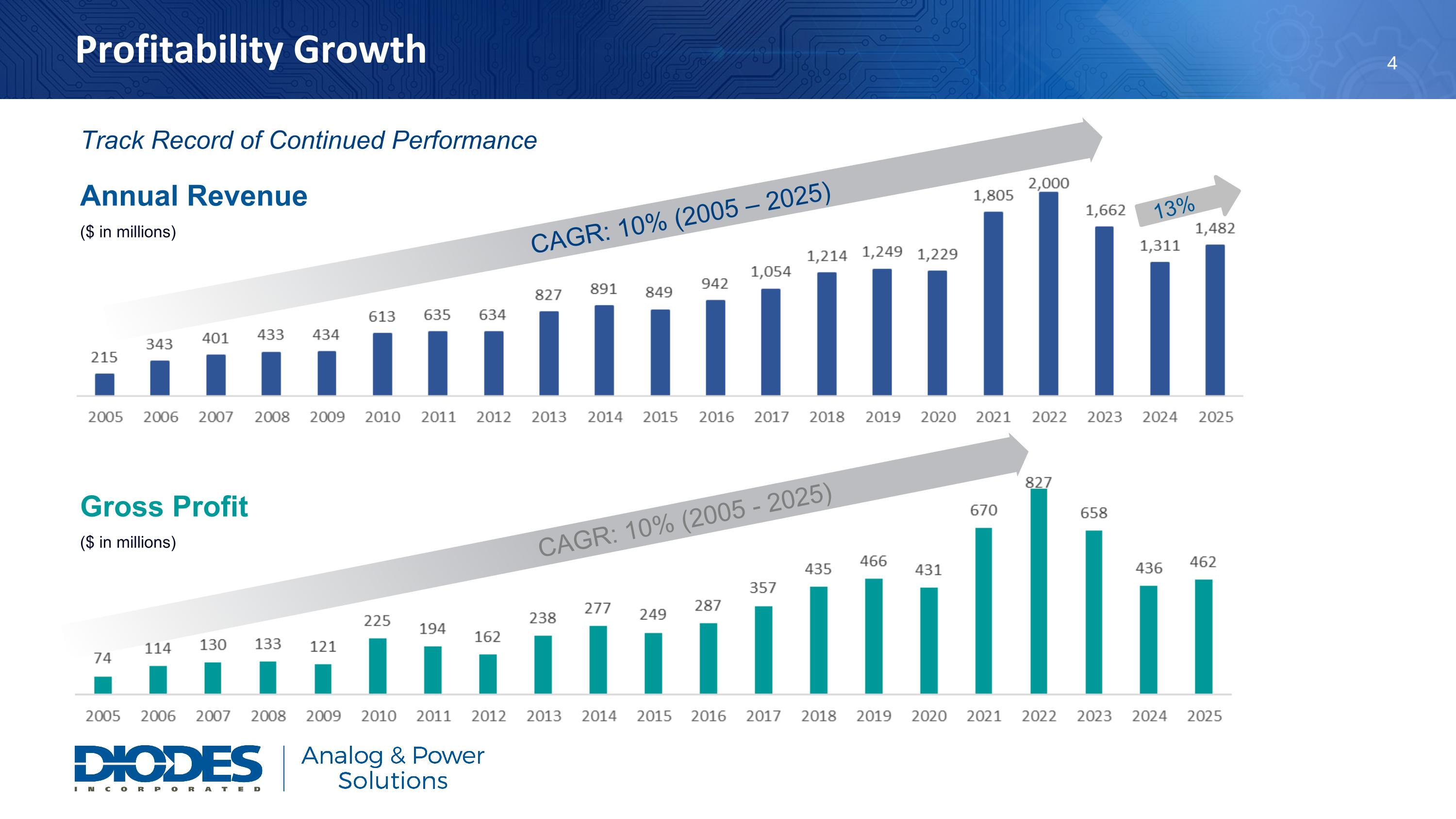
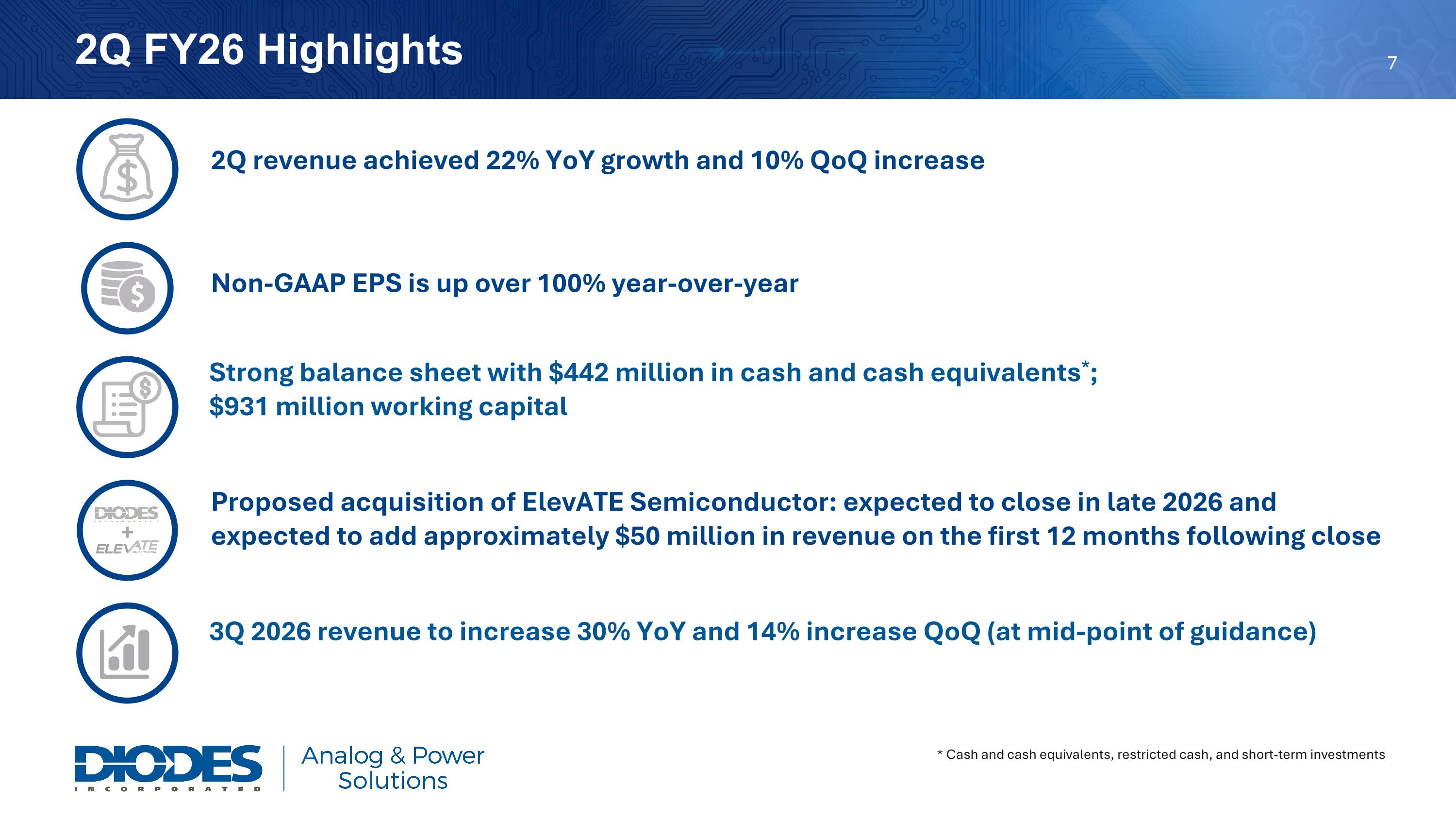
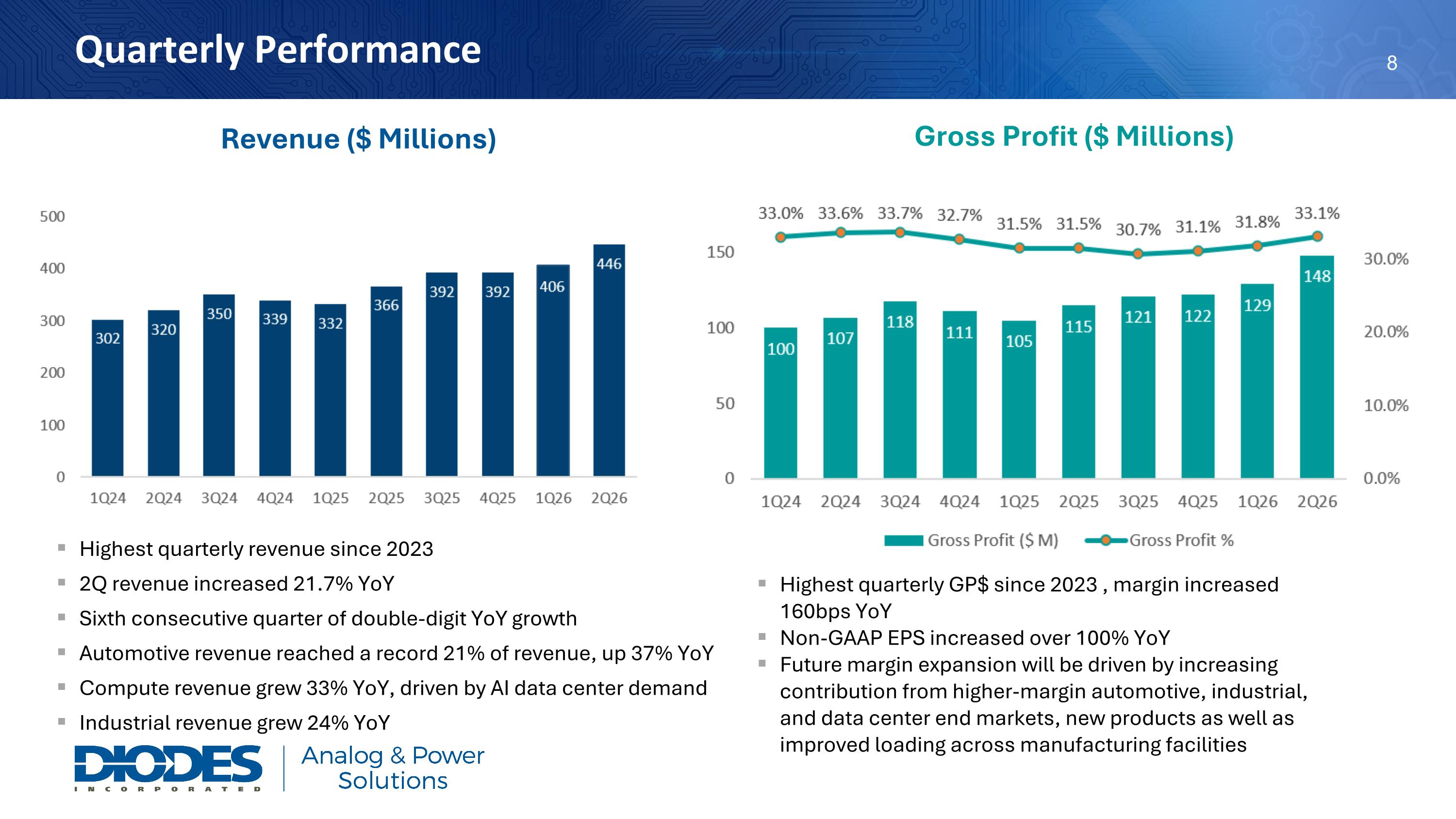
Welcome, everyone, and thank you for joining us on today's conference call. As announced in our press release earlier today, we extend our momentum in the second quarter, with revenue again increasing more than 20% year-over-year, driven by growth across all regions. Revenue also increased 10% sequentially, coupled with a record global POS. As the sixth consecutive quarter of double-ditch year-over-year growth, this quarter serves as a further confirmation of strengthening demand in the overall market, combined with does expanding content cross our analog and power solutions in our key focus areas of automotive, industrial, and AI survey related applications. Automotive revenue reached a record level of 21% of product revenue. We continue to drive increased content with an expanding pipeline of new products that's resulting in consistent market share gains across all regions auto manufacturers and suppliers. Also, during the quarter, the cost and operating initiative we previously implemented during the market slowdown are producing measurable benefit to gross margin and our bottom line, with margin increasing 160 basis points year over year and non-gap earnings increasing by more than 100 percent again this quarter. These actions have also contributed to increase the cash flow that has enabled us to reinvest in our growth and innovation, while also looking for inorganic opportunity to expand our technology portfolio, such as recent proposed acquisition of Elevate Semiconductor. Elevate is a fabulous semiconductor company that specializes in development of integrated circuit of automated test equipment, or ATE. The explosive growth, increasing complexity, and higher performance requirements of IC using automotive, industrial data center, and AI applications are driving greater semiconductor production volume and, in turn, increasing demand for automated test equipment. This acquisition enhances our ability to provide a broader solution to customers and launch a new and advanced product line that will drive and increase the dollar content in AT applications. I also want to add that this acquisition is immediate and expect to add approximately $15 million of revenue in the first 12 months post-close, with revenue expect to grow at a CAGR of greater than 20% over the next four years, and with gross margin significantly higher than BIOS corporate average. As we look to the third quarter, we expect to extend our accelerating traction, which revenue anticipates to increase 30% year-over-year and 14% substantially at the midpoint. We also expect to deliver another 190 basis point sequential improvement in gross margin. As our utilization continues to improve, combined with a 2.8 times year-over-year improvement in non-GAAP earnings, these expect results drive us closer to our three-year financial goals of $2 billion in annual revenue and over $4 in non-GAAP EPS. With that, let me now turn the call over to Brett to discuss our second quarter financial results, as well as third quarter guidance in more detail.
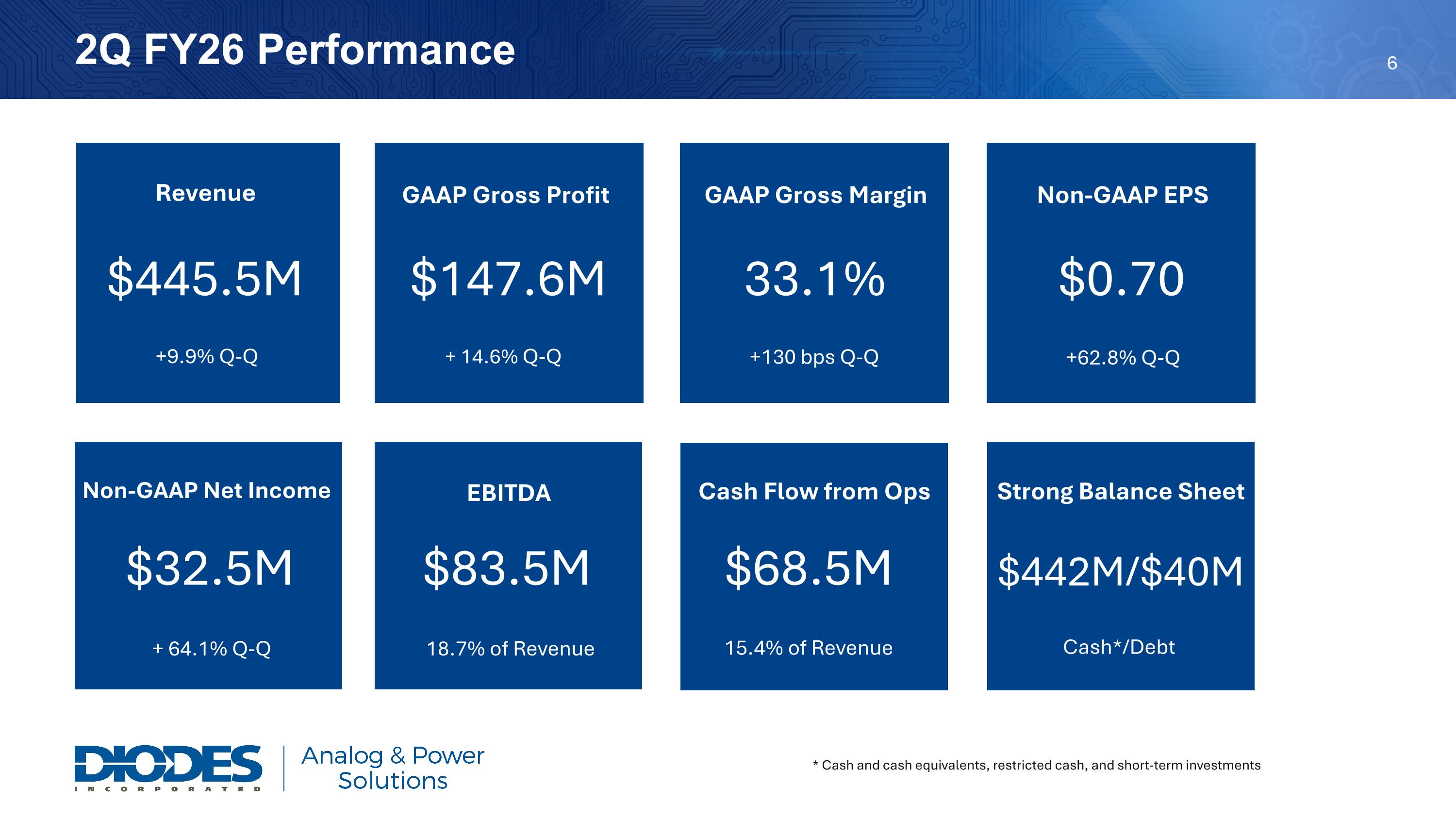
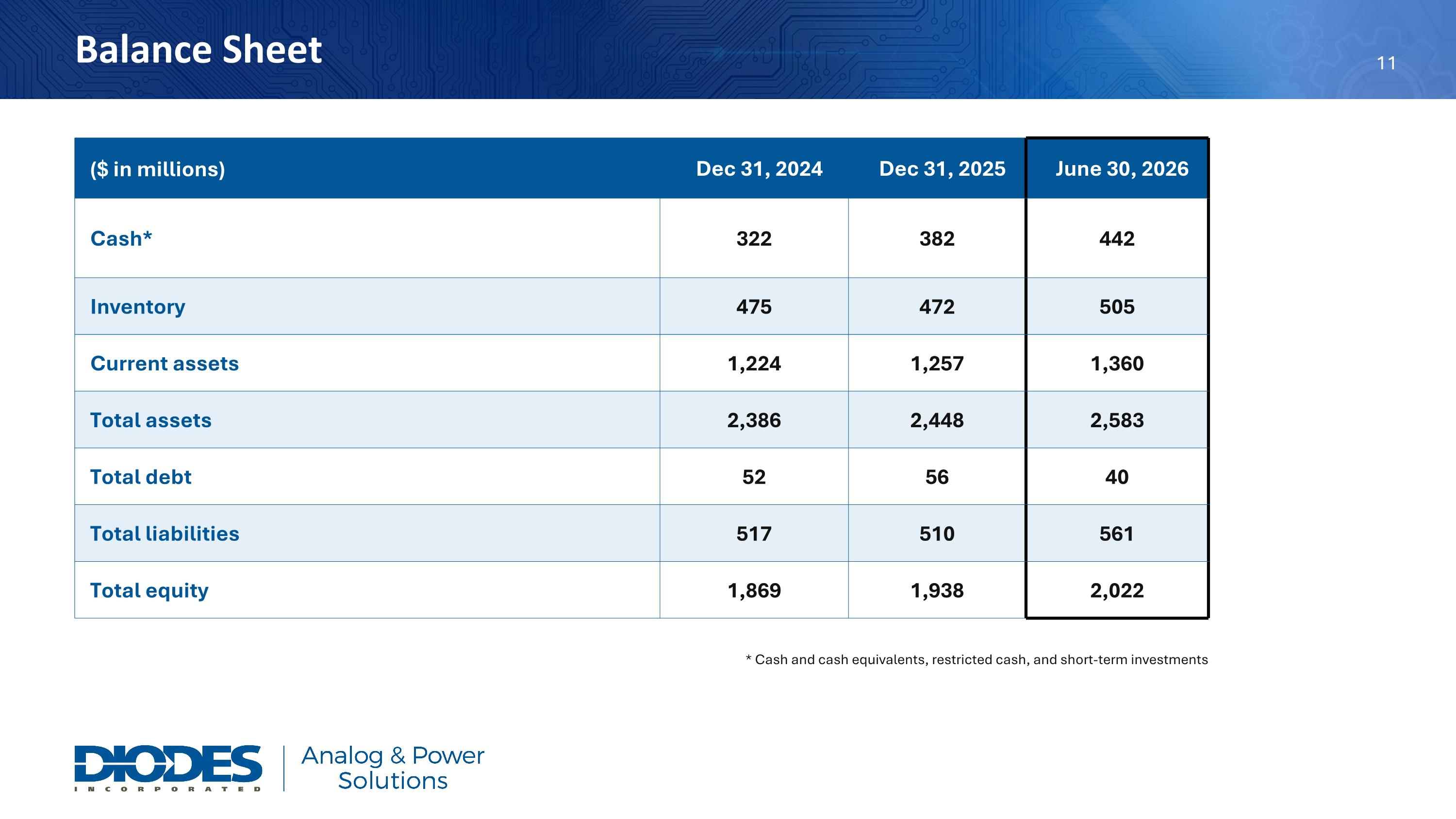
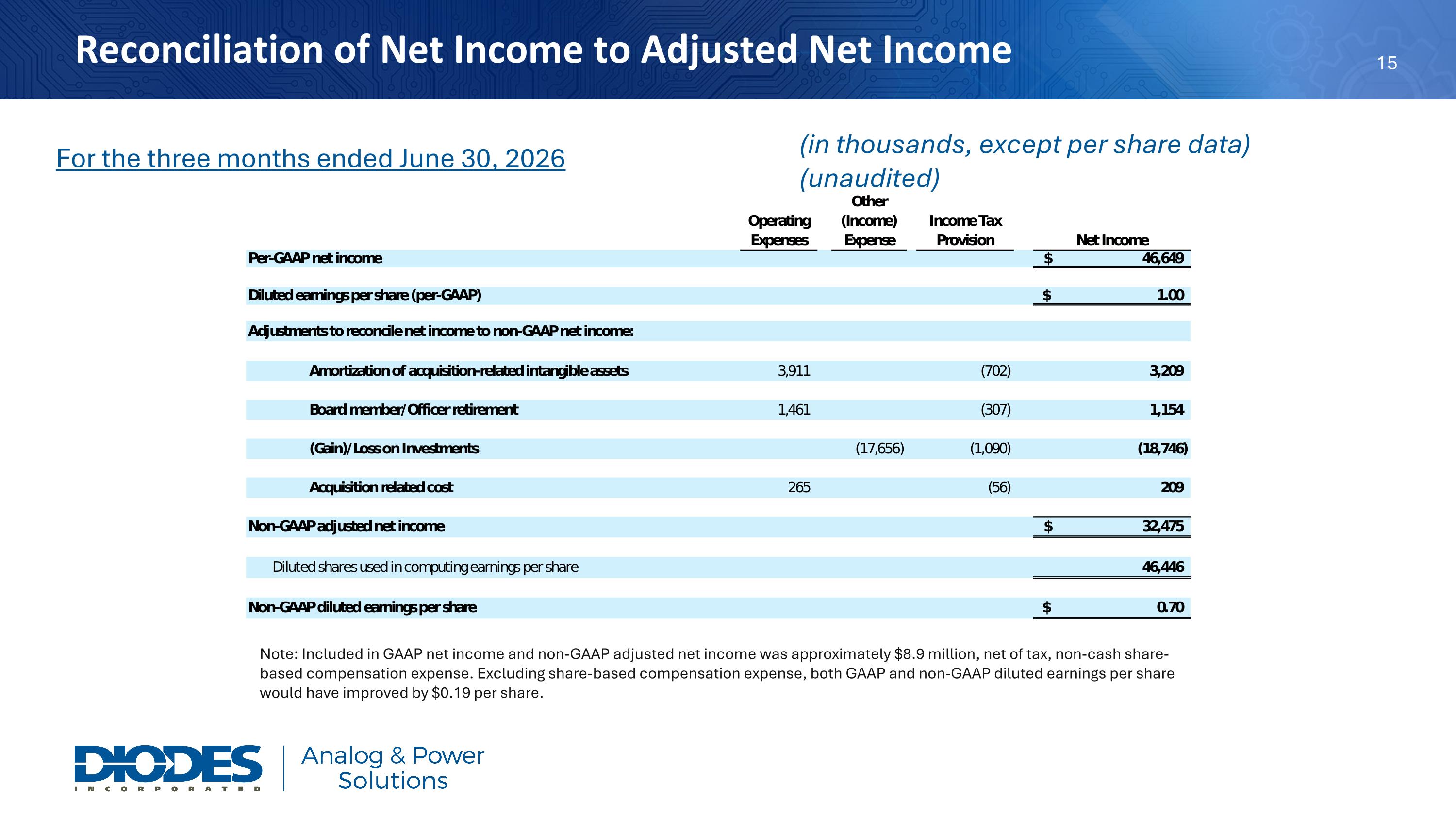
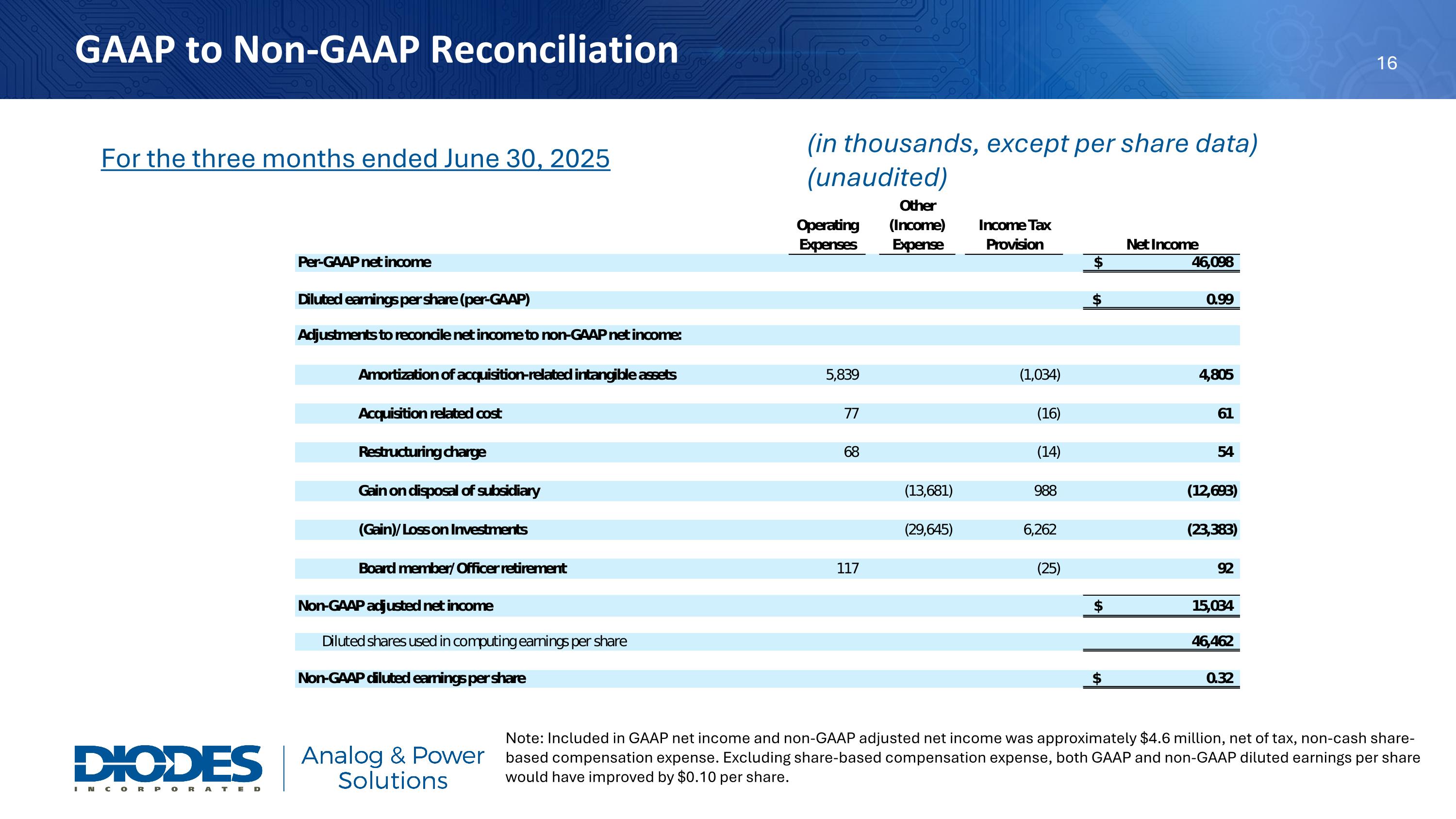
Thanks, Gary, and good afternoon, everyone. Revenue for the second quarter, 2026, was $445.5 million, an increase of 22% over $366.2 million in the second quarter, 2025, and up 10% compared to $405.5 million in the first quarter, 2026. Gross profit for the second quarter was $147.6 million, or 33.1% of revenue, compared to $115.3 million, or 31.5% of revenue in the prior year quarter, and $128.8 million, or 31.8% of revenue in the prior quarter. GAP operating expenses for the second quarter were $114.3 million, or 25.6% of revenue, and on a non-GAP basis were $108.6 million, or 24.4% of revenue, which excludes $3.9 million amortization of acquisition-related intangible asset costs, $1.5 million of board and officer retirement expense, and $0.3 million of acquisition-related costs. This compares to GAAP operating expenses in the second quarter, 2025, of $105.9 million, or 28.9% of revenue, and $109 million, or 26.9% of revenue, in the prior quarter. Non-GAAP operating expenses in the prior quarter were $103.9 million, or 25.6% of revenue. Total other income amounted to approximately $24.7 million for the quarter, consisting of $20 million in unrealized gain on investments, $5.5 million in interest income, $0.5 million in other income, offset by $1 million in foreign currency losses, and $0.3 million in interest expense. Income before taxes, equity and net earnings of equity investments, and non-controlling interest in the second quarter 2026 was $58 million, compared to $53.2 million in the prior year period and $22.4 million in the previous quarter. Turning to income taxes, our effective income tax rate for the second quarter was approximately 12.3%. For 2026, we expect the tax rate for the full year to remain at approximately 18% plus or minus 3%. Gap net income for the second quarter was $46.6 million, or $1 per diluted share, compared to a net income of $46.1 million, or $0.99 per diluted share in the prior year quarter and net income of $15 million, or $0.32 per diluted share last quarter. The share count used to compute GAAP income per share for the second quarter of 2026 was 46.4 million shares. Non-GAAP adjusted net income in the second quarter was $32.5 million, or $0.70 per diluted share, which excluded net of tax and $18.7 million gain on investment. $3.2 million of acquisition-related intangible asset costs, $1.2 million in board officer retirement expense, and $0.2 million in acquisition-related costs. This compares to non-GAAP adjusted net income of $15 million, or $0.32 per diluted share, in the second quarter of 2025, and $19.8 million, or $0.43 per diluted share in the prior quarter. Excluding non-cash share-based compensation expense of $8.9 million for the second quarter net of tax, both GAAP net income and non-GAAP adjusted net income would have increased by 19 cents per share, or 18.7% of revenue, compared to $84.5 million, or 23.1% of revenue in the prior year period, and $49.4 million, or 12.2%. We've included in our earnings release a reconciliation of GAAP net income to non-GAAP adjusted net income and GAAP net income to EBITDA, which provides additional details. Cash flow provided by operations was $68.5 million for the second quarter. Free cash flow was $34.8 million, including $33.6 million of capital expenditures. Net cash flow was a positive $32.9 million, which includes $10 million for the stock buyback program. At the end of second quarter, cash, cash equivalents, restricted cash, plus short-term investments, $31 million and $40 million. In terms of inventory, at the end of second quarter, total inventory days decreased to approximately 100 days where approximately 51 compared to 55 days last quarter. Total inventory dollars increased $11,504.6 million, consisting of an $8.7 million increase in raw materials, a $4.2 million increase in work and process, and a $1.1 million decrease in finished goods. The increase in inventory helps to support customers and expected growth, as well as longer wafer manufacturing lead times. On a cash basis, we're $33.6 million for the second quarter, or 7.5% of revenue, which was within our targeted annualized range of 5% to 9% of revenue. Now turning to our outlook. For the third quarter, we expect revenue to increase to approximately $510 million, plus or minus 3%. At the midpoint, this represents a 30% increase year-over-year and a 14% increase sequentially. GAP gross margin is expected to expand to 35%, plus or minus 1%. Non-GAP adjusted EPS is expected to be $1.05, plus or minus 10 cents. With that, I will now turn the call over to Emily Yang.
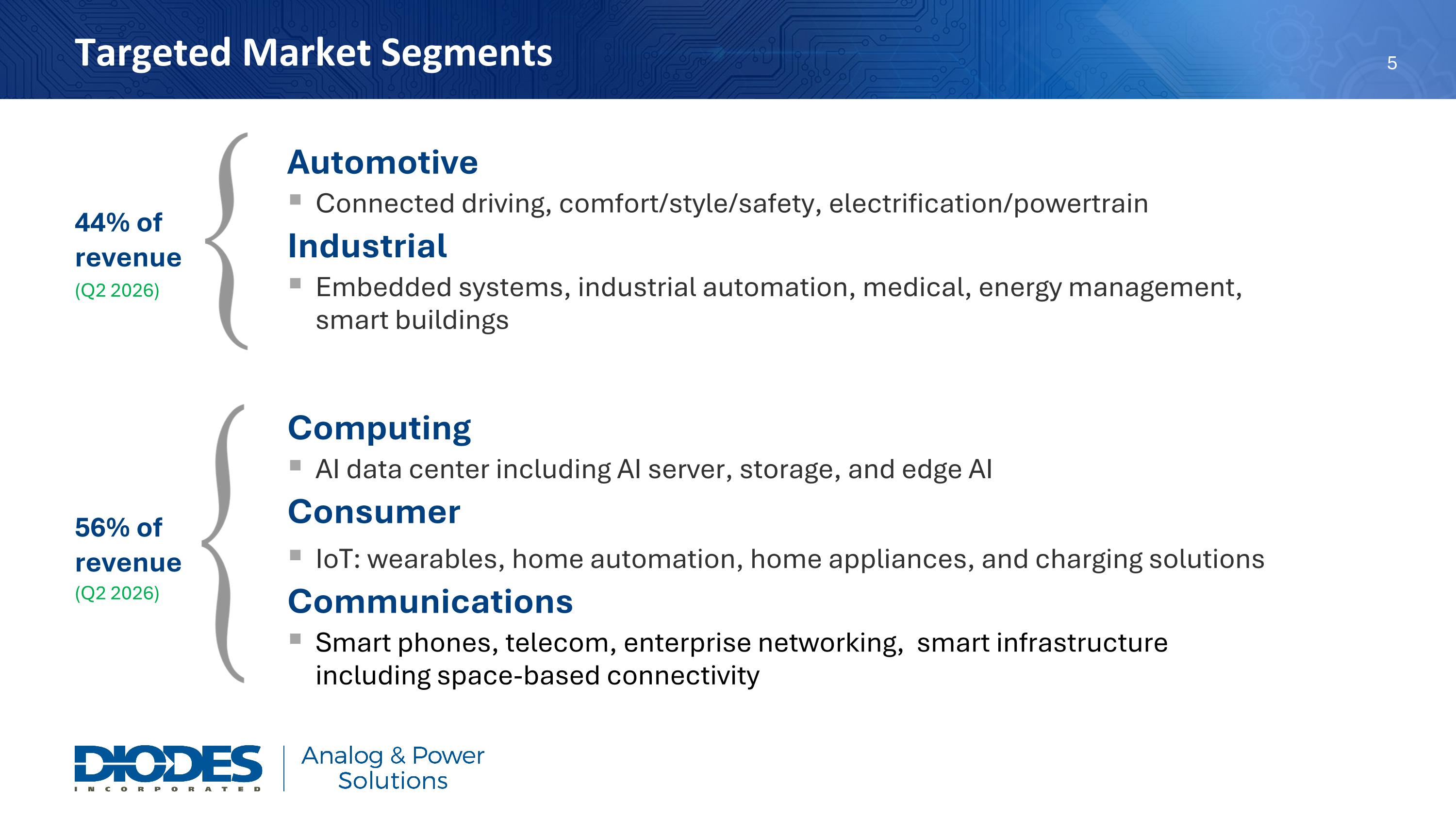
Thank you, Brett, and good afternoon. As Gary and Brad mentioned, revenue in the second quarter was up 10% sequentially and exceeded the midpoint of our guidance. This growth was mainly driven by strong demand in Asia, followed by North America. Global POS increased quarter over quarter and reached record levels, driven by America, followed by Asia and Europe. Our channel inventory decreased both in terms of dollars and weeks again this quarter, with the weeks lower than our normal range of 11 to 14. The supply disruption I've mentioned on previous call continues, and we remain strategically focused on building long-term sustainable business and content opportunities at key automotive, industrial, and AI-related applications and customers. Our achievement of record automotive revenue in the quarter validates the success of our strategy and market share gain with customers. With our strong second quarter result and third quarter guidance, this further underscores our solid operational performance and the initial benefit from aggressive capacity expansion activities and our hybrid manufacturing strategy. Looking at global sales in the second quarter, Asia represented 79% of revenue, Europe 12%, and North America 9%. In terms of our end markets, industrial was 23% of dials product revenue, automotive a record 21%, computing 28%, consumer 17%, and communication 11% of product revenue. Overall, AI infrastructure is becoming an increasingly important growth driver for DIOS that spans multiple end markets. AI should be viewed not as a single application, but as a broad system-level ecosystem. In a typical AI infrastructure platform, DIOS content can attach across several applications, including the surfer motherboards, a power network that supports a full-powered life cycle, networking switches, storage, and high-speed optical interconnect. Across these combined AI application areas, our estimated total contact opportunity is approximately $267, representing a meaningful incremental increase compared to AI surfer platforms of $109. With several new products scheduled for release over the next few quarters, DIOS well positioned to expand its bomb content, straighten socket penetration, and gain share as AI platform continues to scale in power density, connectivity bandwidth, and system complexity. Now let me review the end market in greater detail. Starting with automotive market, revenue grew 15% sequentially and over 37% year-over-year. The increase was driven by continuous business expansion and market share gains. Our design-wing momentum extended across all focus areas. In connected driving, adoption of ADAS telemetric infotainment systems continued to accelerate as automakers increase the number of sensors, cameras, radar modules, and processors within each vehicle. These architectures require robust interface and protection solutions, and we are seeing strong momentum for our voltage translation ICs, power management, and networking product as vehicle communication and processing requirements continue to increase. across comfort style and safety we are seeing strong adoption of power protection smart power switching motor control and automotive lighting solutions the advanced lighting solutions vehicle body electronics and intelligent control modules continue to require higher level of functionality and reliability, creating additional opportunities for our products. In the electrification, the transition towards higher voltage EV platforms, faster charging infrastructures, and more sophisticated battery management system is driving demand for our power semiconductors, wide band gap solutions, and signal management devices. We continue to expand our portfolio to address applications ranging from battery management and onboard charging to DC-DC conversion and zone control architecture. Overall, our automotive portfolio continues to gain traction across both ICE and EV applications. Our emphasis on our three focus areas, combined with higher vehicle semiconductor content, continue to support our long-term automotive growth strategy. Turning to industrial market, revenue increased 5% sequentially and over 24% year-over-year. As a percentage of total product revenue, industrial was down 1% from last quarter, while actual demand remains strong. The industrial market continues to benefit from strong demand across AI infrastructures, industrial automation, robotics, energy management, healthcare, and smart infrastructure applications. Growth is being driven by increasing requirements for power efficiency, sensing, connectivity, and embedded intelligence in next-generation systems. With the shift towards 400-volt and 800-volt power architectures becoming an important trend in AI-related applications, our power management product and discrete products remain key growth drivers. This transition supports higher power density, lower distribution losses, and more efficient immediate bus conversion, creating additional contact opportunity for us. We are also seeing new growth opportunity emerge through Humorize robotic, where increasing system complexity is creating demand for discrete products, voltage translation, and connectivity solutions as commercial deployment moves toward scale. Overall BIOS is well positioned to benefit from the increasing intelligence and better computing, connectivity, and power demands for next generation industrial systems. In the computing market, revenue increased 18% sequentially and 33% year-over-year. This market continues to be our strongest growth driver due to accelerating adoption across data center, AI surfer, cloud infrastructure and storage platforms. Our timing portfolio continue to gain traction as customers transition to next-generation PCI Express architectures. We secure multiple strategic surfer platform design wings for our clock generators and timing solutions. With design activity, customer engagement and backlog training remains strong. New timing products are now ramping into the latest AI surfer platforms, further expanding our presence in this high growth market. Beyond timing, the AI infrastructure build-out is increasing semiconductor content per surfer, creating opportunities across connectivity, signal integrity, interface, power management, sensing, and protection devices. We're also benefiting from increasing power density requirement in AI surfers and data center, which are driving strong demand for our power distribution, protection, sensing, and voltage reference portfolios. In the consumer market, revenue increased almost 10% sequentially and 17% year-over-year, but remained flat to the last quarter as a percentage of total product revenue. Overall, the market remained challenged by memory shortage and slower demand. That said, we did see some areas of strength that helped offset the supply challenges. We saw strength in charging, USB power delivery solutions, ESC protection devices for storage applications, and level shifters and interface product benefiting from increasing adoption of AI-enabled IOT devices, smart home systems, and multi-voltage architectures. Together, these product families reflect our focus on higher-value consumer applications where increasing functionality, connectivity, and power efficiencies are driving greater semiconductor content. Lastly, in the communication market, revenue decreased 7% sequentially and approximately 3% year-over-year. Demand in this market remains soft, especially in the smartphone market in China. On a positive side, networking remains strong with demand creation momentum supported by growing investments in AI infrastructures, enterprise networking, and next-generation mobile devices. With mobile and edge devices, we continue to benefit from demand for power management product in AI-enabled smartphones, wearables, and emerging smart glasses. AI is driving new opportunities across both networking infrastructures and intelligent edge devices, expanding our design wing pipeline and supporting future growth in communication market for dials. In summary, we are pleased with our strong growth momentum and growth margin expansion as we continue to emphasize content expansion initiatives across our key focus area of automotive, industrial, and AI server-related applications. We are guiding for continuous growth in revenue, margin, and non-GAAP earnings, which puts us on a solid track towards the achievement of our three-year financial goals. With that, we now open the floor to questions, operator.
Operator
We will now begin the question and answer session. If you would like to ask a question, please press star 1 on your telephone keypad to raise your hand and join the queue. To withdraw your question, press star 1 again. We will pause for a minute for the questions to come in. Your first question comes from the line of William Stein from Tourist Securities. Please go ahead.
Hi, this is Elliot on for Will. Thanks for letting me ask a question. First, can you provide some color on your SPFAB status of revenue and profitability, maybe where things stand on utilization and getting products qualified and moved in-house?
Well, hi, this is Gary, and let me give you some insight about that WaferFab. You know, usually we don't provide this kind of P&L for that particular WaferFab. But as I say so from a couple quarters, and I do believe that the progress on loading that WaferFab continue growing on that. And also, we do see the key customers starting using the WaferFab, the wafer produced from the WaferFab as their product. and I do believe in the near the future and we can continue to grow the utilization on this wafer fat.
Okay, thank you. And then if I can get one more, can you talk us through in-market expectations as we move into Q3 and then potentially into Q4 as well, given such strong growth you're expecting? And then if I can try, if you can look a little further out, maybe ranking your growth opportunities as you move into 2027? Thank you.
Hi, this is Emily. Let me answer this question, right? So overall Q3, you know, with a very strong guidance, 14.5 quarter over quarter growth, we do expect growth from almost all the end market segments. I would say majority would continue driven by the AI related applications, especially on the surfer motherboard side. I think automotive definitely show a lot of strain, very strong, you know, growth momentum, and we expect that will continue by market share gain and the expansion of some of the products. On the industrial side, I think the excess inventory is definitely beyond us right now. We've definitely also seen the market recover from there, so we also expect industrial growth in the third quarter. Consumers usually a peak quarter for the third quarter. I know there's some combination of different things, but all in all, we also expect that to see some improvement. On the communication side, right, smartphone demands very similar to consumer, so similar to the comment I made before. On top of that, we believe the networking portion of this communication market segment should continue to grow, driven especially with some AI networking switches and routers, right? So I would say all in all, we actually have a really good guidance for Q3, and we're definitely marching towards to make sure we achieve and meet the goals. Regarding Q4, we usually don't provide more than one quarter's guidance, but definitely we're seeing good momentum so far for the Q4. I think for next year, it's a little bit longer out there, But all in all, with the market we're seeing, we feel like it should be stronger than usual.
Operator
Our next question comes from the line of Tristan Guerra from Beard. Please go ahead.
Hi, good afternoon. Some of your peers have reported some constraints, notably for power product supply. Are you seeing any supply constraints? Will you be able to ship more without it? notably into data center.
Right, Tristan. I think overall we've been talking about very strong demand across the board. You know, I think there's definitely pockets of, you know, I would say areas that are a little bit more constrained than the others. But all in all, what we really want to focus is actually focus working with our strategic customers and give them the best support we can. You know, I think during the COVID, we actually have similar discussions before. Our focus is really working with the customer, understand their true demand, and give them the best support, make sure, you know, to prevent any of the shortage or lying down issue they are facing. But I would say all in all, because the demand is so strong, definitely there's pockets of areas of supply is a little bit constrained.
And also, Tristan, let me add more color on that, right? And we said we do see a very strong demand this year, even furthermore in the next year. But as we leverage more on our heavy model, no matter internal or external, we want to make sure we can continue at capacity, no matter if you continue utilizing our internal wafer fair and also adding more capacity in our back end to support our customer. So our growth is not only living on the demand, but also we do have more capacity we can support the customer.
Okay, great. And then just as a quick follow-up, so you mentioned capacity expansion efforts, is that on the front end, is that internal capacity? And if so, what geography are you building capacity?
But let me say that in this way, okay. For the wafer fat, we continue utilizing improving the utilization for our GFAT and SPFAT, and there's some room we can also do more on that. And also, we're doing some migration from 6-inch to 8-inch, right, to get more capacity on the wafer fat. also leverage our external partner right and no matter the partners in Korea or in Taiwan to get a more capacity from them so that's one thing second is that for our assembly testing you know probably 75% assembly testing we do internally on the particular package we are doing here we do add more capacity on that we are not adding every packaging capacity we selectively pick up a package which might get more advantage on that for example by the FN or CSP, this type of package, we can provide a better value and can provide a better service to our key customers, just like Emily said. And we'll continue to do the investment on that.
And then lastly, I'll just squeeze one in really quick. What's the percentage of your production that's currently fabbed versus what's outsourced?
Operator
Thank you very much. Thank you.
Operator
Our next question comes from the line of David Williams. from Needham and Company. Please go ahead.
Hey, everyone. Thanks for taking my question. I certainly appreciate it.
So, look, you guys are doing a really great job here of finding the demand and continuing to grow in all the right areas and drive the gross margin. I guess as I kind of think about the most recent acquisition you made, Elevate, can you talk maybe through some of that color or maybe rationale? It seems like a really great fit. But just kind of curious if there's anything about that acquisition that maybe we're not thinking of or haven't really understood yet, do you think?
Of course. And first, we are very excited about the recent proposed acquisition of this company. As I said, Elevate is a fabulous semiconductor company, very special, and very strong in developing IC for APE, that kind of application, like automated testing equipment. Okay, I think Elevate a complement. Now, that is currently analog and a mixed signal product portfolio with highly differentiated IP. and a higher margin product with a low power, high density, higher performance, signal chain, amplify, and a data converter. We do, of course, see a lot of synergy, especially on product synergy, and also we do see the market synergy, for example, by increasing our exposure on the attractive ATE market and also through this access new customer and opportunity to expand our share for the wallet to the existing customer. So all in all, I would say that with this kind of synergy, and we combine the elevator core channel expertise with the dials, analog, and our power portfolio. And we can easily expand the test channel provider to AT platform solution provider. So with this kind of synergy together, we can easily, for the addressable market, send probably like $1 billion at least at the bottom.
Okay. Very good. Certainly appreciate that. And then I think this question was asked around the edges earlier, but just kind of curious if you could give us your thoughts on maybe the demand trends and how the channel inventory, if you feel like you're shipping to consumption, and maybe any concerns about double ordering, just kind of given the strength of the demand. Do you think that's beginning to happen, or do you feel like you've got a pretty good handle on that? Thank you.
Hi, David. This is Emily. If you look at our channel inventory, we actually decreased both in terms of dollars as well as weeks. It's definitely lower than our normal range of 11 to 14 weeks, right? So we definitely don't see the double booking or double shipments to the customer building up the channel inventory at this moment. I think what we're looking at is we try to balance the ship through at this moment, but we're not there. So I don't really think this is a concern.
Thanks so much. I appreciate the help.
Operator
That concludes our question and answer session. I will now turn the call back over to Gary Yu, CEO and President, for closing remarks.
Thank you, everyone, for participating on today's call. We look forward to reporting our continued progress on next quarter's conference call. Operator, you may now disconnect.
Operator
Ladies and gentlemen, that concludes today's call. Thank you all for joining. You may now disconnect.