Operator
Hi. Welcome to the Q4 2024 and Fiscal Year 2024 Expensify Earnings. Before we get started, we're going to kick it over to Nikki, who is going to read the legal disclaimers.
Speaker 1
Please note that all the information presented on today's call is unaudited. And during the course of this call, management may make forward-looking statements within the meaning of the federal securities laws. These statements are based on management's current expectations and beliefs and involve risks and uncertainties that could cause actual results to differ materially from those described in forward-looking statements. Forward-looking statements in the earnings release that we issued today, along with the comments on this call, are made only as of today and will not be updated as actual events unfold. Please refer to today's press release and our filings with the SEC for a detailed discussion of the risks that could cause actual results to differ materially from those expressed or implied in any forward-looking statements made today. Please also note that on today's call, management will refer to certain non-GAAP financial measures. While we believe these non-GAAP financial measures provide useful information for investors, the presentation of this information is not intended to be considered in isolation or as a substitute for the financial information presented in accordance with GAAP. Please refer to today's press release or the investor presentation for a reconciliation of these non-GAAP financial measures to their most comparable GAAP measures.
Operator
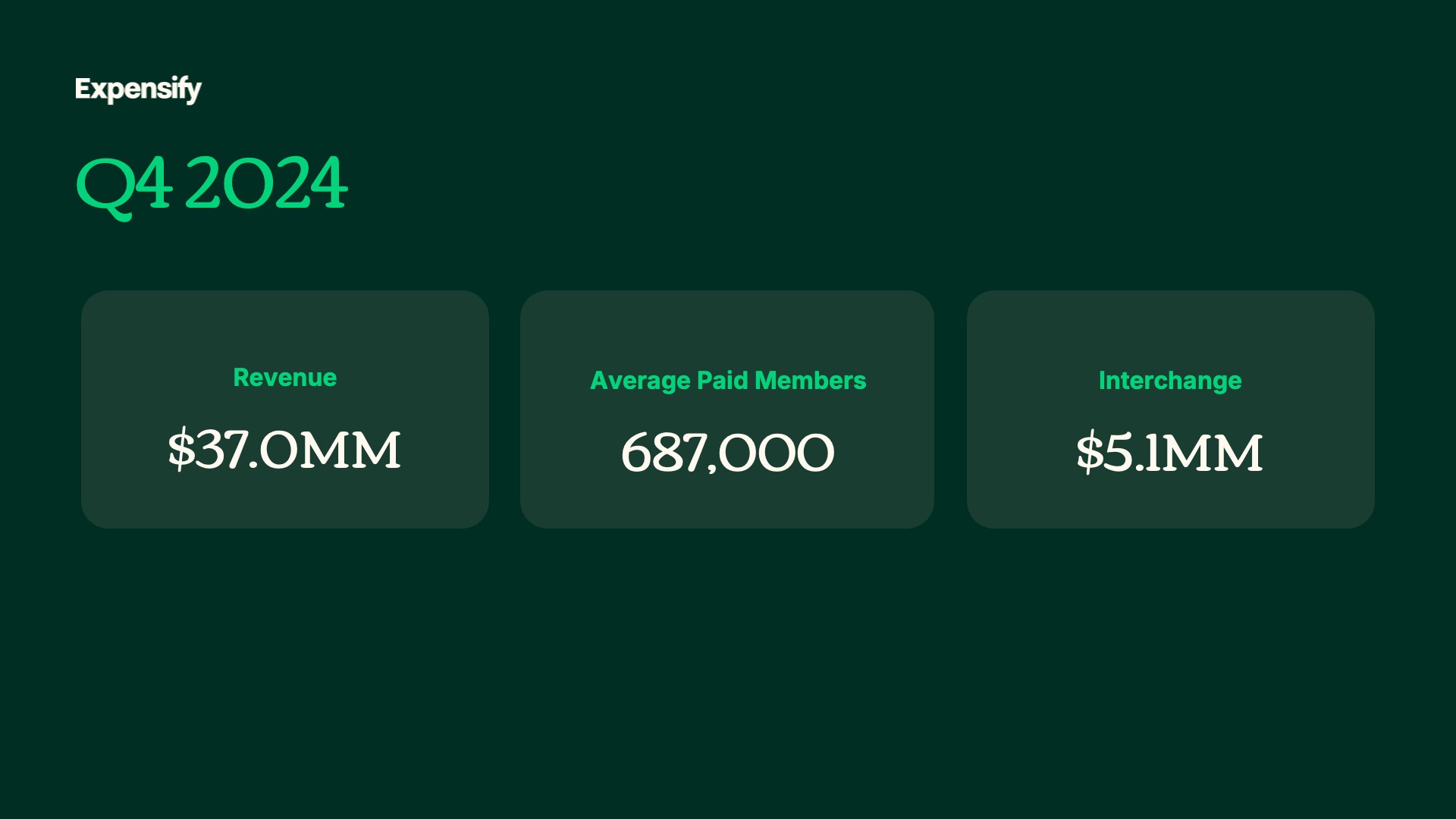
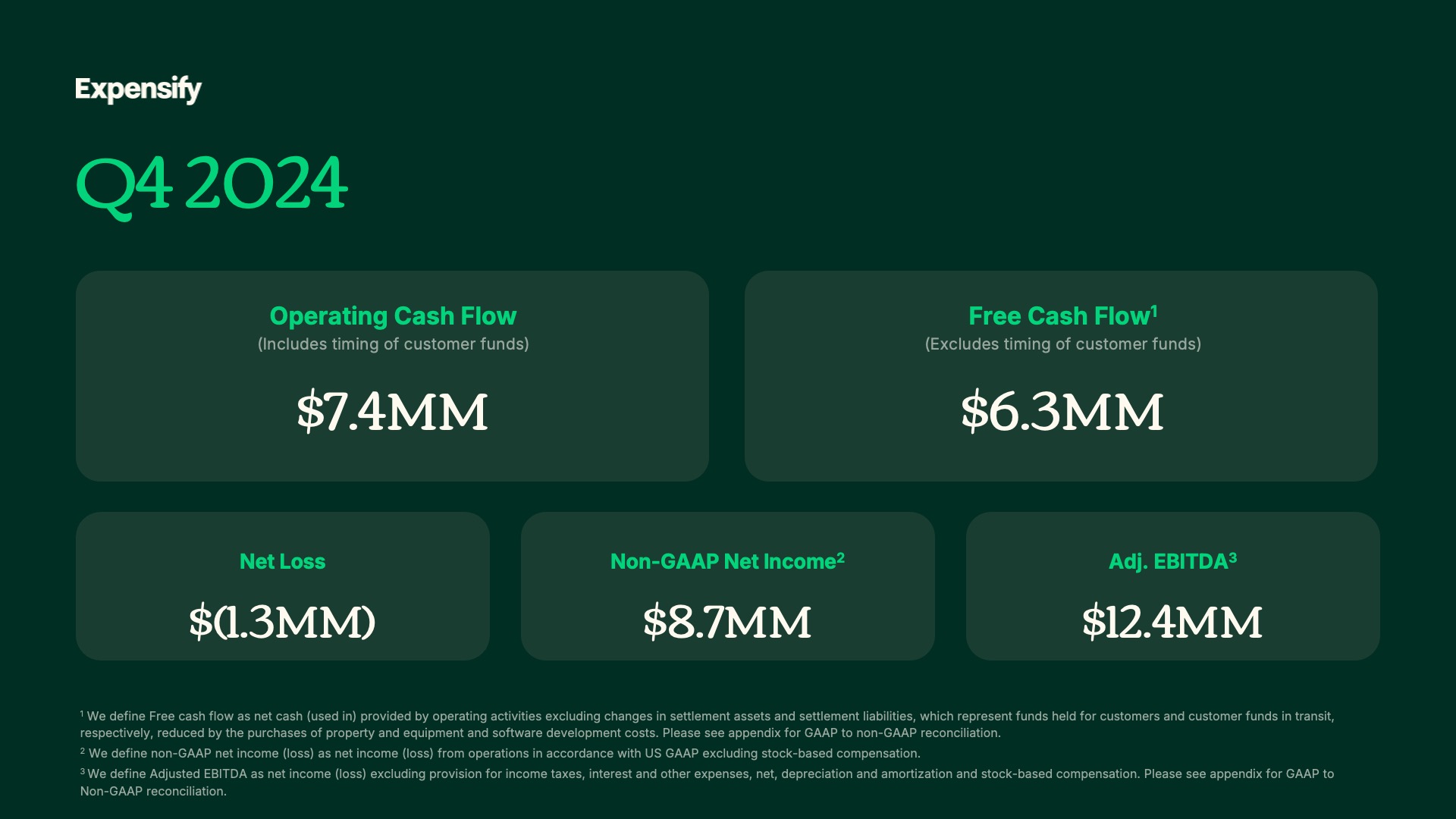
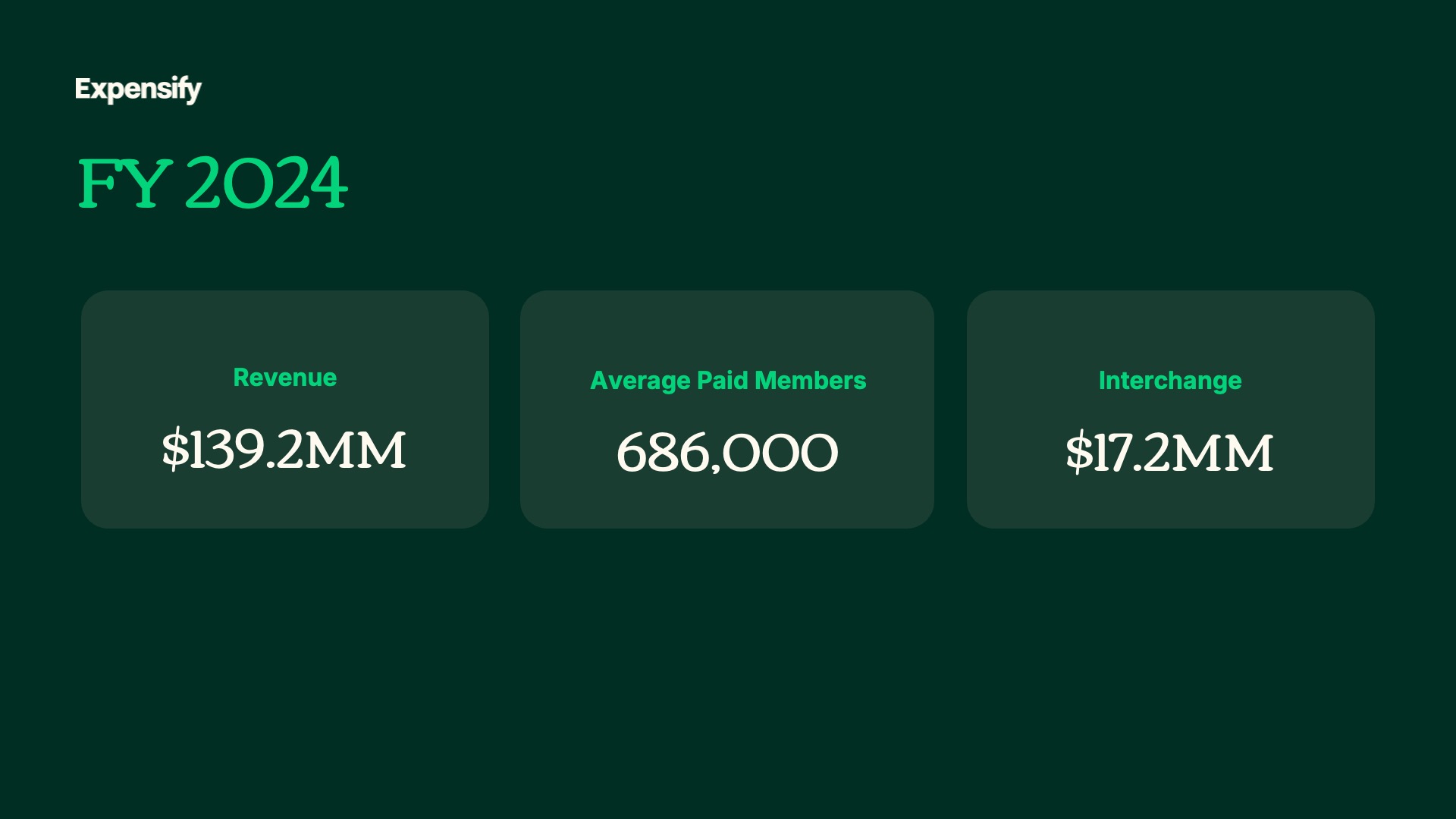
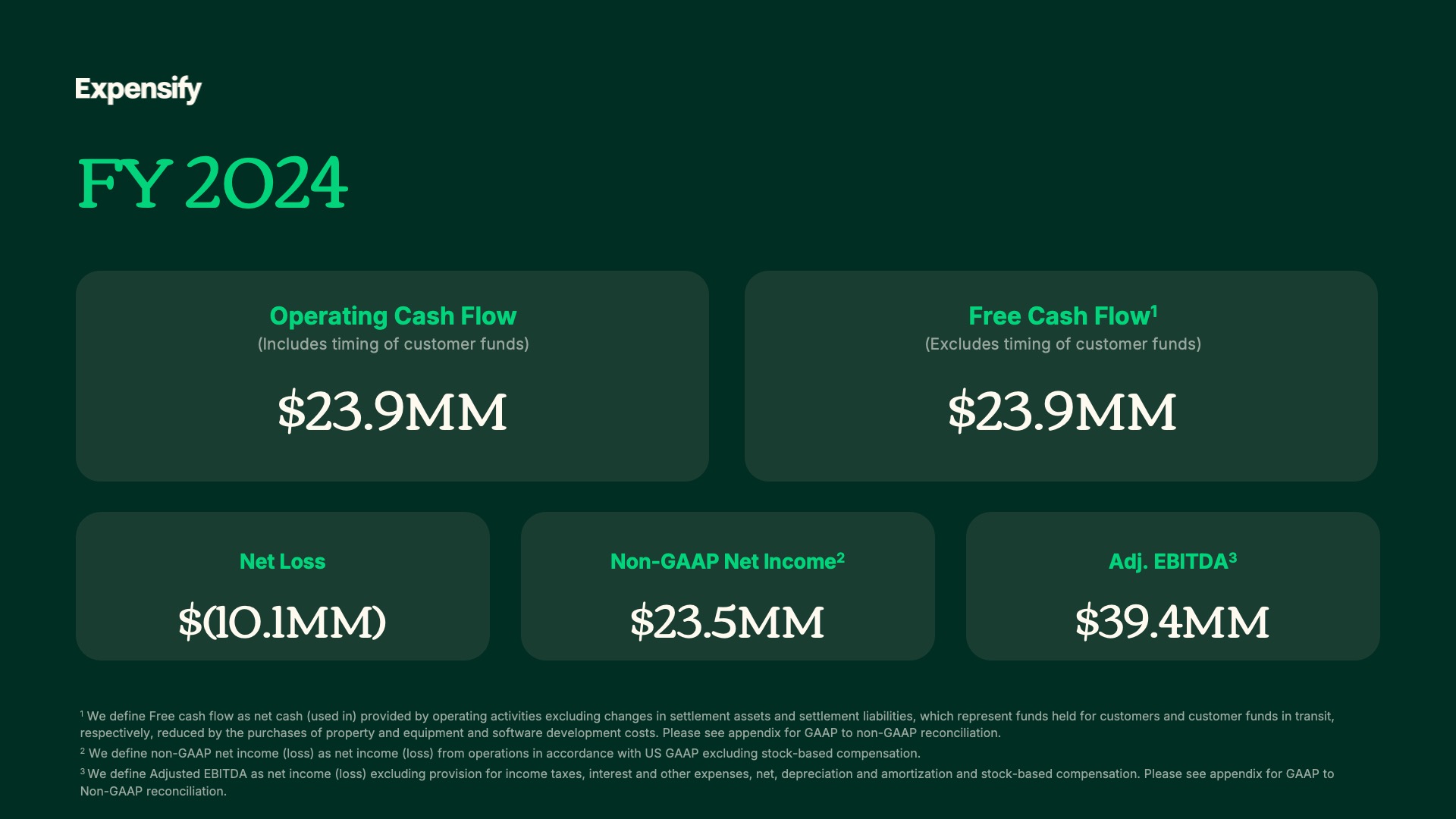
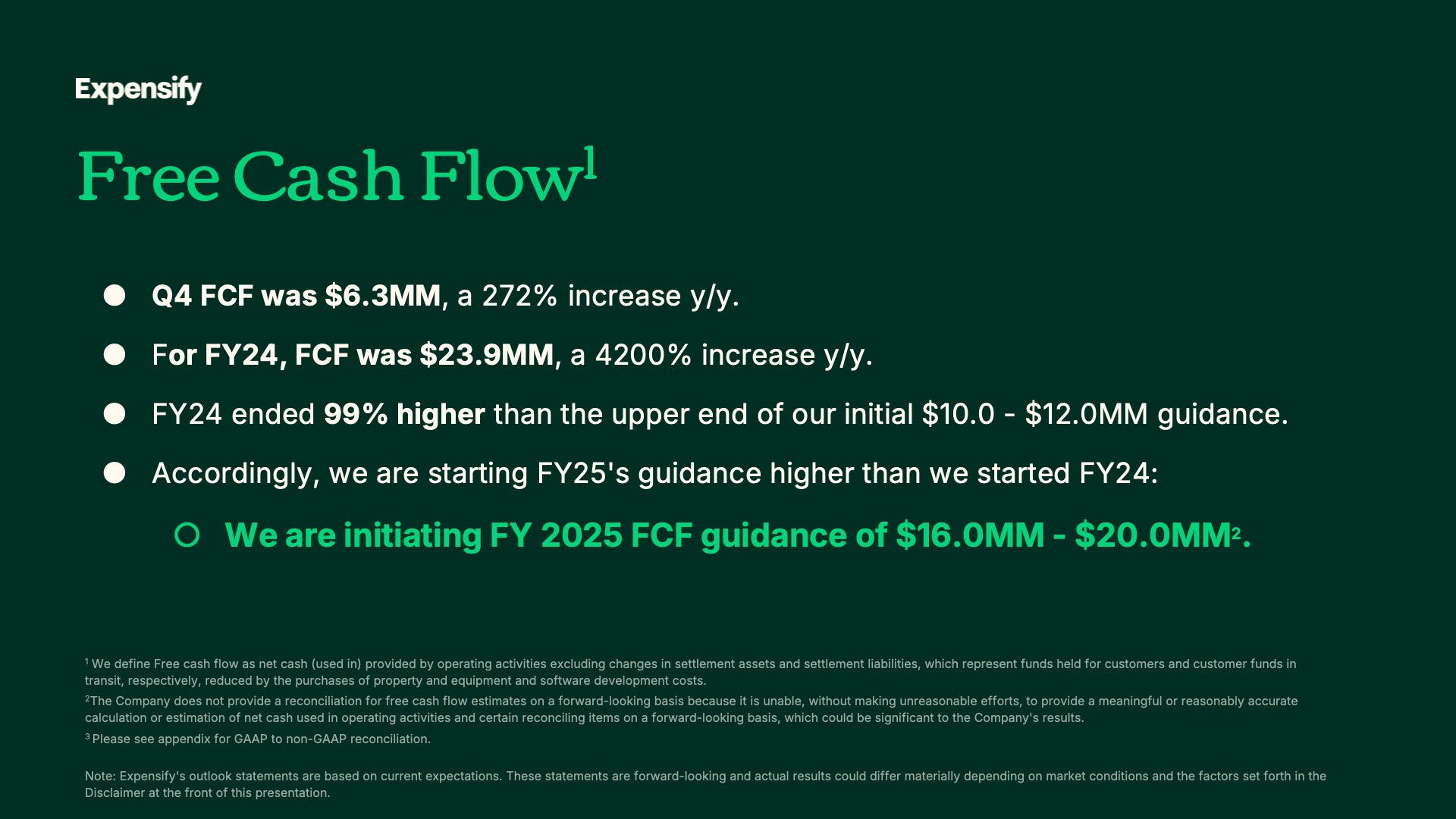
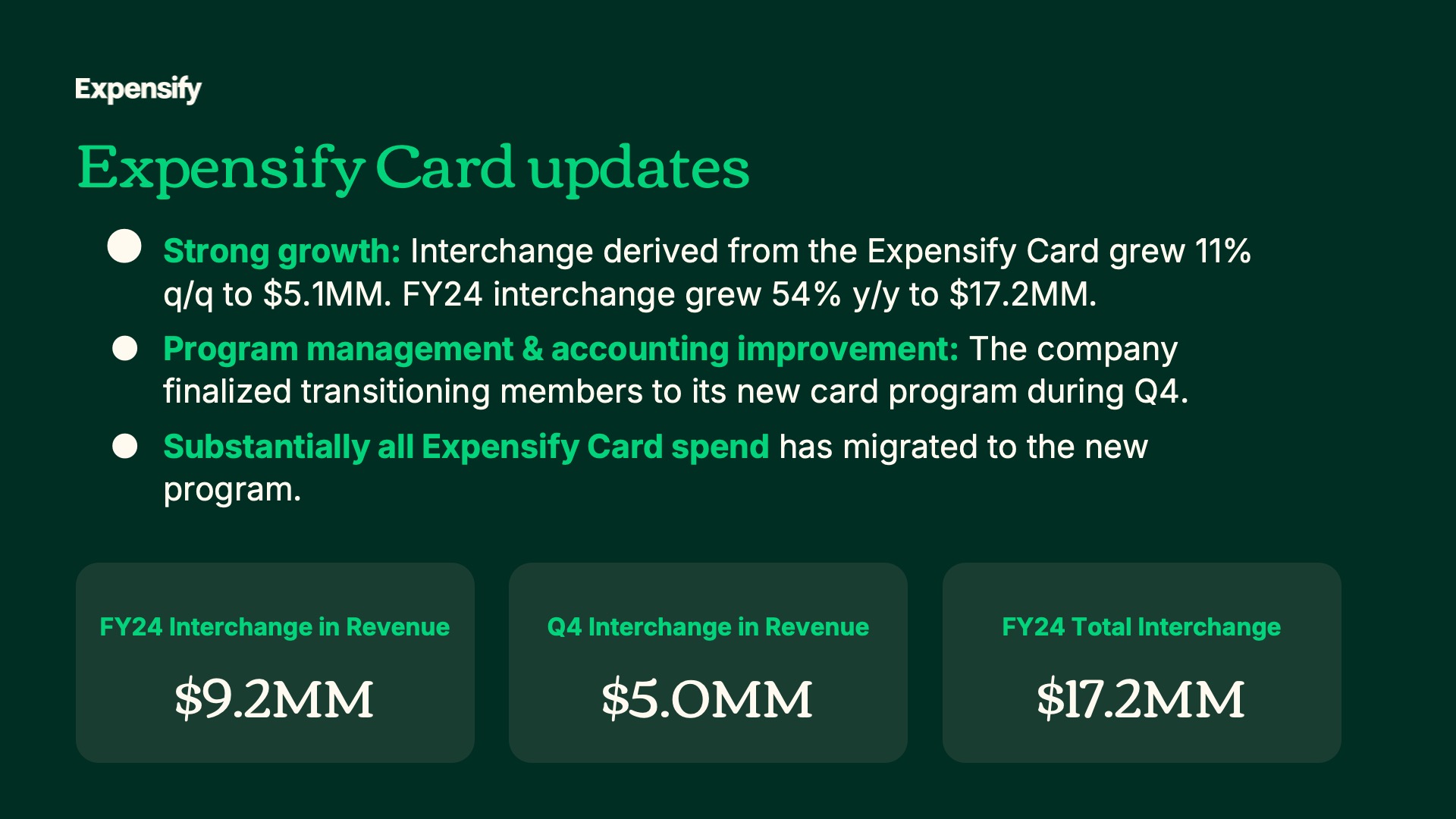
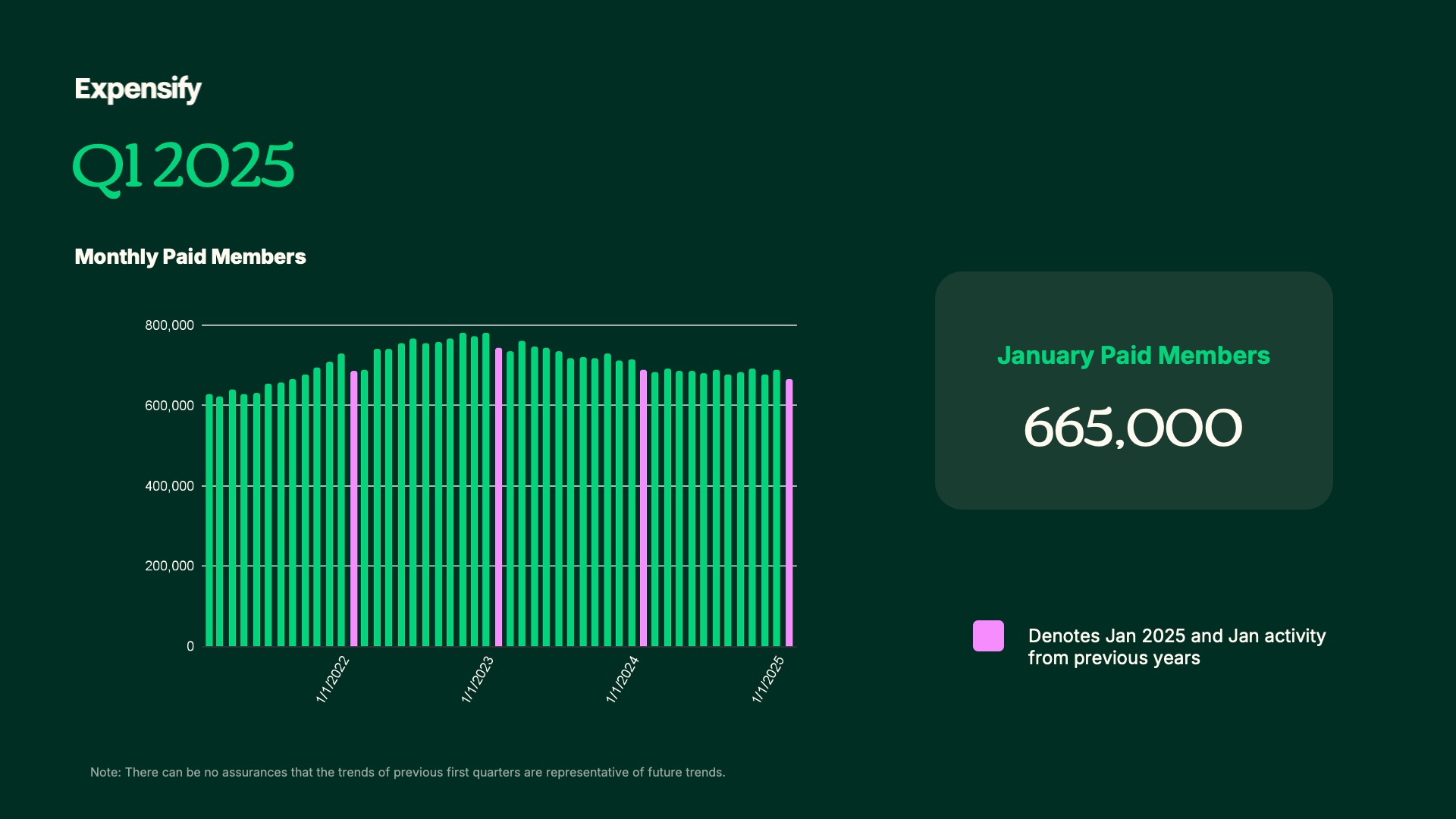
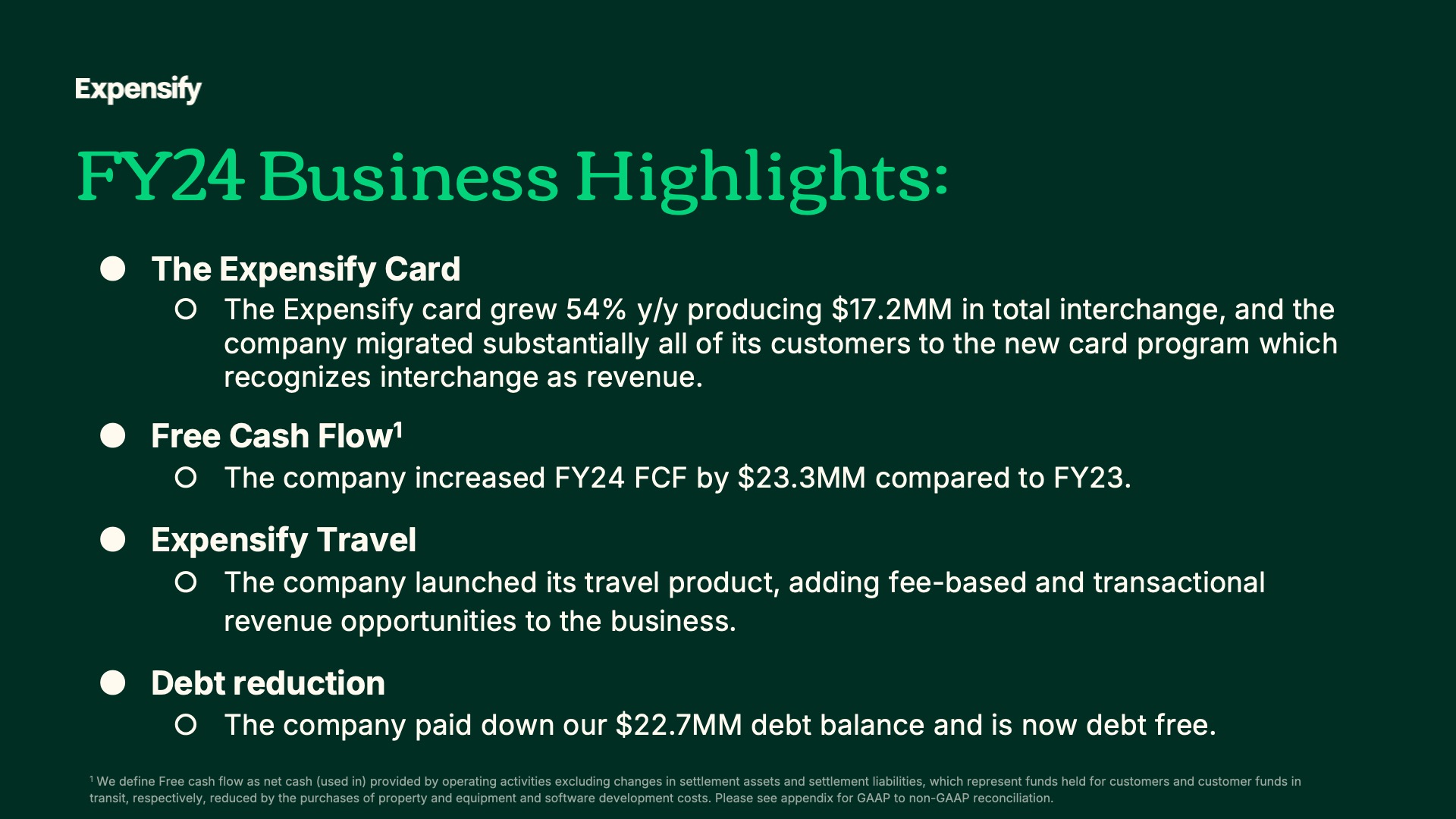
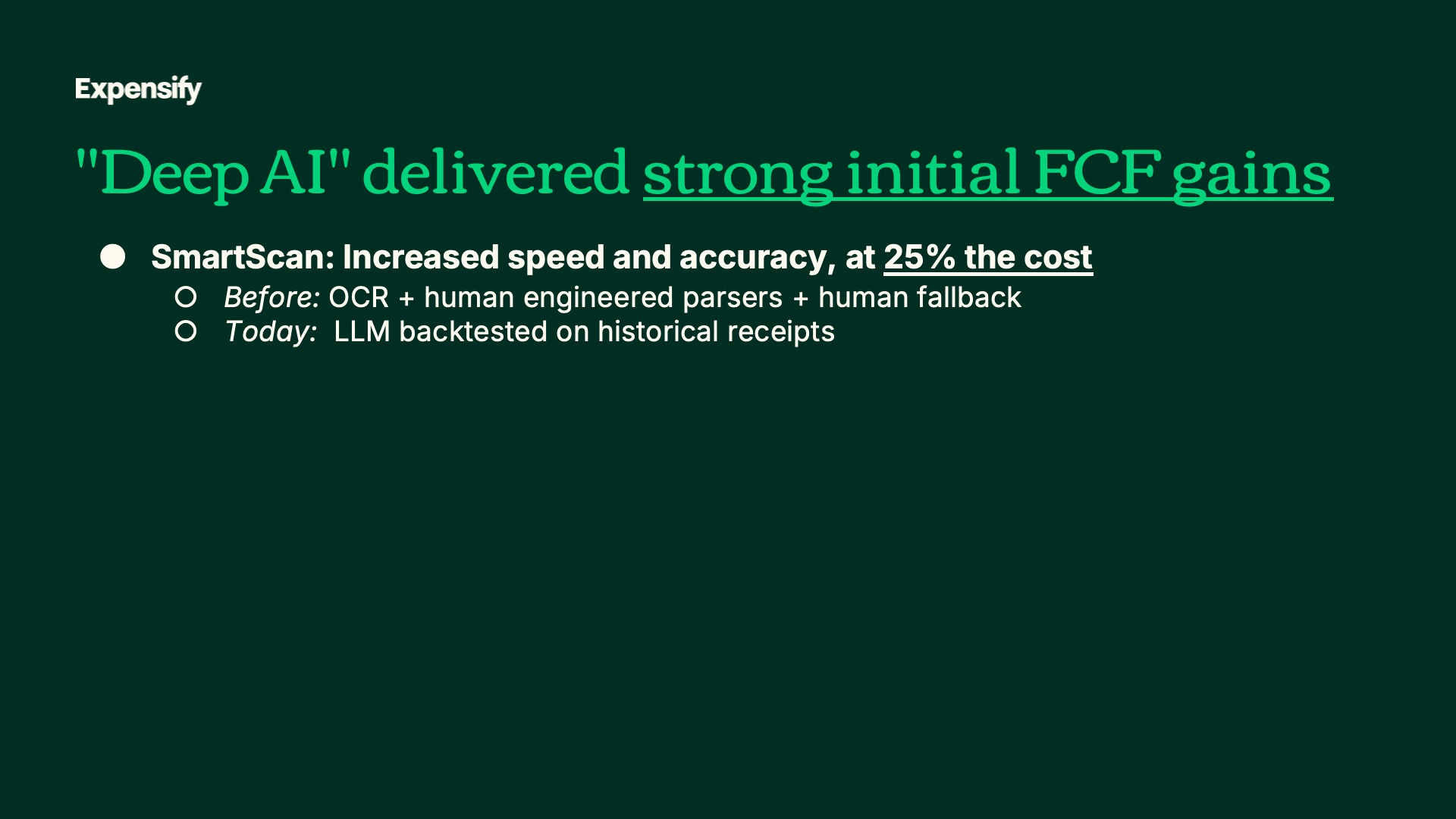
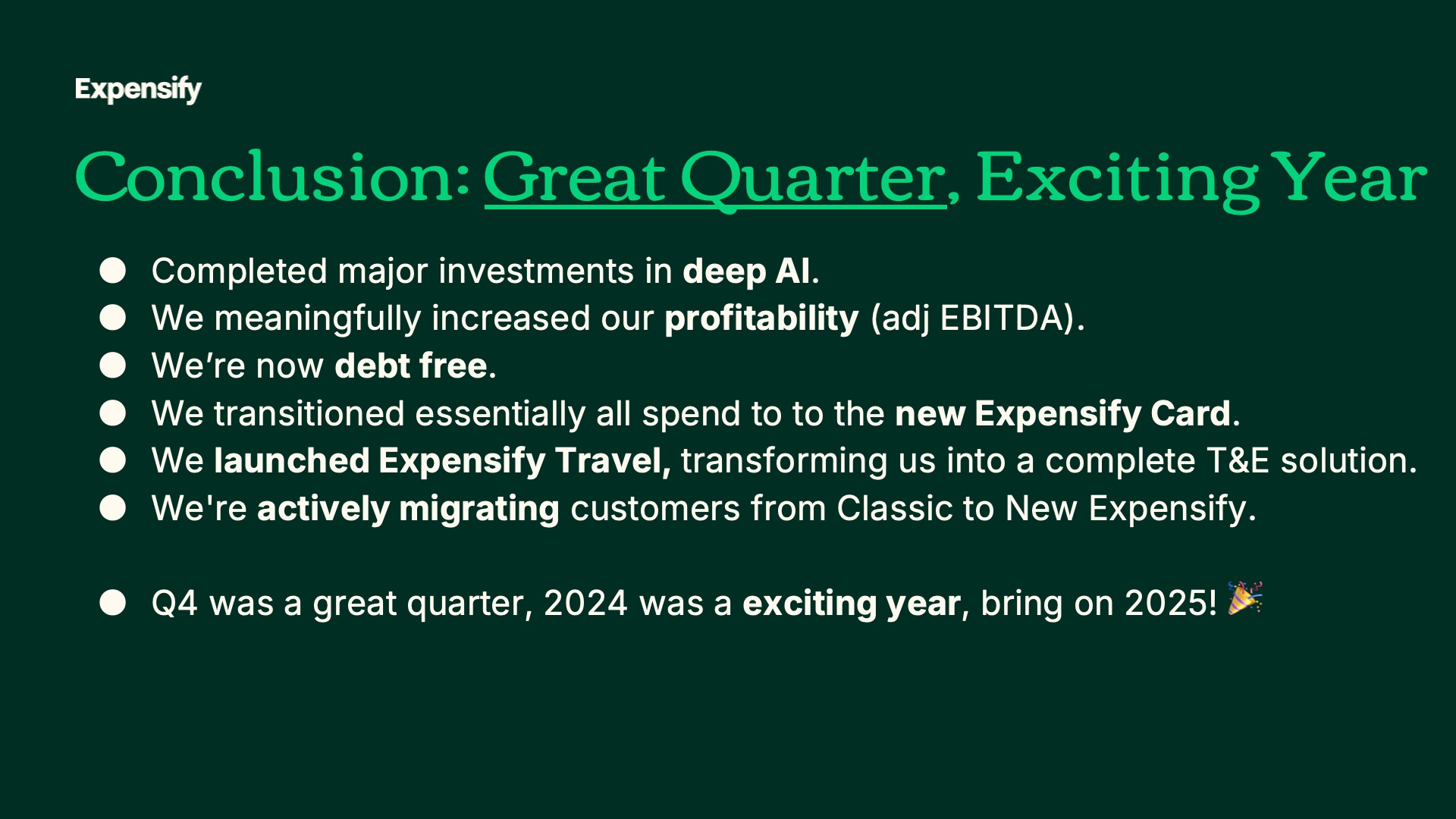
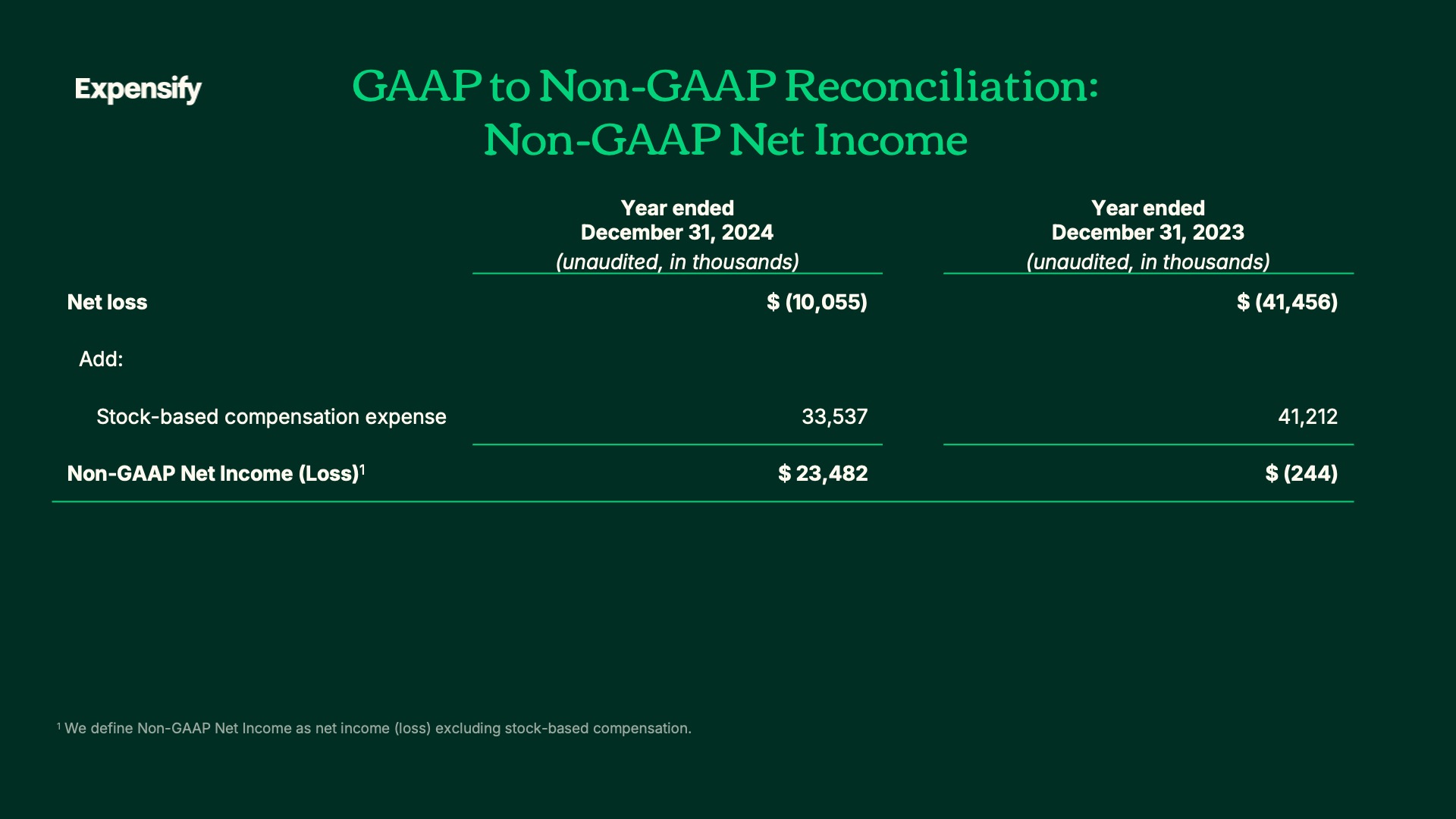
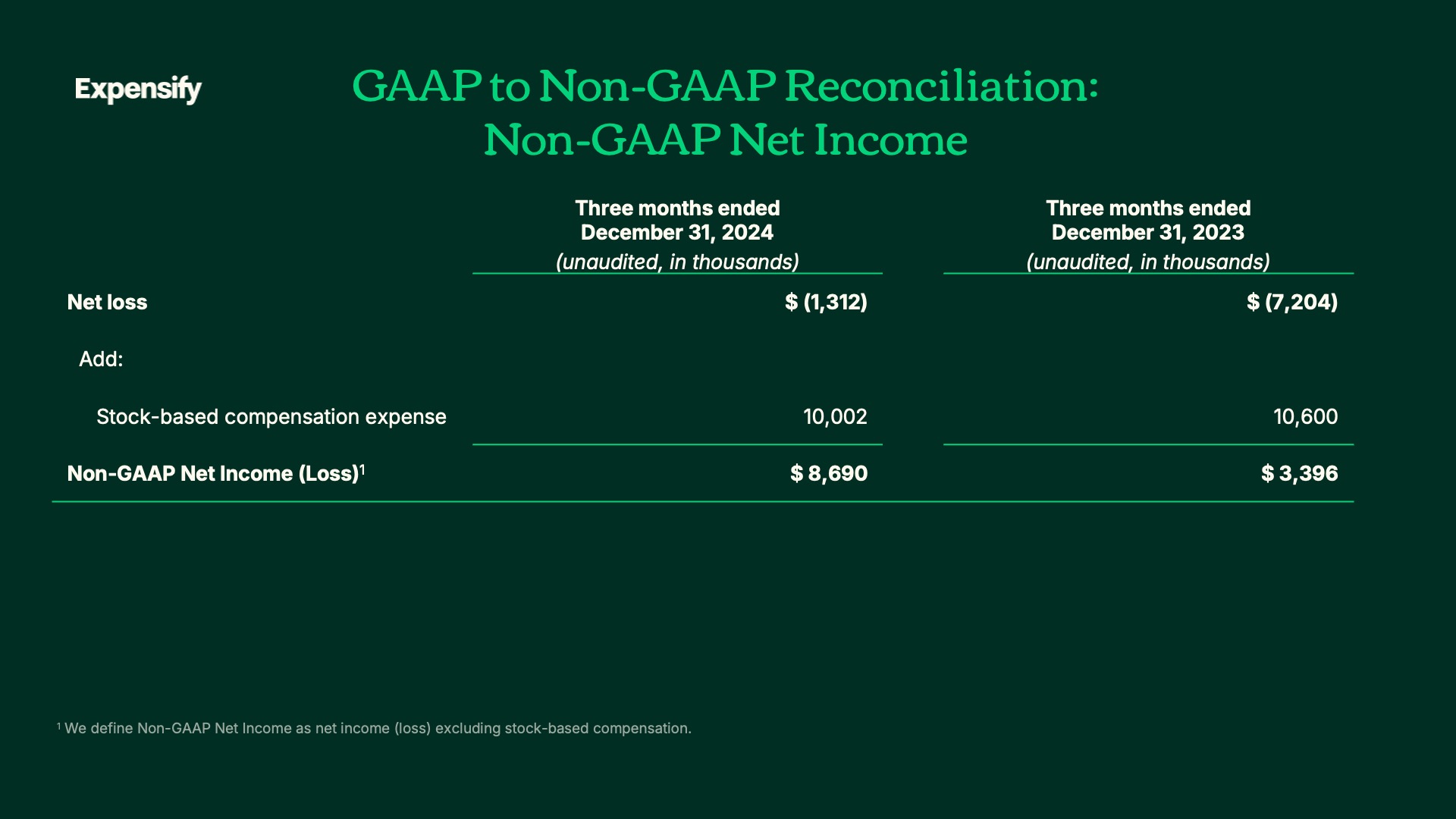
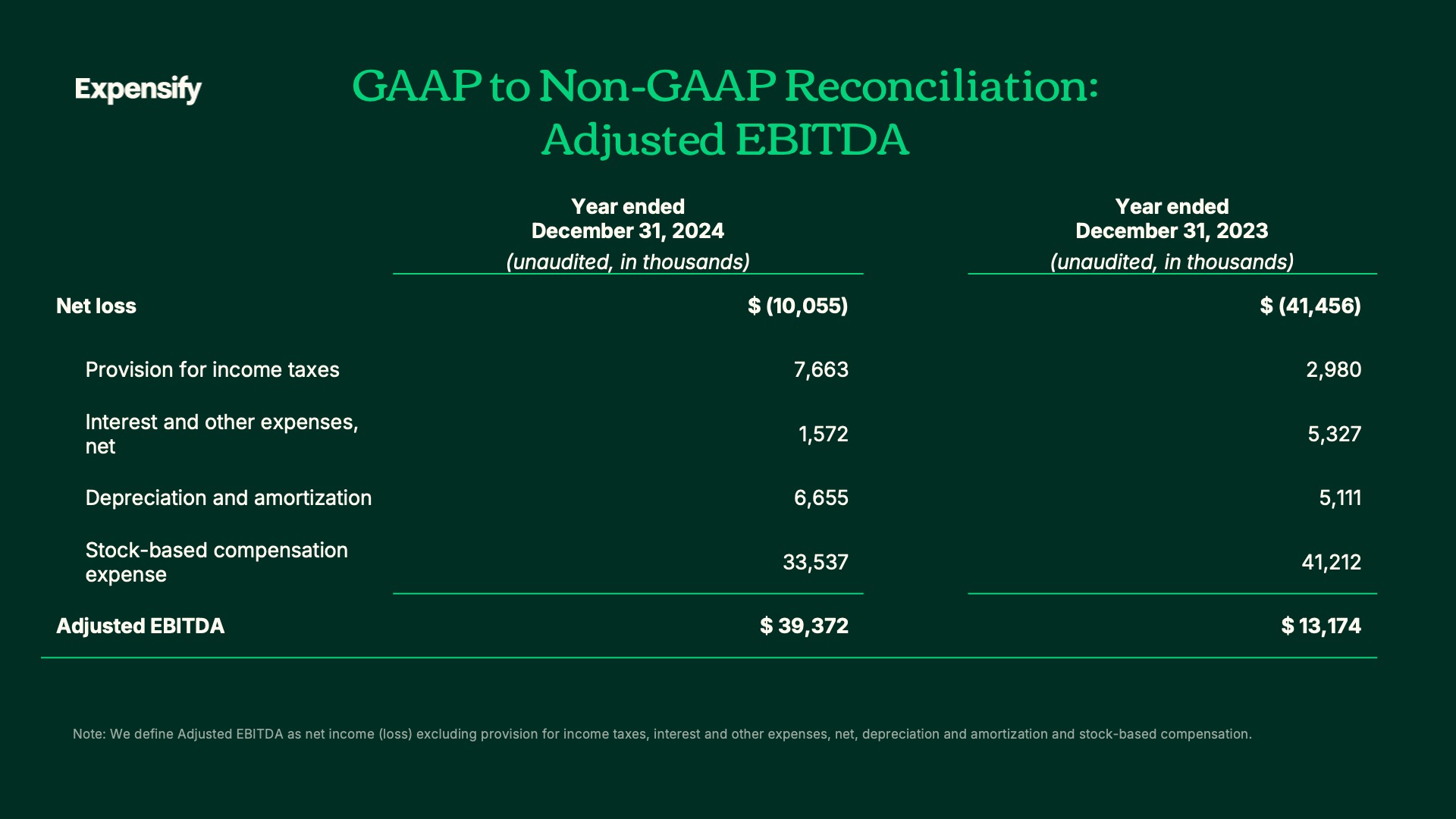
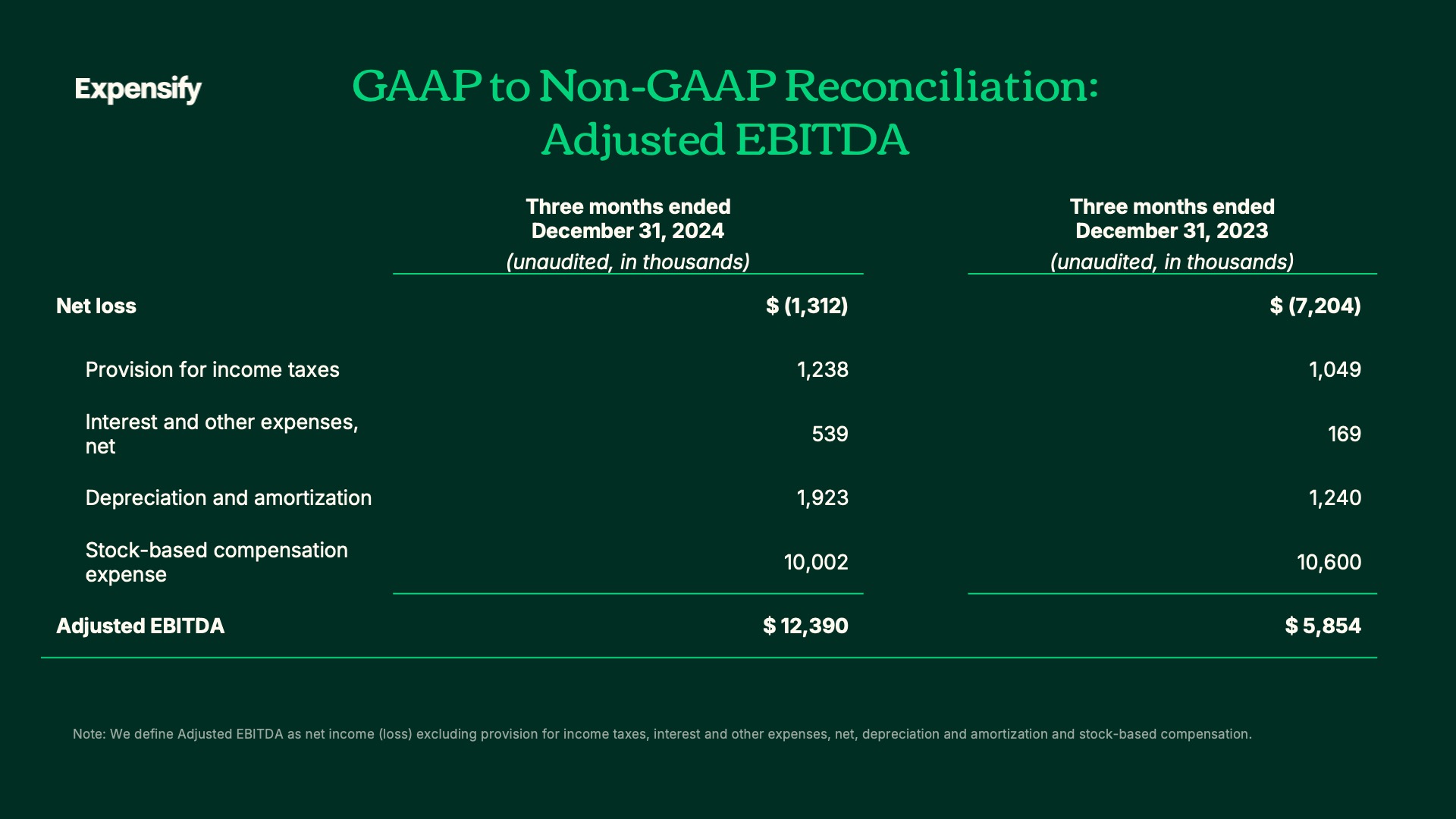
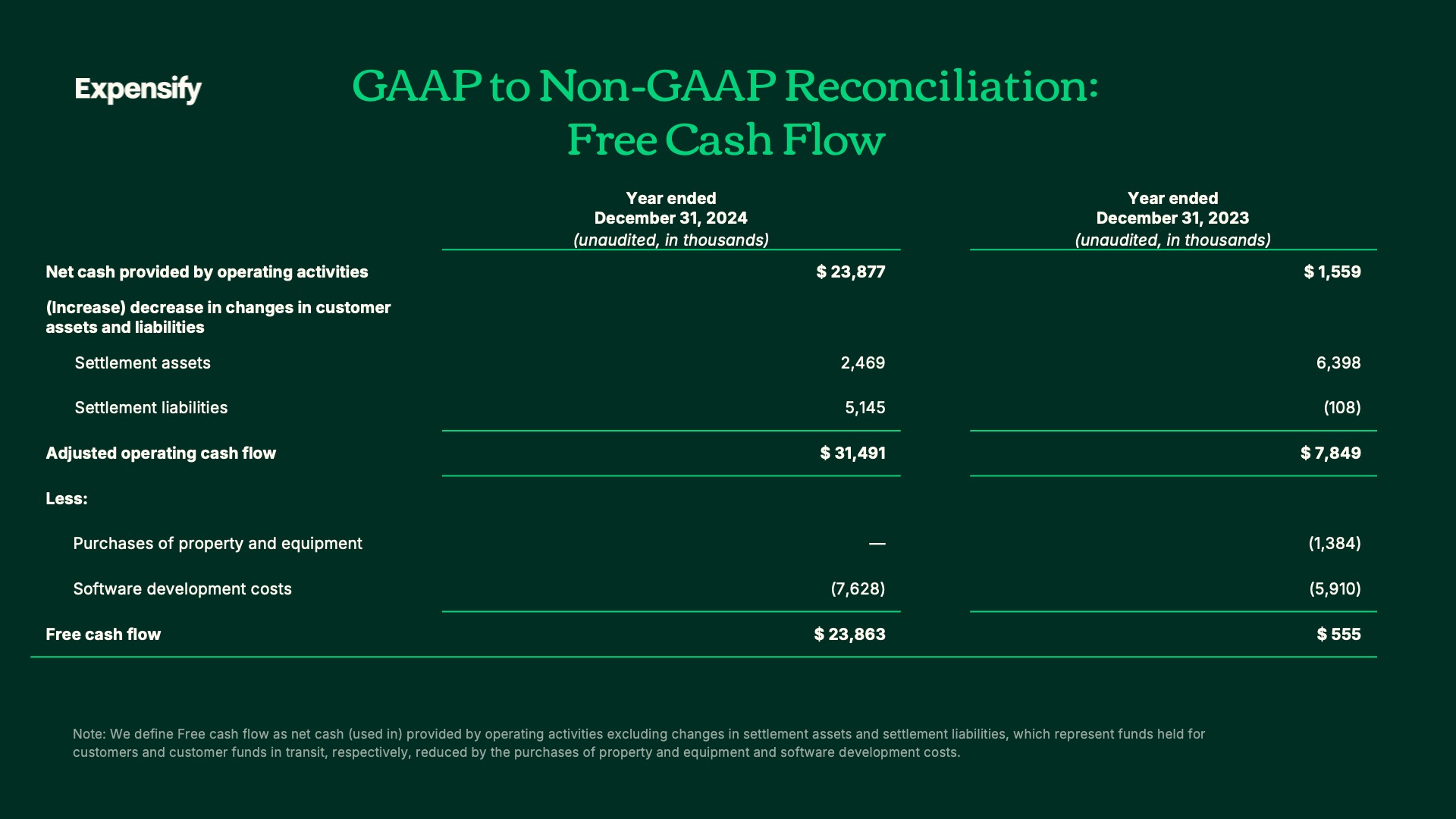
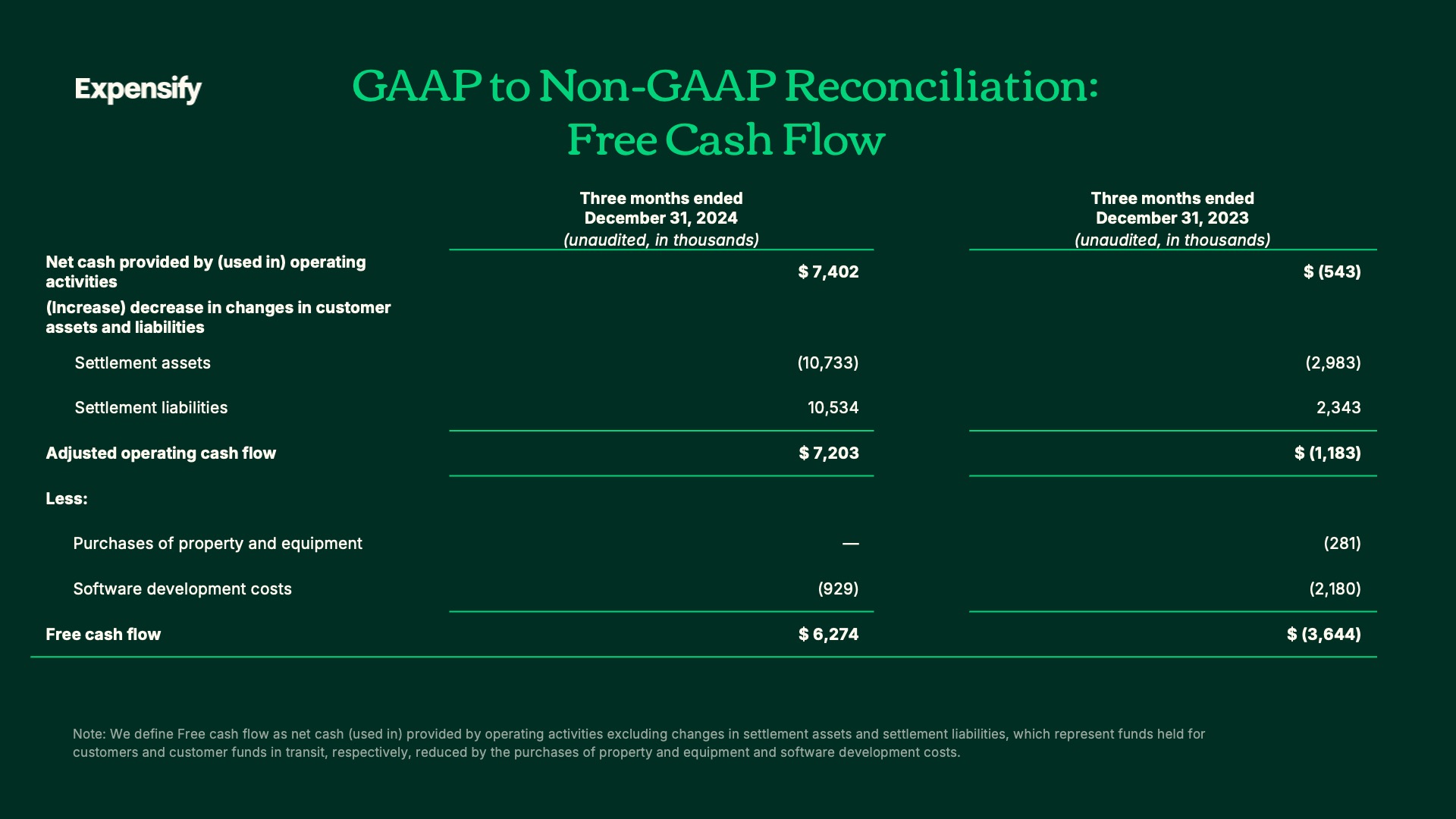
Great. Thanks, Nikki. All right. Let's get started by reviewing the Q4 2024 financials. Revenue was $37 million. That's a 5% increase both quarter-over-quarter and year-over-year, which is great. Let’s see the revenue go up. Average paid members were 687,000, which is also up slightly. It's essentially flat, but last quarter, we were essentially flat and down very slightly. Now we're slightly up. So we'll take slightly up over slightly down. And interchange was $5.1 million, which is a 62% increase year-over-year. The card continues to grow at a greater clip; it's a bright spot in the company. Operating cash flow was $7.4 million. Free cash flow was $6.3 million. Our net loss was $1.3 million, almost there to get profitability. Hopefully, we get there soon. Our non-GAAP net income was $8.7 million, and our adjusted EBITDA was $12.4 million. Now let's talk about fiscal year 2024. Our revenue was $139.2 million. Our average paid members were 686,000, and our interchange was $17.2 million. Our operating cash flow was $23.9 million. Our free cash flow was $23.9 million as well. Those numbers aren't usually equal. There's a reconciliation in the appendix that you can take a look at just coincidence, we double-checked that we've had some issues. Our net loss was $10.1 million. Our non-GAAP net income was $23.5 million, and the adjusted EBITDA was $39.4 million. Great. Now let's dive into free cash flow. For Q4, free cash flow was $6.3 million, a 272% increase year-on-year. For fiscal year 2024, free cash flow was $23.9 million, a 4,200% increase year-on-year. I know that's a large percentage increase. We're just highlighting it to really signal what a one-day difference our free cash flow situation is from where we were in 2023. Now let's talk about guidance. Last year, our initial guidance was free cash flow at $10 million to $12 million. Obviously, we tremendously outperformed that. That is due to a couple of reasons. One, the company performed significantly better in 2024 than ahead in 2023. So that was great. And also, we implemented a lot of efficiency improvements with AI and other things like that. David’s going to touch on the AI piece in a moment here. So when we look at 2025, our initial guidance is $16 million to $20 million, which is obviously significantly higher than it was last year. I do want to note that there’s some conservatism baked into this number because we’re not sure how the macroeconomic environment is going to play out for our customers. This is a number that we feel good that we can hit even if things don’t go great. But as we see these kinds of policy changes and everything play out and as our confidence grows, we’ll update this number accordingly. Now, let’s talk about the Expensify card. We had strong growth. Expensify card grew 11% quarter-on-quarter to $5.1 million, and interchange grew 54% year-on-year to $17.2 million. Also, very happy to announce that the card program migration went off without a hitch. We are now fully migrated. The migration’s over. We’re very happy about that. It simplifies the accounting story. All the interchange is going into revenue, where everyone expects it to be. So this won’t be something we need to discuss going forward. Our fiscal year 2024 interchange included in revenue was $9.2 million. In Q4, the interchange in revenue was $5 million. The total interchange for the year was $17.2 million. Now we always talk about how the latest month went from a paid user’s perspective. In January, we had 665,000 paid members, which is lower than we saw in Q4, but that’s to be expected. We’ve highlighted in pink on this chart previous January. We usually see some significant seasonality in Q1, and we’re seeing that again this year. Now let’s just talk about some business highlights to round everything off. Expensify Card, like I said before, had a great year, grew 54% producing $17.2 million total interchange, and we fully migrated the card program. Our free cash flow increased year-on-year by $23.3 million compared to fiscal year 2023. We launched Expensify Travel, which adds fee-based and transactional revenue opportunities for the business. We’re very excited about this. Customer enthusiasm has been super high, so we look forward to giving you more updates on that in the future. And last but not least, we reduced all of our debt. We paid our debt down by $22.7 million, and we’re now debt-free, something we’re very proud of. Now, I’ll pass it over to David.
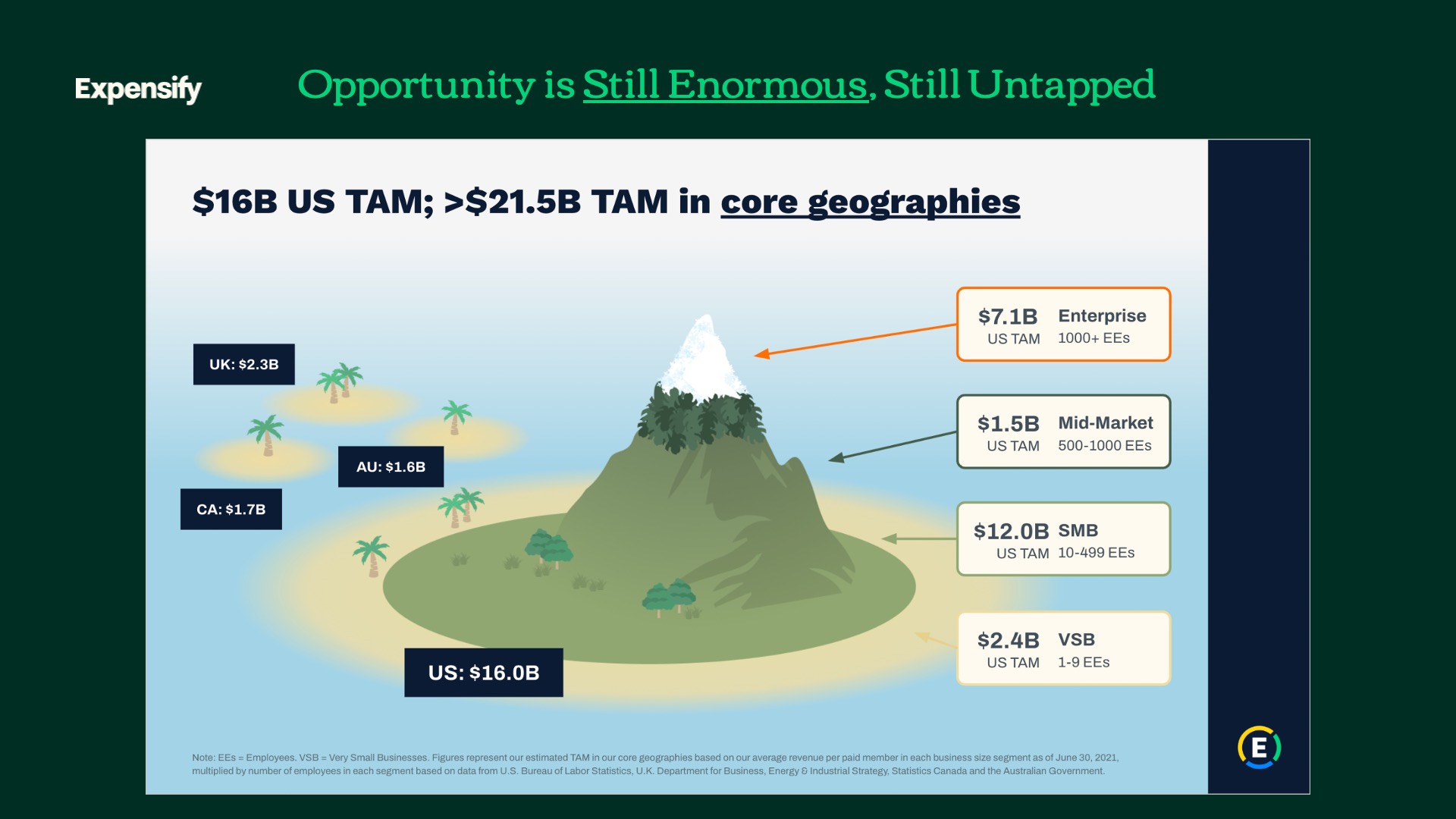
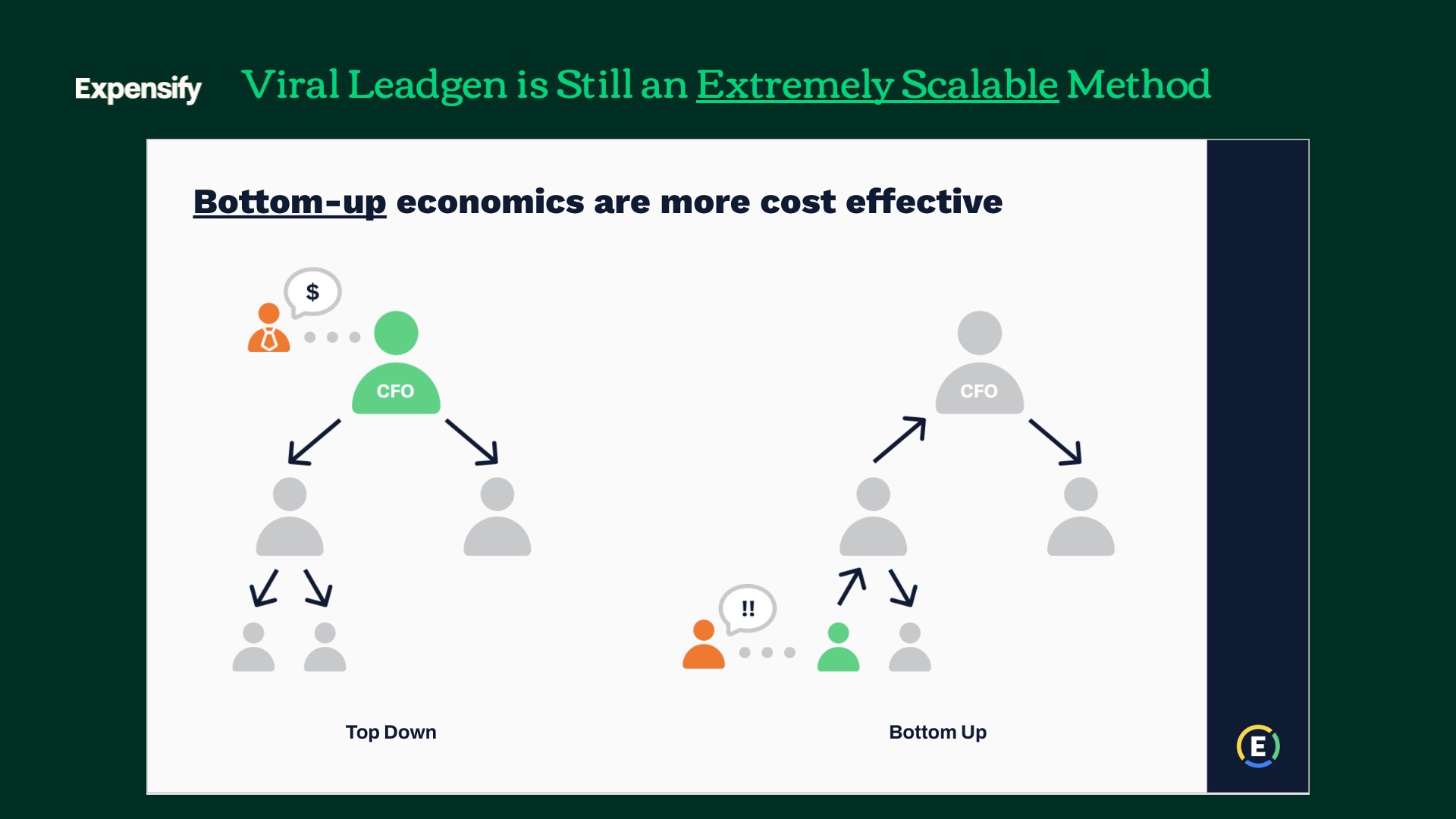
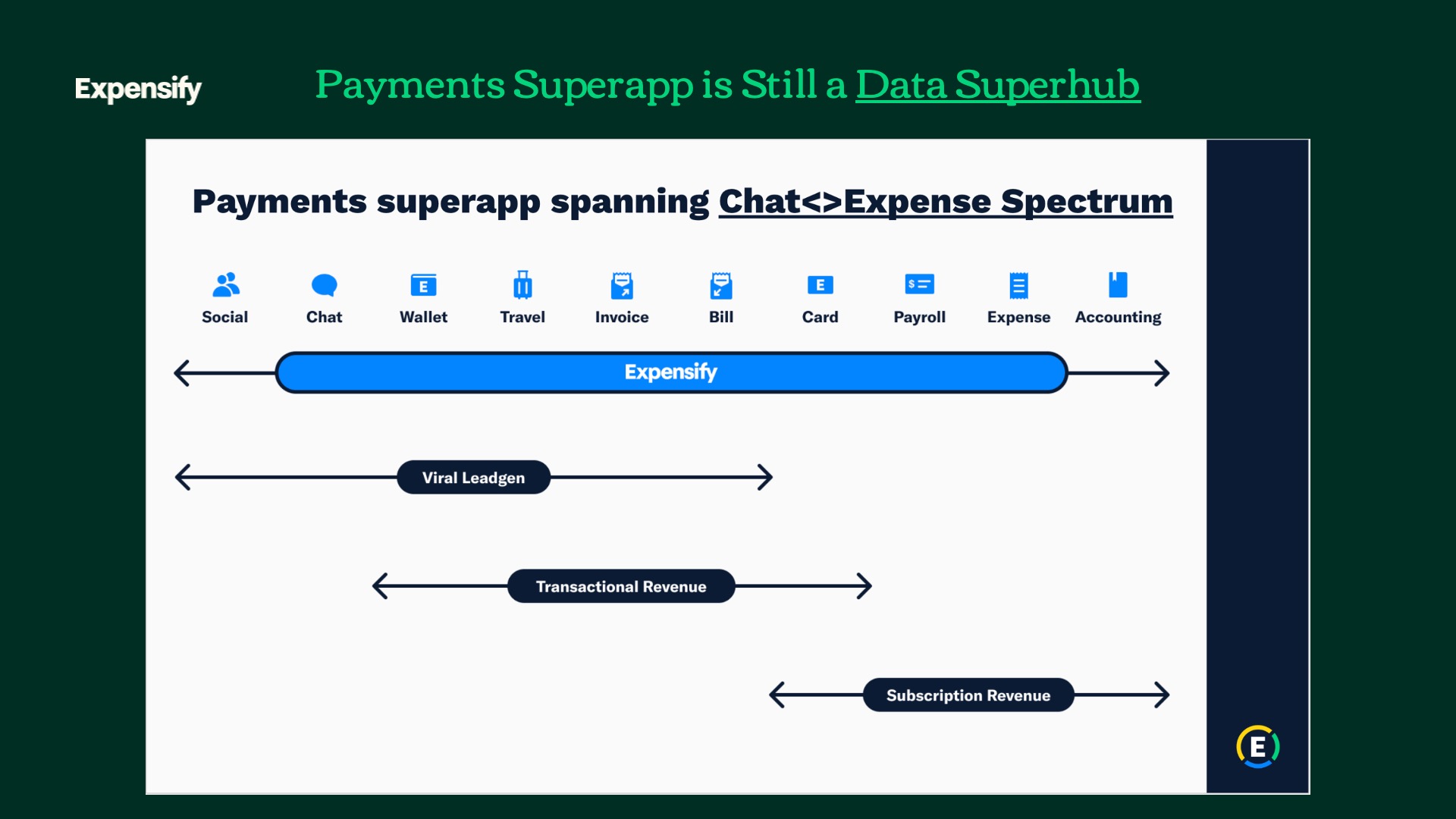
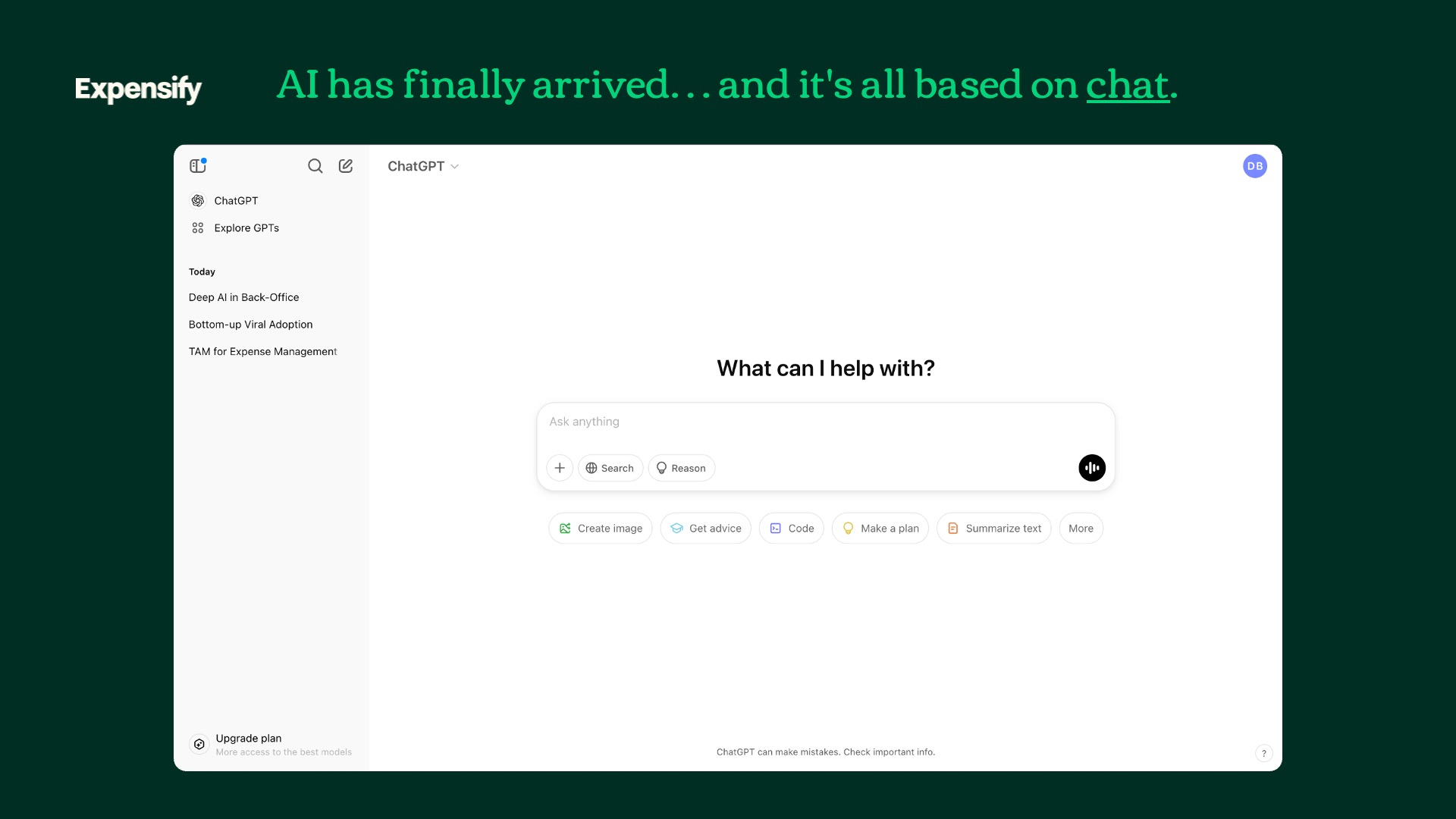
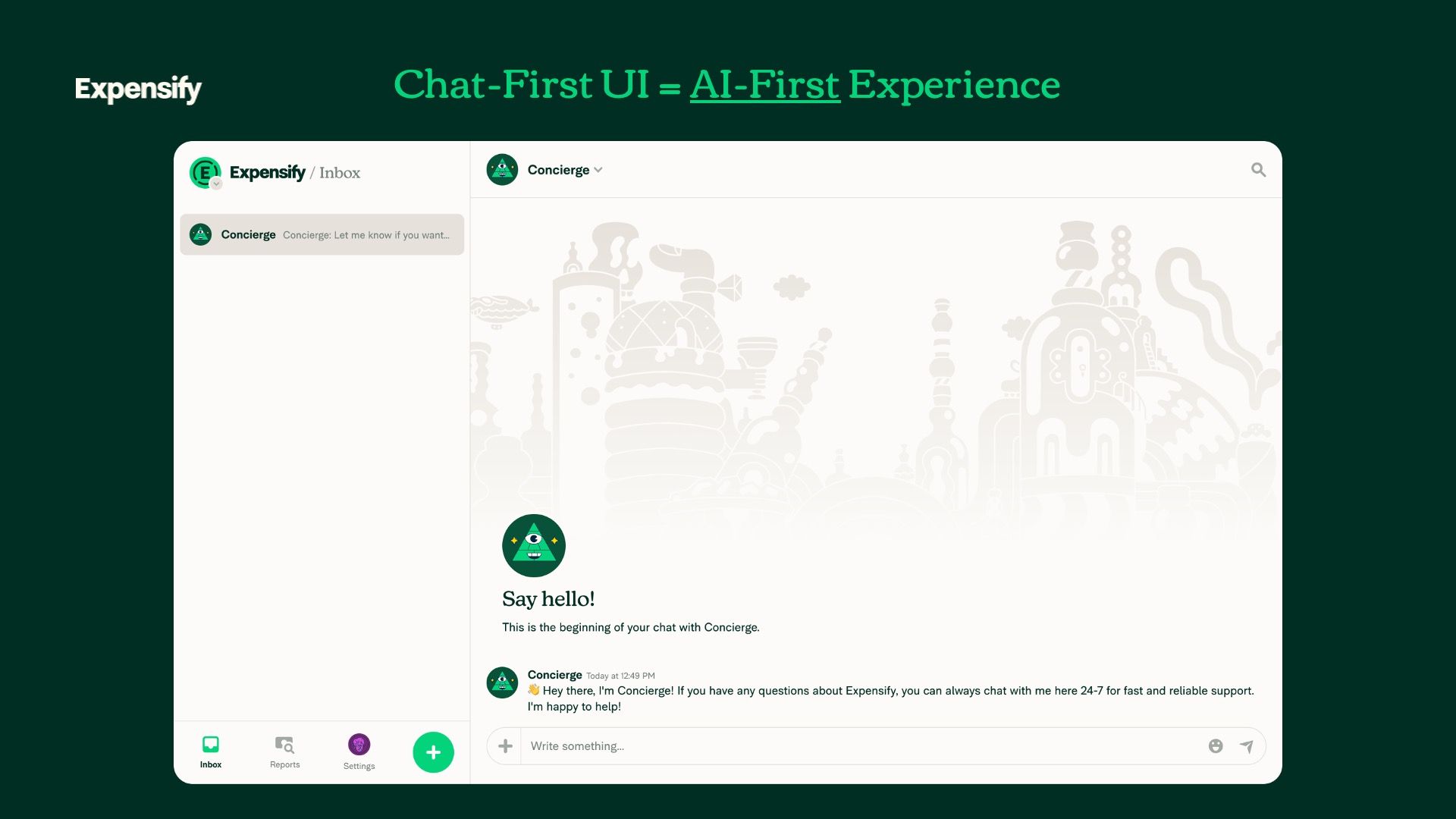
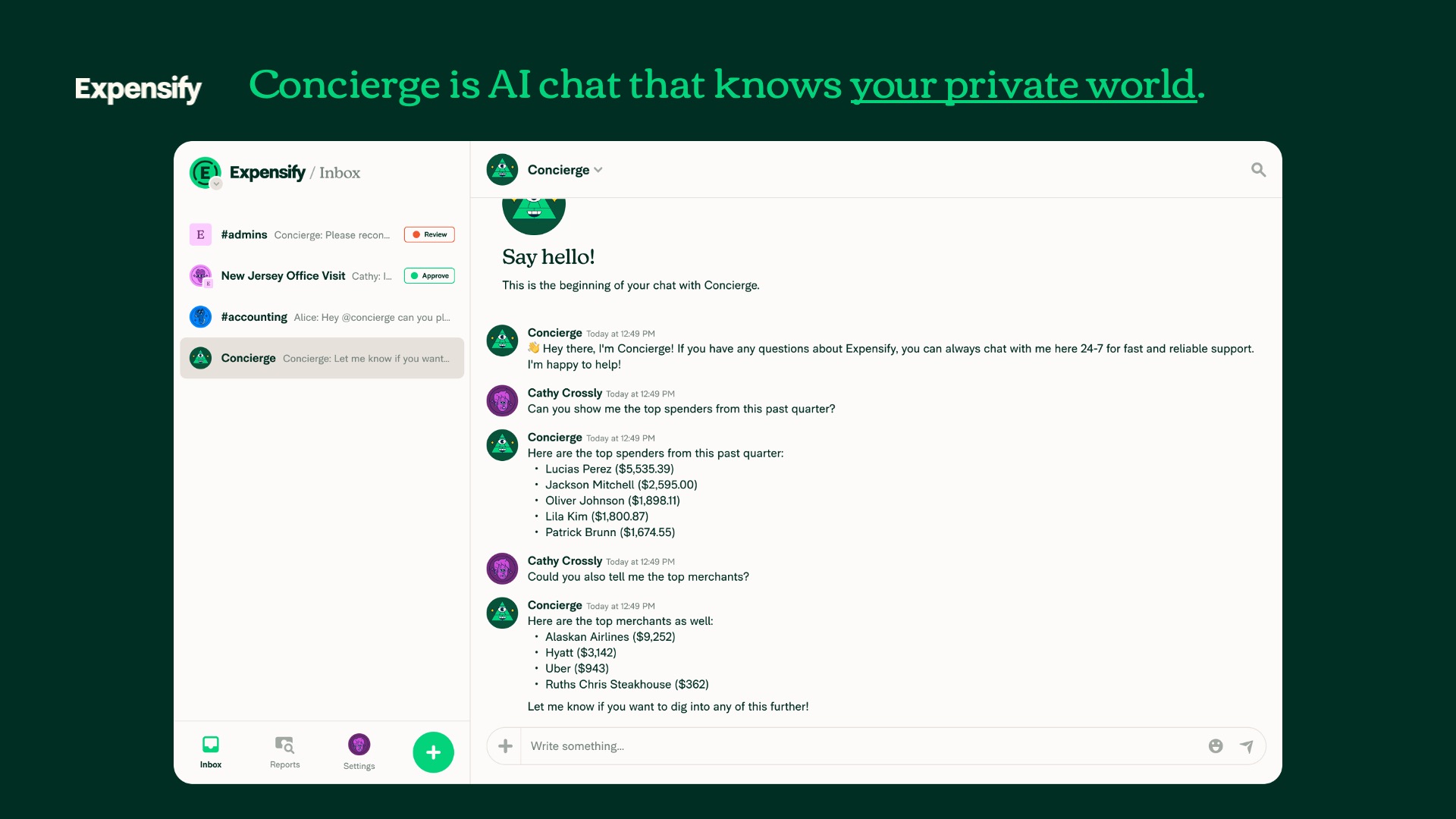
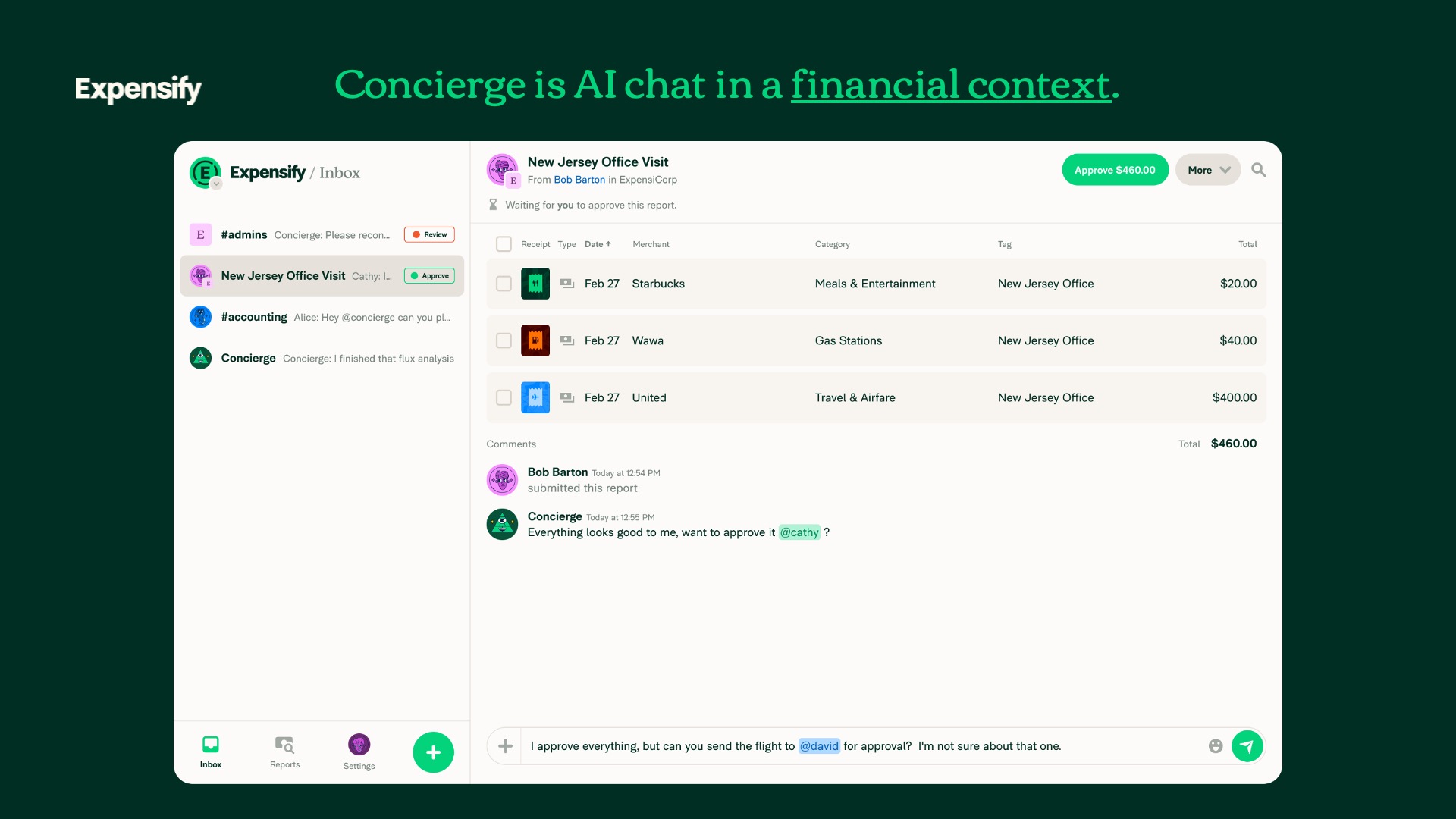
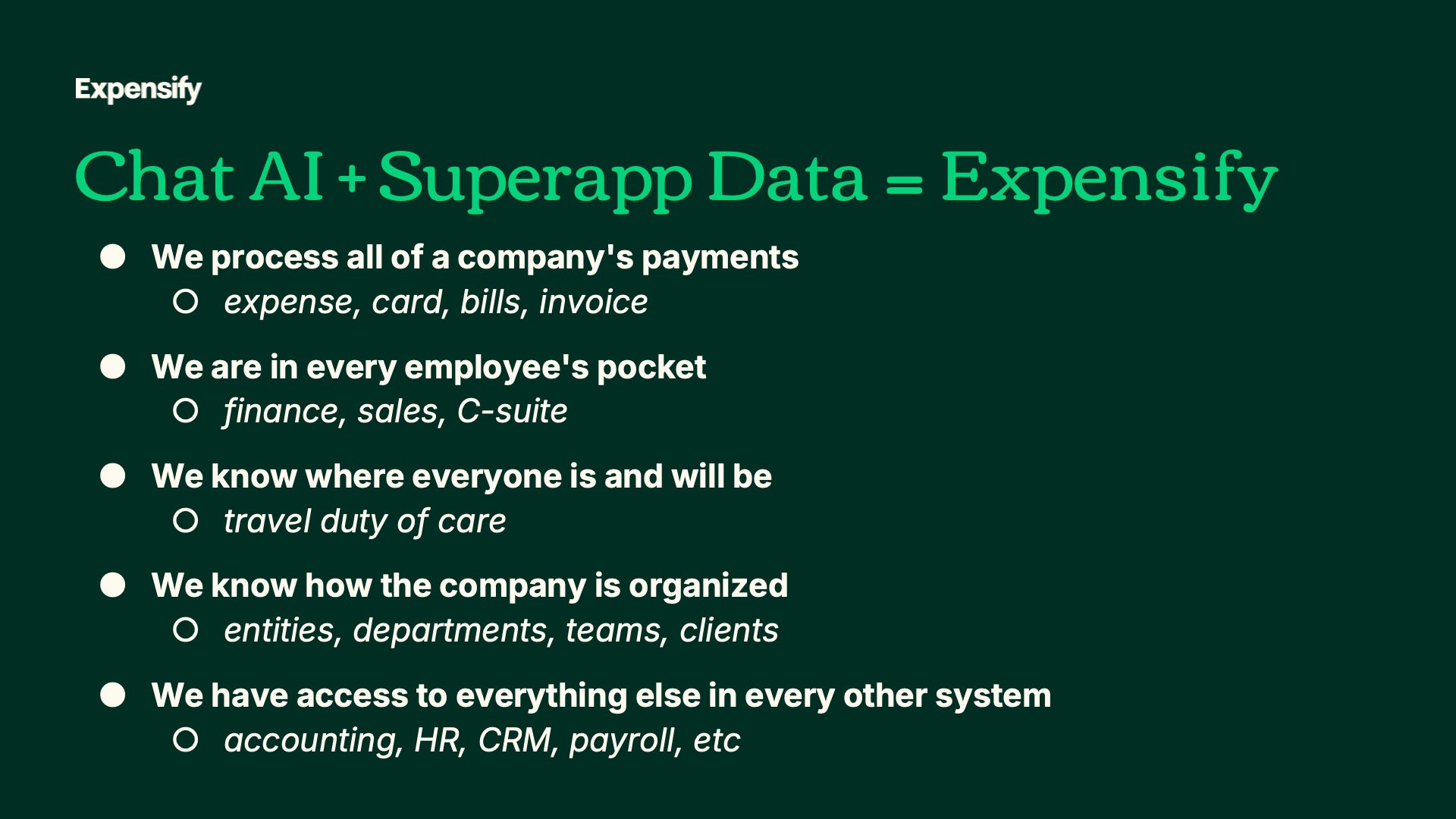
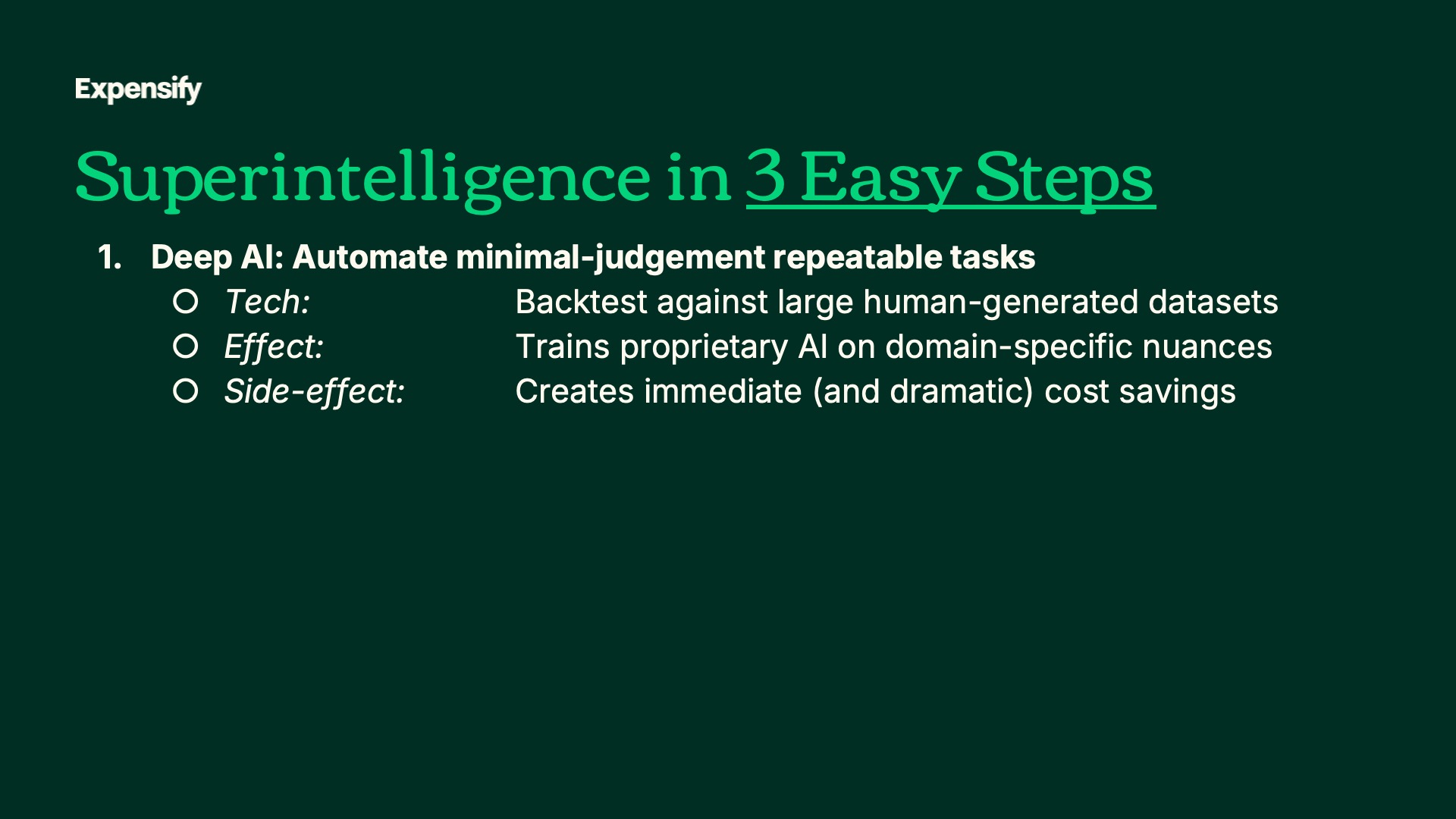
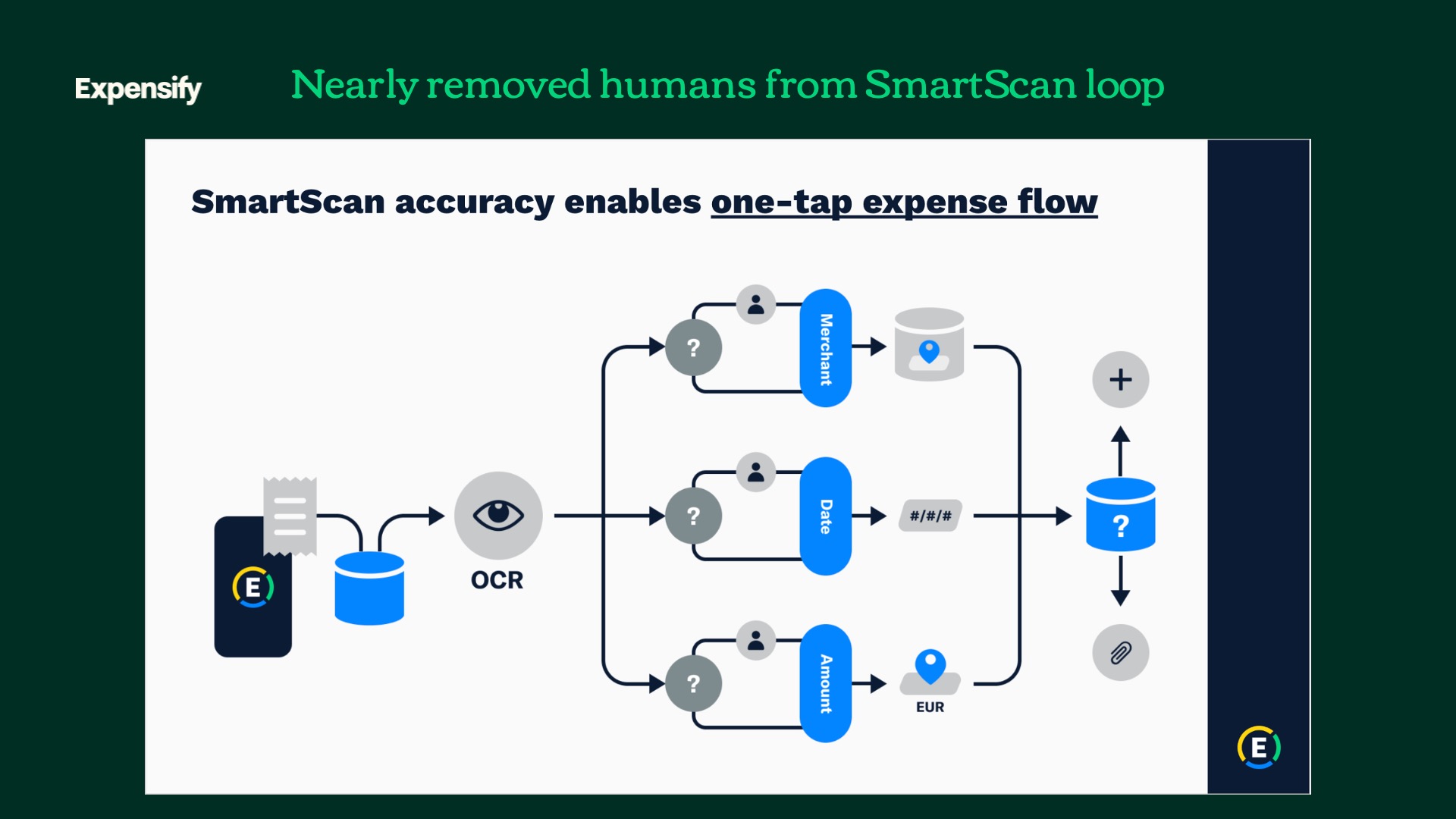
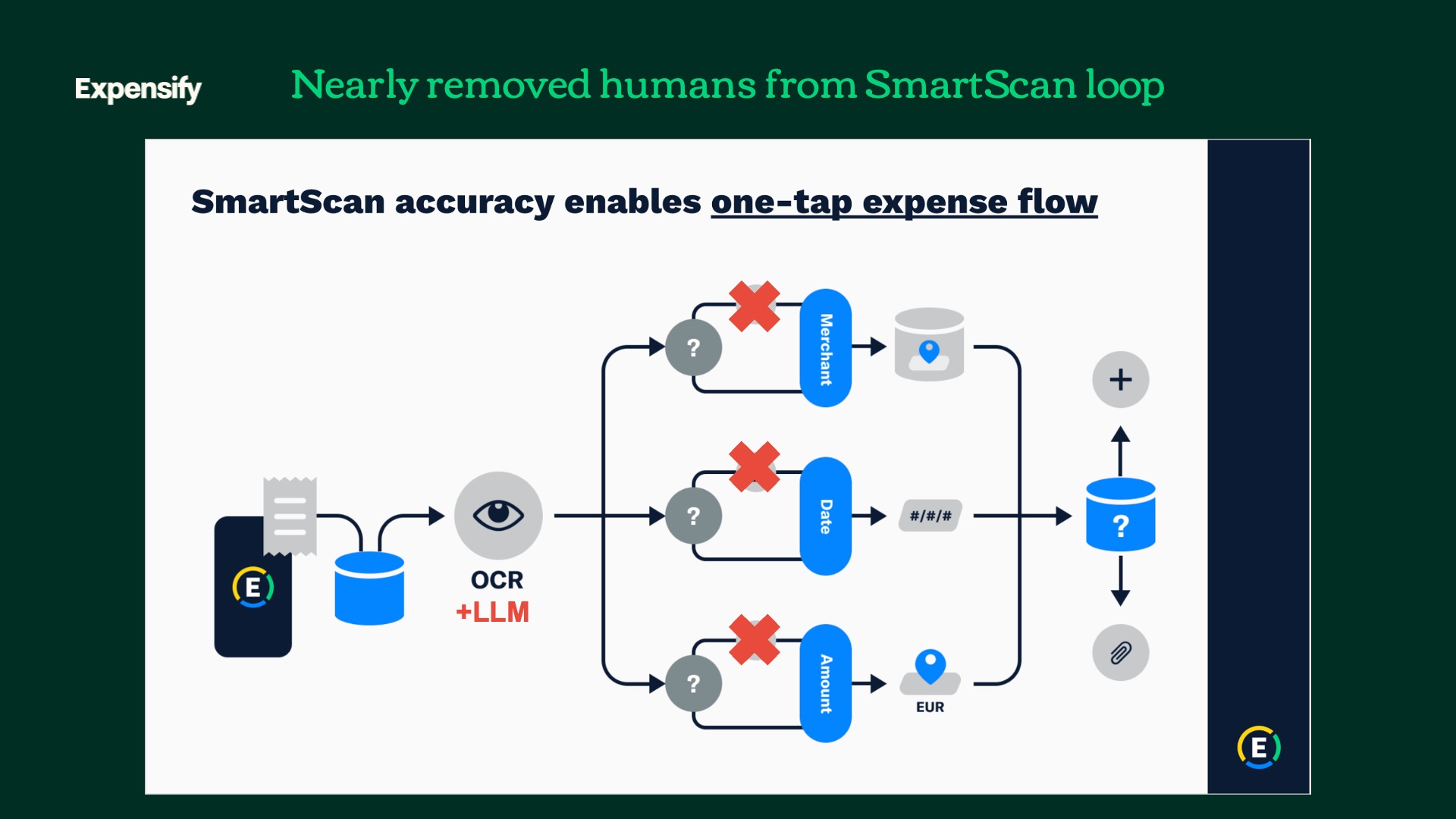
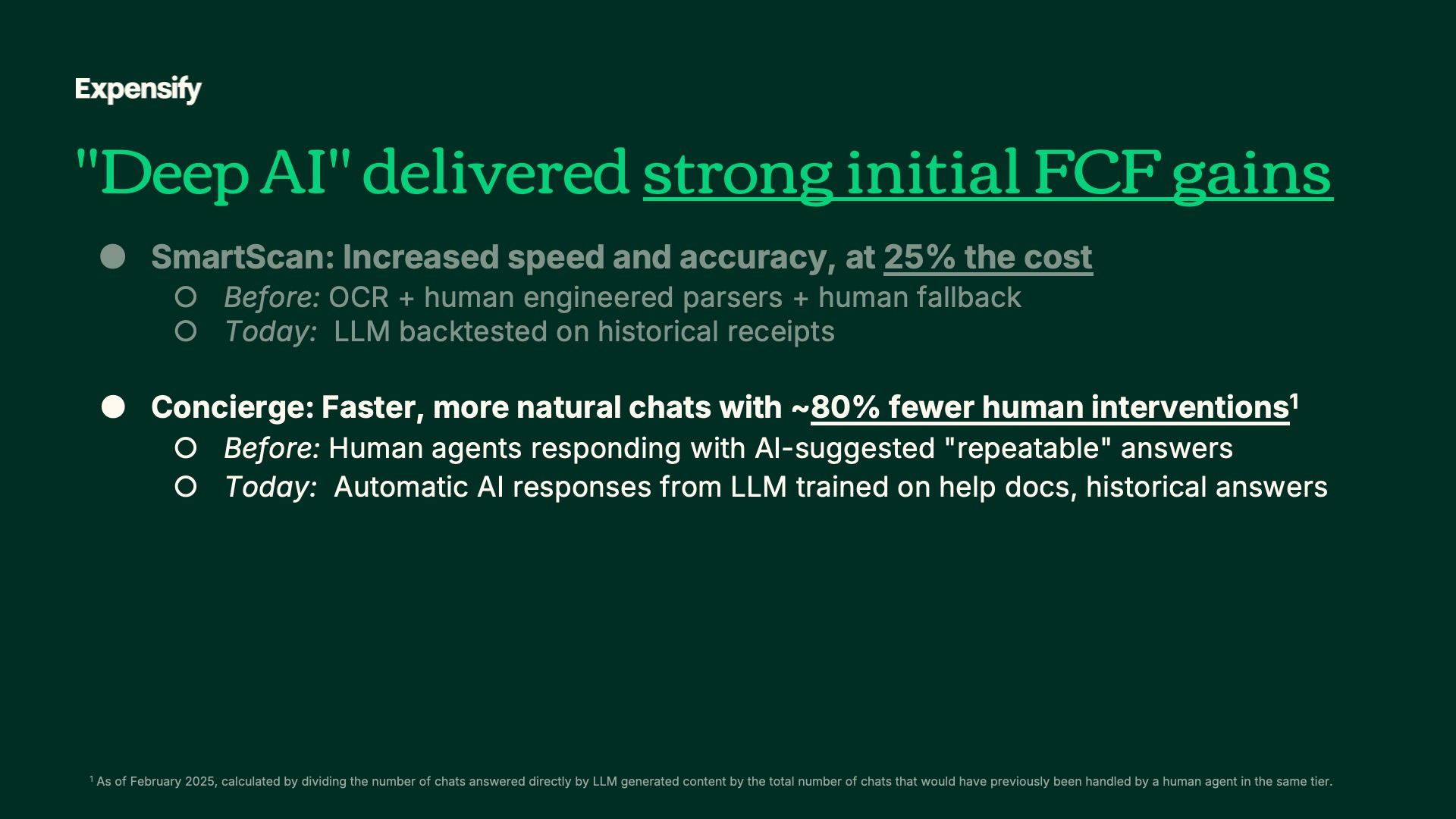
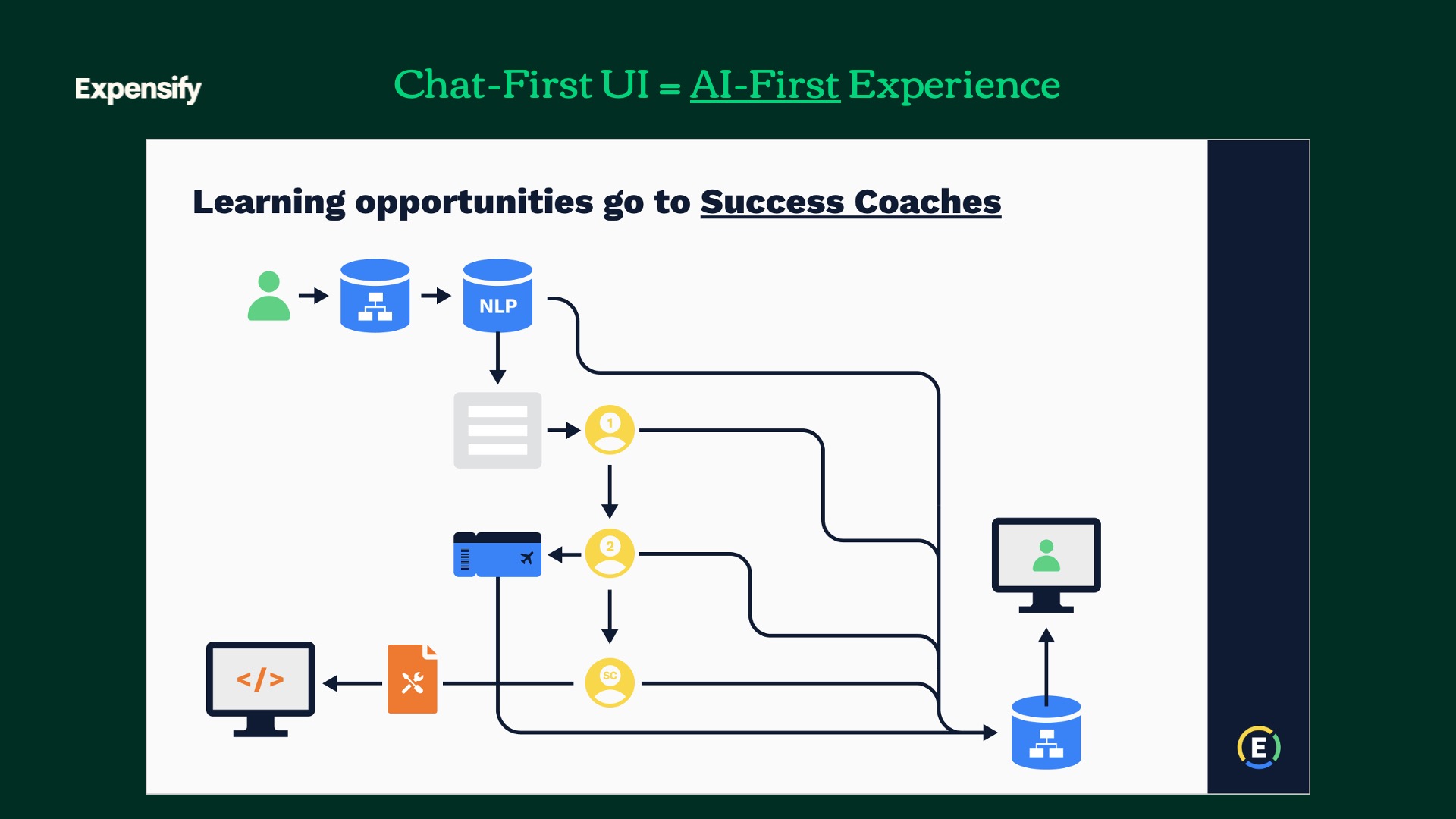
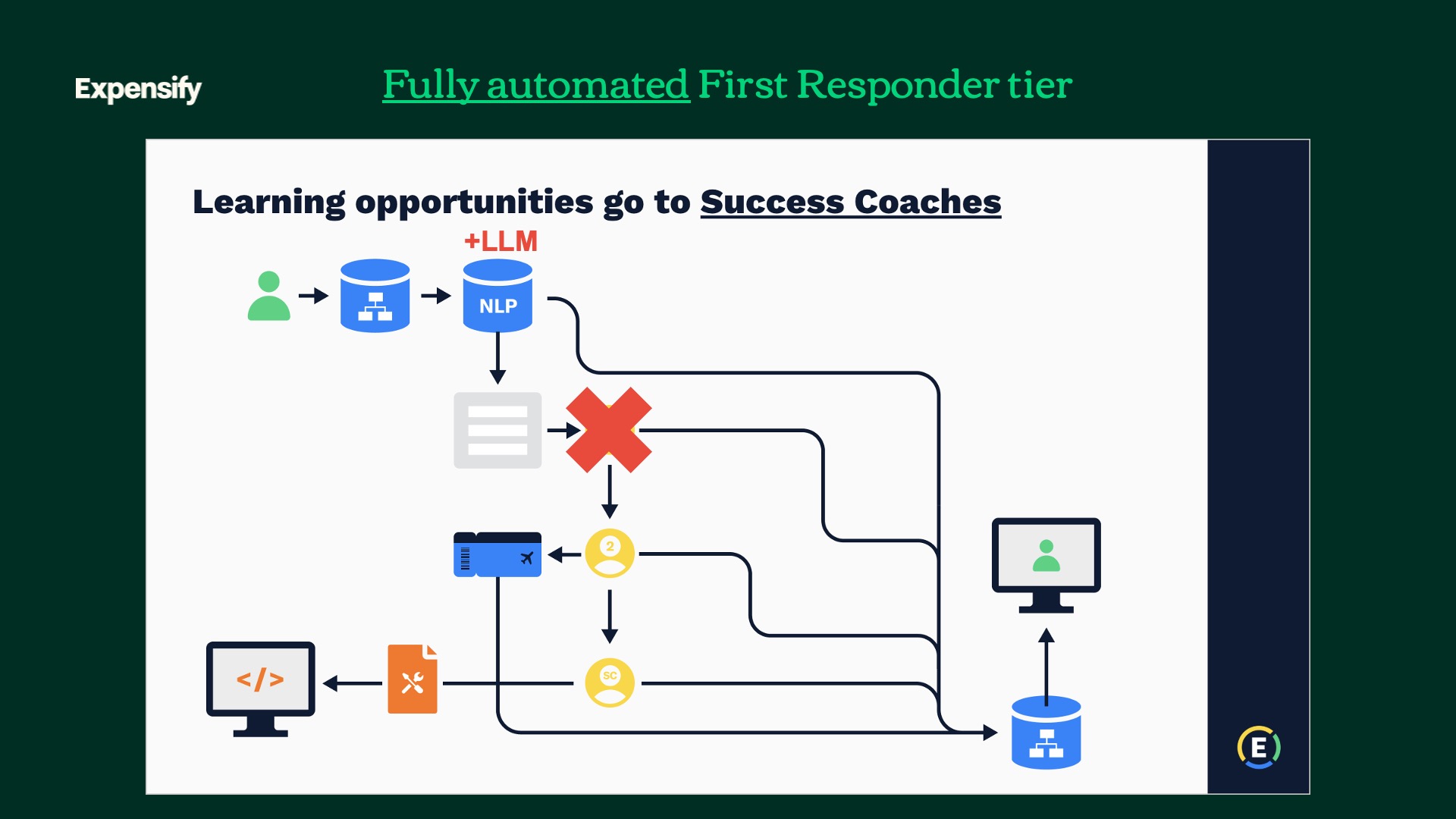
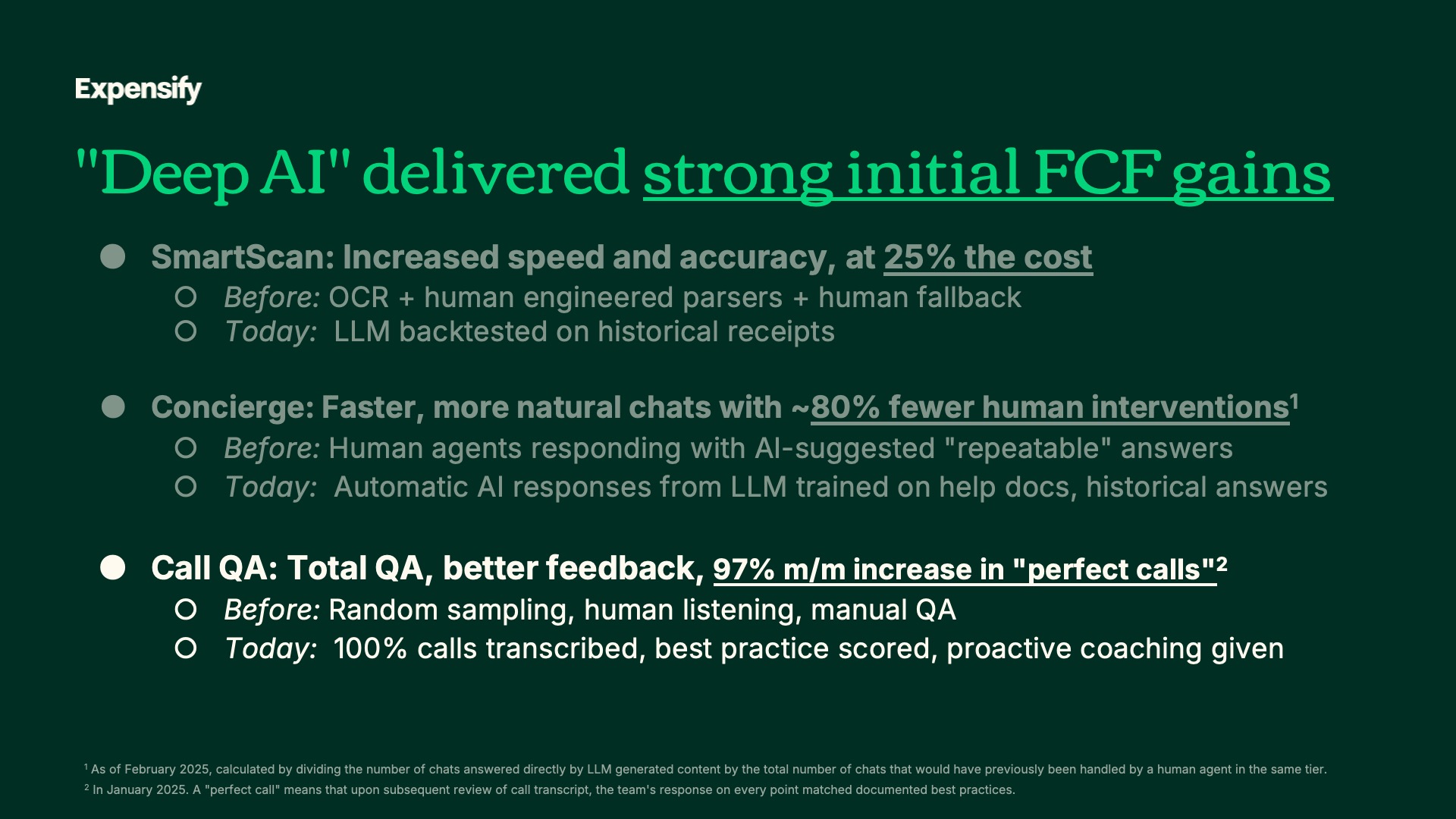
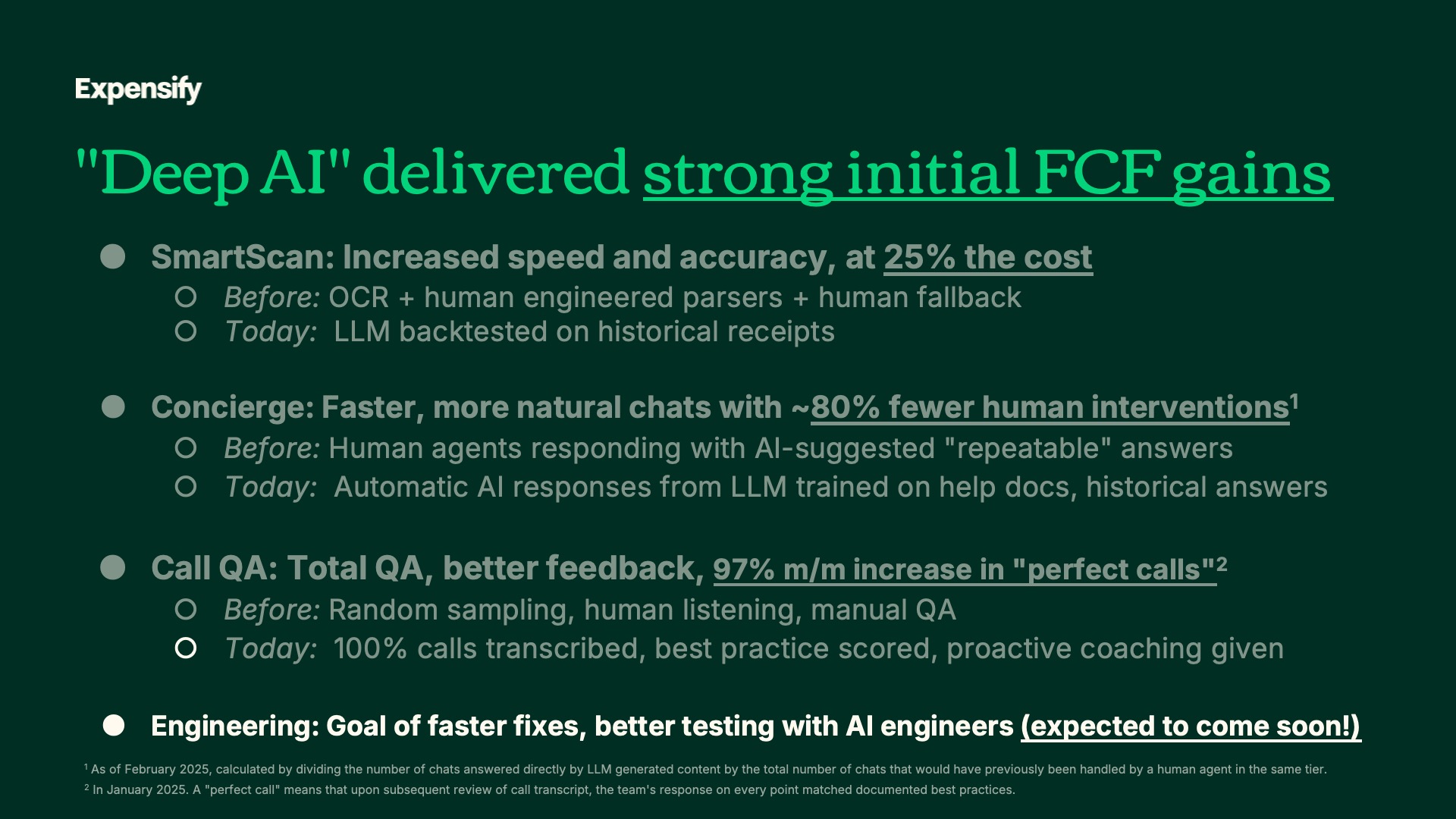
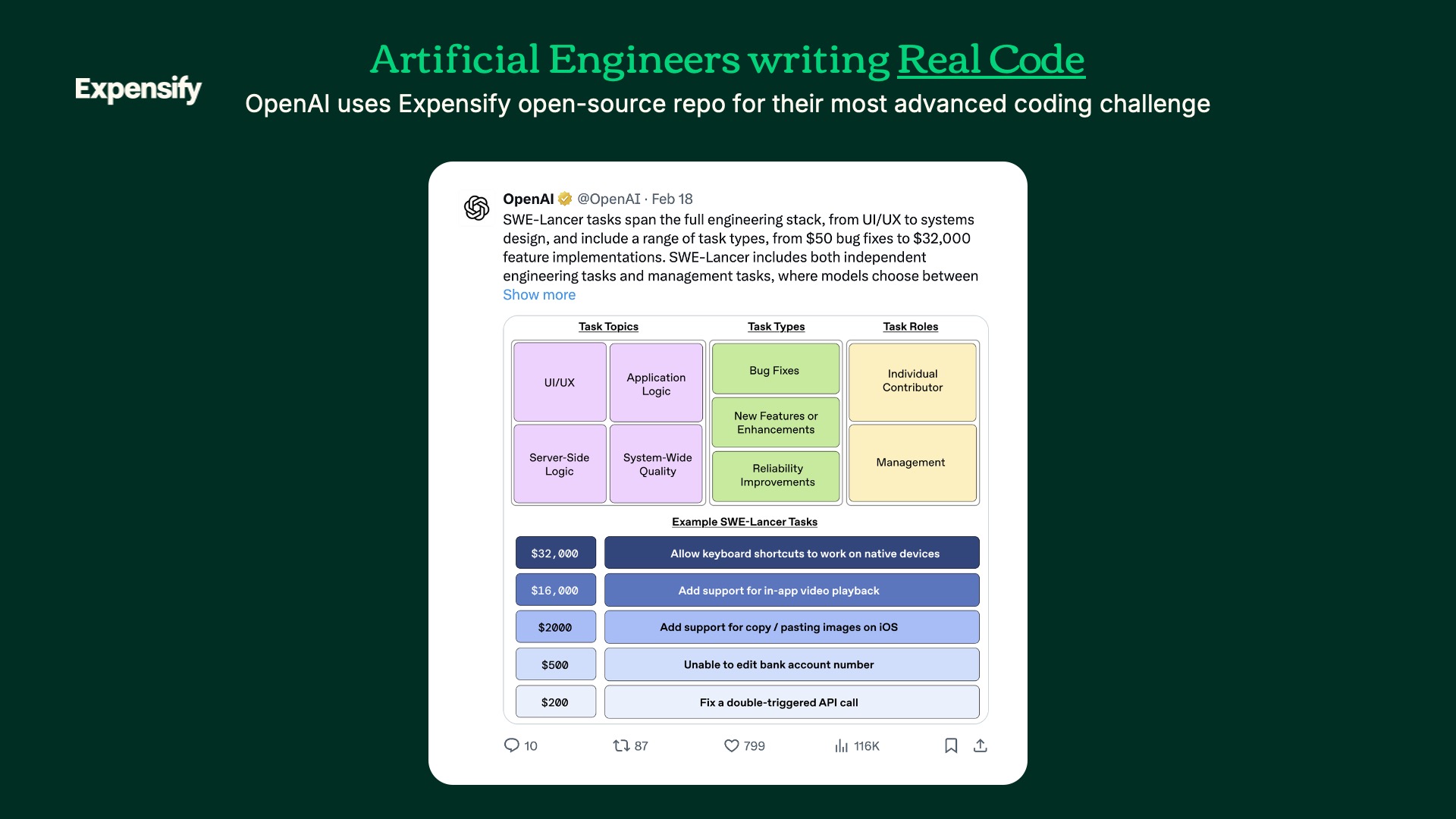
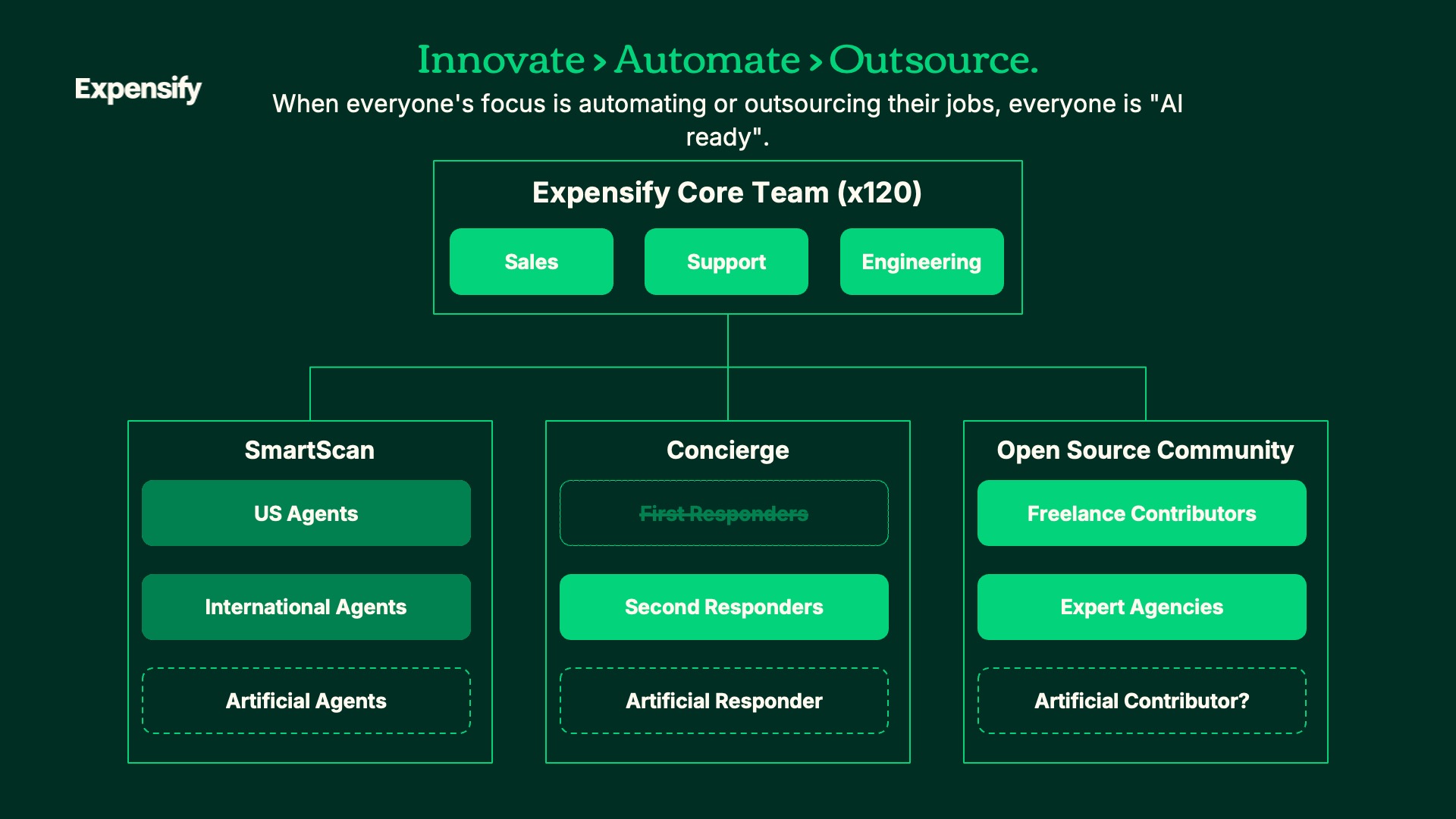
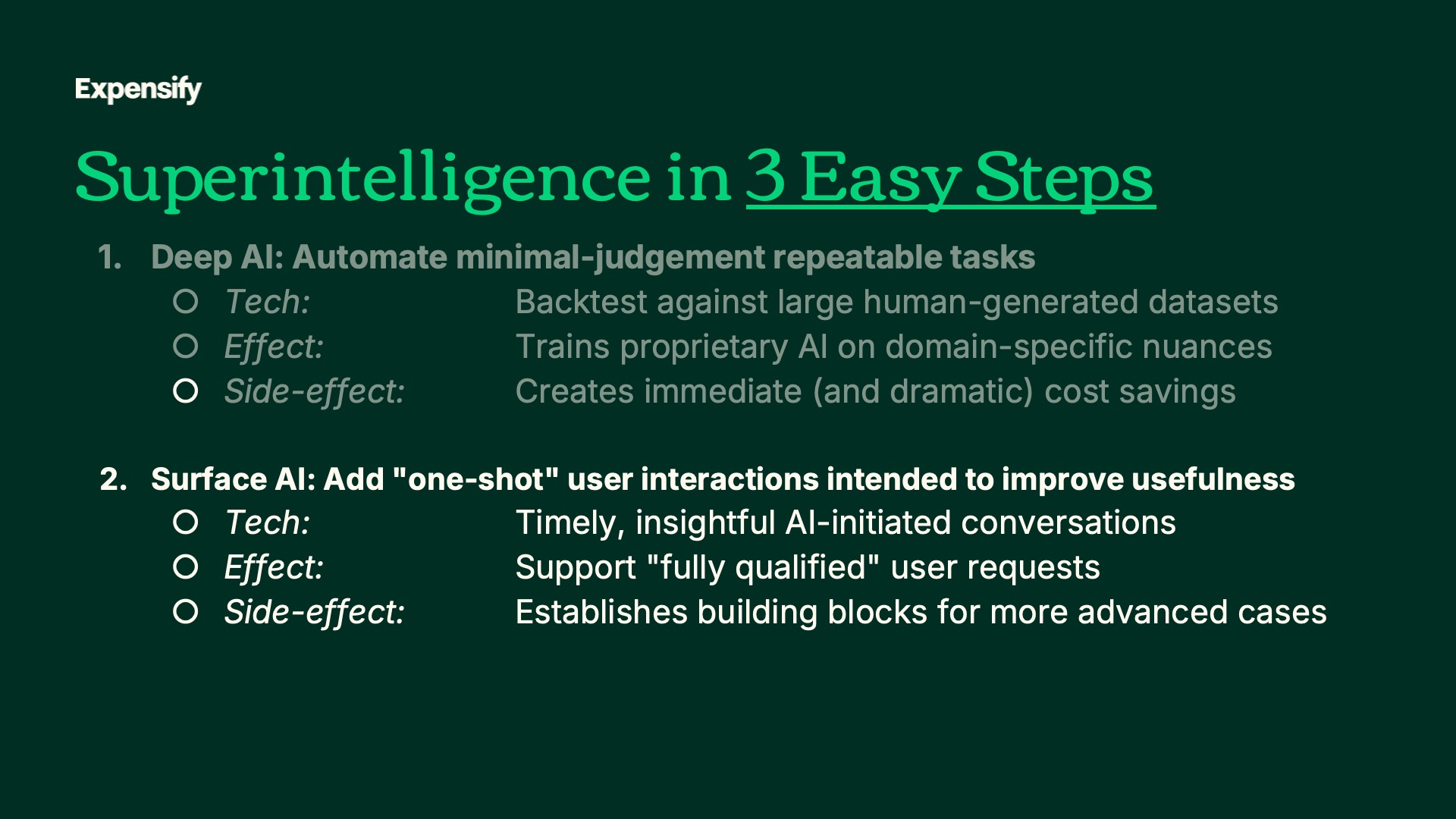
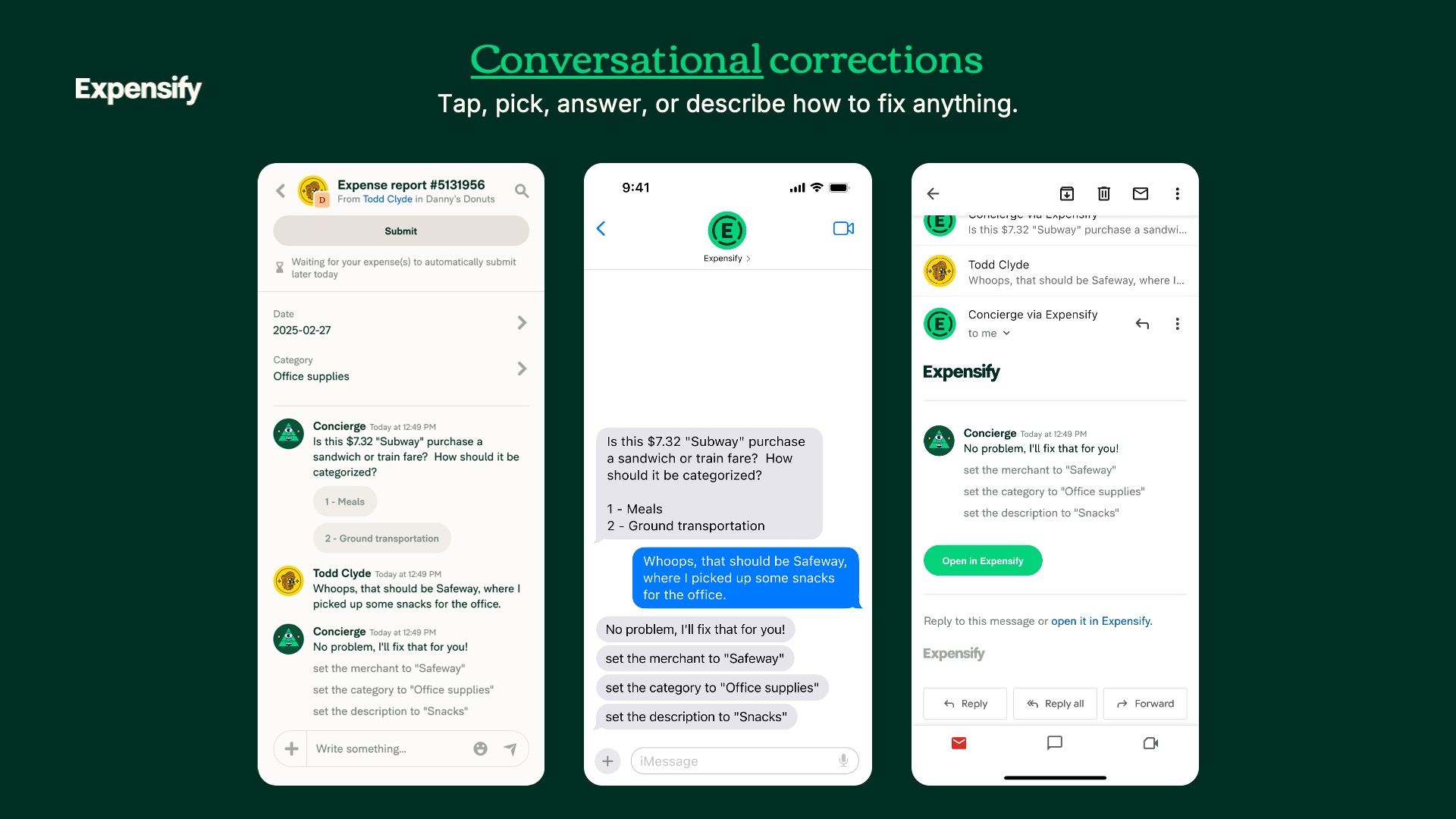
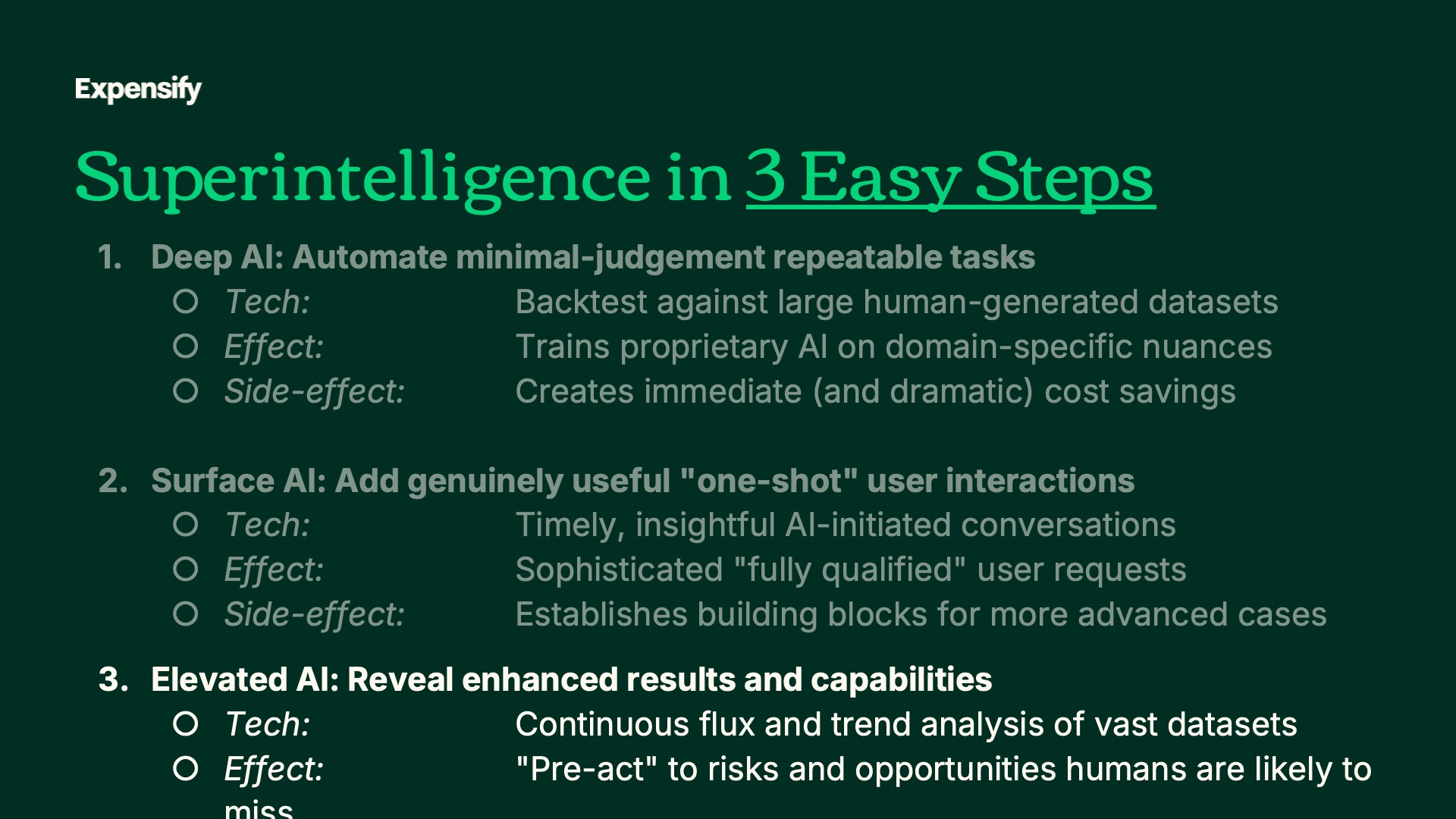
Thank you. Q4 was an excellent quarter, and if every quarter were like that, we'd all be very pleased. However, we've aimed for more than just these occasional upticks; we want to achieve something significant. Reflecting on our IPO and the changes since then, the opportunity remains enormous. Our initial Total Addressable Market is still largely untapped, and the competitive dynamics have not shifted much. Viral lead generation continues to be the most scalable model, and our focus remains on bottom-up adoption. Our core acquisition model is still intact, as is the strategy of our payment super app, which serves as a central hub for data that gathers viral lead generation and transaction revenue as well as subscription revenue. While our fundamental approach has remained unchanged, significant developments have occurred, particularly with AI. AI is now a reality, with chat becoming a central aspect. The language of AI is English, and communication primarily occurs through chat interfaces. This is why we've been emphasizing chat – it’s not about replacing tools like Slack, but about enhancing collaboration with our concierge, our AI-driven experience integrated throughout the product. We learned early on that the future UI is chat-centric, and we are pioneering this change. Expensify is building something that others will adopt over the next decade, and it's crucial to emphasize that this is not only about communicating with colleagues but also about leveraging super intelligence embedded in the app. The concierge is different from general AI models like ChatGPT because it understands your personal data contextually. It can have detailed, context-specific conversations about your expense reports, approvals, and more. For example, it knows specifics about your individual expenses, unlike other chatbots that rely on public information. It's this unique contextual understanding that makes our concierge effective. When we combine super intelligent chat with super app data, we create a unique offering. Our central role in managing company payments gives our AI an unparalleled awareness of financial activities, providing insights that no other service can. We have access to information from every employee, including finance, sales, and executive teams, which allows us to deliver efficiency across the organizational finance experience. Additionally, our travel duty care functionality helps us track employee locations for better service, and we’re connected to various external systems, allowing us to pull the data we need. At our IPO, Ryan and I laid out a modest goal of achieving primacy in fintech AI. The industry is converging towards real-time expense reporting, product suites, and now chat-centric designs. This transition relies on three core steps: deep AI, surface AI, and elevated AI. Starting with deep AI, we focus on minimal judgment tasks and use our extensive 15-year history of receipts and human-generated data to train our models. This provides significant cost savings while enhancing our AI capabilities. Our AI features, like SmartScan, have improved speeds and accuracy, reducing reliance on human review. Similarly, our concierge has evolved with upgraded technology, leading to faster and more natural interactions with far fewer human interventions. We've even improved our quality assurance processes using AI for call transcriptions and proactive coaching, resulting in a substantial boost in call quality. Engineering is another area we continually invest in by utilizing AI for automation, testing, and co-generation. OpenAI has recognized us as a leader in coding benchmarks, which underscores our unique approach to training AI. We’re leveraging our freelance community and expert agencies to foster innovation within the company. With a small team of about 120, we focus on streamlining processes to maximize efficiency, avoiding tensions often found in larger companies. We’ve begun rolling out advanced features, like conversational corrections, to provide users with better experiences and unexpected responses, making our chat-centric design accessible across various platforms. The goal is to anticipate user needs and respond quickly, which is essential in managing finances effectively. AI will undoubtedly transform every industry, and since expense management is tied to every part of an organization, we view this change as an exciting opportunity. In summary, Q4 was remarkable for us, our investments in AI are yielding promising results, and our profitability has improved. We’re now debt-free and making steady progress with 2025 promising even greater potential ahead. Are there any questions?
Operator
Perfect. Can you hear me?
Operator
Okay. Great. Let's get started with Citi. George and Stephen, I think you're both on the line.
Speaker 3
Yes, hi. This is Steven. Thank you for answering our questions. I appreciate the detailed insight on the AI developments. I would like to better understand the current capabilities and what initiatives are still in progress. Additionally, for these initiatives to function as intended, do they all need to be integrated within the Expensify app, or is it possible to connect with third-party systems like Slack or other financial systems to view that data?
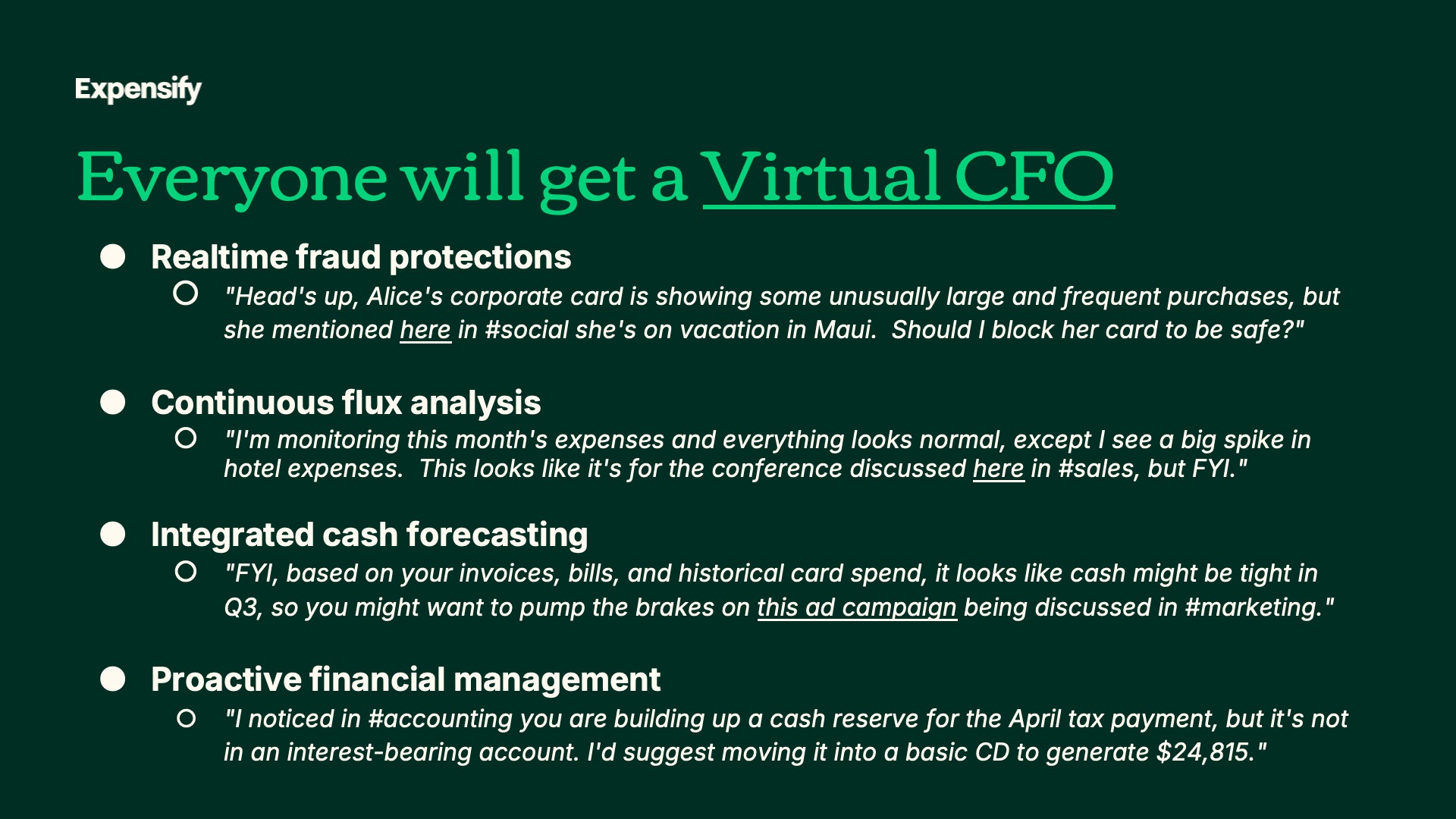
Great questions. And so as for what sort of exists today and what's coming, I would say the things that we talked about in deep AI are already done, basically, the concierge SmartScan and the QAing of calls; that's all done in practice right now. I mean, obviously, we're improving in all of these. But I'd say that these are real systems creating real benefit right now. For a lot of kind of the more surface AI stuff in terms of user interactions, I'd say that’s all under active development; hasn’t been released yet, but it's real. It’s coming — as we think more on sort of the future virtual CFO stuff, it's like prototype; it's basically demonstrated, but it's not production-ready. Everything here, however, is fundamentally real. The stuff exists; we know that it can be done. It hasn't been launched yet, but it's coming. We don’t have a specific timeline for that; the stuff we need to do needs to work really well before it's worth launching. But this is not vaporware.
Speaker 3
Okay. That makes sense. And then from, I guess, an integration perspective, does all this adoption need to happen within Expensify itself, specifically some of the chat stuff? And I guess, again, like the third-party system integrations kind of...?
Sure, sure. So one thing we talked about is integrating with other server chat systems; we’re not opposed to that. As was sort of mentioned, one of the advantages of a chat system is that we can meet you where you are. Right now, we focus on our app, email, and SMS, but we've certainly talked about what's a Slack integration as well. One of the challenges, however, is that as we do this, the benefit of the technology is that we can build it in the context of the expense management itself. For example, with Slack, we can't show you your expenses inside of Slack, and it's odd to have a conversation about your expense report outside of your expense report. I think there's some kind of an impedance mismatch for how our data is structured and how a traditional chat application is structured. But fundamentally, I agree with the thrust of where you're going; we need to meet the customer where they are. For the right use cases, it would make sense to talk to concierge in different chat systems. The deeper you get into the expense management stuff, the more it just makes sense to be part of the expense management system itself. Is that correct?
Speaker 3
Yeah, that's great. I guess that then kind of leads to the next question of if your customers aren't, I guess, necessarily using the chat functionality to that degree today, what's kind of the pull to get people to then drive broader adoption of Expensify and use it kind of the way that you're hoping they will take that on?
Well, first, I would say, I don't know if I agree that they're not using it this way right now. The process of migrating customers over, and one thing we found is that it's pretty sticky. When customers migrate over, they typically stay in Expensify. So they like what they find. Now, fundamentally, what we're doing is scaling it up for larger companies. We're scaling it up for more advanced flows and so forth. But it's a working system that people use and enjoy today; everything is getting better, but it's already pretty good according to the users who are using it right now. I also do think that what's nice about the sort of chat-centric stuff, especially like I would say, some of these virtual CFO functions, I'm super excited for because they start to show how we can pull customers into a chat context by giving them something to talk about. For example, ChatGPT right now just sits there idly waiting for you to have a question, and then it gives you an amazing answer to that question. Because ChatGPT doesn't know anything about you fundamentally, it's just kind of idle. We're different. We're basically working for you 24/7. As a result, we have a lot of things that we can observe. I think this creates the opportunity for Concierge to reach out proactively in these different contexts, thereby demonstrating the value of this integrated contextual chat. That’s maybe a lot of words said there. But fundamentally, I'd say, I think that this functionality is a way to demonstrate the value of chat rather than having to sort of imagine what would I do with this chat function. Did that answer your question at all?
Speaker 3
Yes, I appreciate the context provided. I have one last question regarding travel. It's good to see that aspect in place now. What adoption have you observed so far, and how do you envision it evolving through 2025?
Yes. So in the initial group, we saw a lot of enthusiasm. We saw a very large increase month-over-month in the travel book. That was for a small portion of our customer base. Now that we've launched to everyone else, I think it's — we launched this week, so it's too soon to be drawing trends, I think. But our account managers have basically been overwhelmed with interest in a million different questions and all that. I do think that it’s going to be exciting for Expensify Travel in terms of will it be material to revenue? I think it could be — I think it will likely be like the card for some period where it keeps telling its growth. That is small now; it was like, okay, and then eventually that actually got quite large and it moves revenue in a meaningful way, even if subscriptions aren't necessarily going up. I think I view that the same ID card. Does that help?
Speaker 3
Yeah, no, that's perfect. So I appreciate you taking the questions from our end and turning back in the queue here.
Operator
Great. Next, Aaron from JMP.
Speaker 4
Hey. Thanks so much.
Speaker 4
Hey guys. So we've discussed in the past; you've talked about trying to get to a new normal by summer 2025. What does the new normal look like in terms of the day-to-day of the business and progress with New Expensify? And does summer 2025 still sound like a reasonable timeframe?
Operator
I’ll give it a shot. The new normal means that every customer will log into Expensify and see our new brand. We are transitioning to a sales model that focuses on New Expensify, and many customers are already discussing New Expensify because ultimately, your brand is defined by what your customers share with their friends. Currently, most of our clients are using our Classic product, which still represents our brand. The new normal will be achieved when we have enough customers using the new product so that it becomes our brand and generates new word of mouth. This sets the expectation that when someone comes to Expensify, they are looking for an AI-Centric Expense Management application rather than a traditional Travel & Expense Tool. Summer is crucial for us, especially since we’re sponsoring the Apple F1 movie, which will have a significant impact. Unlike our 30-second Super Bowl ad, this is two hours of visibility for the Expensify name on a large screen, leading to a much greater impression. We anticipate this will raise awareness, and we plan to capture that awareness. The first half of the year is focused on preparing to handle that interest, while the latter half will be about converting that interest into concrete actions.
Speaker 4
I agree. Got it. I actually saw the trailer the other day. I agree, great logo placement for you guys. Second question, on the spectrum potentially of kind of potentially in 2025, so far out in the future, where do you see you in terms of maybe being able to use price as a lever to drive growth when weighing kind of the choppy macro for SMBs versus increased product functionality? It's been a sticky inflationary environment for a few years now and then not having taken price, I think, in, call it, three years, if that's right?
Operator
I think my instinct is we're going to keep the price where it's at for the near-term future.
Operator
I think when we have all of our — when the platforms are a little more mature than it is now, and we have a broad suite of super hardened products, then at that point, I think our price becomes kind of silly low. We won't really see any backlash from customers on a price increase. But I don't think we're there yet. But just to remind you, the plan is expense management, free corporate card with 1% or 2% cash back, full corporate travel management, invoicing, bill pay; chat; hold much AI functionality; and also P2P, consumer money transmission for $9 a month. That is the goal, and that still will cost probably $100. There's something to have to buy all that individually. I think that we are building the conditions where we would have immense pricing power, but we don't want to put the cart in front of the horse.
Yes. I agree with that. One thing we talk about internally is this idea of like this kind of a Red Ocean strategy versus the Blue Ocean strategy. Red Ocean is like highly competitive blood and water, companies fighting each other to the death. But there's a huge opportunity out there that's largely uncontested. The way that we go after this large market is really about bringing a tremendous amount of innovation and producing it at an incredibly low price. I think there's a huge opportunity out there. Our primary method of making money in the long run is by growing to acquire new customers, not just basically squeezing existing customers hard.
Speaker 4
Got it. Thank you.
Operator
All right. Next, we have, I believe, Mark is on the line with us.
Speaker 5
Hi good afternoon. Thank you for taking my question. David, let me start off with you. Could you just walk us through your investment priorities for the coming year?
Investment priorities for the coming year. I’d say the most important, as I sort of mentioned before, is lining all of product and marketing and go-to-market basically up for this F1 release in the summer. What that means in a more practical basis — a lot of testing, a lot of QA, a lot of just polishing up functionality. One thing that we do is when customers come over, we analyze basically their usage of the product itself; we proactively — without waiting for them to report bugs, we find the issues, we fix them, and optimize and so forth. A lot of mundane stuff. I mean, it doesn't sound truly revolutionary, but it's really important. Nice thing about AI functionality is that if you have a platform like ours, which is a chat-centric design, designed to allow you to communicate to an AI as well as the AI communicate to you in every context, it’s actually quite easy to bring in more AI functionality. We don't need to create a bunch of new UI elements and controls and so forth. It's already pervasive. We've done the hard work to build a platform to allow AI functionality to basically engage with you. When we roll in some of this AI functionality, it's relatively low financial investment because the hard work is done to get the data into the same place to get the UI ready and to get all this in place. The bulk of our effort really is on just more mundane testing, migration of existing customers, and supporting existing customers dialed in. But we sprinkle in kind of like the appropriate AI investments along the way. I don't know that really answers your question because if you have any — if that answers your question for you.
Does that answer your question, Mark? I can expand if there’s — if it did not.
Speaker 5
No, that's helpful. And then, Ryan, a question for you. Maybe you can just talk a little bit about how customer churn trended in the quarter?
We did see an increase in users, which is positive. There hasn't been a significant change in churn, although paper-use users tend to be somewhat unpredictable. As our new product improves, I believe we've enhanced the performance of our sales team through our investments, as mentioned by Dave. We're noticing some promising indicators.
Yeah. I think so. We’ve put a lot of effort into account management, and I think that’s really had good effects as well. It’s just a stable trend, I would say.
Speaker 5
Thank you. That’s all for me. Thanks.
Operator
Next up, we have Lake Street Capital. I believe, Max, are you still on the line?
Speaker 5
Yep. I’m still on the line. Thanks for taking my question, guys. Great quarter. Just looking at all these product launches, I mean, with AI then you have expense or the travel product coming online. If we think about maybe after the Apple deal, in 2025, what areas do you want to go to next? I mean, what area haven’t you tackled? Maybe that’s in the back of your mind on maybe that’s the next area or space you want to get into.
I think next; I’m not sure if you agree. I think next is invoicing and bill pay. I think next is — we know it can be better. We know what needs to be done to make it truly competitive. It’s great for a small business, but there are really strong competitors out there. In terms of investment, travel’s in a great place, expenses in a great place. I think bill’s invoicing is the next logical one.
So, I would agree with that, but also emphasize that I don’t know that there needs to be a big next thing fundamentally. I think the next thing is getting all of our customers to use what we currently have. The next thing is really getting people to understand the value, capture the value, and use the value that is already being created. Because we think that fundamentally, again, AI is hard to talk about because it’s so eye-roll inducing because everyone just says whatever they want, and they make it up. It makes it sort of hard to talk about and feel credible. Especially because everyone makes the same claims that they’re going to like, we’ve reinvented everything with AI. And then you look at their product, and it looks exactly the same; every product, all of our competitors look the same, and they all claim that they’re like the most AI centric thing in the world. We look quite different, and there’s a reason for that. We look different because we were actually building a different kind of AI centric environment. What we see here, the user experience that we’re making, might seem radical now in the same sense that ChatGPT seemed like a radical user experience when it first came out. But this is the future of user experience, and everyone’s going to be copying this in ten years or however long it takes them to catch up. I think that really the main investment is yes. Bill payment and invoice; absolutely. We need to dial that in. But it really just comes down to we’ve built out this broad product. We need to really consolidate it, get all of our customers on it, and just keep investing and improving that.
Speaker 5
Great. And I’m guessing there’s a price tag that comes with that Apple ad. But I mean, in theory, should we see any dramatic changes, I guess, to the non-GAAP operating expense structure throughout 2025?
Yes. Great question, Max. I’ve touched on this in the past, but it’s good to kind of go back over. Movie accounting by GAAP is kind of interesting. You recognize — you do not recognize any of the expense until the movie comes out. If the movie doesn’t come out, then what do you do? The money spent for the movie has already been reflected in our free cash flow. That money’s already gone, but we have not recognized it in our sales and marketing expenses yet. What you can expect is a large increase on the expense level. But I want to be clear that money has been spent already. It’s kind of one of those situations where reality and GAAP look a little different.
Speaker 5
Yes. Understandably, yes, I was just wondering if there was any other reason to see CapEx…
We’re also discussing marketing around the movie. We’re not just going to the movie or seeing ourselves there. In addition to what we've paid for the movie, there's kind of additional go-to-market there as well.
Speaker 5
All right. Again, thanks for taking my question.
Operator
All right. FT Partners, Matthew, are you still there?
Speaker 7
Yes. Hi. Good afternoon to all. Thanks for taking the questions. A lot of the questions asked were answered. Maybe just quickly, good to see the debt pay down and the reload of the share repurchase authorization. Maybe you can just outline sort of your capital allocation plans as a result above and beyond maybe stock-based comp and so forth?
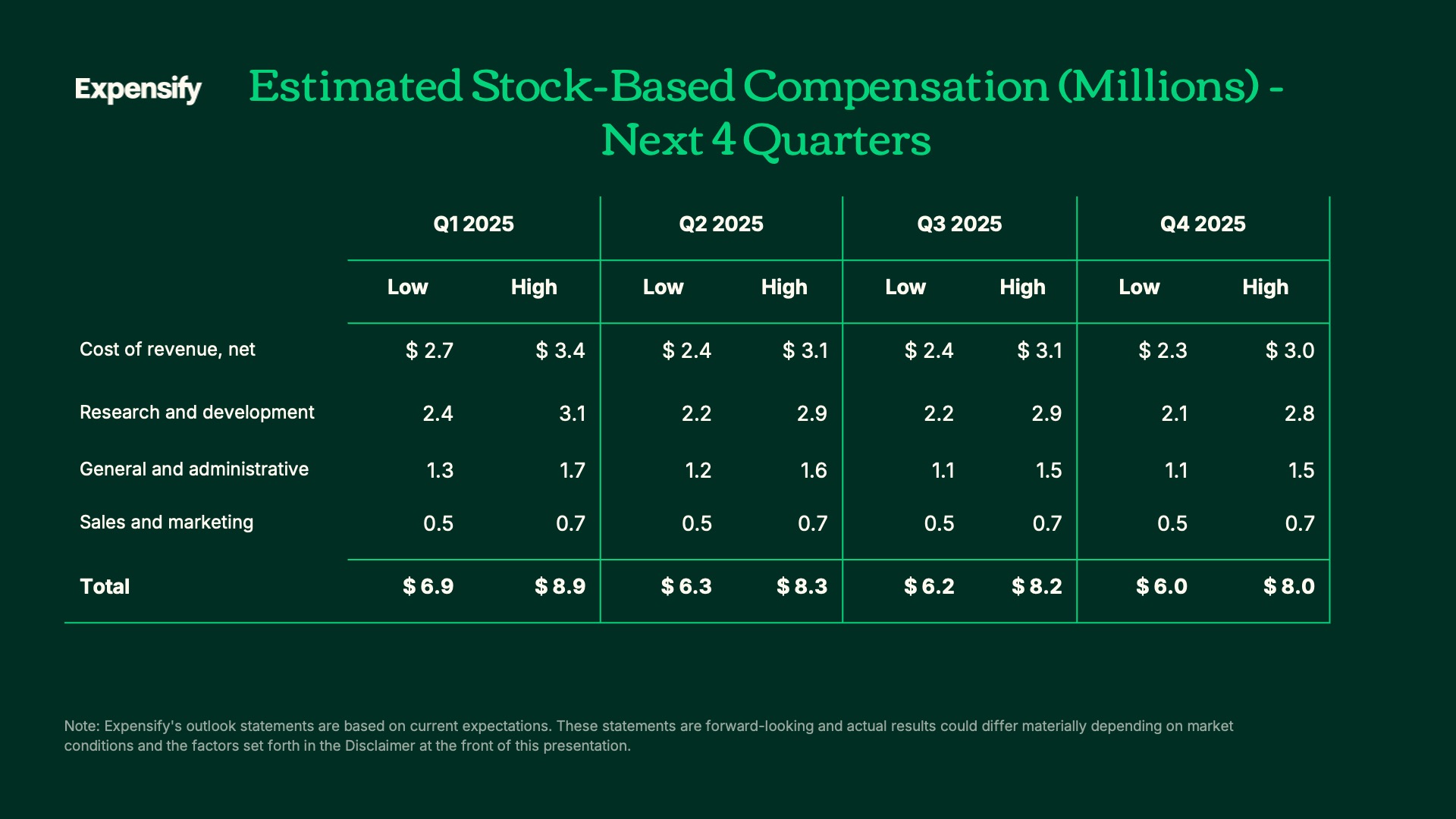
Yes. It's a big debate internally. We've gone from not having much free cash flow at all to suddenly having a lot, which is great. To what extent should that be put towards buybacks versus debt, we obviously decided to focus on debt, which to be clear, we're paying a lot of interest. Interest rates went up. We have more free cash flow as a result of paying down the debt. I think our first priority is obviously to invest in sales and marketing to the extent that we need to. We’ve done that, and we still think we’re going to have a sizable amount of free cash flow after that. But we think buybacks are great. We’ve done buybacks throughout the years when we were private. We were doing buybacks — it’s kind of strange for a private company, but we have a long history of doing buybacks that deliver dilution. Nothing to announce right now, but we like buybacks.
Speaker 7
Understood. That makes a lot of sense. I think philosophically, a lot of what you guys are doing probably answers this question, but just to kind of cement it — as you get a lot of unit cost improvements through automation, AI, right, like the SmartScan, 80% for escalations, et cetera. As far as the willingness to kind of drive more sales and marketing budget into customer acquisition, things like through the movie and otherwise, is that — we think about that right that as the operating leverage in the model improves, it makes more sense to sort of push into paid user growth efforts going forward?
Absolutely. I mean we'll see how the movie goes. Yes, I mean — I agree with you that when you have more cash, you can put more towards sales and marketing for sure.
Yes. I mean we've never been shy about taking big swings when we see a big opportunity. But I think that we run a very efficient shop. Because our free cash flow didn't come from nowhere; it came from efficiencies and discipline. We take big swings, and we see the opportunity, and we're not afraid to in the future.
But we also get in — I guess, it's not our culture to spend just to spend; we need to feel good about it. It's not like you always use it or lose it; we better spend that; if not, reduce our budget — that’s not part of our portfolio. So the dollars we spend, we feel good about. If we don't feel good about it, we pull it back as quick as we can.
Speaker 7
Great. Thank you both. That’s all for me.
Operator
That was everyone.
All right. Thank you, everyone. No questions about the Card migration first time since IPO, so happy that we got that migration done. Thank you all for the time, and we'll see you next quarter. Thank you very much.