Good morning, and welcome to FB Financial Corporation's second quarter 2025 Earnings Conference call. Hosting the call today from FB Financial are Chris Holmes, President and Chief Executive Officer, and Michael Matti, Chief Financial Officer. Also joining the call for the question and answer session is Travis Edmondson, Chief Banking Officer. Please note, FB Financial's earnings release, supplemental financial information, and this morning's presentation are available on the Investor Relations page of the company's website at www.firstbankonline.com and on the Securities and Exchange Commission's website at www.scc.gov. Today's call is being recorded and will be available for replay on FB Financial's website approximately an hour after the conclusion of the call. At this time, all participants have been placed in a listen-only mode. The call will be open for questions after the presentation. During this presentation, FB Financial may make comments which constitute forward-looking statements under the Federal Securities Law. Forward-looking statements are based on management's current expectations and assumptions and are subject to risks, uncertainties, and other factors that may cause actual results and performance or achievements of FB Financial to differ materially from any results expressed or implied by such forward-looking statements. Many such factors are beyond FB Financial's ability to control or predict, and listeners are cautioned not to put undue reliance on such forward-looking statements. A more detailed description of these and other risks that may cause actual results to materially differ from expectations is contained in FB Financial's periodic and current reports filed with the SEC, including FB Financial's most recent form, 10-K. Except as required by law, FB Financial disclaims any obligation to update or revise any forward-looking statements contained in this presentation. information, whether as a result of new information, future events, or otherwise. In addition, these remarks may include certain non-GAAP financial measures, as defined by SEC Regulation G. A presentation of the most directly comparable GAAP financial measures and a reconciliation of the non-GAAP measures to comparable GAAP measures is available in SB Financial's Earnings Release, Supplemental Financial Information, and this morning's presentation, which are available on the Investor Relations page of the company's website at www.firstbankonline.com and on the SEC's website at www.sec.gov. I would now like to turn the presentation over to Mr. Chris Holmes, FB Financial's President and CEO.
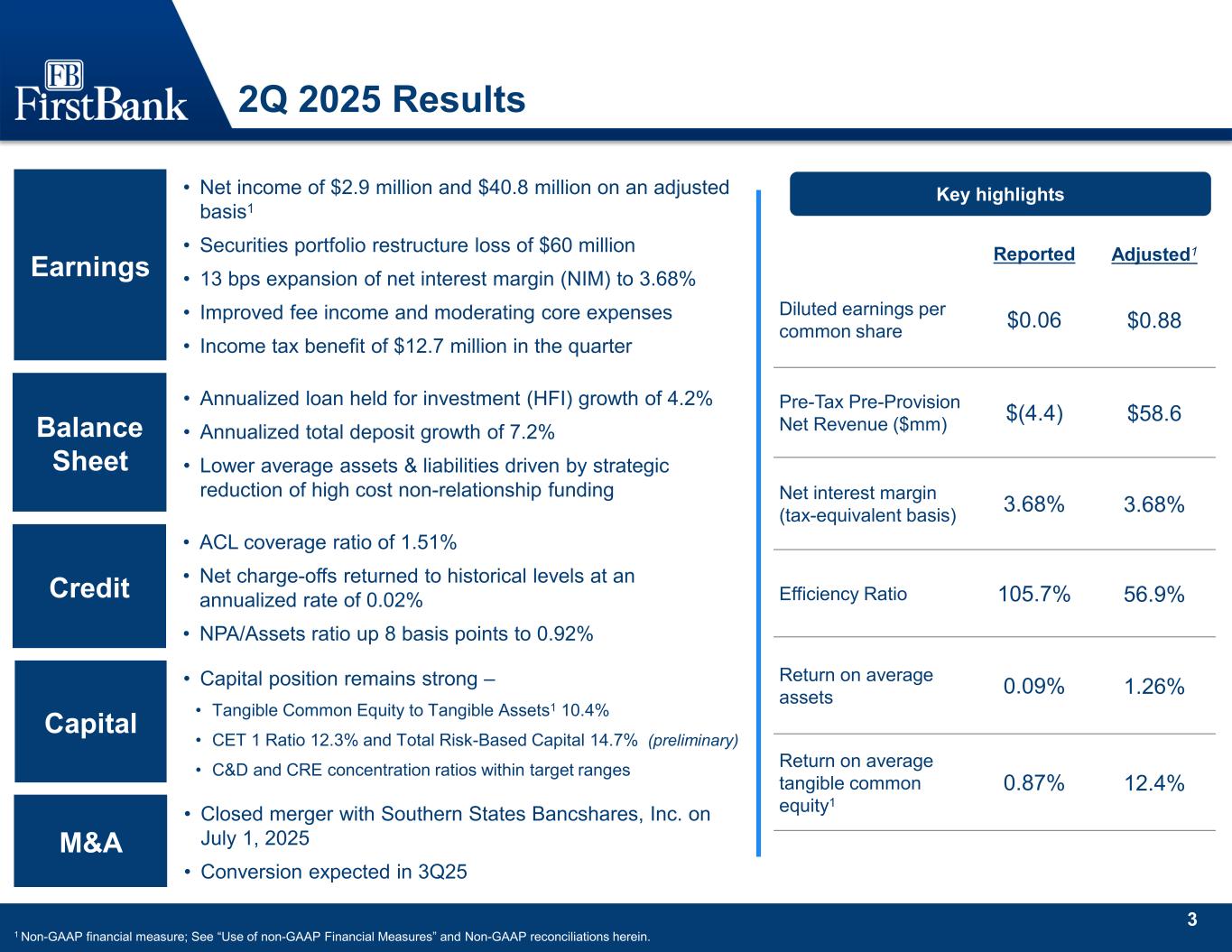
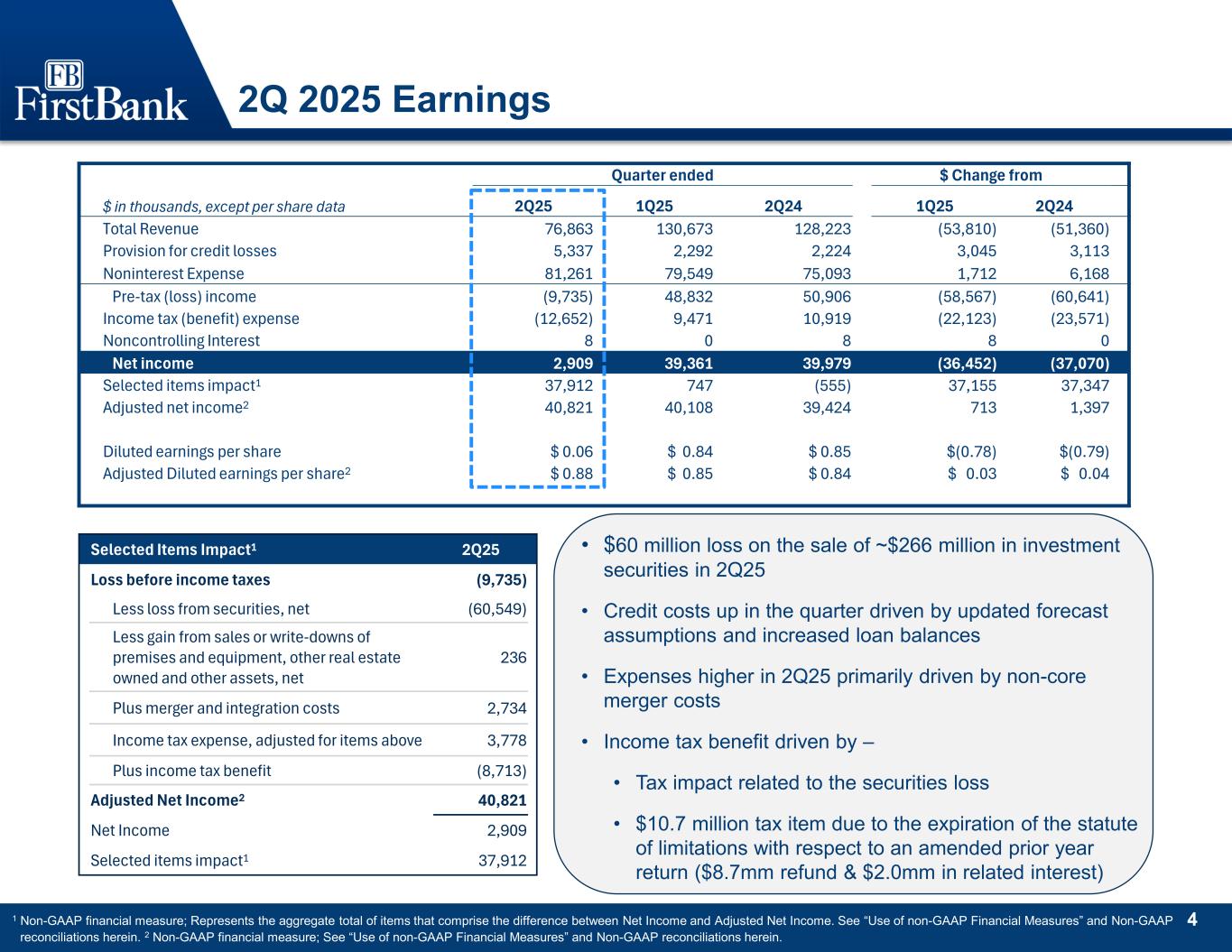
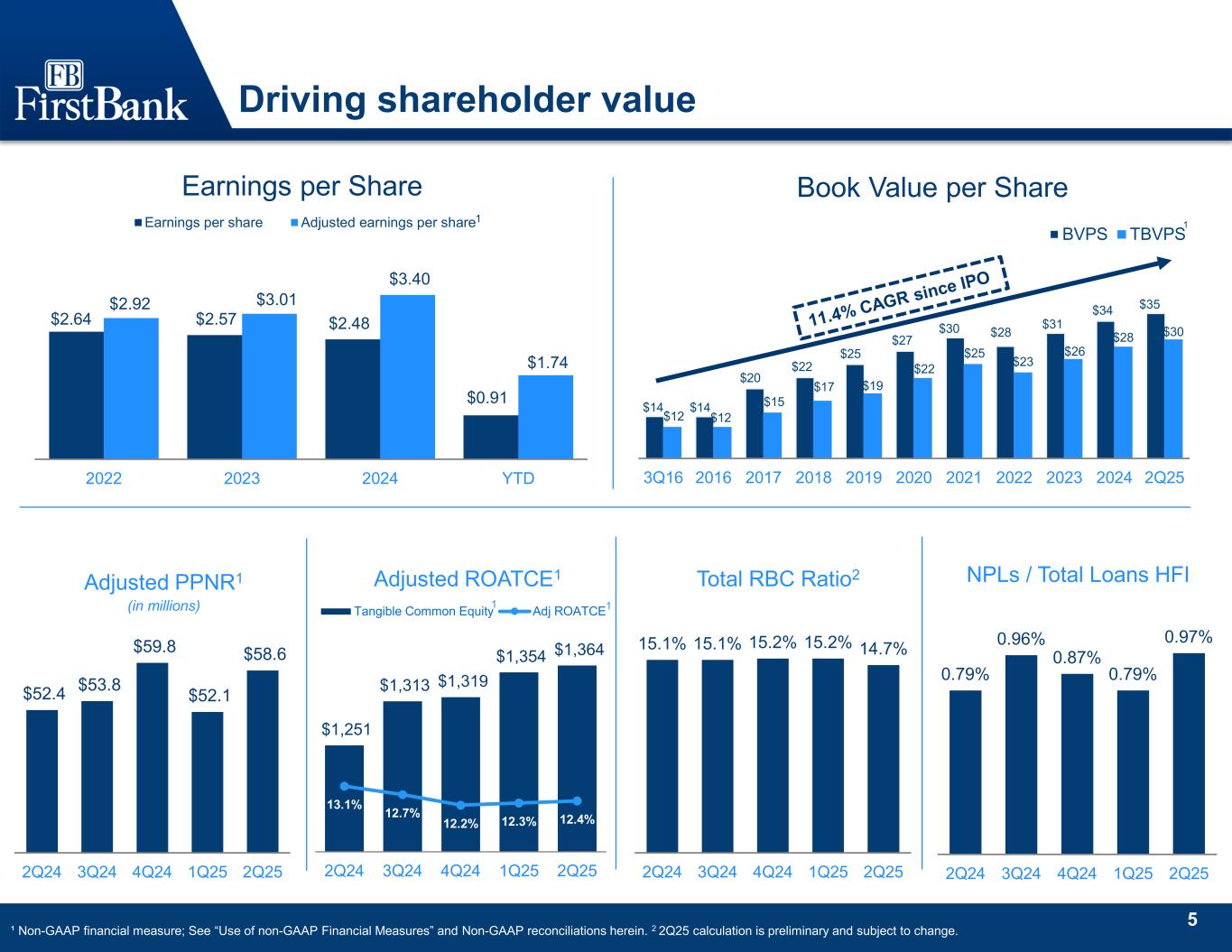
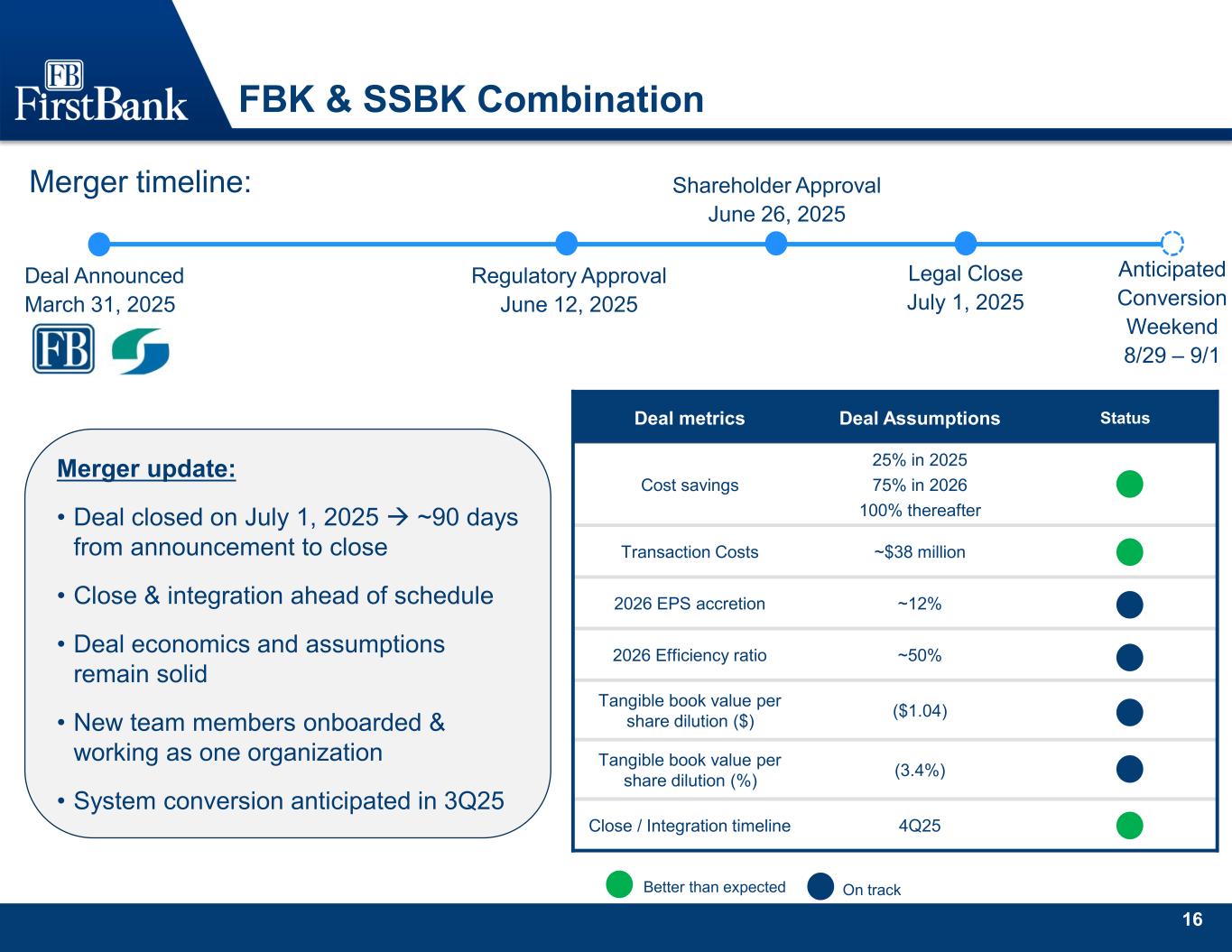
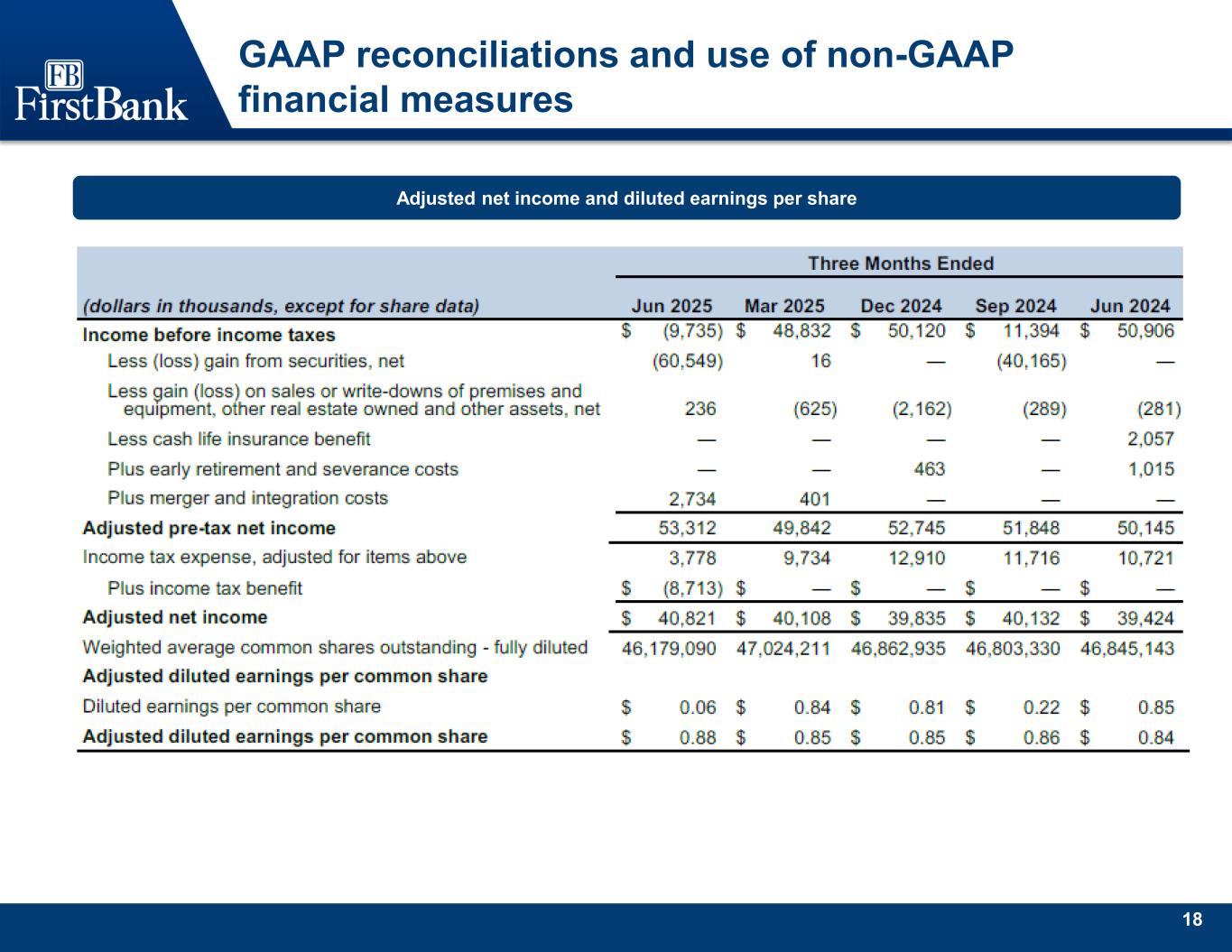
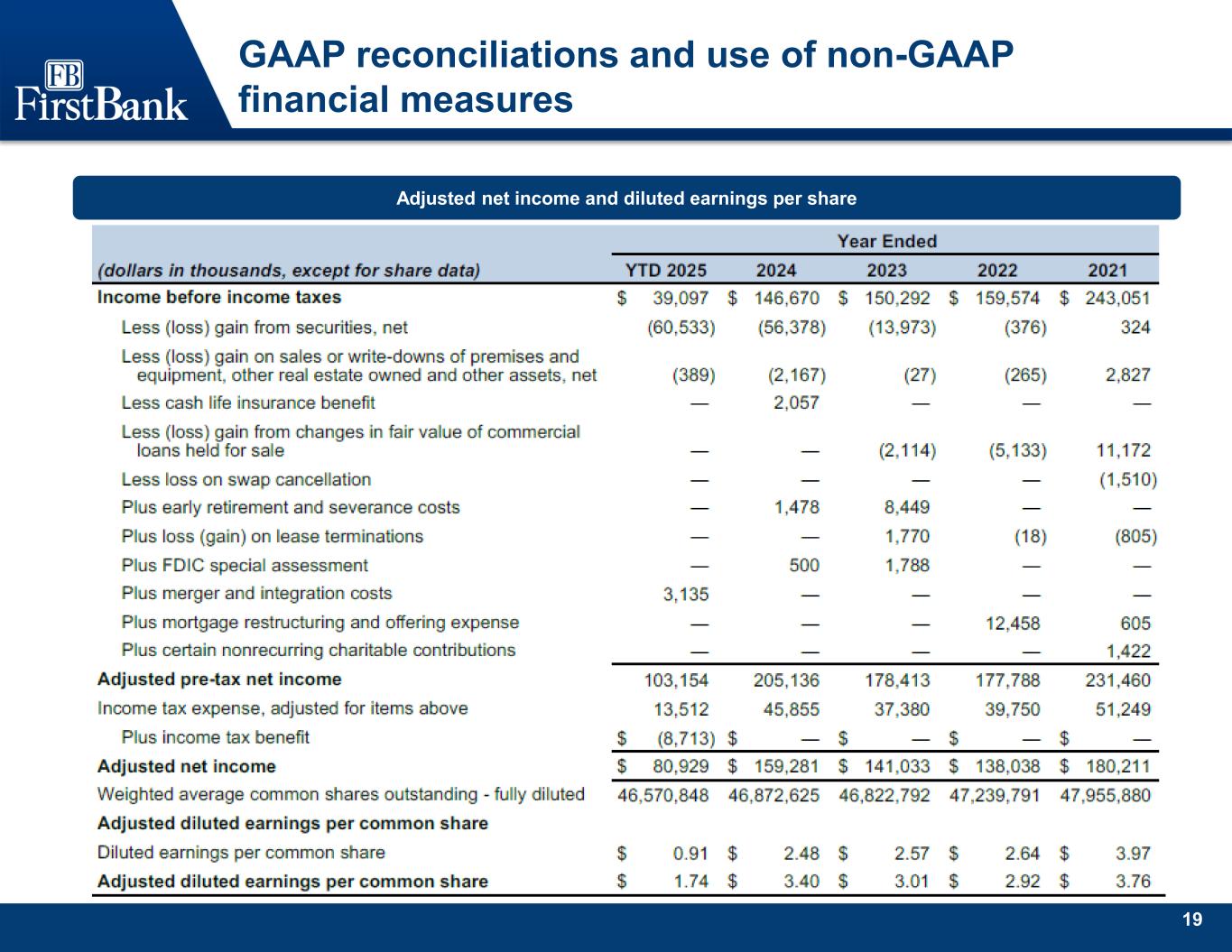
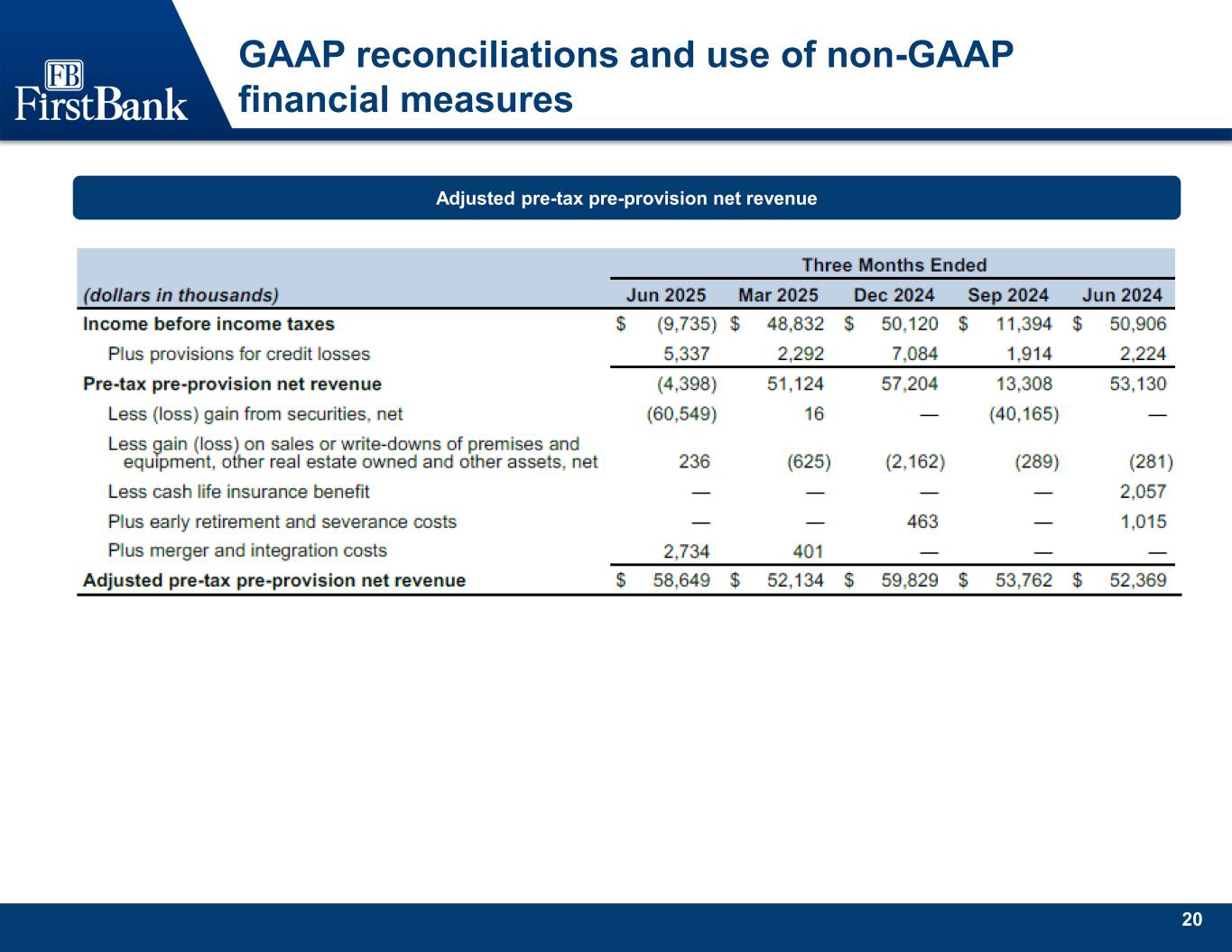
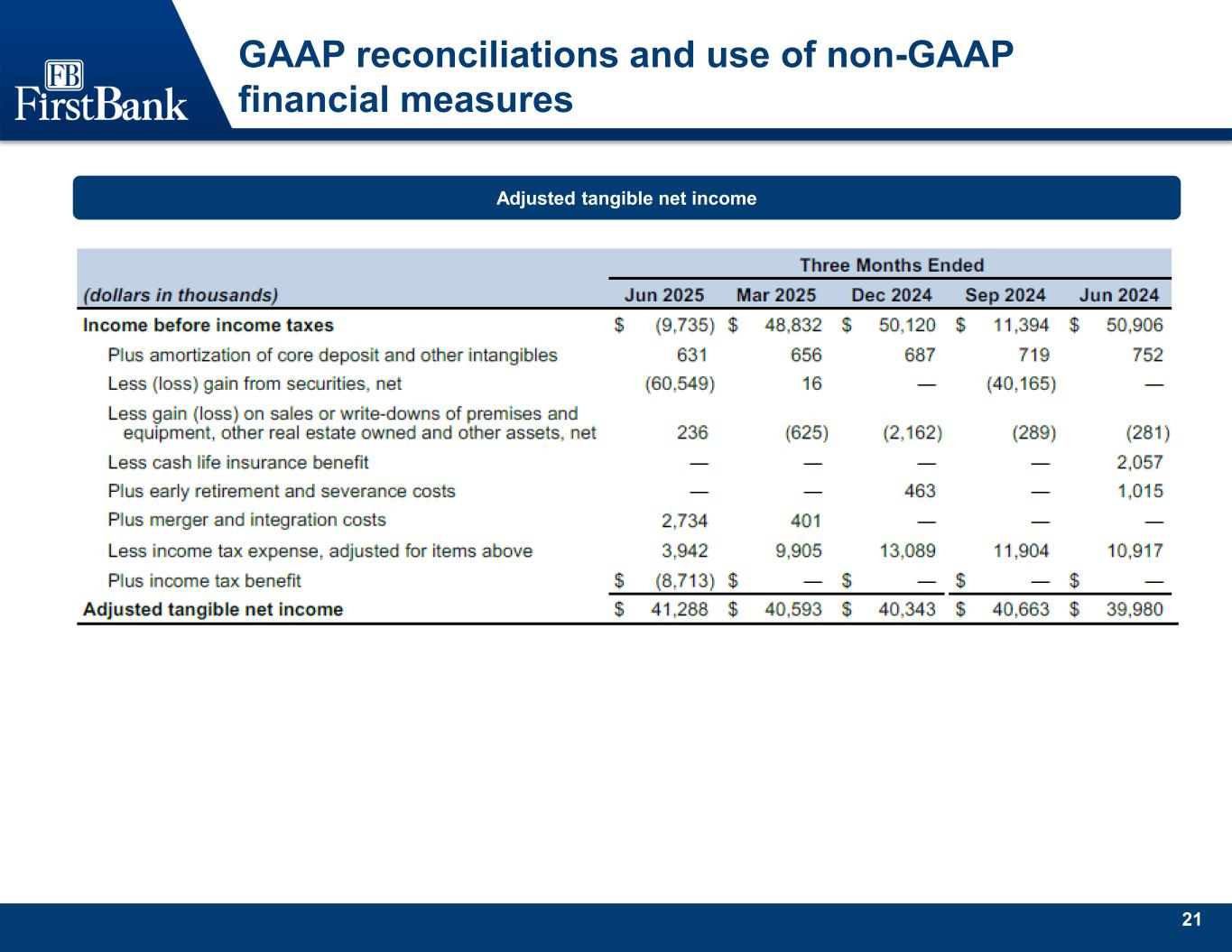
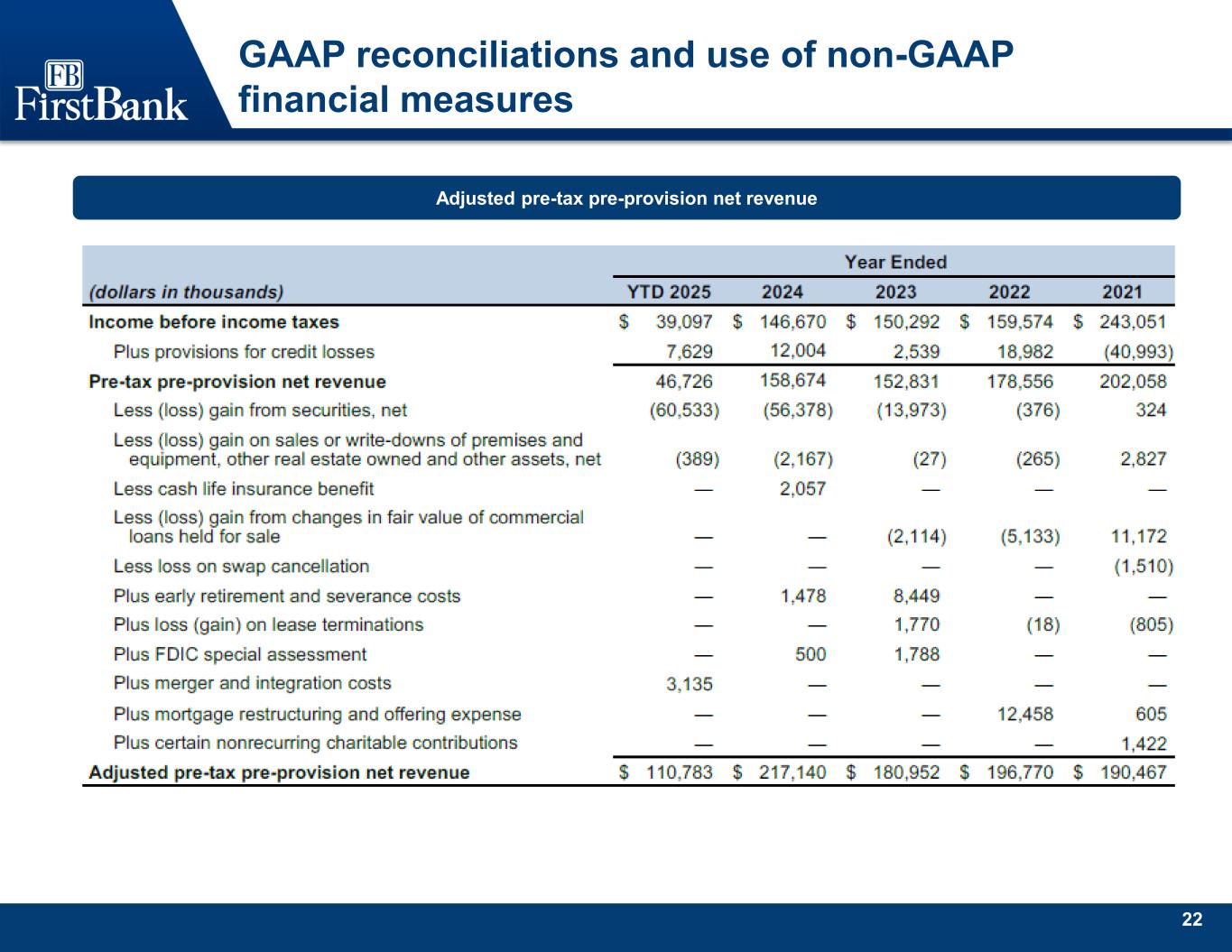
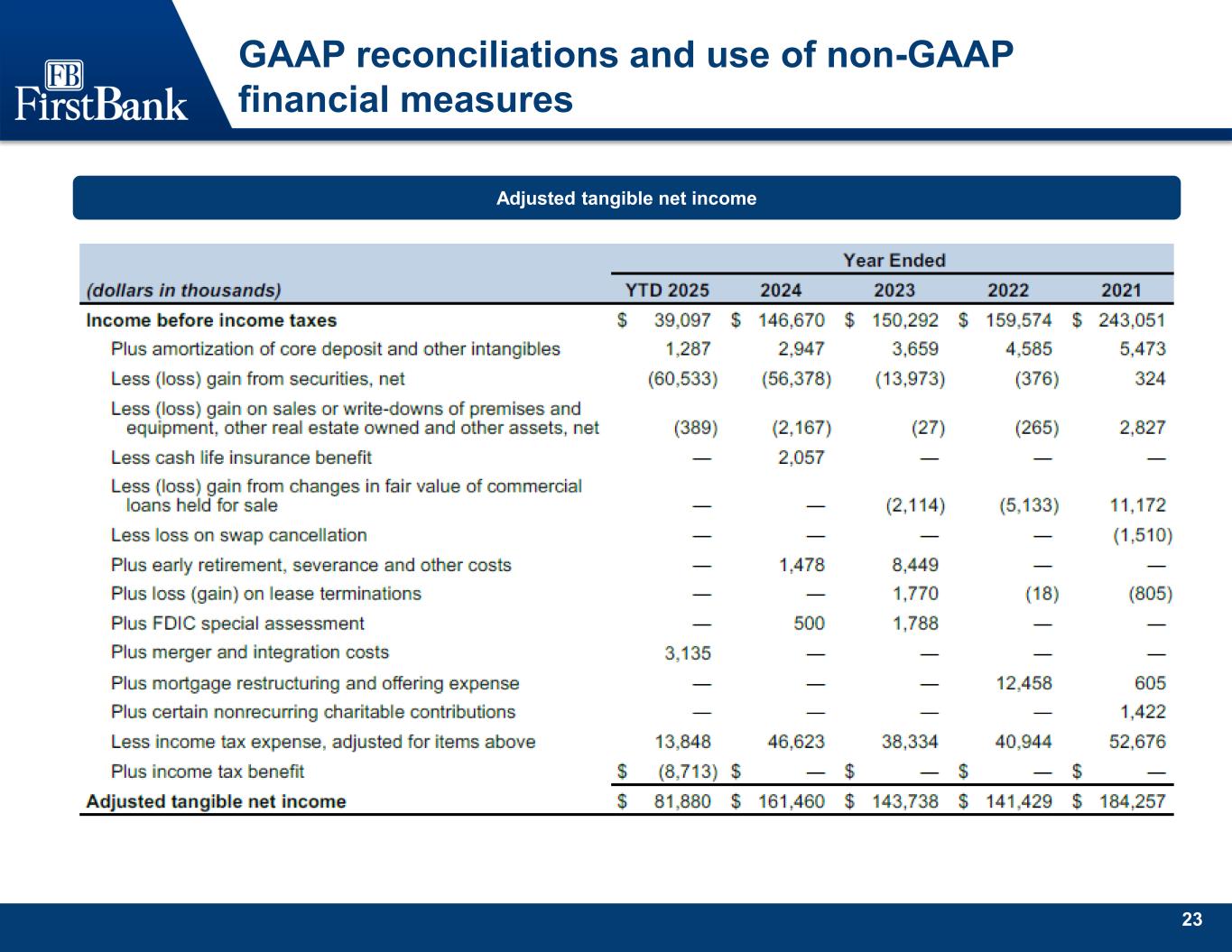
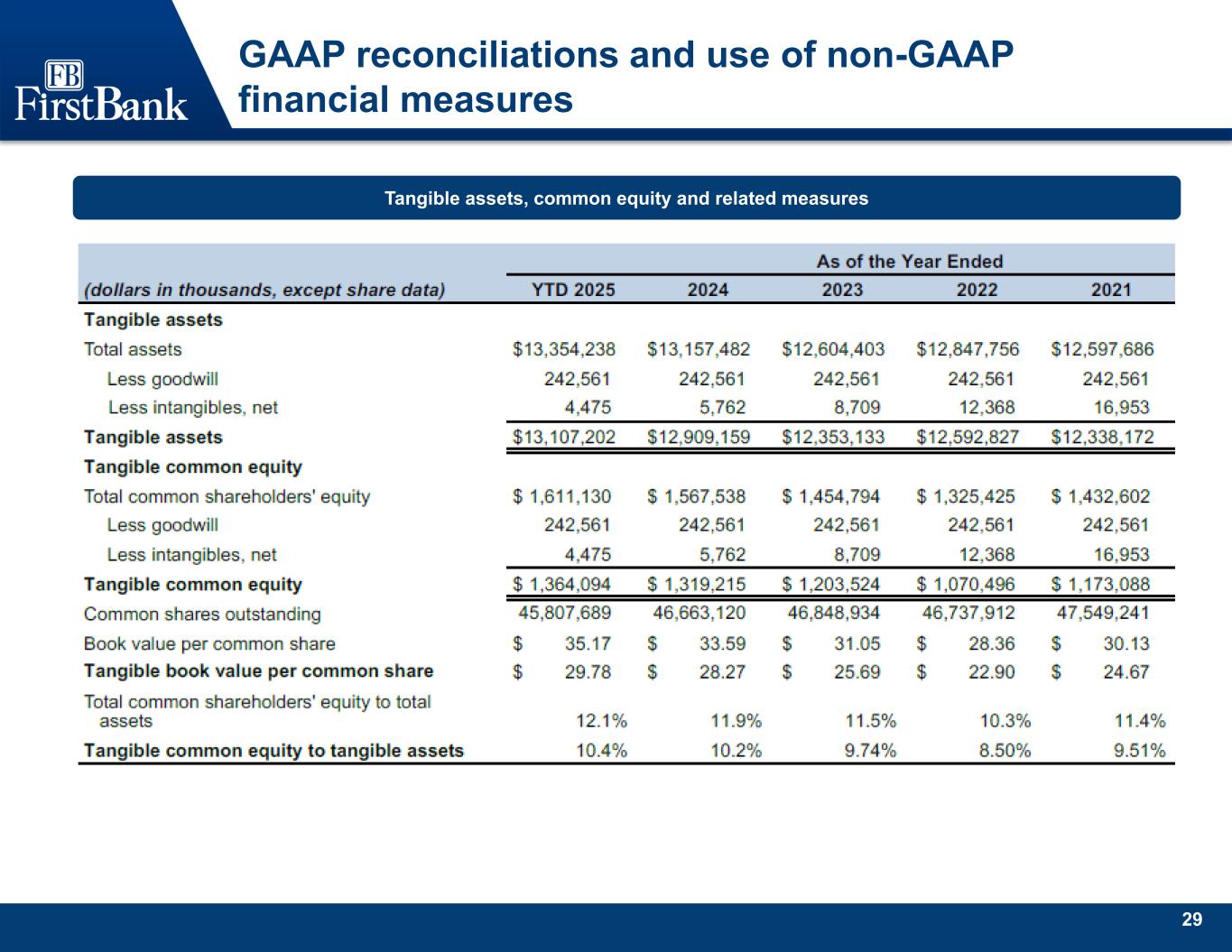
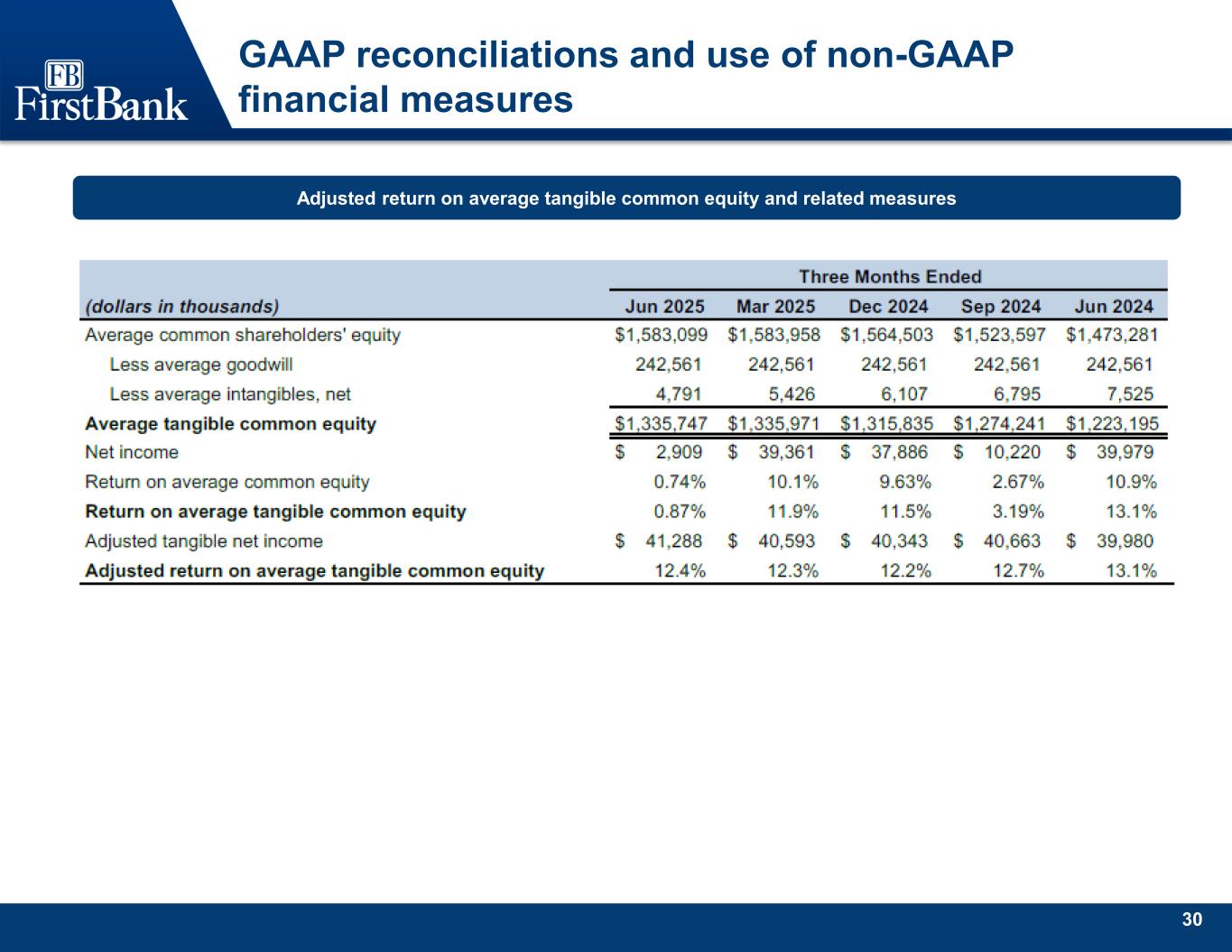
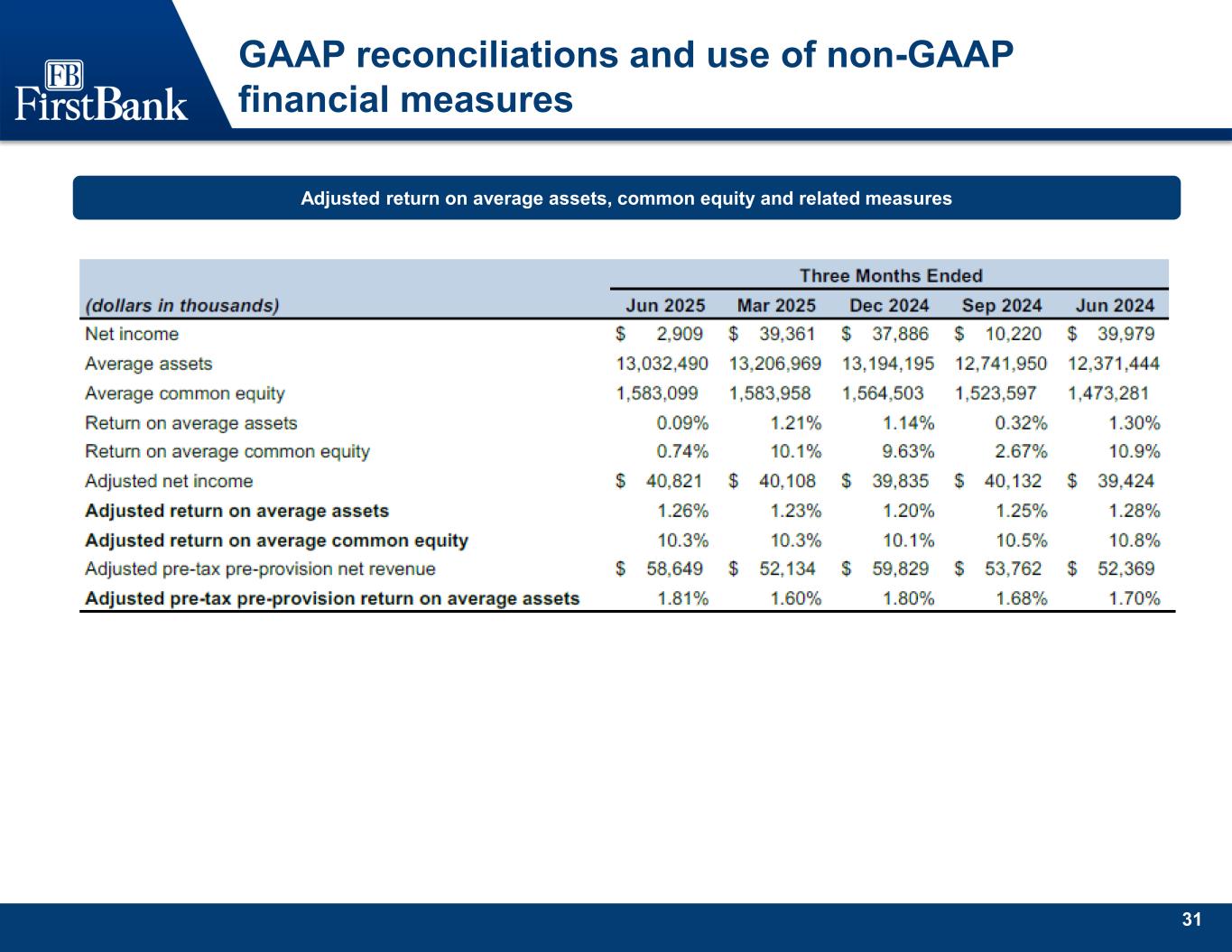
Good morning, Betsy, and thank you to everyone for joining us on the call this morning, and thank you for your interest in FB financial. For the quarter, we reported EPS of $0.06 and adjusted EPS of $0.88. We've grown our tangible book value per share, excluding the impact of AOCI at a compound annual growth rate of 12.2% since our IPO. The second quarter turned out to be a very busy quarter at First Bank and across the industry. At First Bank, the quarter began on the heels of our merger announcement with Southern States on March 31st. The very next day, our teams hit the ground running, and we quickly deployed our integration working group, began the regulatory application process, and started mapping out systems, processes, and people across the two organizations. I'm particularly proud of the teams from both companies in their responsiveness and ability to execute in such a short period of time, in such a short timeframe. Within approximately 90 days, we announced the merger, applied for and received regulatory approval, and legally closed the transaction. In addition to closing the transaction, we put ourselves on track to fully convert systems, rebrand locations in markets, and integrate teams by the end of Q3. During this quarter's execution, we're also very diligent about continuing to update our acquisition playbook, So we're compounding knowledge from each transaction. We're set up very well to continue to pursue opportunities like the one with Southern States. Simultaneously to the efforts on the transaction, April 2nd brought some major news for global economies and markets in our communities. Policy announcements out of Washington, the Obliteration Day, began impacting trade policy and financial markets with the announcement of reciprocal tariffs across a broad range of goods and impacting a host of nations that trade with the U.S. Financial markets saw increased volatility on the news, and we began reviewing and dissecting customer profiles to identify those that might be impacted by these policies. As the U.S. engaged in trade negotiations and made announcements of tariff delays and newly negotiated deals, we saw increased speculation in markets and volatility during the quarter. Today, it seems like the financial markets have digested this activity, along with other geopolitical events, and have become a bit more optimistic on the path forward. And our view matches that optimism. As I stated in the last quarter, whether we're faced with prosperity or uncertainty, we stick to our core beliefs, and our mission remains to build a better future for our customers, associates, communities, and shareholders. History shows that times of uncertainty or change bring the greatest opportunities, some of the greatest opportunities for success. For those that are disciplined and prepared, our teams are smart and capable, our foundation is solid, and our geography is favorable. It's because of these things that we have confidence, regardless of the economic conditions or financial landscape. In the midst of a quarter filled with distractions and heavier workloads across our executive, administration, administrative, and operational teams, at the front line, we were still able to deliver a solid order of operating results. In addition to the activities I've acknowledged, we also executed a significant securities transaction in the quarter, selling approximately $266 million of our investment securities at a pre-tax loss of $60 million. The impact of this transaction seen throughout our gap results for the quarter, where we reported pre-tax, pre-provisioned net revenue of a negative $4.4 million and net income of $2.9 million. On an adjusted basis, which primarily emanates the one-time events like the securities trade, our pre-tax, pre-provisioned net revenue was $58.6 million, which was a TPNR ROA of 1.81% and net income of $40.8 million. During the quarter, we grew both sides of the balance sheet on a period-ending basis. We grew loans at an annualized rate of 4.2 percent and deposits at an annualized rate of 7.2 percent. Growth numbers, while better than most, we consider to be pedestrian, but we continue to be optimistic about the second half of 25 and 2026, given the economic outlook, market strength, and pipeline activity. Our annualized growth through the first six months of the year was 5.6% in loans held for investment and 3.4% in total deposits, and we remain on track for the mid- to high-single-digit growth targets we have for ourselves. As I look forward to the second half of the year and to 2026, I'm very bullish on three key areas for the company, our earnings profile, our growth prospects, and our balance sheet strengths, all of which enable us to grow value for our shareholders. First, on our earnings profile, in the near term, the transaction with Southern States adds immediate scale and accretive earnings to the company. And with our speedy deal execution, we'll begin to see positive impacts from the deal in the third quarter. In the long term, this deal strengthens our franchise in key cities where we operate today, principally Birmingham and Huntsville, while also expanding our franchise contiguously into new markets in Georgia and Alabama. These new markets actually include a number of communities with strong growth prospects benefiting from their adjacency to Metro Atlanta. Additionally, this quarter's securities restructured transaction further adds to our earnings momentum for both the second half of 2025 and 26. Secondly, our growth prospects. Growth is one of the foundations of success in banking, and it broadly comes in two forms, organic and inorganic, and we're bullish on both forms. Organically, our markets continue to present us with opportunities to hire talented professionals and grow our new relationships. We also see opportunities on the horizon to capitalize on market disruption coming from upstream M&A activity across the industry. These put us in an enviable position. Inorganically, we're in a favorable position to see additional opportunities similar to the deal we just closed in July, earlier this month. And finally, we continue to be in a solid position on capital, liquidity, and credit. As a result, we're able to be on our toes and playing offense at a time when competitive market forces remain challenging to navigate for banks, the regulatory environment is reasonable, and bank valuations could get closer to historical levels. We think these conditions present opportunities, and we're excited about those possibilities. With that, I'm now going to turn it over to Michael Mati, our CFO, to provide a deeper look at our financial results for the quarter, as well as commentary around our guidance going into the second half of the year.
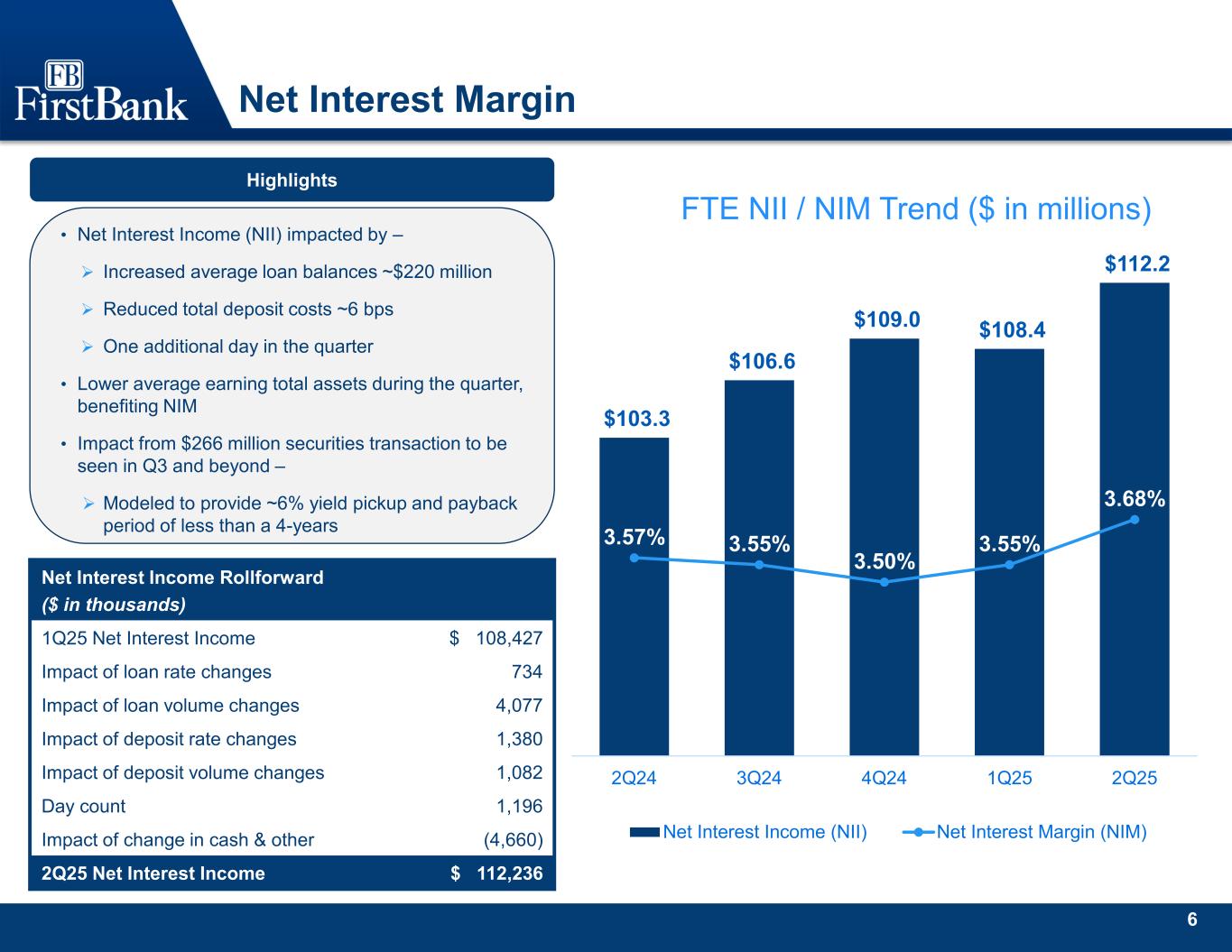
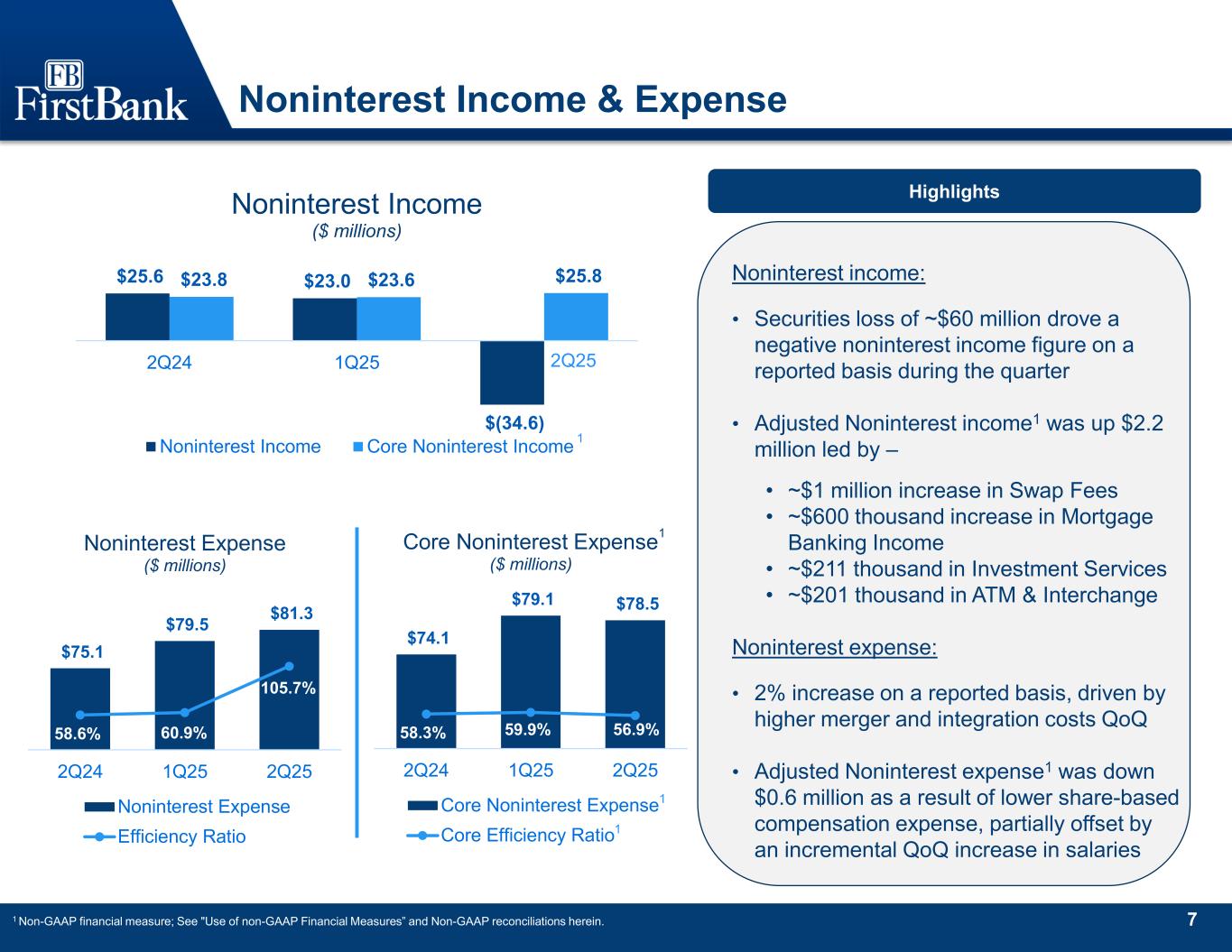
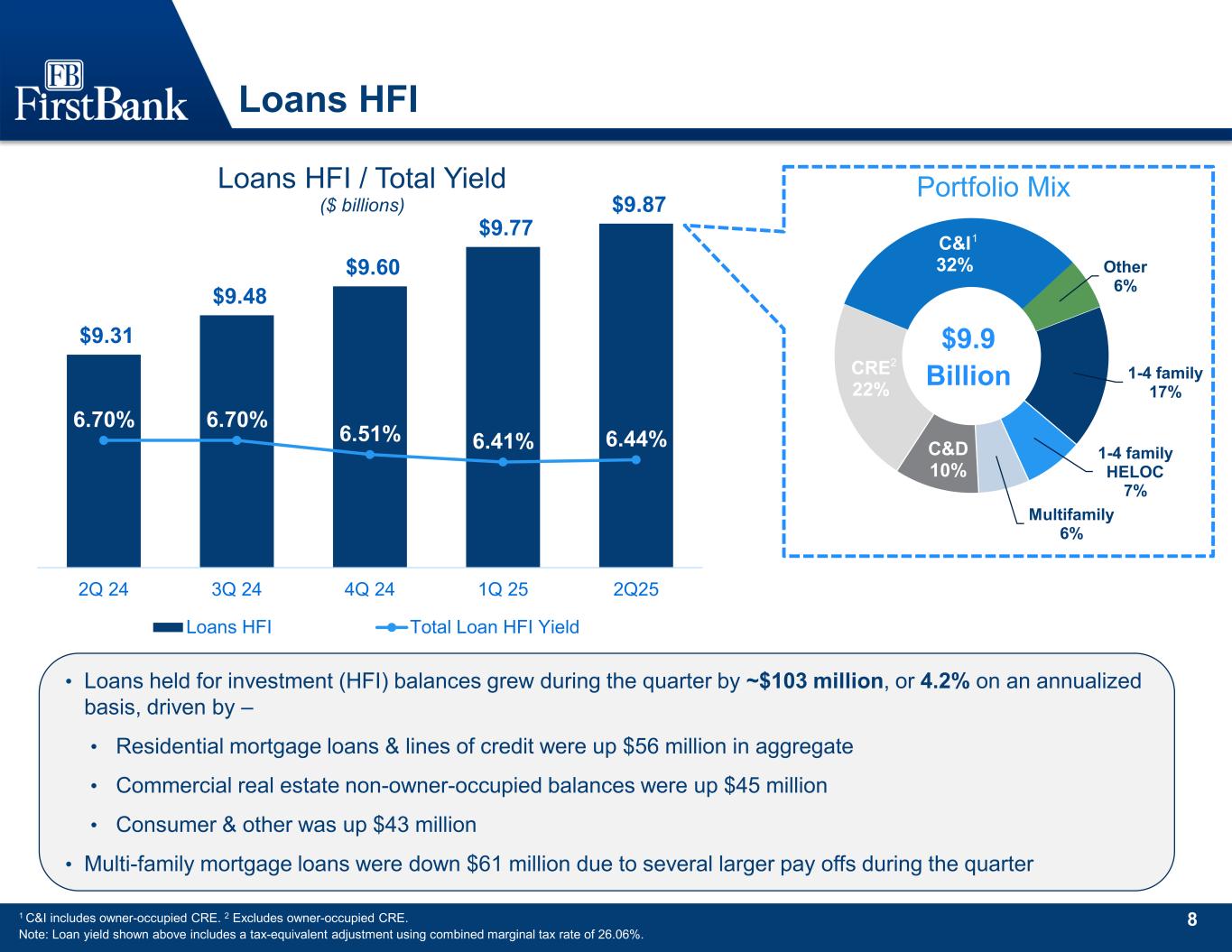
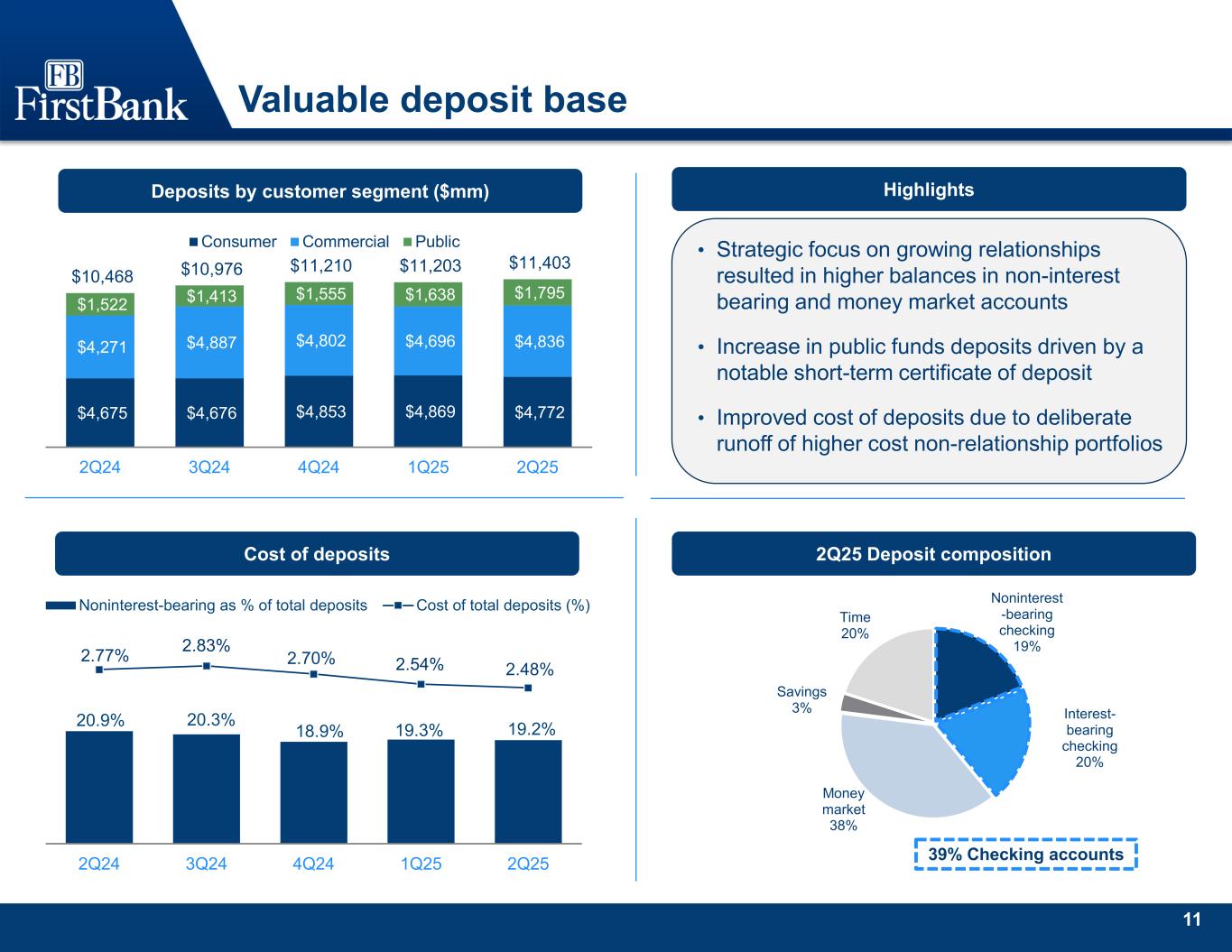
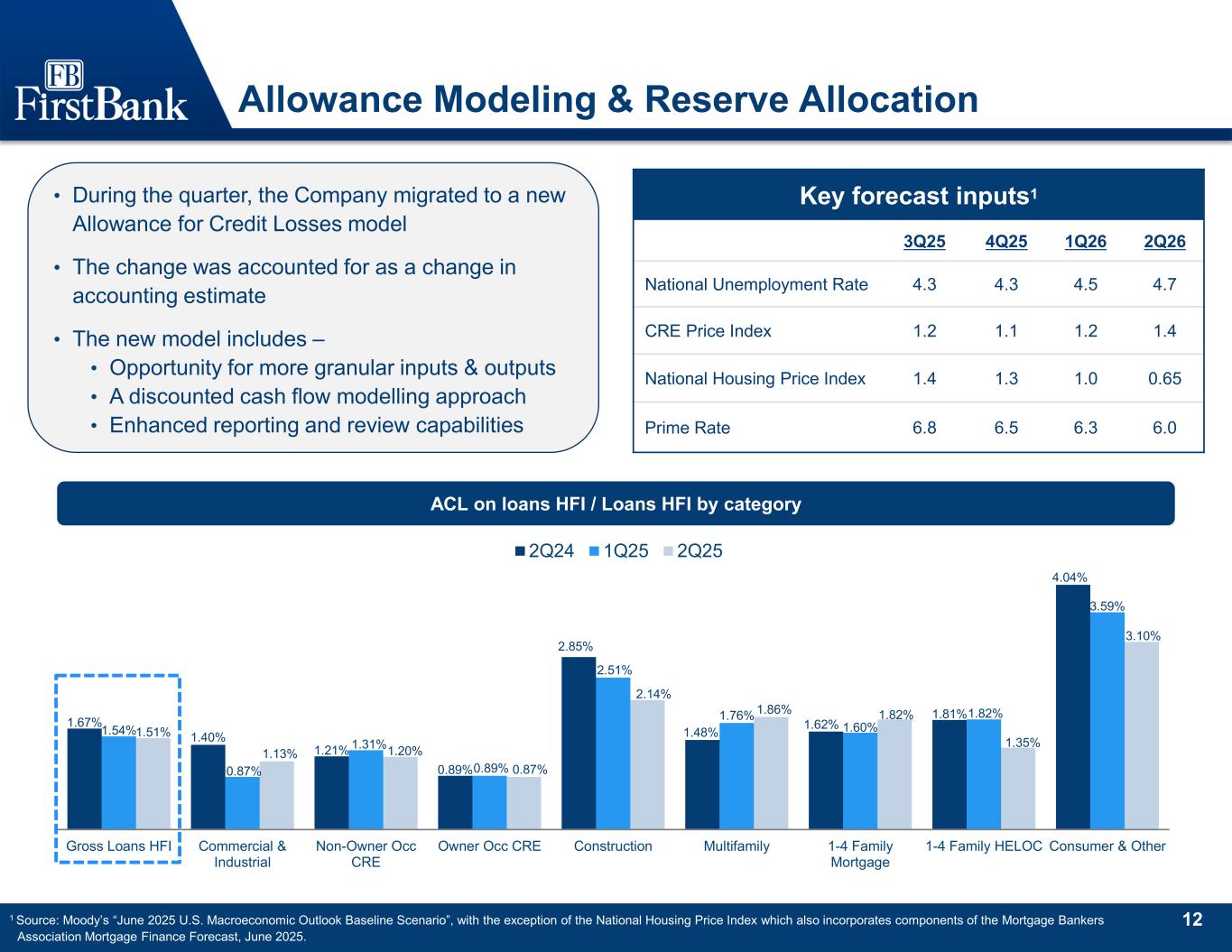
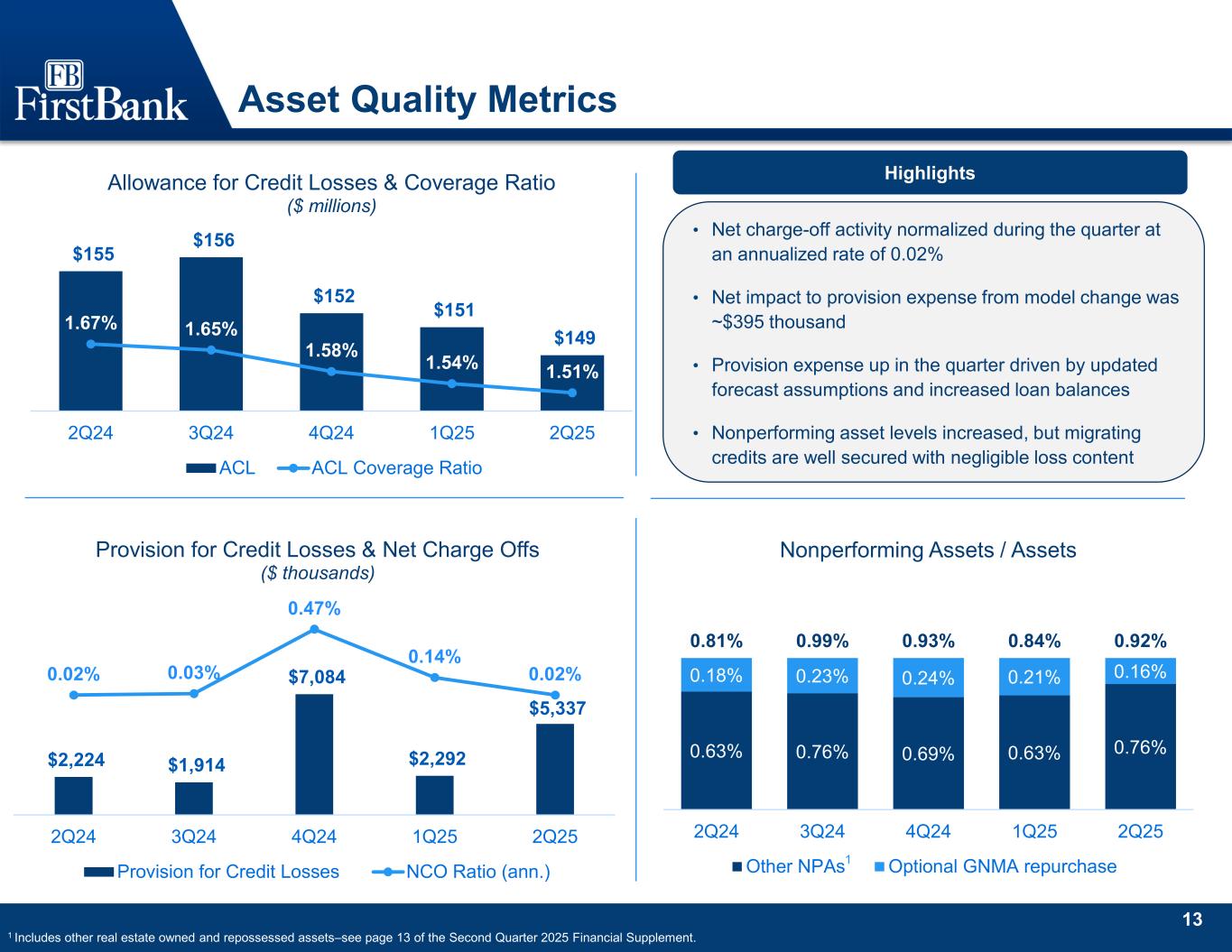
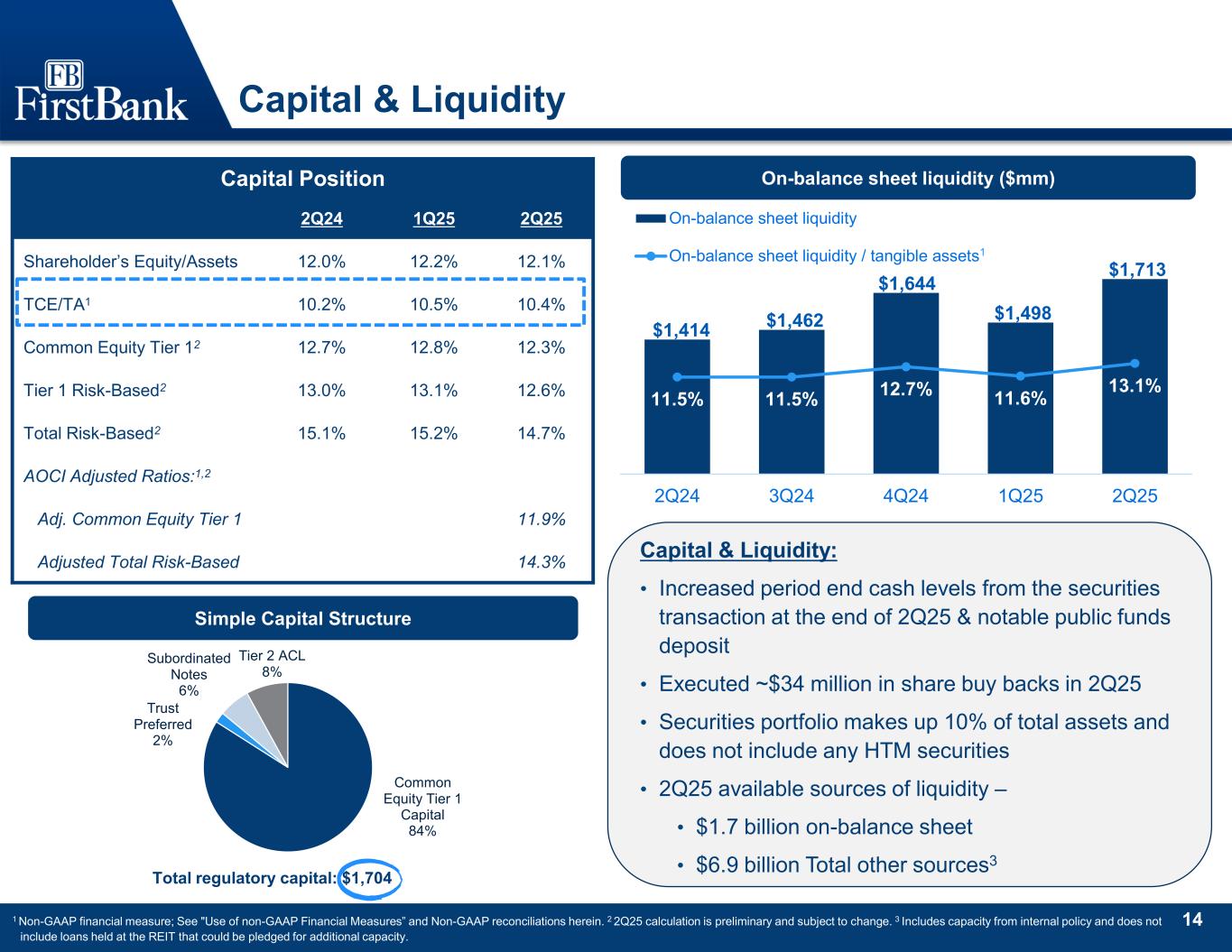
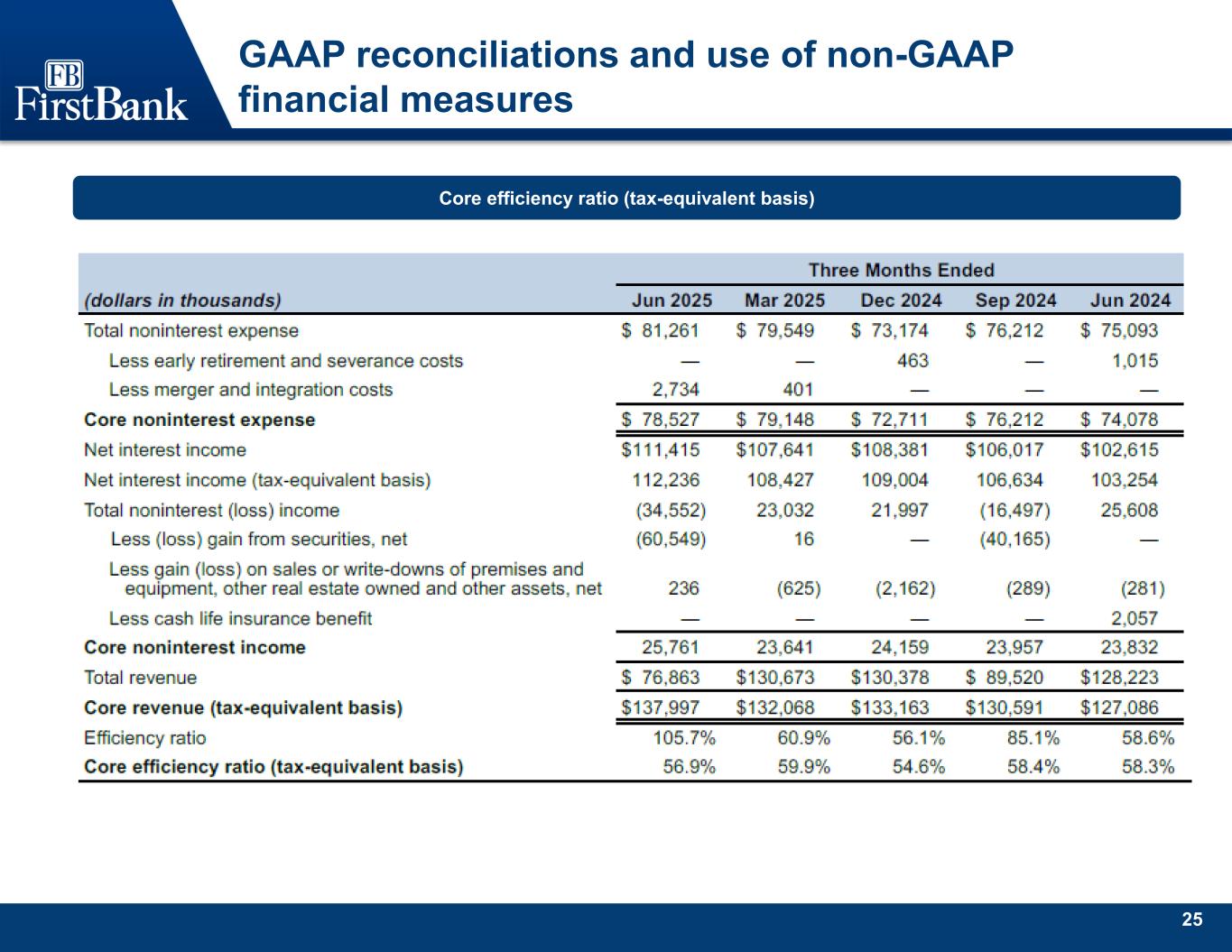
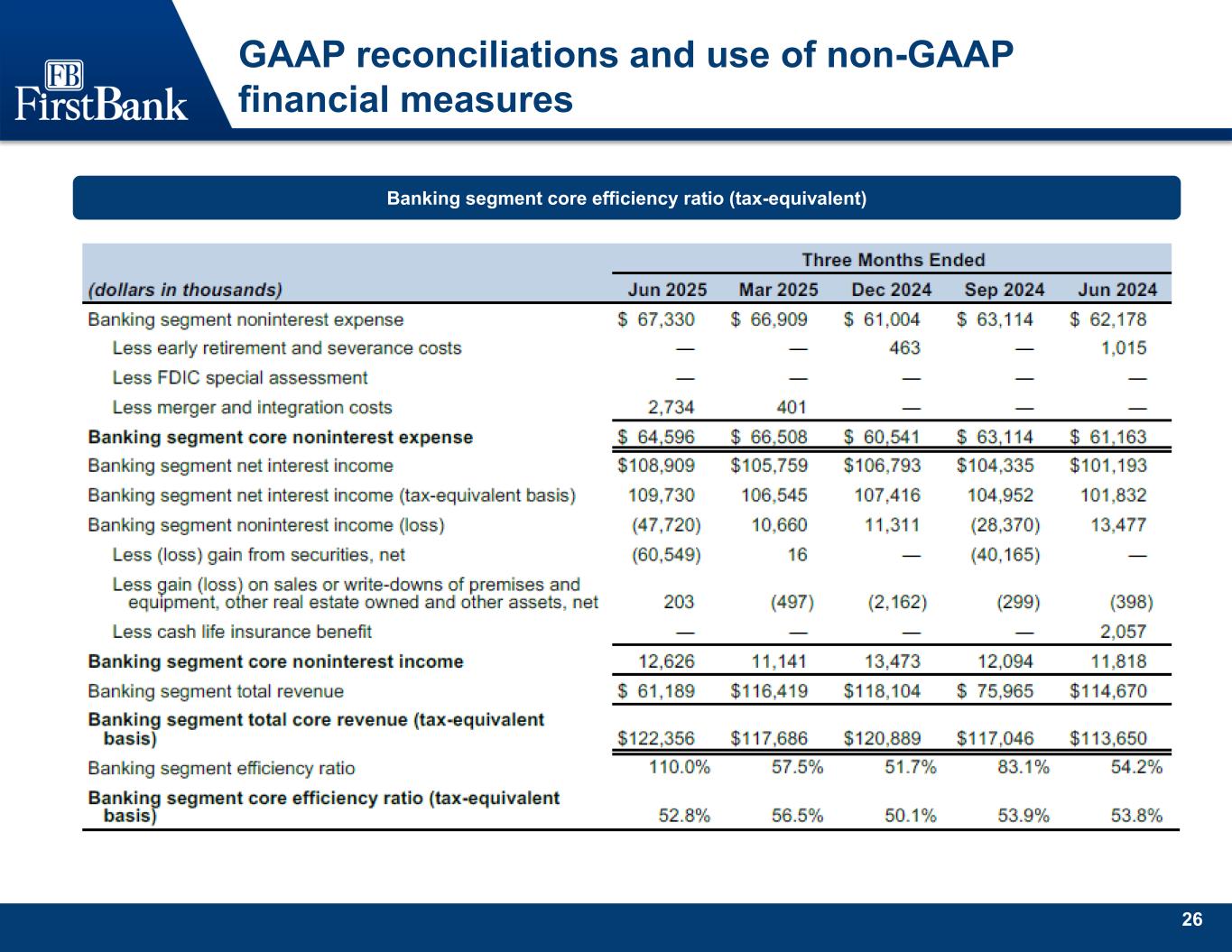
Thank you, Chris, and good morning, everyone. As Chris mentioned, it's been a busy quarter at First Bank. I'll take a few minutes to walk through this quarter's earnings, and then I'll provide some forward-looking commentary on the second half of the year. net income on a reported basis for the quarter was 2.9 million or 40.8 million on an adjusted basis the large the large disparity being the securities loss that chris referenced earlier on net interest income and margin we reported net interest income of 111.4 million which represents a three and a half percent increase from the prior quarter and an 8.6 percent increase from the same quarter last year. On a tax equivalent basis, we expanded our margin by 13 basis points in the quarter from 3.55% to 3.68%. We achieved this through a mix of loan growth and a cost of funds management, namely through managing down higher cost non-relationship based deposits. And on a dollar basis, we also benefited from an additional day in the quarter. In non-interest income, we reported a loss of $34.6 million, and that's a result of the $60 million securities trade. Absent the loss, our core non-interest income was $25.8 million, which represents a 9% increase over last quarter and an 8% increase over the same quarter last year. These gains were led by stronger swap fees, higher mortgage banking revenue, and a number of other increases across our fee categories. On the security sale, we decided to sell a group of securities that were earning 1.6% or so in aggregate. And we'll do a couple of things with those proceeds. First, we'll look to redeem our sub-debt and our trust preferreds in the third quarter. And second, we'll retain the remaining capital and cash as a way to sort of front-run our loan growth needs going into the second half of 2025. Towards the end of June, new loan yields were coming in north of 7%. So all in, we estimate this transaction in our planned deployment of funds to give us a yield pickup of approximately 6% with a payback period of less than four years. Looking at expenses, we reported total non-interestive expense of $81.3 million or $78.5 million on an adjusted basis. Our reported number includes $2.7 million of merger and integration costs, and you can expect to see that line item peak in the third quarter as we've now closed the transaction and will soon convert and integrate Southern states and First Bank systems onto unified platforms. On an adjusted basis, our core efficiency ratio improved to 56.9 percent from last quarter's 59.9 percent, and the same quarter last year where we reported 58.3 percent. Last quarter, we had some seasonal HR-related expenses for stock compensation, and those did not repeat this quarter. This was partially offset by increased salary expense for the first full quarter of annual merit and increased headcount production-based roles within the organization. Moving on to credit, I first want to highlight, and you'll see the mention in our deck, that we migrated to a new allowance model during the quarter. Our new model is designed to increase the granularity of our inputs, improve the precision of our forecast and enhance our ability to review and challenge modeled results. We'll account for this change in estimate, and you can expect to see the disclosures effect in our 10Q filing in August. While there were some movements between the underlying components, in aggregate, the model change had a net impact to the company's reserves of approximately $395,000. Provision expense for the quarter was $5.3 million, which includes the $395,000 for the model change. The remaining amount was driven by loan growth in the quarter, along with updated forecast assumptions in the model. The ending balance of the allowance for loan losses was $149 million, or 1.51%, for our loans help for investment balance, compared to $151 million, or 1.54%, last quarter. The ending balance in the reserve for unfunded commitments was $12.9 million, and the increase was largely driven by the model change. charge-off levels were muted this quarter as we reported 481,000 in net charge-offs or an annualized net charge-off rate of about two basis points non-performing loan balances did increase this quarter as we had three large credits migrate into that classification we've been monitoring these credits for a few quarters now each is well secured and we believe the lost content within each of those to be negligible to close out my commentary on the income statement i'll take a minute to touch on taxes for the quarter. This quarter, our total tax number was a benefit driven by a few key components. First, our reported pre-tax income figure for the quarter was negative as a result of the $60 million securities loss that I previously touched on, which created a tax benefit. Second, we had a one-time tax benefit of approximately $10.7 million in our tax line related to the statute of limitations expiring on an amended tax filing. The filing was handed properly and in a timely manner by the company, but ultimately was not accepted by the IRS, resulting in the return of funds to the company. In total, the return amount was $8.7 million, and additionally, we released $2 million in accrued interest on the previously owed amounts, which we released through tax expense upon the closure of the matter. Looking at the balance sheet, we did see both loan and deposit growth during the quarter on an ending balance basis, but we expected more. As Chris outlined, this quarter did bring unexpected macroeconomic headwinds, and as a result, we did see a number of deals in our pipeline get pushed in the second half of 2025 as many customers took a temporary wait-and-see approach to the uncertain and volatile market conditions. Loan growth in the quarter was concentrated within residential mortgage buckets as one of four family and lines of credit increased $56 million in aggregate, as well as commercial real estate non-owner-occupied balances, which increased $45 million. On deposits, we saw an uptick in both non-interest-bearing and money market accounts as our community and metro banking teams continued to focus on growing relationships across the footprint. And broker deposits were up in the quarter, which was largely a product of our liquidity management strategy. And interest-bearing checking was down as we deliberately managed down a pool of higher-cost non-relationship deposits. Looking at average balances in the quarter, we did see the balance sheet shrink, as we saw a decline in both total assets and total liabilities, primarily due to the timing of balance movements within the quarter. Averages were impacted by the deliberate runoff of higher-cost deposits that I just mentioned, which also drove the average balance decline in cash. Conversely, ending balances were impacted in large part by a large short-term public fund deposit that we retained in cash due to its short-term nature. Also reflecting in cash for the proceeds from the security sale, which we'll deploy in due time, both of those transactions took place right near quarter end. All right, so I'll take a moment to provide some thoughts on full year 25. With the completion of the Southern States merger on July 1st, our view going forward will be on a combined basis, and obviously we'll be working through some combination in the most efficient, effective way possible. So the timing of the leverage we're pulling may vary as we get into conversion. On net interest margin, we expect our net interest margin to be in the $370 to $380 range back half of the year. That includes the reinvestment of proceeds from the security sale this quarter and the incorporation of Southern States balance sheet. The team at Southern States obviously was also very busy in the quarter, and they restructured their investment portfolio using the funds to pay off wholesale and broker deposits and optimizing capital treatment associated with their investment portfolio. The remaining proceeds from the investment sales will be utilized in the combined company to reinvest into loan growth. In non-interest income, we expect to see modest growth across various lines as we remain focused on increasing total relationships. And from a non-interest expense standpoint, we continue to have confidence in our modeled cost saves that equate to approximately 25% of southern states' annual non-interest expense. As a result, our banking non-interest expense should land between $285 million to $295 million for the full year 25. On a combined First Bank and Southern States basis, we anticipate our core banking efficiency ratio to be in the low 50s by the fourth quarter and achieve our targeted 50% efficiency ratio in 2026. Southern State's standalone efficiency ratio is historically lower than ours, and in the near term, we'll also begin to see the benefits of deal synergies that we previously modeled. Simultaneously, in our legacy First Bank franchise, we continue to drive our teams toward internal expense goals, which are more aggressive than some of the outside expectations. expectations. Acknowledging that we did have extra noise in our tax line item this quarter, I want to reiterate a forecasted effective tax rate in that 21 to 23 percent range for the remainder of the year. On the balance sheet, we'll continue to, with our strategy of working down non-core high-cost deposits, which will weigh on our average earning assets, and by year end, we'll be offset by core loan and deposit growth. And then finally, on capital and liquidity, We'll continue to deploy our excess capital in meaningful ways to drive shareholder value while continuing to maintain a safe and sound position for our company. And with that, I will pass the call back to Chris.
Thanks for the call, Michael. And as you just heard, we did have a lot of moving pieces in the quarter. Even with the added layers of various one-time items, our team was able to deliver strong core earnings all while preparing for the closing of a large transaction. I'm proud of the way our team was able to walk and chew gum this quarter, and you'll continue to see that versatility from our team if we move forward. Thank you again for your interest in FB Financial and Operator. At this time, we open up to questions.
We will now begin the question and answer session. To ask a question, you may press star then 1 on your touchtone phone. If you are using a speakerphone, please pick up your handset before pressing the keys. If at any time your question has been addressed and you would like to withdraw your question, please press star, then two. At this time, we will pause momentarily to assemble our roster. The first question today comes from Catherine Mueller with KBW. Please go ahead.
Thanks. Good morning. Good morning, Catherine. My first question was just to circle back on your margin guide of the $370 to $380. So just kind of thinking about how I model the balance sheet going into next quarter. So it looks like you said from SSBK you've restructured or sold most of that bond book. And then, of course, we'll have the reduction in securities from your own restructuring this quarter. So is it fair to say in terms of bonds, we shouldn't bring over basically any securities from SSBK and then model kind of reduction from the bond sale, and then all those proceeds are going to lower borrowings and then up until loan growth? Is that an appropriate way to think about that?
Yeah, that's right, Catherine. And we're bringing over virtually nothing from the investment portfolio other than the small slug of held immaturity that we're moving to AFS. Keep in mind, their investment portfolio had a yield of around 440, which is basically where it's sitting in cash. So it's much more about paying down, brokered. The risk weighting on the investment portfolio was a little bit higher than we typically have at FBK. And so there was some capital optimization. And then over the back half of the year, pending the timing on loan growth is where we'll deploy the rest of those funds and ours.
Okay, that's great. And then on loan growth, can you talk a little bit about – you reiterated the mid to high single-digit growth. Can you just talk a little bit about the pipeline? And I know, Chris, you mentioned a few credits that you thought would close in the second quarter but got pushed to the back half of the year. Are these still credits that you think we'll fund as just kind of a timing thing? Or just love to hear just kind of your commentary on what your clients are doing right now.
Yeah. So we really haven't changed our outlook from conversations that we've had with either on previous calls or with different times we've met with investors during investor meetings. We still think we're kind of a mid to high single digit. You know, quarters, as you all know, I mean, quarters come with a cutoff. And on any given day, if you cut it off with a different, you know, five days later, five days earlier, the numbers are going to look different when you're compared to period ending balances. So we did have a few things. We had, you know, a payoff or two in the quarter that were high, not unanticipated. Again, you're just not sure when they're going to come, and they're pretty big dollars. But then also, so that's not unusual in the same way on some fundings. So we did see a little bit of activity push where folks are just not quite as anxious to close it as maybe they would have been 12 months ago, or maybe not 12 months ago is a bad, let me put it this way, in December or January. And so they don't mind if it delays a little bit. But in general, we're still seeing good customer activity. customers feel good about, again, generalizing, generally feel good about continuing to move forward with business and projects.
Yeah, Captain, this is Travis. I would agree with Chris. And what I would say to supplement that is our activities are actually, were very strong in the second quarter as far as new loan originations. What we didn't anticipate was some of these payoffs that Chris alluded to. We expected them eventually, but not in the second quarter. And our pipeline remains strong. What we can't forecast and what we're trying to just understand is the payoff is going to continue at a more rapid pace than they have historically.
Great. And that was encouraging, Michael, that you said that you're still getting new loan yields over 7%. That was that number you gave?
Yeah, that's right. And we actually see them tick up slightly higher in July. So, you know, the yield curve is an interesting dynamic. It changes, as you know, every 30 seconds. So it doesn't look like a whole lot of relief for longer term rates. We'll see what happens on the short end. But the team's doing a good job. And of course, the Southern States team traditionally has had a higher yielding portfolio as well. And so we're pretty optimistic.
Great. Great quarter. Thanks for the commentary.
The next question comes from Brett Rabbitin with Hofty Group. Please go ahead.
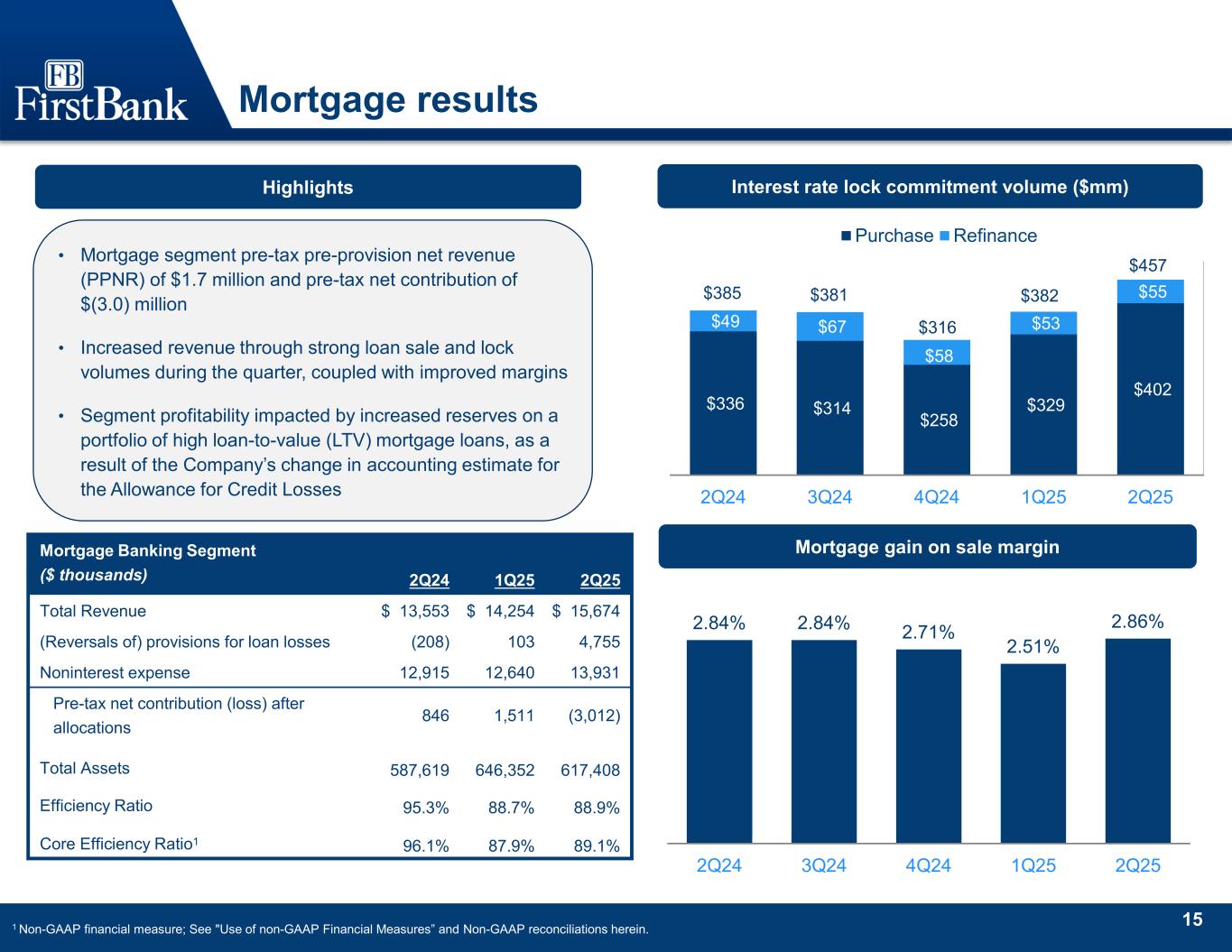
Hey, guys. Good morning. I wanted to start on the mortgage banking numbers and the higher provision this quarter and the comment in the slide deck about some higher LTVs making a provision for those. Can you elaborate a little bit further on the provision for mortgage in 2Q? And just, you know, we also wanted to hear if, you know, that change in the ACL, if that was driven by anything in particular.
Yeah, Brett, good pick up there. So the beauty of the new model, right, is we get more granular in some of our loan portfolio. that the previous version, right, economic model through Moody's versus where Cabrigo model is now discounted cash flow. And so we split out our higher LTV residential mortgage portfolio from our traditional one to four in the modeling. And so a couple of things, right, this quarter, if you looked at, we still use the Moody's forecast plus Bloomberg plus a couple others, MBA. And you see home price appreciations kind of flatlined as we're kind of experiencing. You know, I know you're here. You see that across the country, home price flatlined. And then then the unemployment forecast ticked up kind of really the back half of the year. And so those are two main drivers around a high LTV portfolio and that you can see losses start to escalate. And so that's what that additional reserve was in mortgage banking. You know, we want our mortgage team focused on pre-provision net net revenue and profitable operating business. Obviously, you don't want to put a bunch of loans on the books with with lost content. But these are older 100 percent loans that we did in the last three to four years. You aggregate every time. So that was kind of the modeling difference there. We didn't add a bunch of 100% loans in the second quarter that created a lot of reserve.
Okay, that's helpful. And then, Chris, I assume you anticipated this question, but you sound pretty optimistic on continued activity, you know, in bank land for M&A. You know, any updated thoughts maybe on how you see the environment playing out for you guys? And, you know, you're going to be closer to $20 billion, close to SSPK, you know, just trying to frame the size spectrum for what you might be interested in from here.
Yeah. Yeah, Brett, I can give you just a few thoughts on kind of where we see it going from here. Sure. You know, there was a transaction announced yesterday, and I think you're going to see a lot of activity across the deal spectrum. You know, there was a Category 4 bank, and so, you know, I think you're going to see a lot of activity across the deal spectrum. I think that's positive for the industry. I think it's positive for multiples. And so then you come down to, you know, what does that mean for us? I think a couple of things. You referenced $20 billion. The transaction we just did with Southern States I think is important because it gives us some more scale post-$10 billion. So we felt like we needed to get to $16, $17 to really begin to get the returns that keep us happy with ourselves and generally keep shareholders happy as well. So if you look at and forecast our numbers, you'll see that now we're in an ROA that's going to be somewhere in the, we'll call it the one four-ish range. And so that feels pretty good. And so we think, you know, $20 billion plus, there's a lot of room to run. And so we think we've got a lot of potential to do transactions like we just did. So I'll say in the $3 billion to $5, $6 billion, $7 billion range in terms of total assets, there are a lot more opportunities in the $3 billion range than there are in the $6 or $7. And so I'd say there's probably going to be more opportunities and probably more activity both for us and the industry there. And then, you know, if bigger things come along, then we, you know, we're all obligated to think about those and we think about how we how we move forward with with an opportunity that that's, you know, that's north of that. But then the part I would add that is maybe a little more specific to First Bank is we do think, particularly just in our market, we're well-situated to take advantage of upstream activities that could occur. And so as the really larger banks continue to shape their strategy and make moves, we think we're sitting in a great position to be able to take advantage of that organically. So again, that being another tailwind. So that's where we'll be focusing is on making sure we're prepared for the organic opportunities that come from disruption upstream and continuing to do things similar to what we did with southern states downstream.
Okay. That's helpful. If I could sneak in one last one on a related topic, you know, Any update on what you guys are doing organically from a hiring perspective, just what quarterly trends might have been in terms of pickups of banking associates?
Yeah. In terms of the actual changes in banking associates, I'll say this. I'm not sure Travis, I'm going to let Travis and Michael comment on the numbers there. But we continue recruiting efforts, again, thinking about potential disruption coming down the line. We just continue to try to make sure that we are the right landing place. Again, in a lot of our markets, we're large enough to have a large balance sheet to be able to accommodate really successful, experienced bankers that have larger clients. but we're also nimble enough to – and with our community focus, we're able to actually take advantage from some of the smaller folks in our PRP, too.
Yeah, and just from a pure numbers standpoint, Brett, we hired four new revenue producers in the second quarter.
Okay. Great. Appreciate all the color, guys. Thanks, Brett.
The next question comes from Russell Gunther with Stephen. Please go ahead.
Hey, good morning, guys. Hey, Russell. Maybe just starting on the margin would be helpful to get a sense as to the puts and takes between the low and kind of high end of that guide. Helpful to get a sense of whether you guys are contemplating any rate cuts in there, as well as the ability to continue to lower deposit costs from here should those rate cuts not materialize. And then, Michael, any thoughts on sort of where the securities yield may kick things off in 3Q, given the actions taken both here and at SSP10?
So we've been pretty steadfast in our rate forecast from a Fed funds perspective. We've had two in all year. They've been in September and December. so we we haven't changed that mainly because yeah i'm not smart enough to know when they're actually going to come so that's that's where we've been and yeah who knows what actually happens there i think uh you know we'll we'll continue to ebb and flow as the as the winds blow i guess externally um that being said our you know we do have index deposits to fed funds So, you know, the day that those go, that they do get cut, if they do get cut, you know, we would see roughly 35, 40 percent of our deposits repriced lower. So and that's that's consistent with where we have been in the past. We are seeing some higher costs. You know, there's still people out there earning high cost deposits. And so, you know, we're still trying to grow. So you can see some pressure on margin. As our loan growth accelerates, you know, typically when you're dealing with what we call take-it business, you've got to go take it from somebody else. You know, part of it is you pay up a little bit while you earn their operating accounts. And so, you know, a team's doing that, and we're working hard at it. So that's why there's probably a broad range in NIM guidance, plus you layer on both companies in the balance sheet, and we work through organizing that in the most efficient way possible. and then the guidance on the investment portfolio we're still we're still working through a good bit of that the transaction happened really late in the quarter and so how we reinvest what that looks like you know we're going to go mostly into loans but paying off sub debt and trust preferreds will be the focus in the short term. And then really you're taking, on our side, $266 million at roughly 1.6 percent, just straight out of the number of both the numerator and denominator, I guess the denominator. So you'll see a subsequent yield increase incremental on that side.
Thank you. Very helpful. And then you just mentioned kind of deposit cost competition as loan growth accelerates. You guys are talking about kind of mid to high single digits, but I also think characterized this quarter's result as pedestrian. So I guess how should we think about you guys kind of bigger picture going forward? Is it mid to high on this size, you know, of a balance sheet going forward? Can you sustainably be in the high single digits with some clarity on the macro front? Just trying to get a sense for a bigger picture, how are you thinking about the growth rate going forward?
Yeah, mid to high is how we continue to feel good about that going forward. uh keep in mind we got a lot of adjustments going on here uh with taking in southern states and for instance uh you know their second quarter uh their their loan growth rate was approximately 10 percent on an annualized basis uh their deposit growth rate x uh brokered was just a little high of that high after approximately 12 percent and so again we we're figuring that in we're looking at our historical growth growth rate we're trying to factor in unmoans we're looking at our pipelines and so we do actually feel pretty good about that and then as we go forward and we think about uh you know markets and economies uh we we think that's uh uh pretty good even even moving past the next couple of quarters in terms of what we anticipate that's That's the bar we've set for ourselves today, and frankly, we're pretty optimistic about that. I guess I'm optimistic and confident about that, and then there are times when we hope for it to be even higher. There are some times when things get really slow where it could be lower, but we think we can do that, Russell, longer term. even with the larger balance sheet. Okay. Yeah, understood.
And then just last one for me. Anything to read into kind of putting capital to work with the securities transaction and a bit of buyback this quarter in terms of when or where the pace of M&A discussion stands for you guys and when we might see another transaction out of FPK?
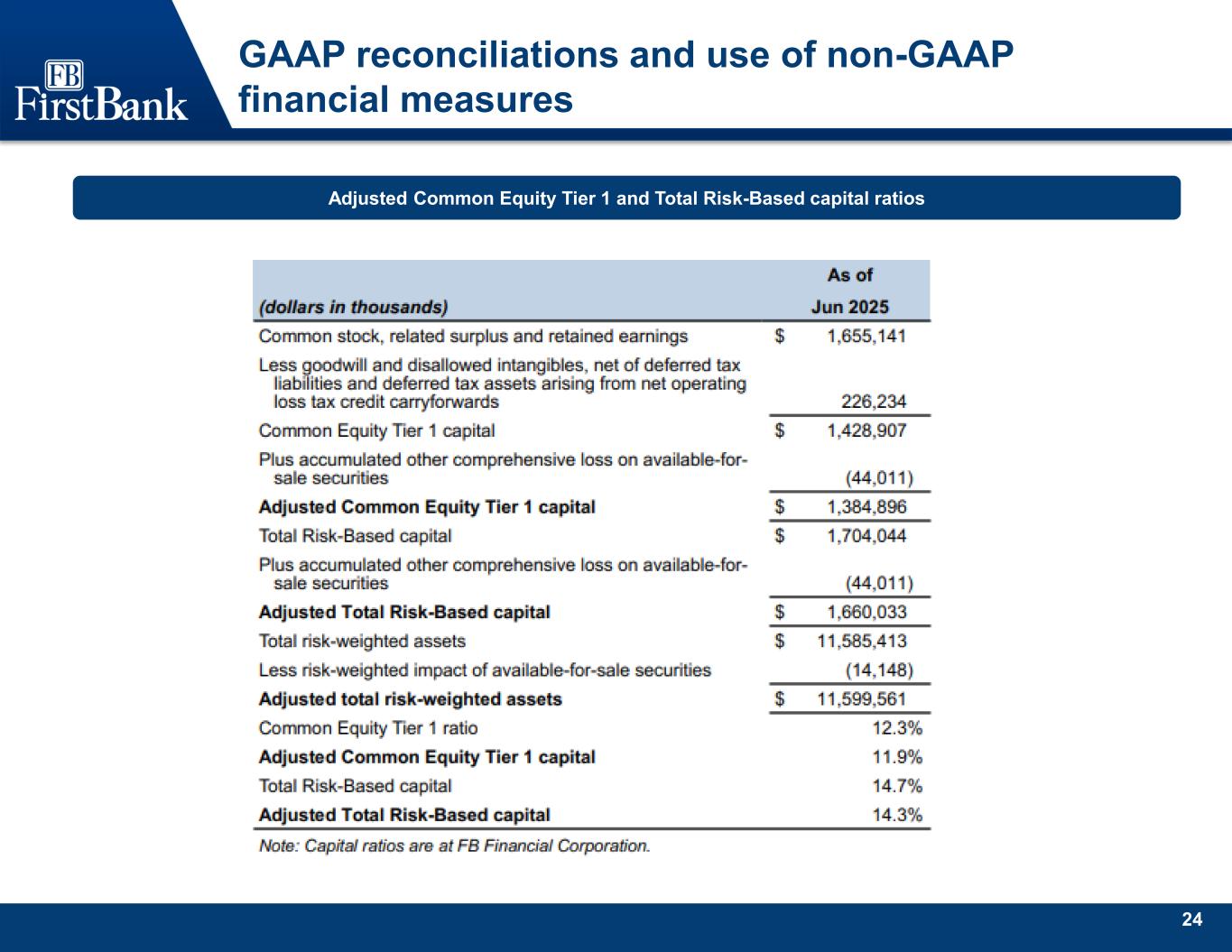
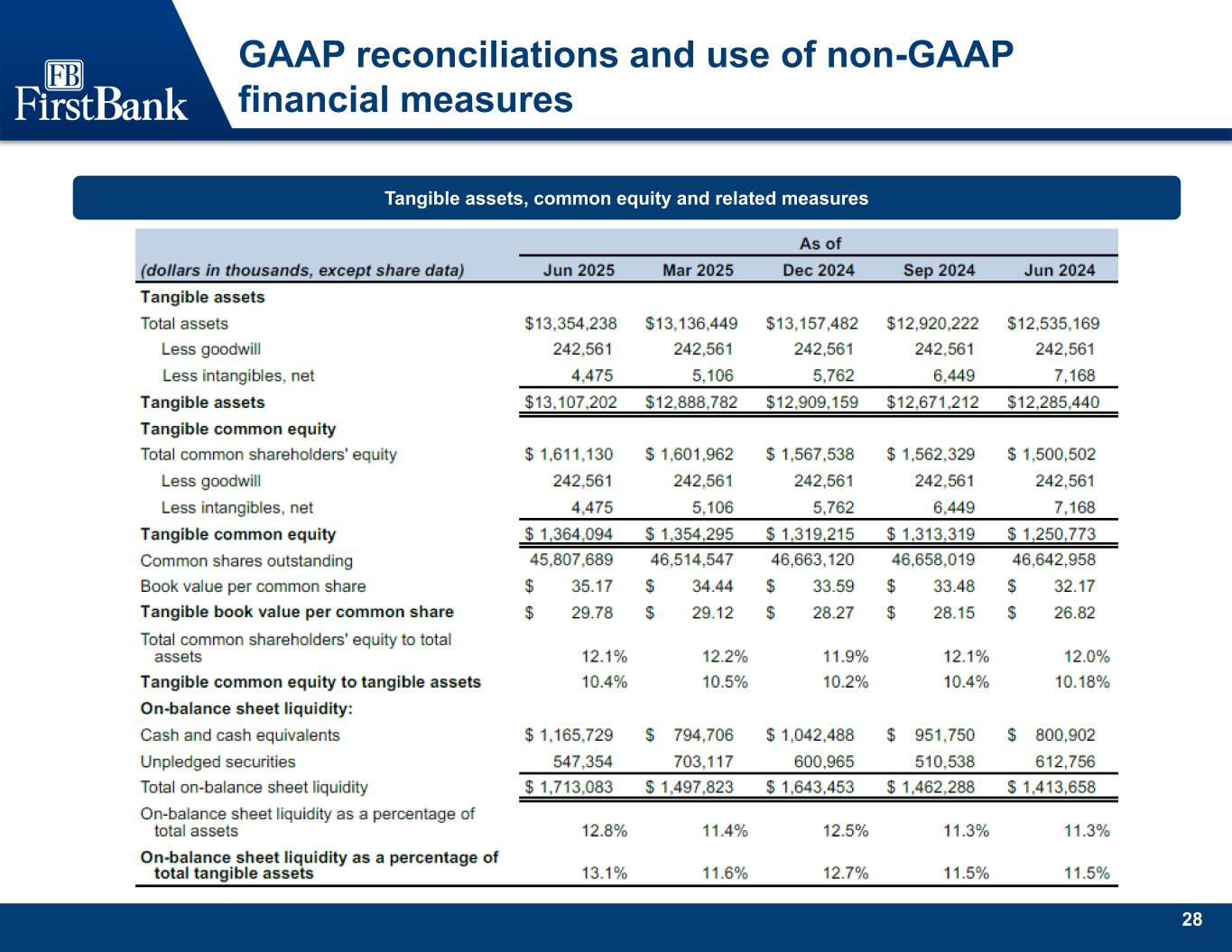
No, I didn't say not really. If you look at our capital ratios, they're still strong. Our CET1 is still going to be 12% plus, and our TCETA is, again, going to be really strong. And so we feel really good about where we sit moving forward if opportunities pop up for us.
Great. All right, guys, that's it for me. Thanks for taking my questions.
The next question comes from Stephen Scouten with Piper Sandler. Please go ahead.
Hey, good morning, everyone. I guess I wanted to follow back around kind of on this M&A and potential upstream M&A activity discussion. And I'm just kind of curious if you have, like, a real preference to that end. Like, you guys have managed expenses phenomenally well, but if it was, you know, team liftouts and other things from upstream activity, obviously there would be an expense build. But just kind of wondering how you're thinking about the balance of that versus through whole bank M&A and if you would have a preference and if there would be any kind of limitations on how much activity, I guess, you would pursue if there was upstream M&A in your markets.
Yeah, so no preference. You know, no preference. We take it as it comes, and we don't make those calls, so no preference there. But I would say this, whether it's – part of the reason we're shy about it is whether it's the really largest banks, you know, they're all in our markets. And so whether it's the really largest banks, whether it could be activity, whether it's the banks that are our peers that we – or I'll say the super regionals or, you know, our peers in the regional space, uh we just feel like we're probably in a great position for any of those and and then in terms of the magnitude we think actually that could be uh the magnitude could be significant i mean we think about our our capital position and we look at and of course when we think about an emanate transaction we're generally going to be issuing shares with that and so we we we think we have uh right good capital for most of the things that would pop up we think we have have enough capital for that you know then the one thing that should challenge that over time is we could get enough movement from those type transactions that that you know it does begin to uh in in in an ideal world where there's a lot of movement uh that's that's where the that we think about how we how we spread the capital and uh we would love to have that challenge and uh and we uh aren't sure if you if you roll the calendar forward for the next let's say three four five years we we again that's where we think we have a lot of wind that wind in our back uh and that's where we had an earlier question about size and 20 million that's where we think we're actually probably at an ideal size because we think we can run on our platform from 20 million for a long time in terms of asset 20, I'm sorry, 20 billion. We think we can go for a long time and just continue to add and build scale and improve our return metrics. So that's how we're thinking about it.
Yeah, that makes a lot of sense. And then going kind of digging into the loan growth in the quarter, can you give any color around actual originations maybe versus previous quarters?
Because there was obviously a higher provision related to unfunded, and I'm not sure if that had to do more with the CECL methodology change or if there was an uptick in unfunded loan production and just kind of if that is any part of the longer-term confidence that you guys have in gross. the production was really not different in terms of where it came from uh in in in product type so it continues to be spread across the board that's a reason for optimism is we we're not reliant on any particular product type uh so it's it's spread uh we continue to not be overly reliant on uh loan production and cre uh so it's coming i've said across the board That's a piece of it, but it's not the piece. And in terms of the impact.
Yeah, Stephen, the unfunded. Yeah, it was model change, assumption updates. You know, I mentioned home price appreciation and then unemployment earlier. Those had impacts on kind of our draw assumptions, I would say, on HELOCs and C&I. You know, if you were to see a slowdown in the economy, you have these unfunded lines that may increase and then turn into actually funded. And so there's a little bit larger reserve. But also it gets back to the methodology change and the granularity that we're able to really get at. So really improved methodology, and we're pretty excited about it.
Got it. That's really helpful. And then just last point of clarity around the multifamily lending. I know you guys noted there were several large payoffs. What are you seeing in that space? And it's not a big part of your loan book, but what are you seeing in terms of new product demand in that space and where you think that book of business could go?
Yeah, good morning. This is Travis. We're still seeing quite a bit of demand, but nothing like we did two, three, four years ago. It seemed to have slowed down with a lot of new inventory coming in a lot of the markets in which we operate. But we have a handful of really, in our view, really top-notch apartment operators that we continue to see new opportunities with and we will continue to grow with them. And that's the ones, a couple of them, are the ones that we did see payoffs and we fully expect to do another project with them as they see the opportunities arise.
Got it. Extremely helpful. Thanks for all the color. Appreciate the time.
The next question comes from Steve Moss with Raymond James. Please go ahead.
All of my questions have been asked and answered. Thanks, Dave.
As a reminder, if you would like to ask a question, please press star, then one, to join the question queue. The next question comes from Christopher Moranek with Chani. Please go ahead.
Hey, good morning. Chris and Michael, I wanted to ask about the growth and the unfunded commitments, particularly in CNI. Is that a good alternative angle to look at kind of new growth coming down the road and obviously just the timing differences of what didn't hit the balance sheet this quarter?
Yeah, and Chris, we couldn't quite pick it up, but I think you were asking about the potential for growth going forward coming from our unfunded commitments on C&I. And that is a potential because we continue to be not at terribly high levels of funding there. If you look at where we are historically, we haven't, frankly, picked up that much going all the way back to post-COVID in terms of seeing those really, on a utilization statistic, they haven't picked up that much. And so we do think that that could be – we're not heavily relying on it, but I think, again, when we – you know, if you pick up optimism, that's one of a dozen or more factors that we think, huh, you know, this could help us going forward. There's going to be some tailwind for us going forward.
Yeah, Chris, interesting. You know, we actually had board line decreases that increases during the quarter. We're not new origination decreases, but just people paying down. We're in the mid-30s on line utilization. Pre-COVID, we'd have been upper 40s. So even going back three or four years, we're in the low to mid-40s. So, yeah, definitely an opportunity there. We think about that when we think about our loan growth guides. And so there's certainly opportunity.
Great. And then just a quick follow-up on kind of logistics on sort of how you, you know, queued up the systems conversion that's pending. I'm just curious if that calendar is going to get more busy as you look beyond, you know, this transaction and, you know, other opportunities in the future. Is that a factor, as you consider other M&A?
Yeah, it's always a factor. It's not an e-factor, but it's a factor. And that's why I made, in the prepared comments, I made note that, you know, we would handle that in Q3. And so, we were doing that during the quarter. So, by the end of the quarter, we'll be fully converted in Q3. And so, those are important steps for us. And so we try to really think of those ahead of time. Matter of fact, we typically have weekends planned out before we even have transactions sometimes because we would like to be prepared for that. And so we, it is a factor, it's not the factor, but having that process go smoothly, efficiently, and as quickly as possible is critical. It's a critical component of the success of a transaction. And so I've also made reference to how the teams are really busy working towards that, particularly our operational teams, our administrative teams are really busy working towards that. And so that'll be a continued as we go forward. It is not a limiting factor on us moving forward right now because we're able to get it done quickly with the strong teams that we have.
Great. Thanks again for hosting us this morning.
All right. Thanks, Chris.
This concludes our question and answer session. I would like to turn the conference back over for any closing remarks.
Okay. Thank you all very much. We really appreciate the questions. We appreciate you joining us and hope everybody has a great earnings season.
The conference is now concluded. Thank you for attending today's presentation. You may now disconnect.