Franklin BSP Realty Trust, Inc. Q4 FY2025 Earnings Call
Franklin BSP Realty Trust, Inc. (FBRT)
Call artefacts
Call audio is not captured yet.
A slide deck is not captured yet.
Transcript
Auto-generated speakersGood day, and welcome to the Franklin BSP Realty Trust Fourth Quarter 2025 Earnings Conference Call. Please note this event is being recorded. I would now like to turn the conference over to Lindsey Crabbe, Director of IR. Please go ahead.
Good morning, and welcome to FBRT's Fourth Quarter Earnings call. Thank you, Megan, for hosting our call today. As the operator mentioned, I'm Lindsey Crabbe. With me on the call today are Richard Byrne, Chairman of FBRT; Michael Comparato, Chief Executive Officer of FBRT; Jerome Baglien, Chief Financial Officer and Chief Operating Officer of FBRT; and Brian Buffone, President of FBRT. Before we begin, I want to mention that some of today's comments are forward-looking statements and are based on certain assumptions. Those comments and assumptions are subject to inherent risks and uncertainties as described in our most recently filed SEC periodic reports and actual future results may differ materially. The information conveyed on this call is current only as of the date of this call, February 12, 2026. The company assumes no obligation to update any statements made during this call, including any forward-looking statements, whether as a result of new information, future events or otherwise, except as required by law. Additionally, we will refer to certain non-GAAP financial measures, which are reconciled to GAAP figures in our earnings release and supplementary slide deck, each of which are available on our website. We will refer to the supplementary slide deck on today's call. With that, I will turn the call over to Rich Byrne.
Great. Thanks, Lindsey, and good morning, everyone, and thank you for joining us today. Before we begin, I'd first like to share some important management updates with you. We announced all of these the other day. First, I'm pleased to announce that Mike Comparato, who many of you already know very well, has been appointed Chief Executive Officer. This is effective immediately. Mike currently leads our commercial real estate practice at Benefit Street Partners and has been instrumental in building and scaling that platform to what it is today. He brings deep commercial real estate expertise, a strong command of capital markets and, of course, a proven track record. Concurrently with that, with Mike's promotion, Brian Buffone will assume the role of President. Brian is a seasoned real estate veteran and a long-standing member of our investment team. His experience, institutional knowledge and investment acumen will continue to be invaluable as we execute our strategy and serve our investors. Together, these appointments represent a natural progression of FBRT's leadership, and I am excited to say, leave the company well positioned to execute its strategy in a dynamic market. I will remain actively engaged as Chairman, focused on strategic oversight and supporting Mike and Brian through this transition. So with that, let me turn the rest of the call over to Mike.
Thanks, Rich. Good morning, everybody. And before my prepared remarks, I want to thank Rich for his years of service as FBRT's CEO. Rich has been an integral part of the company becoming a middle market leader in the commercial real estate finance market, and we all appreciate his dedication over the years to the company's success. I also want to take a brief moment and congratulate Brian on being promoted to President of FBRT. Brian has been a long-time leader within Benefit Street and will now be playing a much more prominent role in FBRT. Now on to the company. For several quarters, we have discussed our earnings under covering our dividend. After a thoughtful analysis, we decided it was no longer prudent to sacrifice book value to pay that dividend. Accordingly, management has recommended and the Board has approved a reset of the quarterly dividend to $0.20 per common share beginning the first quarter of 2026. The company continues to have earnings power to support a meaningfully higher dividend than $0.20. That has not changed. But in the near term, rather than returning capital to shareholders by over distributing, we want to stabilize our book value and better match our current earnings to our dividend. Our priorities are sustainable dividend coverage, book value growth and building more consistent durable earnings. The dividend reset is driven by several factors. The recent declines in SOFR, the timing of our originations and repayments and the overall size of our loan portfolio has impacted short-term returns. In addition, spreads are at multi-decade tights, which means that new loans coming into the portfolio are generally making lower returns than loans that are paying off. REO liquidations are taking longer than originally anticipated, keeping equity locked in underperforming investments. We continue to make very good progress on the REO liquidation front, unfortunately, just at a slower pace than desired. Lastly, but most importantly, with our acquisition of NewPoint, we made the intentional decision to no longer be a pure-play mortgage REIT. Today, we are a commercial real estate investment platform. This means a lower overall dividend yield, but significantly more earnings stability and stronger long-term book value growth. This cannot be overstated. We are a different company today than we were six or nine months ago. In acquiring NewPoint, we have intentionally traded some higher near-term returns from credit investments for steadier recurring servicing and fee revenue. This type of revenue typically trades at a lower yield than pure-play mortgage REITs since it produces a much more consistent and predictable ongoing cash flow stream. When looking at our company and dividend yield today versus where we have been, the overall picture should be viewed based on a blend of our mortgage REIT operations plus that recurring revenue stream business. As we scale NewPoint, its contribution over time will continue to increase and be accretive to overall earnings. We have also recently made a few strategic investments in commercial real estate equity investments. In the current market environment, equity investments yield lower current returns in credit investments, but should provide longer-term growth and upside in earnings. An agency servicing platform and select equity investments are key to a strategy that delivers stronger long-term growth in book value for our shareholders over time and creates a company where the total return should be more meaningful than just our dividend returns to shareholders. We fully recognize we must demonstrate FBRT's repositioning to the market, and the team is working around the clock to do so. Again, FBRT should no longer be compared to pure-play mortgage REITs. We are positioning the company with a differentiated mix of dividend yield, stability and growth, which traditional mortgage REITs do not provide. Looking ahead, our focus is on balancing attractive current income with disciplined book value growth. We believe this approach strengthens the durability of our model and better aligns our yield strategy with the business we are building. Before turning the call over to Jerry and Brian, I want to take a minute just on overall market conditions. Market conditions overall continue to improve. Liquidity is abundant and virtually any capital market transactions from CMBS to SASB to CRE CLO is met with a deluge of orders, driving spreads tighter. As a result, we are witnessing spreads that are the tightest we've seen since pre-GFC days. We are also seeing regional banks slowly return to the market, primarily in the multifamily space. Their financing quotes typically come with large depository relationships and recourse, but we are hearing about banks quoting whole loans with the same pricing as AAA-rated bonds on CRE CLOs. We are reluctant to chase spreads to the levels that are currently being bid in the market today for commodity multifamily loans. The returns are anemic. And if SOFR continues to fall, they only get worse. However, saying all of that, given the breadth of our product offerings, we are still able to originate ample loans that fit not only our credit criteria, but also generate returns that are significantly more interesting for our investors. Brian is going to address a few of our watch list positions as well as provide some updates on the REO portfolio. But first, I'll turn the call over to Jerry to walk through our financial results in more detail.
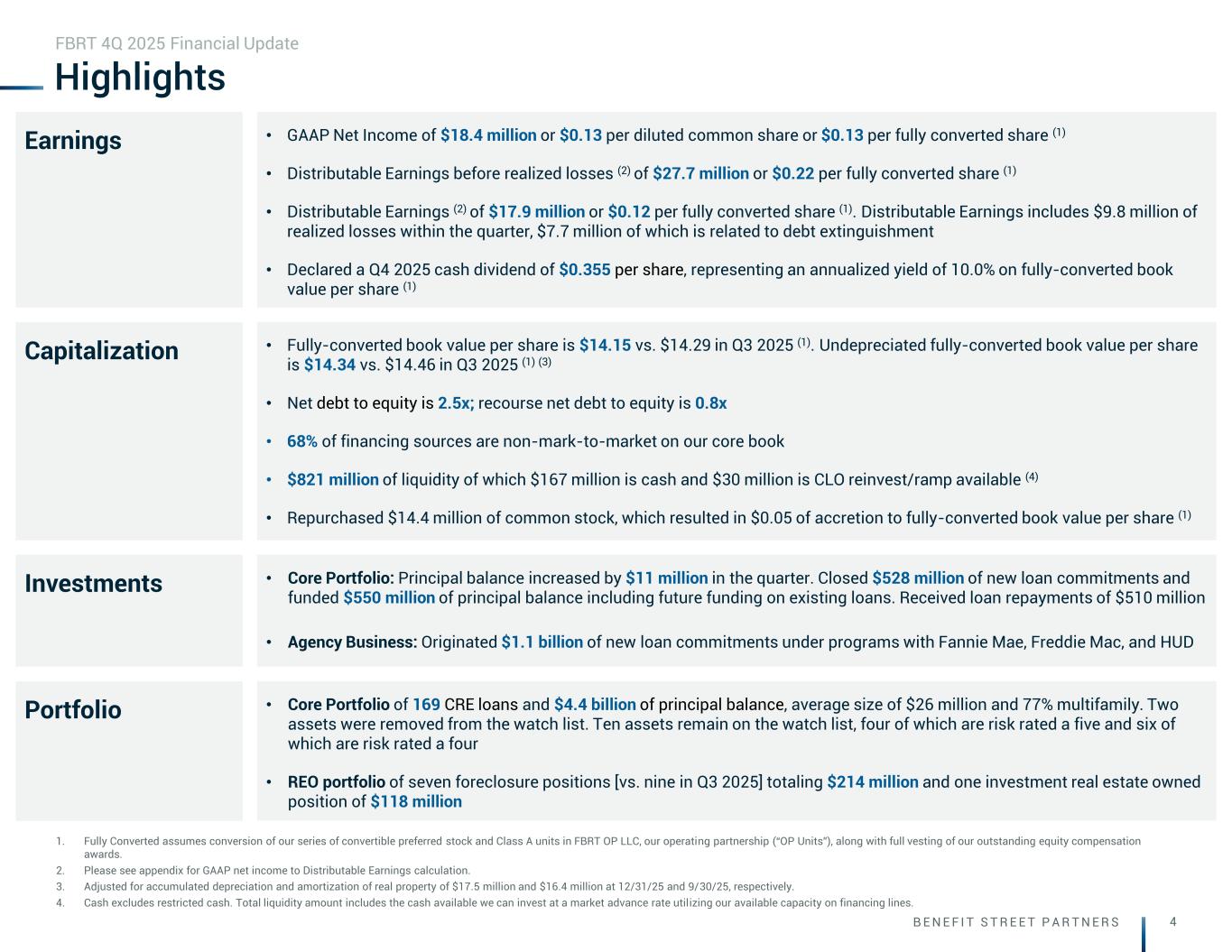
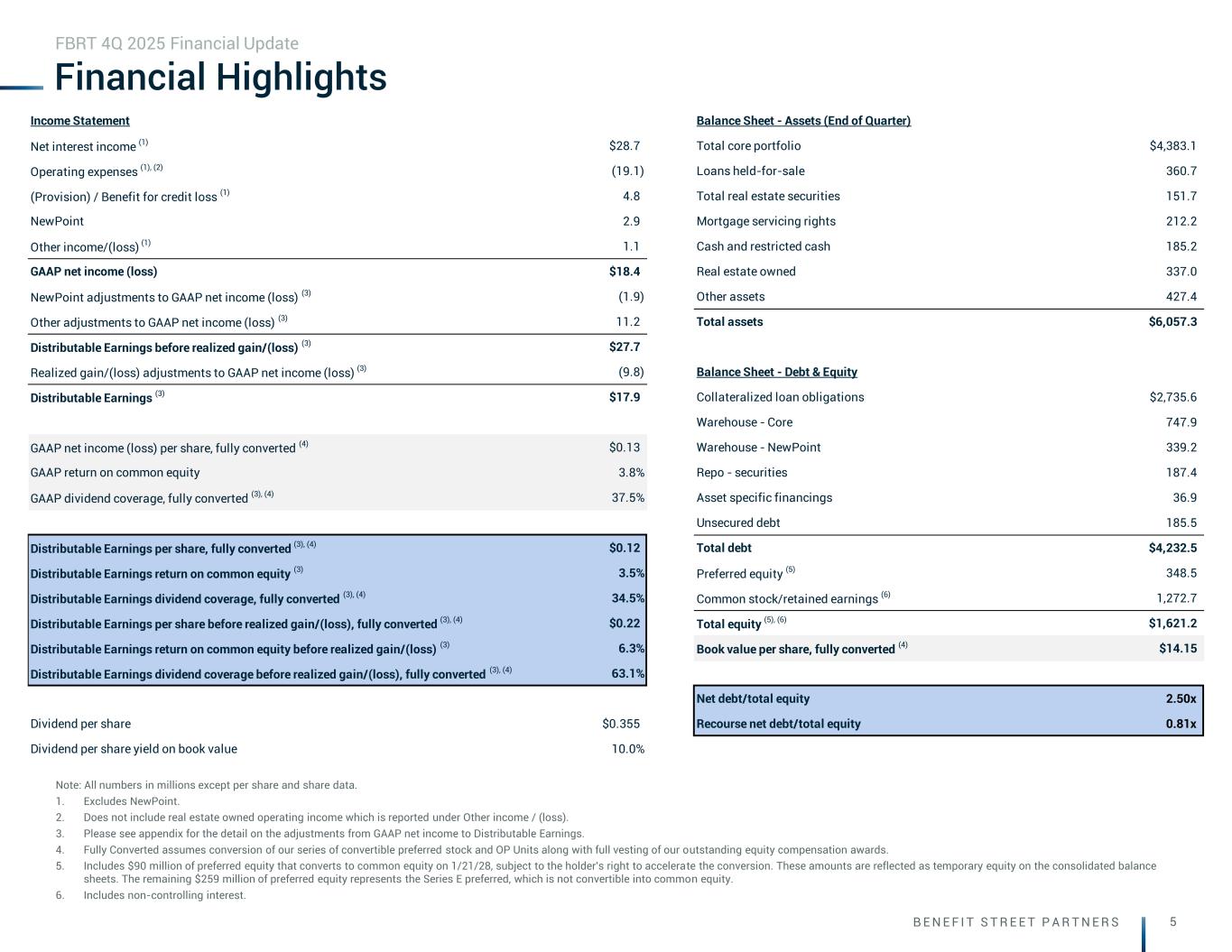
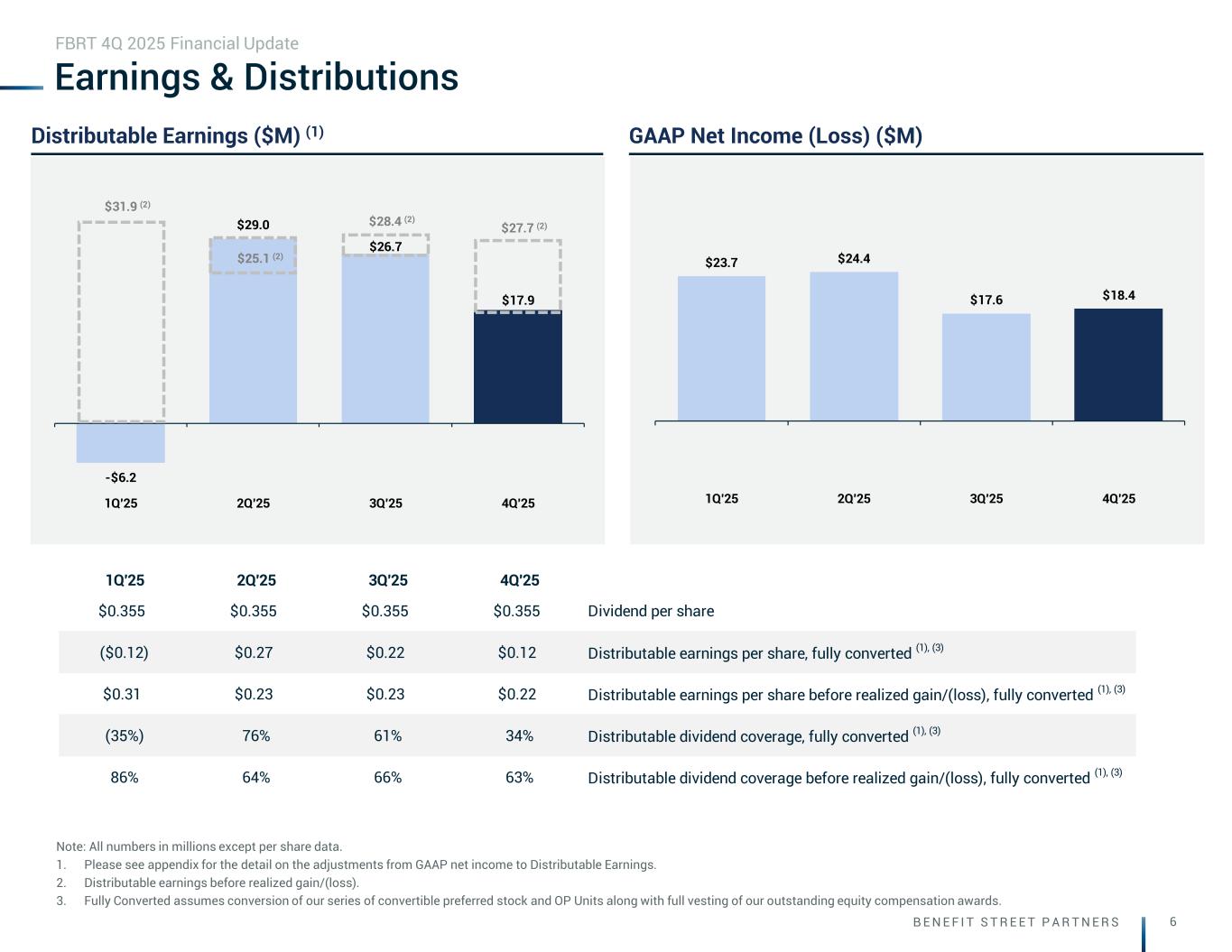
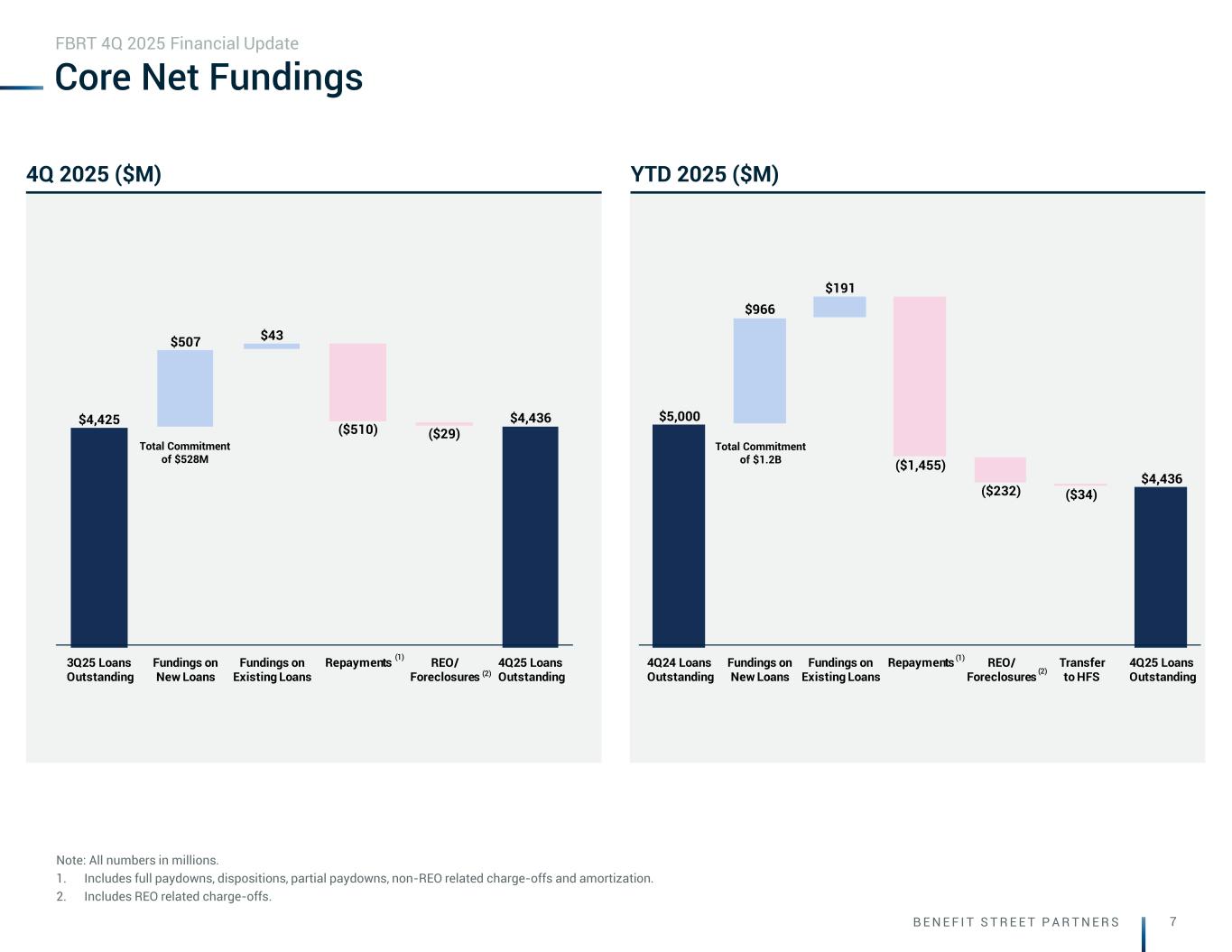
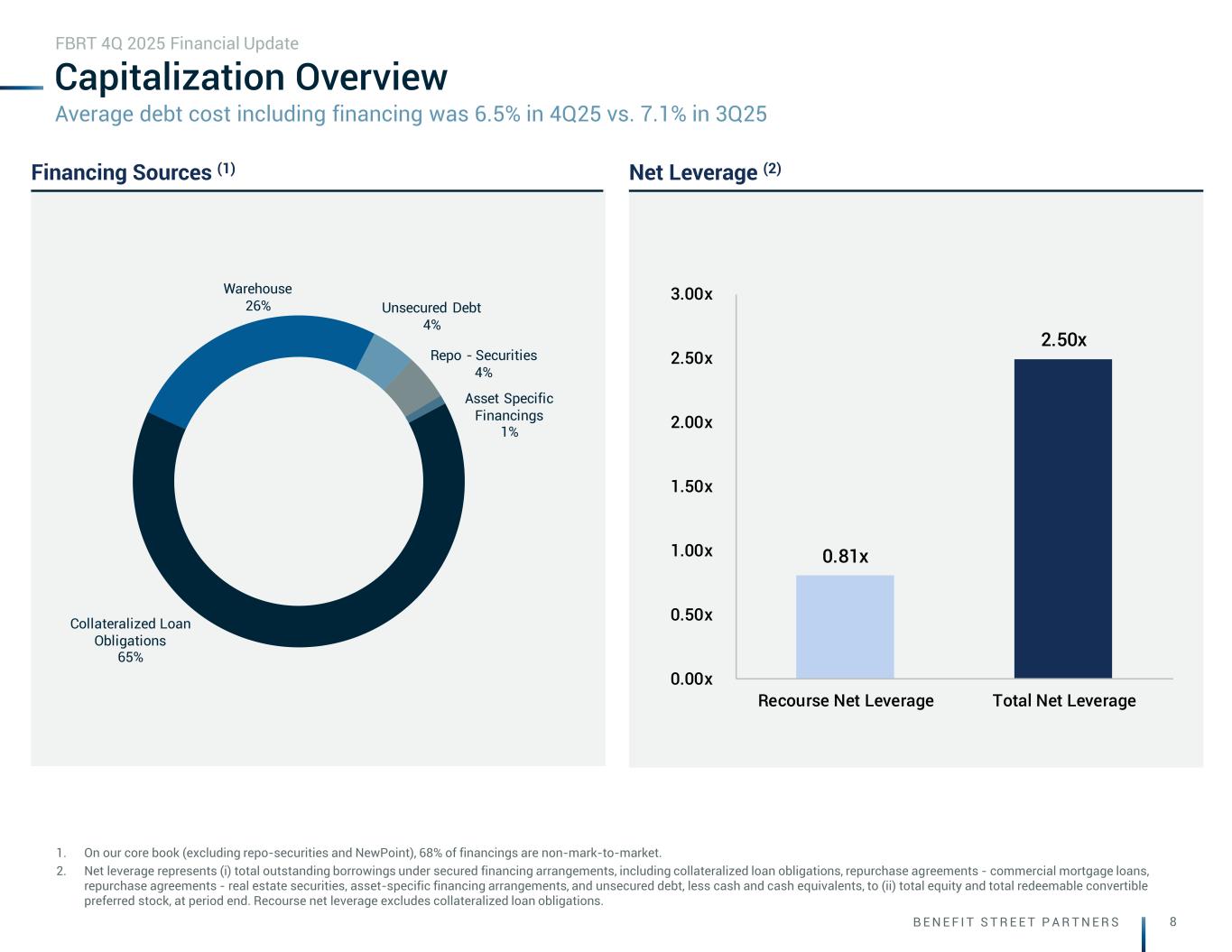
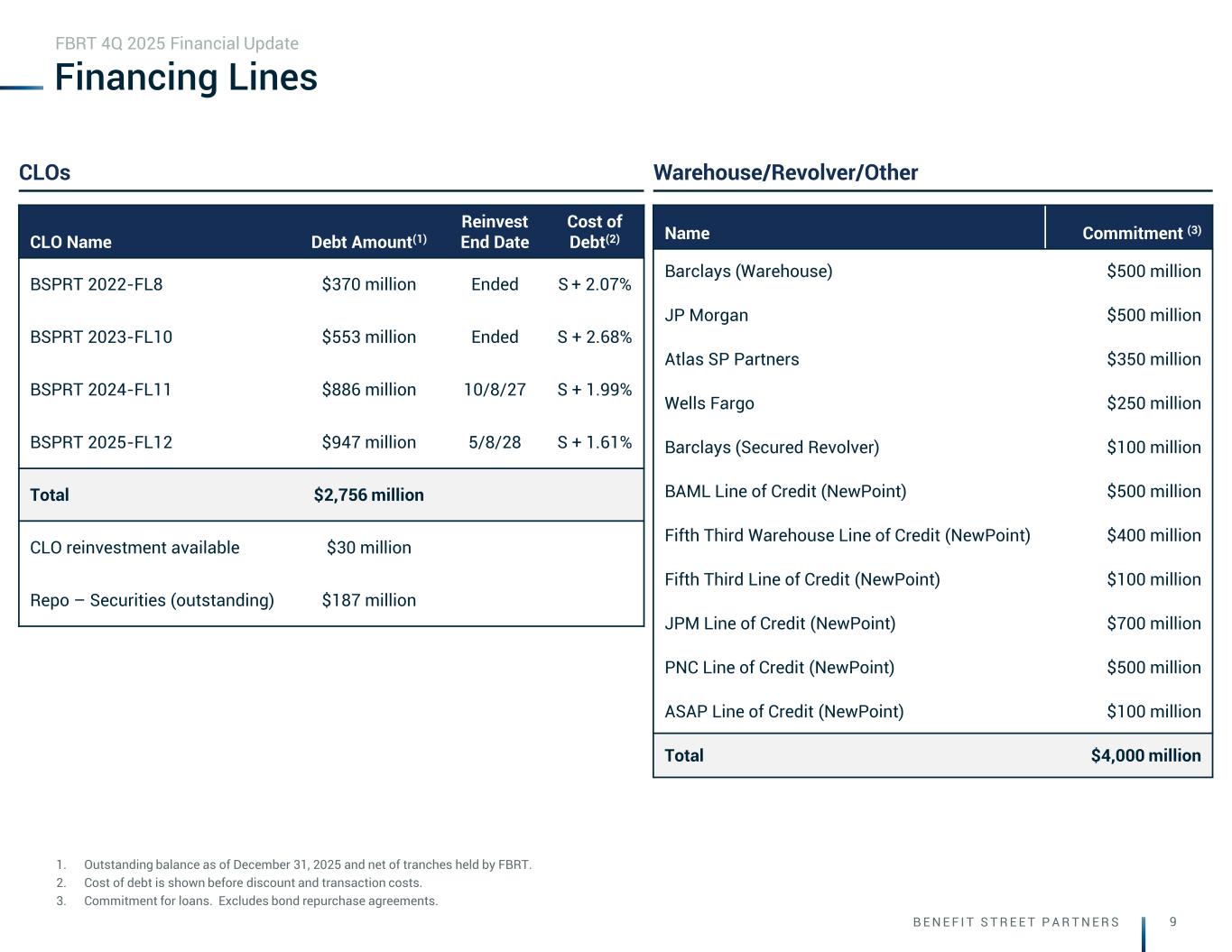
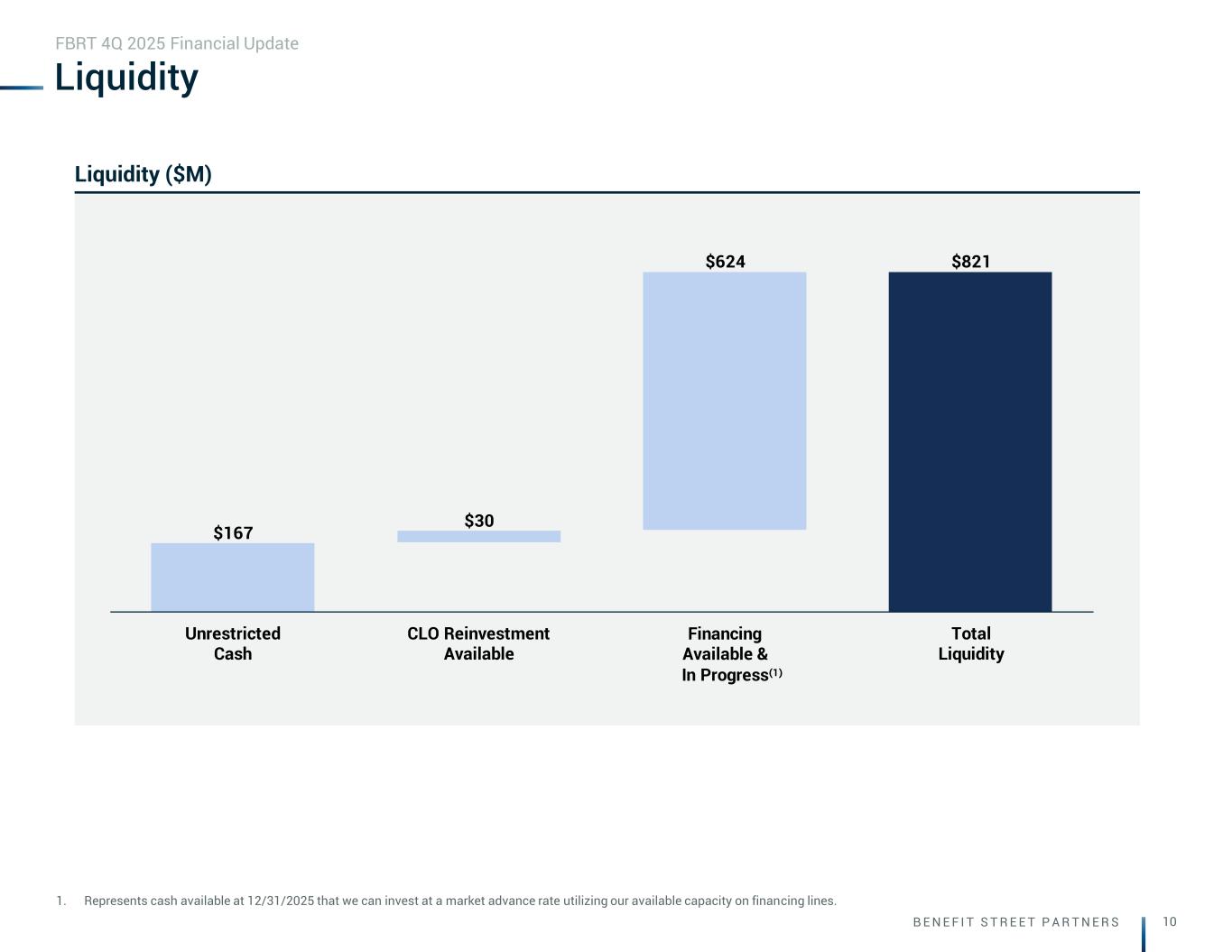
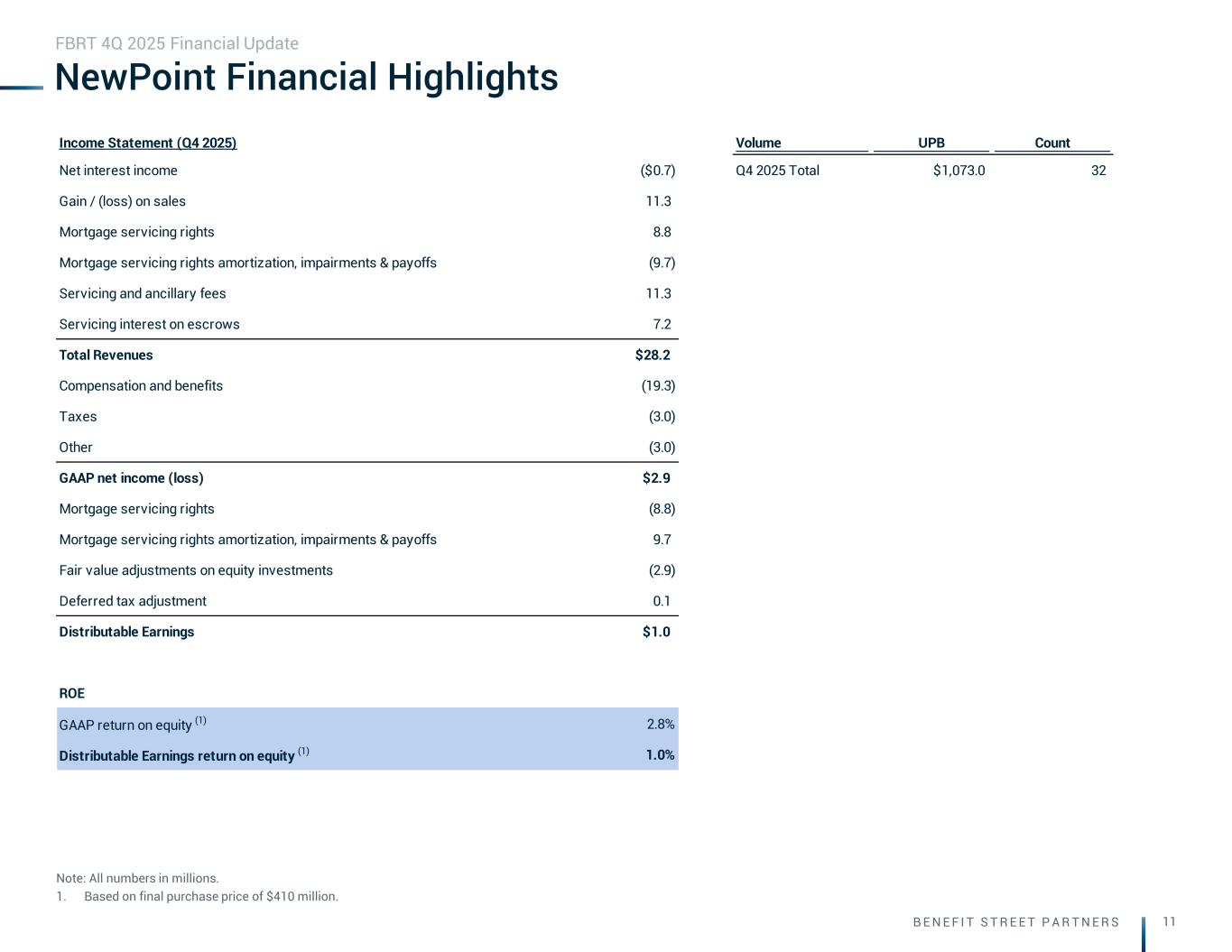
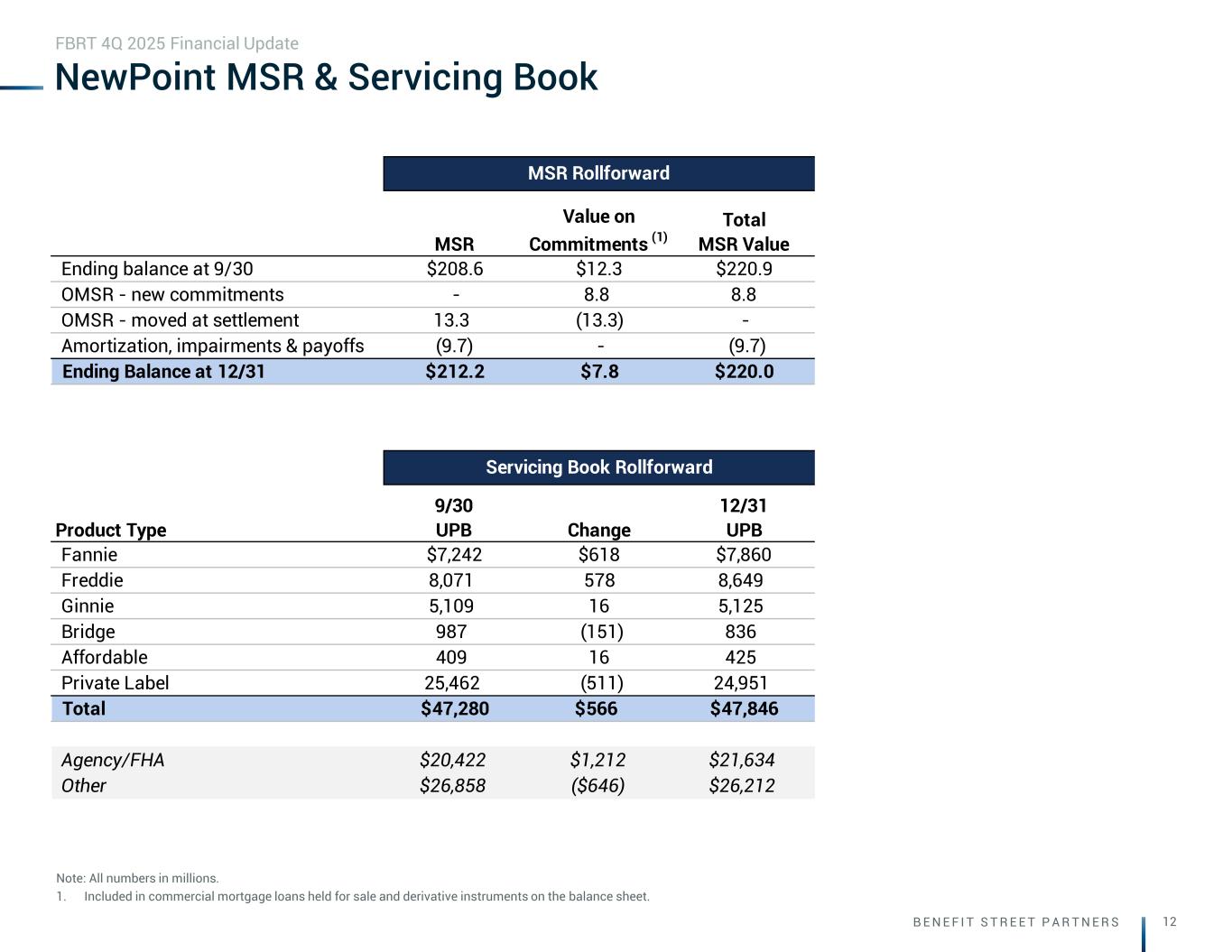
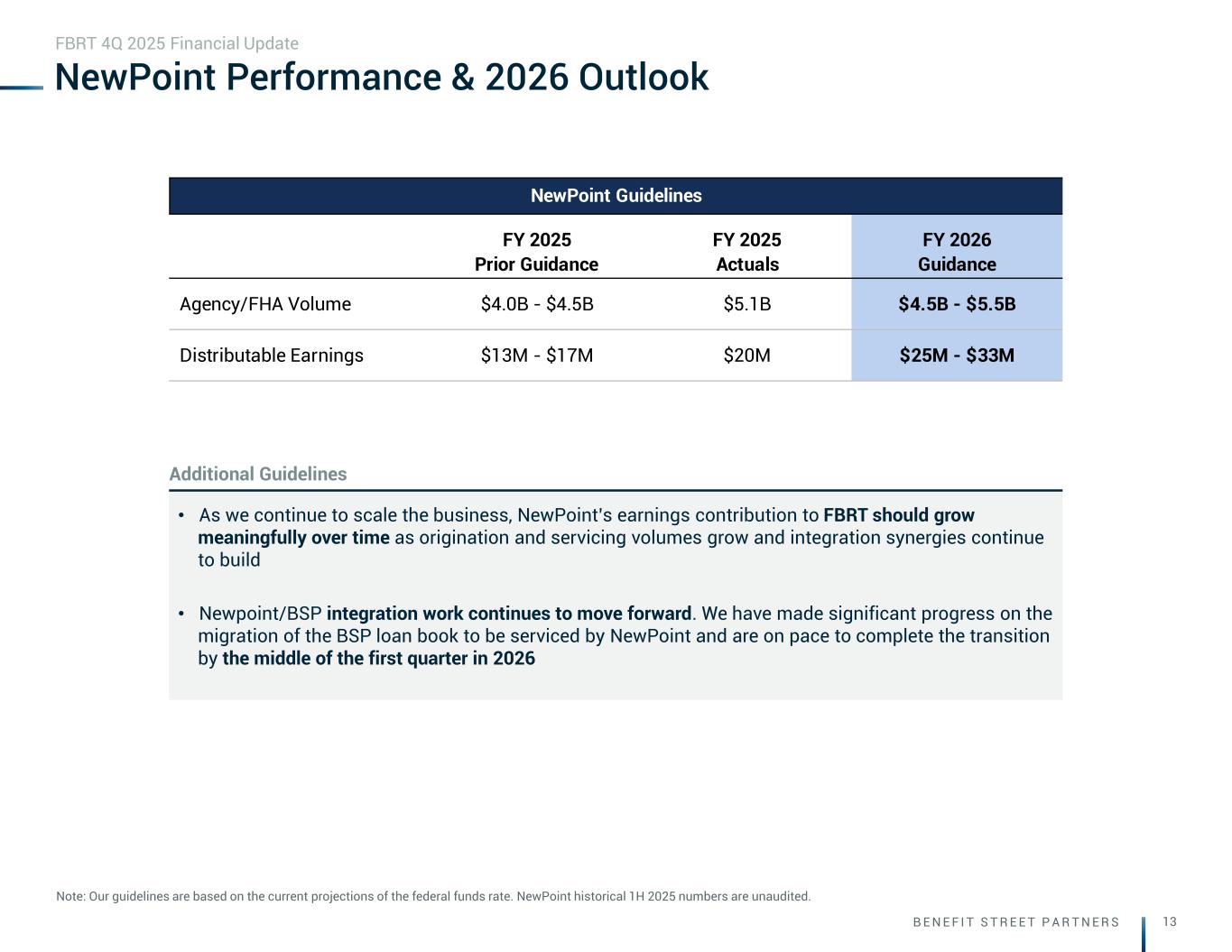
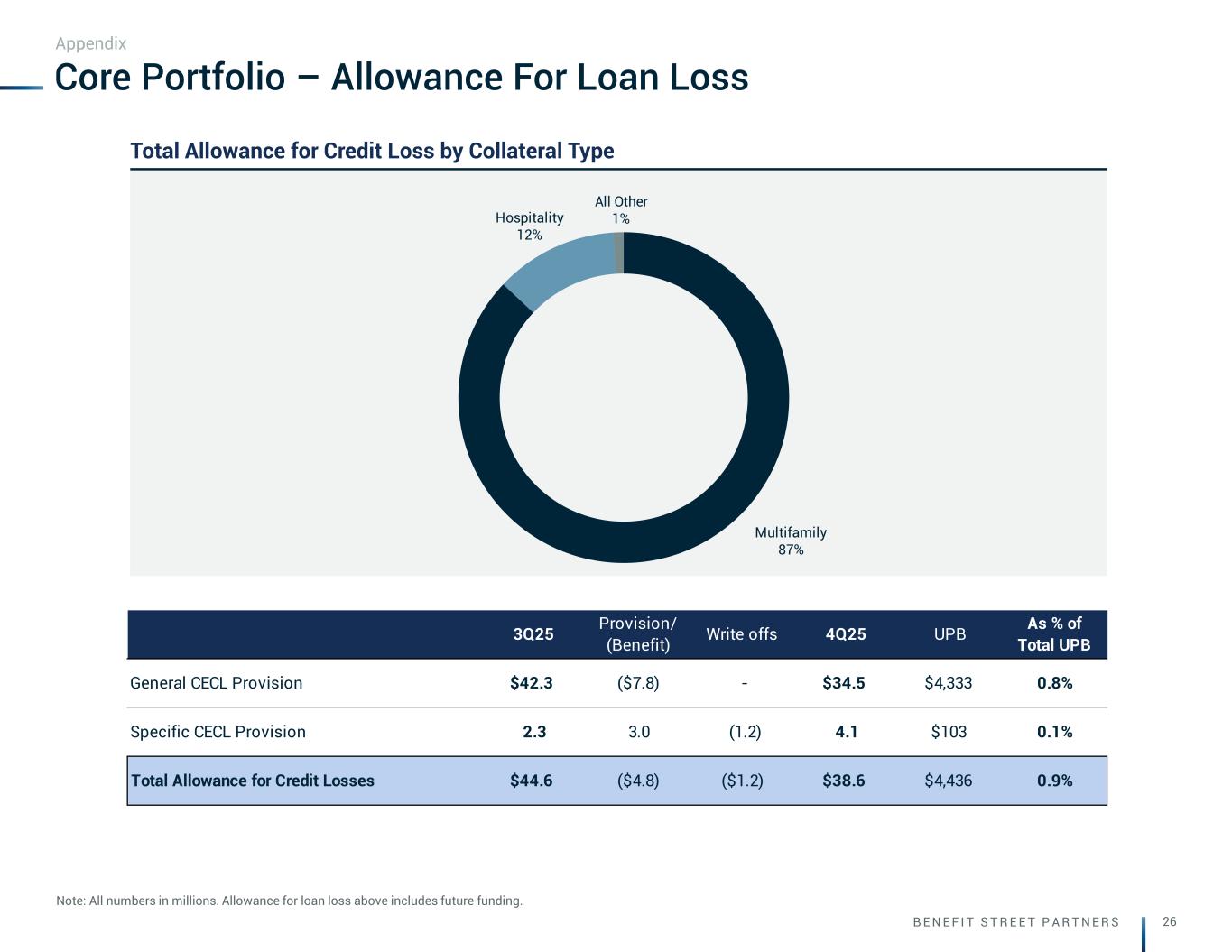
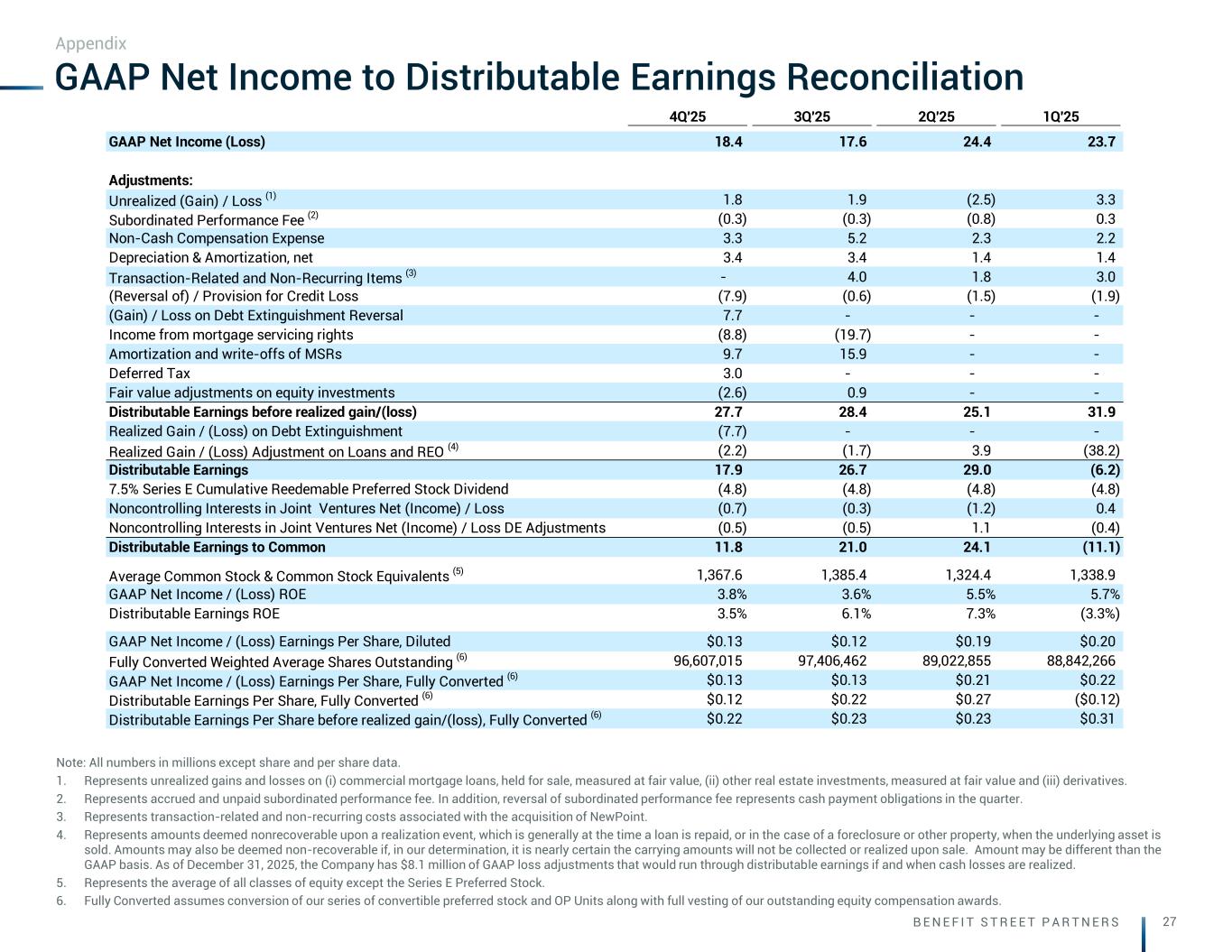
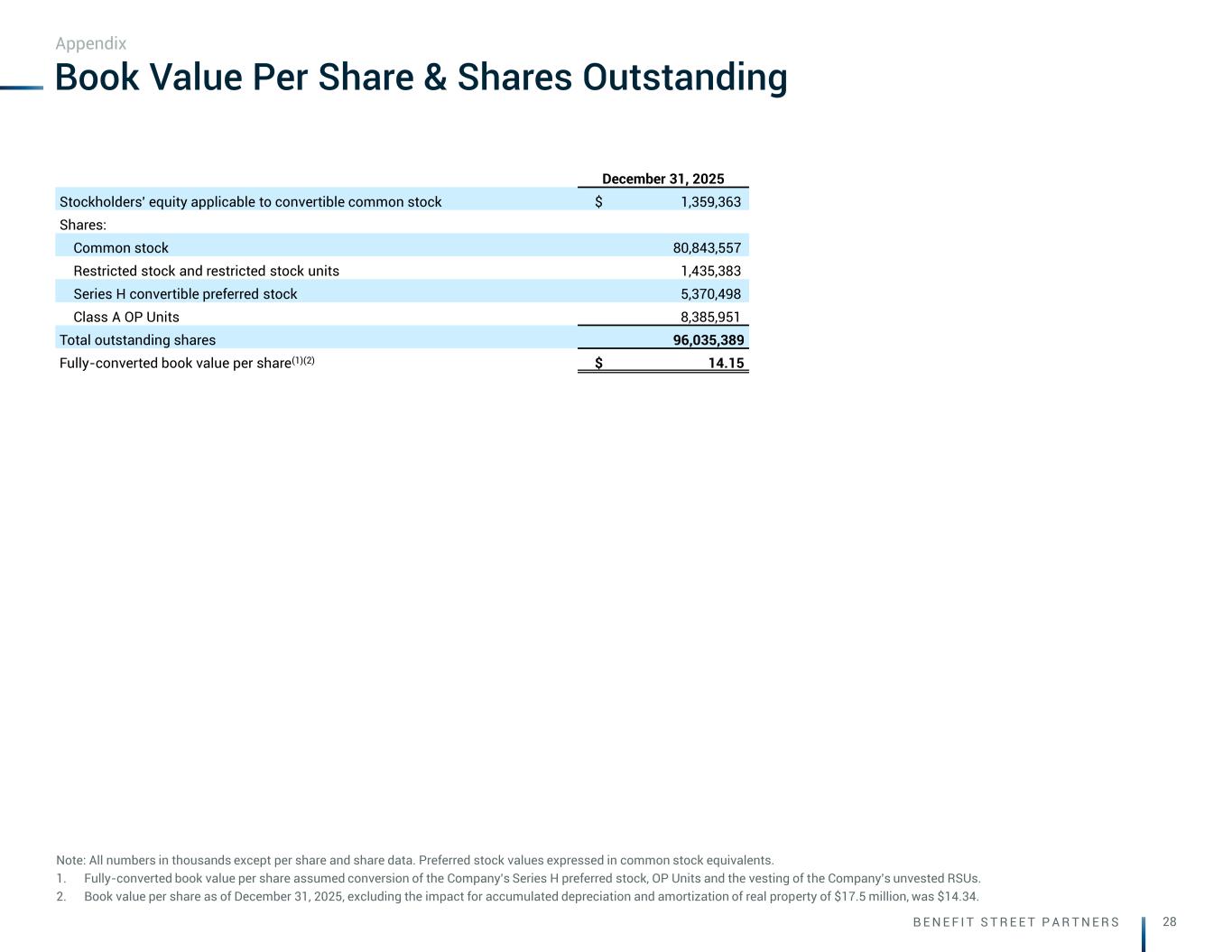
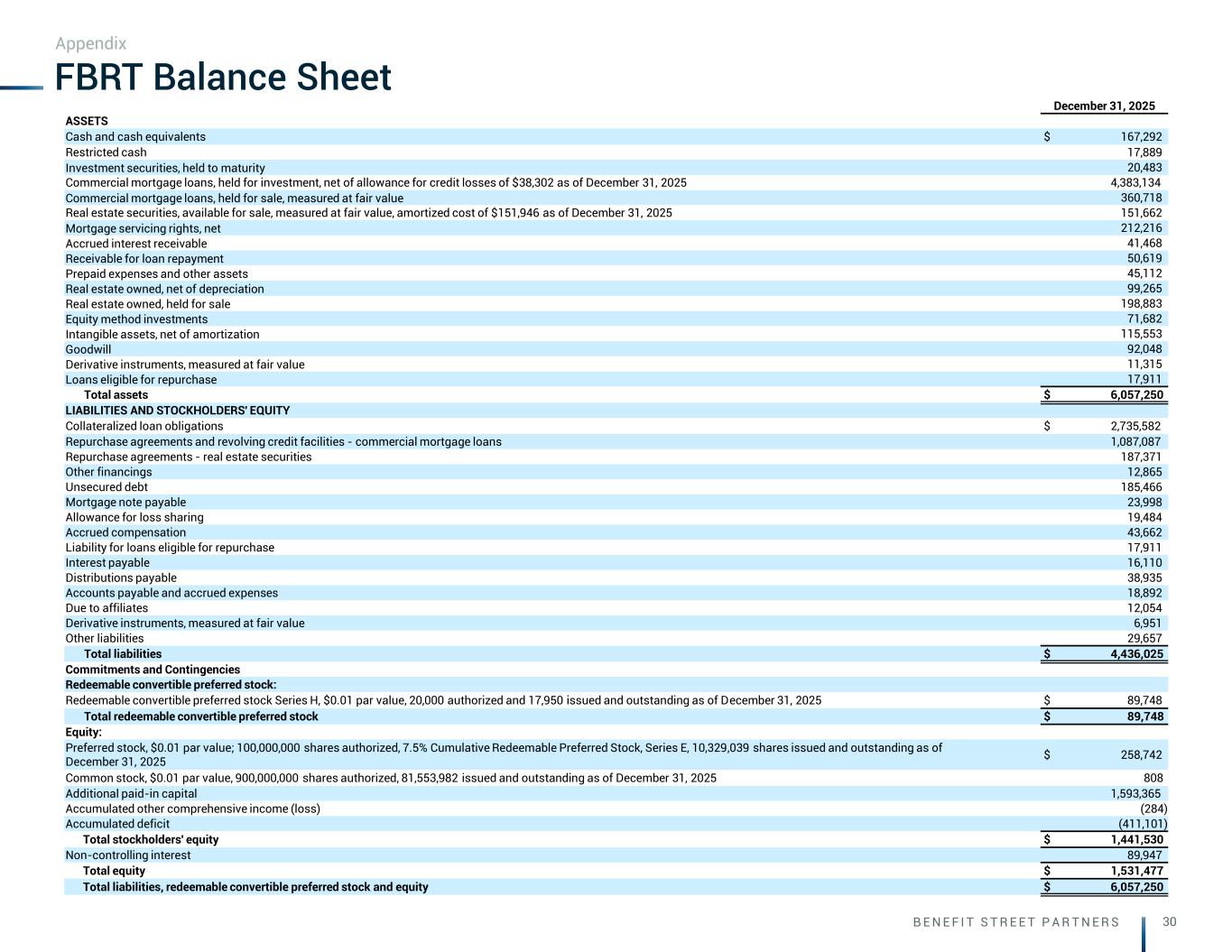
Thank you, Mike. I appreciate everyone being on the call today. I will review the financial results for the quarter. FBRT reported GAAP net income of $18.4 million or $0.13 per fully converted common share. Distributable earnings for the quarter were $17.9 million or $0.12 per fully converted share. In terms of distributable earnings, we included $9.8 million of realized losses, with $7.7 million related to debt extinguishments and the remaining balance from REO sales. Excluding these, our distributable earnings were $0.22 per fully converted share, remaining nearly flat compared to the previous quarter. The primary reason for the quarter-over-quarter change in distributable earnings was timing. Early in Q4, we completed a $1 billion CLO, FL12, which increased our nonrecourse financing capacity. As part of this transaction, we called several older CLOs that had already surpassed their reinvestment periods, resulting in a debt extinguishment charge of $0.07 per share. The new CLO is expected to reduce financing costs in 2026 and significantly enhance our origination capacity. We saw slight growth in our core portfolio in Q4 as originations outpaced payoffs. The principal balance increased modestly with about $528 million in new commitments and roughly $510 million in loan repayments, marking a positive turnaround from Q3 when the core portfolio shrank due to liquidity conservation for the NewPoint acquisition. During the quarter, we recorded a net CECL benefit of $4.8 million, although this included $3 million of loan-specific reserves for four loans on our watch list. One of these loans was later transferred to REO, and the associated specific reserve was charged off. Importantly, we continued our share buybacks in Q4, repurchasing $14.4 million of common stock, which added $0.05 to our book value. After the quarter ended, our Board reauthorized the share repurchase program, making $50 million available for future repurchases through December 31, 2026, to further support the stock price. Our book value per share concluded the quarter at $14.15, reflecting our dividend surpassing our earnings. Net leverage remains comfortably within our targets, closing the quarter at 2.5x, with recourse leverage at 0.81x. We have ample financing capacity and liquidity, as we have reinvestment options available on two of our CLOs. As we utilize the capacity generated by our financing actions, we anticipate earnings to improve in 2026 with growth in our core loan portfolio and a more stable contribution from NewPoint. Moving on to NewPoint updates. NewPoint had a modest contribution in Q4, which was expected due to lower origination activity and increased tax reserves at the TRS that affected NewPoint's reported earnings. We anticipate NewPoint's distributable earnings contribution to run at about $25 million to $33 million per year. Agency volume during the quarter amounted to $1.1 billion in new loan originations, and we project agency volumes to range between $4.5 billion and $5.5 billion in 2026. At quarter end, the MSR portfolio was valued at approximately $220 million and produced $8.8 million of income in Q4, with an average MSR rate of around 82 basis points, reflecting an implied life of 6.4 years for that portfolio. NewPoint managed a servicing portfolio worth $47.8 billion at the end of the quarter. The integration of the NewPoint BSP continues to progress smoothly. We have made significant headway on migrating BSP's loans and servicing book onto NewPoint and expect to finish this transition by the middle of the first quarter. Adding the BSP loans will grow NewPoint's servicing book by about $10 billion and enhance NewPoint's earning potential in 2026. We remain confident that NewPoint will be very beneficial over the long term as origination and servicing volumes expand and integration synergies continue to develop.
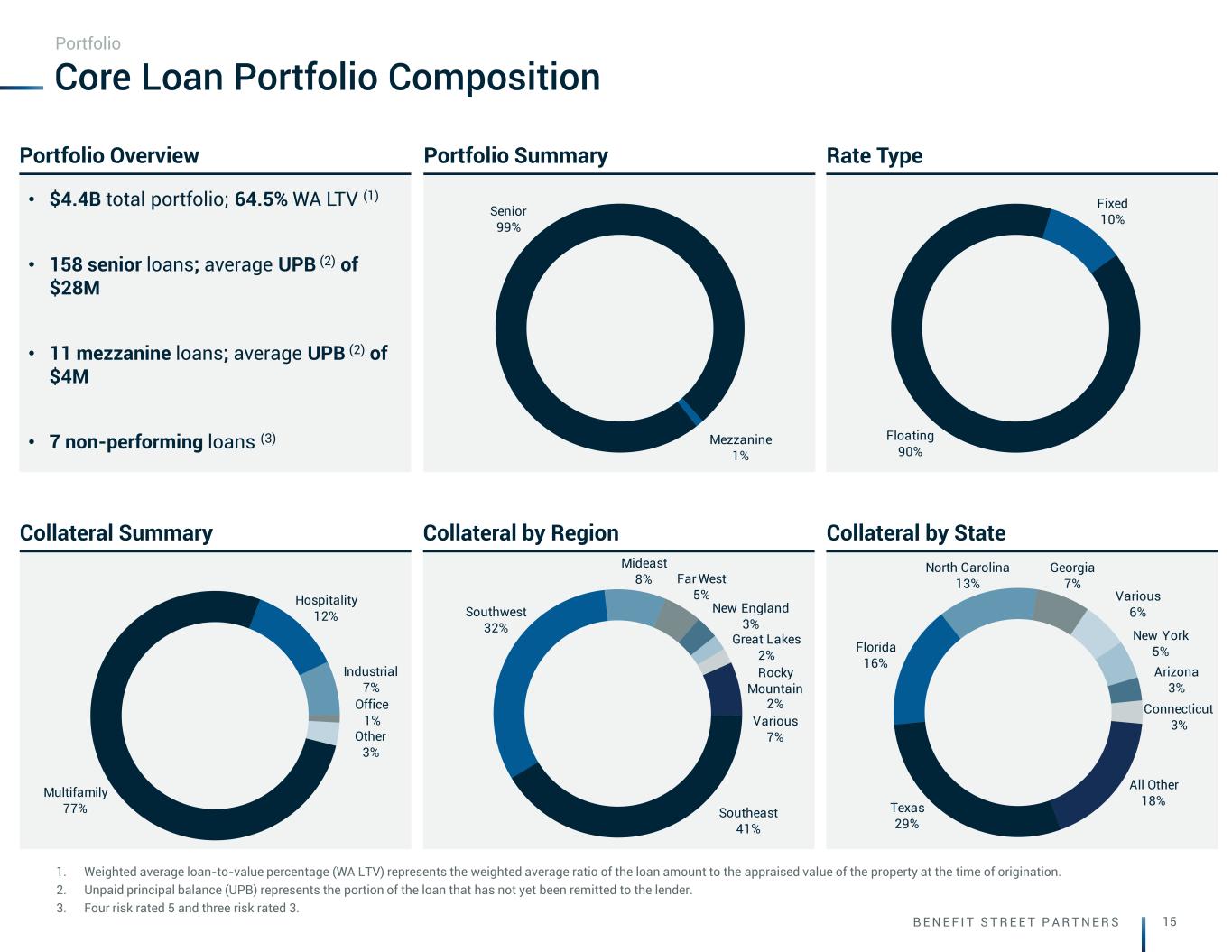
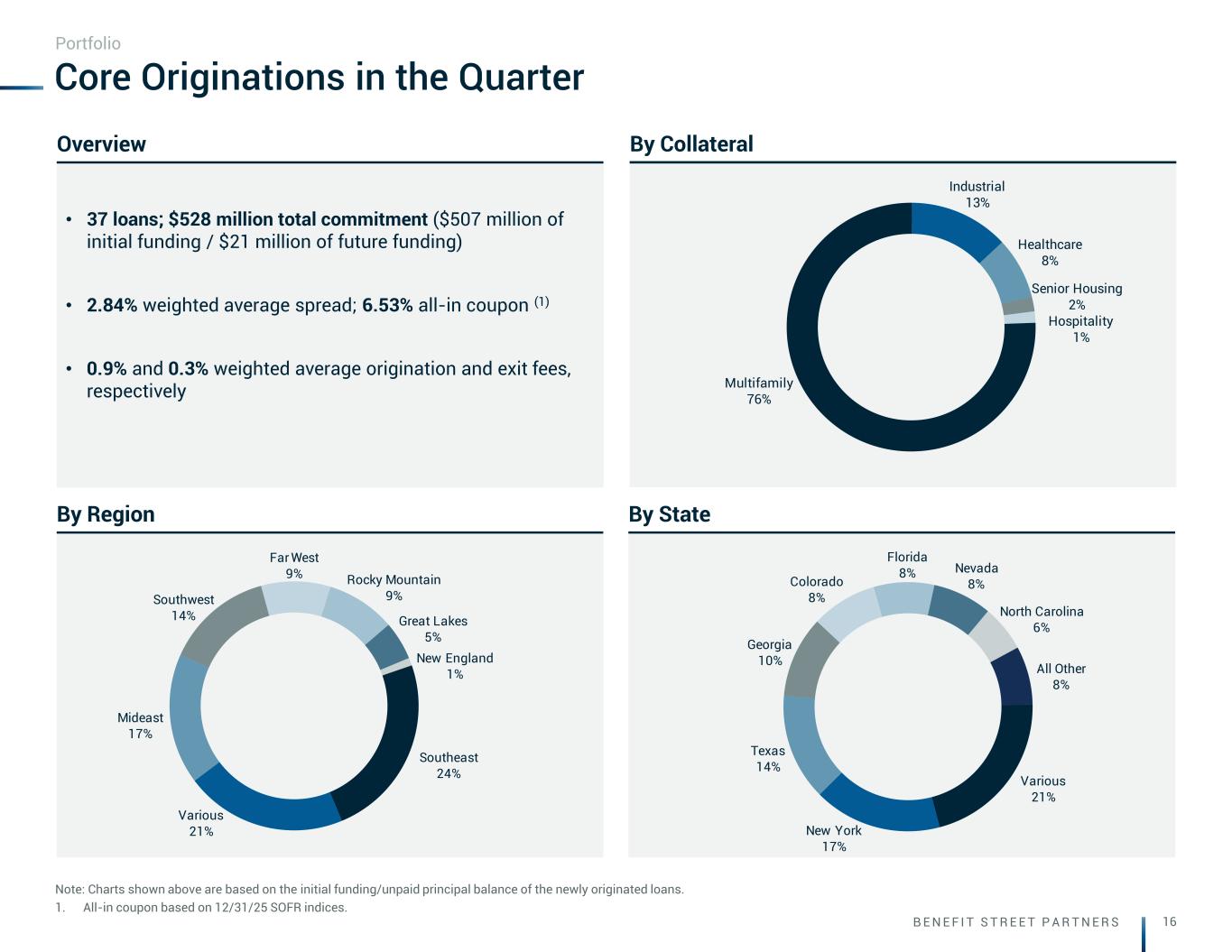
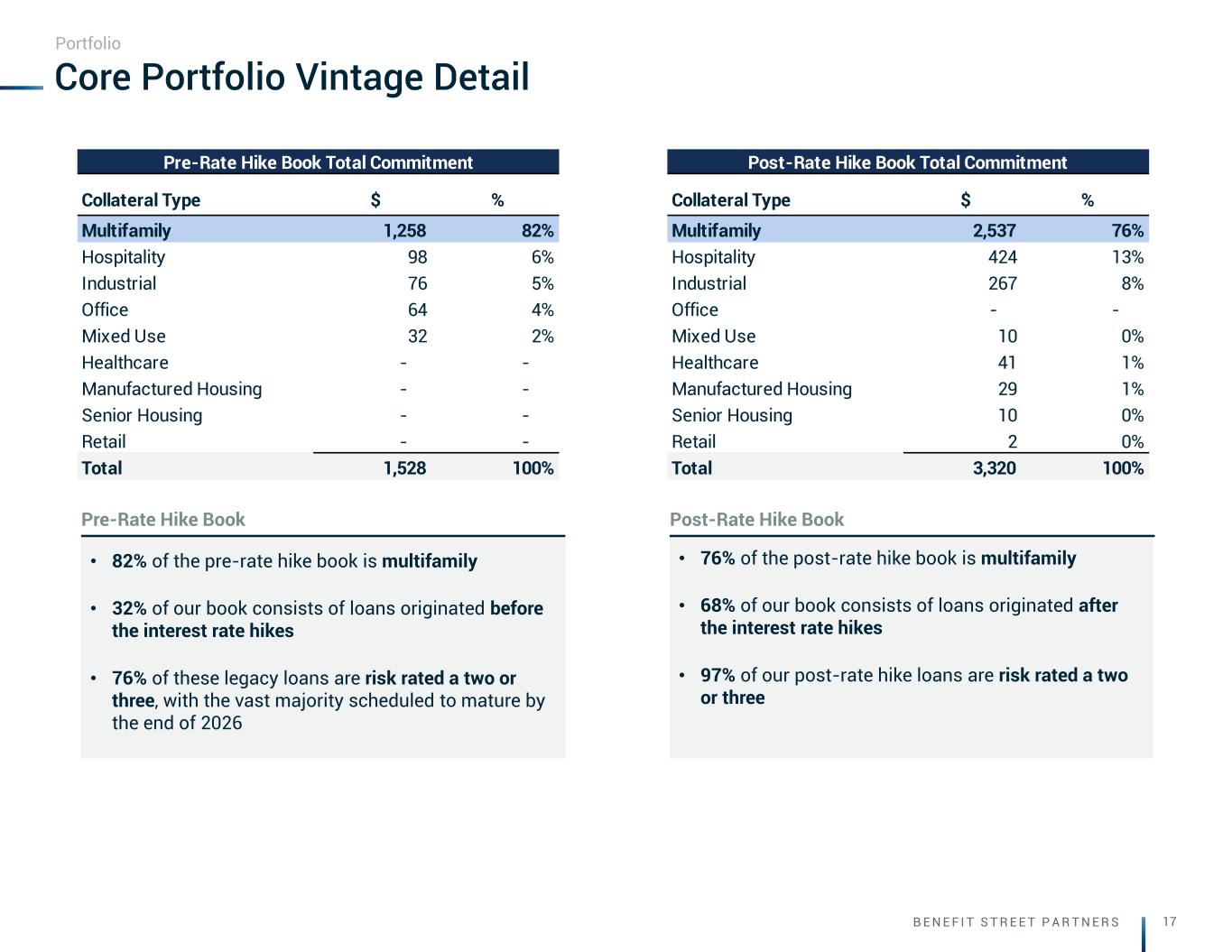
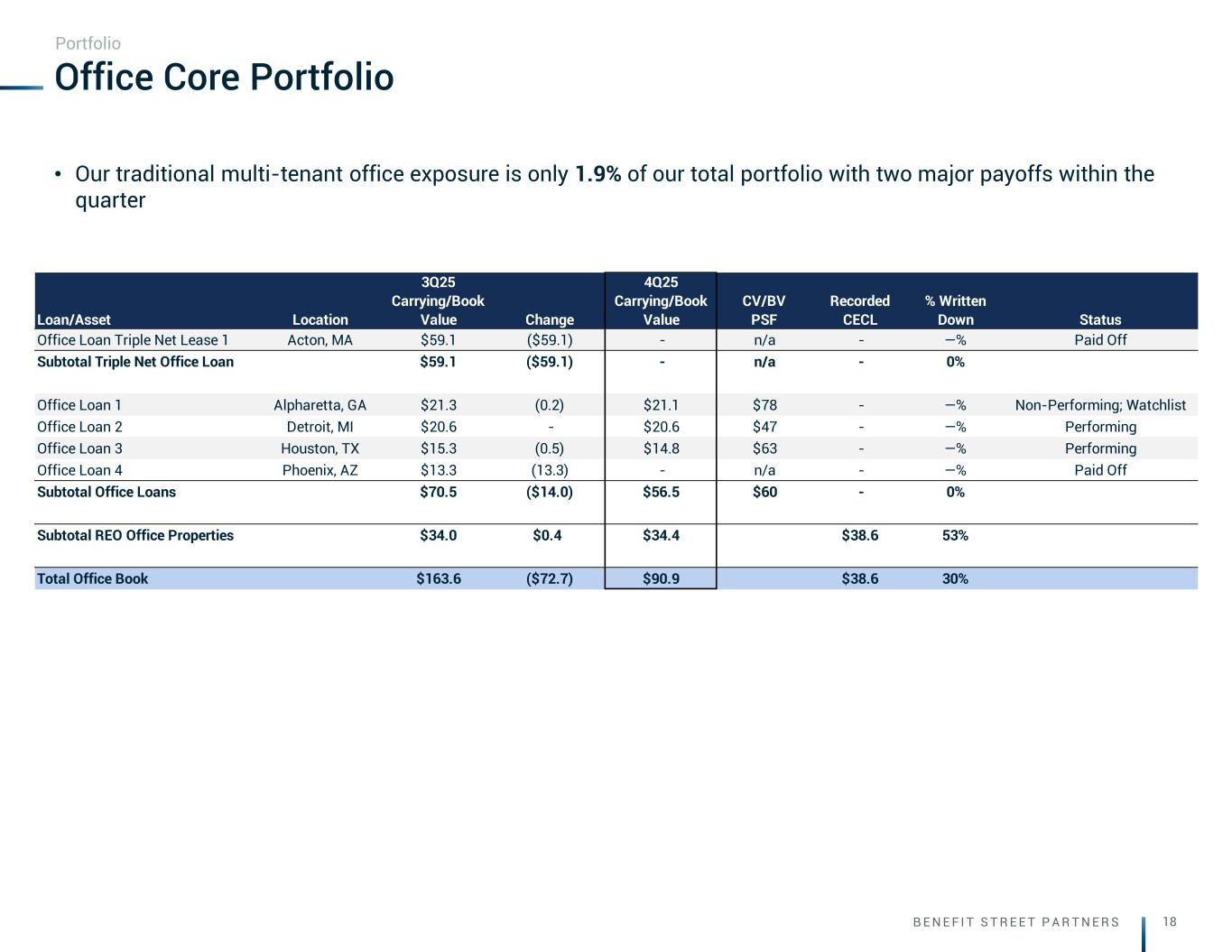
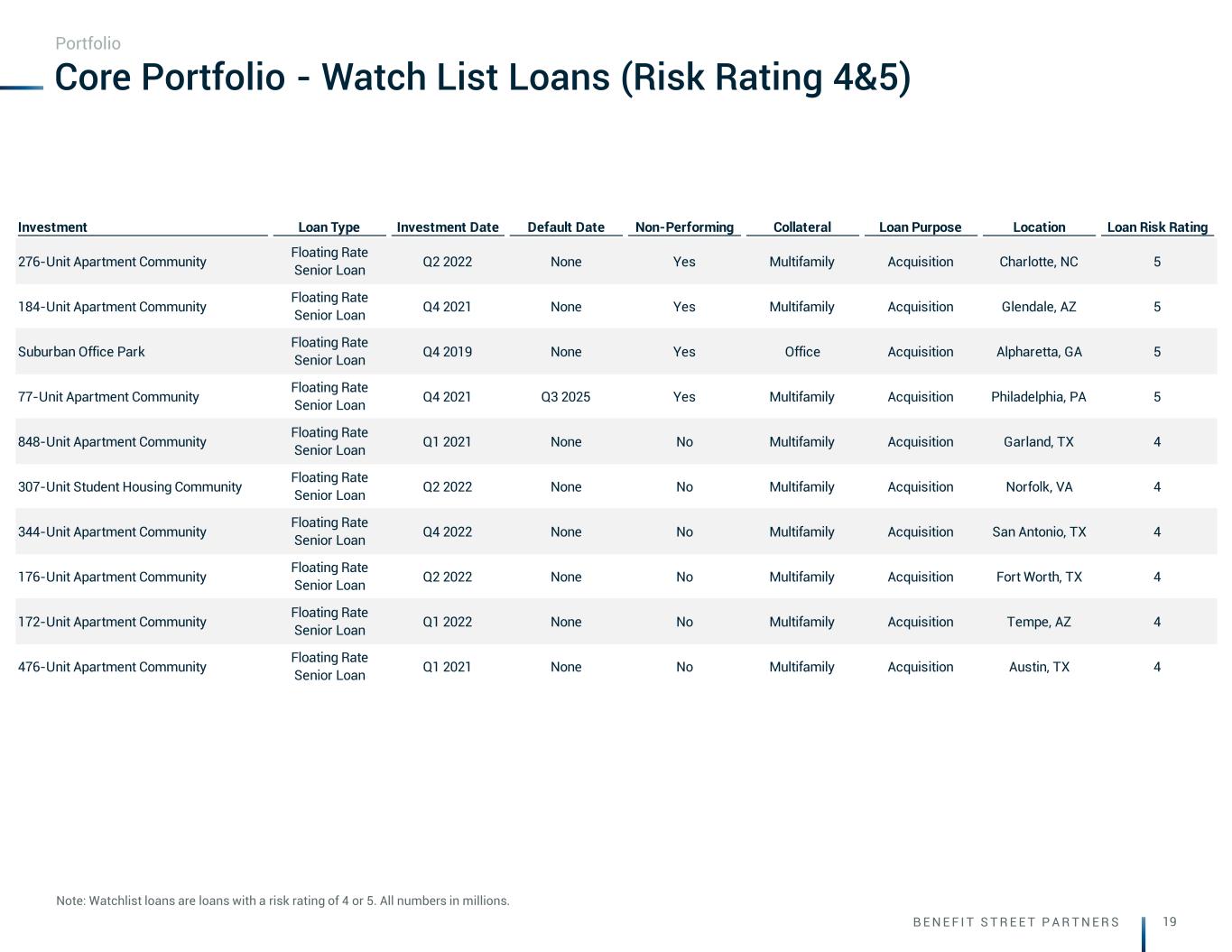
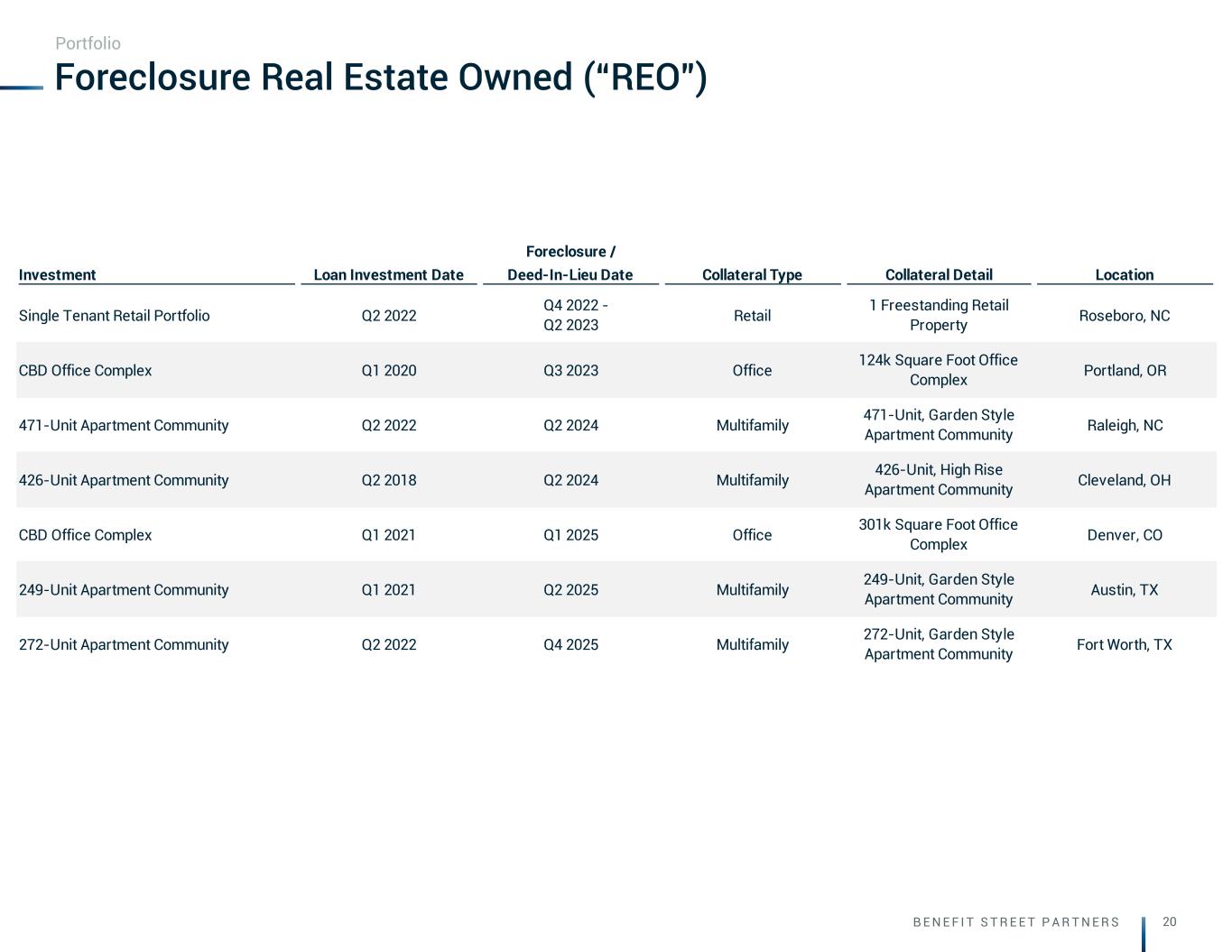
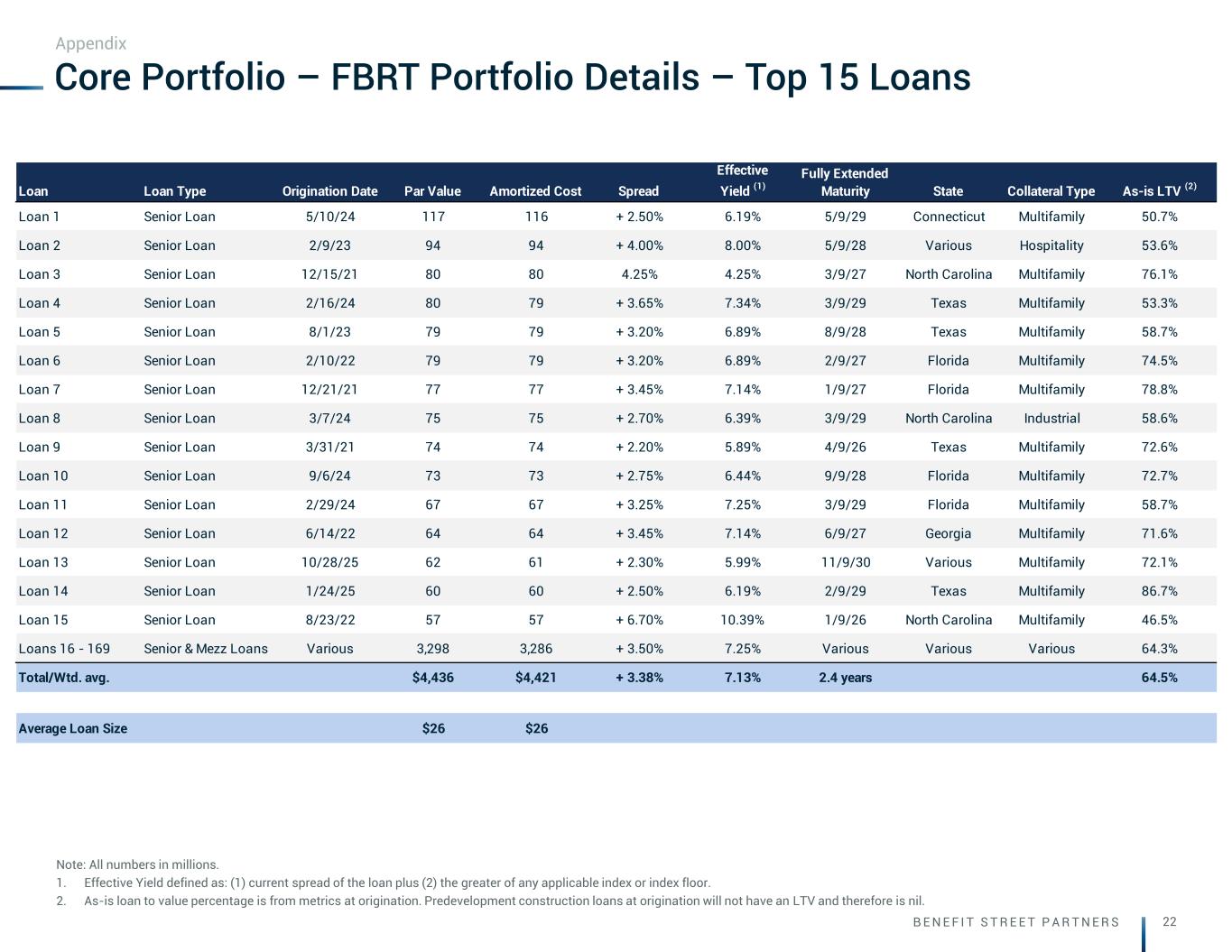
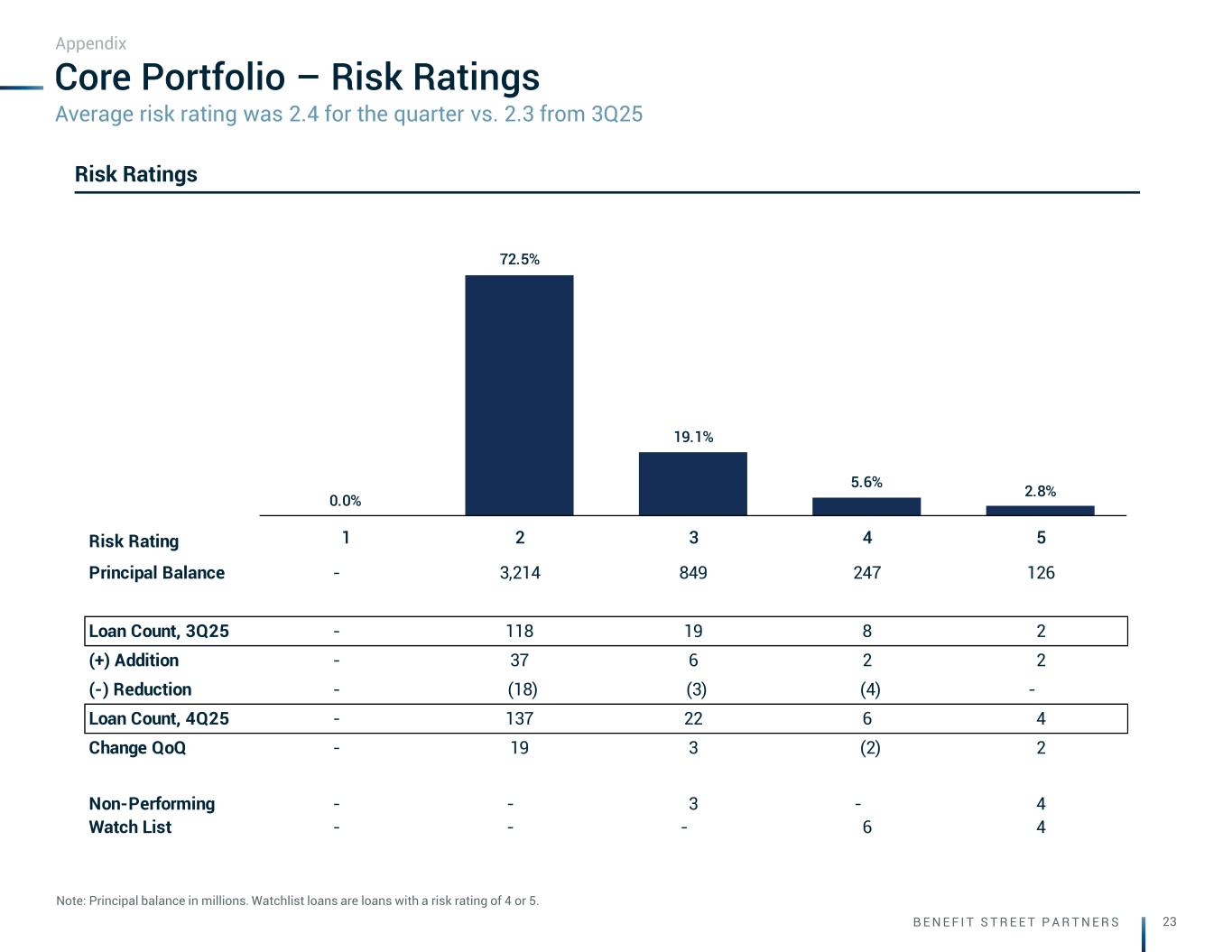
Thanks, Jerry. Good morning, everyone. I just quickly want to start by saying thank you to Rich and Mike for their kind words and support earlier. And as I step into this role, I look forward to continuing to execute our strategy alongside Mike and the broader FBRT team. I'll start on Slide 15. Our core portfolio finished Q4 at roughly $4.4 billion with about 77% of our loans backed by multifamily assets and very limited office exposure. During the quarter, we originated 37 loans at a weighted average spread of 284 basis points with multifamily representing 76% of our new loan originations. Our pipeline is robust, but given current spreads, we are selective on pacing, as Mike mentioned earlier. Our conduit business had an incredible quarter, one of the largest in the history of the company, and that reflects an improved CMBS market liquidity and healthy investor demand. Our pre-rate hike book represents roughly 32% of the total loan commitments of $1.3 billion in multifamily or 82% of that pre-rate hike book. Credit mix remains steady. 76% of those legacy loans are risk rated 2 or 3 at quarter end, and we're continuing to work through the positions that need extra attention on the watch list. Importantly, the office loan exposure is now only $57 million across three loans with an average loan size of $19 million. That's down from $130 million in the prior quarter due to two office loans paying off in full during the fourth quarter. Credit quality across the portfolio remained stable with an average risk rating of 2.4 at quarter end. And during the quarter, two loans were removed from the watch list. One was repaid in full and the other was taken as REO and subsequently sold while two new multifamily assets were added. Borrower engagement remains high, and we are actively working towards resolution on each position. A notable change on our watch list was the Georgia office loan that was extended 18 months in exchange for a 5% principal paydown. That original loan amount of $27.5 million has now been paid down to $21.1 million, and the borrower continues to make monthly debt service payments. That loan will stay on nonaccrual. On Slide 19, I'll cover our foreclosure REO portfolio. Our foreclosure REO balance declined to seven positions at quarter end, down from nine in the last quarter, reflecting continued progress resolving those legacy assets. During the quarter, the team moved three assets off the REO list, selling them at our adjusted debt basis. Remaining reserves related to those assets were charged to distributable earnings this quarter, which contributed to our realized loss. We added a new property to our foreclosure REO in Q4, a Texas multifamily asset. However, it is already under LOI, and we expect resolution to that asset in the first half of this year. We remain highly focused on resolving the remaining positions so we can redeploy that capital into our core loan portfolio. And with that, I'd like to turn it back over to the operator to begin the Q&A session.
The first question comes from Matthew Erdner with JonesTrading.
Rich, congrats on a great run as well and Mike and Brian, you guys also. I want to touch on spreads and kind of the compression there. You guys have mentioned or kind of hinted at laying off the gas a little bit there. It looks like conduit was pretty successful. So how should we think about capital allocation this quarter if the core portfolio has, I guess, muted originations somewhat?
Matt, thanks for the question. I don't want to take the prepared remarks out of context. We have the pedal to the floor on origination. Our goal is to get assets up to a level where we're meaningfully growing earnings, and we can only do that by closing loans, obviously. I think the point of the message was we are not actively chasing the commodity 88-mile-an-hour fastball over the part of the plate, multifamily loan. We're focusing on the other aspects of our business where we can originate as well, whether that's construction lending or some other areas where we're active. So we've got a $1.7 billion under application pipeline. So we are by no means slowing down. We're just kind of changing the mix of what the origination looks like so that we aren't dropping to the tightest spreads that the market is. We have to selectively pick a few where we compete there. But generally, we're trying to play a little bit wider.
And then I guess turning to kind of the dividend reset, should we kind of expect that to be a good baseline for run rate earnings going forward? And then I guess within that, following up on the last question, what's an ideal portfolio size that you're looking to get that core back to by the end of the year to get back to that $0.20 coverage?
We are currently above $0.20. To address your question, our target by the end of the year is to have our core book between $4.8 billion and $5 billion. Regarding earnings, we anticipate that we are experiencing one or two challenging quarters. The potential for our earnings remains unchanged. We have outlined a plan to return to $0.35 or $0.36, and we are confident that we can achieve this. The challenge is that it is taking longer than we expected. I believe we will see earnings growth over the next few quarters as we move back toward the mid-30s. We did not want to further reduce the company's balance sheet by over-distributing cash, as this would complicate our path back to that level. We have discussed borrower behavior and its unpredictability for several quarters, and unfortunately, the same applies to REO disposition. While we have made significant progress, just when we think we are about to sell additional assets, buyer interest can shift unexpectedly. We are navigating a market that is considerably better than two years ago, but it is still taking longer than we had anticipated.
The next question comes from Steve Delaney with Citizens JMP Securities.
Congratulations on all the promotions that we heard about last night, well deserved. I'm examining where you're looking to allocate capital, and I understand your concerns about the intense competition and the traditional bridge loan products. You are primarily a lender, but some of your activities seem to align more with the multifamily sector and the NewPoint business, which adds significant value. My question is regarding your one investment in REO—will this be a one-time occurrence, or should we anticipate that a portion of your capital will continually be allocated to direct real estate investments, along with the associated potential for capital gains?
Thanks, Steve. That's a lot to cover. Let me try to address it. We actually have more than one equity investment on our books. We acquired two large assets in 2025 that are part of joint ventures. They might be recorded differently, but we have around $400 million to $500 million in gross assets that we own. I don't recall the exact percentage offhand, but we have more equity investments now than just that one distribution facility. We appreciate you highlighting Walker & Dunlop, which ties into my earlier remarks. They're trading at a 4% dividend yield. We want the market to see us as a conglomerate in commercial real estate. We aim for a 4% to 5% dividend yield on NewPoint operations, an 8% to 10% yield on our mortgage REIT operations, and a 4% to 5% yield on our equity investments. That's how equity REITs typically trade, and these also represent growth opportunities for the company. Educating the market will take time and we have to demonstrate this, but we believe we can. While we primarily focus on debt, we also make significant equity investments in other areas beyond FBRT. In the last 18 months, we've invested close to $1 billion in commercial real estate assets. So, to summarize, you can expect a slightly higher allocation towards select equity investments in the coming years.
No, that's very helpful. It was a complicated question to start with, but I appreciate the insight, especially regarding the investment side of the investment REO.
Yes. And I would just add, you're not going to wake up one morning and see FBRT have 25% of its equity invested in equity investments, right? That is not happening anytime soon. Could we have 5%, 10% a few years from now? Possibly. But yes, we are not on the path to Starwood. I think they're at like 50% equity investment. That is not the goal or expectation.
You're still going to be a finance company primarily. Regarding your agency business with NewPoint, I haven't reviewed the deck yet, but will we be able to examine that operation in terms of its origination sale and servicing business to Freddie and Fannie? Will we get to see what your WD component of the company looks like in terms of the TRS?
Sure. Yes. There's a page in the Supplemental deck, and there's obviously going to be more information in the 10-K that will give you more segment information on the details within that operating segment for us. So you'll be able to see some of the volume information. We break out the income by component, servicing, gain on sale, and you could see the cost structure as well. So hopefully, that should be helpful in answering some of the questions. And additionally, we gave kind of a high-level range for volume and expected income contribution in '26 as well to just help put a guidepost out there for kind of where we see things.
Well, congrats on the progress, and we applaud what you're doing. We've got 22 plain vanilla commercial mortgage REITs, and I think that's enough. So it will be exciting to see how you guys position the company over the next year or two.
Our next question comes from John Nickodemus with BTIG.
First of all, Rich, all the best in your role as Chairman. Congrats, Mike and Brian, in your new roles. Earlier in 2025, you estimated that there was $0.08 to $0.12 of DE per quarter that could be unlocked from reinvesting equity tied up in nonperforming loans in REO. Based on progress your team has made since then, where do you estimate that figure stands today?
I believe we're currently slightly above that figure. I'm not sure if I have the exact number, Jerry, but maybe you do. John, you've pointed out the main reason for our decision to cut the dividend: the earnings are clear and indisputable. The question now is just when we will recover it. Unfortunately, it’s taking a bit longer than we expected. So, Jerry, do you have the number? I know we have it, but I'm unsure if it's readily available to you.
We have the numbers. I would say the range has not significantly changed, and Mike is correct. It's not that the amount has necessarily changed. It's more about the timing of unlocking that earning power. Resolutions have taken longer, and we've cycled through additional assets as we address our legacy portfolio. Our capacity to reclaim that and redeploy within our core portfolio remains intact. We're really managing time more than experiencing any change in potential earnings power with the available equity.
Great, the timing being the key driver makes a lot of sense. And then, Jerry, something that you touched on earlier just about the 2026 full year guidance for the volumes and distributable earnings contribution from NewPoint. I noticed the volume had come down a bit and then the earnings contribution had come up from the deck you put out in September. Just curious what was driving those changes as we look toward 2026 NewPoint.
I think we were guiding '25 before. And in '25, I think we're kind of middle of that range. So essentially, we bumped it up a little bit from where we are today, kind of what we hit in '25 kind of based on all the scaling that we've talked about plenty of times on our calls over the last year or so. The range is also, again, it's up a little bit from where we were this year. I think this year, we were at the high end of what we provided for everybody on a 2025 year-to-date total. Obviously, it's a little chunkier in how it came in the two quarters. And one of the reasons we give annual projections is because this business will have some chunky quarters, right? We wanted to kind of give a bit of a range there to kind of cover the various outcomes. I think in terms of one of the other upsides is the servicing integration that I mentioned, putting that $10 billion of our own book onto the business is going to be a pretty big driver in terms of additional income growth that we should see through the balance of '26.
Our next question comes from Timothy D'Agostino with B. Riley Securities.
Congrats on the quarter and the promotions and transitions. Looking at the results for '25 at Fannie Mae, understanding kind of that multifamily volume was a lot higher this year compared to years past. I just wanted to get the overall sense of how that business is progressing year-to-date in '26, if that momentum from '25 is still carrying over? And if you could provide any color on kind of how you're feeling about the year ahead in that channel.
So I think, unfortunately, we're living in a world that is highly, highly tethered to rates and the slightest of move. I mean this is probably more so than ever in my career. I was talking about this with someone the other day when the 10-year is at 4.25%, I said, if the 10-year dropped to 4% flat, I think you would see volume just go through the roof. And if you see the 10-year go to 4.5%, I think things are going to come to a screeching halt. And it's just shocking that a 25 basis point move in either direction could have that outcome. We are in an incredibly rate-sensitive environment, and everybody has been sitting and waiting and waiting and waiting for rates to go lower. And if they go lower, I think you're going to see just a massive, massive amount of volume come through the market. And unfortunately, if they go higher, we're going to see the opposite. So if you could tell me where the 10-year is going for the next 6 to 12 months, I could give you a much better answer. But it is just incredibly rate sensitive at the moment. And I think that's for all of our businesses.
And then sorry if I missed it earlier in the call, but regarding the loan portfolio, payoffs persisted at a pretty high rate. However, funded volume obviously came in just above that. Are most of these repayments behind you? Do you think we could still see some higher figures in the first half of '26? Just kind of any color on repayments of the portfolio.
Yes. So repayments are obviously a blessing and a curse. We are cycling through the legacy portfolio. I think we are head and shoulders above the balance of the industry in terms of addressing that legacy portfolio. As Brian mentioned, I think we're down to 32% of the portfolio being backward looking. And look, honestly, I think this is just where the market is completely mispricing and misunderstanding FBRT. We talked about it a few earnings calls ago. But the market right now is looking at a dividend yield, albeit a lower one given the cut, but it's just not factoring in the overall return. And if you look at the company as a collection of loans, if you took a loan portfolio of this quality out to the market today, it would trade at $0.97. Look at ARI. I mean, look at what they sold, what Athene bought ARI loans for. The disconnect between our book value and our share price is inexplicable. So we will just continue to do what we do. We will continue to deliver on the REO portfolio. We will continue to just recycle out of those legacy positions. But we re-underwrite this portfolio and risk-rate it every single quarter. And short of a black swan event that I cannot predict, there is absolutely no way that the book value disconnect is anywhere close. It's not even a fraction of what the losses we will realize as we cycle through this. So we're going to have to show it to the market, which we plan on doing in 2026. I have the highest of conviction that we are right in that regard, but we got to get through it, which we will do in the next few quarters.
This concludes our question-and-answer session. I would like to turn the conference back over to Lindsey Crabbe for any closing remarks.
We appreciate you joining us today. Please reach out if you have any further questions.