Operator
Good day, and welcome to the Franklin BSP Realty Trust First Quarter 2026 Earnings Conference Call. Please note this event is being recorded. I would now like to turn the conference over to Lindsey Crabbe, Executive Director, Investor Relations. Please go ahead.
Speaker 1
Good morning, and welcome to FBRT's first quarter earnings conference call. Thank you for joining us today. As the operator mentioned, I'm Lindsey Crabbe. With me on the call today are Michael Comparato, Chief Executive Officer of FBRT; Jerry Baglien, Chief Financial Officer and Chief Operating Officer of FBRT; and Brian Buffone, President of FBRT. Before we begin, I want to mention that some of today's comments are forward-looking statements and are based on certain assumptions. Those comments and assumptions are subject to inherent risks and uncertainties as described in our most recently filed SEC periodic reports and actual future results may differ materially. The information conveyed on this call is current only as of the date of this call, April 30, 2026. The company assumes no obligation to update any statements made during this call, including any forward-looking statements, whether as a result of new information, future events or otherwise, except as required by law. Additionally, we will refer to certain non-GAAP financial measures, which are reconciled to GAAP figures in our earnings release and supplementary slide deck, each of which are available on our website. We will refer to the supplementary slide deck on today's call. With that, I'll turn the call over to Mike Comparato.
Thank you, Lindsey, and good morning, everyone. Thank you for joining today. I will begin with key developments from the first quarter and an overview of the market, then Jerry will walk through our financial results, and Brian will provide updates on our portfolio. The quarter played out against an increasingly complex macro backdrop. Geopolitical uncertainty and ongoing conflict have added volatility across markets. But in many ways, commercial real estate has already gone through its correction over the past few years. Values have reset meaningfully across all asset classes, and we believe we are much closer to the end of the cycle than the beginning. What remains is the final phase, working through the legacy positions as lenders move beyond extend and pretend. Against that backdrop, liquidity in our markets remains strong and competition is high with spreads near cyclical tights. We've stayed disciplined in that environment while continuing to find opportunities in origination. Our origination activity outpaced repayments this quarter, resulting in portfolio growth. That speaks to the strength of our platform and our ability to operate outside of the most crowded parts of the market. In addition, last year, we selectively began deploying capital into equity investments where we saw the potential for strong risk-adjusted returns. We've already seen meaningful appreciation in those assets with the estimated fair value significantly increasing since our initial investment. This is another good example of how we're using the breadth of our platform to allocate capital opportunistically and enhance overall returns. We expect the equity allocation of the portfolio to increase throughout 2026, but we will also strategically exit equity investments if the pricing is compelling. On the credit side, we continue to make progress resolving legacy assets, including reducing our REO count this quarter. We believe the majority of the legacy issues have been identified and are prioritizing resolution and redeployment of capital over holding underperforming assets. Within NewPoint, first quarter activity was seasonally lighter, which is typical. If rates stabilize, we would expect origination volumes to build throughout the remainder of the year. As we've said before, even modest movements in rates today have an outsized impact on transaction activity. All in all, I would put this in the excellent category for a quarter. Our adjusted distributable earnings covered our dividend. We increased book value. We bought back a meaningful amount of stock at a substantial discount to book value. The Board approved more stock buybacks post quarter end. We sold our largest REO position early in the second quarter, grew the overall portfolio size, issued a highly accretive CRE CLO that closed in the second quarter. We integrated the entire BSP servicing book into NewPoint and we had meaningful appreciation on 2 equity investments. The team really did an outstanding job this quarter. And with that, I'll hand it off to Gerry.
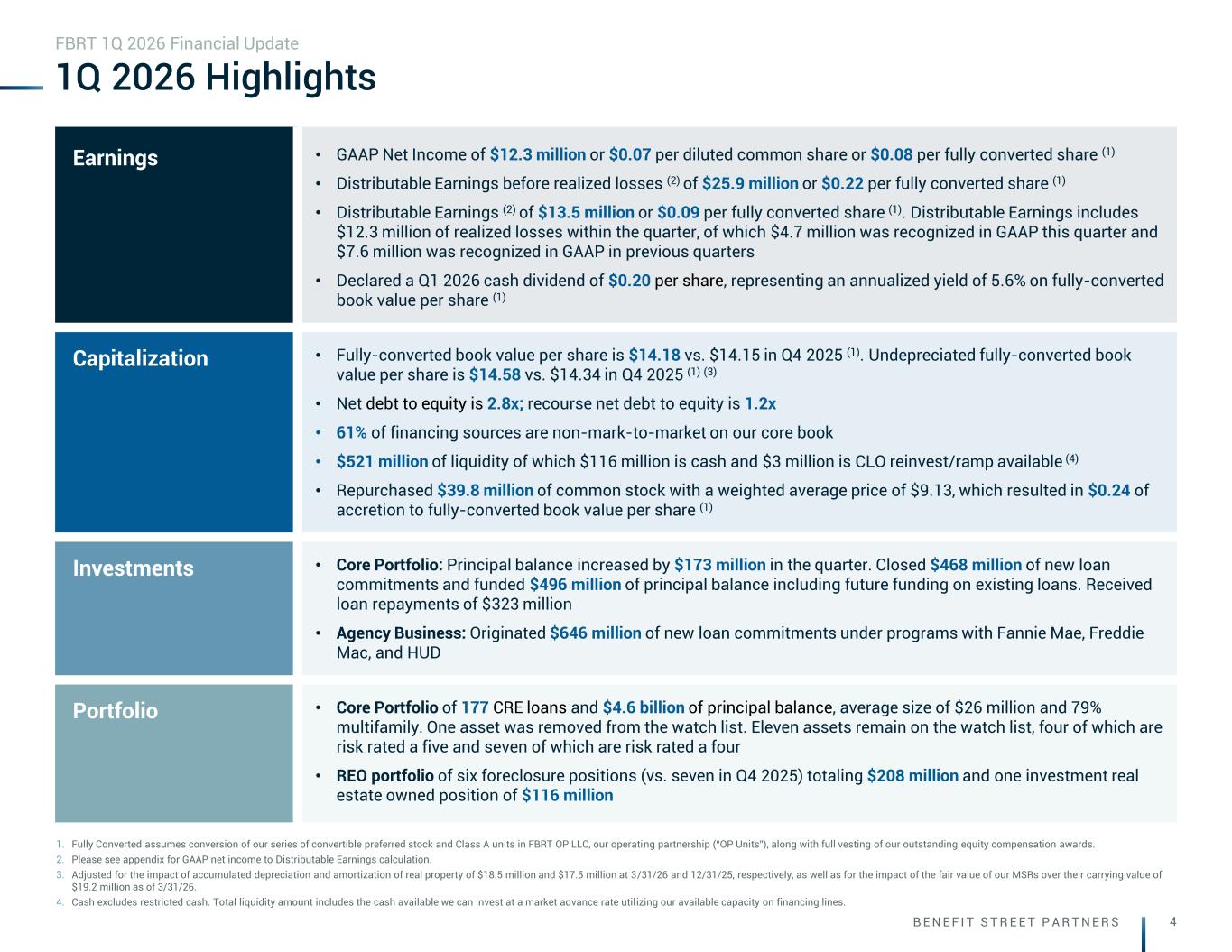
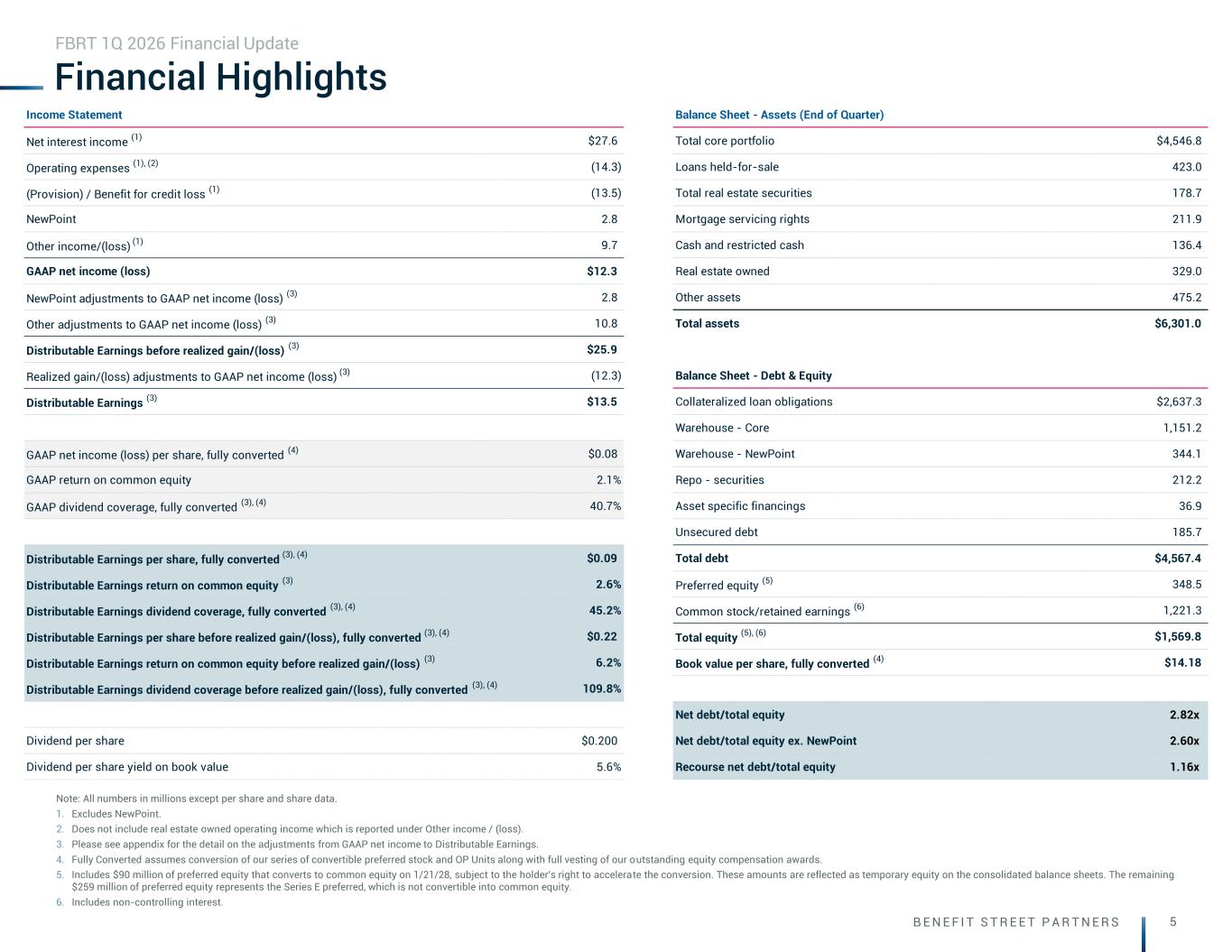
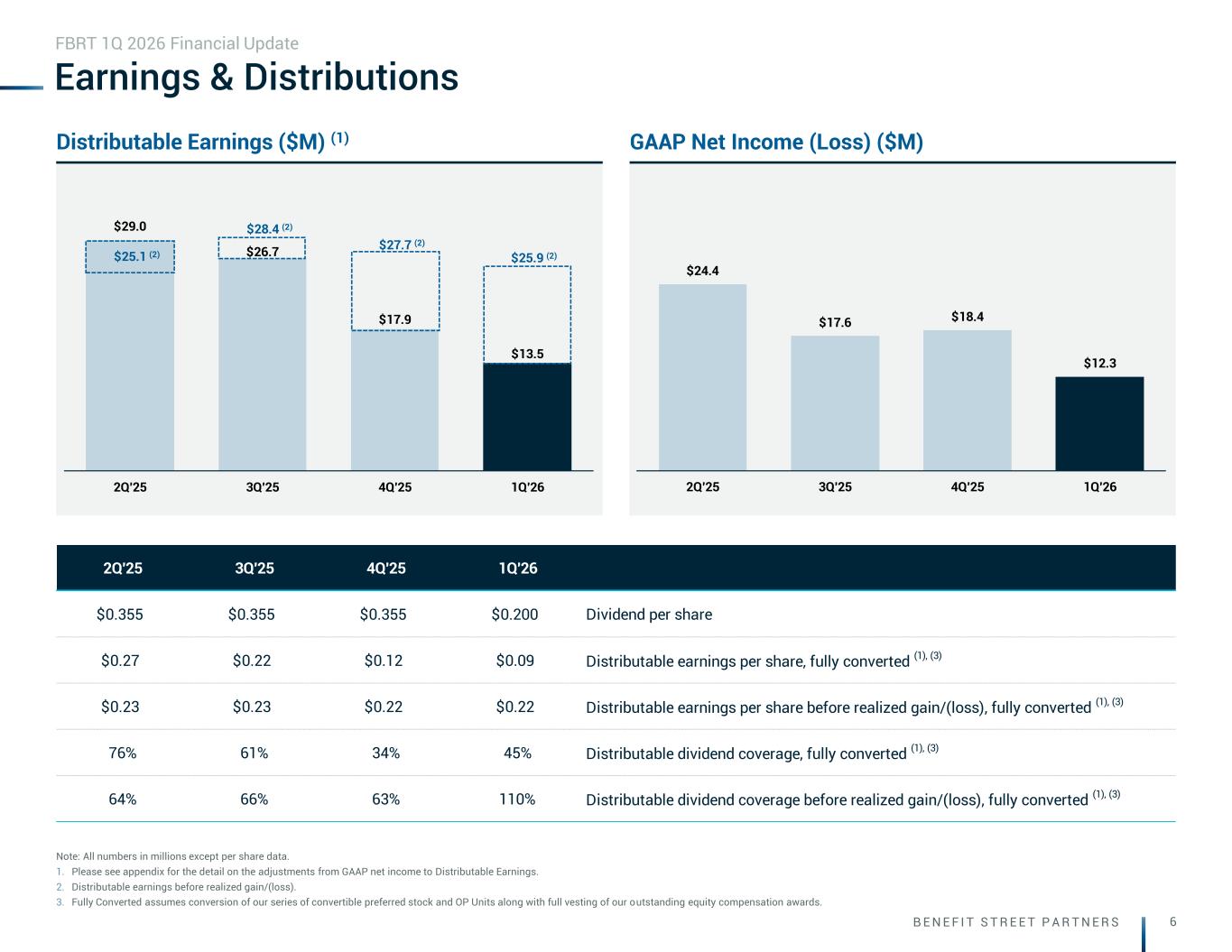
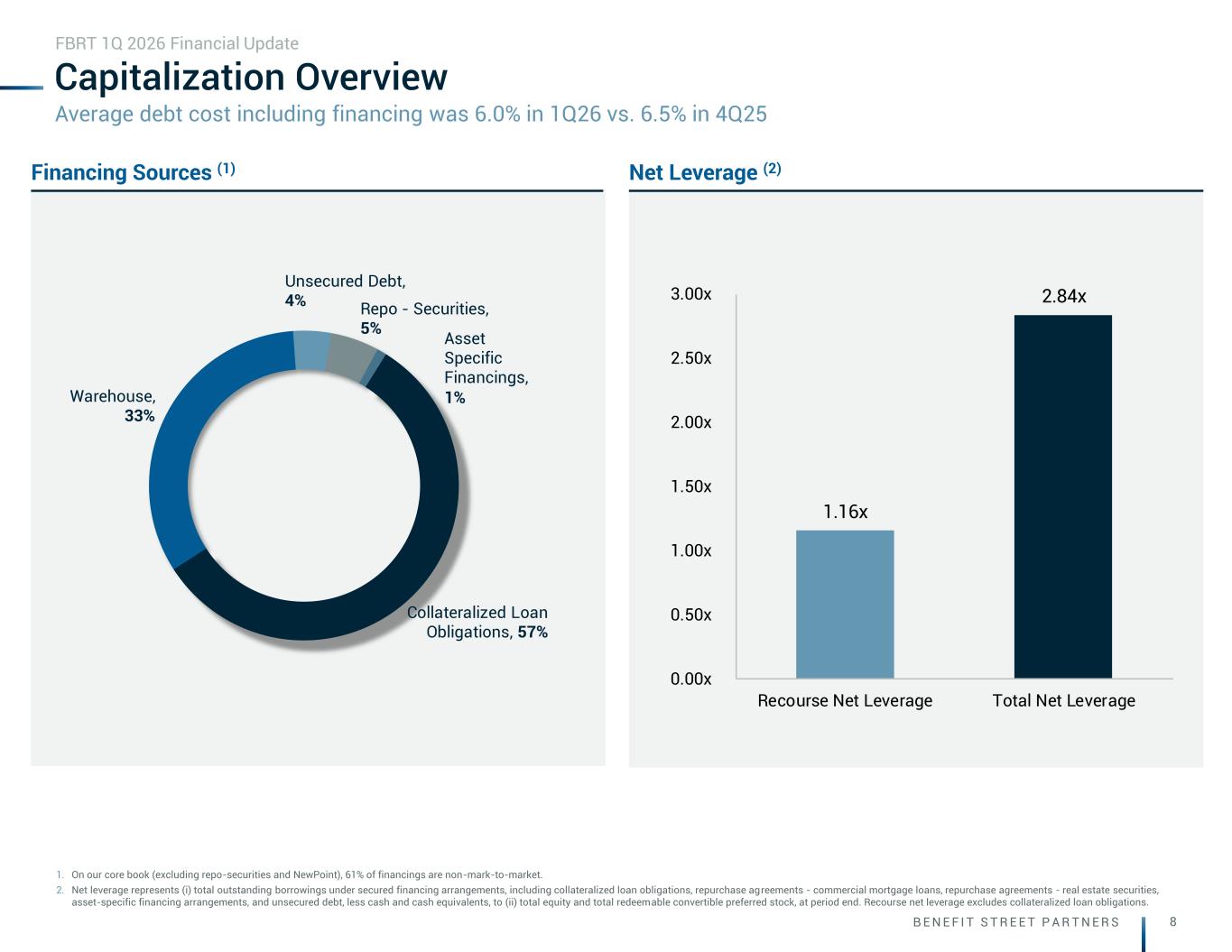
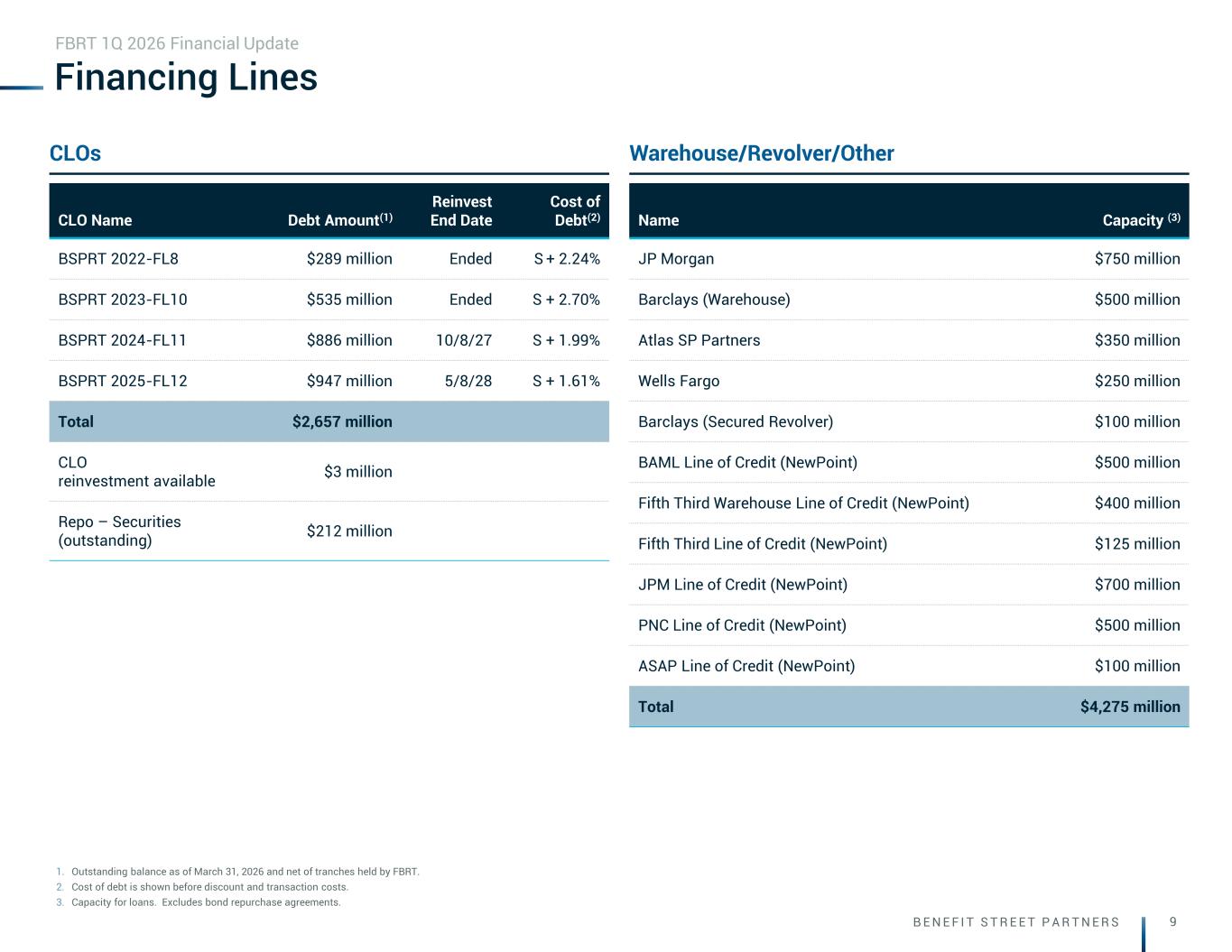
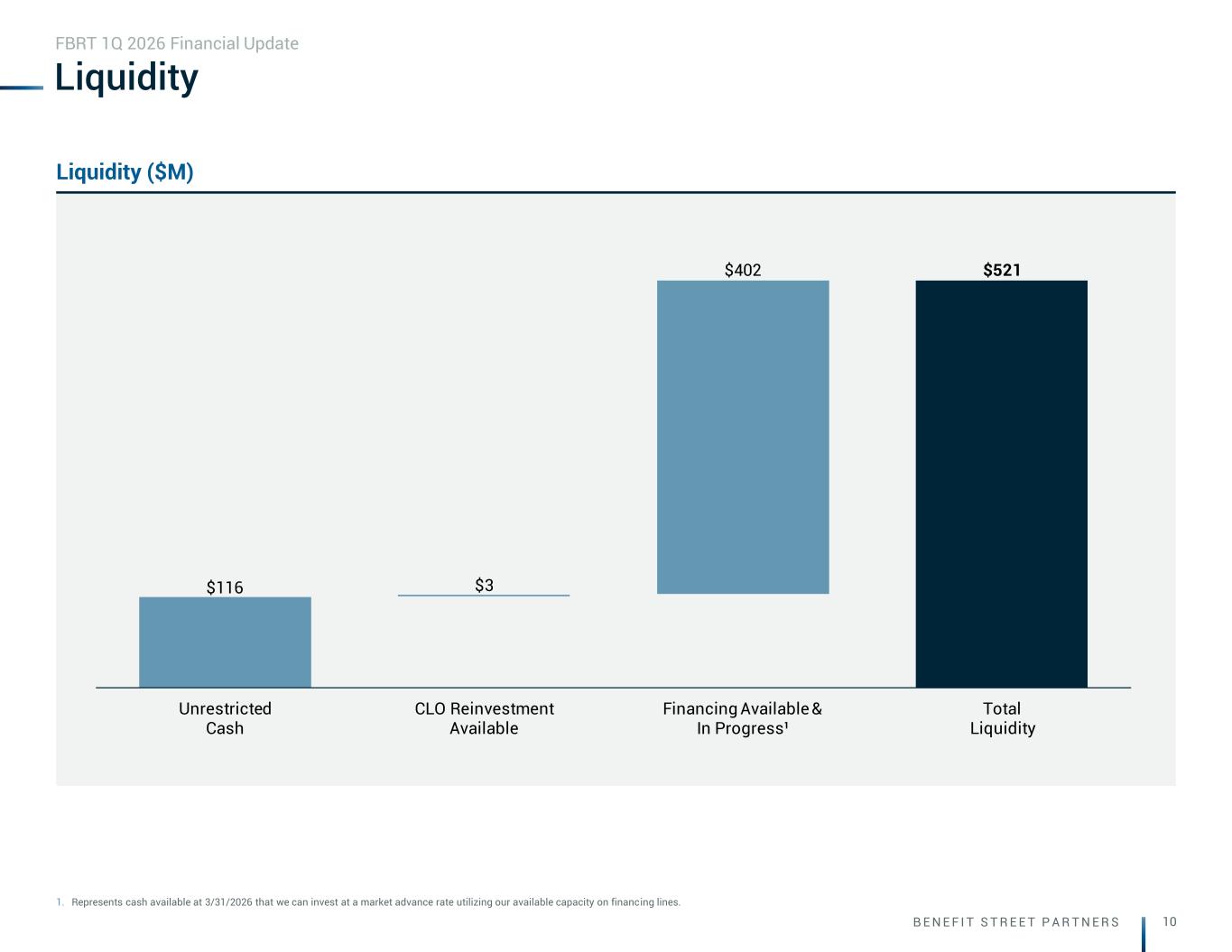
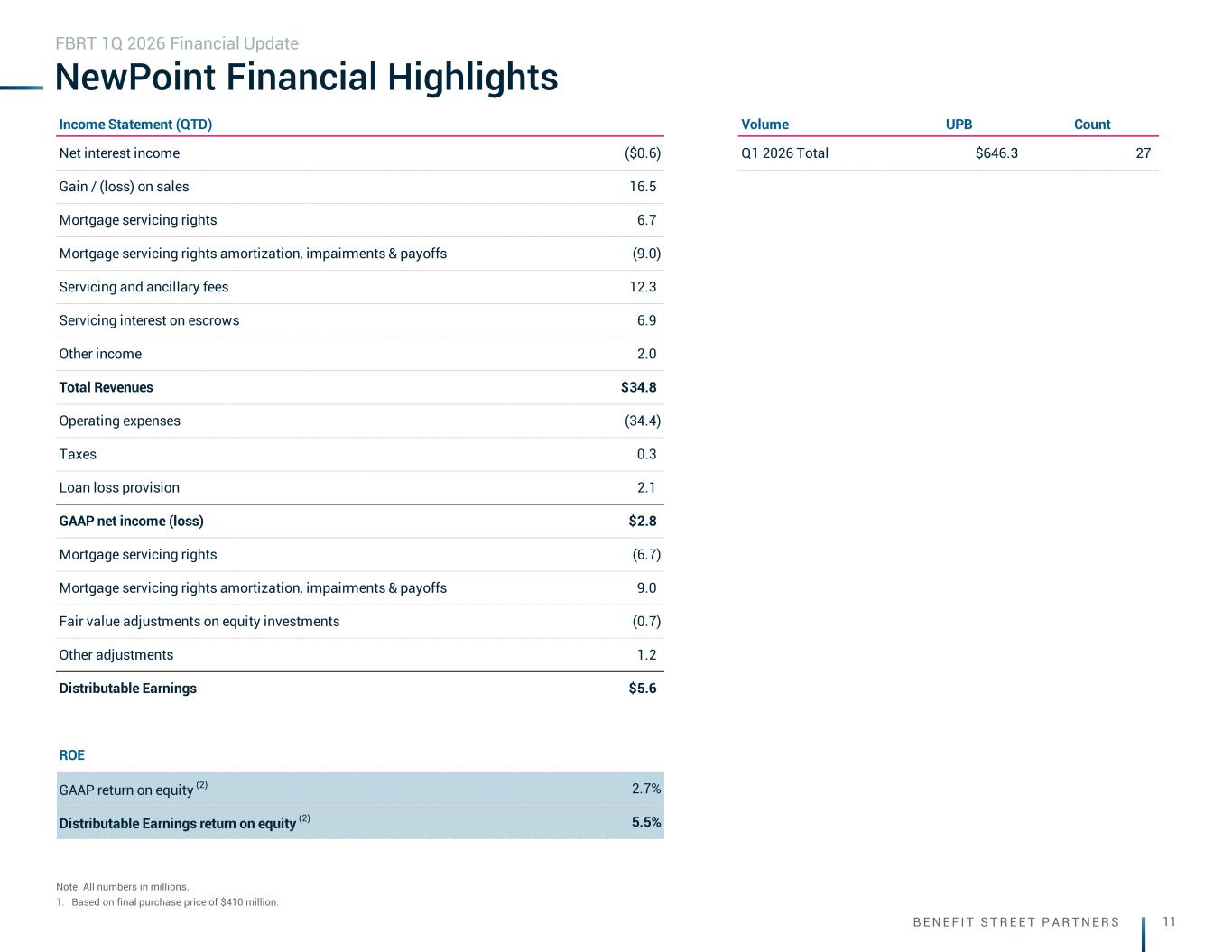
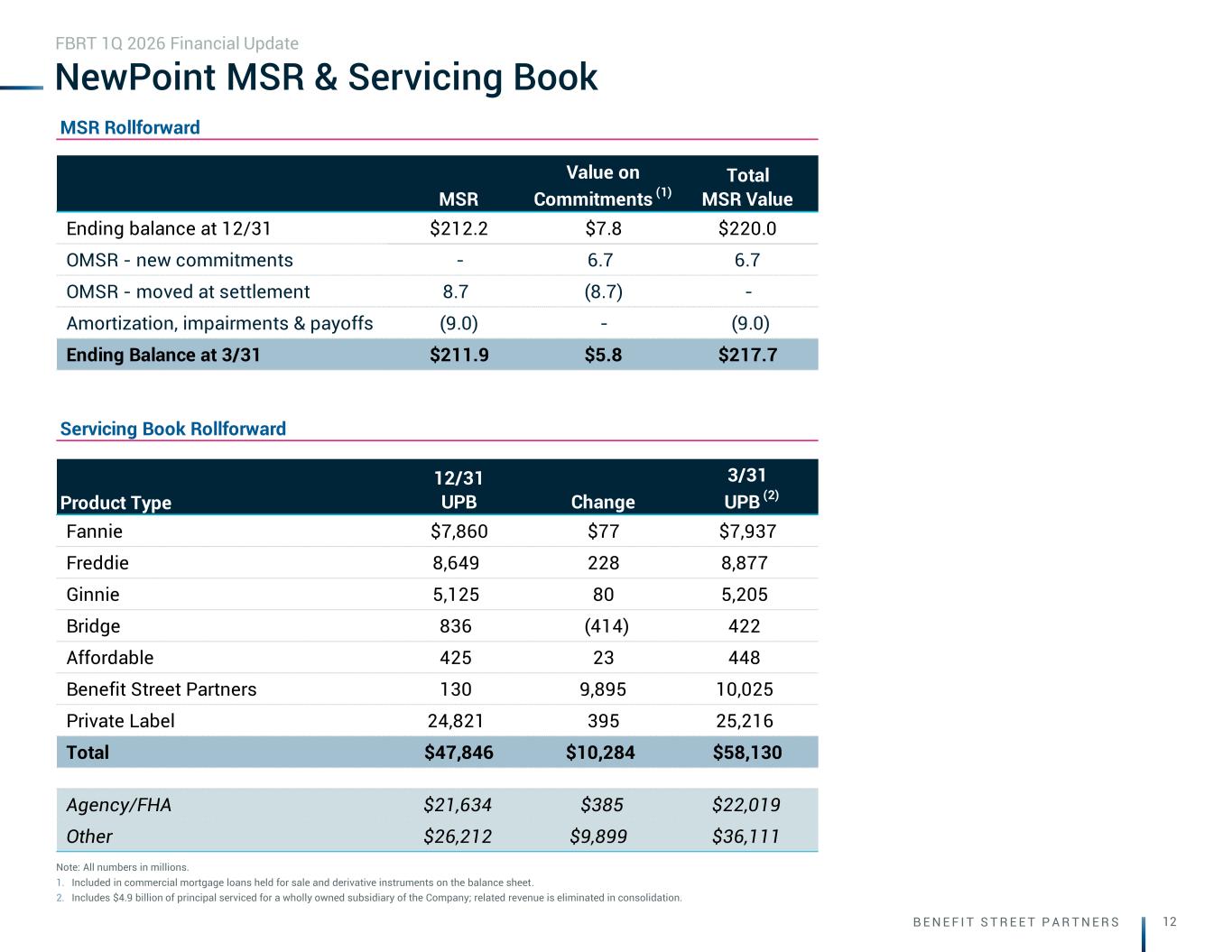
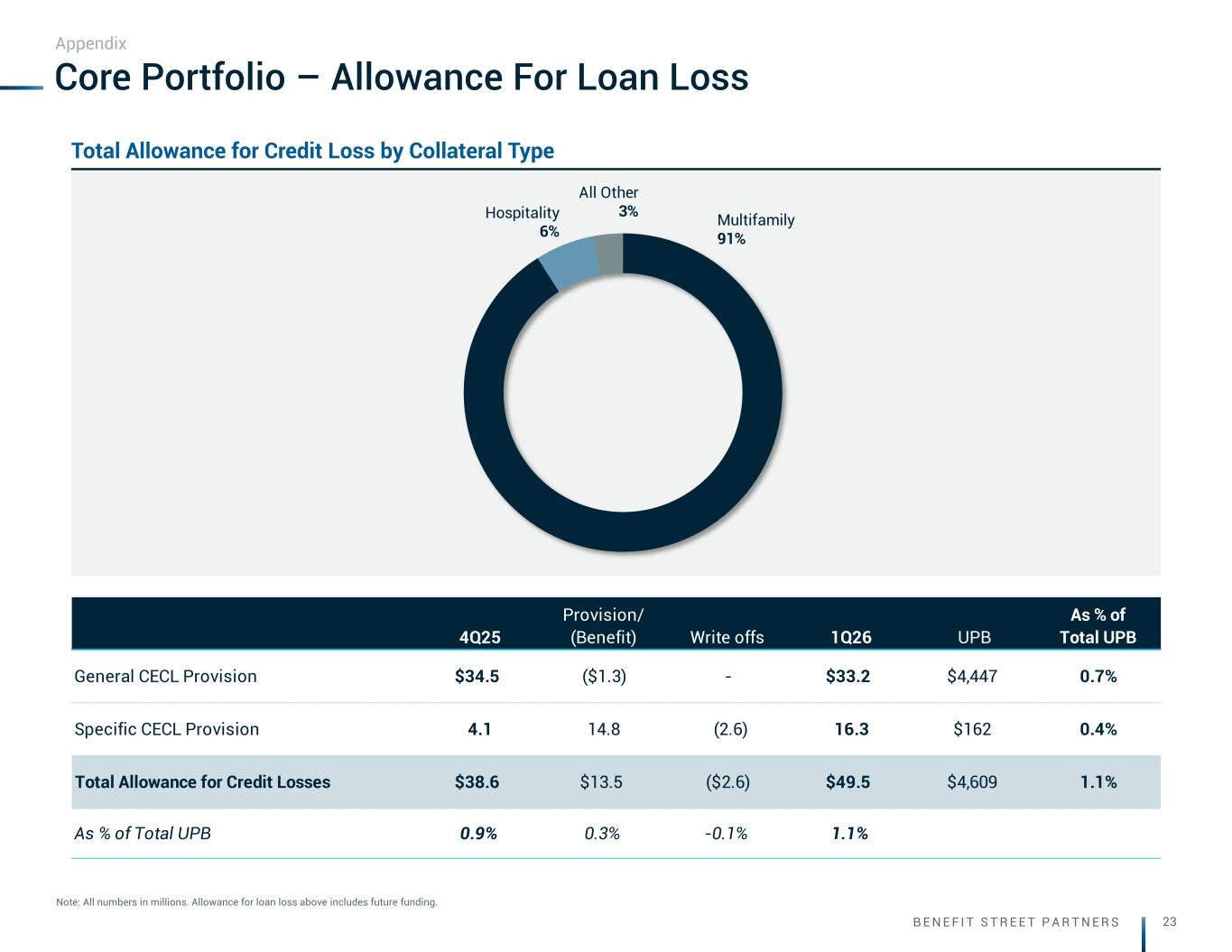
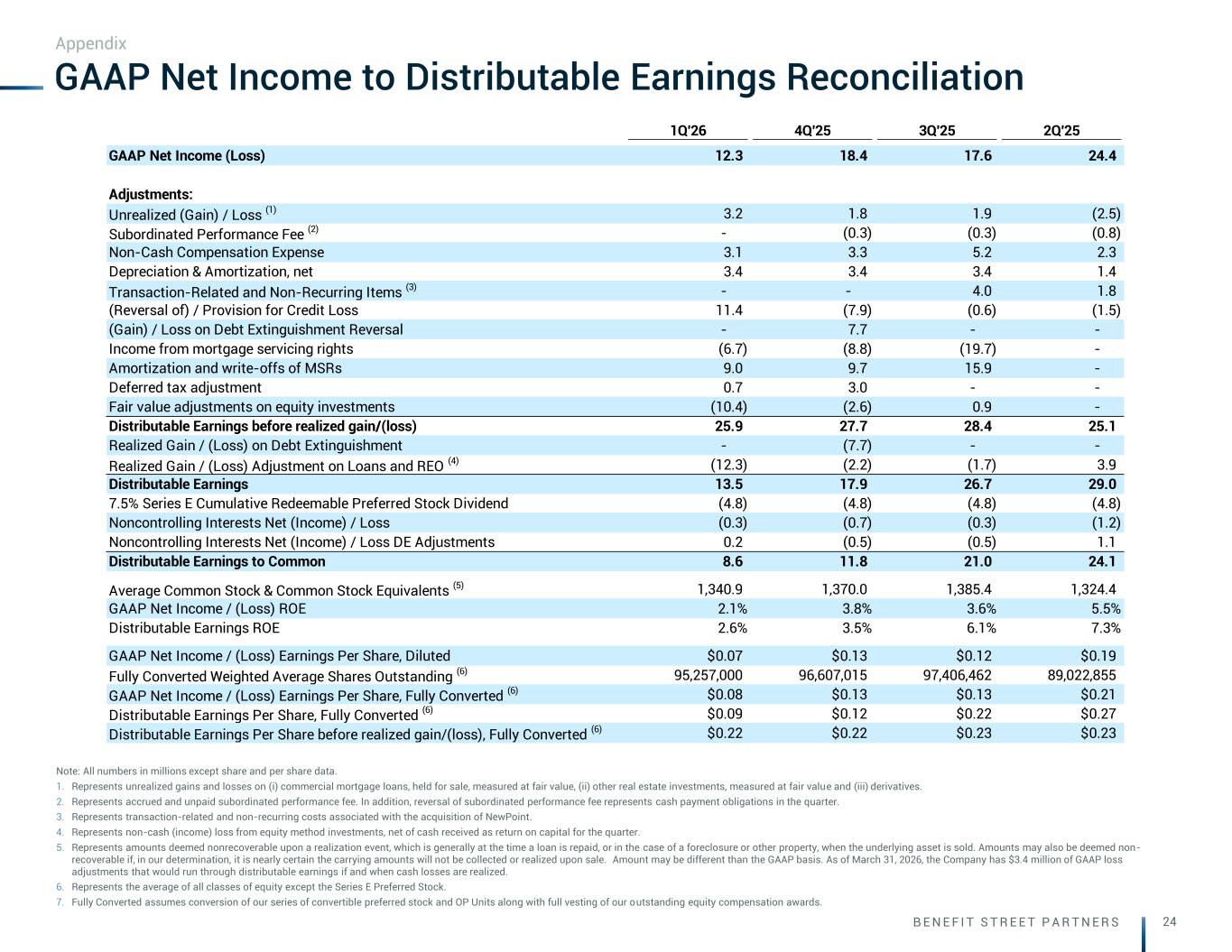
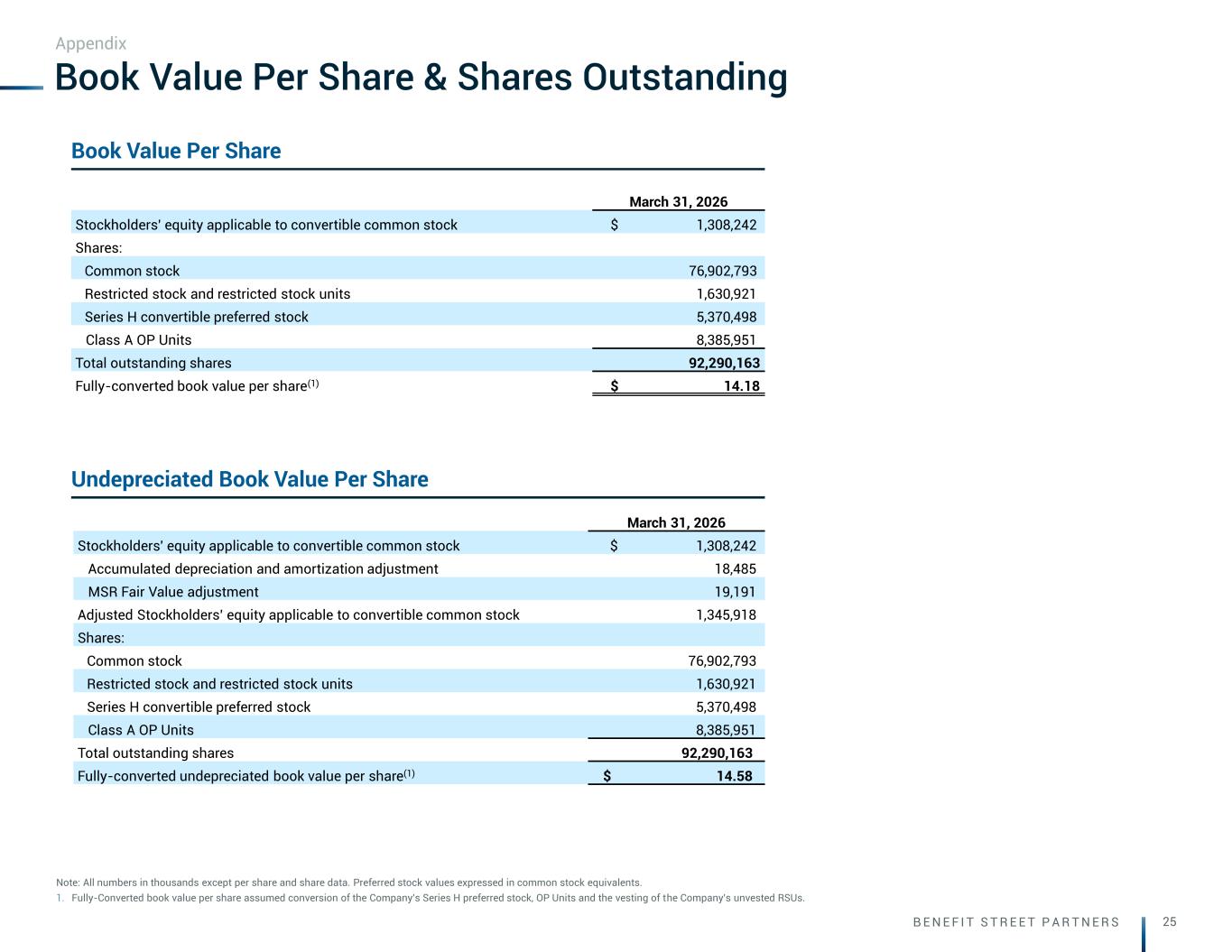
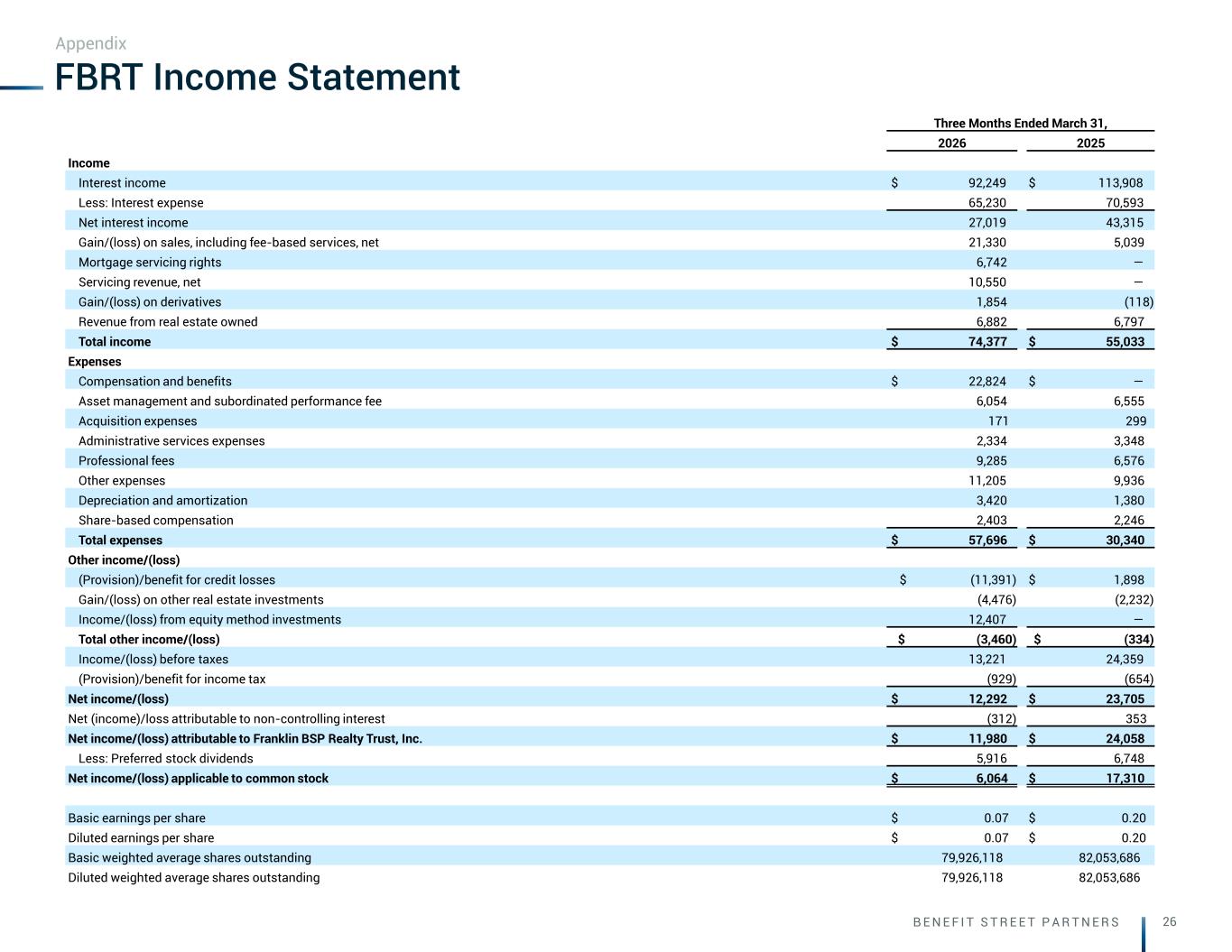
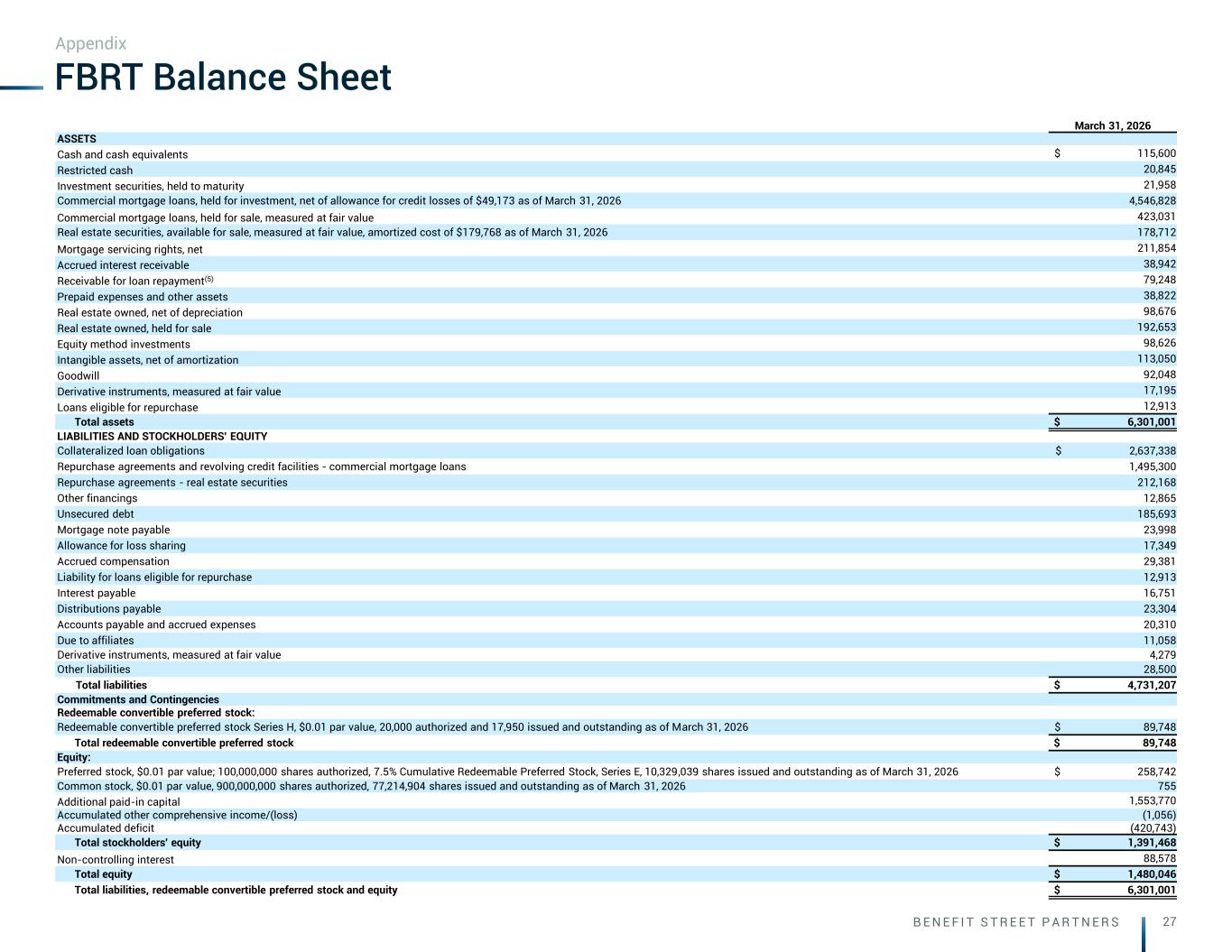
Great. Thanks, Mike. I appreciate everyone joining the call today. I'll walk through the financial results for the quarter. FBRT reported GAAP net income of $12.3 million or $0.08 per fully converted common share. Distributable earnings for the quarter were $13.5 million or $0.09 per fully converted share. Distributable earnings includes $12.3 million of realized losses tied to foreclosure real estate that we sold. Excluding these losses, distributable earnings were $0.22 per fully converted share. Results this quarter were supported by relatively stable net interest margins compared to Q4, along with a more normalized contribution from NewPoint, which I'll touch on briefly. During the quarter, we recorded a CECL provision of $13.5 million, which included a $1.3 million benefit from our general reserve and a $14.8 million specific reserve primarily tied to one watch list loan. Book value per share increased to $14.18, driven by our share repurchase activity. We've been consistent in allocating capital where we see the best risk-adjusted return, and we view our stock as one of those opportunities. We repurchased nearly $40 million of common stock during the quarter. Subsequent to quarter end, the Board reauthorized the share repurchase program with $50 million available through December 31, 2026. Net leverage ended the quarter at 2.84x with recourse leverage standing at 1.16x. Excluding the leverage on NewPoint assets, our net leverage for the vehicle was 2.62x and with our current leverage target in the range of 2.75 to 3x with NewPoint excluded. Subsequent to quarter end, we issued an $880.4 million managed CRE CLO. In connection with that transaction, we called the 2022 vintage CLO that had exited its reinvestment period. We continue to maintain strong liquidity and financial flexibility with reinvestment capacity now available across 3 CLOs. Looking ahead, we expect earnings to benefit from the larger core portfolio and a more stable contribution from NewPoint over the course of 2026. Slide 11 highlights NewPoint's contribution for the quarter. Distributable earnings from NewPoint totaled $5.6 million, which is more consistent with what we view as a normalized steady-state level of income from the platform. Agency origination volume was $646 million in Q1, reflecting typical seasonal softness compared to the back half of 2025. At quarter end, the MSR portfolio was valued at approximately $217 million and generated $6.7 million of income in Q1, representing an average MSR rate of roughly 100 basis points. NewPoint's servicing portfolio totaled $58.1 billion at quarter end. The quarter-over-quarter increase was largely driven by integration efforts, including the successful transition of all BSP real estate loans onto the NewPoint servicing platform, which occurred over the course of the quarter. The full earnings benefit from this transition will be realized in the coming quarters. This marks a significant milestone in our integration process and positions us to be a more differentiated servicing provider going forward. We continue to see NewPoint as a meaningful driver of long-term value with increasing contribution expected as volumes build, MSR and the servicing book grow and the benefits of integration come through. With that, I'll turn it over to Brian to give you an update on our portfolio.
Speaker 4
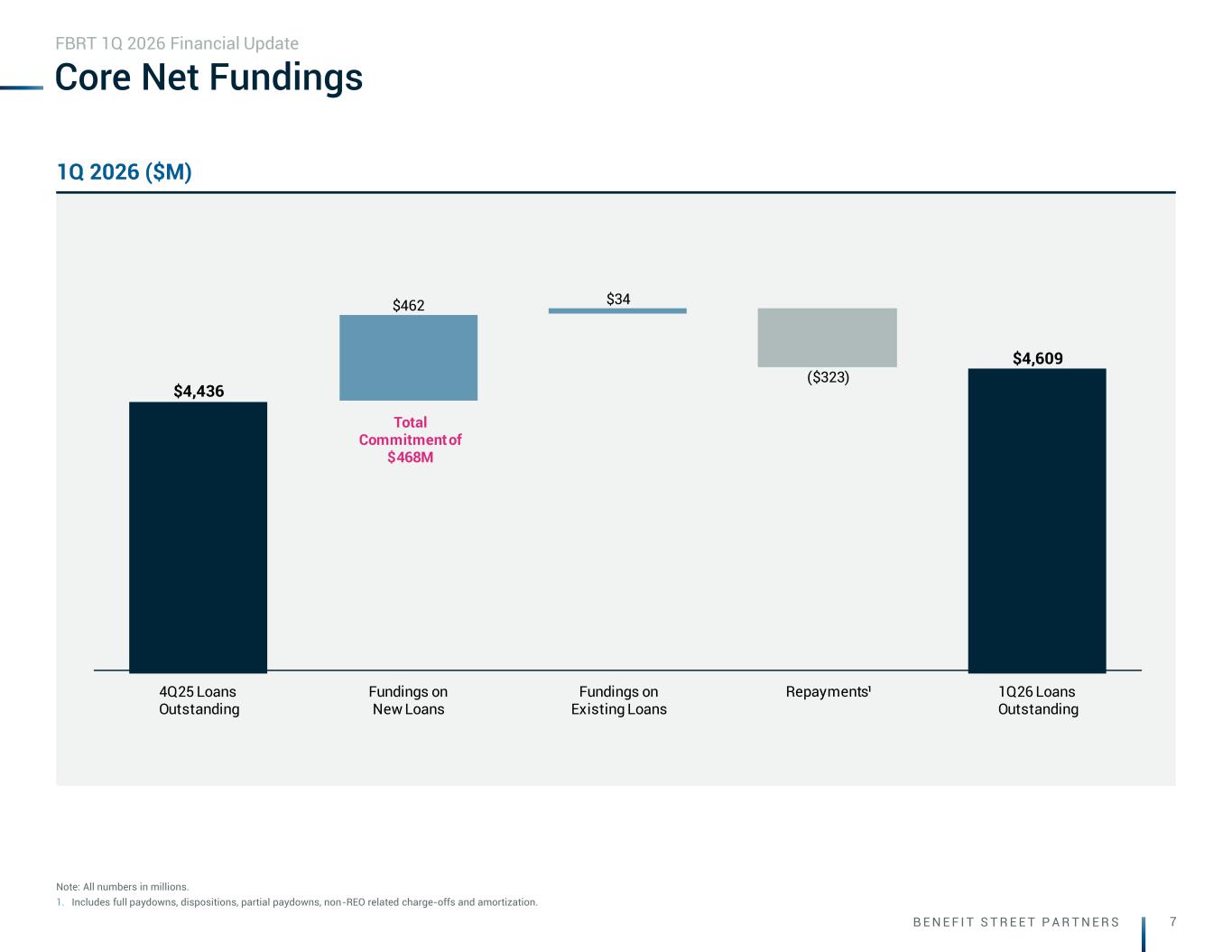
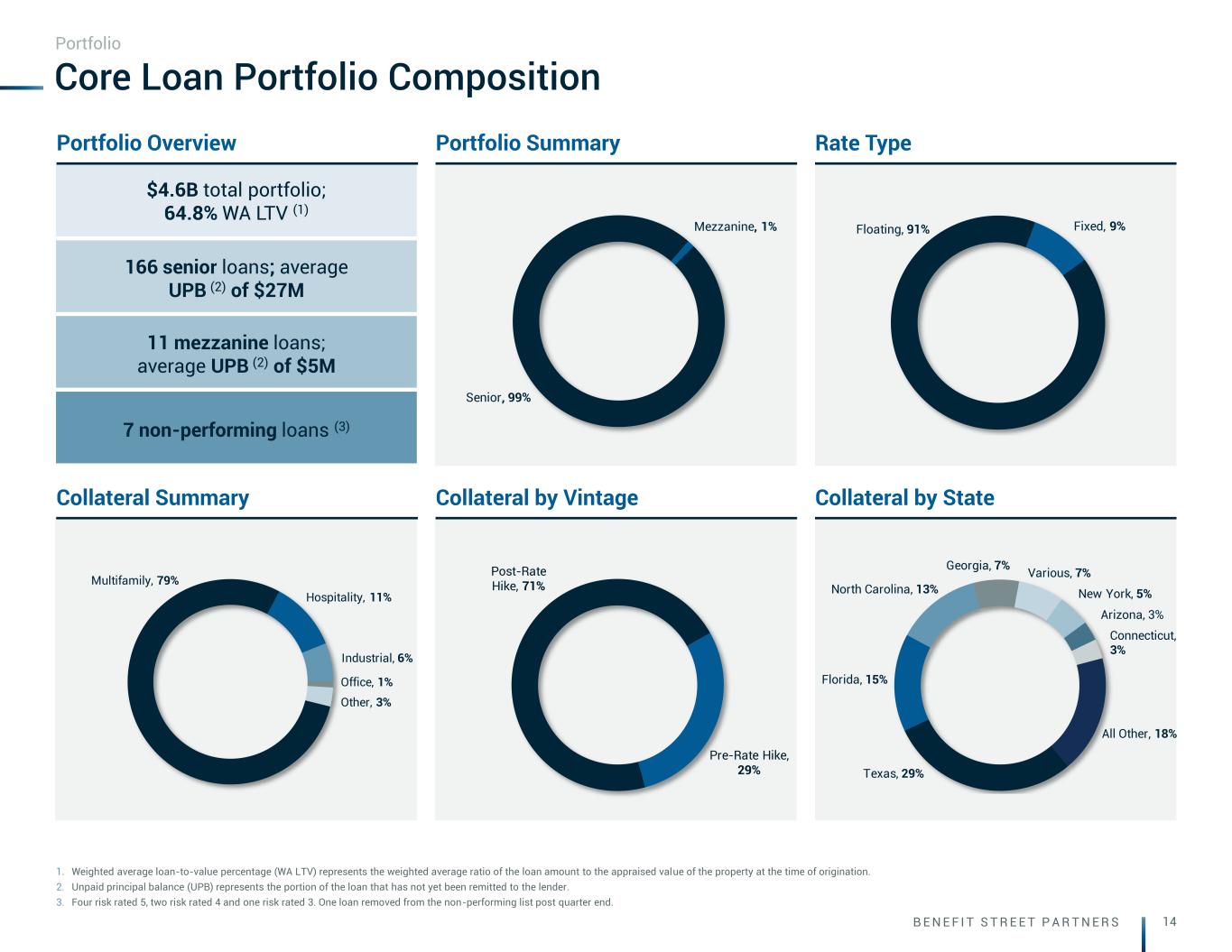
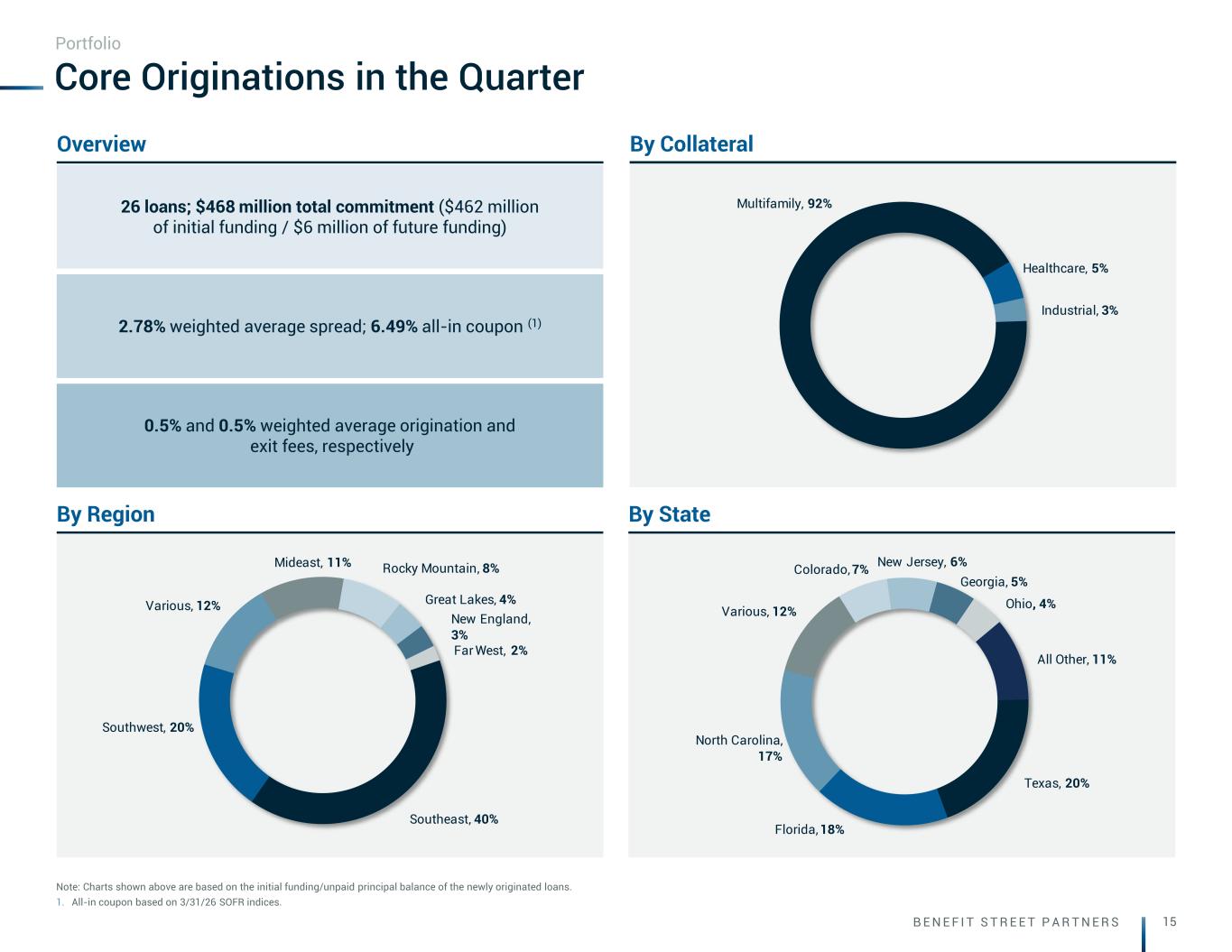
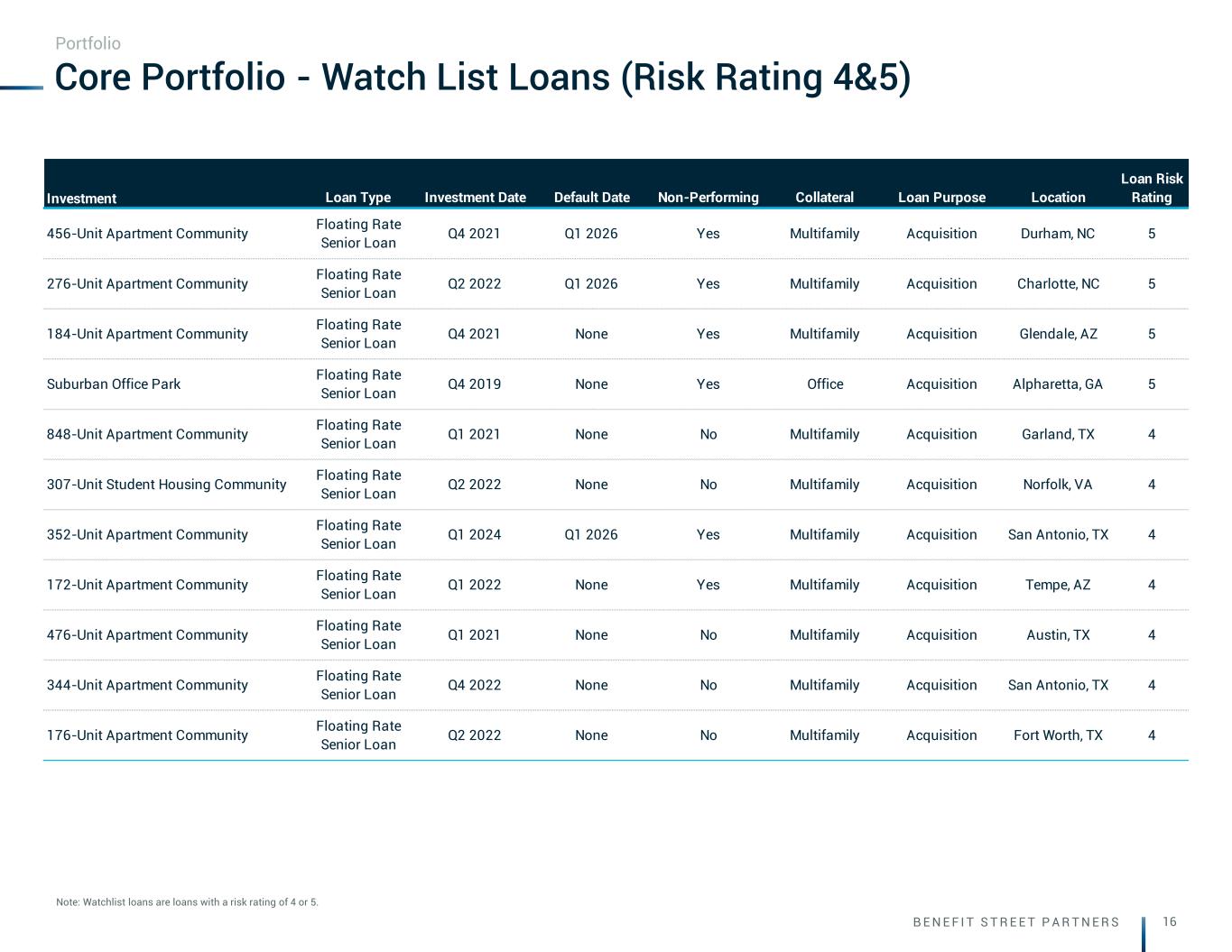
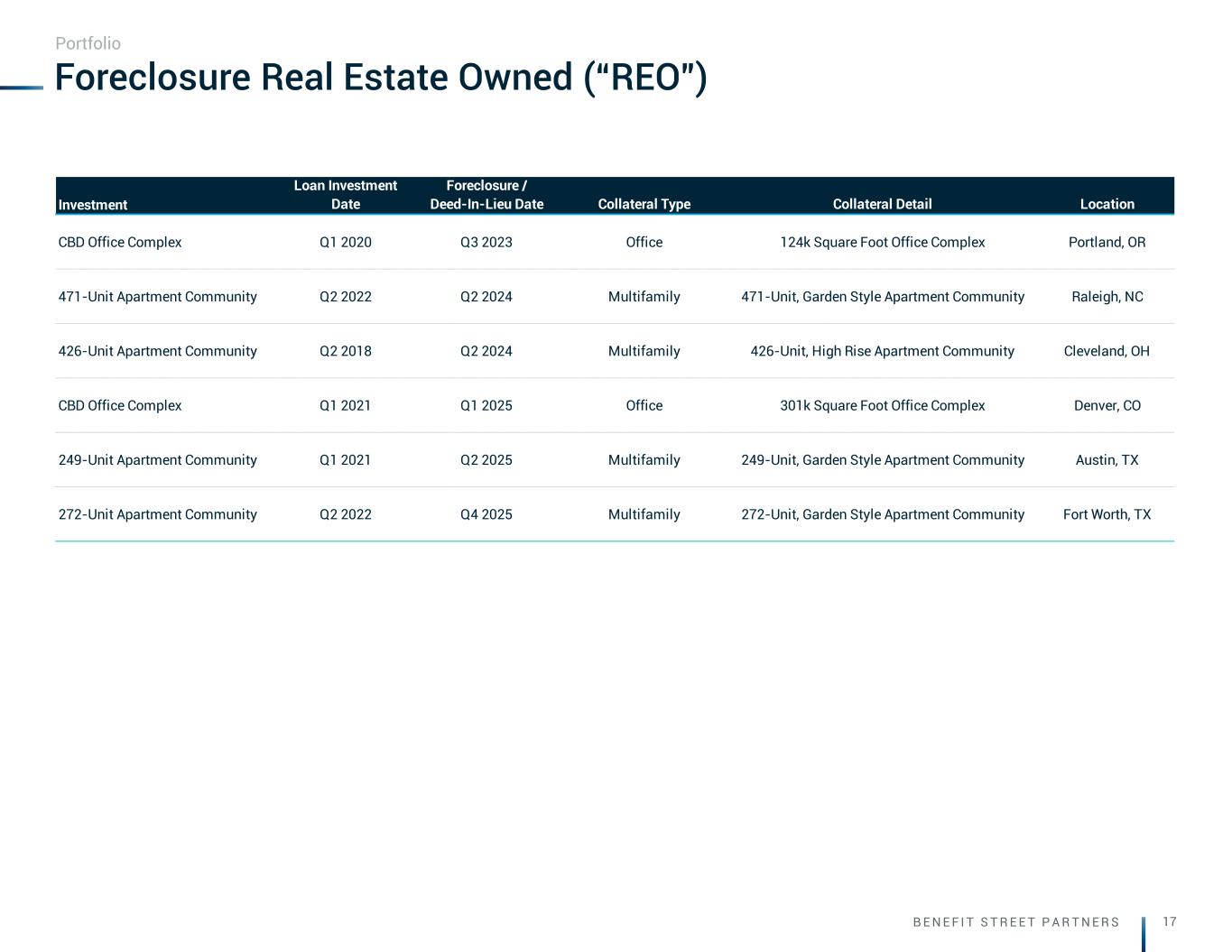
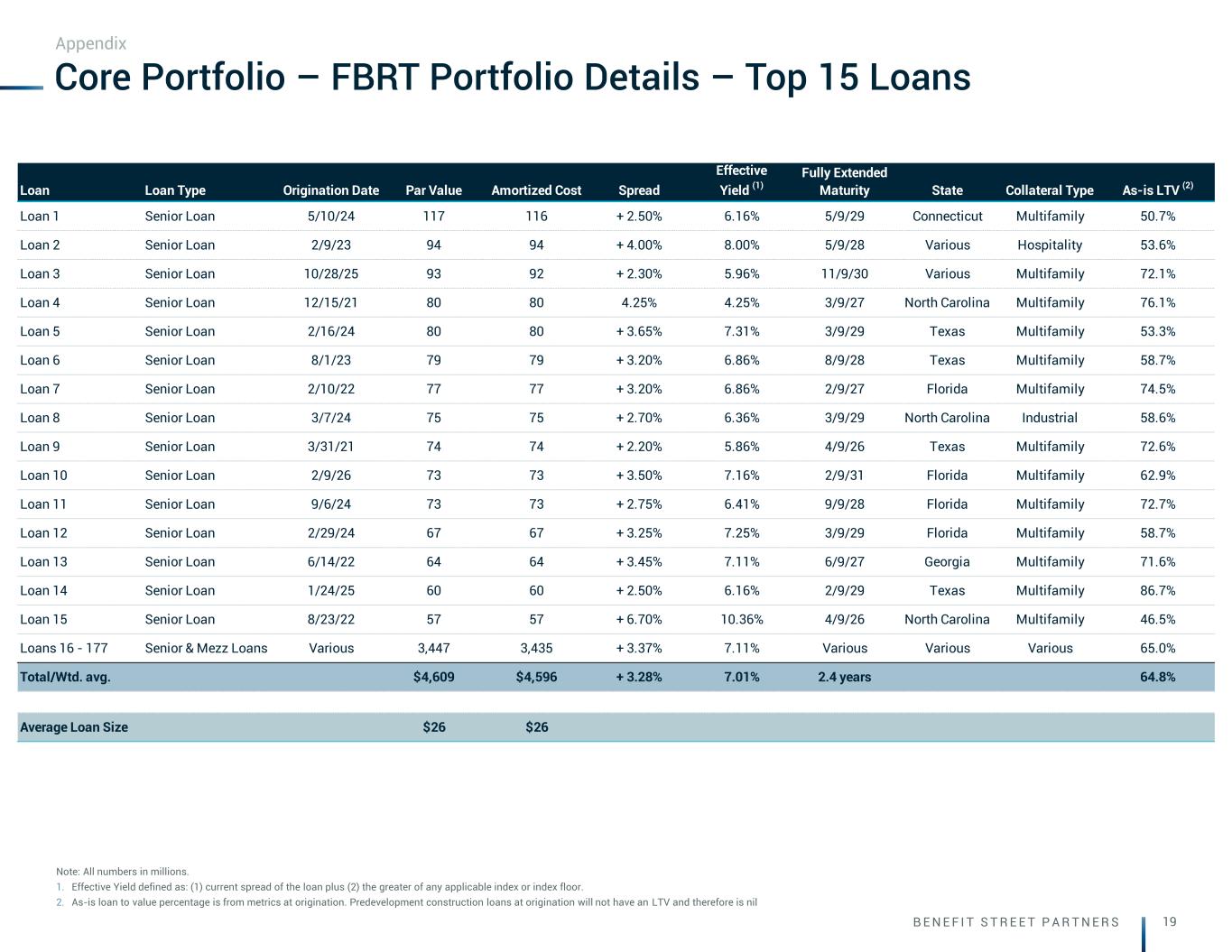
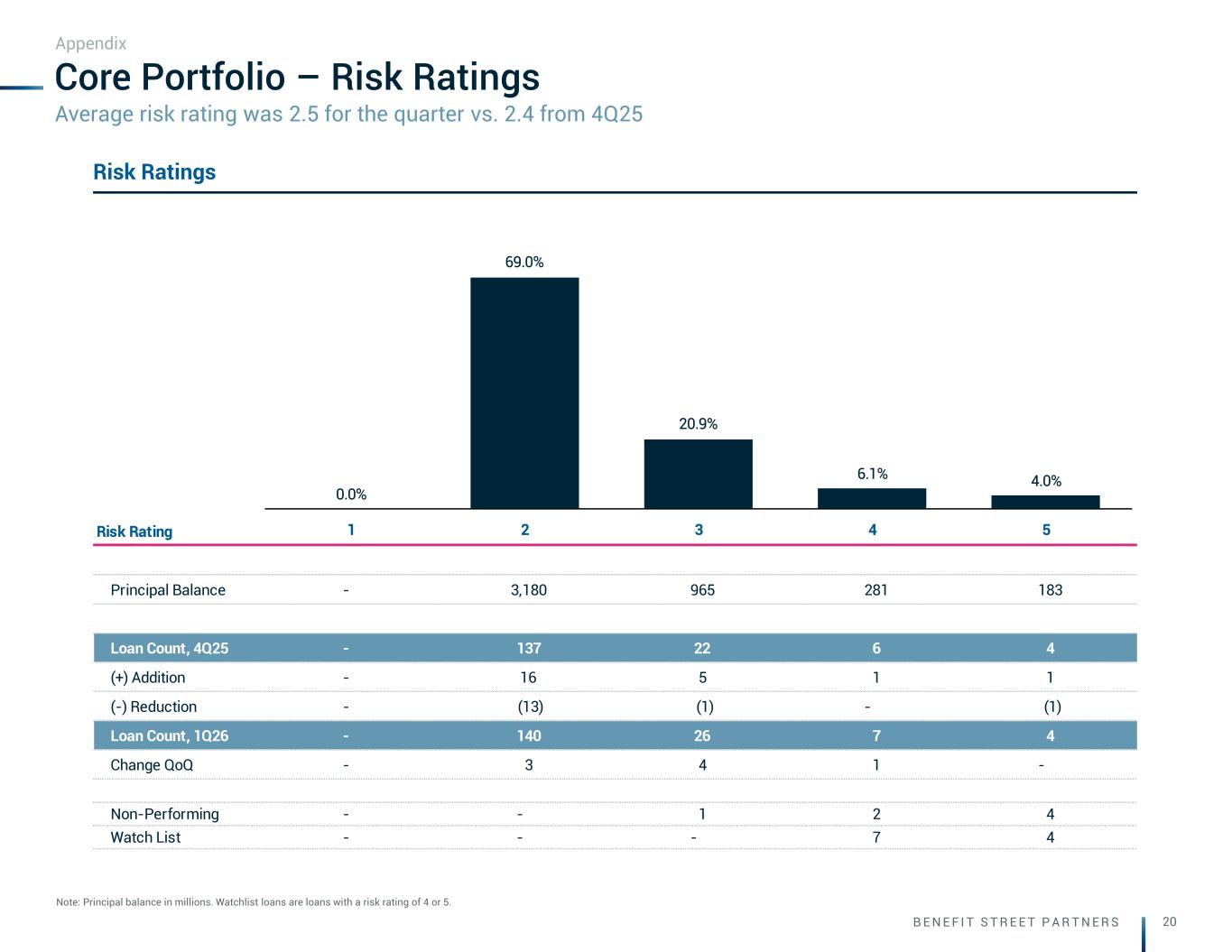
Thanks, Jerry, and good morning, everyone. I'll start on Slide 14. Our core portfolio finished Q1 at roughly $4.6 billion. As Mike mentioned, we grew that core loan portfolio during the quarter with net growth of $173 million. This was driven by $468 million of new loan commitments in addition to future funding commitments from previously closed loans. This was partially offset by $323 million of repayments. We expect continued modest portfolio growth throughout the rest of this year. Approximately 79% of our loans are backed by multifamily assets and our office exposure is extremely limited sitting at just 1% of our core portfolio. That office loan exposure is now only $55 million across 3 loans, 2 of which are performing and the third is nonperforming and on our watch list. During the quarter, we originated 26 loans at a weighted average spread of 278 basis points with multifamily accounting for 92% of that production. We remained active in a highly competitive market but stayed disciplined in how we deployed capital. Our focus continues to be on high-quality multifamily loans with lower loan-to-value profiles where we believe we are best positioned from a risk-adjusted return perspective. Our pre-rate hike portfolio continues to be reduced and now represents approximately 29% of our total loan commitments with $175 million of payoffs during the first quarter tied to that vintage. This continued runoff reflects steady progress in rotating the portfolio into newer post-rate hike originations. Turning to Slide 16. The overall portfolio remains stable with an average risk rating of 2.5 and 11 loans on watch list at quarter end. During the quarter, we resolved one watch list loan completing that loan sale within the quarter, and we added 2 multifamily loans during the quarter. Slide 17 covers our foreclosure REO portfolio. We reduced our REO count to 6 assets at quarter end, down from 7 last quarter, reflecting continued execution on asset resolutions. But the most meaningful milestone in resolving our REO positions came very shortly after quarter end with the sale of the Raleigh multifamily asset, which was by far our largest REO position. Our financing of that sale will return equity associated with that investment from a negative to a positive contribution next quarter. Write-downs associated with that sale were recognized this quarter and contributed to realized losses as we continue to take a proactive approach to resolving these positions. With that, I would like to turn it back over to the operator to begin the Q&A session.
Operator
The first question comes from Matthew Erdner from JonesTrading.
Speaker 5
I'd like to kind of touch on NewPoint to start. It was a lot better quarter this quarter than the prior. Could you talk a little bit about the timing of when those loans were kind of transferred on to the servicing book and if it had the full effect for this quarter? And then if you expect any kind of normalization of that going forward?
Yes. This is Jerry. I'll take that. It occurred during first quarter. So you're not getting the entirety of the benefit, effectively done kind of mid-first quarter. But keep in mind, you've got to have the personnel to run that ahead of that. So from a contribution in the first quarter perspective, you're certainly not capturing the entirety of what we expect that to contribute on a go-forward basis. And when we gave our estimations last quarter on kind of the expected growing contribution for 2026, the back or latter half of the year beyond this will show the full benefit of having the yield in its entirety throughout the rest of the quarters of the year. So it's going to be more positive than it was in Q1.
Speaker 5
Got it. That's helpful. And then turning to the watch list real quick. Is there, I guess, anything specific that you guys are seeing kind of across the Southeast, Southwest from a borrower profile perspective that's leading to kind of, I guess, the Texas and Arizonas finding their way onto the watch list?
Matt, it's Mike. I don't think much has changed, honestly, probably in the past 2 years in that regard. Rates are kind of in the same spot that they've been. Everybody has been hoping for greener pastures that just haven't really materialized. We've also been talking for the past 2 years just about borrower behavior and how difficult it's been to predict what borrowers are going to keep things current and pay loans down versus those that are walking away. So I would say largely not much has changed. We just learn more things every quarter. We got almost $200 million of paydowns from those kind of legacy 2021, 2022 vintage originations. So I continue to say that not everything originated in those years necessarily is bad and is losses, right? We've had billions of dollars of paydowns at par on that stuff. It's just the natural kind of adverse selection of working through the rest of that portfolio. And I think the team is doing a great job, but I don't think there's any new information that we have today that we haven't had for the last few quarters or years. It's just kind of working through the system.
Operator
The next question comes from Timothy D'Agostino from B. Riley Securities.
Speaker 6
It'd be great to hear a little more about your capital management and balance sheet management going forward. You repurchased about $40 million of common stock and the Board increased the repurchase program back to $50 million. Going forward, will buying back stock continue to be a focal point? The dividend was cut last quarter; how do you feel about that going forward? I'm trying to get an overall sense. Book value increased quarter over quarter, which is a positive.
Tim, it's Mike. Thanks for the question. Let me start with the dividend, so I'll answer that first and then address share repurchases. We've been pretty straightforward in saying we believe the company's earnings potential is in the same general area where the dividend previously was. We thought that, over time, recycling the REO portfolio and nonperforming loans into performing investments would allow us to get back up into that area. The cut was a decision we made to stop burning book value while we went through that transition. I don't think anything has changed from a macro perspective. We still believe the firm's earnings power is substantially higher than what we produced this quarter. It's really about the team continuing to execute on working through those legacy assets, liquidating the REO and getting that capital reinvested. I would hope that earnings continue to move on an upward trajectory, and I think that's been consistent with what we've said all along. Regarding share repurchases, we evaluate every day what we think are the best investments for our capital. Our shares are clearly one of those options. I can't tell you the exact magnitude at which we would buy back shares on any given day, week, or month, but it's something the Board supports. Jerry, Brian, the rest of management and I discuss it regularly.
Operator
The next question comes from John Nickodemus from BTIG.
Speaker 7
Regarding the 2 loans moved on to the watch list, just if you wouldn't mind expanding on sort of what drove both of those downgrades. I know one went from a prior 3 rating to a 5 and the other from a 2 to a 4. So I'd just love to hear a little more detail on specifically what went into those changes this quarter.
John, it's Mike again. I would say, again, this is based on mostly borrower behavior. One of them went from a 2 to a 4 because a borrower defaulted. Shortly after the default, I think they realized that, that was not the greatest outcome for them. They actually came whole on all of the payments due, including about $300,000 of default interest and late fees. So that loan is current as we sit here today. But given that it did have a default, we thought it appropriate to risk rate it at a 4. With respect to the loan that was risk rated at I would say this is exhibit A of trying to figure out borrower behavior and what happens next. These are, I would say, average to above average assets in average to above average locations. This is a major, major sponsor who has been contributing, I would say, an exceptional amount of equity to the property and keeping the loan current for several years. And unfortunately, they just decided that the well had run dry. We thought that they were going to right size the loan and continue to keep things current, and they woke up and said no loss. And so we got a valuation in conjunction with that default that currently indicates that it would be a loss. Obviously, we'll see when we actually exit the positions, what that turns out to be, but that's kind of the back story behind that one.
Speaker 7
That's super helpful for both of those. And then just the other one for me. Congratulations again on the sale of your largest REO position. I was just curious how you're thinking through the remaining 5 assets and any sort of timing or just what the cadence could look like for those potentially being sold throughout the rest of 2026?
Speaker 4
Sure. On the majority of them, we are actively marketing for sale. We hope to have resolution in Q2, Q3 on 2 or 3 of them. But right now, we are actively looking to resolve those. And as Jerry and Mike both pointed out, redeploy that capital back into what is our core portfolio on multifamily assets on the lending side, but very actively in the market on those and hope to have resolution within the next couple of quarters there.
And I would add to that, John, the 2 that are closest to being sold, indications are that they will be collectively at or maybe even above where we have them currently marked.
Operator
The next question comes from Chris Muller from JMP Securities.
Speaker 8
So following up on a prior question. On the increase in specific CECL reserves, so there wasn't much of a change in risk ratings in the quarter, 1 new 4-rated loan and 1 new 5-rated loan. Was that increase in specific reserves due to those downward migrations? Or is it more related to the other watch list loans?
It's really just position. Yes, go ahead, Jerry, sorry.
Yes, we're saying the same thing. It's the one position that went to a 5. That's the majority of the increase in the quarter. It's just a specific provision on that asset.
Speaker 8
Got it. Makes a lot of sense. And then I guess shifting gears to the NewPoint business. You guys originated $1.1 billion in 4Q and then down to $646 million in 1Q. And Jerry touched on this a little bit. But how much of that dip was due to seasonality? And how much was due to the conflict in the Middle East causing some interest rate volatility? I'm just trying to see where the seasonally adjusted baseline for this business should be.
Yes, Chris, that's a harder question to answer. Q1 is historically seasonally lower in the agency business overall. We're in a really complicated rate environment. We saw the 10-year briefly hit about 3.75 to 3.80 percent, and borrowers became euphoric so inquiries shot through the roof. Then rates reversed and the high I saw was 4.48 percent just in the past few weeks, so every borrower has said they'll wait again. We're in this unfortunate period. I've said this a few times: a 25 basis point move with 4.25 percent being kind of the start rate. At 4.50 percent I think everything comes to a screeching halt, and at 4 percent you'll see a deluge of transactional volume. Right now we're at the higher end of that range; for origination to ramp you need rates to come down a bit and borrowers to stop bridging and taking floating-rate debt hoping for a lower-rate environment. I can't give you a 60-40 or 70-30 split — there's no way I could really answer or measure that for you.
Speaker 8
Got it. That's fair. And if I could just squeeze one last one in. Is that dynamic of interest rate volatility also impacting your guys' conduit business? And that business has been a nice contributor to earnings. It looked like it was about $0.06 this quarter. If we do see rates start to settle in a little bit, could there be some upside to the conduit business as well?
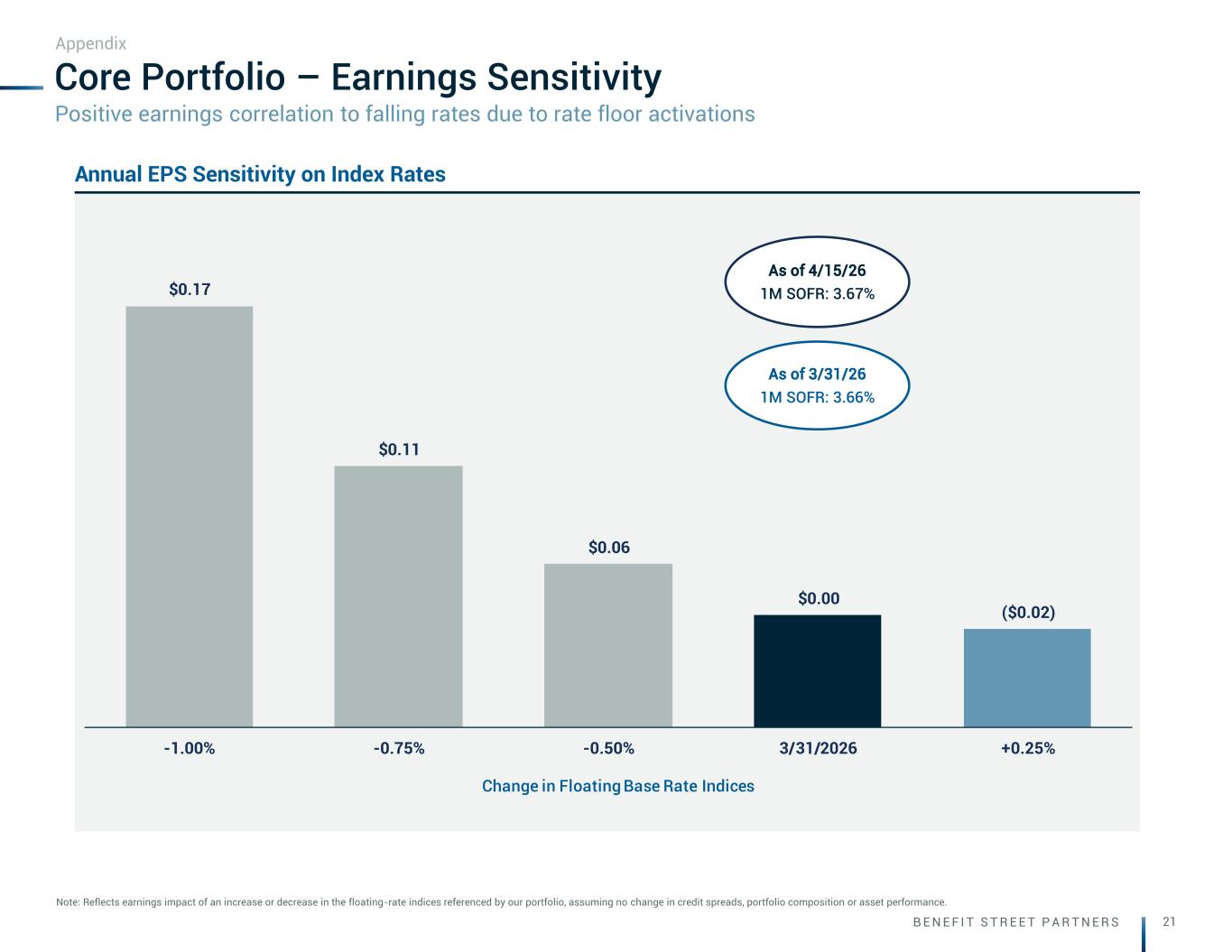
I think there could be. I also think there's potentially upside to the conduit business in that we are buying our first CMBSB piece that we bought in probably 5 years. And I think we're going to be able to give borrowers much more certainty of execution within that space, which is a very sought-out commodity. But we talk about this regularly. You didn't directly ask this, but I'm going in a slightly different direction. When you put all of the pieces on the board now and how we've acquired NewPoint, we have a conduit business, we've got a servicing business, and we've got a floating rate debt business and a growing equity business. FBRT in its totality has kind of become a perfect hedge for itself, right? If rates go down, it benefits this side of the group. It probably is to the detriment of others. As rates go up, we do more floating rate business, maybe the conduit underperforms and the agency underperforms. But what we really have built is something that should be just a natural hedge based on rates overall. And I think that the market will figure that out in the coming quarters and years as the different pockets of the company perform in certain market environments.
Operator
The next question comes from Gabe Poggi from Raymond James.
Speaker 9
A lot of what I wanted to ask has been asked. I want to ask kind of a 20,000-foot question here. FBRT has, over the last years, rotated against newer vintage. Obviously, you got 70-plus percent of the book in newer vintage multi. Two questions on that. Can you, Mike, talk about just general market color between what you're seeing in the transaction market between newer vintage product and older and then kind of A/B/C product? And then the piggyback to that is, as you mentioned, potential more equity investments, is there at even Benefit Street in totality, more want or interest in potentially owning some of the multifamily that you guys have been in and around the hoop on for longer from an equity perspective because of longer-term tailwinds?
Gabe, thanks for the question. I appreciate it. I'll channel my inner Charles Dickens and say it's kind of a tale of two: the best of times and the worst of times when it comes to Class A new vintage versus the older stuff. It seems like everybody, whether equity or credit, wants to be in the nicer, newer vintage, higher-quality assets. It's easy for an equity investor to walk into their investment committee or look themselves in the mirror and say, okay, I'm buying a brand-new asset below replacement cost, construction starts have declined, supply is declining. If I own this thing for five, seven, ten years, as long as I just operate it correctly and don't overlever it, I'm probably going to have a pretty good investment experience. For credit guys, it's the same exact conversation. It's slightly different, but it has the same foundations, which is this is the new best asset in the market. If the buyer is below replacement cost, we're substantially below replacement cost. I just think that's a very easy thesis for people to understand and sink their teeth into. For example, Austin is probably one of the three most oversupplied markets in the country. We closed two loans last quarter in Austin on brand-new delivered product, I think 2024, maybe even 2025 vintage assets, where we were lending at $135,000 to $140,000 a unit. We all looked at ourselves and said, if that's not money good, wow, we're in trouble. So I think everybody is piling into that space. The exact same is true of people avoiding the 1970s and 1980s vintage stuff. It feels like that has to correct a little bit more on cap rates. There are a small handful of equity investors actively trying to play in that 1980s vintage stuff, and I don't think you'll see more equity investors there until returns adequately reflect the additional risk of buying that older vintage asset. So we've generally avoided it as lenders as well. But with the void there, we are slowly discussing whether it makes sense to go back into some 1980 vintage stuff if we're getting paid appropriately and our attachment point is priced appropriately. Definitely a tale of two different worlds, and it will be interesting to see how that plays out over the next 12 to 18 months. I do still think older vintage stuff has to correct a little more. Sorry for the long-winded answer. With respect to equity investment, we always look at potential deals and ask, is this the type of asset we want to own long term? As we've talked about, we are generally bullish on commercial real estate. What's often left out of the debt versus equity question is duration. Commercial real estate is an outstanding inflation hedge. If you own it long enough and let inflation compound, you're probably going to have a good investment experience. So every time we have a loan that is downgraded to a four or downgraded to a five, we sit in the room and have a conversation: is this the type of asset we want to own for the next five, seven, ten years, or is it time to move on, take our licks, and reinvest the capital? That answer is different for every asset and location we look at, but it's certainly something we take into consideration. There are probably some assets we wish we'd kept a little bit longer, but it's part of the narrative and something we discuss actively.
Operator
This concludes our question-and-answer session. I would like to turn the conference back over to Lindsey Crabbe for closing remarks.
Speaker 1
We appreciate you joining us today. Please reach out if you have any further questions. Thanks, and have a great day.
Operator
The conference has now concluded. Thank you for attending today's presentation. You may now disconnect.