Operator
Greetings, and welcome to the FinWise Bancorp Fourth Quarter 2024 Earnings Conference Call. As a reminder, this conference is being recorded. I will now hand the conference over to management to begin their prepared remarks. Please go ahead.
Good afternoon, and thank you for joining us today for FinWise Bancorp's Fourth Quarter 2024 Earnings Conference Call. Earlier today, we filed our earnings release and investor deck and posted them to our investor website at investors.finwisebancorp.com. Today's conference call is being recorded and webcast on the company's website, investors.finwisebancorp.com. On today's call, management's prepared remarks and answers to your questions may contain forward-looking statements that are subject to risks and uncertainties that could cause actual results to differ from those discussed today. Forward-looking statements represent management's current estimates, expectations and beliefs and FinWise Bancorp assumes no obligation to update any forward-looking statements in the future. We encourage listeners to review the more detailed discussions related to these forward-looking statements contained in the company's earnings press release and filings with the Securities and Exchange Commission. Hosting the call today are Kent Landvatter, CEO; Jim Noone, President; and Bob Wahlman, CFO. Kent, please go ahead.
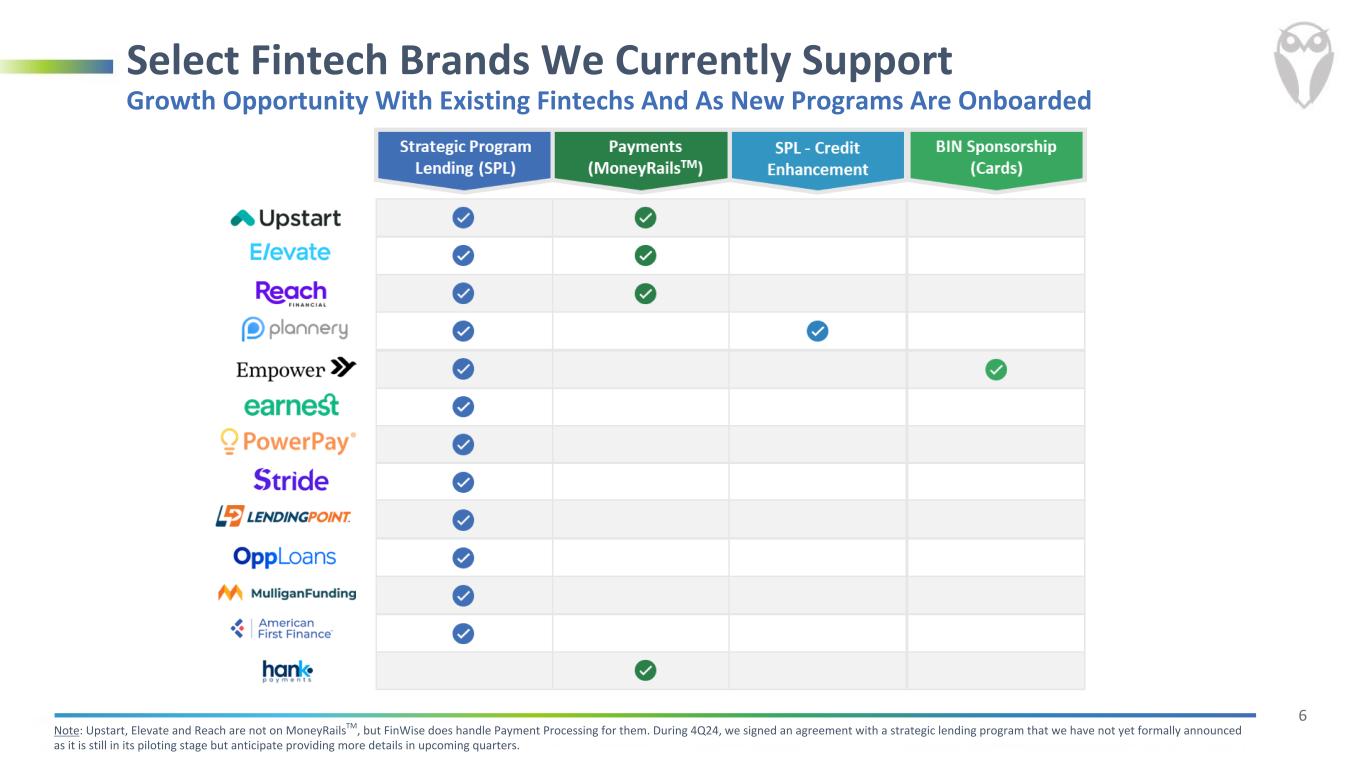
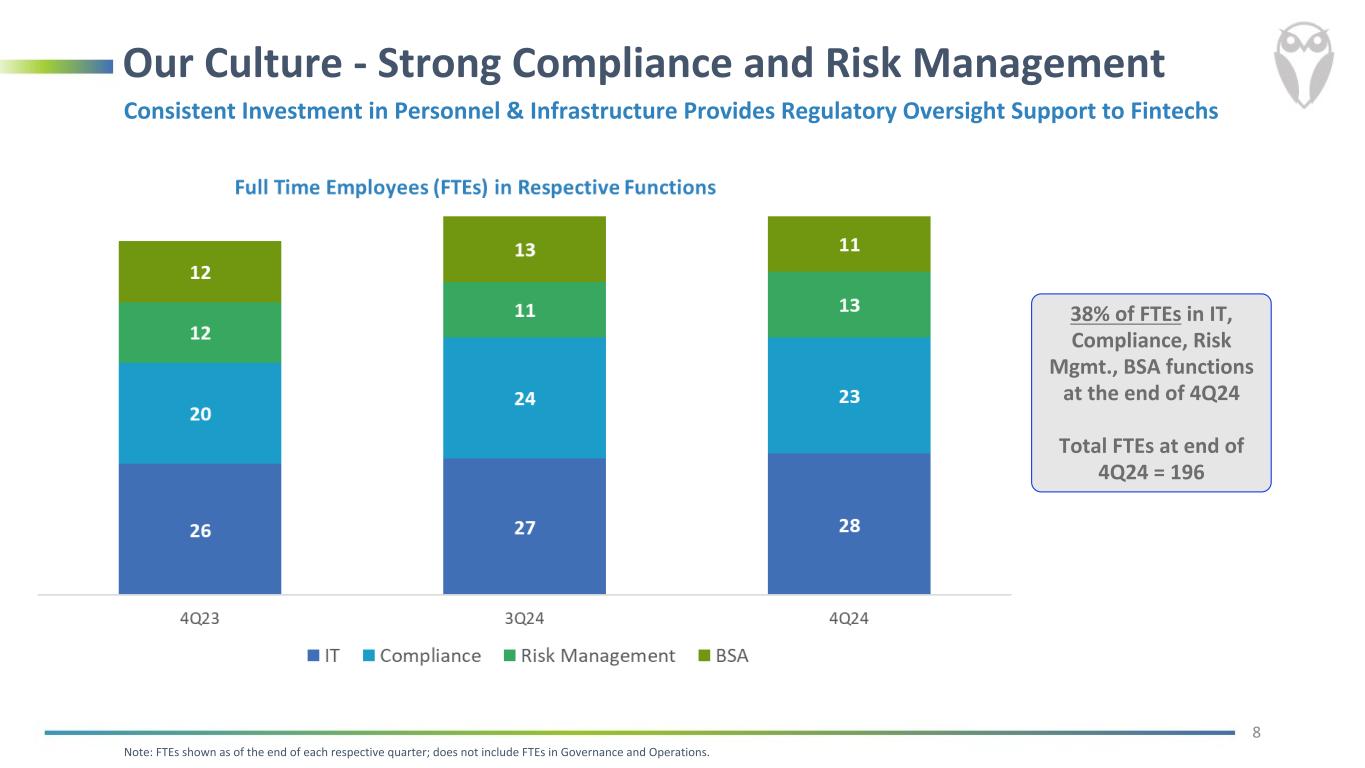
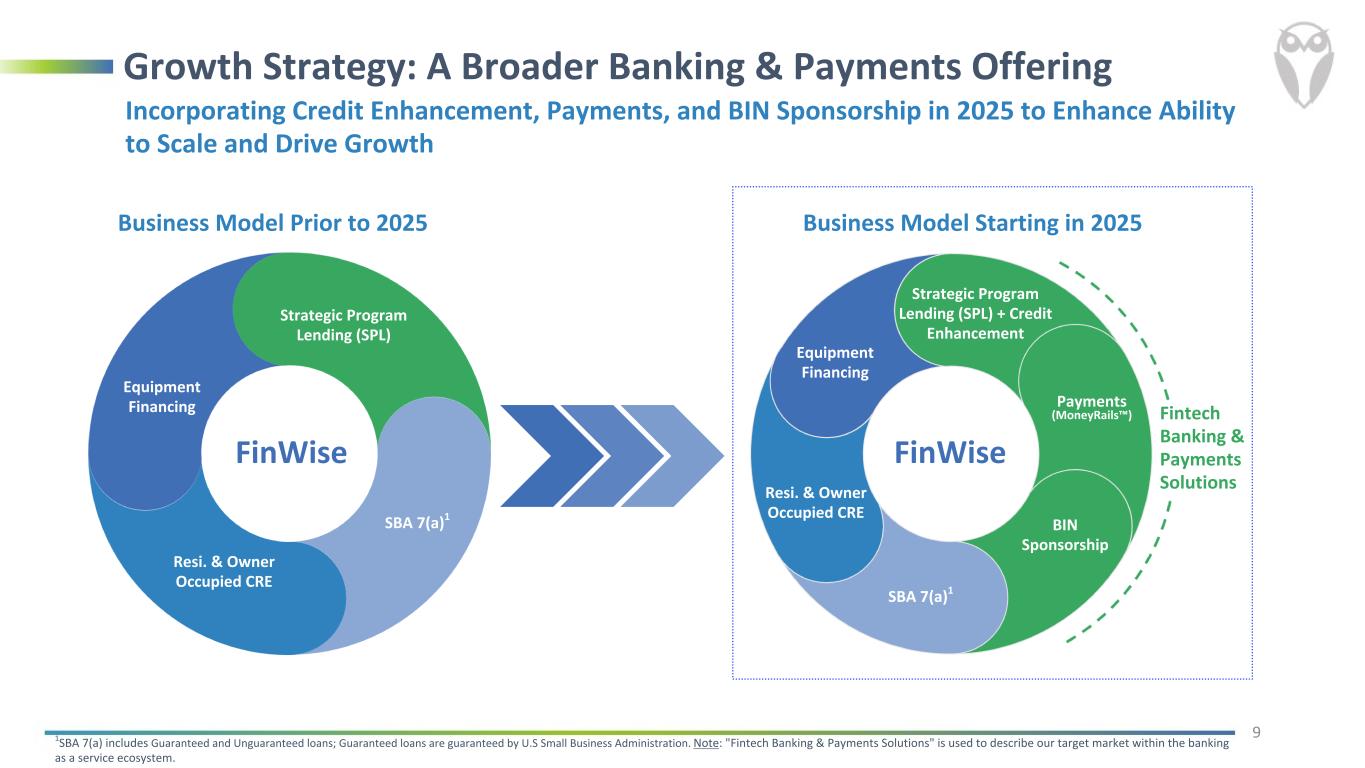
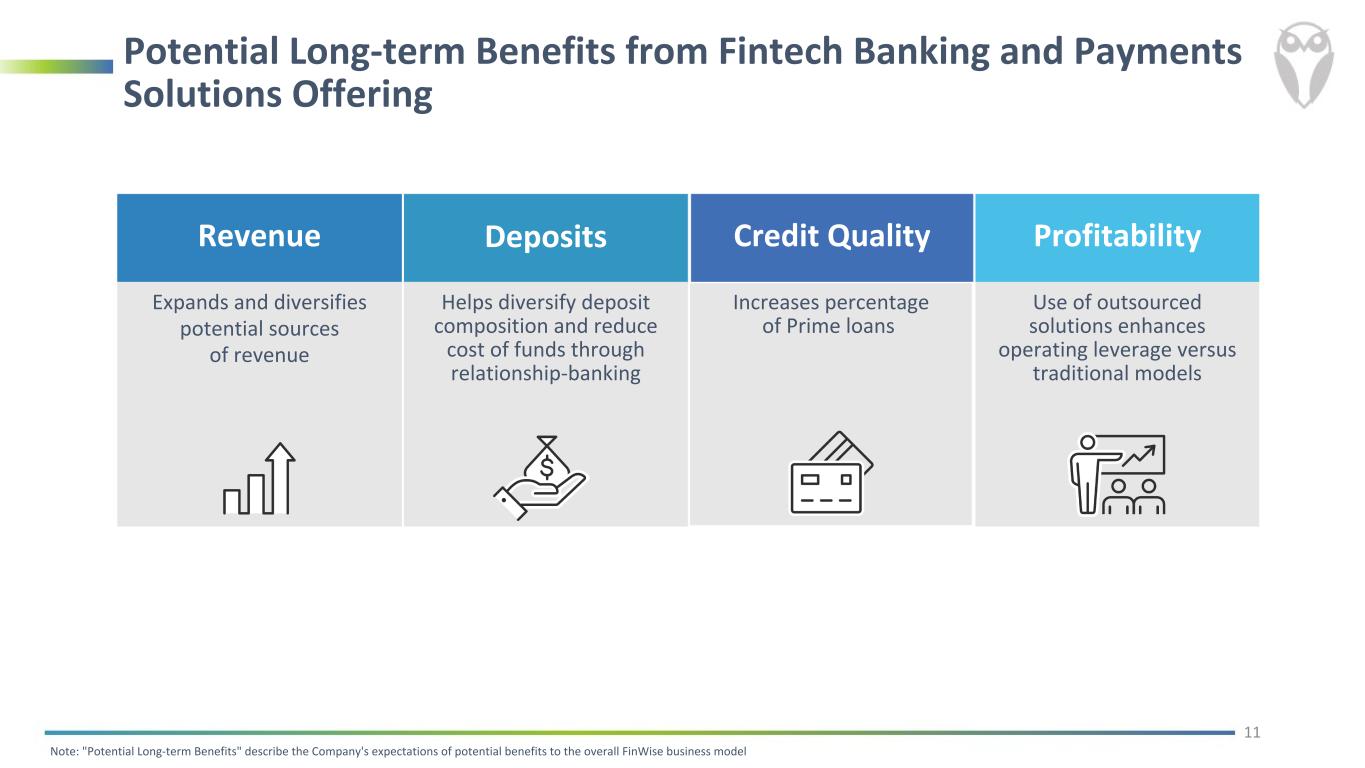
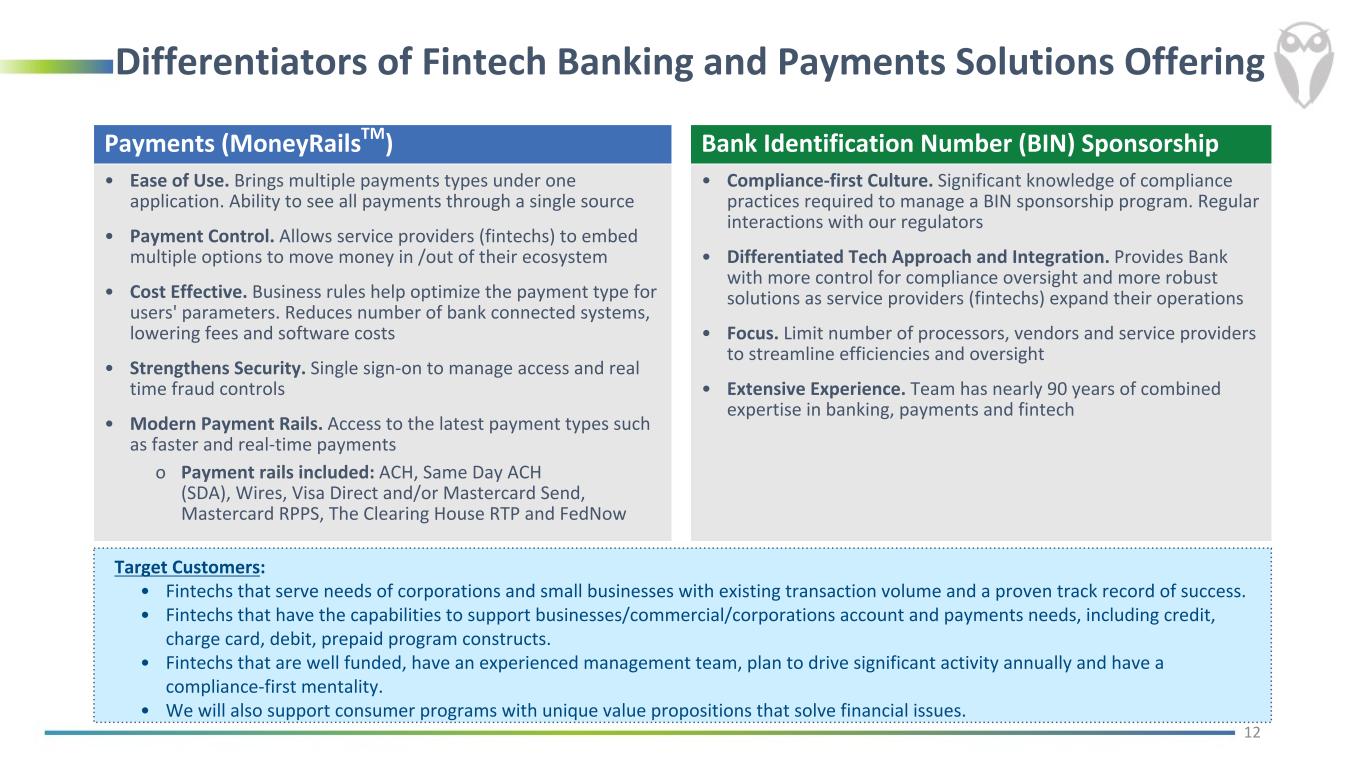
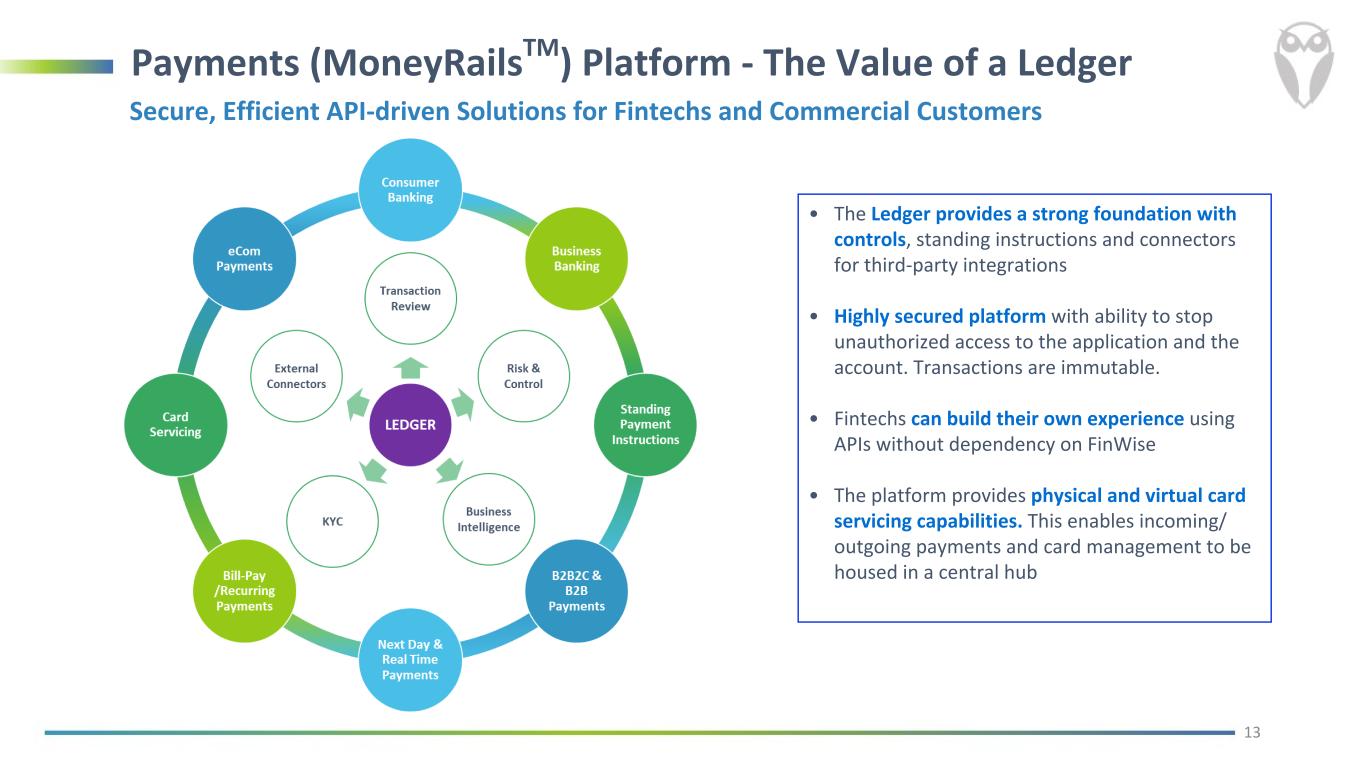
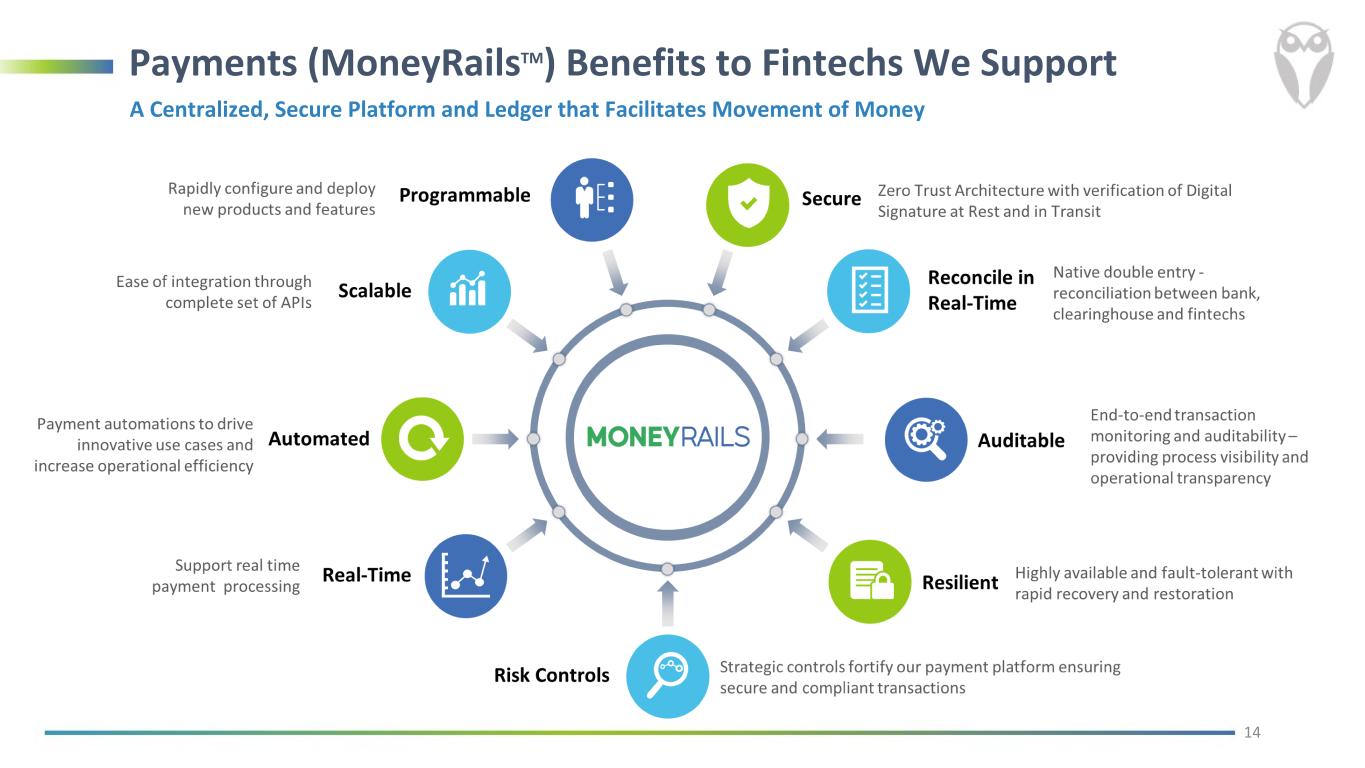
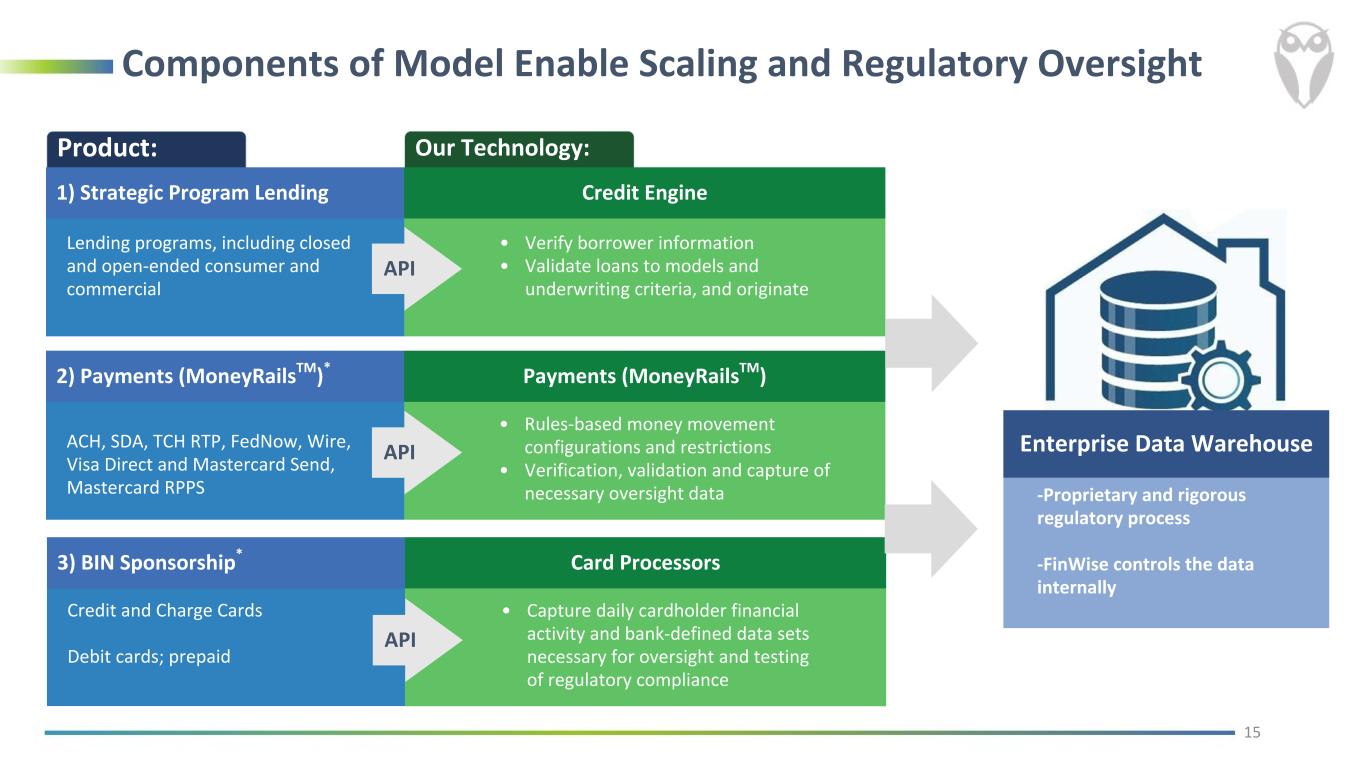
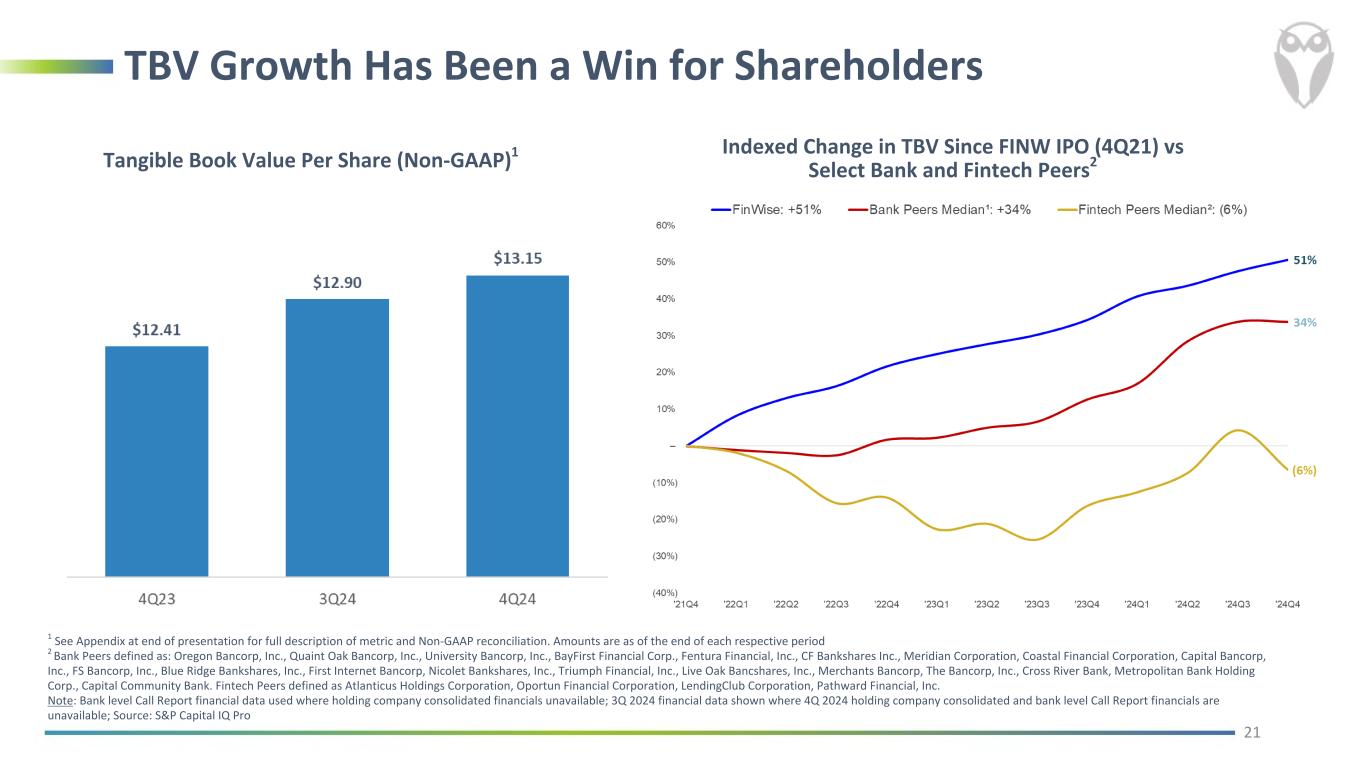
Good afternoon, everyone. Our solid results for the fourth quarter capped off another successful year for FinWise, highlighted by significant progress in our goal to expand and diversify our sources of revenue to enhance the company's long-term growth. We leveraged the strength of our legacy business with our strategic initiatives and delivered solid financial performance, including a rebound in originations from existing programs, stable revenue and continued growth of our tangible book value per share. Additionally, at the bank level, we remain well capitalized significantly above federal regulatory standards. We are also pleased with the number of new strategic programs we announced in 2024. Specifically, we added four new lending programs, two of which include our credit enhancement product, one payments program, and one credit card program. We continue to see momentum in the pipeline of new programs, particularly as strategic partners are enthusiastic about the benefits that our broader banking payments platform provides them. On the regulatory front, we remain well-positioned to guide fintechs through a rigorous process to facilitate regulatory compliance which continues to provide us with a strong opportunity to gain market share. As part of our company culture, we have proactively invested in our compliance and risk management infrastructure for years and have successfully managed many regulatory exam cycles. As of the end of 2024, approximately 38% of our total staff is employed within compliance, risk management, BSA, and IT functions. Looking ahead, we are very excited about the outlook for our business. And as of now, we expect a gradual progression in growth as we move through 2025. Specifically, we look for our credit enhancement solution to be a meaningful incremental contributor in 2025 and also expect gradual traction in our BIN Sponsorship and payments initiatives, both of which are now live. We also look for continued stability in originations from existing programs, coupled with incremental growth from programs we signed late last year that are expected to scale through the next few quarters. Importantly, BIN Sponsorship and payments provide a mid- to longer-term opportunity for growth, while our credit enhancement product offering represents a more immediate growth opportunity. By having these offerings under one roof, we now have the capability to enable the majority of use cases. It also provides us with a stickier and recurring revenue stream, which would initially start slowly, but then accelerates as our programs start to scale. Lastly, we remain laser-focused on generating positive operating leverage. We have completed most of the incremental investments in our new initiatives, and expense growth going forward will be mostly production-driven. With that, let me turn the time over to Jim Noone, our President.
Speaker 3
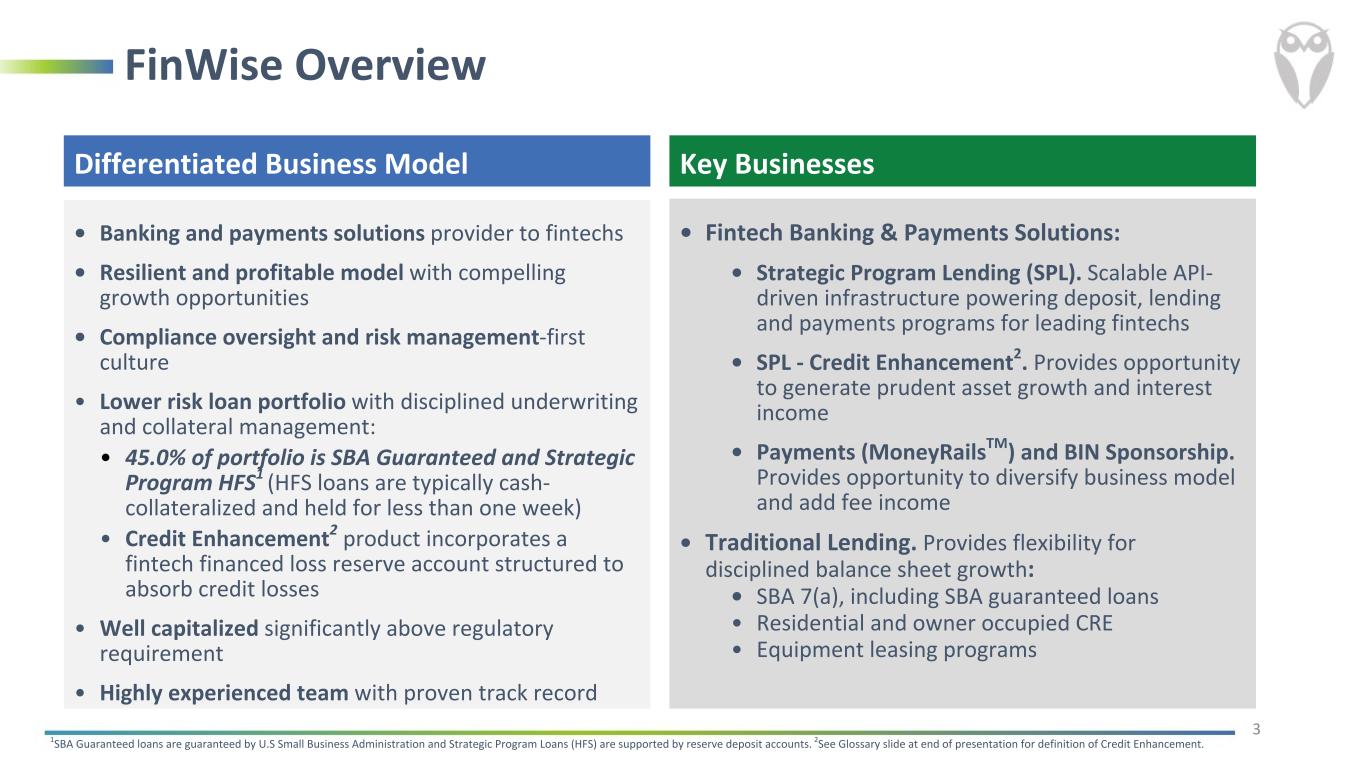
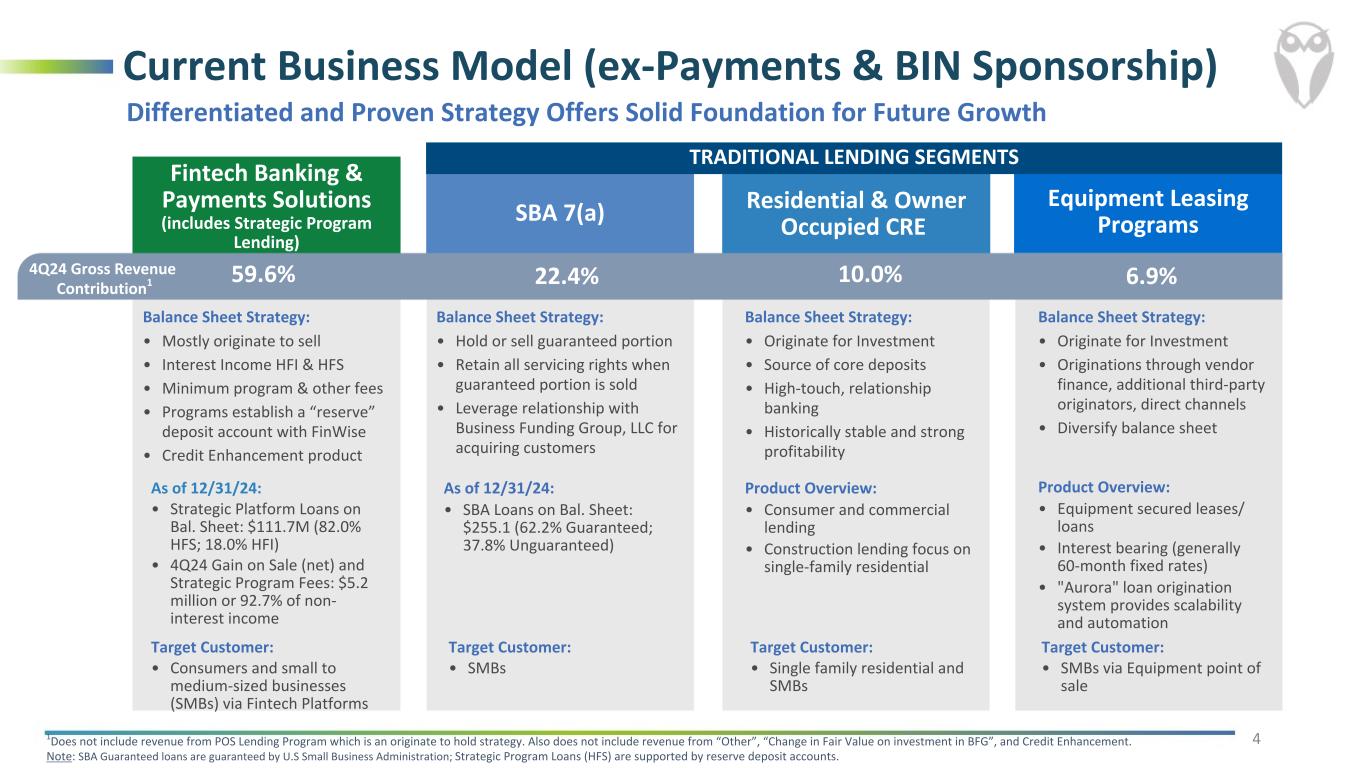
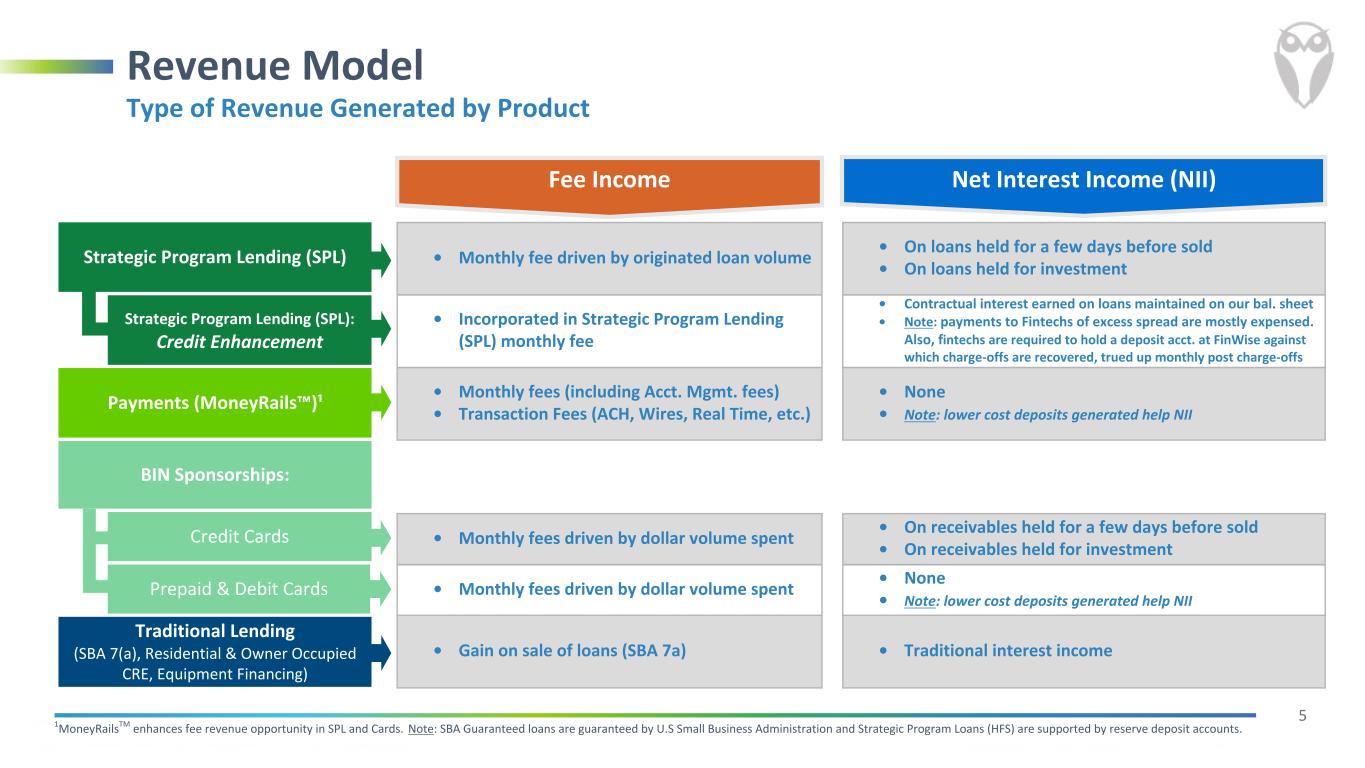
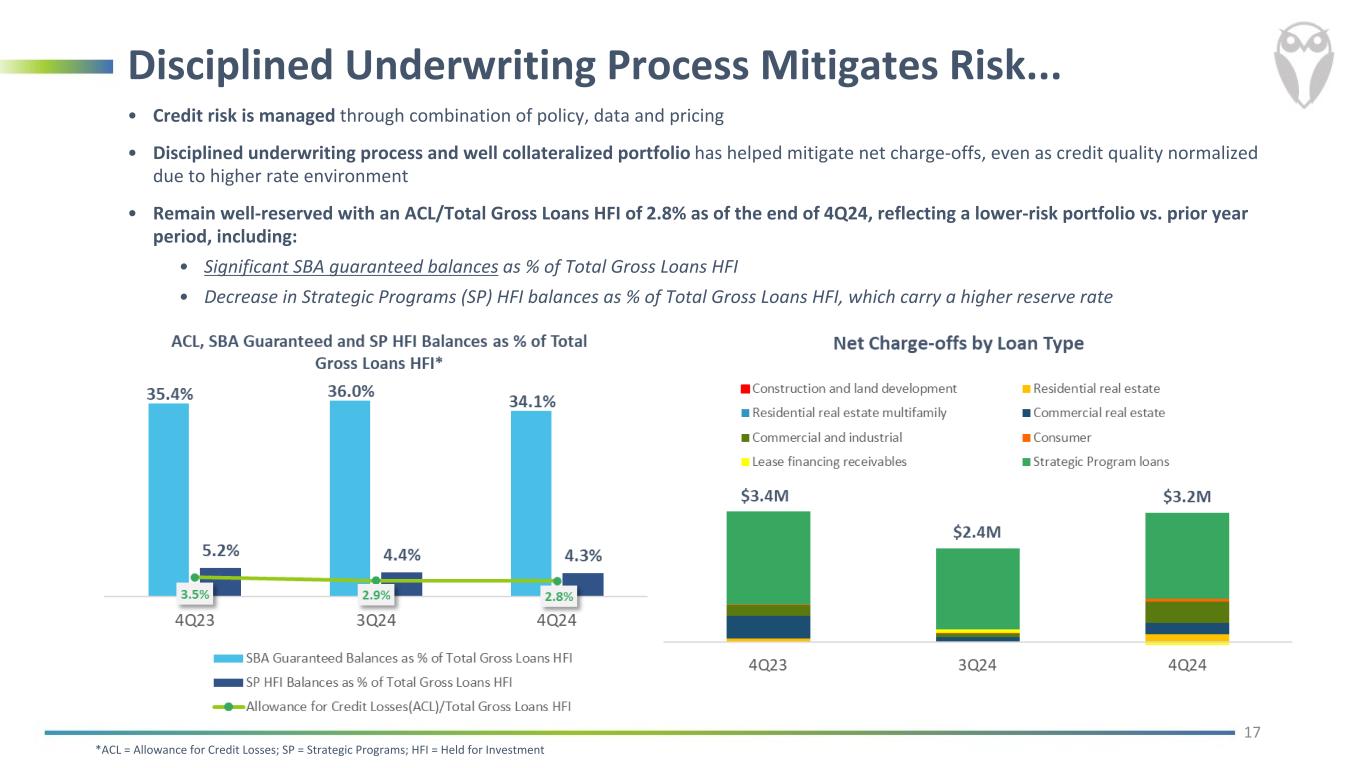
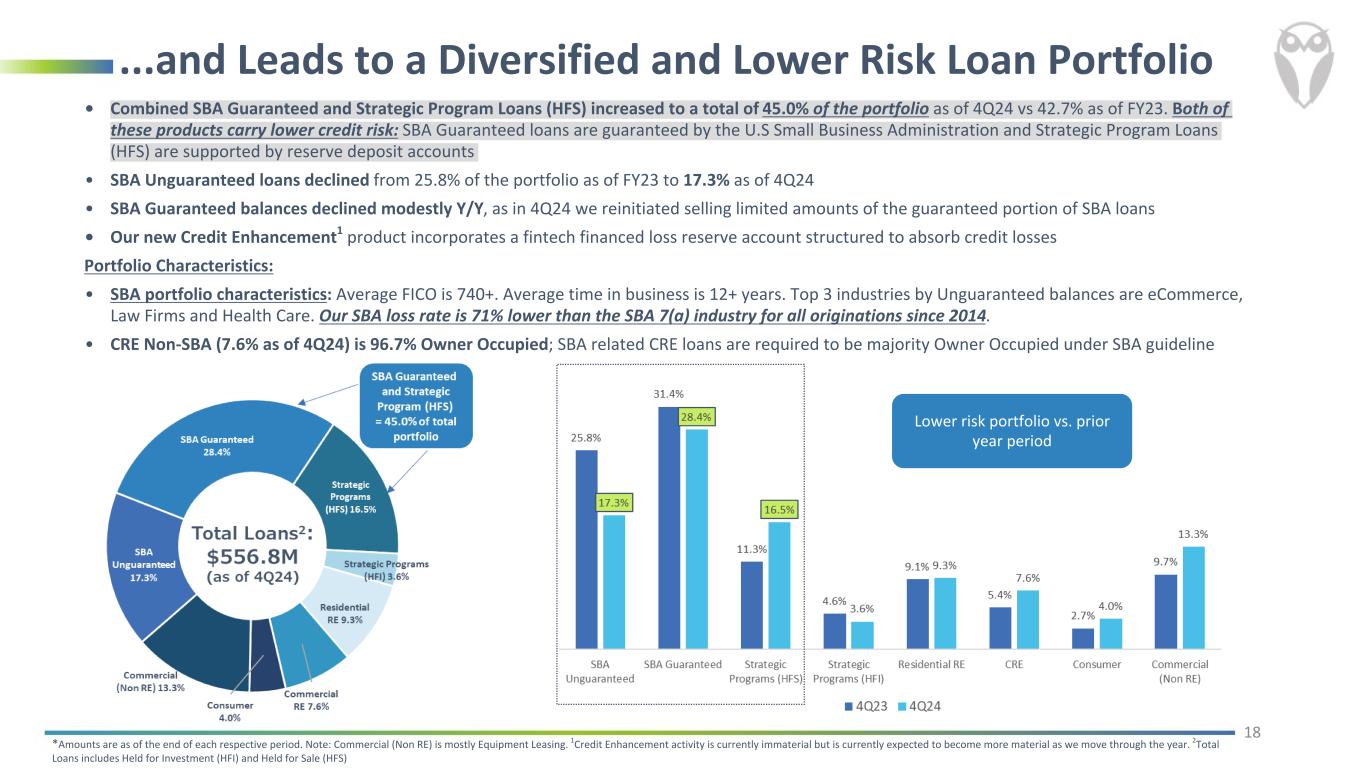
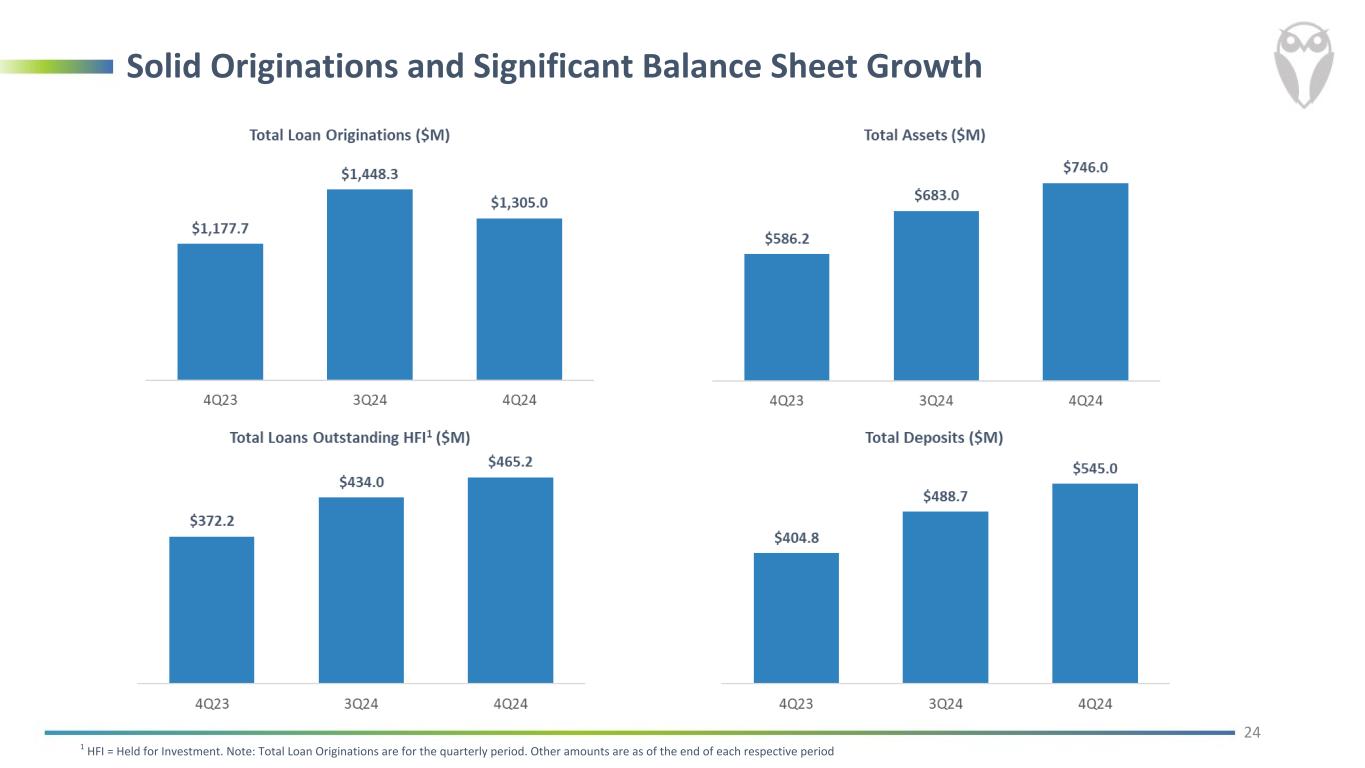
Thank you, Kent. We are pleased to have originated $1.3 billion in loans during the fourth quarter, which brings our total originations for fiscal year 2024 to $5 billion. This is a 16% increase compared to $4.3 billion in the prior year. The fourth quarter of '24 included a seasonal deceleration in originations from our private student lending programs and did not include any material production from the new loan programs we announced late in '24. As we have mentioned previously, this is because there is generally a lag of a few quarters from when we announce, until when we start to see meaningful origination levels from new partners. Although it's early in the first quarter, through the first three weeks of January 2025, loan originations are tracking at a quarterly rate of $1.3 billion. As Kent mentioned earlier, we anticipate continued stability in originations from our existing programs and that our new programs will begin scaling up in the next couple of quarters. Our SBA 7(a) loan originations increased again in Q4 versus Q3 as we continue to see a gradual pickup in qualified applicants driven by slightly lower rates. We remain cautiously optimistic that SBA volumes can continue to rebound modestly. We also remain very pleased with the solid growth in our equipment leasing and owner-occupied commercial real estate loans as these portfolios continue to deliver stable interest income and solid credit quality to the bank. On a sequential quarter basis, SBA guaranteed balances increased 1.5%. During the quarter, we began selling some of the guaranteed portions of our SBA loans, which led to the pickup in gain on sale income during the quarter. We've communicated in the past that SBA loan sales are a core activity for us as long as market conditions are favorable, which was the case in Q4, and we expect those conditions to continue at least in the near term. Our overall balance sheet strategy has remained consistent with both strategic lending and SBA lending during the quarter. In strategic program lending, we mostly originate to sell within a few days and the held-for-sale balances are primarily cash collateralized. In SBA lending, we originate loans, which includes a government guaranteed portion, and we may retain this or sell this in the secondary market. The retention of the guaranteed portion generates interest income without credit risk. At the end of Q4, our SBA guaranteed balances and our strategic program loans held for sale, both of which carry lower credit risk, made up 45% of our total portfolio. Moving to credit quality. The provision for credit losses was $3.9 million in Q4, compared to $2.2 million in the third quarter. The increase was due primarily to $1 million in net charge-offs on the non-guaranteed portion of SBA loans, which brings total net charge-offs to $3.2 million for Q4, compared to $2.4 million in the prior quarter. As we've mentioned in the past, our strict collateral policy generally helps mitigate net charge-offs. Nonperforming loan balances totaled $36.4 million this quarter versus $30.6 million in the prior quarter. The $5.8 million increase from last quarter was lower than the expected $10 million increase we communicated during last quarter's conference call, mostly due to the continued efforts of our portfolio management team in collecting payments on a handful of delinquent accounts. Importantly, of the $36.4 million in total NPL balance, $19.2 million is guaranteed by the federal government and $17.2 million is unguaranteed. As discussed on prior calls, a higher rate environment can lead to sporadic increases in NPLs. While some accounts are still being impacted by these higher rates, our call report delinquency table for Q4 will show a fairly material decrease in 30-plus day past-due balances. This is again due to the efforts of our portfolio management team in collecting payments and working with our customers. However, we continue to point to the higher rate environment impacting NPLs, and currently expect roughly $12 million in potential NPA migration during Q1. Overall, we remain very confident in our portfolio, our underwriting process and our portfolio management practices. And if interest rates decline further, it could have a gradual positive impact on our NPL metrics. Turning to strategic partner updates. We are very pleased with the strong year we had on new strategic partner announcements in 2024. We expect to build on that success in 2025, and we're very optimistic about our pipeline. Our expectations for two to three new lending program announcements this year remain intact, and we will continue to utilize a thorough due diligence process in launching these programs. Lastly, we mentioned on previous calls that this quarter, we would start providing you with some insight into how we generate revenue in our credit enhancement product, along with our cards and payments business lines. Page five of our updated investor deck published today provides a breakdown of our revenue model by product. As our new products ramp through 2025, we will be able to start providing more details on the progress and traction. To summarize, we are proud of the significant progress we made in 2024 to expand and diversify our sources of revenue through our initiatives, and we're very excited about the outlook for 2025 and beyond. I will now turn the call over to our CFO, Bob Wahlman, to provide more detail on our financial results.
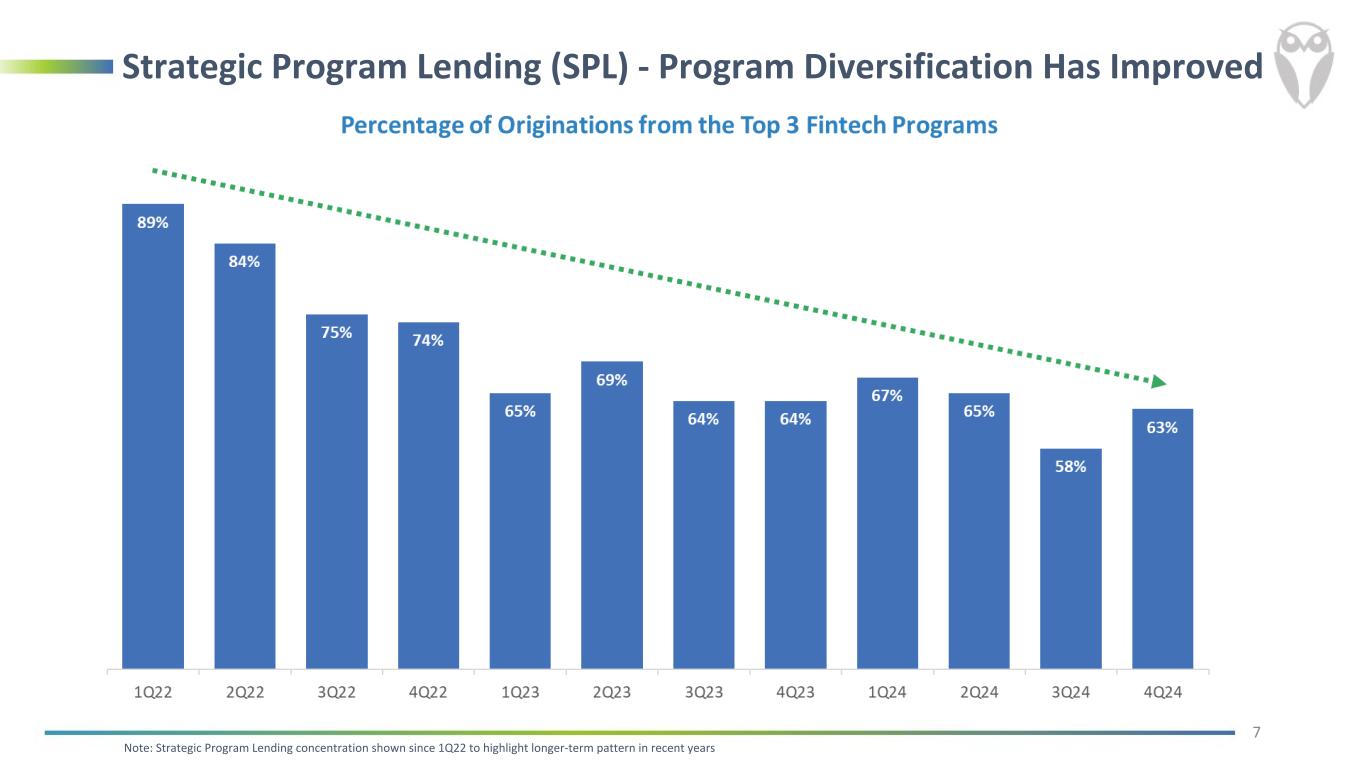
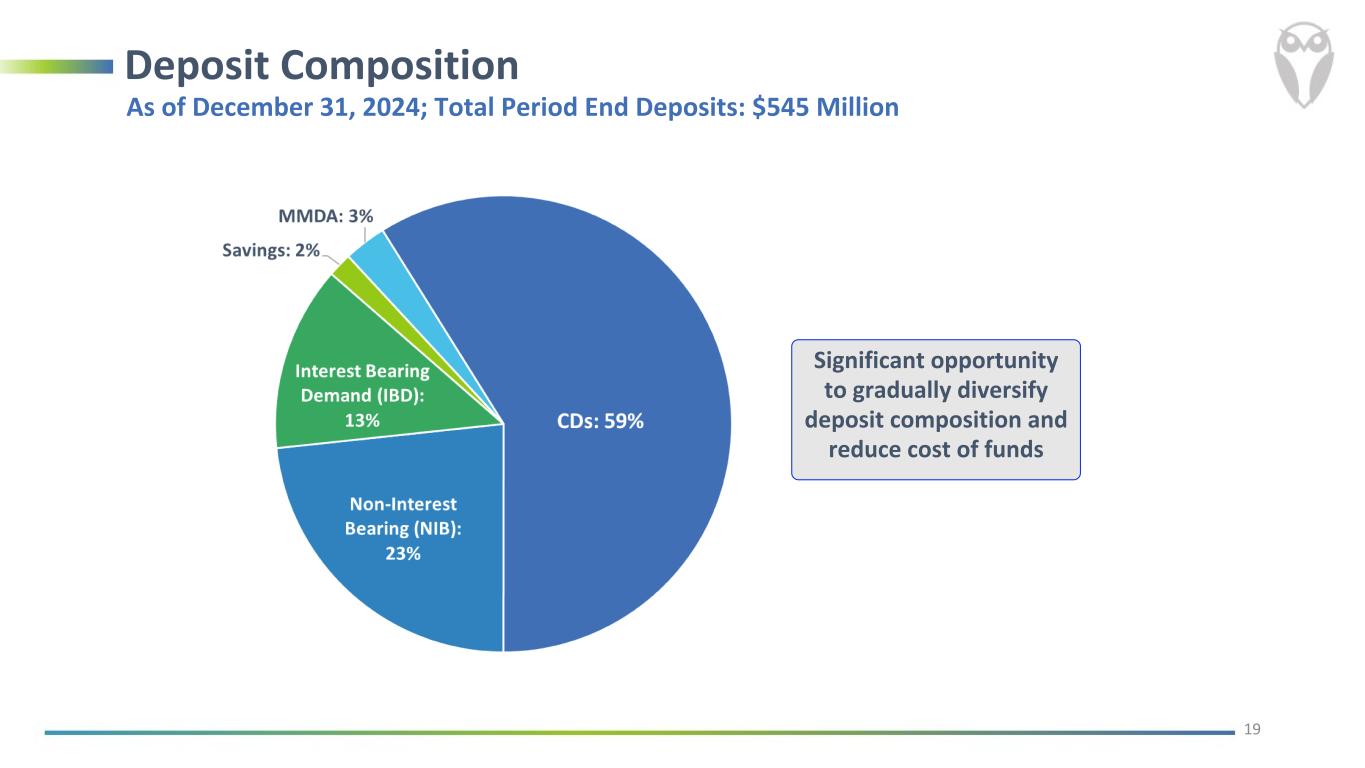
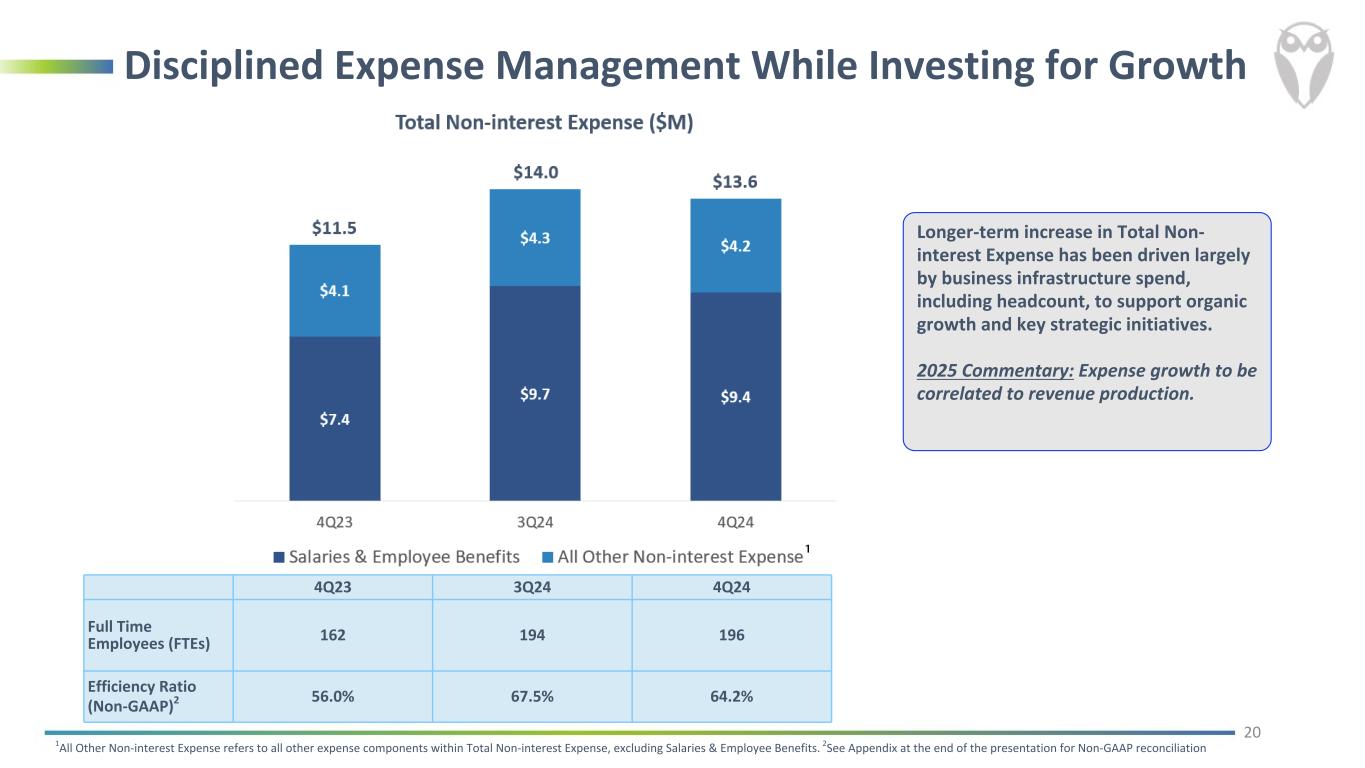
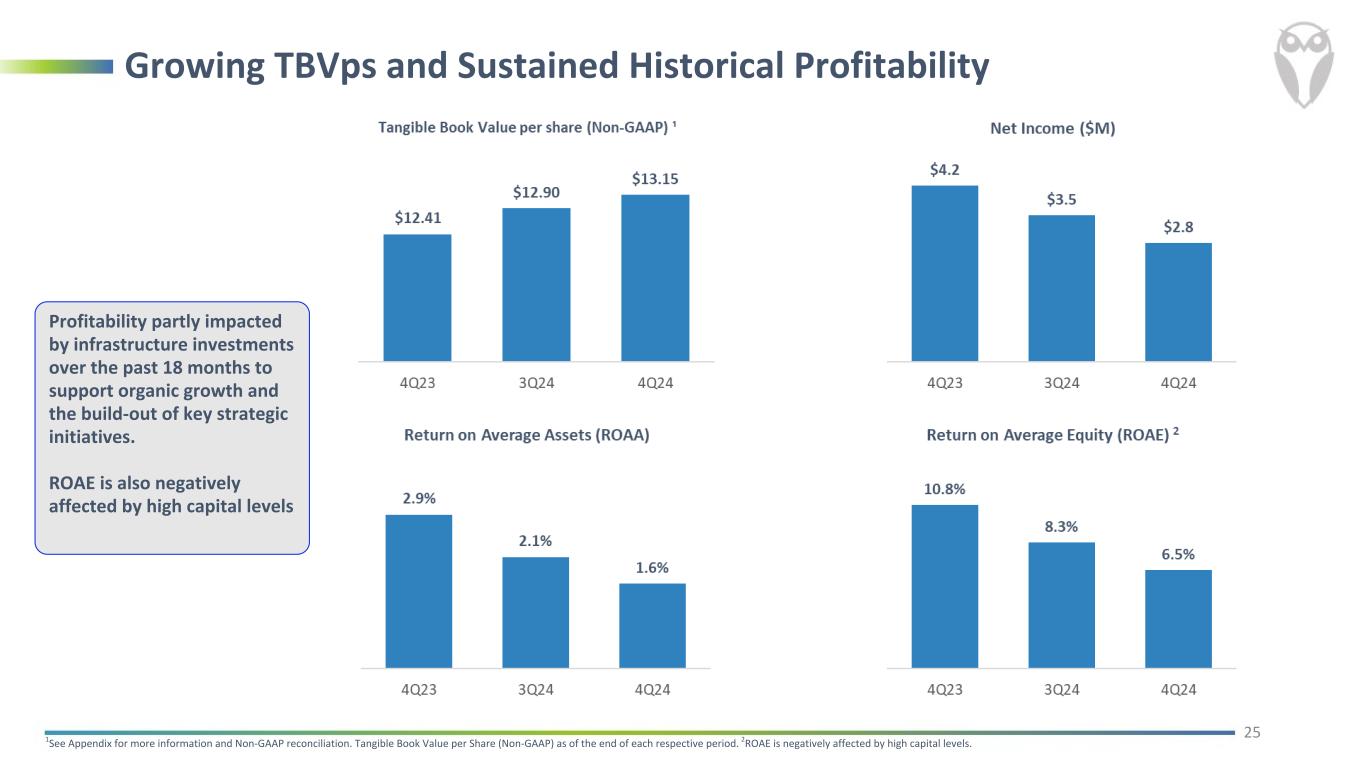
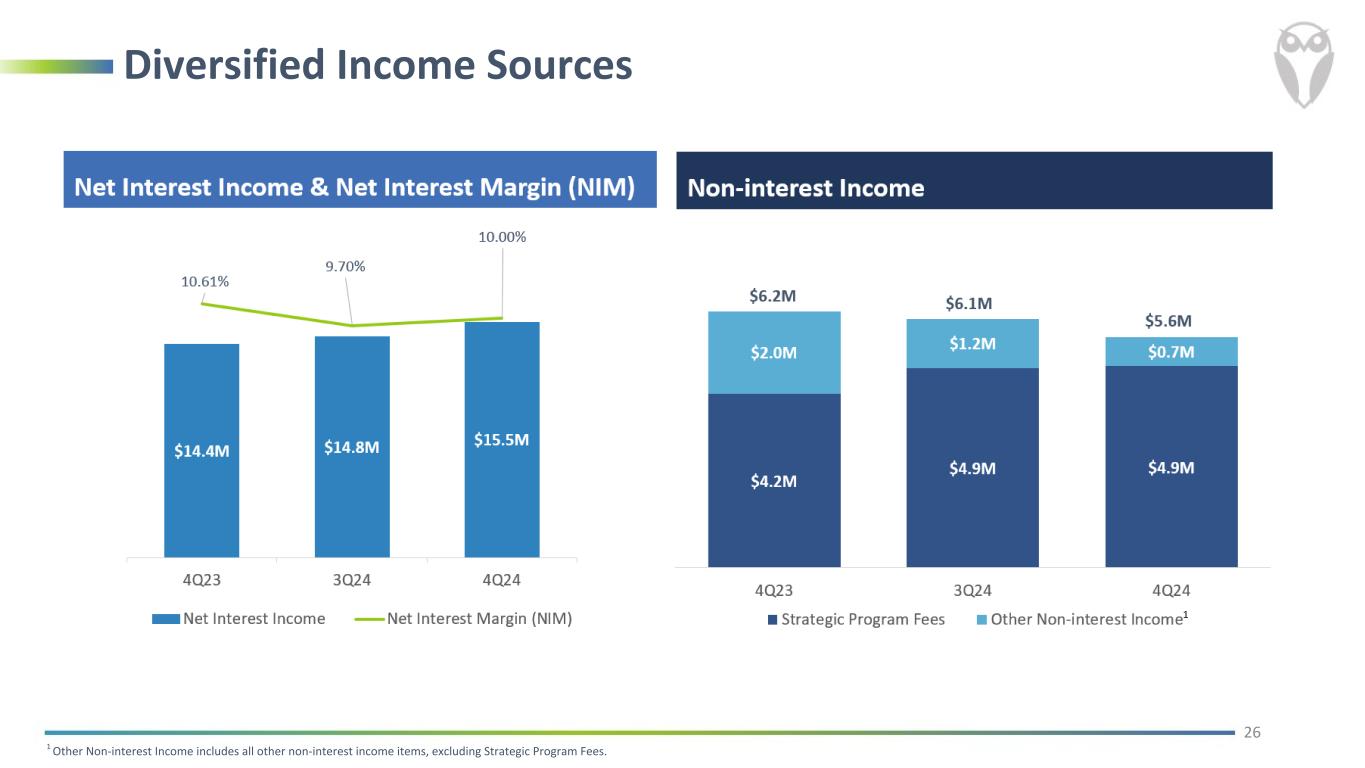
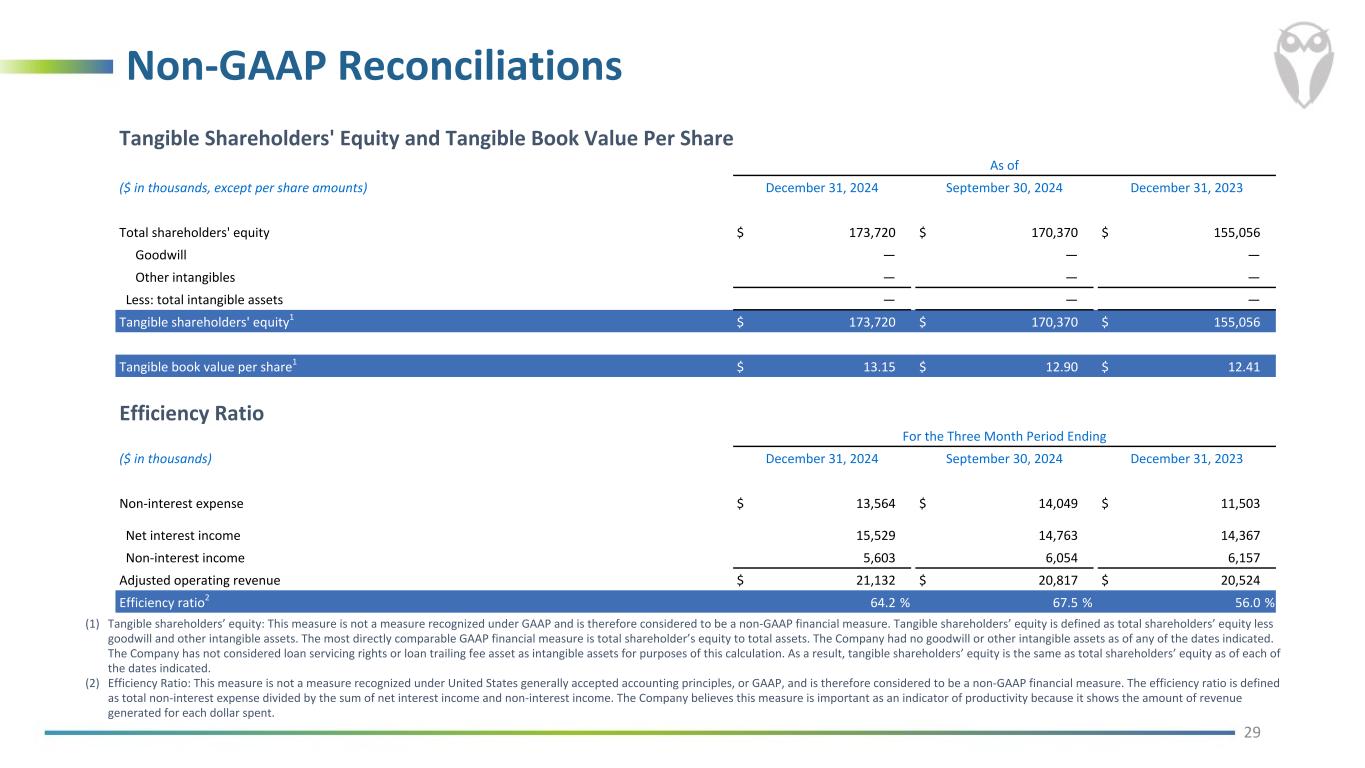
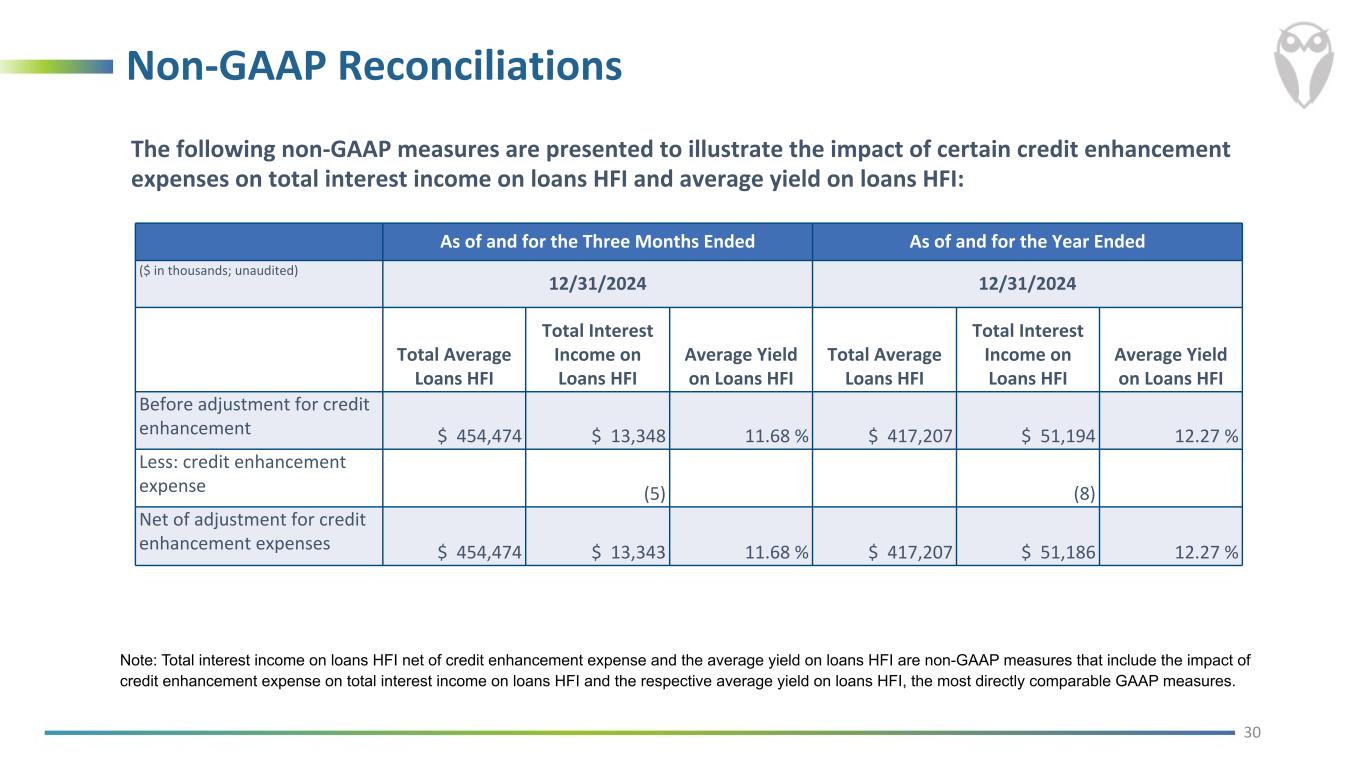
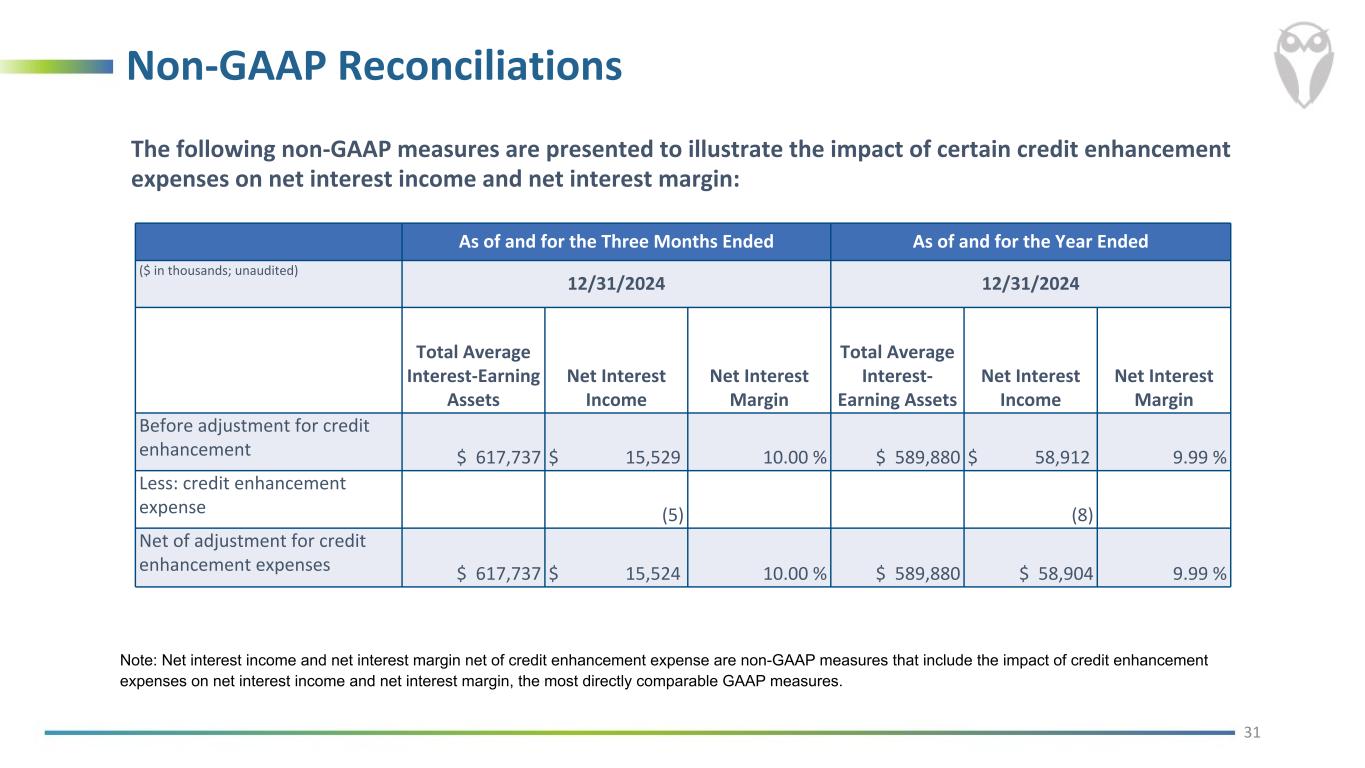
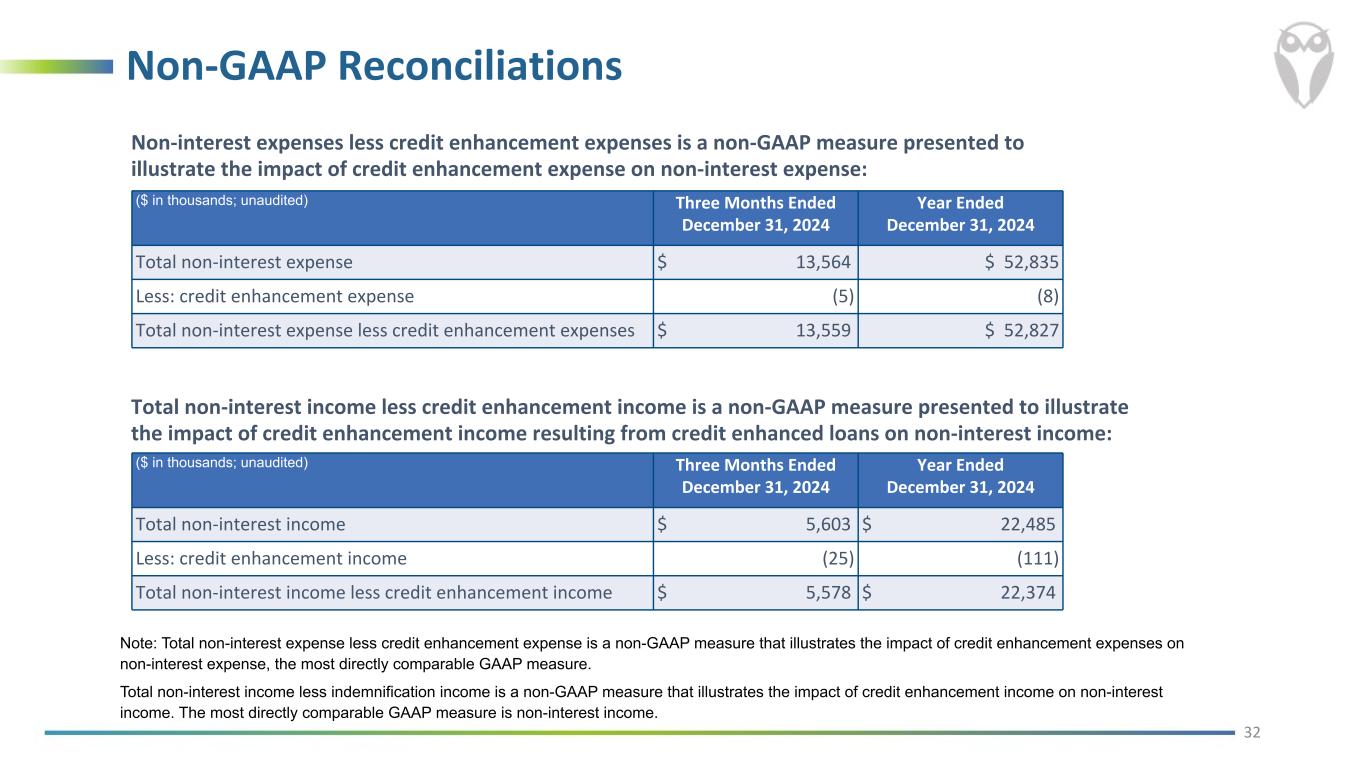
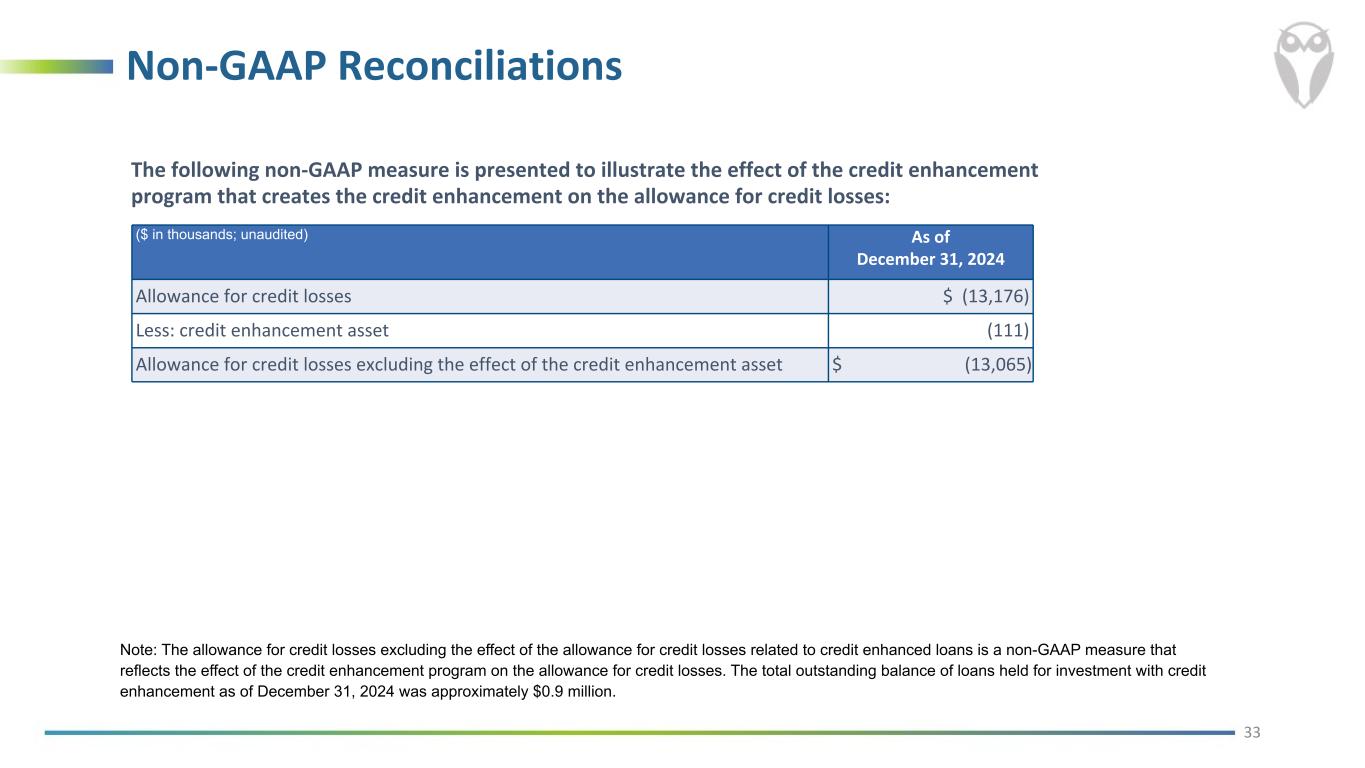
Thank you, Jim. Good afternoon. I will briefly review our fourth-quarter performance and several key financial metrics with discussions where appropriate. In the fourth quarter, we generated net income of $2.8 million or $0.20 per diluted common share, which brings our full year 2024 earnings per diluted common share to $0.93. One item I would like to call out for the fourth quarter, the fourth-quarter results included an $895,000 loss resulting from calling roughly $160 million of higher-yielding brokered callable CDs and replacing them with other wholesale funding at a lower rate. This charge for the unamortized premium on the callable CDs reduced our other miscellaneous income by $895,000. We consider this item to be a noncore reduction of income. Average loan balances, including both held for sale and held for investment loans, totaled $522.2 million for the quarter, compared to $492.9 million in the prior quarter. This increase included growth from our SBA 7(a) commercial leases and consumer programs. Average interest-bearing deposits were $355 million, compared to $341.2 million in the prior quarter. The sequential quarter increase was driven primarily by an increase in interest-bearing demand deposits, money market accounts, and broker time certificates of deposits. Moving to the income statement. Net interest income for the quarter was $15.5 million, compared to $14.8 million in the prior quarter driven by increased volumes in loans held for sale and lower cost of funds resulting from replacing over $160 million of callable CDs with lower-cost CDs as interest rates declined, partly offset by increased interest-bearing deposits generated to support the asset growth. Net interest margin was 10.0% this quarter, compared to the reported 9.70% in Q3 '24. We expect the net interest margin to gradually compress over time, driven by our proactive strategy to reduce credit risk in the portfolio. It is worth noting that our SBA portfolio generally floats with prime and resets at the beginning of each quarter, where changes in prime can also affect our net interest margin. Noninterest income was $5.6 million in the quarter, compared to $6.1 million in the prior quarter. The sequential quarter change was driven primarily by a decline in other miscellaneous income associated with the previously mentioned $895,000 loss from calling our callable brokered CDs, partially offset by higher SBA loan servicing fees and a gain on the sale of the guaranteed portion of SBA loans as we reinitiated selling limited amounts of the guaranteed portion of SBA loans. Positively, strategic program fees were relatively flat quarter-over-quarter even as we experienced a seasonal deceleration in originations in our student lending programs, which highlights the benefits of our efforts to improve diversification among our strategic programs. Turning to operating expenses. We are pleased with the continued deceleration in the pace of growth in expenses as we had called out in our prior calls. Noninterest expense in the fourth quarter declined to $13.6 million, compared to $14 million in the prior quarter. The sequential quarter decline was primarily due to the bonus accrual reversal as performance rewards were determined to be less than previously estimated. Our efficiency ratio improved to 64.2% from 67.5% in the prior quarter. We remain committed to generating positive operating leverage as we move through 2025 and continue to expect incremental headcount-related expenses to be more aligned with increases in production. That said, due to the substantial infrastructure build of the past 18 months, we anticipate the efficiency ratio will remain somewhat elevated until we begin to realize revenue associated with the new programs being developed. Regarding taxes, our effective tax rate was 24.3% for the fourth quarter, compared to 25.1% in the prior quarter. We expect the effective tax rate for 2025 to run around 25.0% to 25.5%. One final item I'd like to call out, this quarter, we began including balance sheet and income statement accounts related to loans with credit enhancement as well as non-GAAP disclosures at the end of our earnings release and our investor deck. The additional accounts and disclosures are included to show the impact of our Credit Enhancement product on the financial statements and various financial metrics. While the amounts are currently immaterial, these disclosures will be helpful in understanding FinWise's financial performance as the product likely becomes more material as we move through the year. With that, we would like to open up the call for questions and answers.
Operator
Our first question comes from Andrew Liesch with Piper Sandler.
Speaker 5
It was a strong quarter. I wanted to inquire about the loan growth at the end of the period for this quarter. It seems that various portfolio types saw an increase. Was there anything specific that influenced this growth in terms of what you chose to retain or client growth? What contributed to the 7% increase?
Speaker 3
Yes, I would say you experienced a minimal increase quarter-over-quarter in SBA and in the SP HFI, which showed a slight upward trend similar to the previous quarter. You are also seeing some growth in our leasing portfolio and in the owner-occupied commercial real estate portfolio. We are confident about the credit quality and the overall types of assets we are generating.
Speaker 5
Got it. So I mean for the full year, the held-for-investment portfolio is up about 24%. Is that a repeatable number? It sounds like you're getting good traction with originations overall. Just kind of curious how we should be looking at the growth of the on-balance sheet loan portfolio.
Speaker 3
Yes, I would say you saw a step up last quarter in the HFS balances, and that's really like a derivative of kind of origination activity, right? And you've seen that kind of stepped up and stabilized now for a few quarters. But some of that HFS balance increase that came through last quarter, we said we do expect this again next quarter and that, in fact, happened here in Q4. As far as growth rates going forward, a lot of the growth in the portfolio over the last 18 months, Andrew, has come from the SBA guaranteed portions. You did hear us announce that we started some of those guaranteed portion sales here in Q4. You also are aware from previous calls and now kind of our plans with the credit enhanced balance sheet. So I think that overall, we do feel really good about the continued growth rate of the portfolio. The mix may shift a little bit as that credit enhanced balance sheet product continues to gain traction here in '25.
Speaker 5
Got it. That's really helpful. And then on the strategic program fees holding flat quarter-to-quarter, even though originations were down. Was there anything unique there that kept it up? Or was it really just the strong business development efforts that you guys have taken on?
Yes, the strategic program fees were flat quarter-over-quarter or up slightly. There was nothing particularly to note in regards to the behavior. You saw that the originations were down a little bit, but yet the strategic program fees were increased. So nothing really specific to note in there. It's the behavior we continue to expect in the future.
Additionally, not all strategic partners have the same pricing metrics and structures. As Bob mentioned, having a diverse range of partners has actually reinforced that aspect.
Operator
The next question comes from the line of Joe Yanchunis with Raymond James.
Speaker 6
So I kind of want to start high level here. So what would you say the company is going to look like in, say, three to four years? I'm trying to understand the potential revenue ramp from your new card and payments initiatives as well as get a better understanding on how the risk profile of the company will evolve from your credit enhancement program.
The next three to four years are expected to be very exciting. We believe we have built a strong franchise, and we are particularly enthusiastic about the new products we have developed over the past couple of years, including the BIN and payments programs. Regarding our balance sheet, we anticipate significant growth in our credit enhanced balance sheet as we progress, especially through 2025. There is considerable interest in this product from both current and potential partners. We have piloted and tested the product, and it is now fully launched. We expect substantial growth in this area in 2025. While we do not typically provide guidance on individual financial statement line items, we are making an exception for the credit enhanced product for 2025. We estimate that by the end of 2025, the credit enhanced balances will increase by $50 million to $100 million.
Speaker 6
I appreciate that. That was very helpful. And kind of moving over to strategic partners, how do you pick between partners today? What's your criteria for partner selection? And should we expect future partners to be there, involved in the card or payment program?
I can take that one, Joe. This is Kent. The position we're finding ourselves in is we have a very strong pipeline and the programs that we're currently looking at now are very much more in the mature, stronger established fintechs. One of the things that we found is that we've expanded this market significantly by offering the payments, the card sponsorship, and the credit enhanced balance sheet. So I think your comment is spot on, is that we are going to see a much larger, stronger partner in the pipeline. And I think it bodes well for the program.
Speaker 6
Got it. And then just one more pivot here. So the chassis seems to be built. The business model seems to be progressing. You're very excited about what's to come. So my question is what kind of keeps you up at night right now? What's kind of a chief concern?
There are many factors that cause concern, but I believe they can all be managed through vigilance. We are always focused on cybersecurity, ensuring proper oversight of fintechs, addressing regulatory issues, and making sure our product meets the needs of fintechs. While there are elements beyond our control, like macroeconomic conditions, we remain very vigilant in these areas and feel confident that we are managing most of the risks effectively. I hope that answers your question.
Operator
And the next question comes from the line of Andrew Terrell with Stephens.
Speaker 7
I appreciate the information regarding the incremental growth in the loan portfolio. Can you clarify the difference in net yield for credit-enhanced lending compared to SBA loans, which have recently been the largest contributor to growth? Is there a significant economic difference between those portfolios, or are they quite similar?
My short answer to that is they are relatively similar. As you can imagine, the FDA portfolio has a very low credit risk attached to it, as does the credit enhanced loan portfolio, very low credit risk that is attached to it. And so I think that it's similar.
Speaker 7
Yes, low credit risk. But just from an income yield perspective, it's also similar?
That's correct. I think that our pricing is based upon risk, and we view that risk as being similar.
Speaker 7
Understood. Okay. Can you help me out with when the brokered change happened this quarter? I'm just trying to get a better sense of whether there's much more relief from that deposit costs you reported this quarter, I think it was 3.21% total deposit costs. I'm just trying to get a sense of maybe where that kind of exited the quarter, how we should think about that the progression of that into 1Q?
In October, we called about $80 million in callable CDs, which was when we experienced the largest reduction. This occurred around the middle of the month. We also called another $80 million in October, but the reduction was less significant this time, again around the middle of the month. The advantages from these callable CD programs should continue into the first quarter, albeit not as strongly as in the first quarter. However, we will realize the full benefits in the first quarter, similar to what we experienced in the fourth quarter. I anticipate some ongoing decrease in that regard.
Speaker 7
Yes, I understand. In the prepared remarks, you mentioned that the expectation remains the same regarding the addition of two to three new lending partners in 2025. When you refer to lending partners, do you include fintech partners that focus on BIN Sponsorship payments and credit enhanced lending, or do you consider that pipeline separately? Could we potentially see more than two to three new programs added throughout the year?
Speaker 3
Yes, the target remains two to three lending programs. This could include a combination of credit enhanced and the traditional held-for-sale model, but our goal is still two to three lending programs. Any card or payment programs would be in addition to that target.
Speaker 7
Got it. Okay. Understood. It's really exciting news to hear that you're seeing more maturity and stronger, more established fintechs coming into the funnel. Could you help quantify how much longer it takes to add a more mature partner versus a less mature one?
Speaker 3
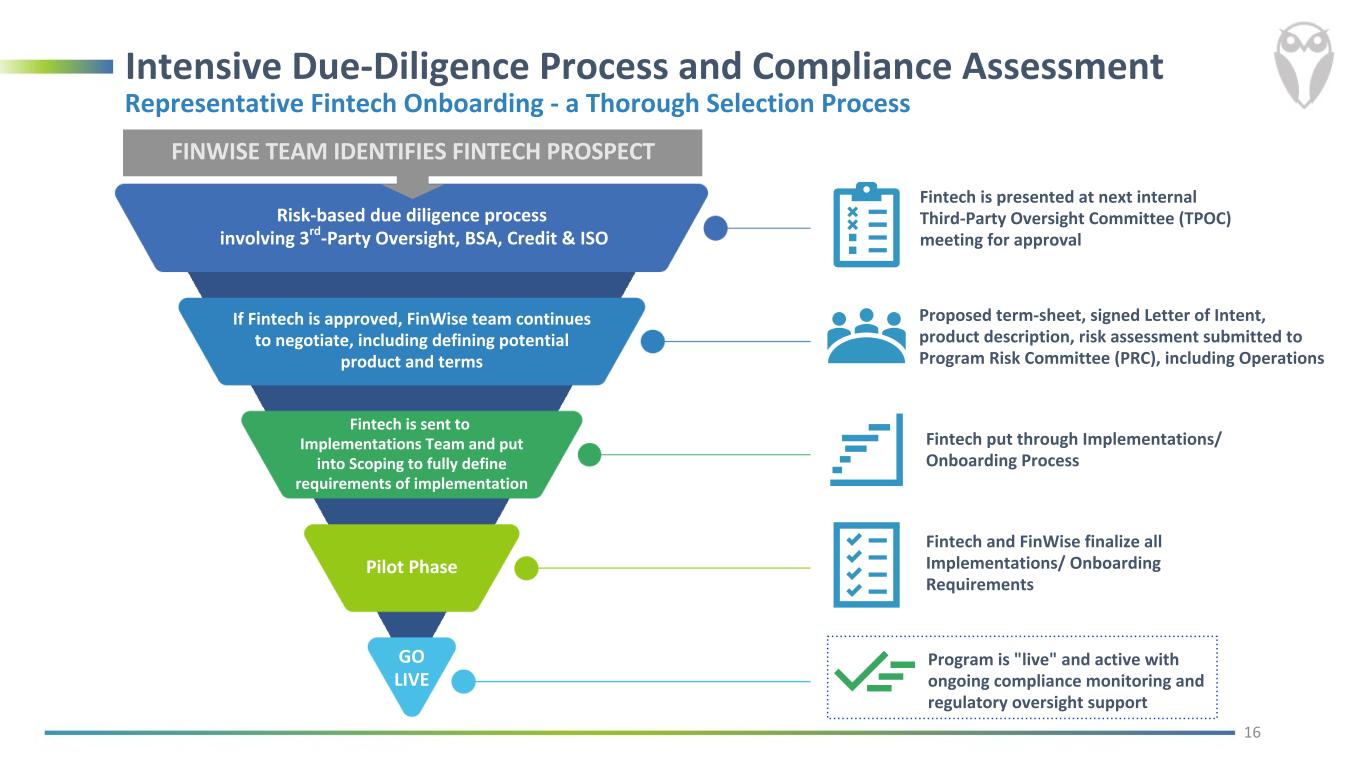
Sure. I can give you some examples, right? I would say that the worst-case scenario of taking a partner through a full launch process and getting them live was 12 months. And I would say best-case scenario was probably 2.5 months, something like that. More mature partners do tend to tilt towards the lower end of that range, Andrew. Twelve months was, by far, the longest. I would say, on average, they kind of run six months-ish, seven months-ish. And it does really depend on two things. First, the maturity of the partner as far as a bank product and the staffing levels that that partner has. And second, the complexity of the product, regulatory disclosures around the product and how unique it might be versus kind of a more standard or vanilla product. Those matter, too. So I would say the majority of the partner, but also kind of the standardization or uniqueness of the product, both of those are contributing factors.
Speaker 7
Got it. Okay. And then, Jim, quickly regarding your comment about the potential for a lift in non-performing loans, I think you mentioned it could be around $12 million in the first quarter. I want to confirm I heard that correctly. Could you clarify how much of that is guaranteed SBA, and what factors are influencing that number?
Speaker 3
Sure. We experienced a $5.8 million increase in non-performing loan balances from the prior quarter during Q4, which was below our previous expectation of $10 million discussed on the last call. This largely stems from ongoing challenges related to the higher interest rate environment, though there are no widespread issues across the portfolio. Fifty-three percent of the non-performing loan balance is fully guaranteed by the SBA. We wanted to highlight that you should expect to see a significant decrease in the 30-plus day past-due balances when the call report is released in a couple of days. Last quarter, we noted about $9 million in that category and anticipated around $10 million of migration, but only $5.8 million occurred. This quarter, we expect around $4 million, indicating a positive trend and demonstrating our portfolio management team's active engagement with customers. However, we still face challenges from the higher rate environment, so we are comfortable projecting a potential migration of about $12 million in Q1.
Speaker 7
I understand. And I apologize for asking more questions, but I have one more regarding capital. With the balance sheet growth expected to come from sources with very low credit risk, such as SBA or credit-enhanced lending, are you now more comfortable managing either the tangible common equity or the leverage ratio below the 20% level that you have historically maintained?
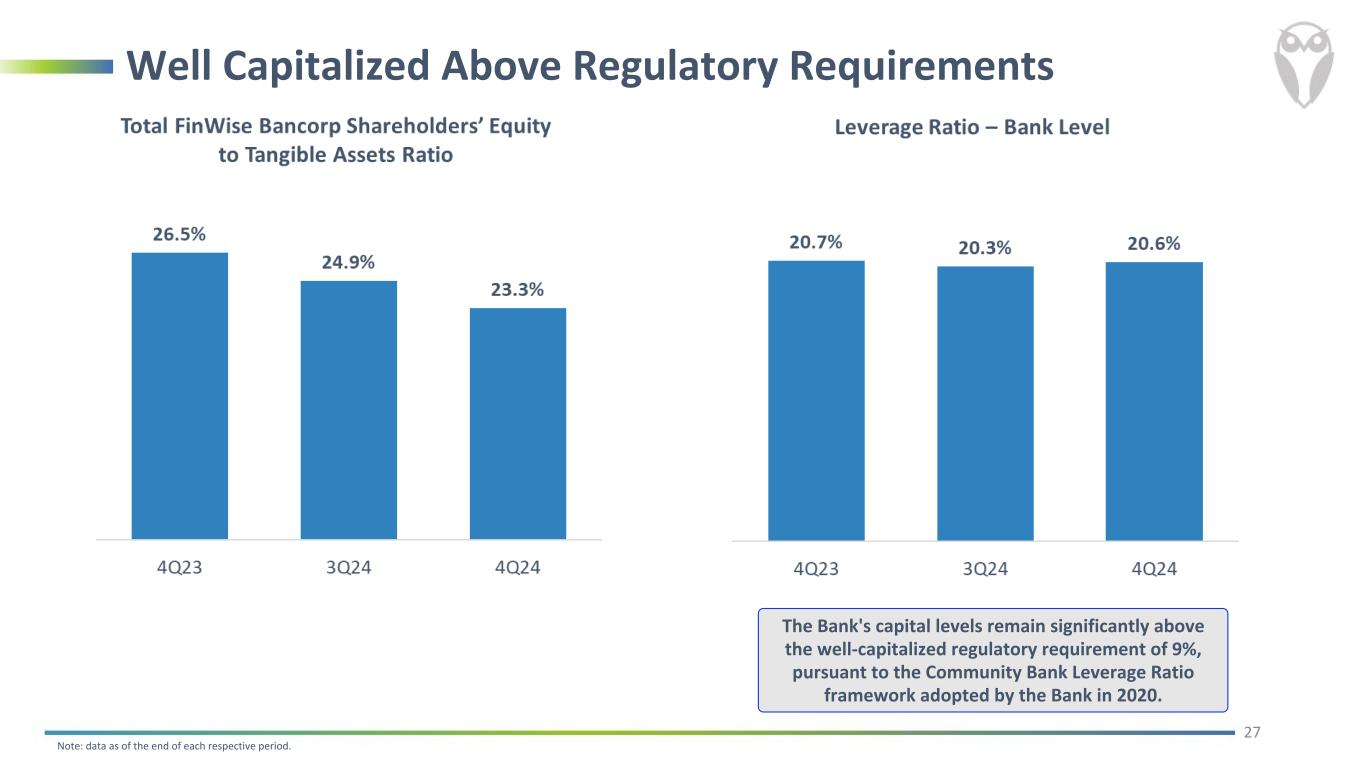
I'll take that question. So yes, we've been operating at the bank at around 20% for the last year. At the holding company, it's been about 25% or 26%. We are comfortable with allowing growth on the balance sheet and letting that ratio decrease to the mid-teens level, which is the number we've mentioned in previous calls. I think we'll be fine with that.
Speaker 7
Mid-teens bank level leverage?
Mid-teens leverage ratio, yes. At the bank and holding company.
Operator
And now I would like to hand the floor over to Juan Arias to address questions we have received via e-mail.
Thanks, operator. We had a few questions come in via e-mail. First one, when would you anticipate seeing a ramp in business from new initiatives that you launched in BIN sponsorship and payments?
We believe that the credit enhanced balance sheet will have a short-term positive impact on growth. Over the course of the year, we expect the BINs and payments to gradually take effect. While they will start from a smaller base, we are confident that once they begin to grow, they will become significant contributors. Overall, we anticipate seeing a more immediate effect from the credit enhanced balance sheet and a gradual increase in impact from payments and cards throughout the year.
Great. Second question, netting out the one-time item you called out on the call, $895,000 loss from calling of CDs. Is it fair to assume your core EPS number for Q4 was closer to $0.25?
I'll take that one. Well, as you know, core EPS is a non-GAAP concept. In this particular case, I think it's pretty straightforward how to calculate the core EPS, taking into account the tax effect of the $895,000 cost of terminating those CDs for strategic purposes. Add that to income and divide by the average shares outstanding, and $0.25 a share is how we look at it, too.
Two more questions came in. Do you have significant exposure to LendingPoint?
Speaker 3
Yes, I can take it, Juan. So with LendingPoint, we've been proud to partner with LendingPoint since 2017 when they launched with us. We don't give any more specific partner guidance, and we're sensitive to confidentiality. As far as the financial impact to FinWise, we have an immaterial amount of credit or revenue risk with LendingPoint, and we continue to support them as a partner.
Great. And the last one, can you remind us of the benefits to fintechs of using your credit enhancement product?
Speaker 3
Sure. Yes. So we've historically had really two options in our SP lending business, HFS and then HFI with full coupon and full credit risk. The credit enhanced balance sheet product really kind of fills a gap where we can provide capacity for asset generation with our partners but do it in a way that builds stable interest income here at the bank, minimizing credit risk at the bank. It helps diversify the funding sources for our fintech partners and reduces the number of parties that they have to align with from an administrative standpoint since we're the sponsor bank already. So I'd say those are the kind of key benefits to our partners.
No more questions, operator.
Operator
Thank you, everybody. This concludes today's conference. You may disconnect your lines at this time, and we thank you for your participation.