Operator
Greetings, and welcome to the FinWise Bancorp Second Quarter 2025 Earnings Conference Call. As a reminder, this conference is being recorded. It is now my pleasure to introduce Juan Arias, Head of Corporate Development and Investor Relations. Please proceed.
Speaker 1
Good afternoon, and thank you for joining us today for FinWise Bancorp's Second Quarter 2025 Earnings Conference Call. Earlier today, we filed our earnings release and investor deck and posted them to our investor website at investors.finwisebancorp.com. Today's conference call is being recorded and webcast on the company's website, investors.finwisebancorp.com. On today's call, management's prepared remarks and answers to your questions may contain forward-looking statements that are subject to risks and uncertainties that could cause actual results to differ from those discussed today. Forward-looking statements represent management's current estimates, expectations and beliefs, and FinWise Bancorp assumes no obligation to update any forward-looking statements in the future. We encourage listeners to review the more detailed discussions related to these forward-looking statements contained in the company's earnings press release and filings with the Securities and Exchange Commission. Hosting the call today are Kent Landvatter, Chairman and CEO; Jim Noon, Bank CEO; and Rob Wahlman, CFO. Kent, please go ahead.
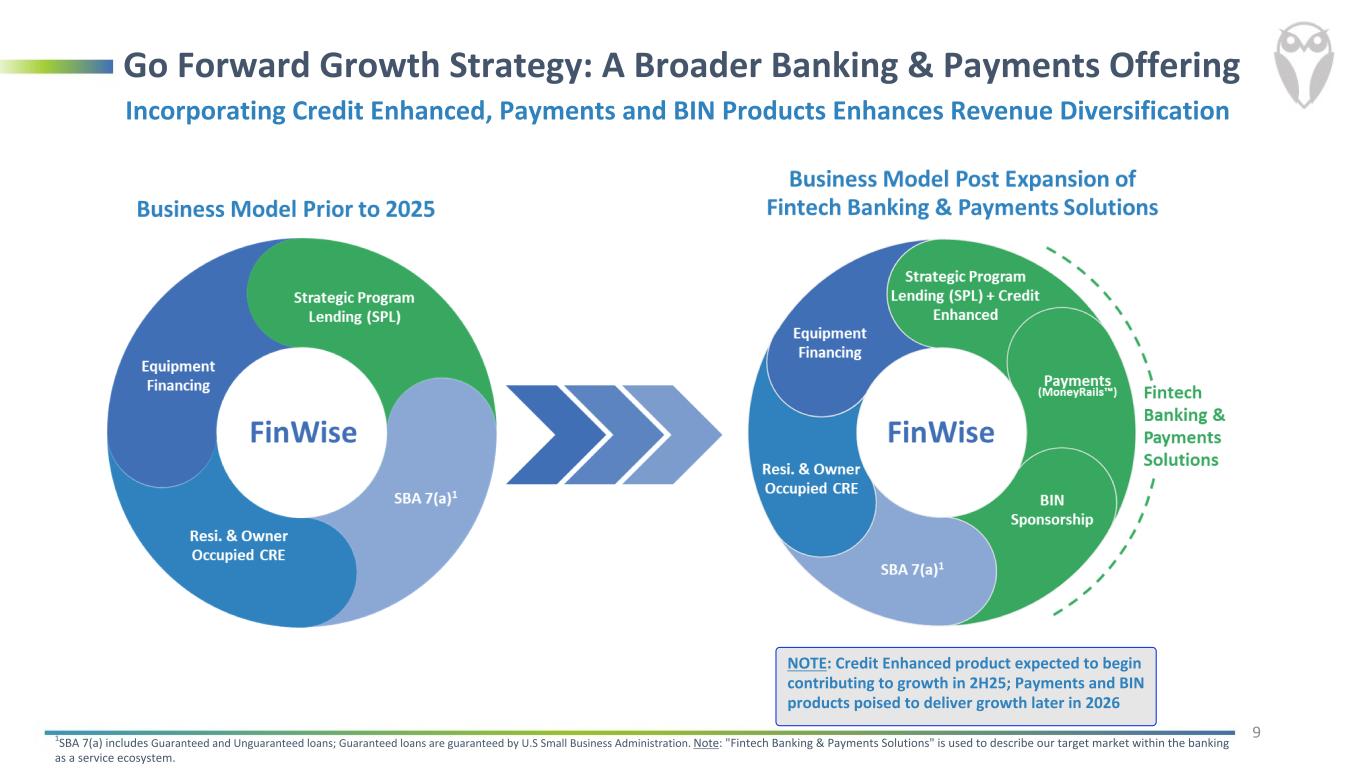
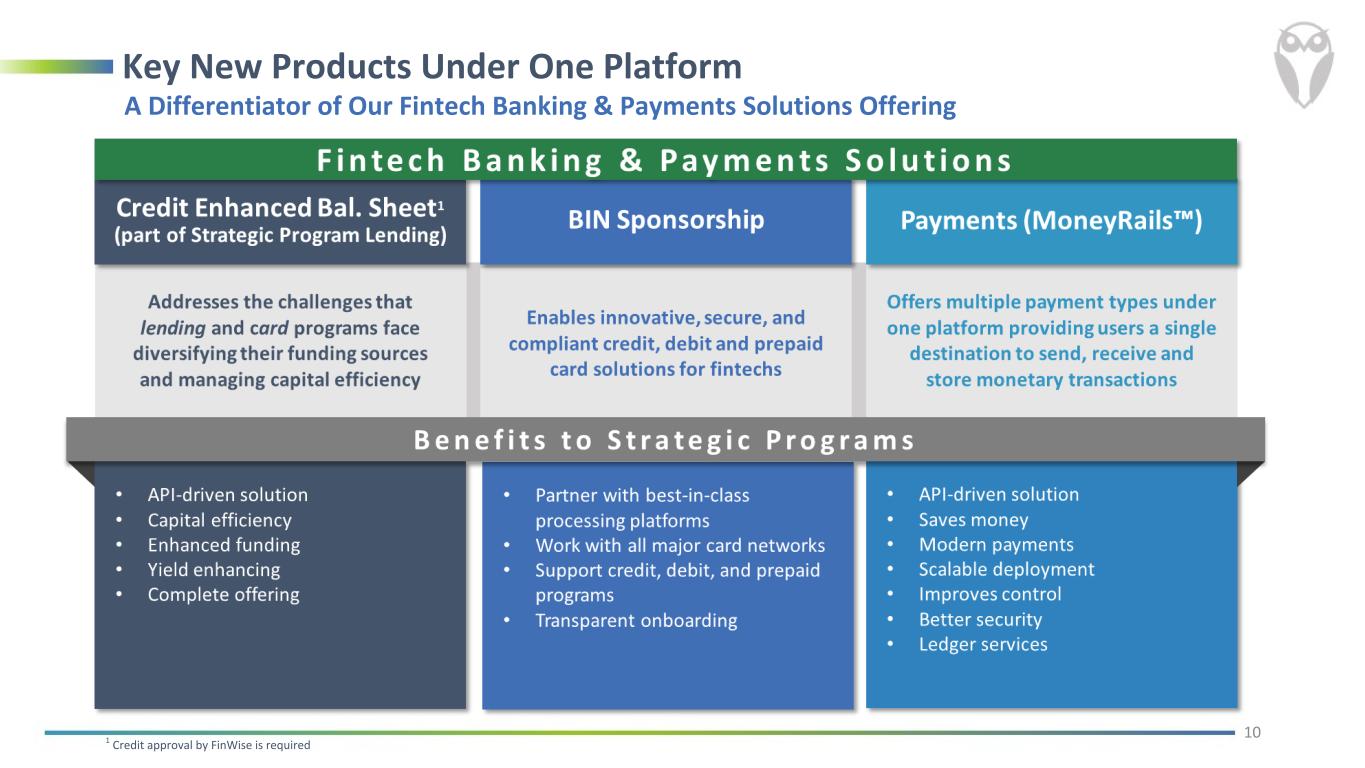
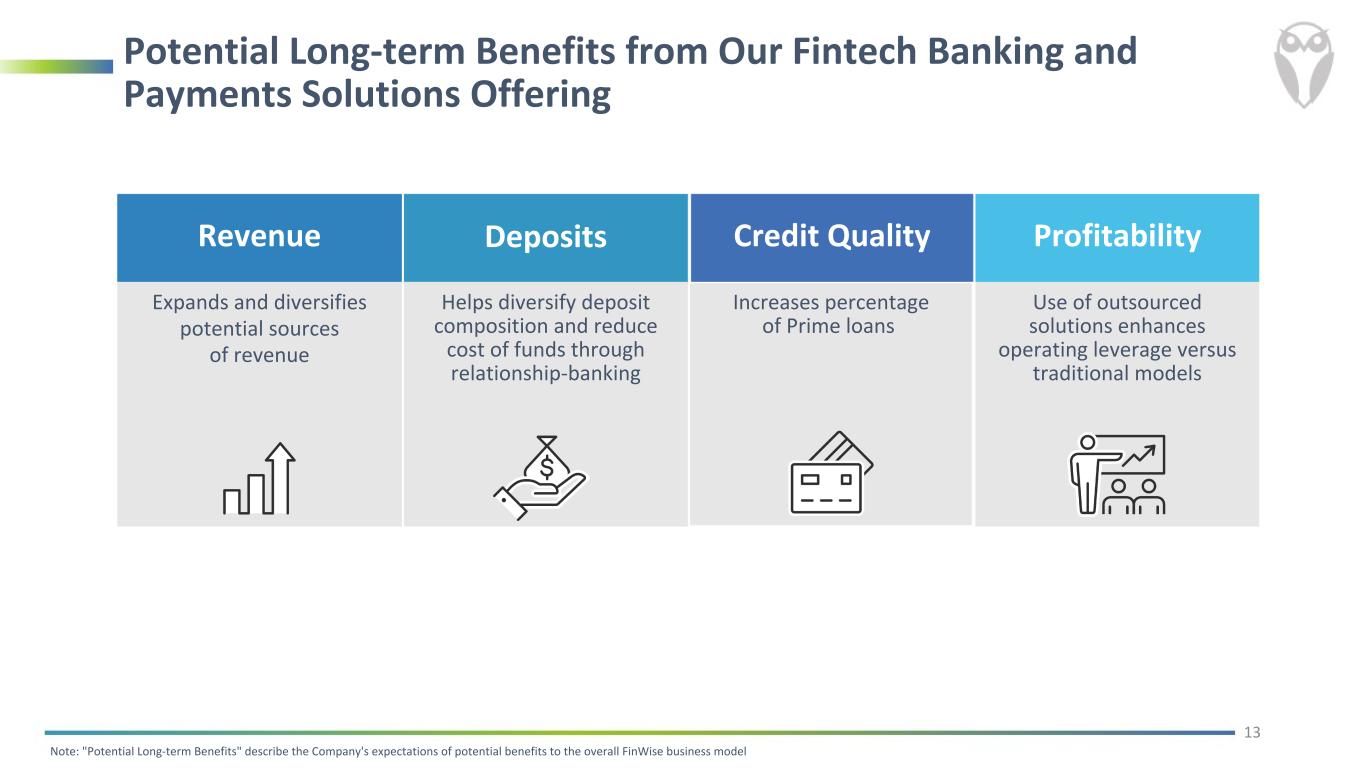
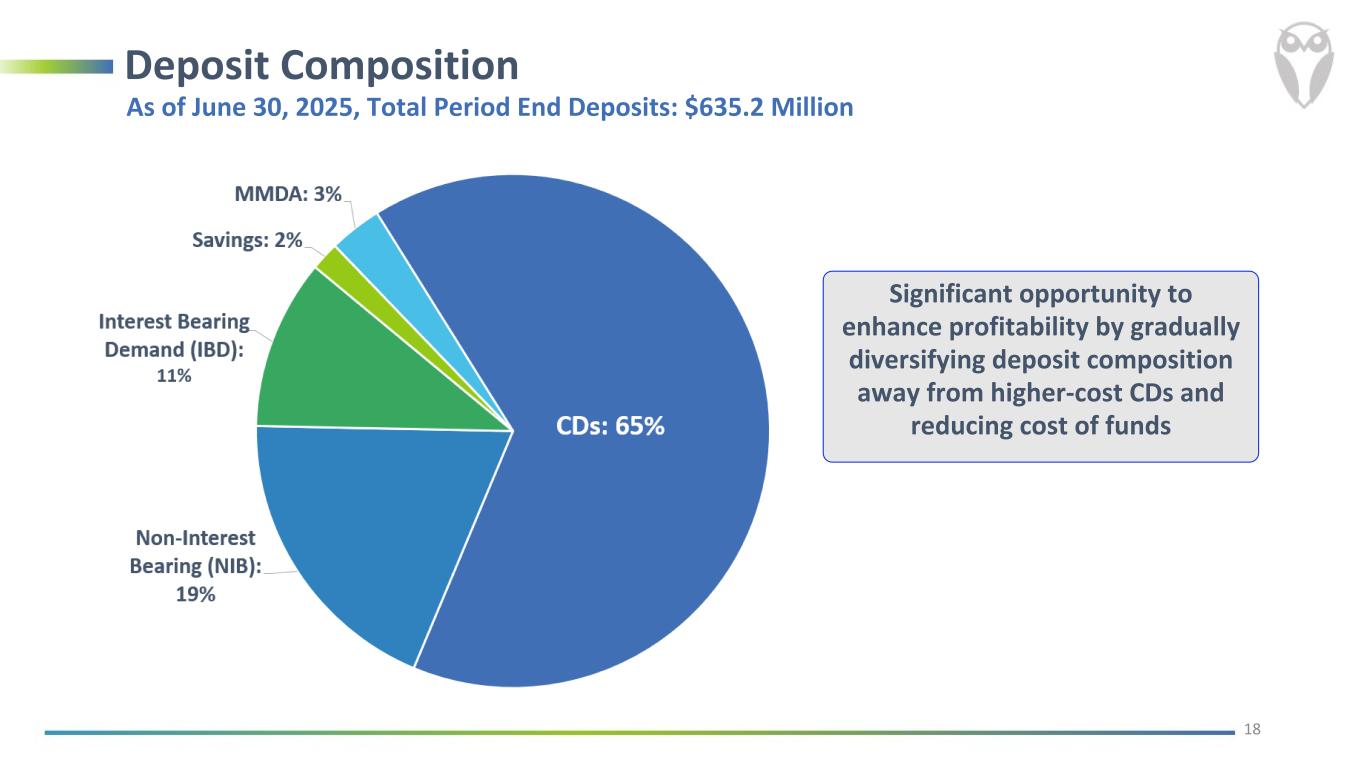
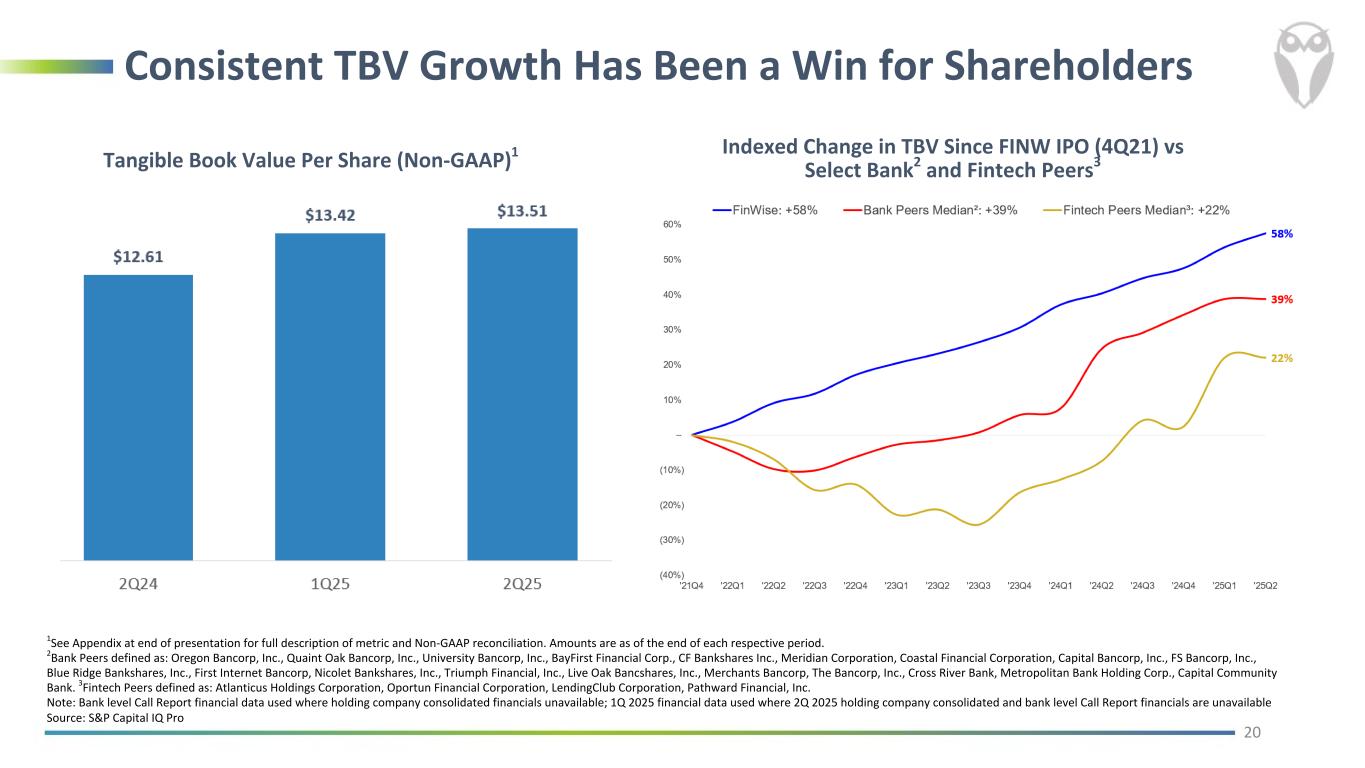
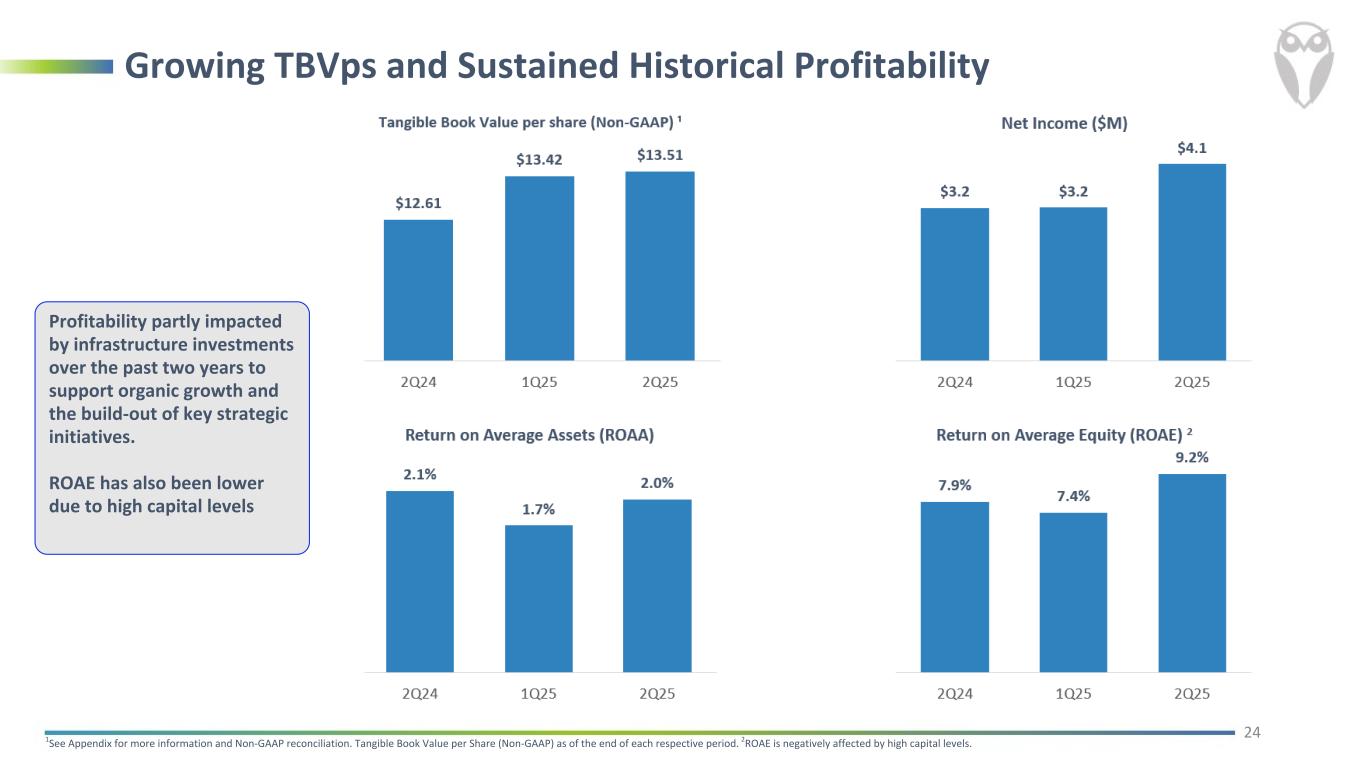
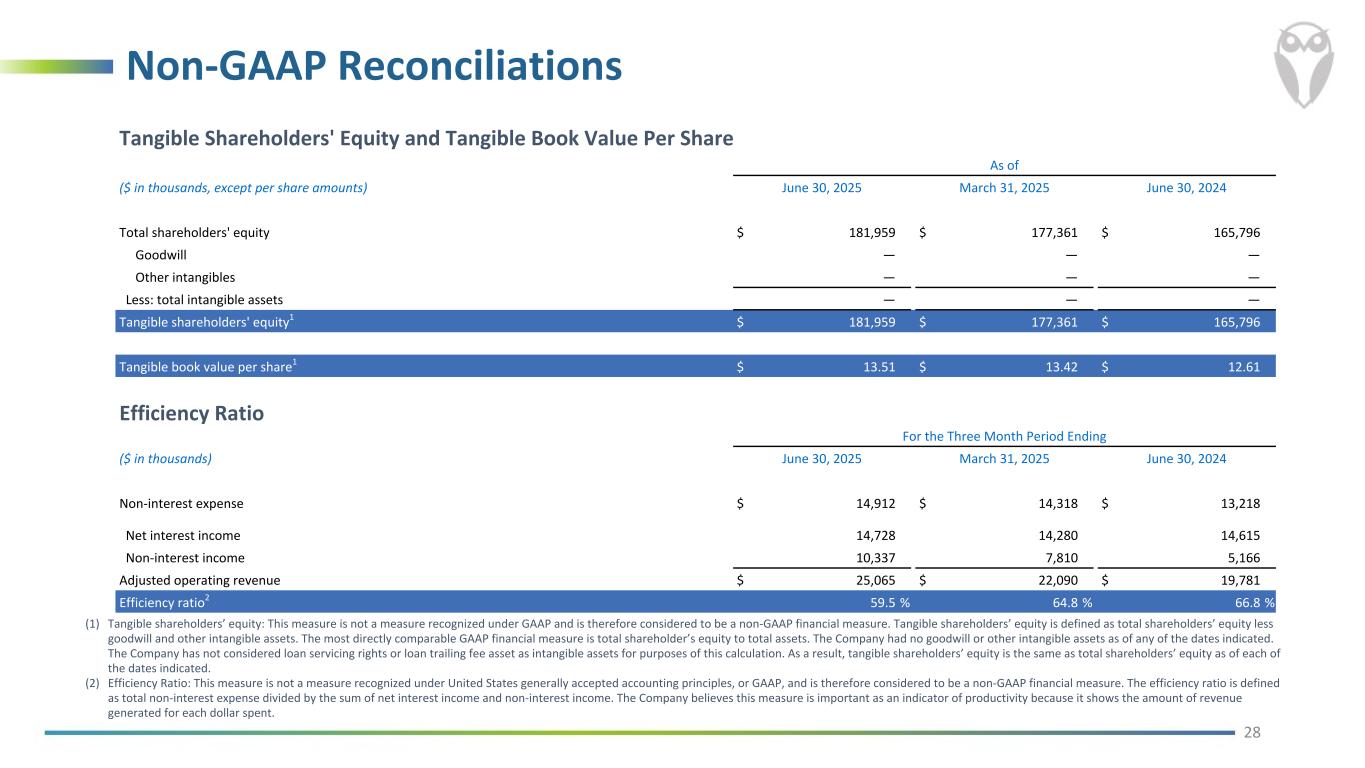
Good afternoon, everyone. We continue to successfully execute our business strategy and build solid momentum into the second quarter. We delivered strong loan originations, maintained solid revenue and remained disciplined on expense management, all of which contributed to growing profitability. Tangible book per share also continued to increase, ending the quarter at $13.51 versus $13.42 in the prior quarter. Additionally, we are proud that our publicly traded stock was recently added to the U.S. Small Cap Russell 2000 Index. We are also encouraged by the early traction of our new products and remain highly confident that the infrastructure investments we have made over the past two years will support strong long-term growth at FinWise by steadily enhancing both the asset and liability side of our balance sheet. Looking ahead, we continue to look for growth to progress gradually through 2025 and throughout 2026, driven mainly by our credit-enhanced product, originations from existing SP programs and incremental growth from programs that were signed late in 2024 and early in 2025. We are also optimistic about SBA lending as the overall environment remains stable, and we continue to see healthy demand from qualified applicants. Furthermore, as our overall portfolio grows, we are also evaluating a measured increase in dollar balances of higher-yielding loans within the limits that have been in place since 2018. That said, exposure to these loans will remain modest in relation to the overall loan portfolio as our policy restricts these to less than 10% of the portfolio. As we look further ahead to 2026, we're also excited about the potential benefits our BIN and payment products are poised to deliver, particularly the opportunity to enhance profitability by gradually shifting our deposit mix away from higher-cost CDs and reducing the cost of funds. While we expect these benefits to ramp gradually with a more material impact in the latter part of 2026, we believe they offer meaningful earnings leverage over time and are important differentiated offerings in a bank sponsorship ecosystem that continues to mature. Overall, as the various elements of our strategy continue to come together over the next 12 to 18 months, we believe 2027 could begin to reflect the growth benefits of our broader banking and payments offering following the significant infrastructure investments made over the last two years. While multiple variables can impact this outlook, including target capital levels and the pace of our balance sheet growth, in this scenario, we see potential for our return on average equity to start rebounding back into the low to mid-teens range initially, along with a return on average assets that exceeds 2%. Over the long term, there could also be opportunities to enhance our operating leverage by integrating artificial intelligence into the key parts of our operations. Lastly, while we remain committed to balancing short-term performance with long-term strategy, we measure our progress by the strength of the longer-term growth trajectory we have established, which we believe benefits the company and our shareholders. With that, let me turn the call over to Jim Noone, our bank CEO.
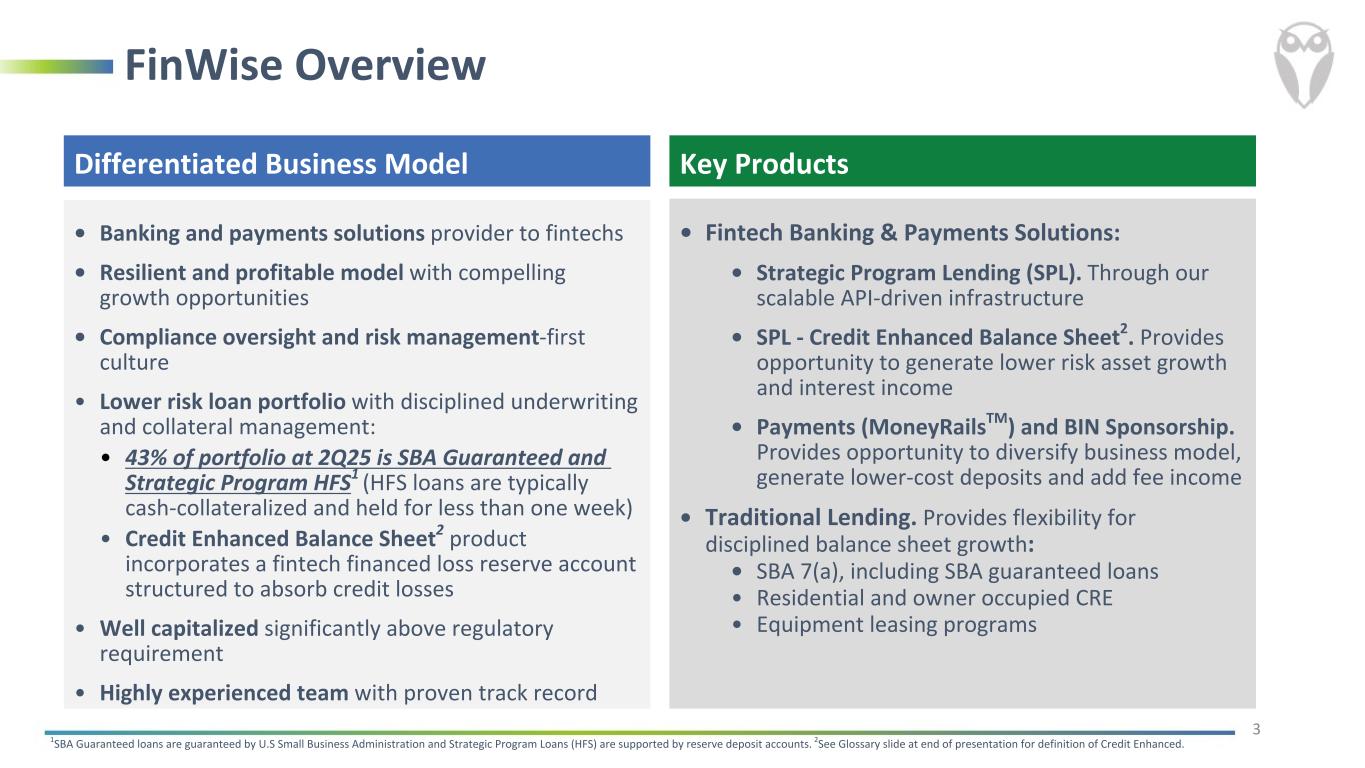
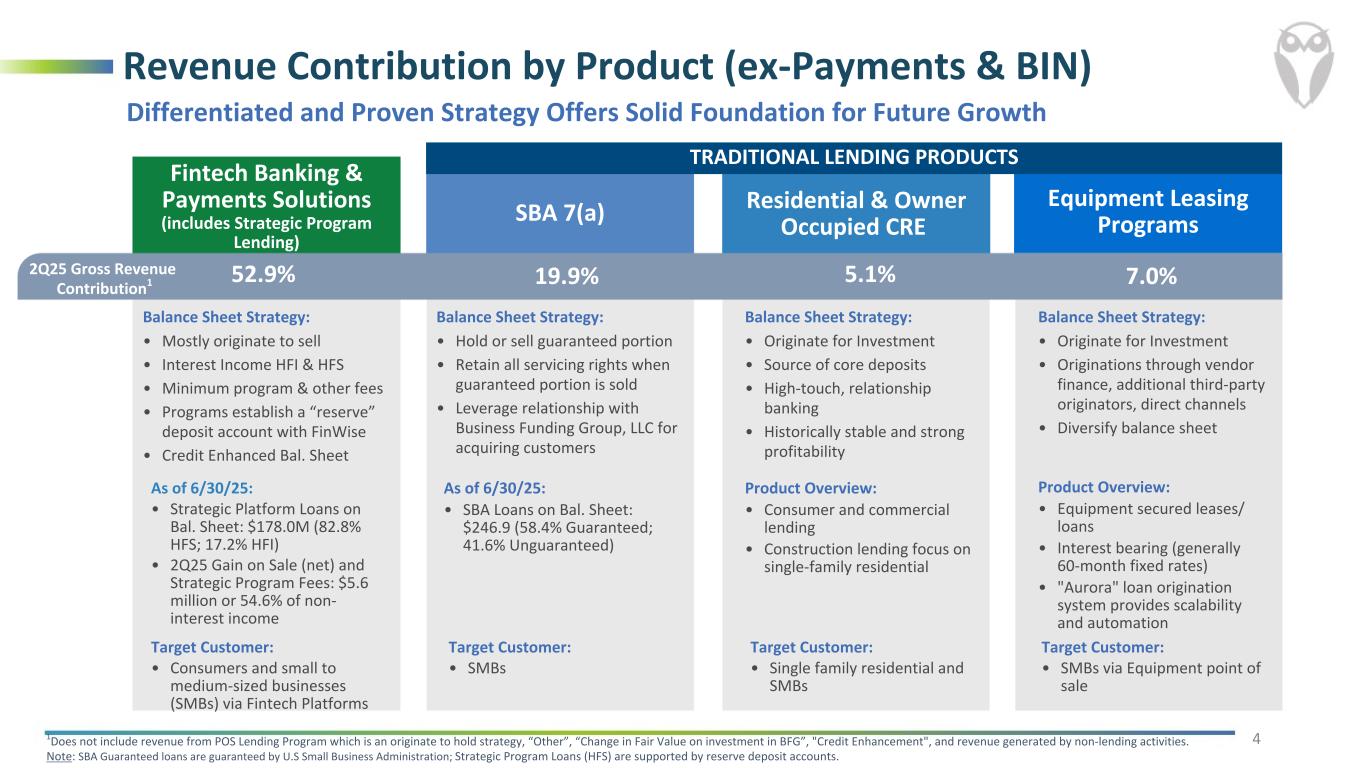
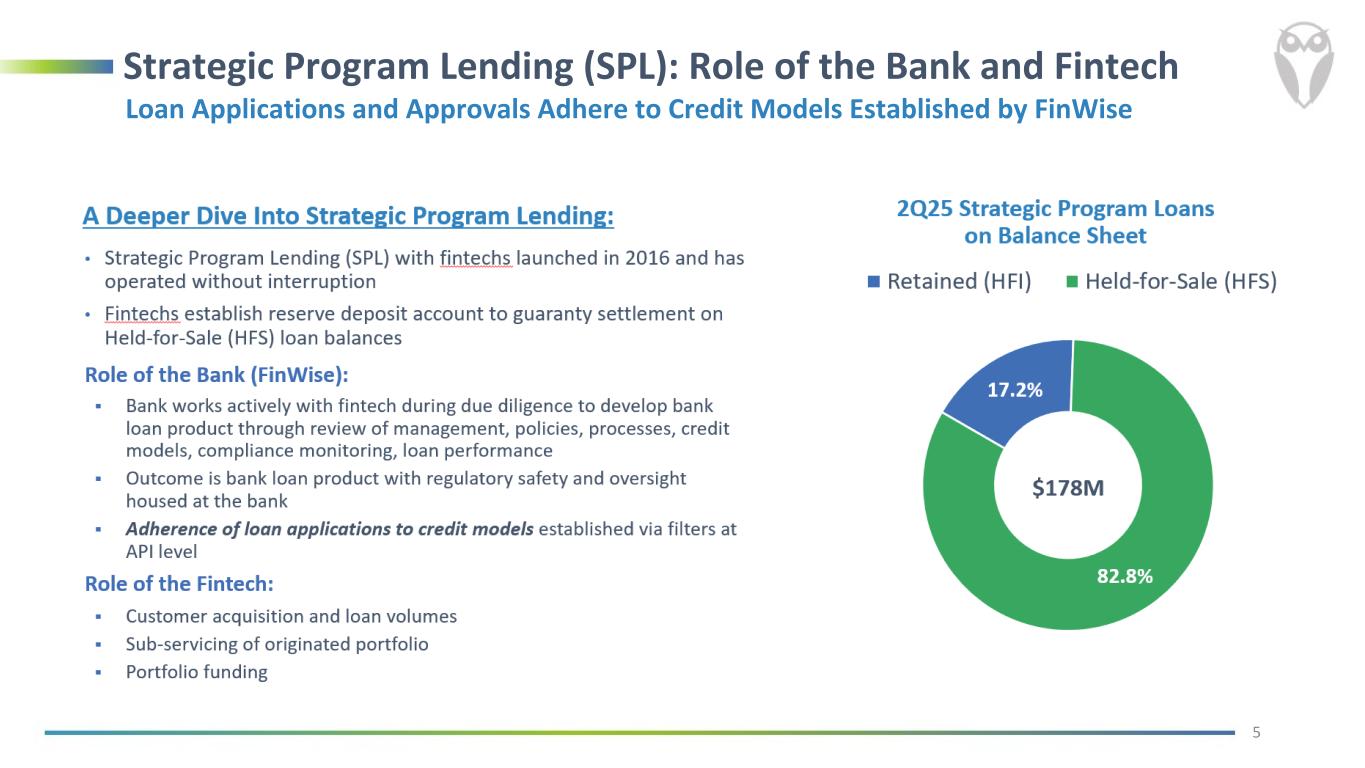
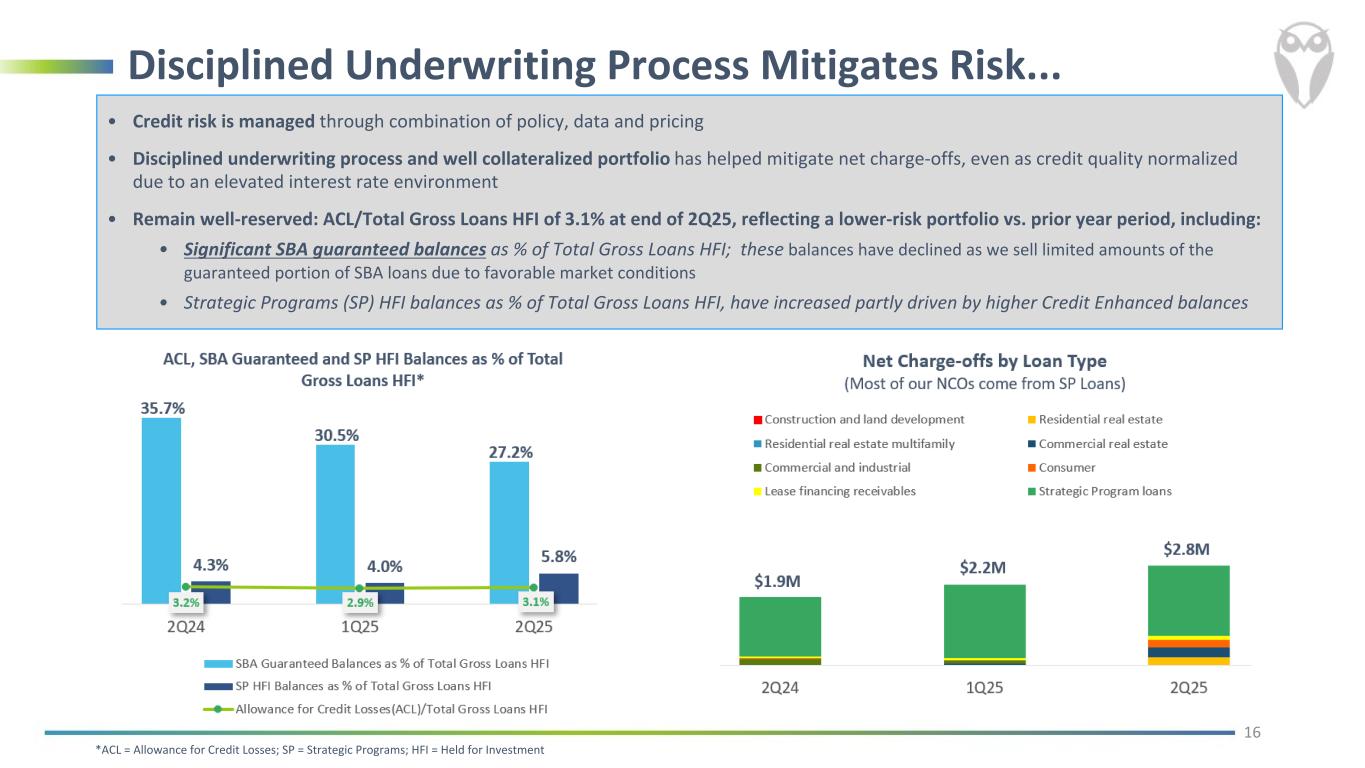
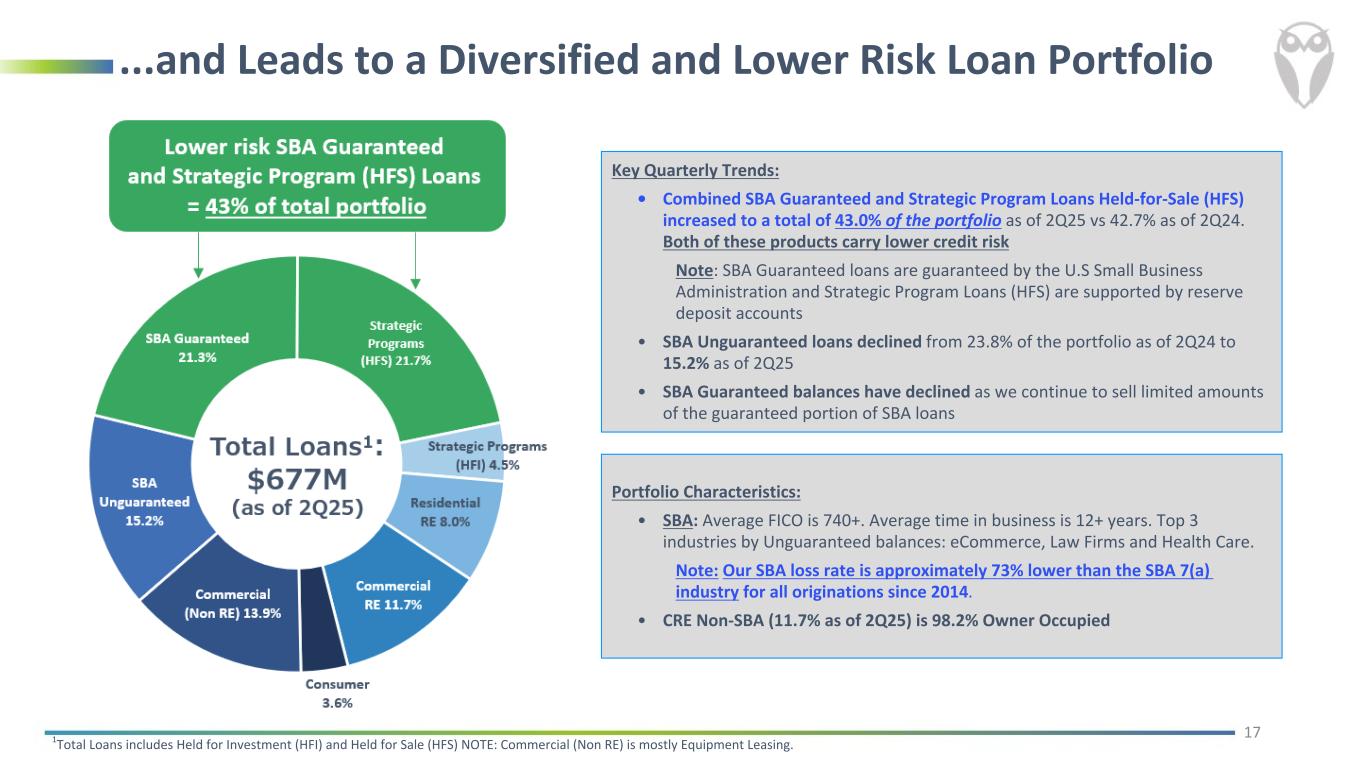
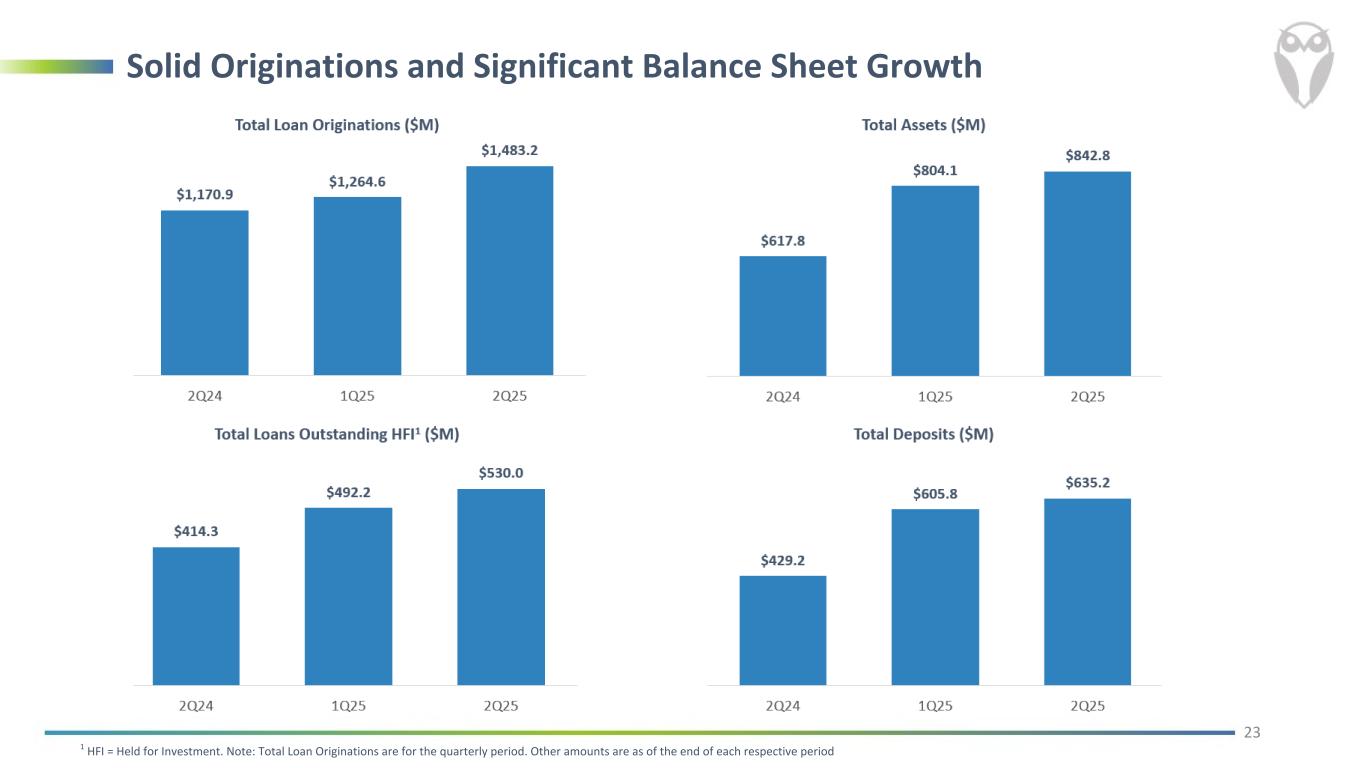
Thank you, Ken. The strong second quarter results were driven by the progress we continue to make towards our long-term goals, along with the continued upward trend in origination volume, totaling $1.5 billion in Q2, which is a 17% increase quarter-over-quarter and a 27% increase from the same quarter last year. Key drivers of the continued ramp in originations quarter-over-quarter were strategic programs we announced late in 2024 and a seasonal rebound from our higher-yielding partners. Key drivers of the 27% increase from the same quarter last year were the new programs mentioned as well as new products with existing programs and continued maturity of the programs we launched in '22 and '23. Our origination numbers in the quarter also include the expected seasonal deceleration from our student lending programs, which we expect will reverse in the third quarter, in line with academic calendars. Although demand trends and macro conditions could change intra-quarter through the first four weeks of July 2025, loan originations are tracking at a quarterly rate of approximately $1.5 billion. The second quarter results also reflect the first material funding for our credit-enhanced balance sheet program outside of some piloting we have been doing. The funding started in the last week of the second quarter, and this brought our credit-enhanced balances to $12 million at the end of the second quarter. We continue to have strong demand for this product, and we are working to get more programs live with this in the next two quarters. We expect credit-enhanced assets to reach $50 million to $100 million by the end of the fourth quarter this year, consistent with our prior guidance, and we are well positioned for this to be a core generator of interest income growth for us in the coming years. Quarterly SBA 7(a) loan originations increased 24% quarter-over-quarter and are up over 140% from the same quarter last year. The quarter-over-quarter change is primarily the result of a return to normal loan sizes from the aberration that we mentioned in Q1 and the growth from the same quarter last year is from an increase in both units and loan size as small business confidence has rebounded. We also continue to see demand in equipment leasing and owner-occupied commercial real estate products, both of which remain key contributors to portfolio growth. During the quarter, we continued to sell guaranteed portions of our SBA loans at a slightly faster clip because market premiums remain favorable and because we've seen a step-up in qualified loan demand. Our near-term plans for selling SBA loans will remain tied to market conditions and the origination levels for the product. Our SBA guaranteed balances and our strategic program loans held for sale, both of which carry lower credit risk, in aggregate made up 43% of our total portfolio at the end of Q2. Moving to credit quality. The provision for credit losses was $4.7 million in Q2 compared to $3.3 million in the prior quarter. Of the $4.7 million, $2.3 million is attributable to growth of credit-enhanced balances in the quarter. As a reminder, the provision for credit losses associated with the credit-enhanced loan portfolio is fully offset by the recognition of future insurance recoveries of a like amount in non-interest income. Quarterly net charge-offs were $2.8 million this quarter versus $2.2 million in the prior quarter. On our prior call, we provided guidance that up to $12 million in balances could migrate to Non-Performing Assets during Q2. The Q2 actual Non-Performing Assets balances increased by $9.9 million to $39.7 million. Of the $39.7 million in total balances, $21.2 million or 53% is guaranteed by the federal government and $18.6 million is unguaranteed. For Q3, there could be up to $12 million of loans that could migrate to Non-Performing Assets. Most of these past-due balances relate to variable-rate SBA loans that were originally underwritten when rates were much lower and consumer stimulus was flush. As these loans continue to season, we expect moderation to occur in Non-Performing Assets migration, though it will always be lumpy. We are very encouraged by the momentum in our business, and we expect to continue the steady progress. While the growth trajectory may not be linear, we are excited about the platform we are building and the long-term potential of the bank. The strategic investments we made during the low point in originations two years ago are beginning to yield results. And with continued strong execution, we expect to realize meaningful benefits over the next two years. I will now turn the call over to our CFO, Rob Wahlman, to provide more detail on our financial results.
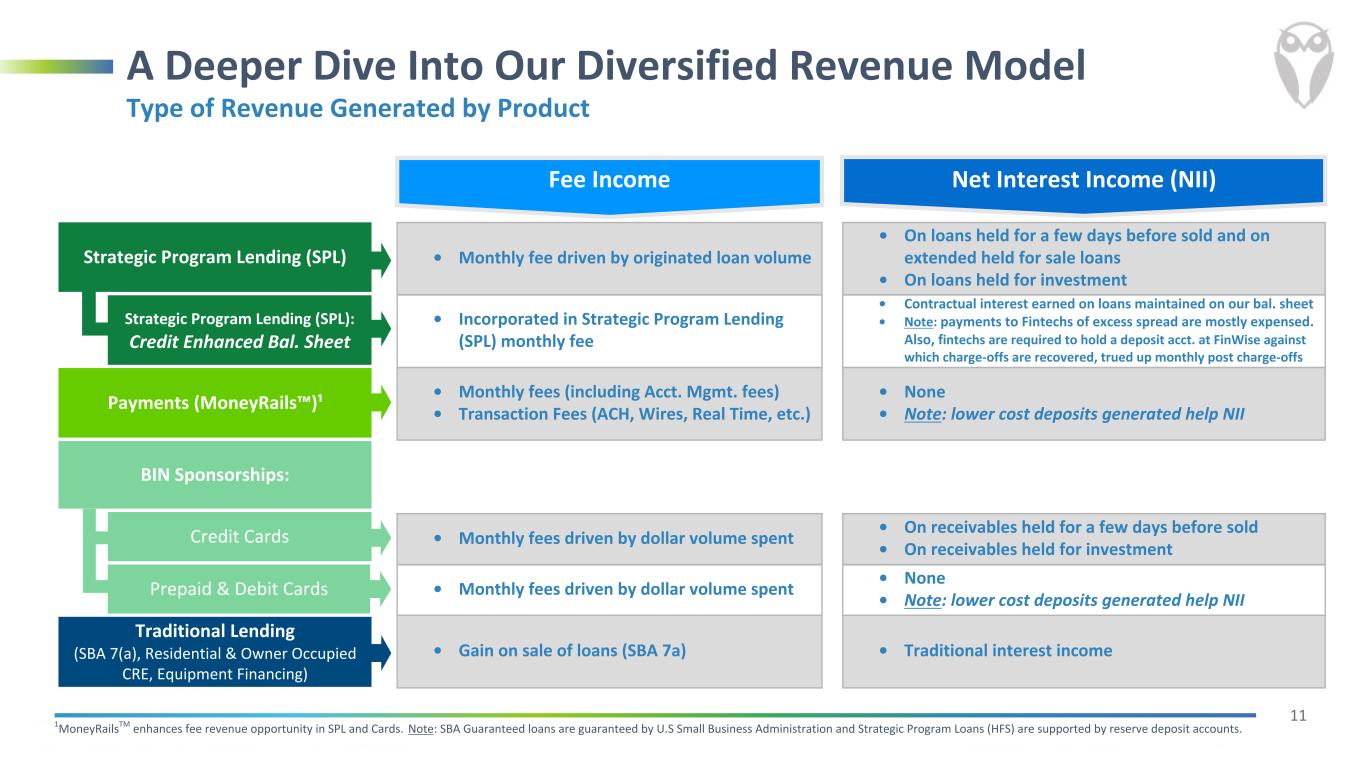
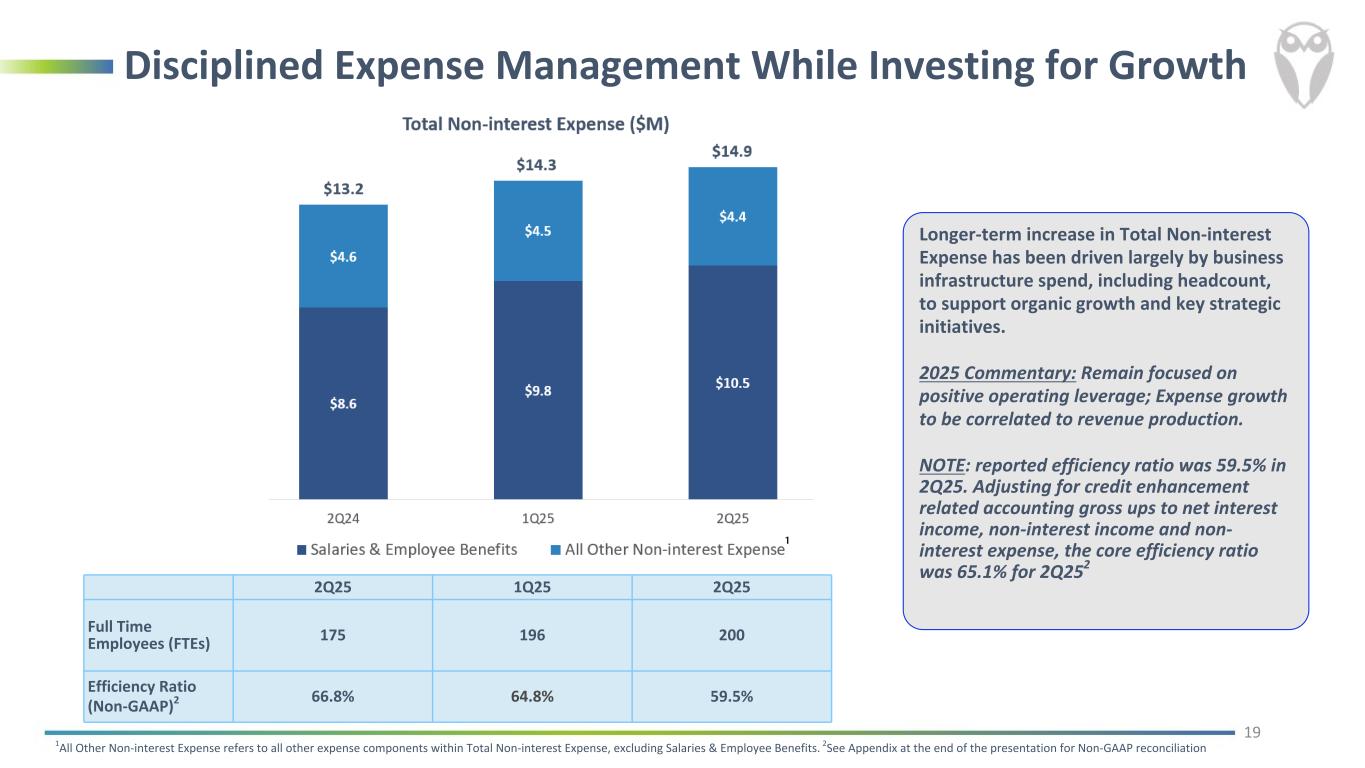
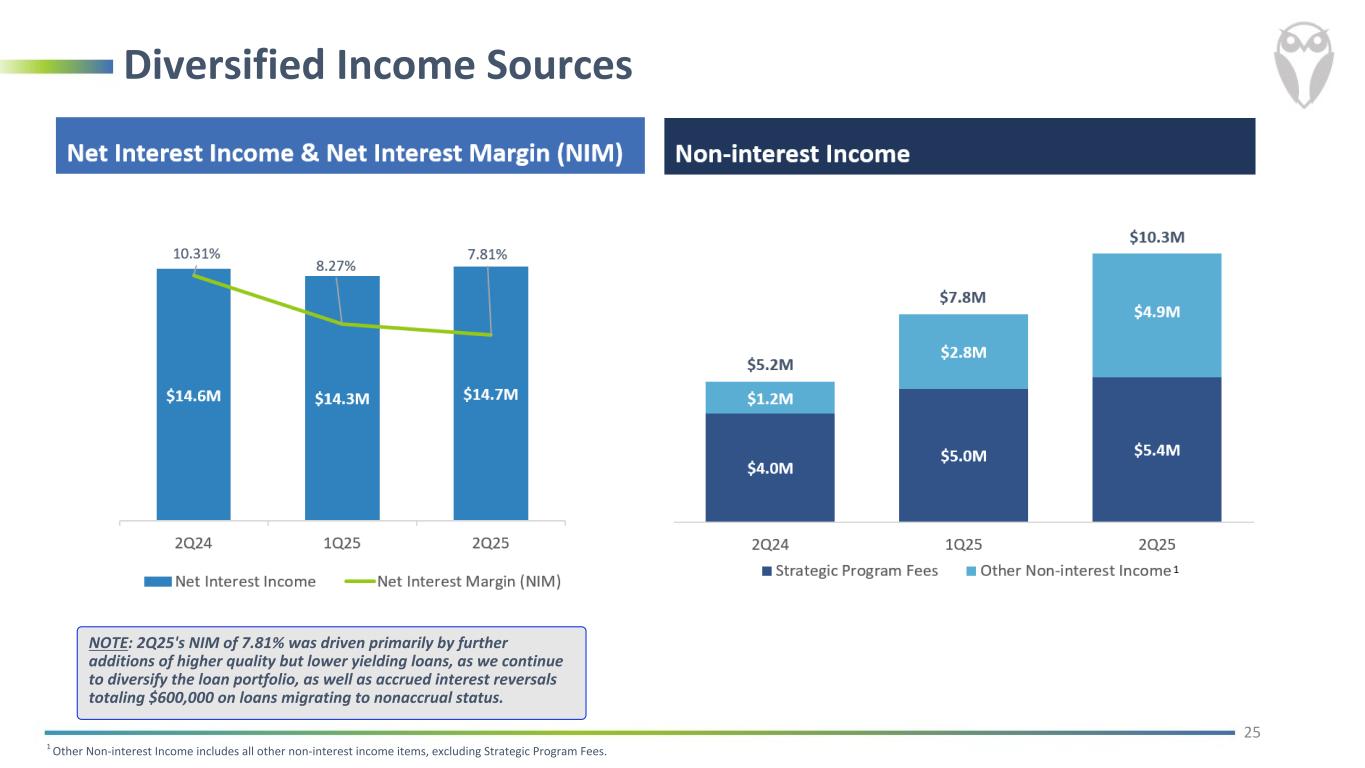
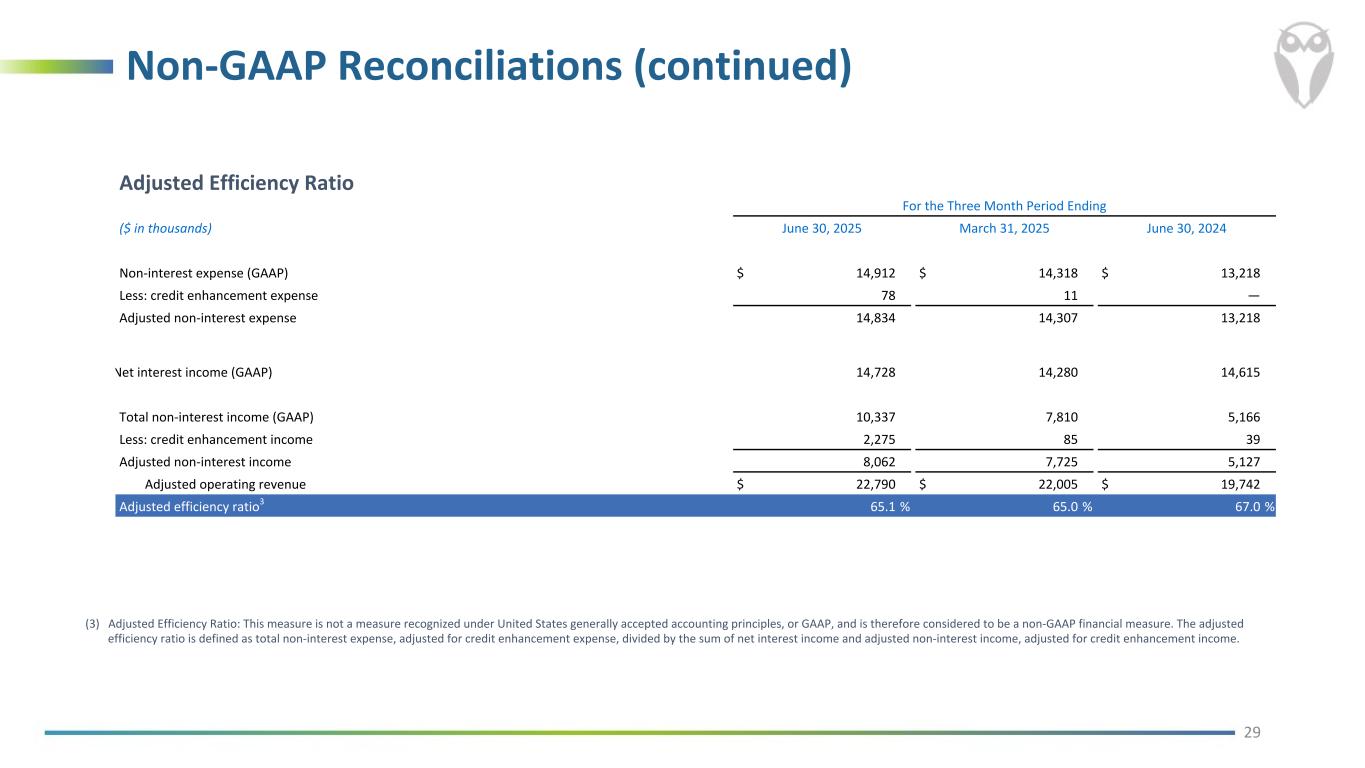
Thanks, Jim, and good afternoon, everyone. For the second quarter, we reported net income of $4.1 million or $0.29 per diluted common share. Key items that drove results were strong originations, a pickup in net interest income due to higher average loan balances in both our held-for-investment and held-for-sale loan portfolios, solid fee income and well-contained expense growth. Also in the second quarter, certain of our financial metrics began to reflect the accounting treatment from the growing balances of our credit-enhanced portfolio as we had previously communicated would happen, and I will highlight these impacts where appropriate. Average loan balances, including held-for-sale and held-for-investment loans totaled $634 million for the quarter compared to $565 million in the prior quarter. This increase included growth from credit-enhanced commercial leases, owner-occupied commercial real estate and consumer loan programs. Average interest-bearing deposits were $494 million compared to $430 million in the prior quarter. The sequential quarter increase was driven primarily by an increase in brokered time certificates of deposits. Net interest income was $14.7 million versus the prior quarter's $14.3 million, primarily due to an increase in average balances in the held-for-investment and held-for-sale loan portfolios, partially offset by an accrued interest reversal of nearly $600,000 on loans migrating to nonaccrual and higher average loan balances in brokered CD deposits. Net interest margin was 7.81% compared to 8.27% in the prior quarter, driven primarily by the previously mentioned accrued interest reversals as well as further additions of higher quality but lower-yielding loans as we continue to diversify the loan portfolio. The impact on net interest margin from the higher credit-enhanced balances was relatively small this quarter as balances just began to build in the last week of the quarter. That said, as these balances are expected to increase in the coming quarters, it's worth noting that net interest income and net interest margin net of credit enhancement expense are non-GAAP measures that include the impact of credit enhancement expenses on net interest income and net interest margin, the most directly comparable GAAP measures. As we've noted on prior calls, while our focus is on growing net interest income, we continue to expect the net interest margin to decline gradually over time due to our risk reduction strategy, while the volumes of earning assets increase. However, the downward progression in margin could decelerate in future periods if we decrease the rate of balance sheet asset diversification or we have stronger origination volume from higher-yielding held-for-sale loans or both. Conversely, our margin could see a further gradual decline if we fund large amounts of lower risk and lower-yielding loans such as the credit-enhanced assets. Fee income was $10.3 million in the quarter compared to $7.8 million in the prior quarter. The sequential quarter increase was primarily driven by an increase in credit enhancement income, strategic program fees and gain on sale of loans. As noted earlier, credit enhancement income mirrors the provision for credit losses on credit-enhanced loans, an increase due to the higher credit-enhanced loan balances outstanding at the end of the second quarter. Non-interest expense in the quarter was $14.9 million compared to $14.3 million in the prior quarter. The modest increase was primarily due to increases in salaries and employee benefits due to annual performance reviews, incentive estimates and deferred compensation programs. Our reported efficiency ratio was 59.5% versus 64.8% in the prior quarter. Adjusting for credit enhancement-related accounting gross-ups to non-interest income and non-interest expense, a non-GAAP measure, the efficiency ratio was 65.1% for Q2 '25 or flat versus the prior quarter. We remain focused on driving sustainable positive operating leverage with a long-term goal of steadily lowering our efficiency ratio. Important to achieving these goals, incremental headcount increases will continue to be driven primarily by higher revenue production. Our effective tax rate was 24.5% for the quarter compared to 28.1% in the prior quarter. The decrease from the prior quarter was due primarily to the change in estimated disallowed compensation expense relative to full-year net income expectations. While multiple factors may influence the actual tax rate, we currently expect it to be around 27% for 2025. With that, we would like to open the call for Q&A.
Operator
First question comes from Brett Rabatin with Hovde Group.
Speaker 5
I wanted to start with the credit-enhanced income from here. And just given the balances that you expect of $50 million to $100 million by the fourth quarter, the related revenues in Q2 were a little higher than I would have expected. Can you maybe talk about the relationship between the fees and the balances as we get later into the year?
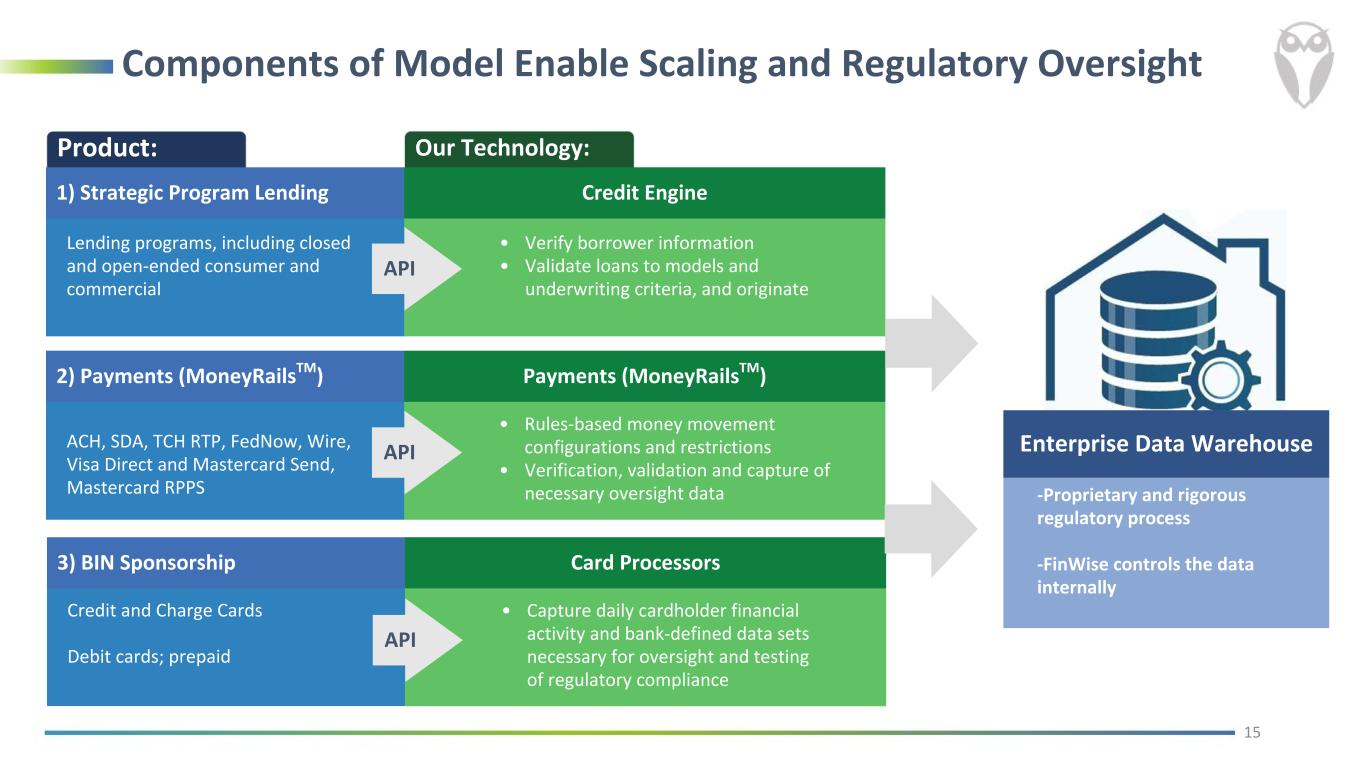
Certainly, Brett, it’s great to hear from you. The credit-enhanced balance sheet shows a significant amount of credit-enhanced income this period. This is related to the dollar-for-dollar offset for the provision for credit losses tied to the credit-enhanced portfolio. As the balances increase, you can expect to see a corresponding rise in fee income due to the allowance for credit losses. Following accounting guidance, we need to reserve for these loans as if they were part of our regular portfolio, applying the same methodology and rigor as with the rest of our CECL portfolio when calculating that reserve. Therefore, as that balance grows, the fee will reflect that increase. Additionally, you will notice a credit enhancement expense in the financials, which represents the amount passed through to the counterparty and appears as an expense item. This reflects the excess spread that is retained and passed on to the fintech.
Speaker 5
Okay. Yes, that's all straightforward, I think, and what I was hoping for from an explanation perspective. So I appreciate that. And then just on the funding costs from here, obviously, a little pickup linked quarter. I was just curious with the continued strong loan growth and the production, what you're planning on doing to fund the growth from here? And if basically the cost of funds has bottomed out and might increase a little bit.
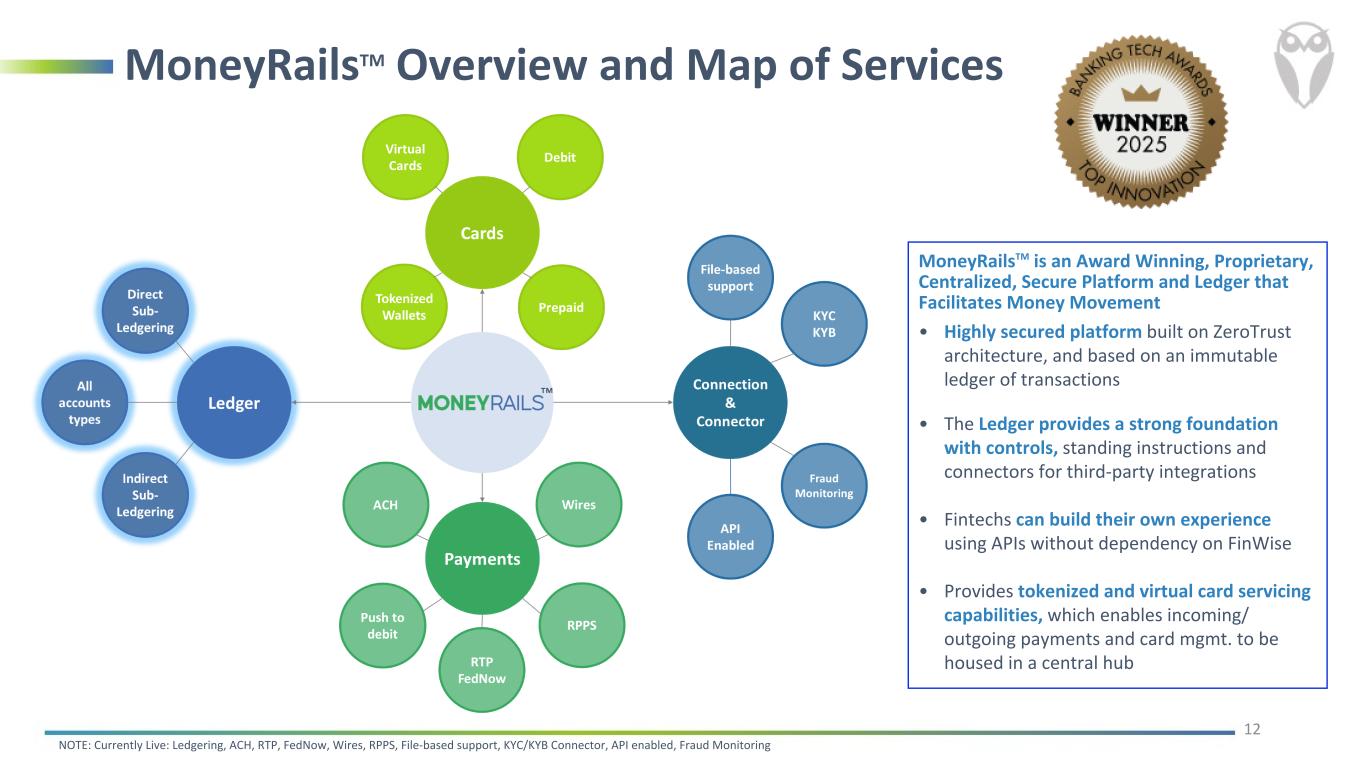
So at this point, long term, there's a short-term answer and a long-term answer to this question. The short-term answer is that we are dependent upon wholesale funding, principally certificates of deposits. And since we are dealing with a lot of variable rate portfolio, we're trying to keep the duration on that short to about 1-year CDs. So as the market moves, that's going to hit our cost of funds. Longer term, we are working diligently to bring some of the payments business into our bank. A lot of the payments business will be a source of lower-cost deposits that will be more floating rate deposits as well as non-interest-bearing deposits. So short-term answer, long-term answer. I hope that's helpful, Brett.
Speaker 5
Yes. Yes, that's really helpful. And then if I can just ask one last one around net charge-offs. This quarter, the strategic plan or strategic platform were a little lower, but some of the other categories were a little higher this quarter. And just wanted to make sure I wasn't missing anything in terms of trend migration outside of the strategic programs.
Yes. Brad, you're not missing anything there. The NCOs moved up in the quarter from 2.2% to 2.8%. And the quarter-over-quarter difference is really just some SBA charge-offs that came through in the quarter. But this level is in line with our comments. The way we typically look at it is if you look at the kind of LTM quarterly over the last two years, you'll see generally, it's right around the $2.8 million level in aggregate. Last quarter, we had mentioned $3.3 million in NCOs was a good number for modeling. We continue to think that's the case just because it's in line with our expectations from when we derisked the portfolio a little over two years ago. But there's no like trend there.
Operator
Next question, Joe Yanchunis with Raymond James.
Speaker 6
So I wanted to start kind of high level here. So Ken, you touched on a bit in your prepared remarks. I was hoping you could dive a little bit deeper. So two themes playing out across the broader market have been AI and stablecoins. So as a tech-enabled bank that recently rolled out a new payments platform, I'm curious to hear your thoughts on how you expect these trends will impact the broader banking industry over the intermediate term? And then if you have a strategy on how you'll engage with these trends.
Yes, that's great. So we really welcome the clarity that the Genius Act provides. One of the primary, I think, inhibitors for people to get started in the stablecoin was the lack of regulation and the perceived protections and so forth that regulated banks have. And so the clarity that's provided by the Genius Act is something that we very much welcome. Now stablecoins for us specifically are not a near-term initiative, though we're looking into various potential opportunities. Of course, since one of FinWise's key products is settlements, we think of stablecoin and that in that context. But what we're really watching for is a strong domestic use case. We see cross-border use cases as low-hanging fruit. And there are some other strong use cases as well. Business-to-business seems to look good. But what we're trying to see is how to prioritize our efforts here. And I think seeing the strong domestic use case is one of the triggers for us since we don't right now engage in cross-border. Does that help?
Speaker 6
Yes, that helps. How do you believe AI trends could enhance the bank's efficiency?
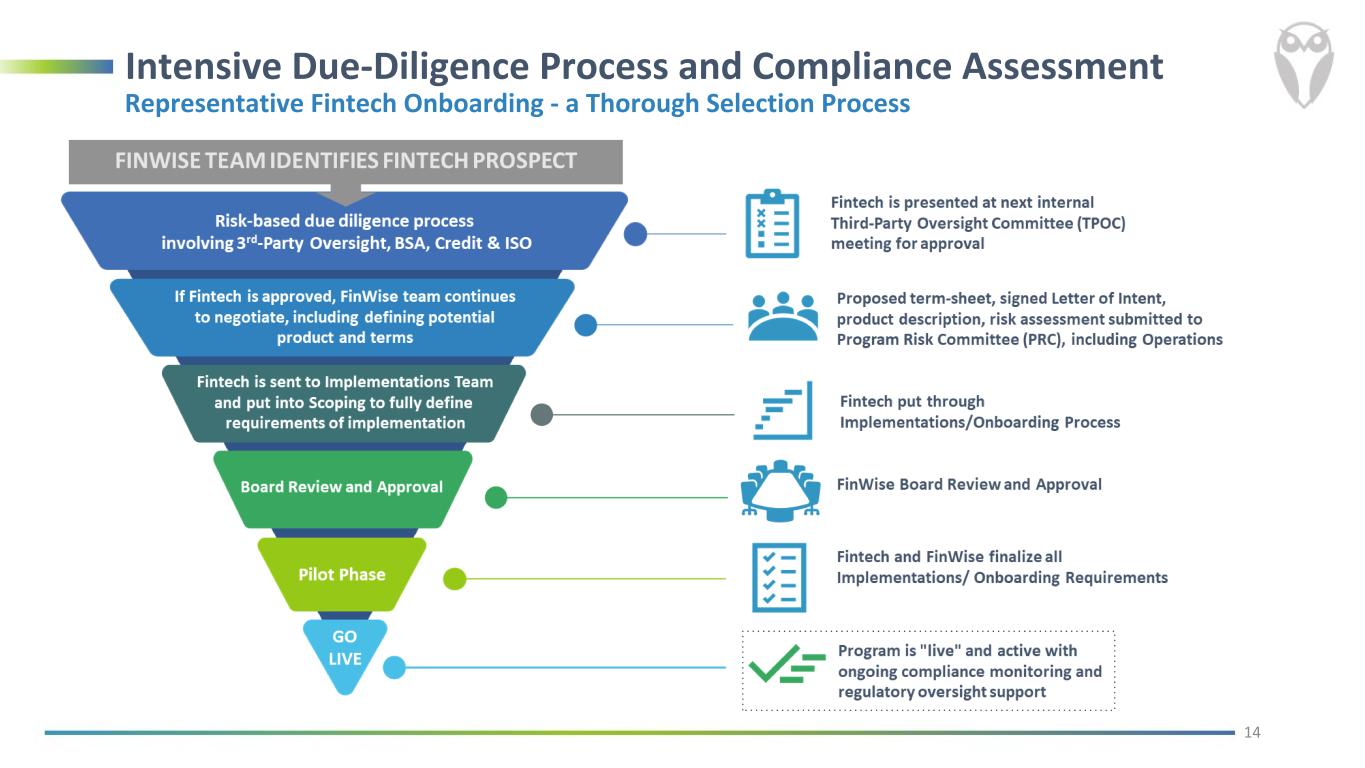
Yes, that's a great question. We have a unique perspective on AI. Many banks use it primarily for customer acquisition and cross-selling, but we focus on a few different areas. Initially, we apply AI in our IT development, particularly for fraud protection. Our payment systems and lending programs incorporate AI to detect fraud. Additionally, we see potential for improving efficiency in key operational functions. For instance, when onboarding a fintech partner, we undertake significant work to analyze policies in relation to federal regulations and our own bank policies. AI could streamline the document comparison process and help us identify any gaps quickly. We also see opportunities in areas like complaint management. Overall, most of our AI applications are centered on back-office operations.
Speaker 6
Perfect. I appreciate that answer. And I also want to dive a little bit into your credit-enhanced loans this quarter. And I apologize if I missed this in the materials, but what was your average credit-enhanced loan balance in the quarter? And kind of piggybacking off that, if you added a little over $10 million in credit-enhanced ending loan balances and reserve a little over $2 million, should we expect that 20% to 25% kind of provision ratio should kind of hold as we move forward throughout the year?
Yes, Joe, this is Jim. Generally speaking, the balance of the credit-enhanced product at the end of Q1 was around $2 million, and by the end of Q2, it had increased to roughly $12 million. Most of that additional $10 million was added in the last week of the quarter, meaning the average balance is likely to be closer to about $2.5 million. In terms of reserves, we handle those programs similarly to our other fintech initiatives, using the high watermark method along with a qualitative overlay. Each program is unique, and the reserves depend on the loan data and the observed loss rates, so we cannot predict a standard provision based on one program as new ones are introduced.
Speaker 6
All right. Understood there. And then kind of last one for me here. In relation to your partners, can you provide us an update with the health of your partners? And separately, what does your current partner pipeline look like today?
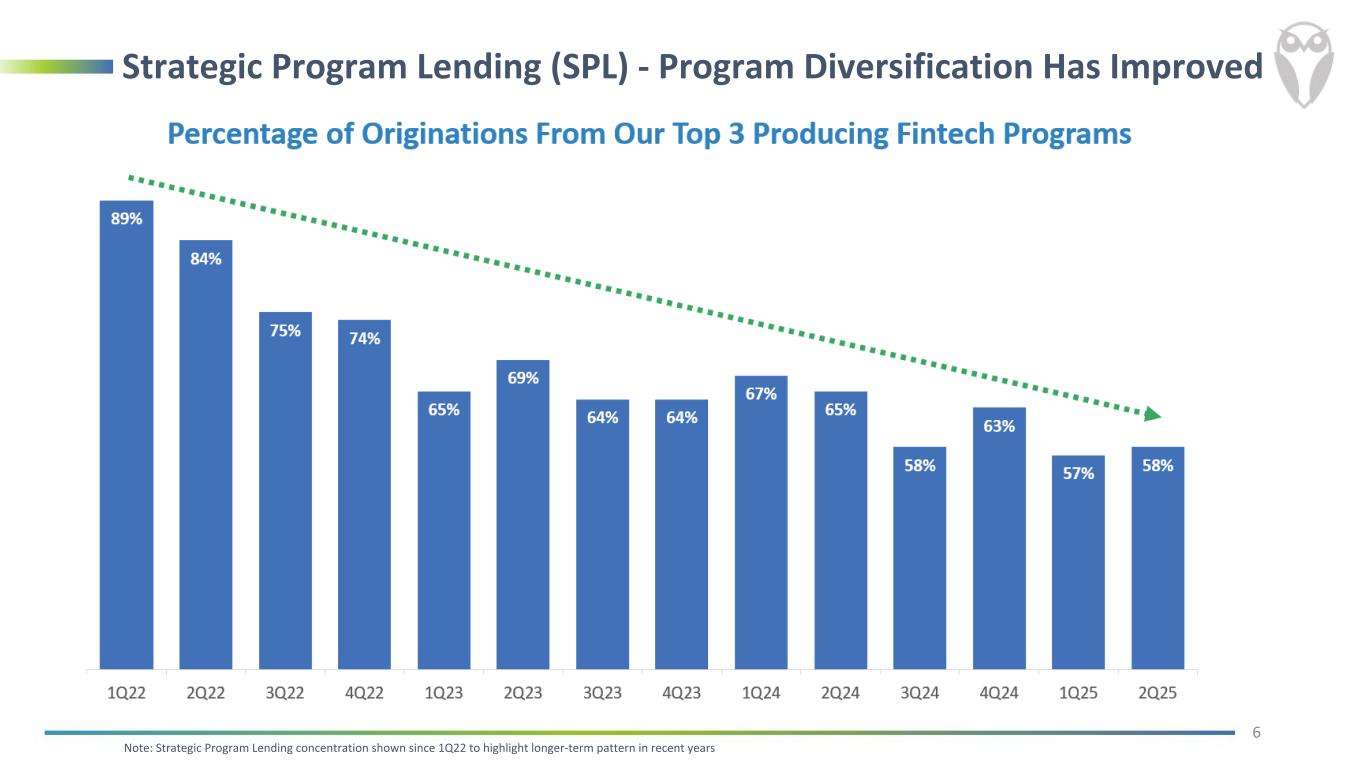
Yes, absolutely. Regarding the health of our partners, I would say it is currently outstanding. If you look at our origination levels, we experienced solid growth across the board. This growth can be attributed to three main components. First, a significant portion of the change stemmed from recently announced programs that have moved out of their pilot phases earlier this year. Second, consumer loan demand has increased overall. Almost all of our non-student lending programs saw substantial growth during the quarter. Lastly, we observed the anticipated rebound in the second quarter from our higher-yielding partners. Overall, our partners are healthy, loan demand is strong, and as a result, our originations have increased.
Yes. And you asked about the pipeline.
Speaker 6
Yes. Yes. The partners in there and how that compares to the current partners that you work with?
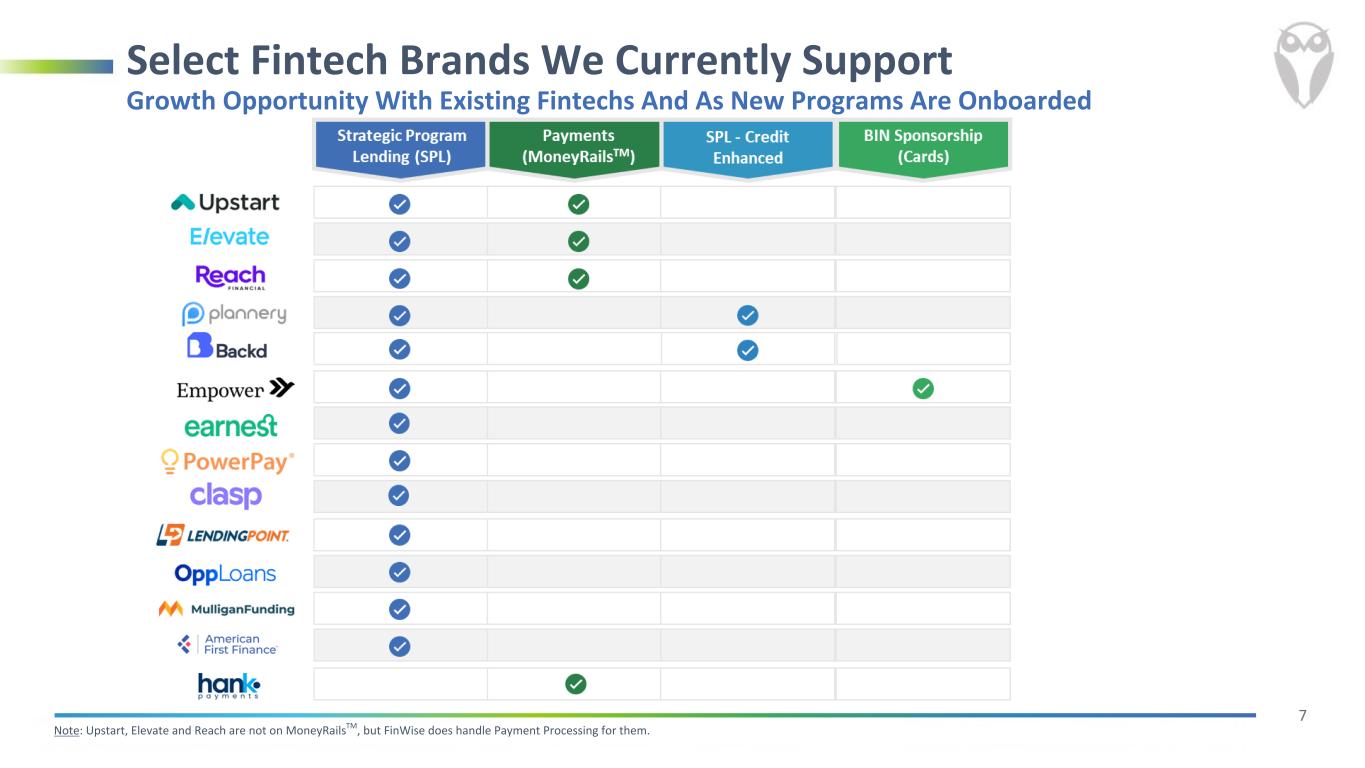
The pipeline is looking strong. If we take a moment to differentiate between the pipeline and the current impact, we launched four new programs in 2024, and we're beginning to see their effects now. For our guidance in 2025 regarding new partners, we aim to add two to three new lending partners each year, which we believe is a suitable number for our modeling. Typically, these programs start contributing a few quarters after their announcement. We introduced one new partner in May with Bakkt, and they are just starting to ramp up. Our goal is to secure another one to two lending partners by the end of the year, and we feel confident about that.
Operator
Next question, Andrew Terrell with Stephens.
Speaker 7
I want to ask about the special purpose vehicle for investments, particularly concerning credit enhancements. You increased it by $10 million in the last week of the quarter, and you're aiming for $50 million to $100 million by the end of the year. The calculations suggest that you could potentially add significantly more than that. Can you clarify whether you are trying to reach a specific figure and therefore controlling the pace of credit-enhanced additions, or are you just aiming to be conservative? How should we approach this?
Yes. So as far as like the production year-to-date, Andrew, we're a little ahead of schedule as far as kind of internal gating items and dates. The product has really strong demand. And we knew the growth in balances was all going to occur in the second half of the year. I think you guys have all kind of modeled it that way. And we knew it would really ramp up into the fourth quarter. So we're happy that a little bit of growth came through right at the end of this quarter. And kind of where we're at is we're live with three programs so far. We have a fourth program going live with that today. And so we've got four partners live and filling balances, and should have a fifth by the end of the year. That $50 million to $100 million target is still what we would point to as a good end-of-year level for modeling purposes.
Speaker 7
Perfect. Okay. And then another one just on the average held-for-sale balances up quite a bit this quarter. I know you guys at one point were talking about extending some of the hold times. So I guess the question is, kind of is this a fair level of average held-for-sale loans to contemplate? Or is there any material fluctuation we should be considering?
You're correct that the increase in the balance is mainly due to the extended held-for-sale program, which saw significant growth particularly in the first month of the quarter. I believe the average balance accurately reflects what we can anticipate moving forward, possibly just slightly higher.
Speaker 7
Okay. Awesome. I appreciate it. And then, Ken, in your prepared remarks, you mentioned just the payoff from payments and BI contributing more heavily in the back half of 2026. And you talked about some financial targets in 2027, exceeding a 2% ROA, and I think it was a low teens ROE. But if I look this quarter, you did a 2% ROA. And I think if I were to normalize your capital to kind of the lower end of where you generally target leverage at, it would probably imply in that low teens ROE level. So I'm just trying to get a sense on what's kind of underpinning that 2% ROA commentary, keeping in mind that you guys, I think, just delivered a pretty strong quarter and are putting up pretty strong profitability already.
Yes. I'll start, and then I'll let Rob jump in on that as well with any color. But yes, we try and be careful in assessing a lot of characteristics of what this looks like in 2027, for example, like the capital needs of the bank, how fast we're growing. There are a lot of factors that could play into that. But we're thinking that two is a good conservative number that we've modeled out and the low teens, all things being equal, would be a good number as well. Once again, those can vary if the bank grows faster, there’s need for additional capital or what have you or if it's slower in the growth. So what we've tried to do is approximate through some probability approaches, what we feel safe in saying. And Rob, I don't know if you want anything.
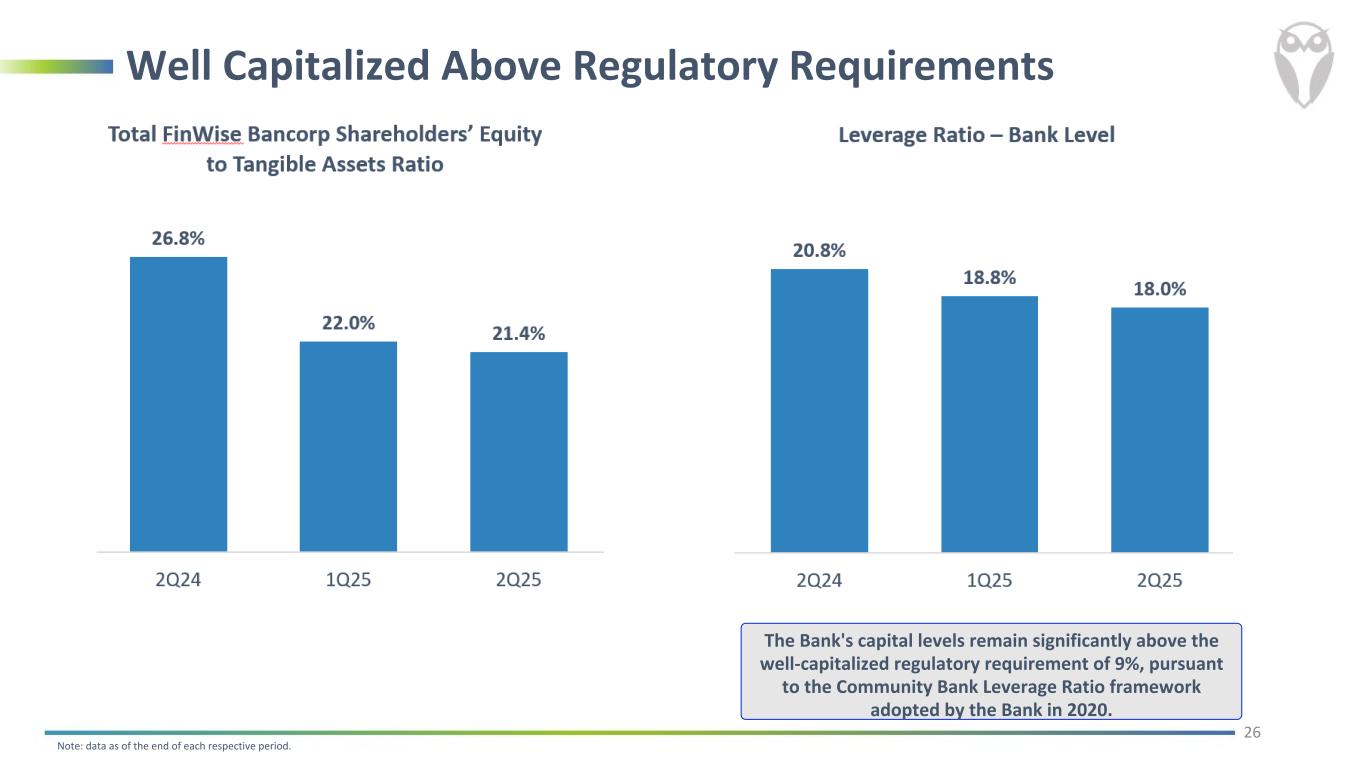
I think you've covered a lot of it. Just when we're looking at these numbers, I guess, the way the key assumptions are what is the level of capital, which we talked about is a 14%, 15% level of capital. We've taken a look at historically where we've been recently, and we think that certainly 2% is sustainable. And with a fully leveraged balance sheet then at the target level, you can easily come up with this low to mid-teens type number. Then the question that we have, and it's a question, I think maybe you're leaning towards, but can we do better than that? And my answer to that question is, I'd say, in all likelihood, yes, we can do better than that. But right now, it's based upon what we feel that we can support.
Speaker 7
Yes. Okay. Totally appreciate it. And yes, that's kind of where I was going with that one. Just the last for me. Anything on expenses? I mean, up $600,000 or so this quarter. It feels like expenses are kind of playing out as we talked about where we're getting better efficiency here. But any notable investments we should be aware of for the kind of back half of the year?
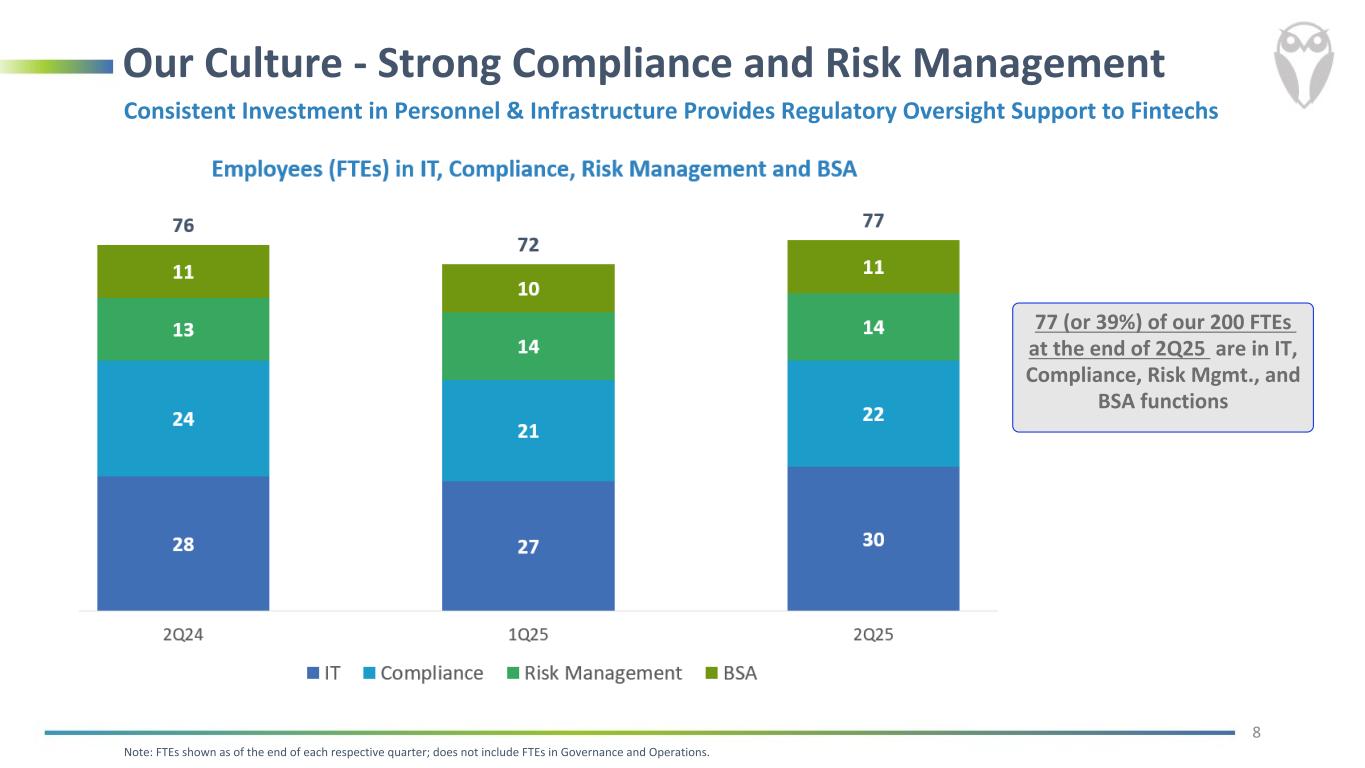
I'm not thinking of anything at this moment. The increase you noticed in the second quarter was mainly due to the annual review and salary adjustments process we undertake each first quarter of the year. There were also a few changes in benefits and a slight rise in costs that everyone is experiencing. However, besides that, there isn't anything significant, and I don't anticipate anything notable coming up. We have indicated that as revenues grow and production ramps up, we will need to hire some additional staff. Our headcount has remained largely stable for at least the last three quarters. As we increase production in certain areas, we will be bringing on a few more employees, but I believe we are currently in a good position.
Speaker 7
Got it. Okay. But still expecting positive operating leverage on a go-forward basis?
Operator
This concludes today's teleconference. You may disconnect your lines at this time, and thank you for your participation. Thank you.