Operator
Good morning, ladies and gentlemen. Thank you for standing by, and welcome to Fermi America's First Quarter 2026 Earnings Call. At this time, all participants are on a listen-only mode. A question-and-answer session will follow the prepared remarks. Please note that today's event is being recorded. I'd now like to turn the call over to Rodrigo Acuna, Fermi Director of Investor Relations. Rodrigo, the floor is yours.
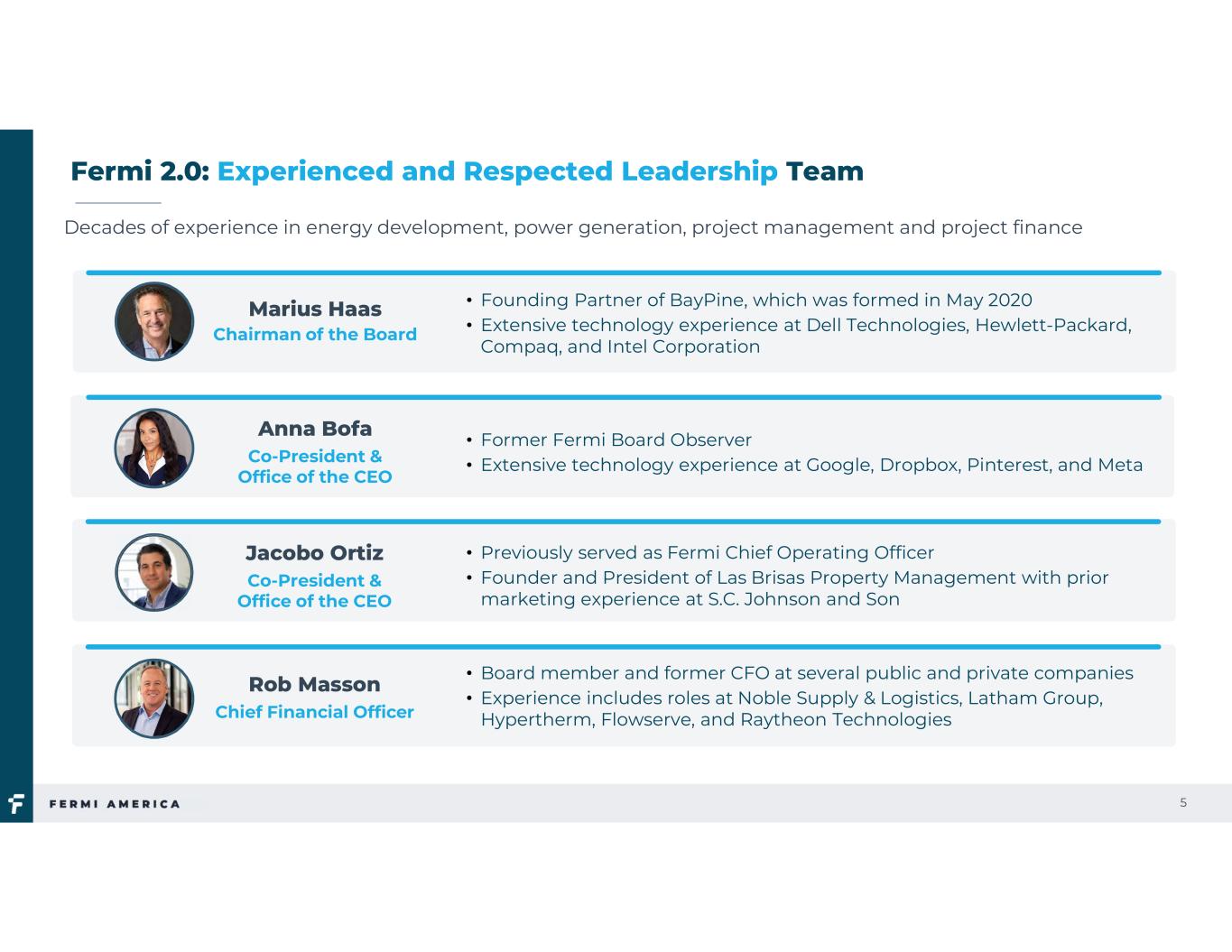
Good morning, and thank you for joining Premier America's first quarter 2026 earnings conference call. With me today are our chairman of the board, Marius Haas, co-presidents of the newly established office of the CEO, Jacob Ortiz-Blanez and Ana Bofa, and our interim chief financial officer, Rob Masson. Today's call contains forward-looking statements within the meaning of the federal securities laws. These statements reflect management current expectations and are subject to risk and uncertainties that could cause actual results to differ materially from those anticipated. For our detailed discussion of the risk, please refer to our most recent annual report on Form 10-K and our recent reports on Form 8-K. Any non-GAAP measures discussed today are intended to provide supplemental perspectives on the company's ongoing operations. I will now turn the call over to Marcus.
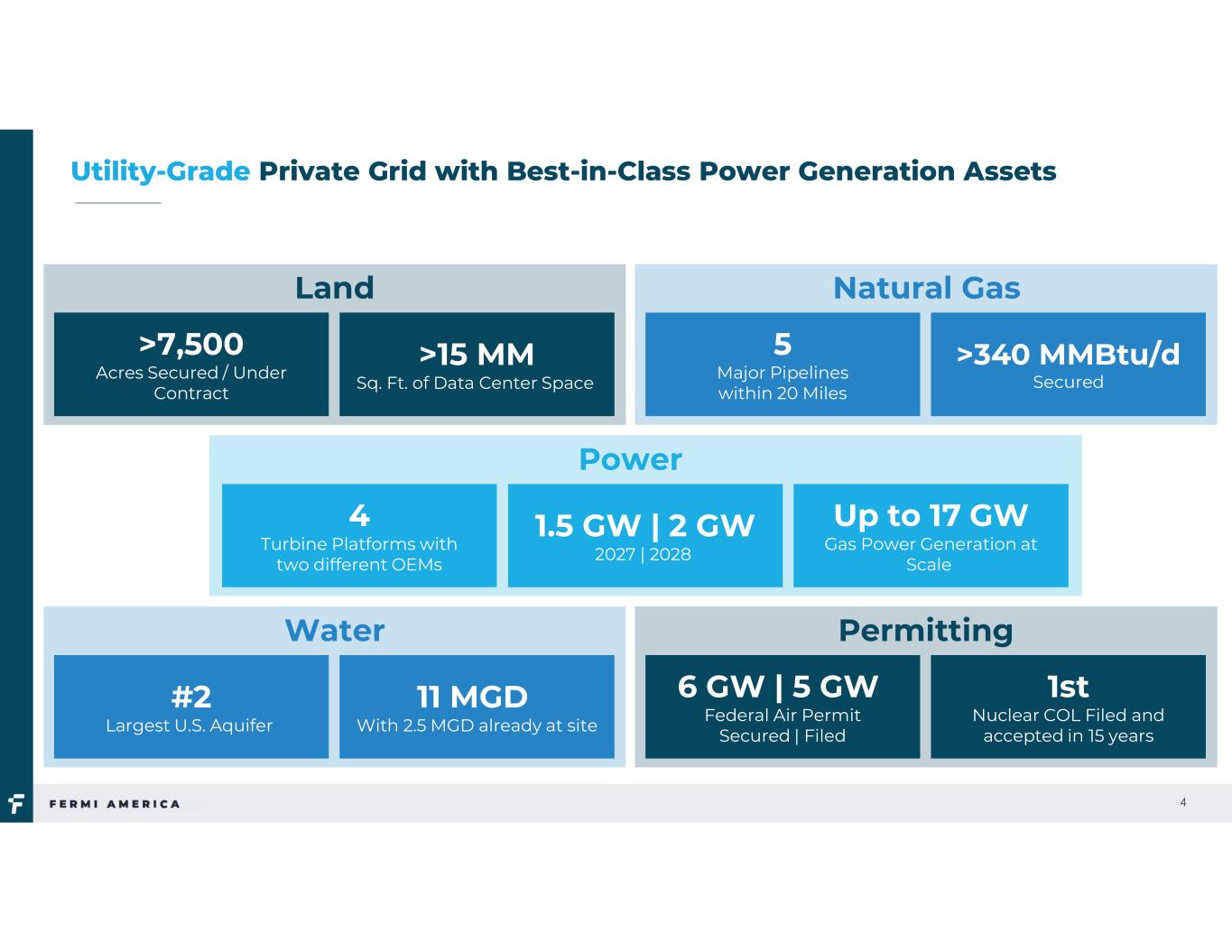
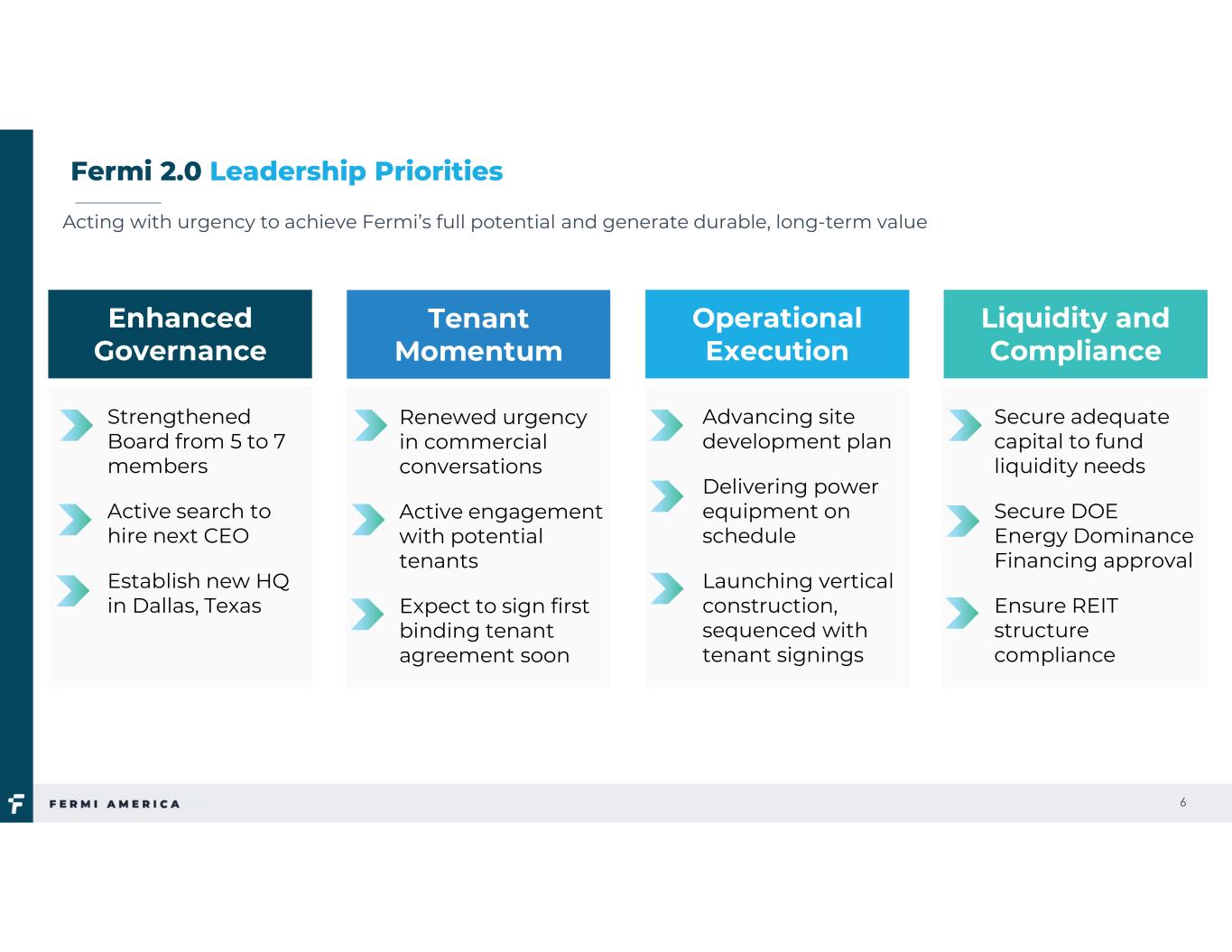
Thank you, Rodrigo. Good morning, everyone, and thanks for joining us today. We're at a meaningful inflection point in Fermi America's development. With Fermi 2.0, we're moving forward from the entrepreneurial foundation that built this company to the institutional framework required to scale it. Fermi was built on delivering reliable private grid power at scale to the hyperscale compute infrastructure that the AI economy requires. That hasn't changed. And market conditions continue to validate our approach and value proposition. Forecasts for AI-driven power demand vary, but the central tendency has moved meaningfully upward over the past year. In the near term, the picture is one in which power availability, not capital, and not demand, appears to be the biggest constraint. It's clear that delays are being reported across announced projects globally, and those delays are being driven by grid interconnection timelines and equipment availability. What's important for you to know is that our strategy is oriented towards addressing that specific gap, and it's why we believe our project is advantaged. Our mandate today is to execute with the governance, commercial relationships, and operational discipline that our investors rightly demand and expect. On today's call, we'll cover several important topics. First, I'll address the leadership changes and the steps we've taken to strengthen governance, commercial execution, and financial discipline. Second, Anna will cover commercial progress, including tenant engagement, regulatory, and nuclear. Third, Jacobo will provide an operational update on Project Matador, including recent site progress across procurement and construction. And finally, Rob will review first quarter results and liquidity. To begin, I want to take a moment to directly address the recent changes in leadership. Last month, the board removed Toby Nogabar from the positions of president, chief executive officer, and director. He was terminated for cause. The board's decision was deliberate. It was unanimous among the directors involved, and it was the result of a careful and comprehensive process that included guidance of an independent counselor. Importantly, the board firmly believes the move was in the long-term interest of this company and its shareholders. While Toby played a critical role in building something genuinely ambitious, the board recognized that over the next 18 months, Fermi needs to operate differently. We need to execute multi-billion dollar contracts with investment grade counterparties while continuing to evolve as a public company, advancing towards commercial operations. This evolution is what Fermi 2.0 is all about, and executing it will require changes at the top. These include three significant actions. First, we have strengthened our governance structure. I have assumed the role of chairman of the board, bringing experience from Dell Technologies and the enterprise technology sector. We expanded the board from five to seven directors, adding Myles Everson, Larry Kellerman, and Jeffrey Steeve. As our former CFO, Myles knows the company inside and out. Larry currently serves as our head of power and has more than 40 years of experience building multi-billion dollar power generation asset portfolios. Jeffrey is a seasoned chief executive and chairman with deep experience scaling industrial enterprises into public company caliber organizations. We have engaged Hydrogen Struggles, a respected executive recruiting firm, to lead the search for our next CEO. That process is underway, and we have a preliminary slate of highly qualified candidates already in hand. We're focused on identifying the right person, a season later with experience leading large complex companies, relationships with hyperscalers, and fluency in project financing to take Fermi to commercial operation and beyond. Additionally, we have hired Rob Mason as our interim chief financial officer. Rob has more than 20 years of public company financial leadership. His track record of driving growth and enterprise value across multiple industries is exactly what this company requires as we scale Project Matador and cultivate institutional relationships. Second, we have formalized our operational presence. We've established a new corporate headquarters in Dallas in addition to our permanent on-site presence in Amarillo. Dallas positions us close to key stakeholders and deep talent. while Almirillo keeps our team embedded in Project Matador's build-out. And third, we have actively rebuilt and expanded our commercial relationships. Since the leadership changes in April, our commercial momentum has strengthened. Tenant conversations that had previously stalled have been reinitiated, and new prospective tenants have entered our data room. The market's response to the structural changes we've made have been constructive, and we're increasingly confident that this evolution positions Fermi to accelerate the execution of our first binding tenant agreements. Hannah will provide more color in a moment. At this point, I want to quickly touch on a few topics that are top of mind. I'll start with liquidity. Rob will discuss this in more detail shortly. but here's the main takeaway. We have multiple levers we can pull, and we're managing this company so that capital decisions are driven by strategy and not by pressure. Next, our former CEO's ill-advised call for an immediate sale of the company. The board has carefully considered that view and rejected it outright. A forced sale at this moment is not in the best interest of the long-term shareholders, especially with anchor tenant negotiations advancing and our financing structure intact. As any responsible public company should be, we're always open to value-creating opportunities, but we're not going to be stampeded into a short-sighted decision. Lastly, I'd like to talk plainly about what has not changed. The assets and fundamental value of our business have not changed. We have a campus on the path to 17 gigawatts of private power with a six gigawatt clean air permit in hand and an additional five gigawatt application filed. We have more than two gigawatts of long lead time gas generation either on site or under a firm contract. We have great partners including Texas Tech University, which has reaffirmed its support. Our mission has also not changed. The country is in a generational race for AI compute, and that race is bottlenecked by power. As I mentioned earlier, behind-the-meter, gigawatt-scale, redundant private power that is delivered on the necessary timeline is not a nice to have for the hyperscalers and frontier model developers. It is the constraint. Fermi was purpose-built to relieve that constraint. If anything, the macro thesis that served as the basis for a highly successful IPO is sharper today than it was then. And perhaps most importantly, the fantastic team executing on our vision has not changed. The engineers and project managers who pour the foundations, handle supply chain logistics, manage EPC contractors, and run permitting are here, remain focused, and are moving forward. I will now turn the call over to Anna for a commercial and regulatory update.
Thanks, Marius. I'll cover three areas today, commercial progress, regulatory advancement, and the continued de-risking of our nuclear program. I'll start on the commercial side. The most important message is that the market has not walked away from this asset. If anything, recent engagement has reinforced the strength of Project Matador and the urgency of the customer need we are addressing. The underlying customer need has not changed. If anything, it has intensified. Across hyperscalers, neocloud providers, and enterprise compute operators, the same constraint keeps coming up. Access to large-scale, reliable power on a timeline that matches AI demand. That is the commercial opening for us at Fermi. Fermi 2.0 is about making the company easier to work with, creating a more streamlined commercial interface for customers and partners who want to move quickly and confidently. That means faster decision-making, tighter commercial coordination, and a more direct path from diligence to binding agreements. Over the past two weeks, we've hosted multiple prospective tenants and strategic partners at our site. The feedback has been highly constructive. Customers and partners continue to view Project Matador as one of the most advanced and customer-ready, large-scale power campuses they have evaluated. That matters because customers are not looking for a conceptual capacity. They are looking for credible near-term power, real infrastructure, secured equipment, permitting progress, land control, and a team that can execute. The conversations we're having are increasingly specific. Customers are working with us on capacity planning, delivery sequencing, power availability, reliability, operating structure, and the commercial frameworks required to move from interest to execution. Importantly, these conversations are continuing under the Office of the CEO structure. Customers are not waiting for a permanent CEO appointment to engage. Their need is immediate, and they are working with us now to match capacity requirements and potential delivery paths. We are also evaluating strategic partnerships with established and respected data center operators and infrastructure partners. We view those partnerships as potential accelerators, a way to expand our execution capacity, increase customer confidence, and serve a broader set of tenants while maintaining commercial discipline. So the commercial message is straightforward. Demand remains strong. The asset is being validated directly by the market, and Fermi 2.0 is getting the structure to convert that demand into binding agreements with the right counterparties at the right economics and on timelines we believe we can execute. We will announce binding agreements when they are signed and when disclosure is appropriate. We are encouraged by the progress and we believe the changes we've made have strengthened and accelerated our ability to transact. On the regulatory front, the most significant milestone of the quarter happened in February with the receipt of our clean air permit for six gigawatts. This represents the second largest permit of its kind in the U.S. This is not just a regulatory milestone, it is a commercial milestone. The approval is a key enabler of our commercial program. It provides prospective tenants with the regulatory certainty they need to commit capital to long-term agreements at this scale. In late March, we filed for an incremental five gigawatt gas permit, giving us additional flexibility as we build toward the broader campus vision. We have also filed for foreign trade zone sub-zone designation for our imported generation assets. Once that's received, it will deliver meaningful tariff relief and duty deferrals, which has a quantifiable benefit to our balance sheet. Finally, on nuclear, this work is about strengthening the long-term commercial value of Project Matador. We have a front-end engineering and design agreement with Hyundai Engineering and Construction that covers site layout and civil cost estimating. Doosan Interability has also commenced preparation of forging dyes for our reactor pressure vessels. It's worth noting that we're the first private company to be admitted to the NRC's Accelerated National Environmental Policy Act pilot program. This work, in combination with the DOE financing track, significantly de-risks the long-dated portions of the campus build-out and underscores the national strategic priority assigned to this project. I will now turn the call over to Jacobo for an operational update.
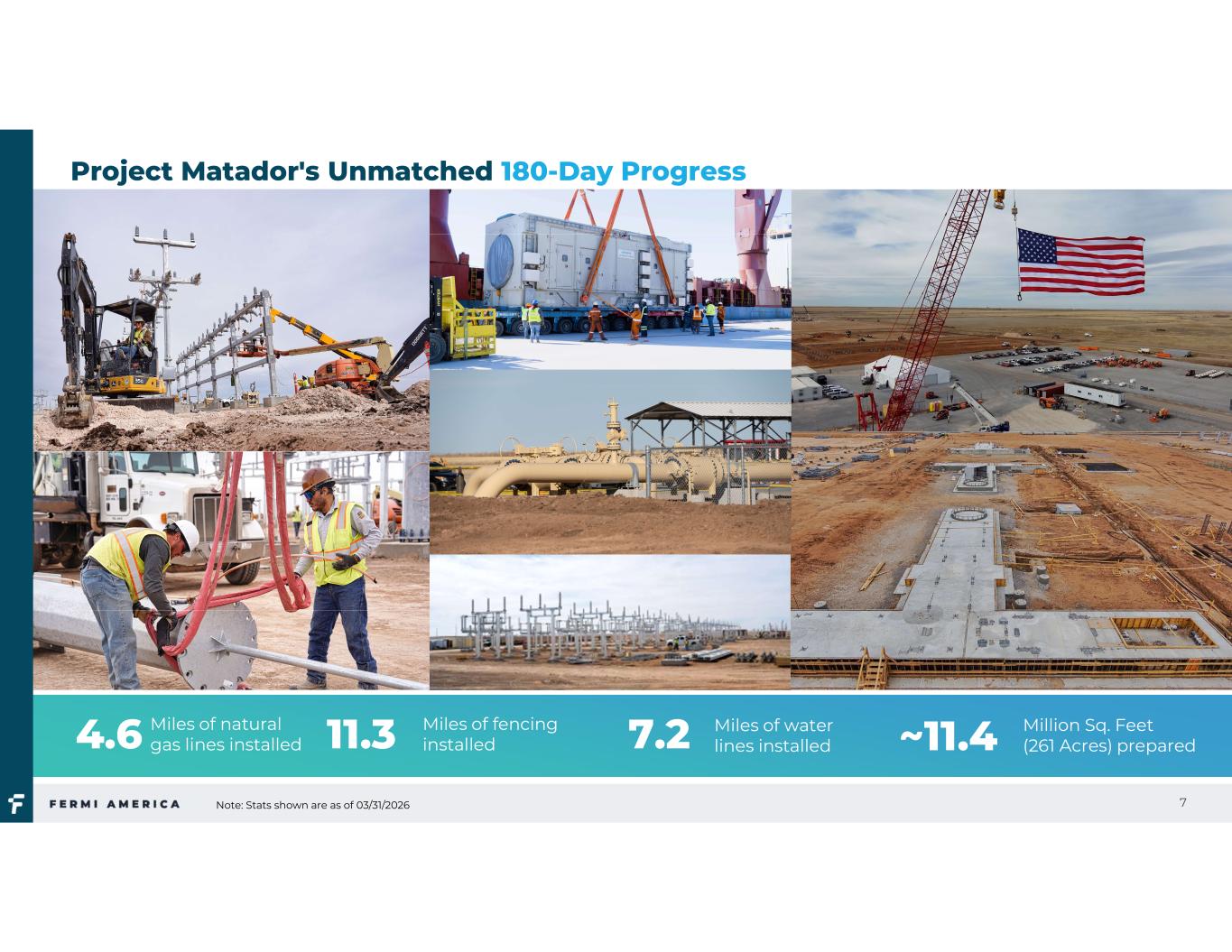
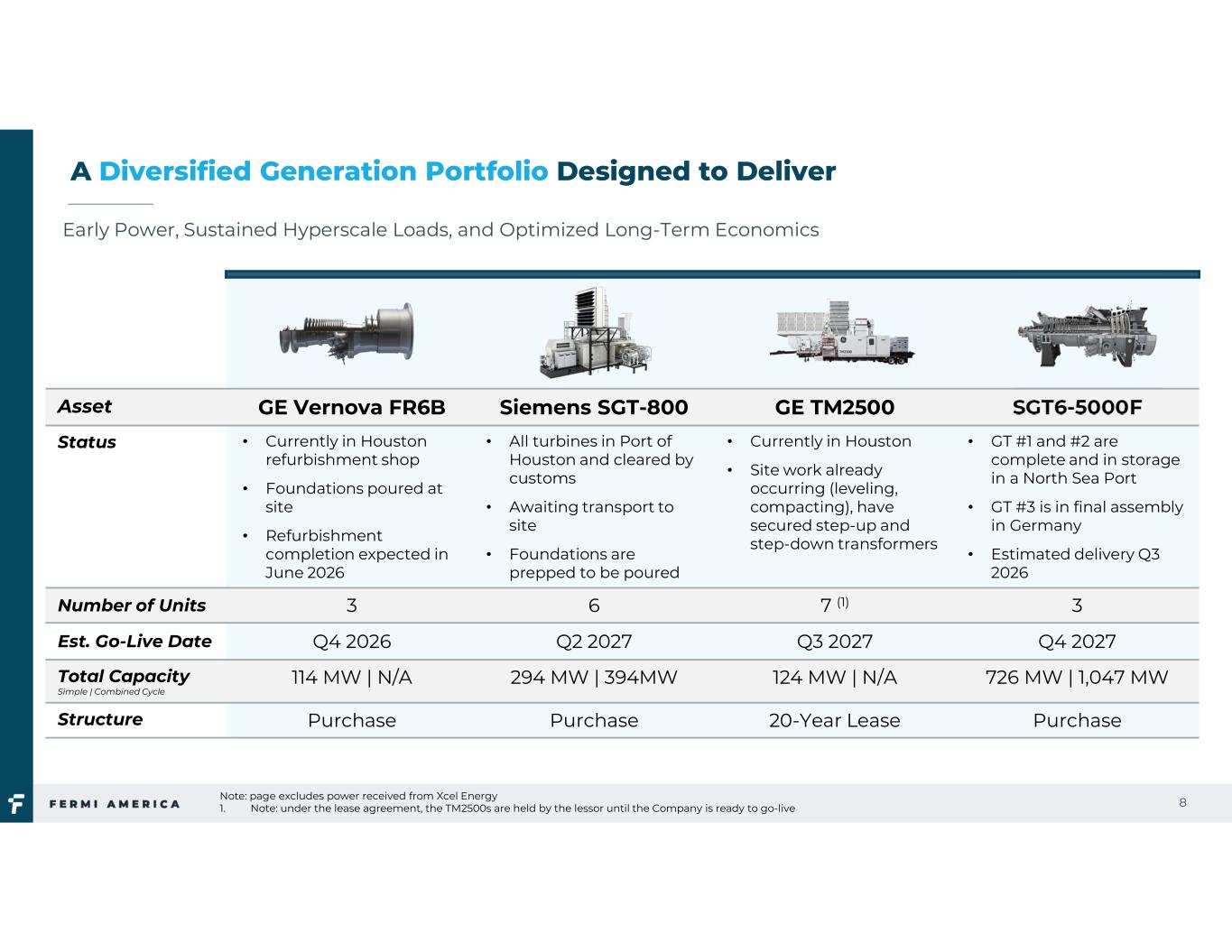
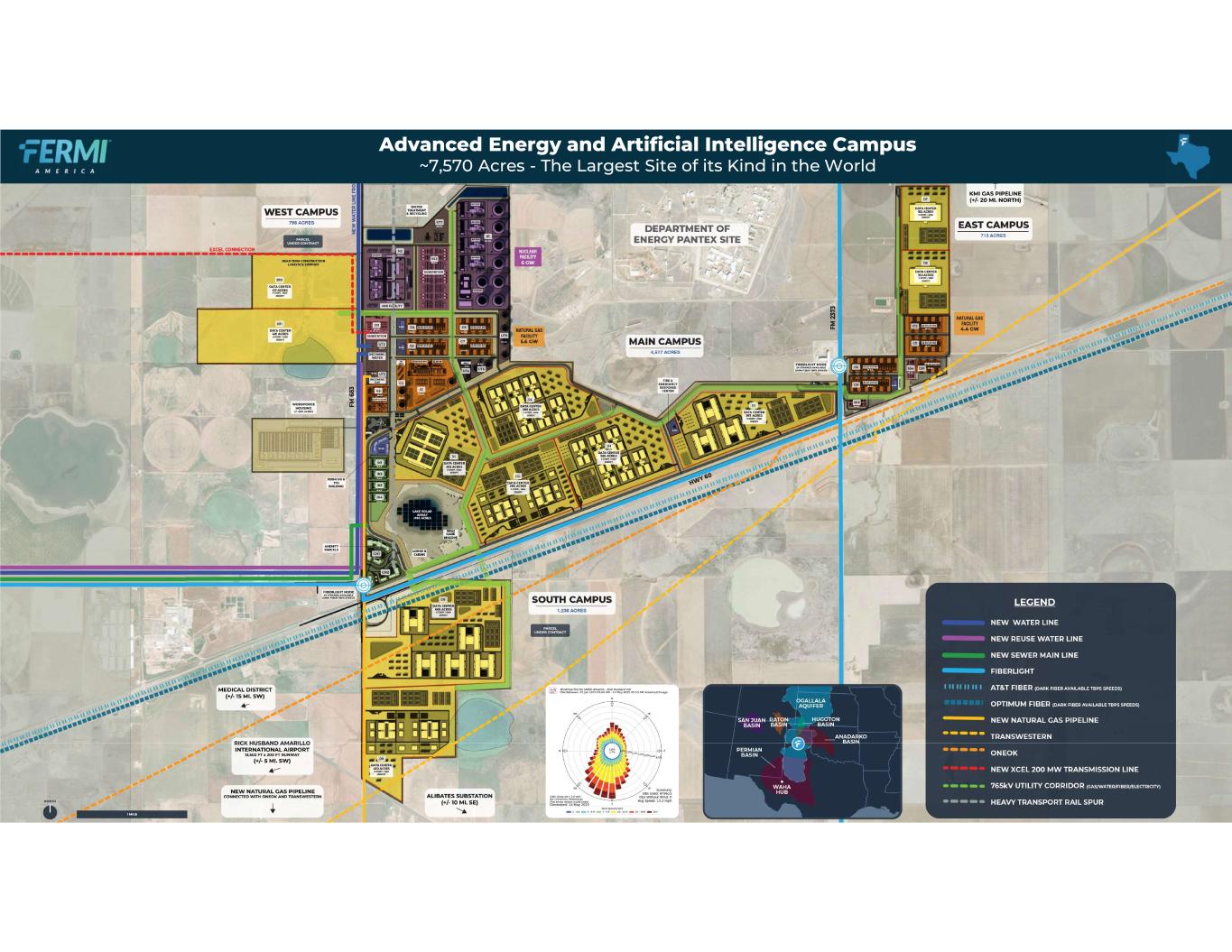
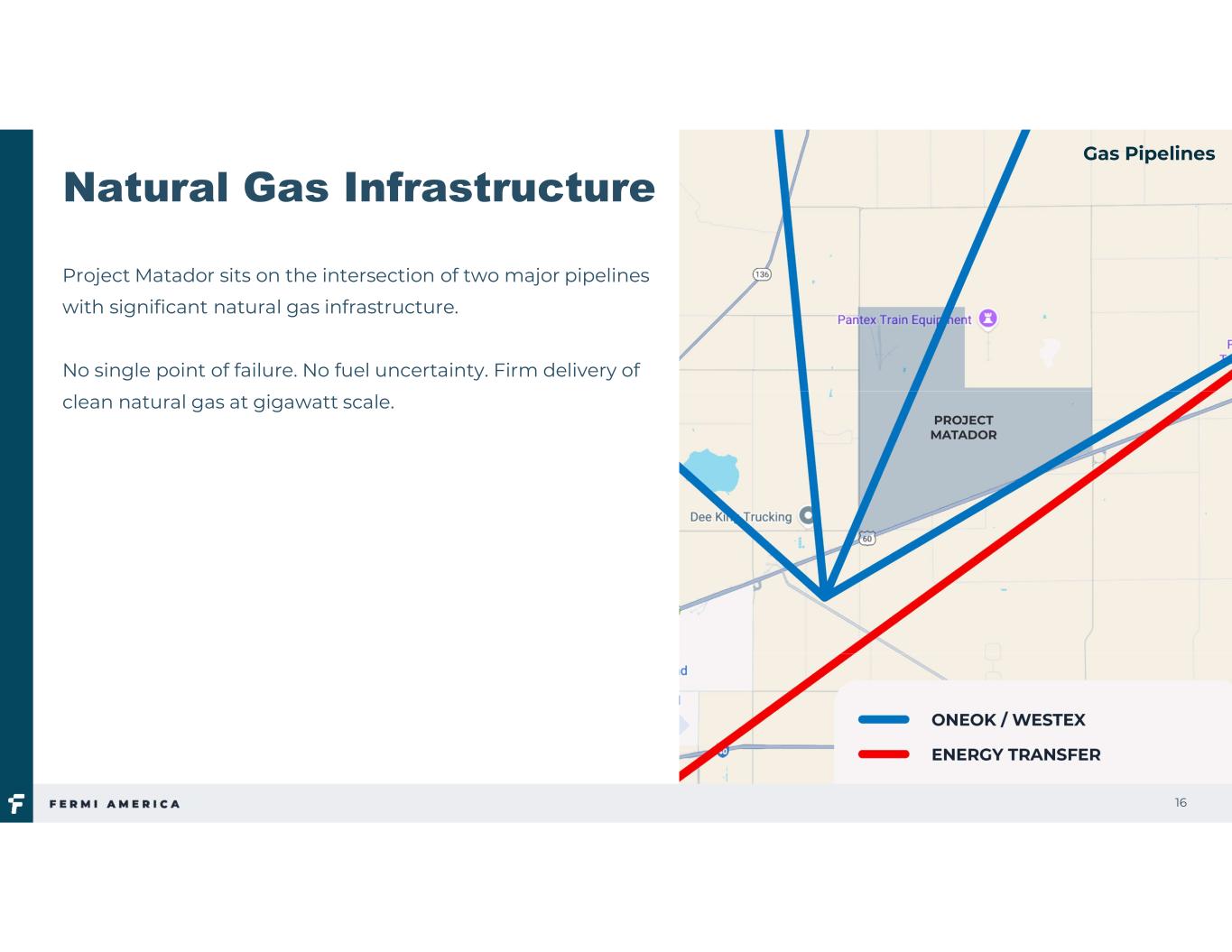
Thank you, Ana, and good morning, everyone. Construction at Project Matador continued to advance during the quarter. Our team is focused on consistent strategic execution. We have continued to build our team and strengthen our systems and processes. We have now installed more than 11 miles of perimeter fencing, nearly five miles of high-pressure gas pipelines, seven miles of water distribution lines, providing 2.5 million gallons a day, and we have built a 2 million gallon water storage tank and secured additional water rights for the site. We have also brought 86 megawatts of power from Excel to the site. Looking at our power generation assets, three GE6B frame turbines are currently undergoing refurbishment in Houston and we expect them to be completed by the middle of next month. The foundation for these turbines have already been poured. Our Siemens SGT800 generator sets have arrived in Houston and cleared customs. The foundations for these gen sets have been prepped at the site and are almost ready to be poured. Lastly, the S-Class turbines, representing 1.1 gigawatts of combined cycle capacity, are scheduled for delivery in the third quarter of this year. With an additional six SIEM and SCT800 turbines, which are secured and scheduled for delivery in 2028, our total natural gas generation equipment is roughly 2.2 gigawatts. With this significant milestone and the conclusion of phase zero, we post additional site development as it was always planned until a tenant is signed. Future capital deployment will remain disciplined and aligned with commercial progress. Through our $1.4 billion investment in balance sheet assets, we have established a speed-to-power advantage that we believe is unmatched and highly compelling for customers facing rapidly growing compute demand. bottom line we're in a great position to mobilize immediately upon lease execution our supply chain is secured our epc contractor relationships are intact and stronger than ever and we're highly confident in the availability of labor in the region finally fermi 2.0 is focused on stabilizing and scaling what will become a generational opportunity through disciplined execution, operational clarity, transparent leadership, and long-term shareholder value. I will now turn the call over to Rob for the financial review.
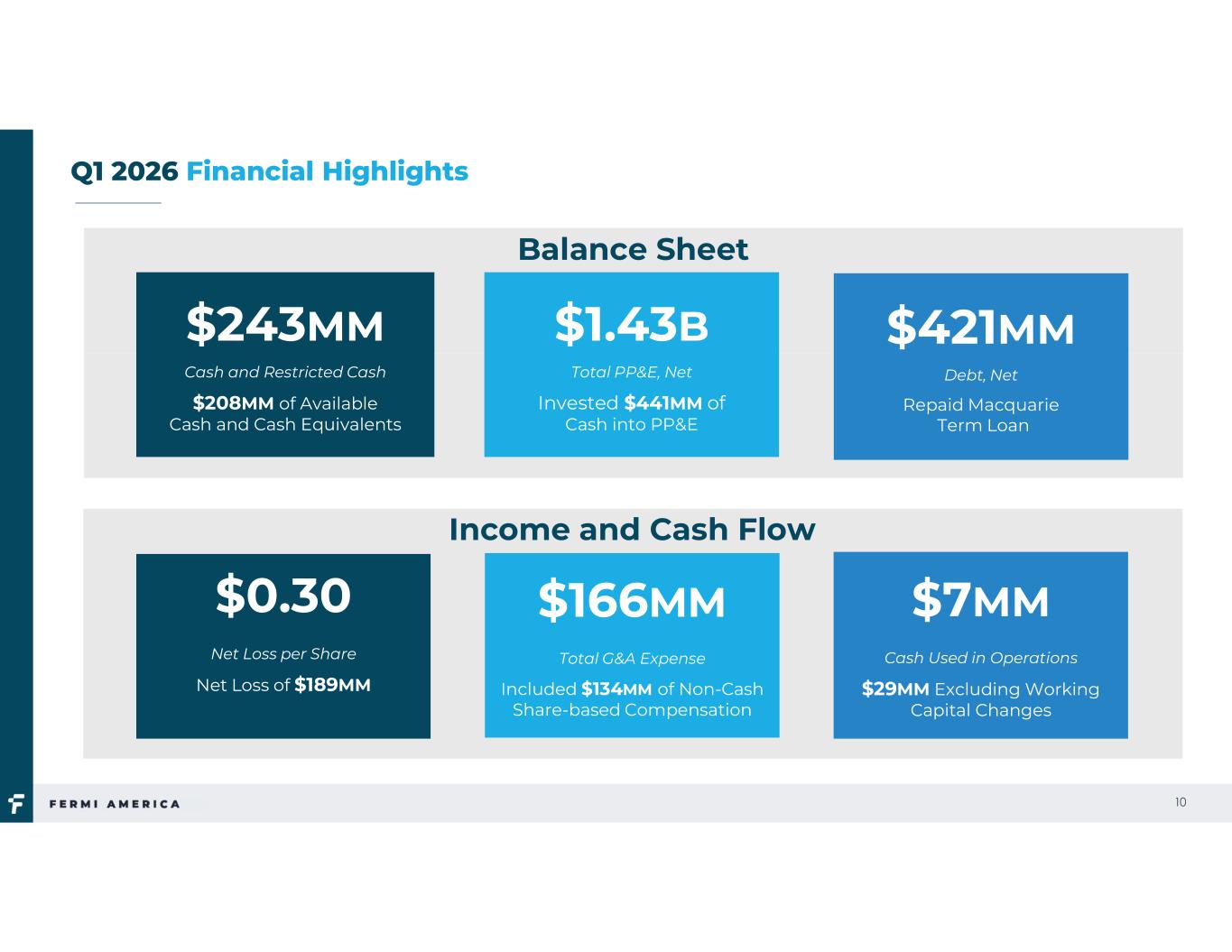
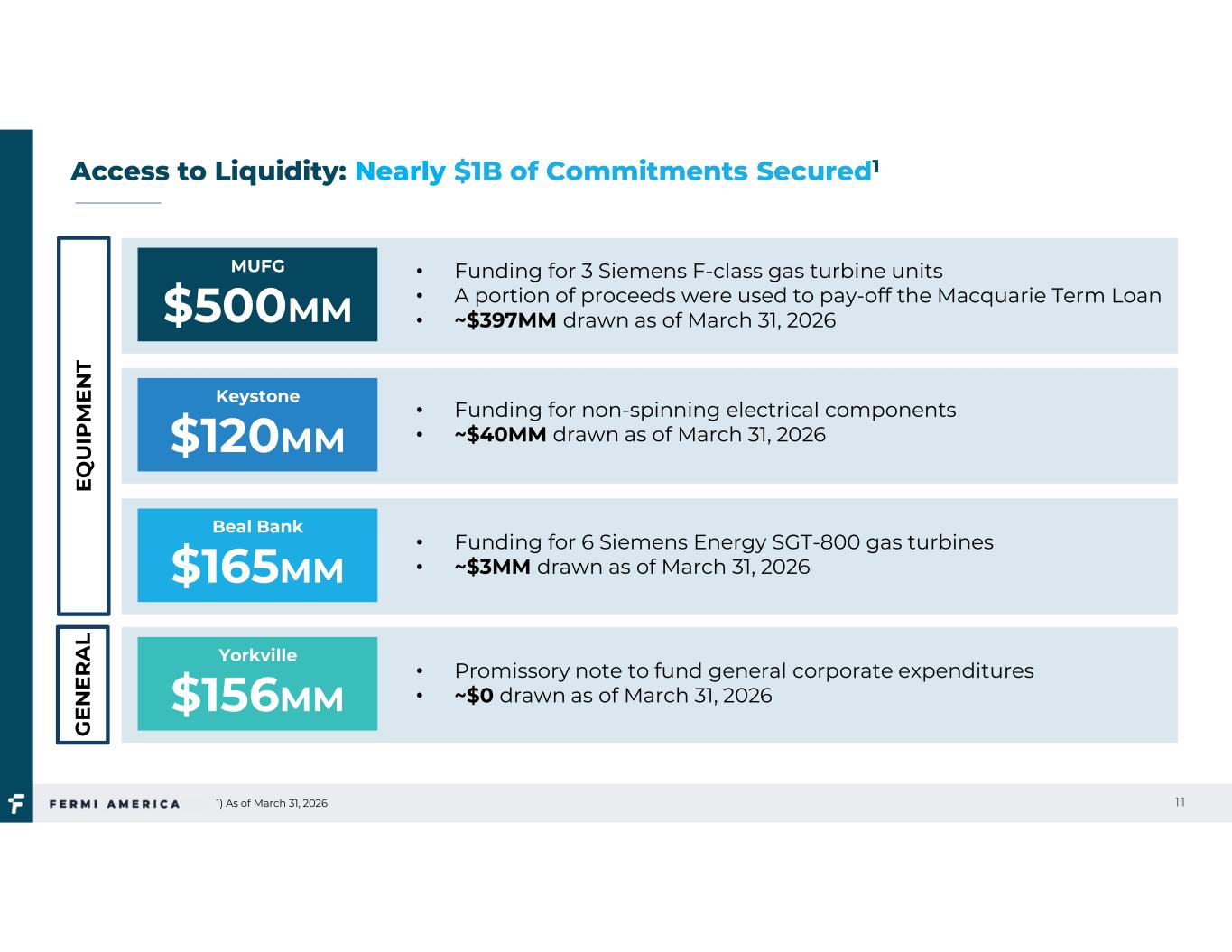
Thank you, Jacobo. For the quarter, we reported a net loss of $189 million. About 70% of that was non-cash. It was driven primarily by share-based compensation associated with our broad Employee Equity Program. We also incurred a $25 million loss on the retirement of the Macquarie Term Loan. Cash used in operating activities totaled approximately $7 million for the quarter. It benefited from $29 million of accounts payable and accrued liabilities growth, partially offset by $7 million of cash used on prepaid expenses and other assets. This resulted in $22 million of net working capital benefit. Without this benefit, we used approximately $29 million of cash. We are committed to managing corporate overhead as we invest in bringing Project Matador to life. We invested $441 million in property, plant, and equipment during the quarter. That brings our cumulative investment in Project Matador to more than $1.4 billion. The primary allocation was to natural gas power generation, including turbine procurement across our Siemens and GE fleets. The remainder was deployed to site infrastructure, substation equipment, electrical interconnection, and early nuclear pre-development. With regards to liquidity, we ended our quarter with $243 million in total cash. Notably, this quarter we fully repaid the McQuarrie term loan. By doing so, we replaced approximately $150 million of high-cost debt with more favorable equipment financing. We have $785 million of new equipment financing facilities, anchored by $500 million from MUFG, one of the world's leading infrastructure lenders. This debt is structured as non-recourse to the parent company, secured by the underlying generation equipment. In late March, we also secured more than $156 million of financing with Yorkville, which will support general corporate expenditures. This agreement provides additional flexibility at the parent level while our equipment level facilities fund our long lead time power generation assets. To date, we have not drawn on this facility. In total, we've now secured nearly $1 billion in financing commitments as we scale up Project Matador. Importantly, moving forward, we will be disciplined with our deployment of capital by more closely matching cash outlays with capital inflows that arise from tenant agreements and the transition to project-level finance. Taken together, we believe our sources of capital and disciplined deployment provide funding for our near-term development activities. Looking beyond our existing sources, we expect to fund the next phase of Project Matador through a combination of tenant prepayments, additional non-recourse equipment financing, project-level non-recourse debt, and taking advantage of government programs, including the DOE Office of Energy Dominance Financing. I will now turn the call back to Marius for closing remarks.
Fermi 2.0 is defined by the convergence of two things, the tangible asset base we have already constructed and the institutional capability we are now deploying to realize its full value. We have converted investor capital into more than $1.4 billion of infrastructure at a site that few, if any, competitors can replicate on a comparable timeline. Over the past several weeks, we've seen an exceptional level of receptivity in our strategy and plans from every corner of our ecosystem. Our prospective tenants, existing suppliers and partners, government officials, and most importantly, our employees have been deeply engaged, which strengthens our conviction in the path that we're on. Our firming 2.0 strategy and execution plans are now in full motion. At the management level, our focus is clear and disciplined, attracting premier tenants who recognize the unique value of our platform, building the best private power grid on the planet in close collaboration with our suppliers and partners, ensuring sufficient capital to support liquidity needs, accelerating strategic partnerships in both power and data centers, and investing in our people and talent pipeline, including key leadership additions. At the board level, our mandate is to ensure that the company scales into a truly enterprise-class organization by doing the following. Establishing clear strategic and operating priorities designed to enable consistent, flawless execution. Conducting a thorough, disciplined process to hire a world-class CEO who can lead this next phase of growth, and proactively addressing outside interference so that leadership can remain focused on running and growing the business. Above all, we are aligned around a single overarching objective, maximizing long-term shareholder returns. We look forward to updating you on our continued progress as we execute on the Fermi 2.0 vision. Operator, we're now ready to take questions.
Operator
Certainly. Everyone at this time will be conducting a question and answer session. If you have any questions or comments, please press star one on your phone at this time. We do ask that while posing your question, please pick up your handset if you're listening on speakerphone to provide optimum sound quality. And once again, if you have any questions or comments, please press star one on your phone. Your first question is coming from Nick Amacusi from Evercore ISI. Your line is live. Hey, good morning, everyone.
Just wanted to clarify. So in the release, you kind of laid out a 90-day plan that has kind of the five points of emphasis. So if we could just kind of define for investors what we should expect to see by end of that 90-day period and specifically to clarify whether the 90-day objective is a binding lease offtake or a non-binding or both? And then, you know, is that tenant agreement kind of the gating item for all the other four?
Nick, thank you for your question. I really appreciate it. I want to make sure that the team is fully comprehensive of the fact that we're 100% focus on executing on our plan and that we have just laid out for you. As to the next 90 days, it is our expectation that you should measure us on delivering on these five key points, a secure and binding tenant agreement, that we maintain capital discipline to support liquidity, that we hire our next CEO, that we deliver power at our project site and that we explore strategic partnerships for accelerating data center and power deployment on our site those are the five commitments and deliverables that were focused on for the next 90 days without distractions
that's how you should measure us be clear thanks Morris um then if I could just touch to upon just kind of a cash component so operating cash use was kind of limited in part of in part by for a working capital benefit from accounts play bulls and accrued liabilities so we now have you have 243 million of cash in restricted cash uh 421 million of debt you know 441 million of capex that was occurred that was incurred during the first quarter and now this uh now the 150 million of your field commitment so how how should we think about kind of the normalized cash firm in 2Q and 3Q, you know, prior to a binding agreement? And should we expect any type of meaningful reversal of the 1Q payables or accrued liabilities?
Thank you for the question. That's good. So, yeah, let me talk about liquidity. As you said, we had $243 million of cash and restricted cash at the end of the quarter. It's important to note that we have strong equipment financing in place that covers most of our remaining expenditures on turbines and turbines and electrical power equipment. So we have these MUFG and Keystone equipment secured on non-recourse debt. Beale Bank, we have $160 million of capacity there for six Siemens turbines that will be built and delivered by 2028. So we feel good on that side about our equipment finance. The Yorkville facility is really there for a backstop for general corporate purposes. It gives us flexibility at the parent level. We have not drawn on this facility yet. As we think going forward, as I said, the equipment financing will cover the power assets ordered extensively And then the sources of capital and discipline deployment, we're really changing the way we look forward. It's that discipline, Mary has talked about, looking at our payments and matching them to new tenant agreements and so forth. So you would see a disciplined approach going forward with capital.
Operator
Perfect. Thanks, guys.
Operator
You're welcome. Thank you. Your next question is coming from Nick Lawson from Ocean Wall. Your line is live.
Hi, it's Max Taylor here from Motion Wall, just stepping in for Nick. It'd be great if we could get a bit more colour on the 5 gigawatt air permit that you filed in March, just around sort of, you know, what are the expected timelines for approval? Have there been any sort of early signals from regulators, any early conversations?
And then just sort of a slightly second part, you know, what were the lessons, I guess, from the six gigawatt permit approval that give you confidence in the in the timeline for this new application thank you good morning thank you for the question this is not covered these I'll start with the latter the six gigawatt air permit is in place EPA is supporting it and we're moving forward with it and that's we have already communicated it's the second largest air permit ever granted in the U.S. Based on that feedback and all of the studies that we did, we have space to increase it by an additional five gigawatts, which was filed recently as reported, and we fully expect it to be completed successfully by the fourth quarter of this year. So we remain confident in our approach. We learned that by being transparent, clear, with our studies and what we were doing, we got the first one and we expect the second one to be granted as well.
I think, Mac, just to add to it, I think the comments we received from the first six gigawatts was, why didn't you ask for more? And that triggered us going ahead with the application for the next five gigawatts as part of that process.
That's really helpful, guys. Thank you. and I'll pass the question on.
Operator
Thank you. Your next question is coming from Vikram Molotra from Mizuho. Your line is live. Morning. Thanks for taking the question.
So maybe just first, you put out in the 90-day plan sort of securing a tenant agreement. I just guess one, why sort of put a short clock in terms of specific 90 days? Is there something about conversations or tenant types So where you're progressing to be that specific sort of given the history the last year. So maybe just give us a bit more flavor on like what gives you confidence to sort of highlight over the next 90 days you can, you know, secure a telled agreement.
Yeah, happy to take that. So I think what gives us the confidence is we've been able to identify kind of what was holding customers back from engaging with us. And that was really the fact that they wanted to feel that they could trust us, that they could build a long-term relationship with us. As you know, these agreements are 15 to 20 years, and so the counterparty is looking for assurance that who they're partnering with is somebody that is going to be able to support them over the long haul. And so for us, that was why we made the changes that we made to ensure that we were a relationship oriented company and that we could, you know, step in to support these folks over the long So part of our confidence is about that. The other piece of our confidence is around the kind of state of our site. As mentioned earlier, we've had numerous partners for the site and folks have really let us know that the site is the most customer ready that they have seen in the country. And then the third piece of it is just the demand. The demand has not gone away. Everyone is looking for capacity, and we're one of the few projects that has capacity for the next couple of years at the scale that we have it. So those things give us the confidence. It's the relationship building and trust we've been able to do over the last several weeks. It's also grounded in the readiness of the site. And then the last point I'll make on this is that so many of these customers have also been focused on figuring out how they can engage with us from a transaction standpoint. And so we've really tried to align our commercial activities to be much more streamlined, so it's much more clear how our process works on both sides so that they can engage with us confidently.
Vectra, I'll just add one final statement is that over the last three weeks, our pipeline has increased exponentially, much more so than we ever expected.
Okay, that's good to hear. So I guess the second question is two parts to it. on this tenant uh you know potential signing are you able to give us some color on you know high level as you know we've what we previously modeled in terms of potential revenue and and more so the capex to build out this first lease whether it's what we know no matter what size we we had thought we had sort of said first gig would probably be around four to five billion uh and and the first gig would you know generate a certain amount of noi so can you give us any high level color on what it would cost to build this out and then just related to that the are you on a short talk with Texas Tech as well just maybe update us on is there a
stipulation still that you need to sign a lease by a certain date yes so what we're looking at right now this may be an evolution we'll call it is we thought there's now multiple structures that we could pursue that deliver the same economic value opportunity to these projects and so we talked a little bit about our pursuit of potential partnerships with data center partners, power partners, infrastructure partners. We continue to engage directly with hyperscalers, but we've realized that there is multiple paths to be able to achieve our financial goals with these projects. And so while we can't say specifics, of course, around the numbers of the deals that we're currently trading, we can say that we feel very confident that the deals that we have at hand and provide the same kind of economic opportunity that we've always set out to achieve.
I'll add just a little bit, Victor. One of the strategic priorities we laid out for the next 90 days is to explore partnerships to accelerate our data center and power deployment capabilities. That has very interesting opportunities around additional capital infusion into the business that would come from our partnerships. So that's extremely helpful. And on the Texas Tech question you had, let me reassure you that we have a very, very strong relationship with Texas Tech. We have met with the Board of Regents Chair. We've met with the Board of Regents Special Committee overseeing the relationship with Fermi. I've personally met with the Chancellor twice in the last three weeks. We are both extremely motivated to ensure that long-term success of Fermi as it's a highly visible project for both of us.
Operator
Your next question is coming from Sky Landon from Rothschild & Company. Your line is live.
Hi, thanks for taking my questions. I know it might be early days, but I just wonder if you can elaborate on the idea of exploring strategic partnerships for the power of the data centers. what does this potentially mean? Does it mean bringing in a more experienced operator for the power generation sets and things like that? Secondly, just checking on the power plan that you've shown within the slides. Is the option of Excel providing an increased level of power up to 200 megawatts still on the table? And just wondering why that isn't part of the 2026 and 2027 power plan. And then still on the power plan, does this include the turbines kind of running in single cycle? Presumably, at some point, these would need to move to a combined cycle. And just wondering when and how you would look to do that, and if that's part of the air quality permit conditions.
Yeah, I'll start with the data center question, and then I'll turn it over to the others for the rest. your questions. So on the pursuit of partnerships, particularly on the data center side, this is really a direct reflection of the conversations that we had with hyperscalers. And what we're seeing is that, again, their demand is so high that they're needing to pursue paths with partners to have additional capacity. And so we realized that by also pursuing those data center partnerships, that there's a way to kind of meet them where they're at. The space has changed tremendously in the last six months. And so as mentioned before, we've realized that there's multiple structures to be able to serve these customers. And so we want to ensure that we are meeting them where they're at and also pursuing the things that they're looking for to stay up to date on their needs. And so that's what we're doing. The goal on the exploration of power partnerships is also a reflection of this need. So one thing we're looking at is how do we kind of look at additional capacity to serve more customers. As Marius noted, the demand that we've seen over the last couple weeks is so strong that we're now in a position where we're thinking about how do we kind of bring more capacity to our site quicker so that we can serve additional customers. So those are the two reasons why we have pursued these partnership opportunities. And I'll turn it over to Jacobo and Marius for the next year's questions.
Yes, I'll add very briefly. Obviously, those partnership conversations are bounded by a confidentiality agreement, so therefore, at this point in time, we can't provide more information. But rest assured, these are the names in the industry that are coming to Fermi and wanting to partner with us to deliver the best-in-class service and product to our customers.
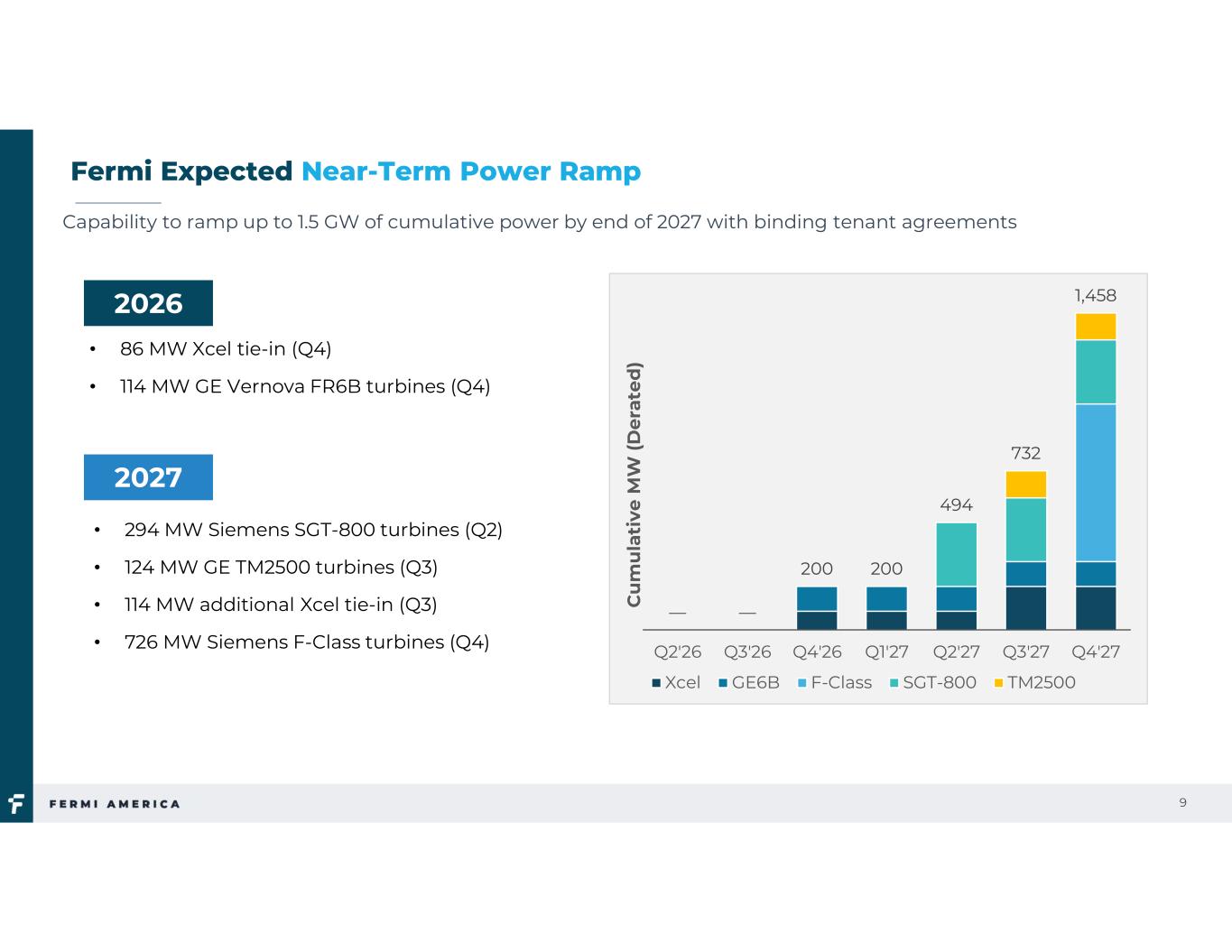
The last thing I want to add is that our generation equipment position is strong. It's something that is unique to Fermi versus the rest of the market. And if I go, you know, power block by power block, our GE six-piece turbines are refurbished, they're ready. Our X-class units from Siemens, our brand-new units, you know, again, 1.1 gigs, they're finished, you know, in Germany and will be shipped over the summer to the U.S. Our SGT800s, as we have reported, are in the port of Houston awaiting to come, you know, to the site. So from that perspective, again, you know, we have been very deliberate in getting our power ready. You know, we have 2.2 gigawatts of available power on hand, you know, 1.5 of that, which we can execute by the end of 27, provided we have a tenant and project finance. We're going to be deliberate in how we execute, you know, our plan. And then last but not least, you know, we have, as we reported, 200 megawatts from Excel, 86 of that, that tie-in is already at the site, and an incremental 114 megawatts will come, you know, in the first part of 27.
Operator
So we're ready to serve customers.
Great. And one more, if I may. Just on the EPC partners, clearly timelines are somewhat changing and are still pretty dependent on when you're able to secure a tenant. So just wondering if you could kind of elaborate on the EPC market. Are you still looking to use the same partners that you were originally looking to use? how flexible are these partners in terms of the time slots that they can do the work to install the power equipment that you need and any additional color you could give there would be great.
Sure. Thank you for the question. Absolutely. I mean, we are in log step with our strategic partners. Our G6Bs are being installed from the very beginning with a company out of Houston called Relevant Power Systems. They're aligned with us. Exactly the same situation with Primorus on our GE6Bs. On the F-Class, you know, we just completed an RFP. We're not ready to announce who it is. But, again, everyone in the industry, our strategic partners, are completely aligned with us, including the SHIELD, our high-voltage equipment partner. And they're all aligned and ready to execute, you know, alongside us. So the relationships are strong, and, you know, we're moving forward.
Operator
Thank you. Your next question is coming from John Hodelick from UBS. Your line is live.
Great. Thanks, guys, and good morning. Maybe two quick follow-ups. First, and that might have just been answered, but the scale of the tenant conversations or the potential contracts you guys are talking about, Is that in this sort of gigawatt scale that we had been sort of originally talking about, or are we thinking about signing contracts in sort of smaller chunks to begin with?
And then as a follow-up on the strategic partnerships, especially with the existing data center companies, are you guys envisioning a potential deal where you work with an established provider, like a DLR or one of the private guys, to take down space on a wholesale basis or just work with them to approach tenants together or just anything that you could do to elaborate on a potential agreement of that sort would be great.
Yeah, so we are looking at, again, multiple deal opportunities, and each one of those, you know, has a different structure in terms of the size. So in some cases, it's, you know, smaller chunks. In some cases, it's a gig or higher. But we're essentially in the position where we can kind of pick and choose, you know, how do we can ensure that we can serve multiple partners over the long haul. So I can't, of course, for confidentiality reasons, say the exact sizes. What we do have at hand is, you know, again, in some cases it's a couple hundred megawatts, in some cases it's a gig or more, and we're going to ensure that we, you know, move forward with the best possible partner with the timeline that meets that specific partner. On the kind of question around the partners, the way that we think of it is, again, how we can serve the customer on their timeline. So as you're kind of negotiating these deals, of course, you're looking at the amount of capacity that they're looking for, but you're also looking at the timeline that they need. And so what we found is that different data center partners have different timelines available to meet the data center needs, the MEP needs. And so we're in constant communication, trying to align their capacity availability with the customer's timeline and the capacity that they're looking for. So it's a bit of a dance, as you guys know, with these deals. But what's nice, again, is that we've got multiple options on the table and have the ability to move forward with the best possible deal for us right now.
I would just add that on the data center partner side, they have significant demand that they have signed up for from power. Their availability of power is obviously scarce. So they're proactively coming to us with ideas as to how we can engage together to satisfy the demand that they've already signed up for. So not only does it bring a tremendous amount of expertise, wherewithal, financing commitments, but it also comes with tenants. So that's why it's so interesting for us to engage in those conversations. and strengthen our position holistically.
Operator
Thank you. Your next question is coming from Greg Rollins from Redway Capital. Your line is live.
Good morning. Thank you for taking my call. My first question is, could Mr. Nogobayo with his 40% shareholding block a capital raise for whatever reason he may deem fit? The second is an observation. you've spent quite a bit of time and effort talking about the financing and the provision of power but what about the financing and the building of the actual structures that are going to house the data centers and ancillary to that I'd like to talk about two models that digital realty provides the buildings and the associated infrastructure that being the cooling systems and for example whereas Equinix also, in many cases, facilitates the financing of the tenant's own equipment, which gives them a strong strategic advantage. Which model would you be following? And then finally, just in an accounting matter, you will be, unlike other data centers, you will be providing the power which you would have to charge them. I would assume that this is not rental income. And to that effect, you could be running into problems if your revenue for the power delivery exceeds more than 25% of your rental income. Have you thought about that? Thank you.
So I think we'll start with – there's a couple questions in there. We'll start with the – I'll take your question around kind of financing structures for these kind of deals at hand. So as you know, the way that this works is you are constantly talking to lenders about the deal structure to ensure that you have the financing available to complete the deal. So we have really strong relationships with a number of project finance lenders in this space, and they are actively involved in conversations with us on all of the different deals that we have at hand that we're currently negotiating. So we feel really confident, again, in being able to project finance those deals. And, of course, we wouldn't pursue anything that we didn't feel had, you know, financeable backability. And so that's part of our filter, again, is ensuring we can finance those deal structures. I think you also had a question around, was it Toby's share, the 40%?
Yeah, I'll address that really quickly. As of right now, there is no shareholder meeting set, just to be clear. There is none. And then secondly, you might have noticed last night we filed an 8K where the board has made modifications to the company's bylaws. In those modifications that would say that any changes to the board composition will require a 70% vote of the shares outstanding. So you'd have to have a significant threshold here in order to make big modifications to the construct of the board, all with the intent of protecting our shareholders, all with the intent of driving consistency and stabilization of the organization. We believe we're in a great position to take advantage of the demand that's out in the market for the assets and the services and the products we have. It's our job to now execute flawlessly for our shareholders to deliver on that opportunity.
I can talk about the revenue recognition and accounting policy. We do intend to elect REIT status, and we are structuring our revenue recognition and all accounting so that we do meet those, so we do have that considered. and thank you for the question.
Operator
That's all. Thank you. Your next question is coming from Derek Whitefield from Texas Capital. Your line is live.
Good morning, Alan. Thanks for your time. I have two questions. Perhaps starting with slide nine, could you offer a color on the amount of aggregate power capacity you see in the market at year-end 2027 relative to the gross demand for data center power. The point being, if you compare your offering at year-end 2027, could you qualify how unique that capacity would be in the market versus what's being built?
Sure. I'll take a thought about that. You know, what we've said before is we currently possess, on our balance sheet, control of 2.2 gigawatts of gas generation equipment. And what we're saying, based on having a lease and the project finance, we are able to deliver one and a half gigs of installed power by the end of 27 in simple cycle. That's the way you should read it.
Obviously all driven by the timelines generated by our customer for tenant. That is the first domino that falls, that then delivers the product project financing that then delivers the implementation of our turbines and so forth.
Great. And maybe perhaps shifting over to Anna, In your prepared remarks, you noted a more streamlined commercial interface for customers and partners who want to advance discussions. Maybe could you elaborate on how the interface has changed and the degree it may have been an impediment in past client discussions?
So, again, I think one of the key things about the change that we made was recognizing that at every point in a business's journey, you move from kind of the vision that's driving and building the momentum of the company towards a more, I would say, commercial-oriented structure to ensure that you can meet the opportunity from an economic standpoint. And so what we realized was that we were kind of at that inflection point. And so when you're dealing with large companies, there is kind of a way of working, we'll call it, that they're used to. And we wanted to ensure that we were building the team, the structure, the process to be able to make it easier to work with us. So part of that means being very clear on what our capacity and availability is, being really clear about how people can engage with us and speak with us, being really thoughtful about how we build relationships. As mentioned earlier, relationships is everything in this industry. The tech community is very small. If you know one person, they probably know somebody that knows you. And so we really just understood that what was most important for our process was to kind of professionalize and ensure that it was very clear how to engage with us and that when you engage with us, it was positive and it was constructive and it was geared towards a shared goal of trying to get a deal with that together.
Great. That's helpful. Thanks for your time.
Operator
Thank you. Your next question is coming from Paul Golding from Macquarie. Your line is live.
Thanks so much for taking my question. Just wanted to ask a quick one combining a couple of the prior questions around the potential size of an initial deal and the project financing discussions. Is the ongoing discussion with lenders informing at all or influencing at all how you are filtering or thinking about the size of the initial definitive lease across that landscape that you described of being smaller versus gigawatt scale? Does that influence your thought process around building the structures and being able to energize as you look at these potential counterparties and the conversations you're having with lenders? Thanks so much.
Yeah, absolutely. So we're again in a fortunate position where we don't have to pick one structure over another. No matter the deal size of the kind of things we have on the table, we feel very confident that we can get the project financing for those. And again, we're actively involved with our lenders as part of those kind of conversations. So, if the deal is one gigawatt, you know, we feel like confident that we can get the project financing for it. If it's 200 gigawatts, we feel confident we can get the project financing for it. And that also, of course, relates to who the off-taker is and their bankability. So, that is kind of our focus, again, is looking at all of our options on the table, But, of course, all of those options we feel very confident are financeable.
And maybe just as a housekeeping question on the back of that, Anna, thanks so much for that color. I'm wondering if the project financing landscape is generally amenable to the whole spectrum of counterparty credit worthiness that you're seeing in terms of your inbound interest, or if there is a skew towards, you know, high investment grade just in terms of where you are in your roadmap relative to the off-taker. Thanks so much.
Yeah, so obviously credit worthiness is the key, you know, item at hand when you're engaging on these deals. So again, if we have, you know, a scenario where there's a customer who maybe isn't as credit worthy, we have to, of course, find an additional partner who's willing to step in and support that customer to be able to get the financing done. So there are multiple ways that, of course, we can do this. And, again, as I've stated multiple times, we have, you know, several options, several structures on the table, but the key thing to take away is that all of those structures we feel are financeable because of the way that we've laid out the opportunity. Great.
Operator
Thank you. That concludes our Q&A session. I'll now hand the conference back to Marius Haas for closing remarks. Please go ahead.
Thank you, Operator. Thanks for participating in our call today. We know there's a lot of noise in the system, but as you've heard this morning, our leadership team is 100% focused on executing on our plan to create long-term shareholder value. As indicated, and I'll just repeat it one more time, Over the next 90 days, you can expect us to deliver on these five key priorities, securing a binding tenant agreement, maintaining capital discipline to support liquidity, to hire our next CEO, to deliver power at our project site, and to explore strategic partnerships for accelerating data center and power deployment. We appreciate your interest and support as we work to build the power platform for the AI era. Thank you again for joining us this morning. Very much appreciate it.
Operator
Thank you. Everyone, this concludes today's event. You may disconnect at this time and have a wonderful day. Thank you for your participation.