Operator
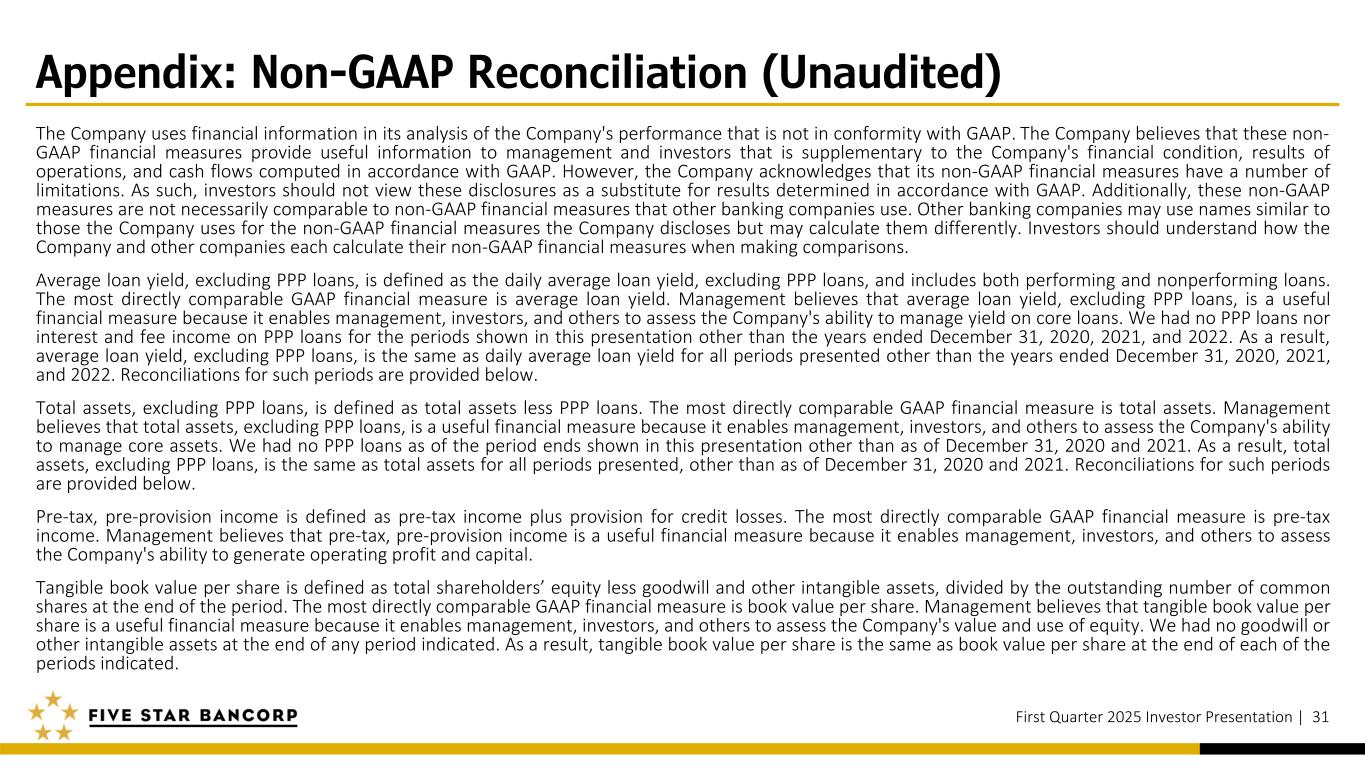
Welcome to the Five Star Bancorp First Quarter Earnings Webcast. Please note, this is a closed conference call and you are encouraged to listen via the webcast. After today's presentation, there will be an opportunity for those provided with a dial-in number to ask questions. Before we get started, we would like to remind you that today's meeting will include some forward-looking statements within the meaning of applicable securities laws. These forward-looking statements relate to, among other things, current plans, expectations, events, and industry trends that may affect the company's future operating results and financial position. Such statements involve risks and uncertainties, and future activities and results may differ materially from these expectations. For a more complete discussion of the risks and uncertainties that may cause actual results to differ materially from the company's forward-looking statements, please see the company's annual report on Form 10-K for the year ended December 31, 2024, and in particular, the information set forth in Item 1A, Risk Factors. Please refer to Slide 2 of the presentation, which includes disclaimers regarding forward-looking statements, industry data, unaudited financial data, and non-GAAP information included in this presentation. Reconciliations of non-GAAP financial measures to their most directly comparable GAAP-measured figures are included in the appendix to the presentation. Please note, this event is being recorded. I would now like to turn the presentation over to James Beckwith, Five Star Bancorp President and CEO. Please go ahead.
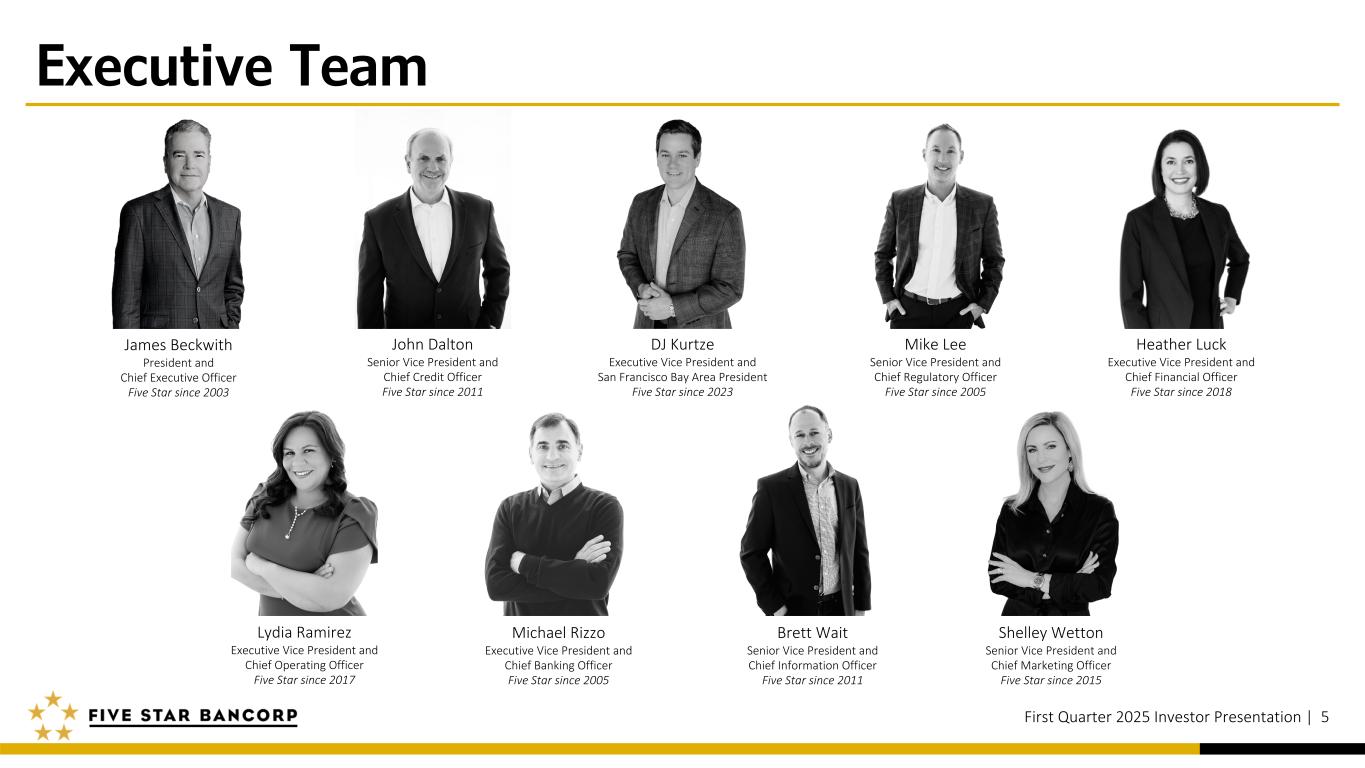
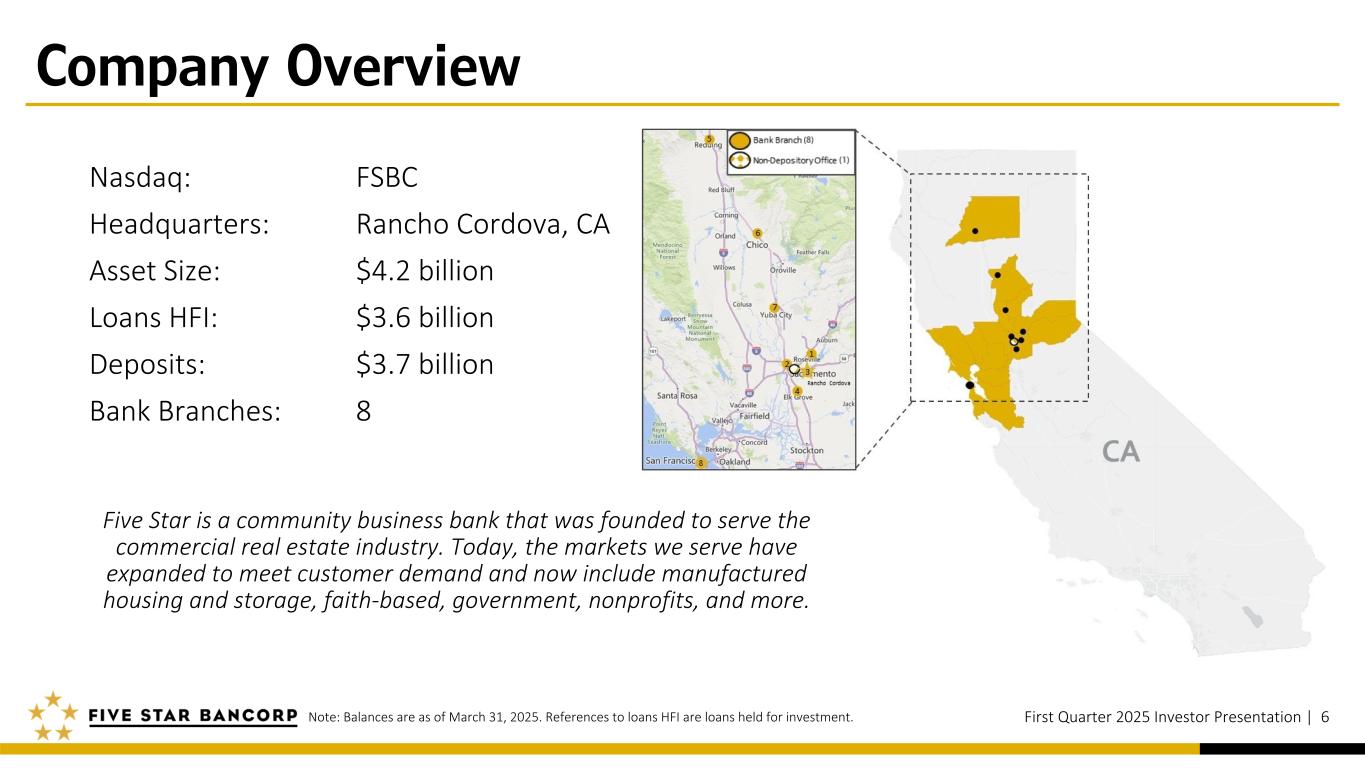
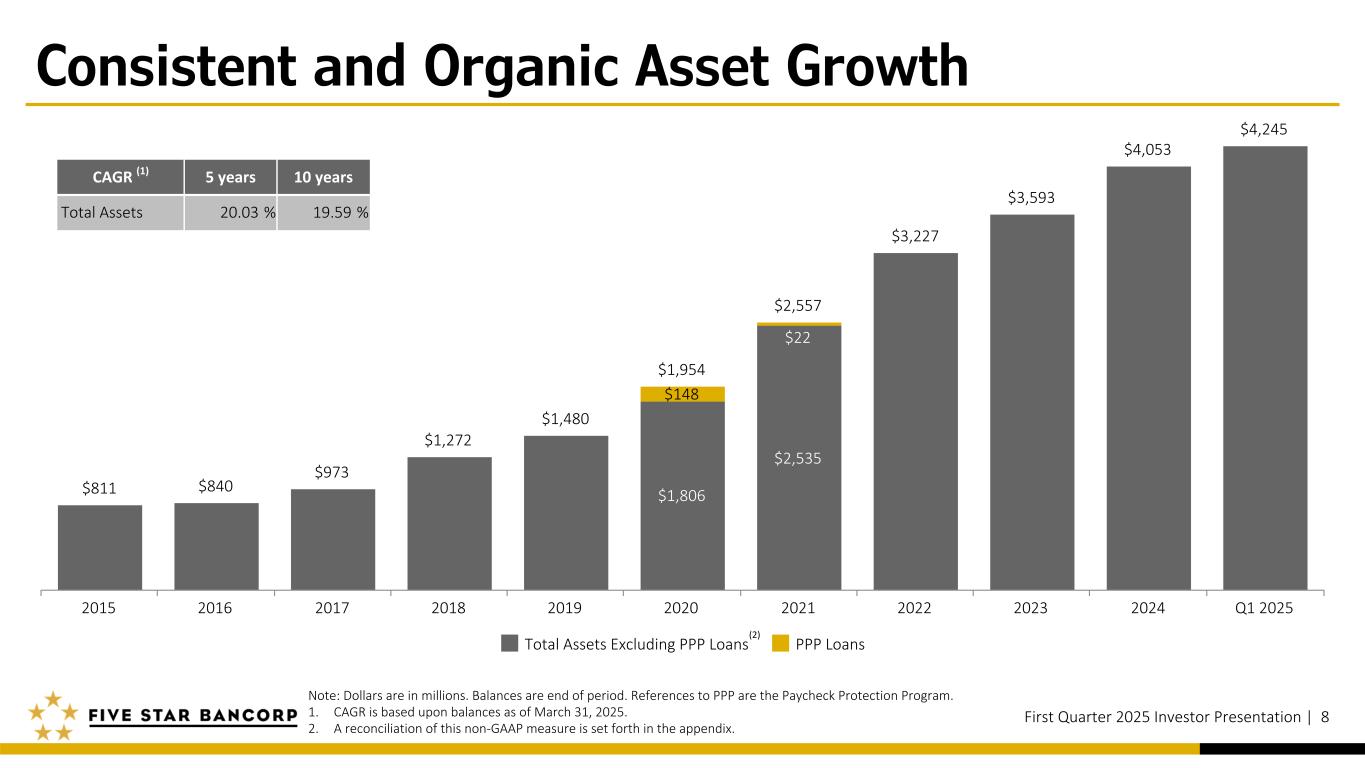
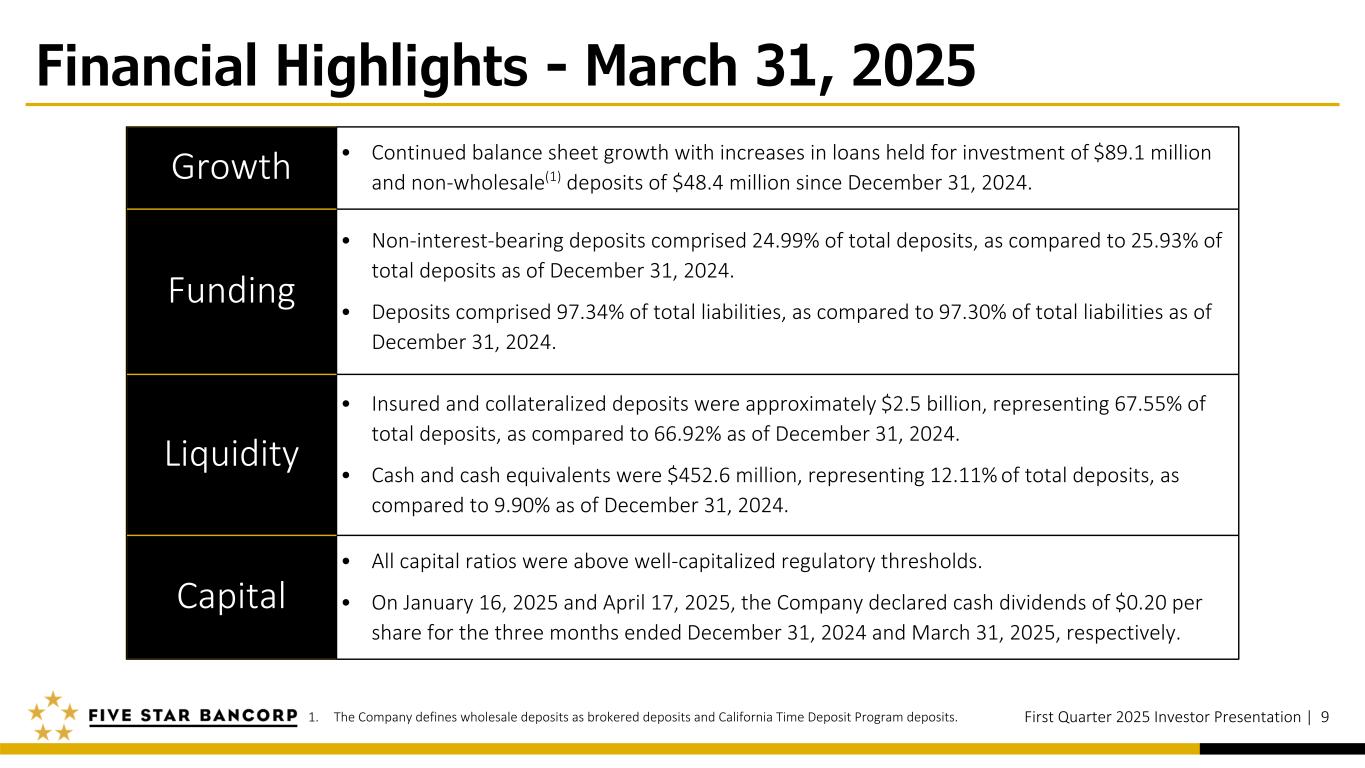
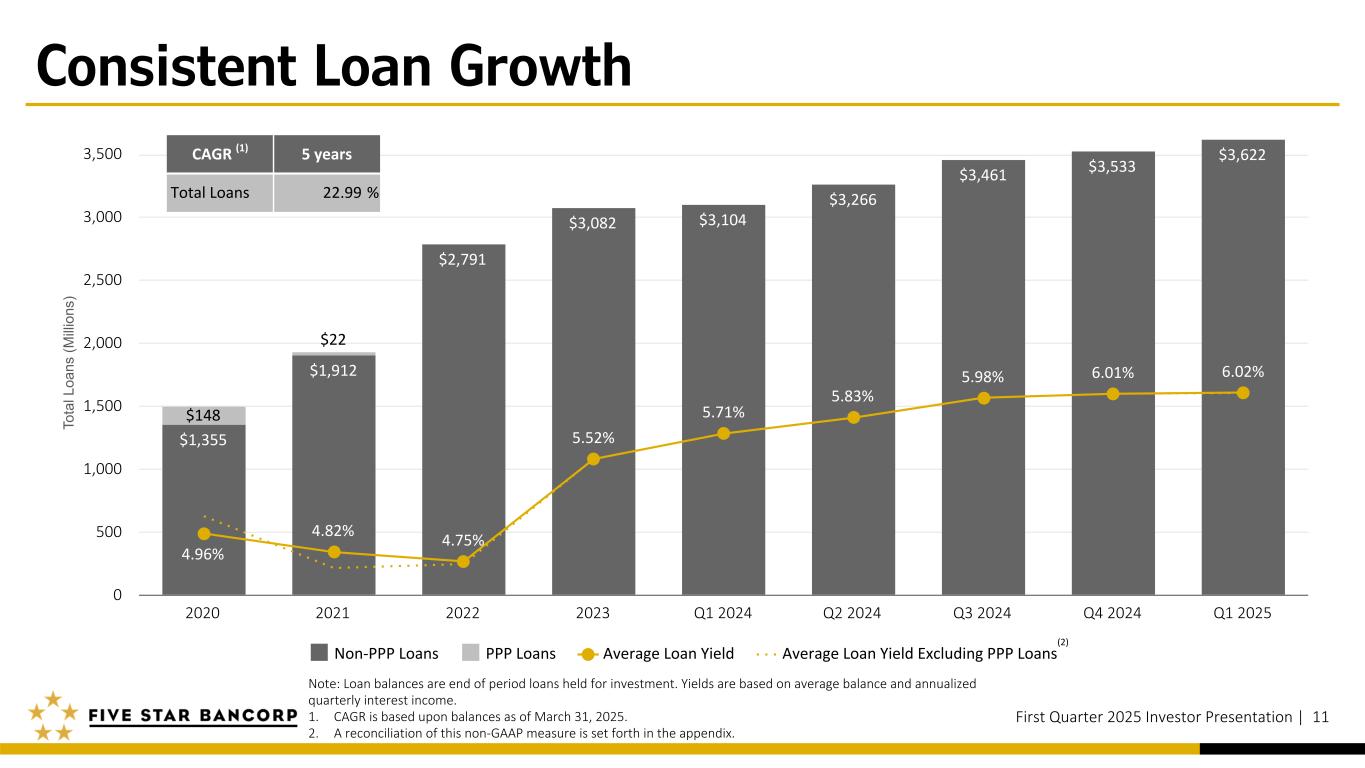
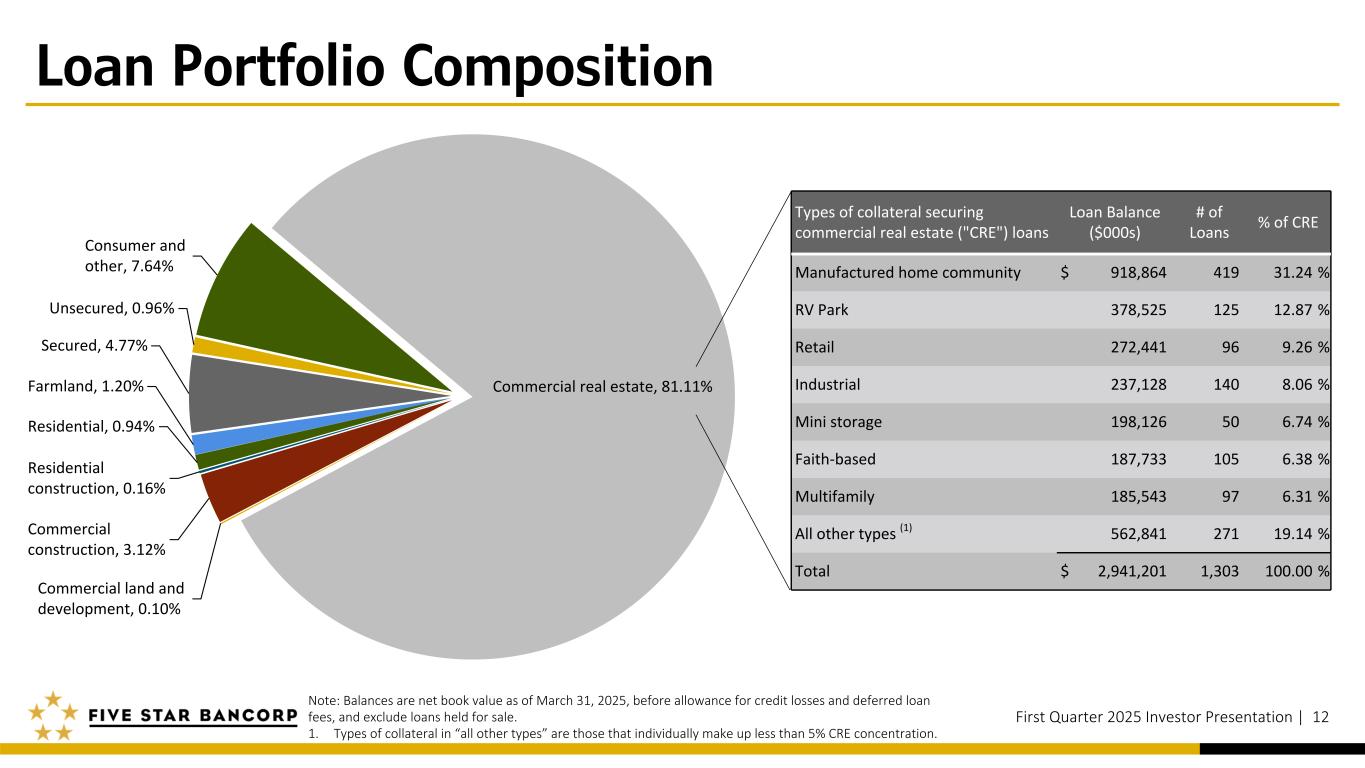
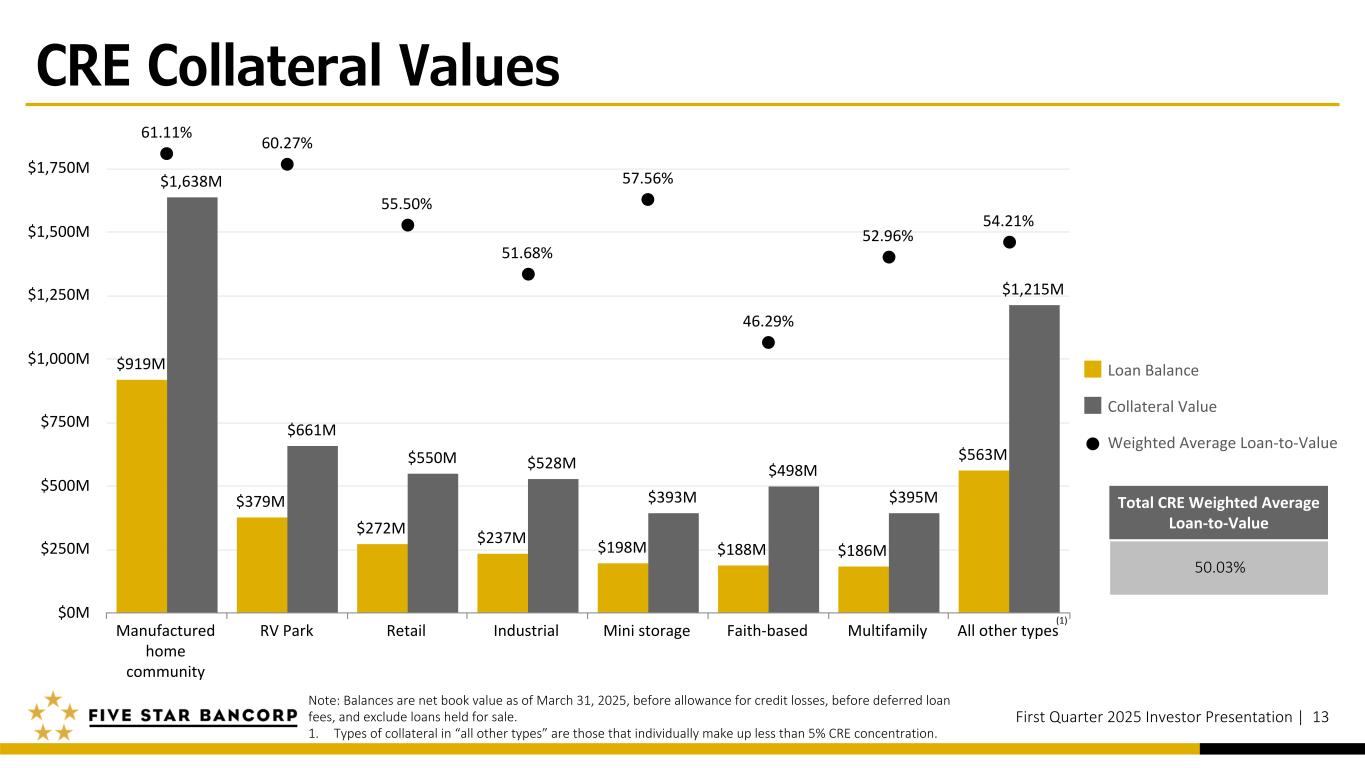
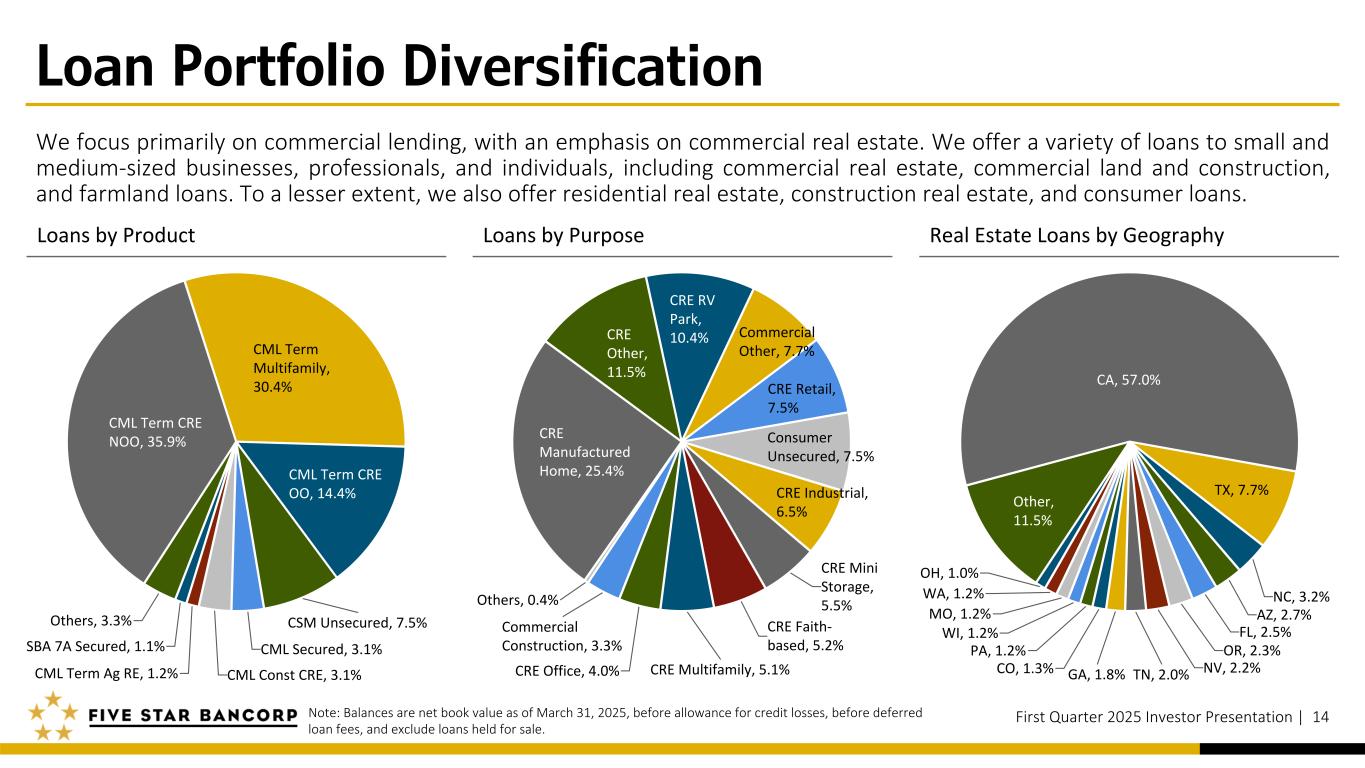
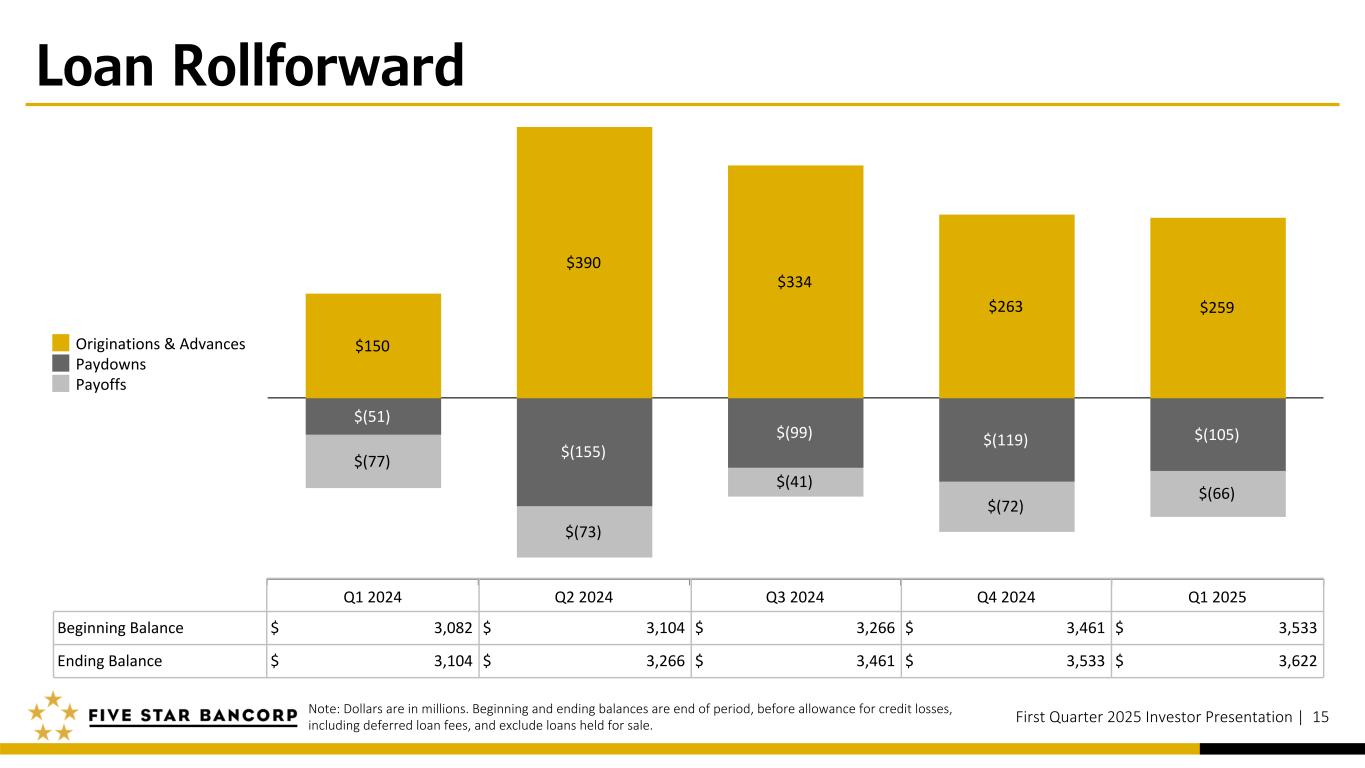
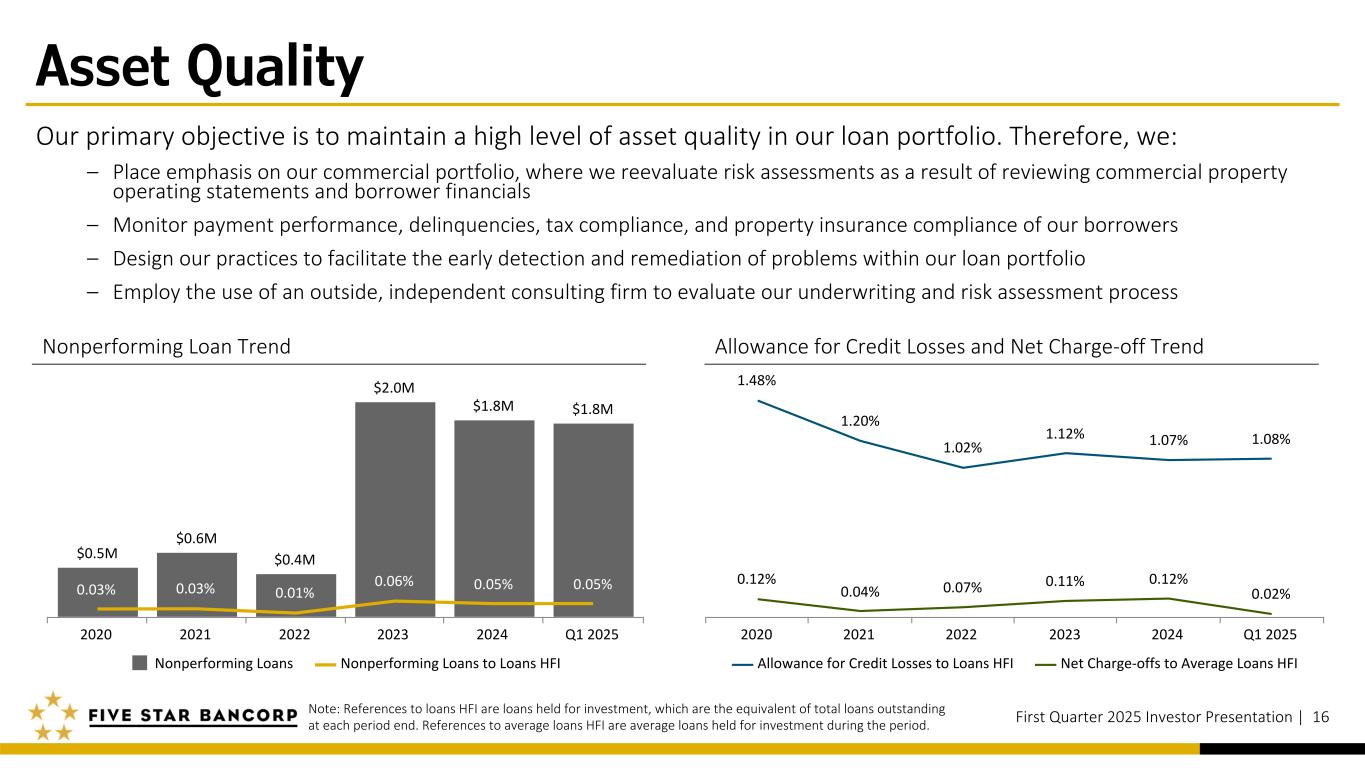
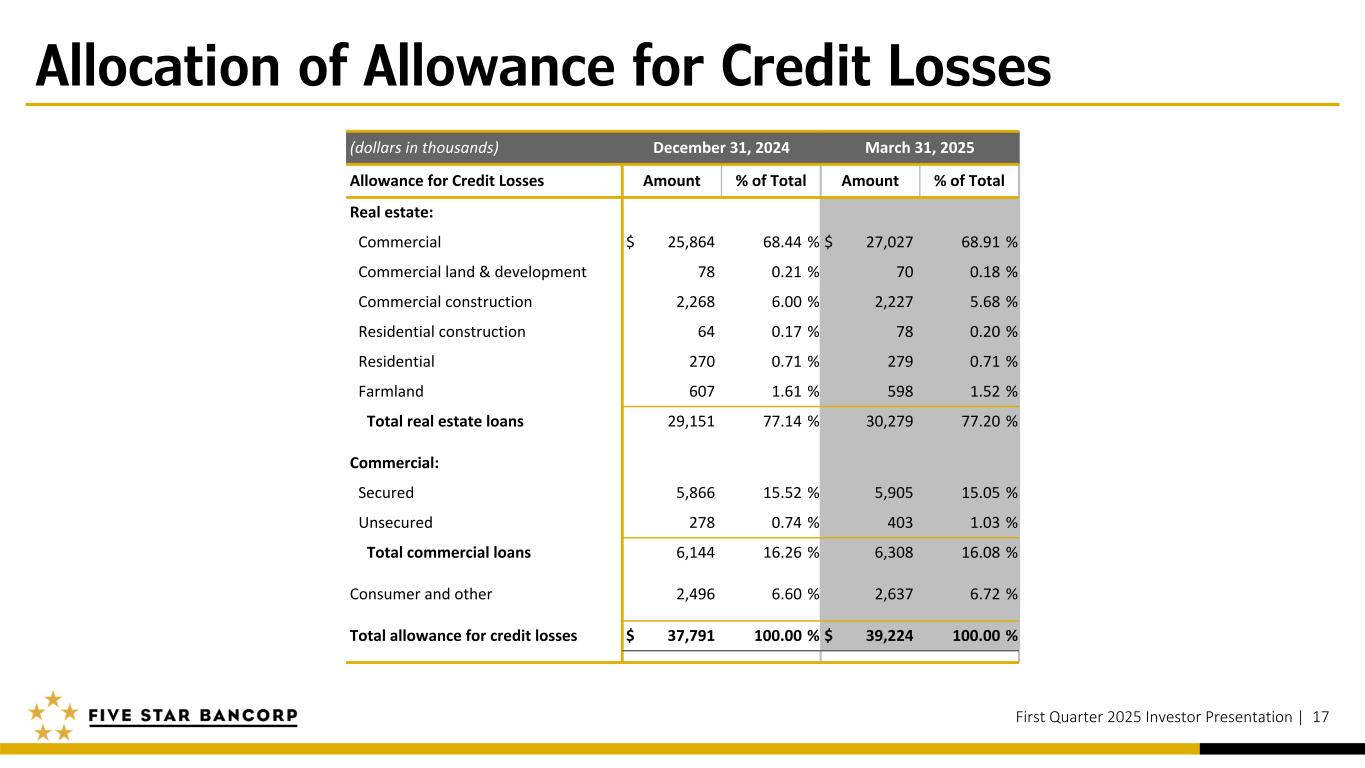
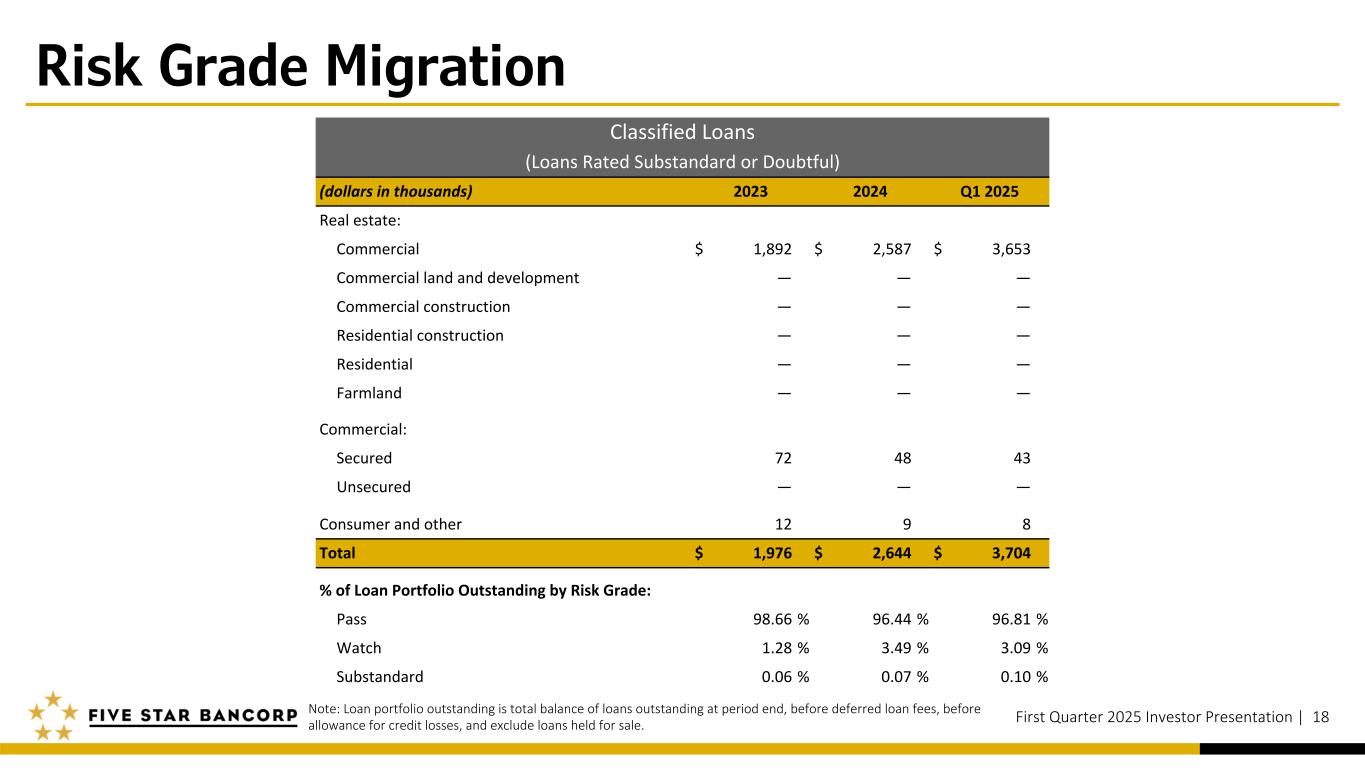
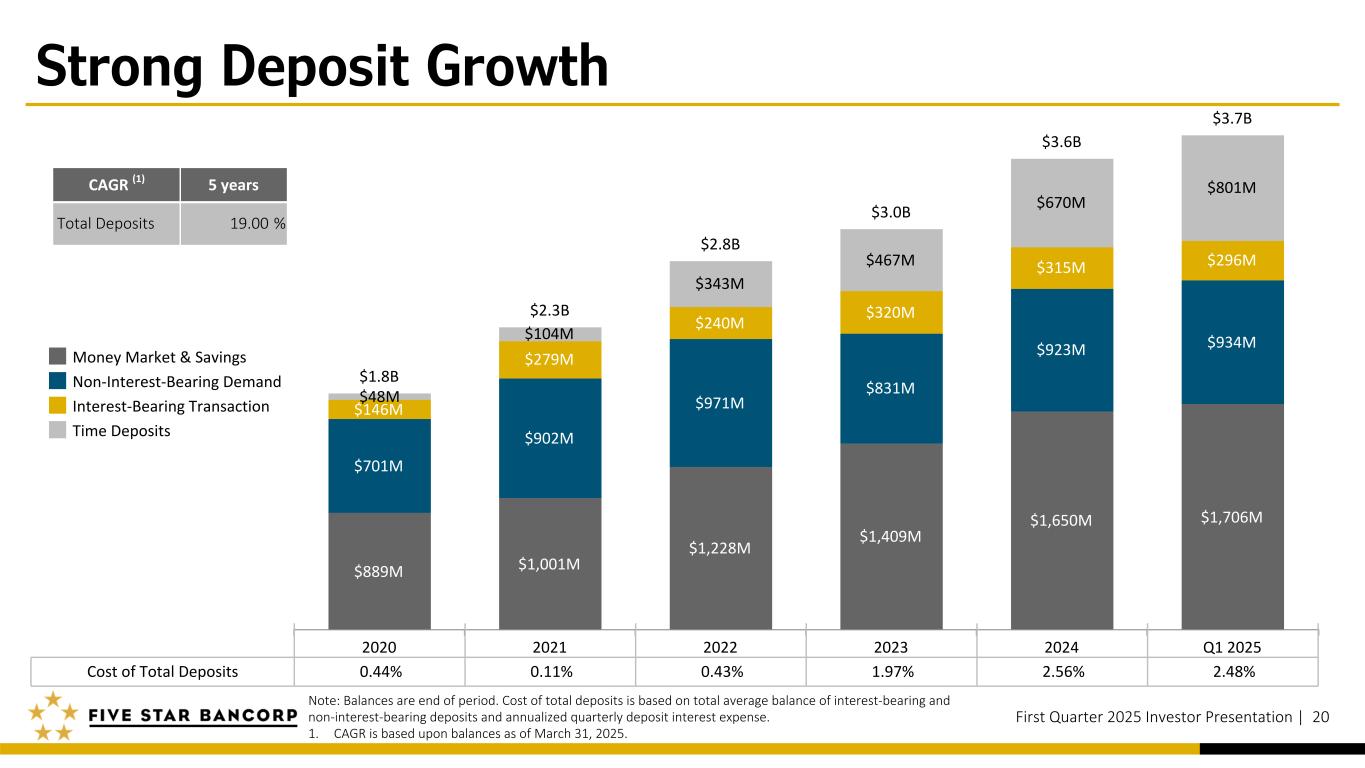
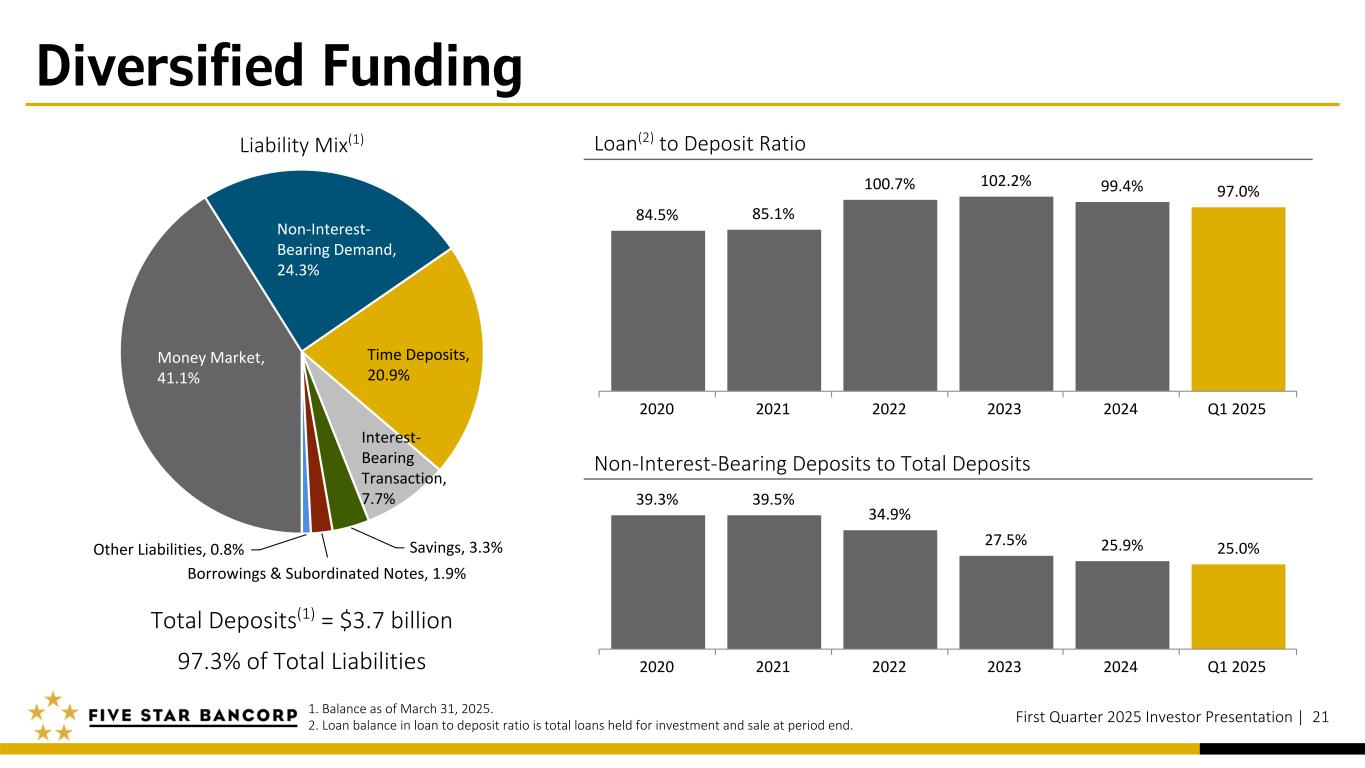
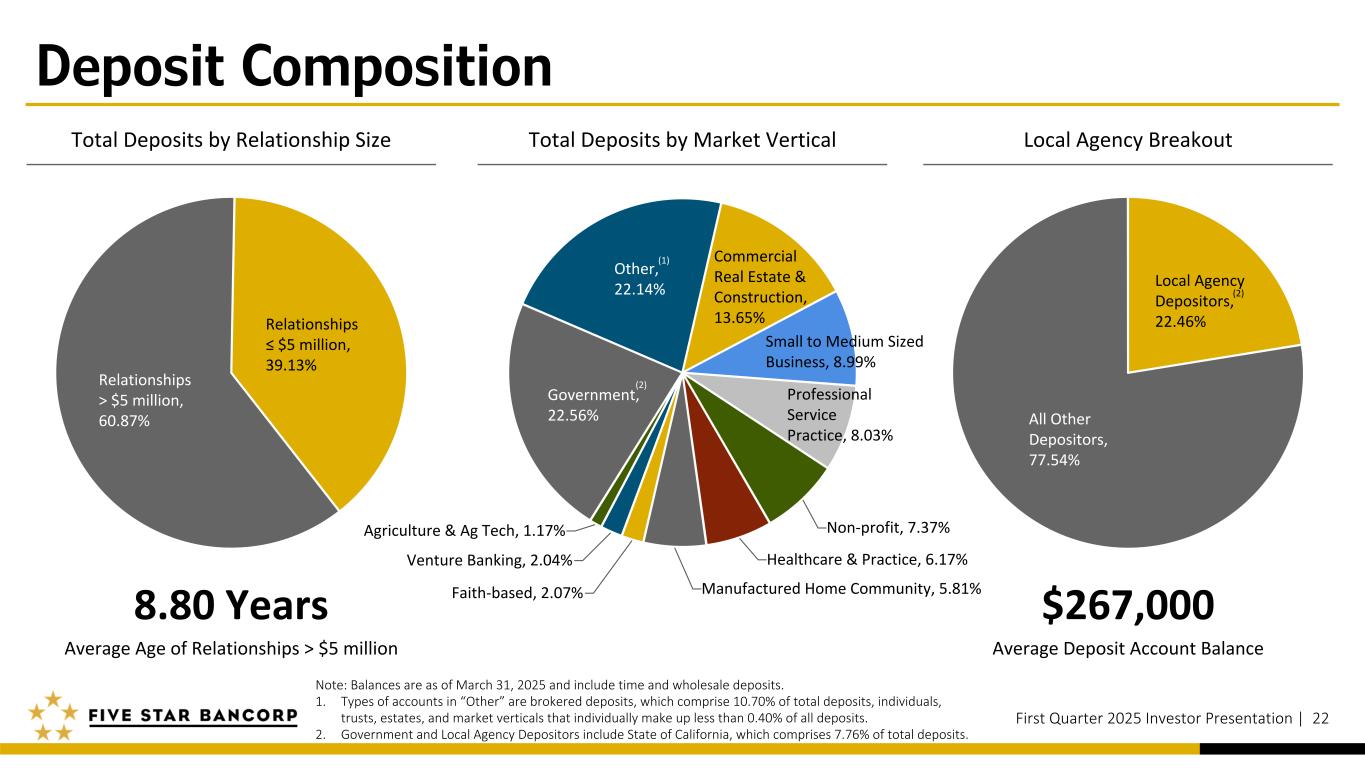
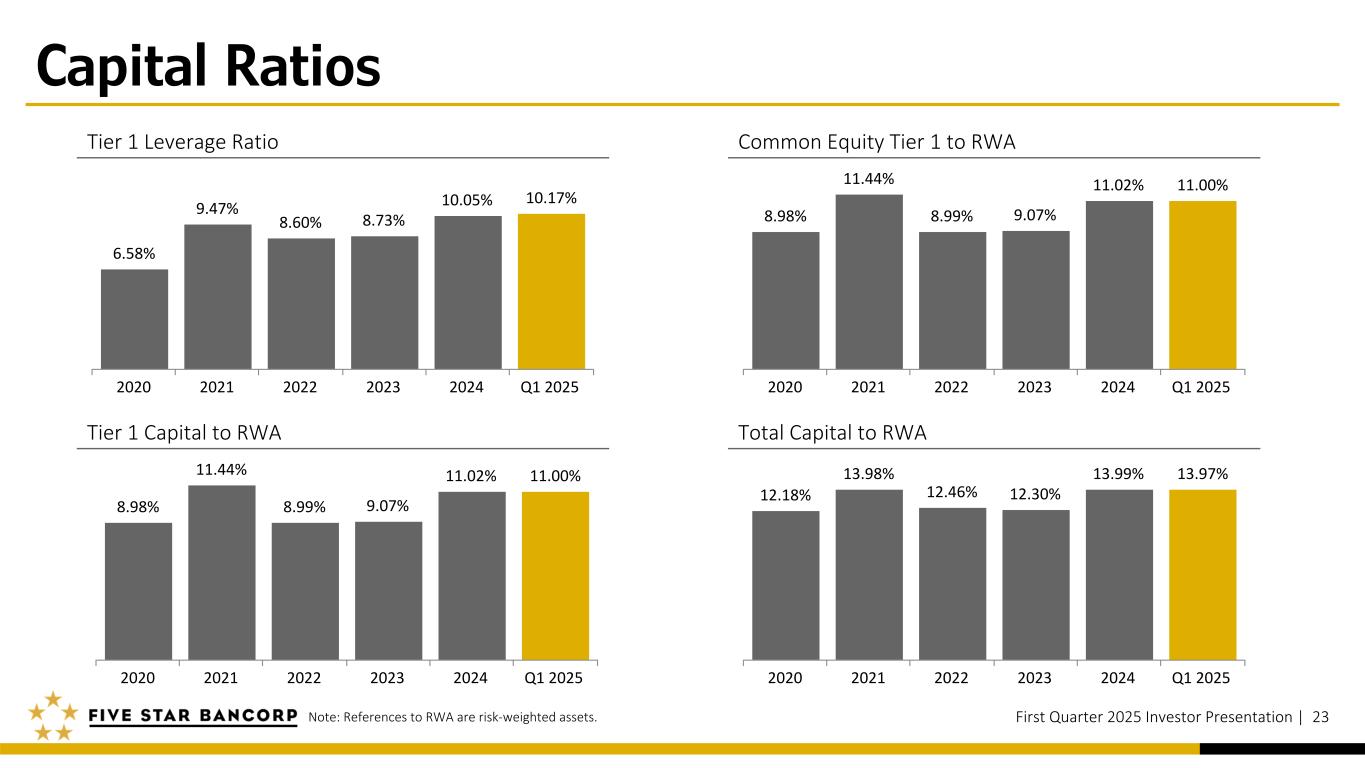
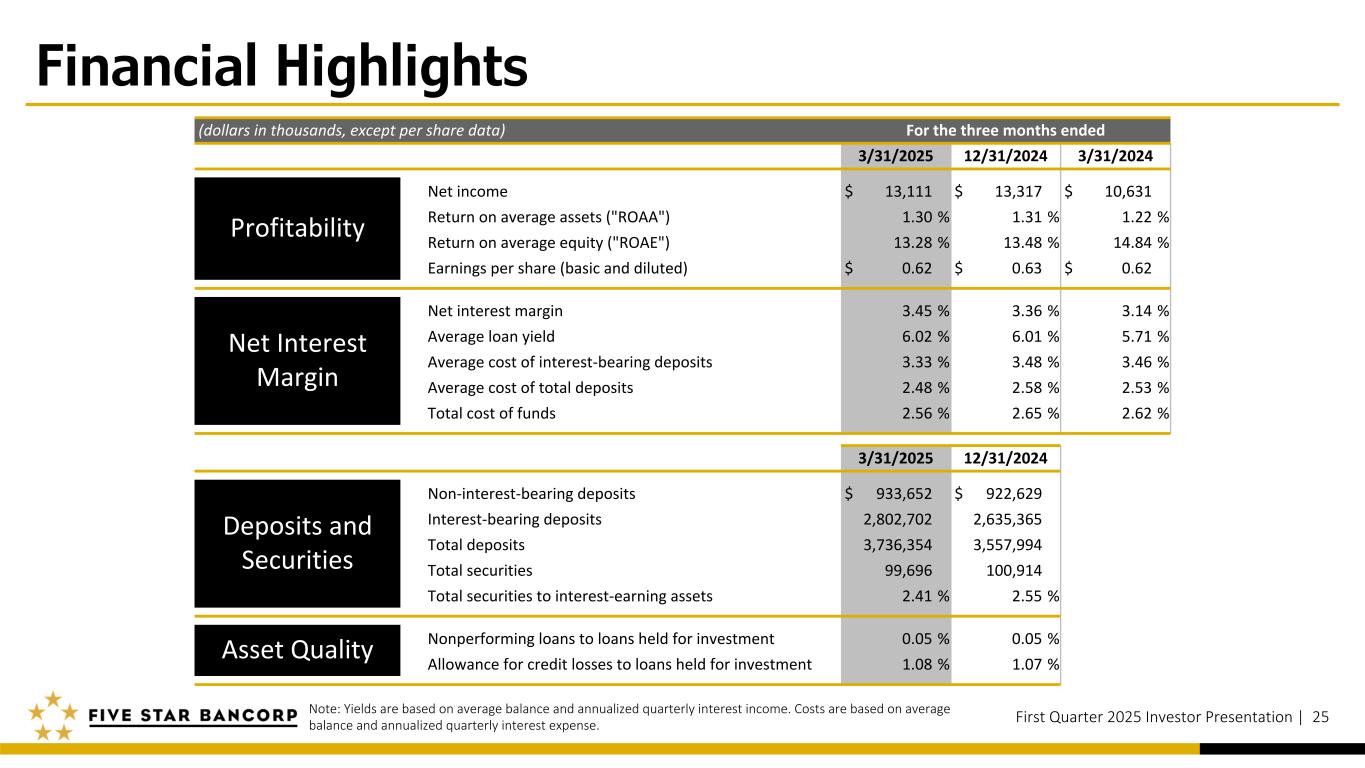
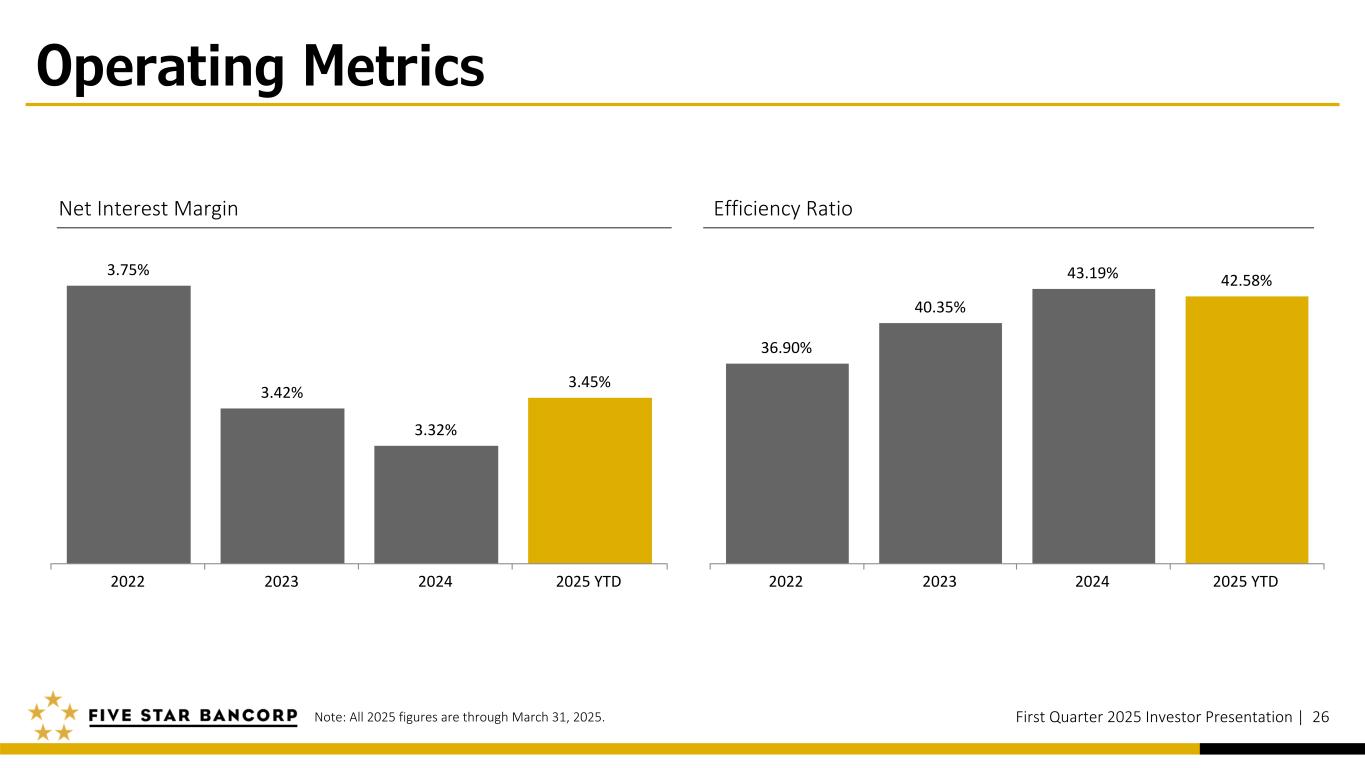
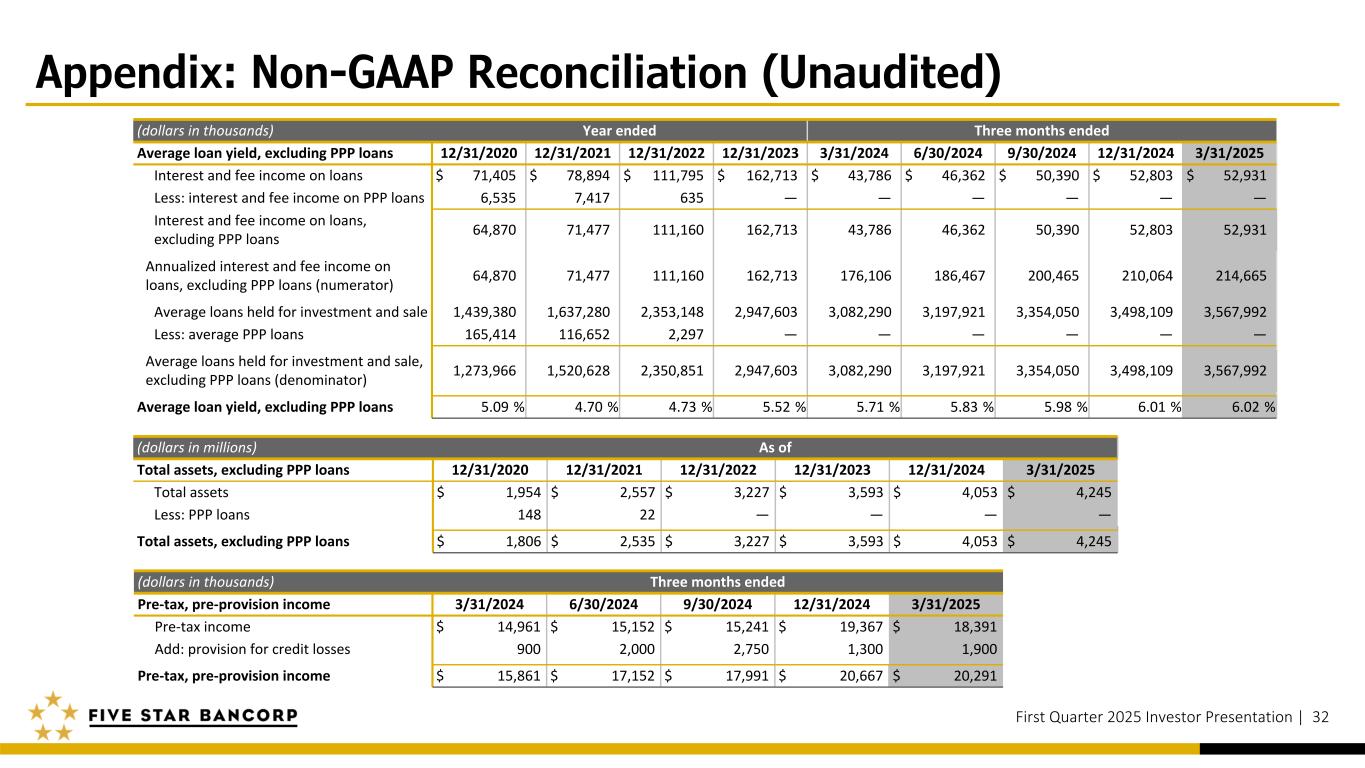
Thank you for joining us to review Five Star Bancorp's financial results for the first quarter of 2025. Joining me today is Heather Luck, Executive Vice President and Chief Financial Officer. Our comments today will refer to the financial information that was included in the earnings announcement released yesterday. To obtain a copy of the release, please visit our website at fivestarbank.com and click on the Investor Relations tab. The first quarter of 2025 was a continuation of building strength in our historical markets, as well as our expansion into the San Francisco Bay Area. We added four more seasoned professionals to support our expansion into the San Francisco Bay Area and continued to add new core deposit accounts and relationships, as seen in the increase of non-wholesale deposits of $48.4 million during the three months ended March 31st, 2025. In the first quarter, we maintained our ability to conservatively underwrite as evidenced by a 50.03% loan-to-value ratio on commercial real estate, managed expenses with our 42.58% efficiency ratio, and delivered value to our shareholders with our $0.20 per share dividend that was declared in the first quarter of 2025. Additionally, in the first quarter, we improved our net interest margin by nine basis points and grew our total loans, assets, and deposits over prior periods. Total loans held for investment increased during the quarter by $89.1 million or 2.52% from the prior quarter. Average loan yields increased by one basis point from the prior quarter to 6.02%. The commercial real estate segment of the loan portfolio increased most significantly quarter over quarter from 80.75% of our loan portfolio as of December 31st, 2024 to 81.11% at March 31st, 2025. Our commercial real estate concentration is set apart by the diversification within the portfolio and our ability to conservatively underwrite as evidenced by a 50.03% loan-to-value ratio. Our pipeline continues to remain solid at the end of the first quarter of 2025 within the verticals in which we have historically operated. Our loan originations during the first quarter were $259.3 million, while payoffs and paydowns were $65.6 million and $104.6 million, respectively. Asset quality continues to remain strong. Non-performing loans remained at 0.05% of loans held for investment from the end of the prior quarter to the end of the first quarter of 2025. At the end of the first quarter, the allowance for loan losses totaled $39.2 million. We recorded a $1.9 million provision for credit losses during the first quarter of 2025, reflecting adjustments to expectations for credit losses based upon economic trends and forecasts. The ratio of the allowance for credit losses to loans held for investment was 1.08% at quarter end. Loans designated as substandard or doubtful totaled approximately $3.7 million at the end of the quarter and an increase from $2.6 million at the end of the previous quarter. During the first quarter, deposits increased by $178.4 million or 5.0% as compared to the previous quarter. The quarter-over-quarter increase was largely driven by increases in non-interest-bearing demand and substantially all types of interest-bearing deposits, partially offset by a decrease in interest-bearing transaction deposits. Non-interest-bearing deposits as a percent of total deposits decreased slightly to 24.99% at the end of the first quarter from 25.93% at the end of the prior quarter. As noted earlier, we are pleased we net non-wholesale deposit inflows for the first three months ended March 2025. Our ability to grow deposit accounts supports our differentiated customer-centric model that our customers trust and value. As seen through the mix of high-dollar accounts and the duration of certain customer relationships, we believe we have a reliable core deposit phase. To offer more detail of our deposit composition, I want to highlight that deposit relationships totaling greater than $5 million constitute 60.87% of total deposits, and the average age on these accounts was approximately 8.80 years as of March 31st, 2025. Local agency deposits accounted for 22.4% of deposits as of March 31st, 2025. Overall deposit balances have increased when compared to the prior quarter. Wholesale deposits, which we defined as broker deposits and California time deposit program deposits, increased by $130 million, or 23.21% quarter over quarter. Non-wholesale deposits increased by $48.4 million, or 1.61% quarter over quarter, driven by a $37.4 million increase in non-wholesale interest-bearing deposits and an $11 million increase in non-interest-bearing deposits. Cost of total deposits was 248 basis points during the first quarter, a decrease of 10 basis points from the previous quarter. We continue to be well capitalized, with all capital ratios well above regulatory thresholds for the quarter. Our common equity Tier 1 ratio decreased from 11.02% to 11% between December 31st, 2024 and March 31st, 2025. On April 17th, our Board declared a cash dividend of $0.20 per share on the company's voting common stock, expected to be paid on May 12th, 2025 to shareholders of record as of May 5th, 2025. On that note, I will hand it over to Heather to discuss the results of operations.
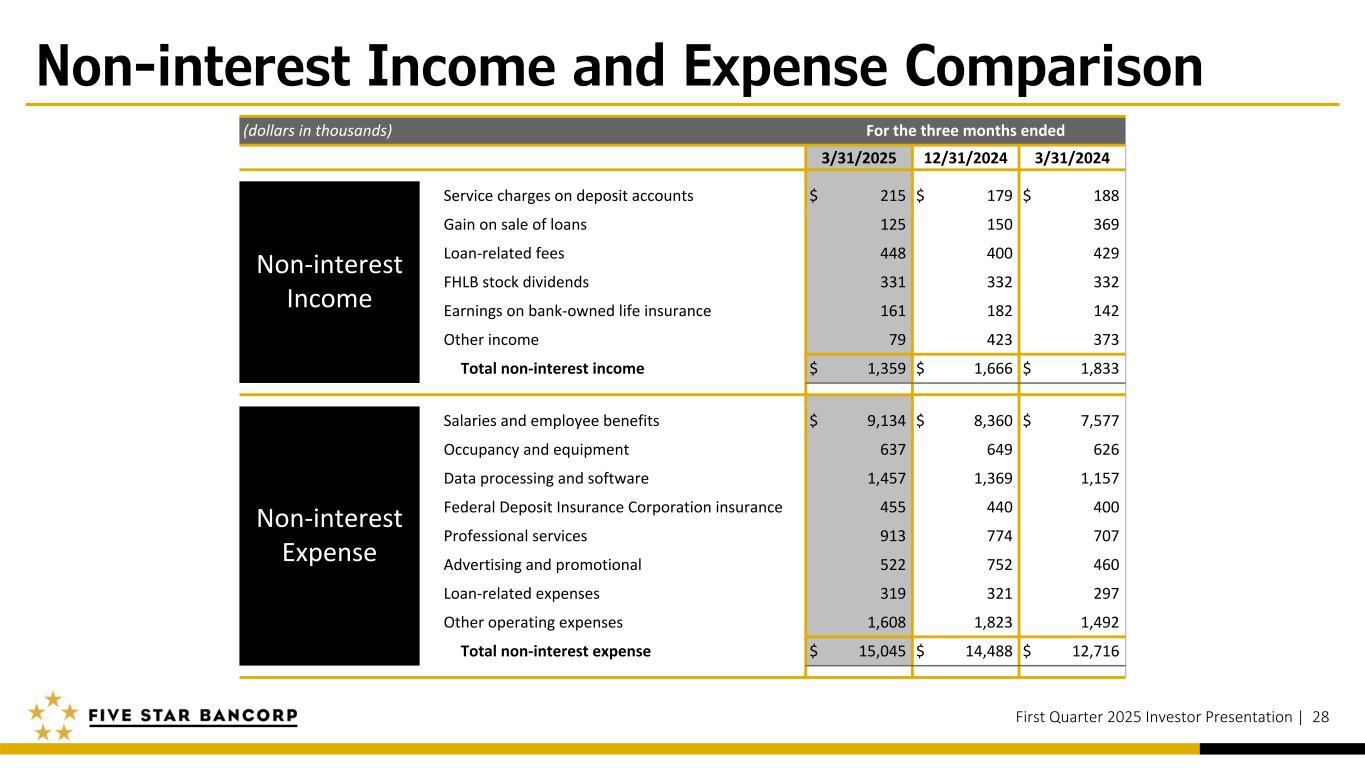
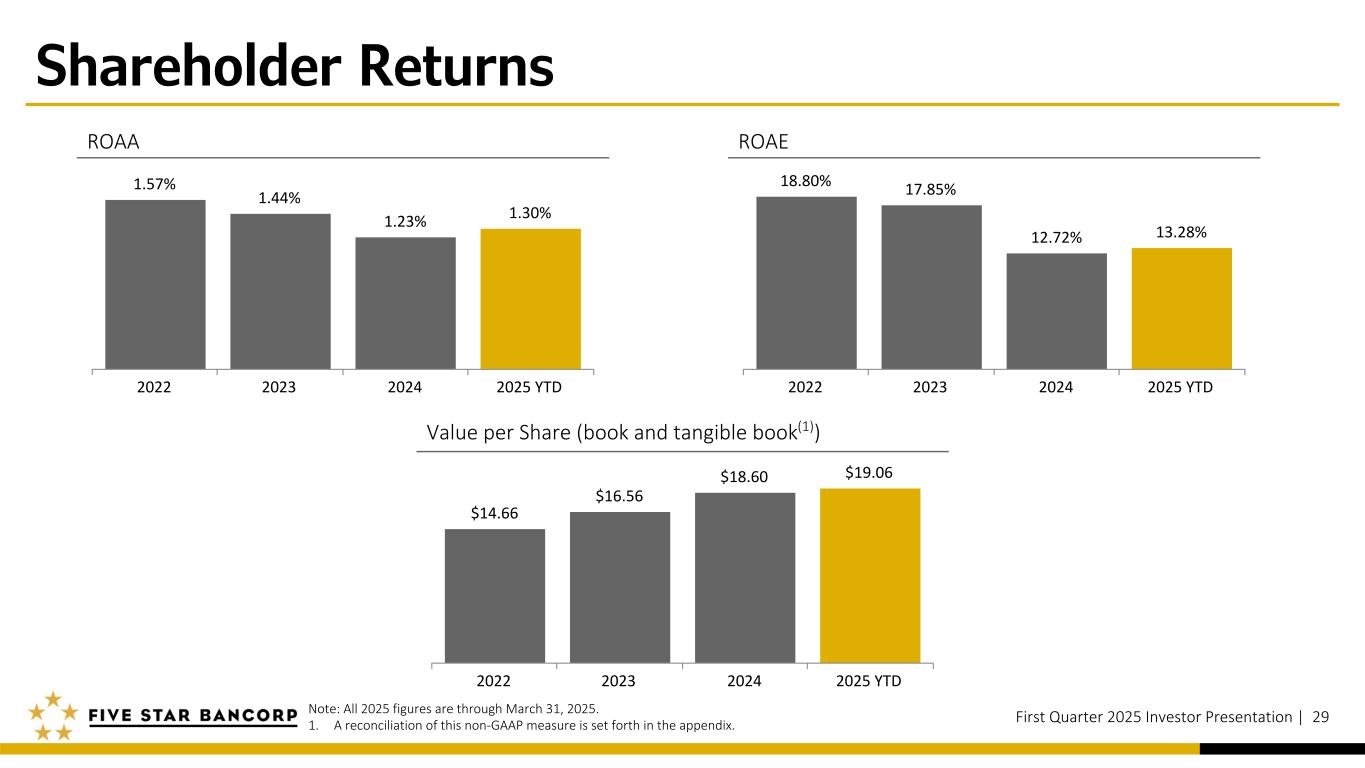
Thank you, James, and hello, everyone. Net income for the quarter was $13.1 million, return on average assets was 1.3%, and return on average equity was 13.28%. Average loan yield for the quarter was 6.02%, representing an increase of one basis point over the prior quarter. Our net interest margin was 3.45% for the quarter, while net interest margin for the prior quarter was 3.36%, with lower average cost of deposits as the primary driver. As a result of changes in interest rates and other factors, our other comprehensive income was $0.7 million during the three months ended March 31st, 2025, as unreliable losses net of tax effect decreased on available-for-sale debt securities from $12.4 million as of December 31st, 2024 to $11.6 million as of March 31st, 2025. Non-interest income decreased to $1.4 million in the first quarter from $1.7 million in the previous quarter, due primarily to a reduction in income received on equity investments and venture-backed funds during the three months ended March 31st, 2025. Non-interest expense grew by $0.6 million in the three months ended March 31st, 2025, compared to the three months ended December 31st, 2024, primarily due to increases in salaries and employee benefits, partially offset by decreases in advertising, promotional, and other operating expenses during the quarter. Now that we've discussed the overall results of operations, I will hand it back to James to provide some closing remarks.
Thank you, Heather. I want to thank everyone for joining us as we discussed first quarter results. Five Star Bank has a reputation built on trust, speed to serve, and certainty of execution, which support our clients' success. Our financial performance is the result of a truly differentiated customer experience, which continues to power the demand for Five Star Bank's relationship-based services. We are very proud to have earned the trust of those who we serve, including our shareholders. As we move into the second quarter of 2025, we are confident in the company's resilience and demonstrated ability to adapt to changing economic conditions and remain focused on the future and our long-term strategy. We will continue to execute on our organic growth and disciplined business practices, which we believe will benefit our customers, employees, community, and shareholders. We appreciate your time today. This concludes today's presentation. Now, Heather and I will be happy to take any questions that you might have.
Operator
We will now begin the question-and-answer session. Today's first question comes from Andrew Terrell with Stephens. Please go ahead.
Speaker 3
Hey, just wanted to, maybe if I could start on loan growth. James, obviously a very good quarter, especially given the backdrop of some slower growth right now. I think you're tracking, I think we talked about 8% or so loan growth last quarter. It looks like you're tracking a little bit above that to start the year. Just, I know you've got some tailwinds from a hiring standpoint. Maybe just refresh us on where you see loan growth shaking out for the year.
Well, I think we're a little more bullish than the last time we spoke, Andrew. We certainly have seen that in our pipelines and what we've been able to do so far in the second quarter. So I think you're going to see a 10% to 12% loan growth here on out for the rest of the year. It could be higher. Andrew, we've got 36 BDOs working for us right now. 16 in San Francisco and 20 out here in the Capital Region in the North State. So we've got a very experienced and, I'm going to say, aggressive sales force out there. And I think that's how we have been able to differentiate ourselves in the marketplace. So I'm bullish on growth on both sides of the balance sheet, Andrew, and probably more bullish than I was the last time we spoke.
Speaker 3
And then, if I could tie it into some of the deposit commentary, I maybe just want to understand if I look at the balance sheet in aggregate, I mean, you've got a really strong cash position, the deposit growth outpaced loan growth this quarter, but some of that was more wholesale and I would presume higher costs in nature. With all of that in context together and you obviously sound bullish on the deposit growth as well, but why bring on the maybe higher costs, more wholesale funding this quarter? And then just overall, outlook for, does that wholesale funding stick around, do you expect to work that lower? And core deposit, do you think core deposit growth can match the loan growth?
Yeah, we think core deposit growth will match the loan growth. So we're not anticipating as we sit here today any additional wholesale funding. And we'd like to maintain 10% in cash, and something less than a 100% loan-to-deposit ratio. So, those are two parameters that I know. I know they're just numbers, but they have some meaning to us as we look at our franchise. And our long-term goals in terms of a fortress balance sheet is to bring those numbers down. And I think that each quarter unfurls, and the opportunities to add a new business, new relationships, new loans, sometimes you require us to do spot-funded, of which we have the ability to do it. We're also, Andrew, provides us an opportunity to take advantage of the declining rate environment and we're, Heather, we're pretty tight in terms of our maturity schedules for our wholesale deposits and we keep them pretty like 90 days out.
We are. Yeah. We've been able to, just if you look at the wholesale book compared to last quarter compared to this quarter, just by keeping our deposits short at both the state of California as well as on the broker side, we were able to roll that down by 24 basis points. So, that's been a nice way to provide some liquidity while riding the yield curve down as well.
And we expect the beta to be 100%, right? And so that's something we'll look forward to if and when it happens. And when that happens is, Andrew, I'll leave it up to your crystal ball.
Speaker 3
Well, I wouldn't bank too much on that one, James, but I appreciate all the color there. If I could just ask one more question, there's obviously a lot of conversations going on around tariffs and slow down and economic growth. Specifically, some concerns around some of the lower end of the consumer right now, given those tariff impacts. Maybe just be helpful to remind us how you think the RV manufactured housing business performs in that type of backdrop. And then more broadly, what kind of work have you guys done in terms of analyzing the portfolio to determine where you could or could not see credit stress? Just any extra thoughts there would be helpful.
That'd be great. We thought when this first came up a month or so ago, six weeks ago on, what did President Trump call it? What do you call it? Liberation day. We looked at our portfolio and given the concentrations we have in our Mobile Home Park and RV Park, we feel comfortable about that. They operate slightly differently, but if you looked at how those books performed, or those asset classes performed over the last great recession, they were clearly the best performing asset class amongst all. I mean, it wasn't even close. So, we feel comfortable about where that stands. There are some, if I look at the rest of the portfolio, we do have a consumer book that we bought from BHG. We like that position that BHG has provided us and we're not overly concerned about it at this particular point. And there is uncertainty with respect to what's out there from the consumer level. We don't know how that's going to shake out, but we are a commercial real estate shop. And will tariffs ultimately have some impact on us? Yeah, I mean, it would be imprudent to think that they wouldn't, but I think relatively speaking, our bank is in a better position, given the construct of our loan portfolio than other shops are.
Operator
Next question comes from Gary Tenner with D.A. Davidson. Please go ahead.
Speaker 4
So a little bit of a follow-up to that last series of comments. In terms of the allowance and increase this quarter, could you go into a little more color as to kind of changes you made in the model that drove that? Any change in weightings or other factors you used in terms of increasing the allowance?
Sure. Growth of the portfolio had a significant impact in our model. Given how the allowance for credit losses works here is that it's extremely sensitive to any movement in terms of GDP, in terms of unemployment. So, Heather?
Yeah. So really, as to your question there. So we really base our economic forecast model just on the FOMC published models there and that was refreshed as of February. And so we do anticipate that we will likely have some more increases in our economic reserve requirements once we get into Q2 and once we start to see some revisions to the economic model there. From that perspective though, nothing really from a weighting perspective that really drove the increase in the reserve really just was a function of the revised forecast from the FOMC, the growth as well as the net charge of about $700,000.
Right. So there is some sensitivity with respect to the numbers based upon what the Federal Reserve is going to tell us. And I don't think we're unlike anybody else. I think a lot of us are using the same construction of the allowance for credit losses. So we anticipate there will be some impact. We'll see what happens next week.
In terms of any model changes they may have that comes out of these meetings. And so we'll just have to see how that goes. We like how we're positioned right now because of our low level of non-performers. So we'll just have to see how that goes. I think I have, Gary, I have seen people writing on sensitivity in our reserving methodologies too, what the Federal Reserve will come up with. But again, relatively speaking, we're all in the same boat.
Speaker 4
And then second question in terms of the loan production. Appreciate the bullish comments on loan growth for the rest of the year. Can you talk a little bit about pricing? We've been hearing a lot over the last several weeks about pretty intense loan pricing competition seems to have picked up. So any comments or thoughts on that would be appreciated.
We have consistently operated in a highly competitive environment. Spreads have narrowed somewhat, particularly in the multifamily sector, resulting in tighter spreads. Despite this, we are still achieving reasonable pricing with our overall loan production, ranging from 185 to 350 over the five-year. On average, we're satisfied with our spreads. The current yield curve isn’t ideal for our industry, and our decisions depend on the information spreads provide us, which we are managing effectively. Additionally, we have observed significant repricing within our portfolio as credits from five years ago are being adjusted. For instance, we had a notable repricing in April that increased by around 220 basis points, which our client was able to handle. We continuously assess and adjust our underwriting based on changes in interest rates, and there haven't been any emerging issues that raise concern at this moment. We are closely monitoring the effects of repricing and currently find ourselves in a stable position with no significant worries. We acknowledge that risks exist, but overall, things look good for us right now.
Operator
The next question is from David Feaster with Raymond James. Please go ahead.
Speaker 5
Hi, guys. This is Liam Coohill on for David Feaster. How are you doing today?
Doing great, Liam. I guess David's flying around someplace.
Speaker 5
He is always out and about. I wanted to ask about asset quality and tariff impacts. Looking at the more forward part of the book, originations have been really encouraging. However, what have you been seeing from customers in the current environment? Is there more hesitancy to borrow, or is there anything else you would note?
I believe there is significant economic opportunity in certain asset classes. Our MHC engine appears to be operating very well. Our professional clients are still actively purchasing underperforming assets, and we are observing a strong environment for purchase financing. Given our market penetration, we do not see demand decreasing. Interestingly, we have a large sales team, which greatly influences our ability to develop new relationships. We have intentionally built this team, and compared to others in our industry, it seems we have a greater number of people in this area. Therefore, you can expect us to grow at an above-average rate because of our focus on enhancing our sales force.
Speaker 5
And I guess to the point of hiring more people, I mean, it's really encouraging to see the growth in the San Francisco office. Just wondering, have you seen a difference in loan demand across the footprint? I know, especially you've been investing in San Francisco recently, but has that market been a little bit more challenging than the capital region? Just curious on some thoughts there.
No, I wouldn't say it's been more challenging. I think relatively speaking, we've gone up market in terms of the sophistication of clientele in the Bay Area. We've run into some great operators that we're very happy with, whether they're in the student housing business or just as CRE experienced investors or they're operators of businesses. So I wouldn't say that we're at all challenged with respect to what's going on in the Bay Area. In fact, those opportunities continue to come up, and we're on top of them. We've got a very energetic sales force down there that are not only bringing their book over that they once had at, let's say, at other institutions, but also we're seeing that second derivative of new business that previously were not banked by those individuals coming to us because of the reputation that we're building down there. And it's exciting to see that. And I think that's just going to continue. And we're out competing folks, again, because we just have more people. And we're very niche and very focused down there, as we are across our entire platform. So we're seeing a lot of activity right now, not only in the Bay Area, but also in the Capital Region and in the North State.
Speaker 5
What have you been observing from small business borrowers lately in regard to their reaction to the overall economic climate and uncertainty?
We have discussed the challenges related to our SBA book. The cost of borrowing is high due to the spreads on those loans and the current yield curve. This situation creates difficulties for many businesses, which often rely on fulfillment platforms that source products from outside the United States. We are aware of these challenges. Historically, we have maintained a strong reserve against this book, so we are not caught off guard by these circumstances.
Yeah, we're at almost 9% per reserve for that book, so.
I was going to mention that this is primarily how we engage with small businesses. Regarding some of the agricultural business we have observed, only time will reveal what that will entail. On the rice, walnut, and almond fronts, there has been some improvement with walnuts. Our portfolio isn’t very large, so we will see what effects tariffs will have on this situation, but the outcome is uncertain. I understand this puts everyone in a wait-and-see stance. We are not trying to convince ourselves that a recession is imminent, even though some media outlets are pushing that narrative. The best course of action for us is to choose not to pay attention to them.
Speaker 5
Yeah, that's true. Thank you guys so much for the color on your markets and on some of the subcategories. I'll step back.
You bet. Thank you, Liam.
Operator
This concludes our question-and-answer session. I would like to turn the conference back over to management for any closing remarks.
Thank you. Five Star Bancorp is expected to continue on our current path of growth as we execute on strategic initiatives, which include growing our verticals and geographies while attracting and retaining talent. Our people, technology, operating efficiencies, conservative underwriting practices, and expense management have also contributed to the successes we share with our employees and shareholders. These successes include numerous ratings and awards. In the first quarter of 2025, Five Star Bancorp was ranked third on the S&P Global Market Intelligence list of best performing community banks in the nation, among banks with assets between $3 billion and $10 billion. The company was also listed among the Sacramento Business Journal's fastest growing banks by deposits in the Sacramento area. And bank executives were honored among the Sacramento Business Journal's Power 100 list, women who mean business, and champions of diversity, equity, and inclusion, as well as the San Francisco Business Times' 40 Under 40 and Newsmaker 100 list. The company has also an employee named as the Reading Chamber of Commerce Ambassador of the Year. Five Star Bancorp continues to be a driving force for economic development, a trusted resource for our customers, and committed advocate for our community. We look forward to speaking with you again in July to discuss the earnings for the second quarter of 2025. Have a great day, and thank you for listening.
Operator
The conference has now concluded. Thank you for attending today's presentation. You may now disconnect your lines.