Operator
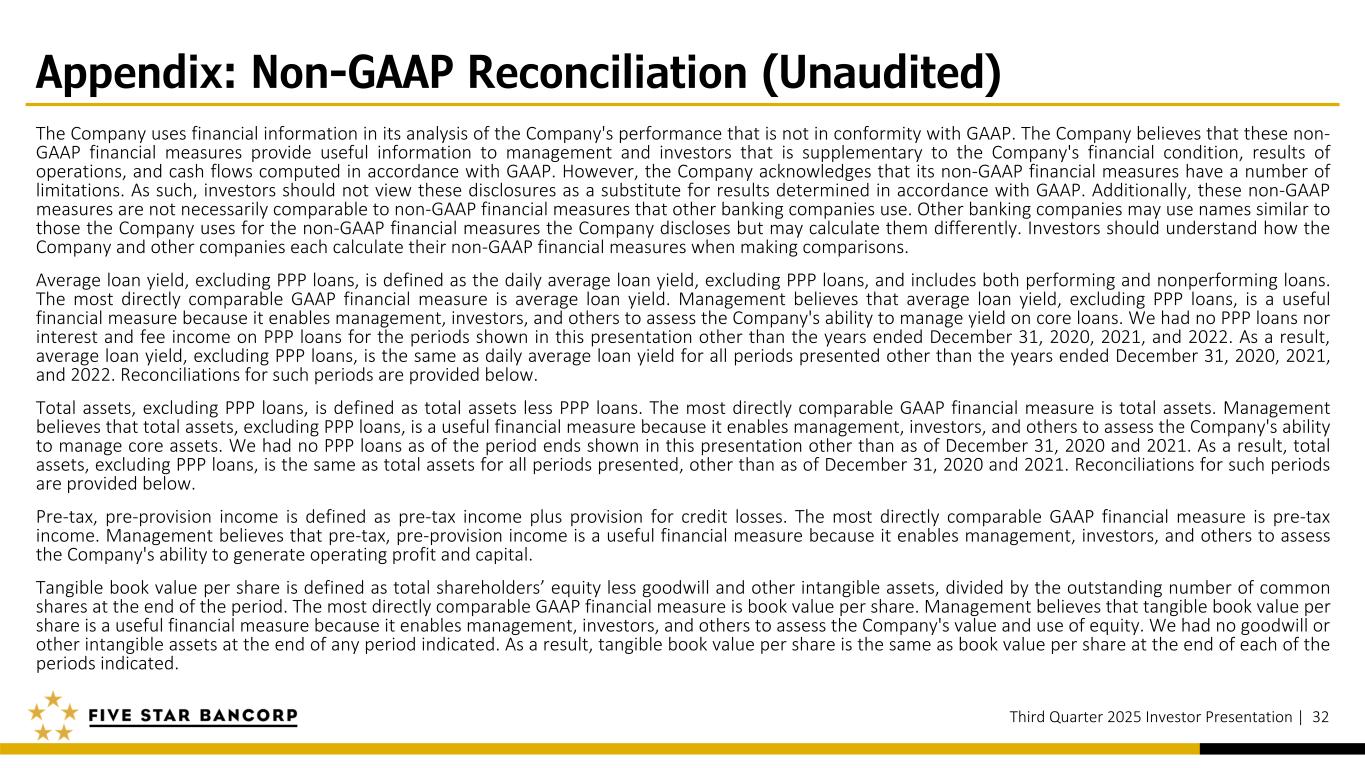
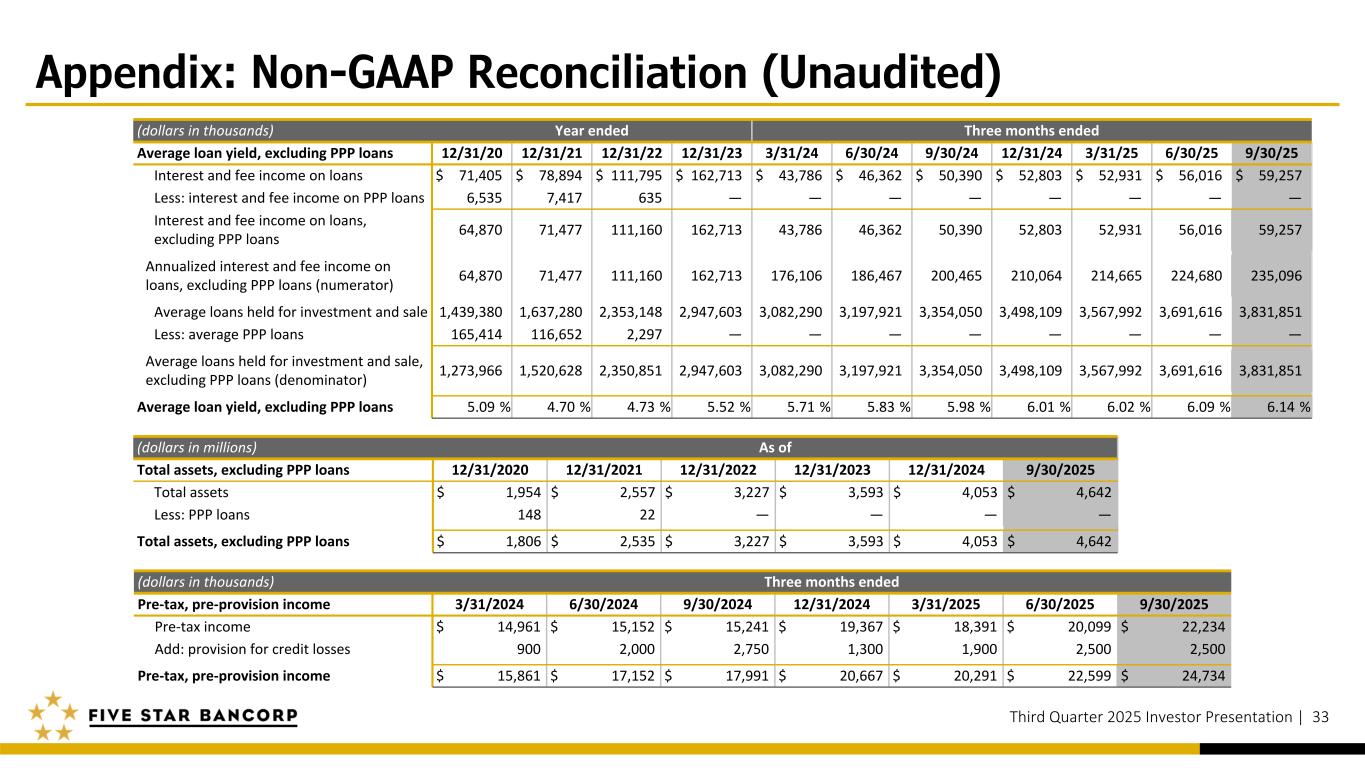
Welcome to the Five Star Bancorp Third Quarter Earnings Webcast. Please note that this is a closed conference call, and you are encouraged to listen via the webcast. Before we begin, we want to remind you that today's meeting will include some forward-looking statements related to current plans, expectations, events, and industry trends that may impact the company's future operating results and financial position. These statements involve risks and uncertainties, and actual activities and results may differ significantly from these expectations. For a more detailed discussion of the risks that could cause actual results to vary, please refer to the company's annual report on Form 10-K for the fiscal year ending December 31, 2024, and quarterly reports on Form 10-Q for the three months ending March 31, 2025, and June 30, 2025, specifically the information in Item 1A, Risk Factors. Additionally, please look at Slide 2 of the presentation for disclaimers regarding forward-looking statements, industry data, unaudited financial data, and non-GAAP financial information. Reconciliations of non-GAAP financial measures to their closest GAAP figures are included in the appendix of the presentation. The presentation will be referenced during this call, but not followed verbatim, and can be closely reviewed on the company's website under the Investor Relations section. Please note this event is being recorded. I will now turn the presentation over to James Beckwith, President and CEO of Five Star Bancorp. Please proceed.
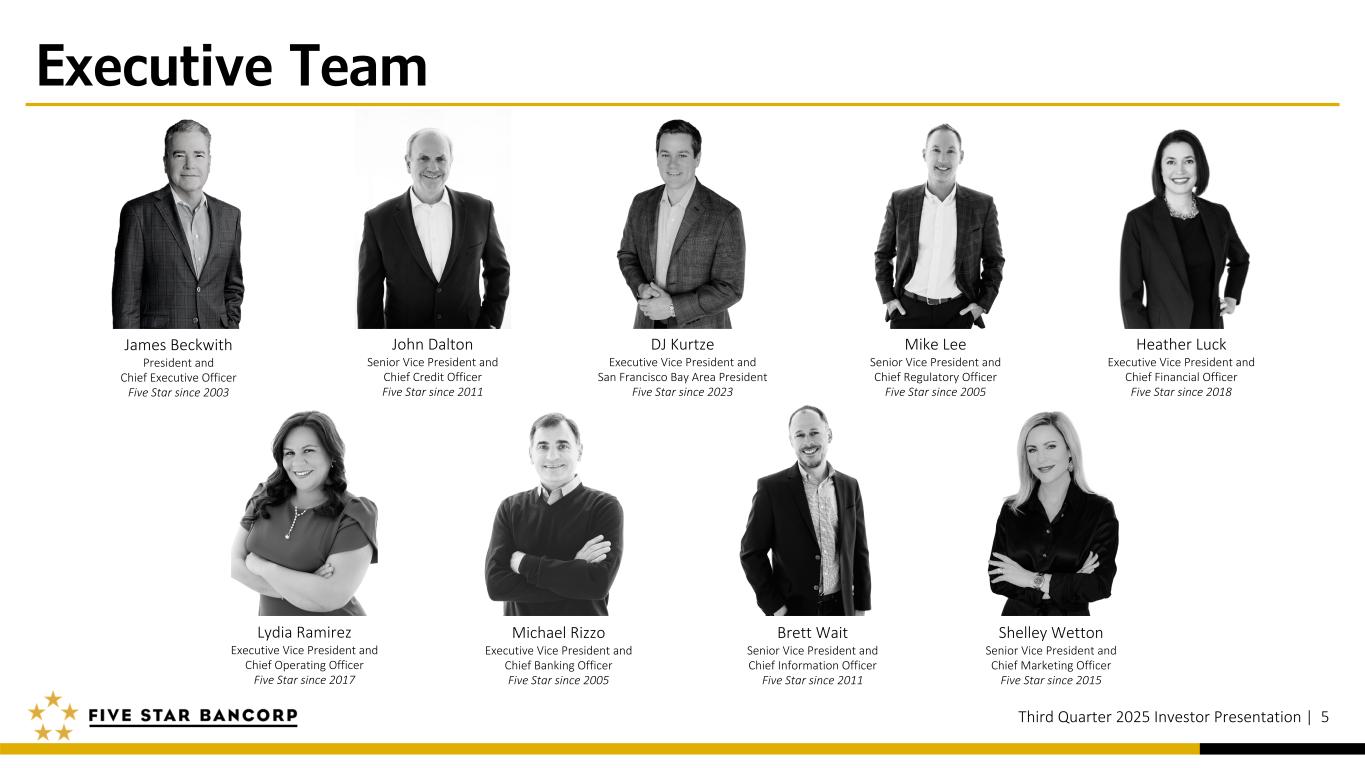
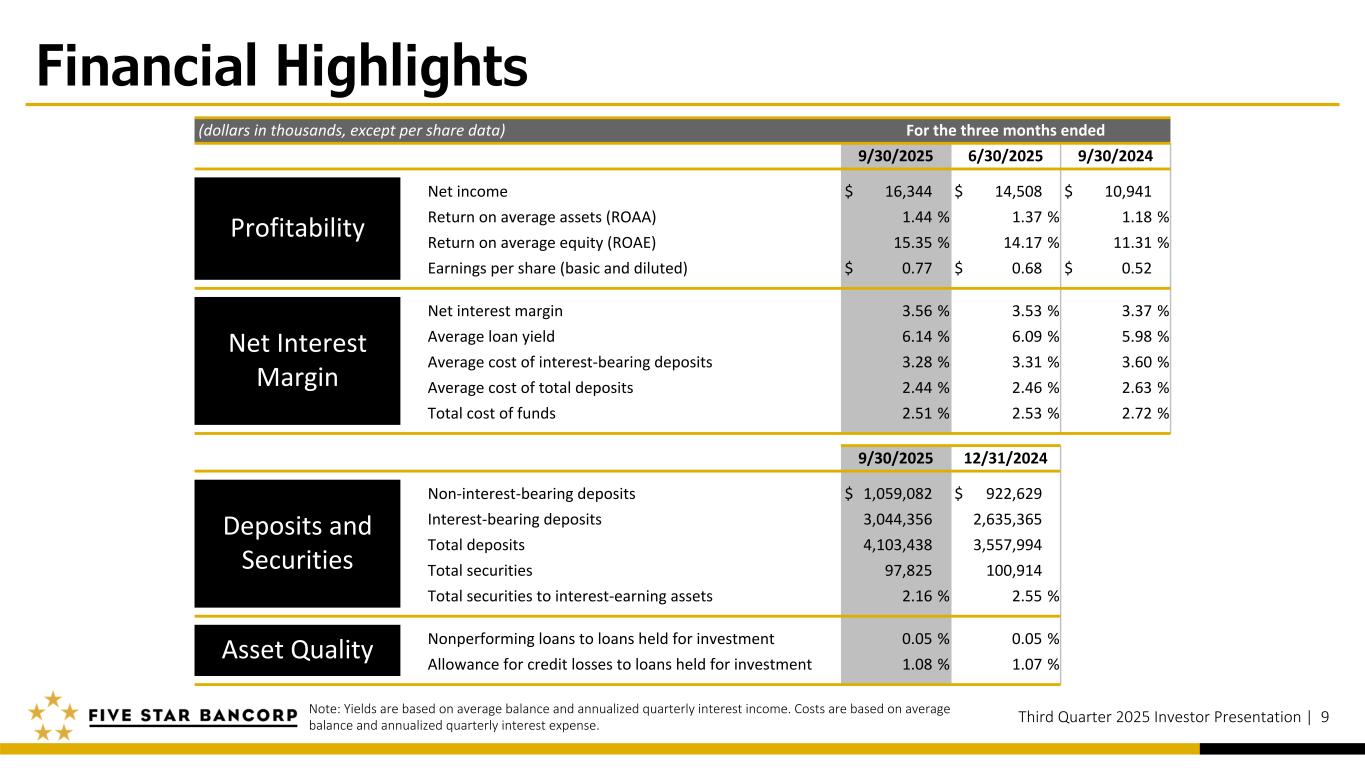
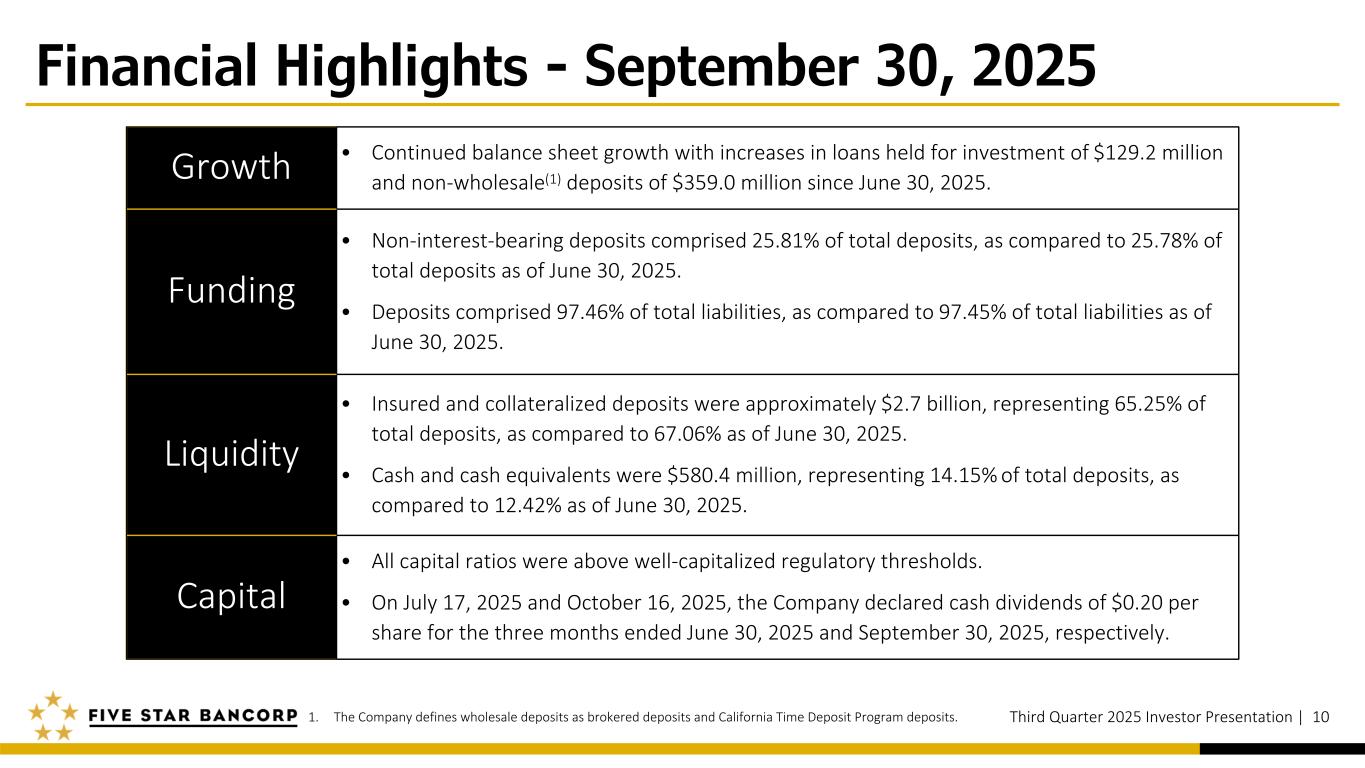
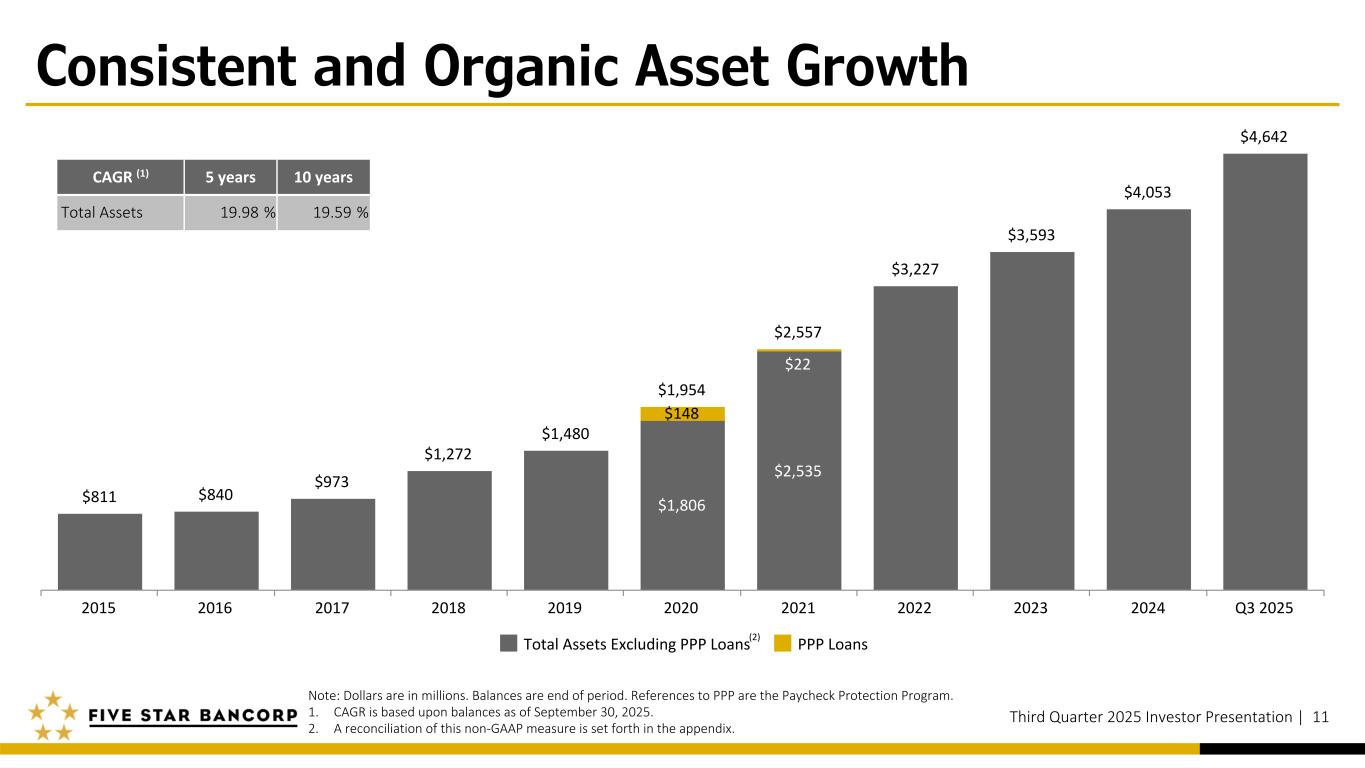
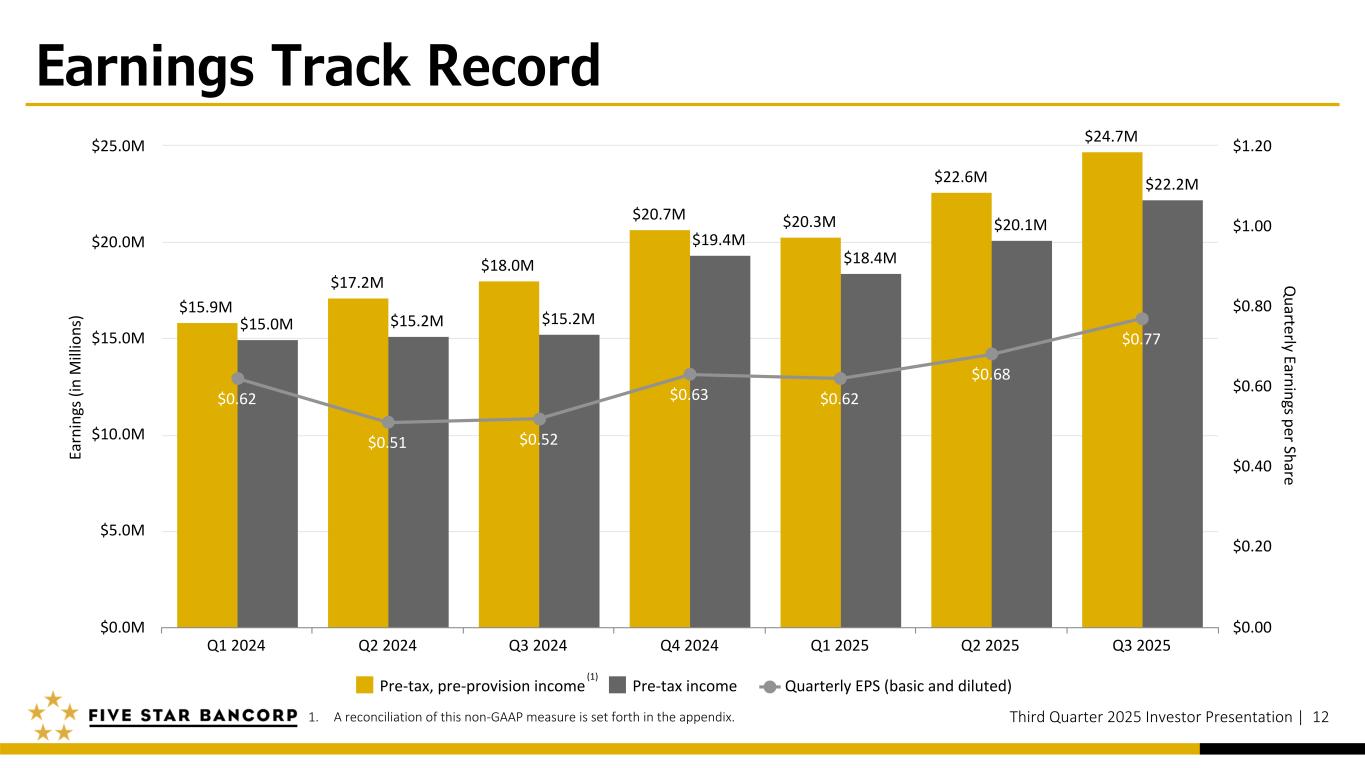
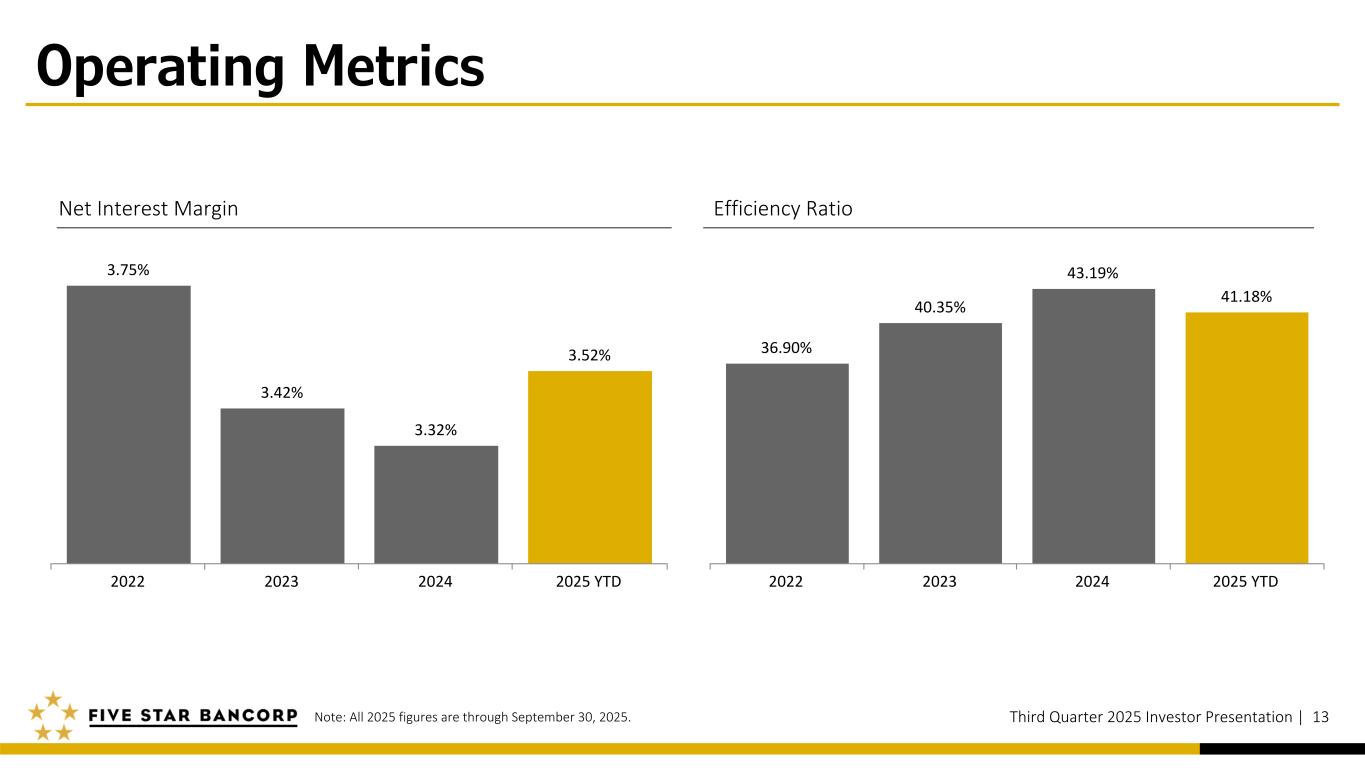
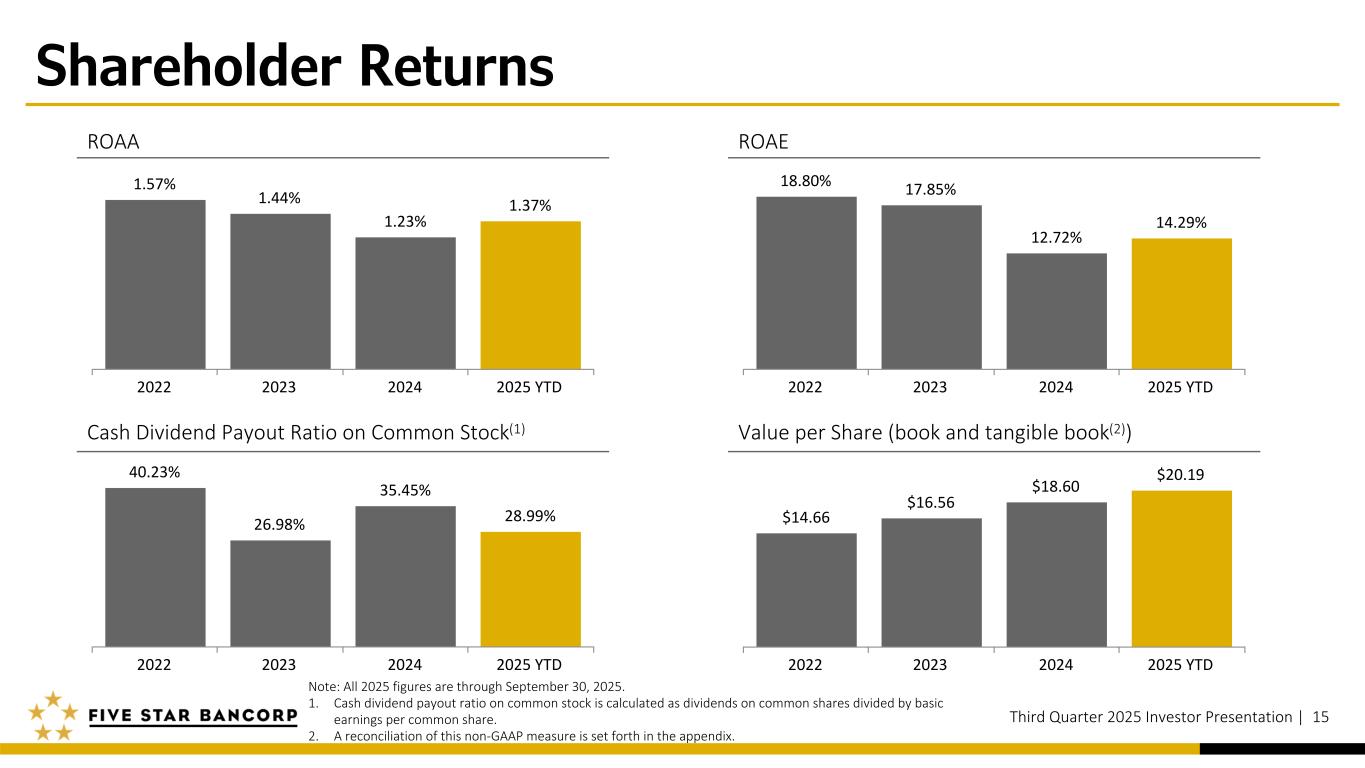
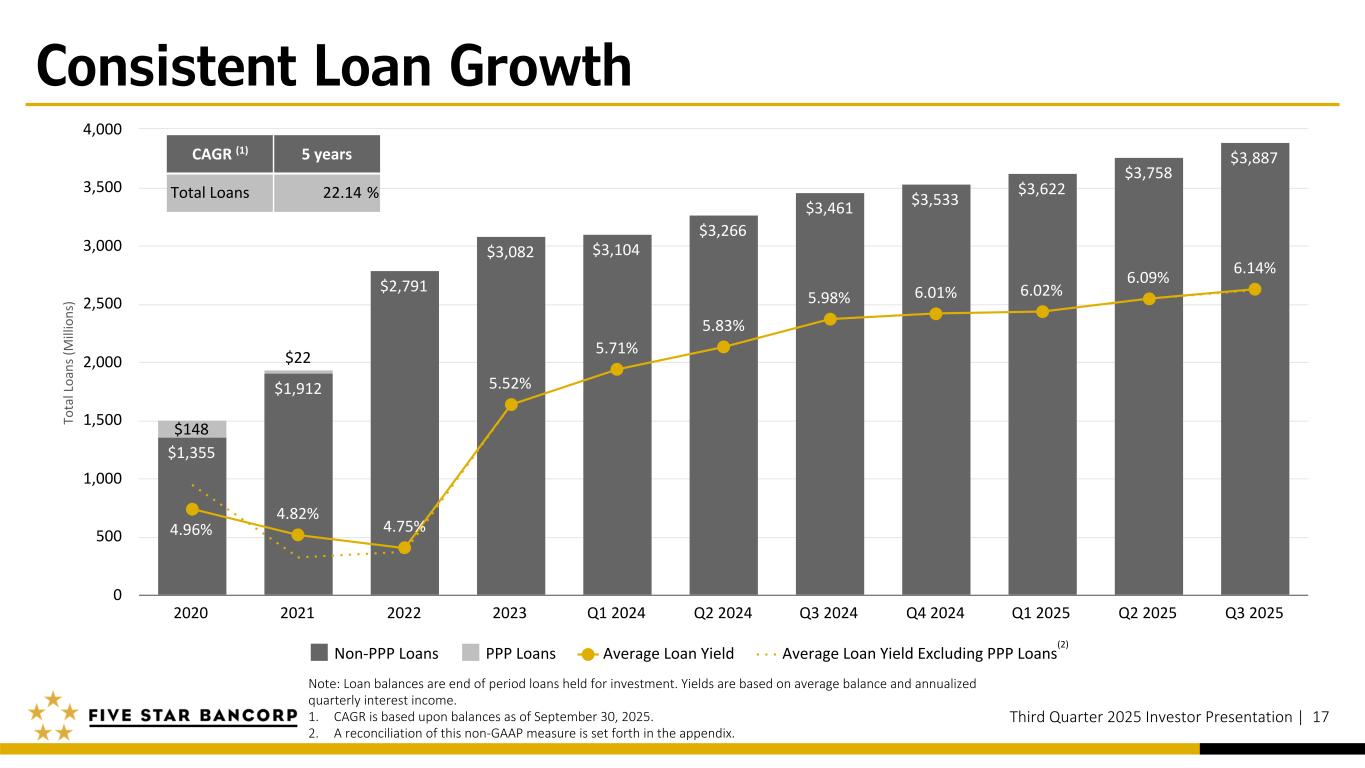
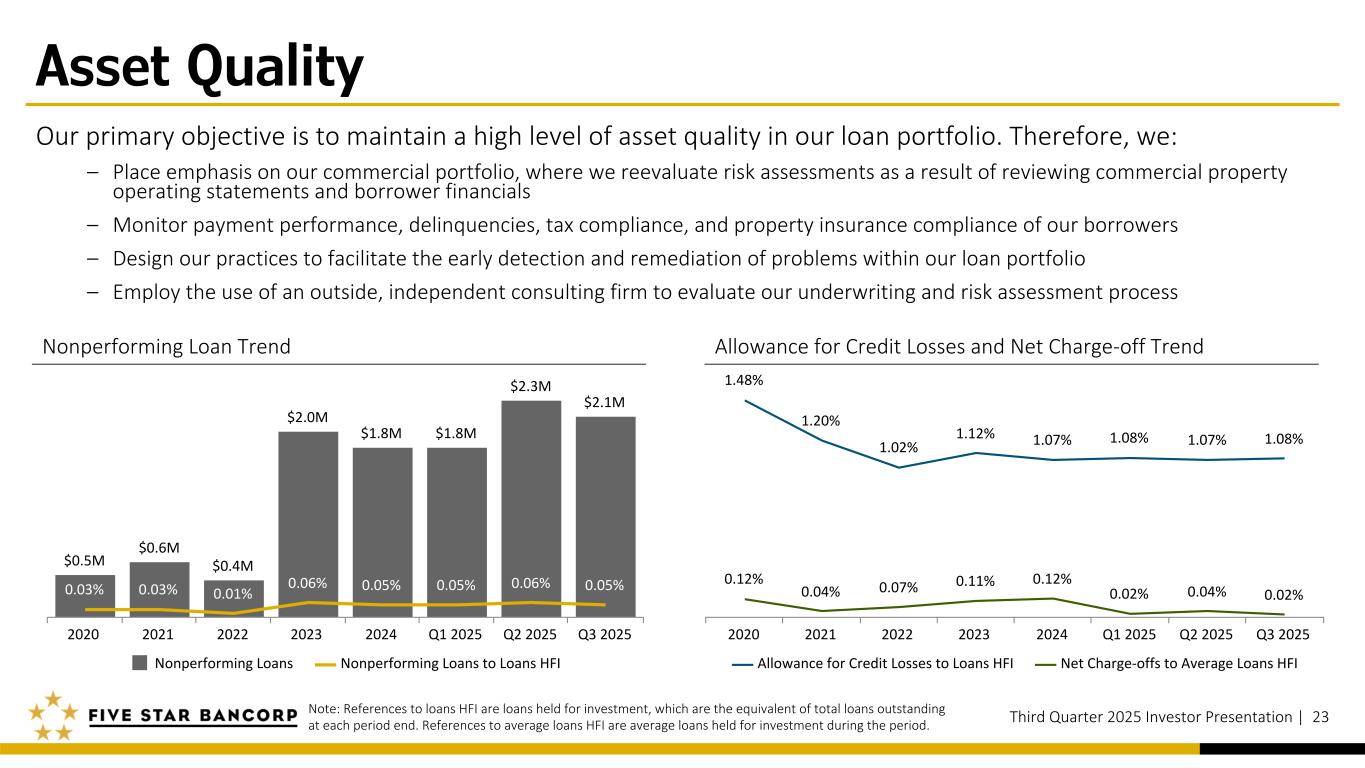
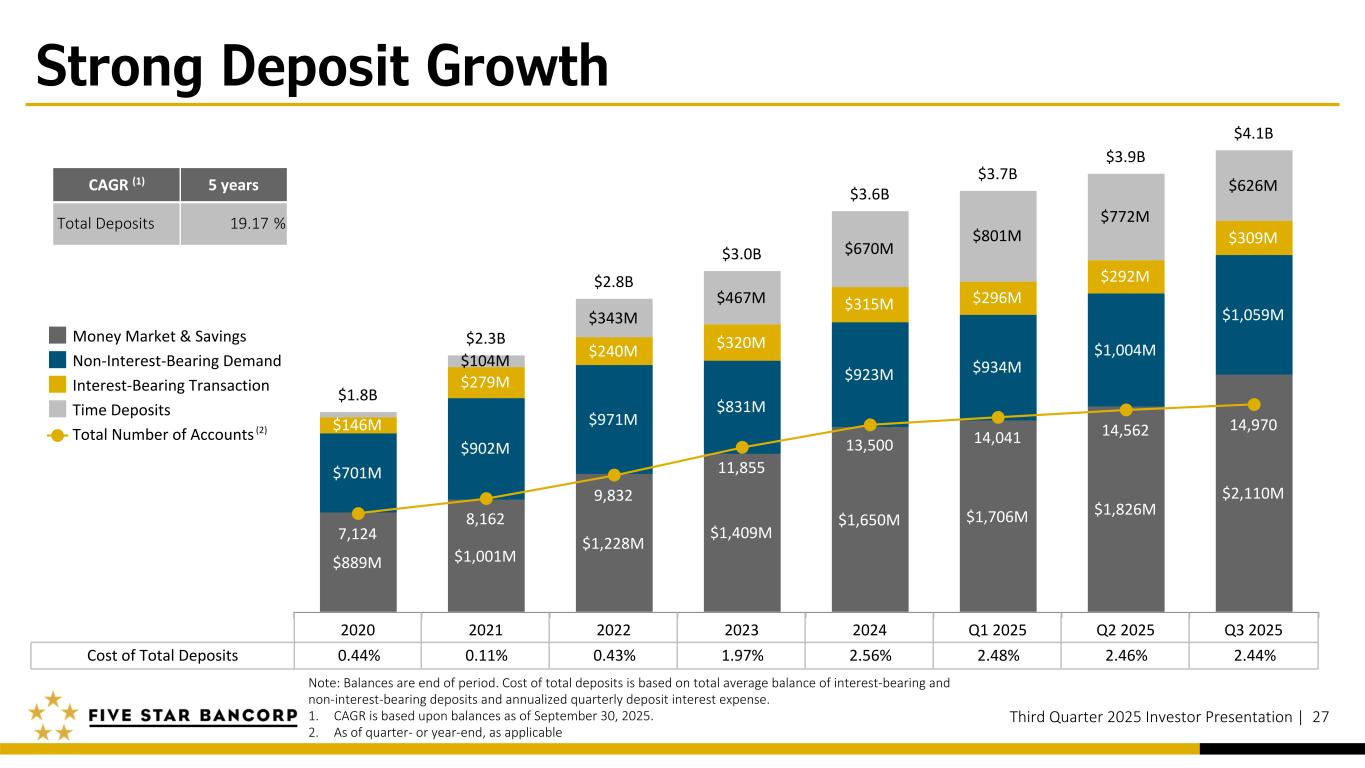
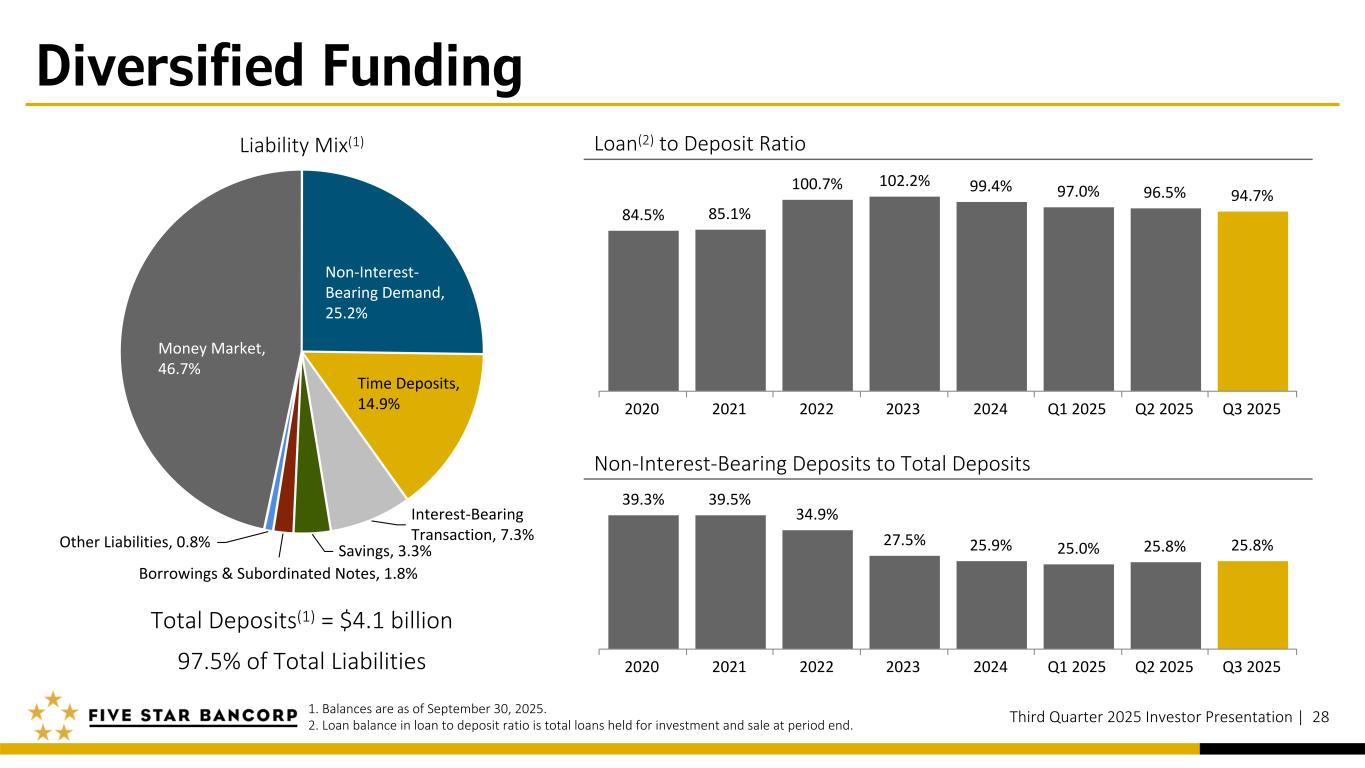
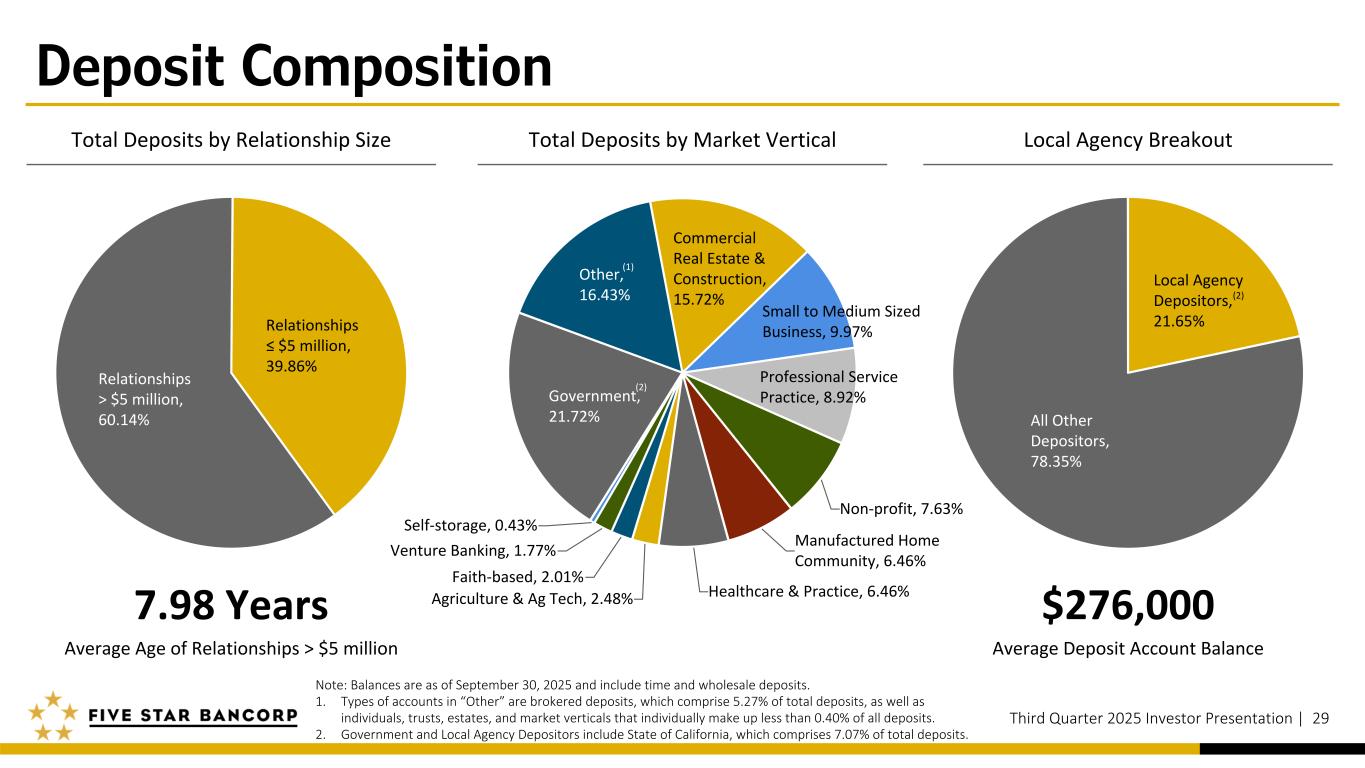
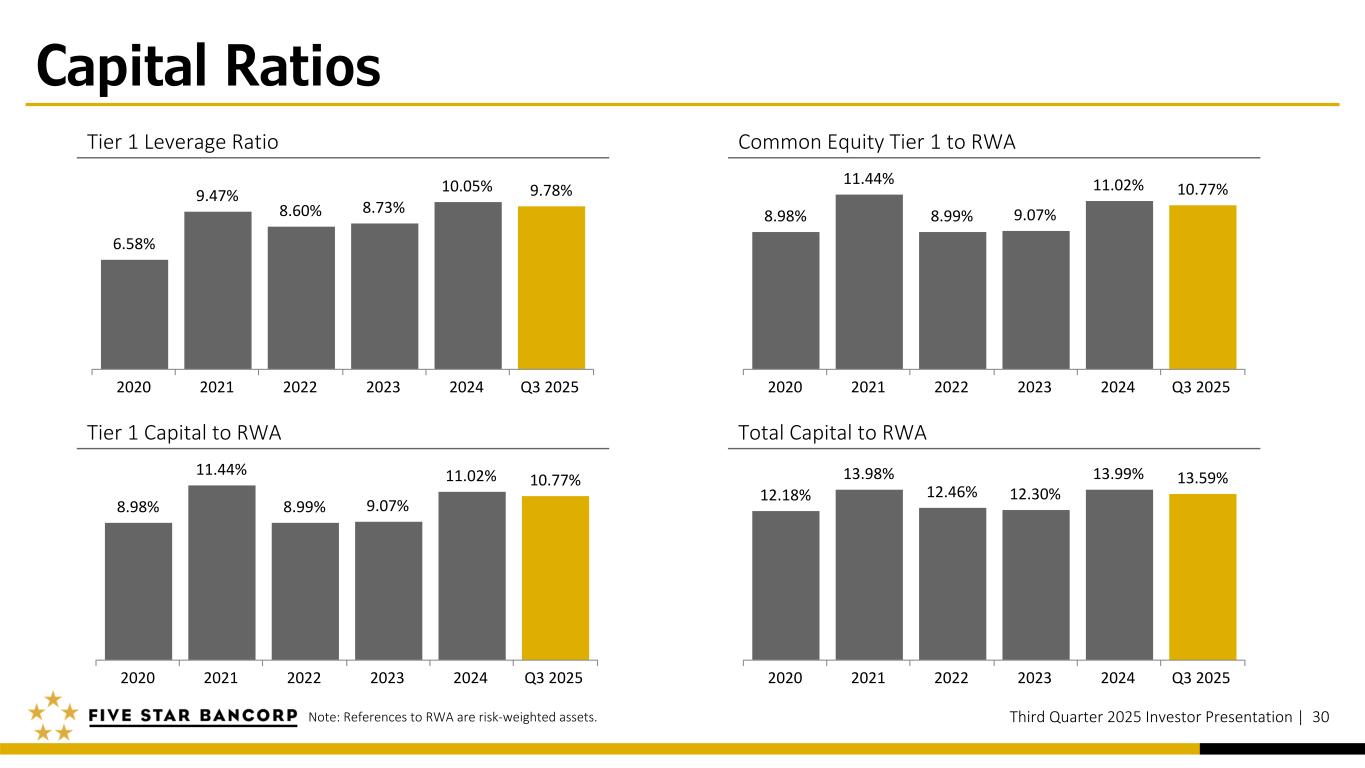
Thank you for joining us to review Five Star Bancorp's financial results for the third quarter of 2025, which were released yesterday. The release is available on our website at fivestarbank.com under the Investor Relations tab. Joining me today is Heather Luck, Executive Vice President and Chief Financial Officer. Our third quarter results include outstanding growth in loans and core deposits attributable to our differentiated client experience and organic growth strategy. We maintain our unwavering commitment to clients and community partners throughout Northern California. Financial highlights during the third quarter include $16.3 million of net income, earnings per share of $0.77, return on average assets of 1.44% and return on average equity of 15.35%. Our net interest margin expanded 3 basis points to 3.56% and our cost of total deposits declined by 2 basis points to 2.44%. Our efficiency ratio was 40.13% for the third quarter. During the third quarter, we saw continued balance sheet growth as loans held for investment grew by $129.2 million or 14% on an annualized basis. Total deposits increased by approximately $208.8 million or 21% on an annualized basis. During the quarter, non-wholesale deposits increased by $359 million or 11%, while wholesale deposits decreased by $150.2 million or 23%. Our asset quality remains strong with nonperforming loans representing only 5 basis points of total loans held for investment. We continue to be well capitalized, with all capital ratios well above regulatory thresholds for the quarter. On October 16, our board declared a cash dividend of $0.20 per share on the company's common stock, expected to be paid in November. We continue to deliver value to our shareholders. Our total assets increased during the third quarter by $228.3 million, largely driven by loan growth within the commercial real estate portfolio, which grew by $77.7 million. Our loan pipeline remains strong. The credit quality of loans remained strong due to our conservative underwriting practices, robust monitoring throughout the life of a loan and our relationship-based approach to lending. As a result, we have a very low volume of nonperforming loans, which declined by $149,000 during the third quarter. We recorded a $2.5 million provision for credit losses during the quarter, primarily due to loan growth. The increase of our total liabilities during the third quarter was a result of growth in interest-bearing and noninterest-bearing deposits related to new accounts. The new interest-bearing deposit accounts contributed to $171.6 million of overall growth. New noninterest-bearing deposits contributed to $28.8 million of overall growth. Noninterest-bearing deposits remained consistent at 26% of total deposits as of September 30, 2025. Approximately 60% of our deposit relationships totaled more than $5 million. These deposits have a long tenure with the bank with an average age of 8 years. We believe our deposit portfolio to be a stable funding base for our future growth. And now I will hand it over to Heather to present the results of operations. Heather?
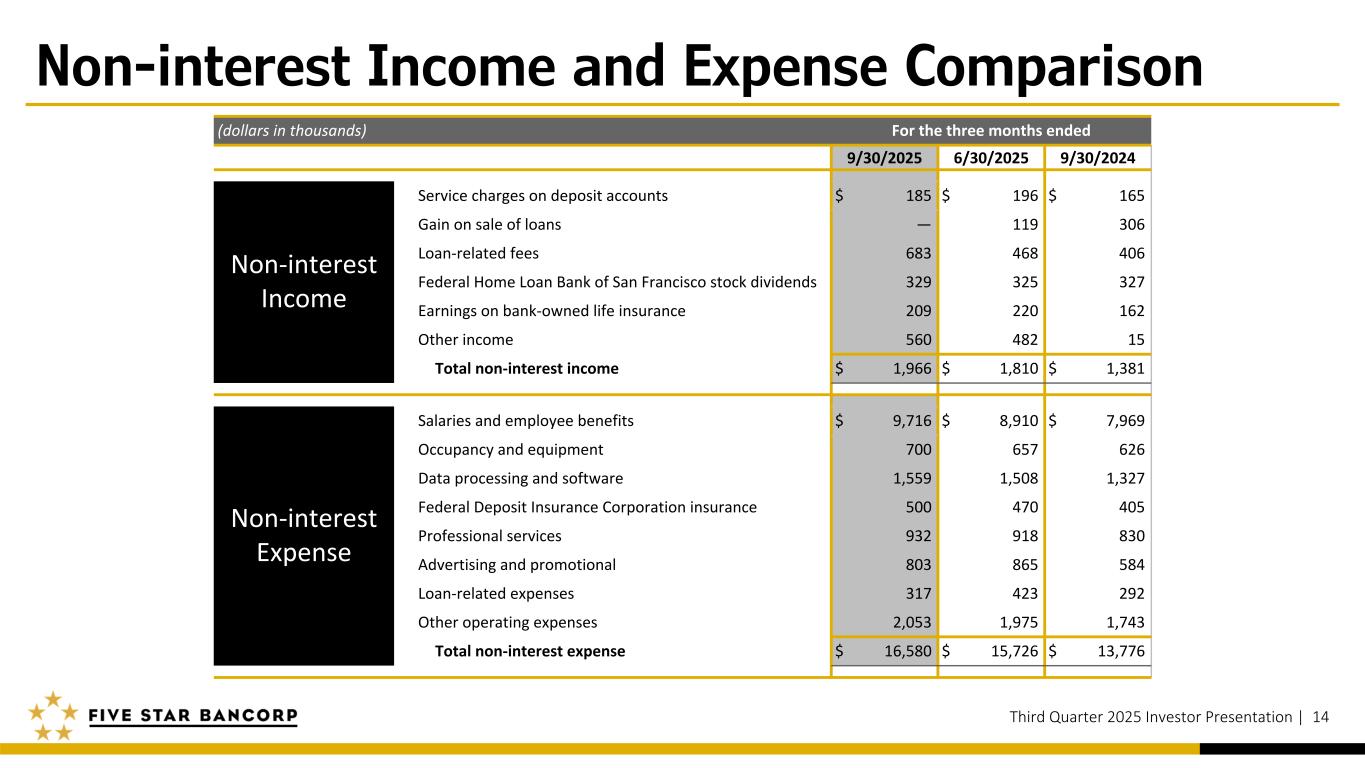
Thank you, James, and hello, everyone. Net interest income increased $2.8 million from the previous quarter, primarily due to a $4.3 million increase in interest income, driven by new loan production at higher rates, contributing to overall improvement in the average yield on loans. This was partially offset by a $1.4 million increase in interest expense related to core deposit growth during the quarter of $359 million, which exceeded the $150.2 million of higher-cost wholesale deposits maturing during the quarter. Noninterest income increased to $2 million in the third quarter from $1.8 million in the previous quarter primarily due to an increase in swap referral fees recognized during the 3 months ended September 30, 2025, and partially offset by no gain on sale of loans recognized during the quarter in connection with our strategic shift to reduce wholesale SBA loan production and sales. Noninterest expense grew by $900,000 in the 3 months ended September 30, 2025. This is primarily due to an increase in salaries and employee benefits related to increased head count to support customer-facing and back-office operations. We continue to invest in our Bay Area expansion, evidenced by the opening of our newest full-service office in Walnut Creek, contributing to a slight increase in occupancy and equipment. And now I'll hand it back to James for closing remarks. James?
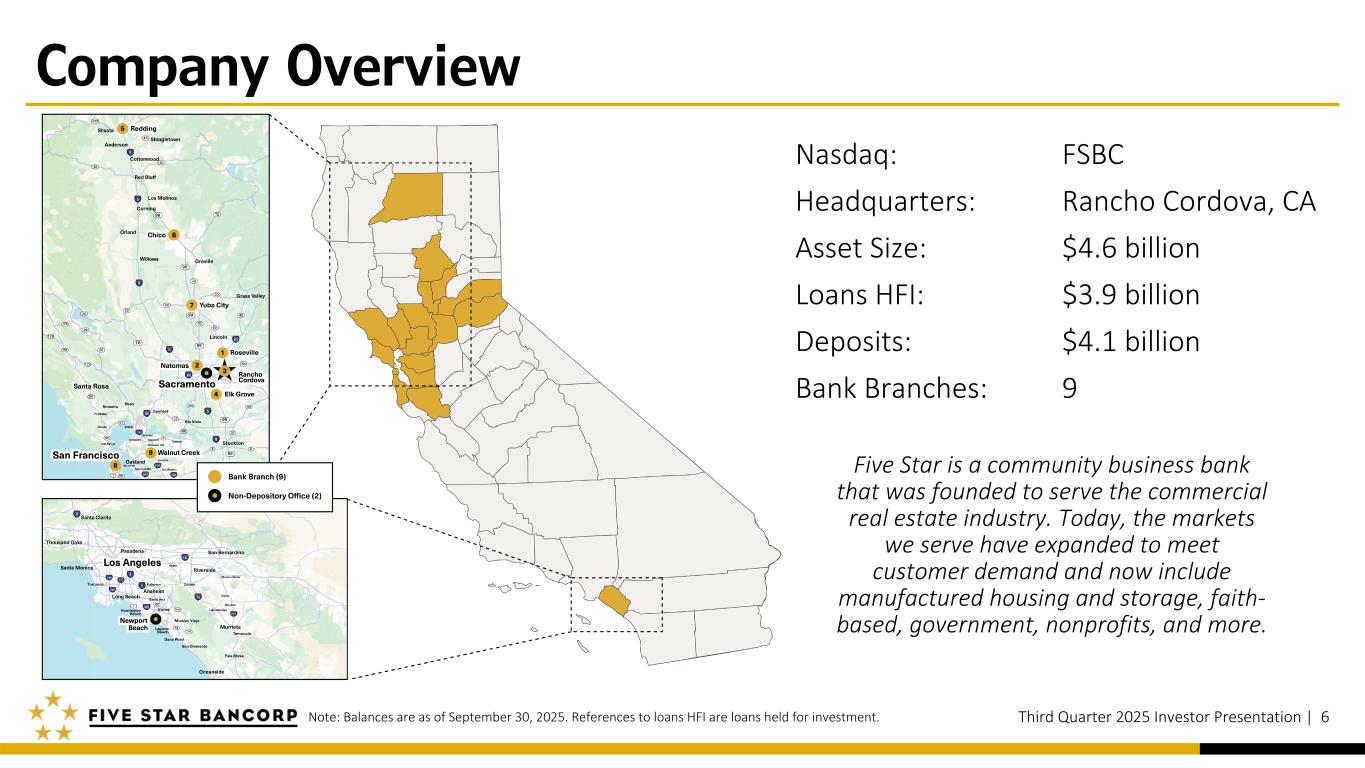
Thank you, Heather. During the quarter, we opened our ninth full-service office in Walnut Creek in response to the demand for our services in the San Francisco Bay Area. Our presence in the San Francisco Bay Area continues to grow with 36 employees and $548.9 million in deposits as of September 30, 2025. In addition to the new Walnut Creek office, we are pleased with the growth of our previously announced food agribusiness and diversified industry business, where clients benefit from our global trade services and exceptional treasury management tools. Five Star Bank's success serves as a strong testimony to clients who value our team of committed professionals who provide authentic relationship-based service. We continue to ensure our technology stack, operating efficiencies, conservative underwriting practices, exceptional credit quality, and a prudent approach to portfolio management will benefit our customers, employees, community, and shareholders. As we look to the fourth quarter of 2025, we thank our employees for their outstanding commitment to ensuring Five Star Bank remains a safe, trusted, and steadfast banking partner. We are confident in the company's resilience and demonstrated ability to adapt to changing economic conditions while remaining focused on the future and execution of our long-term strategy. The beneficiaries of our focused business approach are our clients, employees, and community. We believe that if we support these constituents well, our shareholders will realize the benefits. We appreciate your time today. This concludes today's presentation. Now we will be happy to take questions you might have.
Operator
Our first question today is from David Feaster with Raymond James.
Speaker 3
I wanted to start on the deposit front. I mean, perhaps in my mind, perhaps the core deposit growth that you saw was one of the most impressive parts about the quarter. You decreased wholesale funding. Just kind of curious where you're having the most success driving core deposit growth and how you think about that opportunity to continue to optimize the funding base a bit as you do that?
Well, certainly, the third quarter, David, was exceptional. A lot of things went our way in terms of new clients which we're very excited about. We saw growth across our platforms in all of our geographies. So that was very exciting. I think that to replicate that type of quarter again, David, it's going to be pretty difficult when we say that. But we were pretty happy about where we ended up. Our deposit pipeline, just like our loan pipeline, remains strong across all of our platforms and geographies. And so we don't anticipate that type of growth on a go-forward basis. We're looking for deposit growth on an absolute basis, not annualized, probably anywhere between 1% to 2% in the fourth quarter. So I think the third quarter was very strong. And I say that because we're still trying to deal with our broker deposits that we have. We have a long-term desire to eliminate those, and we're making progress. We made very substantial progress in the third quarter, and we'll just have to see how the fourth quarter goes. So that probably will have an impact in terms of limiting overall deposit growth to the extent that we pay any of those off and don't renew. But we are anticipating some growth but not to the same extent that we saw in the third quarter on the deposit side.
Speaker 3
Okay. The reason for that is the continued optimization of the deposit base. You're still going to drive core deposits. I want to make sure I understand this correctly; you're still focused on core deposit growth but using that to pay down broker deposits?
Speaker 3
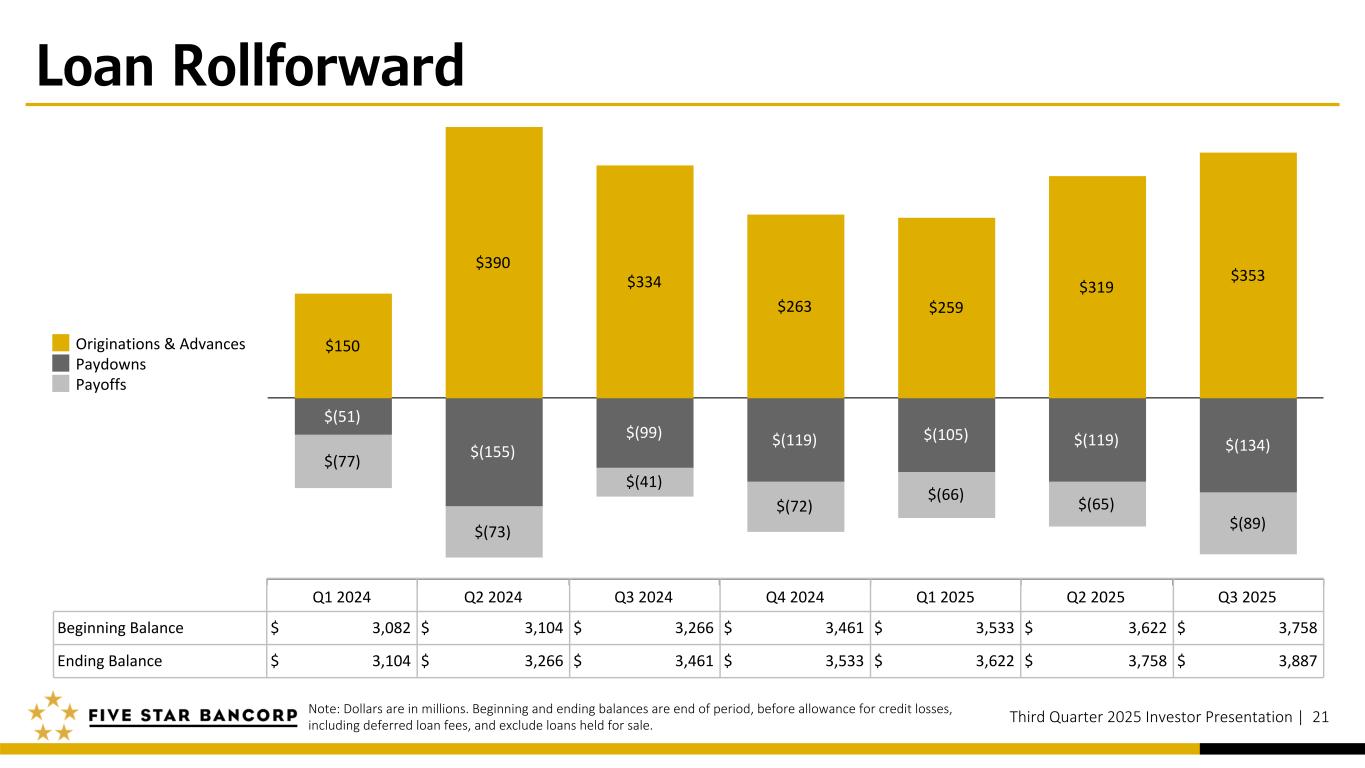
Yes, perfect. Now, shifting to the loan side, originations remained strong and the pipeline continues to be robust. However, payoffs and paydowns are still a significant challenge. I believe these are at the second highest level I've observed over the past several years. I'm curious about what is causing these payoffs and paydowns. To what extent are we losing deals to competitors through refinancing, asset sales, or deleveraging? Additionally, how do you anticipate the payoff and paydown activity will evolve as rates keep declining? Will this continue to be a substantial challenge?
Our business model regarding our MHC and RV operations involves being engaged in deals for 3 to 4 years before our clients either sell their properties or secure long-term financing. We observed significant activity in this area during the third quarter, and we expect this trend will persist. Additionally, we've retained many notes that are resetting their rates because we usually lend on a 5-year fixed-rate basis, which adjusts after the 60th month. A lot of this is evident in the originations from 2020, and we anticipate seeing more in 2026 and 2027 from the originations in 2021 and 2022. This is just the standard nature of our business, and we don't find anything unusual about it. We realize the importance of staying proactive, and we have the capability to do so. That's why we aim to keep building our balances and believe we aren't losing deals to competitors. We pride ourselves on being the fastest in the market. If others want to engage in deals, that’s fine, but we are confident in our model, which is operating as we expected. Fundamentally, this is the nature of our business and the types of credits we provide.
Speaker 3
That makes sense. You've mentioned having the team and the capability to keep surpassing payoffs and paydowns. You've been quite active in hiring, including the Ag team. I wanted to start by asking for an update on where you see growth opportunities today. What insights is the Ag team providing? Are there other segments you're considering for organic expansion or potential team hires? I'm curious about your perspective on that.
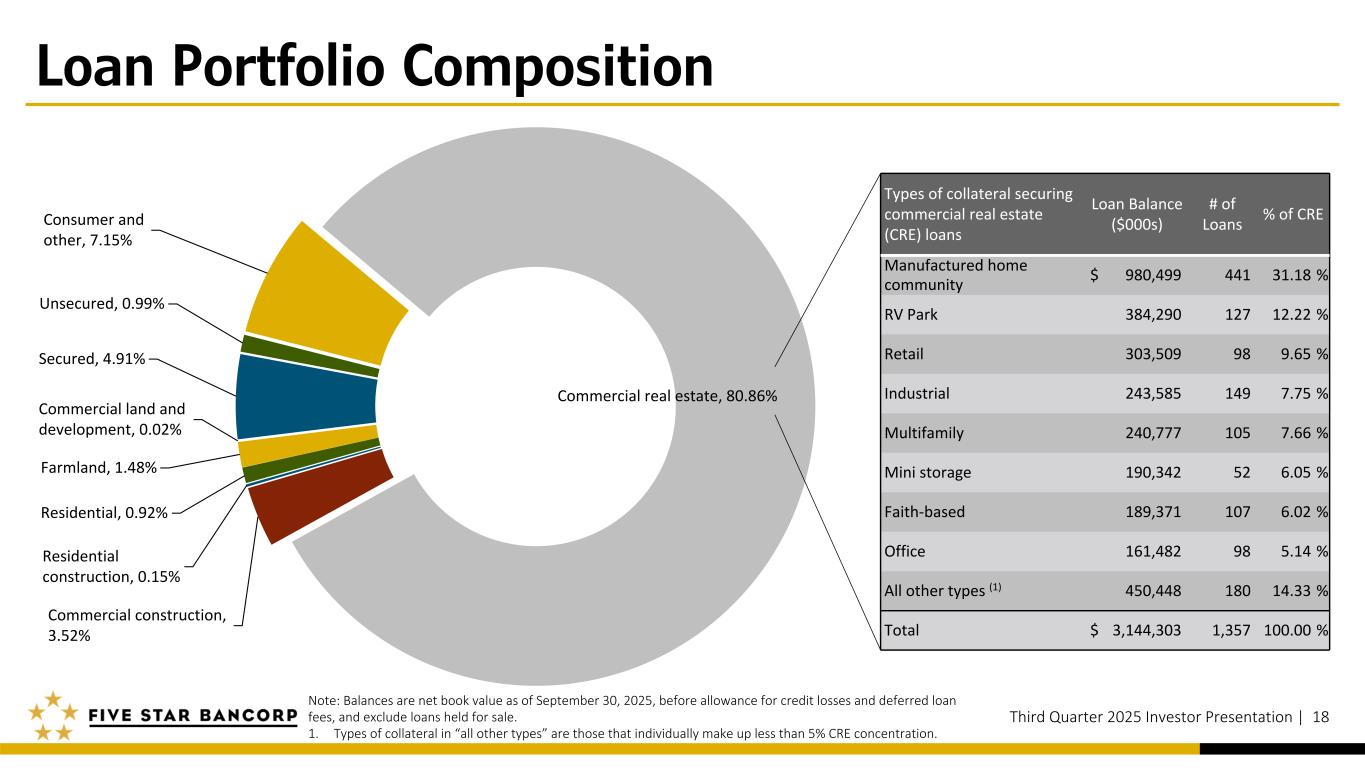
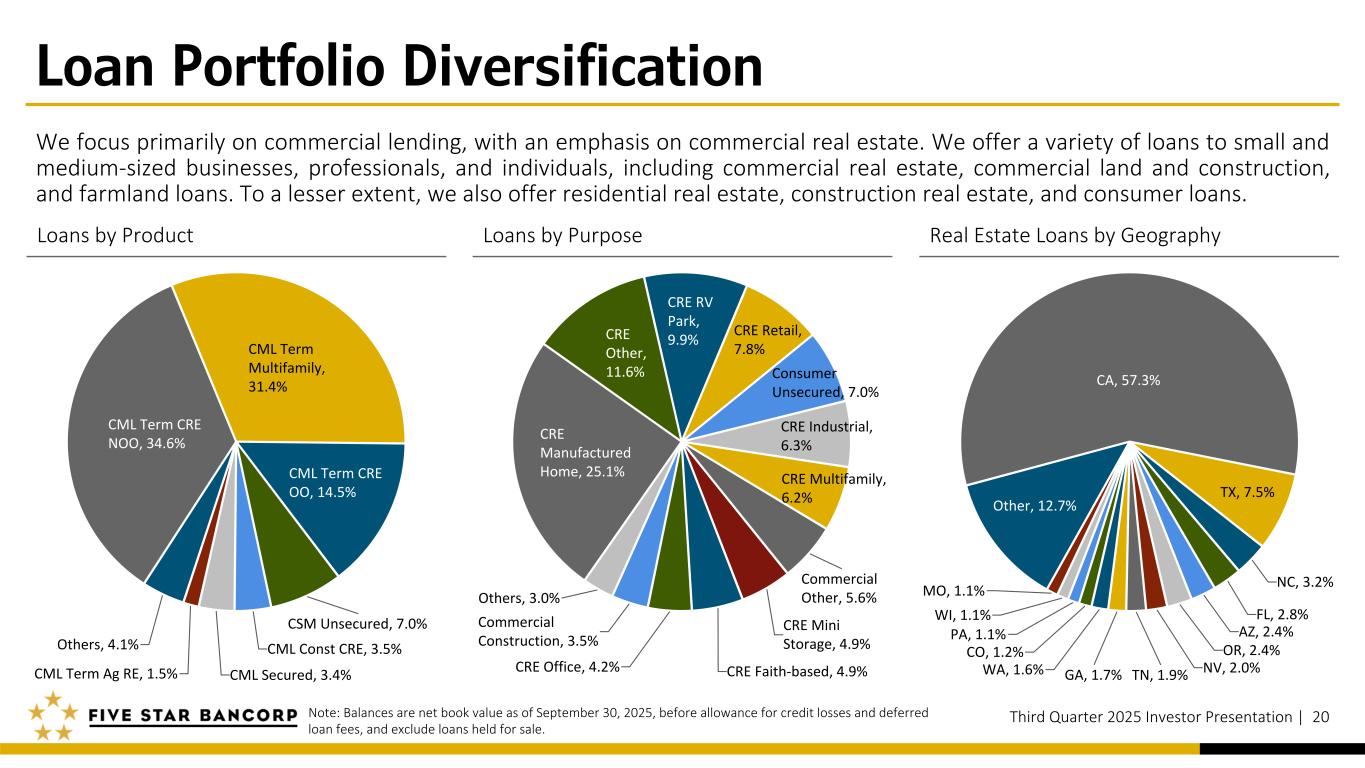
Yes. Let's discuss the agricultural team. We have secured some significant credits and expect to book even larger credits in the fourth quarter, as we are very active in the market. We are enthusiastic about the trajectory of this business. The credits and relationships we have are quite considerable. To describe them as minor would be completely misleading. When we finalize these deals, they substantially impact our results because they are larger transactions, both in deposits and loans. We appreciate our progress in this area. We are making inroads into various markets, and people are starting to recognize our seriousness, which excites us about our position. The sales cycle in this sector can sometimes extend over two years or across two or three seasons. We are very dedicated to this area. Additionally, we continue to experience growth in our Manufactured Housing Community (MHC) and Recreational Vehicle (RV) business, and we are adding core clients in this space. Our existing clients are still acquiring parks, which gives us confidence about the direction of this business. Our storage sector also appears to be very robust. RV, MHC, and storage together create a national platform, and we are conducting business throughout the United States. In fact, we filed tax returns in 27 different states.
We have a presence in all these states, which makes us geographically diversified. We anticipate continued growth in that segment. From a geographic standpoint, our loan pipeline in the Bay Area remains robust, consisting of commercial and industrial as well as commercial real estate lending. We have successfully completed several student housing deals in the Berkeley area and will continue to seek opportunities there. Our Construction Industries group is performing well, primarily focused on deposits, and we are optimistic about its future. Our faith-based business is having a very strong year, and we expect growth to persist. Our nonprofit sector is thriving, especially in the Bay Area, and we are pleased with its direction. Additionally, our government sector, particularly with small districts, has seen significant success and is primarily driven by deposits. Overall, our various verticals and geographic areas appear to be performing well, and their future prospects look promising.
Operator
The next question is from Woody Lay with KBW.
Speaker 4
I wanted to start with the net interest margin outlook. Looking at your balance sheet, it seems you are positioned well for a declining rate environment. Considering the recent cut and the expectation of further cuts, how should we assess the earnings potential in that context?
We believe the situation is quite favorable. We acknowledge that we have a near-term liability sensitive position, and if there were a 125 basis point cut, what would that mean for us over a quarter?
About $850,000 of improvement.
So we see some expansion in our margin that's potential in the fourth quarter, 1 to 3 basis points, pretty consistent with what we've seen in the second or third quarter. Maybe we can do a little bit better than that, but that's kind of what our sense of it is right now. We continue to see loan repricing in our loan portfolio. Sooner or later, we're going to run out of that as all those loans reset. But near term, it looks pretty decent for us. So we see continued margin expansion with these rate cuts. You could tell, Woody, that our cost of funds is noticeably higher than our peers, and that's because we do pay up for deposits. In a down rate environment, that's going to be to our benefit, not only in our money market book but also in our government book and to some extent in our wholesale CD book. So we like the way that our balance sheet is constructed in a slight down rate environment.
Speaker 4
Yes, it seems like there could be a benefit. If we receive these additional rate cuts and experience a net interest margin improvement, do you think that will lead to positive operating leverage? Or could it provide us with the chance to reinvest in the Bay Area expansion market and some of these new business lines? What are your thoughts on that?
We have been quite active in hiring very skilled, albeit expensive, bankers. Looking ahead, we currently have 41 business development personnel.
We're going to have a new team member join us next week. We will continue to seek out talent because it's still available, though perhaps not as abundantly as it was two years or even a year ago. We believe we can strike a balance between earnings growth and reinvesting in our business. It's not an either-or situation; we feel confident that we can achieve both. While we understand that our earnings could be higher if we stopped investing, we're focused on the long-term growth of our franchise and seizing opportunities as they arise. We've always been opportunistic, and I don't anticipate that changing in our approach.
Speaker 4
No, that's really helpful. And then just last for me. Can you just remind me longer term how you think about the loan-to-deposit ratio? I mean, it's down from 104% last year. There's some broker deposit remix opportunities. So could you just remind us sort of where you aim to target that longer term?
I think we're comfortable with a target of 95%. It's a figure we review monthly with our Board, and it's a good benchmark for us. It might fluctuate, sometimes higher and sometimes lower, though I can't predict how much lower. If there is a tendency, it would likely lean towards being higher. However, we aim for 95% as our comfort zone. While we could operate at 100% or above, we don’t consider that a sustainable approach year after year.
Speaker 4
Congrats on the good quarter.
Operator
The next question is from Andrew Terrell with Stephens.
Speaker 5
Maybe, Heather, I wanted to go back to some of the margin really quick. Did you mention an $850,000 positive impact for each 25 basis point cut?
Yes. For the full quarter, though, because it will take some time for our wholesale book to reprice. So it will take a full quarter to see full effect, yes.
Speaker 5
Yes, I’m trying to think through the margin of 1% to 3% in the fourth quarter. $850,000 represents 7 or 8 basis points of margin. We'll have the full quarter impact of the September cut in the fourth quarter, and it seems like there might also be cuts in October and potentially December. I believe the margin should increase by more than 1 to 3 basis points. So I’m trying to understand what factors might affect the margin in the fourth quarter and limit what seems like it should be a positive trend.
I'm going to share my thoughts on that, if you don't mind, Heather. Andrew, in our government deposit portfolio, it's influenced by LAIF, or local area investment fund rates, which change every month. Therefore, you won't see the effects of a Fed move for about 90 days. The full impact is typically felt at the end of that quarter or after those 90 days. This is why we estimated the potential margin improvement. Regarding our wholesale CD portfolio, which is approximately $0.5 billion, those typically reset every 90 days, so the full effect won't be realized until the end of that period. However, they don’t all mature simultaneously, so the impact gradually accumulates over the quarter. The guidance provided by Heather gives you a clear idea of what to expect at this point and what the potential impact could be a quarter later. Does that make sense?
Speaker 5
Yes, I understand. It's based on the maturity of the deposits, and once those are fully processed, that would reach the $850,000.
Speaker 4
Got it. Do you have just the spot interest-bearing deposit costs at $930 million?
Yes. That was $240 million.
Speaker 5
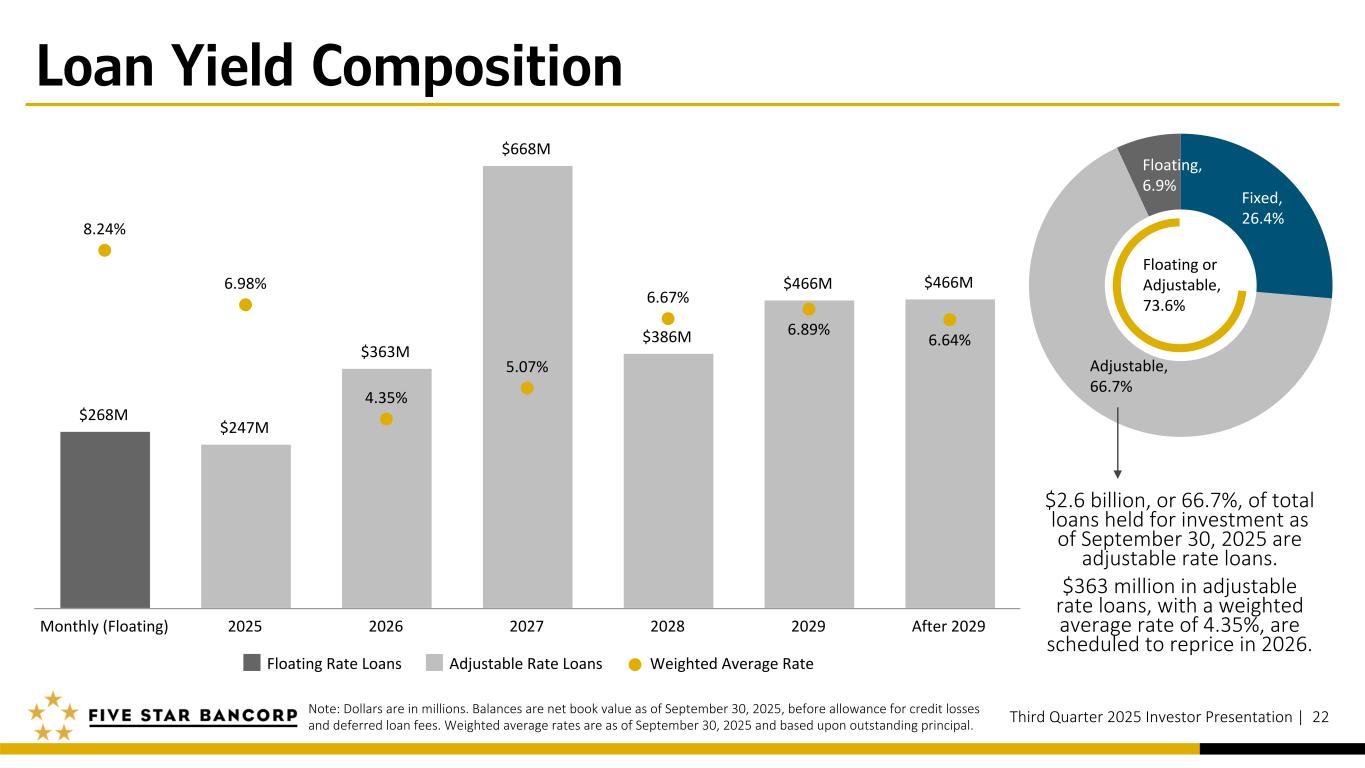
Okay, $240 million total. I appreciate you adding the information on Page 22 about the adjustable rate repricing. The $363 million of adjustables that will reprice in 2026 are currently at a 4.35% rate. If they were to reprice according to today's rate environment, what would the new yields be? I’m trying to understand how this repricing might benefit the margin, James, as we've discussed. It seems like it could provide a significant boost.
Yes. It's likely around $180 to $200 over that. Our spreads are typically $2.75 to $3.25 for the quarter. Looking at the 5-year today, it's 3 and $350.
$361 and add that on top of it. That's kind of where I think it would end up. There's a pretty decent pickup.
Speaker 5
Okay. And then for my last question, James, we're noticing a significant increase in mergers and acquisitions, though it's not as pronounced in California compared to other regions. The stock prices are performing strongly, which is a favorable situation. Can you share your insights on mergers and acquisitions? I understand you have a robust organic growth strategy, so there isn't a pressing need for M&A, but I'd like to hear your thoughts on the current landscape.
It was an active Monday, particularly with First Foundation trading, given their operations in our area. The notable event was Cadence's sale. In my experience attending conferences and knowing various CEOs, they decided to sell. From a mergers and acquisitions perspective, we've grown by approximately $600 million this year, which used to be the size of a typical bank in California. The average bank size in California is likely around $1 billion now. We're in a solid position and don't necessarily need to make acquisitions, although we are always open to potential opportunities. While we primarily focus on organic growth, as we progress, our current valuation makes us a more capable acquirer. At this moment, there are no imminent deals on our horizon. We'll be holding our planning session in November, and M&A often comes up in these discussions. If we were to pursue something, it would need to be an exceptional opportunity that addressed specific needs. Our main area where we could use some assistance is on the deposit side, but we're actually experiencing strong growth in that segment. Overall, while we're currently focusing on organic initiatives, our Board remains open to considering M&A opportunities. That's where we stand.
Speaker 5
Yes. Great. I appreciate the color. And high bar, growing $600 million this year. Great work.
Operator
The next question is from Gary Tenner with D.A. Davidson. We're doing fine with our deposits, seeing solid growth in that area of our liabilities. I'm covering a lot of ground in my response, but we are currently focused on driving organic growth. However, we have not ruled out a potential merger or acquisition, which is where we stand.
Speaker 6
I had another question regarding the deposit buckets. Specifically, for the money market book, what beta were you able to implement after the September cut? Additionally, what are your expectations for the upcoming cut this week?
Yes. When we did that, we were about 30% beta.
Yes, overall. And then 25%.
So we'll tell you, Gary, we're going to take any deposit relationship that's outside of our CD book that's priced 225 basis points and higher, we're going to take 100% cut on those deposits. And that equates to around...
Certain types of accounts like high-yield money market accounts are going to have 100% beta. But overall, it's about 30%.
Speaker 6
Okay. But like, for instance, in that money market book then about 75% beta, I guess, effectively. Because most of that $1.4 billion of higher non-CDs would be in that book, right?
Speaker 6
Okay. Great. And then just on the topic of expansion and hiring, are you seeing it becoming more competitive and more challenging to recruit? Are there more banks in your footprint following that playbook now? I mean we're seeing it in other regions of the country where every bank in the Southeast is on these massive recruiting strategies. Are you seeing that pick up and become more competitive for you?
Yes, we are seeing increased competition. It depends on which platforms are actively recruiting. Many of our competitors lack our performance and reputation in the market, which gives us a competitive advantage when we are hiring experienced bankers. If we truly want someone, we believe we can attract them, but the market is definitely more competitive. There are options available for growth, and many institutions seem to be acquiring teams. However, the bankers themselves are costly, especially those who have been through a challenging process over the past few years, as some banks have failed or are struggling to manage their investments in California. We see opportunities arising from this situation, but the high bid for these bankers requires careful consideration of what they can provide. Those are the economic factors we evaluate when considering bringing on a team. So to answer your question, yes, it is indeed more competitive.
Operator
This concludes our question-and-answer session. I would like to turn the conference back over to management for any closing remarks.
Thank you. It is with deep appreciation and gratitude that we have advocated for our clients and championed the communities we serve. We always will. As our expansion in the San Francisco Bay Area continues and as we build upon a legacy of superior community banking in the capital region and North State, we answer the call of businesses and organizations who desire a time-honored banking partner. Five Star Bancorp is here to stay. We are proud to have experienced another quarter of significant organic growth built upon a sturdy foundation of client service, expanded relationships and products, and the loyalty of our exceptional clients. We will always remember that we exist because our clients trust us and we believe in them. It is our privilege to continue as a driving force of economic development, a trusted resource for our clients and a committed advocate for our communities. We look forward to speaking with you again in January to discuss earnings for the fourth quarter of 2025. Have a great day, and thank you for listening.
Operator
The conference has now concluded. Thank you for attending today's presentation. You may now disconnect.