Operator
Ladies and gentlemen, thank you for standing by and welcome to the third quarter 2025 HII earnings conference call. At this time, all participants are in listen-only mode. After the speaker's presentation, there will be a question and answer session. To ask a question during the session, please press star followed by one on your telephone keypad. If you change your mind, press star followed by two. Please be advised that today's conference is being recorded. If you need any further assistance, press star, pull it by zero. I would now like to hand the call over to Christy Thomas, Vice President of Investor Relations. Mrs. Thomas, you may go ahead.
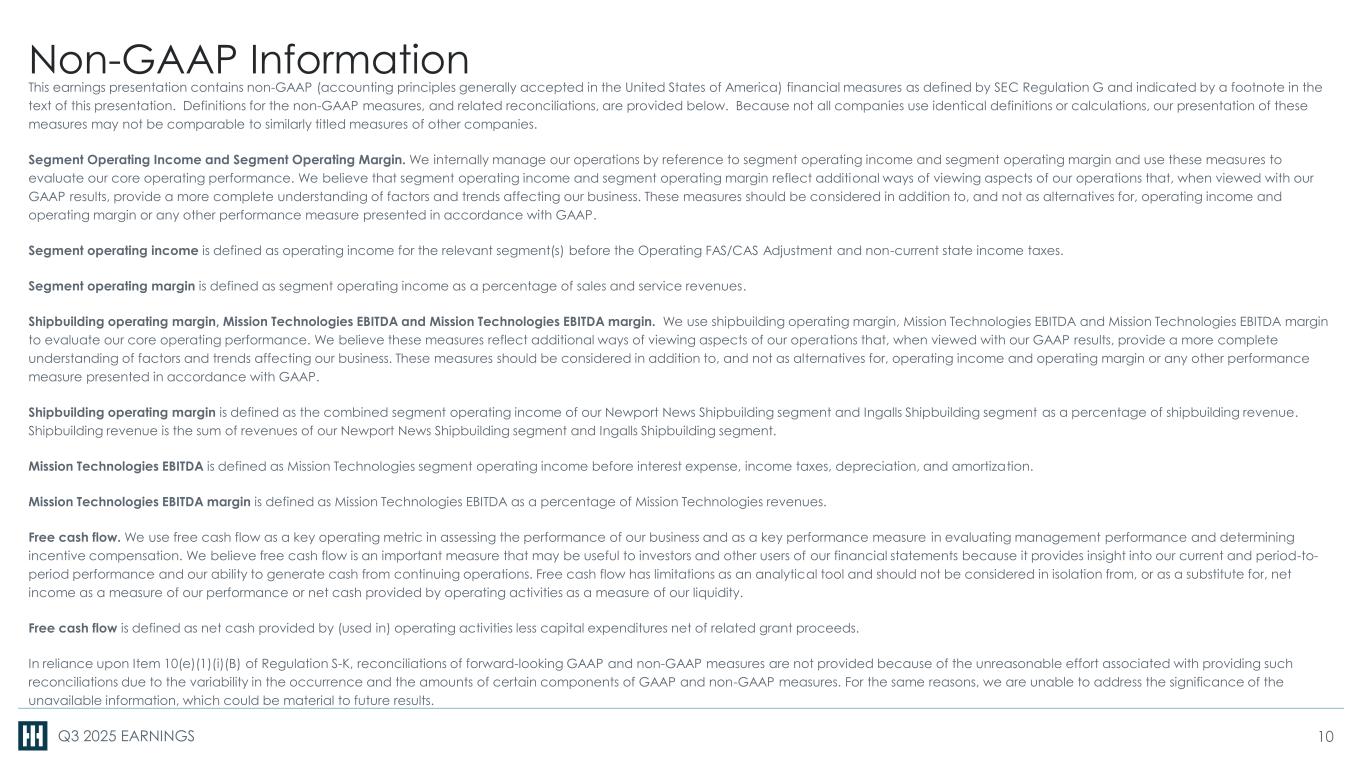
Thank you, Operator, and good morning, everyone. Welcome to the HII third quarter 2025 conference call. Matters discussed on today's call that constitute forward-looking statements, including our estimates regarding the company's outlook, involve risks and uncertainties that reflect the company's judgment based on information available at the time of this call. These risks and uncertainties may cause our actual results to differ materially. Additional information regarding these factors is contained in today's press release and the company's SEC filings. We will also refer to certain non-GAAP financial measures. For additional disclosures about these non-GAAP measures, including reconciliations to comparable GAAP measures, please see the slides that accompany this webcast, which are available on the Investor Relations page of our website at ir.hii.com. On the call today are Chris Kastner, President and Chief Executive Officer, and Tom Seeley, Executive Vice President and Chief Financial Officer. Now I'll turn the call over to Chris.
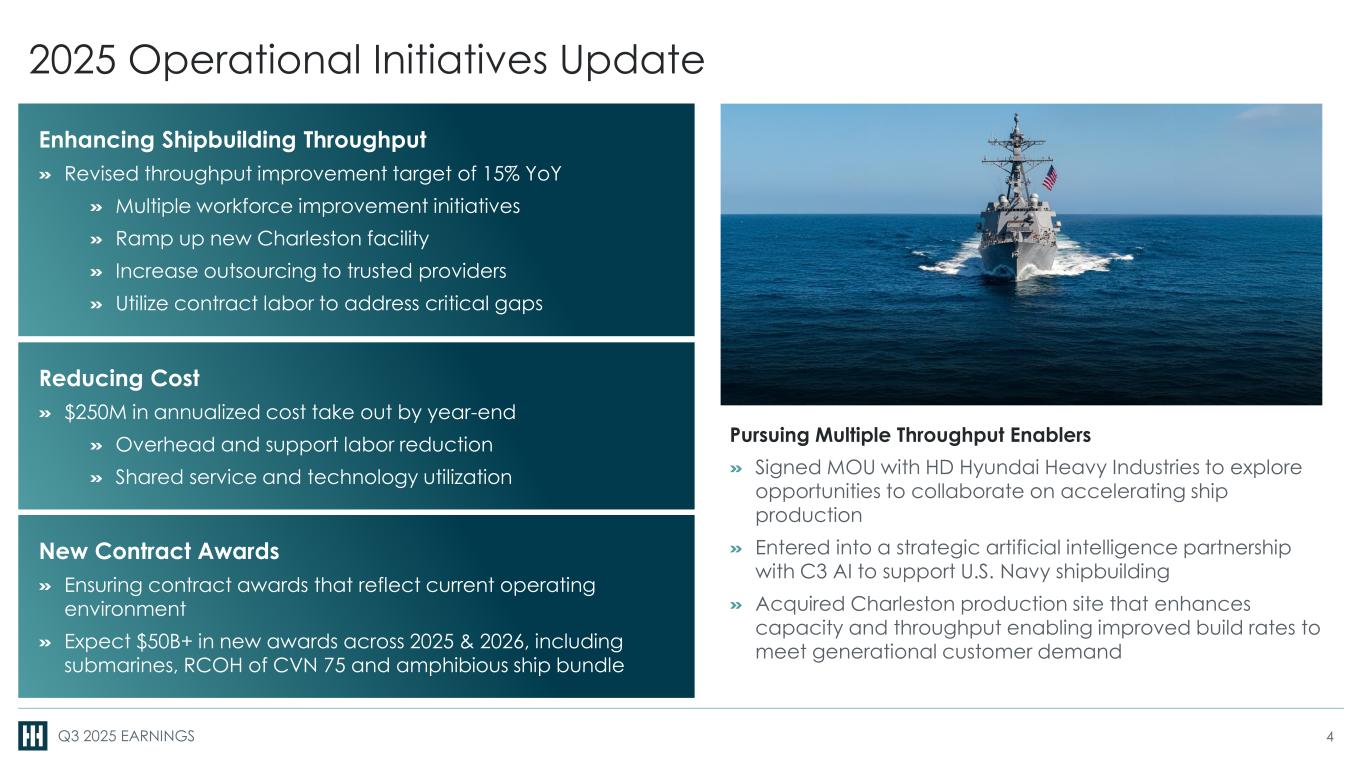
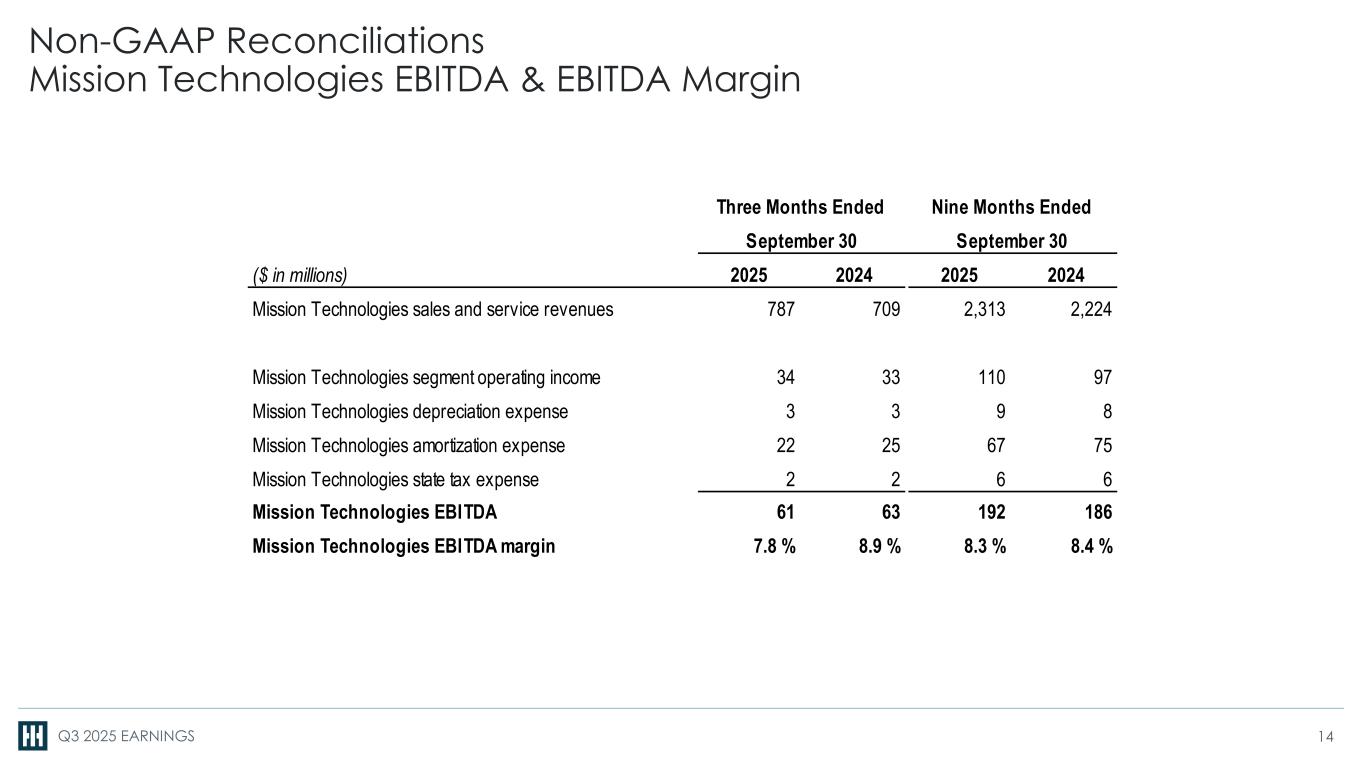
Thanks, Christy. Good morning, everyone. The United States Navy recently celebrated its 250th birthday, and the U.S. Marine Corps will do the same in the coming weeks. So I would like to start today by thanking both of them for their enduring service to our country and their commitment to our national defense. Thank you for all that you have done and all that you do to protect us and future generations. Moving on to the third quarter, I'll start by discussing our results and division highlights and provide an update on our operational initiatives. Then Tom will provide some details on our financial performance and outlook. Before I begin, I'd like to reiterate our commitment to accelerate shipbuilding construction to meet our customers' requirements. We continue to support the identification of strategies to increase throughput across our shipbuilding programs and are working closely with our customer and partners to achieve this important mission. Now, turning to our results, this morning, we reported record third-quarter sales of $3.2 billion and diluted earnings per share of $3.68. sense. Shipbuilding sales growth of 18% year over year was driven by our shipbuilding division's focus on increasing throughput in our shipyards and supported by broader efforts underway to rebuild the U.S. maritime industrial base. Likewise, 11% sales growth at mission technologies was driven by our team's continued focus on delivering innovative solutions, including growth in the critical areas of C-5ISR, cyber, electronic warfare and space, and live virtual constructive training, as well as unmanned systems. Demand for our products and services remains strong. Third quarter contract awards were $2 billion, and our backlog is $56 billion, of which $33 billion is funded. At Newport News, we continue to make progress on submarines and aircraft carriers. The last two, Virginia-class Block IV submarines, are in the water, with SSN-798 Massachusetts having recently completed sea trials and preparing for delivery this year. As for our carrier program, CVN-79 Kennedy continues to make progress in its testing program, and we expect to conduct the ship's first sea trials around the end of the year. and shipbuilders are installing the large components that have now been received on CBN 80 Enterprise, which will allow erection progress to accelerate. Moving to Ingalls, in the third quarter, we successfully completed builder's trials for DDG 128, Ted Stevens, bringing her a step closer to acceptance trials and delivery. Our amphibious warship construction continues to make progress with both LHA-8 Bougainville and LPD-30 Harrisburg going through integration and testing in support of trials next year. At Mission Technologies, we had another strong quarter of sales at $787 million, along with a book-to-bill of 1.25 and announced key strategic partnerships around future opportunities. First, we joined forces with Babcock International to integrate HII's unmanned underwater vehicles with the Babcock Submarine Weapon Handling and Launch Systems. while our REMA-620 was validated for torpedo tube deployment. This will position our torpedo tube launch and recovery solutions for international markets. We also announced a partnership with Shield AI to accelerate cross-domain and modular mission autonomy solutions and a partnership with TALUS to develop advanced autonomous undersea mine countermeasure capabilities. Additionally, we unveiled the Romulus family of unmanned surface vessels powered by our Odyssey autonomy software and have started building the flagship Romulus 190. Romulus is one example of numerous projects and contracts underway in mission technologies that combines internally developed technology with world-class partner technology to create best-of-breed technology solutions for the warfighter. Now, shifting to an update on our operational initiatives, both Ingalls and Newport News' performance was stable to slightly improving in the quarter as we continue to work through shifts that were contracted prior to COVID. As I previously indicated, during the contract mix transition from pre-COVID contracts to our newly awarded contracts, we continue to expect some choppiness in performance. The first operational initiative increasing throughput is showing improvement over 2024. initial indications align with our expectation that the HII and Navy investments in workforce, infrastructure, and supply chain will have a positive impact on throughput trajectory. Our updated expectation is to achieve approximately 15% throughput improvement for the full year 2025 as throughput improvements have accelerated throughout the year. From a labor perspective, we have hired over 4,600 shipbuilders year-to-date, and our retention rates have improved at both shipyards. At Newport News, we've seen an increase in experienced hires following the wage investment this summer and increased hiring from regional workforce development pipelines, which provides more proficient incoming shipbuilders. These are important steps to stabilize and level up the experience of our workforce. Also, we're seeing success in expansion of the industrial base, with our distributed shipbuilding strategy resulting in significant outsourcing taking place at 23 partners and growing. With the Navy's support, we are partnering with shipyards and fabricators in multiple states to grow throughput and improve schedule adherence for all of our shipbuilding programs. The second operational initiative is our $250 million annualized cost reduction effort, and we remain on track to achieve this target. And the final operational initiative is achieving our new contract awards. Having completed the negotiations for the significant award of two submarines earlier this year, our teams have pivoted to negotiations of Block 6 and the next Columbia Award and are working towards having agreements in place late this year. Shifting to activities in Washington, the new fiscal year began with a lapse in appropriations, and as a result, many activities of the federal government have halted. I will note, in the Department of War shutdown guidance, shipbuilding is one of six departmental priorities that should be supported to the extent possible with available funds. To date, our programs in shipbuilding have been fully supported, and we have seen no impact to normal operations. We have had immaterial impact emission technologies, but we are watching those programs closely as they are more likely to be impacted by budget timing. We continue to support completion of the FY26 appropriations process as soon as possible to minimize the impact that a lapse in funding could have on our programs. Both House and Senate Defense Appropriations bills include critical funding to support the submarine and maritime industrial base, and both bills reflect continued investment in our shipbuilding programs, with funding provided for the Columbia-class and Virginia-class submarine programs for CBN's 80 and 81 Construction and CBN 82 Advanced Procurement, for the DDG-51 program, and for the second of three years of funding for the refueling and overhaul of CBN-75. We also look forward to Congress completing work on the fiscal year 2026 National Defense Authorization Bill, codifying the strong support for shipbuilding and other national security priorities reflected in the respective House and Senate bills, the two Defense Authorization Committees continue to show strong support for our company's programs. In summary, we had a solid third quarter with record sales as we ran production in support of delivering on our commitments. And now, I'll turn the call over to Tom for some remarks on our financial performance.
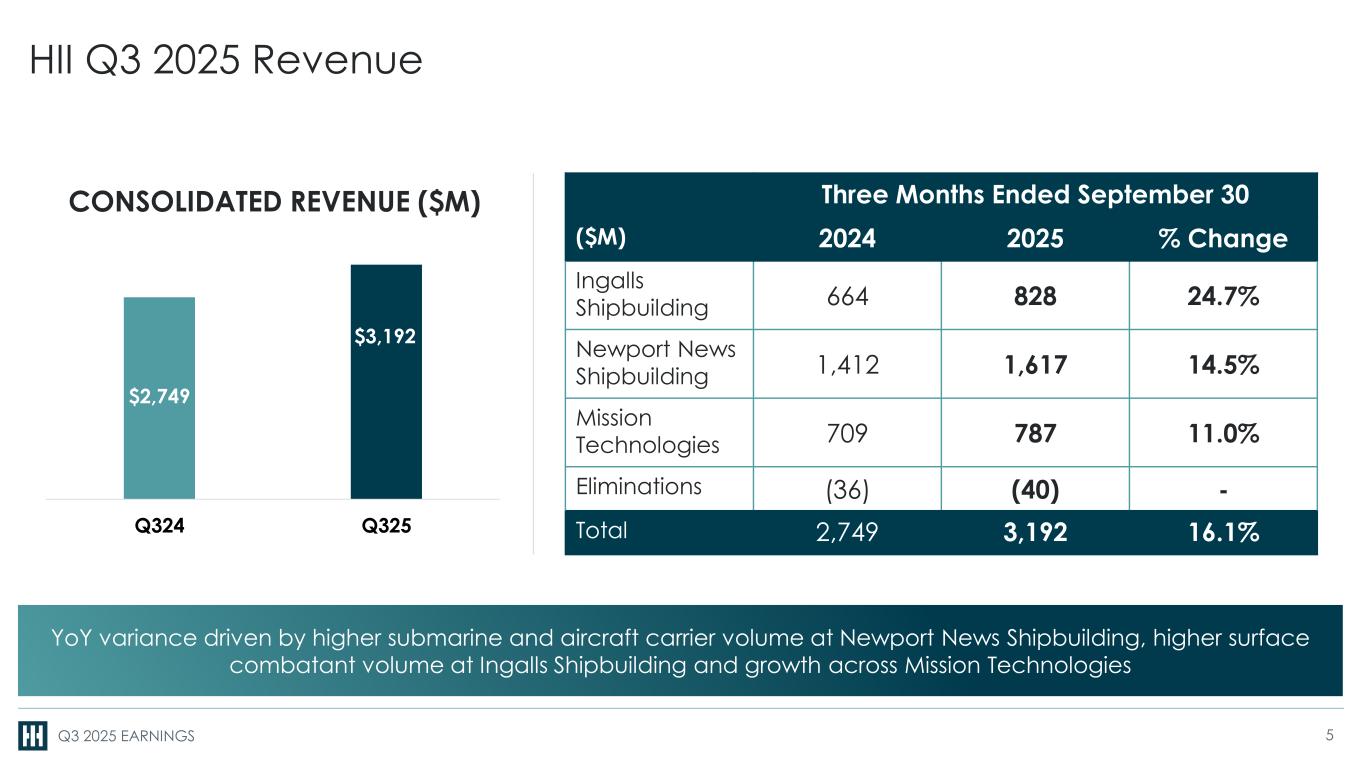
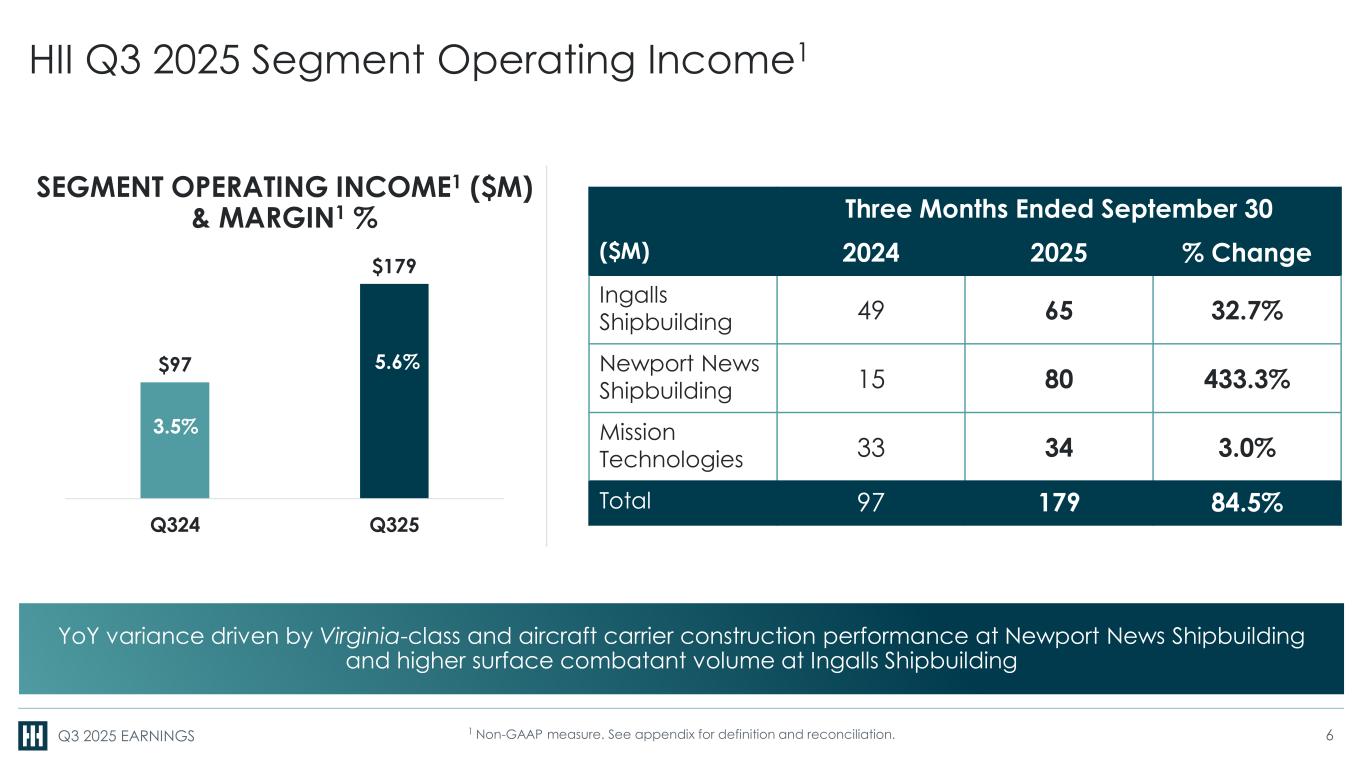
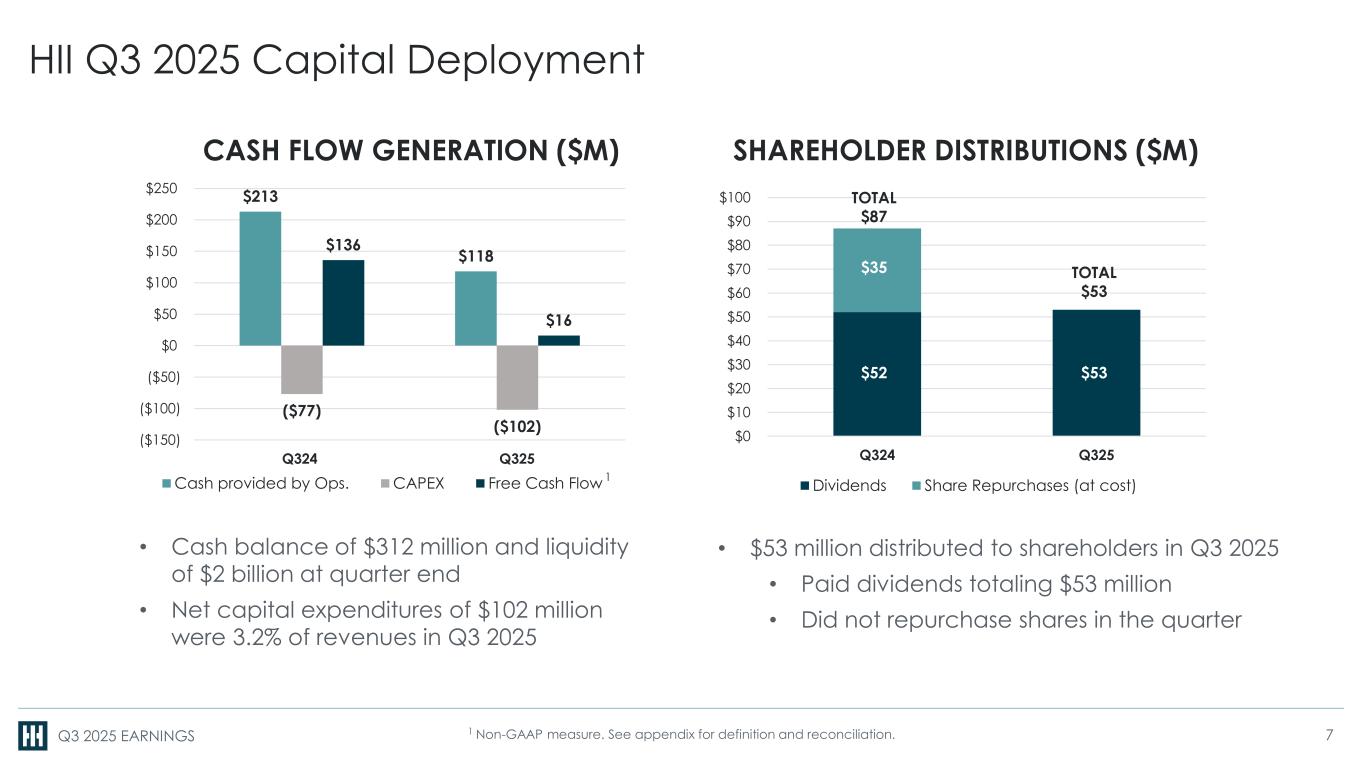
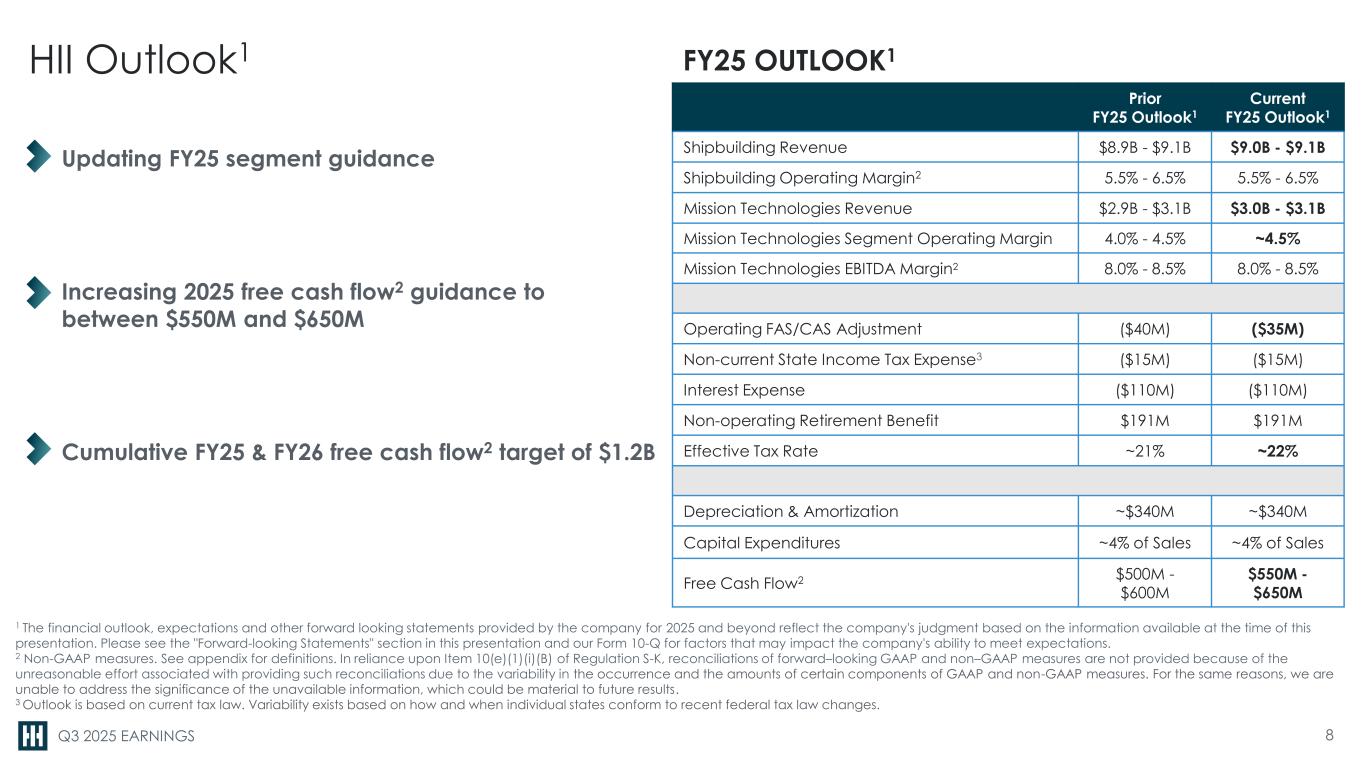
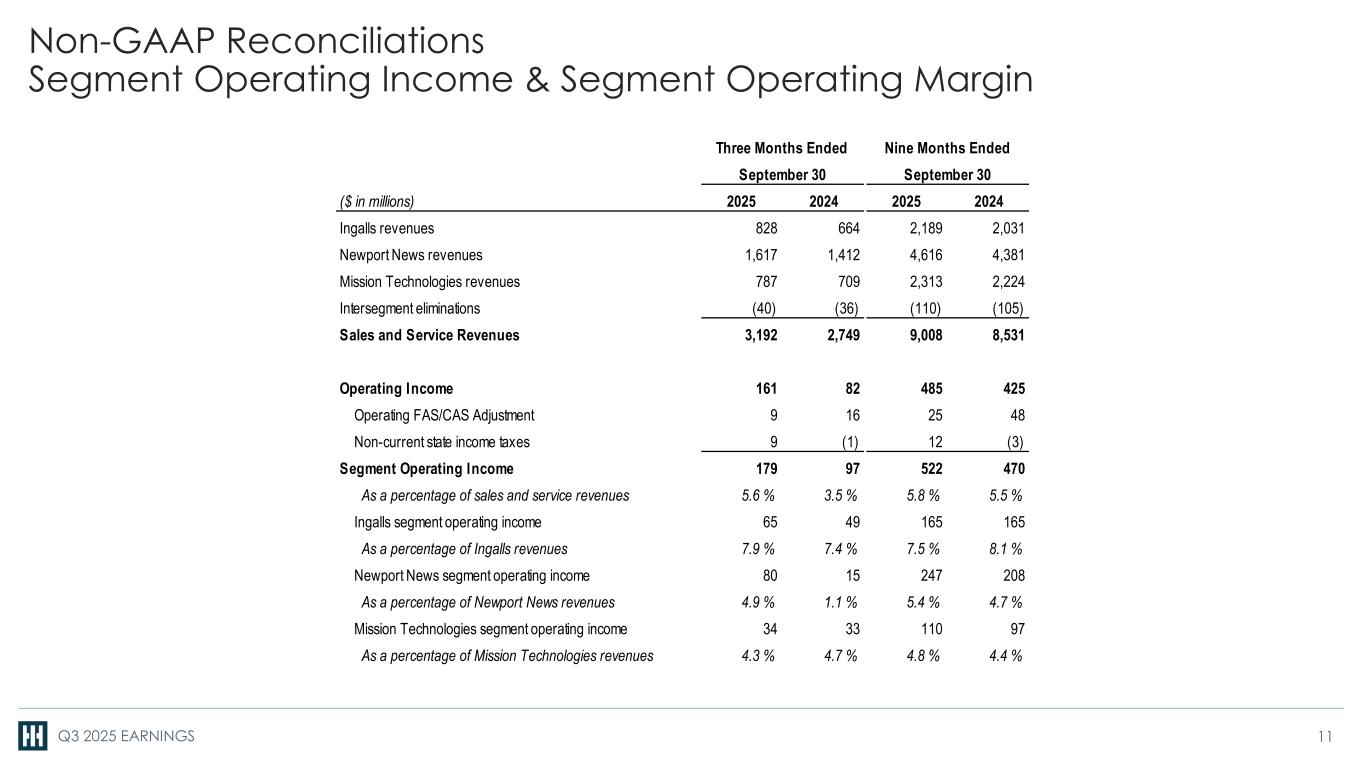
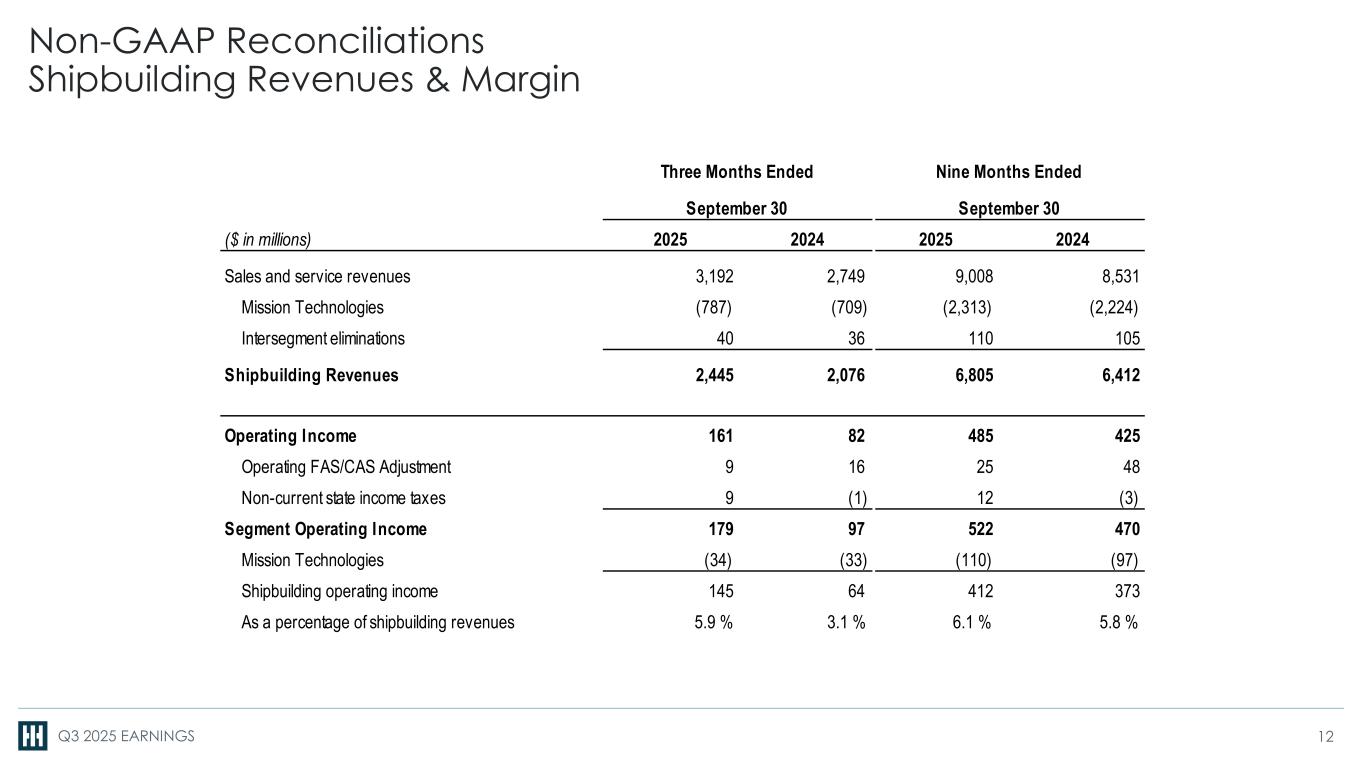
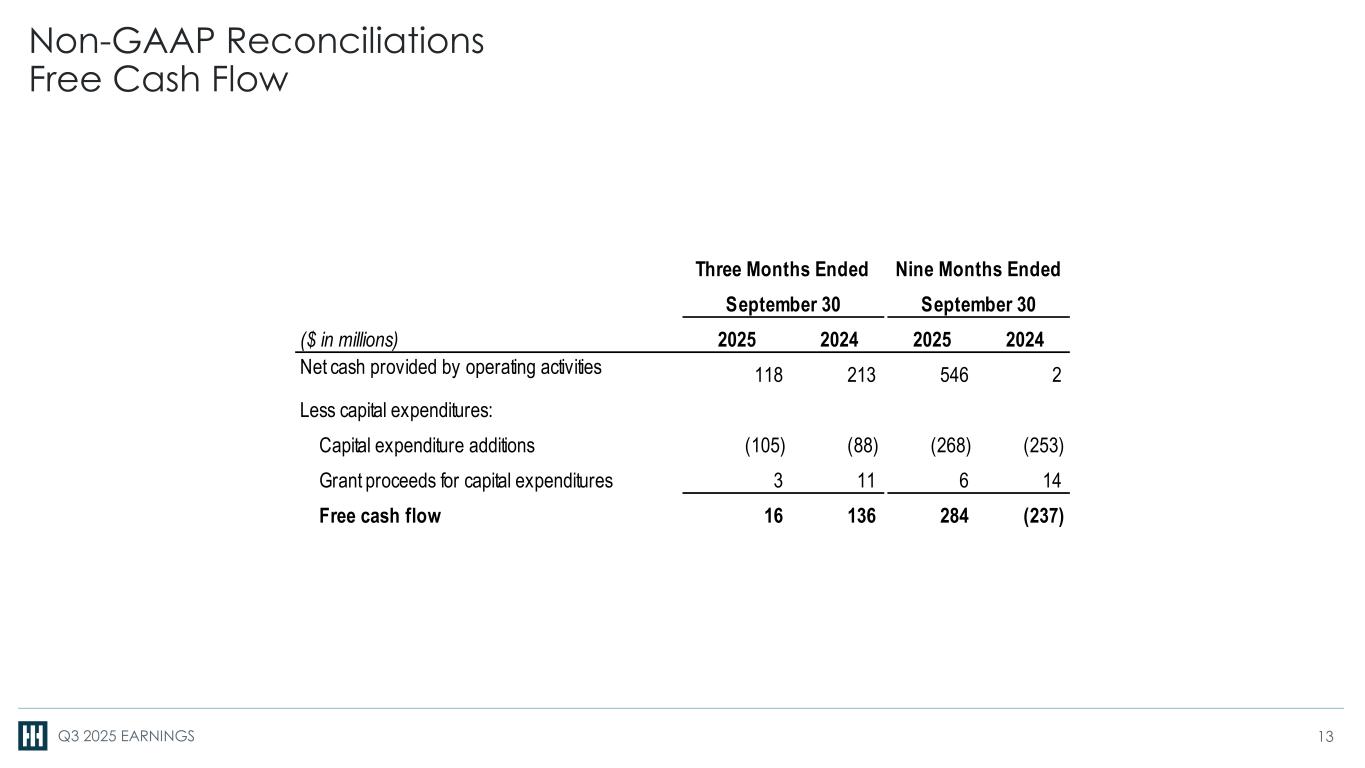
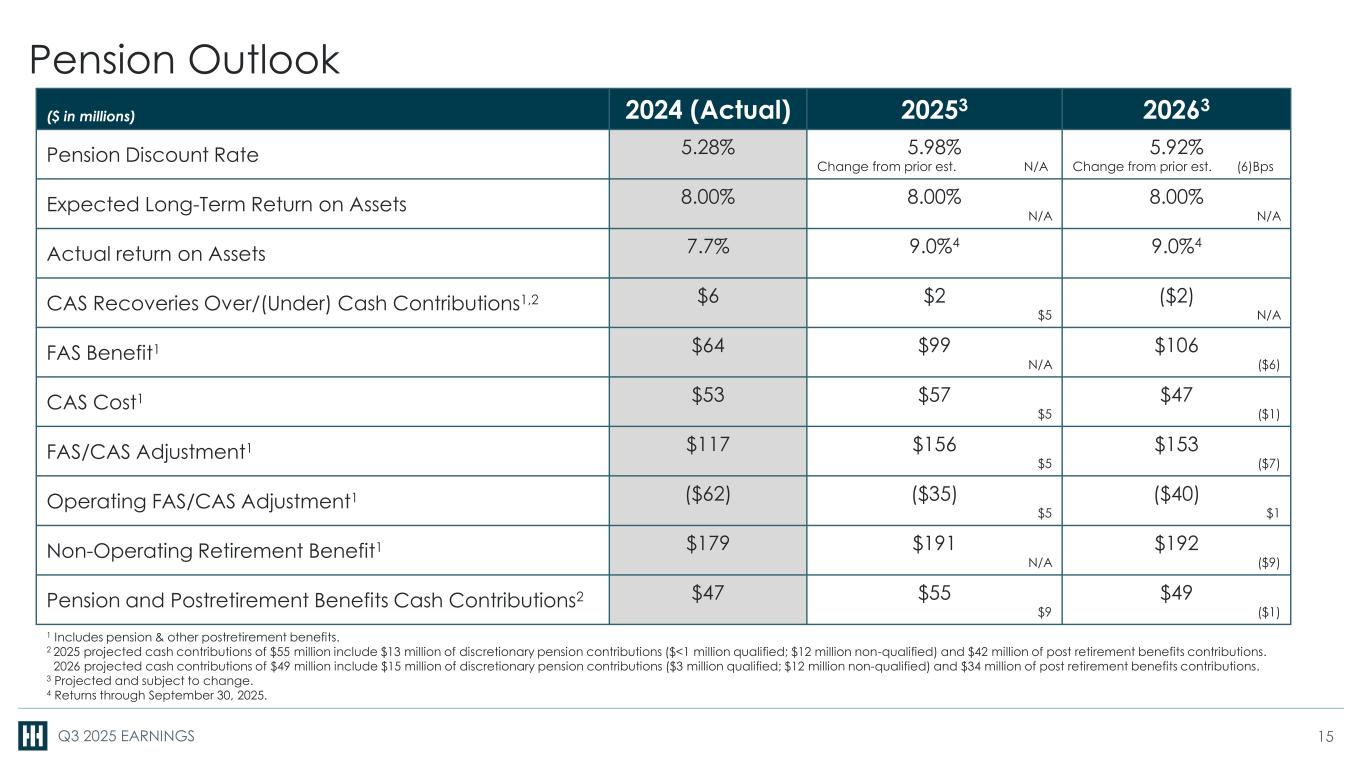
Thanks, Chris, and good morning. Let me start by briefly discussing our third quarter results, and then I'll address our outlook for the year. For more detail, please refer to the earnings release issued this morning and post it to our website. Beginning with our consolidated results on slide 5 of the presentation, our third quarter revenues of approximately $3.2 billion were a record for HII and increased 16.1% compared to the same period last year. The higher revenue was attributable to strong year-over-year growth at all three divisions. Ingalls revenues were a record $828 million and increased by 24.7 percent compared to the third quarter of 2024, driven primarily by higher material volume and surface combatants. Newport News revenues of $1.6 billion increased by 14.5 percent compared to the third quarter of 2024, driven primarily by higher volumes across submarine and aircraft carrier programs. Together, shipbuilding revenue was $2.4 billion, well ahead of our guidance for the quarter, as results benefited from higher-than-expected material receipt, as well as the impacts of wage investments and our broader efforts to drive higher shipbuilding throughput, including increased outsourcing. Mission Technologies revenues of $787 million increased by 11% compared to the third quarter of 2024, driven by higher volume in C5ISR, cyber, electronic warfare in space, and live virtual and constructive training, as well as our growth in unmanned systems. Moving on to slide six, segment operating income of $179 million and segment operating margin of 5.6% in the third quarter of 2025 were both up from prior year results, primarily driven by the prior year period's negative adjustments, as well as the positive impacts of the volume growth I discussed. At Ingalls, segment operating income was $65 million, an operating margin of 7.9%, compared to $49 million and 7.4% in the third quarter of last year. The increases were driven by the volume increases in surface combatants. The third quarter net cumulative adjustment at Ingalls was a positive $6 million, and none of the adjustments were individually significant. At Newport News, segment operating income was $80 million and operating margin was 4.9%, compared to $15 million and 1.1% in the third quarter of 2024. Prior year results were impacted by negative adjustments resulting from the performance challenges and the delay of new contract awards. For the third quarter of 2025, Newport News Shipbuilding's net cumulative adjustment was negative $13 million. None of the adjustments in the quarter were individually significant. Mission Technologies operating income and margin were largely consistent year-over-year as changes in the contract mix offset the higher volumes I previously mentioned. Consolidated operating income for the quarter was $161 million, and operating margin was 5% compared to $82 million and 3% in the same period last year. The variance was primarily driven by the segment results I've just noted. Net earnings in the quarter were $145 million compared to $101 million in the third quarter of 2024. Diluted earnings per share in the quarter were $3.68 compared to $2.56 in the same period last year. The effective tax rate in the third quarter was 28.9%, higher than our initial expectations, as results were impacted by a reduction in the estimated research and development tax credit for the prior year. Turning to slide 7, cash provided by operations was $118 million in the quarter. Net capital expenditures were $102 million, or 3.2% of revenues. Free cash flow in the quarter was $16 million. Free cash flow results in the quarter were better than the guidance we had provided, largely due to stronger collections in the quarter, as well as some disbursements moving out of the quarter. I'll discuss our updated 2025 free cash flow guidance in a moment. During the quarter, we did not repurchase any shares. We did pay a cash dividend of $1.35 per share, or $53 million in the aggregate. Last week, we announced a modest increase in our quarterly dividend to $1.38 per share. Turning to liquidity in the balance sheet, we ended the quarter with a cash balance of $312 million and liquidity of approximately $2 billion. Our capital allocation priorities are unchanged. We value our investment-grade credit rating, and we will continue to prioritize prudent debt levels while strategically investing in our shipyards and thoughtfully growing our dividend while continuing to use excess free cash flow for share repurchases. Moving on to our outlook on slide 8, we have narrowed the shipbuilding revenue range to be between $9 and $9.1 billion, which is an increase of $50 million at the midpoint from the prior guidance range. We are reiterating the shipbuilding margin range up between 5.5 and 6.5 percent. For mission technologies, we are now expecting revenue between $3 and $3.1 billion, an increase of $50 million from the prior guidance range at the midpoint. We expect mission technologies operating margins of approximately 4.5 percent and EBITDA margins between 8 and 8.5 percent. Our 2025 guidance is predicated on achieving the operational initiatives we have laid out. We are pleased with the throughput improvement we saw in the third quarter, though we have not been able to overcome the slower start to the year and therefore had to trim our throughput improvement expectation for the full year. As Chris noted, we are continuing to work towards the Virginia-class Block VI and Columbia-Build-II Submarine Awards later this year. If the award were to push into 2026, it would be a headwind to our guidance that would likely have us end the year slightly below the midpoint of our shipbuilding margin guidance range. Conversely, an award this year would support us ending at or slightly above the midpoint of the range. For 2025 free cash flow, we are updating our guidance to be between $550 and $650 million. At the midpoint, this is an increase of $50 million compared to our prior guidance range. We are establishing a cumulative free cash flow target for 2025 and 2026 of $1.2 billion. Using the 2025 free cash flow guidance midpoint, this does imply both years will generate about $600 million in free cash flow. As always, our cash flow in a particular quarter or year can be impacted by small changes in timing for large receipts and disbursements. We are also updating a number of discrete income statement guidance elements. We have made some minor revisions to our pension outlook, and you can find updated 2025 and 2026 expectations in the appendix of today's slide presentation. We are also updating the expected effective tax rate for the year to 22%, given the elevated rate in the third quarter that I discussed previously. To close, it was a good quarter as we continue to make steady progress working our way through challenging shifts and executing our 2025 operational initiatives, securing new contracts aligned to the current environment, drive higher throughput, and thoughtfully manage costs. With that, I'll turn the call back over to Christy to manage Q&A.
Thanks, Tom. As a reminder to everyone on the call, please limit yourself to one initial question and one follow-up so we can get as many people through the queue as possible. Operator, I'll turn the call over to you to manage the Q&A.
Operator
Thank you very much. We will now open the Q&A session. If you would like to ask a question, press star followed by one on your telephone keypad. When prepping to ask your question, please ensure your device is unmuted locally. If you change your mind or your question has already been answered, press star followed by two. Our first question comes from Scott Bikus with Malia's research. Your line is now open. Please go ahead.
Morning, Chris and Tom. I wanted to ask on Virginia Block 6 and Columbia Build 2 negotiations, you kind of touched on the fact that shipbuilding is not really impacted by the shutdown. Is there anything that's potentially holding up that negotiation, maybe due to government employees being furloughed? And then also, from a high-level perspective, does it make sense for industry and the customer to commit to that many boats at once, or should the negotiation maybe split up into two or more negotiations to just get a better understanding of the cost and schedule to build those?
Yeah, thanks, Scott. The team's working very hard to get that negotiation working on CR to make sure that we have more to come there, but to really what we think is the most important thing for the industrial days, which is as important as that we need to get all 10 of these.
Okay, and then a quick one. It looks like you mentioned the retention rates have been improving. You had the wage increase go in at Newport News, I think, in June. When is the wage increase going in at Ingalls?
With the union at Ingalls, that union agreement.
Operator
Our next question comes from Noah Leponak with Goldman Sachs. Your line is now open. Please go ahead.
$50 million ahead of your plan, but then only raising the full year by $50 million. Actually, maybe even down a little. And I think that compares your question is just seeing this, the question is, and can we extrapolate, you know, maybe it's not 16 every quarter for a while, but can we extrapolate much better growth? Was there something just with kind of random to the quarter?
A couple of things there. Newport News, you know, they grew 15%. Ingles grew 25%. From a Newport News perspective, what we saw there, you know, increased throughput, wages, and outsourcing. It was primarily driven by the material volume that we saw and some growth on some long leaves on that front. I'm going to tell the guidance right now on what we gave you at the beginning of the year there. There is some tailwinds, I'll tell you, so we want to see how we continue to improve. As Chris mentioned in his remarks up front, there was, you know, earned throughput. So all that's very good. We'll evaluate how Q4 plays out, and then we'll provide a revenue projection for shipbuilding on the February call. Yeah, I think to know shipbuilding for the year itself is 6.1%, you know, between Q1, Q2, and Q3 here. So we have the capacity and throughput. and I envision as we continue to...
Four percents in the rearview mirror. What do you mean by that?
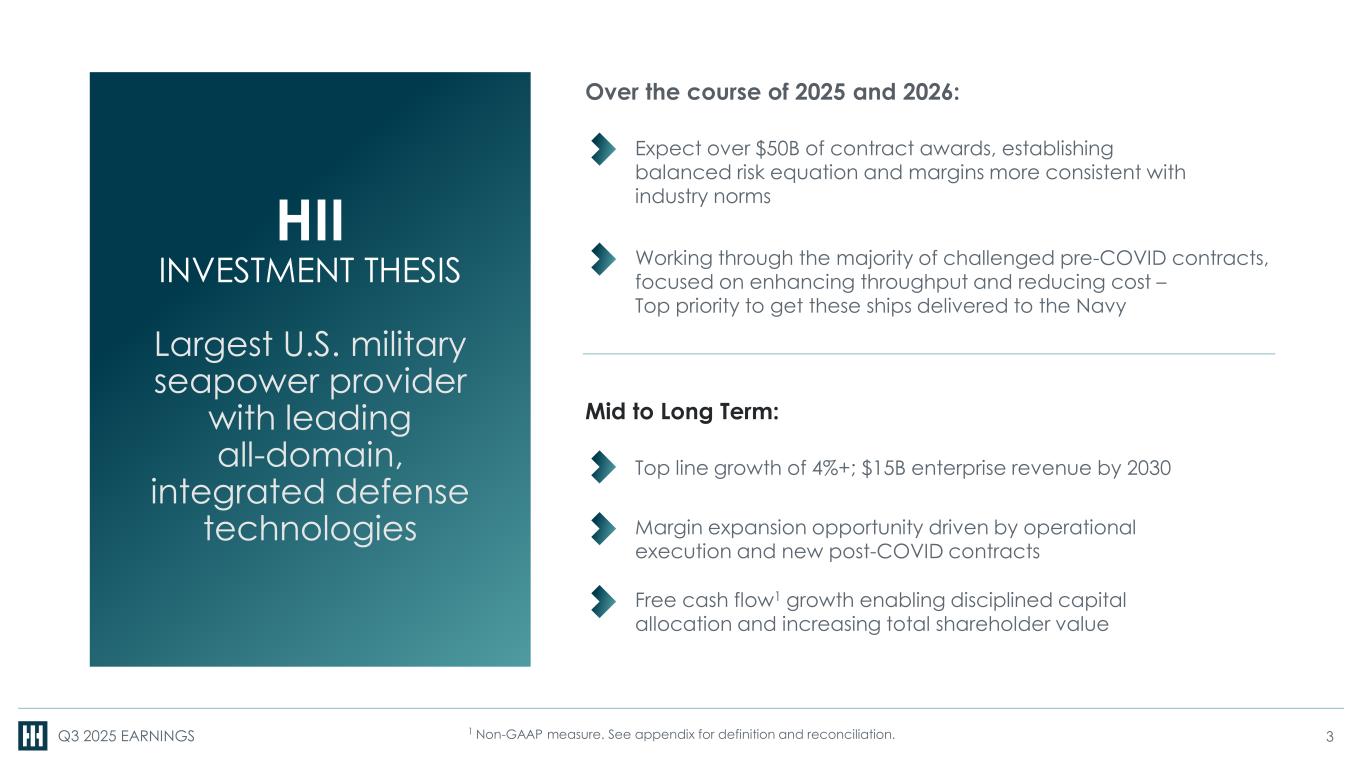
Just long midterm guidance for shipping. Yeah, yeah. It's probably not valid anymore.
Initiative, EBITDA base, gross number, do we need to net that number? And how much of that is already done and in your numbers versus... I want our guidance. ...fitting the margin year to date.
Operator
Our next question comes from Ron Etchstein with Bank of America. Your line is now open. Please go ahead.
Hey, yeah. Good morning, guys. Thanks for the question. Yeah, just maybe a quick one here. Can you give us more color on your partnering strategy on unmanned vessels? You announced recently a partnership with Shield AI and the progress you're having on your own internal autonomy systems for these vehicles.
The beauty of its open source, implementation or incorporation of new software tools, it makes it more powerful. We're excited about it.
Got it, got it. And, I mean, ultimately, how big do you think the unmanned market can be for you?
Yeah, so I don't want to give a specific size. It is ramping. It is becoming more material within mission technologies. And you see the budget environment, the allocation of additional unmanned opportunities in reconciliation.
Got it, got it. And then maybe just one last one. You probably saw it in the news yesterday, and if you can't answer this, I mean, it didn't happen that long ago. But, you know, the Trump administration suggested that Hanwha is going to be making nuclear submarines at the Philadelphia Navy Yard. How does that change things or not? I mean, how do you think about that strategically?
Well, it's definitely been an exciting couple of days in shipbuilding. Specifically, I'm happy because that's pretty new information. But at the end of the day, we're going to build what the Navy wants to do. And if they need our help, by anything, we're keeping our heads down. But that's pretty new.
Yeah, thank you for that. Yeah, thanks.
Operator
Our next question comes from Seth Sieffman with J.P. Morgan. Your line is now open. Please go ahead.
Thanks very much, and good morning. Good morning. So I wanted to ask, I think, Tom, I think you mentioned with regard to the margin rate, If the contract didn't come in Q4, you'd be, you know, below the midpoint for the year, which I think would imply kind of a step down in the margin in Q4. And just kind of curious what drives that, given where the underlying margins are in the, you know, in each shipyard after EACs, it would seem that the, you know, the underlying margin here with kind of neutral EACs is something that is, you know, above 6%, you know, kind of in the maybe low towards mid-6 range. And so is that some conservatism that, you know, leads you to have that guidance, or is there some kind of, you know, anticipation or potential further negative adjustments?
I appreciate the question. You know, our shipbuilding margins for the first three quarters have been tweaking the guidance on what will happen. The 15-boat award will have incentives in it that we gave you at the beginning of the year for five.
Thanks very much. I'll stick to one this morning.
Operator
Our next question comes from Scott Deutschler with Deutsche Bank. Your line is now open. Please go ahead.
Hey, good morning. Chris, relative to that 15% throughput target, are you looking for a similar number from both Ingalls and Newport News, or is that target materially different between the two yards?
No, they're actually ending up in about the same place. Yeah, they're in an increased output of the labor force.
So the reduction from the 20, was that also equal, or did one of the yards see, like, slightly less improvement than was expected? It sounds like fairly.
Yeah, yeah, yeah, fairly.
And then, Chris, after you raised wages for your workers at Newport News, did you see any other local area industries respond in kind by also raising wages? I'm just trying to get a sense as to whether you're maintaining a consistent spread above the market wage rate as a result of those increases or if the market's also already eating into that at all.
Yeah, the market has not materially adjusted to Newport News. It's been pretty positive at Newport News, and the effect of those wages has been positive in reduced attrition. But we're probably most excited about repositioning the experience before we have more experience.
Operator
Our next question comes from Myles Walton with Wolf Research. Your line is now open. Please go ahead.
Great, thanks. Tom, on the cash flow flatness implied in 2026, maybe just give us a little bit of a color there. Obviously, an assumption that earnings will grow, CapEx, I would have thought, maybe steps down a touch. Is there an offset to that to kind of keep it in the flat range? And then a couple of years back, there was a bigger target for cash flow in the $700 million to $800 million range. Is that something that can only arrive with something like the SAWS being resolved?
I appreciate the question on that. Yeah, so, you know, we brought back a more than a guide here for a two-year guide. You know, a piece of that is just with five quarters this quarter this year and next year as the awards come through, we watch performance. We talked about $600 million between the two years, which is parts in there between the working capital that I have, the CAF-X, and, again, the timing of the conservative guide. I would tell you, for 2026 as we go forward here, which has both opportunity, you know, we'll give you more color that in the February time. Comment on the sevens. When we get back, obviously, we've kind of hinted here that the 4% has some good tailwinds, and you see for the first three quarters of this year it's over 6%, so we'll give you, you know, increased kind of guidance on that in the February time frame. Meaningfully, we'll change that cash flow inflection in the medium to long term will be the return of the profitability. We expect incremental profitability from year to year. And as we continue to retire the pre-COVID contract work, the new contracts are aligned with the efficiencies and schedules and materials that we see. And as we get into those contracts, we start kind of booking more conservatively, but as we get into those contracts three to five years out, we will see us getting back to more traditional top line, higher bottom line, and that's where we get back to the cash flows on the tail end of the decade.
Got it. And then, Chris, there'll be one for you, and I don't know if you can answer this one either, but the president has recently quoted saying he's going to have an executive order moving aircraft carrier designs back to steam from e-mails. I'm just curious, what carrier could that cut over into if that was actually a change that was going to take place?
Operator
Yeah, so again, a question comes from Gwotem Hanna, C.D. Cohen. And just as a reminder, if you would like to ask a question, please press star, followed by one on your telephone keypad now. Kotham, your line is now open. Please go ahead.
Hey, good morning. Can you hear me? Guys, I was wondering if you could update us on a couple things. One, did you receive the modules for CVN80 that were delayed in the quarter?
In Q4 and began to get back on the erection schedule.
Terrific. And could you give us the net EACs by segment?
The CACs that we had here were gross, a net of minus marks, and they put these at minus 13. Those are in the remarks as well.
Thank you. And then I was just curious, Tom, on the Q4 implied shipbuilding EBIT, pretty wide range, but you did mention that it's going to be somewhere around the midpoint with or without the submarine contract signed. The high end, what would get you to the high end of the implied range? And is there any reason to think that, you know, the extremes are actually in play?
Let me tell you the function is, as I said earlier, I do expect as we go from year to year an incremental improvement here. But we understand how we're operating.
Perfect. And one last one, Tom. I know you talk about the pre-COVID and post-COVID contract mix. Can you remind us what it is this year and what do you expect it to be in 2026?
Yeah, we haven't given – to get to 2027, there'll be more work post-COVID than pre-COVID. It'll be over 50%, so you can do the math of that. I'm going to be down to that by 2027, and, you know, it's fairly significant to retire those boats and ships. Every time we sell one off, obviously, there's less pre-COVID work, and then the opportunity set with the new contracts aligned to – Thanks a lot, guys. Thank you.
Operator
Our next question comes from Noah Upanak with Goldman Sachs. Your line is now open. Please go ahead.
One follow-up. Talk about philosophically or mechanically and whether that's mechanically in the actual work or contracting. Offline growth is before faster than the margins.
Yeah, that's an interesting question, the EACs, and we have risk and opportunity to execute potential upside. But you have to evaluate each every quarter. It's not a perfectly aligned metric.
I understand, you know, the much better top line and your confidence in continuing with the shipbuilding margin being kind of just flat through the year. I guess what maybe impacts the margin was maybe a thought, or I didn't know if it's just the nature of percentage of completion accounting. It's just sort of an interesting dynamic in the financials.
Yeah, so Tom can chime in here as well, but one quarter doesn't win the day. So, well, yes, you're retiring risk, and if you're achieving your throughput targets and achieving your sales targets, you are retiring risk, but you aren't necessarily of everything you're doing. That's why I consider this a stable quarter. It's stable, but we need to continue to keep our head down at work.
There's six years to go. You know, it's actuals plus estimates to complete, and, you know, you put a quarter in the book, that's a solid time to continue if not improve, but that wouldn't necessarily mean that immediately we change the EACs. VACs incrementally will continue with good performance to retire down the risk, and as the cost risk kind of goes away, that's the catalyst to really take the booking rates up. So I like the trends that I'm seeing right now, and quarter over quarter as we continue to see that.
Operator
At this time, I would now like to hand the call back over to Mr. Kessler for any amazing remarks.
Thank you for taking the time to join us today and for your interest in HII. At HII, we're committed to delivering on our strategic priorities and aim to drive growth, improve efficiency and create value for all our safe and happy Halloween weekend ahead.
Operator
Thank you very much. That concludes today's call. You may now disconnect your lines.