Operator
Good morning, ladies and gentlemen, and welcome to the Hamilton Lane first quarter fiscal year 2027 earnings call. At this time, our lines are in listen-only mode. Following the presentation, we will conduct a question-and-answer session. If at any time during this call you need assistance, please press star zero for the operator. This call is being recorded on Tuesday, August 4, 2026. I would now turn the conference over to John O., Head of Shareholder Relations. Please go ahead.
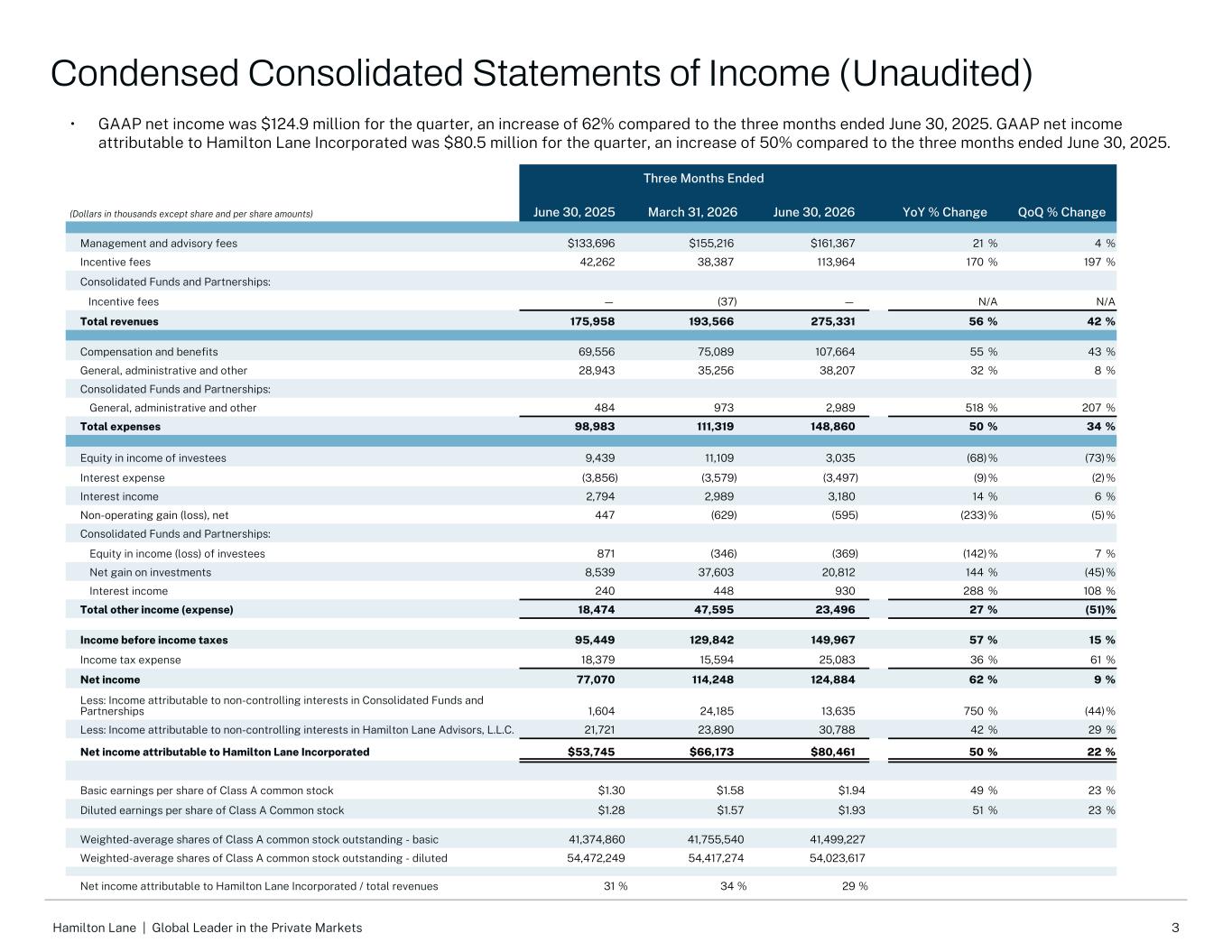
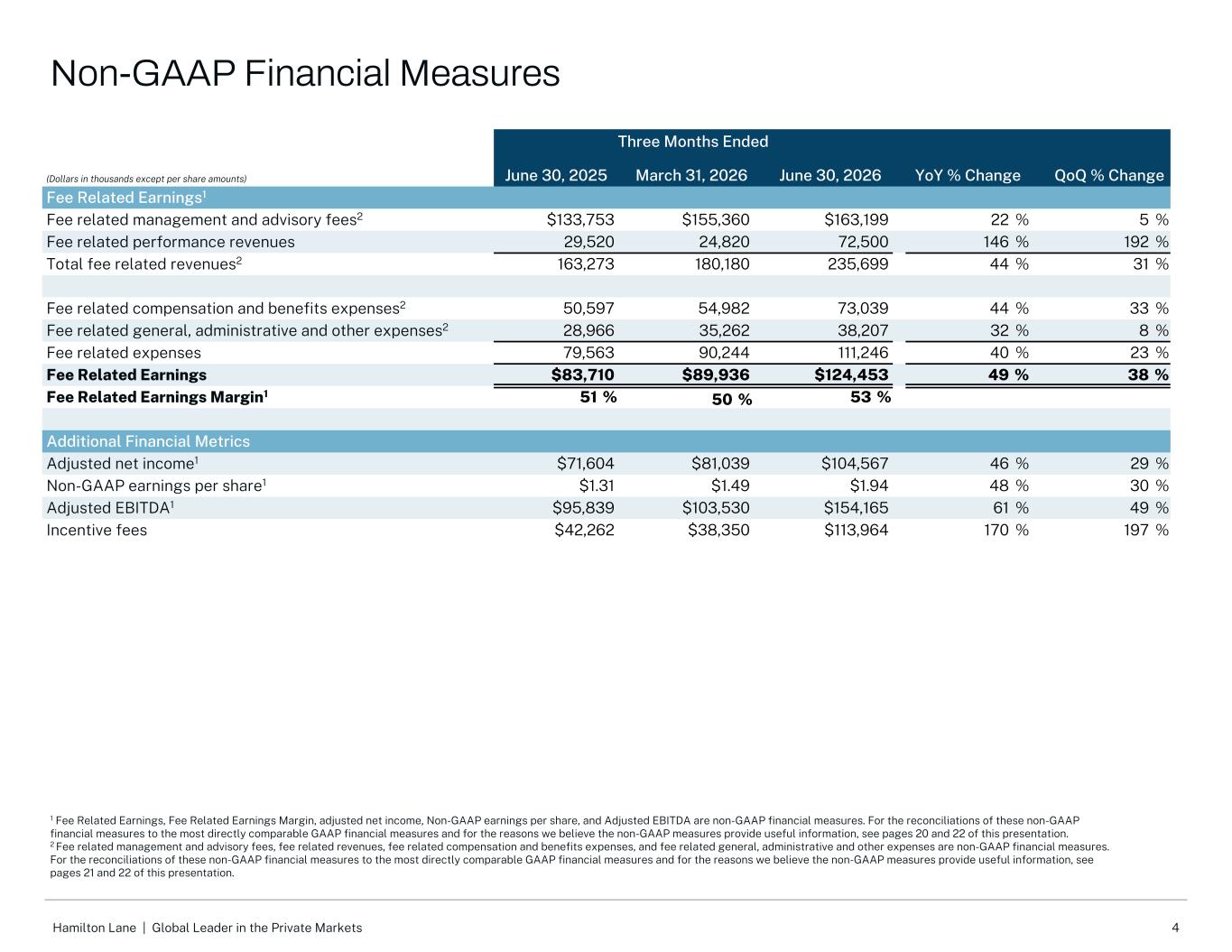
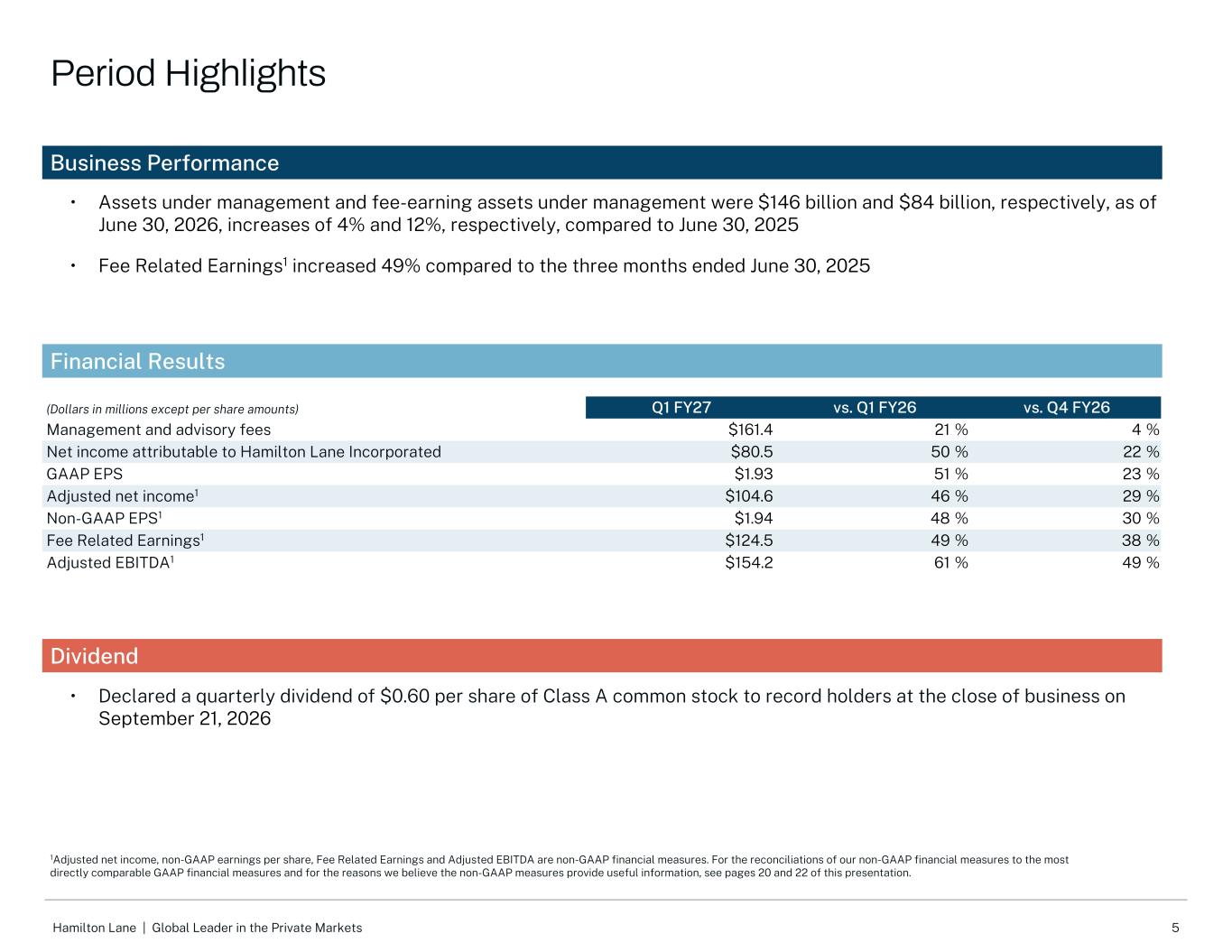
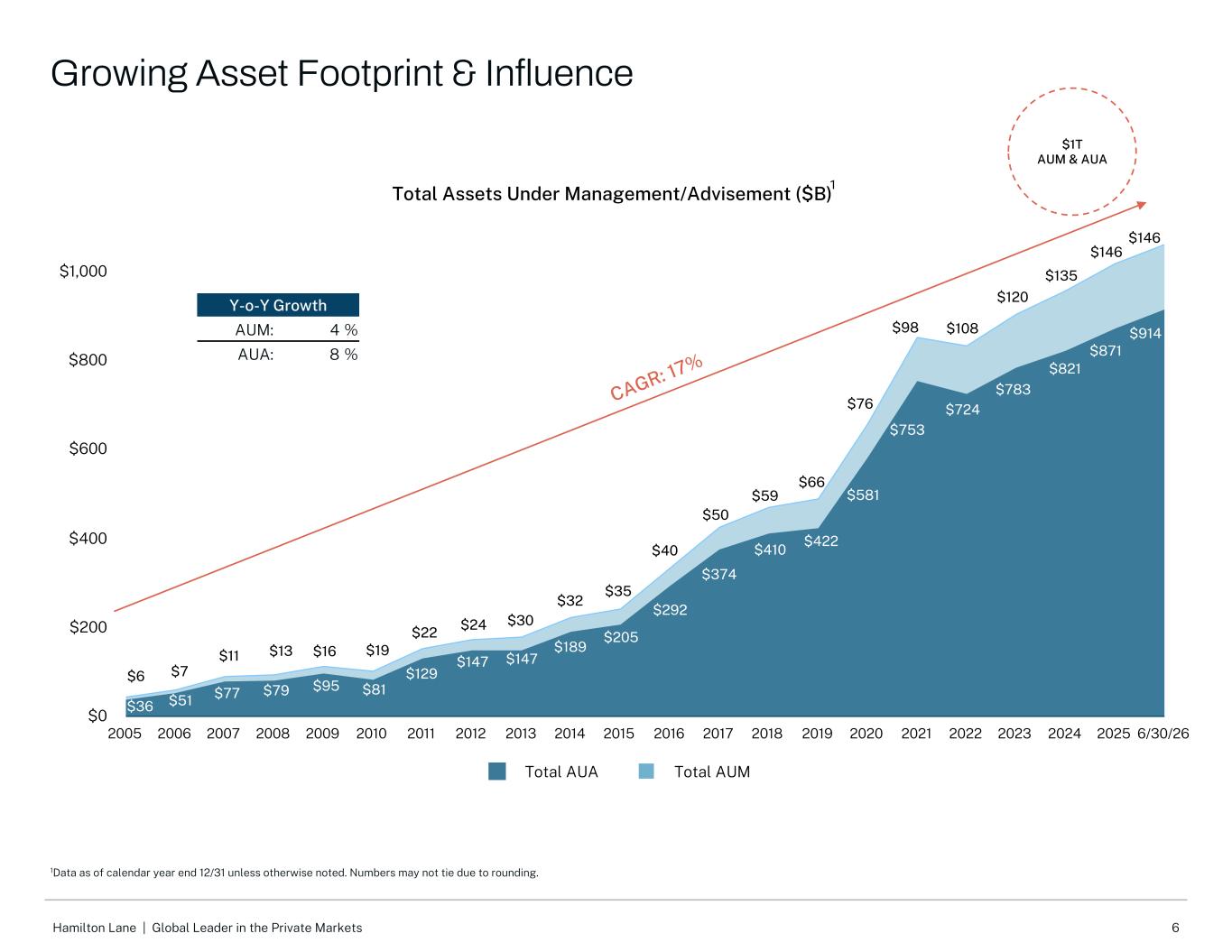
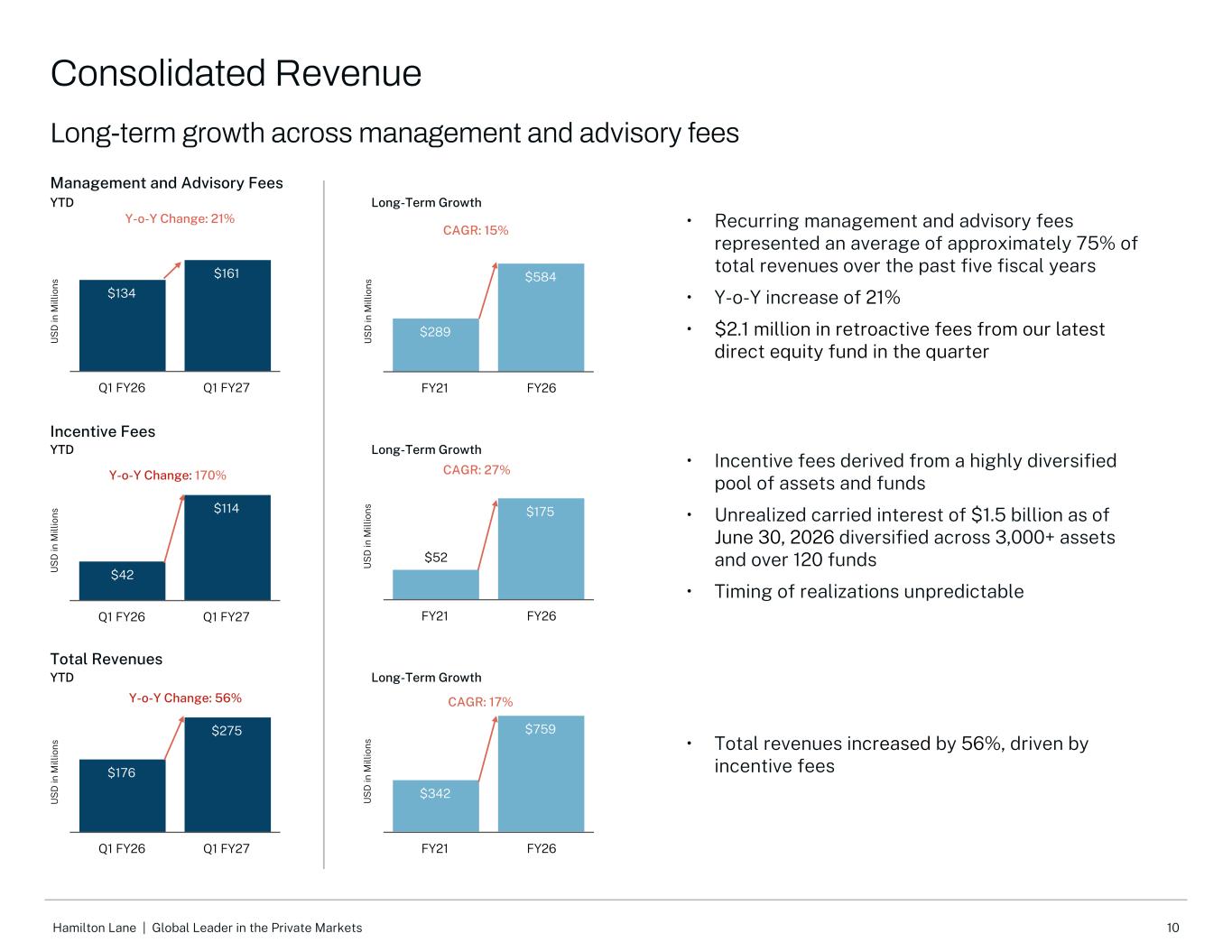
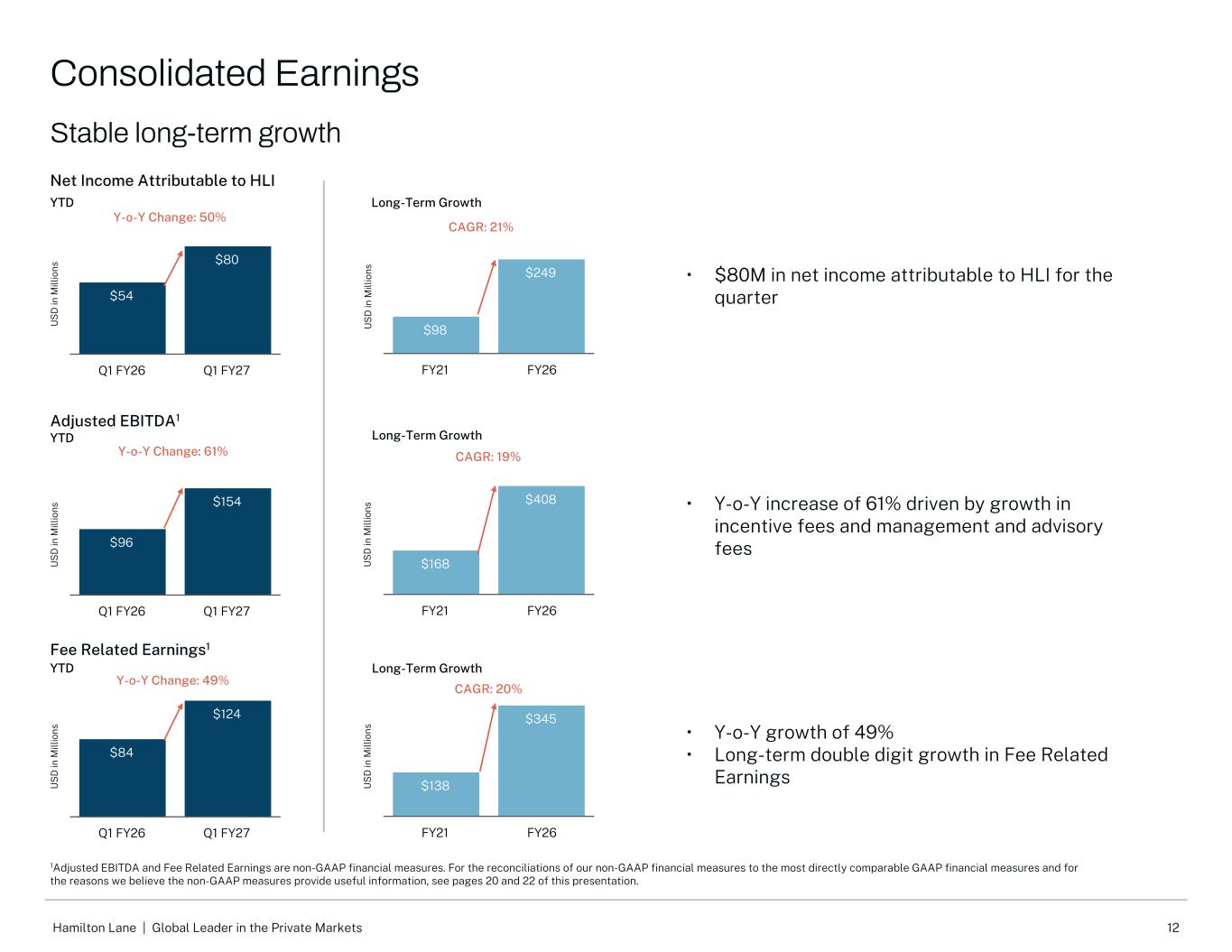
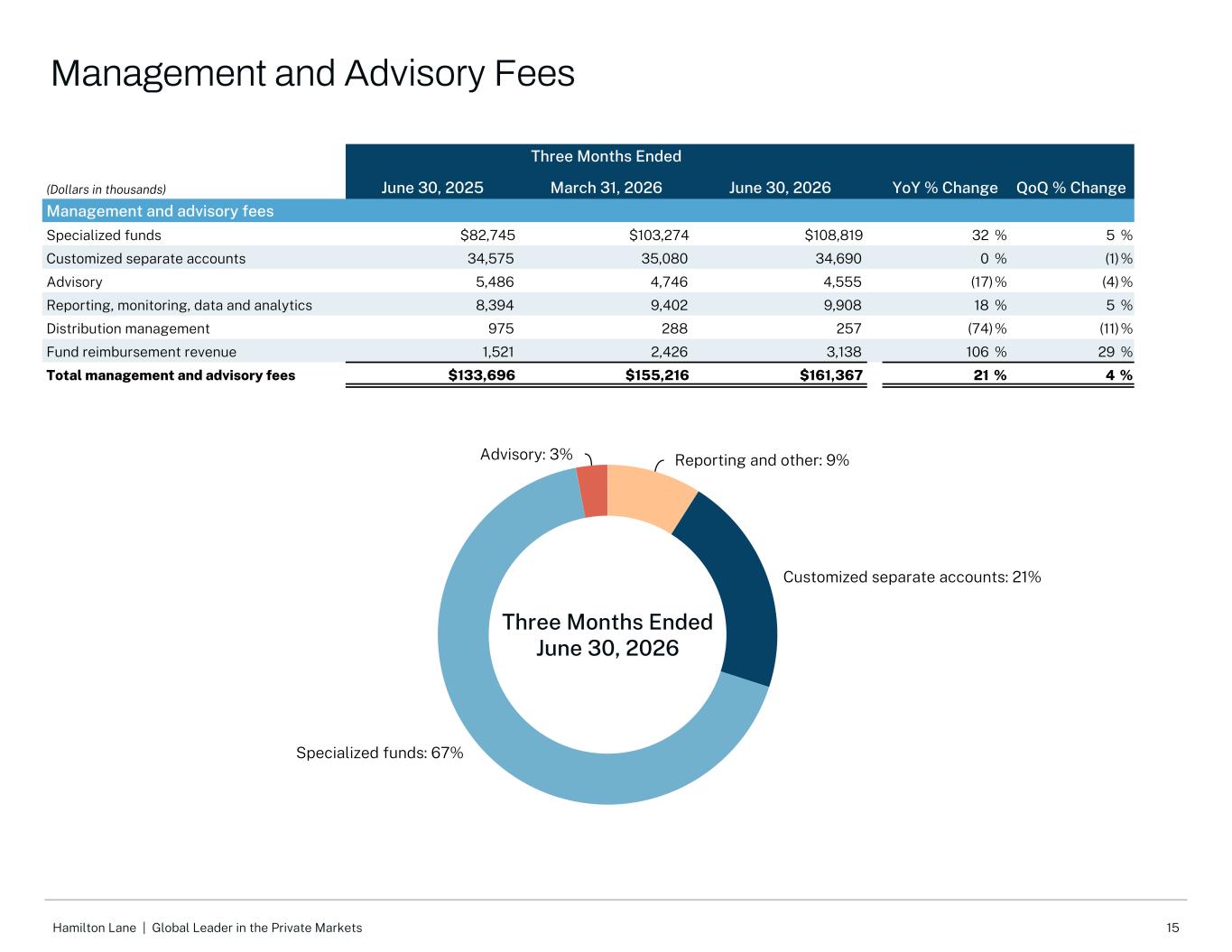
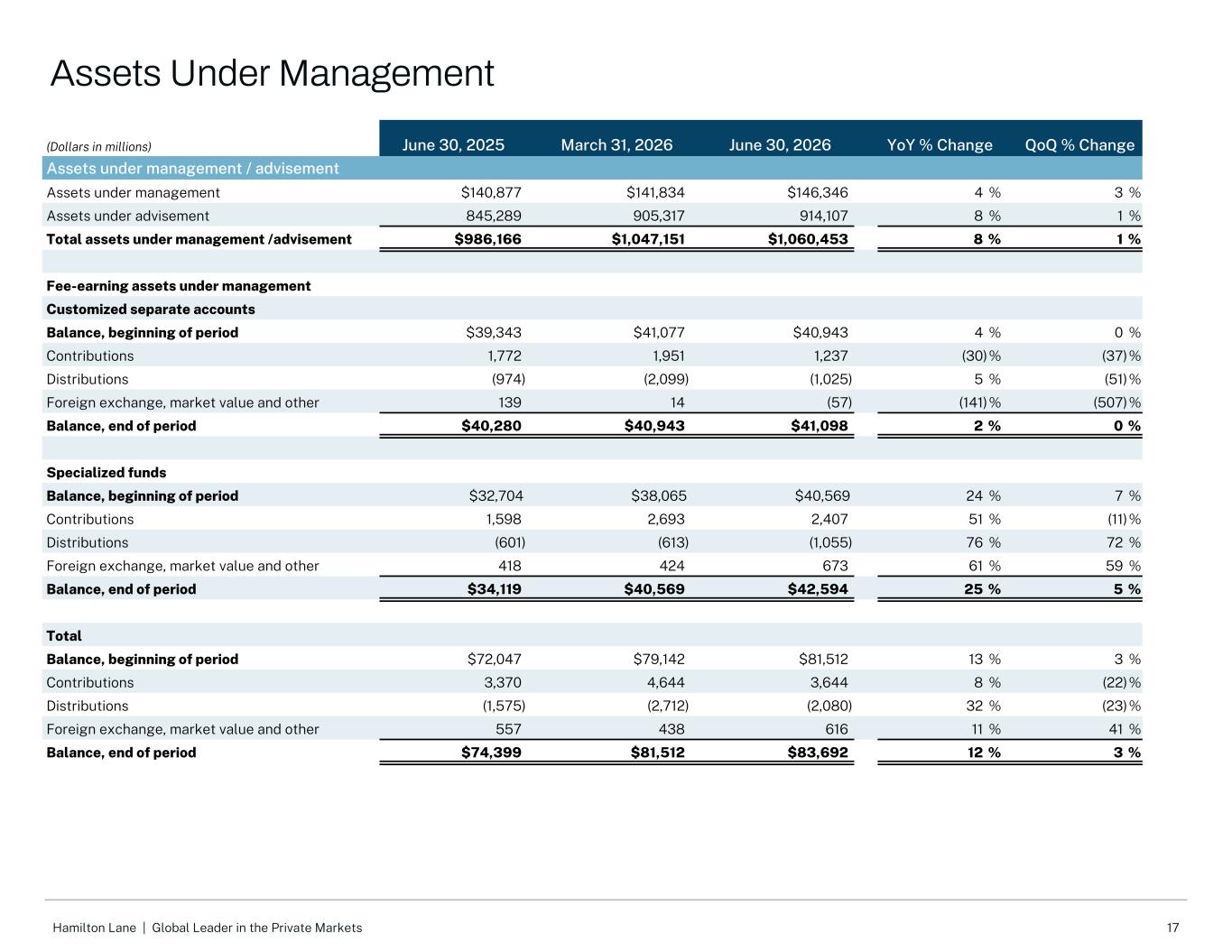
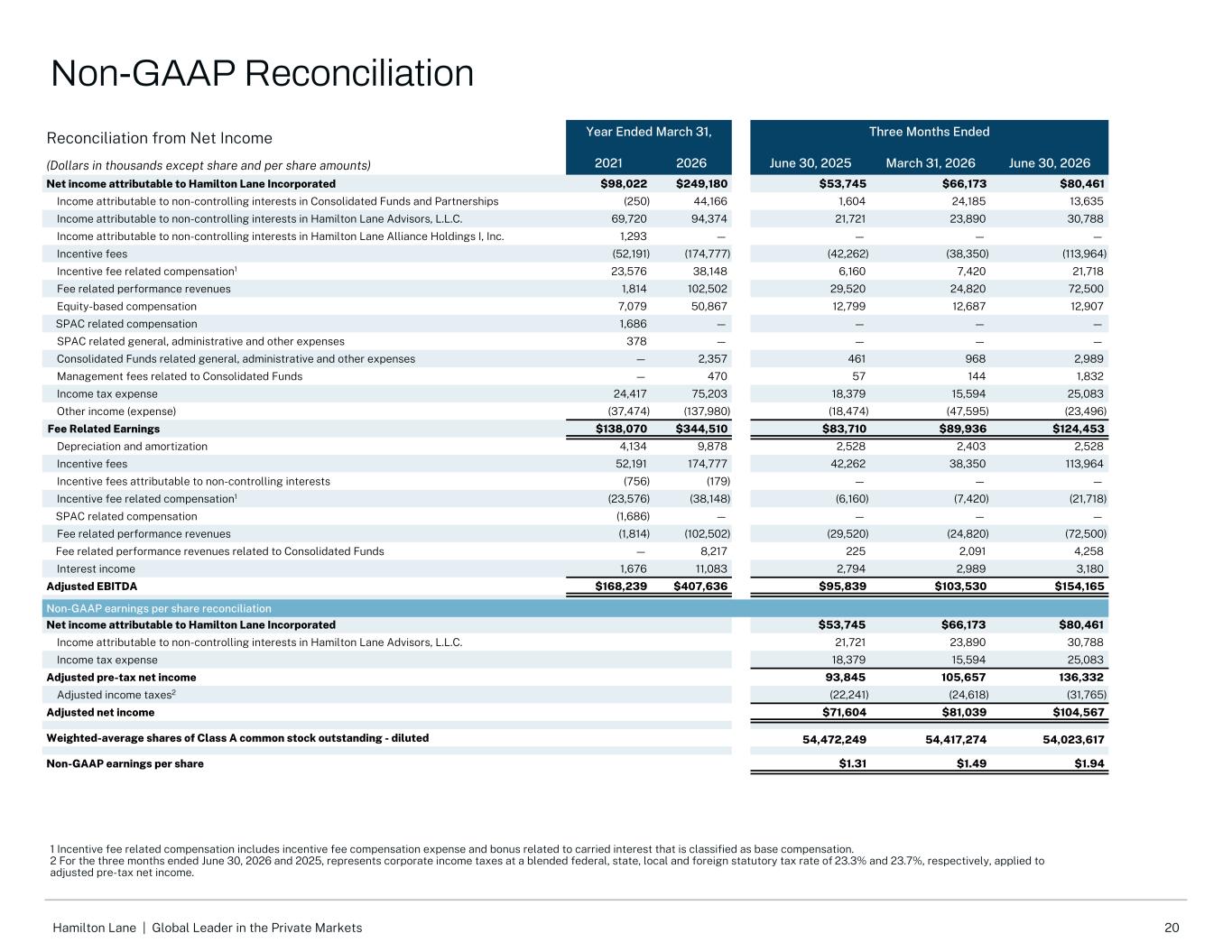
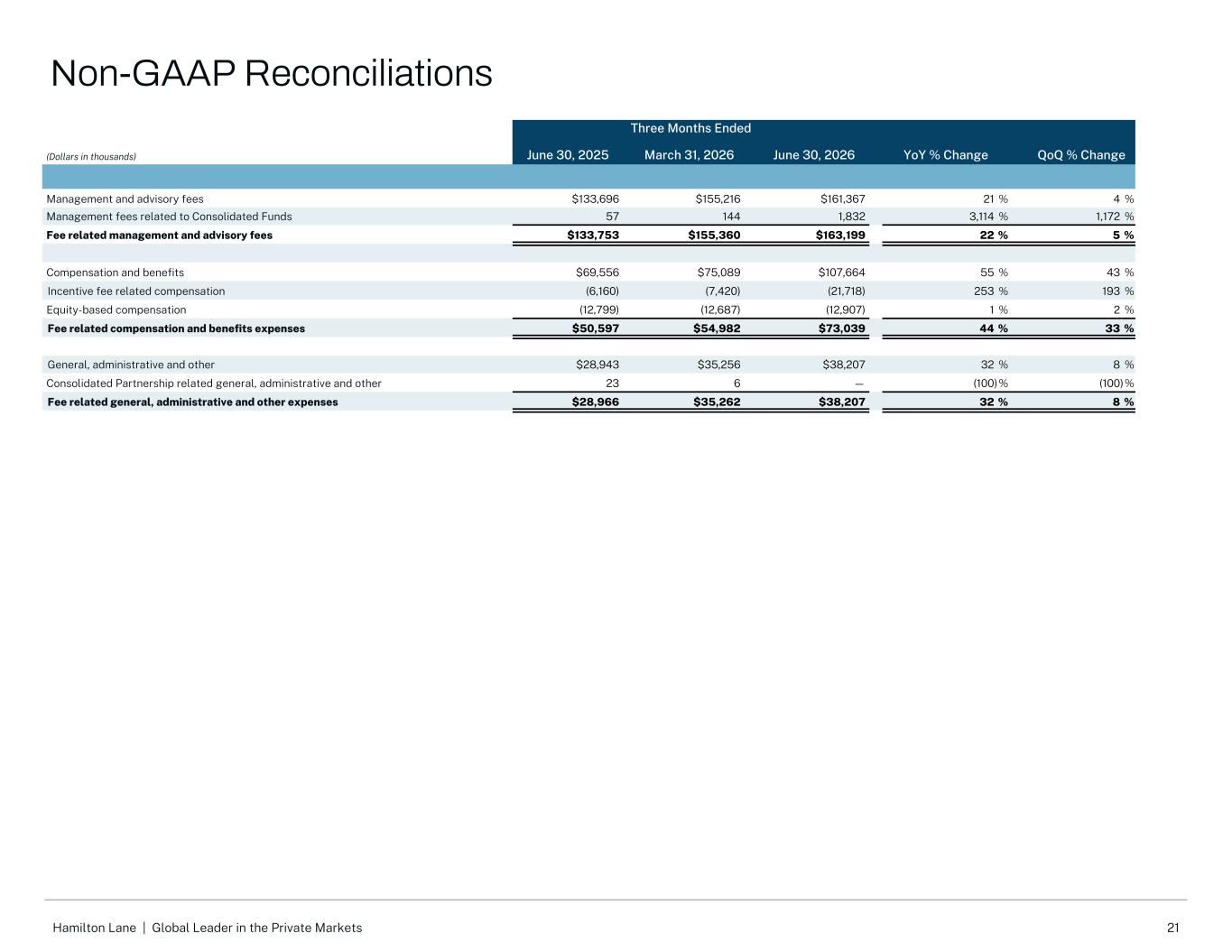
Good morning and welcome to the Hamilton Lane Q1 Fiscal Year 2027's earnings call. Today, I will be joined by Eric Hirsch, Co-Chief Executive Officer, and Jeff Armbruster, Chief Financial Officer. Earlier this morning, we issued a press release and a slide presentation, which are available on our website. Before we discuss the quarter's results, we want to remind you that we will be making forward-looking statements. Forward-looking statements discuss our current expectations and projections relating to our financial position, results of operations, plans, objectives, future performance, and business. These forward-looking statements do not guarantee future events or performance and are subject to risks and uncertainties that may cause our actual results to differ materially from those projected. In discussion of these risks, please review the cautionary statements and risk factors included in the Hamilton Lane Fiscal 2026-10-K and subsequent reports we file with the SEC. These forward-looking statements are made only as of today, and except as required, we undertake no obligation to update or revise any of them. We will also be referring to non-GAAP measures that we view as important in assessing the performance of our business. Reconciliation of those non-GAAP measures to GAAP can be found in earnings presentation materials made available on the shareholder section of the Hamilton Lane website. Our detailed financial results will be made available when our 10-Q is filed. Please note that nothing on this call represents an offer to sell or a solicitation of an offer to purchase interest in any of Hamilton Lane's products. Let's begin with the highlights, and I'll start with our total asset footprint. At quarter end, our total asset footprint stood at over $1 trillion and represents an 8% increase to our footprint year over year. AUM stood at $146 billion and grew $5 billion, or 4%, compared to the prior year period. AUA came in at $914 billion and grew $69 billion, or 8%, relative to the prior year period. This stemmed primarily from market value growth and the addition of a variety of technology solutions and back office mandates. For this first quarter of fiscal year 2027, total management and advisory fees were $161 million and were up 21% year-over-year. Total fee-related revenue was $236 million and represents 44% growth year-over-year. Fee-related earnings were $124 million and represents 49% growth year-over-year. We generated quarterly GAAP EPS of $1.93 based on $80 million of GAAP net income and non-GAAP EPS of $1.94 based on $105 million of adjusted net income. We have also declared a dividend of $0.60 per share this quarter, which keeps us on track for the 11% increase over last fiscal year, equating to the targeted $2.40 per share for fiscal year 2027. With that, I'll now turn the call over to Eric. Thank you, John, and good morning, everyone.
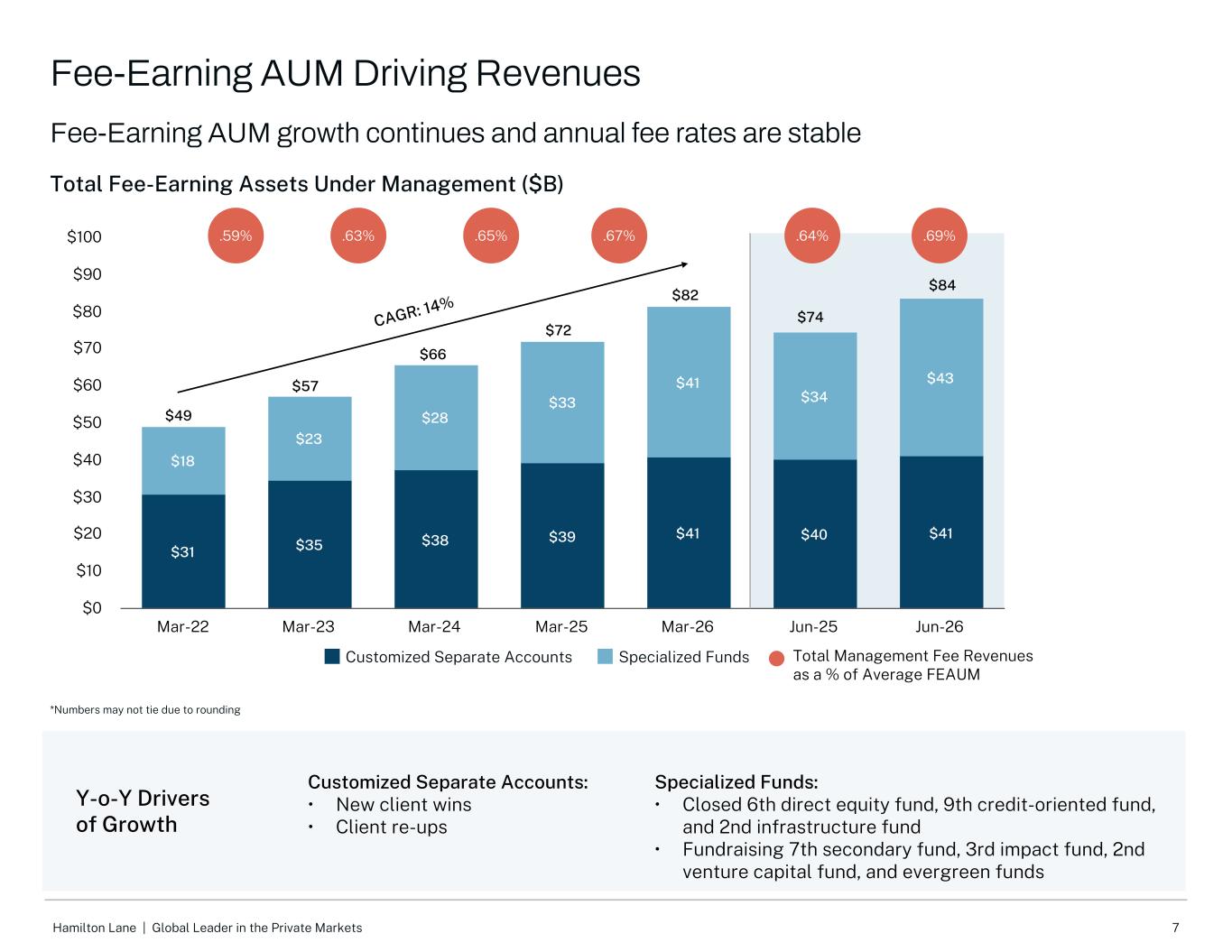
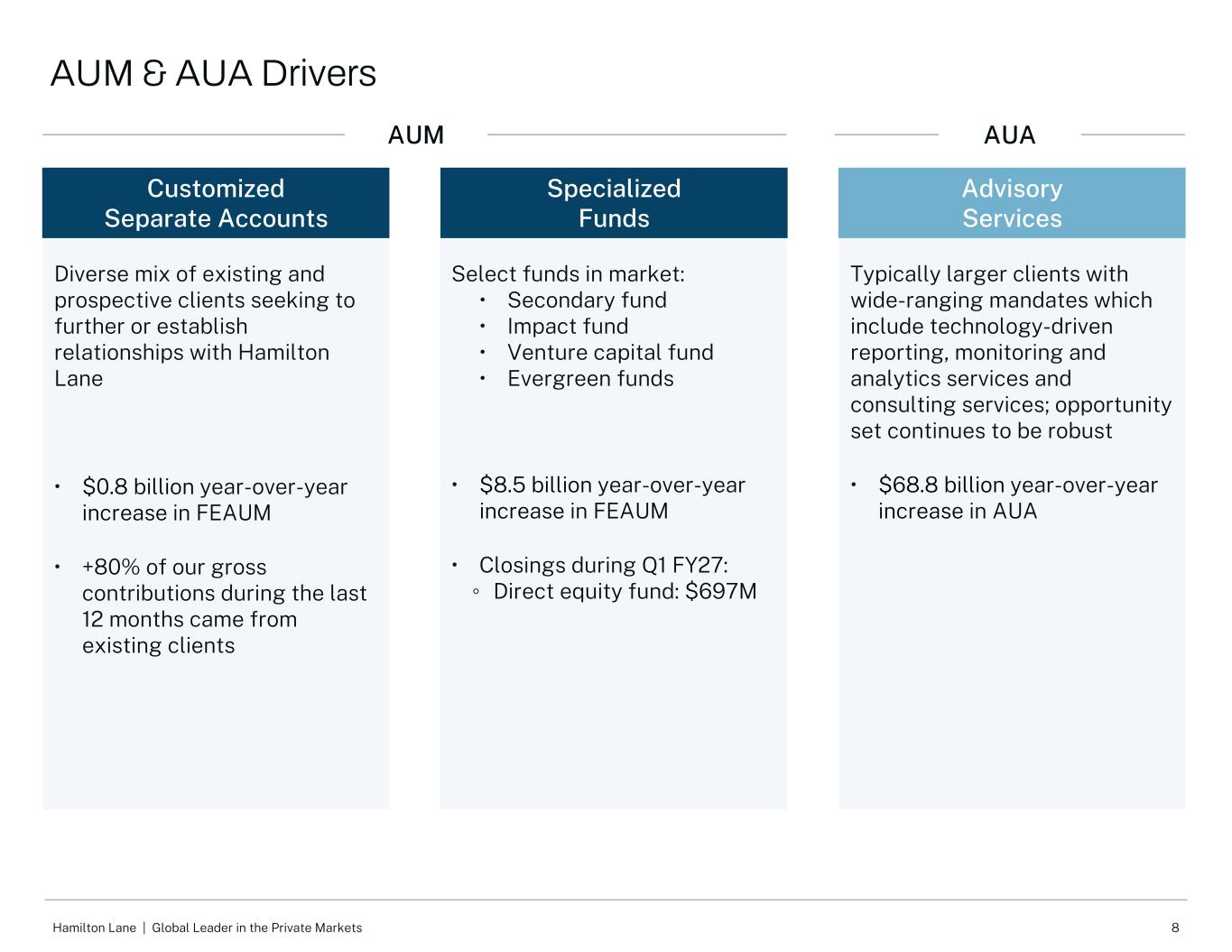
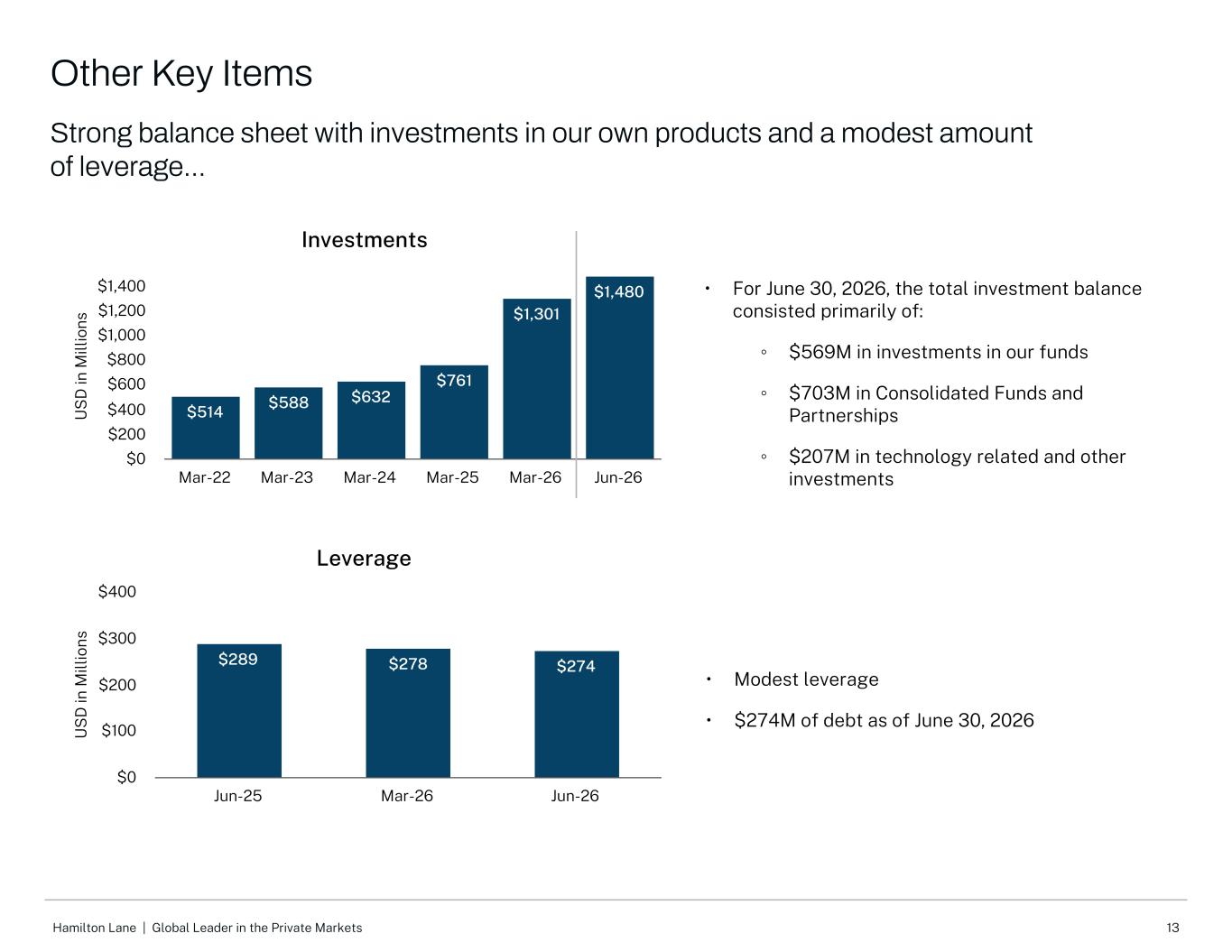
In May, we saw Celebrated Hamilton Lane's 35th anniversary. A simple AI query will tell you that few companies founded ever reach this milestone. To me, while the longevity is noteworthy, the more important point is what that milestone represents. Lane has built and adapted to focus on best service and how many new investors continue to entrust us. I'm personally proud that clients who have been with us from the beginning of this journey are with us with capital today. $1 billion, $2.1 billion or 3%. Our blended fee rate continues to benefit as our fee-earning AUM towards the specialized funds part of our business. Our blended fee rate now stands at 69 basis points. Growth continues to be driven largely by our specialized fund platform. Overall, specialized fund fee-earning AUM ended this quarter at $42.6 billion, an increase of 20 from new subscriptions along with healthy contributions from our drawdown products, Equity Opportunities Fund, our second venture fund, with redemptions coming primarily from two of our largest non-U.S. evergreen products, along with exit activity and continues to demonstrate resilience. For the quarter that ended in June, we generated nearly $640 million of net inflows across all strategies and ended the period with over $19 billion of AUM. We did not enact gates on any of our funds, and we saw positive net inflow across 10 out of 12 funds, with our non-U.S. credit offering essentially being flat for the quarter, and our non-U.S. multi-strategy equity funds showing elevated redemptions and finishing in net outflow for the quarter. The redemptions in this fund came largely from two categories of investors, the first being longstanding investors who have seen their exposure to the dollar in the institutional USD share class of our non-US multi-strat equity platform at inception, 30th of this year, that dollar would be worth $2.32. Not surprisingly, we see clients harvesting some gains and rebalancing, going back into other Hamilton Lane products, a bit more unique, managed account. They are redeeming to then fund the SMA. In passing, clients avail themselves of this alternative to temporarily house capital for future use and drawdown funds inevitably results in redemptions seen by Hamilton Lane. Market dynamics continue to evolve and mature. We expect over time that redemptions will be driven by different motivators and will need to be examined in the slowdown on flows on certain products and the general hesitancy with investors given the constant negative headlines. We strongly believe this is temporary and have already begun to see the swing back. You need to operate with a long-term mindset. Our Evergreen platform has been purposely built to reach investors around the world and to offer a wide variety of strategies. We have only a small number of Evergreen managers with both a scaled U.S. platform and a scaled non-U.S. platform. Outside the U.S., we offer seven vehicles with our multi-strategy equity, credit, and infrastructure funds, each having more than $1 billion of AUM, and our secondaries and venture offerings are fast approaching the $1 billion AUM mark. Performance across the vehicles remains strong. Breath is evident in the U.S. as well. Five vehicles across multi-strategy equity. Equity fund represents the majority of our U.S. evergreen AUM. Why would we do this? I started earlier. To evolve, professionals are realizing that not all platforms are built the same. With an increasing amount of data available on brands, product lineups, I believe will be the winning franchises for the next many years. We have added six high to our senior ranks. What lies ahead as this team comes together? Green journey where track records are getting longer and are getting more scrutiny. An investment approach and risk-taking are not the same trying to build an index, nor are we building concentrated portfolios. We are building portfolios with purposeful diversification across managers, strategies, geographies, and underlying assets. of deep sourcing, task management, manager selection, and asset selection still drive outcomes in a very meaningful way, and the performance remains wide. And when you combine that discipline with the advantages of a multi-manager platform, differentiated deal flow, access to high-quality middle market opportunities, flexibility across market environments, and the ability to lean into specialized expertise is a stronger foundation for consistency over time. That is what we believe is showing up in our results, which continue to be strong. Looking at institutional USD share class and excluding the most recently launched U.S. private credit fund, given its nascency, each of our funds has generated positive double-digit performance both year-to-date, being our non-U.S. private credit platform, which targets a high single-digit return and has delivered just that calendar year since inception. Three largest and most seasoned individual products, those being our U.S. and non-U.S. multi-strategy equity product and non-U.S. credit product realizations from their underlying portfolio platform in its entirety. What we see is a business that remains healthy, positioned for long-term in different ways across where flows move around category, but none of that changes our conviction. We believe the evergreen platform we have built is differentiated out of our closed-end franchise. across our fundraising activities and are seeing strong momentum build across several strategies approaching their initial closes, 2007 and into early fiscal 2028, with five key strategies. Four secondaries, our inaugural GP-led secondary strategy, we begin with our most recently closed fund. I'm pleased to announce that our direct equity platform finished its raise, collecting $3.8 billion in and alongside the fund. That broke down to $3.3 billion in the fund and $500 million in separate accounts investing alongside. Our team, our differentiated deal flow, and our near 30-year track record in this space resonated with investors across the globe. We attracted public and private pension funds, sovereign wealth funds, capped Hartley plans, endowments and foundations, and individuals. And we are deeply grateful. Small and mid-market business is a prime example of how we are continuing to scale part of what we've been able to accomplish with this fundraise. Fundraising is off to a good start, as we held the first close just last week on nearly wars of investor commitment, followed by another close, which we already have good visibility. Like before, we have 18 months from the time of the initial close to complete the fundraise. We remain encouraged by the level of support we have already received, and we are looking forward to continuing to grow in a quarter we success with the dollars of investor commitment. For context, our first venture fund raised a total of $615 million, which means this initial close already represents more than 60% of the size of the first fund. We believe that is a reflection of the confidence our investors have in the team and the opportunity set. up here with customized separate accounts. At quarter end, customized separate account fee-earning AUM stood at $41.1 billion, or 2%, was up slightly quarter over quarter. We continue to see gross contributions coming from a mix of new client wins, plus re-up activity from existing clients, plus contributions for investment activity, and then being offset by fee-basis step-downs, which is largely a timing-related impact, as well as capital distribution stemming from exit activity. We continue to execute well across our separate account business, converting both our back book and active pipeline into closed mandates from existing clients and new relationships. With existing client base, we closed on more than $2.3 billion of total mandate value, driven primarily by re-ups and relationship into a new service line. We also closed on more than $1.3 billion of total mandate value from clients that are new to Hamilton Lane. These wins came from both domestic and international institutions, further reinforcing the global relevance for our platform and the continued demand we are seeing across the market for private market solutions. Our team continues to make very good progress, replenishing the pipeline of re-up opportunities immediately into fee-earning AUM, particularly where the underlying portfolio construction is more heavily oriented towards or where they are either drawdown or evergreen. There is often a natural pacing element to deployment for the primary element, and that timing should be expected. Capital has been awarded. The client relationships have been established. Future fee earning growth is in place. Now to our balance sheet updates, and let me highlight some recent exciting events regarding several investments in our strategic investment portfolio, and then Jeff will provide more details in his section. Russell Investments. On July 9th, Russell announced that a consortium led by B Capital and CalPERS agreed to acquire the firm. As a reminder, in March of 2021, we entered into a strategic partnership with REL, a compelling opportunity to combine Russell's global outsource solutions franchise and client reach with Hamilton Lane's private market platform, research, portfolio, construction capabilities, and technology. Over the past five years, that partnership has created difference is a strong example of how we can use our platform to help sophisticated partners expand private market access in a way that is strategic, scalable, and aligned with client demand. During our period of ownership, the investment delivered both strategic and financial benefits. And while this transaction marks the end of our economic ownership in Russell, it does not mark the end of the relationship. We remain excited to continue advancing the partnership and our shared goal for delivering best in 2025, Securitize announced that it had entered into a definitive business combination agreement with Cantor Equity Partners 2, a special purpose acquisition company, and they would transition to a publicly traded company. That transaction has now been completed, and Securitize is now a publicly listed company on the New York Stock Exchange. We originally invested $5 million from our balance sheet and now hold approximately 1.1 million shares of Securitize, which, as of yesterday's closing price, traded at $6.94 per share. The relationship with Securitize began in 2022 when we partnered with them to tokenize several Hamilton Lane offerings and expand access to private markets through digital-first token. In May 2024, Hamilton Lane built on our commercial relationship, leading around led by BlackRock. We made that investment because we believe Securitize was building important infrastructure for the next evolution of capital markets related technology that can bring traditional financial assets broader set of investors important validation of that thesis it reflects the increasing institutional adoption of tokenization and highlights the role that regulated infrastructure can play in modernizing how financial assets are issued managed driven platform that automates the collection extraction and validation of alternative investment data, taking the large volume of fund documents, capital account statements, and cash flow that underpin the private markets, and turning them into clean, actionable information. Our relationship began in 2019 with pilots on Hamilton Lane's own documents, which was then followed by our initial investment in Canoe's Series A in 2020, and then continuing to support the business through subsequent rounds. We invested because Canoe was addressing a need we experienced ourselves and saw across the broader market, that being reducing operational friction and enhancing data quality across the asset class. Bloomberg's agreement to acquire Canoe is a strong validation of that thesis. For Hamilton Lane, it is another example of us using our balance sheet in a targeted way to support technology partners that we believe are helping shape the future of the private markets. And with that, I'll now pass the call to Jeff, who will cover both our financials and the impact.
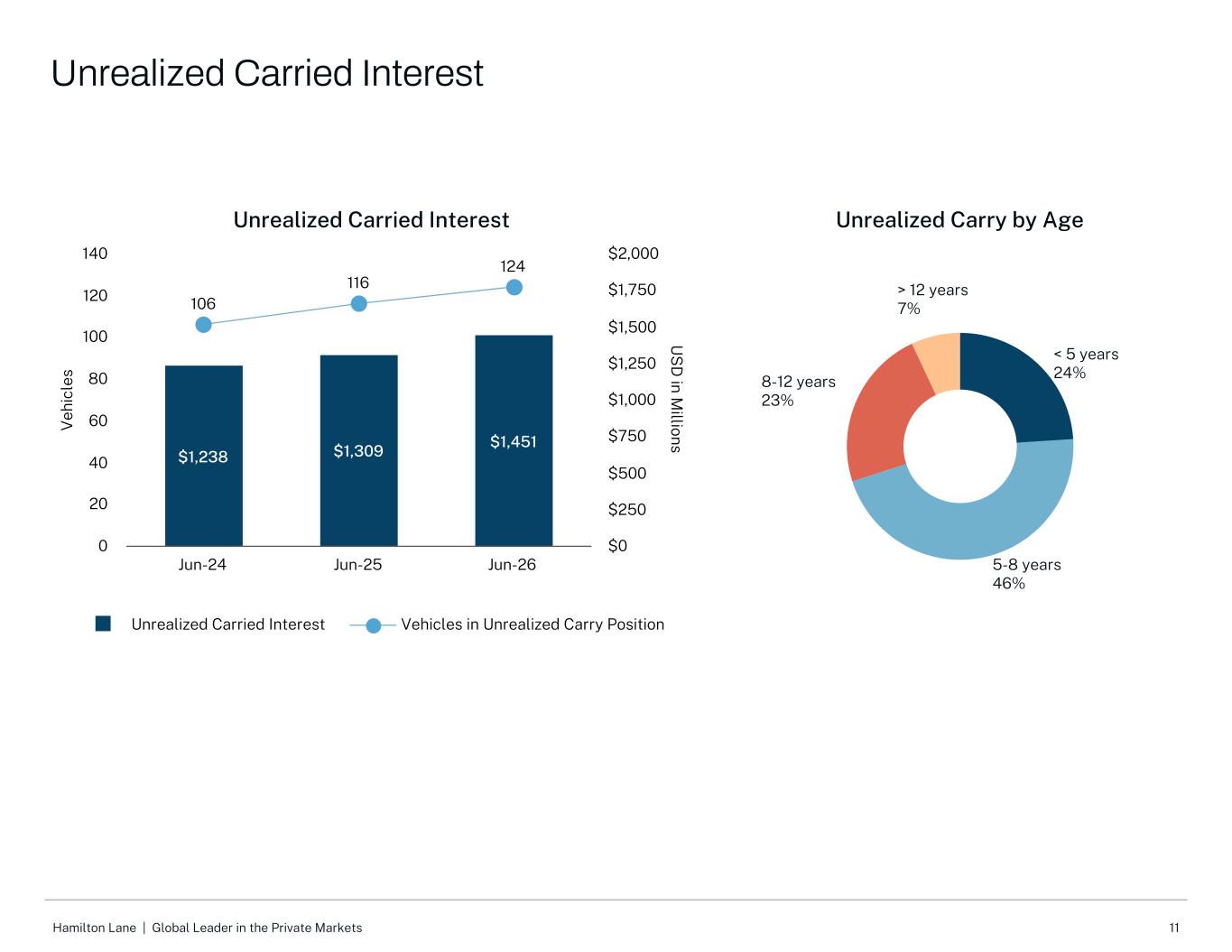
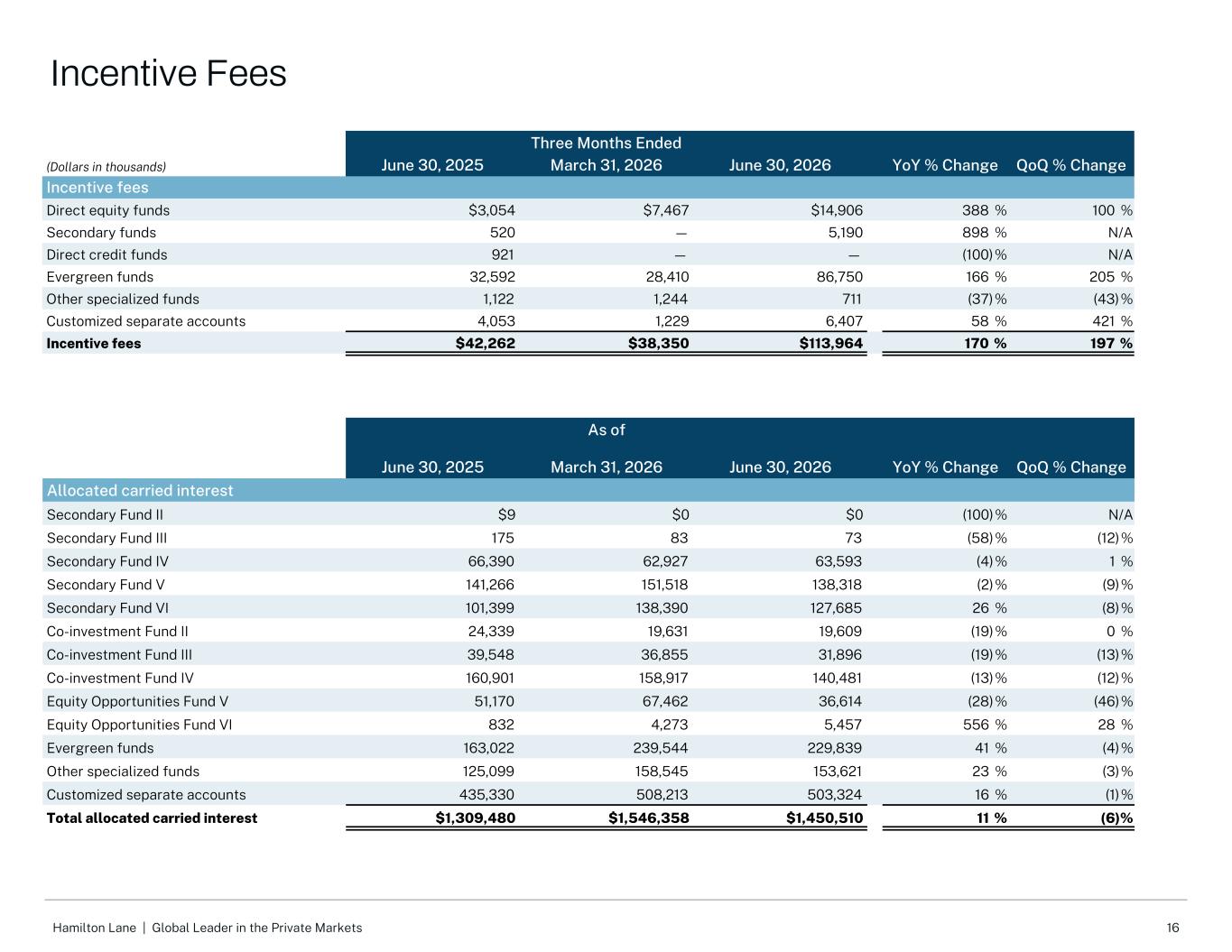
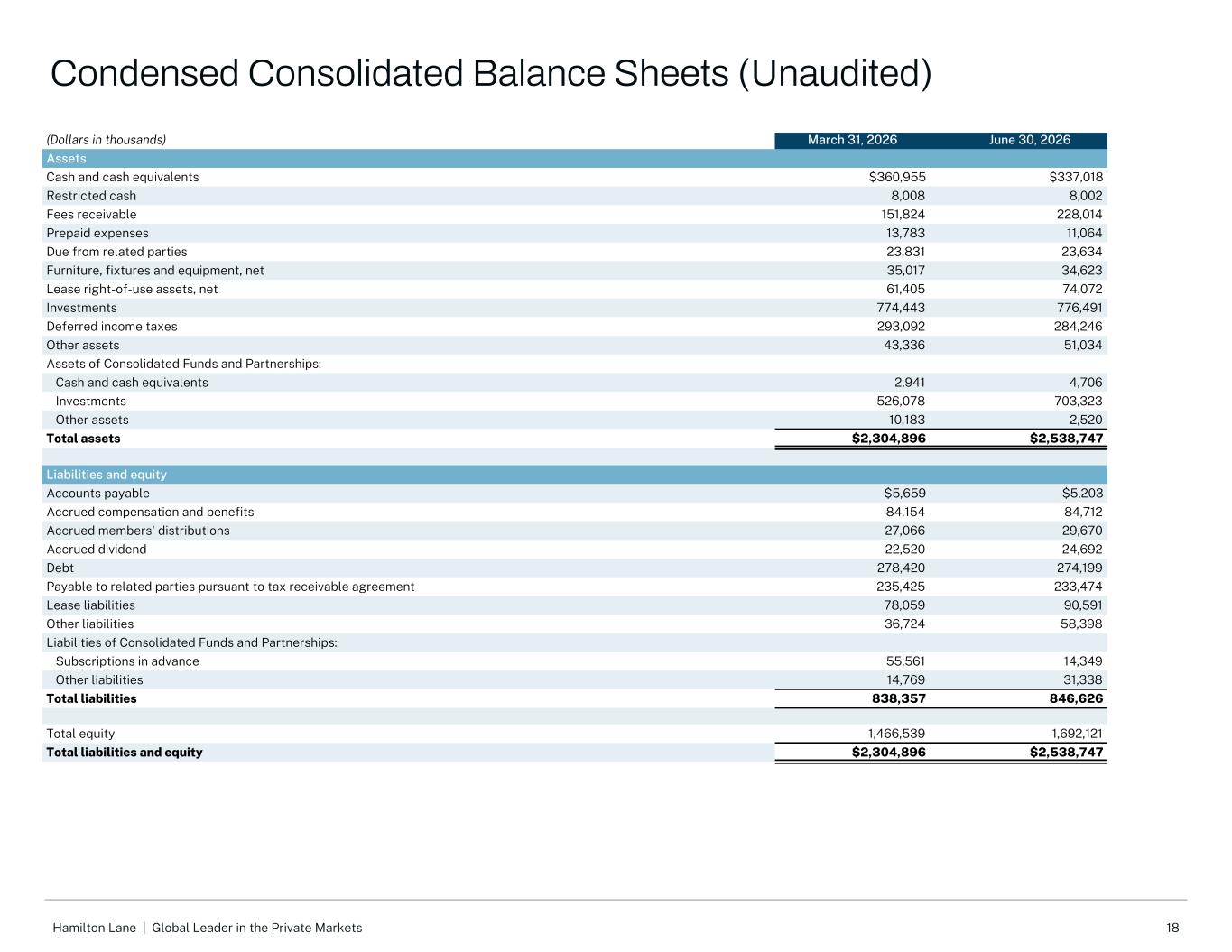
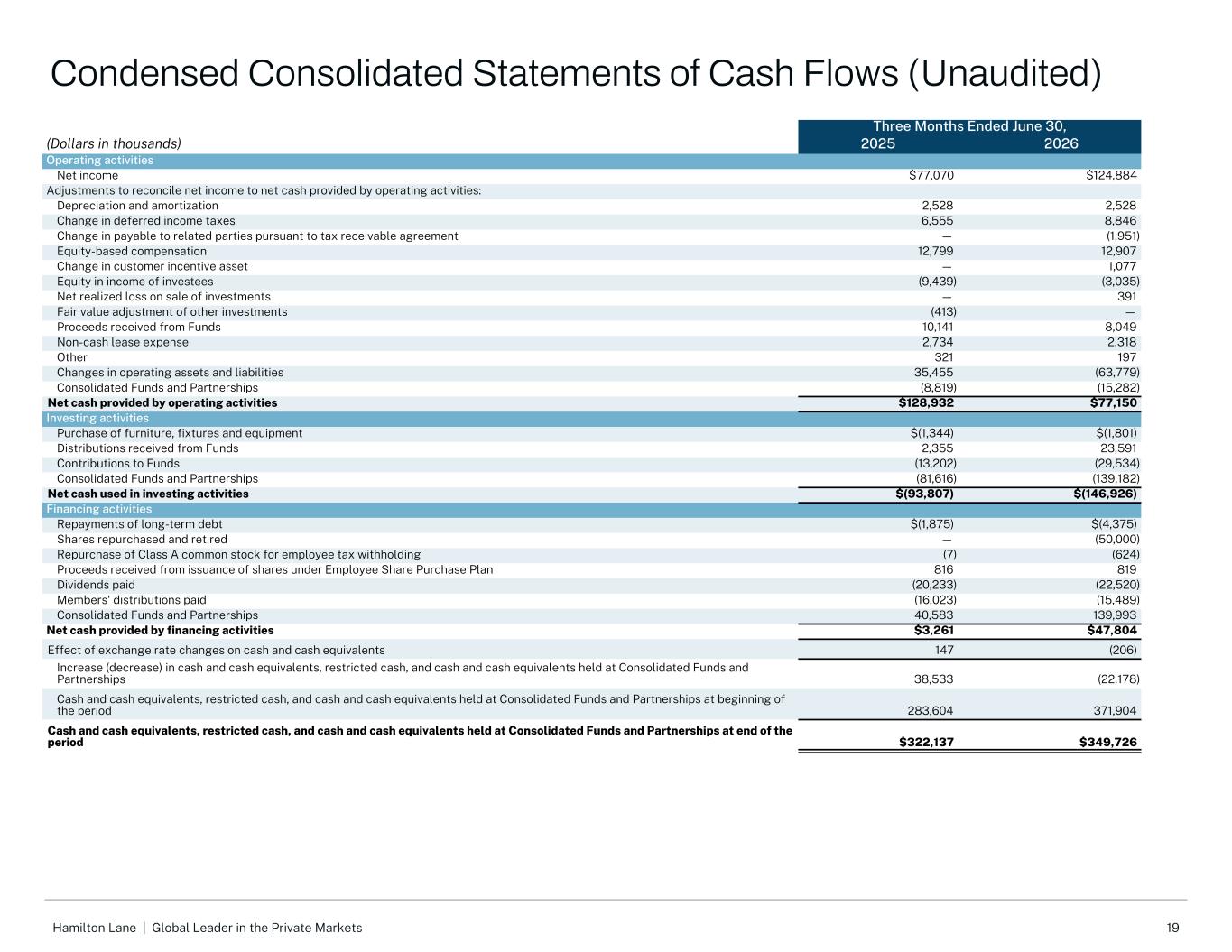
Good morning, everyone. Advisory fees are up 21% in our fee-related performance revenue. Management fees increased by $26 million, or 32%, primarily by a six-point fee-earning AUM in our Evergreen platform, and over a $930 million increase from our latest direct equity fund over the last 12 months. Steady re-ups from existing clients and the addition of new accounts and fee basis step-downs, or 18%, as we continue to produce strong growth in our technology solutions offer is incentive fees, which totaled $114 million for the period. This amount includes fee-related performance revenues stemming primarily from the quarterly crystallization of performance fees from our U.S. private, with additional contributions coming from our more recently launched to our unrealized carry value, even while having recognized $113 million of incentive fees, excluding fee-related performance revenues during the last 12 months. 1.5 compensation and benefits increased $38 million, or 55%, due primarily to increases in operating performance and headcount. GNA increased by $12 million, primarily driven by revenue-related expenses and ones related to our U.S. Evergreen funds, along with other Evergreen fund platform fees, closed-in fund placement agencies, expected to lead to corresponding revenue over time. The increase in these expenses is a good We successfully offset this with cost savings and expense discipline in other parts of business, where we have FRE for the quarter was $124 million and was up 49% relative to the prior year period, with FRE margin year-to-date came in at 53% compared to 51% for the prior year period, and FRE margin benefited from strong fee-related performance revenues and purchase activity during the quarter. approximately 559,000 shares of $89.51 per share, resulting in roughly $50 million spent $70 million on sheet commentary. I want to take a moment to outline our expectations on how the recent events that Eric mentioned regarding our investments in Russell, Securitize, and Canoe will come through our income statement. We expect to realize just under $50 million based on our calendar year 2027, subject to regulatory approvals and other customary closing conditions. If action closes as expected, we would anticipate recording a gain of approximately $18 million at that business combination. We now hold approximately 1.5 million shares of CZ. Because the transaction closed after the end of the reporting period, we will begin marking this position to the publicly traded share price next quarter, and at the end of each quarter, going first remains subject to a 180-day lockup period, after which we will continue to evaluate the proceeds of approximately $30 million This represents an estimated gain of over $15 million versus our current to recognize this gain upon the transaction's closing. As it continues to be our investments alongside our clients, we view these investments as an important component of our continued growth and will continue to invest our balance sheet capital alongside our clients. In regard to our liabilities, we continue to be modestly levered. I'd like to reiterate that we will continue to evaluate opportunities to strategically utilize the strength of our balance sheet and employees have generally taken the form of C-Capital to help stand up new product launches and have also come with having to consolidate these products onto our balance sheet during the ramp and scaling up phases. While this goal of deconsolidation, once our initial contribution is diluted down, and with that, we'd like to thank everyone for listening in, and we'll now open up the call.
Operator
Thank you. Ladies and gentlemen, we will now begin the question and answer session. Should you have a question, please press the star followed by the one on your touchtone phone. You will hear a prompt that your hand has been raised. If you wish to decline from the polling process, please press star followed by the two. If you are using a speakerphone, please lift the handset before pressing any keys. We do ask that you limit yourself to one question and one follow-up. You may requeue if you have additional questions. Michael Cypress with Morgan Stanley, please go ahead.
Hey, good morning. Thanks for taking the question. Just wanted to circle back on the private wealth commentary regarding the redemptions in the international vehicle, the Global Private Asset Fund. Just curious what your expectation is around the path for that fund to return to net inflows on a more consistent basis. And maybe you could also talk about how you are expanding distribution reach of that vehicle to capture new customers and new platforms.
Sure, Mike, it's Eric. The team continues to expand, and I think increasingly we're starting back in, is what I mentioned on the, that is just causing.
And then just more broadly on the Evergreen fund lineup continues to expand and bring in assets, but also just given some of the experiments you've had with tokenization that you alluded to in some of your commentary. Just curious what learnings you've had around tokenization so far. Where are you seeing greatest utility? And ultimately, just curious, could tokenization prove as important to private markets as maybe ETFs were to public markets? Just curious how you're thinking about that and how you're thinking about some of the next generation of evergreen and semi-liquid product structures.
Sure. I think the tokenization is still when is this going to the adoption i think has been muted confusion in the market that somehow people are equating token nothing in common other than a blockchain backbone it continues to be important having companies like securitize become publicly traded i think that's enormously helpful because again that helps the education it sort of shows stability it shows future growth and what we're seeing is some very very large asset management firms tokenizing I would say, very mundane product. I think it's sort of showing people that this does not need to be exotic assets, that this is just a better way to operate. I think the other reality is that we're about to undertake a huge generational wealth transition, particularly in this country. And as that sort of younger generation who is much in a fully digital environment starts to become the holders of wealth, I think that's going to be another big push. So for us, I think it sort of widens out the addressable market who are looking to operate in a digitally native environment. And as tokenization utilization increases, we believe that that will drive down some operating costs.
Operator
Thank you. Alex Blostein with Goldman Sachs. Please go ahead.
Hey, good morning. This is Anthony on for Alex. You spoke to clients, you know, redeeming out of your global private assets fund and switching into other Hamilton Lane products. Could you quantify how much an inflow is driven to other products and, like, what other funds are seeing kind of the biggest demand from this, like, switching aspect?
Yeah, Anthony, it's Eric. So, us, because when we are the reasons why we're being selected is that they want that sort of fully invested. invested and achieve that is they make an asset allocation decision and they decide that those dollars in this case are starting in the second biggest movement and moving into SMAs. And so there's a redemption. It's, and again, a much better, we think is a positive. Again, in a prior world, prior to Evergreens, that capital was largely kept in a passive public equity index, obviously that we were not managing. And so we think the advent of this and the evolution of this continues to be a positive That's helpful.
And then maybe switching over to the U.S. Evergreen channel, flows in some of the newer products have been relatively slow. I guess what are you hearing on the ground from platforms and advisors, and what are your expectations on flows as you guys kind of expand the distribution and sales efforts?
Like I said, I mean, we've done a big overhaul of the sales team. I also think that a lot of these products, and so they're not sitting at that kind of magical billion-dollar mark, which we see is, I think we expect that the early phases of this are always a bit of a grind as you're kind of getting to scale. I think with the expansion of the team and bringing in, you know, more senior season talent, we think that all will help accelerate this. And then I think you got to get to that magical size, and then you start to see a ramping occurring in a much quicker space, and that's what we expect.
Operator
Thank you. Alex Bond with KPW. Please go ahead.
Hey, good morning, everyone. Thanks for taking the questions. Maybe I just wanted to ask around the Evergreen Suite to start. Maybe just following the $640 million of net inflows in the quarter, I'm wondering if you can share any July trends as it relates to the Evergreen Suite. And then secondly, more of a bigger picture question, wondering how you would juxtapose the trajectory of the growth in terms of the U.S. funds versus the international funds here. You mentioned that the international funds are a bit more mature and have had strong performance to date. But maybe any color there that you could share around the long-term growth potential for both the international suite in and of itself and then maybe relative to the U.S. suite would be helpful as well.
Alex, it's Eric. Levels are rising across really is you've seen over the market is simply not mature by good data. That is an example of a lack of maturity and confidence in an industry. And the industry needs, we just started the future. We're seeing some of the noise subside.
Got it. Okay, that's helpful. And then maybe one for Jeff, just on the accrued carried interest balance. It looks like the sequential decline there was around $90 million, whereas the non-evergreen incentive fee realizations in the quarter were closer to $30 million. So just wondering if you could share maybe what drove that delta here in the quarter.
We're continuing to do activity in terms of realizations, and that's impacting the unrealized, and hopefully that will continue, but it's hard to predict what's going to happen in the future.
Operator
Thank you. Ken Worthington with J.P. Please go ahead.
This is Madeline Delighton. On for Ken. Thanks for taking our question. So, evergreen questions, I'll pretty much ask and answer, but just digging into your earlier comments on products coming back to market, any other details or timelines you can provide on what we should expect to be back in market over the next two to three quarters. Thank you.
So, Madeline, it's Eric. Thanks for the question. I think it's sort of what we sort of touched on. So, direct equity is now out of market, secondary.
Operator
Thank you. No, thank you.
Operator
Thank you, ladies and gentlemen. As a reminder, should you have any questions, please press star one. Brennan Hawking with BMO. Please go ahead.
Hey, it's Mark on for Brennan. Just wanted to ask on FRD margin, it was strong in the quarter, 53% benefiting from FRPR. As we think through the remainder of the fiscal year, how should we kind of think about a stable margin and would incremental margin expansion come from continued top-line growth and mix shift or from expense discipline?
Yeah, it's Eric. Thanks for the question. The combination of those things is to the extent that we continue to see that along with the sort of margin lifting, and the team here continues to.
And then within customized separate accounts, you highlighted a strong pipeline of awarded mandates in the billions of dollars. Can you provide more color on the timing of converting that pipeline into fee-paying AUM? And additionally, when existing clients bring you up with you, are you generally seeing larger mandate sizes?
I mean, that really varies by the client, how mature their portfolio is. So yes, you tend to see re-ups at larger levels because they're still target. For clients that are much more mature and are kind of at allocation and are looking to just sort of steady state maintain, those mandates tend to be more similarly sized. So it does vary by timing of conversion. Again, it varies depending on what is the mandate. If the mandate is a separate account that is full of just primary funds to continue to move in as you're continuing to find managers, have that capital drawn down and begin to charge fees on that. The only mandate is a much slower process to fee conversion. If the SMA is much more transactionally oriented, then that is obviously much, much quicker as that capital tends to get deployed over a one or two year timetable. And for the SMA portion that's moving into specialized funds, well, that depends on whether the funds on committed capital or invested capital and how quickly that sort of moves over and how quickly that capital turns into fee earning AUM.
Operator
Thank you. Thank you. We have no further questions.
Operator
I will turn the call back over to Eric Hirsch, co-chief executive officer for closing comments.
Let me just say thank you for taking this. Hopefully your takeaway is that we remain very excited about the opportunity.
Operator
Ladies and gentlemen, this concludes your conference call for today. We thank you for participating and ask that you please disconnect your line.