Operator
Good day, and welcome to the Heister Yale, Inc. second quarter of 2026 earnings conference call. All participants will be in listen-only mode. Should you need assistance, please signal a conference specialist by pressing the star key, followed by zero. After today's presentation, there will be an opportunity to ask questions. To ask a question, you may press star than 1 on your telephone keypad, and to withdraw your question, please press star than 2. Please note that today's event is being recorded. I would now like to turn the conference over to Andrea Saba, Director of Investor Relations and Treasury. Please go ahead.
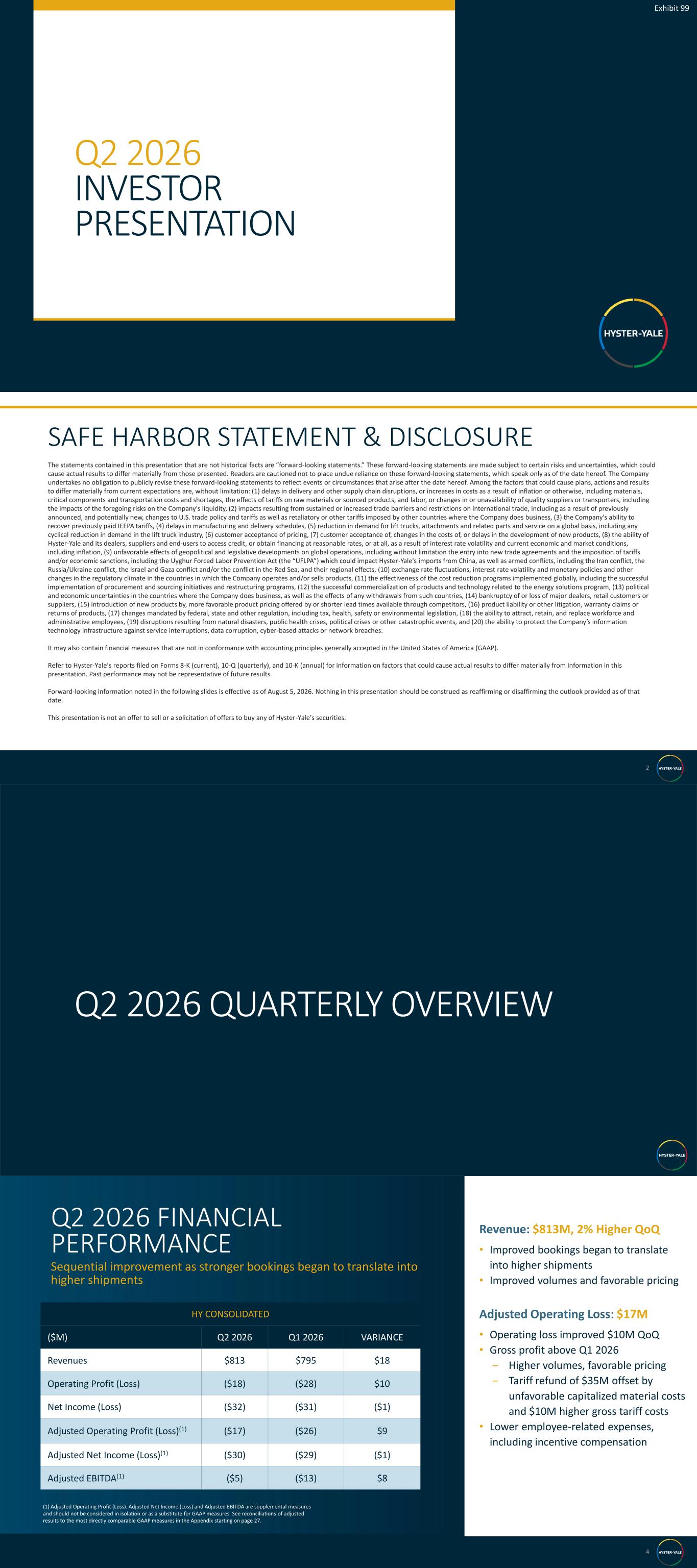
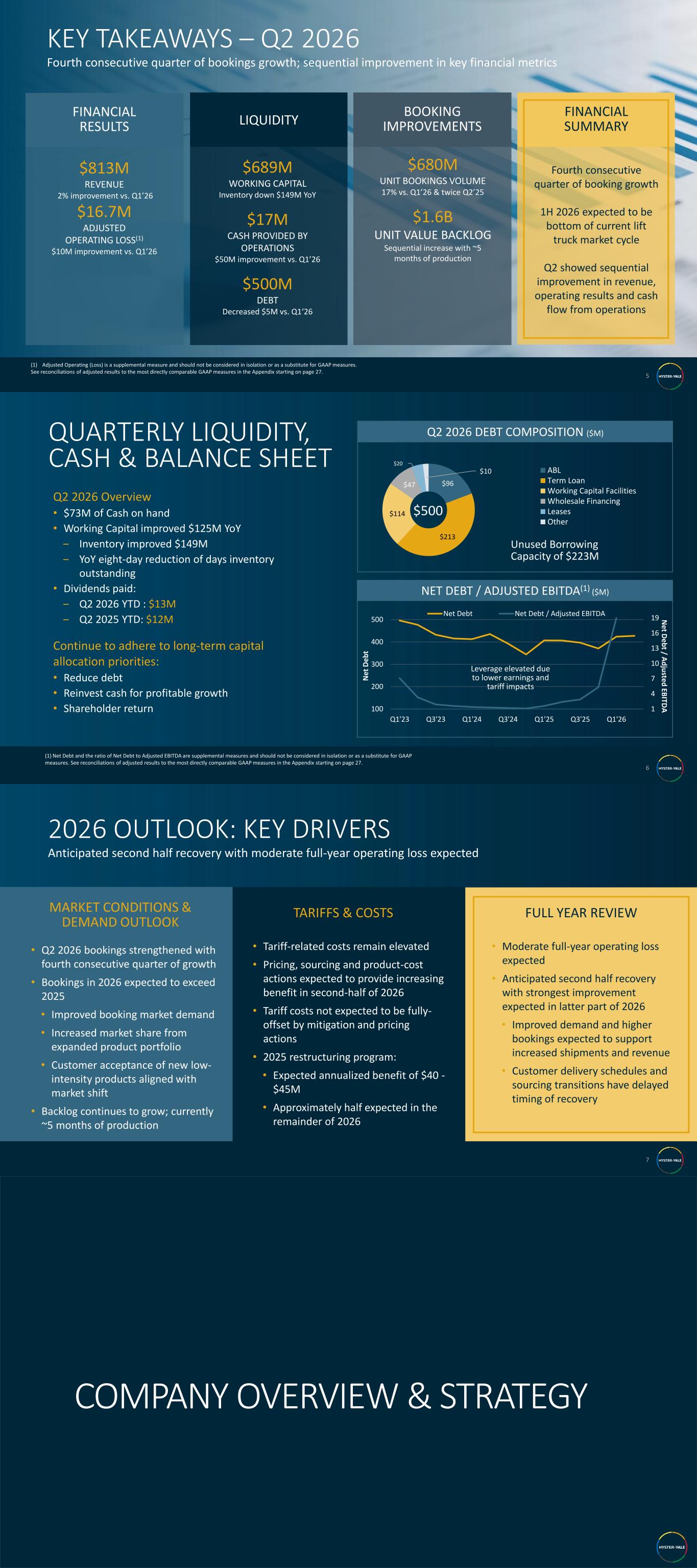
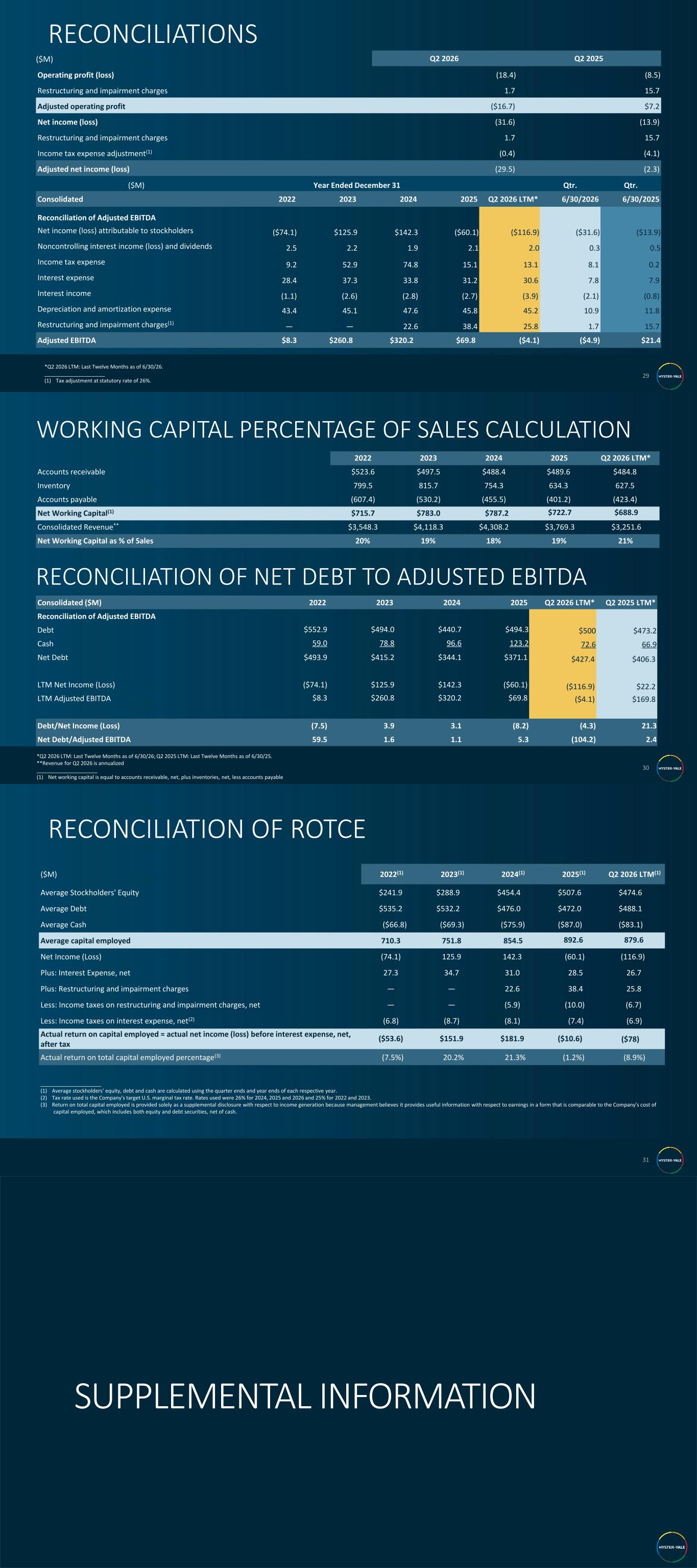
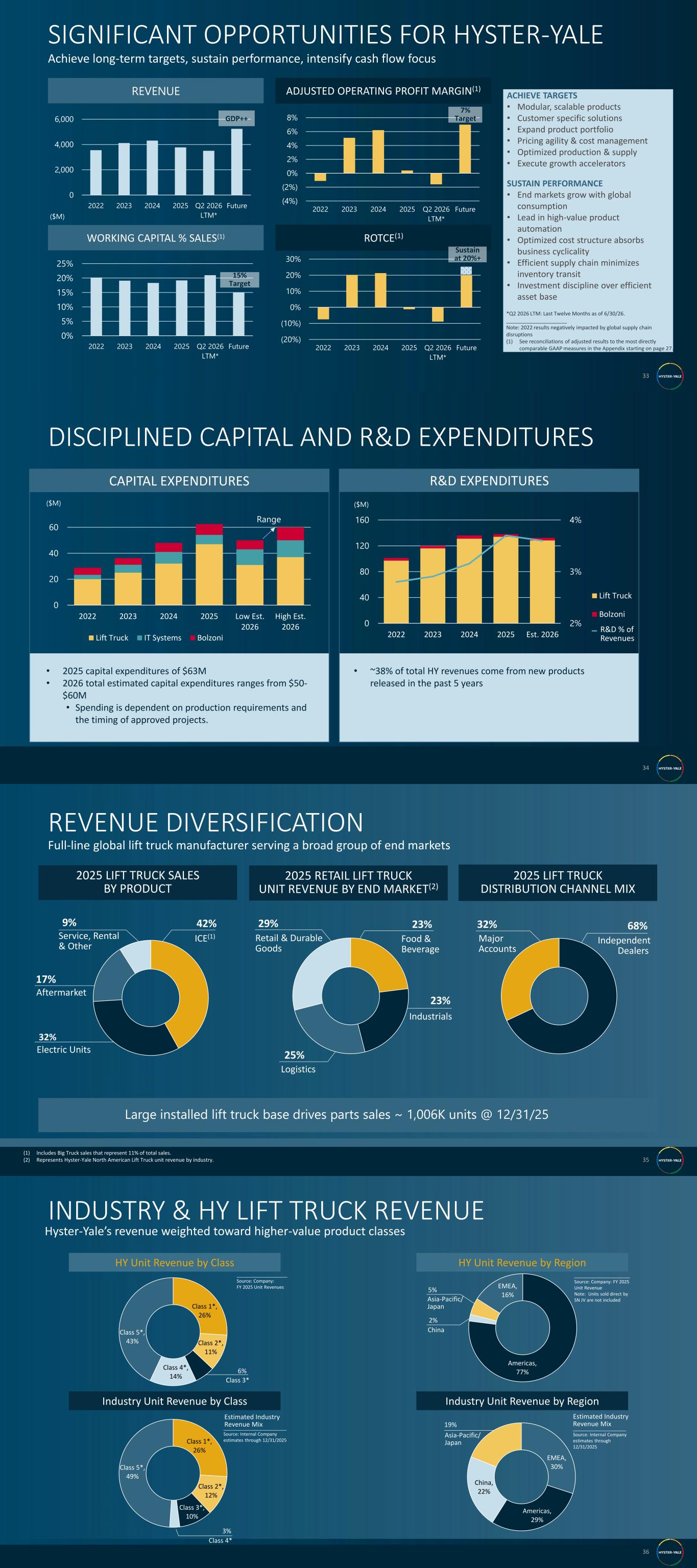
Good morning, and thank you for joining us for Heister Yale's second quarter 2026 earnings call. I am Andrea Saba, Director of Investor Relations and Treasury. Joining me today are Al Rankin, Executive Chairman, and Rajiv Prasad, President and Chief Executive Officer. We will be discussing our Q2-2026 earnings release issued yesterday. You can find the release and a replay of this webcast on the Heister Yale website. The replay will remain available for approximately 12 months. Today's call contains forward-looking statements subject to risks that could cause actual results to differ materially from those expressed or implied. These risks are outlined in our earnings release and SEC filings. We will also discuss adjusted results, which we believe are useful supplements to GAAP financial measures. Reconciliations of adjusted results to the most directly comparable GAAP measures are available in our earnings release and investor presentation. Before turning the call over to Rajiv, I will briefly highlight our second quarter results. The second quarter of 2026 represented another step forward in what we continue to view as a gradual market recovery. Compared with the first quarter of 2026, we improved in several key metrics, including bookings, revenue, operating performance, and cash flow. While volumes remain below optimal levels and profitability is still under pressure, the trends during the second quarter provide evidence that demand and business activity are moving in the right direction. Bookings for the quarter were $680 million, up 17% sequentially, and more than double the level of the second quarter of 2025. This marks our fourth consecutive quarter of bookings growth. Revenue was $813 million, up 2% compared to the first quarter of 2026, as stronger bookings began translating into higher shipments. Consolidated operating loss improved to $18 million, approximately $10 million better than the first quarter of 2026. Most of that improvement came from the lift truck business where higher shipments, favorable pricing, and lower employee-related expenses help offset ongoing market challenges. The quarter also included $35 million in tariff refunds. However, those benefits were largely offset by unfavorable capitalized material costs and $10 million in higher gross tariff expenses. Balzoni also improved sequentially during the second quarter of 2026, returning to profitability as favorable product mix, lower freight costs, and disciplined cost management, more than offset, slightly lower revenue. In the second quarter of 2026, net loss was $32 million and includes the establishment of a $3 million non-cash valuation allowance related to Brazilian deferred tax assets. Second quarter operating cash flow was a source of $17 million, improving approximately $50 million from the first quarter of 2026 despite continuing losses. The improvement was driven primarily by lower inventory levels and favorable changes in accrued liabilities following first quarter annual incentive compensation payments. The positive operating cash flow reflects the disciplined working capital actions the company executed during a challenging operating environment. With the second quarter results outlined, I'll now turn the call over to Rajiv to discuss the market environment, progress we are making on our strategic initiative, and our consolidated outlook.
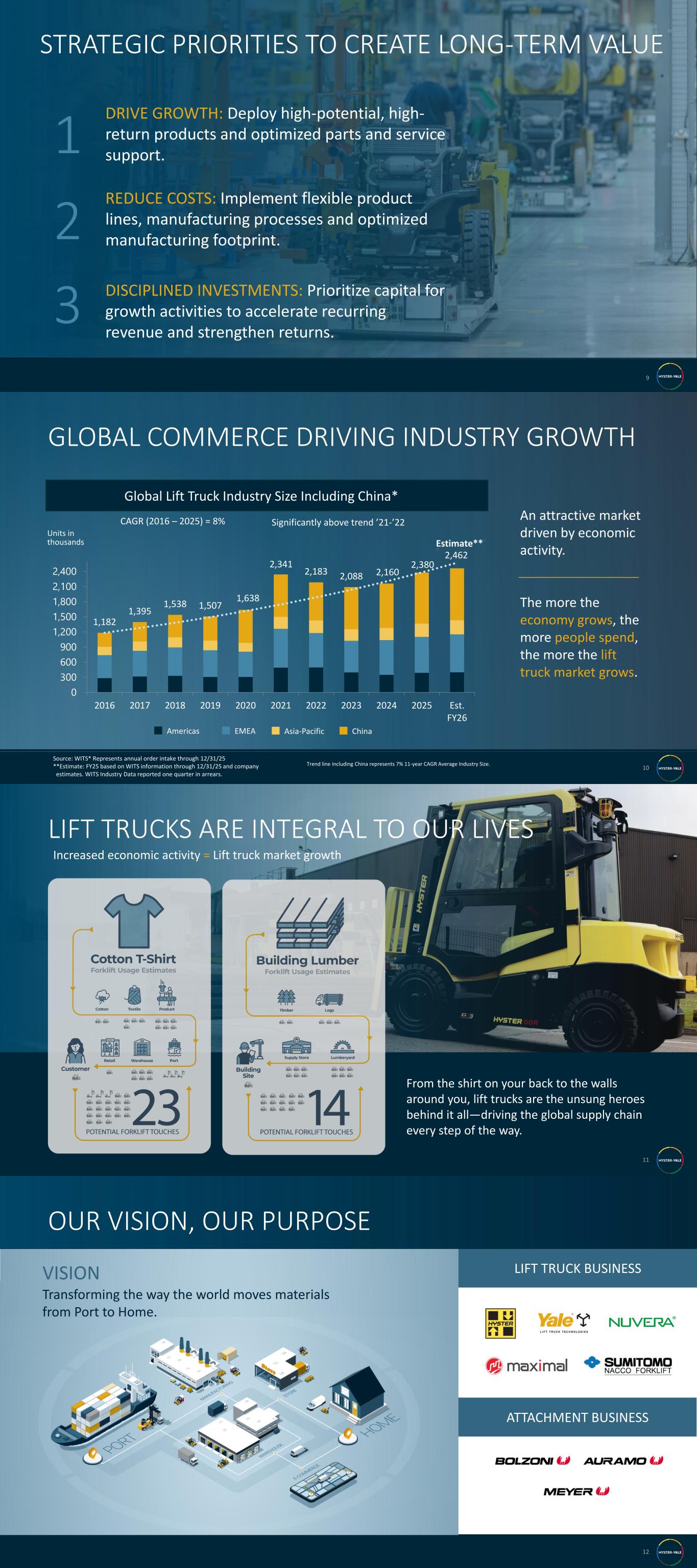
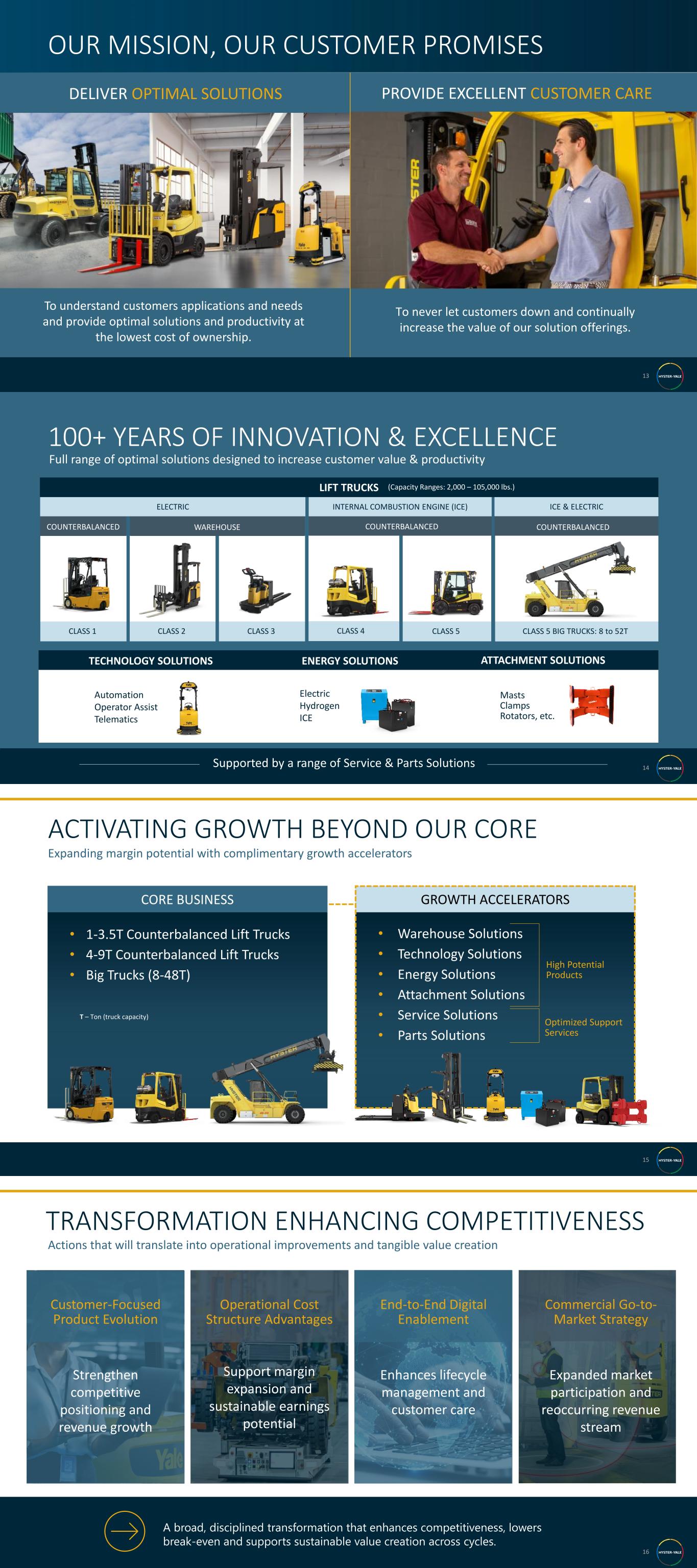
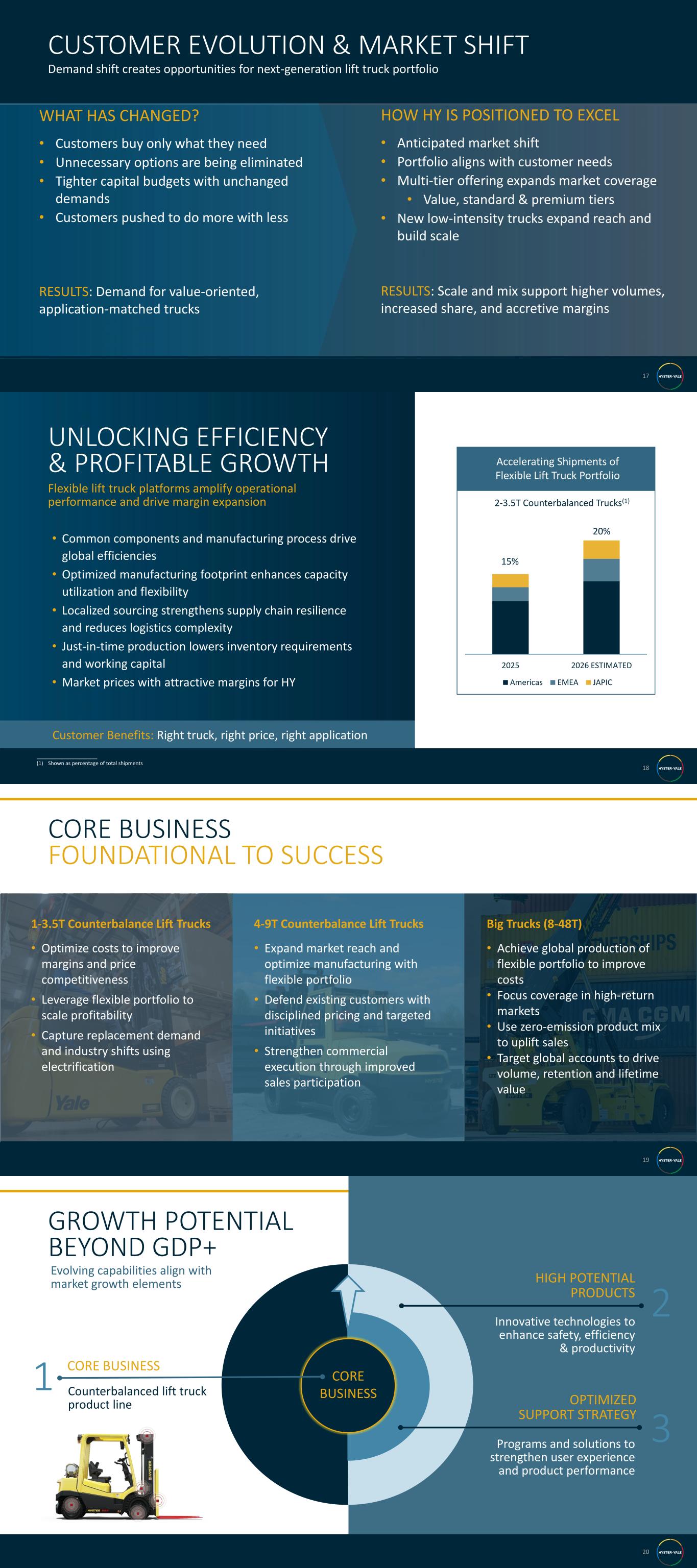
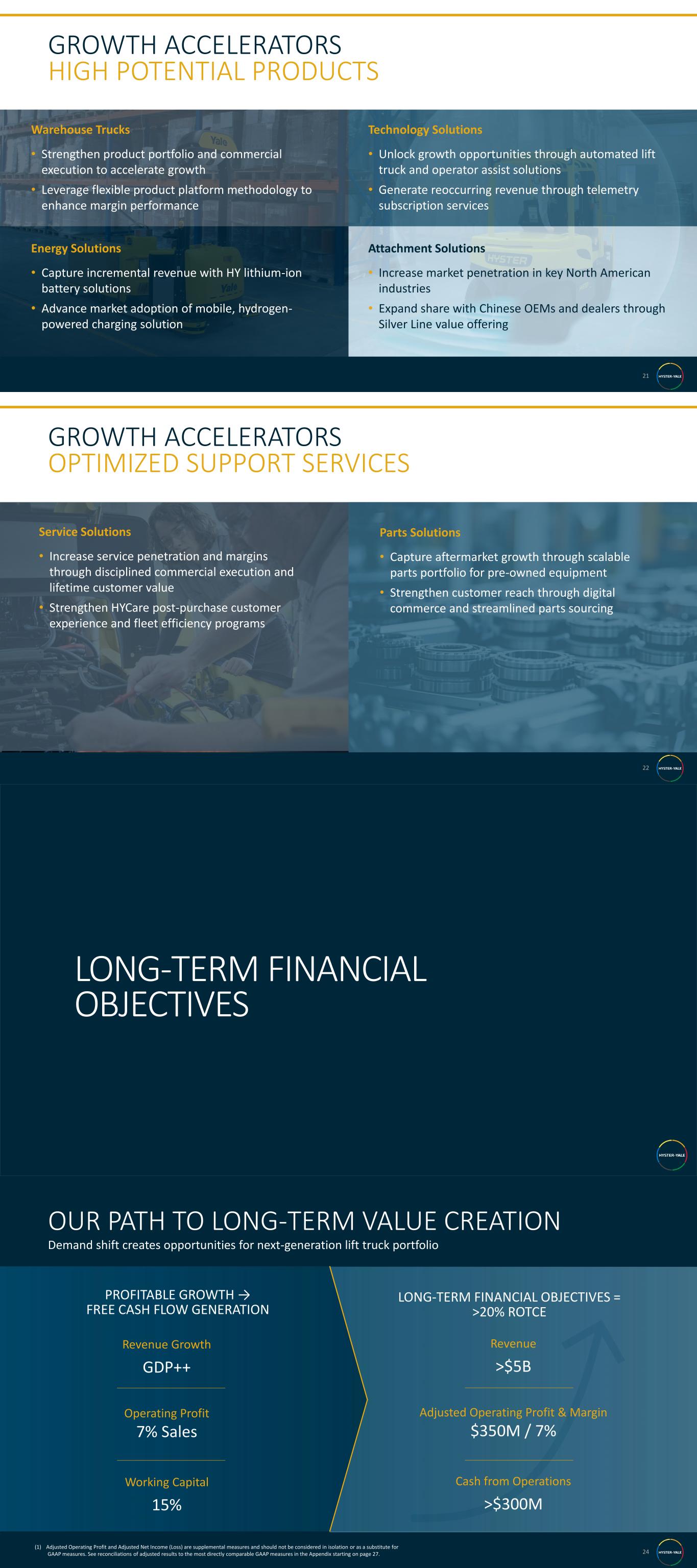
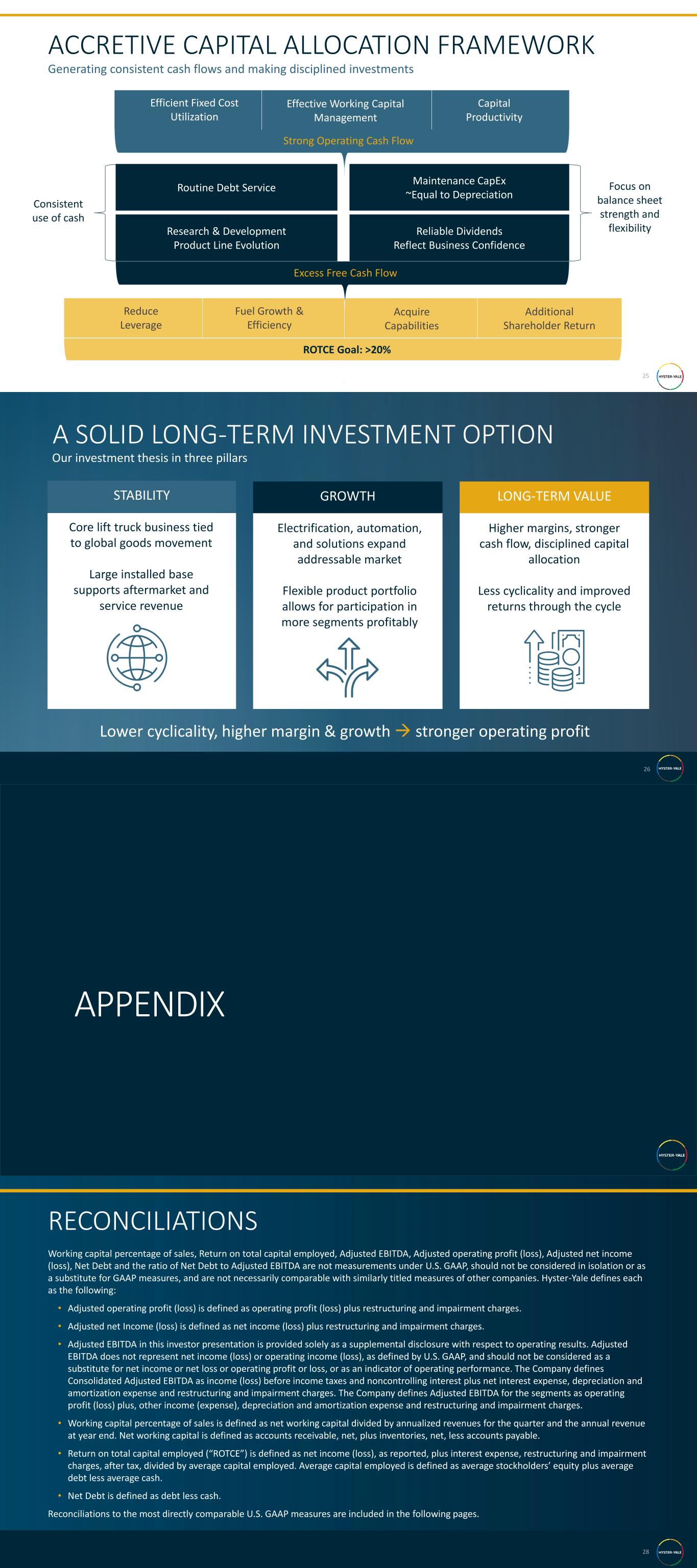
Thanks, Andrea, and good morning, everyone. As Andrea highlighted, we saw encouraging signs of improvement during the quarter. I will start with our perspective on the current market cycle and demand environment, then discuss the actions we're taking to strengthen our competitive position before reviewing our consolidated outlook. We believe the first half of 2026 marked the financial low point of the current lift truck cycle. While we're still in the early stages of recovery, demand improved during the second quarter, and several important operating indicators moved in a positive direction. We are beginning to gain financial traction from the stronger booking trends we have since the low point in the second and third quarters of 2025. What is particularly encouraging is sequential improvement across several key operating indicators. Bookings increased, revenue improved, operating results moved in the right direction, and quarterly cash flow turned positive compared to the first quarter of 2026. That shift to positive cash flow is especially important because it reflects the working capital discipline we have been maintaining, even while profitability remains under pressure. While we are far from full recovery, the business is beginning to move in the right direction. At the same time, we are seeing encouraging results from strategic initiatives that are expanding participation across the market and creating opportunities for future growth. One of the developments we are most encouraged by is the momentum we are seeing in our value product offerings. These products are opening opportunities in areas of the market where our competitiveness has historically been more limited. helping us reach a broader range of customers and applications. Importantly, this is the result of a deliberate strategy that began several years ago. We invested in modular, scalable product platforms designed to expand our portfolio and improve our ability to compete across multiple price points and customer requirements. As those products have become more broadly available, customer adoption has been strong and demand continues to build. More broadly, these investments reflect our commitment to expanding our addressable market and strengthening our competitive position. Today, we offer value, standard, and premium products across our key markets. As customers' buying patterns have shifted towards a broader mix of applications and price points, we've been well positioned to respond. That has enabled us to broaden market participation, support market share gains, and create additional growth opportunities over time. What is particularly attractive about this strategy is the modular architecture behind it. We leverage common platforms, components, and manufacturing processes across multiple product categories. That allows us to serve more customers while maintaining scale efficiency and attractive margin opportunities. Simply put, it enables us to offer the right truck at the right price for a broad range of customers while supporting stronger margins, improved manufacturing efficiency, and better long-term return on our product investments. As volume grow, we expect these platforms to provide additional benefits through improved manufacturing scale, product cost management, and operating efficiency. They also increase our flexibility as we continue adopting sourcing and production activities in response to tariff and other external factors. The benefits of these portfolio investments are increasingly showing up in our ordered activity. During the quarter, customers engage with a broader portion of our product offering, contributing to stronger bookings across multiple categories. Bookings reach their highest quarterly levels in three years, driven primarily by the Americas. The improvement reflects both strengthening customer activity and the benefit of actions we have taken to broaden our participation across customer segments. Greater demand visibility supports the production rate increases we are implementing across the business, which we expect will drive higher shipments over time. While bookings have strengthened, shipments have not increased at the same pace. Customer order patterns continue to include a mix of near-term demand and delivery schedules for further in the future, including some beyond six months. In addition, increases in production require time to move through the supply chain and supplier network. As a result, there remains a lag between booking growth and shipment realization. Some customer delivery schedules have shifted later into the year, including orders where customers modified requested delivery times after the original booking was placed. At the same time, certain sourcing and production transitions associated with tariff mitigation initiatives are affecting shipment timing. As a result, production growth is expected to temporarily lag booking growth, and we expect improvements to be weighted more heavily towards the later part of 2026. Those sourcing and production changes reflect the actions we are taking to manage a challenging cost environment while positioning the business for stronger long-term performance. More broadly, we remain focused on improving operating efficiency and aligning our cost structure with current market conditions. Turning to tariffs, they remain a headwind and continue to influence both cost and production decisions across the business. Our focus is not only on managing today's impact, but also on positioning the company with a more resilient and flexible supply chain over the long term. to reduce future exposure and production changes, including relocating certain activities to the United States and other lower-tariff regions. While these actions are creating some temporary disruption to production schedules and shipment timing, they're expected to strengthen our cost position over time and provide greater flexibility across our business. We expect pricing, sourcing, and product cost initiative to deliver increasing benefits in the second half of the year. Although these actions are not expected to fully offset tariff-related costs, they're helping mitigate the impact while preserving our competitive position. Beyond our tariff mitigation actions, we're continuing to focus on improving our cost structure. Our 2025 restructuring program captured approximately half of the expected annualized savings in the first half of this year. These actions are establishing a lower ongoing cost structure for the business rather than simply delivering near-term savings. As demand recovers and production volumes increase, we expect that lower cost base to contribute meaningfully to earnings growth and improve. We continue to expect the program to deliver approximately $40 to $45 million of annualized savings. More importantly, these actions are lowering the underlying cost structure of the business and should provide increased profitability as demand and production volumes recover. We're also seeing encouraging progress at Valzoni as it continues to expand its growth opportunities through the integration of Valmar's mass business, new attachment introductions, and the expansion of its camera vision systems. Together, these initiatives broaden Valzoni's addressable market, enhance its product offerings, and support long-term profitable growth. Let me now turn to our consolidated outlook. Our overall view of the recovery remains unchanged. Demand has improved, bookings have strengthened, and we are raising production rates to meet the increased demand. However, customer delivery schedules and sourcing transitions associated with our tariff mitigation initiatives have shifted some of that recovery later into the year. As a result, we expect a moderate operating loss for full year 2026, with the most significant improvement occurring in the second half as production levels increase. As we move through the second half, we expect performance to improve as production levels rise and shipments increase. Higher volume pricing actions, manufacturing efficiency improvements, and cost reduction initiatives are expected to support earnings growth. At the same time, tariff-related costs and competitive pricing pressures are expected to moderate the pace of recovery. Our priorities remain unchanged. We are focused on converting stronger bookings into shipments, improving manufacturing efficiencies, managing tariff exposure through pricing and sourcing actions, and maintaining working capital discipline and generating cash. We believe these actions position us to improve performance through the balance of 2026 while continuing to advance our long-term objective of achieving 7% operating profit over the business cycle. Looking beyond 2026, we continue to believe the building blocks for a stronger earnings profile are in place. As production volumes recover, we expect profitability and cash generation to improve. Based on our current outlook, we expect trailing 12-month EBITDA to be above pre-COVID levels in the second half of 2027. Importantly, this expectation is supported not only by a cyclical recovery in demand, but also by structural improvements we have made to the business. including portfolio expansion, cost reduction initiatives, modular product platforms, and manufacturing footprint optimization. Our manufacturing footprint optimization projects remain on track and are expected to provide further benefits to earnings as implementation activities are completed. We currently expect these initiatives to begin contributing meaningfully in the second half of 2027, with approximately $15 to $20 million of analyzed benefits expected as volumes recover. Over time, these actions are expected to improve efficiency, lower our cost structure, and reduce our long-term break-even point and support stronger operating results. The manufacturing footprint optimization, in addition with the 2025 restructuring program, position us to enter the next phase of the cycle with more efficient manufacturing footprint and a lower structure. Combined with our expanded product portfolio and modular platform strategy, we believe these initiatives will strengthen our competitive position and support sustainable, profitable growth over the long term. With that, I'll turn the call over to Al for a few closing remarks before we open the line for questions.
Thank you, Rajiv. In summary, while the recovery remains gradual and external challenges persist, we are encouraged by the company's progress. Brokings have increased for four consecutive quarters, and as a result, production rates and shipments will be increasing. Second quarter operating cash flow has returned to a positive, and many of the strategic actions we have been implementing are beginning to gain traction. Importantly, we are not simply waiting for the market to recover. We are actively strengthening the business through disciplined actions in portfolio expansion, manufacturing footprint optimization, restructuring initiatives, tariff mitigation actions, and responding appropriately to competitors' activities. Together, these efforts are lowering our structural cost base, including resilience across the cycle and positioning us to have greater value as market conditions continue to improve. Overall, we remain fully committed to serving our customers exceptionally well, as well as to creating sustainable long-term shareholder value through growth, stronger profitability over the cycle, and strong cash generation. That concludes our prepared remarks. We will now open the line for questions.
Operator
Thank you. We'll now begin the question and answer session. To ask a question, you may press star than 1 on your telephone keypad. If your question has already been addressed and you'd like to remove yourself from queue, please press star than 2. Once again, that's star than 1 if you have a question. And we'll pause here for just a moment to assemble our roster. And today's first question comes from Ted Jackson at Northland Securities. Please go ahead.
Hey, thanks for taking my questions, and congratulations on the quarter, guys.
So I wanted to start out just a simple thing. I mean, you know, it's good to see all the bookings growth, you know, the businesses turning around, the markets turning around. Is it fair to assume, given the commentary, Rajiv, that you continue to see, you know, a pickup, the pickup in bookings continue, at least to date, with regards to the third quarter?
Yeah, we're seeing the same trend. You know, obviously, as we've said multiple times before, third quarter is when we have, you know, our July and August kind of holidays everywhere around the world. So that does affect our bookings, but the trend has definitely continued.
When I listen to your commentary, I mean, you're clearly signaling that, you know, you feel that the strength that you've seen in bookings is going to really start to kick in, and we're going to see it more on the top line as we get into the second half of 26. But, you know, I perceive from, you know, the press release and the commentary you provided that perhaps some of the revenue that you thought you might recognize in the third quarter will shift out into the fourth quarter. And is that a correct read of your commentary or am I parsing to?
Yeah, I think that would be the case. You know, maybe I can give you some solid example of what's happening. So, you know, our original plan was to build some of the trucks that have now been in America. Customers are aware of this with some changes in. So that's one example of something that happened. Because, you know, as you know, initially that tariff was 25% on like on the cost of imported trucks, which was then reduced to 15% from Europe. But still, that is a significant cost impact. So we've reacted to that and changed production plans. So that's one example. I guess the other thing we talked about is some customers, as they start to get trucks and their own operations are, you know, the utilization rate is generally lower out there. So they're trying to make decisions on where to put the truck. and at times are asking for, you know, change in delivery dates. So that's – but that's a minor part. The bigger part has been more the – our own production change due to tariffs.
Well, it sounds like a smart strategic move on your part to make that change. So you wouldn't have done it if you didn't think so. But then, like, so we're seeing bookings and everything else. Is it, you know, in your commenting that your production rates are going to be continuing to run behind your booking. So then implicit in that is that as we think about, you know, I mean, you know, not maybe in a quarter to quarter, but, you know, for the remainder of the year and, you know, quite possibly into 2027, we should continue to see backlogs right now.
I mean, I think we'll see it flatten out in 2027. But you're right about this ramp up. As you know, Ted, this has been a significant ramp up and still in progress. We're in the early stages, but that will continue throughout this year.
And I would say it will, based on our expectation for the 2027 market, I think we'll be at a good rate by the first quarter of 27. um shifting over into um production rates you know maybe to give a little color when you look at the capacity that you have in place you know i mean maybe to think about it from you know what is the utilization rate you know and and where do you think you can get it to um how far under for lack of a better term kind of retail demand do you think you might be producing I'm kind of getting a sense into terms of how is that – how are you going to fill that capacity and kind of what's driving this one going with it?
Yeah, so I think it's best to give you a bit of resolution. In terms of our plant capacity, we have, you know, more than – you know, more capacity than we need right now. So what it requires is hiring more people and getting the supply chain to fire. and we've checked with our suppliers given enough lead time they can respond to it so you know we don't think there is any infrastructural issue it's just a question of hiring training and the people for our plants and then putting the putting the supply chain with enough lead time so they can respond. And as you know, if we don't have one part, we don't build a truck. So we're being very careful with that ramp-up. All the lessons learned we've had during COVID we're using to ensure our ramp-up is very disciplined.
Well, I'm going to let other people ask some questions. I might have a few more. Again, congrats on the quarter. I'm looking forward to seeing the back half of this year at 27. Thank you.
Operator
And once again, if you have a question, please press star than one on your telephone keypad at this time. We'll pause for just a moment to assemble our roster.
It looks like we do have another follow-up from Ted Jackson and Northland Securities.
Operator
Please go ahead.
I like it. You guys, I own you right now. I wanted to shift over because we spent a lot of time, you know, kind of talking about backlog and bookings from a revenue perspective. You know, when we think about it from a unit perspective, you know, how has the turn in bookings been, I mean, you've had four quarters of growth, you know, how has it looked from a unit's perspective? I mean, is it align similarly with the dollar amounts you put out, or as you're having more and more success with the modular product offering, you know, is the unit view different? And if so, how?
The way I would characterize it is that the ramp up in volume is pretty even across our product lines. Now, within the product lines, the way we define the product lines, there is a trend towards the simpler trucks. And we think that's the right thing. Those customers, we're always very focused on making sure the customer gets the right truck for their application. And as we've done a better job of understanding their application, we feel that, you know, some of the simpler, what we call our standard and value trucks are the right trucks for those applications. And again, I'll give you an example, Ted. You know, one is retail. So if you imagine a big box store, they typically have, you know, our 5,000-pound counterbalance truck in some form. and you know three years ago we were selling them a premium truck you know and that truck does about 700 hours a year there's no need for that those trucks are designed for three four thousand hours a year so now we've now we've had the value and standard product we've shared it with those customers. They've, you know, had them in their applications. They like the simplicity of it, the ease of operation for casual drivers. And so that's the right solution for them. And it's the right price and the right value. So we feel good about that. So I think there is that, you know, kind of, so the width of our offering has widened and customers are appreciating that. And so there is a little bit more bend towards the standard and value. But again, we're in the early stages of this.
And then my next question, and it might be my last one, is, you know, you've talked about a strategy to where you want to grow your kind of parts and, you know, kind of an aftermarket business. I know it's early innings with regards to laying out that strategy, but can you maybe provide some color around where you are in terms of progress with that initiative and provide an example or two there as well?
Sure. So we're, again, early. We're launching some new part solutions as we speak, but I'll give you one, probably the most important aftermarket part, which is tires. In the past, we weren't actively marketing tires. We were making our OEM tires available to the market, mostly through kind of dropship arrangements. As we have discussed this more with our dealers and customers, customers want to see some scalability in tires. So there's two ways tires end their life. Either they can wear out or they can age out. And if I go back to my example of the retail truck, just imagine that you put a premium tire on those trucks. Those tires will age out. After four years, they have to be replaced because the rubber is starting to deteriorate through, you know, chemical reactions and gassing. So it's a better solution on that particular case to put a tire which has, you know, more of a wear characteristic. So in four years, not only will it age out, but wear out. And up front, there will be a lower cost tires. And because we're matching those better to our trucks, We are now labeling them. We're developing them with our suppliers jointly, and then we're labeling them as high-source tires. So that's one example of business. We were in through dropship, which is not really focused on serving the customers more availability and margin associated with it limited to creating the right tire solution for the right customer. And then obviously those are in the margins are appropriate for that type of solution. So hopefully that gives you a sense for what we're doing, Ted. We're doing similar things on the battery side. We're also making, we've had one line of product go out of production, you know, at two to three, one to three and a half ton previous model of trucks. You know, there are three to four hundred thousand of trucks, of those trucks out in the marketplace. and customers who are starting to ask for the primary components to be refurbished and remanufactured because, you know, with a five-year-old truck, it's tough to put a brand new transmission in there. And so we've just done that, and now some of those axles and transmissions are being rebuilt by Bolzoni in the plant they originally built them and made available to the market as remanufactured with warranty that supports it. So that's, again, another example of what we're doing.
And then just finally kind of follow up to this discussion, and then I am going to end my queue in my queues. What percentage of ISA-Yale's revenue comes from kind of the parts business and where do you want it to go? And what's the margin differential between parts and kind of core?
Those are things that we don't talk about in public. So I think that's going to be tough. Maybe outside the meeting, Andrea can help you a little bit with that. But yeah, I would like to keep that out from...
Anyway, I'll let you go. Thanks for taking all the questions. I'll talk to you soon. Thank you.
Operator
Thank you. And that does conclude our question and answer session. I'd like to turn the conference back over to Andrea Sabo for any closing remarks.
Well, we thank you for your questions today. A replay of our call will be available online later today, and the transcript will be posted on the Heister Yale website. If you have any follow-up questions, please feel free to reach out to me directly. My contact information is included in the earnings release. Thank you again for joining us today. I'll now turn the call over to Rocco to provide the replay information.
Operator
Thank you. To access the audio replay of today's event, please dial 1-855-669-9658 or 1-412-317-0088 and enter access code 485-0489. The replay will be available until August 12, 2026. Today's conference has now concluded, and we thank you all for attending today's presentation. You may now disconnect your lines and have a wonderful day.