When you're looking to write business, you need to have, you know, it has to meet your profitability expectations. Can you describe kind of what you're looking for when you are writing business, what your profitability targets are?
Speaker 0
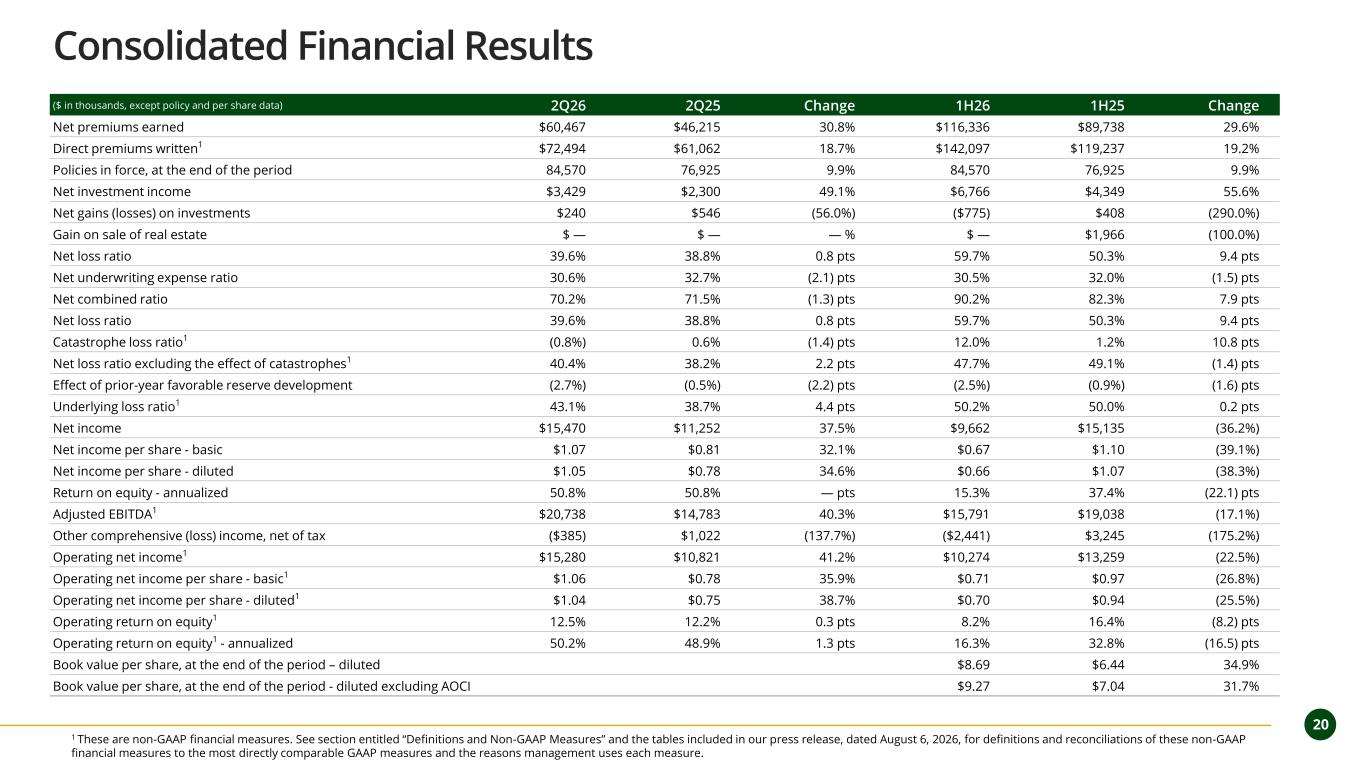
Well, we're pricing for an 85 combined, so that's our profitability expectation over time.
85 combined is, yeah, okay. And I guess the more encompassing one is more competition. I know you offered quite a bit on competition. I kind of wanted to know the differences. I'm assuming there's a difference between the California competition and the New York competition because, you know, California is mostly ENS, New York is admitted, but it sounds like admitted are getting into California as well. Are those admitted the same admittance that you face in New York, or were they a different cohort of admitteds trying to get into California at this point?
Speaker 0
Sure. So perhaps it wasn't clear what I was saying. In California, the admitted carriers had stopped writing new business to a large extent over the past couple of years because of the regulatory environment. And so there has been a surge in volume on the E&S side. And certainly we expected a lot of new carriers in the E&S space because we had heard about that. But what we had not anticipated in California was that the admitted carriers, the largest writers of homeowners in California, to reopen for business. And we are starting to see that in the marketplace. So that is something we had not anticipated. The difference is in New York, the admitted carriers to a large – the top 10 carriers to a large extent avoid catastrophe-exposed property. So our competition are the companies that focus on catastrophe-exposed property. And in New York, there is like one E&S writer, but most of the companies, actually maybe two, most of the companies are admitted. In California, our competition is both now the admitted and the E&S carriers. Does that answer your question, Bob?
Yeah. So the admitted carriers in California, you're talking the large companies like State Farm and Farmers and whatnot. But are they – they're not avoiding getting into the status of the exposed area? And I know that the regulator was basically saying you should – you know, these companies have to write some high-risk policy to be able to write in the state. So they're not avoiding the wildfire exposed areas like they are avoiding the coastal areas in New York. Is that what you're saying?
Speaker 0
Well, first of all, you know, it's certainly not state firm that I'm talking about. But what I'm like, there is in California something called the Sustainable Insurance Plan and companies who file that they will write some more wildfire business. Then they get access to forward-looking wildfire models and to include reinsurance in their pricing and other things. So we're still seeing that admitted carriers have a limited appetite, particularly for business that is exposed to wildfire. But we just had not anticipated that they would start writing business again because so many of them were very restrictive until recently.
Right. Okay. All right. Right. And you're talking about the growth moderating in New York in the second half of the year, and you're talking about increased competition. Is that new competition, or is that kind of a similar thing?
Speaker 0
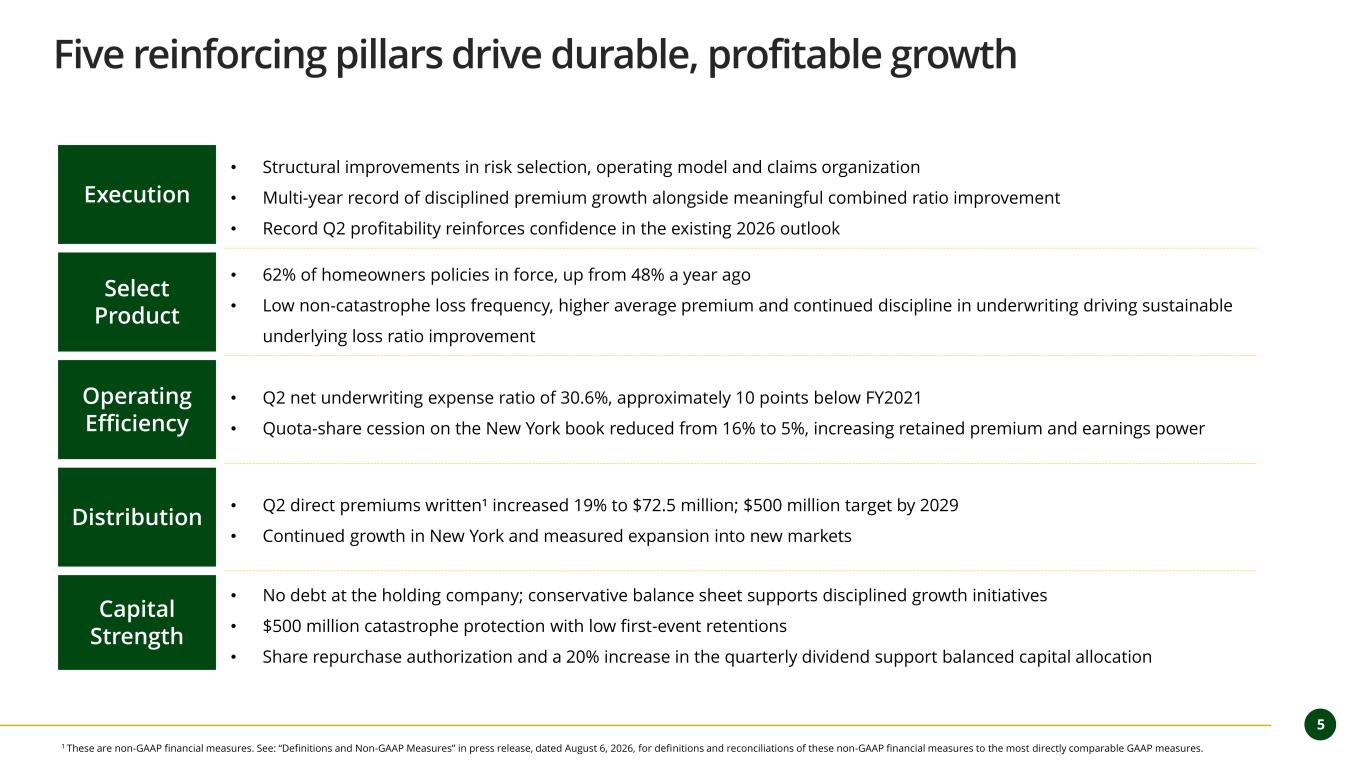
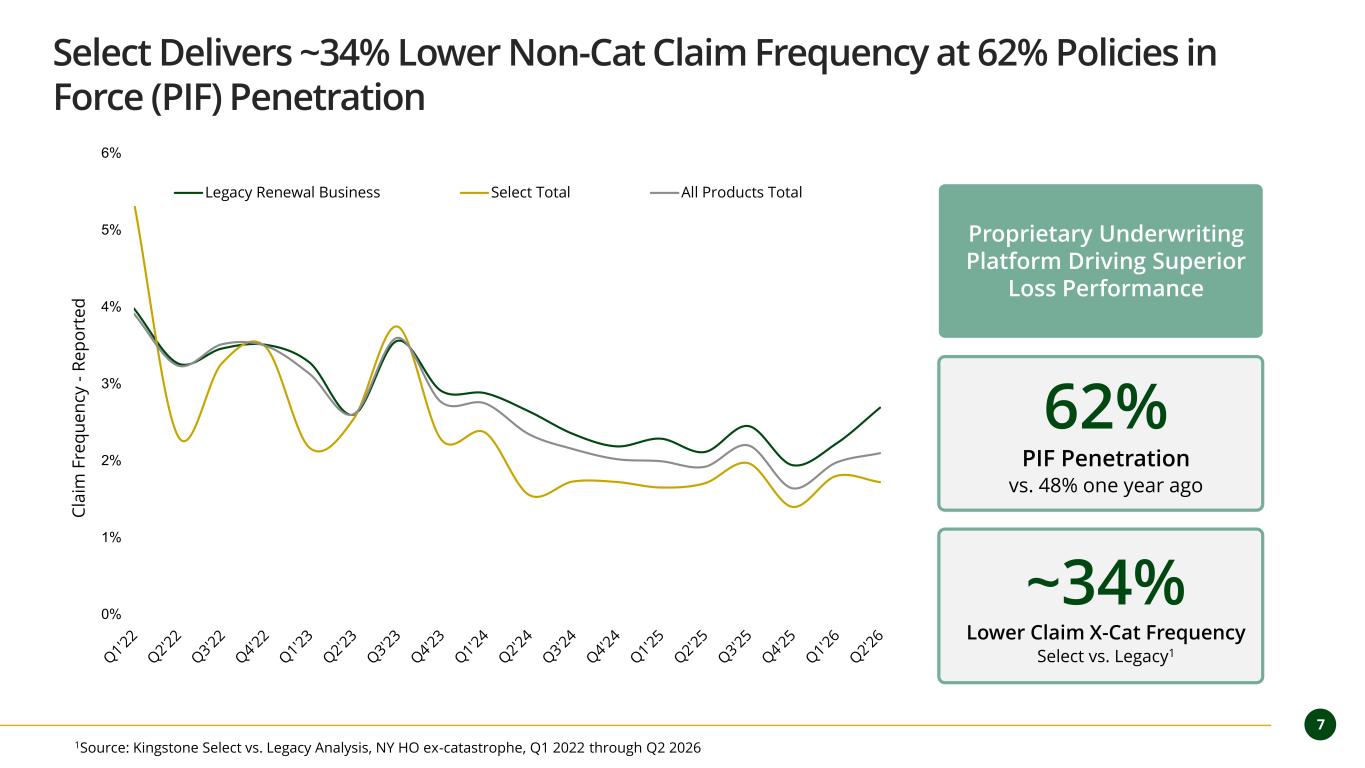
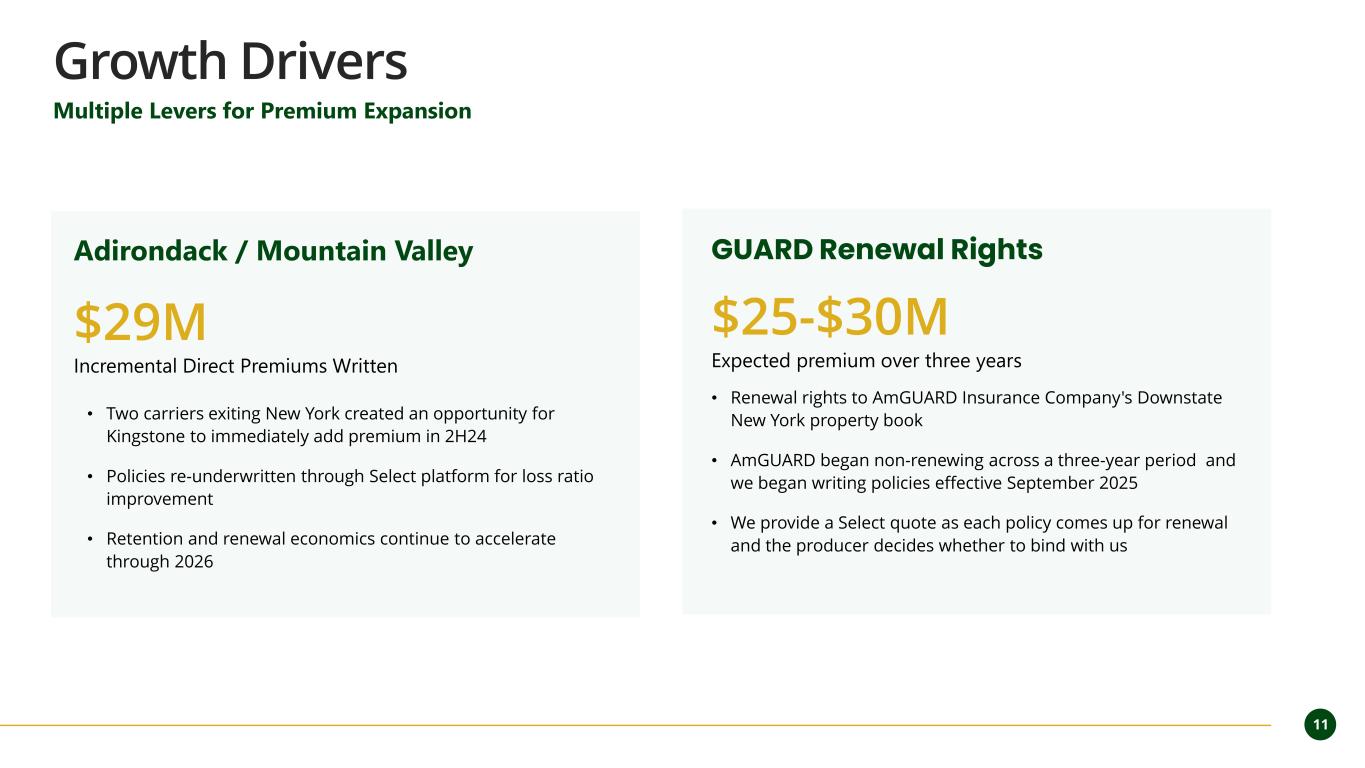
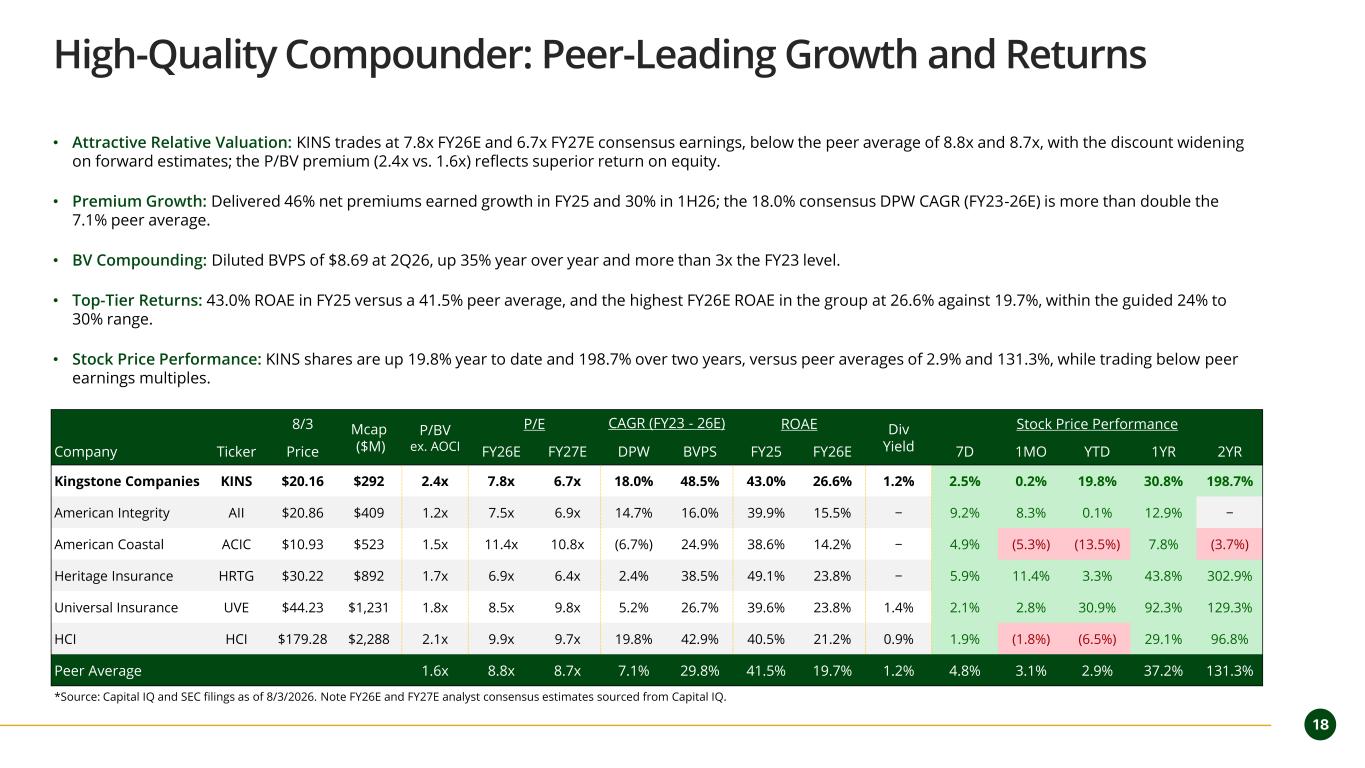
You're getting companies that had been there stopped running, and now they're slowly but surely dipping their toe back into the water? yeah i mean it's it's really both um so look it's not a surprise we all knew that the soft market is coming but what we did see in july we saw a tick down in our new business for dwelling fire and from talking to agents they're just talking more now about the softer market so there have been a few new market entrants and existing uh competitors have loosened some of their guidelines. There is one company that is priced in a really irrational way, so we hope they figure that out sooner rather than later. But listen, I want to reiterate that Kingston has a unique position in the downstate New York market. We have broad and deep distribution, and those agencies have stuck with us through various market cycles. We have our select product that does a great job with risk selection and matching rate to risk, which is even more important in a soft market. We have low expenses. So I feel very confident we're going to continue to grow, but perhaps modestly slower than we have been. So, you know, again, it's just a different part of the cycle and we'll, you know, do our best.
All righty. Thanks for the color.
Operator
The next question is from the line of Cam Bianchi with Dr. Sandler. Please receive your questions.
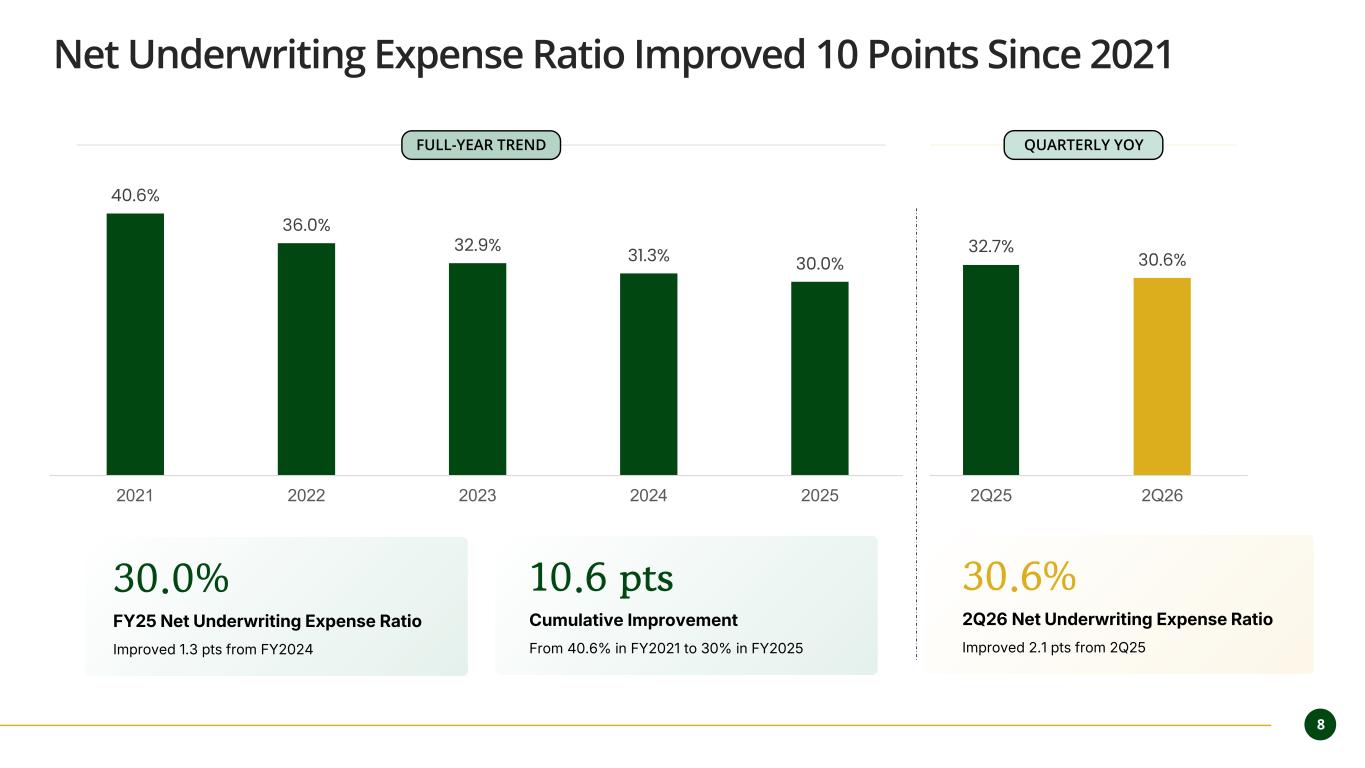
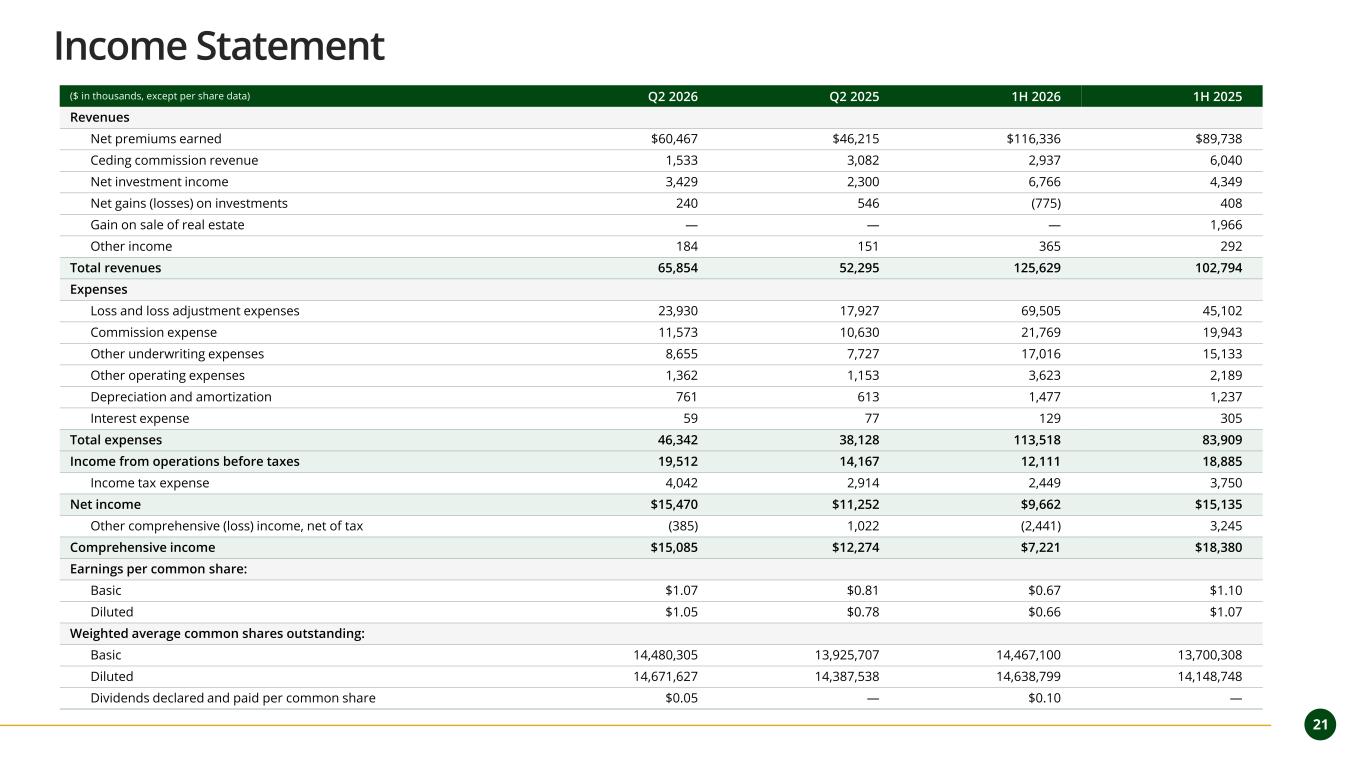
Good morning. This is Cam on for Paul. Considering the expense ratio improvement you saw in the quarter, I'm wondering, does the 30% quota share in the new California book create any near-term expense ratio drag if that state ramps that would offset any New York-driven efficiency gains?
Speaker 0
I know you mentioned about 29% of the target there, but I'm just curious if that California book has any offset in there. so thanks for your question so you know right now california is such a small piece of the pie like we're you know even by the end of this year it's going to be way less than five percent of our total business and the 30 percent quota share was really intended just for risk aversion we wanted to make sure that uh we didn't uh have a material impact on our profitability so to answer your question it has zero really like no impact on the expense ratio at all got it understood and then I guess just looking forward a little bit once you
know the California book ramps up a little bit and maybe just on the road to that how are you guys prioritizing capital deployment between California and Connecticut expansion increasing the dividend and opportunistic repurchases Randy, I'll let you take that.
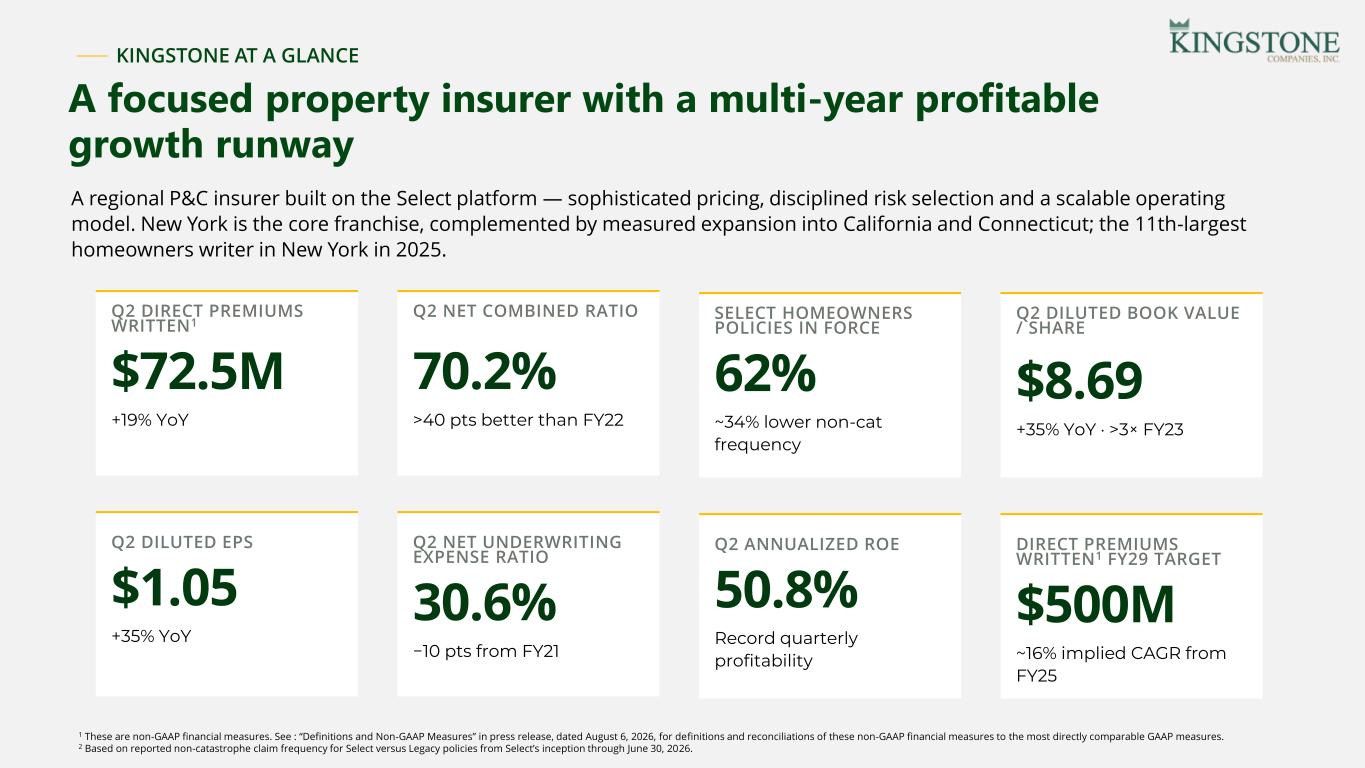
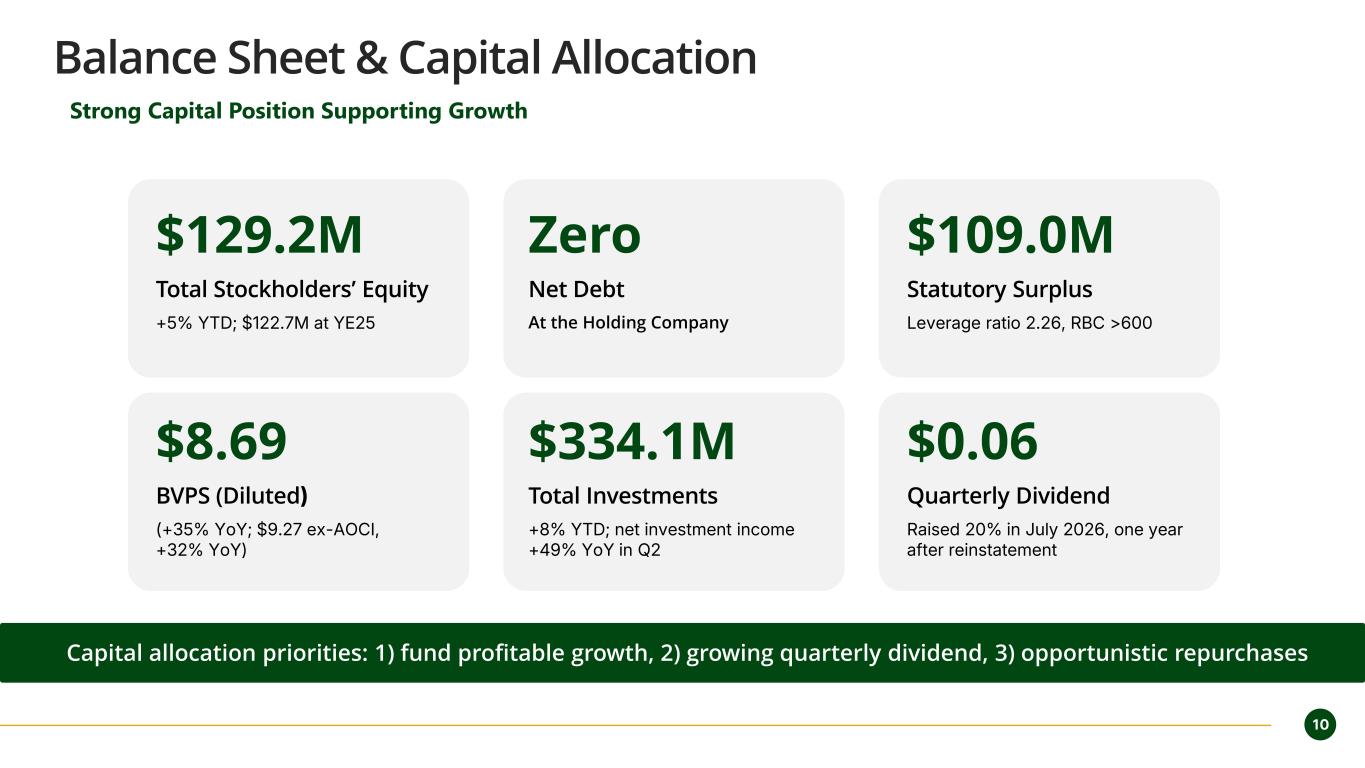
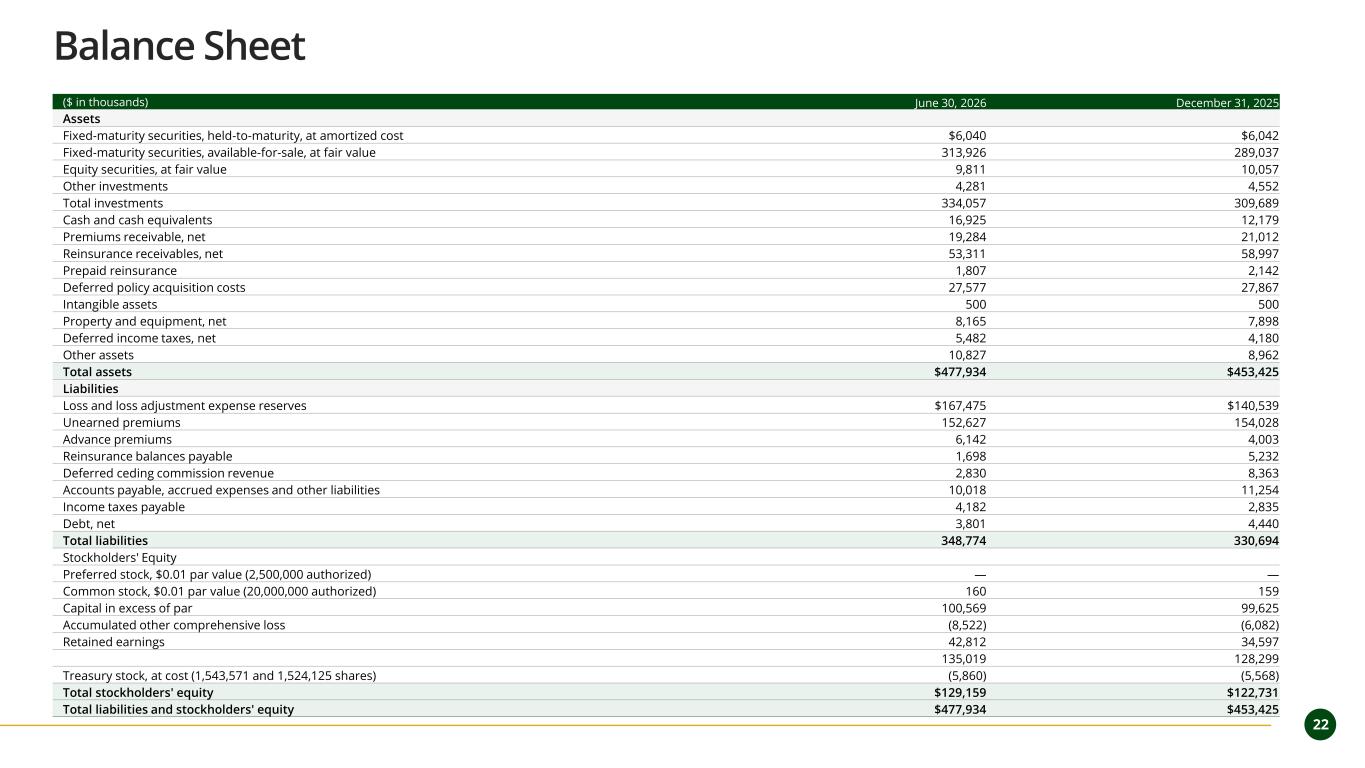
So our capital allocation really remains the same even entering California. Our priorities are first to fund that profitable growth, and we've rebuilt surplus here over the last couple of years. And then we're focused on growing that quarterly dividend. And, you know, in the past quarter, our board did increase our dividend by 20% to $0.06 per share. And then third, looking at, you know, when the opportunities present themselves, we will repurchase shares, but really in that order.
Speaker 0
Fantastic. Thank you. Thank you.
Operator
The next question is from the line of Greg Fortunoff, private investor. Please just use your questions.
Hi, how are you? Great number. It sounds like the market's getting a little soft, but when you figured your numbers earlier in the year, were you considering that, or is that something that could affect what you're thinking going forward?
Speaker 0
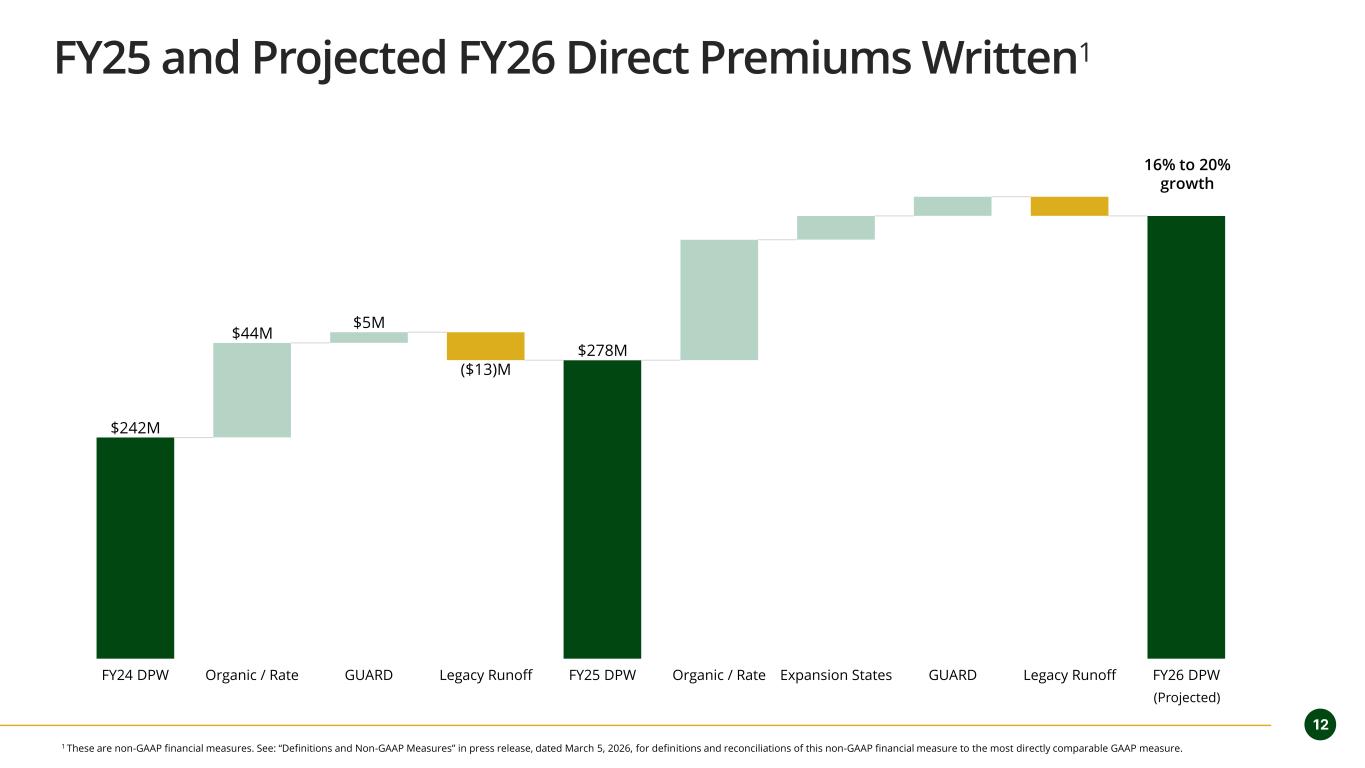
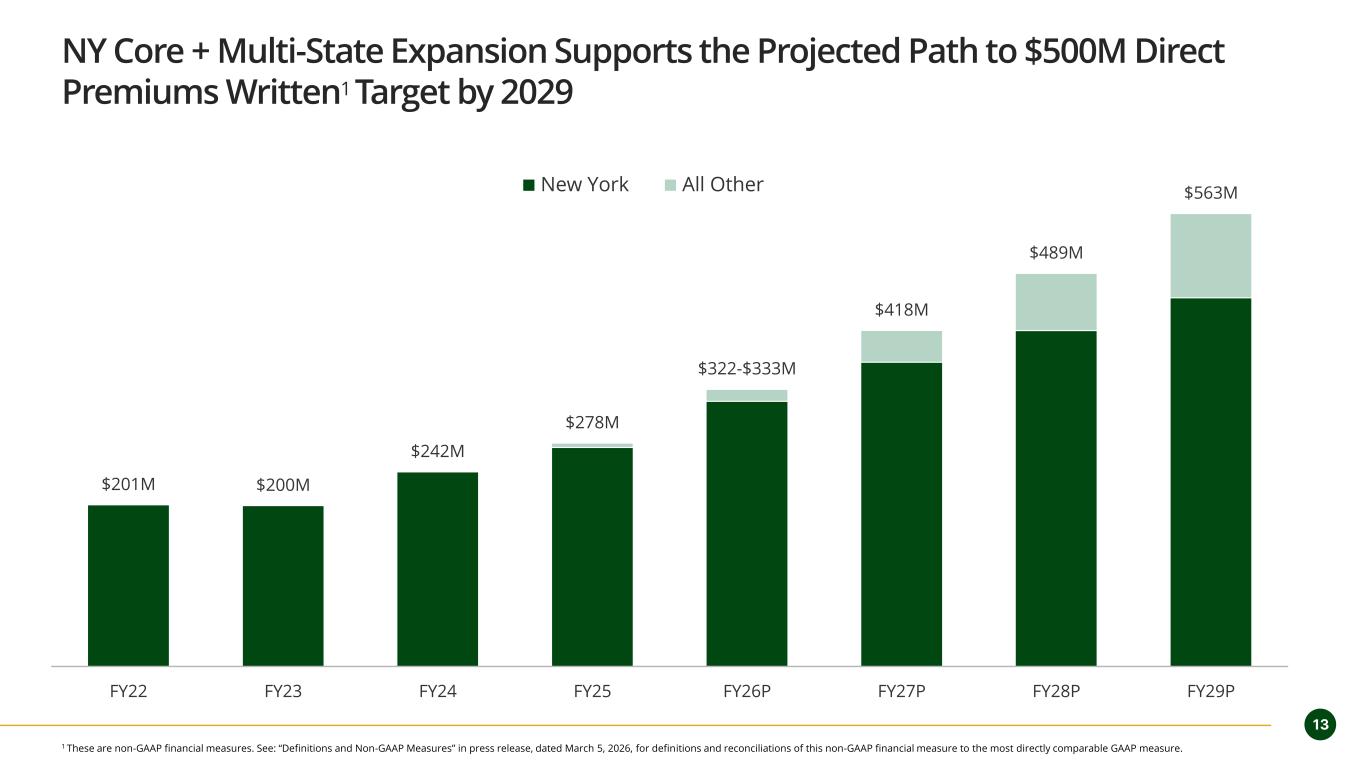
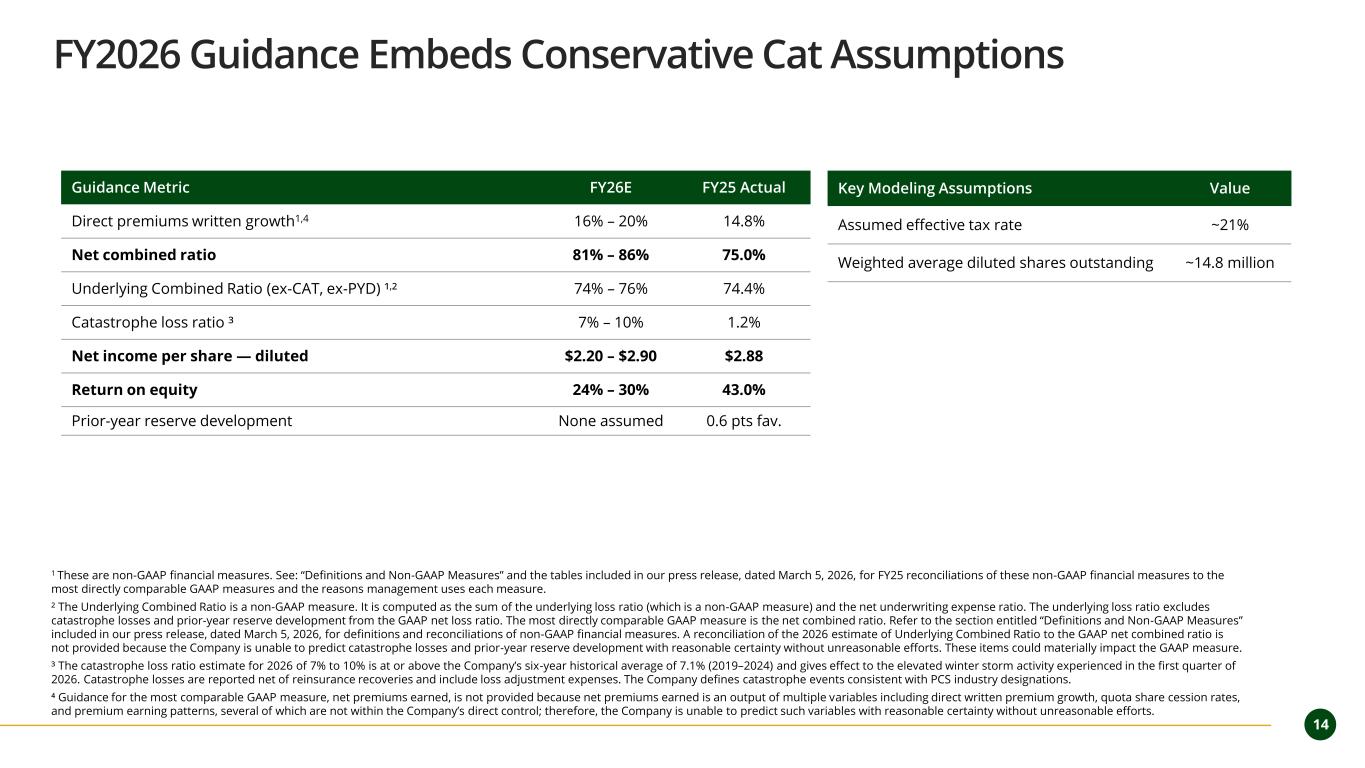
Yeah, so if you're talking about our guidance on growth in particular, we did anticipate a softer market in the second half of the year. So, you know, the range is 16% to 20%, and year-to-date we're at 19%. So we'll have to see how it goes, but right now we're comfortable reaffirming our guidance.
Okay. Is it wrong to think that, aside from any catastrophes that might hit, that this earnings is a new run rate for us, or am I getting too far ahead of myself?
Speaker 0
Are you saying for Q2?
Right, I'm just saying, so, right, so is this, I know the second quarter is always the best quarter, but that being said, if you go through the third quarter with no major storms and nothing out of the ordinary on the regular claims, should this be the run rate that we're expecting?
Speaker 0
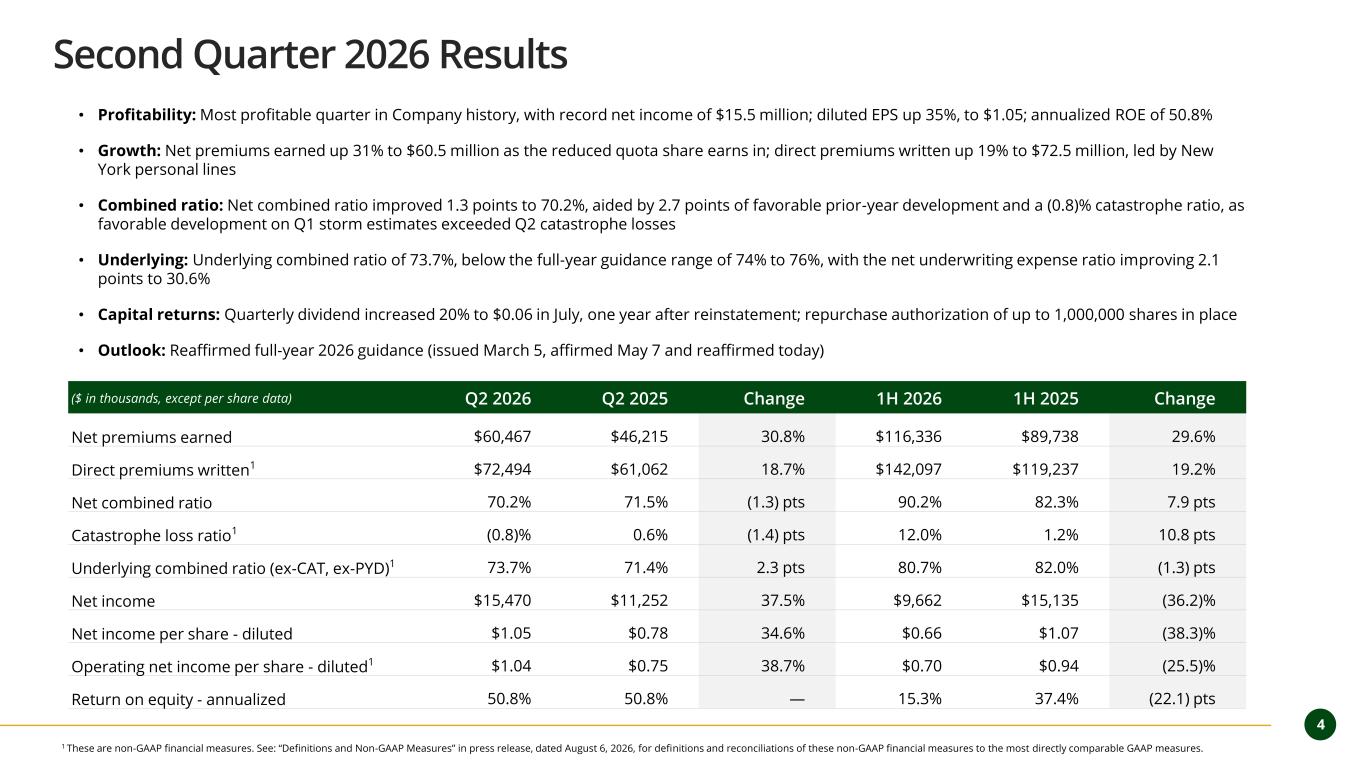
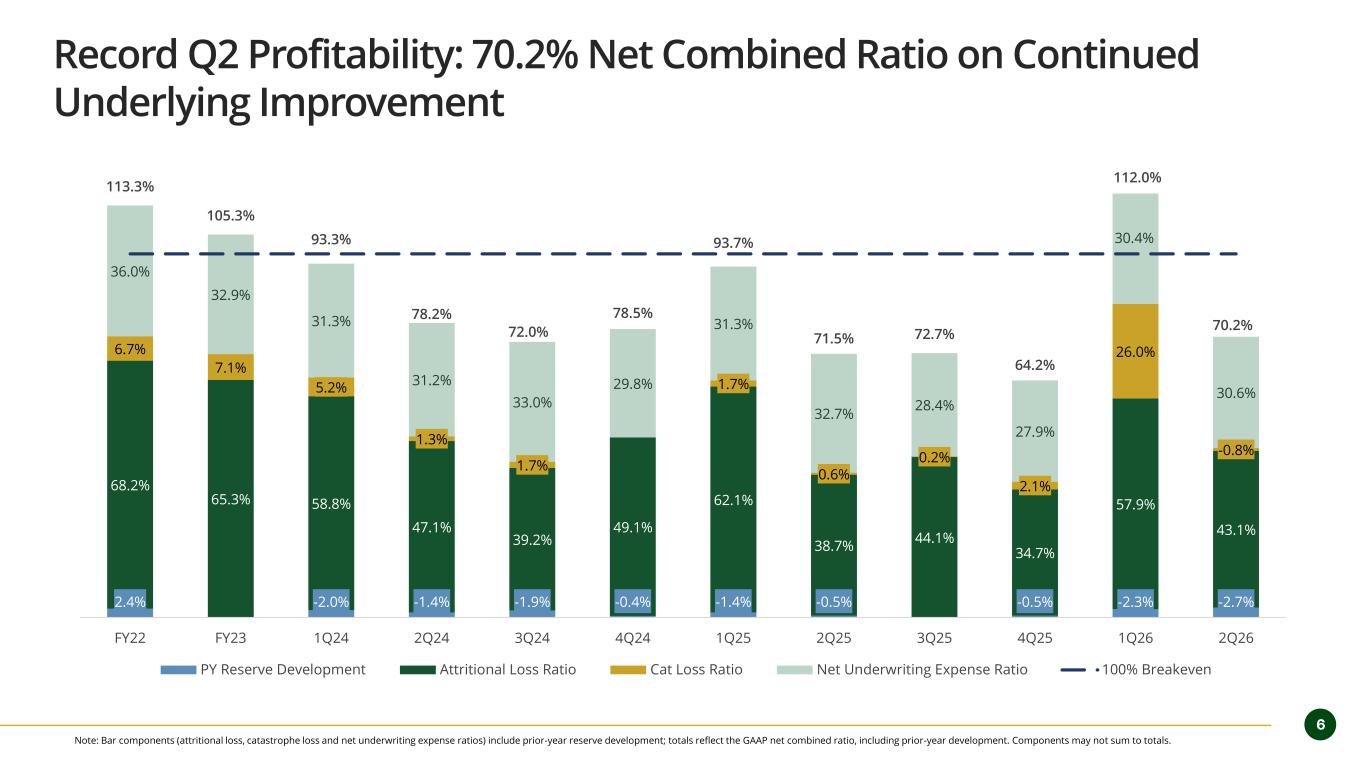
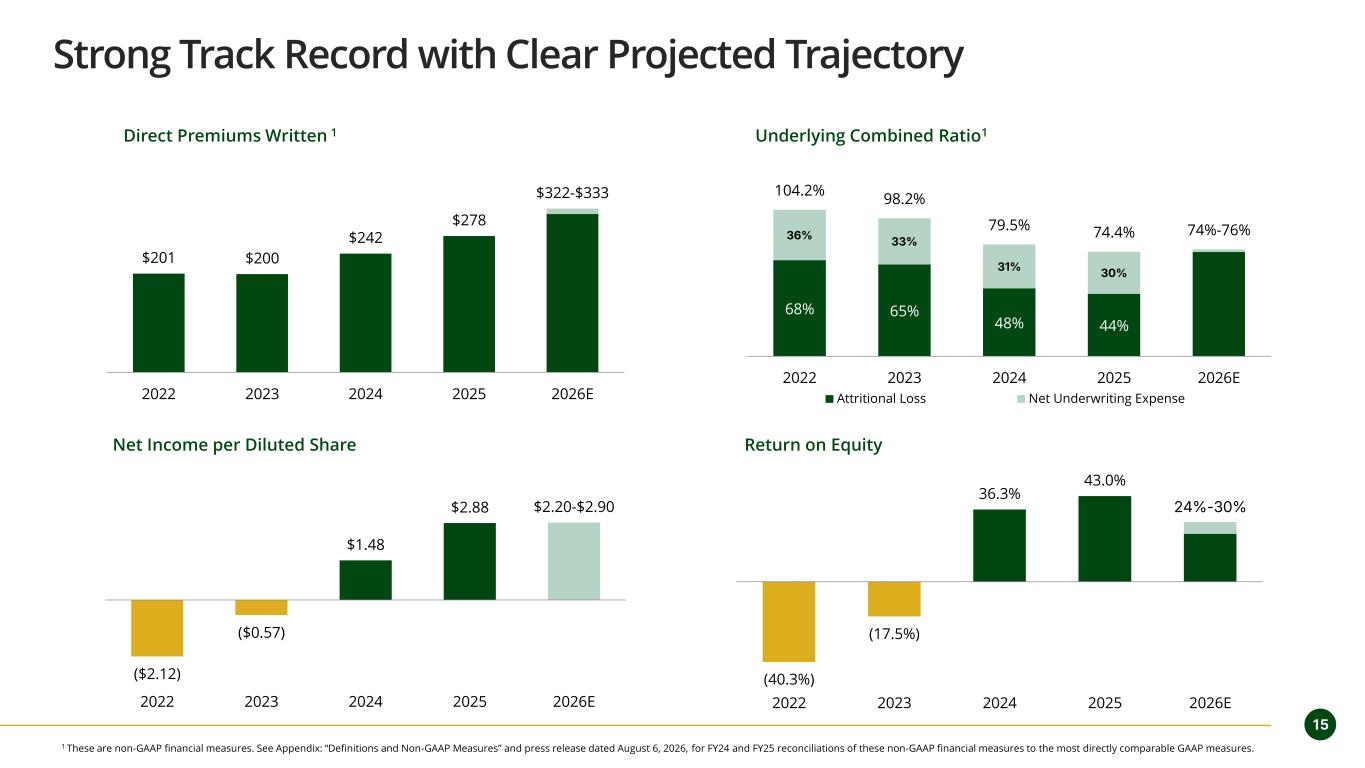
Yeah, so I would say that our underlying combined ratio, so if you take out cat loss and the favorable prior year development, that is the run rate we're expecting. So, you know, in our guidance, we split it between the underlying, which are all the things that we control, and that's a combined ratio of 74 to 76, and then the cat loss. So, yes, I would say that the run rate is consistent with the guidance that we put out in March.
Okay. Okay. I understand that, except I'll just press you a little bit more to say if you make $1.05 this quarter and then you make $1.05 next quarter, you're basically at your low end, and then it's just the fourth quarter to see how much you beat it by. Is that – I mean, so you're being pretty conservative. Is that fair or no?
Speaker 0
I mean, listen, we want our guidance to be accurate and durable. And while we feel very positive about our outlook, it is just the very beginning of the hurricane season. And Q3 is typically a quarter where we see sizable catastrophe losses. So, you know, it's just – and then with the change in the competitive environment, I just thought it was most prudent to maintain our guidance until we had better visibility into the rest of the year. So I hope you're right, Greg. I hope we're at the very high end and we can update guidance next quarter.
All right. Two more quick questions. So when you talk about the competition, obviously it takes time for policies to roll off. that people can't just leave mid-policy and write a new policy with someone else. So, I mean, when will we see the effects of what might be some competition?
Speaker 0
Yeah, so typically in a soft market, like, we want to retain our renewals, and consumers generally are much more price sensitive on new business than they are on renewal business. So I think what we're most likely to see is a decline in new business writings rather than any impact on the renewal rate, but time will tell. Like it really depends on how aggressive the competition is.
Okay, so you're expecting more of a moderation of new business versus our card book. Okay, I understand. And this is my last question. In the past, you've told us what our maximum loss would be in the case of, like, a Sandy or some major storm. Has that changed since we wrote the new reinsurance policy, or is that similar to, I think you had said, like, maybe $5 million-ish or somewhere around that number?
Speaker 0
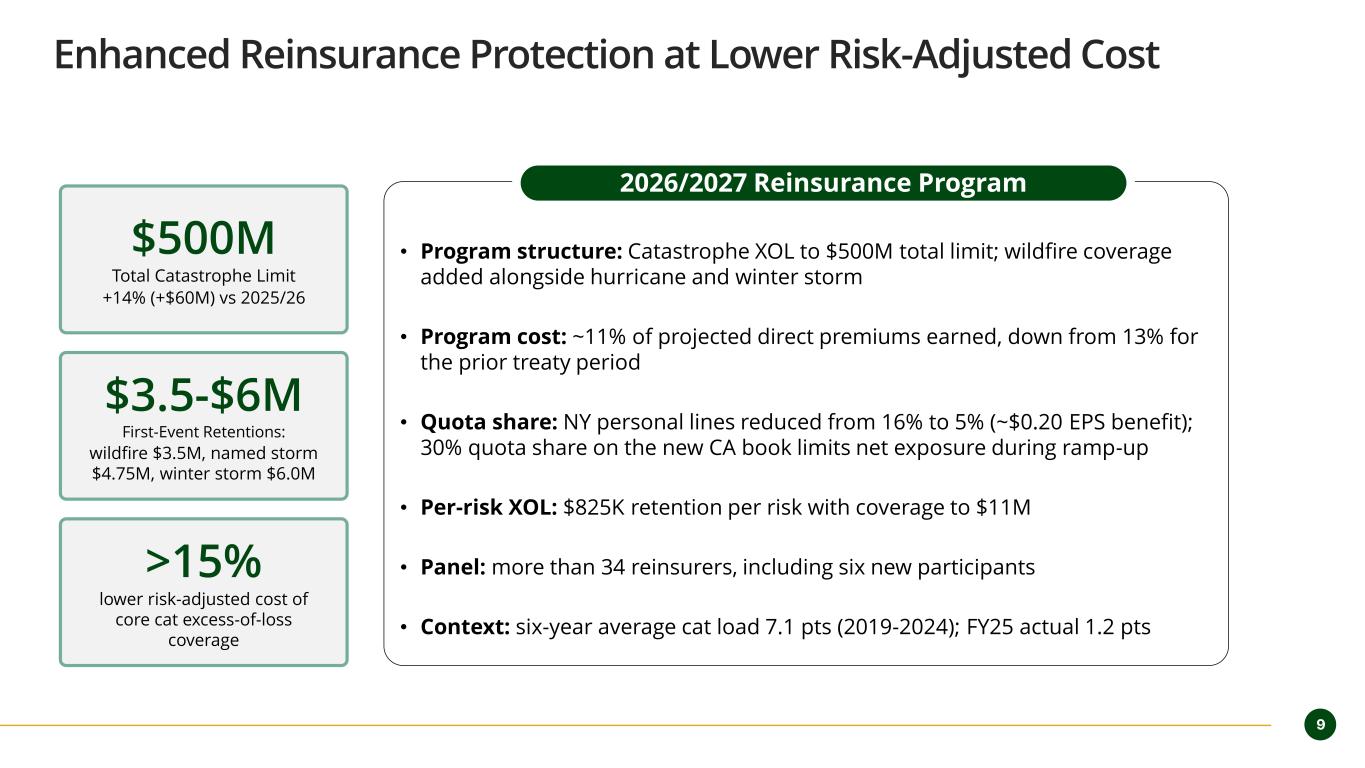
Yes, so one of the, you know, we had this very successful placement this year, and we were able to retain our low first event retention across all perils. So our first event retention is $3.5 million for wildfire, $4.75 million for named storm like a Sandy, and then winter storm and severe convective storm is $6 million. And so in the past, we've talked about let's take if a storm like Sandy hit us today with our current footprint, it would cost us roughly $5 million, $4.7 million pre-tax, $4 million after tax, and about $0.27 per diluted share. So it is certainly just an earnings event for Kingstone, not a capital event. So to your question, Greg, nothing has changed. We maintain that same very conservative first event retention to protect our surplus.
I guess I think if you could only lose $0.27 in a major storm, that's pretty – lets you sleep in that, I imagine.
Okay. Thank you very much. Keep up the good work.
Operator
The next question is from the line of Gabriel McClure with Private Investor. Please receive their questions.
Hi. Good morning, and congrats on another record quarter.
So when you were talking about the policies and force growth, you threw a number out there. I just wanted to make sure I heard you right, because on the presser, it said that there's a 9.9% growth. Could you repeat that again, please?
Speaker 0
I don't recall talking about policy and force growth. I said new business for the quarter was up 35%. Retention was up 2%, and our average premium was up 8%. But we are really delighted that our policy and forth growth was up almost 10% quarter over quarter. So you're right. What's in the press release is correct.
Operator
Okay. Our pleasure. As a reminder, press star one to ask a question. Thank you. At this time, I'll turn the floor back to Meryl for closing comments.
Speaker 0
Terrific. Thank you so much for your interest in Kingstone, and thanks for joining us today. Have a wonderful day.
Operator
This will conclude today's conference. Thank you for your participation. You may now disconnect your lines at this time.