Operator
Good afternoon. Thank you for attending today's Lared Superfood, Inc. Second Quarter 2025 Financial Results. My name is Jayla, and I'll be your moderator for today. All lines will be muted during the presentation portion of the call with an opportunity for questions and answers at the end. I would now like to turn the conference over to our host, Trevor Russo. Please proceed.
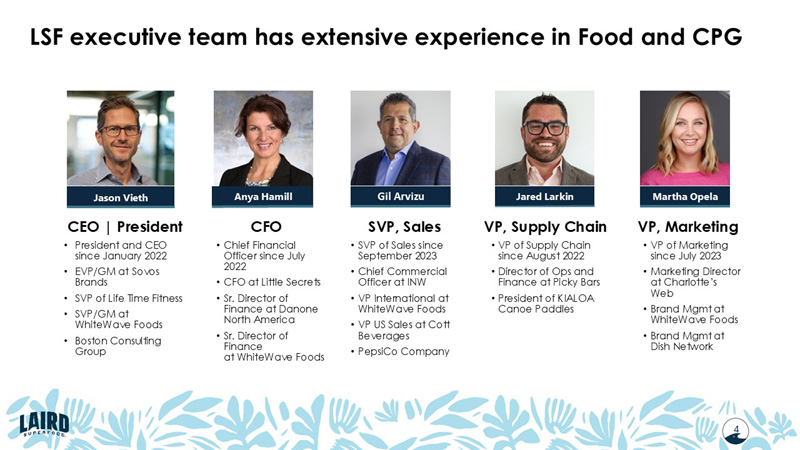
Thank you, and good afternoon. Welcome to Lared Superfood's Second Quarter 2025 Earnings Conference Calling webcast. On today's call are Jason Veep, Layered Superfoods President and Chief Executive Officer, and Ani Hamel, our Chief Financial Officer. By now, everyone should have access to the company's earnings release which was filed today after market close. It is available on the Investor Relations section of Layered Superfoods website at www.layeredsuperfood.com. Before we begin, please note that during this call, management may make forward-looking statements within the context of federal securities laws. These statements are based on management's current expectations and involve risks and uncertainties that could cause actual results differ materially from those described. Please refer to today's press release and other filings with the FEC for a detailed discussion of these risks and uncertainties. And with that, I'll turn the call over to Jason.
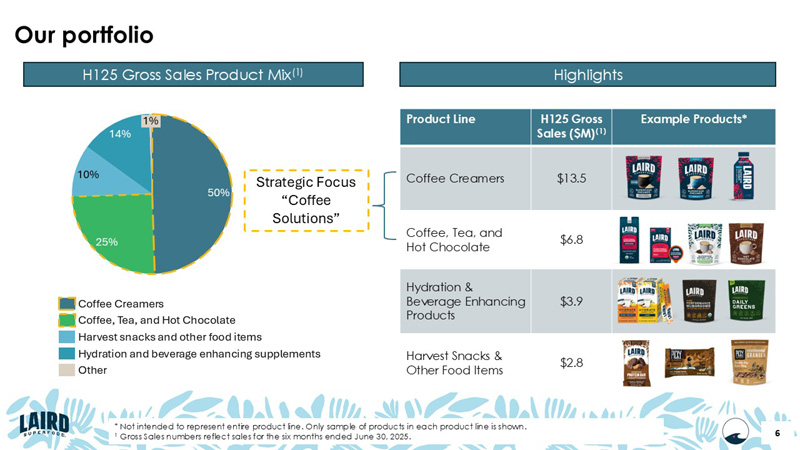
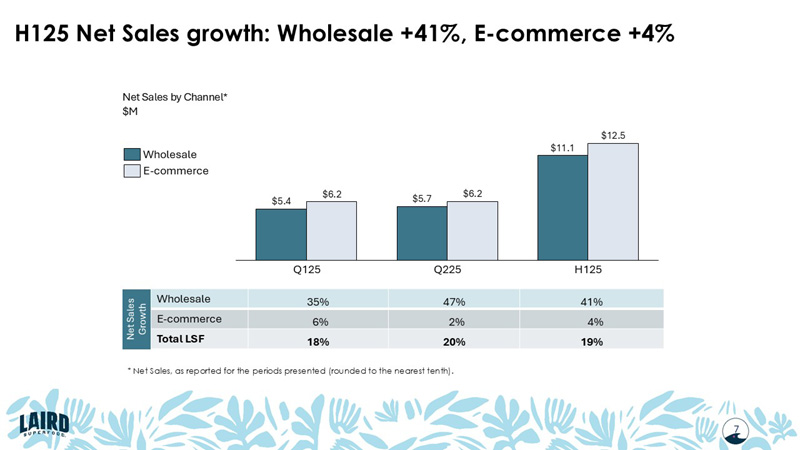
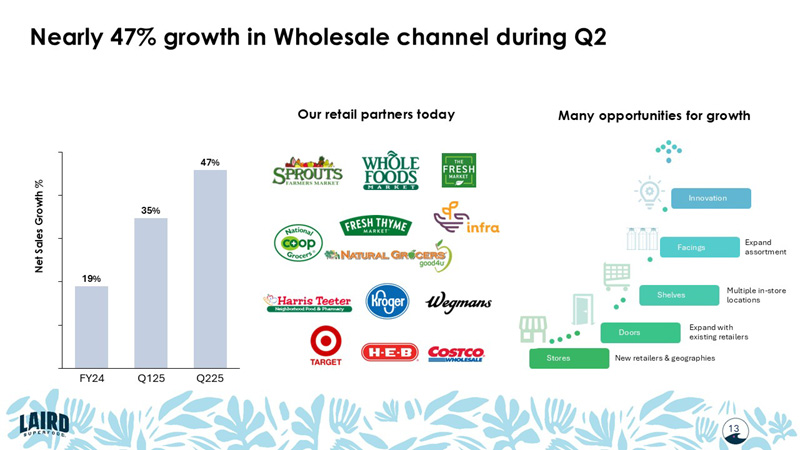
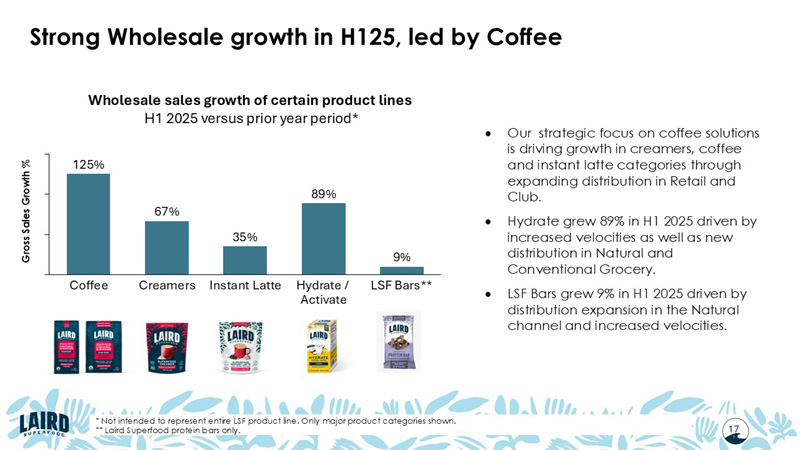
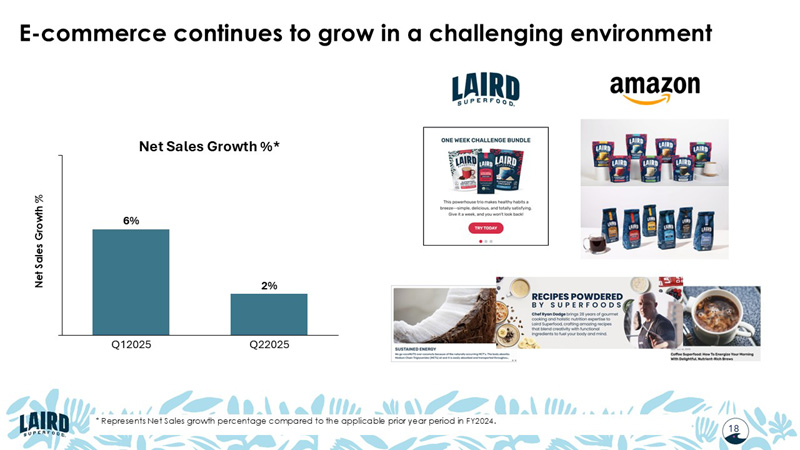
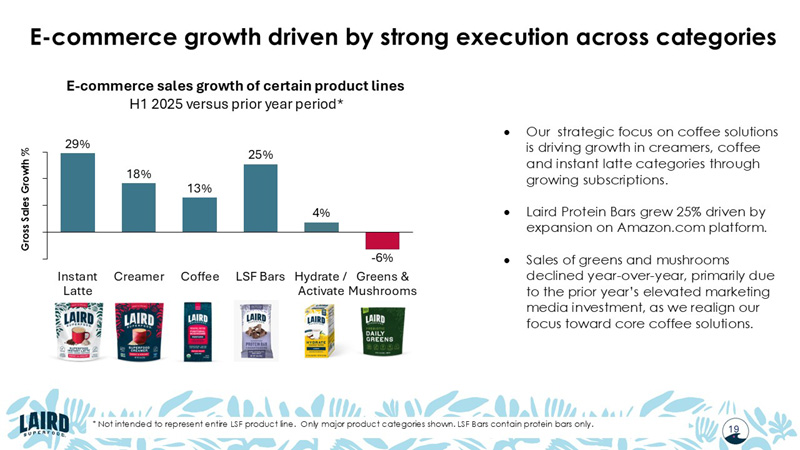
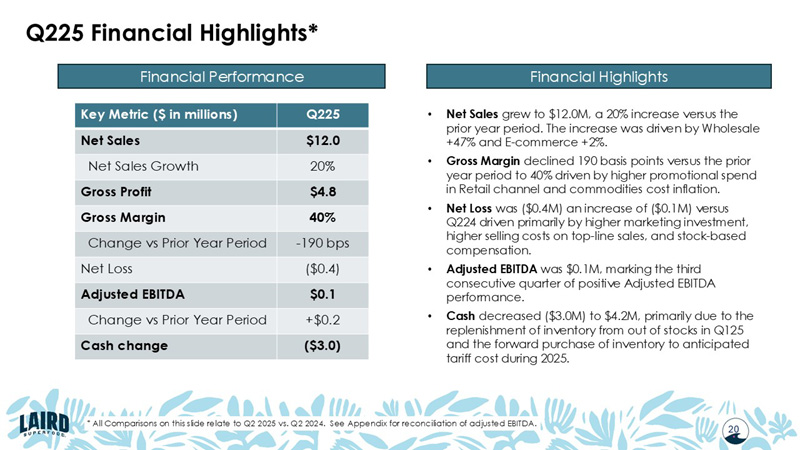
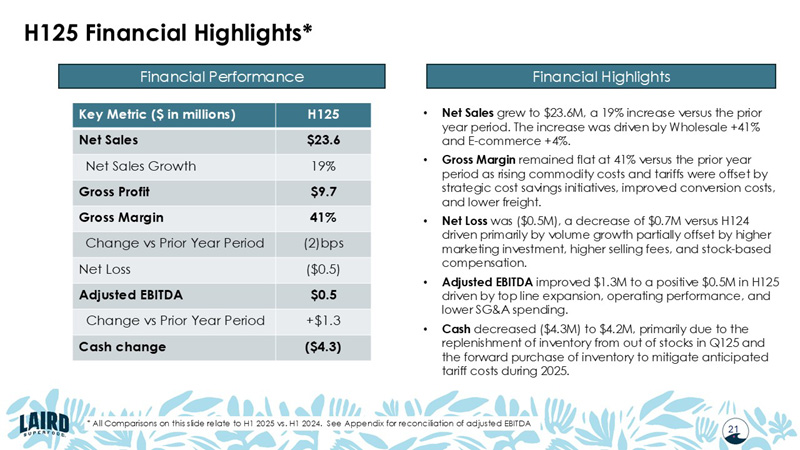
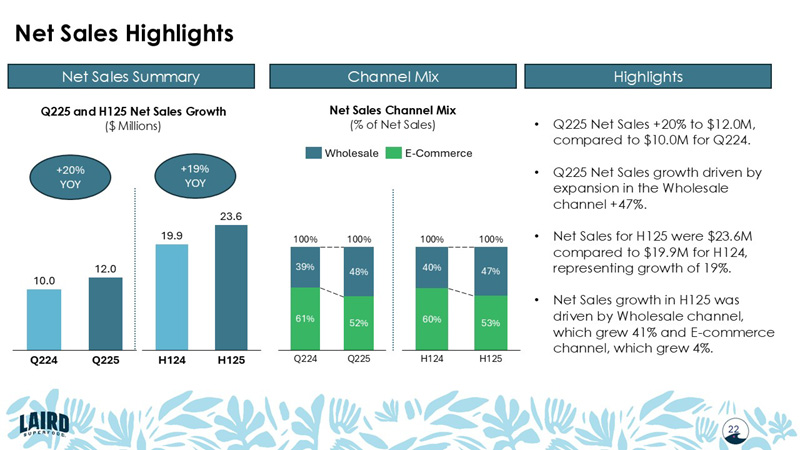
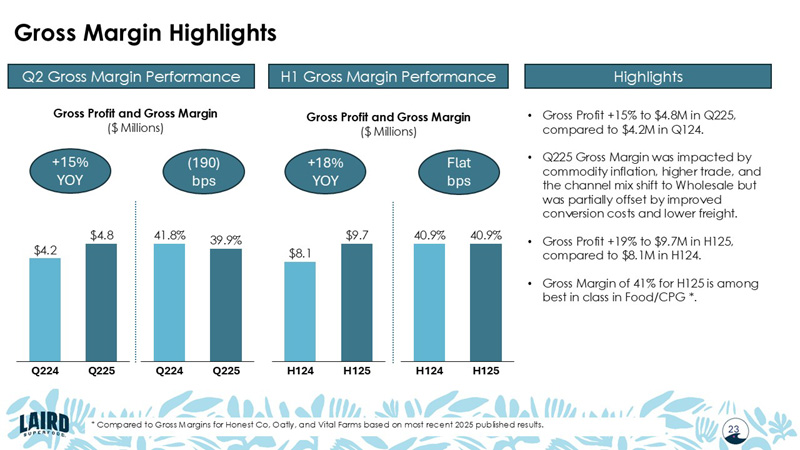
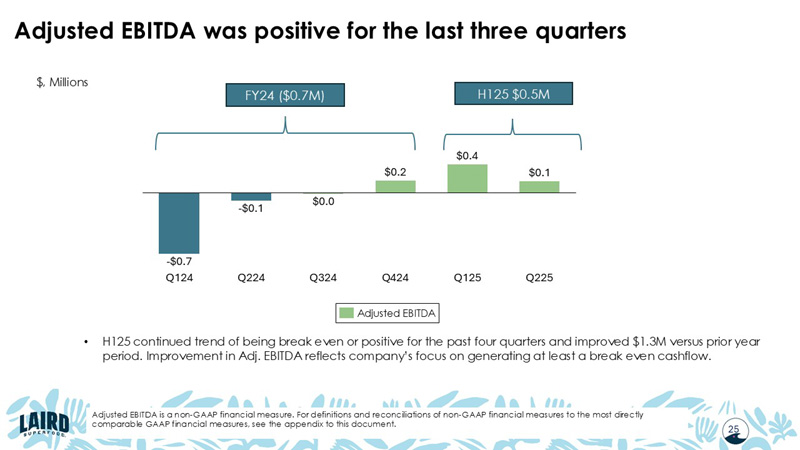
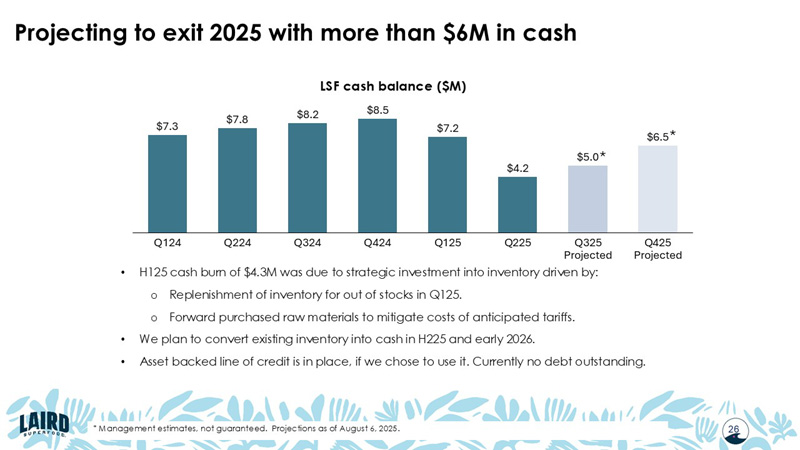
Thank you, Trevor, and good afternoon, everyone. Welcome to Laird Superfood's second quarter 2025 earnings conference call. I'm Jason Veep, CEO of Laird Superfood, and I'm joined today by our CFO, Anya Amla. Let me start by saying how proud I am of our team's performance this quarter. In a challenging environment with ongoing economic pressures, commodity inflation, and shifting consumer preferences, we once again delivered impressive financial results that underscore the resilience and appeal of the Laird Superfood brand. Net sales grew 20% year-over-year to $12 million in Q2, marking another quarter of robust top-line expansion. This growth refueled by a strategic focus on wholesale, which surged 47% and now represents just under half of our total net sales, driven by distribution gains and velocity growth in grocery and club channels. our e-commerce channel also held steady with positive 2 growth in a very challenging digital market contributing 52 of total sales thanks to continued strength on amazon this quarter obviously marked an acceleration in our stated strategy to intentionally grow wholesale to become the largest percentage of our total business and i am proud that we are succeeding in making that transition. Looking at our product categories, coffee creamers led the way with 44% growth, making up 56% of growth sales in Q2, as consumers increasingly seek out our plant-based functional creamer options. Coffee, tea, and hot chocolate products grew 44% as well, driven by strong growth in our coffee products. This is in line with our intent to become a powerhouse in functional coffee solutions and speaks to consumers interests in turning their morning ritual into a healthy and nutritious way to start the day on the profitability front we achieved a gross margin of 39.9 percent while slightly down from last year due to higher trade spend commodity costs and some small tariff impact our margin level remains among the best in the industry. Operationally, we've demonstrated agility in managing our supply chain, even amid tariff pressures, allowing us to deliver positive adjusted EBITDA of nearly $150,000 this quarter, a meaningful improvement from prior years flight loss. This marks our continued progress towards sustainable profitability with year-to-date adjusted EBITDA at just over $500,000. dollars. Our balance sheet remains solid with $4.2 million in cash and no debt, though we strategically invested in inventory this quarter to support demand and mitigate tariff costs and supply chain risks, leading to $4.1 million in cash used from operations year-to-date. We expect to normalize this in the coming quarters as we convert our inventory into cash. these results position us as one of the fastest growing food companies in the public markets outpacing many peers in the healthy nutrition space for context we've seen mixed performances across the industry this quarter and these announcements reflect a sector that's navigating inflation and softer demand in certain channels yet rewarding brands with innovation and execution brands like ours we expect tariffs to remain a wild card for the back half of this year and beyond but our team continues to make headway in our cost structure through key strategies such as direct sourcing of our materials and freight optimization we are proud to not have taken any tariff related price increases while still delivering our gross margin targets thereby delivering our highest quality health and wellness food products to consumers at the best value possible we believe that this gives us a strategic advantage versus many of our competitors while also leaving open the opportunity to increase our price at a later date if the conditions necessitate the economic environment may feel overall shaky right now but we are building on tremendous momentum and are cautiously optimistic as we head into the second half the consumer landscape is dynamic but our focus on clean plant-based superfoods backed by Laird Hamilton's legacy and our commitment to quality positions us to capture share. Going forward, we'll continue to invest in brand building, innovation, and operational efficiency to drive long-term value. With that, I'll turn it over to Anya for more financial details. Anya.
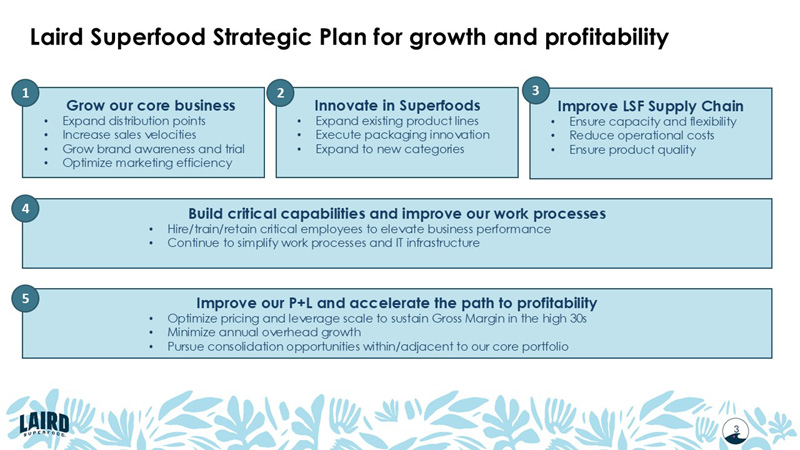
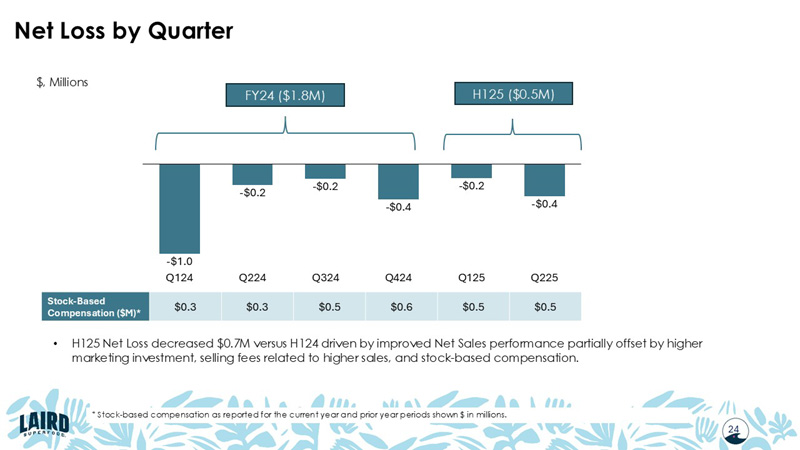
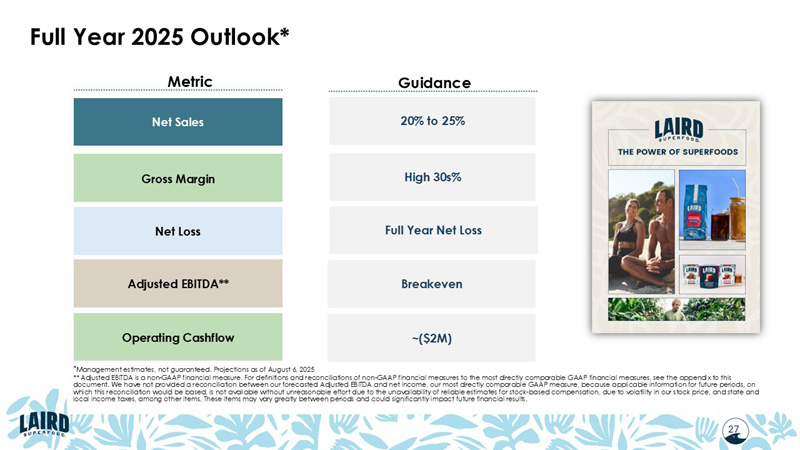
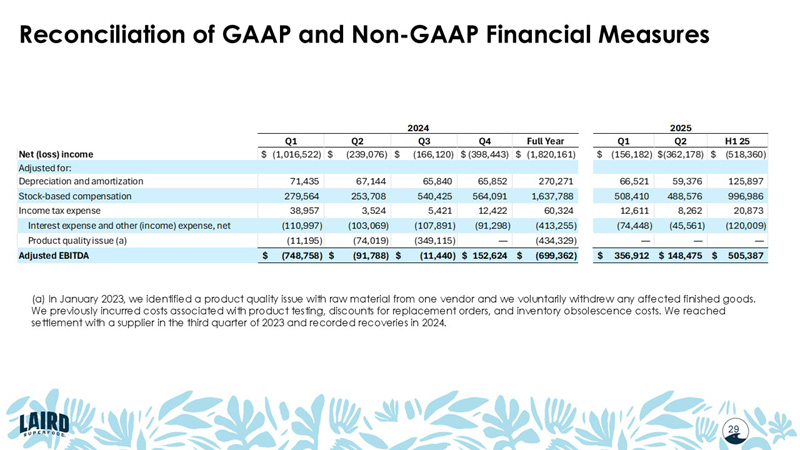
Thank you, Jason, and good afternoon, everyone. I will now provide you with some additional details on the second quarter of 2025 financial results and our outlook for the full year. I am pleased to share that we have delivered another strong quarter of high growth top line, robust gross margins, and disciplined spend management. Net sales grew 19.9 percent to 12.0 million compared to 10.0 million in the prior year period and 11.7 million in the last quarter. Similar to the first quarter, a wholesale channel led the company's growth in the second quarter, increasing by 47 percent year-over-year and accounting for 48 percent of our total net sales. This growth was driven by distribution expansion and velocity acceleration at shelves in grocery and club stores. E-commerce sales increased by two percent year-over-year and contributed 52% of total net sales, led by continued growth on the Amazon platform. Gross margin in the second quarter delivered robust 39.9%, compared to 41.8% in the corresponding prior year period. Although Q2 gross margins were about two points lower than in the first quarter of 2025 and in the corresponding period a year ago, we are very pleased with these results, given commodity inflation and our key raw materials such as coffee and coconut milk powder and increased tariffs costs. These results show resiliency in our ability to hold gross margins in high 30s, which is at the level of best-in-class CPGs, despite the inflationary pressures and even without using pricing as a lever. Our supply chain team continues to drive efficiencies by directly partnering with key raw material suppliers and co-packing partners to find cost savings to offset rising commodities costs. Operating expenses increased $0.7 million in the second quarter, compared to the same quarter last year, driven primarily by two reasons. One, increased marketing, advertising, and selling expenses due to sales volume growth, and two, slightly increased general and administrative expenses driven primarily by stock-based compensation, which is a non-cash expense, and largely offset by broad cost reduction measures. Net loss for the second quarter was 0.4 million compared to 0.2 million loss in the prior year period, and adjusted EBITDA was positive 0.1 million compared to a loss of 0.1 million in the same quarter prior year. This $200,000 improvement in adjusted EBITDA was driven by top-line growth, margin management, and discipline around cost control as we are well on the way to break-even in profitability. Now, regarding our balance sheet, we ended the quarter with $4.2 million in cash and no debt. The increase in cash usage in the second quarter relative to the first quarter was primarily driven by our decision to bolster our inventory in order to meet higher demand for our products, address other stocks experienced early in the year, as well as forward purchase of raw materials in anticipation of potential tariffs on the import of raw materials that we source outside of the United States, particularly in Southeast Asia. As we sell through this forward purchase inventory during the second half of 2025, we expect our cash balance to normalize an increase by the end of the 2025 fiscal year. In addition, during second quarter, our account receivables balance was elevated due to timing of shipments, which resulted in shift in payments received from Q2 to Q3. We continue to project that we have sufficient cash to fund our operations as we grow our business and make operating improvements that drive us forward to break and profitability, and we also have an asset-backed line of credit available for our use, should we need it. We exited second quarter with a strong momentum in our core categories, exciting innovation, and confidence in our team and our brand. Despite ongoing macroeconomic uncertainty, particularly within the e-commerce landscape, we remain confident in our ability to deliver on our full-year growth plans. Based on the strength of our first half performance, the continued momentum in wholesale channel, and strong execution across our organization, we are reaffirming our full year 2025 net sales growth guidance in a range of 20 to 25 percent, growth margins to hold in the upper 30s, and break-even adjusted EBITDA. We expect full-year operating cash usage to be approximately $2 million, driven by an incremental investment in inventory to support top-line growth and minimize other stocks. And now, I will turn the discussion back over to Jason for any closing remarks.
Thank you, Anya. Our 20% sales growth is among the best in our industry and speaks to the demand for our healthy, functional foods. I want to reiterate our confidence in our mission and our team, and in the long-term opportunity for Laird Superfood. Our brand is strong in health and wellness, and our balance sheet remains attractive and with no debt. Despite the challenges presented by tariffs and a less confident consumer, we are optimistic in our team's ability to navigate these issues and deliver long-term value for our shareholders. Thank you for joining us again today. and thank you for your continued interest in their superfood. This concludes our second quarter 2025 prepared remarks and we're now ready to open the call to questions.
Operator
At this time, if you'd like to ask a question, it is star followed by one on your telephone keypad. If for any reason you would like to remove that question, it is star followed by two. Again, to ask a question, it is star one. As a reminder, if you're using a speakerphone, please remember to pick up your headset before asking a question.
I'll pause briefly here as questions are registered. our first question comes from george kelly roth capital partners george your line is not open hey everybody thanks for taking my questions um the first one for you is just about your revenue guide for the year um if i just kind of play that through in the back half it uh bakes in a pretty significant kind of step up versus the revenue performance in the first half so i was just wondering what you're seeing that gives you confidence that you'll be able to hit on that that two half step up hey george uh jason and i'll jump in and i'll let anya add any color
any color that you'd like to as well uh it's a good question and obviously something that we've scrutinized quite a lot as well and you know that the climate right now is not a high growth climate for most companies so um so we feel really great that we're able to affirm that guidance uh and um And I think that we are still growing, you know, at 20% or more clip, or projecting to grow at that clip over the course of this year. So remember, a couple of things happened in the first half of the year that we don't anticipate happening in the second half. The first one occurred in Q1, where we had a significant out-of-stock issue that impacted sales of our powder creamer products, some other products as well, but predominantly our powder creamer products. to the tune of we estimated over a million dollars worth of sales. Secondly, there was a really significant Q2 event that took place when UNFI was hacked with a cyber attack. And so we lost shipments for a number of weeks then as well. So, you know, and that's a large part of our business, of course, you know, we primarily have two distributors to the natural and neural portions of our business uh that being unified and ke and so when half of that goes down it really makes a dent so we don't anticipate having events uh of that magnitude in the back half of the year and at the same time we've picked up some additional distribution that will start to go live here uh over the course of the next week the next month uh and feel like we we're in a really great position uh to expand uh with additional distribution gains that have been pitched and not yet awarded uh so you know i'll be watching those obviously very closely as we go forward and then finally george i tell you the liquid business uh that went through a transition at the end of last year into the beginning of this year took a couple of months to really get fully back to um to where it had been and we're just hitting our stride on that again right now so you're seeing velocities back up to approximately where they were on a per ounce basis or total allowance basis, and sales basically coming right back to where they were as well. So a little bit of pain as we went through that transition, a lot of great learnings, but a little bit of pain, and we think we're through that as well. So a lot of things going really well for us as we start the second half.
Okay, that's all. That's really helpful. Maybe just to follow up with a few more questions just on your explanation. is there a way to quantify the uh the impact from that cyber attack and then secondly um on the liquid product can you give more detail just i think you're talking about the transition and sizing um and i i think i i saw recently that there's a new and improved formula at least it's it's the one of one of the liquid products i saw was labeled that way is that part of the transition And just generally, how is the liquid product performing? Are you pleased with what you're seeing? Any more detail there would be helpful.
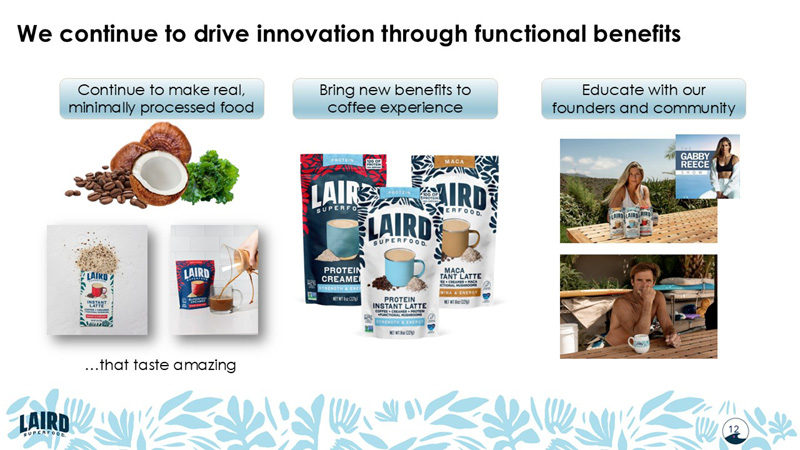
Yeah, you bet. Good questions. And with the UNFI, we obviously can't get to a perfect number on the UNFI outage. But our estimation, George, would be that it probably costs us somewhere in the neighborhood of 10 points at retail, maybe eight to 10 points at retail over the course of that quarter. So it all occurred in Q2 and it's obviously been restored now. But that'll be our best guess. And so I don't know, you're probably looking at a few hundred thousand dollars of sales that would have been lost in that case. So not as significant as what we saw with our auto stocks. Most because it didn't last as long. It was restored. They were restored on most products within a couple of weeks. With regards to liquid, yeah, that was the transition. Essentially what happened is we went from 16 ounces to 25.4 ounces, upsizing, and we had assumed that we would see pretty steady TDPs with a little bit of bumpiness as you go through that transition. There always is some i think we had spoken about that a couple of quarters ago uh and it just endured a little bit longer than we expected uh we had one retailer in particular uh that was not fully on board with the pack change when it came out so it took uh probably an extra month to get them to bring the products in they're all in now and they're flowing and doing fine but it but we were out of stock at retailer find more like six weeks actually in total uh they're one of our larger not not the largest one of our larger retailers so that was certainly impactful uh i mentioned there were a lot of good lessons learned coming out of that you know if i could do it all over again we would have called out the upsizing of the product to the consumer i think there was a value perception initially as consumers saw the price go up but the package didn't look that different uh you know You assume that consumers see that it's 50% or just about 50% more, or a little over 50% more product, but not everybody picks that up intuitively. And so we just, you know, a little bit of self-inflicted wounds in there, George, and then a little bit of market challenges. And it took us just a couple more months than we anticipated to get through that transition. But, you know, I'm happy to say velocities are now up where we had modeled them to be, just pushing right up at about the conversion we expected. TDTs are just about to where they were. We're still working on a few of the smaller accounts that are meaningful still when you add them all up in totality. But we're feeling really good about the closure that we made over the last six or eight weeks on that. And I feel like we'll get all the way to bright here over the next couple of months. Okay, great. and then just one last one for me um innovation items for the back half of the year and then into 2026 where are you most focused where do you think you have the most opportunity and that's all i had thank you yeah yeah you bet so we're really excited about we've got we've got an incredible innovation spot the hardest thing right now is staging it in a or metering it in a um a cadence that the team you know which is a pretty small team so we have to make sure we meter it and put it out to a cadence that they can keep up with. So right now we're working on a couple of things. Ironically, we're working on another transition of the liquid creamer. So it's great that we have all these lessons learned. We have been able to create a super optimized formula where we're going to be able to take out the last, we have gum in there right now that we're able to remove and we're able to take out, move everything to coconut sugar, get rid of the coconut oil and make it an entirely coconut cream-based product. We're flipping it to organic and we're putting it into a plastic bottle that will be a post-recycled plastic bottle. It's very consumer-friendly right now. You know, the irony is these paper packages that seem like they would be recyclable are not actually recyclable in the United States because you need a two-step system and very few communities have that. So we're really excited about where that goes we're applying all those learnings that we had the last time around to make sure that we we don't have to have any of those hiccups as we go forward this time so that's a big piece of it that will be a very differentiated product uh in the marketplace and we're getting great reception from the retailers that we've spoken with and i think we've spoken with pretty much all of them at this point uh we have a protein-based coffee product that we're really excited about. There are a number of iced coffees with protein that have launched over the course of the last year to 18 months. We saw a concept like this last summer, and we've been honing our formula. We're really excited about that. This will be our first foray into dairy products, so there'll be more on that, but you probably have heard from us before that dairy is an area we've been excited about we believe that there is a superfood entry into the dairy space where we can leverage the benefits of our functional mushrooms as well as a cleaner source of dairy so we're looking you'll see we're looking at organic and other attributes as our entry point and it's a very hot category not only anymore online but really moving into retail so we're We really make hay with that particular product. Those are the two largest that you'll see us looking at in the course of the next two quarters, George. And then, of course, next year, that dairy platform will really start to expand with some exciting launches that we've been foreshadowing for a while. Thank you. You bet. Great to talk to you, George.
Operator
Our next question comes from Nicholas Thurwood with the company Maxim Group.
Nicholas, your line is not open. thank you thank you for uh taking my questions can you um first go into how the amazon day um kind of promotional period went for for the company hello sorry nicholas we lost you sorry yeah can you go into how the amazon day promotional period um went for the company and any sort of customer acquisition metrics that you you have following that period yeah hey nicholas um so
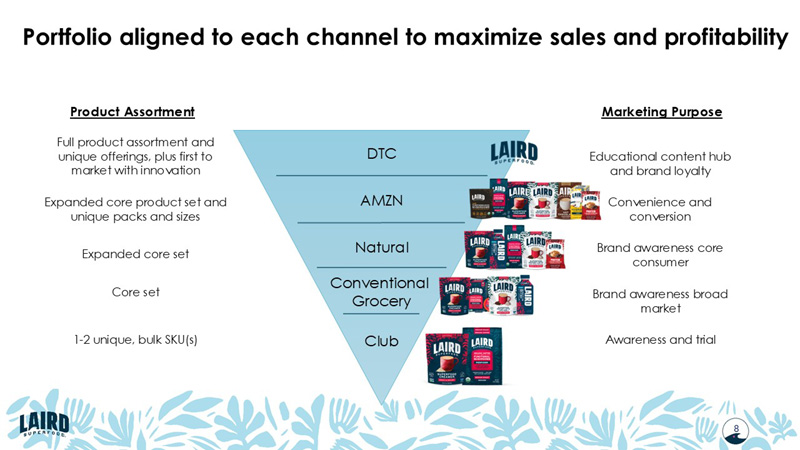
yeah uh prime day what it went well for us it went to plan uh we had a couple of really strong days out of the gate and then it tapered off a little bit in the last couple of days there's a little bit of a different pattern than what we've seen in the past where consumers shop for a while and end up purchasing later uh in the prime days at least that's been the behavior that we've seen uh in past years so we had a couple of really strong days out of the gate uh and we came in i I think, Connie, we came in right, I think, right where we expected to be. That's for our plan. You know, Amazon in general, you guys can probably see with e-commerce numbers, e-commerce is slowing for us as it is for a number of other consumer brands. We're fine with that at the end of the day. We've talked a lot on previous calls about how we really want to encourage our shop, our consumers to shop wherever they want to shop. We really try through our pricing and our margin structure to not tear, to help them to not care and for us to not care. And so the way we've structured this, just as a reminder to everyone, is DTC is our highest priced portfolio. And we do that because if consumers are interested in the brand, willing to shop, they're interested in all of the education that we provide on that site, and they do it all from the comfort of their home and they don't have to really take any effort to go drive out, use their gas, go to use their time to go to a grocery that we feel like um that that should be the highest uh cost um you know highest uh price um products in our portfolio and amazon on the flip side while we'd like to run the same prices ends up being a little bit more competitive just due to the marketplace nature of uh of that platform and then when you look at grocery you find that those those are best prices you know consumers are using their time their gas uh to go over and shop and obviously when you have all the physical products there it's a very competitive marketplace. And so we want to make sure that we are as competitive as we can be. But when you look across our margin structure and the way that we leverage marketing into those various channels, what we try to do is make ourselves completely apathetic to where the consumer shops. We want the consumer to shop where they want to shop, and we want to not care. And so we've really tried to build a model that gets us to approximately the same margin across all the channels. And you really see that, I think, in our results this quarter, where we saw a significant shift towards that bricks and mortar business, which we've been saying is our strategy since the day I walked in the door here. And so we're really excited to see the growth in the bricks and mortar side. Of course, we'd like to hold on to as much e-commerce sales as we can, but at the end of the day, we feel the consumer will shop where they want to shop, and we want to be in the position to allow them to do that. And I think the results of this quarter really demonstrate that and so you know it's a little bit more information than you're asking for with regards to amazon um but you know with with amazon what i'd say is uh there it is slowing a bit for us it's going for a lot of other consumer brands that we speak with um that have reported recently uh so is the dtc platform we think we still have a tremendous amount of opportunity though in both of those platforms uh but we're going to spend appropriately and um you know market to those in a cost-effective way just as we do across all the channels and ultimately let the shoppers go where they want to go yeah thank you for all the detail that that makes sense focusing on the
wholesale channel kind of talking about focusing on the wholesale channel a lot of your increased like spending was in marketing and advertising while trade promotion was flat year over year do you have any plans to increase trade promotion because gross margin was in the kind of in the upper range of guidance, or are you kind of not doing a ton of trade promotion as a wait-and-see thing on input costs related to tariffs?
Hi, Nicolas. This is Anya. Thanks for the question. Yeah, I think it's a good one. It's certainly something that we are discussing, and we are looking into second half, and given the overall macroeconomic climate, I think consumers are certainly being somewhat price sensitive. As you perhaps noticed, that we have not taken pricing so far. We have not increased our price, given the commodity inflations that we experienced in our key role materials, as well as carriage impact that we already experienced to some degree, and it's rolling out even at a higher rate in the back half. So we reaffirmed our gross margin targets for full year. And, you know, we are discussing what other supply chain efficiencies we can implement in order to offset those inflationary costs without increasing pricing. But promotional strategy is definitely something where we can win into if we see the need in the back half.
Yeah, I love that question because as Anya said, it's something we've been kicking around. we do we do have the luxury of um of a strong gross margin and have the ability to invest into our categories and into our you know our channels and retail customers all customers in fact right now uh when consumers are as anya pointed out becoming more price sensitive so we feel like we're in a really uh you know a really strong position uh given uh the gross largest structure that we have and um but we'll utilize that as necessary to drive growth when we feel that we can win and take uh take share from competitors okay that that'll make sense to me and
i i appreciate the the thought both of you gave into answering my question and that that that's my last question i'll return back to the queue that's great thank you our next question comes from Eric DeLores with the company Craig Hallam.
Operator
Eric, Yelan, is that open?
Adam
Analyst — Craig-Hallum
Hi, everyone. This is Adam on for Eric. Thank you for taking our questions. I only have one question here. Can you expand on some of the distribution gains in Grocery and Club? How broad-based are these gains? And should we think of one channel driving more growth than the other? And any color in terms of geographic regions would be very helpful.
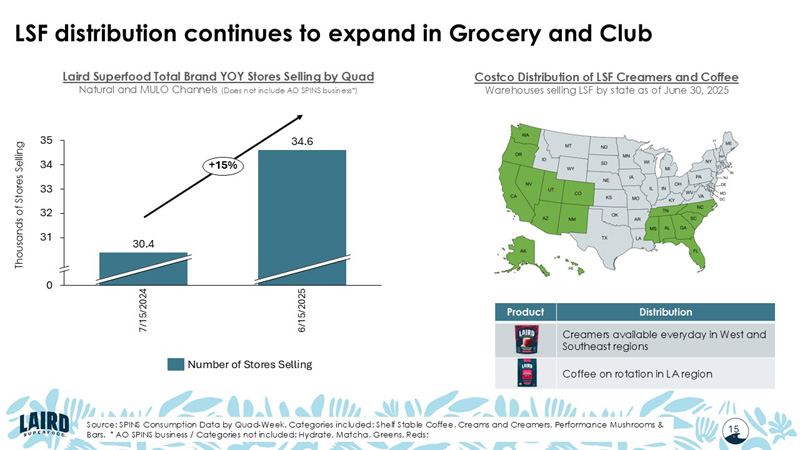
Thank you. yeah hey adam um well what's up uh yeah so hey i um a couple things that's a great question so uh in this i'll talk quarter and i'll talk to half a little bit too because uh just to remind everyone about our business our business our orders are a little bit chunky uh what i mean by that is we have three three large customers few of which are distributing to a series of retailers so So, as I mentioned a little while ago, UNFI and J&E are two of our largest customers. And then we have our club business as well. And those are, you know, those three customers get direct shipped or picked up, you know, depending on their business model. Either we're shipping to them or they're driving trucks to pick up. And the way that our business works, because we don't have direct shipments to retailers given the size of our business right now, not very many, at least. We do have a couple, smaller ones. But because we got through distributors and then, of course, the club business, it ends up the orders and when they come in end up driving quarters to look very different than And so you get a large order on June 28th for shipment on June 28th, and it really changes the dynamics of that quarter, obviously, relative to it coming a couple of days later in the third quarter in July. And so that's a little bit of what is happening in Q2, and that's why I'll talk to the second quarter and then the first half. In the second quarter, we did have a significant uptick in our club business, and we had what I would say was a sequential slowdown in our retail business. And that's not because of scanner data as much as it is because the distributors had placed significant orders in Q1 just before Q2 started, and so they were flush full of inventory as they started Q2, whereas it was the opposite with our club districts. So we really have to look at these things on a broader basis than just a quarter to understand uh the dynamic given the size of these orders relative to the size of our business so all that aside um i would tell you yes our club business has had very strong expansion we have picked up uh additional regions uh of our kramer products i think you guys uh heard from us in the past that we had um i would say uh most of california some of the pack northwest and then And regionally, the San Diego region kind of carried all the way over to Colorado. And so that was really our footprint on the creamer business. We tested coffee a while back. I had mentioned it had done really well. And in Q2, we did receive a rotation on the coffee business that has also performed very That's across an entire region within the Los Angeles region. so as we go to q3 and q4 uh we've expanded distribution already this year that will continue to um to bear fruit and then we also anticipate uh oh and i'm sorry and i i forgot to mention that the creamer business uh also saw an expansion into the southeast region for club so we're starting to pick up a footprint that is kind of west coast all the way into colorado and then the southeast and we're performing very well in all those regions and then in the coffee business I mentioned that we picked up a rotation in Los Angeles it's very likely that we should see additional rotations picked up by other regions coffee as well and so that's all still in the works you know nothing nothing confirmed but I would say looking very strong that we can see a growth uh in the club businesses you know in the back half of this year in the mulo and natural world uh mulo we've continued to see steady gains you know we haven't haven't seen the monstrous full because you know we're not into maps in a major way this time we've done some work with target uh we have a couple of items in those stores we have items in Team Super, Safeway, Albertson, EGB, Wagmans, Fresh Market, I think we're all signing into that we've talked about in the past. We continue to see expansion into those stores as well. So we pick up items as we continue to perform with the items that we have in there already. And that's been the case over the course of this year. And then in the natural channel, Sprouts has just been an unbelievable customer for us for quite some time. And we've talked about that, and I know we've talked about that quite a lot, but we have significant expansion, again, some of which has taken place here over the last couple of months, and some of which has been confirmed, but really doesn't hit until the back half of this year. So it's pretty broad-based, I would tell you, across MULO, Natural, and Club. We believe as we go forward, as I mentioned, this is the strategy for us. we intend to continue to grow distribution in the bricks and mortar space across all of these channels we have a great sales team that's engaged a broker that's very supportive in helping us make these calls and we're just seeing a lot of success across the board right now great thank you so much that's very helpful thank you you bet at this time more questions registered q again if you'd like to ask a question it is star followed by one on your telephone keypad again that is star follow plane one there are no more questions registered in queue would like to pass the conference over to our hosting team for closing remarks well thank you and and um i think really i'd just like to say thank you uh thank you to everyone for joining our quarterly earnings call today and we look forward to talking to you again in three months there's been a lot of progress made again and we're really excited to be able to come in and reaffirm our guidance that we've given and uh i feel like we have a lot of opportunity as we go forward from here with some of the innovation that we mentioned, the expansion that we talked about, and so we'll be excited to talk to you in about three months from now. So have a great day. Thank you all very much.
Operator
That will conclude today's conference call. Thank you for your participation and enjoy the rest of your day.