
Executive readout · one minute
Webcast research workspace
Read the call alongside every captured source. Transcript, 10-Q stay in one workspace.
Substantial doubt about the company's ability to continue as a going concern.
“The Company has incurred recurring operating losses and has an accumulated deficit. These conditions raise substantial doubt about the Company's ability to continue as a going concern. ... Management believes that existing cash resources, anticipated collections and potential financing proceeds may support near-term operations; however, additional financing is required, and there can be no assurance that such financing will be available on acceptable terms, or at all. Accordingly, substantial doubt about the Company's ability to continue as a going concern has not been alleviated.”View the 10-Q filed Aug 13, 2026
Earnings call · FY2020 Q2
Executive readout · one minute
Read the call alongside every captured source. Transcript, 10-Q stay in one workspace.
Research coverage
2 live sources
Open each available source without leaving this research workspace.
Open the source you need; every reader stays inside this workspace.
How the reported period landed and where the business moved.
Read the call
Read the speaker-labelled prepared remarks and analyst questions.
Greetings. Welcome to the Milestone Scientific Second Quarter 2020 Conference Call. At this time, all participants are in a listen-only mode. A brief question-and-answer session will follow the formal presentation. Please note, this conference is being recorded. At this time, I will now turn the conference over to, David Waldman, with Investor Relations. David, you may now begin.
Good morning, everyone and thank you for joining Milestone Scientific's second quarter 2020 financial results conference call. On the call with us today are Len Osser, Interim Chief Executive Officer; Arjan Haverhals, Chief Executive Officer of Wand Dental Inc.; and Joseph D'Agostino, Chief Financial Officer. The company issued a press release today, Monday, August 17, containing second quarter 2020 financial results, which is also posted on the company's website. If you have any questions after the call or would like any additional information about the company, please contact Crescendo Communications at 212-671-1020. The company's management will now provide prepared remarks, reviewing the financial and operational results for the second quarter ended June 30, 2020. Before we get started, we'd like to remind everyone that during this conference call we may make forward-looking statements regarding the timing and financial impact of Milestone's ability to implement its business plan, expected revenues, and future success. These statements involve a number of risks and uncertainties and are based on assumptions involving judgments with respect to economic, competitive, and market conditions and future business decisions, all of which are difficult to predict accurately and many of which are beyond Milestone's control. Some of the important factors that could cause actual results to differ materially from those indicated by the forward-looking statements are general economic conditions, failure to achieve expected revenue growth, changes in our operating expenses, adverse patent rulings, FDA or legal developments, competitive pressures, changes in customer and market requirements and standards, and the risk factors detailed from time-to-time in Milestone's periodic filings with the Securities and Exchange Commission, including without limitation Milestone's report on Form 10-K for the year ended December 31, 2019, and Milestone's report on Form 10-Q for the second quarter ended June 30, 2020. The forward-looking statements made during this call are based upon management's reasonable beliefs as of today's date, August 17, 2020. Milestone undertakes no obligation to revise or update publicly any forward-looking statements for any reason. With that, we'll now turn the call over to Len Osser, Interim CEO. Please go ahead, Len.
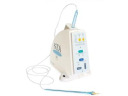
Good morning. Thank you, David, and thanks everyone for joining us on the call today. We continue to advance our commercial efforts around the CompuFlo epidural system. Although we experienced temporary setbacks due to COVID-19, with hospitals on complete lockdown, I am pleased to report our sales and business development pipeline is expanding. Importantly, we are in late-stage discussions with a number of premier hospitals in the United States. Moreover, the CathCheck technology has resonated well with hospitals, given its ability to significantly minimize anesthesiologist time by providing very quick information regarding pain management. CathCheck's added capability makes CompuFlo the first and only commercially available instrument that can identify the presence of a pressure waveform signal that can be used to confirm proper placement of a catheter, and this can be accomplished in an objective way in minutes, as opposed to using the conventional subjective method taking up to 20 minutes to 40 minutes. Using CathCheck, physicians and nurses can not only determine what is the objective pressure at the tip of the needle, but can now monitor the presence or absence of a pulsatile waveform to determine the placement of the catheter. Importantly, this capability saves time and money and provides better patient care. Looking ahead, we are more encouraged by the outlook for the business than at any point during the company's history. We have successfully trialed our CompuFlo epidural system in multiple hospitals and we are now working with doctors and VAT committees in the respective hospitals. Most importantly, the product is now proven in terms of safety, efficacy, and very importantly, economics. For these reasons, we are confident as ever that our technology will become the new standard of care and believe that our company is well-positioned for a broad commercial rollout of our CompuFlo epidural system. Turning to our dental division; the global pandemic has had a negative impact on revenue for the second quarter due to industry-wide reduced hours and closings of dental offices throughout the country and the rest of the world. The quarter was a disaster for us and the industry, nevertheless, we are encouraged by the steady reopening of dental practices in the U.S. and a larger degree in Europe, and the order flow this month has shown a turnaround for us. In the meantime, we have utilized this period to significantly enhance our marketing activities to better educate dentists on how The Wand can help dentists rebuild their practice by providing a safer and more pleasant environment for the patients and staff. With the recent appointment of Arjan Haverhals as Chief Executive Officer of Wand Dental Inc., we are enhancing the sales and marketing activities around our dental instruments and are exploring new collaborations and distribution opportunities. At this point, I'd like to turn the call over to Arjan to describe the sales and marketing activities around the Wand instrument in more detail. Please go ahead, Arjan.
Thank you, Len. First, let me state how excited I am to join Milestone at this exciting time. Despite the temporary impact of the current pandemic, I'm confident that the epidural instrument will become the standard of care, and there is similar potential for this technology across a wide range of indications. As Len previously commented, a lot of my initial focus has been on revamping sales and marketing activities around our dental instruments. We are adding more resources, including a more focused international effort and educational activities to build awareness in the marketplace. As an example, we are reaching out to members of the Academy of General Dentistry to highlight the clinical benefits of The Wand anesthesia system, which can improve the safety of dental procedures for the patients and staff during the COVID-19 pandemic. Patients are concerned about exposure potential to viruses and infection control more than ever. The advantage of The Wand anesthesia system is that the anesthesia is delivered through a sterile disposable for single use, which adds peace of mind to the patient, with the potential of decreased exposure risk. The key element of the strategy is to educate the dentists in terms of safety, efficacy, and economics. We are educating dentists on how The Wand anesthesia system can not only help in their daily activities, but also play a role in getting their business back to normal levels by fostering a safe environment for patients. We also changed the value proposition of our dental product from purely clinical to more business-driven, in order to prove that our dental products can help keep patients coming back. As an example, it's estimated that over 40 million Americans are dental-phobic and avoid going to the dentist because of the anxiety or fear that they experience. Let's assume a dental practice has a thousand patients; it is widely reported that approximately 25% of second appointments are canceled out of fear. Therefore, it would be reasonable to assume that with our Wand instrument, a dental practice could capture up to $200,000 per year, bringing those patients back into the practice by using our products, thereby reducing or eliminating their fear. So as we sit today, we are gradually seeing improved uptake in the United States and markets are slowly opening across Europe, although not yet at the level they used to be. Most important, we are not sitting around and being reactive. Our team is working aggressively to exploit every opportunity possible and believe we will be very well-positioned as the pandemic eventually subsides. Turning to our medical instrument for just a moment. As Len mentioned, we are trialing our CompuFlo epidural system in multiple hospitals and medical schools, placing the system with key opinion leaders, and working with some of the top anesthesiologists in the United States and Europe. In Europe, we are targeting hospitals in Italy, Germany, France, Denmark, Switzerland, Sweden, and other countries, and we are pleased with the feedback we've received. In the United States, we are in late-stage discussions with a number of leading hospitals and we'll provide further updates as soon as we are at liberty to do so.
Thank you, Arjan. Revenue for the three months ended June 30, 2020, was $167,000 versus $2.2 million for the second quarter of 2019. Dental revenues decreased by approximately $2.1 million due to the impact of the COVID-19 pandemic on the company's customers, suppliers, vendors, and other business partners. Medical revenues for the three months ended June 30, 2020, and June 30, 2019, were nominal, reflecting our strategy to place the issuance with KOLs at no cost to drive awareness and then adoption of the instrument. Gross profit for the second quarter ended June 30, 2020, was approximately $112,000 or 67% of revenues, versus approximately $1.5 million or 68% of revenue for the second quarter ended June 30, 2019. Operating loss for the three months ended June 30, 2020, was approximately $1.3 million versus approximately $1.1 million for the quarter ended June 30, 2019. The increase in loss is the result of decreased revenue from the dental business. Net loss for the three months ended June 30, 2020, was approximately $3.1 million or $0.06 per share, versus a net loss of $1 million or $0.02 per share in the prior period. Now, I'd like to turn our attention to liquidity and capital resources. As of June 30, 2020, the company had cash and cash equivalents of $16.6 million, compared to cash and cash equivalents of $2.3 million as of December 30, 2019. As of June 30, 2020, total assets were approximately $19.9 million, and working capital was $16.5 million. Revenue for the six months ended June 30, 2020, was $1.9 million versus $4.1 million for the six months ended June 30, 2019. Dental revenues decreased by approximately $2.1 million, which is related to the decrease in the sales of handpieces and devices throughout the country and internationally due to the COVID-19 pandemic. Gross profit for the six months of 2020 was $1.3 million or 71% of revenue, versus $2.8 million or 68% of revenue for the first six months of 2019. Operating loss for the first six months of 2020 was approximately $4.7 million versus approximately $1.9 million for the first six months of 2019; this increase in loss is a direct result of our decrease in dental revenues. Net loss for the six months ended 2020 was $4.7 million or $0.09 per share, versus a net loss of $1.8 million or $0.04 per share for the comparable period in 2019.
Thank you, Joseph. We remain encouraged by the outlook for the business and especially the market potential for the CompuFlo epidural instrument for a variety of epidural procedures and other medical applications. However, our initial focus is on the labor and delivery market. We believe that our technology has the potential to transform the industry and ultimately become the standard of care. Given the uncertainty in the market, we took the opportunity this past quarter to raise capital. As of June 30, 2020, we had cash and cash equivalents of $16.6 million. We believe the strength of our balance sheet provides a substantial runway to help mitigate the risks related to COVID-19, as well as provide additional resources to accelerate our sales and marketing activities around the CompuFlo epidural system and The Wand instrument. Moreover, we now plan to resume development and commercialization of other indications for our proprietary DPS, Dynamic Pressure Sensing technology. We believe this technology platform is quite broad with multiple indications in large and underserved markets. Let me be clear, we did not intend nor did we want to raise this capital, but given the uncertainty presented by the pandemic, it was the prudent thing to do to protect the company and our shareholders. Not knowing how long the pandemic will persist and the effect that that will have on the overall economy, caused us to raise this capital. We are committed to driving shareholder value and look forward to providing further updates as developments unfold. I'd like to thank you for joining the call today. At this point, we would like to open the call to questions.
Thank you. Our first question is from the line of Anthony Vendetti with Maxim. Please proceed with your question.
Thanks, good morning guys.
Good morning, Anthony.
Welcome aboard, Arjan.
Thank you, Anthony.
Hey, how are you doing? I wanted to talk a little bit about dental first and then we can move to the medical side. You mentioned dental offices are beginning to reopen this month. We're in mid-August now, but what about July? Did you see a slow reopening starting in July that has continued into August and is getting better, or did the reopening not really start in any meaningful way until August?
Let me answer your question. The reopening, what we see is beginning to start and going back to, let's say, closer to normal levels, of course at reduced activities, but definitely for the month of August.
Okay, that's helpful. And then in terms of the medical business, you mentioned that the sales pipeline is developing, the interest level has increased, and you're trialing in multiple hospitals in the U.S., as well as multiple countries in Europe. As that trial is going on, and I know you have an agreement with GPO; how are the negotiations going with the actual hospitals in the GPO about actually purchasing or has that really been severely limited by COVID-19 and right now, it's just more of a pipeline of interest?
Everything has been limited worldwide, especially in the United States, where we have fallen behind other Western countries. Some regions, like Florida and Texas, reopened, which provided us with opportunities; however, they opened too early and had to shut down again. Despite this, we’ve made progress by hiring a few new salespeople, so we now have three salespeople reporting to our Head of Sales in the U.S. New York State has performed very well in terms of managing the situation, so we are focusing our efforts there. Currently, both doctors and staff, as well as VAT committees, are overwhelmed due to COVID-19. Fortunately, hospitals in New York State have reopened, and we are taking advantage of that by pursuing opportunities. To answer your question, the sales funnel has increased dramatically due to the addition of new salespeople and the reopening in New York State. We are getting closer to placing our products in hospitals, but the focus right now is on COVID-19, so I cannot predict when we will start closing deals with hospitals. However, both the epidural product and the CathCheck product have been very well received by doctors and staff. Does that address your question, Anthony?
Yes, that's very helpful. Just to follow-up though on it; assuming you get an actual trial and they go through the process of saying, 'Okay, we agree, this is significantly better than the current standard of care.' What do you anticipate in a normal environment the sales cycle to be once you make contact with the hospital on trial it? Is this a three to six-month process, a six to 12-month process in terms of being able to close it? And maybe relate that to the dental, what's the general sales cycle there? And do you expect it to be around the same or a little bit longer on the medical side?
Well, the medical, traditionally, to get a product to a very high level of acceptance is one and a half to three years. However, we've been doing this for one and a half years; so we're at a point now where the product has been accepted by the vast majority of anesthesiologists that have tried it, we've already piloted it in many different hospitals successfully. So we are now waiting with a number of hospitals so that the VAT committee approves the purchase of the product. We are selling disposables, at some hospitals as they continue to use it, having finalized the pilot, so what's keeping us from actually making arrangements with hospitals where they use our products exclusively to replace the hypodermic syringe, is the VAT committees because of COVID-19 and the enormity of the expenses because of the pandemic; so that's the problem at the moment. Being that both products, both the CathCheck and the epidural, are working as they are supposed to, and it's obvious to the doctors the answer to a part of your question is, eight months ago, we would have been in many hospitals, we wouldn't be having this conversation today, we'd be having a very different conversation if not for the pandemic. We would have at this point, I believe and our Head of Sales, Eric Gilbert, believes, that we would have been in quite a number of hospitals at this point, especially given the economic study that has been released the enormity of savings with using our product. As you noticed, unfortunately, in New York, we've yet again had the death of a young woman, probably because of the epidural. All these things can be avoided by using our products, including the other, less significant morbidities. So, I think it's quite obvious what we can do in replacing 1860 technology with a technique that was developed in the 1920s. It's a matter now of where the VAT committees are spending money, and the fear that the VAT committees don't know how long the virus will be with us and what their costs will be. So this is our problem at the moment, and this is why we raised the capital that we raised because we are not aware, nor is anyone else with how long the virus will be with us, nor the underlying economic effects.
Understood, Len, that's very helpful. On the CathCheck, if you could just clarify for us and for the investors, it uses the same CompuFlo system and is used to ensure that a catheter is properly placed or hasn’t been displaced. This does not require any type of 510(k) clearance; you just need to file a letter, correct?
Yes, you're correct. The CathCheck is designed to assist anesthesiologists who often work quickly. In labor and delivery, time is crucial. One major issue arises when a catheter is left in for pain management after the needle is removed. As the woman is moved from room to room on a gurney with the catheter tubing taped to her back, if she continues to experience pain after a few hours, it could either be due to insufficient medication or because the catheter has become dislodged during movement, causing the medication to be delivered incorrectly. To investigate this, the anesthesiologist typically administers a large dose of anesthetic and waits for 20 to 40 minutes to see if the pain subsides, which is a long time for both the medical staff and the patient. Our technology allows us to quickly assess the situation by monitoring heart rate and pulse waves, enabling us to determine within one to two minutes whether the epidural is functioning properly. This dramatically reduces the waiting time and provides a clear answer, allowing the medical team to make informed decisions about dosage or catheter replacement, highlighting the importance of our solution.
Excellent, all right. Thank you for that explanation. I'll hop back in the queue.
Thank you very much, Anthony.
Thank you. Our next question is from the line of Jim Dowling with Jefferies Capital. Please proceed with your questions.
Good morning, everyone. You referenced additional uses for your technology. Could you just give us a sense of what those additional uses are?
There are vast applications for our technology because we can replicate everything a hypodermic syringe does, except for vaccines. We can perform any subcutaneous injection. We initially focused on labor and delivery due to its high morbidity rate, which is around 4.5% to 5%. However, this market is relatively small compared to the pain management market, particularly with epidurals. We can also apply our technology to epidurals for short operations, even under general anesthesia. Another potential area is Botox, which is costly and often painful for cosmetic applications. We have a device that could alleviate this pain, but we prioritized our capital for the epidural project first. Now that we have secured additional funding, we are considering pursuing Botox as well. Intra-articular injections for osteoarthritis represent a much larger market, as these are necessary when the body's synovial fluid has depleted, requiring multiple injections annually. Joint replacements are often needed in these cases. Administering injections in smaller joints can be extremely painful, while larger joints pose the challenge of accurately locating the injection site. The indications of improper placement during epidurals, for example, is immediate pain feedback from the patient. In other types of injections, it may take weeks to determine if the site was correct. Our technology can provide real-time feedback through pressure force feedback and pulse wave analysis to ensure accurate drug delivery. The potential markets for our solutions are extensive.
Thank you.
You're welcome.
Thank you. At this time, we've reached the end of our question-and-answer session. I'll turn the call back to management for closing remarks.
Okay, thank you very much for attending this call. We are continuing to manage our capital diligently to both bring our dental product and our epidural product commercially to market, even in this situation. And we are also looking at the development of other products based on our underlying technology, keeping in mind that a recent patent was issued over the last few months, which gives us another 20 years of patent life on pulse wave, which is obviously very important to the company. And we keep, of course, as a research and development company, continuing to leapfrog ourselves. So stay healthy, thank you very much, and we will keep the market informed as we progress. All the best.
Thank you. This will conclude today's conference. You may disconnect your lines at this time. Thank you for your participation.
SEC periodic report
Filed Aug 14, 2020 · complete as-filed document