
Executive readout · one minute
Webcast research workspace
Read the call alongside every captured source. Transcript, 10-K stay in one workspace.
Substantial doubt about the company's ability to continue as a going concern.
“The Company has incurred recurring operating losses and has an accumulated deficit. These conditions raise substantial doubt about the Company's ability to continue as a going concern. ... Management believes that existing cash resources, anticipated collections and potential financing proceeds may support near-term operations; however, additional financing is required, and there can be no assurance that such financing will be available on acceptable terms, or at all. Accordingly, substantial doubt about the Company's ability to continue as a going concern has not been alleviated.”View the 10-Q filed Aug 13, 2026
Earnings call · FY2022 Q4
Executive readout · one minute
Read the call alongside every captured source. Transcript, 10-K stay in one workspace.
Research coverage
2 live sources
Open each available source without leaving this research workspace.
Open the source you need; every reader stays inside this workspace.
Read the call
Read the speaker-labelled prepared remarks and analyst questions.
Greetings. Welcome to the Milestone Scientific 2022 Year-end Financial Results and Business Update Conference Call. At this time, all participants have been placed in a listen-only mode. A question-and-answer session will follow the formal presentation. Please note this conference is being recorded. I will now turn the conference over to your host, David Waldman, Investor Relations. You may begin.
Thank you, Holly. Good morning and thank you for joining Milestone Scientific's 2022 year-end financial results conference call. On the call with us today are Arjan Haverhals, Chief Executive Officer; and Peter Milligan, Chief Financial Officer of Milestone Scientific. The Company issued a press release today, March 31, containing 2022 year-end financial results, which is also posted on the Company's website. If you have any questions after the call or would like any additional information about the Company, please contact Crescendo Communications, (212) 671-1020. The Company's management will now provide prepared remarks reviewing the financial and operational results for the year ended December 31, 2022. Before we get started, we would like to remind everyone that during this conference call, we may make forward-looking statements regarding the timing and financial impact of Milestone's ability to implement its business plan, expected revenues and future success. These statements involve a number of risks and uncertainties and are based on assumptions involving judgments with respect to future economic, competitive and market conditions and future business decisions, all of which are difficult or impossible to predict accurately and many of which are beyond Milestone's control. Some of the important factors that could cause the actual results to differ materially from those indicated by the forward-looking statements are general economic conditions, failure to achieve expected revenue growth, changes in our operating expenses, adverse patent rulings, FDA or legal developments, competitive pressures, changes in customer and market requirements and standards and the risk factors detailed from time to time in Milestone's periodic filings with the Securities and Exchange Commission, including without limitation, Milestone's report on Form 10-K for the year ended December 31, 2022. The forward-looking statements made during this call are based upon management's reasonable belief as of today's date, March 31, 2023. Milestone undertakes no obligation to revise or publicly update any forward-looking statements for any reason. With that, we'll now turn the call over to Arjan Haverhals, Chief Executive Officer. Please go ahead, Arjan.
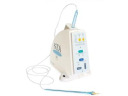
Thank you, David, and thanks to everyone for joining us today. 2022 was an eventful year for the Company as we achieved a number of milestones related to the rollout of the CompuFlo Epidural System. Most importantly, we were successful in seeding the market across a number of key hospitals, health care systems and pain management clinics, as well as key opinion leaders in the field of anesthesiology and pain management. The fact that our technology was adopted by these leading physicians and hospital systems reinforces our confidence in the market potential for our instrument, particularly within the labor and delivery and pain management markets, where we focused our initial efforts in 2022. More recently, we received 510(k) FDA clearance for use of the CompuFlo Epidural System in the thoracic region of the spine, including the cervical-thoracic junction, where the incident rates of morbidity are believed to be much higher than in the lumbar spine region at 17% and 30%, respectively, due to the difficulties accessing the epidural space. These widely acknowledged risk factors have helped drive adoption of our CompuFlo Epidural system within a number of prominent pain management clinics. The importance of the pain management market cannot be understated. The pain management market is believed to be at least twice the size of the labor and delivery market segment. And not only includes numerous hospitals, but also specialty centers, outpatient centers and sports medicine centers. Furthermore, we have experienced that the decision-making time or sales cycle is much shorter in these private pain clinics compared to the labor and delivery department at hospitals. In other words, the recent FDA 510(k) approval increased our accessibility to the total addressable market for epidural analgesia. Within just 2 weeks of receiving the thoracic clearance, we announced that we commenced sales of CompuFlo Epidural disposables across 3 pain management clinics in Colorado. Adoption of the technology by these clinics follows a successful evaluation process by Brad Sisson, MD, a recognized pain management doctor. Dr. Sisson initially conducted several cases using the CompuFlo Epidural instrument, during which he reported 100% success. The evaluation included procedures within the thoracic region of the spine. Similarly, Dr. Demesmin, an interventional pain medicine physician, has begun using our technology within his practice at University Pain and Spine Center following a similar successful evaluation. As a result, we commenced the sales of our CompuFlo Epidural disposables across the University Pain and Spine Center in Somerset, New Jersey, which operates in another 7 offices across New Jersey and New York. We remain encouraged by the interest in our epidural instrument by anesthesiologists and pain management providers, especially for patients with complex anatomy and difficult cases that involve the thoracic and cervical-thoracic junction. The further evaluation of our technology by these physicians illustrates their commitment to incorporating the latest technologies to improve patient outcomes and safety. Another important milestone in 2022 was the issuance of a Category 3 CPT code, which became active on January 1 of this year. We believe this would potentially allow billing and payment pathways for health care personnel who choose to use our technology for coverage and discretionary payment by payers such as Medicare and Medicaid, as well as commercial health plans. This code will be a focus of ours in 2023 and is expected to play an important role, especially in private pain clinics, where administration or financial decision-making will be made easier, thereby potentially helping accelerate our commercial rollout. In addition, we were recently granted registration with the U.S. Government System for Award Management, also known as SAM, which is a key step in the overall governmental decision-making and payment process. The SAM registration is required for entities to bid on contracts and conduct business with the Department of Defense and the Department of Veterans Affairs, Indian Health Service and other government agencies. We are actively pursuing U.S. Federal Supply Service approval for the CompuFlo Epidural instrument, which, if granted, would provide uniform pricing and reimbursement across government agencies. In addition to our direct sales channel, we are also expanding our network of distribution partners to assist in further adoption of the CompuFlo Epidural System. We recently added a new international distributor in Greece and reengaged with our domestic partner Clinical Technology, Inc., a leading specialty distributor of medical products in the Midwest and East Coast regions of the U.S. Each of these distributors brings relationships within key global markets and proven track records, introducing medical devices within their territories. We look forward to announcing additional international distributors as we advance our commercial rollout. So to summarize, we are continuing our efforts to seed the market with our technology among key physicians, which we believe will ultimately translate into widespread adoption. We remain committed to our goal of establishing the CompuFlo Epidural Instrument as the new standard-of-care in epidural anesthesia by providing patients with effective pain relief while reducing the risk of complications. Turning now to our Dental segment, we made a number of key changes to our sales and marketing strategy this past year that we believe will enhance our long-term growth. In the United States, we launched a new online portal for U.S. dentists to order the STA single-tooth anesthesia system instruments and hand pieces. This new site went live on January 3, 2023. We ended the agreement with our prior distributor at the end of 2022. This change in U.S. distribution strategy resulted in lower fourth quarter 2022 sales, as the prior distributor wound down its operations and did not pre-order hand pieces for the first quarter of 2023, as they did in the fourth quarter of 2021. Despite the short-term impact, we expect our new direct online channel will provide us with a closer and direct relationship with our customers, which we believe will result in better follow-up and improved margins. In turn, we believe this strategy could result in an increase in dental sales at higher margins in the U.S. market in the coming quarters. Meanwhile, we continue to work closely with other channel partners for our STA instruments, especially in specialized areas of dentistry, such as implant dentistry and aesthetics as well as large dental groups, also known as Dental Service Organizations, or DSO. Offsetting the temporary weakness in domestic sales due to our transition to a direct sales model, we witnessed continuous growth in international sales, excluding China. As part of our strategy to grow our Dental business, we have placed a major emphasis on entering new markets and expanding our penetration within existing international markets. Specifically, we have added new global distribution partners. For instance, we recently granted TEKMIKA Health Technologies exclusive distribution rights to market milestones STA single-tooth anesthesia system in Brazil, one of the 3 largest world markets in dentistry. In fact, Brazil has a population of more than 200 million people with over 240,000 dentists. We also recently appointed Sweden and Martina as our exclusive distributor in Italy, France, Spain and Portugal. We believe that Sweden and Martina is an ideal partner given their deep penetration within these key European markets, which represent a combined population in excess of 180 million people. We look forward to announcing additional international distribution agreements as we continue to build our network across Asia, Africa, South America and Europe. At the same time, we continue to carefully manage our expenses, while investing in sales, marketing, and new product development along with analyzing new areas for our technology. So to summarize, we believe that through our new sales strategy, in combination with our increased marketing efforts, we aim to further grow the Dental business in the coming years. Our Dental business continues to generate positive cash flow on a stand-alone basis. As we continue to grow our revenues, we expect to benefit from economies of scale due to the recurring nature and high margins on our disposables. At this point, I'd like to turn the call over to Peter Milligan, Chief Financial Officer, to go over the financials in detail. Please go ahead, Peter.
Thank you, Arjan. Total revenue for the year ended December 31, 2022, was $8.8 million versus $10.3 million for the same period last year. Dental revenue decreased by $1.4 million due to lower revenue from China of $1.4 million and a decrease in domestic revenue of $278,000, of which $179,000 related to an allowance for sales returns due to the termination of the U.S. distributor agreement. Medical revenue for the 12 months ended December 31, 2022, was approximately $53,000 versus $152,000 for the prior year, which was primarily the result of changes to the Company's near-term commercial strategy. Gross profit for the year was $4.9 million or 56% of revenue versus $6.3 million or 61% for the prior year. The year-over-year decline in gross profit was driven by lower revenue and the impact of an approximate $400,000 non-cash inventory reserve related to medical products. Operating loss for the year was approximately $8.8 million versus $7.4 million for the prior year, and then a loss to common shareholders was $8.7 million or $0.12 a share versus a $6.8 million or $0.10 a share for the comparable period in 2021. Now I'd like to turn your attention to liquidity and capital resources. We continue to carefully manage expenses and have maintained a solid balance sheet. The Company had approximately $8.7 million at the end of 2022. Current assets were $13.7 million and working capital was nearly $10 million. At this point, I'd like to turn the call back over to Arjan.
Thank you, Peter. As Peter mentioned, we continue to maintain a strong balance sheet with approximately $8.7 million in cash and cash equivalents as of December 31, 2022, which provides us substantial resources and the ability to accelerate our sales and marketing activities around both our dental and medical instruments. Through our new sales strategy and our enhanced marketing efforts around the STA single-tooth anesthesia instrument, we believe this will increase our market penetration as we focus on the significant value drivers of our instruments including safety, efficiency and importantly, supporting the growth of dental practices. We believe we have developed an efficient and scalable platform to help drive our dental instruments and hand pieces sales in the coming years. In addition, we remain confident in the market potential of the CompuFlo Epidural System, which we believe will transform the industry and ultimately become the standard of care. In summary, we are gaining momentum, building upon the early success of our initiatives. And given the recent developments, including the addition of new hospitals and pain management clinics, expanded distribution and our streamlined operating structure, we believe the future is bright. We are excited about the recent 510(k) FDA clearance for use of the CompuFlo Epidural system in the thoracic region of the spine, including the cervical-thoracic junction. And finally, we look forward to continuing our efforts regarding the implantation of the CPT code, which will support planned initiatives on the reimbursement front. We also look forward to advancing a number of key initiatives following SAM approval and leading up to potential federal supply system approval, which would open up the sizable government market. We remain committed to drive shareholder value and look forward to providing further updates as developments unfold. I'd like to thank you for joining the call today, and at this point, we would like to open the call up to questions.
Your first question for today is coming from Anthony Vendetti at Maxim Group.
Arjan, could you discuss the shift from your previous dental product distributor to an online platform? I know this affected sales in the fourth quarter. Can you share the uptake or traffic numbers regarding your on-site sales? Do you believe the transition is complete and that all customers are informed, or do you think it will continue to evolve over the next few quarters?
Thank you for your question, Anthony. I'm happy to provide more insight. As we reported, our agreement with the previous distributor ended at the end of last year. The Company had several options, including working with smaller distributors or going directly to customers, and we chose to go direct. The main reason for this decision is that the price we could offer directly is significantly lower than what would be achieved through a distributor, which would nearly double the market price. This change would greatly enhance our margins beyond what we've historically seen. There was certainly some risk involved, but we felt that the potential upside was too significant to ignore, so we decided to launch the portal. We began preparing for this official launch at the start of this year during the latter half of last year. One challenge we faced was effectively reaching the entire dental community across the United States, but we ensured that the relevant audience received information about our portal and could place orders online. Regarding the uptake and performance of the portal, I'm pleased with its development in the first quarter. I am convinced that this was the right move for the Company, and despite lower results in the fourth quarter, I believe we will see increasing revenues and profit margins in the upcoming quarters. I’m very satisfied with the progress we've made, particularly with the number of customers served and the valuable market intelligence we are gaining, which will help us drive further sales through the portal and enhance our customer support capabilities, thereby expanding the business. Does that answer your question, Anthony?
Yes, Arjan. As we transition to the medical side, there have been recent developments, including the 510(k) clearance for the CompuFlo Epidural System in the thoracic region, specifically at the cervical-thoracic junction, which is known for higher morbidity rates. We also recognize that the lumbar spine is a major area of focus. Could you discuss the opportunities now that you've highlighted it's easier to enter pain management clinics with a shorter sales cycle? How do you envision this opportunity unfolding throughout 2023, especially with the addition of a Category 3 CPT code? Do you believe that your 2023 is positioned well to advance the medical aspect of the business?
Thank you for the question, Anthony. I believe that the Company has significantly improved its capabilities compared to one or two years ago. The main reason for this is that the Company has entered the labor and delivery market segment. We understand that the decision-making process in L&D departments can take between 6 to 9 months, especially in larger hospitals where it may take even longer. Last year, we tried to enter the pain clinic market, and I visited several clinics, urging the organization to reapply for a CPT code. We also submitted an FDA file for the 510(k) related to the cervical-thoracic indication. These elements came together nicely towards the end of last year and the beginning of this year. We successfully penetrated pain clinics, with some choosing our technology due to adverse reactions to fluoroscopy and contrast media dye, while others used it for complex spinal cord stimulator cases. Success in private pain clinics requires access to a reimbursement code, which I consider a journey. We currently have a temporary code and are collaborating with knowledgeable professionals in the reimbursement field. Following our 510(k) approval, we received formal permission to use our system within the thoracic-cervical spine, and since the announcement, many hospitals have reached out to us, recognizing the unique merits of our technology for this region compared to the lumbar spine. Our temporary CPT code is an additional resource alongside existing codes, including those for cervical and thoracic procedures. Two clinics we have announced are actively using our technology in those areas and are in the process of submitting paperwork to various insurance providers, including Medicare and private insurers. We are now waiting for responses from these providers regarding approval or denial, and we will assist clinicians in communication with insurers. It’s important to note that we are not entitled to give direct pricing recommendations or maintain direct communications with insurance providers. In the latter half of last year, we prepared for the path we are following now. Regarding your question on the potential impact on medical revenue, I believe there could be an effect, but we'll have to determine the extent of that impact on our projected revenues. We are pursuing both FDA approval and possible access to federal supply services and government business. While we are not solely focused on the government sector, we remain committed to executing our plans effectively. I am optimistic that we will see positive results from our chosen pathway and initiatives.
Your next question for today is coming from John Korb, a private investor.
Anthony answered, you answered a lot of the questions that I had through answering these questions. I was struck by that day you announced that thoracic approval of the participation in the market. Milestone traded almost 2 million shares that day out of the blue. I was stunned by that. Maybe you were too that just told me that a lot of people, a lot of market observers and investors who are waiting for this approval. I didn't even know that approval was untapped. Are you waiting for other types of approval from the FDA? Or is this set?
No. Well, if we were to wait for other approvals from the FDA, then it would be in totally different areas. Focusing on the current portfolio and the current technology, I think we are very well positioned and covered in what I call the spinal region because we cover the entire spinal cord area. More importantly, we cover all indications, procedures, diseases, therapies, etc., that are in the spinal region. So we can play a role in spinal cord stimulators. We're looking into a combination of radio frequency, spinal stimulation, spinal infusion, etc. Now to your point, I can give you an example, and that is, of course, a market that we continuously analyze, for example, the market of peripheral nerve blocks, right, which is peripheral anesthesia for larger procedures where we have been granted a patent not only in Europe but in the United States as well. That would be a potential next research and development area, which would allow for a potential new submission to the FDA. But I don't want to get ahead of myself here. We have not initiated any steps in that direction. With the size of the Company and the organization, we have enough on our plate to work on day in and day out. I always joke that unfortunately, the day has only 36 hours. So we are trying to do whatever we can to make things work. I think you will appreciate the explanation about the activities ongoing in the background, like the thoracic approval or a CPT approval. It requires tremendous work from my team and I need to keep them motivated. We need to create that good environment. There is a very positive light in the Company based on the initial results from a simple thing on the portal. That will help in creating a high-performance team and a high-performance culture that we need to bring the Company forward. I hope I answered your question in a professional way.
That feedback is very helpful because I wonder sometimes what is going on; I can only presume especially after that one day of trading after that approval was granted. The things are going on that I don't know about as a shareholder.
Absolutely, John. That's a great question. I just want to add one more comment in light of your appreciation for our ongoing activities. In the dental market, we are focusing more on patients, as we typically engage with dental professionals. I have been advocating for a direct patient marketing approach for several months, and we have started that. In the past two weeks, our team has executed well on selling instruments directly. The reason we attracted several new accounts is that patients were inquiring with their dentists about whether they had access to our technology. We are significantly ramping up this effort because, ultimately, if you or I visit a dentist and ask for a specific technology to avoid pain, and the dentist replies that they do not provide it, we will likely seek another dentist. This situation highlights how crucial it is for dentists to keep their patients, and it represents just one aspect of the ongoing activities within our company.
Okay. Well, I have been a recipient of the STA technology at my dentist, and it's wonderful. That gave me encouragement. At one point, we talked about this before. You had started out with 10 salespeople for the hospitals and universities and then you went down to 5. Do you still have 5 salespeople, or has that changed too?
No. We have 3 full-time equivalents, and that's also the reason why we signed up in the middle of last year with Clinical Technologies Incorporated, which has a footprint in 22 states in the United States. For the time being, we are looking for more partners because we all know and we all appreciate that the direct sales team is putting sufficient pressure on our balance sheet from a direct cost perspective. Of course, you can say working with a distributor will hurt your margins, absolutely. But that is controllable through pricing or other activities. It didn't make sense for us and for the management of the company to continue to maintain a direct sales organization of 10, 11 people without significant success at that time. I'd rather focus on creating shareholder value and keeping the financials of the company in good shape.
I'm going to ask your question, which you may not want to answer. What can we expect this year? We previously mentioned the snowball effect or achieving critical mass in pain management or epidurals, and whether that will happen. Is that still a possibility, or will it be a more gradual rollout? When can we actually see noticeable traction in sales and earnings for shareholders and investors? I noticed that on one day, 2 million shares were traded, indicating significant interest in Milestone Scientific. Are you more optimistic than ever for this year, or is there still a level of uncertainty? What is your current perspective that you can share as openly as possible?
Yes. No. So I'm definitely positive, and I'm definitely encouraged. The snowball effect is always potentially possible, and it's triggered through different factors. It's not only due to the thoracic FDA approval, but a snowball effect would occur when we hear back from the first health care insurance providers that would accept and set pricing for reimbursement. That will be one avenue. Another potential snowball effect could arise if we are successful in garnering business from the governmental sector. A further snowball effect may occur if we are successful in the neurosurgery department at a major hospital that may decide to use our technology for a spinal cord stimulator. So there are many factors at play here. Now, I respect that you're focusing on the medical side. As management, we also look at the entire company. The goal for our Dental business is to grow that business significantly, exponentially. The aim for the medical business is to get a foothold in the marketplace. Whatever that numerical outcome may be, we are not going to elaborate on that. And certainly, for the Company overall, we aim to maintain operations and secure the financial well-being of the Company, ensuring at some point we achieve cash neutrality in a quarter. That is the objective of management. Without discussing timing or what that looks like, I can only emphasize that we must execute, execute, and execute, following the strategies we have outlined, and consistently communicate a clear message to our investors and shareholders based on facts.
Your next question for today is coming from Mike Pfeffer at Oppenheimer.
Can you share your expectations for cash burn in the future? What are your thoughts on it? Anything you can provide would be helpful.
Yes. So the expectation on cash burn this year, the goal is that it should be at lower levels than we had in the prior year, from a general perspective. I will not go into detail about what the cash burn will be quarter-by-quarter. But I would say what we should not forget is the following: By having the portal, it will definitely also help us in our cash management because the majority of transactions being done over the portal are by credit card at higher prices than what we normally would distribute to the prior distributor. So we will likely be in a better position regarding our cash balance than in the prior year. But I'm not in a position to share with you what the burn would be quarter-by-quarter for the coming year.
Okay. The CPT code is likely very important for your team. You mentioned that you are currently awaiting feedback from the insurance companies regarding claims acceptance or denial. Could you provide more details about this process or the expected timing for a response? What insights can you share with us on this?
No, absolutely. Just to be 100% clear, what I said was that doctors in the two clinics we have been working with and as we have announced, we are adding more clinics, these doctors have sent in the information to the healthcare insurance providers. Then there is a waiting period where the healthcare insurance providers must provide feedback to the clinicians. That can take anywhere from 30 days to several weeks, depending on the healthcare insurance providers. Generally, you receive either immediate acceptance or a denial. The denial could be due to procedural mistakes. It can be an oversight as simple as using a staple instead of a paper clip, or it may be based on clinical arguments or errors in filling out forms. I cannot yet provide you with feedback on what the quality of the feedback or questions from these healthcare insurance providers might be. I have no additional information currently. What I can share with you is my prediction, that I hope we can receive some initial feedback within the quarter regarding these insurance claims. This is a goal, and I want to avoid creating false hopes or providing any unrealistic expectations. The only thing I can assure you is that we are doing everything in our power to professionally execute this process. We aim to have additional clinics sending in more claims to the healthcare insurance providers because when we increase the volume, the healthcare insurance providers will likely gain awareness of our technology.
But I guess the takeaway, though, I heard from you is that we can expect from your comments that other clinics will be putting in more claims as well beyond these two that there's other things in motion that there'll be a greater volume occurring going forward at some point. Is that reasonable to say?
That's absolutely correct.
And then the last question, the SAM approval, like, what's the potential timing? How long could that take? Can you give us any color on that?
Yes. So the SAM approval, we are approved for SAM, and SAM is one step in the overall process to be approved as a vendor or supplier or to gain access to governmental business. I always explain this in the following way. The SAM approval provides a license to hunt, but you still need the federal supply schedule, approval on top of that is crucial. Why? Because that status means that all the VA and special operations of the Department of Defense see our technology listed on the FSS, making our product available for purchase without further pricing discussions. We're already in a good position for gaining access to these VAs. However, there's still work to be done.
So then just on the federal supply schedule, can you give us any color on the timing of that? How long did that take?
Yes. Again, it is the same thing I mentioned regarding the FDA; the FDA normally has a timing schedule. Without making any promises about specific dates, I expect that in the near future, possibly in the second quarter.
We have reached the end of the question-and-answer session, and I will now turn the call over to management for closing remarks.
Yes. Thank you all for your time. I believe you would agree with me and management that the Company is in a good position and that we are executing on the strategies we have identified. I really appreciate your time and the quality of the questions that were raised. In case you have any further questions and want to contact management outside of the normal earnings call, we are approachable. I wish you a Good Friday and a great weekend. Please stay safe, and I look forward to our future conversations. Have a great day. Thank you so much.
This concludes today's conference, and you may disconnect your lines at this time. Thank you for your participation.
SEC periodic report
Filed Mar 30, 2023 · complete as-filed document