
Executive readout · one minute
Webcast research workspace
Read the call alongside every captured source. Transcript, 10-Q stay in one workspace.
Substantial doubt about the company's ability to continue as a going concern.
“The Company has incurred recurring operating losses and has an accumulated deficit. These conditions raise substantial doubt about the Company's ability to continue as a going concern. ... Management believes that existing cash resources, anticipated collections and potential financing proceeds may support near-term operations; however, additional financing is required, and there can be no assurance that such financing will be available on acceptable terms, or at all. Accordingly, substantial doubt about the Company's ability to continue as a going concern has not been alleviated.”View the 10-Q filed Aug 13, 2026
Earnings call · FY2023 Q2
Executive readout · one minute
Read the call alongside every captured source. Transcript, 10-Q stay in one workspace.
Research coverage
2 live sources
Open each available source without leaving this research workspace.
Open the source you need; every reader stays inside this workspace.
How the reported period landed and where the business moved.
Read the call
Read the speaker-labelled prepared remarks and analyst questions.
Greetings, and welcome to the Milestone Scientific Second Quarter 2023 Financial Results and Business Update Conference Call. At this time, all participants are in a listen-only mode. Please note this conference is being recorded. I will now turn the conference over to your host, Mr. David Waldman, Investor Relations. David, you may begin.
Good morning, and thank you for joining Milestone Scientific's second quarter 2023 financial results conference call. On the call with us today are Arjan Haverhals, Chief Executive Officer; and Peter Milligan, Chief Financial Officer of Milestone Scientific. The company issued a press release today containing second quarter 2023 financial results, which is also posted on the company's website. If you have any questions after the call, or would like any additional information about the company, please contact Crescendo Communications at (212) 671-1020. The company's management will now provide prepared remarks reviewing the financial and operational results for the second quarter ended June 30, 2023. Before we get started, we would like to remind everyone that during this conference call, we may make forward-looking statements regarding the timing and financial impact of Milestone's ability to implement its business plan, expected revenues and future success. These statements involve a number of risks and uncertainties and are based on assumptions involving judgments with respect to future economic, competitive and market conditions and future business decisions, all of which are difficult or impossible to predict accurately, and many of which are beyond Milestone's control. Some of the important factors that could cause actual results to differ materially from those indicated by the forward-looking statements are general economic conditions, failure to achieve expected revenue growth, changes in our operating expenses, adverse patent rulings, FDA or legal developments, competitive pressures, changes in customer and market requirements and standards, and the risk factors detailed from time to time in Milestone's periodic filings with the Securities and Exchange Commission, including, without limitation, Milestone's report on Form 10-K for the year ended December 31, 2022, and Milestone's report on Form 10-Q for the second quarter ended June 30, 2023. The forward-looking statements made during this call are based upon management's reasonable belief as of today's date, August 15, 2023. Milestone undertakes no obligation to revise or update publicly any forward-looking statements for any reason. With that, we'll now turn the call over to Arjan Haverhals, Chief Executive Officer. Please go ahead, Arjan.
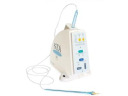
Thank you, David, and thanks to everyone for joining us today. I'm pleased to report that we achieved revenue of $2.9 million for the second quarter of 2023, an increase of 77% over the same period last year. Sequentially, sales increased 12% over the first quarter of 2023. We saw solid year-over-year increases in both domestic and international sales. At the same time, our gross profit increased 178% over the same period last year. The increase in revenue and gross margin was due in part to the success of our new online portal for selling and shipping the STA, single-tooth anesthesia system and handpieces directly to dental clinics and dental service organizations, or DSOs, within the U.S. Establishing a direct relationship with our clients has not only improved margins by cutting out our prior distributor but has allowed us to do a much better job in selling to and supporting these dentists. Since the launch of the portal at the beginning of this year, we have been able to track the sales data and thus conduct sales analysis. We now know the customer identity and their purchase pattern of our instrument and handpieces, enabling us to really improve the sales execution in terms of growing the existing customer base and acquiring new customers through upselling activities and reactivating these customers in the U.S. At the same time, we have engaged in more direct-to-consumer marketing, targeting patients specifically. We have seen more patients asking their dentists about the STA that has helped drive inbound interest to us from the dentists. In addition, we saw a strong increase in international dental sales during the second quarter as we are entering new international markets and deepening our penetration within existing international markets. It's also worth noting that our Dental division continues to operate profitably. In fact, the Dental division generated approximately $600,000 of operating income on a standalone basis, which is a more than threefold increase over the same period last year. So to summarize, within our Dental business, our revenues increased, we're benefiting from higher gross margins, and we continue to generate solid cash flow on a standalone basis. As we continue to grow our revenues, we expect to benefit from economies of scale as well as the recurring nature and high margins of our disposables. Turning to our Medical segment, we are making good progress advancing our commercial efforts around the CompuFlo Epidural System. Most notably, just last week, we announced reimbursement from commercial payers for the use of the CompuFlo Epidural System for patients who were involved in motor vehicle accidents. These payments are a significant achievement for the company. I would like to be clear that reimbursement can be a time-consuming process, which is standard for all new medical devices. Nevertheless, we are making more than good progress, and these payments are further validation of our technology and reimbursement strategy. We continue to expand the foundation of physicians utilizing our technology, which builds support for the appropriate level of reimbursement from insurance providers, which would stimulate then the adoption and utilization of the technology in their practices. Towards this end, we commenced sales of CompuFlo Epidural Disposables into the Pain and Rehabilitation Medical Group in Torrance, California. Adoption of the technology by this clinic follows a successful evaluation process by its founder, Dr. Fabian Proano, an interventional pain medicine physician. Dr. Proano initially conducted data cases using the CompuFlo Epidural System in which he reported 100% success. The evaluation included epidural steroid injection procedures within the lumbar, thoracic and cervical junction of the spine. As more and more physicians and anesthesiologists, such as Dr. Proano, perform procedures and submit for reimbursement, our goal is to secure broad coverage for our technology as well as establish the CompuFlo Epidural System as the standard of care within the industry. We also believe there is a market opportunity for our CompuFlo Epidural Instrument within federal and other government agencies as our system can contribute to increased efficiencies. On the international front, we are expanding our network of distribution partners. Specifically, we are targeting independent distributors with existing relationships within key global markets and proven track records of introducing medical devices within their territories. We look forward to announcing additional international distributors as we advance our commercial rollout. At this point, I'd like to turn the call over to Peter Milligan, Chief Financial Officer, to go over the financials in detail.
Thank you, Arjan. Revenue for the three months ended June 30, 2023, and 2022 was approximately $2.9 million and $1.6 million, respectively, driven by an increase in domestic dental sales of $444,000, an increase in international dental sales of $589,000, and dental revenue from China of $270,000. Gross profit for the second quarter was $1.9 million or 65% of revenue versus $681,000 or 41% of revenue for the second quarter of last year. The increase in gross profit was due to higher margin sales with the launch of the new online portal. Operating loss for the three months ended June 30, 2023, was approximately $2.3 million versus $2.9 million for the second quarter of last year. The reduction in the loss reflects the increase in revenue and gross margin, partially offset by some temporary increases in selling, general and administrative expenses. Net loss was $2.2 million or $0.03 a share for the three months ended June 30, 2023, versus $2.9 million or $0.04 a share for the comparable period in 2022. As of June 30, 2023, the company's cash, cash equivalents and short-term securities were approximately $5.7 million, and working capital was approximately $7.4 million. At this point, I'll turn the call back over to Arjan.
Thank you, Peter. We believe our new sales strategy, including the launch of our new online portal in the U.S. as well as our enhanced marketing efforts around STA, have been effective, as illustrated by solid revenue growth and margin improvement during the quarter. We believe we have developed an efficient and scalable platform to help drive high-margin, recurrent handpiece sales in the coming years. We also continue to expand our dental sales on both the domestic and international fronts. The Dental business should not only contribute to our revenue growth but also provide a steady stream of cash flow that will continue to help fund our initiatives within the Medical segment until that becomes self-sustaining on a standalone basis. Within our Medical segment, we continue to add prominent physicians and pain management clinics, as well as expand our international distribution partners. Most importantly, our news last week regarding reimbursement from commercial payers marks an important inflection point for the business that we look forward to building upon. We are also advancing initiatives following SAM approval and leading up to potential federal supply system approval, which would open up the sizable government market. To wrap up, we are witnessing growing interest in both our dental and medical instruments, and we believe we are well positioned to take advantage of the opportunities available in the market. At the same time, we continue to streamline our operating structure and remain committed to driving shareholder value. We look forward to providing further updates as developments unfold. I'd like to thank you for joining the call today. And at this point, we would like to open the call to questions. Operator?
Your first question is coming from Anthony Vendetti of the Maxim Group. Anthony, your line is live.
Thank you. Arjan, I was just wondering if you could give a little more update on the pain clinics. It's obviously a huge market opportunity. We've heard from some of the pain docs that they find the CompuFlo System superior in terms of improved comfort and precision. I was just wondering how that's rolling out? Are they acting as some of these early adopters and are they serving as referral sites? Because usually, word of mouth among the physicians is probably even more powerful than anything you can do on the marketing side. I was just wondering how that's playing out with the pain centers that are currently using the system and then just any feedback or color on those efforts in the pipeline for those customers?
Yes. Thank you very much. Good morning, Anthony. No, absolutely. Like I said, it's a major achievement for the company. I think part of the question is also how are they using it? And what has been the feedback on reimbursement activity? So I think in a nutshell, we have been able to establish good utilization of our technology amongst clinicians. The claim responses these clinicians received from Medicare and private insurance providers have been as expected. Clinicians have not received denials, except for cases where preauthorization was necessary, resulting in resubmission of the claim. In addition, insurance providers have raised questions about the technology and clinical benefits for claim evaluation. To your point, absolutely, the clinicians, amongst each other, word of mouth is much more important and easier to access through them than through our direct marketing activities because we have to let the clinicians speak to each other as we are not entitled to use this in a heavy marketing campaign based on the feedback that we received.
Okay. Great. And then can you also just talk about the success of your new online store? I know that's been ramping up. And then do you have any metrics to measure how that's going in terms of site visits, conversion, and what the customer acquisition costs are at this point?
Well, the customer acquisition costs are very low because it's mainly through our telephone activities. What we have been doing in a nutshell is analyzing the data that was available after six months. This is important for the company because now we know the identity of the customers, we know the purchasing patterns. We can call them by saying, you have ordered two boxes of handpieces in the first quarter, it's time to order more or why do you have low usage of these handpieces? So in a nutshell, what we are doing now is really, by definition, sales execution, calling upon customers that have not ordered in the past or have a slow reordering pattern. We call the customers to understand better how many operatory rooms they have. In other words, upselling opportunities for instruments, providing increased customer service to these customers, thereby driving utilization and helping them in the aftersales support and education of the technology and the application of the technology into the patients. So it's a unique opportunity. What we have been doing is mobilizing more people internally to actively and proactively reach out to the customers. That has been, and that is, I think, an important factor to know because that would give us the opportunity to continue the solid revenues in the Dental business.
Right. And then internationally, sales are picking up, and you mentioned new distributors. Have you signed - I know you signed some new ones, but are there any countries where you still feel you need new distributors? Or do you feel like you're covering the territories you need to cover now in international?
No, there's still a handful of countries where I would like to be, particularly in Latin America. I think we are well covered in the international markets for the Dental business, but the activities are primarily focusing on making existing distributors more effective. The growth of the international markets is very heavily related to existing distributors in major markets where we have seen a double-digit growth increase in the ordering pattern compared to prior years due to also our increased activities in meeting these distributors as a minimum every quarter of the year. Not only the Senior Vice President of Sales, but also myself, I'm taking regular meetings in these markets by meeting these important distributors for us in major countries like the U.K., Scandinavia, Poland, and Germany, to mention a few.
Okay. Great. And then last question before I hop back in the queue. Just in terms of the Medical segment, the sales force there, what's that number at? And at this point, do you feel like you need to add to that?
We currently have covered the medical activities with three people. I do not feel currently the need to add on that. The main reason is that I am continuously focusing on adding additional clinicians to increase the volume of procedures done, primarily focusing on the pain and the ambulatory surgical centers. We also have CTI being our distributor that covers about 22 states in the United States. So currently, I do not have any plans to expand further on the sales force.
Thank you very much. Your next question is coming from Robert Brennan, who is a Private Investor.
Good morning, Arjan.
Good morning, Rob.
Good morning, Arjan. How are you? Congratulations on a really good quarter, and you sound really confident, which is always good to hear. So I guess my question is you're looking at an addressable market of about $4 billion. I applaud you on shifting to the online portal in terms of shifting your business model on the dental side, which is going to give you a lot more stability, obviously, in my opinion. So, considering the size of your sales force, are you going to actively engage with potential strategic partners to gain traction more rapidly, considering the size of the market because I think most people do anticipate you become a standard of care?
Yes. Strategic partnerships are definitely always something that's on our radar screen because the size of the company and the activities and the potential might open up for entertaining these discussions. However, I also think it is of extreme importance that we establish success in the reimbursement because that will trigger potential interest from other companies. As a matter of fact, in one of the most important Pain Society meetings that I attended in Florida, we were approached by clinicians and anesthesiologists and pain centers, but we have also had the opportunity to entertain discussions about making our technology known to other companies. But most importantly, we have to do our homework first and get the evidence and validation of our technology within the reimbursement segment. That's the reason why I'm personally very pleased that we have had that achievement that we announced last week and that we are discussing today, as it is an encouraging step moving forward for the company.
No, I agree with that. I think it's hopefully the hole in the dam that's going to allow the time to break. So, has there been any response at all regarding post-positive reimbursement from any other pain management clinics? Or is this just part of the ongoing job that you're doing?
No. So like I answered the question of Anthony earlier, right? We are very happy with the utilization. We have done more than 50 cases that have been submitted to health insurance providers. The clinicians have not received any denials except for those cases where preauthorization was necessary. What they do then is resubmit the claim. Additionally, a number of insurance providers have raised questions about the technology and the clinical benefits for claim evaluation through the clinicians; we don’t get that feedback directly. Nevertheless, what is very important, even when we have received the first reimbursement for the motor vehicle accident patients, that is state-dependent. It's a very important activity that gives clinicians the opportunity to treat these patients and to provide them the technology for those procedures, and it's definitely going to be an important triggering effect.
Well, again, great quarter. I think it's just continuing to point to the promise that you guys are bringing to the medical market. So well done and continued good hope.
Thank you, Rob.
Thank you very much. Our next question is coming from Tucker Andersen from Above All Advisors. Tucker, your line is live.
Good morning, Arjan.
Good morning, Tucker.
Congratulations. I add my congratulations, and thanks for taking our questions. This is real progress. I have a couple of questions. First, in the dental area, you alluded to the fact that the new operating methodology of having your online store and direct contact might open you to not only better utilization by the existing owners of the equipment but perhaps getting new adopters. I was wondering if you've had enough time to figure out how best to get new adopters and if there has been any progress in that direction?
There have absolutely been new adopters and new customer acquisitions in this process that I explained earlier on the call, Tucker. I'm pleased with that process. Actually, if you look at the development of the instruments, our goal is, of course, to outperform what Henry Schein normally would do on new instruments and new customer acquisition. That's one part. The second part, we should not forget that there is a unique upselling opportunity to increase the number of instruments in one practice.
Yes. Well, congratulations on that because not only has it been surprising to me that there hasn't been greater adoption, but it seems to me, given your profit profile in that area of your business, that this is a real opportunity to fund the other business. On the prior authorization question and the medical reimbursement that you've been successful, you sort of alluded to a couple of things, but I'd love to delve into them a little deeper. Is part of whether you're getting that usage with regard to automobiles strictly a question of state law? Or is it more that those are emergency procedures, making it easier for the doctor to get reimbursement for something like that than for a standard procedure?
It's definitely an issue regarding insurance, I would say. If and when we did not have an available 777 T code, which is the tracking code for our technology, the doctor would not have been able to make that claim or get reimbursement for our procedure in addition to the epidural steroid injection. I think the second part of your question is based on my understanding of the research that I've done, and that it is definitely dependent from state to state. I know, for example, in Florida that the number of motor vehicle accident cases can be very significant where many clinicians are treating these patients.
And are those also different insurers? Would these primarily be automobile insurers as opposed to the standard health insurers?
I'm happy that you asked that question because that is my working hypothesis here as well. Without going into the detail of who these insurers are because I cannot and I'm not allowed to comment on that, there is a trickle effect because if they would already pay for these specific patients, they become aware of our technology and would potentially have an effect on, I would call it the standard procedures, which is an epidural steroid injection in a private pain clinic due to the high volume in these clinics. Absolutely, that's my hypothesis as well.
Well, thank you. Good luck because we all know that it would be a major way to break the log jam. Congratulations, and we look for continued progress.
Thank you, Tucker. Have a good day.
You also.
Thank you very much. Your next question is from John Cobb, a Private Investor. John, your line is now open.
Thank you. Good morning, Arjan. How are you today?
I'm doing well, John. How are you?
Good, thanks. I'm trying to piece all this together in my head where Milestone is in the process, how it's evolving or has evolved and where we're going from here. Not too long ago, Milestone was talking about epidurals for delivery, babies in hospital systems, but some seems to be imminent as signers on that never seem to materialize. Now you're retrenching and focusing strictly on pain clinics, working toward the basic element of reimbursement and validation by insurance companies. Are you still working with hospitals? Are you still working on other applications for Milestone's delivery system? Or have you retrenched, and we need to go back to baby steps for pain clinics? I'm just trying to understand this and what the timeline may look like for a sustained commercial rollout that we're all looking for.
Okay. Thank you for your question, John. First of all, I would like to clarify any misunderstanding. We are not exiting labor and delivery and the hospital market segment. We are continuing to call upon these hospitals. Actually, one of our major customers within the Medical business is still two or three major hospitals in the United States. I mentioned UTMB in Texas and the University of Louisville in Kentucky. We continue to call upon labor and delivery. The strategic imperative of entering the pain segment has several factors. First, the decision-making cycle is shorter. There are no financial constraints, and more importantly, we have been able to expand our indication to the thoracic and cervical thoracic junction where the benefits of our systems in terms of safety and efficacy are even more clear than in the lower part of the spine. This is important to understand. Lastly, regarding reimbursement, we focus initially on private pain clinics, then the ambulatory surgical centers, and then the hospital. So every aspect comes together. We are focusing and capturing the entire marketplace here. Now as for your second question regarding the timeline, we cannot look into a crystal ball. The only thing that I can do with my team is continue the efforts and execute on our strategy, namely reimbursement and widening indications. Your third question related to new applications, well, we are currently exploring how to support spinal cord stimulator procedures. That's what we are currently doing. I believe we have now the tools and resources in place to further execute on the plans and activities that we have undertaken.
Okay. And my last question is, you mentioned at this time and in previous quarterly updates this government rollout. How big a market is that? Is that a huge market? And how far along is Milestone in the process of maybe government adoption? If they do adopt your product, would that be an extraordinary catalyst for further growth in the private sector?
It's a significant market, and it's a very important segment when we get the approval of the government on the federal supply schedule. I strongly believe that this market segment on its own is significant. The dynamics are different than from the private sector because reimbursement in the government sector is not an issue. The difference between the private sector and the government sector is that you need to establish the right pricing, and the reimbursement is different. In the government, there is no reimbursement, they can start using it. In the commercial sector, we are dependent on reimbursement.
And I hope they sign on even sooner than I do.
That's what I hope.
Okay. Thank you very much.
You're welcome, John.
Thank you very much. We appear to have reached the end of our Q&A session. I will now hand back over to the management team for any closing comments.
Well, thank you all for your time. As we stated today, we are encouraged with the development of the revenues and the activities that we are undertaking. I look forward to providing you with continuous updates. Thank you for your time. Be well, stay safe, and have a great day. Goodbye.
Thank you, everybody. This does conclude today's conference call. You may disconnect your phone lines at this time and have a wonderful day. Thank you for your participation.
SEC periodic report
Filed Aug 14, 2023 · complete as-filed document