Operator
Greetings. Welcome to Northpointe Bancshares, Inc. First Quarter 2026 Earnings Call. Please note, this conference is being recorded. I will now turn the conference over to Brad Howes, Executive Vice President and Chief Financial Officer. Thank you. You may begin.
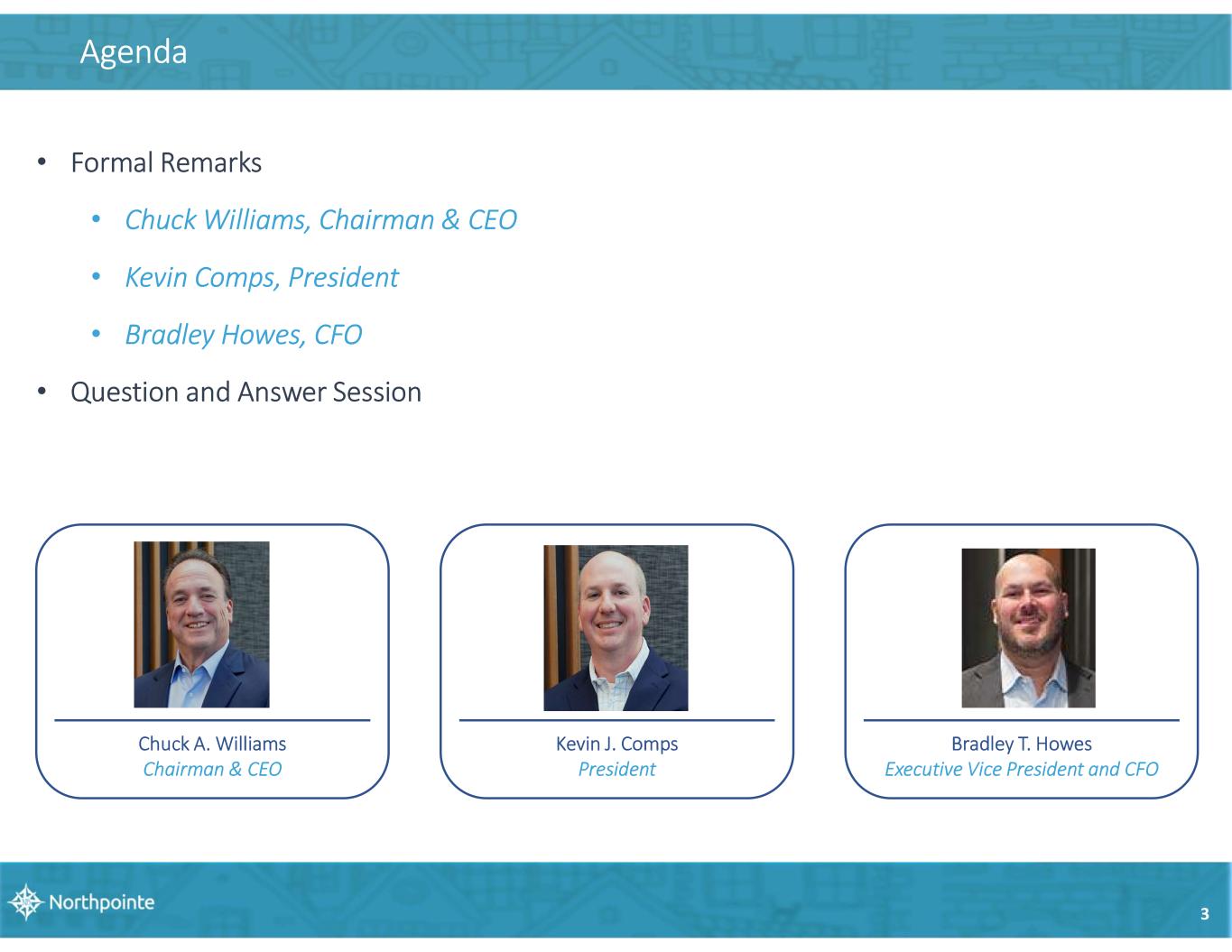
Good morning, and welcome to Northpointe's First Quarter 2026 Earnings Call. My name is Brad Howes, and I'm the Chief Financial Officer. With me today are Chuck Williams, our Chairman and CEO; and Kevin Comps, our President. Additional earnings materials, including the presentation slides that we will refer to on today's call, are available on Northpointe's Investor Relations website, ir.northpointe.com. As a reminder, during today's call, we may make forward-looking statements, which are subject to risks and uncertainties and are intended to be covered by the safe harbor provisions of federal securities law. For a list of factors that may cause actual results to differ materially from expectations, please refer to the disclosures contained within our SEC filings. We will also reference non-GAAP financial measures and encourage you to review the non-GAAP reconciliations provided in both our earnings release and presentation slides. The agenda for today's call will include prepared remarks, followed by a question-and-answer session. With that, I'll turn the call over to Chuck.
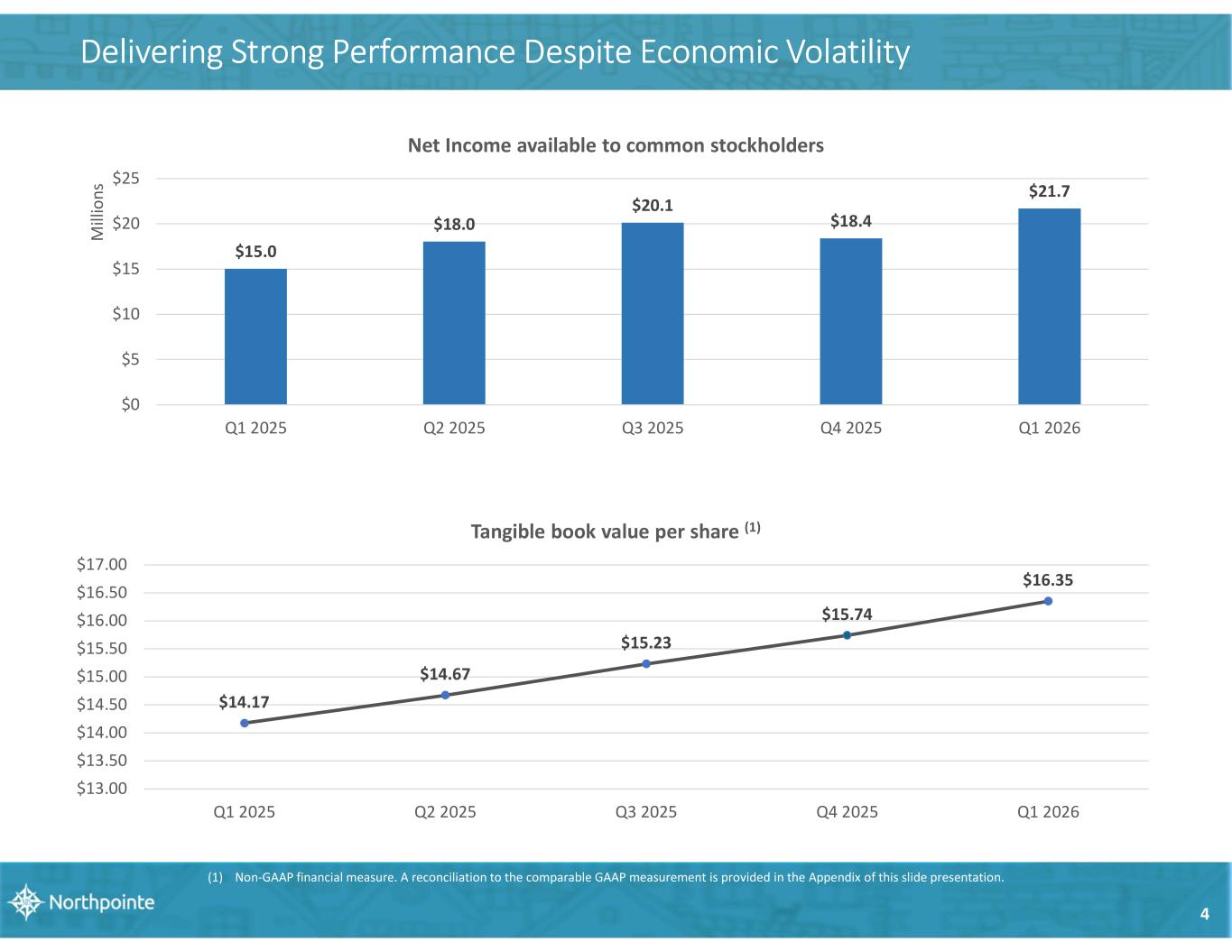
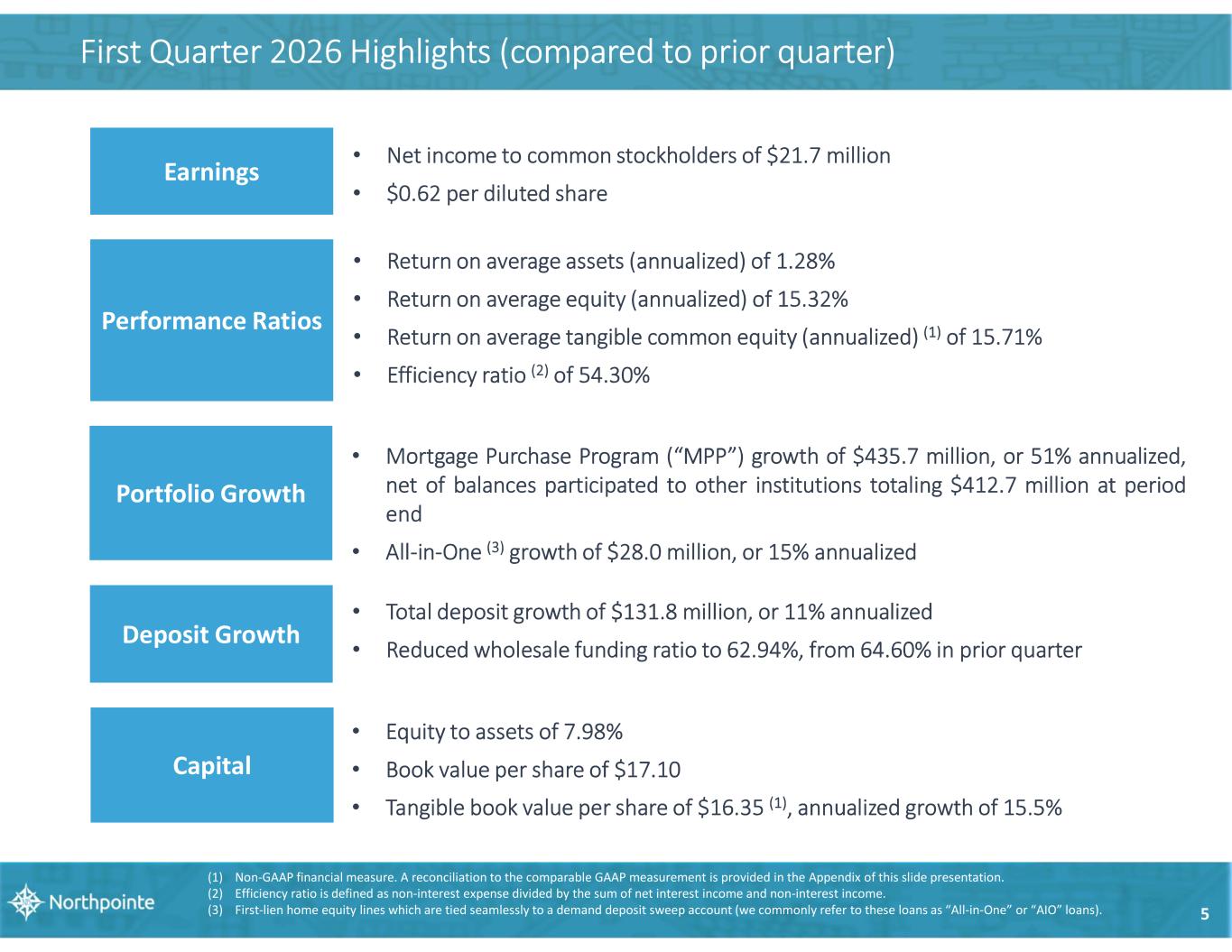
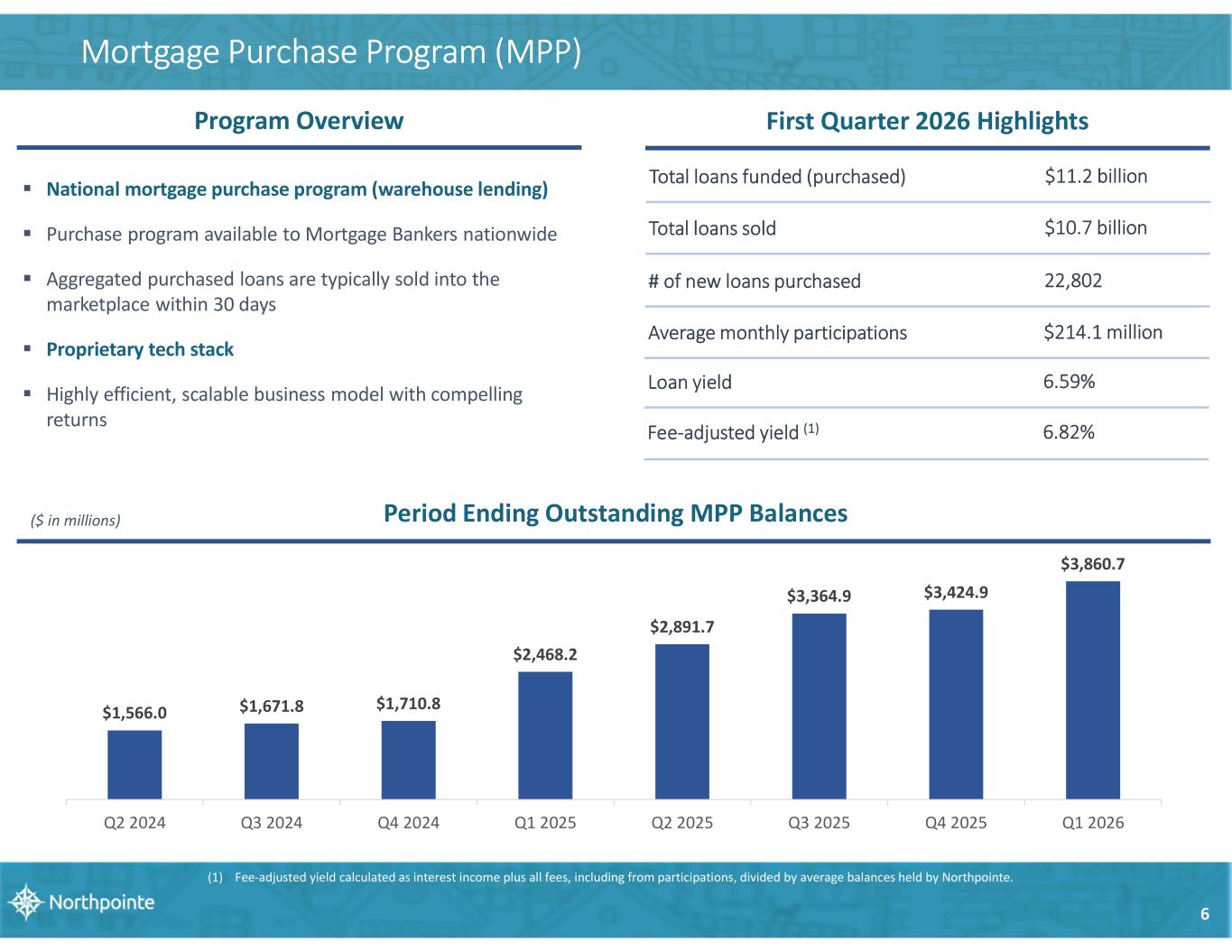
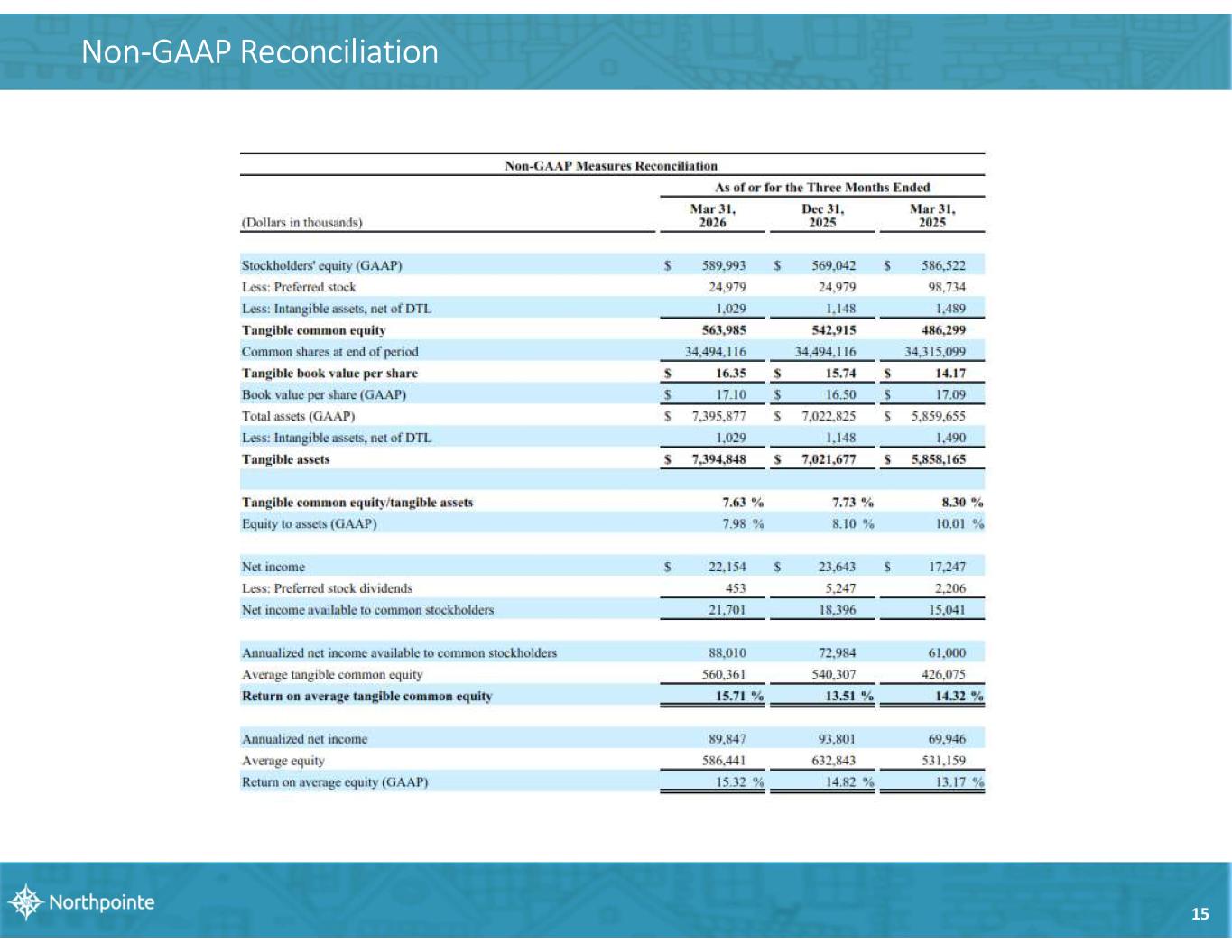
Thank you, Brad. Good morning, everyone, and thank you for joining. With one quarter completed, we're off to a very good start in 2026. Despite the macroeconomic uncertainty, our business model remains resilient and our exceptional team members continue to perform well. For the quarter, we earned $0.62 per diluted share, with a return on average assets of 1.28% and a return on average tangible common equity of 15.71%. Factoring in the impact of dividends paid, our tangible book value per share increased by over 16% annualized over the prior period. Our first quarter results were anchored by robust growth and continued market share gains in our mortgage purchase program (MPP) business, strong performance in our residential lending channel, a modest reduction in our wholesale funding ratio, and an improvement in overall asset quality. We've added a new slide, which is on Page 4 of our earnings call presentation, which I think really tells the story well. We're proud to be one of the only entirely mortgage-focused banks in the country. While certain aspects of our financial performance are naturally sensitive to mortgage rates, our diversification across the mortgage space has historically insulated us from dramatic income statement volatility typically associated with the mortgage industry. As outlined in the charts, we've continued to deliver consistent financial performance and grow tangible book value despite a challenging and volatile interest rate environment. One of the biggest drivers of our performance is the success we've achieved in our MPP business. Let me walk through a few highlights. MPP balances ended the quarter at $3.9 billion, an impressive growth rate of 51% annualized over the prior period. Total loans funded through the channel was $11.2 billion for the quarter, which is very strong considering the first quarter is typically slower due to normal seasonality in the mortgage business. By comparison, total loans funded was $6.7 billion for the first quarter of 2025. We have funded $4.6 billion in total loans during March, which is our highest volume month on record. I believe our first quarter results, combined with the momentum we have gained, set us up nicely to meet or exceed our 2026 growth plan. I'd like to now turn the call over to Kevin to provide more details on our business lines.
Speaker 3
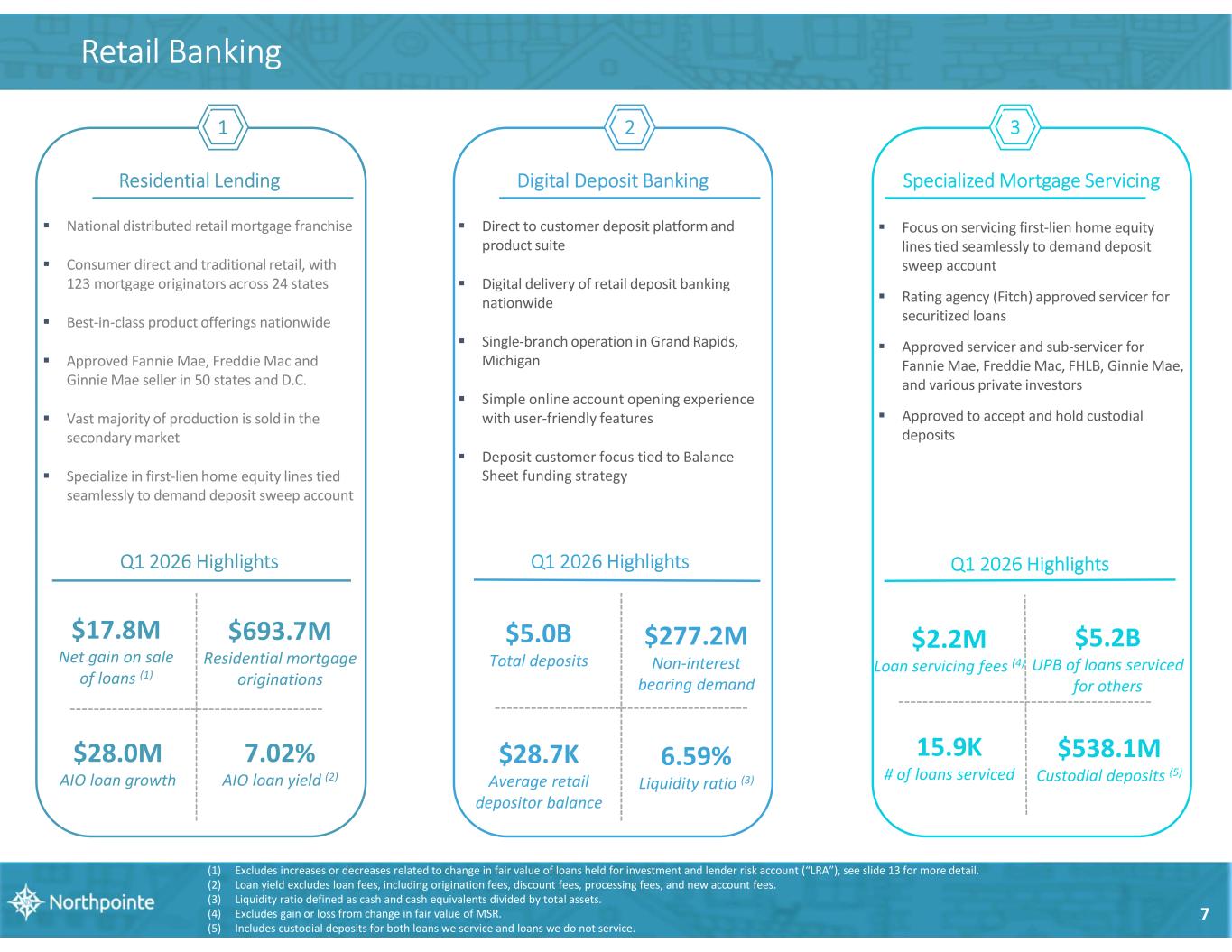
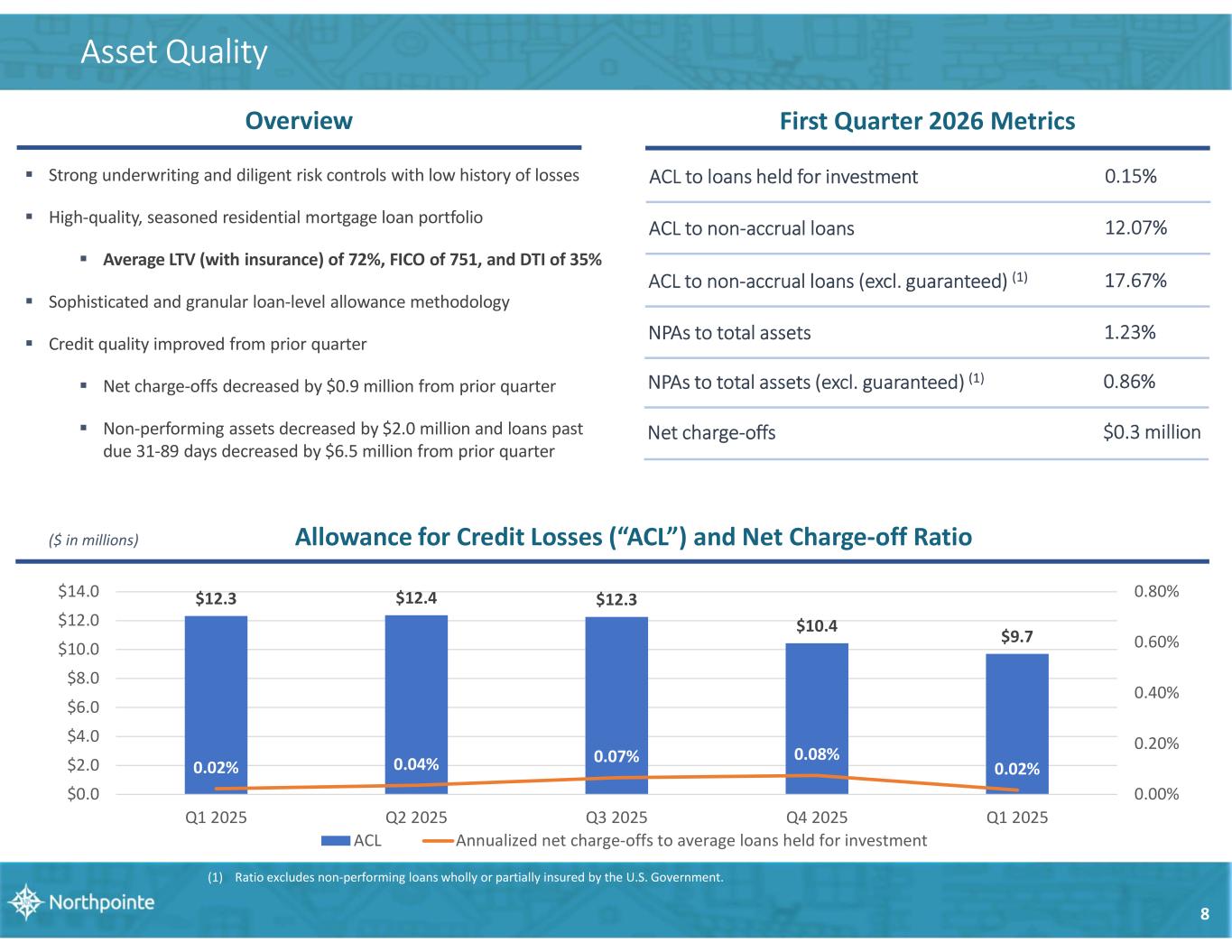
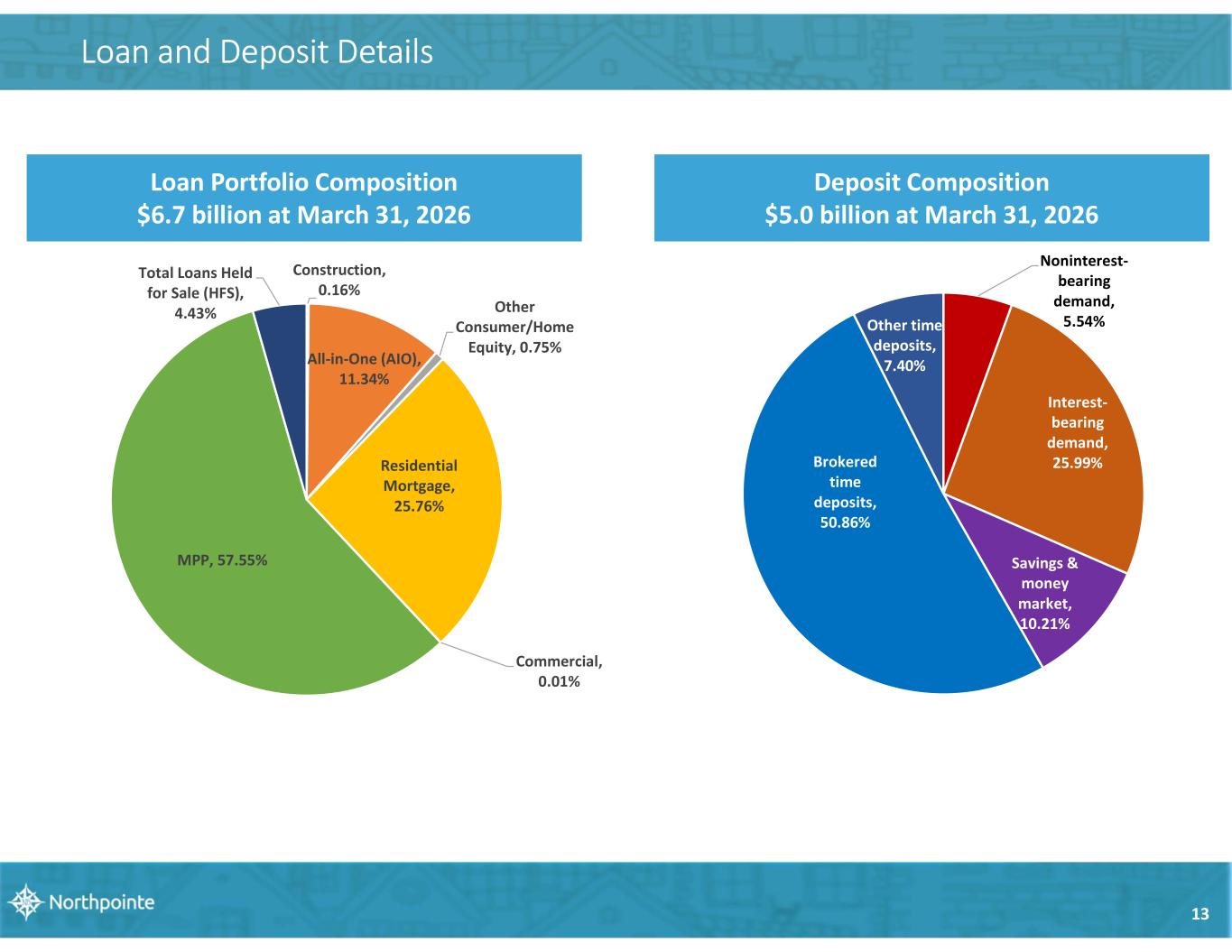
Thanks, Chuck, and good morning, everyone. Let's start with our MPP business on Slide 6. Compared to the prior quarter, period ending MPP balances increased by $435.7 million and average balances increased by $59.3 million, with most of the balance growth occurring towards the end of the quarter. As I've discussed on prior calls, these are net of any MPP balances participated out. At March 31, 2026, we had participated $412.7 million to our partner banks, down slightly from the level at December 31, 2025. Let me break down our first quarter 2026 growth a bit further. First, we brought in eight new clients, which totaled $205 million in additional capacity. Second, we increased facility size for 11 existing clients, which totaled $465 million in additional capacity. And third, the overall utilization of our existing clients remained strong during the quarter, averaging 57%. Average MPP yields were 6.59% and fee-adjusted yields were 6.82% during the first quarter of 2026. Our average yield was down 39 basis points from the prior quarter, which is consistent with the decrease in SOFR over that same time period. Turning now to Retail Banking on Slide 7. I'd like to highlight the results of the three main businesses within that segment. Starting with residential lending, which includes both our traditional retail and our consumer direct channels, we closed $693.7 million in mortgages during the first quarter, which is down from $762.0 million in the prior quarter. During the first quarter of 2026, saleable volume was $626.6 million. Of that, 39% was in the consumer direct channel and 61% was in the traditional retail channel. This compares to $671.3 million in saleable volume during the fourth quarter of 2025, with 35% of the volume in the consumer direct channel and 65% in the traditional retail channel. Refinance activity made up 59% of the total saleable volume in the first quarter of 2026, up from 51% in the fourth quarter of 2025. In both periods, we saw a drop in mortgage rates, which spurred additional refinance activity. As we've discussed previously, it only takes a 25 to 50 basis point decline in mortgage rates to drive additional refinance activity, and we were able to take advantage of that temporary drop in both of the last two quarters. The additional refinance activity helped maintain strong volumes and revenues in what is typically a slower buying season. Mortgage rate lock commitments increased by 12% over the prior quarter, driven by an increase in refinance activity, with purchase activity down modestly from the prior quarter. We sold approximately 68% of the saleable mortgages serviced released in the first quarter of 2026, which is down from 79% in the prior quarter. We continue to look for opportunities to create additional efficiencies using technology and hire new talented lenders within the channel. During the first quarter, we hired seven new mortgage professionals in two new markets to help us continue to grow the channel. In the middle of Slide 7, we highlight our digital deposit banking channel, where we feature our direct customer platform and competitive product suite. We ended the fourth quarter with $5.0 billion in total deposits, an increase from the prior quarter. The breakout of these deposits is detailed in the appendix on Slide 13. The majority of our deposit growth compared to the prior quarter was driven by normal seasonality in our custodial deposit balances as well as higher levels of brokered network deposits, which had more attractive rates than brokered CDs. On the right side of Slide 7, we highlight our specialty mortgage servicing channel, where we focus on servicing first lien home equity lines tied seamlessly to demand deposit sweep accounts, including what we commonly refer to as AIO loans. Excluding the adjustment for the change in fair value of MSRs, we earned $2.2 million in loan servicing fees for Q1, which is flat from the prior quarter. Including loans we outsourced to a subservicer, we serviced 15,900 loans for others with a total UPB of $5.2 billion as of the first quarter of 2026. Turning lastly to Slide 8. We saw a nice improvement in our overall asset quality metrics during the quarter. Consistent with prior quarters, we are not seeing any systemic credit quality or borrower issues in any of our portfolios. We had net charge-offs of $266,000 in the first quarter of 2026, which is down from $1.2 million in the prior quarter. First quarter charge-offs represented an annualized net charge-off ratio to average loans of 2 basis points, which remains well below long-term historical averages. Let me provide some additional details on our asset quality metrics this quarter. First, total nonperforming assets decreased by $2.0 million from the prior quarter. Second, early-stage delinquent loans improved this quarter with past due loans 31 to 89 days, decreasing by $6.5 million from the fourth quarter of 2025 level. Third, at March 31, 2026, MPP represented 58% of all loans, and we've continued to experience pristine credit quality in that portfolio. Fourth, virtually all of our loan portfolio is backed by residential real estate, which typically carries much lower average loss rates than other asset classes. And fifth, our residential mortgage portfolio is high quality, seasoned, and geographically diverse. At March 31, 2026, our average FICO was 752, and our average LTV when you factor in mortgage insurance was 72%. Additionally, our average debt-to-income ratio was 35%. Now I'd like to turn the call over to Brad to cover the financials.
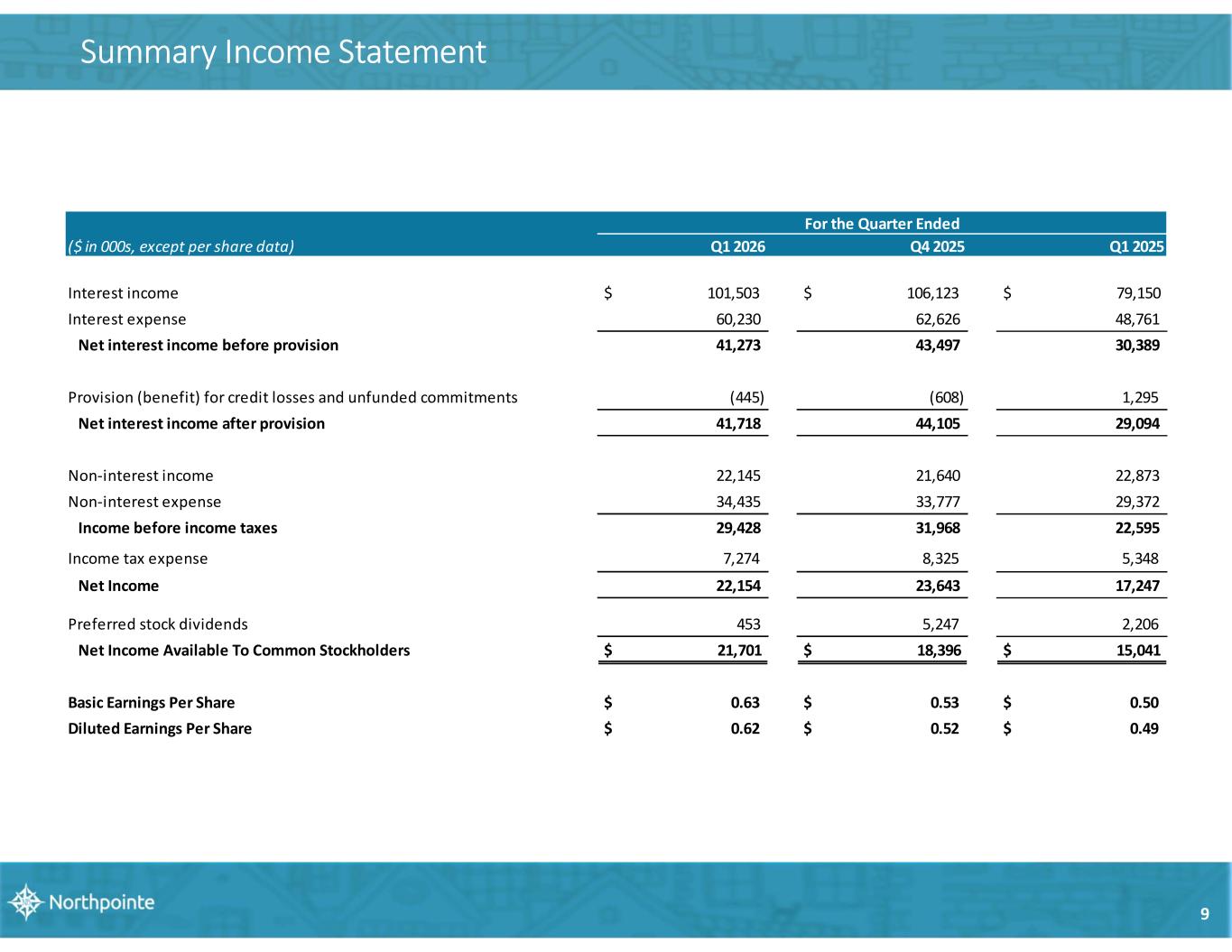
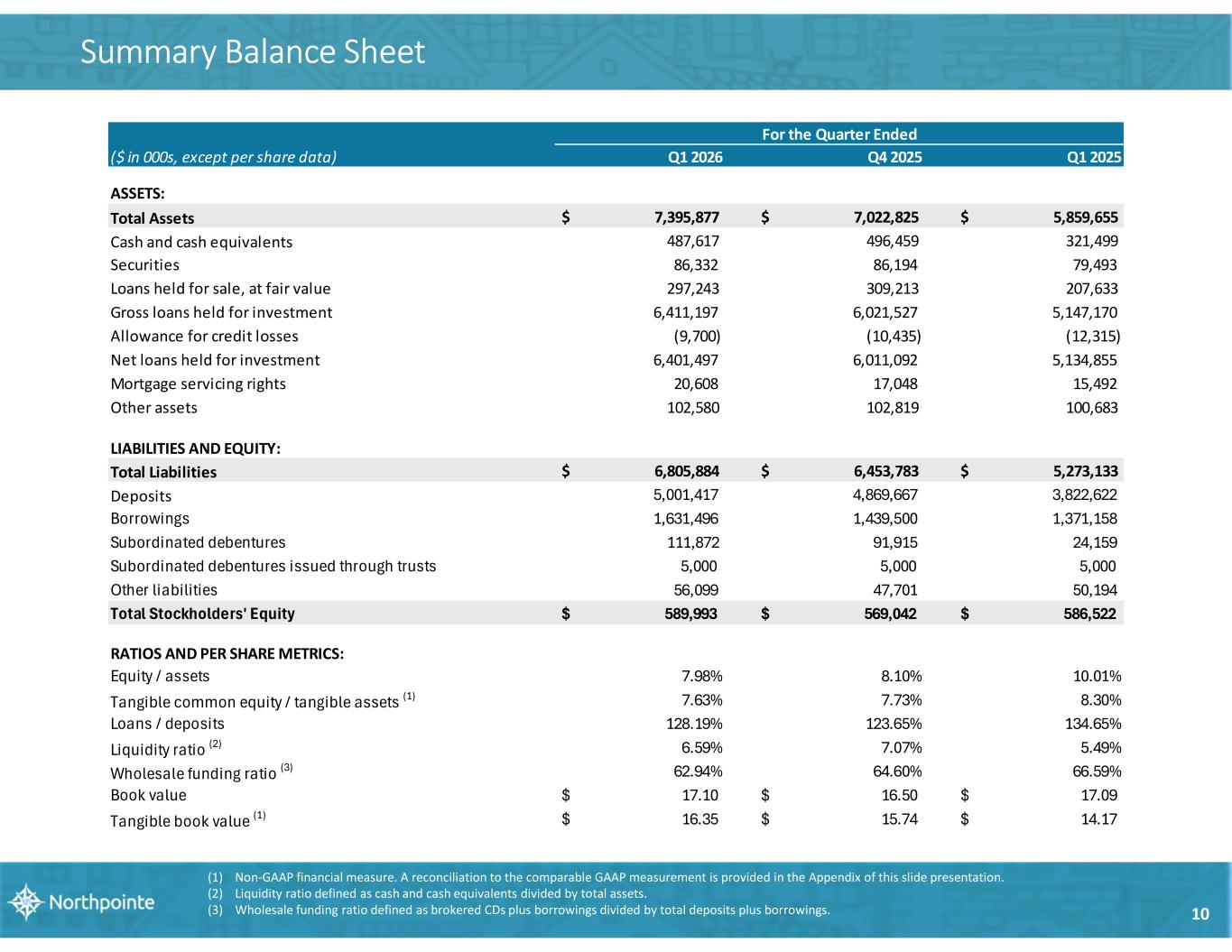
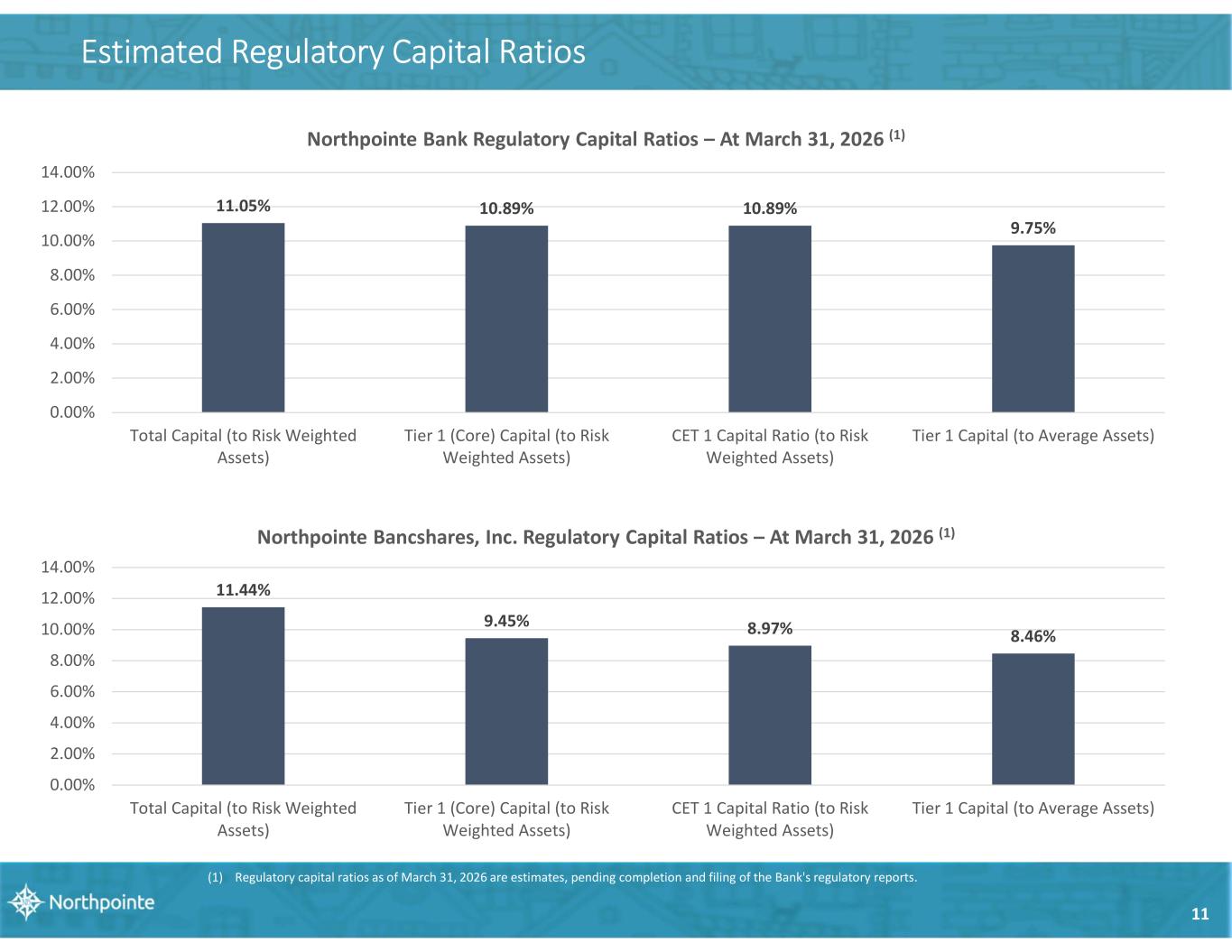
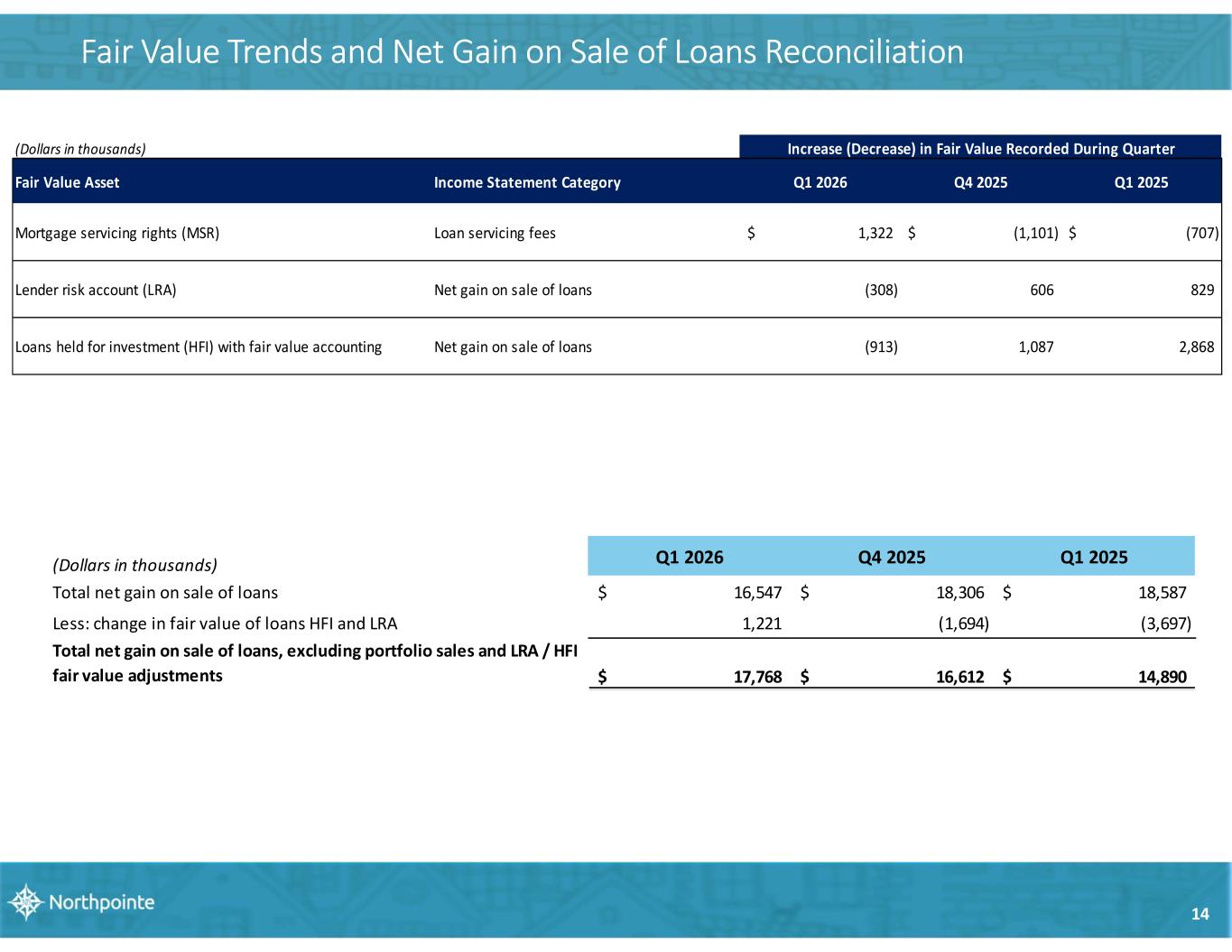
All right. Thanks, Kevin. As I go through today's slide presentation, I will be incorporating full year 2026 guidance into my commentary. Let's start on Slide 9. As a reminder, our non-GAAP reconciliation on Slide 15 provides details of the calculations and a reconciliation to the comparable GAAP measure for all non-GAAP metrics. For the first quarter of 2026, we had net income to common stockholders of $21.7 million or $0.62 per diluted share. Our performance and profitability metrics, which are laid out on Slide 5, remain strong. Net interest income decreased by $2.21 million from the prior quarter, reflecting a 9 basis point decrease in net interest margin, partially offset by growth in average interest-earning assets of $47.6 million. Our yield on average interest-earning assets was down 17 basis points from the prior quarter, driven primarily by a decrease in loan yields. A significant portion of our MPP facilities are tied to the SOFR index, which was down almost 40 basis points on average on a linked-quarter basis. Our cost of funds decreased by 13 basis points, reflecting a federal funds rate cut of 25 basis points in December of 2025. For full year 2026, I am lowering our expected NIM range slightly to 2.35% to 2.50%. My guidance assumes a continued improvement in the mix of loans within the held-for-investment portfolio and that SOFR and funding costs will remain at or near current levels. I'm also assuming that we do not have any additional Fed funds rate cuts in 2026. Turning to loan growth guidance. For 2026, I expect MPP balances to increase to between $4.1 billion and $4.3 billion by year-end. I'm also still expecting $300 million to $500 million on average will be participated out throughout 2026. As we've reiterated on prior calls, participations remain an important component of our overall MPP strategy, which allows us to manage the balance sheet and optimize capital ratios while driving higher fee income. We will continue to look for opportunities to add and expand participation partners to help drive further growth in the business. I'd also still expect period ending AIO balances to increase to between $900 million and $1.0 billion by year-end. Excluding MPP and AIO loans, I'd expect the rest of the loan portfolio to continue to decrease to between $1.9 billion and $2.1 billion by year-end 2026. This includes loans held for sale, which tends to vary based on the timing of loan sales. None of my loan growth guidance has changed from the prior quarter guidance that I provided. Kevin provided details on the improvement in asset quality trends this quarter with the lower level of charge-offs, the decrease in nonperforming and early-stage delinquent loans, and continued runoff of non-AIO and MPP loans, we had a total benefit for credit losses of $445,000 in the first quarter of 2026. With the provision benefit this quarter, I now expect total provision expense of between $2 million and $3 million for 2026, which would be driven by the replenishment of net charge-offs and growth in our MPP and AIO loans. Any additional provision expense or benefit related to the credit migration trends, changes in the economic forecast or other changes to the credit models would not be part of my guidance. Noninterest income increased slightly from the prior quarter, reflecting higher gain on sale revenue, partially offset by larger adjustments to our fair value assets. On the top of Slide 14, we break out three of our fair value assets and their associated quarterly increases or decreases. These assets tend to move up or down with interest rates and are not part of my revenue guidance each quarter. On the bottom of Slide 14 and in our earnings release tables, we provide further details on the components of net gain on sale of loans. As you can see on that chart, first quarter net gain on sale of loans included a $1.2 million decrease in fair value of loans held for investment and lender risk account with the Federal Home Loan Bank. Excluding these items, net gain on the sale of loans would have been $17.8 million, which is up from $16.6 million on a comparable basis in the prior quarter. For 2026, I am forecasting total salable mortgage originations of $2.2 billion to $2.4 billion with all-in margins of 2.75% to 3.25% on those mortgage originations. My margin guidance is a blend of margins from our traditional retail and consumer direct channels. As a reminder, the consumer direct channel has lower margins with an offsetting lower mortgage variable comp expense. These estimates do not assume any significant decrease in mortgage rates nor do they assume any change to the current level of mortgage originators within the bank. I'd expect MPP fees to range between $9 million and $11 million for the full year 2026 based on the expected participation balances and continued growth in loans funded. Excluding fair value changes in the MSR, loan servicing fees were $2.2 million for the quarter, flat from the prior quarter. I'd expect that quarterly run rate to continue to increase in 2026 with full year revenue between $9 million and $11 million. Noninterest expense was up $658,000 from the prior quarter, driven primarily by salaries and benefits, mostly related to bonus and incentive compensation, which is tied to company performance. For the full year 2026, I'd expect total noninterest expense to be in the range of $138 million to $142 million, no change from my prior guidance. The expected increase in noninterest expense is more than offset by growth in total revenue based on the positive operating leverage we are able to generate. Turning to the balance sheet on Slide 10. Total assets increased to $7.4 billion at March 31, 2026, based on the strong growth in MPP balances during the quarter. Our wholesale funding ratio was 62.94% at March 31, 2026, which is down from 64.60% in the prior quarter based on the deposit growth Kevin highlighted. Looking forward, we'd expect to continue to fund MPP and AIO growth through a combination of brokered CDs, retail deposits, and other sources of nonbrokered deposits where possible. Our effective tax rate was 24.72% for the first quarter of 2026, reflecting additional income tax expense related to nondeductible tax rules for publicly traded companies. I'd expect the 2026 run rate to be in line with that. Lastly, on Slide 11, we outline our regulatory capital ratios, which are estimates pending completion of regulatory reports. Looking forward, I'd expect we will continue to leverage additional capital generated through retained earnings to grow MPP and AIO balances. We previously announced the completion of a private placement of $20 million in aggregate principal amount of fixed to floating rate subordinated notes. We believe this additional capital provides us with flexibility should we see stronger growth throughout 2026 and with respect to our $25 million in Series B preferred stock that we anticipate calling prior to year-end. With that, we are now happy to take questions. Sherry, please open the line for Q&A.
Operator
Our first question is from Crispin Love with Piper Sandler.
Speaker 4
First, just on the net interest margin trajectory. I heard your update on the guide, I think 2.35% to 2.5% for the year, to 2.42% in the most recent quarter. But can you just discuss the ramp you would expect throughout the remaining three quarters of the year to just fit within that range? And then just any puts and takes there?
Sure. Crispin, this is Brad. What I'd say about the guidance is that if we think about rates, we don't have anything significant changing in our models today where we stand with interest rates. So SOFR funding rates and all that remain relatively flat, no Fed fund cuts. So really, the benefit that comes over the remaining quarters would come from the continued improvement in the mix of loans. If you look at MPP and AIO loans, which are driving the growth in the balance sheet today, as we grow those and as we run off legacy assets, which have lower average yields based on when they were generated, we will see a little bit of a continued improvement in the mix of loans, which drive up the margin. That's really the only put and take, I'd say that's embedded in our guidance. We do have a small amount of borrowings that are coming due, $50 million this year. But for the most part, most of the funding costs should remain pretty flat absent any changes in rates.
Speaker 4
Okay. Great. That makes sense. And then I have just two related questions on MPP. Just first on the loan balances for 2026, did you reaffirm that $4.1 billion to $4.3 billion guide? I just might have missed that.
We did, Crispin. Yes, no change to prior guidance.
Speaker 4
Okay. Perfect. Okay. That's what I thought. I just wanted to make sure. And then just broadly on MPP balances, they've continued to grow meaningfully. They did on a sequential basis in the first quarter. So can you just discuss some of the drivers of that growth and sustainability of that? And I assume with that guidance, I would think that some of the sequential increase should decelerate a bit in the coming quarters. But just curious on that MPP balance growth that you continue to generate.
Speaker 3
This is Kevin. I can start with that, Crispin. So part of the growth was in the commentary was some of it is coming from existing clients expanding their facilities still. That is reasonably expected to continue as we get into the busier cycle of the year, which is typically the summer buying season. That could be a reasonable place also. And then as usual, we do have a pipeline of clients that could potentially come on board. Additionally, we had new ones added during Q1 also. We expect to add some new ones moving forward. The pace of growth of new clients, to your point, will probably not be the same as when we came out of the gate with the IPO a year ago and had a very long backlog of new clients coming on board. So both of those things will still represent growth within the channel going forward though.
Operator
Our next question is from Damon DelMonte with KBW.
Speaker 5
Appreciate all the commentary and detail in the prepared remarks. Just curious on the commentary around capital and the potential for the $25 million of preferred to be called. Is that something that you could do with kind of cash on hand? Or is that something that might require another sub debt issuance?
No. We believe we can do that and looking at our models with what we have today. That was kind of part of the purpose of the sub debt offering that we did, twofold: one, to be able to generate higher growth throughout the year, should we see it? And then two, to sort of bring that money in now so that we have the funding towards the end of the year and don't need to raise any additional capital and take any variability in what could happen in the markets out of play and have that money.
Speaker 5
Got it. And can you remind us kind of what your targets are for capital levels? I think total capital was 11.4%. What is your comfort zone in that ratio?
Sure. We examine four regulatory ratios at both the bank and the holding company. Our capital plan includes trigger levels with a buffer to ensure we remain well capitalized. Currently, our most critical capital ratio is the total risk-based ratio at the bank, and we have significant room before reaching the trigger level. As we plan for growth, we will continue to use retained earnings to increase our balances and capital levels, which I expect will remain stable through 2026.
Speaker 5
Got it. Okay. Great. And then on the mortgage banking, I think you reaffirmed your expectation for origination activity for the year. What was the gain on sale this quarter?
So the dollar or the margin?
Speaker 5
The margin you mentioned was between 2.75% and 3.25%. How did it turn out this quarter?
Yes. I'd say this quarter, the margin as a percentage was probably closer to the lower end or slightly above the lower end of that range. In previous quarters, we mentioned that we are experiencing competitive pressures in the conforming business and an increase in competitors in the non-QM space, which typically has higher margins. So I expect our guidance is based on that. Depending on what unfolds throughout the year, we will continue to generate earnings in that range we provided, but this quarter, it is likely nearer to the lower end of that range.
Operator
Our next question is from Christopher Marinac with Brean Capital Research.
Speaker 6
I wanted to talk about the progress in the wholesale funding ratio and that reliance inching down. Is the all-in-one progress this year and the further growth itself going to contribute to that? And are there other kind of goals for that ratio going forward?
Speaker 3
Yes. This is Kevin. I'll start with the all-in-one piece of this. So the all-in-one product is tied to real-time sweep features from a checking account. Those checking accounts are zero-dollar balance checking accounts with real-time sweep features to pay down the loan. So that is not driving the decrease in the wholesale funding ratio. Normal swings in our custodial funds related to our servicing MSRs that we own and the other servicing relationships we have on the custodial front, the normal seasonality of those accounts is what the main driver of the reduction in the wholesale funding ratio. And then we're always looking for additional opportunities on the non-brokered side of the house. No material items to speak of for this quarter as we sit, but we are always looking to do something additional there.
Speaker 6
Understood. Thank you for that background, I appreciate it. And as you have been very productive in the digital channel for a while with the business plan, are those customers behaving any differently when you have a modest backup in rates like we've seen since the end of February? Or does that create any headwind for you in the upcoming quarters?
You talking from like a beta perspective, Crispin?
Speaker 6
Correct. Exactly.
Yes. If you look at our cost of deposits this quarter, it decreased by 22 basis points compared to the previous quarter. We had the Fed funds cut in December, and I believe we responded well from a beta perspective. Twenty-two of the 25 basis points would be attributable to deposits. We observe more stability in our funding mix on the borrowing side, as we have matched funding for some of our longer-term assets with longer-term liabilities. This strategy helps us maintain the same margin over time. While Fed funds rate cuts remain flat, we have seen a significant benefit from the rate cut, and we managed to pass along most of that beta during this last rate hike. So far this quarter, we haven't noticed anything contrary.
Speaker 6
Sounds good. And final question for me, just as you continue to build the asset side and kind of pledgeable assets as the balance sheet grows, does that extra liquidity give you any difference in terms of whether it's managing capital like the preferred decision or just sort of how you pursue other initiatives?
Yes, we currently have a good amount of excess capacity. This will gradually increase as our balance sheet expands. You are correct that the MPP being pledgeable to the Federal Home Loan Bank is one of our main sources of liquidity, which will continue to grow over time. We haven't needed to utilize much of it yet because our funding and asset growth paths align well, allowing us to maintain our liquidity level. We prefer to have that liquidity available just in case. So, as you mentioned, it will continue to increase nominally throughout 2026.
Speaker 6
So if the environment were to change and become more favorable or margins changed to what you wanted to take advantage of grow faster, you could, and that was really just channel check.
Yes. From liquidity would not be the constraining factor. That would be more based on our capital ratios. Our growth path has us leveraging all the capital we generate. What I mentioned in our comments, though, and what Chuck and Kevin have reiterated on prior calls is that we would use participations and continue to grow that program if we should see opportunities for further growth this year. That is a vehicle that we could utilize to manage our balance sheet and to grow faster or higher than we originally thought.
Operator
There are no further questions at this time. This will conclude today's conference. You may disconnect your lines at this time, and thank you for your participation.