Amy An
Head of Investor Relations
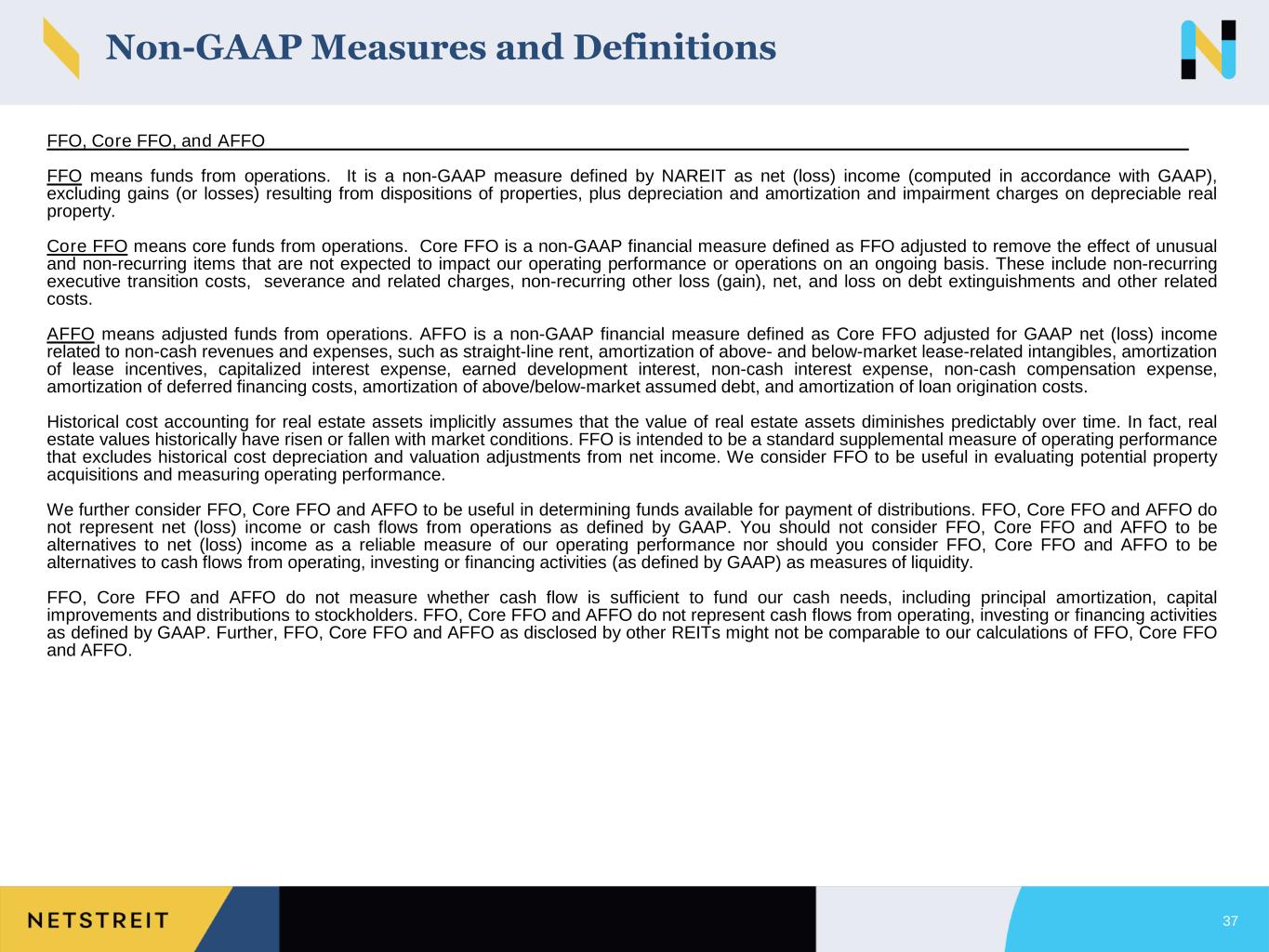
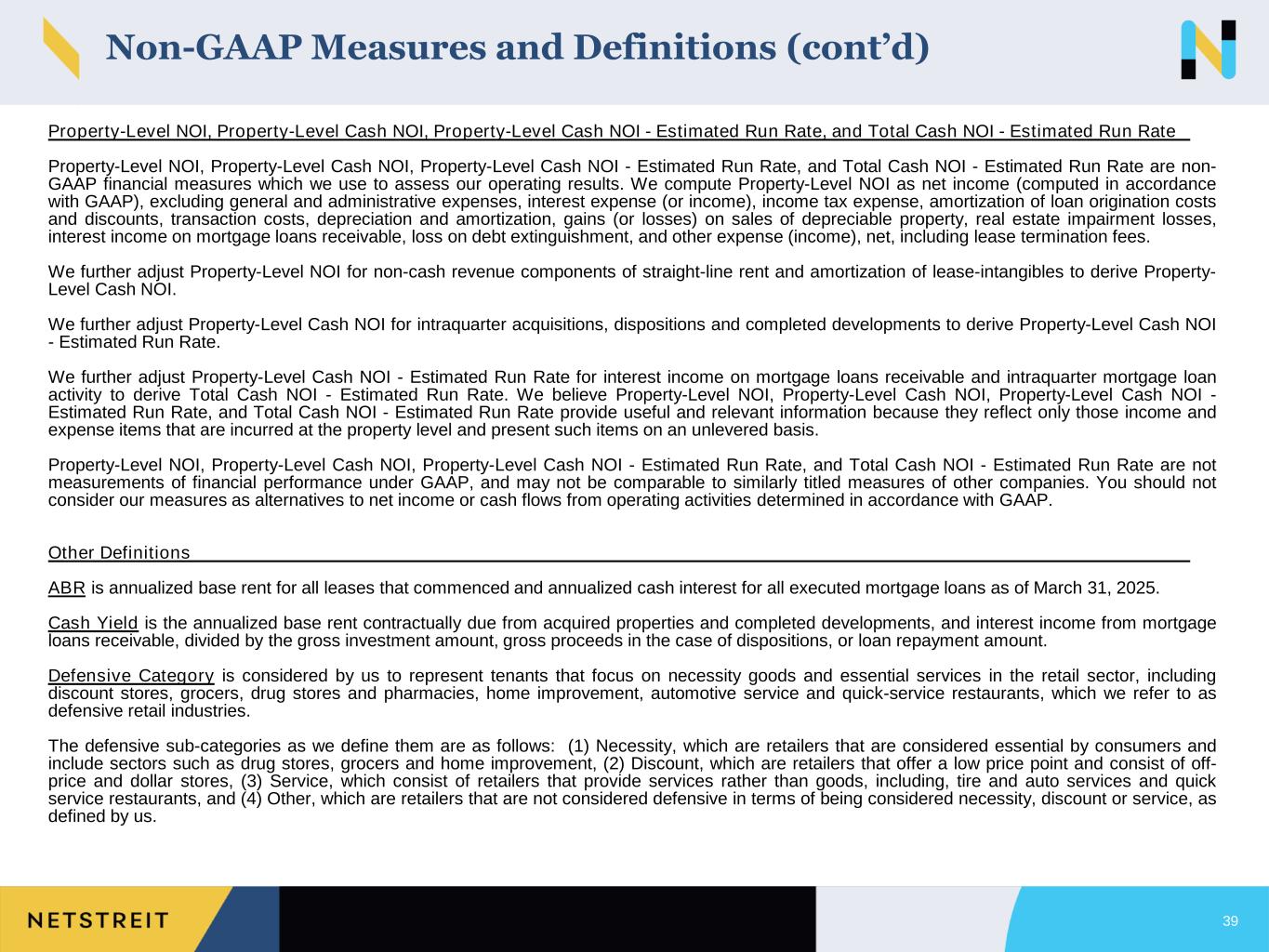
Thank you for joining us for NETSTREIT's first quarter 2025 earnings conference call. In addition to the press release distributed yesterday after market close, we posted a supplemental package and an updated investor presentation. Both can be found in the Investor Relations section of the company's website at www.netstreit.com. On today's call, management's remarks and answers to your questions may contain forward-looking statements as defined in the Private Securities Litigation Reform Act of 1995. Forward-looking statements address matters that are subject to risks and uncertainties that may cause actual results to differ from those discussed today. For more information about these risk factors, we encourage you to review our Form 10-K for the year ended December 31, 2024, and our other SEC filings. All forward-looking statements are made as of the date hereof, and NETSTREIT assumes no obligation to update any forward-looking statements in the future. In addition, certain financial information presented on this call includes non-GAAP financial measures. Please refer to our earnings release and supplemental package for definitions of our non-GAAP measures, reconciliations to the most comparable GAAP measure, and an explanation of why we believe such non-GAAP financial measures are useful to investors. Today's conference call is hosted by NETSTREIT's Chief Executive Officer, Mark Manheimer; and Chief Financial Officer, Dan Donlan. They will make some prepared remarks, and then we will open the call for your questions. Now, I'll turn the call over to Mark.
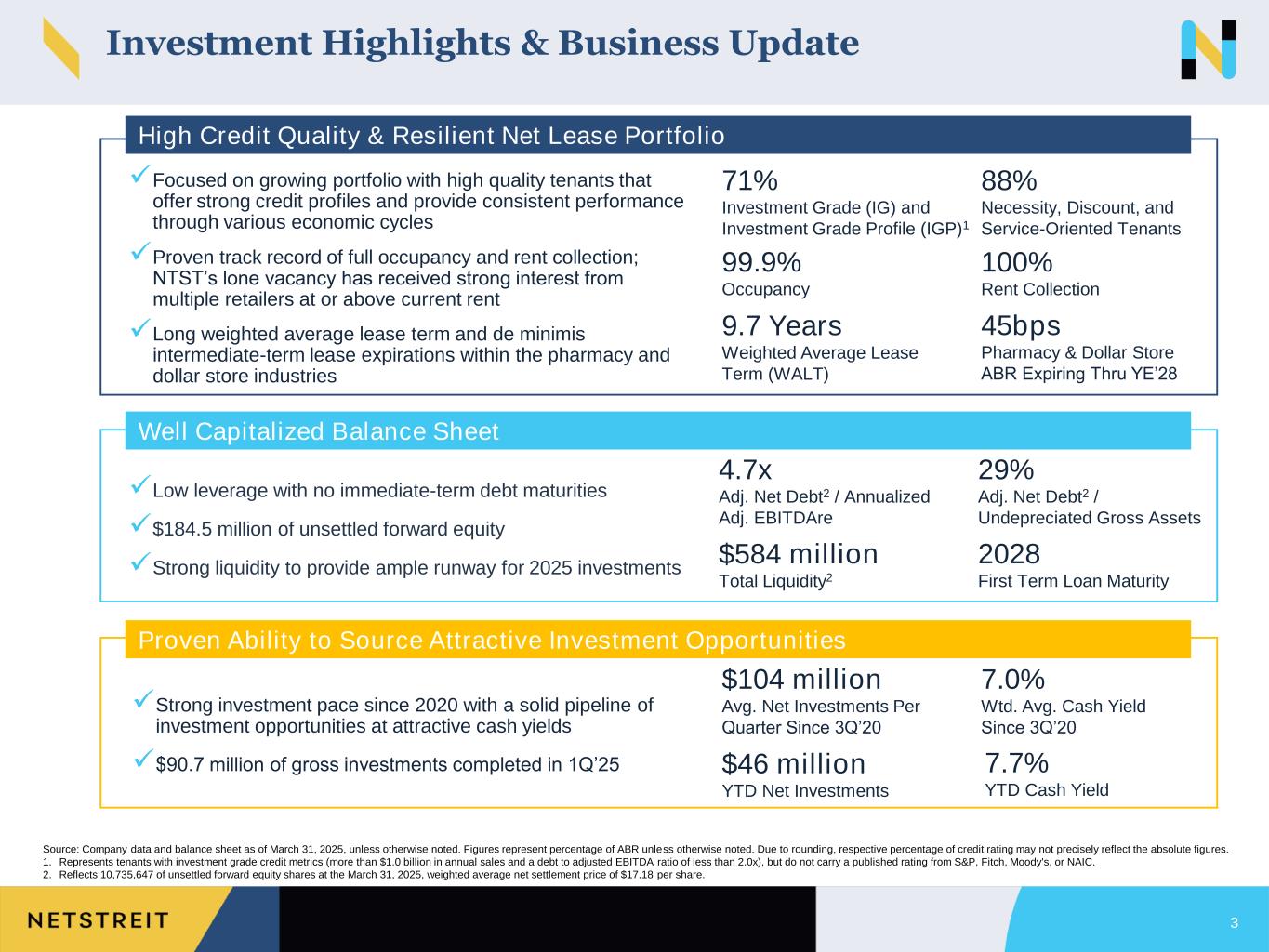
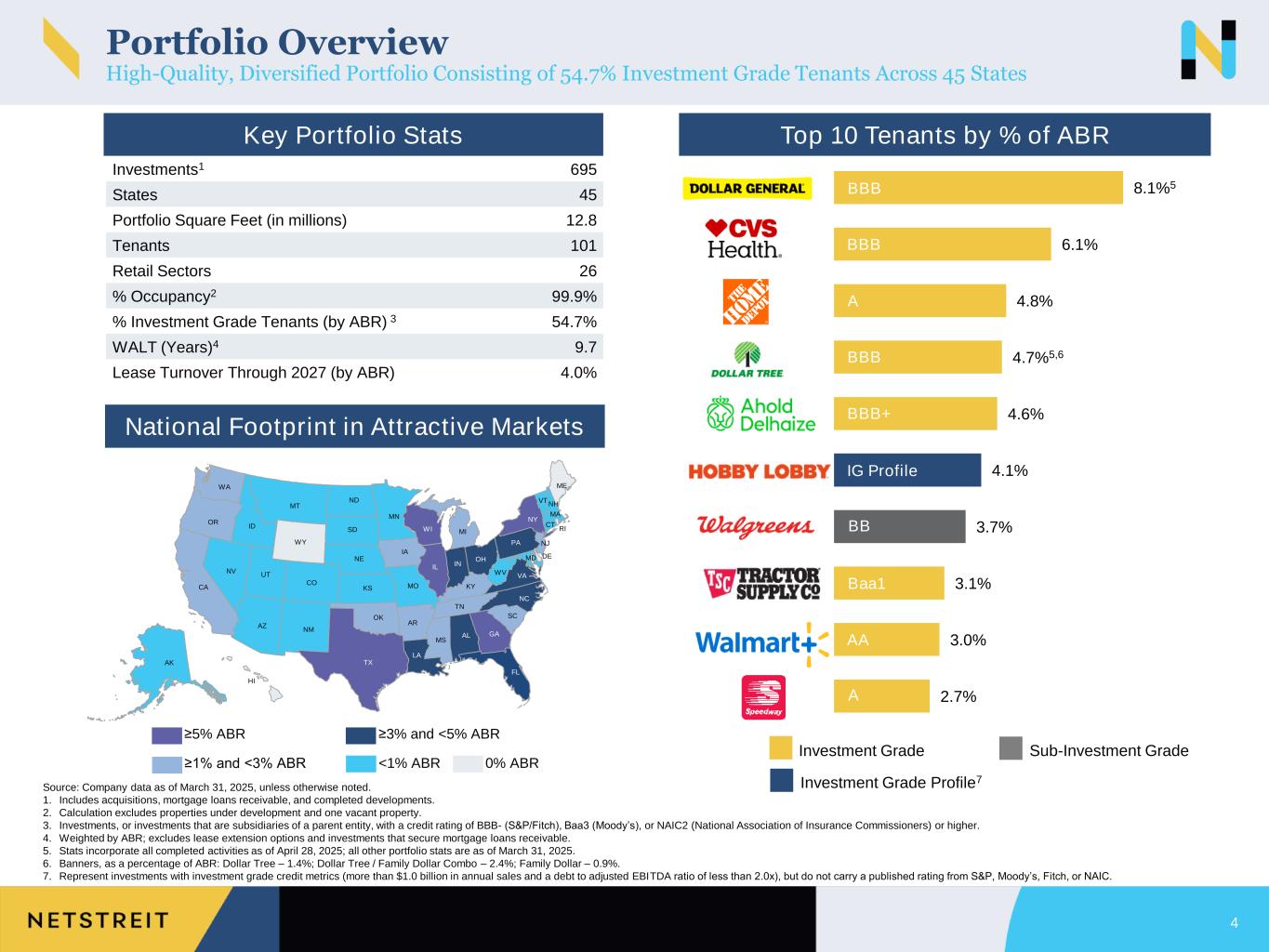
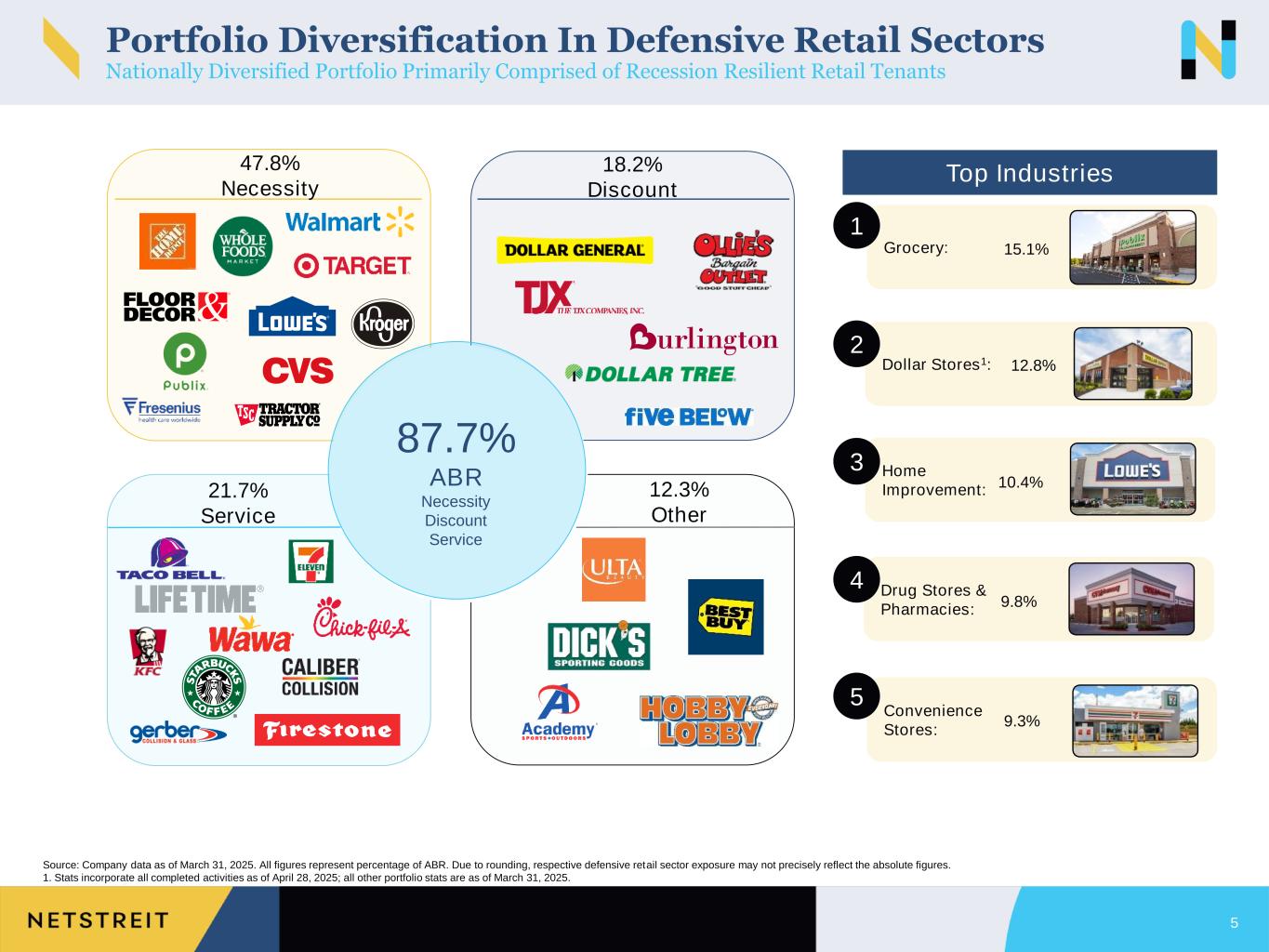
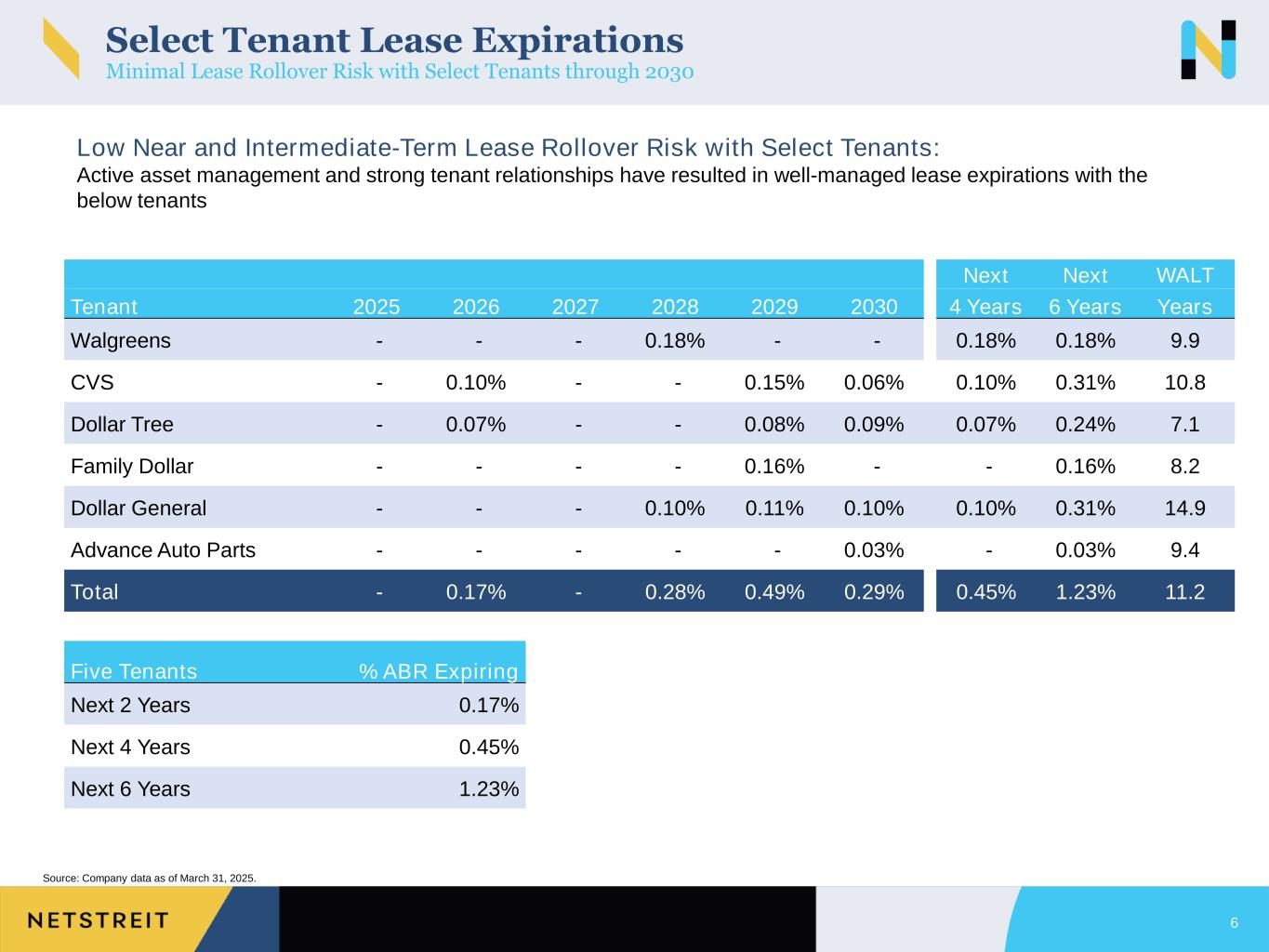
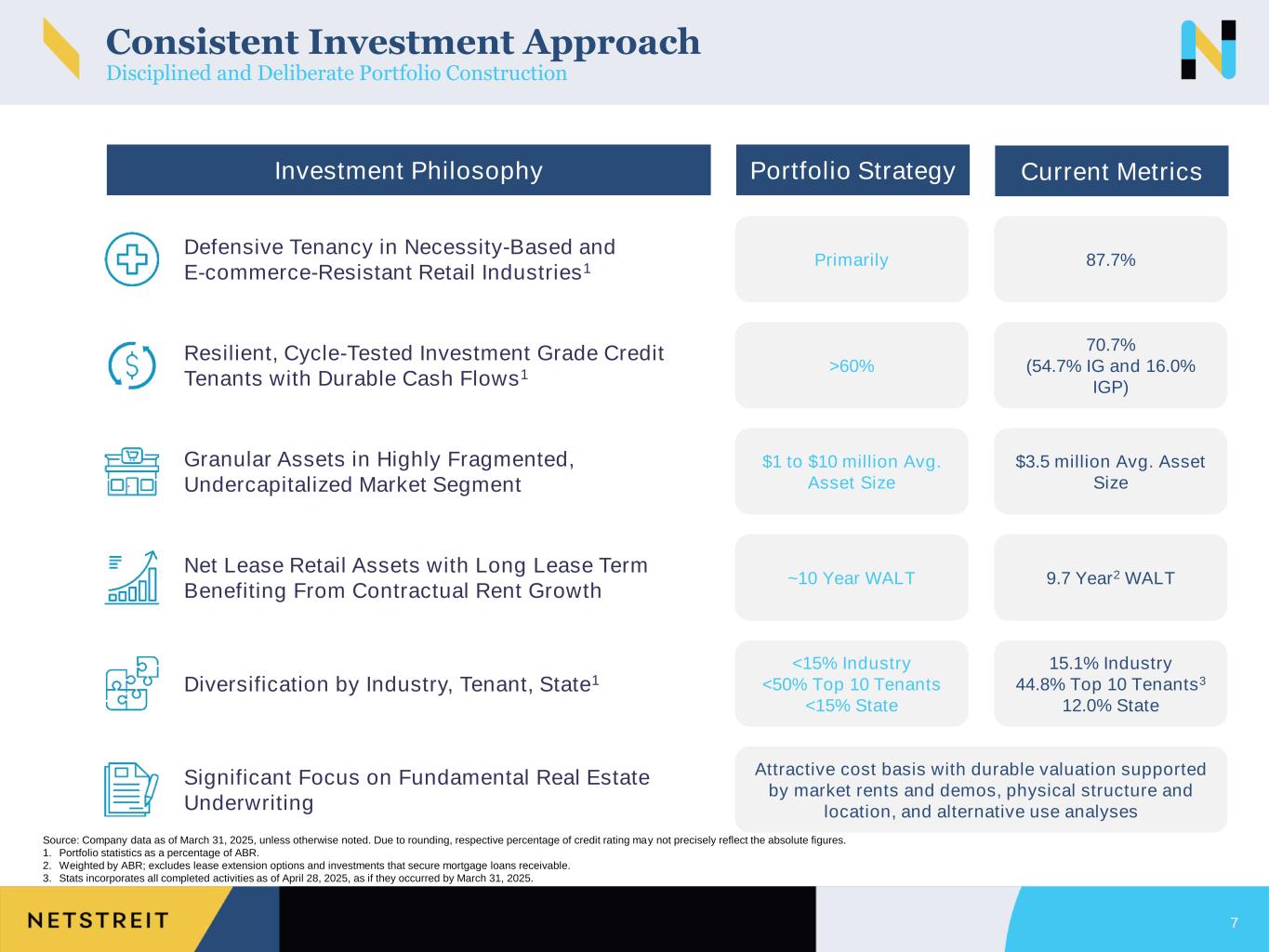
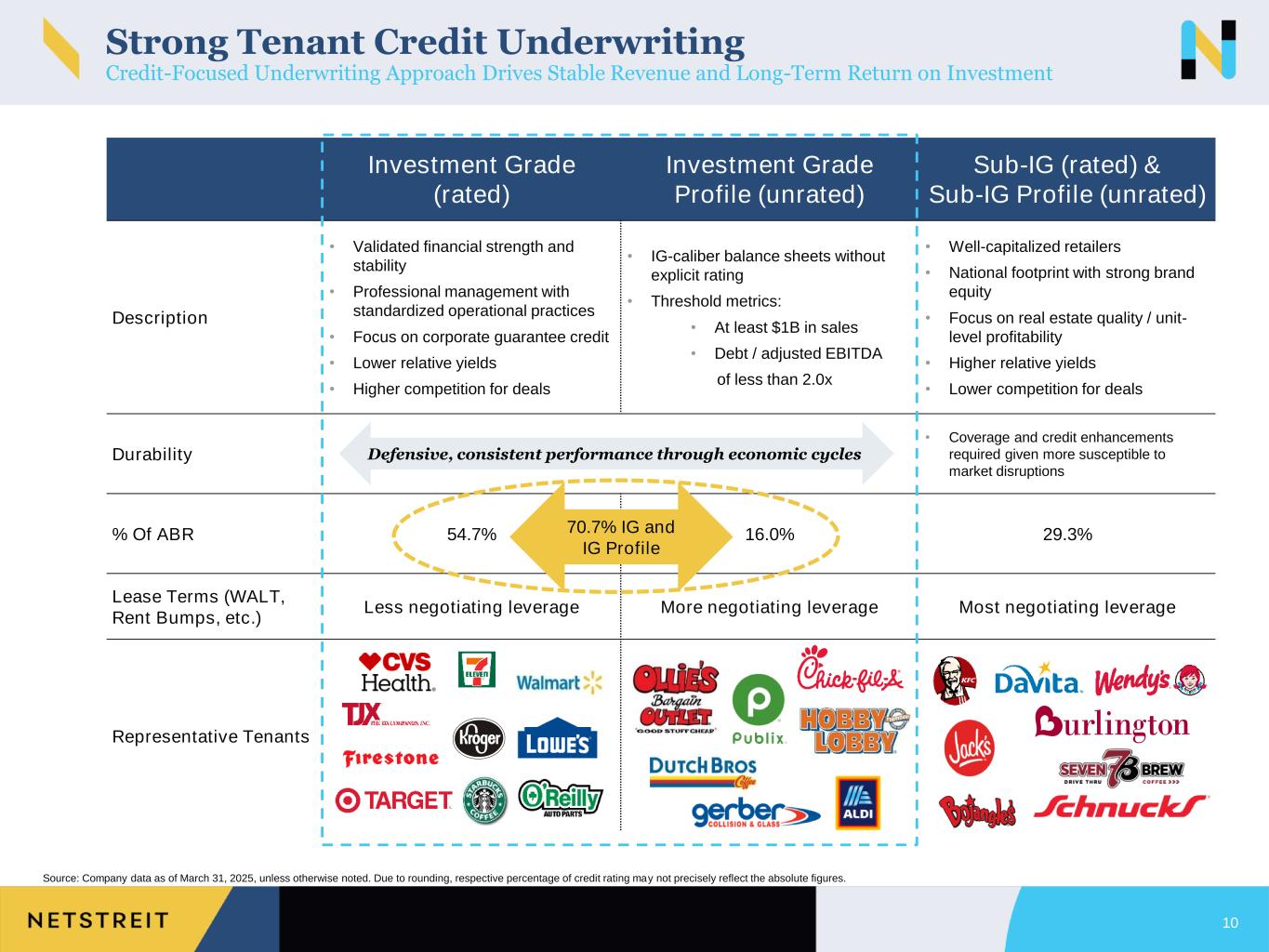
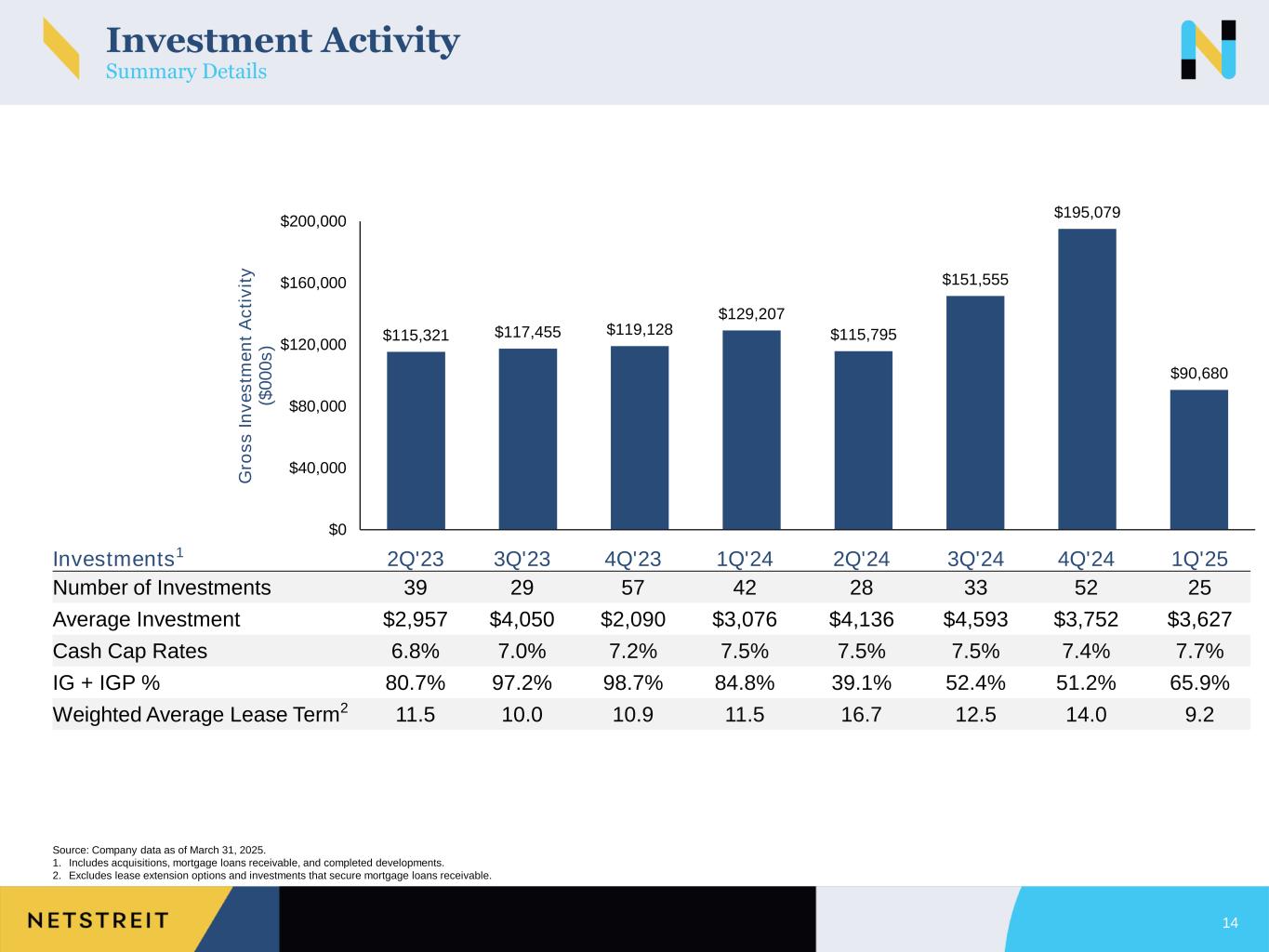
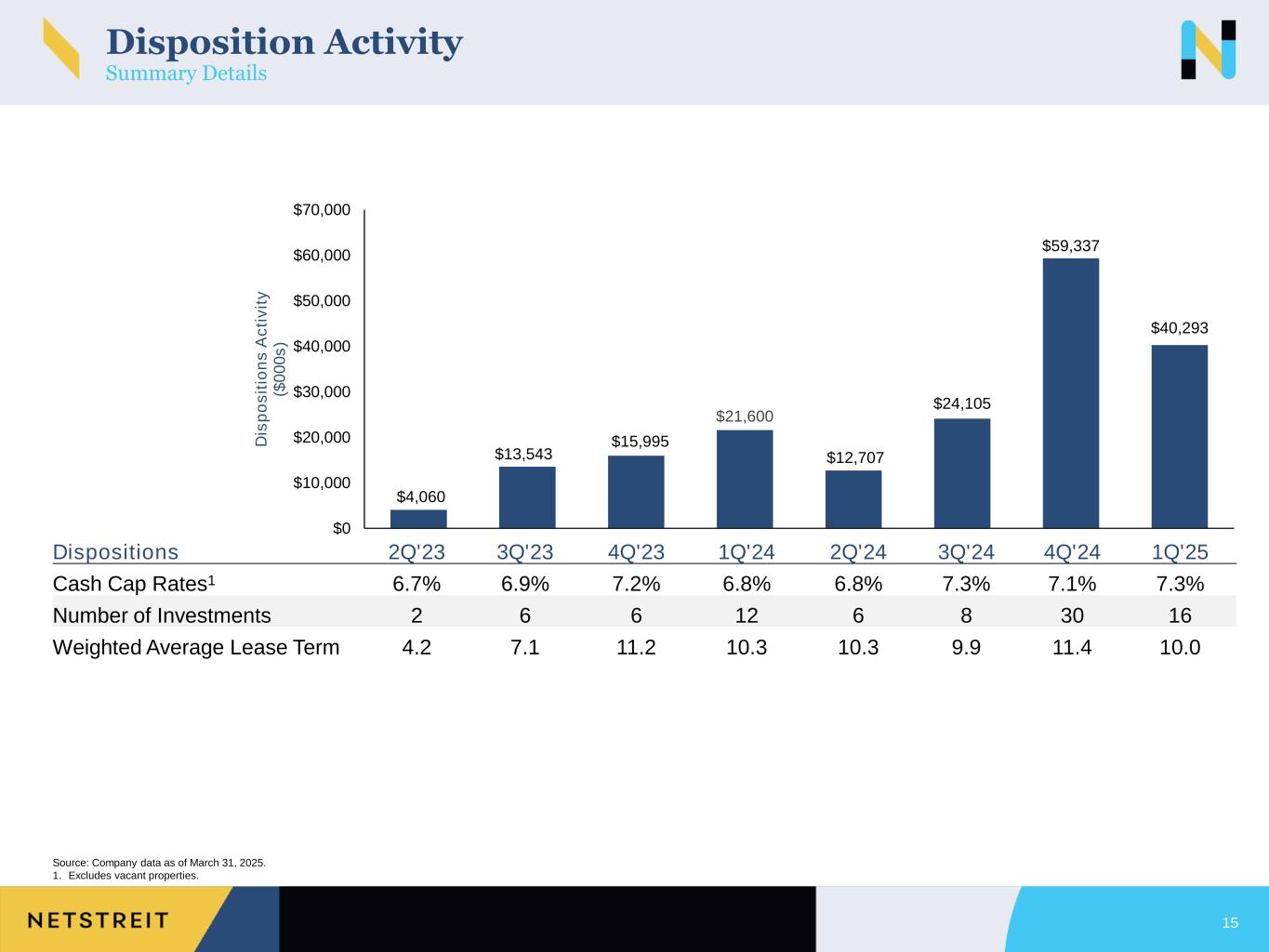
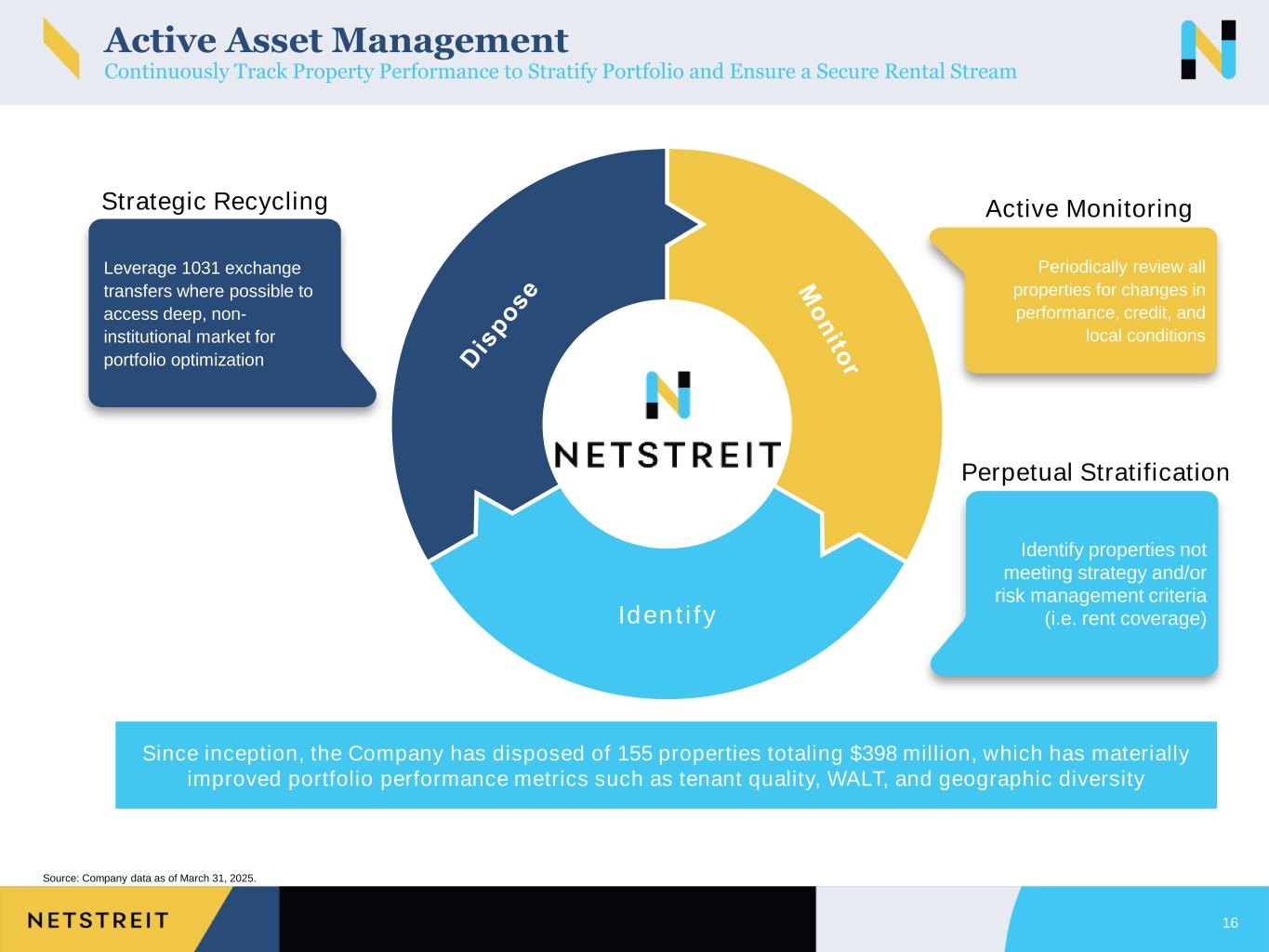
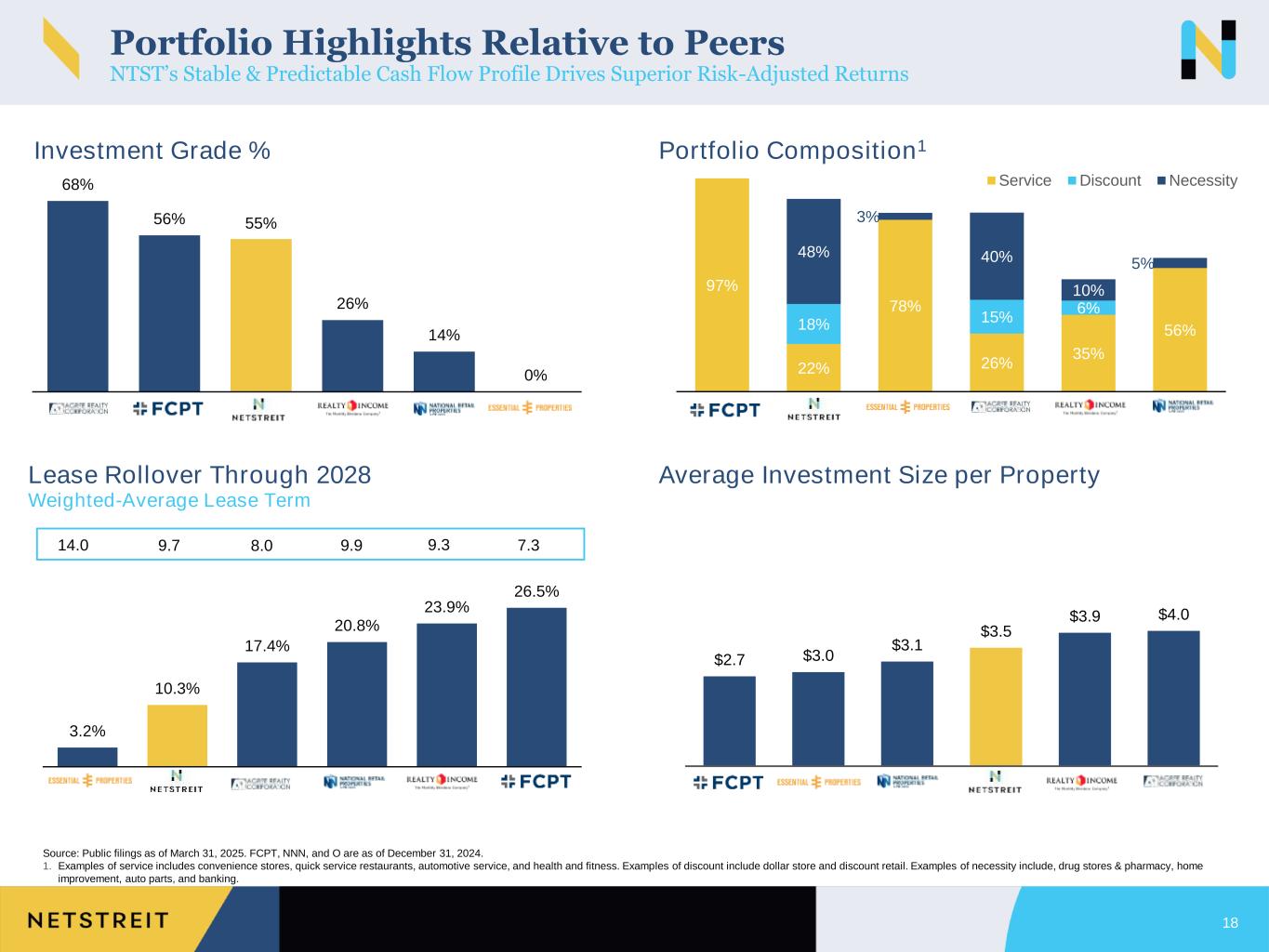
Thank you, Amy, and thank you all for joining us this morning on our first quarter 2025 earnings call. During the quarter, we made additional progress on reducing our top five tenant concentrations, and we continue to see healthy performance from the stores that we own. On the external growth front, our team continues to source attractive investment opportunities, but our investment pace remains more measured compared to prior years. This deliberate stance is rooted in our desire to maintain a low leverage balance sheet and our view that our cost of capital needs to better reflect our portfolio strength and best-in-class operating performance, which I will discuss later in my prepared remarks. During the quarter, we completed $90.7 million of gross investments at a blended cash yield of 7.7%. The weighted average lease term for these investments was 9.2 years, with investment grade and investment grade profile tenants representing 66% of ABR. Additionally, more than half of our activity this quarter was accretively funded with loan pay-offs and disposition proceeds, totaling $40.3 million across 16 properties at a 7.3% blended cash yield. While we have and will continue to maintain a measured approach towards net investment activity, we are currently seeing no shortage of great investment opportunities across various capital deployment strategies. As such, we stand ready to accelerate our investment pace to levels that are similar or above where we have acquired in the past, should we see a more sustained improvement in our cost of equity. Turning to the portfolio. We ended the quarter with investments in 695 properties that were leased to 101 tenants operating in 26 industries, across 45 states. From a credit perspective, 71% of our total ABR is leased to investment grade or investment grade profile tenants. Our weighted average lease term remaining for the portfolio was 9.7 years with just 1.3% of ABR expiring through 2026. Our focus on granular and fungible assets has led to continued demand for our properties when we decide to decrease our concentrations. This strong level of demand resulted in our top five tenant concentration declining 70 basis points to 28.2% of ABR, including a 50 basis point reduction in our top tenant, Dollar General to 8.1% of ABR. While we have made tremendous strides towards our diversification goals, we are not slowing our efforts as evidenced by our expectation for strong disposition activity at lower cash yields in the second quarter. We remain confident that we can achieve our previously articulated diversification goals, and we continue to see these sales being completed at accretive spreads to where we can invest, which is something we have done every quarter in our history. From a tenant perspective, we continue to add new high quality and low-risk tenants to our roster, including Gerber Collision, who is now a top 20 tenant, as well as many other large grocers, convenience store operators, quick-service restaurants, and auto service chains. We continue to avoid specialized real estate and large less fungible boxes given their limited reuse potential and expensive nature of repurposing the real estate. Similarly, we continue to have limited exposure to sectors that are more susceptible to distress when the economy slows. In short, we believe our portfolio, which drives 88% of ABR from necessity, discount, and service-oriented industries can weather any economic environment and avoid large losses should credit events test our real estate underwriting. With that in mind, we were the only net lease REIT to report zero credit losses during COVID, and we have maintained best-in-class performance in this regard since coming public nearly five years ago. Our credit underwriting continues to prove out despite various negative headlines and store closure announcements. As an example, our loan credit event with Big Lots resulted in just 20 basis points of credit loss with seven of our eight locations being assumed by a variety of wholesalers or Ollie's Bargain Outlet. While we have always taken a less hyperbolic approach at NETSTREIT, I would be remiss to point out that our outcome as it relates to our Big Lots exposure draws a stark contrast to the impact felt by other landlords of Big Lots, which can only be explained by our strong underwriting and attentive asset management. While we have had some of our larger tenant concentrations experience negative headlines in the past, we have had virtually no impact on our in-place cash flow since inception. And while we expect this positive performance to continue despite two of our tenants, Family Dollar and Walgreens being subject to going private transactions, based on our understanding of the deal structures and associated EBITDA of the standalone entities, both companies intend to operate with low leverage. Similarly, given that both companies closed a large number of stores well in advance of these announcements, it is our understanding that neither company intends to close many additional locations beyond what has already been announced. Lastly, we see reasons for optimism on the operations front as the new leadership at Family Dollar plans to return the brand to the roots that made the brand successful prior to the merger with Dollar Tree, while Walgreens stands to benefit from a more focused team with a broader understanding of retail. Before handing the call over to Dan, I wanted to reiterate a message that we have consistently provided in the past. We will not sacrifice our balance sheet for growth, nor will we grow for the sake of asset growth without an appropriate level of per share earnings growth. We will remain opportunistic as it pertains to new investments, and we are more than capable of ramping our investment pace should our investment spreads turn more favorable. Given the high quality and resilient nature of the portfolio that we own and manage, and the various catalysts we see materializing from completing our tenant diversity goals as well as achieving an eventual investment grade credit rating, we are confident that our growth from a small base narrative can gain further traction as we execute our strategy. With that, I'll hand the call to Dan to go over our first quarter financials and then open up the call for your questions.
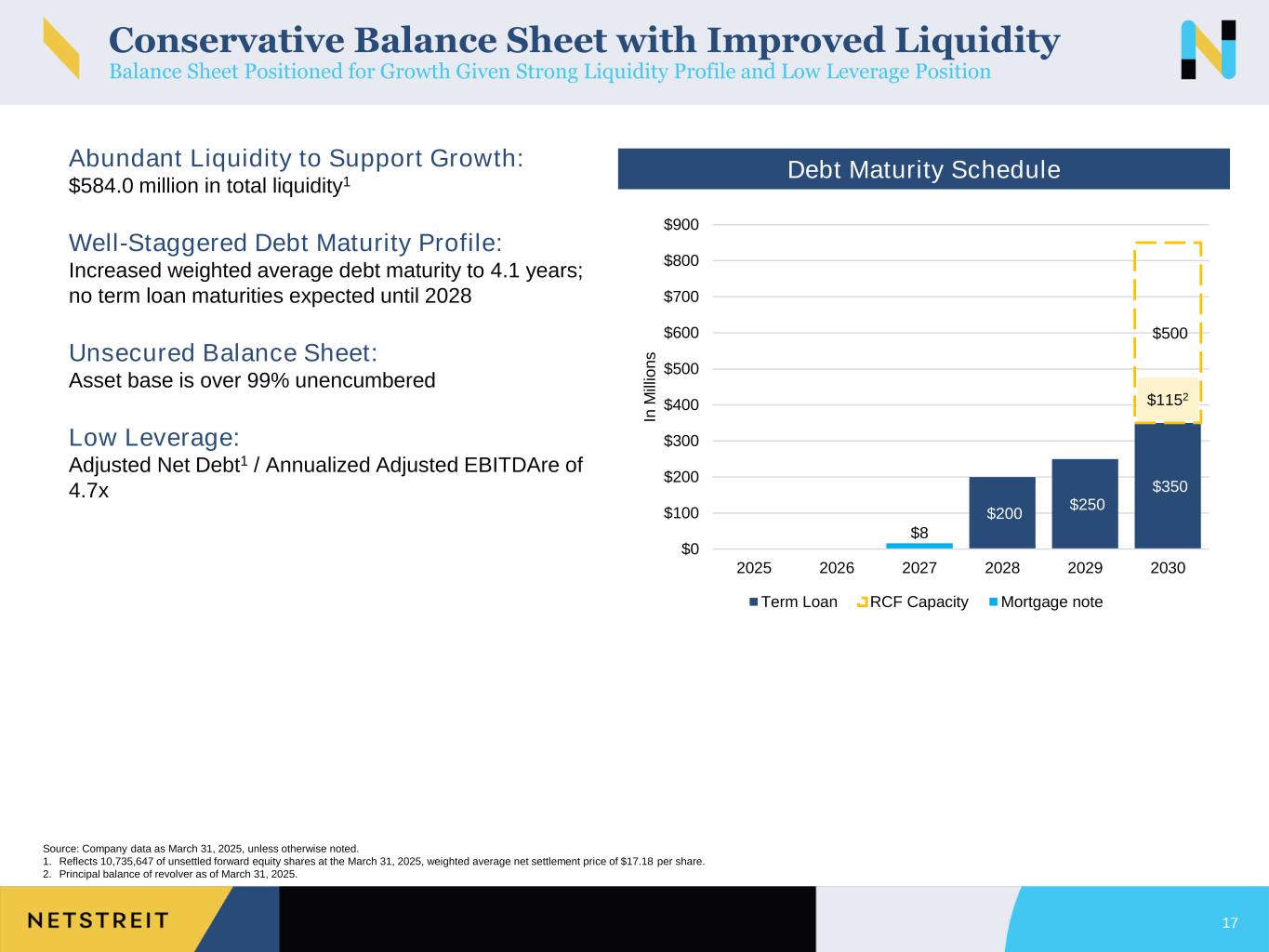
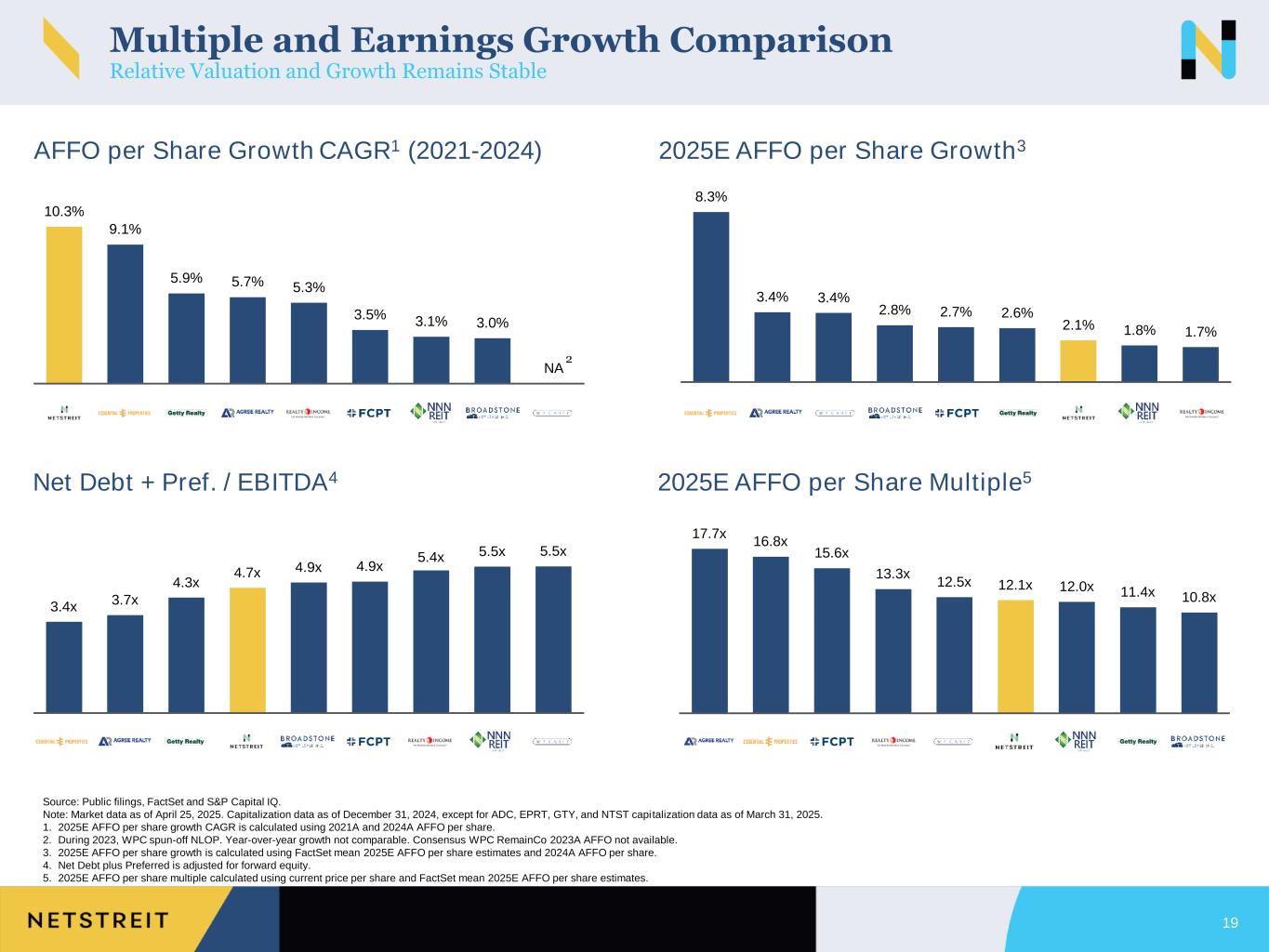
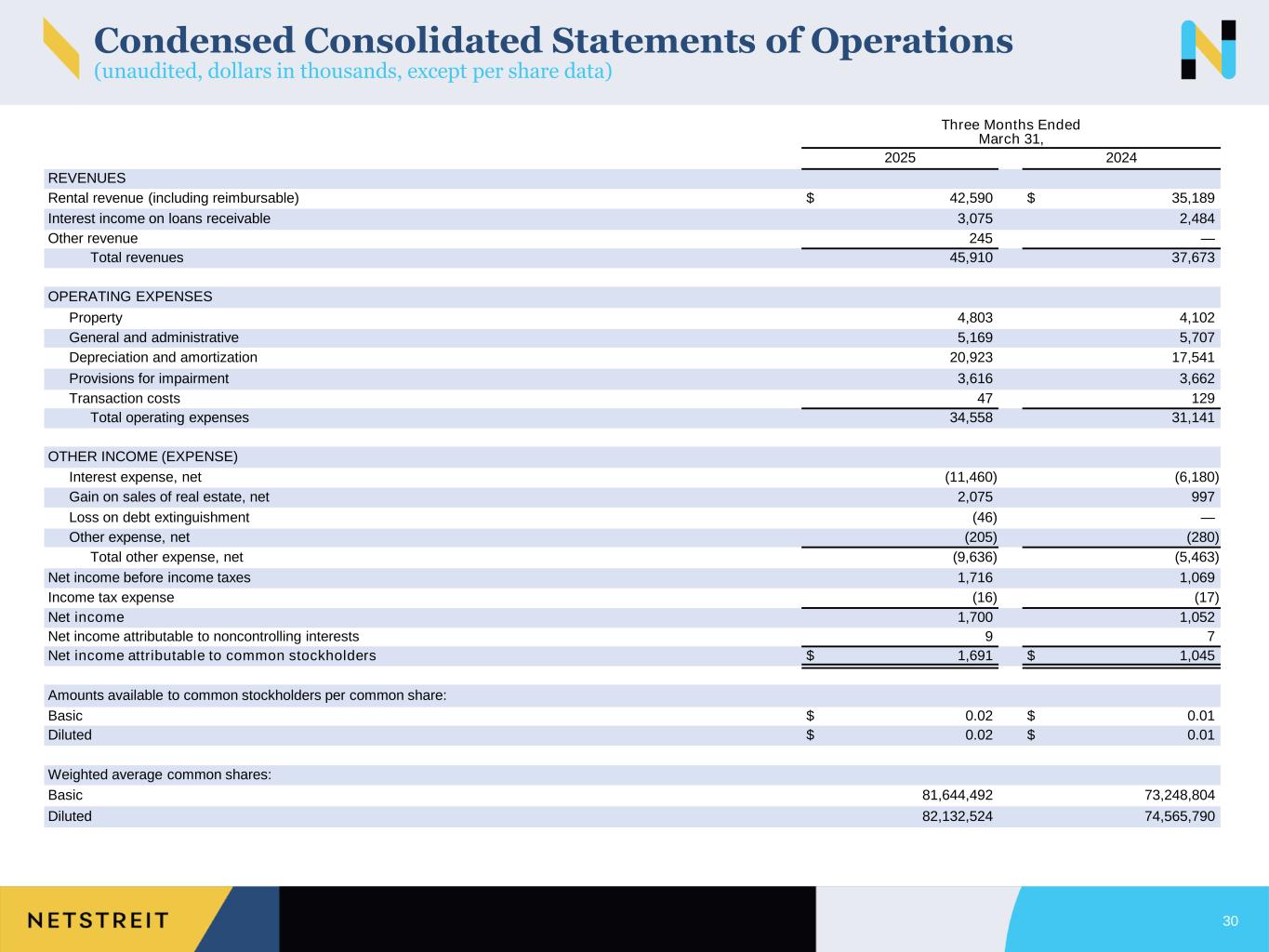
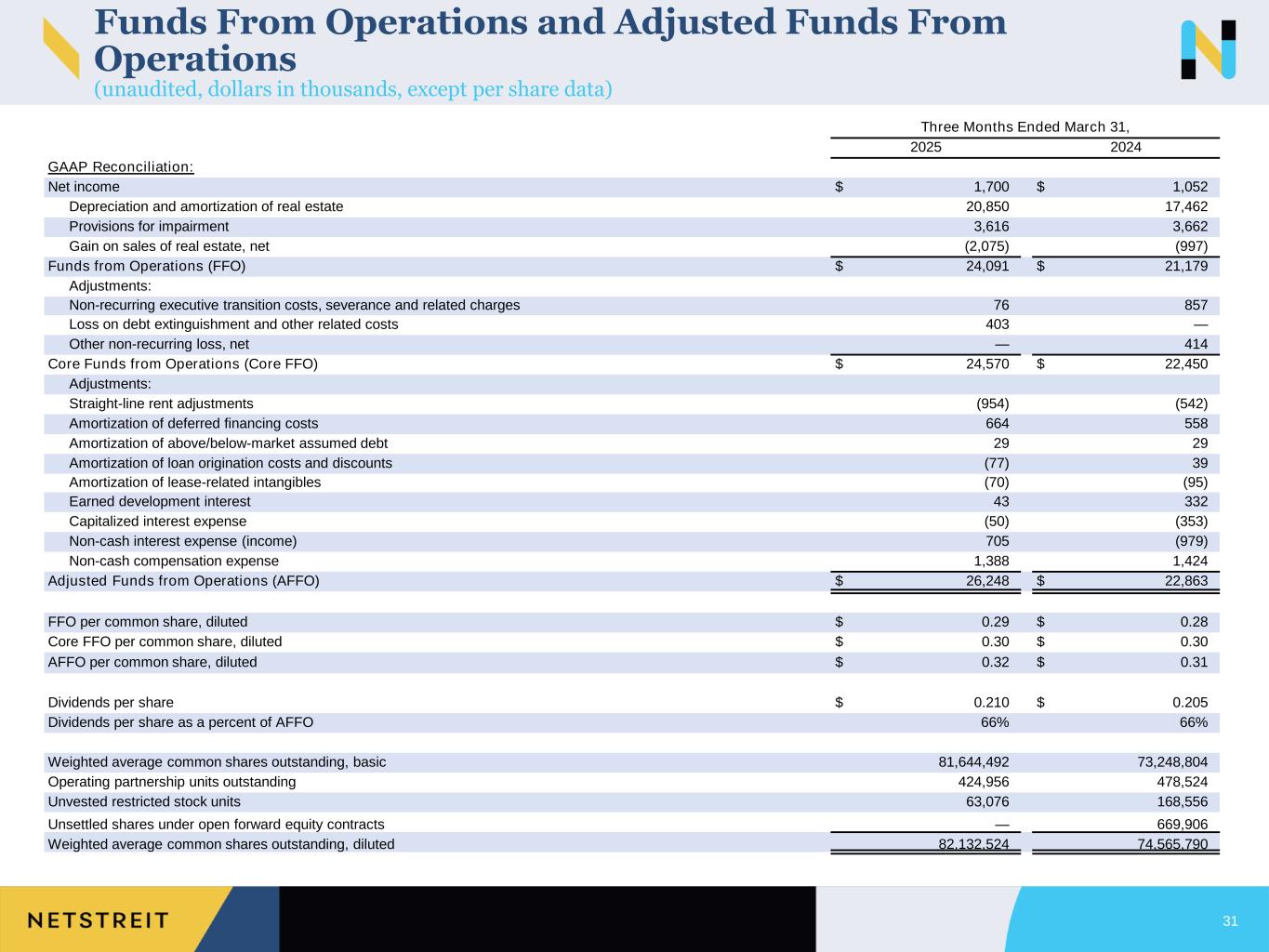
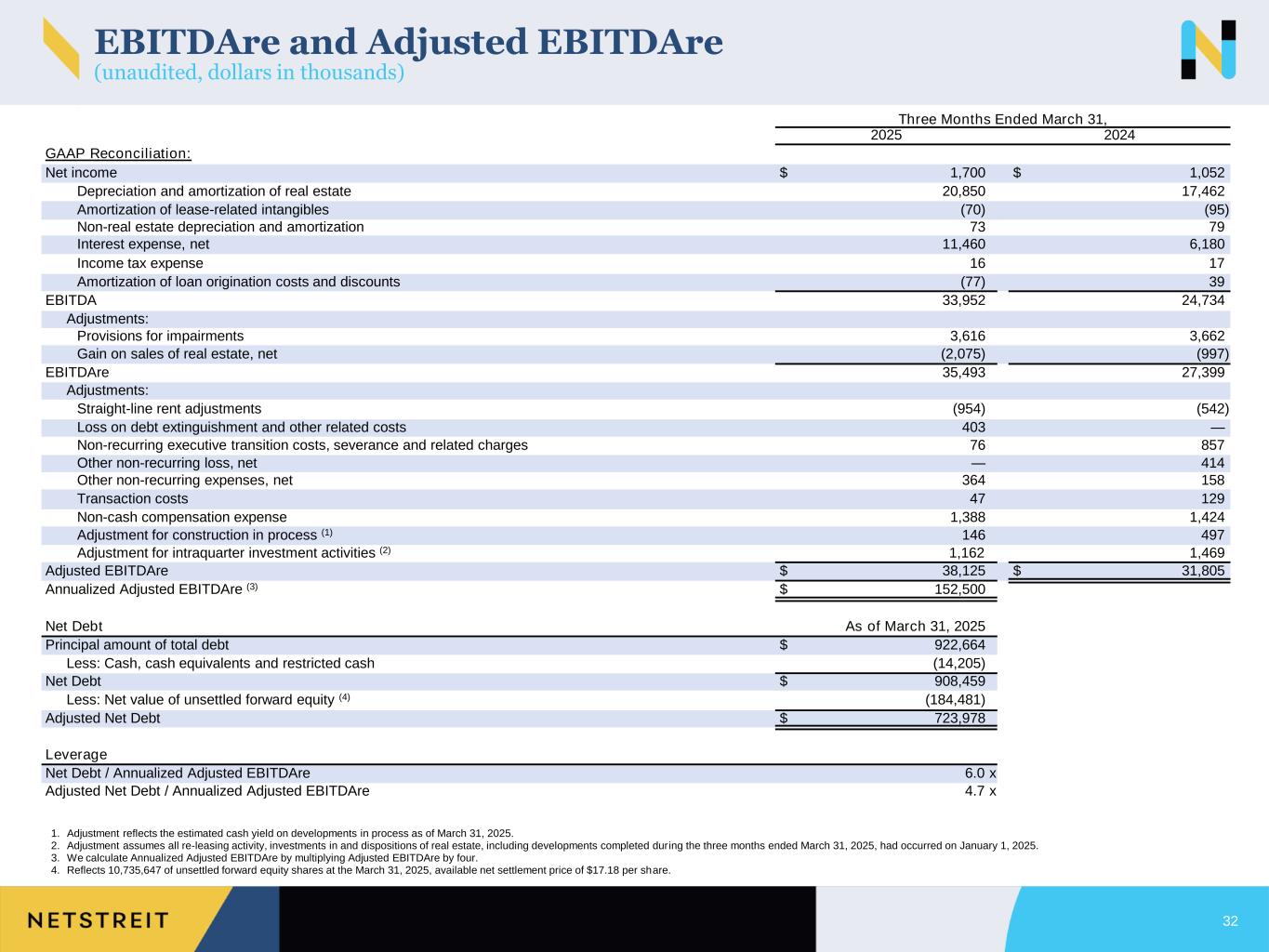
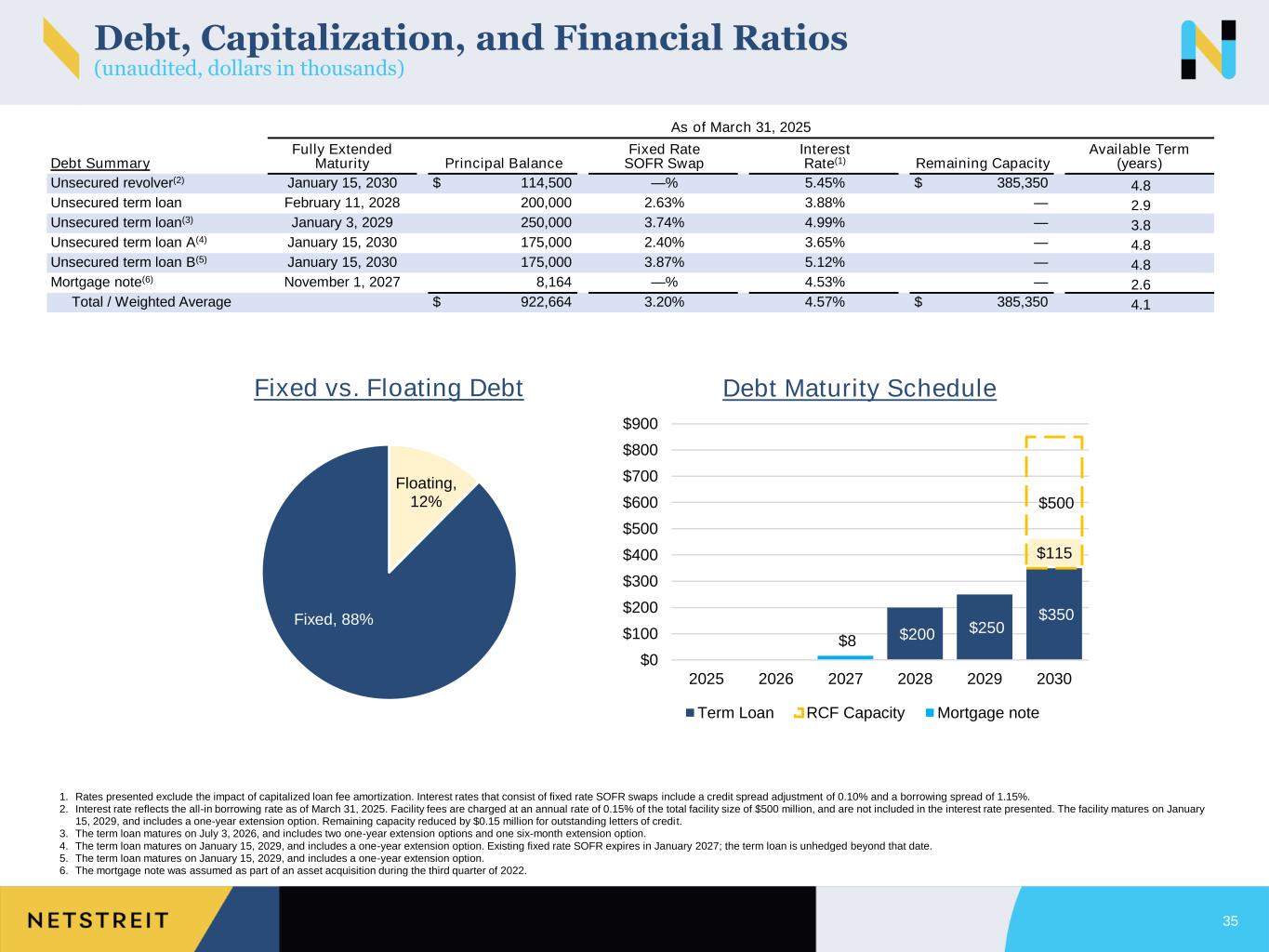
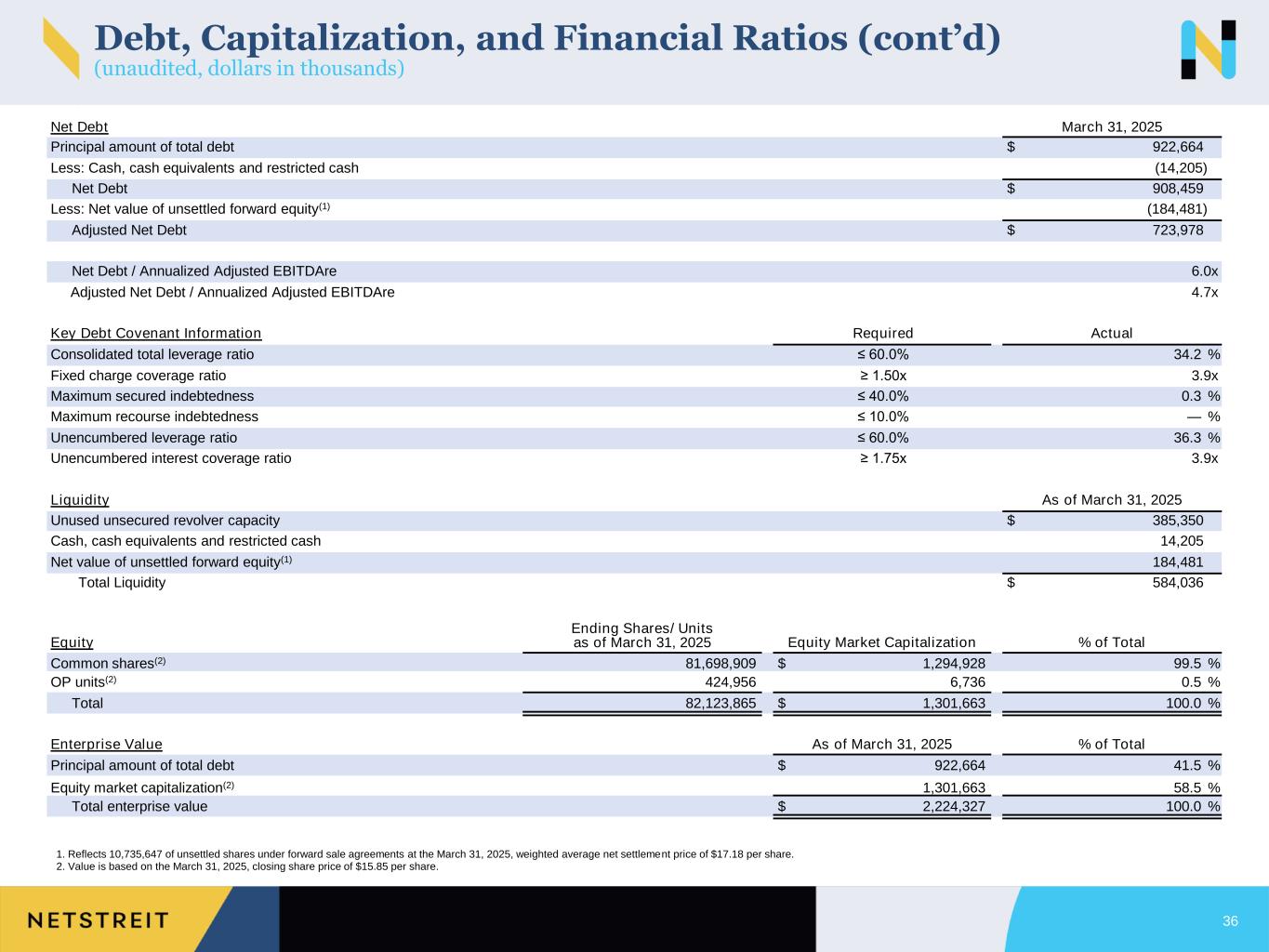
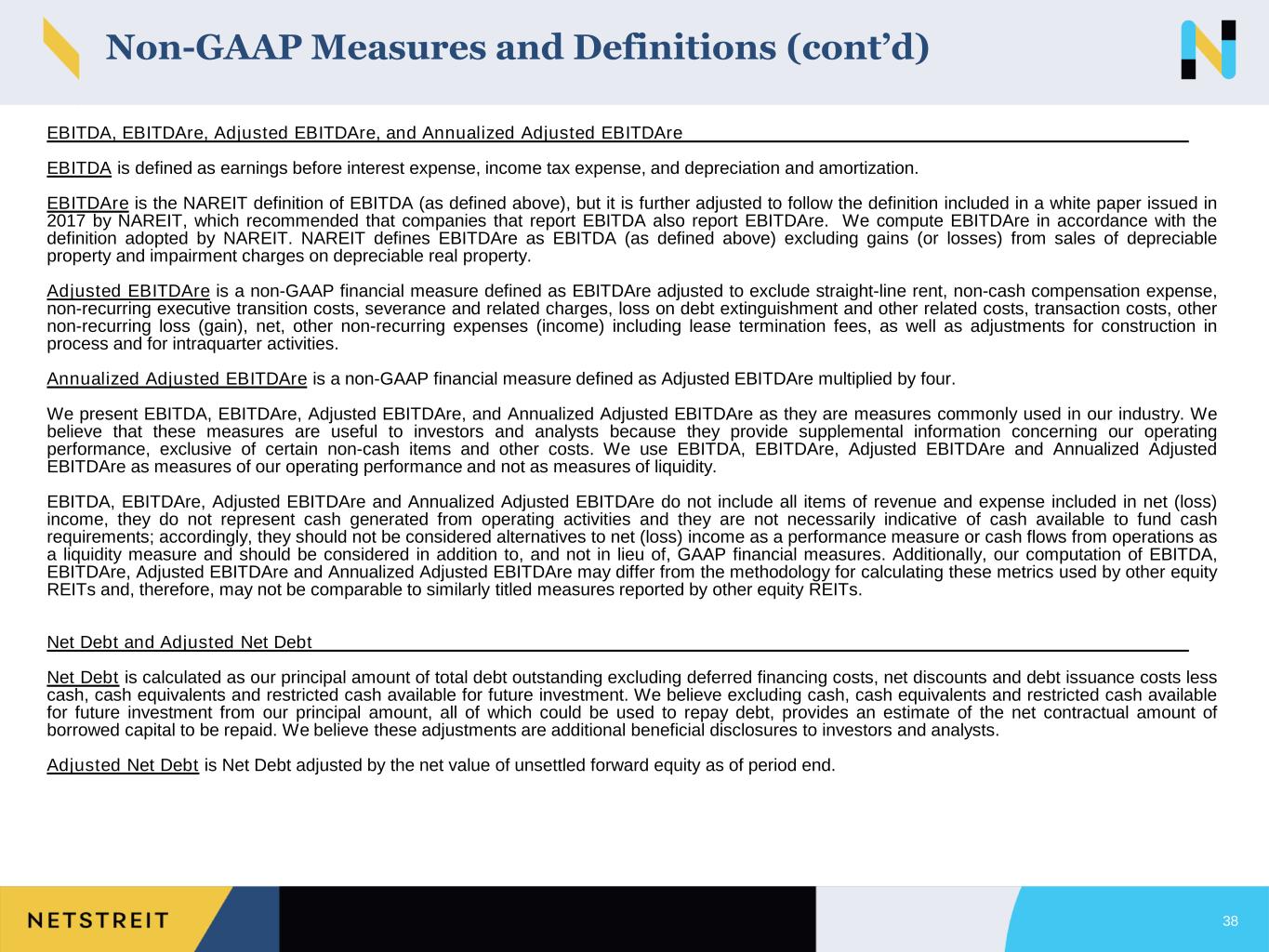
Thank you, Mark. Looking at our first quarter earnings, we reported net income of $1.7 million or $0.02 per diluted share. Core FFO for the quarter was $24.6 million or $0.30 per diluted share, and AFFO was $26.2 million or $0.32 per diluted share, which is a 3.2% increase over last year. Turning to the expense front. Our total recurring G&A in the quarter increased 5% year-over-year to $5.1 million, which is mostly a result of increased staffing and further investment in our team. That said, with our total recurring G&A representing 11% of total revenues this quarter versus 13% in the prior year quarter, our G&A continues to rationalize relative to our revenue base. Turning to the capital markets. On January 15, 2025, we closed on an additional $275 million of financing commitments. This included a new fully drawn $175 million senior unsecured term loan, which was swapped to an all-in fixed rate of 5.12% through final maturity in January of 2030, and an upsized $500 million revolving credit facility, which was increased from $400 million. We also extended the maturity date of our existing $175 million term loan to January 2030 from January 2027 and amended all of our existing credit agreements to remove various financial covenants that provide for improved pricing when we meet certain investment grade rating and leverage targets. Turning to the balance sheet. Our adjusted net debt, which includes the impact of all forward equity was $724 million. Our weighted average debt maturity was 4.1 years, and our weighted average interest rate was 4.57%. Including the extension options, which can be exercised at our discretion, we have no material debt maturing until February 2028. In addition, our total liquidity was $584 million at quarter end, which consisted of $14 million of cash on hand, $385 million available on our revolving credit facility, and $184 million of unsettled forward equity. From a leverage perspective, our adjusted net debt to annualized adjusted EBITDAre was 4.7 times at quarter end, which remains well within our targeted leverage range of 4.5 times to 5.5 times. Moving on to guidance. With no credit loss events realized this quarter, we are increasing the low end of our AFFO per share guidance to a new range of $1.28 to $1.30, which continues to assume 2025 net investment activity of $75 million to $125 million, and recurring cash G&A of $14.5 million to $15.5 million. From a rent loss perspective, our guidance now assumes roughly 75 basis points of unknown rent loss at the midpoint of our range, which aside from recent macro uncertainty, should prove conservative as the year unfolds. Lastly, on April 25, the Board declared a quarterly cash dividend of $0.21 per share. The dividend will be payable on June 16 to shareholders of record as of June 2. Based on the dividend amount, our AFFO payout ratio for the first quarter was 66%. With that, operator, we will now open the line for questions.
Operator
Thank you. Our first question is from Haendel St. Juste with Mizuho Securities. Please proceed.
Speaker 4
Hey, guys. Good morning. Wanted to talk about the appetite you're seeing out there for the pharmacy and Dollar Stores. Looks like you've been able to make some continued progress here and sell at some pretty decent cap rates. So maybe some color on the appetite, the pricing you're getting and maybe a sense of timeline to get your Dollar General, CVS, and Walgreens exposures down to your target levels?
Yeah. Sure, Haendel. Yeah. So, I mean, I think we on the last call mentioned that the timeline for all tenants would be to get them below 5% by 12/31, which we continue to expect to be able to hit that timeline. Walgreens is maybe a little bit different. I think we'll try to get that below 3% since it's at 3.7% currently. There continues to be a pretty robust amount of interest from institutions and from 1031 buyers on the Dollar Store side. So I'd expect us to continue to make a lot of progress, both with Dollar General and even with Family Dollar, we've got a number of those properties in the pipeline to sell. And then, we do have a few pharmacies also that we expect to sell here before our next earnings call. Walgreens with the news Sycamore, we do have a pretty good idea of what that balance sheet is going to look like, which I think is going to be a little bit lower levered than what I think some people may fear. So once that information gets out, I think that's certainly going to help, but we continue to see interest from the 1031 market as it relates to Walgreens.
Speaker 4
That's great color. Appreciate that. Maybe a follow-up on the debt side. Dan, I think you mentioned I think you have an expectation of pursuing a ratings upgrade here. So maybe some color on what you're hearing from the agency's potential timing of potential upgrade? And any sense of what estimated savings on the debt side could be? Thanks.
Yeah. Hey, Haendel. So we haven't started our preliminary discussions yet. We're preparing for that. We don't have a rating as it sits today. We've been through this process before at other companies, both Mark and I. So we have a pretty good understanding of what it would entail. I think as we sit here today, we're kind of targeting going out to certain rated agencies in the latter half of this year. And if you just look at kind of the covenants as well as the terms, that we received in our newest credit agreement as well as across the term loans, that should result in about 20 basis points of savings. On top of that, there are other industry things occurring that probably will result in us receiving another 10 basis points of savings. So I think all-in, where we could gain an investment grade credit rating for one of the three major rating agencies, we're looking at a least a 30 basis points reduction across not only our term loans and the credit facility as well.
Speaker 4
Thank you, guys.
Operator
Our next question is from Greg McGinniss with Scotiabank. Please proceed.
Speaker 5
Hey, good morning. I just want to clarify, make sure I understand your initial comments on the net investment activity. So if nothing were to change from Q1, you'd be in a position to exceed the net investment guidance range? And a follow-up to that is whether or not the transaction market has changed much following April 2?
Yeah. No, I think what we would not look to increase our acquisitions if nothing changes related to our equity price. So the good news about us being in capital recycling mode is that we have continued to be very active on the acquisition side, matched up with a lot of dispositions. So in the event that our stock price improves from here, we'd be in a position to be able to hit the gas pretty quickly.
Speaker 5
Okay. And then, has there been much of a change in the transaction market since April 2?
No, not since April 2. So we continue to see just a great opportunity. And so whether that be with convenience stores, quick service restaurants, a lot of different sectors, auto service amongst others where we've got a lot more opportunities than we do capital right now, but we're hopeful that that changes.
Speaker 5
Okay. My last question is about the 75 basis points of bad debt expense included in the guidance. Does this account for any specific tenants, or is it more of a precautionary estimate?
Yeah. I mean, there really isn't any specific in there. It's really solely for unknown events based upon what we see here today.
Speaker 5
Okay. Thank you both.
Operator
Our next question is from John Kilichowski with Wells Fargo. Please proceed.
Speaker 6
Good morning. Thank you. Maybe first one from me. Could you give us an update, maybe on the progress around the releasing of your Big Lots asset in Maryland?
Yeah, absolutely. So we've had a lot of interest from a number of retailers. There is a competing shopping center that's being built down the street. And so, the current dynamic we'd like to kind of really see that play out a little bit more. There's a lot more demand than there are opportunities. And so, we have some retailers chasing that location as well as ours. And so, I think that it may take a few months just to kind of see how that plays out. But we were in possession of a handful of LOIs that are pretty attractive, and we're actively negotiating. But we think if we take our time a little bit, we may get a better outcome here in the next few months.
Speaker 6
Okay. And just to confirm that's not included at the high end of guide?
No. We don't have anything in 2025 for that.
Speaker 6
Okay. Thank you. And then, the last one for me is just how do you think about the Walgreens take private and does that change the risk profile of those assets to you?
I believe having a company that is entirely focused on retail operations, rather than managing a complex business, is beneficial. Sycamore has a solid track record; for instance, their work with Staples over the last decade has transformed a company that many viewed skeptically when they acquired it. They've done an excellent job there. The fact that they are not planning to heavily leverage it and are concentrating on operations reflects our confidence that it will continue to thrive. We have locations that perform exceptionally well, and even if they choose to close additional stores beyond what we anticipate, we do not foresee those closures affecting our stores.
Speaker 6
Got it. Thank you.
Operator
Our next question is from Michael Goldsmith with UBS. Please proceed.
Speaker 7
Good morning. Thanks a lot for taking my questions. In your prepared remarks, you mentioned that you're going to see some strong dispositions of low cash yields in the second quarter. Within your guidance, you only provide the net number. So maybe you can provide a little bit more clarity around the expectations of how the portfolio should change over the next period while you move from a volume, from a tenant type perspective, and also from a cap rate perspective. Thanks.
Sure. It's a bit complex because we can't control if the disposition is finalized. We track the letters of intent we've signed, the contracts in place, and the buyers who have confirmed their deposits. As we move forward in that process, we gain more confidence that the buyers will complete the transaction. We have some advanced auto deals, Dollar Generals, Family Dollars, and pharmacies included. Additionally, we will consider selling assets outside those categories if their performance isn't satisfactory. For instance, we sold a Lowe's this quarter after discussions with the tenant revealed it was the weakest of our four locations at the beginning of the year. We were able to sell it at a 6.5% cap rate. I anticipate this will be the general mix, although there might be a couple of assets similar to the Lowe's scenario where the performance isn't as strong, while the remainder falls into the categories I mentioned. The cap rates on the dispositions should range from the mid to high 6% based on what finalizes, and we will aim to match funding as best as possible on the acquisition side. We will stay aligned with the acquisition guidance on a net basis, expecting it to be quite similar to what was observed in the first quarter.
Speaker 7
Great. Helpful. And then...
And on the cap rate for acquisitions, I believe you will continue to see it above 7.5%.
Speaker 7
Got it. And on the other side of the coin, your exposure to grocery was up 150 basis points, but maybe not in the top 20 tenants. So maybe you could talk a little bit about where you're stepping into, where you're leaning into, better understand how the portfolio is changing and the underlying tenants within the grocery category? Thanks.
Yeah. No, that's a great question. So, we added one of the largest ESOPs in the country. We're focused on larger grocers that generate a lot of cash flow within the four walls that we're buying and strong retail corridors. And so, where we can find tenants that may or may not have an investment grade rating, where we're getting attractive economics and good growth in the lease, those are the types of acquisitions that we're looking to do. Quite frankly, we don't have a ton of grocers in the second quarter like we did in the first quarter, but that is a sector that we like a lot.
Speaker 7
Thank you very much. Good luck in the second quarter.
Operator
Our next question is from Smedes Rose with Citibank. Please proceed.
Speaker 8
Hi. Thank you. I just wanted to ask you, as you reduce your exposure to the Dollar Stores in general and you think about where there's Dollar Tree and Family Dollar combined stores, are those targets for dispositions or kind of what happens to those as those two brands separate?
Yeah. No, it's a great question. Yeah. No, absolutely. And so there is going to be a little bit of movement where a few may go to Dollar Tree. Most of those are going to go with Family Dollar. We do have a handful of those under contract to sell just to reduce exposure to Family Dollar. And so, I'd expect most of what you see in the supplemental for the combo stores to go over to Family Dollar.
But we're actively selling both Family Dollar locations and combo stores.
Speaker 8
Okay. And then, I think last quarter, you talked about in your guidance, you're anticipating settling the forward equity in the second half of the year. Is that still the case or would you anticipate maybe extending that depending on your acquisitions or...
Yeah. We think right now, Smedes, there could be some in the second, there could be some in the third. I think the bulk of it probably comes in the fourth. We could always extend it if we wanted to. We're optimistic that based upon the catalysts that we see propelling our shares further this year that we'll be able to get out and raise a little bit of equity to increase, potentially our net investment activity. But as we sit here today, if we don't do anything, I think you're likely to see us take down most of it by year end.
Speaker 8
Okay. Thank you.
Operator
Our next question is from Michael Gorman with BTIG. Please proceed.
Speaker 9
Yeah. Thanks. Good morning. Mark, you talked a bit about how there's a lot of opportunities in the marketplace versus where you are with your cost of capital, which I completely understand at this point. I'm just curious internally, when you look at that and when you screen these opportunities and decide on what's going to close on the transaction pipeline, what are you primarily solving for here? Is it a tenant that's not in the top 20? Is it yield? Is it credit rating of the tenant? Kind of what are you triangulating for as you pick the best deals out of the investment volume that you're seeing?
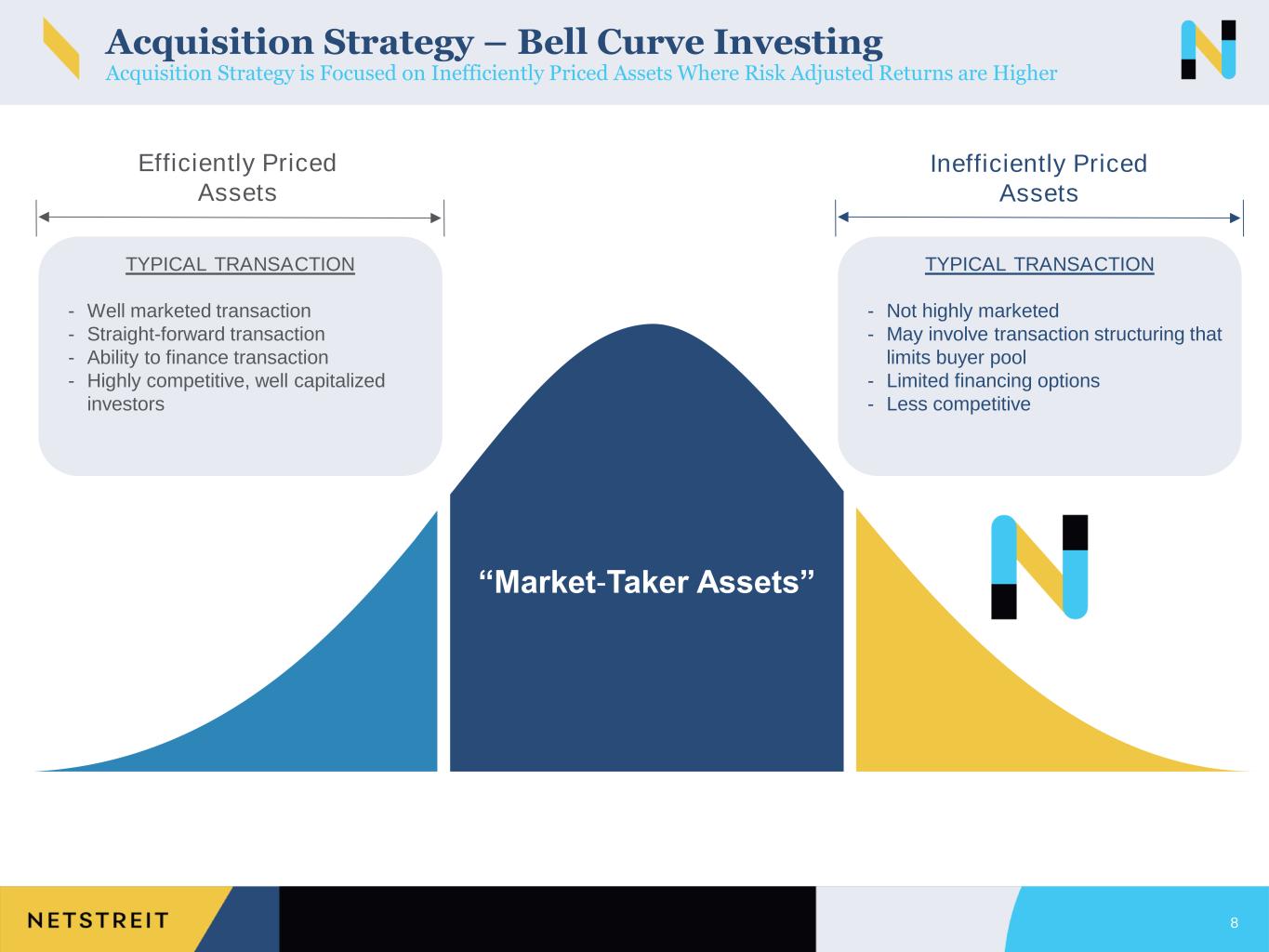
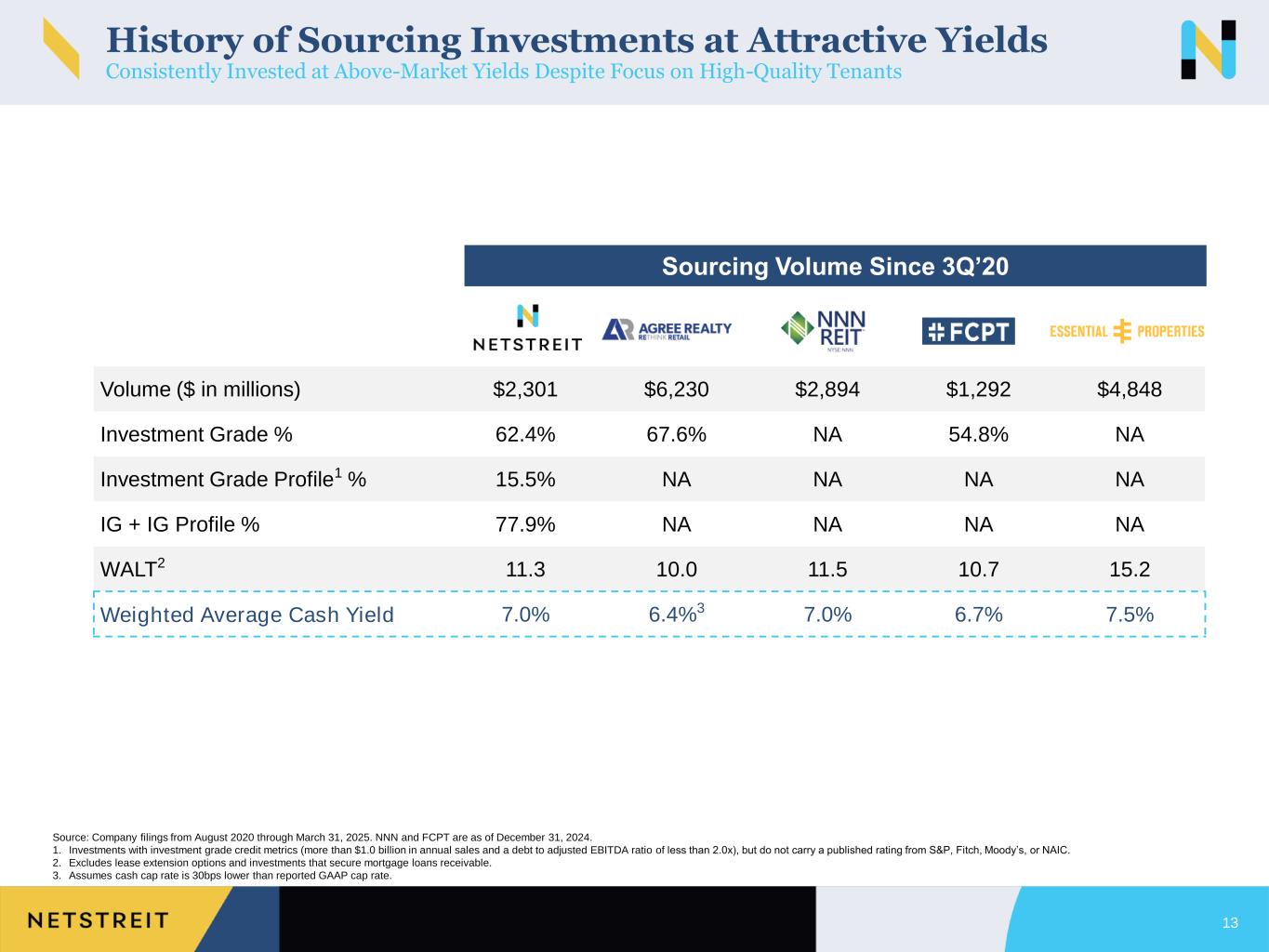
Yeah. No, it's a good question, Michael. Yeah. I mean, we're obviously trying to diversify the portfolio, so that we've got a handful of tenants where we're really not trying to add to currently. But we're looking at pricing, as well as where we're getting the best risk-adjusted returns. And so, we've been somewhat agnostic as to whether it's an investment grade rated tenant, if it's an investment grade profile. If we've got a lot of belief in that management team and it's got a strong balance sheet and generates a lot of cash flow, both at the corporate level and within the four walls that we're buying. And that's really how we triangulate our way to risk-adjusted returns. And that's where we're going to deploy capital, where we can get the best risk-adjusted returns. And we've been pretty pleased. I mean, a 7.7% blended cap rate for the quality of assets that we're adding to the portfolio, I think is really encouraging, especially if we get the opportunity to hit the gas.
Speaker 9
Great. That's helpful. And then, Dan, I want to ask how close we are to the inflection point on the cost of capital side, although certainly, there's been progress year to date. I was wondering if you could just kind of walk us through the strategy again on the forward equity, though, you've got about $185 million or $184 million of unsettled versus the midpoint of net investment guidance of $100 million. How far out can you extend some of that unsettled equity as we go through the year?
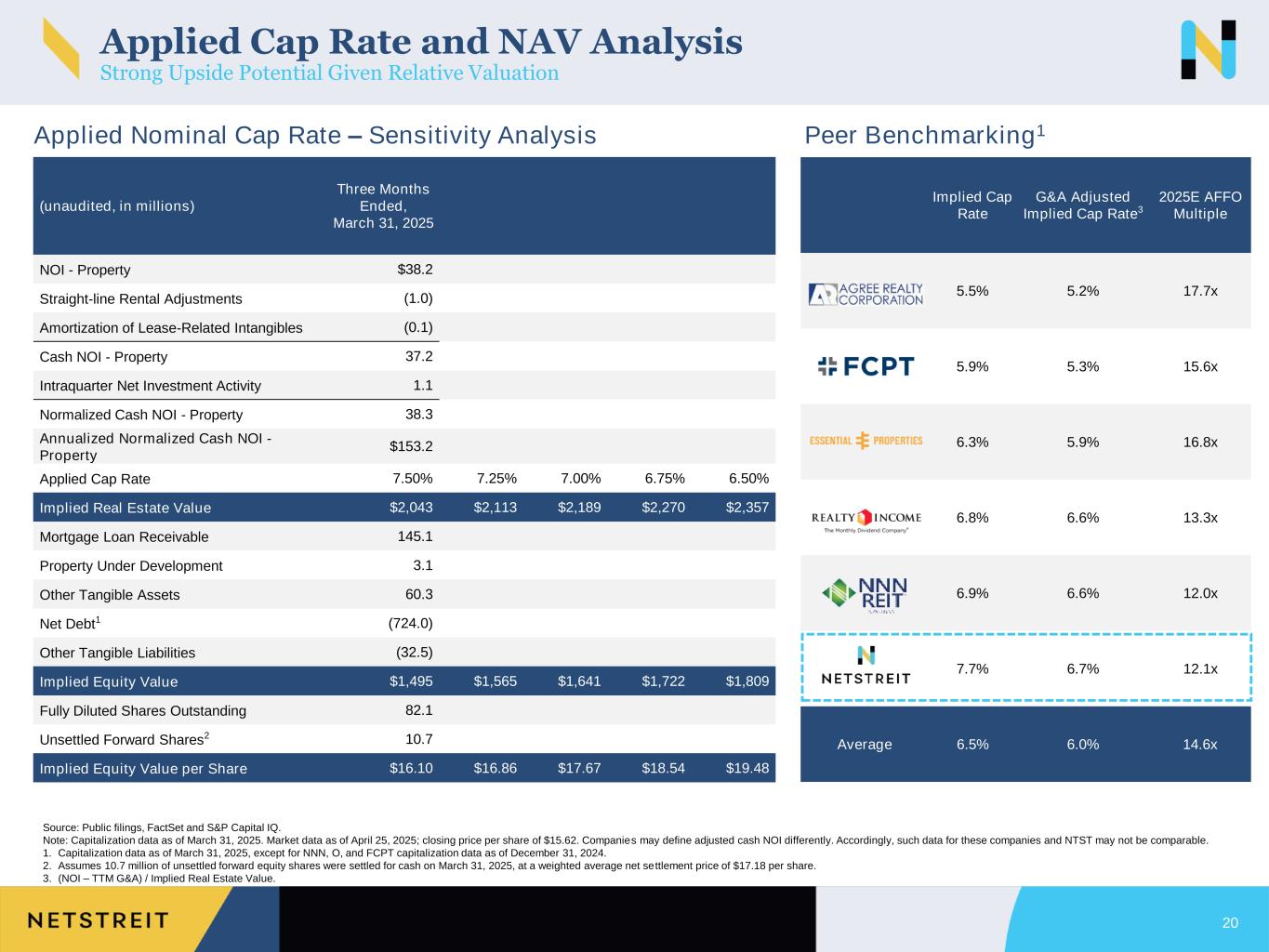
We could extend it again for another six to twelve months without much resistance. As of now, our implied cap rate shows a positive spread compared to our purchasing rates. Currently, our weighted average cost of capital is 120 basis points considering the 7.7% cash yield we achieved in the first quarter, which we believe we can replicate in the second quarter. This gives us a spread of 120 basis points. While we see positive indicators, we’re being cautious and therefore haven't increased our net investment activity guidance, even though historically we could exceed our current performance. There appears to be a value disconnect, and we anticipate positive developments in our story that should drive our shares higher. We're being patient with our cost of capital and look forward to updating everyone on our progress in the next quarter and at upcoming conferences.
Speaker 9
Great. Appreciate the time, guys.
Operator
Our next question is from Wes Golladay with Baird. Please proceed.
Speaker 10
Good morning, everyone. Regarding your comment about potentially ramping up, it seems you have a solid pipeline but need the cost of capital to improve. If you increase your volume, will you still be able to maintain the 7.7% cap rate, or do you think it might drop to the mid to low 7s?
I think if we maintain similar volume to what we achieved in the fourth quarter, we would likely be at a cap rate of around 7.5%. This would reflect a slight decrease, but I believe we have enough options available that the cap rate wouldn’t drop by more than 20 basis points.
Speaker 10
Okay. And then, when you look at your held for sale or your pending disposition pipeline, is that mostly tenants you're looking to pare back exposure to? Do you have any opportunistic sales in there? And would you provide seller financing for any deals?
We have not provided seller financing recently. But when you look at what we're selling, there is one opportunistic sale that I expect to close in the second quarter. And then the rest of what we're looking at selling is going to be Family Dollar, some Dollar General just to reduce that exposure as well as pharmacy.
Speaker 10
Okay. Thank you.
Operator
Our next question is from Ki Bin Kim with Truist Securities. Please proceed.
Speaker 11
Thank you. Good morning. I was curious, if you could comment on new store opening appetite especially from those tenants that might be more potentially exposed to tariffs?
And which stores are opening stores or would we look to acquire some of the stores? Just making sure I understand.
Speaker 11
Just overall kind of more new store opening appetite.
We're noticing that many of our tenants are still in a growth phase. The operators we have are performing well. Some are impacted by tariffs, while others are not. You might have observed a slight slowdown due to the current uncertainties, making it challenging for companies to make decisions. However, the tenants that have been consistently growing over the past year are expected to maintain that growth, and they have confirmed this in their earnings calls.
Speaker 11
Okay. And on the acquisitions this quarter, you were able to achieve a 7.7% yield, which was nice to see. Yeah. I'm sure there's a range of some deals in the 7s and maybe some others in the 8s. I was just curious if you can provide some commentary on the types of assets that you're buying at the higher cap rates and the kind of credit quality? Thank you.
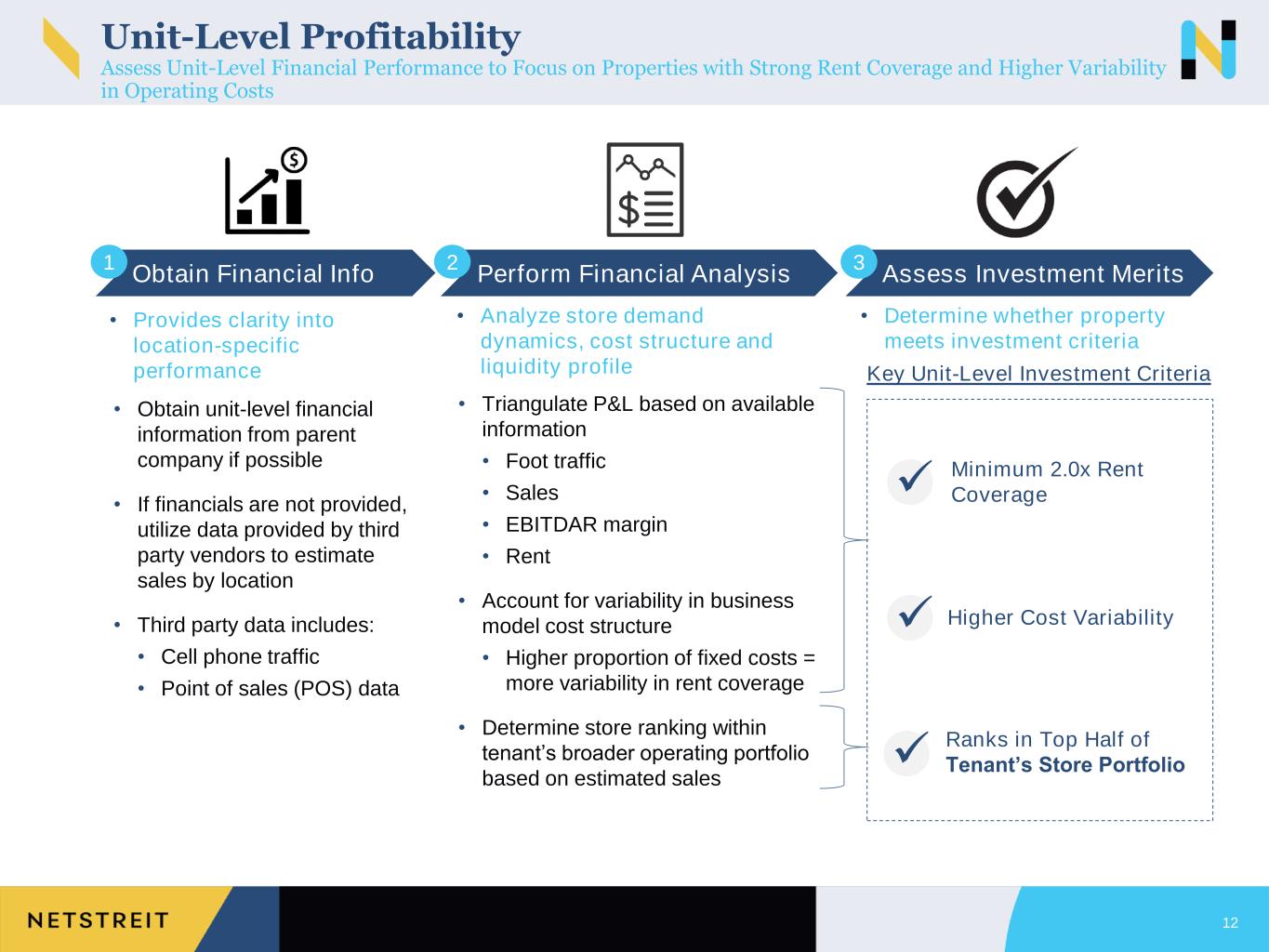
Yeah. Sure. I mean, two-thirds of what we bought was investment grade or investment grade profile, which honestly, we don't really see a big difference between investment grade profile and investment grade. In fact, I'd say the investment grade profile typically has a better balance sheet and stronger financial statements than what you'd see with a BBB company. The range wasn't that wide this quarter. I think you kind of cut the range pretty accurately. The acquisitions that we've acquired at the higher end, there's maybe some C-store sale leasebacks that are in pretty heavy growth mode, but there are larger operators that where we're getting unit level financials that have rent coverage of north of 3.5 times, in some cases north of 4 times. So, very attractive real estate at a replaceable basis. So, we don't really feel like we're taking on much more risk. In fact, I'd say the risk adjusted returns for what we're acquiring at the higher cap rate range is certainly stronger than a lot of what we're seeing on the investment grade side, where we continue to just not see a ton of movement with cap rates for investment grade retailers. Unless you're willing to take on what we call really hidden risk, which is going to be you get more of a shopping center type lease where you've got co-tenancy and you've got use restrictions and things like that, that don't show up for a long time. But when they do show up, they fight pretty hard.
Speaker 11
Okay. Thank you.
Operator
Our next question is from Linda Tsai with Jefferies. Please proceed.
Speaker 12
Hi. Albeit not where you want it to be, your stock has done really well year-to-date. To the extent the environment doesn't get better, how comfortable are you continuing on this path of capital recycling mode with acquisitions funded by dispositions or how do you think about capital allocation over the next 12 months to 18 months to the extent market volatility continues?
Yeah. Sure. It's a good question, Linda. I mean, we think we have a lot of work still to do. We've obviously accomplished a lot here in the last few quarters, but we'd like to get the concentrations inside of what our long-term ranges were that we've told investors for the last several years. We're just kind of expediting that a little bit. And fortunately, I think we're going to continue to be able to make progress on that. And once we've really gotten to our goals, if we're still not trading where we need to be, then I think there's other alternatives for us to explore.
Yeah. And Linda, I'd say, keep in mind that our comfortability in terms of leverage is 4.5 times to 5.5 times. If we hit the high end of our net investment activity guidance, we'd probably end the year right around 5 times. So we can still operate well into next year within our comfortability range that we provided to the company and to the street.
Operator
Our next question is from Daniel Guglielmo with Capital One Securities. Please proceed.
Speaker 13
Hi, everyone. Thank you for taking my questions. I think it was the last call where you all said it seemed harder for private buyers to get bank financing for leases with non-investment grade tenants. Have you seen that continue to play out these last few months or has anything changed there?
Yeah. I don't think there's been much change in the market. I think you've seen some banks willing to lend and some not. We really see that more on the disposition side. When we're looking to sell, we've had to do a little bit more handholding to try to help some buyers source some bank financing. And fortunately, we've been pretty successful at that.
Speaker 13
Okay. Appreciate that color. Thanks. And then as a follow-up, I think you had mentioned it, but the investment grade profile for this quarter's acquisitions was around 66%. Are you expecting kind of that same mix for acquisitions going forward based on the visible pipeline or any changes there?
Yeah. I mean, I think we're just going to chase where we're getting the best risk-adjusted returns. We've had quarters where 100% of what we acquired in the quarter was investment grade. We've had quarters where it was 20% or 30%. And so, we just really aren't as dogmatic as people might think about whether something is a BBB-minus or BB plus or not rated. If we feel like we're doing our own underwriting and if we feel like we're not taking out a lot of risk and we're getting an attractive yield, then those are the types of opportunities that we're chasing.
Speaker 13
Great. Thanks.
Operator
Our next question is from Jana Galan with Bank of America. Please proceed.
Speaker 14
Thank you. Good morning. Following up on that, I just wanted to comment on the team's very impressive credit underwriting. And I was curious, if you could talk to if any criteria has been modified or updated, whether it be on the real estate side or on the tenant credit side.
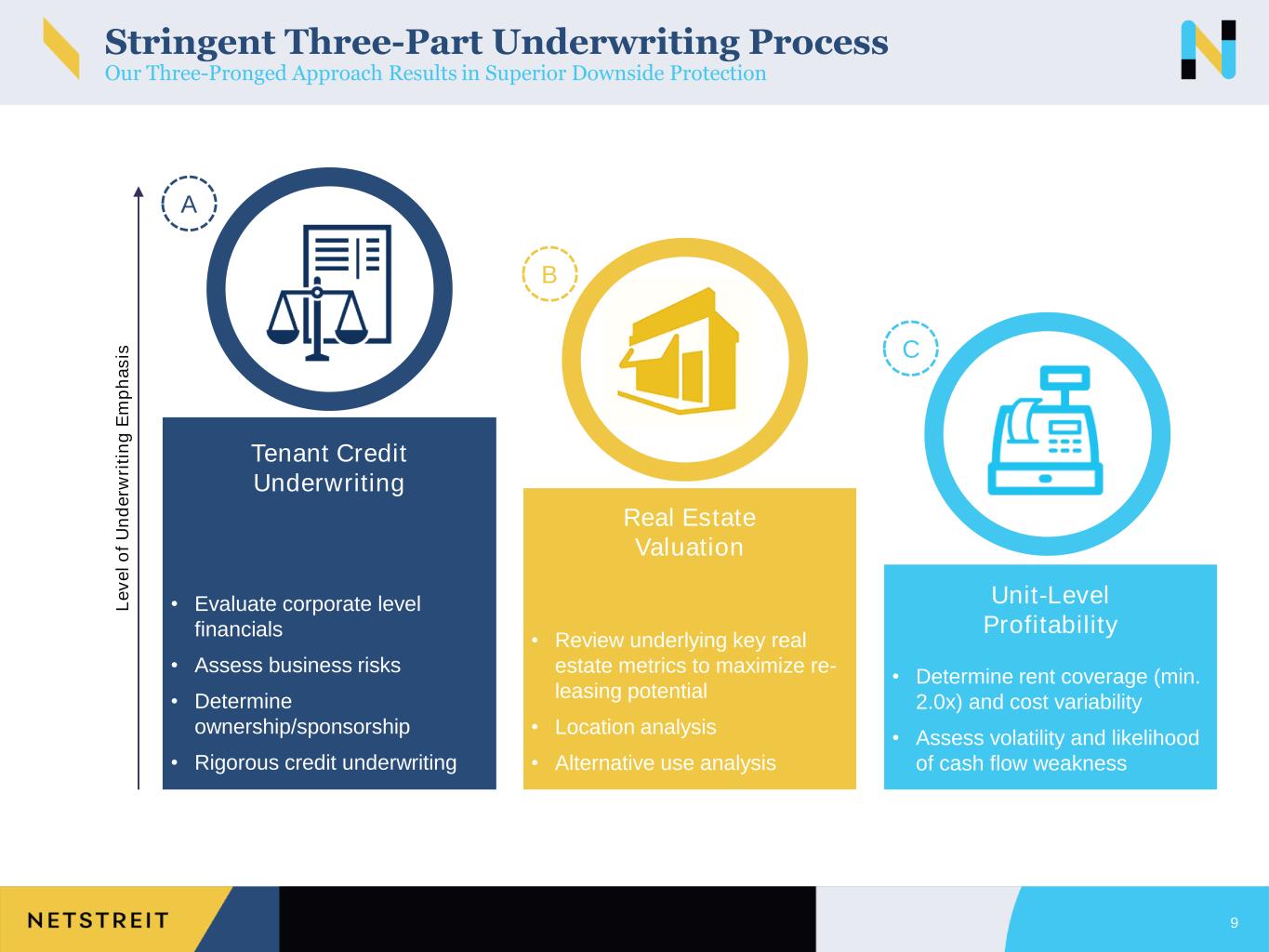
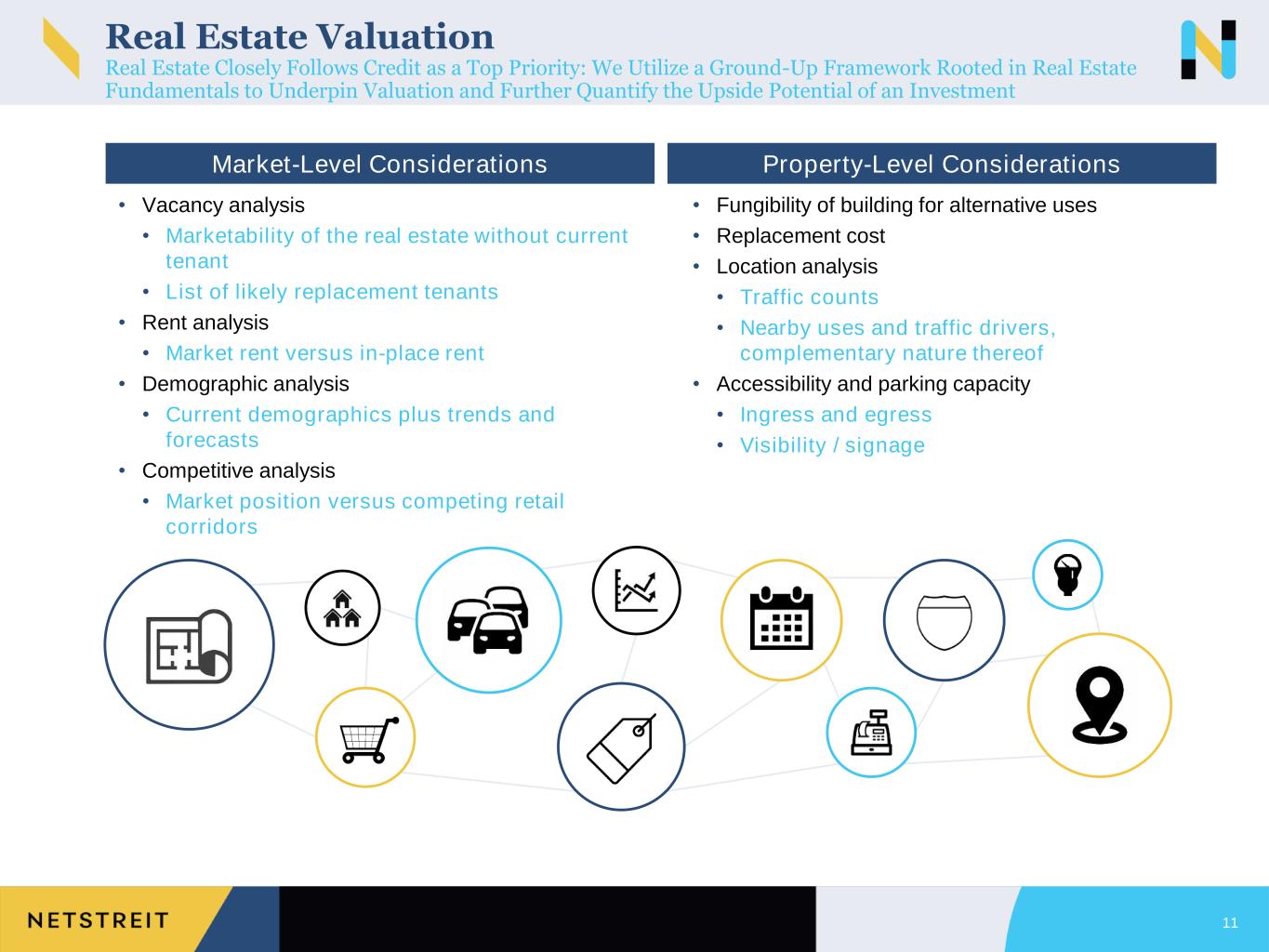
Hey, Jana. It's great to hear from you. There really haven't been any significant changes in our underwriting approach. The filter we use remains the same, but the types of opportunities that are getting through it might have shifted. We haven't seen enough of an increase in cap rates despite rising interest rates in the investment-grade sector, but cap rates have increased for investment-grade profiles and sub-investment-grade tenants. Currently, those are where the more promising opportunities lie. We're primarily focused on the corporate credit, evaluating the cash flow the tenant currently generates, potential future impacts on that flow, their financial obligations, and how tight those obligations are, along with any factors that could change them. Additionally, we assess the locations of our investments to ensure they generate sufficient cash flow that exceeds the rent, allowing us to mitigate risks if there's an issue with the tenant’s corporate credit, whether it's related to their balance sheet or operations, by retaining desirable locations during restructuring. This analysis is also crucial when we approach lease renewals; tenants will likely renew leases that are cash-flow positive and renegotiate or vacate those that aren't, which is something we prefer to avoid. Lastly, if we misjudge the initial two factors, we need to consider the real estate itself—how adaptable it is, the costs of repositioning, and its attractiveness to other retailers for future growth. Overall, we still think in those same three categories; it’s just that we have different opportunities making it through our filter now.
Speaker 14
Is there a maximum box size that you won't exceed? I'm also interested in whether you are generally moving away from larger boxes, especially considering that the disposition of Lowe's was more influenced by capital rate factors.
Yeah. I wouldn't say much is changing there, but we are much more cautious if the box is bigger, especially like a Lowe's. We don't want to take back many Big Box assets, they're just going to be very difficult to reposition. There's only four or five operators that could step into a Lowe's without us having to spend the money to split it up into three or four tenants and that's costly and you may be able to increase the rent, but it's going to cost you so much in CapEx that it's really not worth it. And so, our strong preference is to focus on the smaller fungible boxes. We will have a handful of larger boxes, but we have to be very sure about our underwriting as it relates to the corporate credit and the unit level profitability.
Operator
Our next question is from Upal Rana with KeyBanc Capital Markets. Please proceed.
Speaker 15
Great. Thank you. I was wondering, have you heard anything from your tenants regarding tariffs or any potential impacts to them? Would tariffs potentially add any new tenants to your tenant credit watch list?
Tariffs have not had a significant impact. It's been an interesting situation. Tenants are trying to understand the implications because the exemptions regarding automobiles have changed recently. This uncertainty makes it challenging for them to make decisions and may slow their growth. Some companies might find it hard to make hiring choices, adding confusion for many. We have thoroughly reviewed our entire portfolio to assess the potential negative effects of tariffs and where our tenants source their goods. This applies to services as much as it does to retail selling. The ease of switching suppliers will also vary. We anticipate fluctuations, and while many focus on the immediate effects of tariffs, it's wise to consider the longer-term consequences as the situation evolves. We could experience a slowdown, but we see this as an opportunity; our portfolio performs well during downturns. For instance, we managed to collect all of our rent during the COVID period when others struggled. We have minimal discretionary elements in our portfolio, and we are considering both the immediate and longer-term implications of what might occur.
Speaker 15
Okay, great. That was helpful. And for my last question, regarding the acquisitions you made in the first quarter, did these involve any new relationships or were they all with existing tenants?
I believe we added three new tenants in the quarter, if I recall.
Operator
Our next question is from Jay Kornreich with Wedbush Securities. Please proceed.
Speaker 16
Hey. Thanks. Good morning. You mentioned one new addition into the top 20 tenant list. And I'm just curious if you aren't able to get an improved cost of capital to acquire more, do you see any growing opportunity to get additional new tenants into that top 20, either from growing current smaller exposures or just totally new tenants?
Yes, definitely. The top 20 tenants in Gerber Collision are expanding, and we have more potential additions in the pipeline. We also have several tenants in our top 40 that we aim to grow with, alongside exploring new opportunities. So, we are very much focused on enhancing the diversification of our portfolio as we move into 2025 and 2026, and this is an effective way to achieve that.
Speaker 16
Thank you. I have a follow-up regarding the transaction market. Given the current economic uncertainty, are you noticing increased interest from competitors in safer investment grade assets, which you usually invest in? What do you anticipate during these uncertain economic times? Also, are you seeing more competition in that investment grade asset class?
Yeah. Difficult to say, honestly. We haven't really seen a lot more competition show up at this point. But yeah, I mean, I think if we end up in a more sustained uncertain environment and you really start to see the economy slow, I certainly would expect to see that.
Operator
There are no further questions at this time. I would like to turn the floor back over to Mark Manheimer for closing remarks.
Well, thank you, everybody, for joining today and for your interest in NETSTREIT. We look forward to seeing many of you at the upcoming conferences.
Operator
Thank you. This will conclude today's conference. You may disconnect your lines at this time and thank you for your participation.