Operator
Thank you for standing by. My name is Eric, and I will be your conference operator today. At this time, I would like to welcome everyone to the NorthWestern Energy First Quarter 2025 Financial Results Webinar. All lines have been placed on mute to prevent any background noise. After the speakers' remarks, there will be a question-and-answer session. I would now to turn the call over to Travis Meyer. Please go ahead.
Thank you, Eric. Good afternoon, and thank you for joining NorthWestern Energy Group's financial results webcast for the quarter ended March 31, 2025. My name is Travis Meyer, and I'm the Director of Corporate Development and Investor Relations Officer for NorthWestern. Joining us on the call today are Brian Bird, President and Chief Executive Officer; and Crystal Lail, Chief Financial Officer. Brian and Crystal will be walking us through the results and providing a little more color on a very solid quarter. NorthWestern results have been released, and the release is available on our website at northwesternenergy.com. We also released our 10-Q premarket this morning. Please note that the company's press release, this presentation, comments by presenters, and responses to your questions may contain forward-looking statements. As such, I'll direct you to the disclosures contained in our SEC filings and the safe harbor provisions included on the second slide of this presentation. Also note that this presentation includes non-GAAP financial measures. Please see the non-GAAP disclosures, definitions, and reconciliations included in the presentation. The webcast is being recorded. The archived replay will be available shortly after the event and remain active for one year. Please visit the Financial Results section of our website to access the replay. With that, I'll hand it over to Brian Bird for his opening remarks.
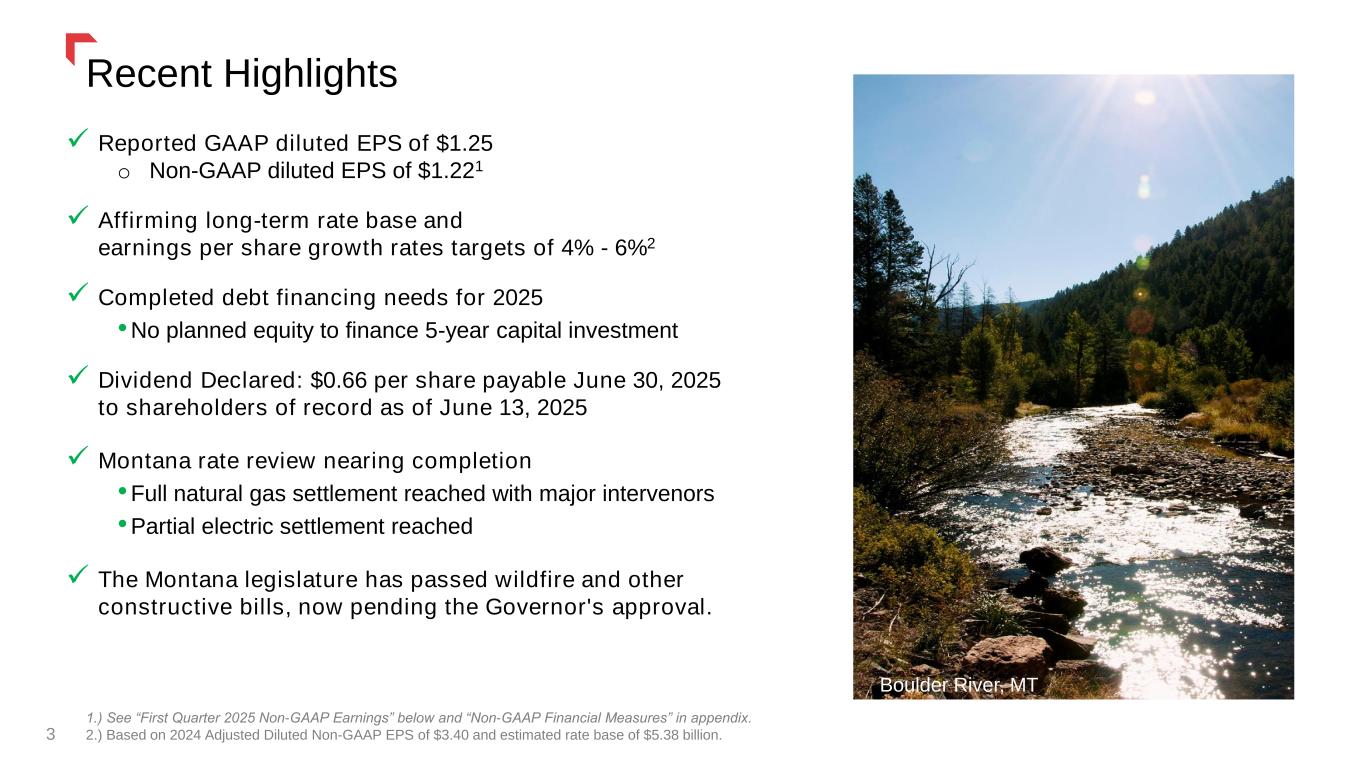
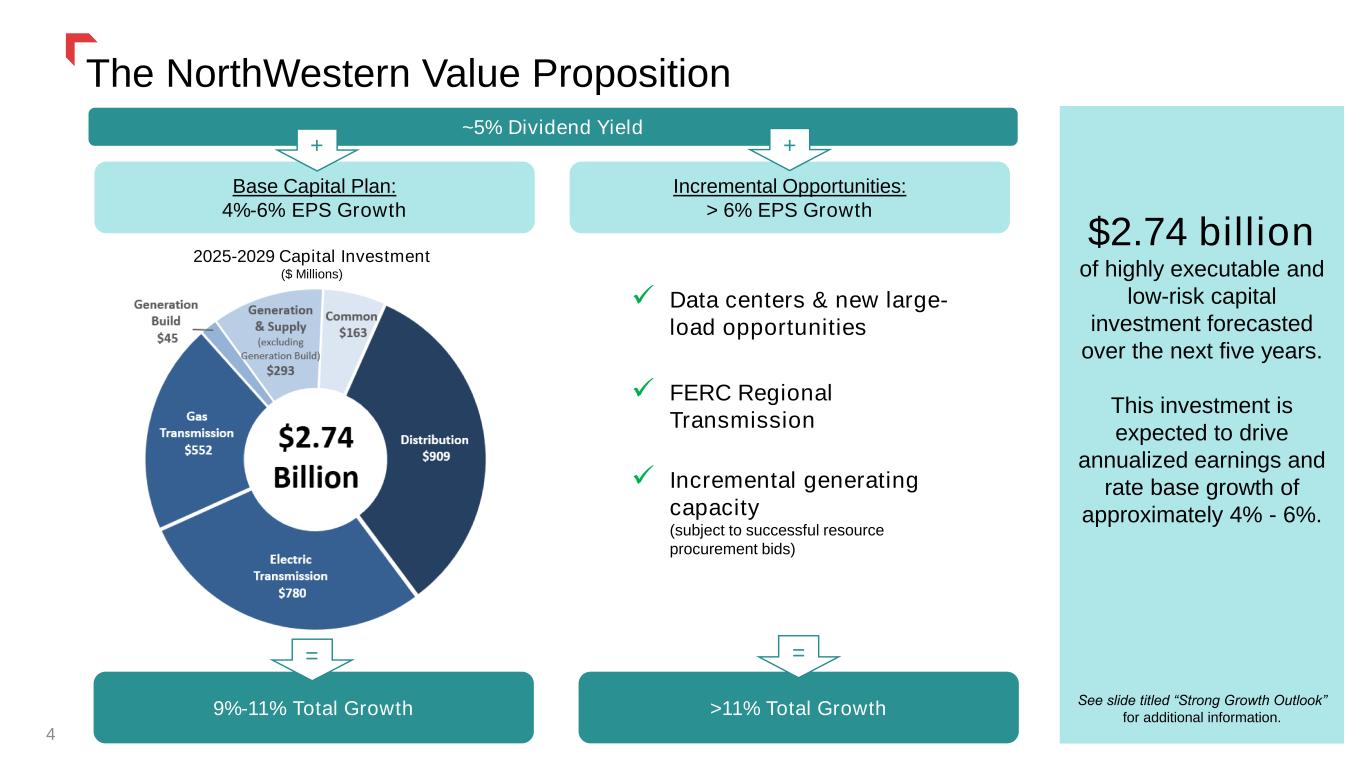
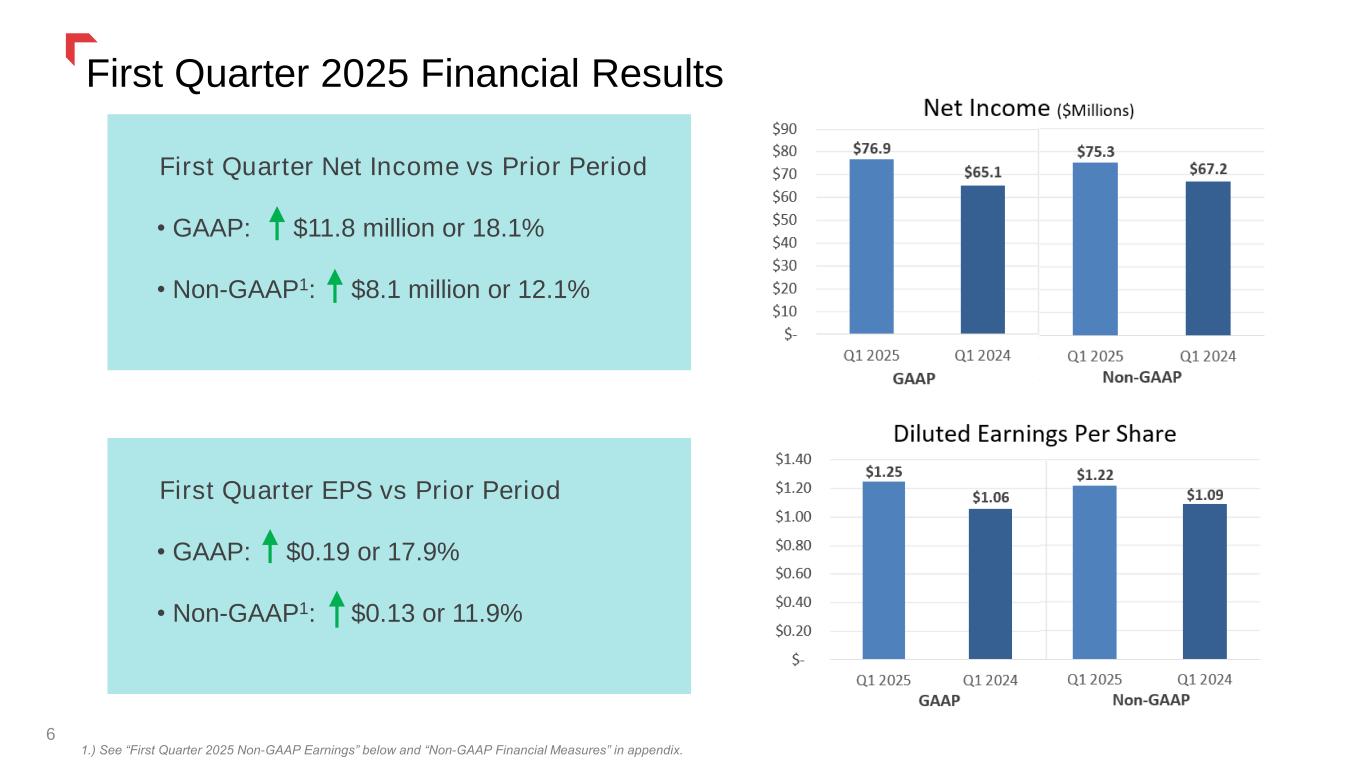
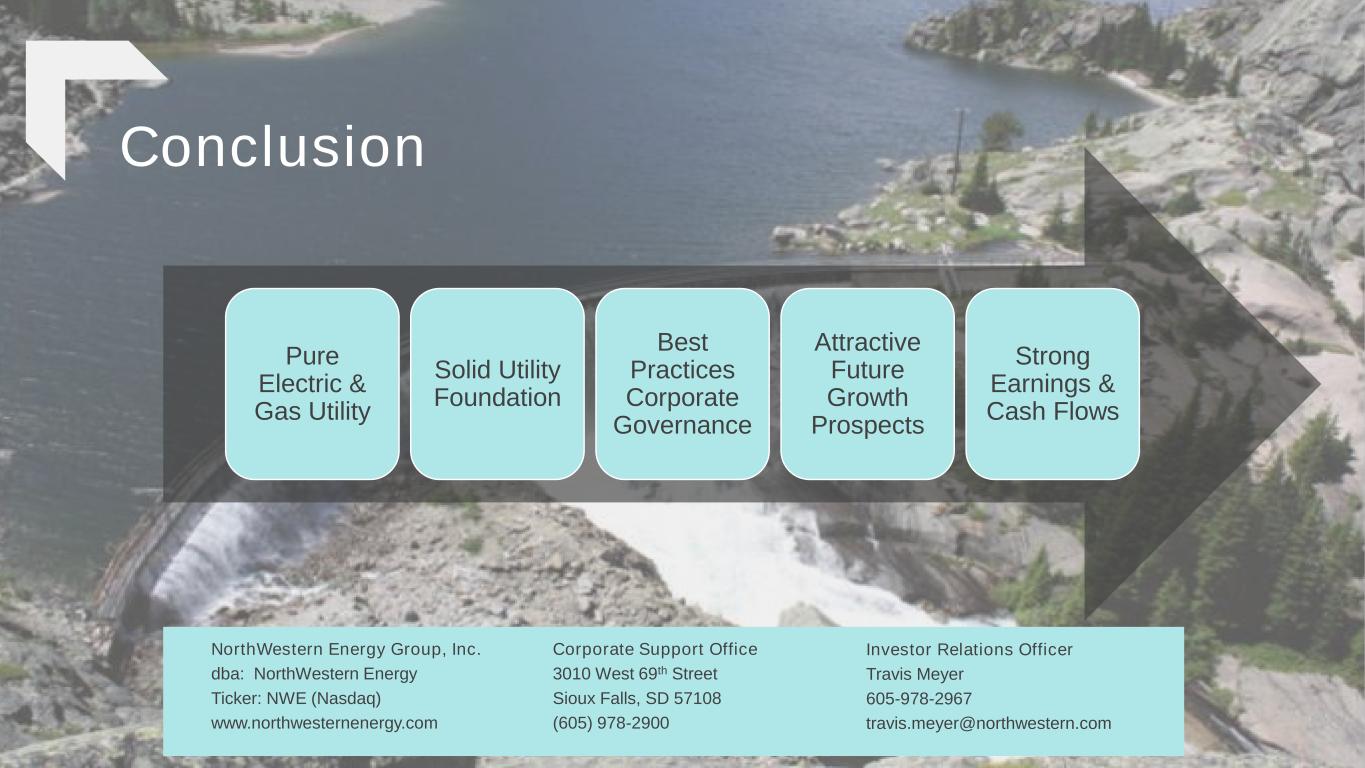
Thanks, Travis. The recent highlights for the quarter reported GAAP diluted EPS of $1.25 and non-GAAP diluted EPS of $1.22. We are affirming our long-term rate base and earnings per share growth rate targets of 4% to 6%. We've completed our debt financing needs for 2025. And again, we'll stress, we have no planned equity to finance our current 5-year capital investment. From a dividend declaration standpoint, we declared a $0.66 per share payable on June 30, 2025, to shareholders of record as of June 13, 2025. The Montana rate review is nearing completion. We have a full natural gas settlement reached with major intervenors and a partial electric settlement reached as well. And I think you know, the hearing starts on June 9. And lastly, the Montana legislature has passed wildfire and other constructive bills now pending the governor's approval. As we start the presentation today, before we get into the quarterly results, just to remind folks of the value proposition for NorthWestern. Starting with a 5% dividend yield is very, very attractive, as you know. Add to that a 4% to 6% EPS growth, which creates a great investment opportunity over the next 5 years across our total business and provides a 9% to 11% total growth profile. We do believe there are opportunities with data centers and new large load opportunities to potentially achieve greater than 6% EPS growth. In addition to that, there's FERC regional transmission and incremental generating capacity associated with meeting new large load opportunities, which could result in greater than 11% total growth returns. And with that, I am going to pass it over to Crystal to talk about the first quarter.
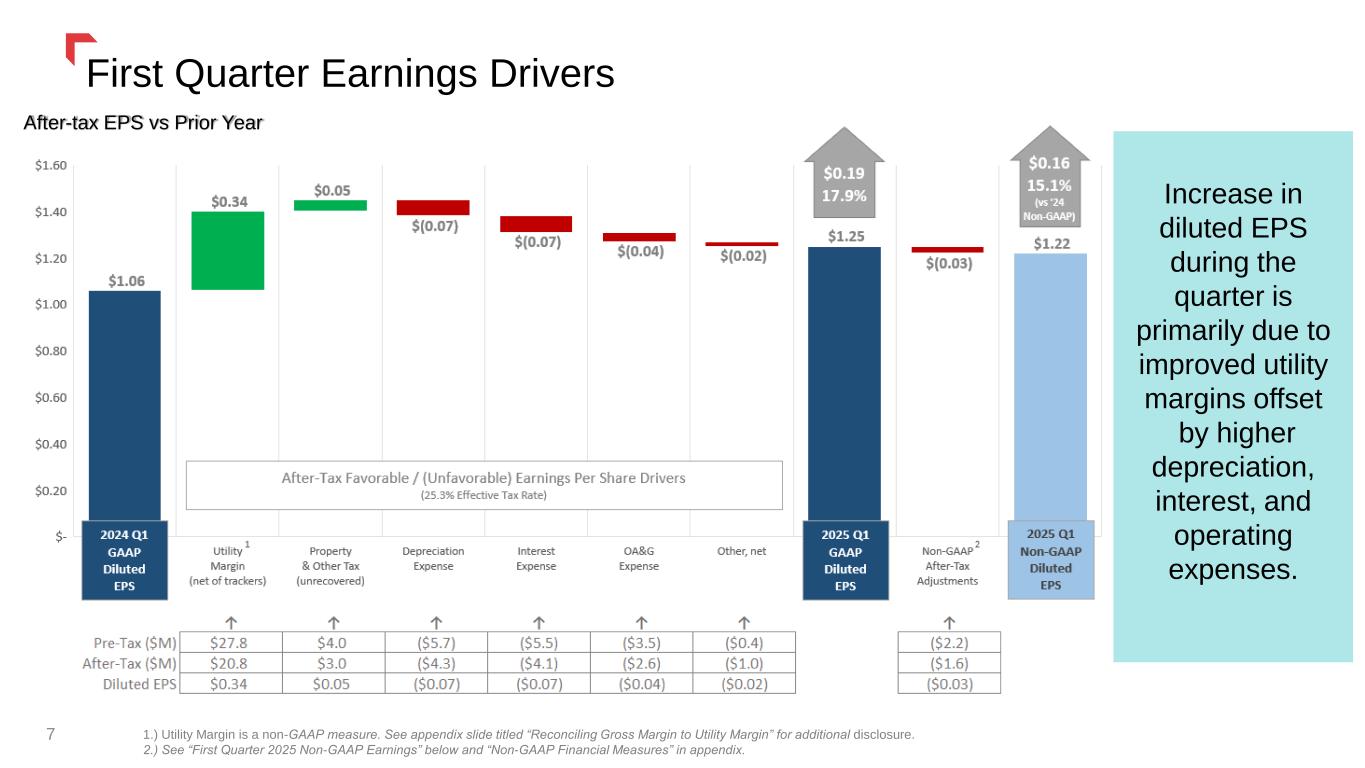
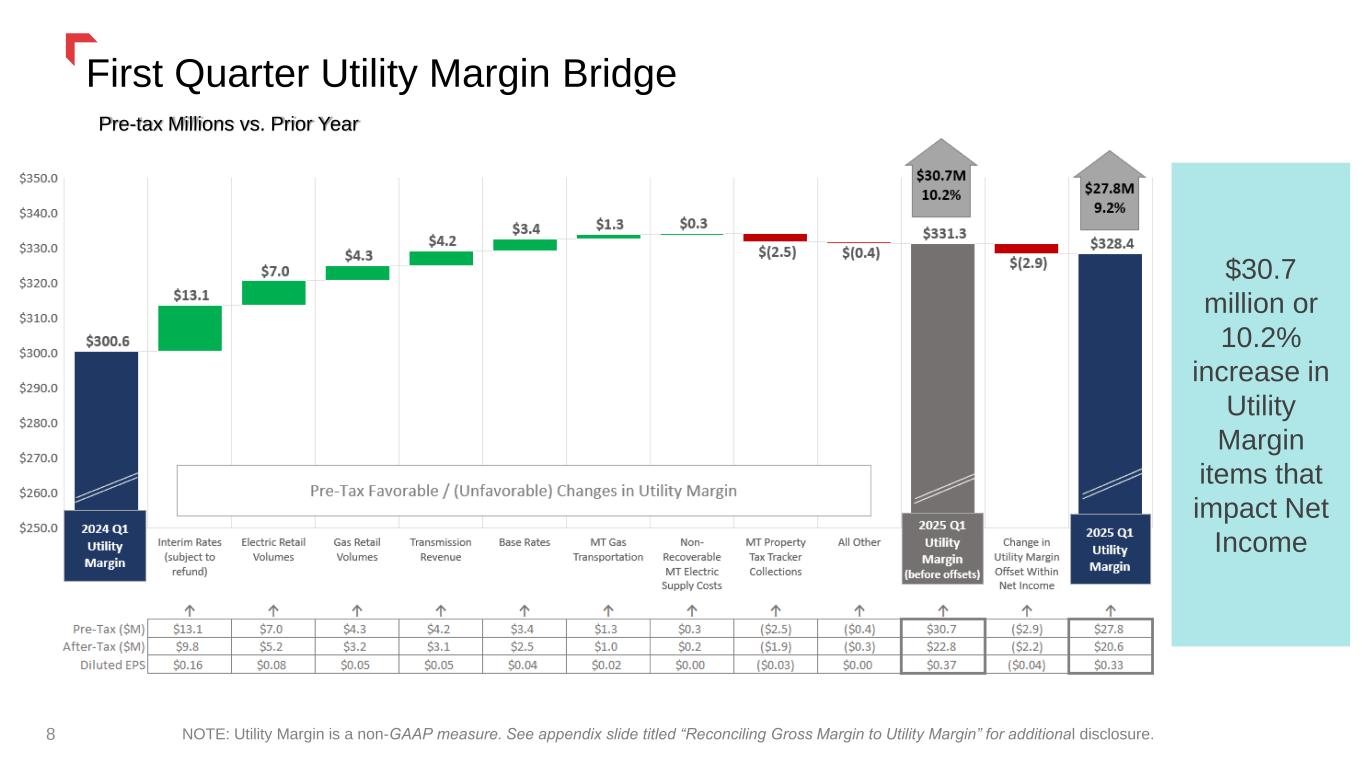
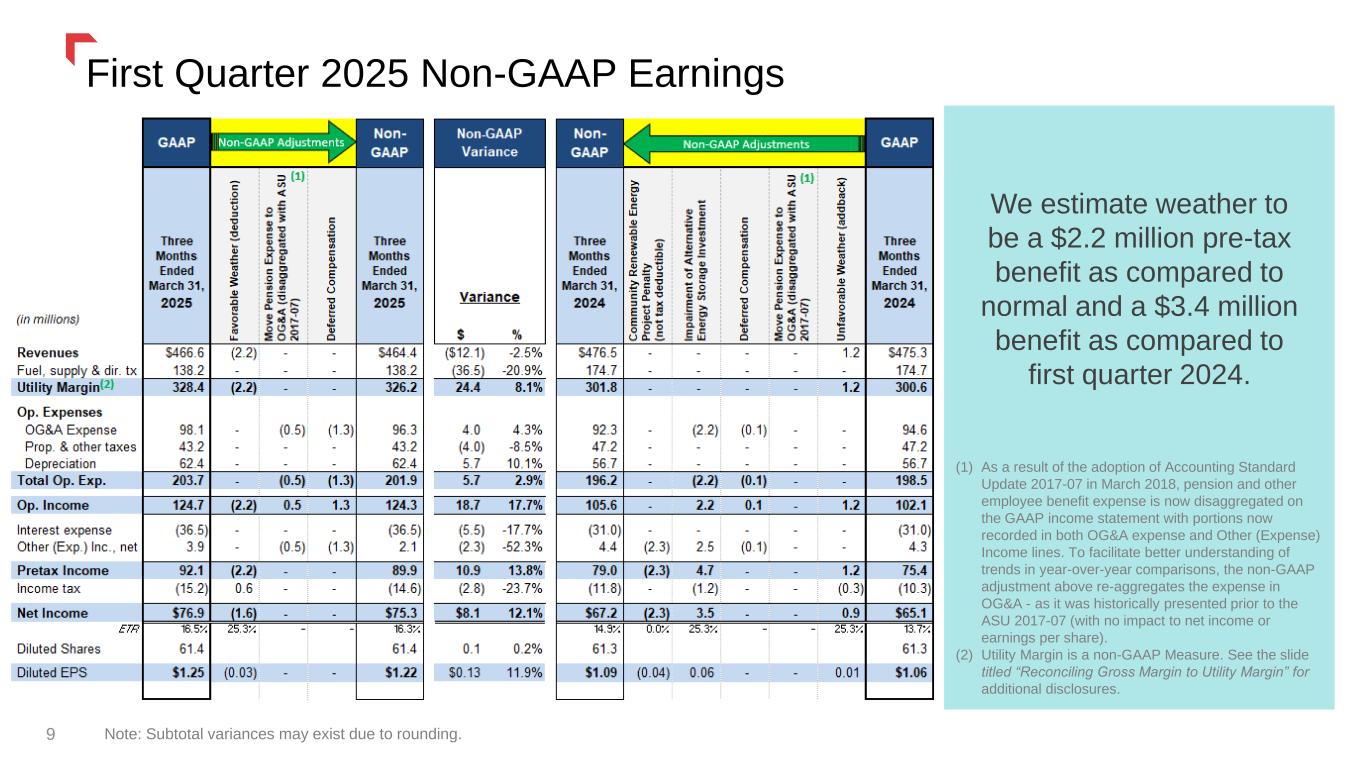
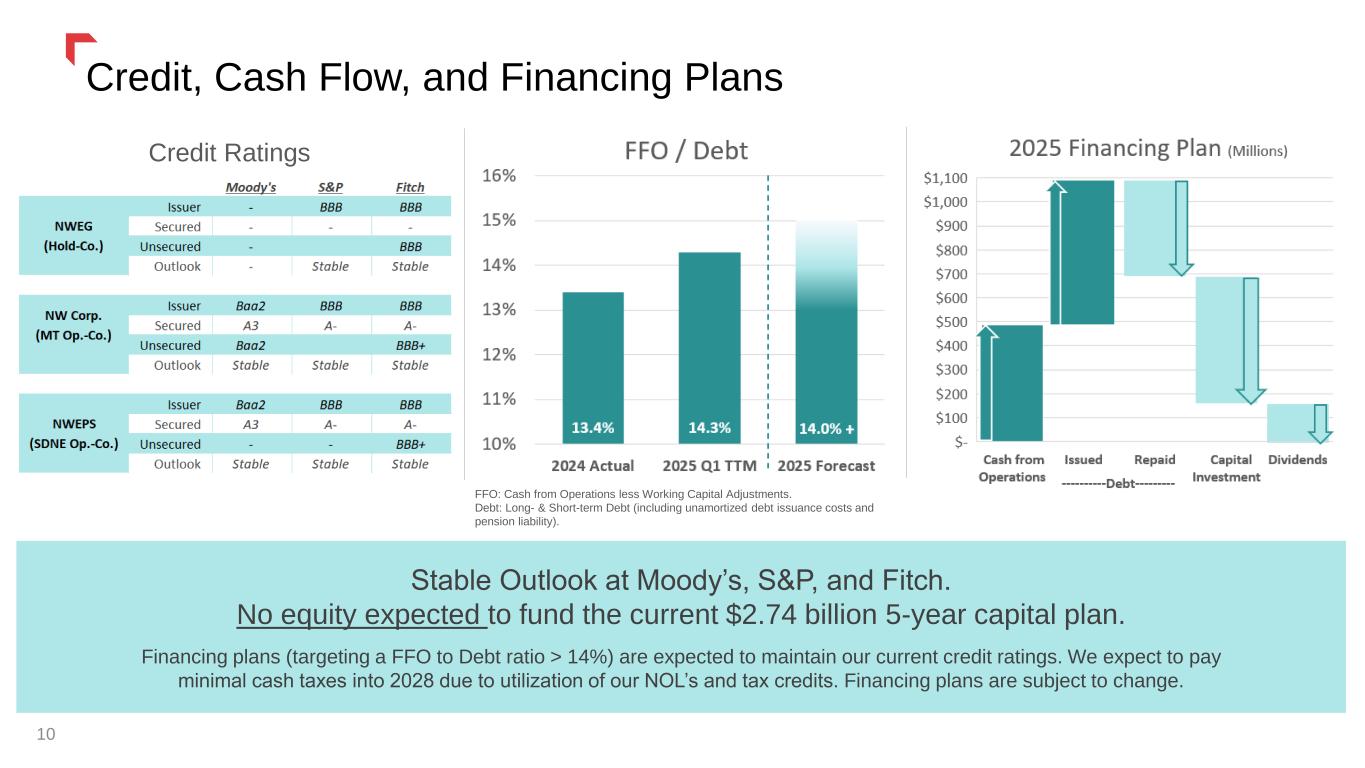
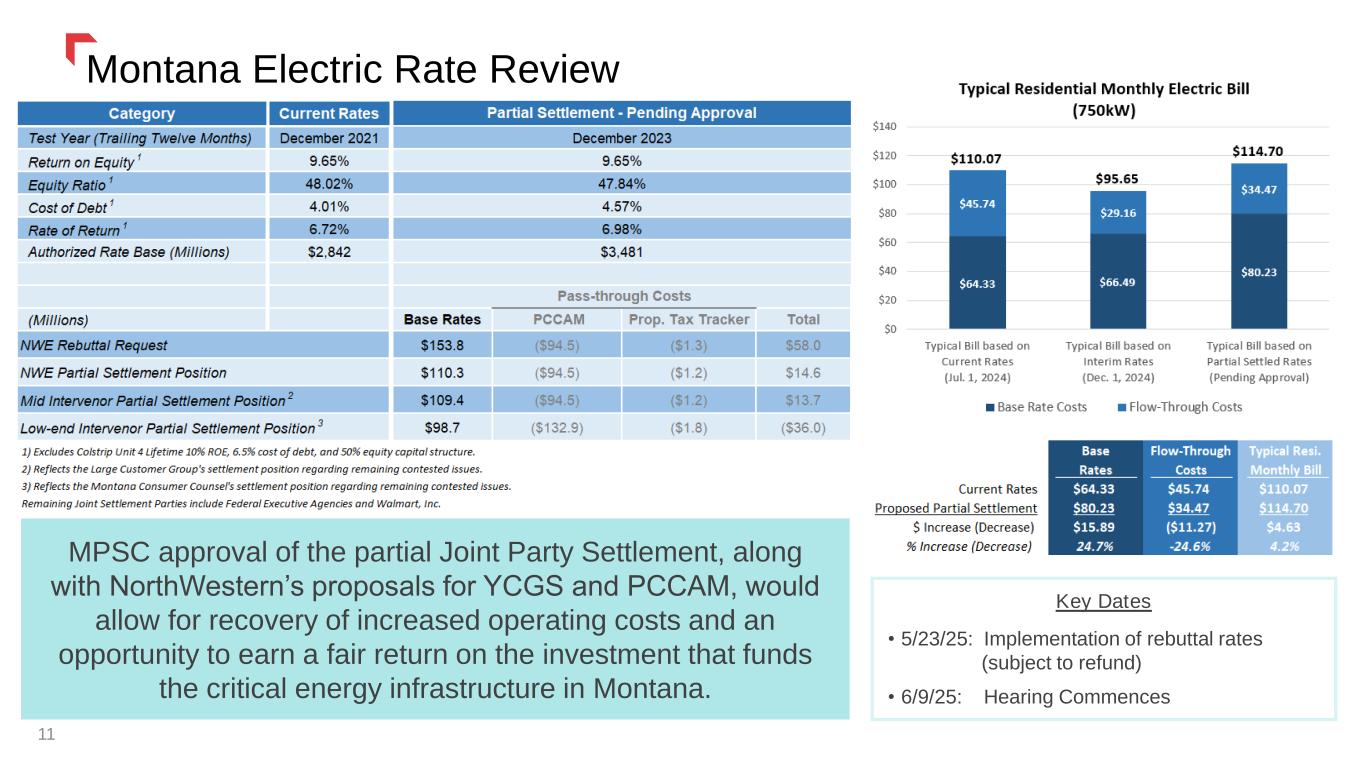
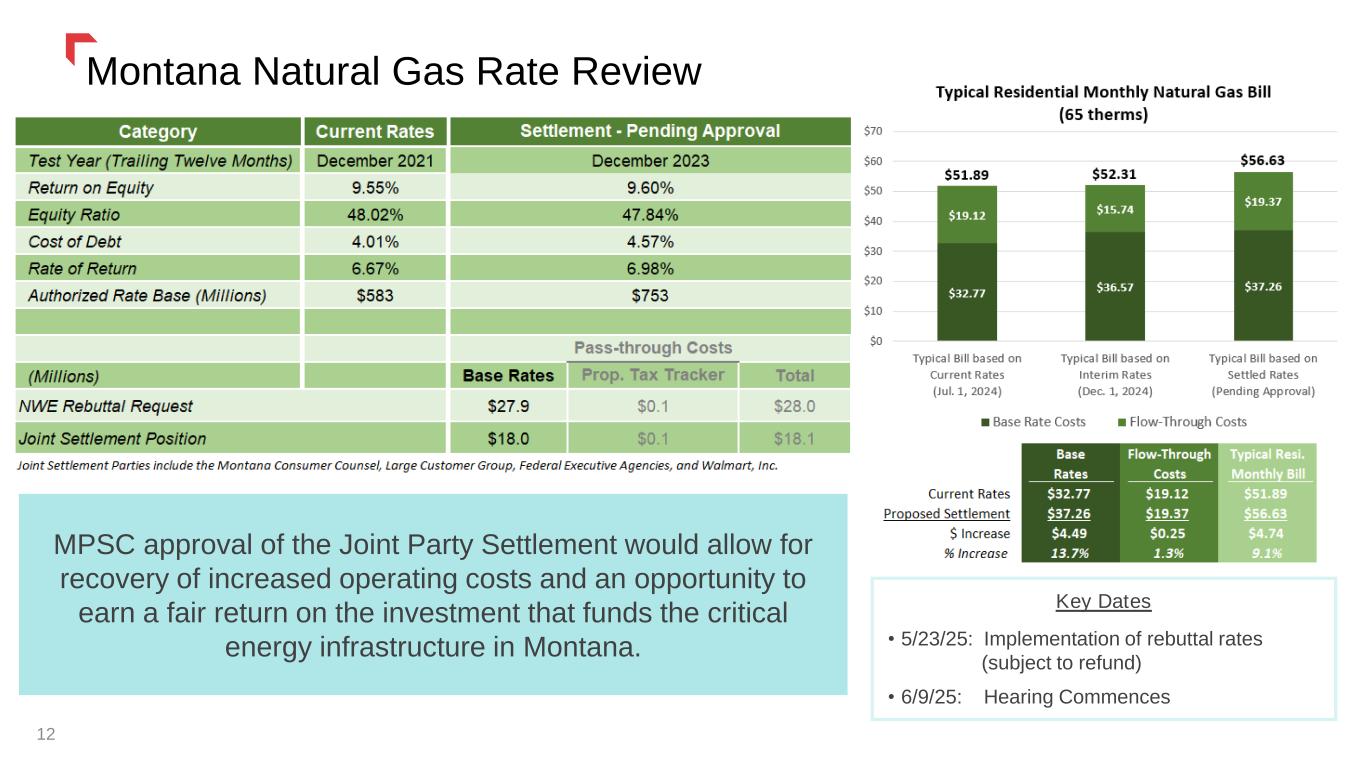
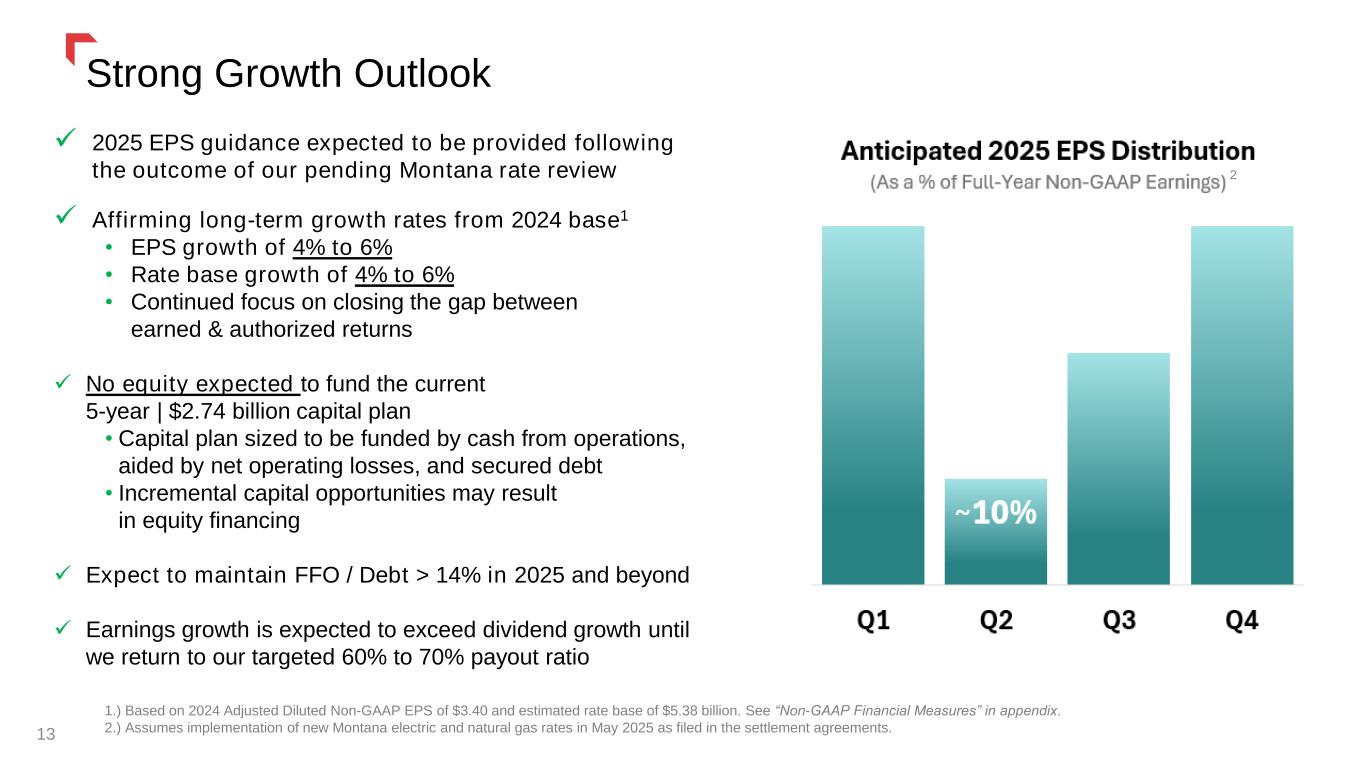
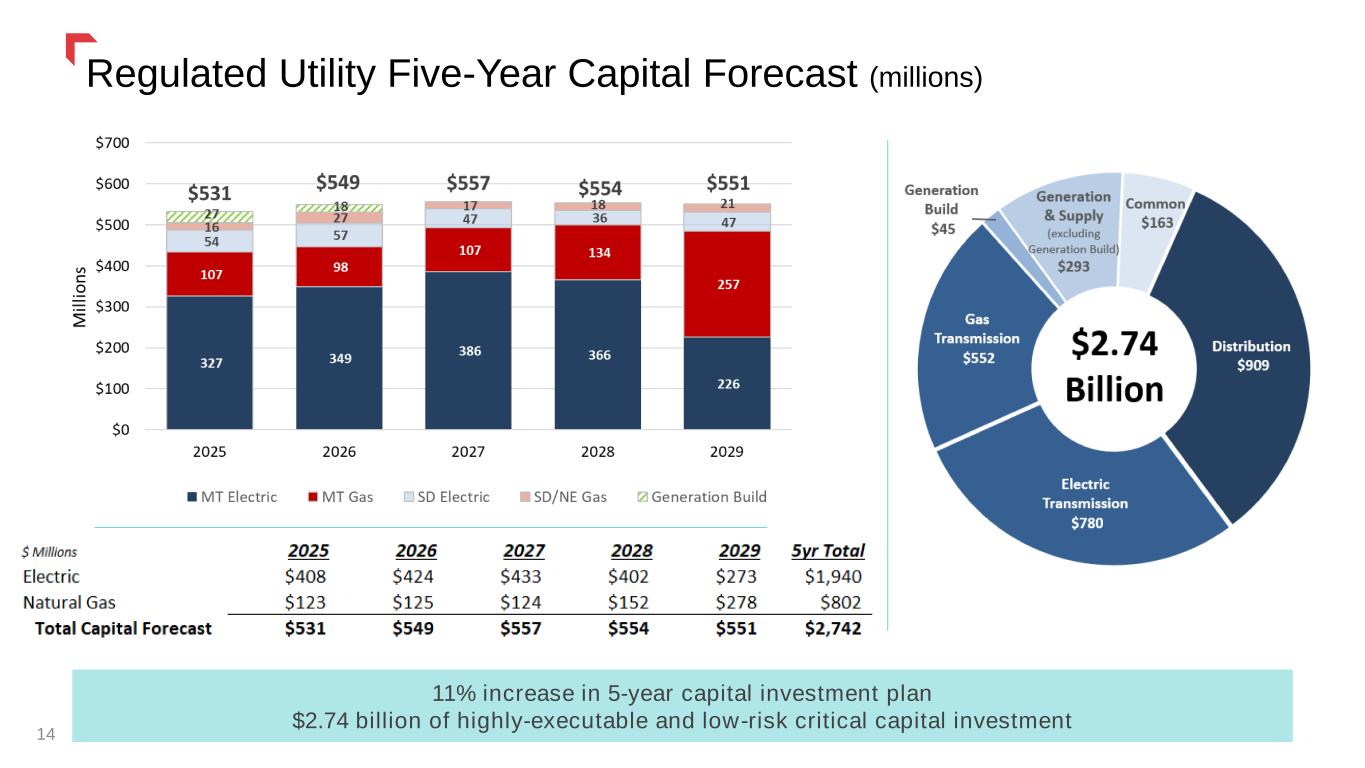
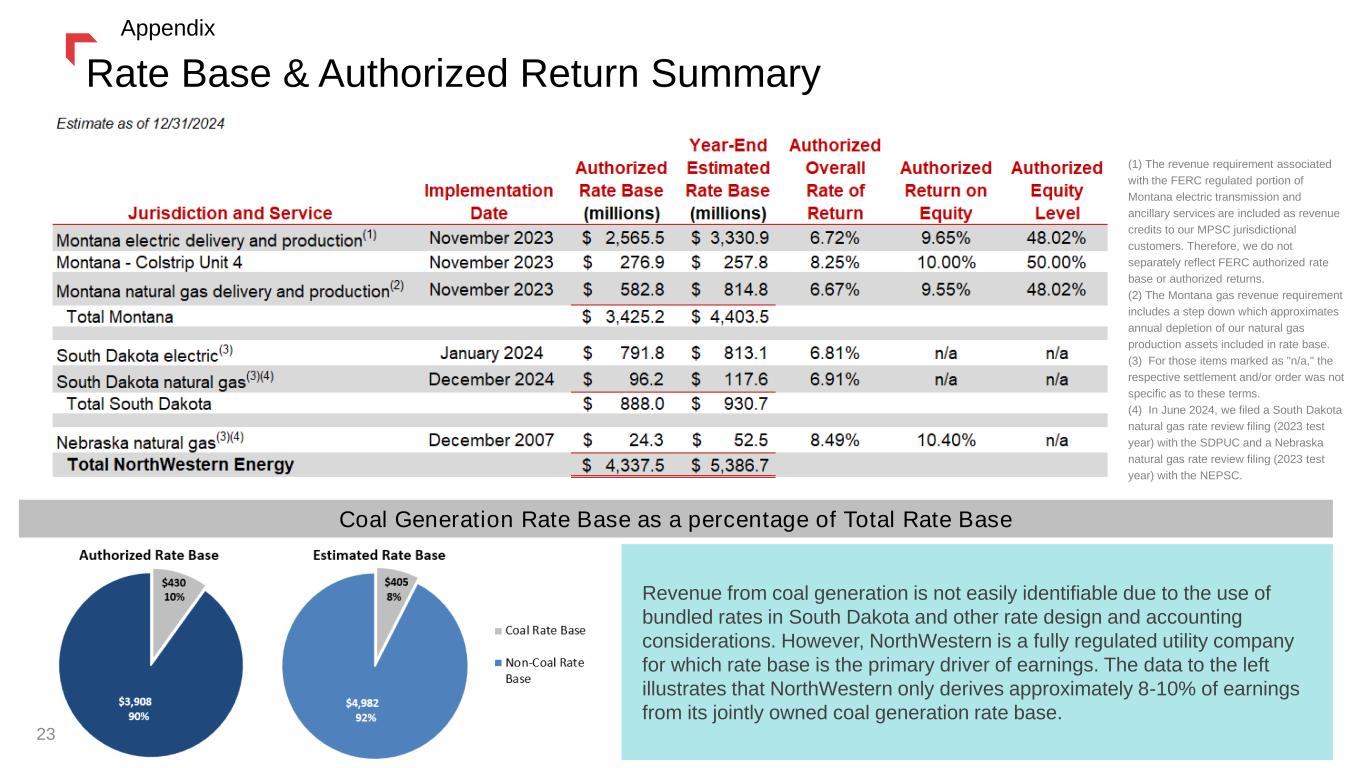
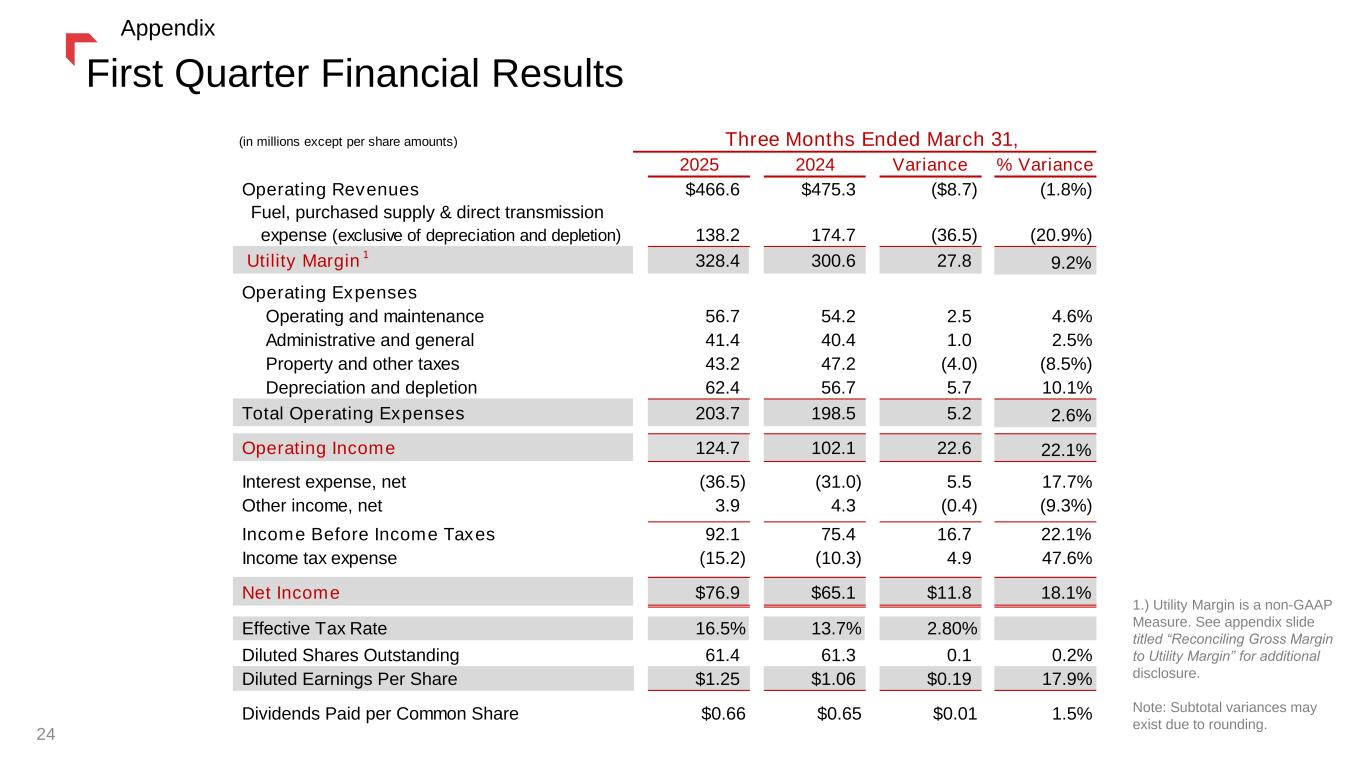
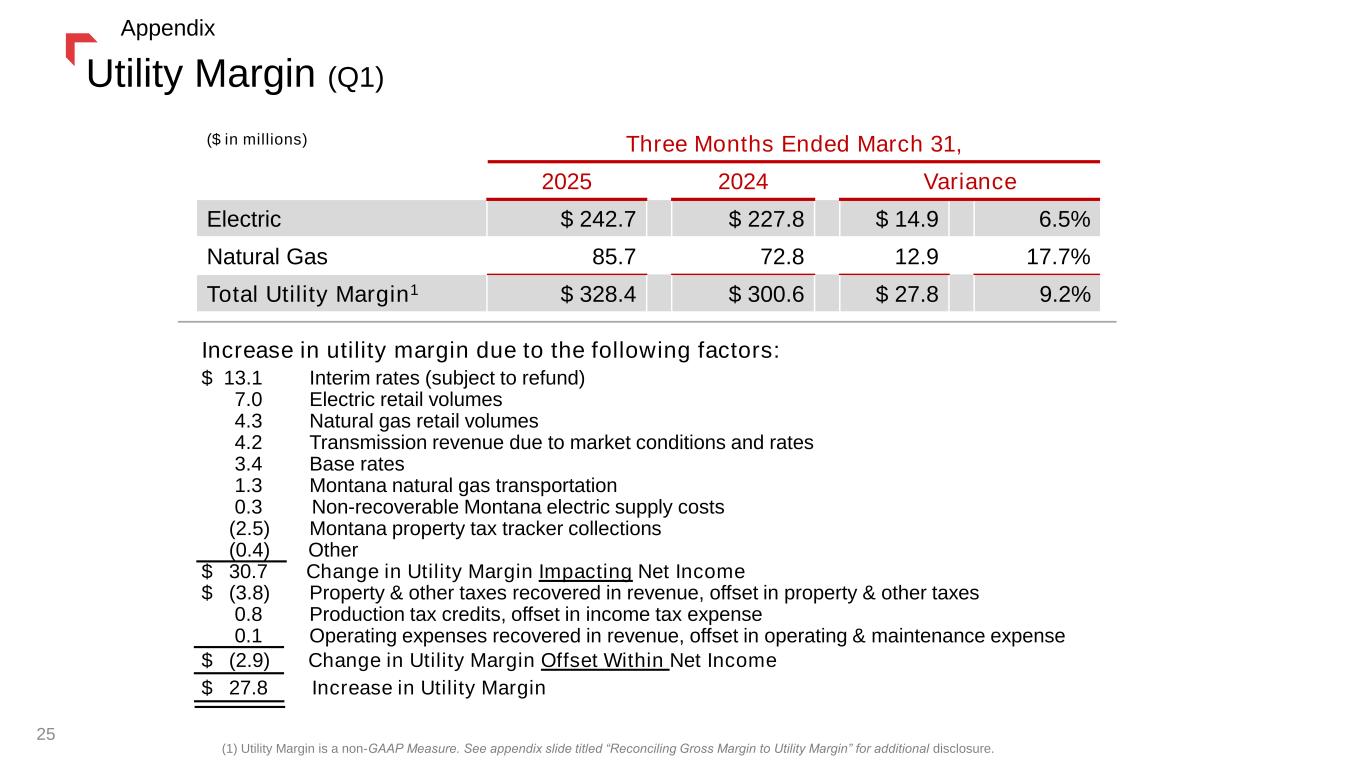
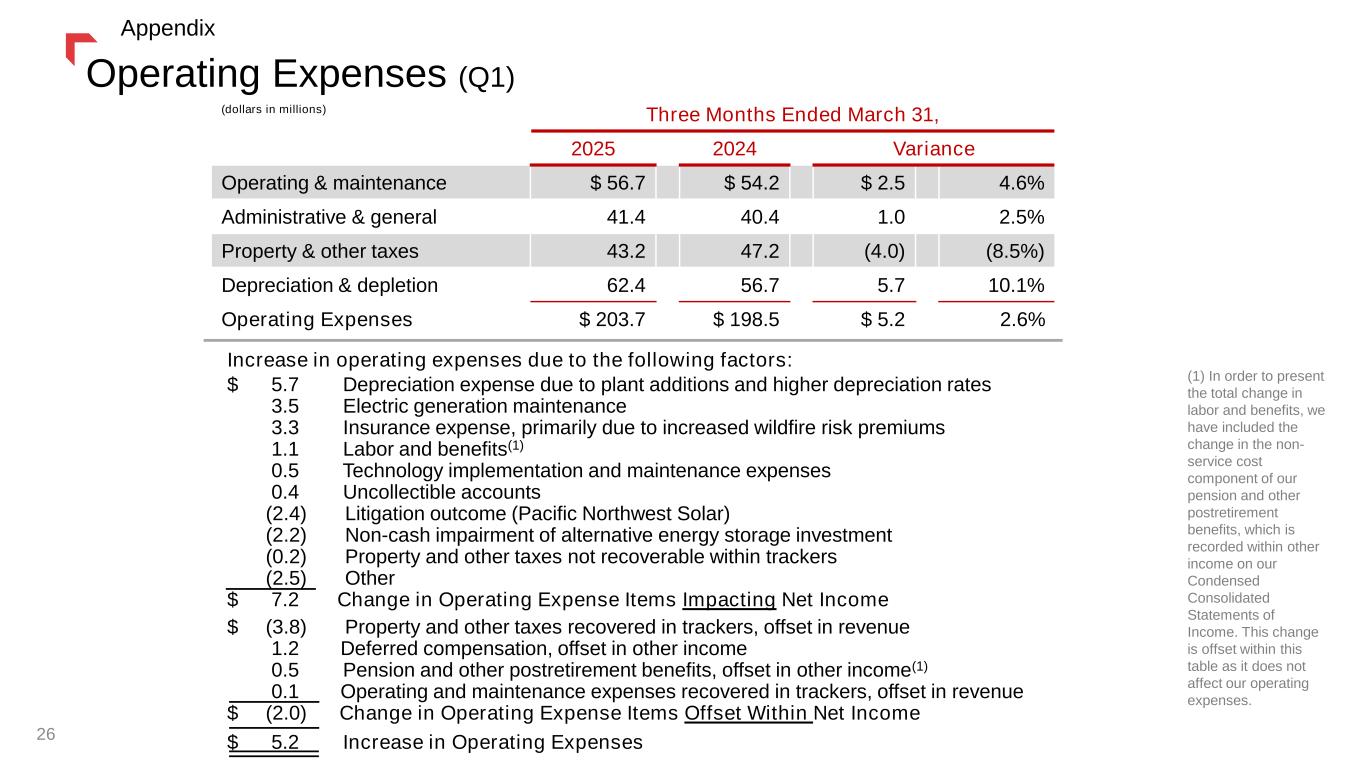
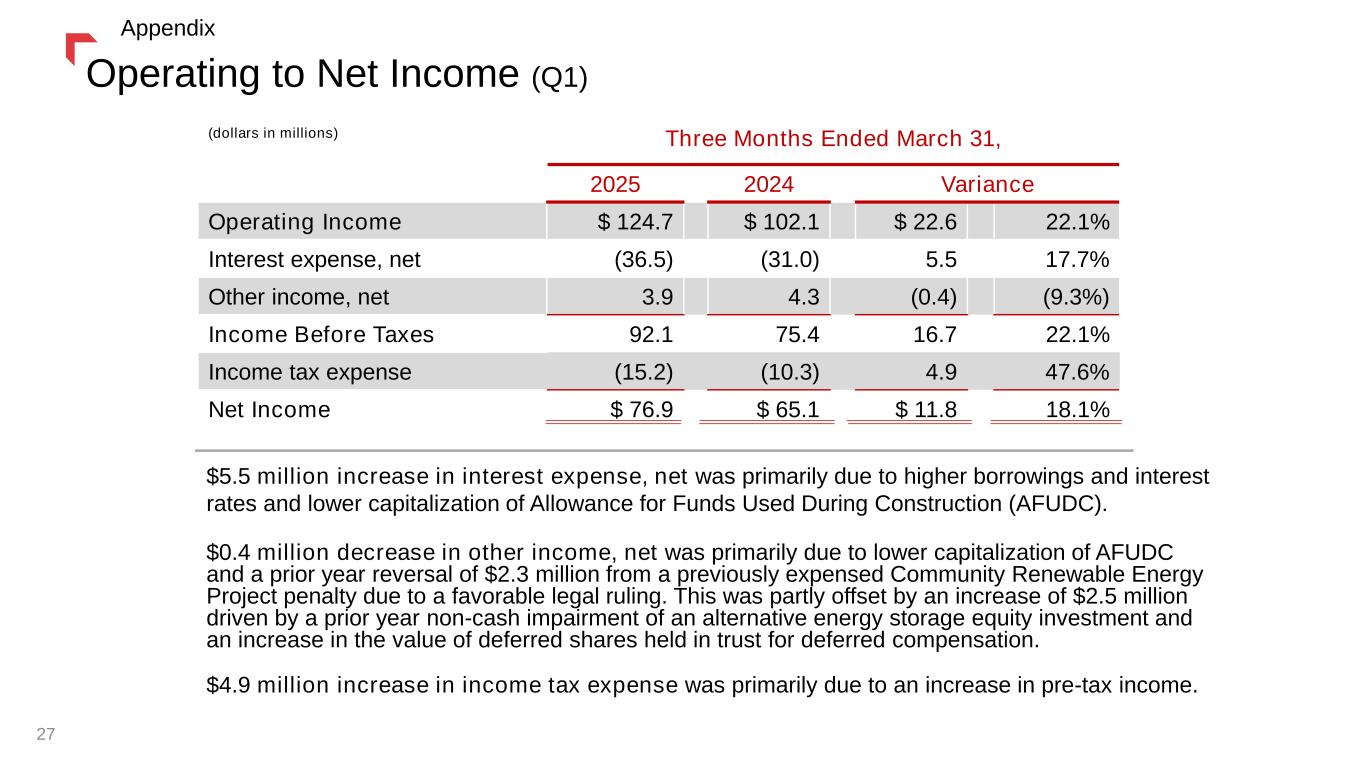
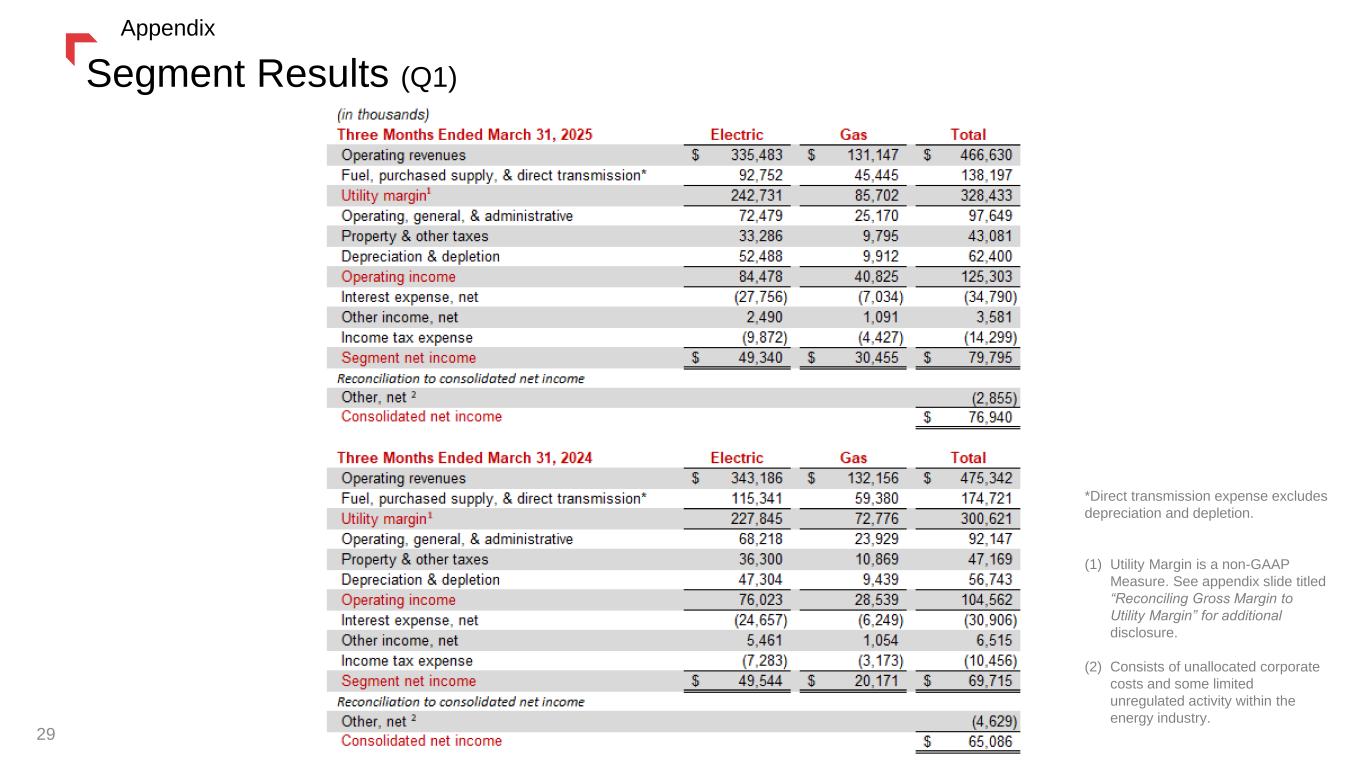
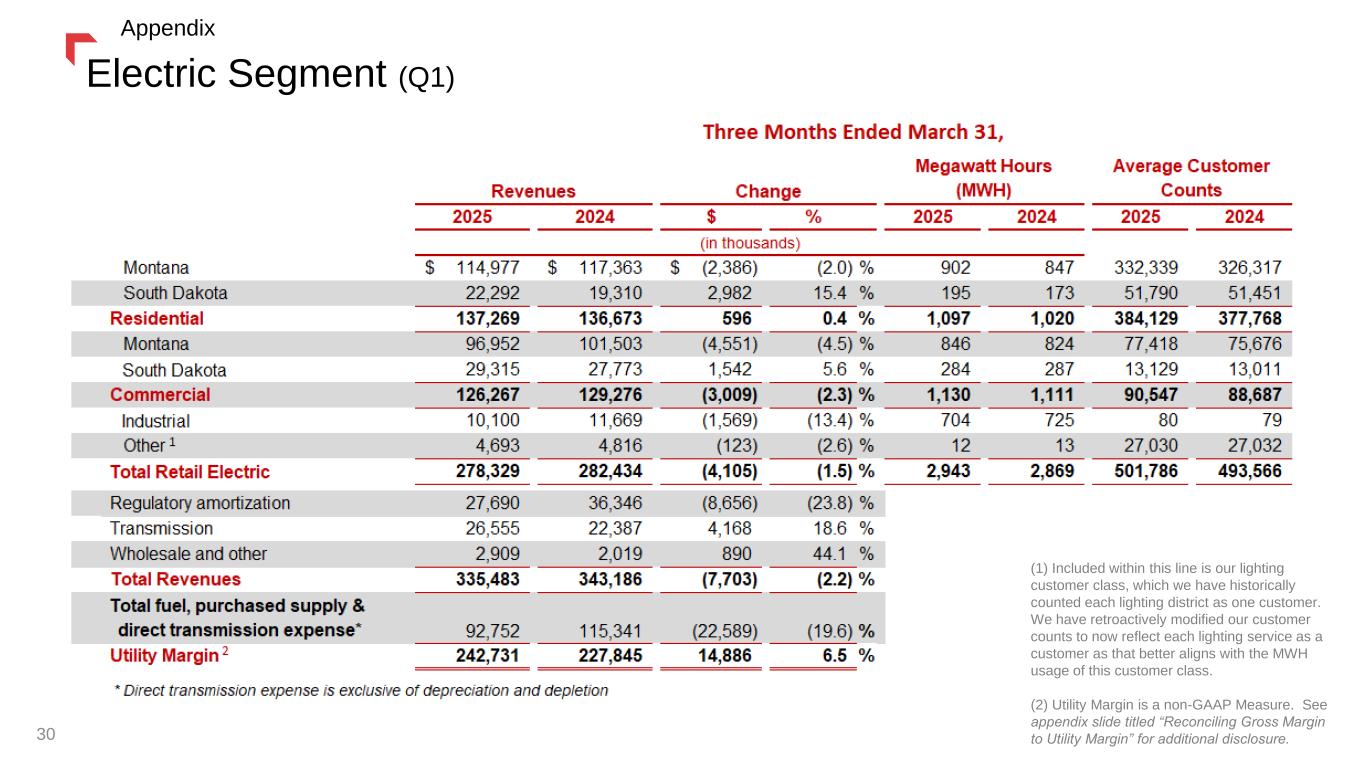
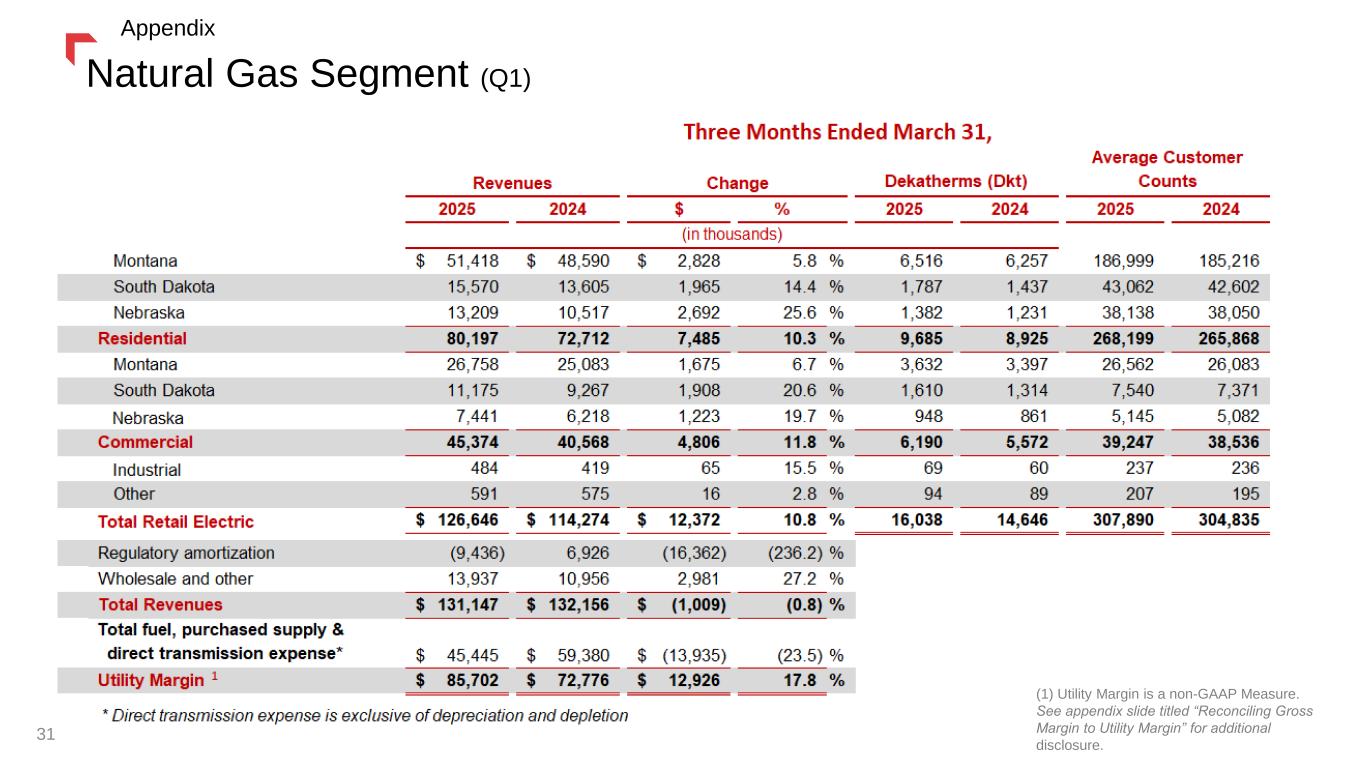
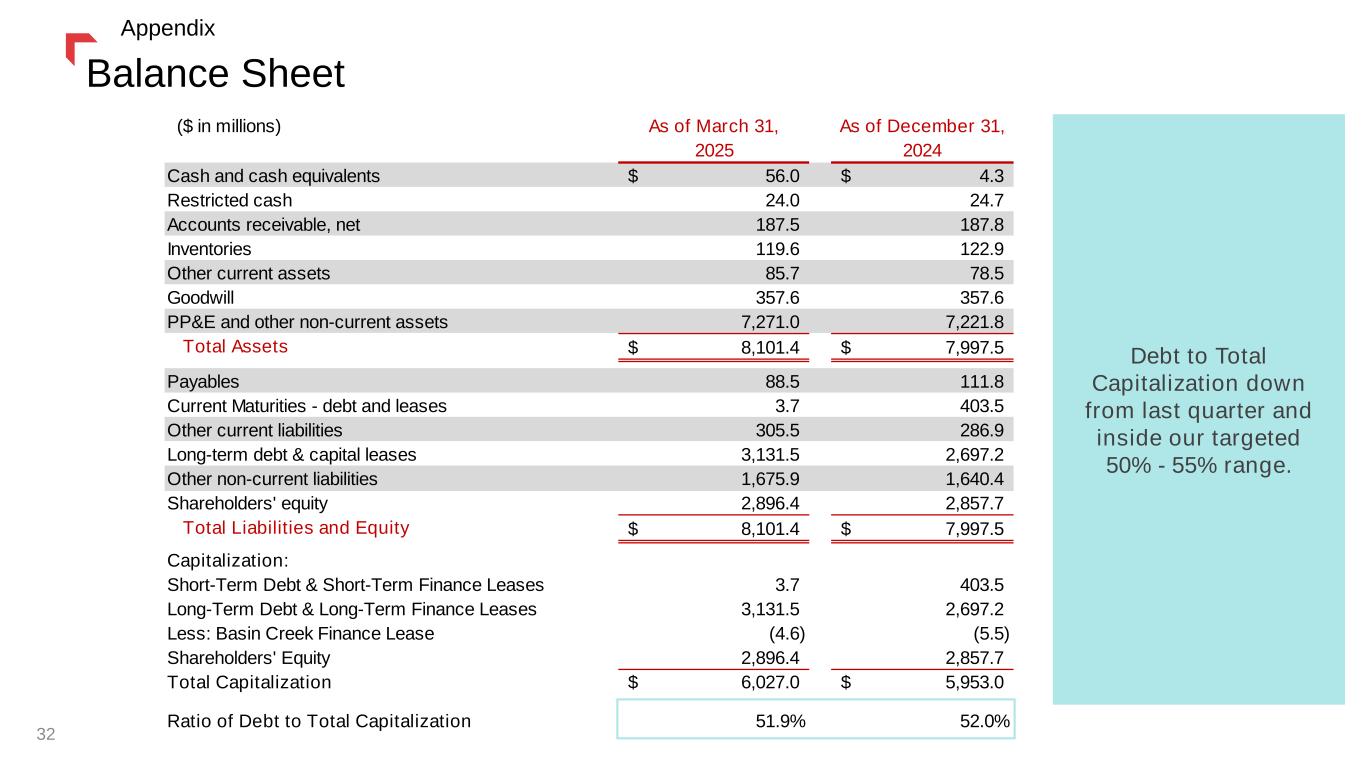
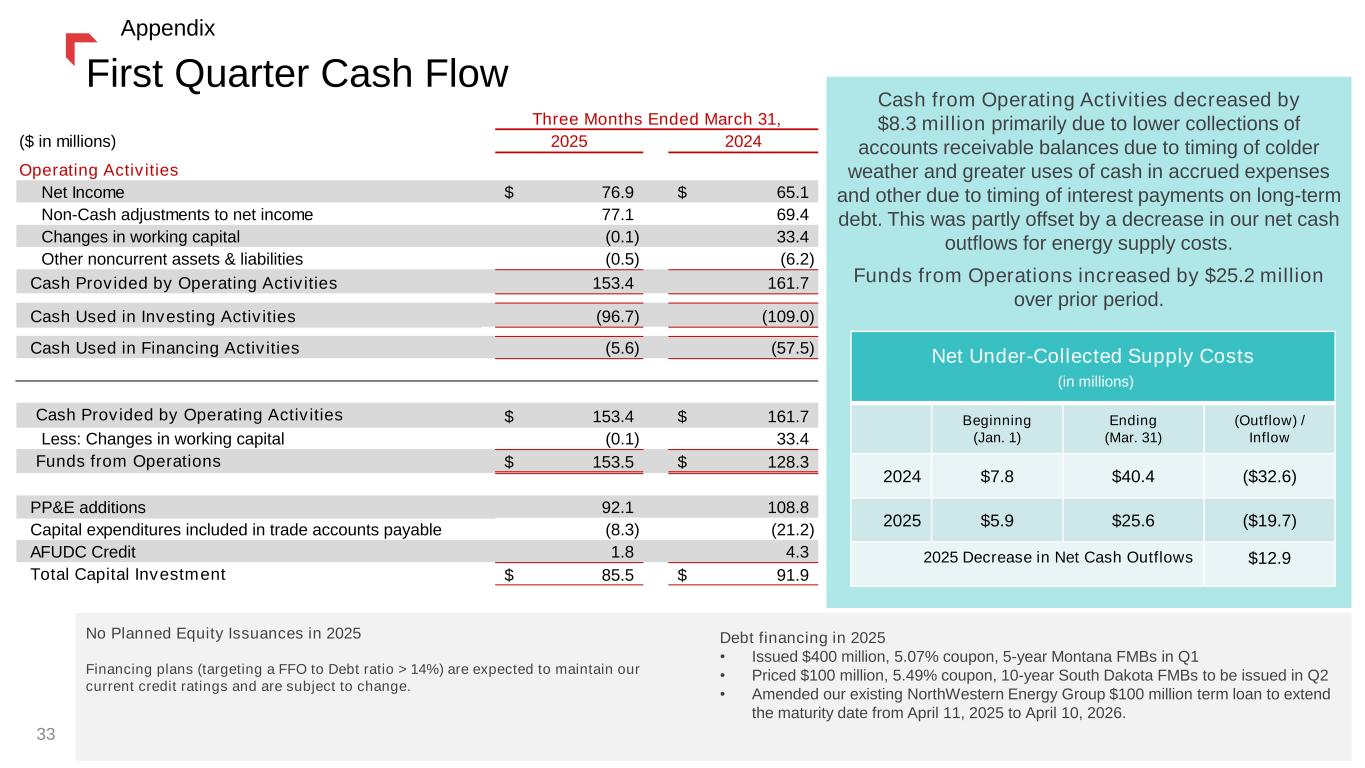
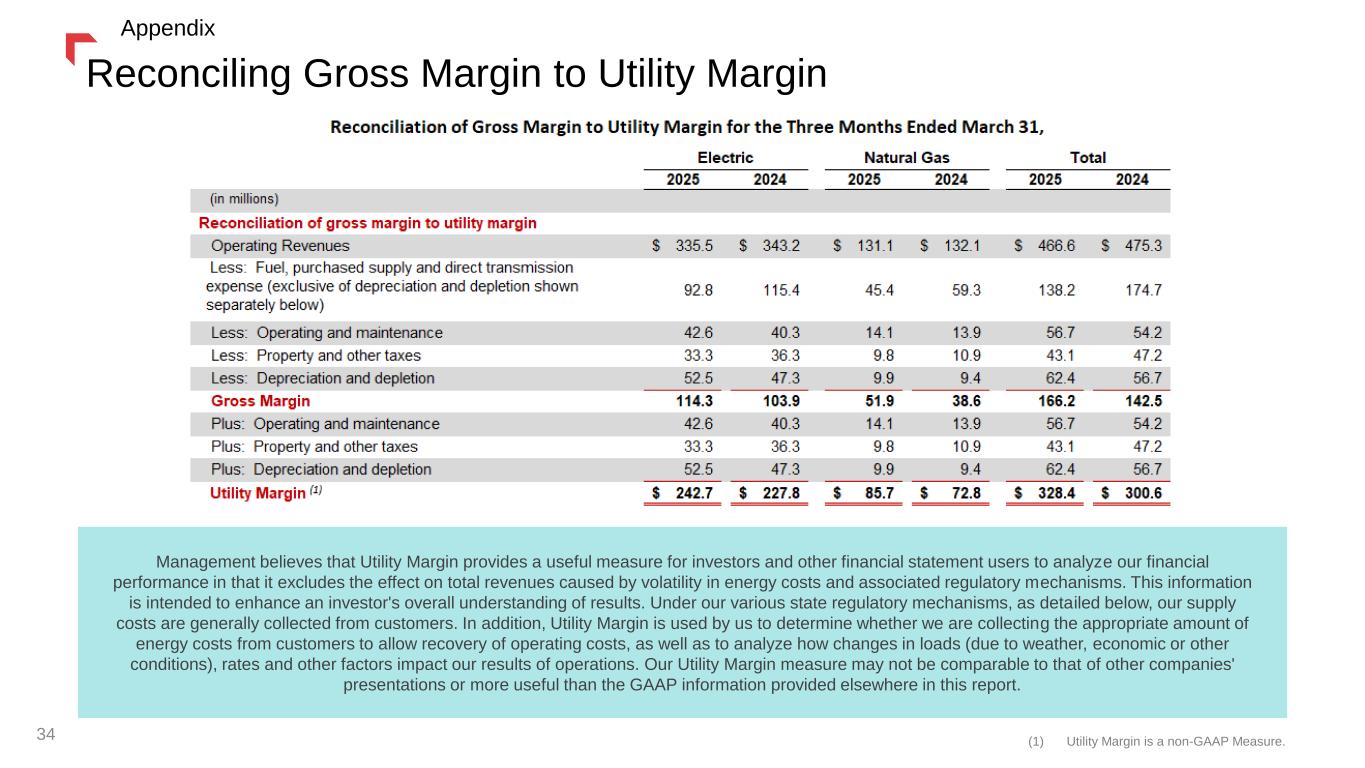
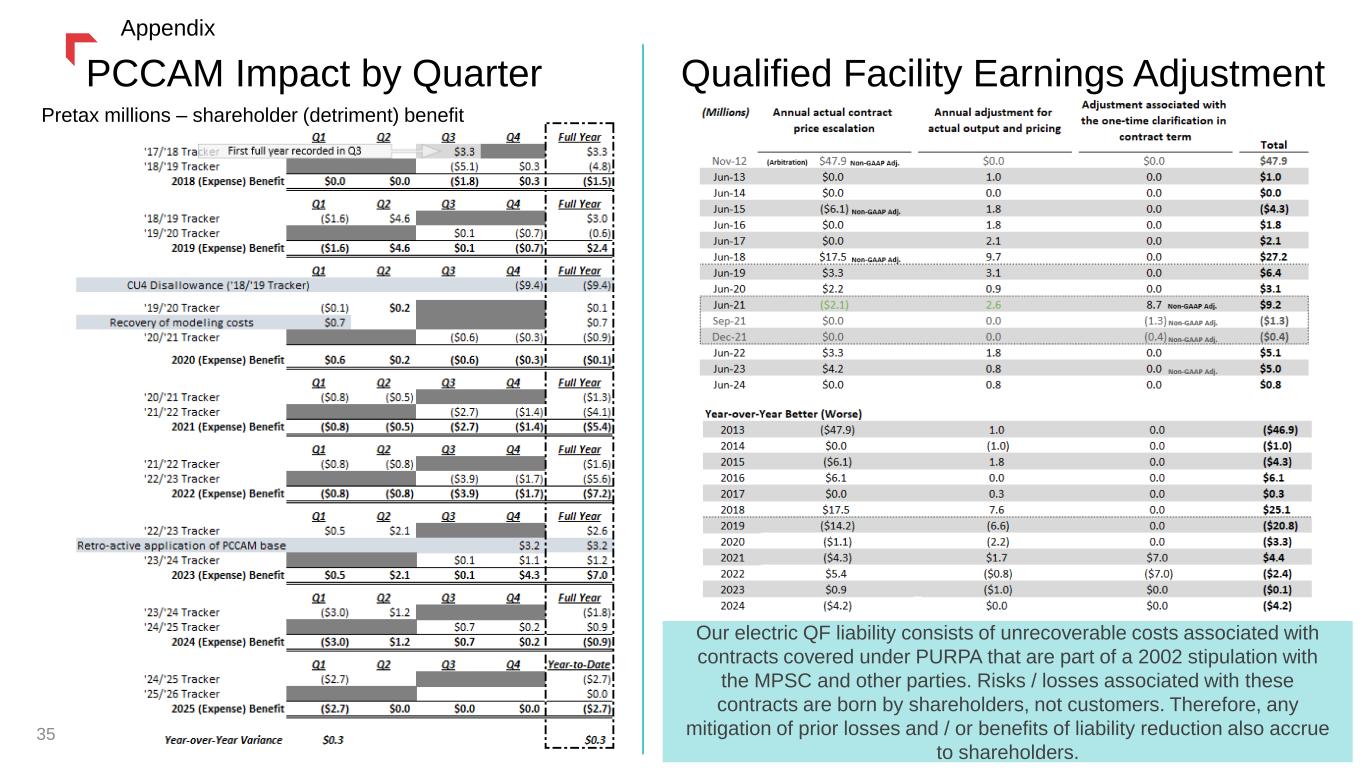
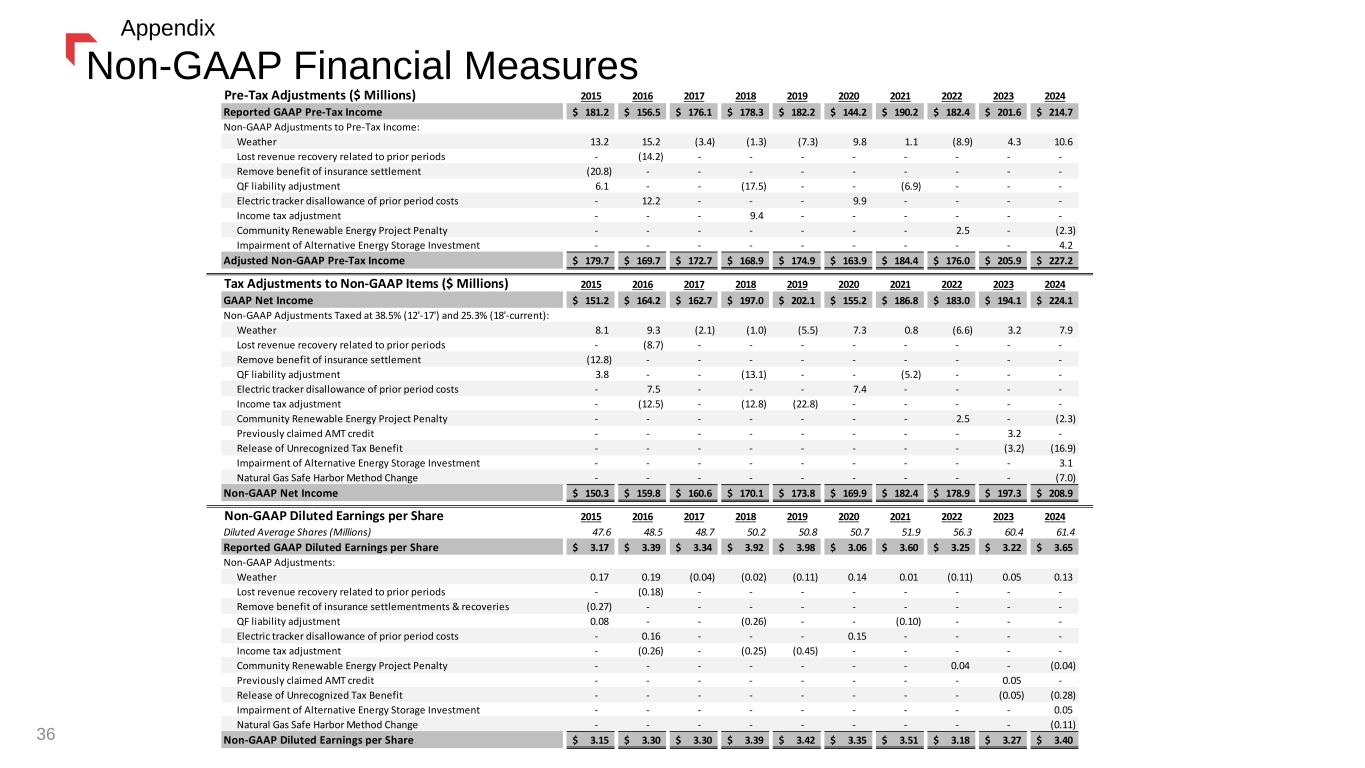
Thank you, Brian, and good afternoon, everyone. Thank you for joining us here for our update. In my comments today, I will cover a few updates since we last talked at our year-end earnings call in February. As Brian highlighted, we've been busy. So it's been a busy couple of months. Our first quarter 2025 results will provide more detail on those, also update you on our financing execution in the last couple of months, and provide a bit more additional insight into our key regulatory proceedings and update you on our 2025 outlook. We delivered a solid first quarter driven by strong margin contributions from both the electric and gas segments and ongoing consistent expense management. Moving to slide 7. This details the drivers of our earnings per share compared to the same period last year. We reported earnings of $1.25 on a GAAP basis compared to $1.06 in the first quarter of 2024. These higher earnings were driven by rate recovery and colder weather, offset by operating costs, depreciation, and interest expense. Moving to slide 8 for a bit more detail on how the margins increased breakdown. New rates, both via interim rates and also final base rates, drove $0.20 of margin improvement, which reflects impact notably in all three of our jurisdictions. We also saw favorable loads of $0.13 during the first quarter due to colder weather, customer growth, and usage on our system. In addition, we continue to see favorable transition revenues of about $0.05 contribution in the quarter. I would also note that the PCCAM column here or the non-recoverable Montana electric supply costs, while that looks like a small variance for the quarter, when you think about the total impact there, we had a Q1 detriment this year of $2.7 million. I almost said $27 million, which as many of you who follow us know, that's what the total amount would be; the 10% sharing would be the $2.7 million impact of detriment this quarter. This compared to $3 million of detriment in the prior quarter, so first quarter of 2024. So comparatively, only $300,000 of impact there is slightly favorable. But I would just highlight that we expect to see that as an ongoing trend here in 2025 of headwinds on the PCCAM front, again, cost being above that baseline. And as I'll get into in a little more detail, that remains an open item in our Montana rate review. So again, including the earnings for the quarter on margin, significant improvement there on the back of rate recovery relief necessary to offset the costs that are already in place. Moving to slide 9, I highlighted already that weather was favorable during the quarter. So weather favorably impacted the first quarter by $0.03, while in the first quarter of 2024, we had milder weather, which was unfavorable by $0.01. So that's a $0.04 swing between the first quarter of 2024 and the first quarter of 2025. In addition, in the first quarter of 2024, there were net $0.02 of favorable adjustments that were backed out for other matters that were one-time items during the first quarter of 2024. So on an adjusted basis, you'll see that our GAAP reported results for the quarter of $1.25, removing again favorable weather for the quarter of $0.03 to an adjusted earnings of $1.22, and that's a $0.13 improvement over the prior year where those adjusted earnings were $1.09 in the prior year and again on the back of favorable weather in the first quarter of 2025. Turning to financing activities on slide 10, we are happy to say that during March, we priced $500 million of long-term debt in two separate transactions. One was included in our disclosures in the 10-Q detail, on these, but 144A transaction and also a smaller first mortgage amount transaction in South Dakota. With a bit of the volatility in the market, I'm glad to say we have solid investor interest, and we closed those out before maybe some of that volatility hit, and those transactions successfully addressed our financing needs for 2025. In addition to that, I would also note that, consistent with our solid earnings performance in Q1, our cash flows matched that. So you'll see that our FFO to debt metrics on a consolidated basis closed out the quarter just above our 14% threshold, again, remaining focused on building cushion to where we want to be from a long-term basis. But again, closing out our financing needs for 2025, and we feel good about having that work done. So with Slide 11, I will transition from talking about the financials for a regulatory update. You all know that follows we submitted settlements in the Montana rate review here recently, and it was a partial settlement in the electric case with the remaining key contested issues related to the revenue requirement for the Yellowstone generating station facility and also the PCCAM base. But we were able to reach a settlement on the base transmission, distribution, and base generation costs. And of course, that was a significant investment for us and on customers we have. Importantly, underlying that settlement, it maintains our existing electric ROE and also our as-filed capital structure. The slide here gives you significant detail, and I think there's more in the appendix on what that settlement looks like. And also importantly, the bookings of the intervener position. So again, the contested matters are the Yellowstone revenue requirement and also the PCCAM base. This slide gives you the bookends of what that looks like. Notably, even with the partial settlement and if you include our position on those contested issues, the average bill impact is just over 4% to our customers. In addition, with the reduction in PCCAM, so putting Yellowstone into base rates and reducing PCCAM, the supply mechanism related to that is an overall reduction in customer bills. So we feel really good with our position going into the hearing to make that known to both the commission and others, the value customers are receiving on the back of that facility. Moving to Slide 12 to talk about the gas settlement, it is a full settlement, and it has a slight increase in ROE to 9.55 in the prior case to 9.6 in this one and our as-filed capital structure. The average bill impact from this gas case is approximately 9%, maintaining rates below the national average. For these dockets, a hearing is scheduled in June, and we expect to implement rates in May. Following a hearing, a perking schedule we established with a final order, we believe likely in late Q3 to potentially early Q4. Concluding my comments on the regulatory front and moving to our outlook slide here on Slide 13. We believe we've made significant progress in 2025, and this provides the foundation for advancing critical customer objectives while balancing the importance of reliability and affordability to our customers as well as the important part of delivering to our shareholders and supporting our long-term growth outlook. We are affirming, and I think Brian mentioned this upfront, our long-term earnings and rate base growth outlook. But as we've previously discussed, we don't expect to provide 2025 earnings guidance until the conclusion of a hearing in the Montana rate review. However, we also wanted to be proactive in sharing how the timing impacts of that may affect our quarterly distribution of earnings in 2025. Obviously, many of you already have expectations out there for us for where you think our 2025 will land. As noted in the regulatory update, we expect to implement updated rates in Montana in May versus, of course, incurring what is already a full year of costs associated with those new investments. This causes more of our quarterly distribution to be weighted in the second half of the year. As a result, we expect our second quarter to be a lower contribution to overall earnings than you would typically expect from us, and we have provided an indication of that earnings distribution here for the second quarter of 2025 to be approximately a 10% contribution to the full year. I would also note that the first quarter was solid and slightly ahead of what would have been our expectation. So let me conclude my comments here and the outlook discussion by reinforcing our confidence in delivering on our earnings and rate base growth commitments over the long term. This moves us to slide 14, and this is the capital slide you've seen before from us, our five-year capital plan and expected investments on our customers' behalf. We updated this in February, and the slide remains the same as what you've seen before. We are affirming our capital plan and on track for execution here in 2025. Again, as Brian highlighted leading in, this is sized to need no equity, but also keeping both reliability and affordability for our customers in mind. So with that, I will turn it back to Brian.
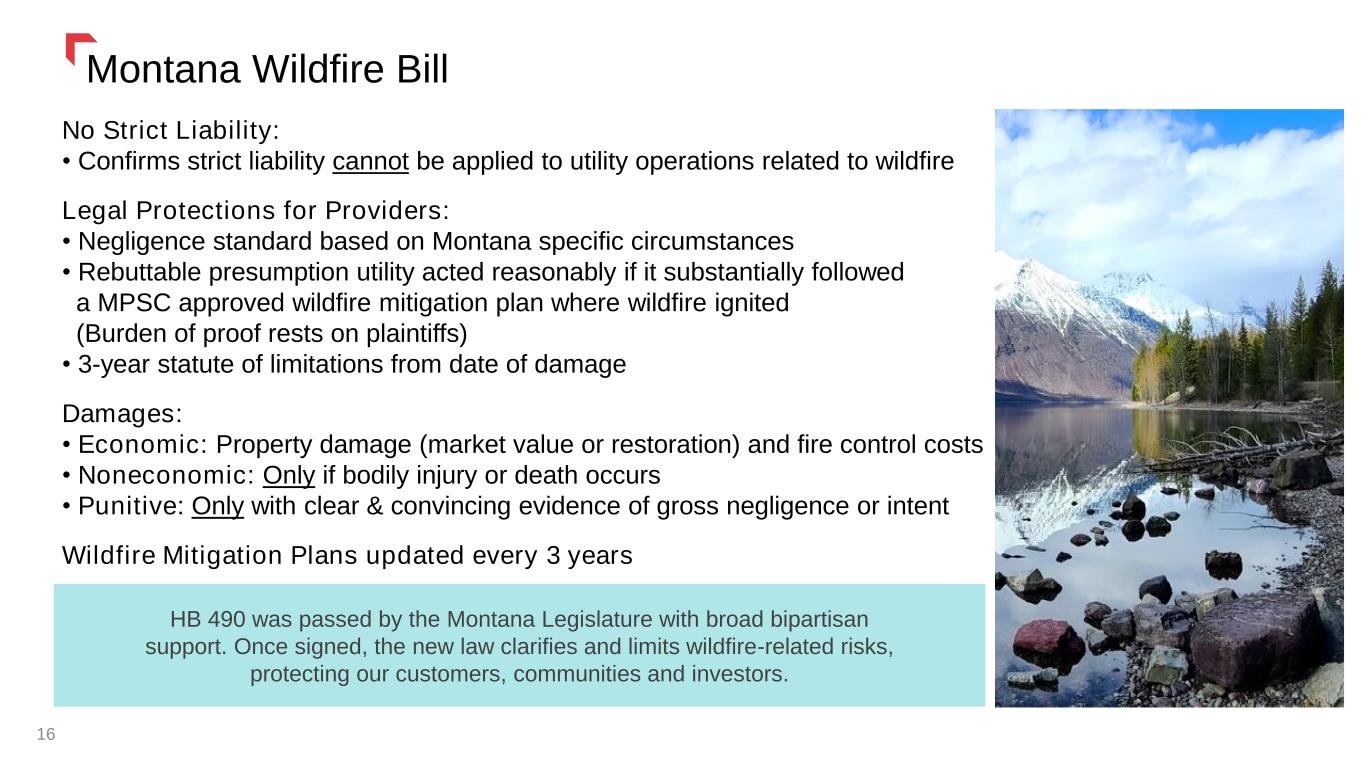
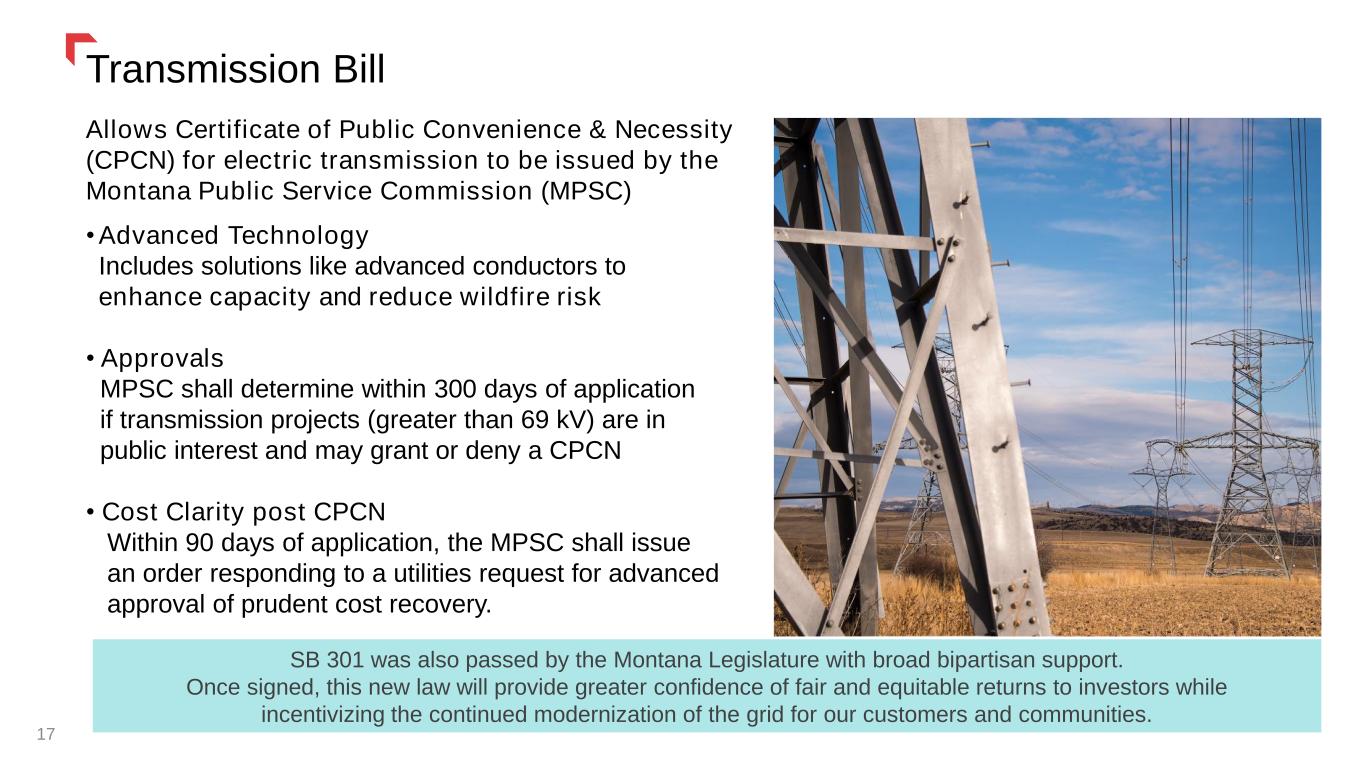
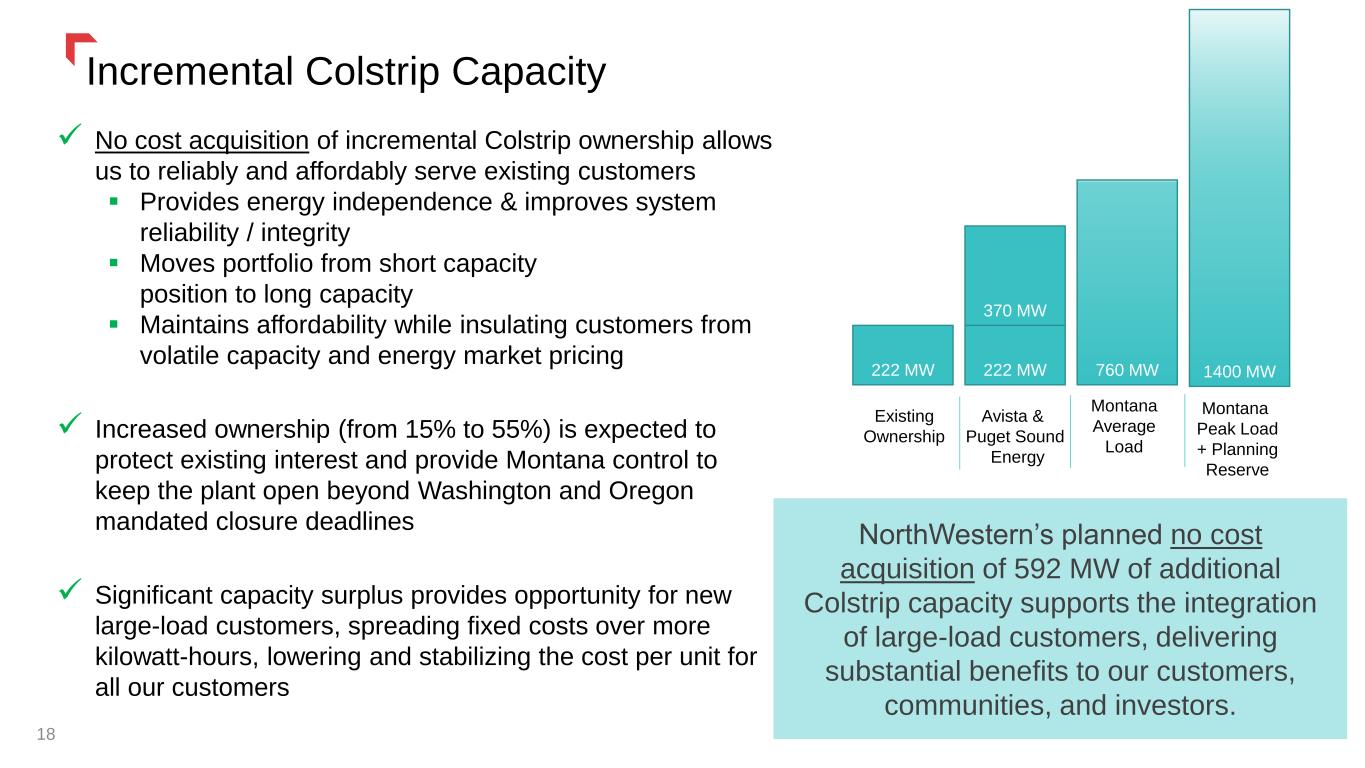
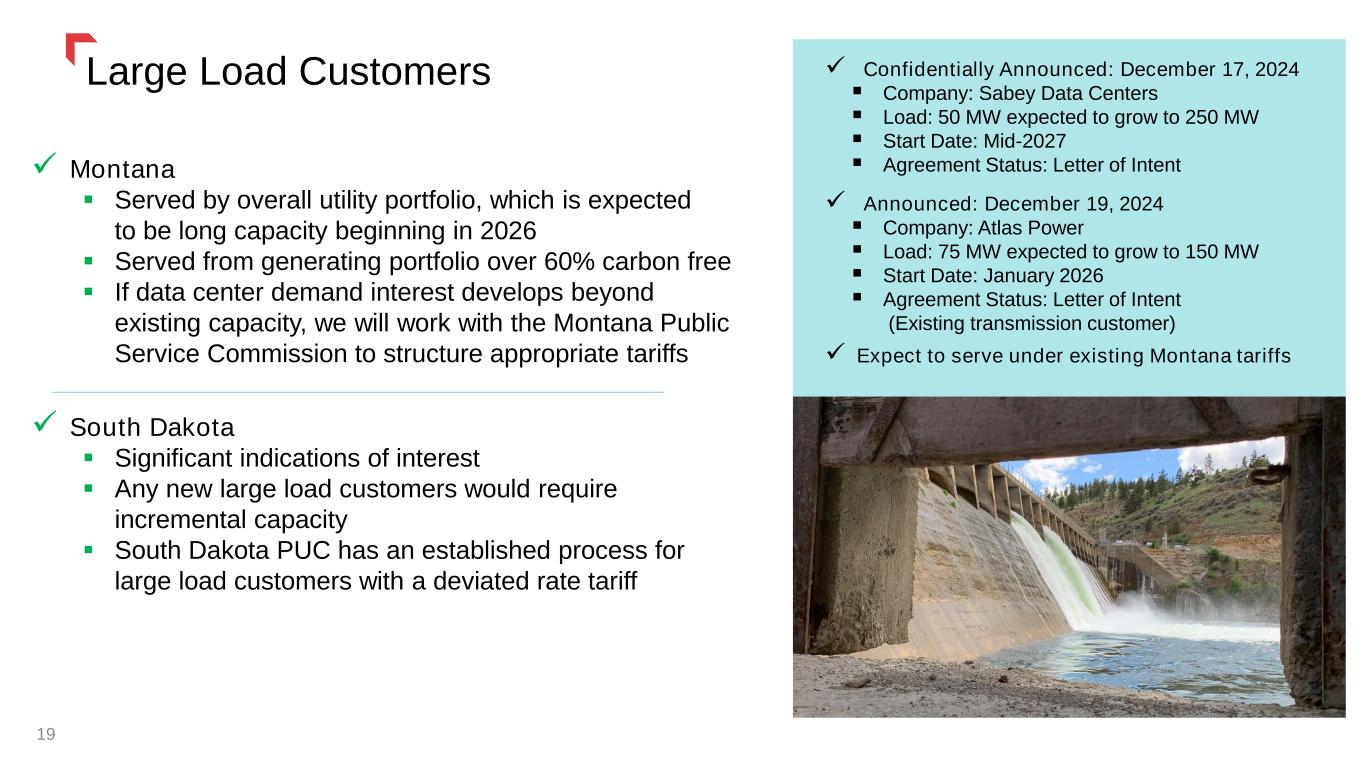
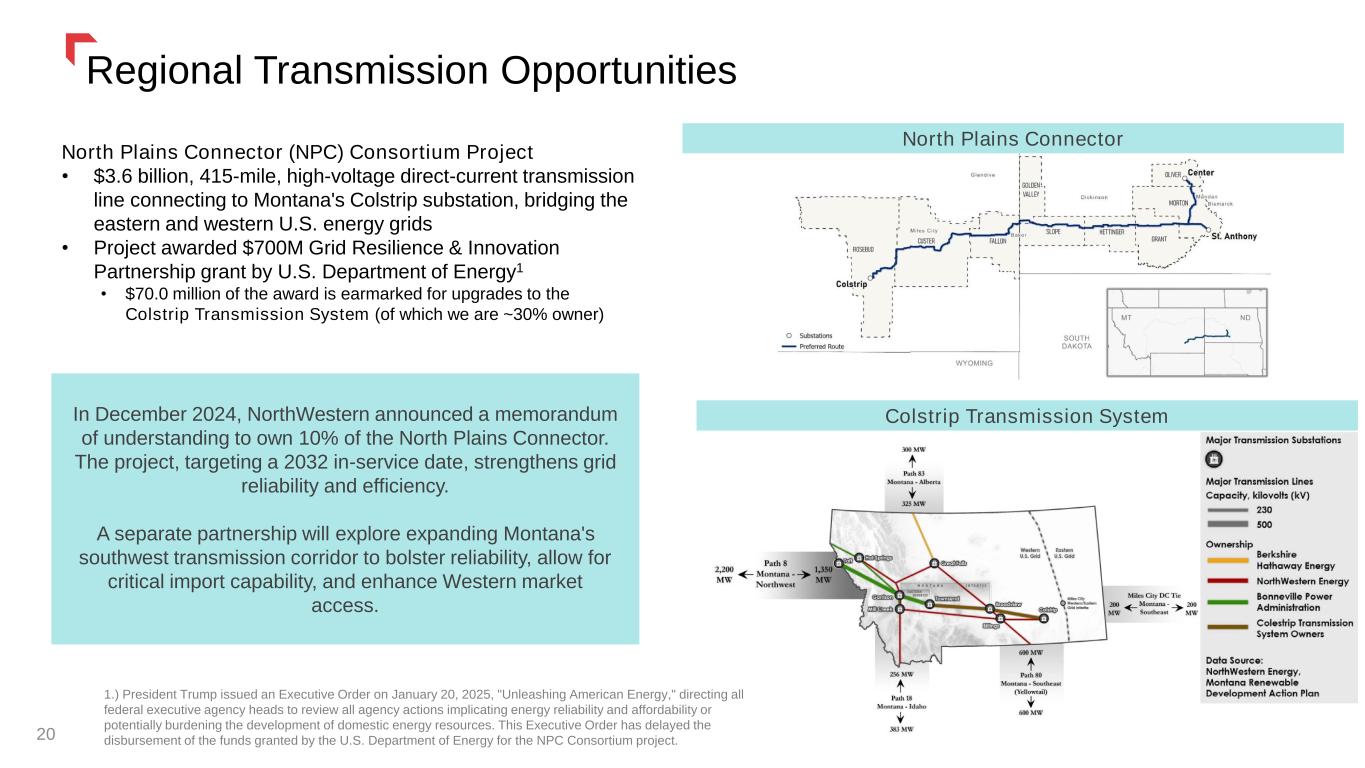
Thanks, Crystal. We had two main objectives going into this legislative session in 2025, and the two bills that we wanted to sponsor. There was a wildfire bill and transmission bill. We're pleased to report that we've had success in both of those efforts, and the Montana wildfire bill is something we're extremely excited about. It's a significant risk for the company and Western utilities. This bill, which passed through the House and Senate, received unanimous bipartisan support and is sitting on the Governor's desk, I believe, ready to be signed. We feel extremely good about this. It provides tremendous protection, which I'll talk about in a second, but we believe this is one of the strongest wildfire bills in the country from a state perspective. There's no strict liability. It confirms that strict liability cannot be applied to utility operations related to wildfires. Legal protection includes a rebuttable presumption that a utility acted reasonably if it substantially followed an MPSC approved wildfire mitigation plan for wildfires. From a damages perspective, as we'd expect, at any time, there's property damage and fire control costs, we would be responsible for those economic damages. But one thing we were extremely concerned about is where we've seen in other states the imposition of noneconomic and punitive damages. In this case, noneconomic damages can only be applied if there are bodily injury or death occurrences. Punitive can only be applied where there is clear and convincing evidence of gross negligence or intent. We feel very, very good about this, and we really appreciate the state and all the parties we worked with, cooperatives and all parties associated with getting this done. We'd like to think that this will come off the Governor's desk relatively soon with the signature. We're excited about where that sits, and feel really good about the legislative session on that item alone. But we also had some success from a transmission perspective. As you're well aware, many states have a Certificate of Public Convenience and Necessity (CPCN). We now have established a means to be able to get a CPCN for our large transmission work at our request. There are some timelines associated with the approvals for getting a CPCN and for the prudency reviews related to the cost recovery of those projects. But this is a great step in the right direction. It's extremely important for the build-out and serving customers nationwide to have better means and more assurance around transmission build-out. So we're very happy with the outcomes from our legislative session here in 2025. Moving on, on Slide 18, there is nothing really that has changed regarding Colstrip. I think it's extremely important to talk about the parts of Colstrip. The no-cost acquisition of the incremental pieces from both Avista and Puget certainly provides energy independence for the state and improves our reliability and integrity. It moves our portfolio from a short capacity position to a long capacity. With zero upfront cost, it maintains affordability while insulating customers from volatile capacity and energy market pricing. This increased ownership, and I think you might recall when we talked about this for the very first time, we were very concerned about being, as a 15% owner, having other state policies driving the likelihood of the plant's shutdown. Now at 55% ownership, we can protect our existing ownership in Colstrip and provide Montana control to keep the plant open beyond the Washington, Oregon mandated closure deadlines. This significant capacity surplus provides opportunity for new large load customers, spreading fixed costs over more kilowatt hours, thereby lowering and stabilizing the cost per unit for all our customers. I would also point out here, I think you may have seen, and we certainly press released it, there have been some favorable outcomes from the EPA that also give us more time to address mass and other issues at the Colstrip facility. What I'd argue is a more realistic timetable to make decisions for the long-term health of Colstrip could allow us potentially more time for decisions regarding its ultimate closure. We believe in the long-term sustainability of Colstrip, whether it be the Colstrip coal plant or whatever replaces it; we want to do it at or around Colstrip. The far right on this page shows our existing ownership and the incremental 592 megawatts from Avista and Puget Sound. Collectively, those would be larger than the average load in Montana, but certainly substantially less than our peak load. We currently sit at over 60% carbon free in Montana. Our approach allows us not only to be energy independent but protects our customers from peak days when the wind is not blowing and the sun is not necessarily shining. We're very excited about what's happening at Colstrip and how it can help our customers and us, from a planning perspective going forward, to support economic development in the state. Speaking of economic development, large load customers with a full portfolio now have the capability to serve large load customers starting in Montana. We've signed letters of intent with SEBI and Atlas. As you can see, those megawatts are expected to grow over time. We're in a letter of intent with those parties at this point in time, and we continue to work on various aspects to ultimately get contracts with these parties, hopefully sometime in the second quarter or third quarter. We expect to serve those two customers under existing Montana tariffs. In addition to that, we are working with quite a few other parties at various stages of development in both Montana and South Dakota. Even though we have incremental capacity from Colstrip, remember that as a regulated utility, these customers will receive our full portfolio, not just resources off of Colstrip. We already have a deviated tariff in South Dakota that could assist us in quicker recovery. In Montana, we would have to work on incremental tariffs associated with anything beyond SEBI and Atlas at this point in time. We're really excited about that opportunity, but definitely have a lot of work left to do. Lastly, we don't have much more to report on the regional transmission opportunities. We continue to work with Grid United and the other utilities looking at those opportunities. Additionally, we're working with Grid United on chances to move power out of Southwest Montana, and those discussions continue, ultimately aiming to get further down the contracting process. One thing I guess I would mention is we've announced in the past, as have others, there was a $700 million grip financing associated with this project, and I think that's still in question, $70 million of which would be used for the Colstrip transmission system upgrade. I would argue that one thing I believe the federal government is doing at this point in time is recognizing the opportunity that transmission provides to all resources and to keep customers' bills as reasonable as possible in the long-term, allowing us to move power around between markets. I think there's quite a bit of support for transmission, and I'd like to think that the grip financing will be looked upon favorably, and we will continue to work with others to achieve that for this project. And with that, that concludes our comments. We'll turn it back to Mr. Meyer to drive the Q&A.
We'll open it up for questions, Eric.
Operator
The first question comes from Nicholas Campanella with Barclays. Please go ahead.
Speaker 4
Hi, good afternoon.
Speaker 4
Hopefully, I'm coming through. Yes. Regarding the tariff proceedings, it seems you are engaging with customers beyond those you have already mentioned. How long do you anticipate this proceeding will last? Do you need it to be resolved before you make any additional announcements on the data center front? Thanks.
I think I put it to you in this context, Nick. We have 5 levels, if you will, of process for data centers. Let me just tell you those 5 real quick. There's a data center request, a high-level assessment, a contractual estimate, a completed contract, and then construction. Those are the five. We are in various stages of the first three with parties. So on your data center request, there are currently nine parties between both Montana and South Dakota that are in the very early stages; they've provided a data center request. In addition to that, there are three parties that are currently in what's called the high-level assessment. They have gotten past the request. We've shared information between the two parties, and we're moving on to a high-level assessment. There are two parties, the LOI parties; Atlas and Sabi that are in the contractual estimate. We are conducting transmission service agreement studies to calculate total costs if necessary to finalize the contract. Once those studies are completed, we believe we can get those two parties to a contract sometime in the second quarter, hopefully by the end of the second quarter, but it could extend into the July time period as well. Those studies take some time. Once those are resolved, we believe we can get to contracts with those two parties. But as you've heard, there are 12 other parties at various levels prior to that. I'm sure there are a lot of folks, many different parties in that process, so it's hard to say on those in the early stages. And obviously, in the queue for Atlas and Sabi, we have a full portfolio to serve those two customers. We have to build generation for those who come in behind us. I don't know, Crystal, do you have anything to add there?
Yes. Addressing Nick's question about the tariff we currently use to serve our customers and our path forward, we have an existing tariff that we believe works well with our initial plans. Brian discussed the process, and our unique position as being long in energy allows us to use this tariff. A key aspect of our rate design is that commercial and industrial customers subsidize residential customers. While this may not be true everywhere, it is our current situation and will remain through this rate case. We believe we can continue serving them under this tariff. In the future, we expect that modifications could enhance conditions further and help facilitate the infrastructure investments Brian mentioned. Although projections are in place, there may be changes to the tariff to better protect other customers, which would be addressed in an upcoming filing. Ultimately, we believe we can support them with our existing tariffs, which will persist through the rate review, ensuring continued subsidization for residential customers. This larger customer base can be beneficial for the overall system, and our objective is to maintain that status quo. Brian referenced the ongoing process we are engaged in to achieve this.
And I think, again, to reiterate, South Dakota, the tariffs are already established and we can move forward there. In Montana, Crystal's absolutely right. There are going to be some more that needs to be done from the tariff development for further data centers beyond the first two in Montana.
Speaker 4
Okay. That's all helpful context. I appreciate that. And then, thanks for the info on the quarterly distribution. I guess, just kind of taking into account, you had a good start to the year. You have this partial settlement that's out there, if that's approved. Do you kind of still see yourself within that 4% to 6% EPS range as we think through 2025?
Nick, that is a very nice way of asking about our 2025 guidance that we haven't given you a specific range on, I'll acknowledge that. The only thing I would say is on the long-term, I would expect that we would stay within that 4% to 6% range, but also acknowledging we've had some years here where we didn't hit it, it may not be entirely linear. We'll update you more after the hearing.
Speaker 4
All right. Okay. Thanks.
Operator
The next question comes from the line of Chris Ellinghaus with Siebert Williams Shank & Co. Please go ahead.
Speaker 5
A couple of esoteric questions to start with. Did I detect that you changed the electric average customer accounts, and was that really just the lighting portion? What was that all about?
I believe so, Chris. As usual, you know us well. Travis is feeding me the answer, so I believe lighting is correct.
Chris, it came down to how we were counting our street lighting districts and the new system we have in place for that. We still experienced approximately 1.5 percent customer growth. However, the main factor was the street lighting.
Speaker 5
Okay. And also, I was a little surprised by this, and maybe I just didn't detect this, but your average historic heating degree days in Montana actually went up? Has it actually been getting colder in the last few years?
That average is over the long term, Chris. So I don't know that there's anything changing there. There's nothing changed in our methodology that more.
Methodology is the same. We do use a rolling 10-year average. And so that may have increased over the last 10 years. I haven't drilled in deep enough to know if we had a real warm year fall off, but it may have moved up slightly.
Speaker 5
I'm curious if you've recently noticed any changes that might indicate new opportunities. It seems like you have many options available. While you can't share specific timelines for when these might progress to the Letter of Intent stage, do you have an idea of when you might need to start expanding your capacity? Additionally, what scale are you considering for long-term planning?
Yes, I'll start by saying that we won't discuss megawatts until we have Letters of Intent. I'm hesitant to make predictions before they are certain. What we aim to do is gain a clear understanding of the situation. I mentioned three key players in the process. As we move forward with our resource planning, we will collaborate with these parties, keeping in mind that time is critical. We want to address their needs as effectively as possible concerning timing. We could expedite things, but our priority is to safeguard the company and our customers. We want to avoid prematurely starting the resource process until we have agreements in place with the parties. You won't see us releasing figures ahead of time.
Speaker 5
Okay. Fair enough. So you sort of alluded to the long-term replacement of Colstrip for whatever the next commercially available capacity is. I presume that the only real long-term commercial capacity you'd be waiting for is nuclear. Is, in your view, at Colstrip, is there adequate space at the plant to sort of contemporaneously construct a replacement capacity while maintaining Colstrip in the future? Is there just enough acreage there to be able to do that and sort of just flip the switch?
Yes, Chris, let's just say this: at or around Colstrip, there are adequate sections, as they say. I grew up in Wisconsin where you talked acres. We talked about sections in Montana. There is adequate land for, I'd argue, gas plants, nuclear plants, or both near or around our transmission facilities in Montana.
Gas or nuclear. What did I say?
I did say coal. The gas or nuclear. Thank you, Travis. There's plenty of coal already there. Gas or nuclear, thank you, at or around Colstrip. As a matter of fact, I'll be at Colstrip on Friday. They're having a study done by one of the labs talking about nuclear at Colstrip, and so they will be presenting at Colstrip to the community. That's the long-term solution, Chris. Obviously, if we have to close down Colstrip sooner, let's say in the early 2030s, we've said this before; we're likely to have to replace that plant with natural gas. Looking long term, we're going to look at nuclear. It's something closer to the 2040s. But if we have to do something sooner, we'll look at natural gas. We certainly want to continue considering renewables and storage. Don't get me wrong. But to replace a plant like that from a baseload perspective, we have to look at like-kind type resources. Unfortunately, as we sit here today, it's natural gas, and there may be other technologies beyond nuclear we can examine. But as we sit here today, we think small modular reactors (SMRs) make a ton of sense.
Speaker 5
Okay. Great. One more question on SB 301. The 300 days makes a lot of sense in terms of the strategic approval process for the post-prudency review, but 90 days seems kind of short. Is there any portion of the bill that allows for any kind of overlapping of the approval process? Or does it have to be after the first 300-day process is over? Or can you just do the intervenor education process around that?
I think the 90 days is appropriate. Primarily from a prudence perspective, I'm expecting that 90-day window comes into play only if there are any overages associated with the project. I don't believe there's any overlapping that comes into play regarding those two timetables. I think they are appropriate.
Speaker 5
Okay. All right. Thanks so much. Appreciate the clarity.
Thanks, Chris. And just so you know, we're not going to build any coal plants.
Operator
I will now turn the call over to Brian Bird for closing remarks. Please go ahead.
I understand from Travis, we have no further questions. I appreciate everyone's attendance here and staying abreast of what's happening at NorthWestern. We feel like it's been a very good effort in terms of the regulatory front to negotiate a full settlement on gas and a partial settlement on electric. I think it's been a great outcome. We've got a great legislative outcome. We feel real good about the first quarter as we sit here today. We're really excited about how things are looking for us for the remainder of the year. So thanks, everybody.
Operator
Ladies and gentlemen, this concludes today's call. Thank you all for joining, and you may now disconnect.