Operator
Good morning, and welcome to the Origin Bancorp Incorporated Fourth Quarter Earnings Conference Call. The format of the call includes prepared remarks from the company, followed by a question-and-answer session. Please note that all attendees will be in listen-only mode until the Q&A portion of the call. Please note this event is being recorded. I would now like to turn the conference call over to Chris Reigelman, Director of Investor Relations. Please go ahead.
Good morning, and thank you for joining us today. We issued our earnings press release yesterday afternoon, a copy of which is available on our website along with the slide presentation that we'll refer to during this call. Please refer to Page 2 of our slide presentation, which includes our safe harbor statements regarding forward-looking statements, and the use of non-GAAP financial measures. For those of you joining by phone, please note the slide presentation is available on our website www.ir.origin.bank. Please also note that our safe harbor statements are also available on Page 5 of our earnings release filed with the SEC yesterday. All comments made during today's call are subject to the safe harbor statements in our slide presentation and earnings release. I'm joined this morning by Origin Bancorp's Chairman, President, and CEO, Drake Mills; President and CEO of Origin Bank, Lance Hall; our Chief Financial Officer, Wally Wallace; Chief Risk Officer, Jim Crotwell; our Chief Accounting Officer, Steve Brolly; and our Chief Credit and Banking Officer, Preston Moore. After the presentation, we will be happy to address any questions you may have. Drake, the floor is yours.
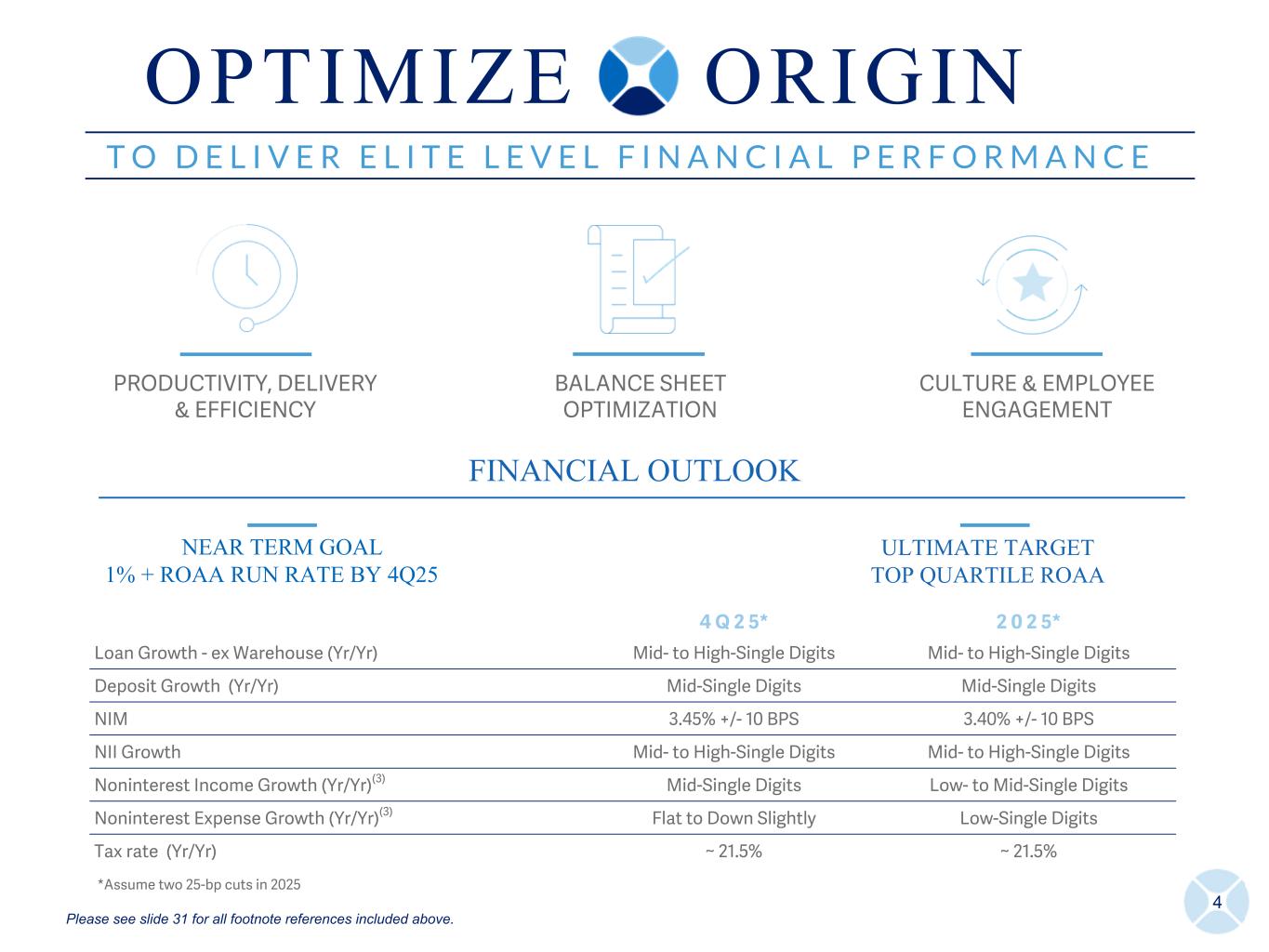
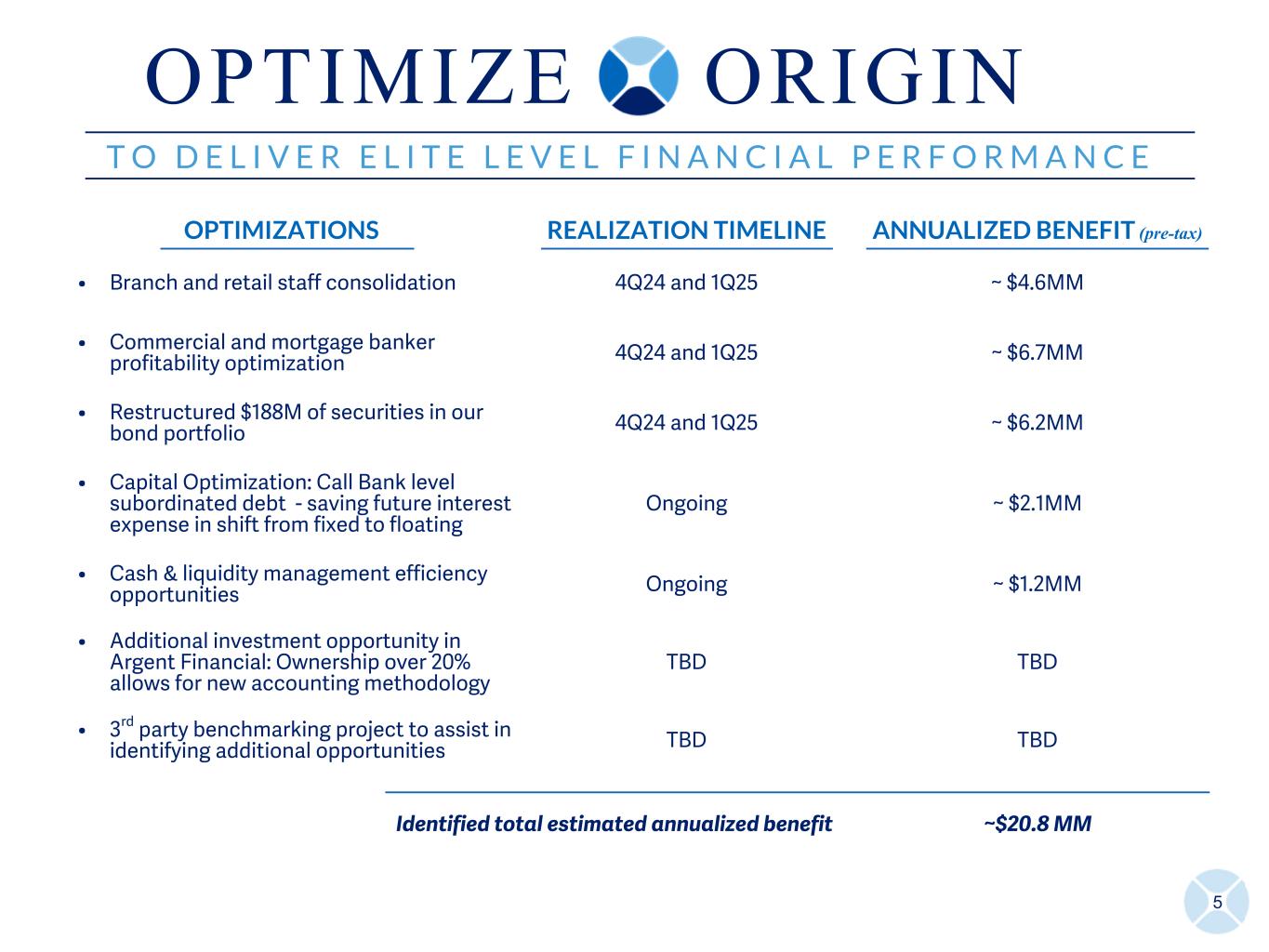
Thanks, Chris, and thanks for being with us this morning. I'm excited about where we are as a company as we enter 2025. I want to start on Slide 4 and talk about what Optimize Origin means to us and to all of our stakeholders. Our entire executive team has worked hard over the past year, creating and implementing a strategy that is the basis for the next evolution of our company. The goal of Optimize Origin is to deliver sustainable, elite-level financial performance. Optimize Origin is built on three primary pillars: productivity, delivery and efficiency; balance sheet optimization; and culture and employee engagement, which Lance and Wally will discuss in more detail later in this presentation. The definition of Optimize is to make as perfect, as effective, or as functional as possible. Optimize Origin is more than a project; it is more than a point in time. It is a continual enhancement of an award-winning culture and the drive for incredible financial performance. We recently rolled out our new performance statement across our company that incorporates this drive for performance into our brand voice. It reads to enhance our dynamic culture and optimize financial performance to be the best bank in America and an extraordinary partner to our stakeholders. This purpose statement perfectly aligns with Origin's vision ambition. Origin has proven to be a dynamic leader in driving a unique corporate culture that emphasizes the employee experience and employee engagement. This philosophy has created a competitive advantage by attracting and retaining best-in-class bankers in some of the best markets in the country to grow our customer base and serve our communities, but we can do more. At a high level, we expect the strategic actions that we have taken and will continue to implement will drive us to an ROA run rate of 1% or greater by the fourth quarter of this year. Our ultimate target is for our ROA to be in the top quartile of our peers. We believe the actions we've already taken will drive earnings improvement of approximately $21 million annually on a pretax, pre-provision basis. Now, I'll turn it over to Lance and the team.
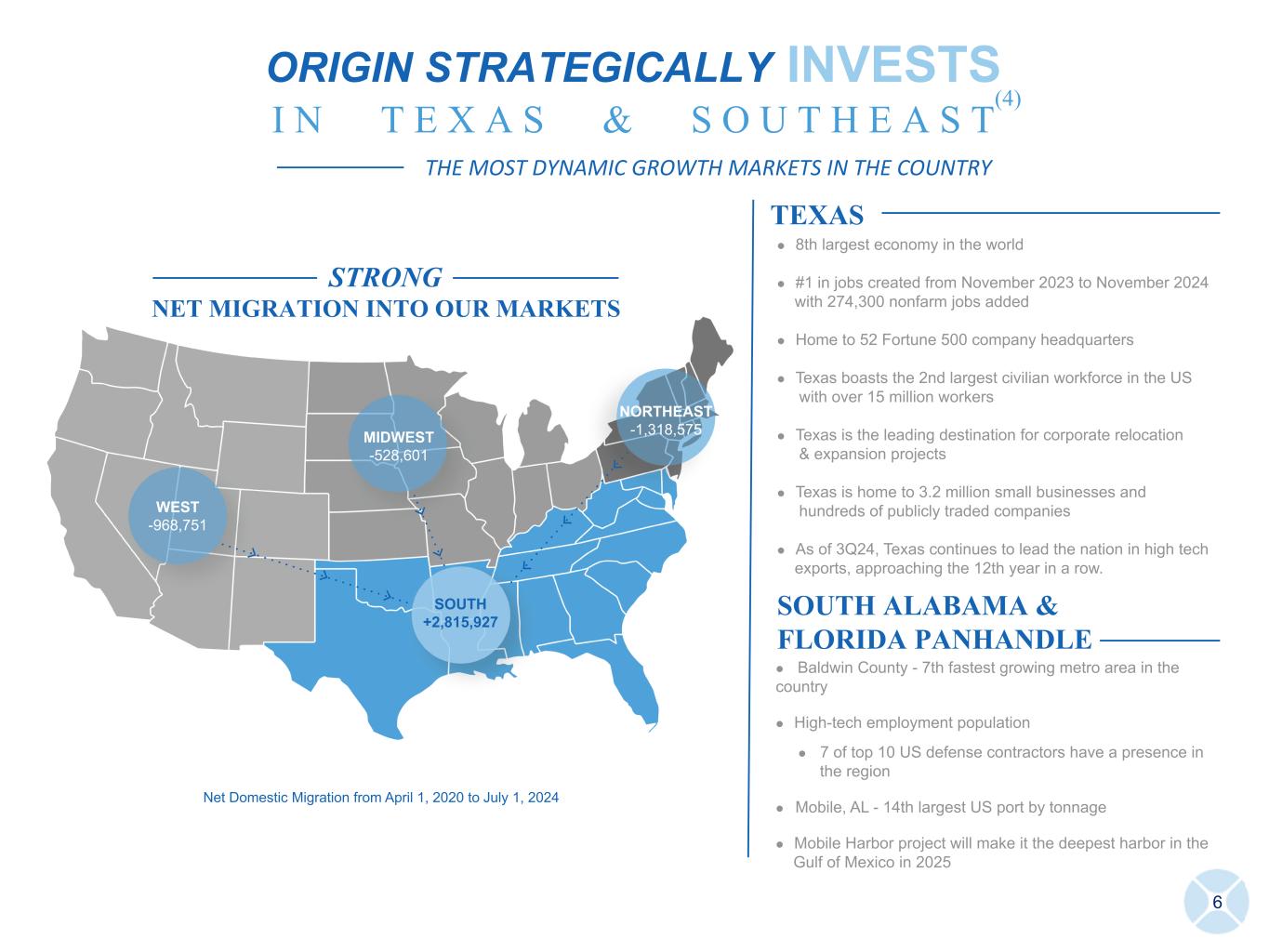
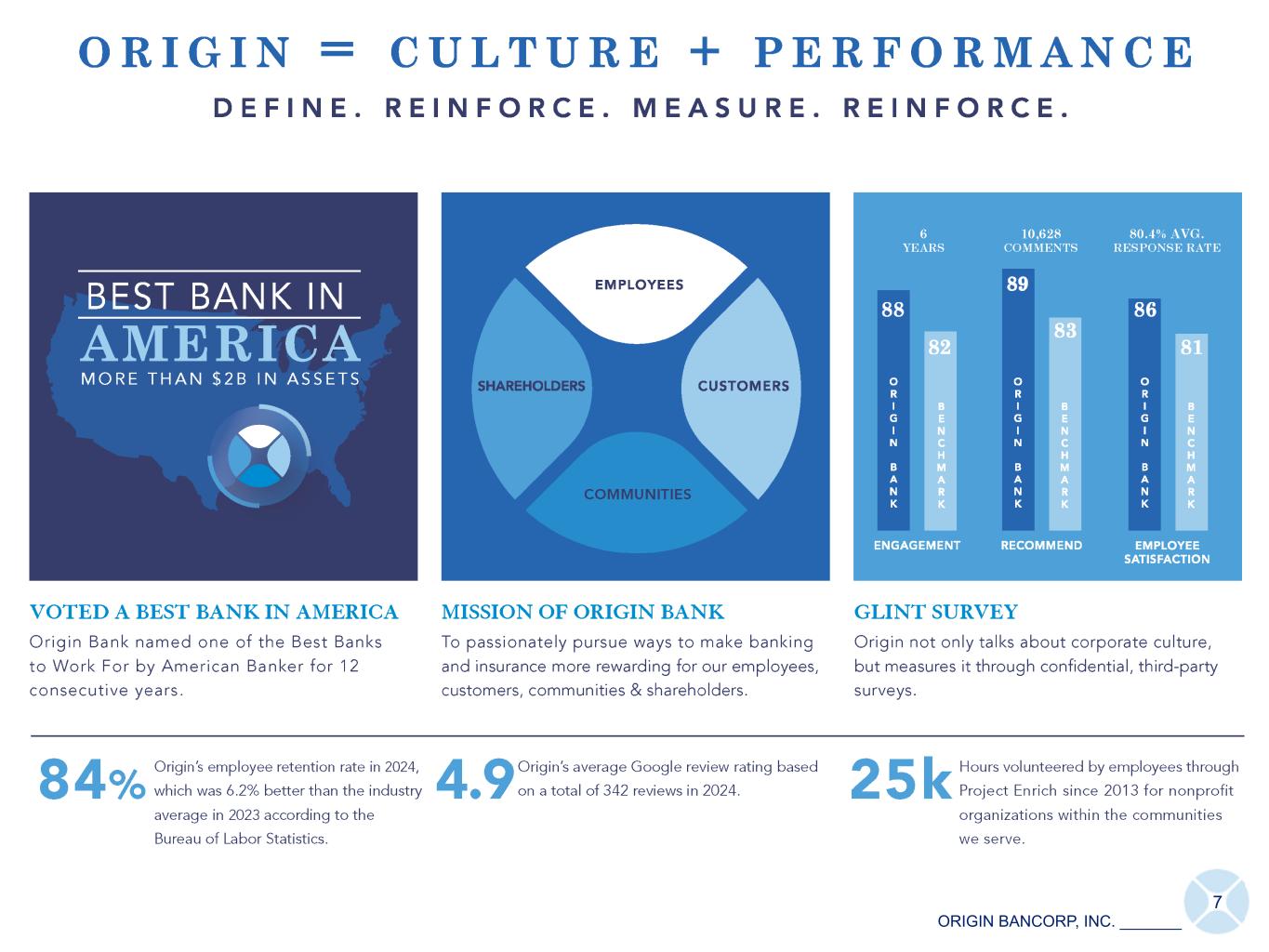
Thanks, and good morning. The evolution into Optimize Origin has been a collective commitment from our leadership to invest in people and systems to create data-driven insights to enhance our alignment and decision-making processes to drive sustainable high performance. Through the productivity, delivery and efficiency pillar of Optimize Origin, we're in the process of deeply analyzing branch and banker profitability. The merger with BTH created branch efficiency opportunities in DFW. Analyzing branch profitability and return metrics, branch proximity, drive times, as well as client transactions, behaviors, and product mix led us to announce the closing of eight banking centers. These eight closures include five in our DFW market, one in Houston, one in North Louisiana, and one in Mississippi. We are confident we can continue to deliver award-winning service to our valued clients and to grow communities through this decision while creating a run rate of approximately $4.6 million in annual expense reduction. Our team also created a detailed banker profitability report that provides deeper insight into portfolio mix, yields, growth capacity, appropriate support levels, banker NIM, and banker ROA. This report has allowed our Presidents a clear view past traditional loan growth into detailed and significant production and return metrics. This lens has provided the ability to sort and stack bankers and portfolios to understand where profitability is being created and where portfolio support was truly needed. Using this data in an effort to efficiently enhance our return and growth profile, we have worked through the process of significantly repositioning our production teams and loan portfolios. We identified bankers and loan clients that did not optimize our desired portfolio production, mix, or return profile necessary to drive higher ROAs. We eliminated, moved into a different role, or did not replace the lower return profile bankers from our loan production teams. We also identified efficiency opportunities in our mortgage team as well as portfolio support areas to drive an annual expense reduction from these production groups of approximately $6.7 million annually. We have been able to use these cost savings from less profitable portfolios to reinvest into production by adding approximately ten new production bankers in Texas and our new Southeast team throughout 2024. This reallocation into bankers with higher production and return opportunities, along with Origin's footprint, talent and capacity have created a strong confidence in our ability to drive high single-digit loan growth in 2025. On top of these actions that have already been taken, we feel we have more opportunity for productivity, delivery and efficiency. First, we are working with a reputable consulting firm on a benchmarking project driven by data analytics that we expect to complete in February, which we believe will reveal significant opportunities to improve processes, identify additional efficiencies, and further enhance Origin's return profile. Secondly, we continue to invest in Argent Financial with the goal of getting over 20% ownership, which will change our accounting methodology on this investment. Origin purchased additional shares in 2024 to increase our ownership to approximately 19%. We hope to identify and purchase additional shares in 2025 to achieve our goal. We remain very optimistic about Origin's footprint, growth opportunities, and EBITDA expansion. We are honored and appreciative to have such a strong wealth and trust partner. Third, we clearly understand we have an ROA lever in improving mortgage profitability. We are currently studying a mortgage delivery reimagination for our community banking model with the goal of significantly improving our returns on this business. We will provide additional details on this and other Optimize Origin production opportunities throughout 2025. Wally will provide more detail on the balance sheet optimization pillar, so I want to touch on culture and employee engagement. I have a deep belief that we have a unique opportunity to be great at both culture and performance. Our investment and commitment to employee engagement, our geographic management model, and our systems to deliver an elite customer experience have created a strong foundation that allows us to hire best-in-class banking teams across our footprint. We are incredibly proud to be identified by American Banker as the number one best bank to work for of the banks $2 billion in asset size and greater. Combined with our extraordinary client Net Promoter Scores and employee engagement survey results, we truly believe Origin is unique in how our tangible corporate culture creates competitive advantages for us. When you combine this culture with our footprint from Texas to the Southeast, the strategy of rural deposits in North Louisiana, East Texas and Mississippi to support funding of dynamic loan growth in Dallas, Fort Worth, Houston and our new Southeast market as well as our geographic management model, we feel Origin is well positioned to drive sustainable elite financial performance. Now, I'll turn it over to Jim.
Speaker 4
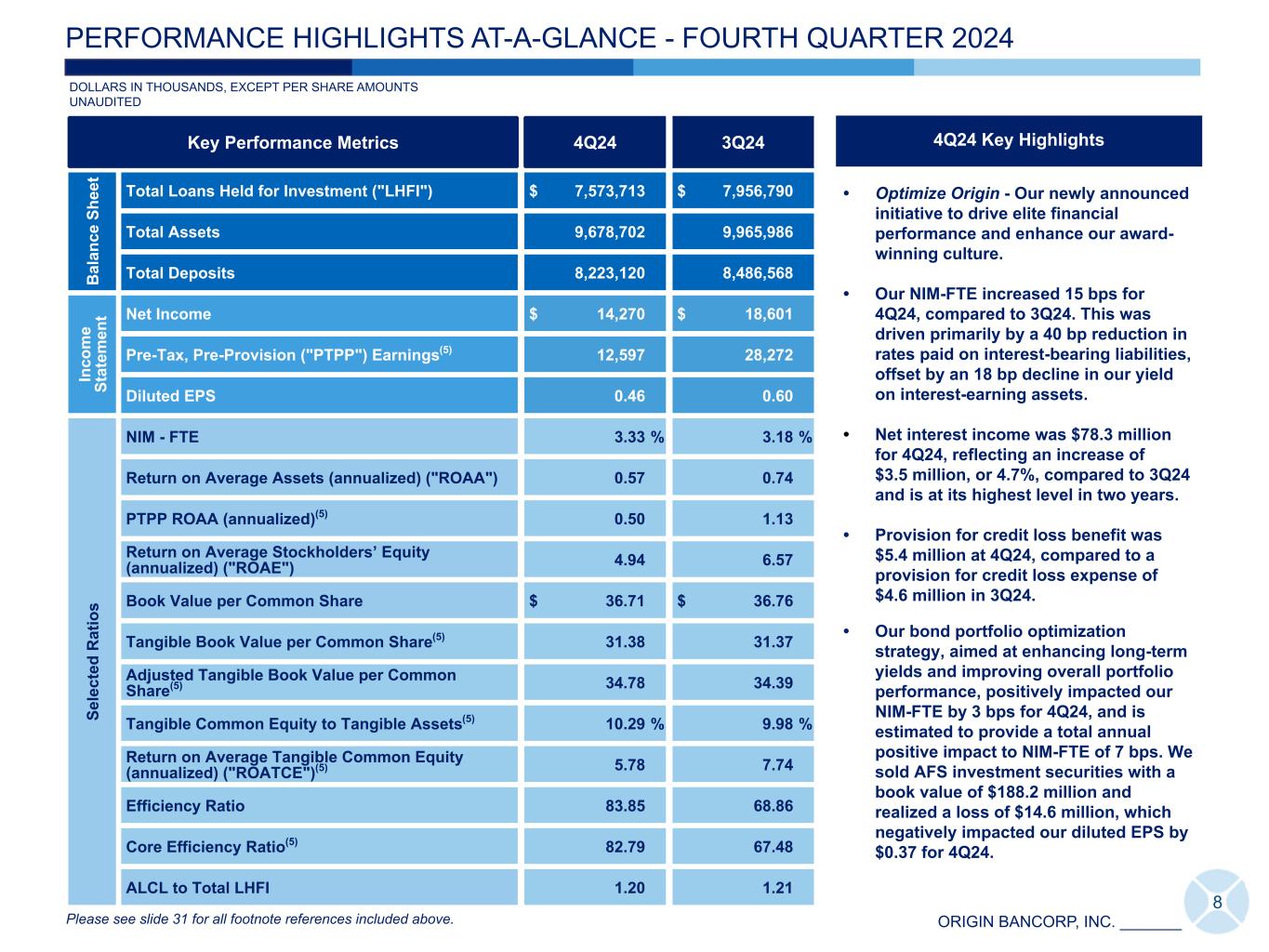
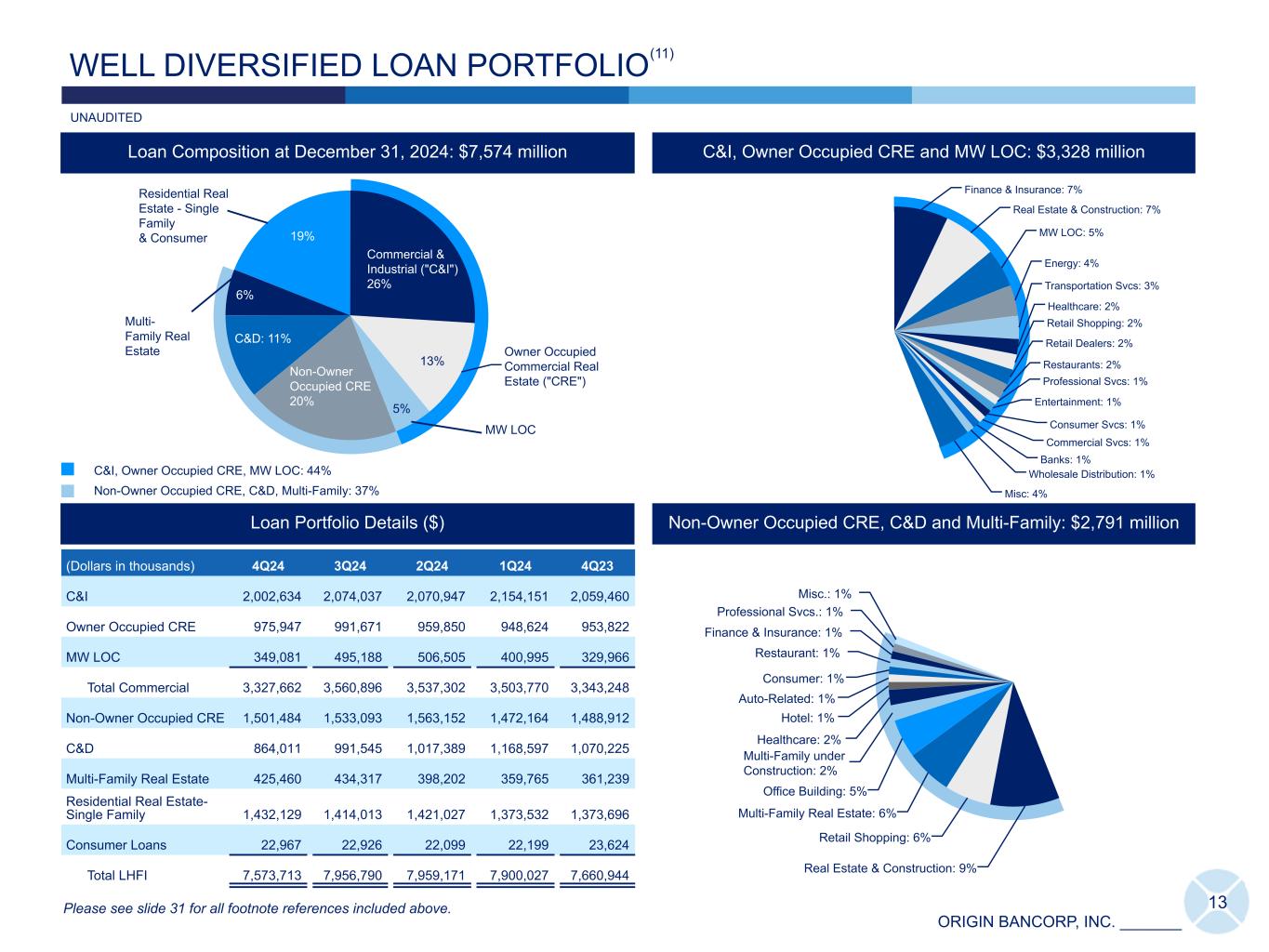
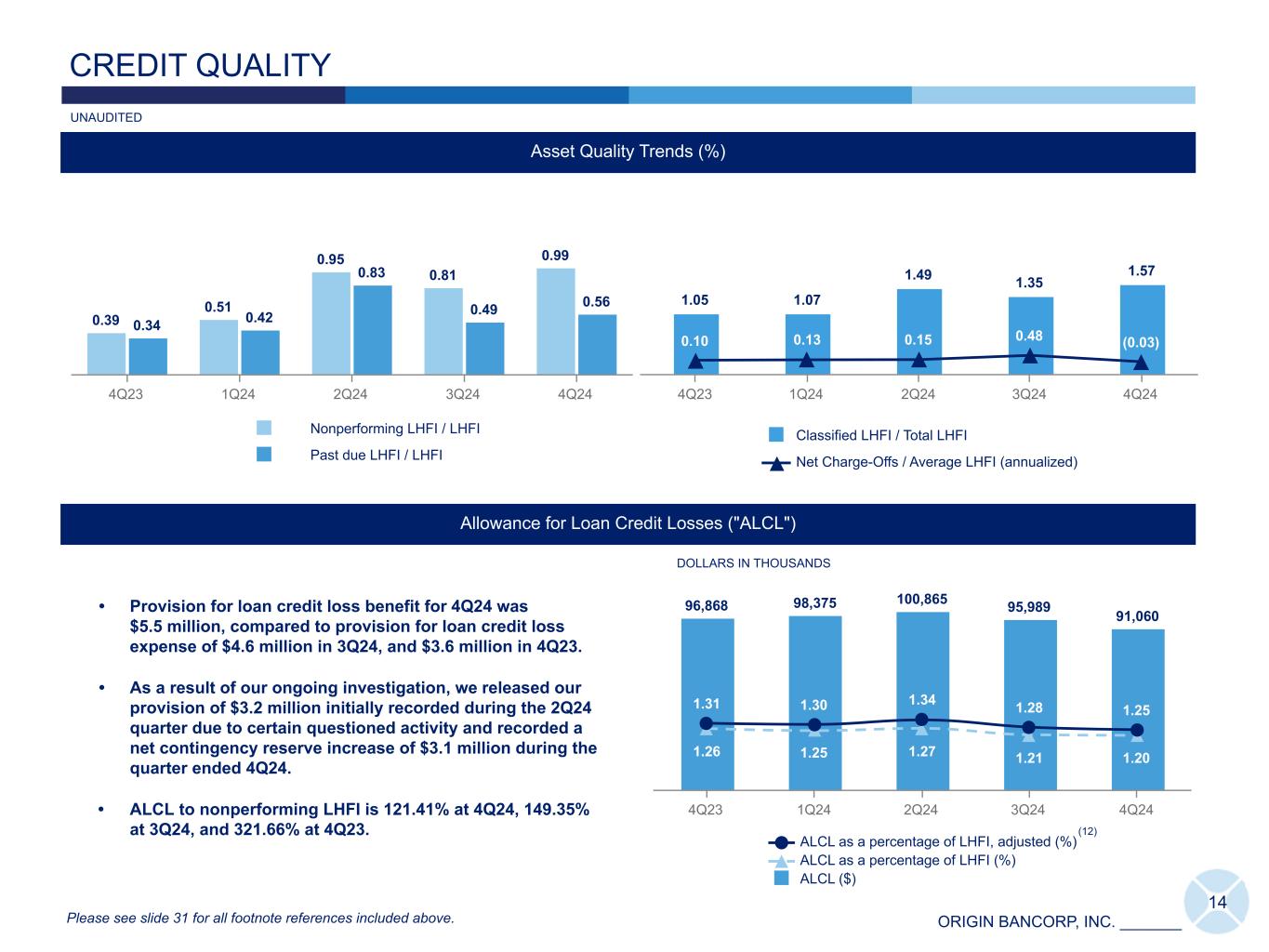
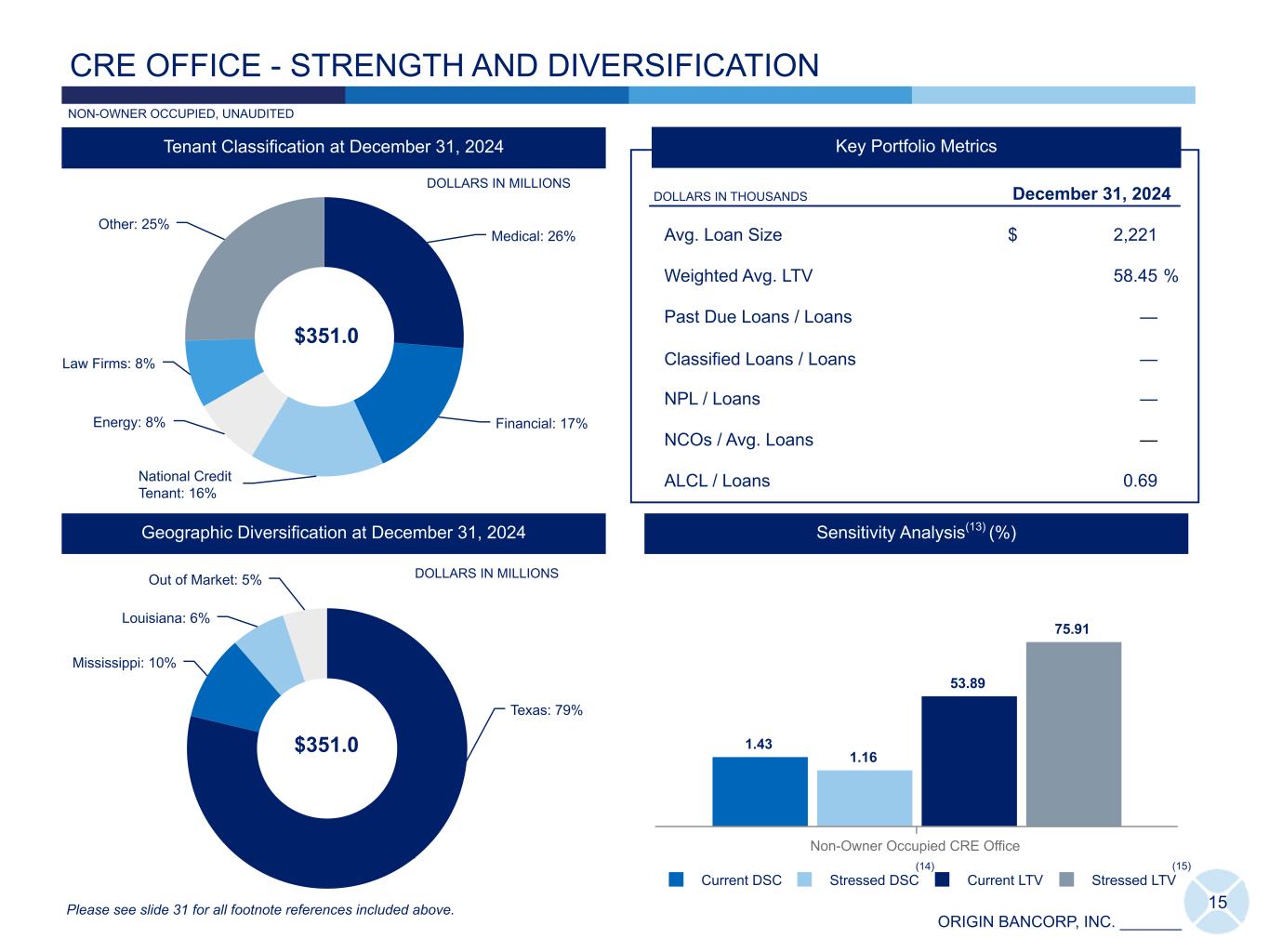
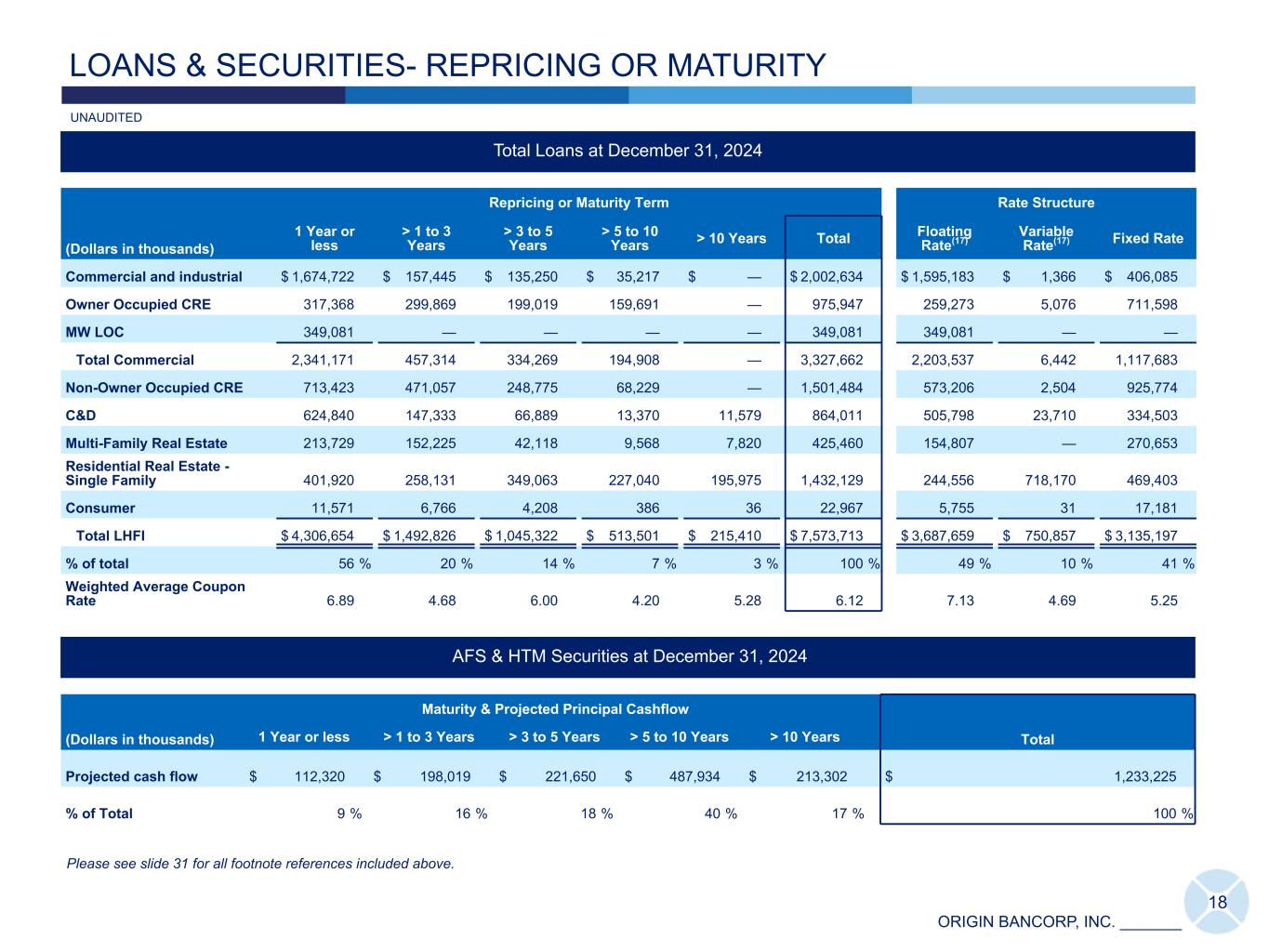
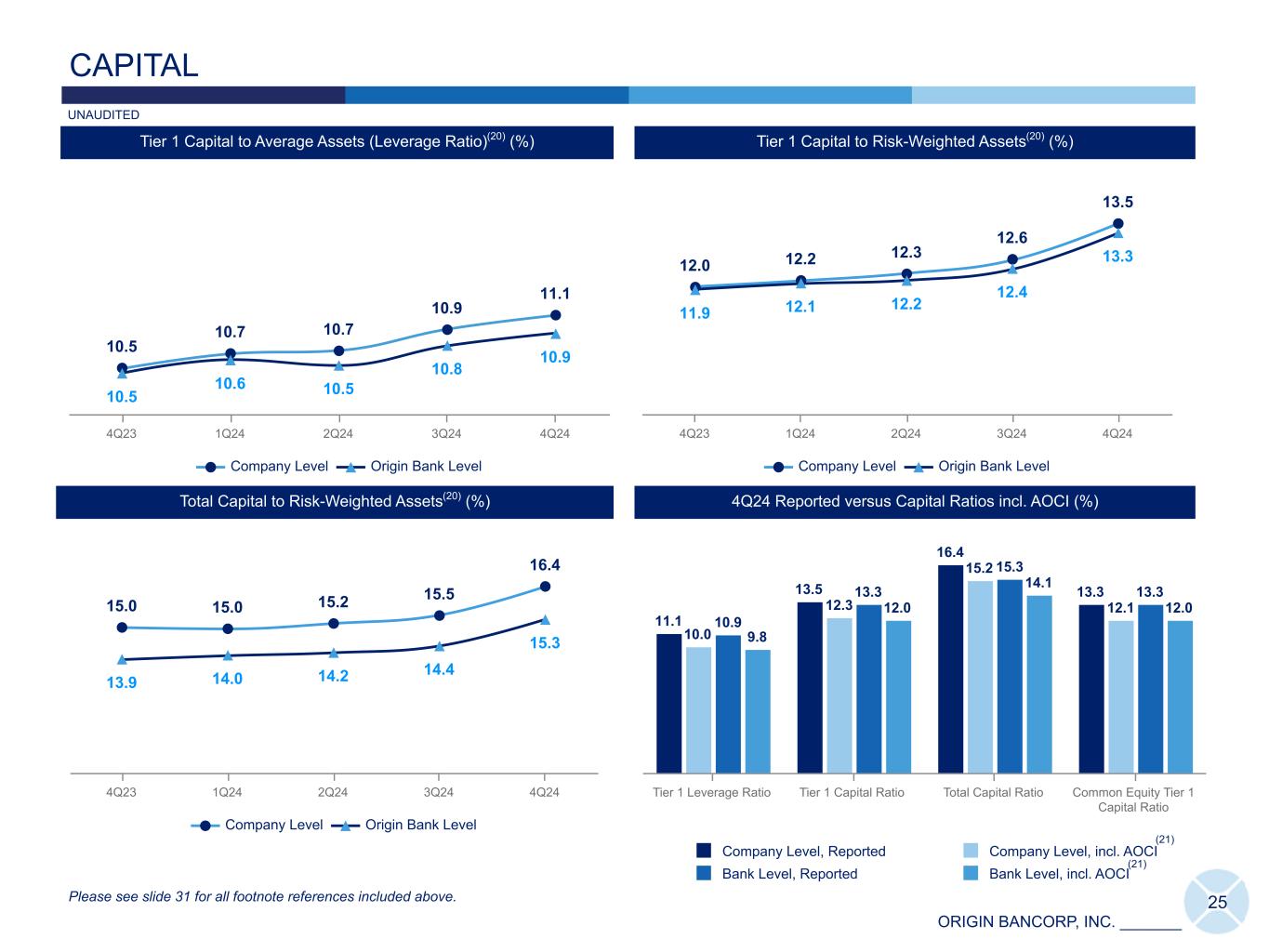
Thanks, Lance. We take a great deal of pride in the credit culture we have created at Origin. We have talked often about client selection, which is paramount to our process and optimizing our loan portfolio. While we experienced continued normalization within our loan portfolio, we are pleased with our level of charge-offs, the positive results of our client selection initiative, and the provision release for the quarter. We reported a net recovery for the quarter driven by actual recoveries of $2.6 million. On a year-to-date basis, net charge-offs came in at 0.18%, a metric we are pleased with. Our continued focus on client selection resulted in additional desired reductions, with $55 million, of which $19.6 million were classified loans. Since we began this initiative in Q2 of this year, we have achieved desired reductions of approximately $149 million, of which $100 million were non-criticized loans. We will continue this focus on enhancing the quality of our portfolio. Past due loans held for investment came in at 0.56% at year-end, up from 0.49% as of September 30 and remain within acceptable levels. Classified loans increased $11 million to 1.57% of loans as of December 31, up from 1.35% as of the prior quarter end. While non-performing loans also increased $11 million for the quarter to 0.99% from 0.81%. The increase in classified loans was primarily driven by the downgrade in eight relationships, partially offset by the upgrade of one relationship and the exit of six relationships. As to non-accruals, the increase was primarily driven by five relationships, offset by the exit of two. As we mentioned in our earnings release, the levels of both classified loans and non-accruals were positively impacted as a result of the establishment of contingency reserves related to the questioned banker activity. For the fourth quarter, we reported a provision release for outstanding loans of $5.5 million, driven by a $1.7 million decrease in the collectively evaluated portion of the reserve and a $3.2 million decrease in the individually evaluated portion of the reserve. The provision was also positively impacted by the $560,000 net recovery mentioned earlier. The decline in the collectively evaluated portion of the reserve was primarily driven by the $3.1 million reduction in previously required reserves associated with loans that paid off during the quarter. As to the decrease in the individually evaluated portion of the reserve, $2.1 million was attributed to the establishment of contingency reserves related to the questioned banker activity, $846,000 related to charge-offs, and $642,000 related to paid off loans. We did not make any material changes to the underlying assumptions in our ACL model during the quarter. The above reductions exceeded the amount of reserve required on downgrades mentioned previously, resulting in the provision decrease. On a percentage basis, our allowance decreased from 1.21% to 1.20% as a percentage of total loans held for investments and from 1.28% to 1.25% net of the mortgage warehouse. With the market's continued focus on non-owner occupied CRE office, we continue to provide added detail on Slide 15, which shows the resiliency and performance of this sector within our portfolio. As of quarter end, this segment totaled $351 million, with an average loan size of only $2.2 million, a weighted average debt service coverage of 1.43x and a weighted average loan-to-value of 58%. We continue to have no past dues, no classifieds, no non-performing loans, and no charge-offs within this sector. Lastly, total funded ADC and CRE to total risk-based capital at quarter end was 63% and 225%, which puts us in a great position to support our customers and provide strategic growth. I'll now turn it over to Wally.
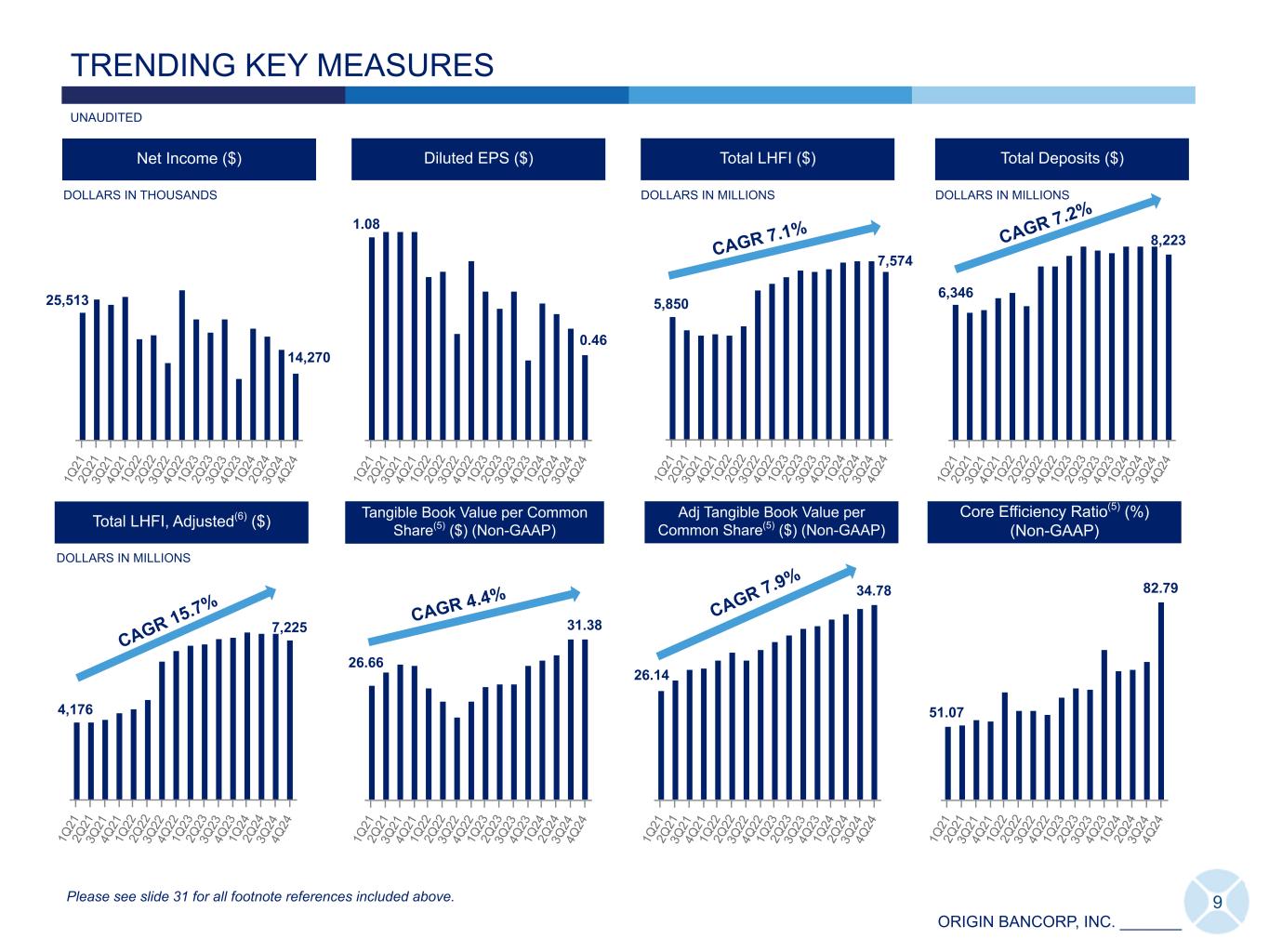
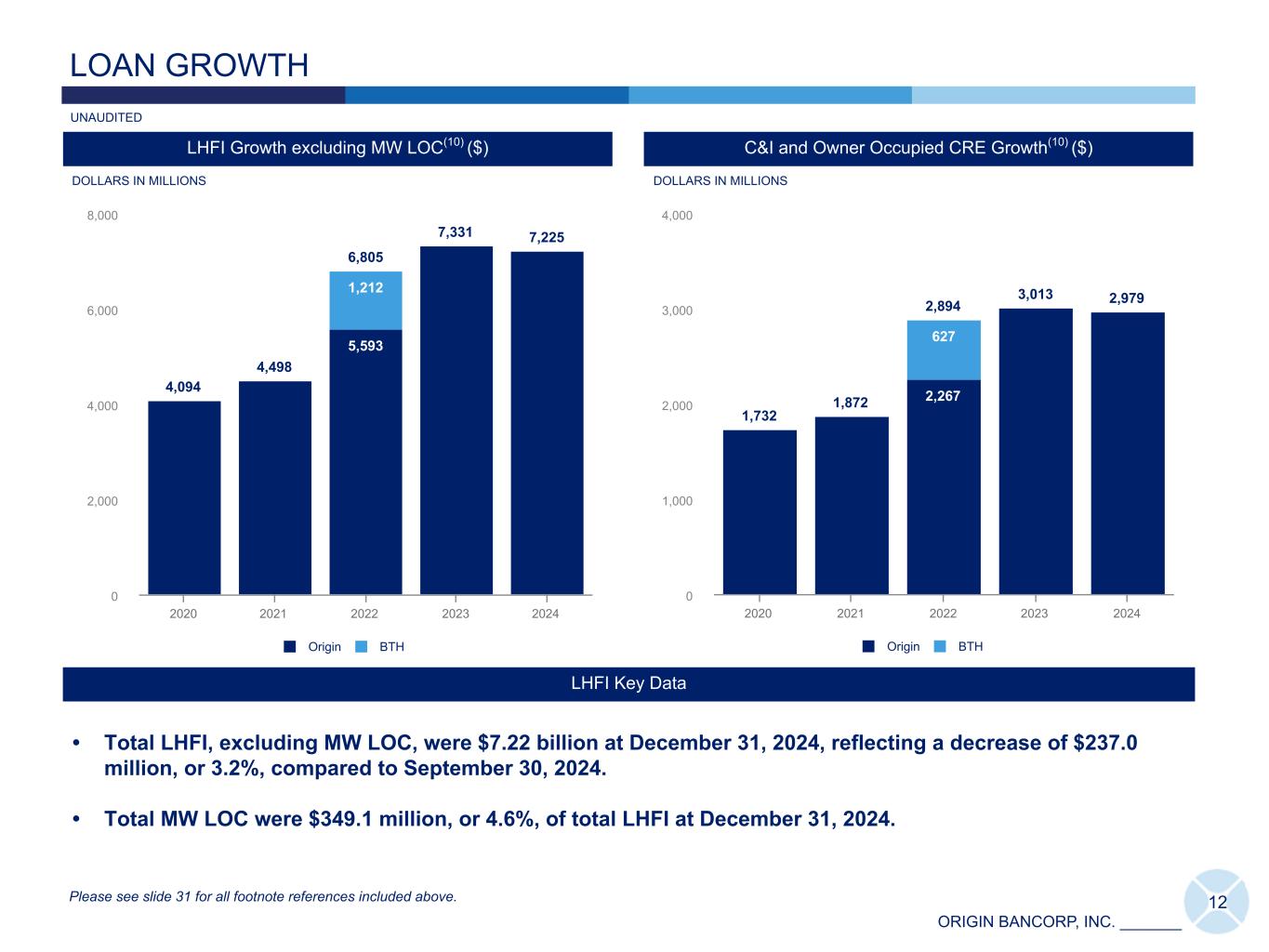
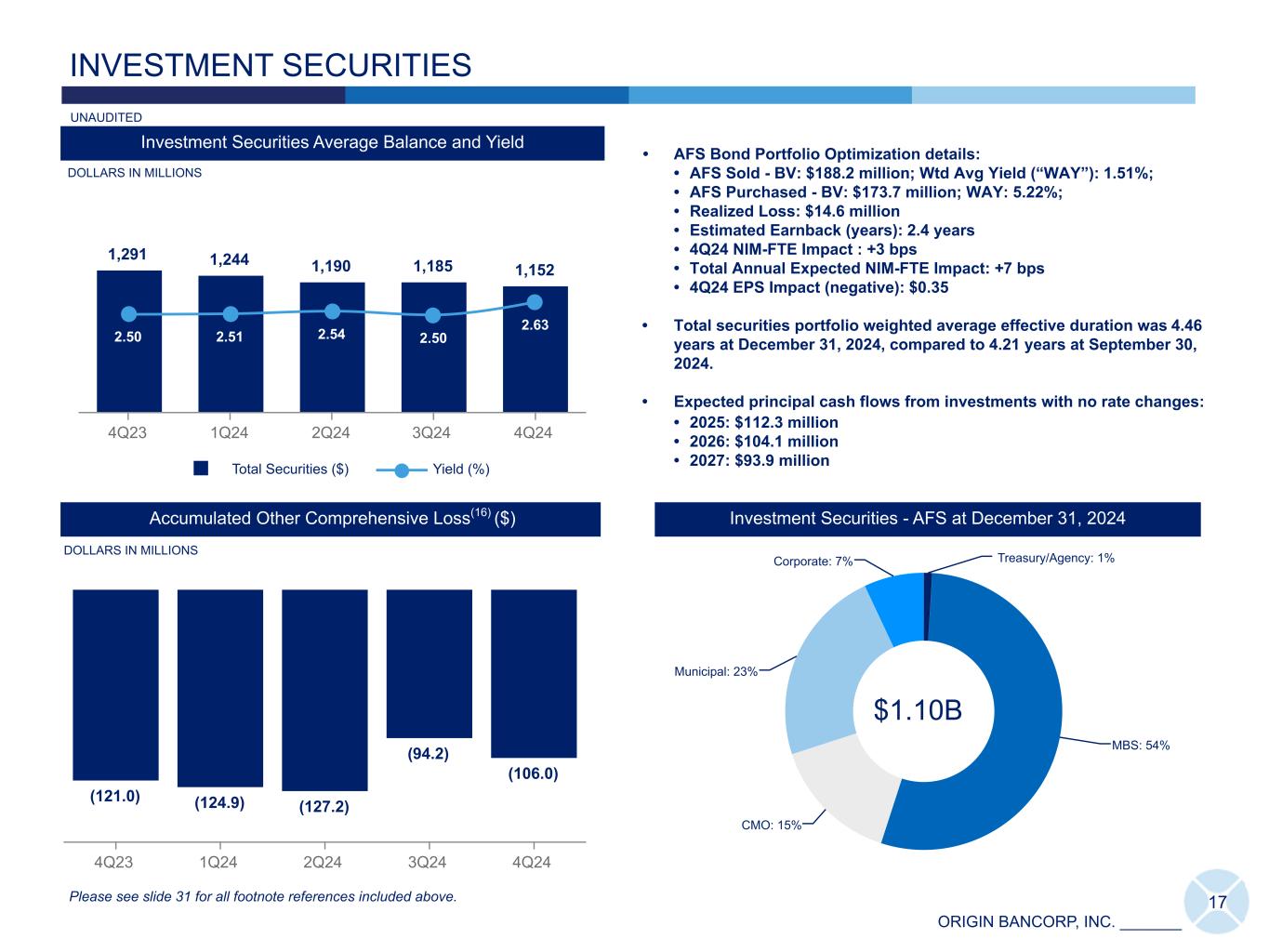
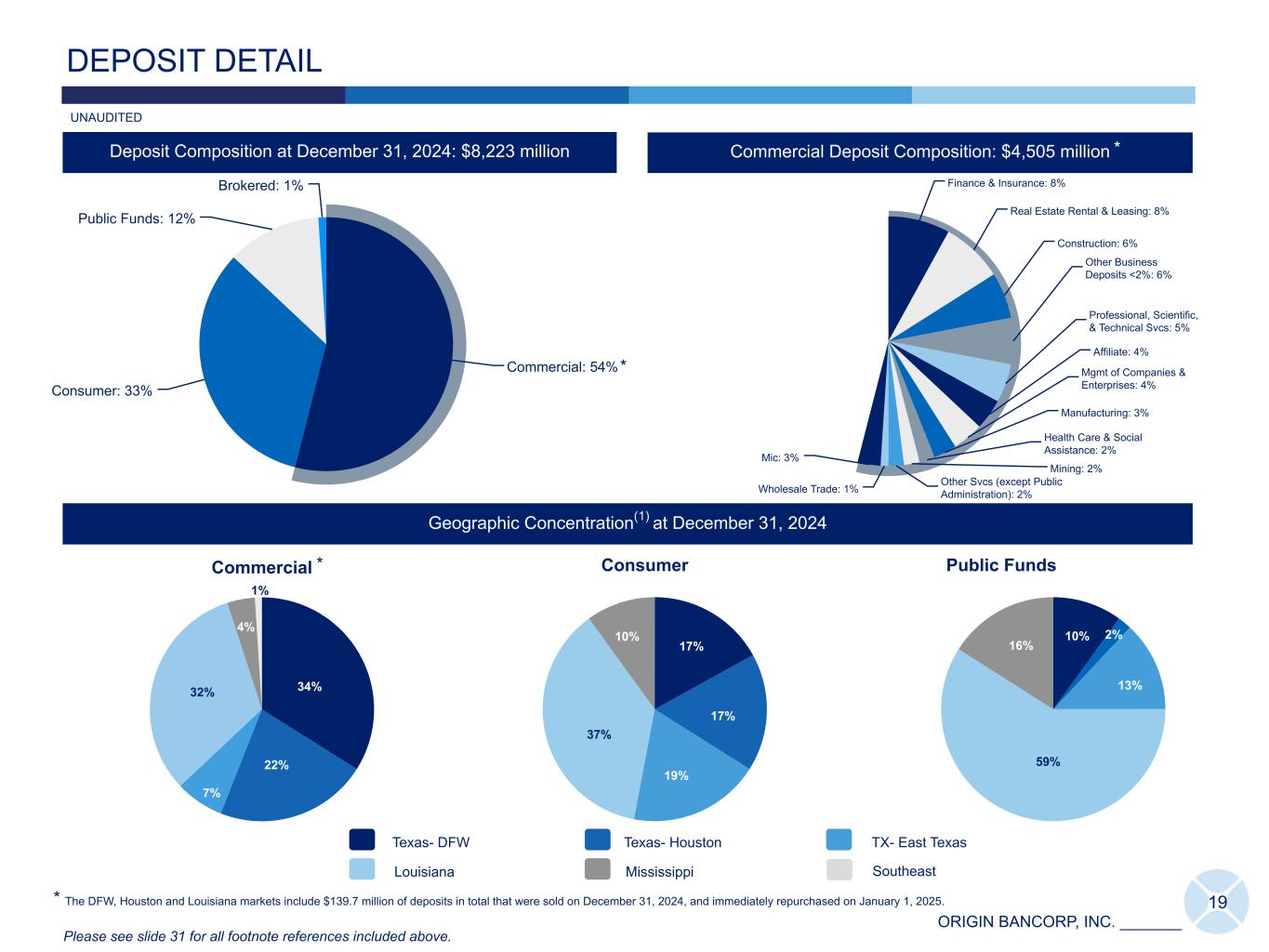
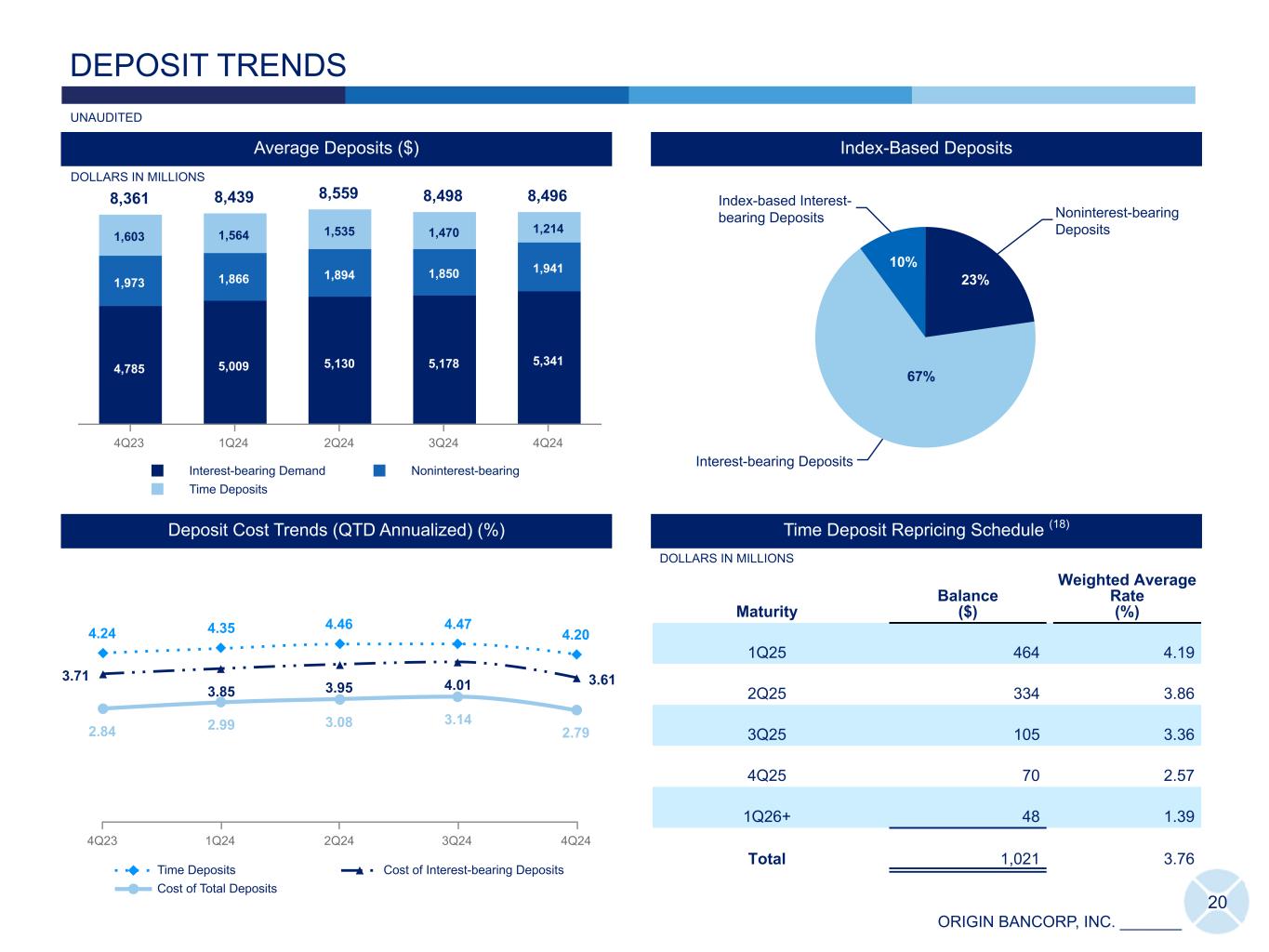
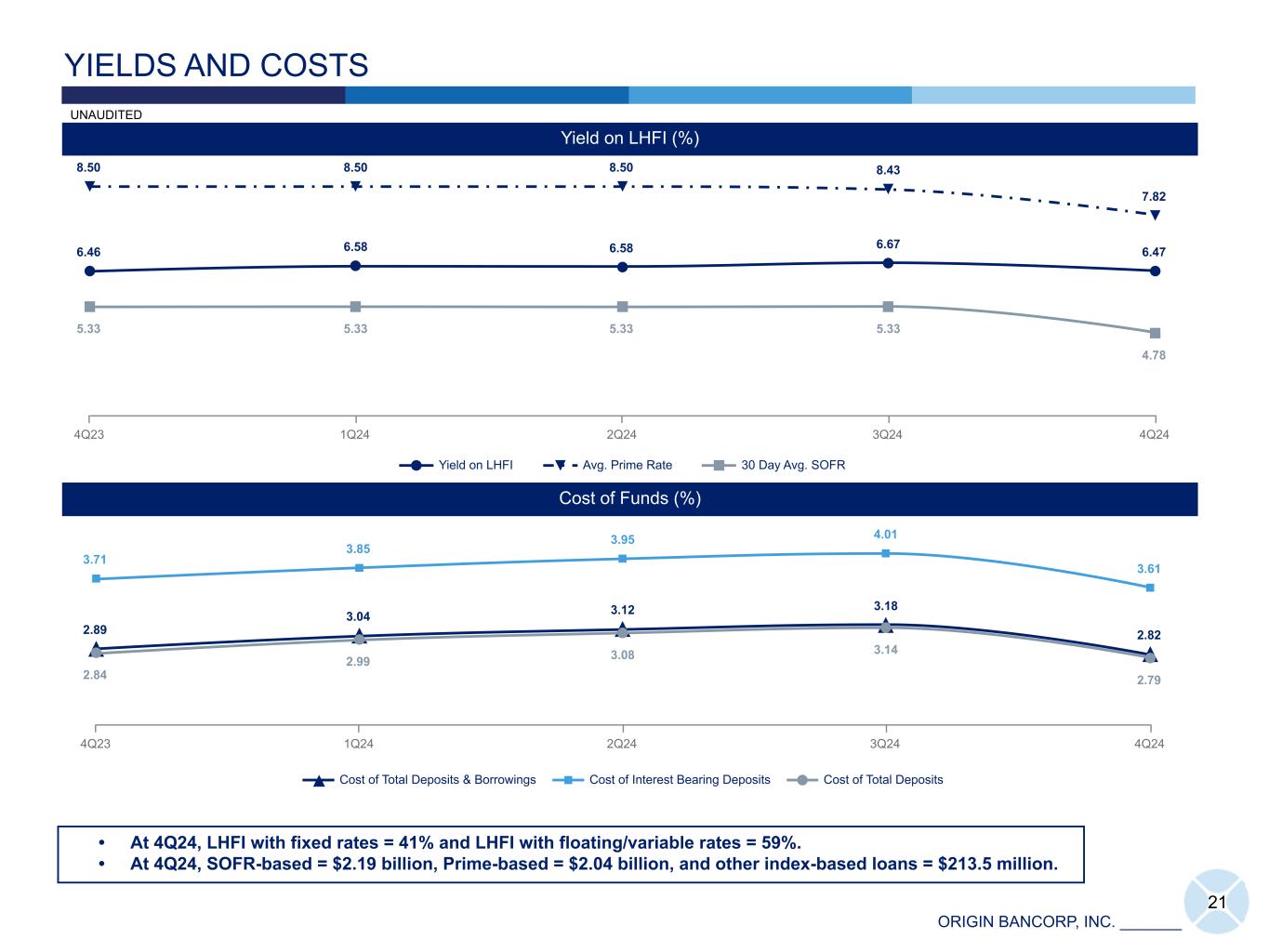
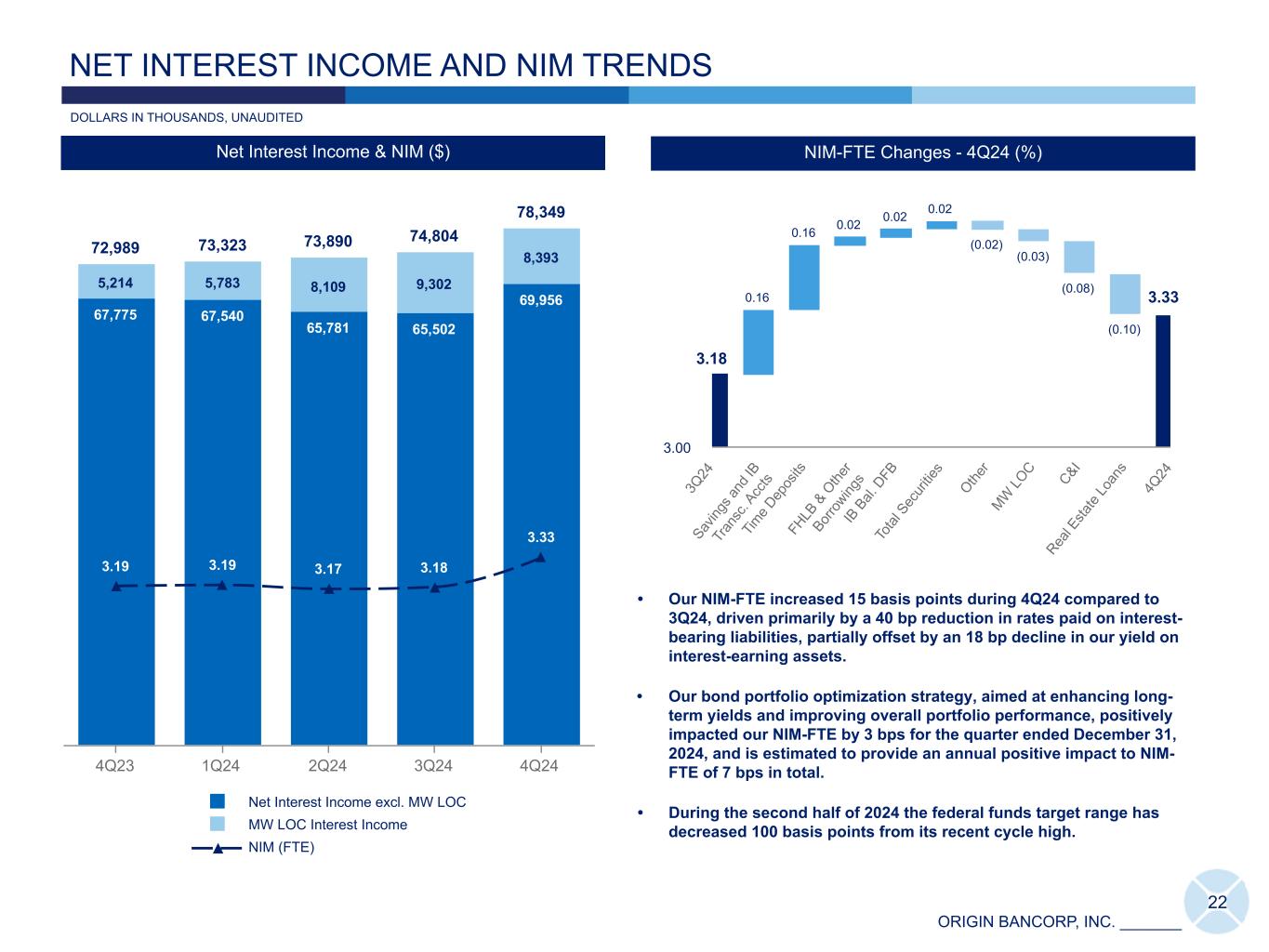
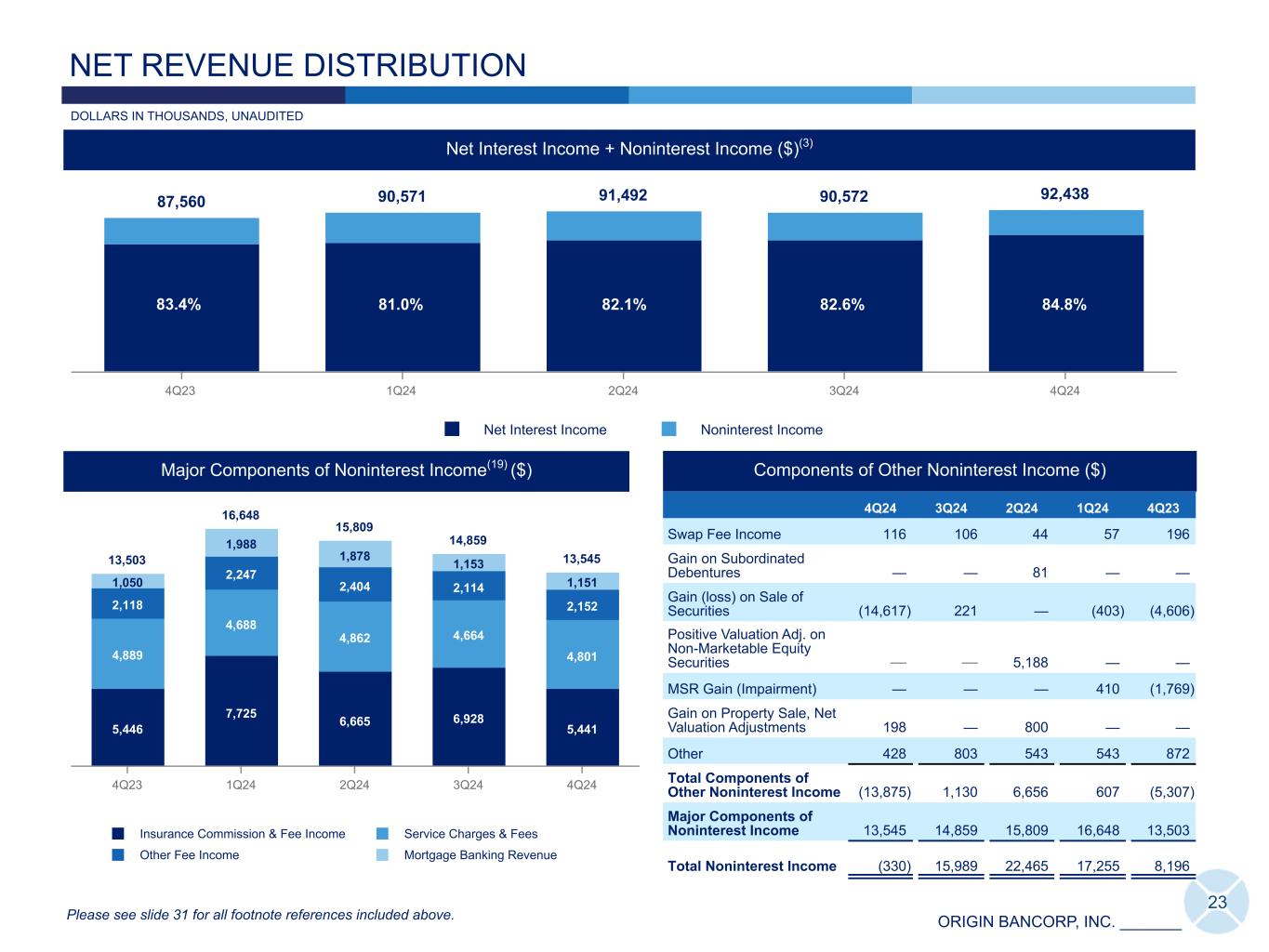
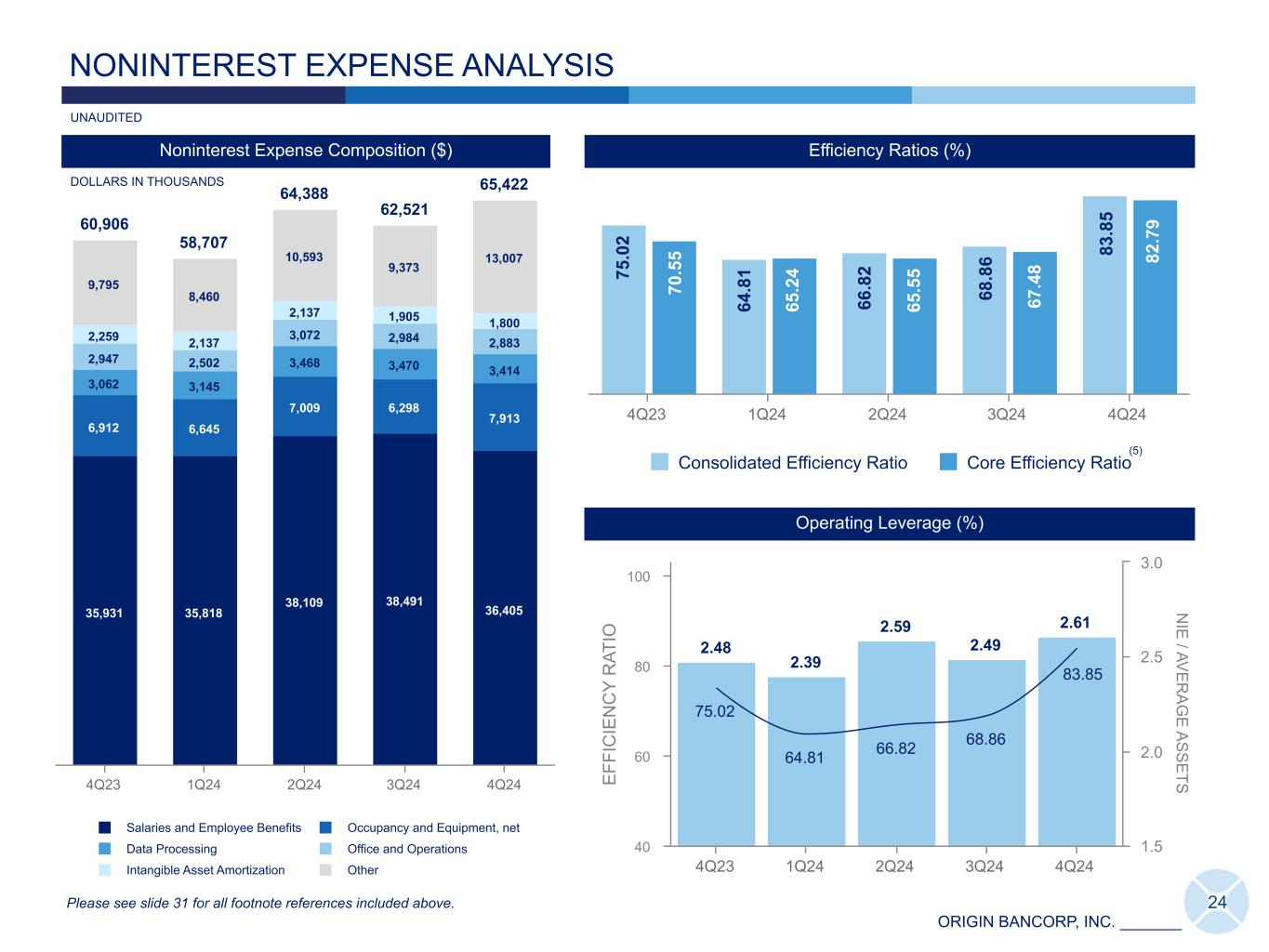
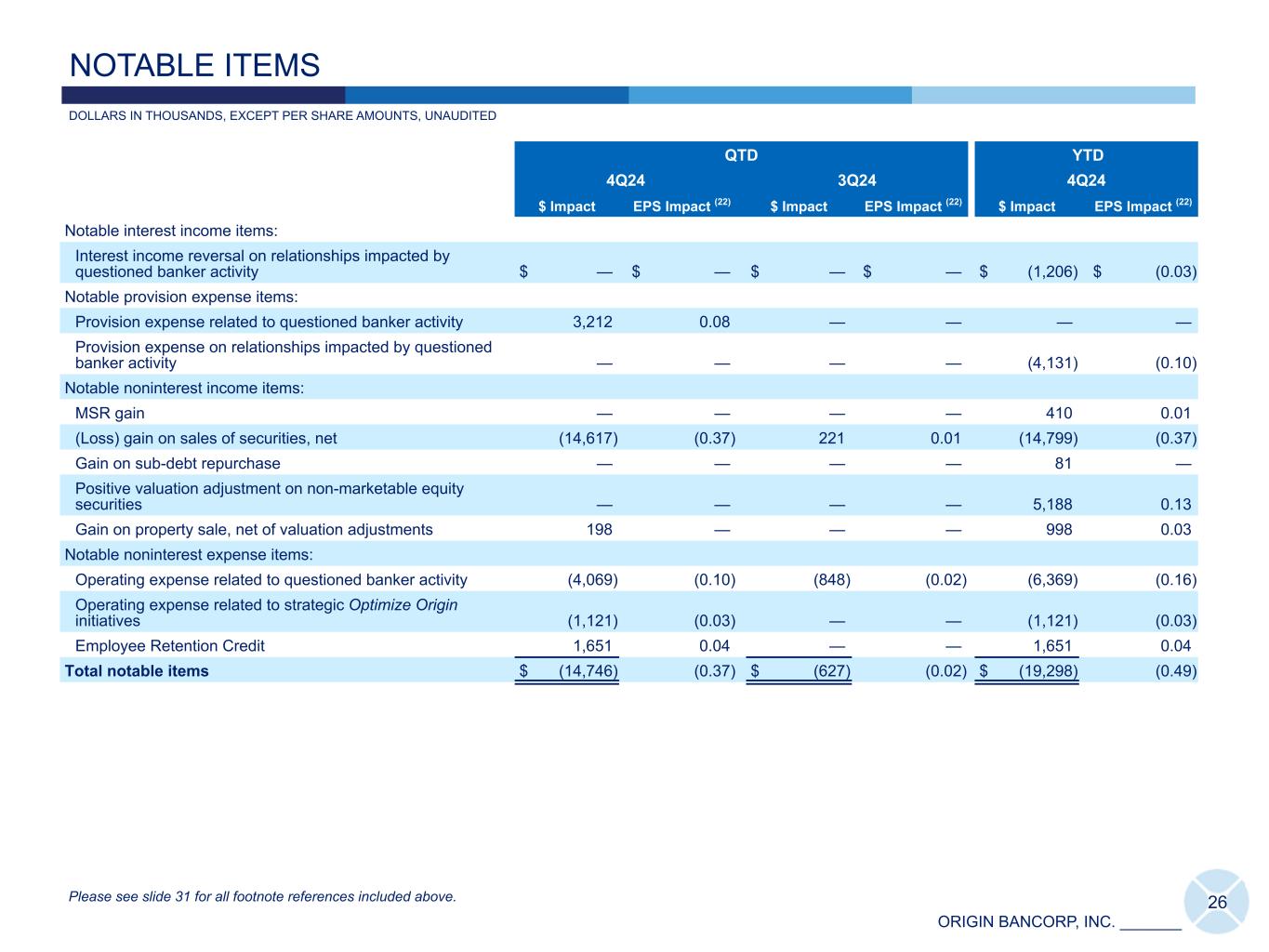
Thanks, Jim, and good morning, everyone. Turning to the financial highlights. In Q4, we reported diluted earnings per share of $0.46. As you can see on Slide 26, the combined financial impact of notable items during the quarter equated to a net expense of $14.7 million, equivalent to $0.37 in EPS pressure. On the balance sheet side, deposits were down 3.1% during the quarter. However, excluding brokered deposits, deposits grew 1.1% linked quarter. Furthermore, non-interest bearing deposits grew for the second consecutive quarter, up 0.4%. On an average basis, deposits ex-brokered increased 2.8% linked quarter, and average non-interest bearing deposits grew 4.9% linked quarter. Non-interest bearing deposits as a percent of total deposits, ex-brokered, were relatively flat at 23.3% compared to 23.5% last quarter. Loans, excluding the mortgage warehouse, were down 3.2% linked quarter. While somewhat unexpected, these declines were driven by a combination of our continued strategic focus on client selection resulting in planned reductions, elevated paydowns, and lower new loan production, which was driven in part by our strategic decision to stay under $10 billion in assets. Our loan-to-deposit ratio ex-mortgage warehouse remains below our 90% target at 87.9% and our deposit and liquidity trends remain strong. We were able to use excess liquidity to allow brokered deposits to roll off of our balance sheet during the quarter with brokered deposits declining by 81%. Given the strong deposit trends we have experienced in the latter part of 2024, our bankers across our markets are laser-focused on growth. We are excited to broaden our focus in 2025 to reaccelerate our loan growth with an expectation of mid- to high-single-digit loan growth in 2025. We anticipate this growth will be funded by new deposit growth and existing on-balance sheet liquidity. Turning to the income statement, net interest margin expanded 15 basis points during the quarter to 3.33%, well above our expectations for roughly 10 basis points of margin compression, while slightly elevated interest recapture on a non-accrual loan payoff and the partial impact of our securities optimization trade, both benefited the margin during the quarter. The primary drivers of upside relative to our expectations were better-than-expected loan yields and deposit costs. Loan yields benefited from a combination of our continued focus on disciplined pricing and a steeper yield curve during the quarter, while deposit costs trended in line with our historical beta trends compared to our conservatively estimated zero beta on non-indexed deposits. Moving forward, as you can see in our outlook, we expect margin expansion to 3.45% in Q4 '25 and 3.40% for the full year, plus or minus 10 basis points. In this outlook, we assumed 225 basis point Fed rate cuts with a relatively stable shape of the yield curve and a deposit beta in line with our historical trends. We also expect benefit to the margin from our Optimize Origin efforts from the remaining benefit of the fourth quarter securities optimization trade, the planned repurchase of our $70 million in bank-level subordinated debt during the first quarter of '25, and more efficient liquidity management practices that were implemented in the fourth quarter. Combined with our loan growth outlook discussed earlier, these expectations helped drive our net interest income outlook of mid- to high-single-digit growth for the year. Shifting to non-interest income, we reported negative $330,000 in Q4. As highlighted in our notable items slide, the quarter included a $14.6 million loss on sale of securities that was only partially offset by gains of $198,000 on asset sales and valuation adjustments. Excluding these notable items, and the $221,000 net benefit of notable items in Q3, non-interest income declined to $14.1 million from $15.8 million in Q3 due primarily to normal seasonality in our insurance business. Our non-interest expense increased to $65.4 million in Q4 from $62.5 million in Q3. Excluding $3.5 million of notable items in Q4 and $0.8 million in Q3, non-interest expense was up just slightly to $61.9 million from $61.7 million. Q4 expense was better than we had anticipated. However, it did include the partial benefit of branch consolidation and banker profitability decisions that were made as part of Optimize Origin during the quarter. Importantly, these decisions are anticipated to drive additional expense benefits in both Q1 '25 and Q2 '25. Moving forward, our current outlook calls for Q4 '25 non-interest expense to be flat to down slightly when compared to Q4 '24 and 2025 expenses to be up low single digits compared to 2024 after excluding notable items as discussed above. Lastly, our financial outlook for Q4 '25 and 2025 includes the roughly $21 million in pretax pre-provision benefits that we highlight on Slide 5 as part of our Optimize Origin efforts, which started earlier in 2024, but began in earnest during Q4 '24, combined with the benefit to net interest income from our loan growth target discussed earlier. Importantly, our ultimate target is to deliver an ROA in the top quartile of our peer group. To this end, we are currently working actively on other initiatives as part of Optimize Origin around both revenue and expense optimization that, while likely launched during 2025, are not considered in our 2025 financial outlook. Furthermore, as Lance mentioned, we are looking forward to the third-party benchmarking study to help management identify additional areas of opportunity towards achieving our ultimate target, and we anticipate delivery of those results in the coming weeks. We are excited about the opportunities in front of us and we'll look forward to reporting on our progress as 2025 unfolds. With that, I will now turn it back to Drake.
Thanks, Wally. I'm optimistic about Origin as we enter 2025. I feel that way because I know what we are capable of and how committed we are to delivering results. From my 40 years at Origin, we have been a growth machine. That mentality is what led us into Dallas and Houston, is what led to sustained growth in Louisiana, Mississippi and is what drove our expansion into East Texas and the Southeast. I acknowledge that it was a challenge to stay under $10 billion in assets in the past two years, but it was the right strategy. Origin has proven throughout our history that we have come out of challenges as a stronger and better company, and that is the case today. We have strengthened our team and refocused our strategy to drive elite-level financial performance as we accelerate into the next evolution of our company. I am passionate about our future as we optimize Origin. Thank you for being on the call. We'll open up for questions.
Operator
Our first question comes from Matt at Stephens.
Speaker 6
I appreciate all the good disclosures around this optimization plan. I want to dig down a few of the items, maybe first off on the loan growth front. I think we're now talking about this loan growth in '25 in the mid- to high single-digit range, that's quite the inflection from what we saw in 2024. What else can you tell us about just how cautious you were about growing the balance sheet last year and why you expect to grow the loan balance more meaningfully in 2025?
Matt, I want to commend Lance and his team at the bank for their efforts. We discussed what it took to stay below the $10 billion mark, a situation I’m not accustomed to navigating. Throughout this process, we concentrated on limiting commercial real estate (CRE) and examined our client selection process closely. The effort we put into this was significant, especially since over $100 million of the $149 million in loans we processed were performing loans that ultimately didn’t meet our comfort level. Our evolving relationships weren't yielding the expected outcomes. This led us to assess the impact of preparing for the $10 billion threshold and how we would categorize our loans overall. It was challenging, but we analyzed each market to determine our focus as we head into 2025. In the fourth quarter, we intensified our market engagement to evaluate our pipeline and direction, and we feel very optimistic about returning to our typical growth pattern. There shouldn’t be significant changes in our loan categories; we will continue to prioritize Commercial & Industrial loans, as well as owner-occupied CRE projects with which we already have established relationships. With all of this in mind, we are confident that growth will certainly pick up in the latter half of the year. We believe we have a solid foundation as we begin this year.
Speaker 6
Okay. I appreciate that, Drake. And then I guess, within that optimization plan on Page 5, you give us those five components that give us the $21 million of the pretax savings. So if I'm interpreting that right, it sounds like the implementation of those five specific items can get the bank back to that 1% ROA, give or take, that were called out. You think you can get there by the fourth quarter of '25, and then those two remaining items on Page 5, the Argent and the third-party benchmarking, sounds like those two items have not been implemented, but if and when they are implemented, it would be further improvement beyond that 1% ROA. Is that the right interpretation?
Absolutely. We have strong confidence in our ability to achieve over 1% ROA at the end of this quarter. I'm very proud of the team for their hard work and dedication in such a short time to not only develop the plan but also to implement and maintain key morale and culture, achieving great success. We are very confident in our capabilities. However, 1% is just the initial target. We recognize that we need to be performing at least at the same level as our peers to remain competitive. Our goal is to exceed peer performance and return to the 1.30 run rate ROA we had in the fourth quarter of 2022.
Matt, this is Lance. I would add a little color to Drake's point, clearly, a challenge staying under $10 billion. But if we think about the economics of pushing Durbin back to 2026, I think it was a really smart strategy. So for the back half of the year, our whole thought was around what do we want our balance sheet to be positioned at on January 1 to be able to launch forward? As Drake talked about, that came through client selection, that came through a really good push of our bankers on increasing core liquidity. We had really nice core deposit growth of about 4% for the year. It's a little covered up because we then took those core deposits and paid down about $360 million in broker deposits. So where we're positioned now is in a really strong place. We also feel we have a tremendous amount of runway now with our liquidity, our loan-to-deposit ratio, with our low percentage of brokered deposits, but then also the way that we've managed our portfolio. With a 63% ADC ratio and a 225% CRE ratio, we really can take the shackles off of the bankers that we've arbitrarily held on. So when you look at the opportunity in the markets, I mean I look at what our pipeline looks like, which is solid but really building. We see clearly the opportunity to do 7%, 8% loan growth this year as we think through it. Because of one of the places that we had sort of applied a slowdown on was construction lending, that takes a little bit of time to sort of get that ramp back up. We're presently doing and we're seeing that pipeline build. Some of that, obviously, the funding doesn't kick into the third or fourth quarter.
Speaker 6
Okay. Appreciate that, Lance. And I guess one of the things that struck me, I guess, on this discussion is that many of these initiatives that we've highlighted on the optimization, these are already underway and in some cases, already made good progress on a number of these. So help us just appreciate, I guess, the timing of that $21 million of annualized benefit that was called out. Is this something that's going to be even throughout the year or kind of more back half loaded? Just how do you think about the timing of when you could see the benefit of many of these savings?
Matt, it's Wally. So on Slide 5, the items that have numbers with the annualized benefit, I'll go through each one of those. The branch consolidation is going to occur in the middle of the first quarter. So we'll see about half of that benefit in the first quarter, and you should see the full run rate benefit in the second quarter. The banker optimization and profitability optimization numbers that you see were a result of actions that were taken during the fourth quarter. So some of that's already in the run rate, and you'll see the full impact of that in the first quarter. We executed the securities optimization trade around the middle of the fourth quarter. So we got about half of that, a little bit less than half of that benefit in Q4, and the rest will be realized in the first quarter. The bank-level subordinated debt, we will redeem that in the middle of February. So we'll avoid half of that excess expense in the first quarter, but then it's already in the run rate. This is an avoidance of what we were anticipating was an increased cost. The cash and liquidity management opportunities we quantified occurred late in the fourth quarter. You'll see the full benefit of that, and there are some ongoing efforts there. Hopefully, we can exceed that benefit as well. Hopefully, that helps.
Speaker 7
Just a couple of follow-ups to the outlook that was rolled out with all the efforts. Obviously, a pretty big range on the margin, Wally. Can you just help us appreciate the confidence in betas, which I think you mentioned are expected to perform in line with history on the way up? I think, if I recall correctly, you were a little surprised by how strong things were on the way up, and what gives you confidence that they'll perform the same on the way down? And then if you could just give some color around the incentive program and the ability to drive core deposit growth as we move forward.
So Mike, we have a much better understanding of our deposit betas now. In 2023, we invested in a new system when we brought our asset-liability management efforts in-house. Before this, we outsourced it and relied on industry trends for our net interest income modeling. With the new software, we included a deposit module that analyzed our historical deposit betas by product type. Last year, I conservatively estimated that deposit data would essentially be zero during the first couple of Federal Reserve rate hikes. We believed that deposit pricing lagged when rates increased, so it seemed reasonable to expect a similar lag when rates decrease. In the fourth quarter after the September rate cut, thanks to our retail staff and market presidents, we closely managed how our customer deposits were priced, implementing a targeted strategy on a product-by-product basis to align costs with the industry. As a result, our deposit betas in the fourth quarter were not zero, but aligned with our historical trends, showing about a 50% beta on non-maturity deposits. Our experience with the initial 100 basis points of rate cuts from the Fed gives us confidence that we can anticipate a similar outcome if further cuts occur, dictated by market trends and our liquidity situation. Additionally, we successfully managed our deposit costs while growing our deposits, excluding brokered deposits. This positions us confidently for our model in 2025.
Yes. I would add that was a really good question about the incentive plan because that is the way that we drive behaviors. I'll kind of give you some detail around how the banker incentive plan is created, so you can kind of see how strategy is implemented throughout. But bankers are really paid out for us in three areas. One is corporate bank ROA. We want to ensure we align our bankers with the top of the house driver that's critically important, especially as we move forward into this top quartile performance. Secondly, there's a market piece from which they work. There were not growth metrics associated with the markets this year. Those payouts were around market ROAs and then a loan-to-deposit ratio for that market. As we built it out this year, it was critical for us for the markets to self-fund because, again, we were so focused on positioning where we were going to be in 2025. Then as we got into individual production per banker, we actually paid more for deposits than we paid for loans in 2024. We use those weights, and we use caps inside of those to emphasize the specific areas of production where we desire. For 2025, we spent a lot of time on that last week. The shift there will be back to sort of a 50-50 payout on loans and deposits, making sure to open up some caps on growth, getting back aggressive, sort of taking the shackles off the bankers again to create the runway but also create the behaviors through the incentive plans. We feel like we've got the right structure to do that.
Speaker 7
That's a very thorough response. Thank you for that. I wanted to switch topics slightly and mention something I noticed in the prepared comments regarding the potential restructuring of the mortgage business. I understand you have a warehouse, and many banks have moved away from that sector. Is that something being considered? Could you provide more details on your plans to improve performance in that area?
Yes, Michael, first of all, we really appreciate the warehouse, and we will continue to focus on the customer base and the relationships we have there, including with our shareholders. We anticipate some growth in that area for 2025. Regarding the mortgage business, I can’t tell a shareholder that it operates the same way it did five or ten years ago. We are carefully evaluating how to deliver those products appropriately and fulfill our responsibilities in these markets, while also meeting shareholder expectations. We are exploring several models, and it’s too early for us to finalize our approach, but making mortgages accessible to our clients is a priority for us, and we need to do it more efficiently.
Speaker 7
Very helpful. I just have one last question about capital. It remains very strong here. I know you haven't recently utilized the buyback, but even with the subordinated debt, capital appears to remain robust. Is there any reason you wouldn’t consider using the buyback? Also, now that the new administration is in place and you’re on the profitability enhancement program, does mergers and acquisitions become a topic of discussion again at some point? Would you consider retaining capital for that purpose?
Yes, we have a buyback plan in place for $50 million, which I consider a useful tool for the team. Currently, we see significant growth opportunities, particularly in the Southeast and East Texas, which has been fantastic for us. There are chances for growth in the Southeast, and I believe we have a strategy for capital utilization, including sub-debt opportunities. With crossing the $10 billion mark, we must ensure our regulators feel assured that we're ready to operate at that level and have the capital to proceed. Over the next 12 to 18 months, our focus will be on executing our organic growth strategy, alongside redeeming sub-debt to drive more value per share. We will continue to pursue organic growth and also build relationships for potential M&A opportunities. Regardless of whether we succeed in M&A or enhance our organic growth, I feel optimistic about the prospects for expansion. I'm excited about how we can utilize excess capital now, viewing it as a runway for future growth.
Speaker 8
I did want to follow up really quick on that hiring comment. You've been very successful in the past on the team lift-out strategy. Is there a hiring opportunity in 2025? And is that baked into the expense guidance?
It's not baked into the expense guidance. But I will tell you that there is significant opportunity for us. We're going to allow our market leaders to grow their business the way they see fit based on our focus on what we want our loan portfolio to look like. What that means to me is we're going to be heavily focused. If there's a C&I team that comes along that fits our culture, we are going to jump at that opportunity. I mean that's how we've grown through the years, and that's where our real value increases. We think that's the true opportunity for us as dislocation starts to heat up.
Speaker 8
Got it. And then I wanted to touch on Origin. It sounds like that investment will go over the 20% ownership mark in 2025. Can you just remind us how that changes the accounting treatment and how it could impact the income statement?
Woody, I don't think that we're prepared to answer the latter part of that question. But when we get to 20% ownership, we would essentially trip an accounting standard that would require the equity method of accounting, where we would represent our owned portion of their earnings. The way we are looking at it is an opportunity to help offset the ultimate impact of the Durbin amendment when that kicks in. So that might help you get a general sense of the earnings impact.
I may jump in a little bit on the timing of that too. We've made a lot of progress to get to about 19% ownership. The management of Origin has been incredibly helpful in helping us identify shares when they become available. I would love to do it as quickly as possible; the reality is, any seller on the Ardent side at this point will probably want to wait until they get their current valuation back, which would probably be about April. So I would think that would probably be a Q2 event.
Speaker 8
Okay. That's helpful. And then, yes, well, you sort of touched on that last question, but it was going to be on Durbin and just any update on how you're thinking about the Durbin impact, which I guess will be a back half of 2026 event?
Correct. Yes. Assuming we cross $10 billion this year, which we do assume it would kick in, in the third quarter of 2026. Our current estimates suggest that, that would be roughly a $5.5 million to $6 million pretax impact annually.
Operator
Our next question comes from Manuel at D.A. Davidson.
Speaker 9
I appreciate the commentary this morning. Just wanted to follow up on Argent a little bit. I understand that a lot is up in the air. But if we assume it replaces Durbin, is there also an assumption that it could potentially grow faster than what your fees were growing previously? Is there any other color you can add to Argent's potential?
Manuel, to clarify, I mentioned that it partially offsets Durbin. Argent has been an incredible growth story. We don’t manage the company, so I can’t speak to their future growth expectations. However, if we look at past performance, there seems to be a significant growth opportunity from that investment.
Yes. I couldn't be more excited about Nate and the team that he has built. When they came on, we were very clear in our expectations for them to lead with deposits, which they did. We ended the year with around $60 million in deposits and about $35 million in loan growth. We're projecting loans and deposits to be close to $115 million at the end of this year. So you see pretty significant growth in both loans and deposits that could be enhanced with continued hires. We were a little bit slower in getting their permanent locations in Mobile and Fort Walton. We were slightly behind our schedule and where we thought from that run rate perspective. But the client acquisition has been outstanding. The loan book they're building is exactly what we thought it would be. It's about 77% C&I, nice profit and only about 10% to 15% CRE. We knew that's what they were going to be when we grew them. Their portfolio looks really strong, and the pipeline looks really strong. So when we talk about levers to pull on going past the 1% ROA, I think the Southeast is a giant key there.
Speaker 9
I appreciate that. Shifting a little bit over to the NIM. I think the answer here is going to be deposits, but there's a pretty wide range of NIM outcomes by fourth quarter of next year. Can you kind of walk through the biggest wildcards positively and negatively for that NIM outcome? I believe it's deposits, but just kind of think you can describe that a bit for me.
Sure, Manuel. We do recognize that's a wide range, which is why we also gave you some guidance around our dollar NII growth expectations. Regarding the NIM itself, liquidity impacts that pretty significantly. As you see in the fourth quarter, the deposit beta has a very meaningful impact in quarters following Fed rate cuts. We saw roughly a 20 basis point swing in NIM from the deposit beta expectation versus reality. So liquidity mix, loan growth, and deposit betas would be the three biggest impacts to where that settles out. Hopefully, you'll look at that NII guidance to help kind of triangulate in your models where you think we end up based on your growth expectations.
Operator
This concludes the Q&A. Handing it back to Drake Mills for any final remarks.
I want to thank everyone for being on the call today. I'm extremely pleased and proud of this team for not only building a plan but for executing and making tough decisions in a very short period of time, while on the other hand, maintaining what I think is a strong morale and our strong culture. So I'm optimistic and very focused on what 2025 looks like. I'm very pleased with the overall confidence in our organization to grow loans and to get back to a growth story that we traditionally are. I'm even more pleased that our decisions are coming through focused analytics that will continue to drive other opportunities. So again, thank you for your confidence in Origin Bank. Thank you for your partnerships, and thank you for being on the call today.
Operator
Thank you. This concludes today's earnings call. A replay will be made available shortly after today's call. Thank you, and have a great day.