Operator
Good morning and welcome to the Origin Bank Corp Inc. Fourth Quarter 2025 Earnings Call. My name is David and I'll be your Evercore Coordinator. Format of the call includes prepared remarks from the company, followed by a question and answer session. Please note that all attendees will be in a listen-only mode to the Q&A portion of the call. I would now like to turn the conference call over to Chris Riegelman, Director of Investor Relations. Please go ahead.
Good morning and thank you for joining us today. We issue our earnings press release yesterday afternoon, a copy of which is available on our website, along with the slide presentation that we will refer to during this call. Please refer to page two of our slide presentation, which includes our safe harbor statements regarding forward-looking statements and use of non-GAAP financial measures. For those of you joining by the phone, please note the slide presentation is available on our website at ir.origin.bank. Please also note that our safe harbor statements are available on page seven of our earnings release filed with the SEC yesterday. All comments made during today's call are subject to the safe harbor statements in our slide presentation and earnings release. I'm joined this morning by Origin Bancorp's Chairman, President and CEO Drake Mills, President and CEO of Origin Bank Lance Hall, our Chief Financial Officer Wally Wallace, Chief Risk Officer Jim Crotwell, Chief Accounting Officer Steve Brawley, and our Chief Credit and Banking Officer Preston Moore. After the presentation, we'll be happy to address any questions you may have. Drake, the call is yours.
Thanks, Chris, and thanks for being with us this morning. This time last year on our call, we introduced Optimize Origin. As we outlined, Optimize Origin was more than a project. It was more than a point in time. It represented an evolution for our company in how we connect our award-winning culture with our drive for elite financial performance. Our short-term goal was for a 1% or greater ROA run rate by the fourth quarter of 2025. We accomplished this goal. While I am pleased with our results, I'm not surprised how our team delivered. We remain laser-focused on our ultimate goal of delivering a top quartile ROA. Origin has a tremendous amount of momentum as we enter this new year. I'm proud of the progress that we've made and extremely optimistic about our future. My optimism is based on three primary themes. First, our team continues to execute on Optimize Origin. Second, we continue to capitalize on the disruption in our markets created by recent M&A activity. And third, we have no barrier to growth as we have properly prepared to pass $10 billion in assets. Our teams and our markets are ready. Now I'll turn it over to Lance and the team.
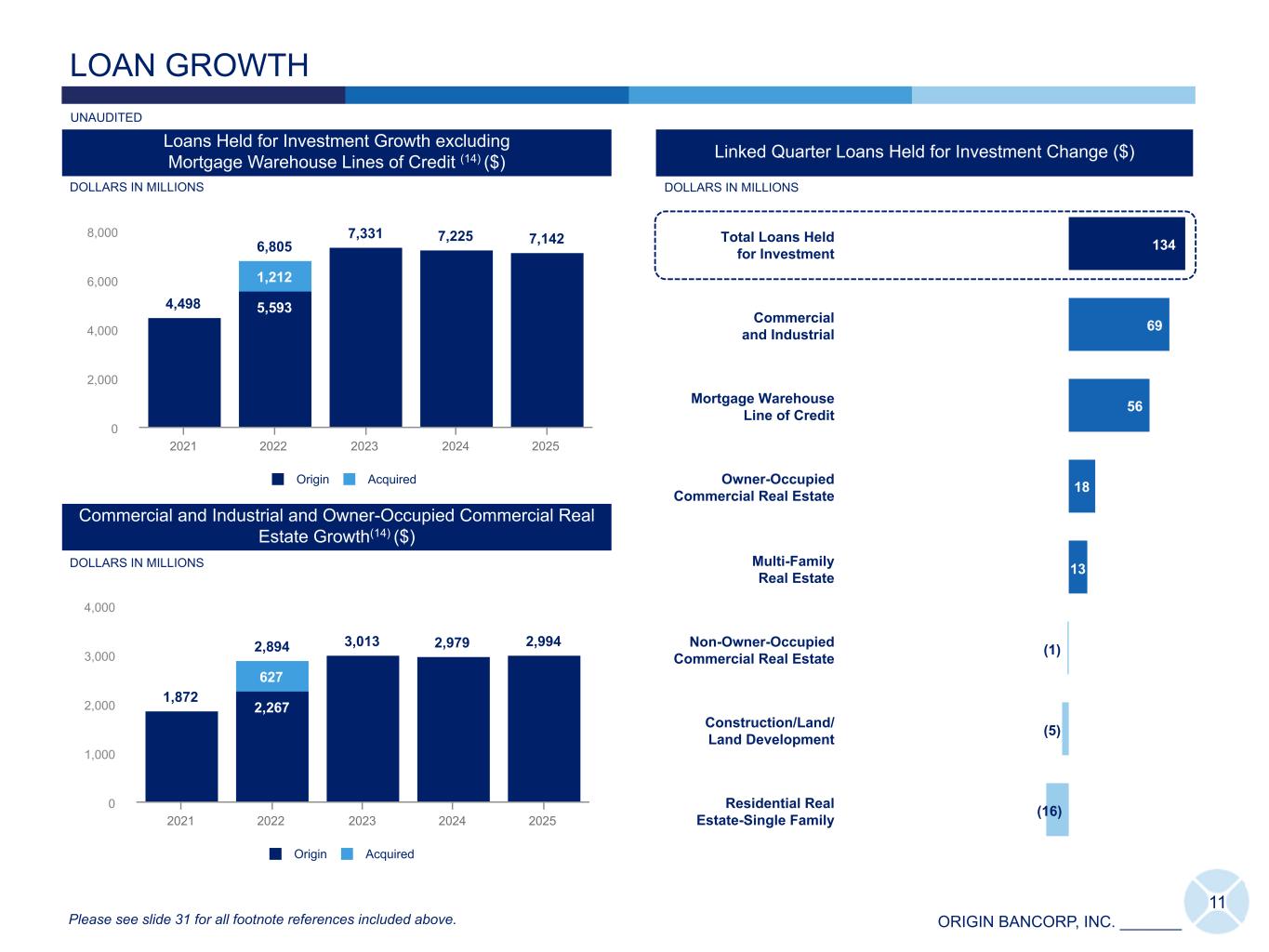
Thanks, Drake, and good morning. As Drake mentioned, we have a deep sense of optimism for Origin as we enter 2026, and that is felt throughout our entire company. I'm proud of the passion and discipline our team showed in 2025 and the aspirational belief we share together in what we can be as a company. My confidence in what we accomplished is based on our team's unrelenting focus and execution surrounding Optimize. This past year, we achieved 20% ownership of Argent Financial, consolidated banking centers, restructured the way we deliver mortgages to the market, reduced FTEs by nearly 7%. NII was up 10.2%, total revenue excluding notable items was up 8.8%, and non-interest expense excluding notables was down 0.7%. I've said before on our previous calls that I felt our production has been masked by planned reductions due to our client selection process and by payoff and pay down pressures. Even with these dynamics and a data-driven strategic reduction in our production team, loan origination increased approximately 500 million dollars or 37 percent year-over-year and loan and swap fees increased 57 percent over the same period. Our continued execution of Optimize Origin is critical to our success. At its core, Optimize is about simplifying how we work, sharpening execution, eliminating friction, and freeing up our teams to spend more time creating value for our clients. Optimize will continue to guide how we improve performance, strengthen accountability, and invest intentionally for the future. In late 2024 and 2025, our efforts were primarily focused on balance sheet management and expense reduction. In 2026, we are intensifying our focus on the client delivery model and opportunities for additional revenue growth. As Drake mentioned, the disruption in our markets is a tremendous opportunity for us. Just over the past few months, we've added more than 10 production bankers in Houston and Dallas Fort Worth and see additional opportunities ahead. This investment and disruption is a major strategic focus for us in 2026. Our guidance assumes we'll invest roughly $10 million in and new bankers and banking teams throughout our markets this year. These investments are on top of continued investments we're making across the organization that should drive continued efficiencies and growth as we strive for our ultimate top quartile ROA target. We feel strongly that the current environment presents unprecedented opportunity for origin. We are poised to take advantage of it. Now, I'll turn it over to Jim.
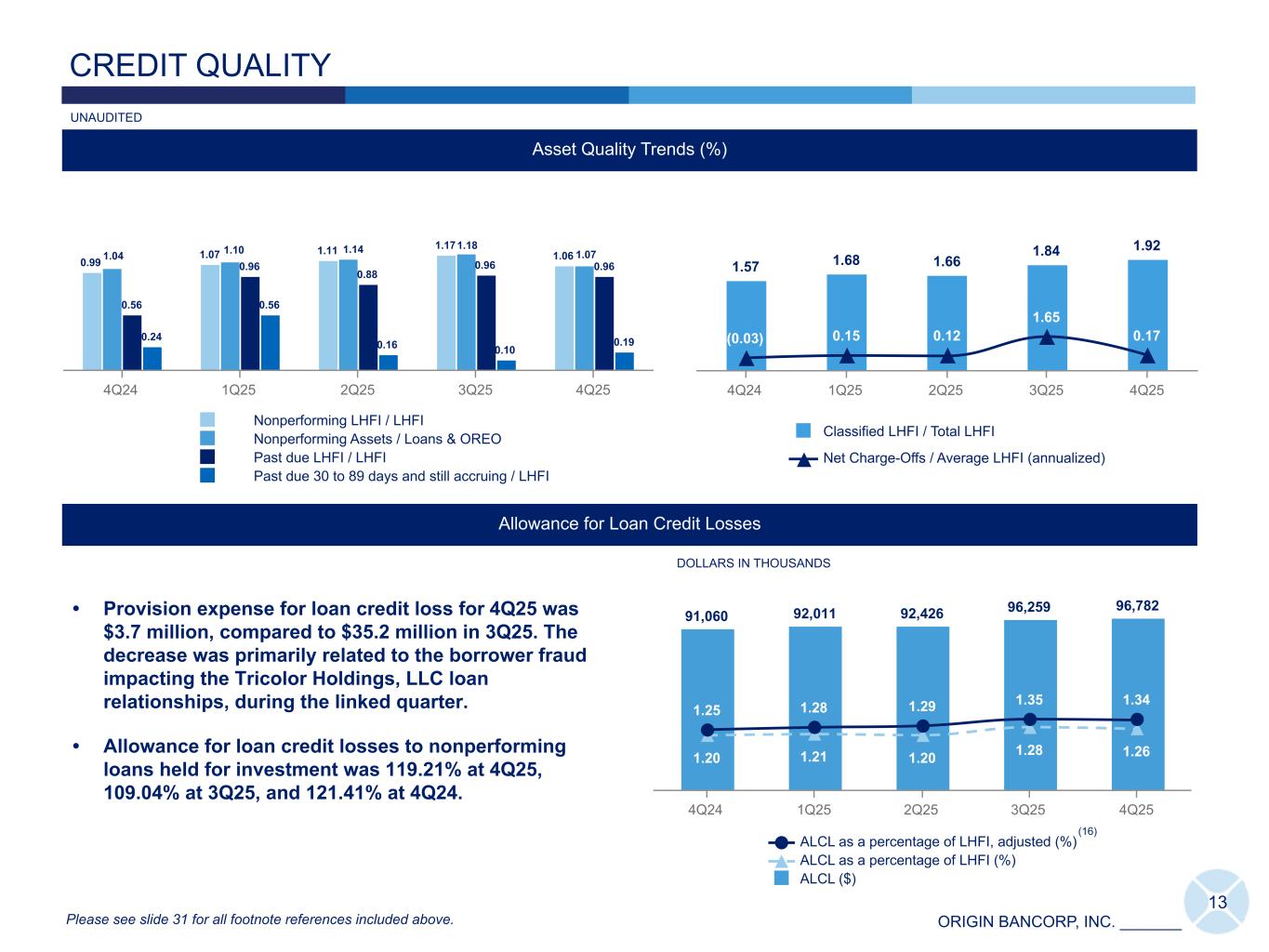
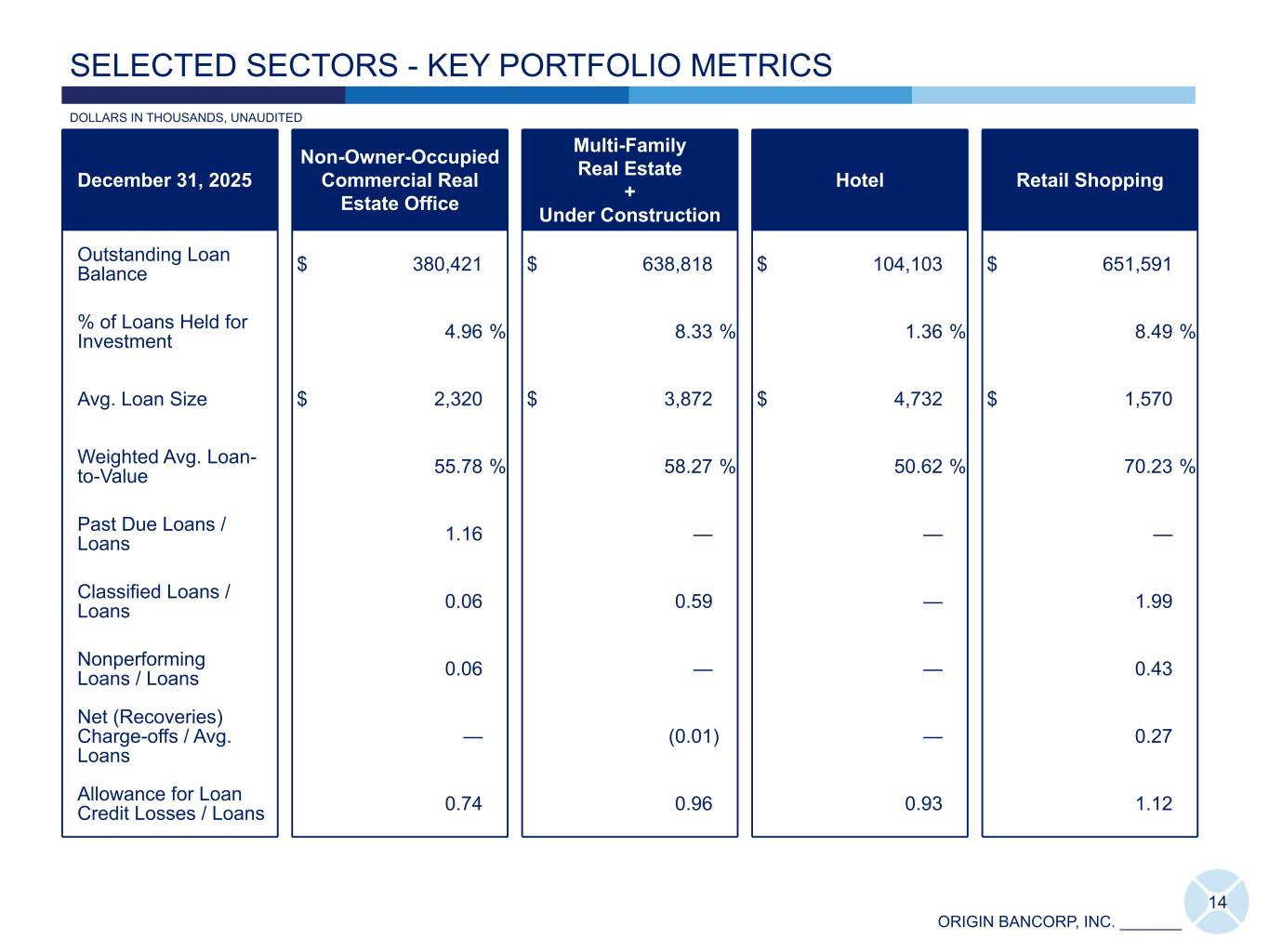
I am pleased to report sound credit metrics for the quarter. Total past dues at year end came in at 0.96% of total loans, reflecting no change from the prior quarter. Past dues 30 to 89 days came in at 0.19%, a moderate increase from 0.1% as of 9.30, and compares favorably to a level of 0.24% reported as of the prior year end. Net charge-offs for the quarter were $3.2 million, which were in line with expectations and represent a 0.17% annualized charge-off rate for the quarter. During the quarter, non-performing assets declined from 1.18% to 1.07% at year end, an approximately $7 million reduction. We did experience a slight increase in total classifieds, increasing from 1.84% of total loans to 1.92%, an increase of $9.3 million, driven primarily by the downgrade of four relationships, partially offset by reduction in five relationships. For the quarter, our allowance for credit losses increased $523,000 to $96.8 million. On a percentage basis, our allowance remained stable at 1.34% of total loans net of mortgage warehouse compared to 1.35% for the prior quarter. As in recent quarters, we did not experience any significant changes in our CECL model assumptions with the actual increase this quarter primarily driven by loan growth. Lastly, as to total ADC and CRE, we continue to have ample capacity to meet the needs of our clients and grow this segment of our portfolio, reflecting funding to total risk-based capital of 47% for ADC and 236% for CRE. We continue to be pleased with the sound credit performance of our portfolio. I now turn it over to Wally.
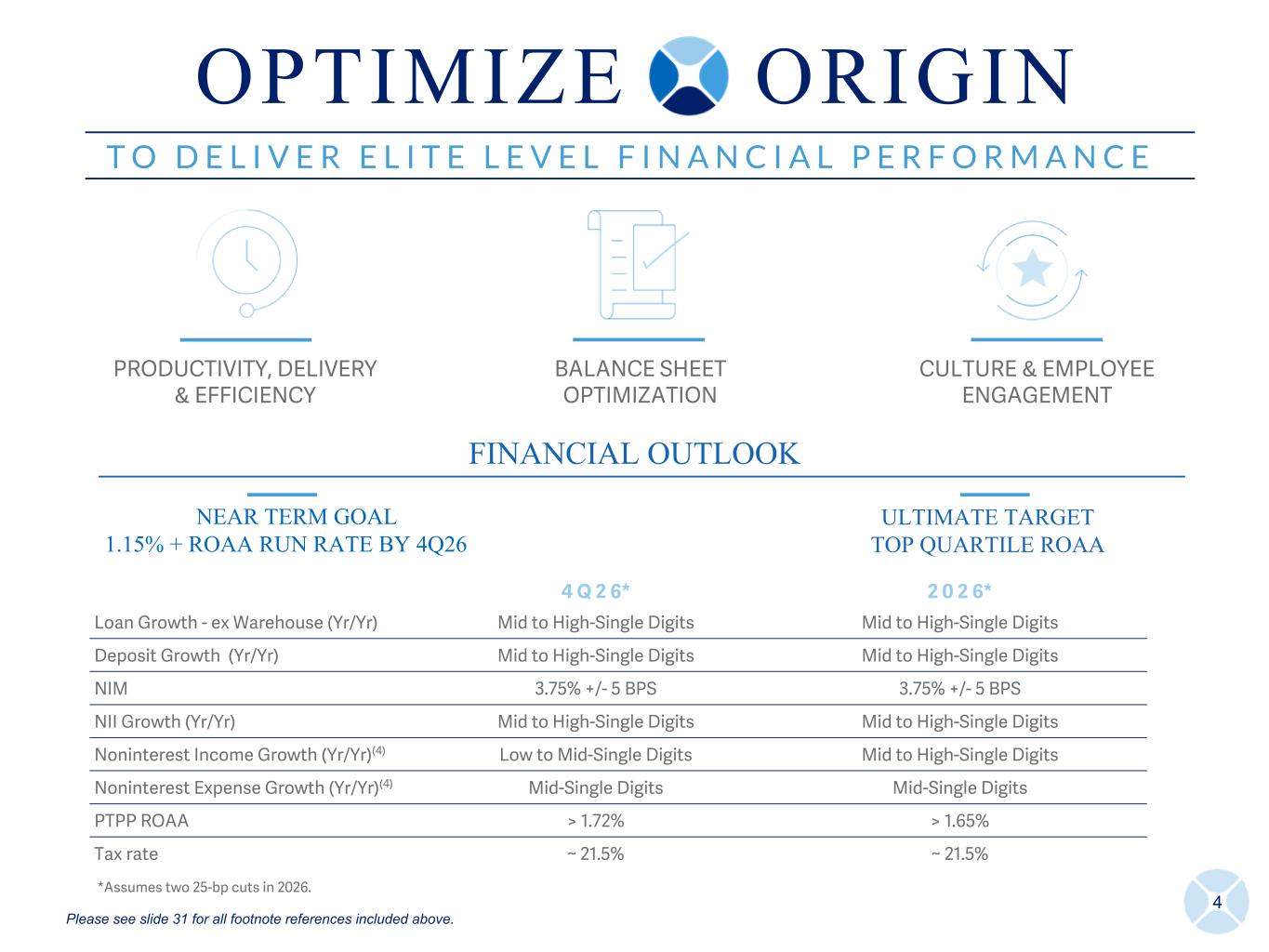
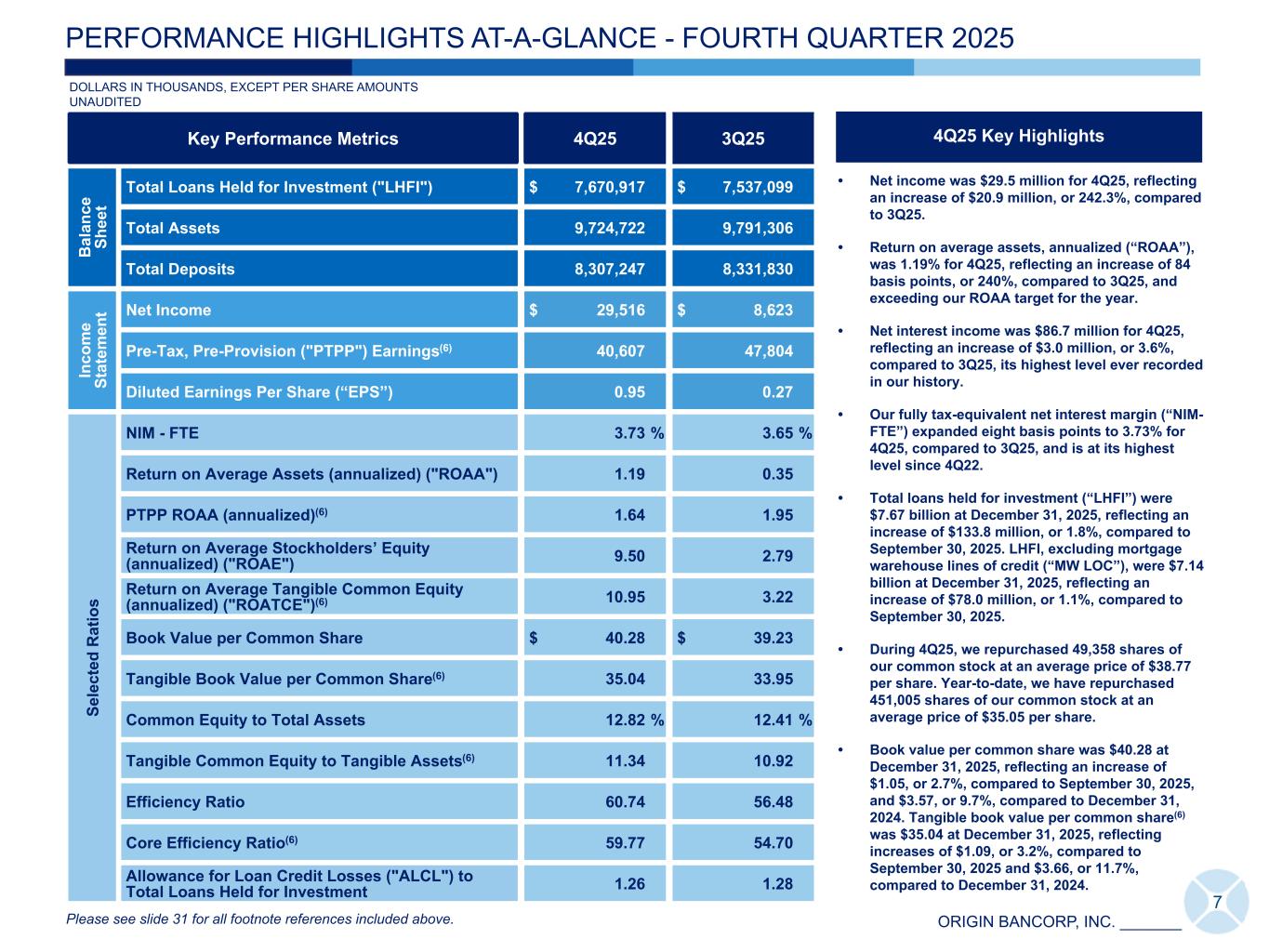
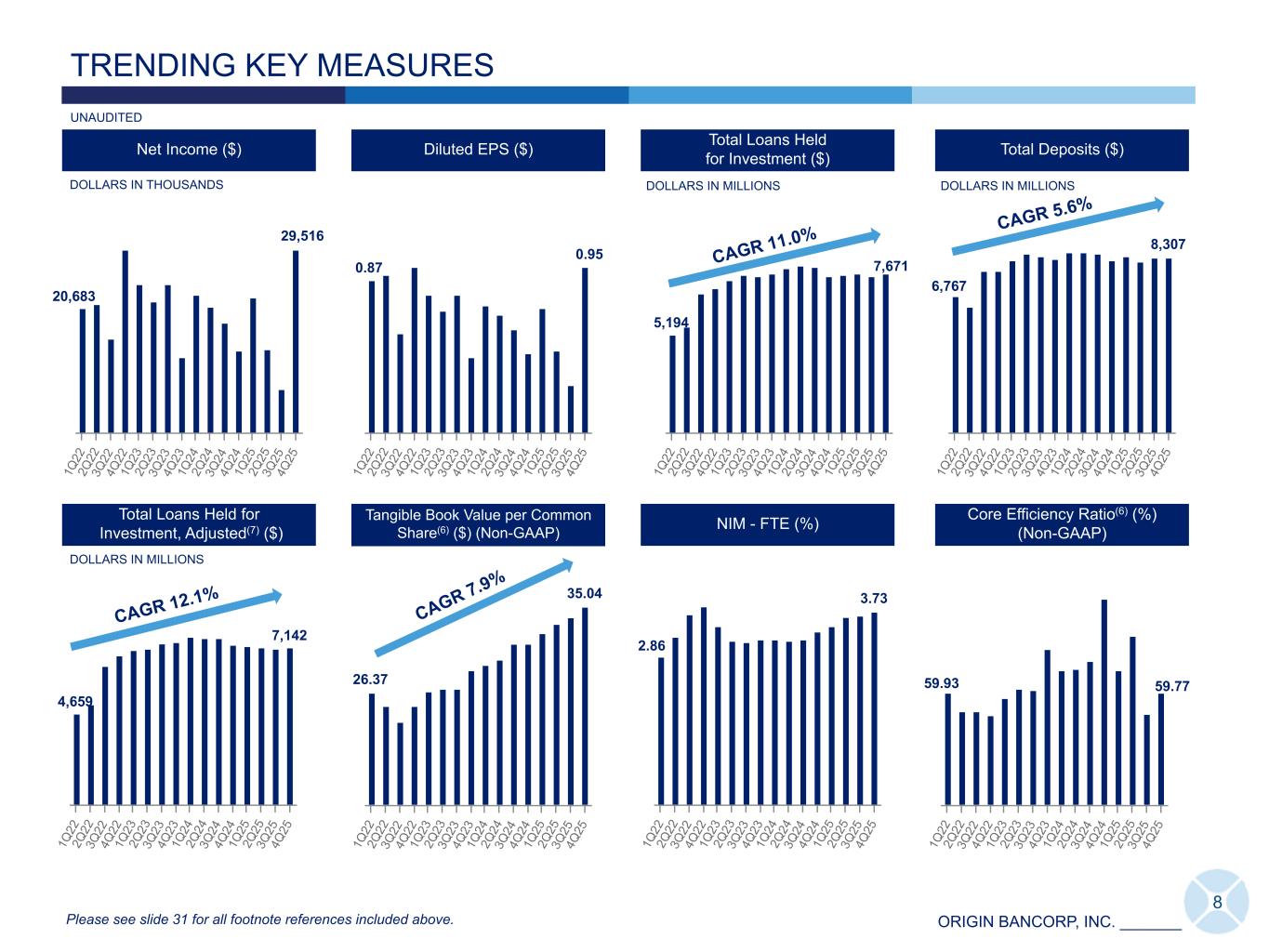
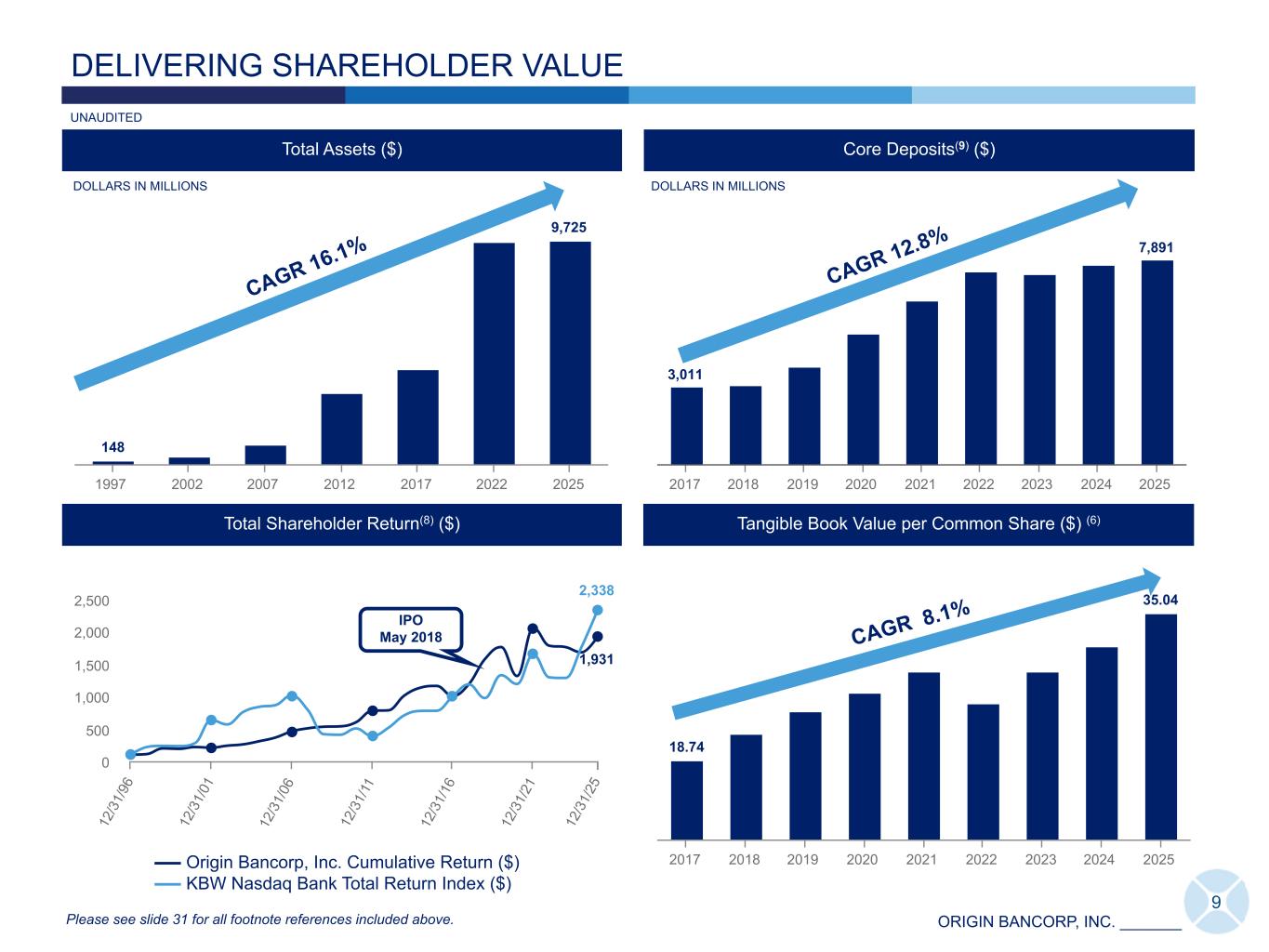
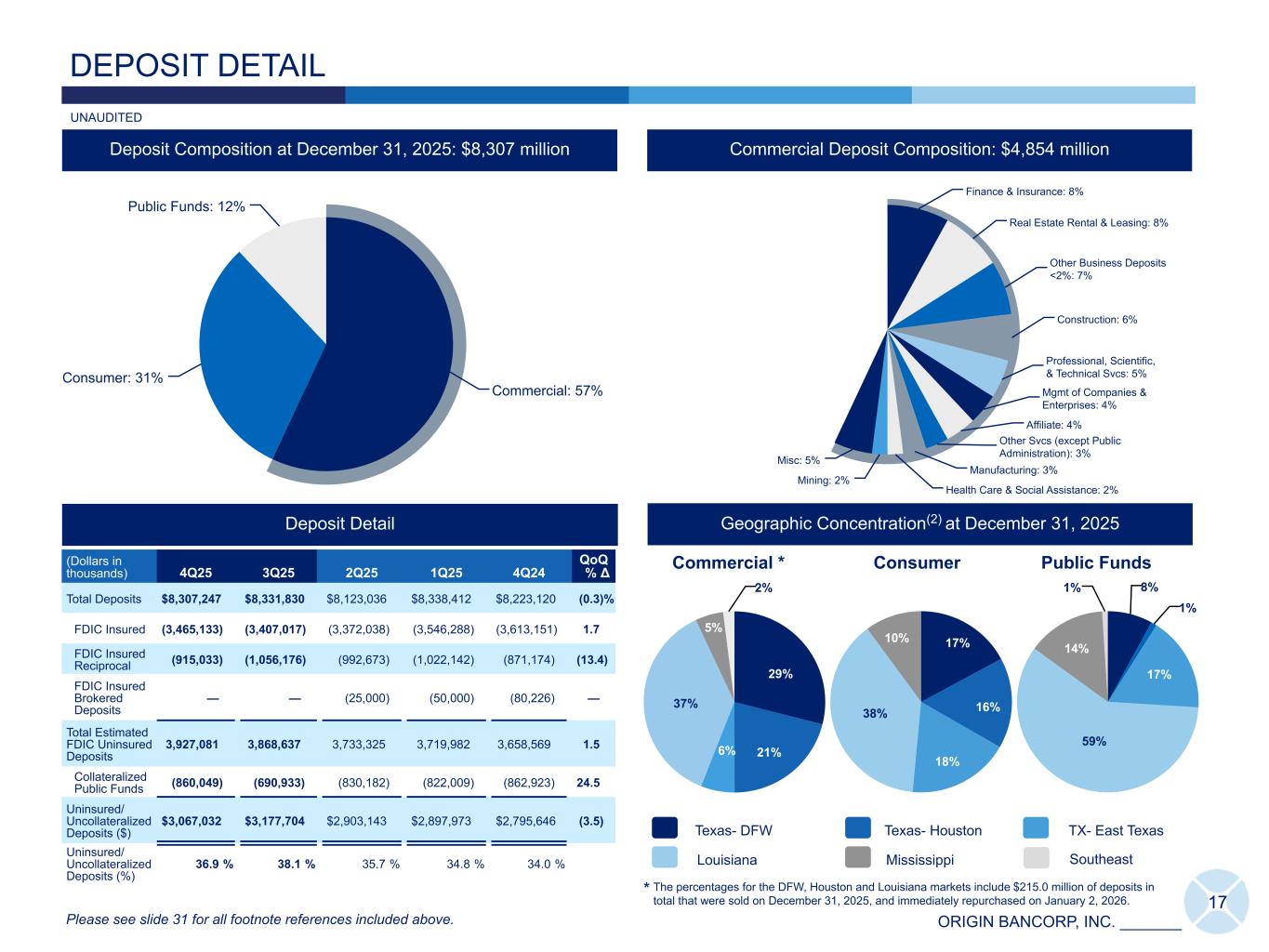
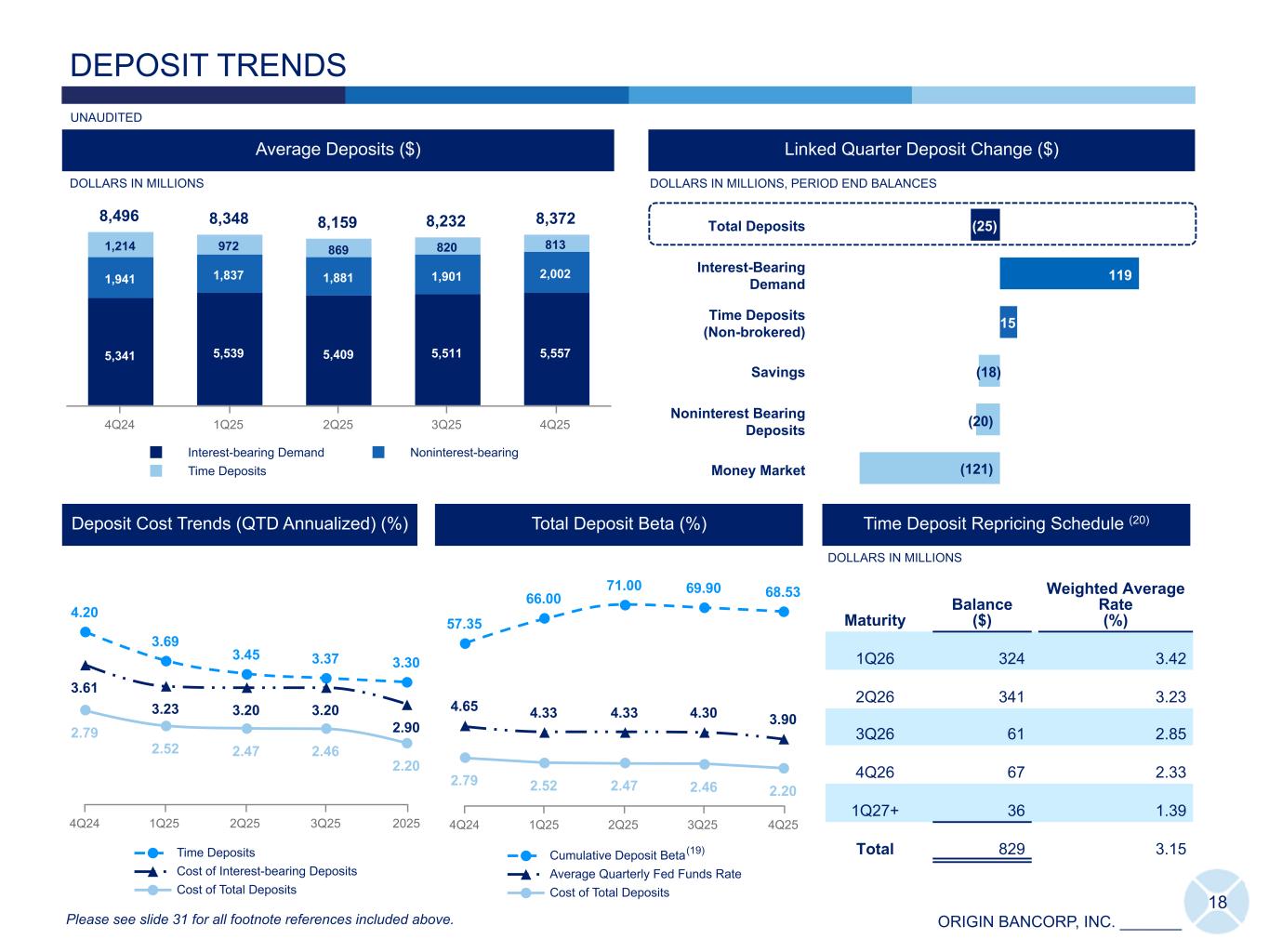
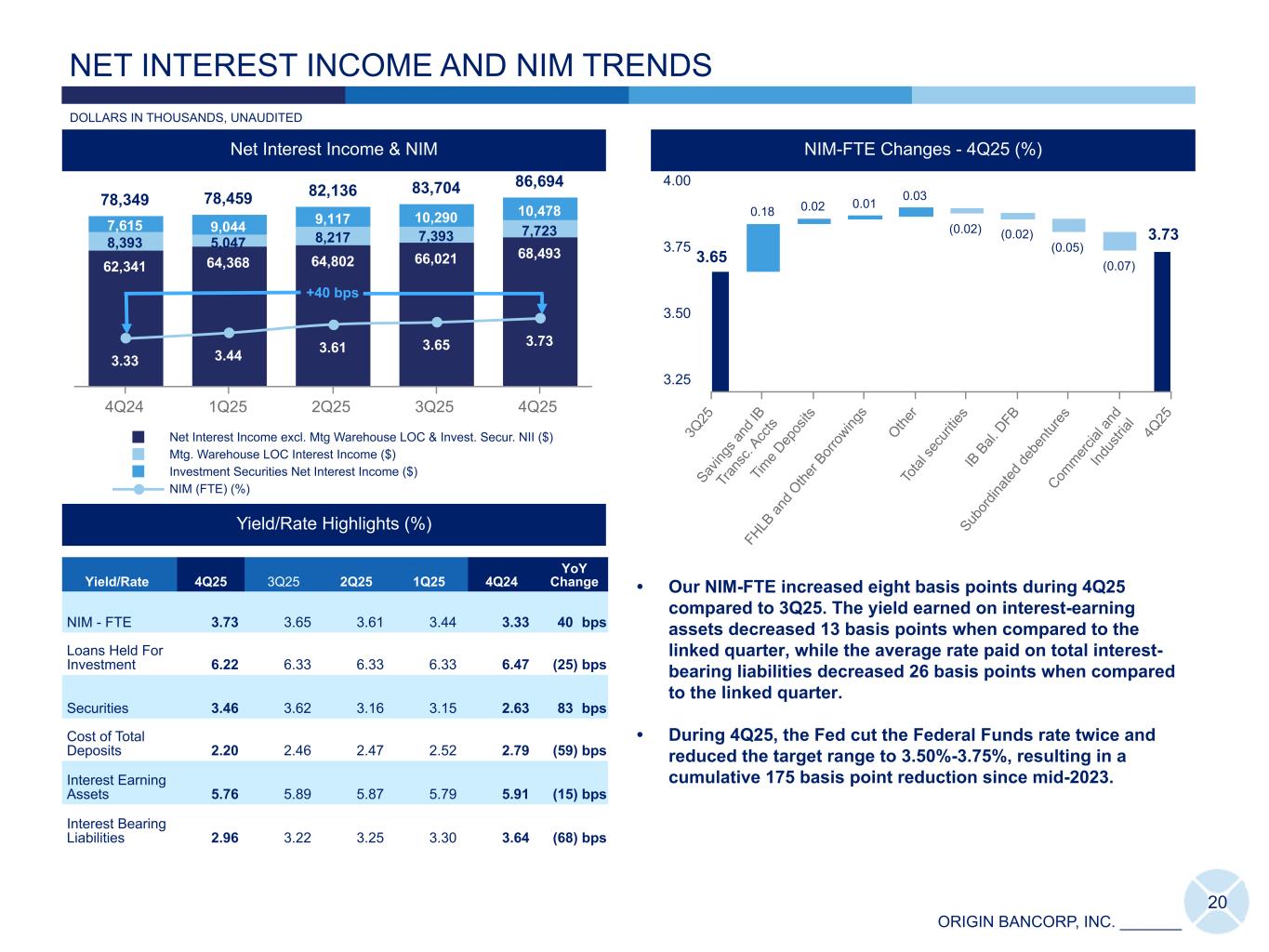
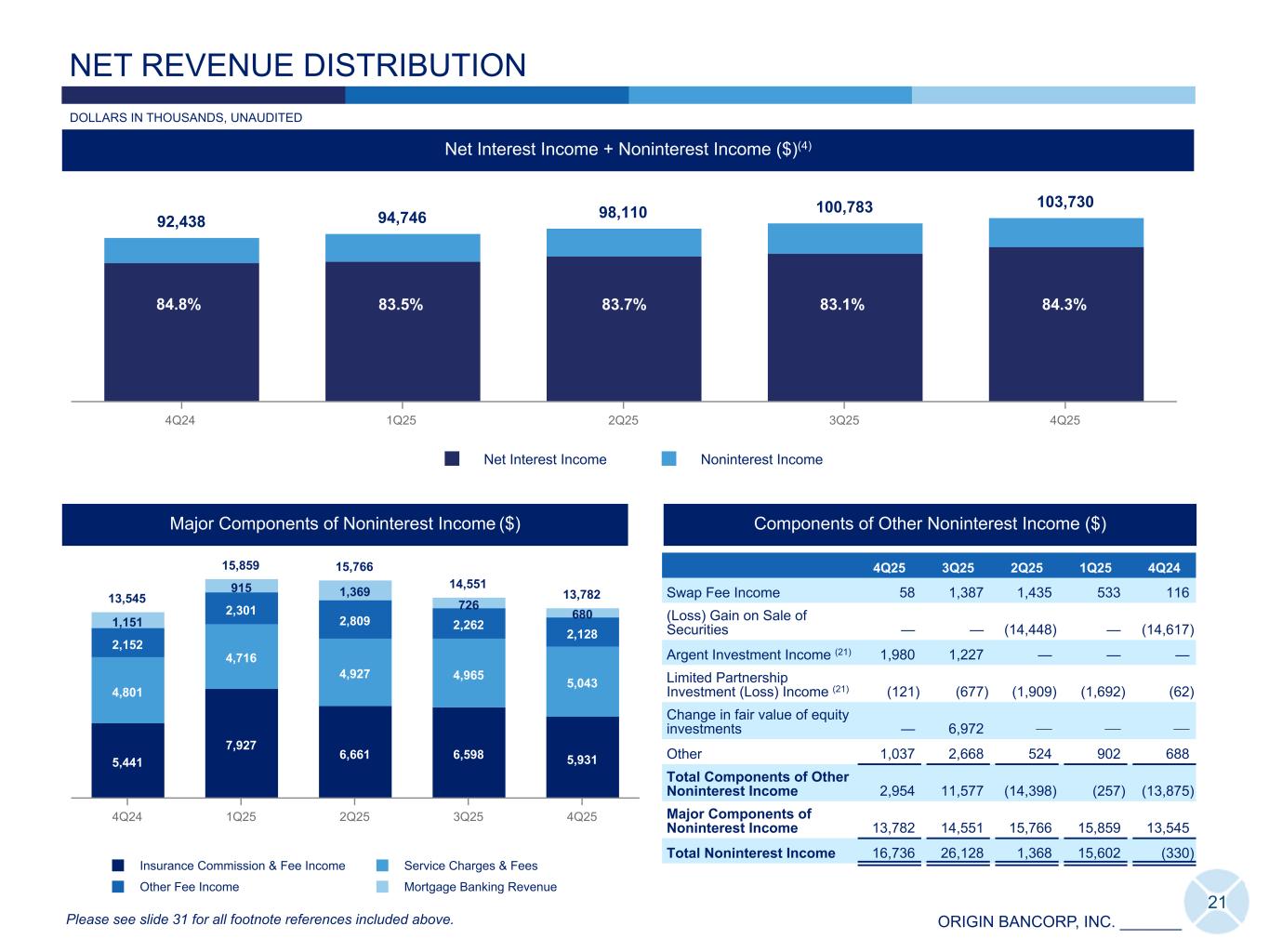
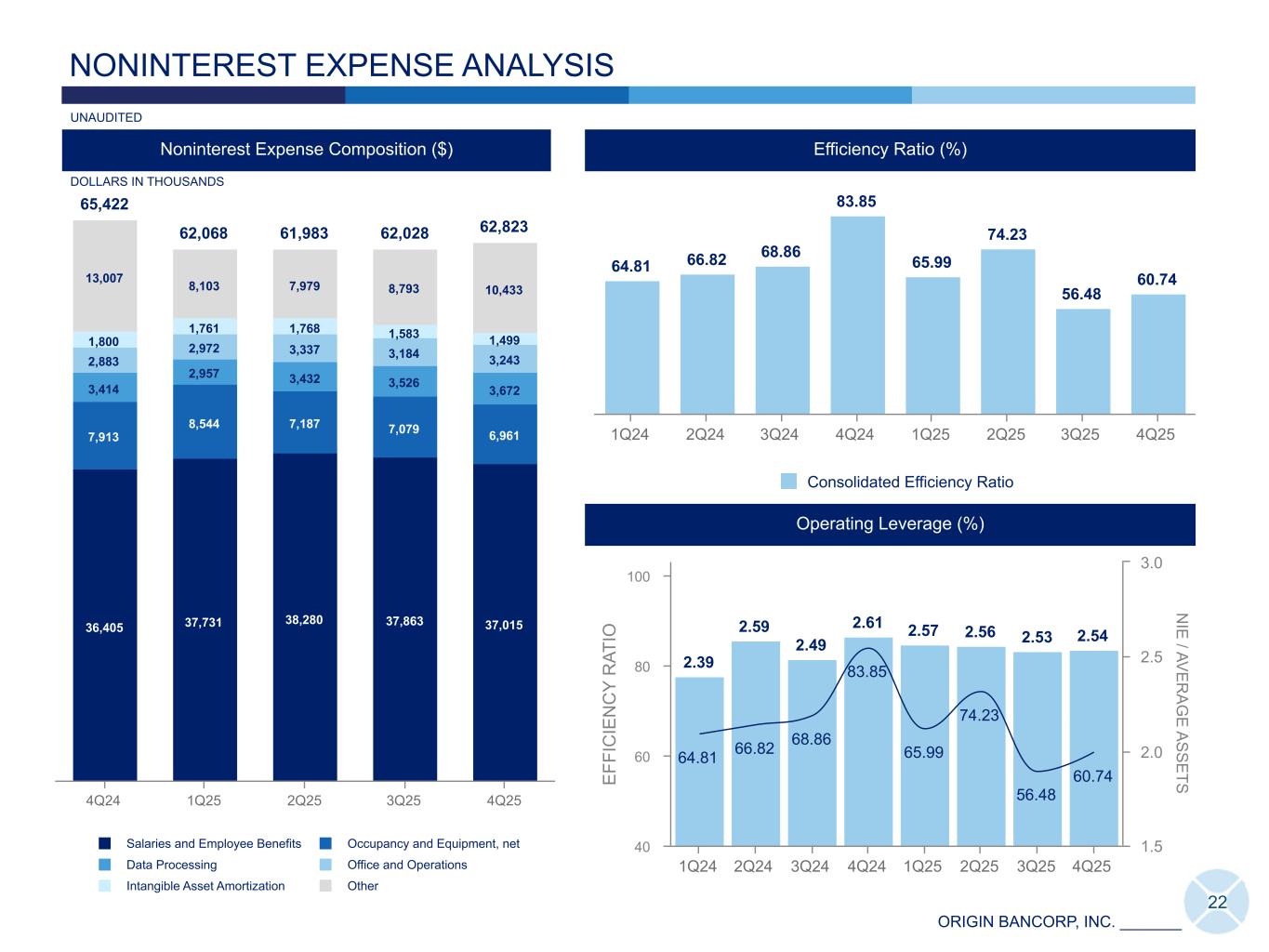
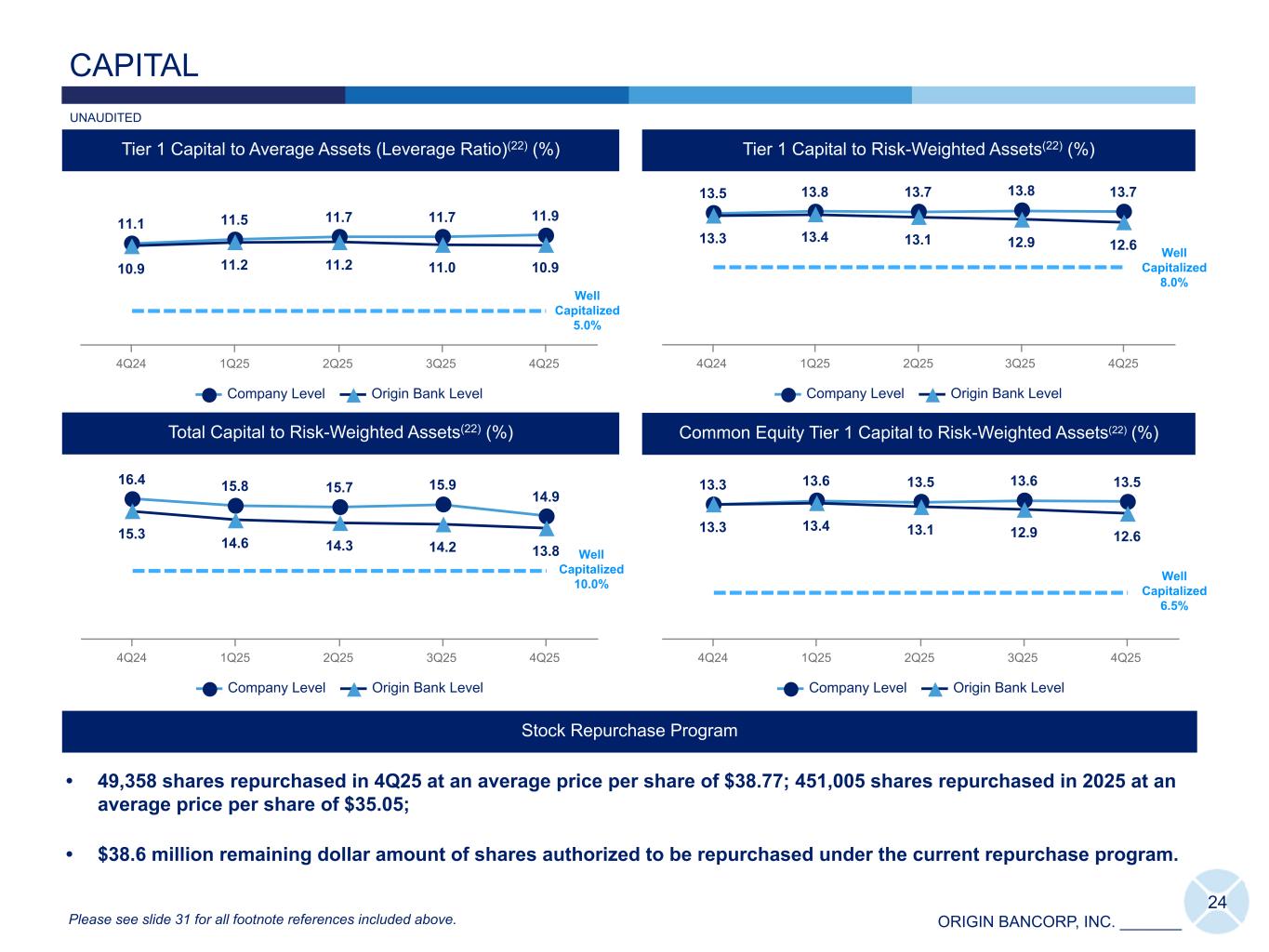
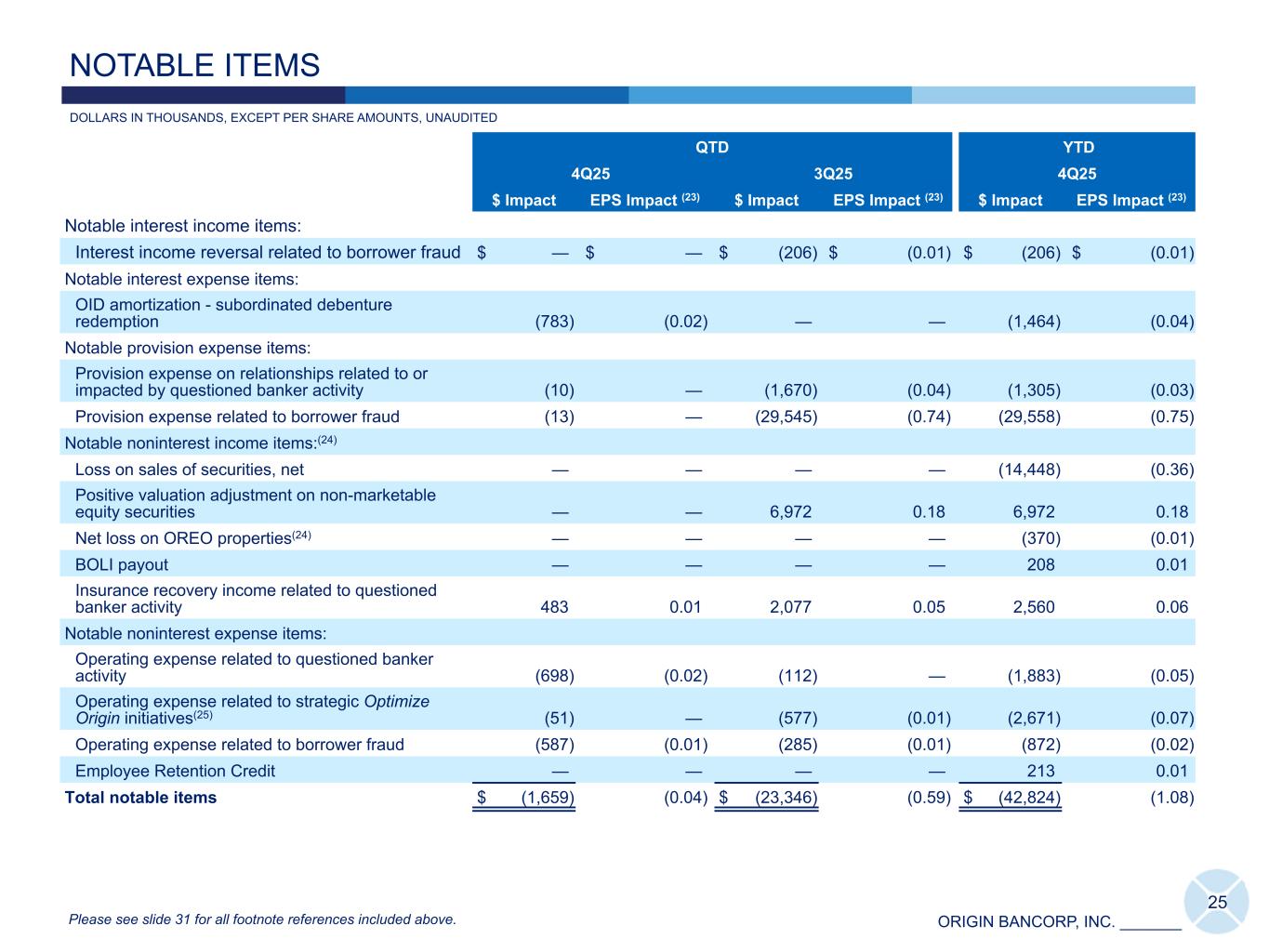
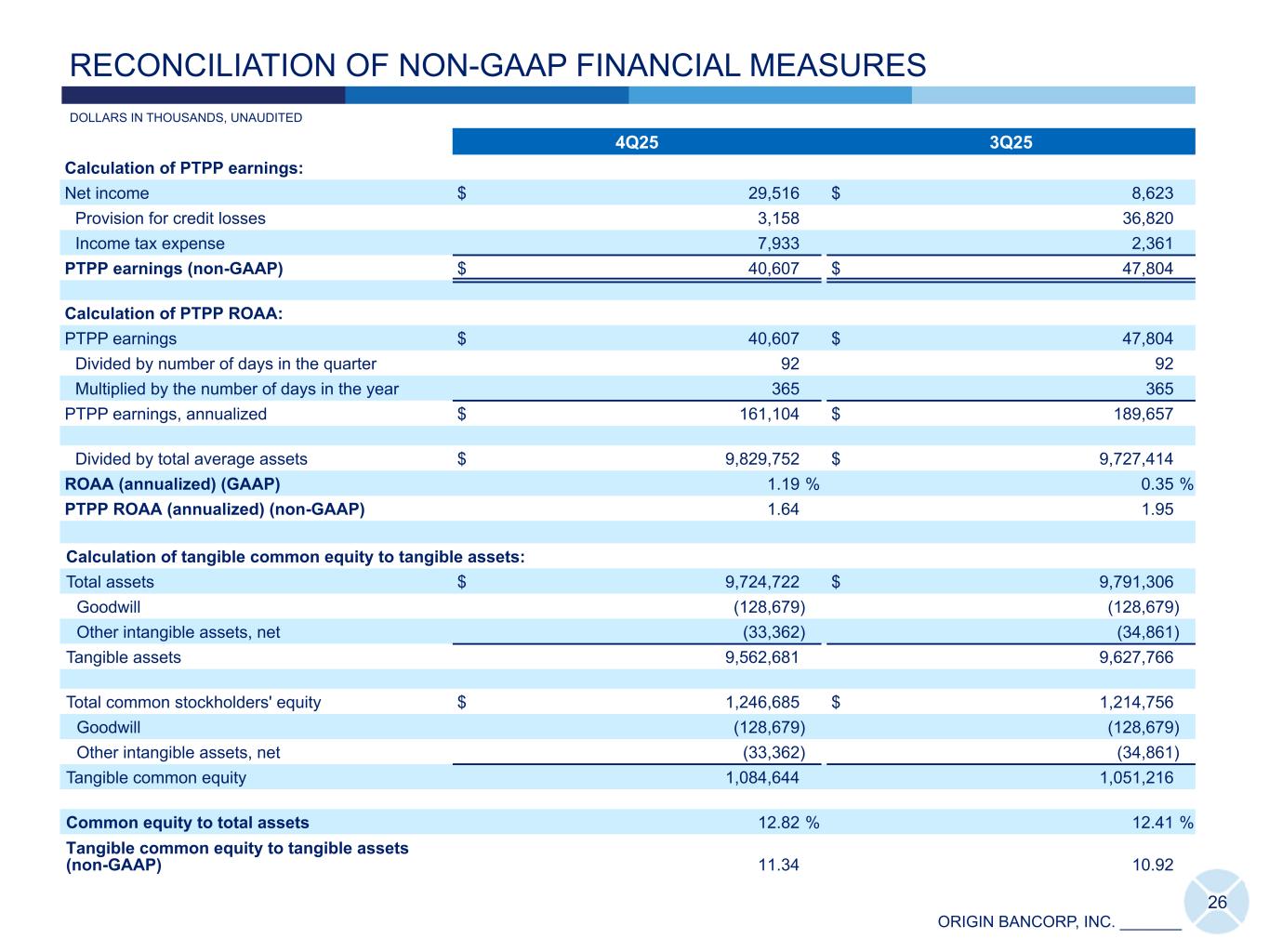
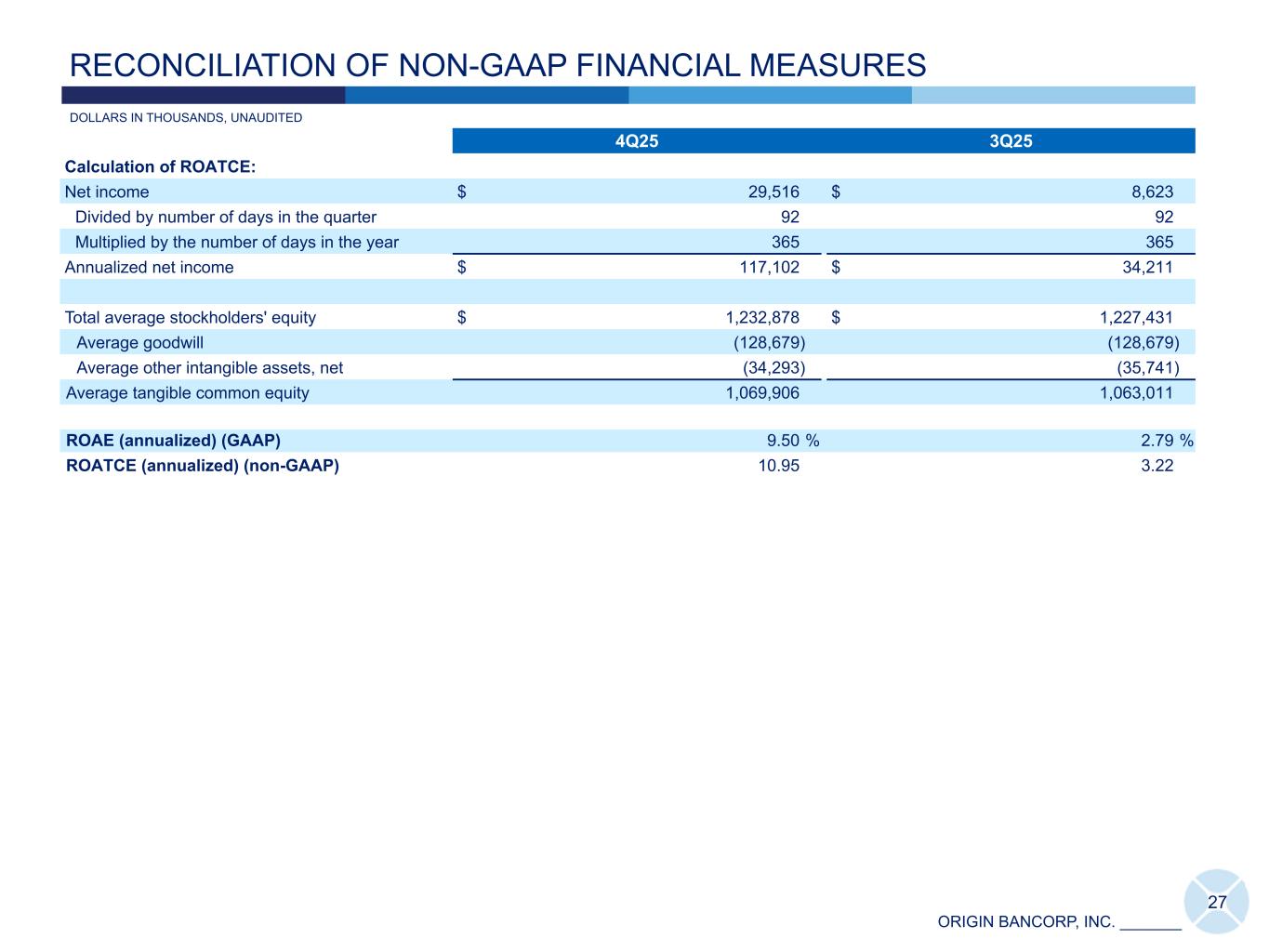
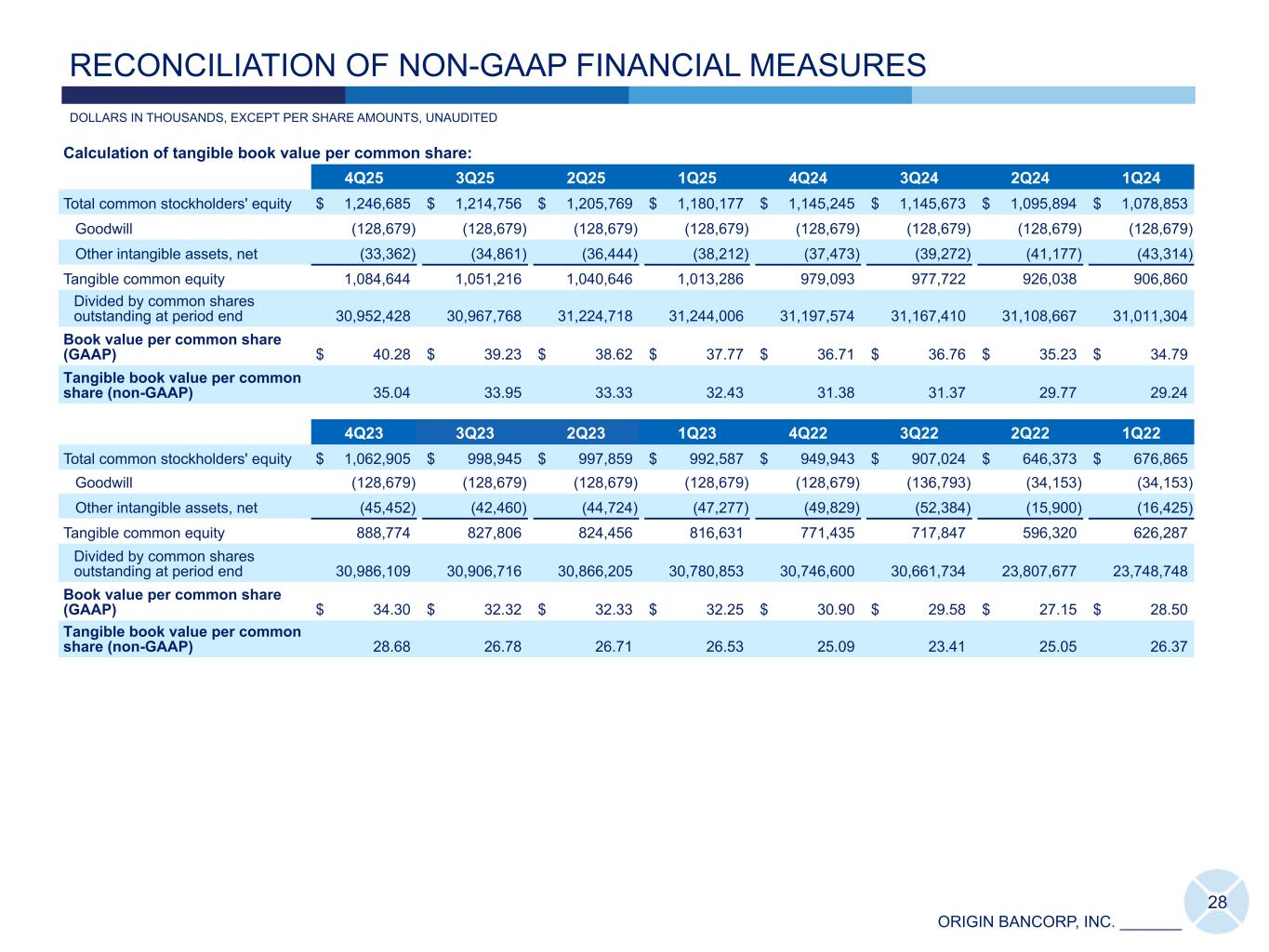
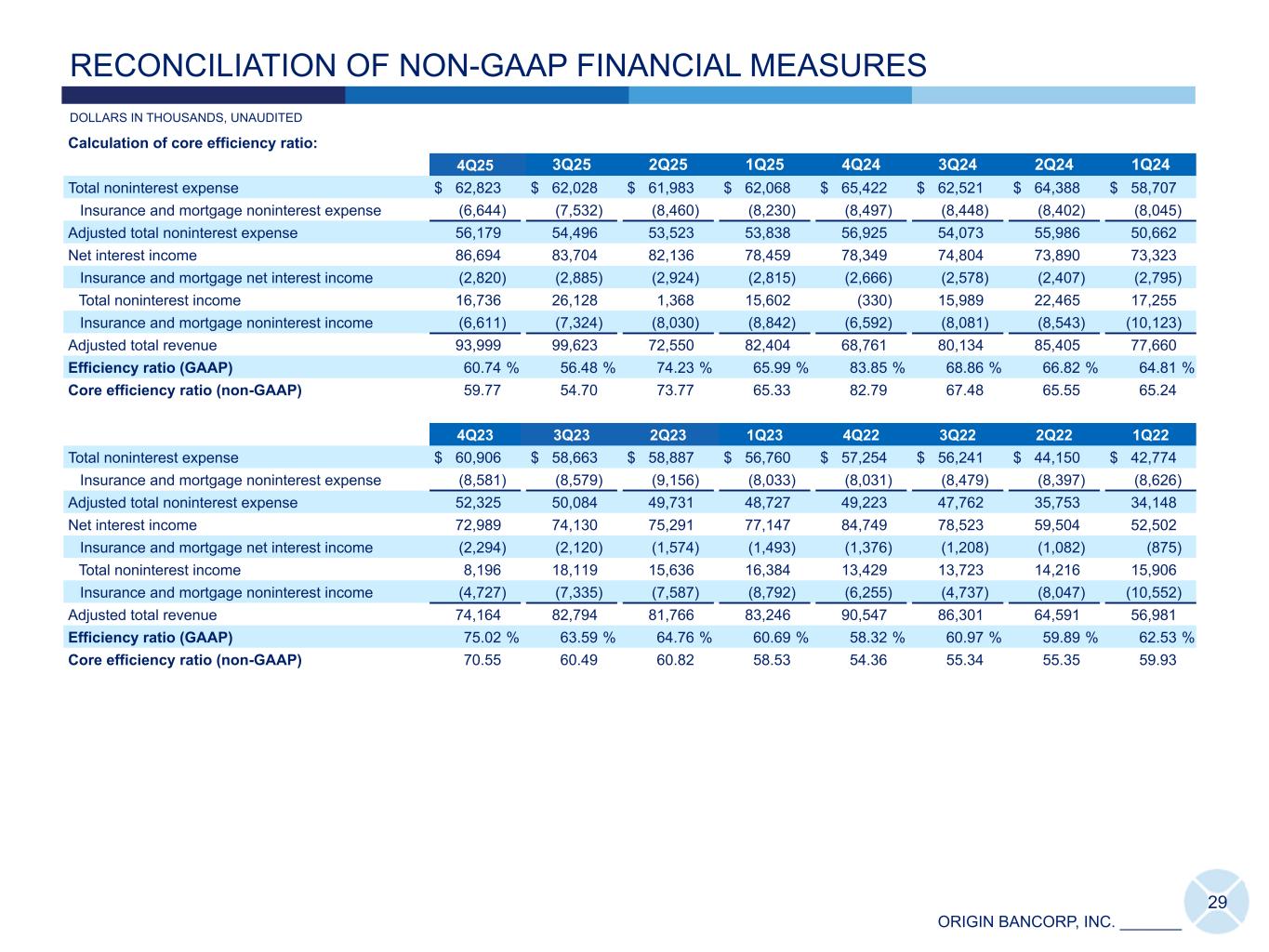
Thanks, Jim, and good morning, everyone. Turning to the financial highlights, in Q4, we reported diluted earnings per share of $0.95. We also reported net income of $29.5 million, which strives a run rate return on average assets of 1.19%, well above the targeted 1% plus run rate that we outlined as our near-term target last January. As you can see on slide 25, the combined financial impact of notable items during the quarter equated to net expense of $1.7 million, equivalent to $0.04 in EPS pressure. On a pre-tax, pre-provision basis, we reported $40.6 million in Q4. Excluding $1.6 million in net expense from notable items in Q4 and $7.9 million of net revenue in Q3, pre-tax, pre-provision earnings increased to $42.2 million from $39.9 million, and annualized pre-tax, pre-provision ROA increased to 1.7% from 1.63%. On the balance sheet side, loans grew 1.8 percent sequentially and 1.1 percent when excluding mortgage warehouse. Total deposits declined 0.3 percent during the quarter. However, on the last day of the year, we sold 215 million in interest-bearing deposits. These deposits were repurchased two days later. Excluding the sale, deposits would have increased 2.3 percent during the quarter. Also, while non-interest-sparing deposits declined 1.0% sequentially, they increased 5.3% on an average basis and ended the quarter at 23% of total deposits after adjusting to include the $215 million in deposits sold and then repurchased. Moving forward, we're currently targeting loan and deposit growth in the mid to high single digits for the year. We remain optimistic that momentum will continue to build, especially as we capitalize on an M&A-driven disruption in our markets, and our expectation is for loan growth to be more weighted to the second half of the year. Turning to the income statement, net interest margin expanded eight basis points during the quarter to 3.73% ahead of our expectations. Moving forward, we expect slight margin compression in Q1 due to timing differences in loan versus deposit repricing following the recent Fed rate cuts. By Q4, we currently anticipate NIM in the 3.70 to 3.80% range, with current bias to the higher end. Our outlook includes 25 basis point Fed rate cuts in March and June. Combined with our balance sheet growth expectations, this results in expected net interest income growth in the mid to high single digits for both the full year and Q4 over Q4. Shifting to non-interest income, we reported $16.7 million in Q4. Excluding $483,000 in net benefits from notable items in Q4 and $9 million in net benefits in Q3, non-interest income declined to $16.3 million from $17.1 million, due largely to a reduction in swap fee income and normal seasonality in our insurance segment. Moving forward, we anticipate full-year non-interest income growth in the mid-to-high single digits with Q4 over Q4 growth in the low-to-mid single digits when excluding notable items. We reported non-interest expense of $62.8 million in Q4. Excluding $1.3 million in expense from notable items in Q4 and $1 million in Q3, non-interest expense increased to $61.5 million dollars from sixty one point one million moving forward as both Drake and Lance mentioned we believe there's a significant opportunity facing origin as a result of M&A driven disruption across our footprint given the magnitude of this potential opportunity we felt the best strategic decision we could make for the long-term benefit of our shareholders is to invest in the production side of our business as a result our expense outlook is for mid single digit growth, both for the full year and on a Q4 over Q4 basis, after excluding notable items. Combined with our revenue growth outlook, the end result is the expectation that we will achieve a run rate ROA of at least 1.15% in Q4 and a pre-tax, pre-provisioned run rate ROA in excess of 1.72%. Lastly, turning to capital, we note that Q4 tangible bulk value grew sequentially to $35.04, cents, the 13th consecutive quarter of growth, and the TCE ratio ended the quarter at 11.3%, up from 10.9% in Q3. During 2025, we redeemed roughly $145 million in subdebt and repurchased roughly $16 million worth of our common stock, all while maintaining regulatory capital ratios above levels considered well capitalized, as shown on slide 24 of our investor presentation. As such, we continue to have capital flexibility. With that, I will now turn it back to Drake.
Thanks, Wally. As we close out 2025, I want to reiterate how proud I am of our team and the results we delivered throughout the year. The initial steps we have taken with Optimize Origin have made us a stronger, more resilient, and more efficient company. We are entering 2026 with significant momentum, a stronger earnings profile, and a sharper focus on our employees customers communities and shareholders I believe there is more opportunity before us than at any other time in my career origin is officially on the offensive thank you for being on the call we'll open it up for questions yeah at this time we will conduct a question and answer session if you'd like to ask a question please press star 1 and the telephone keypad to enter the queue if you're joined via web please press the raise hand icon on the right side of your deal roadshow screen again let's start one and your
Operator
telephone keypad sent to the queue or the raise hand icon on the right side of your deal roadshow screen also very briefly there are questions to generate our first question comes from Matt from Stevens Matt please proceed hey thanks appreciate you taking my question good morning I guess I I think it was Lance's comments.
Matt
Analyst — Piper Sandler
The bank's already taken advantage of some market disruption with some recent new hires. I think Lance said it was about 10 producers in the footprint. It's great to hear. As far as the expense guidance that you provided, any more color about how many producers this implies that you're targeting for the year? Is it those 10, or do you expect additional hires? I'm just trying to appreciate any volatility. utility, we could see an expense item from new producer hires or other items in the expense base. Thanks.
Yeah. Hey, Matt, good morning. Thanks for the question. I'll take part of this and maybe Wally'd want to jump in on part of this. No, we have a lot of dry powder in that $10 million to be able to hire on top of that $10 plus. Those are some that we've done the last couple of months, some here in the recently, kind of in the last 30 days. But I can tell you, it's a fun time for us right now. We're having very strategic conversations in every one of our markets with bankers and banking teams. You know, this is the opportunity for us to really leverage our award-winning culture and our geographic model and kind of build from an organic perspective. So that $10 million that we're talking about, I couldn't tell you if that's another 15 or 20 bankers or what it's going to be specifically, but it's kind of a little bit of a war chest to allow us to accomplish both things we want to accomplish, which is have a nice, steady ROA build and at the same time to invest in future revenue by taking advantage of this disruption. So it's a great spot for us to be in.
Yeah, Matt, maybe I'll just provide a little bit more color specifically. on sort of the expense load and how we're thinking about it to help you all out. So, look, we have the 10 hires that started late in the fourth quarter, or even some were starting early this quarter, January 1 of this year. We also will have our merit increases and cost of living adjustments that kick in in the first quarter. And then we also have the full impact of payroll taxes that come back in in the first quarter. On top of that, if you noticed in the press release when we discussed our fourth quarter non-insuracy expense, we talked about some increase driven by technology contract renegotiation expense. From time to time, we partner with another party or third parties that will help us renegotiate some of our larger technology contracts. And as part of Optimize, we turned over every stone and took a look at all of our contracts. And we partnered with the firm to help us with some of our larger ones. We completed one of those during the fourth quarter, and we anticipate seeing the benefits of that negotiation beginning to impact the expense run rate this year. However, we are also in the process of renegotiating an even larger one that we are in the late stages of, and we're anticipating that we will finish that negotiation during the first quarter. When we finish one of these negotiations, there is a sizable upfront expense that gets booked, And then you get to see the run rate benefit after that. So to kind of put that all into numbers, I would say maybe we think about a $64 million expense run rate plus or minus a million dollars the first quarter with assuming we close this negotiation in the first quarter and book that fee, it would be on the higher end of that range. And then you'd see the benefits in the second, third, and fourth quarter bringing us down at the low end of the range and then as we layer on high hires, we'll build that expense back up. So, think about 64 and then y'all can try to guess as good as we can as to when we'll hire but we're actively in discussions and we anticipate that we will continue to be looking for new people to have discussions with as the year progressed as just given this disruption.
Matt
Analyst — Piper Sandler
So, that was a lot of words but hopefully that helps you all just kind of think about the expenses in your models uh yeah well that was perfect very helpful uh uh thanks for kind of uh going through all that stuff makes sense and and maybe just one point of clarification for for lance as far as the new hires as it relates to the loan growth guidance this year any of those new hires you expect to impact the loan growth guidance in 26 or is that more of a 2027 impact Yeah, and Wally, you may want to correct me.
I think the vast majority of what we put into budget was at the back half or Q4. I mean, you know, as we make these hires, they have non-solicitation, non-compete language. There's timing around that. So anything that got put in for this year was very much in the back half.
Yeah, I would just add, Matt, that the equation for us is how do we balance our desire to to improve our profitability run rate while also taking advantage of what looks to be almost a generational opportunity from potential disruption. So known hires, people that we have hired and have started, we budgeted, like Lance said, that there would be impact really, really back and loaded given the time it takes to to get on board and then to start communicating with customers and building new relationships and impacting our balance sheet. And then unknown hires, it's hard to budget them. So we would anticipate that a lot of the dry powder that Lance referenced would be impacting the 2027 loan growth run rate. So hopefully we can continue to see our loan growth accelerate in the coming one, two to to three years, depending on how long we can capitalize on this disruption.
Matt
Analyst — Piper Sandler
Okay, thanks for all the clarification there. And then I guess switching gears on the net interest margin, Wally, it sounds like the margin may have got a little ahead of itself in the fourth quarter. Sounds like the loan betas could catch up in the first quarter. Just any more clarification on the margin and what we saw in the fourth quarter and kind of more about what you've mentioned prepared remarks about the first quarter.
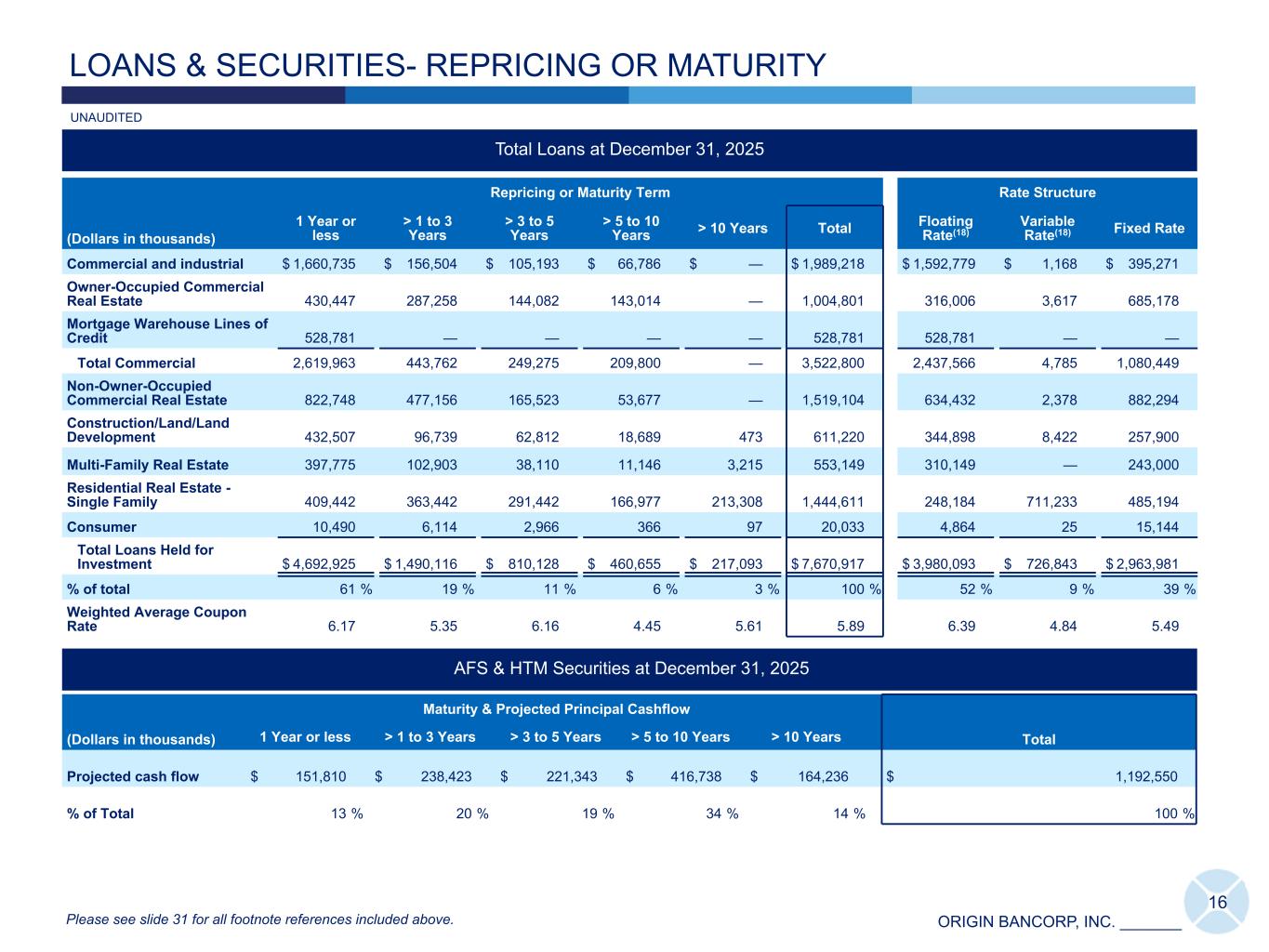
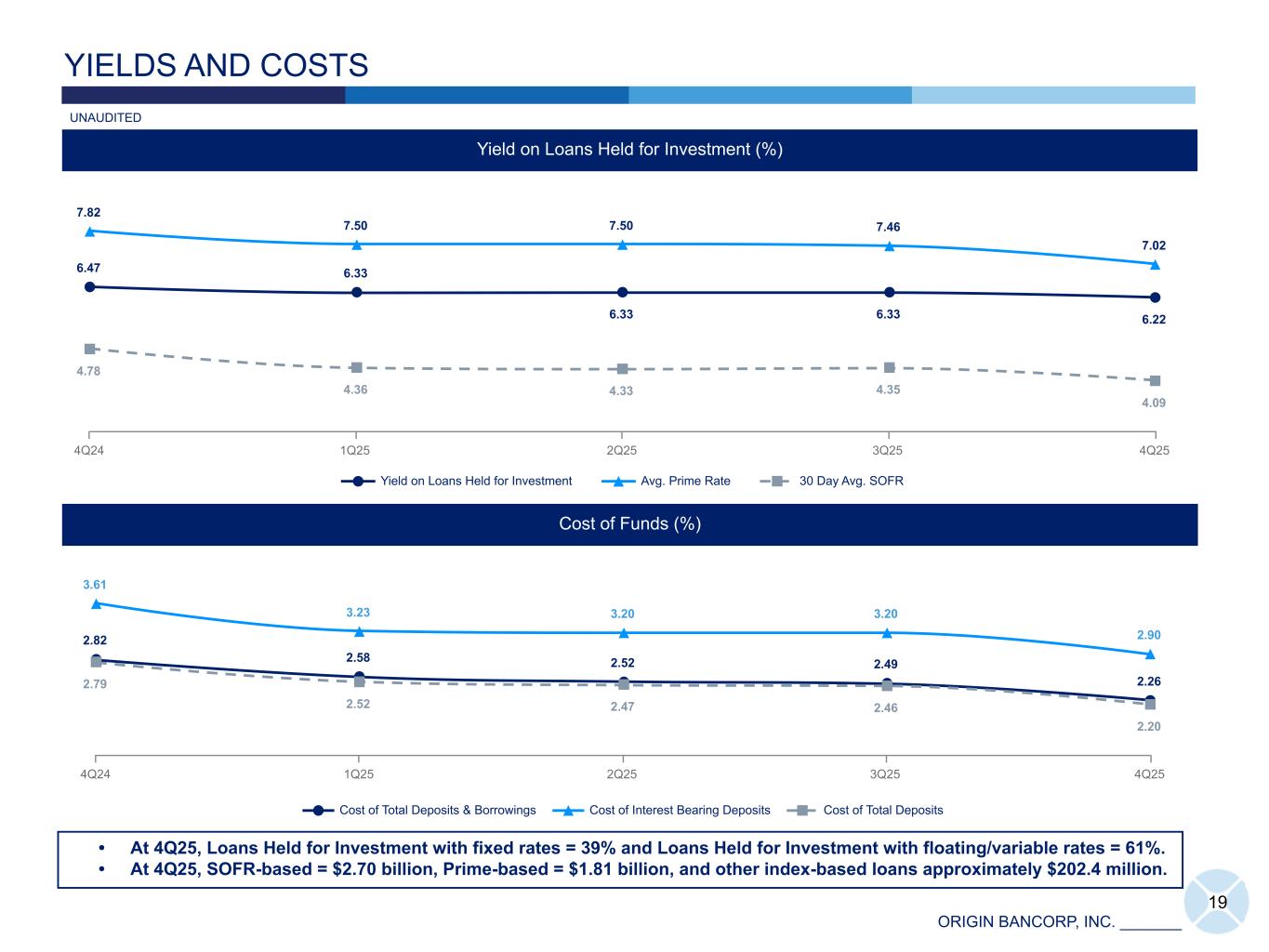
Yeah, so thanks, Matt. You know, we do get some timing differential. Our bankers have been very disciplined and we are anticipating how we're going to move deposit costs before Fed moves. And in the cuts that we got in the fourth quarter, we moved deposits on day one. For the floating rate loans, those loans don't reprice until their next billing cycle. So if somebody got their bill right before the Fed cuts and then they cut, it'd be 30 days before we'd see the impact of that on the loan pricing. So we've already got the benefit of the deposit reset starting to float through the numbers, but the loan pricing will come down, you know, on a slight lag. So that results in a little bit of pressure in the first quarter, but we still have the tailwinds from assets repricing. In 2026, we've got about 150 million or so of securities that will roll up and that will replace. We're picking up right now about 50 to 75 basis points on spread on those. And then we've got 350 to 400 million of loans maturing in 2026. The average yield on those is about 4.8%. And right now new yields are in the kind of low to mid sixes. So we're picking up some decent spread on those as well. So net net, we do anticipate after the first quarter that you'd see margin expand back up to what we provided on the outlooks, like about 375 range plus or minus.
Matt
Analyst — Piper Sandler
Okay. Thanks for telling everybody. I'll step back.
Operator
Thank you. Our next question comes from Michael from Raymond James Financial. Michael, please proceed.
Hey, good morning, guys. Thanks for taking my questions. Maybe just following up on Matt's questions just around the increment of the hires this year. Yeah, I think we would agree that there's a lot of potential opportunity here. Another deal announced yesterday. What types of lenders, I assume most of these are lenders, are you trying to hire any change? And I assume most of them maybe would be targeted in Texas, but there's clearly been some disruption in other areas of your footprint. Maybe if you can just give us some details on, you know, what kind of what you're looking for. And would you expect that pace of hiring to kind of persist through the year with the potential for more in 2027? or is this – and I'm trying to get to the point of like, you know, does the expense growth potentially slow as we move into 2027 as, you know, you get more positive operating leverage from the plans for this year?
Hey, yeah, this is Lance. Good morning. Yeah, very much so. So, you know, the strategic identification of kind of bankers that are going to be really effective in our model, really are C&I focused with also kind of a focus on deposits and treasury. So of the 11-ish that we've hired so far, it's been, I'm going to say, two private bankers, three treasury management officers, and the rest are C&I lenders. And I think that'll be kind of the mix as we continue to grow as we're balancing really strong core deposit growth along with this loan opportunity. So, yes, at the volume of the conversations we're having, I think this is going to be a consistent opportunity for the foreseeable future. I do think operating leverage will continue to enhance for us through this because it's a unique combination right now of our organic pipeline just from the business that we have is really strong and growing. You know, one of the things we talked about in the last couple quarters was it really felt like I was seeing really strong originations that was getting masked by, you know, some of the credits that we were pushing out as well as sort of unusual payoffs and paydowns. It was interesting to watch this quarter kind of get back to normal. We saw the highest origination level that we've seen in over two years as well as the paydowns and payoffs drop to the lowest level in two years. and then looking at what our pipeline is for the next 30 days, like there's a real ramp up of demand and loan opportunity, but I think it's really disciplined pricing levels. And so I'm very optimistic without the hires of our ability to get that, you know, upper single-digit growth, mid-to-high single-digit growth, and then just sort of gets the accelerator with these new hires that we have targeted. So really, really optimistic around that.
Hey, Michael, this is Drake. I also want to, as you asked about 27 and trying to understand about positive operating leverage, I've been extremely proud of Lance and his bank team because as we bring these hires on, especially as we focus on our ROA hurdles, they are doing an excellent job of continuing to cut out expense out of the organization to cover up some of the costs that we have of bringing these new people in. So it's just not – we're not sitting here resting on a laurel as far as expense management. We're reducing those expenses that we bring these people on, so it somewhat neutralizes that in 27.
Yeah, maybe a data point or two on Drake. That's a good point. Kind of going back to the beginning of Optimize, we've now reduced our commercial banking team by almost 25%, and that was, you know, pushing out portfolios that we just didn't think were going to be the right mix for us or the ability to kind of grow ROA at the level that we needed it done. And it wasn't necessarily to cut expense. It was really to reinvest into better producers, better revenue streams. We're seeing that. Just last year, the average ROA of our bankers' portfolio has increased by 26 bps. And so the work around ROA and the data that Wally and his team are doing is really paying dividends for helping us make better decisions on future revenue growth.
Very helpful caller. And maybe just the follow-up here would be, when I look at current consensus, I'm not saying it's right, but it does show that ROA kind of stagnates in 27. But I think what I'm hearing today is you guys are going to continue to invest, reap those benefits. Maybe some of the technology costs come off here, you know, sustainably higher loan growth. I know the peer hurdle has moved to get into that top quartile as well. So it seems like to kind of get there, you're going to have to do more in 27. Is that the way that we should all kind of conceptually think about it? And then I guess the last piece of that, sorry for so many questions, would be, you know, the capital build here is fairly meaningful. Why not lean into the buyback a little bit more as well?
Well, first off, as we look into 27, we are going to stay focused on where that PRROA is and what it takes to get an upper quartile. And to do that, Optimized Origin, as I said in my opening comments, isn't a project. This is a continuance of how we focus on the profitability and the overall culture of this company. So we will continue to look at fine-tuning. We haven't talked at all about third-party management on some of these expenses and projects that we have that are still in the pipeline that I think are going to create significant revenue opportunities, but also to enhance as we continue to model things that work and don't work and reduce the expenses on those things that are not. So I've got a bullish outlook on 27 is continuing to ramp up ROA and not stagnate. So through that, when you start talking about capital deployment, we do see a significant opportunity with this dislocation in these markets, And we think that growth is going to come at a faster pace than what we are planning at this point just because of the upset in the markets. And, you know, what happened yesterday is going to continue to help us in Texas, but it's across our footprint. I've been very pleased with what's gone on in Louisiana. So first off, our organic growth story and strategy is in play, and we think it's really going to accelerate. rate. You know, I love capital, but the reality of it is I think buybacks are a part of our life today. It makes sense for us. It creates strong shareholder value, but we'll also be looking at dividends, and I think you'll see some opportunities there for us to deploy some capital as we go forward. So, we're going to stay focused on 20% of our earnings going out in dividends, and I think buybacks are here for a while.
Appreciate all the color, guys.
Thanks. thank you our next question comes from woody from kbw woody please proceed hey good morning guys thanks for taking my questions i wanted uh wanted to just follow up on the disruption and obviously it's a you know it should be a a boon for the hiring front but do you feel the impact of that on the loan competition side, or is competition as intense as ever?
Yeah, Woody, just like a good question. We were actually talking about that this morning. I would say it is highly competitive, but not irrational is the way I would say it. I think the competitors have been good. I mean, we're starting to see some tighter margins around SOFR quotes, you know, primarily in the urban markets, you know, on the opposite side, you know, the main competition on the deposit side, some of the smaller community banks. But I don't feel that it's irrational at this point, and I feel like there's still discipline and there's still opportunity to kind of keep growing margin and ROA.
And I love what Lance said because internally this is about profitable growth. We are looking at total relationships, and the market opportunities we have give us the opportunity to be extremely disciplined through this process. So it's not about total growth. I think we could sit here and grow 15%, 20%. But when we look at our ROA hurdles and what it takes to make a relationship profitable to the point that it accelerates that, that's where our focus is. And I'm really pleased that we have these opportunities and can stay disciplined. Got it.
And then on the deposit side, I mean, you all have been very successful in lowering deposit costs during this current easing cycle. Are we at the point yet where incremental cuts, it gets a little more difficult to lower deposit rates, or do you think that you can continue these deposit betas?
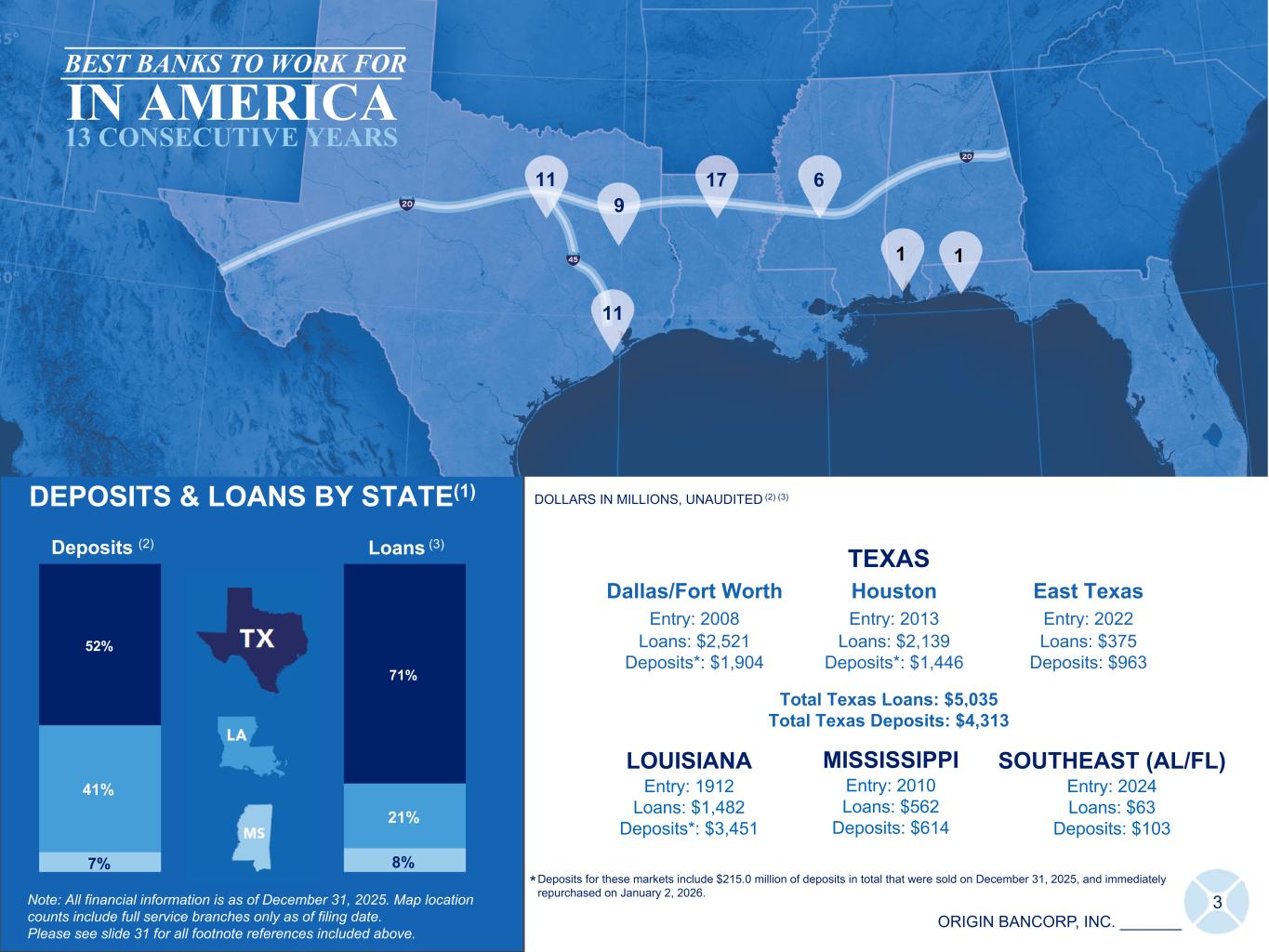
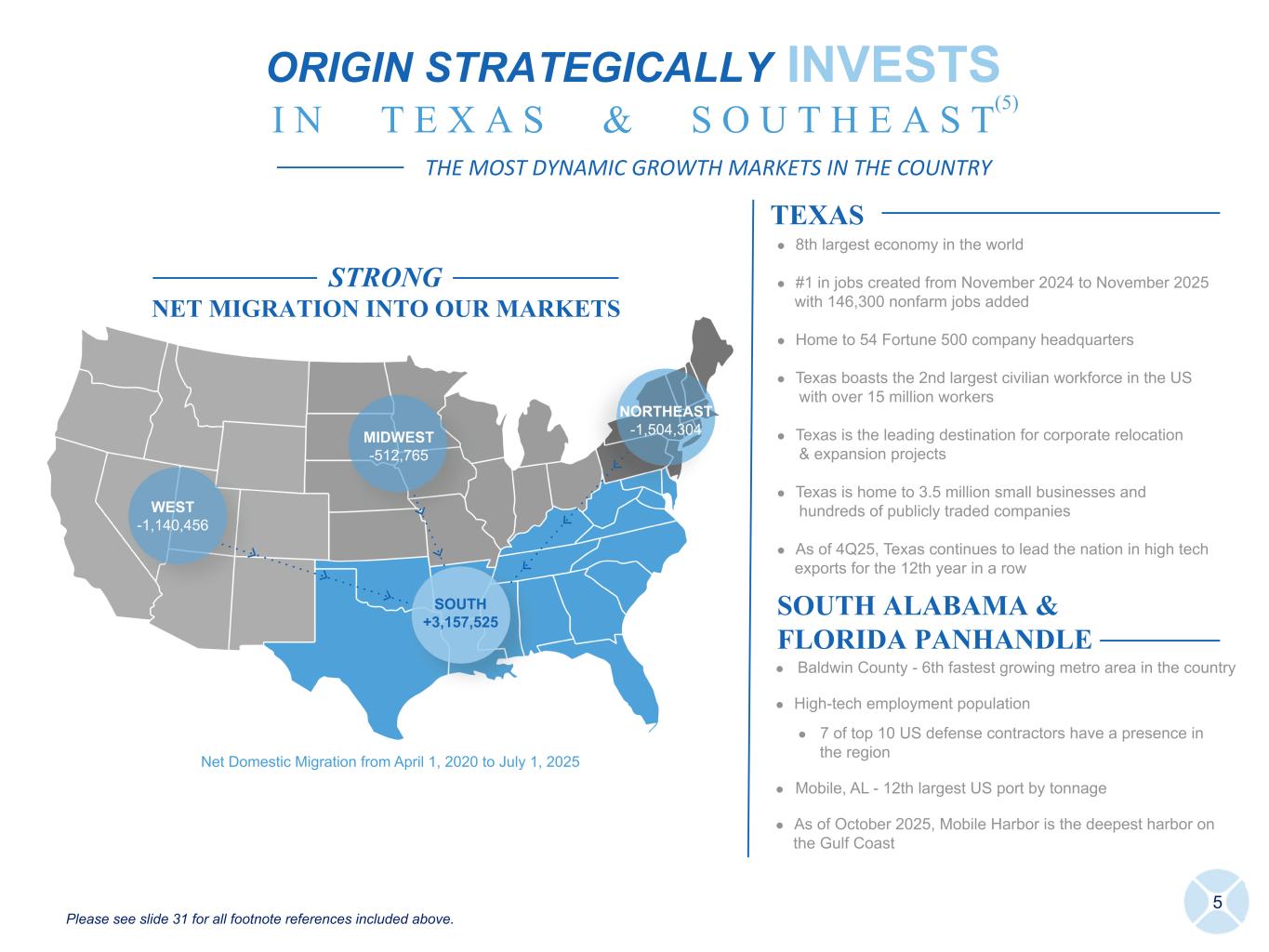
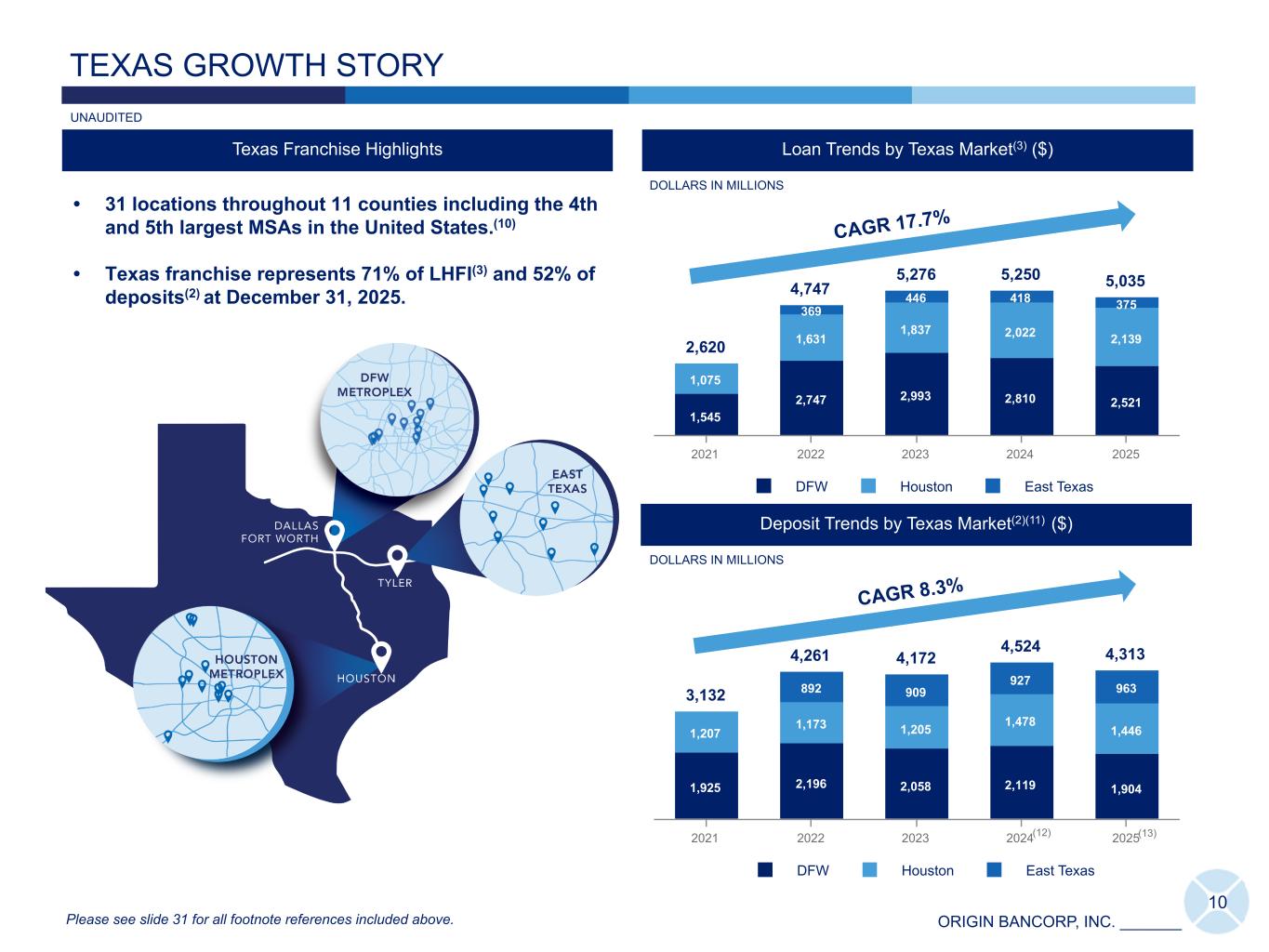
Yeah, I'll let Wally speak to the betas, but I'll just tell you anecdotally, I feel like we still have opportunity. You know, I think the back half of last year, I think we saw some of the benefit and the power of the rural deposit base we have in North Louisiana. You know, we spend a lot of time talking about Texas as our sort of driving force, and rightfully so. I mean, we grew, like, loan originations 36% year over year, and 75% of that was in Texas. But if you step back, we actually grew deposits 14% in Louisiana at our lowest deposit price point across our footprint. So Louisiana continues to pay huge dividends, and that's a big piece of getting our total deposit cost down. So, I think there's still opportunity for us to push on that.
Yeah, Woody, I would just add, you know, when you think about our deposit betas, we, in our outlook and, you know, internally, when we think about how to model net interest margin or net interest income, we're still using our historical beta assumptions in the model, though we have been beating that so far. It does feel like at some point it's going to get harder to beat that data, but it is an area of focus for us. We think it's an area of opportunity for us, so hopefully we can continue to exceed our own expectations on the deposit beta side of the equation.
That's helpful, Collar. And then just last for me, as I think about like the top end of the range for the net interest margin versus the bottom end, does it really come down to loan growth where if If growth is stronger, y'all might be on the lower end of that range. And if it's lighter, y'all might be at the top. Is that the right way to think about it?
I think that's a fair way to word it, Woody. You know, we don't know how promotional acquiring banks are going to be, and that could put pressure to loan spreads. We are putting some of that in our modeling, but if those pressures increase, then yeah, that could put us towards the lower end. And that equation is also true on the deposit side of the equation. So we're just trying to, it's a wide range and we get it, but we're just trying to solve for the fact that we just don't know how banks are going to act until we see it. So we'll continue to update you from quarter to quarter. But right now, even with some pressures on spreads on both sides of the equation, our bias is towards the higher end of that range. But that could come down if the pressure intensifies.
Yeah, that makes total sense. All right, that's all for me. Thanks for taking my questions. Woody, thank you.
Operator
Thank you. Our next question comes from Steven from Hypersandler. Steven, please proceed.
Great. Hey, good morning, guys. Not to beat a dead horse on the new hire conversation, but you know, you talked about it being a generational opportunity. So I think it's worth continuing. Can you talk about maybe how you think about the earnback period or like a break-even period on these new hires? Just how long it takes them once they get past these non-competes and what have you? And then just how you compete for these folks? Because obviously everyone, every bank we talk to is talking about this generational opportunity, and the industry is in a great spot, right? Everybody seems to have capital and want to grow. So how do you become the bank that these people want to come to?
Well, first off, I think we're so focused on C&I, unoccupied, you know, CRE and those lenders. They want to be in a shop that does C&I good in the supports and markets. Also, I think we have very good representation in all of our markets. I think about Nate in the southeast that has deep relationships with these teams that have worked with them at some point in time. They have respect for our presidents and our markets. And I think the relationship, the culture, the C&I drive, and how we manage our teams certainly gives us somewhat of a competitive advantage. You know, through this, we have been pretty focused on 12 to 15-month earnback or profitability levels, timing, I should say, on these teams. And where Nate and his team in the southeast took 18 months, they're now profitable, that was in an environment with higher interest rates and tough to move some credits until maturity. So we're in a different environment. We like the environment we're in, and we think that we can pick and choose the right people that fit our culture, that fit our philosophies when it comes to lending, and are in the markets and the industries that we want to lend into. So I think overall that gives us a very strong competitive advantage to be successful.
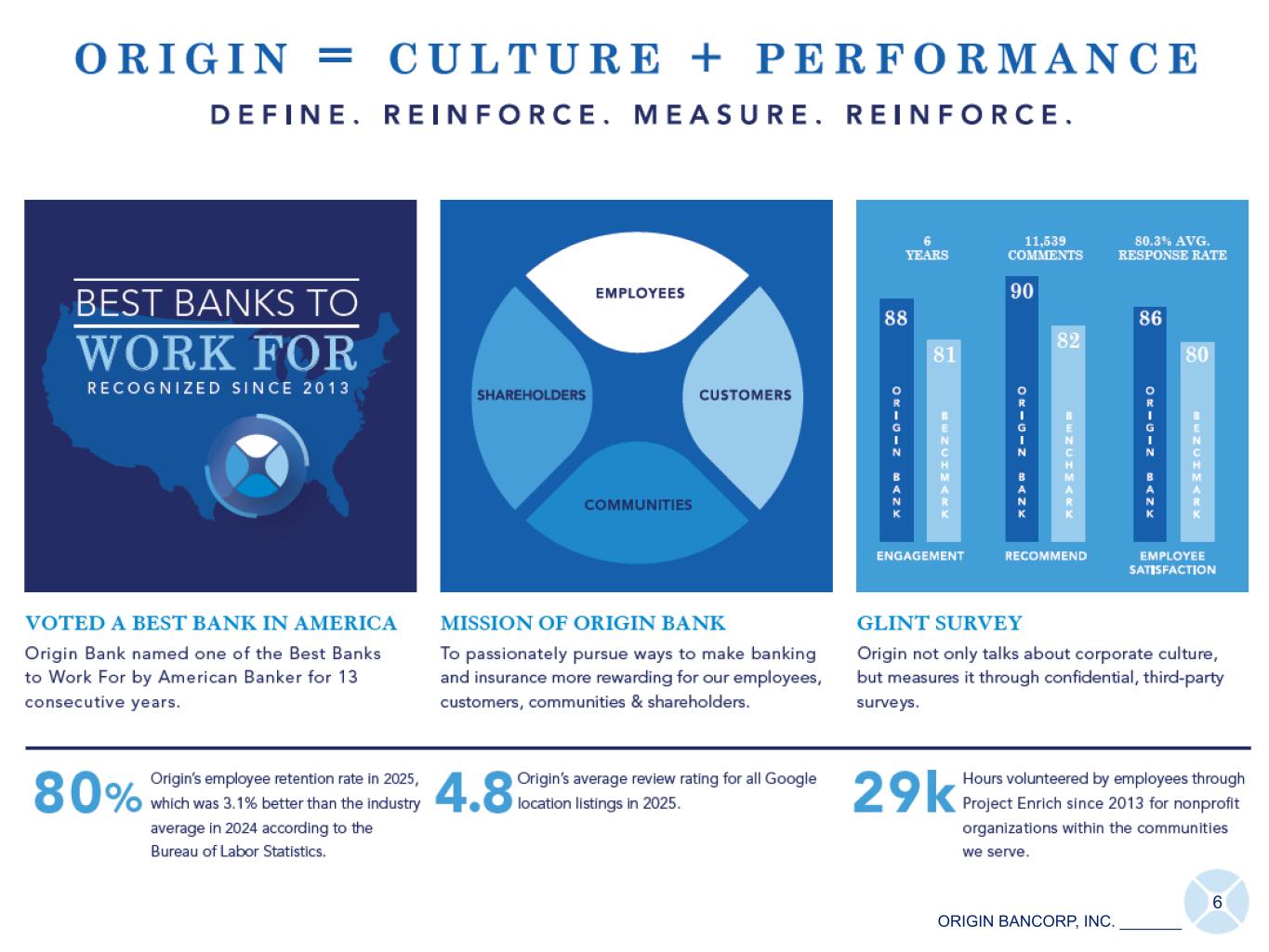
Yeah, I might want to add just I love this opportunity more than I like M&A just because we can really use data to really drive in what type of clients do we want inside of our portfolio. And you can do that kind of from a low risk environment and identifying and targeting teams. You know, this is where our culture shines. I mean, when you're named one of the best banks in America to work for repeatedly, and then you combine that with our geographic model, which CNI bankers really like to be a part of, that you have an entrepreneurial attitude not in a siloed line of business you get to bank your clients and so if we can offer a good model an entrepreneurial uh organization somebody that allows them to bank the clients they want to bank from a cni perspective really good treasury management tools that allow them to kind of go up up market uh i think it creates a competitive advantage for origin yeah that's really good and lance you touched on something that i wanted to hit and it's like is the use of data and it
it seems like a lot of the progress has been, you know, aided by really intentional and sophisticated use of data. I'm curious how that has helped shape the composition of your loan growth and kind of what you're focused on and maybe how that shifted from a couple of years ago, whether it's risk adjusted returns, loan sizes, loan type, and just kind of how, you know, this optimized origin process has changed the focus of the bank as you move forward and how you lend.
Yeah. I'm so glad you asked that question. I mean, And that has kind of become the driving force of what we do. And I give Wally and his team all the credit. I mean, honestly, we're just a different company than we were two and a half years ago because of our access to meaningful and actionable data. We spend a tremendous amount of time digging into portfolio data, banker profitability, client profitability, product profitability. You've seen what we've done with branches. is just kind of obsessing now over finding ROA enhancement opportunities through the use of data. Our ability now to kind of design like what a top performer banker looks like for us inside of our model using data. And then the flip side is kind of what the bottom performing bankers look like and then how do you coach from that from a data perspective or how do you know it's time to kind of push out and reinvest. So I actually kind of can't give Wally and them enough credit for what they've done for us. You know, it helps drive the type of deposit clients we want, our investments in treasury, the loan mix. I mean, there's just so much there that is, we're making decisions in a different way than we have kind of over my history here because of what's at our fingertips.
Yeah, that's fantastic. Thank you, Lance. And then I guess last for me, you know, obviously I'm sure NPLs are still a bit more elevated than you guys would like. With everything going on, all the positives, is there anything that can be done there to migrate some of the lingering credit issues maybe down a bit quicker, or how do you think about the path for non-performers from here?
Good morning. This is Jim. Yes, when Lance spoke to client selection and move out, it's really shifting more than toward those loans that are criticized in this quarter, the $45 million, 75% of that was in the criticized area. And so that really is our focus. So I'm very pleased with the progress we made on non-performing for the quarter. We see some reduction there. We've always had some good news early on this quarter. And that is really our focus to really drive those metrics down, particularly as it relates to non-performing. So I feel good where we are and the direction of what I'm seeing that we can accomplish in 26.
Operator
Fantastic. Thanks for the color, guys.
Great year. Great quarter. Thank you, Ford.
Operator
And our next caller is Gary from DA Davidson. Gary, please proceed.
Gary
Analyst — DA Davidson & Co.
Thanks. Good morning, everybody. And a couple of questions. One, just moving over to the fee side for a minute. But just curious about the swap activity in the quarter, obviously down quite a bit. And I think you would kind of flag that it would be down, but pretty minimal in the quarter. So just wondering if there was anything unusual behind that. I would have thought with the expected and actual rate cuts that it would have been a little more active.
Yeah, no, I actually just think it was extraordinary in the third quarter, to be honest with you. I think it kind of came back and normalized a little bit. We had a little hard to budget for the – I mean, we actually had – I think our swap and loan fees were up 59 percent kind of year over year. We had a great – we expect really good volumes around that this year, but maybe not quite to the same level we had last year. So I think it was more about the third quarter being really high.
Gary
Analyst — DA Davidson & Co.
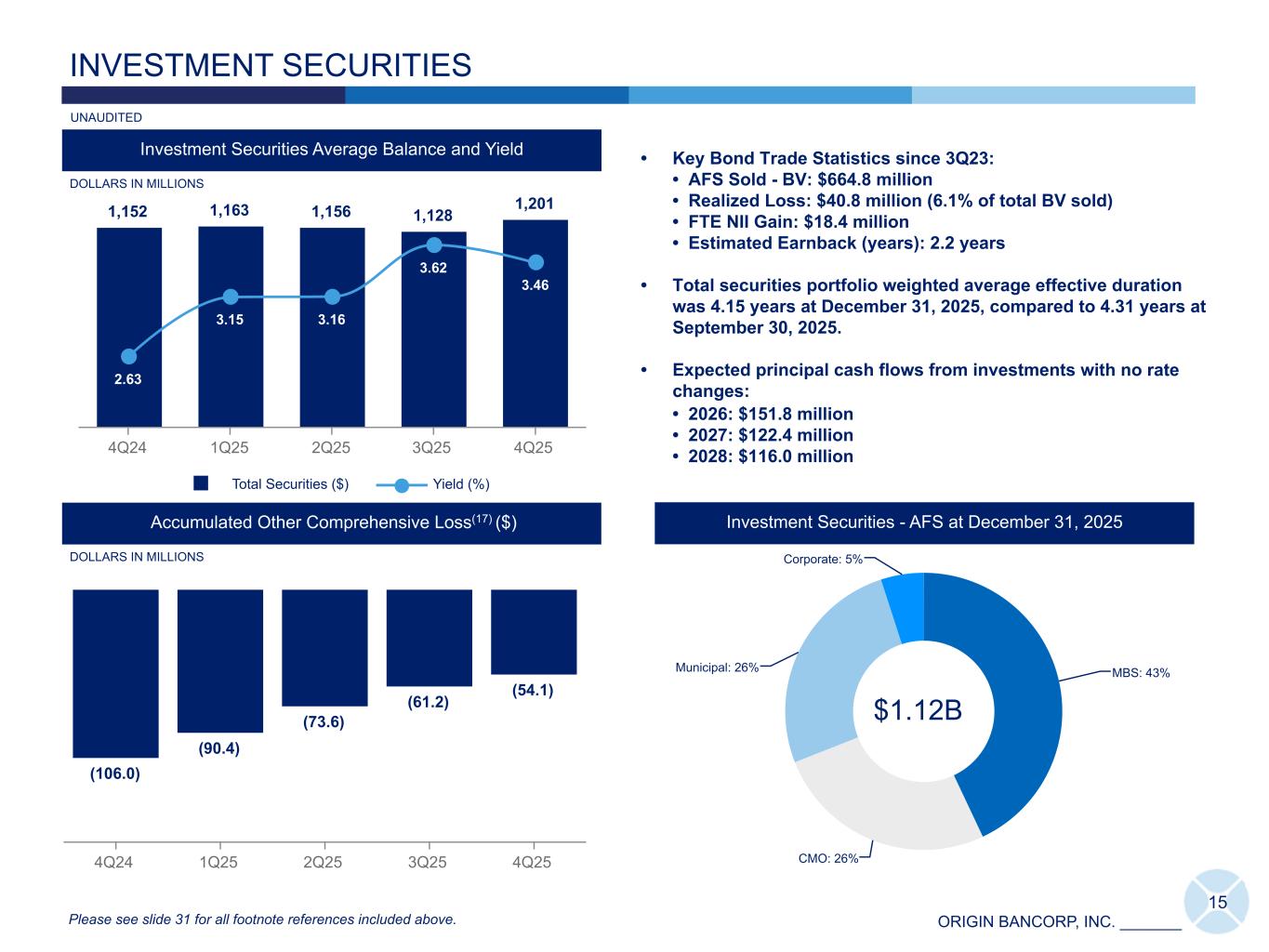
Thanks for that. And then you noted the securities cash flow is about $150 million. dollars. If loan growth comes in a bit stronger, is there room to work the securities portfolio down a bit more and use some of those cash flows to fund loan growth? Or is the basic case assumption that it's fully reinvested in the securities portfolio?
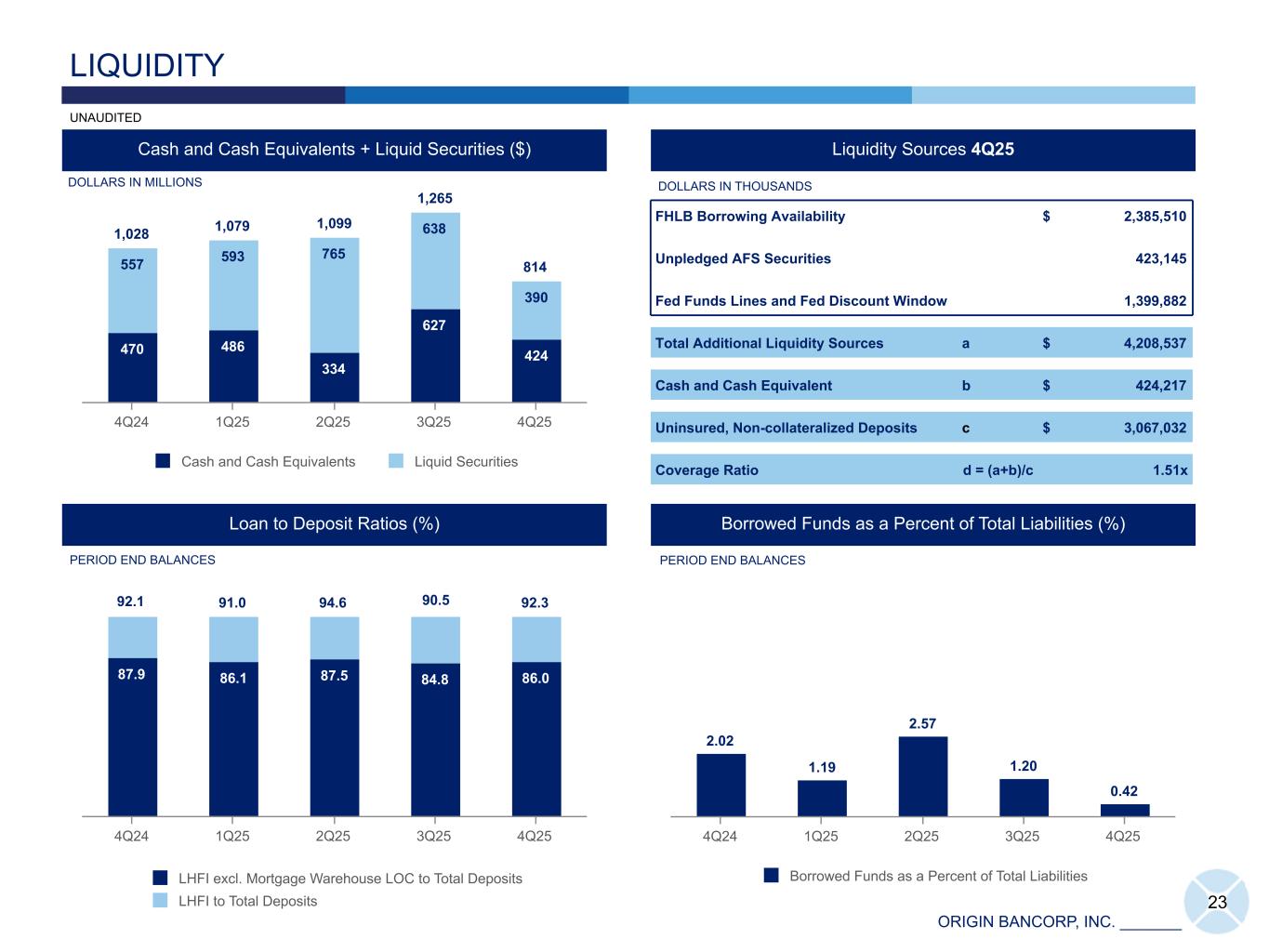
Okay. Gary, we have worked very hard over the past two to three years to work the security portfolio down to a reasonable portion of the balance sheet. And we define that as kind of the 11 to 12% range, which is where it's at right now. So we anticipate that we will keep the securities portfolio where it is relative to assets. So if loan growth accelerates, then you'd actually see the securities portfolio build accordingly. So no, there's not, we don't anticipate that there's any room for a shift out of securities into loans. Now, I would note, though, that we do have a lot of liquidity right now. Some of that is seasonal due to public funds, seasonality and tax season, et cetera. So, there could be some opportunity, you know, as we deploy liquidity into the loan portfolio that's not currently in the securities portfolio for some benefit there.
Yeah, then maybe I'll do it, Wally. We did a really good job of growing core deposits last year, which allowed us the luxury of replacing all of our broker deposits. I think at this point, correct, Wally, we have no broker deposits.
That's exactly right. We're in a good shape from a liquidity perspective, Derek.
Operator
This concludes the Q&A. Handing back to Drake Mills for any final remarks.
Thank you. You know, as I look forward to 2026, we're blessed with many positives. Margin expansion, treasure management revenue growth, fee revenue growth, expense management, pipeline growth, strong loan growth outlook, deposit non-interest bearing growth. Partners in Argent, 20% has been a big hit for us. Southeast market hit profitability in Q3, which is a big move for us. Our mortgage group has a positive contribution now. We have strong teams and strong dislocation in our markets. So due to optimizing our geographic footprint, we feel we're positioned to be balanced and disciplined. I think that is critical as we move far to consistently build ROA while also investing in our long-term growth and shareholder value. We are so focused on how do we manage and create greater shareholder value. It's taken commitment and focus to put Origin in a position of offense. I look forward to a very rewarding 2026. Thank you for being on the call, and thank you for your support.
Operator
This concludes today's Evercool. Thank you, and have a great day.