Operator
Hello and welcome to the Omnicom first quarter 2025 earnings call. All lines have been placed on mute to prevent any background noise. After the speaker's remarks, there will be a question and answer session. If you would like to ask a question during this time, please press star one on your telephone keypad. I would now like to turn the conference over to Greg Lundberg, Investor Relations. You may begin.
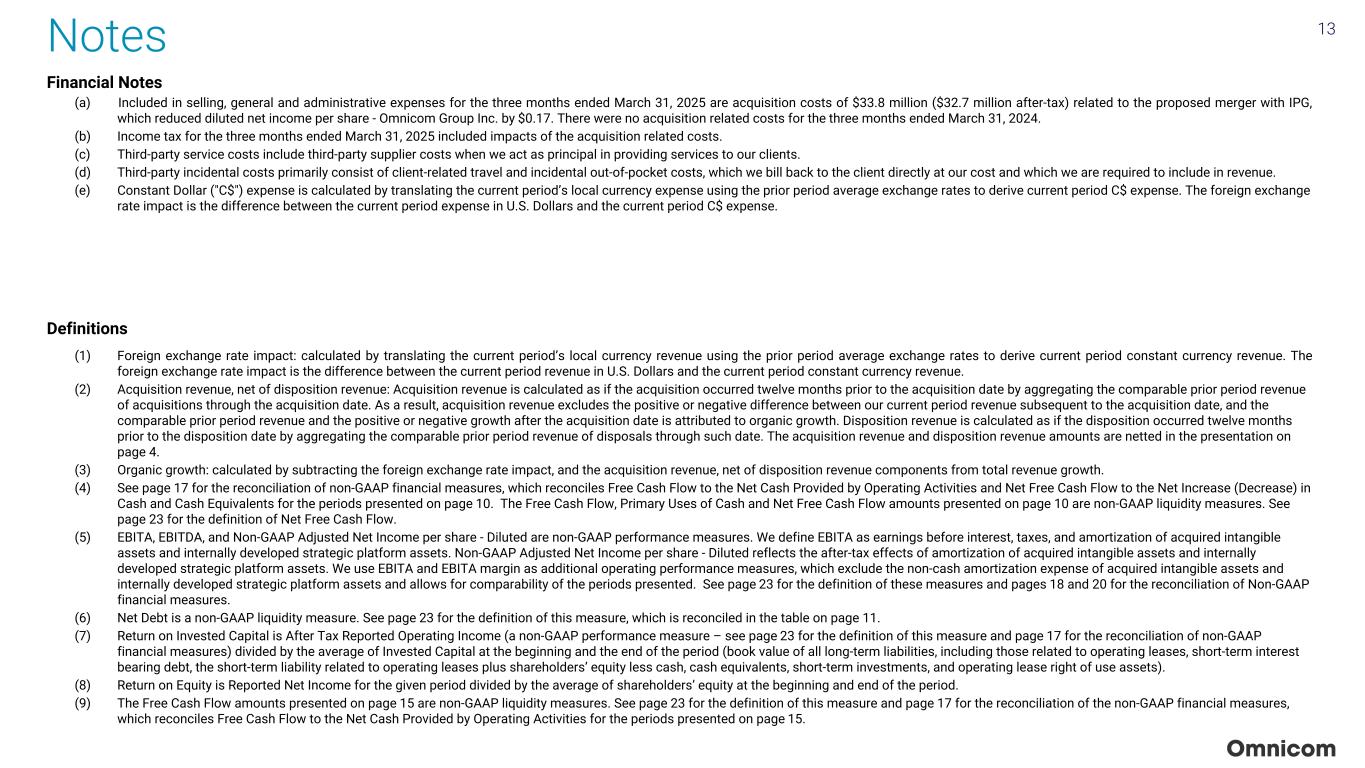
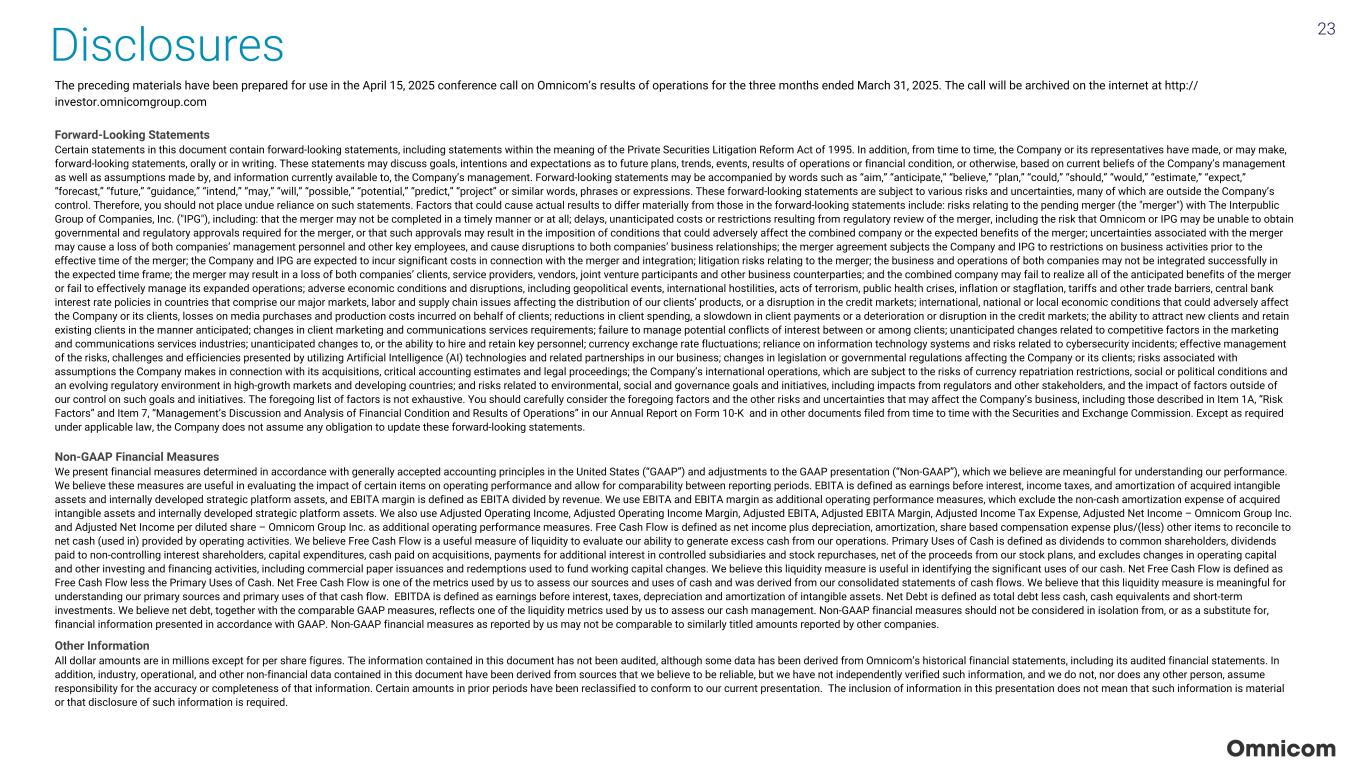
Thank you for joining our first quarter earnings call. With me today are John Wren, Chairman and Chief Executive Officer, and Phil Angelostro, Executive Vice President and Chief Financial Officer. On our website, OmnicomGroup.com, you will find a press release and a presentation covering the information that we'll review today. An archived webcast will be available when today's call concludes. Before we start, I'd like to remind everyone to read the forward-looking statements and non-GAAP financial and other information that we've included at the end of our investor presentation. Certain of the statements made today may constitute forward-looking statements. These represent our present expectations, and relevant factors that could cause actual results to differ materially are listed in our earnings materials and in our SEC filings, including our 2024 Form 10-K. During the course of today's call, we will also discuss certain non-GAAP measures. You can find the reconciliation of these to the nearest comparable GAAP measures in the presentation materials. We will begin the call with an overview of our business from John, then Phil will review our financial results, and after our prepared remarks, we'll open the lines up for your questions. I'll now hand the call over to John.
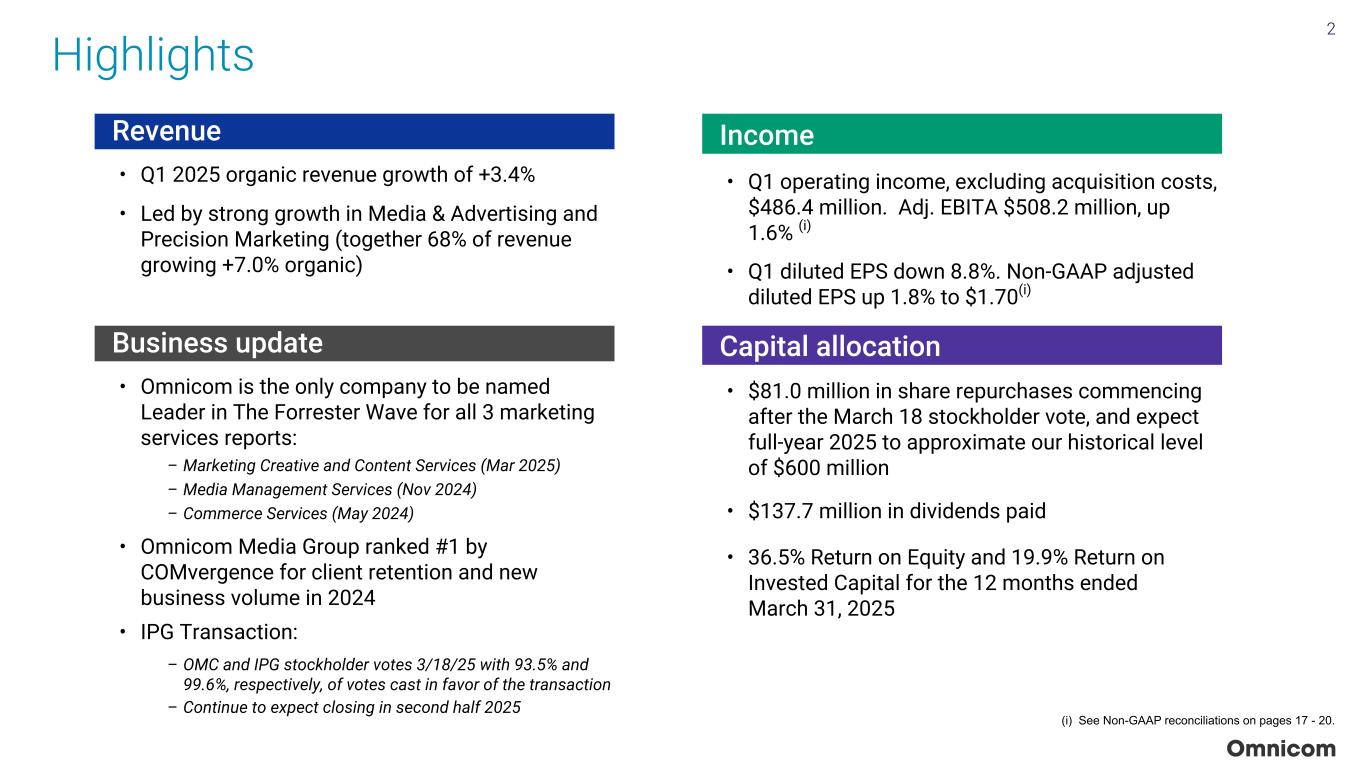
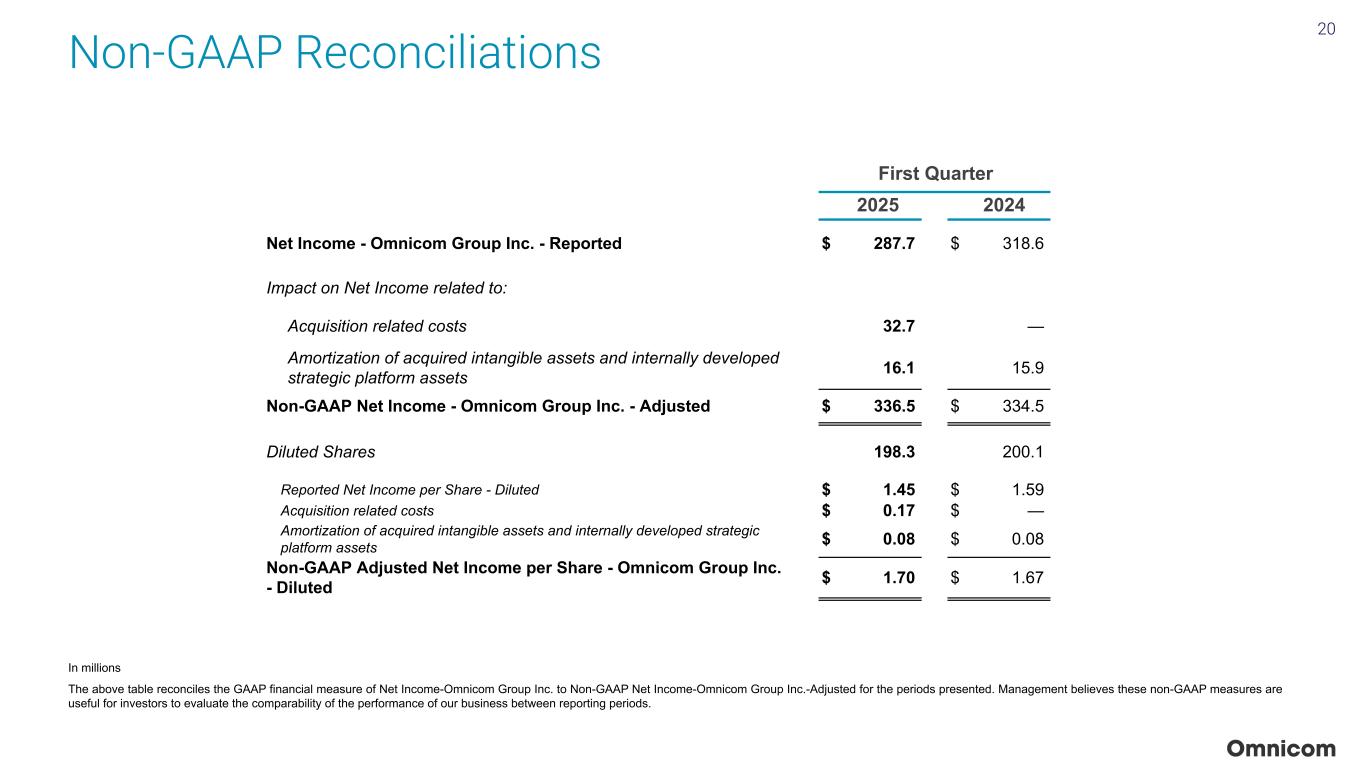
Thank you, Greg. Good afternoon, and thank you for joining us today for our first quarter 2025 results. I'll begin by covering our results and then provide an update on the progress we are making towards closing our proposed acquisition of Interpublic. I'm pleased to report that we've had a good start to the year. Organic revenue growth in the first quarter was in line with our expectations of 3.4%, with strong growth in our media and advertising and precision marketing disciplines. Adjusted EBITDA margin, which excludes amortization of acquired and strategic platform intangibles, as well as IPG acquisition-related costs, was 13.8% for the quarter. Non-GAAP adjusted earnings per share, which excludes the after-tax amortization of acquired and strategic platform intangibles, as well as IPG acquisition-related costs, was $1.70, up 1.8%. versus the comparable number in Q1 2024. Our cash flow and balance sheet remain very strong and support our primary uses of cash, dividends, acquisitions, and share repurchases. For most of the first quarter, we were restricted from purchasing shares until after our shareholder vote on the acquisition of Interpublic on March 18th. We expect to continue our share repurchases consistent with our approach in prior years for the remainder of 2025. Since our last call, as you're all keenly aware, there's been increased volatility in the economy and the markets. We're assessing the implication of these events to determine how they will affect our clients and our business. As in past periods of uncertainty, our clients must continue to compete for share in a dynamic marketplace by investing and leveraging the strength of their brands and increasing and actively expanding their connection with customers. Internally, our management teams are continuing to drive operational excellence, manage costs in line with revenue, and monitor changes in the macro environment. Given the uncertainty of the current environment, we're expanding the range of full-year 2025 organic growth to between 2.5% and 4.5% and maintaining our adjusted EBITDA margin guidance to 10 basis points higher than the 15.5% we achieved in 2024. Nothing about the current environment impacts our confidence in our business and strategy or our ability to create new services and win new business. On the technology front, AI is touching every aspect of how our people work. It augments our insights and creativity, increases the speed and volume of personalized content, raises the level of effectiveness in targeting customers, expands the knowledge of our talent, and makes our operations more efficient. All of this is driving transformative outcomes for our clients. Much of this is enabled by Omni AI, our open source platform that leverages the industry's leading generative AI models for text, graphics, video, and audio trained for our agency-specific use cases in areas such as strategy, content, and creative. Thousands of our people use OmniAI, and we expect to add more users with the goal of having it on the desktop of every client-facing Omnicom employee by the end of the year. At this point, Most advances are to provide state-of-the-art tools to our employees. We expect that as AI tools become more reliable and are deployed to more clients, they will result in measurable efficiencies for our business. This work directly contributed to recent recognition. In March, we were named a leader in the Forrester Wave for marketing, creative, and content services. Omnicom Precision Marketing Group and Omnicom Advertising Group were recognized for their strong strategic and current offering, respectively. This evaluation followed Omnicom being named a leader across two other recent Forrester evaluations, Media and Commerce. Omnicom is the only company named a leader in Forrester's wave reports for content, commerce, and media in 2024 and 2025. Several of our agency networks are also recognized for an outstanding performance during the quarter. On AdAge's A-list, OMD was named Media Agency of the Year, and GSDNM was recognized as an agency standout. TBWA was named to Fast Company's Most Innovative Company list for the sixth time. PHD won Adweek's Global Media Agency of the Year for the second consecutive year after successfully defending $4 billion in business while re-engineering its strategy for an AI-powered future. I want to congratulate everybody on these achievements. Turning now to our proposed acquisition of Interpublic, we made progress throughout the In March, along with Interpublic, we received overwhelming support from our respective stockholders when they voted to approve the proposed transaction. This strong support confirms the immense opportunity of having complementary assets come together to create an unmatched portfolio of talent, services, products, and platforms. We also made progress on the regulatory approval front. In the last five weeks, we've received approval from five of the 18 jurisdictions under review. In the months ahead, we will continue to work on obtaining all the necessary regulatory approvals. We remain on track to close in the second half of 2025. We continue to develop plans for integrating our businesses with Interpublic. We have successfully organized our portfolio at Omnicom by aligning our agencies into marketing disciplines or practice areas to strengthen our depth of expertise and capabilities and to enhance collaboration across the group. This structure provides a seamless path for bringing together our operations with Interpublic, adding deeper expertise and capabilities to each practice area following the closing of the acquisition. Moreover, across the board, our practice areas will be underpinned by the best-in-class tech and data platforms, including Axiom, Omni, and Flywheel Commerce Cloud, a combination that will position us to thrive in an AI-driven future. Finally, we've made progress on our integration planning work, which will help us meet our targeted $750 million in run rate cost synergies following the closing of the proposed transaction. As I've discussed in February, we have clearly identified areas of synergy opportunity and our integration planning is well underway to ensure we achieve our targets. We believe our multi-year plan and the successful acquisition of Interpublic will create significant shareholder value. In closing, we had a good start to the year and are focusing on servicing our clients in these unsettled times and are on track to close the acquisition of Interpublic in the second half of the year. I'll now turn the call over to Phil for a closer look at our financial results. Phil?
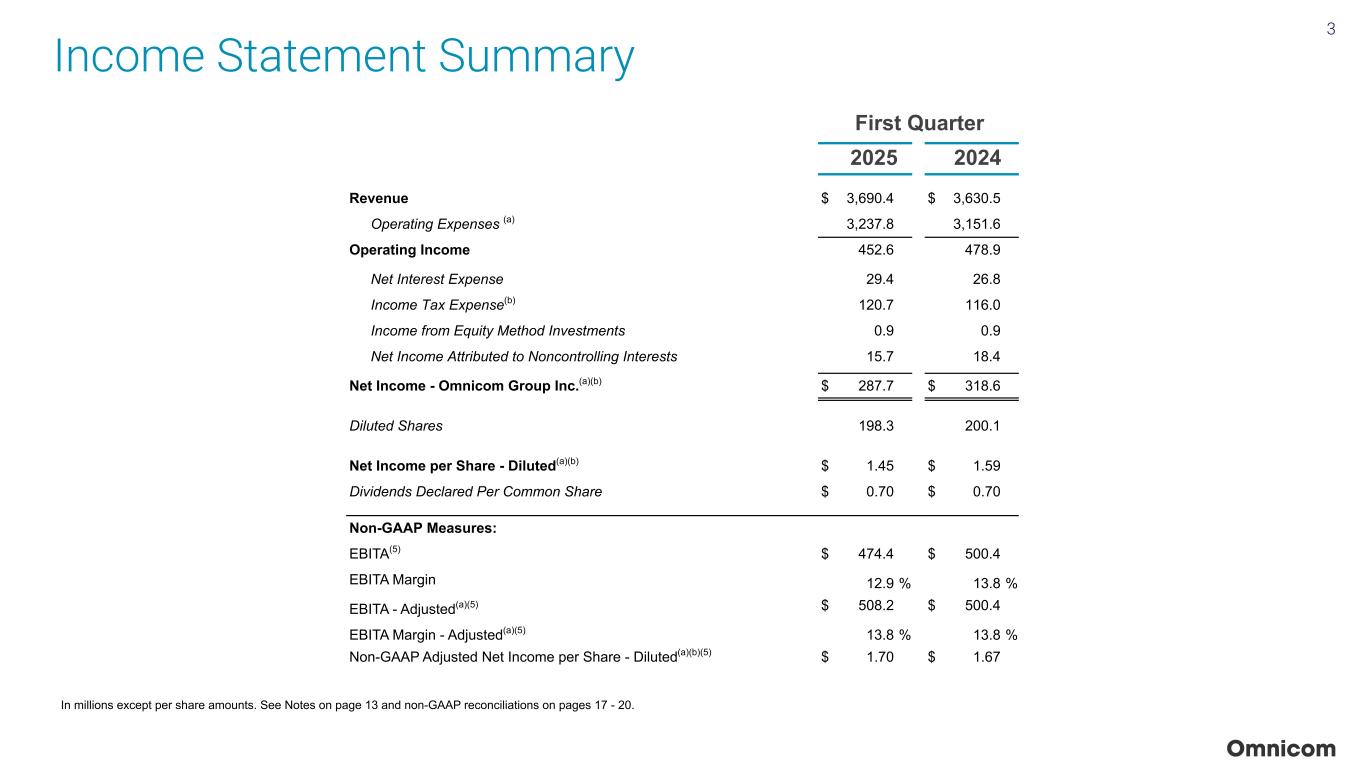
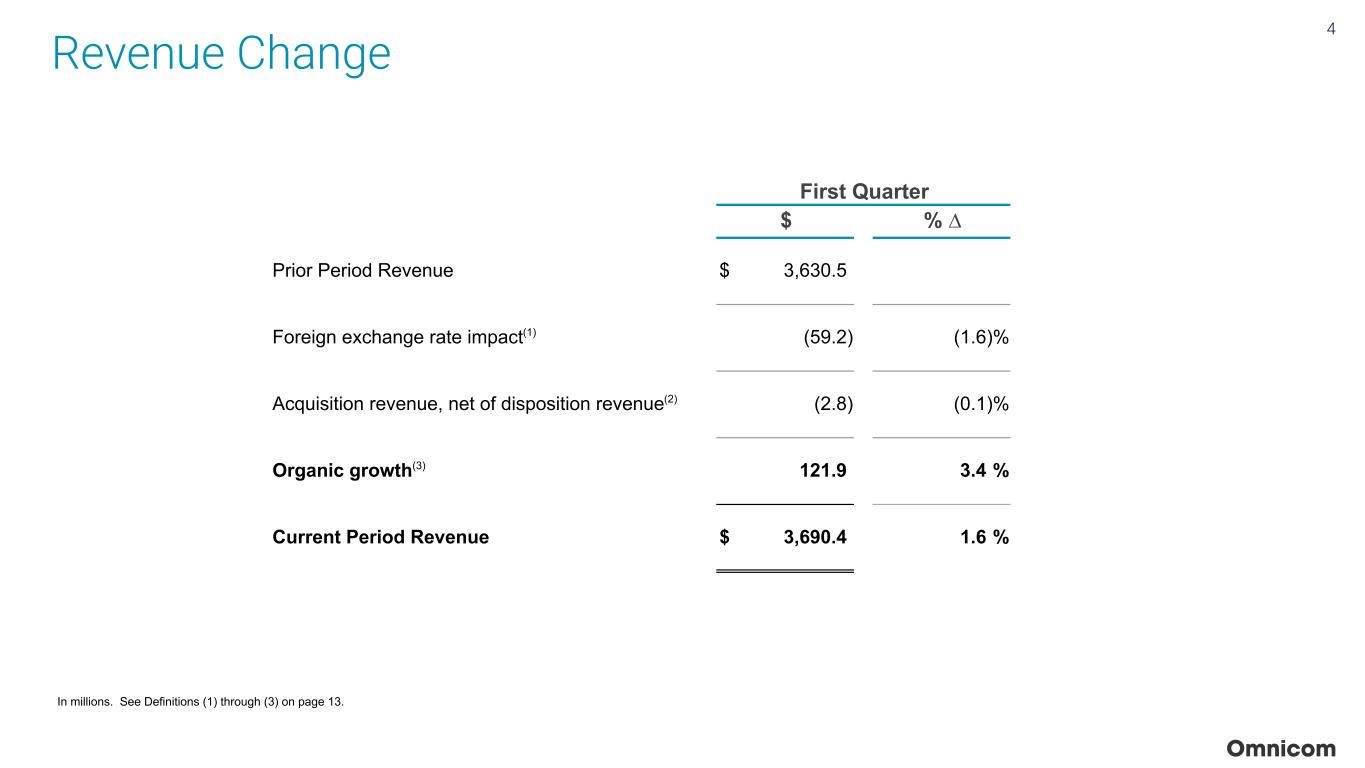
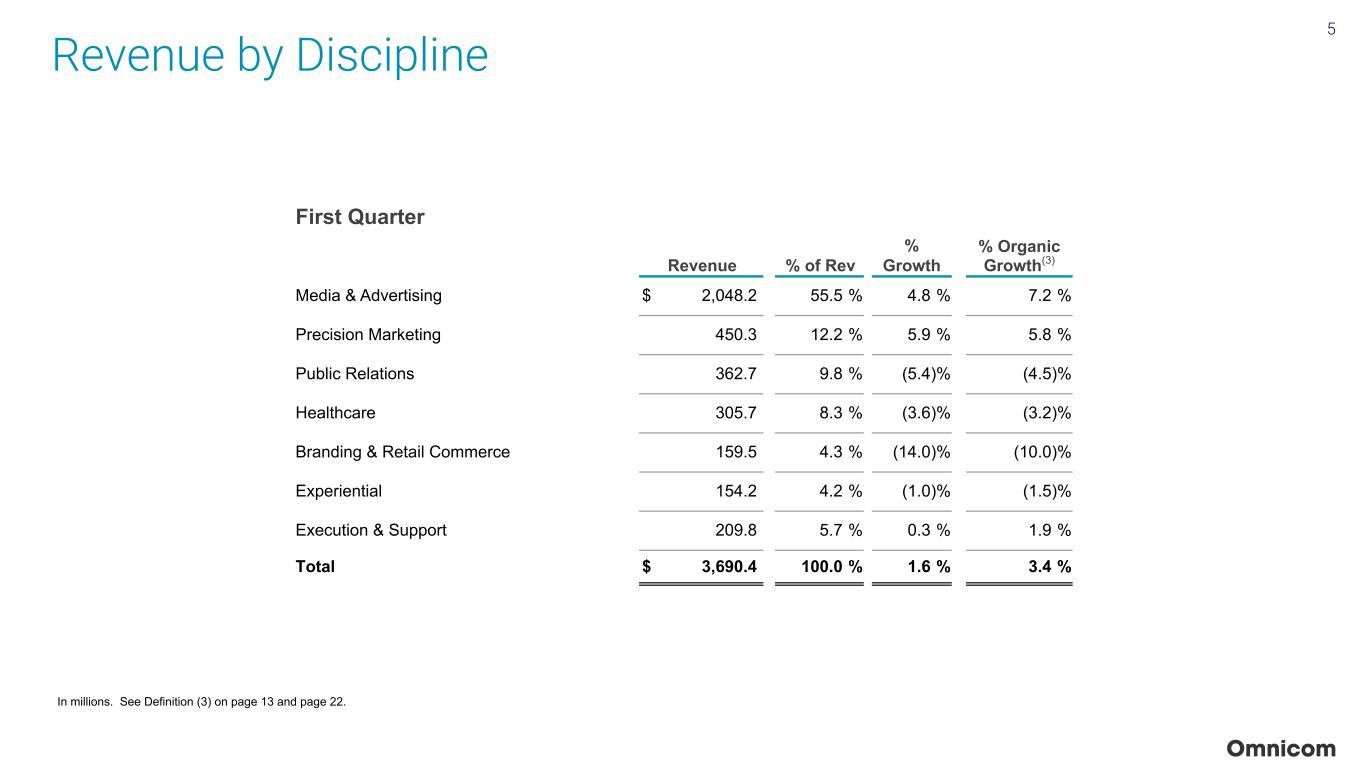
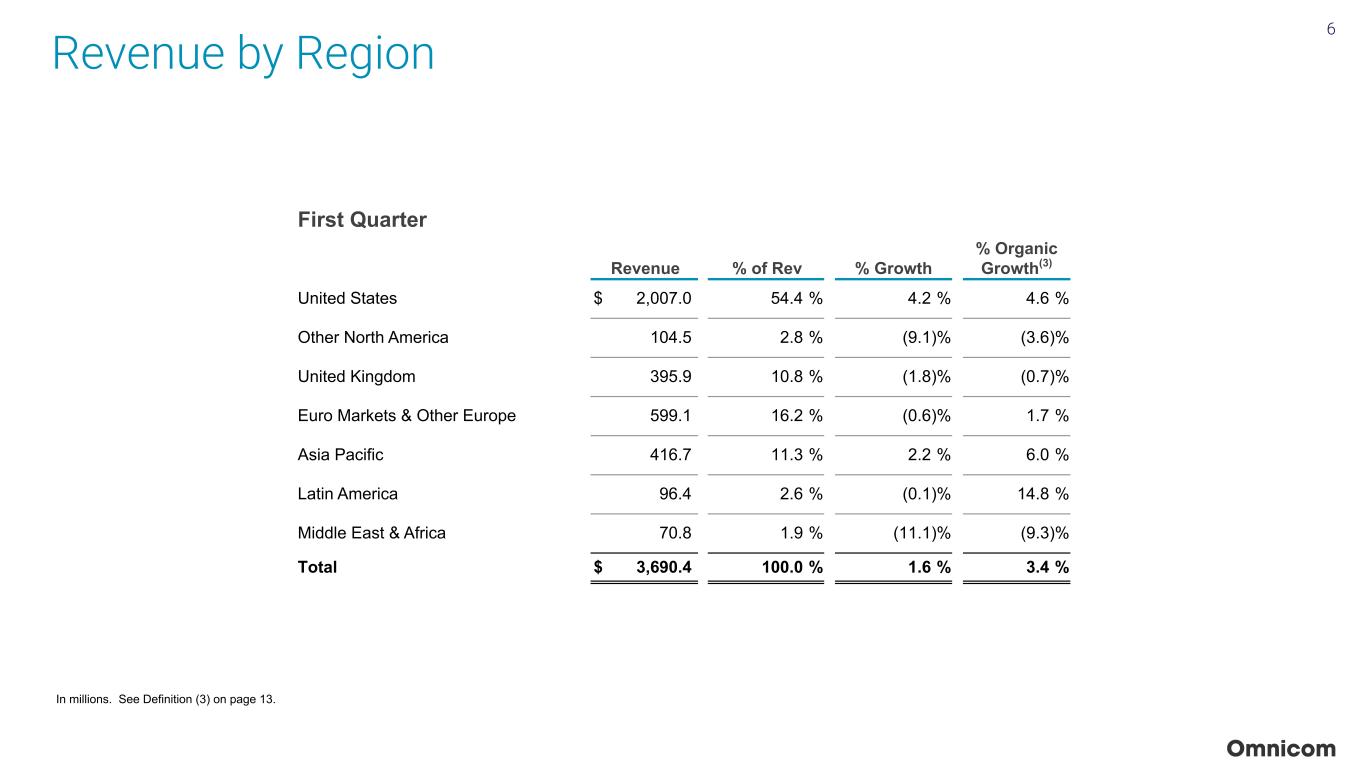
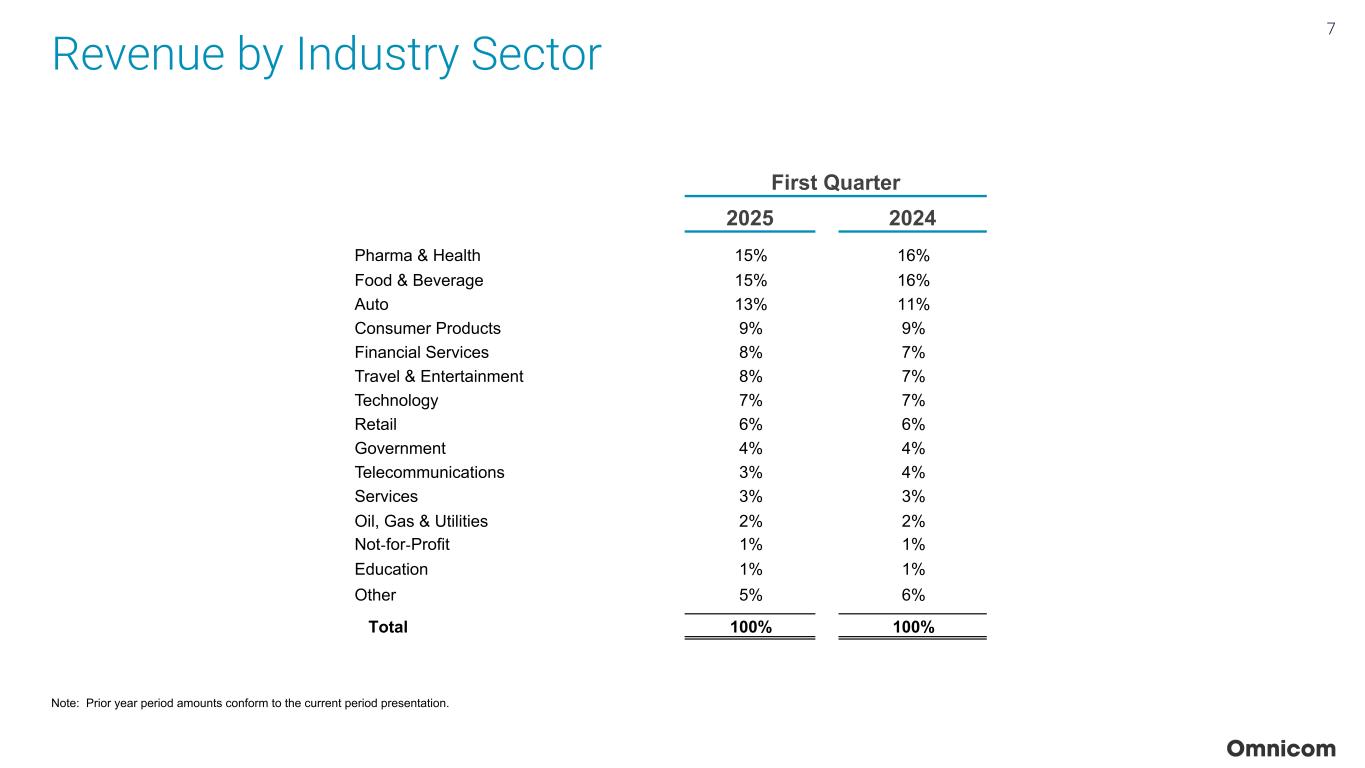
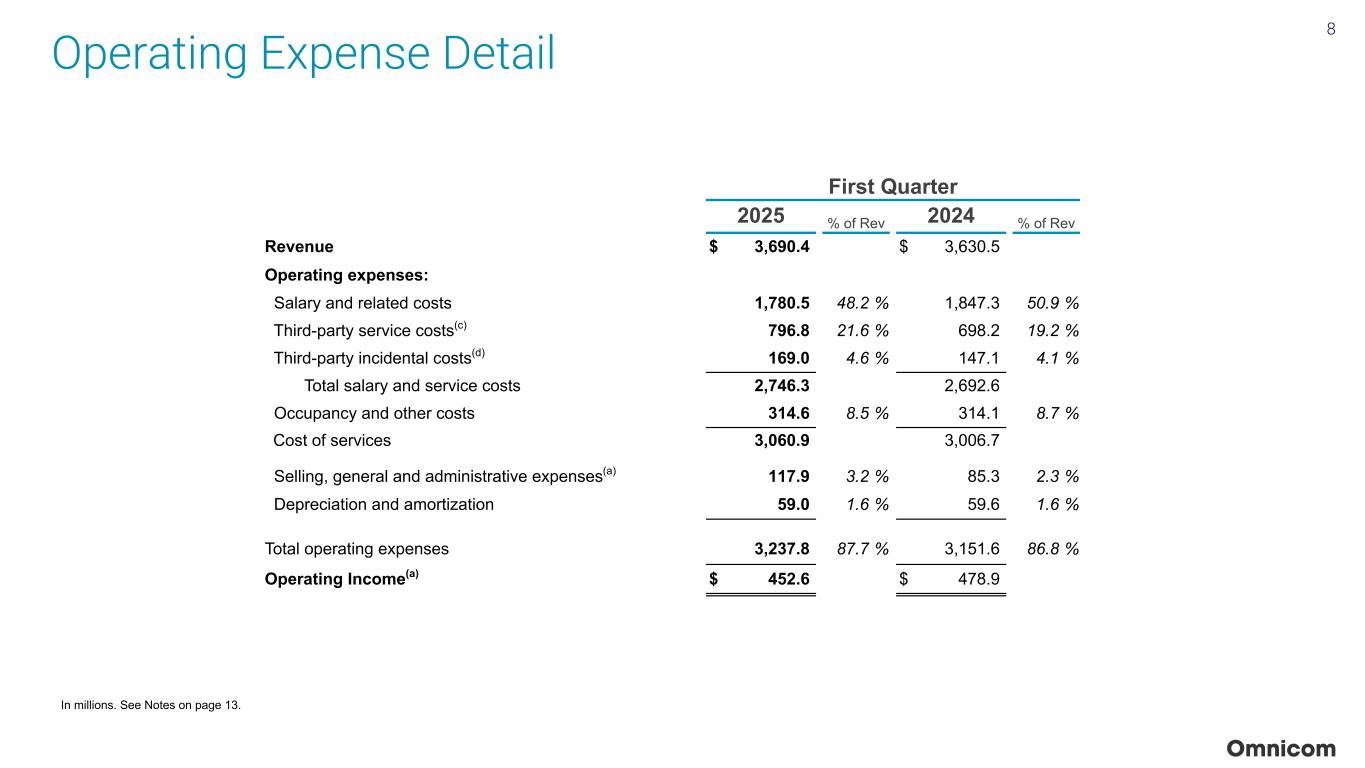
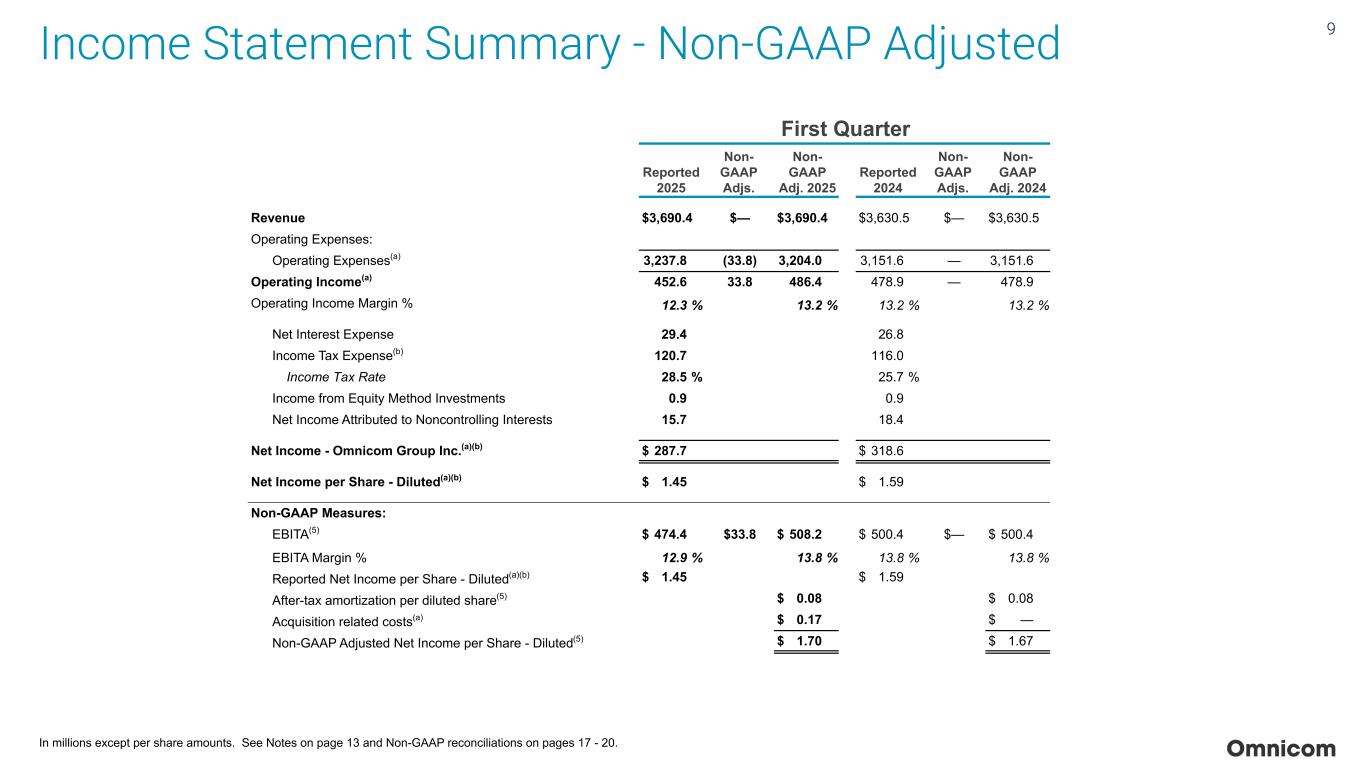
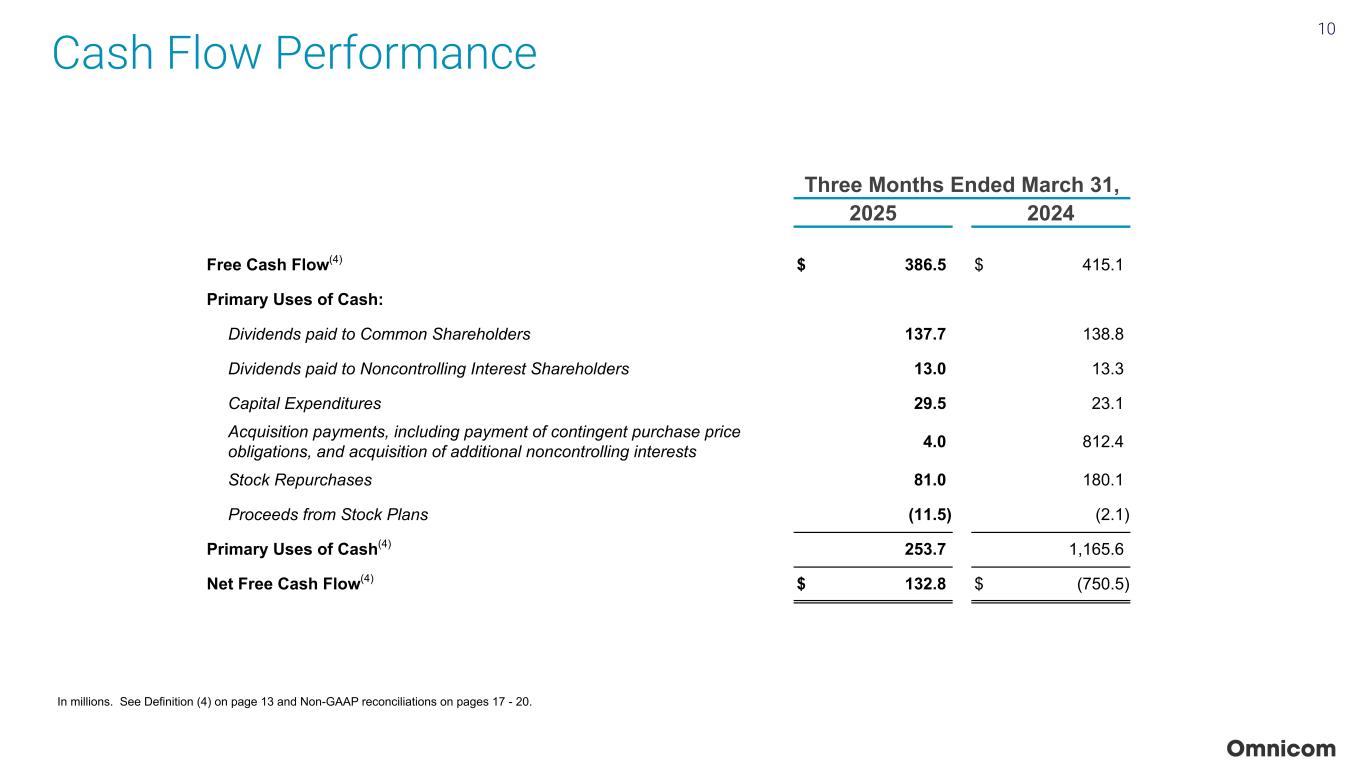
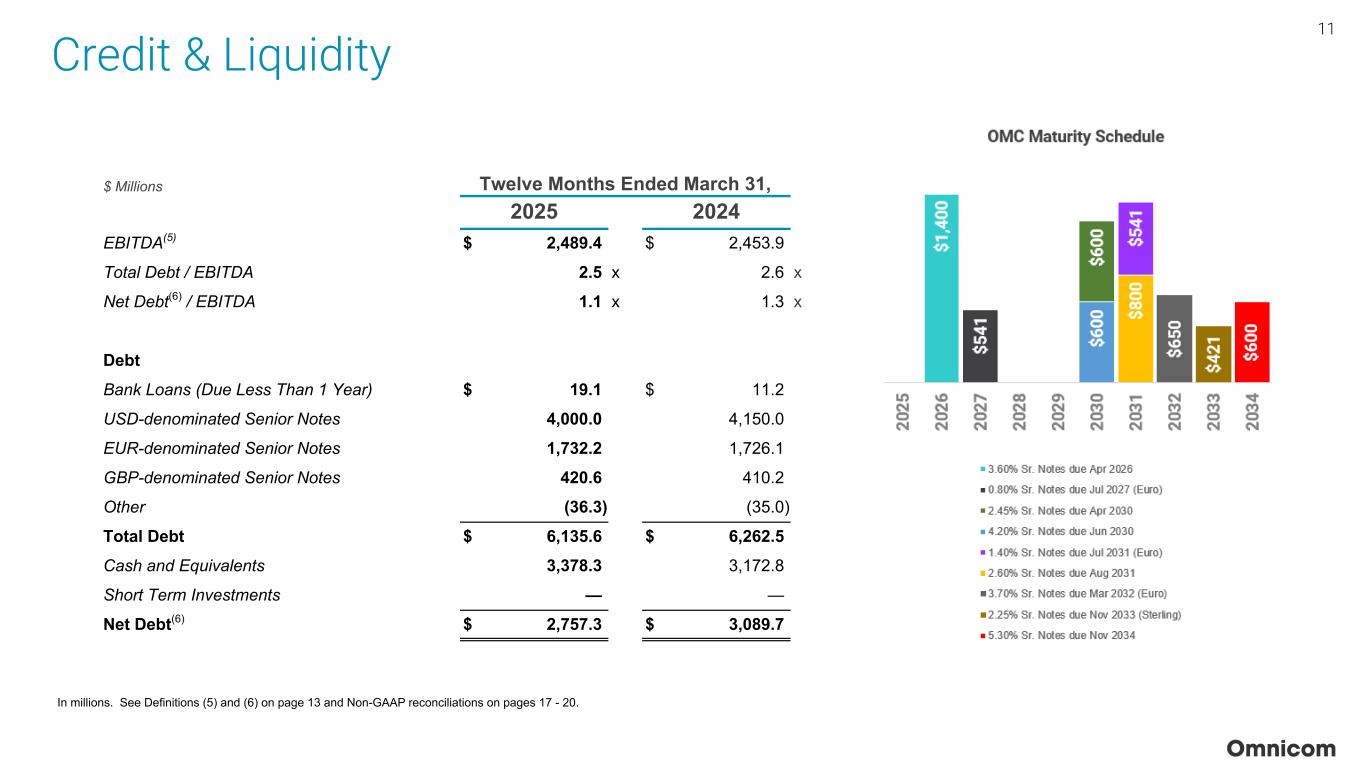
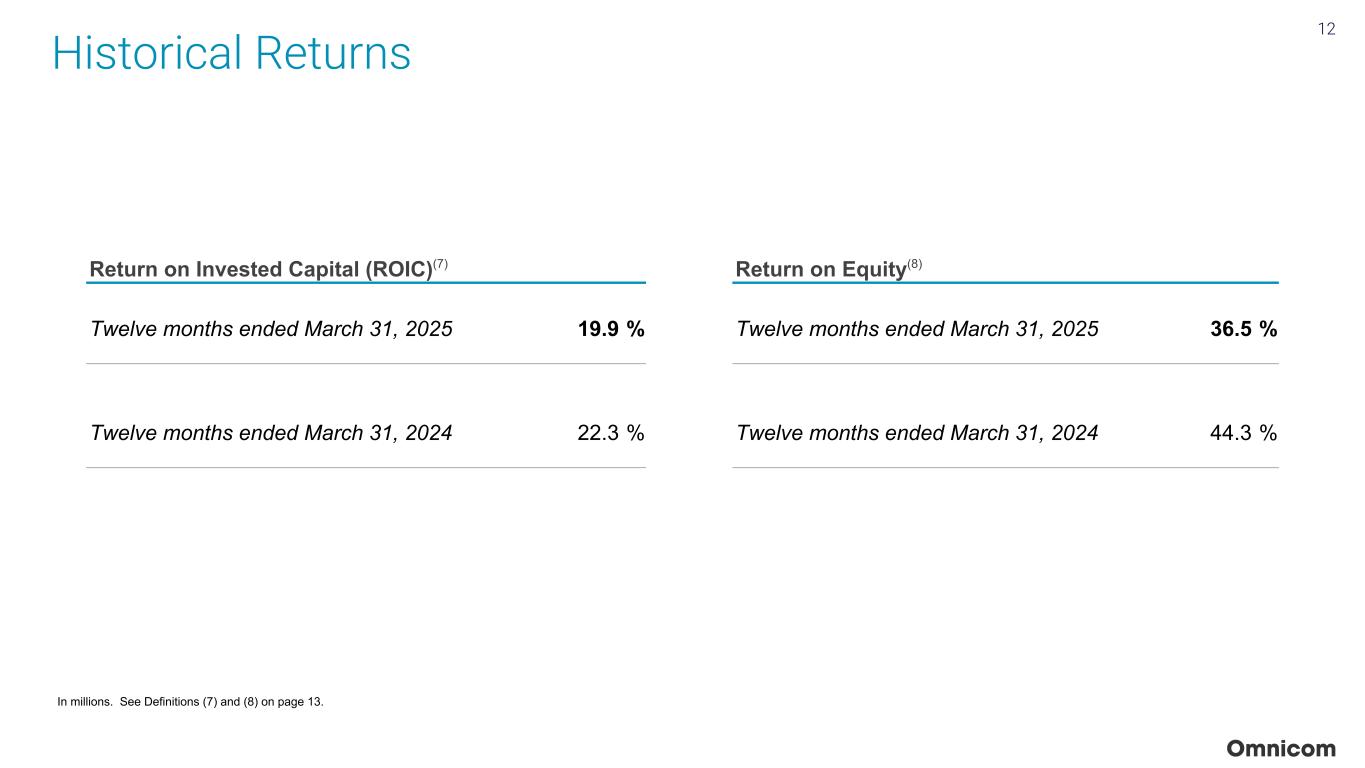
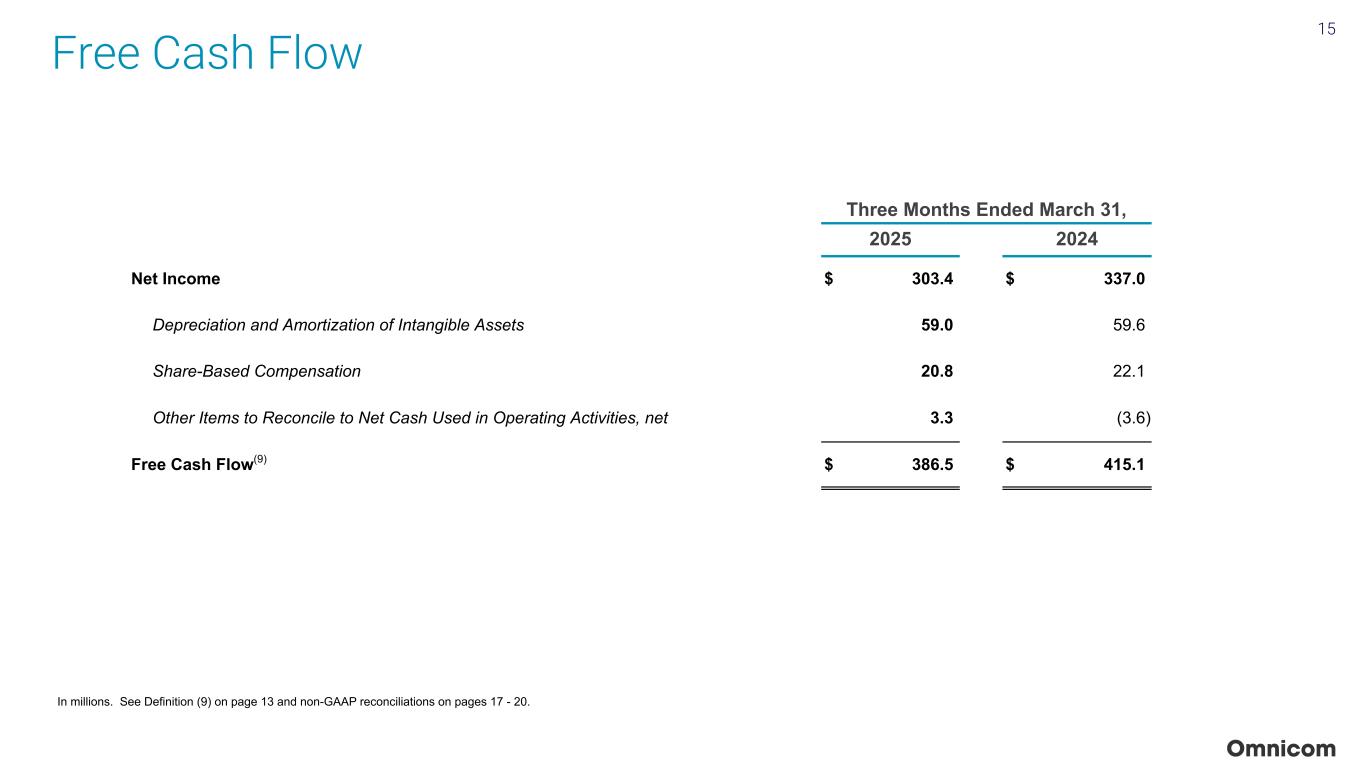
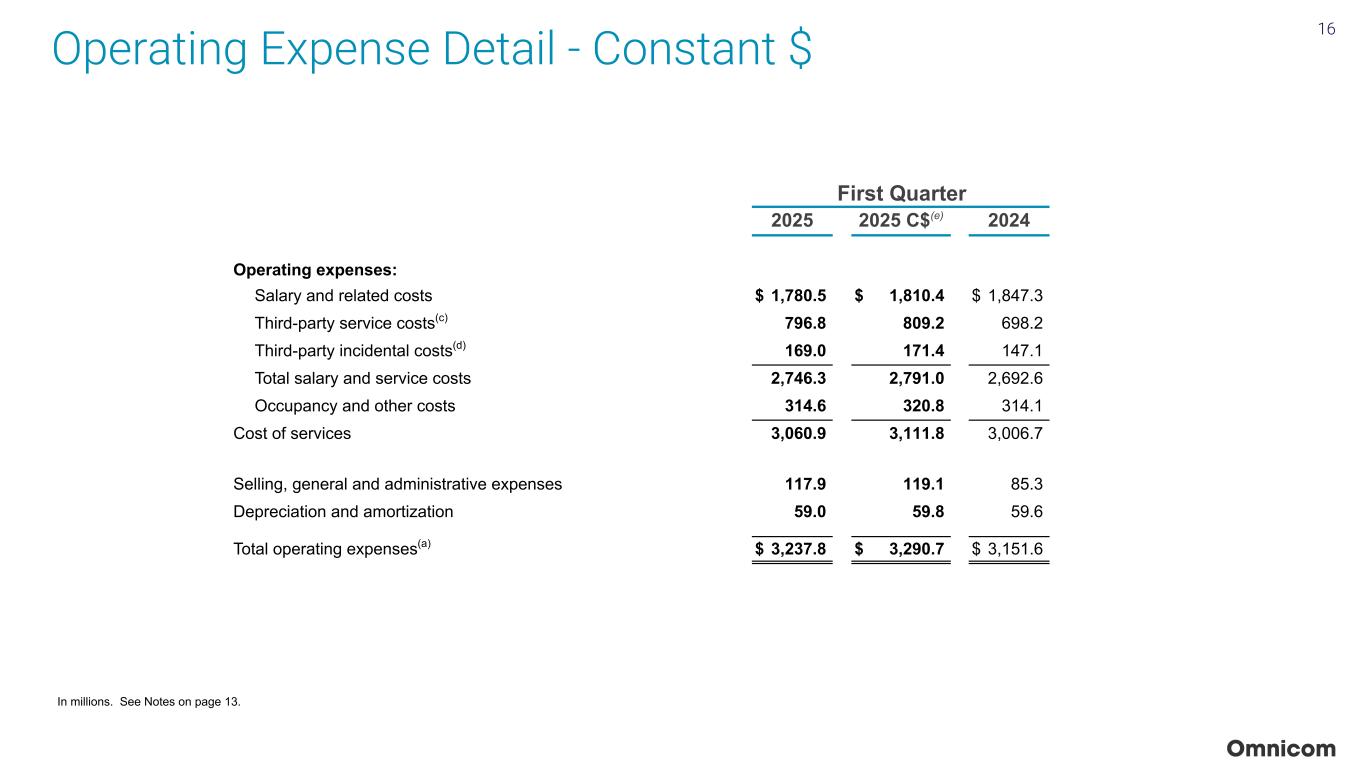
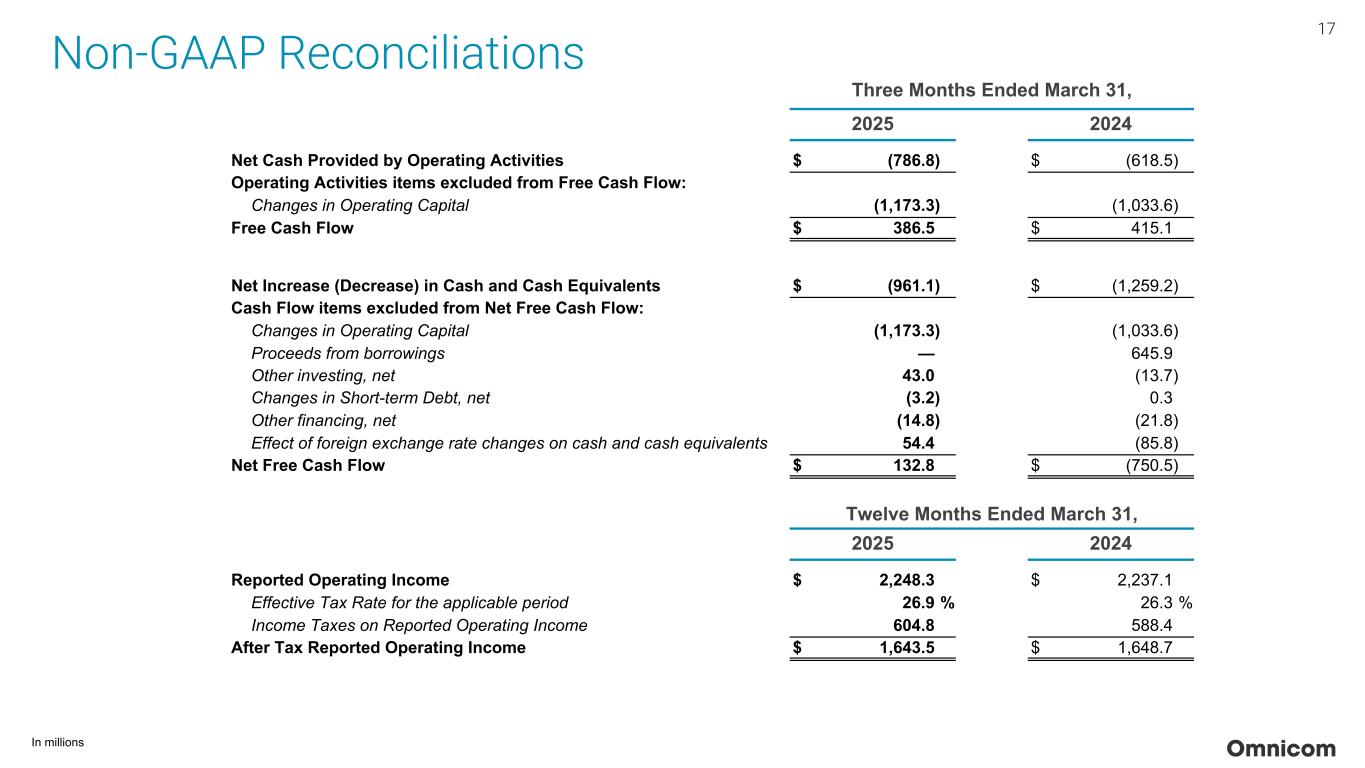
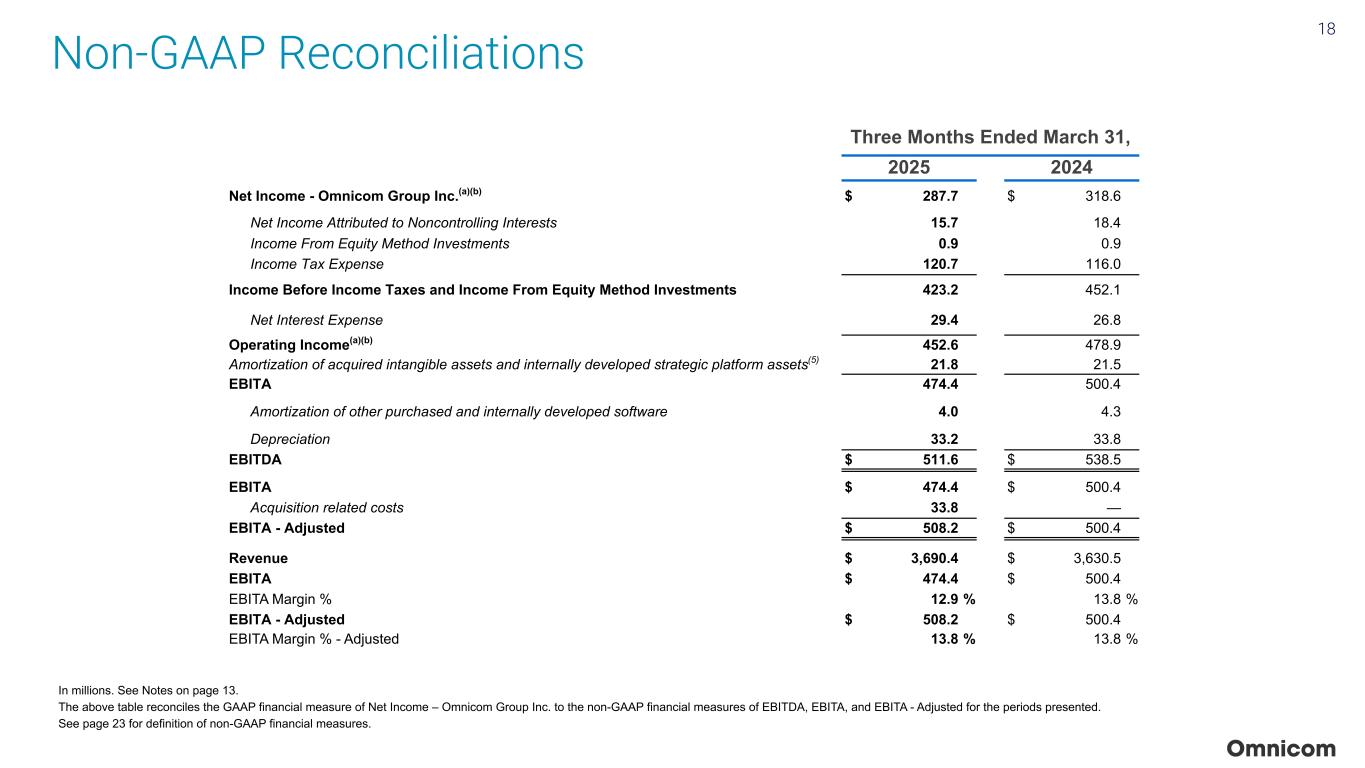
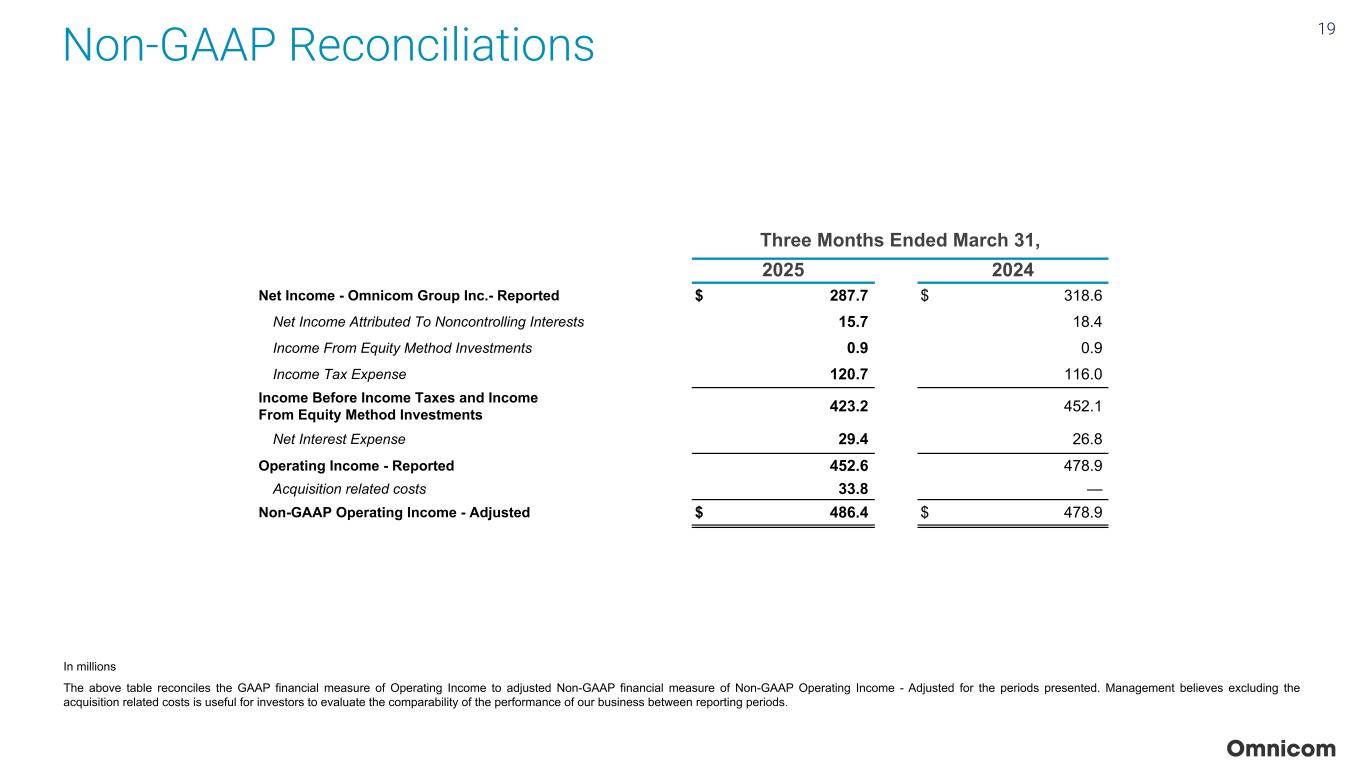
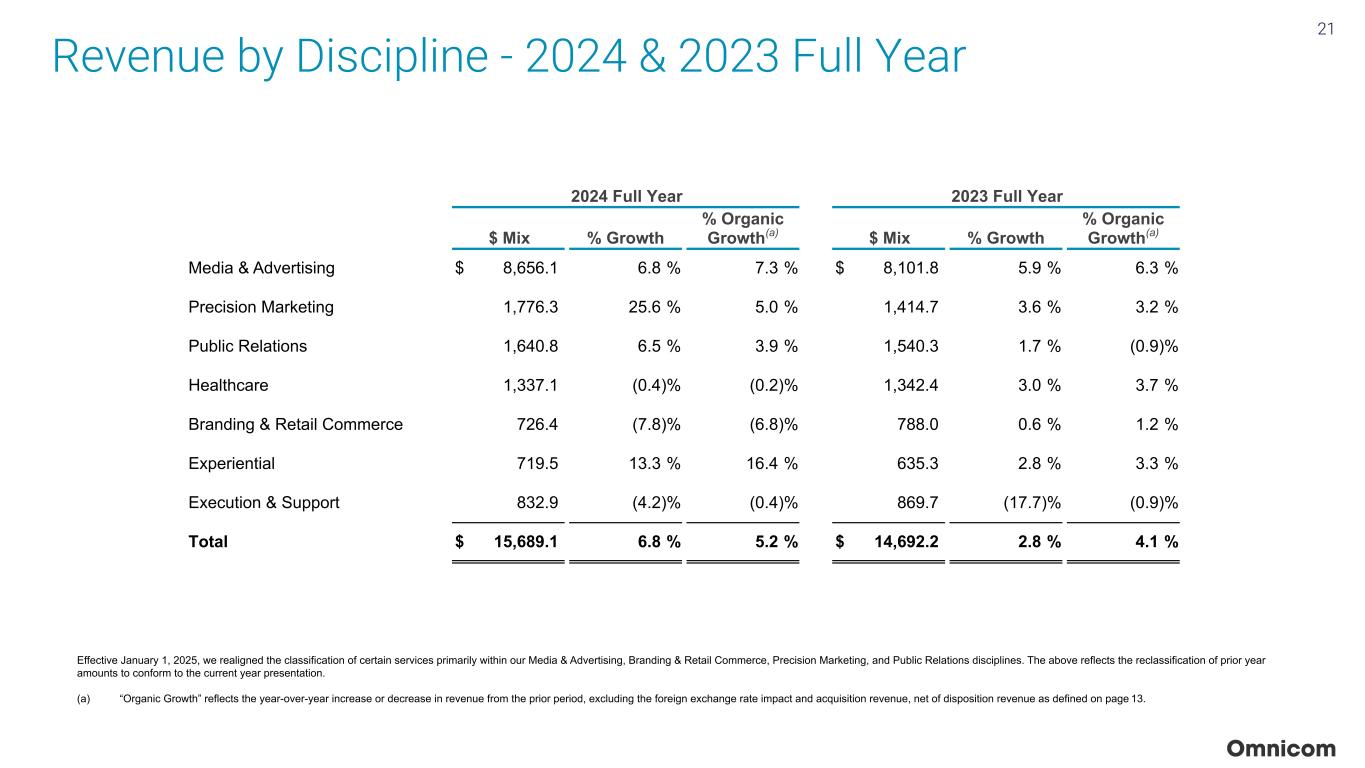
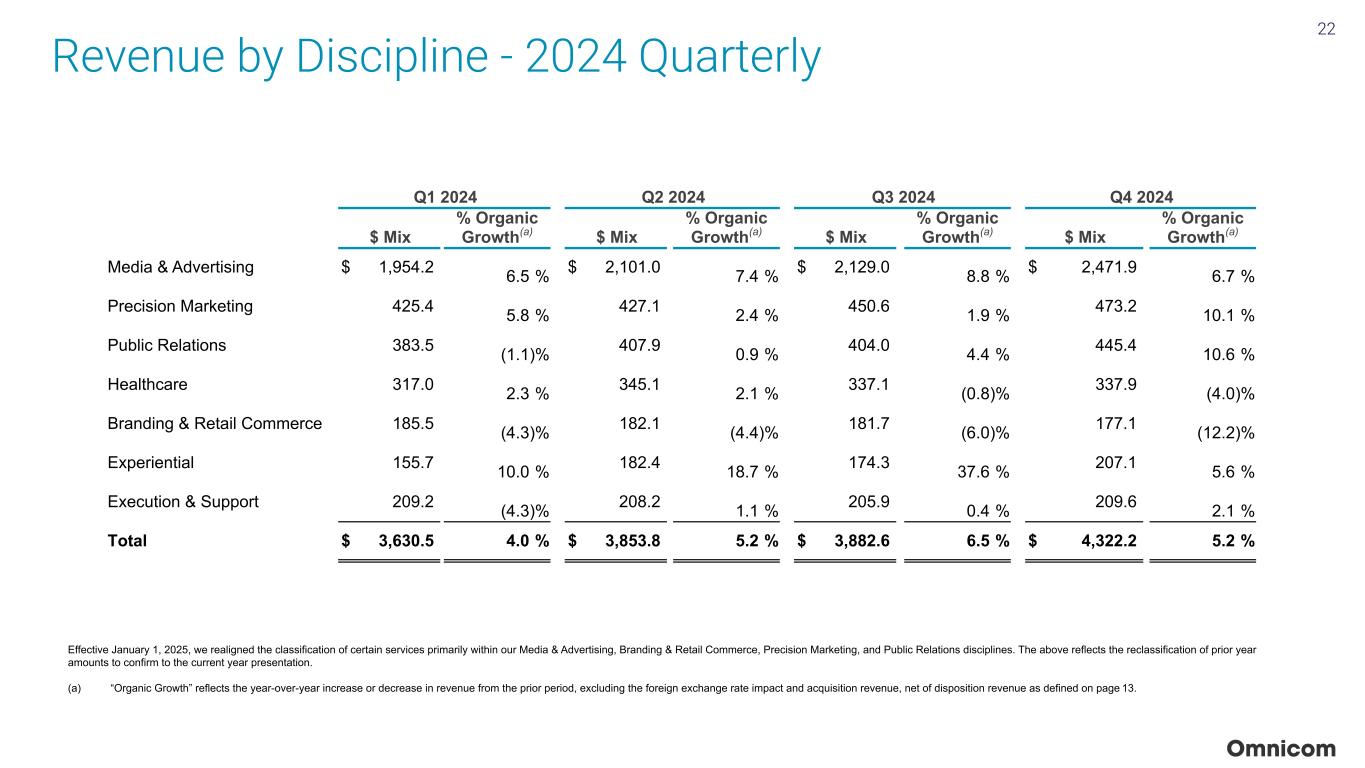
Thanks, John. We delivered solid results this quarter, including organic revenue growth, growth in adjusted EBITDA, and growth in non-GAAP-adjusted diluted EPS. We believe that the diversification of our portfolio of agencies across geographies, industries, and service offerings will help us in the uncertain environment ahead. Let's begin with a brief overview of our earnings for the quarter on slide 3. Reported revenue grew 2%. Note, our total reported operating expenses include $33.8 million of IPG acquisition-related costs in the first quarter of 2025. At the bottom of this slide, the non-GAAP measures removed these IPG acquisition-related costs from adjusted EBITDA, which was also up 2%, and the related margin was flat with last year at 13.8%. Now let's go into a more detailed review of our performance, beginning with changes in revenue on slide 4. Organic growth in the quarter was 3.4%. The impact on revenue from foreign currency translation decreased reported revenue by 1.6%, a bit less than our original expectation for the quarter of 2.0 to 2.5%. The current environment is difficult to forecast the impact of FX rates on our future revenue for the rest of 2025. If rates stay where they were at quarter end, we estimate the impact of foreign currency translation on revenue will be negative 0.5% for Q2 2025, negative 1% for Q3, and flat in Q4, which would result in a negative 1% reduction for the full year 2025. The net impact of acquisitions and dispositions on reported revenue was negative 0.1%. At this time, we expect the impact of acquisitions and dispositions completed to date will be minimal for Q2 and for the full year 2025. Let's turn to slide 5 and review the quarterly organic revenue growth trends by discipline. First, however, I'd like to point out a change we made for 2025. In connection with the rollout of Omnicom Production and Omnicom Advertising Group, we've made some minor reclassifications of certain revenue related to changes in the agency groupings across our service discipline categories. You can find the revised revenue by discipline presentation with the reclassifications of the historical 2024 and 2023 numbers in the appendix on slides 21 and 22. Turning to the quarter, media and advertising was up 7%, driven by strong growth in our media businesses across our geographies and mixed performance across our advertising agencies, which were down a bit. Precision marketing grew 6%, driven primarily by strong performance in the U.S., partially offset by mixed performance in other geographies. Growth reflects strength from the benefits of new business wins in our CRM agencies that began late last year, as well as continued good performance at Flywheel. Public relations declined 5% due to certain client delays and reductions from certain government clients. As the year progresses, we expect benefits from public affairs activity in our specialty agencies, and we expect a difficult count for the rest of 2025 related to the benefit in 2024 from U.S. election-related spend. Execution and support grew 2%, driven by growth at our custom communications businesses, offset by declines at our merchandising business. Experiential declined 1%, driven by the Middle East and Asia-Pacific, partially offset by strong growth in the U.S., Europe, and the U.K. We also expect a difficult comp in Q2 and Q3 related to the benefit in 2024 from Olympics-related spend. Healthcare revenues were down 3%, as expected. Slightly better than a decline in Q4, as our health group manages through some delays in client product launches and as they complete cycling on a client loss. We expect improved growth in the second half as the year progresses. Branding and retail commerce was down 10%, with most of the decline in our branding business, which was due to uncertain market conditions impacting both new brand launches and rebranding projects, as well as the continued slowdown from M&A activities. Turning to organic revenue growth by geography on slide 6, our largest market, the U.S., had organic growth of 5%, and Latin America grew a strong 15%. Europe experienced growth, but it was mixed by market, and Asia-Pacific also posted growth, offset by declines in the UK and the Middle East and Africa. As we look at the global trade uncertainty, we expect our geographic diversification to provide balance to our results. The U.S. remains approximately half of our revenue, and it's worth noting that in fiscal year 2024, China was only 2% of our total revenue. Slide 7 is our revenue by industry sector for the quarter. There were no notable changes to discuss. Now let's move down the income statement and look at our expenses on slide 8. In the quarter, salary-related service costs were down on both a reported and constant dollar basis, driven by our continued efficiency initiatives and ongoing changes in our global employee mix. Our Q1 2025 employee base is down from Q1 of 2024. Third-party service costs grew in connection with the growth in our revenue, primarily in the media and advertising discipline. Third-party incidental costs, which are out-of-pocket costs billed back to clients at our cost, also grew in connection with revenue growth. Occupancy and other costs were flat. These include office rent, other occupancy, technology, and general office expenses. SG&A expenses increased due to the $33.8 million of IPG acquisition-related costs in the first quarter of 2025. Excluding these costs, reported SG&A expenses declined by about 1%. Please turn to slide 9 to look at our income statement in more detail. Excluding the acquisition-related costs from the first quarter of 2025, non-GAAP-adjusted EBITDA grew 1.6%, and the related margin was flat at 13.8% compared to last year. Foreign exchange translation reduced EBITDA by approximately 1.5%. Moving down the income statement, net interest expense in the first quarter of 2025 increased $2.6 million to $29.4 million. This increase is the result of having a full quarter of interest expense in Q1 2025 from the debt we issued in early March 2024 in connection with the flywheel acquisition. The increase in expense was partially offset by an increase in interest income due to higher average cash balances. Our income tax rate was 28.5% in Q1 of 2025, compared to 25.7% in the prior year. The increase is primarily due to the non-deductibility of certain acquisition-related costs in 2025. Excluding the tax impact on these costs, our Q1 2025 rate was up a bit from Q1 2024 at 26.7%. For full year 2025, we expect the rate to be between 26.5 and 27. Average diluted shares outstanding were down 1% from Q1 of 2024. Due primarily to repurchase activity last year, reported diluted earnings per share was down 8.8% due to the after-tax acquisition-related costs. On an adjusted basis, diluted earnings per share increased 2% to $1.70. The effects of foreign currency translation reduced diluted EPS by $0.02. Now please turn to slide 10 for a look at free cash flow for the first quarter. The year-over-year decline in the quarter was driven primarily by a reduction in net income, which includes the impact of the acquisition-related costs. However, for the 12 months ending March 31, 2025, our free cash flow increased 3.5%, driven primarily by improved operating income and net income. Our free cash flow definition excludes changes in working capital. Our working capital followed its normal seasonal pattern in the first quarter, and over time we expect to trend back towards our historical annual level that's close to neutral. Regarding our primary uses of free cash flow for the three months ended March 31st, we used $138 million of cash to pay for dividends to common shareholders, and another $13 million for dividends to non-controlling interest shareholders. Our capital expenditures were $30 million. As expected, this spend was a bit higher this period, reflecting ongoing investments on our strategic technology platform initiatives. Total acquisition payments, which include earn-out payments and the acquisition of additional non-controlling interests, were $4 million. As a reminder, in the first quarter of last year, we closed on the acquisition of Flywheel for $845 million, net of cash acquired. Finally, our share of purchase activity was $81 million, excluding proceeds from stock plans of $12 million. For full year 2025, we still expect to return to an annual purchase level of approximately $600 million, and we resumed our activities subsequent to the successful March 18th stockholder vote on the IPG acquisition. Slide 11 is a summary of our credit, liquidity, and debt maturities. At the end of Q1 2025, the book value of our outstanding debt was $6.1 billion, flat with the same prior year period. We have no maturities in 2025 and expect to address our April 2026 maturities after the expected closing of the IPG acquisition in the second half of 2025. We estimate that net interest expense will increase by $2 to $5 million in Q2 compared to Q2 of 2024, and by $15 to $20 million for the full year related to lower estimates of interest income in the second half. Our cash equivalents and short-term investments at the end of the quarter were $3.4 billion. We continue to maintain an undrawn $2.5 billion revolving credit facility, which backstops our $2 billion U.S. commercial paper program. We will assess our revolver capacity in connection with the closing of the proposed IPG acquisition. Slide 12 presents our historical returns on two important performance metrics for the 12 months ended March 31, 2025. Omnicom's return on invested capital was 20% and return on equity was 37%, both of which reflect our strong performance and strong balance sheet. The year-over-year change is driven by the IPG acquisition-related costs incurred in the 12 months ended March 31, 2025. I will now ask the operator to please open the lines up for questions and answers. Thank you.
Operator
Thank you. If you would like to ask a question, please press star 1 on your telephone keypad. If you would like to withdraw your question, simply press star 1 again. Please ensure that you are not on speakerphone and that your phone is not on mute when called upon. Thank you. Your first question comes from Adam Berlin of UBS. Your line is open.
Hi, good evening, and thank you for taking the question. um can you just say a little bit more about your decision to lower the bottom end of the guidance range for 2025 to 2.5 is that because you've actually seen some advertisers uh start to talk to you about cutting their spend um or is that just something you'll just could happen based on what you're hearing throughout the broader macro um that would be quite helpful and any trends about how Q2 has started in the first couple of weeks would be very helpful as well.
Adam, it's the latter. We're being conservative in lowering the bottom end. And you have to look at our business when it gets this type of an environment. our advertising media and crm businesses remain strong we didn't change the forecast on those where where if we had doubts it was really more in the events business as companies probably get a little bit more conservative and we're up against um one because of as phil mentioned the Olympics there might be fewer projects and also in the latter part of the year because this is annual guidance we had the elections last year which we don't have again this year so it's the it's that's the segments of the business in terms of how we looked at it to be conservative we're striving to get to the top end always um and we're still there's still some confusion or there is still confusion in the marketplace as we look at the especially the next 90 days and how some of these tariffs and other moves get negotiated or or do they stay in place so it's that uncertainty where we didn't want to surprise anybody later in the year that we chose to be conservative.
Yeah, and it doesn't, as John said, reflect any specific client actions taken to date. Okay. Thank you very much.
Operator
The next question comes from David Karnofsky with J.P. Morgan. Your line is open.
Hey, thanks. Just kind of going back to something Phil had said, it sounded like for PR, or there were some delays in government spend. I don't know if you could dig into that a bit. Is that for the U.S. or other regions? And then for branding and commerce, this is an area that was already lagging last year. Curious how much of the delays you're seeing there is new. And then specifically for Phil, just as you consider the uncertainty and possibility of clients adjusting their spend, how are you thinking about your own cost base and what's your confidence in holding margin in some of the more adverse scenarios as you might say.
Okay. I'll leave the first part of your question to Phil, although I can cover it. We are constantly, and I think we have a very solid track record in this, in looking at our business and adjusting, because we have a very flexible cost basis, adjusting our cost basis so as to stay in line with whatever the revenue trends are. and god knows never tested the same twice but we've been tested quite a bit over the years and if you look back across that we have a very very competent management way below the corporate management looking and concerning ourselves with that all the time so that would be one answer You know, the one PR event was something in the U.S. It was, was it FDA-related?
Yeah, there's a, yeah, there was, I would say, not a large trend that we're concerned about going forward, but there's just a minor year-over-year comparison difference in terms of some project spend that didn't happen in Q1 that was there. the year before in the PR business, I think you're not going to see the impact of the year-over-year comps related to election spend until probably a little bit in Q2, and then PR was especially strong in that area in Q3 and Q4. So we do have a difficult comp in Q3 and Q4. To your specific question on the cost base and margins, you know, John just referred to this, But certainly, we are always very focused on making sure we take the appropriate actions to rationalize and adjust the flexible cost base that we have to our current expected revenues. and to the extent that, you know, there is a pause or clients, you know, decide to delay project spend or delay spend in some way, depending on how some of this tariff uncertainty gets resolved. You know, we're going to be very active in making sure we take the appropriate actions as opposed to kind of keep our fingers crossed and hope, you know, that the best scenarios are the ones that come forward. So we're certainly going to be planning, you know, very carefully and aggressively if need be to make sure that we're not out ahead of it from a cost-based perspective. So we're comfortable, certainly, based on everything we know today, that will hit, you know, our expectations as far as operating earnings and our margin targets. But there is still quite a bit of uncertainty out there as far as tariffs and what's going to happen to the top line. But we haven't seen any specific actions by clients that have happened yet. We're just being cautious, as we mentioned earlier in answer to Adam's question.
Sure. One other little tidbit, because this is early in the cycle. A lot of our larger clients don't come out with quarterly reports until later in the month, which we'll all learn a little bit more. But with the sensible delay of 90 days in the tariffs, I think it gives many of our clients the opportunity to acquire more inventory at reasonable prices and tend to front load or look to front load sales in the first half of the year, the uncertainty really comes in later on in the year, third, fourth quarter. And hopefully that will get more clarity as we continue.
Sorry, to be clear, I think you said you hadn't seen clients, you know, take action on anything yet, but I thought with branding, for instance, you had mentioned someone's branding.
Branding is a category, but it's such a small category within the overall Omnicom. There's, it's really, it's, it's really three very, very well-known boutiques who are the leaders in branding. Uh, and when they tend to prosper in years where there's a lot of M&A going on and a lot of changes, you know, that people, corporations who are considering maybe changing, rebranding their corporations or getting swept up in And in periods like this where there's been a pause in a lot of that activity, naturally we fully expect that revenue is going to be off a bit. But it's...
Yeah, in total, it's probably, you know... 2% or less than 2% of our total revenues. And it's had challenges all throughout 2024 for pretty much similar reasons to what I indicated in my prepared remarks. We unfortunately see that continuing through, you know, the first two, if not three quarters of this year, as it kind of writes itself and continues to pursue new opportunities. But that's a unique business that's managing through some unique challenges in its industry right now, specifically.
And not to beat this to death, but I started off by saying advertising, media, and CRM remain strong. Also, in those categories specifically, there's some very positive potential new business that we're not really defending, but we're on the offense. And if we continue to win our fair share, that will contribute to us getting to the closer to the top end of our forecast.
Operator
The next question comes from Jason Bazine with Citi. Your line is open.
I know everyone is so focused on the macro in 25, but I would just like to ask a question about 2026, actually. Let's assume that the IPG transaction closes. When do you think the street will have evidence or you will have evidence that the market has embraced your notion that the pro forma firm will be in a better position to win business, as opposed to the bearish argument, which is you might lose some accounts because of the transaction. Is that something that will become evident, do you think, in 26, or do you think we won't really see it in the organic numbers until 27 or beyond?
My personal opinion, specific to that question, we have not had any client of any significance that we're in fear of losing because of the transaction.
Speaker 11
And especially in environments like this, I doubt that many, there's always going to be some, because there is some every single year.
But if you're running a company right now, unless you're going to get some great efficiency by putting your advertising and marketing into review, you're not going to proactively disrupt your own organization so i think and i'm not sure i know you jason but um i think what what you're what you're asking the question about is certainly a valid question but that's just nonsense fed by my competitors to the trade regs all right that i'm going to lose people and i'm going to lose accounts and i'm going to lose this that and the other thing, not true.
Yes, just to add, it's very disruptive for the client to make a change, and especially in this environment, there will have had to be some underlying strategic reasons why they would go ahead and do that beyond the ones that had started that process already.
And I think this is also part of your question, Jason, we can go back. We have much clearer sight on the synergies we promised today, and we continue to have many work streams where we're actively planning to achieve those synergies.
Understood. Thank you both.
Operator
The next question comes from Cameron McVeigh of Morgan Stanley. your line is open.
Hey, John, Phil. I wanted to ask if you're able to provide the precision marketing growth ex-flywheel. And then secondly, curious of any update to the regulatory review of the IPG deal, timing of integration, potential land conflicts that may have arisen. Thanks.
I'll take the precision question. In the first quarter, I would say Flywheel grew. Its smallest quarter is always the first quarter. Its growth was fine, but it was lower than the average in the overall category, and the rest of the CRM precision group probably grew faster than the average in the category.
And today, out of 18 requests from governments, regulators for approval, we've received five. Actually, the most recent one, which we got just a couple of days ago, was China. And you know on the call will remember this, but 10 or 11 years ago, when we were trying to do publicies, the place that we had trouble getting approval was China, and we've already received that. um, in this process already. So we have very competent advisors and attorneys, um, who are guiding us through that process as we speak.
Operator
The next question comes from Stephen Cahall with Wells Fargo. Your line is open.
Thank you. Uh, John, I was wondering if you could spend a little time, uh, talking specifically about trends in pharma and health. I think that's your biggest industry vertical, and healthcare is its own discipline within the revenues. So just wondering if you see this area as having less risk on some of these concerns in the rest of the portfolio, or a little more risk now that we're dealing with some of this extra uncertainty in 2025. And then also, I just wanted to dig a little more into media and advertising. You've had a number of quarters where your third-party expense growth remains healthily in the teens. So I'm guessing media continues to grow really well. Is creative also growing really healthfully within that? I've sensed from some peers that it might be under a little bit of pressure. So I just wanted to know if you're seeing any pressure on creative or it's still really solid, just not as good as media given a lot of the accountants. Thank you.
So first, healthcare healthcare is I think that the decline or what you saw in in the first quarter was us just working through the loss of Pfizer and one or two other minor accounts and we're phasing through that as we get into the beginning of 2025 it's still a very strong business I mean our businesses in healthcare go all the way, are dedicated to different aspects of creating a drug, bringing a drug to market, getting the appropriate approvals from the stronger regulatory bodies around the world, which are principally, you know, the U.S., also Germany is very strong to in terms of its procedures what what is not a big part of our business is um the stuff you'll see in the six o'clock news like bio-sempric and you know you know here's a mom a dad and a cat and somebody needs to lose weight because they have diabetes that's not a very large part of of that segment for us it's more specific very high science um the employees that we have in those categories are extremely well-educated and very specifically educated in the terms of medicine. So, I see it as, you know, over, as I look forward, I see healthcare as being a very important segment in what we do. And I apologize you asked some other part of the question, and you want, if you might, you could just.
Sure, the second part was just within media and advertising. sort of comparing and contrasting the strong growth, I think, that's implied in media with how you're seeing the trends in creative.
Sure. Well, media by far is very strong and continues to be very strong. And last year, I think we topped the leagues in terms of new business wins and retention. As a matter of fact, if you netted some IPG's losses against our wins, we'd still be number one from last year, and that continues. Advertising? Advertising really needs to be separated into two different areas. Both are being very highly affected by technology, but creative is our IP. That's always going to be at the center of what Omnicom does, And it's terribly important to our clients and to the creation of differentiation, especially as these tools become more democratic, right? If everybody had the same generative AI tools on their desk, what would make a difference? Well, what would make a difference would be a brilliant creative idea. So, now, is that business going through some adjustments because technology has created efficiencies within that business, which allow us to have less effort in some instances? Yes, no question. But it remains a very key part of our organization. If I look back at 24, it probably makes up something closer to 17% or 18% of our total business. That balance may increase a bit as we complete the transaction with IPG, but it's still the core of what we do, as I said, the IP. I don't know if Phil or anybody else wants to say anything.
Yeah, in terms of the other component, production is certainly a fast-growing component of the solutions we provide to clients, and there's more and more activity in that area and opportunity in that area, especially as you look at ArtBot, our content automation platform, which has been quite successful recently. So, you know, overall creative has grown, you know, low single digits last year. First, the first part of this year, we expect it to be close to flat, a little bit down in the first quarter. And we expect it to pick up in the second half. And as John said, you know, media has been quite strong. We expect it to continue to be very strong. And And, you know, together, those are two key components of the overall product mix. That is very key and very strategic to the business going forward.
Operator
The next question comes from Michael Nathanson of Moffitt Nathanson. Your line is open.
Thanks. One for John, one for Phil. Well, hey, John, you touched on it earlier that you guys are feeling pretty good about the new business potential. Can you talk a bit about the volume of new business pitches? Is it normal or do you think people are kind of holding back in terms of the scale of volume until maybe the uncertainty is lifted? And then on that point, how do people deal with the fact that you'll be merging into public, right? So is that part of the conversation when people are asking you about the future prospects of Omnicom Media? So anything you talk about there would be helpful. And then for Phil, third-party service costs, third-party internal costs were up double digits this year. When you think about your guidance on organic revenue for the year, is it normal to expect this type of growth in third-party costs, or is there anything unusual about the first quarter of this year in third-party?
You know, in the first part of your question, the new business reviews, I have to admit, I haven't tried to track them year over year. I do expect that unless a client has some proactive reason to put their account in review, I'm expecting it to not be as robust as it was, say, last year. but having said that in the first quarter um you know there are clients who thankfully were on the offense not the defense where their accounts are currently being reviewed and i won't use their names so it's the math insult them and you know you had the move at which benefited public sees of the coke business earlier in the quarter so there are things going on there There's a lot of conversations going on, but I can't tell you only 10% up or 10% down from this exact moment last year. In terms of what goes on in terms of IPG and the acquisition, we are extremely cautious because there are very strict rules in terms of what we can do. We can collectively each plan for when the transaction is approved, but we're not able to go to market in any way. And so we don't.
And, you know, that's just us behaving in accordance with what's expected of us in this kind of a process. on the on the specific question michael that third party you know service cost growth certainly um we're happy to get the growth wherever wherever we can get it the reason the reason we have that business and the reason it's growing is because clients want it and and it provides valuable benefits to the clients ultimately if it didn't provide benefits and it wasn't a key part of what client's expectations were, you wouldn't see the results that we've seen in it. We don't think our numbers, frankly, are any different than our competitors. That business is growing throughout the industry, again, because clients like the benefits of that particular service offering. You just can't see it outside of our reported results.
Speaker 11
Okay. Thanks, Phil.
Operator
The next question is from Craig Huber of Huber Research Partners. Your line is open.
Thank you. My first set of questions has to do with the potential closing the acquisition. I think you mentioned five of the 18 jurisdictions have approved the transaction, including China. Can you share with us, if it's possible, what the other four are? And then I also wanted to ask, John, I think when you originally brought forth and talked publicly about this acquisition of Interpublic, you talked about if you run into any issues with any of the regulators out there, that you would be open to potentially selling, divesting any related assets in various jurisdictions. Is that still your case here?
Well, I'd probably answer that question a little differently. in that we are 100, unless you go higher in percentages, committed to the completion of this transaction. I think that various regulators have requested information from us because they are trying to understand our business before some of them are approved. But sitting here today, based on very competent advice from our attorneys, and I would go as far as to say I haven't heard anything from the very competent attorneys that IPG has either, that we expect that we're in violation of any antitrust rules. And, you know, you being us all being here in America, all you got to do is look at Google's results, Meta's results, you know, in terms of who we're really competing against and where consumers are spending their money. We're a very strong player, but they are extremely strong. So I think, and I'm not knowledgeable enough with the rules, as the lawyers will continue to point out to me every day when I ask a question, and I think I know the answer. I don't. I don't think this merger drives us into a position in almost any market around the world where we would have difficulty after we go through whatever their required processes. um but if there was the odd thing or two and it would be small um if if it even existed um would we it wouldn't change our view that will we will close this transaction and we are dedicated to closing this transaction but there's nothing material although otherwise there's certainly enough legal firms working on this globally and locally to have highlighted anything that would be in that category, which would rise to the level of being a concern. And we haven't had that.
And then can you maybe touch on just what the other four jurisdictions are that have proved it so far?
Yeah. I can list them for you, Jason. Sorry, Craig. Sorry about that. So in addition to China, it's Colombia, Brazil, Saudi Arabia, and Egypt. They're all relatively small for our combined businesses, but certainly it's progress and we've tried not to issue a press release every time we get an approval but certainly it's good progress so far but the process has been quite thorough in all the markets that have done the work to review the transaction and we wouldn't expect anything else.
And then my last question guys is can you just talk a little bit further about the tone of business, what you're hearing from executives out there in two areas specific here, autos and consumer packaged good areas. Given the issue of tariffs, uncertainty out there and so forth, what is the tone that you're hearing from your companies that you work with in those areas, please? Has it materially changed for the negative? I guess that's where I'm trying to get to.
Well, with respect to tariffs, I think that's It's still an open question because I think the tariffs or the potential for tariffs that the administration has spoken to, they've—except for very specific markets—they've made it clear that they're in conversations with many of those governments to resolve any issues that the tariffs may bring to the fore. And I'm not any more knowledgeable than you, but it's kind of confirming that the pause that we're in, you know, is probably driven because of people approaching the administration with things that are of interest to them. Um, but again, I don't have any firsthand knowledge of that. Um, but it's all, you know, it all bodes better than had they just simply gone into effect. So we were planning for a glass that could be half empty, but we're personally striving for what we really believe and have believed for a long time that we're optimists and that it'll wind up half full. Certainly those... Yeah, I'm sorry, go ahead.
John, are you trying to suggest and you're not quite sure what the spending levels are of the auto companies out there in CPG, for example, how they may or may not adjust that? It's just too early to tell?
You know, we believe... I don't think we know it's certainty. All right, we haven't heard any disasters or had any disastrous reports specifically from clients. we've taken advice from very knowledgeable people and specifically in the auto industry not related to the advertising business in terms of what they believe car companies globally are expecting and again that leaves us in a position where these are terribly important long-term clients where we have multi-year contracts with in almost every single case of a car company which gives us some comfort and as a good partner if they have difficulty we'll work with them as best we can to to help us all get through whatever the process is so the good news is there's none of those accounts are under threat because of the multi-year contracts and yes as good partners we will work with our partners to get to a good outcome. In terms of CPG, I haven't really had as, I haven't dug in as deeply into CPG as I have, say, into the auto sector. And I kind of await some of their quarterly reports as they come out through the rest of this month to find out if there's more specific information which would require us to adjust ourselves. Finally, on that point, unlike our competitors, CPG is not a huge percentage of our business. So whatever adjustments need to be made will, in fact, get made. um i'd even go as far as to say companies cpg companies are probably taking the lead on in-housing things and they're going to find themselves in a very uncomfortable position if they have to adjust how they they deal with those in-housing efforts as opposed to if they had a third-party vendor which would be easier to get concessions from but that's all speculation So, you know, it doesn't count for anything. I think we're going to all learn a lot more in the next two, three weeks.
Yeah, certainly clients across industries are, you know, they're looking for more clarity. They want flexibility at this point in time, but they're looking for clarity. And, you know, ultimately, they need to defend and grow their brands. So, you know, the type of marketing spend may change, but we've got a diverse portfolio. We can help them in many different ways. And, you know, I think this is going to evolve and we're going to know more in the near future and we'll adjust accordingly. And I think, you know, we have a track record that shows that, you know, we can and will adjust. depending on what the market brings.
Operator
Thank you. There are no further questions at this time. This concludes today's conference call. Thank you for joining. You may now disconnect.