Operator
Good morning, and welcome to Blue Owl Capital's first quarter 2026 earnings call. During the presentation, your lines will remain on listen only. After the presentation, there will be a question and answer session. To ask a question, please press star 1 on your telephone keypad. I'd like to advise all parties that this conference call is being recorded. I will now turn the call over to Anne Dye, Head of Investor Relations for Blue Owl.
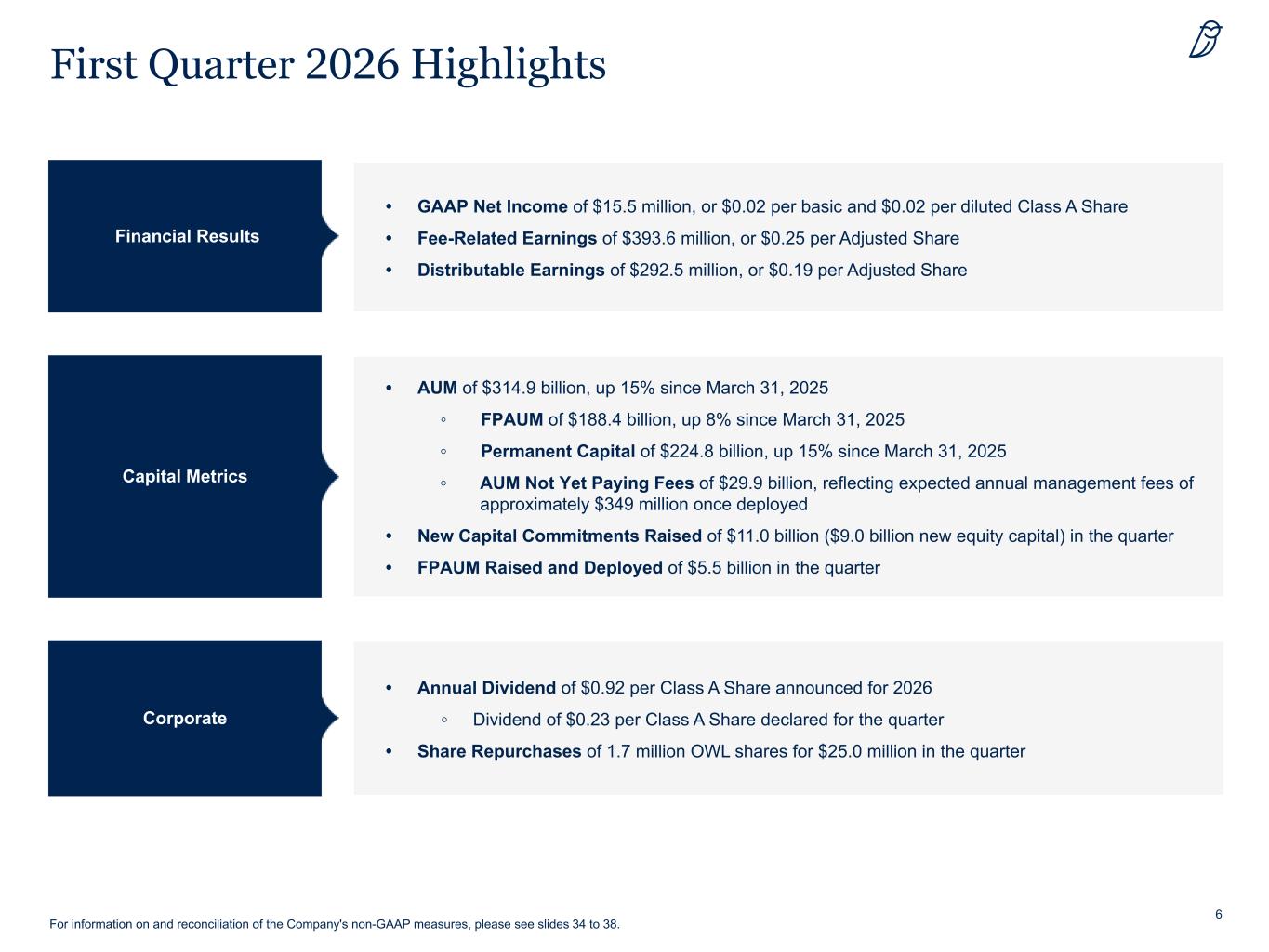
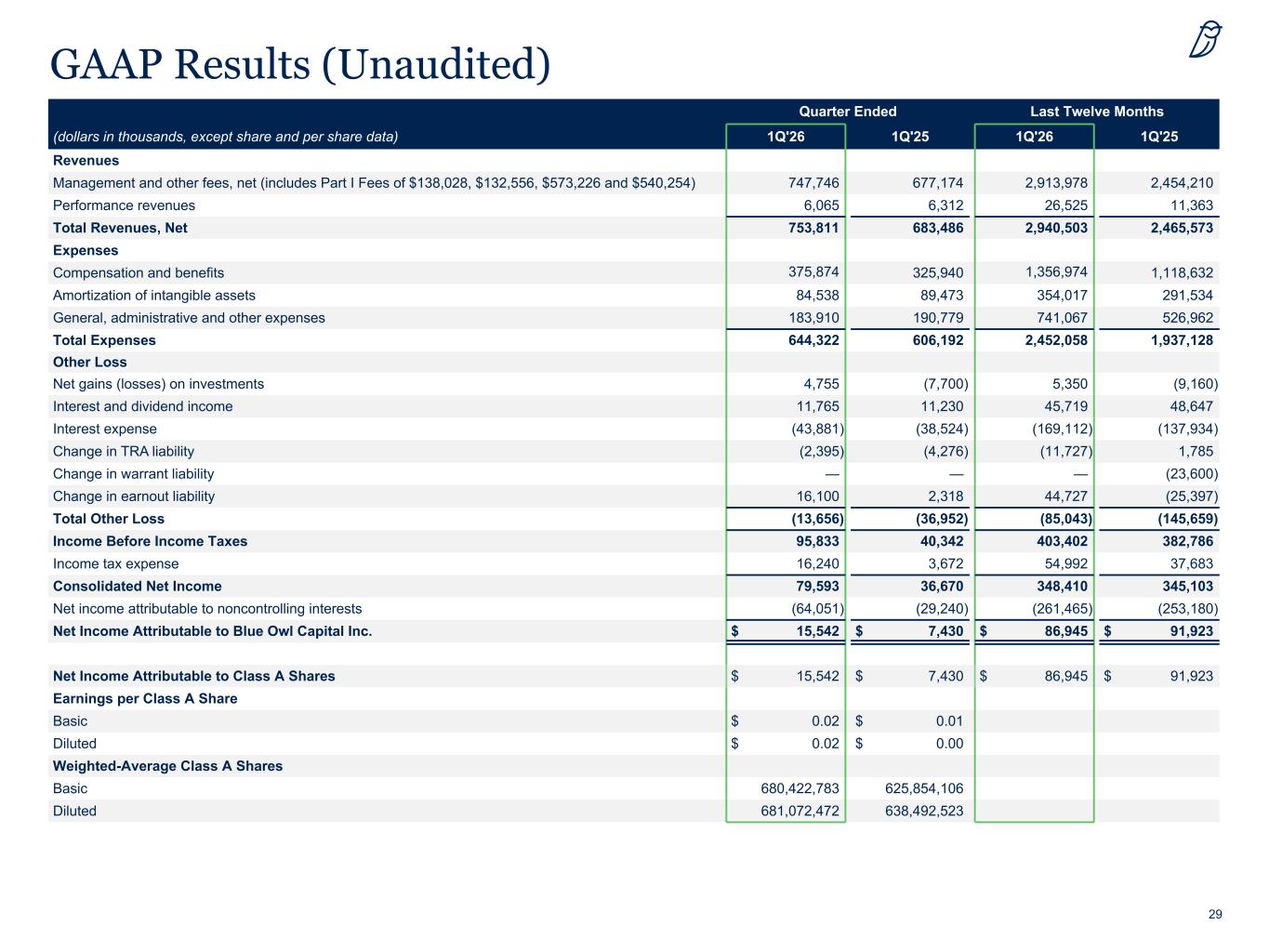
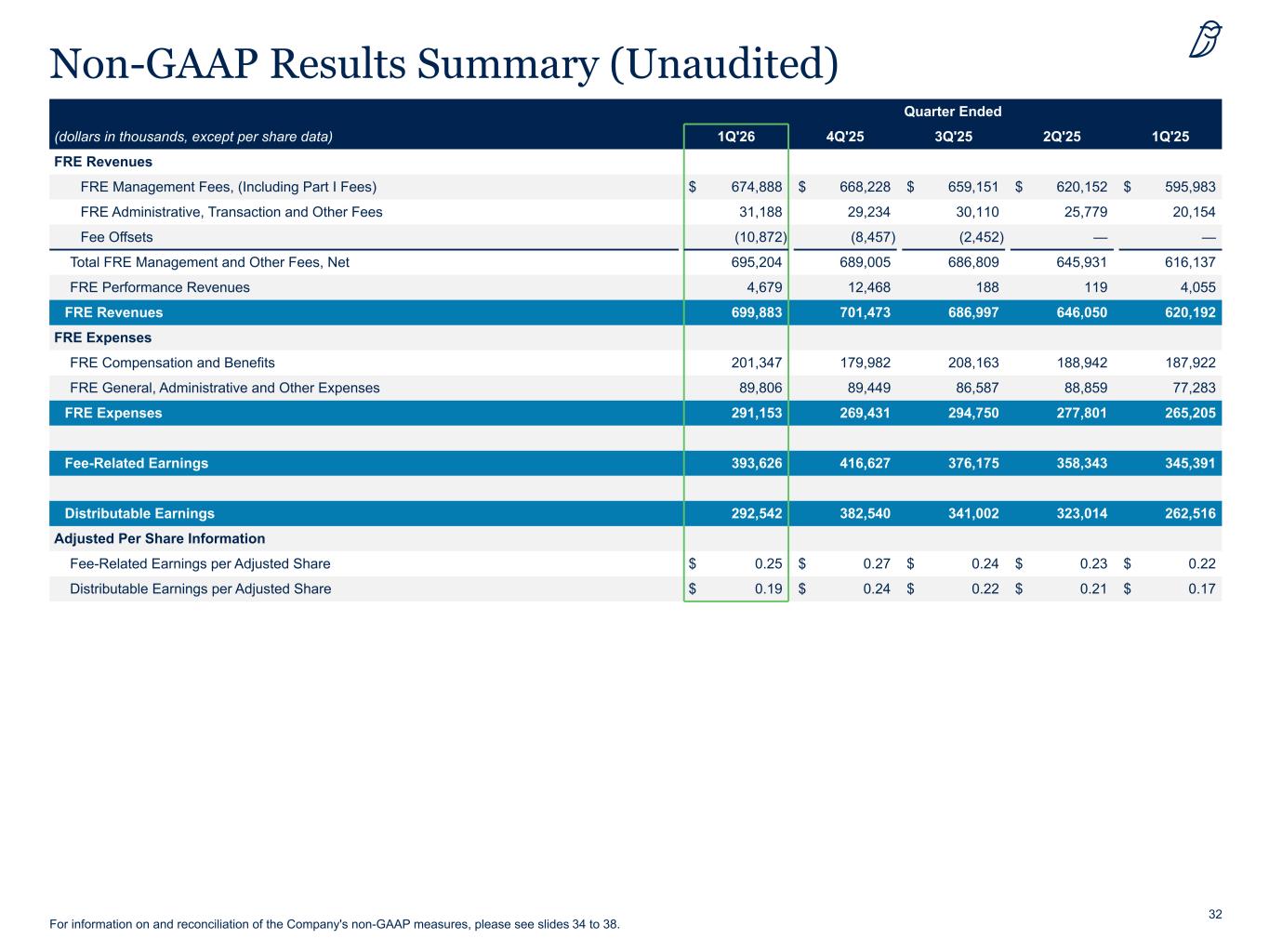
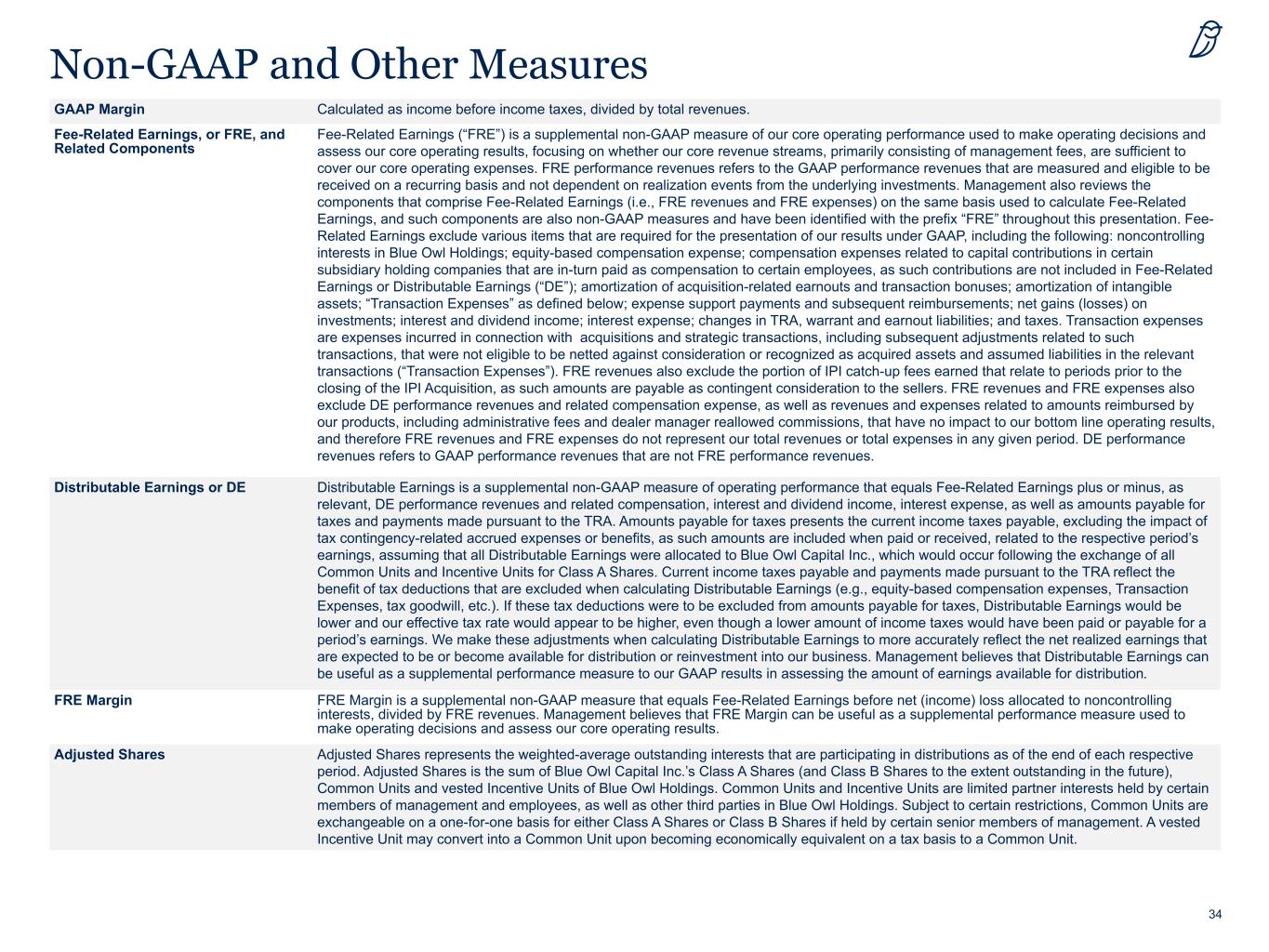
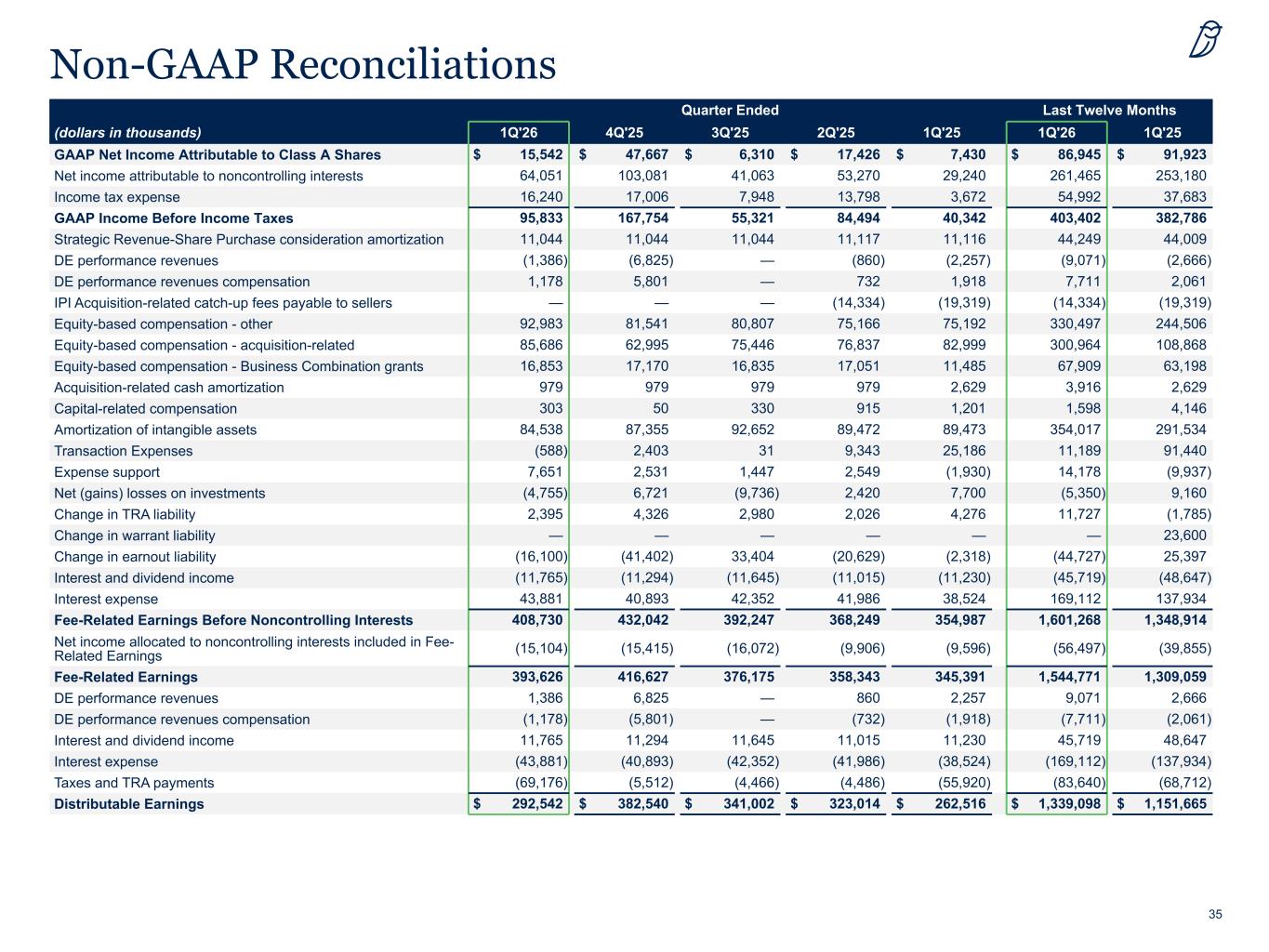
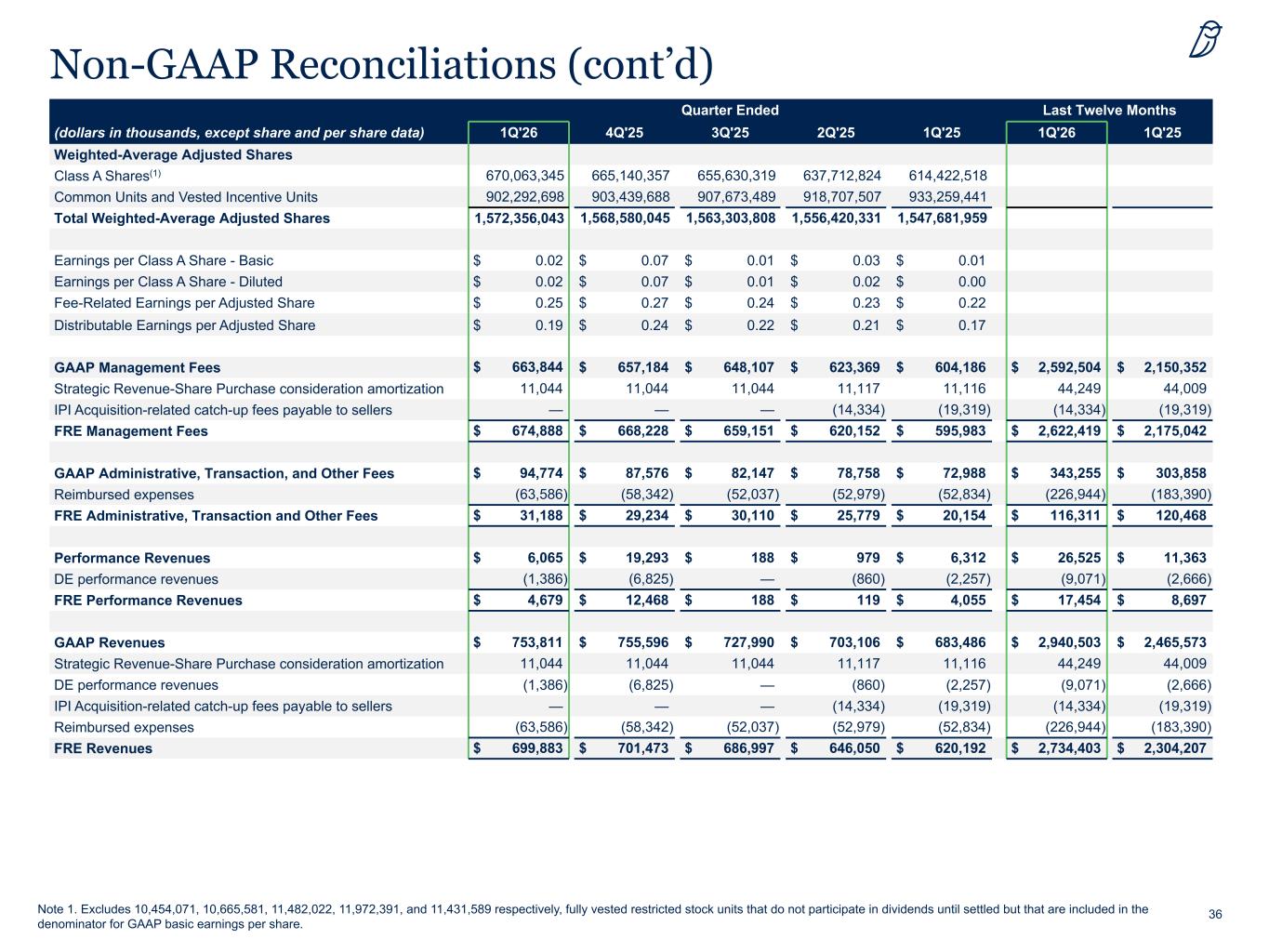
Thanks, Operator, and good morning to everyone. Joining me today are Mark Lipschultz, our co-chief executive officer, and Alan Kirshenbaum, our chief financial officer. I'd like to remind our listeners that remarks made during the call may contain forward-looking statements which are not a guarantee of future performance or results and involve a number of risks and uncertainties that are outside the company's control. Actual results may differ materially from those in forward-looking statements as a result of a number of factors, including those described from time to time in Blue Owl Capital's filings with the Securities and Exchange Commission. The company seems no obligation to update any forward-looking statements. We'd also like to remind everyone that we'll refer to non-GAAP measures on the call, which are reconciled to GAAP figures in our earnings presentation, available on the shareholders section of our website at blueowl.com. Please note that nothing on this call constitutes an offer to sell or a solicitation of an offer to purchase an interest in any Blue Owl fund. This morning, we issued our financial results for the first quarter of 2026, reporting fee-related earnings, or FRE, of $0.25 per share and distributable earnings, or DE, of $0.19 per share. We declared a dividend of $0.23 per share for the first quarter, payable on May 27th to holders of record as of May 13th. During the call today, we'll be referring to the earnings presentation, which we posted to our website this morning, so please have that on hand to follow along. With that, I'd like to turn the call over to Mark.
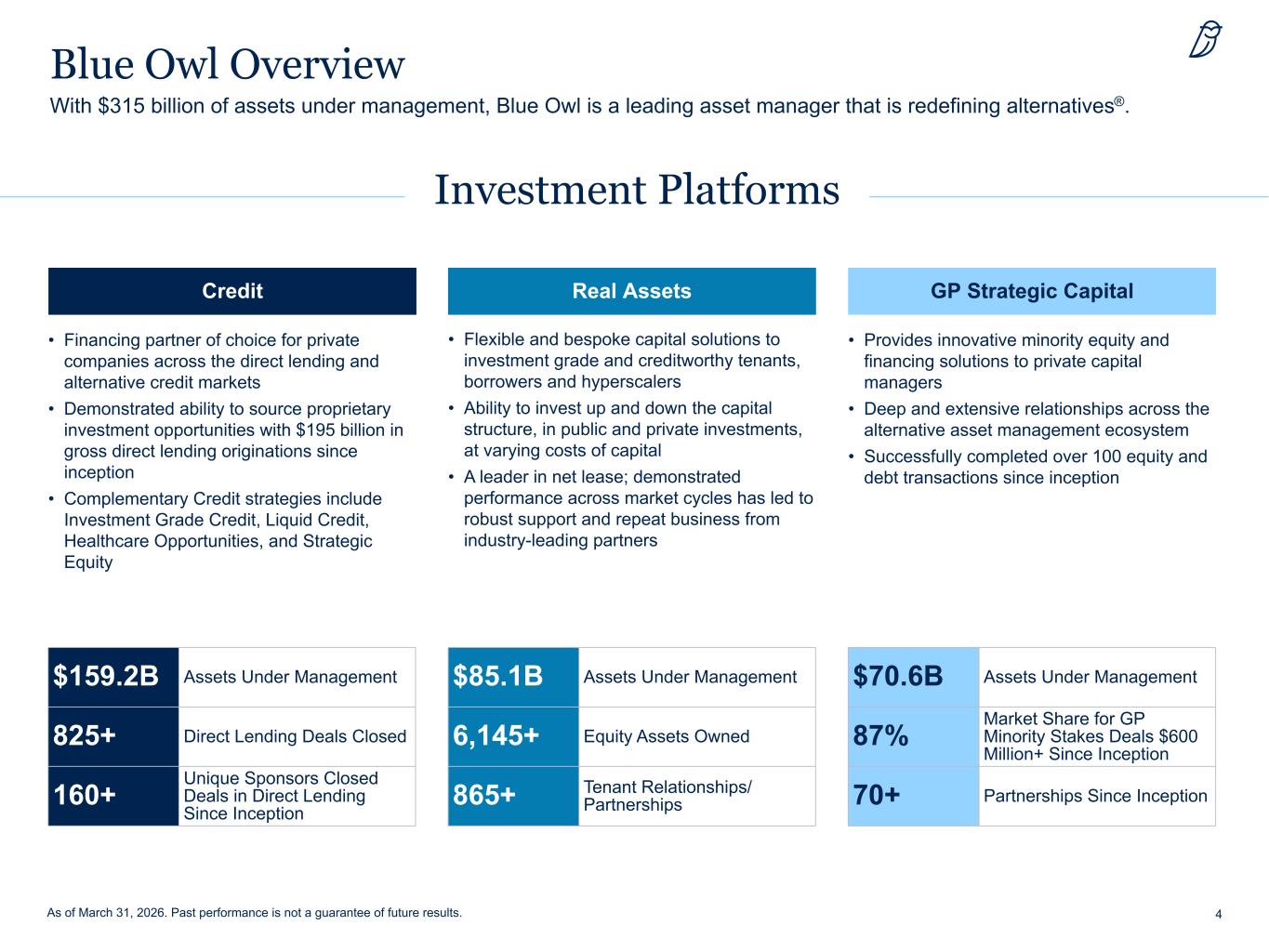
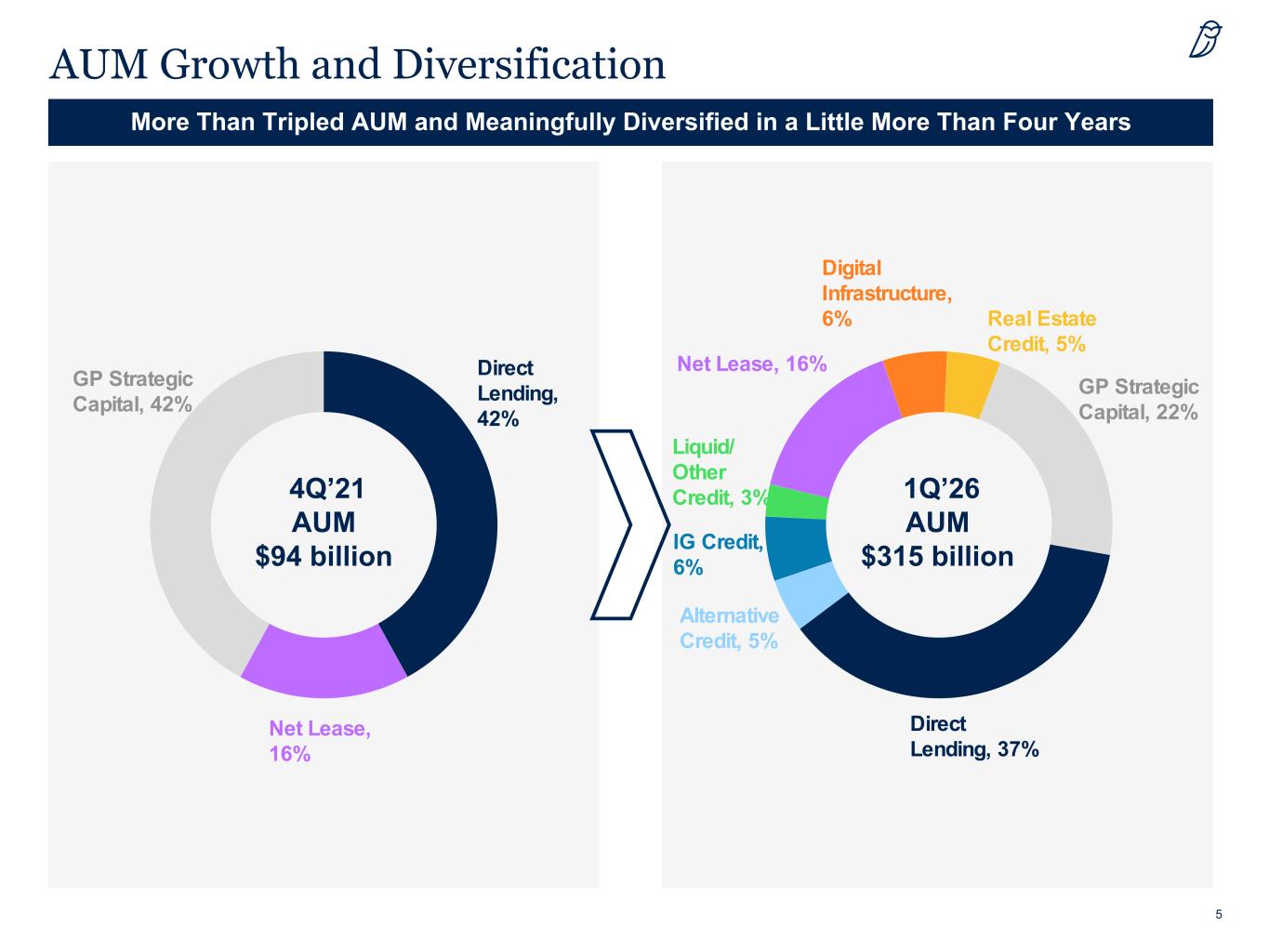
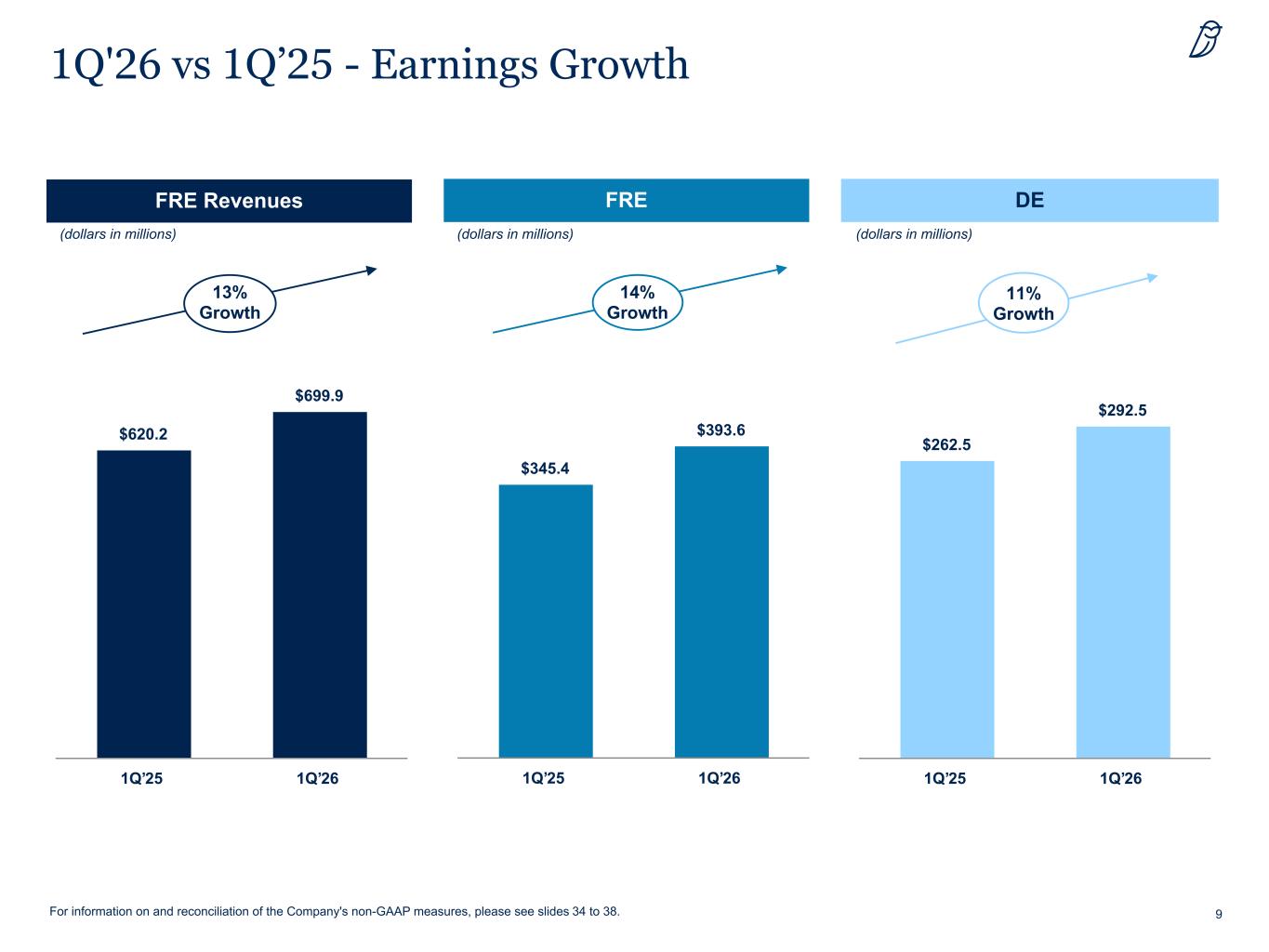
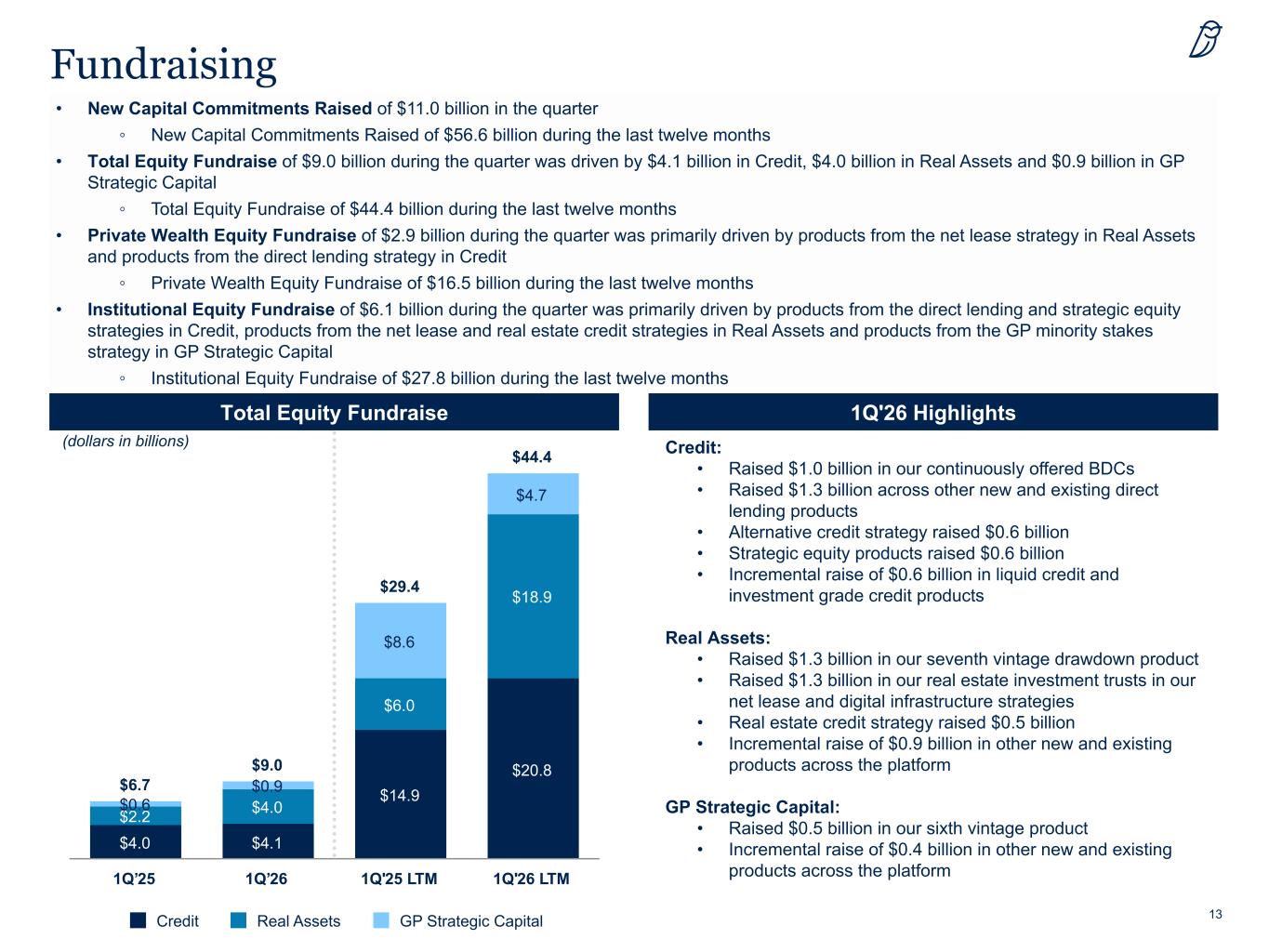
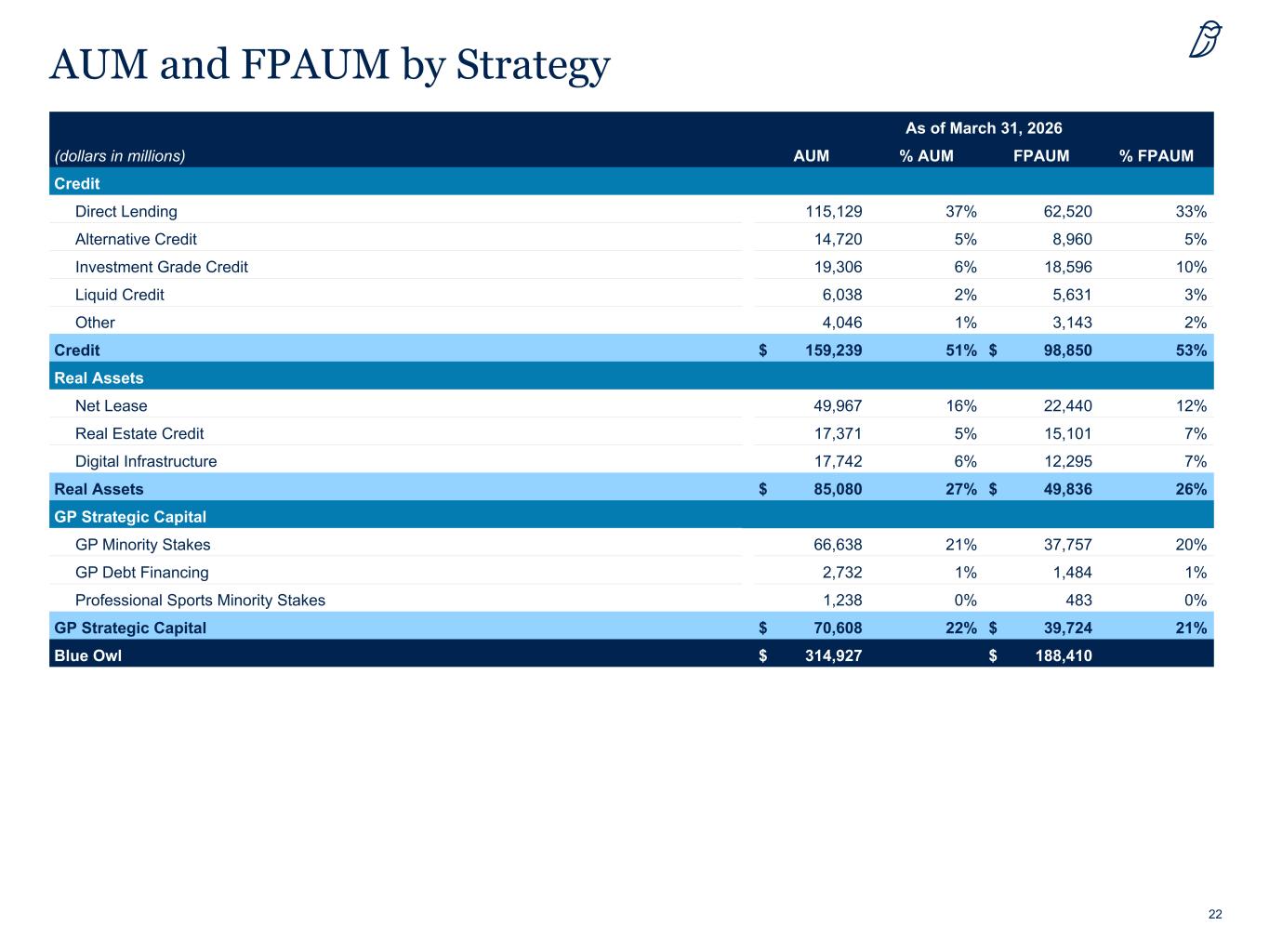
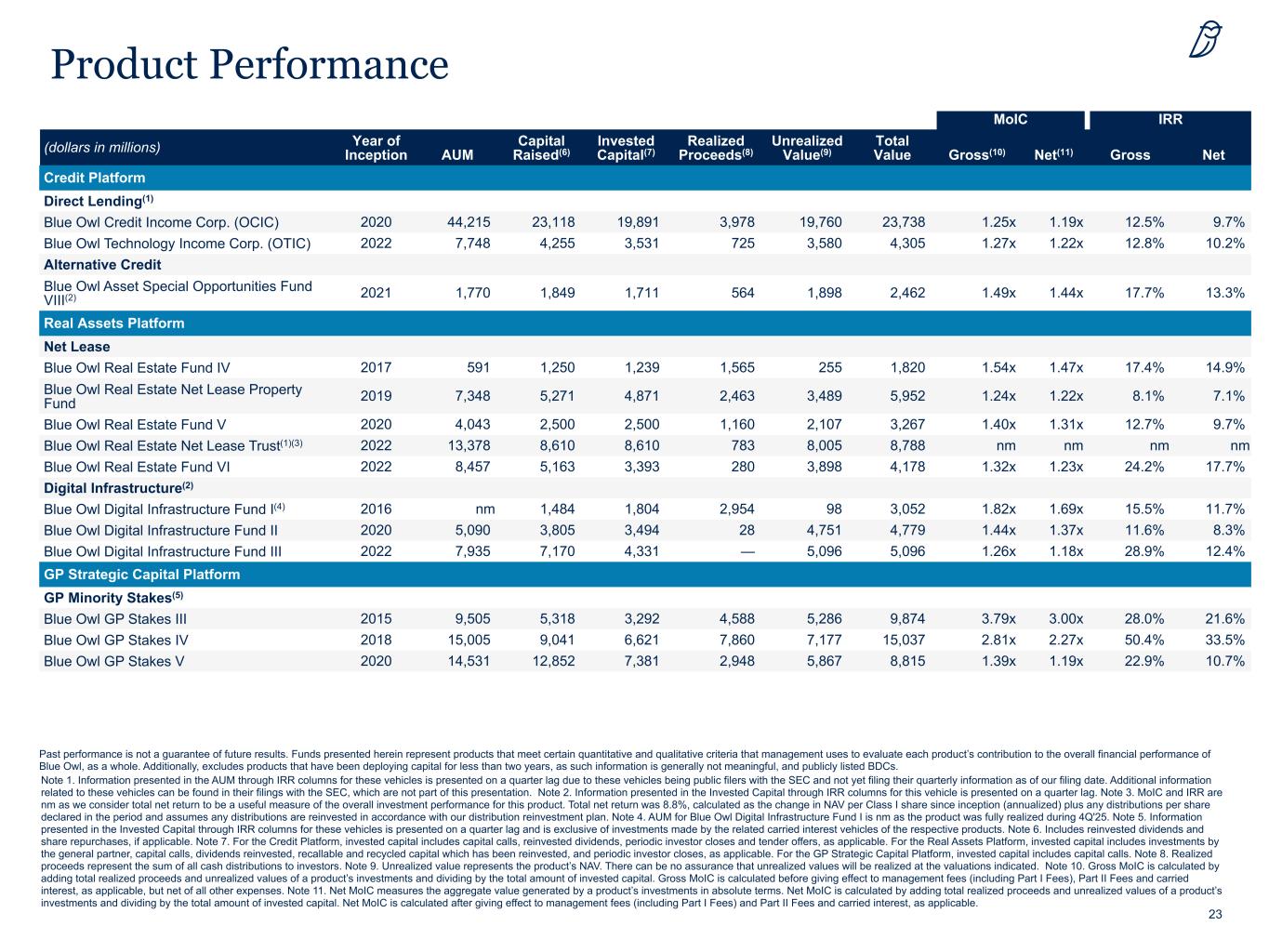
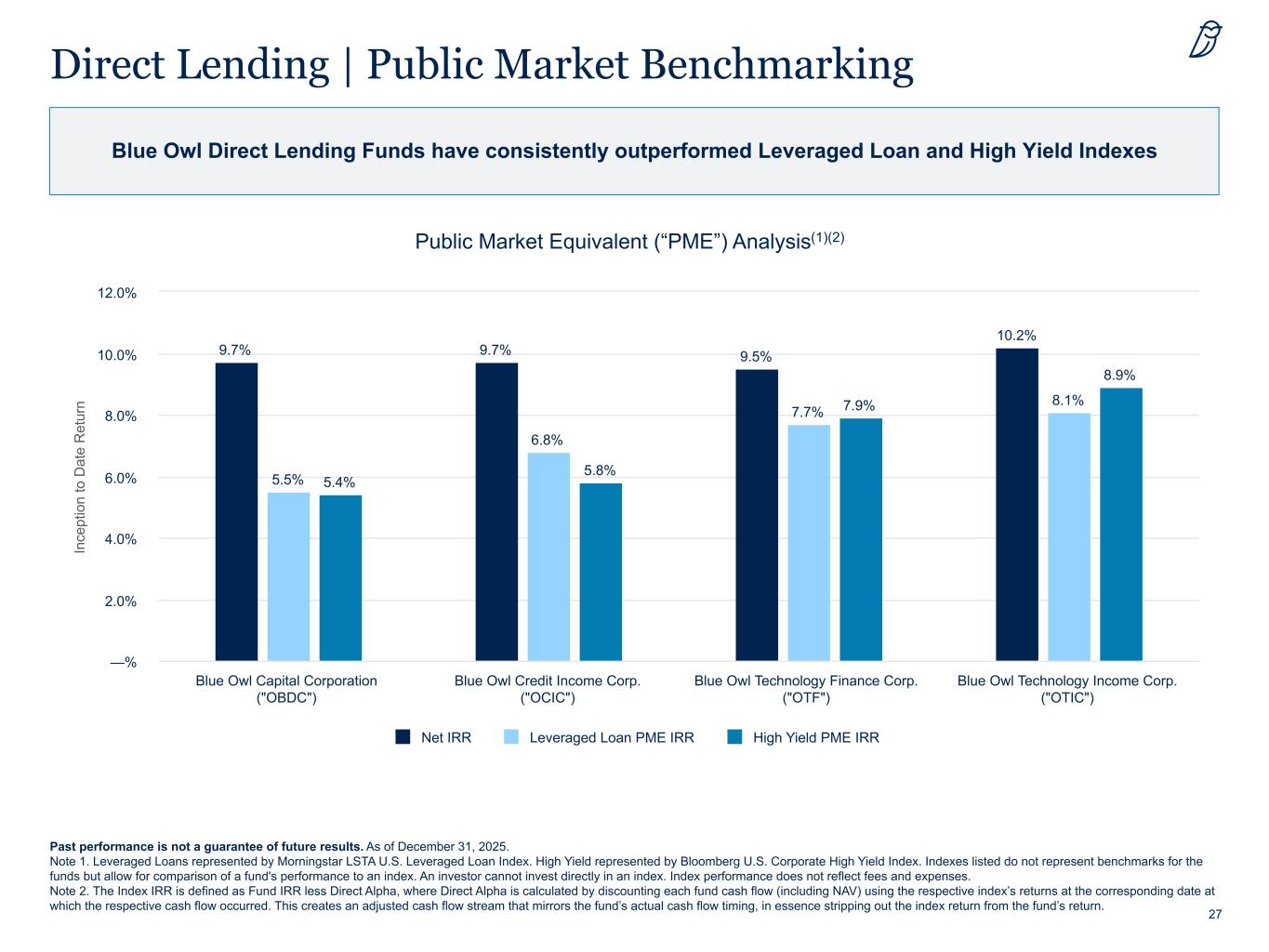
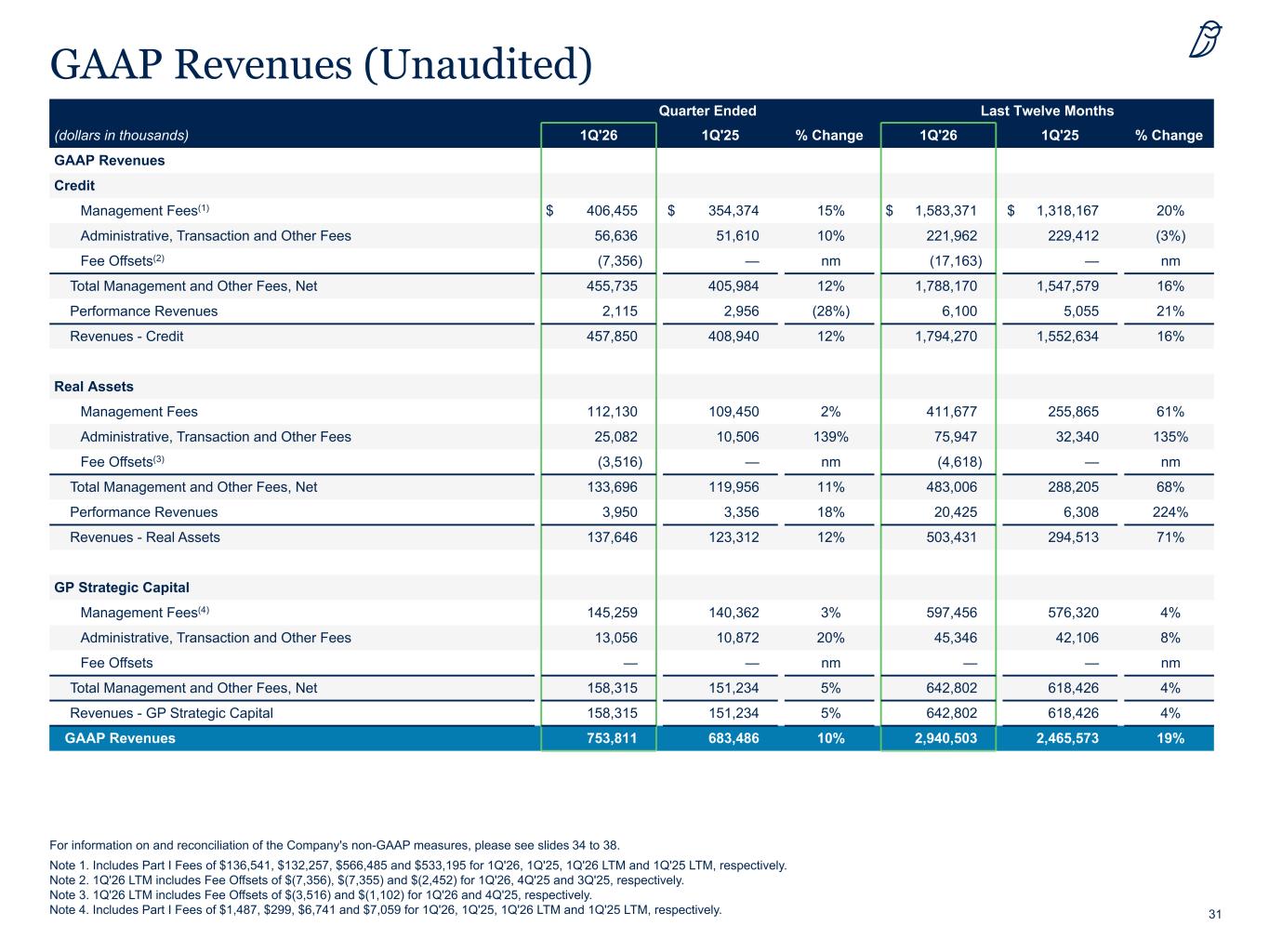
Great. Thank you so much, Ann. As we highlighted this morning in our results for the first quarter of 2026, we operate three differentiated platforms at scale, each of which has contributed to Blue Owl's expansion. Revenues increased by 13%, fee-related earnings by 14%, and distributable earnings by 11%, compared to the first quarter of 2025, against a backdrop of geopolitical uncertainty, interest rate volatility, and increased attention to private credit. Our financial results reflect stability, driven by our durable capital base, and growth, driven by fundraising and ongoing capital deployment. We raised $57 billion of capital over the last 12 months, our second-highest capital raise since inception, and $11 billion in the first quarter, which represents approximately 14% annualized on our AUM at the end of 2025. These fundraising results reflect investor interest across client channels and across our credit, real assets, and GP strategic capital platforms. In recent months, we've spent time with clients and other stakeholders addressing the questions that have arisen around private credit. Our approach has been straightforward. Answer those questions with facts. Across the business, fundamental performance remains strong, and portfolios remain strong, and the portfolios continue to behave in line with the discipline with which they were built. Compared to the last quarter, there's certainly more uncertainty in the macro and geopolitical landscape, and investors across all asset classes are faced with more questions than answers about the near-term environment. As we've observed in the past, times of heightened volatility and uncertainty tend to favor those with patient capital and longer duration, and market share has moved towards private players during those periods in the past. While we continue to see a healthy balance between the public and private markets, the momentum has shifted in our direction in recent months, offering attractive investment opportunities that we are selectively leaning into. As it relates to fundraising, we continue to see good interest from a broad range of investors across an increasingly diverse set of strategies, resulting in $11 billion raised across equity and debt platform-wide during the first quarter. Institutional capital represented two-thirds of total equity raised for the first quarter, or $6.1 billion. These inflows came from approximately 80 institutional investors, with 47% of those commitments coming into our credit platform, 40% in real assets, and 13% in GP strategic capital. We received commitments from 33 new institutional clients during the quarter and 14 existing Blue Owl investors committed to new strategies, further deepening these relationships. We took in capital from institutional investors across every major market, with an increasing amount coming from non-U.S. investors over the past few years. In our private wealth channel, we raised approximately $3 billion of equity in the first quarter, primarily across net lease, direct lending, alternative credit, and digital infrastructure, highlighting that individual investors continue to allocate to alternatives. In particular, demand for real asset strategies has been solid, with over $7 billion raised in wealth for real assets over the last 12 months, a 2.5 times increase from the prior 12-month period. Taken together, our fundraising results from the first quarter highlight three major takeaways. First, institutional and individual investors continue to allocate to products and strategies across the Blue Owl platform. We think this speaks to our ongoing education efforts with investors through the years and the differentiated returns we have generated as a result of rigorous underwriting, deliberate and thoughtful product construction and scale benefits, and ultimately long-dated, strong performance. Second, the evolution and diversification of Blue Owl's platform has been and will continue to be an important driver of fundraising and earnings. So let's explore that briefly. As you can see on slide five in our earnings deck, today direct lending represents only 37% of Blue Owls AUM. To put this in context, real assets is now 27% of AUM and GP strategic capital is 22%. Nearly three quarters of equity capital we've raised over the last 12 months has been outside of direct lending. Alternative credit and net lease have grown their AUM by roughly 40% year over year, collecting strong interest in these asset classes. Our digital infrastructure strategy, which is approximately 6% of AUM today, has significant runway ahead as we face unprecedented demand for data center capacity and continue to work closely with some of the largest, most innovative and best capitalized companies in the world. In fact, just a couple months ago, Amazon announced a $12 billion data center campus with investment from Blue Owl's digital infrastructure funds and development by Stack Infrastructure, our scaled designer, developer, and operator of sustainable digital infrastructure. This marks the fourth data center project above $10 billion announced in less than 18 months for which Blue Owl will play a critical role. We held the final close of the first vintage of our GP-led secondary strategy, Bose, during the quarter, above target at approximately $3 billion. We think this is a great outcome for a first-time fund, and it makes us a market leader in dedicated capital raised for GP-led secondaries. And as it relates to fundraising channels, institutional investors drove 67% of total equity capital raised in the first quarter. And in private wealth, nearly 70% of flows came from real assets, GP strategic capital, alternative credit, and GP-led secondaries during the first quarter. And these strategies themselves constituted about 60% of private wealth flows over the last 12 months. These figures highlight an increasingly diversified set of high-quality, in-demand strategies that offer investors significant income and downside protection. Finally, it's worth keeping the recent attention on our non-traded BDC flows in perspective. While the level of debate around private credit has resulted in elevated industry-wide redemption requests, the actual impact to Belal's revenues and earnings for the first quarter was quite modest. During the quarter, net outflows of roughly $170 million from OCIC and OTIC were less than six basis points of our beginning of period AUM. As a reminder, these two funds collectively comprise less than 17% of our total AUF. For OCIC, redemption requests were concentrated, with 1% of investors representing a majority of tenders, and approximately 90% of the investor base elected not to tender at all. Generally, requests have been more investor-led than advisor-led, highlighting continued strong support from our partners and what we believe has been a headline-driven, not fundamental-driven redemption environment. And notably, growth repurchases for our net lease non-traded rent were less than $134 million compared to inflows of $1.1 billion, resulting in net inflows of approximately $1 billion for the quarter compared to about $8 billion of fee-paying AUM at the end of 2025. five. Moving on to performance, which remains resilient across credit, real assets, and GP strategic capital. Our strategies have delivered attractive absolute returns and on a relative basis have generally outperformed their public indices since inception to a wide range of economic and market environments. To give a few examples of this, our direct lending strategy generated gross returns of 8.5% over the last 12 months, and more specifically, our largest non-traded BDC OCIC has delivered an attractive 9.1% annualized return over approximately five years since inception, demonstrating durability across a range of market environments. Over this period, Class Life shares OCIC have outperformed leverage loans by more than 300 basis points, high yield bonds by approximately 500 basis points, and traditional fixed income by approximately 900 basis points in alternative credit gross returns of 11 percent over the last 12 months have compared favorably to leverage loans as well outperforming by more than 600 basis points our net lease strategy has returned 14.7 over the last 12 months outperforming the footsie reit index by over 1100 basis points and gp minority stakes has delivered outstanding results with net IRRs of between 10 and 34 percent across funds 3, 4, and 5. These funds are top quartile in DPI, and we're honored to recently be named the top large buyout firm in 2025 by HEC, Paris, Dow Jones, in a category of nearly 700 firms, which we think recognizes our outstanding performance across these key metrics. I mentioned earlier that we were seeing the market move our away as a result of volatility, and GP Stakes is a good example of this. Not only is fund performance strong, but we have substantial dry powder, and the pipeline continues to grow for this business. Bringing us back to where I started, performance remains the clearest measure over time. What matters most in periods like this is whether the portfolios are behaving as expected, whether the underwriting is holding up, and whether the structural protections in the business are doing the work they're designed to do. On those measures, the quarter reinforced the stability and durability of the business, supported by continued growth and strong underlying fundamentals. We plan to continue communicating with our stakeholders transparently and candidly, and look forward to speaking with all of you in the weeks and months to come. With that, let me turn it to Alan to discuss our financial results.
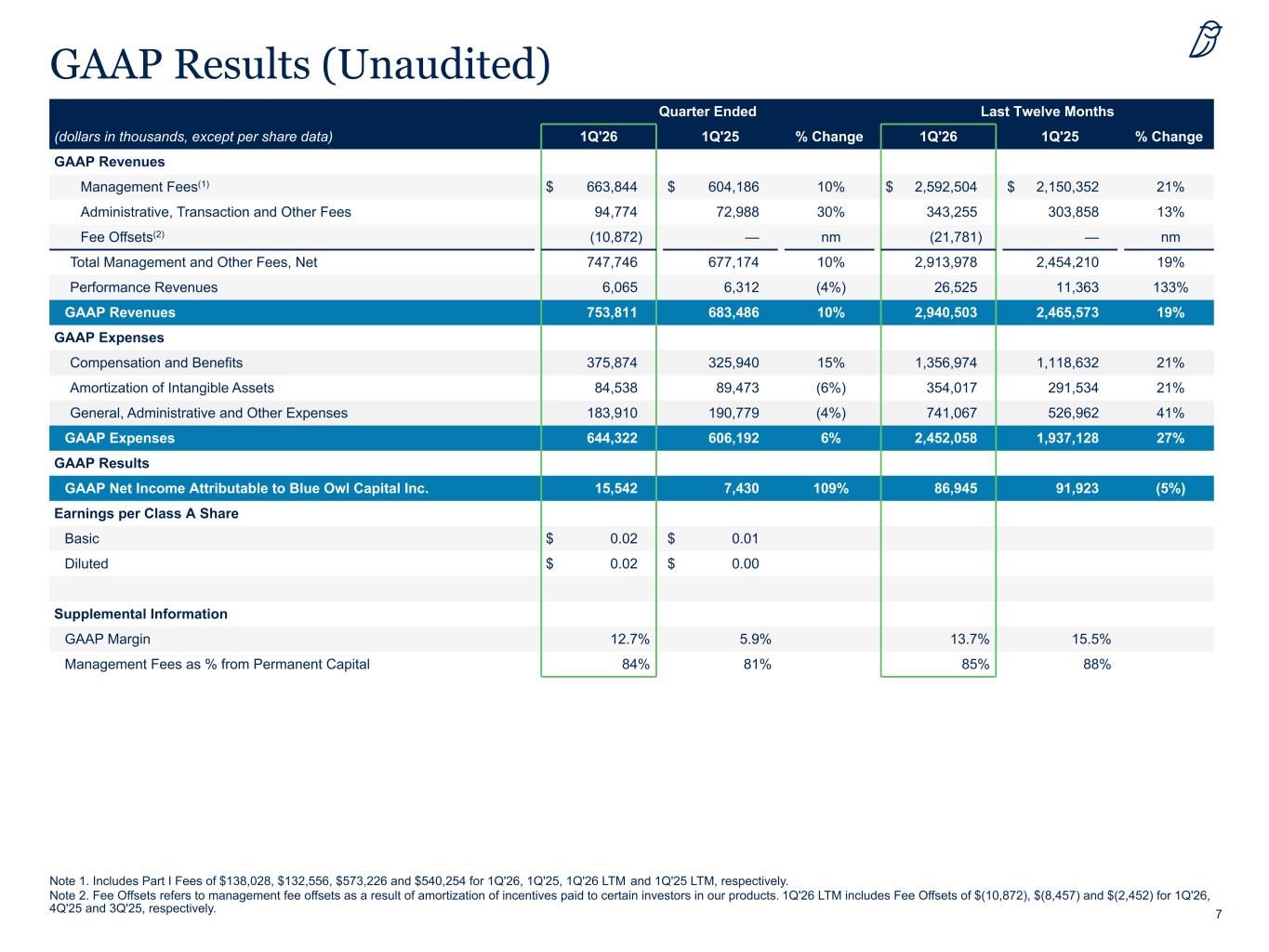
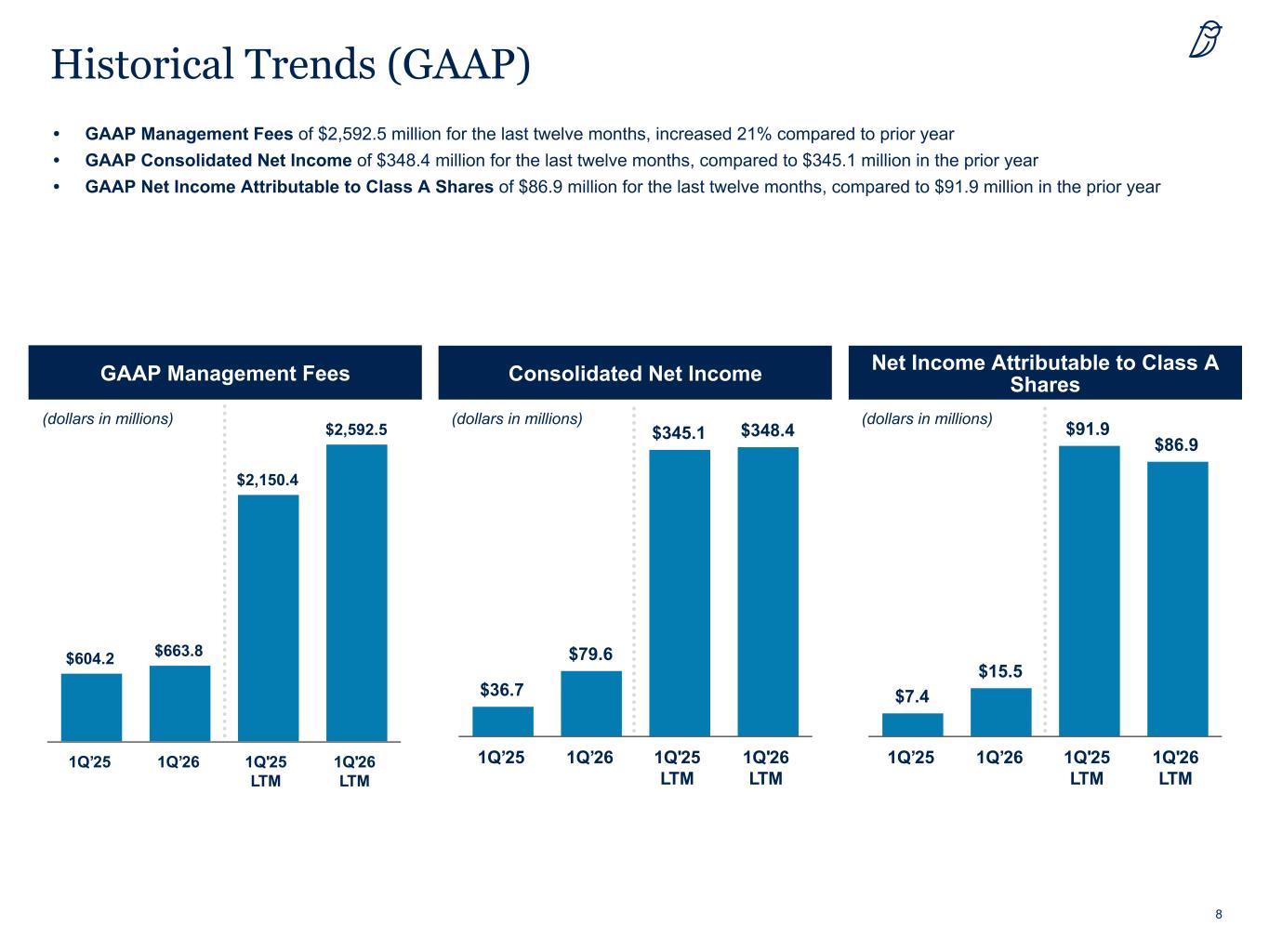
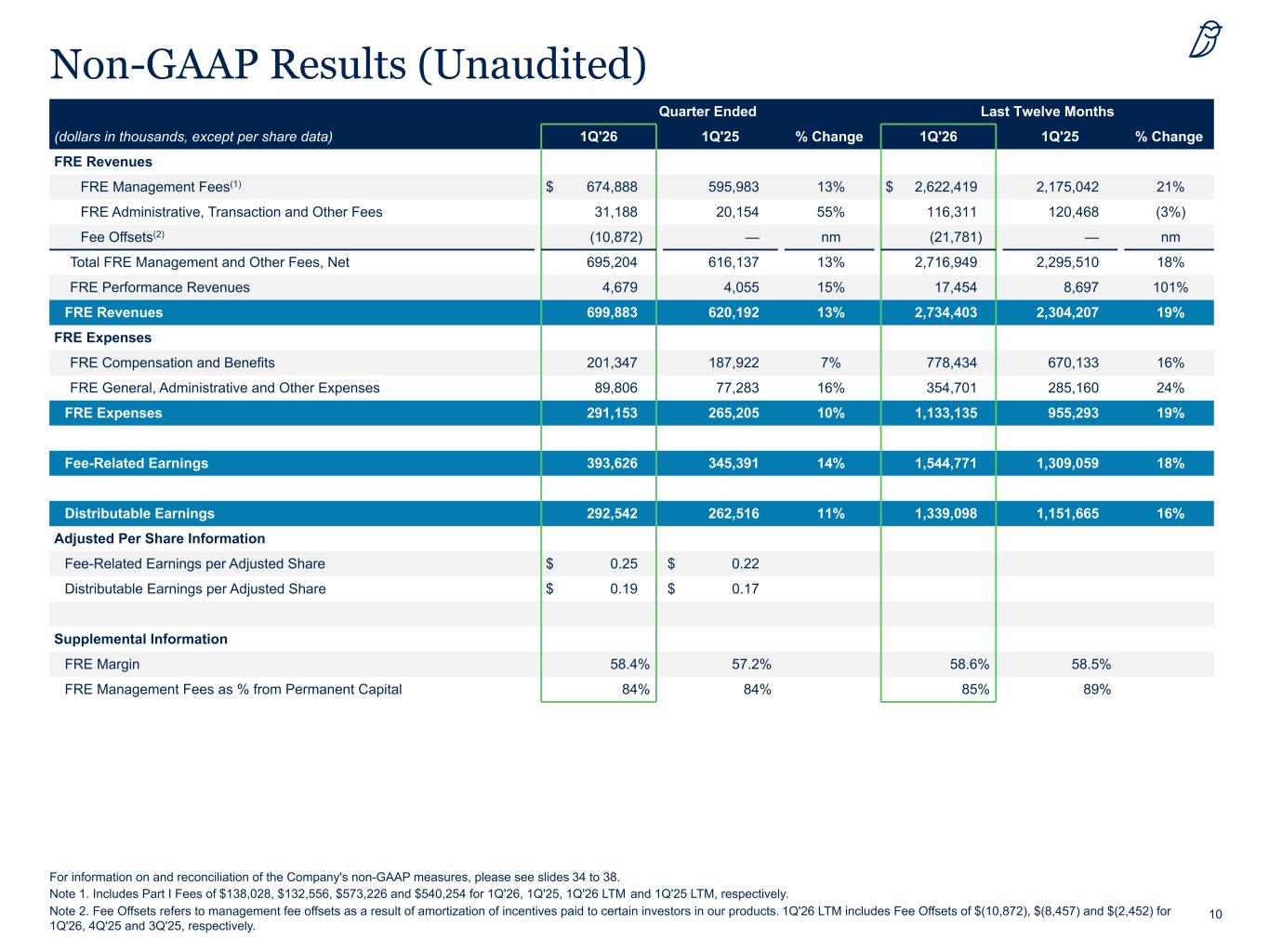
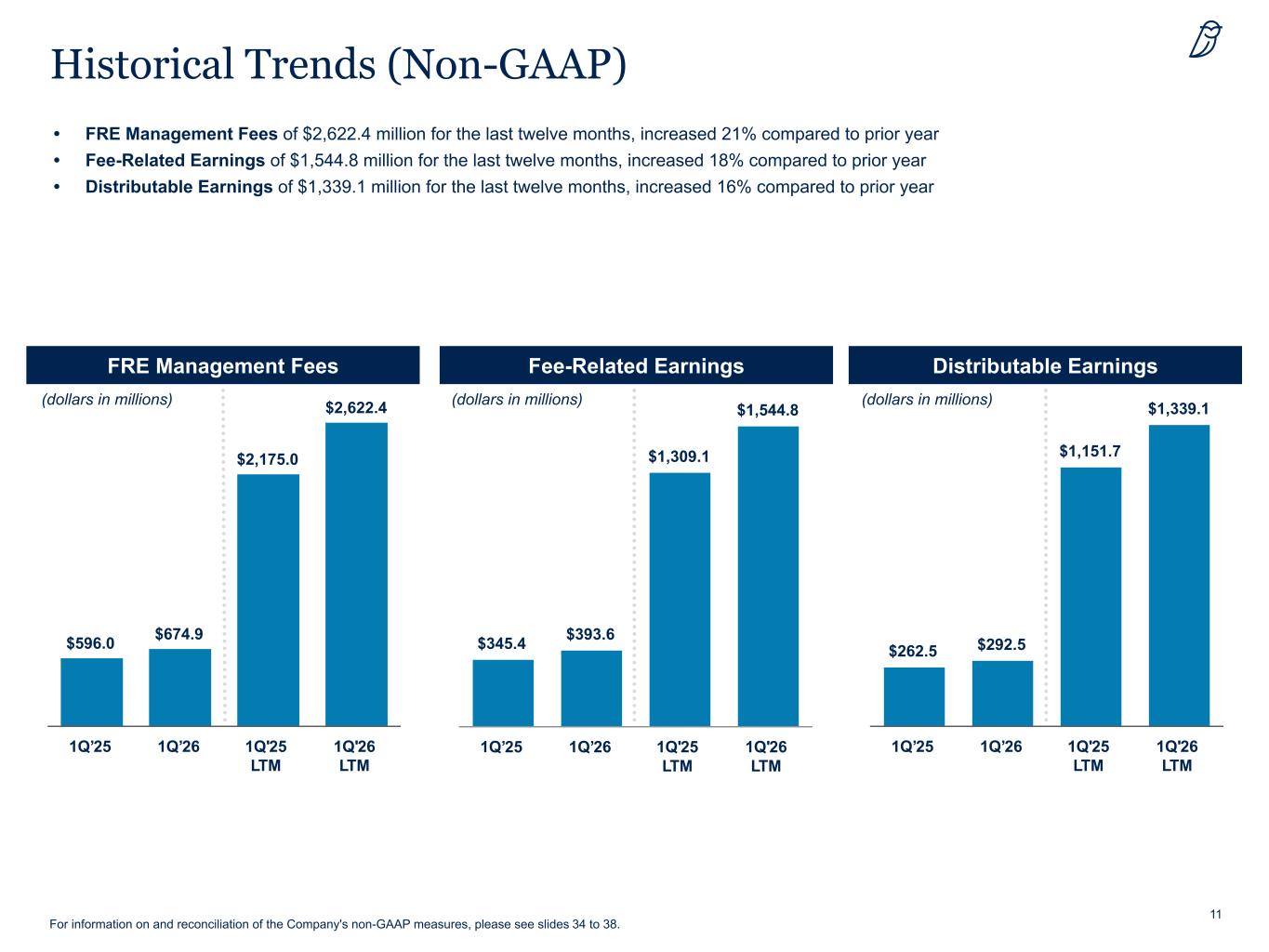
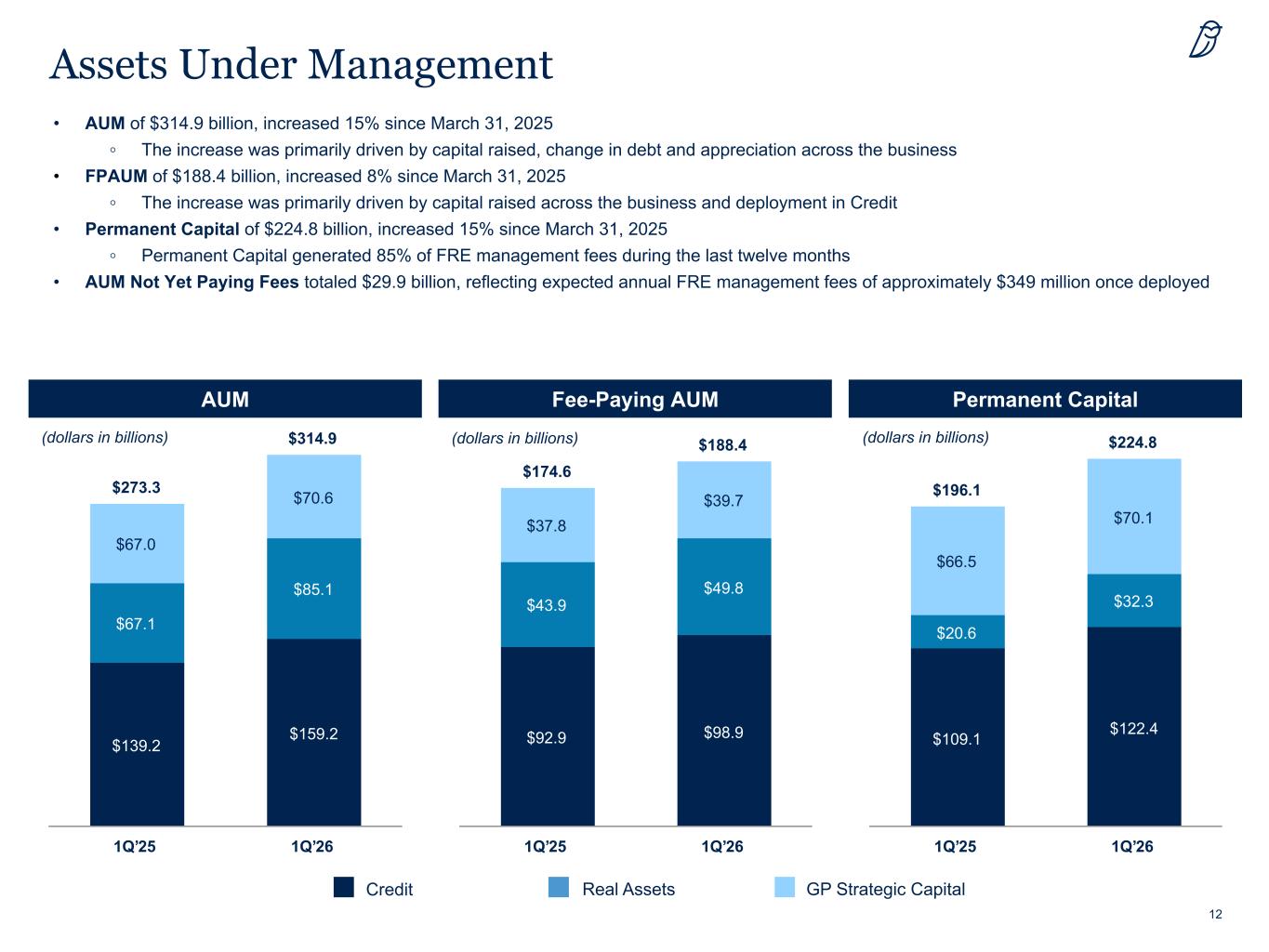
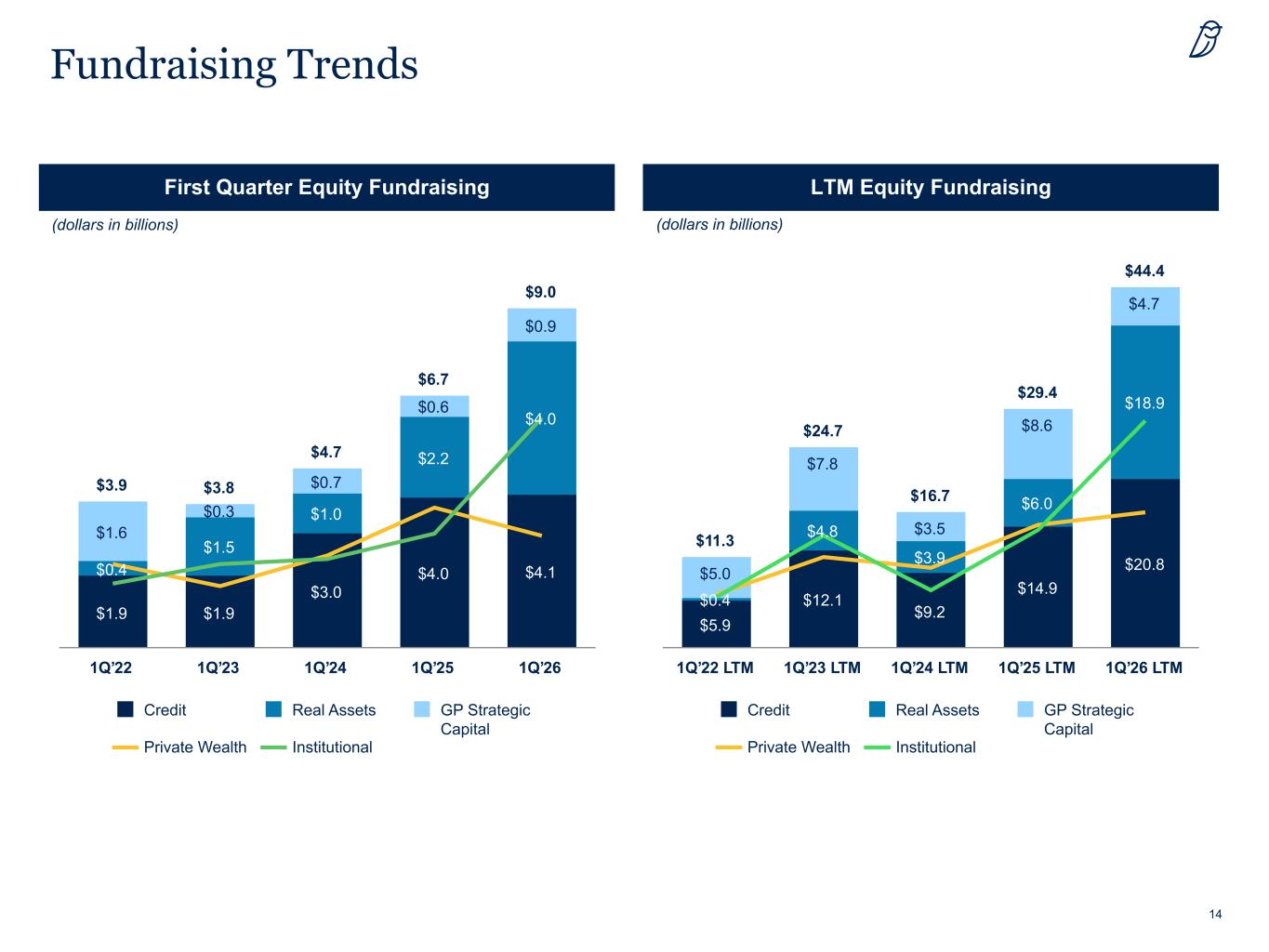
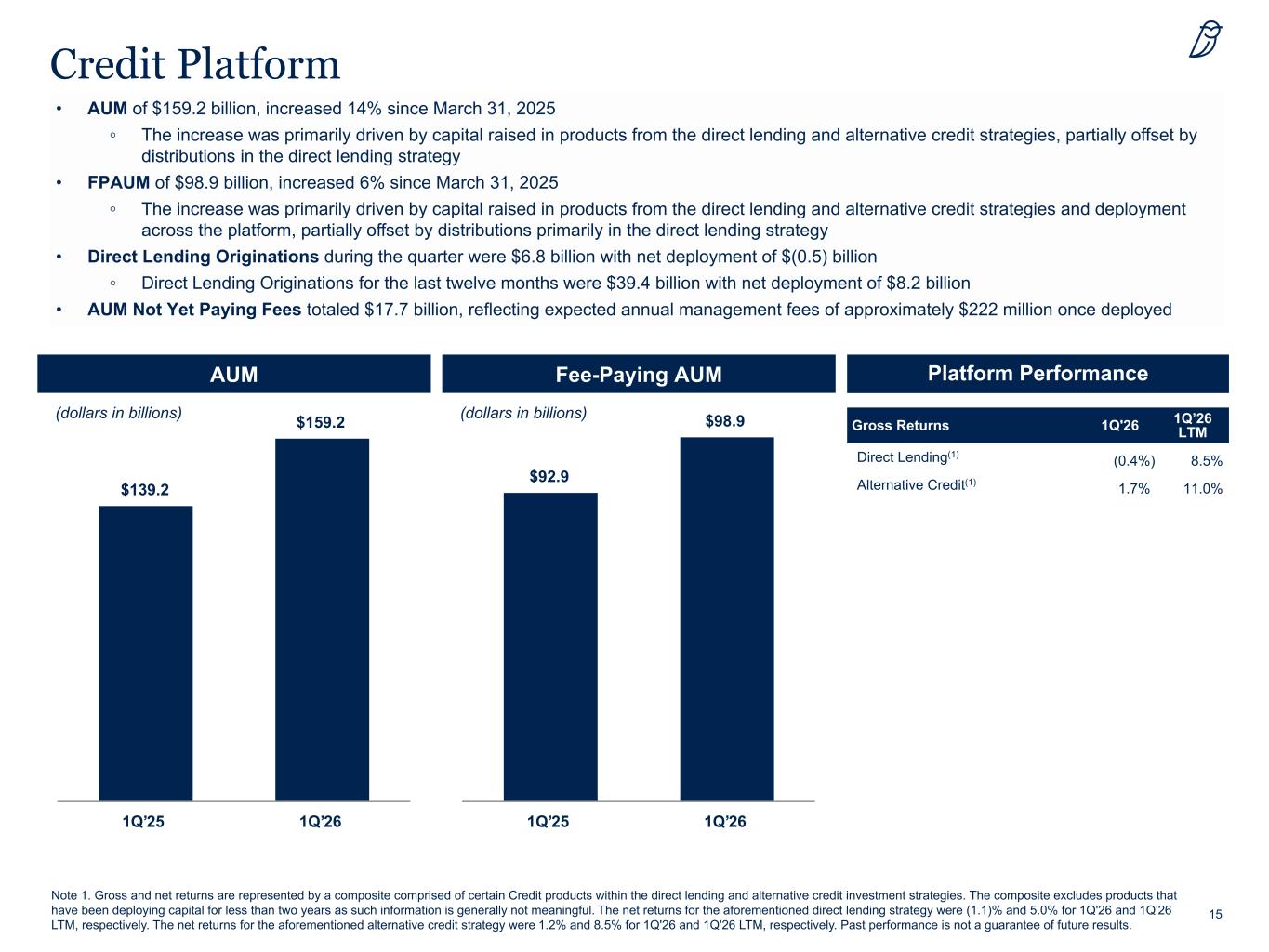
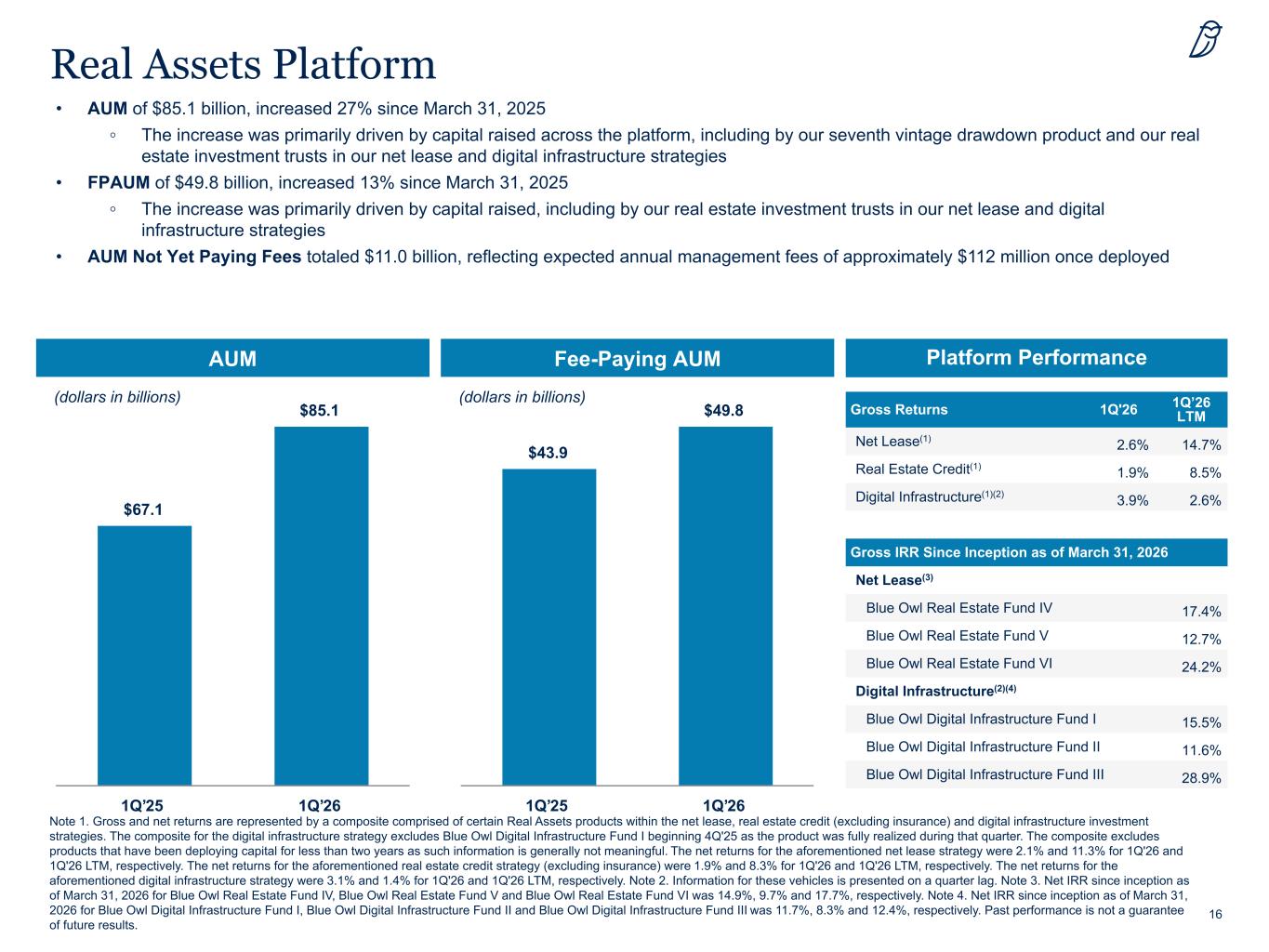
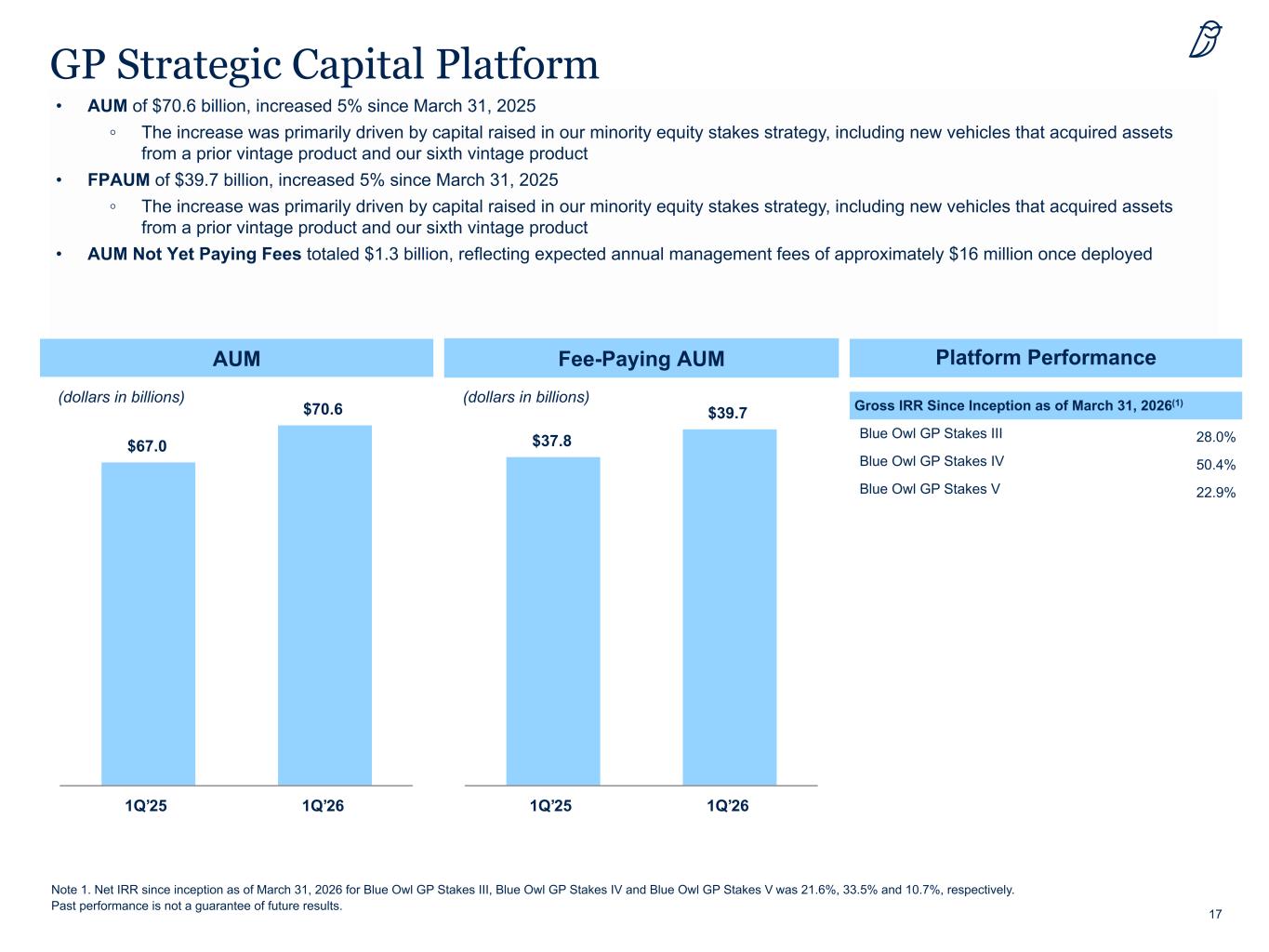
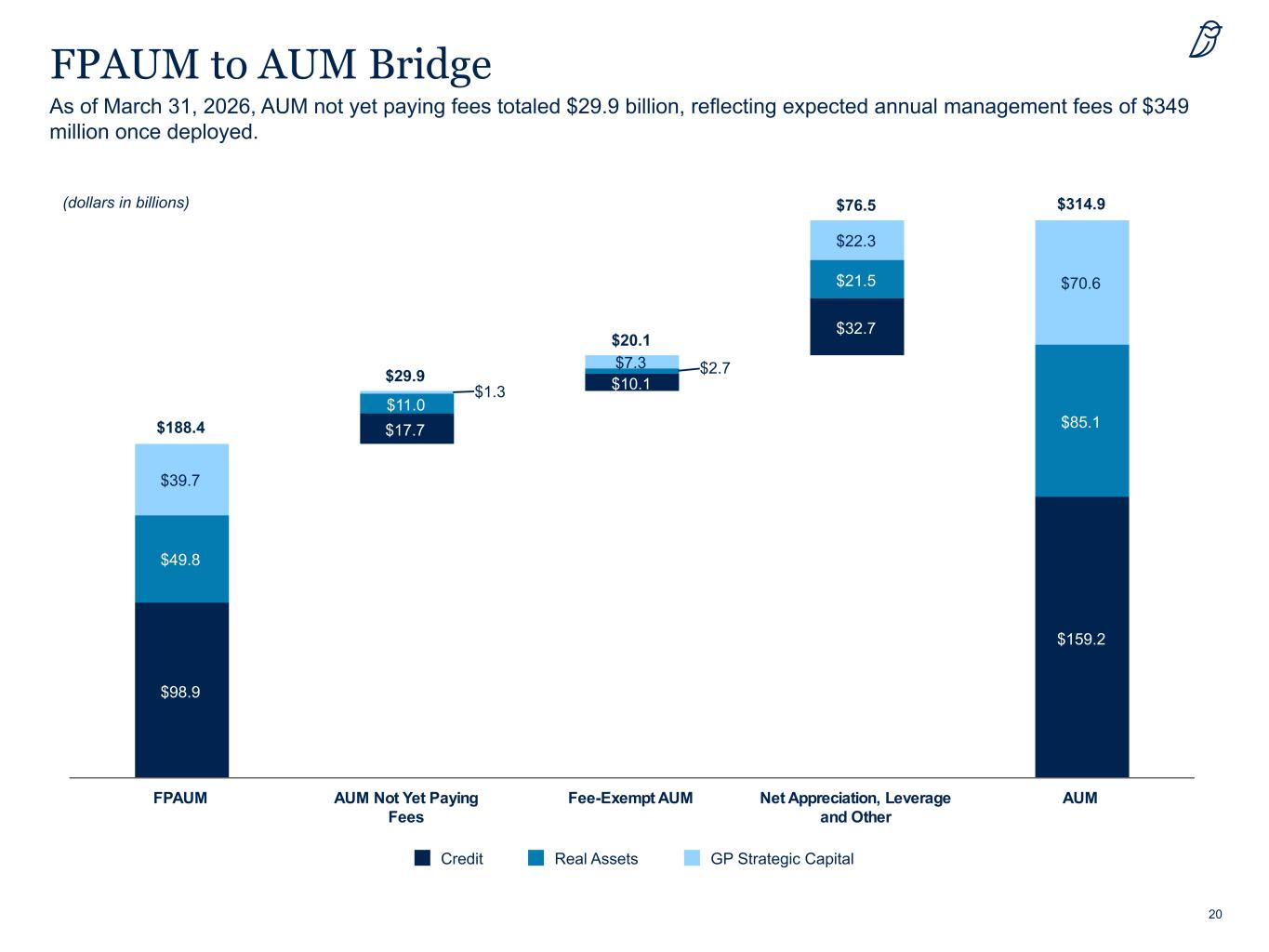
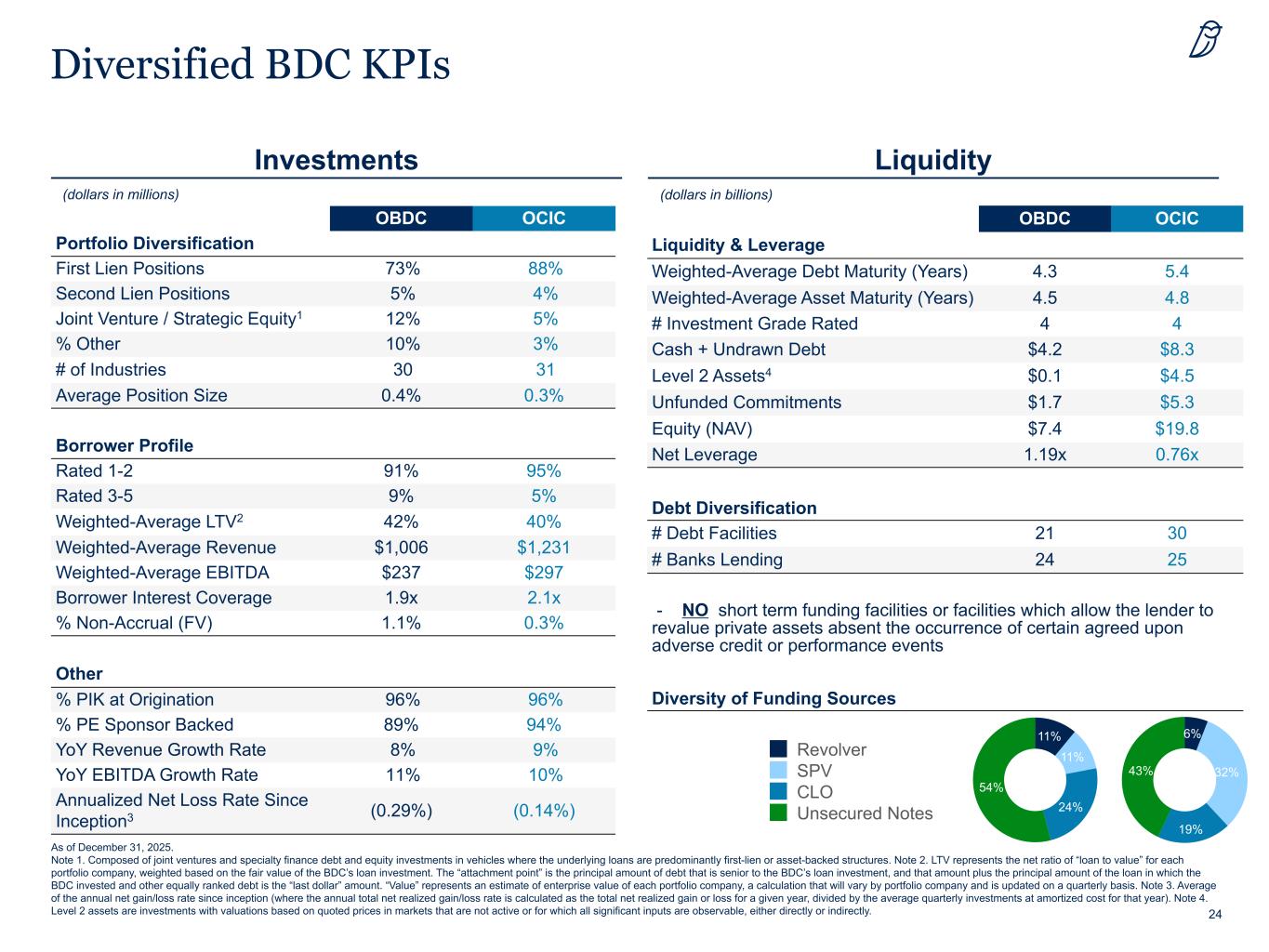
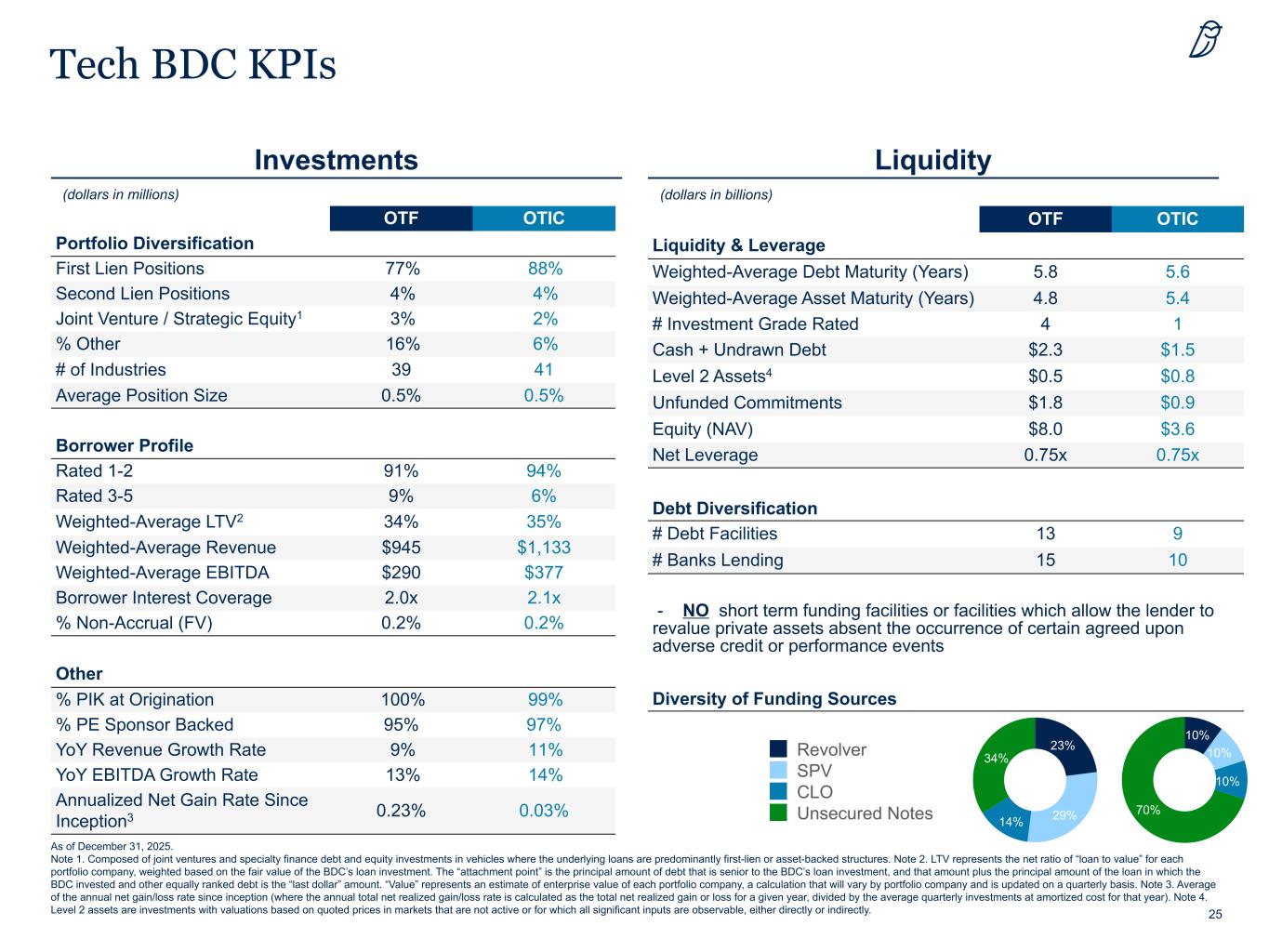
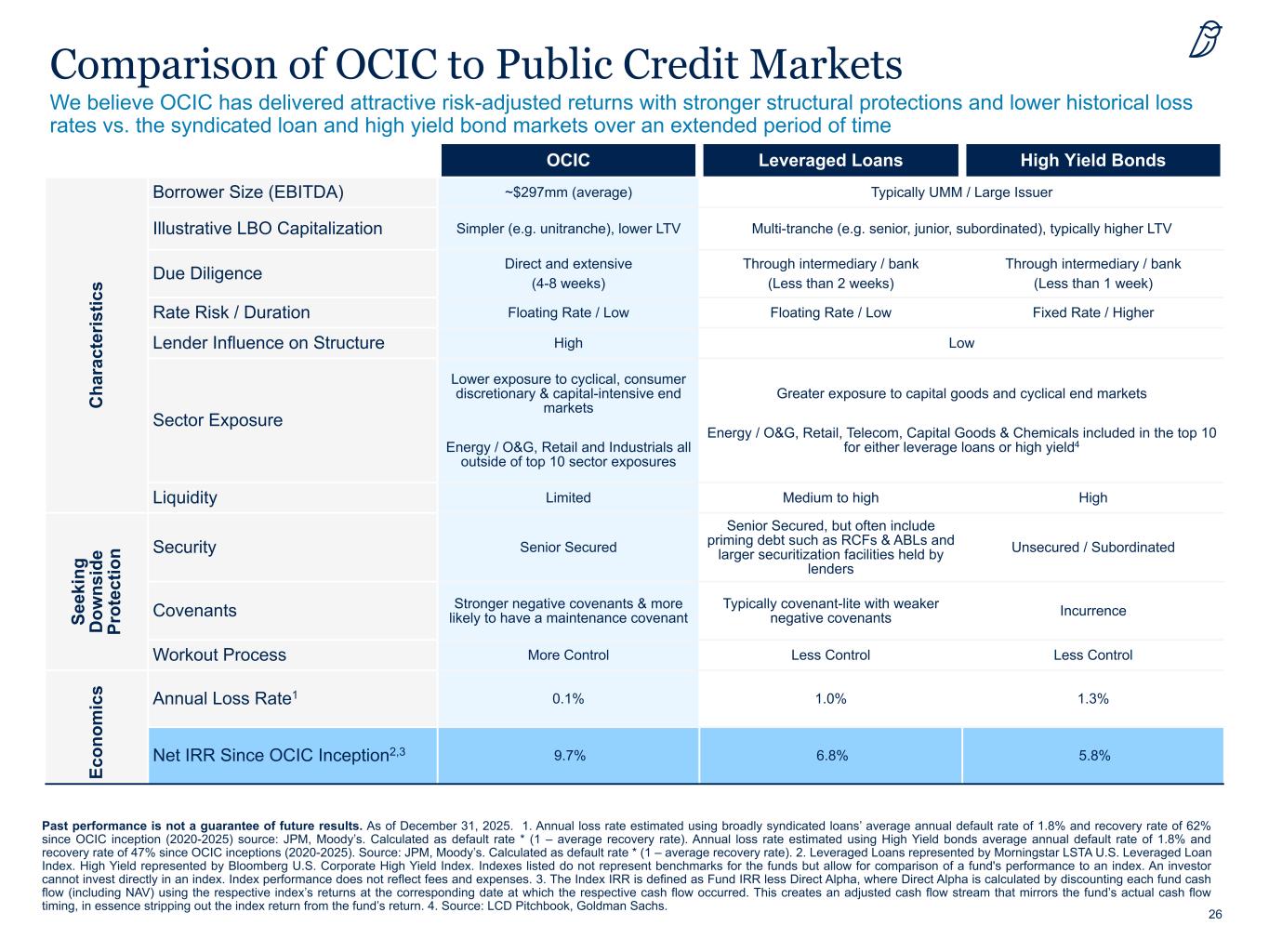
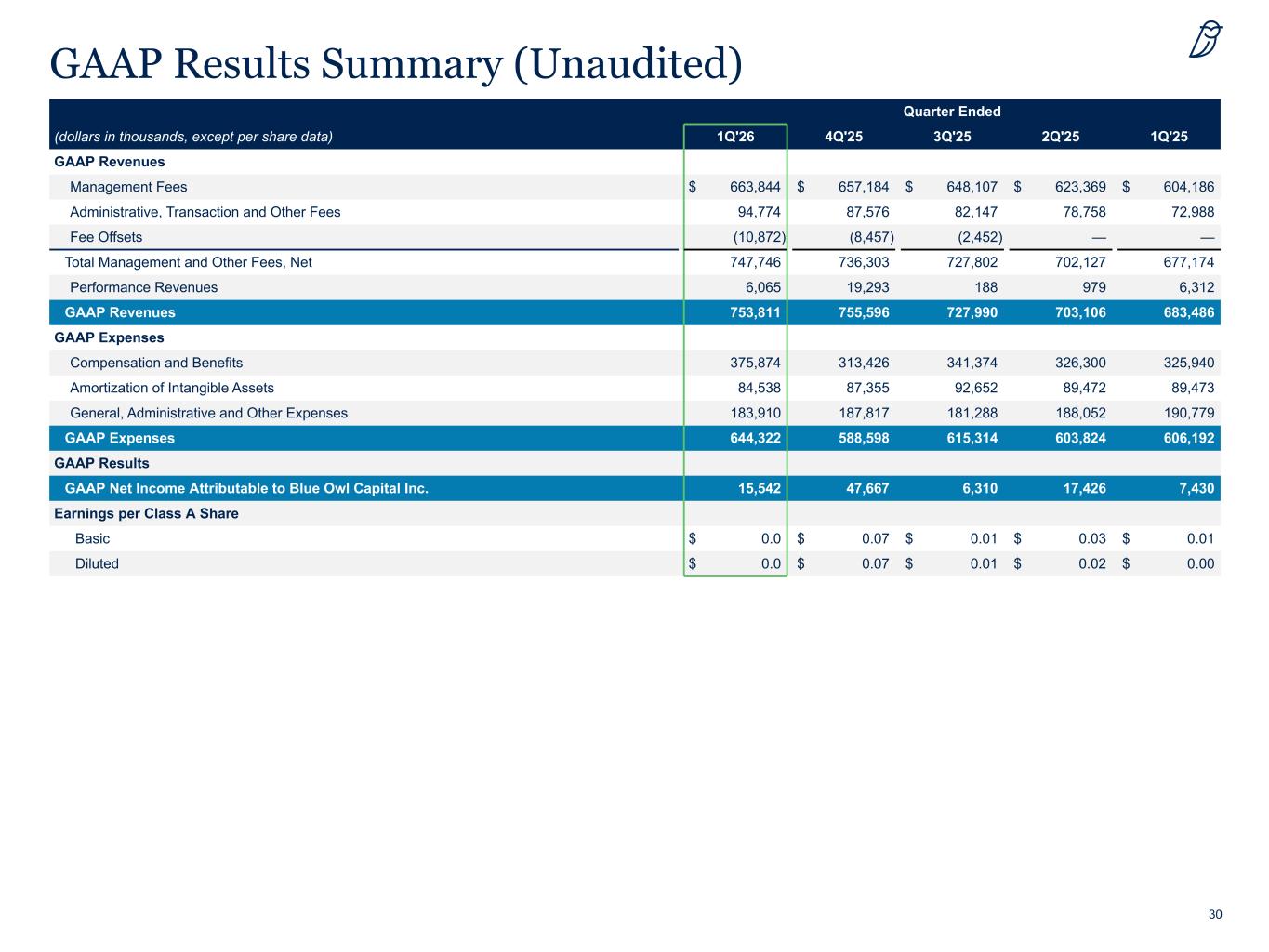
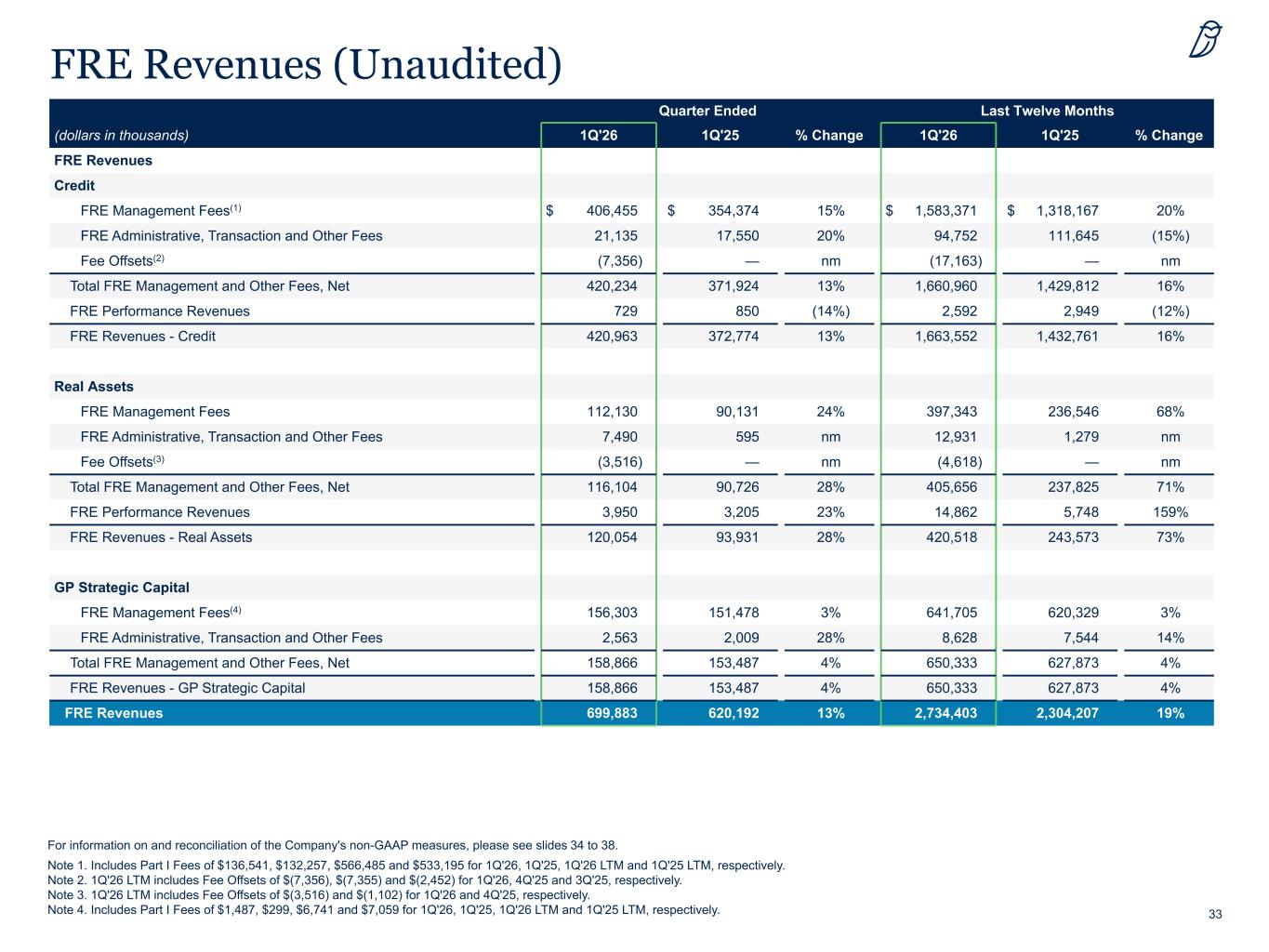
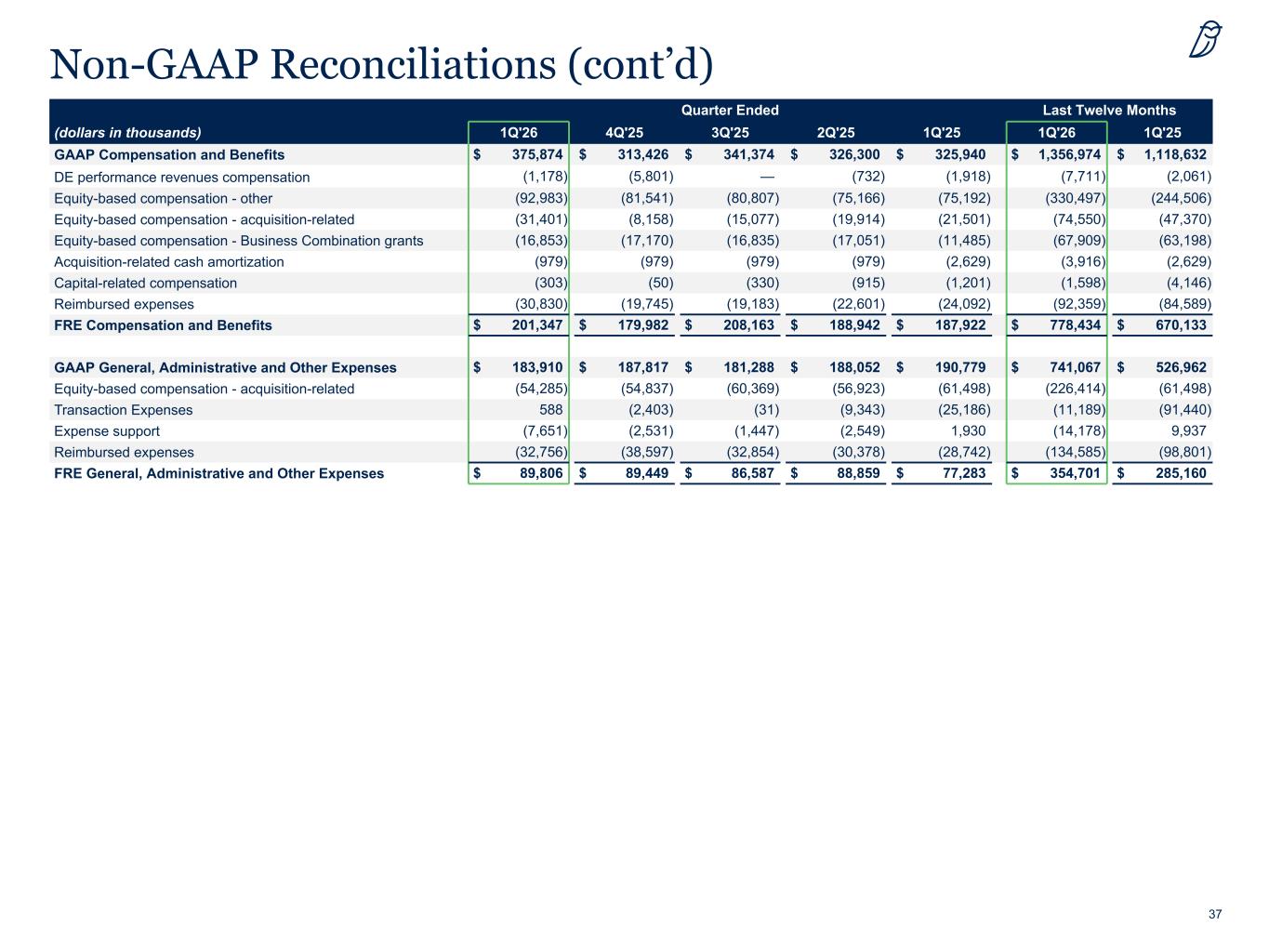
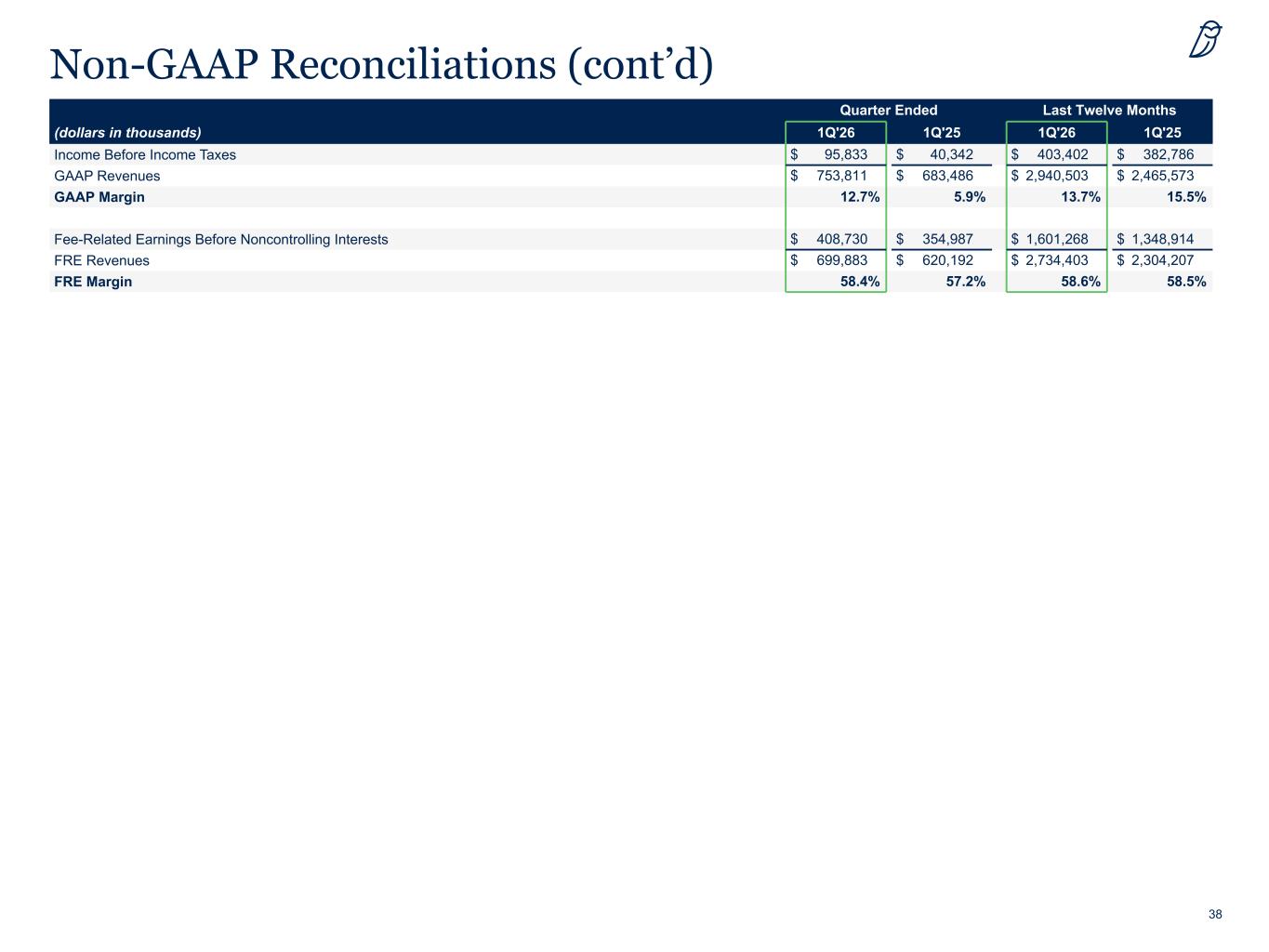
Thank you, Mark, and good morning, everyone. Today, we reported another quarter of solid earnings growth and broad fundraising across the platform. As Mark noted, during the first quarter, we raised $11 billion of capital across a diverse set of products and strategies. As you can see on slide 14, while the first quarter is typically a seasonally lighter quarter for fundraising, we continue to see fundraising across a broader and more diversified platform, driven by ongoing diversification across products, strategies, and investor base. Compared to the first quarter of last year, equity capital raised grew by 35%. Staying on the theme of 1Q26 results versus a year-ago quarter, management fees are up 13%. You can see on slide 10 that we broke out management fee offsets this quarter, which we think helps investors get a better sense of the core trends across our business. FRE grew 14%, and DE grew 11%. We modestly increased our FRE margin, expanding to 58.4% for the quarter, versus our FRE margin for 2025 of 58.3. AUM not-yet-paying fees increased to $30 billion, representing approximately $350 million of expected annual management fees once deployed. This is equivalent to approximately 14% embedded growth off of our 2025 management fees. Turning to our platforms, In credit, the $4 billion of equity capital we raised during the first quarter included about $1 billion raised in our non-traded BDCs and over half a billion dollars raised for each of GP-led secondaries, alternative credit, and liquid and IG credit. During the quarter, we held the final closes for both our GP-led secondaries fund, BOSE, and our alternative credit opportunities fund, ASAP9, around $3 billion each, with both closing above their targets, strong outcomes in the current environment. In direct lending, last 12-month growth and net originations were $39.4 billion and $8.2 billion, respectively. Repayments in the portfolio were $6.4 billion for the first quarter and over $27 billion in 2025, highlighting significant liquidity in our direct lending funds just from repayment activity alone. As Mark mentioned earlier, the market conditions that create volatility in public markets also tend to result in spread widening and a decline in available capital across asset classes. We are beginning to see this in the origination pipeline with spreads at least 50 basis points wider. More importantly, the portfolios continue to behave in line with the discipline with which they were built. We have included some additional slides and disclosure in the supplemental information section of our earnings presentation. Slides 24 and 25 show a series of KPIs for each of our BDCs as of December 31st, which we will update through March 31st in our investor presentation. Slide 26 compares some of these KPIs for the leveraged loan in high-yield markets, And finally, slide 27 compares the performance of our BDCs to the leveraged loan and high-yield markets. Now, to run through some of these here, in direct lending, underlying portfolio company growth has remained healthy with no meaningful adverse movement in metrics such as our watch list, non-accruals, amendment requests, or revolver draws. Our average annual loss rate remains a very low 12 basis points, an important factor in driving our continued outperformance to leverage loan and high-yield indices. On average, our borrowers have delivered last 12-month revenue and EBITDA growth in the mid-to-high single digits. In our tech lending portfolio, we have continued to see higher growth compared to our overall diversified lending portfolio, with LTM revenue and EBITDA growth in the high single-digit to low double-digit range on average. LTVs have picked up modestly, incorporating moves in public comps and broad-based spread widening. As a result, LTVs are, on average, in the low 40s across our platform and in the tech lending portfolio, continuing to illustrate meaningful equity cushion below our senior secured positions, even in the face of compressed equity market multiples. And outside of direct lending, we deployed an additional $2.8 billion on a gross basis across our other credit strategies in the first quarter. And as Mark mentioned, the opportunity set is expanding across the risk-reward spectrum, and we are engaging where the risk-adjusted return is compelling. In real assets, net lease contributed about $3 billion of the $4 billion of equity capital raised in the first quarter, roughly split between the wealth and institutional channels. In total, we have reached $5.8 billion raised for the latest vintage of our net lease flagship and continue to expect to hit our hard cap of $7.5 billion by the end of this year. For Orent, our non-traded REIT, over $200 million of the $1.1 billion raised in the first quarter, came from 1031 exchange structures, and Orent experienced its lowest percent repurchase quarter in seven quarters. Deployment in real assets continue to accelerate, increasing more than 100% year over year to approximately $20 billion over the last 12 months, supported by the completion of built to suit projects in net lease and new commitments in digital infrastructure. In net lease fund six, we have fully committed to fund and have reached two-thirds of capital culled with visibility to be virtually fully culled by this summer in line with our prior expectations and within three years of its final close. Our net lease pipeline remains around all-time highs with $50 billion of transaction volume under letter of intent or contract to close. In digital infrastructure, we are also seeing a substantial pipeline of over $100 billion and have now called over 75% of the capital in Fund 3, just a year after its final close at the end of April 2025. And we continue to be on track for an initial close of the next vintage of our flagship fund in the back half of this year. In our real assets platform, we now manage $85 billion of AUM, up 27% over the last year, and specifically for net lease, up 38% year-over-year. We are seeing these strategies resonate with investors looking for income-oriented returns backed by mission-critical assets and investment-grade counterparties across logistics, manufacturing, healthcare, and data centers. In GP Strategic Capital, we raised $900 million primarily in our flagship vehicle and co-invest during the first quarter, with the total raised in our sixth vintage, approaching $10 billion inclusive of co-invest. In March, we made an investment into Atlas, a leading investment platform with a differentiated owner-operator model within the industrial, manufacturing, and distribution space, and we continue to see a robust pipeline for deployment in our latest flagship fund, which is now about 40% committed on our target. Finally, I'd like to offer some high-level thoughts on a few items. First, we remain focused on disciplined expense management. We demonstrated FRE margin expansion in 1Q and continue to see a path to achieve our goal of 58.5% FRE margins for 2026. We declared our quarterly dividends, which we had announced on our last earnings call. We remain committed to paying out our $0.92 dividend for 2026. Our business is broader and more diversified than it was even a few years ago, and we will continue to measure ourselves by performance, portfolio behavior, and the consistency of our results over time. Thank you very much for joining us this morning. Operator, can we please open the line for questions?
Operator
Thank you. If you would like to ask a question, please press star 1 on your telephone keypad. If you would like to withdraw your question, simply press star 1 again. We ask that you limit yourself to one question, and please rejoin the queue if needed. Thank you. Your first question comes from Craig Siegenthaler with Bank of America. Your line is open.
Good morning, Mark Allen. Hope everyone is doing well. My question is on the $6 billion of institutional fundraising in the quarter. Can you help us size the credit inflows and also what specific funds saw the inflows? And I saw your broad comments on direct lending and strategic equity, but I was hoping to get a little more detail on the fund to help us think about the fee rate dynamics and also the sustainability, too. Thank you, guys.
Speaker 9
Sure. Thanks, Craig. You as well. Look, we continue to see flows come through up and down across our credit platform. We continue to see flows into direct lending, products like ODL, FMAs. We certainly had about a billion dollars come into our non-traded BDCs, OCIC, OTIC. So we saw inflows there. We continue to see, as you noted, ASAP 9, we did our final close. Alt credit continues to grow in line with what we talked about last quarter, continued very strong growth from the alt credit business. So it's really coming through up and down the board there.
We're noticing just one add-on, which I'll call more qualitative. You know, we're noticing institutions are, I think, are observing that direct lending and credit writ large is actually working very, very well. And so, in contrast, perhaps to, you know, what is the sentiment in the air, if you will, I think institutions are actually seeing that this is an appealing time to look at credit. In fact, some who perhaps had paused credit, you know, might be very well coming back. Remember, you know, spreads are starting to widen again. And these moments in time, as we commented on, as I did a moment ago, these moments in time when markets are like this, generally speaking, have tended to actually favor opportunities in private markets. And I think institutions know that. Thank you, Craig. Thank you.
Operator
Your next question comes from Bill Katz of TD Cowan. Your line is open.
Okay, thank you very much. I appreciate the extra disclosure. It's super helpful. Just coming back to wealth, I wonder if you could provide a little more color. You mentioned that a lot of the redemptions were driven by investors rather than financial advisors. Can you give us a sense of what you're hearing from the gatekeepers around a couple different dynamics here? Number one, how they're thinking about maybe the appetite for direct lending given spreads are widening out. where you're seeing the flows going, if they are, in fact, leaving direct lending or staying in your ecosystem and just moving to other vehicles like O-Rent, et cetera. And then I think you mentioned that spreads are widening out a little bit. Can you give us a little bit of an update on maybe gross and net deployment into the new quarter?
Speaker 9
Sure. Bill, thank you for the question, and thank you for your feedback on the added disclosure. You know, when we're on the road, we talk to folks, folks have asked for added disclosure, and, you know, we want the opportunity to show, you know, show the markets what we're seeing in direct lending, as Mark just commented on a minute ago. So there's a little in your questions I want to unpack. I guess first, in our discussions with financial advisors, generally speaking, they want the products to work as designed, 5% tenders per quarter, not more. The reason for the 5% and the reason clients want us to keep it is so that shareholders benefit from the asset class, the illiquidity premium that they're receiving. And as we pointed out, back to your comment in our earnings presentation and the supplemental information, that has worked as designed. Our products have meaningfully outperformed the public loan markets. And with these structures, the assets are matched duration with the structure and better. So what do I mean by that? For example, paydowns in OCIC were almost $3 billion this quarter, regular way paydowns, versus the gross redemptions at $1 billion this quarter. So we're three times covered. And that's before we talk about fundraising inflows or the drip or liquidity at the BDC, drawing on committed debt or cash on hand. So just level setting on all this because of the anxiety around private credit. And we understand that. The industry is going through another period of softer inflows and higher redemptions. But periods of softness in certain asset classes are natural. And your question is exactly that. What's also natural is that sentiment tends to move to other asset classes, which as a diversified manager like ourselves, we're well positioned to benefit from that. So I had talked through last quarter now kind of shifting to those other capabilities. I had talked last quarter in the Q&A session about some of the attributes for what it takes to be successful in the private wealth channels and how we go about expanding and continuing to grow in environments just like this. While we have large, high quality, and most importantly, well-performing products, we have a diversified suite of capabilities, as I just mentioned, which makes us really well-suited to capture shifting sentiment like what we're seeing now. So the track record of our non-direct lending capabilities support exactly what I just said, right? O-Rent delivered an 11% return last year and is up 2.5% in 1Q. Owl CX, our interval fund, our alternative credit product, is 11% over its first year and up 2.2% in 1Q. ODIT, which is newer, we just launched that at the end of last year, it's up 2.3% in 1Q. And we have significant scale in these products. Owl CX is the smallest at about $2.5 billion of AUM. And not leaving off, of course, our non-traded BDCs, they continue to demonstrate strong performance. OCIC has delivered a 9.1% annualized return since inception over about five years, which is meaningfully outperforming the leverage loans, market, high-yield bonds, and traditional fixed income. So strong returns, scale, and a diversified suite of products are what's needed to broaden to other channels and markets, new geographies. We've talked in the past about model portfolios, 401k, the resources we have dedicated to private wealth globally, the new product originating capabilities and deep focus on emerging trends and opportunities. We have scaled distribution across all channels. And our business is an industry leader in a market where there's massive opportunity and significant barriers to entry. And this is not easy to build. Thank you, Bill.
Operator
Your next question comes from Brennan Hawken with BMO Capital Markets. Your line is open. It is open.
Good morning. Thank you so much for taking the question. I had a couple questions on fee rates. So both in credit and real estate. So, first in credit, excluding part one, so excluding that noise, the underlying fee rate went up eight basis points, quarter to quarter. I believe you had a solid fundraise in Bose, and I think that's in that segment. So, you know, were there catch-ups in that? And maybe could you quantify that or maybe some other one-time type items or any noise? And then the real estate fee rate also looked better than expected. Was there any noise in that business as well? Thanks.
Speaker 9
Of course. Thanks, Brandon. I appreciate the question. So for credit, we did have some Bose one-time catch-up fees. You know, overall management fees were up a little. Part 1 fees were down a little. The management fees were driven by the Bose one-time catch-ups, but also things like ASOP 9. I just mentioned that. The Interval Fund continues to grow. And so that's what I would point to for the fees in credit. And there's always some mixed shifts when you look at fee rates, quarter versus quarter. Nothing in particular that I can think of that I would flag for real assets, though.
Operator
Thank you, Brandon. Sorry, your next question comes from Mike Brown of UBS. Your line is open.
Hey, good morning. Thanks for taking my question.
So dry powder certainly represents an embedded growth opportunity here for you guys, and certainly positive that spreads are widening. How should we think about the timing and phasing of deployment here? And as you think about, maybe just give us a quick update on April. How has activity been in the month of April? And then when we think about software and tech, are those areas that you will kind of lean into, are opportunities attractive there, or is that an area that you'll kind of pull back from as you think about deployment? Thank you.
Let me start with the latter, and then Alan can share a few comments on kind of how to think about deployment of that $30 billion or so of dry powder. So let's talk about the ecosystem first, and I'll start at the highest level. Obviously, the overall M&A environment is fairly tepid right now. It's active, and therefore our business is active. We're seeing a nice number of opportunities to invest in. Most importantly, we like what we're seeing, and we like them at higher spreads, and we like them in an environment like this to originate. So these are the kind of environments where we are perfectly happy to be in a position with a good amount of capital to deploy selectively and certainly happy to continue. And this is, of course, the feature of the business. Loans get paid back, and they're getting paid back regularly. And Alan just talked about before the many billions of dollars that have gotten paid back. And when those come back in, and generally speaking, those are at lower spreads, and we put them back to work at higher spreads, that's a really good thing for our investors. And so that's the environment we're kind of in an aggregate, a bit of that rotation out of some of the lower spread product into higher spread product. That's a good thing. In terms of activity, it's probably a little more about geopolitics overlaying the market than it is anything else. And so it's a little, I guess I dare say I wouldn't claim to know when that air clears and when the M&A environment picks up steam as a result. But activity is perfectly healthy, and so we're going to continue to deploy at a steady pace in lending. Now, frankly, in other areas of the firm, we're seeing just tremendous acceleration in deployment. You've seen this, or in pipeline, triple net lease, and in data center, digital infrastructure in particular, the pipelines are just so compelling, as are, fortunately, the risk return. I think we all saw overnight, obviously, all the tech announcements, and there were a couple of consistent themes. There are some pretty good numbers, but most notably, just about every single company talked about increasing their CapEx even more. Well, that just flows directly to our digital infrastructure business and our triple net lease business. So it does depend by area. In our GP stakes business, this is a good opportunity, good time for what's happening. We're seeing people return. Remember, there was a time when lots of people thought they were going to become public companies. There was a time when the M&A market was extremely active. That's not the current moment. And so that brings people back to, gee, how do I continue to finance great businesses? How do I continue to fund their growth? So I would say that we should look at the credit market right now as M&A market is fine, and we're going to be following really no particularly greater or lesser than the overall M&A market activity levels. But I expect as the air clears in the world, we'll see those accelerate again. There's certainly plenty of dry powder in the hands of private equity firms, as we all know. And we're seeing really robust pipelines, particularly real assets and accelerating in terms of engagement around GP stakes. So I'd say the path ahead looks pretty appealing as we look into the back half of the year. But Alan, any comments on pacing?
Speaker 9
I think that was really well said. Pacing, I would think that what we saw in credit, good environment, as Mark just said, to lean in selectively. on the right opportunities. Markets are functioning well. On the other side, we were paid down on over $7 billion of loans across the credit platform. So hard to tell how that'll play out any given quarter on a net basis. Real assets, we continue to see very strong deployment there. Huge pipelines. You should expect us to continue to draw down on products like NetLease 6. I mentioned that's fully committed. We think that will be fully drawn by this summer, so pacing is going well there. And Mark commented on GP stakes. We actually have six really interesting investments in the pipeline, five of which are new investments, one's an add-on. So we're really excited about that as well. Thanks, Mike.
Operator
Your next question comes from Glenn Shore of Evercore ISI. Your line is open.
Hi. Thanks a lot. And I, too, want to say thank you. Slides 24 through 26 are great. Now, so here's my question. If you looked at those statistics, you wouldn't know anything's going on in the world, meaning those are all healthy stats of some portfolios. So people are looking forward. The public markets, you know, crush the equities in some of these underlying companies, wider spreads, and public BDCs trade at big discounts. So I wonder if you could just drill down a little bit more on the color of nothing's changed on our watch list and how you quantify that. And then most importantly, if you look at the tip of the spear, there is a software maturity wall coming in 2028 and 9. And in normal times, I think that the current lender would be part of the process of refinancing, especially in private land. uh so who's going to do that if the current lenders are in redemption mode and what kind of conversations you're having what are the equity investors behavior what's that like right now so anyway i thought that'd be helpful insight to how we should all think about the go forward thanks yeah thank you very much glenn um and on those additional credit stats you know a couple of of comments just then we'll jump into the specifics you know we we're look we're we're out talking to all our shareholders that's who we work for and you know what we heard is you know
we're trying to understand we're reading a lot of narrative you know help us with the facts you know we tend to try to be very data-driven in our business and so you know this is additional disclosure that we hope helps people understand you know what we're seeing at the portfolio level as you're observing because you know headlines are pretty different from the underpinning facts in this context and so uh you know we want to try to share as much as we can so people can see what we can see transparently for the good and the bad but i think in this case as you observe there's a lot more you know to like than to dislike now with that all said as you said let's you know try to look forward we don't have a crystal ball obviously but i have a few things we can observe and we'll get to the software point specifically let's start more generally though we have seen no material negative developments in our portfolios in terms of amendments, in terms of PIC. In fact, PIC has been on the decline as a percentage of the portfolio, again, contrary to what I think people probably would in their own minds intuit or suggest. No material change in watch lists, no material change in non-accruals. So those are observable and important facts and I think are, again probably a little different from what people tonally would would suggest would be happening so that's a very healthy place to be number one number two things in our business as you know we have a lot of visibility and things don't move fast by which i mean that companies as they're going from being very healthy and our average portfolio company remember is still growing in the high single digits revenue and EBITDA these are growing businesses and to go on average from that when no material changes in those other gates, and they are gates, they're not just indicators. You don't go from I'm a healthy company to, gee, I have a tremendous problem. We have huge visibility on that. That's why we have watch lists. That's why we have conversations about amendments and other topics. It's one of the great advantages of having tight documents and being in the private market. So we have visibility on people going from one stage to the next. So we can actually say with a lot of comfort that in the foreseeable future, portfolios are likely to remain very healthy. Now, the further you go out, obviously, the more variables come in, and that'll bring us to the software topic. So none of us know the future state of the world transformed by AI. And obviously, the center of gravity of that conversation today is software, but frankly, it ripples across the whole economy, and all of us should probably have our eyes on that as well. But here's what we can say. We're lenders. We're not equity owners. And that's not a small distinction. We choose that position for a reason in our strategies. Our job is to be prepared. And that means doing great due diligence. It means doing good underwriting. It means doing good documentation. And importantly, it means being the senior capital where there's a lot of equity capital beneath us. Our tech portfolio, remember, are some of the very largest companies. Average EBITDA say it's $320 million. And we all understand where the pressures can come from, from AI. But you're starting at $320 million with companies that in many instances have equity checks from very sophisticated sponsors of billions and billions of dollars. And we have maturities that are three to four years. On average, I'll come on to your maturity wall question, but three to four years. So what that really says to all of us is today, by and large, the question at hand is really an equity question, not a debt question. Again, not a monolithic answer, but if you took just one step back, you'd probably logically conclude that there's a set of companies that will actually be beneficiaries of AI, the agentification of the business. There'll be a set of companies in the middle of that range that'll probably be harmed in terms of profitability, growth, but that's far from mortal. Yeah, that's all equity, both those categories. And then there'll be some companies that get themselves in more substantial trouble. And that's where, again, our preparation and our work always comes to bear. This isn't new. I mean, credit is not intended, never expected to be a flawless exercise. We've had defaults before. Or we'll have defaults in the future, and the key then becomes minimizing that number and then doing well in recoveries. And I'll tell you this. We've gone back and studied all of the cases where we've had restructurings or material amendments driven by performance issues. And if you hear the actual statistics on that, the actual statistics are our average principal recovery in those cases has been 80 cents on the dollar. and when you incorporate that we actually had several coupons on average in those instances as well, our actual recoveries in total on our problem situations has been 1.1 to 1.2. Now, again, not suggesting that doesn't mean you can't have worse outcomes and there couldn't be some of those in the world of software. Probably a good place to watch. But you're down into a very much a subset of a subset of a subset, and our job will be to manage through that. As for, therefore, for the conversations. Listen, these have very, very large equity checks involved. And that doesn't mean that some of them won't be handed over to the lenders. Some will. But in all likelihood, and we've experienced an analogous circumstance with COVID, and again, everyone now will say, well, it lasted a short time, but it didn't seem that way living forward, right? It was a very dark world. And by and large, good sponsors are going to look and say, let's take a $10 billion buyout. Now, they may very well think it's worth $10 billion, $12 billion. We may very well think it's worth $6 billion, and it has $3 billion of debt. In either case, you're now about someone's several billion dollar of equity check, and they're very likely to logically want to continue to sustain that. So what does sustain it mean? Which brings us to your software wall question. So yeah, there are a number of refinances that are going to have to take place. And again, there'll be different categories of software performance, which will be a lot clearer a few years from now than it is now. And who fits in what category. And I think when we get to that place, look, it's safe to say as today, you know, we are working down our exposure to software, given the level of uncertainty. We'll all know a lot more in a few years. But I think just to cut to the chase, you're going to end up in a circumstance where you're going to need to see a lot of equity injected by private equity firms into these companies in order to continue forward, even when they have many billions of dollars of equity value they are holding on their books or understand that they have. So it's going to be working together with those. Some will think most will work probably quite amicably. Some will probably be a little more challenging. But again, that's what we've done since the day we started. It happens to be in the software arena this time. It's been in other arenas before. So don't minimize it, but don't overstate it. I think we'll come to a point and there'll be a subset of companies that will be the more contentious ones. And then we'll work our way through. and that's what leads to having some amount of loss rate, which is endemic to not just private credit. It's going to be in public credit. It's going to be in high yield. It's going to be in equities. And last comment, which we've all seen a lot of volatility, certainly a downward direction, for sure, in software equities. But you look year over year, and the change in the software indices, you know, is actually quite modest. And yet, you know, here we're talking about things that are down in the 40% on average loan to value. So I think there's a lot of spring and cushion, and our job is to be prepared and ready, and we are.
Thank you, Glenn. Thank you.
Operator
Your next question comes from Brian McKenna with Citizens. Your line is open.
Thanks. Good morning, everyone. First off, it's great to see the resiliency and results to start the year, can you just remind us how much exposure you have in your direct lending funds to SpaceX? And I know this is just one investment, but I think it's important to understand how and where you invest and really how these portfolios are structured. And can you just remind us how these gains ultimately help offset future credit losses across these portfolios?
Speaker 9
Maybe I'll take the last one first. If you go to slide 25, you can see net gains since inception for both OTF and OTIC, whereas you would normally expect some sort of modest annualized net loss rate since inception.
And so investments like that certainly contribute to what you see as an outlier, a net gain since inception on our returns. uh specifically at spacex just as an example um you know we we made about 10x our money on on that investment we've sold about half of it at a 1.25 trillion valuation still holding about half of it uh the reason i highlight that not because you know in the context of our funds that's going to change the fundamental flight path but as alan said those are the ways we even when we do have and we will have some credit losses, how we can offset some of those losses. But the other thing I would just note on that is about our ecosystem. The reason we have that position is because we were one of the very earliest lenders to SpaceX. And we made loans to the company and had the privilege of getting to know them very well and then participating in ongoing conversations about other financing opportunities and ultimately, in this case, an equity investment. And we have that elsewhere in our ecosystem. So part of being a one-stop shop and being in a position to deliver capital solutions, it gives us a lot of ways to win on behalf of our LPs. And, of course, when we win on behalf of our LPs, we win on behalf of our shareholders.
Speaker 9
And create these very long-term partnerships with our borrowers and the sponsors.
Operator
Your next question comes from Stephen Chuback with Wolf Research. Your line is open.
Hi, good morning, Mark and Alan, and thanks so much for taking my question.
Operator
Good morning, Steven.
So I wanted to ask on the FRE margin outlook. You delivered strong expansion in the first quarter, encouraging that you reaffirmed the 58.5% target. Just amid the slowdown in retail fundraising, it would be helpful if you could frame some of the assumptions underpinning the FRE margin guidance and the levers that you could pull to hit the target if gross BDC flows remain subdued and redemptions stay elevated over the next couple of quarters?
Speaker 9
Sure, of course. Happy to do that, Stephen. Look, I think we've talked a little bit about this. We're very focused as a management team on showing progress on the FRE margin line. I noted in our prepared remarks, we remain very focused on disciplined expense management, and we continue to see that path to achieve the goal of 58.5% FRE margins for 26. You know, we certainly have comp and non-comp, right, G&A, and we have levers, I think I talked about this a little last quarter, that we can pull across the board to make sure that knowing we expect to continue to be in a softer environment in wealth, you saw strong institutional results. I think in an environment like this, you certainly saw good results out of our wealth products away from the non-traded BDCs. Even in our non-traded BDCs, you saw about a billion dollars of inflows. But assuming that the environment remains soft for, let's say, the remainder of this year, the next number of quarters, we expect to continue to maintain that 58.5% FRE margin.
Great caller. Thanks for taking my question. Of course. Thank you, Stephen.
Operator
Your next question comes from Patrick Davitt with Autonomous Research. Your line is open.
Hey, good morning, everyone. I'm in the vein of Stephen's question. Last quarter, you said you thought you could do low double-digit FRE growth this year. So I'd be curious to hear your thoughts on how that might have shifted, given the now much lower flow outlook for the retail credit products.
Speaker 9
Yeah, of course. And it's a good question. We've talked about the challenging environment for the industry. We've talked about assuming this environment continues. For us, there could be, for the industry, but for us as well, there could be a wider range of outcomes for revenues. This ticks right back to keeping that in mind. we just talked about remaining focused on disciplines expense management. So, you know, when we look at something like the visible alpha consensus numbers for us, we think we can beat those numbers for 2026.
Operator
Your next question comes from Wilma Bertis with Raymond James. Your line is open.
Hey, good morning. You gave some good color on software earlier, but if you can give us a bit of a preview on what the software LTVs would look like today, sort of an update of those 24 to 26 slides. I know you touched on it. Public comps are down a little bit. We still expect the portfolio to remain healthy, but we would think the LTVs would come up a little bit. Thanks.
Speaker 9
Yeah, of course. Happy to. I'll kick that one off, Wilma. So LTVs, what we've seen the last few quarters leading up to this quarter is LTVs in the low 40s for diversified lending and low 30s for software lending. And what we saw this quarter is LTVs coming up to across the portfolio in the low 40s. So we saw a move in software LTVs. Obviously, a lot happening with public marks over the last three months. And so LTVs came from low 30s to low 40s, matching the diversified side, which still gives us obviously a significant amount of cushion. Mark referenced this earlier, a significant amount of cushion to the equity of about 60%.
Yeah, and a couple of additional observations on that. You know, we don't mark our own credit books. We get the marks from a third party. And so when we take those marks and apply them, and we do look at LTV based on current facts, current market environment. Alan just said this, but I actually think it's kind of important to understand that, indeed, there's been, obviously, deterioration in the LTV or the value of software companies. We're a lender. That's reflected. So, yes, we've come from low 30s to low 40s by virtue of that deterioration. I think that's an important point to understand. That's a tremendous amount of remaining cushion. Again, that's about preparation. That's about being in places with lots of underlying equity in the system. So actually, I would dare say I think that really speaks to the strength and durability of the underwriting and positioning that we're seeing. Absolutely, we all acknowledge the challenges in software. And with those challenges understood and quantified as best they can be today, we have a lot of cushion in the system to continue to get strong returns, strong recoveries. and look, you continue to see strong loan repayments. Thank you, Wilma.
Operator
Your next question comes from Crispin Love with Piper Sandler. Your line is open.
Thank you. Appreciate you taking my question. Can you discuss the fundraising outlook for 2026? Maybe parse that between institutional and retail. Fundraising trends have remained solid looking at the top down in recent quarters. And, Alan, you did mention the first quarter seasonality, which I do appreciate. But looking at slide four, you did see softer private wealth year on year, which isn't a surprise. So how do you view the outlook differences between key investor channels and products as you plan for the rest of the year? And then just what that cadence could look like given seasonality and fundraising?
Speaker 9
Of course, Crispin, thank you for the question. I'll take that. So we've talked about near-term softness, in particular, in the non-traded BDCs and wealth. I also mentioned earlier about, you know, having these other non-direct lending capabilities with very strong returns on a relative and absolute basis. So we're very encouraged by, you know, looking out over the horizon to see what we can continue to do with products like O-Rent. You know, it's been the number one fundraiser in the market, number one returns. It's been a very strong performer. the Interval Fund, ODET, but now shifting over, thinking more institutionally, but not solely institutionally, we do have more products and more strategies that cover more geographies than we ever have. So we continue to see a lot of traction and success across a number of these products and strategies. Just to reference the two recently closed funds, I may have mentioned this in the prepared remarks, our GP-led secondary strategy, Bose, we talked about that, closed at approximately $3 billion. And for a first-time fund, that's a great accomplishment. And in all credit, ASAP 9 also closed at approximately $3 billion. In both cases, we exceeded our fundraising goals. We have three real assets, first-time funds in the market, net lease Europe, sitting around about a billion and a quarter raised to date, original goal of one to one and a half. So we've already hit that goal, but we think there's a little more upside here. products like real estate credit data center credit the goal has been to raise about a billion dollars plus between the two of them in total and we think we can exceed that goal this year and then when you focus on our bigger our large flagship funds wrapping up net lease seven we're sitting at about 5.8 billion today we mentioned in our prepared marks we'll think we'll we think we'll hit that hard cap of seven and a half billion by the end of this year we're wrapping up GP Stakes 6. We're at about $9 billion in the fund, $10 billion with CoInvest. We're going to close out fundraising here this year. Launching Bode 4, we've talked about that as well, our next digital infrastructure fund. So setting up for our first close there in the back of half of this year. And this is obviously just a subset of the products and strategies that I'm talking about. And also, as a reminder, deploying our AUM not yet earning fees. That's $350 million of incremental annualized management fees that we would expect over the next 12, 18, 24, probably 18, 24 months. So overall, we're continuing to see strong interest. We'll see how the rest of the year plays out. But we are cautiously optimistic with many of these products and strategies. And taking just a step back for a minute to close out, a number of these new products or strategies could be in three years or four years or five years. Part of our series of big flagship funds for Blue Owls. So we're really focused on how do we start to generate more of these big flagships a number of years down the road? And we have a number out there that we think could absolutely fit that bill.
And just adding briefly onto that, we have strategies that are built for all weather. They're built to be durable, predictable, to generate current income and generate good downside protection. And the corollary to an uncertain environment is that really serves a strong purpose in people's portfolios. And so I think we're seeing that appetite, you know, particularly, again, visibly in the real assets arena, where we're really serving a very powerful need. And in fact, you know, again, if we think about both for institutions and individuals alike, the idea of how do you participate in, I think it's now $700 billion of CapEx that's planned by the hyperscalers, how do you do that in a fashion that is also about predictability and stability? Well, ODIT, right, our digital infrastructure product, is exactly the way people can access that opportunity set to work with Microsoft and to work with Amazon. We just announced a couple weeks ago another Amazon project, $12 billion project that we're doing. So that's our fourth greater than $10 billion project just in the last about 18 months, and these are under long-term contract. They're some of the very best credits in the world. So it's really a great opportunity and time, and institutions and individuals alike, I think, are both seeing that, and we've created pathways for them to participate. O-Rent has been a tremendously successful product, continues to thrive. Our triple-not-least business continues to turn in really strong returns. O-Rent, in fact, we actually just raised the dividend on the yield on last, I think, last quarter. So there's a lot of ways to participate across our now ever more diverse platform, and we're seeing the benefits of that, I think.
Great. Thank you, Mark, Alan. I appreciate all the talk there across the platform. Thank you.
Operator
Your next question comes from Ken Worthington with J.P. Morgan. Your line is open.
Hi, good morning, and thanks for squeezing me in at the end here. What is the outlook for direct lending fee-paying AUM as we look out to the end of the year? Is it more likely to be higher, lower, or flat from where we are today, given what you see as the deployment opportunities in your dialogue with investors?
Speaker 9
It's a good question, Ken. Thank you for asking. I'll answer two questions, fee-paying AUM growth, you know, as you saw, you know, meaningful institutional dollars come through in one queue, that typically will go into AUM not yet earning fees. And then as we deploy that capital over time, it shifts over to fee-paying AUM. And so I would expect as we continue to, and we talk through a little bit about the successes we are seeing across our products and strategies, including credit, I would expect to continue to see fee-paying AUM grow as we continue to go through the year, in particular for credit, but across Blue Owl.
Okay. And then any comment on direct lending specifically?
Speaker 9
I would have the same comment for direct lending. Sorry, I was more focused on direct lending. I was using the word credit. Everything I just said I would echo for direct lending specifically. Okay, great. Thank you very much.
Operator
Your next question comes from Benjamin Budish with Barclays. Your line is open.
Hi, good morning, and thank you for taking the question. Maybe another one for Alan. Just wondering if you can comment a little bit on how you're thinking about compensation, something investors tend to focus on a lot. I'm just curious if you have any thoughts that you could share around the trajectory of stock-based comp, how you're thinking about cash versus equity compensation for employees and how we should think about that from a modeling perspective. Thank you.
Speaker 9
Sure, of course. Ben, I appreciate the question. So we gave guidance on this last quarter. The numbers will move around, excuse me, a little bit in any given quarter, but we're in line with our guidance for the stock-based comp other line. That's, you know, $365 million was my guidance for last quarter. That's about upper teens growth. And keep in mind, when I mentioned last quarter as well, the business combination line also winds down to zero by the end of this year. So overall, we saw an increase this quarter in stock-based comp, but our guidance continues to be in line and in line with what we're expecting for the rest of this year. On the acquisition related, you're going to see that bump around in any given quarter. And we use a combination, as we've talked about, of cash and stock for compensation. At the end of the day, you know, from an overall expense perspective, of course, we point back to the FRE margin guide of 58 and a half.
But specifically for stock-based comp, we're very in line with our guidance of the 365 last quarter.
Speaker 9
Okay, great. Thank you, Alan.
Of course, thank you. your next question comes from alex lostian with goldman sachs your line is open hey everybody good morning uh thank you for the question as well um alan i was hoping we could head on the balance sheet a pretty meaningful increase in the revolver sequentially so i was hoping you can kind of walk us through the sources there and more importantly as you think about you know the dividend dynamic um obviously not fully covered here but as you think about the forward both on the dividend and how you guys are managing the debt level at the corporate level will be helpful.
Speaker 9
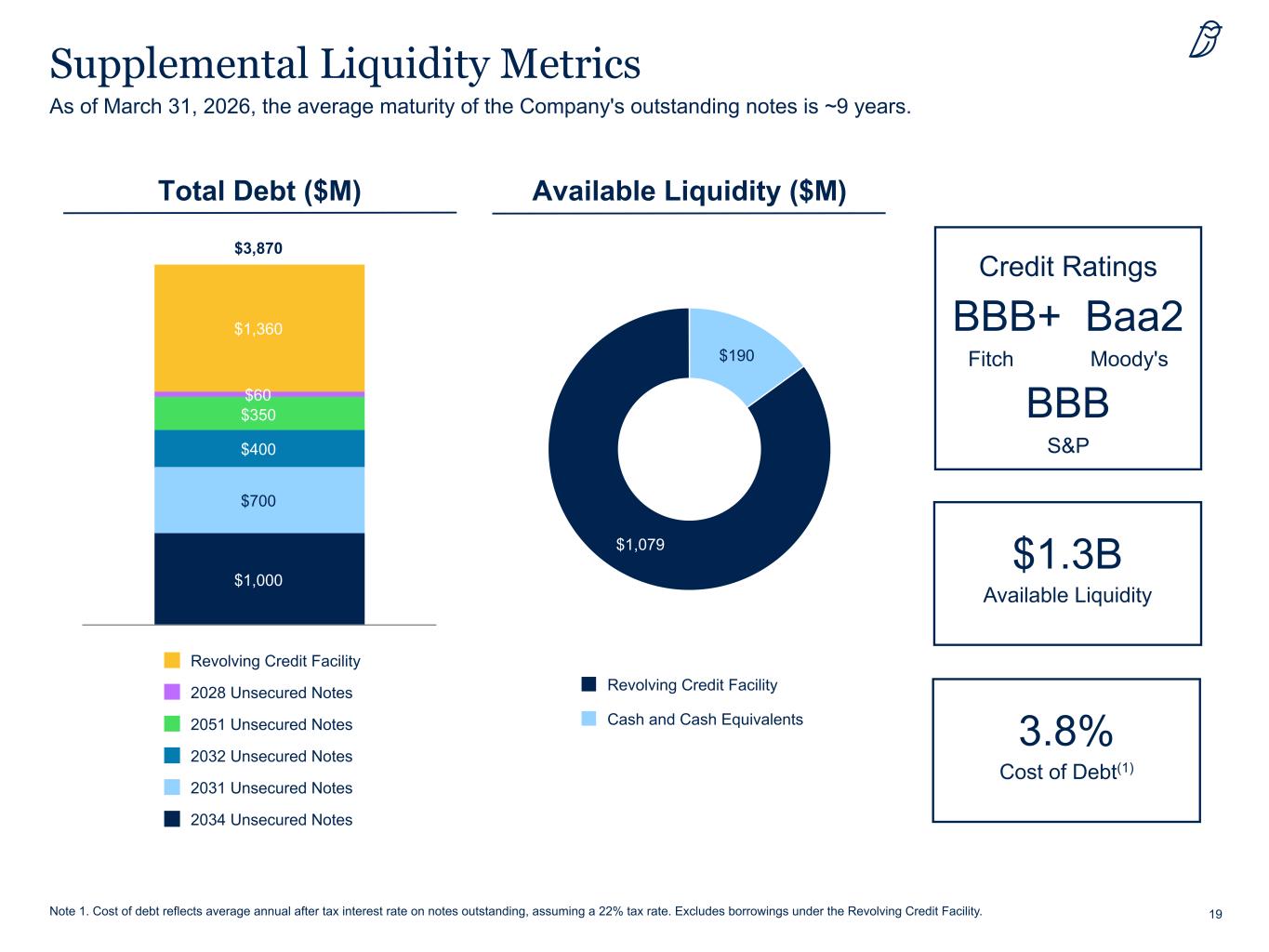
Of course. Thanks, Alex. I appreciate the two questions. So let's hit both. So on the balance sheet, 1Q always steps up, and by 4Q it comes back down. You can look back to last year, same path, the year before that, same path. We make our TRA payment, we pay bonuses in 1Q, and then you'll see that come down each quarter as we get the 4Q back to where we started the previous 4Q. On the dividend, we're committed to paying the dividend of 92 cents for 2026. Our business is growing. You've heard a lot about that today and we're excited about that. So we expect our payout ratio is coming down naturally. It's going to take a couple steps as we talked about in the past. I touched on this last quarter to bring that payout ratio back to, you know, call it the 85% general target that we have over the next, let's say, course of the next few years. But we are focused on the payout ratio. We're committed to the dividends. Our business is growing. So we feel good about all those aspects. Appreciate the question, Alex. Thank you.
Operator
That is all the time we have for questions. I will turn the call to Mark Lipschultz for closing remarks.
Speaker 9
I had one last quick follow-up, which was there was a question on catch-up fees in the credit business. That was about $7 million for our Bose product. Over to you, Mark.
Thanks, Alan. Thank you all very much for the time. We appreciate the opportunity to really have a detailed, fact-driven conversation. We're always available. We're going to try to keep sharing as much as we can share, and we carry forward. We're quite optimistic overall about the forward path for the business and look forward to sharing that information with you as we go forward thanks so much have a great day this concludes today's conference call thank you for joining you may now disconnect