Operator
Hello, and welcome to the IAC Second Quarter 2025 Earnings Conference Call. Please note, this event is being recorded. I would now like to turn the conference over to Christopher Halpin, IAC's COO and CFO. Please go ahead.
Speaker 1
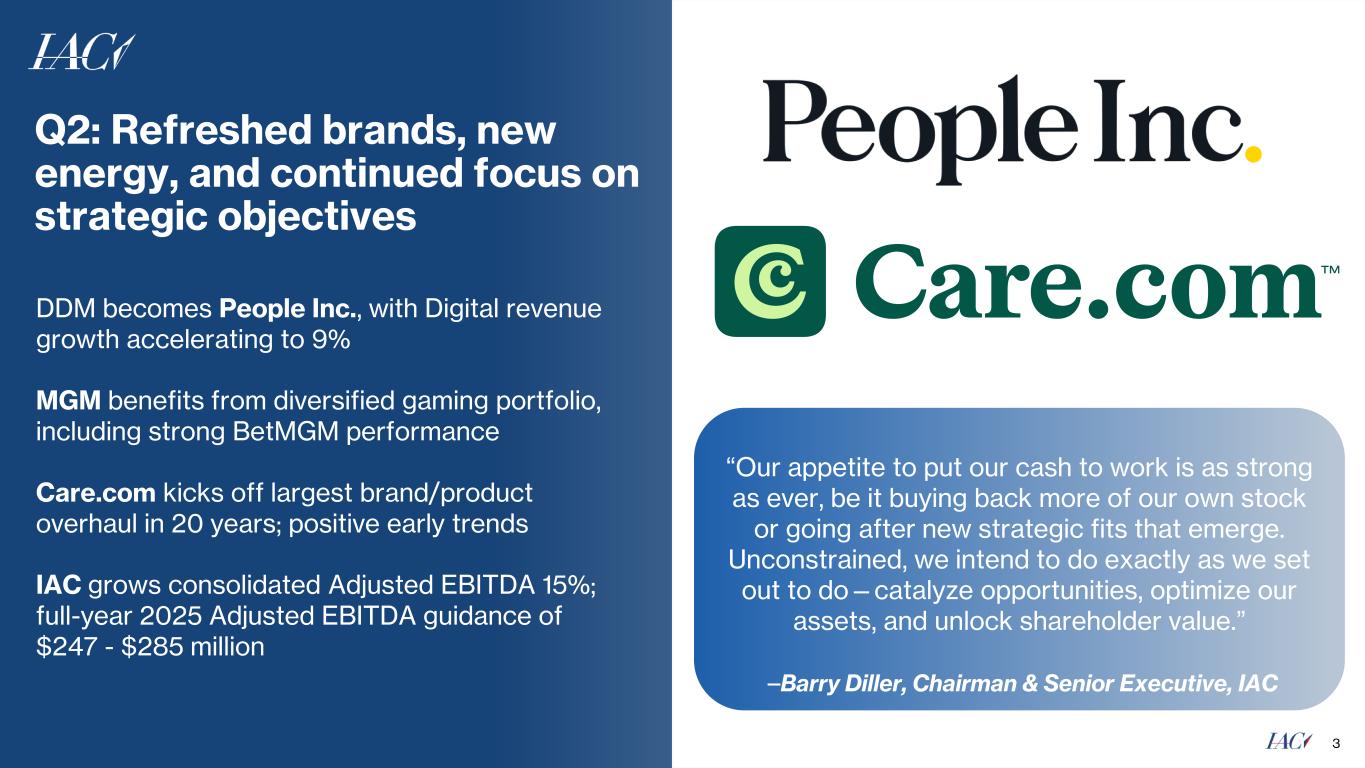
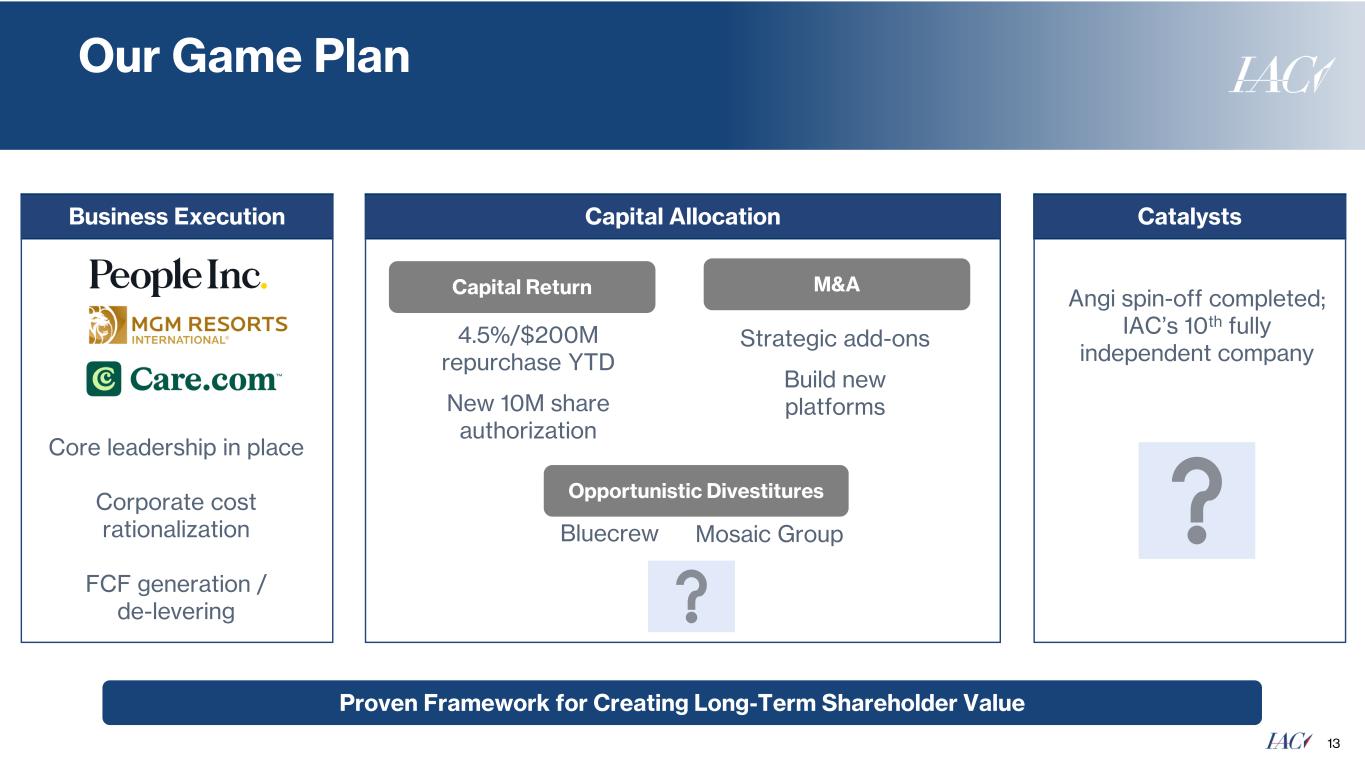
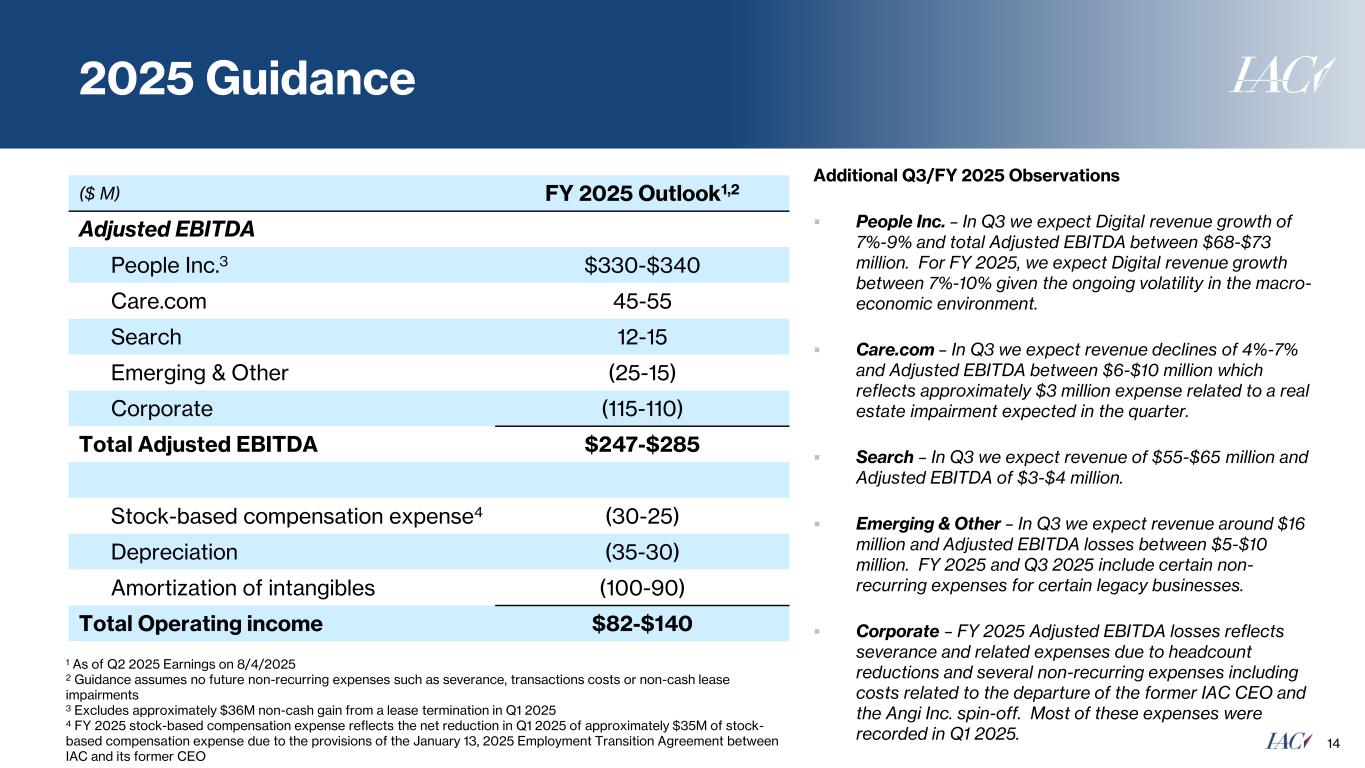
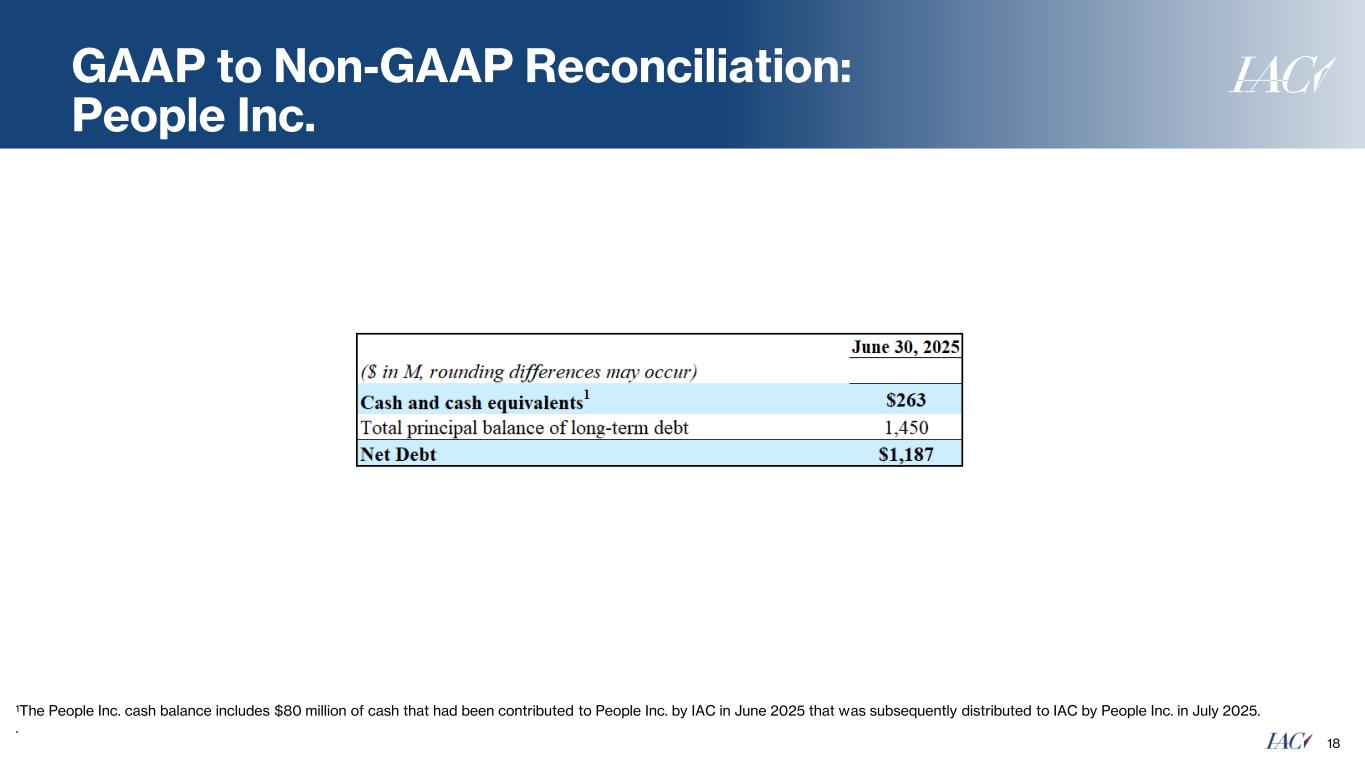
Thank you. Good morning, everyone. Christopher Halpin here, and welcome to the IAC Second Quarter Earnings Call. Joining me today is Neil Vogel, CEO of the newly rebranded People Inc. IAC has published a presentation on the Investor Relations section of our website today entitled Q2 Earnings Presentation. On this call, Neil and I will provide some introductory remarks referencing that presentation and then open it up to Q&A. Before we get to that, I'd like to remind you that during this presentation, we may make certain statements that are considered forward-looking under the federal securities laws. These forward-looking statements may include statements related to our outlook, strategy and future performance and are based on current expectations and on information currently available to us. Actual outcomes and results may differ materially from the future results expressed or implied in these statements due to a number of risks and uncertainties, including those contained in our most recent annual report on Form 10-K and in the subsequent reports we filed with the SEC. The information provided on this conference call should be considered in light of such risks. We'll also discuss certain non-GAAP measures, which, as a reminder, include adjusted EBITDA, which we'll refer to today as EBITDA for simplicity during the call. I'll also refer you to our earnings release, investor presentations, our public filings with the SEC and, again, to the Investor Relations section of our website for all comparable GAAP measures and full reconciliations for all material non-GAAP measures. Now that we've covered that, let's turn to the presentation. On Page 3, IAC's businesses continue to seize momentum and make excellent progress against our goals in the second quarter of 2022. Dotdash Meredith rebranded as People Inc., a new name with a storied legacy, befitting a company where people, that is, human experts, create the premium content that people, our consumers and readers, seek for entertainment and information. We truly believe People Inc. achieves that by providing superior content across superior brands using superior technology. This quarter, despite the volatility and uncertainty in both the macro environment and open web, we're happy to report that People Inc. returned to core sessions growth and achieved 9% Digital revenue growth, accelerating from 7% in Q1 and at the high end of our guidance. We were also thrilled to complete a $1.4 billion refinancing of our debt at People Inc. in June, replacing the original acquisition capital structure with new bank debt and bonds at attractive pricing and 5- to 7-year maturities. Neil will go into more depth on People Inc. shortly. MGM reported second quarter earnings last week and demonstrated the power of its diversified gaming portfolio, with strength in digital, the regionals and Macau offsetting softness in Las Vegas. We're particularly excited about BetMGM's strong results, 36% net revenue growth in the second quarter and increased guidance for the full year to at least $2.7 billion of revenue and at least $150 million of EBITDA. The digital gaming opportunity at MGM has always been a core pillar of our thesis, and it is great to see those assets performing so well. Our second largest wholly owned business, Care.com, revitalized its product and brand in June, a key step in its comprehensive plan to reenergize growth in its consumer business. Care also unveiled a fresh new look and launched a new marketing campaign across its offerings. As we will discuss shortly, while it is early days, we are seeing promising signs across engagement metrics. Finally, across consolidated IAC, adjusted EBITDA increased 15% in the quarter, and we are guiding to $247 million to $285 million of EBITDA for the full year. On the capital allocation front, it was a quiet quarter following the completion of the previously announced $200 million in buybacks. As our Chairman, Barry Diller, noted in the remarks included in our earnings release, we are actively pursuing M&A opportunities and hoping some visibility in the economic and trade outlook will lead to more price discovery and deal activity in the back half of the year. As always, we continue to analyze further buybacks of our shares with our corporate cash balance while also exploring strategic divestitures of noncore businesses to bolster that cash balance. Now let's go deeper into our two largest wholly owned businesses. With that, I'll turn it over to Neil.
Speaker 2
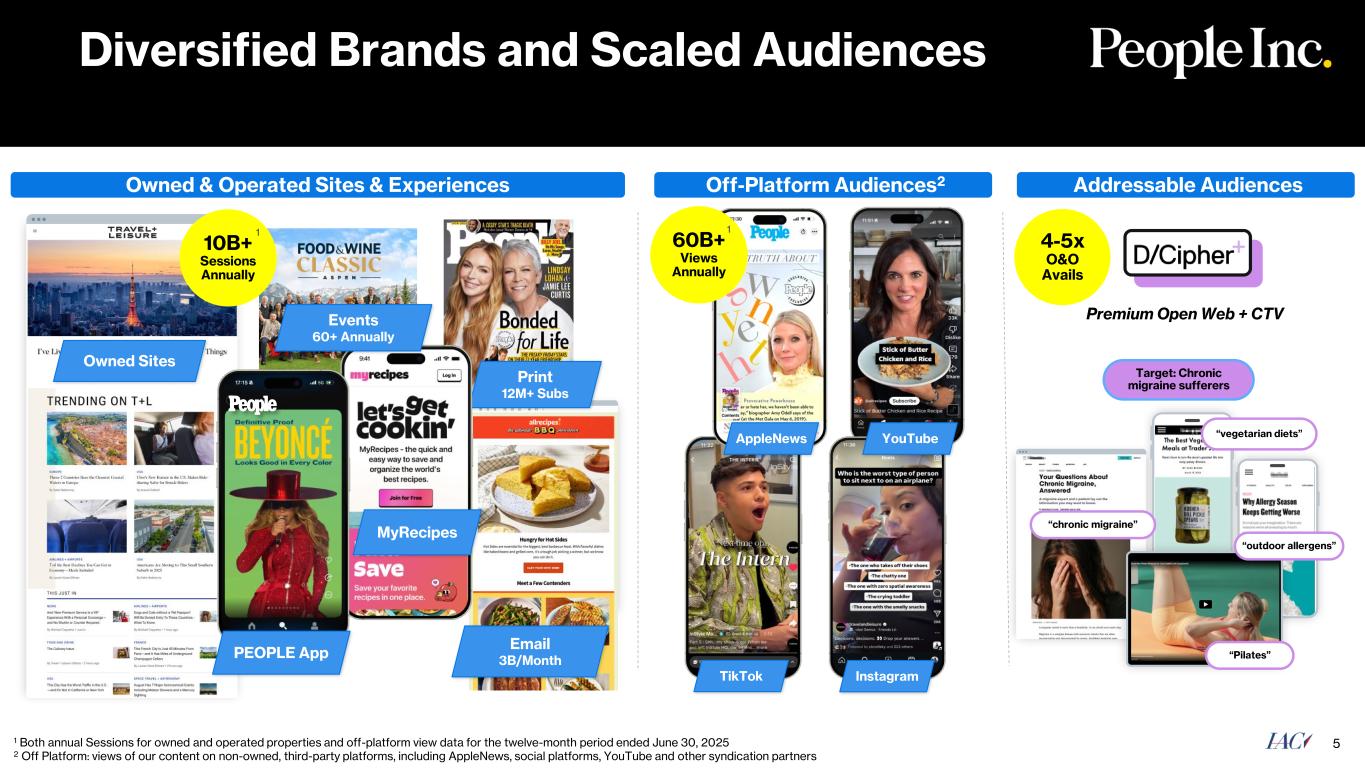
Thanks, everyone. We recently changed our name from Dotdash Meredith to People Inc., which marks a timely opportunity for us to reassess our position in the market and reflect on our strategies. We're especially enthusiastic about the People Inc. name because Dotdash Meredith was primarily a convenient choice for us, representing a merger of two companies. While our chairman, Mr. Diller, expressed strong dislike for the previous name, I was willing to keep it until we found a better option. Ultimately, the name People Inc. encapsulates our brand's emotion, aspiration, and simplicity. It has always been our main brand, similar to how great companies like Coca-Cola operate. Rather than introducing ourselves as Dotdash Meredith and then mentioning People, we can now simply identify as People. The significance of the name People also resonates with our mission to create content made by people for people. We recognize the importance of AI and other market dynamics but prioritize the experiences of our experts, writers, and product testers, many of whom have a century-old legacy in their respective fields. The name People Inc. is fitting and even holds a nod to the former Time Inc., hinting at our connection to renowned media brands. Moving to our business strategy, we believe we have two key elements that will drive our future growth: a robust portfolio of iconic brands and a large number of engaged audiences. Historically, our content across various categories like food, home, tech, and travel was primarily distributed through print. However, as the industry transitioned online, we capitalized on that shift and established a strong presence through owned-and-operated websites. Initially, our business relied heavily on traffic from Google, which provided substantial audience reach. However, in recent years, we've observed a decline in traffic directed toward publishers like us as Google adjusted its strategy. Understanding the need for adaptation, we've focused on diversifying our audience sources and preparing for a future with reduced reliance on Google. In light of the emergence of AI technologies, we recognize the need to establish direct connections with our audiences and advertisers. Over the past few years, we have built a variety of audience segments, including owned audiences, off-platform audiences, and targeted audiences. This focus on optimizing our audience reach has allowed us to grow our overall sessions and develop new revenue streams. Now, a significant portion of our digital revenue comes from sources outside of traditional sessions. While we've successfully transitioned from a print-based model to a digital-first approach, our revenue has continued to grow steadily. We believe that our diverse assets, skilled teams, and strong brands position us well to achieve our financial objectives moving forward.
Speaker 1
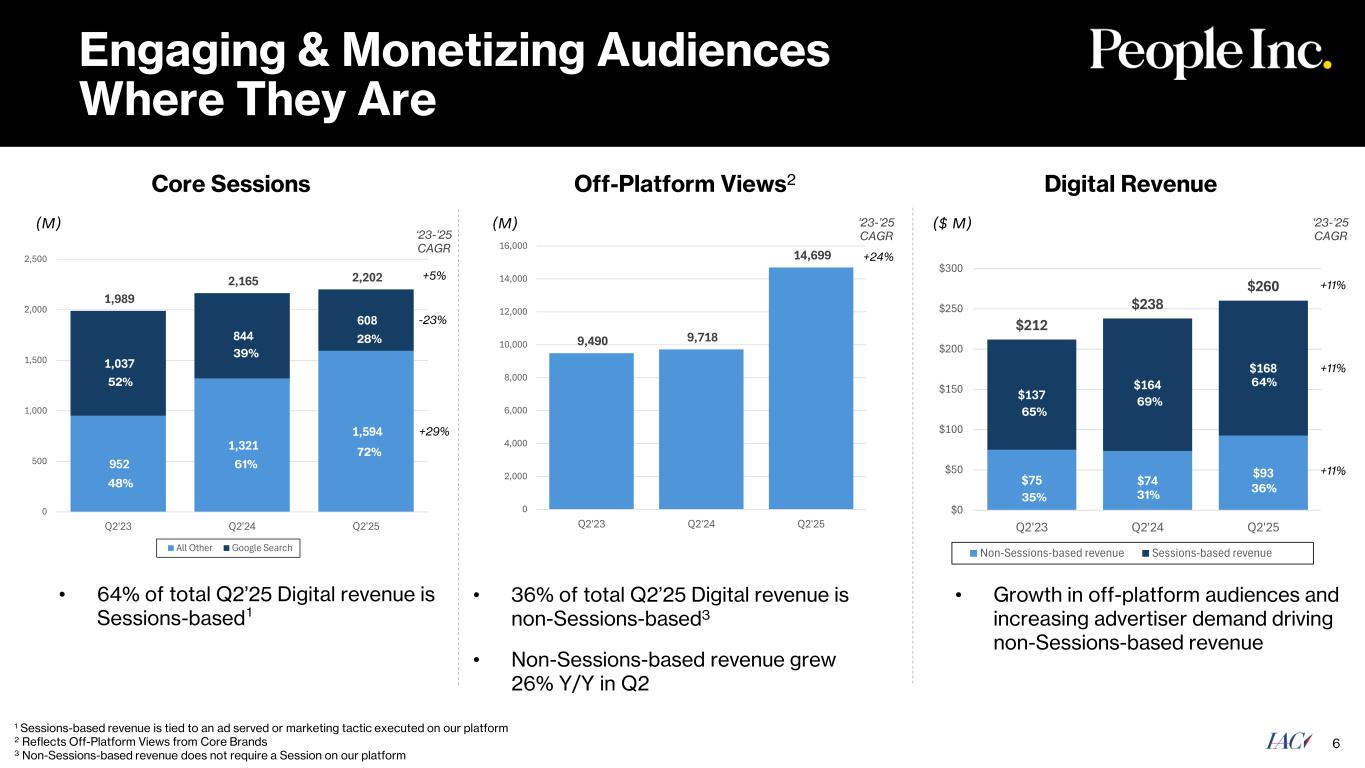
To elaborate on a couple of points, the decline in core sessions, which dropped from $1 billion to $600 million, is partly due to AI and the various changes made to the search page over time, including a significant emphasis on Reddit and increased clutter on the search page. As Neil mentioned, the percentage of our traffic from Google Search has fallen from 52% to 28%. However, thanks to the proactive efforts of Neil and the team at People Inc., we have seen a 29% compound annual growth rate in our non-Google Search sessions and believe we can continue to bridge that gap. Additionally, as Neil pointed out, those sessions account for 64% of our Digital revenue, which is an important factor to consider. When discussing our remaining exposure to Google Search, we are referring to about 28% of that 64%. Off-platform views contribute to our non-sessions-based revenue, which constitutes 36% of our total revenue, along with other sources like licensing and performance marketing. We wanted to highlight in this slide, in relation to the broader AI discussion, the significant drop in Google Search influence and the diversification of our Digital revenues, as well as the various growth opportunities we have moving forward.
Speaker 2
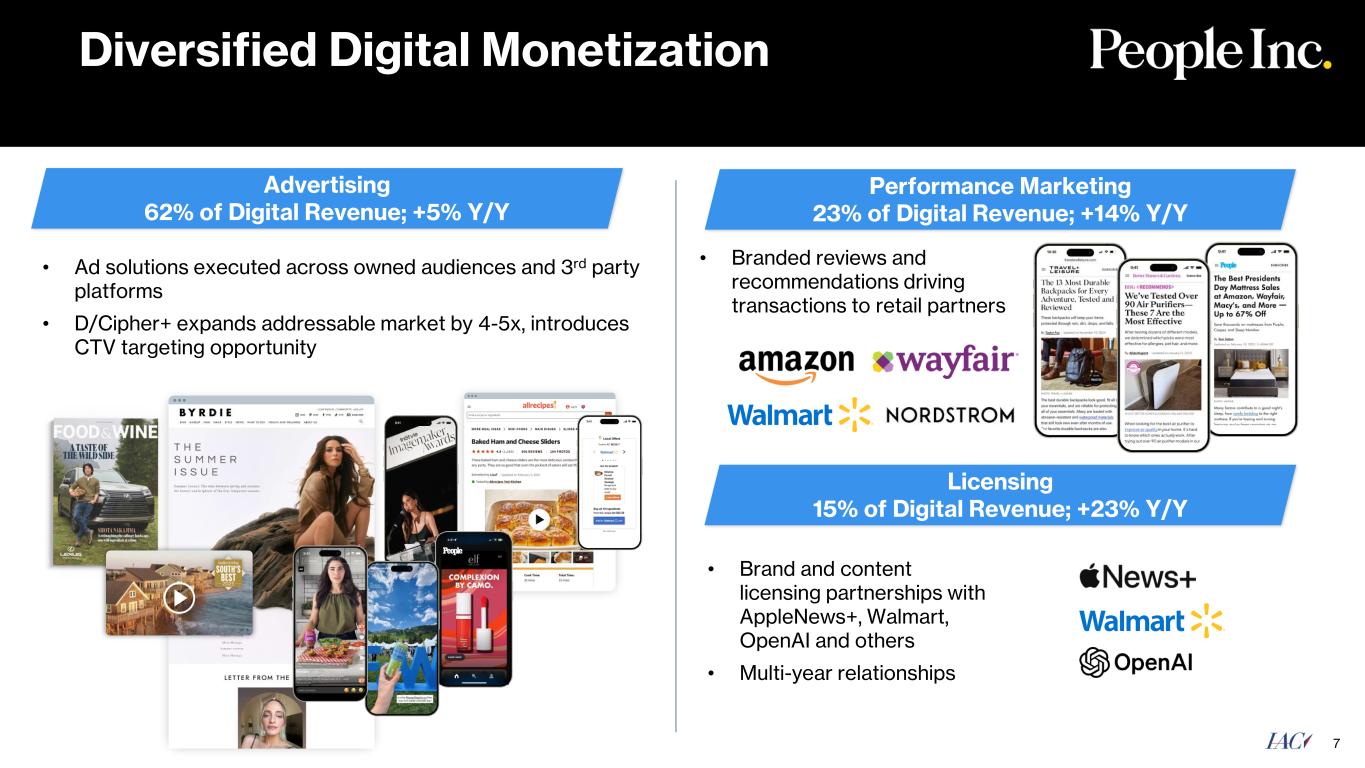
And we'll discuss that further. This leads us nicely to the next slide. Our three main sources of revenue are advertising, performance marketing which represents e-commerce, and licensing. All of these revenue streams are experiencing growth. Our brands are very resilient, and our execution is strong. We are optimistic about our advertising segment. We have high hopes for our D/Cipher+ business, which we briefly mentioned, as it enables us to utilize our proprietary data to assist people in purchasing across the open web. We see substantial opportunities in connected TV as well. In terms of performance marketing and e-commerce, we collaborate closely with the largest online retailers, and in many instances, we serve as their principal referral partner, leading to a very vigorous business. Even our licensing segment, which has just started to reflect the OpenAI deal we established last year, shows considerable strength, particularly through platforms like Apple News and Walmart. This underscores the robustness of our brands. Chris, would you like to continue with the next slide?
Speaker 1
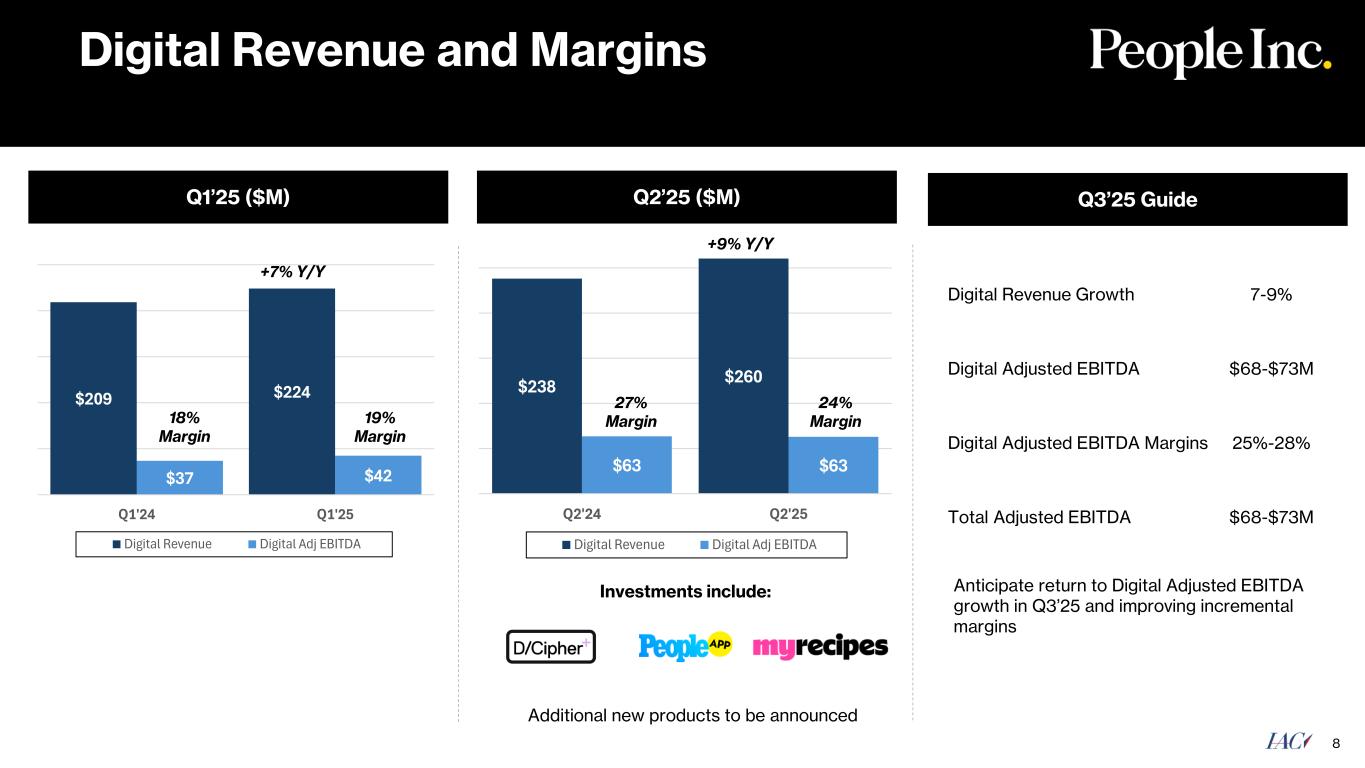
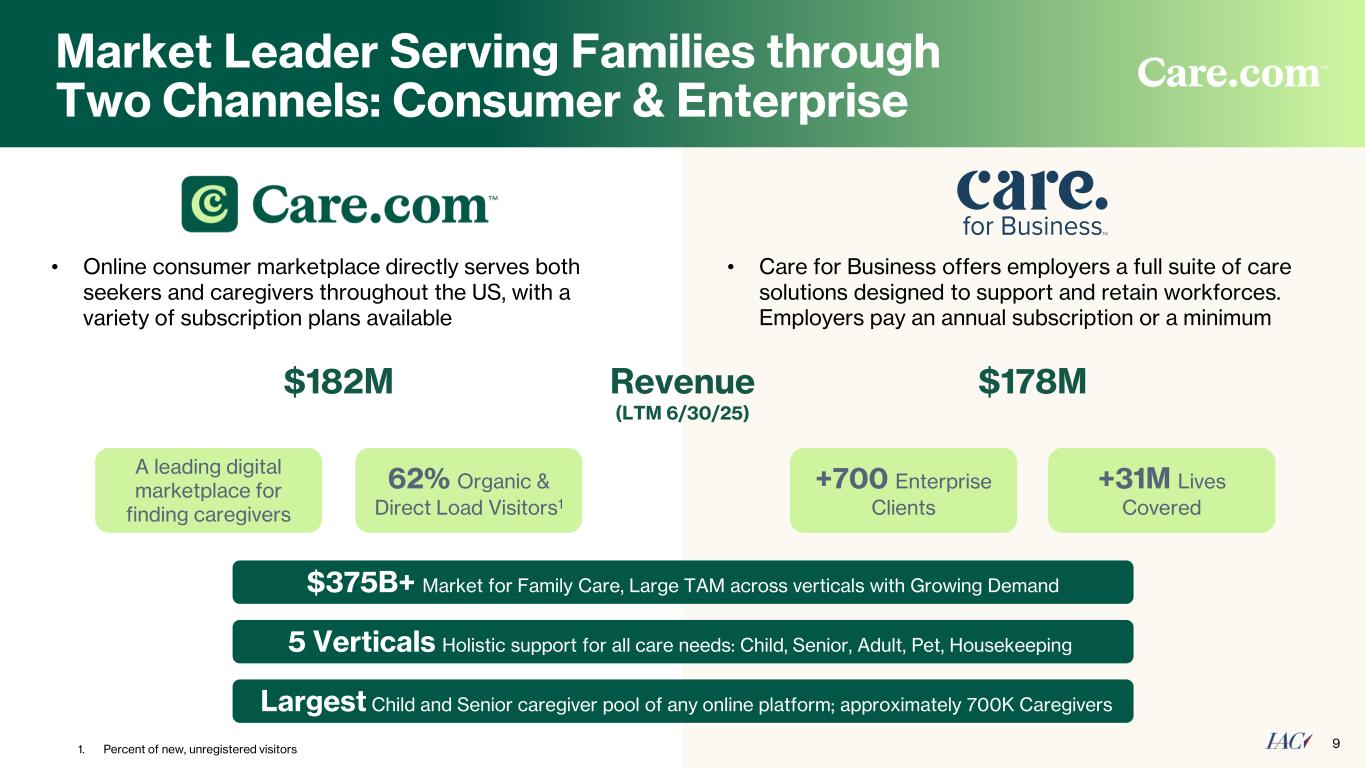
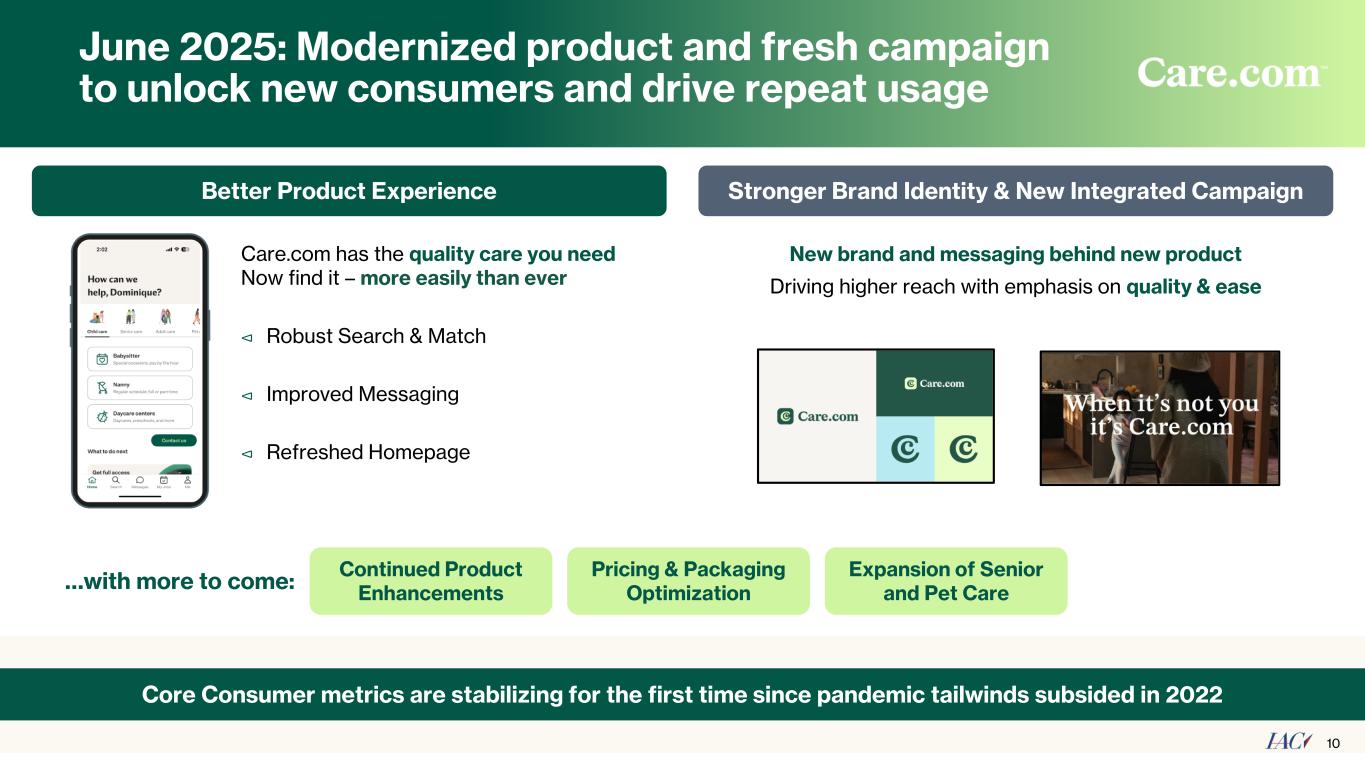
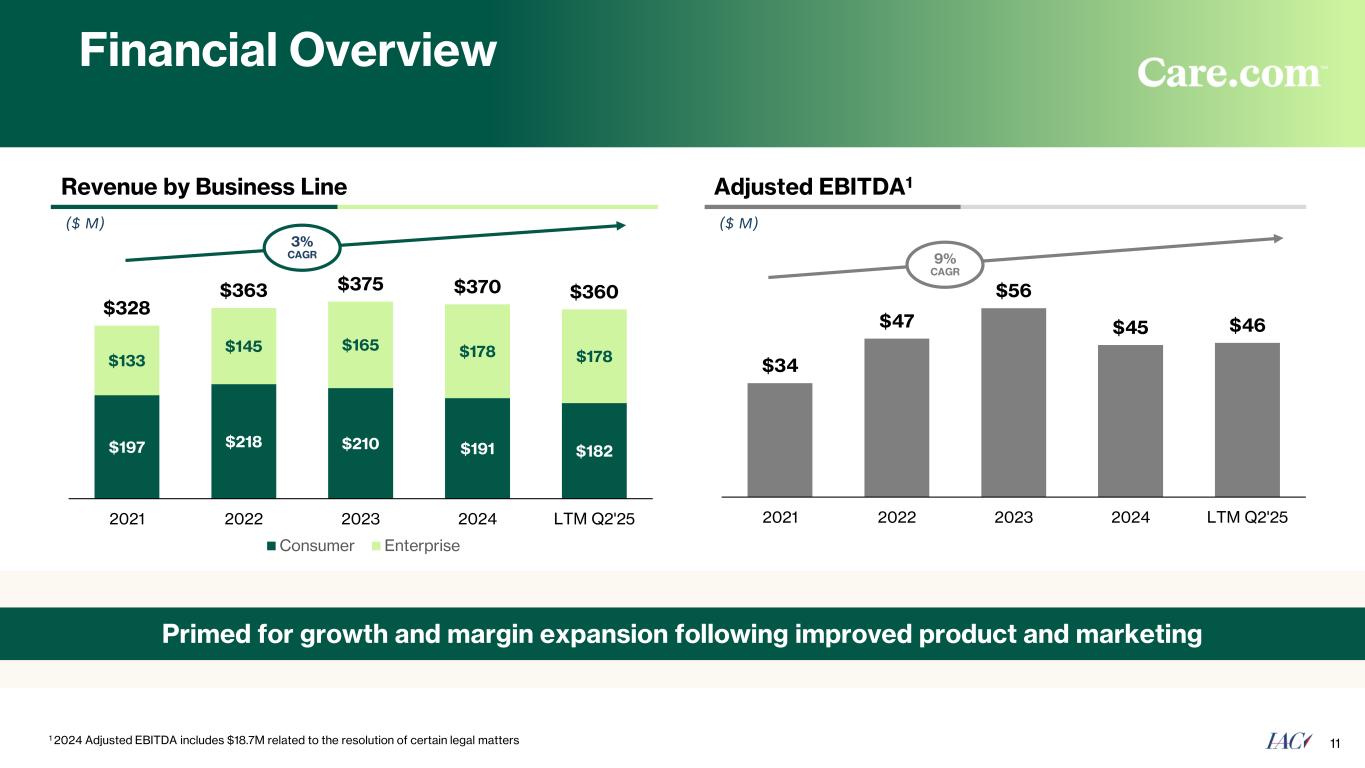
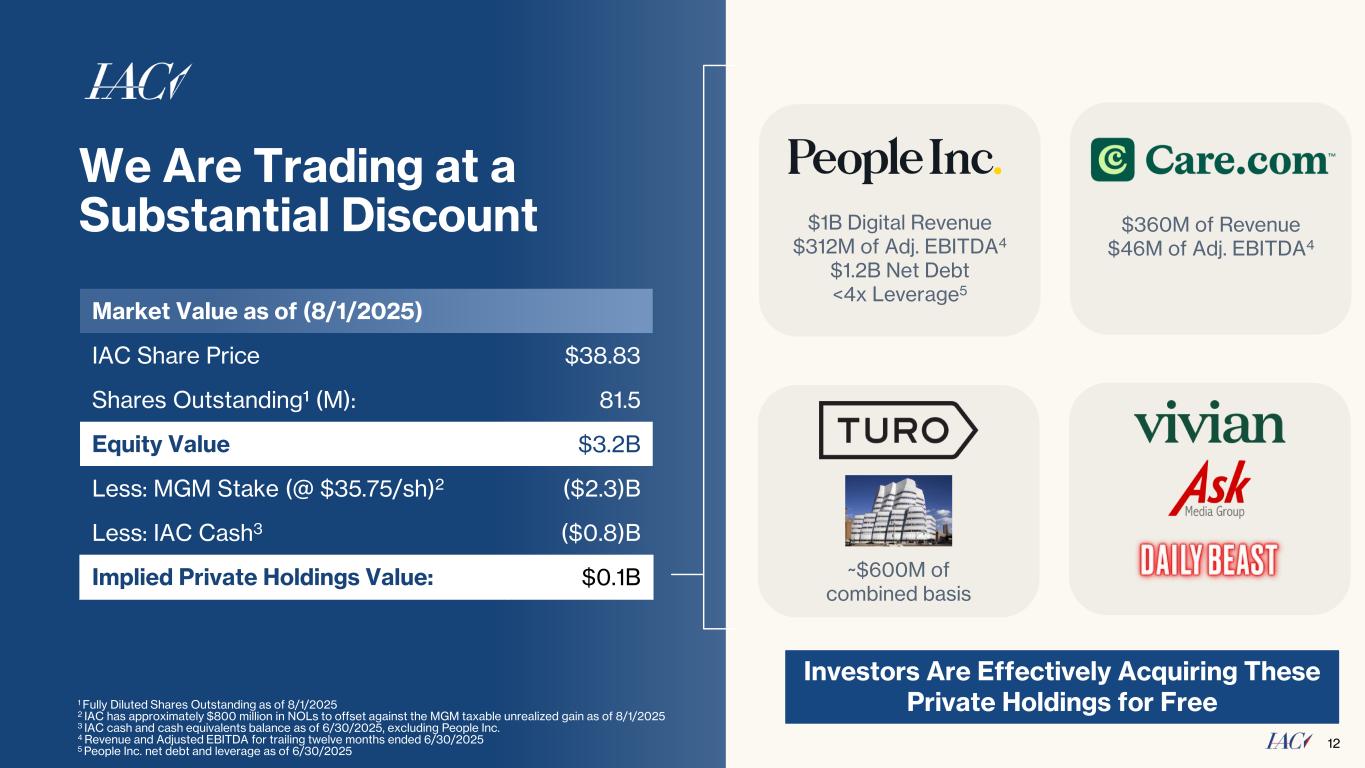
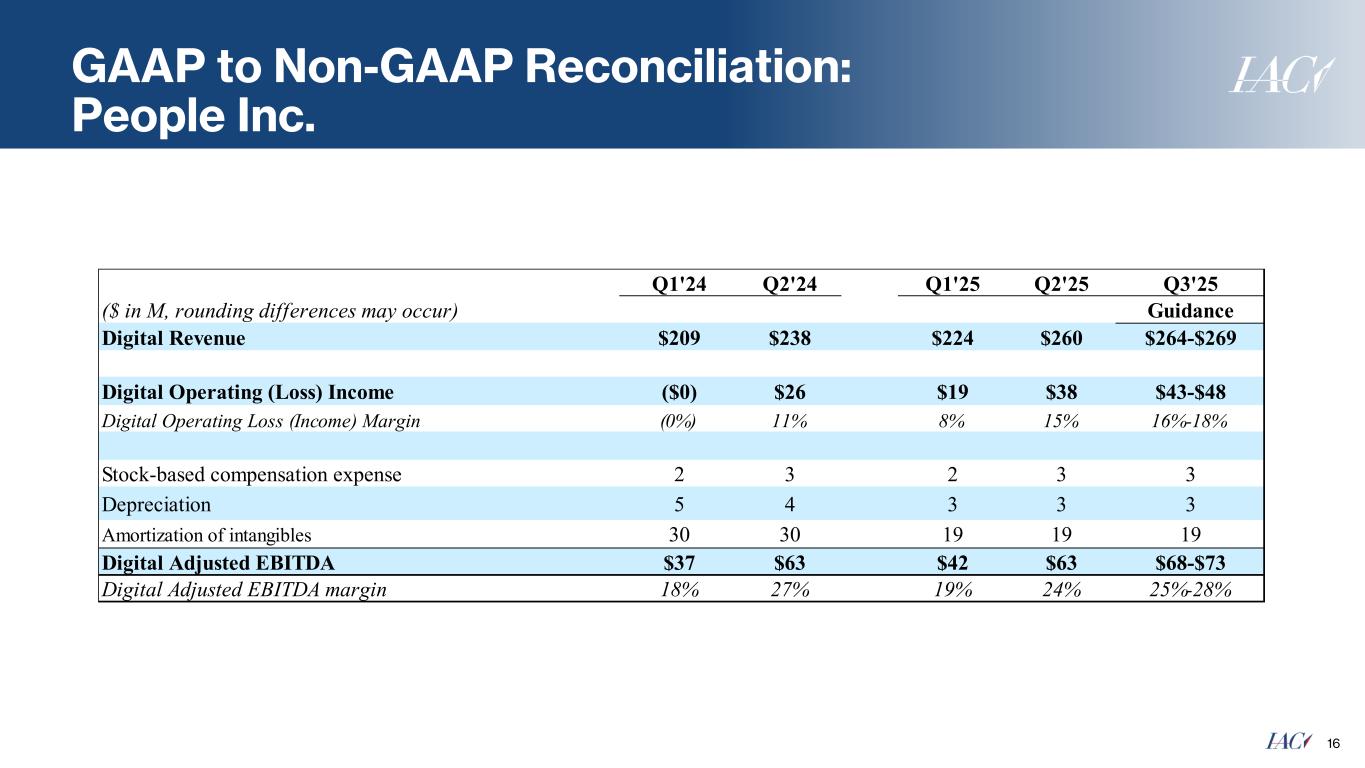
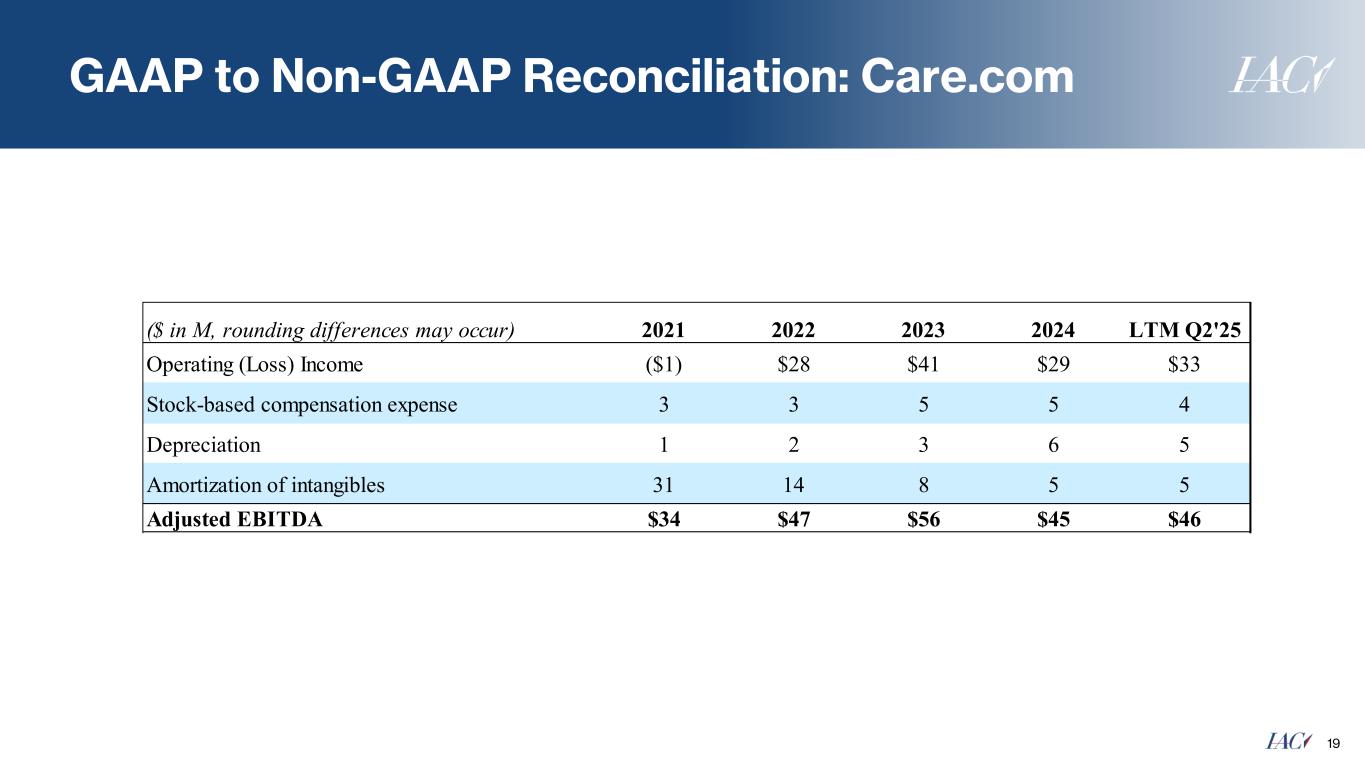
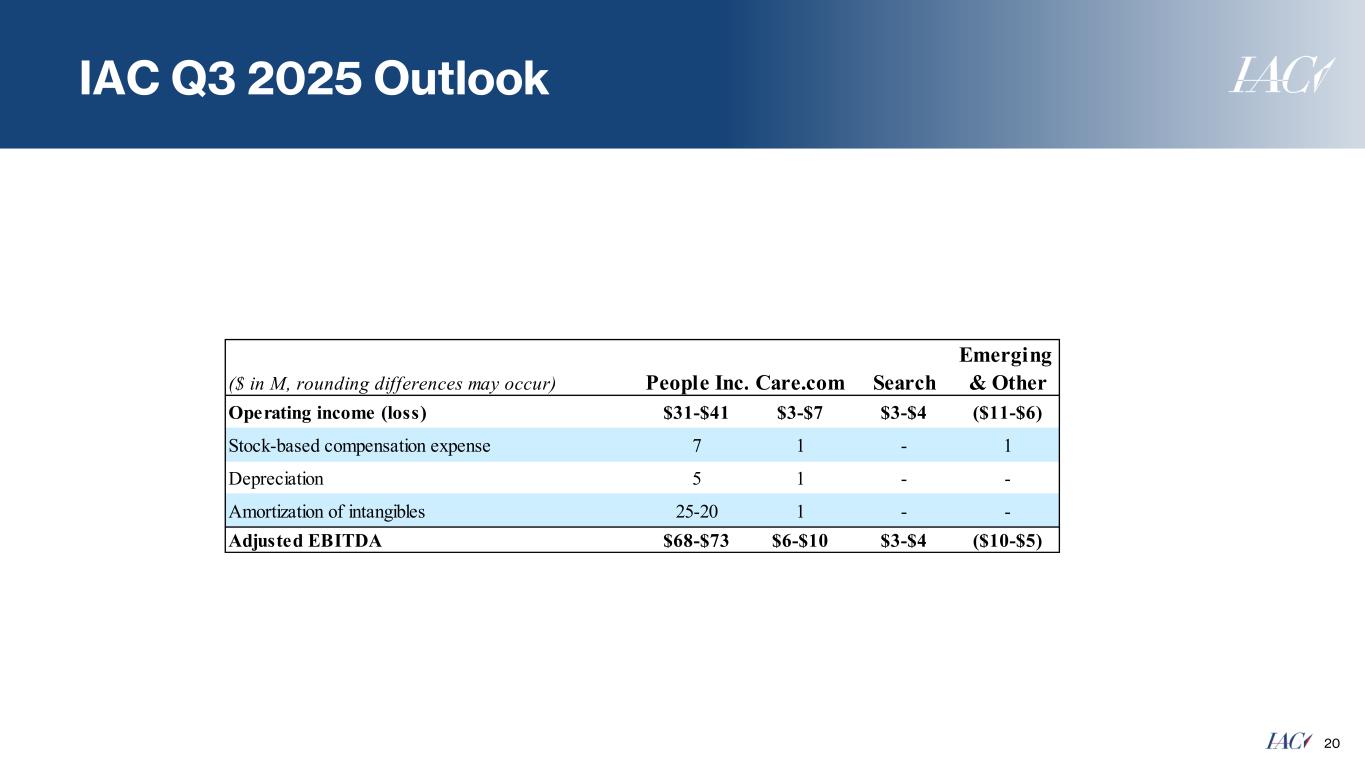
Yes, turning to Page 8. Thanks, Neil. On the next page, one topic we wanted to cover today is our Digital margins from this past quarter. People Inc.'s Digital margins have been increasing steadily over the past few years alongside higher revenue. We reached just under 29% in fiscal year '24. On a quarterly basis, EBITDA margins improved throughout the year, with the lowest in the first quarter and the highest in the fourth quarter due to revenue scale. As we grew Digital revenue, we anticipated incremental increases in Digital margin. This is evident in Q1, where margins increased by about 100 basis points year-over-year with a 7% revenue growth. However, in Q2, Digital EBITDA remained flat year-over-year at $63 million, while revenues grew by 9%, resulting in a 24% adjusted EBITDA margin. The increase in costs, highlighted at the bottom of Page 8, that impacted those margins primarily originated from the strategic investments Neil mentioned regarding new products, technology, and channels, all aimed at positioning the business for future growth. We are confident that we will see returns on those investments, including in the current third quarter. We expect adjusted EBITDA to increase year-over-year, as indicated in the guidance on the right, with projected Q3 Digital revenue growth of 7% to 9%. We forecast margins in the 25% to 28% range, with a return to significant margin scaling in the fourth quarter. Now, let's move on to Care.com on the next page, which remains the largest online marketplace connecting families and individuals with household caregivers for children, seniors, adults, pets, and housekeeping. The company provides its services through two channels: consumer and enterprise. The left side of the page summarizes the direct-to-consumer segment, where care seekers go online, sign up, post jobs and are matched with care providers. Despite some consumer revenue erosion over the past couple of years, Care remains the clear leader in the online space, holding its #1 brand position, with 62% of traffic coming from organic sources, primarily direct navigation. On the right side of the page is our enterprise business, where employers contract with Care.com to provide backup care days and employee access to care services as a benefit to their employees. Today, Care has relationships with over 700 employers covering 31 million employees. Financially, revenue is basically evenly split between the two segments, with both offerings utilizing Care.com's database of approximately 700,000 caregivers. The two businesses, though, have seen a clear divergence in performance recently, with enterprise growing solidly as more employers provide backup care as a benefit to their employees and the employees increasingly utilizing the product. But as discussed previously, consumer revenue has declined from pandemic highs since 2022. That's due to a combination of core deficiencies in the product experience, suboptimal marketing and some macro headwinds. Turning the page. That brings us to the Care.com relaunch in June. The outcome of more than a year of work, the new Care experience boasts fine-tuned search capabilities and enhanced messaging and matching, offering care seekers a smoother experience as they hone in on the perfect caregiver for their essential job. In many ways, Care.com's biggest challenge has not been liquidity on either side of their marketplace but instead optimizing the process for families and providers to match, connect and communicate on the platform. We feel good about where the product is today and where it is going. On the right side of the page, Care has held off on marketing over the last few quarters until the product was ready for prime time. In parallel with the relaunch, Care.com has rebooted its visual identity with a new brand and integrated marketing campaign, highlighting the breadth, quality and ease of its offerings. Product and marketing have been a challenge over the last few years. Now they are working in concert to propel the business forward. In the light green, we highlight the further areas for optimization as Care.com continues to refine its product, improve pricing and packaging and push more aggressively into senior care and pet care, two attractive growth areas that we're ready to aggressively pursue now that the building blocks are in place. On the metrics front, it's still early, but across June and July, we have seen core consumer metrics, direct navigation visits, sign-ups and subscriptions achieve stability and growth really for the first time since 2022. A lot more to do, but we are moving on the right path. Closing out on Care, Page 11 summarizes the financial picture, a major pandemic boost followed by growth in enterprise and softness in consumer over the last few years. Profitability has remained solid, with $46 million in adjusted EBITDA and minimal CapEx. The key for Care is to reignite revenue and generate the incremental margins we believe are possible. Turning to Page 12, we would reiterate that our discount remains pronounced in our mind. While MGM share price has risen since last quarter, the implied value of our private holdings on the right remains negligible. As we've said before, we will continue to drive IAC forward to unlock value from those holdings, drive simplification and shrink that discount as laid out in the strategy overview on the following slide. Execution, capital allocation and catalysts, these are the pillars of our focus and how we believe we will reduce that discount. Turning to guidance. We have tightened the range of IAC consolidated adjusted EBITDA for the year to $247 million to $285 million, with the midpoint relatively unchanged versus prior guidance. At People Inc., we have reiterated full year Digital revenue guidance at 7% to 10% and brought down the high end of full year adjusted EBITDA guidance from $350 million to $340 million, while maintaining the bottom end at $330 million. This reflects our confidence in the revenue outlook across advertising, performance marketing and licensing, but with increased spend and investments in new products like the D/Cipher+, MyRecipes and the People app, as well as more than $3 million in higher health care costs hitting us in the back half of the year. For Care, we maintain guidance at $45 million to $55 million. And at Search, we brought up the low end of it. Finally, on Corporate, we continue to make progress on lowering run rate costs and have reduced the range to $110 million to $115 million, which includes approximately $20 million of one-time costs. With that, let's go to Q&A.
Operator
Today's first question comes from John Blackledge with TD Cowen.
Speaker 3
So really helpful what you included in the earnings deck on sources of traffic and how they build into revenue. Can you just go into greater depth on how you see the trajectory of sessions, including Google Search and off-platform views and kind of how that translates into revenue and margin? And then second question, can you just walk through puts and takes in the 2Q People Inc. Digital revenue? And how do you think about Digital revenue growth and Digital margins in the third quarter?
Speaker 2
I will start with sessions, and perhaps Chris will address the margin aspect later. I expect O&O sessions to slightly decline in the third quarter due to a challenging comparison. However, looking ahead, I think it's reasonable to anticipate them remaining flat to slightly increasing. We are actively investing and working hard to maintain O&O sessions, and our results reflect that effort. For off-platform, I foresee continued growth, likely along the same trajectory we are currently experiencing. As the figures become larger, the growth percentages will decrease, but you will definitely see substantial growth in this area, which is a significant investment for us. I will let Chris take over the margin details.
Speaker 1
Yes. We believe that both on-platform and off-platform activities will generate attractive EBITDA margins. This capability is supported by our technology and offerings. Last year, we achieved a consolidated Digital adjusted EBITDA margin of 29%. We anticipate that non-session revenues will slightly enhance that margin, while session revenues will have a more significant positive impact on an incremental basis. A common question is whether off-platform session and non-session revenue is generated at low margins, but that is not the case. We are confident in the margins we can achieve and expect to scale beyond the 29% adjusted EBITDA margin, which includes D/Cipher+ and off-platform views from third parties.
Speaker 2
And we'll address the next question, which is the exposure to the off-platform views. We have really good diversity across all those sessions. It comes from a whole host of different places and different sources at different points in their life cycle. So we feel pretty good about when you look at the diversity of what's now driving core sessions and the diversity in off-platform sessions, I think the diversity is a real strength for us.
Speaker 1
Your second question, John, was about revenue for Q2 and Q3. In Q2, digital advertising grew by 5%, driven by a 2% increase in core sessions and some improvements in monetization. We anticipated a challenging monetization quarter due to the disruptions related to tariffs and trade that we referenced last quarter. For those interested, our direct premium sales were strong, particularly in health, travel, and tech, which helped offset declines in CPG, food and beverages, and home categories. Programmatic pricing remained stable for much of the quarter but began to strengthen in June and has continued to do so. Currently, we are seeing around a 10% increase in pricing year-over-year. Last quarter, performance marketing was robust at 14%, and licensing also showed solid growth at 20%. This reflects real strength in Apple News. Neil and his team are doing an excellent job there, along with some positive performance from Walmart and OpenAI. Overall, we are seeing strength from our diversified digital revenue streams that Neil mentioned earlier. For the third quarter, we are facing tougher comparisons on traffic from last year's Olympics and entertainment events, so we expect core sessions to be slightly lower. However, off-platform growth and improved monetization should still drive advertising revenue growth. Performance marketing remains excellent, especially if you want insights into consumer behavior.
Speaker 2
Consumer is very strong.
Speaker 1
Prime Day was great for us in July. And licensing should continue to grow, led by Apple News, Walmart and other areas. All in all, we're guiding the 7% to 9% Digital revenue growth in Q3 and reaffirming 7% to 10% for the year. And then on margins, as we discussed previously, we're guiding to 25% to 28% Digital adjusted EBITDA margins in Q3.
Operator
Yes, that comes from Eric Sheridan with Goldman Sachs.
Speaker 4
Maybe following up on People first. I know in the prepared remarks, you made a couple of statements about the decisions, but I just want to go a little bit deeper in why this is the right brand and why the team and you landed on this to go forward and how you plan on sort of positioning the brand in the broader digital media ecosystem looking out over the next couple of years. And the second question would be, you led with the quote from Barry in terms of the press release that talked a little bit about the deployment of capital and the current state. I wanted to better understand what you look at as the M&A landscape you're facing right now. So the alternative of returning capital to shareholders will be deploying it into external opportunities. And maybe a quick update about how you see that landscape right now.
Speaker 2
I'll start with the People aspect. Our objective for People Inc. is to achieve platform scale while enjoying the benefits of premium branded publisher environments. We needed a name that would convey this vision, and the name Dotdash Meredith simply combined Dotdash and Meredith. Neither name had a strong presence in the market, but People does; it resonates with everyone. Whenever we explained what we do, it was always the first name that came to mind. We appreciate that it is straightforward and conveys our essence—people creating content for people. The name embodies energy, ambition, and simplicity. You could make jokes about it; Dotdash Meredith might sound like an oil company, while People Inc. sounds like a media company. Our ultimate goal is to achieve platform-level scale with premium branded performance and the benefits of safe environments, both online and offline, which requires a name that reflects that ambition. We want to be mentioned among great media companies like Meta, Comcast, and Google. The response from our clients, advertisers, and especially our employees has been overwhelmingly positive and energizing. As Mr. Diller mentioned, it fits well and is easy to relate to. If I have any regret, it’s that we didn’t make this change sooner. I might have been a bit reluctant, but we are very pleased with the outcome.
Speaker 1
Thanks, Eric. We are actively working on M&A opportunities, considering both small and large options through our existing businesses, especially People Inc., as well as new platforms. We aim to be creative, think outside the box, and identify assets where we have a unique perspective or advantage. We are committed to pursuing acquisition opportunities through People Inc. to enhance its leading brands and technology. As we make progress, we see more opportunities that align with our strengths. This is a critical focus for us. In terms of new platforms, we are assessing both public and private opportunities, including platform builds and carve-outs. Our investment strategy, as discussed in the last call, can be categorized into two main areas: quality-defensible businesses, particularly those resistant to AI disruption and platform risks, and experiential businesses that cannot be easily disintermediated, such as digital interactive sectors like gaming. Additionally, we are looking for AI applications in industries we are familiar with. With the rise of agentic AI, we see potential strategies across various sectors where we have experience. We haven't yet secured the right opportunities, but we are diligently working towards that goal. We hope that the overall market conditions will facilitate better price discovery and alignment between buyers and sellers.
Operator
That comes from Cory Carpenter with JPMorgan.
Speaker 5
This is Danny Pfeiffer on for Cory. For the first question, can you comment on the current penetration of Google AI Overviews? And then for the second, is there any further color you could provide on the pause in share repurchases in 2Q after the disclosed amount in April?
Speaker 2
Certainly, regarding the AI Overviews, we previously mentioned that last quarter, about 35% of our searches were affected by this. That figure has quickly increased, and it's now over half of the searches where our content is visible, typically around 50% to 55%. While this does impact our click-through rate, it drives our current strategies and investments in our brands. Initiatives like the People app and MyRecipes are part of our ongoing efforts to engage directly with our audience and advertisers. Despite these challenges, we are maintaining steady session numbers and seeing slight growth. We operate on the premise that our reliance on Google search could diminish significantly, although we understand that it won't actually go to zero. This mindset guides our investments and helps us navigate the evolving media landscape and audience trends. Having been in media for a long time, we recognize that change is constant, and we've dealt with disruptions from Google before. While the solutions may vary, the situation feels familiar.
Speaker 1
I want to mention that we've come across research estimating a decline in click-through rates. Some reports, like one from Pew, suggest a significant drop. However, our observations indicate that these findings might exaggerate the decline for a premium publisher such as People Inc. There are many searches that have resulted in zero clicks for years and haven't driven referral traffic from Google, which haven't impacted our traffic at People Inc. I believe it's essential to conduct these studies accurately and account for what searches historically produced SEO traffic for us, along with any changes in that area. While there is a decline, it isn't as substantial as the reports suggest.
Speaker 2
It's almost like you have to look at it; it's like the marginal step-down.
Speaker 1
That's the key element there. Google Search accounts for 28% of our traffic, which means it's 55% of that 28%. In terms of our share repurchases, we signaled some of this last quarter, announcing that we completed $200 million in buybacks. We indicated our focus on M&A opportunities while continuing to monitor our stock price. We see value in our stock and recognize the chance to buy it at a discount. We are actively looking for ways to deploy capital and generate attractive returns for shareholders. Although our time horizon may be longer than some shareholders might prefer, we believe we can pursue both objectives simultaneously and will keep assessing both. Together with our Chairman, Barry Diller, and our leadership team, we are actively considering both strategies.
Operator
And that comes from Stephen Ju with UBS.
Speaker 6
Okay. Great. I think your Slide 9, talking about Care was pretty striking because I think your trailing 12-month revenue is $360 million. And that's material. That's not even 1% of the addressable market that you're calling out of $375 billion. So the optimist in me wants to think that given the white space ahead of you, you should be growing much faster. So what factors are under your control? And what needs to happen at the industry level? What needs to happen from a consumer perspective? And what needs to happen from an enterprise perspective?
Speaker 1
Thank you, Stephen. You pointed out an important aspect. Care.com is involved in a significant market with a vast addressable opportunity. Families face challenges when seeking care, whether it's in-home or out-of-home for children, seniors, adult care, and pets. This issue affects households nationally, particularly the "sandwich generation," which is caught between providing care for a growing number of seniors and their own children, and sometimes pets as well. This increasing demand puts pressure on the financial and mental resources of families trying to find and maintain care. Care.com needs to harness this expanding market by growing its number of care seekers and caregivers while improving the matching process to facilitate transactions on the platform. To accomplish this, the goal is to encourage consumers to shift from traditional offline methods to prioritizing our platform. We're focusing on enhancing the user experience to make it simpler. There's a strong tendency for repeat visits, especially from those who have successfully completed their first job. The easier we make it and the higher the match quality, the more likely families are to return for additional caregiving needs. Moreover, we must introduce new pricing and packaging that aligns with consumer needs throughout their journey. Given the range of services we offer—including child, senior, pet, daycare, in-home care, and emergency backup care—we must provide various pricing options, whether subscription-based or transactional, to cater to those visiting our platform. Currently, we receive 1.6 million non-registered monthly visits, yet we are only monetizing a small fraction of that audience. This indicates a significant number of users are not finding the optimal entry point or offering for them, which represents both an opportunity and a challenge for the business. Brad Wilson and his team are dedicated to creating more accessible entry points to the platform, such as limited-time offers and affordable packages, as well as upselling options that help new users become comfortable with the product using additional features like background checks. Lastly, we need to broaden our services beyond childcare, which is currently our primary focus. Senior care is a growing market, and the next generation will be more adept at using digital resources to arrange care for their parents. Additionally, pet care represents a significant area of expenditure, and we have the potential to grow our offerings by investing in this area to stimulate growth. In summary, Care.com has ample growth opportunities; the primary challenges have been related to our product and marketing strategies. We are optimistic about our direction and are committed to making daily progress in building the business.
Operator
That comes from Jason Helfstein with Oppenheimer.
Speaker 7
Two quick ones. Neil, how are you thinking about long-term revenue growth for People? And I guess, how do you get there from the 9% we're doing today? Just if you could kind of maybe bridge it to the aspirational goal. And then second, any thoughts on expanding licensing revenue beyond OpenAI as it relates to other LLM companies, who, I'm sure, are using your content?
Speaker 2
Yes. I'll do the long-term revenue. I think we've said and we believe a long-term goal for us is 10% revenue growth. And I think it's a combination of what we can do on our O&O properties. We've talked about where monetization continues to get better as well as all the growth we have off-platform and in events and all the other things we're doing. So 10% remains our North Star goal, which we feel pretty comfortable with in the long term. In terms of licensing revenue, it is something we are obviously very interested in. I think there's two things going on in the market to make more licensing deals happen. Sort of one of these two things is going to have to happen, and they're not necessarily mutually exclusive. One, you're going to have to see a change in tenor or change in approach from the LLM creators. And two, we're going to have to manufacture some more leverage for ourselves. And you've seen that in what we've done with Cloudflare where we're now blocking almost all AI crawlers other than OpenAI, where we have a deal, and Google where we can't block them because they use one crawler for search and AI, which is a different discussion. But what we've seen in the last few weeks, and again, nothing is imminent, but we have seen some of the larger players approach us and come back to sort of reignite some discussions around how these things would work. There's lots of different ideas and lots of different economic models. We are very, very active here. You've obviously heard Mr. Diller and me and Chris and pretty much all of us talk consistently about what we believe, and we believe that if people are going to train and use and display our content, we need to be properly compensated for that. And hopefully, we're heading in that direction, but we will see.
Operator
Yes, thank you, and that concludes our Q&A session. I would like to turn the floor back to Chris Halpin for any closing comments.
Speaker 1
Thank you. Thank you to all for being on and the questions, and have a great day.
Operator
The conference has now concluded. Thank you for attending today's presentation. You may now disconnect your lines.