Operator
Good day, and welcome to the IAC First Quarter 2026 Earnings Conference Call. Please note this event is being recorded. I would now like to turn the conference over to Mr. Christopher Halpin, COO and CFO. Please go ahead, sir.
Speaker 1
Thank you. Good morning, everyone. Christopher Halpin here, and welcome to the IAC First Quarter Earnings Call. Joining me today are Barry Diller, Chairman and Senior Executive of IAC; Neil Vogel, CEO of People Inc.; and Tim Quinn, CFO of People Inc. IAC has published a presentation on the Investor Relations section of our website today entitled Q1 Earnings Presentation as well as a letter from our Chairman published last week. On this call, Barry, Neil, Tim and I will provide some introductory remarks referencing that presentation and letter and then open it up to Q&A. Before we get to that, I'd like to remind you that during this presentation, we may make certain statements that are considered forward-looking under the federal securities laws. These forward-looking statements may include statements related to our outlook, strategy and future performance and are based on current expectations and on information currently available to us. Actual outcomes and results may differ materially from the future results expressed or implied in these statements due to a number of risks and uncertainties, including those contained in our most recent annual report on Form 10-K and in the subsequent reports we filed with the SEC. The information provided on this conference call should be considered in light of such risks. We'll also discuss certain non-GAAP measures, which, as a reminder, include adjusted EBITDA, which we'll refer to today as EBITDA for simplicity during the call. I'll also refer you to our earnings release, investor presentations, our public filings with the SEC and again to the Investor Relations section of our website for all comparable GAAP measures and full reconciliations for all material non-GAAP measures. And now I will turn it over to Barry.
Speaker 2
Thank you, Chris. Good morning, everyone. I wrote a letter that I hope everyone has read because it says it far better than I can say about this transition that we're undergoing. A lot of people ask why now? Well, the truth is this has really been going on for the last couple of years as we wanted to simplify our operations. We've been through — since this organization started 30 years ago — we've been through four cycles. Each time we've gone through one of those cycles, we've been a smaller enterprise because we spun off so many public entities. I like that because I think that gives us kind of energy and focus to build up again. I also think that the two principal assets, probably, hopefully, the only assets that the company will have in the future — I'm talking about the present rather than the future — are People and our interest in MGM Resorts. In a way, as I wrote, I think there's a perfect hedge. One is in the virtual world primarily, that certainly prints a lot of magazines as well, but it's very much in the digital world, and the other is very hard assets of resorts in the United States and in China, and a building in Japan. But rather than me rambling around, I hope you'll just take a second to read the letter. I'm not — actually, I should do the thing that they do with Amazon, which is, all right. Now we'll take five minutes for everyone to read the letter and be silent, but I'm not going to do that. I would like though to be sure to thank Mr. Halpin, who has been with us for many years outstandingly. And is this the last call which you will be on or will you be on the next one, too?
Speaker 1
It's sort of a coin flip. So we'll figure it out at the next call.
Speaker 2
We'll have one more of you, but thanks for the great information.
Speaker 2
And with that, let's move on. It's much better, actually, I think for all of us, if you just ask pointed questions and we'll respond pointedly.
Speaker 1
Fair enough. We're just going to do a few prepared remarks just to lay out some key pages. So Neil, do you want to kick it off?
Speaker 3
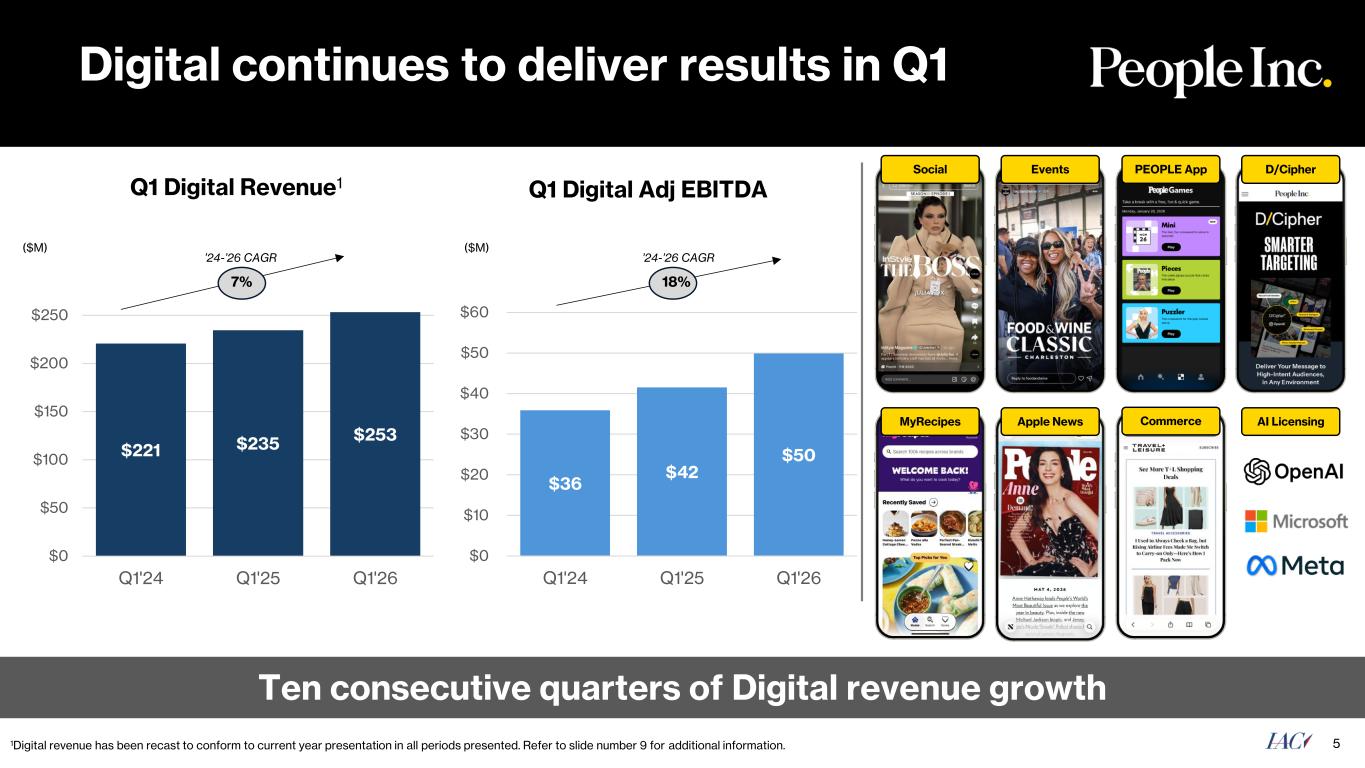
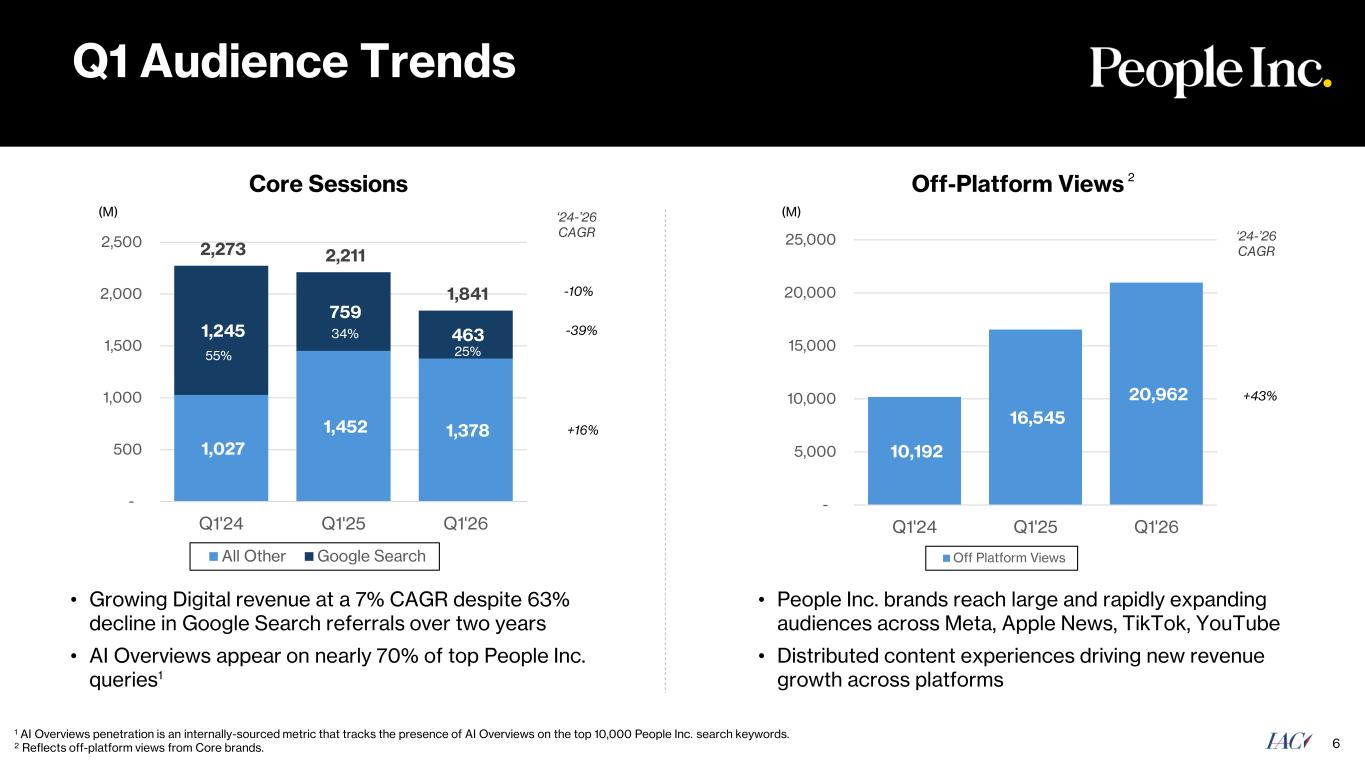
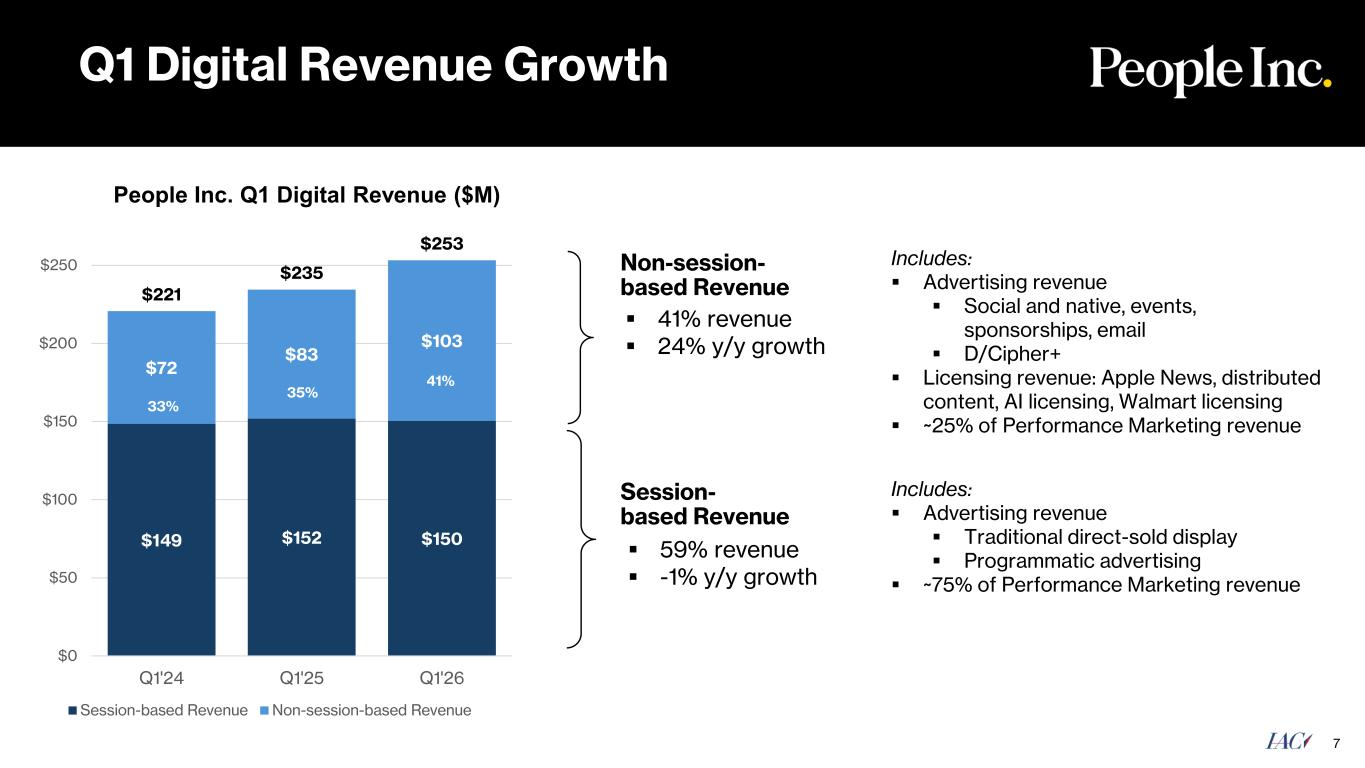
Sure. Everyone, please go on to Slide 5. And you can see we, again, at People Inc., we had a very solid quarter. We delivered 8% digital revenue growth, our tenth consecutive quarter of growth and digital adjusted EBITDA margins expanded to 20% from 18% in Q1 of last year. Our performance is underpinned by diversified audience and revenue mix, a real diverse audience and real diverse revenues and a laser focus on meeting our audiences where they are now. To that end, in the quarter, we continue to invest in a host of new products and services including what BD calls, or what we call, "inversion projects." These are businesses built off of our iconic brands that extend and transcend traditional publishing models, accelerating our non-session-based revenue. We have a few updates on the early projects we've talked about and some highlights of what's to come. There's real traction around our MyRecipes, our recipe locker tool, the People App and InStyle breakout series, The Intern and The Boss on social media. We expect to roll out in Q2 a membership club for super fans of Southern Living, among our strongest audiences, and plan to follow with a similar program for Food & Wine. And something very exciting for us: we're launching a new social shopping tool based on the learnings of our scaled commerce business, where shoppers can easily save and store their picks for future purchases in a very innovative way; that's to come as well. We plan on a drumbeat of product launches through the coming quarters. So you can expect that from us. And look, our focus is meeting audiences on their terms and the next slide further illustrates this. So if everyone flips to Slide 6. You'll see the trends over the last few years continue. As you can see, our opportunity is clearly on the right side of this page; core web sessions continue to be challenged. Google search traffic declined as expected, and we expect that will continue. Traffic from the Open Web also declined a bit as a substitution rate from core web sessions to off-platform audiences increases. The driver of our growth continues to be these off-platform audiences, which grew 27% in Q1. We see strong performance across Apple News, TikTok, Instagram, YouTube and syndication partners. And our audience trends align with where users are today and how advertisers and marketers want to connect with them. As you can see in our numbers, the strategy is working. That takes us to Page 7. Our big story continues to be our non-session-based revenue, which grew 24% year-over-year in Q1. Non-session-based revenue continues to grow as a percentage of our digital revenue. We're now at 41% versus 35% in the first quarter last year. Similar to last quarter, this is led by Decipher, our AI-powered ad-targeting tool, by our social and custom ad programs, by Apple News and by strong licensing performance, including the addition of our Meta deal. We also maintained a healthy business in sessions-based revenue by delivering a solid quarter and continued strong monetization of these audiences. The strength of our brands is really driving premium rates. And look, the model for our future is clear and in focus. One, strong growth from our non-session-based revenue streams; two, executing against our sessions-based businesses; and three, connecting directly with our audiences and advertisers and meeting them where they are, including our big focus on our inversion projects. We're very proud of the quarter, and I'd like to welcome Tim to the call who's going to give a rundown of the financials.
Speaker 4
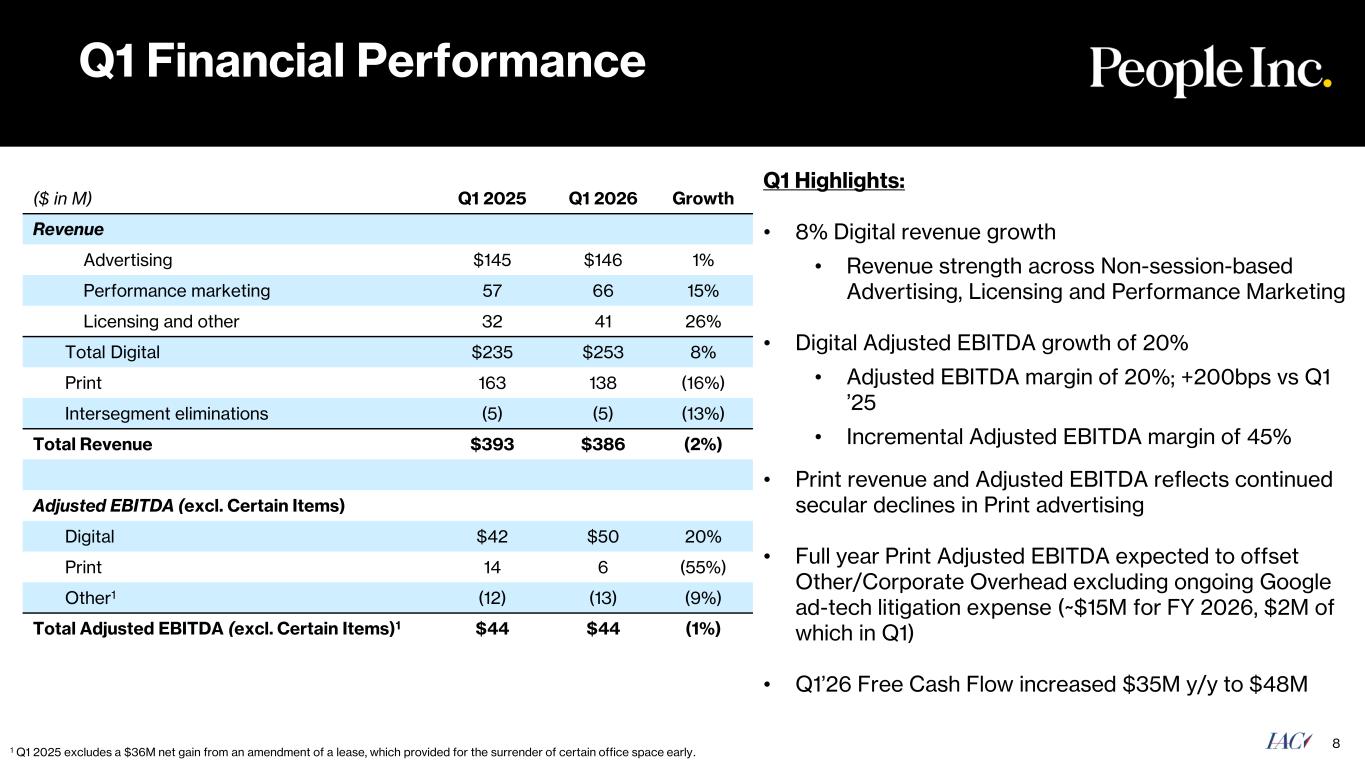
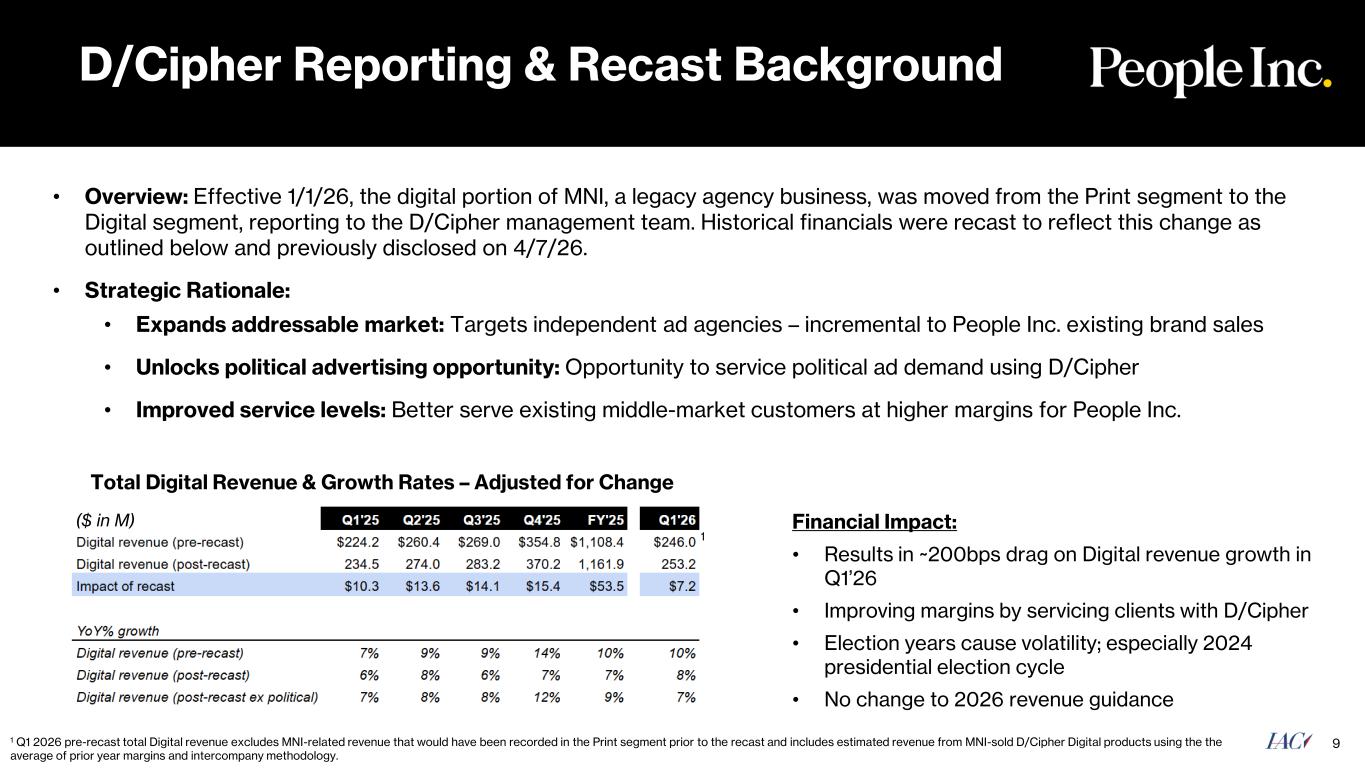
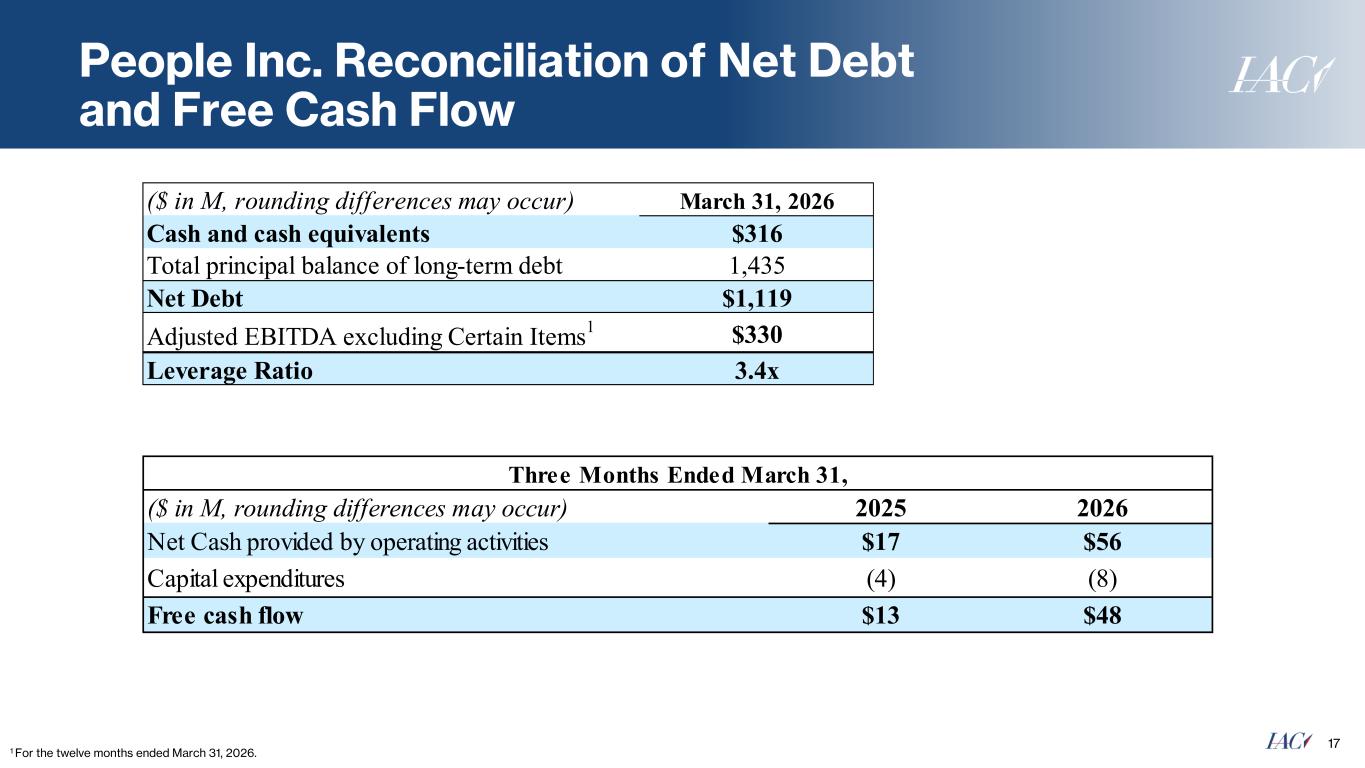
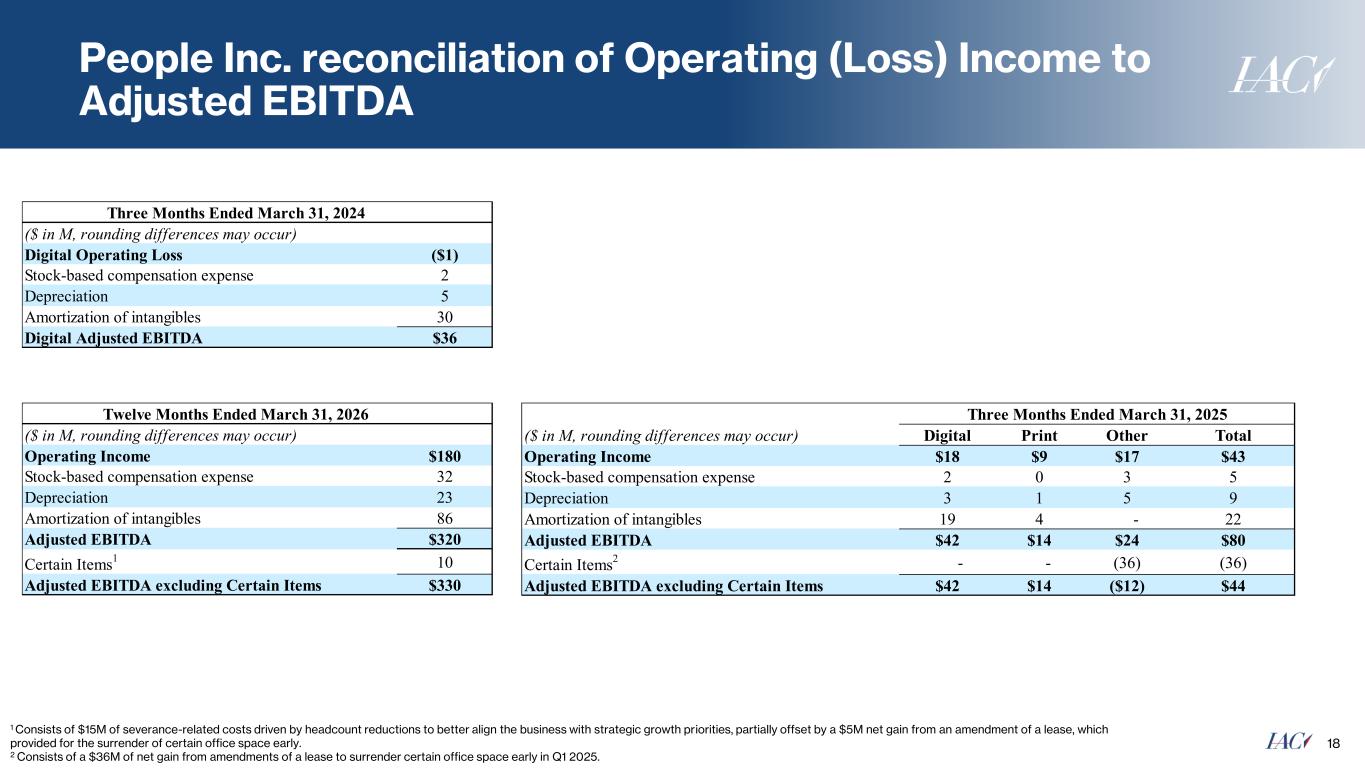
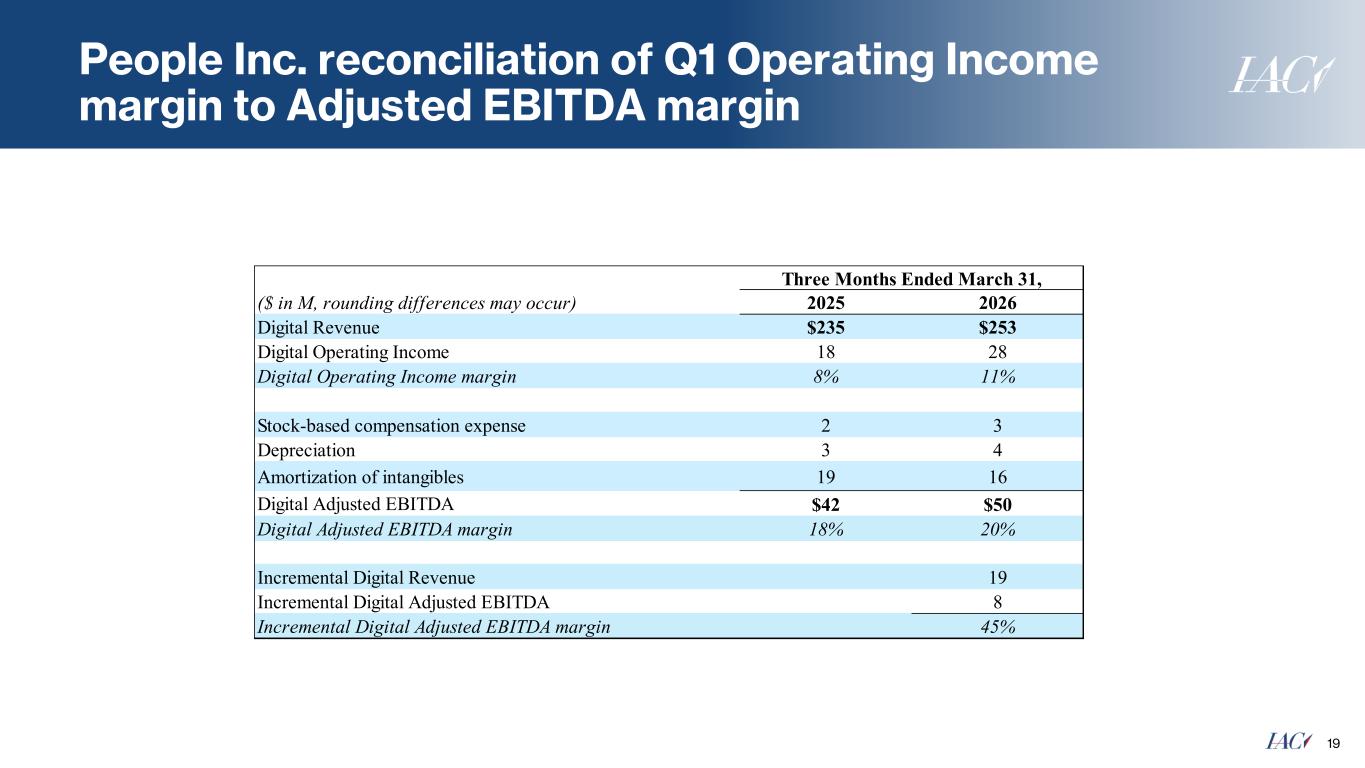
Great. Thanks, Neil. It's great to be here, and I'm excited to have a chance to work with everyone. I, along with almost the entirety of our management team, have been in our positions for over a decade, both working with and for Neil and under the leadership of IAC. So this continuity is a big part of the success that we've had together and something that we think gives us a lot of confidence as we undertake what's going to be an exciting transition. So we look forward to that. Referencing Slide 8 for a second and refocusing on the financials. As Neil said, we had a really strong quarter in Q1. Digital revenue grew 8%, and we saw digital margin expansion of about 200 basis points, generating solid 45% incremental digital margins. This is a testament to the strength of our brands, the diverse revenue models that they support and the continued discipline we bring to all of our investment decisions. Print EBITDA declined in the quarter, which was expected. There is some quarter-to-quarter volatility there, but we reiterate our expectation that full-year print EBITDA will cover People and corporate overhead with the caveat this year, excluding the estimated $15 million of Google litigation expense. Finally, I want to highlight that we continue to generate really solid and predictable free cash flow of almost $50 million in the quarter, putting us on track to exceed $150 million of free cash flow this year. That's on net debt of about $1.1 billion. So we feel really good about the balance sheet and the opportunity to continue to delever rather quickly. Moving on to Page 9. I want to highlight some changes we made to our segment reporting. We transitioned the management of a business we call M&I, which is a legacy media agency business, previously captured within our Print segment, which now operates under the Decipher team led by Jim Lawson. As a result, we reclassified the business from Print to Digital, both for Q1 and over historical periods. The reason for this is it unlocks two exciting new opportunities for us. Number one, it opens up a new distribution channel for Decipher, notably independent agencies and political advertisers previously untapped by our sales team. The second opportunity is by putting this business and operations under Decipher, we can offer these advertisers a more advanced product delivering superior performance and at better margins to People Inc., and you saw some of that accrue to our benefit in Q1. One point on political advertising: historically, People Inc. has not run political ads on our branded properties, but we can now target this ad category on third-party sites using Decipher. These political ad cycles create a little bit of volatility in the numbers, especially related to the 2024 presidential election cycle. Excluding those political dollars, just to give you a baseline, M&I revenue was flat, excluding political. So that's the business we're bringing over. This change in segment reporting resulted in about a 200 basis points drag in digital revenue growth in Q1. So the 8% growth would have been 10%, but for the change. Ultimately, however, this move is expected to accelerate growth and adoption of Decipher, particularly in the second half of this year. This change — all these changes — did not impact our guidance for the year, which remains in reiterating digital revenue growth of mid- to high-single digits, delivering total company adjusted EBITDA in the $310 million to $340 million range. With that, I'll hand it back over to Chris to take you through the IAC changes.
Speaker 1
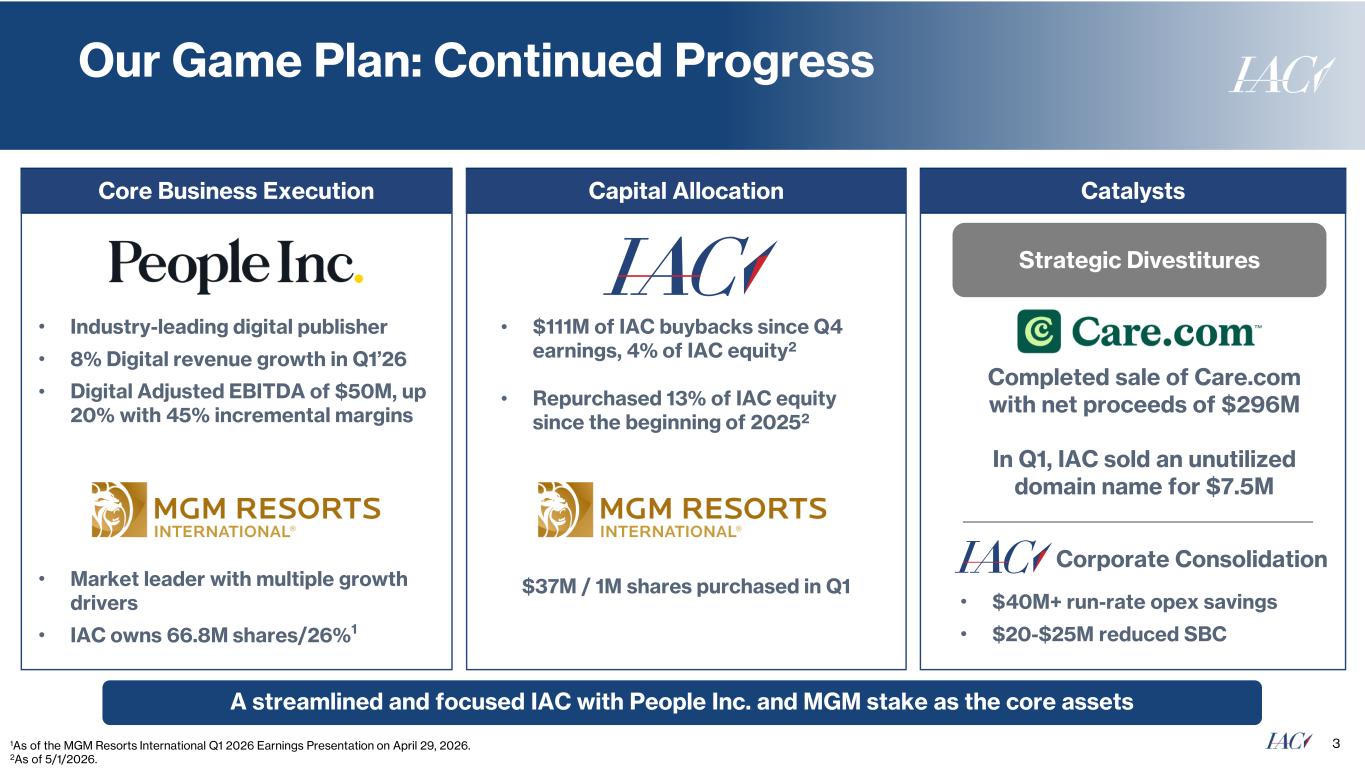
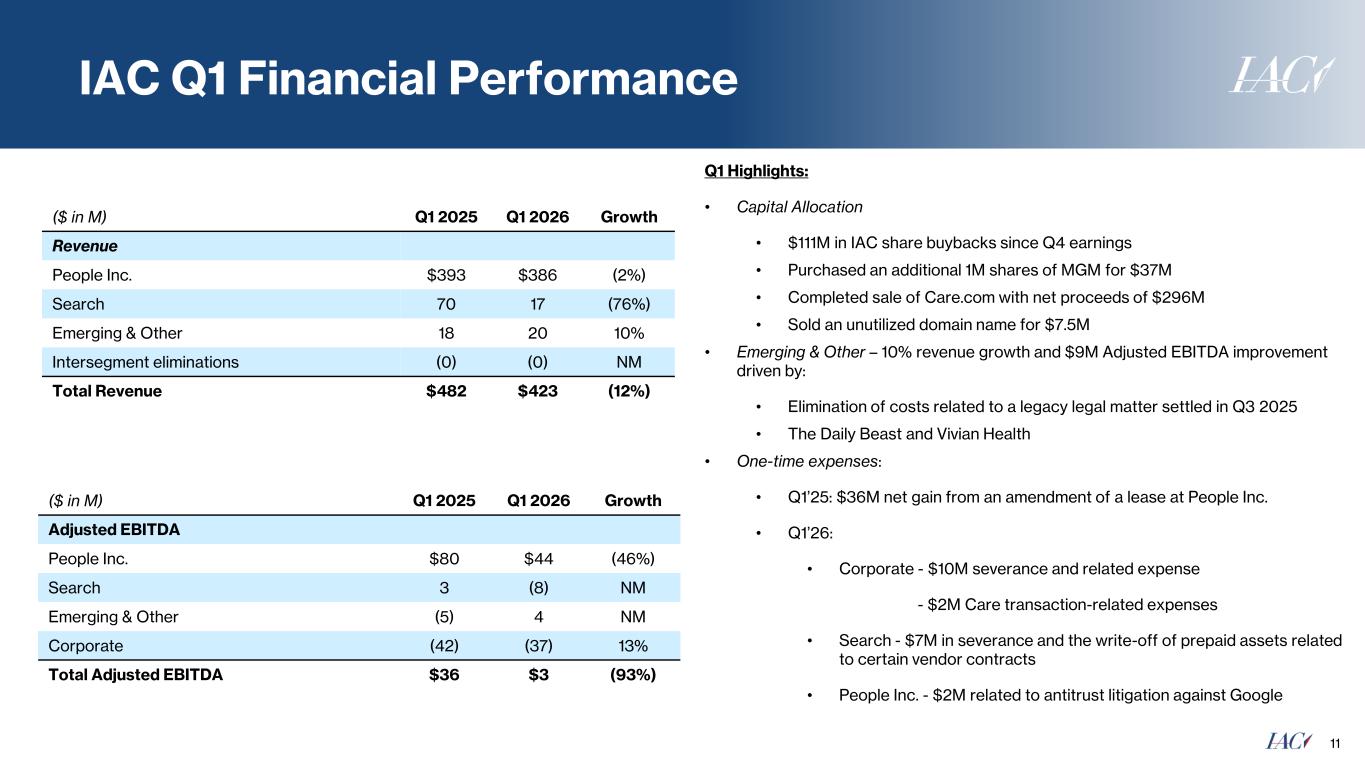
Thanks, Tim. Moving to Slide 11, we'll talk through financial performance beyond People Inc. this past quarter. It was a busy quarter on a number of fronts as we continue to execute on our core strategy of simplifying IAC and building our cash balances. First off, we completed the sale of Care.com in March, generating $296 million in net proceeds. Following closing, Care.com is now presented as a discontinued operation in our consolidated financials. We think this caused a little bit of confusion overnight, which we'll talk about more later.
Speaker 2
I mean I hope it's the thing that caused a lot of confusion given how banged up we got just from people not being able to add properly.
Speaker 1
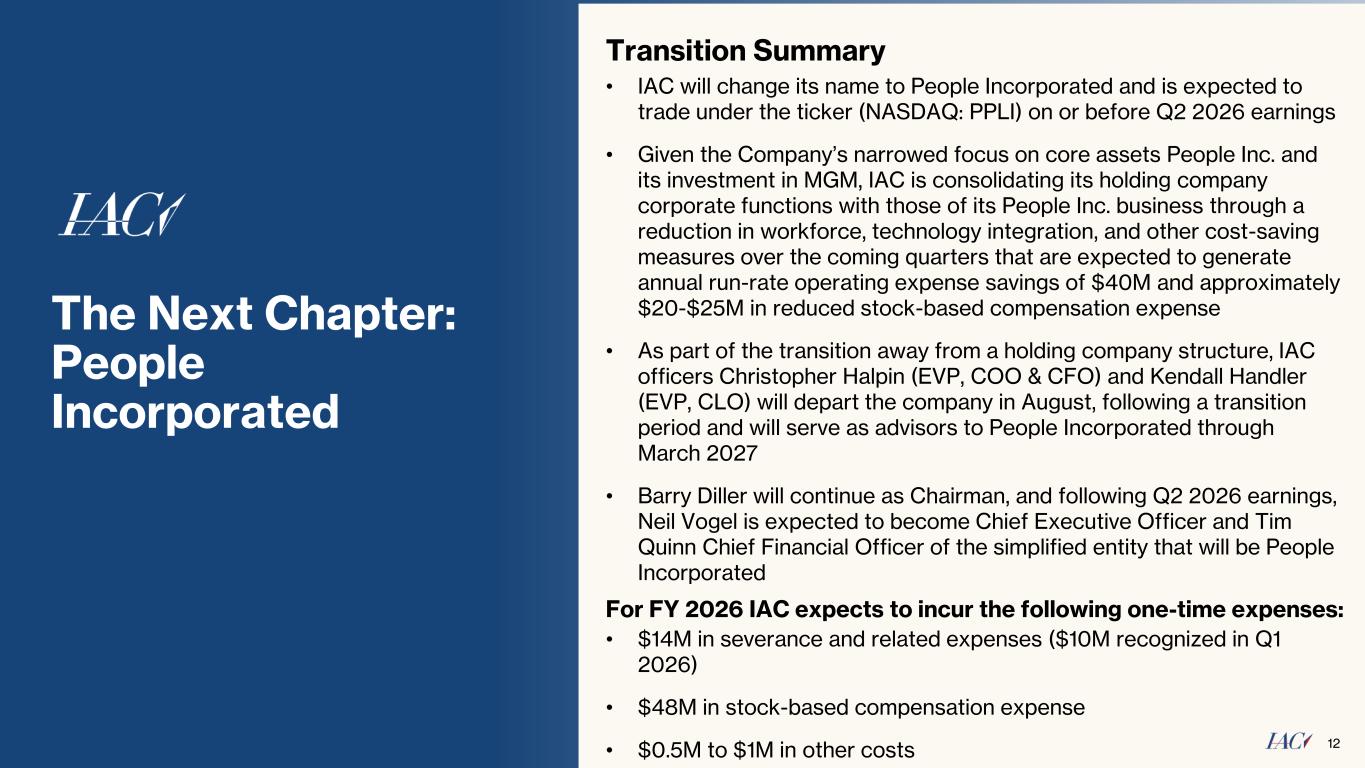
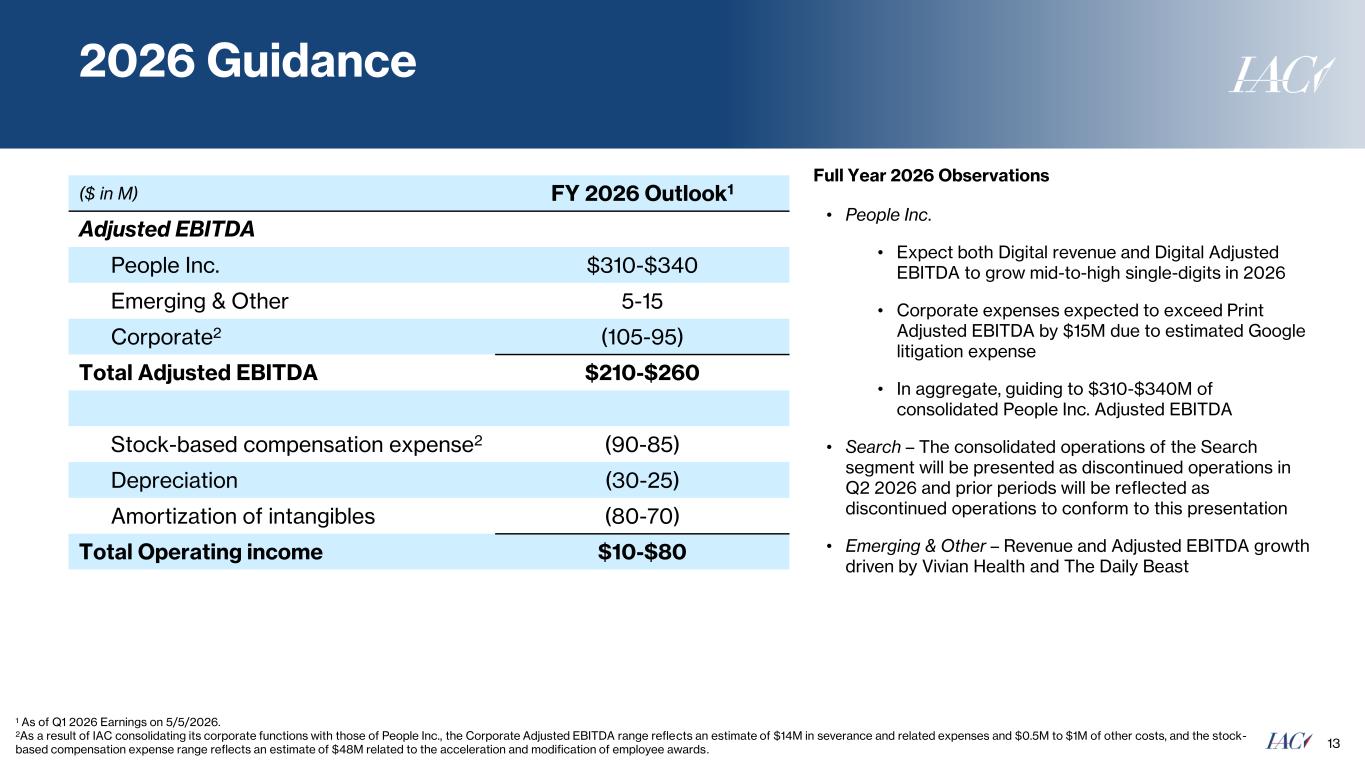
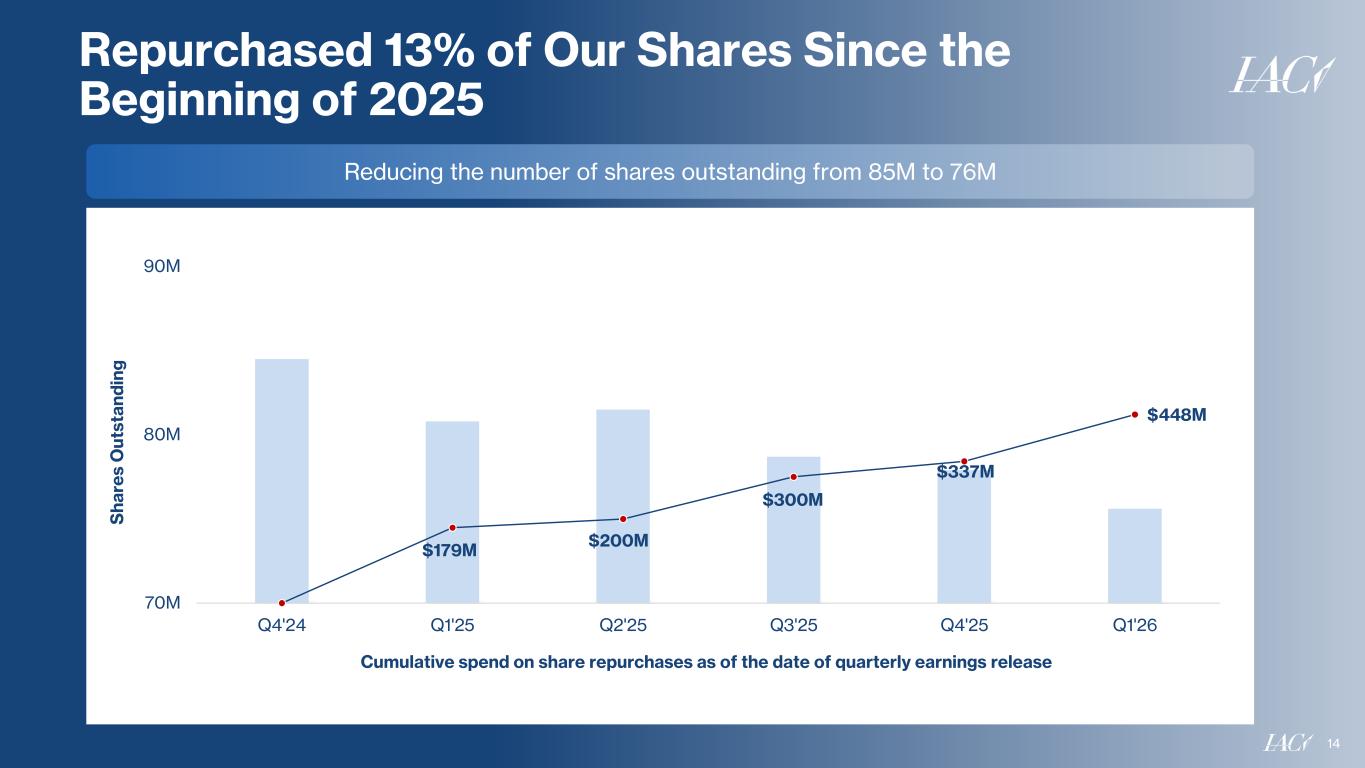
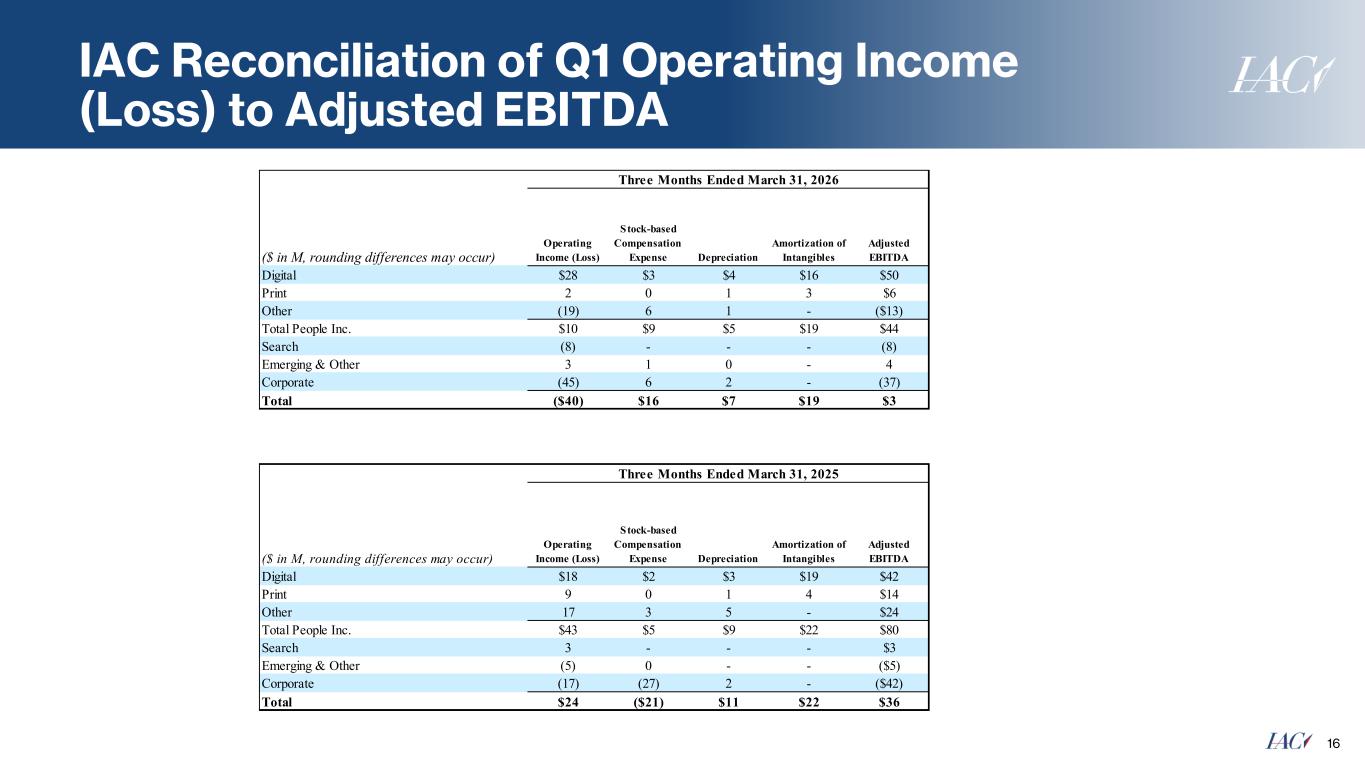
We'll work with them on it, BD. We continue to allocate capital to the two companies we know best and believe in, IAC and MGM. We repurchased 2.9 million shares of IAC for $111 million since our last earnings call, and we've now bought back 13% of IAC since the beginning of 2025. We also purchased 1 million incremental shares of MGM for $37 million, increasing our ownership to 26%. As Barry said in his letter, we continue to view both stocks as the priority areas of capital allocation. Our Emerging and Other segment showed strong performance this quarter as both Vivien and The Daily Beast continued their momentum with both seeing accelerating revenue growth, the two companies combining to generate about $4 million of adjusted EBITDA in the quarter. We also closed operations in our Search segment in April. As many of you know, this was a noncore business that had frankly lived on well past many expectations. As previously disclosed, Google notified us late last year that it would not renew our search contract under the existing terms. Following negotiations across the first quarter, we came to the conclusion that we could not confidently operate the business profitably on the new terms on offer from Google. As part of the shutdown, we incurred $7 million in costs from severance and the write-off of prepaid software and the search business will also now be shown as a discontinued operation starting in our second quarter financials. One other note, we sold an unutilized domain name for $7.5 million this past quarter. With the search business now closed, we will look hard at monetizing the portfolio of domains that underpin that business including ask.com, creating cash-raising opportunities. Finally, there's a lot of noise in comparing year-over-year profitability in the first quarter. So we laid out on the bottom right of the page some key one-time items, including last year a large noncash lease gain at People Inc. and the costs associated with our CEO separation and this year notable severance, transaction and litigation expenses. Moving to Slide 12. Last week, in parallel with Barry's letter sharing his rationale for a planned rebrand of IAC as People Inc., we issued an 8-K summarizing the key elements of the consolidation of the corporate functions of IAC parent and the People Inc. subsidiary. The underlying principle is with one core operating business in People Inc., two layers of corporate expense, one at IAC and one at People Inc., are no longer necessary and don't make sense. When we managed a number of operating businesses, the IAC corporate layer provided strategic oversight, shared services and M&A support to the individual companies enabling them to operate independently and positioning them for growth and success. But with the sale of Care.com and the narrowing of our focus to People Inc. and MGM Resorts, the opportunity presented itself to eliminate duplicative functions and generate significant savings. We've mapped out a careful consolidation plan in which over the course of the coming quarters, more than half of the corporate employees of IAC, including much of senior leadership, will transition their responsibilities to counterparts at People Inc. and exit the company. Key areas in this consolidation are accounting, tax, internal audit, legal, M&A, among others. Each employee has a specific exit date and a retention plan in place to ensure they remain engaged until the consolidation is complete. The full transition process is planned to run through February 2027. We expect annual run-rate operating expense savings of $40 million and a reduction in stock-based compensation of $20 million to $25 million. These savings will phase in over the coming quarters as employees depart, with the second quarter of 2027 being the first clean quarter where the P&L will show the full savings of the consolidation. Total one-time expense of the rationalization is $63 million, comprising $15 million in cash severance and related expenses, of which $10 million was recognized this past quarter and then $48 million of stock-based compensation expense, which will be recognized over the next four quarters. Kendall Handler, our superb Chief Legal Officer, and I will leave in mid-August, following the filing of second quarter financials and then will remain on as advisers through March 2027. Further, we expect that Neil will become CEO of the parent company, newly renamed People Inc., and Tim will become CFO in that same mid-August timing. All of us are working together to have a smooth transition to set up People Incorporated for continued success. Finally, moving to Slide 13. This will be the last slide we present before going to Q&A. I know you're happy about that. On guidance, we reaffirmed People Inc. adjusted EBITDA guidance at $310 million to $340 million while raising Emerging and Other guidance to $5 million to $15 million of adjusted EBITDA based on the strength at Vivien and The Daily Beast. As a reminder, Care.com is now a discontinued operation, so it is removed from both our financials and our guidance. We saw a couple of reactions overnight that cited a Q1 IAC consolidated miss and reduced guidance. But our analysis is that those market commentators and a number of analysts failed to adjust for Care's revenue and EBITDA being removed as discontinued operations. As a reminder, Search will also be classified as such and will not be in our reported or historical revenue and prospective revenue and adjusted EBITDA and is not part of our guidance. We've raised corporate expense guidance to $95 million to $105 million due entirely to the severance that I just mentioned before and other one-time charges. Following completion of the consolidation, we expect annual run-rate IAC corporate costs to be around $45 million and stock-based comp for the entire company to decline to $30 million. These figures are prior to any future reallocation of People Inc. leadership cost to the corporate level, which may occur. However, any such shift in cost allocations would have no impact on expected consolidated expense savings. With that, let's go to Q&A. Operator, first question, please.
Operator
The first question will come from James Heaney with Jefferies.
Speaker 5
Can you just talk about the next chapter of IAC? Like what do you think the next five years are going to look like? And what are the key areas of capital allocation going forward? And then would you still look to do M&A and select new areas? And then I have a follow-up.
Speaker 2
Well, I can't tell you what the next five years will be. I can tell you maybe what the next year or months are going to be. Five years, who knows. What we have is, I think, an extraordinary opportunity with what we've got. I mean, what Chris has just gone over really is kind of a great cleansing. And that cleansing, as I said, has been going on for a while now. The combination of it was actually this quarter: changing our name, doing all of the tasks, continuing to shed noncore assets. Core assets, as we said before, are hopefully going to be just two. We've got plenty of capital. We've got a very good balance sheet. We can go in whatever direction that there is opportunity. I think the biggest opportunity we have in front of us is the work that is being done in our publishing business at People and what we call our inversion projects. We have 19 different initiatives, having nothing to do with standard advertising or subscription revenue. Out of this, I think we can build wholly owned or partnered, extremely large businesses in all sorts of categories. The thing that I came to understand about People is across the — how many — actual — I mean, I always get this figure wrong — how many brands do we have? Neil?
Speaker 3
We have about 40 brands and nine or ten significant brands, so invested.
Speaker 2
Throughout this, there is so much we know about so many things that no one else actually knows. And instead of being in the kind of tried-and-true publishing model of licensing your brands and licensing all this knowledge and all that stuff for other people to exploit, we're going to exploit it. And out of that, I would be giantly disappointed if we are not able to build real substantial businesses having nothing to do with advertising, having nothing to do with subscriptions, but having to do with goods, services, products, etc., that out of the corpus of our understanding in all these areas, we have a better advantage than anyone else. And the other thing — one other little note is, we published, what, $300 million or so actual hard copy things that are in people's homes or whatever; an additional page cost us zero. How many actual other digital impressions do we have? So if we come up with — and if we don't come up with it, we're really in trouble. But if we come up with good ideas, we can promote them at not a dollar really additional cost to us. What a megaphone that is for the future. So that's the work that we're going to do. Wherever else, we're going to use our cash flow, we're going to continue to opportunistically buy our stock. We'll continue to invest in MGM Resorts, which I also couldn't be more excited about its future. So this has been worked on for the last almost two years. But this moment forward is a clean, clear, simple sheet that we get to write on, and we've got, I think, all the necessary tools. So a bit long-winded, but there it was. Next question.
Speaker 5
Great. And I actually just had one follow-up on just the macro environment — sorry — just from the environment across People and other businesses, just kind of what you're seeing from geopolitical or any other macro factors would be great?
Speaker 3
Yes, I'll do a quick take on the ad market. I think last quarter, we told you guys on a ten-point scale, it was a 6 out of 10; I think it's still a 6 out of 10. There's opportunities, there's risks. Tim is here with us now. He can give us some color across industry.
Speaker 4
Yes, there's certainly strength in places like health and pharma, tech, telco; areas that are exposed to the consumer are a little bit soft or particularly the average consumer, I would say, things like CPG, food and beverage. And we did see a little bit of a slowdown in planning related to the Iran conflict. We think that's abating a little bit now, but it's still a little bit touch-and-go. But overall, as Neil said, the market is strong, but it's not — I wouldn't call it ripping.
Speaker 2
Good enough to do our job unless something changes.
Speaker 1
Yes. And I would just say, across the portfolio, we've been talking about the divergence between high income and low income for a while. I didn't know that was called K-shape but now that's called K-shape. I think that's just only continued and maybe probably unfortunately being exacerbated by what's going on right now.
Operator
Your next question will come from John Blackledge with TD Cowen.
Speaker 6
Could you talk about the key drivers of the Q1 People digital revenue line items? I saw the outsized growth at performance marketing and licensing and other revenue. Any color on revenue trends in the second quarter? And then on digital EBITDA, that was better than expected. Any color on the drivers of the upside to margins? How should we think about Q2 and the rest of the year? And if you can give some color on one or two of the separate initiatives as part of the inversion process, that would be great.
Speaker 3
Let me do the inversion first, and then Tim can take the rest of the questions. So the emergent stuff that we're building — look, most importantly, it has energized our organization. We are really in a great spot where we own these brands that are iconic and pillars of American culture. A couple of stats, some updates on things we've talked about. One of the first things we did is we launched this Recipe Locker. We're probably more than half of the recipe traffic on the Open Web right now. We launched it a little more than a year ago. We have 3.5 million registered users. We have 40 million recipes saved. We have a lot of momentum and a whole bunch of new product initiatives launching in the next couple of months. The People App, which we've talked about before, again, the real win here is how we're engaging people. A visit to the app is about three times as long as a visit to the web. If we get people playing games, which is the most popular thing on the app, it's a 20-minute visit. We're up to 430,000 users since the last call. And I think the important thing to note about both MyRecipes and the People App, which have taught us how to engage users directly and all of these new skills, is we have not gone outside our own assets at all to grow these things. And as we roll out and as we tighten up financial models around these, that's a really big opportunity. Another thing worth mentioning is we've really looked at social video and social video series is sort of like the new TV. And we have a real breakout hit on our hands in InStyle with two properties called The Intern and The Boss. They were launched about a year ago across multiple episodes, which are three- to four-minute long episodes. We've got 45 million views in a year, and a robust sponsor business has grown around it.
Speaker 2
Just one aside: for one internal package, one series alone, one episode performed very well.
Speaker 3
We have been very fortunate that we've been able to sell a season — a season is about 20 minutes in total across six or seven three-minute episodes — and we have sold full seasons in that neighborhood, some more, some less. So there's a lot of interest in what we're doing and different approaches across brands. Southern Living, one of our strongest properties, is incredibly loyal. There are a couple of things in Southern Living that I think are really interesting. We have a Southern Living team working on a new branded tea product, which is an example of a physical consumer product that could scale beyond the South. Southern Living also sells architectural plans to build Southern-style houses, really high-end and very beautiful houses. We also may develop a Southern Living actual housing community, branded Southern Living, for that kind of lifestyle that, again, we'll own and hopefully operate. So when BD mentioned earlier that there are 19 different ideas, there are actually probably more than 19 ideas floating around, and we are really chasing these down. Each one can be a separately organized, financed business, whether our capital or other people's capital, that is a standalone P&L, separate and apart from this historic publishing business. That is fertile ground for dozens of businesses because we have the intellectual property that can give us an edge once we begin to concentrate on it, which is what we started to set up.
Speaker 6
Well, let me just — I'll tackle the financial questions as well.
Speaker 4
What I would just say is that Q1 was a continuation of Q4, which was really strength — incredible strength in licensing and commerce, in particular, with the ads business roughly flat as we navigate these volume challenges. What I think the future is, is what BD and Neil are saying, which is these non-session-based revenue models, which currently comprise about 41% of our revenue, grew 24% in Q1. And that is the future while we hold the line on the traditional session-based media model. We've lost — how much of our traffic have we lost from Google? From Google, roughly 65%. What publisher has navigated this transition anywhere close to how you have all navigated this? We have transitioned from depending on search traffic to building our own diversified off-platform audiences. We have transitioned out of relying on anyone else to give us traffic, and we have now built our own traffic channels. We think that's the future, and we're going to see that non-session revenue continue to grow. We're seeing real traction in the quarter and expect it to increase meaningfully over coming quarters and years.
Operator
Your next question will come from Cory Carpenter with JPMorgan.
Speaker 7
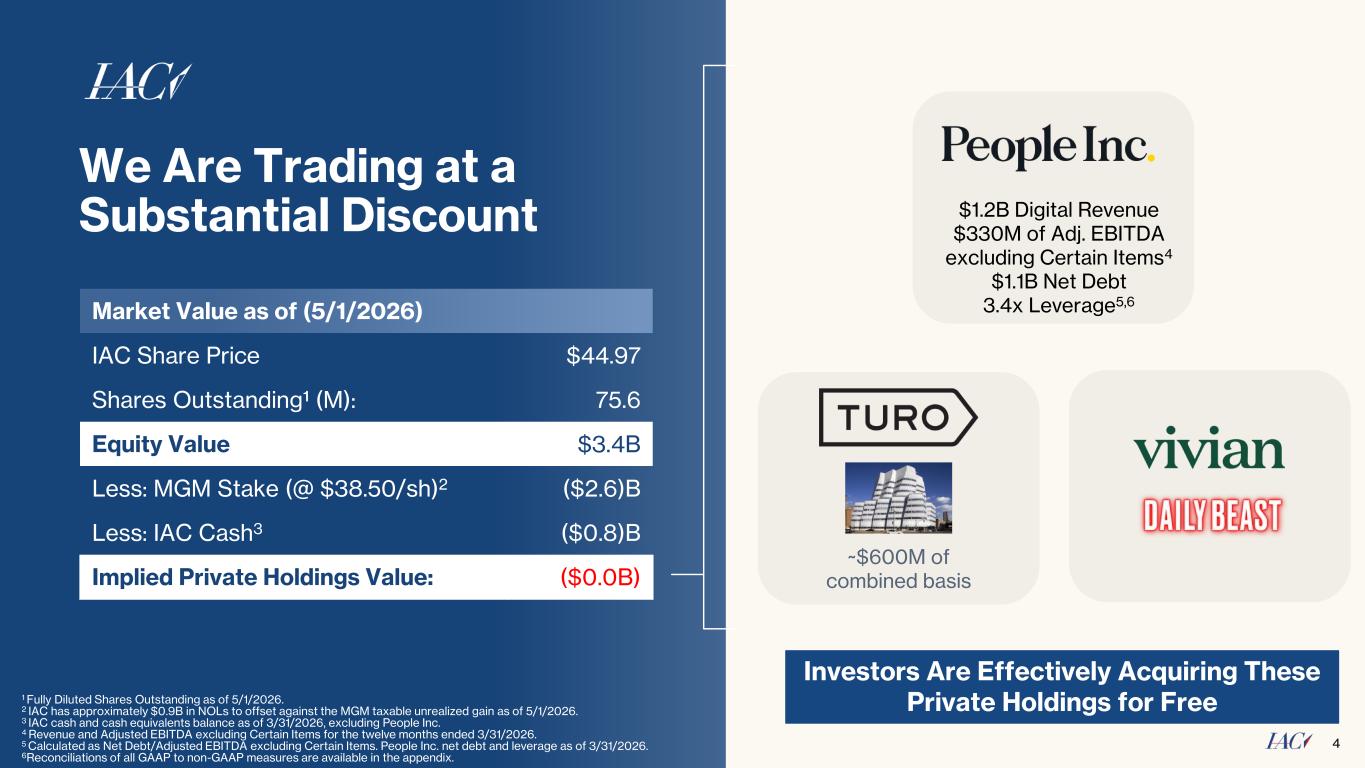
I wanted to ask about MGM and Turo. Maybe Barry for you with MGM. Could you just talk to what you see as the benefit of keeping MGM within People Inc., why not split that out separately? And then on Turo, any update you guys can provide on how that's performing? And is Turo a business that you plan to hold on to or also are looking to divest?
Speaker 2
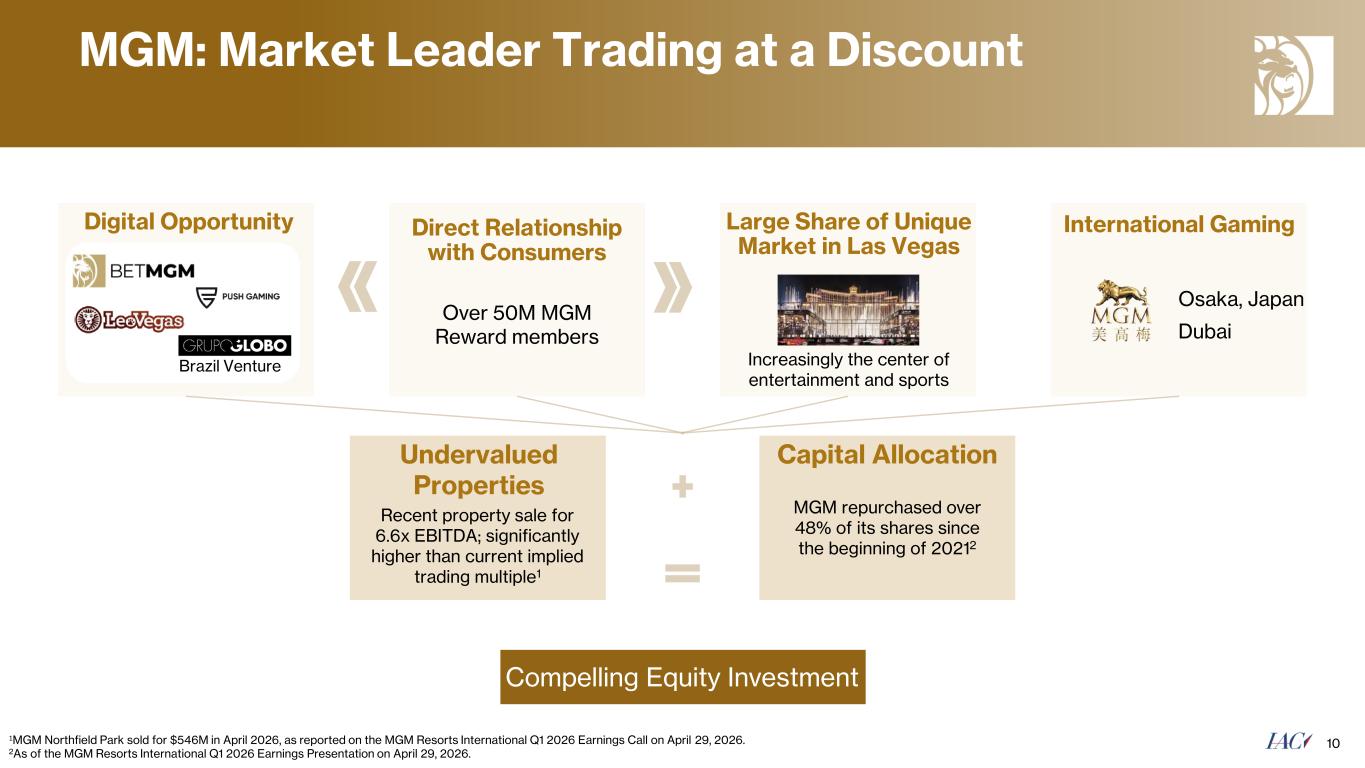
I don't do the MGM thing operationally, but the answer is, of course, it is a key asset. This corpus used to house 50, 60 different businesses. We can certainly handle two. And MGM — the prospects for MGM, I think, are outstanding. MGM is building a large resort in Japan, a roughly $12 billion project, and as we get closer to its opening, investors will better appreciate the value. I'm quite happy for it to be discounted now because it allowed us to buy back a meaningful portion of its stock. MGM's operations have been solid. Las Vegas goes through cycles — no one is killing Las Vegas — and current conditions, including a decline from Canada due to policy factors, have impacted volumes. I'm glad it's been discounted because it allowed us to buy back so much stock, which I think is a strategic advantage. I'm not anxious for that discount to close too soon.
Speaker 1
Turo has executed well on its strategic effort to return to growth. We've talked previously that Turo experienced a real slowdown in volumes coming out of the froth of the pandemic. That, combined with industry pricing pressures due to both working off pandemic highs and also some mistakes in electric vehicles made by competitors, drove Turo revenue growth to mid-single digits at one point. The company generated over $1 billion of revenue in 2025, but management really focused last year with the Board on driving substantially more growth: reinvigorating marketing and improving cost efficiency. They hired a new CMO, David Cornes, who we believe is making the right steps to drive greater brand awareness. We've always said awareness and testing the product in many ways is the biggest challenge; repeat rates and NPS reviews are excellent. So David and team are focused on getting more people into the funnel and trying it, and we're excited to see that play out. They also promoted Cedric Matthew to Chief Business Officer in order to improve pricing, matching and execution across the marketplace. These efforts have borne fruit with Turo returning to double-digit revenue growth year-over-year in the first quarter, really led by increases in volumes. Rental car market pricing is no longer a headwind, and the company has a clear game plan to drive more new users in. And we think it's an experience that blows away any alternatives. If you had asked us six months ago, I might have said we were considering selling our interest, but it's now performing very well. I doubt in a year or two or three it will be part of this corpus because it will probably go public at some point or be sold by some strategic player, but it's now operating solidly. My attitude is unless somebody comes along with an attractive offer, we'll keep it as it grows and it will spin itself out in some form, and we'll take the cash.
Operator
Your next question will come from Ross Sandler with Barclays.
Speaker 8
Neil or Tim, just wanted to go back to the off-platform revenue. Could you talk a little bit more about how you're diversifying the traffic to off-platform and what you're doing to drive monetization and better margins in that business and what you see for the medium-term growth rate there? And then second question is somewhat related, any update on the Google ad tech litigation — a timeline for remedies and what we might hope to have as an impact to our business?
Speaker 3
I'll do the lawsuit piece briefly, and then Tim will take the specifics. The lawsuit you're referring to is the Google ad tech antitrust matter; it's built on government findings that Google used dominance to monopolize the ad server and ad exchange markets. We believe the government's findings support our claims, and we believe damages could be significant given our scale and level of participation in these markets.
Speaker 2
I mean it's not really a lawsuit in the sense of a mystery because the ruling has already taken place. They've already said that Google engaged in anticompetitive conduct. We and other parties have claims based on that. We will just wait for this process, which could take a year or two, to resolve.
Speaker 4
We intend to invest between $10 million and $15 million in pursuing damages and litigation this year. We expect that it will take the entirety of this year into next year optimistically to resolve, perhaps in the first half of next year, unless we're able to reach a settlement sooner.
Speaker 2
Yes, I mean it's just a matter of how big; we don't know. But it could be material.
Speaker 3
I'll do a quick background on the off-platform business. The reason our off-platform offering is working is because we have terrific iconic brands. Since we bought Meredith five years ago, we've worked incredibly hard to put our brands in a position where they can do all of these new things and where they have permission to come into people's lives in different ways. Whether it's some of the inversion projects or things like our historical events and licensing, we have real momentum because our brands are so strong, particularly the seven to nine brands that we talk about most. Tim will talk about the specific drivers, but this is the underpinning of everything we're doing going forward.
Speaker 4
As we've been saying, 41% of our revenue is non-session-based and grew 24% in Q1. That revenue is comprised of licensing — everything from Apple News to our AI deals to content syndication — as well as social and custom ad products and commerce. We're creating more content today than we ever have in the past and distributing it across more platforms with success than we've ever had. What is unique to us is the combination of brands, audience size and reach, data about those audiences, and a sales team to go out and access advertisers to sell into those audiences. That's where we can control our own destiny and grow these non-session-based revenue streams at attractive rates. It's not all speculative; we actually did it in Q1.
Operator
The next question will come from Justin Patterson with KeyBanc.
Speaker 9
Two for Neil, if I can. First, I would love to hear more about your top priorities for Decipher for the year. And then second, as you step back and look at how AI has changed the traffic funnel, what are some of your latest learnings there and how you think you can continue standing up a durable business for the next few years?
Speaker 3
Sure. On AI: If you look at where AI is for us from here, we feel very strongly about it. We have more opportunities going forward than we believe we have risks. If you go back one or two years and you look at the risk of AI for us, they all had to do with search and whether AI would disintermediate our audience sources. That already happened, and we came off the other side with a more diversified business that I believe is stronger. Now we're looking at AI as opportunity. We're making 50% more content than we made three years ago at the same cost, and I would argue at higher quality; everything is still made by humans. We're able to do that because we've streamlined processes with AI. We use AI and Decipher to really tighten our ad targeting. We use AI in our commerce business to understand what makes people respond to offers. AI for us — and People Inc. more broadly — we are embracers of the future. We're deeply unsentimental about processes of how we've done things. We've taught our 3,500-person organization to use AI in their roles; it's not an isolated AI team — it is part of every job. That approach is really working. Brands matter more than ever: in a world of abundant content, people trust brands. We can harness AI to make our brands stronger. We are AI optimists and see massive opportunities. On Decipher, we're very optimistic. It expands our TAM across the Open Web and CTV. Most importantly, it works. We have incredible first-party data and AI powering the product. Tim can give further color.
Speaker 2
I would just add one thing: AI at MGM is less disruptive to the core customer experience. Sure, MGM will use AI for internal efficiencies, but nothing will replace a customer coming to a resort. That gives us a natural hedge between digital-first businesses and hard-asset hospitality.
Speaker 4
I want to reiterate our Decipher priorities: we're making our capabilities and products more sophisticated; we're improving the product-market fit; and we're getting a premium sales team to sell it to existing advertisers. We've also added the M&I sales team to sell Decipher to middle-market independent agencies and political advertisers. We're excited about the pipeline. We think Decipher can add 200 to 300 basis points of growth to our growth rate in the back half of this year and into next year.
Operator
The next question will come from Youssef Squali with Truist.
Speaker 10
So Neil, maybe just a follow-up to the advertising question. Can you talk about the level of visibility you guys have in performance marketing and licensing revenues within People in particular? Any chance of seeing additional licensing deals announced? And then Barry, given the very high free cash flow nature of the business and the cash you have on hand, any interest in maybe starting a dividend to attract some yield-seeking investors at this point?
Speaker 3
I'll go first. On AI licensing deals, they seem to be bucketing into two categories. One is more of an "all-you-can-eat" foundational model access deal like our Meta deal or deals with major foundational model providers; the other bucket is marketplace or pay-per-use deals like some of our Microsoft engagements. Since we started locking traffic and making content available, we've had productive discussions with many players in the market, expected and unexpected, with the exception of Google. We're entering a phase where the internet's crawled content is available, and what's really valuable is people producing new, high-quality content. We produce a lot of new content, and it's valuable to these models. I would expect we'll have more to report on this in the future. It's early, but we want to be seated at the table with everyone, and so far so good. We'll keep you updated as things develop.
Speaker 1
The pivot Neil and Tim described — moving content development to produce more new, timely content — positions People even better with AI models, because those models benefit from a constant producer of new information. So the strategy improves our relevance to AI licensing and syndication partners.
Speaker 2
As far as a dividend is concerned, sure. I hope as we build up cash, I think we should be a dividend-paying operation. So I would expect that to happen in the future.
Operator
The next question will come from Jason Helfstein with Oppenheimer.
Speaker 11
As a follow-on on capital allocation: given the healthy forecast for free cash flow this year, should we assume that free cash flow is basically deployed between a combination of buybacks, MGM purchases and potentially a dividend? Or is there a desire to see that build up on the balance sheet for optionality?
Speaker 2
Well, the answer is yes. We'll use our cash to continue to shrink the capitalization of the company opportunistically. I think we'll continue to invest in MGM. Yes, I would think we'll eventually pay an appropriate dividend. I don't see a large external M&A program in the near term. We're collapsing our large M&A group into something much smaller. We have so much opportunity in-house; that's where we should direct our capital.
Operator
And the next question will come from Matt Condon with Citizens Bank.
Speaker 12
I just want to ask on affiliate commerce growth. It seemed like you guys had a healthy quarter there. Can you talk about the drivers and the future potential to sustain growth?
Speaker 4
I would just say that the commerce business has been remarkably consistent and resilient for quarters and really years. It's a testament to our team and their ability to drive growth and recapture commerce share that otherwise would be lost. We're doing that by creating more high-quality content, as Neil highlighted, and deepening the partnerships and relationships with retailers. We have solid visibility there. The consumer is performing well and we feel good about it. We also have some new products coming out soon that we're excited about.
Speaker 2
The only thing I would add is we will work to make sure in the coming days we straighten out the numbers so that what was a very good first quarter won't be misinterpreted as something other than that, which it seemed to have been overnight.
Speaker 1
Which was the Care.com discontinued items.
Speaker 2
Yes, yes, yes. Other than that, I wish you all well. Thank you all, and we'll be in touch.
Speaker 4
Thank you, operator.
Operator
The conference has now concluded. Thank you for attending today's presentation. You may now disconnect.