Speaker 0
Thank you for standing by, and welcome to Remitly's Third Quarter 2025 Earnings Call. As a reminder, today's program is being recorded. And now, I'd like to introduce your host for today's program, Matt Oppenheimer, Co-Founder and Chief Executive Officer of Remitly.
Speaker 1
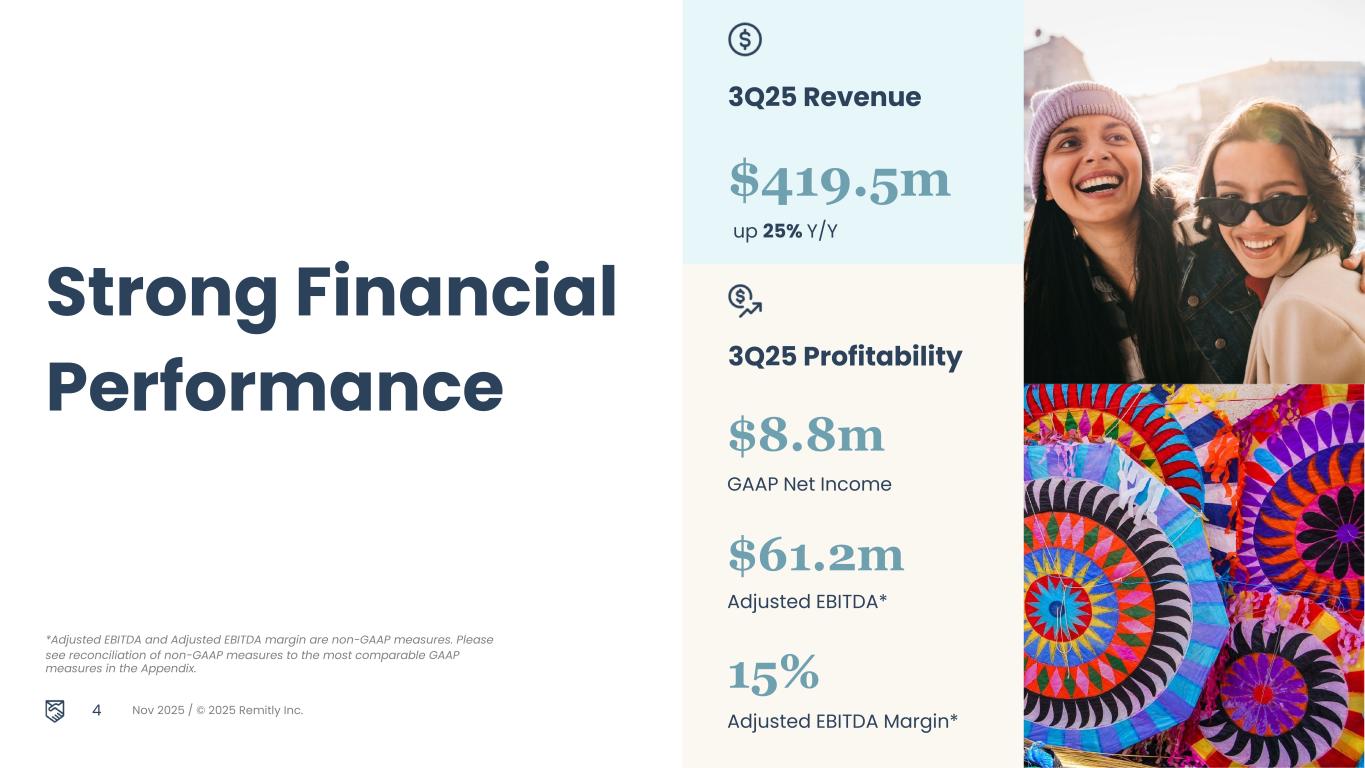
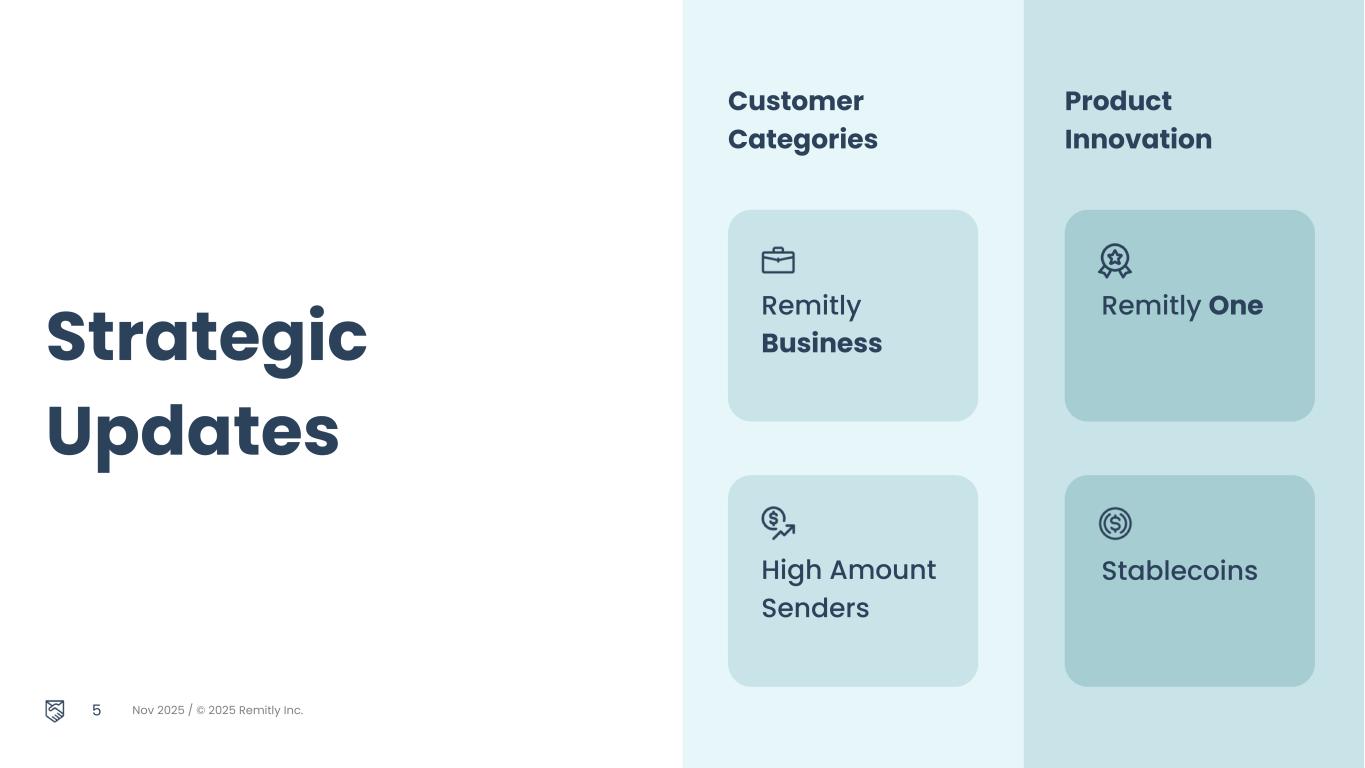
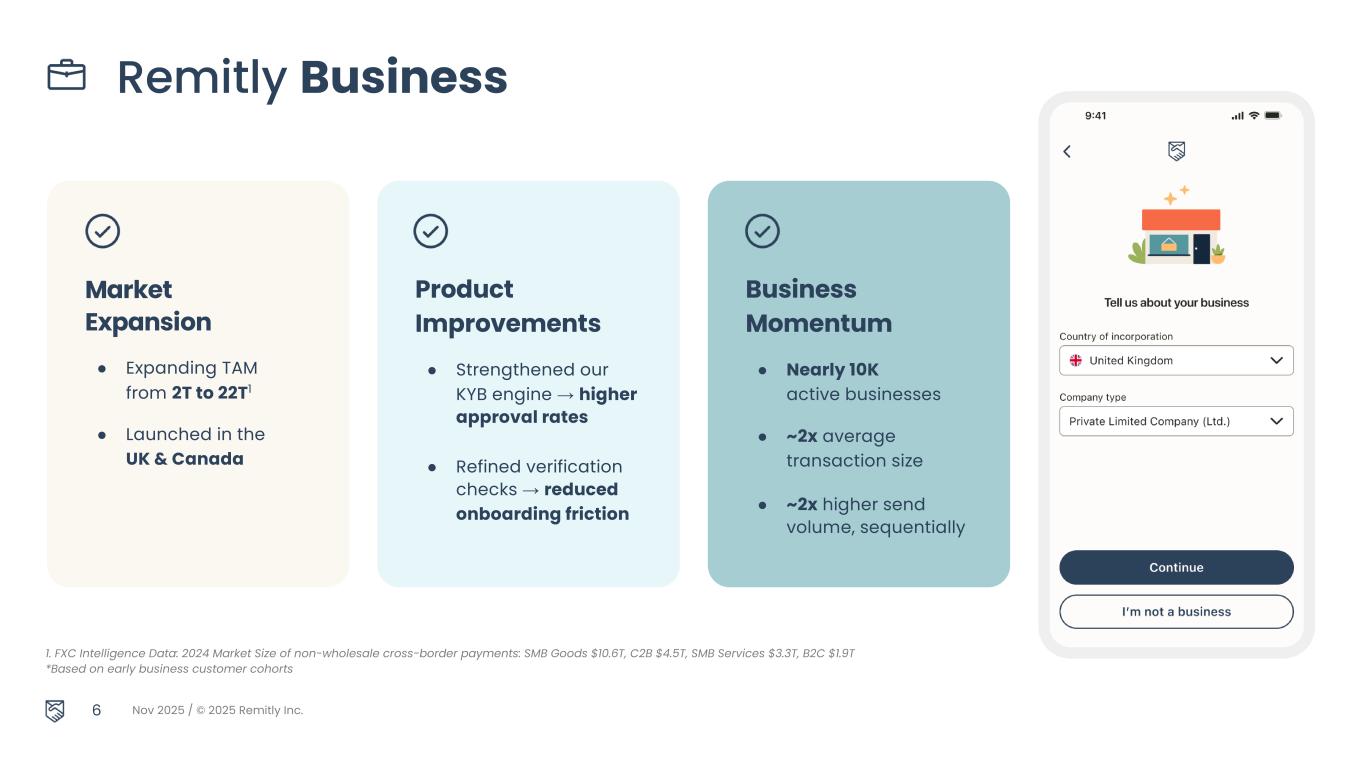
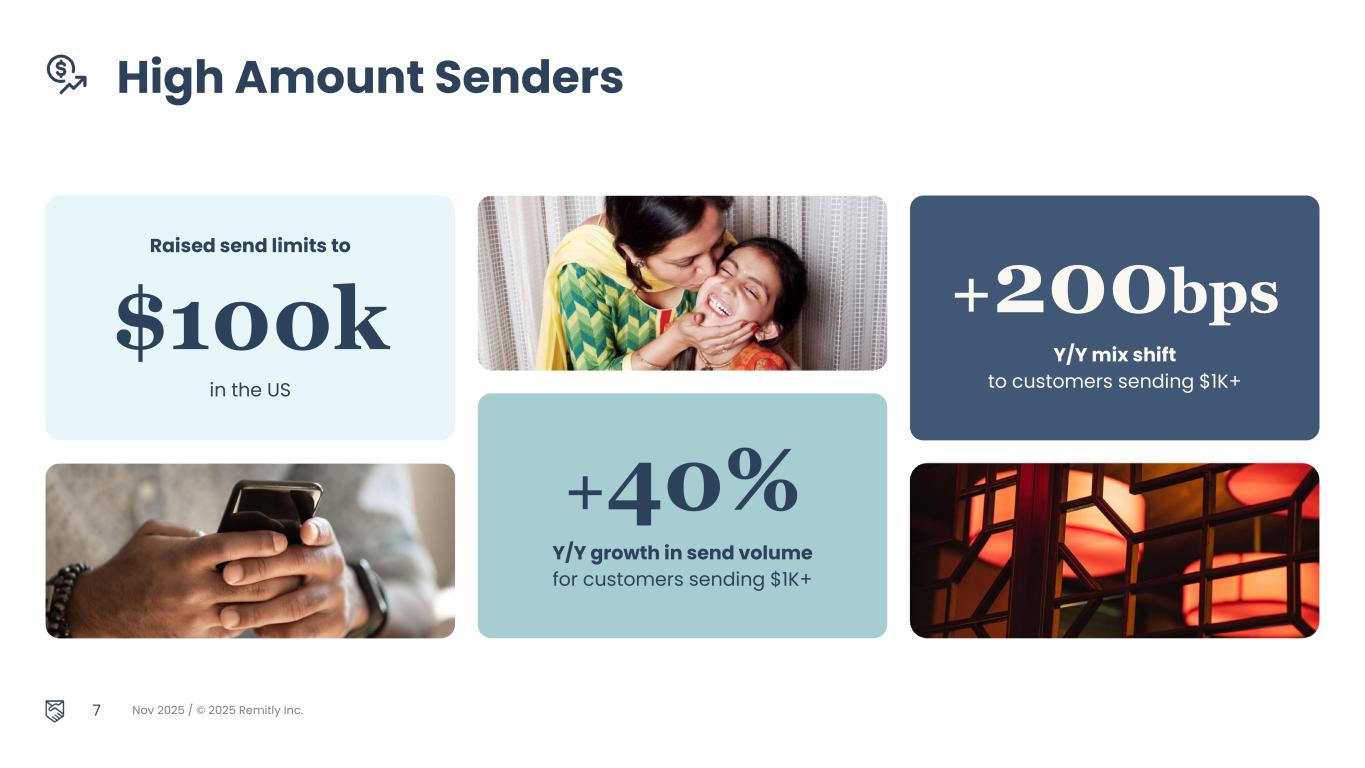
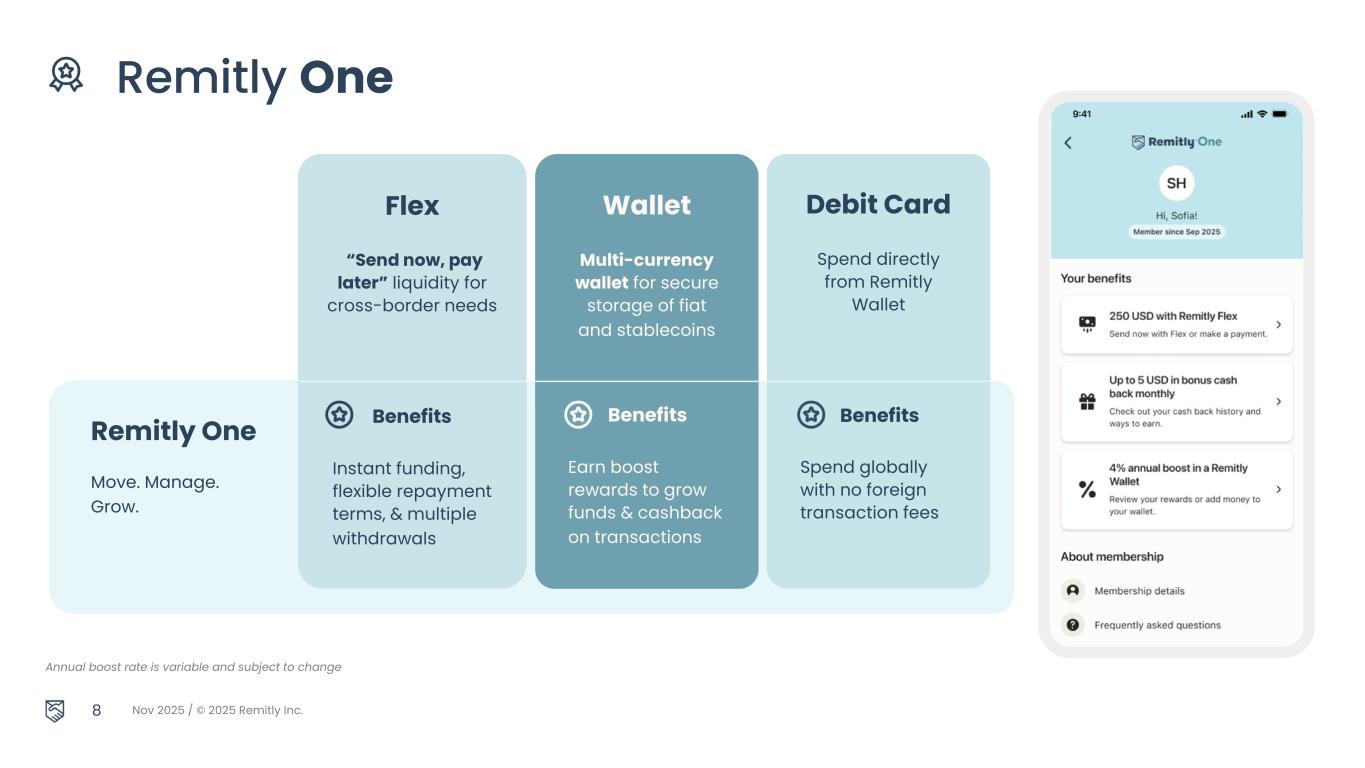
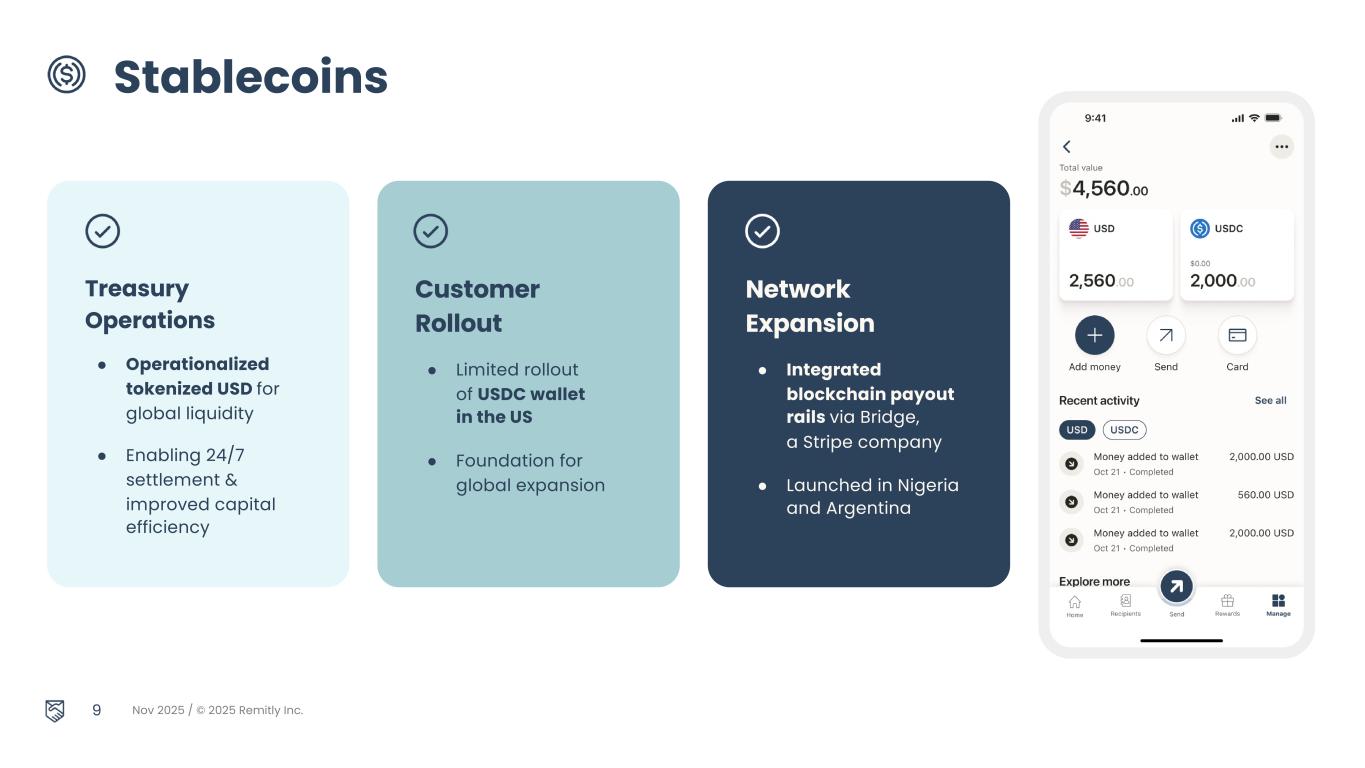
Thank you, Dave, and welcome to Remitly. Thank you to everyone joining us for our third quarter earnings call. In Q3, we exceeded our guide, reflecting momentum from last quarter and the early benefits of our growth initiatives, further demonstrating the strength and durability of our business model. Remitly is a structurally advantaged financial platform built for durable growth. Revenue growth of 25% and adjusted EBITDA margins of 15% reflects our disciplined execution and focus on sustainable profitable growth even as we continue to invest and expand. Today, I will focus on how our third quarter success directly validates our ambition to expand from being a leader in money movement to capturing a larger portion of the $22 trillion total addressable market. Our performance in the third quarter reflects the value of trust as the engine and competitive advantage that secures our enduring relationship with the customer. At Remitly, trust means something very specific. It is about mastering the difficulty of delivering a seamless end-to-end experience at a fair customer-centric price with near-instant delivery and the protection provided by stringent risk management. We deliver trust by mastering complexity on the inside so we can deliver radical simplicity on the outside. The underlying mechanics behind every transaction lead to that peace of mind. We are obsessed with eliminating the customer's core anxiety, delivery uncertainty. In the third quarter, our reliability metrics improved even further, with 99.99% uptime across the app and web and speed metrics that underscore the value of instant delivery with over 94% of all transactions completed in under an hour and over 97% of transactions completed without customer support contact. Our platform is built on a powerful foundation with trust at its core. We want to communicate today how that platform is extending across two main fronts: new customer categories and new products as shown on Slide 5. Specifically, I will share an update on our success with customer categories, including business and high amount senders. I will also provide an update on new products with an update on Remitly One, including Flex and stablecoin. Moving to Slide 6. Remitly Business continues to scale rapidly as we execute against a large opportunity. As we highlighted in Q2 with Remitly Business, we expanded our TAM more than tenfold from approximately $2 trillion to $22 trillion as we aim to serve millions of small businesses paying international contractors, vendors and employees. Following the successful launch in the U.S. in Q2, we expanded into the U.K. and Canada, marking a major step in building a global small business payments platform. Our product allows small businesses to onboard, verify and send internationally in minutes. A seamless extension of the trusted experience we've built for consumers as we pursue a low-touch, product-led go-to-market approach for business customers, designed to drive efficient, scalable growth of this important customer category. The number of total businesses using the Remitly platform grew sequentially this quarter to nearly 10,000, and average transaction sizes are roughly twice those of our core consumer category. We've continued to strengthen our trust and KYB engine, resulting in higher approval rates and lower onboarding friction for businesses, while keeping our platform secure and our customer experience world-class. As a direct result of these improvements, business send volume has nearly doubled on the platform sequentially. To show this, let me share Derek Jefferson's story. A Remitly user since 2019, who recently became a Remitly business user. Derek runs a small business, HTDBComics, in the U.S., creating comic books that feature a superhero who protects the vulnerable. Derek leverages three consultants in Nigeria, who help him storyboard and illustrate the comic. Derek loves Remitly because our custom business experience makes it 'super easy' to pay the team in Nigeria. Derek has already sent thousands of dollars across dozens of transactions in 2025. Looking ahead, we are seeing exciting customer adoption, and we remain confident the Remitly business will be a contributor to sustainable revenue growth, margin expansion and long-term shareholder value as it expands our reach from individuals to the millions of entrepreneurs and small companies powering the global economy. Now on to high amount senders on Slide 7. Remitly's global payments platform has ably served both small and large transactions for years, but we have put additional focus on this growing category given our unique ability to serve these customers with a fast and affordable product. Throughout Q3, we continued to expand send limits on our platform for certain U.S. customers, now unlocking up to $100,000 per transfer. This targeted expansion enables a larger portion of our customer base to move more significant amounts seamlessly while maintaining our high standards for compliance and security. To accelerate awareness and adoption, we launched marketing campaigns in key high-volume send countries and in-app notifications targeted to high-amount senders. We also made deliberate strategic investments in pricing to attract and retain customers sending over $1,000 per transfer, within specific corridors like the U.S. and Canada to India. These transactions led to over 40% year-over-year send volume growth for customers sending more than $1,000, an increase in the mix from these customers of more than 200 basis points year-over-year. As we continue to remove friction, increase transparency and deliver best-in-class service for high-amount senders, we are positioning Remitly to become the most trusted global payments platform for high-value cross-border money movement, unlocking a massive underpenetrated opportunity that will continue to contribute to our growth. Now shifting from new customer categories to new products. I'll start with an update on Remitly One on Slide 8. Remitly One represents the next chapter in our product evolution from a transactional to a more long-term financial relationship. At our Reimagine event in September, we introduced Remitly One as a bold new way for the millions of people who live their financial lives across borders to move, manage and grow money in one trusted platform. Flex is our flexible funding solution that lets customers send now pay later, addressing a key customer pain point, timing mismatches between earnings and transfer needs, especially for those that are credit invisible. With over 100,000 active users at the end of Q3, this product is designed to bring liquidity to our customers underserved by the broader financial system. Our proprietary data allows us to identify a valuable category among our 8.9 million customers who demonstrate consistent and responsible financial behavior, enabling us to prudently match their liquidity access with their past cross-border payments behavior. Flex provides an essential safety net for time-sensitive payments like medical emergencies or tuition as well as a deeper long-term relationship with these customers. Remitly Wallet, which allows direct deposit and multicurrency balances and our digital debit card compatible with Apple Pay and Google Pay have shown healthy early adoption. These products expand engagement beyond sending events and are expected to diversify revenue over time through interchange while reinforcing our core value proposition. We continue to leverage stablecoins to enable growth in cross-border finance, seeing potential in three main areas: FX, treasury and cash management, improved disbursement rails and digital wallet features as shown on Slide 9. Within our treasury operations, we've tokenized portions of our U.S. dollar liquidity to move funds across markets in near real time. This capability enhances our ability to fund operations globally, improves capital efficiency by reducing idle float and strengthens our FX treasury and cash management, all while maintaining the transparency and control expected from a regulated platform. On the customer side, stablecoins enable a hybrid network that combines our already scaled fiat infrastructure with blockchain interoperability. We initially launched USDC in the United States to rapidly build the foundational infrastructure and compliance framework for our wallet. And we have since integrated stablecoins into our payout network for disbursements in partnership with Bridge, a Stripe company. Recently expanding this capability into two key volatile currency environments, Nigeria and Argentina, where customers seek stability and flexibility. Looking ahead, we are focused on enabling customers to manage and hold more stable digital currency balances within a Remitly wallet. As we look ahead to 2026, we remain deeply optimistic about our position. We have built a formidable platform that still commands only a small share of a massive and growing market with significant upside ahead. Three key factors will drive our growth next year. First, our new customer expansion efforts continue to unlock new corridors and customer categories such as Remitly business customers, extending our reach and reinforcing our global network effects. Second, our product portfolio expansion is gaining momentum as early successes with Flex and Remitly One lay the groundwork for broader offerings such as credit and multicurrency accounts for our nearly 8.9 million customers. And third, we are well positioned to benefit from a powerful shift from cash to digital remittances aided by the One Big Beautiful Bill going into effect on January 1, 2026, which imposes a 1% tax on cash and other physical remittance instruments that exempts digitally funded transactions. This legislation significantly amplifies the advantage of our digital-first model. In closing, at Remitly, we start with the recognition that financial services do not naturally transcend borders, and we are designed to do exactly that. That is why we are built unlike other digital payment providers that create local market ecosystems and stitch them together. Our borderless global network is a key component of our unique competitive advantage. Remitly now supports more than 5,300 corridors with more than 5.4 billion bank accounts and mobile wallets and over 490,000 cash pickup locations. Finally, we hope you will join us either virtually or in person at Remitly's first Investor Day since our IPO on December 9, 2025, where we will be sharing more of our long-term vision and detailed road map.
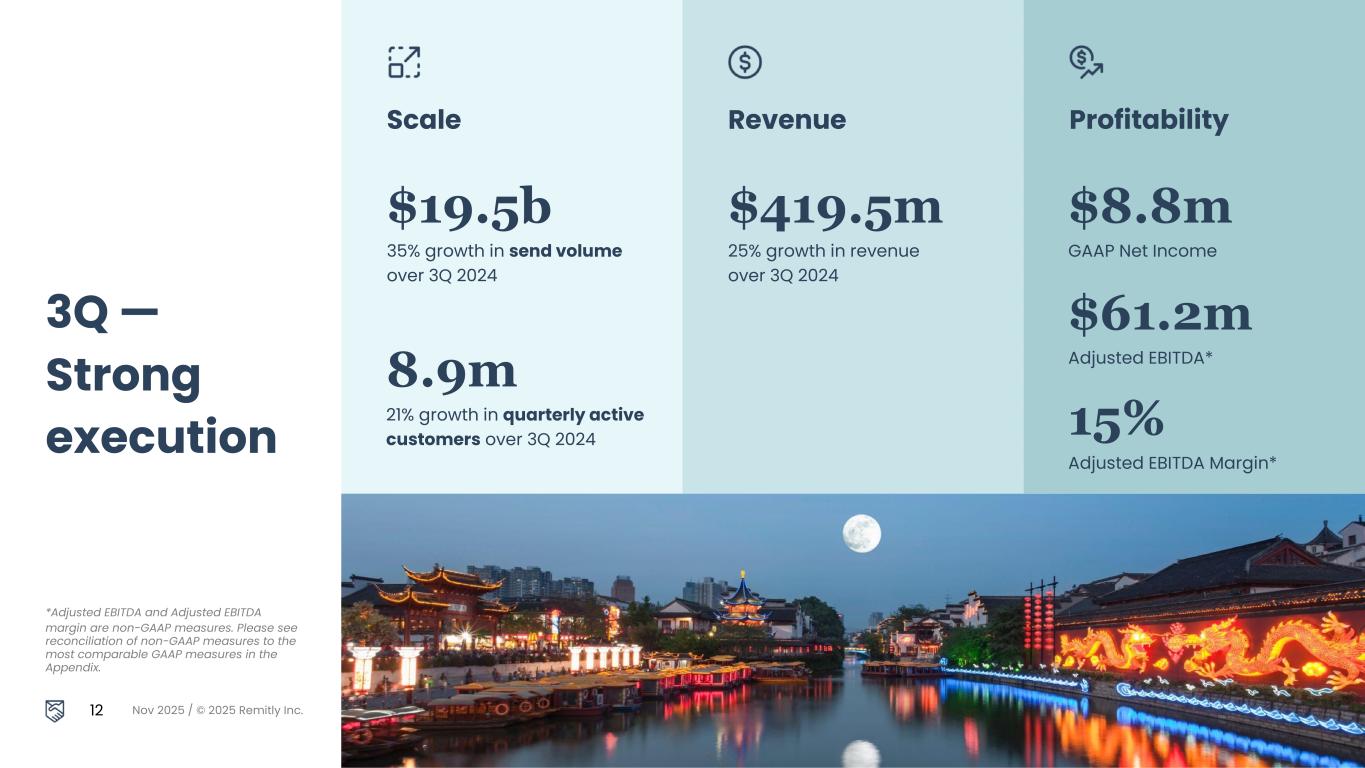
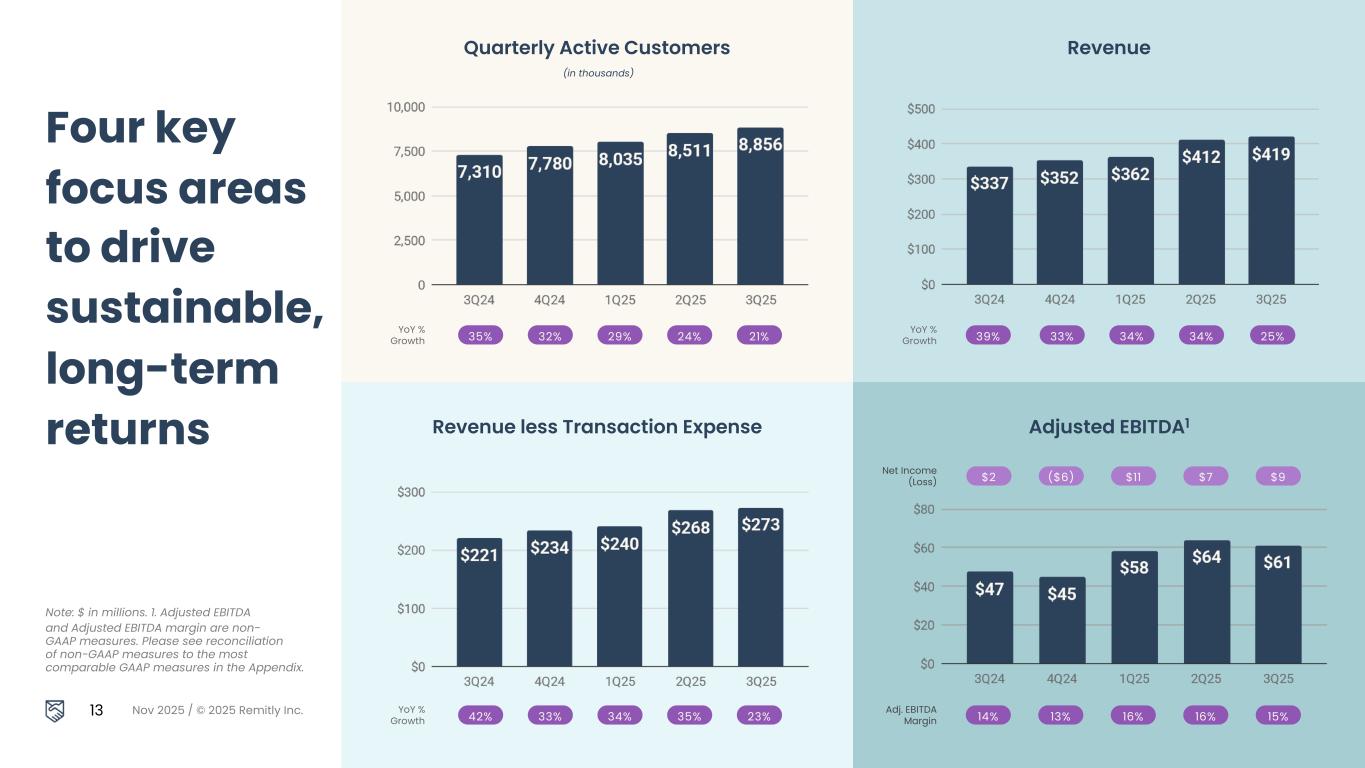
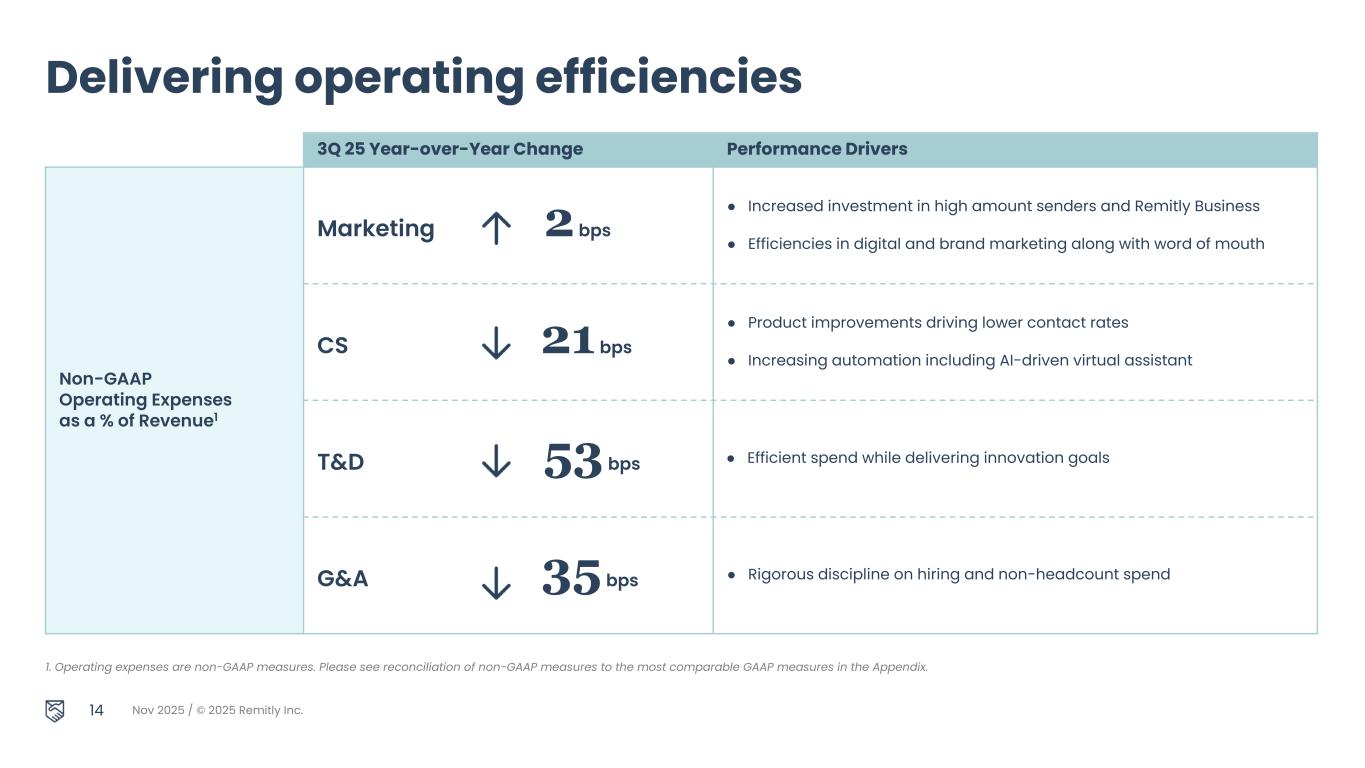
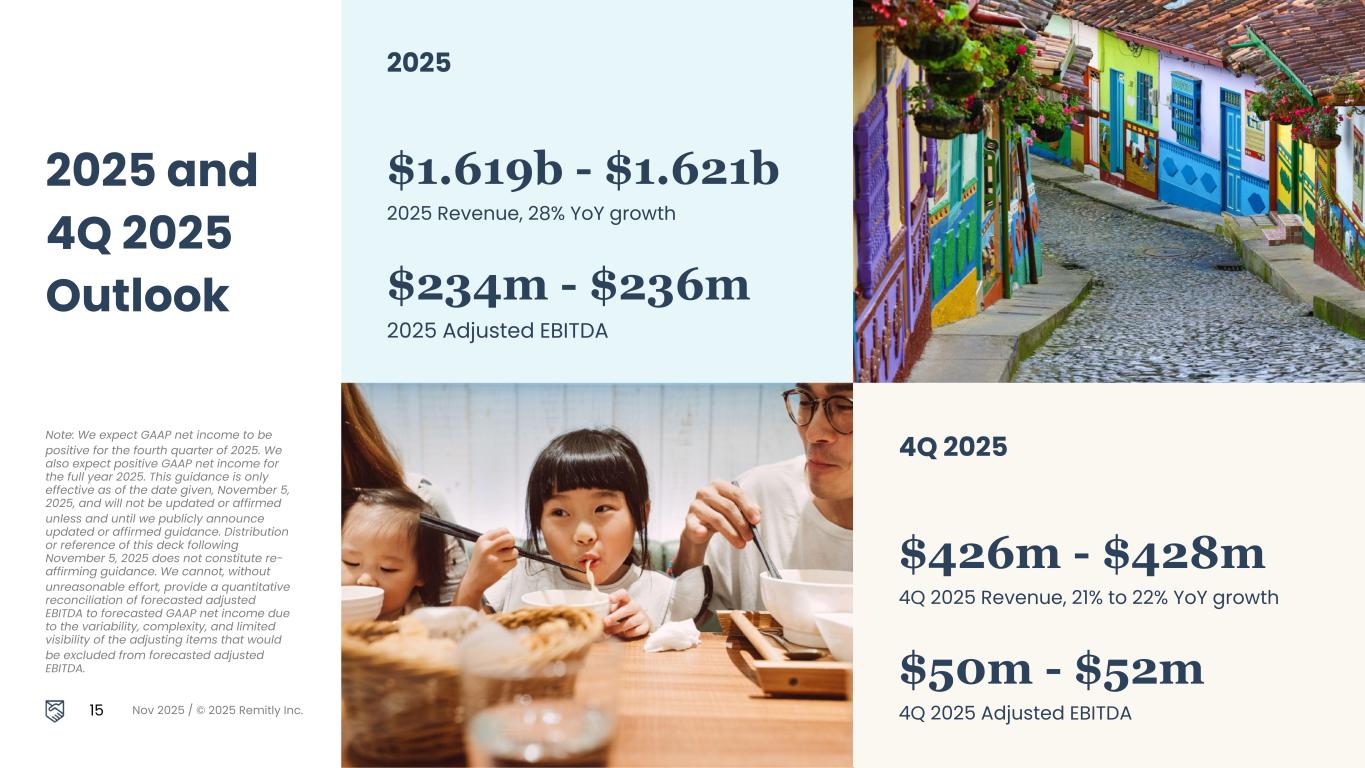
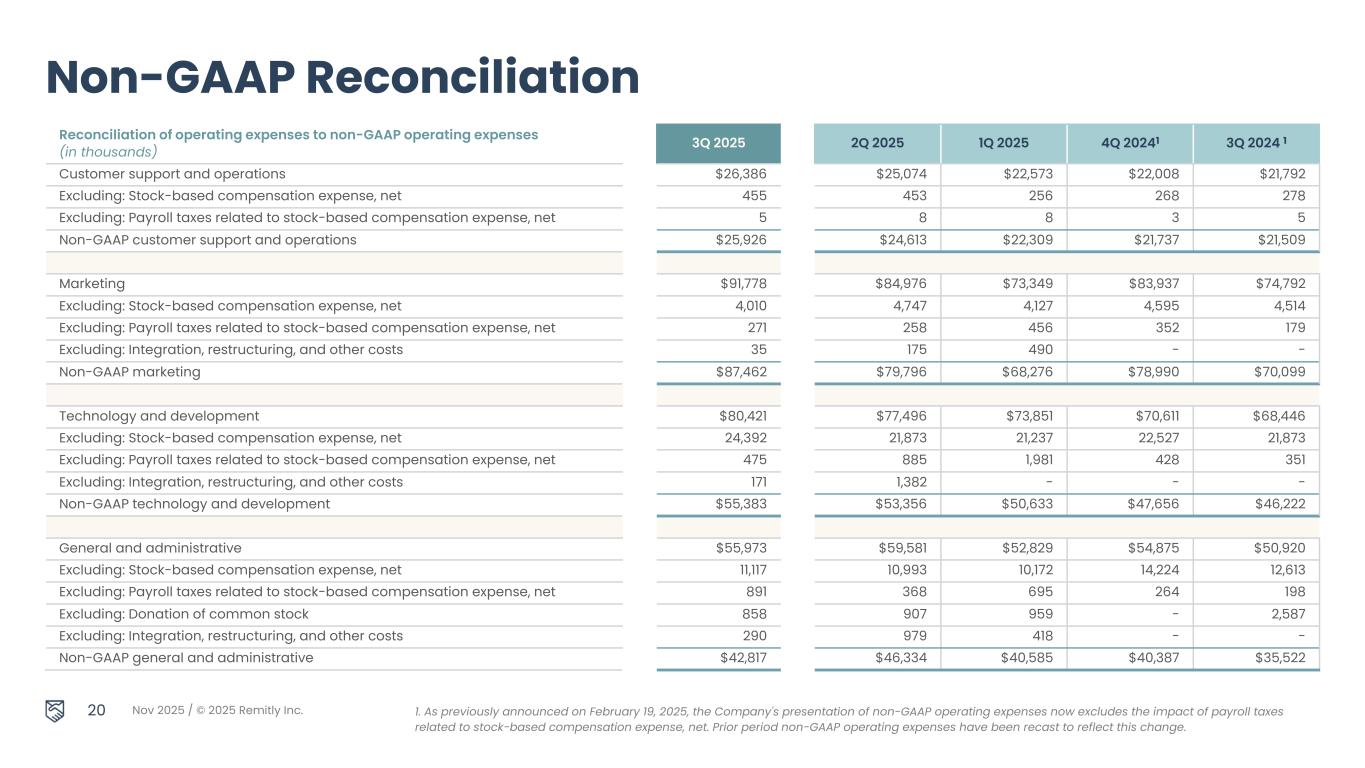
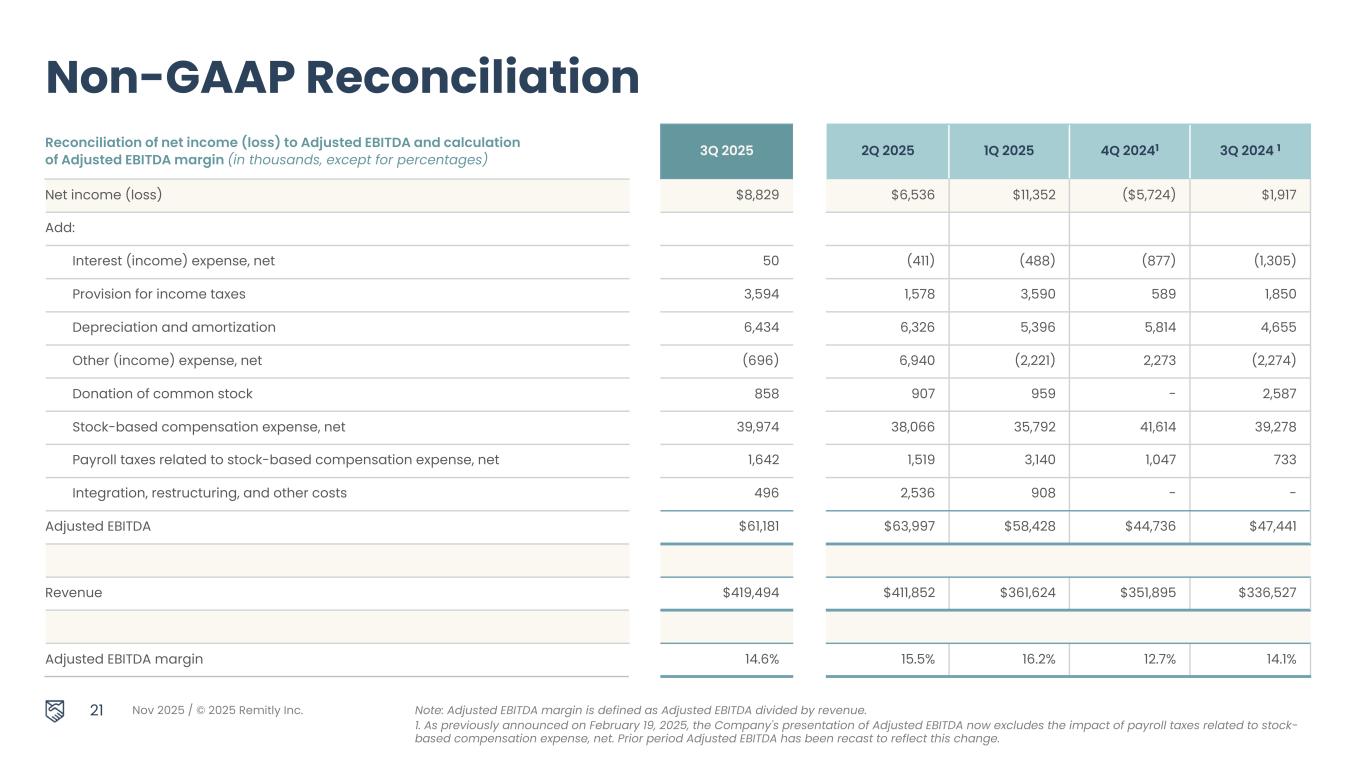
Thank you, Matt, and good afternoon, everyone. We delivered another strong quarter of profitable growth. As shown on Slide 12, third quarter revenue was $419.5 million, up 25% year-over-year, and adjusted EBITDA was $61.2 million, representing a 15% margin. Despite facing the toughest comp for the year, results exceeded expectations with revenue and adjusted EBITDA both $7 million above the midpoint of our Q3 guidance. We continued our track record of GAAP profitability in Q3, reflecting disciplined execution across the business. Now, I will begin with an overview of our third quarter results and then share our outlook for the fourth quarter of 2025. As we did last year, we will also provide some early perspective on 2026. Let me unpack the revenue growth drivers. Send volume grew 35% to $19.5 billion. Supporting this strong volume growth, send volume per active customer increased 11% year-over-year. This was driven by growth in both transactions per active and average transaction size as we continue to win share and gain traction with higher amount senders and business customers. Quarterly active customers increased 21% year-over-year to nearly 8.9 million, in line with expectations. Our retention levels continue to remain strong. Take rate was 2.15%, in line with expectations. Now, let me dive deeper into our revenue outperformance from a geographic and new products perspective. From a send side, U.S. revenue grew 28%, driven by continued share gains. The rest of the world grew 20% year-over-year, a sequential deceleration, reflecting the toughest comp of the year in Q3. Note, the rest of the world revenue grew 58% year-over-year in Q3 2024. On the receive side, revenue from regions outside of India, the Philippines and Mexico grew 31% year-over-year. Similar to last quarter, our Mexico receive revenue growth outpaced overall revenue growth. We are continuing to outperform in the Mexico receive corridor, growing meaningfully faster in that corridor than the broader industry. Our outperformance showcases how our focus on localized innovation, including offering QR code-based cash pickup is driving share gains in Mexico. Before moving to a review of profitability, I'd like to highlight our progress with new customer categories and products. As Matt noted, we are seeing strong momentum with new customer categories. Enhancements to the Remitly business platform and market expansion efforts drove a near doubling of business send volume sequentially in Q3, and new marketing campaigns and product enhancements targeting high amount senders resulted in 40% year-over-year send volume growth for customers sending more than $1,000, an increase in mix of more than 200 basis points. I'll focus my commentary around product momentum on Flex, which continues to scale rapidly and is becoming an important driver of growth and engagement for Remitly. Flex is our flexible funding solution that lets customers send now, pay later with a no-interest cash advance. Remitly One members get access to funds, multiple withdrawals and repayment on their own schedule over 90 days. As Matt highlighted, we have over 100,000 active Flex users at the end of Q3. Flex revenue has also nearly doubled sequentially in Q3, supported by three monetization levers: instant funding fees from non-members, membership revenue and cross-border payment revenue as funds are exclusively used to send money. Early results show that Flex users transact more frequently, reinforcing its role in deepening customer relationships. On the cost side, Flex operates with minimal incremental cost to serve and early cohorts show strong repayment activity with provision for credit loss rates in line with expectations as we continue our measured rollout. While Flex is still nascent, membership cohorts have demonstrated strong unit economic progress. Importantly, notional cost of capital is considered when measuring unit economics of the Flex product. Flex is designed to be capital efficient with high transaction volumes and minimal balance sheet exposure. Flex is offered primarily to existing customers with established cross-border payment history, giving us access to rich first-party data and control over customer receivables balance. As a result, nearly 90% of our $20.8 million of outstanding receivables are current, which allows us to recycle capital efficiently. We expect loan balances growth to be measured, balancing a controlled and deliberate pace of expansion along with improving unit economics. As cohorts mature, we'll continue to scale Flex as a product that deepens customer engagement and expands our platform for future value-added services. Turning to our focus on driving profitable growth. Transaction expenses this quarter were $146.7 million and as a percentage of revenue were 35%. Excluding provision for transaction losses, other transaction expenses were $121.7 million, improving 38 basis points year-over-year as a percentage of revenue. The mix of digital receive transactions increased year-over-year by more than 200 basis points, continuing a trend that has been positive for our business and customers. While early days, we have started leveraging stablecoins to unlock network efficiencies. Provision for transaction losses was $25 million or 12.8 basis points as a percentage of send volume, in line with our expectations. Our ongoing investments in AI-driven risk models enable us to proactively mitigate fraud trends while preserving the trusted seamless experience our customers expect. As I shared in prior quarters, revenue less transaction expense or RLTE expansion is an indicator of the long-term business model success. RLTE dollars grew 23.4% to $272.8 million, reflecting strong customer activity and economies of scale. RLTE as a percentage of revenue this quarter was 65%, consistent with what we have seen in the second quarter. We are focusing on long-term RLTE dollar growth as we continue to attract new customers, innovate with new use cases and scale. With that, let me walk you through the specific non-GAAP expense categories on Slide 14. Marketing investments remain disciplined and growth focused. Marketing spend was $87.5 million, up 25% year-over-year and at 20.8% of revenue, which is consistent with what we had in the same quarter prior year. Q3 also marked the first quarter where we began comping the marketing efficiencies achieved in the second half of 2024. Marketing spend per active customer was $9.88, up 3% year-over-year, reflecting ongoing high ROI investments in growth initiatives. We continue to invest strategically behind high-amount senders and business customers. Our LTV to CAC was about 6x, while the payback period remained under 12 months. As a reminder, marketing investments drive returns for many years beyond our initial investment given repeat behavior. Customer support and operations expense was $25.9 million and as a percentage of revenue was 6.2%, improving 21 basis points year-over-year, continuing a trend we have seen over the past couple of years. Our AI-based virtual assistant and product improvements have enabled lower agent contact rates while maintaining strong customer satisfaction ratings. Technology and development expense was $55.4 million and as a percentage of revenue improved by 53 basis points year-over-year. Technology and development expenses grew 20% year-over-year as we become more efficient in managing our spend while delivering robust product innovation. Our technology investments continue to deliver on the metrics that matter most. As Matt shared in Q3, over 94% of transactions were disbursed in under an hour. More than 97% were completed without customer support contact, and our platform delivered 99.99% uptime. These results demonstrate the reliability and trust we are earning as we scale globally. G&A expenses were $42.8 million, improving 35 basis points as a percentage of revenue year-over-year, reflecting continued leverage across the business. We are also investing in AI across the organization from writing code to writing documents to reimagining our internal operations and processes. For investors, that means we are building a smarter, more agile Remitly, one that scales faster, serves customers better and delivers long-term shareholder value. Overall, we continue to maintain rigorous discipline on hiring and non-headcount spend while investing in compliance, geographic expansion and AI tools. Strong revenue growth, combined with efficiency and discipline led to adjusted EBITDA of $61.2 million. Once again, we delivered a positive GAAP net income quarter with $8.8 million GAAP net income, a significant improvement compared to a $1.9 million net income in the third quarter of 2024. Stock-based compensation was $40 million and as a percentage of revenue was at 9.5%, approximately 214 basis points lower than the third quarter of 2024. In Q3, we repurchased $11.9 million of shares under our $200 million authorization, reflecting our confidence in Remitly's future and our commitment to building lasting value for both customers and shareholders. With that, I will move on to our outlook shown on Slide 15. For the fourth quarter of 2025, we expect revenue of $426 million to $428 million or 21% to 22% growth. The majority of our revenue in 2025 comes from prior year cohorts, giving us greater visibility into the durability of our revenue growth. The expected trend in our revenue growth drivers remain consistent with recent quarters. We anticipate send volume growth to exceed revenue growth and revenue growth to outpace quarterly active customer growth, driven by the continued momentum among business and high-amount senders. Send volume per active customer is expected to grow in the mid-single digits, supported by higher transaction frequency. For the full year, we expect revenue between $1.619 billion and $1.621 billion, reflecting a growth rate of 28%. Now, let us pivot to profitability and expense guidance. Starting with transaction expenses. We expect Q4 transaction expenses as a percentage of revenue to be slightly higher than Q3. As a reminder, in Q4 of 2024, we had significantly low transaction losses at 9 basis points as a percentage of send volume. For Q4, we expect transaction losses to remain consistent with Q3 2025. As always, these metrics may fluctuate quarter-to-quarter, and we remain disciplined in optimizing customer lifetime value while rigorously managing risk across our platform. Shifting to marketing. We expect marketing investments in Q4 will continue to deliver strong ROI. We'll make these investments while prioritizing efficiency. Recall, we began delivering the meaningful marketing per QAU efficiencies in the second half of 2024. So, as we lap those improvements in the second half of 2025, we would expect marketing per QAU to grow by mid-single digits, especially as we support new product adoption. Putting this all together, we expect Q4 adjusted EBITDA to be between $50 million and $52 million, translating to 12% margins. For the full year, we expect adjusted EBITDA to be between $234 million and $236 million, representing an adjusted EBITDA margin of 15%. We expect to generate modest positive GAAP net income in the fourth quarter of 2025 as we plan to make growth-enhancing investments, improve adjusted EBITDA as well as manage dilution, net burn rate and stock compensation expense effectively. Now, let me share some early thoughts on 2026. There are a few puts and takes to consider at this stage. As Matt highlighted, on the positive side, the federal remittance tax on cash transfers, continued product innovation and early progress in new geographies should provide modest tailwinds for the business. While these growth tailwinds are still in the early innings and will not be major contributors next year, they are laying a strong foundation for future growth. At the same time, the recent immigration headwinds in key sending countries such as the U.S. and Canada could potentially weigh on new customer acquisition. Taking all these factors into account, we currently expect the revenue growth to be in the high teens range for 2026. This remains an initial view and Q4 results will be important in shaping our formal guidance for next year. As always, we remain focused on balancing growth with disciplined execution under the same profitable growth framework that has guided us in the past. To summarize, in Q3, we delivered strong results across our key financial metrics, achieving 25% revenue growth and 15% adjusted EBITDA margins. We also delivered another quarter of GAAP profitability, underscoring the strength and scalability of our model. Looking ahead, we are excited to share more about our long-term business model, including the durability of our growth and margin profile at our first Investor Day in New York City on December 9. We remain confident in the long-term growth potential and disciplined in our capital allocation approach.
Operator
And our first question comes from the line of Tien-Tsin Huang from JPMorgan.
Speaker 4
Took a lot of notes here. Just thinking about '26 and the high-teens outlook that you're initially setting here. I appreciate you called out some of the tailwinds, but it doesn't sound like you're assuming much contribution from some of the new products or maybe the tax tailwind, that kind of thing. Just want to better understand what you've assumed or have not assumed in the high teens outlook.
Speaker 1
Yes, Tien-Tsin, thank you for the question. I'd start with FY '25 first because that sets a strong foundation for a strong FY '26. And clearly, H1 as well as Q3 were strong proof points of our execution. As you saw, Q3 revenue grew 25% margin at 15% and strong performance trends across the board, whether it was send per QAU growth as well as send volume growth. As we look at FY '26, we still have Q4 remaining, and that sets a strong foundation. But the early view that we have right now gives us a lot of optimism. It starts with the strong foundation and the durability of the remittance business in general. Beyond that, we believe that the remittance tax, which will take shape starting 2026, will be a net benefit for us. Again, early days, and we'll see how that progresses. But behind the scenes, our marketing efforts, our execution is tailored to take share more and more from the physical to the digital space. Secondly, I would say the new products and customer categories, early days, but we are very excited about what we are seeing across the board, whether you look at the Remitly business momentum or you look at on the product side from a Flex perspective. Overall, we want to be prudent and thoughtful, especially with the restrictive immigration stance we have seen as well as just the broader macro uncertainties. And that's why sort of the early initial view we wanted to give you to just start thinking ahead. Overall, we remain very focused on balanced growth, profitability and investments. And most importantly, we want to deliver expanding margins as we go along. So overall, we feel great about the setup for FY '26.
Speaker 4
Great. And maybe I'll just follow up on that since you mentioned it. Just thinking about incremental margins in the next several quarters, given what you've learned so far from the launch of the new products and some of the initiatives. Again, I know it's early, but just the discipline and the safeguards that you have in place to guide you to some level of incremental margin. Any thoughts on that?
Yes. I would say that we remain very balanced, as I said, with just an overall approach where we want to deploy capital very thoughtfully to drive growth, profitability and at the same time, investing in the future bets. And you've seen us execute in FY '25 very, very thoughtfully where we have invested in these big bets. But at the same time, we have continued to leverage on the big expense categories and continue to drive margin expansion. So, our approach even going into FY '26 will be similar, where we want to really drive productivity gains. We want to drive efficiencies while we prioritize the important bets.
Speaker 1
Yes. And overall, Tien-Tsin, the only other thing I'd add is when you just think about the overall both '26 and long-term potential of the business, I think that the $22 trillion market share where we're less than 1%, huge opportunities there, and especially as we expand and go kind of upmarket as we think about higher dollar senders, as we think about small businesses, we continue to win share as there's a shift that continues from cash-based remittance players to digital remittance players, and I think that will be aided by the remittance tax in 2026. And then, as we think about leverage on the bottom line and just increased velocity, I think that there's a lot of really reimagining what's possible at Remitly when it comes to leveraging tools like AI. So, as we go into '26, very excited. And obviously, we want to give an early view in terms of guidance. But when you think about the overall trajectory of the business, both on the top and bottom line, we're very optimistic and very excited about what's to come, and we're excited to talk more about that as well at our Investor Day in December.
Operator
And our next question comes from the line of Gus Gala from Monness, Crespi, Hardt & Company.
Speaker 5
I want to go back to the incremental margin swing you're kind of pointing towards in Q4. I guess that a lot of it is the marketing coming up. Can you help us think of the magnitude of it coming from more top funnel spending versus maybe CVCs at bottom funnel coming up? And then is that kind of high single-digit incremental margin? I'll ask it more point blank. Is that kind of the right bogey we should be thinking about in the first half '26, although growth we're thinking high-teens?
Speaker 1
At a strategic level, when you assess the overall dynamics of our business, particularly in payments, scale plays a crucial role. The core aspect we've discussed previously, and will elaborate on during Investor Day, is adjusted free cash flow. From a growth perspective, the flywheel is indeed in motion. This allows us to reduce both variable and fixed costs, while simultaneously enhancing our profitability due to the investments we've made in building a strong brand. Last quarter, we saw 8.9 million customers using our products, and the positive impact of word-of-mouth helps us manage our variable costs and leverage our trusted brand and customer base effectively. Our ongoing investments in transforming international payments and cross-border financial services further amplify this leverage as we pursue our ambitious vision. I will now hand it over to Vikas to discuss our plans for expanding margins in 2026. In summary, the flywheel is gaining momentum with increased scale. This year, we've generated significant cash, and as we move into next year, we have various opportunities to enhance both our top and bottom lines.
Yes. And just to follow up, I would say that Q4, Gus, as you think about it from a revenue perspective, the trends will be consistent with what we have seen in prior quarters. And what that means is that our send volume growth will continue to outpace revenue growth. If you look from a QAU perspective, especially as we mix shift into the high-amount senders as well as business, every QAU will be driving a lot more from a send per QAU, which means that revenue growth will be greater than QAU growth. And again, we feel really great about our send per QAU trajectory. I'll just share a few stats of what we saw this quarter, for example, we saw a record send per QAU, right? Like really, really solid performance there. And this was backed by record average transaction size growth as well as the highest average transaction size we have seen in 10 quarters. In addition to that, we have seen record transaction per active customer. So, it's a lot of really good foundation there, and we continue in Q4 with a similar optimism. So, the revenue trends continue to be similar. And as you know, majority of our cohort revenue after first full year continues through. So, we feel good that once we have a strong foundation, it just drives continuous momentum. As you look at the expense side of the house, as Matt said, we'll continue to leverage technologies from AI to stablecoin to improve, call it, G&A leverage as well as transaction expense improvement. And as we do that, we will be very thoughtful about a very important aspect, which is investment, which builds our long-term shareholder value. So, it will just be a balance, as I said, and we remain very optimistic.
Operator
Our next question comes from Cris Kennedy from William Blair.
Speaker 6
It seems like you've got a lot of opportunities. Can you just talk about how you balance investment going into new send markets versus kind of some of the newer initiatives that you're working on?
Speaker 1
Thank you, Cris. I'll address that. What I mentioned a few quarters back still holds true today: we are a growth company with plenty of opportunities. The positive aspect is our increasing efficiency across various growth areas. This includes launching and expanding into new markets as we move toward 2026, growing within our existing markets where there are significant opportunities, and developing new segments or customer categories like Remitly business or high dollar senders. Additionally, we continue to invest in new products that support our vision for cross-border financial services. Over the past couple of years, we've invested in a more extensible platform to facilitate this. I referred to our North Star Architecture, created by our tech team a while back. As we've been building and deploying code within our core remittance business and new products, we've set company-wide goals aligned with this architecture. This approach has allowed us to achieve business results while advancing our North Star Architecture. Across the areas I mentioned—existing markets, new markets, new customer categories, and new products—we're becoming increasingly efficient and effective. Plus, with AI being integrated across all facets of our operations, it’s less about choosing one over the other and more about where we strategically direct our focus among these four areas. There are growth opportunities in all of them.
Operator
And our next question comes from the line of David Scharf from Citizens Capital Markets.
Speaker 7
Maybe just shifting to the new products and specifically Flex, which it seems like has quite a bit of early momentum based on the number of users that was about 100,000. I'm wondering, can you provide us with a sense for maybe at maturity, what the credit profile of this product is? I think you had mentioned 90% current, which I'm interpreting as a 10%, maybe 30-plus day delinquency rate early on. As the portfolio seasons, that's going to come down. But I'm trying to get a sense relative to maybe other short-term buy now, pay later products with sort of a 1% to 3% delinquency rate. Just how we ought to assess ultimately what the kind of risk-adjusted returns are of this product?
Thank you, David. Let me start and Matt can add to that. So, I'll share the same excitement you did in terms of just overall momentum of the business, 100,000-plus active users, revenue almost doubling sequentially, as well as just a minimal incremental cost that this business needs from just getting to that next stage. So really great diversification opportunity for us as a company, and we are very excited about it. I'll just clarify a couple of things that helps you think better with regards to the aging as well as the balances. So, the first thing I'd say is that, the way the program works is send now, pay later, and there is a particular duration, whether for membership or for the non-membership. And based on what we have seen from the cohorts, we are very pleased with the cohort aging of receivables and that we have 90% current balance for members and non-members compared. And what we are particularly happy is that, there is negligible balance that remains over 90 days past due and that the charge-offs have been immaterial since the program's inception. So, the way it works is slightly different than what you were narrating, and the charge-off is call it, beyond 120 days. And the repayments that we have seen in that 0 to 30, 30 to 60, 60 to 90 have been very promising. And these details are available in 10-Q, so you can look into more detail there.
Speaker 1
Yes. The only thing I'd add, David, is I think when you look at the overall Flex product, it's our flexible funding solution. Obviously, it's Send Now, Pay Later. And Remitly One members get access to funds like multiple withdrawals, repayment on their own terms and schedule. And it's adjacent to our core cross-border payments business. And you were right to call out that we now look at more than 100,000 active users as of September 30. So, we're really pleased with the progress there. And I think the second point is providing liquidity to our customers and underwriting is complex. And so as CEO, the way to be successful in complex areas is having the right expertise on the team, and that's critical. And it's important to note we have decades of experience in the underwriting space from the Board level to the Flex leadership to the team broadly to help guide our strategic direction there. And we can leverage a lot of proprietary data from 8.9 million customers to where we're uniquely positioned to bridge the underwriting variance between customers that move to a new country and just don't have credit history but may have very high creditworthiness. And so, we're excited about the traction there. I think we'll go into more depth at Investor Day in December on this point. I would not impute the 10% that you mentioned to 10% losses. And I'd also keep in mind that, given the expertise that we have, given how it's adjacent to our payments business, we can very much throttle who we let into that, and we can be very selective in terms of making sure that we're offering that to creditworthy customers. And so, a lot of levers at our disposal there, a lot of expertise. We'll go into more detail on Investor Day. But really excited about having 100,000 active users and really excited about the unit economics and overall creditworthiness that we're seeing of our customer base.
Operator
And our next question comes from the line of Zoe Deng from KeyBanc Capital Markets.
Speaker 8
This is Zoe on for Alex. And could you talk a little bit about the economics of the business and how we compare to the high dollar senders as an example?
Speaker 1
Great. Okay. I think the question was related to Remitly business and how that compares to high dollar senders. And so, I'm happy to go into that. I think that the interesting thing that I've mentioned, but just to reinforce is the fact that our product is very much extensible. So, we started the business serving kind of lower income, lower average transaction size customers. And in order to do that, getting the unit economics, getting the variable cost down, getting the speed and reliability right is foundational. And so, if you kind of think about it from a classic innovators' dilemma standpoint, moving upmarket is easier for us. And so we have done that with both high dollar senders and with our Remitly business product. But our structural advantage is on the lower end where we start in terms of micro businesses, in particular, because they have not been served by traditional financial institutions. And if you look in Q3, we continued to strengthen our KYB or Know Your Business engine, resulting in higher approval rates. We also refined our risk and business verification checks to lower friction. And we've seen great customer momentum so far. The number of total businesses has grown sequentially to nearly 10,000 now active on the platform. And in terms of your question, how it compares to our other high-dollar senders and other individual P2P remittance transactions, the average transaction sizes are roughly twice those of our core consumer category. So, business send volume has nearly doubled on the platform sequentially. We also rolled out new markets to the U.K. and Canada specifically, and we are really excited about what's to come in the Remitly business space. And as we say, Remitly, we're just getting started and certainly are in the business space.
Operator
And our next question comes from the line of Zachary Gunn from FT Partners.
Speaker 9
I want to go back to the guidance for the fourth quarter and the commentary for '26. You're indicating progress with new products and business, but it suggests that in the fourth quarter, you will see the lowest dollar amount since the first quarter of '24. Additionally, the outlook for '26 indicates a significant decrease in the amount of incremental dollars. What is causing the slowdown or underperformance? Also, regarding the take rate, I understand it's being affected by the influx of larger volume customers. Could you provide insight into how much of the take rate compression this quarter was due to customer mix versus impacts from pricing investments or other factors?
Zach, I'll take that, and I'll start in the reverse order. Let me start with the second part of your question and then move to first. Look, if you think about the take rate part of your question, I would go back to what we have shared over the last, call it, four quarters, which is our North Star metric is the long-term RLTE or Revenue Less Transaction Expense dollars. And that's a much better indicator of our business. And the reason is, to some extent, all the things you mentioned, like take rate is impacted by a lot of different factors from transaction size to corridors to pay-in, payout types to customer segment mix. And especially, as you may have seen, we have made a few important bets over here with Remitly business with the high amount senders. And even as Matt was saying, the innovator's dilemma point, we have been able to be aggressive as we think about high amount senders. That's an area where, as we mentioned, we have been more experimental where we have made price investments. And there's nothing we have to lose over there because it's a new market for us. So overall, we feel that long-term RLTE dollars is a much better metric, and that's where, as you pointed, even though our gross take rate went down, our year-over-year RLT dollars grew over 23%. Moving to your other question with regards to Q4 and FY '26. I'd say a couple of additional comments in addition to what we had shared earlier. The first one I'd say is that H2, and we've talked about it before also, in general, it is a much tougher comp. And if you look at Q3, Q4 last year, we had very strong revenue growth. And that is a tough comp to go against. So that's one reason. The second is, if you look at EBITDA and the expense side of the guide for Q4, Q4 is an important quarter. This is where we'll be making important marketing investments and setting up for a strong FY '26. Again, we'll be measured, we'll be disciplined. But hopefully, that gives you some additional context.
Operator
This does conclude the question-and-answer session of today's program. I'd like to hand the program back to Matt Oppenheimer for any further remarks.
Speaker 1
Great. Thanks, everybody. And I'll just close with a couple of comments. One, really looking forward to outlining our broader vision and telling you more about the progress in the business at our Investor Day in December. And then the second, as always, is that we always circle back to a customer story at the end. That's why we do what we do. And today, I'll talk about a quote from Derek, who is fittingly a Remitly business customer. Derek shared with us that Remitly became his go-to app. He said, 'It's click, click and the money is arriving.' We thank him for his loyalty and for trusting Remitly to get money to his business reliably and seamlessly. And thank you, everybody, for joining us. We appreciate your support. We're excited about the opportunities ahead and look forward to sharing our progress at Investor Day and beyond as we continue to execute on our vision to transform lives with trusted financial services that transcend borders.
Operator
Thank you, ladies and gentlemen, for your participation in today's conference. This does conclude the program. You may now disconnect. Good day.