Operator
Good day and thank you for standing by. Welcome to the Rhythm Pharmaceutical Second Quarter 2026 Earnings Conference Call. At this time, all participants are in a listen-only mode. After the speaker's presentation, there will be a question and answer session. To ask a question during the session, you will need to press star 11 on your telephone. You will then hear an automated message advising your hand is raised. To withdraw your question, please press star 11 again. Please be advised that today's conference is being recorded. I would now like to hand the conference over to your first speaker today, Dave Connolly, Investor Relations at Rhythm Pharmaceuticals. Please go ahead.
Thank you, Deedee. I'm Dave Connolly here at Rhythm Pharmaceuticals. For those of you participating on the conference call, our slides can be accessed and controlled by going to the Investor section of our website, ir.rhythmtx.com. This morning, we issued a press release that provides our Q2 2026 financial results and a business update, and that press release is available on our website. We also released data for RM718's Phase II trial and acquired hypothalamic obesity. Our agenda today is listed on slide two. On the call are David Meeker, our Chairman, Chief Executive Officer and President, Jennifer Lee, Executive Vice President, Head of North America, Hunter Smith, Chief Financial Officer, and Jan Mazibro, Executive Vice President, Head of International, is on the line joining us from Europe. On slide three, I'll remind you this call contains remarks concerning future expectations, plans, and prospects, which constitute forward-looking statements. Actual results may differ materially from those indicated by these forward-looking statements as a result of various important factors, including those discussed in our most recent annual or quarterly reports on file with the SEC. In addition, any forward-looking statements represent our views as of today and should not be relied upon as representing our views as of any subsequent dates. We specifically disclaim any obligation to update such statements. With that, I'll turn the call over to David Meeker, who will begin on slide five.
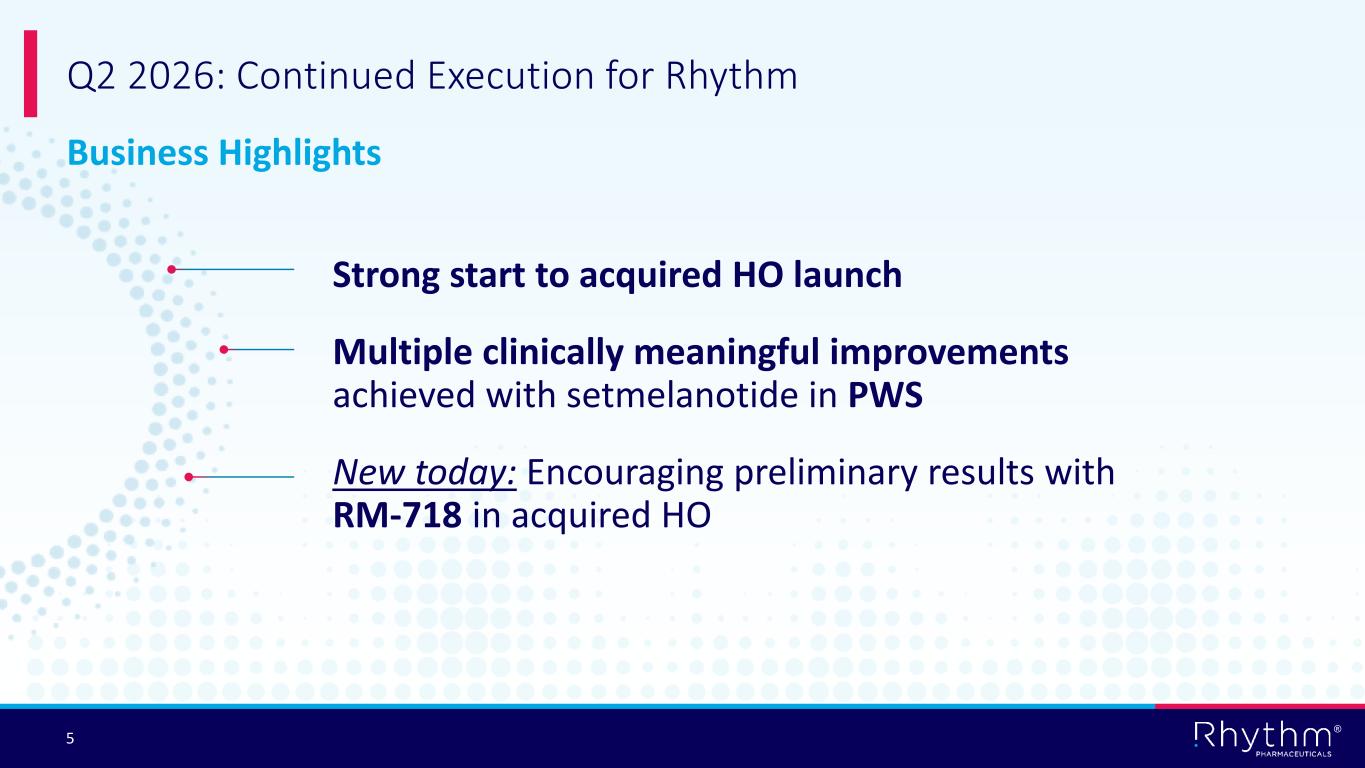
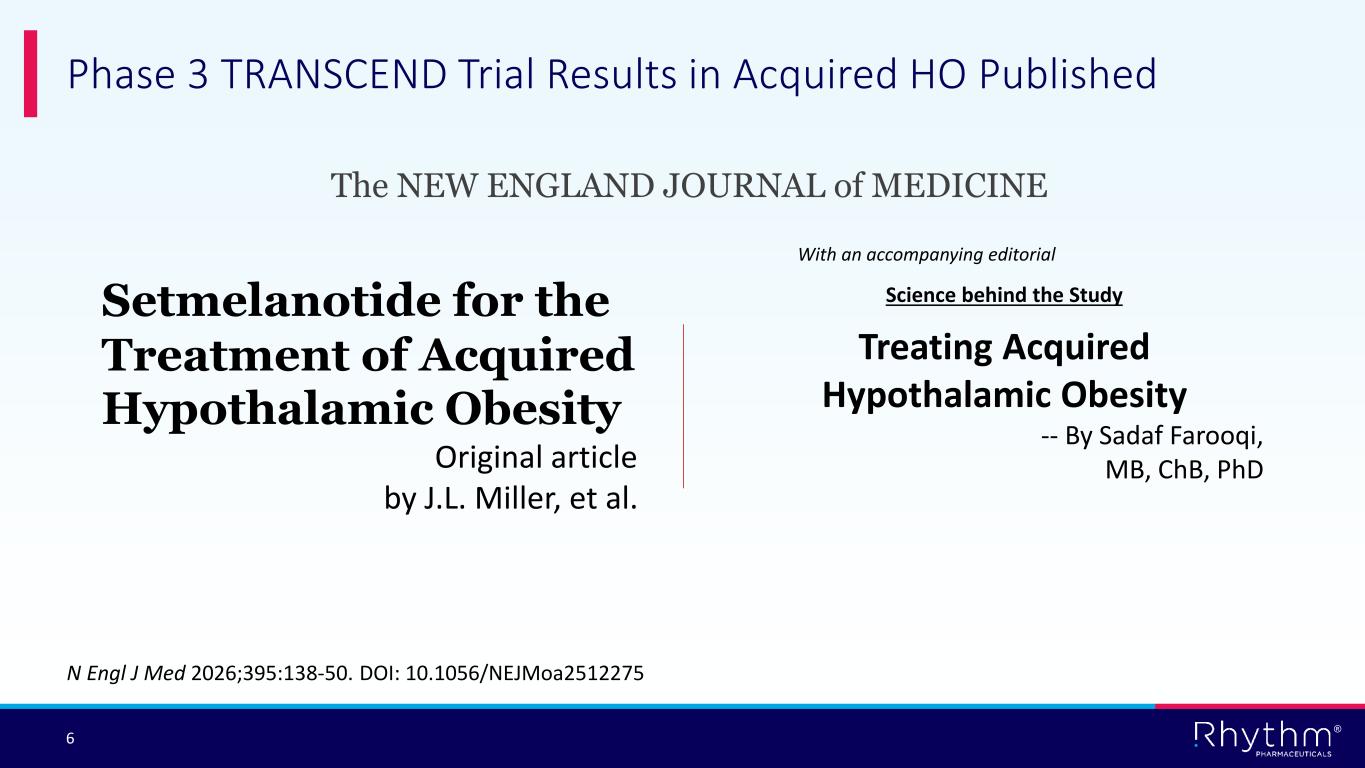
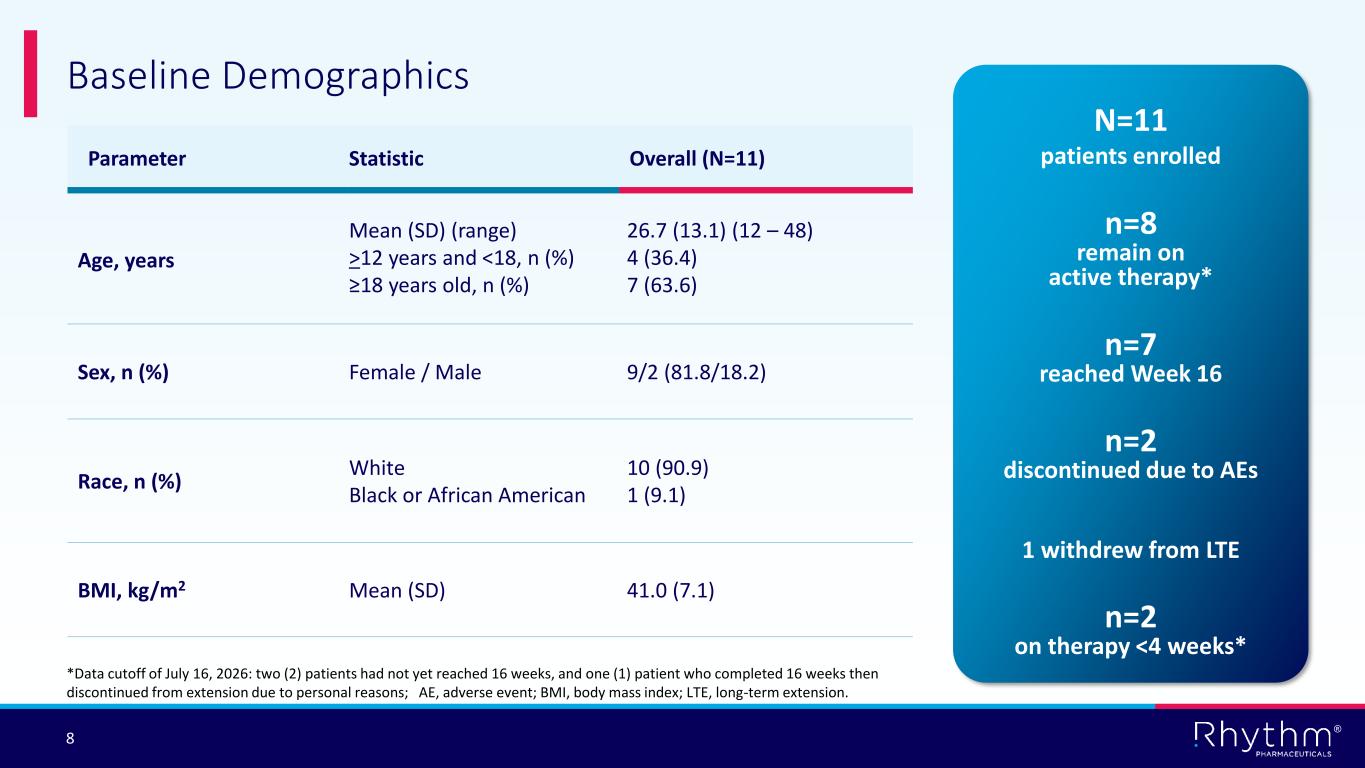
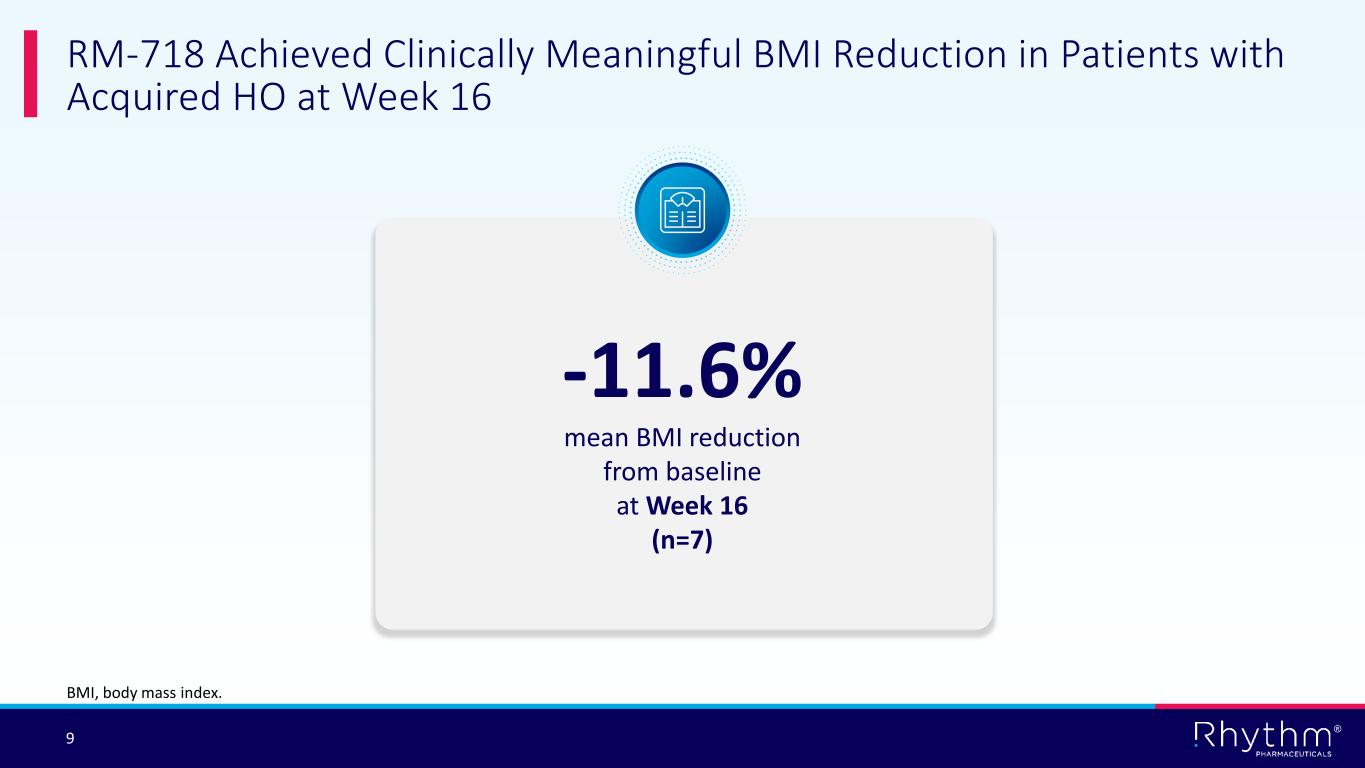
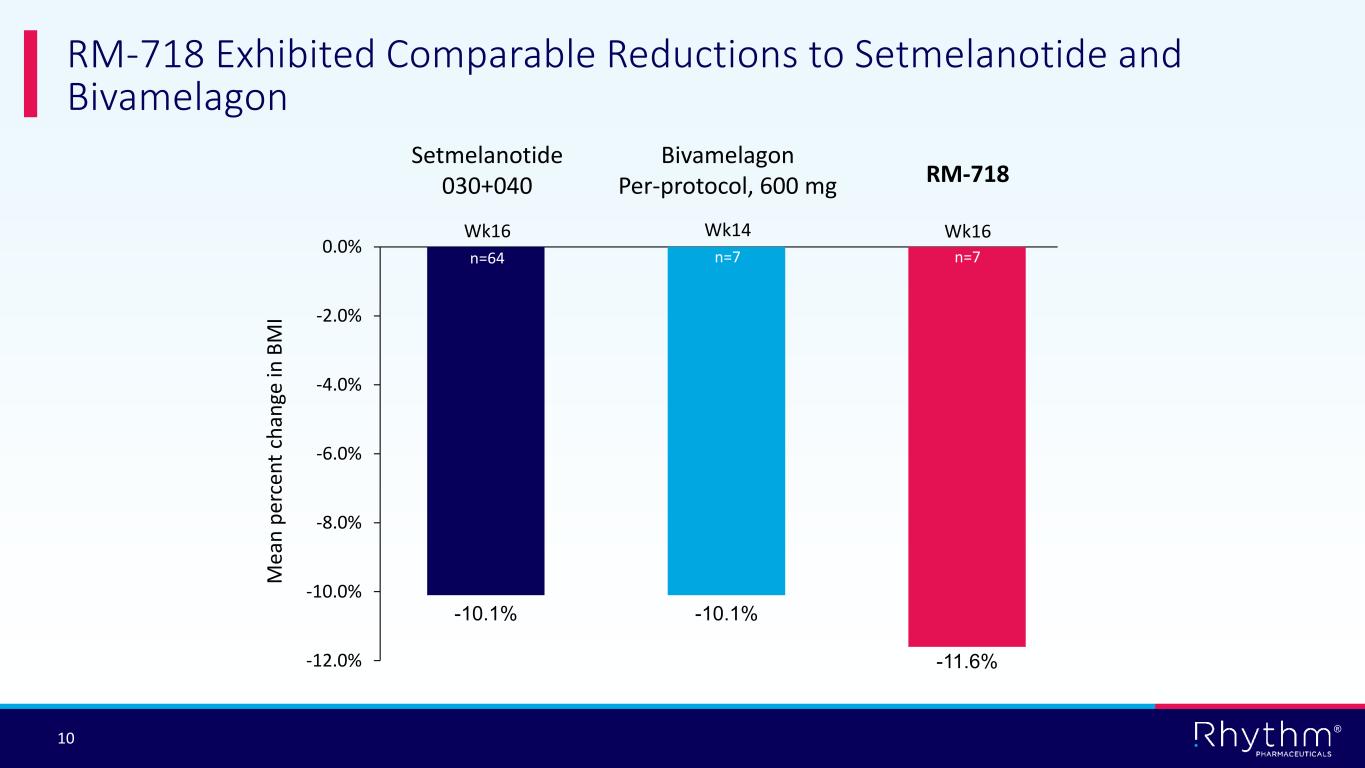
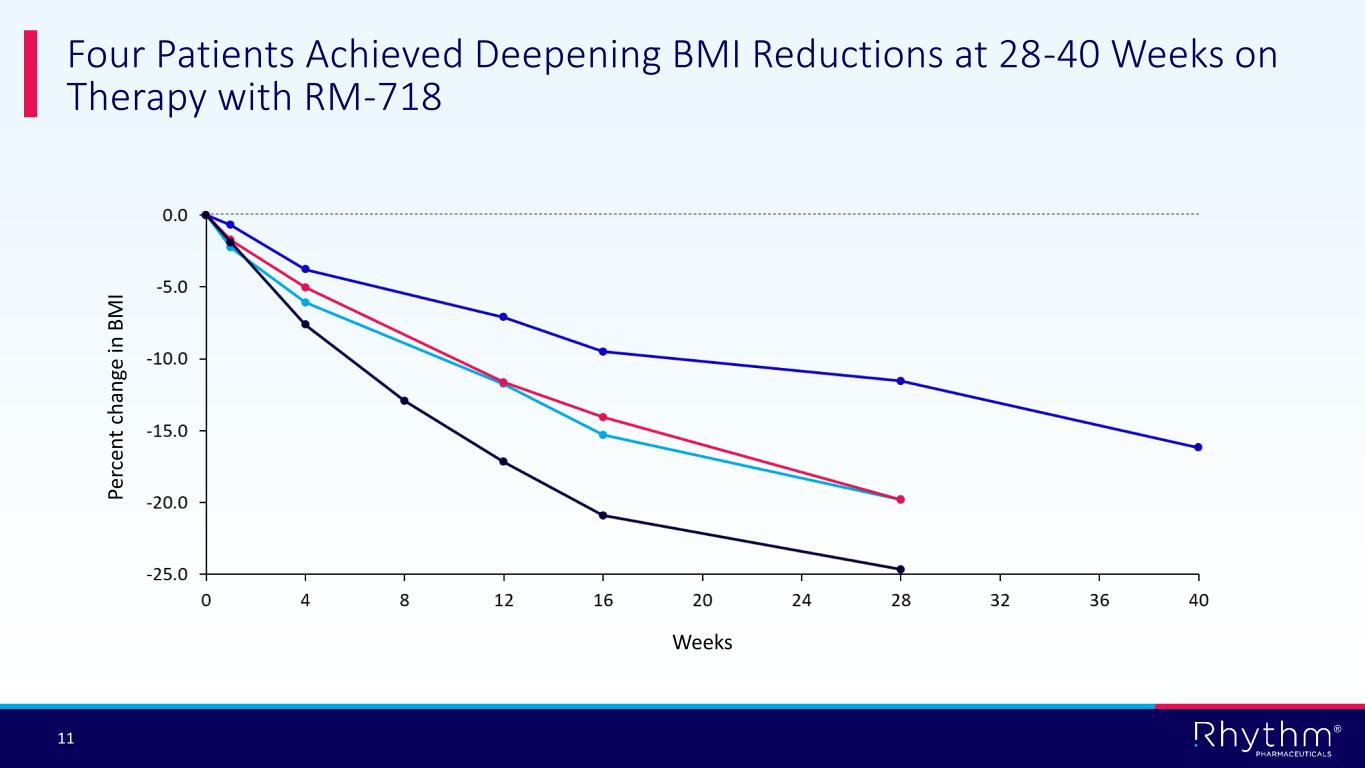
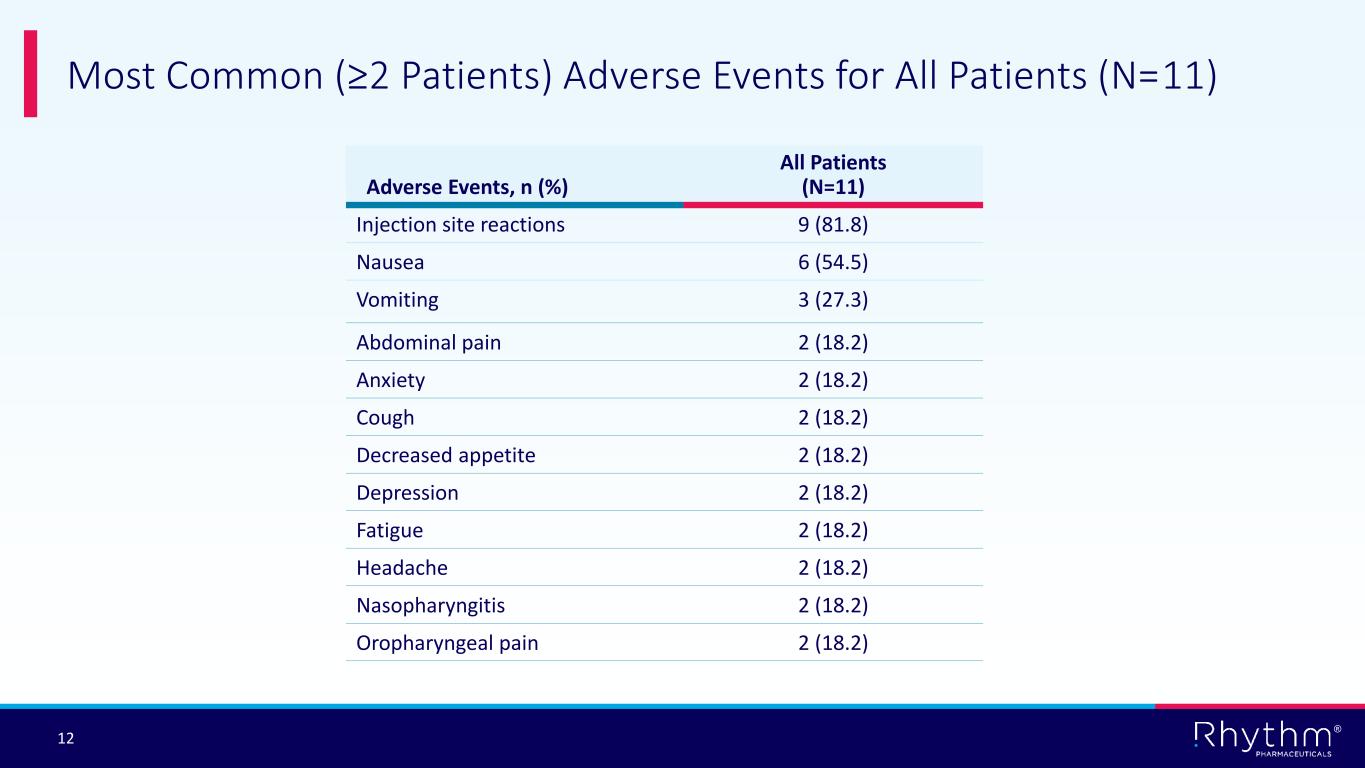
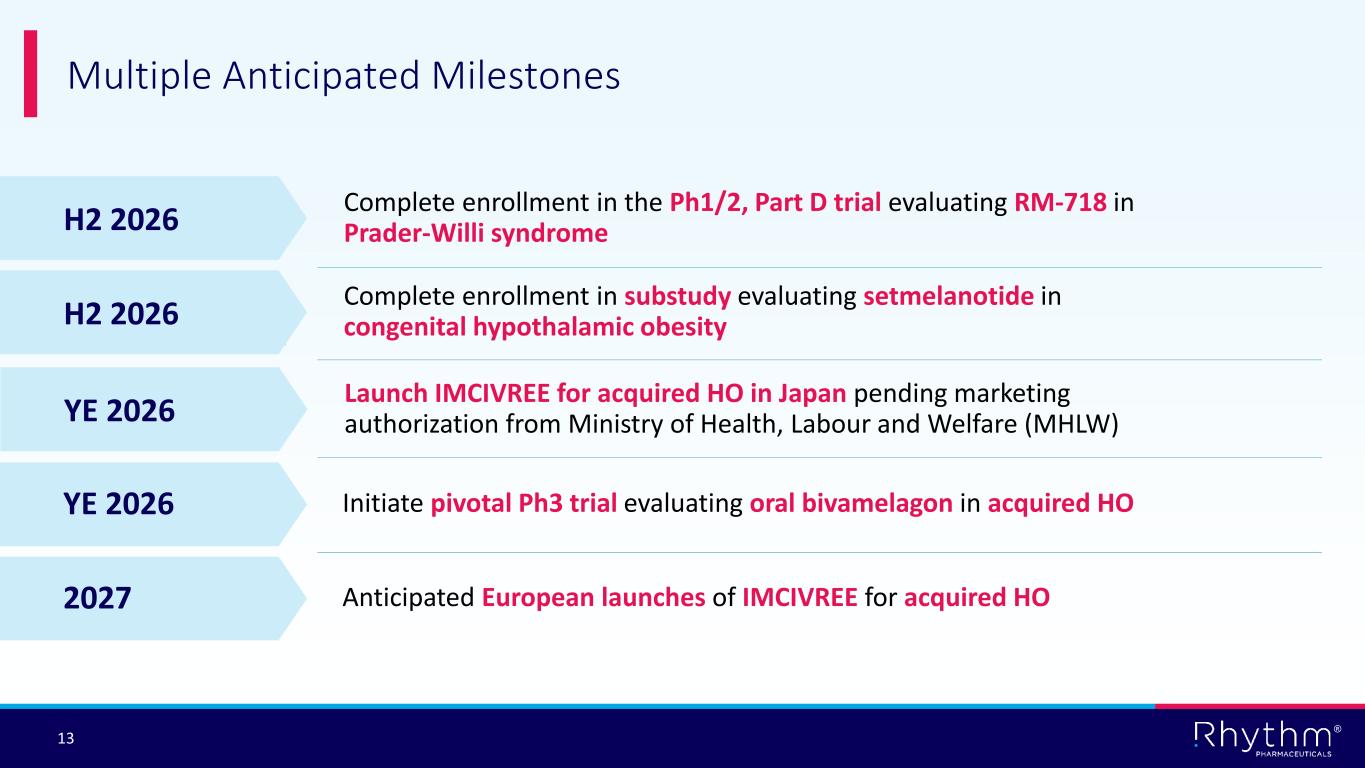
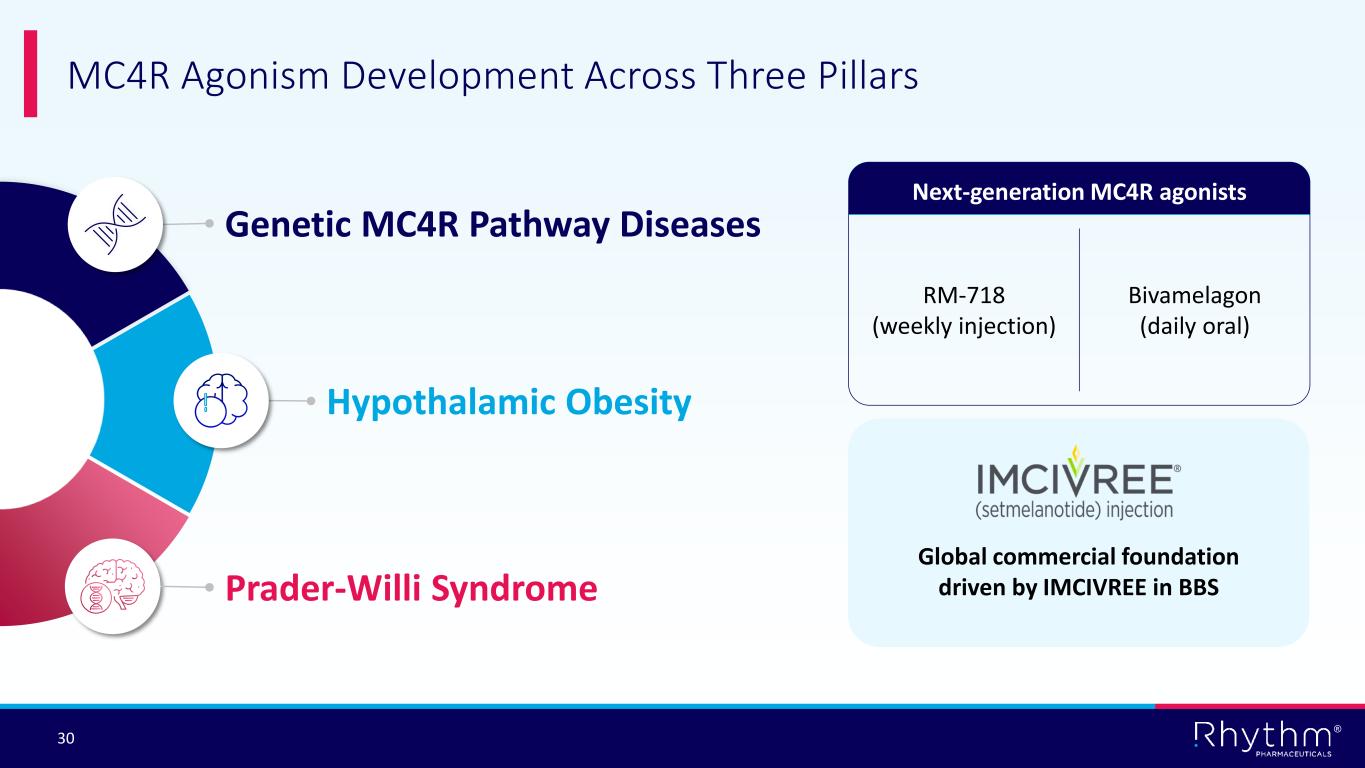
Good morning, and thank you for joining us. We have a lot to share today, headlined by a strong start to the U.S. launch of Insivory for Acquired Hypothalamic Obesity, reinforcing our conviction that HO represents a meaningful long-term opportunity for rhythm. Progress during the quarter wasn't limited to our commercial business. In June, we presented positive six-month data in Prater-Willi at Endo, showing set melanotide achieved clinically meaningful BMI and BMI-Z score reductions, reductions in fat mass and preservation of lean mass, and improvements in hyperphagia and anxiety measures. These data confirmed the mechanistic rationale that MC4 agonism plays a key role in the pathology of PWS and demonstrated the positive impact insivory can have in this difficult-to-treat patient population. We look forward to updating you on a path forward for PWS in the next few months. Which brings us to our pipeline. We believe our next-generation MC4R agonists have the potential to bring meaningful new treatment options to patients living with rare neuroendocrine diseases, and today we announced encouraging results that demonstrate RM718, our weekly MC4R agonist, has the potential to deliver clinically meaningful BMI reductions in patients with acquired hypothalamic obesity with efficacy comparable to what we've demonstrated with setmelanotide and bivromelagone, and importantly, a favorable tolerability profile with no reports of generalized hyperpigmentation. But first, let me comment on the insivory launch in HO. This is a unique severe rare disease marked by accelerated and sustained weight gain caused by a brain tumor and or its treatment or other brain injury to the hypothalamus that impairs the MC4R pathway. Acquired HO is clearly distinct from general obesity and remains underdiagnosed and underrecognized. With an estimated 10,000 patients in the U.S., a similar number in Europe, and between 5,000 and 8,000 patients in Japan, this represents a significant global opportunity. In July, results from the Phase III HO Transcentral were published in the New England Journal of Medicine by lead author Dr. Jennifer Miller and senior author Dr. Christian Roth, two of the world's leading experts in HO. In addition, as shown on slide 6, the New England Journal of Medicine published an accompanying editorial with its Science Behind the Study feature, authored by Professor Sadaf Faruqi, one of the world's leading experts in the MC4R pathway diseases. Articles like this in the New England Journal of Medicine, 10 years after the Palm Seed Efficiency New England Journal of Medicine article that put Rhythm on the Map, raised visibility of a historically under-recognized disease among clinicians, researchers, and payers and further establishes semelanatide as a clinically meaningful advancement for patients. The awareness that there is an effective therapy for rare disease increases the urgency on all parts of the healthcare system. Getting to a diagnosis matters when there's a precision medicine available. The New England Journal of Medicine article falls on the heels of the FDA approval on March 19th of this year. Throughout 2025 and 2026 our teams have been in the field focused on disease awareness and patient identification, engaging endocrinologists to deepen understanding of acquired HO and the connection between hypothalamic injury and the disruption of the MC4R pathway. Our HO launch builds on this engagement and the successful commercial effort in BBS, an opportunity that continues to grow. RYTHM now has a mature rare disease commercial platform built on four years of commercial success and established relationships across physicians, payers, and patient communities. We're off to a promising start with this next phase of growth. With strong demand from patients and families, a broad and growing prescriber base, and a positive reception from payers, we are encouraged with the first 14 weeks of the U.S. launch. Since approval on March 19th, we have received more than 400 start forms from approximately 300 prescribers. Jennifer will provide additional color on the U.S. launch. Jan will detail the next steps toward an anticipated approval and launch in Japan this year and country-level launches in Europe next year. We are mindful that it is early days, however, the first launch quarter performance reinforces our conviction that HO represents a long-term, durable and sustainable opportunity for RYTHM. Now I want to briefly review preliminary data from the Open Label Phase II Part C trial of RM718, our weekly MC4R agonist and acquired HO. RM718 is one of the two next-generation MC4R agonists that have the potential to improve on the hyperpigmentation and convenience of setmelanotide. The weight loss efficacy for each of these three assets has been remarkably consistent. We believe these preliminary results are encouraging and meaningfully de-risked 718 as a development candidate going forward. Beginning on slide 8, we show the patient disposition and patient demographics. 11 patients were enrolled and 8 patients remain on active therapy. 7 patients have reached 16 weeks, and that is the data we are sharing here. Two patients discontinued because of AEs during the first four weeks of treatment. One patient stopped because of injection site reactions, and a second patient discontinued secondary to ongoing nausea, which could not be controlled even with dose reductions. A third patient completed the 16-week trial period and later withdrew long-term extension for personal reasons. Two additional patients have yet to reach the 16-week time point. Patients in the trial were 12 years of age or older with a mean BMI of 40.1. For protocol, doses were escalated to 40 minks as tolerated. The mean BMI change of 11.6% for the seven patients who have reached week 16 is shown on slide 9. As you can see on slide 10, these results compare favorably with setmelanotide and vivimelagone results at a similar time point in patients with acquired HOs. And they pulled analysis of patients with the HO in the phase 2 and phase 3 setmelanotide trials. the week 16 BMI reduction was 10.1%. For bivomelagin at 600mg dose, mean BMI reduction for seven patients at week 14 was 10.1%, and slide 11 shows a continued deepening of the effect in four patients with 28 weeks or more of treatment. As shown on slide 12, RM718 was generally well-tolerated, with most common adverse events being injection site reactions and nausea. Importantly, we have observed no generalized hyperpigmentation with either bivum melagon or 718, which you would expect to see with MC1R agonism. Overall, these results validate our conviction that 718 has the potential to be a viable treatment option for rare MC4R pathway diseases. Both 718 and bivum melagon have been shown to affect BMI reductions comparable to set melanotide in patients with acquired HO, and both have greater specificity for the MC4 receptor without generalized hyperpigmentation. Importantly, the patent protection for both 718 and BIVA goes past 2040. We believe today's data further de-risks our ability to build a durable franchise of MC4R agonists. Enrollment of PWS patients in Part D of this open-label trial will complete by the end of the year with a goal of enrolling 10 to 15 patients. As I mentioned, we are moving closer to a decision on a potential path forward for PWS with setmelanotide, BIVA meligon, or 718, all viable options. As a reminder, we are aiming to initiate the Phase III trial of Bivomelligon in IVH over the end of this year, which is listed among the upcoming milestones in slide 13. The first patient's role will be patients 12 and older as we finalize CMC work for the oral dissolvable tablets in the first quarter of next year. With that, I'll turn the call over to Jennifer and then you want to provide more color on our strong commercial progress during the quarter.
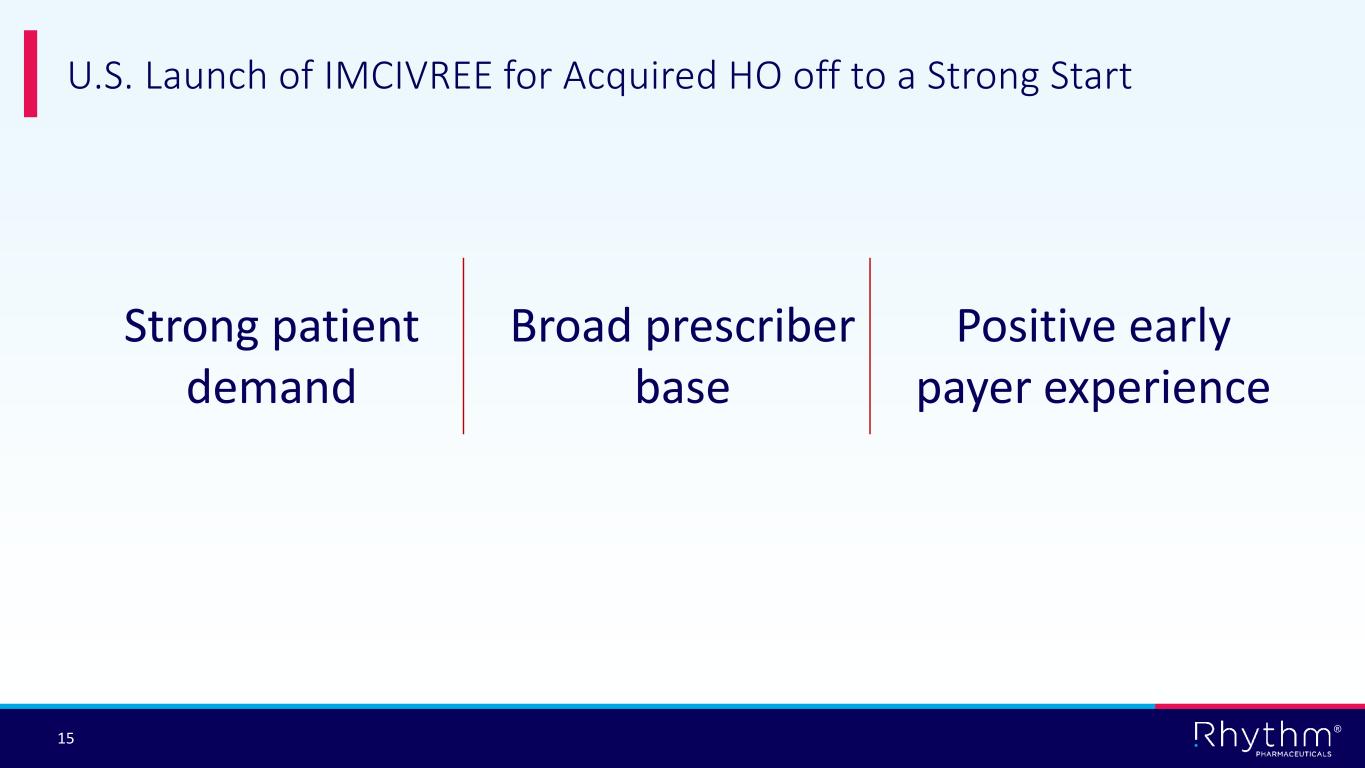
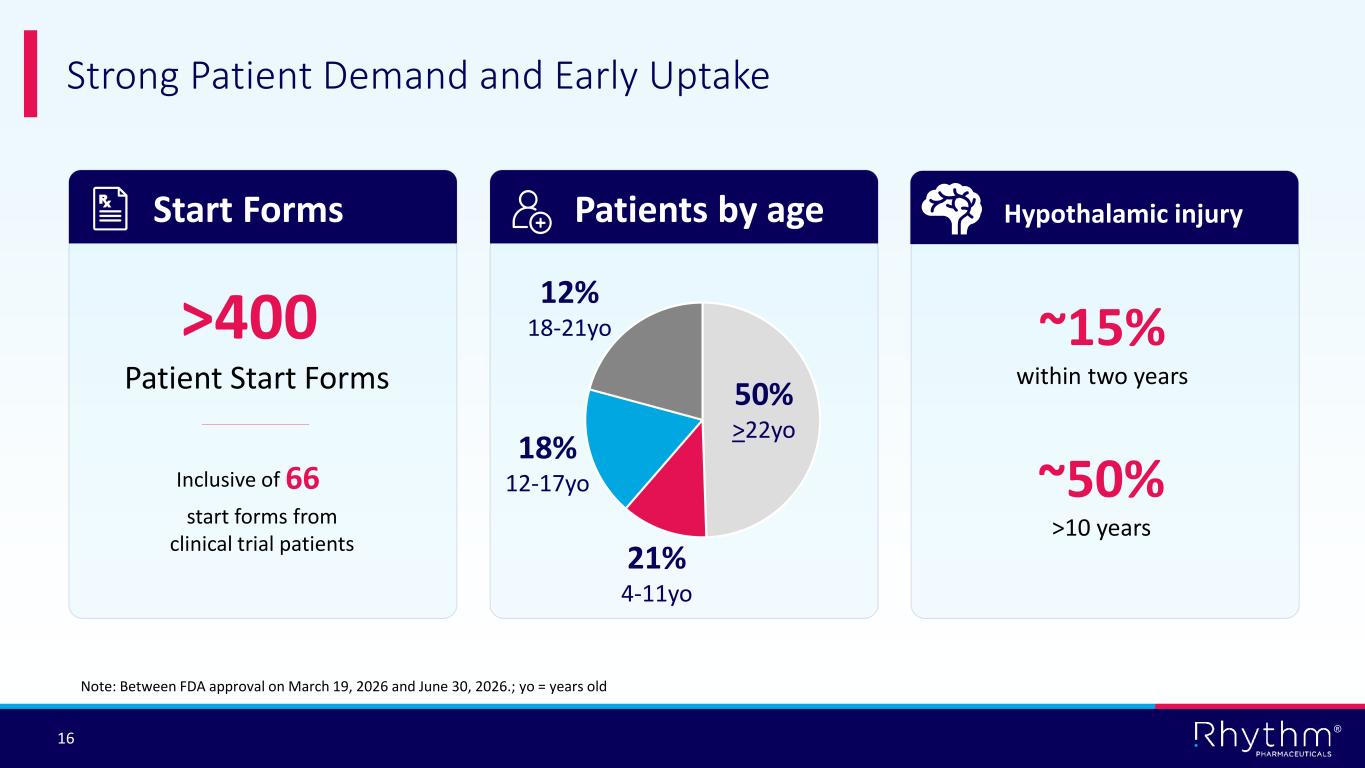
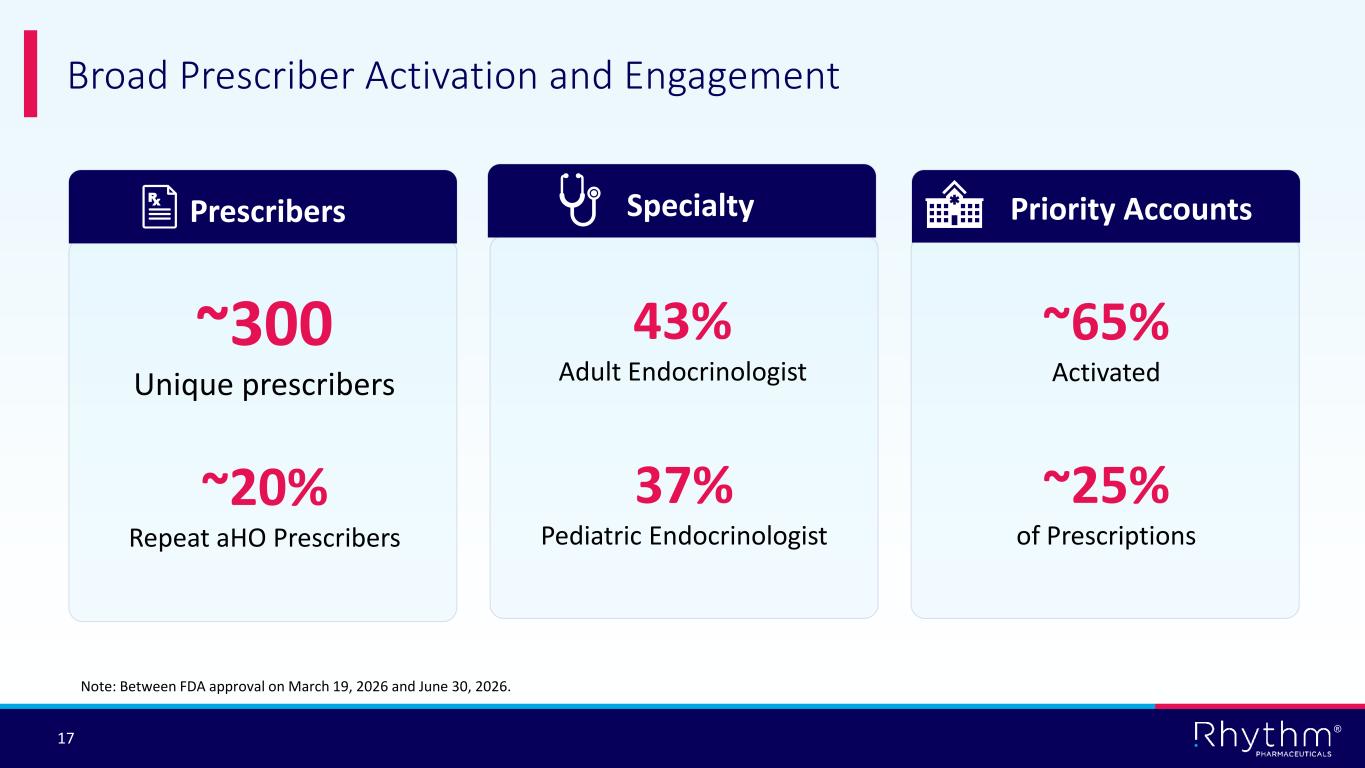
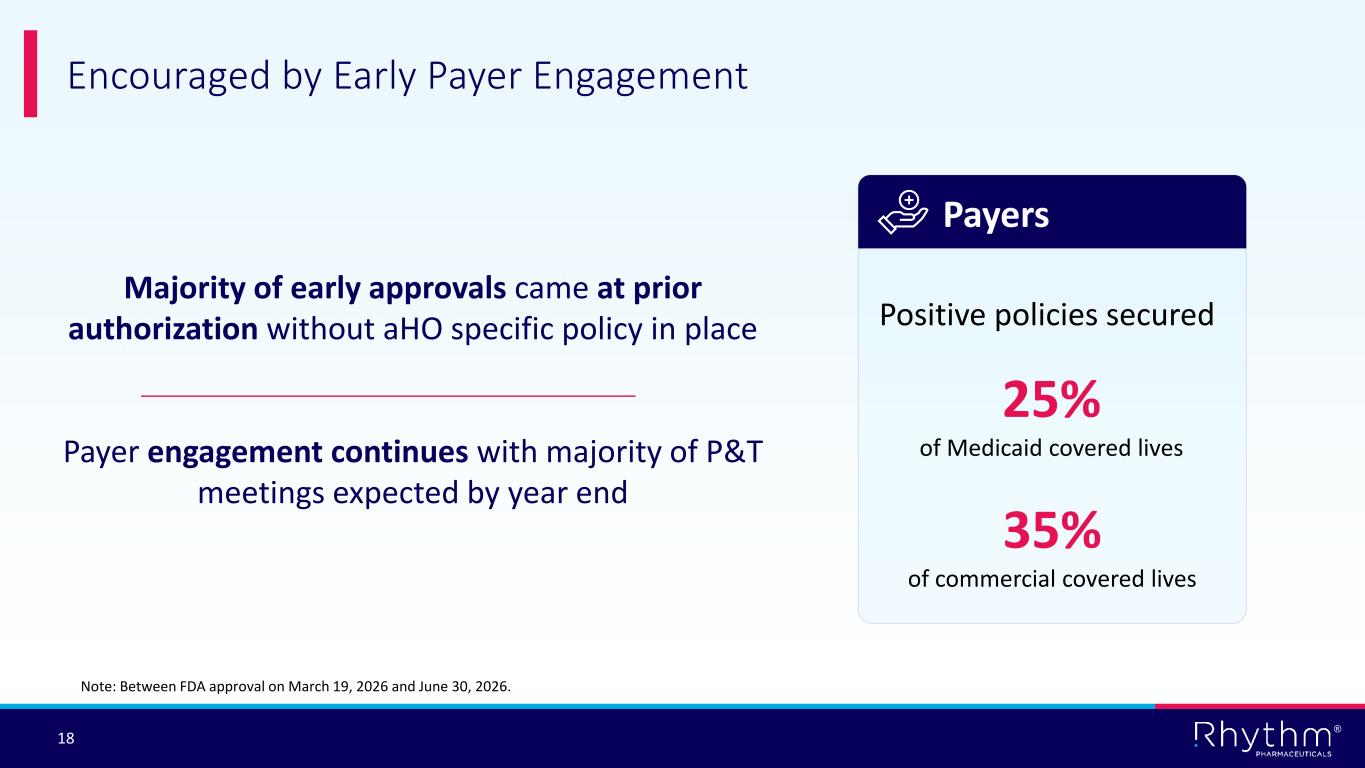
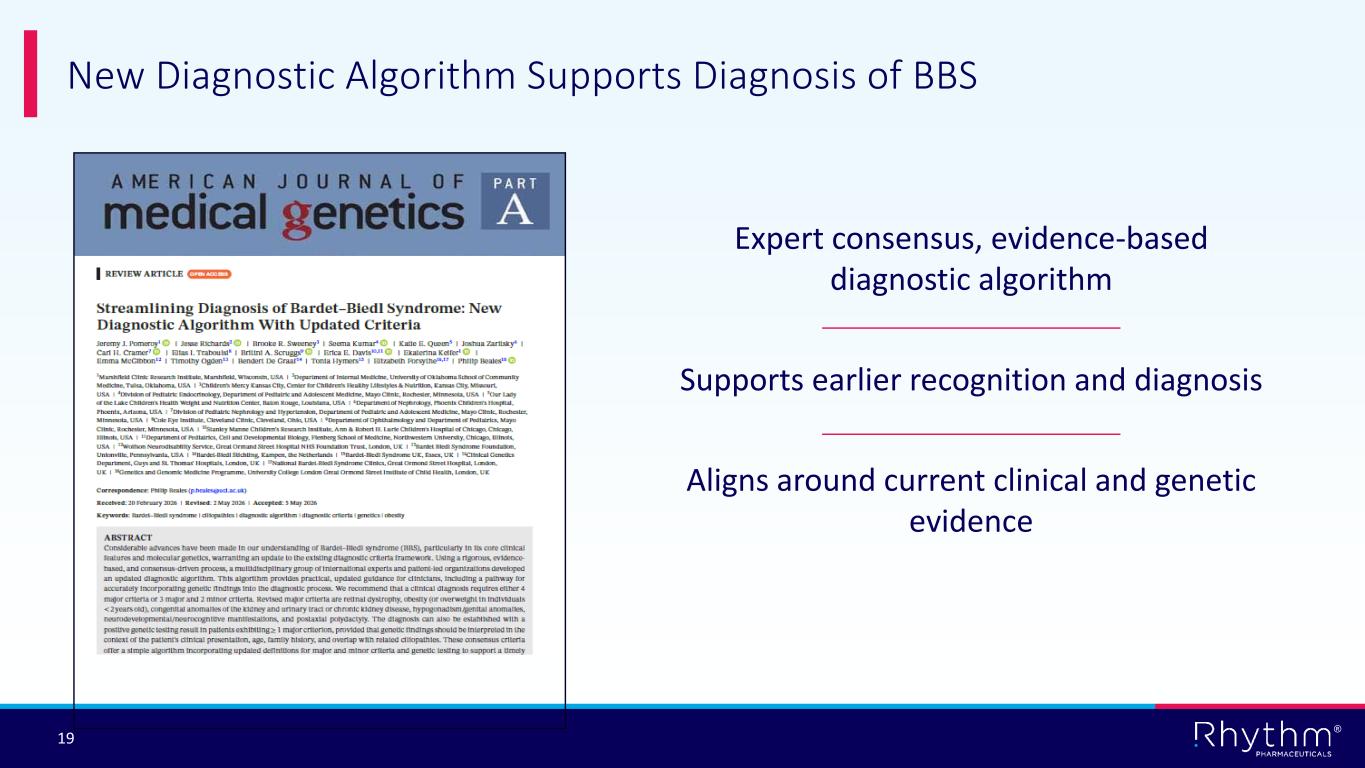
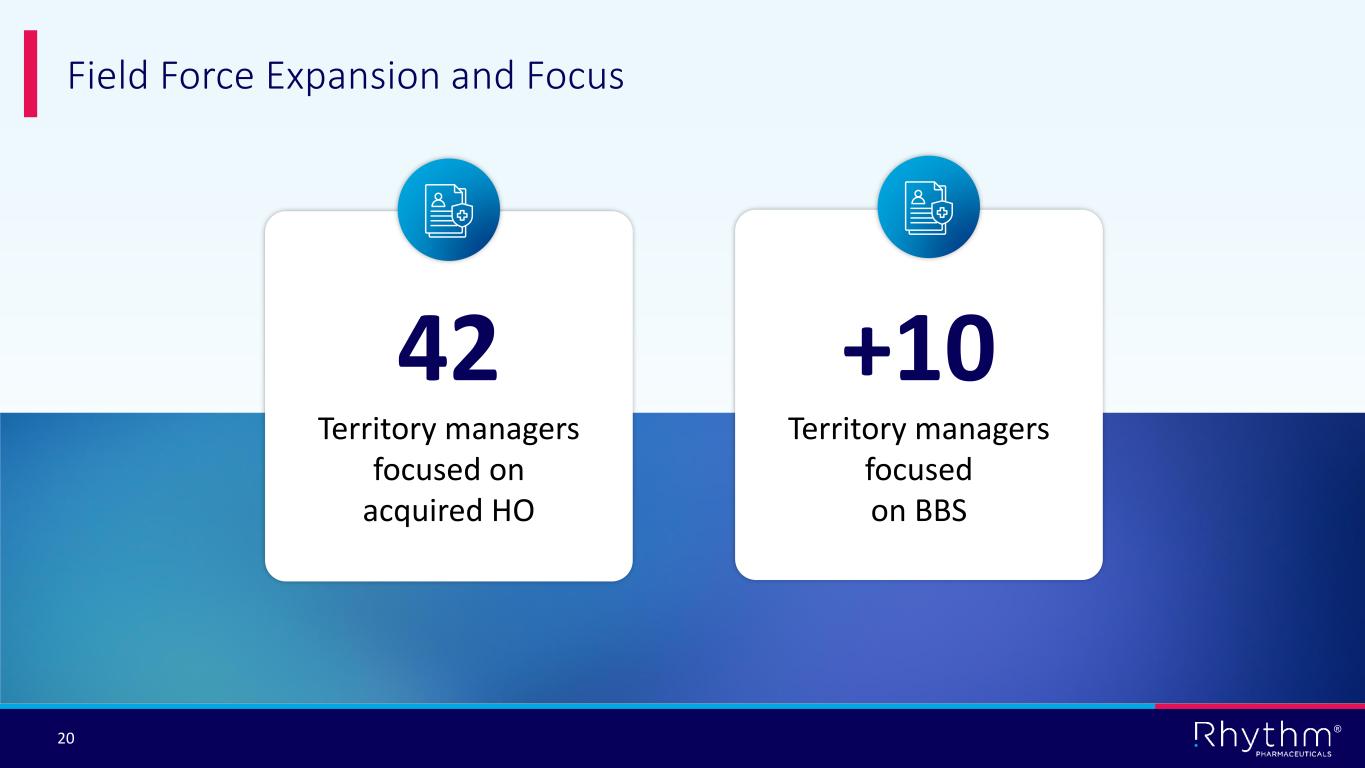
Thank you, David. I'll begin on slide 15. I am pleased to provide an update on the U.S. launch of MCIFRI for Acquired Hephthalmic Obesity. This was the first full quarter of launch, plus one additional week, following FDA approval on March 19. While we remain very early in the launch, we have seen strong demand, broad and expanding prescriber engagement and activation, and positive early payer experience supporting access. Overall, the early indicators are encouraging and reinforce our conviction in the long-term opportunity for acquired hyposalamic obesity. On slide 16, I'll start with the patient level metrics. In the 14 weeks between FDA approval on March 19 and June 30, we received more than 400 start forms for acquired hyposalamic obesity. This includes 66 start forms for converted trial patients, accounting for almost all the U.S. trial patients. The age distribution for these patients is evenly split between patients 21 and younger and those 22 and older, with 21% of prescriptions for patients ages 4 to 11, 18% for patients 12 to 17, and 12% for patients 18 to 21. Care for acquired HO patients tends to be more coordinated in the pediatric setting and this contributes towards higher rates of recognition and diagnosis. As a result, pediatric patients make up a larger share of our early MSIV rate patients. We expect this to evolve over time and to have a higher contribution for adults in the future. Among these early prescriptions, we see a broad mix of both incident and prevalent patients. Based off an internal analysis of a portion of prescriptions received, approximately 15% of patients suffered the injury, resulting in their acquired HO within the last two years. The majority of stock firms are from prevalent patients living with HO for more than two years, with approximately 50% of patients having their injury occur more than 10 years ago. These early dynamics are encouraging and demonstrate meaningful demand across a broad range of patients. On slide 17, our provider-level metrics for the Acquired HO launch. We are seeing broad activation and engagement of healthcare providers. Between approval and the end of the second quarter, we have approximately 300 unique prescribers for Acquired HO. Approximately 20% of these physicians have prescribed mensubry for more than one patient with acquired HO. In line with our view that this is primarily a specialty opportunity, the majority of prescribers are endocrinologists, with adult and pediatric endocrinologists accounting for 43% and 37% of prescribers respectively. We are encouraged by the early activation levels of our priority accounts and top prescriber targets. We've made solid progress in penetrating our priority accounts with 65% activated by the end of June and almost 25% of prescriptions coming from these accounts. On to slide 18 and our progress with payers. The early payer experience has been positive and supportive of access, a reflection that payers recognize the severity of acquired HO and, similar to BBS, understand the distinction from general obesity and the benefit of MCIV rate. While we still work to gain access for prescriptions received since approval, we are encouraged by the number of initial approvals that came in at the prior authorization stage during this first quarter of launch, many through payers without a specific . By the end of Q2, we secured positive policies for HO covering approximately 25% of Medicaid-covered lives and 35% of commercial-covered lives. In line with our expectations, we expect additional policies to become established within the three to nine months post-approval or by the end of this year. The strength and consistency across these early launch metrics give us confidence this opportunity will continue to build over time, reinforcing our long-term conviction in the acquired HO opportunity and our belief that MSIVRI can become the standard of care for these patients. Moving to slide 19, while we are encouraged by their progress in the HO launch, we also feel there remains opportunity for growth in BBS. We recently supported the publication of a new evidence-based, consensus-driven diagnostic algorithm designed to help physicians identify and diagnose patients with BBS earlier in their disease journey. In a population that has historically been very difficult to diagnose, we believe this is an important step towards enabling more BBS patients to get to a timely diagnosis and appropriate care. Lastly, on slide 20, we are also evolving our North America commercial organization to ensure Acquired HO and BBS each receives dedicated focus to maximize their ability to help patients. With the Acquired HO launch now underway, we have made a transition to focus our 42 Territory Managers exclusively on HO. We modified our field team structure so we now have a new territory manager group dedicated to BBS with plans to grow this to 10 PM. This reflects our long-term commitment to patients living with BBS. These changes allow us to pursue both opportunities with dedicated teams ensuring focused execution in acquired HO while continuing to build upon the strong foundation we have established in BBS. Now, let me hand it over to Jan.
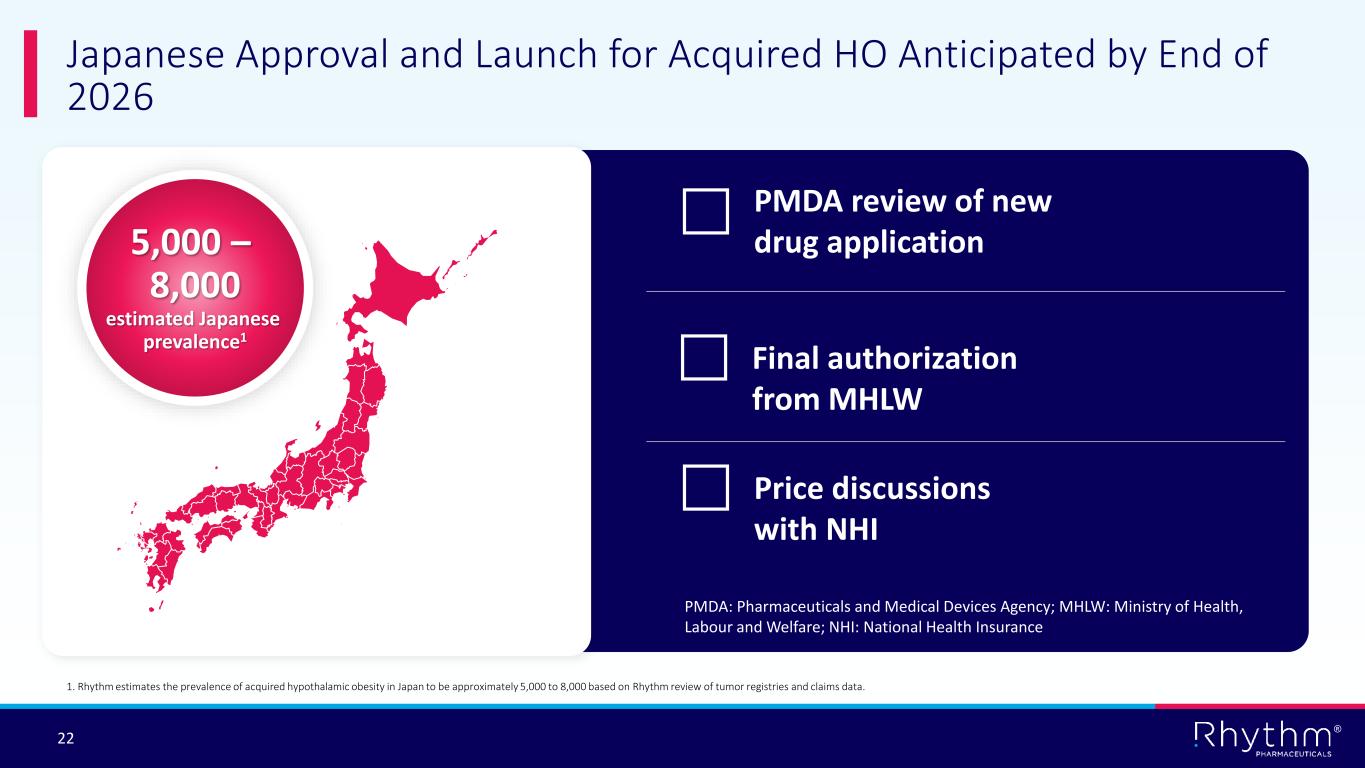
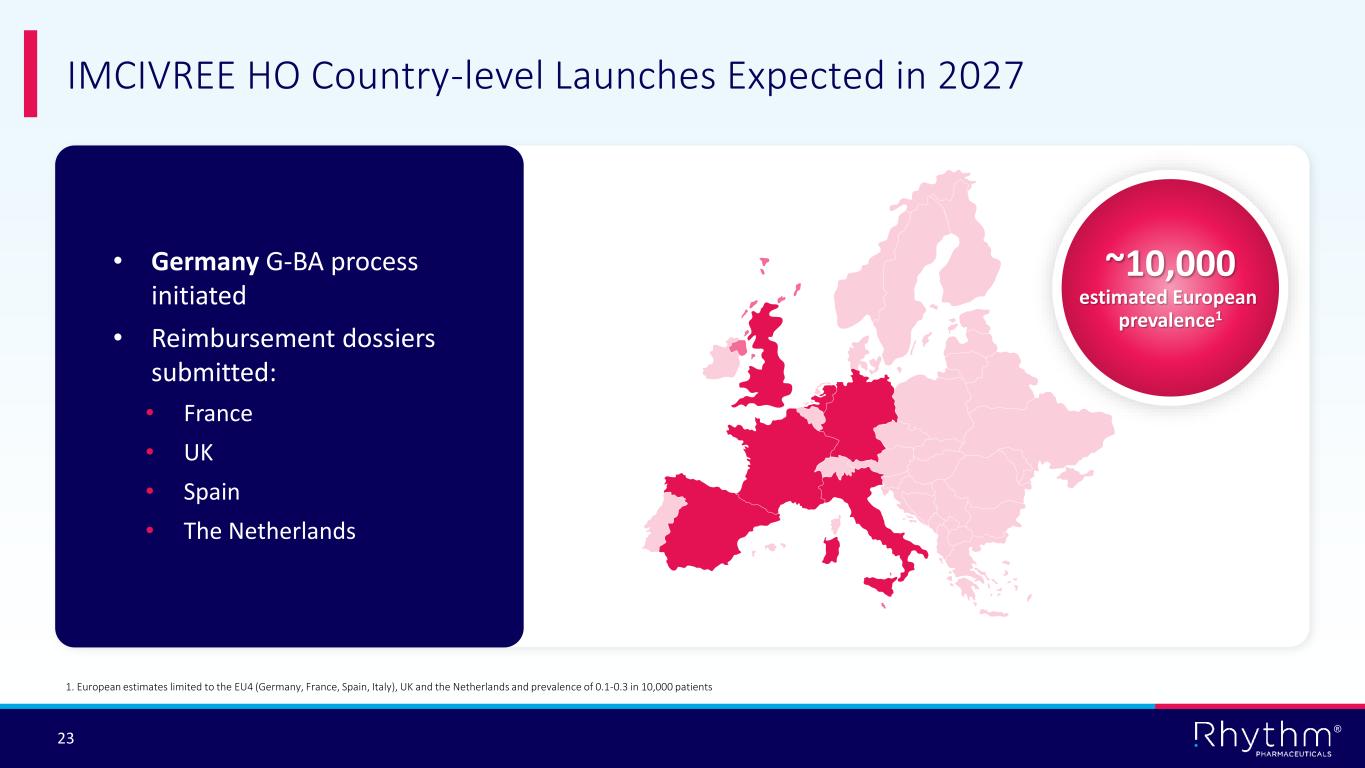
Thank you, Jennifer. Our strong international commercial performance continued during the second quarter as the number of patients on IMSivory continues to grow, either through national reimbursements or named patient sales. And we have also made significant progress in Europe and Japan towards our goal of bringing IMSivory to patients with acquired hypothalamic obesity. Slide 22. We are entering the final stages in the regulatory process towards approval and launch in Japan. We anticipate in severe approval for acquired HON launch in Japan by year-end 2026. Following the PMDA review, we anticipate marketing authorization from the Japan Ministry of Health, Labor and Well-Sphere or MHLW. Once we receive marketing authorization we would begin pricing discussion with japan national insurance authority and this process can take two to three months with this timeline we would anticipate commercial launch in japan in the fourth quarter with approximately five thousand to eight thousand patients living with acquired hypotermic obesity in japan which is a higher per capita prevalence than the united state of europe japan represents a meaningful opportunity our team in japan is in place actively engaging with the community of experts, patients, and caregivers. Similar to the approach Jennifer's team took in the U.S., we are engaging with the treatment community to identify potential patients ahead of launch. We will share more details about Japan on our next quarterly conference call. Next slide. Turning to commercialization of IMSivory for acquired HO in Europe. In May, the European Commission granted marketing authorization for IMSivory for the treatment of obesity and control of hunger in patients four years of age and older with acquired hypothalamic obesity due to hypothalamic injury or impairment. We have a very experienced team in place working through country-level processes to secure market access and reimbursement, which we have successfully done in the past years for POMC-LIPAR, BBS, and the pediatric level expansion. In Germany, we anticipate launching in the first half of 2027. We are encouraged by the initial engagement in the process to secure an exemption from the German Federal Joint Committee, or GBA, Annex 2 Exclusion List. The GBA Annex 2 Exclusion List prohibits reimbursement for lifestyle drugs, such as drugs indicated for smoking cessation and general obesity. We are confident in our ability to secure an exemption, enabling a reimbursement for acquired HO, as we have done it before for all our previous indications. We are making progress towards market access elsewhere in Europe. We have submitted the dossiers to begin pricing discussions in France, in the UK, in Italy, in Spain, and in the Netherlands, with launches in each country anticipated in 2027, following Germany. With an estimated prevalence of approximately 10,000 patients in Europe, it is a meaningful opportunity. And our early access programs in France and in Italy have enabled many of the leading physicians to gain experience with set palanatide and see the benefit in patients living with In May, we presented approximately a dozen posters at the European Congress of Endocrinology and at the European Congress on Obesity. Next month, at the 2026 European Society for Pediatric Endocrinology meeting, we have had three abstracts accepted for oral presentations and three accepted for poster presentations. And there are two additional non-RISM sponsored presentations that will highlight findings in patients living with BBS from Germany and the UK. We have approximately 75 abstracts, both originals and anchors, submitted and presented and or slated for presentations this year in European and Japanese medical congresses, giving us It's an unparalleled level of engagement with international experts and healthcare providers. With that, I will turn it over to Hunter.
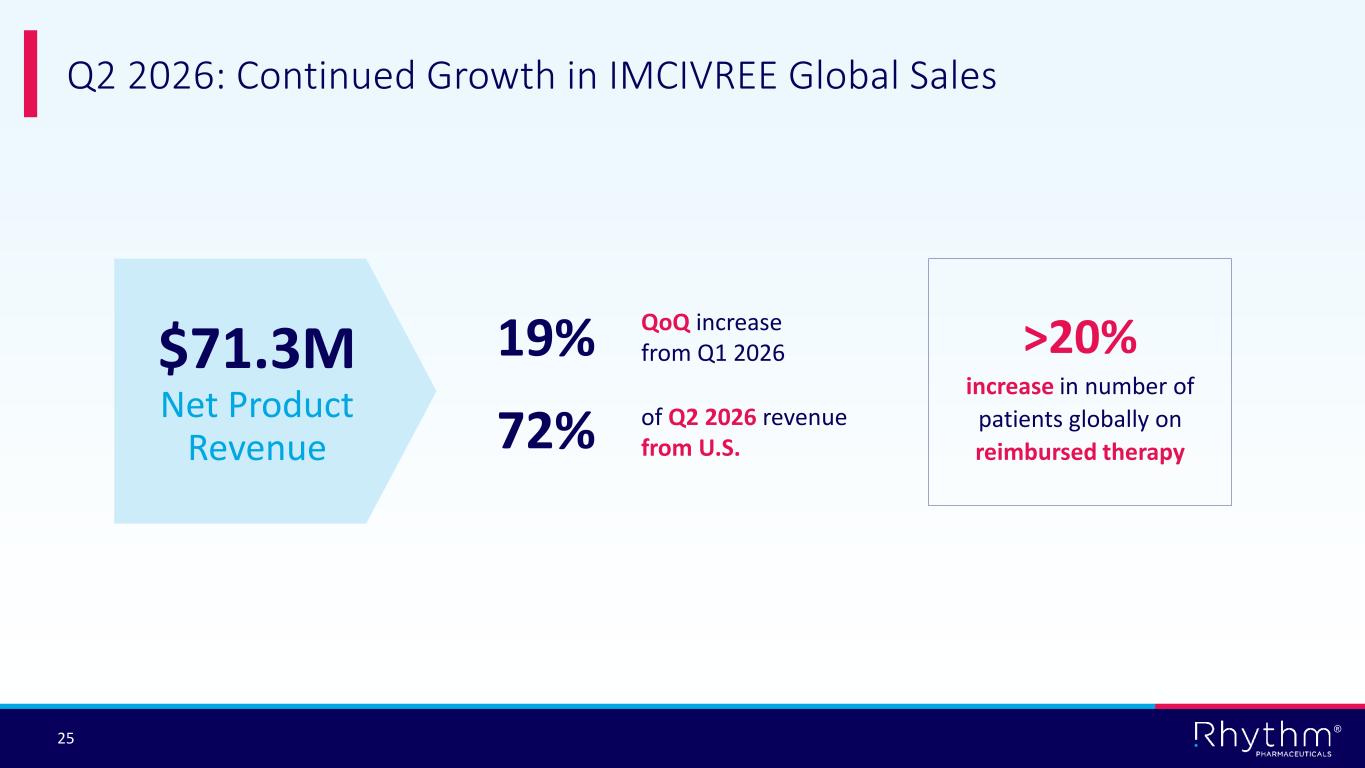
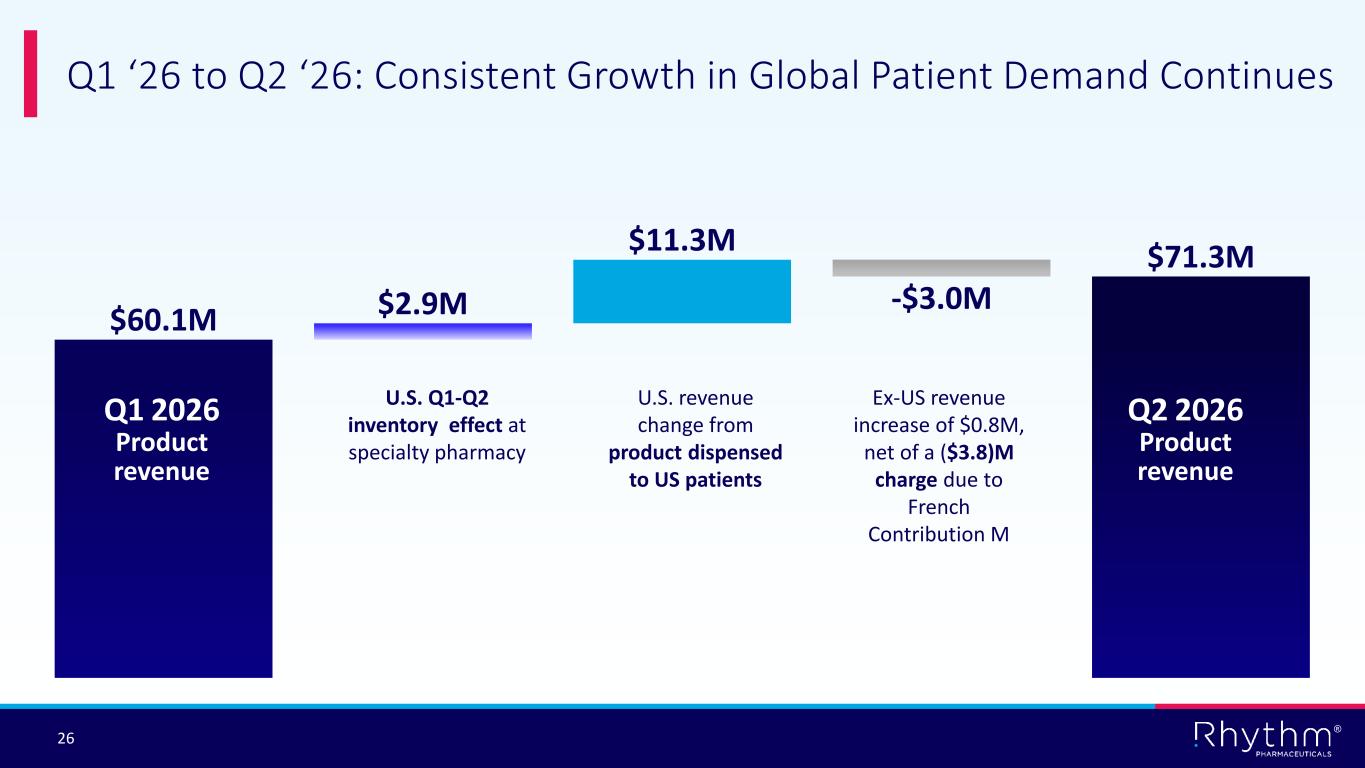
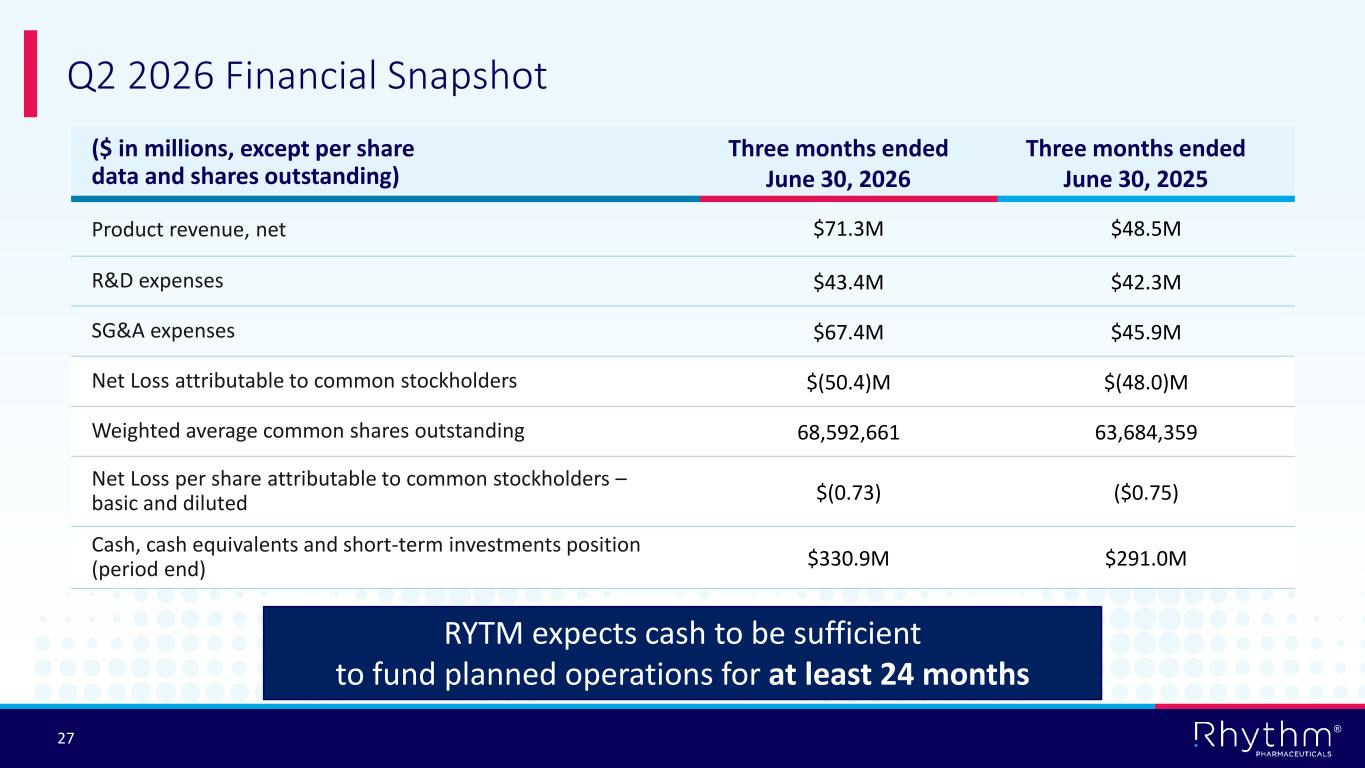
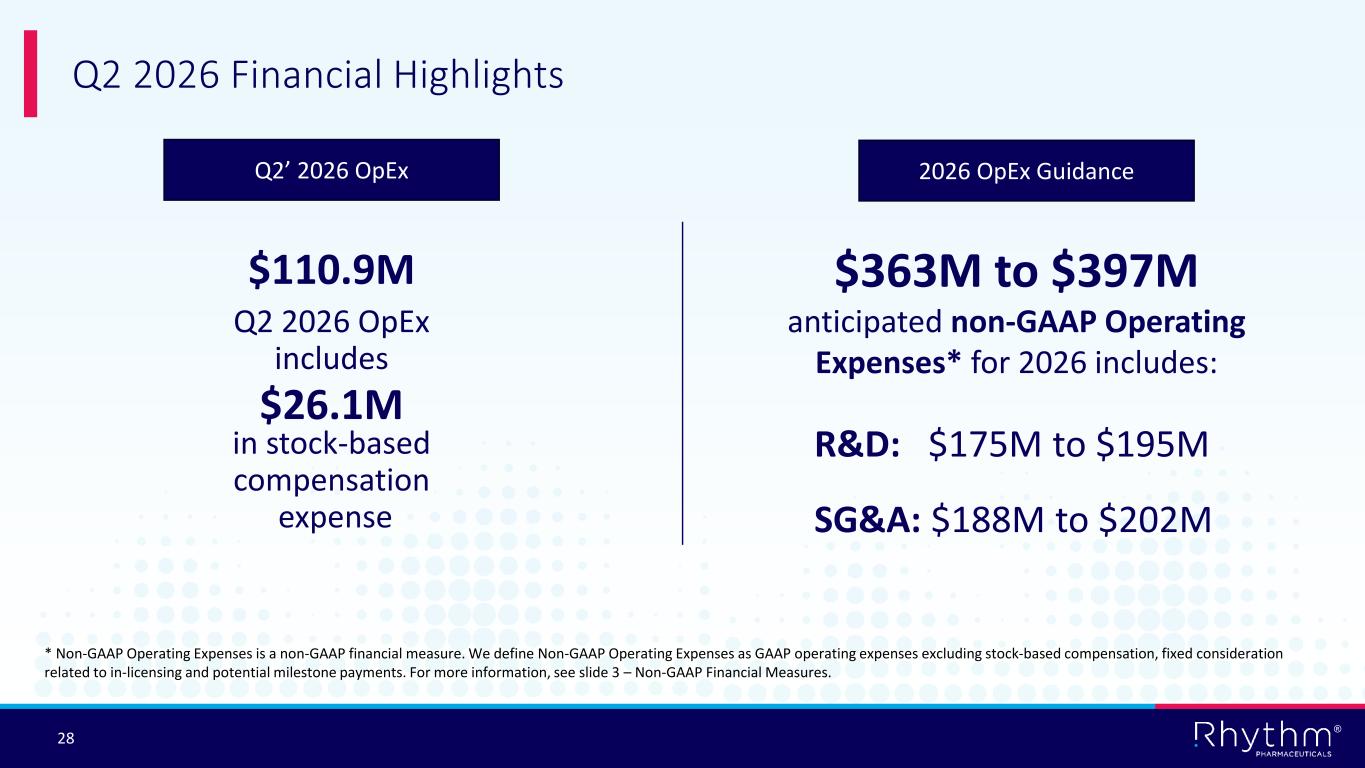
Thank you, Jan. I will begin on slide 25. We exited the second quarter in a solid financial position and are encouraged by our strong initial launch execution and acquired HO in the U.S. At the same time, we continue to make meaningful progress with BBS in the U.S. and internationally, underscoring the strength of our business and the opportunity we see for continued growth. We had a strong second quarter of 2026. Global net product sales of MSIVRI totaled 71.3 million, which represents 19% sequential growth over Q1. During the second quarter, 51 million or 72% of product revenue was generated in the United States. Globally, we saw continued growth in patients on reimbursed therapy with an increase of greater than 20% over the prior quarter, primarily driven by the acquired HO launch and continued growth in BVS in the U.S., as well as ex-U.S. growth in BVS and our HO early access programs. On slide 26, I'll walk you through the quarter-over-quarter revenue change with revenue increasing from $60.1 million in Q126 to $71.3 million in Q2. We saw an $11.3 million in revenue growth attributable to increased product demand in the U.S. A bit more than half of this increase came from the strong start in the U.S. launch for acquired HO, where a percentage of our early scripts converted to starts at the prior off stage, as Jennifer mentioned previously. PBS had a strong quarter as well, with higher demand growth and strong compliance compared to what we have experienced in other recent quarters. GTN improved somewhat in the quarter to 86%, providing an additional support to Q2 revenue. With the anticipated increase in demand for MCIVRI following FDA approval for acquired HO, product shipments to MCIVRI Specialty Pharmacy exceeded patient dispenses by approximately $2.9 million, providing a modest benefit to revenue in the quarter. Inventory on hand to specialty pharmacy increased slightly to 20 days as of June 30th. International revenue decreased from $23.2 million to $20.3 million in Q2. Even though we saw a steady increase in the number of patients on reimbursed therapy, the decrease in revenue was mainly attributable to a $3.8 million retrospective charge associated with the French contribution M mechanism, which levies a charge on pharmaceutical companies when reimbursed drug sales industry-wide exceeds specified statutory thresholds. $2.3 million of this $3.8 million charge was related to 2025 revenue. Excluding this impact, our international business remains strong as evidenced by the continued growth in patients on therapy during the quarter. On slide 27 is a financial snapshot of the second quarter of 26 results compared to the second quarter of 2025. Cost of goods sold this quarter was 12.5% of product revenue within our normal range and primarily driven by cost of materials and royalty payments on setmelanotide in conjunction, I'm sorry, in connection with higher net product revenue during the quarter. As a percentage of product revenue, COGS varies quarter to quarter based on changes in inventory balances and manufacturing activity, and this quarter increased slightly because of that. R&D expenses were $43.4 million for the second quarter of 2026 compared to $42.3 million in the same period last year. Sequentially, R&D expenses increased $1.7 million compared to the first quarter of 2026. This sequential quarter-over-quarter increase was due to increased spending on Vivimallagon clinical trials and preclinical work associated with our congenital hyperinsulinism program. These were partially offset by lower headcount-related costs. The year-over-year increase is primarily attributable to an increase in headcount-related costs, increased costs related to genetic testing and preclinical work, and the increase partially offset by reduced costs associated with RM718 development and clinical supply. SG&A expenses were $67.4 million for the second quarter of 2026, compared to $45.9 million in the prior period. Sequentially, SG&A expenses increased by $3.8 million, or approximately 6%, compared to the first quarter of 2026. The increase was primarily driven by higher personnel-related costs to support our expanding commercial operations. Weighted average common shares outstanding were $68.6 million for Q2 2026. GAAP PPS for the second quarter of 2026 was a net loss per basic and diluted share of 73 cents, including 2 cents per share from accrued dividends on convertible preferred stock of 1.1 million. Cash used in operations was approximately 9 million during the quarter. We ended the second quarter with approximately 331 million in cash, cash equivalents, and short-term investments, which we continue to expect will be sufficient to fund planned operations for at least 24 months. Lastly, for me on slide 28, there is further detail on our operating expenses for the second quarter and our full-year operating expense guidance, where the second quarter operating expenses of approximately $110.9 million included $26.1 million of stock-based compensation. Looking ahead to the second half of this year, we are updating our annual OPEX guidance. We now anticipate approximately $363 million to $397 million non-GAAP operating expenses for 2026, comprised of non-GAAP R&D expenses of $175 to $195 million and non-GAAP SG&A expenses of $188 million to $202 million. SG&A guidance remains unchanged, while the midpoint of our R&D expense guidance has been reduced by $20 million. as the timing of certain CMC activities related to RM718 and Vivameligon has shifted from late 2026 to early 2027. We do not expect these changes to affect overall timelines for ongoing or planned clinical development work with either asset. And with that, I'll turn the call back over to David.
Thank you, Hunter, and we'll open it up now for Q&A.
Operator
Thank you. As a reminder, To ask a question, please press star 11 on your telephone and wait for your name to be announced. To withdraw your question, please press star 11 again. In the interest of time, we ask that you please limit yourself to one question. Please stand by while we compile the Q&A roster. And our first question comes from Tazeen Ahmad of Bank of America. Your line is open.
Good morning. Thanks for taking my question, and congrats on a good quarter. It's early, but can I ask what type of expectations you have around discontinuation rates? Presumably, you're not seeing any, but if you are, can you just give us any color on why those might be happening on a go-forward basis? What do you think over time this continuation rate from set melanotype could be for the HL indication?
Thanks, Justine. And so it is really early in the launch to articulate color, really, in terms of the discon rate expected. I would say one thing, though. In the past, we have outlined that the global discon rate for the BBS patients was around 30%. And holistically, there are differences just in terms of what our data has shown in the BBS patient population versus the HO population in terms of the strength of efficacy that may make that discon rate lower in this particular population. There is also different factors of the HO population that we're experiencing in terms of the ease of injections and such that may also overall make the ongoing discon rate for this patient population a bit less than the BBS patient population. And that was also seen in the clinical studies, like when you compare the BBS clinical studies versus the HO clinical study and compare the DISCON rates there. So it's one thing that we're definitely going to be monitoring. There's a huge focus on as an internal organization, and we'll continue to monitor that moving forward.
Operator
Thank you. And our next question comes from Phil Nadeau of TD Cal, and your line is open.
Good morning, Liz, at our congratulations on the strong progress. A question on the HO launch seems to be going really well. Based on our math, if you back out the clinical trial patients, you're doing about 110 patient start forms per month. We're curious to get your thoughts on whether you think that's sustainable for the next couple quarters. is there any sign of an early launch bolus or do you expect a more even trajectory to patient starts? Thank you.
So overall, in terms of the start forms experience in the first quarter plus the one week since approval, we're really happy in terms of what we're seeing with the Rx's coming in. As you mentioned, there's one time event in terms of the clinical trial patients. And if you take that out I would say that in any launch there may be some patients who were really anxiously waiting in terms of getting that onto therapy upon approval with that said I think all of the launch metrics that we have been really monitor strengthen our belief holistically in terms of this long-term opportunity for sustained ongoing growth in the AHO opportunity you know as I outlined, the Rx's are really coming from a good breadth of prescribers versus being localized in terms of just a few writing the vast majority of these Rx's. We're also seeing a lot of different things around the patients and the background from an age perspective, disease severity, incident versus prevalent patients, which really point to the breadth in terms of patients within the HO indication that are really interested in getting on to this therapy. And even with the Rx's that we have received, there's still physicians who have additional patients under their care that they have not yet Rx. So overall, a lot of opportunity still remains. I would say that with that said, there are some considerations in terms of the speed of the uptake, which I've said in the past as well, these are really very, very busy endo offices. They have long wait times for their patients. That can also impact our ability to get in in terms of having the ongoing discussion, you know, but our teams are very persistent from that perspective, but that can take some time just in terms of being able to continue the dialogue with these HCPs. The other piece is that all these patients are not yet diagnosed. So it takes some time after we're in there to educate the physician for that patient to come in and be educated and further evaluated by the ACP before they can have that msifery discussion. And it's a new drug on the market. So some of the physicians, even with more than one patient, they want to experience msifery before prescribing to all of their patients at once. So once again, there's so much opportunity that remains. We feel very confident in terms of the ongoing trajectory, but there are some considerations as well.
And Phil, as you know, we don't guide toward the future here, but everything that Jennifer just outlined, I think, speaks strongly to the fact that although there may have been a little bit of pent-up urgency, there was no bolus in this thing. we feel really good about all these metrics and how they speak to the future.
That's very helpful. Thank you. Congrats again.
Operator
Thank you. And our next question comes from Derek Artila of Wells Fargo. Your line is open.
Hey, good morning, and thanks for taking the questions. Congrats on the updates and the progress here. So I know you highlighted greater than 400 start forms against, I think, a 2,000 number for identified HO patients, so implying about 20 percent penetration into that pool in 14 weeks. So, I guess, should we be thinking that number of identified patients is materially larger now? Thanks.
Thanks, Eric. We provided that number back in September, and we have not updated that number. We have been ongoing in terms of, since that time, educating additional physicians within our target list, and we still have a ways to go in terms of penetrating the full list. So, that number in terms of both that suspected or diagnosed AHO patient population is continuing to grow.
Operator
Thank you. And our next question comes from Paul Mattheis of Stiefel. Please go ahead.
Good morning. Congrats on the quarter, and thanks for taking my question. And I was wondering if you could comment on what you're seeing as it relates to either concomitant use with GLP-1s or whether there's physicians or many physicians are kind of looking to try a GLP-1 before in Sivri. And then I know it's really early on the payer side, but are you seeing any payers put in a GLP-1 step at it? Thanks so much. Rax, this is me, Chow.
Sure. Let me start with the last one. And we are pleased just in terms of the progress that are being made around the HO-specific policies. Of the ones that we have in place, there is no step-edit requirement in terms of needing to try a glib before MSIFRI, which is also something that we're pleased overall with. It's pretty much aligned with our label in terms of background patients. Relating to GLP use in the AHO patients, of the ones that have been prescribed MSI-free, we are experiencing that, you know, this patient population was one that was seeking treatment. So about 50% of our emissivary-prescribed AHO patients had prior or current experience on GLIPS. But currently, there's about 25% of the patients that are currently still on a GLIPS. And when I outlined that, it's not known in terms of if it's for diabetes versus for the obesity indications. But about 25% of the patient population is on GLIPS. I would say that that is also in a time where Ipsivory wasn't available. There wasn't a specific treatment to treat their underlying condition. So, you know, as we move forward, it'll be, you know, available for these patients. And, you know, that means through the metrics that I just outlined, Like, 50% of these patients were never on a GLIPS but still interested in getting onto McIveray after understanding that there was a treatment available for their specific condition.
Yeah, and Paul, just to add a little bit, as you remember from the clinical trial, we had also about 25% of the patients, 30 out of the 120 in the original cohort, who either had a prior experience or were actively on GLIPS in the trial. and they came in, met all the criteria for entry, and then had a virtually identical response to insivory as the others. So I think, you know, as Jennifer said, it's really, I think, quite instructive, the extent to which a high percent of these patients have been on GLIPS or continue on GLIPS. She said, speaking to the unmet need here, but they're not, it's not addressing the unmet need here they're coming over to in surgery. So, yeah, I think that overall experience has been really reinforcing that a precision medicine here is the right way to go for this patient population.
Operator
Thank you. And our next question comes from Dennis Sting of Jeffrey's. Your line is open.
Hi, good morning. Thanks for taking my question. I have a broader Another question for David. So there's been some investor questions around biotech M&A that came out of the AstraZeneca and Bristol merger speculation. So I'm curious, given Rhythm is, you know, obviously a leader in the rare disease space, and David, you're on the board of several biotech companies. I'm curious, how would you characterize pharma M&A appetite recently? You know, obviously, without going to specific discussions, but, like, do you have any general comments on what pharma is excited about? But also, at the same time, if they think premiums may be getting harder to justify, given the broader move in the XBI. And then, as a quick follow-up, the territory managers split 42 for HO and 10 for BBS. Did that get implemented already, or when will that happen? And do you actually expect an acceleration in HO ads in the second half? Thanks so much.
Yeah. So, thanks, Dennis. I think, let me take that briefly on the biotech M&A. And this is completely unrelated to Rhythm. As you've heard here, we feel really good about where we are and Rhythm's ability to grow as a company and a platform and a product and, you know, expanding pipeline here. So, you know, we're watching like everybody else I am. I think, you know, that was a bit of a surprise coming over the weekend. And, you know, we'll see how if anything happens there and how it might shake up. But I think the larger landscape here, you know, pharma with many, many acquisitions over the first half of the year just speaks to the way our health care ecosystem works. We've got a strong and robust early biotech community that's creating value. And we have a pharmaceutical community and some midsize caps who are looking everywhere to expand their pipelines. So I expect it to continue. I don't see this having a big dampening effect if it were to go forward, but yeah, it's clearly, you know, a noteworthy event here. So would that turn over to TM?
Relating to the question around the TM split, so this was already implemented, so we already have split the teams into two. I would say that one of the guiding factors around this decision-making point was we really feel strongly that there's an opportunity in both VBS and HO. I would say the vast majority of the time spent of the 42 territory managers when it was combined under their care was already focused on HO, so we just wanted to make sure that we had the right amount of focus also in terms of unlocking the BBS opportunity and being able to get those patients to a diagnosis and treatment as well.
Operator
Thank you. And our next question comes from Mike Alls of Morgan Stanley. Your line is open.
Good morning. Thanks for taking the question, and congratulations on the strong quarter and 718 data as well. Well, maybe just a question on 718, now that you have your early HO data there, and it seems to be trending in line with your other assets, maybe you can talk about early thoughts on read-through to the PWS data and remind us when that data is coming.
Speaker 16
So, yeah, we're really pleased with the 718 data.
I think I'll remind everybody, all of you have asked me multiple times between these different assets. Which one do we think was most likely to be successful? This was before we had the BIVA data, and I was handicapped. This is 718, probably had the higher chance of being successful, and then we had the very good data on BIVA meligon, so that was great, but I think this data validates the original hypothesis, which is 718 was built off of setmelanotide, and lots of similarities there with a major difference being, one, the weekly formulation, but second, and importantly, the greater specificity for MC4R. So we really don't have the hypopigmentation. And I'll just, you know, when you run these clinical trials and you ask them to report, you know, there's been this, was the case with Bivameligon, you know, there was a few patients in both of these trials where, you know, localized, quote-unquote, increased pigmentation under intense scrutiny. We've tried to get closer on the Bivameligon side. I don't have quite as much detail on the 718, But to me, I don't hear anything in these reports that suggest, to be honest, that this is necessarily drug-related. Or if it is, it just highlights the fact that maybe around a nevus or something, in linocytic nevus, you might get a little more darkening. But again, it's all been super supportive of the fact that these two drugs don't have anywhere near the same level of pigmentation change. Read through to PWS. Yeah, it's very early. Again, as we said, we'll complete enrollment by the end of the year. We'll look for an opportunity to update. We've been asked before, you know, will we wait for the results of those greater willy data to make a final decision on which asset will go forward? The answer is no, meaning that that decision-making is being driven much more around, to be honest, some of the CMC issues and timing of availability of these different formulations. and drug supply. If we do everything with one asset, that'll put a little more pressure on its supply if we spread it around. So, again, there's a number of things we'll take into consideration over the next few months, which will get us in a position to make that decision. But we're not waiting in terms of our planning. Protocols are being drafted, and we're working to be in a position once we have that information to make that decision, we'll be ready to go.
Thanks, and congrats again.
Operator
Thank you. And our next question comes from Seamus Fernandez of Guggenheim Securities. Your line is open.
Oh, thanks for the question. So just two on my end. I'm hoping you guys could provide us a little bit more color on developments in Japan and how we're likely to see a rollout of AHO emerge in Japan and the pace at which that could play through just a very different market and would be interesting to get a better understanding of how you see that market evolving as it comes forward. And then just a second question, David, I think there's still a little bit of confusion on this daily versus weekly discussion as it relates to PWS, just trying to get a better understanding of where you're likely to come out on that, and if there are critical decisions that need to be made along those lines, or do you feel like there's an opportunity that's robust enough in PWS to actually warrant advancing both Bivomellagon and 718 to offer choice to that patient population? Thanks.
Yeah. Let me just quickly on Japan, and then I'll let Jan make a comment. So we, as John indicated, we'll update, we'll do a deeper dive on the Japan opportunity on our next earnings call. He laid out the timeline in terms of what the process we're going through in terms of regulatory review, and then we get into pricing negotiations, all of which we expect to put us in a position to launch by the end of the year. But, Jan, I don't know if there's any additional color you want to add to your comments?
No, maybe two, three things. Thank you for the question. So first, as you've heard, we plan to launch before the end of the year. Two, the prevalence is meaningful. Three, in terms of efficiency in Japan, we can leverage claims data, hospitals data, like in the U.S. We have a strong team in place for many months and a field medical affair team in place for now six months. And we also have, which is very important in Japan, the support of the scientific committee, the support of leading experts. And as you may remember, we had a few sites for the H.O. phase three in Japan, which did help a lot, both in terms of drug understanding, adoption, and also interaction with the regulators. And maybe the last thing with the regulators and the payers, I've been myself in Japan a few weeks ago, I've met with some senior executives of the MHLW, and what was really clear is that they value a lot the speed with which RISM has tackled the problem, which is an important one for them and the drug lag drug loss issue which is as you know a meaningful one for Japan so we are very optimistic in terms of what we can achieve there thanks John and then with regard to the daily weekly question I realize this all got triggered I think by Dr. Miller's comments on our June conference call where she was strongly in favor of a
daily for PWS patients who like their routine so obviously we'll take that into consideration as we make final decisions.
I'm not sure in the Prader-Willi community given how complicated this disease is that we'll get one single opinion and we'll obviously you know get some opinions from some other experts as well. So yes that'll be considered. It's not the overwhelming factor that'll you know cause us to pick one over the other. And then the last part of your question is could we envision developing both in Prader-Willi? Absolutely. I think, you know, for both HO and Prater-Willi, very significant opportunities, maybe even a comparable magnitude, depending on how you cut them. Yeah, we'd want patients to have that choice. So you can very much imagine that we would get it done, but maybe not in parallel. So leave it there. Great. Thank you.
Operator
Thank you. And our next question comes from John Wolobin of Citizens. Your line is open.
Hey, thanks for taking the question. A couple from me, I might have missed this, Jen, but I think last update you said time to pay drug was about 60 to 90 days, and I was wondering if there was an update there. And then can you remind us how many priority accounts you guys have? And with 25% of prescriptions coming from those as of now, do you expect that to accelerate in the near term, or will I take a little bit more time?
Sorry, Jen. So the first question was just around the time to approval, 60 to 90 days. What's your sense about where it is now?
Oh, yes. We are expecting the feedback from the ...
Sorry. Actually, apologies. That was for Jennifer.
Oh, okay. Sorry. I have 60, 90 days. I thought it was a surprising ... No, no, it's good.
I was looking to be updated on the Japan schedule here, but no, no, it's good. So, go to Jennifer.
So, from the time to approval standpoint, I would say that holistically, on average, we expect that time to approval to continue to get better. I would say that overall, when we take a look at BBS, where the payers had very little understanding of diseases impacting the MC4 pathway, little understanding in terms of the differentiation from general obesity. There was a lot of education that we've had to do on the payer side to really educate them on this piece and on MCIFRI. And that helped a lot, even pre-approval as we move forward with the pre-approval discussions with the payers. And that is leading to approvals that are quicker than what we experienced, at least in those early approvals to date, than what we experienced with BBS. With that said, we have a lot more impending that we're still working towards. And we're also working to make sure that we get HO specific policies in place with the payers as well. So that was the question in terms of time approval. The priority accounts, so these are the accounts that for the most part are where patients with brain tumors go for holistic management of their tumors pre-surgery and management, as well as post-surgery and management in terms of any type of hyposalmic dysfunction. So there's around 43 across the nation that our teams have identified and working towards. And it's where likely the incident, but also the near-term prevalent type of patient population remains for a couple of years after the surgery or procedure to, you know, maintain appropriate care. From there, they go on to other sites outside of these centers for treatment. So overall, these are very centralized just in terms of patient populations, And the 25% is aligned with what we have seen and claimed as to identified patients that may be HO, because within these accounts, we have identified or estimated about 33% of the HO patients are within these centers. So we are going after both physicians within these centers as well as outside, and we're going to continue to make sure that the patients are diagnosed and put on to therapy moving forward.
That makes sense. Thanks.
Operator
Thank you. And as a reminder, please limit yourself to one question in the interest of time. Our next question comes from Whitney E. Jem of Canaccord. Your line is open.
Hey, guys. My congrats on the quarter. Sorry if I missed this, but you talked about 80% of prescribers being endocrinologists. What are the other 20% and are those doctors that you're proactively targeting or are they just kind of coming to you because they have the patients? Thanks.
The backgrounds of the other 20% are primarily primary care as well as pediatricians. In terms of our target list, we provide the teams also physicians who may have a patient that have backgrounds in terms of potential obesity management holistically, which may include primary care physicians that are ABOM certified, for example. So the backgrounds in terms of the physicians are endocrinologists primarily. but also supplemented with these physicians that have interest in obesity medicine overall.
Operator
Thank you. And our next question comes from Samantha Simical of Citi. Your line is open.
Hi. Good morning. Thanks very much for taking the question. I just have a follow-up on one that was just asked about 75 prescripts that are outside of your priority targets. but can you speak to the type of physician that is writing scripts and how we should think about the growth among that segment going forward? Thanks very much.
Outside the priority accounts, the backgrounds are very similar, just in terms of the focus in terms of endocrinologists as well as physicians with backgrounds in terms of obesity medicine that have, we've been tagged as potentially having HO patients for follow-up for our teams. We go where the patients lead us to in terms of the targets that we have. So there's patients within the priority counts. There's patients outside the priority counts. There's the access issues. So when our teams have a list and they can have an in in terms of being able to engage with the physician that is where they will go in terms of having the discussion but you know we've outlined just in terms of the priority accounts being a key focus because it would enable patients to not leave without an appropriate diagnosis of a toe and would prevent sort of the broader bleed into the community centers moving forward so we have an ability to really change the paradigm just in terms of how these patient populations are treated but you know we go where we can have a discussion with physicians who have the
patient and if you think about how our healthcare system works for any complex medical problem you're perhaps more likely to be seen at an academic center of excellence you're there you get your problem managed and as Jennifer said these are the chronic management of these patients they have a lifelong need for pituitary hormone replacement and they will have a lifelong need for management of their hypothalamic obesity, then they go back to a local endocrinologist, obviously closer to home, somebody they may know better. So, as Jennifer said, we'll try to reach all of those patients. Yeah, there's a natural flow here.
Operator
Thank you. And our next question comes from Lisa Walter of RBC Capital Markets.
Your line is open. oh good morning thanks for taking our question and congrats on the quarter uh maybe just another one on rm718 given the early but positive results shared today just curious what are the next steps could you perhaps run a basket study across ho and bardi beetle uh maybe some of the other indications to accelerate the path to approval and perhaps gain a label uh eventually uh similar Hello, Tim Zimbrey, any color here would be helpful. Thanks so much.
Yeah, thanks, Lisa. Yeah, so one, the development path will be at this point indication by indication. We've had feedback earlier on, and we'll perhaps go back at some point, I don't think we're there yet, that the regulators, FDA specifically, was not ready to entertain something like an MC4R pathway label, which might argue you have the ability to treat anybody where you can document there's a pathway label. So given that, we'll be going indication by indication, one. Two, our plan will be for all of our currently approved indications, so the POMC, leptin receptor biallelics, the BBS population, we will get one of our two next generation molecules into those populations and get that and get the indication. We may not develop both molecules in all of our indications. They're smaller, but as I said in my earlier response, for the large indications, HO and Prader-Willi specifically, we very much may entertain developing both of the molecules.
Operator
Thank you. And our next question comes from Priyanka Grover of J.P. Morgan. Your line is open.
Hi, guys. Thanks so much for taking our question and congrats on the quarter so we just have a question about europe aside from the one time revenue recognition charge in france were there any other factors to think about for europe in the past quarters europe has been a strong growth driver for rhythm so curious how are you thinking about europe going forward especially with acquired ho launch in 2027 thanks Yes, thank you for the question.
So maybe a few words about the HO launch in 2027. First, we are encouraged by what we have seen in France and Italy in terms of diagnosis and willingness to treat. As you know, we have named patient cells in place for more than one year in those two So we have observed the conviction, the growing conviction among the treating community. Another very positive aspect is that we will leverage most, if not all, the same centers of excellence and prescribers that we already have for PPL and BBS, but we also have new medical specialties to explore, as Jennifer also mentioned, in the US. so we feel good we also know very well the payers because we have spoken with them for many years and it is the same teams across Europe and they know the drug very well and they know the drug benefits very well so with all that and other aspects we feel good
Operator
thank you next question and our next question comes from Thomas Smith of Lyric Partners, your line is open Thomas, your line is open.
Hey, good morning. Sorry about that. Thanks for taking our questions and let me add my congrats on the strong quarter and the nice 718 beta here. Just on 718, wondering if you could expand a little bit on the comments regarding the dose escalation in the study, how many of these initial HO patients are getting up to the target dose. And then just on the tolerability profile, could you provide a little bit more color on the injection site reactions and how those compare to the in-sigree experience. Thanks so much.
So the vast majority got to the 40 milligrams, as I indicated. We had the one patient who actually didn't get much above 10 or 20 migs. They might have reached 20 migs weekly. But we're having nausea. And we saw this in our earlier development program with setmelanotide where there was a small percentage of patients who just were extraordinarily sensitive in terms of their GI side effects. And, again, I think that's part of the background of this disease. But aside from that, everybody basically got to the 40 MIGs. The injection site reactions, it's reactions slash the way the drug works. This is a weekly formulation. The formulation itself is somewhat viscous, And the mechanism, essentially, you inject and you get a nodule in the subcutaneous tissue under the skin, and then the drug disperses from there. So that's how it's delivered. The nodule is present, and I think in the case of, you know, the patient who wasn't thrilled with the injections, part of it was, you know, didn't like the nodules per se. And the other thing is we're also delivering this drug without the auto-injector. And so it has to be pushed in by hand. And the auto-injector, we know for a fact, will make a significant difference, I think, in terms of the ease and also probably the patient experience. But that's what, for the most part, is being referenced when they reported the injection site reaction. It's the formation of this nodule, which is just part of how the drug's delivered.
Operator
Thank you. And our next question comes from Joseph Stringer of Neederman Company. Your line is open.
Hi, good morning. Thank you so much for taking our questions. A question on the early stage pipeline. You have a CHI program in preclinical development. Can you provide any updates there? And more broadly, any updated thoughts on pipeline expansion beyond the MC4R assets?
Yeah, thanks, Roy. So, CHI, we've been working on for a while here, as you know. and we look forward to updating you as I've said before and I'll say it again well we're actually making good progress there we're you know we look forward to an update we're not prepared to give one today but we are making good progress and as Hunter highlighted you know we're beginning to increase our spend there so you you know we're moving deeper into the developmental program so we'll talk more about that we're excited about that program I think we have a unique approach to addressing that disease but more to come there I think you know in terms of other approaches here we'll continue to think about the biology around the MC4 our pathway signaling through the receptor and the like like every company we entertain other approaches to these diseases and we're doing some of that we're not at a point now where we're in a position to talk about that but we'll look at that and then you know externally we got this question you know would you consider going outside and I think our answer continues to be. We feel really good about the opportunities in front of us, the pipeline and the product strategy we've been pursuing, and there's many indications, including our whole genetic pillar, if you will, which we will absolutely come back to and work our way through there. As we look at some things, biomarkers, for example, we're continuing to try to understand how we can better understand and refine the patient population most likely to respond in terms of that genetic population. So that's going to be our focus. That said, we'll remain opportunistic. We're obviously in a stronger position in terms of our balance sheet and our position as a company. So, you know, we'd be, you know, not adverse to doing something that made sense, but we're not specifically looking to do something.
Operator
Thank you. And our last question comes from Rams Havaraju of HC Wainwright. Your line is open.
Thanks so much for taking our question. Just with respect to Prader-Willi syndrome, given the extended history so far with at least one approved drug in that condition and greater familiarity overall with that target indication, can you share with us any additional information at this time regarding market segmentation analysis and what you anticipate to be the key patient population within the Prader-Willi syndrome community that you might focus on for your products? Thank you.
Thanks. One, as we've indicated on our prior calls, our initial developmental indication, as other companies in the space have done following the Solano approval, would be for hyperphagia. It makes total sense. There's a very clear template for how that trial should be done. Our mechanism, as we said, we started with a very clear focus on both hunger slash hyperphagia and BMI weight change because our drug signaling through this receptor gives you a satiety signal, increases energy expenditure, and we always believe that we got a weight change, BMI decrease. we would, of course, achieve that end by, you know, in some way decreasing caloric intake, decreasing the hunger slash hyperphagia. So long story short is we'll continue to pursue that paradigm. I think in terms of market segmentation, no, I think it's way too early. I think, you know, this is an extremely complex disease. You all know it as well as we do, or maybe better, some of you. it's remarkably heterogeneous, but they share a lot of common features. Currently approved therapies have some limitations.
I don't think there's likely to be one drug solution to Prader-Willi. So obviously we've included patients who are on Vicat in our current trial that Dr. Miller's running. So combination therapy is another strategy that I'm sure the community looking at and we'll be thinking about as we get, you know, go through our developmental plans and the like. But, no, I think our goal is to serve the Pareto-Willi population writ large, recognizing that the clinical trials may need to be more targeted to run that successful trial. Thank you.
Operator
Thank you. This concludes our question and answer session. I'd like to turn it back to David Meeker for closing remarks.
Great. Well, thanks, everybody, for tuning in in August. As you've heard, incredibly excited, I'll say, about our start here. I mean, we've been working on HO for a number of years and now to be at a point where we're actually getting the drug to patients and we're seeing a community that's embracing it and responding well to their initial experiences. is, like I said, it's very exciting for us. Lots more to come. And, you know, hopefully we've outlined some of that. We'll have more discussions going forward, but we look forward to our next update at the Q3 call. Thanks all.
Operator
This concludes today's conference call. Thank you for participating, and you may now disconnect.