Operator
Hello and welcome to the SentinelOne Q4 FY2026 earnings conference call. We ask that you please hold all questions until the completion of the formal remarks, at which time you will be given instructions for the question and answer session. Also, as a reminder, this conference is being recorded today. If you have any objections, please disconnect at this time. I will now turn the call over to Saad Nazir, Head of Investor Relations.
Good afternoon, everyone, and welcome to SentinelOne's earnings call for the fiscal year ended January 31st, 2026. With us today are Tomer Weingarten, CEO, and Barry Padgett, Interim CFO. Our press release and an earnings presentation were issued earlier today and are posted on the investor relations section of our website. this call and accompanying slides are being broadcast live via webcast and a replay will be available on our website after the call before we begin i would like to remind you that during today's call we'll be making forward-looking statements about financial performance and future events including our guidance for the fiscal first quarter and full fiscal year 2027 as well as long-term financial targets we caution you that such statements reflect our best judgment document based on factors currently known to us, and that our actual results or events could differ materially. Please refer to the documents we file from time to time with the SEC in particular, our quarterly reports on Form 10-Q, and our annual report on Form 10-K. These documents contain and identify important risk factors and other information that may cause our actual results to differ materially from those contained in our forward-looking statements. Any forward-looking statements made during this call are being made as of today. If this call is replayed or reviewed after today, the information presented during the call may not contain current or accurate information. Except as required by law, we assume no obligation to update these forward-looking statements publicly or to update the reasons why actual results may differ materially from those anticipated, even if new information becomes available in the future. During this call, we will discuss non-GAAP financial measures and all comparisons made are year-over-year, unless otherwise noted. These non-GAAP financial measures are not prepared in accordance with generally accepted accounting principles. A reconciliation of the GAAP and non-GAAP results, other than with respect to our non-GAAP financial outlook, is provided in today's press release and in our earnings presentation. These non-GAAP measures are not intended to be substitute for our GAAP results. Our financial outlook excludes stock-based compensation expense, employer payroll tax on employee stock transactions, amortization expense of acquired and tangible assets, acquisition-related compensation costs, restructuring charges, gains on strategic investments, impacts of the previously announced ITA tax settlement, and income tax provision, which cannot be determined at this time and are therefore not reconciled in today's press release. And with that, let me turn the call over to Tomer Weingarten, CEO of SentinelOne.
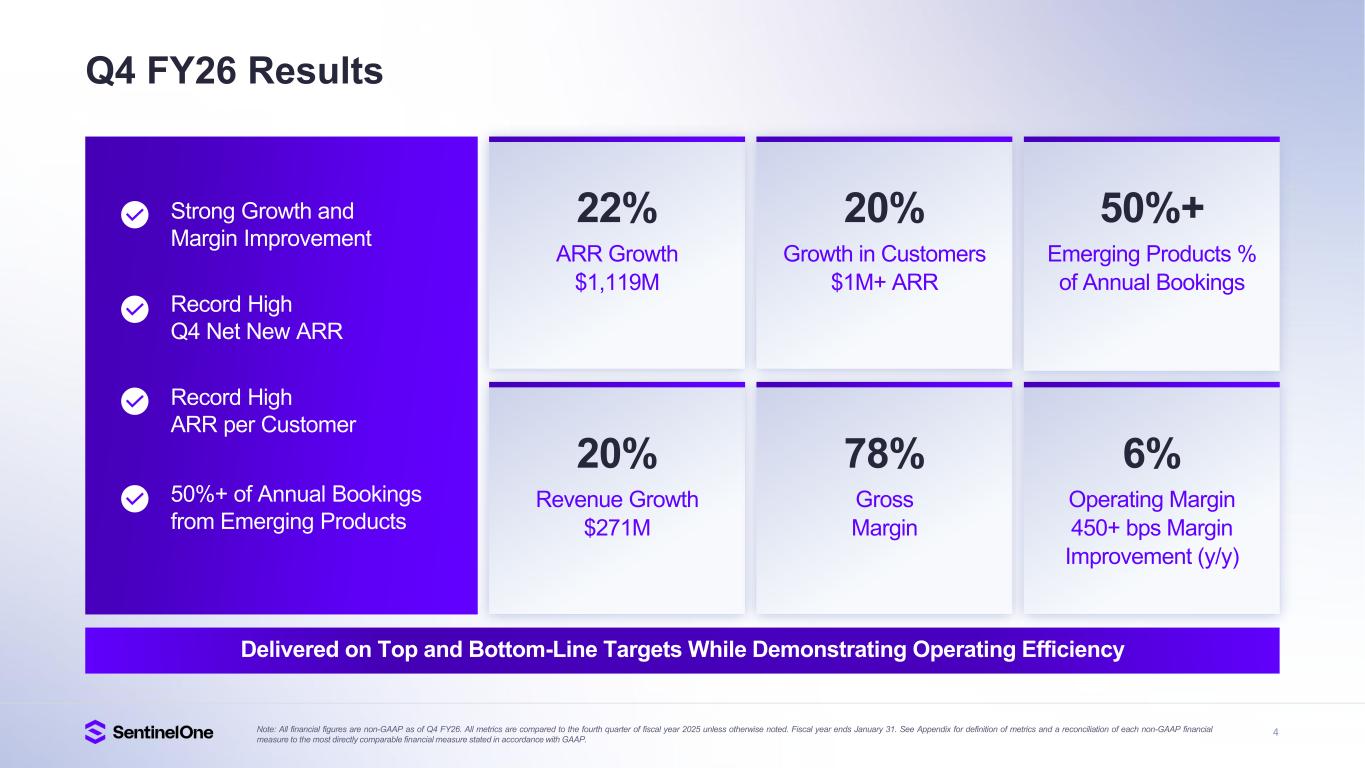
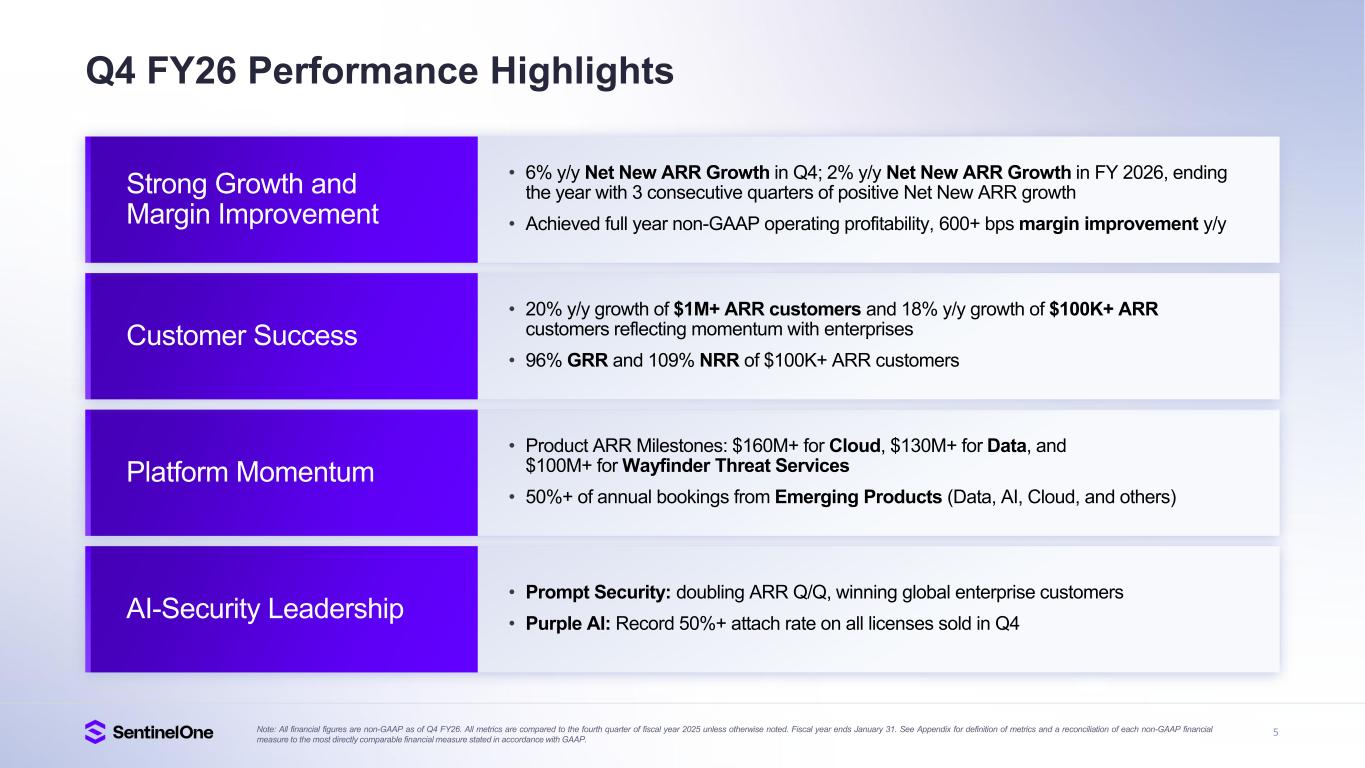
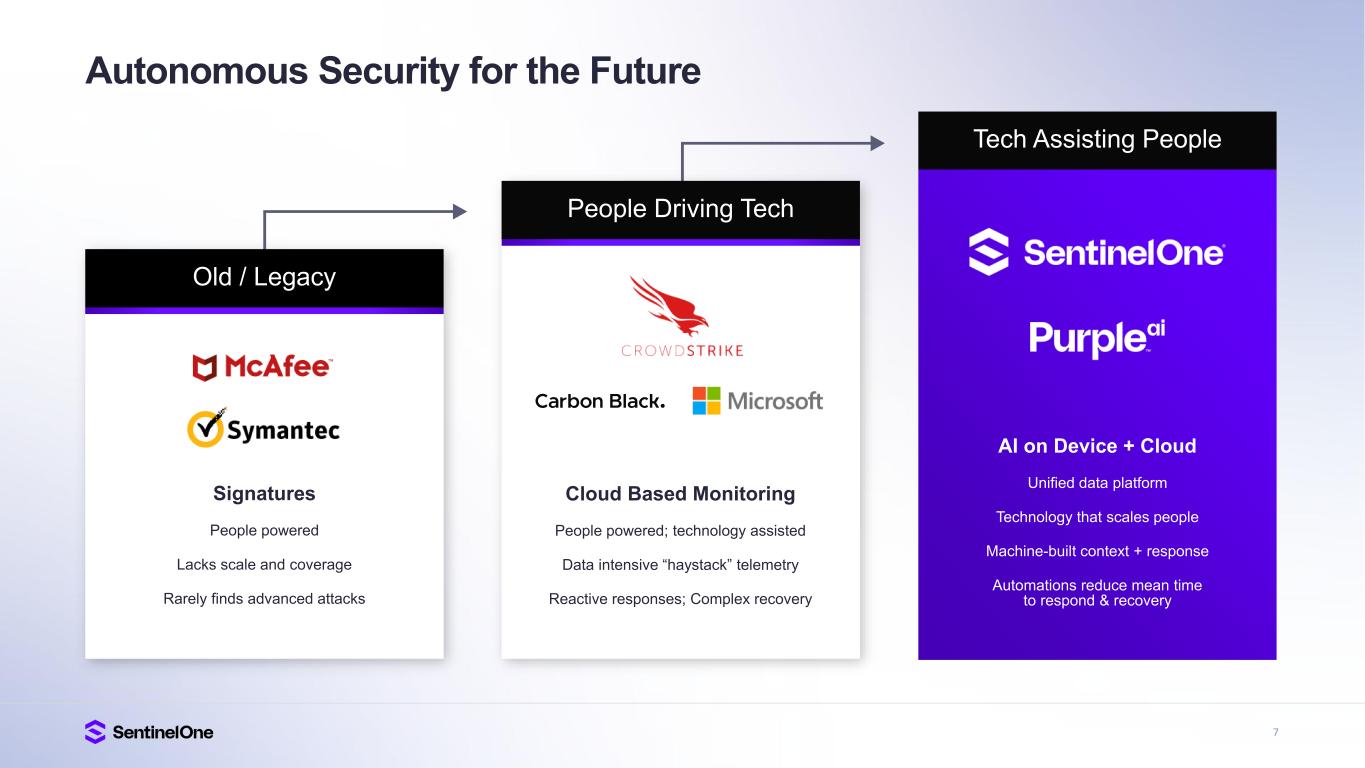
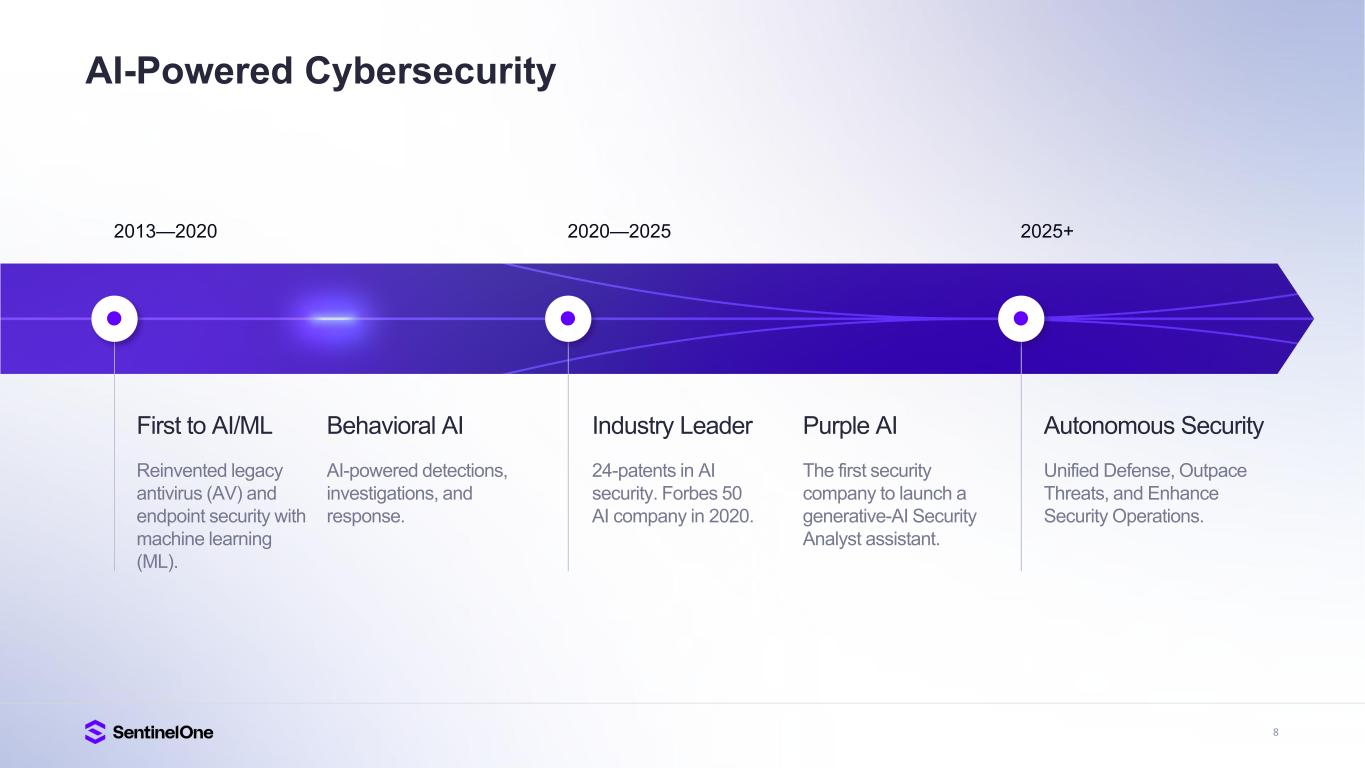
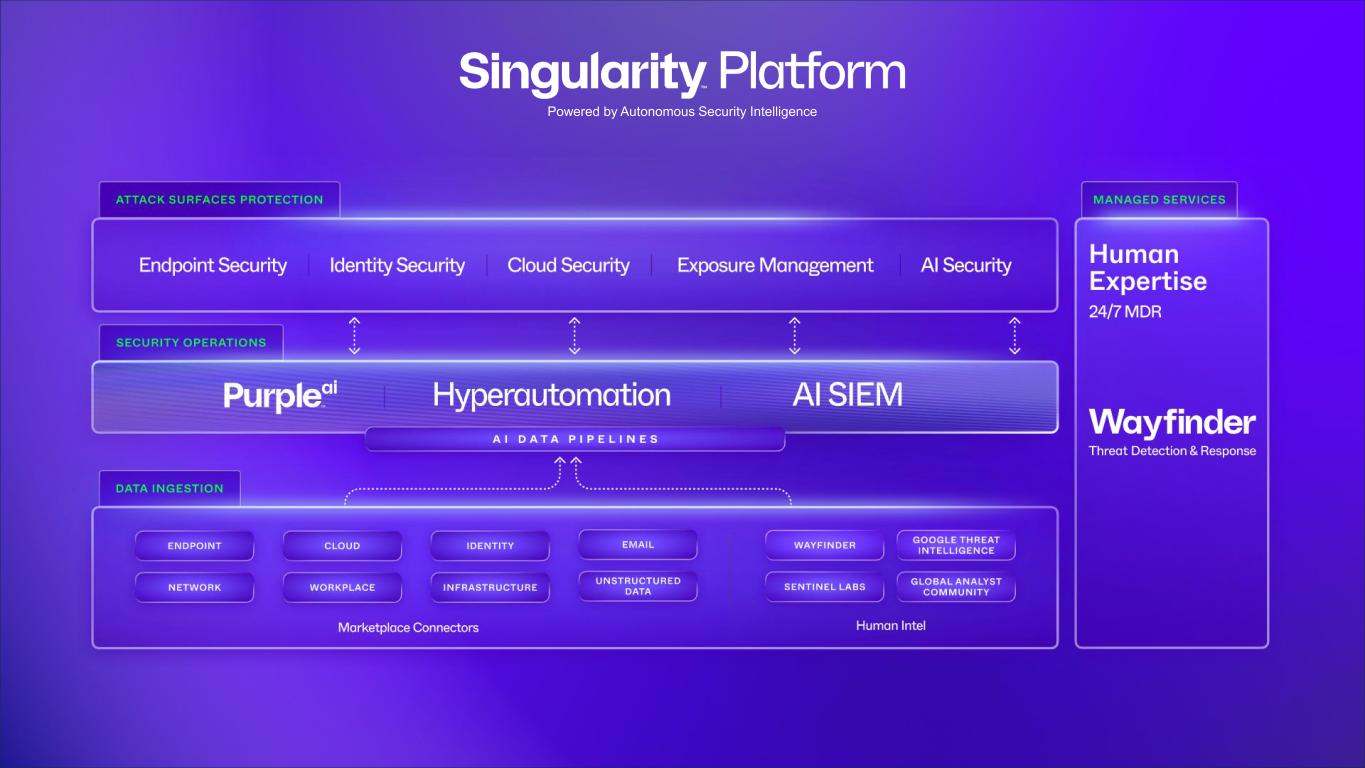
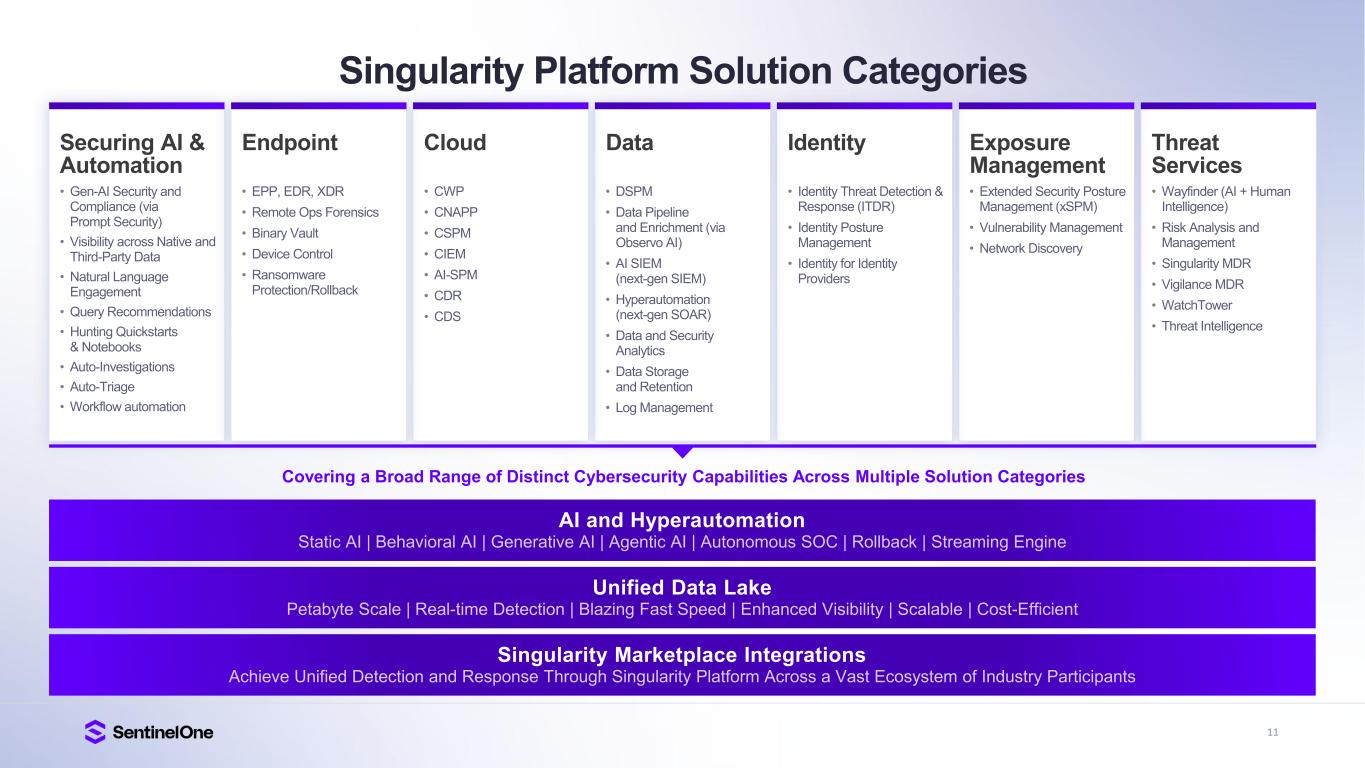
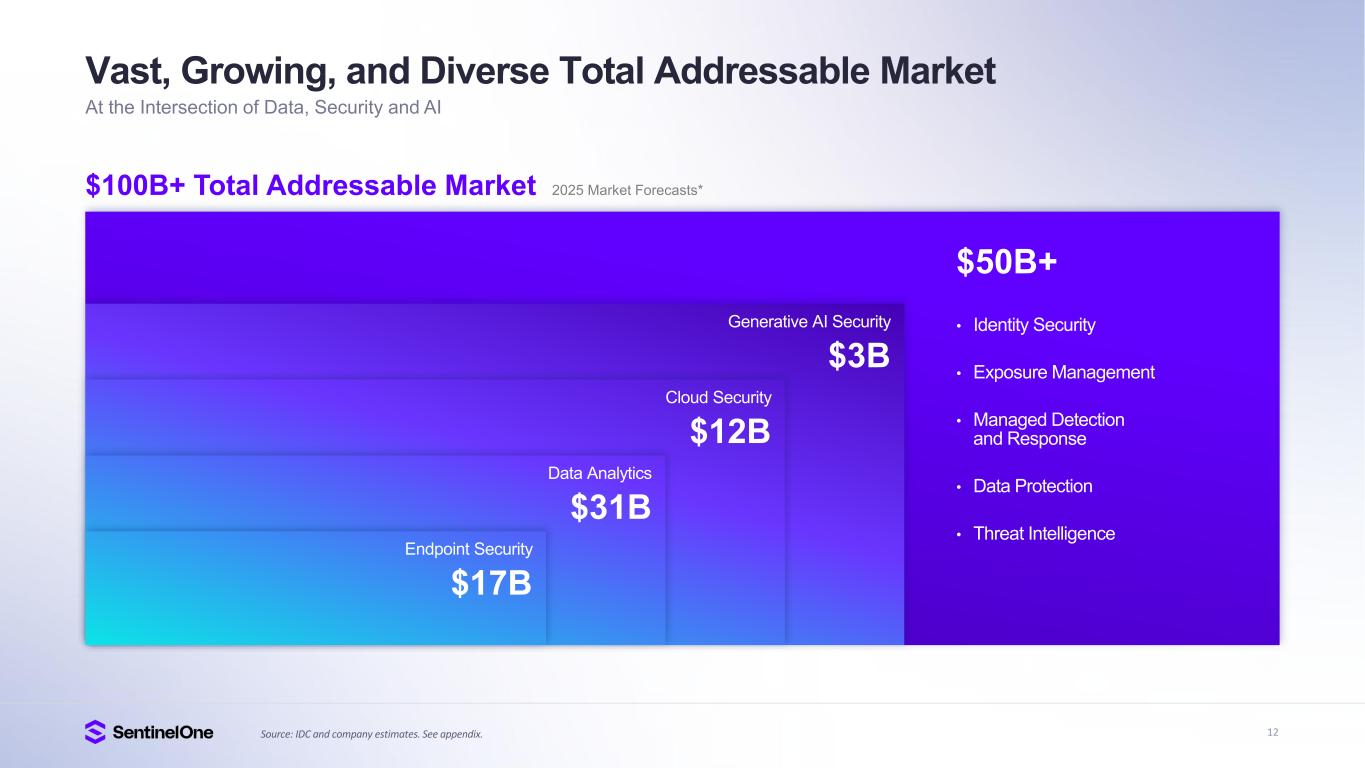
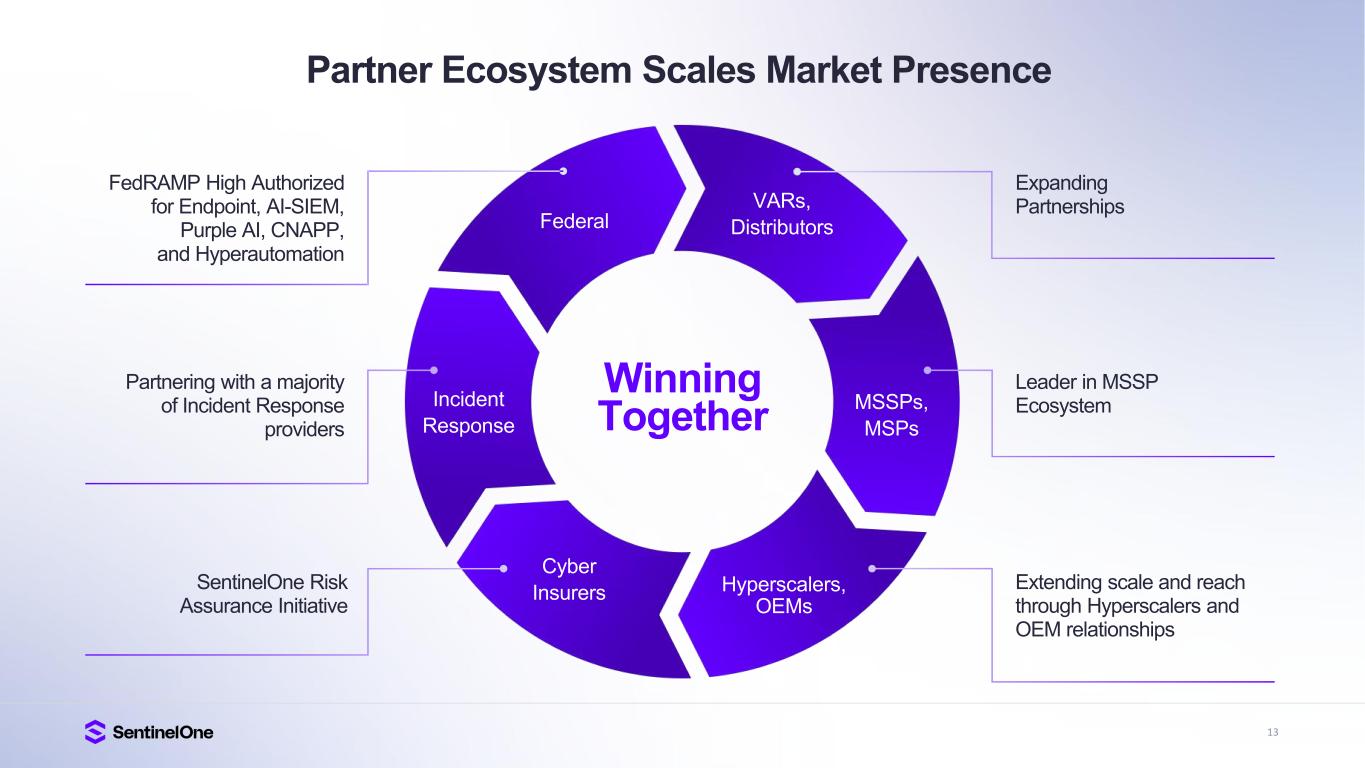
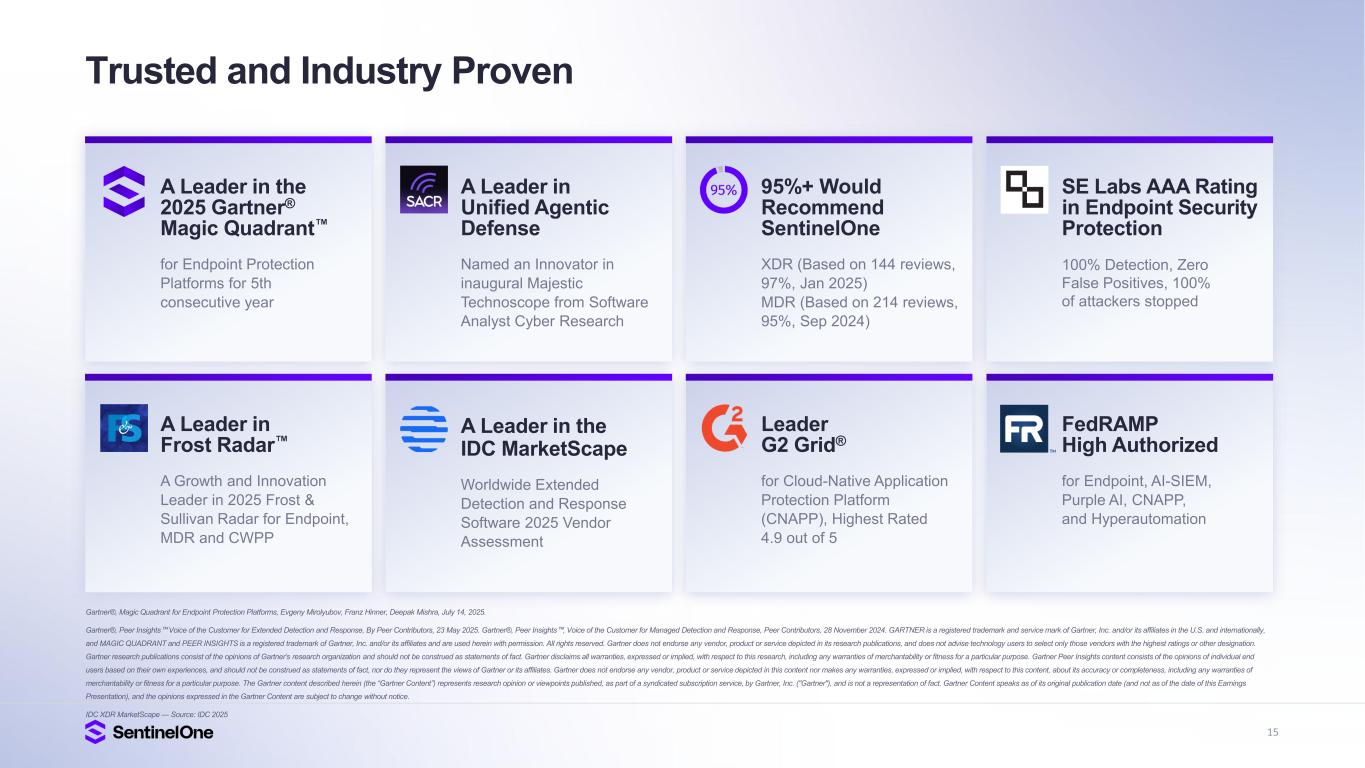
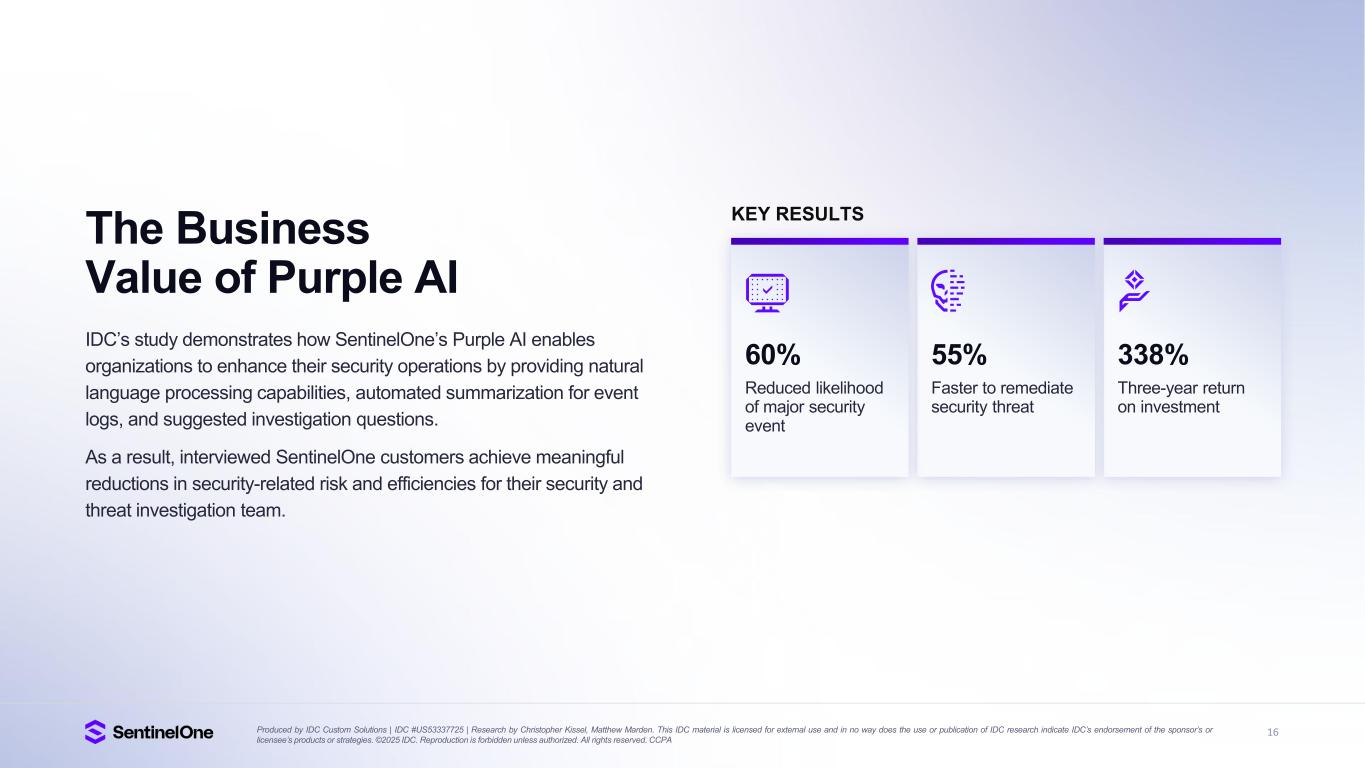
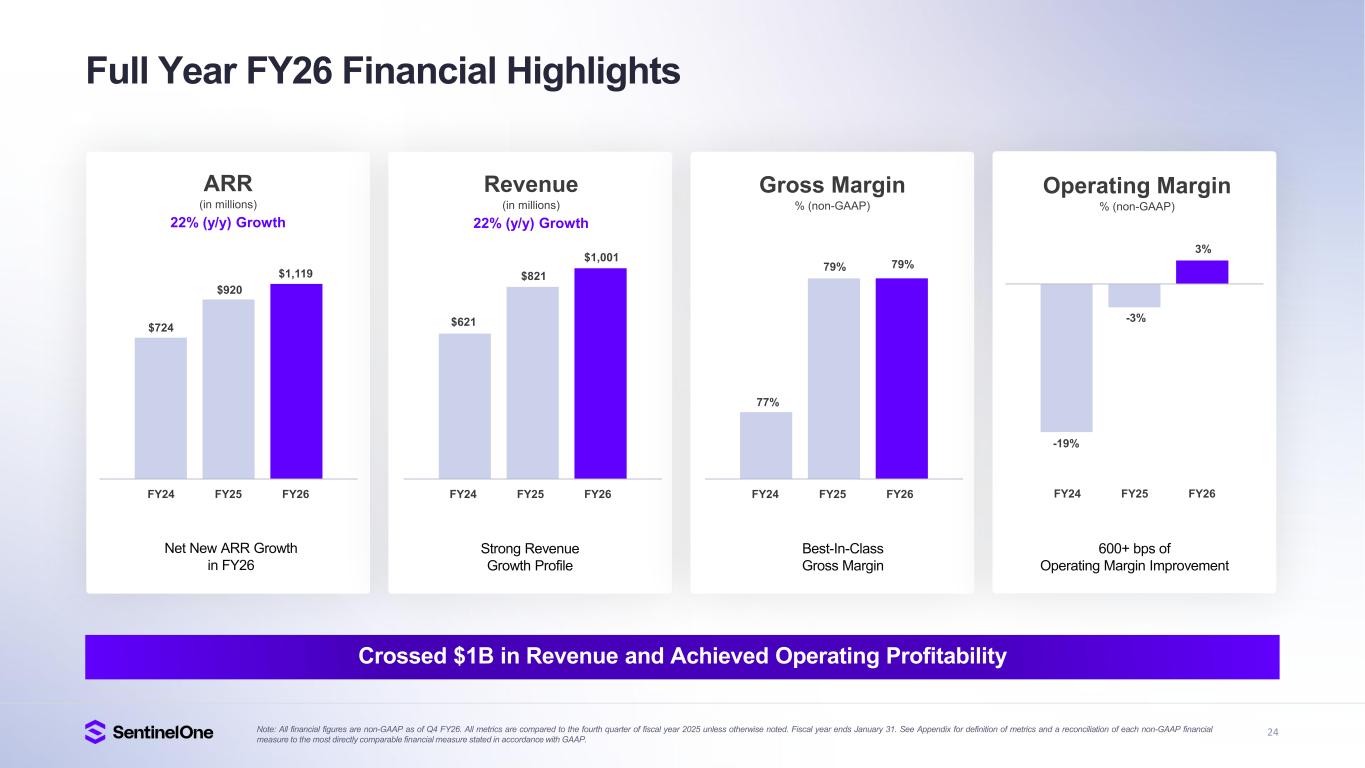
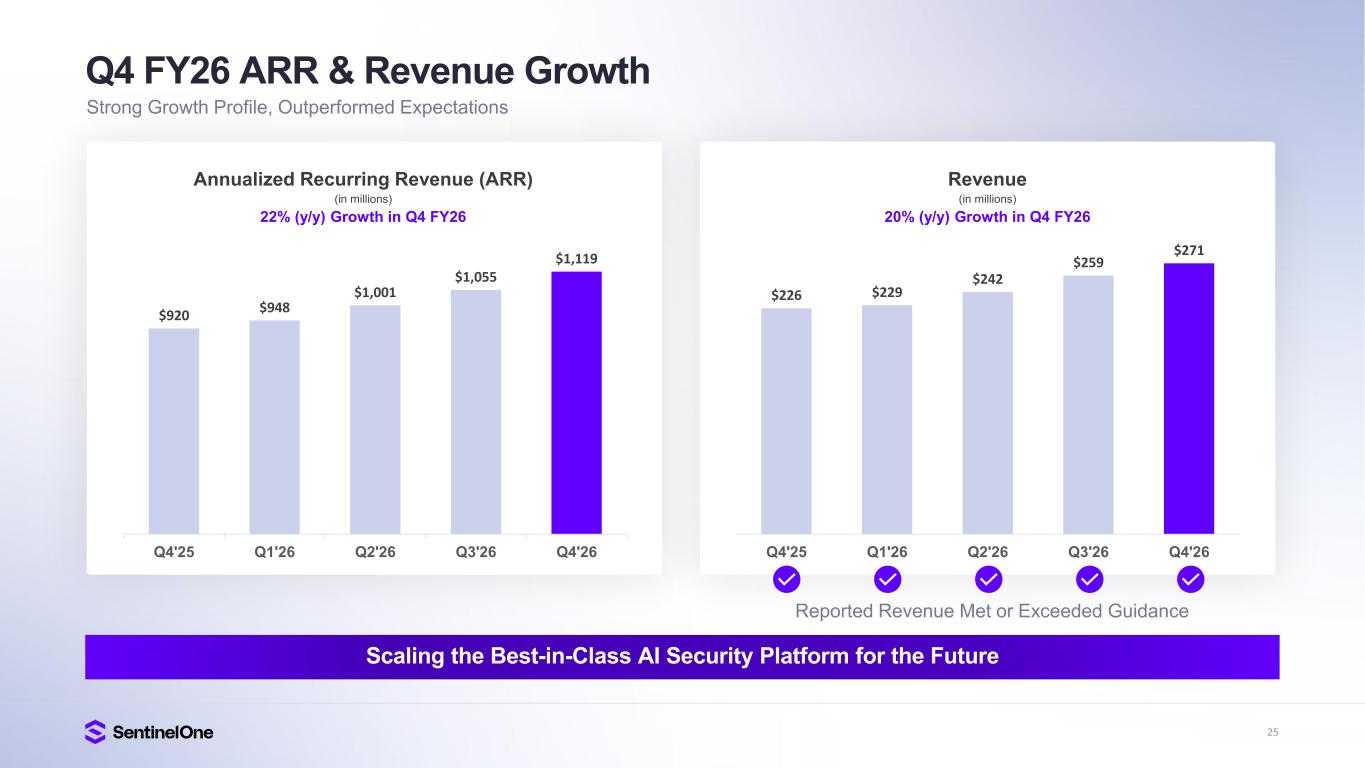
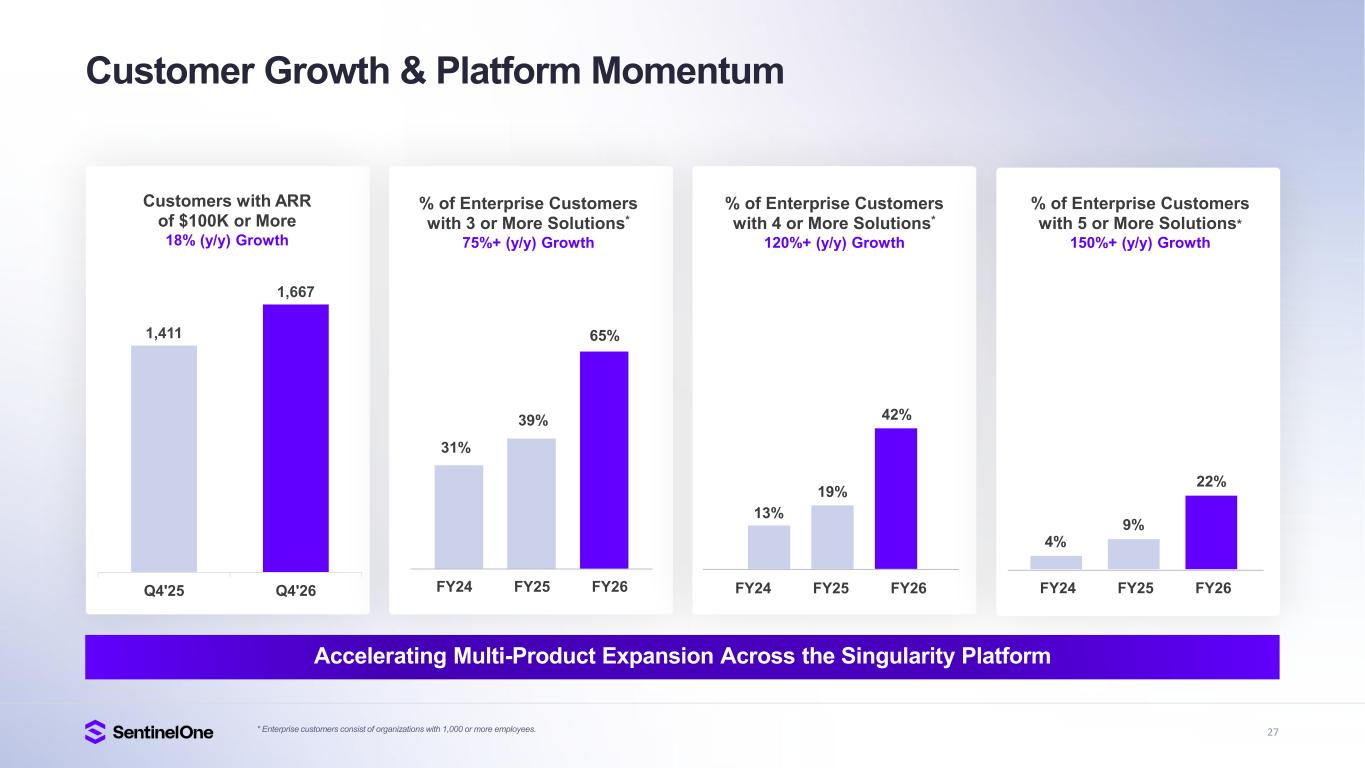
Good afternoon, everyone, and thank you for joining our fourth quarter earnings call. Fiscal 26 was a landmark year for SentinelOne. We achieved a billion dollar revenue scale, growing 22% year over year and delivered full operating profitability, a significant milestone towards profitable growth. In Q4, our total ARR grew 22%, driven by strong new logo acquisition and expansion with existing customers. We delivered 64 million net new ARR in Q4, a company record. This marks our third consecutive quarter exceeding ARR expectations, showing execution consistency and positive growth. We drove about half of our new business through new logos, showing a balanced split between new logo acquisition and expansion within our existing customer base. We're gaining traction in the most critical domains of cybersecurity, both AI for security and security for AI. We're helping organizations advance their digital transformations securely and intelligently. CentaOne offers the only cybersecurity platform that delivers these unifications, truly. AI represents a significant TAM expansion, and a long-term tailwind for our business. From early on, AI-native security has been foundational to our platform architecture. This early advantage positions us to emerge as the category winner in the AI era across more than $100 billion market opportunity. We've established Central One as a clear technology leader in cybersecurity. Our relentless focus on delivering AI-powered innovations that truly unify security, data, and automation has positioned us at the forefront of the industry. As we enter the new fiscal year, we're accelerating our path towards achieving the Rule of 40 driven by durable growth and higher profitability. Now, let's dive deeper into the details of our quarterly performance. We are winning new logos and expanding our footprint across diverse platform categories. Enterprises are choosing the Singularity platform for unified AI native security that provides a single pane of glass and seamless workflow. We firmly believe that cybersecurity shouldn't be complicated. Beyond the Singularity Platform's best-in-class efficacy, its intuitive design and operational simplicity are driving stronger customer adoption. Today, our unified platform spans seven core solution categories, delivering more than 40 different modules designed to solve the most complex use cases, all while providing end-to-end autonomous cybersecurity. In fiscal 26, our non-endpoint solutions surpassed half of our total annual bookings, a clear testament to the diversity and customer outcomes of the Singularity platform. Customers are increasingly consolidating on our platform. In fiscal 26, the percentage of our enterprise customers using three or more solutions increased to 65% versus 39% a year ago, enterprises using four or more solutions more than doubled to 42% versus 19% a year ago, and enterprises using five or more solutions increased to 22% versus 9% a year ago. And for many of the enterprise logos we're adding, this is just the beginning of a long-term expansion journey. In Q4, our cross-platform adoption drove a record ARR per customer signifying solid momentum and contributions from our AI, data, cloud, wayfinder and endpoint solutions. Customers of all sizes, especially large enterprises, are increasingly recognizing Singularity's architectural advantage. Our Q4 performance clearly demonstrates this momentum. We drove sequentially higher win rates across every market segment anchored by accelerating gains in the enterprise. Let's look at an enterprise win that exemplifies this. Internet security giant Cloudflare, the company securing about 40% of all human-originated internet traffic, moved to Sentinel-1 in less than 24 hours, completely uninterrupted. After a rigorous POC, they selected Sentinel-1 to replace our closest competitor as their security platform of choice, citing our superior technology and ease of use as the deciding factors. This seven-figure deal included Endpoint Security, Purple, and our Wayfinder Elite services. This is a clear testament to our technological edge and the platform value we deliver. Next, looking at our key growth drivers, Purple is becoming the bedrock of modern security operations, empowering teams to respond faster, accelerate detection, and automate investigations. The trajectory of Purple adoption continues to outpace our internal expectations, hitting a record attach rate of over 50% on licenses sold in Q4. According to IDC's independent study, Purple user experienced 55% faster threat remediation, 60% lower likelihood of major incidents, and an impressive 338% return on investment over just three years. We're seeing strong Purple uptake across both new logos and existing customers. Many of our Purple AI customers are expanding their usage, signifying future growth potential and the value it delivers. For AI security, we are benefiting from the accelerating enterprise demand for secure adoption of AI models, agentic workflows, and employee AI usage. In Q4, ARR from prompt security more than doubled sequentially. In addition to existing customer upsells, we've started winning standalone AI security deals with Fortune 500 companies. Moreover, we are beginning to win AI security deals from customers of our direct competitors, creating a new strategic entry point to expand our market share and footprint. There are no serious scalable alternatives to Prompt security in the market, and customers need to adopt AI now. For example, in the past quarter, a Fortune 100 financial services company deployed nearly 100,000 licenses for AI security and governance. Prompt is helping solve complex AI governance and compliance challenges for customers across our industry. In another example, a multinational retail giant deployed Prompt Security to eliminate a visibility black hole surrounding unmonitored employee AI usage. They chose SentinelOne for quick deployment, visibility, and real-time AI security, all while satisfying strict European GDPR requirement. We also launched Close Security. the industry's first open-source security suite to secure emerging autonomous agents like OpenClaw and others. For data solutions, we surpassed 130 million in ARR with growth accelerating sequentially. We are seeing rising demand for our AI sim as it delivers deeper visibility, real-time detection, and autonomous response, all with far more efficient unit economics than legacy alternative. In Q4, we also launched our new AI-native data security posture management solution, or DSPM, to help customers secure their data and AI workloads. Furthermore, to Observo AI, we now own the data pipeline that powers modern security operations. The market is clearly recognizing this value. We were just named Sim Innovation of the Year in the cybersecurity breakthrough awards. We have now fully integrated Observo AI's data pipeline solution into the Singularity Platform. This creates a truly comprehensive data architecture, natively unifying petabyte-scale ingestion, data pipeline, orchestration, and hyper-automation into a single, seamless experience. For data solutions, we signed a multi-year infrastructure partnership with a global hyperscaler. As part of our expanding alliance, central one's threat intelligence data now pairs with this company's native threat intelligence services this shared telemetry model powers our own joint offerings and establishes a highly strategic growth vector for our data business in addition to taking share from legacy incumbents our platform is now beginning to serve as the foundational data layer for the world's largest technology innovators for cloud security we are seeing strong expansion especially with our best breed runtime workload capabilities covering both on-prem and cloud environments. In Q4, our cloud security solution surpassed 160 million in ARR. As cloud environments expand and AI workloads multiply, the need for robust security is increasing. We are meeting this demand by delivering comprehensive cloud-native detection and response that scales with our customers' infrastructure, simplifying their operations, and elevating defenses with our unified platform. For endpoint, we achieved double-digit ARR growth in Q4. We continue to outgrow the broader market by delivering the most autonomous endpoint security solution available, combining industry-leading efficacy, performance, and user experience. Nearly half of the existing endpoint sector is still using legacy antivirus solutions. We see this as a clear opportunity for continued market share gains. Our leadership in AI native security is attracting the most advanced technology innovators in the world. In Q4, one of the top frontier labs selected a singularity platform to secure its mission-critical infrastructure and the development of its flagship models. This wind underscores that the architects of the AI frontier Here recognize Sentinel-1 as the definitive security layer for the future of intelligence. In the era of AI, securing a highly restricted on-premise environments where true sovereignty is of paramount importance are becoming one of the most strategic growth opportunities. While our competitors have no ability to secure these environments, we saw triple-digit booking growth in the quarter signifying an emerging growth avenue for us. We have the distinct advantage of delivering fully autonomous, high-velocity AI protection, both in the cloud and on-premise. This differentiation was clear in our recent win with one of the largest postal operators globally. The customer signed a five-year commitment to secure their vast network with Centrum One. Our ability to deliver specialized on-premise security at scale, while meeting the most rigorous government standards, was the deciding factor. In addition, we are seeing strong enterprise interest in Wayfinder threat services, which crossed 100 million in ARR in Q4. As enterprises race to adopt generative AI, they often lack the blueprint to do so safely. Wayfinder fills that gap by serving as both an implementation arm and a managed supervision layer for AI cybersecurity. Our Wayfinder AI augmented services deliver immediate time to value by deploying an under 15 minutes and resolving 99% of threats without any customer action required. Trust is a big factor. We believe that expert human oversight is the way forward to build customer trust when adopting new autonomous technologies. Wayfinder embodies this vision by pairing our AI-native platform with elite AI security experts. As expected, CenterOne Flex is proving to be a highly effective model for broader platform adoption. By simplifying the purchasing process, Flex is driving larger deal sizes, multi-solution deployments, and extended commitments. Flex simplifies the path for large-scale platform adoption and secures long-term, high-value partnerships. For a platform consolidation win, we secured an eight-figure TCV deal with an iconic global logistics company that standardized on the Singularity platform for unified AI security. To protect their highly distributed and critical infrastructure, this enterprise consolidated multiple competing vendors on the Singularity platform. Centrum One was the clear choice to modernize their operations and securely implement AI. Alongside industry-leading efficacy, Singularity Platform's intuitive design, unified interface, and ease of use are key differentiators that are driving strong platform adoption. We're delivering the only single-plane platform on the market capable of being deployed anywhere, which stands in stark contrast to our next-gen peers. Large enterprises, especially leading innovators, are recognizing this, in many cases securing millions of assets in a single deployment. Our continued upmarket trajectory is driving larger deal sizes and steady retention rates, lending these premier enterprise logos at scale provides us with a significant, highly durable runway to drive strong growth for years to come. Today, we proudly secure nearly one-fifth of the Fortune 500s and hundreds of global 2,000 enterprises. Our expanding customer base now includes some of the most sophisticated and iconic companies on the planet, alongside highly regulated mission-critical infrastructure. From the pioneers building today's frontier AI models to the global category leaders in semiconductors automotive aviation finance and smartphone giants the world relies on in the partner ecosystem we continue to expand and deepen our engagements our partners are a force multiplier helping expand our reach and scale we are seeing strong traction driven by increasing platform adoption across ai data cloud and broader platform solutions we are increasingly winning at the top end of the market highlighted by an eight-figure strategic partner win in Q4. This deal provides access to our entire Singularity platform through a flexible deployment schedule. In addition, we are strategically scaling our mid-market adoption by driving operational leverage for our partners. Our success across the managed security ecosystem is a clear testament to this strategy. In fiscal 26, we achieved over 60% ACV growth with our top 20 MSSP partners and over 75% ACV growth with our top 10 MSSP partners. These partners are rapidly expanding beyond the endpoint. They're adopting our AI, data, cloud, and broader platform solutions. Our MSSP partners are standardizing on SentinelOne. Our unique platform architecture delivers the multi-tenancy and remote management capabilities that drive real operational leverage and technology differentiation. This technology advantage translates directly into a dominant competitive position for SentinelOne in the managed security ecosystem. We're also deepening collaboration with hyperscalers by integrating our technology and platform across their cloud marketplaces and AI services. Together, these alliances are enhancing our market presence and positioning SentinelOne as a trusted partner for enterprises worldwide. In the public sector, we achieved GovRamp authorization at the high impact level, and this opens more public sector opportunities for us in both federal and SLED environments. Let's shift gears to the broader industry dynamics and why SentinelOne is a distinguished beneficiary for the AI era. There has been a lot of debate about the impact of AI on traditional SaaS business models. While some of these concerns are justified, especially if you're selling an antiquated platform built upon a legacy codebase, modern security operations remain mission-critical. Cybersecurity is an imperative for safe adoption and usage of AI. It is a significant tailwind for SentinelOne, and we're already seeing AI security as the fastest growth category for us today. We are the builders enabling secure AI adoption for builders. Our enterprise success clearly validates this. Our platform and AI models are forged from real-time proprietary threat intelligence data at petabyte scale that is gathered across tens of thousands of organizations and tens of millions of assets globally. That scale, intellectual property, and depth of data combined with human insights are a unique competitive moat. The reality is that cybersecurity is paramount in the age of AI. The market needs reflect this reality. Gartner recently highlighted that AI security is the fastest growing segment in cybersecurity, expanding over 70%. Security and trust remain the single biggest barrier to enterprise AI adoption in the United States and globally. At Centrum One, we're helping organizations to move from basic AI assistance to true autonomous agentic action, with trust and safety embedded as our guiding principles. We are putting defenders firmly in control of the AI boom, delivering the platform tools, strategies, and services they need to build, secure, and benefit from AI. We are delivering an end-to-end AI-native platform that seamlessly delivers security for data, infrastructure, and runtime as a single, unified system. We actively partner with, invest in, and protect the pioneers building today's frontier AI models. Grounded in this ecosystem, we are pushing into the frontier of autonomous agentic security, where AI doesn't only assist humans, but also independently detects and stops complex threats in real time. Reflecting upon the past year, we've delivered strong growth and margin improvement while driving innovations that are shaping the future of cybersecurity. With an increasing scale and durable top-line growth, we're continuously refining our operating model to be well-positioned for the opportunities ahead. We remain laser-focused on our most efficient go-to-market channels, while unlocking structural productivity gains by integrating AI throughout our business. We have always operated with a builder mindset. Looking ahead, we're establishing a stronger central one that is well-positioned to lead in an AI-first security landscape, while creating long-term value for our customers, partners, and shareholders. Before I turn the call over to Barry, I'm pleased to welcome Sonali Parekh to our leadership team. Sonali is joining SentinelOne as our new Chief Financial Officer. She brings more than 25 years of experience across public software and technology companies. Sonali has proven track record of scaling high-growth software platforms, driving financial discipline and overseeing multi-product strategies. That's an ideal fit to lead the next phase of SentinelOne's financial strategy, delivering growth and profitability. I look forward to our partnership. I would also like to thank Barry for his leadership and steady hand as interim CFO. He has been a trusted partner, ensuring a seamless transition and leading our finance function. In closing, I want to take a moment to acknowledge the contributions of all Sentinels, The relentless focus, dedication, and execution drives our success. And thanks to all our customers, partners, and shareholders for their continued support. Our mission to be a force for good remains as important as ever in ensuring AI is also a force for good. Thank you again for joining us today. With that, I'll hand it over to our interim CFO, Barry Padgett.
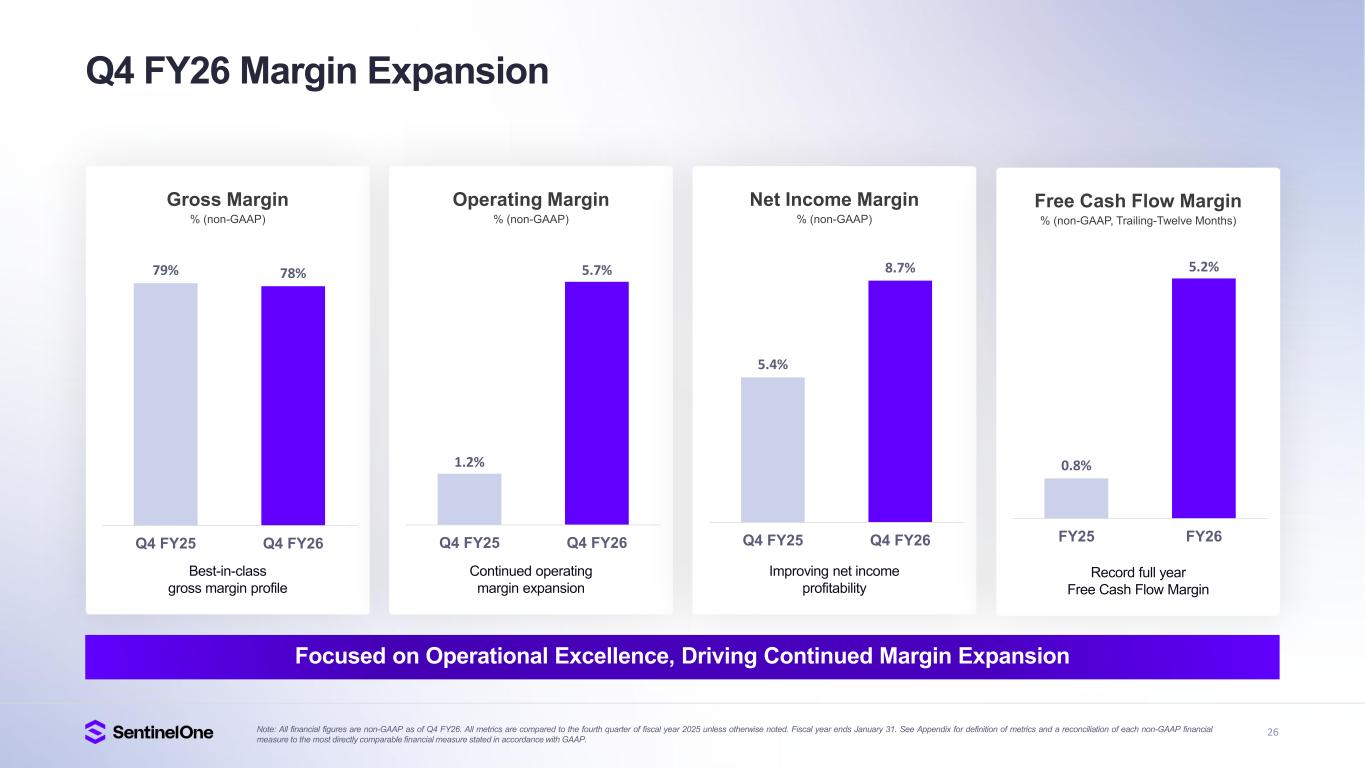
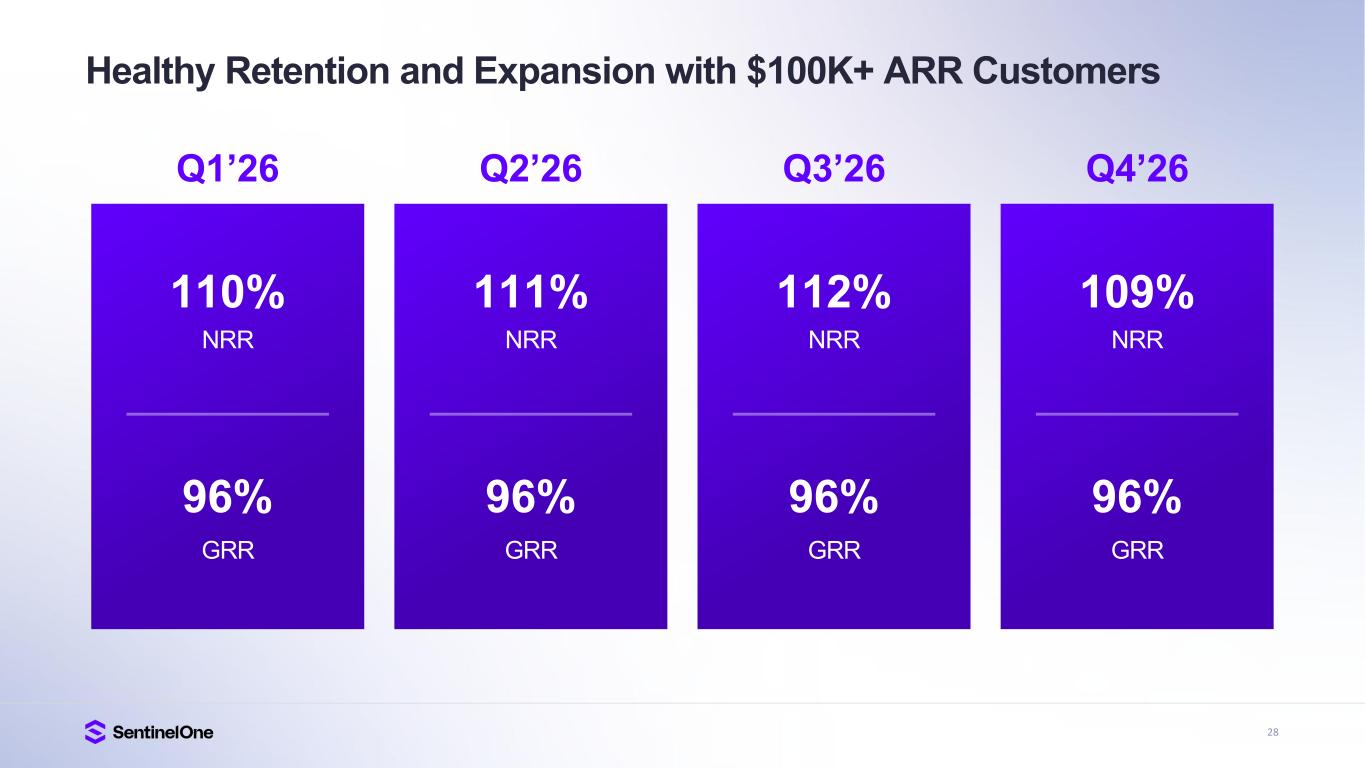
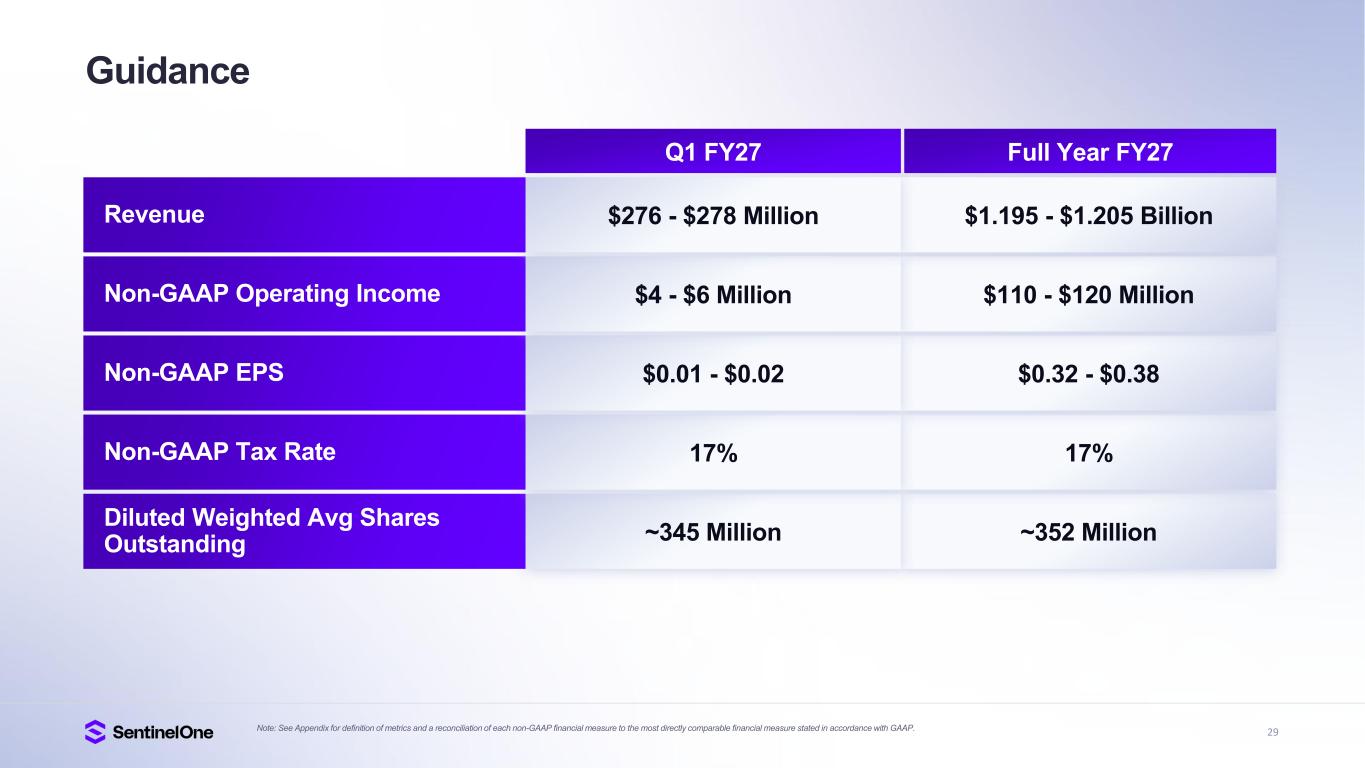
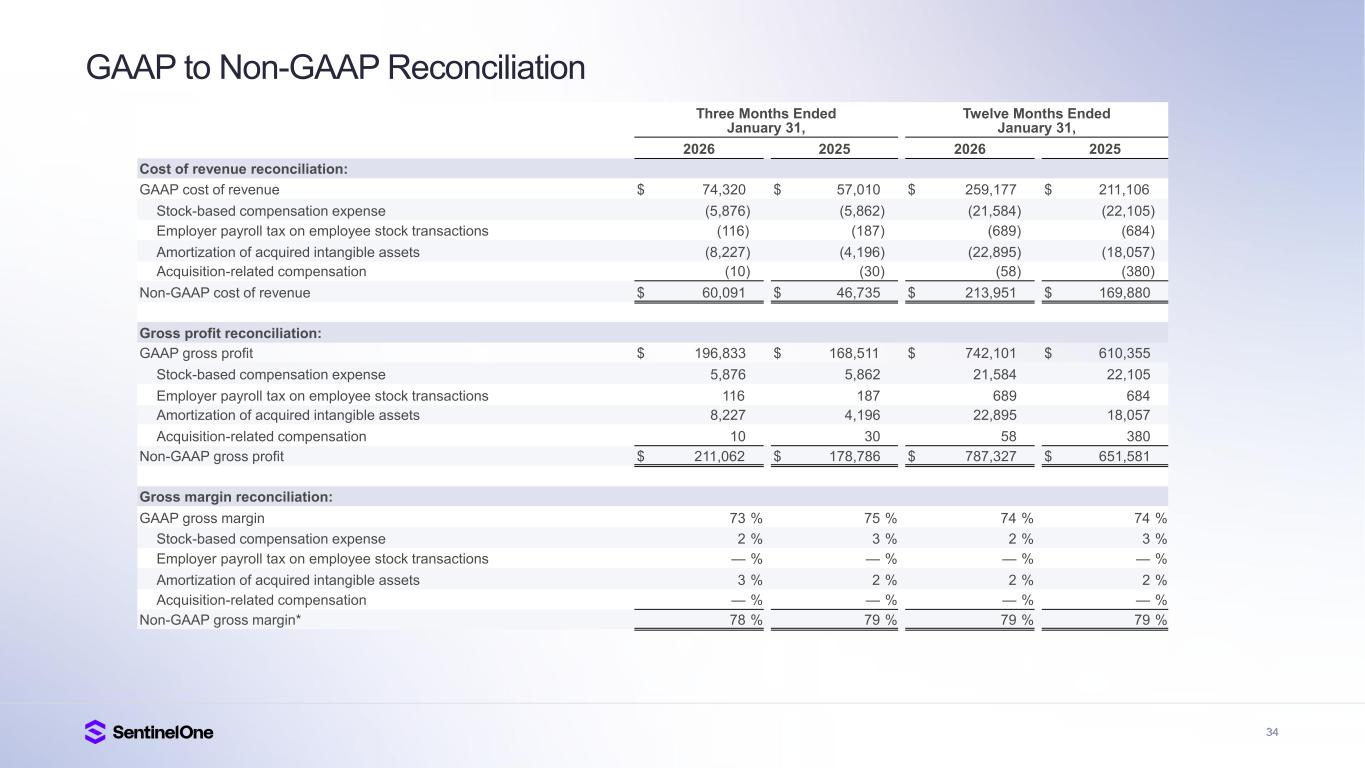
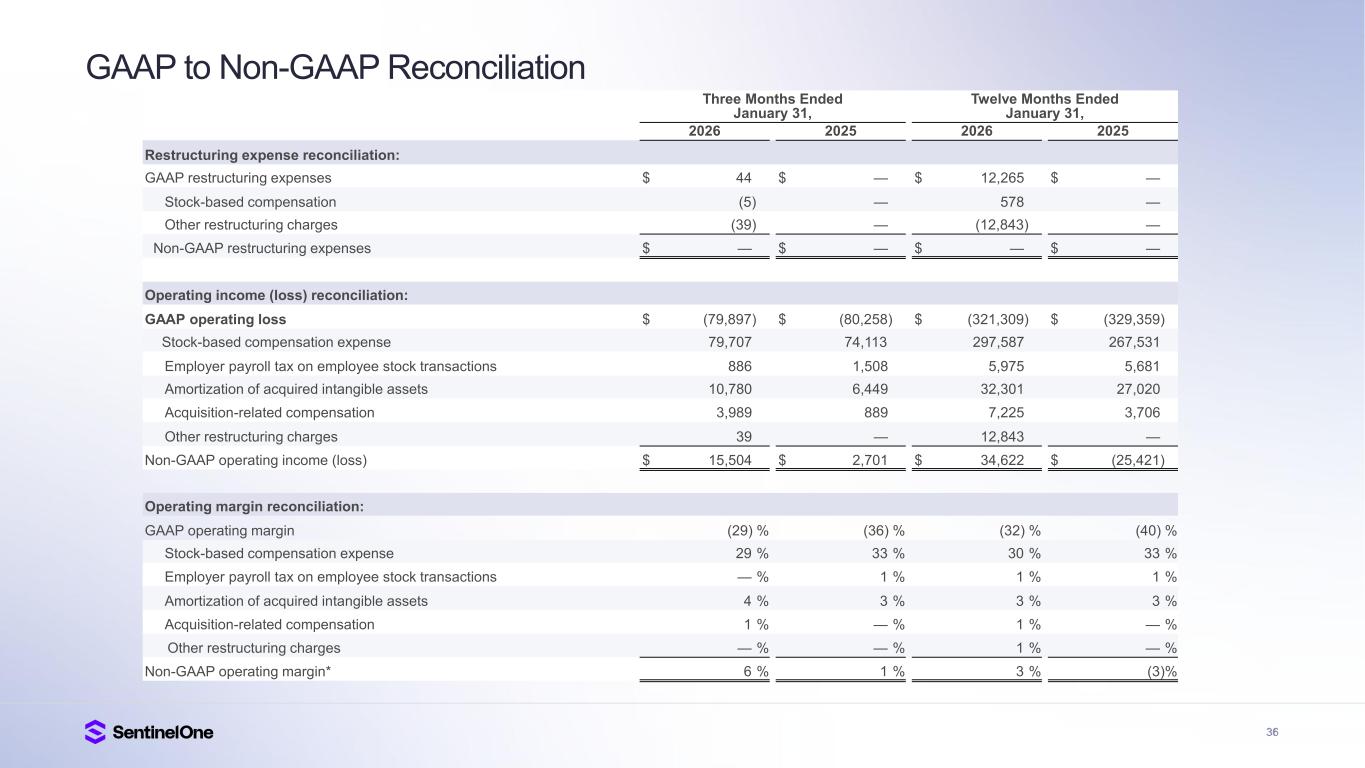
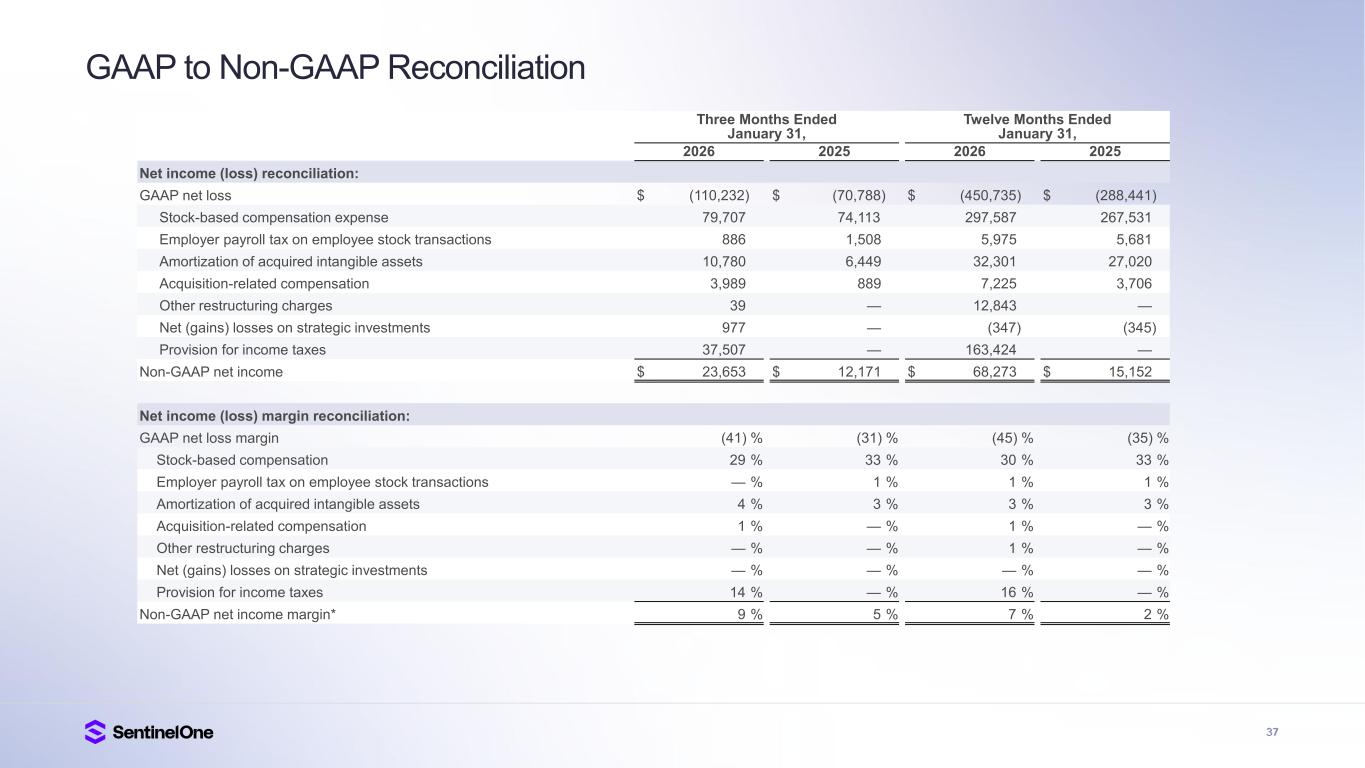
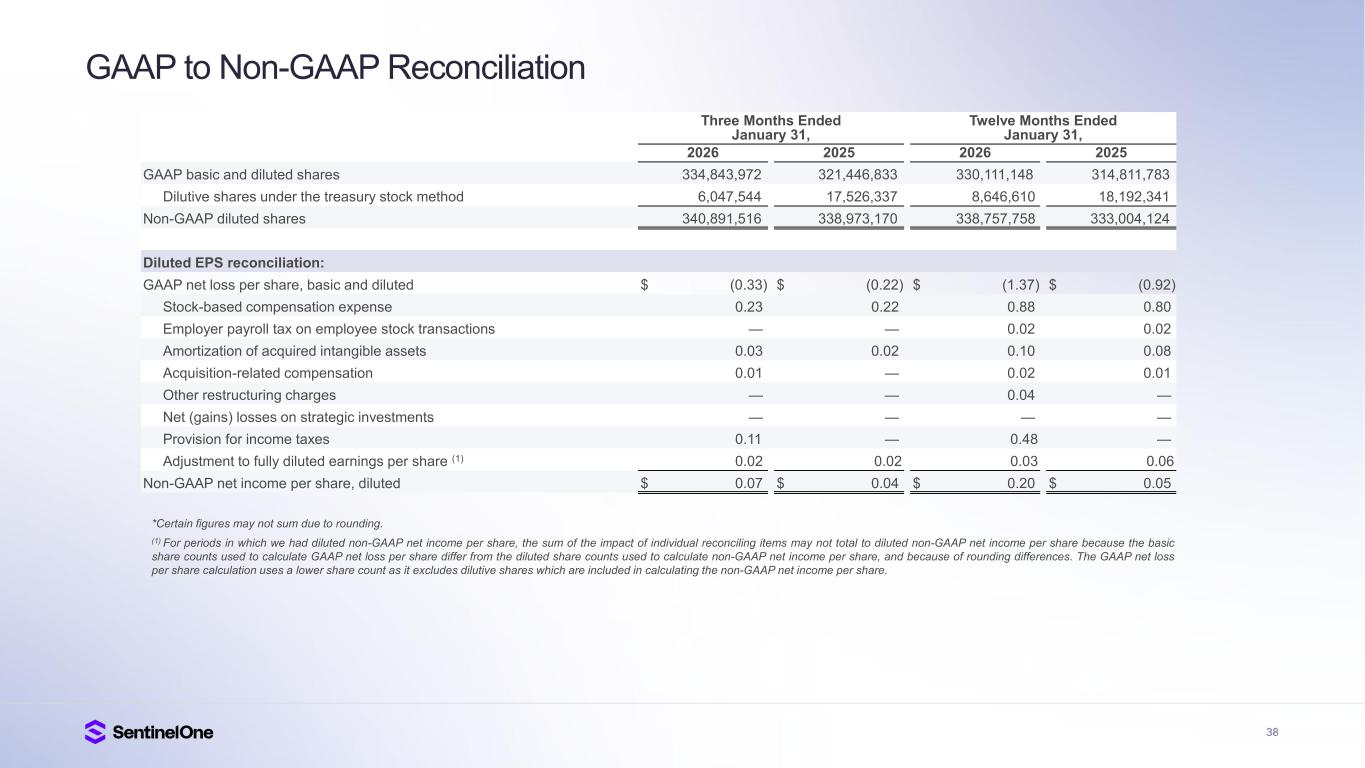
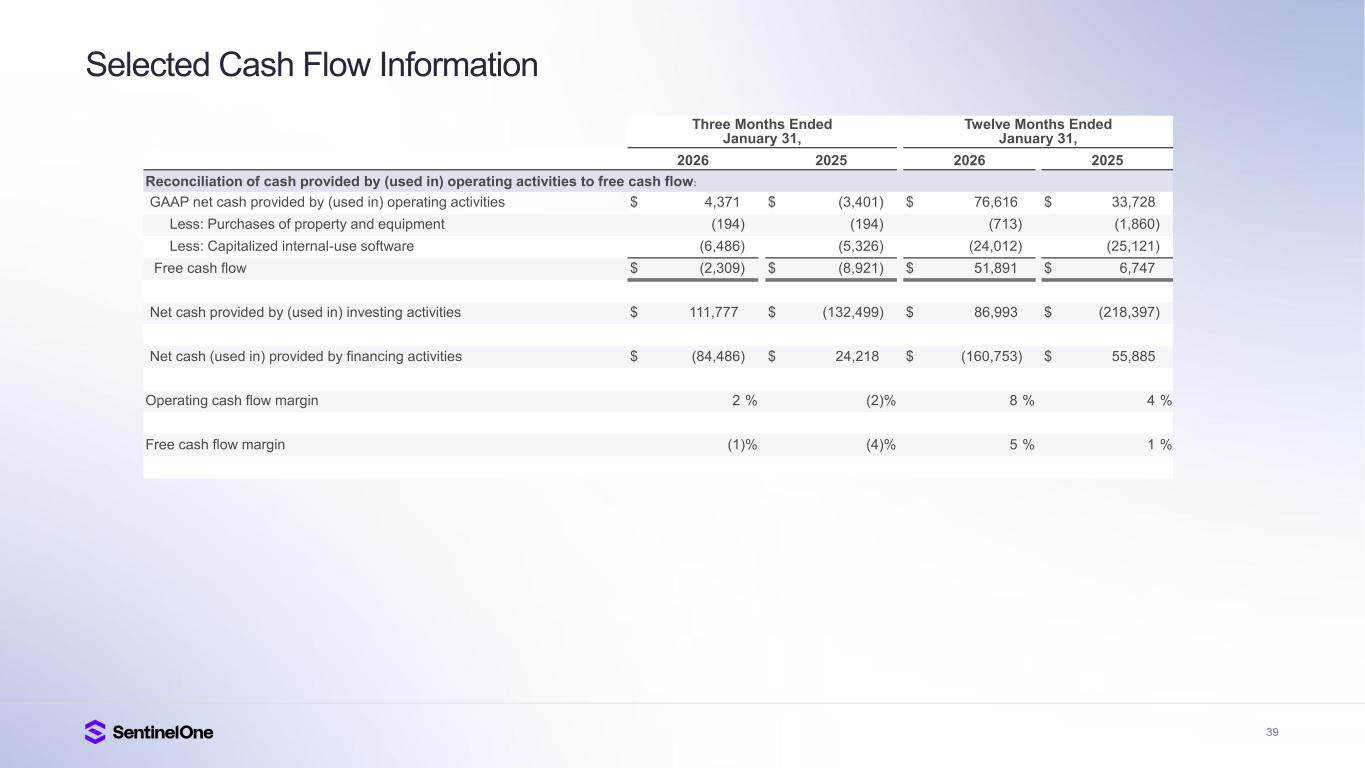
Thank you, Tomer, and thanks everyone for joining us today. let's review the details for Q4, the full fiscal year 26, and our guidance for Q1 and fiscal year 27. As a reminder, all comparisons are year-over-year, and financial measures discussed here are non-GAAP unless otherwise noted. Fiscal year 26 was a transformational year for Sentinel One, highlighted by two major financial milestones. Firstly, we scaled the business past a billion dollars in revenue, growing 22% year-over-year. Secondly, we achieved full-year operating profitability, driving a 600-plus basis point year-over-year improvement to expand our operating margin to 3.5%. Let's review the financial performance of our fourth quarter. In Q4, our revenue grew 20% year-over-year to $271 million. International markets grew 30% and represented 40% of total revenue, reflecting strong international demand and a growing global footprint. In Q4, our total ARR grew 22%, and we added a record 64 million in net new ARR, which exceeded our expectations. These results were driven by a balanced split between new logo acquisition and platform adoption by existing customers. As we continue our strategic shift up market, our ARR per customer reached a new company record. We are seeing strong momentum at the top end of the market as our cohort of customers with arr of 1 million dollars or more grew 20 year-over-year to 153 customers in q4 additionally customers with arr of a hundred thousand dollars or more grew 18 to 1667. furthermore retention rates across our large customers remain strong underscoring the mission critical nature of the singularity platform for customers with $100,000 or more in ARR, our gross retention rate was 96% in Q4. Our dollar-based net retention rate for these customers was 109%, driven by these large organizations continuing to adopt the broader platform and consuming multiple products from us. Overall, we are maintaining a balanced split between new logo acquisition and existing customer expansion. Given our scale and relative market share this focus allows us to increase our market share with significant future expansion potential turning to margins we maintained a solid gross margin profile in q4 at 78 highlighting healthy platform unit economics and scale efficiencies in q4 our operating margin was six percent representing an improvement of 450 basis points year over year we also achieved a net income margin of 9% in the quarter. On a trailing 12-month basis, we delivered a free cash flow margin of 5% and successfully delivered our second full year of positive free cash flow. This is an important milestone that underscores our path towards sustained profitable growth. We ended the year with a robust balance sheet, including $770 million in cash, cash equivalents in investments, and most importantly, no debt. Given our strong balance sheet and confidence in our long-term trajectory we opportunistically repurchased six and a half million shares this quarter bringing the total shares repurchased to 12.2 million in fiscal year 26. we will continue to employ a balanced capital allocation strategy prioritizing organic investments while returning capital to shareholders turning to our guidance for q1 and fiscal year 27 as we enter our next chapter of scale and profitability we are enhancing our guidance framework in addition to our revenue and operating income outlook we are providing guidance for earnings per share and some helpful modeling assumptions we believe this enhanced framework offers a more comprehensive view of the company's earnings growth and cash generation for the full fiscal year 27 we expect revenue to be between 1.195 and 1.205 billion representing 20 year-over-year growth at the midpoint for q1 we expect revenue to be between 276 and 278 million representing 21 percent year-over-year growth at the midpoint our fiscal year 27 revenue outlook also implies a year-over-year improvement in net new arr overall our outlook is supported by a solid pipeline strategic partnership opportunities and rising contributions from our emerging solutions including AI, data, cloud, Wayfinder, and others. At the same time, we continue to monitor the evolving macroeconomic environment and geopolitical uncertainties, which can still influence deal timing and sales cycles across the industry. Turning to our profitability metrics. For fiscal 27, we expect operating income to be between 110 and 120 million, representing an operating margin of 10% at the midpoint. For Q1, we expect operating income to be between $4 and $6 million, representing an operating margin of 2% at the midpoint. Our strong operating income outlook is driven by increasing operational efficiencies with scale and with cost discipline. We're accelerating toward the Rule of 40, mainly led by sustained top-line growth and improving profitability. For full fiscal year 27, we expect fully diluted earnings per share to be between $0.32 and 38 cents per share representing 35 cents at the midpoint and for q1 we expect earnings per share to be between 1 and 2 cents we expect a non-gap tax rate of approximately 17 percent for fiscal year 27. we expect our weighted average diluted share count to be approximately 345 million for q1 and 352 million for the full year adjusting for the scheduled tax settlement payments of 40 million for fiscal year 27, disclosed in our January 8K, we expect our adjusted full year free cash flow margin to closely track our operating margin outlet for fiscal 27. For Q1, we expect adjusted free cash flow margins to be in the low teens, reflecting our standard historical seasonality and strong underlying cash generation. Taking a step back, our technology leadership and competitive position remain strong. We are scaling the business while consistently driving strong operating leverage. Our investment approach strikes a disciplined balance between capturing long-term growth opportunities and maintaining a responsible, profitable financial profile. This strategy is foundational to scaling SentinelOne into a multi-billion dollar, highly profitable business. Before closing, I'd like to welcome Sonali as our new CFO. Her expertise scaling global businesses is a great fit for us. Over the coming weeks, I'll be working closely with Sonali and our seasoned finance team to ensure a seamless handoff. In summary, we are very well positioned at the intersection of AI, data, and cybersecurity, leading the industry into the next era of autonomous security. Security is no longer just a safeguard. It is the strategic enabler of AI innovation. With a strong financial foundation, a highly differentiated platform, and a vast market opportunity, we remain firmly committed to maximizing our business potential. Thank you all for joining us today. We'll now take your questions. Operator, please open up the line.
Operator
Thank you. At this time, if you would like to ask a question, please click on the raise hand button, which can be found on the black bar at the bottom of your screen. When it is your turn, you will receive a message on your screen from the host allowing you to talk, and then you will hear your name called. Please accept, unmute your audio, and ask your question. As a reminder, we are allowing analysts one question today. We will wait one moment to allow the queue to form. Our first question comes from Brian Essex at JPMorgan. Please go ahead with your question.
Hi, good afternoon, and thank you for taking the question. Maybe for Tomer, I would love to understand some of the dynamics around the growth that you've had this quarter, particularly in light of the lower sales and marketing growth. What percentage of the deals were partner-led or partner-influenced, and what are the plans for hiring and expectations for productivity as you kind of, you know, move through fiscal 27.
Thanks for the question. You're a big change between our business with larger deals. And I think Flex is taking, I think, more. So all in all, I would say one that we've seen about the year. As we look into next year, when we kind of review how we want to focus, I think we're pretty clear that we're on a quest to optimize So I don't think you're going to see this grow headcount in a significant way. And it will imply that sales productivity, which is reflected, and we are clear on our continued upmarket trajectory. We are clear on the need and the desire to do more with our partner base. We are clear about the potential in our partner base. You can see some of the figures with our growth for MSP partners, top 10 partners going 75% year over year. obviously there's a lot of potential both in our partner base and with our move to up market. So all in all, we plan to do much of the same this year in an improved manner with an optimized sales force.
Operator
Our next question comes from John DiFucci at Guggenheim. Please go ahead with your question.
Thank you. Since Brian asked about the top line, I'm going to ask about the bottom line. It's just a little confusing, like this quarter and in the first quarter, profit margins are a little lower than I think people were looking for, at least we were. But for the year, they look great. So if you guys could just explain that a little bit, maybe Barry, again, just so we understand what's happening in the model.
Yeah, John, on the free cash flow side, I think we feel pretty comfortable. That being said, I can be a little lumpy just in terms of larger deals and kind of when they fall into a particular quarter and as they, you know, those larger deals kind of roll out maybe over months and quarters as opposed to days like smaller deals.
Operator
Our next question comes from Metta Marshall at Morgan Stanley. Please go ahead with your question.
Great. I guess I just wanted to ask clearly a lot of success selling, you know, with the 65% of customers having three or more solutions. You know, just how do you kind of in combination with maybe NRR taking down a hair, just how are you thinking about just ability to continue to add new or get further adoption of new products into the base? Thanks.
Absolutely, which is exactly what we want to see. And we've, you know, kind of for, you know, the last few years, it's not going to change this year. So we're really driving those in tandem. And what you can see is that not only we're creating more and more adoption within our customer base, even with that, our customer base is still relatively underpenetrated. We got tremendous capabilities. Our platform is incredibly broad. And that just means that for a lot of these new logos that we're just starting the journey with, the expansion opportunity is really, you know, in the future, which is great. which really means that we can continue and onboard new customers and then with time we yield more and more from the customer base that's exactly the dynamic we want to see that's exactly what's reflected in these results our next question comes from brad zelnick at deutsche bank please go ahead with your question hi this is nasa islam on for brad sonic thank you for taking the question so we've heard from from you termo and and your peers in recent quarters of the importance of
endpoint security, especially in the Gen AI era. Can you provide an update on how endpoint progressed in the quarter and any changes in the competitive landscape that you're seeing, if any?
Of course, we grew an endpoint and there's still a lot to go at. The best control point right now for Gen AI is actually attached to those same endpoints. So when you look at us selling AI security, I think the success we're seeing there is pretty much tied to our ability to deploy that within minutes sometimes on those exact same endpoints. Whether our agent is already there or not, our ability to continue and expand our endpoint footprint is what makes our AI security product incredibly successful. So all in all, not only you're gaining the best and the most complete telemetry from the endpoint today it's also becoming probably one of the only true control points to regulate what employees what the workforce is doing with generative ai block it sanitize it make sure there's no data leakage put the right guardrails and that's exactly what we're doing with our air security platform and with chrome from chrome security specifically our next Next question comes from Shranit Khathari at Baird.
Operator
Please go ahead with your question.
Yeah, thanks for taking my question. So Tomer, you brought in Sonali. As she steps in, what are the top two to three priorities you are explicitly asked her to or will ask her to focus on first and then just related to kind of financially, how should to ask this thing about the next phase of the model under under her thanks a lot of course they're incredibly excited to have sonali um and and her focus is going to be durable growth i think what we're seeing right now is um i would uh with multiple activity that's on-premise which is now
growing triple digits as well and infrastructure deals that are in on our entire coming year terms of what customers are looking for. And it's very clear that we have some of the most unique solutions right now in the market. So as we look at this year, it's a lot about realigning a lot of our resources to go after these opportunities as we improve our business. You can see some of that already reflected in our operating margin. This is the trajectory we're on.
We're accelerating our path to even better profitability. we're optimizing on cash flow I think these are the things that you know we will collectively collectively be focused on our next question comes from Patrick Colville at Scotiabank please go ahead with your question thank you so much um and Toma let me let me ask this one to you I mean nice re-acceleration in new ARR this quarter you kind of gave us a little breadcrumb that you expecting a year-on-year improvement in new ARR in fiscal 27 so I guess two parts if I may one is can you just unpack that last bit a little bit more to provide any more color and then the what would be the driver of that is it kind of core endpoint to your point earlier that there's like this renaissance of spend on endpoint or is it that plus these emerging products and these kind of multiple tailwinds coming together in fiscal 27?
Yes, let me try and unpack that. You've seen a little bit of that in looking at for this coming year. I think on top of that, we're really 60, first half, second half dynamic we've had in the past couple of years, more to roughly kind of 50-50. So that obviously means that the first half of the year is very solid. And obviously that has, you know, positive impact on growth for the year for both revenue and ARR. So these are, you know, some of the dynamics that we're seeing there. You know, some of it is coming from endpoint. I wouldn't call it the full renaissance, to be honest, but there is definitely more traction in endpoint. I think if you're seeing some of our businesses kind of crossing the $100 million ARR mark and still, you know, accelerating in a pretty significant way, those are kind of our sources of added revenue growth and added ARR growth so all in all you know we believe that an improved net new ARR that's you know kind of our next question comes from Richard Poland at Wells Fargo please go ahead with your question hey guys thanks for taking my question I guess just on the gross margin side I've noticed that gross margin ticked
down a little bit in the quarter, but I think it was maybe a touch better than expectations. As we look forward to next year, could we see that start to stabilize or tick up or just kind of anything underlying there that we should think about?
Are incredibly stable. They're also best in industry. We, you know, kind of put it exactly at the high end of our range of our long-term targets. So all in all, you know, we feel like they're stable. They're going to continue to be stable.
We don't forecast any change in that. our next question comes from mike kikos at needham please go ahead with your question thanks for taking the question here uh tomo if i could come back to the prepared comments and the opening script um great to hear about the the seven-figure deal over at cloudflare displacing your next closest competitor can you just discuss that a little bit more as far as how how cloudflare came to you uh how the deal came together again just given their positioning in the software ecosystem that they're thought of as being pretty market leading and i just love to get some more color there thank you we have today these now they can't buy over a demo they can't buy over
something with roadmap um they need something tangible that works today and works at scale and it's proven and that's exactly what you know chrome security and purple these are already fully coverage for system operating system the key things that they wanted to find um i think you they also wanted a like-minded partner that can move fast with them in AI. And again, as you pointed, despite them being a leading partner for some of our competitors, they've chosen the best technology that they could. And you need to be, so, you know, it's very important.
Operator
Our next question comes from Shal Ayal at TD Cohen. Please go ahead with your question.
Thank you. Good afternoon, everybody um tomur or barry um can you talk to us about the sources of operating leverage and margin for uh fiscal 27 as we think about um you know double digit um for for the year what not to invest in and what to potentially deprecate and prune away i'm going to continue
to make you've seen us do that with a couple of product lines last year um we're definitely honing in on more areas that are focused at least in go-to-market on the most important parts of our platform and what customers. So all in all, you know, we've not, you know, need to become more productive with the code we generate today is R&D shop. We're big in a means that we can build more with less, that we can take products to market faster, that we can iterate and get better outcomes to customers. I think just benefits to the bottom line as well.
Operator
Our next question comes from Roger Boyd at UBS. please go ahead with your question.
Great. Thanks for the question. Tomer, it looked like it was a pretty strong quarter overall for new customer acquisition. I think half of new business came from new customers. And against that, you had 50% attach rate of purple. I guess any kind of directional color on what that attach rate looks like with new customers?
And to what extent are you finding that purple is maybe driving some of these new customer wins and really influencing your win rates in areas like endpoint thanks in the update both from existing customers and new customers um i think we mentioned a couple you know earnings a new bundle and we took our complete bundle and made it a complete ai bundle basically adding in some of the purple ai capabilities that's definitely creating a nice differentiator for us um kind of in the mass market so that is driving some of that attach but at the end of the day i think it's really clear when you know you can create 60% faster outcomes, when you can have 300% plus return on investment, it becomes almost a no-brainer that if you're using one of these things, you're actually saving money and the economics are actually looking favorable for customers, and that, I think, is the main driver behind the Purple uptake. We're also, as I've said in the past, we're continuously adding more capabilities to the purple suite. You know, we're adding more and more agentic capabilities that are completely integrated to the platform. We don't require customers to buy another product or to deploy something else or to build their own agents or we just give them a studio. We're giving them complete integrated AI capabilities they can turn on with one click of a button. And that in itself, that user experience is resonating in the market.
Operator
Our next question comes from Joe Gallo at Jefferies, please go ahead with your question.
Hey, guys, thanks for the question. It was great to see the 130 million in data ARR. Can you just talk through the sustainability of growth in that business? And then Tomer, just regarding SIM, how do you think that market evolves in an LLM based world? Does it become more or less important? Is there any risk of disruption? Thank you.
Our database is going to go only one way, which is up, you know, and that is terabytes and terabytes and petabytes of data that we're seeing you know down our pipeline there is um a very you know familiar dynamic in the data space where obviously the initial land is just a piece of you know customers overall data needs and obviously as they um when board our data lake um it's just the starting point for them into how much more um they can put into it over the years where they're starting to see those expansion opportunities pop up we're absolutely seeing more and more demand for data lake capability specifically for sam and i think there's a small nuance here you know sam you can think about it as a front end for security operations that you put on top of the data lake and i would say that certain customers you know they want still that front end they want those capabilities but at the same time what we're seeing more and more is that when we apply some of our purple suite agentic operations directly on the data like directly on the ingested data obviously now with observo integrated into it the ability to now ingest data in real time and apply llms that are on the backbone of purple ai to then orchestrate an autonomous operation That's the future of where cybersecurity is going to go. And I'm saying the future, but it's also happening right now for certain customers. So I do think that it's really a question about what models are you going to support? Are you going to want more controls, more dashboard, more of that legacy experience? I would call that the same experience. And other customers on automation, on embedding LLMs and embedding agentic workflows into their data ingestion, as close as it's going to be to the point of ingestion. And that to us, again, is almost a new model for cybersecurity that maybe, you know, in the course of the next few years is going to make something that is led to market with both approaches.
Operator
Our next question comes from Eric Heath at KeyBank. Please go ahead with your question.
Hey, guys. Thanks for taking the question here and nice finish to the year.
Maybe Barry, Tomer, could you just speak to the linearity in the quarter that you saw just given that the DSOs were a little bit higher than they have been in revenue being in line with your guidance thanks yeah i think it's a bit later than we wanted i mean but nothing nothing too dramatic i think that that's the full extent of the dynamic that we've seen you know i think the other thing obviously um soon as you expect for something a bit more healthy maybe in you know maybe in q2 um and i think again i've called out the uh um kind of changing seasonality for us so that's another dynamic that's going to be at play probably going to you know look a bit different so these i think kind of at the fullest the dynamic Our next question comes from Adam Tindall at Raymond James.
Operator
Please go ahead with your question.
Okay, thank you. I just wanted to continue on that last comment there, Tomer, on net new ARR and seasonality. I think you said earlier 50-50 for first half, second half. And if I'm doing the math right for the full year, you're probably going to be somewhere in the neighborhood of 200 million of net new ARR. Correct me if I'm wrong there. But I think that would imply 100-ish million or so in the first half, which would be very strong i think up over 20 percent um i know it's important with sonali coming on uh and you know under prior cfos we had kind of early stumbles in terms of uh relative to expectations and numbers and just wanting to avoid that you talked on the call about gaining credibility which you're certainly doing as you're executing so i wanted to give this a forum to kind of flush out those net new arr comments so we don't get too far ahead of ourselves uh for the first half as sonali comes on thanks of course i think you're not wrong you know on the net near our number probably slight
improvement over that um and i think the season half is just what we have line of sight to right now and just a very solid start for the year um you know once we kind of uh are able to um transact earlier in the year i mean you can just do the math of what that means for the rest of the year and that's really what we're seeing that's really what's happening uh so we're just you know calling it out and as i mentioned you know just just a good starting point for us so we're starting to maintain that consistency um and i think you know that our next question comes from jonathan ho at william blair please go ahead with your question hi um i wanted to maybe dig a little bit into wayfinder and could you maybe give us a sense of what some of these enhancements like human plus ai capabilities and intel you know how does that allow you to maybe reimagine modern uh mdr solutions thank you i mean it's shifting if mdr you know in the past years was really manual human work to sift through alerts up with the increased automation and autonomous action of our platform our mdr analysts and overall service is graduating to be more of a supervision layer and that's helping us i think not only scale but also achieve much better outcomes and And I think more than anything, it's really clear that we all need to, when we talk about autonomous agents, obviously the margin of error is quite big with some of what these autonomous agents are doing. So for us, a good way to control that and a good way to make sure that agents always stay within their guardrail, that all autonomous action and critical action is always happening with human supervision is attaching services like wayfinder to really monitor these agentic actions that are happening and we're doing so in a highly scalable way and once again that's something that really resonates with customers they can actually onboard agentic workflows and have humans regulate that and that's a big thing we're not just offering them a piece of technology we're offering them complete managed supervision of their security our next question
Operator
comes from Itay Kidron at Oppenheimer & Co. Please go ahead with your question.
Hey guys, a couple for me, maybe one for you Tom and one for you Barry. Tober on your side, clearly you have a very broad portfolio at this point and it's nice to see the traction there. Can you talk about how the comp plan for quotas for salespeople is changing because of that and what are you incentivizing and how to get salespeople focused on the right thing and then And for you, Barry, with your initial guide for fiscal 27 and kind of going back to the previous questions, in what way are you more conservative or in what way is your guidance philosophy right now for 27 different from the exercise you guys went through in 26?
I remind everybody that we always had this component that we call emerging products and we're just changing what we put in that basket of emerging products. and we like the behavior that we're seeing. We also see some natural affinity to what customers are asking for and we're making sure that we're aligning that basket of emerging products to reflect what is happening right now in the market and what we believe are the best products that obviously are the best fit to find things there like AI security. You're not going to be surprised that data is still there.
So obviously, that is a great tool for us, has been and will provide people in the right direction and in where the market is currently showing you know the most demand and I think just here quite you know I think this is the right starting point for the year we're really comfortable with the guide and you know if you look at the things that are supporting it it's really you know a few things solid pipeline strategic partnership opportunities we've been talking about about the rising you know contribution of our emerging solutions AI data cloud wayfinder others so we feel like we're at the right spot we have no further
Operator
questions at this time I will turn the call back over to Tomer Weingarten for closing remarks