Operator
Good morning. Welcome to Sonic Automotive Third Quarter 2025 Earnings Conference Call. This conference call is being recorded today, Thursday, October 23, 2025. Presentation materials, which accompany management's discussion on the conference call can be accessed on the company's website at ir.sonicautomotive.com. At this time, I would like to refer to the safe harbor statement under the Private Securities Litigation Reform Act of 1995. During this conference call, management may discuss financial projections, information or expectations about the company's products or market or otherwise make statements about the future. Such statements are forward-looking and are subject to a number of risks and uncertainties that could cause actual results to differ materially from the statements made. These risks and uncertainties are detailed in the company's filings with the Securities and Exchange Commission. In addition, management may discuss certain non-GAAP financial measures as defined by the Securities and Exchange Commission. Please refer to the non-GAAP reconciliation tables in the company's current report on Form 8-K filed with the Securities and Exchange Commission earlier today. I would now like to introduce Mr. David Smith, Chairman and Chief Executive Officer of Sonic Automotive. Mr. Smith, you may begin your conference.
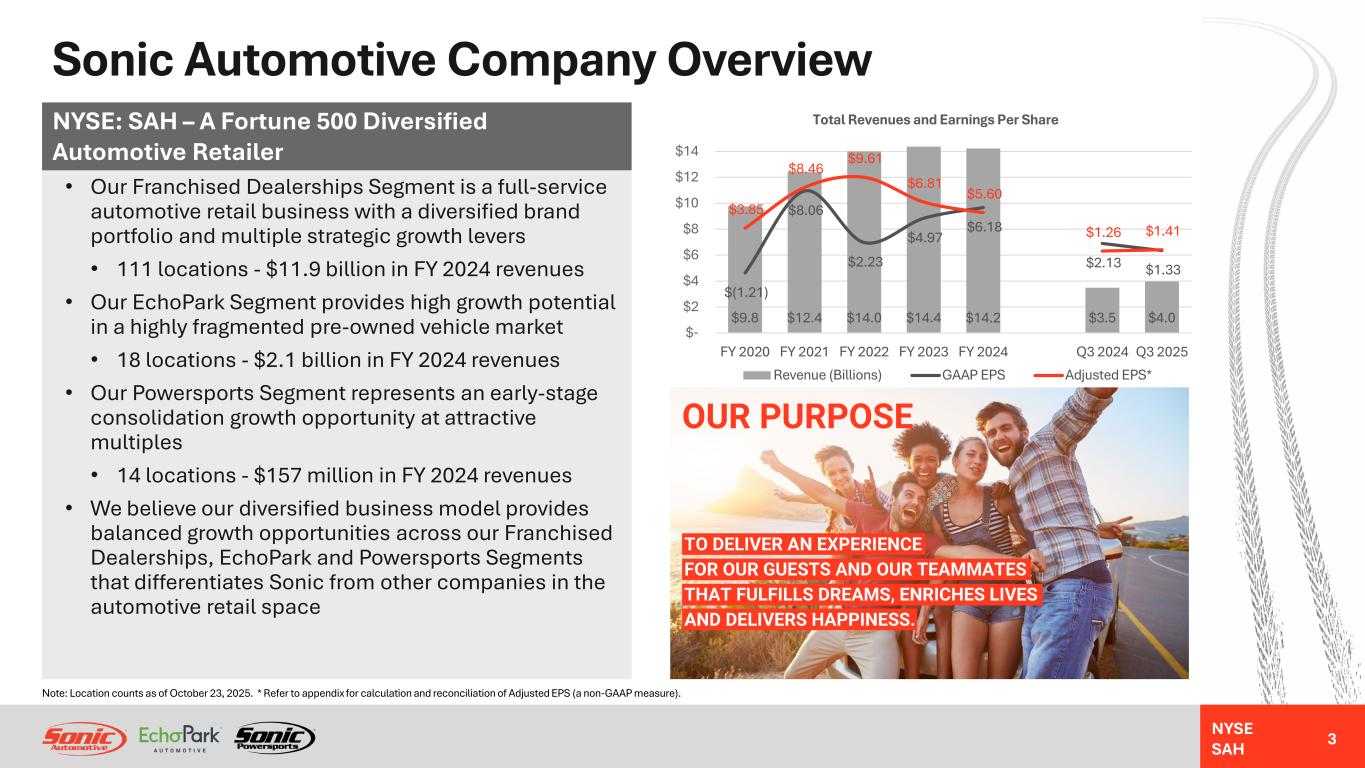
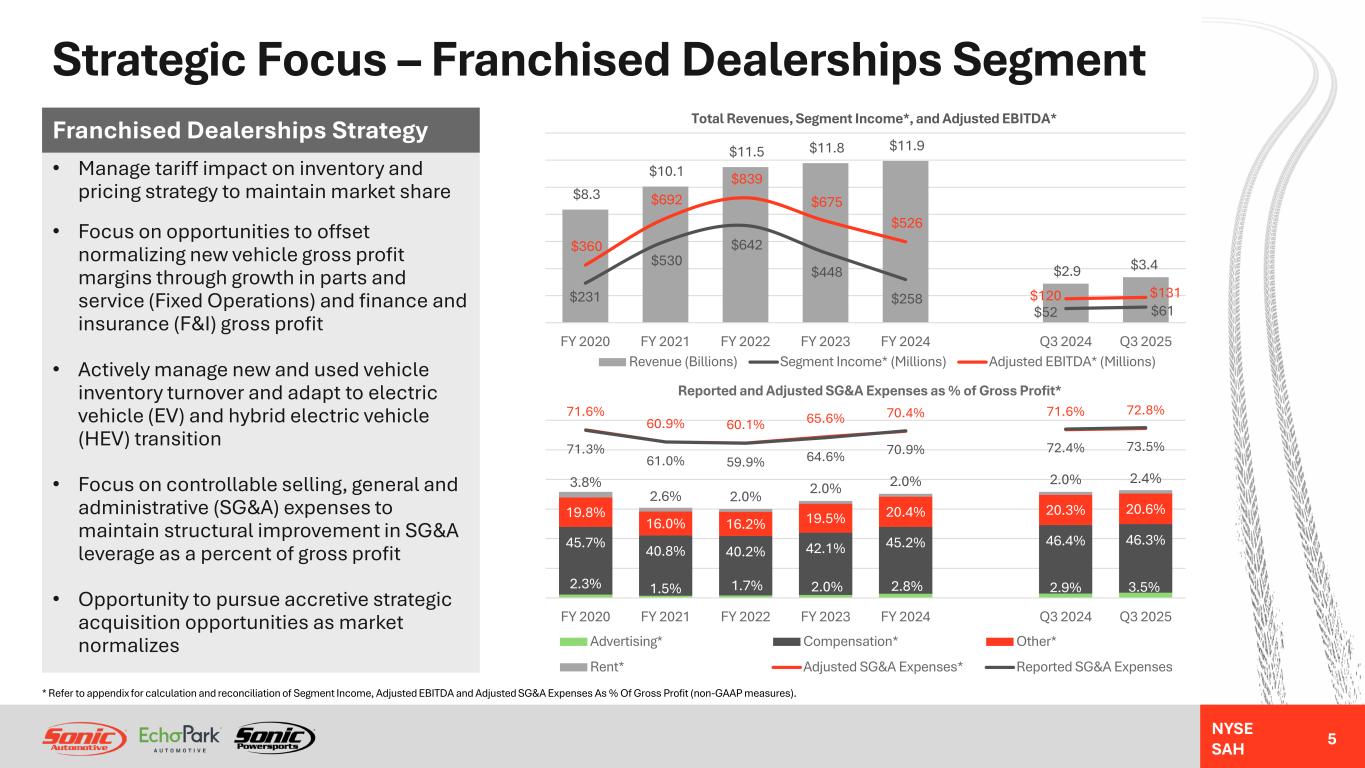
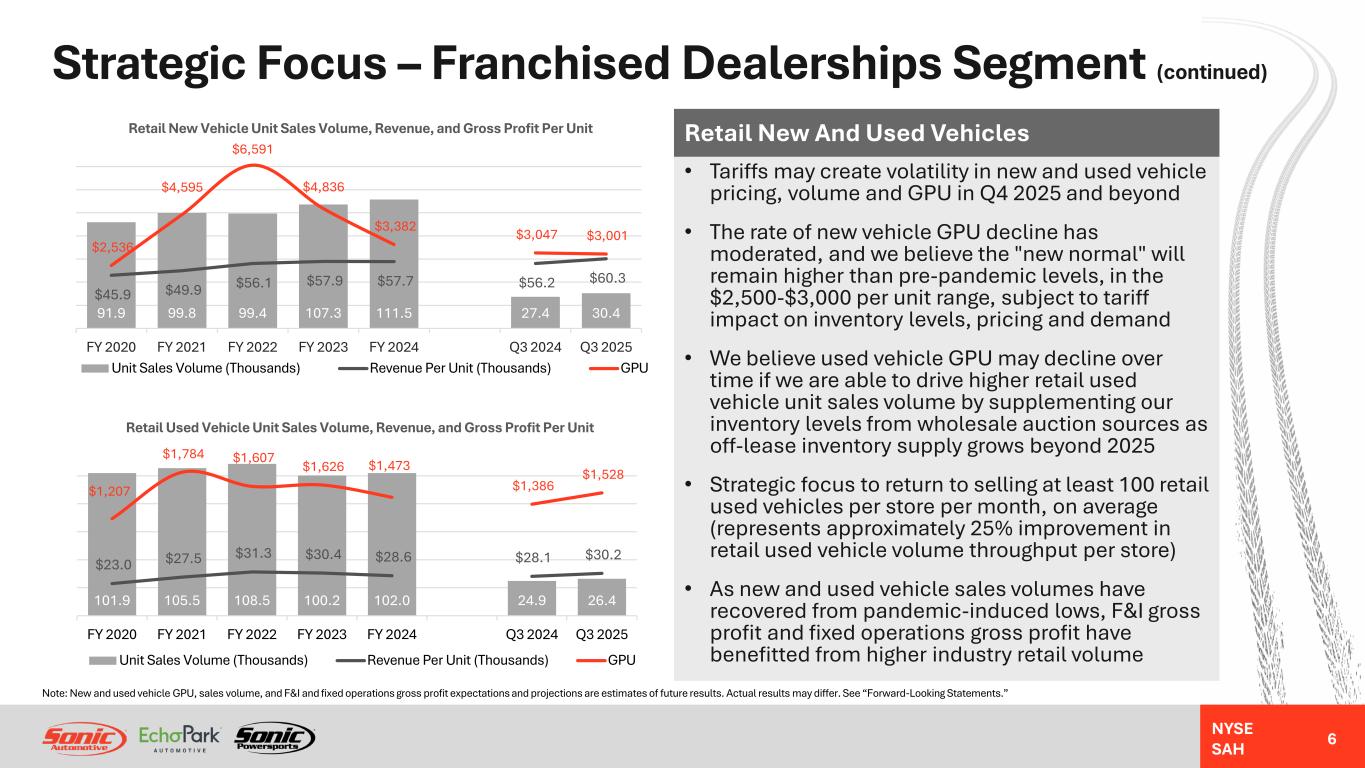
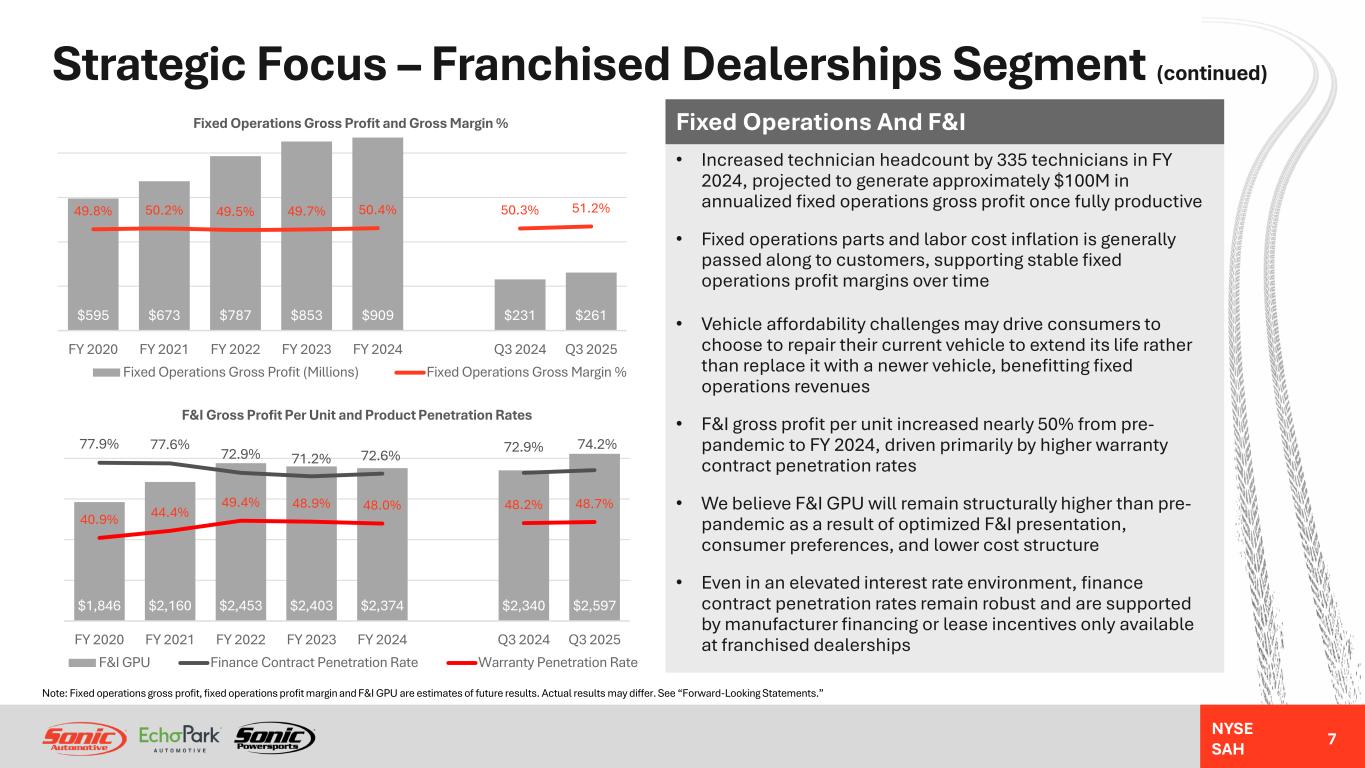
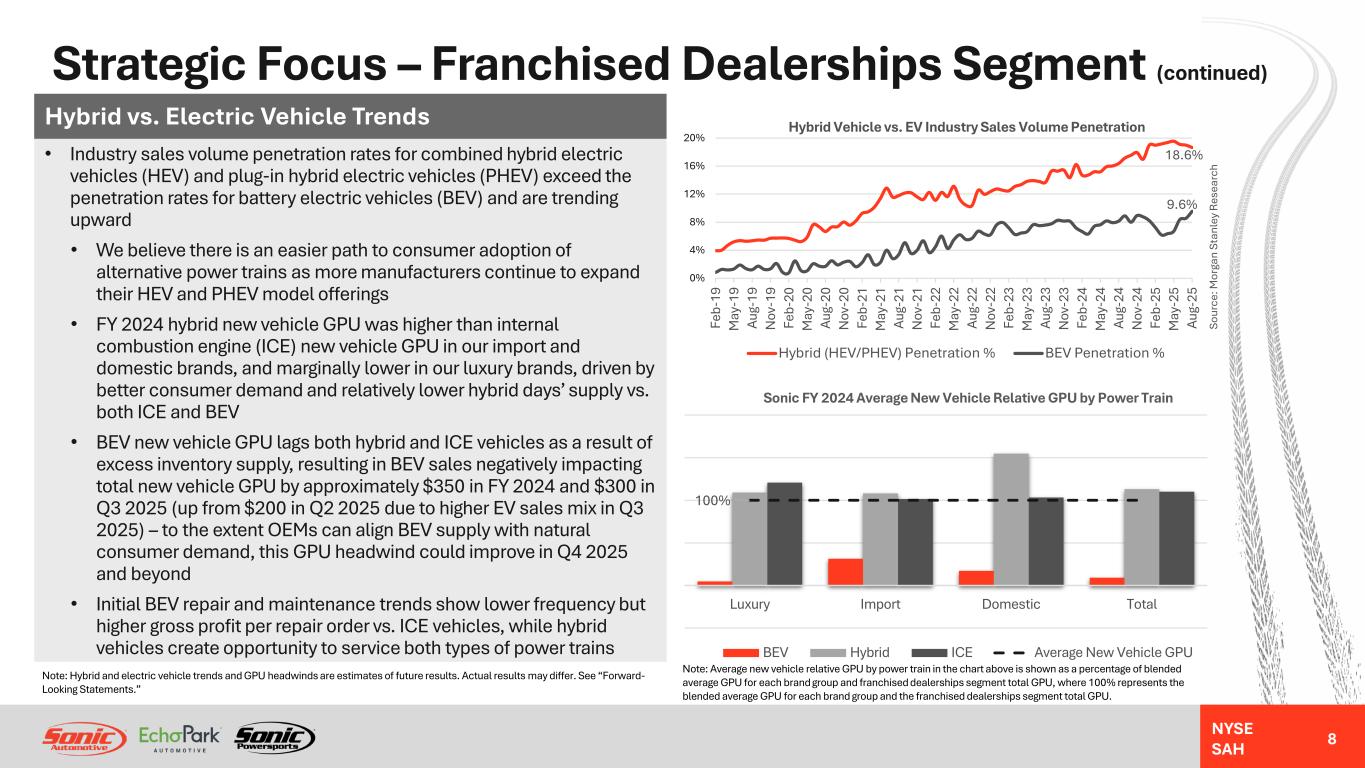
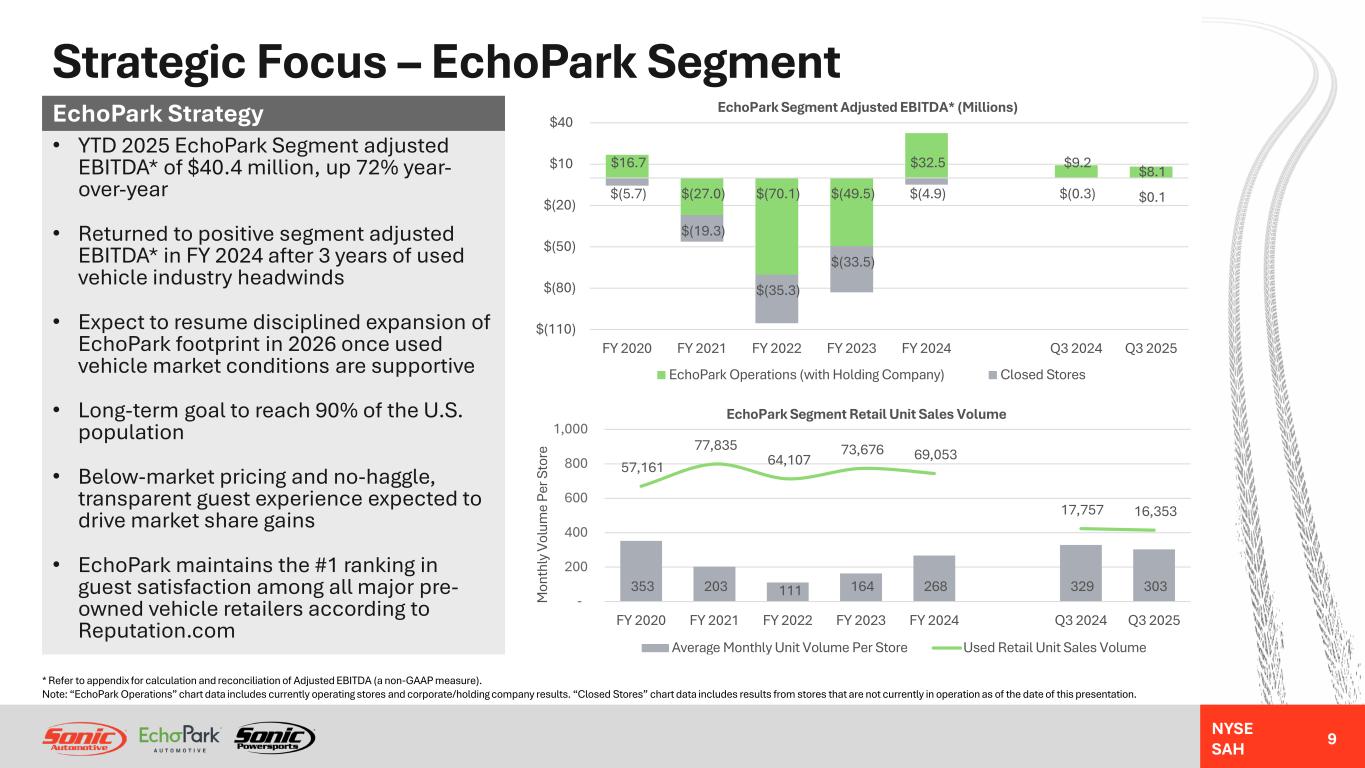
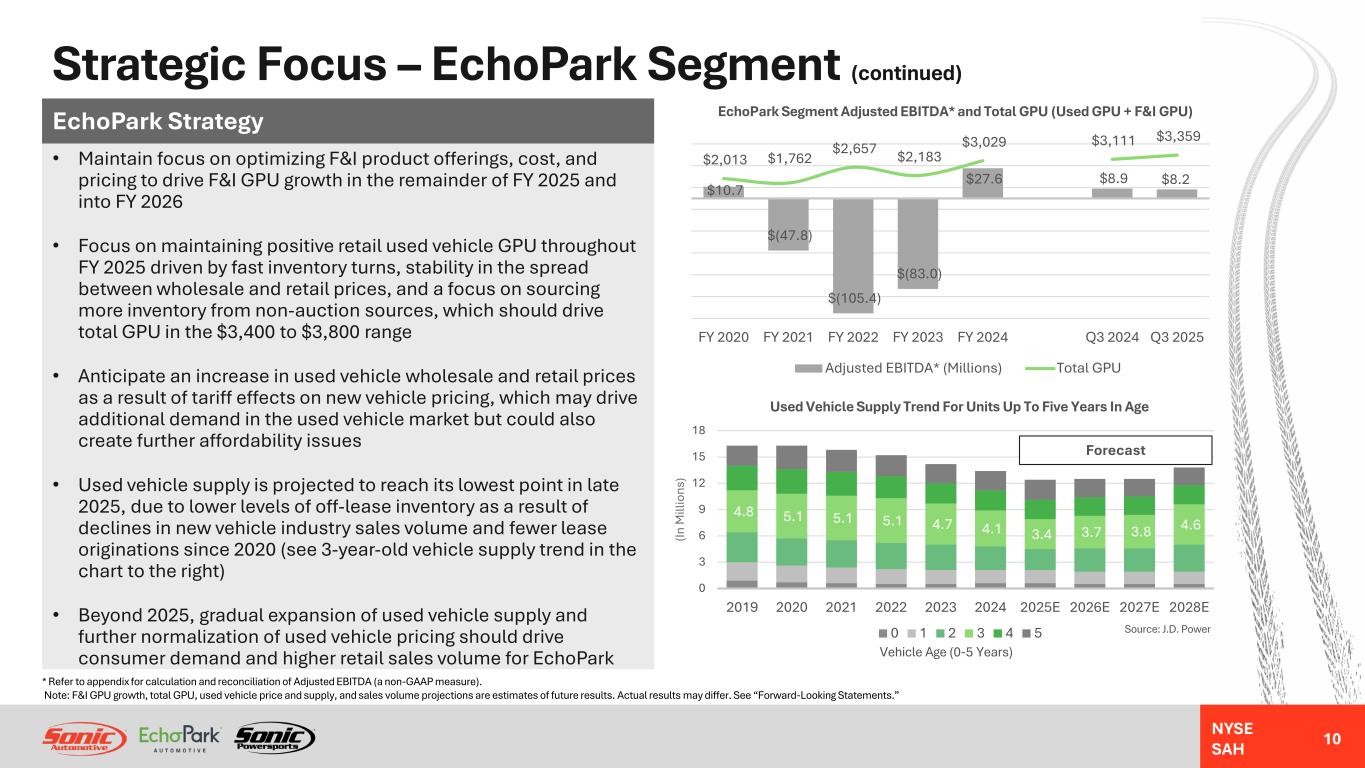
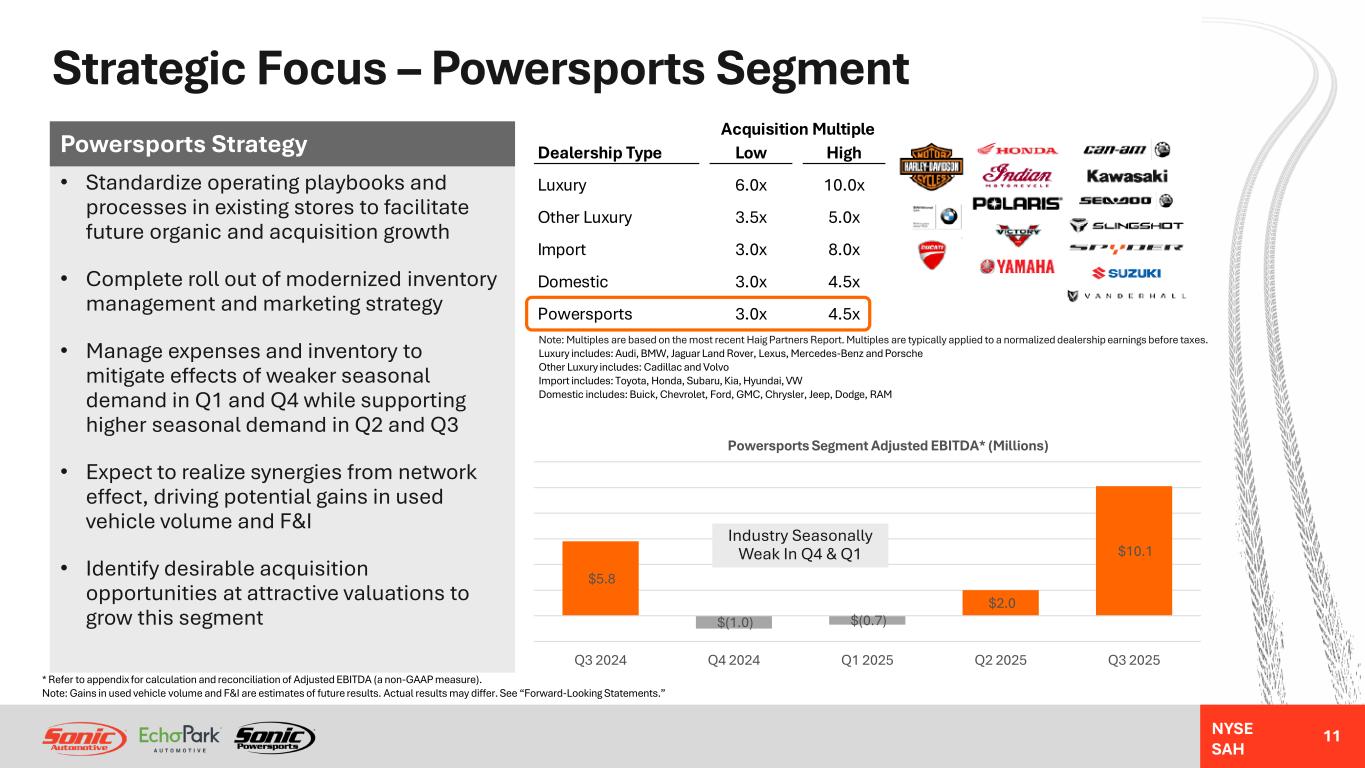
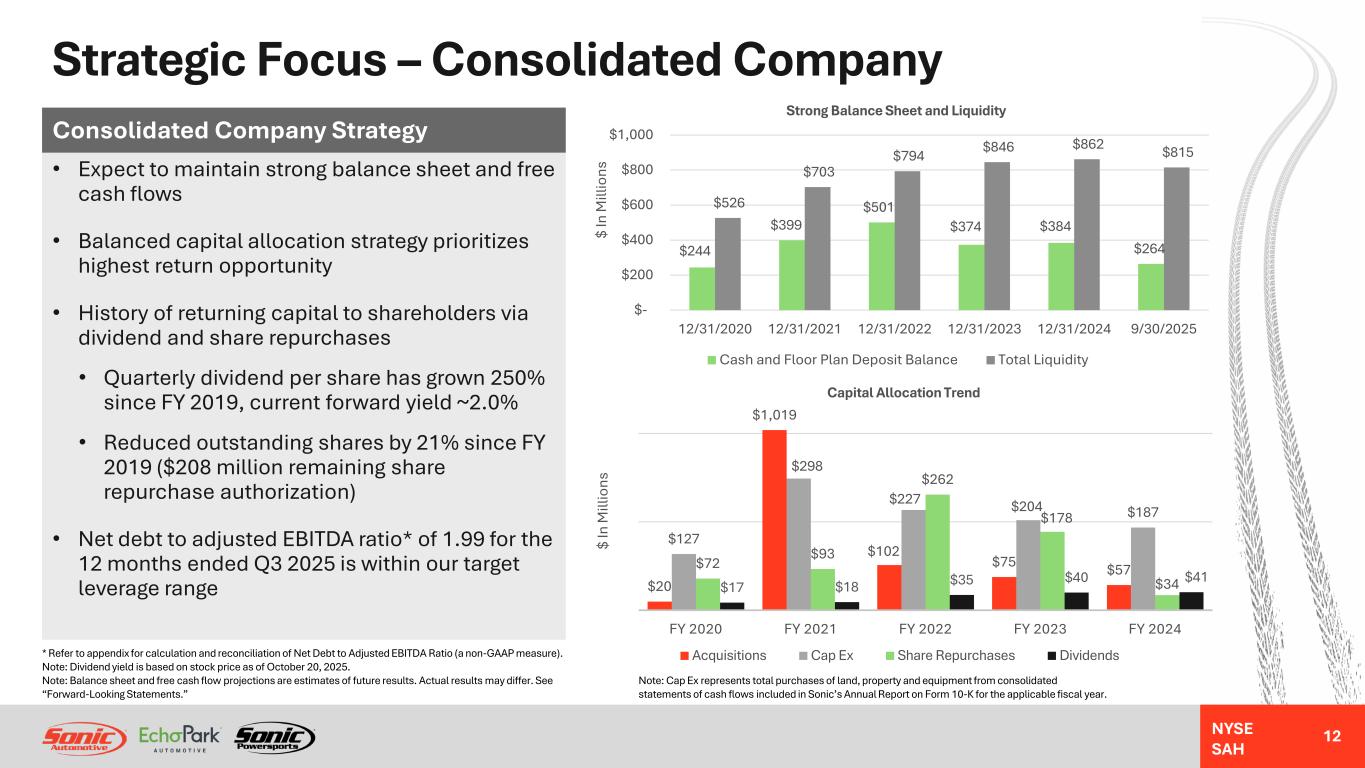
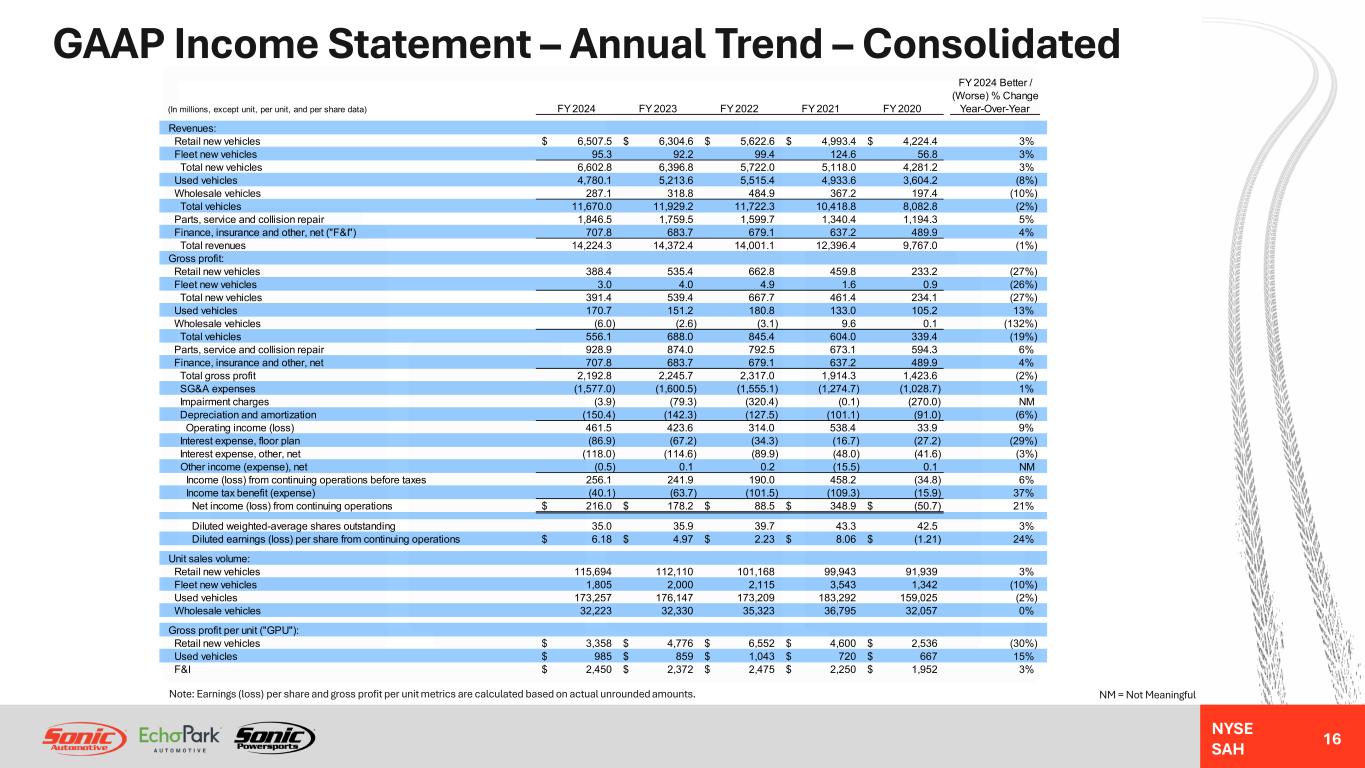
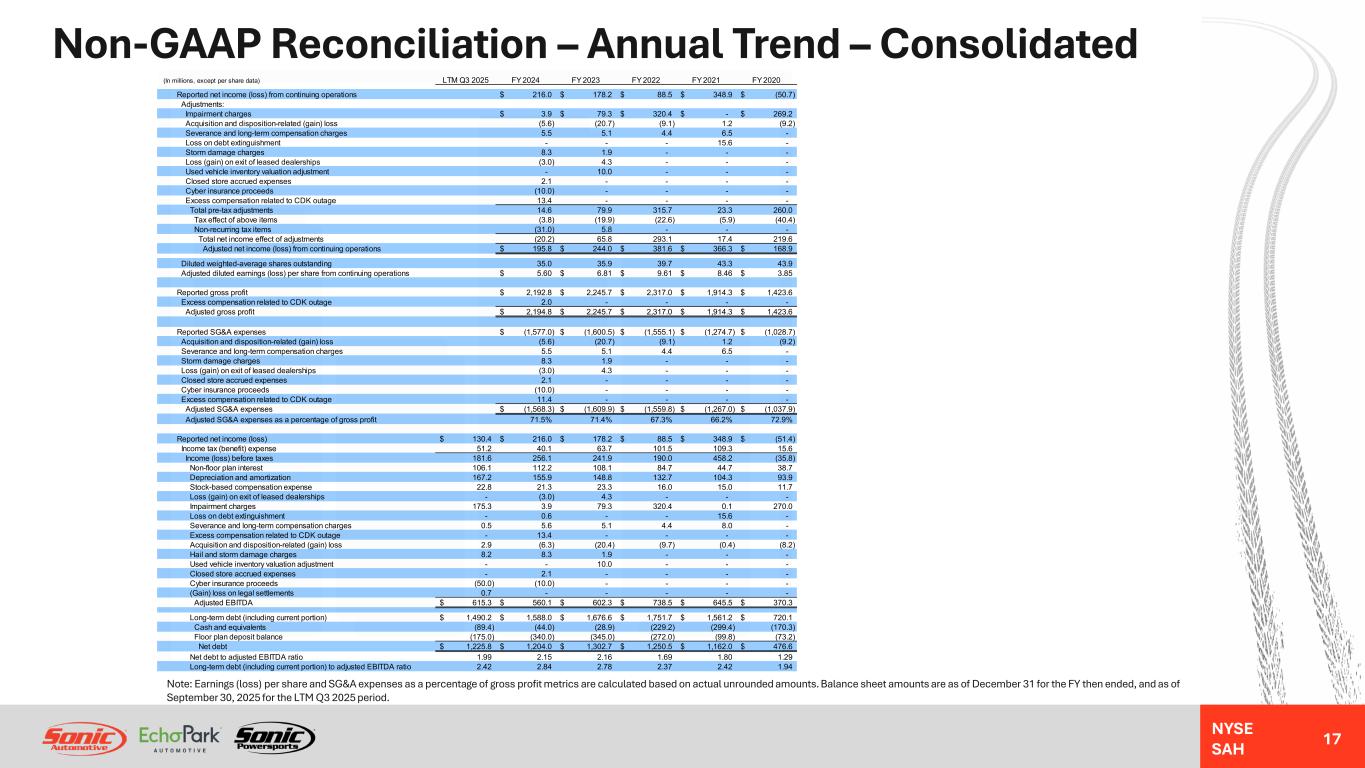
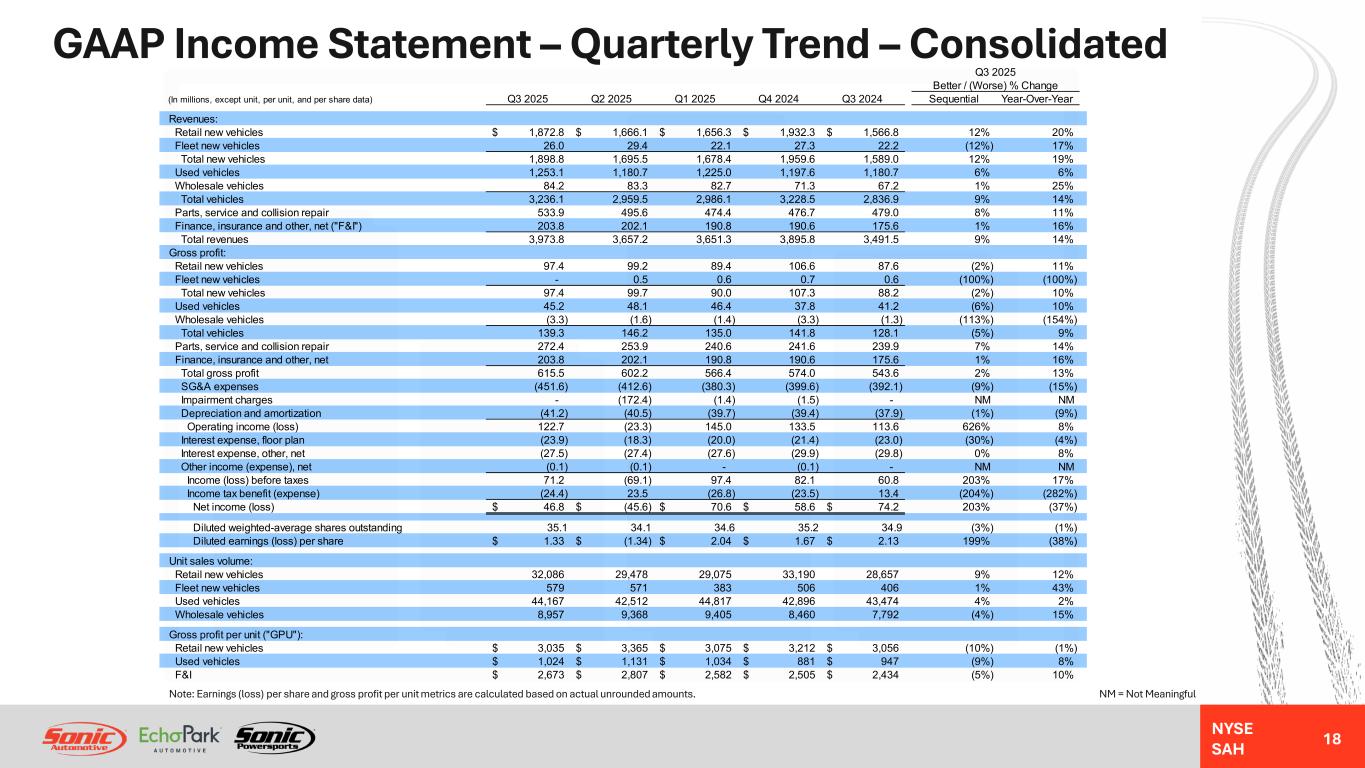
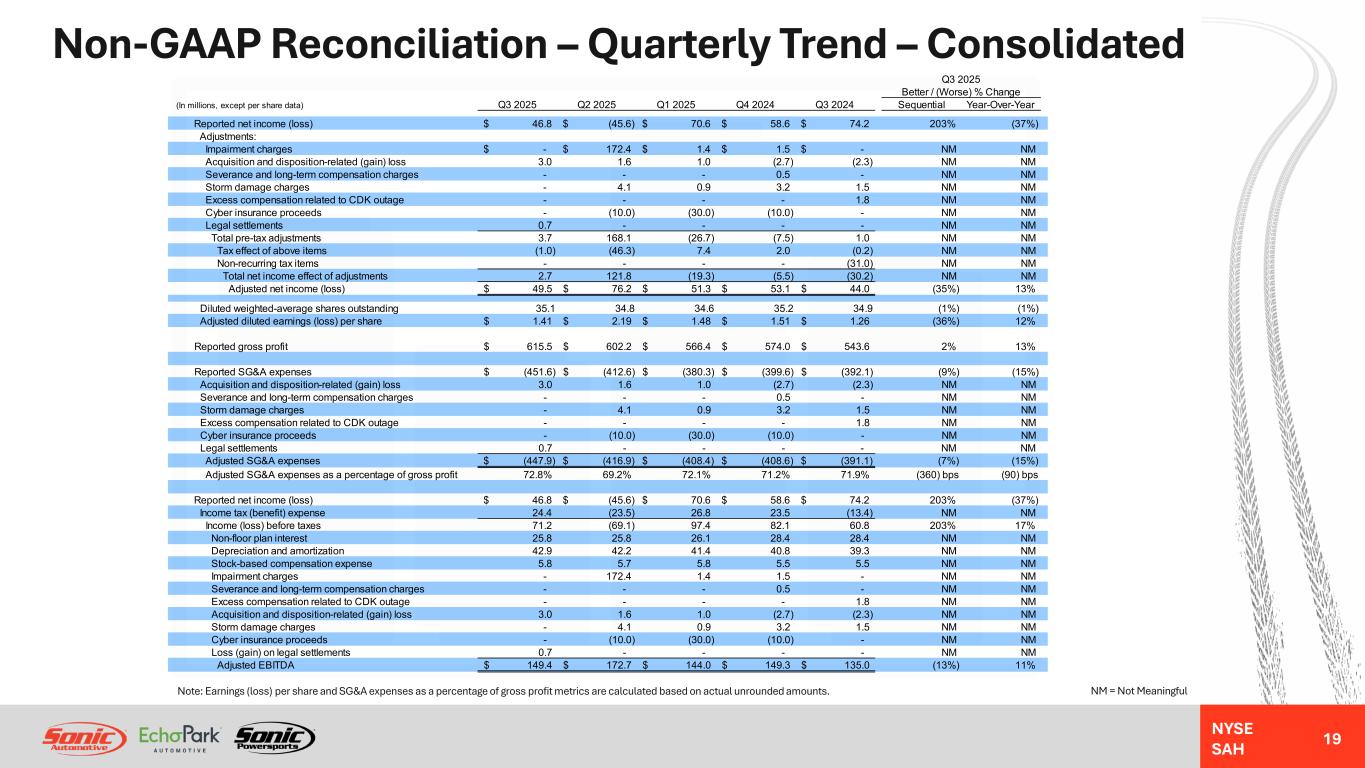
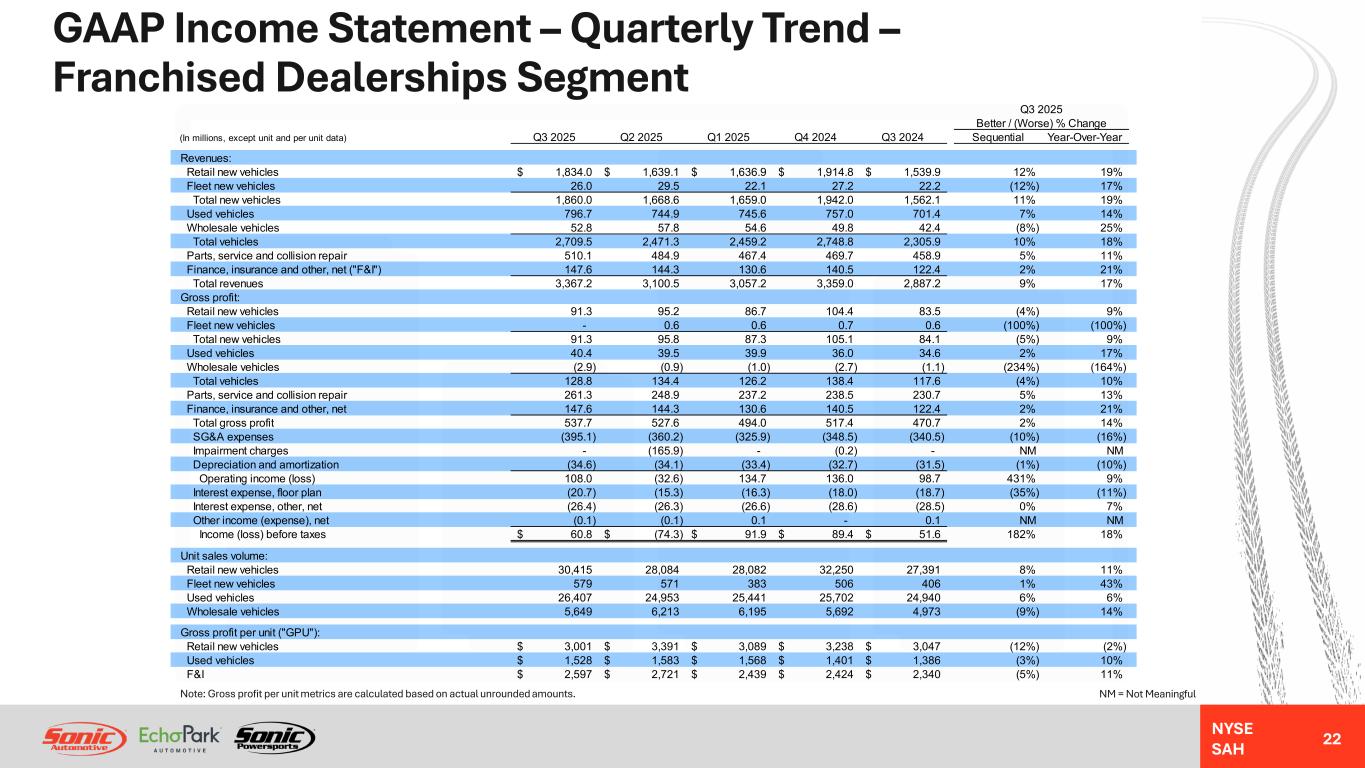
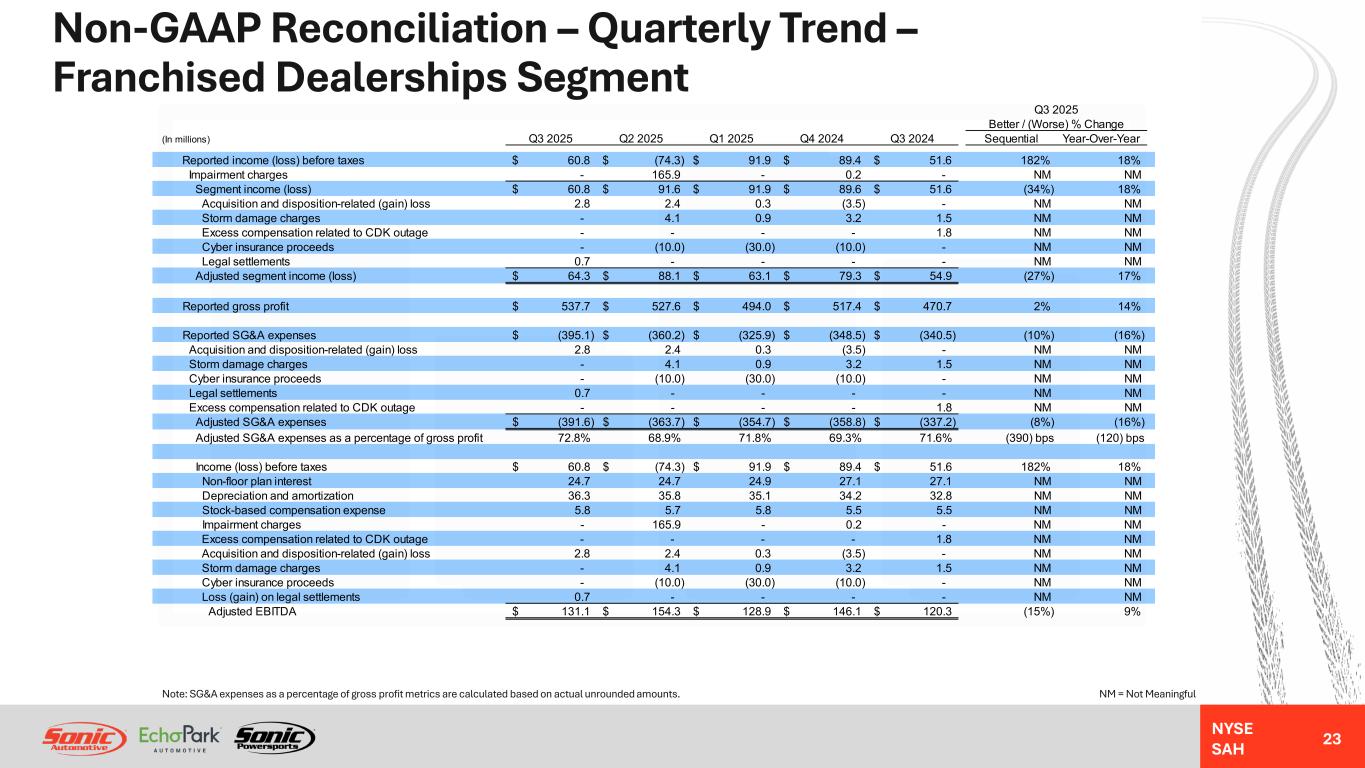
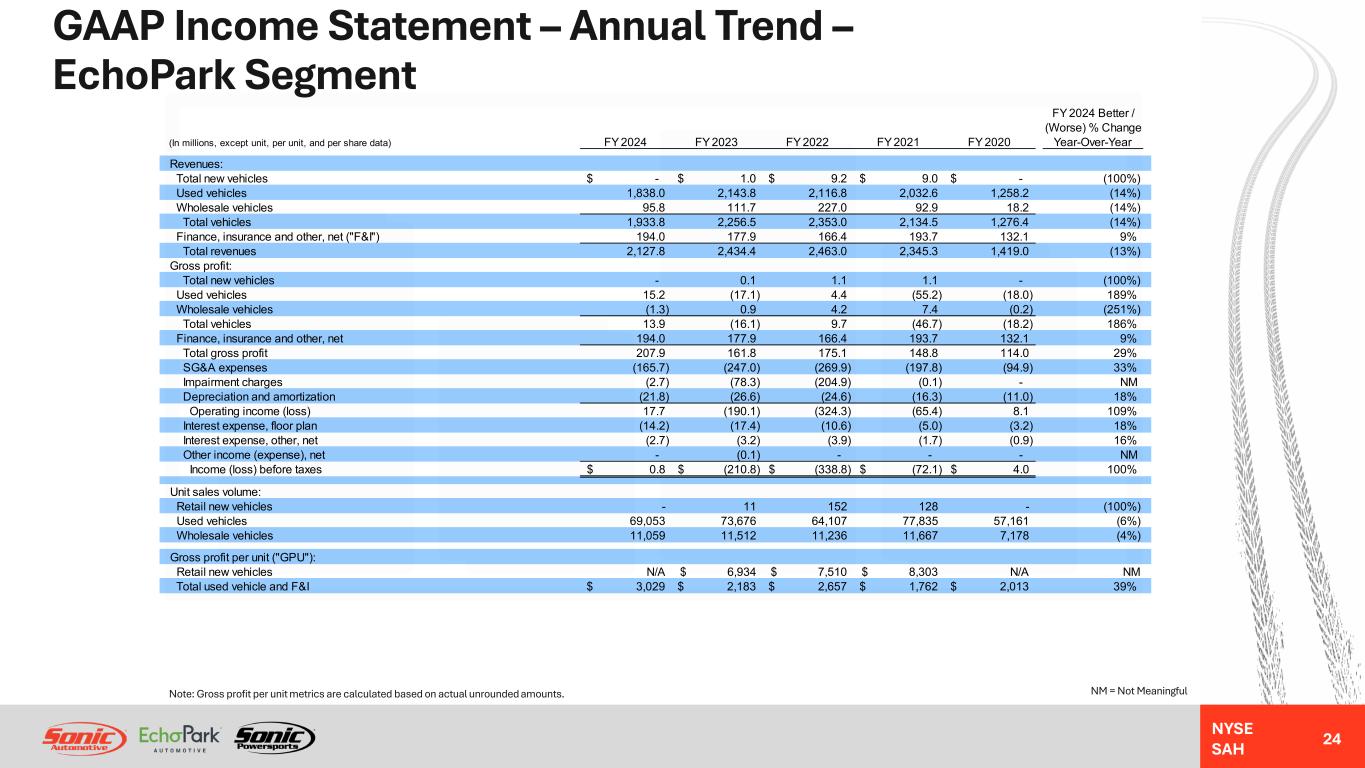
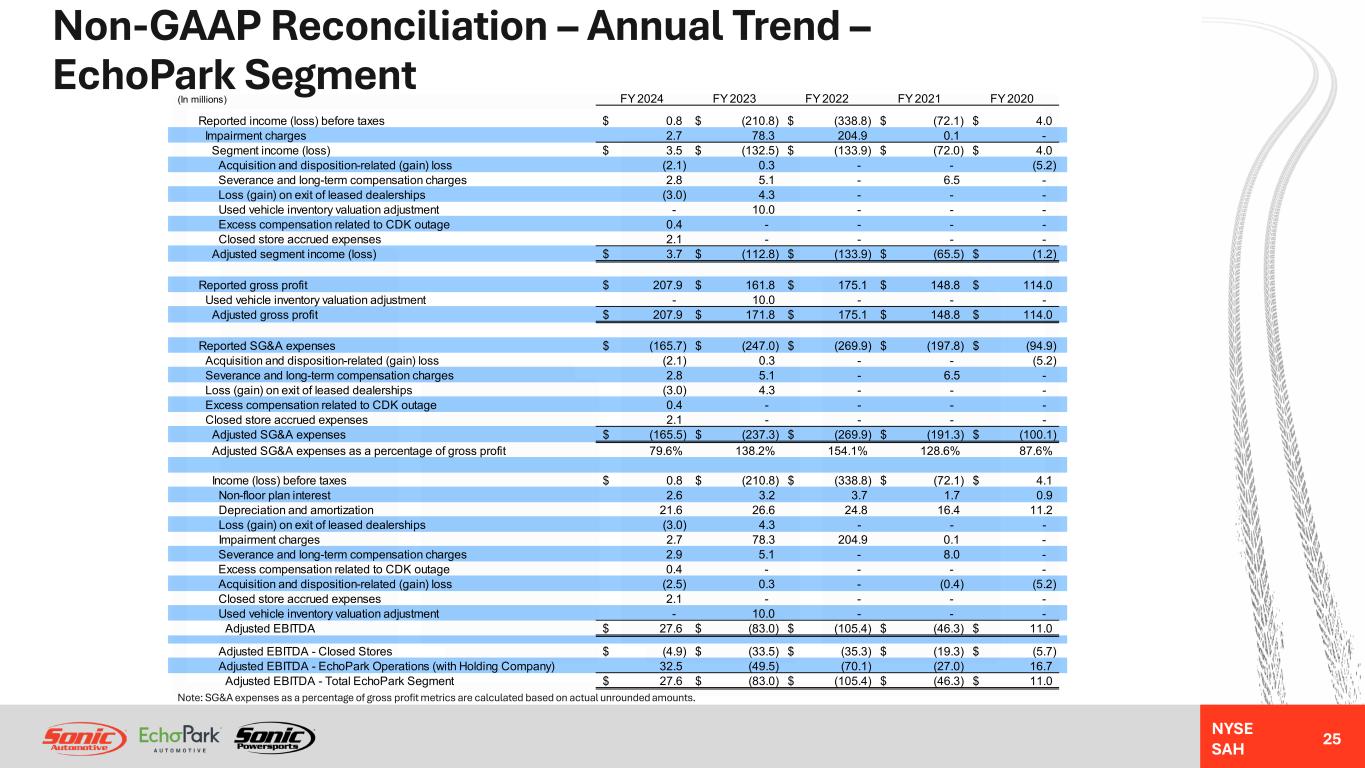
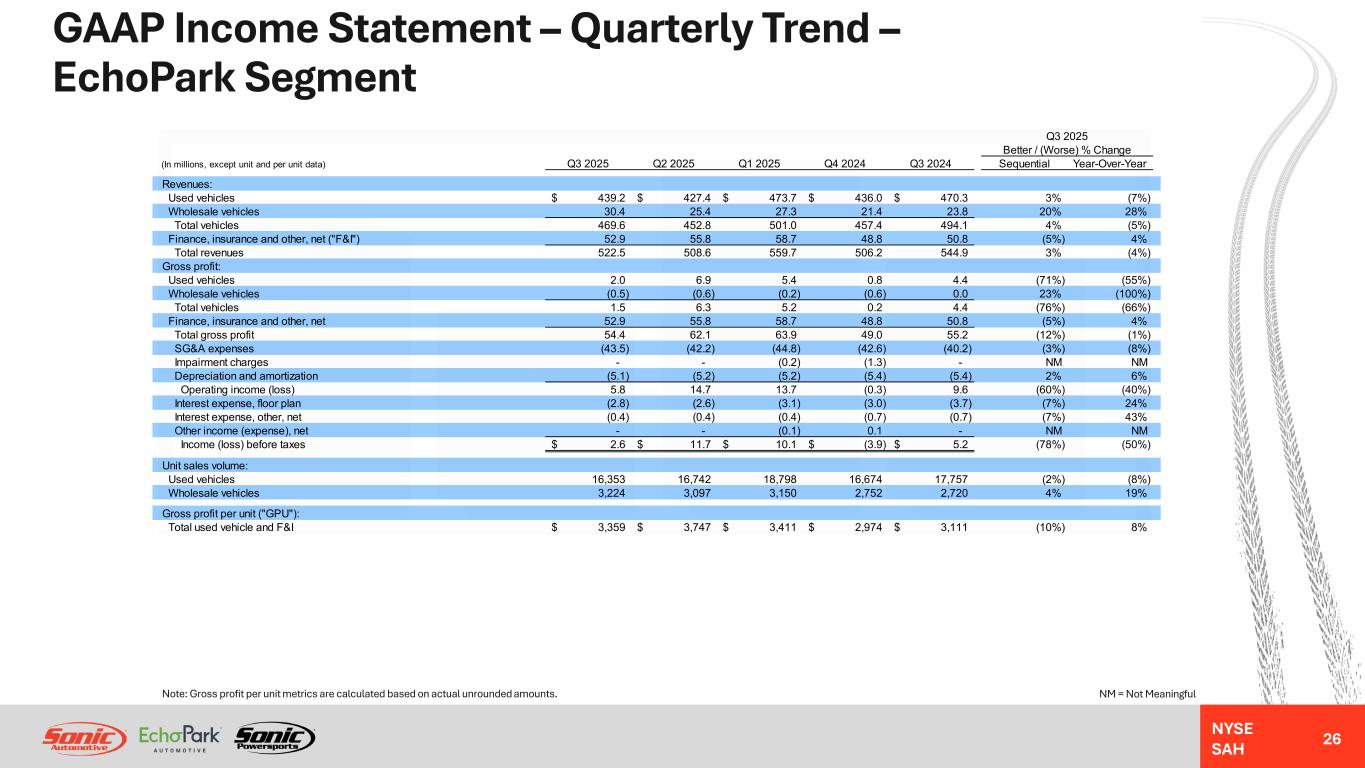
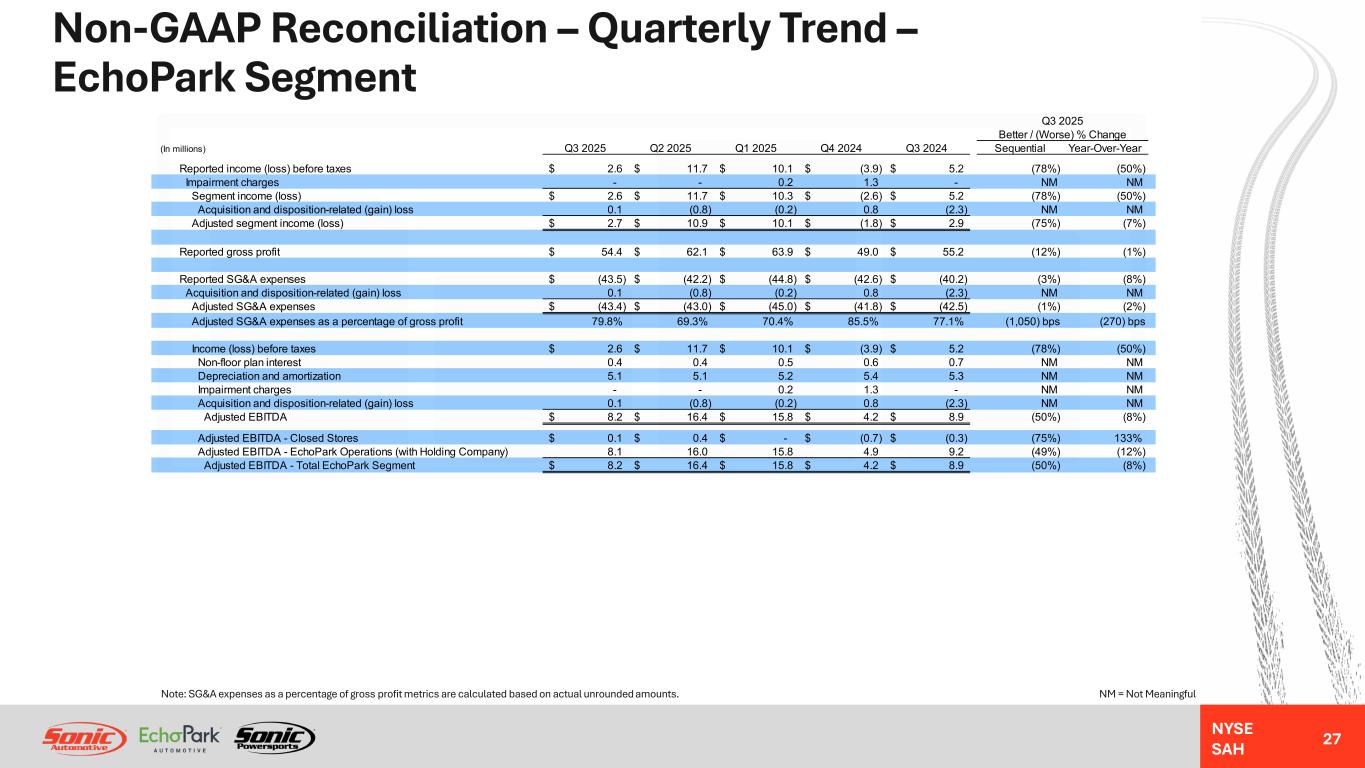
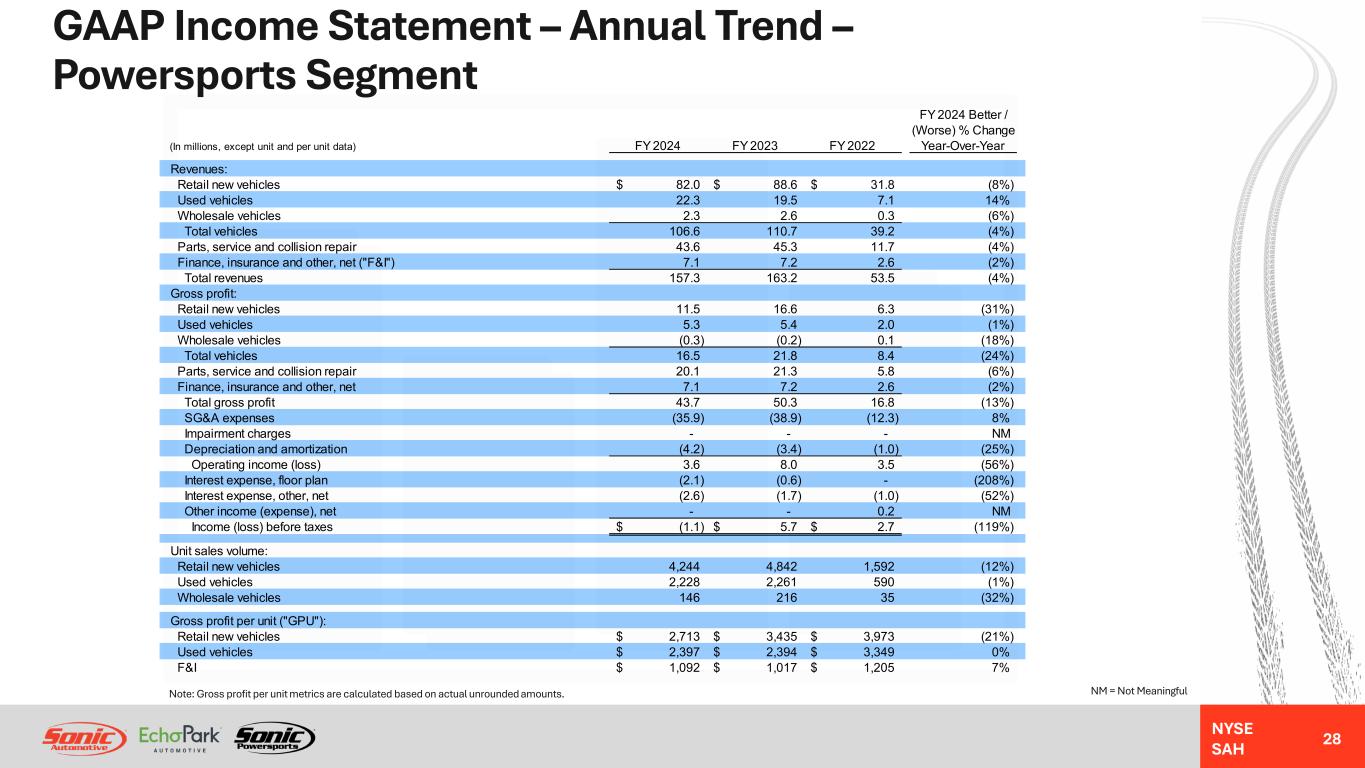
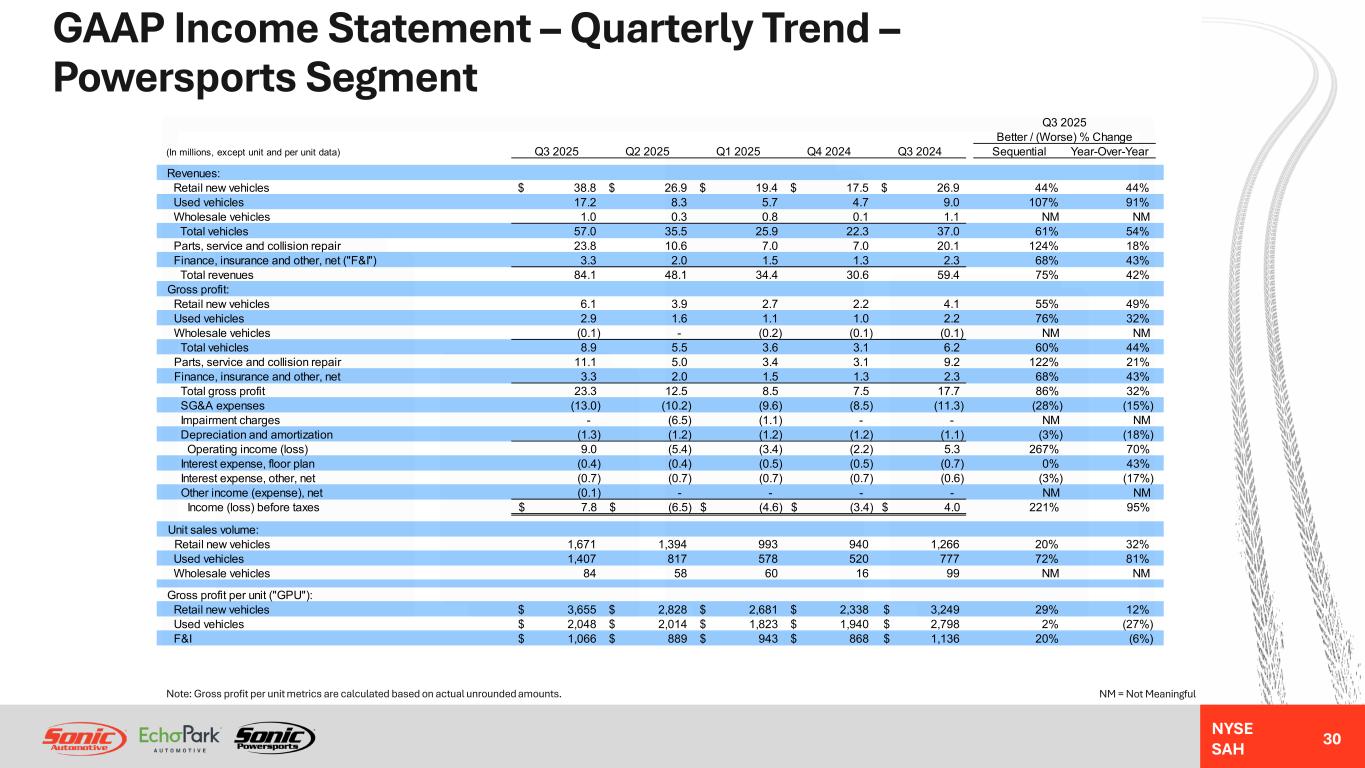
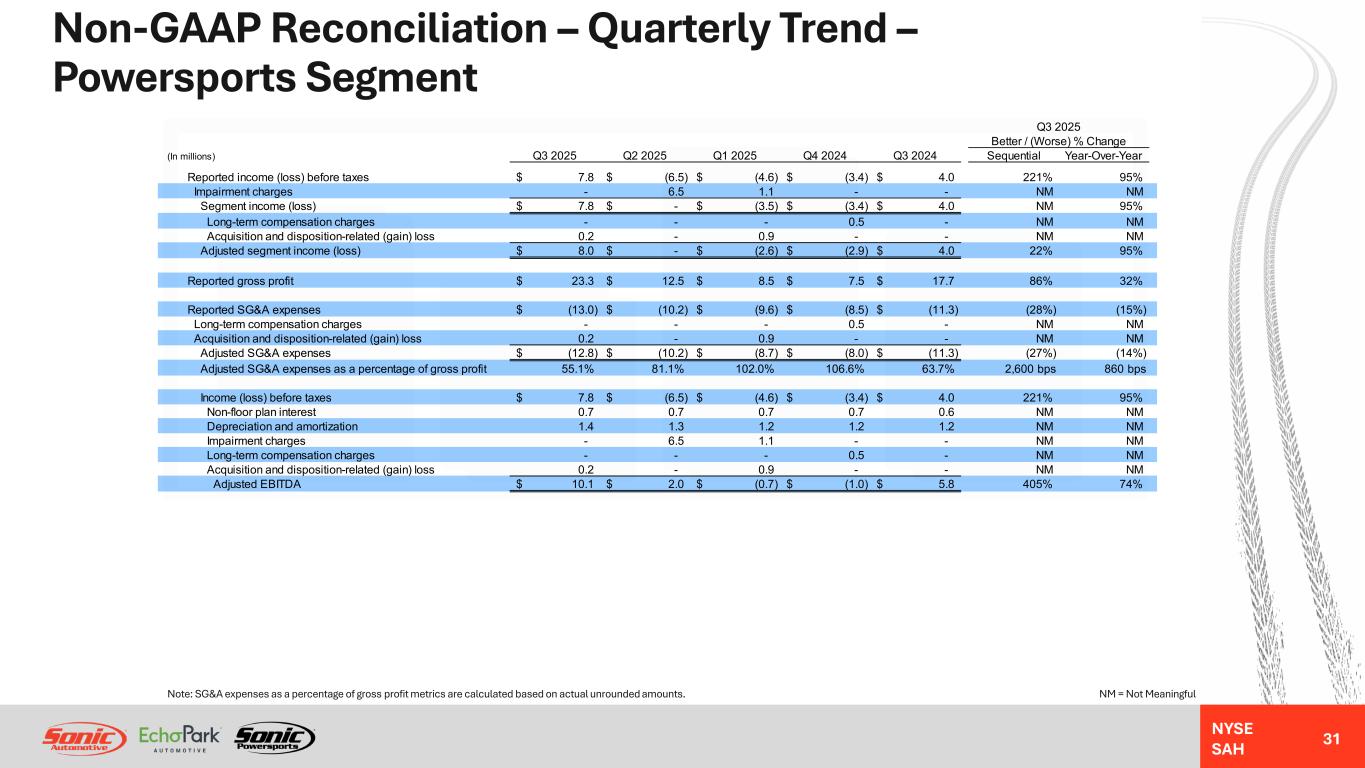
Thank you very much, and good morning, everyone. Welcome to the Sonic Automotive Third Quarter 2025 Earnings Call. I'm David Smith, the company's Chairman and CEO. Joining me on today's call are our President, Jeff Dyke; our CFO, Heath Byrd; our EchoPark Chief Operating Officer, Tim Keen; and our Vice President of Investor Relations, Danny Wieland. I would like to start by sincerely thanking our incredible teammates for their commitment to delivering a world-class guest experience for our customers. We believe our strong relationships with our teammates, guests, and manufacturer and lending partners are essential to our future success. I want to express my gratitude to them all for their continued support and loyalty to the Sonic Automotive team. Now, let's discuss our third quarter results. Reported GAAP EPS was $1.33 per share. Excluding certain items detailed in our press release, adjusted EPS for the third quarter was $1.41 per share, reflecting a 12% increase year-over-year. Consolidated total revenues reached an all-time quarterly high of $4 billion, up 14% year-over-year. Our all-time record quarterly consolidated gross profit grew by 13%, and consolidated adjusted EBITDA increased by 11%. Our third-quarter earnings were impacted by a significant rise in medical expenses and an unexpectedly high effective income tax rate, which partially offset the strength of our operating performance. Moving on to our Franchised Dealerships segment results, we achieved all-time record quarterly franchise revenues of $3.4 billion, up 17% year-over-year and up 11% on a same-store basis. This revenue growth was driven by a 7% increase in same-store new retail volume, a 3% increase in same-store used retail volume, and a 6% increase in same-store fixed operations revenues. We experienced a rise in new vehicle volume due to increased consumer demand for electric vehicles ahead of the expiration of the federal tax credit, boosting our retail sales volume and average selling price, but putting pressure on new vehicle and F&I gross profit per unit. Our fixed operations gross profit and F&I gross profit set all-time quarterly records, rising by 8% and 13% year-over-year, respectively, on a same-store basis. These high-margin business lines are now making up over 75% of our total gross profit for the third quarter, helping to mitigate the potential impact of tariffs on vehicle pricing and margins overall while allowing us to leverage our SG&A expenses more efficiently than incremental vehicle-related gross profit. Same-store new vehicle gross profit per unit was $2,852, down 7% year-over-year and 16% sequentially due to a surge in pre-tariff consumer demand that lifted GPU in the second quarter of 2025. Additionally, a larger proportion of electric vehicle sales in the third quarter reduced our franchise average new vehicle gross profits by around $300 per unit. On the used vehicle side, same-store used volume increased 3% year-over-year, while same-store used gross profit per unit rose 10% year-over-year and decreased 4% sequentially to $1,530 per unit from the second quarter. Our F&I performance remains a strong point, with a record franchise F&I gross profit per unit of $2,597, up 11% year-over-year and down 5% sequentially, partly due to an elevated electric vehicle sales mix in the third quarter, which decreased average F&I gross profit by about $100 per unit. Excluding the temporary headwinds from EVs in the third quarter, ongoing strength in F&I per unit reinforces our belief that F&I will remain structurally higher than pre-pandemic levels, even amid a challenging consumer affordability environment, as we continue to refine our F&I product offerings and cost structure. Our parts and service or fixed operations business continues to perform exceptionally well, with an 8% increase in same-store fixed operations gross profit in the third quarter. Same-store warranty gross profit remained a tailwind, growing by 13% year-over-year, despite strong performance in the prior year period, while same-store customer pay gross profit increased by 6% year-over-year. We attribute the continued strength in customer pay revenue to the increase in technician headcount we achieved in 2024 and our efforts to retain these technicians and expand our technician capacity in 2025. Now, let’s move to the EchoPark segment. Third-quarter adjusted segment income reached $2.7 million, and adjusted EBITDA was $8.2 million, down 8% year-over-year. We reported EchoPark revenues of $523 million for the third quarter, down 4% year-over-year, with gross profit of $54 million, down 1% year-over-year. Retail unit sales volume for the EchoPark segment decreased by 8% year-over-year, while total gross profit per unit reached a third quarter record of $3,359, up 8% year-over-year but down 10% sequentially. We anticipated some pressure on EchoPark used gross profit in the third quarter, and our ability to acquire quality used vehicle inventory at attractive prices was hampered by unexpected off-rental supply challenges, resulting in approximately 2,000 fewer retail unit sales than we had forecasted in our July guidance. While these challenges remained through September, we are focused on increasing our mix of non-auction sourced inventory going forward to support consumer affordability and retail sales volume. With the strategic adjustments we've made to our EchoPark business model, we believe we are well-positioned to resume a disciplined store opening pace for EchoPark in 2026, contingent on improvements in the used vehicle market conditions. Turning now to our Powersports segment, we recorded all-time record quarterly revenues of $84 million, up 42% year-over-year, with a quarterly gross profit of $23 million, up 32% year-over-year. Powersports segment adjusted EBITDA was also a record at $10.1 million, up 74% year-over-year, primarily driven by record sales volume at this year's 85th Sturgis Motorcycle Rally. We're starting to see the benefits from our investment in modernizing the Powersports business, and we are committed to identifying operational synergies within our current network before allocating capital to expand our Powersports footprint further. In conclusion, at the end of the quarter, we maintained $815 million in available liquidity, which includes $264 million in cash and floor plan deposits. Our commitment to a strong balance sheet and liquidity position enabled us to complete the acquisition of Jaguar Land Rover, Santa Monica, during the third quarter, following our earlier announced acquisition of four Jaguar Land Rover dealerships in California at the end of the second quarter, solidifying Sonic Automotive as the largest Jaguar Land Rover retailer in the U.S. and enhancing our luxury brand portfolio. Moving ahead, we are focused on deploying capital through a diversified growth strategy across our Franchised Dealerships, EchoPark, and Powersports segments to expand our revenue base and improve shareholder returns. I am also pleased to announce that our Board of Directors has approved a quarterly cash dividend of $0.38 per share, payable on January 15, 2026, to all stockholders of record on December 15, 2025. We are working closely with our manufacturer partners to gauge the potential effects of tariffs on manufacturing production and pricing decisions, as well as how these tariffs may influence vehicle affordability and consumer demand in the future. To date, we have not observed a significant impact on vehicle pricing due to tariffs, but our team is dedicated to executing our strategy and adapting to ongoing changes in the automotive retail environment and the macroeconomic landscape while making strategic choices to maximize long-term returns. We remain confident that we have the right strategy, the right people, and the right culture to continue growing our business and create long-term value for our shareholders. This concludes our opening remarks, and we look forward to your questions.
Operator
Our first question is from Jeff Lick with Stephens.
Speaker 2
You guys have an interesting little used car market test tube in your business model with given the franchise business and EchoPark. It looks like you kind of outperformed your peers and did pretty well in the franchise and then EchoPark had some issues. Obviously, you mentioned the rental supply headwinds. I was just wondering if you could elaborate even more, just kind of what's this saying about where the used car market is in general? And any specifics you could give?
Speaker 3
This is Jeff. From a franchise standpoint, we trade a significantly higher volume of cars due to the new car business. We've concentrated on reducing our average cost of sales, becoming more aggressive in our trades. Over the past four to five months, our average cost of sales decreased from $37,000 to the range of $33,000 to $34,000, which is a substantial improvement. Our goal is to bring it down even further, ideally below $30,000. Achieving this on the EchoPark side is a bit more challenging since we mostly acquire vehicles through auctions, although we're trying to source more cars directly from the street. As David mentioned earlier, the slowdown in rental car availability impacted us, resulting in about 2,000 fewer units this quarter, which was unexpected. We are countering that by collaborating with our new car franchises and our purchasing team to be more aggressive in acquiring vehicles for EchoPark, specifically targeting those under $24,000. We anticipate improvements as we progress through the fourth quarter.
Speaker 4
And this is Heath. I'll add one more thing. We started an initiative with the franchise of really focusing on a good process and putting in technology for buying off the service lane. So that's really helped that side of the business as well.
Speaker 2
And then just a quick follow-up. On the $31 million in incremental comp, which I think a good chunk of that was medical expenses. Could you just elaborate where does that stand going forward?
Speaker 4
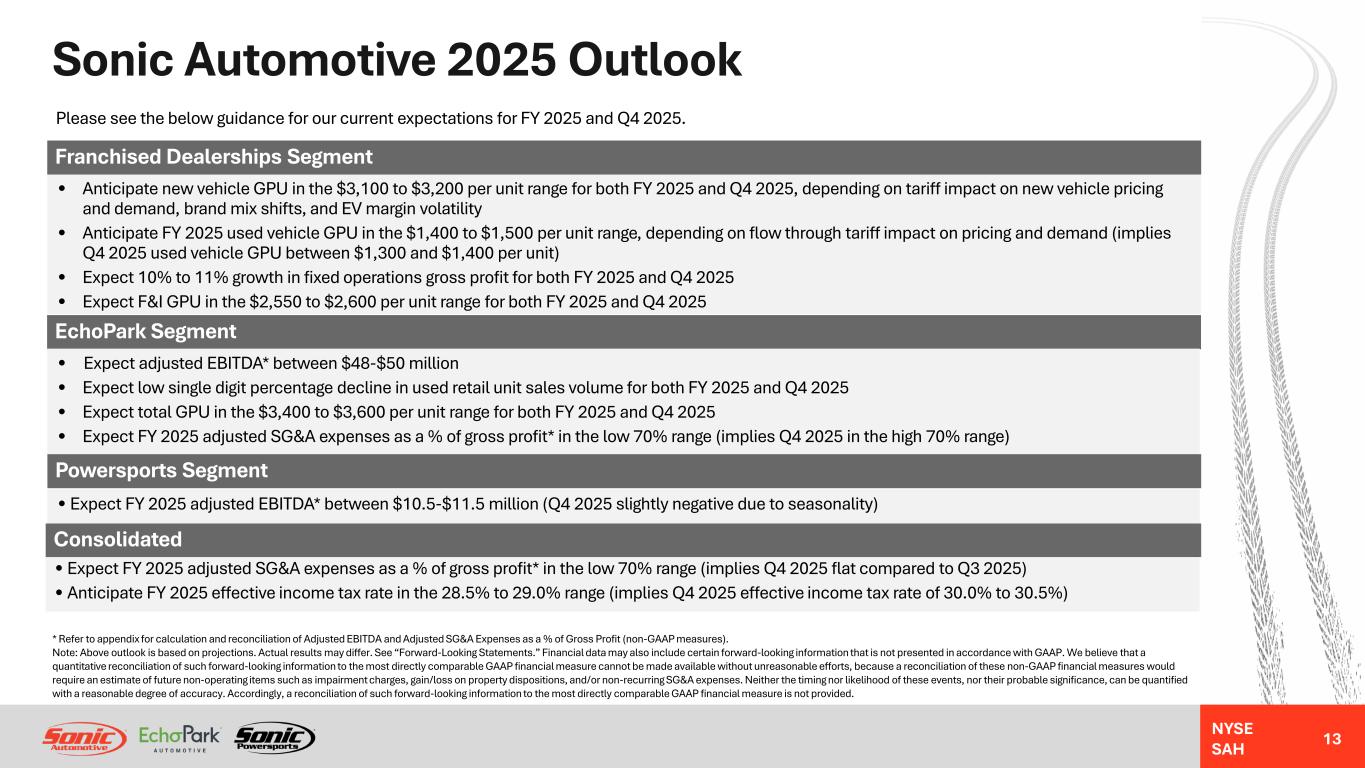
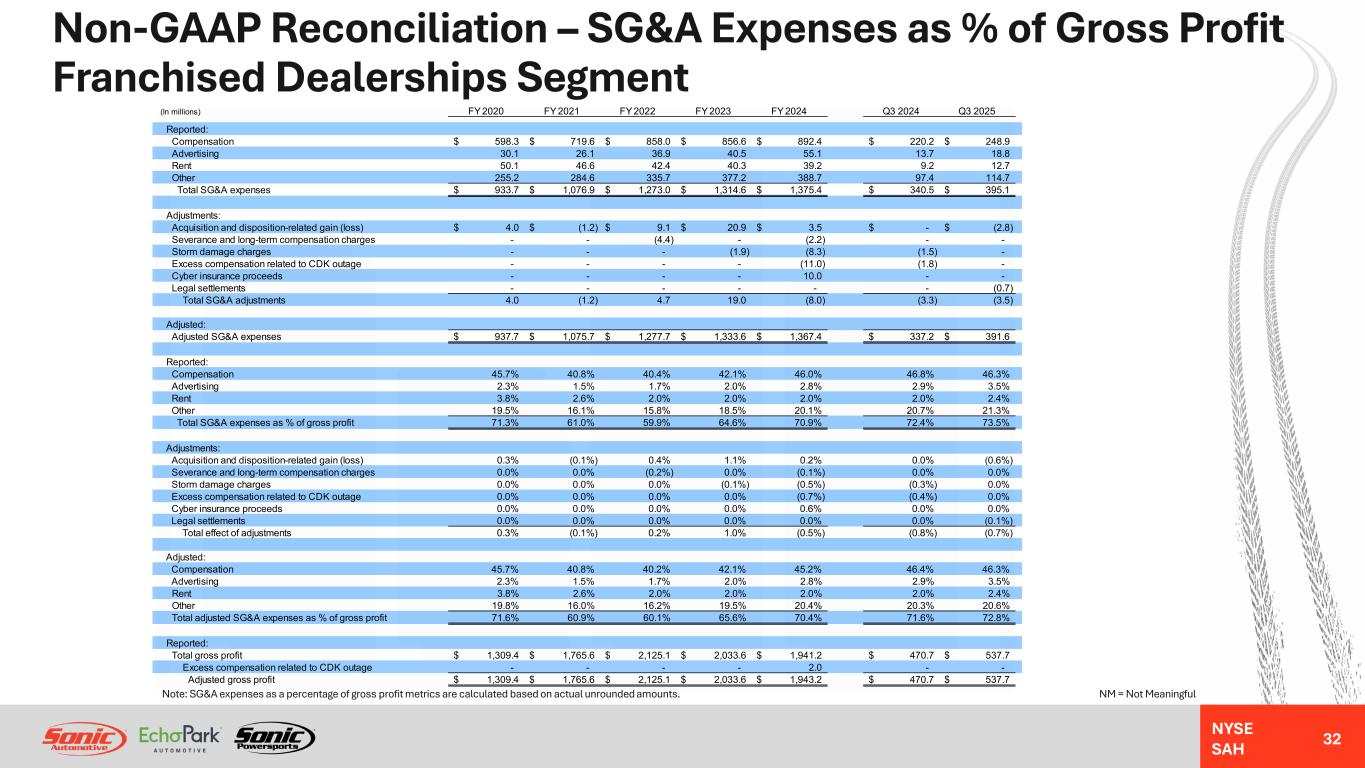
Yes, sure. This is Heath. First of all, we're guiding, as you know, for the full year in the low 70s. If you look at medical, which was driving that, it was $0.05 worse sequentially from Q2 to Q3, $0.10 worse year-over-year. We expect medical to be flat from Q3 to Q4. So total SG&A for Q4 is expected to be the $72.8. But it is driven by the medical and that is utilization as well as increased cost. We are self-insured. And so obviously, everyone is getting an increase in medical premiums going forward. And so we're addressing it as every other company. We'll be increasing the premiums collected, which should handle that issue that we saw in Q3 and expect it to be similar in Q4.
Operator
Our next question is from Michael Ward with Citi Research.
Speaker 5
I wonder if you can provide any color on a walk in the franchise gross from Q3 to Q4 and then into 2026? Because it sounds like you had $100 impact from BEVs, and it sounds like there are some other unusual events. So how do we look out? It sounds like 4Q is higher and then maybe even relatively flat on a variable gross basis for over a year. Is that what we're looking at like kind of more consistency, ups and downs, but kind of moving to the same range?
Speaker 3
This is Jeff. The increase in BEV volume at the end of the quarter really led to a drop of about $100 in front PUR and $50 in back-end PUR sequentially. However, I anticipate a return to normal margins, potentially even improved margins, as we head into the fourth quarter. We are already witnessing this due to the reduction in BEVs. We worked hard to sell all our BEVs, and currently, they make up around 4% of our total inventory, which is about 800 units. We have significantly decreased our exposure to that product, which has been a burden on front PUR. Therefore, I expect fourth quarter margins to improve sequentially and continue to improve as we progress into 2026, or at least remain stable compared to Q4. While we experienced a slight setback at the end of the third quarter, it was a prudent decision to lower our exposure to BEV units on hand.
Speaker 4
And this is Heath. Just to provide a bit more detail, overall, we earned $3,275 less in gross on the EVs. The mix in the third quarter increased from 8.3% in the second quarter to 11.9% in the third quarter. This change resulted in a $100 headwind in front and a $50 headwind in finance and insurance.
And just rounding that out, this is Danny. I mean that's a 54% volume increase from Q2 to Q3, which is in line with what the industry saw from an EV penetration. But as you think about that, we sold 3,600 EVs in the third quarter, and we would expect that volume to be much lower in the fourth quarter now that the federal tax credit is not available. So the normal seasonality we would expect from a volume perspective may not hold where we typically see a 10% uptick from 3Q to 4Q in new vehicle volume. Last year was even more of an anomaly, closer to 20% because of the BMW stop sale issue we saw in the third quarter of last year, where we pushed sales into 4Q. But as we think about it, it could be more of a mid-single-digit volume growth sequentially from 3Q to 4Q because of the lack of EV. That should obviously benefit GPU given what Heath said about the relatively lower margins. But from a total volume perspective, it's something to be mindful of.
Speaker 5
And as you look at the JLR business, is it fair to say that, that had a bigger impact on parts and service than it did on the new vehicle side?
Speaker 3
Yes, this is Jeff. We had an ample supply of new vehicle inventory, which wasn't an issue at all. However, it has negatively impacted the parts and service business. Fortunately, this situation is gradually improving. The challenges in parts and service are not related to volume.
But I will say this is David. I will say that we've benefited from scale in our being the largest dealer now for JLR has been really fantastic. We've had inventory when others haven't. And I think going forward, those acquisitions are going to prove to be some of our best because those are, as you mentioned in your previous question, the GPU. Those are some of our greatest highest GPU stores in the company.
Speaker 5
Makes sense. If I can sneak in one more, just on the Powersports side. You've had great performance there. And do you have any data that how big this industry is? And is there a better consolidation opportunity in Powersports than you would see in the new vehicle/used vehicle side?
Speaker 3
I believe there is a significant opportunity in the Powersports business, and we are learning how to manage it effectively. We sold 1,105 new and used motorcycles during the rally, surpassing the previous record of 718 set years ago. This success comes from enhancing our training, technology, pricing, and inventory management, and applying our skills from the franchise and EchoPark sides of the business to Powersports. As David mentioned earlier, we have a tremendous chance to grow our presence, and we continue to receive attractive acquisition proposals. As we improve our operations, we will see expansion of our footprint in this sector, which shows great potential and a strong customer base. Our advancements in technology and processes are making a significant impact.
And this is David. I want to emphasize that it's a true testament to our team that manufacturers are approaching us wanting to increase their sales and presenting us with new opportunities. This is actually how we acquired Sturgis, through these kinds of deals. We're very proud of the progress our team has achieved.
Speaker 4
And just to see a little bit of color, we view it, it looks like 1990 retail automotive, very fragmented, not a lot of technology, not a lot of sophistication in marketing, understanding how you make money in used service. So we think there's a huge opportunity to create the same kind of formality in that industry as many have done in the automotive retail.
Speaker 5
And as you pointed out, a lower multiple, right?
Speaker 7
Way lower. Yes.
We hear where you're going with that.
There’s a great opportunity, which is why we got into it. Many of our customers are extremely passionate about the products we sell, often preferring them over a car. Therefore, it’s a fantastic business to be in.
Speaker 7
There were over 800,000 guests at the Rally this year. We sold 1,105 units, highlighting the potential for growth just from the Rally. Our closing ratio is not where we would like it to be, indicating that we can improve further. We require more motorcycles, enhanced processes, and advanced technology, and we're gradually implementing these improvements, which are beginning to yield positive results. Additionally, we've significantly boosted our used vehicle sales, which are up about 70% this year, and we expect this segment to keep growing, as it's an area the industry has not concentrated on.
Speaker 5
It sounds like a similar playbook. I really appreciate it.
Operator
Our next question is from Rajat Gupta with JPMorgan Chase.
Speaker 8
Great. Just had a couple of follow-ups on the GPU comments. I'm curious that in the third quarter, outside of the electric vehicle headwind to GPUs, was there anything that surprised you in the performance there, perhaps with respect to like how the OEMs are managing the dealer margin or the invoice margin? Automation talked about some different ways in which the OEM might tackle this, maybe in the form of lower back-end incentives or volume incentives, et cetera. Just curious if there was any change there that you observed? And if anything, was it onetime or would you expect that to continue? Relatedly, I was a little surprised by your comment that you would expect 2026 new vehicle GPUs to be similar to the fourth quarter. I mean our understanding is always that fourth quarter is seasonally higher due to the luxury mix. So are you taking into account like even a lower electric vehicle mix in 2026 versus the fourth quarter that's maybe driving that assumption? Just curious if you could tie those comments.
Speaker 3
Yes, that's correct. The percentage of Battery Electric Vehicles in our overall volume will be significantly lower than in the past couple of years, which has affected our margins. I don't anticipate any major surprises from non-BEV margins for the first nine months of the year or for the quarter. However, I believe there will be some surprises as we head into the fourth quarter, especially with October showing a slowdown in the luxury market. Manufacturers will likely need to be very aggressive with incentives to move inventory, as our new car inventory is at its highest level this year, and our competitors are in a similar situation. Brands like BMW and Mercedes will also need to adopt aggressive pricing strategies. Currently, we're seeing significant year-over-year volume declines for those brands. Therefore, I expect to see strong pricing pressures. If those brands do not increase their incentives, the fourth quarter could be more challenging for the luxury market than many are anticipating.
Speaker 8
Got it. Got it. Okay. That's helpful...
Speaker 7
I encourage you to closely monitor the developments in the luxury new vehicle segment of the market. Switching from a BMW to a Ford significantly impacts profit margins. This is important to observe as the luxury market is expected to slow down in the fourth quarter, which is typically a busy time. We are optimistic that manufacturers will recognize this need and begin to offer more aggressive incentives.
Speaker 8
Understood. Understood. We'll keep an eye on that. And a follow-up was on just the warranty penetration. It looks like it dropped from the second quarter by a couple of hundred basis points. I'm curious, was that just again like mix driven because of electric vehicles and those are leads? And your guide was like a further step down in fourth quarter. I'm just curious what's driving that? And what's like a normalized number we should assume when we head into '26?
Speaker 7
Yes, if it's BEV and ex that out, it would have been normal numbers.
And to that point, that's with the sequential headwinds we saw in F&I, it's primarily the warranty penetration. You got a higher lease mix on BEV. And then again, as we go into the fourth quarter, typically, our fourth quarter F&I is actually a bit lower because of that higher luxury lease mix that we see in 4Q in normal years. But as we go forward, we talked about, I think it was the last call that 2,700 or so is an achievable, consistent run rate in a normalized powertrain mix and brand mix for us, particularly when you think about the benefits of the new JLR stores that we've added in their F&I performance.
Operator
Our next question is from Bret Jordan with Jefferies.
Speaker 9
This is Patrick Buckley on for Bret. Circling back on EchoPark, it sounds like there were some unique headwinds this quarter with the off-rental slowdown. Should we expect any of that to persist into next year? And I guess, should we still be thinking about an acceleration in EchoPark next year as well?
Speaker 3
I don't believe the current issues will continue into next year. We expect to address this by acquiring more vehicles from the market. As David mentioned in his opening remarks, we're planning to expand EchoPark again next year, likely opening more stores toward the end of the third and fourth quarters. With an increase in off-lease vehicles returning and inventory levels improving, we anticipate prices will keep declining. This will greatly benefit us, making 2026 a positive year for EchoPark and beyond. We’ll open a few stores next year, as I mentioned in the last six months, and then truly begin to grow in 2027.
And this is David. I think it's really important to mention that we're building the EchoPark business just as we've built our core business, not quarter-to-quarter, but we are building it for the long haul. And so we're keeping that in mind, we're going to grow the EchoPark business just as soon as we can and grow it efficiently and smartly. Our team has gotten a lot better about where we build and how much we spend on building and our training processes and all of that. I'm just very excited about the future of EchoPark and what we can do once we really step on the gas of growth. So there's more to come in the future.
Speaker 9
Got it. That's helpful. And then looking at the Q4 outlook for 10% to 11% growth in fixed operations gross profit. I guess, could you talk about the driver moving forward there, price versus volume? Is there any tariff inflation going on there? And maybe the warranty pipeline, how does that look from today?
Speaker 3
The warranty pipeline is looking promising with a lot of activity. Our growth is primarily driven by increasing our headcount and the number of technicians. Since March 2024, we have been dedicated to expanding, training, and enhancing our technicians, which is making a significant impact. We have the necessary resources in place, and this is greatly benefiting our delivery capabilities. The pipeline is extensive, and we anticipate consistent growth year after year. In fact, I believe that the growth is accelerating. We are very enthusiastic about the initiatives we are implementing to increase our market share in fixed operations across all regions.
This is David. I want to emphasize that our team has done an outstanding job in retaining and growing our technicians. We've fundamentally changed our approach to hiring and retaining them.
Operator
Our next question is from Chris Pierce with Needham & Company.
Speaker 10
On the franchise side of the business, I want to clarify something. Was there a shift in demand, perhaps related to people changing their powertrain choices in the third quarter, leading to higher inventories in luxury for the fourth quarter? Are these two factors connected? Are we still anticipating normal seasonal patterns and expecting the OEMs to increase production? How do all these elements connect, if they do at all?
Speaker 3
It's definitely a pull forward from a BEV perspective because the incentives ended at least for most brands, and that definitely happened. And inventory is growing from a luxury perspective. We're at our highest inventory levels of the year. Incentives are going to have to grow in order to speed up the volume. And we are not seeing that in October. Like I said, BMW, Mercedes, those brands for us, and I was doing industry checks yesterday, we're talking 15%, 20% reduction so far in this calendar month. And I've seen that in some of our competitors as well. That's tough. The manufacturers need to step up or inventory is going to grow. I think you're going to see the same seasonality, but our growth is usually 10% third quarter to fourth quarter. This year, we're expecting that to be in the 5% range. And like Danny said earlier, last year, it was 20%. So you can do the math. The manufacturers are going to have to step up or inventories are going to grow and margins are going to start coming down. Not having BEVs is going to help margin, but inventory growth can pull margin back if they don't step up and put some incentives out there. And that's a real serious situation. I said it earlier, you got to watch that. Watch what happens in luxury during October, and then we'll see if that spills over into November and December.
Speaker 10
And have we seen a situation like this where the OEMs wait and wait to pull the trigger on this? Or is it just the market is so kind of weird because of all the incentives that this is uncharted territory?
Speaker 3
Yes, the market is unusual with the government shutdown. There are some strange dynamics at play. Tariffs are definitely a factor, but we are seeing a significant drop in luxury volume in October compared to last year, especially with BMW and Mercedes. Land Rover is experiencing a similar trend. Our business is growing because we have more stores than last year, but overall, the luxury sector has slowed down in October. The first nine months of the year have been strange due to tariffs and various unsettling news. October and November seem to be more typical months, and we’ll see how things unfold. As I mentioned to Rajat earlier, it’s crucial to monitor the new car luxury segment, as changes there can greatly impact our bottom line. It's important to keep an eye on this as we progress through the quarter.
Speaker 10
Okay. Can you help me understand if it's typical for rental car companies to bring cars to auction at a higher rate in the third quarter after summer travel, and why that didn't happen this year? Is this something unexpected that occurred, or is it just part of the industry's oddities? I would like to clarify this a bit more.
Speaker 3
Yes. Typically, they defleet. And so we pick up inventory. They did not do that this year. And I think it's just the unknown of the tariff and whether they were going to be able to buy new cars or not. And so we're seeing a little more inventory come in, but not at the levels that they normally do. We typically have 1,500, 1,000 vehicles in our mix from them. And I think I looked at the other day, we were down to 133 units on the ground. And so that's just not normal. And so we're having to replenish that. It did catch us a little off guard in the third quarter, but still nicely EBITDA positive, and we're very excited about the year for EchoPark. I mean it will be a great year in comparison to the last few, as you know, and then really excited about '26 and '27 and moving forward with our growth plans.
Speaker 4
Yes. I think to add to that, I think it is interesting that we can handle those kind of bumps now. We're built to be more efficient. So when you have something that comes like this, we've got the scale and we can handle it. When in the past, it was more difficult.
Speaker 7
It didn't blow up the P&L.
Operator
Our next question is from Mike Albanese with the Benchmark Company.
Speaker 11
I'm just going to squeeze in a quick one here as you think about, I guess, EchoPark, right? And this was built to kind of compete with the CarMax model. And coming out of the quarter, CarMax had hit a situation where depreciation essentially had picked up pretty significantly. I think kind of a follow of the pull forward in demand seen kind of in the first half of the year. And I'm just wondering if that heightened depreciation that I think hit over the course of like 6 to 8 weeks, it's like 2/3 of the typical annual depreciation curve. If that had an impact on your business, how you think about that and kind of what that impact was?
Yes. I think we felt the same thing. MMR increases in the second quarter, 106% to 107% drove our average cost of sale up. We tried to pivot to the rental sector. It wasn't available. And so we made the decision to cost us the 2,000 units in volume. So yes, we saw the same thing.
Speaker 11
Yes. Right. I guess the takeaway there being that generally, your sourcing mix being a little bit different kind of protects you against that situation a little bit. Does that make sense?
If you remember, Mike, we indicated back in July that we expected some front-end GPU compression, amounting to a couple of hundred dollars from the second quarter to the third quarter due to trends we were observing in the wholesale market and the pricing differences between wholesale and retail. However, what we did not anticipate was the impact on volume. We lacked alternative sources, which put pressure on our performance. The shortfall of 2,000 units of normal GPU in the third quarter is what led us to adjust our full year EchoPark EBITDA guidance downwards.
Speaker 7
But smart not to go out and try to replenish that volume buying a bunch of cars at auction, they're going to bring the margin even down further. So good decisions made. We need to be more aggressive in buying cheaper cars off the street, and that's something we're focused on for the fourth quarter and moving forward.
Operator
With no further questions, I would like to turn the conference back over to Mr. David Smith for some closing remarks.
Well, thank you very much. Thank you, everyone. We will speak to you next quarter. Have a great day.
Operator
Thank you. This will conclude today's conference. You may disconnect at this time, and thank you again for your participation.