Operator
Good morning, and welcome to the Seven Hills Realty Trust's Second Quarter 2026 Financial Results Conference Call. All participants will be in listen-only mode. Should you need assistance, please signal a conference specialist by pressing the star key followed by zero. After today's presentation, there will be an opportunity to ask questions. To ask a question, you may press star, then one on your telephone keypad. To withdraw your question, please press star then 2. Please note, this event is being recorded. I would now like to turn the call over to Matt Murphy, Manager of Investor Relations. Please go ahead, Matt.
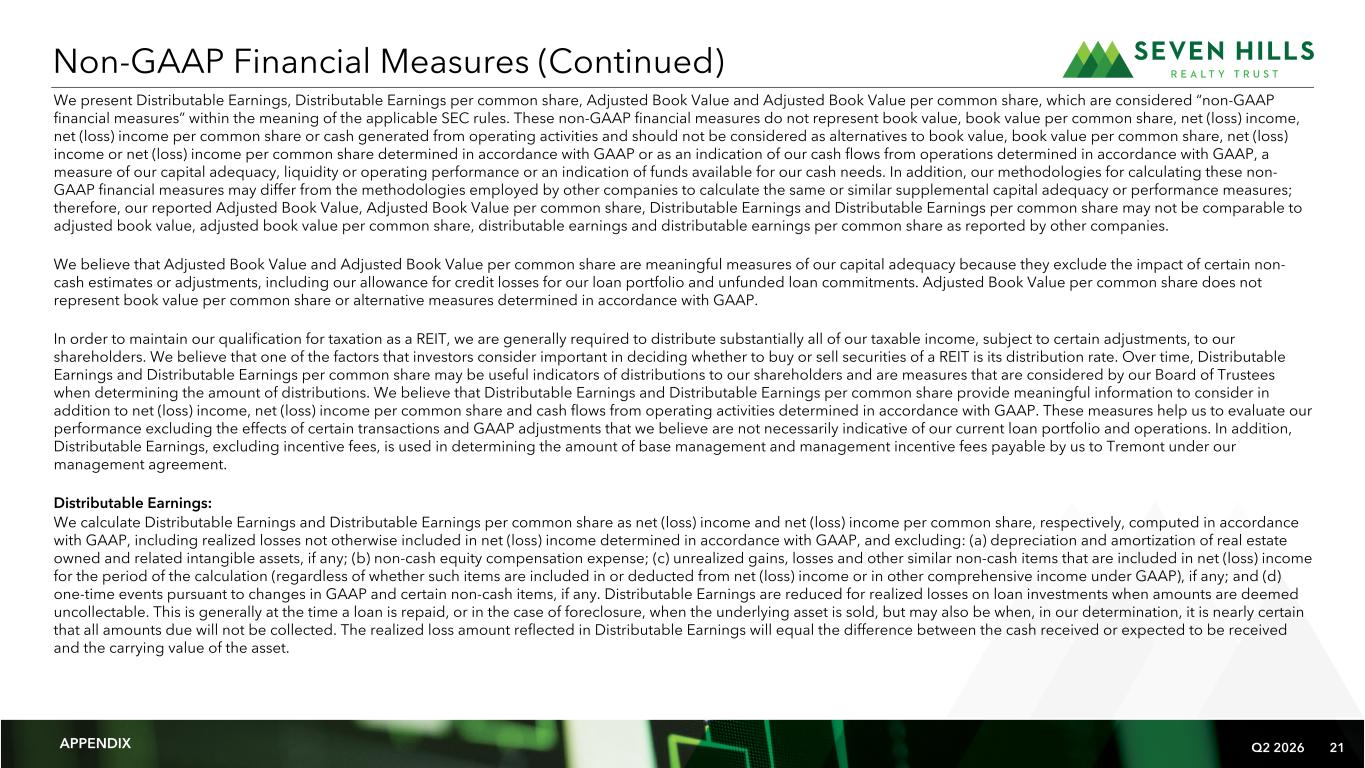
Good morning. Joining me on today's call are Tom Lorenzini, President and Chief Investment Officer, Matt Brown, Chief Financial Officer and Treasurer, and Jared Lewis, Vice President. Today's call includes a presentation by management, followed by a question-and-answer session with analysts. Please note that the recording, retransmission, and transcription of today's conference call is prohibited without the prior written consent of the company. Also note that today's conference call contains forward-looking statements within the meaning of the Private Securities Litigation Reform Act of 1995 and other security laws. These forward-looking statements are based on Seven Hills beliefs and expectations as of today, July 29, 2026, and actual results may differ materially from those that we project. The company undertakes no obligation to revise or publicly release the results of any revision to the forward-looking statements made in today's conference call. Additional information concerning factors that could cause those differences is contained in our filings with the Securities and Exchange Commission, or SEC, which can be accessed from the SEC's website. Investors are cautioned not to place undue reliance upon any forward-looking statements. In addition, we will be discussing non-GAAP financial numbers during this call, including distributable earnings and distributable earnings per share. A reconciliation of GAAP to non-GAAP financial measures can be found in our earnings release presentation, which can be found on our website at 7REIT.com. With that, I will now turn the call over to Tom.
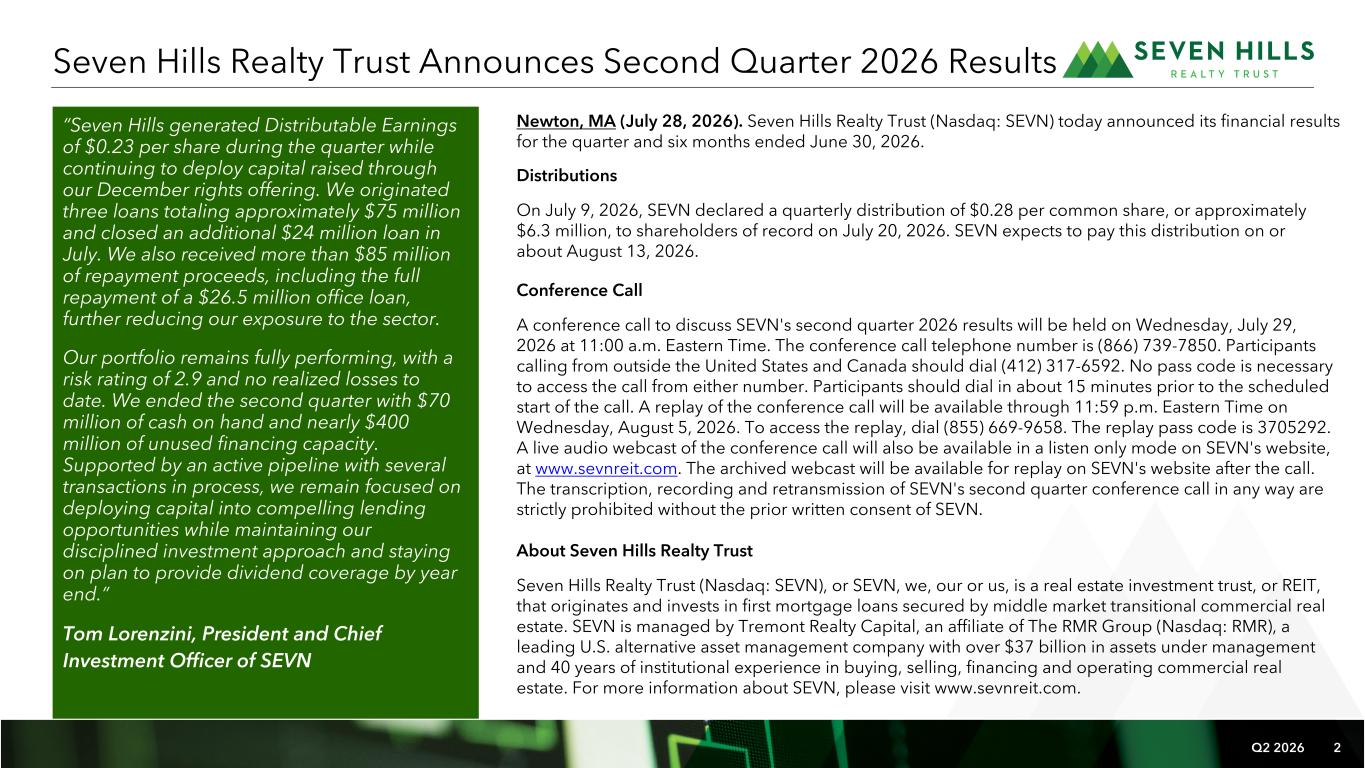
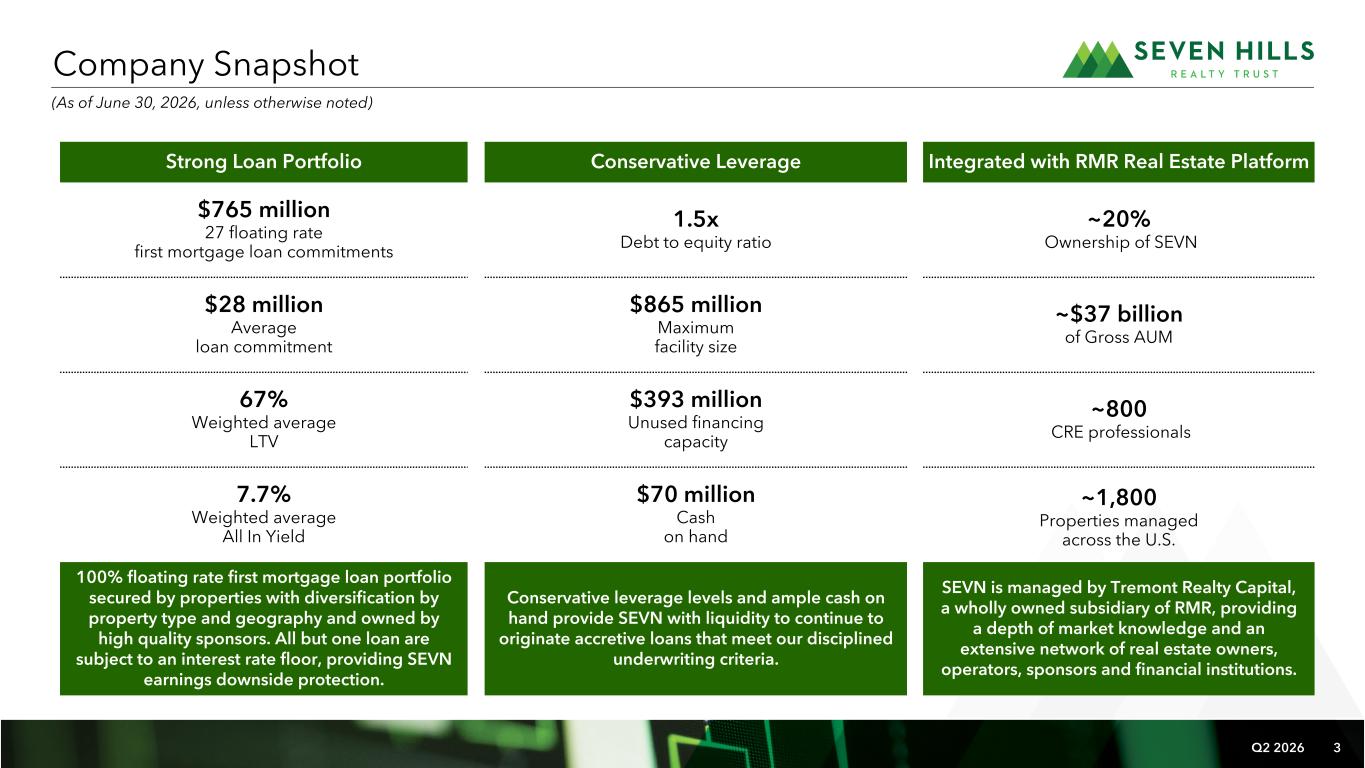
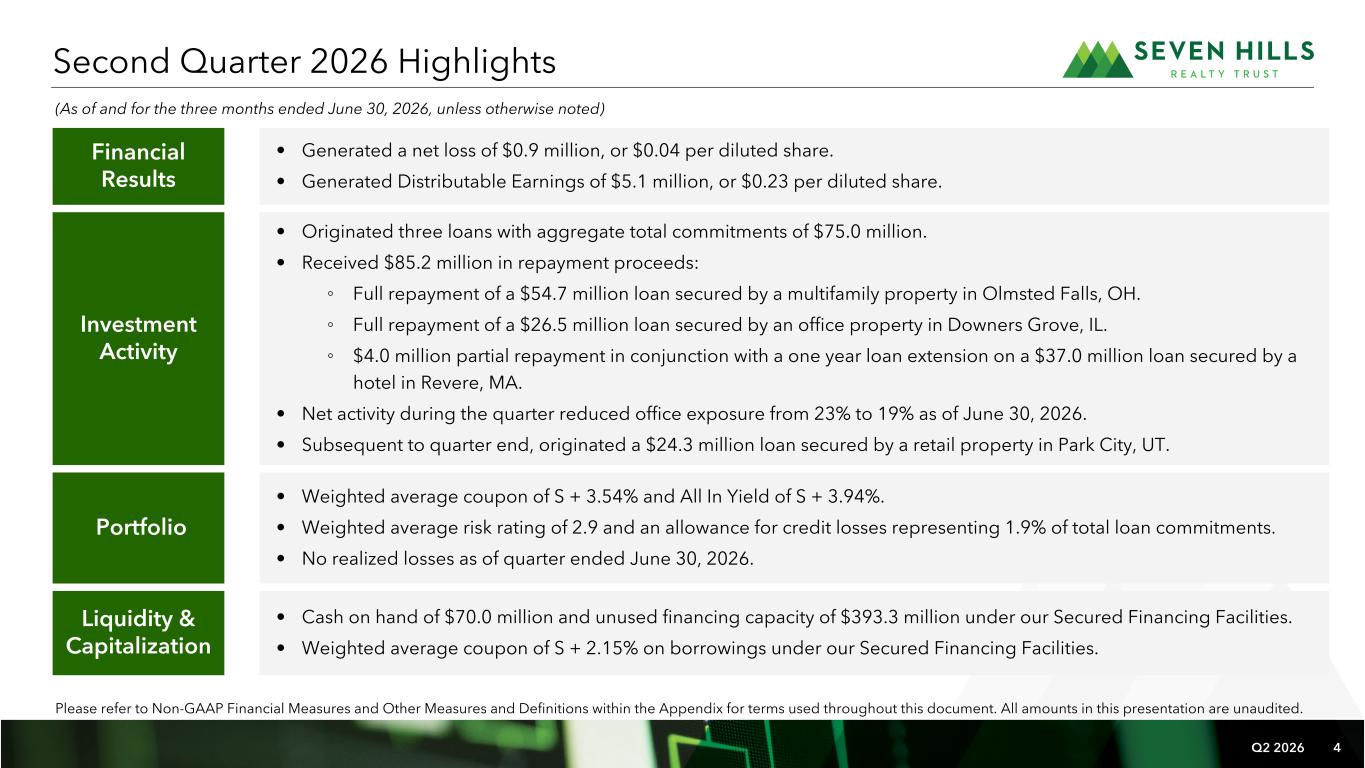
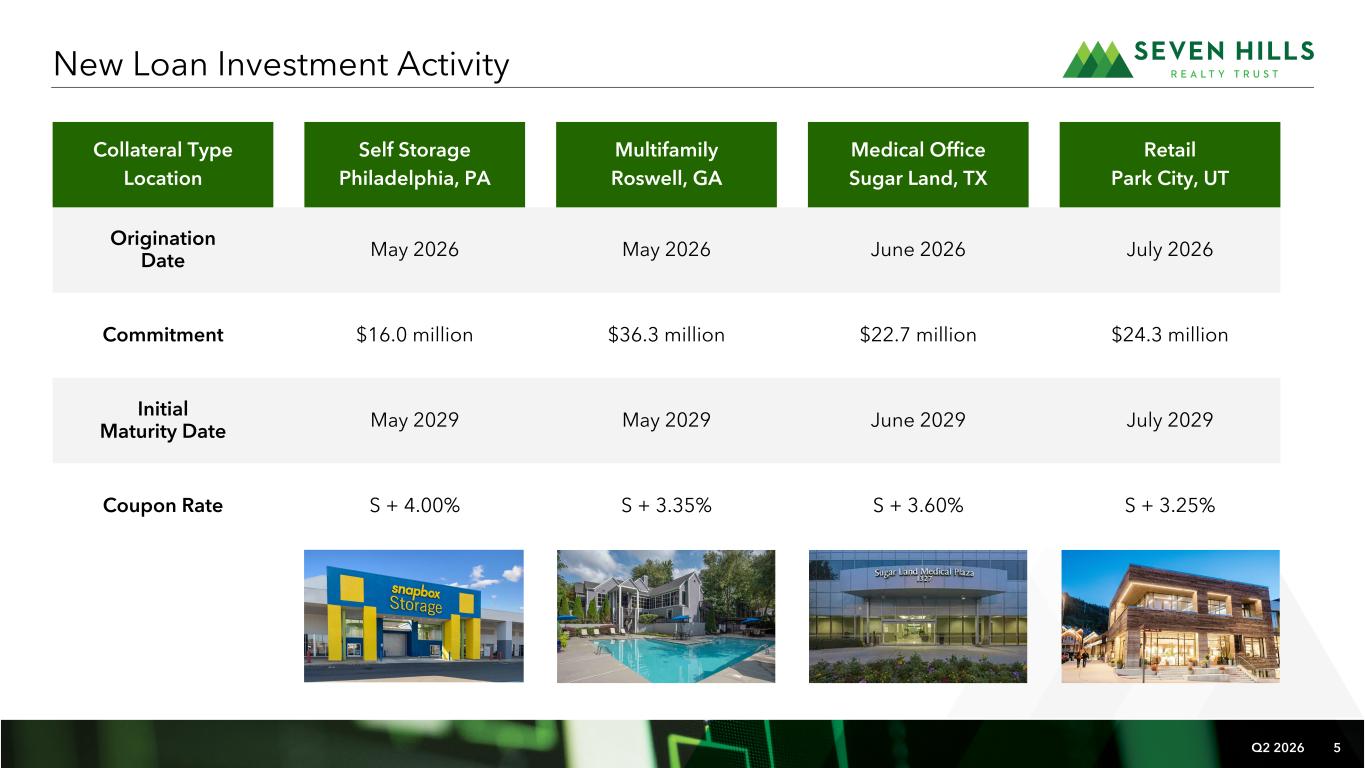
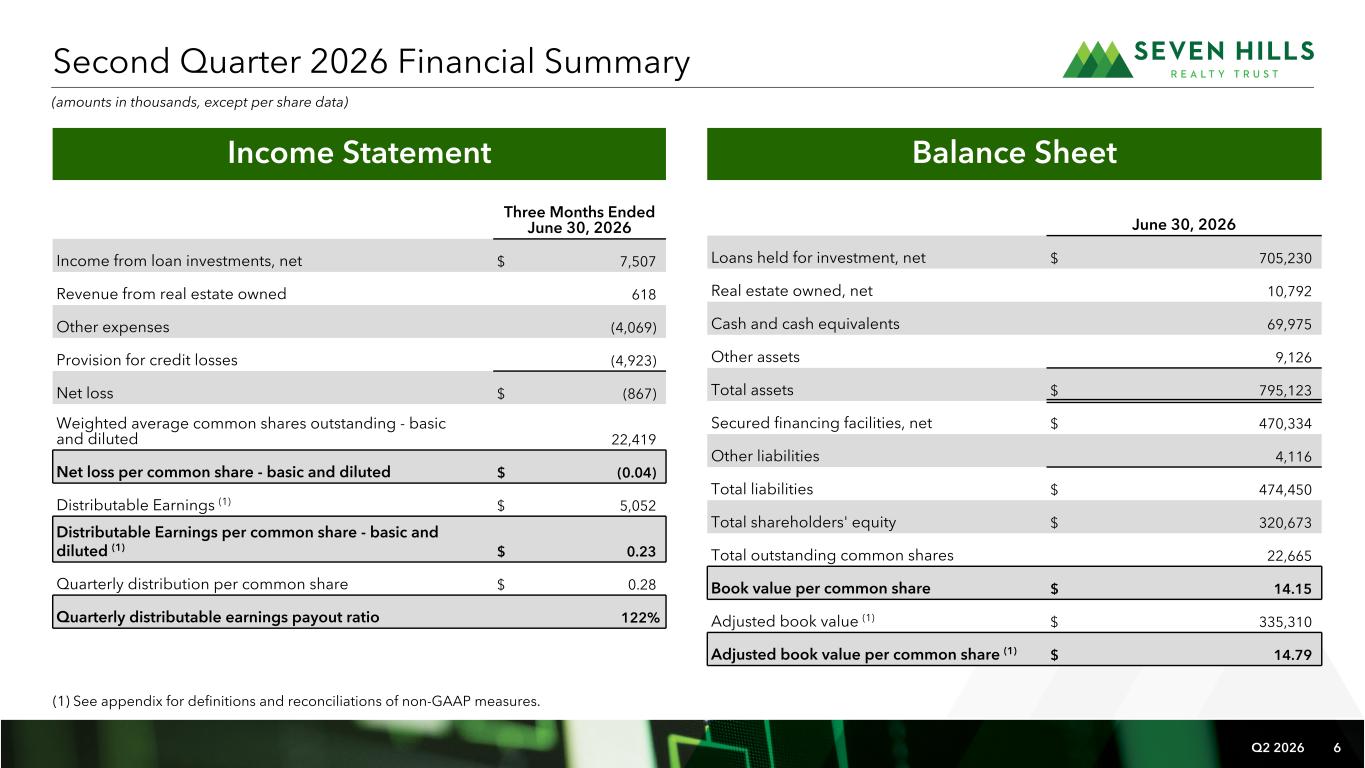
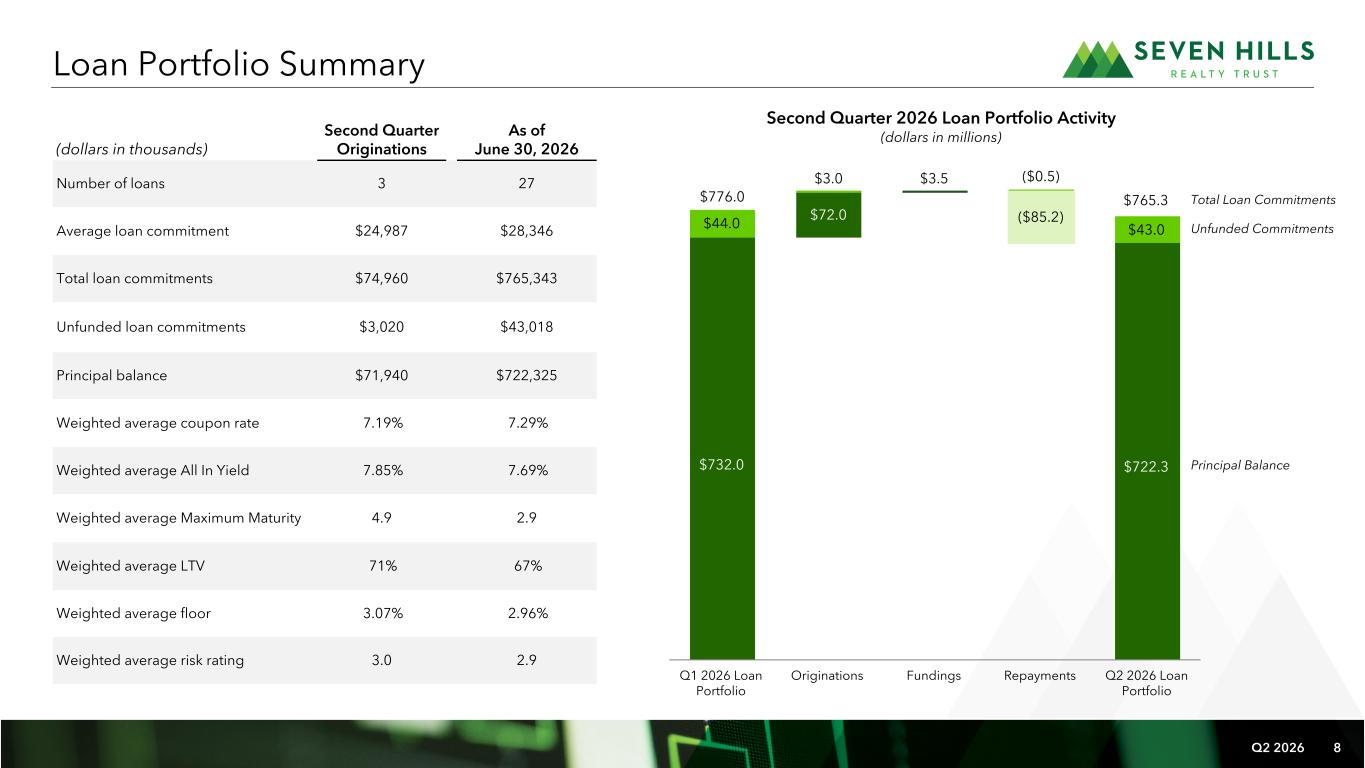
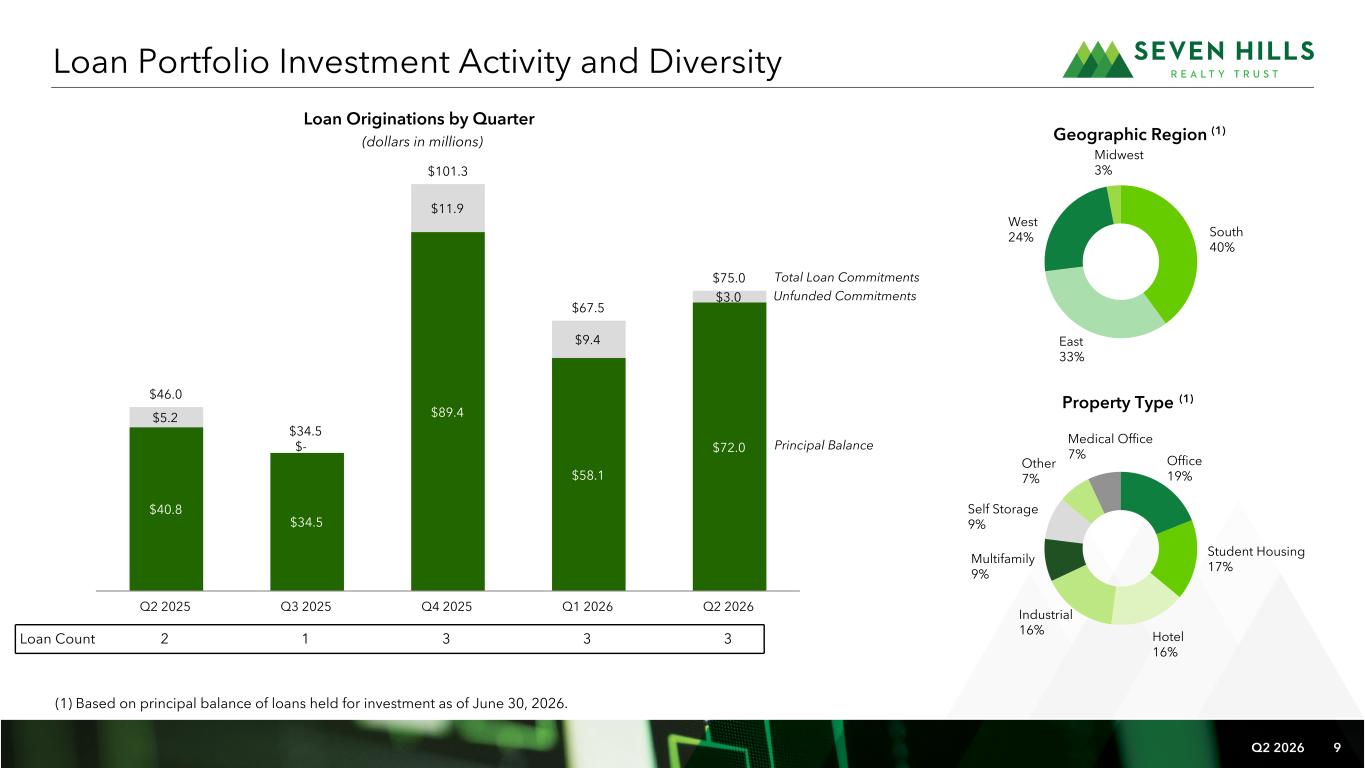
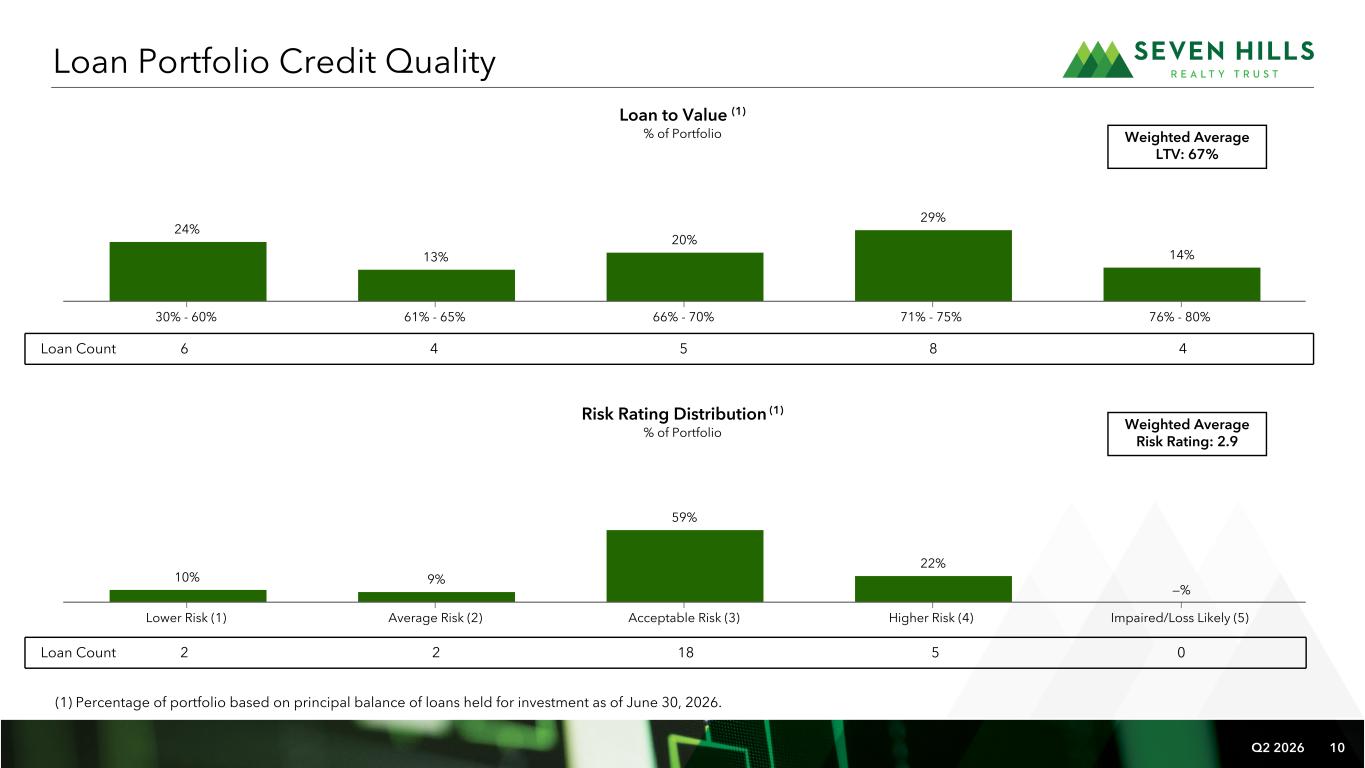
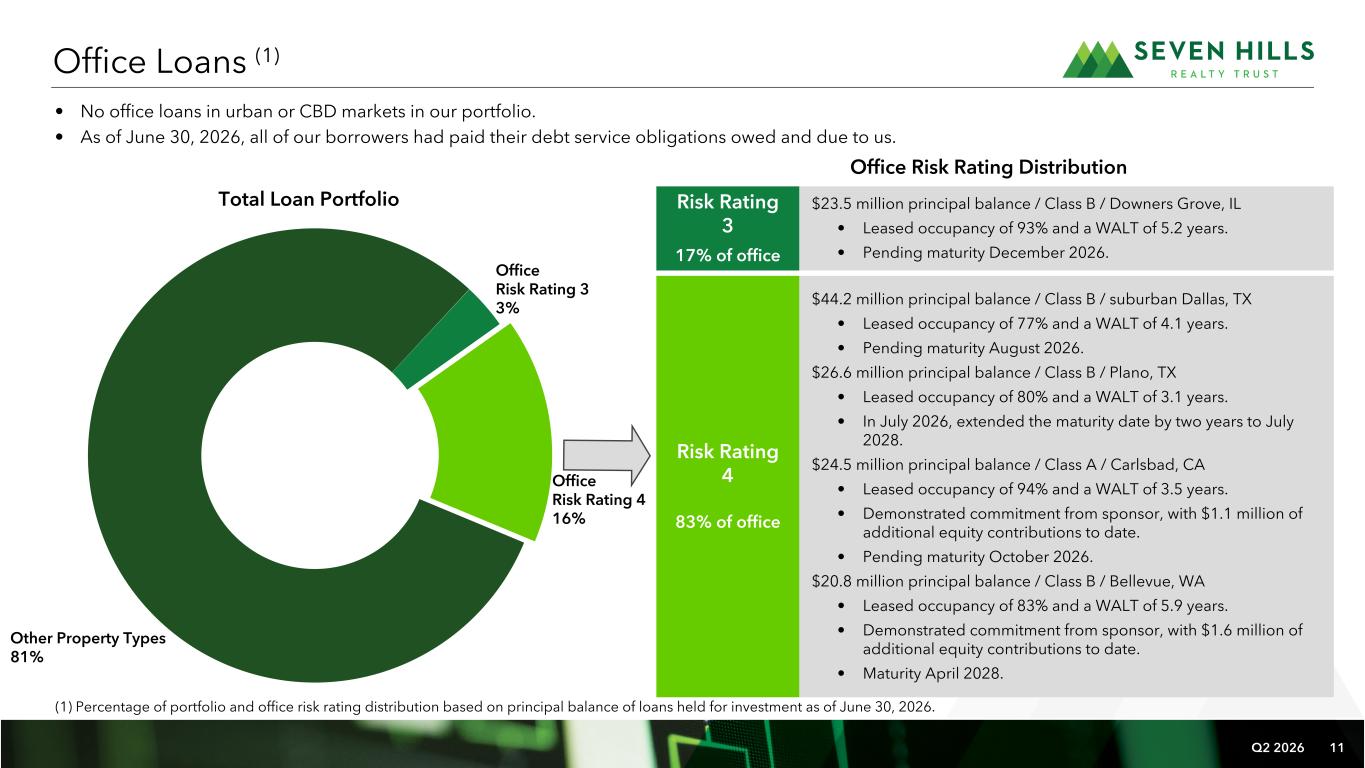
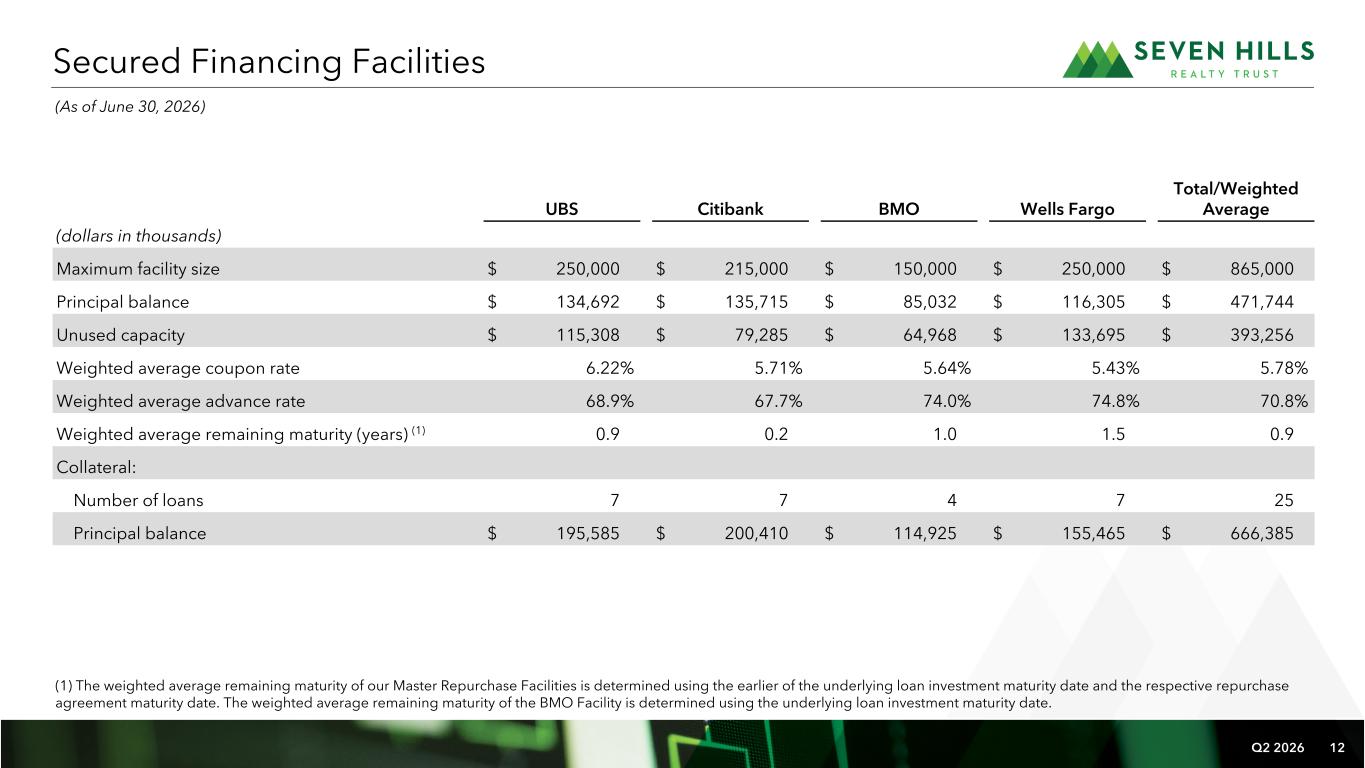
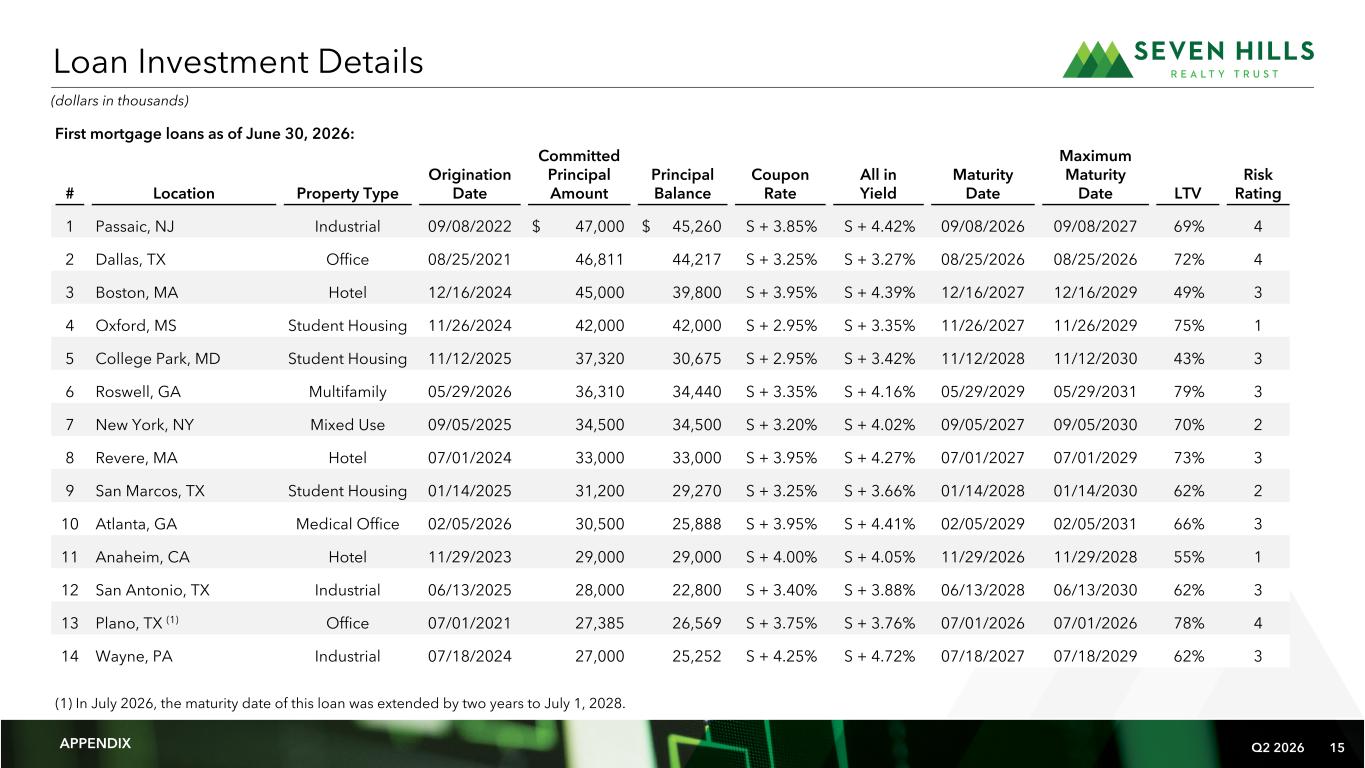
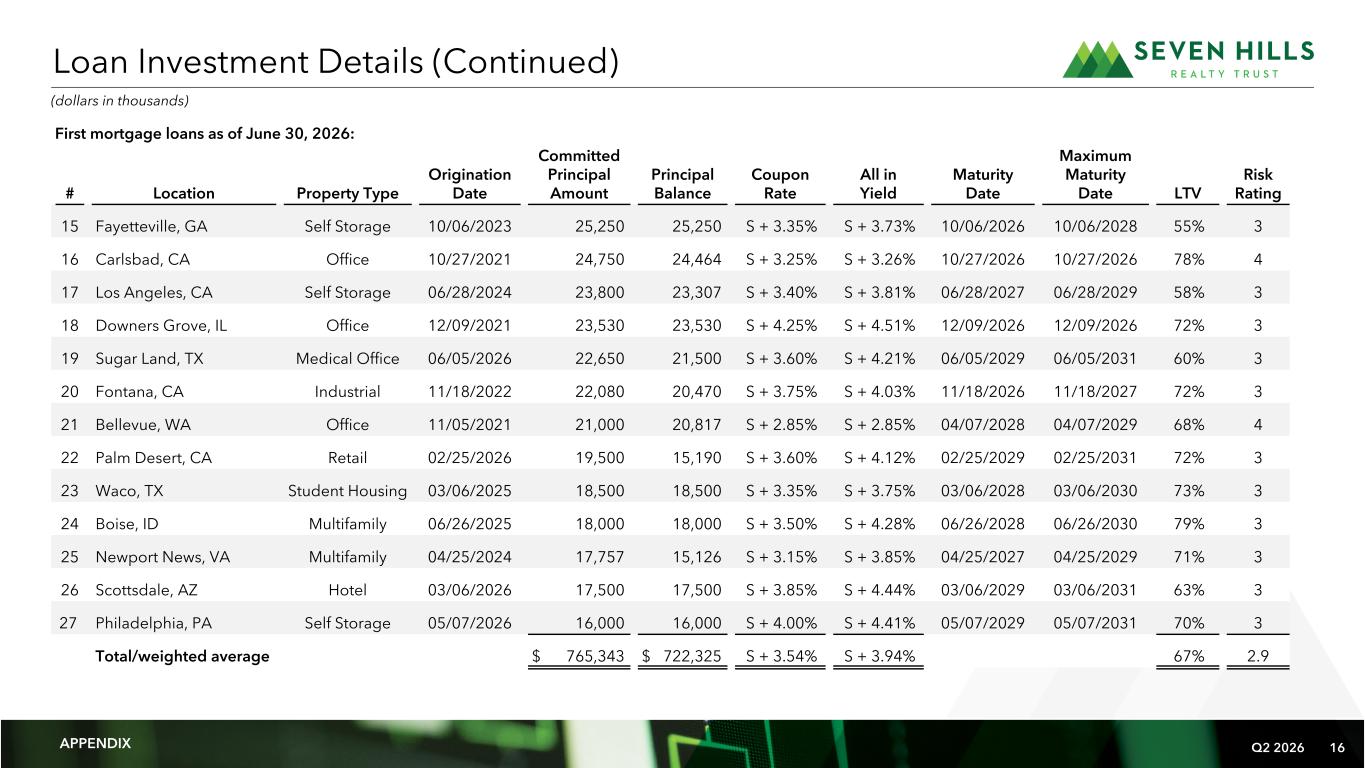
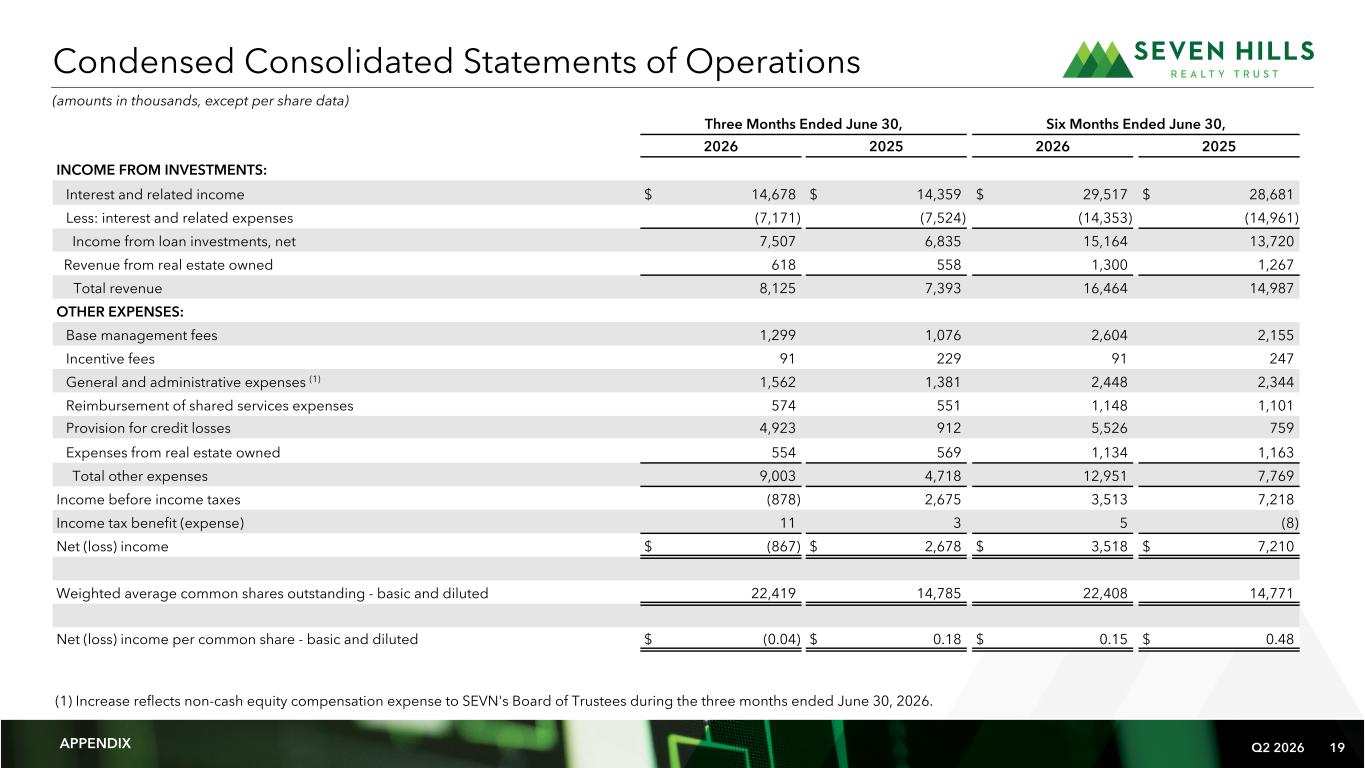
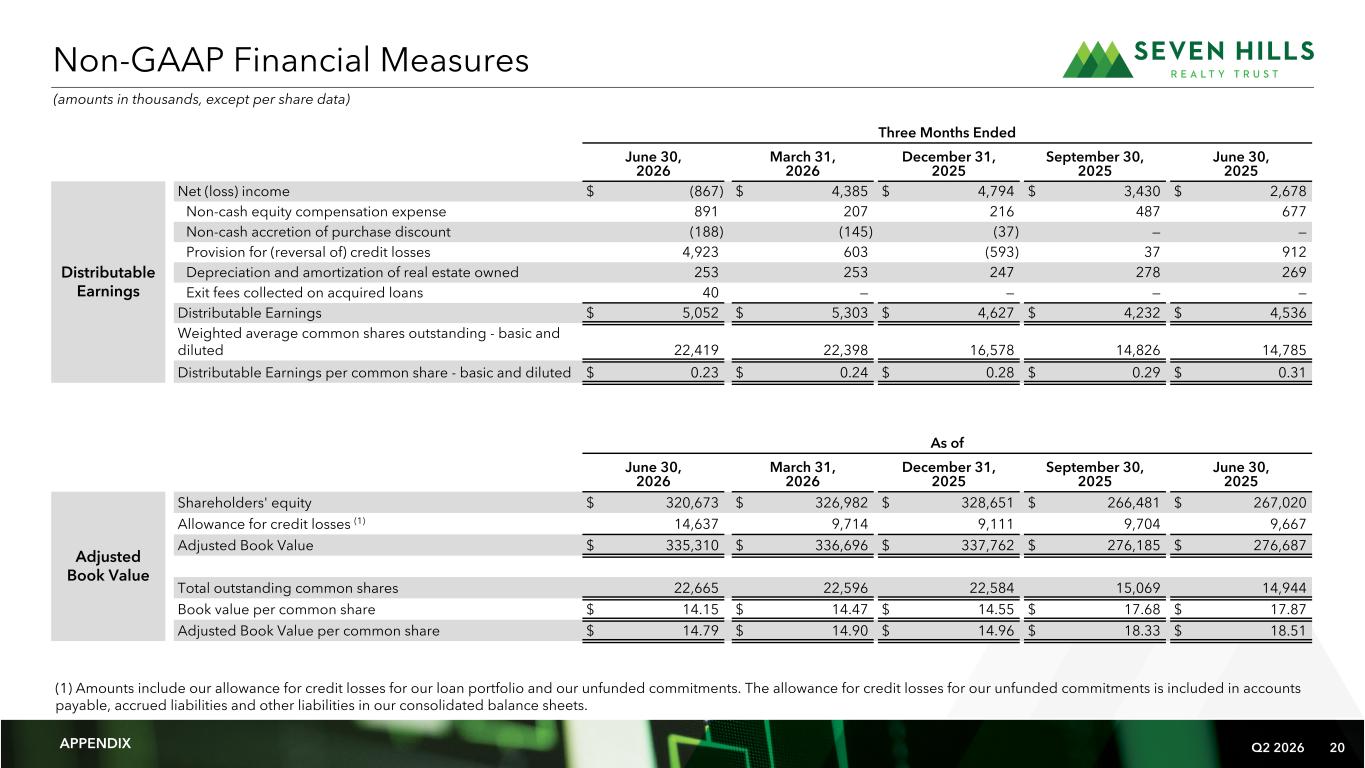
Thank you, Matt, and good morning, everyone. On our call today, I'll begin with an overview of our second quarter activity and portfolio performance. Jared will then discuss market conditions and our investment pipeline before Matt reviews our financial results and outlook. The second quarter reflected continued progress for Seven Hills as we deployed capital raise through our rights offering while also strengthening our overall portfolio composition. During the quarter, we generated distributable earnings of $5.1 million for $0.23 per share. Distributable earnings came in at the lower end of our guidance range primarily due to several loans closing later in the quarter than initially expected. Despite these delays, we continue to make meaningful progress deploying our available capital, growing the portfolio, and remaining on pace to have a covered dividend by year-end. Our second quarter investment activity reflects the strength of our origination platform and the flexibility provided by our balance sheet. We closed three new loans totaling $75 million, including a $36.3 million loan secured by a multi-family property in Roswell, Georgia, a $22.7 million loan secured by a medical office property in Sugarloin, Texas, and a $16 million loan secured by a self-storage facility in Philadelphia. Subsequent to quarter end, we also closed a $24.3 million loan secured by a retail property in Park City, Utah. Together, these four investments reflect our ability to source attractive opportunities across varying property types and geographies. As a result, we have grown our portfolio by approximately $65 million year-to-date to roughly $790 million today. The portfolio continues to perform well, with no realized losses, all borrowers' current on debt service, and a weighted average all-in yield of approximately 7.7% at quarter-end. Credit performance also remains stable during the quarter, with a weighted average risk rating of 2.9. More than 80% of our current portfolio has been originated since 2022, meaning the vast majority of our investments were underwritten in the post-pandemic environment and reflect current market conditions. Turning to Yardley, our sole REO property, the asset services team here at RMR has done a terrific job positioning the asset for an eventual sale. In addition to various lease renewals over the past 24 months, we recently signed one new lease and have another lease under LOI. As a result, the property is expected to achieve occupancy over 90 percent, well ahead of comparable properties in the market. Repayment activity during the quarter also enhanced the overall composition of our portfolio while providing flexibility to pursue new originations. We received over $85 million of repayments, including the full repayment of a a $54.7 million loan secured by a multifamily property in suburban Cleveland, a full repayment of a $26.5 million loan secured by an office building in suburban Chicago, and a $4 million partial repayment in conjunction with a one-year extension of a $37 million loan secured by a hotel in Boston. Following this repayment activity, we ended June with approximately $70 million of cash on hand and nearly $400 million of available capacity across our financing facilities. Importantly, our legacy office exposure continues to trend downward from 24% at year end to 19% today, and we expect this number to decrease even further with three office loans scheduled to mature later this year. The repayment of these relatively under-levered loans should also increase our capacity to grow the portfolio through new originations later in the year. Overall, 7Hills enters the second half of the year from a position of strength with reduced office exposure, a largely post-pandemic loan portfolio, and ample liquidity. Looking ahead, we remain focused on thoughtfully growing the portfolio and increasing earnings throughout the remainder of the year. With that, I'll turn the call over to Jared to discuss current market conditions in our pipeline.
Thanks, Tom. Since our last earnings call, market activity has been influenced by a combination of geopolitical uncertainty and interest rate volatility. During the quarter, concerns surrounding the conflict with Iran, the potential impact of higher energy prices, and renewed inflationary pressures contributed to a meaningful increase in treasury volatility, with interest rates ranging from between 4 and 4.7 percent. As we have discussed previously, periods of treasury rate volatility often create hesitation among commercial real estate investors as they contemplate buy and sell decisions. We saw evidence of that during April when transaction activity slowed noticeably as market participants took a cautious approach. However, activity accelerated as the quarter progressed through May and June. Against that backdrop, transaction activity today continues to be driven more by refinancings and acquisitions as lenders are increasingly requiring borrowers to repay maturing debt rather than extending. Additionally, many of these properties have not yet reached the level of stabilization needed to secure permanent financing or achieve optimal sale proceeds. Therefore, flood rate financing remains an attractive option due to its lower borrowing costs and flexibility relative to longer-term fixed rate debt. From a capital market's perspective, liquidity remains abundant. The banks have meaningfully re-entered the market as lenders, debt funds continue to compete aggressively for new lending opportunities, and the securitization market continues to be extremely active. These competitive dynamics have led to credit spreads tightening across many property types. Multifamily continues to be the most competitive segment of the market, despite the fact that many of these assets and sub-markets are still contending with elevated supply, slower absorption, and persistent rent concessions. While we continue to evaluate a large volume of multifamily opportunities, we remain selective at current pricing levels and instead have found recent success in sectors such as retail, medical office, self-storage, industrial and student housing, where we believe returns are more compelling relative to the underlying risk profile. From a pipeline perspective, activity remains healthy. We continue to see a steady flow of financing requests across multiple property types. We currently have seven outstanding term sheets representing approximately $300 million of potential lending opportunities. This provides a strong foundation for continued portfolio growth as we move through the third quarter. While competition has increased, we remain focused on opportunities where pricing, structure, and sponsorship align with our underwriting standards. Borrowers continue to value financing partners that can provide certainty of execution, structural flexibility, and customized solutions as they navigate upcoming maturities and an uncertain macroeconomic backdrop. We believe this environment will continue to benefit floating rate lenders like Seven Hills that can provide bespoke financing solutions for its borrowers. I will now turn the call over to Matt to review our financial results and guidance.
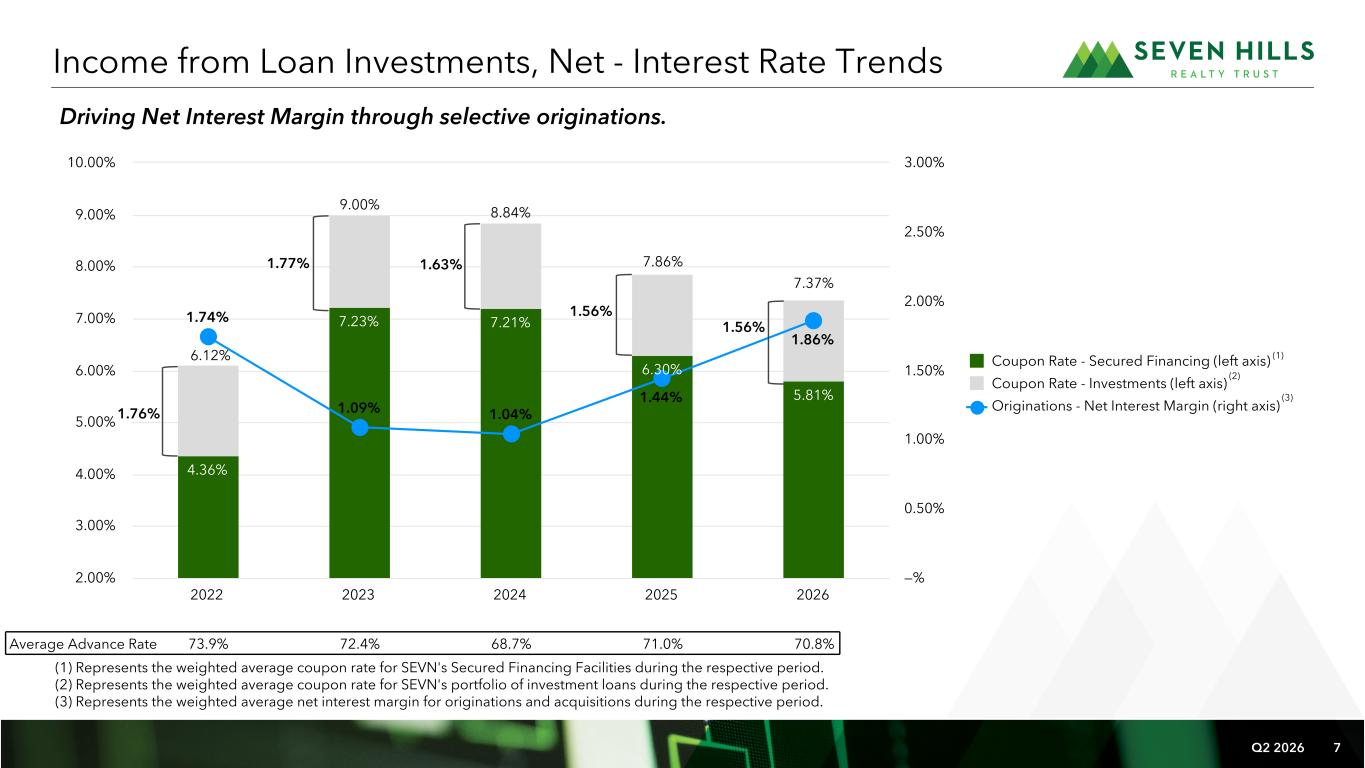
Thank you, Jared, and good morning, everyone. Yesterday, we reported second quarter of distributable earnings of $5.1 million, or $0.23 per share, which was at the low end of our guidance. As Tom mentioned, this was largely driven by delays in forecasted loan closings in the quarter. While deployment in the quarter was delayed from our assumptions, it is important to note that originations so far in 2026 have been executed at net interest margins of 1.86%, the highest level over the past four years. Earlier this month, our board declared a regular quarterly dividend of $0.28 per share, which equates to an annualized yield of approximately 14% based on yesterday's closing price. While the Wrights offering has continued to impact distributable earnings, resulting in our dividend not being covered over the past two quarters, we remain committed to this dividend level through 2026 at a minimum and expect to cover our quarterly dividend level by the end of this year. Overall, we expect third quarter distributed earnings to be in the range of 23 to 25 cents per share. As we deploy our available capital toward third and fourth quarter targets, we expect the incremental earnings to offset the impact of the higher share count by year end. Credit quality remains strong at Seven Hills. Our Cecil Reserve stands at 190 basis points of total loan commitments, a 60 basis point increase from last quarter. While all office loans are performing and our Our exposure has declined to 19 percent with the full office loan repayment in the quarter. The increase is largely driven by increased reserves on two of our office loans with 2026 maturities. Our full loan portfolio is supported by a conservative portfolio risk rating of 2.9. The portfolio is well diversified by property type and geography, and all loans are current on debt service. This reflects a disciplined underwriting and asset management process that we believe creates durable long-term value for our shareholders. That concludes our prepared remarks. Operator, please open the line for questions.
Operator
We will now begin the question and answer session. To ask a question, you may press star then 1 on your telephone keypad. If you are using a speaker phone, please pick up your handset before pressing the keys. If at any time your question has been addressed and you would like to withdraw your question, please press star then 2. At this time, we will pause momentarily to assemble our roster. First question comes from Marissa Lobo with UBS.
Good morning. Thank you for taking my question. First, if you could speak to just the competition, you know, commentary points to increased competition from banks, life companies, securitized lenders, are you seeing that directly in your deal process?
Sure, Marissa. This is Jared. Yeah, we're absolutely seeing more competition. Where we play in the middle market, borrowers have a lot of options. They can go to local banks, regional banks for their financing needs. The life companies are active as well as the securitization market, particularly for CMBS, or excuse me, for multifamily loans. So where we play in that, our average loan size now is about $30 million. Borrowers have a lot of options, more so from the banks than they have in the past because they're getting you know they're becoming more active um but what i will say is you know that that competition and the activity that we're seeing with the banks returning to the market is also healthy for our business because what it's allowing our existing borrowers to do and it's providing more liquidity to refinance our assets as well so loans that are on our balance sheet have you know a lot more options to be repaid or refinanced out at their maturity as well so overall it's healthy but the competition certainly is having an impact on pricing and spreads Okay, great.
And just shifting, thanks for the color on Yardley, but is there any update on, you know, anticipated disposition timeline for that asset?
I think pending the lease negotiations that are happening now that we believe will finalize in the very near term, then we can consider bringing it to market towards the end of the year.
Got it. Okay, thank you for taking my questions.
Operator
Again, if you have a question, please press star, then two. Our next question comes from Jason Weaver with Jones Trading.
Hey, good morning, guys. Just a question on the $4.9 million provision. With still no non-current, non-accrual, or realized losses, I have to think this is a specific reserve against an asset, and would that pertain to the Dallas multifamily property? And what sort of, if so, what sort of factor drove that decision?
Sure. Thanks for the question. So, you know, we have three office loans that are maturing between August and the end of this year, and the increase in reserve of about $4.9 million in the quarter was really driven off of two of those office loans, just given the near-term maturity, thinking about collateral values, et cetera. It's important to note that all of our office loans are performing and generating positive cash flow. We have a slide in our earnings presentation showing the details of those office properties, but it's really just a function of the near-term risk with the maturity.
And then can you give any detail? I didn't see anything in the deck regarding the Plano loan extension. Are there any rate changes?
We did a two-year extension on that asset. That property is performing terrific. far outperforming their budget, actually. So they paid an extension fee. They acquired a new interest rate cap, so they invested some capital in that regard. But that's a covered loan with a debt yield that's, I think, approaching 12 percent. And coverage, it's probably, I think it's almost approaching 1.4 times. So it's a very healthy loan. So there was no need to have a paydown on the principal balance for that loan.
Got it. All right. Thanks for the color, guys.
Operator
Our next question comes from Craig Cacera with Lucid Capital Markets.
Hey, good morning, guys. I see the coupon on the Park City, Utah assets, but can we get the all-in SOFR spread for that one?
So the spread on that loan was three and a quarter over, And then that also has an exit fee as part of the financing terms on that.
So is that roughly 40 basis points above the coupon, or how should we think about that?
Yeah, the exit fee, just amortized over three years, so 33 basis points is a way to think about a 1% exit fee, right? So you can just tack that on to the spread.
Okay, that makes sense. And I'm just curious, you know, your comments about, you know, competition and a little bit of spread compression. I mean, you know, you look at what you originated here in the second quarter versus the fourth quarter and first quarter. You know, so far spreads are a little bit down. How much of that would you attribute to mix versus just the overall market?
Well, I think a big part of it is mix. You know, the assets that we originated were because they were largely commercial assets. We had additional pricing power, I think, with those, so that gave us, you know, that resulted in the higher returns for those loans that we originated. I think we banked a pretty meaningful amount of net interest margin over the last two quarters, and so we've been selectively thinking about expanding, you know, originations in this quarter to do a little bit more on the multifamily where available. And so, again, the pricing there, you know, market pricing for a full loan on a multifamily deal today is probably SOFR. It can range anywhere from SOFR 235 to 275, depending on who's providing the financing and the cash flow of the asset. You know, we're generally looking at those multifamily deals in the SOFR plus 265 to 295 range where we can achieve that type of pricing.
Again, round numbers. but i think we'll you know in the next quarter or two we'll be able to originate a few of those those loans at maybe a little bit tighter net interest margin to um you know continue to grow the portfolio and balance the mix got it and i feel like earlier in the year you thought you were going to grow your loan portfolio to maybe 950 million uh is that still the target for the year and can you kind of talk about you know what's your anticipated pacing is that is that Is that front loaded? Is that back loaded? Just any thoughts would be helpful?
Yeah. I think it's still on target to end the 950, 960 number, which would put us about 200 million net of where we ended the quarter at, maybe about 170 million net from where we are today. And a significant part of that will be end of Q3 and then in the Q4. I mean, that's the pipeline that what we're looking at right now for Q3 closings would all be towards the end of the quarter. Got it. okay um that's helpful just one more for me um you know you have you were inside of a month from the maturation of the 44 million dollar dallas office loan um based on your conversations with the borrower can you handicap whether or not you think it'll be paid or extended um we believe that loan will be paid off um we have been in negotiations now you know there's what happens with these extensions and these loan mods and payoffs when we get to the situation and oftentimes it doesn't really come to a head until just prior to when it needs to. So we are actively in discussion with the sponsorship, but we do believe that will be a payoff. Okay, that's helpful. Sure.
Operator
Our next question comes from Christopher Nolan with Ladenburg-Fellman.
Hey, guys. On the office question, is the reserve reflecting some sort of anticipation of a restructuring if these guys are short?
No, it's really more just, you know, a function of the overall CECL model and looking at, you know, kind of the current collateral value. You know, as part of negotiations on this one, we did get an appraisal. And I would say that the stabilized value of that appraisal would show that we have a covered loan. So it's really just a function of where we are today in the maturity window of that loan.
And you're going to be taken, theoretically, taken out by a bank, correct?
Most likely, right. We're not 100% sure on how they're going to recapitalize it, but that's our belief.
In that case, what's the current LTVs that banks are making for office loans these days?
You know what, Chris, we see it all over the map, or all over the board, I should say. My guess is maybe that's a 65% number, something along those lines.
And Chris, you've got great sponsorship here, too, that's been supportive of the asset. So we're not clear exactly on how they're going to recapitalize it, but they've been able to step up and support the asset when needed. So I'm sure that will happen come the refinance.
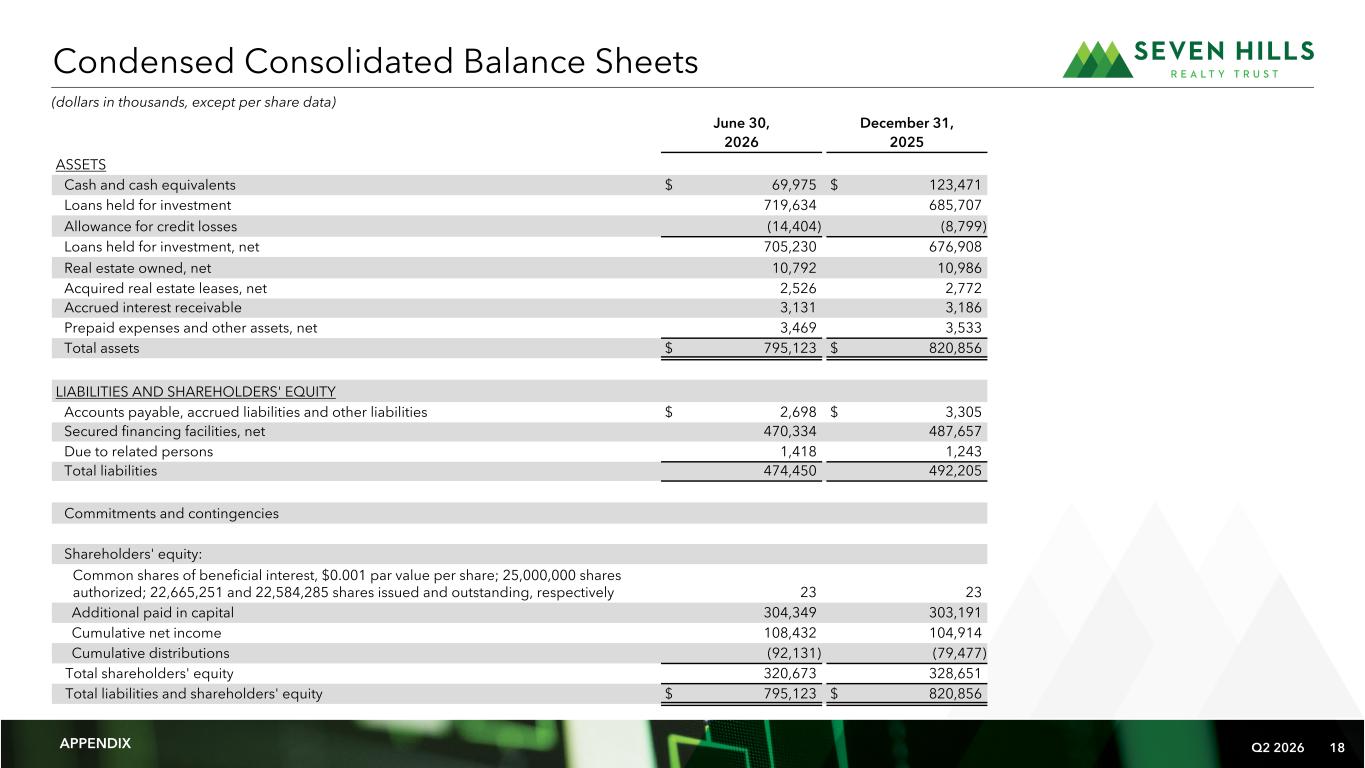
And follow-up is on the paid-in capital, so a quarter-for-quarter increase at $340 from $304. What was that related to, please?
I'm not sure I follow your question.
Oh, I'm looking on balance sheet paid-in capital. Maybe I missed it. it's like confusing and take it offline. It's no big deal. Okay. Thank you.
Operator
Our next question comes from Chris Mueller with Citizens Capital Markets.
Hey, guys. Thanks for taking the questions. So I see the comment in the deck on deploying the rights offering still ongoing. I guess the question is, how much of a drag on earnings in the second quarter was that capital not being fully deployed? I'm just trying to get a sense of run rate earnings x that drag?
Yeah, thanks for the question, Chris. You know, I would say it's a little bit of a drag, right? For the quarter, we were a net reduction of $10 million when you take the $75 million of production offset by the $85 million of repayments. So, you know, we're probably lagging a little bit behind our overall production forecast, but we still remain confident in hitting our numbers by the end of this year. And, you know, that's consistent with the messaging we've been providing. You know, Tom mentioned about a net portfolio growth of about $200 million, and a lot of that's going to come, you know, September through Q4. So, you know, we still feel really good. Jared commented, we have about $300 million of term sheets outstanding currently. So, we remain very committed and supportive of our year-end forecast. got it and then maybe shifting gears a little bit so on repayments what was the the timing of repayments in the quarter and i'm just looking at the 70 million of cash and wondering if there were late repayments that elevated that number at all yeah so a lot of it was really the um the 55 million dollar loan was repaid in early april i think it was um so you know from an earnings perspective we didn't replace a lot of that until uh later in the quarter um so that's why we we saw a penny decline from from q1 um we were just sitting on that excess cash uh we also had uh proactively repaid the repo associated with that loan in q1 just because of the surety of closing um so we received more cash um as part of that repay got it that makes a lot of sense I appreciate you guys taking the questions today.
Operator
This concludes our question and answer session. I would like to turn the conference back over to Tom Lorenzini, President and Chief Investment Officer, for any closing remarks.
Thank you, everyone, for joining today's call. Please reach out to Investor Relations if you are interested in scheduling a meeting with Seven Hills. Operator, that concludes our call.
Operator
The conference has now concluded. Thank you for attending today's presentation. you may now disconnect.