Operator
Good day, and welcome to Selective Insurance Group's second quarter 2026 earnings call. At this time, all participants are in listening mode. After the speaker's presentation, there will be a question and answer session. Instructions will be given at that time. Please be advised that today's conference is being recorded. I would now like to turn the call over to Brad Wilson, Senior Vice President. Please go ahead, sir.
Good morning. Thank you for joining Selective's second quarter 2026 earnings conference call. Yesterday, we posted our earnings press release, financial supplement, and investor presentation on the Investors section of Selective.com. A replay of today's webcast will be available there shortly after this call. Joining me are John Marchione, our Chairman, President, and Chief Executive Officer, and Patrick Brennan, Executive Vice President and Chief Financial Officer. They will discuss our results and take your questions. During the call, we will reference non-GAAP measures used by insurance and investment professionals to evaluate financial and operating performance, including operating income, operating return on common equity, and adjusted book value per common share. Reconciliations to the most comparable GAAP measures are available in our financial supplements on our Investor Relations page. We will also make forward-looking statements under the Private Securities Litigation Reform Act of 1995. These statements and projections about future performance are subject to risks and uncertainties that we disclose in our SEC filings. We undertake no obligation to update or revise any forward-looking statements. Now, I'll turn the call over to John.
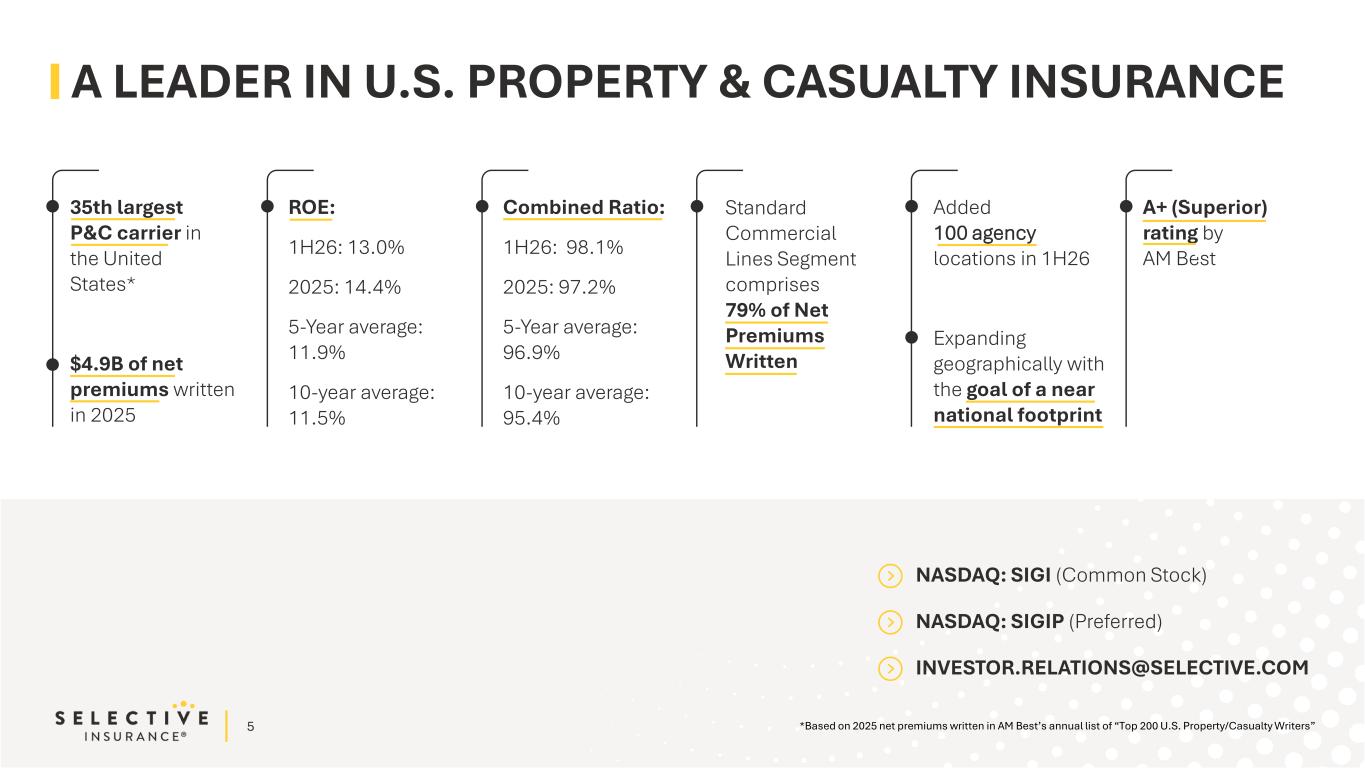
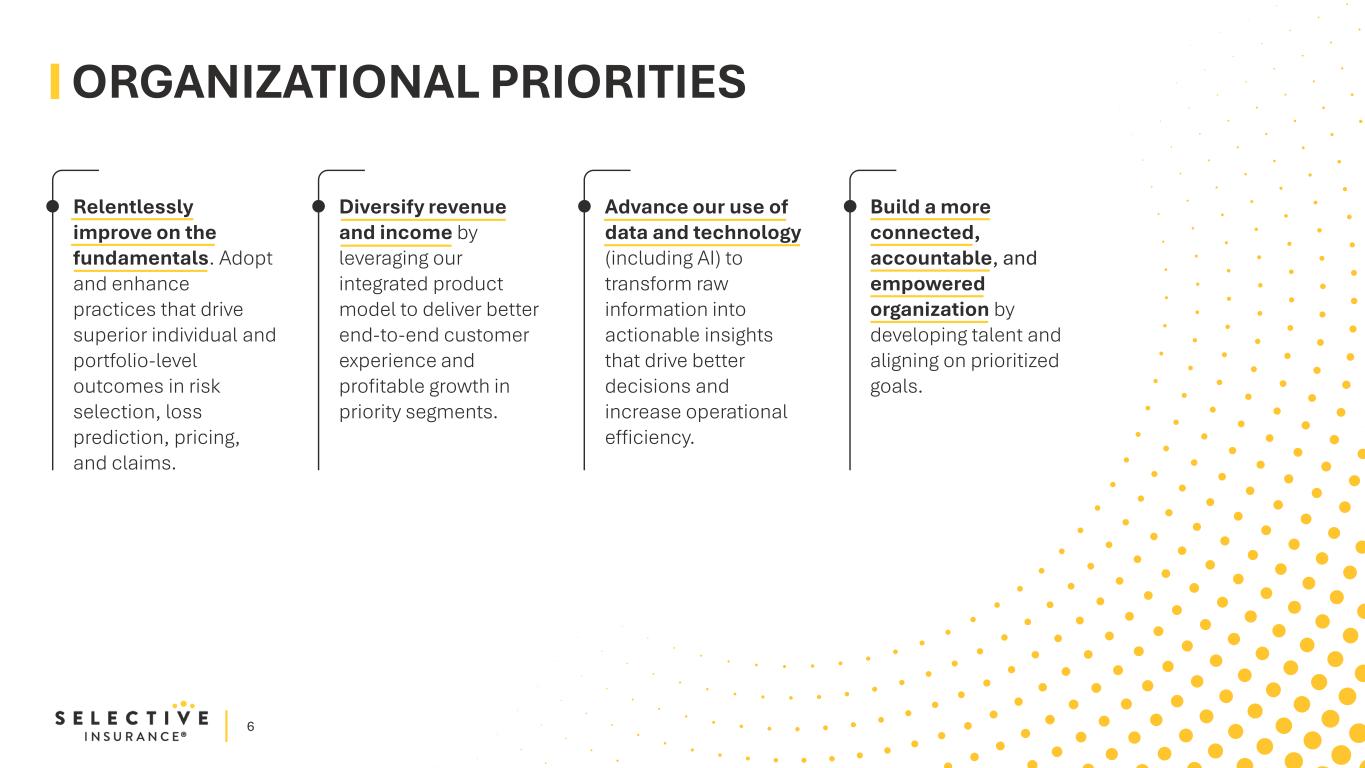
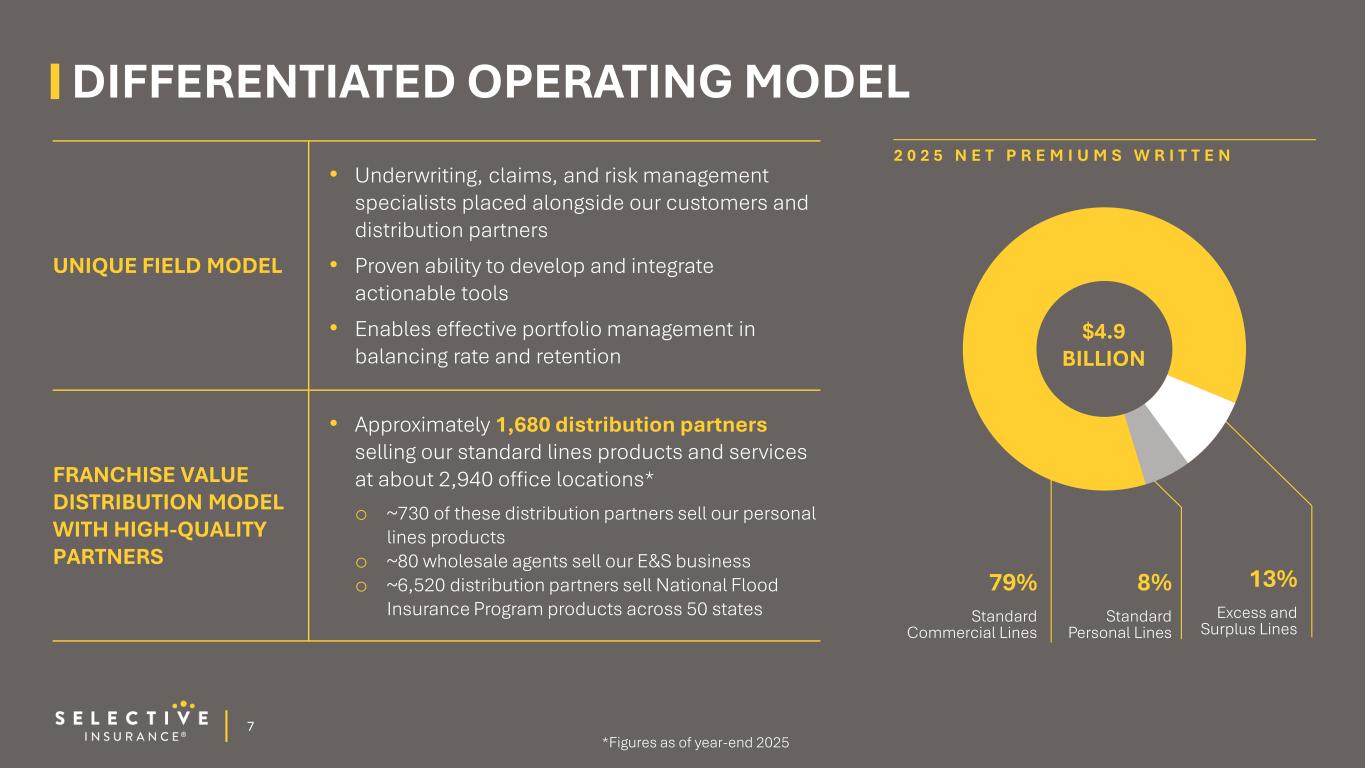
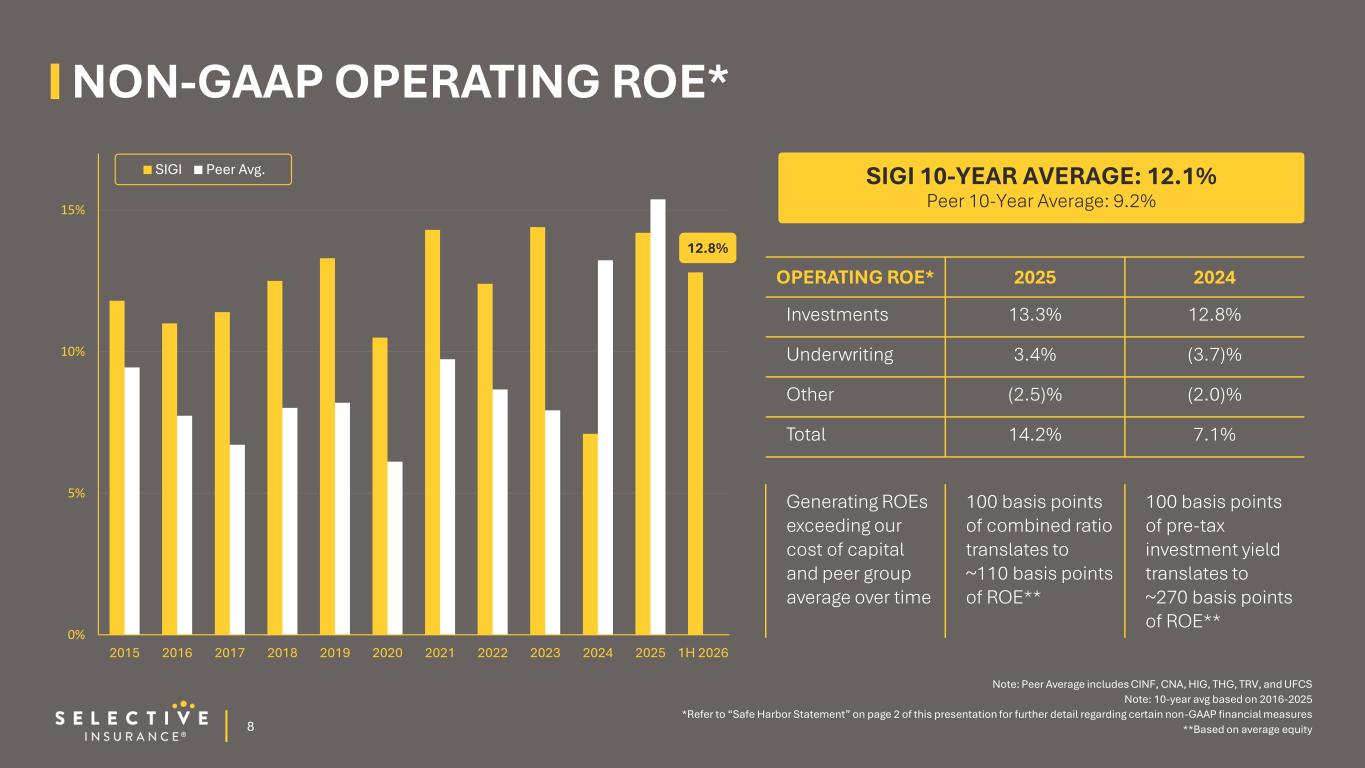
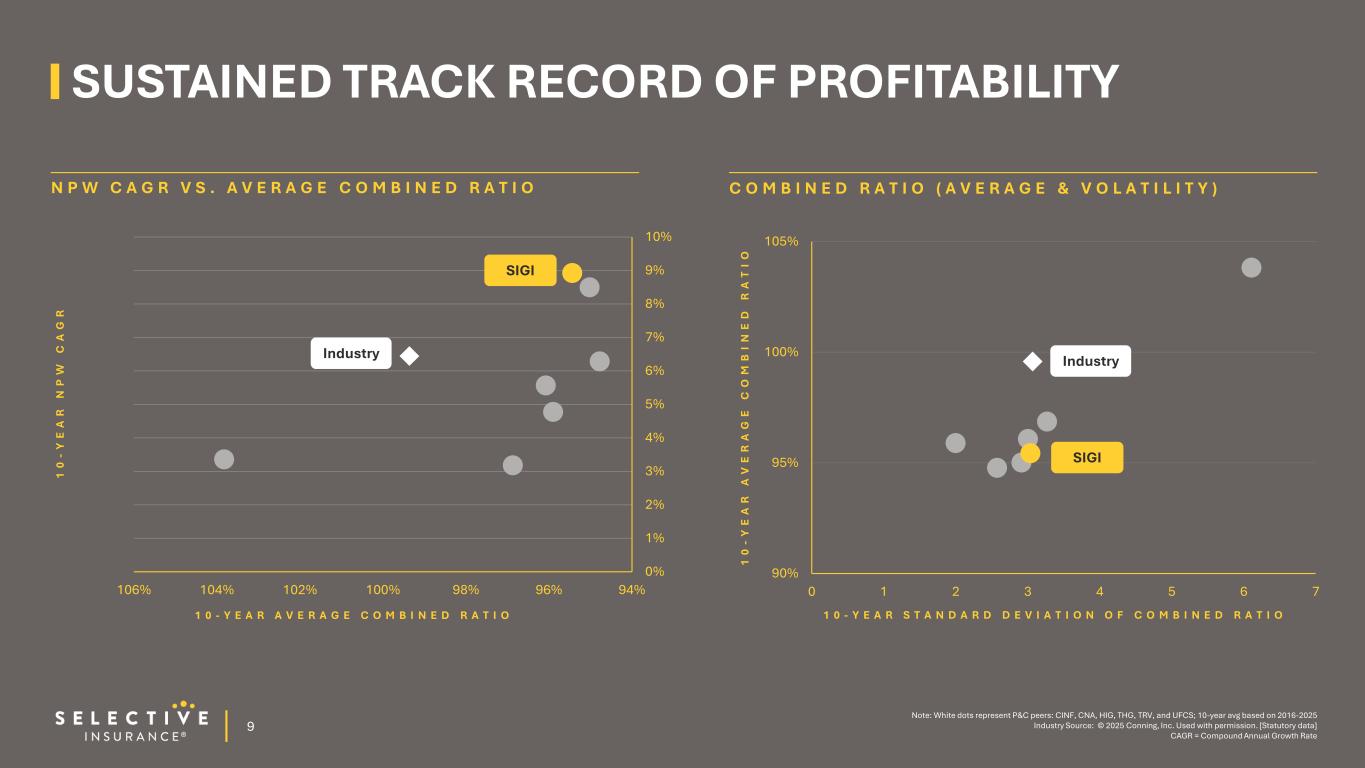
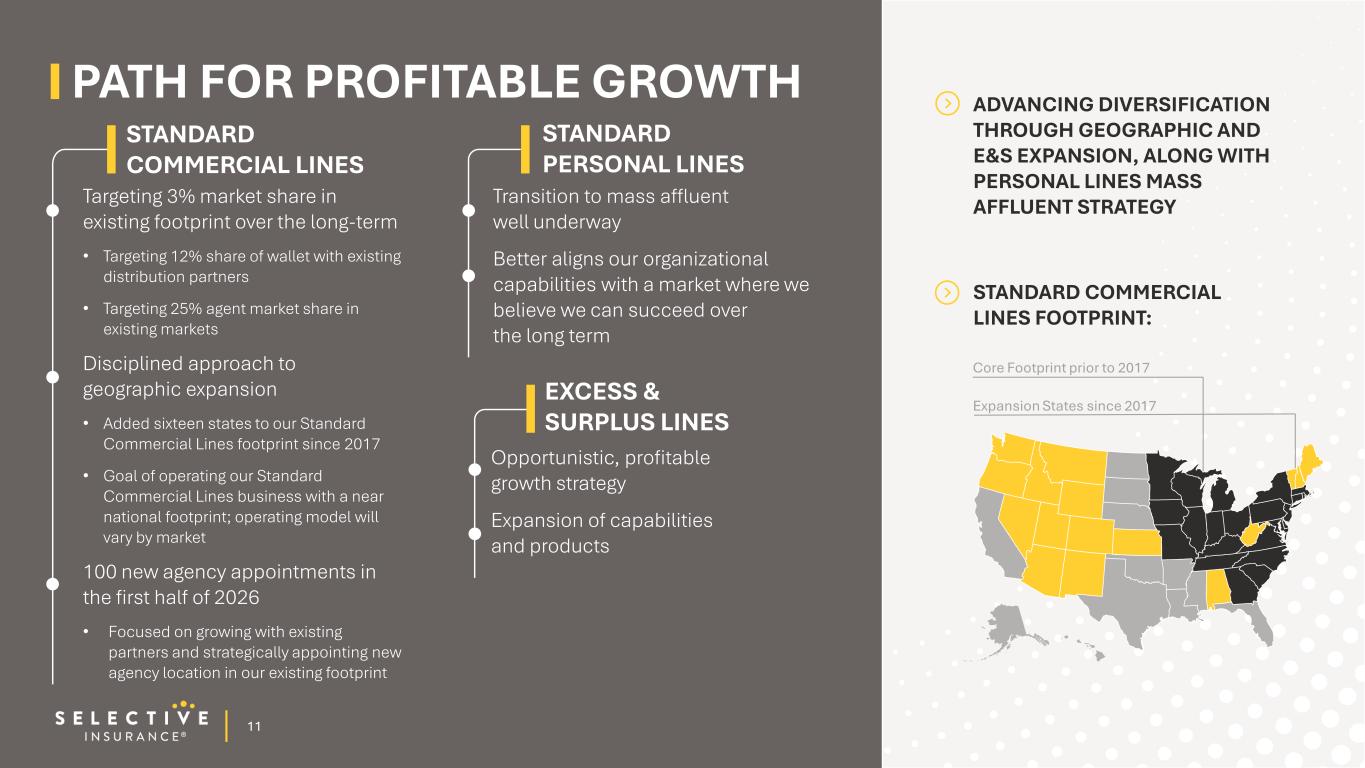
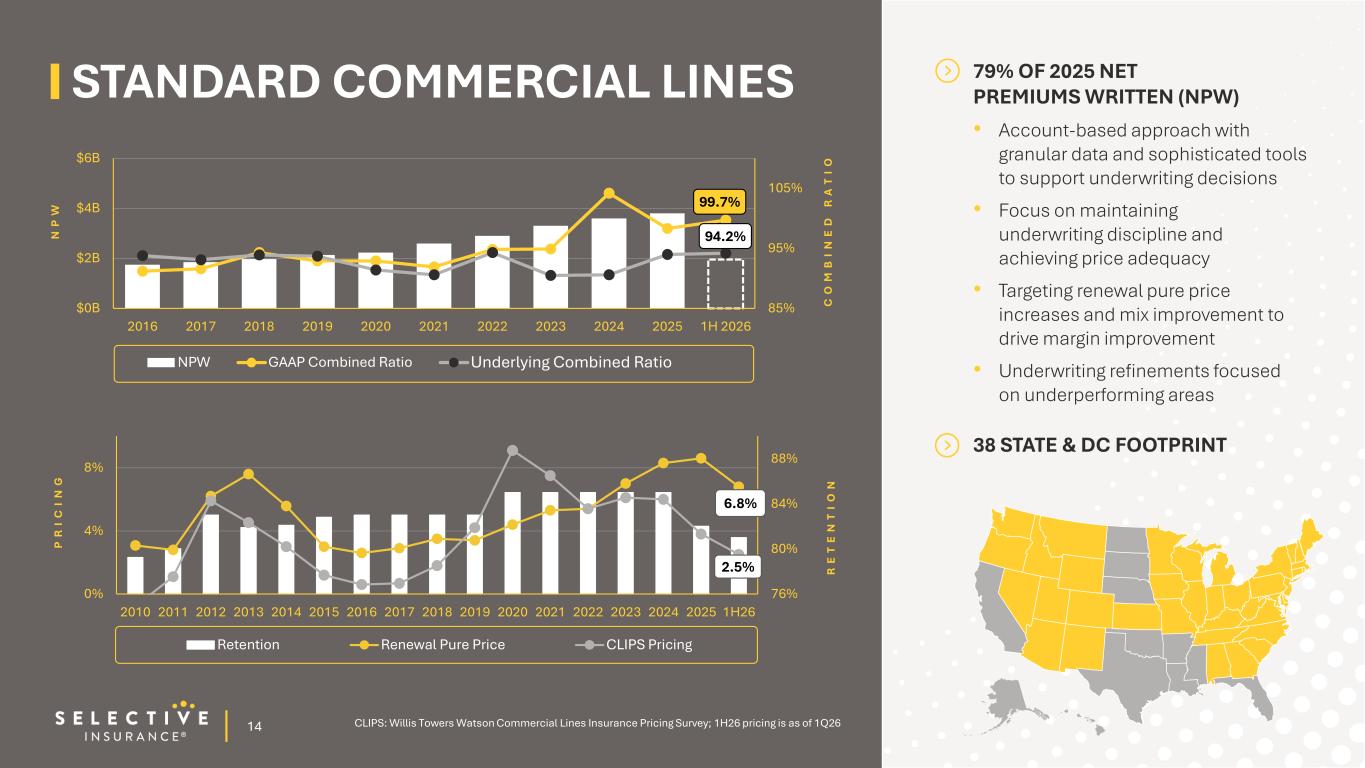
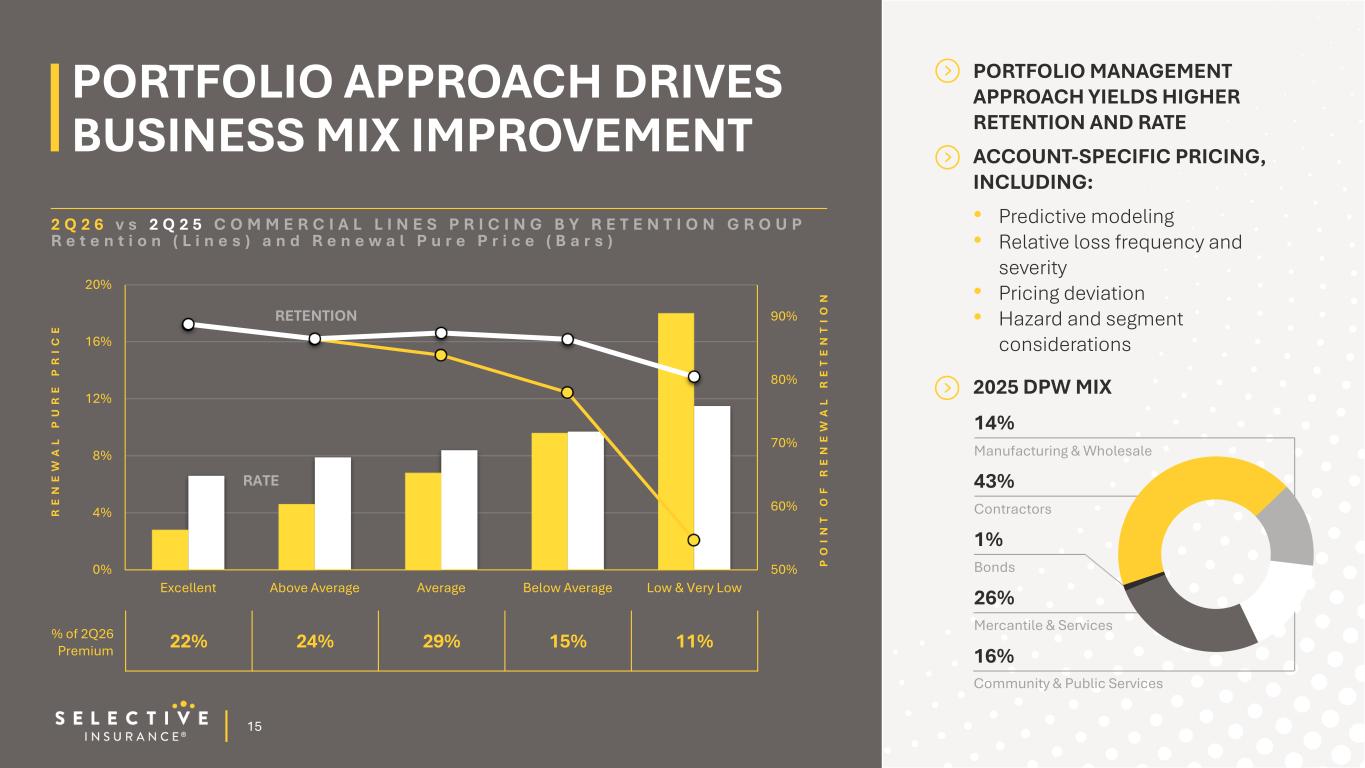
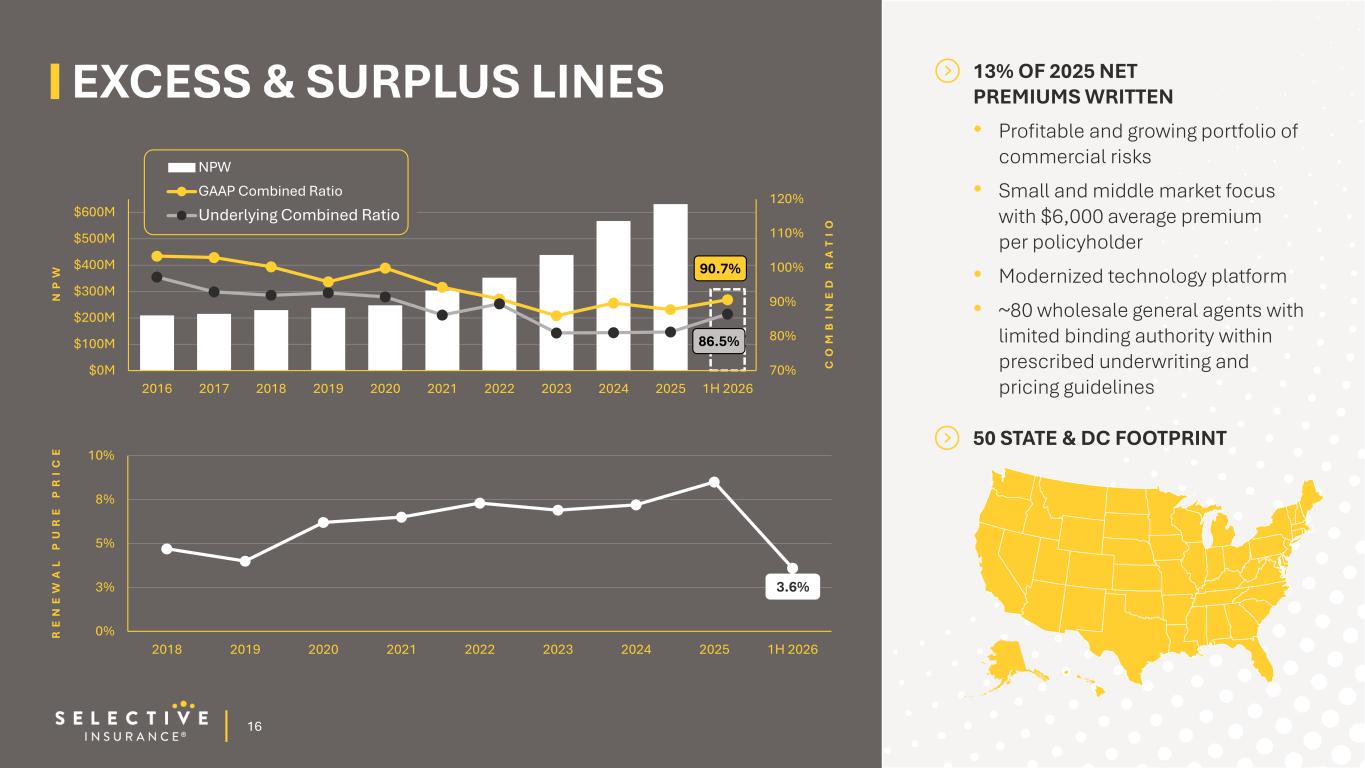
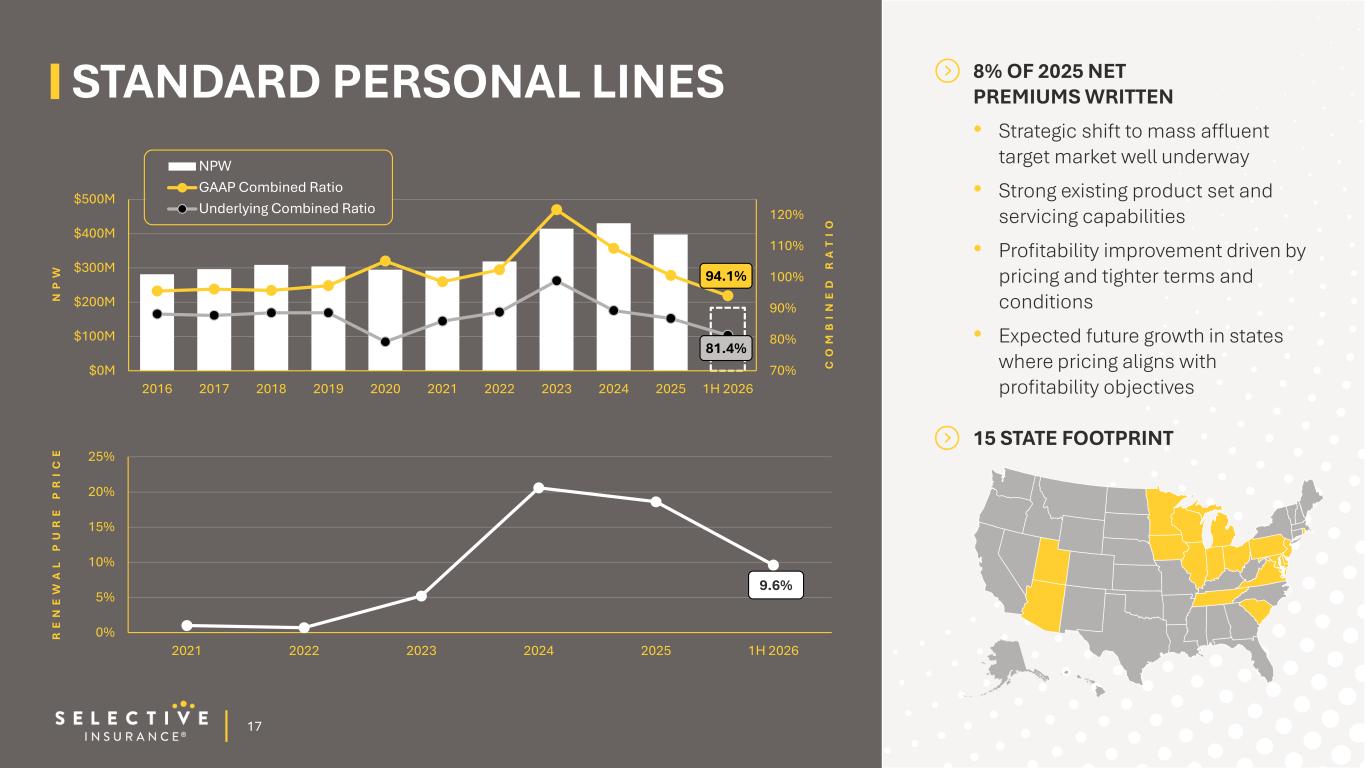
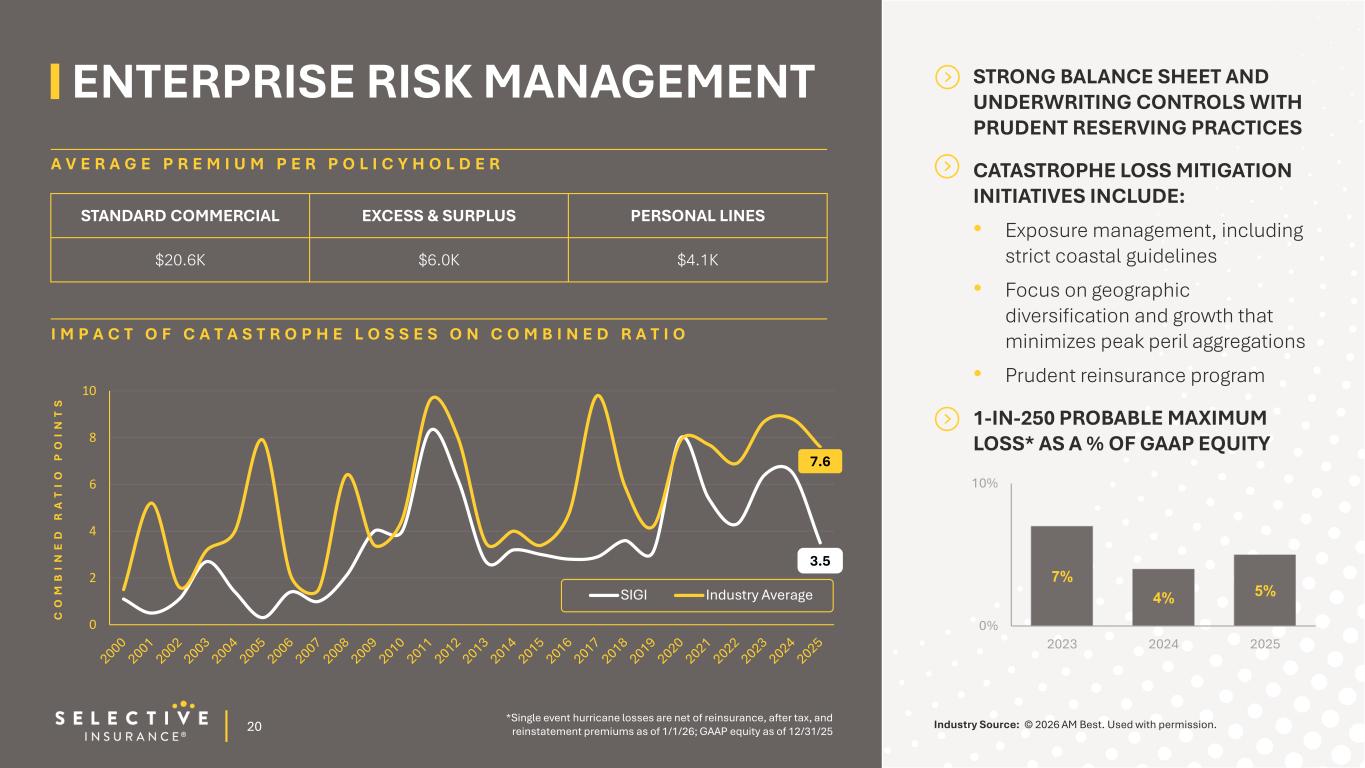
Thanks, Brad, and good morning. This has been an exciting few months for Selective. In May, we celebrated our 100th anniversary and our 50th year as a public company by ringing the NASDAQ closing bell. More recently, we opened our new corporate headquarters in Short Hills, New Jersey. This office broadens our access to talent and positions us near transportation hubs that connect us more easily across our expanding G-Rabler footprint. On July 1st, we opened for business in Montana and Wyoming and are pleased with early traction and agency engagement. These milestones reflect our long-term commitment to discipline growth and operational excellence. This marked our eighth consecutive quarter with double-digit operating ROE. We delivered a 13.7% operating ROE, led by excellent investment income, which grew 18% year-over-year. Each insurance segment produced an underwriting profit, and our 98% combined ratio improved 2.2 points from a year ago. E&S performance remains strong, and our personalized combined ratio of 94.1 for the first half of the year is ahead of our 95% combined ratio target. Driving margin improvement and standard commercial lines, our largest segment, remains a key area of focus. Net premiums rate and decline 5% for the quarter. We believe discipline is imperative in the current environment, and we remain fully committed to expanding our market share meaningfully where and when margins warranted. We believe the composition of that decline is important, as a meaningful portion reflects actions we are taking to improve portfolio economics and long-term returns. Year-to-date, our E&S and personal line segments outperformed our 95% combined ratio target. In standard commercial lines, our combined ratio is 99.7. As such, we remain focused on improving margins and further diversifying our business mix. Contractors continues to be an important industry vertical where we have proven expertise. However, the casualty-oriented nature of this business has pressured performance in recent years as we and the industry work through elevated commercial casualty loss trends. In 2025, contractors represented 43% of our commercial line's premiums. Through the first half of 2026, it accounted for 33% of new business. While new business diversification improved, standard commercial line's new business premiums declined 22% in the second quarter, consistent with the first quarter decrease. Stronger new business pricing, informed by our view of expected loss trends, combined with a competitive market, drove lower conversion rates. We are leveraging our tools, render insights, and differentiated operating model to drive higher renewal retention on our best-performing business and meaningfully lower retention on our underperforming business through appropriate rating actions. While the overall rate increases have moderated, we expect these mixed improvement actions will contribute to improved profitability. The execution of this strategy accelerated during the second quarter. Retention in our best-performing renewal cohort was 89% for the quarter, consistent with a year ago. At the same time, retention in our worst-performing cohorts decreased from 81% to 55%, and renewal rate increased from 11.5% to 18%. This is exactly the portfolio effect we intended, as we believe these actions improve the earnings power of the portfolio over time. These actions are simultaneously supporting our broader organizational priority to further diversify our business. In the quarter, contractors' retention declined approximately two points year over year, reflecting its casualty orientation and our view of required rate levels in commercial auto liability and general liability. Of the six percentage point decline in standard commercialized net premiums written, this quarter, lower new business contributed three percentage points of the decrease. Actions on the renewal portfolio, specifically in our worst performing cohorts, drove the remaining three percentage points. We are constraining growth where margins do not meet our targets and focusing new business and retention strategies on the business that continues to enhance the earning power of While these actions take time to earn through the portfolio, we believe they position us for improved underlying margins and more attractive risk-adjusted returns. E&S delivered another strong quarter with a 91.8 combined ratio and a disciplined underwriting across both property and casualty. Renewal tier price increased 3.4%, with continued rate momentum and casualty reflecting our view of general liability loss trends. Property pricing was slightly negative, consistent with competitive market conditions and strong margins. Increased competition in the marketplace, along with our disciplined approach, contributed to a 2% premium decline in the quarter. The E&S market has benefited from strong tailwinds over recent years, but historically has exhibited more cyclicality than the admitted market. We are seeing more capacity entering the E&S marketplace, including appetite expansion by admitted market carriers. With our strong margins, 50-state footprint, and expansion of our distribution channel to include our retail agents, we believe E&S continues to present a long-term opportunity to support our profitable growth and diversification objectives. Personalized profitability continues to improve, despite expected variability in property losses. The combined ratio is 95.5, up from 91.6 in the second quarter of 2025, driven by higher non-catastrophe property losses. Year-to-date, the combined ratio of 94.1 was 80 basis points better than the first six months of 2025, and compared favorably to the 100.6 combined ratio for the full year of 2025. Results remain stronger outside of New Jersey. Net premiums written declined 8%, with target business down 2%. New business decreased 36% in the quarter, driven by an increasingly competitive auto market and restrictions we have in place to manage exposure in New Jersey. Homeowner's premium was relatively flat in the quarter, as we continued to gain traction in our target market. Average new business home values remained in excess of $1 million for the first half of the year, and target market business now represents approximately 70% of our homeowner's premium. We are focused on growth in our target market, where we believe our rates are adequate. Renewal pure price increased 8.9% with continued refinement of our segmentation strategy. For each of our insurance segments, the actions we are taking to strengthen our portfolio reflect the same disciplined approach that has long guided selective success. We remain focused on improving fundamentals across risk selection, individual policy pricing, and claim outcomes, diversifying revenue and income within and across our three insurance segments, and further leveraging data, analytics, and technology, including artificial intelligence, to drive operational efficiency and improve underwriting and claim outcomes. Now I'll turn the call over to Patrick.
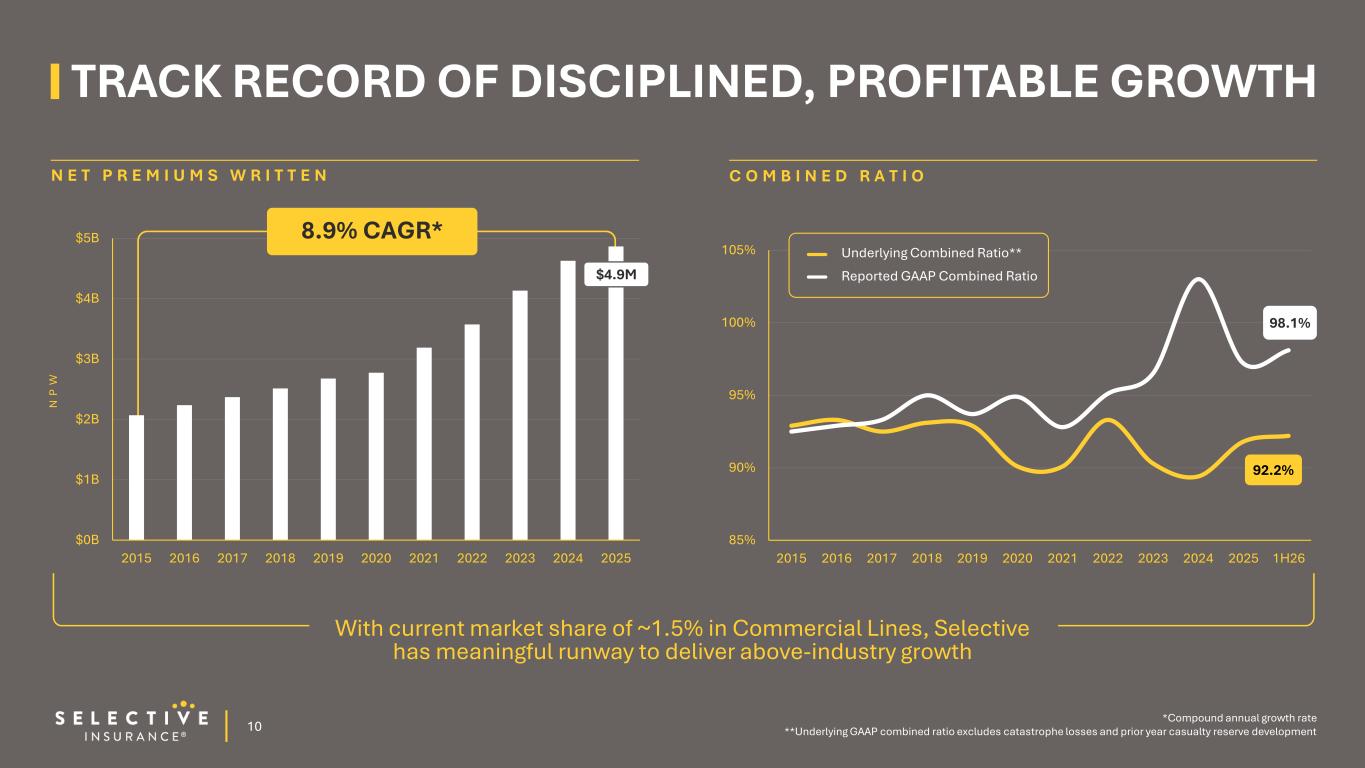
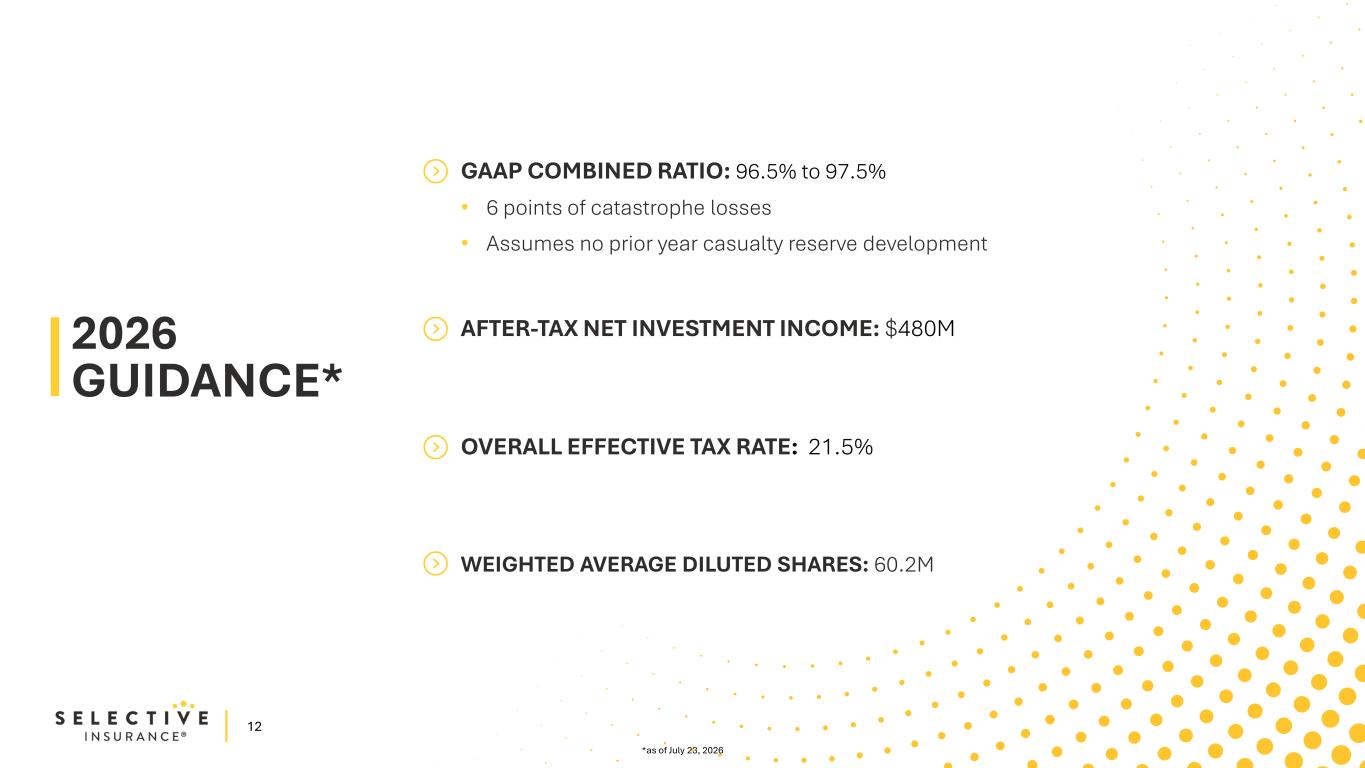
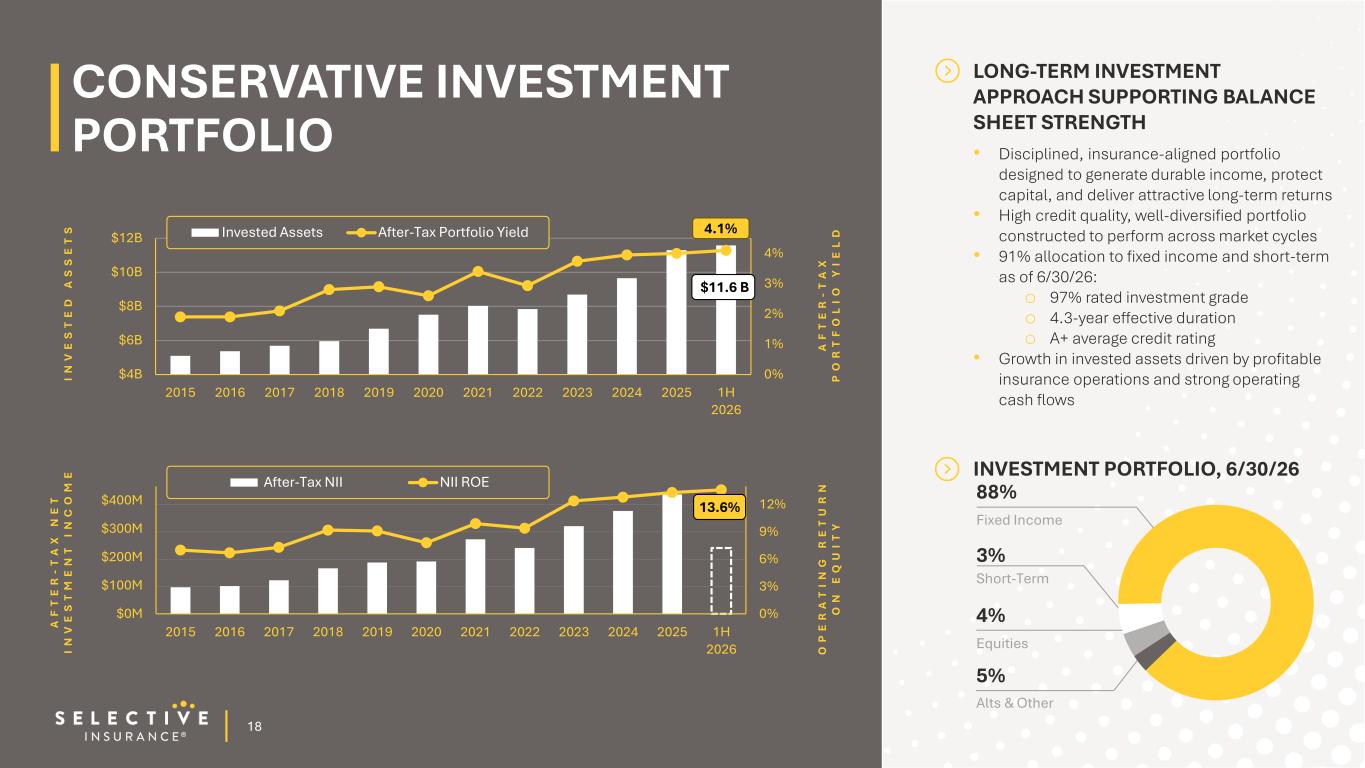
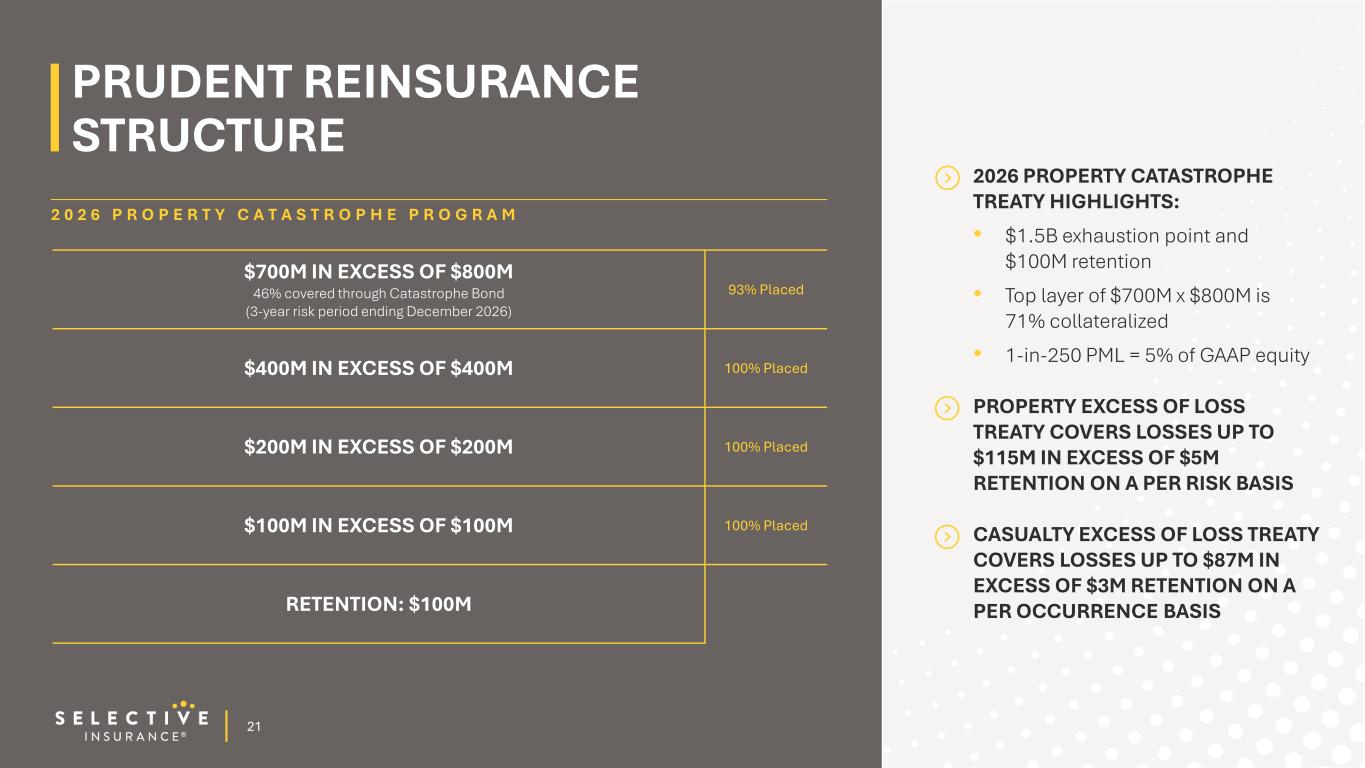
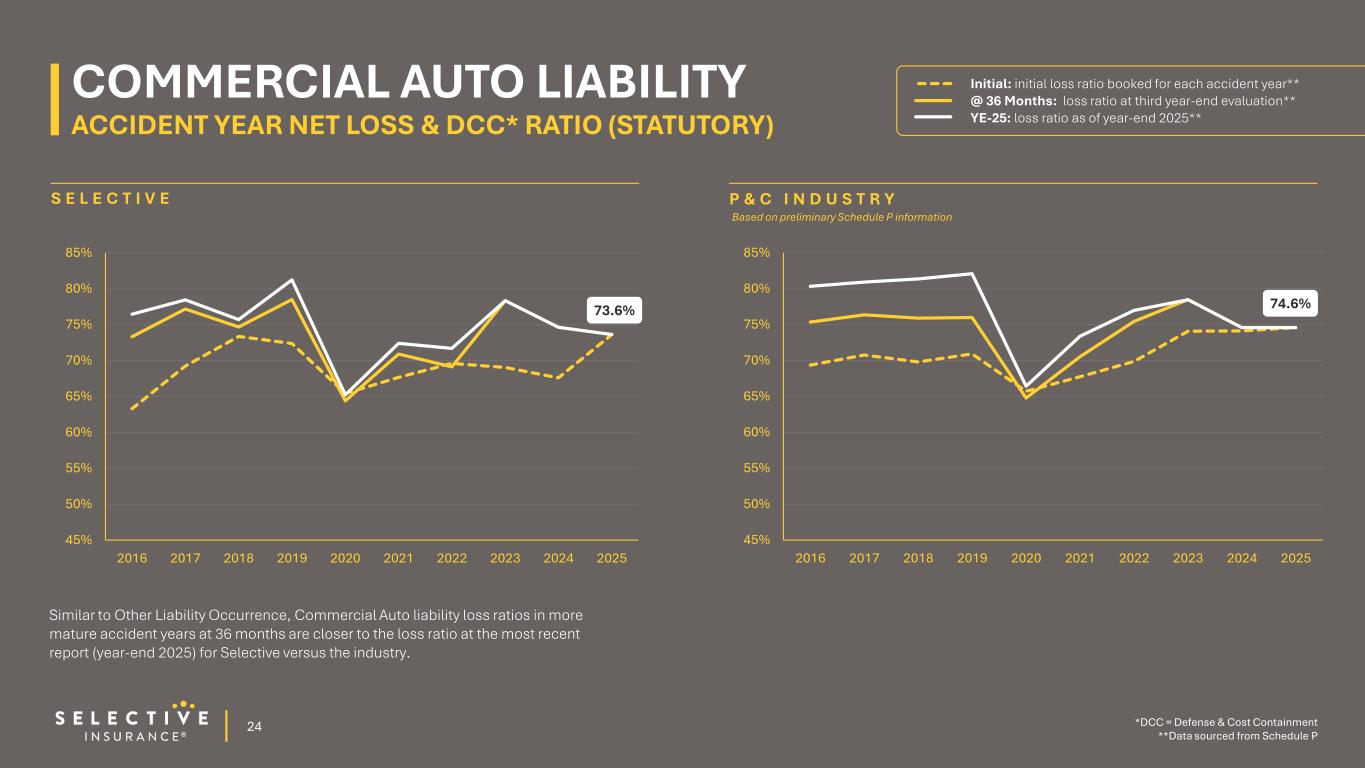
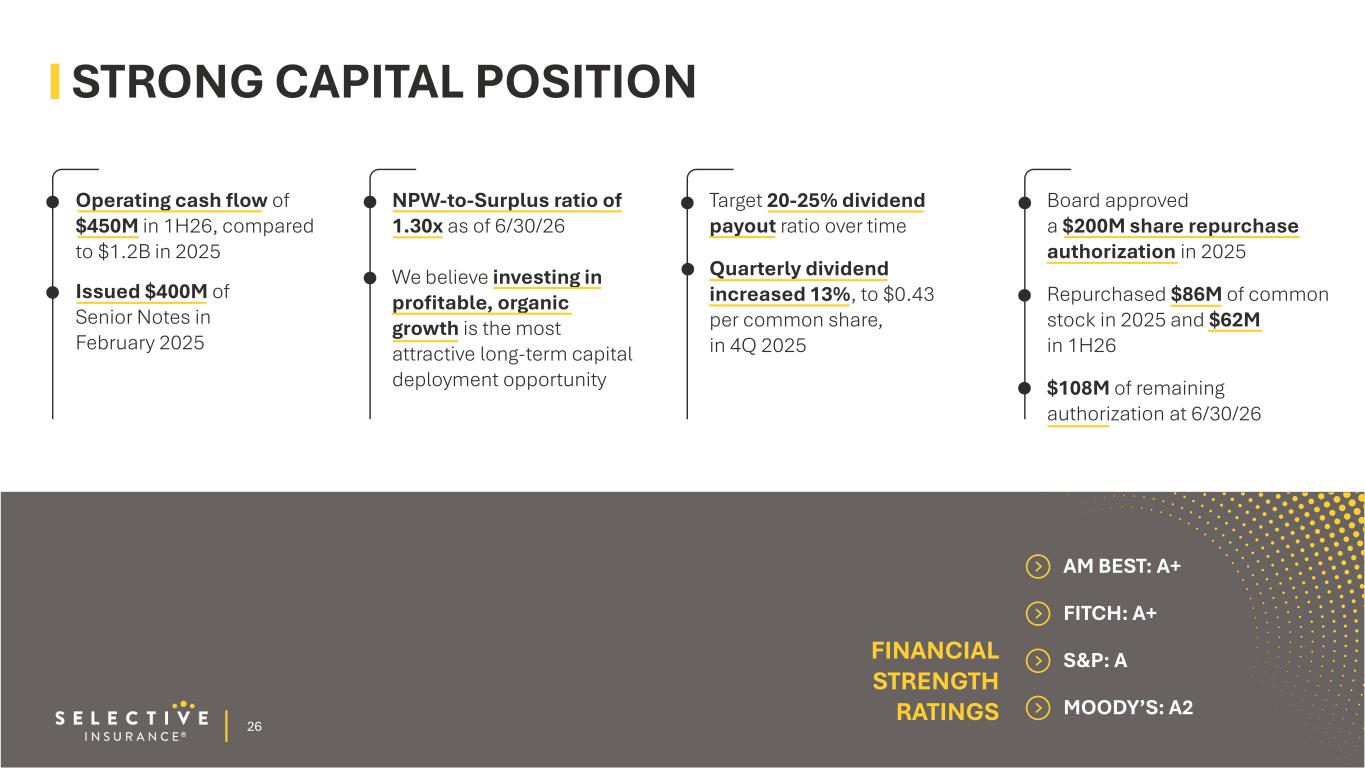
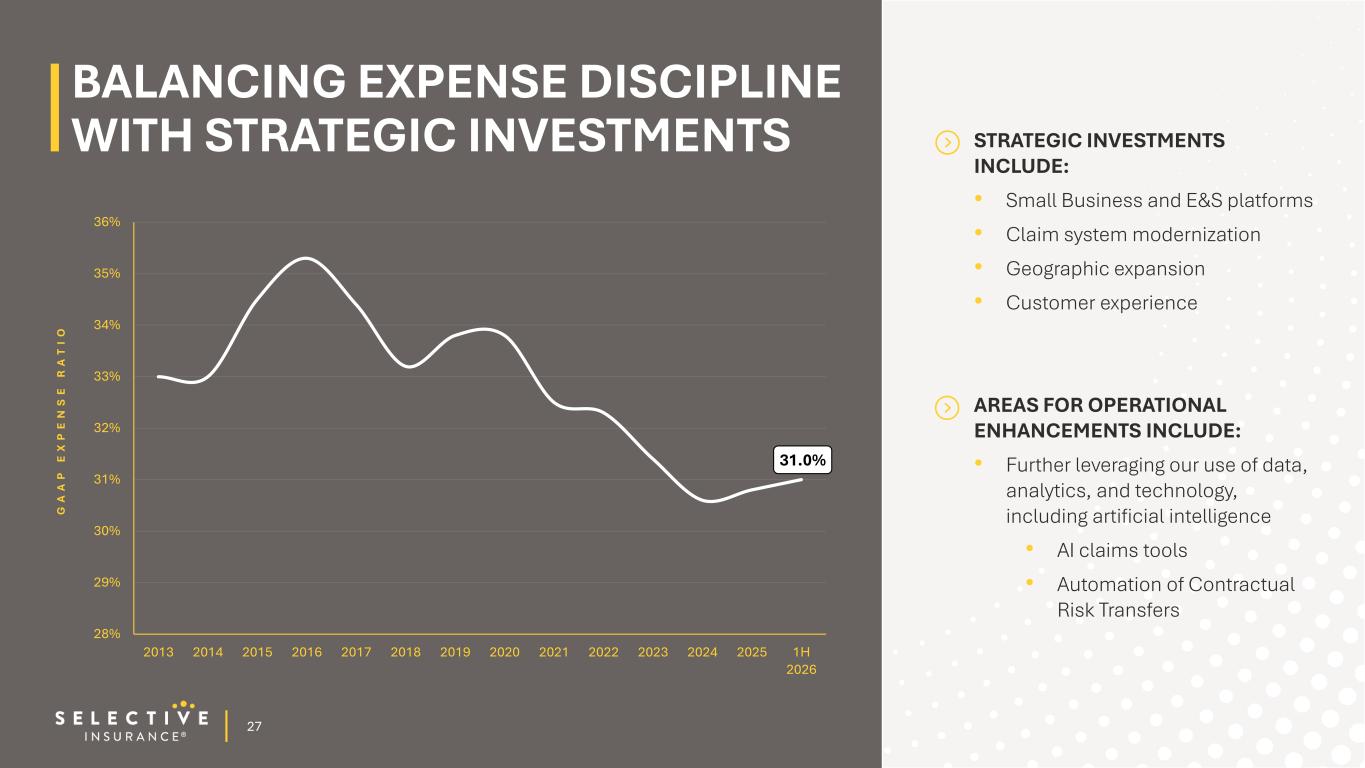
Thanks, John, and good morning, everyone. For the quarter, we reported fully diluted EPS of $2.11 and non-GAAP operating EPS of $1.95, resulting in a 14.8% ROE and a 13.7% operating ROE. Our GAAP combined ratio was 98.0%, including 5.6 points of catastrophe losses. Year-to-date, strong after-tax net investment income and a GAAP combined ratio of 98.1 delivered a 13% ROE and a 12.8% operating ROE, ahead of our 12% target. As in the first quarter, we had no prior year casualty reserve development at the segment or line of business level. Severities have generally tracked in line with expectations. However, we have observed higher than expected frequency in the first half of the year for commercial auto liability and have adjusted our current year loss ratios accordingly. In commercial auto, the year-to-date underlying loss ratio of 69.7 was up modestly compared to full year of 2025, including the current accident year frequency adjusted and previously contemplated severity pressures. partially offset by earned renewal pure price. In general liability, the year-to-date underlying loss ratio was 0.8 points higher than full year 2025, reflecting elevated severity trends we embedded in the current accident year as part of our planning process. Turning to pricing for the quarter, excluding workers' compensation, renewal pure price increased 7.4 percent. General liability pricing increased 8.7%, and commercial auto pricing increased 9.3%, up 20 basis points sequentially. Auto liability pricing approached 13%, demonstrating our ability to deliver rate increases where they are most needed. Property renewal premium increased 7.7%, including 3.3 points of exposure growth. We are prudently managing the impact of net premiums written as we balance maintaining a competitive expense ratio with strategic investments to support future growth and operational efficiency. We remain committed to technology investments that we believe will increase the capacity and decision quality of our teams. For 2026, we expect our expense ratio will be consistent with our expectation of approximately 31.5% at the beginning of the year. Effective July 1st, we renewed our casualty excessive loss and property per risk reinsurance treaties. These treaties cover our standard commercial lines, standard personal lines, and E&S businesses. The casualty excess of loss treaty covers our entire casualty portfolio and provides $87 million of protection in excess of a $3 million retention. As part of the renewal, we reduced our co-participation in the first layer from 20% to 8%, and all remaining layers were fully placed with no co-participation. We also renewed our property per-risk treaty, which now provides $115 million of coverage in excess of a $5 million retention on a per-risk basis. The $20 million increase in treaty limit from the expiring program reflects continued business growth and higher insured values across the portfolio. Turning to capital management, our capital management approach is unchanged. We prioritize supporting the profitable growth of our business over the long term and aim to return 20 to 25 percent of earnings to shareholders through dividends. We will also opportunistically repurchase shares. During the quarter, we return nearly 50 percent of our after-tax net income to shareholders through regular dividend and $32 million of share repurchases at attractive valuations. Our strong capital position supports this commitment to delivering long-term value. At quarter end, $108 million remained on our authorization. After tax net investment income was $119 million in the quarter, up 18% year-over-year. This generates 13.9 points of ROE. The increase in net investment income was due to higher book yields driven by higher interest rates across the yield curve. The deployment of strong operating cash flows and active portfolio management also contributed to this positive outcome. The portfolio remains conservatively positioned with an average credit quality of A-plus and a duration of 4.3 years. Turning to guidance, we continue to expect a gap combined ratio between 96.5 and 97.5, assuming six points of catastrophe losses. Given year-to-date underlying results, we expect to be near the top of the range. We now expect after-tax net investment income of $480 million, up from our original expectation of $465 million. Our guidance assumes an effective tax rate of 21.5% and a fully weighted average share count of $60.2 million, reflecting year-to-date share repurchases. With that, operator, please start our question-and-answer session.
Operator
Thank you. To ask a question, please press star 11 on your telephone and wait for your name to be announced. To withdraw your question, please press star 11 again. Please stand by while we compile the Q&A roster. Our first question comes from the line of Michael Phillips with Oppenheimer. Your line is now open.
Thank you. Good morning, everybody. John, I wanted to take my first question on your comments in the opening on the new business and commercial growth or decline in the quarter. I guess two things first. But it is – I think your rental pricing, you know, while it was sequentially down, I don't think it was down as much as we've seen from others. And then secondly, this obviously is the first quarter you've taken deliberate actions. And maybe the important point is that second point. It's not the first quarter you've done that. So, you know, the drop you mentioned, new business contributed about half of that drop in commercial lines. Were you more aggressive with those actions this quarter than you have been on prior quarters? or was there something else that led to the decline as we think about kind of what that means for future quarters?
Yeah, I guess to your point, Mike, the stance we've taken with regard to pricing overall and new business pricing is not just, you know, that was certainly there in the latter part of last year. The decline in new business in Q1 was pretty consistent. We talk about what happens going forward. You know, I think there's a market dynamic here that we've seen pressure in commercial lines where our traditional hit ratios would have been in the mid-30s, and I would say they're probably down into the low 30s at this point. And I think that will continue to the extent that market pricing doesn't start to become more reflective of where run rate profitability is in GL in particular and where loss trends are. But at the same time, you know, this market is one where individual risk selection matters a lot. So we've got a view on overall pricing on a line-by-line basis, but there are still high-quality accounts to be found in this marketplace, and our ability to identify those accounts, pursue those accounts, and ultimately win those accounts will give us potential to continue to generate solid new business on a go-forward basis and approve this at the same time. So we're not just sitting here waiting for the market to turn. We're dialing up our efforts to increase submission activity in the places on a segment and geographic basis where we can effectively compete at our target pricing levels. Those areas do exist.
Okay. Thank you, John. You have to read the comments on commercial auto and frequency. I guess any details you can provide on kind of where that's coming from? Do you think this quarter was more of an anomaly? Is there a trend here that we should be focused on to worry about there?
I would say, you know, we saw in the first half of the year some elevated frequency. There's a hypothesis that suggests that you see this when you have a heavier winter, like we saw in the northern part of the U.S. this year. But I think from our perspective, rather than put full weight on that hypothesis, we thought it was prudent to react to what we saw. I'll also say we saw this a couple of years back in workers' comp. It ultimately reversed itself and settled out, and we're not predicting that happening. I think we just view it as a prudent step to respond to what you see in the data early in the year. If it reverses, that's great. If it doesn't, we've responded to it already.
Okay, thanks. And maybe just lastly, high-level question maybe for the industry. There's been some, obviously, some tort reform actions at some states. I think less so in some of your higher concentrations, you've got the footprints. But have you seen any, in any of your states, have you seen any efforts that would give kind of credible evidence that suggests that things might be turning for the better there? Your casualty loss picks are still where they were the last three quarters, so it suggests not. But any evidence that you can rely on there?
I would say, you know, there has been some more success, right? Georgia was the first state to make significant reforms. I think that's certainly improved that environment. We've seen more targeted reforms in places like South Carolina around liquor liability. More recently, you saw in North Carolina significant restrictions, if not outright bans, on third-party litigation financing. I think those are all positives. I think some of the more recent actions, while it doesn't affect us on New York with regard to trying to propel fraud in the claim system, I think that's a positive on a directional basis, but I would consider to continue to view these as sort of idiosyncratic items on a state-by-state basis and not broad-based enough to impact the direction of severity I think our expectation is the environment we're in will continue. It will ultimately find its own natural level, but we're not anticipating or predicting that's going to happen this year or next and are pricing accordingly. But this is a big area of focus for us as an industry. It's our trade association's top item in terms of public policy. So we're doing our best to change that outcome, but I don't expect any significant change in the near term.
Okay, wonderful. Appreciate you, John. Thank you.
Operator
Our next question comes from the line of Paul Newsom with Piper Sandler. Your line is not open.
Good morning. Thanks for the call. Maybe a little bit to tease out on Patrick's comment about the combined ratio maybe a little bit towards the higher end of the range. In hindsight 2020, is that kind of a thought that is about the claim frequency issues that you're talking about or is Is it a, you know, competitive situation that's a little bit different than what you thought about at the beginning of the year? And just maybe a little bit of what, you know, came in as unexpected over the last six months that trend-wise you think might be interesting and have changed this.
Yeah, Paul, thanks for the question. I guess I framed this in a couple of different ways, one of which is we did indicate a range. We are affirming the range that we started with at the beginning of the year, signaling that the more recent changes that we've had in the current accident year will naturally flow through there. And so I think part of the messaging there is we see that. And I think I'd highlight the fact that we have a pretty robust plan. I understand that there are seasons. As an example, if you look at the first quarter of this year, if you look at the...
I can't whether it's sort of, in hindsight, the surprise variation, the quick statistician.
No, actually, the guide to the top end is reflecting the fact that...
Sorry about my confusion. I mean, kind of back to the same question, from a competitive perspective, do you think it's different than what you expected this year in general, maybe just some thoughts broadly? Because obviously you folks are doing a lot of changing and pushing price where others are not. So I think you guys have a little bit different perspective than others might have.
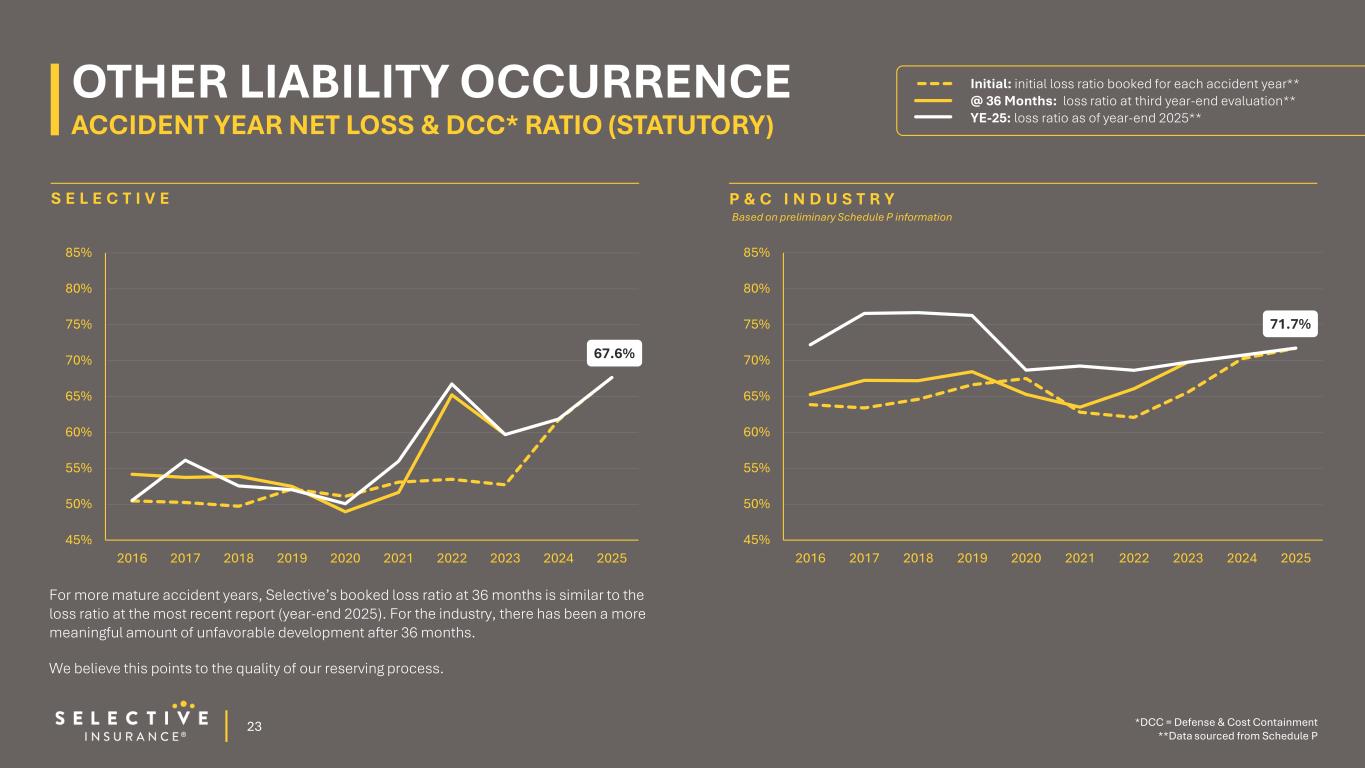
Yeah, thanks, Paul. So let me tackle that. And, again, I hate to always try to project on how other companies, the rest of the industry, on a commercial casualty basis, whether it's GL or commercial auto, run rate performance is not good. generating an underwriting loss in general liability and an underwriting loss in commercial auto specifically. Generally, not a set of any public commentary with conviction that lost trends on commercial casualty. So there's no real explanation for why, probably for GL. It has for commercial auto liability, but it hasn't for GL. And I think we do expect that breakdown results And look at what happened in 2024 and 2025. The industry on GL added a little over $10 billion of adverse to GL in calendar year 24. And in calendar year 25, the industry added another eight current year, and that should be reflecting in the pricing environment. And it doesn't indicate a declining pricing environment, but that's what we're seeing in GL, which is why we maintain conviction in our view that that has to reverse itself. And I think on the auto side, while pricing has remained, results haven't really improved. Property, workers' comp, prior year favorable development, and strong personalized results across the industry. And our expectation is as the margins in those more profitable lines and segments that I just referenced start to temper, and we know they will because pricing in those areas has tightened meaningfully, I think it will put a little bit more pressure on these longer-tailed cash at the lines, which are currently running at an underwriting loss for the industry and for many companies in the industry, and that will sort of force the issue. And our efforts, not just this year but over the last couple of years, are to stay out.
No, that really makes a lot of sense. I even comment a lot.
Operator
Thank you. Our next question comes from the line of Michael Zerunsky with BMO. Your line is now open.
Hey, great. I guess just curious, you know, given the bump in frequency, which hopefully is temporary, you know, why didn't you decide to take any reserve additions, maybe in commercial auto? And I don't know if you wanted to also just maybe talk about GL2. It was, you know, it's good to see no reserve additions, but any – it sounds like no changes in lost trend assumptions this quarter.
Yeah, Mike, so thank you for the question. So to answer your – the latter part of your question first, you know, we have not seen or are pointing to any change in our view of lost trend. But I go back to the comments Patrick made earlier, and I reinforced with regards to the first question. And our reaction in the current year was entirely driven by our view of frequency. And there's no need or no sort of prior years to evaluate. And the current year, you know, you see frequency as your early indicator, and we've always said that. And I'll kind of reinforce the earlier point. You know, there's a hypothesis that suggests that this is weather-related in the first part of the year, but we think it's prudent for us based on, you know, where this line is to react. And that's what we've done here, and it's incorporated into our results. It's incorporated into our full-year guidance. Yeah, Mike, the GL, yeah, the other part of your question. You know, GL has been stable for us since 2024. And, you know, as you recall, we took a significant charge in GL in 2024. And when you look over the last eight quarters since then, you know, our GL reserve position, our reserves have been very stable. because we include Umbrella in our GL line, and the Umbrella experience was driven by ONO. So we feel good about the actions we took in GL a couple of years ago, and I'll kind of reinforce the point. You're continuing to see pressure across the industry, and I think we feel good about getting out.
Got it. I'm not sure you want or are able to quantify IV&R ratios, But would you be able to share whether the IV&R ratios you're booking and kind of GL and commercial auto for the 2026 vintage are meaningfully higher or the same or lower than kind of how you're booking the prior vintages? As we kind of look at the higher loss ratios or kind of want to tease out whether that's coming from, you know, page being a bit higher or is it IV&R?
Yeah, I guess when you think about these longer-tailed casualty lines, the IV&R ratios in the context of what's happening from a reporting pattern perspective, and I think most of the industry have commented on this, and you can see it across the industry, disposal rates have come down meaningfully over the last few years. You're just driven by...
That's a very good point. Maybe just lastly, you know, you brought up this exciting, the continued transition to the Short Hills, or, you know, you announced it a while back, but the transition to the Short Hills headquarters. I know you've, you know, long had a great HQ in the Branchville area. I'm just curious, you know, in the short run, obviously it sounds like a great long-term change. Maybe you can comment on that, but in the short run, has it been creating any kind of turnover or just, you know, issues that might be impacting anything like top line, et cetera, as kind of maybe some employees aren't making, have decided over the past year or two not to make that move?
Yeah, thank you for your question. in any way is no. I think it's important to keep in mind we're moving our corporate functions to location. Our underwriting organization is spread out across six regional offices, one of which is in Branchville, co-located with our corporate headquarters, and that is not moving. That's going to say in terms of disruption to the underwriting organization, I would call it relatively minimal. But with regard to disruption overall, of course a move like this is disruptive, And the population impacted by this is a little less than 20% of our population. It's stretched out over a period of years in order to provide, you know, an appropriate level of flexibility. So we're trying to manage that destruction as best we can. And as we mentioned, as I mentioned in the prepared comments, we think it positions the organization for the future in a much better way. But also, we were founded here in Bransville, New Jersey, and we're going to maintain a strong presence here in Bransville, New Jersey. We're going to have a large underwriting operation here. Our flood operation will be here. A number of other functions will remain. So I just want to reinforce that. These organizations are very strong indeed, and we're going to do that.
Thanks for the candid answer.
Operator
Our next question comes from the line of Meyer Shields with Keith Brea and Woods. Your line is now open.
Thanks so much. Two quick questions, if I can. One, is the premium decline in commercial property, Is that a function of rate, or is that spillover from the underwriting actions that you're taking on the liability lines?
I would say it's related to what we're doing overall, because remember, we tend to write on a package basis. I'm not suggesting there's no model line property in the portfolio, but there's portfolio. The decline is a little bit less than you see in auto, but I think that's more of a function of rate being lower in profit, as an example. But it's not, you know, it's not like we have underwriting actions focused on specifically on property. And, in fact, our property results have been quite strong. So it's really the first one we're trying to do from a profitability improvement.
That's very helpful. And then second, in the underlying loss ratio in BOP went up, is that weather or is that also more conservatism on the liability side of things?
I would say it's property related. So our non-cap property in the BOP line in the quarter was a bit overexpected. There's variability there, but there's nothing to point you from a casualty perspective. That's just non-cap property variability. And on a year-to-date basis, it's a little above expected, but in the quarter, it was a little bit more higher.
Fair enough. I know the personal lines book is intentionally sort of focused on the math affluence. When we look at broader industry data, we're still seeing, I think, surprisingly low levels of severity trend outside of bodily injury. And I'm wondering, is that showing up in selectives as well as also?
I'm sorry, Mary. So you're talking about lower levels of BI outside of auto BI?
Yeah. All of the sublines outside of BI we're seeing, like, looking at the ISO data, very low severities that I frankly don't understand. And I was wondering if you're seeing that, and if so, what you think is happening.
Yeah, well, I would say that, and I think it is pretty reflective of being driven, and I think the much more muted and anticipated, like inflation being a lot more well-behaved outside of certain aspects.
Operator
As a reminder, to ask a question at this time, please press star 11 on your touchtone telephone. Our next question comes from the line of Roland Mayer with RBC Capital Markets. Your line is now open.
Hi, good morning. To start, when did the contractor's diversification efforts tick off? And can you maybe walk through what portion of your book has gone through the renewal process there?
I would say, you know, diversification efforts, it's not a new concept for us. And, you know, clearly over the last year or so, we've been particularly focused on making sure we continue to shift the mix in that direction. So it's not like there's some point in time that you're looking for the renewal portfolio to have cycled through. This is a longer-term strategy. I want to just reinforce the point more about line of business diversification. Our big lines for us need to diversify into other lines and other segments of business, and that's the primary driver.
No, that's helpful. And then I guess shifting a little bit, the workers' comp loss ratio improves quite significantly year over year and versus the first quarter.
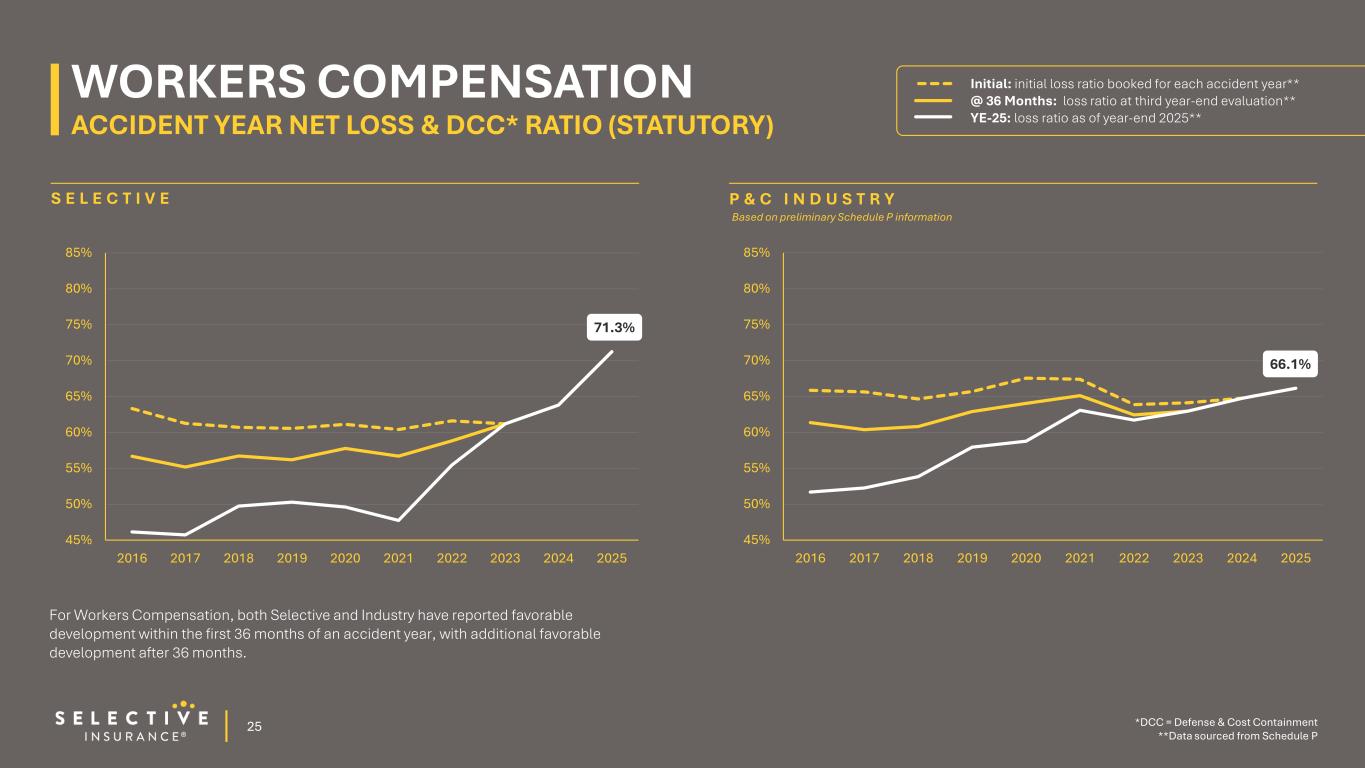
What was the driver of that? Yeah, I would say primarily we see we have a lower frequency. We saw frequencies in 25 come through quite well relative to expected. And then we did reflect that in our 2026 expected loss ratios. And then we saw that better frequency continue through the first half of this year. So I think that's probably the primary point. There's a secondary item there that, without getting into too much detail, We've made some enhancements to our audit process that led to some additional premium capture without associated loss exposure coming with it, but that's more of an operational item.
And then if I could sneak in just one more, given the negative top line, can you maybe walk through capital management, whether you'd consider taking the payout ratio up? I think it's about 50% right now.
Yeah, thanks for the question. I think given slower growth, that certainly does change the demand for capital. But I would say we take a long view. We aim to look for ways. John talked about where we're looking for opportunities to continue to grow the business. We have our payout ratio from a dividend perspective in the 20 to over time.
And so amplify the point around how we think about organizational growth And the fact that you really want to think about how we think about it, that's how we invest in the business. And I think the selective growth story is no different than it was a quarter or two ago. But there will be times in our business, based on market dynamics and other factors, where that growth will temper. And there are times where it will take advantage of those opportunities as they emerge. But I think it's important to always think about the growth. We saw this movie before in 2010 and 2011 where growth flattened because we were focused on making sure we had underwriting and pricing. And those actions set us up for a 10- or 12-year period where we grew the organization. And we're positioning to do that same thing on a go-forward basis, but we're going to make sure that we're doing it in a manner where profit. Have a great summer. Thank you.
Operator
Thank you. And I'm currently showing no further questions at this time. I would like to now hand the call back over to John Marcioni for closing remarks.
John Marcioni- Okay. Well, thank you all for joining us. We appreciate your time. We appreciate the interest and the questions. And as always, if you have any additional questions.
Operator
This concludes today's conference. Thank you for your participation. You may now disconnect.