Operator
Welcome to SelectQuotes' second quarter earnings conference call. All lines have been placed on mute to prevent any background noise. After the speaker's remarks, there will be a question and answer session. If you would like to ask a question during this time, simply press star, followed by the number 1 on your telephone keypad. If you would like to withdraw your question, press star 1 again. It is now my pleasure to introduce Matt Gunter, SelectQuote Investor Relations. Mr. Gunter, you may begin the conference.
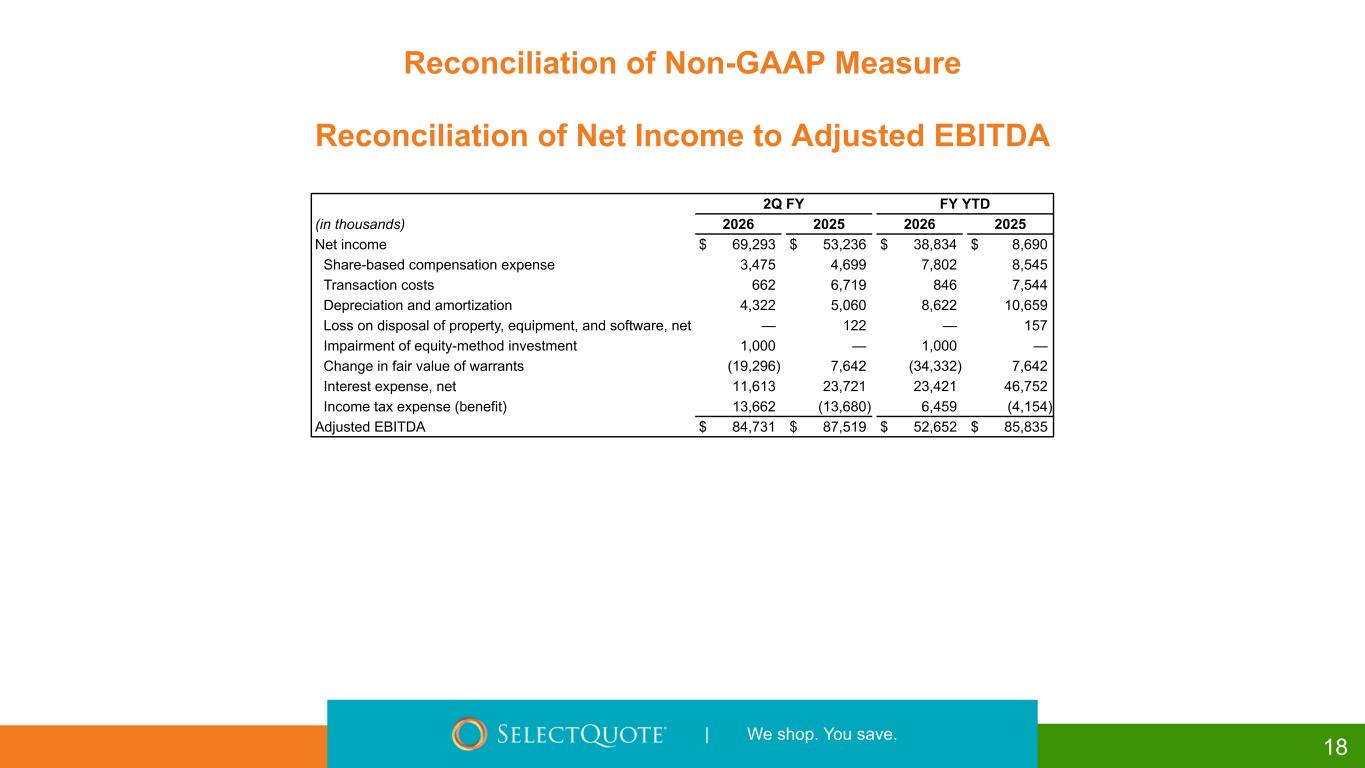
Thank you and good morning, everyone. Welcome to SelectQuote's fiscal second quarter earnings call. Before we begin our call, I would like to mention that on our website, we have provided a slide presentation to help guide our discussion. After today's call, a replay will also be available on our website. Joining me from the company, I have our Chief Executive Officer, Tim Danker, and Chief Financial Officer, Ryan Clement. Following Tim and Ryan's comments today, we will also have a question and answer session. As referenced on slide two, during this call, we will be discussing some non-GAAP financial measures. The most directly comparable GAAP financial measures and a reconciliation of the differences between the GAAP and non-GAAP financial measures are available in our earnings release and investor presentation on our website. And finally, a reminder that certain statements made today may be forward-looking statements. These statements are made based upon management's current expectations and beliefs concerning future events impacting the company and therefore involve a number of uncertainties and risks, including but not limited to those described in our earnings release, annual report on Form 10-K for the period ended June 30, 2025, and subsequent filings with the SEC. Therefore, the actual results of operations or financial condition of the company could differ materially from those expressed or implied in our forward-looking statements. And with that, I'd like to turn the call over to our Chief Executive Officer, Tim Danker.
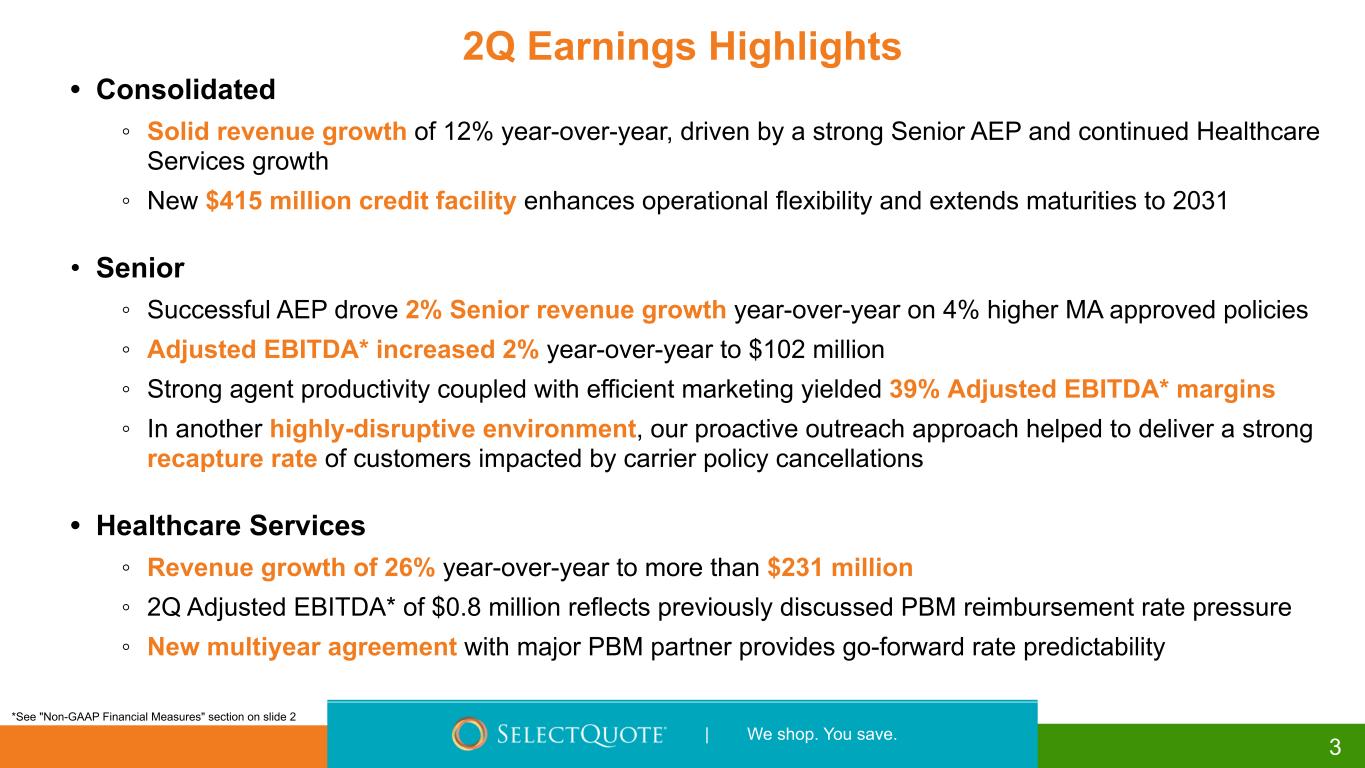
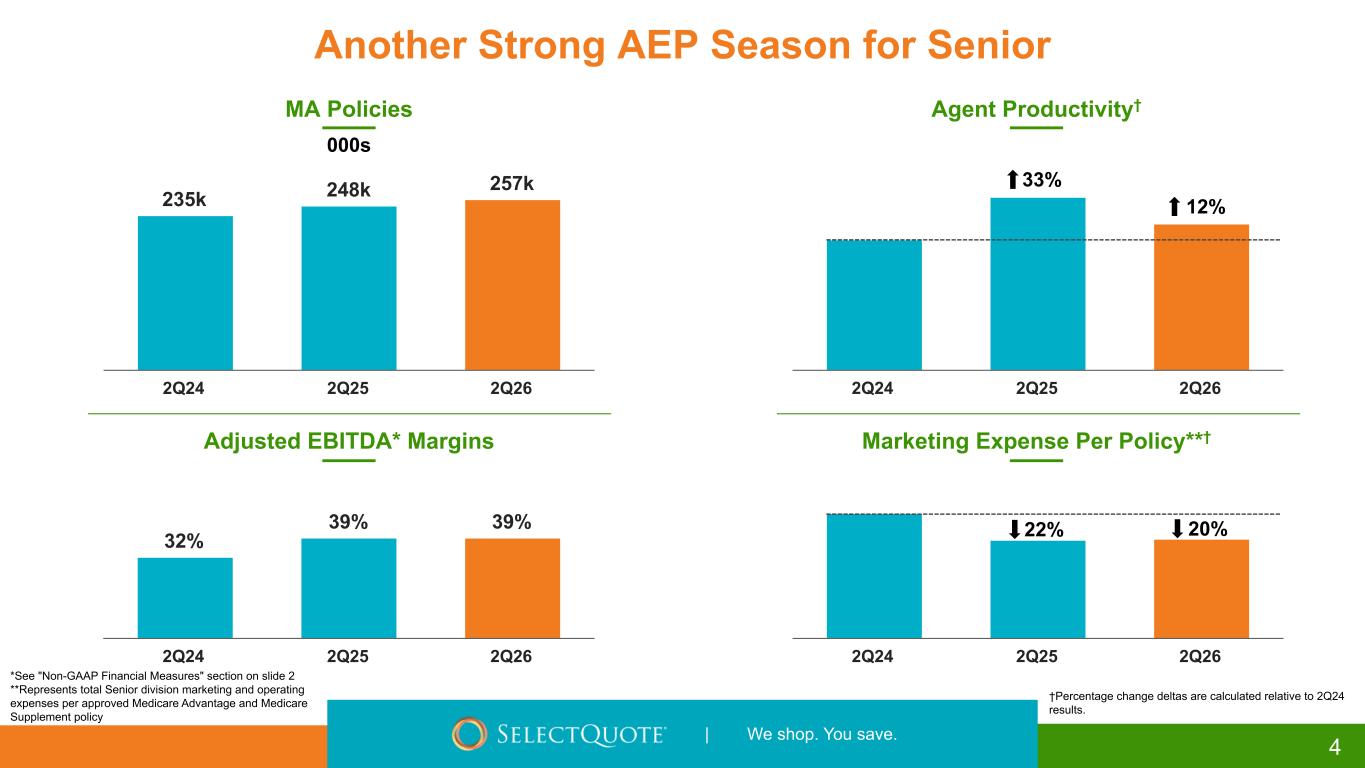
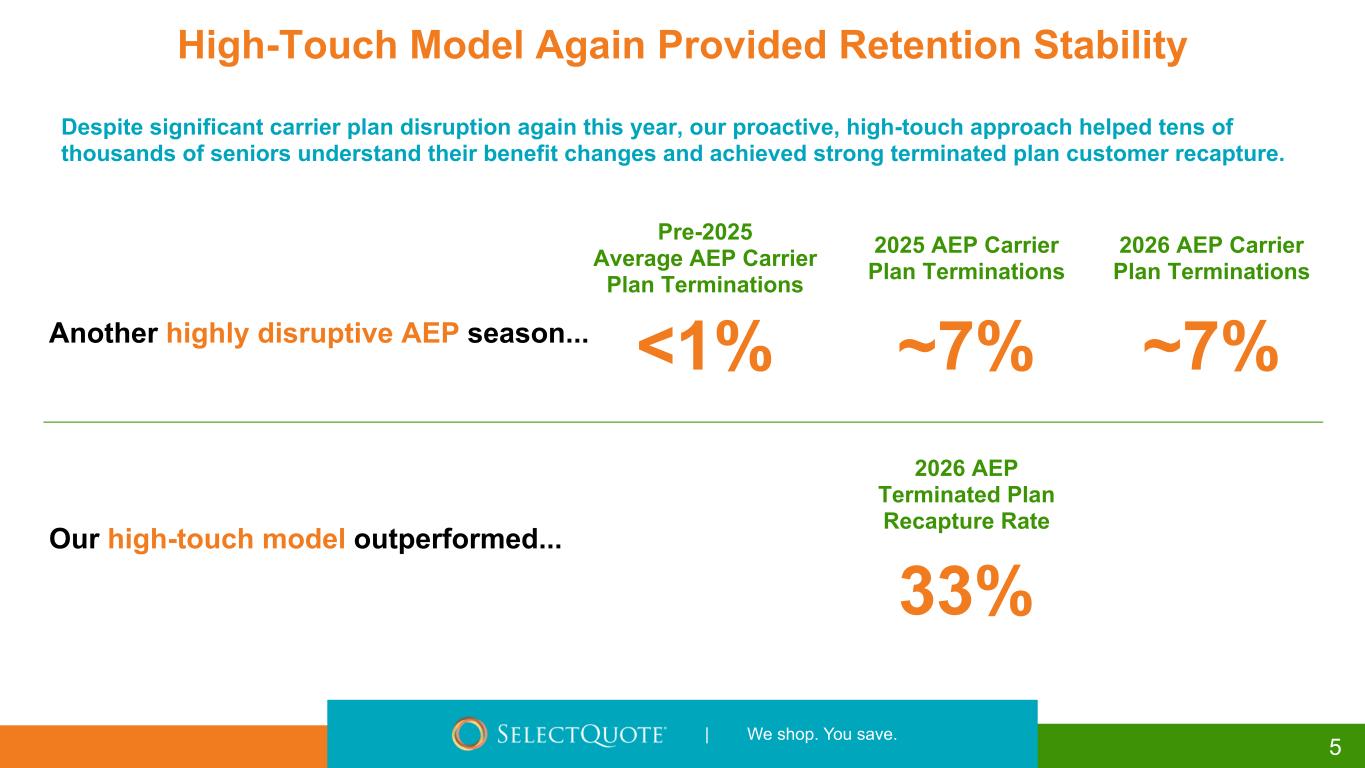
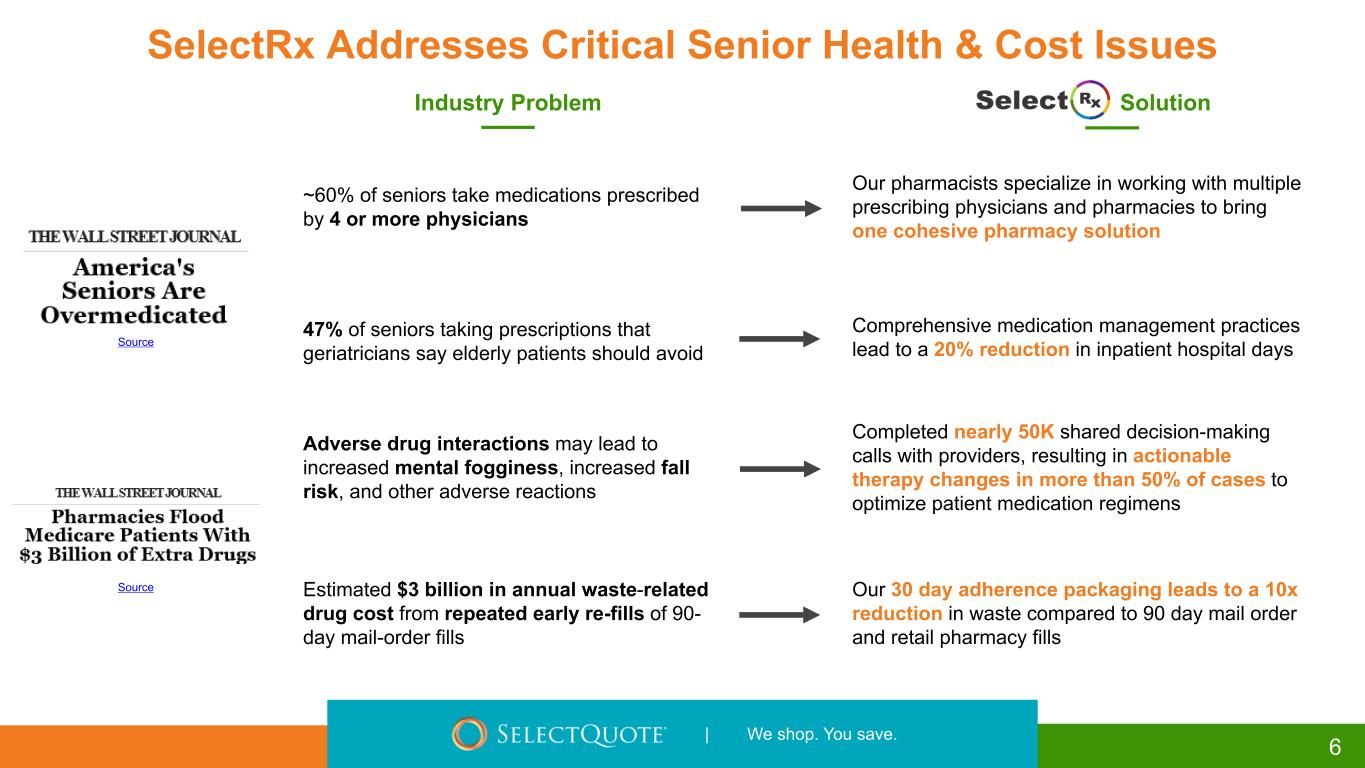
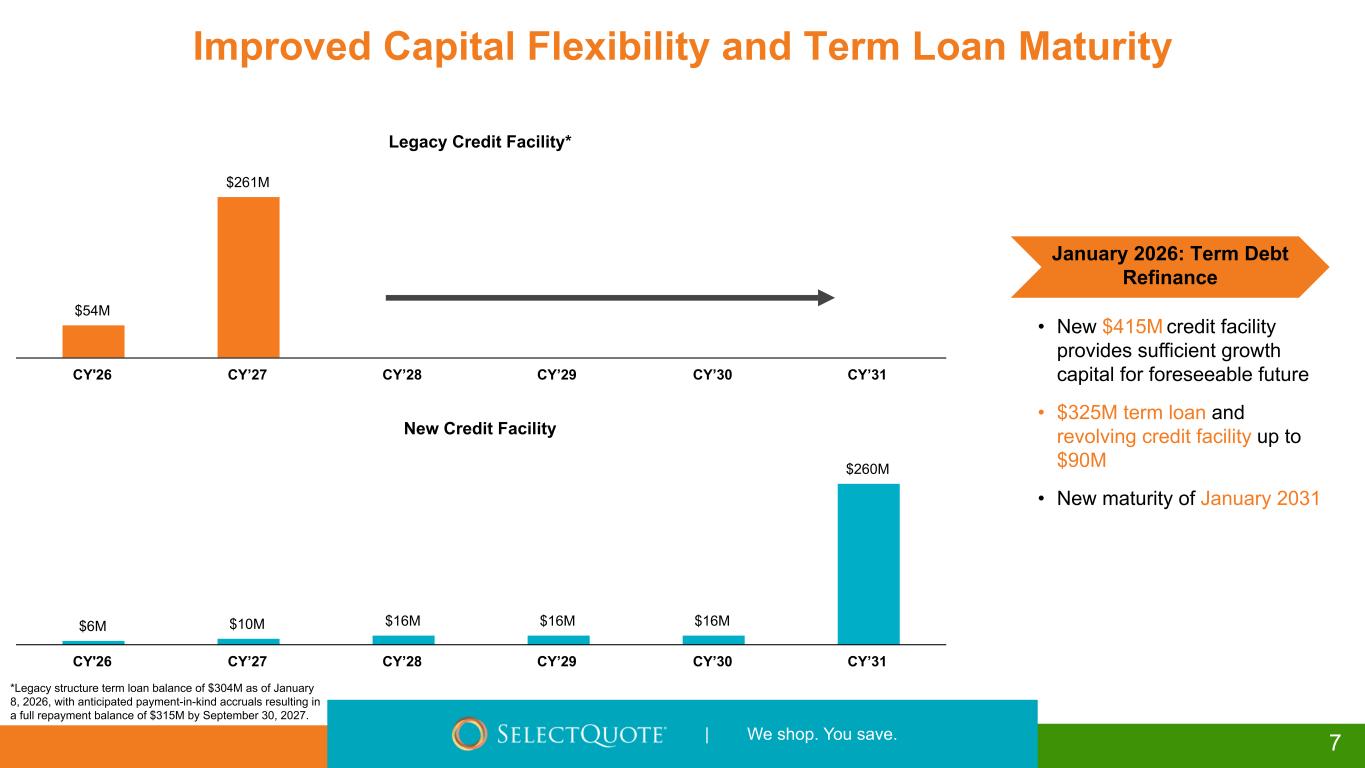
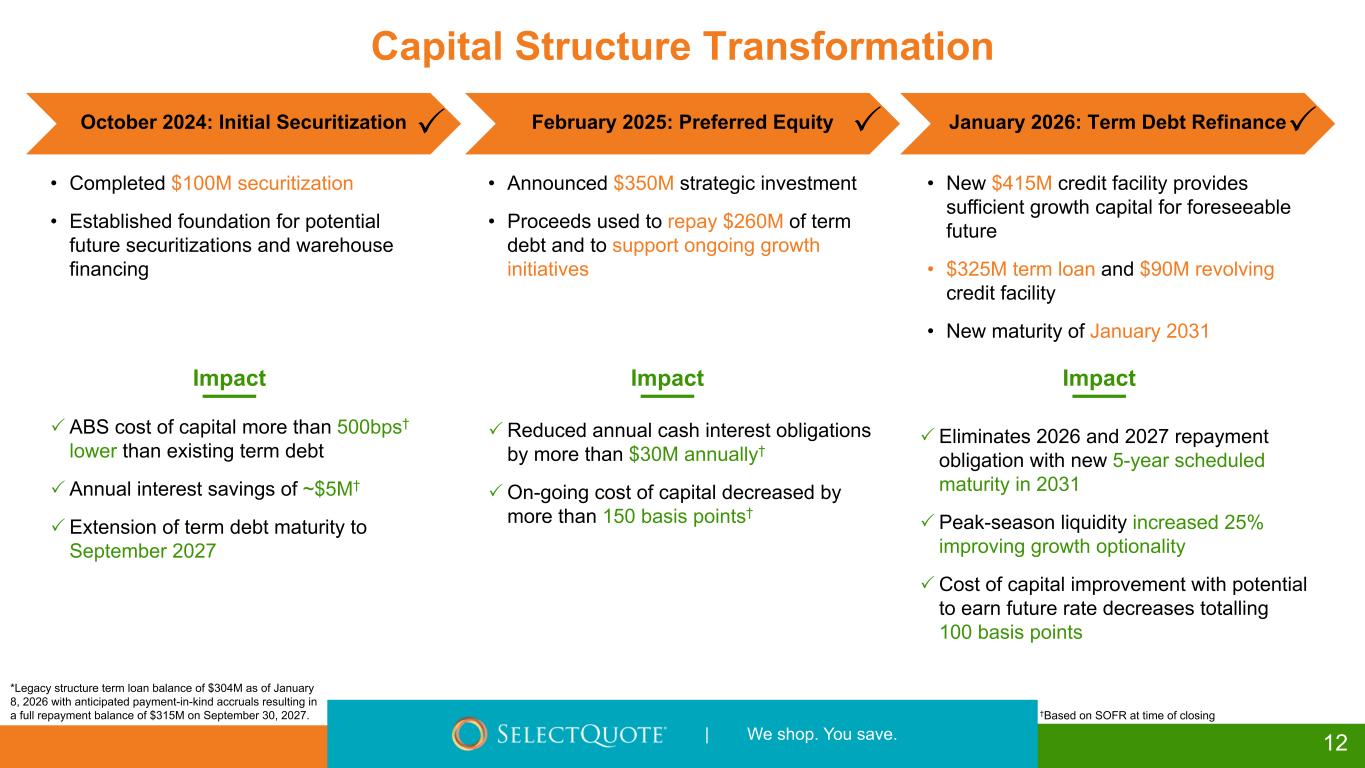
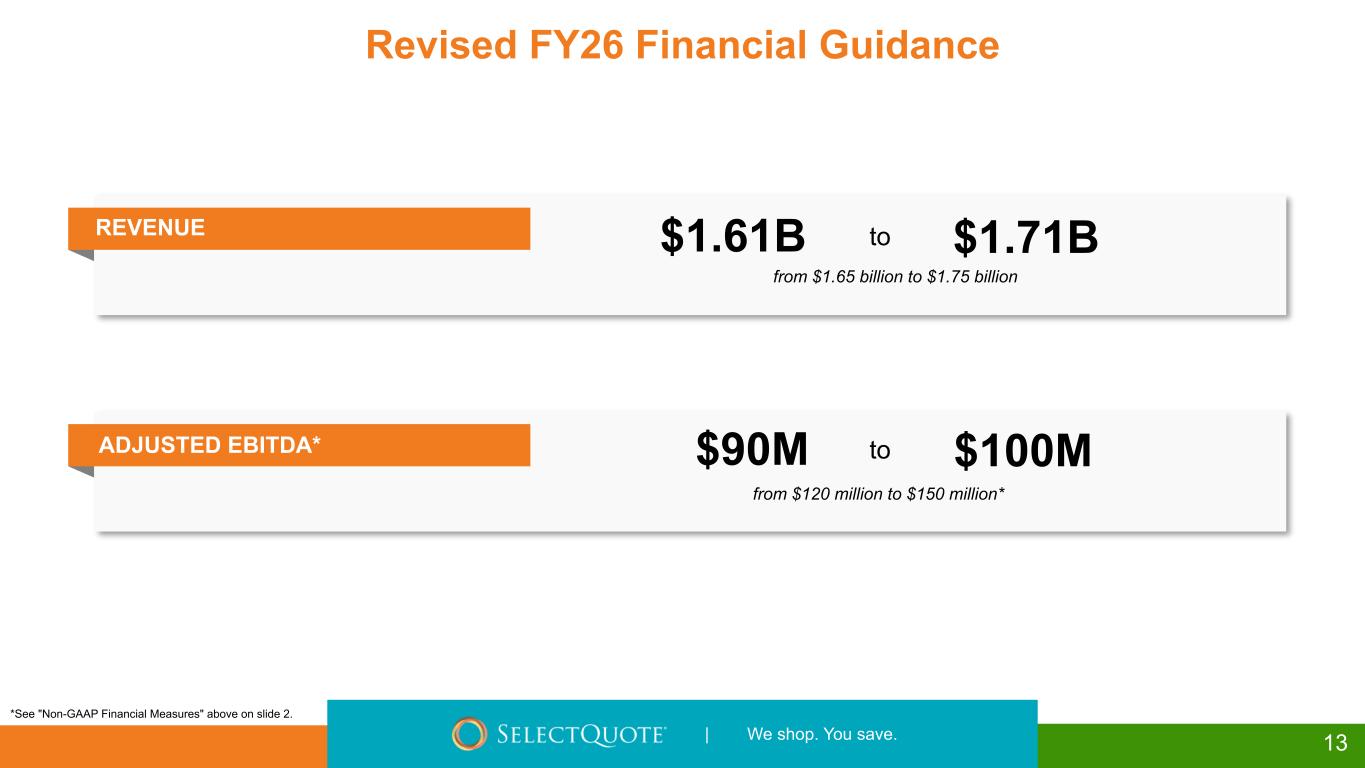
Tim? Thanks, Matt. Good morning, and thank you for joining us. It was a strong quarter for SelectQuote in a number of ways, which I'll summarize on slide three. As you saw from our press release, our team's execution this Medicare Advantage season drove a successful AEP. Despite another shifting backdrop for policy features, SelectQuote continues to prove its value to customers as a leading choice marketplace. As always, seniors receive bespoke information and assistance from live agents to select the policy that best fits their needs. Better yet, our commitment to technology continues to arm our agents with an efficient and powerful service platform, which drove another strong quarter for agent productivity, aiding volume production and profitability. Strong operational execution and marketing efficiency drove near-record senior EBITDA margins of 39% on modest growth year-over-year. Congrats to the team for yet again driving an AEP quarter with strong operating leverage and another dynamic market backdrop. beyond senior our healthcare services segment continues to grow rapidly increasing revenue 26 year-over-year most importantly selectrx continues to make a significant impact and the health and quality of life for america's growing senior population the impact is real and is being increasingly noticed this is great validation of the clinical values selectrx provides beyond simple drug delivery i'll speak more to that topic in a moment additionally over the past month, we made two announcements which benefit our SelectRx business and capital flexibility. First, for SelectRx, we entered a multi-year agreement with one of our most important pharmacy benefit manager, our PBM partners. With this agreement, SelectRx's disability into drug reimbursement pricing is significantly improved, which is critically beneficial to our strategic priority to expand profitability. Second, our new $415 million dollar credit facility announced in mid-January greatly improves the company's capital flexibility, which is an important milestone in our ability to drive consistent, profitable growth. Overall, we are very pleased with our results to date and have greater conviction in our ability to compound profitability and cash flow given this past month's announcement. Lastly, despite another strong quarter, a recent action by a national carrier partner requires that we lower our fiscal 26 guidance specifically this carrier significantly cut their strategic marketing budget across all distribution channel partners including select quote as we've discussed insurance companies continue to optimize profitability for medicare advantage in conversations with the carrier the decision was designed to slow growth following above trend growth on ma in total we expect the fiscal 26 impact from this carrier action to be around 20 million combined with the PBM reimbursement impact we discussed last quarter which we know now will also create an impact of around 20 million we need to reduce our guidance ranges for both consolidated revenue and adjusted EBITDA to reflect the 40 million dollar aggregate impact while frustrating it's important to note that the change by this one carrier does not impact our long-term outlook about the growth profitability and cash flow potential for our business. We stand by our previously announced Fiscal 26 targets of 20% plus EBITDA margins for our senior division and an annualized adjusted EBITDA exit rate of $40 to $50 million for our health care services division. Additionally, we think it's important to note the substantial improvements Slykloat has made on cash flow generation despite the PBM and the action of this one carrier. We expect Fiscal 26 to produce operating cash flow of $25 million to $35 million, which is up more than $40 million at the midpoint compared to last year. The improvement has been driven by increased cash flow from our healthcare services business and continued progress to optimize our capital structure. Overall, while the noise in our EBITDA driven by partner actions was not anticipated, we're very pleased with the execution and trajectory of our profitability and cash flow. Put another way, Slecwood is delivering on the goals of our strategy and we're confident in our ability to drive value for shareholders with that let's move to slide four to review our performance in aep similar to the past medicare advantage season we prepared early for a season of disruption given shifting policy and volume strategies across the industry as we noted last quarter our strategy entering aep was to focus on tenured agent retention and proactive connection with our policyholders on their needs relative to changes in the overall policy landscape. This focus resulted in another successful season. Policy volume growth was 4%, modestly ahead of our expectations. So I quote, agents and technology perform well again, measured by productivity and profitability. Senior grew EBITDA by 2% and drove near record margins of 39%, which marks the fourth consecutive AEP season of senior EBITDA margins above 30%, despite highly varied years for Medicare Advantage policy features. We're proud of the track record and believe the Sleclo's strategy to prioritize profitable growth and cash flow has been more than battle-tested at this point. Our team delivered strong agent productivity and highly efficient marketing costs per policy once again. First, our agent population was comprised of a slightly lower, albeit still strong, mix of tenured agents than the previous year. Our agent retention remained steady at north of 90%, but our tenured agent mix was lower due to additional agent hiring this past summer. Even with this higher mix of new agents, our productivity per agent remained 12% higher than two years ago, which is a testament to the effectiveness of our information and technology investments, which have always been a pillar of our model. In regards to marketing, you'll recall last season's marketing spend per approved policy was highly efficient. We've continued to refine our customer targeting and have placed intentional focus on owned and operated marketing channels, which provide a strong mix of attractive prospects. Specifically, our marketing cost per approved policy, and this AAP was $326, which is in line with last year and 20% lower than 2Q fiscal 24. To summarize, the unique strengths of our model drove significant value to our our policyholders and carrier partners, and another dynamic environment for Medicare Advantage. This resulted in impressive profitability and cash flow for our senior segment. On slide five, I'd like to provide additional real-world color on how SelectWote helps America's seniors when the market is dynamic and disruptive. At the highest level, SelectWote's optimized technology and data empowers our live agents to deliver excellent service to our customers. For the second consecutive year, insurance carriers have significantly shifted policy structures and coverage features. Additionally, this was the second straight year where a significant number of plans were terminated by carriers. In each of the past two seasons, approximately 7% of the total plans in force have been canceled by the carriers, which compares to a historical average below 1%. Beyond the elevated plan termination levels, the majority of our remaining beneficiaries saw a negative impact to at least one of their plan benefits on their legacy plans. This industry-wide dynamic created a market backdrop of elevated consumer shopping and engagement. As you will recall, our strategy heading into this AAP was to replicate the success of policyholder recapture and retention compared to a year ago. Our operational focus to achieve this goal was to leverage our information and technology to work proactively with policyholders. Ahead of the season, we identified a subset of policies with higher change potential and anticipated coverage gaps based on each specific individual. In effect, we pulled forward as much of the work and disruption as possible. The end result is that SelectQuote is a more valuable broker partner for both the policyholder and the carrier, especially in dynamic seasons like the past few years. When our customers call us looking for answers, our agents aren't starting from square one. Similarly, our carrier partners benefit from policies with better fit and persistency. We measured the success of the strategy with our recapture rate, which was 33% this year. We're very proud of our recapture performance last year, but this year we delivered an even better result. This not only benefits market share, but each recapture means we preserve the cash flow from and the relationship with those beneficiaries. To summarize, in another dynamic environment for Medicare Advantage, we are proud of the service we provided to our beneficiaries, which resulted in strong customer recapture rates and retention. The unique strengths of our model drove significant value to our policyholder customers and carrier partners and aligned with optimal profitability and cash flow for our senior segment. Before we shift to healthcare services, let me take a moment to address last week's 2027 advance rate notice from CMS. Several carrier partners have already voiced disappointment with the advance rate notice and we agree the preliminary rates don't reflect rising utilization and care costs. It's important to remember that these advance rates are not final. Coming down the heels of two highly disruptive seasons for Medicare beneficiaries, we believe CMS will receive feedback from the industry highlighting the potential negative of implications to beneficiaries at advance of the final rate notice in April. Regardless of the market backdrop, we will continue to prioritize outstanding service to our beneficiaries. Select what's bespoke service model and information advantage remain highly valuable and will likely become even more important as carriers focus on optimizing returns and policyholders work to interpret plan changes. On slide six, I'd like to provide important context about the value of of our SelectRx prescription drug delivery and adherence service. America's medication system is increasingly inefficient, confusing, and costly, issues that directly impact seniors' health. Recent Wall Street Journal articles highlighted two core problems. First, many seniors manage complex drug regimens prescribed by multiple physicians, which increases the risk of inappropriate medications and harmful interactions. Second, the widespread practice by many mail-order pharmacies of repeatedly early filling 90-day prescriptions contributes to billions in wasted drugs when prescriptions change, while also creating complexity that undermines medication adherence. SelectRx was purpose-built to address these systemic challenges head-on. Our 30-day time-and-date stamp medication strips reduce confusion, support adherence, and substantially cut waste when members' prescriptions change, which occurs for roughly 10% of our population each month. Just as importantly, our pharmacists review and consolidate each member's full medication profile. In 2025, they identified nearly 50,000 potential dosage or adverse interaction concerns. When such concerns arise, our pharmacists contact prescribing physicians in an attempt to remediate these concerns for impacted members. These conversations with prescribing physicians have resulted in changes to tens of thousands of prescriptions, helping to safeguard the patients we serve. This integrated approach is delivering real, measurable outcomes, including an observed 20% reduction in beneficiary hospital days, driven by better active medication adherence. These issues facing America's seniors are exactly why we built SelectRx and why we continue continue working to improve a system that has long-needed meaningful change. Before I turn the call to Ryan, I'd like to briefly touch on our January credit facility announcement and what it means for select quotes strategically. First, for those that have followed us, the optimization of our balance sheet has and continues to be a core priority of our strategy to drive shareholder value. In short, we believe our model should command a lower cost of capital. It is our intention to achieve that through continued operational improvement, growing cash flow, and the natural deleveraging that will follow. We've made progress on this goal with previous refinancings, but to date have been limited by the near-term debt maturities, which hindered our operational flexibility, especially in our senior Medicare Advantage business. As you can see on the charts on slide 7, the new credit facility significantly extends our debt maturities to 2031. To be clear, our strategic focus does not change, and SelectQuote will continue to prioritize profitability and cash flow over growth. This enhanced operational flexibility simply allows us to capitalize on growth opportunities when market conditions support them. With that, let me turn the call to our CFO to detail our results.
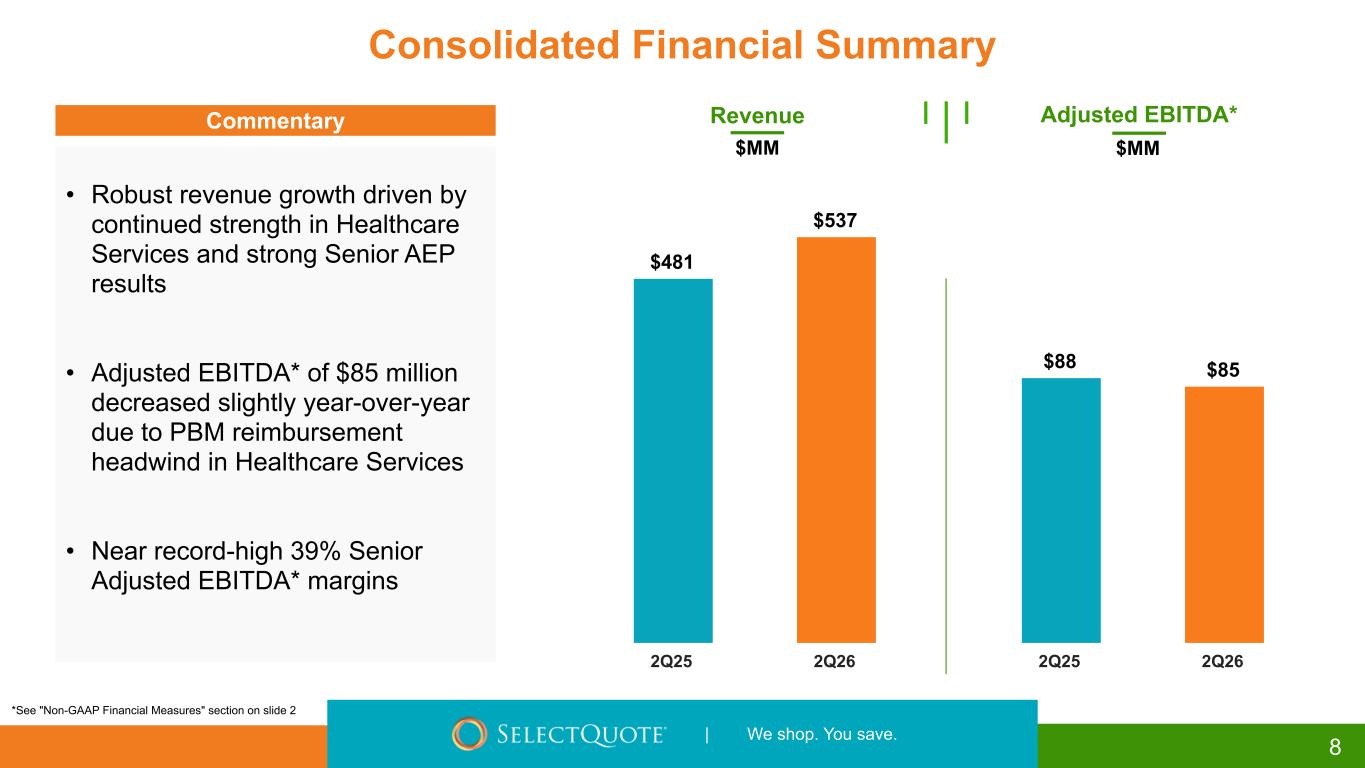
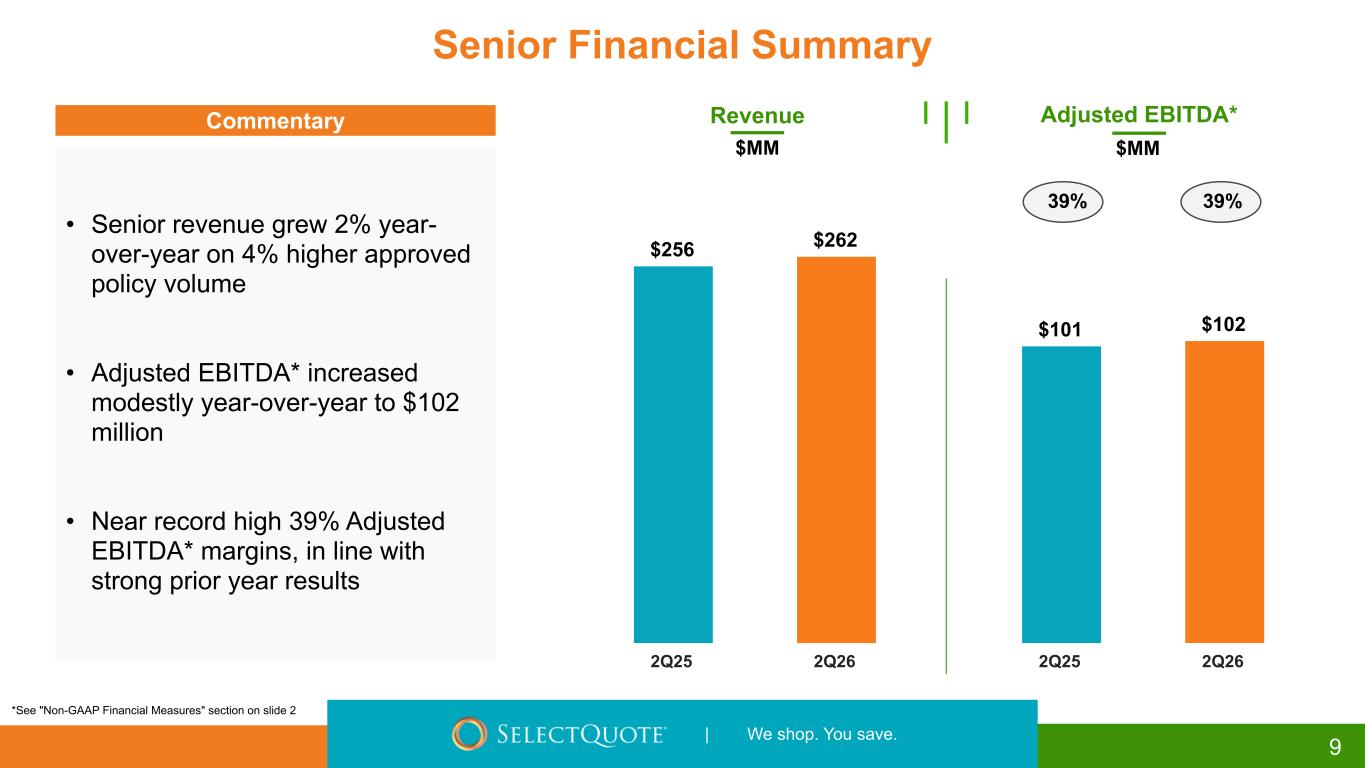
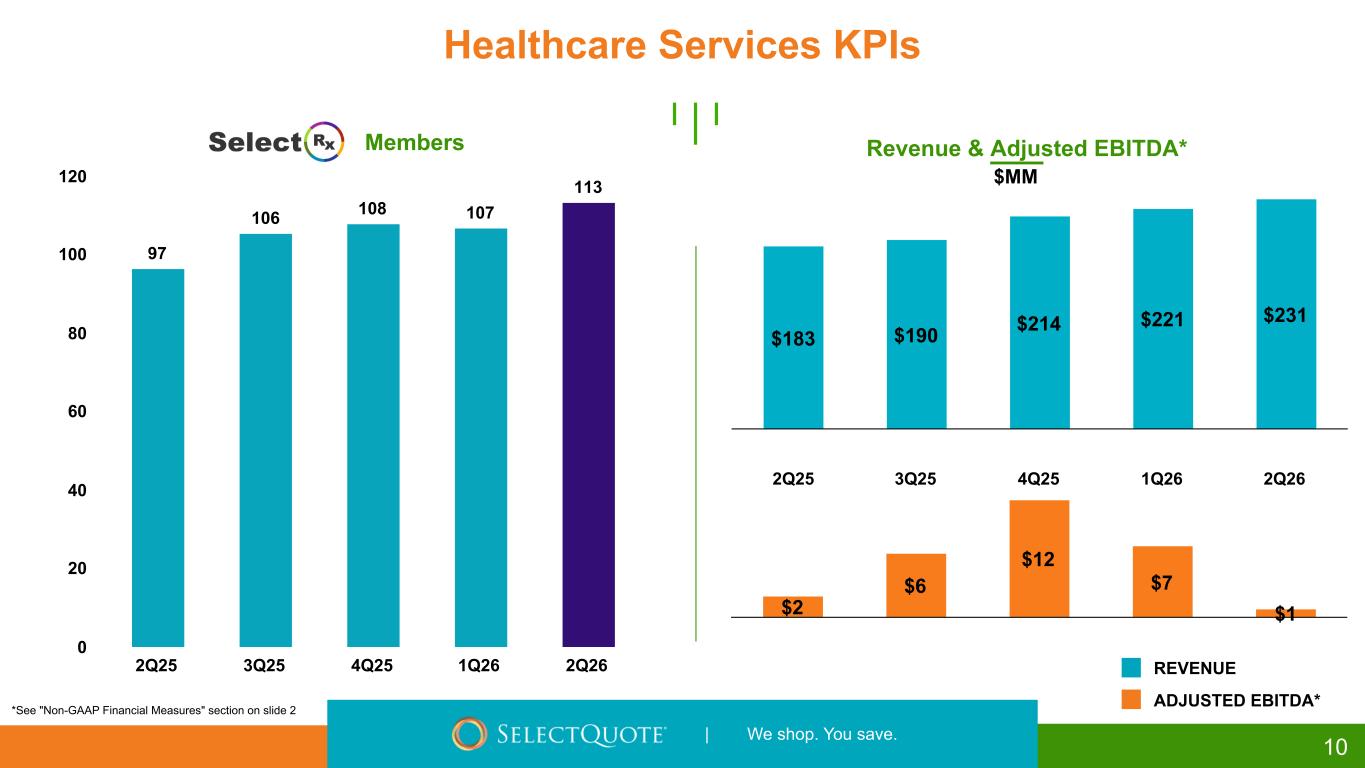
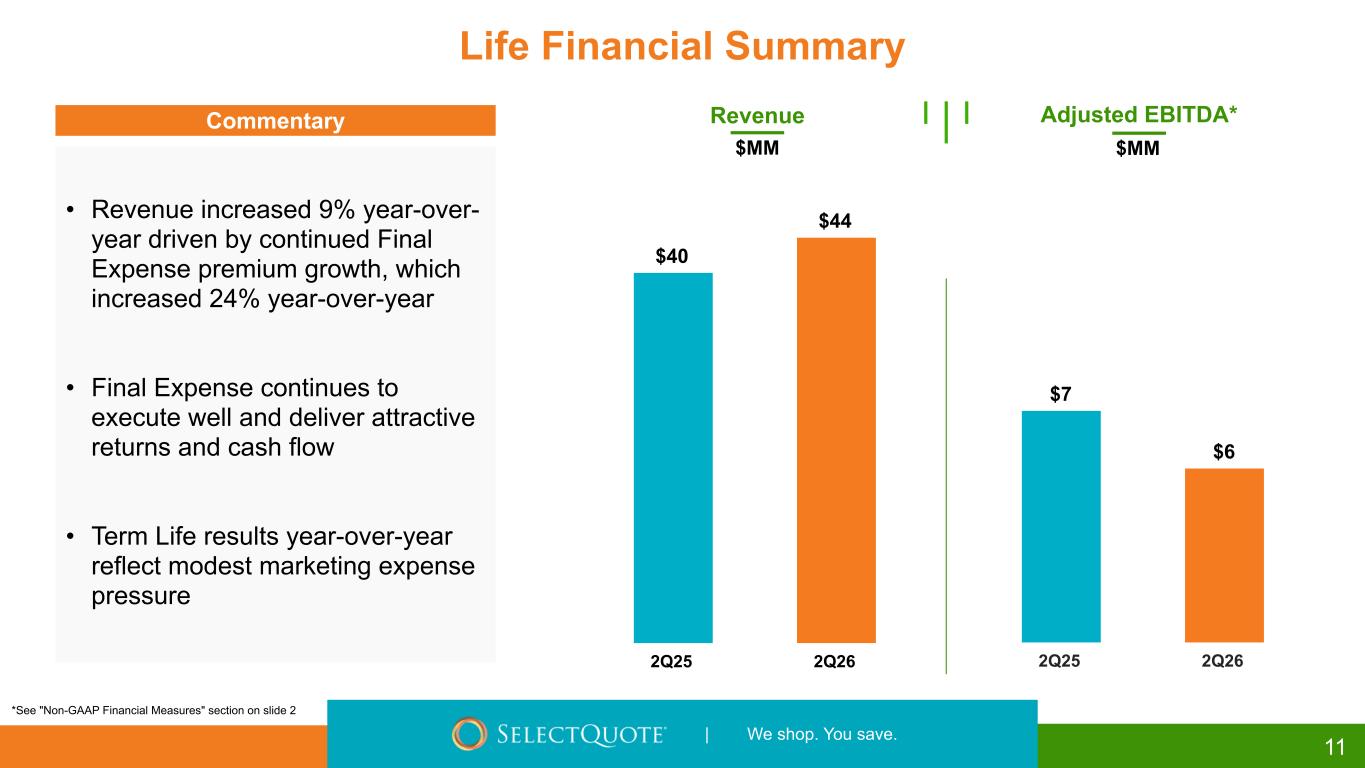
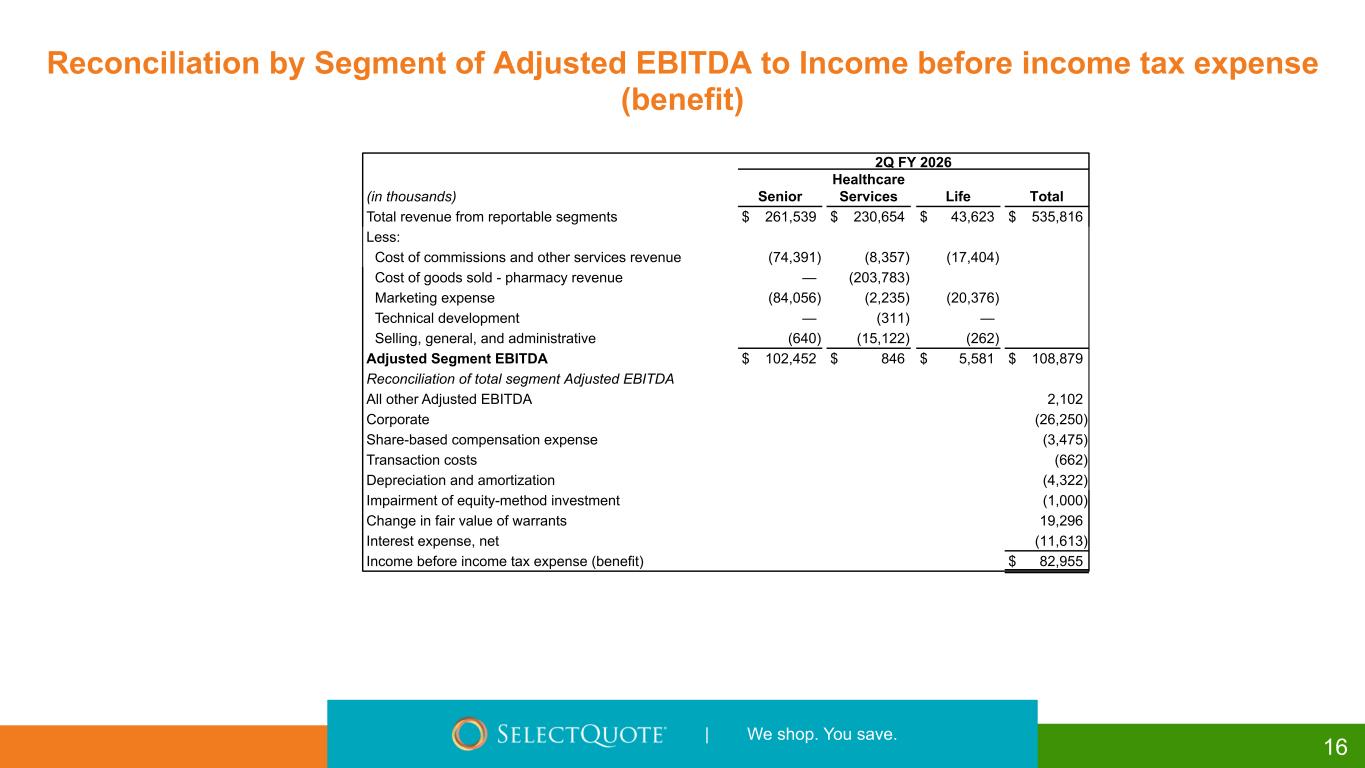
Thanks, Tim. I'll pick it up on slide eight with a summary of our consolidated financial results. As Tim noted, SelectQuote had a very strong quarter with revenue growth of 12% year-over-year, totaling $537 million. The growth was driven by both our senior and healthcare services businesses, reflecting a strong AAP and continued demand for our SelectRx service. Our EBITDA results were temporarily depressed due to the PBM reimbursement headwind we highlighted last quarter. In January, we announced a new, longer-term PBM agreement that provides increased visibility to these rates, which is important for our focus on predictable and profit-driven growth. The PBM headwind in healthcare services was offset by senior margins near record levels at 39%, driven by very strong efficiency in this AEP's marketing spend per approved policy. In total, the quarter was excellent. As Tim mentioned, the operating momentum within both sides of the business is evident. And SelectQuote's new balance sheet flexibility positions us well to navigate changing market conditions and capitalize on emerging opportunities. Moving to slide nine. Select what had a strong AEP despite another volatile market environment driven by carrier plan changes and terminations. Senior revenue of $262 million grew 2% on increased approved policy volumes. This AEP, we were able to increase our agent population, which modestly aided volume. We expect these agents to become increasingly productive with experience the season and into the years ahead. The business was able to more than offset the productivity ramp of these new agents with strong marketing efficiency and other services revenue, which drove near record EBITDA margins of 39% in the quarter. This resulted in senior adjusted EBITDA of $102 million, which is in line with last year's strong season. To echo Tim's sentiment, we are very pleased with the consistent execution in our senior business over the past four distinct seasons. Flipping to slide 10, we recognized strong demand for SelectRx in our healthcare services segment. Members grew 17% year-over-year to $113,000. Revenue grew even faster, expanding 26% year-over-year to $231 million, as recently onboarded members continue to mature and take delivery of their full prescription regimen. As we have noted, we expect growth to be more modest on a sequential basis in the near term as we continue to prioritize cash flow and profitability, much as we have in the senior business. That said, the PBM announcement earlier this year goes a long way toward providing that visibility, and we have conviction in healthcare services exiting fiscal 2026 in an annualized run rate of $40 to $50 million of adjusted EBITDA. Most importantly, the demand for our selector acts and the substantial value it provides patients, caregivers, and carriers remains unchanged. We are focused on driving profitability and cash flow or volume, and with With improved PVM visibility and a more flexible balance sheet, we are well positioned to expand healthcare services where incremental margins are best. We will further optimize customer targeting to focus enrollments on the patients who benefit most from the Selector X offering and also deliver the best economics to the business. As a result, we expect membership to end fiscal 2026 flat to modestly down from the current 113,000 level while still generating 20% plus year-over-year revenue growth. The market opportunity is clear there, and with increased attention and demand, we believe SelectQuote is very well positioned to be the partner of choice across the value chain. Turning to slide 11, I'll review our life insurance business. Revenue grew 9% to $44 million, driven by a strong quarter for final expense, where premiums increased 24% compared to a year ago. The business continues to execute at a high level and to deliver attractive margins and cash flow. Meanwhile, the term life business delivered flat premium levels in line with last year. Adjusted EBITDA for the life segment totaled $6 million, down modestly year-over-year in the second quarter. Results reflect modest marketing expense pressure and increased competition within the term life business. Overall, the life division continues to deliver attractive returns and cash flows for shareholders. Speaking of the balance sheet, let me quickly detail our new credit facility on slide 12. As announced in January, SelectQuote closed on a new $415 million credit facility, which benefits us in a number of ways. First and foremost, increased balance sheet flexibility through the elimination of our 2026 and 2027 debt maturities will allow us to operate strategically. With a new maturity schedule that extends to 2031 and an increase in our peak season liquidity, SelectQuote has the optionality to invest in strategic trends like we are seeing with Selector X and also capitalize on return opportunities within senior in real time. Lastly, we remain aligned with both equity and debt investors in our strategic priorities to reduce leverage and drive to a lower cost of capital in the future. The new facility provides a future path for SelectQuote to lower the term facility interest rate by up to 100 basis points. Overall, it is a significant positive for our business and the latest in a series of successes as we continue to improve our capital structure. I'll end on slide 13 with a review of our updated guidance, which Tim touched on earlier. I'll begin with the two distinct drivers of the change. First, the PBM reimbursement change, which we disclosed last quarter, drives an approximately $20 million headwind to fiscal 2026 EBITDA. Again, this impact will not recur beyond fiscal 2026. Second, as Tim detailed, the decision to curtail marketing budget by a national carrier partner is expected to drive an approximate $20 million headwind compared to our original expectations. As a result, we are revising our fiscal 2026 consolidated revenue range to $1.61 to $1.71 billion, and our adjusted EBITDA range to 90 to 100 million. To be clear, we remain confident in our long-term outlook about the growth, profitability, and cash flow potential for our business. We stand by our previously announced fiscal 2026 targets of 20% plus EBITDA margins for our senior division and an annualized adjusted EBITDA exit rate of 40 to 50 million for our healthcare services division. Lastly, as Tim alluded to, the change to our EBITDA forecast overshadows the meaningful year-over-year increase to operating cash flow, which we now forecast to total $25 to $35 million for fiscal 2026. Aided by the increased operational flexibility from our significantly improved capital structure, we expect the business to continue to post meaningful cash flow gains in years to come. In fact, let me pass it back to Tim to expand on that a bit.
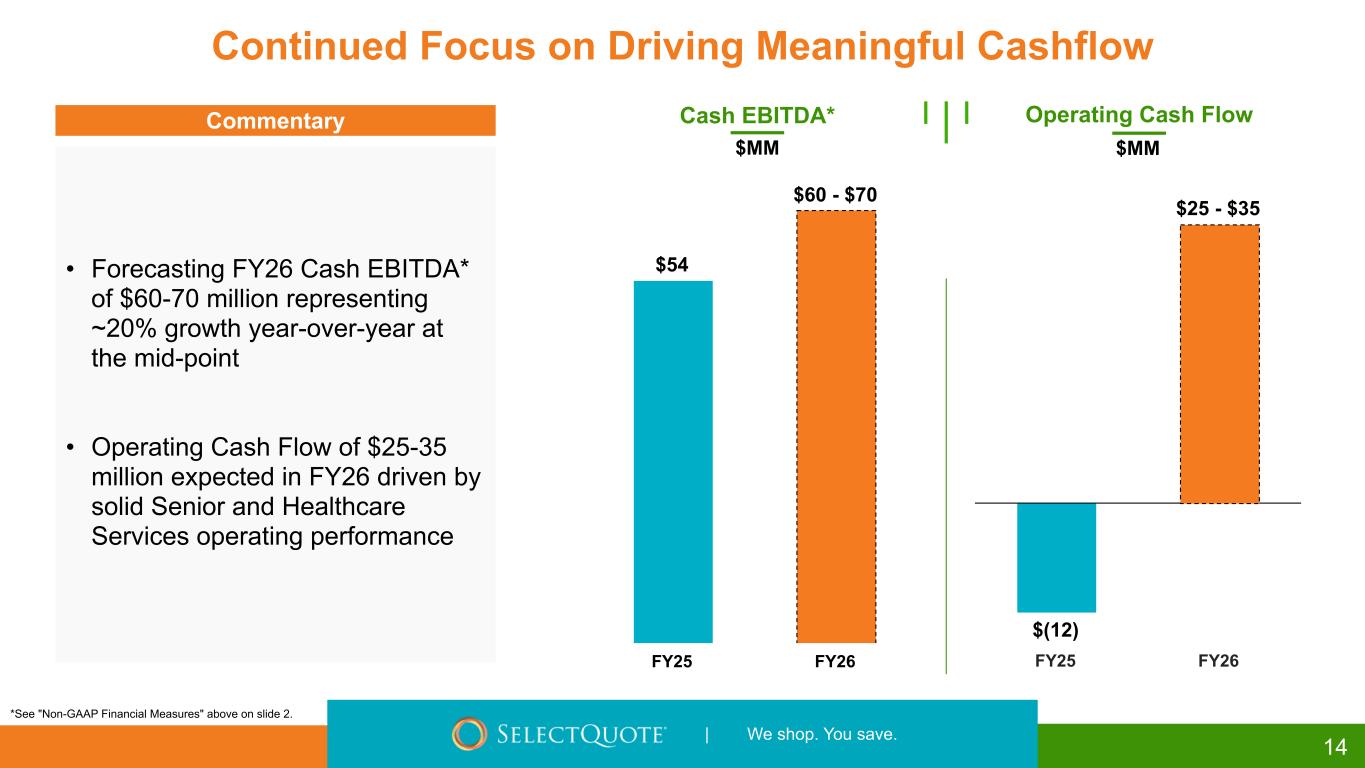
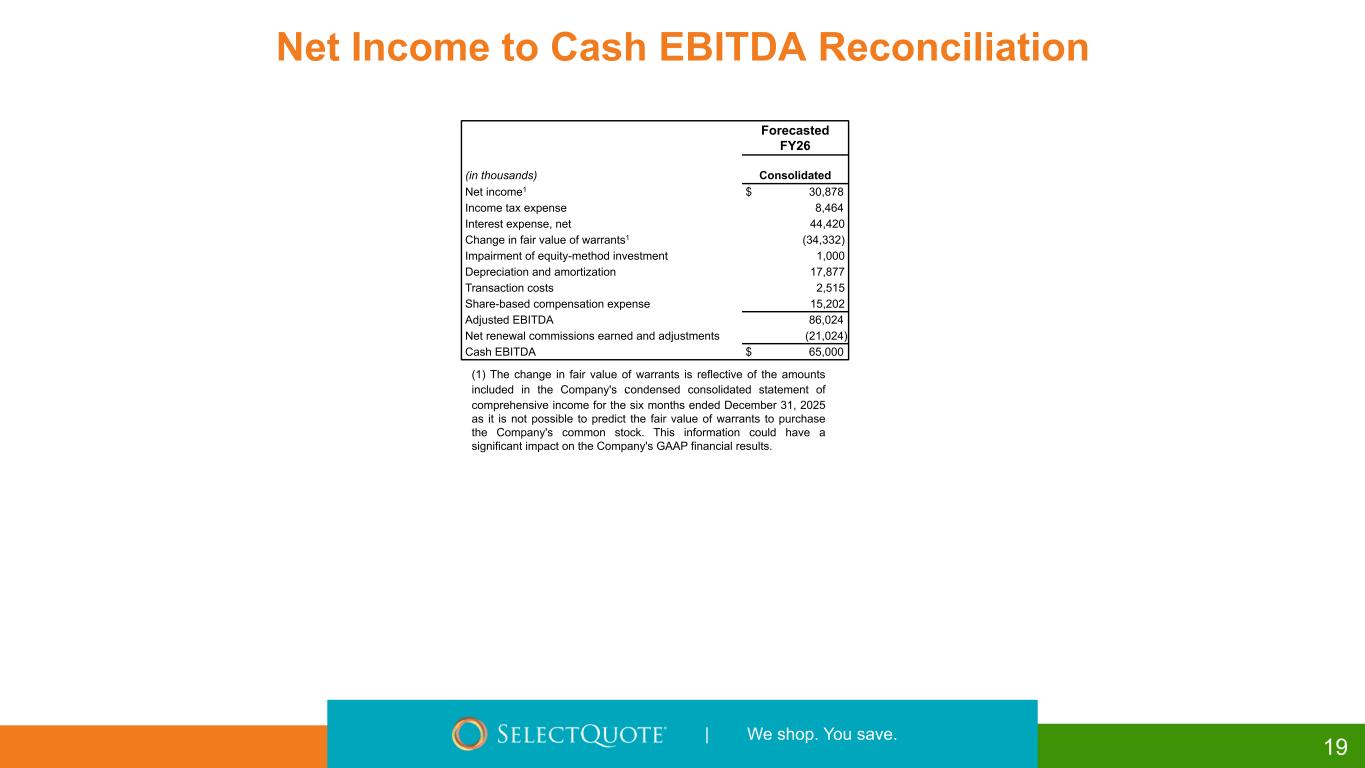
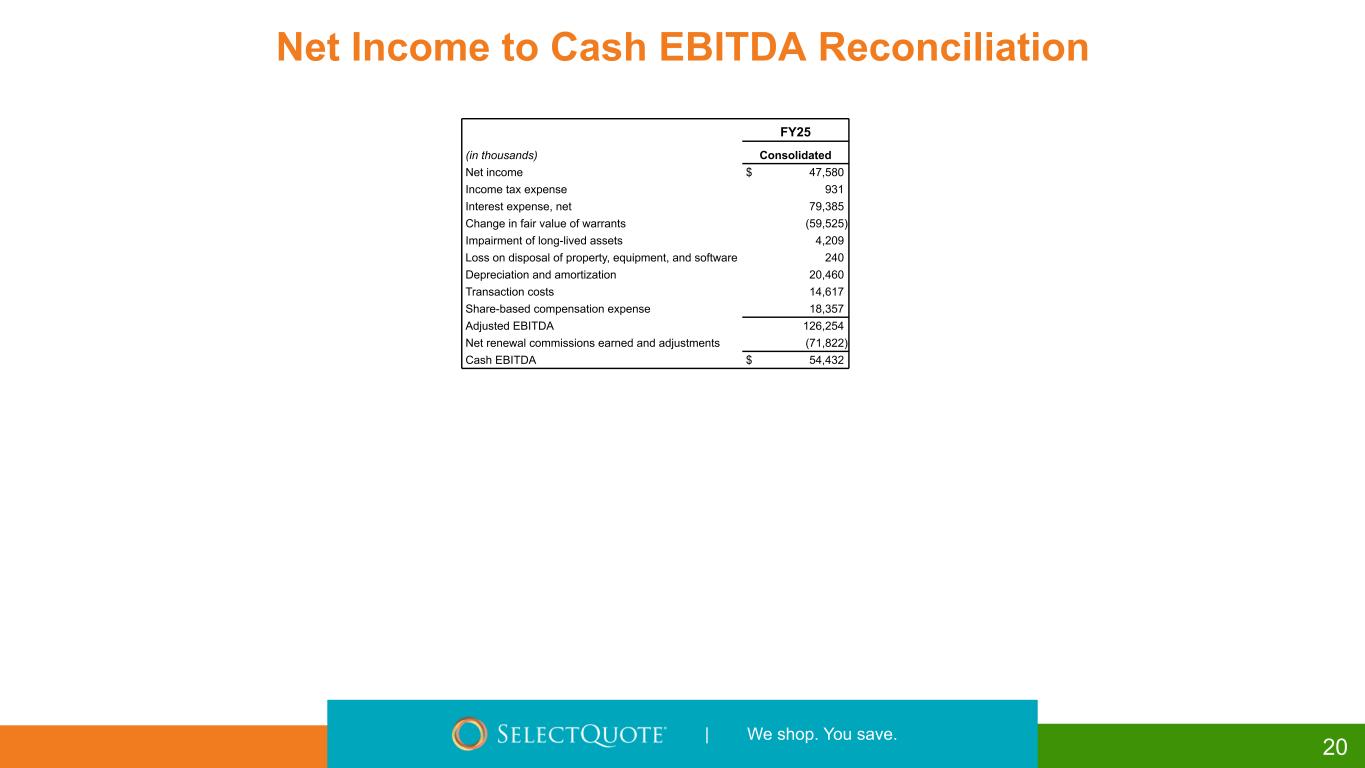
Thanks, Ryan. Before we turn to your questions, let's review our cash flow generation on slide 14. We wanted to put a visual behind our strategic priority to drive profitable cash flow as it can be less apparent than our reported EBITDA, especially this year given the two discrete impacts to our guided range. Here we depict our EBITDA on a cash basis, which does not consider future policy renewal commissions, but does consider cash renewal payments received in the period. This is a clean way to view how profitable our business is on a cash basis in the current period. As you can see in the bar chart at left, despite the impacts to our reported EBITDA, which considers future receivable accruals, we forecast significant growth in cash profitability. Specifically, we expect 2026 cash EBITDA to increase by approximately 20 percent compared to a year ago, which will help drive expected operating cash flow of $25 to $35 million for fiscal 26 the key driver of that improvement is the operating cash efficiency we continue to talk about in both our senior and healthcare services divisions and senior agent marketing productivity gains have driven significant cash efficiency gains which drive operating cash flow and cash profitability for healthcare services and select rx the upfront nature of cash recognition relative to our medicare advantage business will continue to drive consolidated operating cash flow as the business becomes a greater percentage of our overall mix. Cash flow is the key to drive and increase shareholder value as we move through the quarters and years ahead, and we believe it is important for our investors and analysts to see that we are executing well. With that, let me now turn the call back to the operator to take your questions.
Operator
We will now begin the question and answer session. Please limit yourself to one question and one follow-up. If you would like to ask a question, please press star 1 on your telephone keypad. To withdraw your question, press star 1 again. Please pick up your handset when asking a question. If you are muted locally, please remember to unmute your device. Please stand by while we compile the Q&A roster. Your first question comes from the line of David Windley with Jeffries. Your line is open. Please go ahead.
Hi, thanks. Good morning. Thanks for taking my questions. I wanted to start, Tim, on the PBM deal that you were able to strike during the quarter. Can you give us a little more detail? I think you emphasize that that makes this $20 million hit that you've had to take in fiscal 26 a one-time thing.
Can I interpret that you've kind of reestablished the economics of the relationship back to where they were or just provide us with some more detail about um how that relationship is now structured yeah david good morning and we appreciate you joining uh this morning yeah we were pleased with uh the announcement that we made earlier in uh january regarding uh the new uh pvm arrangement uh with uh with a large pvm uh this was important for us uh But really, to be able to strike a multi-year term with the PBM, it provided the needed stability and predictability that we need. So, we're very pleased with it. We're seeing that come absolutely in line with expectations, and we believe that helps really solidify our visibility moving forward.
Okay. And then follow up on the announcement today, I guess on the marketing budget at the major carrier, I think I have a pretty strong suspicion of who that is, wondered what, you know, essentially what risk there might be of other carriers following that pattern.
Yeah, so with respect to what we talked about on the call with the carrier that we outlined, they made a decision in December to pull back in strategic marketing investment as a way to significantly truncate growth. That was not unique to SelectQuote. This was a decision that was made across all third-party distribution, e-brokers, and FMOs alike. And we're confident, Dave, in our ability to navigate through this. Certainly, the carriers are going through a very challenging cycle, but the beneficiary demand is there. We've built a resilient, diversified, and agile business that can respond, and we feel like we have a lot of levers at our disposal to be able to manage this. With respect to other carrier partners, we don't anticipate anything of this level of materiality moving forward. Again, we're a very important part of the broad ecosystem. We drive high-quality volume, not just for new members, but how we perform from a retention standpoint, which is really critical in times like these when there's hyper-focus on operating margins and retention.
Operator
Thank you, Dave. Our next question comes from the line of Ben Hendricks with Capital Markets. Your line is open. Please go ahead.
Thank you very much. Just to follow up on that last question, it seems like with this MA advance rate notice coming in, a little softer than expected, and we know that there's a hyper-focus on margin enhancement. I'm just wondering to the extent that there are carriers out there who are, you know, acknowledge your unique capabilities and, you know, acknowledging the fact that you promote better fit and persistency, if there's an opportunity to kind of stand out and specialize ahead of 2027 to where you may get a little bit more share of marketing spend, you know, that does come on to the kind of the DTC platform for next year. Any thoughts on kind of how you might be positioned there?
Yeah, thank you, Ben. I appreciate you joining as well. Just real quick on the CMS advance rate notice, you know, as we said in the prepared remarks, we agree with the carriers that the current advance rate notice doesn't reflect the realities of where beneficiary utilization is and the cost of care. And we think there will be a lot of continued dialogue between the MCOs and CMS on this particular matter. and we hope through that conversation when we get to the final rate notice in April that we'll see some improvement. To your underlying question around our unique capabilities, we certainly agree. The market right now is in a period where health care has a lot of financial stress in the system, and that's a great opportunity for select load, primarily around the efficiency of our model. So as you can see in the second quarter results and the 39% margin for senior, or if you look back over the past three-plus years, we've really been able to deliver not only a very efficient model, but a very high-quality model. And if you look at our retention results with respect to things we highlighted today, we think the book has performed very well in what we would kind of classify a turbulent market backdrop. You can see our recapture rate. I think that all bodes very well for our model because carriers will continue to look for quality and efficiency, and that provides more upside opportunities for us given our very, you know, tight relationship with all the major payers.
Just as a follow-up on the PBM contract, just in general, you know, we're seeing more acceptance of these kind of cost-plus structures, and the Cigna earlier this week announced in this FTC settlement as part of that, that it would go to a cost-plus PBM and pharmacy reimbursement model. I'm just wondering if your new contract has any kind of cost-plus components to it on individual drugs, and, you know, if that's something that you're seeing could be a stabilizing factor in the SelectRx business going forward. Thanks.
Sorry. Good question, Ben. I think as far as what you're seeing in momentum in the marketplace towards that, that's definitely right. I think that that's where the market wants to go and where CMS wants it to go. Ours is similar to that with a guarantee. And what I mean by that is there's less, there is no risk of kind of MAC pricing updates and things that could be below market. So yes, a cost plus effectively GER is where we are and it is a GER. So we have that. Not to the degree though of what kind of ESI is talking about. That's a standard cost plus with a higher dispensing fee. And I do think the market is going to move towards that. You're seeing that with the IRA drugs. And I do think you'll see that overall where the justification of service levels like ours, which is very high, is paid out through that dispensing fee. So we're moving more towards that. This one is very similar to that, just not structured exactly like that.
Operator
Our next question comes from the line of George Sudden with Craig Hallam. Your line is open. Please go ahead.
Thank you. Tim, I wondered if you could go into more detail on what you mentioned, and are levers at your disposal relative to the MA options given this carrier move?
Good morning, George. I appreciate you being here as well. Yeah, I mean, we have a unique model. We have a 50-state direct-to-consumer business model, and we do have levers. First and foremost would be with respect to where we deploy marketing dollars geographically. That is something that our model can do versus, you know, other field-type models in an easier fashion. Also, you know, we're going to continue to focus our investment on certain customer segments where we think the carriers want to grow. We can use, you know, SNPs as an example where many carriers are going, and we do a lot of SNP business, and we're well aligned to grow where they want to grow. So it's another lover that we have. And at least we forget we have a diversified model beyond our MA distribution business. We have a cash accretive SelectRx pharmacy that can also factor into how we, you know, our capital deployment decisions.
So you mentioned that your new agreement, your new loan agreement gives you additional operating flexibility. I wondered if you could give us, and you mentioned you'd take advantage of it when the market supports it. You're obviously operating in kind of multiple markets now. So I'm just wondering how much change we might see in terms of, for example, an emphasis on health care services versus a de-emphasis on Medicare Advantage. Or I'm not sure exactly what you meant by the flexibility. So I wondered if you'd give us a better sense there.
Yeah, I mean, we have the utility, given the diversification of our model, to pursue where we think the returns are best. Certainly, we have a highly synergistic model between our Medicare distribution platform and health care services, right? We're garnering a lot of that SelectRx growth through the conversations that we have with seniors on our MA platform. So, I think that provides us a lot of utility. around capital deployment decisions. Again, hopefully you're taking from our comments and our tone that we understand that there is some challenge and some noise out in the market right now, but we feel like we've built a very resilient, a very aligned, a very efficient model that gives us a lot of utility around how we deploy capital. We've also shared today you know, kind of the last slide around the growing cash flow dynamic of the business, and that's something that we would point, you know, investors to, you know, despite the unfortunate events and the guide down on the 606 EBITDA, we are continuing to grow our cash EBITDA, we're continuing to grow our operating leverage, and that will be the focus for the business, and that'll be the lens in which we look around capital deployment. understand thank you thank you george our next question comes from the line of pat mccann
your line is open please go ahead hey good morning thanks for taking my questions uh i just wanted to ask you a little bit about the select rx uh situation um you know given the scale that you've reached i'm wondering how that affected your negotiating position uh in this most recent discussion uh you know maybe if you could compare that to previous uh previous agreements you've entered you know any uh significant uh positive effect on your negotiating position given given that scale yeah uh it definitely affects our negotiating ability i mean we are we are starting to get to a point where we do have some leverage right we um or or just say a deeper partnership
right? We have, you know, a hundred and plus thousand extremely complex members that we successfully engage with, deal with, and drive their adherence to a good place. And more actually importantly in this group, their compliance towards the times that they take those meds and things like that. We've showed the past, right? We've got data now proving that helps bend the kind of cost curve of hospitalizations and other things. We're starting to partner even deeper to do more, whether that's, you know, enhanced MDM services, remote therapeutic monitoring, where we can really make sure they are taking those at the times we think they are, and other things that help drive not only data to our carrier partners, but ultimately action if somebody is not managing their healthcare the way that they should. And with a population that, you know, has three press chronic conditions, is on 10 or more meds, that's extremely important. So I think, or we know now, that has given us significantly more negotiating power, and we are being viewed as a valued partner, which is why we were able to get to where we were on the pharmacy negotiation with the PBM. Great.
And then my follow-up, just staying on SelectRx, given where the Kansas facility is and its ramp, I was just wondering if you could talk a little bit about how much incremental volume could be absorbed with that facility before you need any meaningful new capital investment there.
Yeah, that facility has actually a really, really high kind of, you can have a lot of customers in there. So lots of room for expansion, but actually a lot today in the machinery that we've bought. We've bought much more efficient machinery. I think we've been open about the Indivion and what that does and how many customers we can drive through that. But more importantly, how we can do it with less staff and ultimately drive our costs down and our compliance and kind of everything else up. We're also working on a lot of new technology initiatives to try to take, you know, I call it more of an archaic industry in the way that it's designed and modernize that to fit our needs because we have a different workflow, right, than most pharmacies. We're pretty far along in that now and we're about to roll some really exciting things out that should even add more to efficiency. But more importantly, that allows us to use AI and other tools to drive efficiency in the future. And that's what we're trialing in that Kansas facility. That will allow us then to kind of retrofit our other facilities to be similar. So we're very confident we can drive that down, all leading to a big growing cash flow line for us. We've got a lot of gross margin there. We just would like to get our gross to net margin or net to gross margin up even higher than we have it today. And we think there's a ton of opportunity there.
Thank you. That's it for me.
Operator
There are no further questions at this time. I will now turn the call back to Tim Danker, CEO, for closing remarks.
I want to thank you all for joining us again today. Although we've encountered some unexpected headwinds this fiscal year, we remain focused on narrowing the spread of outcomes and controlling the controllables. We continue to execute well operationally, and with the diversification of our business model, no company in the sector is better positioned to navigate business cycles. We have the operating model, we have the competitive advantages, and we now have the balance sheet flexibility to significantly expand cash flows in the years to come. I want to thank you again. Everyone have a good day.
Operator
This concludes today's call. Thank you for attending. You may now disconnect.