Operator
Good day, and welcome to the SunCoke Energy Fourth Quarter 2024 Earnings Conference Call. All participants will be in listen-only mode. Operator instructions were given. Please note today's event is being recorded. I would now like to turn the conference over to Shantanu Agrawal, Vice President, Finance and Treasurer. Please go ahead.
Speaker 1
Thanks, Rocco. Good morning, and thank you for joining us this morning to discuss SunCoke Energy's fourth quarter and full year 2024 results as well as 2025 guidance. With me today are Katherine Gates, President and Chief Executive Officer; and Mark Marinko, Senior Vice President and Chief Financial Officer. Following management's prepared remarks, we'll open the call for Q&A. This conference call is being webcast live on the Investor Relations section of our website and a replay will be available later today. If we don't get to your questions on the call today, please feel free to reach out to our Investor Relations team. Before I turn things over to Katherine, let me remind you that the various remarks we make on today's call regarding future expectations constitute forward-looking statements. The cautionary language regarding forward-looking statements in our SEC filings apply to the remarks we make today. These documents are available on our website as are our reconciliations to non-GAAP financial measures discussed on today's call. With that, I'll now turn things over to Katherine.
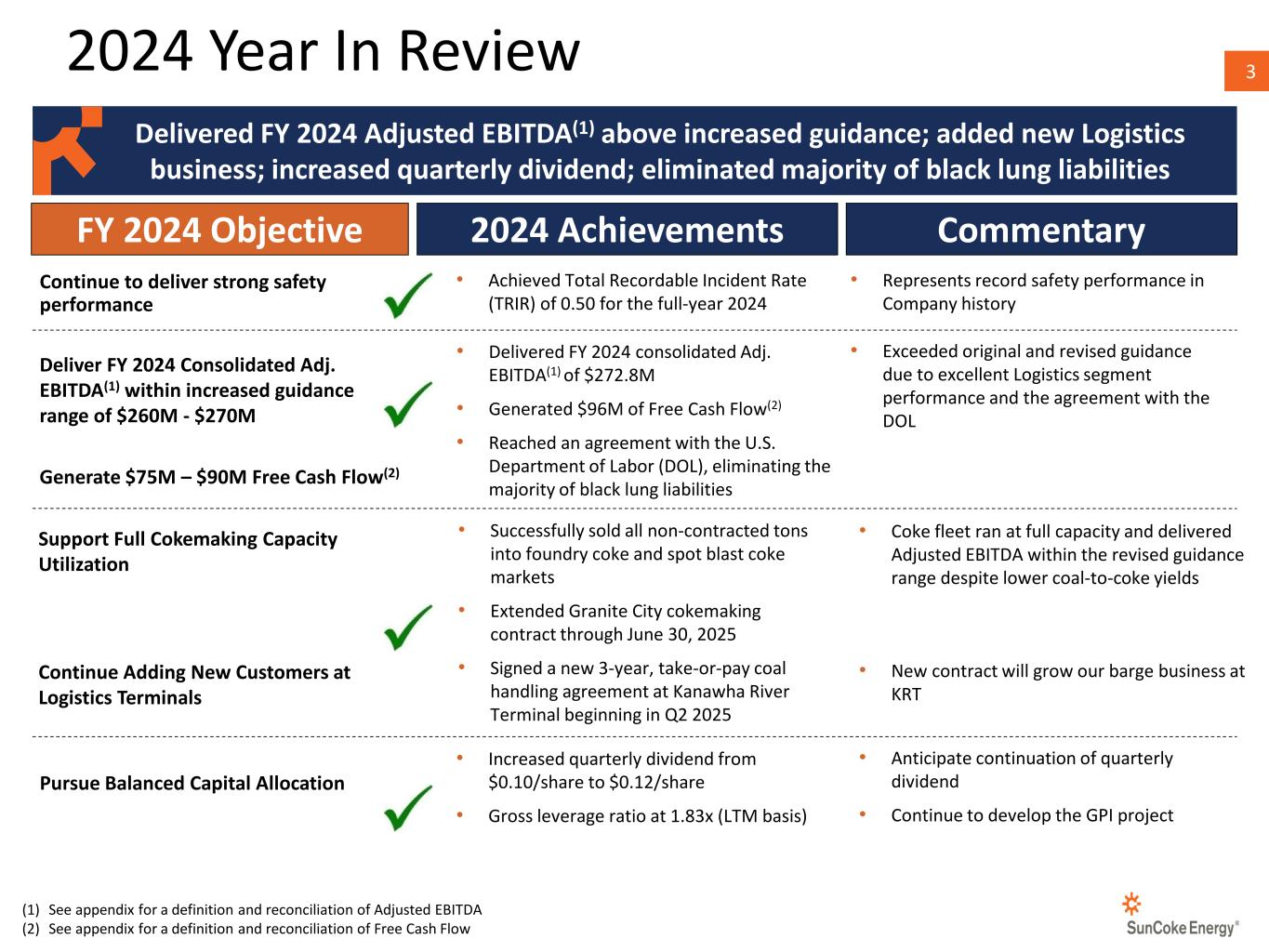
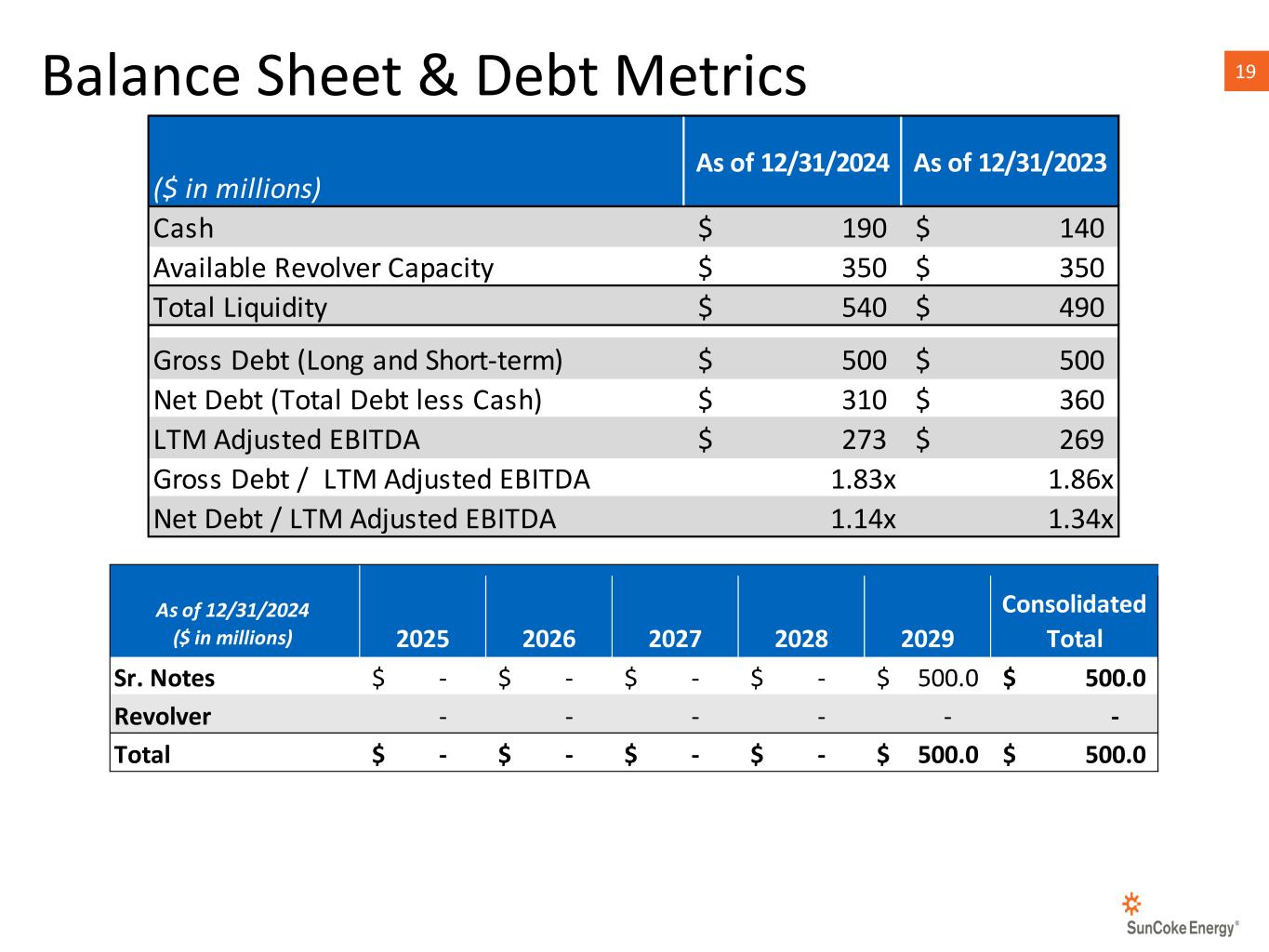
Thanks, Shantanu. Good morning. Thank you for joining us today. Earlier today, we announced SunCoke Energy's fourth quarter results. Before I turn it over to Mark to review the results in detail, I want to share a few highlights from 2024. First, I want to recognize our remarkable achievement in safety performance. SunCoke ended the year with a record-setting total recordable incident rate of 0.5. Safety is our first priority and I'd like to thank all of our employees for their continued commitment to exceptional safety performance. Turning to our financial achievements, we delivered consolidated adjusted EBITDA of $272.8 million, exceeding the high end of our increased guidance range of $270 million. Excellent performance from our Logistics segment and the one-time gain from the Department of Labor agreement drove our results. We generated $96 million of free cash flow, exceeding the high end of our guidance range of $90 million. Our coke plants ran full in 2024 and we successfully sold all non-contracted tons into the foundry and spot blast coke markets, delivering adjusted EBITDA within our revised guidance range, despite lower coal-to-coke yields. In addition, we extended our Granite City cokemaking contract through June 2025 with the option for the customer to extend through year end. In the Logistics segment, we grew our barge business at our Kanawha River Terminal and benefited from the API2 price adjustment at Convent Marine Terminal. We also signed a new three-year take-or-pay coal handling agreement at KRT and expect to see the benefit of that beginning in Q3 when the capital project is complete. We made great progress on our capital allocation priorities in 2024, returning approximately $38 million to our shareholders via our quarterly dividend, which was increased from $0.10 per share to $0.12 per share. We expect to continue our quarterly dividend throughout 2025. We ended the year with a gross leverage ratio of 1.83x on a last 12-months adjusted EBITDA basis. Finally, the additional delays of the U.S. Steel–Nippon transaction have unfortunately resulted in ongoing delays for an agreement on the GPI project. Despite this, we recognize the significant merits of the project and remain focused on its development. With that, I'll turn it over to Mark to review our fourth quarter and full year earnings in detail. Mark?
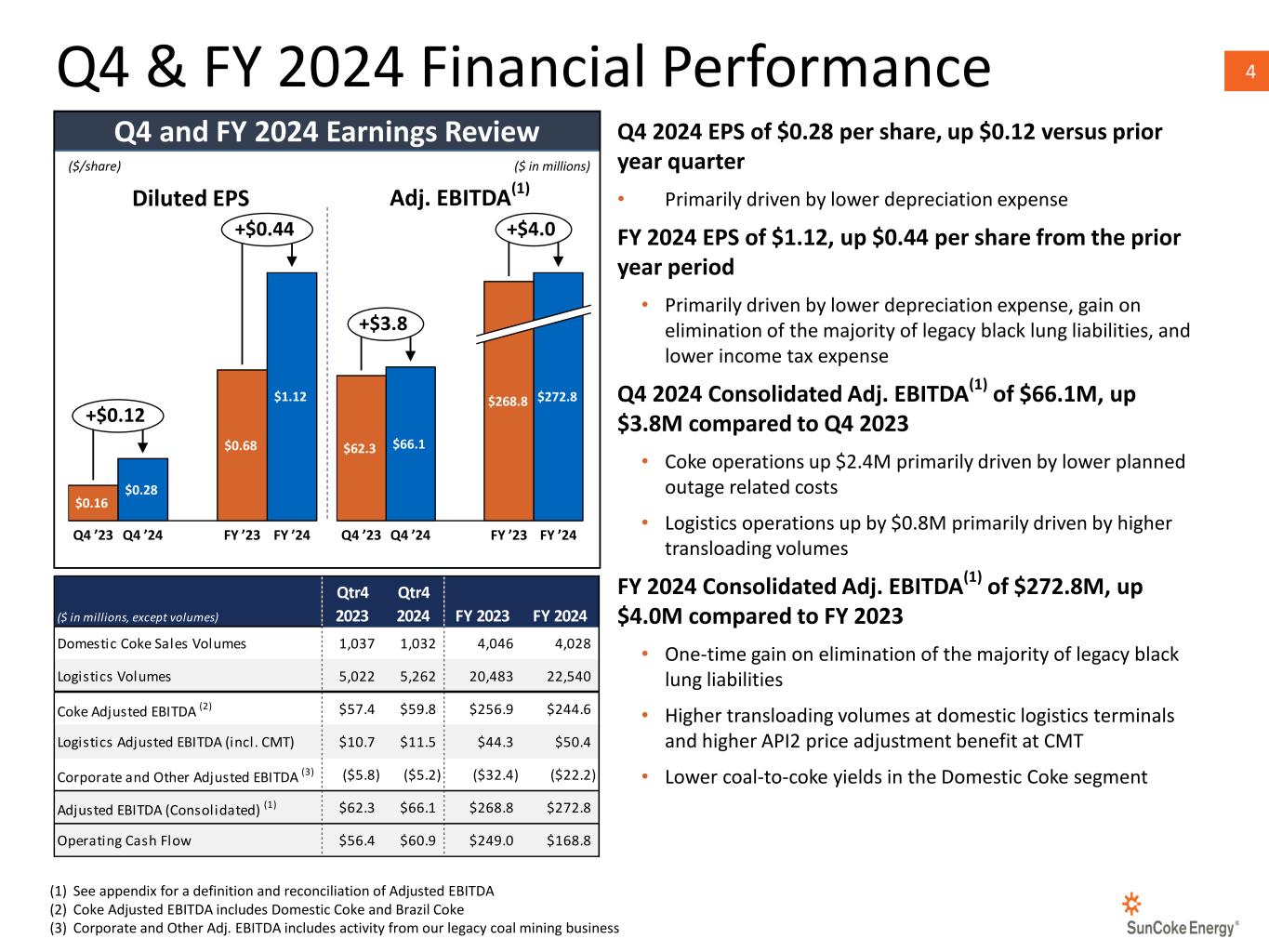
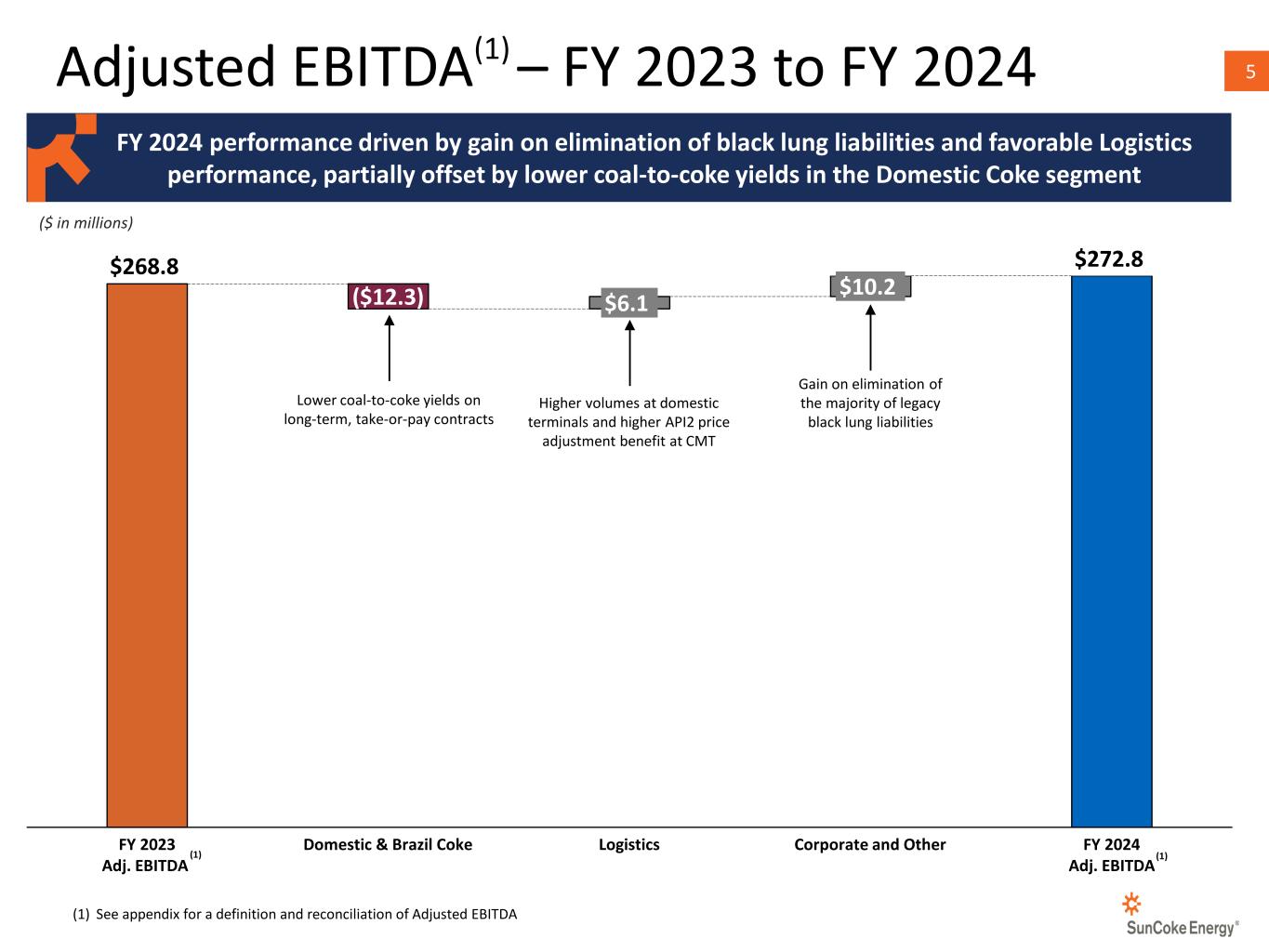
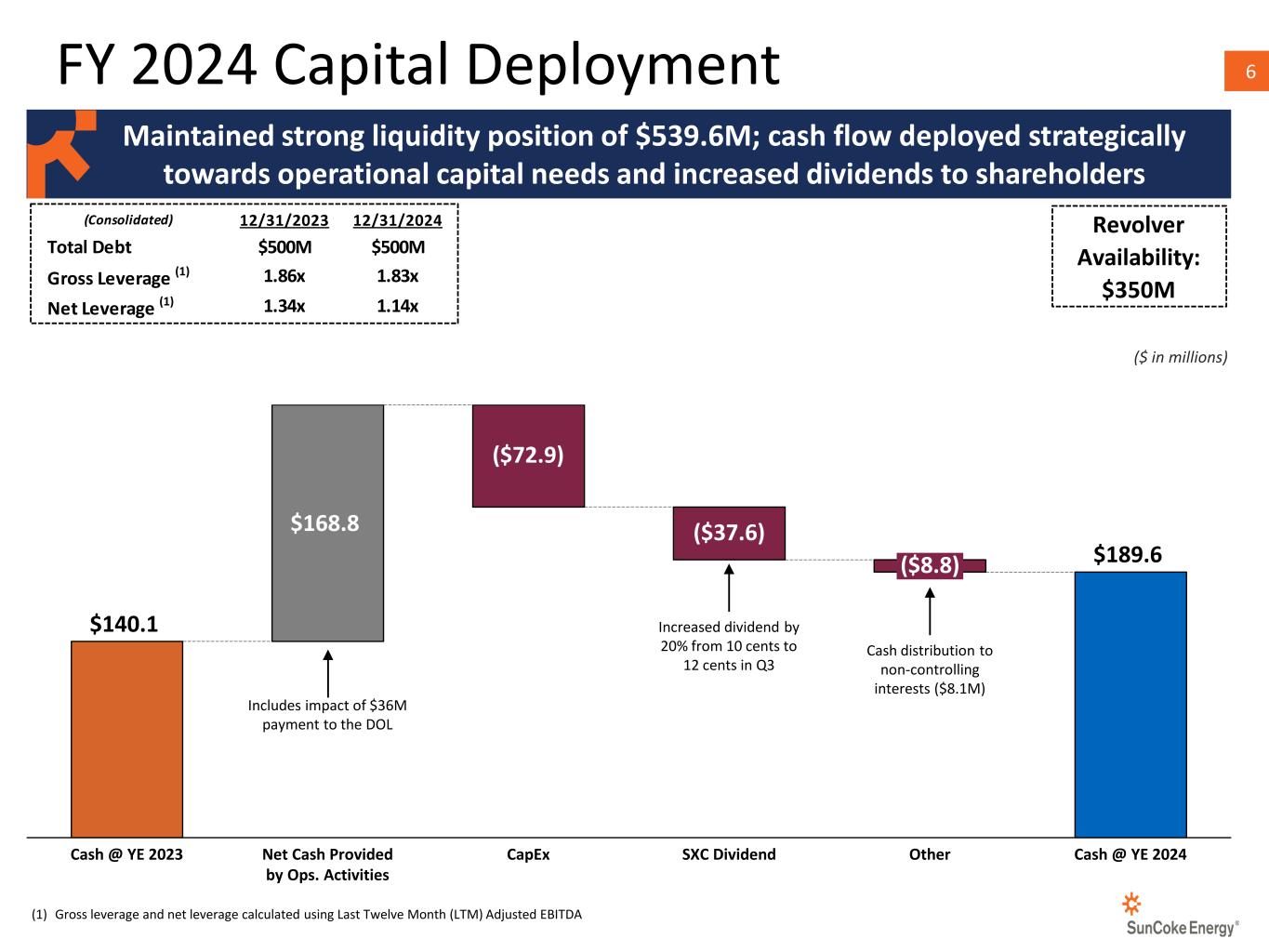
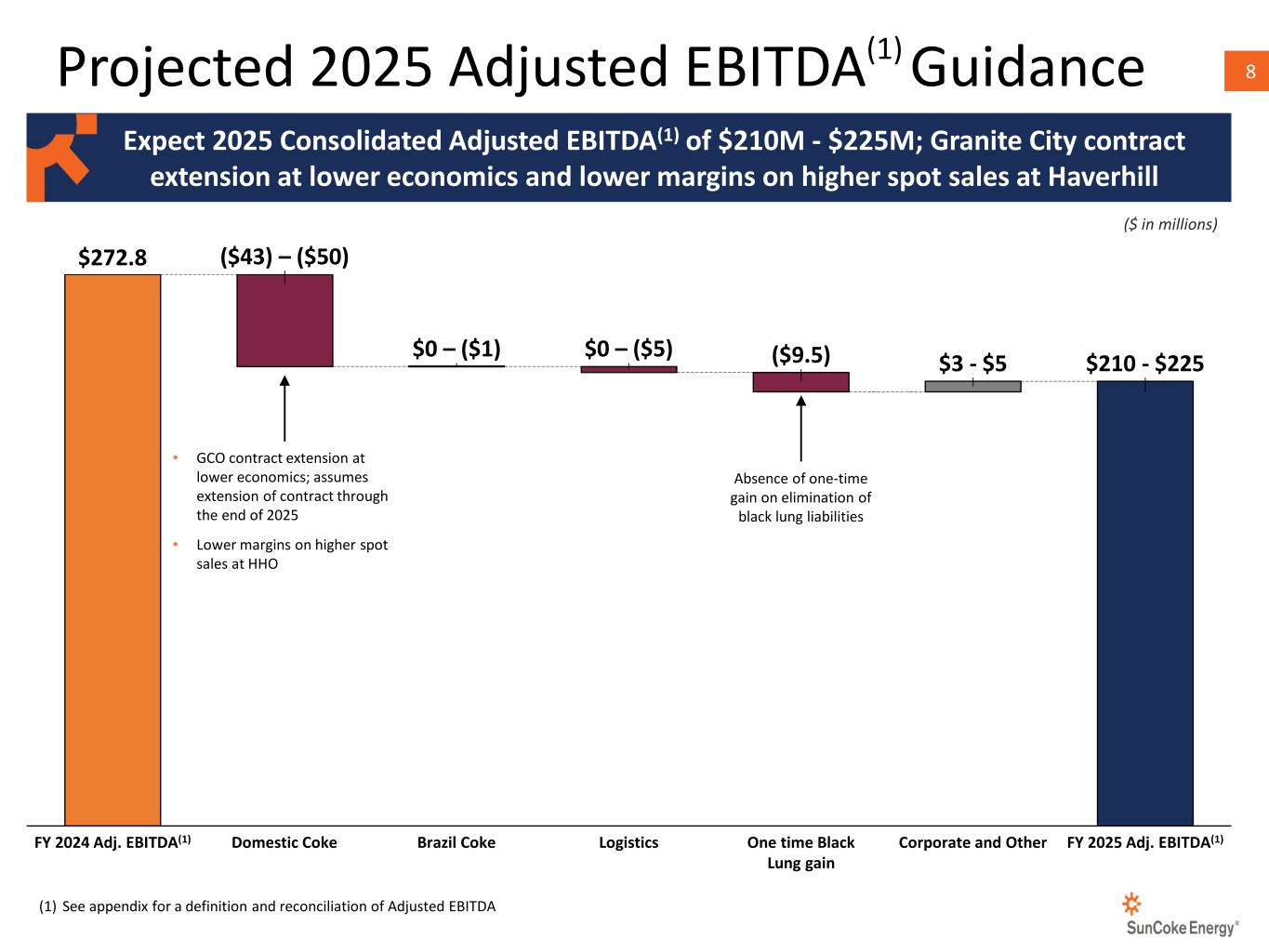
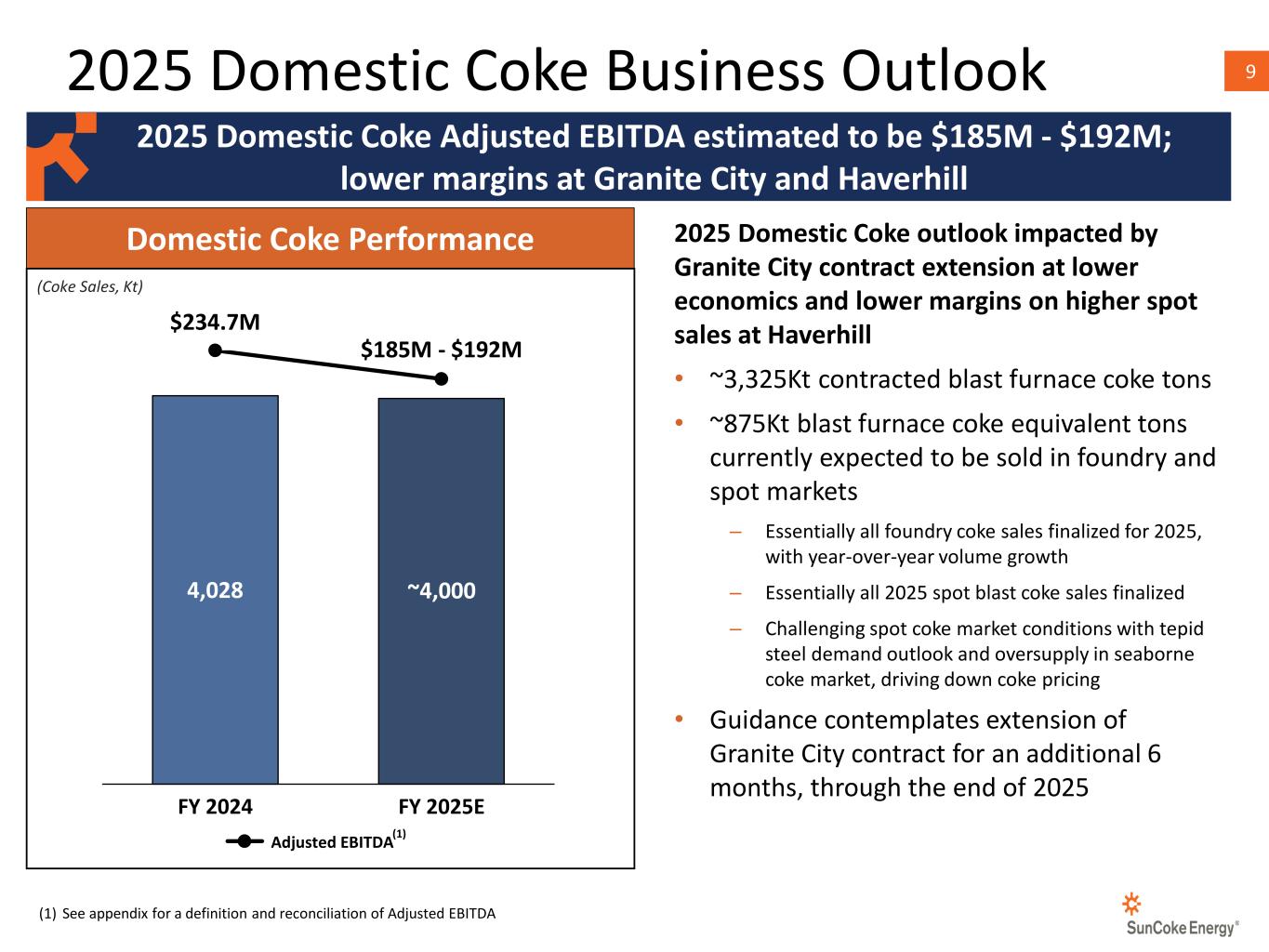
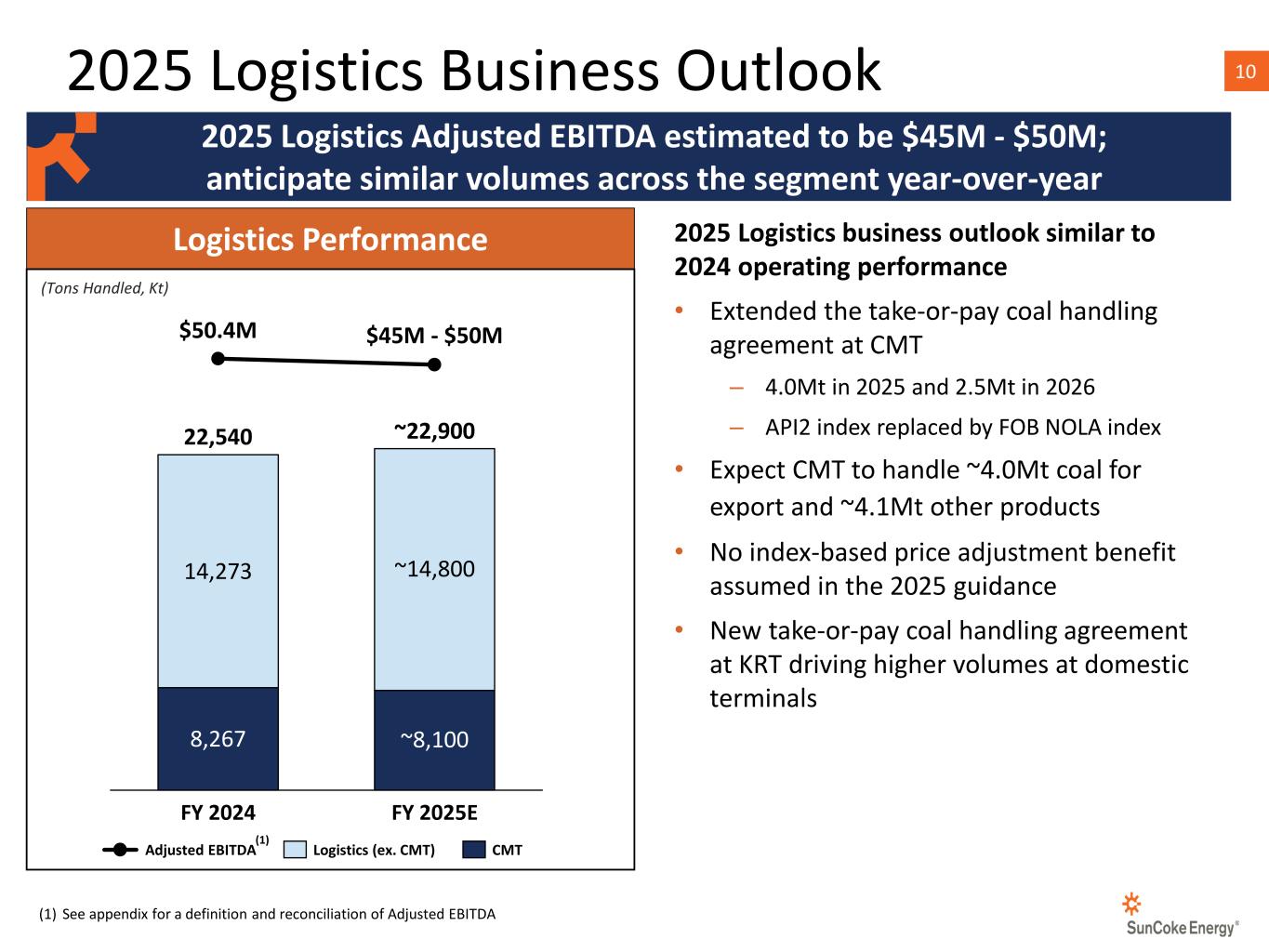
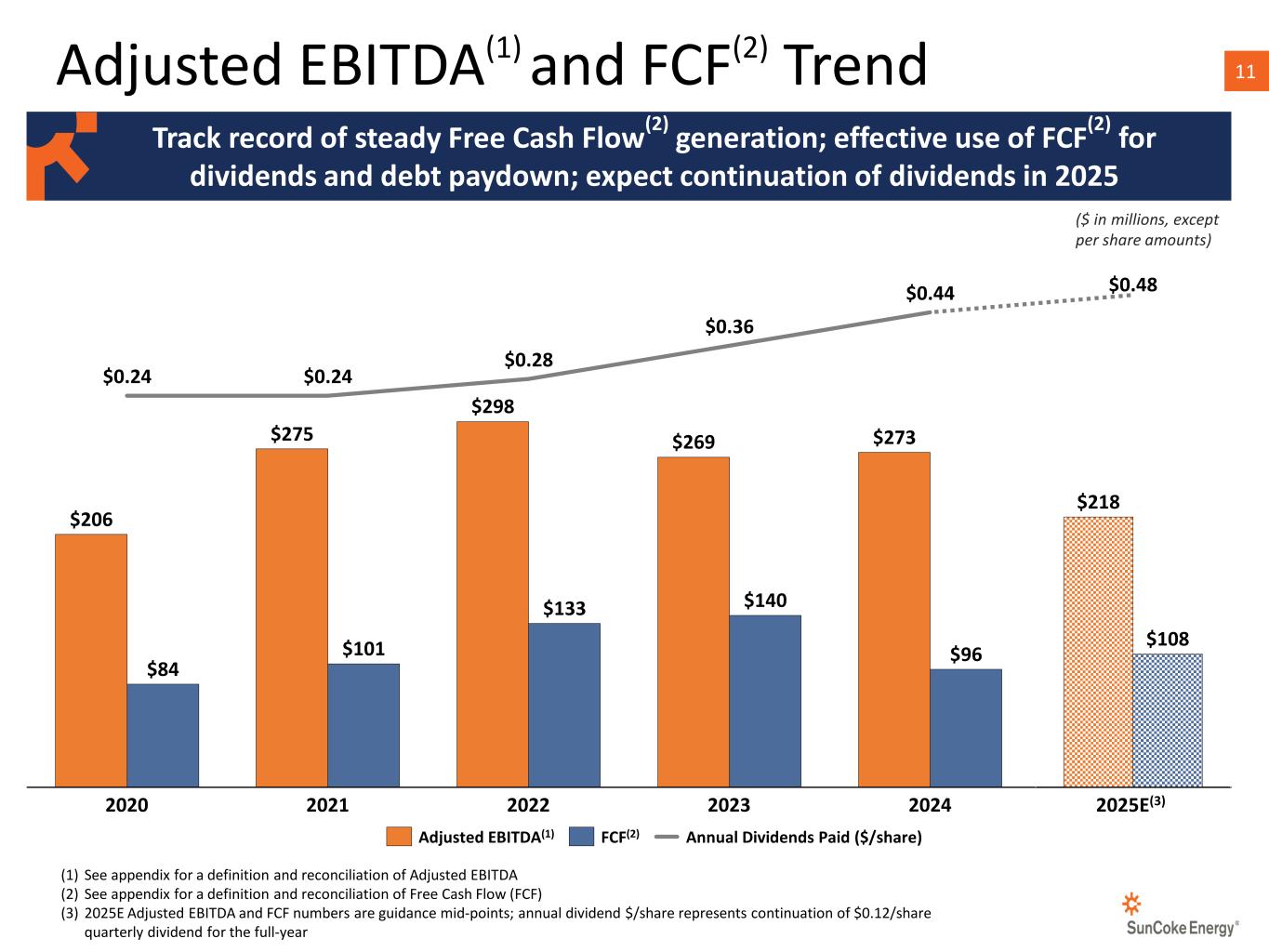
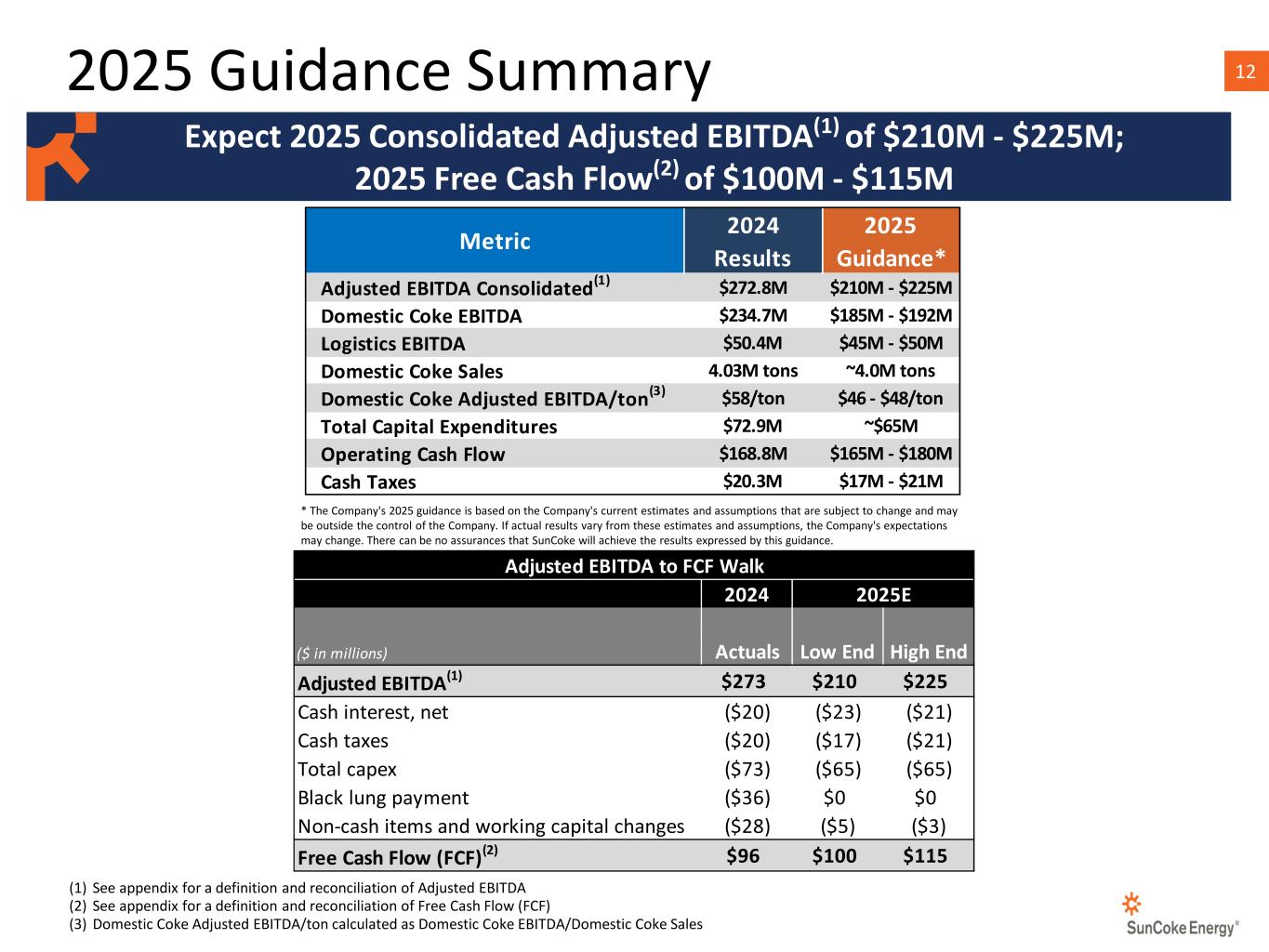
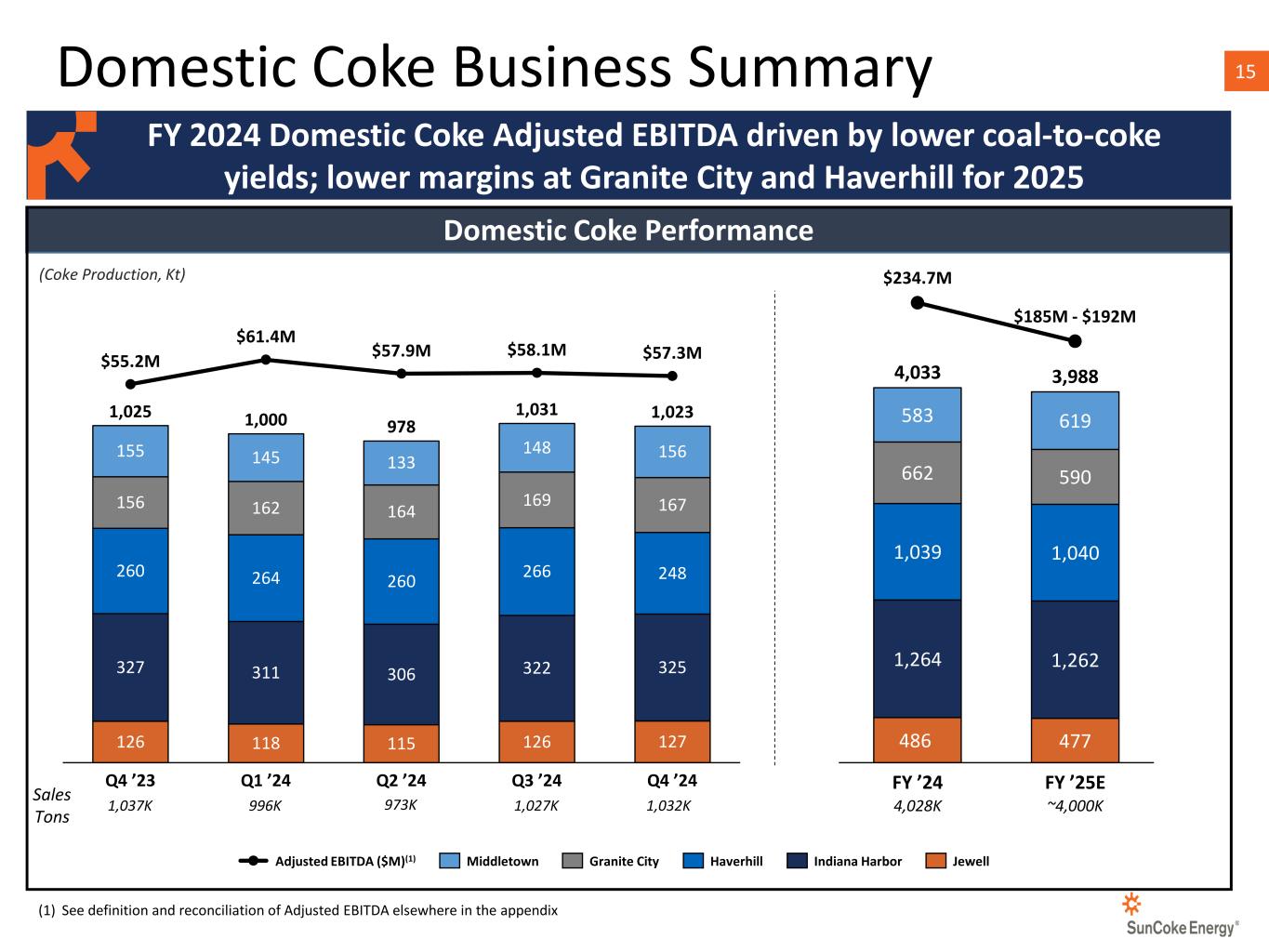
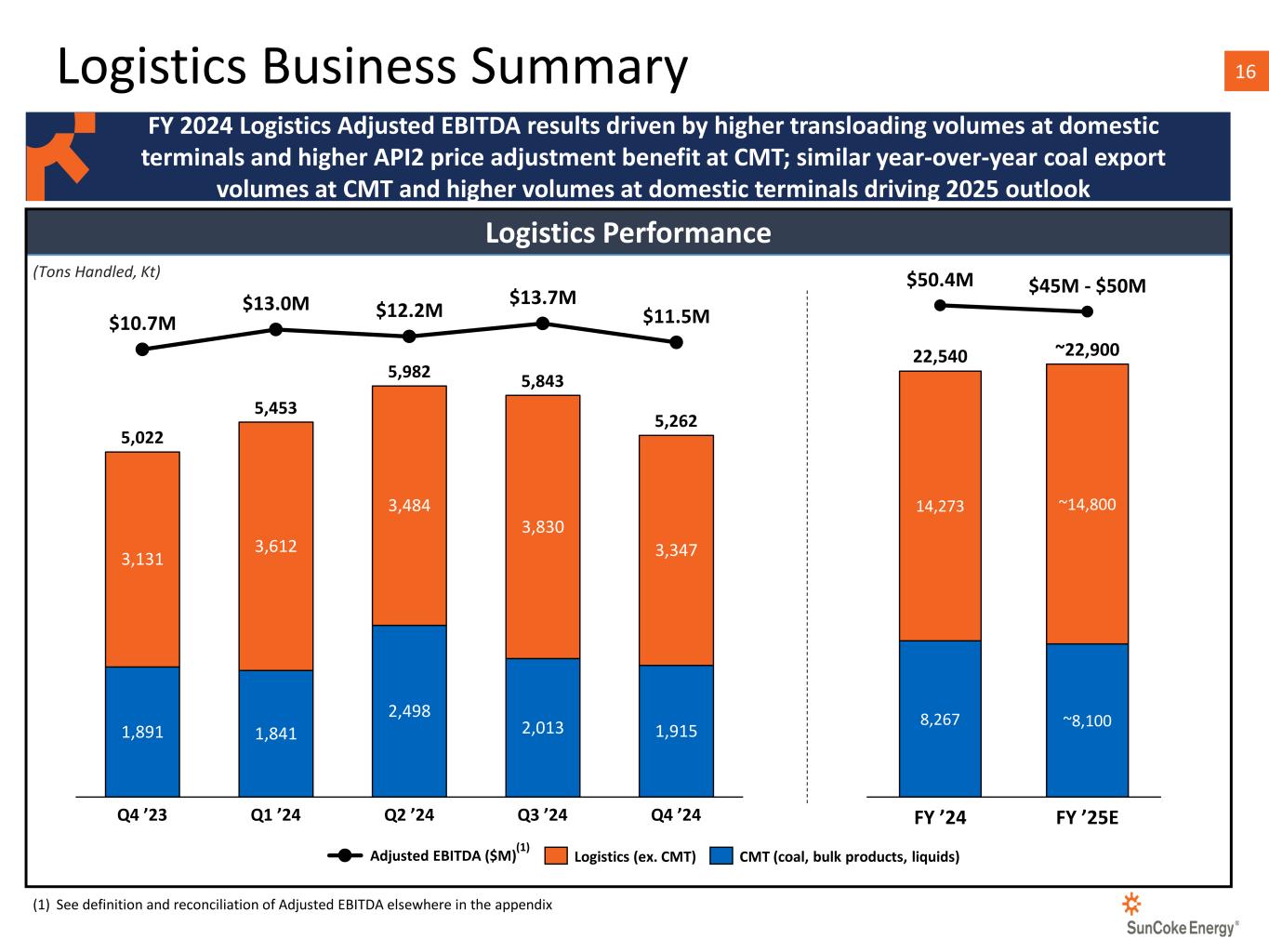
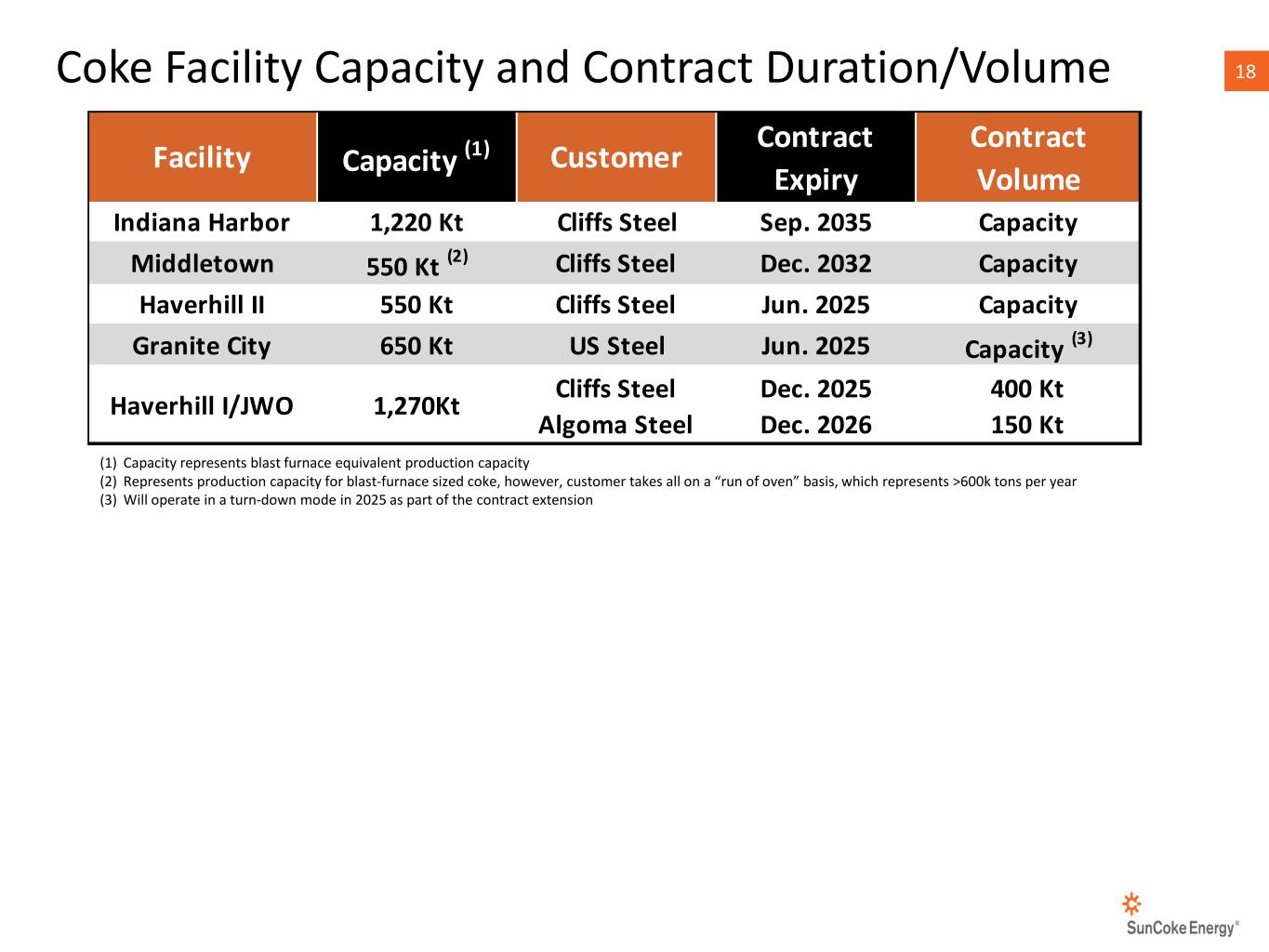
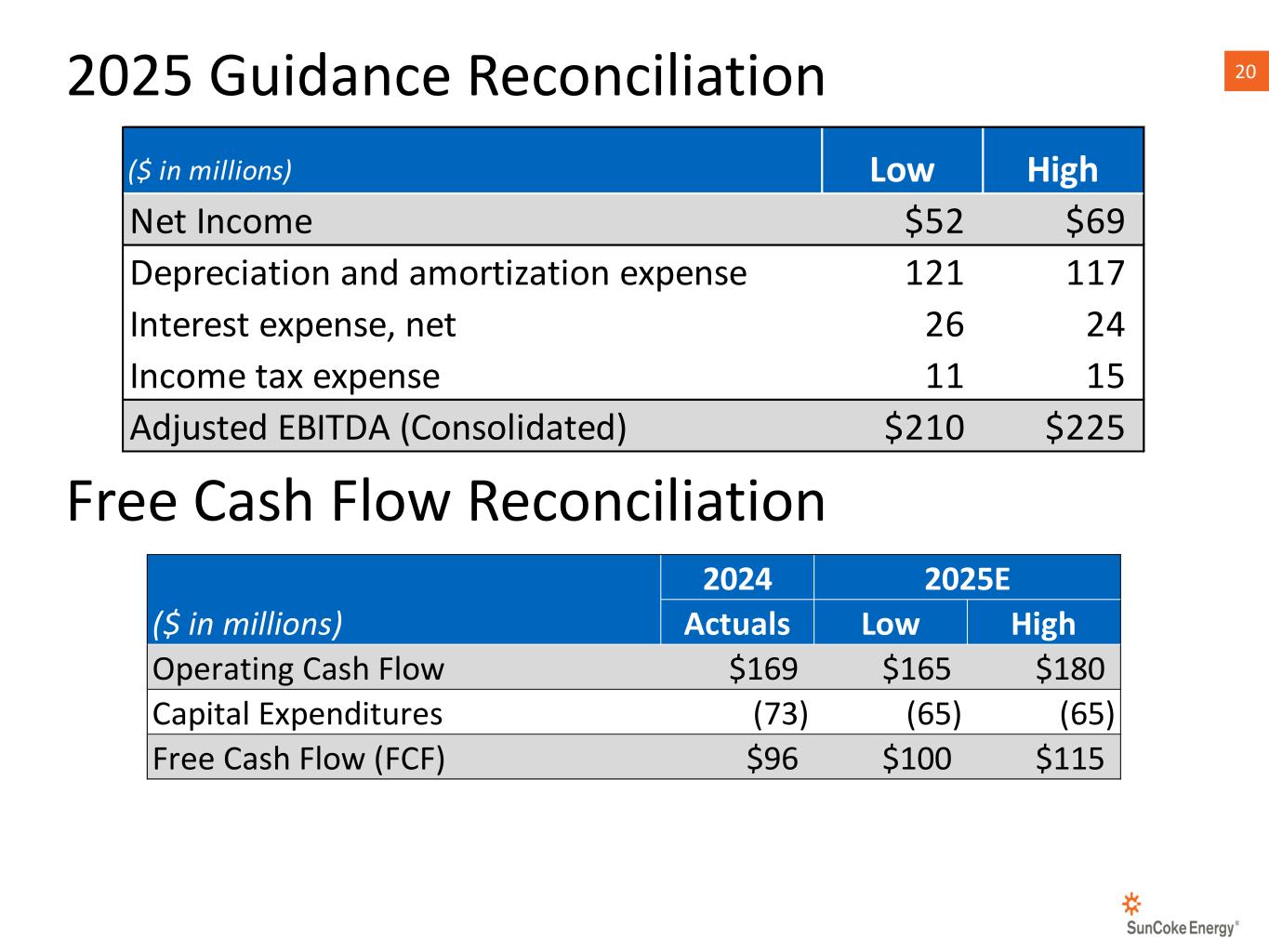
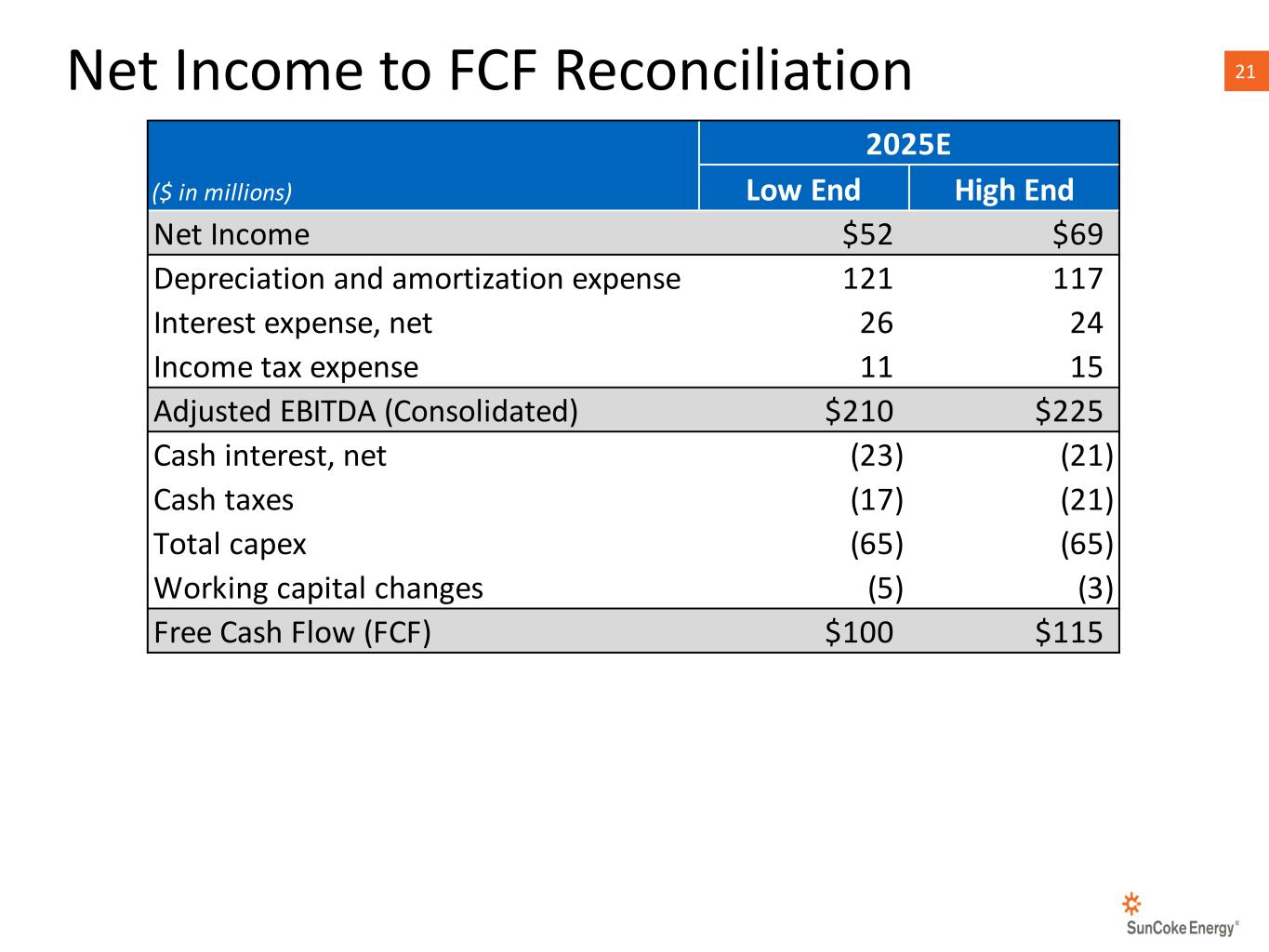
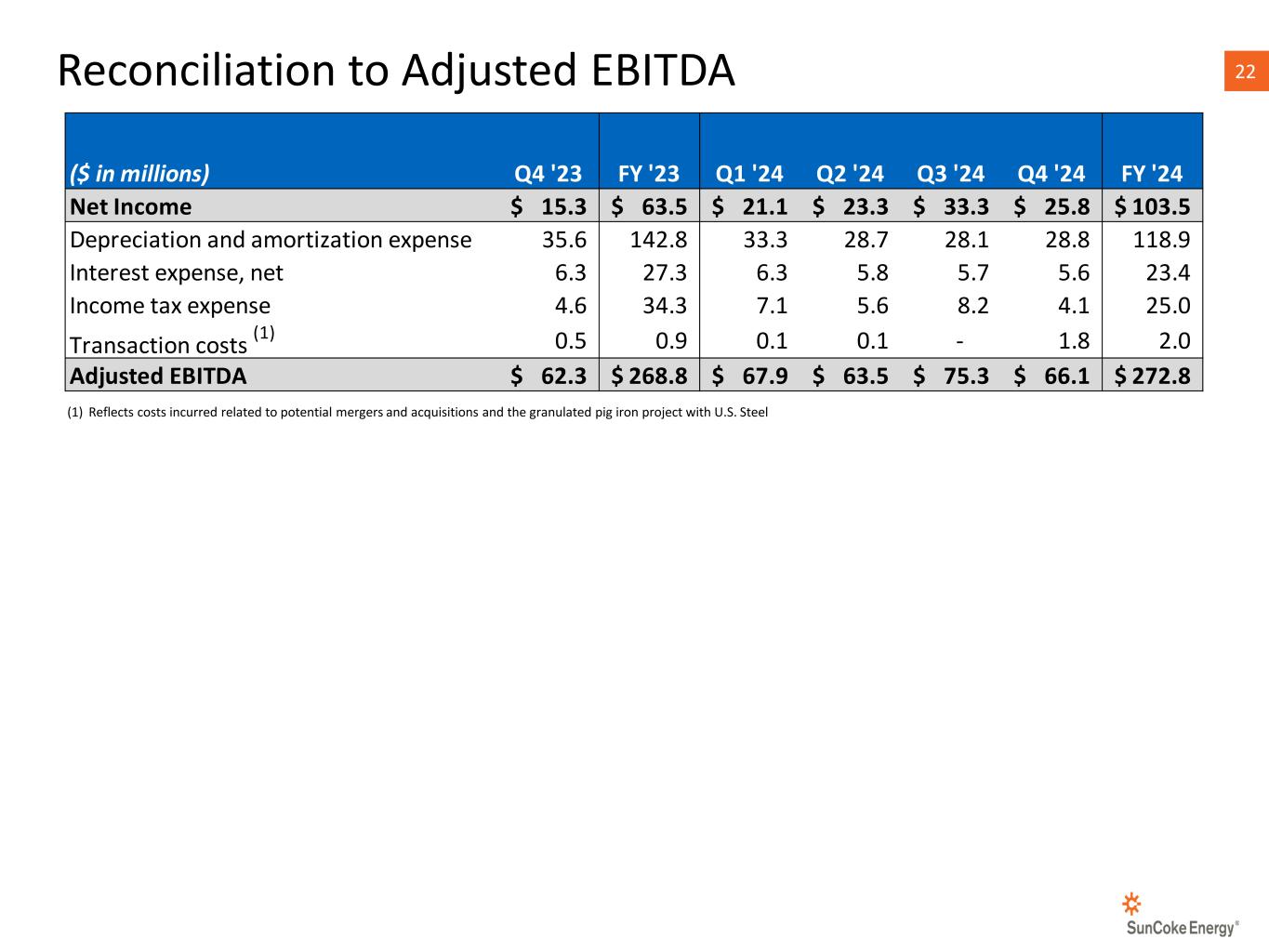
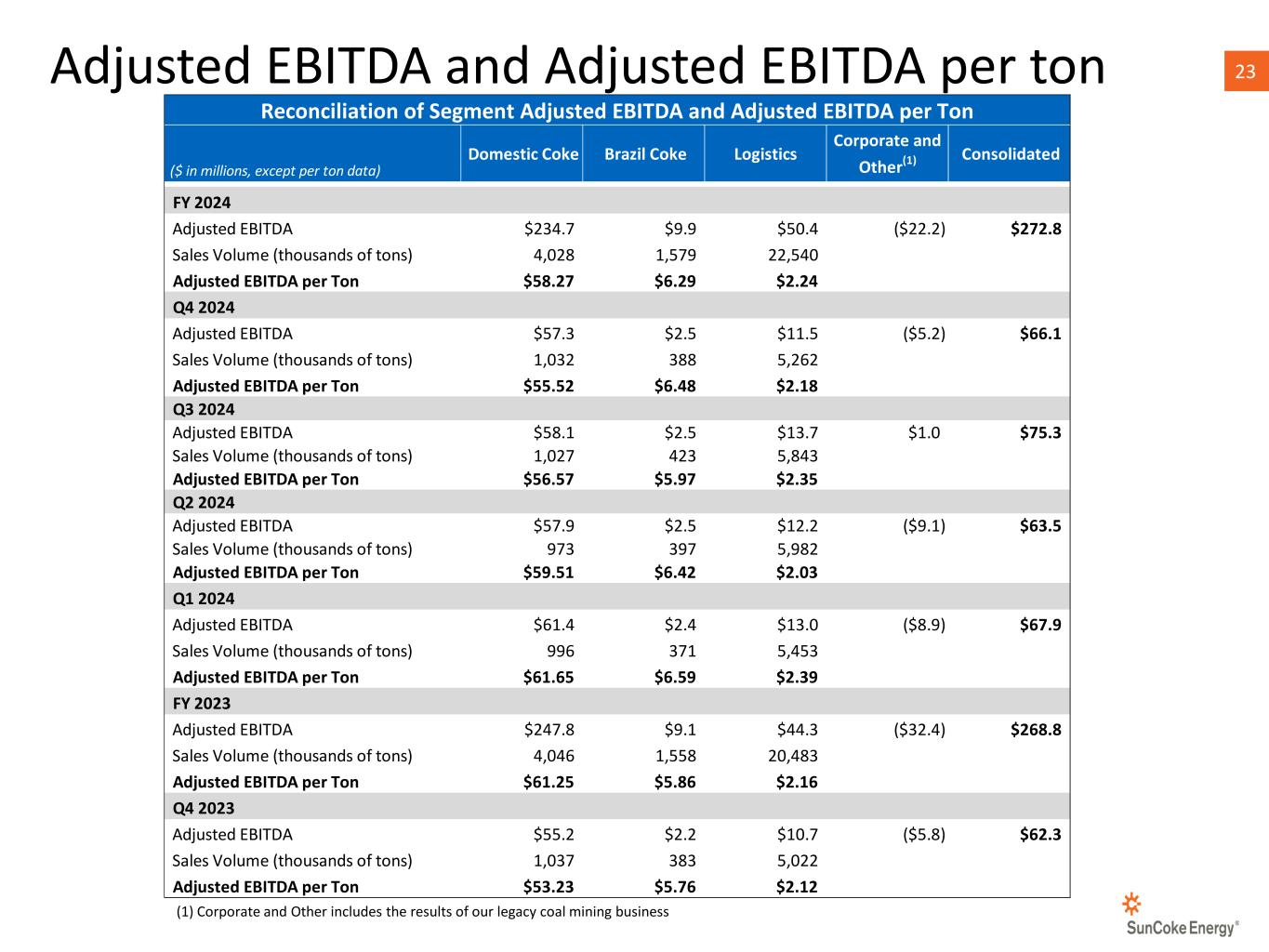
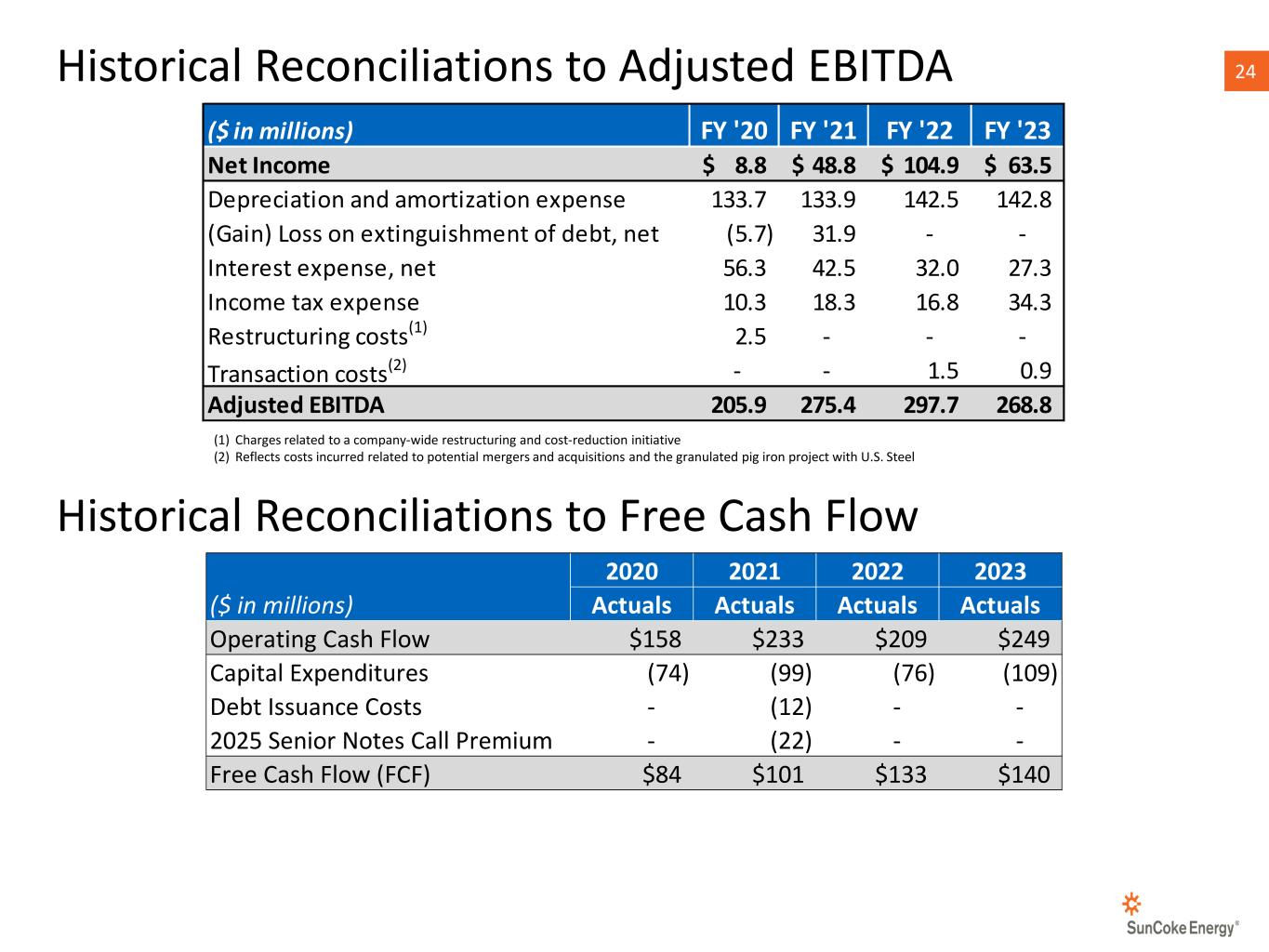
Thanks, Katherine. Turning to Slide 4, the fourth quarter net income attributable to SunCoke was $0.28 per share, up $0.12 versus the fourth quarter of 2023, primarily driven by lower depreciation expense. Our full year 2024 net income attributable to SunCoke was $1.12 per share, up $0.44 versus the full year 2023. The increase was primarily driven by lower depreciation expense, the one-time gain from the agreement with the DOL and lower income tax expense. Consolidated adjusted EBITDA for the fourth quarter 2024 was $66.1 million, up $3.8 million versus the fourth quarter of 2023. The increase was mainly driven by lower planned outage-related costs in the domestic coke segment and higher transloading volumes in the logistics segment. On a full year basis, we delivered adjusted EBITDA of $272.8 million, up $4 million versus $268.8 million in 2023. The year-over-year increase was mainly driven by the one-time gain from the DOL agreement, higher transloading volumes at domestic logistics terminals and higher API2 price adjusted coke yields on our long-term take-or-pay contracts in the domestic coke segment. Turning to Slide 5 to discuss the year-over-year adjusted EBITDA variance in detail. Our domestic coke business operated at full capacity, but was impacted by lower coke yields on a long-term take-or-pay contracts. The domestic coke segment delivered full year adjusted EBITDA of $234.7 million within our full year revised domestic coke guidance range. Including Brazil, our coke operations delivered adjusted EBITDA of $244.6 million. Logistics segment adjusted EBITDA increased by $6.1 million year-over-year, driven by higher volumes at domestic logistics terminals from new spot barge business and higher API2 price adjustment benefit at CMT. The Logistics segment delivered full year adjusted EBITDA of $50.4 million. Finally, our corporate and other expenses, which include results from our legacy coal mining business, were lower by $10.2 million year-over-year, mainly due to the one-time gain on the elimination of the majority of our legacy black lung liabilities. Turning to Slide 6 to discuss capital deployment in 2024. We generated operating cash flow of $168.8 million in 2024, including the impact of the $36 million payment to the DOL. Capital expenditures came in at $72.9 million, which was slightly below our guidance range of $75 million to $80 million. We also returned capital to our shareholders in the form of a $0.44 per share annual dividend, which was a use of approximately $38 million of cash. In July, we increased our dividend by 20% from $0.10 to $0.12 per share. We ended 2024 with a cash balance of $189.6 million and full availability of our $350 million revolver, resulting in strong liquidity of approximately $540 million. Now, I'd like to turn to our guidance expectations for 2025. We expect consolidated adjusted EBITDA to be between $210 million and $225 million in 2025. Domestic coke adjusted EBITDA is expected to be lower by $43 million to $50 million primarily driven by lower margins at both Granite City and Haverhill. Our guidance contemplates the lower economics from the contract extension at Granite City and assumes that the customer will execute the additional six-month option to extend the contract through the end of the year. Currently, we have not reached an agreement on the expiring contract at Haverhill and have assumed that those tons will be sold in the spot market at lower margins. We are essentially sold out for all of our coke products for the full year, but have reflected the margin compression driven by soft spot coke market conditions in our guidance. Brazil coke adjusted EBITDA is expected to be essentially flat year-over-year. As a reminder, the Brazil Coke facility is owned by ArcelorMittal Brazil and SunCoke provides the operating and technological services pursuant to an operating agreement. Logistics adjusted EBITDA is expected to be flat to lower by $5 million in 2025. The absence of the one-time gain on the elimination of the majority of our black lung liabilities will result in a year-over-year decrease in adjusted EBITDA of $9.5 million. Lastly, we expect our corporate and other expenses to be lower by $3 million to $5 million. Moving on to Slide 9 to discuss the domestic coke segment in detail. In 2025, we expect our domestic coke adjusted EBITDA to be between $185 million and $192 million with sales of approximately 4 million tons, which includes contract foundry and spot blast coke. We have approximately 3.3 million tons contracted under long-term take-or-pay agreements in 2025. We expect to sell the approximately 875,000 remaining furnace equivalent tons in the foundry and spot coke markets. Our outlook is impacted by the lower economics from the Granite City contract extension and lower margins on higher spot sales. Our guidance currently contemplates that the non-contracted tons from Haverhill will be sold on the spot market as we do not yet have an agreement in place to renew the expiring contract. While the current pricing environment for spot coke is challenging, there is still demand for our products and we are essentially sold out for the year. Our guidance also includes the assumption that the Granite City cokemaking agreement will be extended for an additional six months through the end of 2025. Moving to Slide 10, to discuss logistics in more detail. 2025 logistics adjusted EBITDA is estimated to be between $45 million and $50 million. Our outlook for 2025 is similar to our 2024 operating performance. We are pleased to announce that we recently extended the take-or-pay coal handling agreement at CMT. The contract is for 4 million tons in 2025 and 2.5 million tons in 2026. And the API2-index-based price adjustment has been replaced by an FOB New Orleans index-based price adjustment. We expect approximately 4 million tons of coal to be exported through CMT and approximately 4.1 million tons of non-coal throughput such as iron ore, pet coke and other products. We have not included any index-based price adjustment benefit from our coal handling agreement at CMT in our 2025 guidance. We expect our domestic logistics terminals to handle approximately 14.8 million tons with the year-over-year volume increase being driven by the new take-or-pay coal handling agreement at KRT. Moving to Slide 11. This slide lays out SunCoke's historical adjusted EBITDA, free cash flow generation and annual dividends paid on a per share basis. As evident from this slide, SunCoke has a strong track record of generating steady free cash flow. We developed foundry coke as a commercially viable product and entered the spot blast coke market, while navigating through the challenges of COVID in 2020. This resulted in 2021 and 2022 being the two best years in SunCoke's history with solid free cash flow conversion. We continue to expand our foundry market presence and participate in a spot blast coke market during 2023 and 2024, while logistics expanded both their customer base and services. We also refinanced our debt and prioritized deleveraging during this period which allowed us to significantly lower our interest expense while resulting in higher free cash flow conversion. With our leverage target in sight, we prioritized return of capital to shareholders by establishing a quarterly dividend and increasing that dividend each year for three years in a row. As laid out in our previous slides, we expect a drop in our adjusted EBITDA for 2025 due to market conditions, but expect to have solid free cash flow generation in the range of $100 million to $115 million. We expect to have lower CapEx spend of around $65 million compared to our normal run rate of $75 million to $80 million. Our deliberate and careful capital allocation decisions over the last several years have strengthened our balance sheet and financial position, while continuing to reward our long-term shareholders with our dividend. Moving to the 2025 guidance summary on Slide 11. Once again, we expect consolidated adjusted EBITDA to be between $210 million and $225 million. Our domestic coke business is expected to deliver adjusted EBITDA between $185 million and $192 million, while the Logistics segment is expected to deliver between $45 million and $50 million in adjusted EBITDA. As indicated earlier, we anticipate our CapEx requirements in 2025 to be approximately $65 million which is lower than our normal annual run rate. We expect 2025 operating cash flow to be between $165 million and $180 million and our free cash flow is expected to be between $100 million and $115 million. With that, I'll turn it back over to Katherine.
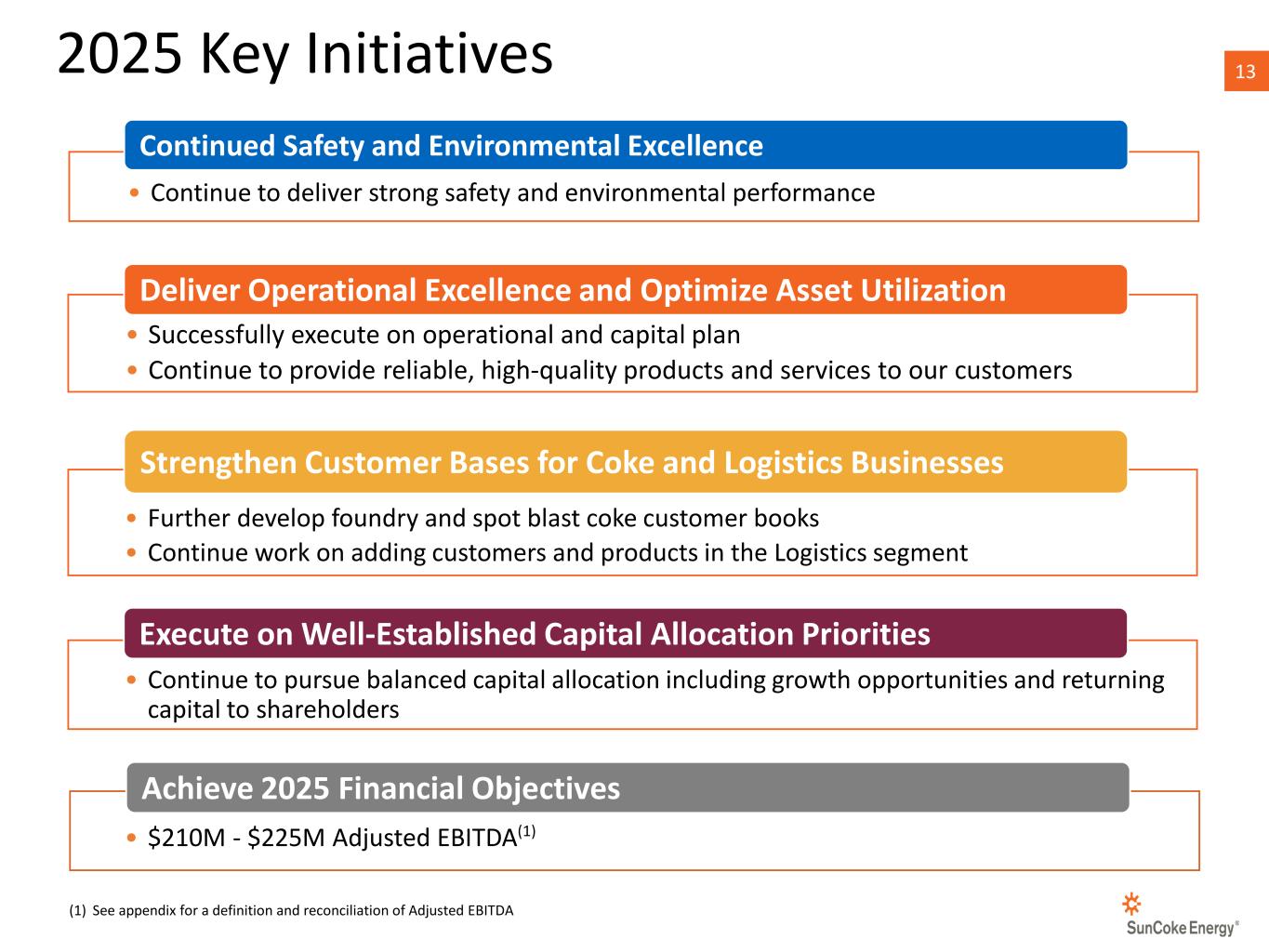
Thanks, Mark. Wrapping up on Slide 13, we see 2025 reflecting the broader challenges the steel industry is facing with lower pricing and demand. At the same time, we continue to reliably produce high-quality coke and are essentially sold out for the full year. As always, safety is our first priority. We are coming off a year of record safety performance and the team is energized and committed to maintaining strong safety and environmental performance in 2025. Robust safety and environmental standards set us apart and are central to our reliable delivery of high-quality coke and logistics services. In 2025, our focus will be on maintaining the strength of our core businesses as we navigate challenging market conditions, as well as pursuing new opportunities across all areas of our business. We continue to see SunCoke being well positioned for long-term success. SunCoke has the newest cokemaking facilities in North America with the leading technology. We continue to invest in our assets to ensure that they are safe, efficient, reliable, and environmentally compliant, putting SunCoke in the best position to grow and diversify our customer and product base. As we've demonstrated in the past, we will pursue a balanced yet opportunistic approach to capital allocation. From a growth perspective, we continue to work on developing the Granite City GPI project. While we are frustrated by the additional delays outside of our control, we continue to believe in the value of the project. As always, we continuously evaluate the capital needs of the business, our capital structure, and the need to reward our shareholders and we'll make capital allocation decisions accordingly. With that, let's go ahead and open up the call for Q&A.
Operator
Operator instructions were provided. Today's first question comes from Nick Giles of B. Riley.
Speaker 4
Thank you, operator. Good morning, everyone. Guys, my first question is on the longer-term outlook for your fleet and maybe more specifically in the event of a non-renewal at Haverhill, how should we think about utilization at that asset in the outer years and your willingness to be incrementally exposed to spot?
Thanks for the question. As we've said, currently we have not renewed our Haverhill contract, and we are in constant dialogue with our customers. We recognize that we find ourselves in a challenging market at this particular time. Capacity utilization for both EAF and integrated producers is about 74%. At the same time, we don't believe that the market as it stands today will remain in the long term. This is a cyclical industry and we have an ability to adapt to changing conditions. We have moved forward in developing foundry coke as a product and now sell that into the market. We have sold spot blast coke successfully into the market, including record years in 2021 and 2022, and we'll continue to adapt and sell whether it be foundry or spot blast coke into the North American or seaborne markets, as well as continuing to work with our long-term customers like Cliffs and to pursue our long-term contracts with Cliffs and other customers.
Speaker 4
Katherine, I really appreciate all those comments. Maybe my next question: you're still anticipating strong free cash flow this year and CapEx is moving down. How should we think about potential orders of magnitude from a debt pay down perspective? And what could this mean further down the road for increased shareholder returns?
Speaker 1
Nick, I can take the debt pay down question and then turn it over to Katherine for the second half. From a debt perspective, we only have $500 million of senior bonds outstanding. We refinanced that in 2021. It's sitting at an attractive rate. So right now, given what we see in the future, there's no plan for any debt buybacks or anything like that.
Yes. When you think about capital allocation, we look to reward our long-term shareholders and one of the ways we focus on rewarding shareholders is through pursuing profitable growth opportunities. The GPI project is something we continue to see the merits of. If we think about that project, we have well-positioned low-cost iron ore, blast furnaces that are in place at Granite City Works, and our cokemaking plant is adjacent to those furnaces to provide the necessary fuel to make premium-grade GPI for Big River. That project is something we continue to support and we also continue to pursue other profitable growth opportunities outside of GPI. We are extremely disciplined in our approach and we consider dividends or buybacks; we'll continue to make decisions that reward our long-term shareholders.
Speaker 4
Shantanu, Katherine, thanks again. Maybe if I could sneak one more in. Met coal prices have been under pressure for some time and I was wondering if you could remind us when the bulk of your contracting occurs throughout a typical calendar year. And do these prices impact the way that you approach procurement?
Speaker 1
For our long-term take-or-pay contracts, those are all finalized typically around the September to November time period. The coal prices there do not affect our profitability because those are essentially pass-through in our contract. When we are doing our foundry and spot coke sales, we look at the market and take that into account while pricing those coals. We tie our coal buys with our coke sales. As announced today, we are essentially sold out for the full year, so more or less our coal buys are finalized. When there is some unsold tonnage, we may have a small open position, and we try to match coal purchases with our coke sales. Specifically this year, there should be no major impact on our profitability from the coal purchases, though prices have been under downward pressure.
Speaker 4
Shantanu, that's very clear. Guys, again, thanks for all the comments and continued best of luck.
Operator
And our next question today comes from Nathan Martin with The Benchmark Company.
Speaker 5
Thanks, operator. Good morning everyone. Congrats on the strong finish to the year. I want to look at the domestic coke business specifically as we are looking at the initial 2025 guidance. I'm calling for a considerable step down in adjusted EBITDA which appears to be essentially entirely driven by lower expected EBITDA per ton. You guys called out the lower economics and margins at Granite City that was known before on that contract extension as well as lower margins at Haverhill on the higher spot sales. But could you help us better understand the bridge from $58 a ton in 2024 to $47 a ton, I think at the midpoint of 2025 guidance. It would seem like margins maybe other operations would also need to be down a little bit. Is that the case? Any color would be helpful.
Speaker 1
Sure, Nate. It's mainly driven by the two factors we outlined: the Granite City contract economics and the contract expiry at Haverhill, which we are expecting to sell into the spot market. If you look at our sales projections from 2024 to 2025, our operations are expected to be similar and we expect some improvement in coal-to-coke yields in 2025. So operations are expected to improve in 2025, but the impact of the Granite City economics and the shift of Haverhill tons to the spot market is the primary driver of the decline in domestic coke EBITDA.
Speaker 5
Shantanu, any thoughts then on the cadence of EBITDA per ton for that business? Would you expect it to weaken in the back half of the year given those items we just talked about?
Speaker 1
Are you talking from a quarter-to-quarter perspective?
Speaker 1
We produce 24/7, so we manage sales as we produce because inventory storage is limited. We try to manage quarter-to-quarter sales to align with production. Yes, we expect a slight decline in the second half of the year versus the first half given that the Haverhill contract expires in the first half of the year.
Speaker 5
Okay. That's fair. Maybe shifting gears over to the logistics side: Mark, you mentioned the API2 price adjustment has now been replaced by an FOB New Orleans price adjustment at CMT. Can we get additional thoughts there, maybe what was the driver behind that change and is there any way we can track that index?
Yes. The customer requested the change because the API2 index wasn't reflective of the markets they serve. They preferred an index that more closely relates to the market they are sending product to. That was the reason for the change.
Speaker 5
And is there any way we can track that on our side?
Speaker 1
Yes. The index is published by Platts on a daily basis. As we said, there is no price benefit from that index built into our 2025 guidance, so you can assume the index is not currently in the money. If the index comes into the money, we would benefit, similar to how the API2 index mechanism worked. The exact in-the-money and out-of-money points differ with the different index, but the mechanics are similar.
Speaker 5
Is it fair to assume that the economics are fairly in line with the API2 adjustment you had previously, from your standpoint?
Speaker 1
Yes. You can see that from the guidance. In 2024, we had a significant benefit from the API2 index which drove part of the logistics results. In 2025, we are projecting higher domestic logistics volumes, but we are not assuming any index-based price benefit, so overall the economics are similar.
Speaker 5
Okay. Perfect. I appreciate that. And then maybe just wrapping up on CapEx: your guidance is $65 million for the full year. As you guys mentioned, that's below your normal level and, I'm assuming, includes some remaining CapEx for the KRT upgrades. Is it possible to get a breakdown of that spend, and why it's coming in below normal levels? Also, should the timing be heavier in the first half given the ramp-up at KRT?
Sure. The overall CapEx amount is down because several large projects from prior years are now complete, which reduced our normal maintenance and major project spend. Of the $65 million, about $5 million is growth CapEx for the remainder of the KRT project. Going forward, we expect spend to be fairly steady across all four quarters, so you should see CapEx distributed relatively evenly through the year.
Speaker 5
Got it. That $60 million maintenance is a good way to think about things going forward?
I would say our run-rate CapEx has been higher in the past, and we may have additional larger spend going forward. So you can still think of $70 million to $80 million as our typical run-rate CapEx.
Speaker 5
Okay. And that was the genesis of my question — why is it lower than that $70 to $80 million — I guess some of those other projects wrapped. Maybe a final question on the Granite City GPI project: the acquisition of U.S. Steel by Nippon was blocked, although there are a couple more months left on that agreement and some turmoil possible with litigation. How has that impacted your conversations with U.S. Steel? If the deal does not come to fruition, could that speed up a decision on the GPI project? At what point could you provide any idea on CapEx if the project moves forward or any additional thoughts?
The word of the day is wait. We continue to wait with all the other parties as the lawsuit progresses; the deadline was extended to June and the delay has negatively impacted many. With that said, the project is as strong today as when we announced it. We began discussions with U.S. Steel before any sale process. The economic fundamentals remain strong: low-cost iron ore, blast furnaces at Granite City Works, our adjacent cokemaking plant, and the ability to make premium GPI for Big River. The benefits remain for miners, plant employees, our employees and vendors. If the sale does not go forward, the fundamentals of the project remain and we would look to work with Nippon or any other party, U.S. Steel or otherwise, on this project.
Speaker 1
Nathan, you also asked about CapEx. When we announced the project in June 2022, we said the CapEx on this project would be roughly two years of free cash flow plus some revolver borrowing. That was the guideline we provided previously.
Speaker 5
Yes, Shantanu, I appreciate that reminder. Katherine, thank you for your answer as well. Mark, I'll leave it there. Best of luck in 2025.
Operator
Our next question comes from Abe Landa with Bank of America.
Speaker 6
This is Abe Landa. Thank you for taking my question. Moving on to your EBITDA reconciliation, I saw transaction costs increase from $1.8 million in the fourth quarter versus $0.2 million in the prior nine months. You also added language of potential mergers and acquisitions. What M&A is being considered — are you being acquired or looking to acquire something? And what are the areas of growth?
We are always looking at potential profitable growth opportunities in addition to the GPI project. We will spend money to evaluate and potentially move forward with opportunities. The specifics of potential opportunities are not something we can discuss unless something were to come to fruition.
Speaker 6
Are these areas you're currently operating in or different areas?
When we look at growth, we remain very disciplined and focus on areas where we think we can add value. Any potential growth opportunity would need to be profitable and reward our long-term shareholders.
Speaker 6
Okay. And then maybe the next question: your revolver maturing in 2026 — I think it comes current in about five months. Are you having any early discussions with banks about potentially extending it or anything along those lines?
Speaker 1
Yes, Abraham. The revolver currently comes due in June 2025. We have had early discussions and we'll address it as it comes. We do not see any red flags or issues at this point.
Speaker 6
Those are the only two questions I have. Thank you so much.
Operator
This concludes our question-and-answer session. I'd like to turn the conference back over to Katherine Gates for any closing remarks.
I want to thank everyone for joining us today, and again, thank the SunCoke team for their hard work and record-setting safety performance in 2024. We are well-positioned to meet our financial targets and create value for shareholders. Let's continue to work safely today and every day.
Operator
Thank you. This concludes today's conference call. We thank you all for attending today's presentation. You may now disconnect your lines, and have a wonderful day.