Operator
Greetings, and welcome to the Texas Pacific Land Corporation First Quarter 2025 Earnings Call. As a reminder, this conference is being recorded. It is now a pleasure to introduce your host, Shawn Amini, Investor Relations. Thank you. You may begin.
Thank you for joining us today for Texas Pacific Land Corporation's First Quarter 2025 Earnings Conference Call. Yesterday afternoon, the company released its financial results and filed its Form 10-Q with the Securities and Exchange Commission, which is available on the Investors section of the company's website at www.texaspacific.com. As a reminder, remarks made on today's conference call may include forward-looking statements. Forward-looking statements are subject to risks and uncertainties that may cause actual results to differ materially from those discussed today. We do not undertake any obligation to update our forward-looking statements in light of new information or future events. For a more detailed discussion of the factors that may affect the company's results, please refer to our earnings release for this quarter and to our recent SEC filings. During this call, we will also be discussing certain non-GAAP financial measures. More information and reconciliations about these non-GAAP financial measures are contained in our earnings release and SEC filings. Please also note, we may at times refer to our company by stock ticker TPL. This morning's conference call is hosted by TPL's Chief Executive Officer, Ty Glover; Chief Financial Officer, Chris Steddum; and Executive Vice President of Tech Specific Water Resources, Robert Crain. Management will make some prepared comments, after which we'll open the call for questions. Now I will turn the call over to Ty.
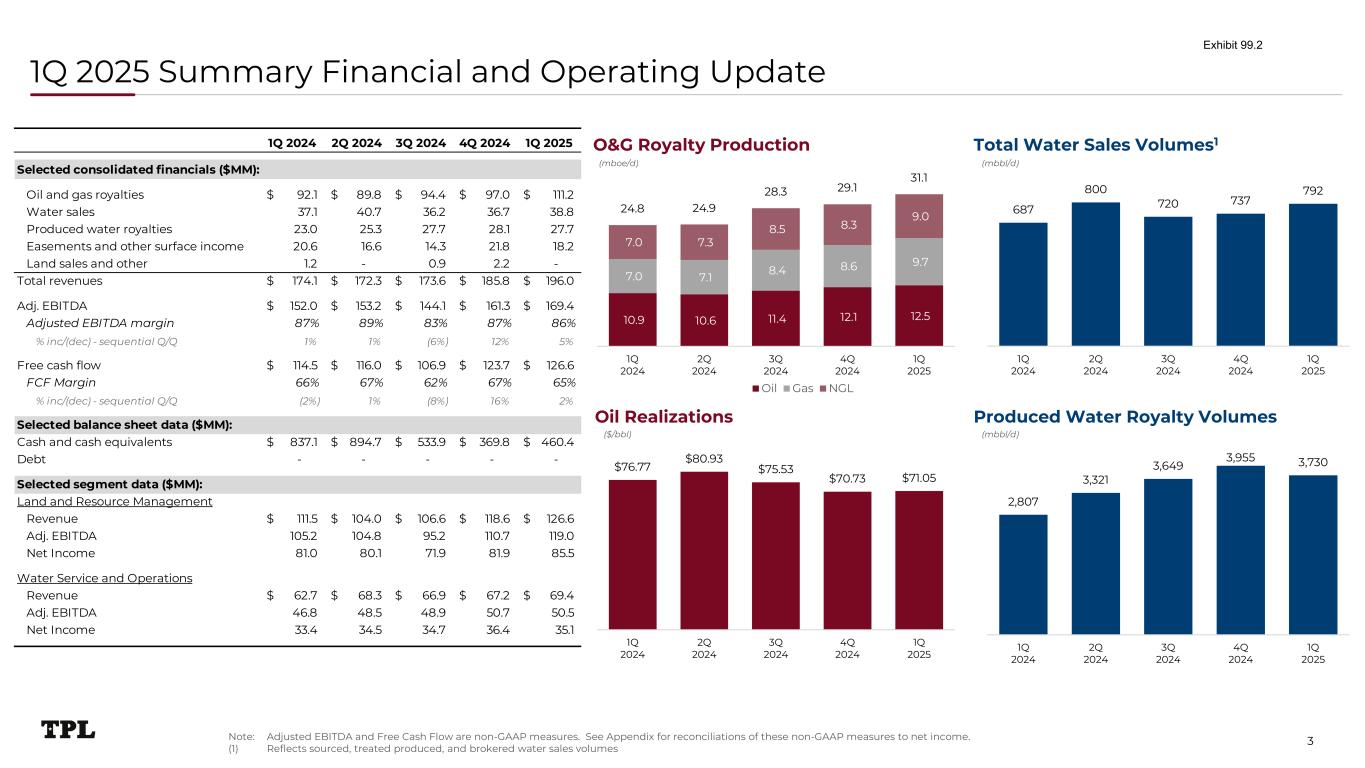
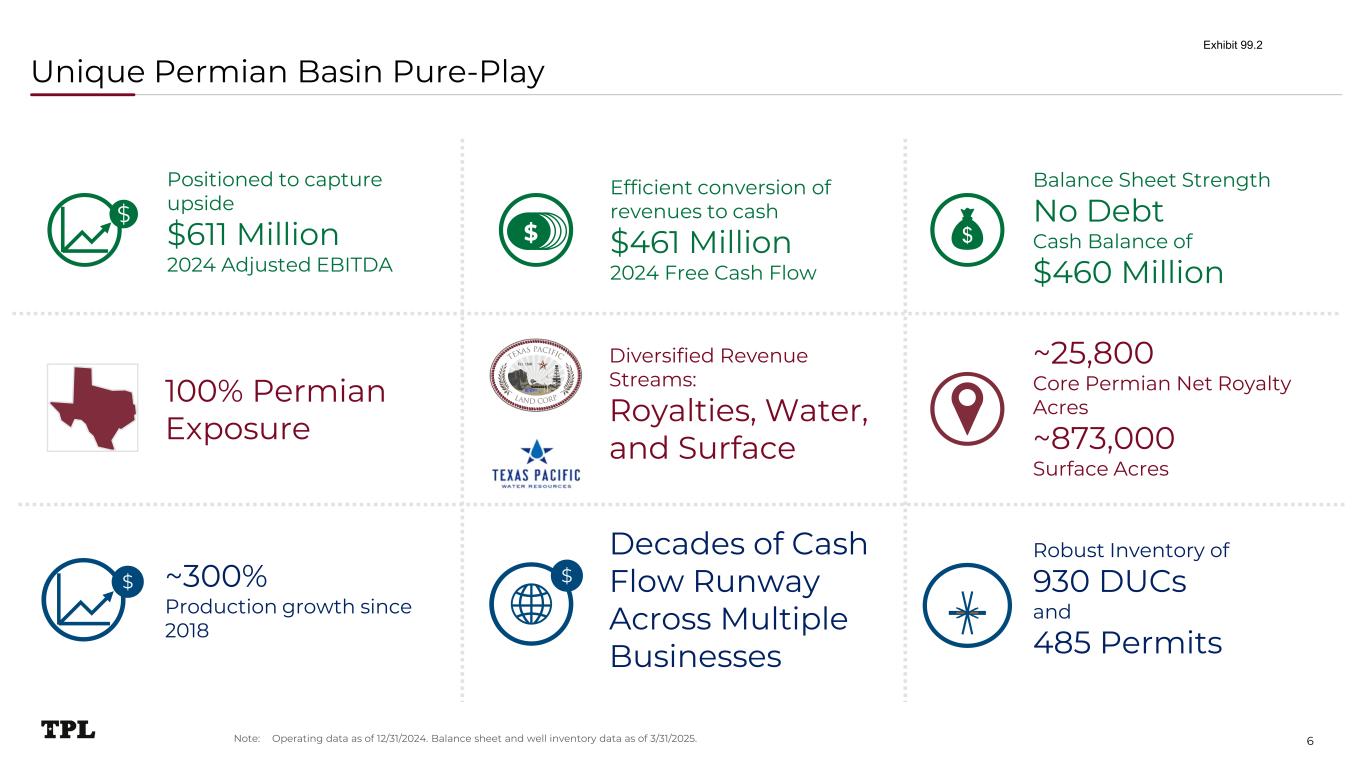
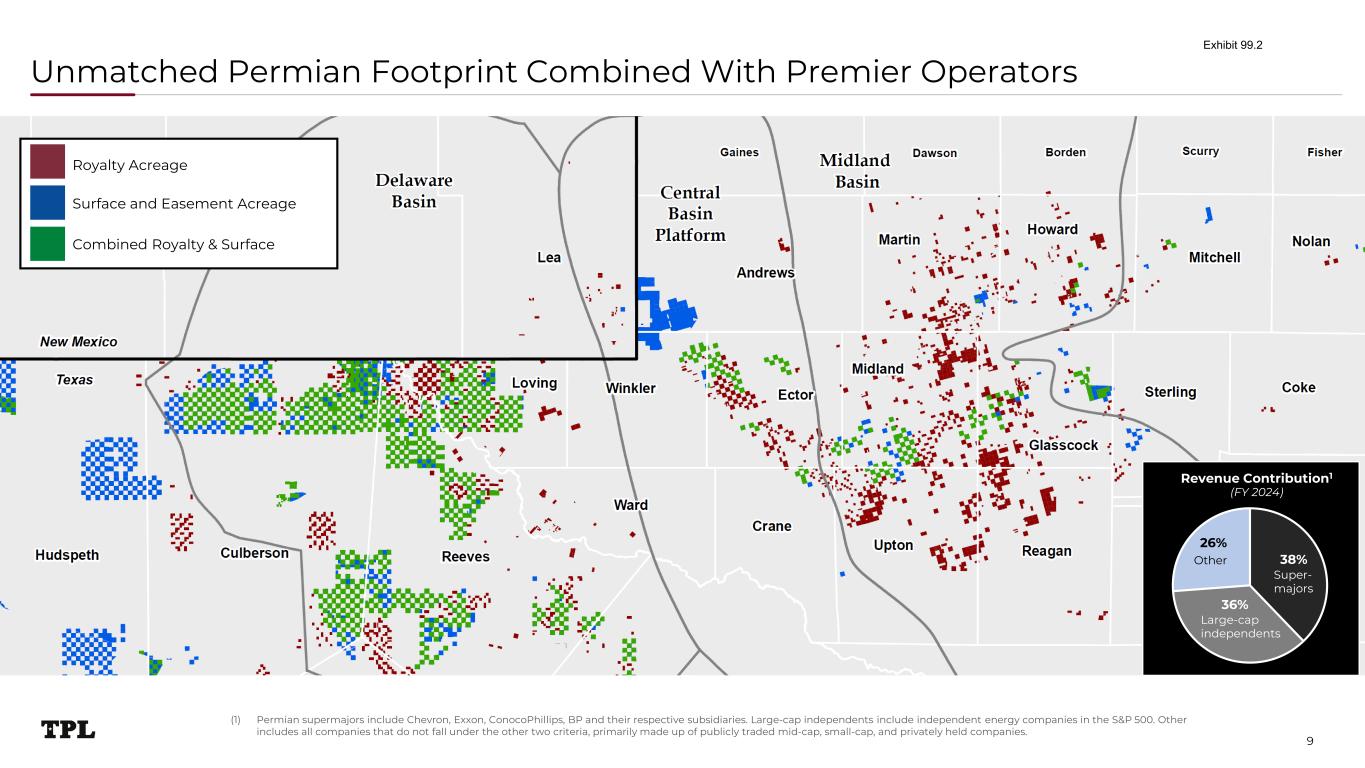
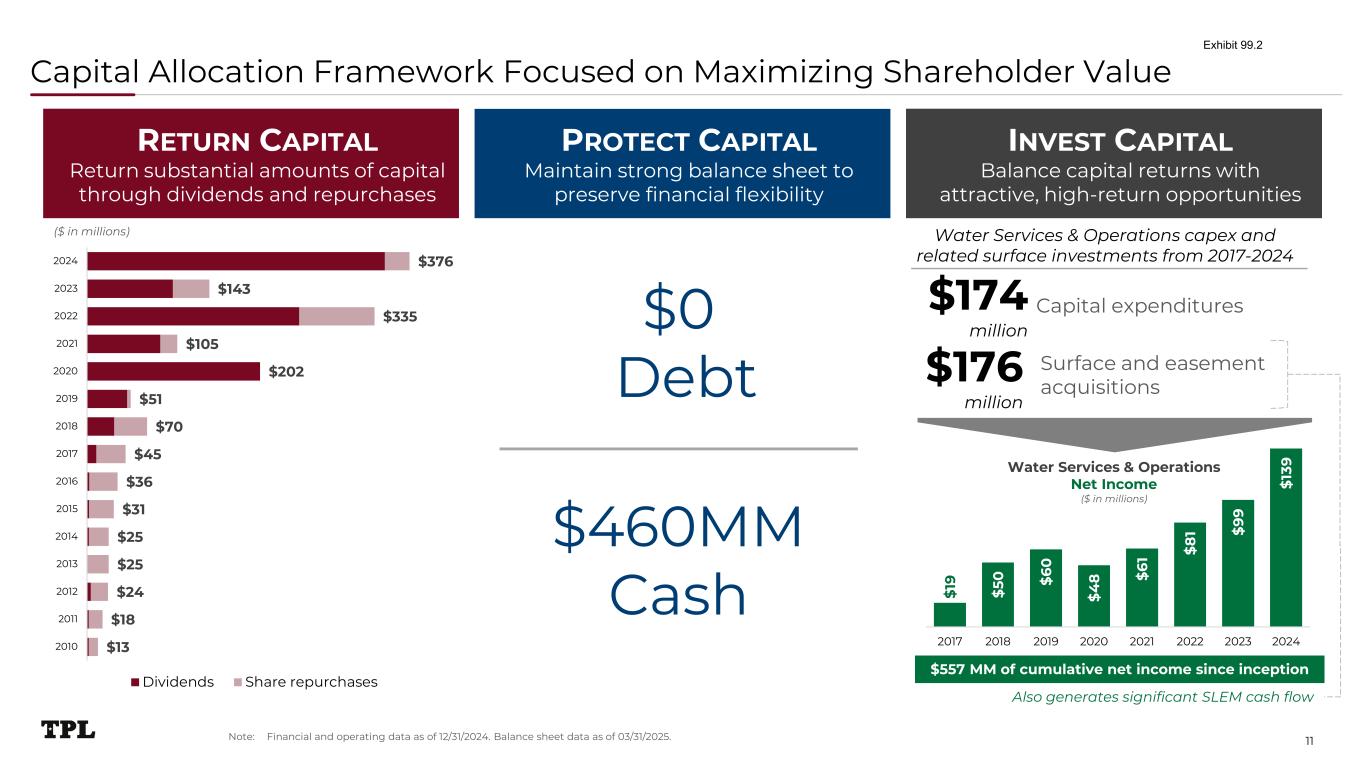
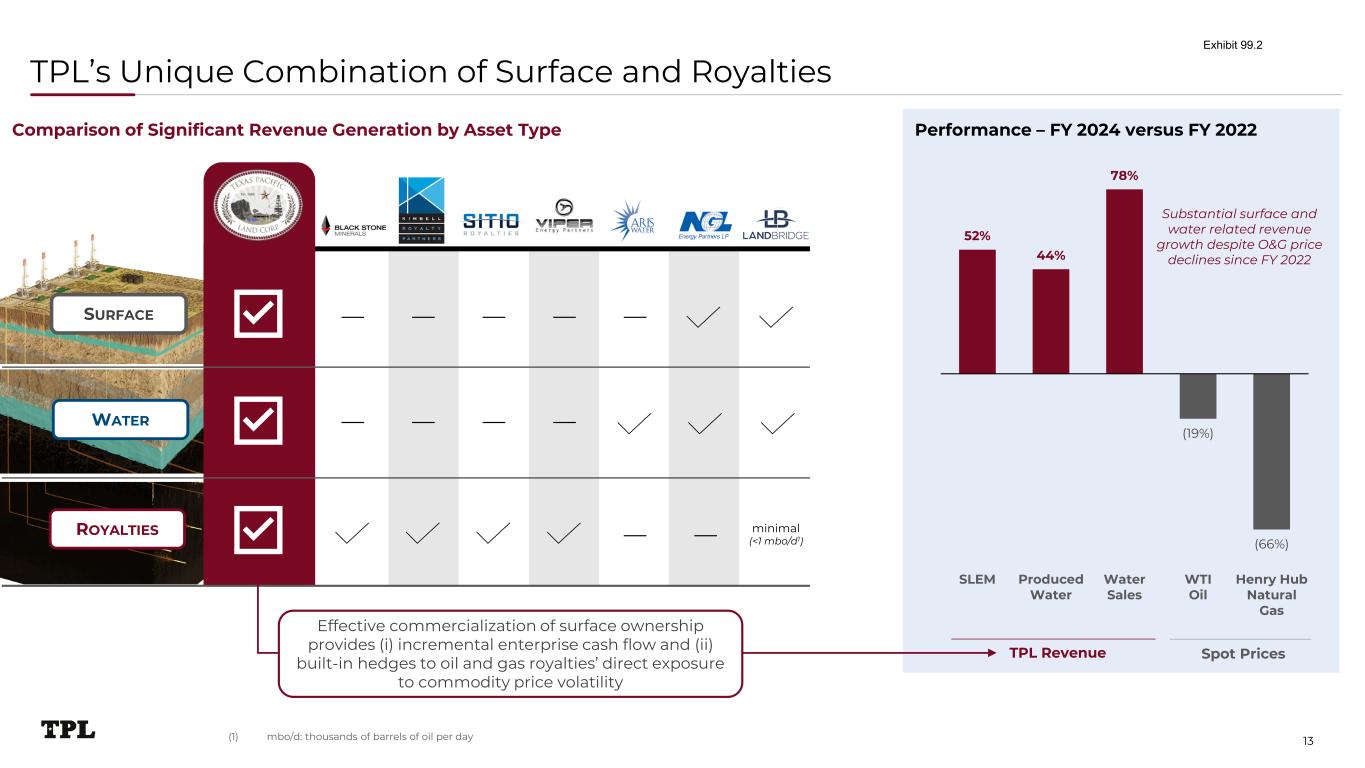
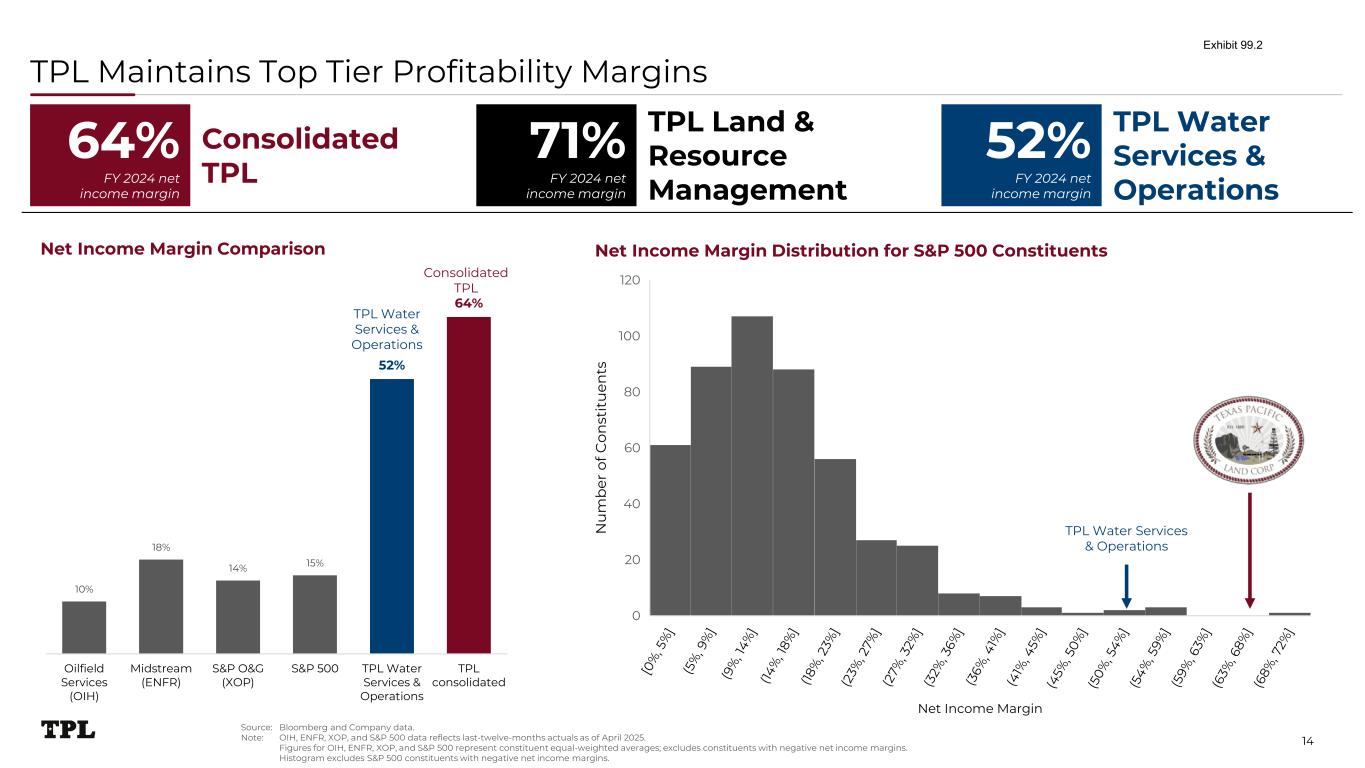
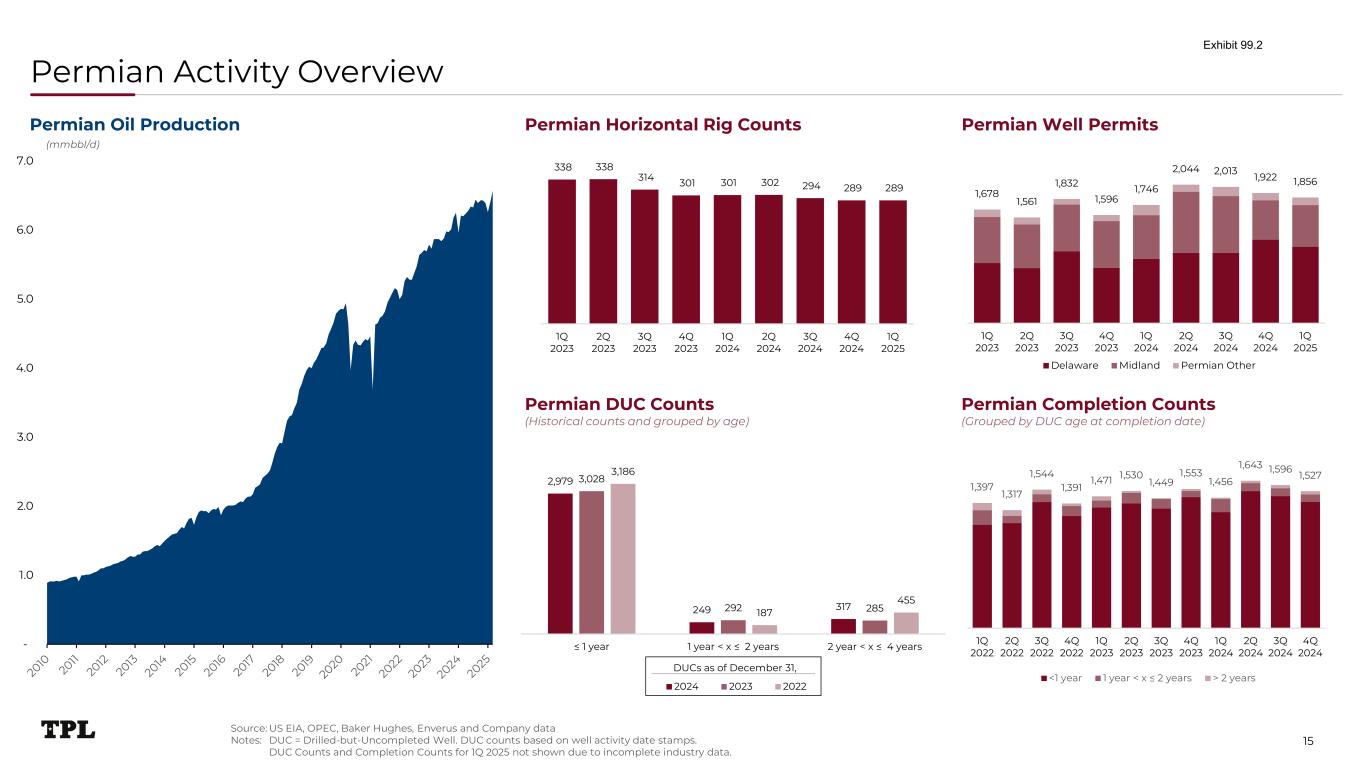
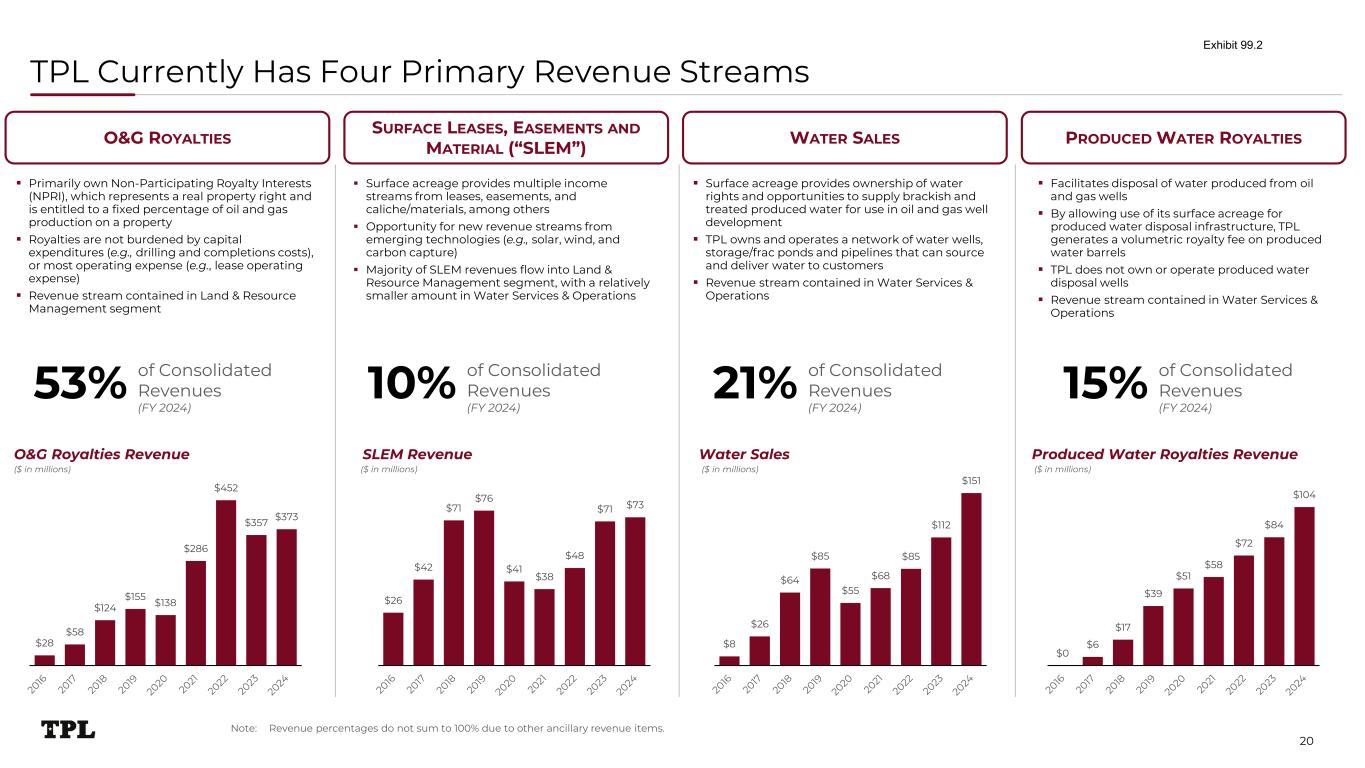
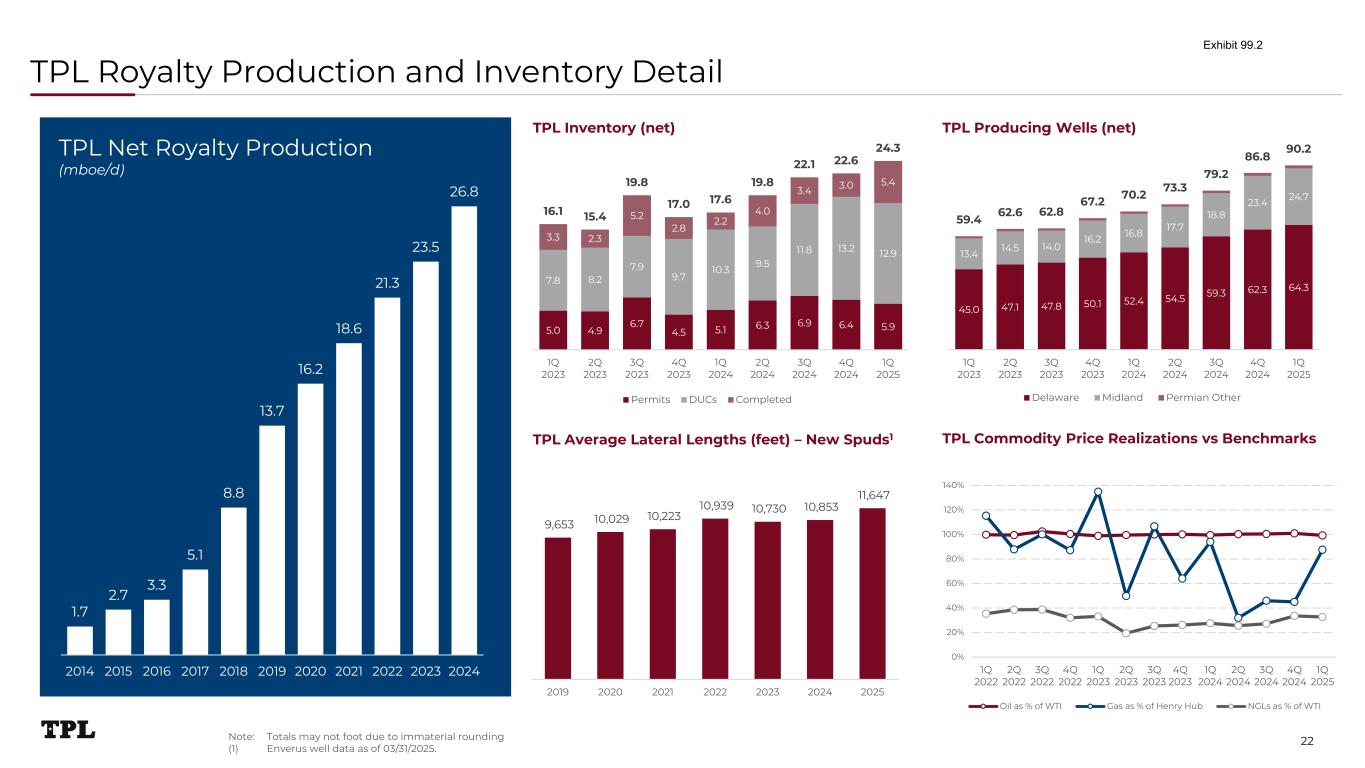
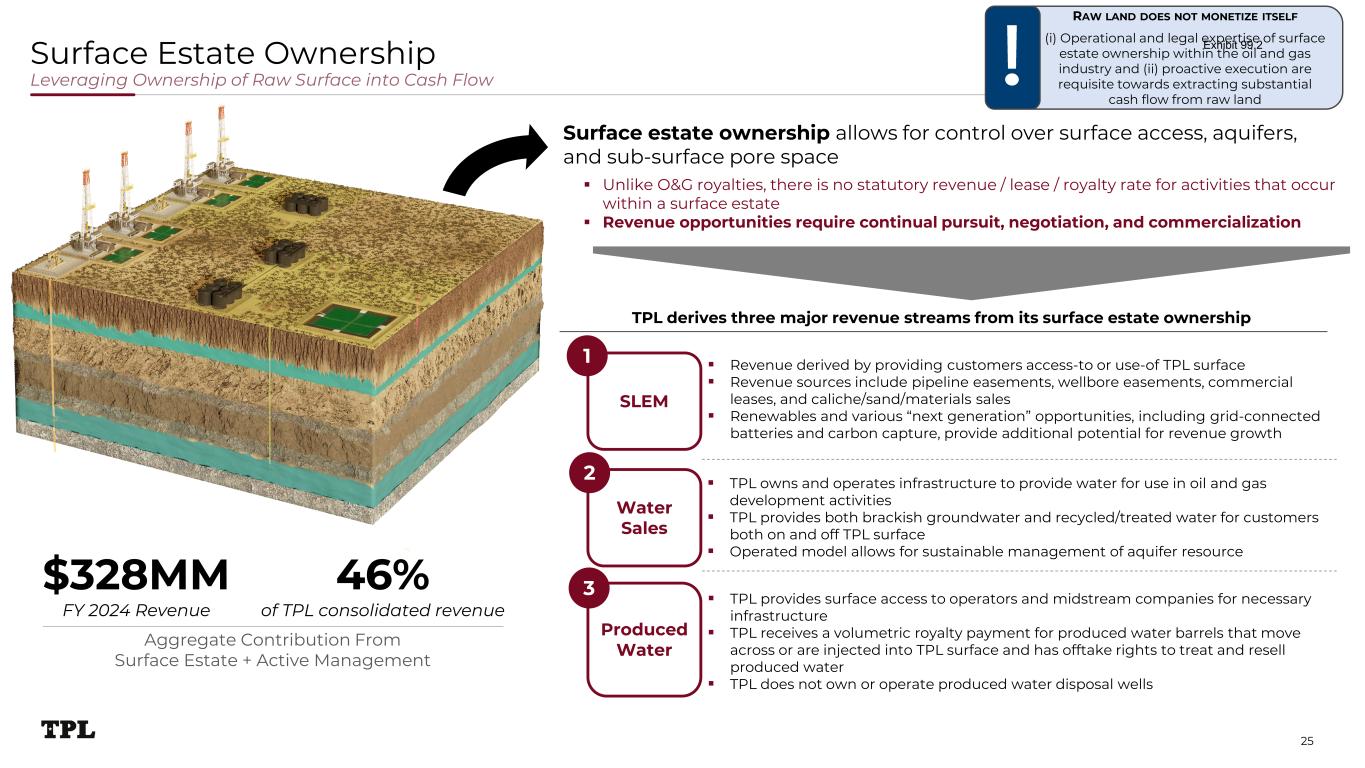
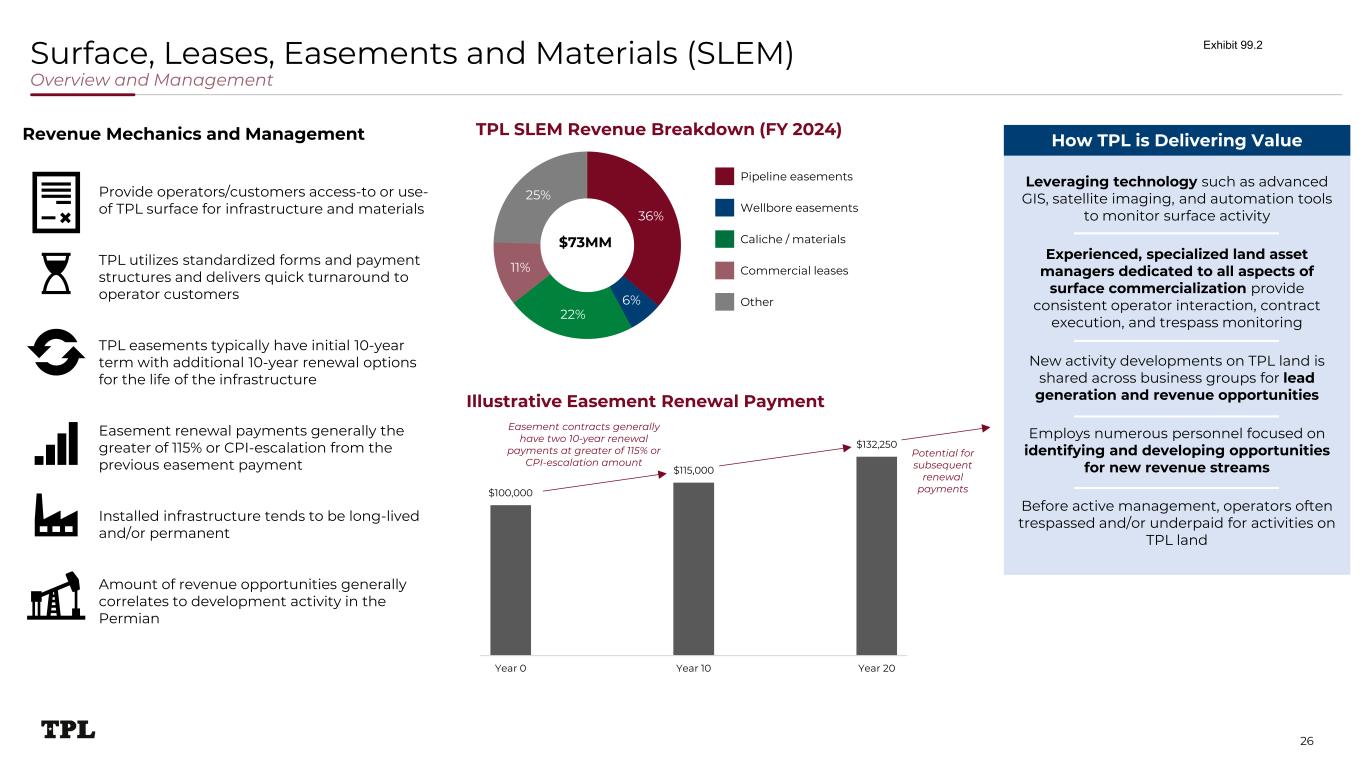
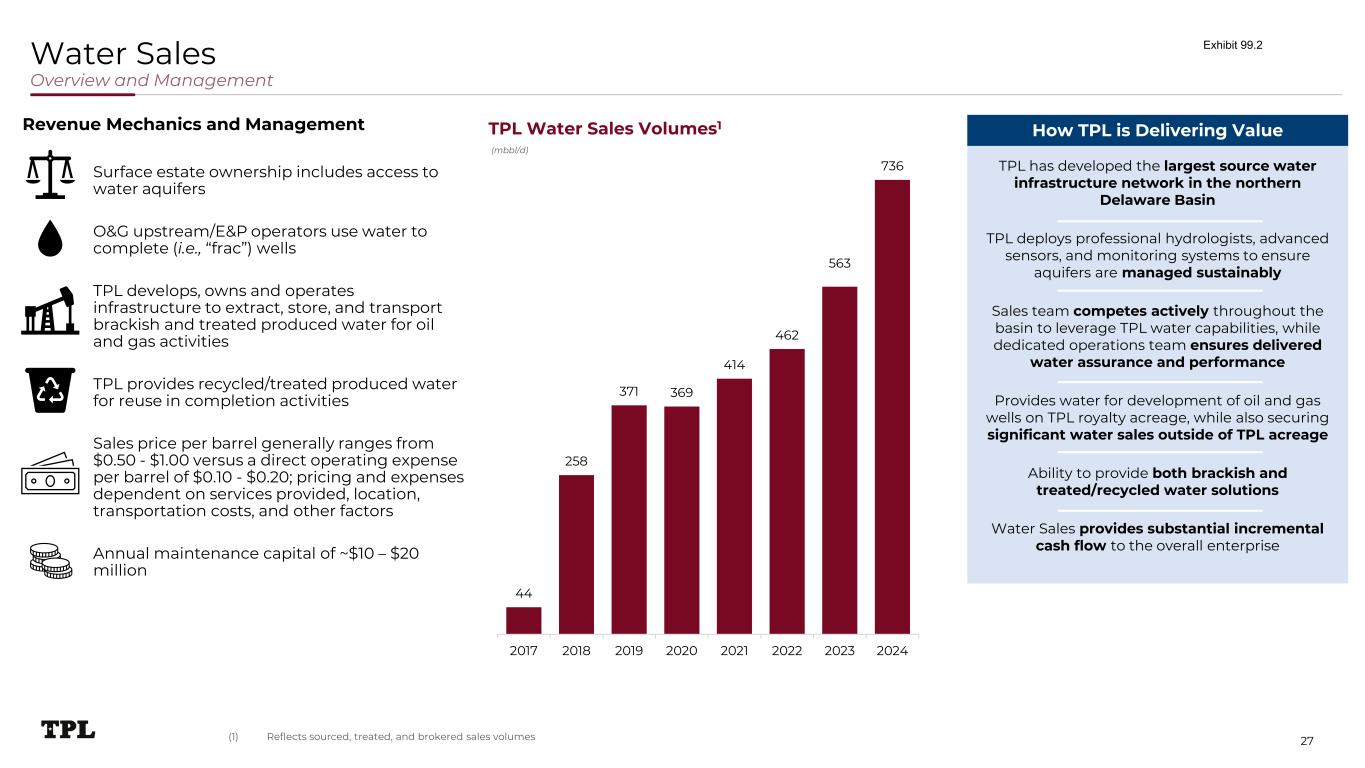
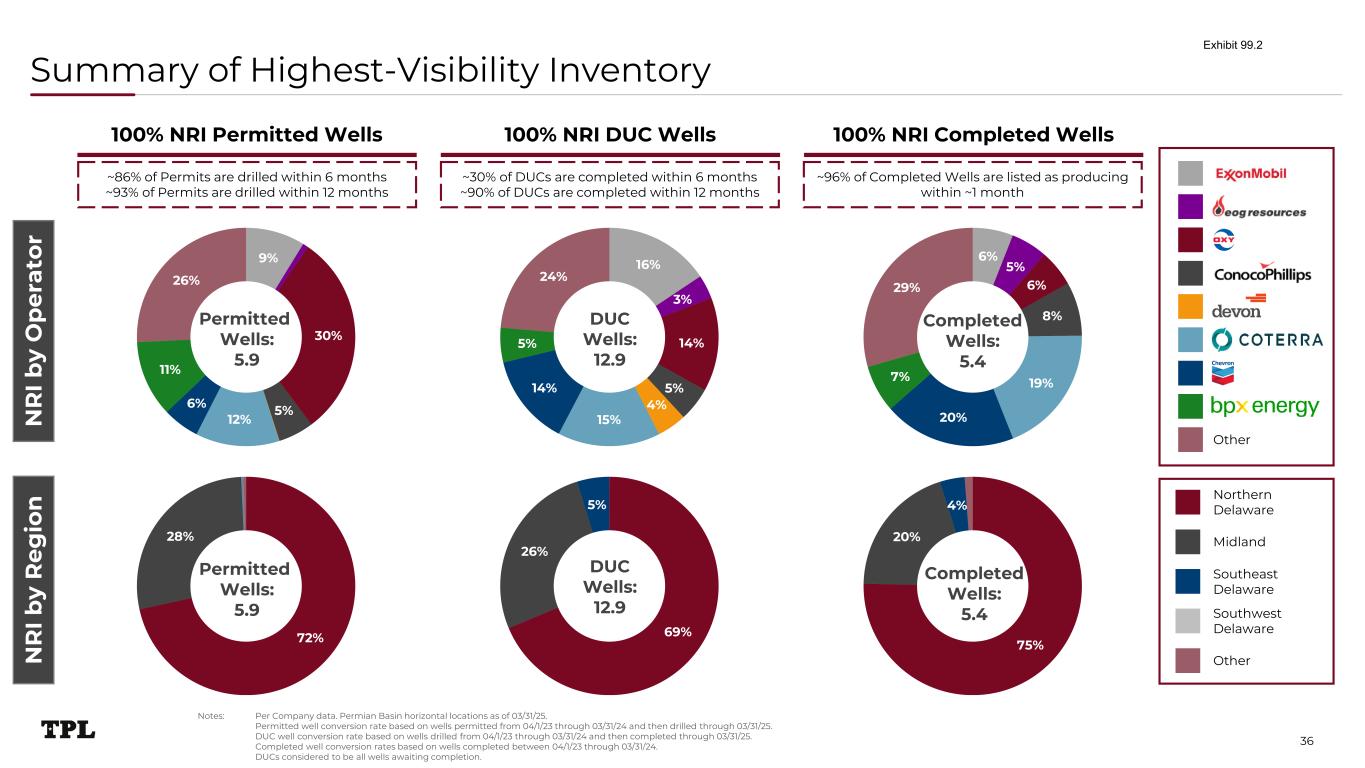
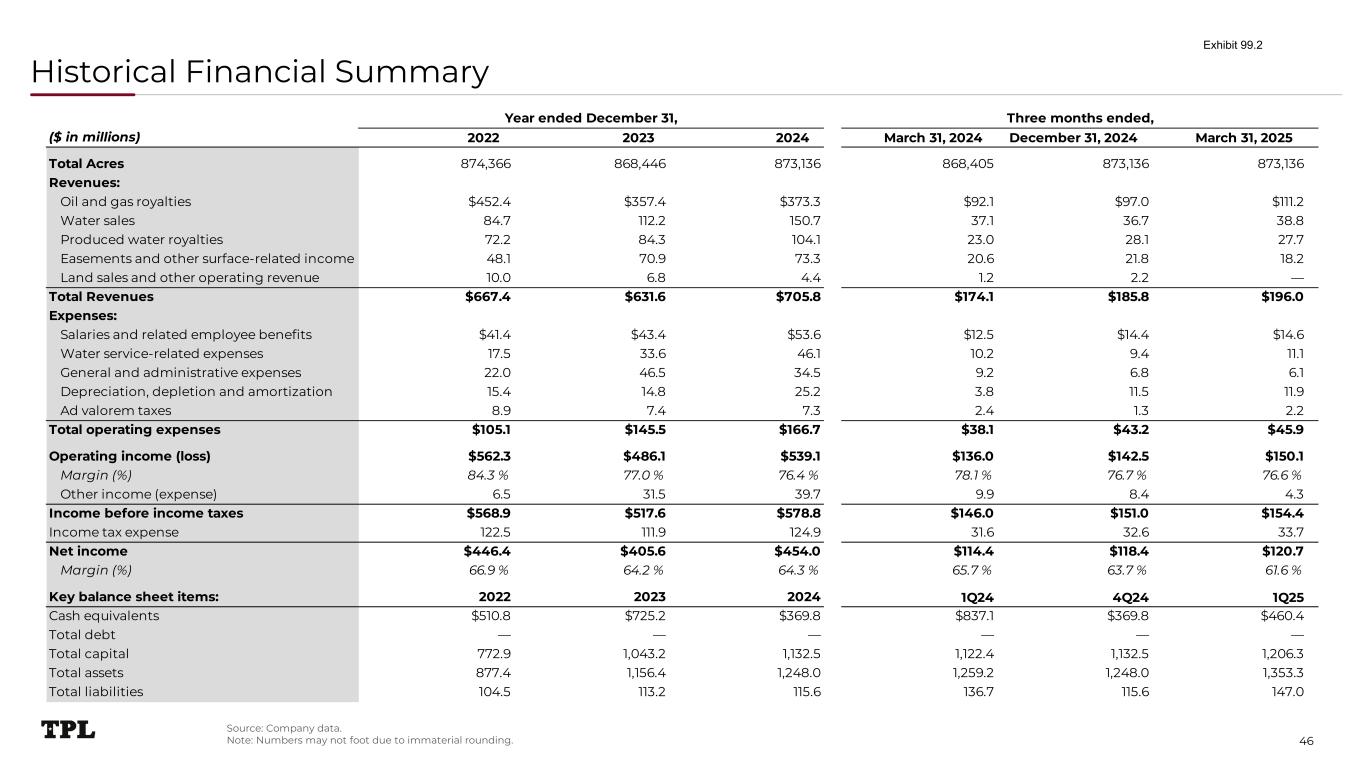
Good morning, everyone, and thank you for joining us today. TPL's first quarter 2025 marked a strong start to the year with quarterly records set in both oil and gas royalty production and water segment revenues. Oil and gas royalty production averaged approximately 31,100 barrels of oil equivalent per day, representing 7% growth sequential quarter-over-quarter and 25% growth year-over-year. This performance was driven by strong development activity in our Northern Culberson, Northern Reeves, and Central Midland subregions led by operators including Chevron, BP, Devon, and Cotner. Water segment revenues totaled $69 million, representing 3% sequential quarter-over-quarter growth and 11% growth year-over-year as our commercial efforts continue to yield robust volume gains in both water sales and produced water royalties. Given the evolving macroeconomic landscape and volatility in commodity markets, my prepared remarks today will focus on what we're seeing and hearing from our operator customers, the natural business hedges, and the built-in growth TPL retains to withstand a potential oil price downturn. Beginning with our outlook on near-term activity, we have not yet seen a widespread downturn in activity as oil prices have weakened this year, although a few operators have recently announced intentions to drop rigs and frac spreads. Feedback from other operators indicates that they are cautiously evaluating activity plans. If oil were to stay below $60 for a sustained period of time, then we would expect more meaningful activity declines to emerge in the back half of the year. Specific to TPL, our royalty acreage is predominantly operated by super majors and large independents whose development plans, while not completely impervious to price declines, tend to exhibit more inertia than those with mid-cap independents and privates. We would expect overall Permian activity and production declines to be slower relative to other U.S. oil basins, and we believe TPL's net production will continue to outperform the basin overall, given our near-term well inventory and the broad resilience of our operators' activity plans. Our near-term well inventory remains robust with net permitted wells, net drilled but uncompleted wells, and net completed but not producing wells at levels above our historical averages. The total of these well categories represents the highest TPL has ever recorded. Of this specific set of wells, a total of approximately 18 net wells comes from an operator group consisting of Exxon, Chevron, Conoco, BP, Occidental, EOG, and Caterra. Turning to the impact of commodity prices affecting TPL's various revenue streams, although our oil and gas royalties are directly exposed to commodity prices, it's important to note that we are not burdened by well capital expenditures or operating expenses. As a result, this revenue stream generates positive free cash flow even in a severely depressed pricing environment. For water sales, while there is indirect sensitivity to operator drilling plans since completion activity reduces demand for brackish and recycled water volumes, the business retains operational and financial flexibility to reduce capital expenditures and variable costs. For produced water royalties, the revenues are fixed fee-based, thus mitigating the direct impact of lower commodity prices. Indirectly, however, volumes could potentially increase during a downturn in drilling activity. We estimate that basin-wide, approximately 30% to 50% of water used for completion activity comes from recycled produced water. If new completion activity were to slow down, produced water that would otherwise have been recycled for fracking would instead need to be transported and injected for disposal. We saw this dynamic play out in 2020 when basin-wide drilling and completion activity declined, and our produced water volumes increased by over 30% year-over-year. Our surface leases, easements, and material sales revenue, which we refer to as SLEM, are generally a fixed fee-based revenue model that is largely tied to oil and gas activities, such as pipeline easements, commercial leases, wellbore easements, and Caliche sales, among other items. SLEM revenues will generally flex up or down with broader Permian activity levels. Many of the easement contracts contain 10-year renewal payments that are subject to CPI escalators upon renewal. In 2016, we began implementing these renewal payment features into our easement contracts. As a result, beginning next year, TPL will begin benefiting from this built-in revenue tailwind regardless of the price of oil. Given the significant cumulative increase in CPI levels over the last decade, we anticipate that the renewal payment escalators will be approximately 35%. In 2026, we anticipate approximately $10 million in renewal payments derived from easements signed in 2016. The payment renewals will then ramp up in the 3 years following 2026 as we anticipate upwards of $35 million per year in renewals. In total, we estimate that the easement renewals over the next decade will exceed $200 million. To be clear, these renewal payments will then reoccur in another 10 years with CPI escalation. This will be incremental to the cash flow generated from new ongoing SLEM activities as Permian development is likely to continue for decades. In summary, while we're certainly not hoping for a protracted downturn in commodity prices, TPL is built to withstand it. For as many oil and gas upstream operators might experience negative free cash flow under a depressed commodity price environment, TPL's industry-leading margins could allow the company to still maintain positive free cash flow. In addition to our high-margin, resilient cash flow streams, our balance sheet is equally strong. We continue to maintain a net cash position with zero debt and $460 million of cash and cash equivalents as of March 31. We understand that commodity businesses are inherently cyclical, and we've intentionally managed and structured our business to perform well during difficult periods. With TPL operating from arguably the strongest financial position it has ever been in, we look to take advantage of any opportunities that might materialize. That could mean adding high-quality and strategic royalties, surface and water assets, substantially ramping up buybacks, or a combination thereof. Our goal is to maximize stockholder value over the long term, and we retain the flexibility and the wherewithal to execute throughout commodity cycles. With that, I'll hand the call over to Chris.
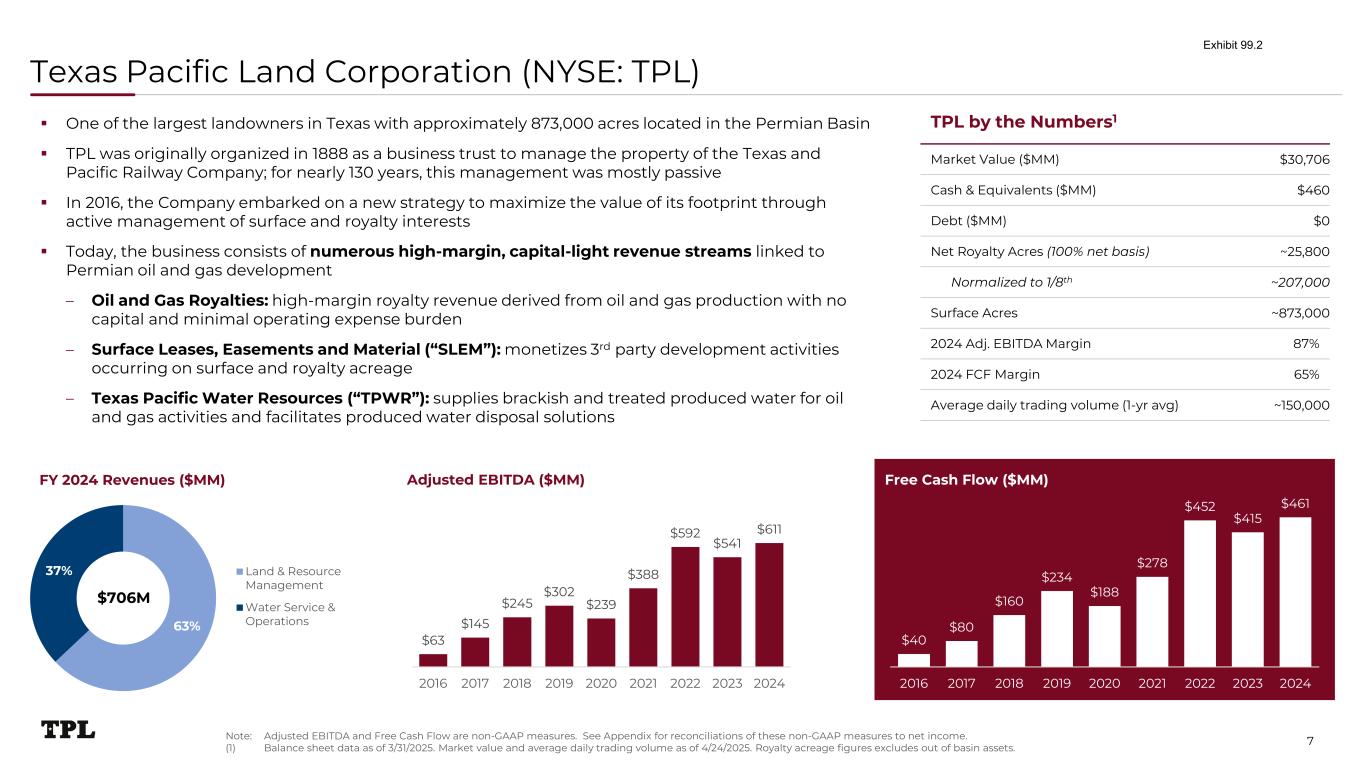
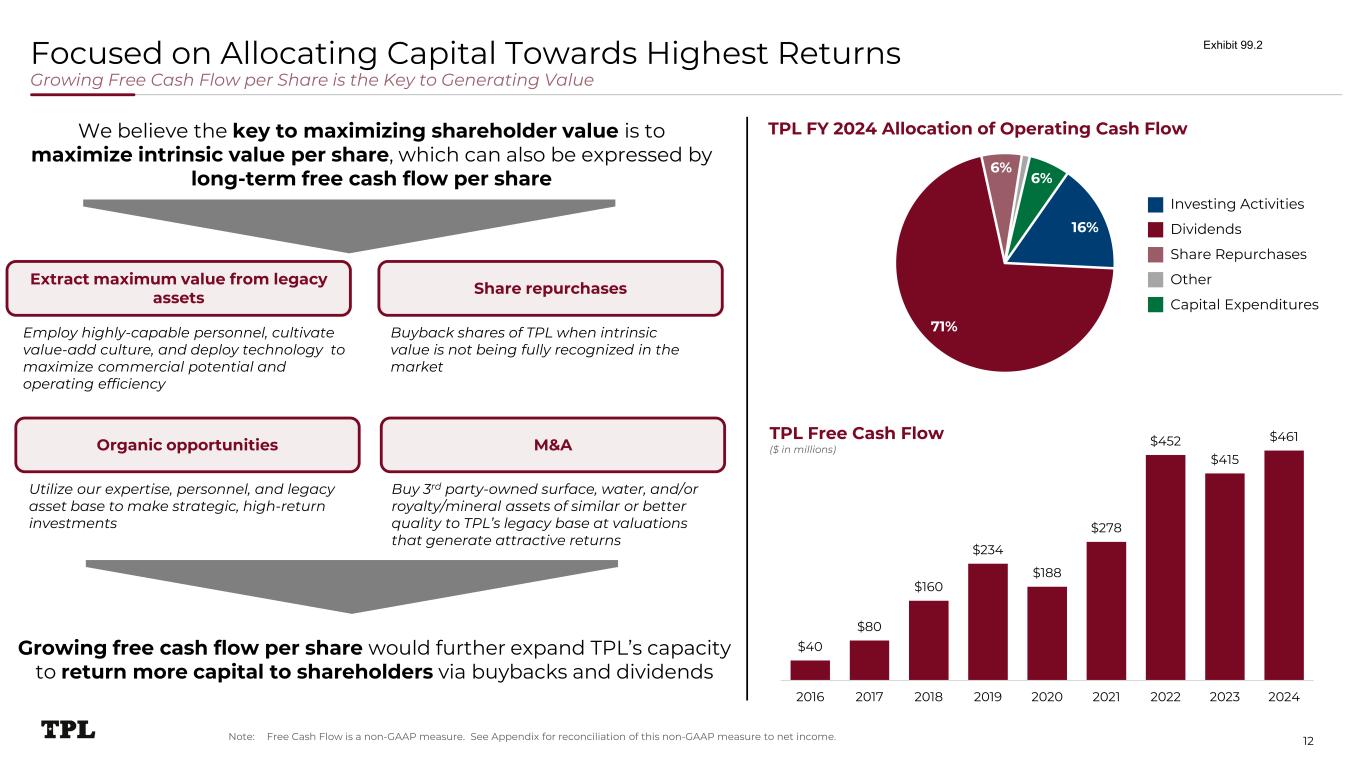
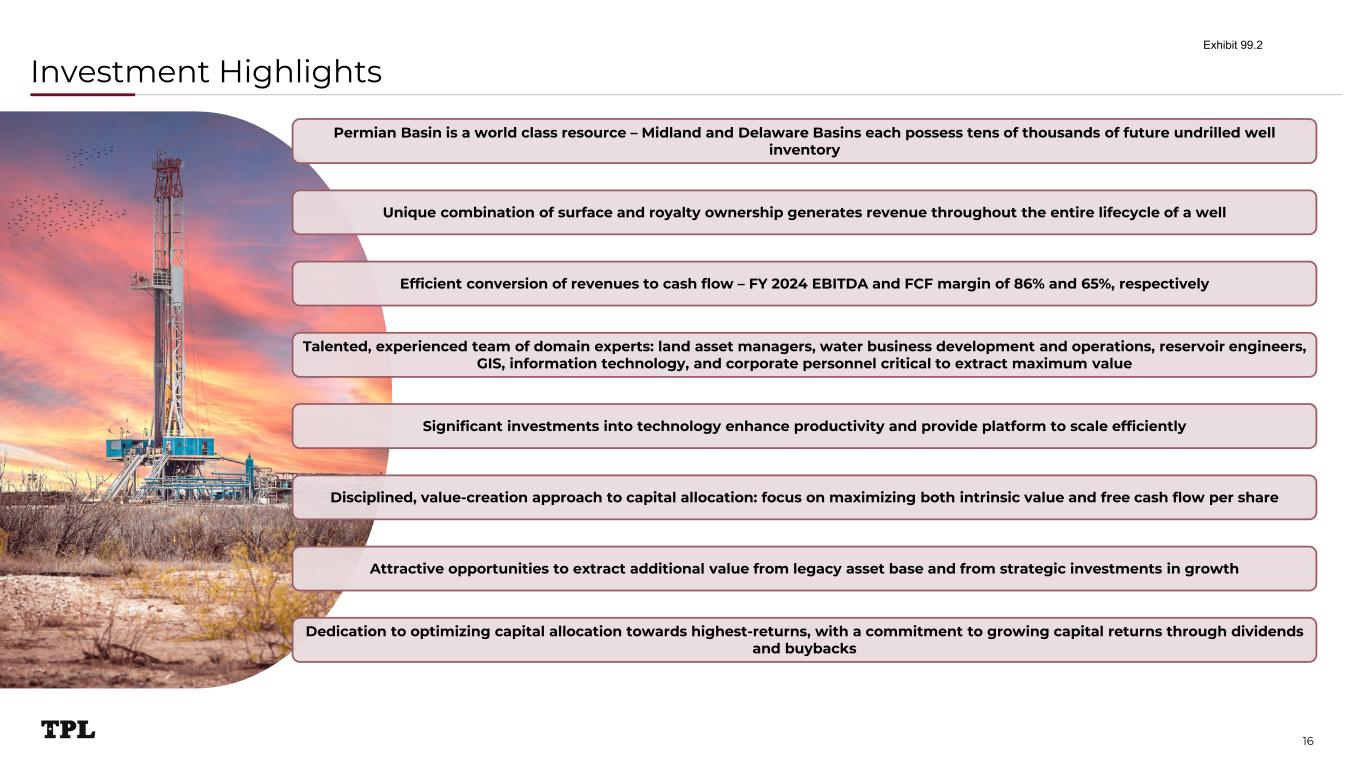
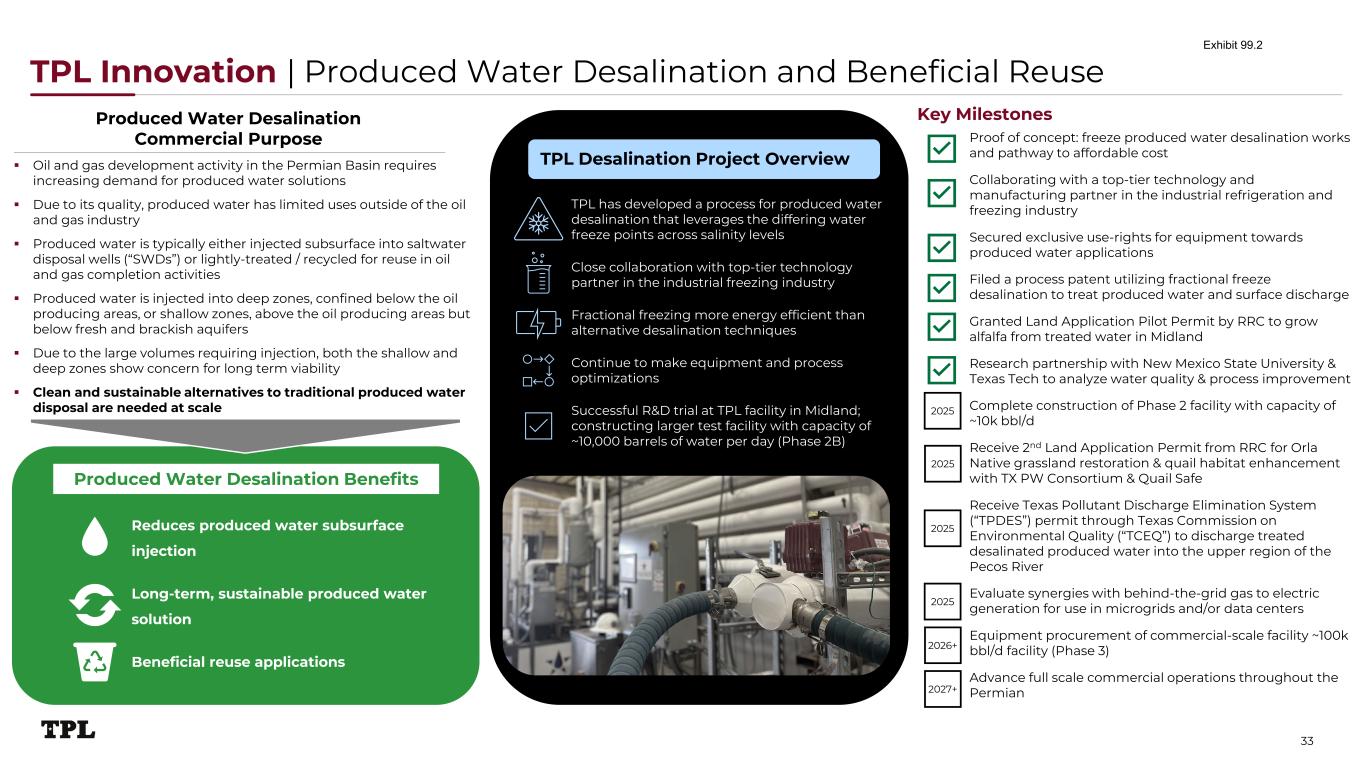
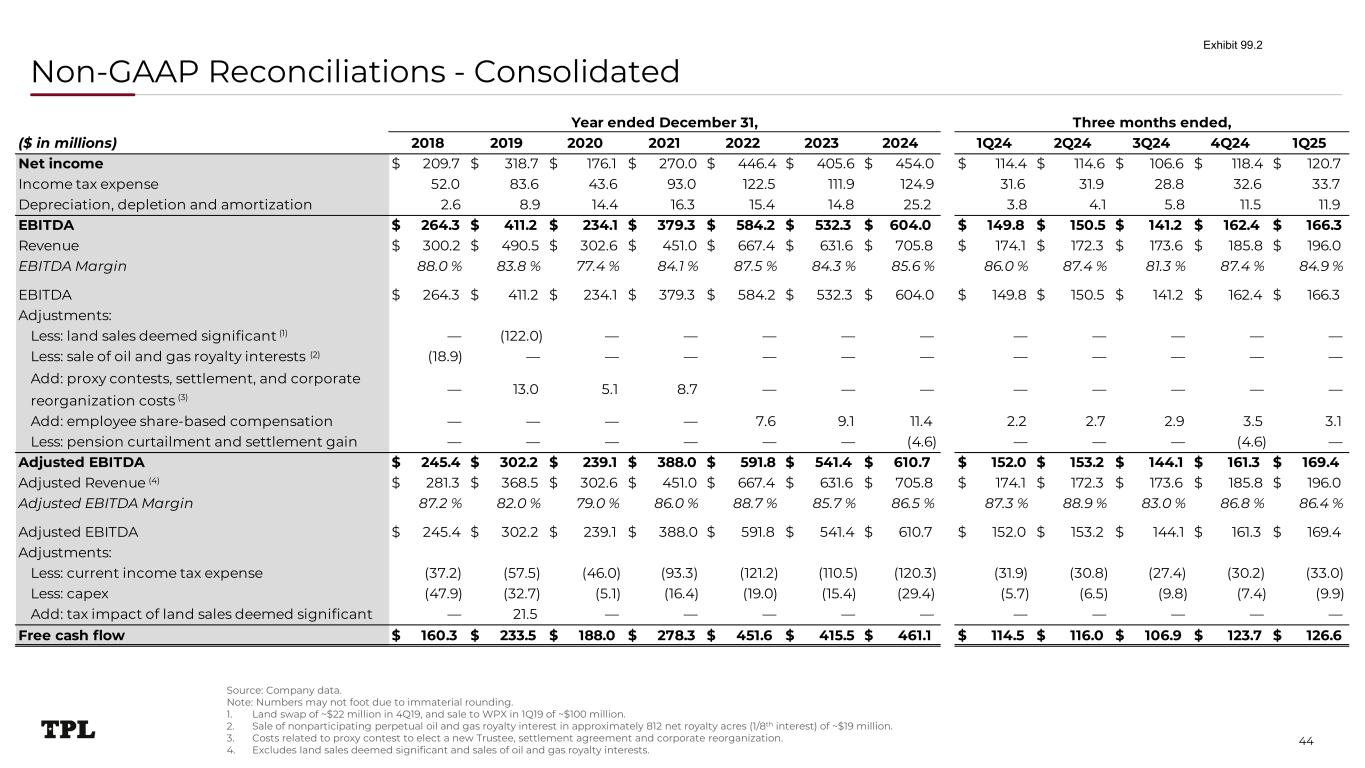
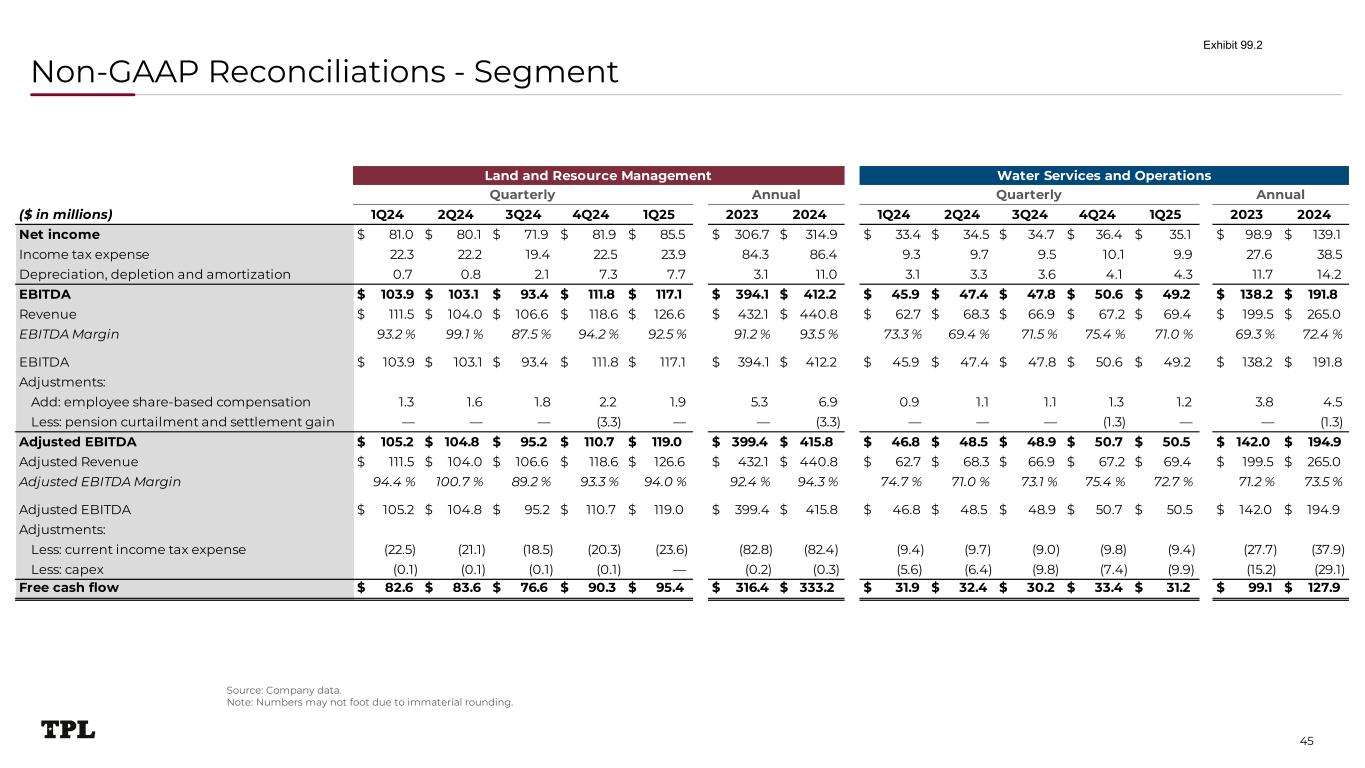
Thanks, Ty. For the first quarter of 2025, consolidated revenues were $196 million. Consolidated adjusted EBITDA was $169 million with an adjusted EBITDA margin of 86.4%. Free cash flow was $127 million, representing an 11% increase year-over-year. As Ty mentioned earlier, royalty production this past quarter was approximately 31,100 barrels of oil equivalent per day, representing a 25% increase year-over-year. As of quarter end, we had 5.9 net permitted wells, 12.9 net drilled but uncompleted wells, otherwise known as DUCs, and 5.4 net completed but not producing wells, otherwise known as CUPs. The sum of permitted wells, DUCs, and CUPs totals 24.3 net wells of near-term inventory. This number reflects an all-time high and a 7% higher sequential quarter-over-quarter and 38% higher on a year-over-year basis. We estimate that it would take approximately 12 net wells turned to sales per year to maintain TPL's current production. Based on recent historical trends, approximately 93% of permitted wells are drilled within a year, approximately 90% of DUCs are completed within a year, and approximately 96% of CUPs are turned to sales within 1 month. Of course, development timing may change depending on the commodity price environment, but we expect our operator group to maintain steadier levels of development relative to the overall industry. Specifically for DUCs and CUPs, these types of wells have already had substantial capital invested in them, and thus, we would expect these wells to still be turned to sales along a relatively typical cadence, even if commodity prices were to weaken. With respect to our desalination and beneficial reuse initiatives, we now expect our Phase IIb desalination unit to come online by the end of the year. Recall, this is a 10,000 barrel per day R&D test facility where we are processing oil and gas produced water and treating it to produce high-spec freshwater that could potentially be used for beneficial reuse endeavors such as grassland restoration, aquifer recharge, data center and power plant cooling, and other potential environmental and industrial uses. The desalination unit is currently being constructed and tested at our technology and manufacturer partner's facility located in the U.S. We are encouraged by our progress, and we believe we have identified multiple new avenues to substantially lower the operating cost of a potential commercial scale desalination facility. Once the Phase IIb unit meets our various technical specifications, the unit will then be moved and assembled on TPL's property in Orla, Texas. Our CapEx estimates related to the desalination remain unchanged. As it relates to our efforts with power and data centers, we continue to advance discussions and have not seen a material downshift in development opportunities. Recently, the Public Utility Commission of Texas approved the first extra-high-voltage transmission lines in ERCOT geared toward enhancing electric reliability in the Permian Basin. Portions of the proposed high-voltage transmission lines and substations will likely overlap TPL property, which we believe will drive substantial local load growth to support the oil and gas industry while unlocking solar, wind, and gas generation capacity. In addition, we are actively educating developers and pursuing opportunities where we can potentially leverage TPO desalination efforts to provide substantial supplies of high-spec freshwater for industrial use. Now approved, we look forward to this grid infrastructure progressing towards development and ultimately, upon completion, we think this enhances the commercial potential of the Permian overall and for TPL land to all sorts of opportunities. In conclusion, TPL continues to set new records across major KPIs and business segments despite oil and gas prices remaining well below the highs of the past few years. Our balance sheet remains exceptionally strong, which affords us our ability to execute on a strategy towards maximizing shareholder value. And with that, operator, we will now take questions.
Operator
The first question comes from Derrick Whitfield with Texas Capital.
Speaker 4
Congratulations on a record quarter. Thank you for sharing your insights on macro trends in oil and gas activity and their effects on your business segments. I would like to focus on water, specifically the fundamentals in the Delaware Basin. Given the recent announcements we've seen, it’s clear there is significant demand for water handling. Do you have insights on the growth in produced water volumes across the basin before considering any activity adjustments? I’m interested in understanding this without factoring in the increase in the water-oil ratio over time. Broadly, we are observing a trend towards deeper intervals that are more water-wet, which appears to be driving water growth to levels that match oil growth. Any insights you could provide would be highly appreciated.
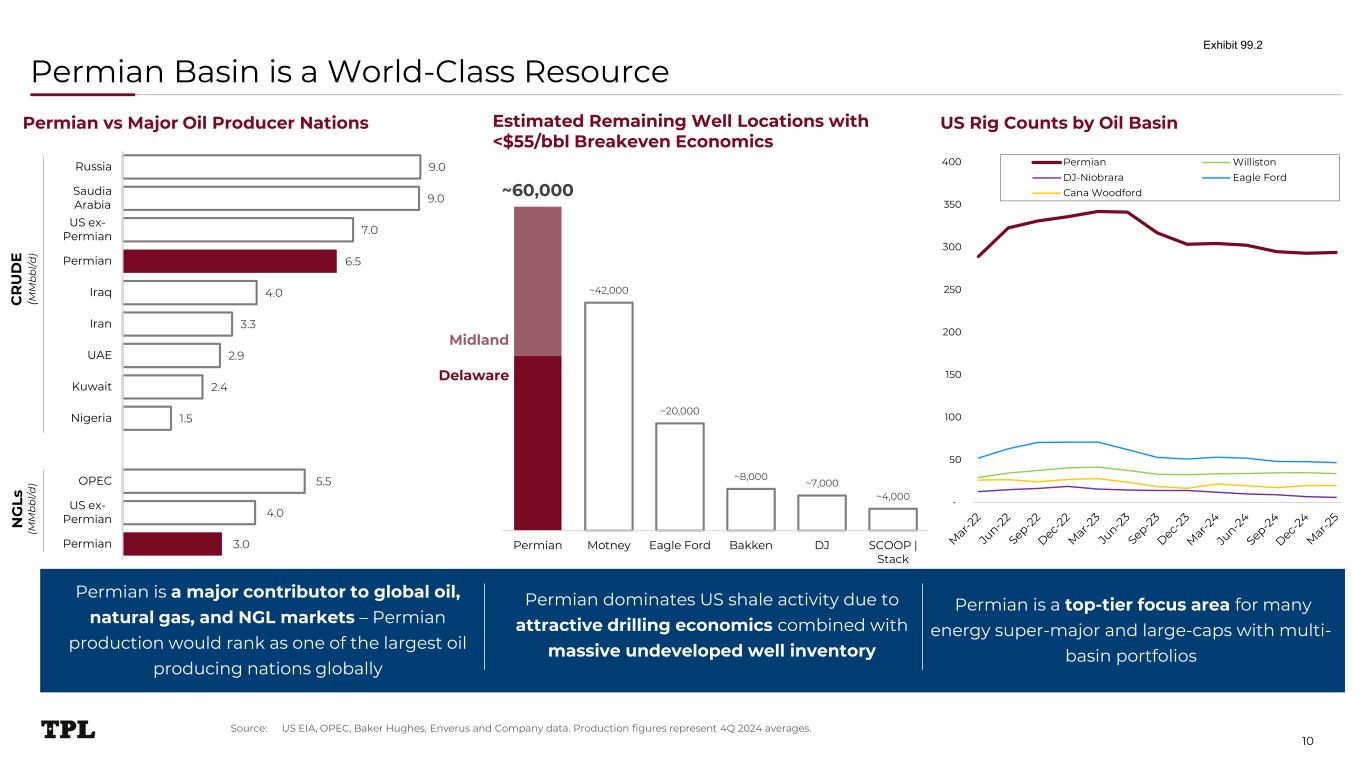
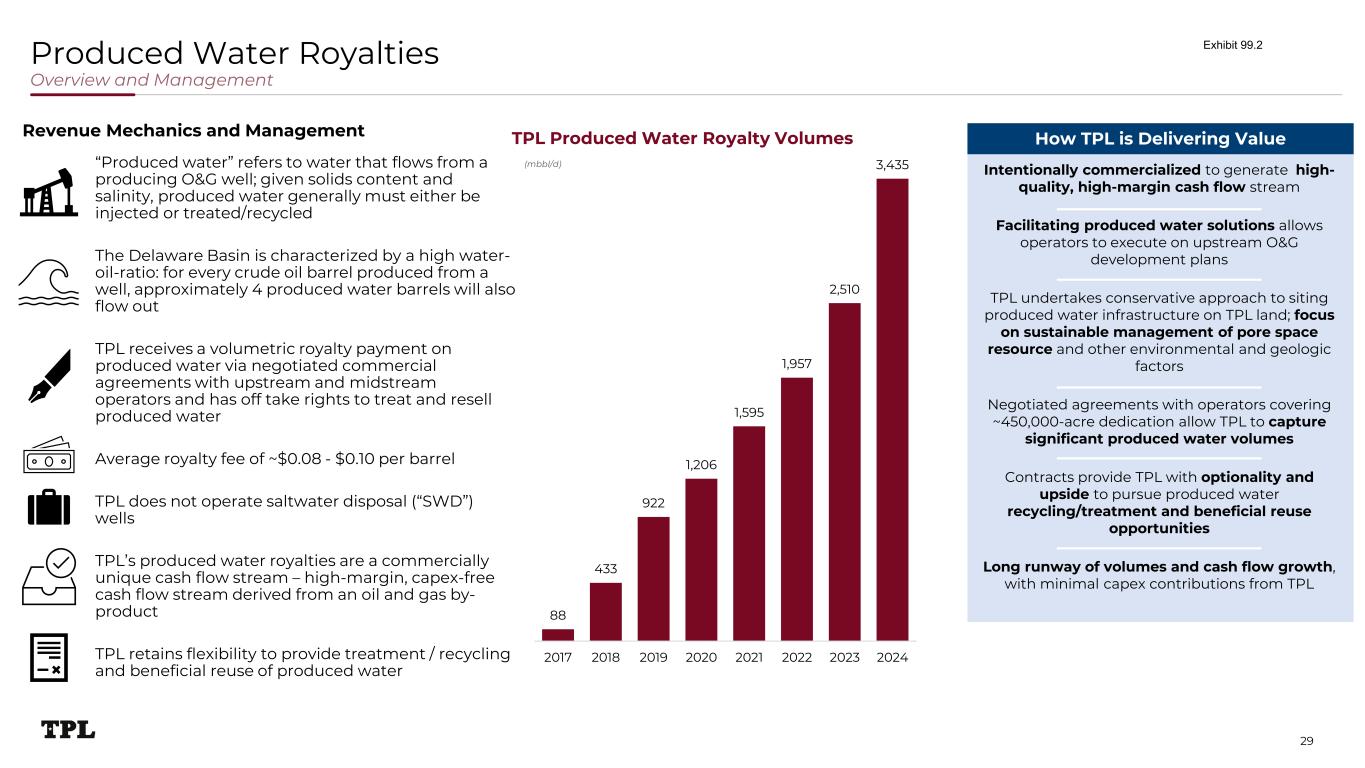
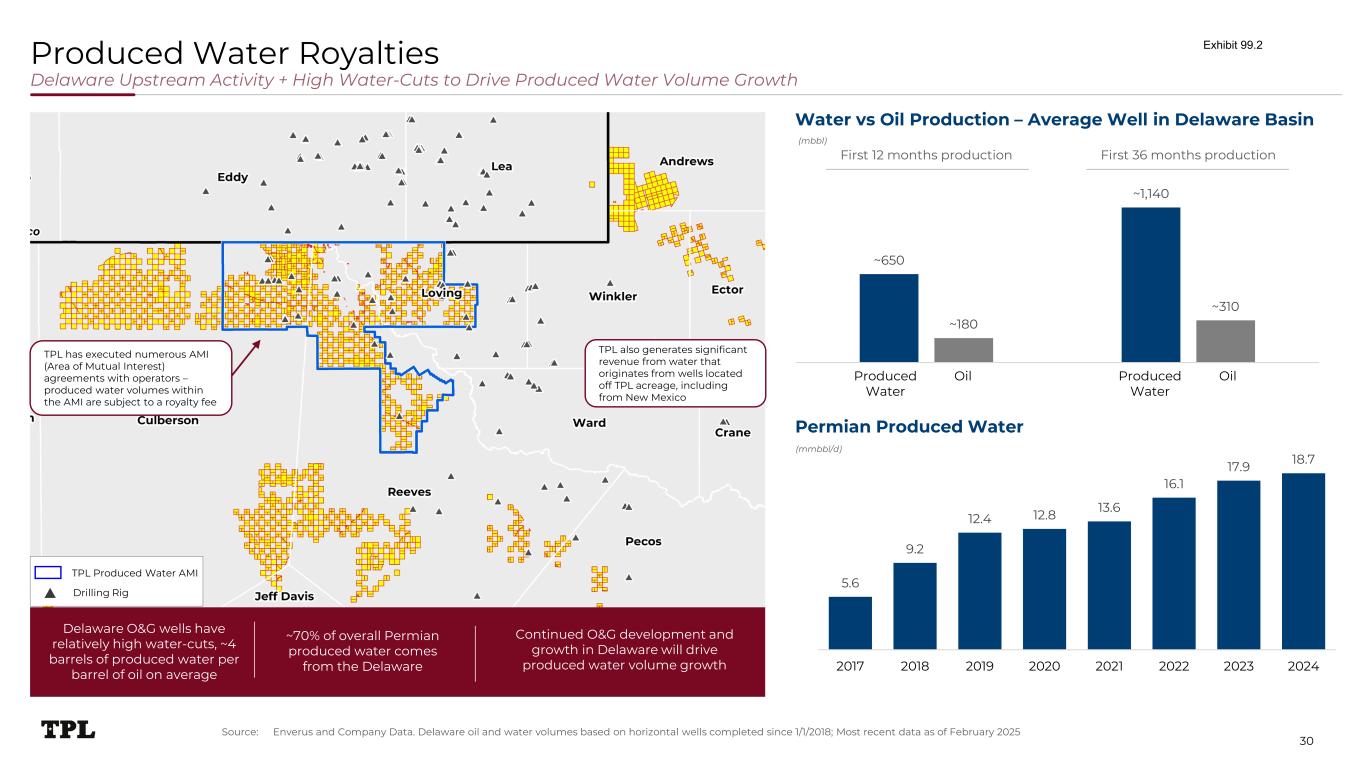
Yes. I mean we're definitely seeing higher water cuts as operators move to second and third tier formations. I think we've seen as high as 10:1 on some pads. We expect produced water to continue to grow at a pretty rapid pace over the next 10 years, which is why we think it's going to take outbits and disposal; it's going to take beneficial reuse; it's going to take continuing to treat and reuse more and more water to effectively handle the volumes of produced water that we're going to need so that development of minerals doesn't bottleneck.
Speaker 4
And then kind of along the same lines, Ty, with those three larger pipeline projects that appear to be moving forward with WaterBridge, Western, and ARRIS, how does that impact you guys?
Well, we think it's a benefit to the basin and benefit to the development of our minerals. Operators need more pore space to head off potential bottlenecks on having to shut in wells or forgo development in certain areas because of water cuts. So from that standpoint, it really is a benefit. I would just add too that on the Western Pathfinder pipeline, we will be paid because of our relationship with Western, and where our assets will be paid for those barrels. They are going to move through that first phase of that project. The second phase of that project is a pipeline that actually goes to out-of-basin surface that we've acquired. So we'll receive payment on existing barrels that are moved to the East and then payment on new barrels as well. So that project is a fantastic benefit for TPL.
Speaker 5
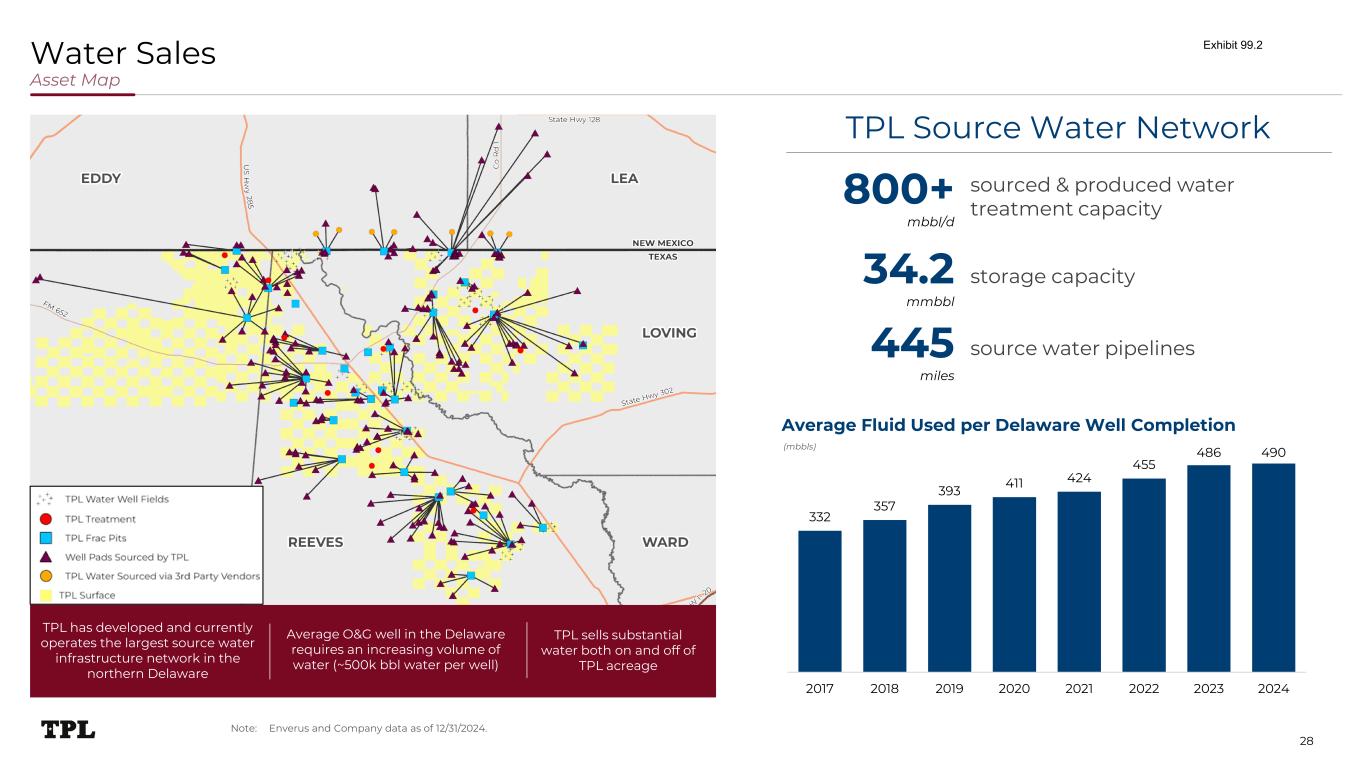
I'll add on the first one really quick. From just a strictly volume standpoint, varying numbers on how it's calculated and where we're at today on total Delaware produced water production, probably somewhere in the 12 million to 15 million. I think if you look at most forecasts, Derrick, as you see the proliferation of those secondary benches start to development, you're probably getting into the 18 million to 20 million barrels a day, 2028 through 2030. So as Ty mentioned, secondary out-of-basin disposal and beneficial reuse have to occur. Just our stats on out-of-basin, I'll say we truly led the charge on it from the beginning and saw this trend coming many years ago as we knew it was going to take a little bit of time for beneficial reuse to get there from a technology and regulatory standpoint, and we continue to help facilitate the development and the redistribution of volumes because as Ty has mentioned, a lot of our legacy contracts, we still take part and will be compensated on those volumes moving even if perhaps in the early phases, certain projects are not moving directly to our acreage, and there's still compensation as we help redistribute those volumes.
Speaker 4
That's great color. And then lastly, could you guys offer some perspective on the M&A landscape in the basin at present? I realize volatility tends to create challenges with deal flow. Having said that, we are seeing some transactions clear on the E&P side. So any perspective you guys could offer on framing up the competitive landscape for both minerals and surface would be greatly appreciated.
Yes. I mean I think on the M&A front, there’s still a lot of opportunity. We haven’t seen a big pullback from sellers. If commodity prices continue to decrease, the bid-ask spread may widen. But right now, it still seems like a pretty friendly environment, a lot of opportunity in the backlog.
Operator
Thank you. This does conclude today's teleconference. We thank you for your participation. You may disconnect your lines at this time, and have a great day.