Operator
Hello, and thank you for standing by. Welcome to Valley National Bank Corp 3rd Quarter 2025 Earnings Conference Call. At this time, all participants are in a listen-only mode. After the speaker's presentation, there will be a question-and-answer session. To ask the question during the session, you will need to press star 11 on your telephone. You will then hear an automated message advising your hand is raised. To withdraw your question, please press star 11 again. I would now like to turn the conference over to Andrew Giannetti. Please go ahead, sir.
Good morning, and welcome to Valley's third quarter 2025 earnings conference call. I am joined today by CEO Ira Robbins and CFO Travis Land. Our quarterly earnings release and supporting documents are available at valley.com. Reconciliations of any non-GAAP measures mentioned on the call can be found in today's earnings release. Please also note slide two of our earnings presentation, and remember that comments made today may include forward-looking statements about Valley National Bank Corp. and the banking industry. For more information on these forward-looking statements and associated risk factors, please refer to our SEC filings, including forms 8K, 10Q, and 10K. With that, I'll turn the call over to Ira Robbins.
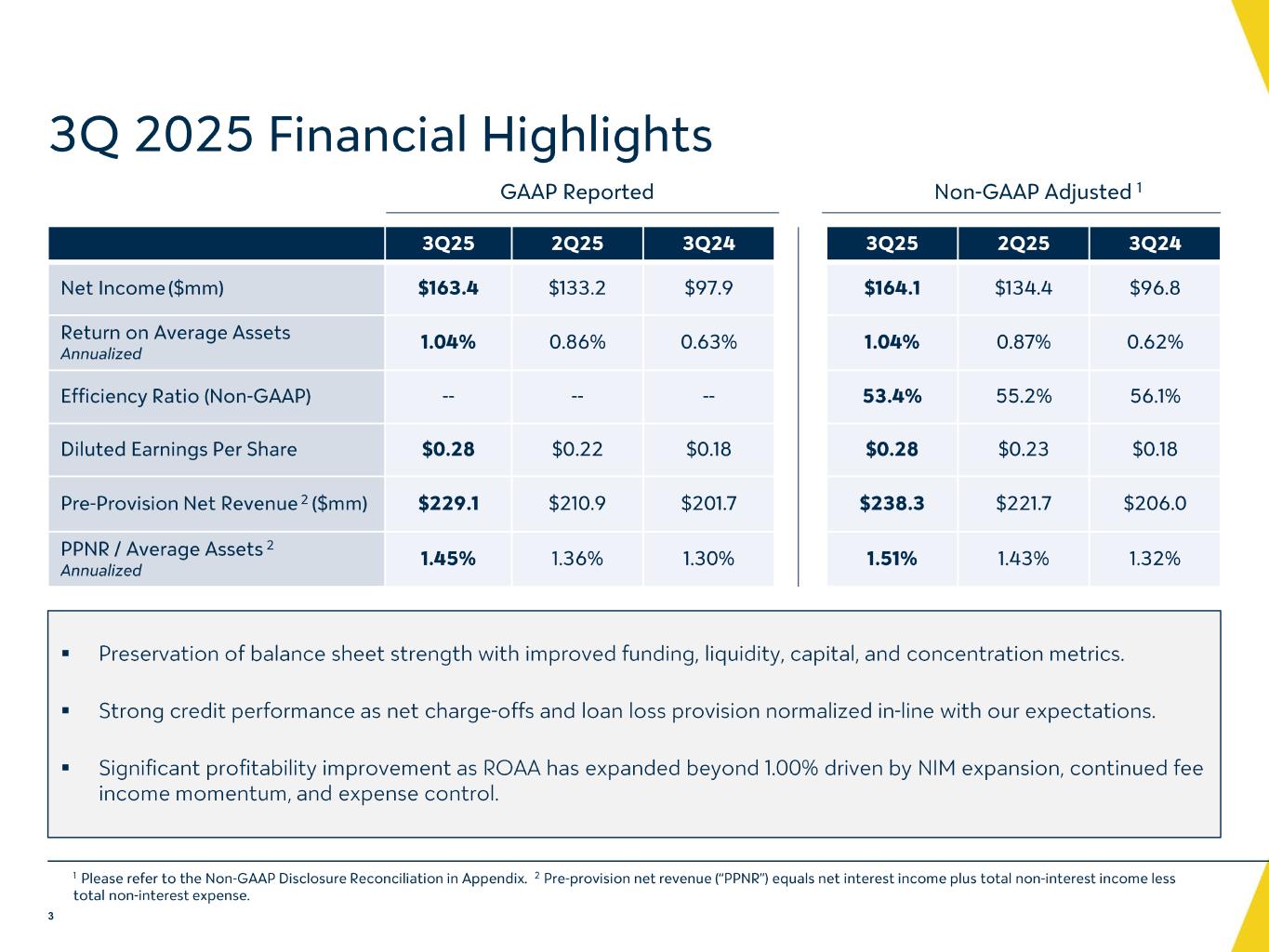
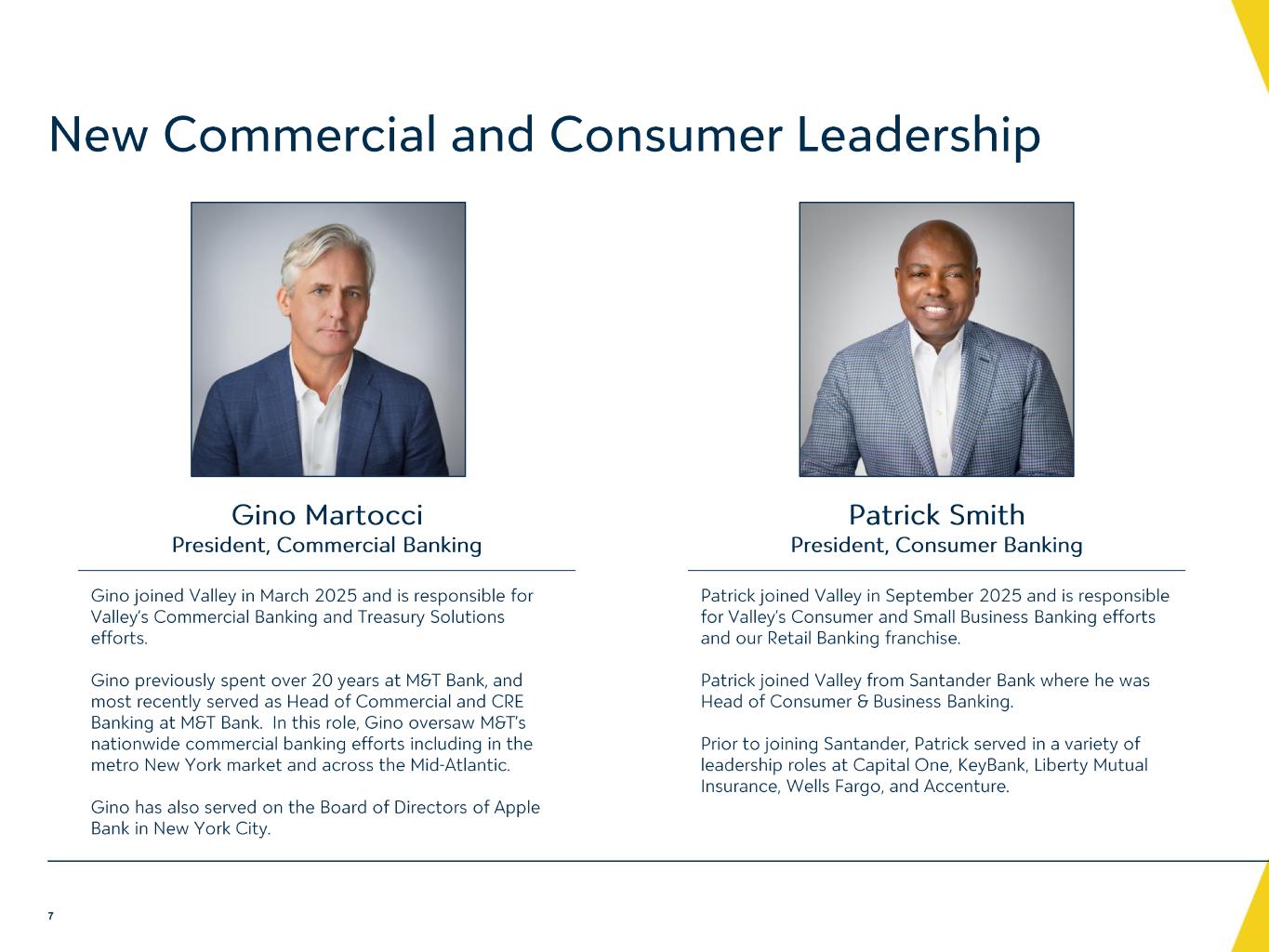
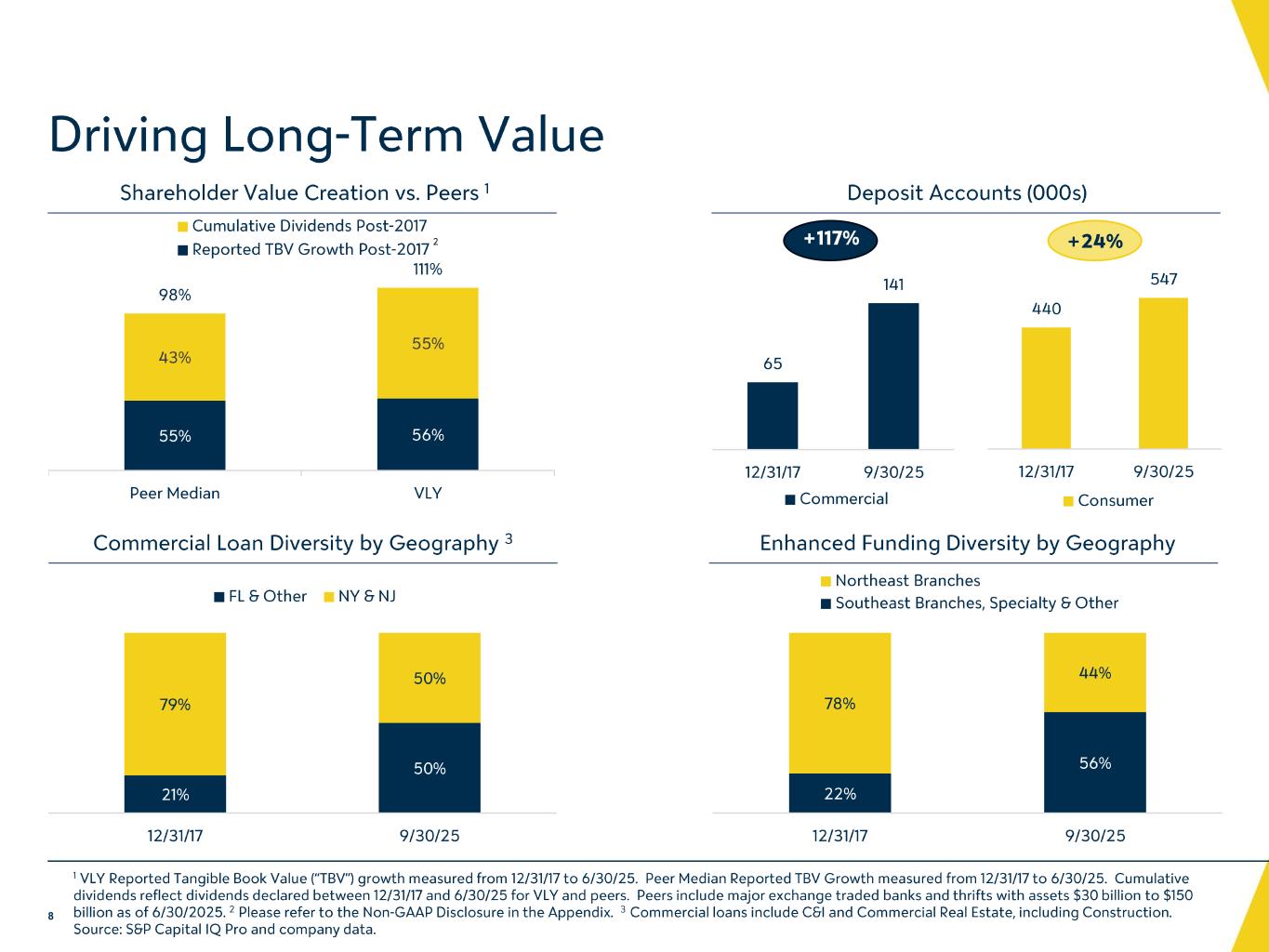
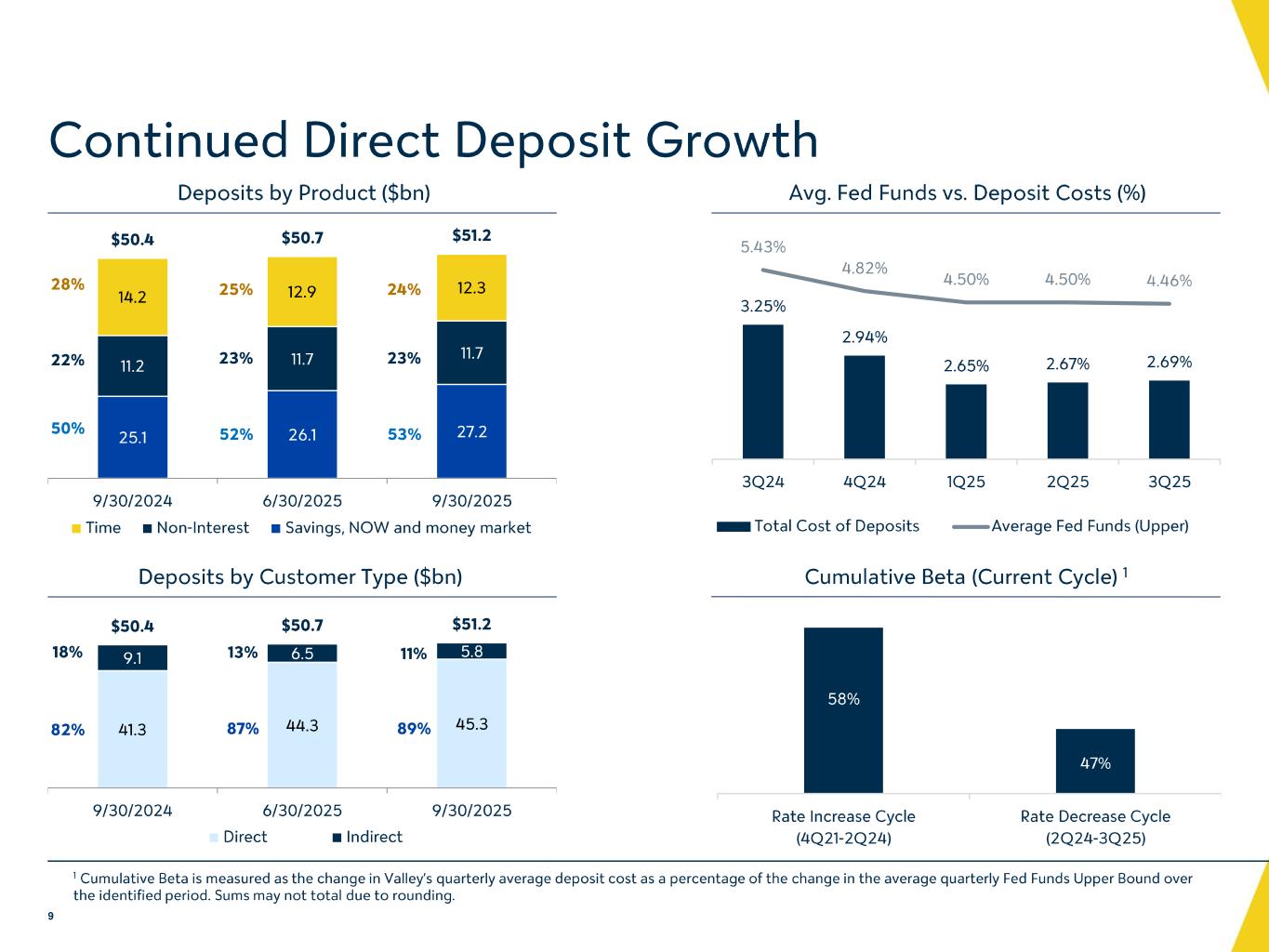
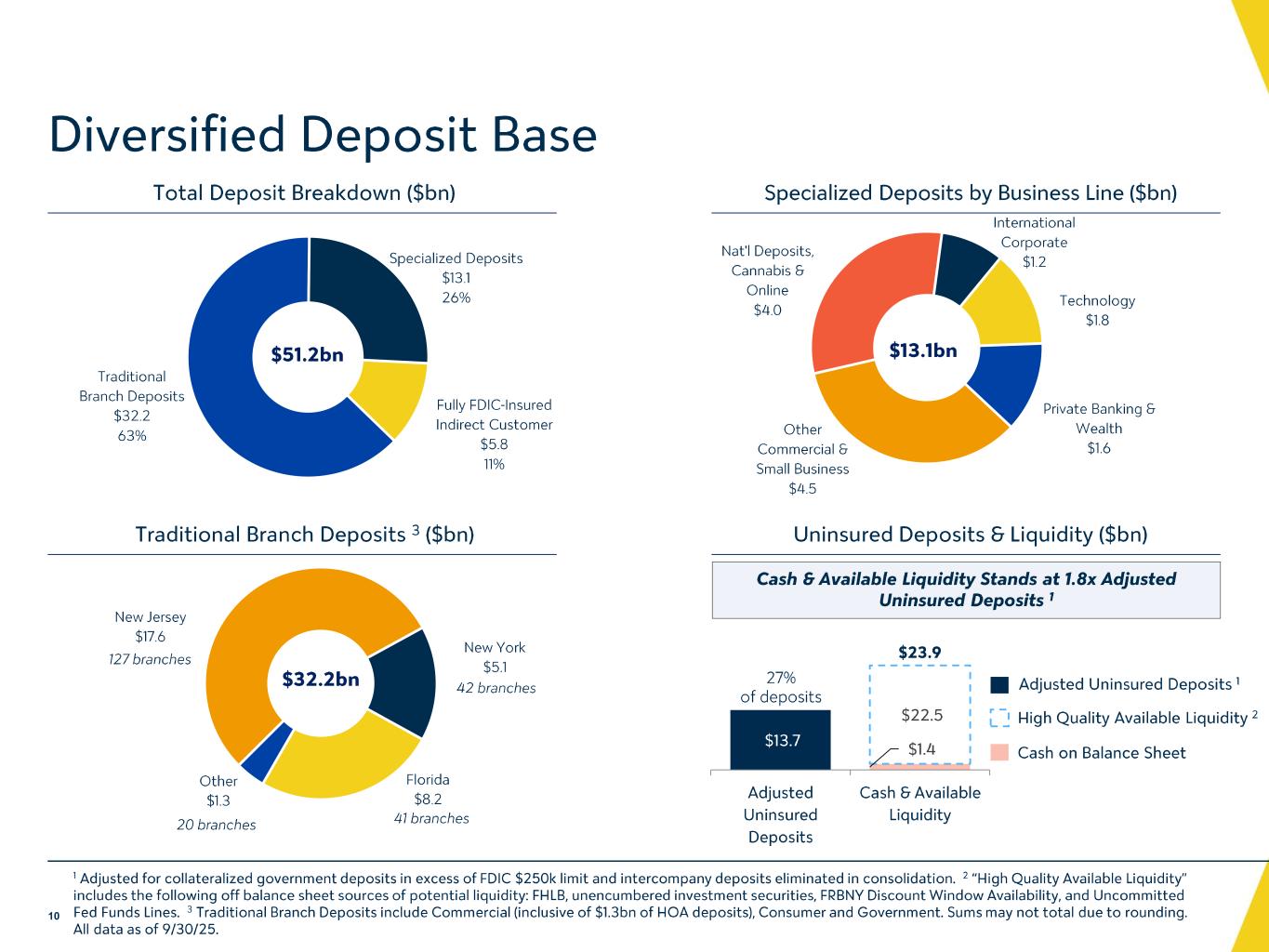
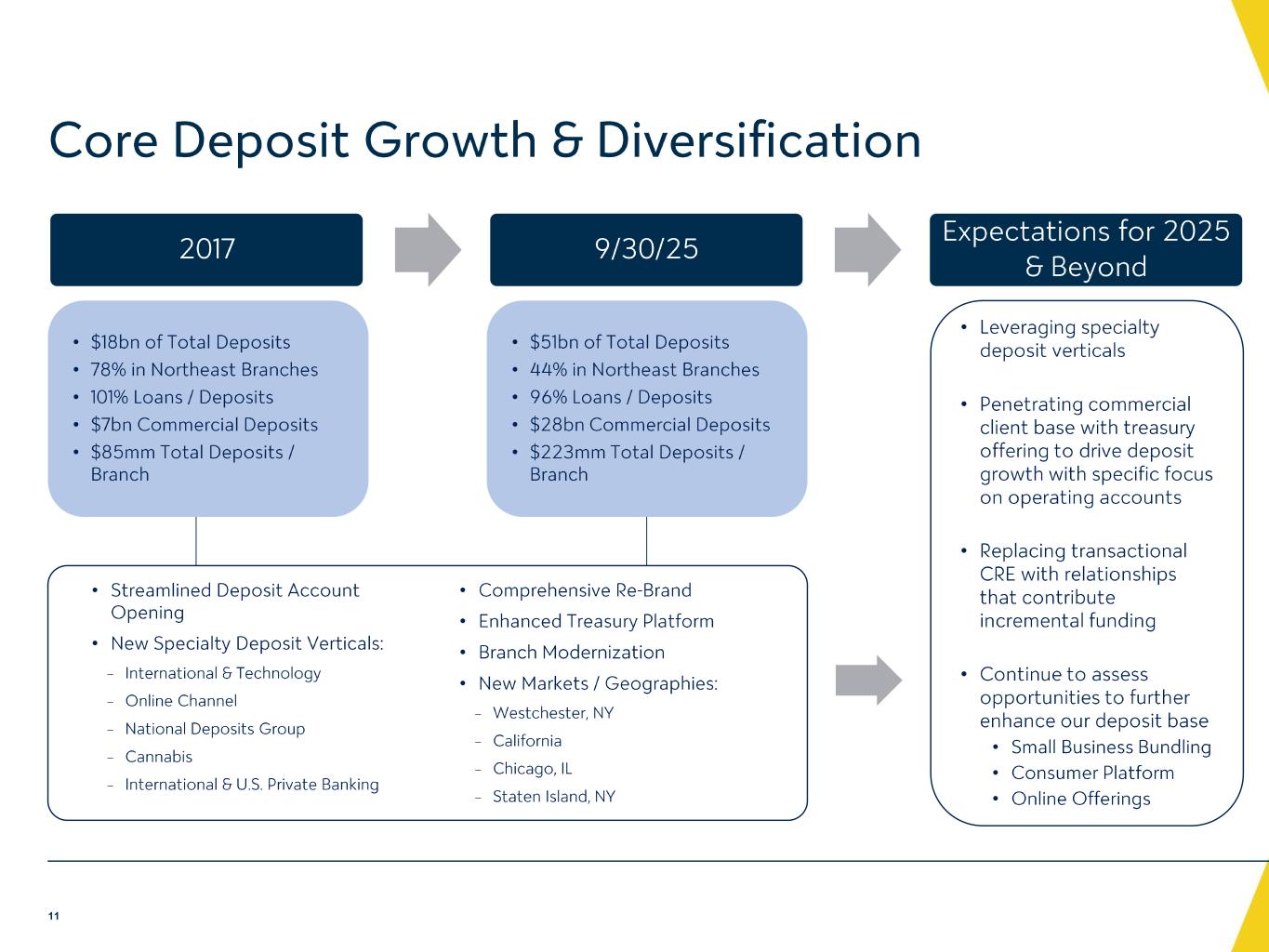
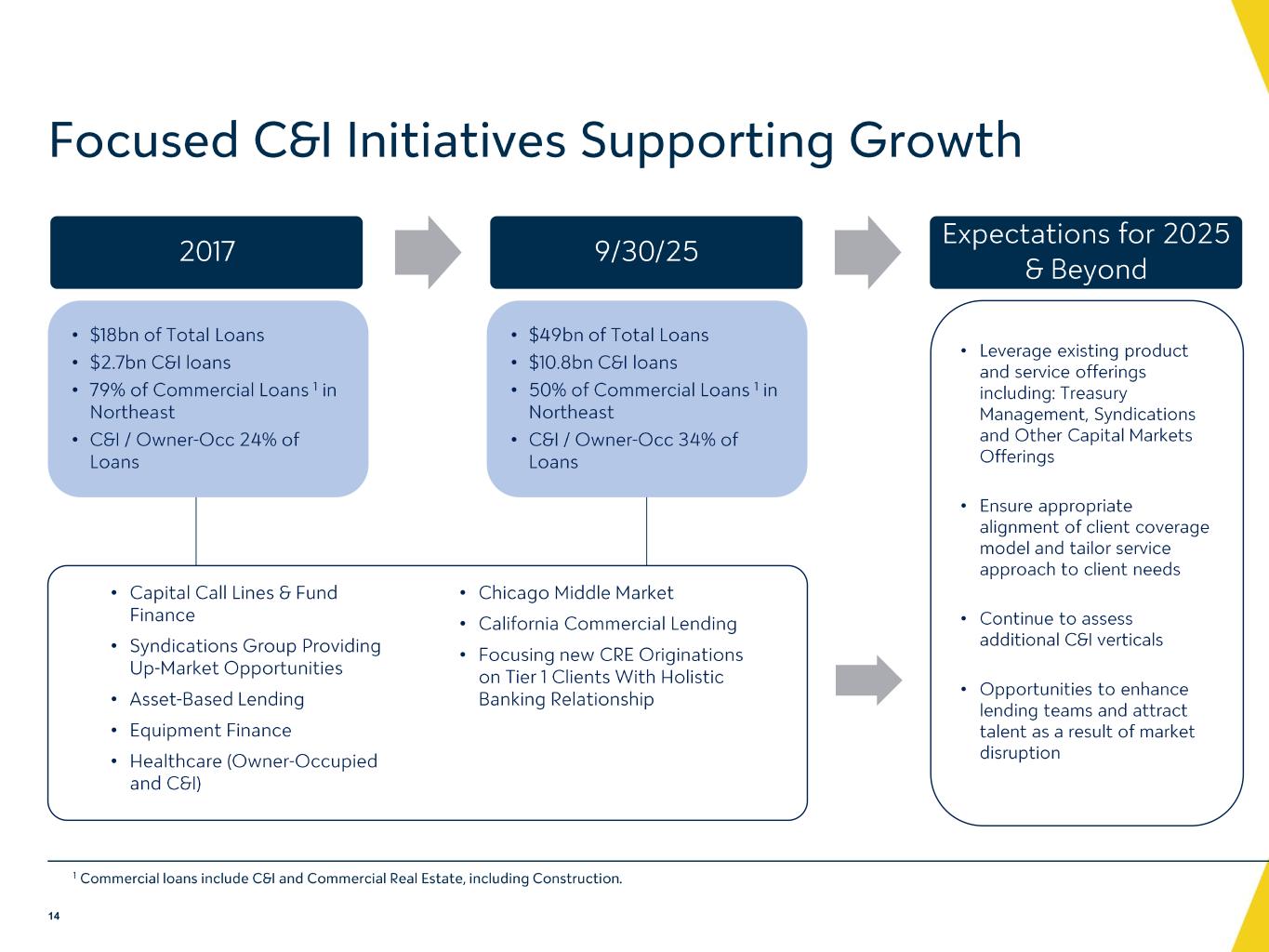
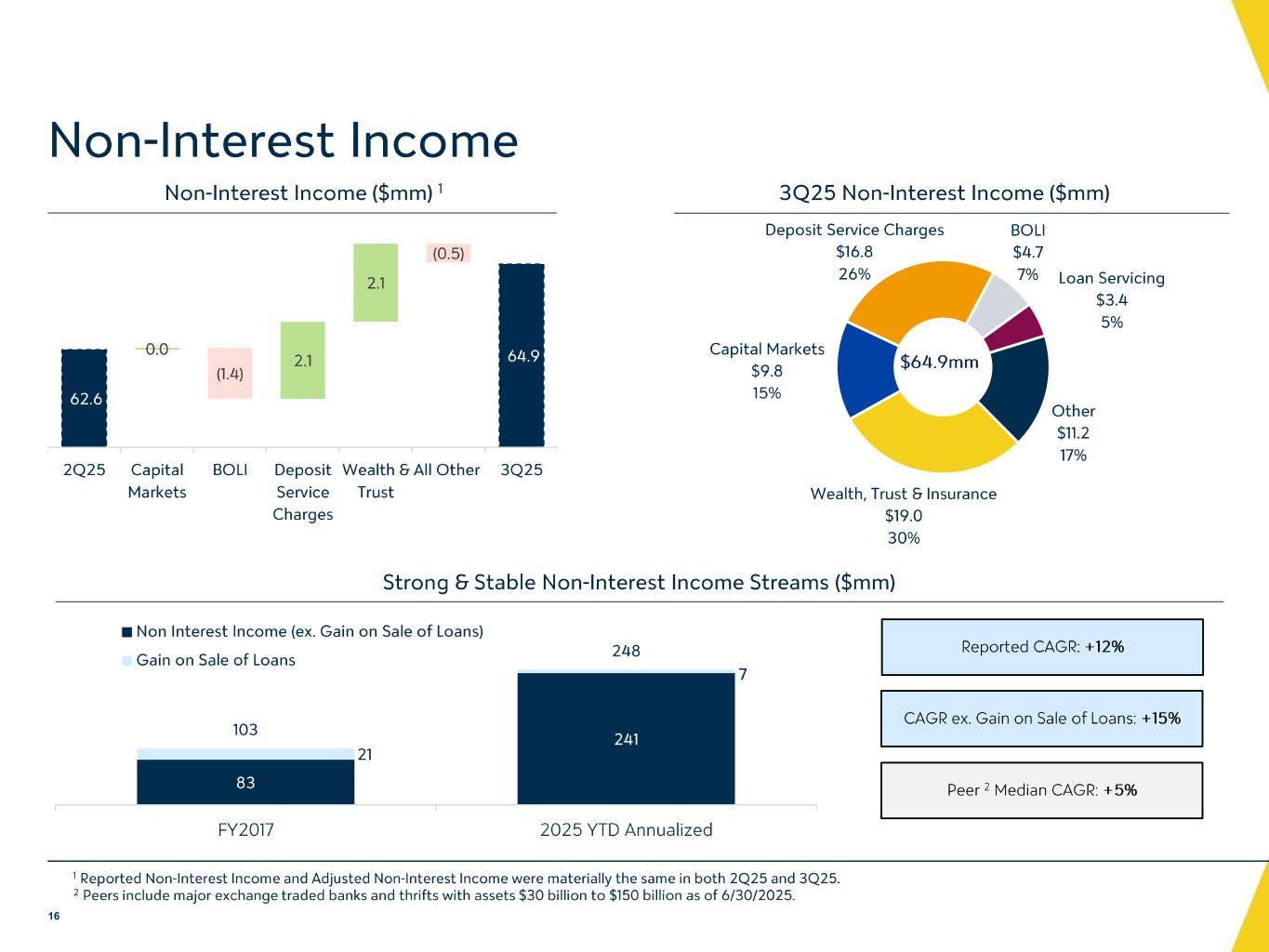
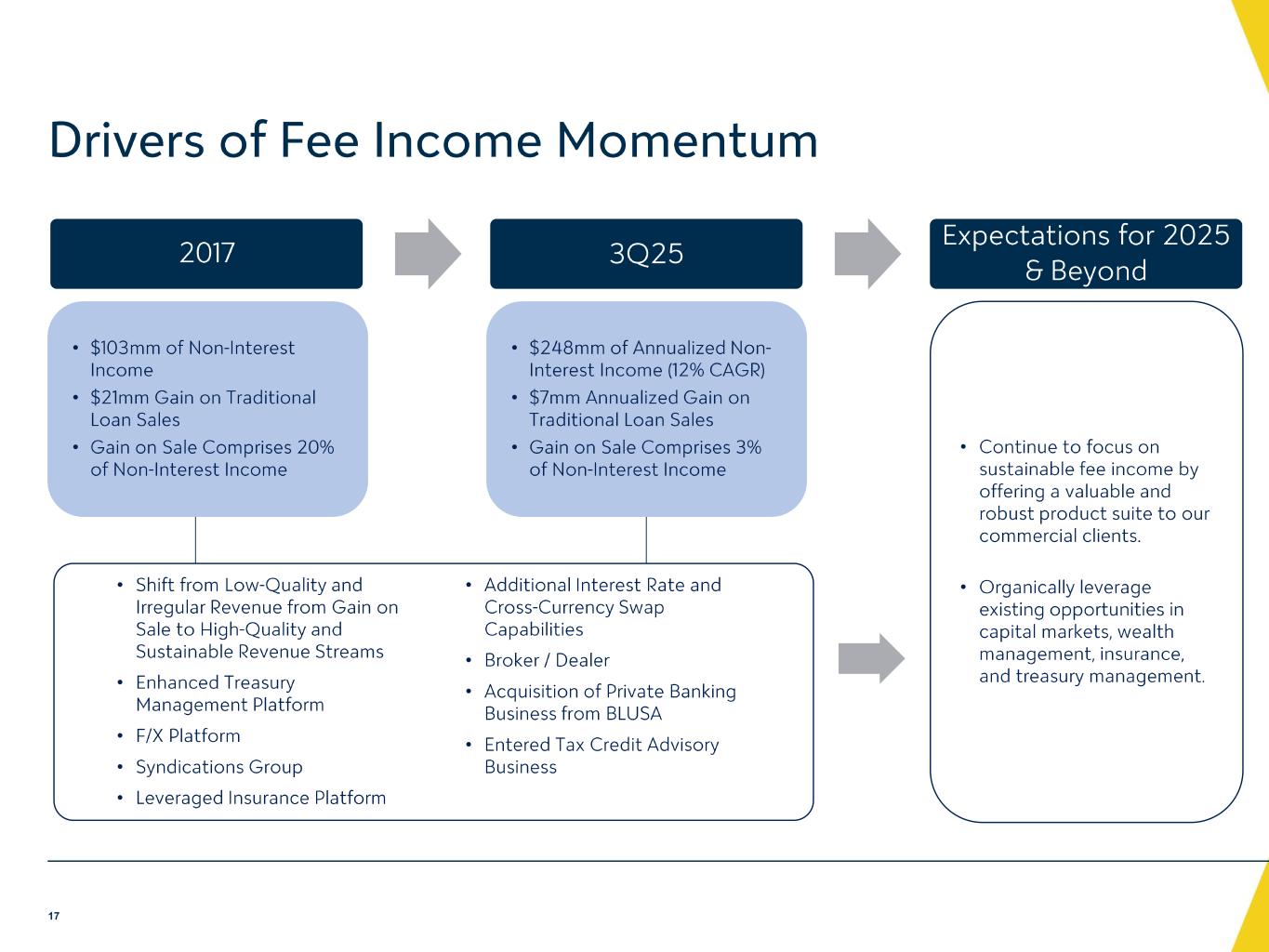
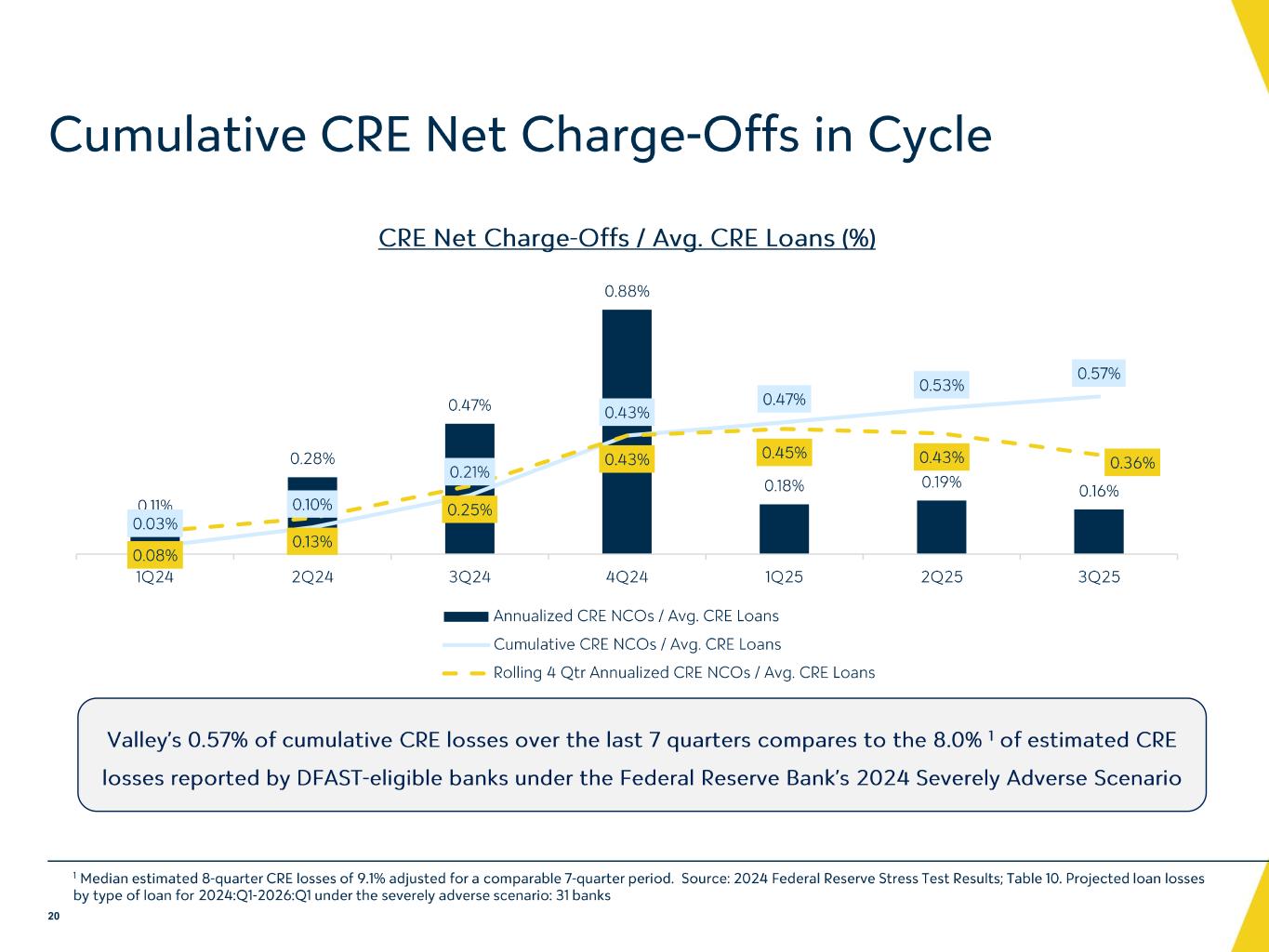
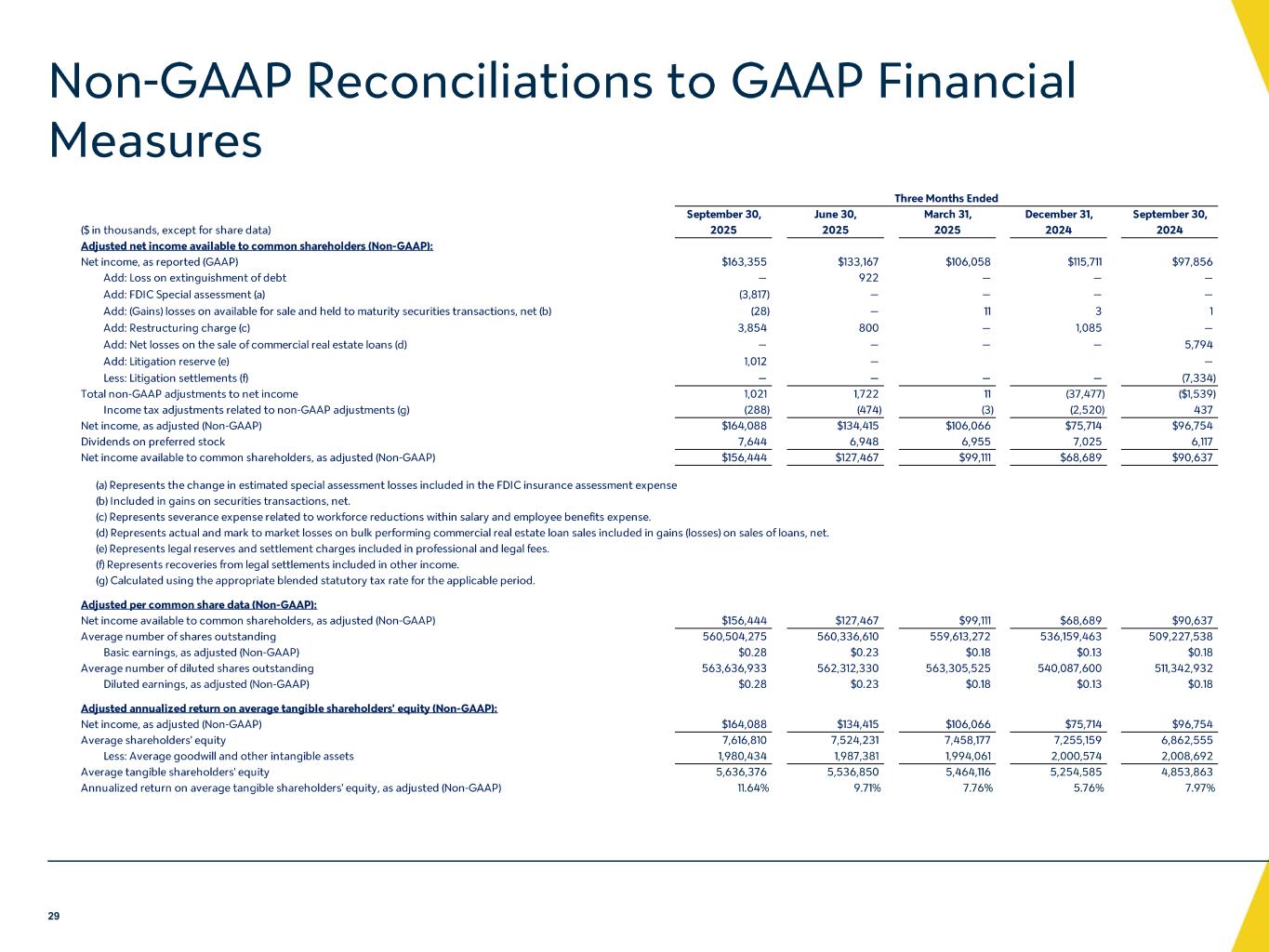
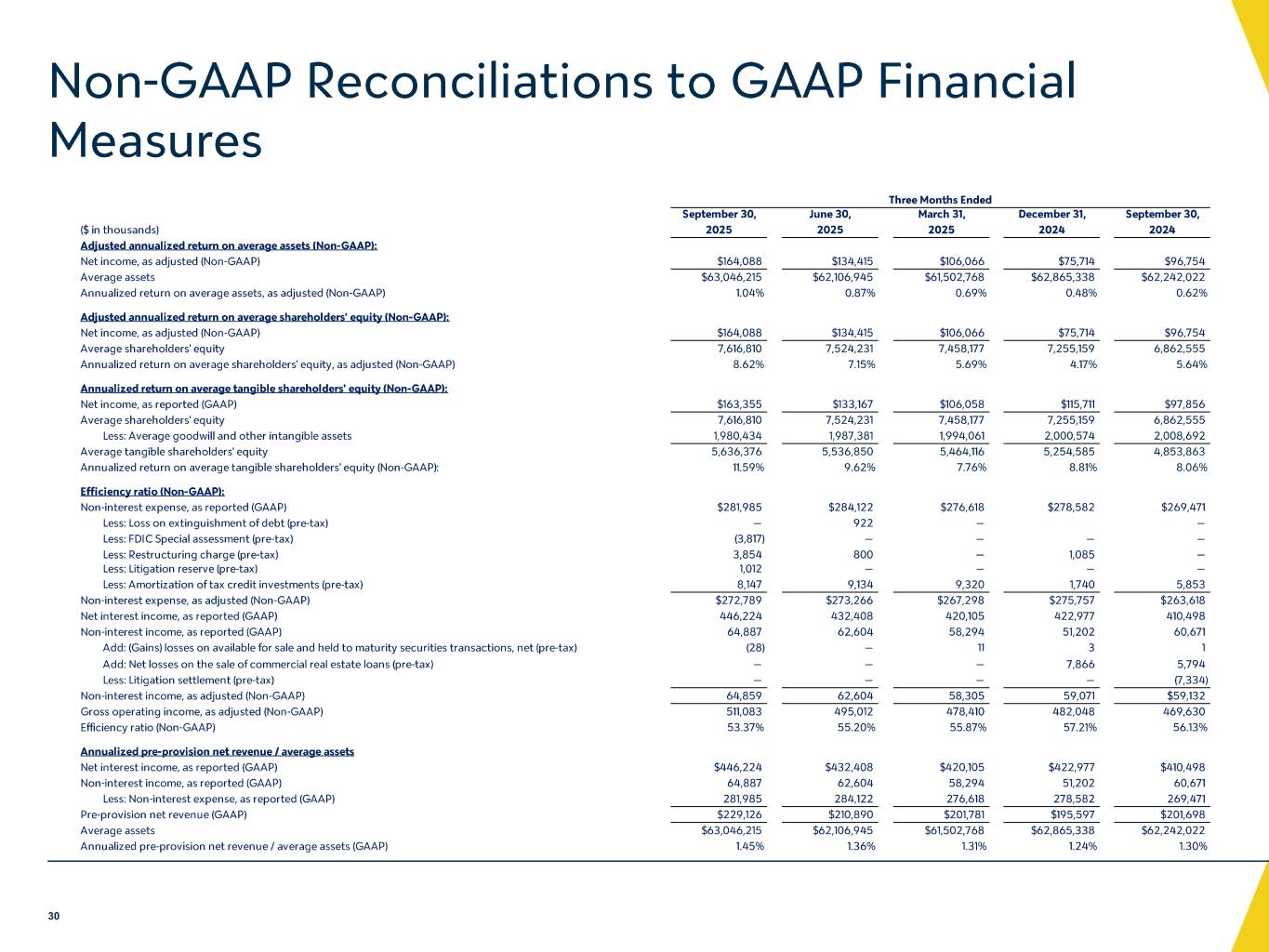
Thank you, Andrew. Value delivered strong results in the third quarter, reporting net income of approximately $163 million, or $0.28 per diluted chair. This is up from $133 million, or $0.22, last quarter, and represents our highest level of quarterly profitability since the end of 2022. This performance reflects the significant operating momentum that has been building in our organization. This quarter's results were highlighted by robust core customer deposit growth, continued momentum and net interest income and fee income, disciplined expense control, and a meaningful reduction in credit costs. Our balance sheet remains extremely strong, and we have achieved many of our stated profitability goals ahead of schedule, including annualized return on average assets being above 1%. Valley is well-positioned in the current environment. In 2024, we enhanced our balance sheet and are now leveraging this strength to improve our profitability and franchise value. Today, I'm thrilled to formally introduce our new commercial and consumer banking leaders who we believe will help accelerate the next phase of our evolution and success. Gina Martucci joined Valley in March as president of commercial banking, bringing extensive experience from M&T Bank, where he led national commercial and Cree banking efforts. Gina played a key role in M&T's growth and has already contributed his market knowledge, network, and strategic insight to support our commercial franchise's further development. In September, Prashik Smith joined as president of the Consumer Bank, following leadership roles at Santander, Capital One, and other large financial institutions. Patrick will oversee retail, consumer, and small business sectors, drawing on a notable record of growth and execution. Gino and Patrick are already making an incredible impact by enhancing our customer acquisition efforts, talent base, and strategic operating model. Their expertise helps position value to further leverage our strong foundation and accelerate our strategic initiatives. Before passing the call to Travis, let me highlight a few of the key areas of sustained First, ongoing growth in core deposits and funding transformation. Over the past 12 months, we've added nearly 110,000 new deposit accounts, which have contributed to nearly 10% core deposit growth. Targeted investments in products, technology, and talent, especially in commercial and specialty lines have driven this progress. Consequently, indirect deposits as a percent of total deposits dropped from 18% to 11%, the lowest level since the third quarter of 2022. This has been achieved alongside a 56 basis point reduction in our average cost of deposits since the third quarter of 2024. We continue to actively manage deposit pricing in the back book and expect to benefit from lower deposit costs in the fourth quarter and into 2026. Secondly, non-interest income. Excluding volatile net gains on loans sold, non-interest income has grown at an annual rate of 15% since 2017, three times faster than publicly traded peers in our size range. We spoke last quarter about our focused efforts with respect to treasury management and tax credit advisory opportunities. These initiatives collectively contribute roughly $3 million of incremental revenue during the third quarter. The success of our treasury management demonstrates our effective combination of technology and talent. The implementation of an upgraded platform following our core conversion two years ago, coupled with expanding our expert sales team, has resulted in nearly $16 million of incremental deposit service charge revenue on an annualized basis since the third quarter of 2024. Thirdly, the resilience of our credit performance. Consistent with our guidance, we saw a significant reduction in net charge-offs and provisions during the third quarter. We expect to sustain these levels again in the fourth quarter. At the start of 2024, value was notably Cree-heavy in a challenging environment. However, differentiated underwriting and credit management have limited aggregate Cree losses to just 57 basis points of average Cree loans over the last seven quarters. Although 2024 Cree charge-off rates were beyond our internal standards, loss rates have remained far below larger banks' more pessimistic stress test forecasts. From a C&I perspective, we continue to focus our growth efforts on traditional small business and middle market opportunities in our well-known geographies and established specialty verticals. As I mentioned last quarter, we have specifically targeted the healthcare C&I and capital call line areas, giving their compelling risk-adjusted return profiles. We've been active in both verticals for some time, and we have never taken a loss on a value-originated, healthcare C&I, or capital call loan. I am extremely proud of our organization's achievements over the past few years, and I'm highly optimistic about our future prospects. The bank continues to demonstrate exceptional momentum with respect to customer growth, talent acquisition, and profitability. We have set ambitious goals for ourselves and are confident that continued execution of our strategic initiatives will deliver substantial value to our associates, shareholders, and clients. With that, I would turn the call over to Travis to discuss this core's financial highlights. After Travis concludes his remarks, Gino, Patrick, Travis, Mark Sager, and I will be available for your questions.
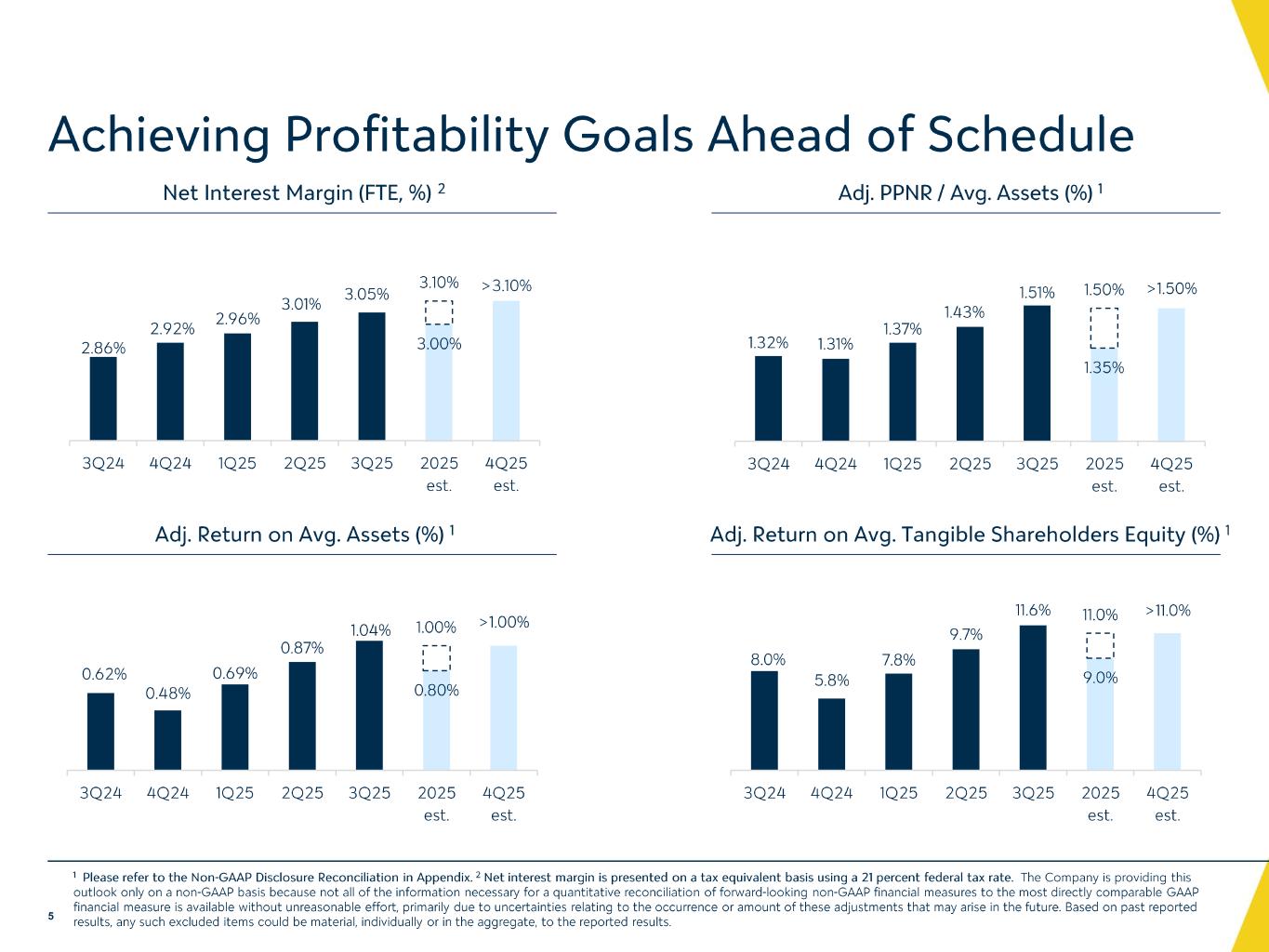
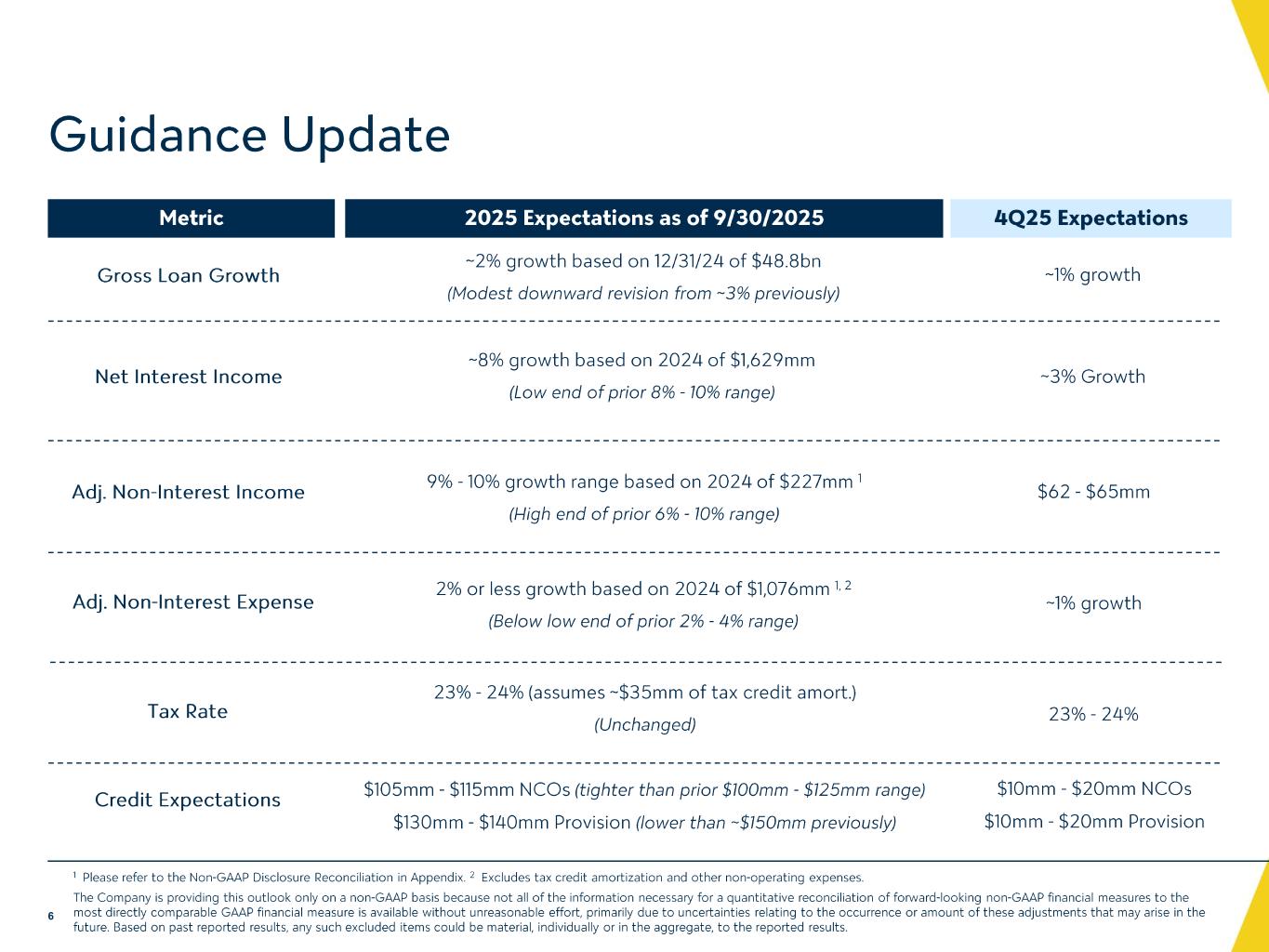
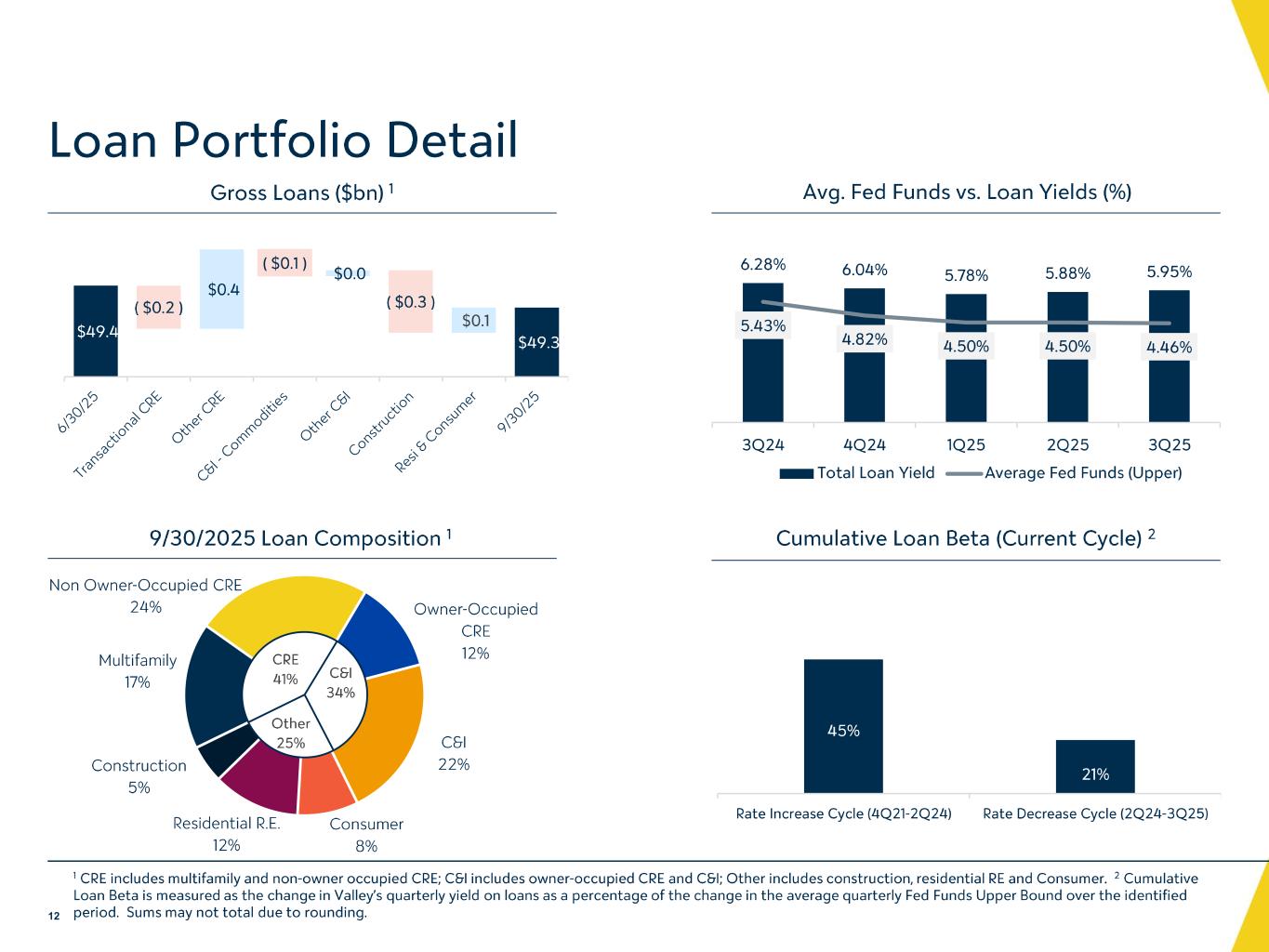
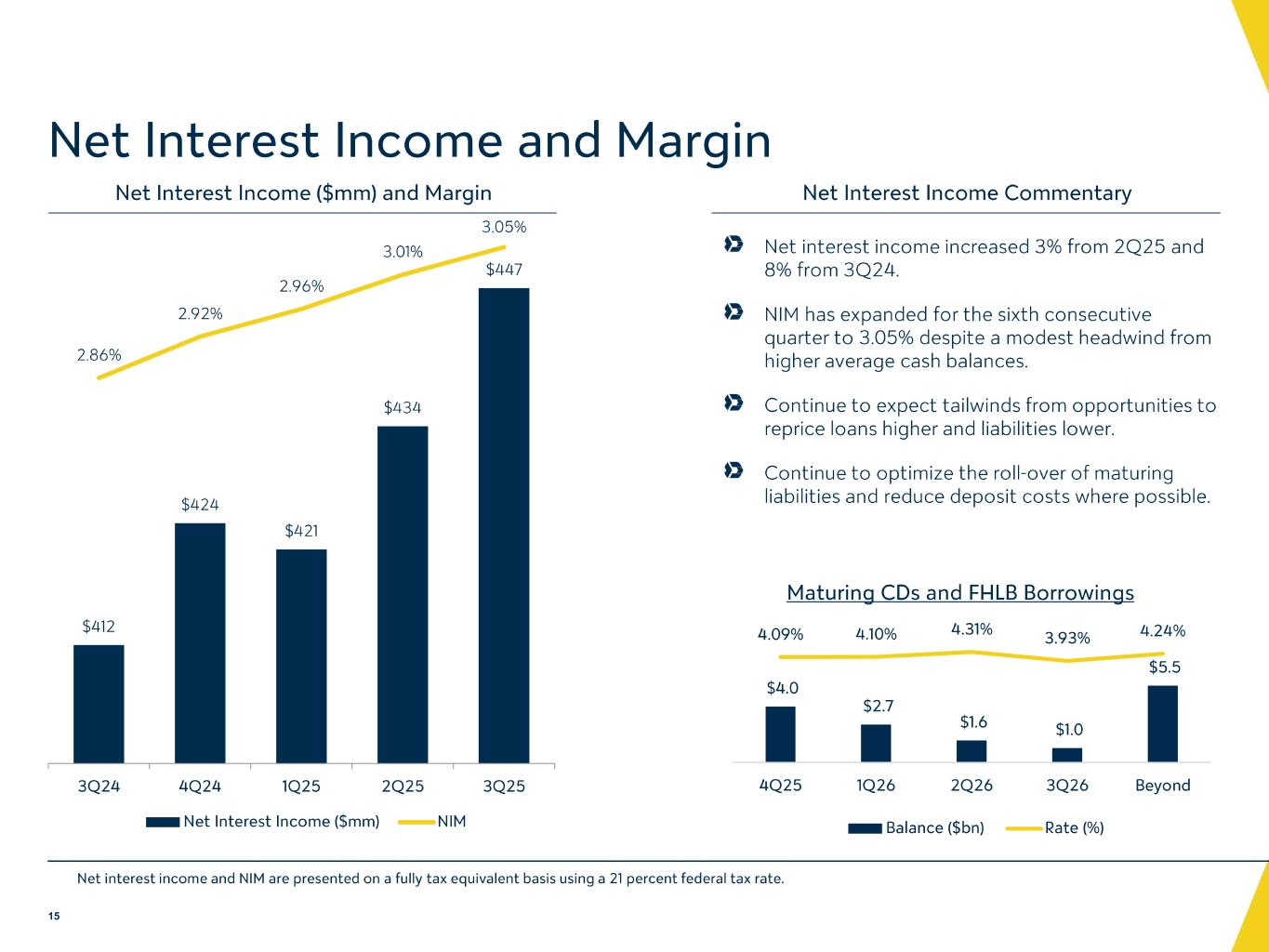
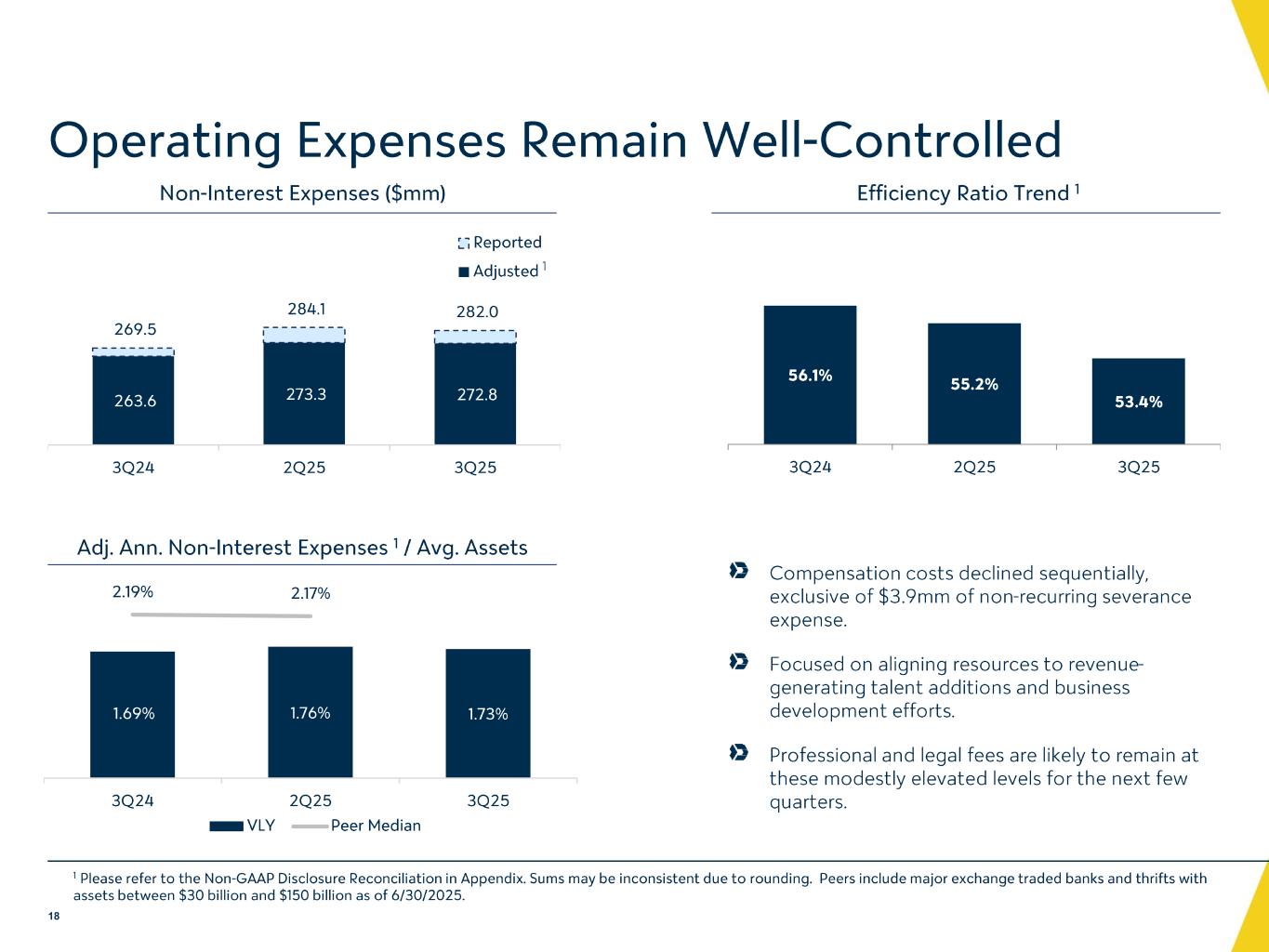
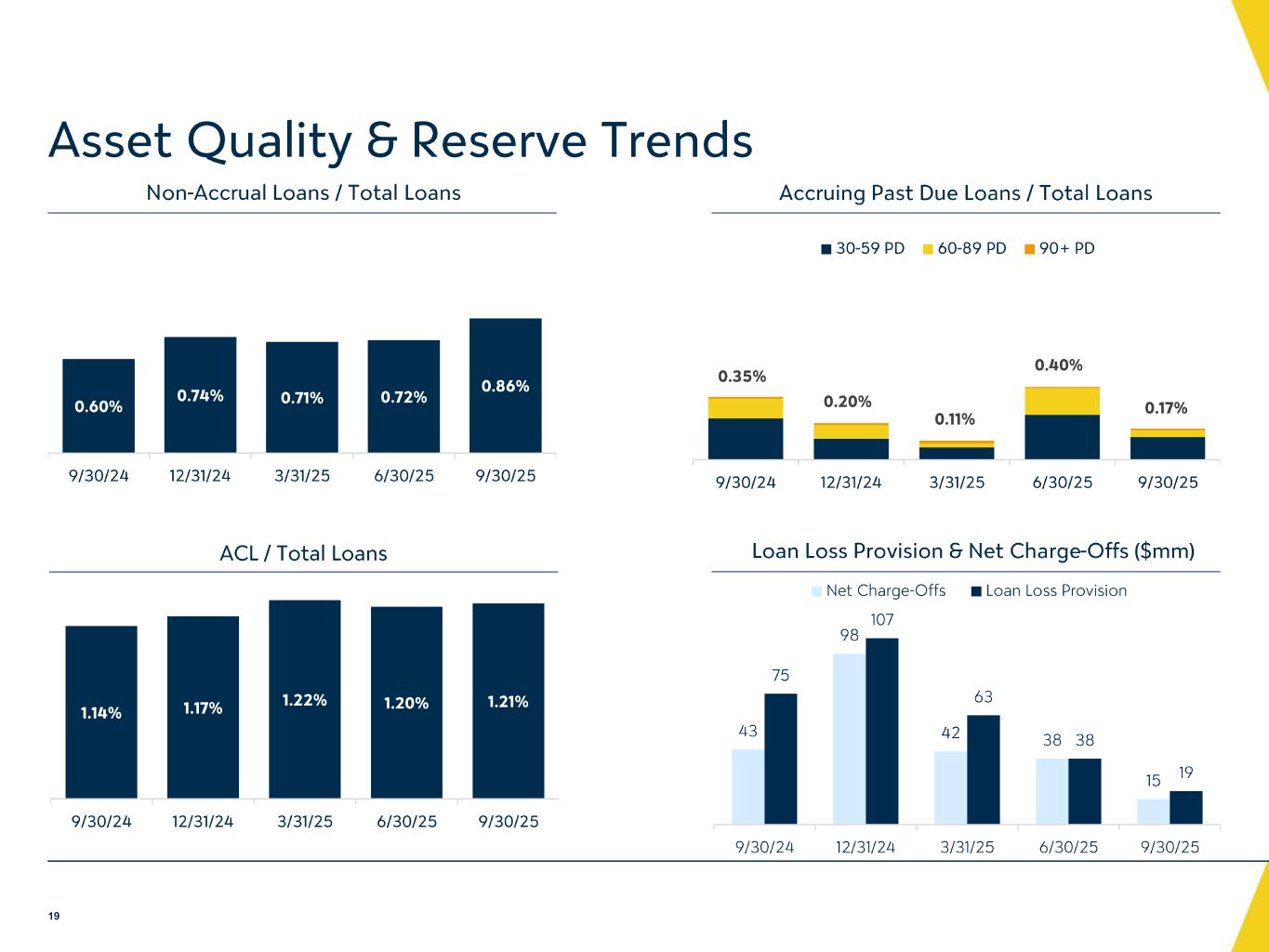
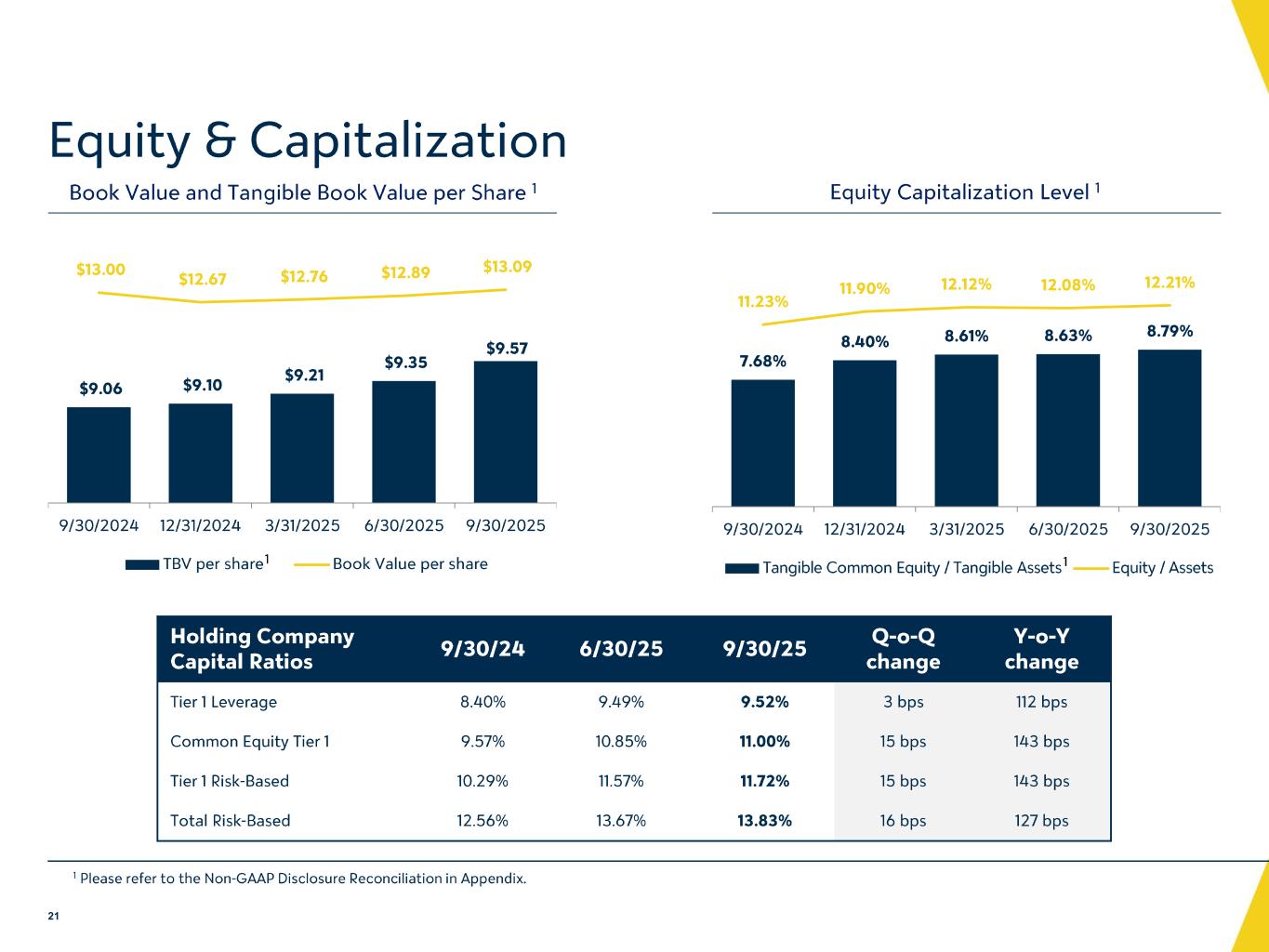
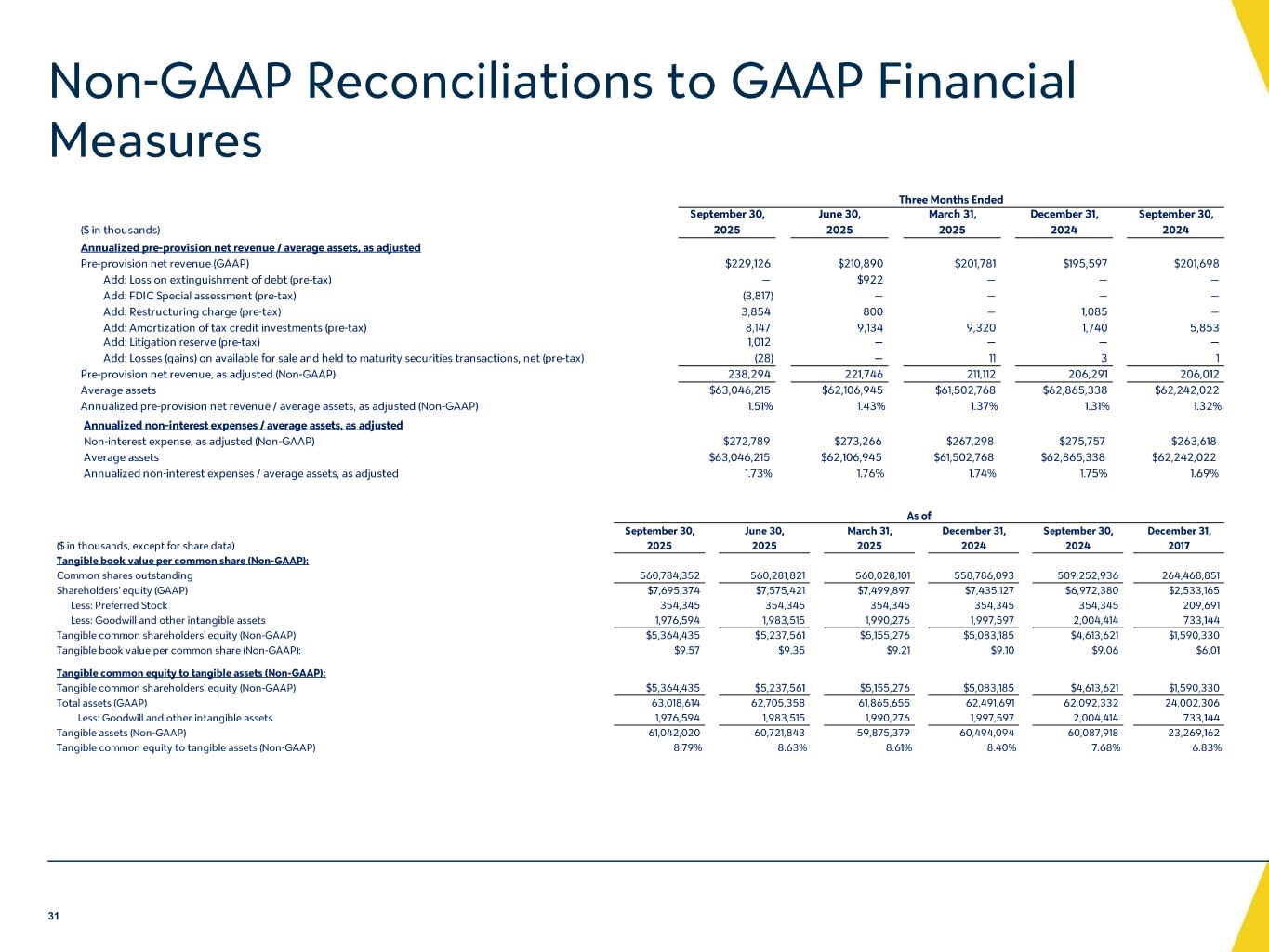
Thank you, Ira. Slide nine illustrates our continued core customer deposit growth momentum. We gathered about $1 billion of core deposits during the quarter, which enabled us to pay off approximately $700 million of maturing brokered deposits. Brokered deposits now comprise 11% of our total deposit base, representing the lowest level since the third quarter of 2022. Roughly 80% of the quarter's core deposit growth came from commercial clients, reflecting our proactive business development efforts and the continued success of our treasury management sales efforts. The relative stability of average deposit costs during the quarter masked a seven-basis point reduction in spot deposit costs from June 30th to September 30th, which positions us well heading into the fourth quarter. Turning to slide 12, gross loans decreased modestly on a spot basis due to targeted runoff in transactional Cree and the CNI commodities subsegment, which was acquired from Bank Leumie USA in 2022. Commodities payoffs accelerated during the third quarter, leaving a modest $100 million of C&I loans left in this business line at September 30th. Cree loans made to more holistic banking clients increased during the quarter, supported by the conversion of construction projects to permanent financing. Other C&I activities slowed from the second quarter's exceptional pace of growth. Average loans increased a half percent during the quarter, the pipeline is rebuilt, and we anticipate solid origination activity as the fourth quarter progresses. New origination yields were stable during the quarter at around 6.8%. Average loan yields improved seven basis points on a linked quarter basis due to the fixed-rate asset repricing dynamic that we have previously discussed. As a result, our cumulative loan beta stands at 21% for the current cycle. Slide 15 illustrates the second consecutive quarter of 3% net interest income growth. NIM improved for the sixth consecutive quarter, aided by asset repricing and sequential growth in average non-interest deposits. While excess cash held during the quarter weighed on our margin by an estimated three basis points, we are on track to achieve our above 3.1% NIM target for the fourth quarter of 2025. We expect that net interest income will grow another 3% sequentially in the fourth quarter. The current interest rate backdrop, combined with anticipated fixed-rate asset repricing, remained supportive of further NIM expansion in 2026. Non-interest income continued its strong momentum this quarter. Deposit service charges saw continued growth as we expanded the penetration of our commercial client base with our robust treasury management platform. Wealth management was also strong, lifted partially by our tax credit advisory business. We anticipate that fourth quarter fee income will be generally stable within the range of the last two quarters. Turning to slide 18, adjusted non-interest expenses declined modestly, driven by lower compensation, occupancy, and FDIC assessments. These improvements were partially offset by higher third-party spend. Professional fees are expected to remain at this modestly elevated level, but total expenses should remain flat or only marginally higher in the fourth quarter as compared to the third quarter. Our efficiency ratio continues to improve and we anticipate further progress as we generate additional positive operating leverage in the fourth quarter of 2025 and into 2026. Slide 19 illustrates our asset quality and reserve trends. Non-accrual loans increased during the quarter, primarily due to the migration of a $35 million construction loan that was in the 30 to 59-day past due bucket at June 30th. We anticipate resolution of this credit with no incremental impact, but from a timing perspective, it necessitated migration to non-accrual. On a combined basis, total past dues and non-accrual loans as a percentage of total loans declined nine basis points from June 30th to September 30th. Net charge-offs and loan loss provisioned some meaningful declines during the quarter, consistent with our prior guidance. We foresee general stability in 4Q, implying improved 2025 guidance relative to the range of our prior expectations. Slide 20 emphasizes our cumulative commercial real estate charge off experience since early 2024, affirming the effectiveness of Valley's distinctive underwriting and credit management practices. Despite the relative challenges of 2024, cumulative losses remained far below the adverse forecasts of DFAS-eligible banks. Turning to slide 21, tangible book value increased as a result of retained earnings and a favorable OCI impact associated with our available-for-sale portfolio. Regulatory capital ratios continue to increase, and we utilize around $12 million of capital to repurchase 1.3 million common shares during the quarter. We remain extremely well capitalized relative to our risk profile, and have ample flexibility to support our strategic objectives and sustain the strong momentum that we are experiencing. With that, I will turn the call back to the operator to begin Q&A. Thank you.
Operator
Thank you. Ladies and gentlemen, as a reminder to ask the question, please first start 1-1 on your telephone, then wait for your name to be announced. To withdraw your question, please first start 1-1 again. Please stand by while we compile the Q&A roster. Our first question comes from the line of David Smith with Truer Securities. Your line is open.
Thank you. Could you speak to the competitive backdrop, just given the, you know, decline in C&I loans, understand some of that was commodities-driven, and the, you know, the increase in deposit costs for the quarter on average? I think I understood there was a decline on the spot deposit rate, but just help us unpack, you know, what's happening on a driving some of those trends and how you're expecting them to revert in the fourth quarter in the coming year?
Yeah, thanks, David. This is Travis. Maybe I'll start on the deposit cost side, and Ira and Gino can chat a little bit about the competitive environment from a loan perspective. So to your point, spot deposit costs declined from 630 to 930 by 6 basis points. I'll tell you, quarter to date, we're down another seven basis points from a spot perspective. So when you factor all that together, I think the beta, you know, relative to the 25 basis point cut in late September, you know, is consistent with what we've modeled. I would just say, you know, quarter to date, you know, so since 930, we've paid off another 500 million plus of additional brokered at a rate of 450. The environment for new deposit relationships remains competitive. We originated a billion four of new deposits this quarter at 2.9%. That compares to $1.8 billion in the second quarter at 2.8%. So the competitive environment for new relationships is still there. I would just say we have continued opportunity on repricing the back book, which we were effective with during the quarter. So I think as we enter the fourth quarter, I mean, deposit costs will come down. And I think there's more opportunity as we head into 2026.
Thanks, Travis. This is Gino Martucci. As it relates to the competitive landscape, we continue to see very strong demand, both in CNI and CRE. There is ample liquidity in the marketplace. Banks and non-banks are fighting pretty hard for loans, and we have seen some decline in spreads. But our pipeline remains very strong, and we continue to add loans and add clients.
Okay, thanks. And then just on capital, stock is barely one times tangible right now, and you've got 11% CET1 and TC, almost 9%. You know, just with loan growth expectations, about 1% for the next quarter. How are you thinking about the buyback opportunity against conserving capital for longer-term organic growth ambitions?
Yeah, I think, like, over the last couple quarters, we've talked about a near-term CET1 target of around 11%. I mean, the reality is, given our risk profile, you know, we'd be very comfortable in a range, you know, below that, call it 10, 50 to 11 percent. Historically, we've thought about the buyback in the context of repurchasing shares that we issue for incentive purposes. But to your point, I mean, based on the progress that we've made, the outlook that we have, and the incredible confidence that we have in investing in ourselves, you know, I do think that the buyback will be an increasing source of capital deployment going forward. Thank you.
Operator
Thank you. Will you stand by for our next question? Our next question comes from Alana Fetty Strickland with Hubdy Group. Your line is open.
Hey, good morning, everybody. Just wanted to ask on the geography of CRE and CNI. I think you've got a majority of CNI outside the Northeast at this point. And as you look at your pipelines today, do you expect to continue to have more business coming from outside the Northeast than inside the legacy Northeast footprint?
So our originations for the quarter and actually for the last year have really reflected a third, a third, and a third. A third in the southeast, a third in the northeast, and a third in our specialty businesses. So as it relates to CRE, Florida franchise remains very strong, and we expect to see slightly more originations down there, but it's pretty evenly split amongst the geographies.
Maybe I'll just add to that, Freddie. I think, as you know, we've spent a lot of time investing into the Florida footprint. We went into Florida, I think, back in 2014, with the acquisition of First United Bank. We then acquired a couple other banks in that footprint. I think in the aggregate, it's about $4 to $5 billion of commercial assets that we acquired. Today, we sit with commercial assets that are well north of $15 billion, right? So from a loan perspective, it's one of our largest geographies. That's $10 billion of organic growth in just a 10-year window. I think represents really the foundation and footprint that we have in that Florida area. an unbelievable set of lenders an unbelievable set of bankers there and obviously very strong markets and we continue to really make sure that we're focusing on letting that be a more sizable piece of what our franchise is so as we think about the growth projections that we've outlined obviously as Gina said we're seeing strong contributions coming from the specialty and coming from the Northeast as well but we feel really strong and confident in the growth numbers largely a function what we're seeing in the Florida footprint as well I appreciate that.
One more for me, just want to ask on the fee side, how should we think about the capital markets business and the insurance businesses in particular over the next quarter? So it seems like capital markets has held up pretty well. Insurance maybe has some seasonality. Just within the guide, obviously, how should we think about those businesses?
Yeah, I would anticipate general stability for the fourth quarter, general stability in both areas. I think heading into 2026, there is definitely momentum on the capital market side. So just as a reminder for us, capital markets is three businesses. It's our syndications business, our FX desk, and our swaps desk. The swap activity tends to be more tied to commercial real estate originations, which have picked up over the last couple of quarters and help support revenue there. FX has been a long-term growth trend for us as we continue to expand our commercial client base and the folks that utilize that offering. So I think there's good tailwinds, you know, definitely on the capital market side.
All right, that's it for me. Thanks for taking my questions.
Operator
Thank you. Our next question comes from the line of Anthony Elian with J.P. Morgan. Your line is open.
Hi, everyone. Could you provide more color on the increase in non-accrual loans? I know you called out the construction loan that migrated to non-accrual but no further impacts, but I would love to hear more on the commercial real estate loans that migrated.
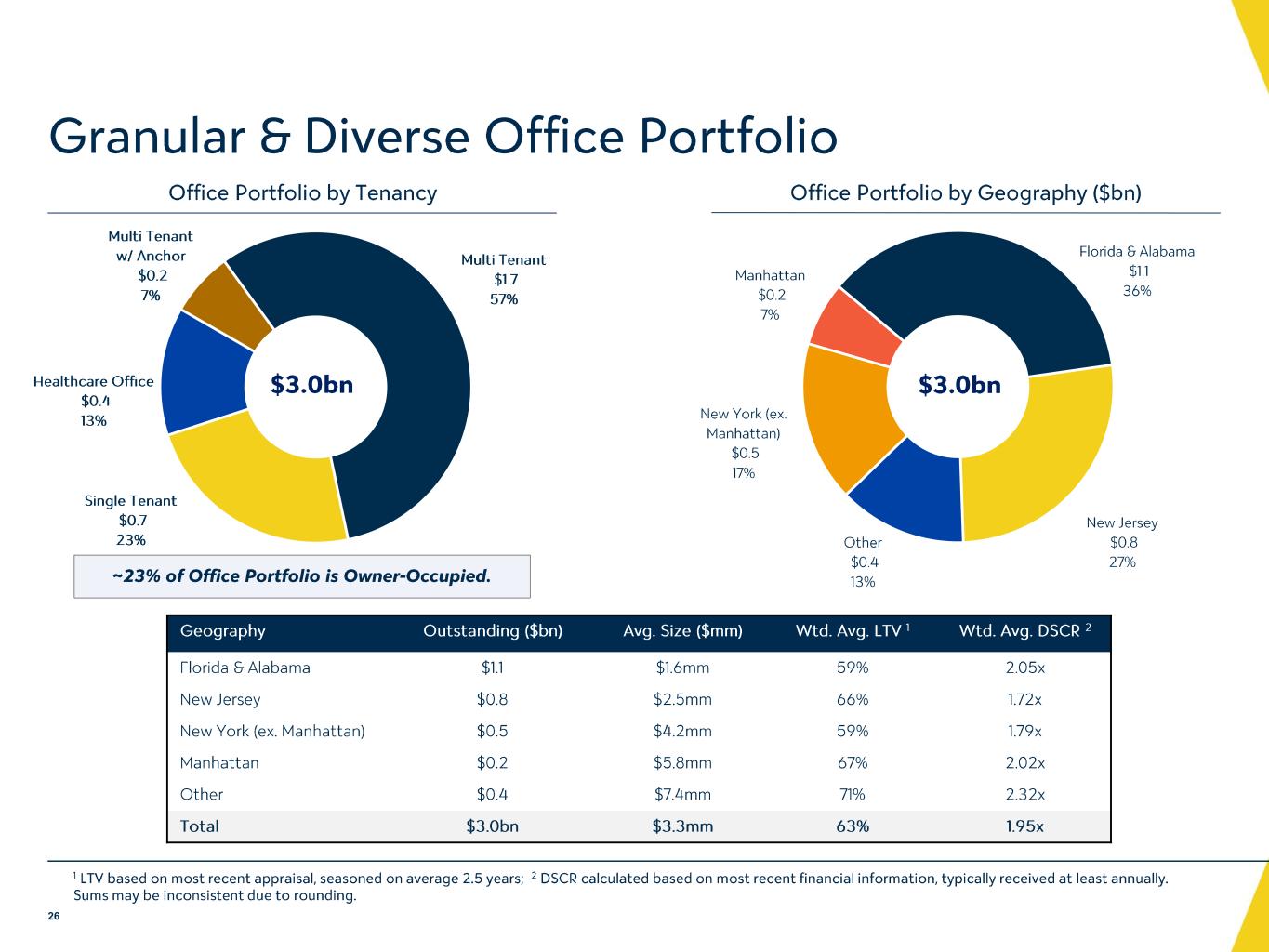
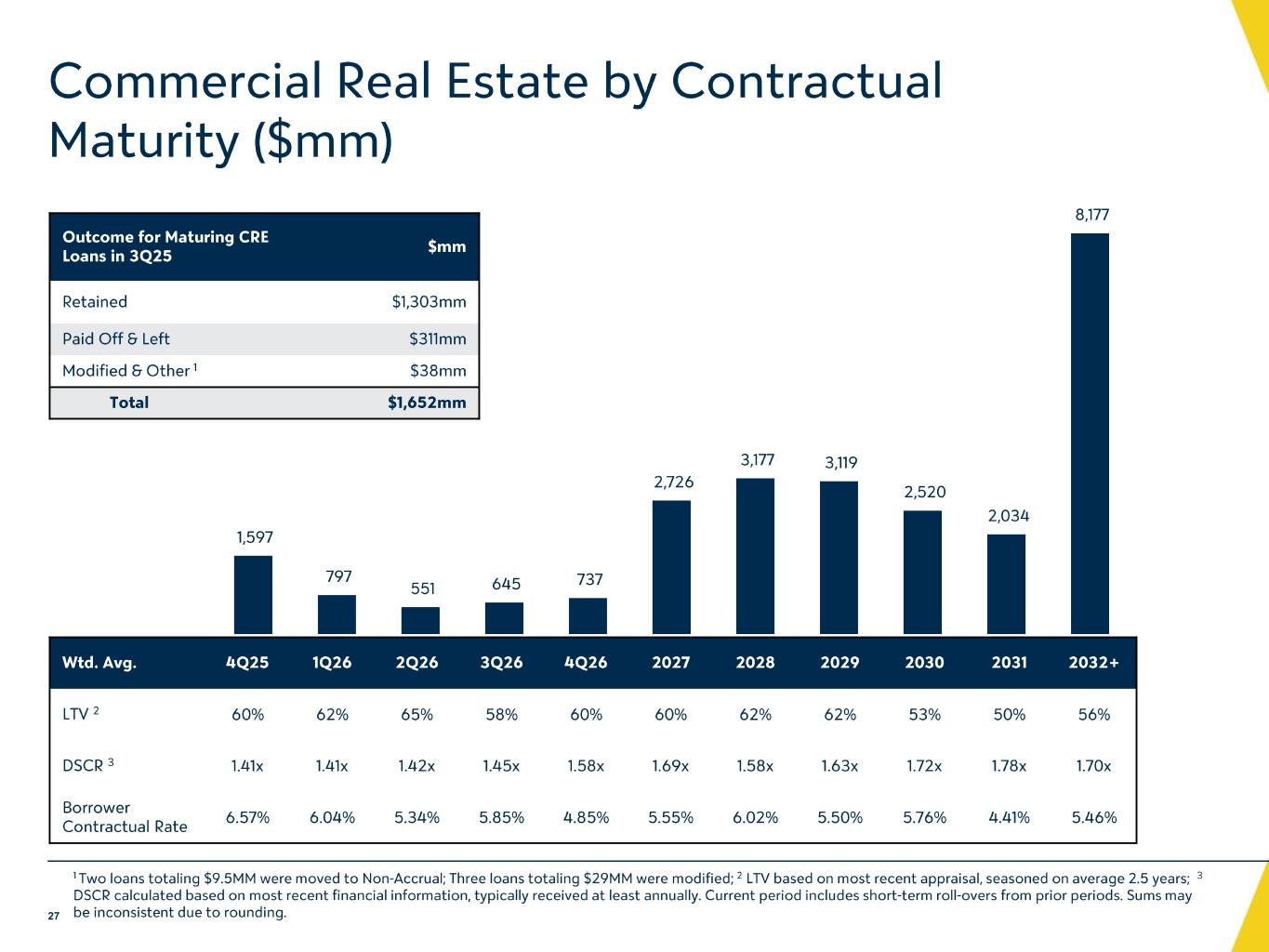
Yeah, again, this is Mark Sager, Anthony. The increase primarily driven by the $135 million loan, while it's in construction bucket, I note that it's really a land loan, so really strong value there. The borrower is in the midst of a refinance to take us out. We don't anticipate any issues with that at all on the go forward. The other primary migration into non-accrual is based off of updated appraisals. What I would note is that 50% of our non-accrual portfolio is current on payment, so there's just some appraisal valuation consistent with our percentage of paying non-accruals. Our overall view of the real estate market is we're starting to see definitely positive of activity even within the office market and the real estate market. I point to the improvement in our criticized assets for the quarter after a stable second quarter. And that improvement really came from approximately two-thirds of payoffs in refinance at par and about one-third upgrade. So we're definitely seeing positive movement in the real estate market.
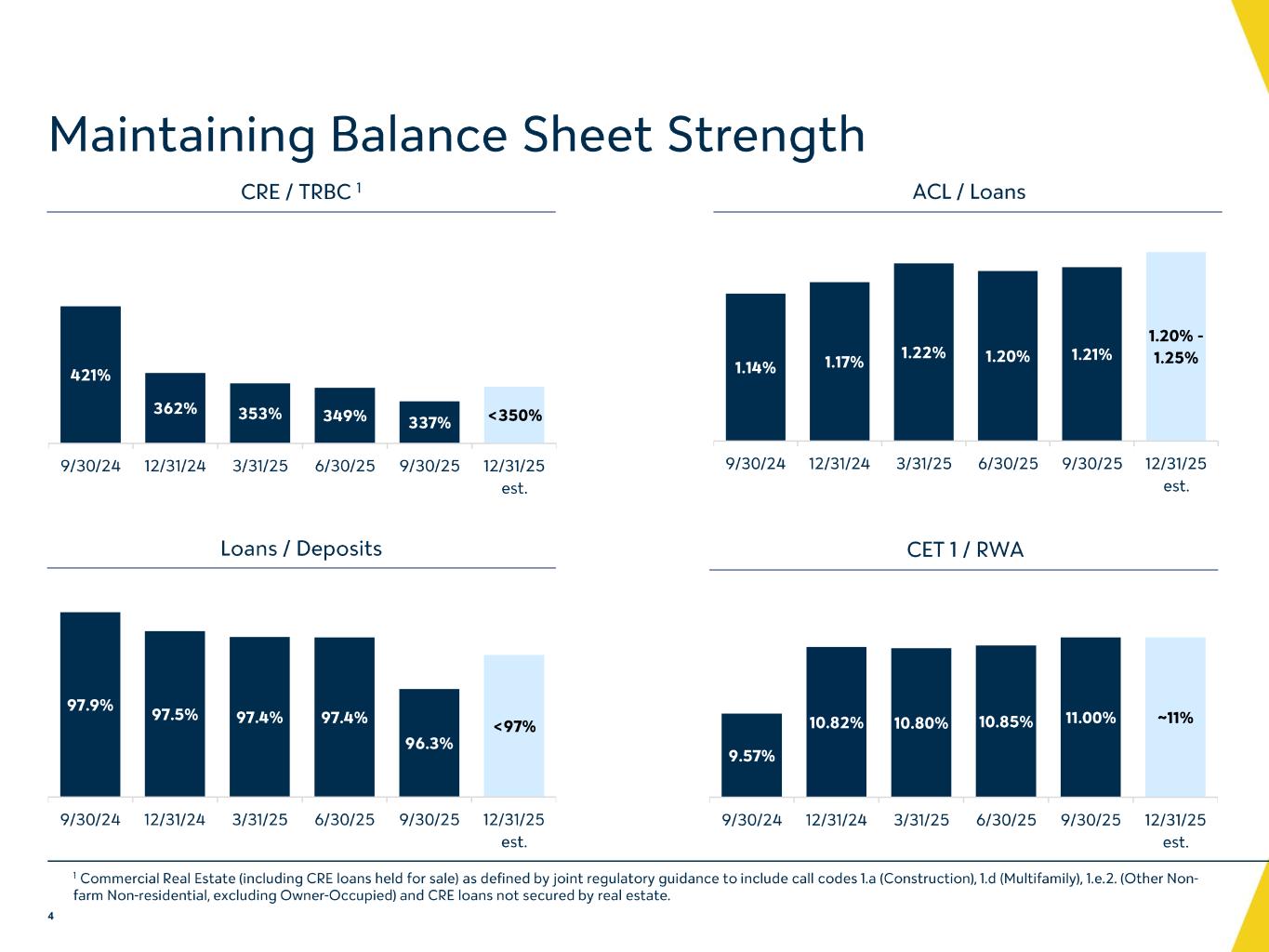
Thank you, Mark. And then my a follow-up. On your commercial real estate concentration, fairly well below the 350% level now at 337%. Looking ahead, how low do you think you can take that level? And at some point, would you expect to actually grow Cree balances? Thank you.
Thanks. This is Travis. So, look, I think we are targeting growth in Cree. I think we're looking at low single-digit growth for 2026 and beyond. But as a result of capital growth, that ratio would continue to decline. I mean, for us, the next kind of guidepost is 300%. I think you're probably there at the end of 26, early 27, and then continuing to grind lower over time. And again, that's just our own focus on ensuring that we're diversifying the balance sheet. And candidly, when you look at our peer group and the set of peers that are above us from a size perspective, I mean, we do remain somewhat of an outlier. So it's something that, you know, we've been focused on, we've made a ton of progress on, but at this point, you know, we expect that Cree balances will stabilize and begin to grow. and then allow that capital build to drive the next leg down in the ratio.
Operator
Thank you. Our next question comes from the line of Manning-Gosilia with Morgan Stanley. Your line is open.
Hi. Good morning, all. Question for Gino. Where do you see the biggest white space for Valley? What areas are you most focused on? and, you know, which sub-segments or geographies do you think you need to invest most in? You know, I recognize that you're focused on healthcare, CNI, and capital call, but maybe if you can talk about opportunities outside of that. And maybe same question for Patrick, although that might be an unfair question. I know you've only been there for a month now.
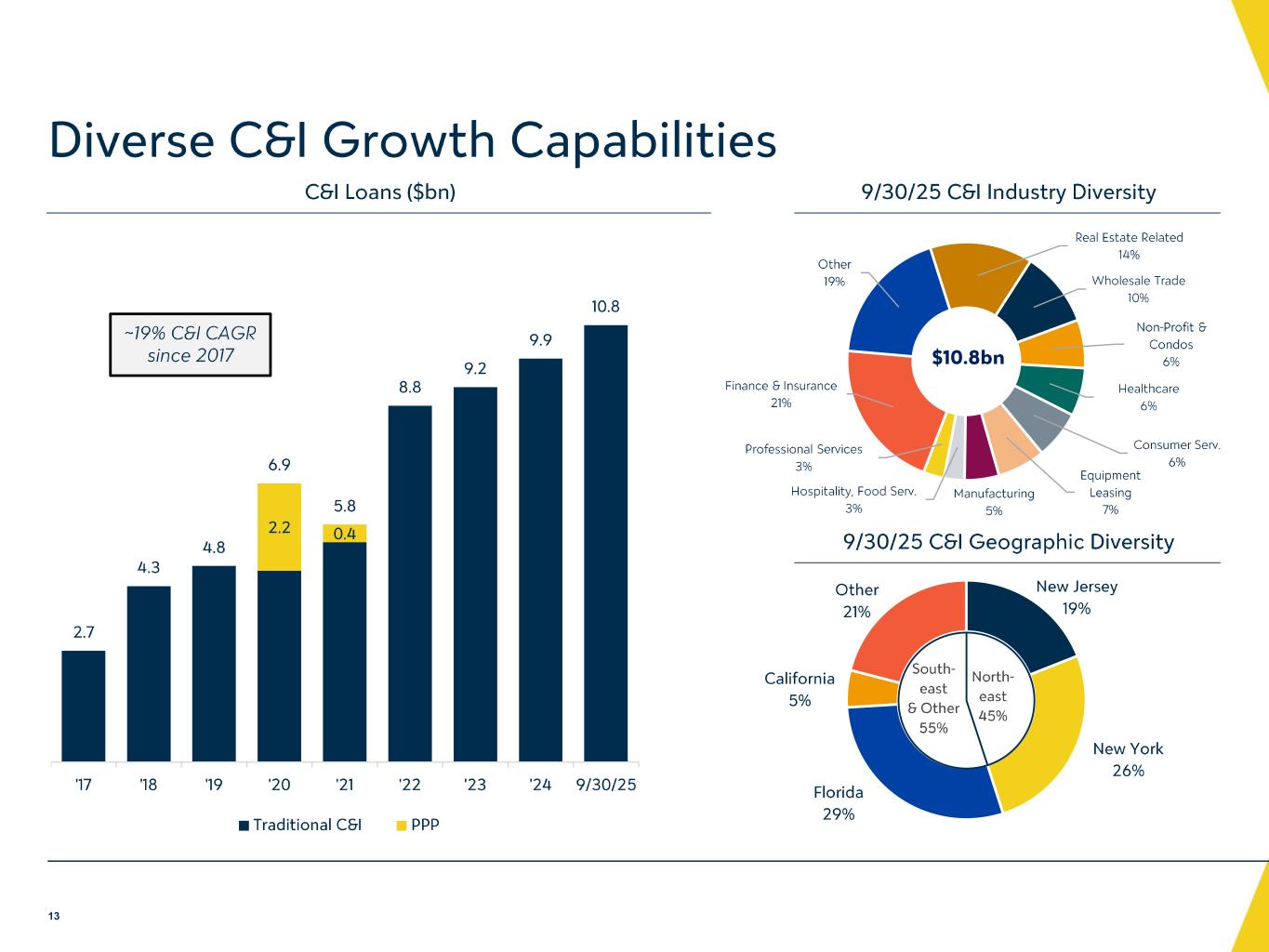
Yeah, thanks for the question. As I mentioned, the Florida franchise is an incredible differentiator from my perspective. It's had sustained momentum and growth for many years now, and that growth continues. It's now a $15 billion franchise. It's largely organic, and there's considerable opportunities ahead for that. In addition to that, I think Valley has an opportunity to go upmarket in C&I. And, in fact, we're adding some upmarket C&I lenders. It's more in that $150 to $500 million revenue space than Valley's traditionally played in. And they're actually onboarding five senior bankers who are building out their teams currently. In addition, I really see a tremendous opportunity for value in business banking. But currently, we didn't sell into that book as much in the deposits as we could have. And we have a real opportunity to do that. And I think we can gain significant deposits from that book. And as part of that effort, we're going to build out a professional – We're going to expand our professional services book to focus on law firms, accounting firms, medical and dental practices. And the deposit profile of those companies is extremely good. So we think that going up market C&I is a real differentiator for us as well because there's a real void left by the larger institutions and regional banks that are consolidating away. Valley's attention to their relationship, their responsiveness, is frankly superior to the super regional banks and is rewarded by our customers. So as I mentioned, we're bringing on seasoned bankers. They're going to build out teams. We're doing it in every geography. We're adding business bankers as well. And we went through the efficiency exercise in order to create that capacity. So there is a number of opportunities, I think, for Valley to grow in 2026 and beyond.
Thank you. This is Patrick. First of all, let me say that I am incredibly enthusiastic about what I've seen so far in my first few weeks at Valley. And to your question, I'd offer up a few points. One is small business. I've been conducting an end-to-end evaluation of our small business segment, and I'm excited about the opportunity we have to really grow in this segment. We've been underpenetrated in small business, and we have a real opportunity to grow organically in that segment across our footprint. So we've been adding experienced small business bankers and enhancing our product set to go after that opportunity. So I think it's a wonderful opportunity for us. We've already added eight bankers, principally in Florida and New Jersey, to take advantage of the opportunity. The other one I'd say quickly is that we have an opportunity to organically grow deposits from a retail perspective in our branches. Our branches have been positioned historically in support of our commercial business. As we pivot more toward a focus on or add a focus on retail, there's a real opportunity for us to grow our retail franchise through our branches. And so we have a really good branch network across our footprint. That's an incredible opportunity. And then finally, I'd echo what Gino said, which is we are acquiring really strong talent across the retail bank, and I expect us to continue to do that. And that's going to be a core driver, as it is in commercial, of our retail franchise growth.
That's great. I really appreciate the thorough response here. Maybe a follow-up for Ira and Travis. So you're beating your expense guide. You're clearly investing, and there's clearly some more white space to invest in. how should we think about the expenses as we go into 2026? How much of these investments are already in the run rate versus how much do you think you'll need to accelerate that spend? And I guess I'm asking from the point of view of, as NIM expands further from here, should we expect that you can drop most of those benefits to the bottom line or are there areas where you'd want to invest as we go into next year?
Yeah, thanks. From an expense perspective, I mean, we undertook over the last couple of months an efficiency exercise where we tried to unlock savings in some of the back office and corporate service areas that could be reinvested in the front office that Gino and Patrick have talked about. So this is all baked into, you know, the near-term expense guide that we provided for the fourth quarter. And I just tell you, as we begin to kind of pencil out 2026, I mean, I don't think there's any reason to move ourselves off of a low single-digit expense growth rate for that year as well. So, you know, our goal is to, you know, invest in revenue-generating talent that's going to enhance franchise value and ensure that we're dropping the majority of that revenue growth to the bottom line.
Maybe I'll just talk about sort of, in my mind, where we sit from sort of positive operating leverage. And I'll maybe take a step backwards and go, you know, where we were before the regional banking challenges that we had in 2023. But if you go back to June of 23, in that period of time, we had 3,957 associates across our entire footprint. Today, we're 3,624, so a contraction of 333 associates, about 8.5% over that period of time. Just once again, taking a step back, in 2022, at the end, we had a return on Tangible Common of 17.20%, right? So, obviously, a lot of focus on continuing to grow the organization and delivering returns for our shareholders that we think are appropriate and we definitely believe that we'll get back to. Obviously, we had to sort of recalibrate how we thought about investing into the organization in 2023 based on some of the external challenges that happened with SVB and Signature, et cetera. And then, obviously, a refocus on commercial real estate based on what happened with NYCB and a few others at that point in time. So we feel really strongly that we've made the cuts necessary to really open up the ability for us to reinvest back into revenue in this organization. And as Gino alluded to, as Patrick alluded to, you're going to see continued hiring within the organization and really a growth trajectory that's going to get us back to return on tangible common numbers that we think we've delivered before and more in line with where the higher performing peers are. So we don't believe we're going to need to really add on a lot of incremental expenses that we've created space for that. And we are really, really confident in the positive operating leverage that we're going to be able to generate here.
Operator
Thank you. Our next question comes from the line of Chris McGrady with KBW. Your line is open.
Speaker 7
Oh, great. Good morning. Travis, going back to your comment about the CRE book troughing and growing low single digit, How do you think about the impact that lower rates will influence that, I guess, that statement?
Yeah, look, I think, you know, we assume, obviously, in our loan growth guide, some amount of payoffs consisted with our rate forecast. So it's in there. And look, to the degree that, you know, rates are significantly lower than we anticipate, payoffs would accelerate, there's no doubt. And then we'd end up kind of on the lower end of our guidance range for loan growth. But what I would say is when you look at, you know, we took 2024 off effectively from a CRE origination perspective, which is a period of time in which I think the highest yielding CRE loans were put on. So I don't really think that we have maybe the headwind that others do in terms of potential impact of lower rates on payoff activity. I mean, we still have a fixed rate loan portfolio that's yielding in the mid-fours to 5%. And so you've got to pull rates down pretty significantly before you'd see a significant acceleration of payoff activity. So I'm not saying it's not a factor, but I just think we're a little bit more insulated than maybe other lenders would have been.
I would add that lower rates will also drive some transaction volume. Our pipeline is $3.3 billion today in total C&I and CRE. That's up from $2.1 billion in 2024. And it's much more, so it's more of like 50-50 CRE, C&I, where it was more like 60-40. up until this quarter. So we're seeing good momentum in C&I and CRE, and the payoffs are here, and the liquidity is in the marketplace, but we're effectively building our pipeline.
Speaker 7
That's helpful, thank you. I guess my follow-up, Ira, is more of a strategic question. Seems very clear that buying back your stock at book value is the right move. Is there a scenario where you deviate and consider inorganic at these levels?
Look, I think, let me just start with, there really is no change in how we think about M&A across the organization. For us, I would say being shareholder-friendly and focusing on shareholder is the primary focus of how we think about anything when it comes to capital allocation across the organization. Obviously, as you know, we've done a handful of M&A acquisitions over a period of time, and there's always been a focus on what that tangible book value dilution would look like and what the return to the shareholder is going to be. as we think about sort of capital deployment as we continue to move forward. You know, I think as Travis alluded to, we're sitting at a pretty significant discount to where our peers are. We feel really confident in the trajectory of where the earnings profile is. And when you're sitting at 1% on tangible bulk, it seems like a pretty good use of capital to me.
I would just add, Chris, just from an M&A perspective, I mean, we, you know, as you can hear in Gino's voice and Patrick's voice, like we have an incredible organic opportunity set ahead of us. And so our primary focus is supporting the growth that we'll generate organically. I would say, you know, more M&A in the system is good for us, right? It creates additional disruption that we can capitalize on. And through the investments that we're making in the talent, you know, we're working to position ourselves to capitalize on that.
Speaker 7
All right, great.
Operator
Thank you. Our next question comes from the line of Dave Rochester with Kancha. Your line is open.
Hey, good morning, guys. You mentioned NIMM expansion in 2026. That makes a lot of sense. And without trying to nail you down to a range right now, how are you thinking about what a more normalized NIMM level could look like, just given the forward curve and then everything you guys are doing on the remix of CRE and the other work on the funding side? Yeah.
Yeah, look, I think, I mean, for Legacy Valley, which would have been Cree-heavy and an over-reliance on wholesale funding, that normalized NIM probably would have been 290 to 310. I think if you look back over time, that's where you would see them fall most of the time. Look, I think structurally the balance sheet's already improved materially with the increase in CNI and the enhancement of the core funding base. And I would say, you know, now a more normalized margin for value should probably be closer to 320 to 340. I think, you know, as I said in my prepared remarks, you know, I have high confidence we'll be at 310 or above in the fourth quarter. And I think you can pencil out another 20 basis points of expansion from the fourth quarter of 25 to the fourth quarter of 26, which gets you kind of within that more normalized range. And I think there's additional upside as we further enhance the funding base because none of what I just described includes any growth in the composition of non-interest deposits. And I think we have a real opportunity there. So, look, I think we've got a lot of tailwinds heading into 2026, and we look forward to executing on them.
Right. And on the effort to go upmarket, where are you in the innings of that hiring in that effort? Are you hiring underwriters as well, along with the senior bankers? And then when are you expecting to be really hitting the ground running on that effort? When will you start to see the boost in growth from that?
We've had a lot of traction in hiring both senior people and underwriters thus far. We wanted to get them in here so that we can hit the rear end running in January, really, and really all through 2026. I think you're going to see some real momentum in more upmarket C&I and in business banking, frankly, for next year. And we are, which inning? I think we're probably only in the second or third inning at this point, but momentum has been strong. And people have a willingness to come to Valley. It's got a good perception in the marketplace, and we're just excited about the opportunity.
It seems like that boost to growth could be pretty substantial, right? I mean, how are you guys quantifying that?
Maybe just before we get into that, I think, look, there's obviously headwinds in different quarters. You look at this quarter, you know, the unused line or usage changed. There was the commodity headwind that we had. So we've had strong contribution as you think about sort of what the C&I growth has looked like for an extended period of time. We do believe, obviously, as you think about sort of the new hires that are coming into the organization on the commercial side, that there'll be a lot of strength there. And maybe I'll just reiterate real quickly what Patrick said also. I mean, SMB's been a solid performing vertical for us, but we're really leveraging that up as you think about the people that are coming in. And these are known people to Patrick, known to the market that we've been in. So it's really across the board as to how we think about what loan growth is going to look like. Obviously, as we talked earlier, there's potential headwinds when it comes to interest rates and Cree runoff and everything like that. But, you know, as Gina said, we're sitting with a $3.3 billion pipeline today. That's like $1.2 billion more than where we were about a year ago. I mean, that's unbelievable. So we think the tailwind's there for loan growth, in addition to the fact that Gina's still hiring and Patrick's still hiring.
We're penciling out, you know, mid-single-digit loan growth expectation for 2026, so call out a range of 4% to 6%. I think the more hirings that you get done, you get to the upper end of that for sure. And I think if you zoom out and think about where Valley's been, we've been a high single-digit, low double-digit loan grower in our history. Now, a lot of that's been driven by, you know, high single-digit CRE growth. And to the point we've made before, you know, we expect CRE growth will pick up, but we're not going to return to that level. And so, you know, think about low single-digit CRE growth, low double-digit C&I growth, contributions from consumer. and I think that's how you begin to get to that 4% to 6%. The other thing I would add on the hires is these are not transactional lenders and we're talking about holistic bankers that are bringing deposits as well. We haven't talked yet on the call about the significant deposit growth that we saw this quarter but core customer deposits were up a billion dollars. It's a significant annualized pace. It's due to a variety of factors. It's very broad based but part of it was this is the first year we've incentivized our bankers more on deposit growth than loan growth and so I think that's paid off significantly.
All right. Thanks for all the color. Appreciate it.
Operator
Our next question comes from the line of David Smith with Shua Securities. Do you have a follow-up?
Hey, thanks for bringing me back. Just thinking a little bit longer term now, you know, you did 11.6 adjusted Grazi in the third quarter, got into operating leverage with cost of credit improving, you know, this coming quarter and it sounds like you know pretty decent operating leverage next year as well um the cost of credit can can stay controlled like you think can you just give us the latest and how you're thinking about profitability improvement over the next year or two in the context of your 15 goal yeah so there's no change to our 15 roti target i think we're pretty confident we can effectively achieve it by late 27 early 28 uh if you think about where we're starting today in rough numbers, we have a 350 basis point gap to close, you know, in that
period of time. 75% of that's going to come from, you know, net income expansion based on all things we're talking about, mid-single-digit loan growth, margin expanding into the high 330s, continuation of high single-digit fee income growth and low single-digit operating expense growth, and to your point, normalized credit costs. I mean, under those assumptions, you get, you know, pretty close to the 15%. The delta is going to be with that backdrop, you're going to build excess capital dramatically. And I think that leads into the buyback conversation we've already had today. So I think those are the factors that we think about. But again, you know, we think that we have high confidence in the target on that timeline. And I do think there's also some flexibility in the levers that we'll get there because ultimately the environment isn't going to play out the way that we model it to. But we have flexibility to ensure that we achieve that.
Operator
Thank you. Please stand by for our next question. Our next question comes from the line of Matthew Breesi with Stevens. Your line is open.
Speaker 7
Hey, good morning.
Hey, Travis, I want to go back to a comment you had made. I just want to clarify. I thought you had said, you know, maybe kind of normalized loan growth in the 4% to 6% range. Is that accurate? Did I hear that right? Is that a good bogey for 2026?
And then alongside that, you know, but maybe just help us out with the, you know, the deposit growth alongside that and the outlook. And, you know, is there potential we might see a further lowering of the loan-to-deposit ratio in 26?
Yeah, I think that's part of our plan, Matt. So we would anticipate that deposit growth will exceed loan growth. The loan-to-deposit ratio today is 96.4%. I mean, over time, we'd love to get that to 90. There's no timeline on that expectation, but I think each year we'd make progress. It doesn't mean it's a straight line down. I mean, you may have quarters where it bumps around a little bit, but we've made a lot of progress and have a lot of momentum. You know, the other thing that we think about from a funding perspective is loans to non-brokered deposits today is 108, and, you know, that should be closer to 100% for sure. So, you know, we would need to obviously grow core deposits in excess of loans to continue to make progress there. But again, based on some of the efforts that we've undertaken, I would just add, man, I talked about the incentive plans with our bankers incentivizing deposit growth. The treasury management capabilities that we have has been another key driver there. So that's been significant as well. Got it.
All right. And then my last one, and, you know, admittedly it feels a bit out of tune given, you know, all the positive and optimism on the organic front, but, you know, it feels like the M&A deal window is open. And I heard your comments loud and clear, Ira, on, you know, focusing on organic, but I did want to get your sense on, you know, or thoughts on all strategic alternatives, including, you know, maybe a potential sale because the big bank M&A window appears, appears open as well. I haven't seen that in a while and just would love your thinking there. What would drive that type of outcome?
I just go back to the one commented, shareholder first, right? And I think that's how we need to think about anything that happens in this organization.
Operator
Thank you. Our next question comes from the line of Jared Shaw with Barclays. Your line is open.
Hi, this is John Rowan for Jared. Um, it's maybe, uh, looking at the CRE, um, side of things, it sounds like there's a pretty good capacity for these borrowers to refinance away from, uh, DALI and I said, um, banking system. Um, is there any subset of CRE borrower that's having a little more difficulty in, uh, finding that alternative capital source? Um, and then particularly if there's any insight on, uh, how that would look for, like, a rent-regulated multifamily. I know exposure is small there for you, but just any color would be helpful.
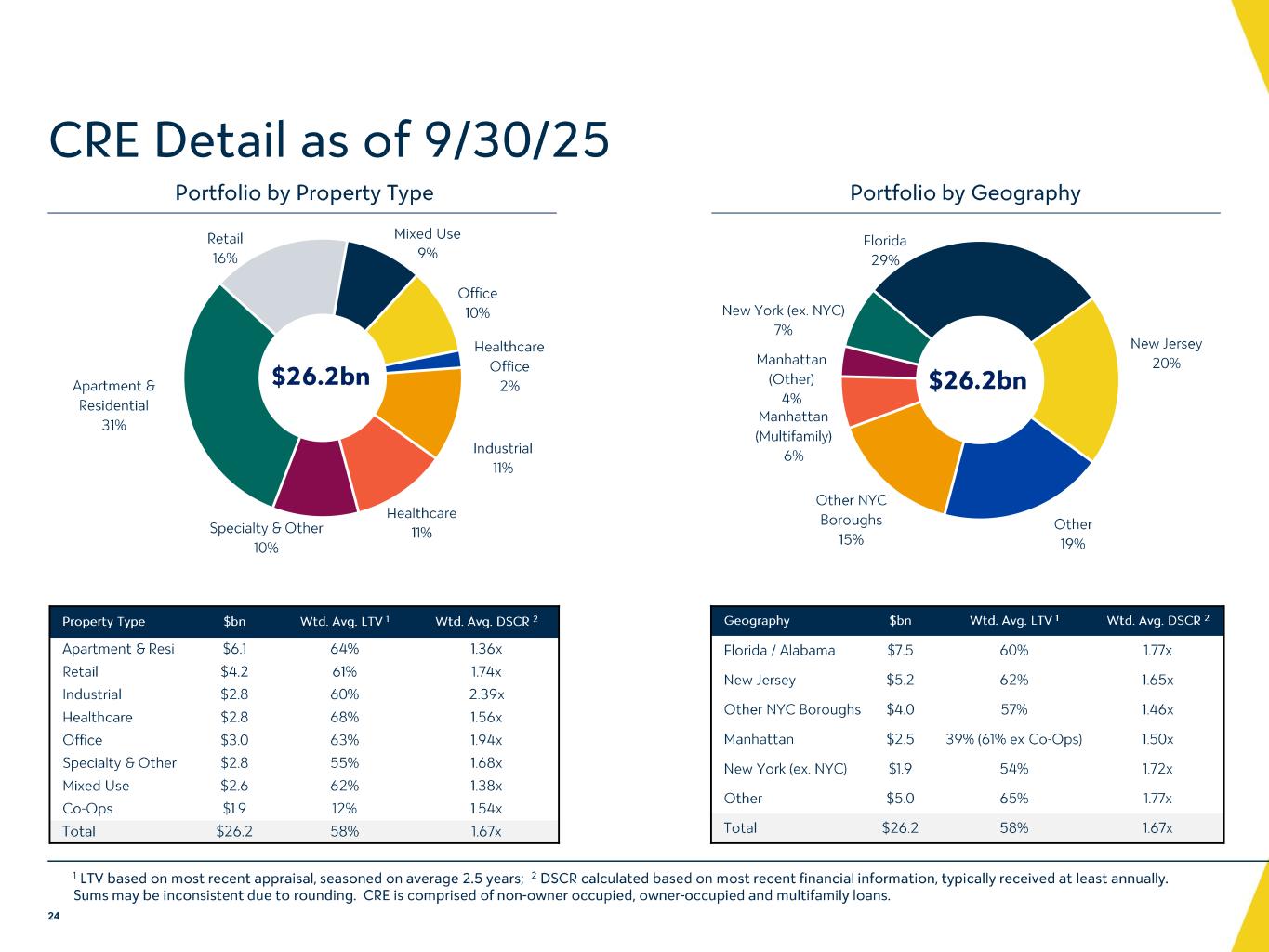
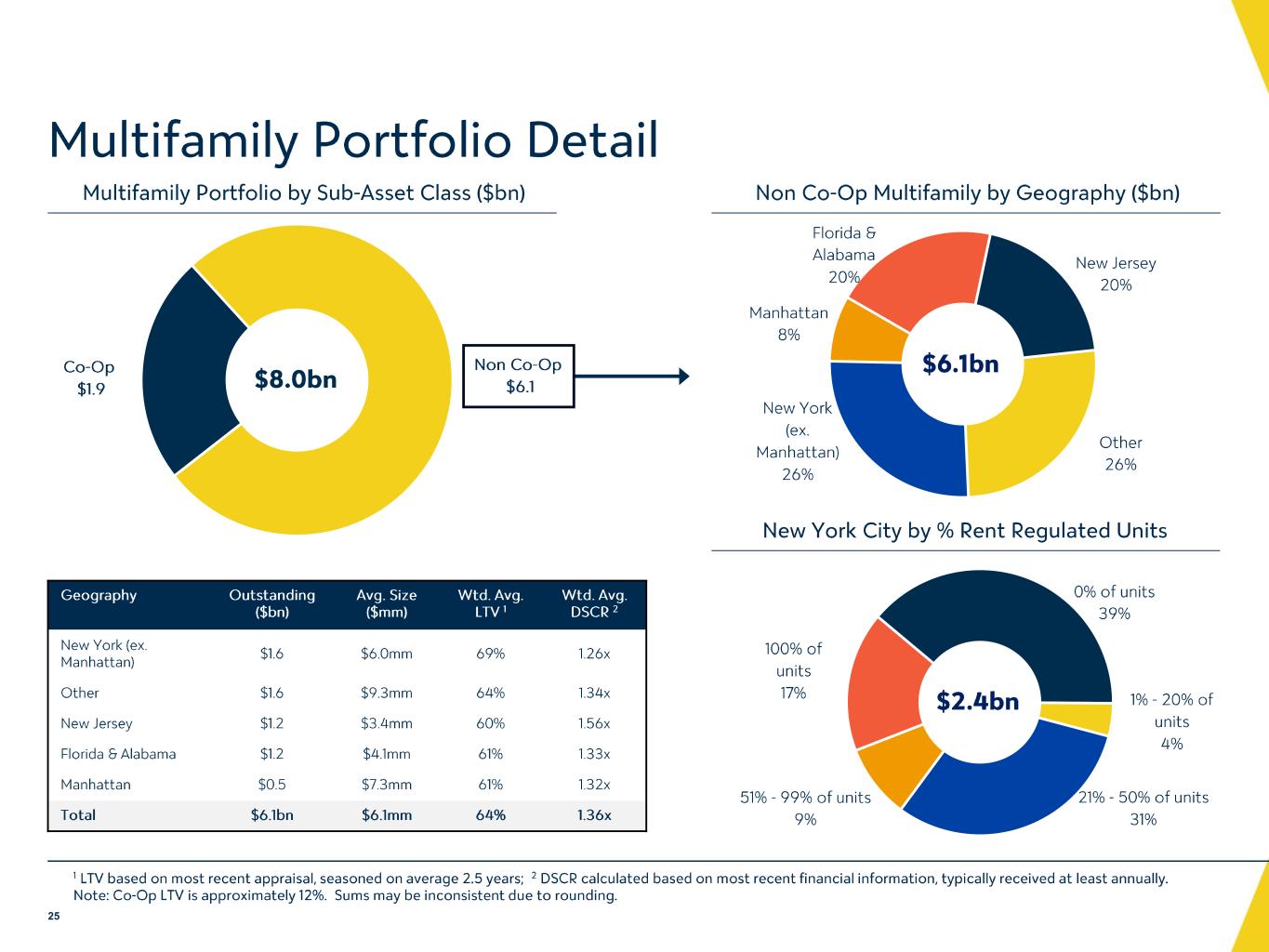
So, John, Mark Sager again. As I mentioned, we're actually seeing really positive trends in the office space with stabilization there and really some rational transactions. So I think you hit the nail on the head. The only other segment that continues to be a little stagnant is that rent stabilized in New York. But as you mentioned, it's a very small part of our overall portfolio. We have just around $600 million that has more than 50% rent stabilized. Very small portion of our overall portfolio, not a growth portfolio for us. We weren't competitive in that market because we offered, you know, a lower loan amount traditionally and required stronger in-place debt service coverage lower level and why that portfolio, you know, continues to perform for us. But it's still an area that we're watching on a go forward.
Okay, perfect. That's helpful. and then just looking at expenses, it sounds like professional fees are still expected to remain elevated in the fourth quarter. Does that continue into 2026 and is what's driven the increase the last two quarters?
Yeah, I would expect it remains at the current level for the fourth quarter and into 2026, at least for the first half of the year. As part of the efficiency the exercise, we've utilized consultants to help us enhance our operating model and organizational design. So those are temporary dollars that we have to spend. But again, you know, we've offset it with the savings that we've generated in the compensation line and elsewhere.
Okay, great. And then this last one for me, that land loan that the borrower's refining away from you, I just wanted to confirm there's no loss expected on that through that process.
No, we have more than adequate value there, no loss interest.
Okay, great. That's all for me.
Operator
Thank you. Our next question comes from the line of John Afstrom with RBC Capital Markets. Your line is open.
Mark, maybe for you, what do you think the timeline is for non-accrual balances to start declining? I know you feel comfortable, but just curious on your thoughts on that topic.
So I would point at, right, it's hard to talk about a timeline on resolution of some of these items other than the one that I just mentioned, which we do think has a short-term resolution. But I point kind of to the strength that we're seeing in the Cree market, the reduction in criticized. I think that will also translate in some resolution on especially that 50% of our non-accruals that are continuing to pay current. So I don't anticipate material inflow on a go-forward basis, but it may take some time to see some of those CRE loans finance out.
That's helpful. I appreciate that. So just kind of bigger picture, it looks like it's a good quarter. I'm just curious if you guys feel like this is a new floor for EPS for the company. And I'm especially curious, I guess, if you feel like this is a more normalized provision as we look forward.
Yeah, I think that's absolutely true. So, I mean, just the progress that we've made, I mean, part of the overhang coming out of the liquidity crisis was on the funding side. I think we've done a lot of work over the last two years to rectify that, which has enhanced our net interest income, obviously. We still have a significant fixed-rate asset repricing tailwind behind us. As we head into 2026, we have $1.7 billion of loans that are coming off from a fixed perspective at a rate of around $475. That creates significant opportunity and supports the margin expansion that we've talked about. From a credit perspective, I mean, I think we all anticipate here that you need to see normalized charge-off rates in 2026, So call that around 15 basis points, give or take, in a generally stable reserve. So when you factor that all together, I think, you know, you are seeing, you know, this provision level, you know, is effectively sustainable from my perspective within a given range. Okay. Very helpful. Thanks, guys.
Operator
Thank you. Our next question comes from the line of Janet Lee with TD Cohen. Your line is open. Hello.
On deposits, when I look at specialized deposit growth over the past quarter, that's about $700 million. It looks like a lot of that is going into replacing indirect deposits. You mentioned deposit growth should be growing at a faster pace than loan, and with the incentivize structure change, I guess that's going to help. If I look at the pace of deposit growth from the specialized deposits, I guess more specifically on other commercial and small business, is this the area where you expect a lot of your deposit growth to come from? Could it continue to grow at the $2 billion pays per year that you reported over the past year?
Thanks, Janet. I think that it is an area of focus for sure. This quarter, we had $100 million of specialty deposit growth within the bucket you're describing came from healthcare clients. I mean, there's still momentum there. We had $200 million between HOA, Cannabis, and our National Deposits Group. So those are kind of specialty niches that we banked. That was $300 million of growth this quarter. We have a broad base across the franchise, whether it's in the branch network, which is a combination of consumer and commercial deposits, as well as the other commercial bucket that you're talking about. I mean, there was significant growth in all of our markets. You know, New Jersey was up $200 million commercial. New York up $150 million commercial. These are deposits. Florida up $150 million commercial. So there's significant tailwind in momentum across the franchise. So I think specialty deposits should grow at an above average rate, but it's not the only source of growth that we have.
Got it. And you made your point clear about that 4% to 6% loan growth over the intermediate term in 2026. So in terms of over the near term, that 3Q headwinds from commodities, CNI payoffs, can I consider that as temporary? Or is there any parts of Bank Lumi or within value that you might want to run off?
No, that's temporary. it was a dynamic unique to this quarter. I think if you zoom out over the last six months, that gives you a better sense for some of the pace of growth. I think total loans are up 2.5% annualized in that timeline, but that includes some additional headwinds from Cree runoff. I think from a given quarter, loans growth may move around a little bit based on the timing of closings, but I think you see more significant momentum if you zoom out a little bit.
Operator
Thank you. Thank you. Our next question comes from the line of Steve Moss with Raymond James. Your line is open.
Speaker 7
Good morning. Maybe just circling back to the loan pipeline here, with a $3.3 billion pipeline, just curious, what's the coupon on those new originations?
This is Travis. This quarter, new origination yields were 6.8%, which was consistent with the last quarter. I'd say the pipeline yield is similar or slightly lower because benchmark rates are lower. You know, we saw some spread tightening earlier this year. I think that's fairly consistent, maybe a little bit more now, but, you know, that's kind of where we sit.
Speaker 7
Okay. And then on the expansion, moving upstream into larger loans, just kind of curious, you know, how do we think about pricing for those types of loans? Will it be relatively tighter? And, you know, are you thinking about them being syndicated? Just kind of curious, any call you can give there.
You know, Valley's always done loans of this size. They just haven't had the focus on it, and we're going to more intently focus on it and bring in talent that's done this before. The pricing tends to be a little thinner, and we're building out our syndication. We continue to build out our syndications platform. We will want to originate these loans and sell some of them. The pricing, as you know, tends to be $175 to $2.25, more or less. and that we wouldn't play much below that amount. So, and then the relationships tend to be fulsome, deposits, fees, opportunities for capital markets, et cetera. So we see it as a driver of profitability going forward.
Speaker 7
Okay, great. I appreciate that color there. And then just on the criticizing classified, I think I heard that they went down. Just kind of curious if you could quantify the level of decline and also wondering if substandards declined this quarter.
So, yeah, 100 million reduction in criticized in, again, I mentioned that was through not just upgrades, but I have to get back on the, specifically on that substandard component.
Speaker 7
Appreciate all the call here. I'll step back.
Operator
Thank you. Ladies and gentlemen, I'm showing no further questions in the queue. And that concludes today's conference call. Thank you for your participation. You may now disconnect.