Operator
Greetings, and welcome to the NCR Voyix Second Quarter 2025 Earnings Call. As a reminder, this conference is being recorded. I'd now like to turn the call over to your host, Sarah Jane Schneider, Vice President of Investor Relations. Thank you. You may begin.
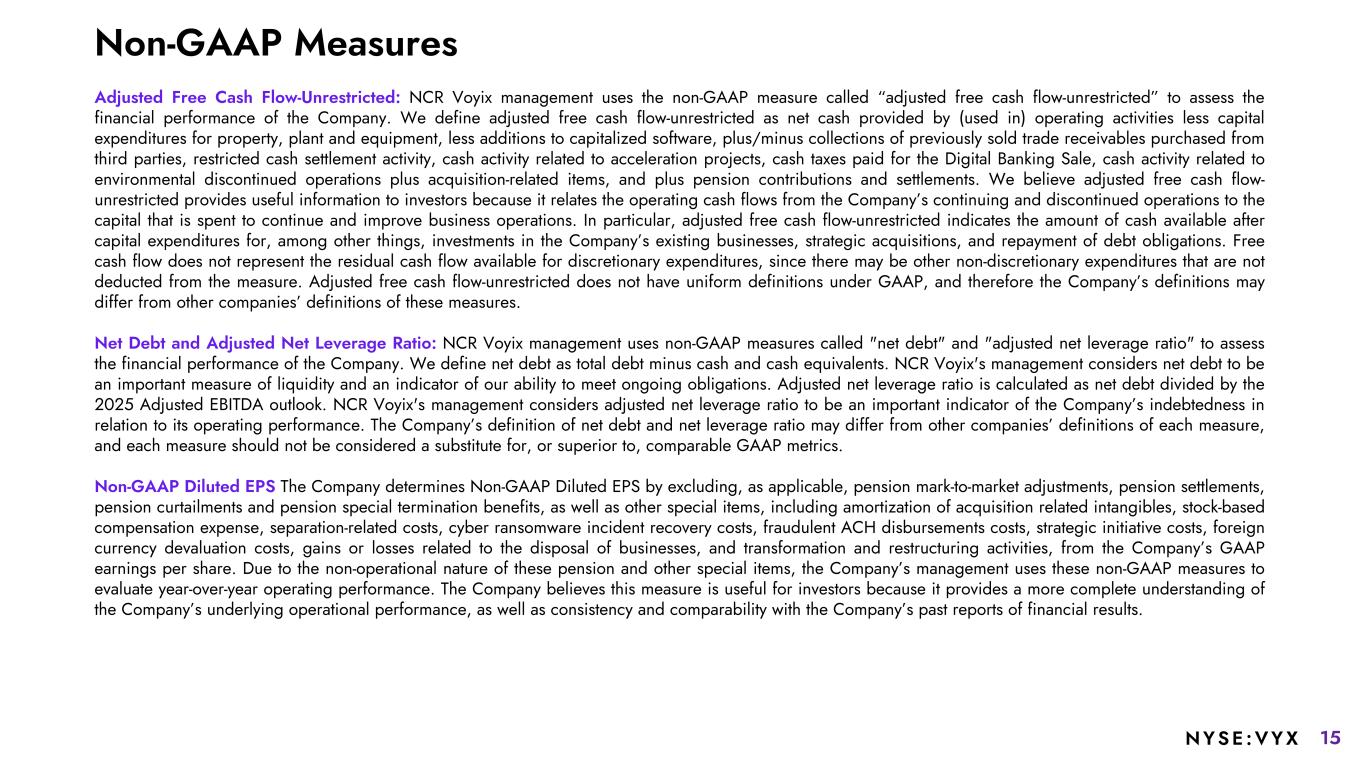
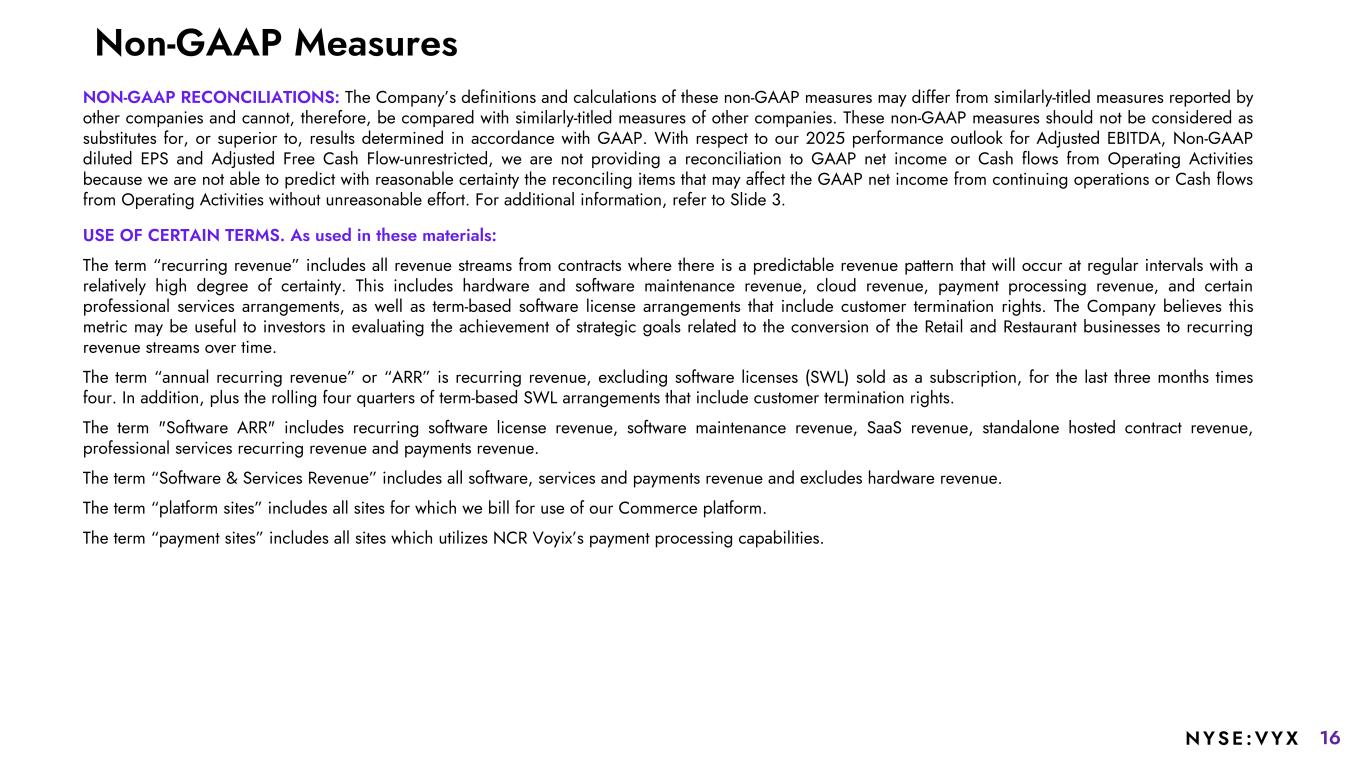
Good morning, and thank you for joining our second quarter 2025 earnings conference call. This morning, we issued our earnings release reporting financials for the quarter ended June 30, 2025. A copy of the earnings release and the presentation that we will reference during this call are available on the Investor Relations section of our website, which can be found at www.ncrvoyix.com and have been filed with the SEC. With me on the call today are Jim Kelly, our Chief Executive Officer; Brian Webb-Walsh, our Chief Financial Officer; Benny Tadele, President of Restaurants; Darren Wilson, President Retail; and Nick East, our Chief Product Officer. This call is being recorded, and the webcast is available on the Investor Relations section of our website. Before we begin, please be advised that remarks today will contain forward-looking statements. These forward-looking statements are subject to risks, uncertainties and other factors, which could cause actual results to differ materially from those expressed or implied by such forward-looking statements. For additional information on these factors, please refer to our earnings release and our other reports filed with the SEC. We caution you not to place undue reliance on these statements. Forward-looking statements during this call speak only as of the date of this call, and we undertake no obligation to update them. In addition, we will be discussing or providing certain non-GAAP financial measures today, which we believe will provide additional clarity regarding our ongoing performance. For a full reconciliation of the non-GAAP financial measures discussed in this call to the most comparable GAAP measure in accordance with SEC regulations, please see our press release furnished as an exhibit to our Form 8-K filed this morning and our supplemental materials available on the Investor Relations section of our website. With that, I would now like to turn the call over to Jim. Jim?
Thanks, Sarah Jane, and good morning, everyone. I would like to welcome you all to our second quarter earnings call. I will begin with a summary of our recent performance. This quarter, we continued to execute on our key initiatives, winning new customers in both our restaurant and retail segments, signing existing customers to the Voyix Commerce platform and gaining additional interest in our latest cloud products and payment capabilities. I remain encouraged by the progress we are making and our ability to improve future performance. We will be launching additional VCP capabilities beginning in the fourth quarter and continuing into next year. In retail, we will be launching our enterprise grocery and convenience point-of-sale, self-checkout and fuel at the NRF show in January. In restaurants, we'll be launching a new all-in-one application for labor, inventory, reporting and scheduling in the fourth quarter and our new centralized menu management solution in early 2026. For payments, we completed our pilot for Voyix Pay in the U.S. in July and are on track to complete the migration of our existing SME portfolio and sign new customers directly to the processing platform by mid-September. We are already in active discussions with our existing mid-market enterprise customers to offer acquiring solutions not available on our legacy JetPay platform. We're also enabling acquiring in the U.K., Canada and Latin America as Global Payments' acquisition of Worldpay provides us an even broader array of in-market capabilities. Based on contract renewal dates, we have initiated conversations with about 10% of customers thus far regarding our expanded services offering, including payments. Going forward, all new software contracts will be presented with our payment capabilities as the two industries have become increasingly intertwined. This will reduce vendor management complexity and potential store downtime while enhancing revenue opportunities for the company. Turning to hardware. We continue to progress on the implementation of our ODM agreement, which will commence by year-end. Our pilot for our European markets is already underway and has met expectations thus far. At our Nashville facility, we are in the testing phase and expect the pilot for the Americas and Asia Pacific to begin next month. Since our call in May, there have been no material changes to the tariff-related cost to our business, which we continue to estimate to be between $8 million and $12 million for the year. Given the ever-evolving tariff situation, we are monitoring the potential impact on our business, and we will reassess our mitigation strategy to the extent circumstances change. In the six months that I've been in my role at the company, I've had the pleasure of meeting with more than 50 of our customers, gaining insights into our past performance and an understanding of their technology road maps. We seem well aligned on both fronts, and our customers are eager to transform their guest and staff experiences, leveraging the VCP. Nick, Benny and Darren will now provide examples of our early success in implementing this go-forward strategy. I'll now turn the call over to Nick to discuss our product updates. Nick?
Speaker 3
Thanks, Jim. Good morning, everyone. At the end of the quarter, we had nearly 78,000 sites connected to the Voyix Commerce Platform, an increase of 16% year-over-year. As a reminder, the VCP was originally developed to connect legacy applications to the cloud. And going forward, we will leverage its cloud architecture and Edge microservices to deliver our Voyix point-of-sale and Voyix self-checkout. We continue to execute on our platform and related product initiatives, including the development and rollout of our cloud solutions, the continuous innovation of our microservices architecture and Edge services and the connection of our legacy customers to the VCP. I'd like to discuss four key examples that illustrate this progress and the positive outcomes it is driving for our customers and our business. The first is consumer transaction volume flowing through the VCP. In the first half of 2025, volumes were more than 50% higher than the prior year, and the VCP processed more than 500 million transaction API calls in June alone. This growth was driven by the increase in platform-connected customers who benefit from greater real-time visibility into end-user purchasing behavior and the integration of these data flows into their business processes. The second is the number of consumer orders running through the VCP. This increased nearly 60% in the first half of 2025 compared to the prior year with over 75 million orders processed this June, underlying the platform's performance, scalability and stability. The third highly innovative example is our existing customers' rapid adoption of Picklist Assist, our AI-enabled computer vision capability for self-checkout. Available through the VCP, Picklist Assist utilizes computer vision via cameras already built into most of our grocery self-checkout scanners to identify and present a short list of most likely items based on color, weight and other characteristics. This proprietary software technology can be used with both our legacy and cloud-based checkouts to improve speed, accuracy and efficiency, enhancing outcomes for both retailers and their end customers. We've already implemented Picklist Assist across more than 22,000 checkout lanes worldwide and continue to see strong market interest in this feature. The fourth is the increasing adoption of our Edge virtualization solution that enables our customers to operate their stores with the speed and efficiencies of running their digital channels. This year, we have continued to implement Edge for major retailers to improve store outcomes. For example, during the quarter, one of our large Edge customers in Europe was able to address a business requirement to trial a new kiosk with a new hardware device and implement a working solution in less than 2 weeks. Edge not only significantly improved the speed to market of such an application by months, but also enabled them to bypass a lengthy certification process. Each of these examples, like our other VCP solutions, contributes towards software ARR growth from our platform sites and are normally packaged as an add-on to a point-of-sale or self-checkout subscription. One of the biggest shifts we see in the market is the desire for enterprise brands to transform their stores to create modern experiences for shoppers and modern ease of IT teams that mirror their digital channels. Cloud-native technologies leveraging microservices, while common in digital commerce, are less so in brick-and-mortar stores. We have been investing in this type of software architecture for 5 years, and it is quickly becoming a compelling competitive advantage. With that, I will turn the call over to Benny to discuss our restaurant's performance. Benny?
Speaker 4
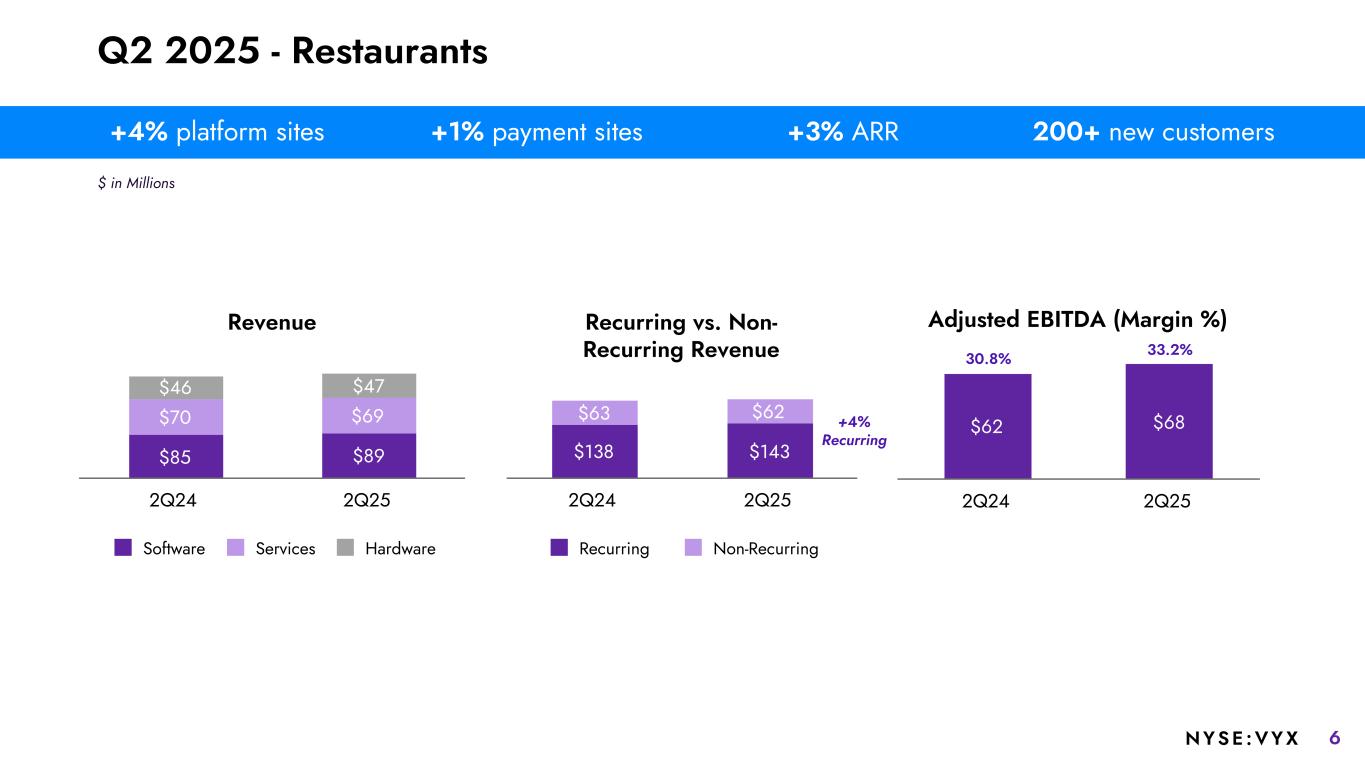
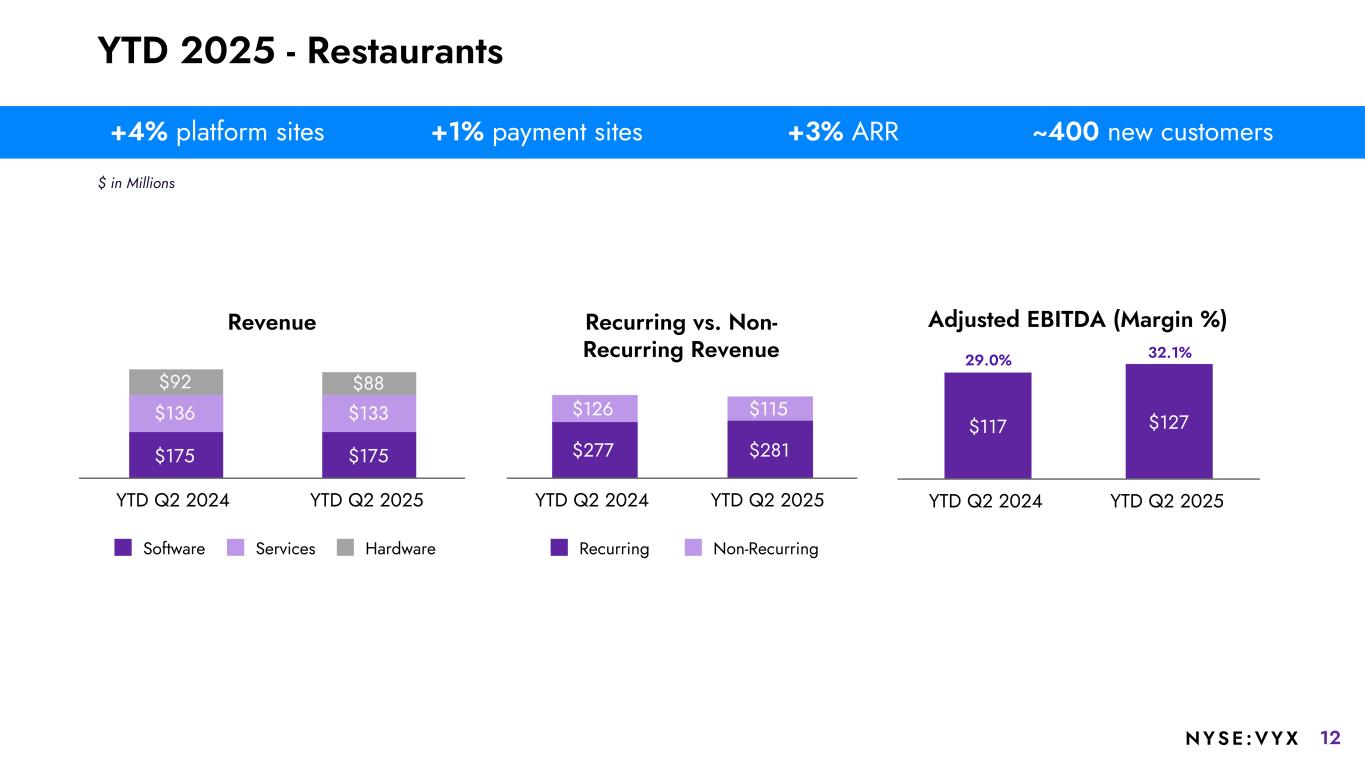
Thanks, Nick. In the second quarter, our restaurant business signed more than 200 new software and services customers. Our platform and payment sites increased 4% and 1%, respectively. Software ARR increased 4%, and total ARR increased 3% in the quarter. NCR Voyix has long been a trusted partner for enterprise restaurants, and we continue to deepen our relationships and expand our product and services offering in this space. This year, we've made significant progress on our sales transformation efforts, including hiring Miguel Solares as the Senior Vice President and Chief Revenue Officer and other key sales leaders. We are already seeing meaningful improvements in our customer satisfaction, global expansion and sales pipeline. This quarter, we expanded our long-standing services relationship with a large global coffee chain to provide enhanced drive-thru support for their stores in the U.S. and Canada. This follows our recent international expansion with this customer as discussed on our Q3 call in November, and we expect to continue to broaden our services contract with them over time. We also completed the services rollout for the large global fast food chain in the U.K. we announced on our February call, which will deliver strong recurring revenue for our business in the second half of the year. This is an example of the strength of our services division and its ability to support global brands with consistent high-quality solutions across geographies. We are continuing to expand our enterprise restaurant offering internationally, leveraging our existing global retail operations. Given Latin America's high software adoption at the point of sale, this region will be a focus as we drive the adoption of Aloha outside the U.S. Our retail business today has strong market share in Mexico, Chile, Peru and Argentina, and we are positioned to build a similar presence with restaurants over time. In addition to our enterprise expansion efforts, we're also enhancing our commitment to small and mid-market restaurants through direct and third-party relationships. Mid-market brands are increasingly looking for a scalable all-in-one platform. NCR Voyix delivers a true store-in-a-box experience, combining point-of-sale payments and operational tools to simplify technology for franchisees and accelerate same-store growth. Our wall-to-wall services are especially resonating with operators who want enterprise-grade capabilities tailored to emerging brands. For example, we recently renewed agreements with several mid-market restaurants in the Southeast as they continue to leverage our extensive service capabilities to grow and scale their businesses. I will now turn the call over to Darren to discuss our retail performance. Darren?
Speaker 5
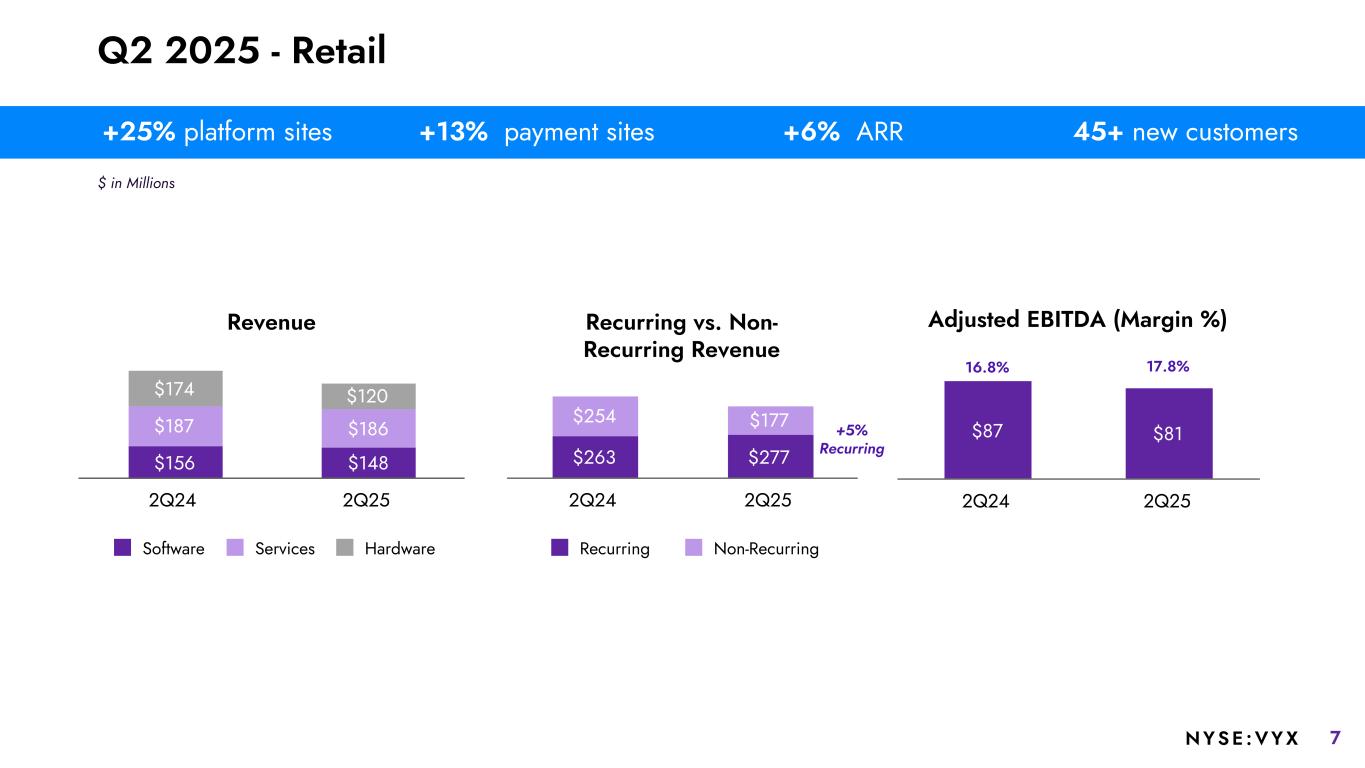
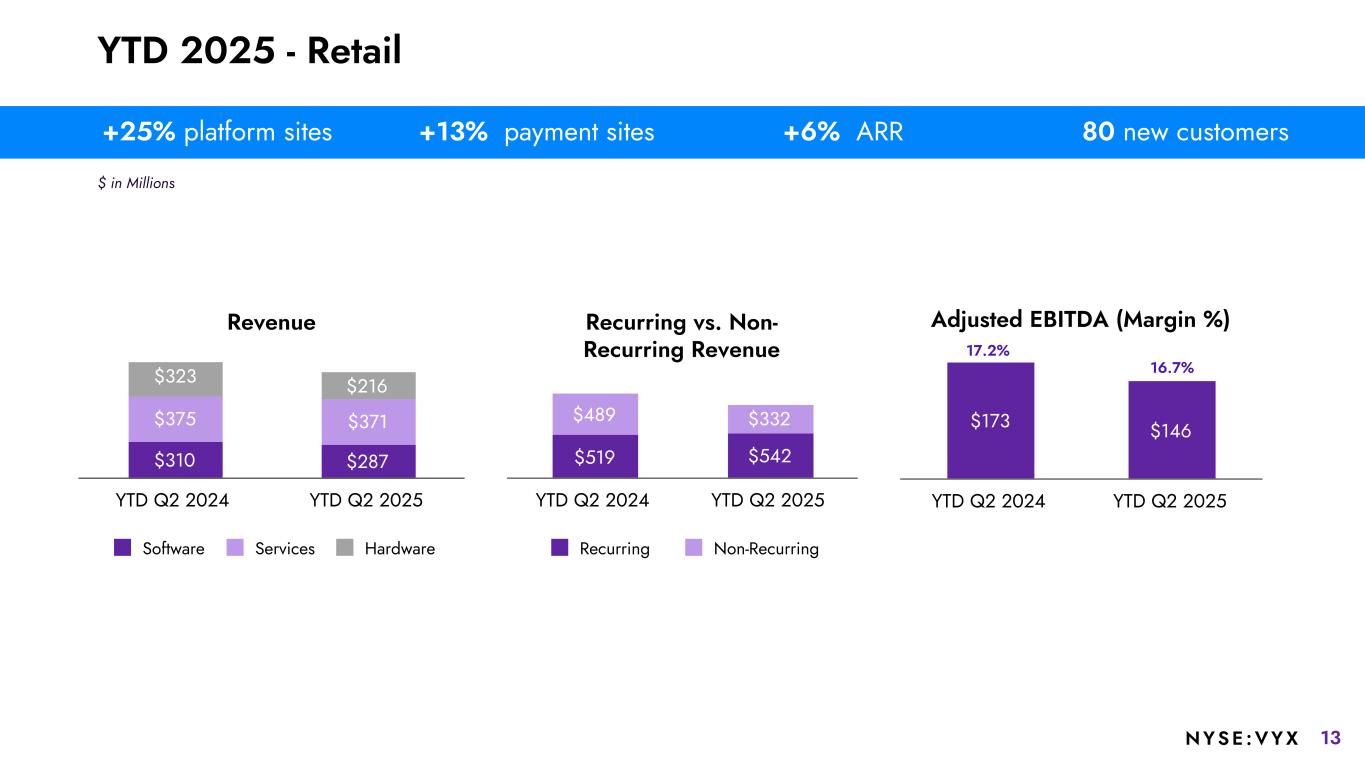
Thanks, Benny. Good morning, everyone. In the second quarter, our retail business signed nearly 50 software and service customers. Our platform and payment sites increased 25% and 13%, respectively. Software ARR increased 9%, and total ARR increased 6% in the quarter. As previously mentioned, this quarter, we continued to introduce our VCP applications to new and existing customers. For example, in Japan, we signed contracts with a national grocery chain and a large drugstore chain for both Voyix point-of-sale and self-checkout, displacing two separate competitors with our leading solutions. In the U.K., we signed a 5-year Voyix point-of-sale and self-checkout agreement with one of the fastest-growing supermarket chains in the market and a long-standing customer of NCR Voyix. In addition to point-of-sale and self-checkout, we will also provide hosting and loyalty solutions for their 1,000 store footprint. Further, this is the third market-leading grocer in the U.K. to adopt our latest solutions. We have now signed agreements with more than 10 grocery, fuel and convenience customers across North America, Europe and Japan to implement Voyix point-of-sale and self-checkout and other cloud-based solutions across entire store estates through the end of next year. In services, we signed a new multiyear agreement with one of the largest discount department store chains to install back office and point-of-sale hardware across nearly 4,000 sites in the U.S. and Canada. We will look to expand our relationship with this customer over time. Lastly, in our government business, we recently signed an expanded agreement with a large long-standing customer to provide more than 14,000 point-of-sale terminals across their retail footprint. With that, I will turn the call over to Brian. Brian?
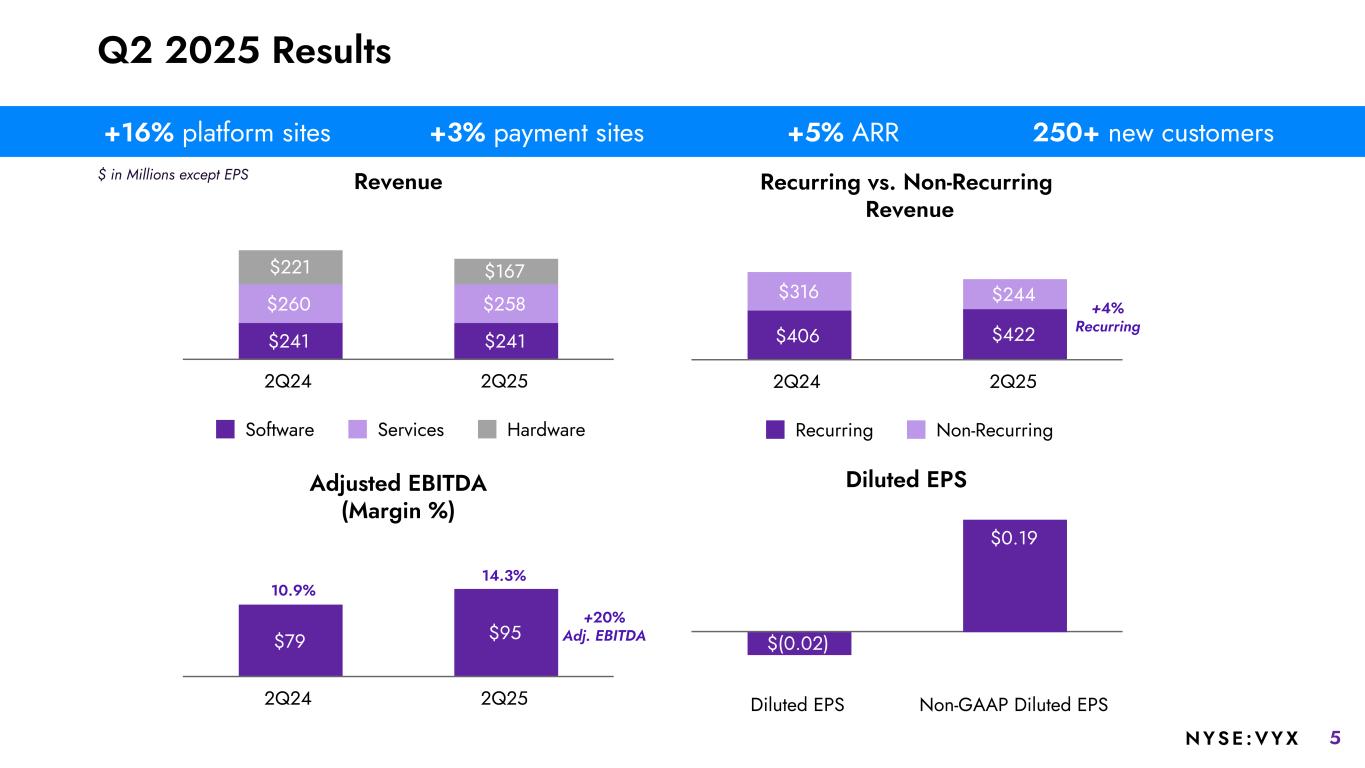
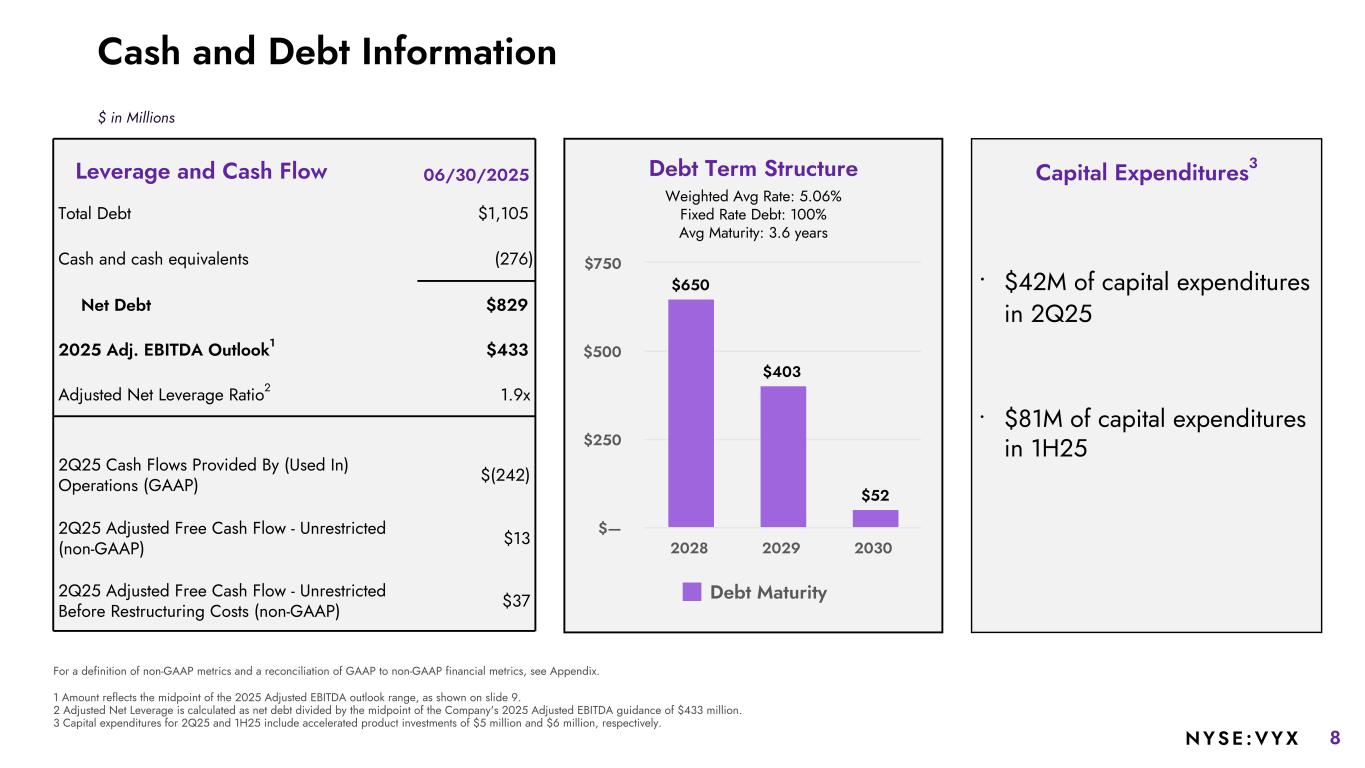
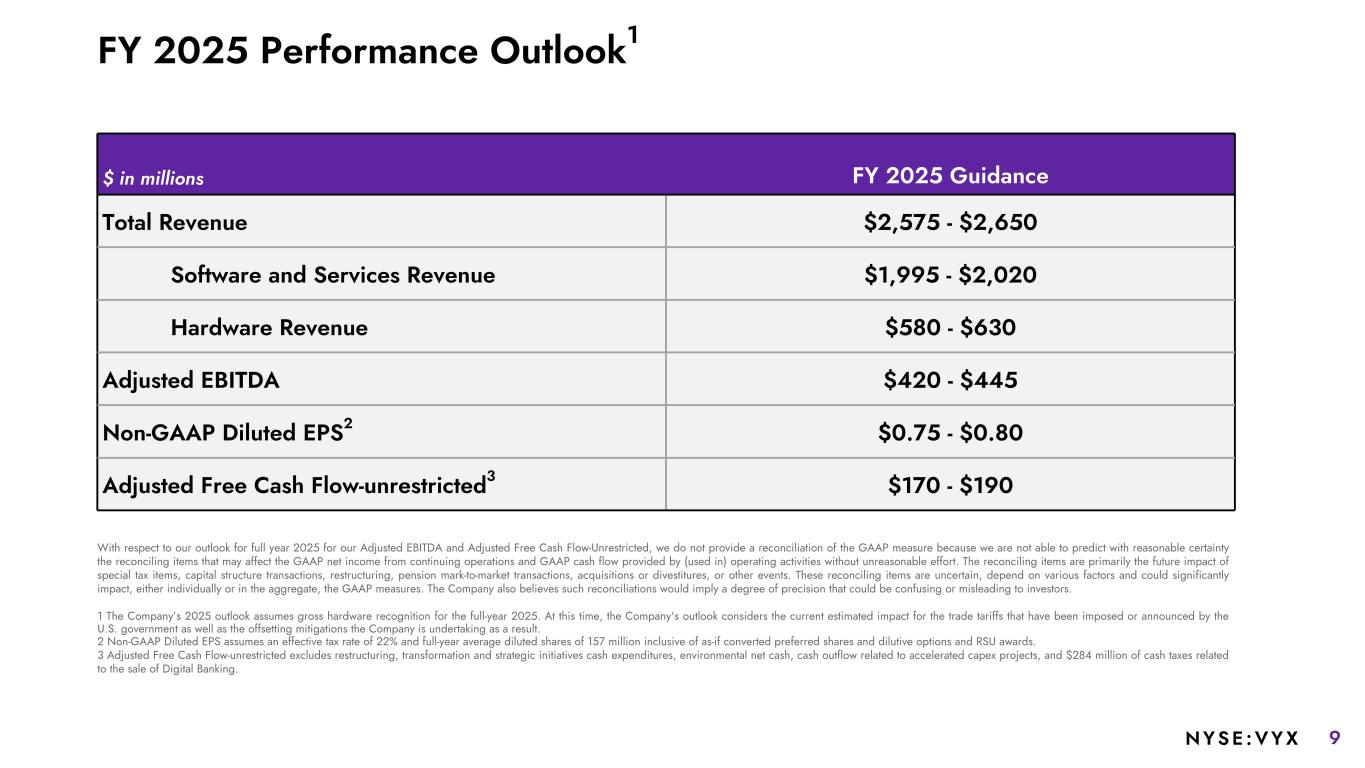
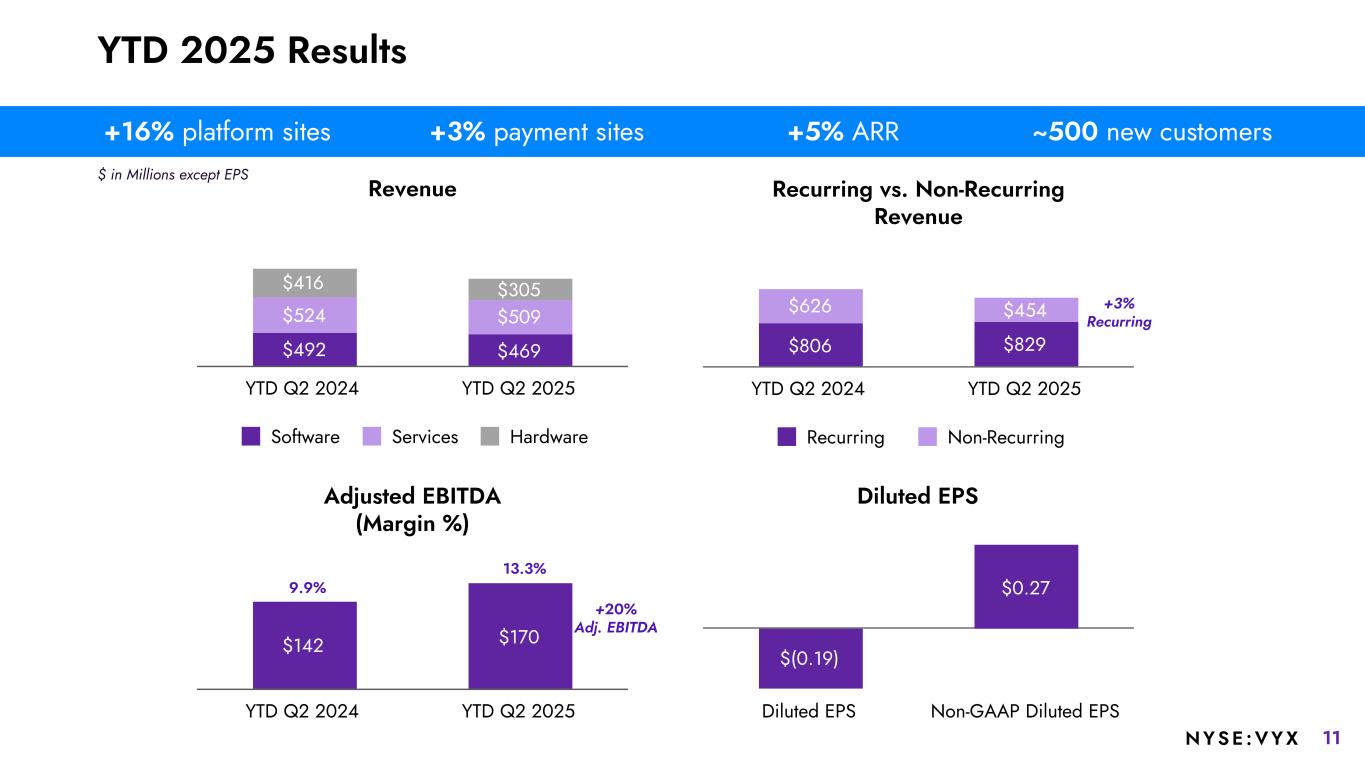
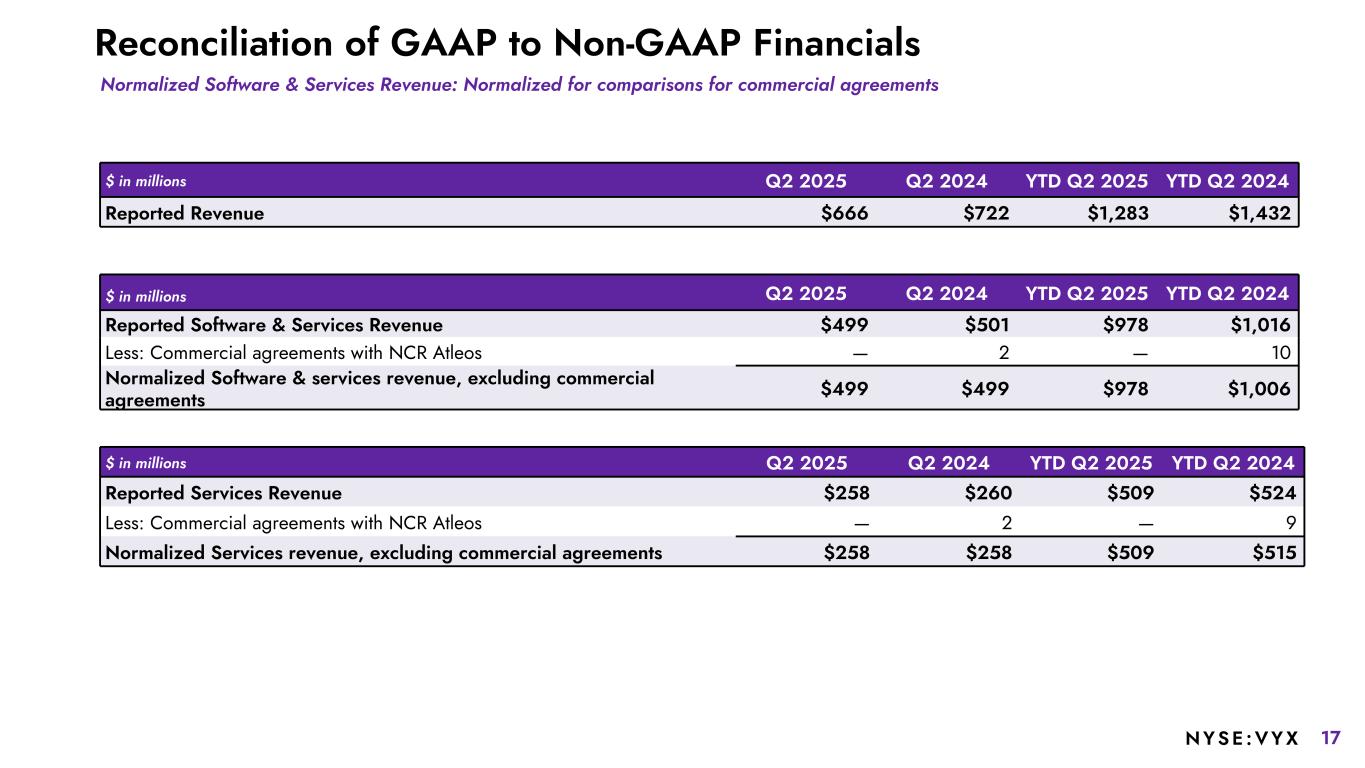
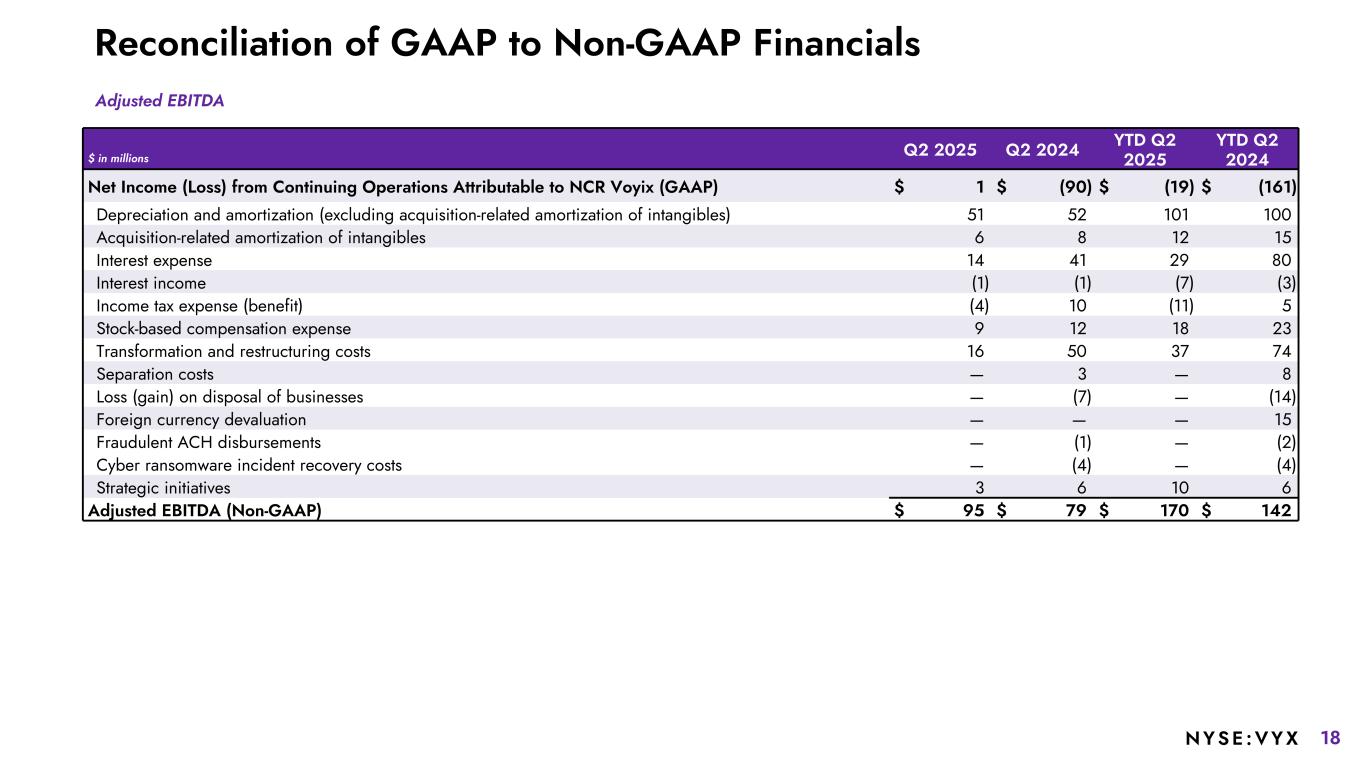
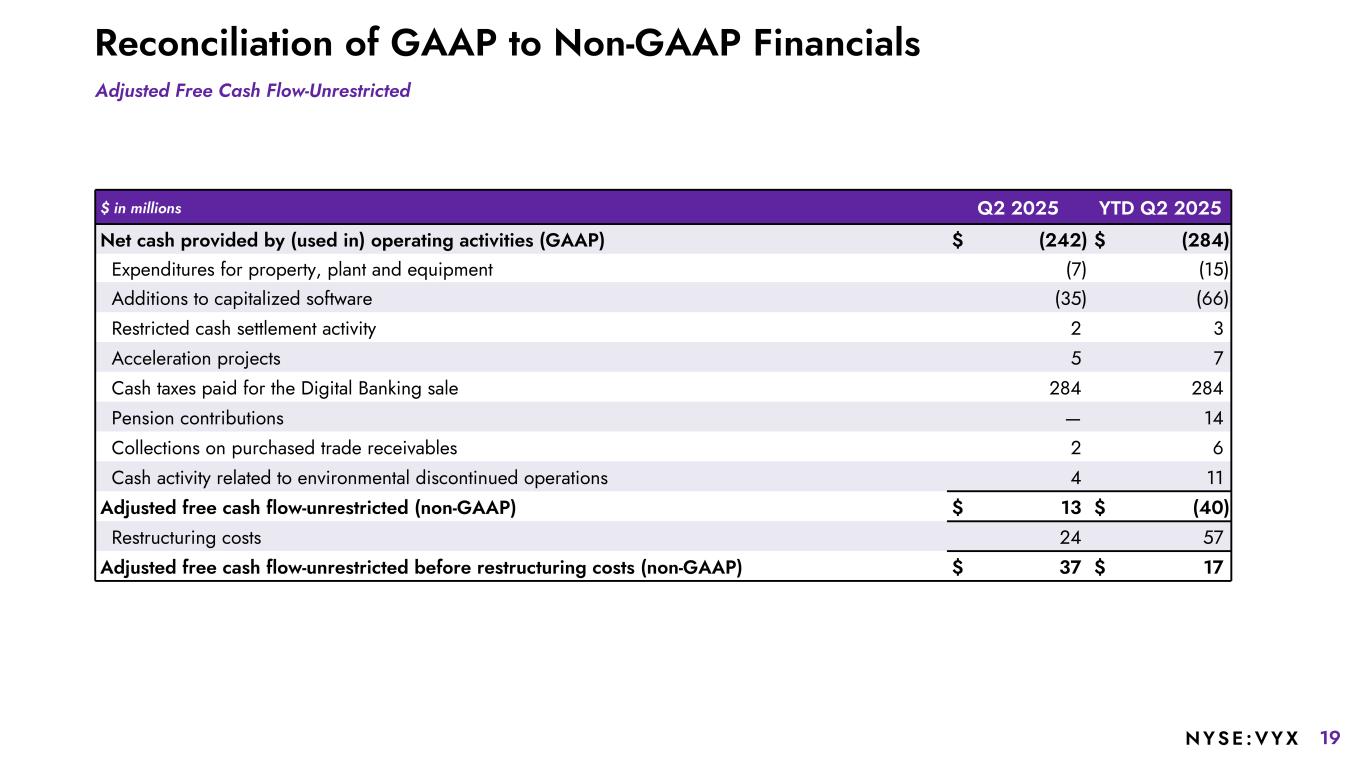
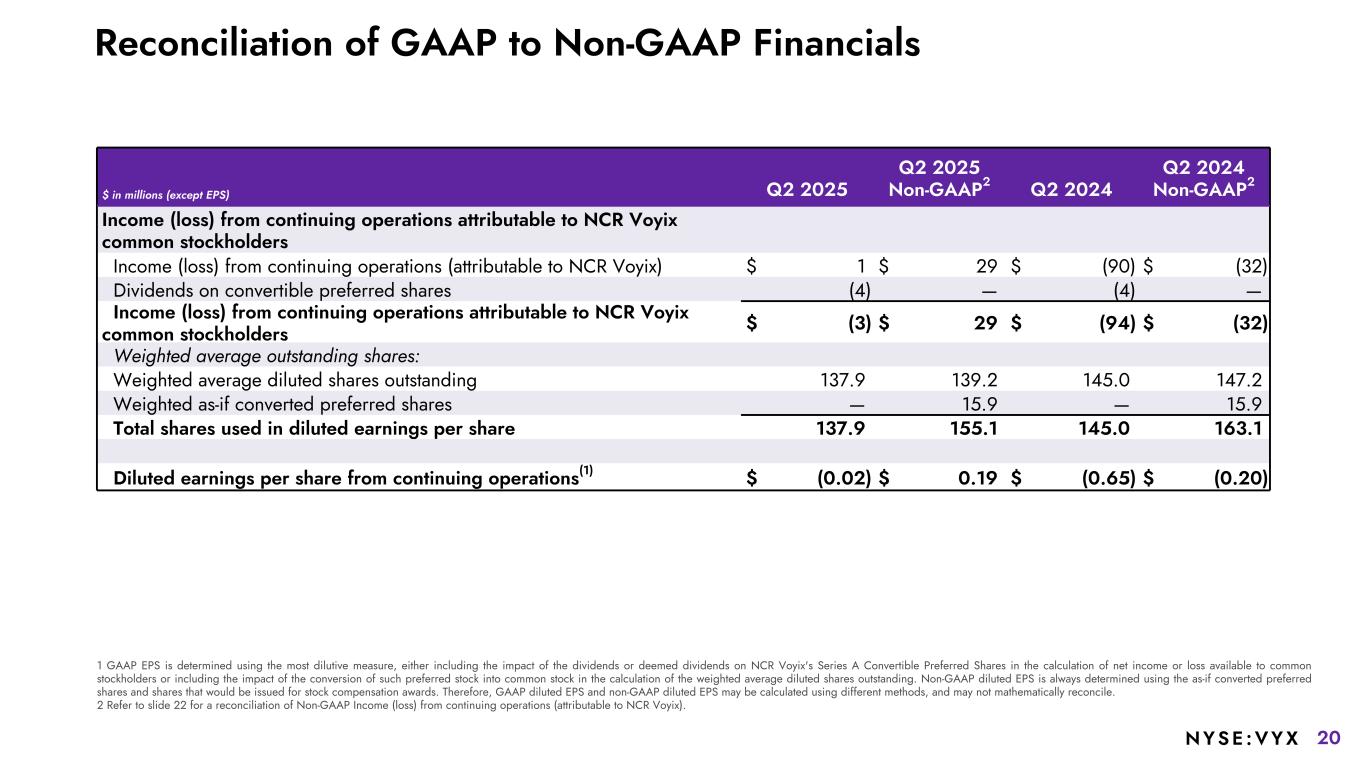
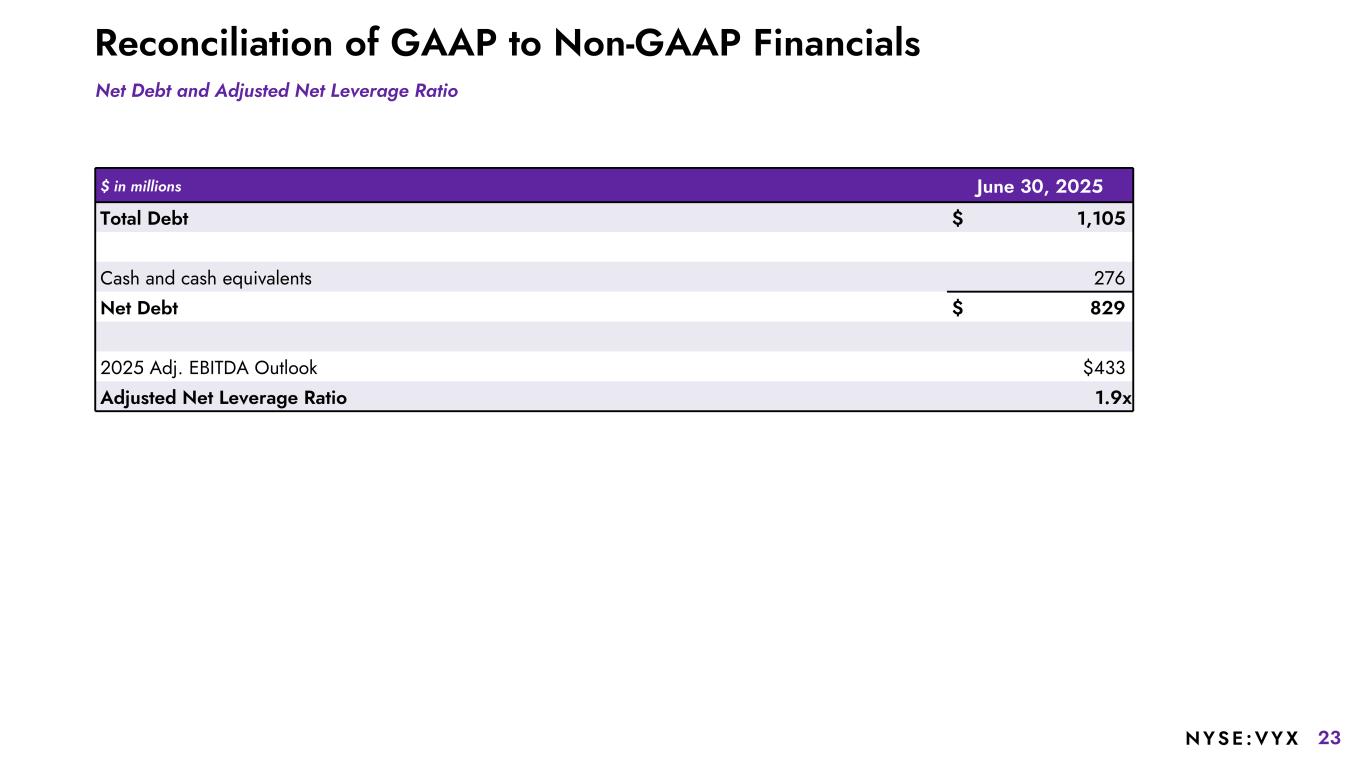
Thank you, Darren, and good morning, everyone. For the quarter, we delivered revenue and adjusted EBITDA in line with expectations. Total revenue of $666 million declined 8% due to continued softness in hardware sales. Recurring revenue increased 4% to $422 million and as a percent of total revenue improved over 700 basis points to 63%. Software ARR and total segment ARR increased 7% and 5%, respectively. Platform sites increased 16% to 78,000 sites and payment sites increased 3% to 8,400 sites. Adjusted EBITDA of $95 million increased 20% in the second quarter as margin expanded 340 basis points to 14.3%. This was largely driven by our previously discussed cost actions. Let's turn to our segment results. Beginning with restaurants, recurring revenue increased 4% to $143 million, and total segment revenue increased 2% to $205 million due to an increase in payments and recurring services revenue. Segment adjusted EBITDA increased 10% to $68 million as margin expanded 240 basis points to 33.2%. This improvement was driven by our efficiency initiatives and our software and services sales mix. Turning to retail, recurring revenue increased 5% to $277 million, driven primarily by the ramp of a new large customer agreement and platform revenue growth. Total segment revenue declined 12% to $454 million due to the previously mentioned decline in hardware sales. Segment adjusted EBITDA decreased 7% to $81 million, primarily due to the declines in hardware revenue, but absolute EBITDA improved sequentially from the first quarter. Adjusted EBITDA margin of 17.8% expanded 100 basis points year-over-year. Lastly, corporate and other expenses decreased 23% to $54 million, which reflects the previously discussed cost initiatives. Adjusted free cash flow was $37 million for the quarter before considering $24 million of restructuring cash expenditures, $284 million of cash taxes related to the sale of digital banking and $5 million of accelerated product investments. We invested $42 million in capital expenditures during the quarter and $81 million for the first half of 2025. Over 80% of CapEx was related to software investments. Our net leverage position was 1.9x at the end of the second quarter based on our net debt as of June 30 and the midpoint of our full-year adjusted EBITDA outlook. Turning to our outlook. We continue to expect revenue to range from $2.575 billion to $2.65 billion and adjusted EBITDA to range from $420 million to $445 million. Non-GAAP diluted EPS is expected to be between $0.75 and $0.80, and adjusted free cash flow is expected to be between $170 million and $190 million. With that, I'll turn the call back over to Jim for closing remarks. Jim?
In closing, I'm pleased with the commitment and progress the team has demonstrated in the first half of the year. More importantly, with the benefit of being in my new role for almost 6 months, I'm increasingly convinced that NCR Voyix can advance the foundational strengths I've outlined on my first call in February. Our competitive position remains strong, and this is despite some past deficiencies in consistently demonstrating urgency and execution to some of our valued customers. I believe our collective efforts over the past 6 months are beginning to change perception in a positive way, which is reflected in our recent success in the market and our improving ARR performance. I'm encouraged by the cultural shift, together with our ongoing product innovation efforts, increased focus on our global service offering, enhanced payment strategy and our ability to continue these efforts to deliver value for our customers and our shareholders. I'll now turn the call over to the operator to begin the question-and-answer section. Operator?
Operator
Our first question comes from Dan Perlin with RBC Capital Markets.
Speaker 7
Jim, I just wanted to talk about maybe the demand environment across both retail and restaurant. Are there any noticeable kind of differences or willingness to kind of invest in the current backdrop? I mean you're winning a lot of clients. So clearly, there's a demonstration of value there. But I'm just wondering, you're doing this in what seems to be a difficult environment. And I'm just wondering if that could actually improve to the extent that there's some pushback from clients today.
Thanks, Dan. I would say we have not seen any pullback from customers. As I mentioned in my prepared comments, I've met with now over 50 of our larger customers, and most of them are very focused. I think we already have 13 or so that have committed to our next-gen solution, Voyix POS and self-checkout. So I don't see necessarily a slowdown in terms of what they're looking to do to modernize their infrastructure. I mean you listen to the comments that Nick made around the investments and the benefits from Edge and our other applications that they're now having a chance to see in our labs. And so my impression is that the market is strong for us. Our customers have been on applications that date back 15 and 20 years or so. So I think they're all very interested in moving rapidly to enhance their business for all the reasons that we've outlined in the past. But maybe, Darren, you want to add anything to it?
Speaker 5
Yes, sure. Dan, on the retail side, as I had in my prepared remarks, we signed nearly 50 customers. And we saw a good spread of demand across kind of the four key tenants of the retail proposition being hardware, software, services and payments. So it's a good spread across the product portfolio. So we're encouraged by the consistent demand from customers, engagement with customers and take-up of propositions. So I'll hand over to Benny on the restaurant side.
Speaker 4
Yes. Similar comments on the restaurant side as well. As you saw in the prepared remarks, some of the growth that we're seeing is very encouraging. And then to your point, given the market pressure, in fact, customers are looking on how do I improve customer experience. So that's important, getting customers back into the restaurants. So any technology that helps around that, which is one of our key value propositions. And the other one is also driving cost down and improve their employees' engagement as well, which is again our value proposition. So in fact, as a result of some of the economic conditions, we are seeing uptick of interest.
Yes, Dan, I would like to add one last point regarding our historical support for our existing customer base since the acquisition. The software applications they purchased are still a focus, but we are also concentrating our sales efforts on acquiring new clients and establishing new relationships. Some of the new customers Darren referred to represent these new opportunities, which differ from the smaller medium enterprise space that Benny typically recognizes. We are beginning to see traction due to the applications we have in the market. During my first earnings call, which was our year-end call, I mentioned that we are shifting away from selling legacy applications to promote our next-generation Voyix POS and Voyix Self-checkout. We're not only seeing interest from our existing customers who want to upgrade, but we are also welcoming new entrants into our customer base.
Speaker 7
That's great. That's great color. Just a quick follow-up on free cash flow, clearly better in the current quarter than what we saw in the first quarter. Still, there's a pretty material ramp that's required to get you to the $170 million to $190 million guidance. Also understanding your second half trends tend to be more strong for free cash flow. But I'm just wondering, are there any kind of key components that we should be mindful of and then kind of level of visibility that you have going into the second half on the free cash flow side?
Thank you, Dan. I would say that our Q2 results met our expectations for free cash flow, and as you noted, we typically generate a larger portion of our free cash flow in the second half of the year. We anticipate that both absolute EBITDA and EBITDA margins will increase in the second half due to our cost initiatives and growing revenue from last year. This aligns with the usual seasonal trends, which favor free cash flow in the latter half of the year. Regarding capital expenditures, we expect them to remain at the Q2 level, leading us to estimate around $170 million for CapEx, up from the original forecast of $150 million. However, we have good visibility and are confident in our guidance range.
Operator
Our next question comes from the line of Ian Zaffino with Oppenheimer & Company.
Speaker 8
This is Isaac Sellhausen on for Ian. I just had one on restaurants EBITDA margin. Could you help us better understand what drove the strength in the quarter? It sounded like that's primarily on the growth of software and higher mix as well as some cost initiatives. Maybe just any kind of color you can give on that and then expectations for segment margins as you progress through the year?
Yes. So I'd say good software and services growth and recurring revenue growth in restaurants is helping margin, payments growth, software platform growth. And restaurants have had a good consistent margin this year, last year, and we expect that to continue. We see restaurants finishing the year about 32%, which implies pretty consistent from what we saw in the first half. On the retail side, we expect improvement in margin in the second half from what we saw in the first half. That's where we've had hardware margin pressure that did improve quarter-over-quarter from Q1 to Q2, and we expect to see that continued improvement as we get in the second half with revenue ramping and our cost actions that we're taking. Retail should be at about 18% to 19% for the full year.
I would amplify on the payment side. Clearly, the restaurant organization, which has been involved with payments for the last four or five years whenever JetPay was initially acquired. Now with the Worldpay point of processing capability, we'll be able to sell point of sale on the retail side. So we would expect going into next year, increasing lift there as well on a margin basis from payments.
Speaker 8
Okay. That's very helpful. And then just as a quick follow-up on the tariff exposure. I believe the $8 million to $12 million range is the same as last quarter. So maybe any additional details you can provide on any kind of mitigating actions that you're taking either through pricing or the supply chain side and maybe how conversations have gone with suppliers?
We reviewed the news this morning, which is different from last time when we were caught off guard by a sudden change. The situation is evolving quickly, and I've seen around 25 tweets related to tariffs. After reading the news articles this morning, it’s clear there’s more information available. Currently, we are comfortable with the range we previously outlined. However, I did mention in my prepared remarks that, at the start of this situation, I believed it would be temporary and wouldn't last. But based on what I’m seeing in the news, I get the sense that this issue won’t resolve anytime soon. As a result, we will likely have different discussions with our customers in the latter half of the year regarding our services and hardware sales. If this turns out to be a permanent change, we will need to find a way to share these costs rather than absorb them entirely ourselves.
Operator
Our next question comes from the line of Will Nance with Goldman Sachs.
Speaker 9
You mentioned in response to a prior question some of the cost savings initiatives in the back half of the year. I was wondering if you could just update us on the various initiatives that you have planned in place for this year and anything into next year? And just kind of remind us where we are in each of those processes.
Sure, Will. So if I think about our cost program for this year, we sized it at $100 million, two-thirds is around vendor spend, and one-third around our own labor. That program is largely executed or being executed. About 40% of the savings hit in the first half and about 60% will hit in the second half. And then we're starting to plan for next year, and it's a little premature to talk about next year, but we'll talk about that in the next quarter or two.
Speaker 9
Got it. Appreciate that. And then I was wondering if you could talk about the Buffalo Wild Wings renewal. Was that a competitive process? How did the RFP go, if so? And what do you think was the tipping point to get to renewal on that contract specifically?
Yes. I'm going to have Benny do that. But I mean, we'll be somewhat limited on specifics. We don't generally comment specifically on a customer per se, but I think we can give you some color on this.
Speaker 4
Yes. I think I would highlight three things. That's also showing up in all of our business today. I think three things happened. One is the transformation of the team, the sales team and the leadership that we've brought in has improved our relationship, how we show up, how we engage. Yes, that was an RFP engagement. The second thing is our investment in our product. We've talked about some of the solutions and capabilities that we've brought on and we continue to bring. So this is not just about what we brought on over the past 12 months, but it's also how we're investing in our strategy for the next 24 months, key capabilities that they're looking to leverage. And the third thing is, I would say this is a very deep relationship, very similar to most of the relationships we have across the base. And that means it's not just one facet, it's multifaceted. So I wouldn't attribute it to just one thing, but all these multiyear relationships that we have continue to drive the momentum.
I'm going to add some insights as I have a connection with the company, even though I'm not directly involved. Over the past few years, NCR has experienced significant changes, including the split and last year’s divestitures. Before the split, it was a large organization with many components and responsibilities. Now, our focus has shifted solely to software, which has positively resonated with our customers recently. Personally, I've met with 50 customers, and our executives have been actively engaging with clients, many of whom they haven't seen in a long time. This has led to revitalized relationships with long-standing clients that are crucial to us. These organizations are significant not just in the U.S. but globally, and they want to maintain our partnerships. From the meetings I've had, it's clear they value our long-term relationships. Transitioning at the point of sale can be challenging, but we believe we offer the best applications in the market, particularly with our next-generation solutions as outlined by Nick. You should expect, as we've indicated before, that our revenue attrition rate remains low at 1%, signifying that customers appreciate working with us, trust the company, and we are dedicated to their success.
Operator
Our next question comes from the line of Kartik Mehta with Northcoast Research.
Speaker 10
It seems like you're starting to have success with the payment business. And I'm wondering, how do you envision that business progressing over the next 12 to 18 months?
Good question, Kartik. Thank you. As you know, I've been involved in this for most of my career. We're exploring our company's capabilities, including the point of sale with Worldpay and our own internal capabilities with Voyix Pay and Works Connect. In the past, NCR believed they weren't in the payments space, and even after acquiring JetPay, it was too small to serve large customers effectively. I believe customers, particularly new ones, will seek a single relationship for all the services we provide, with payments being crucial. The point of sale is essential, but it depends on reliable payment processing. I've observed instances where there are various intermediaries between us and the actual processor, so our goal is to streamline this. So far, we've seen good success in the mid-market retail sector and are beginning to engage with larger clients, especially in the restaurant sector. Previously, larger restaurants hesitated to use JetPay due to its limited processing capabilities, but that concern does not apply to Worldpay. Benny, Miguel, and their team have been actively engaging in discussions. We won't be on that system until about the fourth quarter, ramping up into next year. It won’t happen instantly, as we haven’t just acquired a portfolio that lights up immediately like in the past. These are long-term relationships built on trust, and now we have capabilities we've never had before, which will be available starting in the fourth quarter. On the payment side, we've already started to aggressively enhance our gateway services to replace competitors that have been established over the years.
Speaker 5
To add a little bit of color, Kartik. As Jim said, domestically, strong and have the full end-to-end proposition here in the U.S. We're in a good position on the gateway across multiple international markets, and we're actively standing up the pay capability in EMEA, which is our second biggest retail market. So that will follow through to next year.
One more point that Darren just mentioned that maybe think of it, with the Global Payments acquisition of Worldpay, my former company, Global Payments as well as EVO embedded in that organization gives us greater reach, especially across Europe into Asia, Asia Pacific and into South America. So the combination of those two companies, leaders in their space makes it even more attractive for us to be able to form a relationship with our customers to provide services in more markets than we would have been able to with just Worldpay previously.
Speaker 10
That's good. I have a question for you, Benny, regarding the restaurant sector. It seems that competition has increased in that area over the past six months. Are you noticing this rise in competition, or do you believe things have remained about the same? I would appreciate your insight on the current market situation.
Speaker 4
Thanks, Kartik. Look, I think the restaurant space has been innovative, especially post the pandemic. We've seen a lot of start-up smaller players entering the market. I wouldn't say the past six months has been any different since I have arrived. I think what gives me a lot of confidence is the few things that Jim and I discussed when we talked about Buffalo Wild Wings, which is, I think, our entrenched position, our customer sentiment towards the transformation and then showing up with the new culture, the investment and the focus. So I wouldn't especially call out anything different over the past six months.
Yes. I would like to highlight that on the restaurant front, we often find ourselves compared to both public and private companies. It's important to note that NCR Voyix primarily serves enterprise clients. The brands we work with are mostly large enterprises. Our presence in the small and medium enterprise market in restaurants stems from the Aloha acquisition. While we keep serving that segment, which is significant for us, our main focus is on the upper mid-market and enterprise levels. In this regard, I believe we face less competition than you might expect.
Operator
Our next question comes from Parker Lane with Stifel.
Speaker 11
This is Jack McShane filling in for Parker. I'm curious about the team's previous CAGR expectations through 2027, which indicated that restaurant growth would outpace retail growth by a point or two. While this aligns with revenue results, it seems the opposite is happening with ARR. Could you provide more insight on this? Do you anticipate this trend will change? It might simply be due to faster retail adoption of the platform, but any additional context would be appreciated.
Yes. I would suggest that during the spin and shortly thereafter, there was significant dislocation at the executive level, especially on the restaurant side compared to the retail side. Several dynamics contributed to this situation. Just recently, we reestablished the entire leadership team under Benny in the first half of this year. While I wasn't here to witness when certain trends were discussed a few years ago, I believe those trends will change fairly quickly over the next six to twelve months and likely align more with previous expectations. The disruption from the company split, which I've experienced in another organization, is a considerable change for any company. It was a positive change, as I mentioned earlier. However, on the retail side, which constitutes a much larger portion of our business due to its global reach, the organization mostly remained stable. We have implemented several changes across the regions since my arrival, but we maintain a strong core team across our markets. Our latest product on the Voyix POS platform has received significant promotion over the last 12 months, although this has not been the case for the restaurant side, at least not at this time.
Speaker 11
Yes, on the payment side, up 3% this quarter. Is it in line with expectations internally? And where do you think we can expect to see that go under the Worldpay partnership?
Yes. As I mentioned last time, I won't provide a long-term forecast, but I believe the numbers will be significantly larger because we have about 450 large customers who currently do not use our payment solutions. Currently, our payment volume mostly comes from small and medium enterprises, particularly in the restaurant sector and less so in retail. Additionally, we view our operations across four regions: Latin America, the U.S., Canada, Europe, Asia, and Japan. Outside of the U.S., we are not actively promoting payments. Therefore, I anticipate considerable growth, which we expect to start demonstrating in the first half of next year. Right now, everything looks positive. The discussions we've had and the successes we've achieved with customers on both the gateway and payment fronts suggest that this trend will continue. The strongest evidence comes from new restaurant customers acquired through our SME organization, where nearly all have adopted our solutions. While it may take longer for other sectors due to their existing partnerships, we are providing a single point of contact rather than multiple relationships. While this may seem minor, when issues arise, such as difficulties between the point of sale and the processor, it becomes crucial, and demands for support escalate. Thus, having one integrated relationship is a key selling point. Many other software firms have implemented this model for years, but NCR has only recently adopted it. Therefore, I have high hopes that payments will become a significant part of our revenue in the future.
Operator
Our next question comes from the line of Alex Neumann with Stephens Inc.
Speaker 12
So lots of good new customer signing here within restaurant and retail. I was wondering if you could size the amount of ARR in backlog for implementation or the change in backlog? Just any color here as we think about the forward software revenue growth here.
Yes, I'll begin. Looking at the trend from last year to now, specifically back to 2023, our software annual recurring revenue was approximately $700 million and is now nearing $800 million. This indicates a significant positive direction, even amidst the sale of certain businesses. The organization has undergone considerable change since I was Chairman and now serve as CEO, with an even greater focus due to the efforts made last year to improve the balance sheet and address other structural issues. Our focus is now more on launching new products, which is a key aspect of our planning for NRF. Nick and our CIO, Johnson, have been collaboratively working on this. I anticipate that growth will continue, and with the launch of the Voyix POS in the marketplace, we can expect substantial increases in those numbers.
Speaker 5
Yes. On the retail side, you've noticed a shift in hardware trends. As I mentioned earlier, many customers are now focused on software and services, which is contributing to growth in our platform and payment sites. The trend is moving towards recurring revenue. So based on your ARR comment, I believe you'll see positive momentum rather than the typical one-time hardware revenue. Benny?
Speaker 4
Very similar on the restaurant side, continued mix shift towards software and services. And in those mixes, recurring versus onetime, I think the other shift that we're seeing is when we form these relationships, those relationships tend to be multifaceted. So it's not just software, it's software and services, and it's not just POS, but it's also the POS and some of the add-on functionalities like loyalty, like the Smart Manager for the POS or your back office, et cetera. Those are driving the ARR lift that we're seeing, and we're excited about it.
Operator
Ladies and gentlemen, that concludes our time allowed for questions. I'll turn the floor back to Mr. Kelly for any final comments.
Thank you, operator, and thank you all for joining the call today and your continued interest in NCR Voyix.
Operator
Thank you. This concludes today's conference call. You may disconnect your lines at this time. Thank you for your participation.