Operator
Hello, and welcome to W.P. Carey's third quarter 2025 earnings conference call. My name is Diego, and I will be your operator today. All lines have been placed on mute to prevent any background noise. Please note that today's event is being recorded. After today's prepared remarks, we will be taking questions via the phone line. Instructions on how to do so will be given at the appropriate time. I will now turn today's program over to Peter Sands, Head of Investor Relations. Mr. Sands, please go ahead.
Good morning, everyone, and thank you for joining us this morning for our 2025 third quarter earnings call. Before we begin, I'd like to remind everyone that some of the statements made on this call are not historic facts and may be deemed forward-looking statements. and factors that could cause actual results to differ materially for WP Carey's expectations are provided in our SEC filings. An online replay of this conference call will be made available in the Investor Relations section of our website at wpcarey.com, where it'll be archived for approximately one year and where you can also find copies of our investor presentations and other related materials. And with that, I'll pass the call over to Jason Fox, Chief Executive officer.
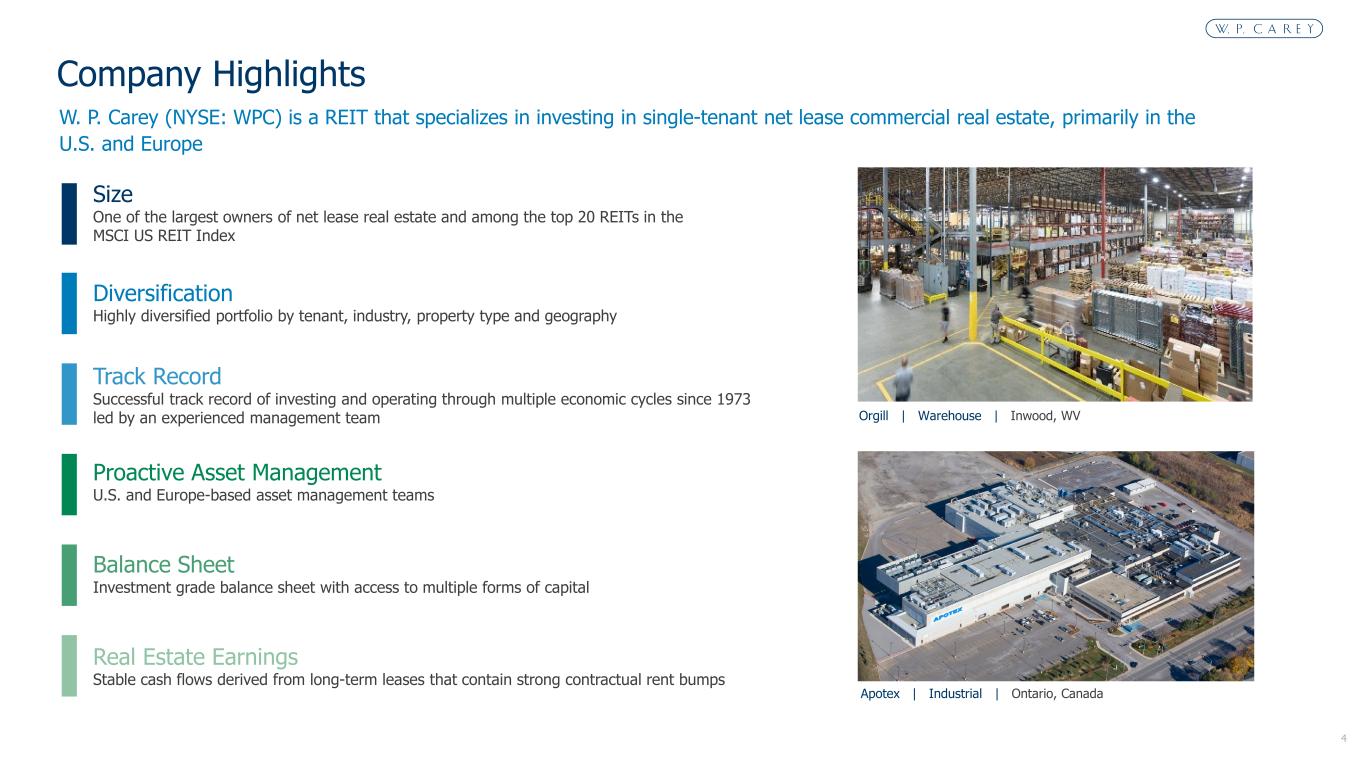
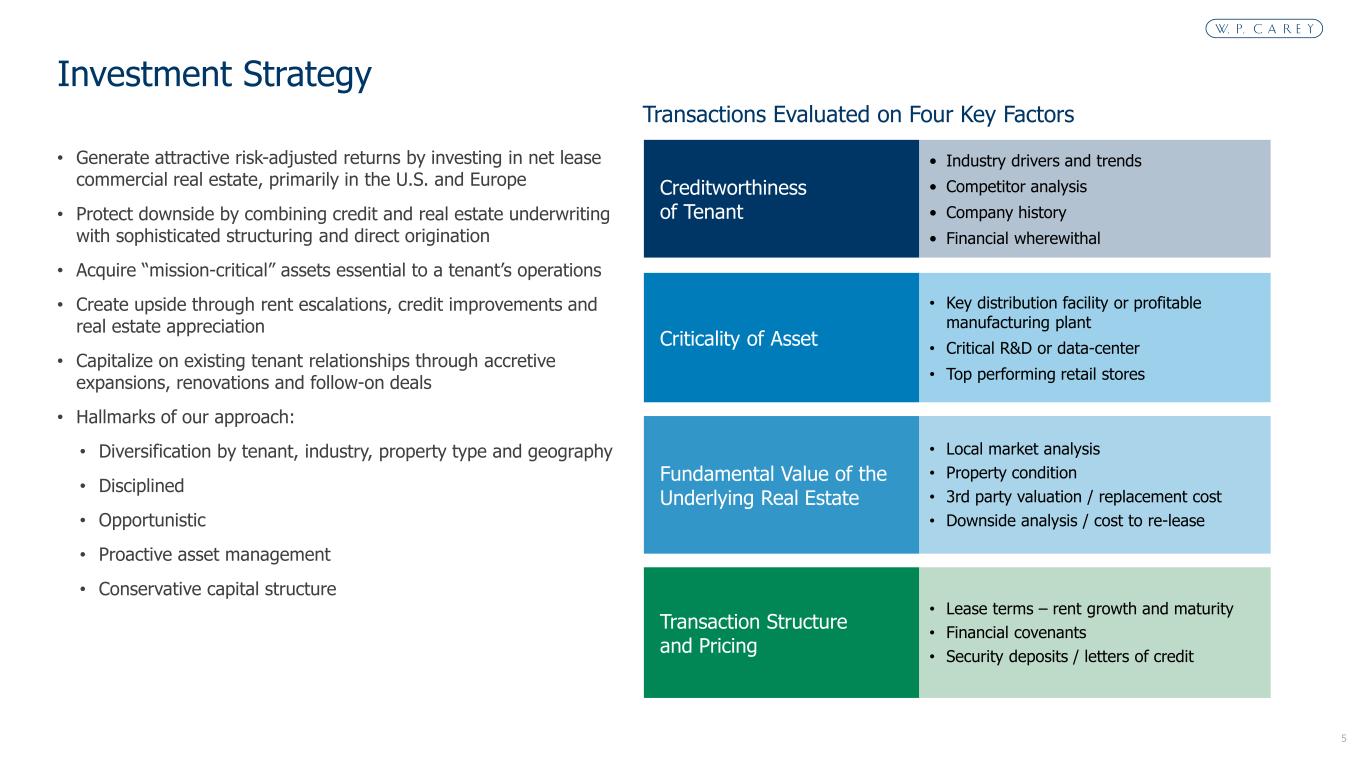
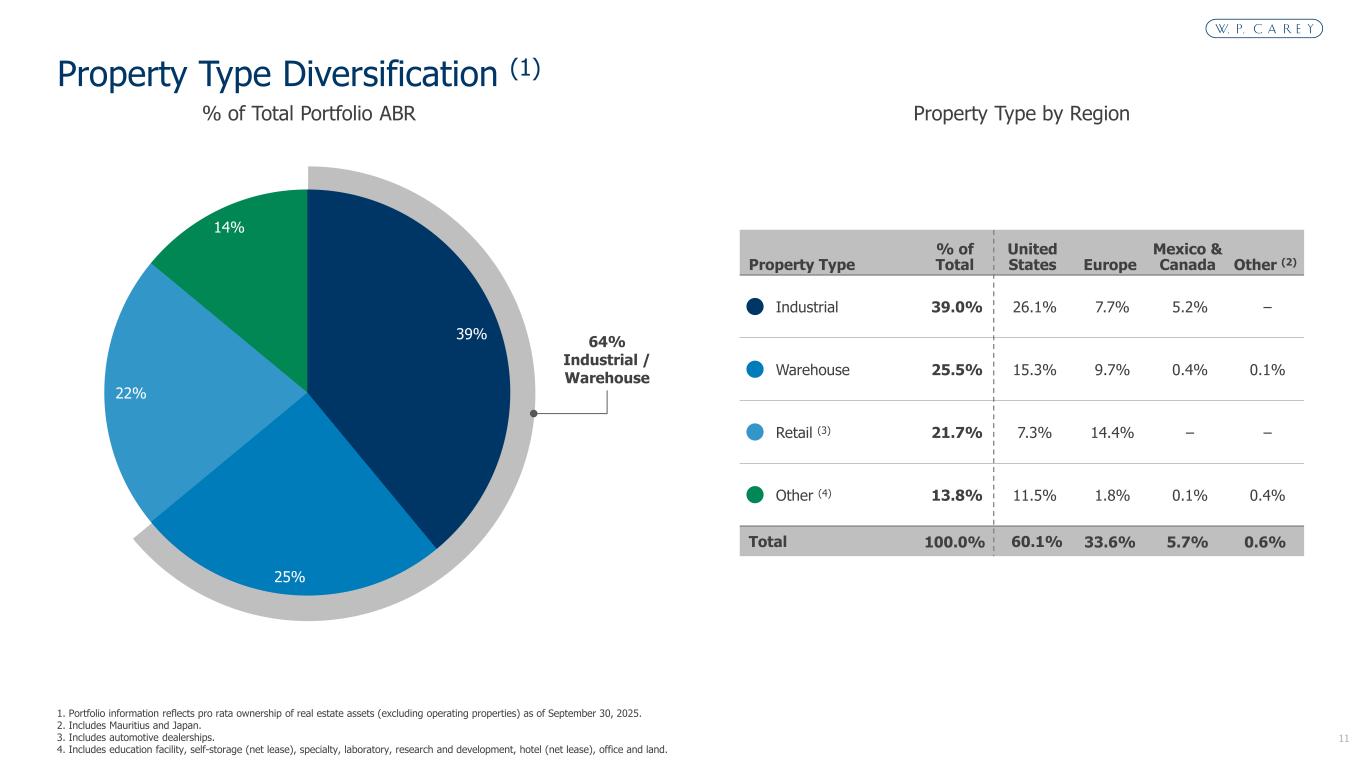
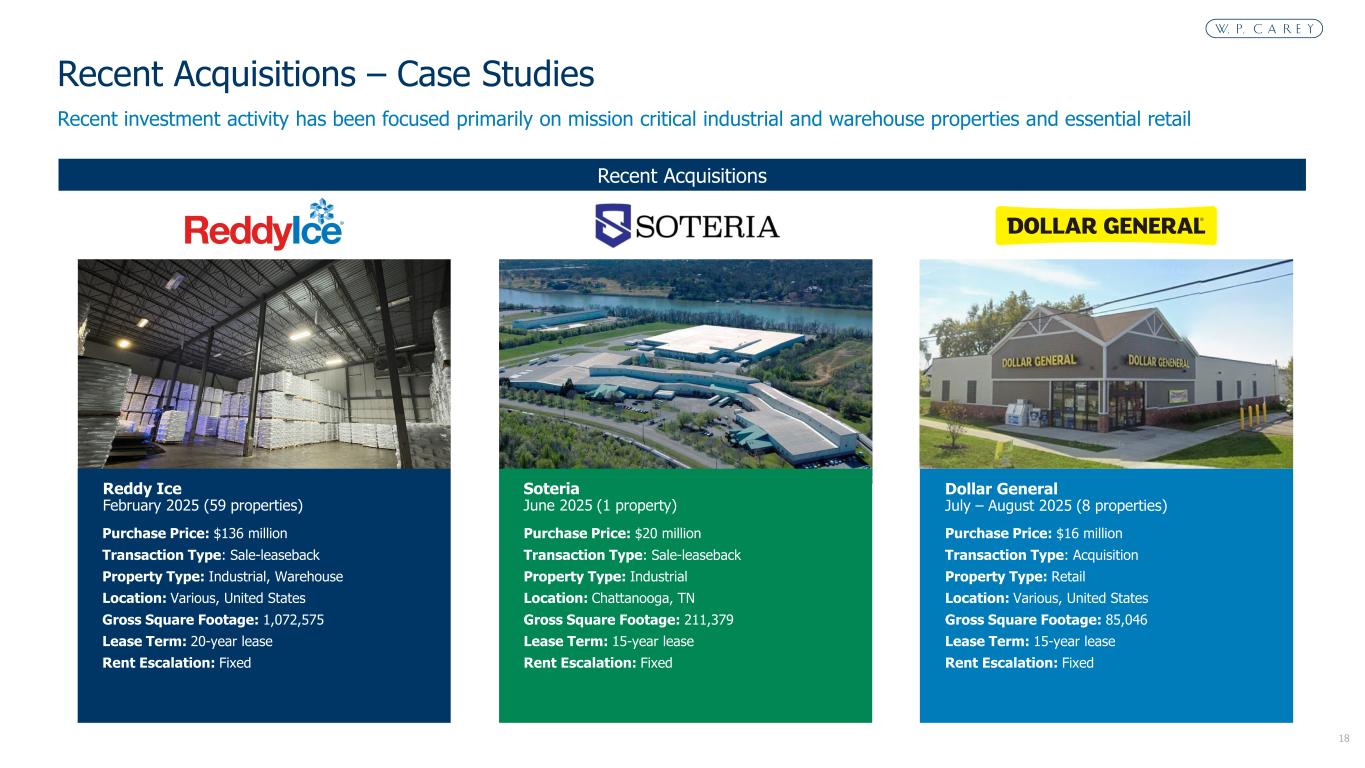
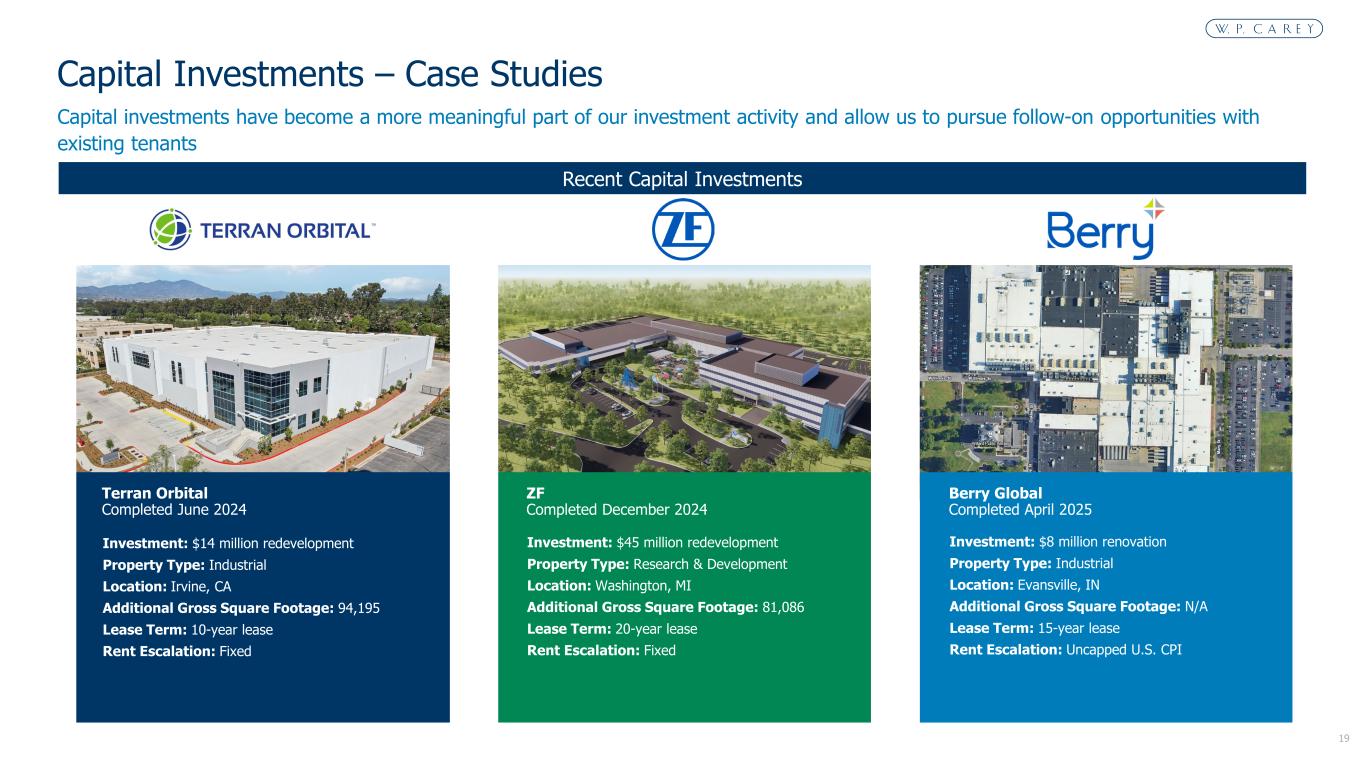
Good morning, everyone, and thank you for joining us. The strong momentum we established over the first half of the year has continued in the second half, and we remain ahead of our prior expectations. As a result, we're further raising our full-year AFFO guidance, resulting in mid-5% year-over-year growth, which we believe will be among the highest in the net lease sector this year. Our raised guidance is supported by several positive trends within our business. Year-to-date, we've completed $1.65 billion of investments at attractive initial cap rates averaging in the mid-sevens, primarily with fixed rent escalations averaging in the high 2% range. The strength of our investment activity year-to-date has put us just over the midpoint of prior guidance range, so I'm pleased to say we're raising our full-year expectations for investment volume to between $1.8 and $2.1 billion. dollars. Our sector-leading same-store rent growth continues to be in the mid-2% range and is expected to remain around there or be slightly higher in 2026. The progress we've made funding our investments this year, primarily through asset sales, is expected to continue in the fourth quarter, achieving better than initially expected disposition cap rates and attractive spreads to where we're reinvesting the proceeds. Our original rent loss assumption, which reflected a degree of caution given the backdrop of broader economic uncertainty earlier in the year, proved to be conservative, and the performance of our portfolio has enabled us to lower our estimate as the year has progressed. And the strength and flexibility of our balance sheet, with over $2 billion of liquidity, including our recent forward equity sales, provides us with additional flexibility to fund future investments. This morning, I'll review this progress and our confidence in sustaining that momentum into 2026. Tony Sanzone, our CFO, will focus on our results and guidance raise and touch upon aspects of our portfolio and balance sheet. And as usual, we're joined by our head of asset management, Brooks Gordon, to answer questions. Starting with the transaction environment and investment volume. Lower interest rate volatility has helped keep net lease cap rates relatively steady this year. And that sense of stability has positively impacted our transaction activity, both in the U.S. and Europe, especially sale leasebacks, which have comprised the large majority of our investments to date. Our continued strong pace of investment activity, adding close to $660 million of investments during the third quarter, and about $170 million so far in the fourth quarter, brings our year-to-date investment volume to $1.65 billion, at a weighted average initial cap rate of 7.6%. We continue to structure leases with attractive rent escalations, the significant majority of which were fixed bumps, averaging 2.7% for our investments year-to-date. When factoring in rent escalations and a weighted average lease term of 18 years, our average initial cap rates in the mid-7s translate to average yields in the mid-9% range. By transacting at these levels, we continue to generate very attractive spreads to our cost of capital. warehouse and industrial represents over three quarters of our investment volume year to date although we continue to invest in a diverse range of property types and while the large majority of our investment volume was in the u.s where we've continued to see a significant number of opportunities at attractive spreads we also continued to grow our investment volume in europe relative to the last couple of years the investment we've made over the last 27 years to steadily build and develop our European platform continues to serve as a key competitive advantage there. Today, our European team consists of over 50 people across our offices in London and Amsterdam, which has built strong broker and developer relationships and has the local expertise necessary to successfully execute across Europe. Moving to our pipeline and capital projects, our near-term pipeline remains strong, with several hundred million dollars of transactions currently in process at cap rates and weighted average lease terms consistent with where we've been transacting year to date. We expect many of those deals to close in the fourth quarter, although some may spill over into next year, depending on where they are in the closing process, which would set us up for a strong first quarter. Our near-term pipeline includes close to $70 million of capital projects scheduled for completion in the fourth quarter. We also have approximately $180 million of additional capital projects underway, the large majority of which we'll deliver in 2026. While capital projects are something we've been doing for a long time, it's an area we can allocate more capital to, often with higher returns compared to acquiring existing assets. Over time, we've built up a dedicated in-house project management team with deep real estate expertise and strong local connections to development resources. We have a long track record of build-a-suits, expansions, renovations, and development projects. Historically, capital projects have averaged around 10% to 15% of our annual investment volume, and we believe we can expand that proportion. Turning now to our capital sources, since our last earnings call, we've made further progress with our strategy of funding investments with accretive sales of non-core assets this year, including operating self-storage properties. Currently, we're in the market with the second half of our self-storage portfolio and have closed further sales since quarter end. We're confident we'll close additional sales during the fourth quarter, but we're also maintaining a degree of optionality on the timing and execution of certain storage subportfolios. And while we expect asset sales to fund our fourth quarter investment activity, the approximately $230 million of forward equity we recently sold gives us additional flexibility, as well as enabling us to get ahead of our funding needs for 2026. So let me pause there and hand the call over to Tony to discuss our results and guidance.
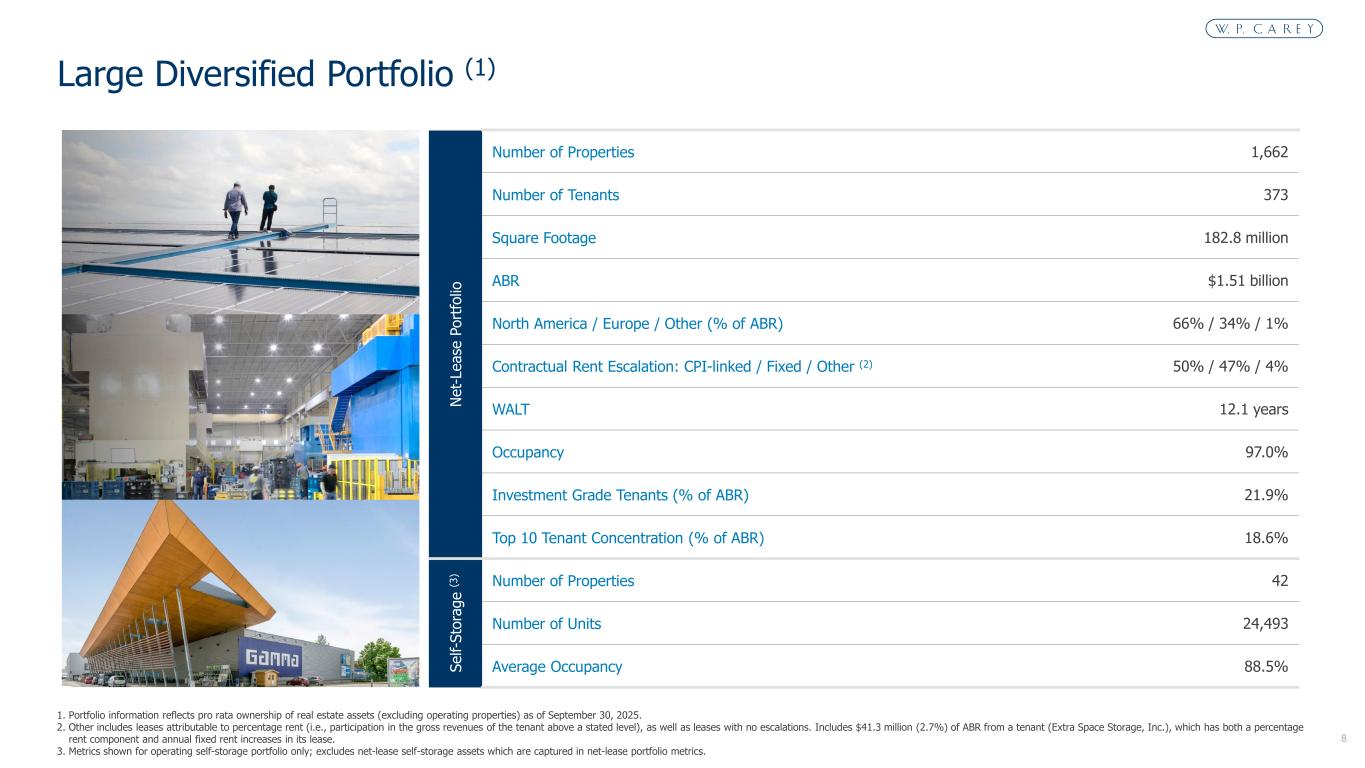
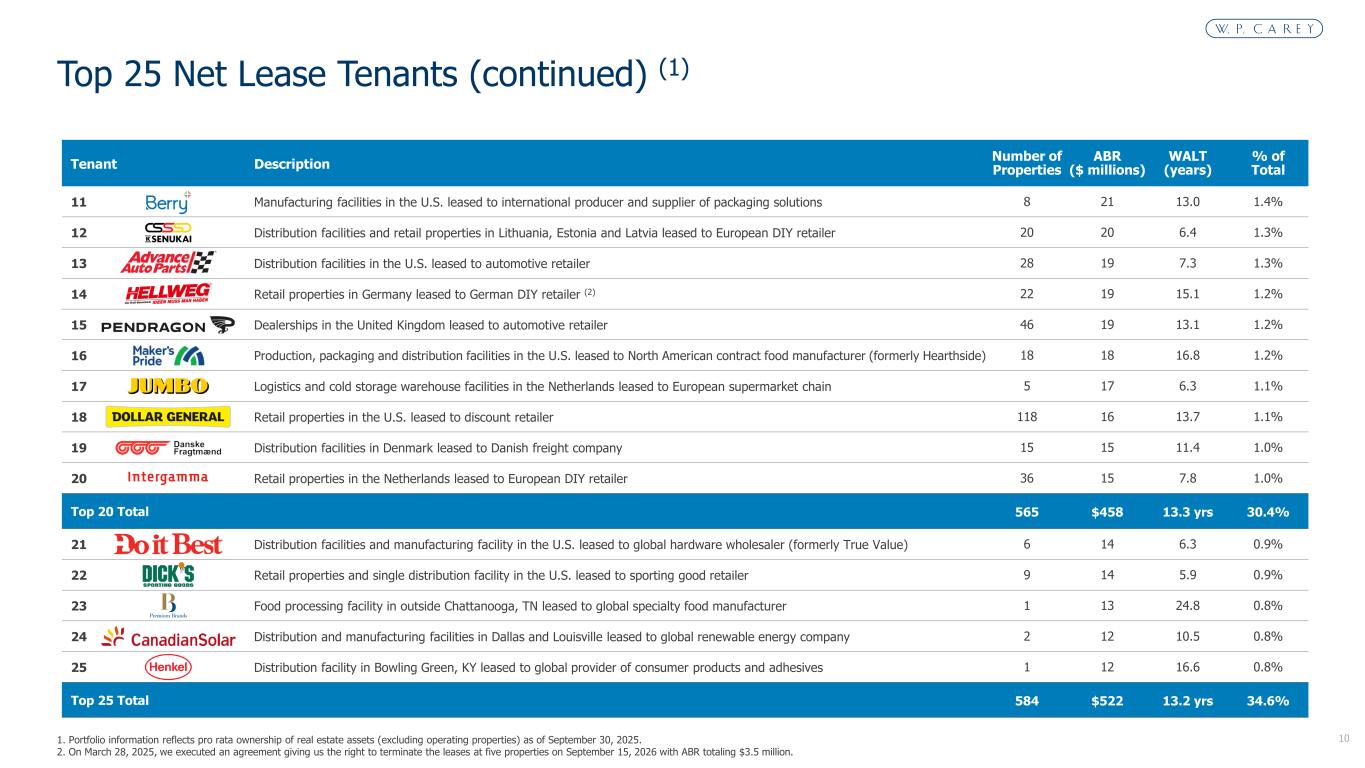
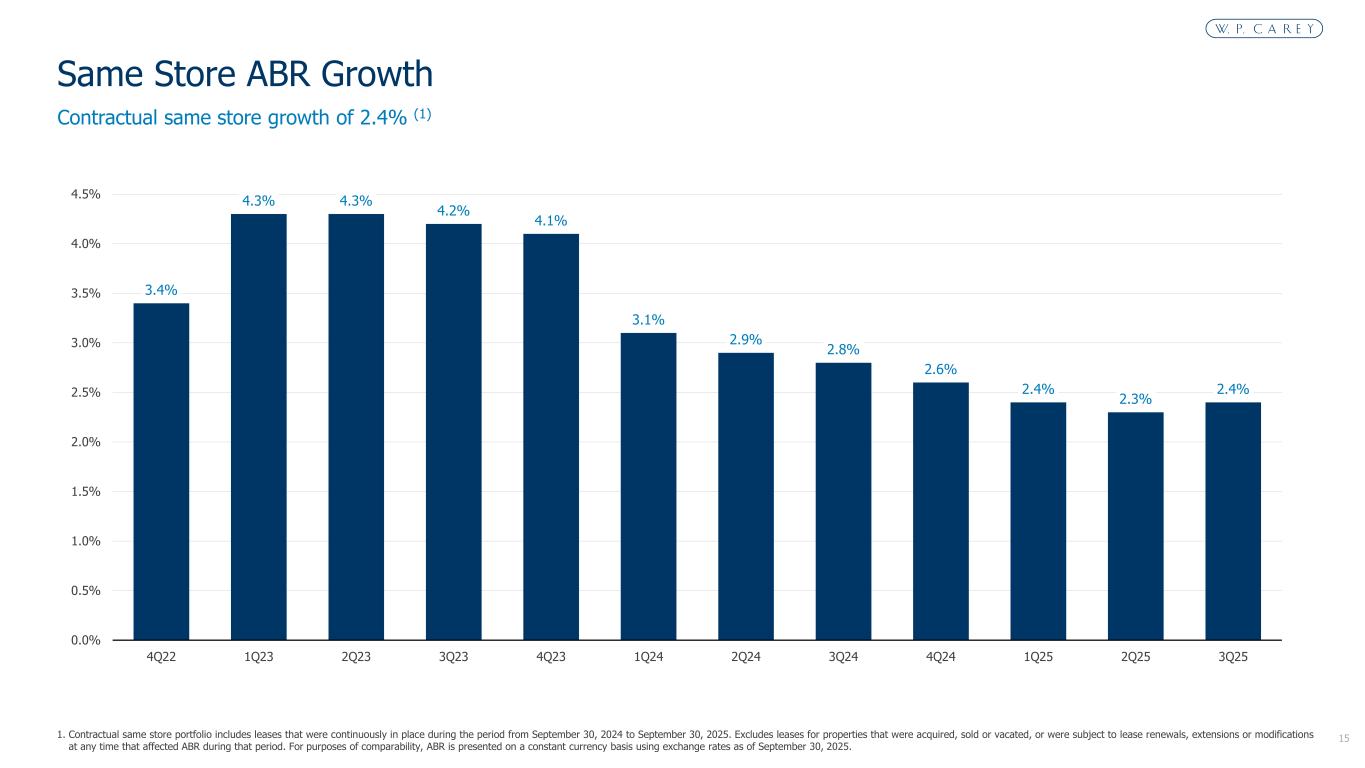
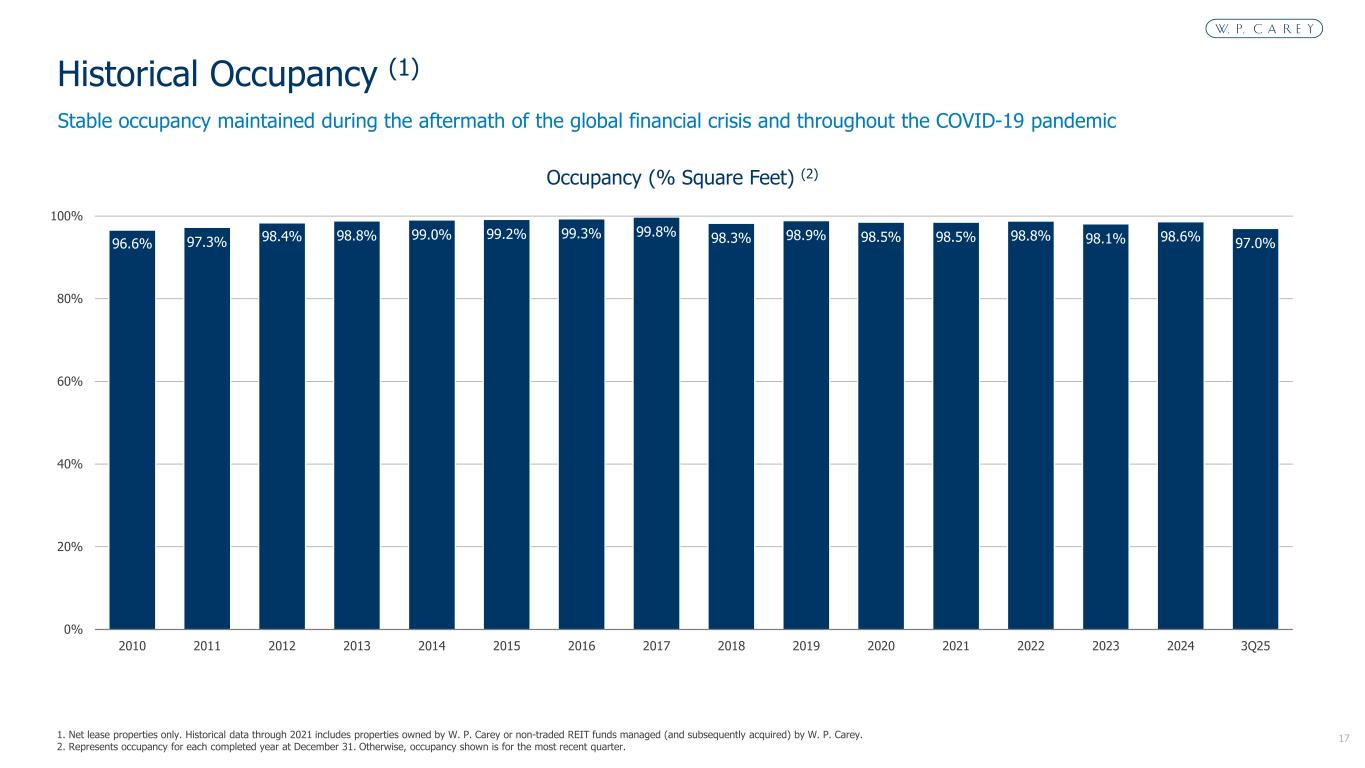
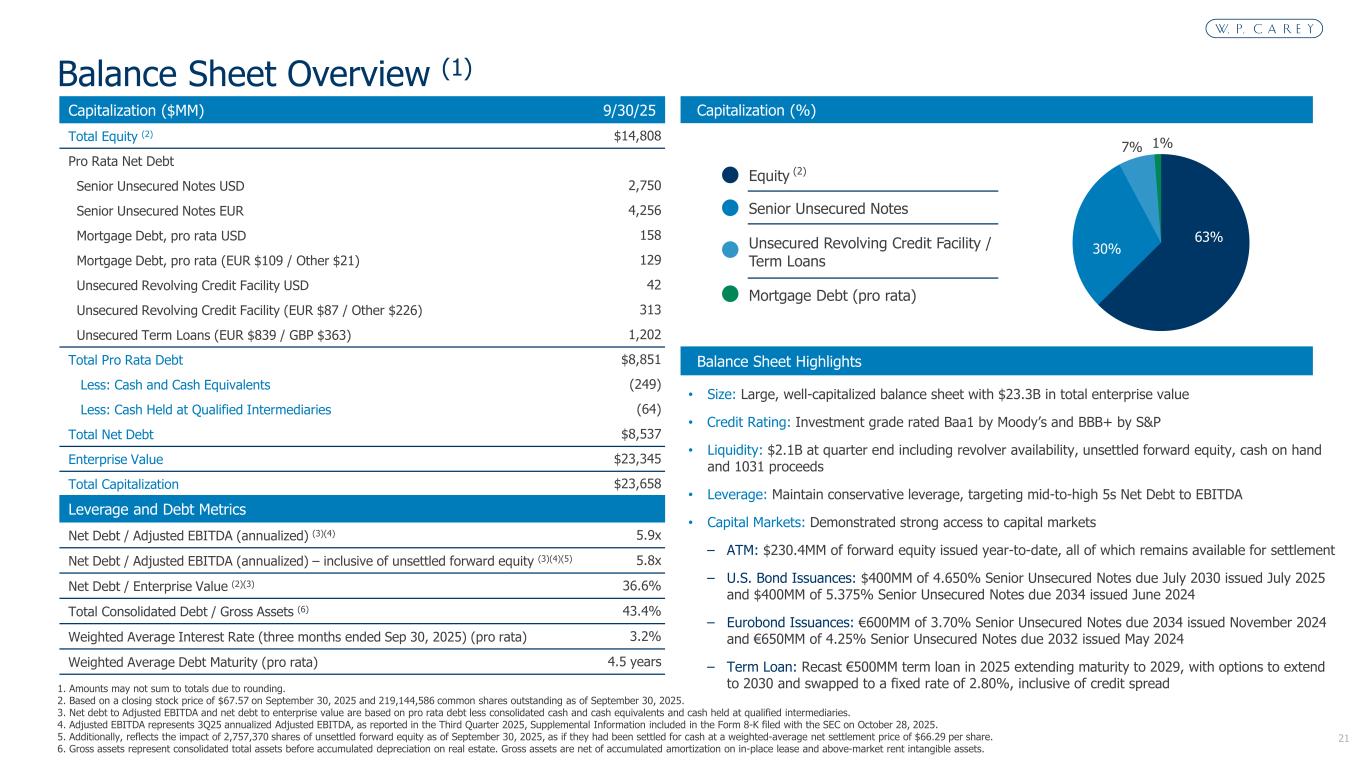
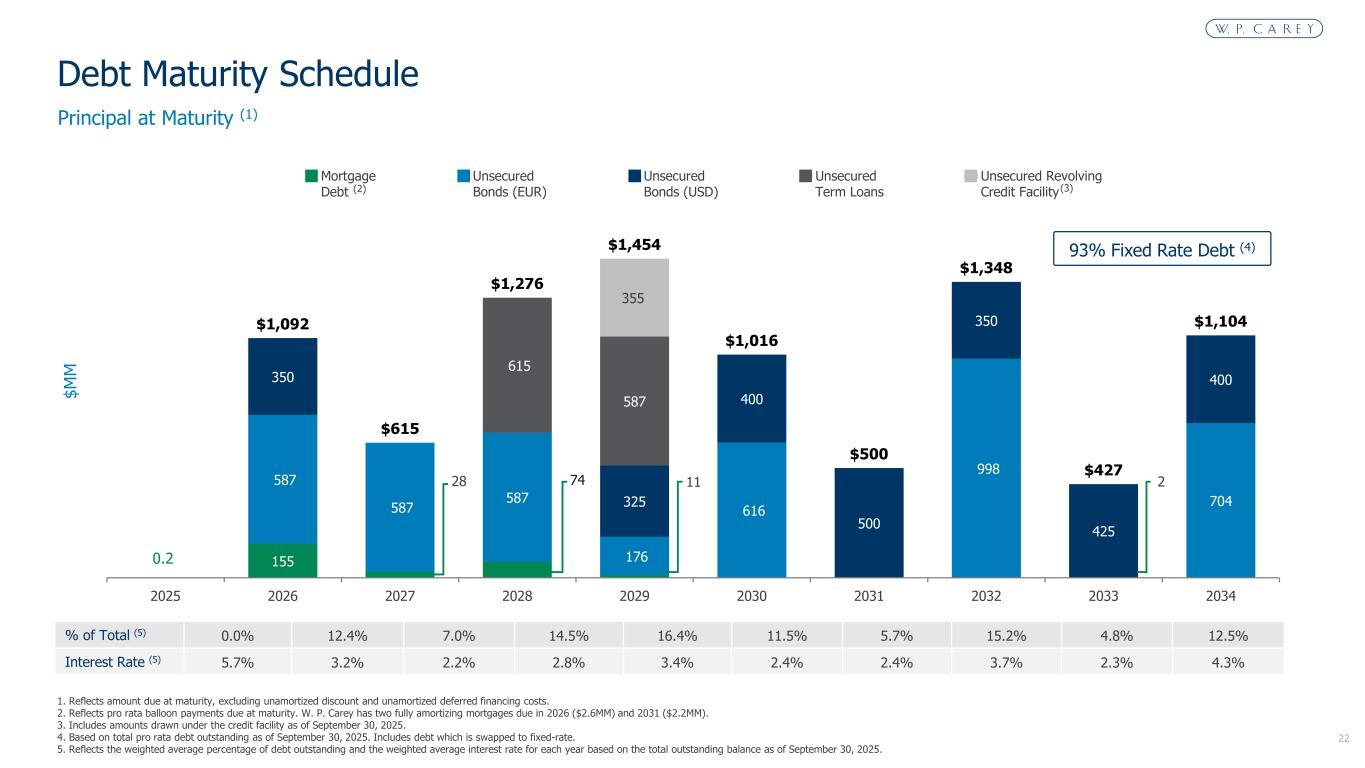
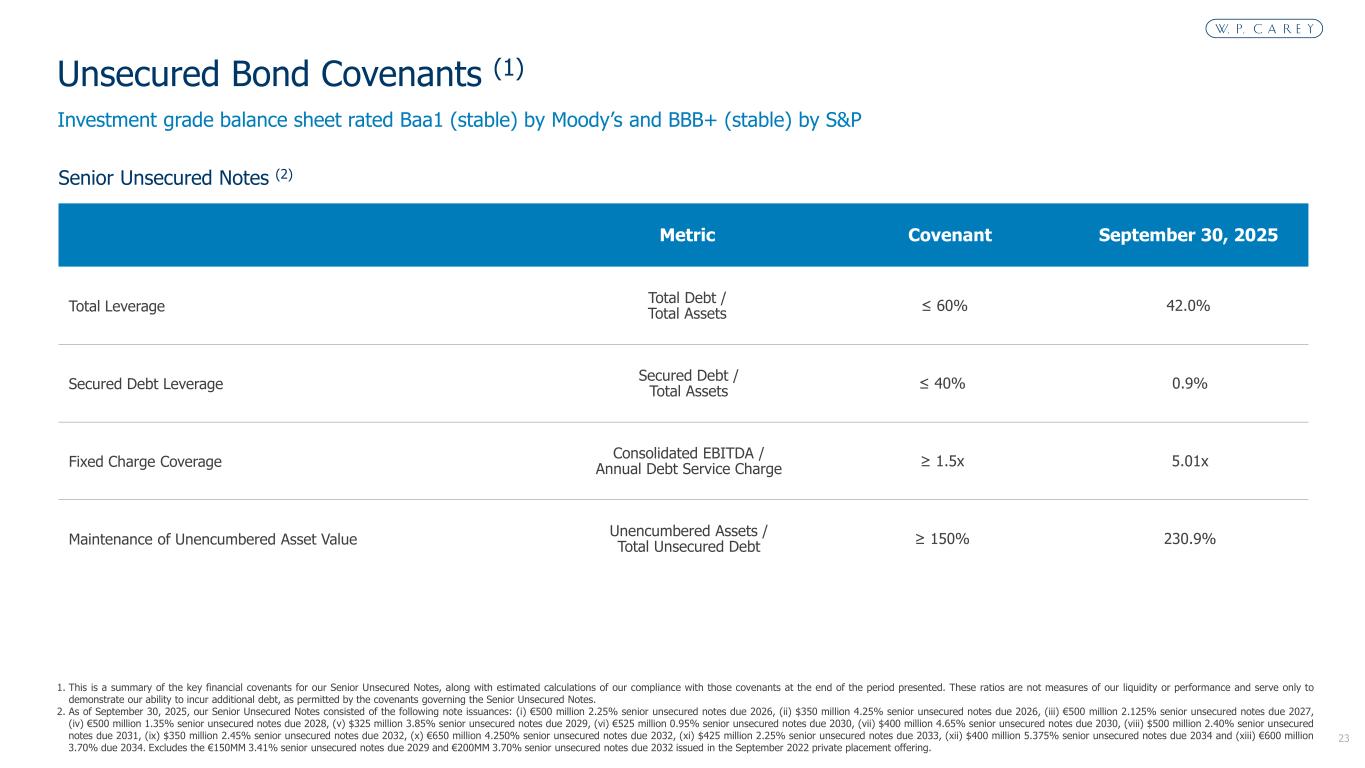
Thanks, Jason. AFFO per share for the third quarter was $1.25, representing a 5.9% increase compared to the third quarter of last year. Our strong results continue to benefit from both the pace and volume of our investment activity, as well as the internal rent growth generated by our portfolio. We've raised and narrowed our full year 2025 AFFO guidance, driven largely by higher investment volume and lower expected rent loss within the portfolio. and we currently expect AFFO to total between $4.93 and $4.99 per share for the year, implying 5.5% year-over-year growth at the midpoint. As Jason mentioned, given the investments we've completed to date and our outlook for the remainder of the year, we've raised our expected 2025 investment volume to a range of $1.8 to $2.1 billion. As we continue to fund our investment activity this year with proceeds from dispositions of operating and non-core assets, we're also revising our expected disposition volume to total between $1.3 and $1.5 billion, which is increased to include additional sales of operating self-storage assets. And based on the successful execution we've had to date, we expect to generate overall spreads of approximately 150 basis points between our investments and dispositions for the year. On the expense side, G&A continues to track in line with our expectations to fall between $99 and $102 million for the full year. Property expenses are expected to total $51 to $54 million, with a minimal increase to the lower end of the range. And tax expense is expected to be between $41 and $44 million, representing a marginal reduction at the midpoint. Turning now to our portfolio, which continues to generate strong internal growth. Contractual same-store rent growth for the quarter was 2.4% year-over-year, comprised of CPI-linked rent escalations averaging 2.5% for the quarter, while fixed rent increases averaged 2.1%. For the full year, we expect contractual same-store rent growth to average around 2.5%. Based on current inflation levels and further supported by the higher fixed increases we are achieving on new investments, our contractual same-store growth is expected to remain strong in 2026, likely surpassing the 2.5% growth we expect to see this year. Comprehensive same-store rent growth for the quarter was 2% year-over-year and is expected to track in line with our contractual rent growth for 2025 at around 2.5%, despite the uptick in vacancy flowing through the back half of the year. Portfolio occupancy declined to 97% at the end of the third quarter, which we view as temporary in nature, and was factored into our earlier guidance. Of the 3% total vacancy at the end of the third quarter, around a quarter has since been resolved or is in the final stages of closing, and another half is in process and well underway to being resolved. Helwig added minimally to our third quarter vacancy, following planned store takebacks in September, and our asset management team continues to further reduce our exposure through releasing and dispositions. Helwig now represents our 14th largest tenant, down from 6th largest a quarter ago, and we expect it to be out of our top 25 next year. We've experienced minimal rent disruption this year, enabling us to further reduce the rent loss assumption embedded in our guidance to $10 million, down from our prior estimate of between $10 and $15 million. Currently, we have visibility into total rent loss of about $7 million for the year, representing about 45 basis points of ABR, which includes the downtime on the Helwig assets we took The balance of our reserve includes ongoing caution towards Helwig, which remains current on rent, but is still navigating a challenging turnaround, and we hope for that to be conservative with only two months of the year's remaining. Other lease-related income totaled $3.7 million for the third quarter, down from $9.6 million in the second quarter, and is expected to total in the mid-$20 million range for the full year. Turning to our operating properties, so far this year, we've completed sales of 37 operating self-storage properties and one student housing property, and converted four operating self-storage properties to long-term net leases. Factoring in the additional sales we expect to close before year-end, we estimate operating property NOI for the fourth quarter will total between $7 and $9 million, reducing further in 2026. Moving now to our balance sheet and capital markets activity. Our balance sheet remains strong and extremely well-positioned to fund our continued growth, further bolstered by our equity and debt capital markets activity this year. Since the start of the third quarter, we've sold approximately 3.4 million shares, subject to forward sale agreements through our ATM program, at a gross weighted average price of $68.05 per share, all of which remains outstanding, resulting in gross proceeds of approximately $230 million available to fund future investment activity. And on the debt side, as previously announced, early in the third quarter, we enhanced our liquidity position with the opportunistic issuance of 400 million U.S. dollar bonds priced at a coupon rate of 4.65 percent, which was used to repay amounts outstanding on our credit facility. Our weighted average interest rate for the quarter was 3.2 percent, and we continue to believe we have one of the lowest cost of debt in the net lease sector through our mix of U.S. dollar and euro-denominated debt. Our debt maturities remain very manageable. We have a 500 million euro bond maturing in April of 2026, and our next U.S. dollar bond maturity isn't until October of next year. We currently expect that we would refinance these bonds with issuances in the same currencies at or near their maturities. We end the third quarter with liquidity totaling about $2.1 billion, comprised of availability on our credit facility, cash on hand and held for 1031 exchanges and unsettled forward equity. With dispositions expected to fund investment activity for the remainder of this year, we have a great deal of flexibility in accessing the capital markets. Taking into account our free cash flow of over $250 million annually, in addition to our unsettled forward equity, we expect to be well ahead of our funding needs for new investments as we enter 2026. Our key leverage metrics remained within our target ranges at quarter end. Net debt to adjusted EBITDA, inclusive of unsettled equity forwards, was 5.8 times. Excluding the impact of unsettled equity forwards, net debt to adjusted EBITDA was 5.9 times. In September, we increased our quarterly dividend by 4% year-over-year to 91 cents per share, equating to an attractive annualized dividend yield of 5.4%. Our dividend continues to be well supported by our earnings growth as we maintain a healthy year-to-date payout ratio at approximately 73% of AFFO per share. And with that, I'll hand the call back to Jason.
Thanks, Tony. In closing, the investment volume we've completed year-to-date and lower rent loss assumption have enabled us to again raise both our full-year investment volume and AFFO guidance ranges. We've repeatedly raised our guidance this year and have consistently executed strong investment volume since mid 2024 completing well over two billion dollars of new investments over the trailing 12-month period we have the infrastructure expertise and team in place to continue performing at these levels as we look ahead we have an active deal pipeline that extends into the first quarter of 2026 we're not seeing anything in the transaction environment that would take us off our current pace of activity given where our debt and equity is pricing we view all All the elements is being in place to continue generating double-digit total shareholder returns in 2026 through a combination of AFFO growth that would put us in the top tier of net lease REITs and our dividend yield. That concludes our prepared remarks, so I'll hand the call back to the operator for questions.
Operator
At this time, we will take questions. If you would like to ask a question, simply press star, then the number 1 on your telephone keypad. If you would like to withdraw your question, please press the star, then the number two.
Operator
And our first question comes from John Kilachowski with Wells Fargo. Please say your question. John Kilachowski, your line is open. You might be on mute, John.
Operator
Go ahead, John Kilachowski.
Operator
All right, we'll move on to the next question.
Operator
And our next question comes from Anthony Palone with J.P. Morgan. Please say your question.
You know, now that you guys are rounding the corner on the operating self-storage asset sales, can you maybe give us a sense as to what the menu of non-core and other internally generated capital sources may be as we start to think about, you know, deal activity next year and maybe perhaps how to help fund it?
Yeah, sure. I mean, certainly, you know, when we think about, you know, next year, equity is going to be a much bigger picture. and part of that story than this year, and, you know, we're not currently teeing up a disposition program, anything close to what we did this year. So, you know, dispositions should revert back to a more typical run rate. We do have, you know, a couple operating properties left, but apart from the possibility of some self-storage sales slipping into next year, you know, we should be back at more normalized levels. You know, disposal will still, you know, be a source of incremental capital for us, but it won't be significant like it was this year. You know, so the expectation is we're kind of back to normal core spread investing, typical of a net lease company where issue equity and debt, you know, keep leverage targets in mind and use it to do deals and generate spreads. So that's kind of the plan going forward. You know, I think the other thing maybe to note is, and Tony talked about this, that we do have lots of funding flexibility right now looking into 2026. Revolver at a little over $2 billion is mostly undrawn.
She referenced, you know, call it $250 million dollars of free cash flow and then as we talked about earlier you know we have gotten a head start on equity needs um we have 230 million dollars of forwards that we recently issued on the atm so we're in good shape and you know we think we're ahead of the head of the game there for funding for next year okay thanks and then just follow up um you know are you seeing any uh competition or greater competition on deals from some of the the private net lease uh platforms that are out there in any part of your buy box?
Yeah, I mean, look, the net lease market has always been competitive, especially in the U.S., and we have seen a bit of a pickup in new competition. It's mainly the private equity players, as you mentioned, and they're finding net lease attractive. We really don't think we run into all that much. We don't always have full visibility on who we may be competing with, and that's at least thus far right now. So, you know, I'd imagine we'll see incremental competition that comes up and, you know, that likely leads to some pricing pressures, but it feels manageable right now. And, you know, we certainly have a cost of capital to allow us to compete on price, you know, when needed. So I think that's, I think it's okay. You know, I think it's also worth keeping in mind that, you know, especially on sale leasebacks, experience and track record on execution matter, you know, quite a bit. So, you know, newer entrants may have a little bit more of a hurdle to cover there. And, you know, our reputation and kind of history should be a real competitive advantage, too.
Operator
Okay. Thank you.
Operator
Your next question comes from Smitas Rose with Citi.
Operator
Please state your question.
Hi. Thanks a lot. I wanted to ask you first just a little bit if you could just give us an update or a reminder, I guess, on where you are on the Halwick process in terms of leases that I think you had expected seven to be terminated by this time of the year, and then maybe I think five more to go. Is that still kind of the case and maybe where you are on stores that are expected to be sold versus released?
Yeah, sure. Brooks, you want to cover that?
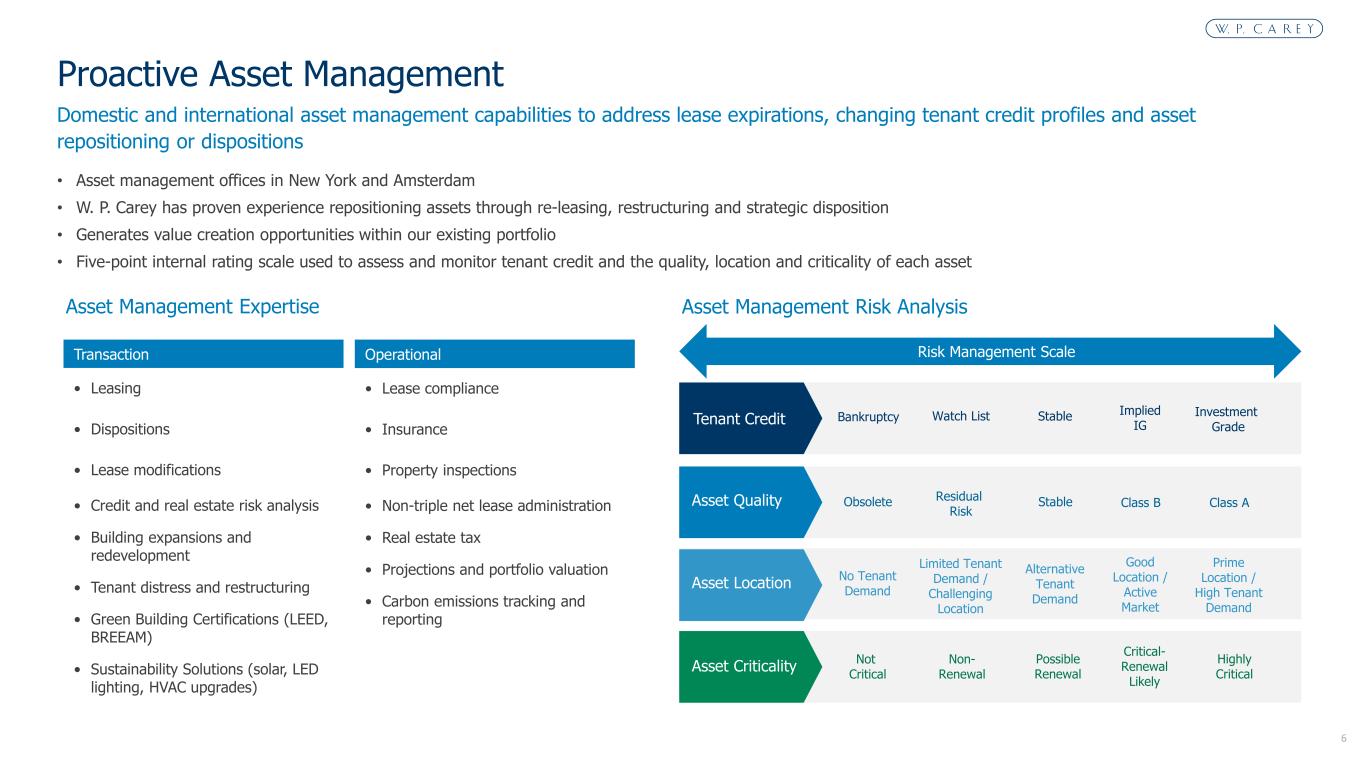
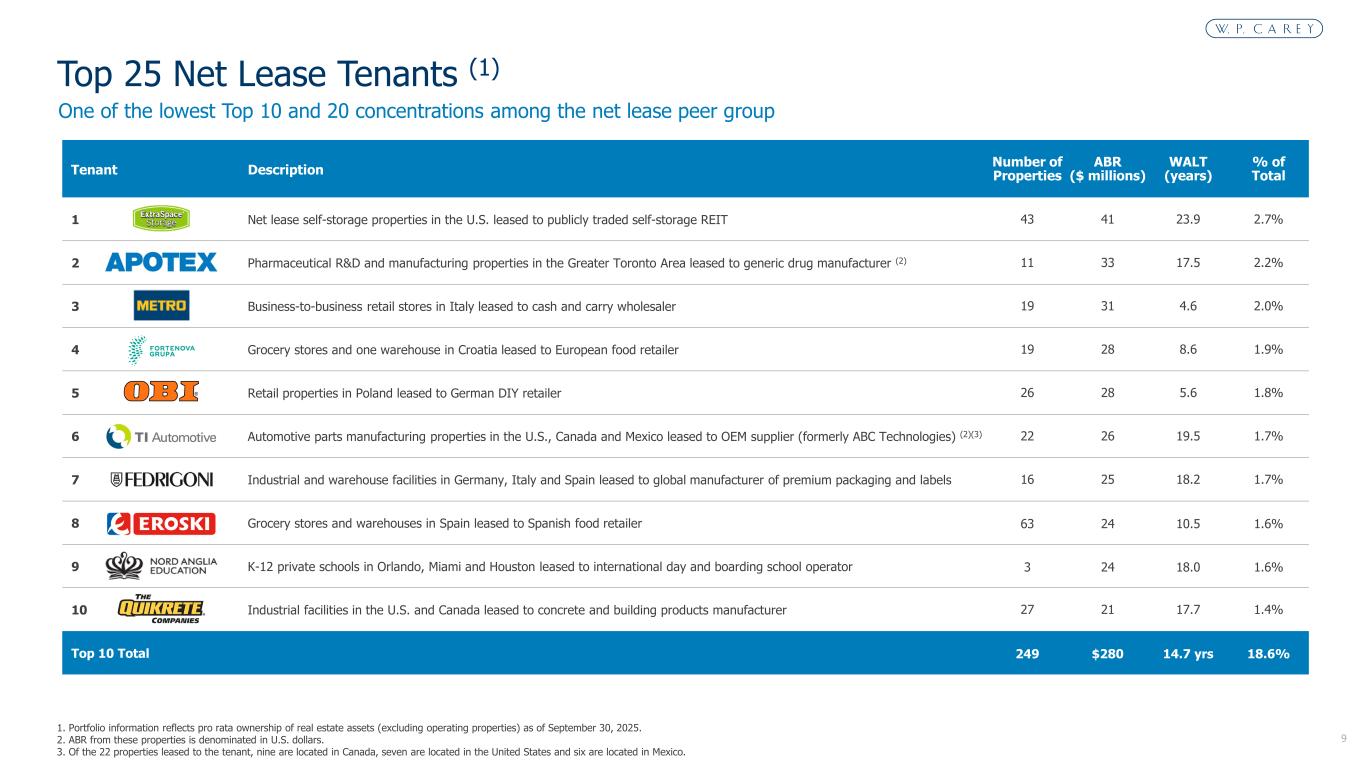
Yeah. So first, maybe just a broader status update. You know, as Tony mentioned, they remain current on rent. We've reduced them down to our number 14 tenant. And, you know, we're making good progress on our plan to reduce that. Specifically to your question, you know, we're taking a number of actions to reduce our exposure there. We've sold three occupied stores in Q3. Expect a couple more over the next few months there. As you mentioned, we took back seven, the first seven of the 12 in total we're taking back. So of those seven, we've signed leases with new operators at two, and one is in process, so it should be signed soon. Four are under contract to sell. Those will close in Q4 and into Q1. And then, as I mentioned, we're taking back another five in 2026. We signed leases on three of those locations, one more in process, and then one will be targeted for sale. So making very good progress on that strategy, and we would look to reduce the exposure on top of that quite quickly. You know, we're targeting out of our top 25 sort of toward mid-year of 26, you know, and we think we have a path to get them out of the top 50 kind of by the end of 2026. So we expect the exposure to come down meaningfully going forward.
Great, thanks. And then you mentioned in the fourth quarter, maybe having gone in a little too conservative around rent loss assumptions. And as you just think about next year, any thoughts on how you could sort of maybe assess that? I mean, are you concerned about the underlying economy at all that would maybe drive you to be maybe more conservative than you have been historically? Or just any kind of thoughts on how you're thinking about that at this point?
Yeah, but Brooks, you want to take that one as well?
I mean, without kind of projecting forward any specific guidance, I think what's important to note is that our broader watch list and kind of credit quality has improved materially over recent quarters. Again, that's driven by resolutions on true value and hard side and the progress we're making on Hellwig, and we continue to closely monitor that turnaround at Hellwig, and we'll continue to have caution there. Um, that said, you know, our broader, um, credit watch universe has come down meaningfully. Um, so, you know, we'll continue to take a conservative and cautious approach there with respect to credit broadly and Helwig specifically. Um, but we expect to be able to drive strong earnings growth, even, even net of that.
Operator
Thank you. Appreciate it.
Operator
Your next question comes from Michael Goldsmith with UBS.
Operator
Please state your question.
Good morning. This is Catherine Graves on for Michael. Thank you for taking my questions. So my first, you've completed the $1.6 billion of investments so far year to date. You raised investment guidance. Can you maybe just provide some color on what's currently in your pipeline as far as the incremental volume increase? Anything just in terms of geographic split between Europe and U.S., property-type mix, industrial versus retail, and anything on cap rates that you're currently seeing in the pipeline as you build for 4Q?
Yeah, sure. So near term, you know, currently includes, I would call it several hundred million dollars of identified, you know, transactions, you know, most of them in advanced stages. We think many of those will close in the fourth quarter, although, you know, this time of year, it's always hard to predict. And some, you know, may slip into next year, which would set us up for a strong start to 26. I think on top of that, which you can also factor in, and we include in our SUP, is about $70 million of capital projects that are scheduled to complete this year. These are, you know, the build-the-suits and expansions that we regularly do. You probably would also note that we have, in addition to that 70, we have another $180 million that are in construction. You know, much of that, probably most of that would close in 2026. In terms of geographies, I mean, one of the things that we've maybe worth noting is more activity in Europe. You know, while year-to-date North America still makes up about 75% of the deals that we've done, In the third quarter, we saw the split closer to 50-50 between North America and Europe. And, you know, I think the themes that we're seeing in Europe are probably similar to those in the U.S., where rate stability has led to a tightening of bid-ask spreads. And, you know, sellers who may have been on the sidelines for a while now are willing to transact, and that's kind of translated into more activity. And that's both in the U.S. and Europe. But I think it's maybe most notable that we've seen, you know, more deal flow in Europe, you know, over the last quarter, quarter and a half compared to, you know, the prior years. In terms of property type, you know, we continue to see the best opportunities in industrial, and that includes both manufacturing and warehouse. I think that's reflected in our deals completed to date, and it also makes up the bulk of our pipeline as well. So I think you asked about kind of pricing as well. And, you know, we continue to target deals in the sevens, and we've been transacting on average in the sevens. And that's been, you know, the case for, you know, pretty consistently throughout 2025. And it's also largely, you know, where the pipeline is right now. So cap rates have mostly remained unchanged year to date. But as I mentioned earlier, I would expect to see some tightening as we head into 2026, especially if rates, you know, kind of stay at the current levels in that 4% zone. And certainly increased competition could factor into that as well, but that's, you know, kind of remains to be seen. So, you know, overall, I think the pricing still works for us, you know, very well. And, you know, we always, you know, want to make sure we remind people that, you know, if we're achieving kind of mid-7 initial cap rates, that equates to an average yield in kind of the nines, which, you know, we still believe that's among the highest in the net lease sector and certainly provides, you know, really interesting spreads relative to our funding these deals.
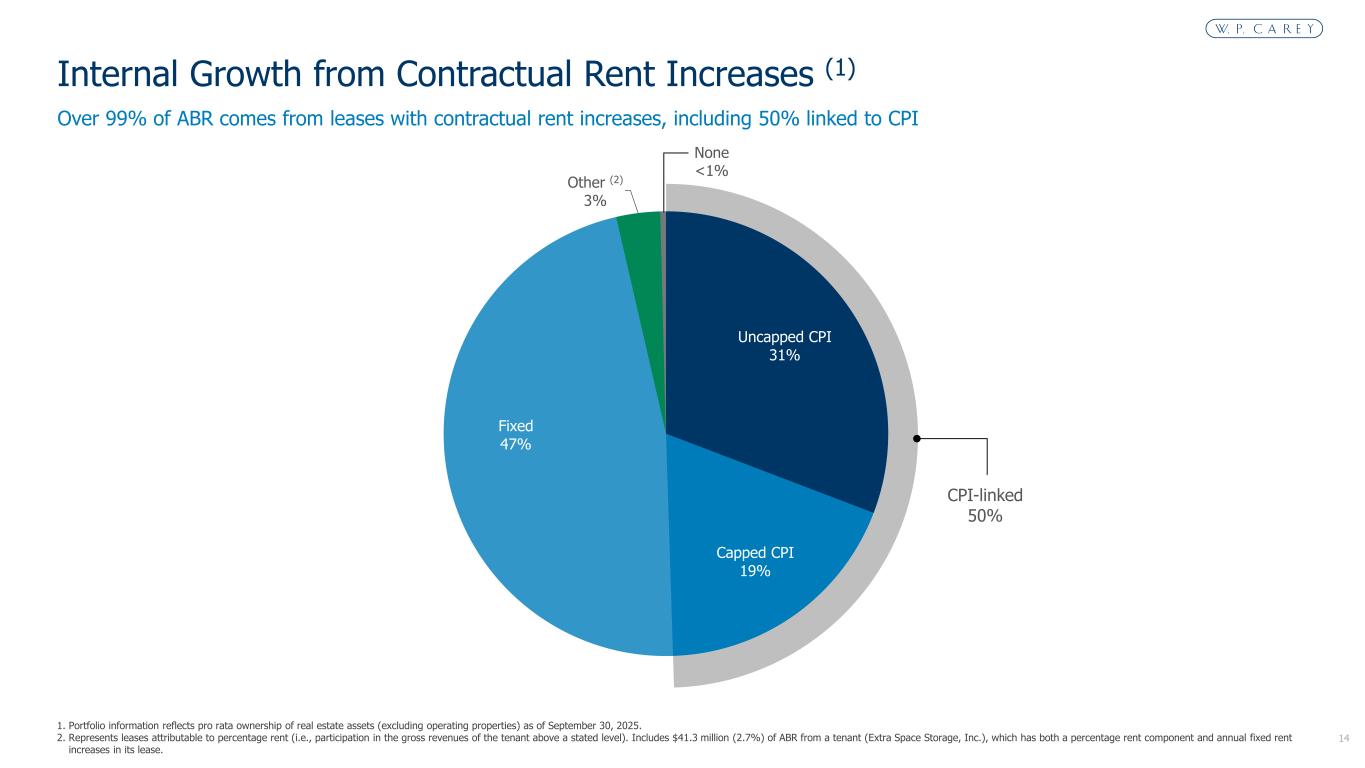
Got it. Thank you for the comprehensive answer. That's super helpful. And then my second, same-store rent growth looks like it kicked up about 10 basis points this quarter. And I know you talked about the expectations for the remainder of the year, but just thinking through the roughly 50% of rents currently tied to CPI, how should we think about the sustainability of that, like, mid-2% growth if inflation moderate? And then should we also sort of expect in the future to see more fixed rent bumps in future acquisitions going forward?
Yeah, let me take the second question and maybe Tony can just comment on how we kind of look on a kind of go forward basis of the CPI impacts on our same store. In terms of should we continue to expect to see inflation? I think, you know, since we saw the inflation spike a couple years back, it's gotten a little bit more difficult as we're negotiating kind of rent structures and sale leasebacks. It's been a little bit more difficult to get inflation, at least in the U.S. Year to date, looks like about one quarter of our deals have CPI length increases. And, you know, a lot of that is in Europe. And that's where it's still customary to get those increases in Europe. And we would expect to continue to see that. But I think what CPI increases or inflation changes have also impacted is our fixed increases and the levels at which we're able to negotiate those. I think historically, we've probably been closer to 3% on average, and now we're typically seeing new deals with fixed increases in the maybe 50 to 100 basis points above that. year-to-date, the deals that we've done have averaged a fixed increase of 2.7%. And, you know, the pipeline is fairly consistent with that. So, you know, while we're not getting as much inflation on new deals, our same story is still, you know, quite strong and it should remain that way. Tonya, I don't know if you have any views into moderation of inflation, kind of the timing of our bumps and how that could flow through.
Yeah, I think it's helpful to just think through the way that our leases work, and we've mentioned this historically, you know, the CPI-based leases specifically have a bit of a look back. So they're looking at inflation really in this kind of last quarter of the year, if you will. So we have a pretty reasonable line of sight into what next year's same store could look like, especially just given how many of our leases bump in January or in the first quarter. So even with, you know, CPI stabilizing kind of at its current levels are decreasing slightly, we do still expect our contractual same store to be even north of where it is this year. And some of that, as I mentioned, is supported by the fixed increases being higher than what they've been historically, but also with the expectation that CPI stabilizes. So again, north of 2.5% is our expectation for next year.
Got it. Thanks so much. Appreciate the color.
Operator
Your next question comes from Greg McGinnis with Scotiabank. Please state your question.
Operator
Hey, good morning.
My apologies if I missed it, but did you provide the disposition cap rate achieved on the self-storage assets? And do you expect to fully sell out next year, early next year, at similar cap rates?
Operator
Brooks, you want to cover that?
So we're not going to speak to kind of active transactions, but as we mentioned on our Q2 call, we've thus far transacted just inside of a 6% cap rate on the storage assets. You know, in total, I'd expect it to be right around 6%. Some maybe a little higher, some a little lower. It really depends on exactly the mix this year. And with respect to the full platform, you know, as Jason mentioned, we're in the market with the balance of it. We do retain a bit of flexibility in terms of the exact timing and what subportfolios transact. But over the medium, near term, you know, we'll be exiting the full operating storage platform.
Is there any difference in terms of the operations or occupancies of those assets that would lead you to believe that maybe app rates might be different? geography, something like that?
Each sub-portfolio is different. As I mentioned, some will trade a little higher, some will trade a little lower, but on average, we would expect the total self-storage exit to be in and around a 6% cap rate.
Okay, thanks. And then I appreciate the color you guys provided on your thoughts on acquisitions. You've certainly been busy over the last couple quarters. Some guidance before may slow down a little bit, but I'm just trying to clarify whether or not you expect to generally maintain this level of investment pace in 2026.
Yeah, sure. Look, it's hard to predict since the macro certainly factors in. And, you know, at this point, we typically only have visibility out maybe 60 to 90 days. But our intention is certainly to keep the pace. And I think you can look at what we've done. You know, I referenced earlier that if you go back on a trailing 12-month basis, we've been well over 2 billion. And, you know, there's not a lot that we're seeing right now that's a catalyst to change that dynamic. And, you know, the infrastructure and team is in place here. We have lots of liquidity, including meaningful free cash flow. We referenced the equity forwards that we've raised already and improved cost of capital, you know, that works. So we should continue to see good activity. We can lean into pricing and kind of feed that net lease growth algorithm. So, you know, we do feel good, but it's hard to predict exactly where things will go.
Operator
Your next question comes from Mitch Jermaine with Citizens JMP. Please do your question.
Thank you, and congrats on the quarter. It seems like, you know, the operating storage assets are going to be dwindled down. How should we think about the remaining operating properties? I think you still have a couple of hotels, maybe one other student housing asset. Are those also sale candidates? Yeah. Brooks, you want to take that?
Operator
Yeah, you're right.
So we own four operating hotels. So that includes three of the former net lease Marriott's that we still own. One is a Hilton in Minneapolis. You know, we'll sell that when the time is right. That could be in 2026, something we're evaluating. The three Marriott's are all slated for either sale or redevelopment. We're evaluating both paths. They're all operating normally in the meantime you know i'd say the first is one in newark um which um you know we're still in our final evaluation phase there but towards mid 26 um we would would seek to uh trigger a redevelopment uh into warehouse there the others are great locations in irvine and san diego but we're being patient there um and then you mentioned we have one remaining student housing property in the uk uh something we're evaluating um from a sale perspective again that that could be a near-term sale candidate, something we're evaluating now.
Great. That's helpful. And then maybe, Brooks, we'll have you. The rent recapture on your retail leases, a little bit lower than the rest of your portfolio. Is that Helwig, and is that kind of how we should expect the leases that you're looking to release going forward?
No, actually, this is totally unrelated. These are just two AMC theaters. So we only own four movie theaters total. We'll bring that number down to zero as quickly as we can. But it's a very, very small piece of ABR if you look at the actual contribution there. So we rolled those rents down to keep those theaters open and operating.
Your next question comes from jason wayne with barclays please state your question hi good morning um yeah just on the move outs uh that led to the sequential drop in occupancy um so those have been known for a few quarters um i know you said that many of those have been resolved or nearly resolved by now so just wondering kind of the strategy uh you think about managing occupancy when you're aware of some known vacates yeah so vacancy did pick up a bit yeah vacancy did pick up a bit as tony mentioned um you know just to recap that the largest um addition were two warehouses uh formerly
lisa tesco that that we had discussed previously that's about 50 basis points of occupancy um also two former true value warehouses for about 45 basis points and and a couple of hellwigs for or several hellwigs for about 20 basis points all of those are in process of being resolved and should be um closing imminently um you know if you step back and look at our total vacancy we we really do view this as a as a temporary spike um of the total roughly 30 of the vacant square footage has either already closed or is closing imminently um and then another 50 of that is in active negotiations or diligence so we'd expect the vacancy rate to get back to a normal place kind of over the next quarter, quarter and a half time frame. So periodically, we'll get a bigger building back vacant. We work very proactively to resolve those.
Operator
And that's why these resolutions are well on their way.
And then, yeah, just on a couple debt raises expected next year, just wondering what kind of pricing you're seeing in the U.S. and Europe right now?
Sure. Yeah, we have two bonds coming due next year. I think the expectation is that we would probably, you know, repay each of those in kind of the same currency in terms of, you know, where we're seeing, you know, pricing, I think in the U S you can kind of think of it as, as low fives. And in Europe, it's probably, you know, maybe a hundred, 125 basis points below that. So kind of think about it high threes, you know, and around 4% is, is, is, is roughly where they are.
Operator
Great. Thank you. you.
Operator
Your next question comes from Eric Borden with BMO Capital Markets. Please state your question.
Hey, good morning, everyone. I just wanted to talk a little bit more about the cap rate expectation going forward. I know you mentioned you expect maybe some compression just given where the 10-year sits today, but just curious if there's any difference or bifurcation between cap rates in the U.S. versus cap rates in Europe. Thank you.
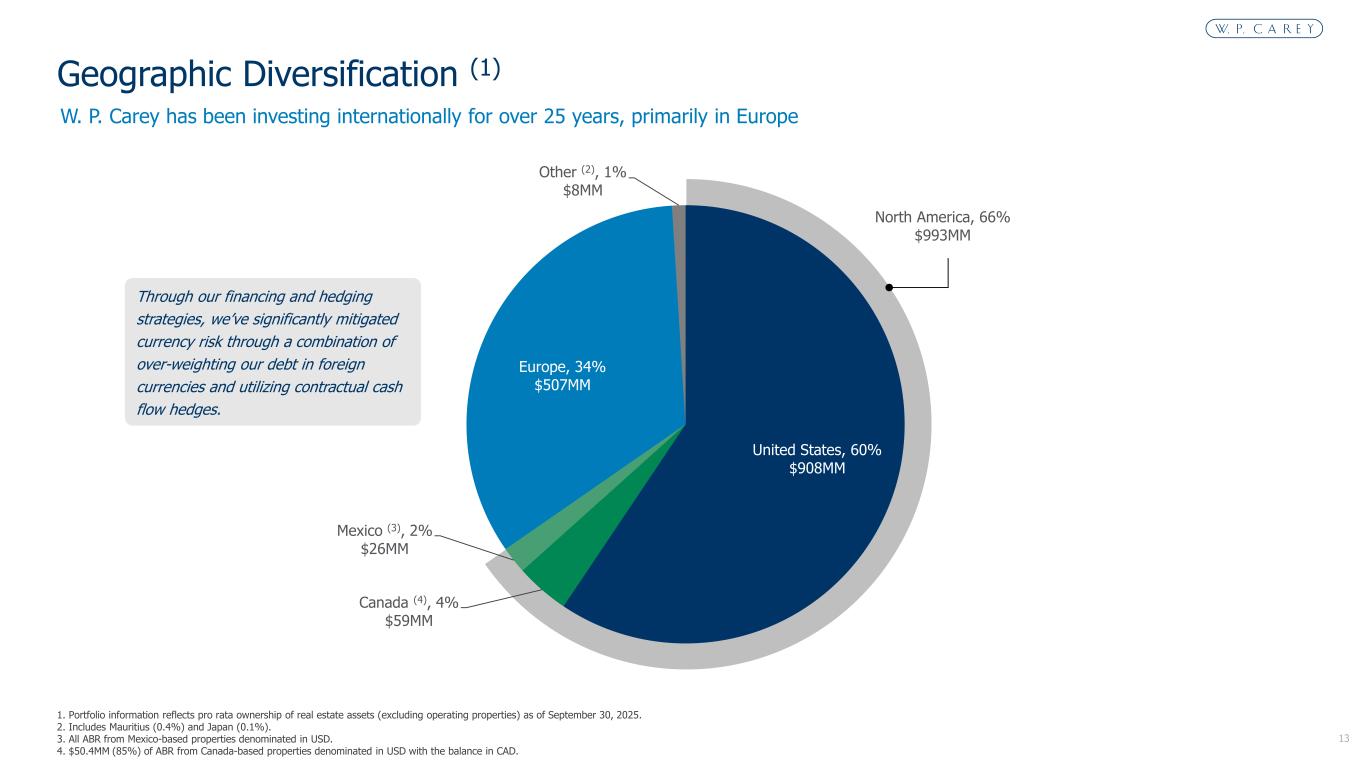
Yeah, sure. I mean, Over the, you know, last couple years, cap rates, obviously it's a pretty wide range depending on, you know, a lot of the specifics of a transaction and in Europe geographies matter as well. But I think on average, you know, we've been roughly in line between the U.S. and Europe. You know, maybe this year we've seen a little bit of tightening in Europe. I would attribute that to rates, you know, stabilizing a little bit earlier there than over here. But it's also important to note, and I just mentioned it, that we can borrow meaningfully inside of where we can borrow in the U.S. So we're still generating better spreads in Europe. But, yeah, I think they're roughly in line. Maybe it's 25 basis points delta between the two.
Okay, great. And then can you just remind us of your hedging strategy and how movements in exchange rates impact AFF for share? And then if you have any thoughts or indications on the impact positively or negatively in 2026.
Sure. Tony, do you want to cover that?
Yeah, I think just a big picture in terms of our strategy, we continue to hedge our European cash flows. First, naturally, we do that with our expenses. So if you think about our interest expense, the denominator in euro and certain of our other property expenses, that really reduces our gross AFFO currency exposure to less than 20% of AFFO for the euro before hedging. So, you know, if we focus on that, we've implemented a cash flow hedging program beyond that to further reduce our exposure on the vast majority of the remaining net cash flows. So, really, material movements in the currencies are really not expected to have an impact on AFFO, positive or negative. I'd say over the course of this entire year, we saw pretty meaningful movements in the euro, and that, you know, maybe added about two cents to our total AFFO this year relative to where we started the year from an expectation standpoint. You know, I wouldn't want to go as far as to predict what next year would look like from an FX rate and movements there. I would just say that our strategy should continue to be effective from a hedging standpoint so that we wouldn't see any material movement to the bottom line from an AFFO perspective.
Operator
I appreciate it. Thank you for the time.
Operator
Next question comes from Daniel Bayan with Bank of America. Please state your question.
I appreciate the update on your potential rent loss forecast. I was wondering if you could touch on how that compares historically for your portfolio and whether it's more weighted towards Europe or the U.S.
Operator
Hey, Brooks, do you want to take that?
So, you know, as Tony mentioned, with respect to the rent loss forecast, you know, there's a degree of caution embedded in that. We've continuously brought that down throughout the year. You know, I think in terms of a good way to think about credit loss in any given year, as we've discussed in the past, kind of the spread between our contractual and comprehensive same store, you know, that number will move around. But we expect that on average to be something like 100 basis points for a round number. you know, we think out of that 100 basis points, about 30 to 50 could relate to credit with the balance being other kind of portfolio activity. So that kind of 30-ish basis points is a good kind of average credit loss assumption. And that matches up closely to what our actual data suggests from the last 20 plus years. So, you know, that's kind of a good rule of thumb. Again, that's going to move around in any given period. But that has been our history. With respect to geographic concentration, I don't have that data directly in front of me, but I would expect that to broadly track our overall portfolio ABR allocation of kind of two-thirds U.S.
Thank you. I guess for my second question, I think you just mentioned that escalators are trending in the high twos. Which sectors delivered the strongest front escalations in Q3? and where you're seeing pressure, if any.
Yeah, Tony, I don't know if you have any details around that.
This is on the new deals you're referencing?
Oh, on new deals? Let me take that out that you mentioned in the same store growth as a portfolio. I mean, most of what we've been doing this year has been industrial, and that's a mix of both manufacturing and warehouse. And I think one of the maybe drivers of our ability to achieve, you know, higher negotiated rent bumps within these leases is the fact that, you know, it's in an asset class that, you know, the market for those assets tends to have higher expected, you know, market rent growth compared to say retail, where a lot of those leases, especially with the investment grade retailers, they tend to be flat. And if they're not flat, you see them in maybe the one to 2% range on average. So yeah, there is a bit of a driver behind the mix that more of what we're doing is industrial.
Operator
So yeah, I think that's a team.
Operator
Got it. Thank you.
Operator
Thank you. And a reminder to the audience, to ask a question, press star one on your phones now.
Operator
Once again, to ask a question, press star one on your phones now. And our next question comes from Ryan Caviola with Green Street.
Operator
Please state your question.
Oh, good morning, everyone.
With acquisitions in the quarter across Europe, Canada, and Mexico. Could you provide any color on international competition? And has any of the private capital that has entered the net lease space competed on international deals, or did they stay primarily in the U.S.? Thanks.
Yeah, sure. Yeah, Europe historically has been less crowded. You know, certainly there's, you know, there's not a, you know, many, if any, you know, pan-European, you know, public REIT. So it's more on the private side, and that's, you know, I would say we are seeing a little bit of competition pop up there. And, you know, much of those are, you know, U.S. funds that are looking to kind of enter in Europe. You know, it's probably worth noting that, you know, that's easier said than done. I mean, we've been on the ground in investing in Europe for over two and a half decades. I mentioned earlier that we have a team of over 50 people on the ground there across our London and Amsterdam offices. You know, we have deep relationships. We have a very good brand and track record across Europe. We know the various markets well. we also know how to optimize leases and tax structures and have scale and all that stuff matters. So, you know, we have our advantages over there. You know, that said, even with a little bit more competition, it's still a big fragmented market. I think activity levels are increasing with more opportunities opening up. So, we still feel good about our prospects for more deal volume in Europe. Thanks. Appreciate that.
And then just kind of going back to the U.S. I know there's been more of a focus on industrial on the acquisition front, but I did notice dollar general assets have been consistent additions to the portfolio the last few quarters and then that larger deal in the fourth quarter of last year. Now they're top 2010. And could you just update us on that relationship and how you feel about the dollar store space in general and how much you'd like to grow that?
Yeah, sure. I mean, we do have a relationship with the company itself as a good-sized landlord now, those deals, and I think pretty much all or most Dollar General deals that are traded in the market come through the development pipeline. So we have relationships with a, you know, most of our deals that came through were from developers that were recently built stores. And, you know, I think we've been opportunistic there. The, you know, Dollar General, you know, took a little bit of a credit hit, you know, mid last year when they reported on lower growth expectations and their near stock price went down but you know we took advantage of that I think a lot of our peers are pretty full on dollar general maybe dollar stores more broadly so I look at it as opportunistic pricing and we've been in a layer in you know a really good credit good concept you know long leases and so you know would we do a lot I don't know. I mean, they're top 20 now. Could they enter our top 10 at some point, perhaps? But it's going to be more opportunistic based on pricing.
Operator
Thanks. Appreciate the color.
Operator
Yeah, you're welcome.
Operator
Thank you, Ann. Your next question comes from Jim Kammer with Evercore ISI. Please state your question.
Good morning. Thank you. Are you able to provide any sort of visibility or details regarding, say, the 26 and 27 lease expirations? I'm just curious about maybe what percentage of that is kind of being actively discussed with the tenants today, if you will, versus, you know, letting it run to the last moment.
Yeah, sure. Brooks, you want to take that?
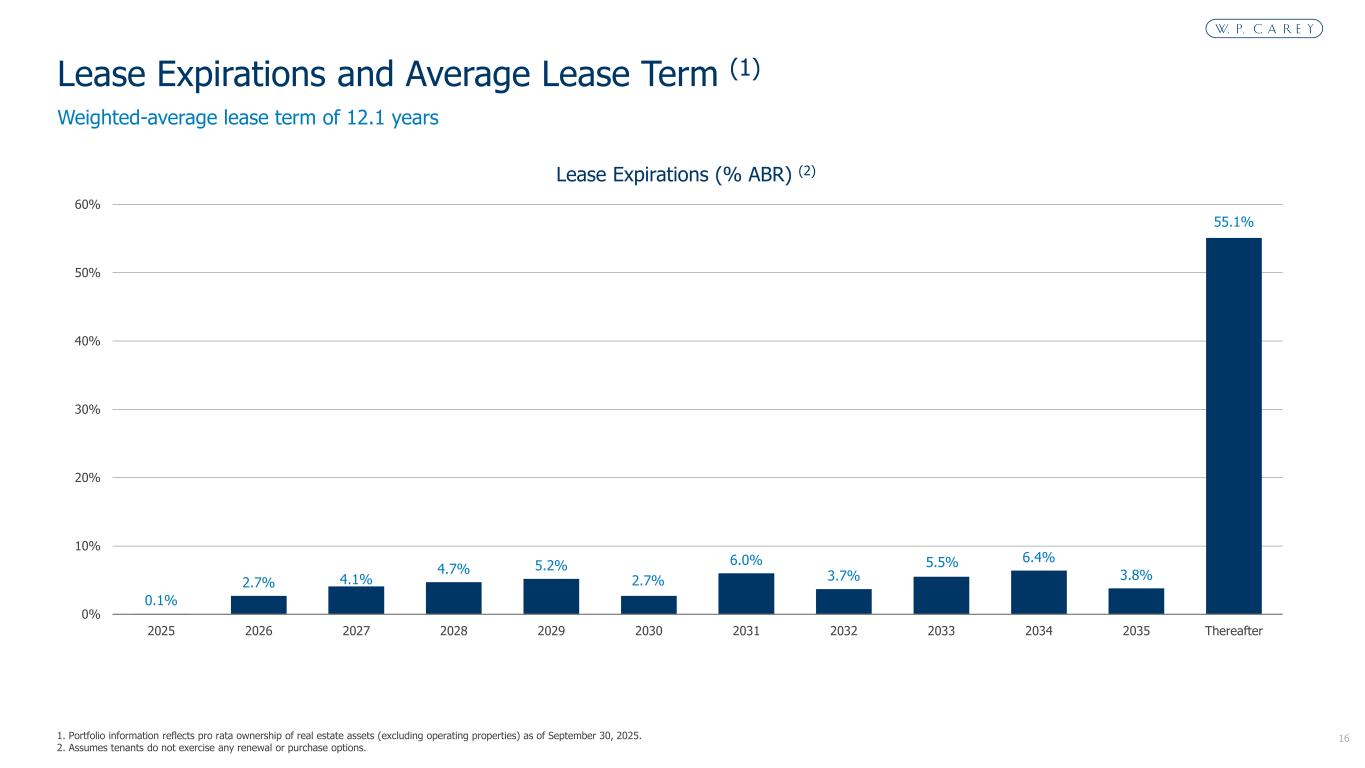
Yeah, so virtually all, if not all, of the 2026 and 2027 expiring ADR is actively being worked on. You know, our general process is that three to five years out, we're really engaging with and strategizing, and then, you know, three-ish years out, really engaging with tenants. So virtually all that's active. 2026 is a pretty manageable year, 2.7% of ABR expiring, and so we're working on virtually all that.
Great, and you can kind of tease out as a related question. And just looking at the average, you know, ABR per square foot seems like a little lower in 26 versus 27. But I'm just trying to think about the organic. Is there any tilting towards industrial or retail across those next two years or getting too granular here?
Well, both years have reasonably similar breakdown in terms of property types. They're call it 60 percent warehouse and industrial. You know, in 2026, we have, you know, a couple warehouses which we expect to be able to put new tenants in at much higher rents. These are very high-quality warehouses in the Lehigh Valley where rents are, call it, 40% or 50% below market. So, you know, we're working on those actively. You know, the others, often tenants have renewal options at continuing rent, so we don't necessarily always get a true mark-to-market opportunity. But so it'll be a mix. But, you know, I think we think it's a very manageable year with some, you know, some opportunities to push rent.
Operator
Appreciate the time.
Operator
Thank you. And at this time, I am not showing any further questions. I'll now hand the call back to Mr. Sands.
Thank you. And thank you, everyone, for joining us and your interest in WP Carey. If anybody has additional questions, please call Investor Relations directly at 212-492-1110. And that concludes today's call. You may now disconnect.