Operator
Thank you for standing by. Welcome to the WSFS Financial Corporation First Quarter 2025 Earnings Call. All lines have been placed on mute to prevent any background noise. After the speaker's remarks, there will be a question and answer session. If you would like to ask a question during this time, simply press a star followed by the number 1 on your telephone keypad. If you would like to withdraw your question, please press a star 1 again. Thank you. I'd now like to turn the call over to David Berg, Chief Financial Officer. Sir, you may begin.
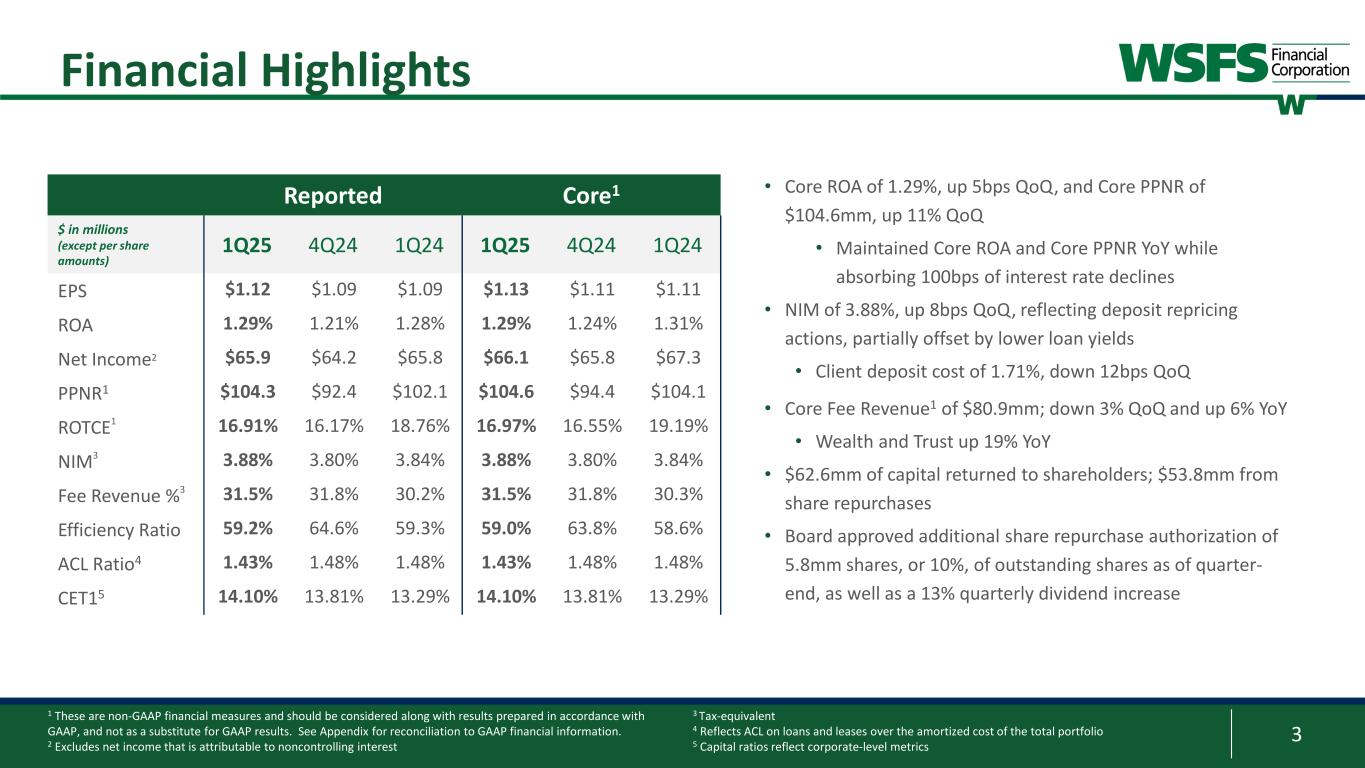
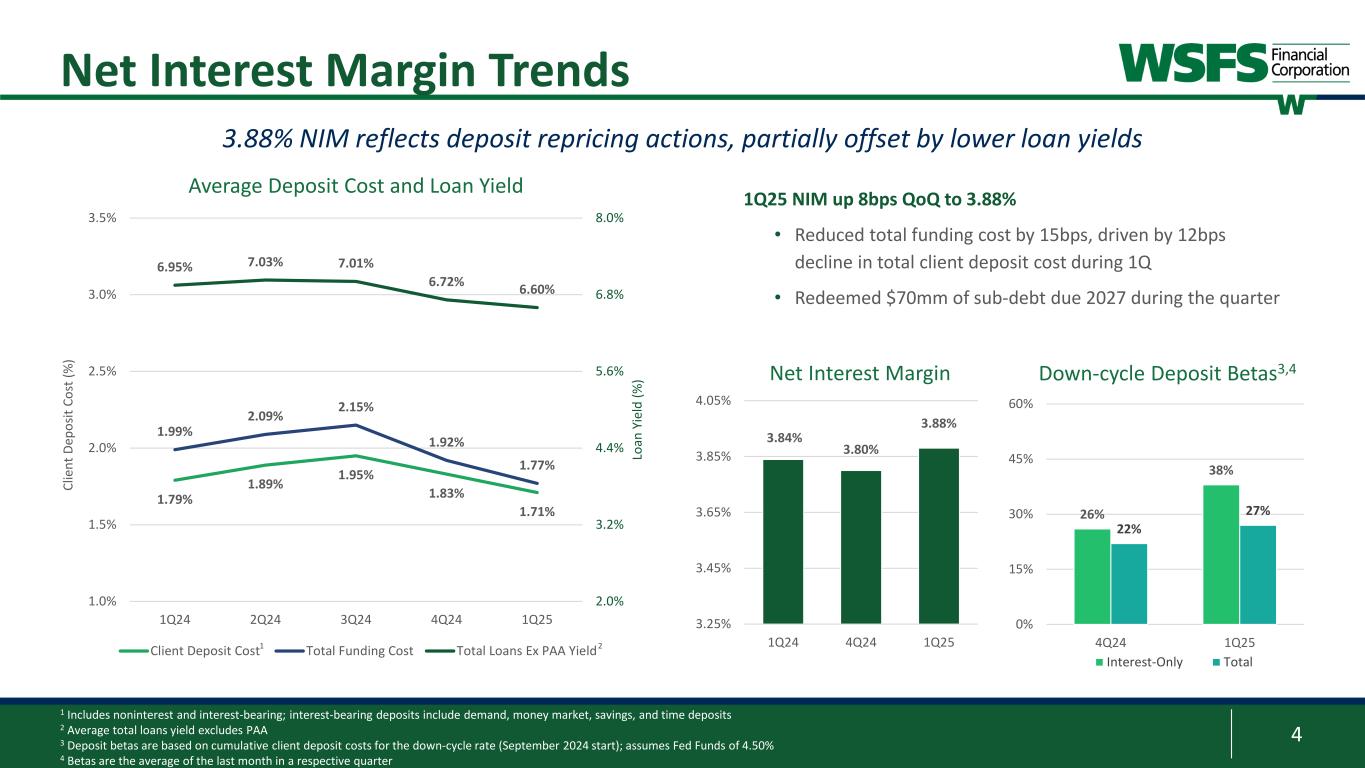
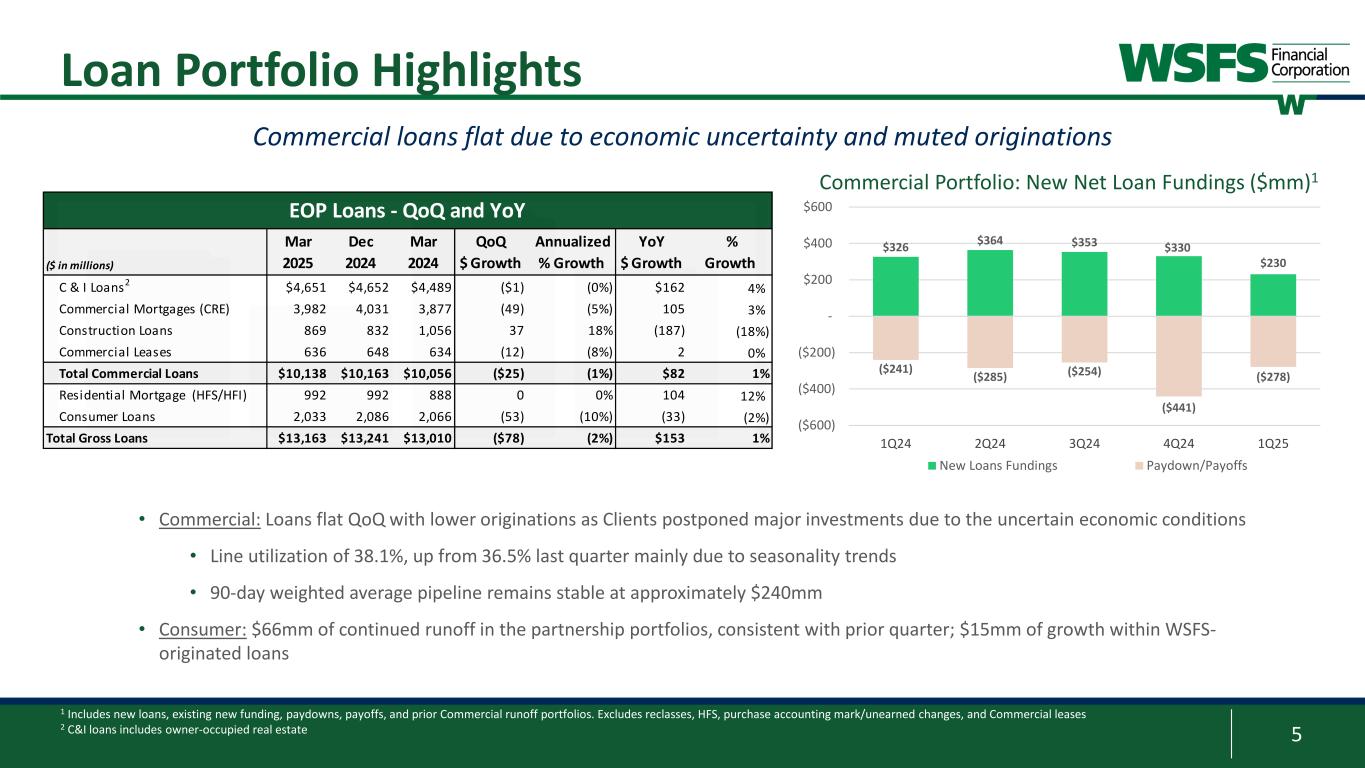
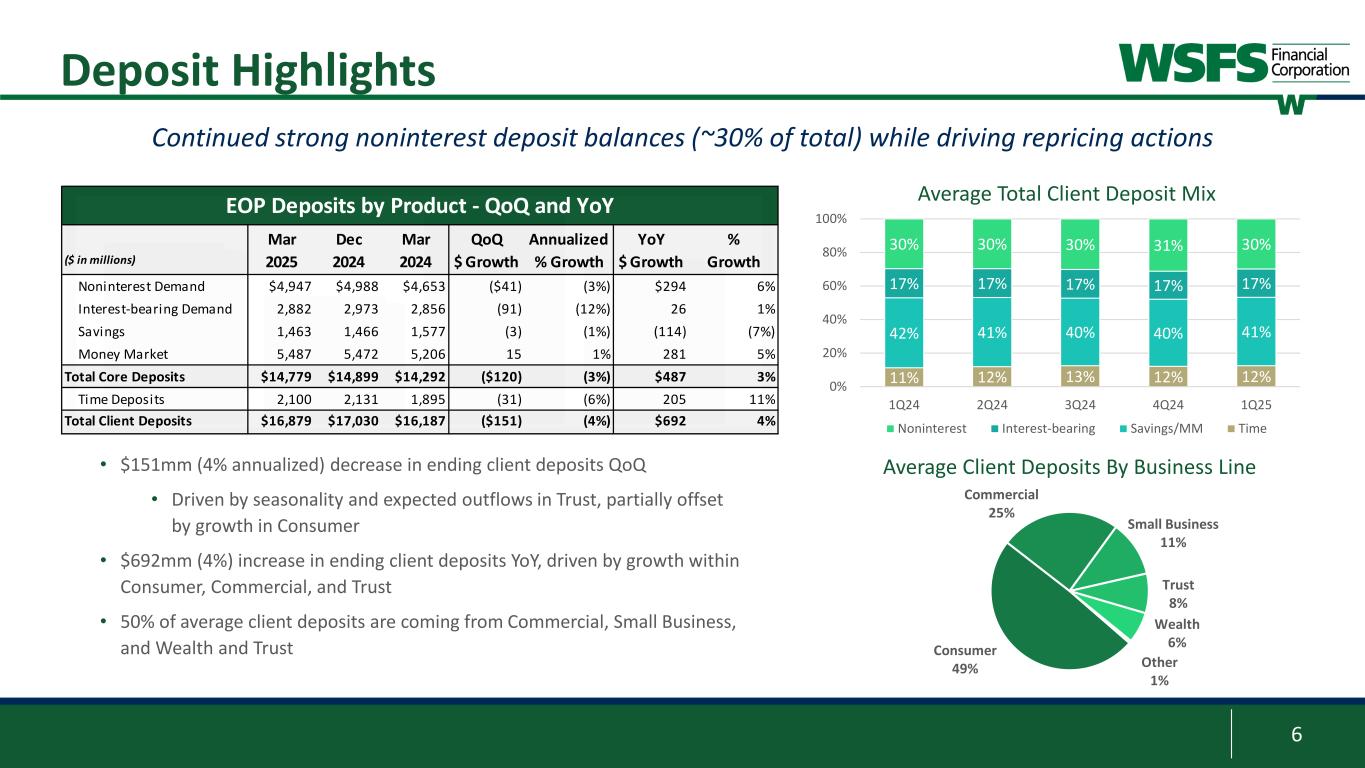
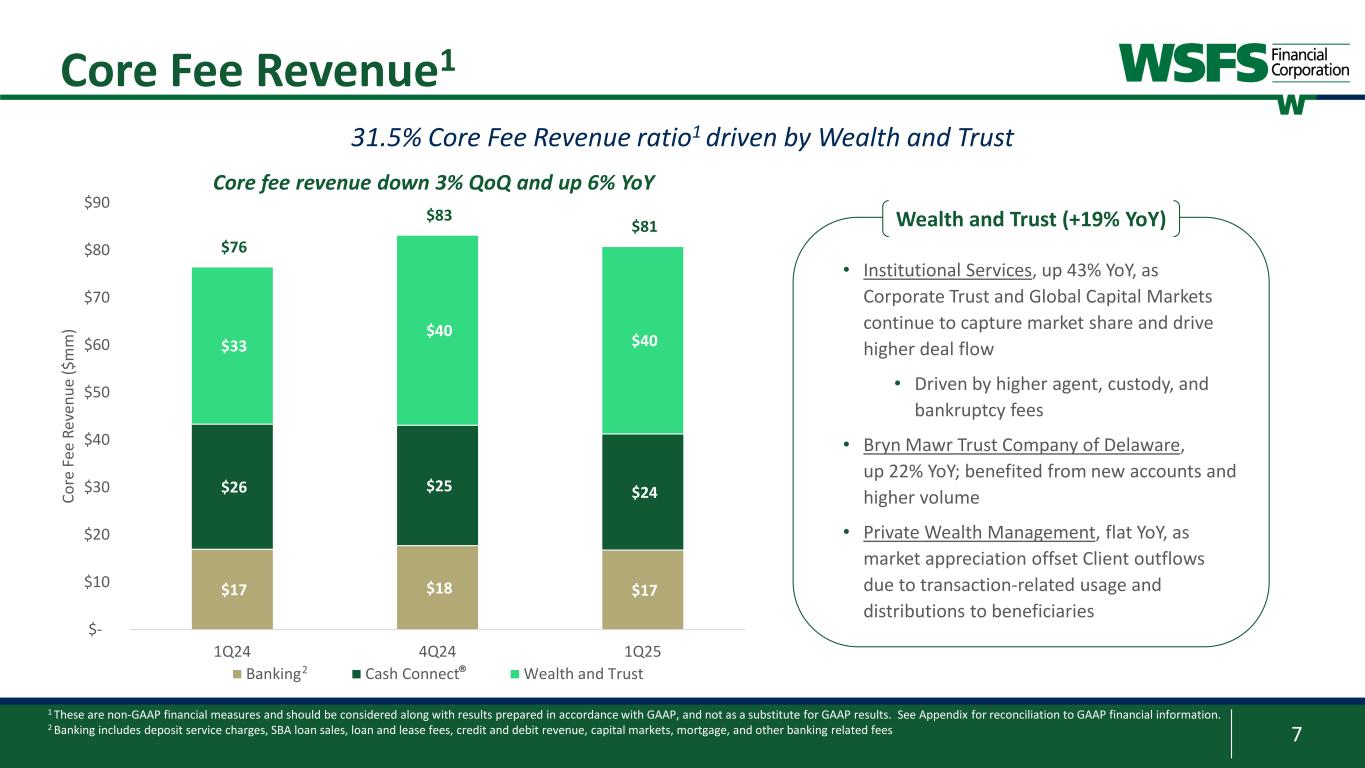
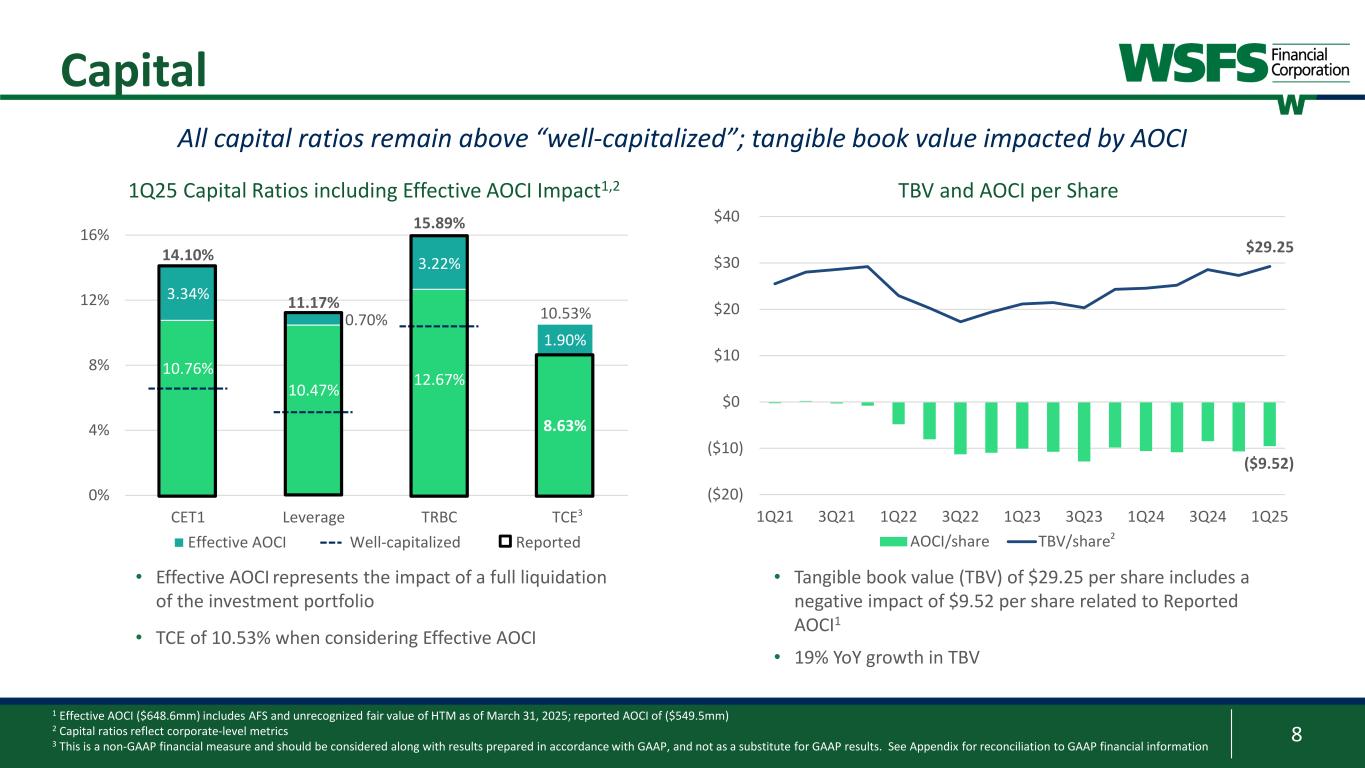
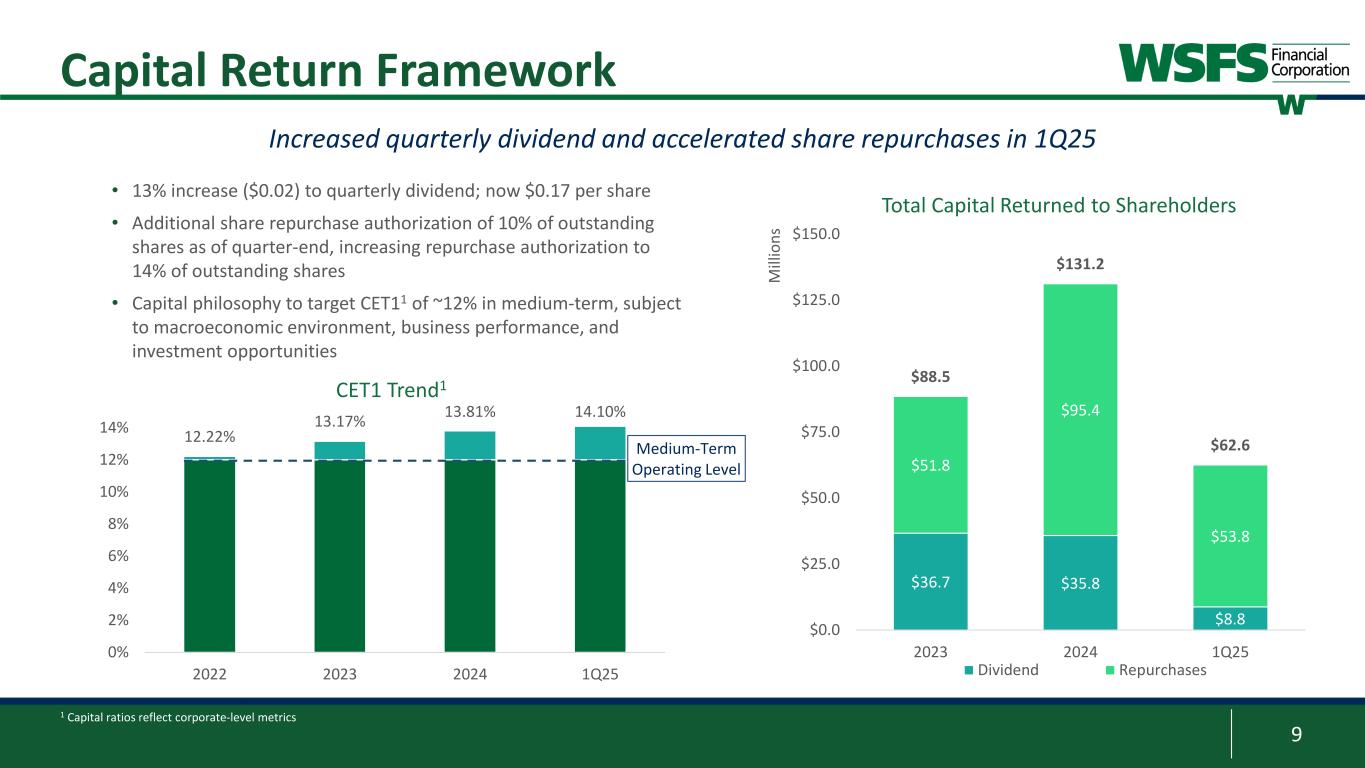
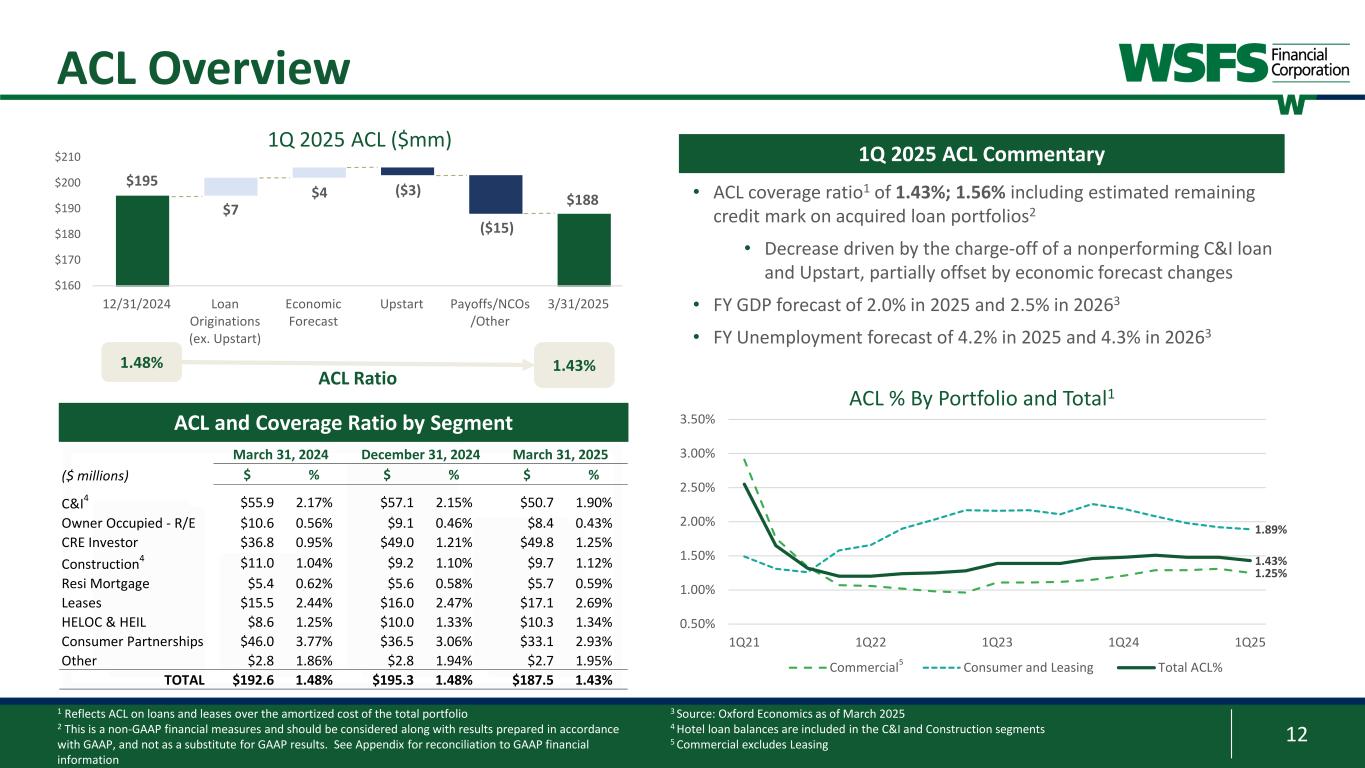
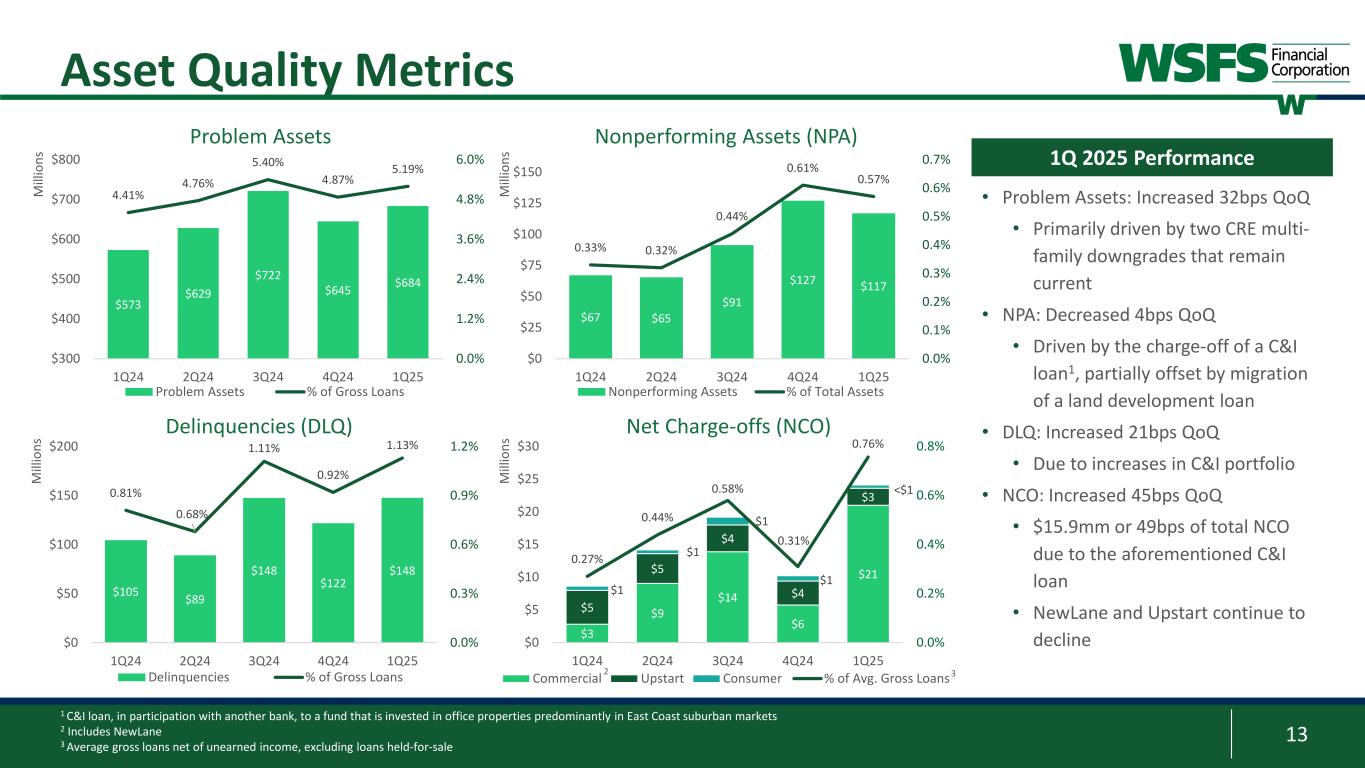
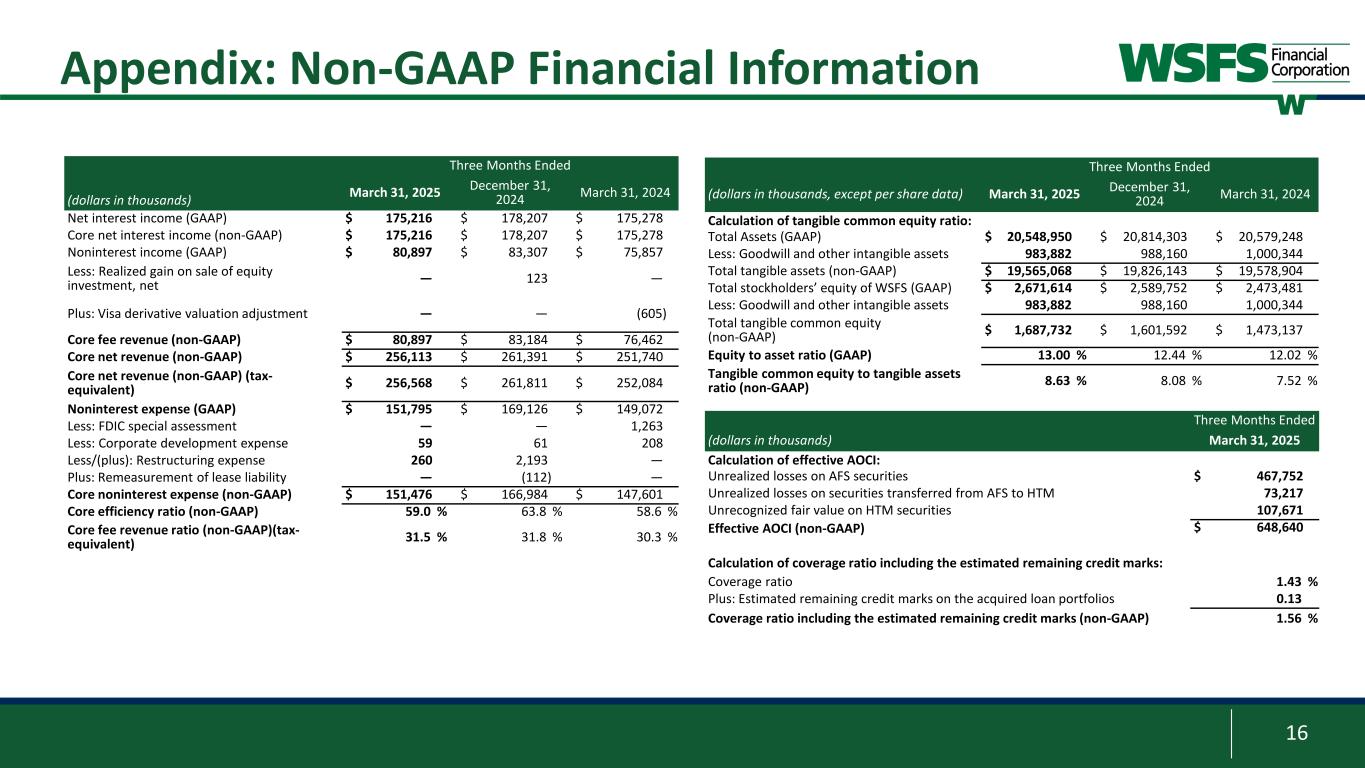
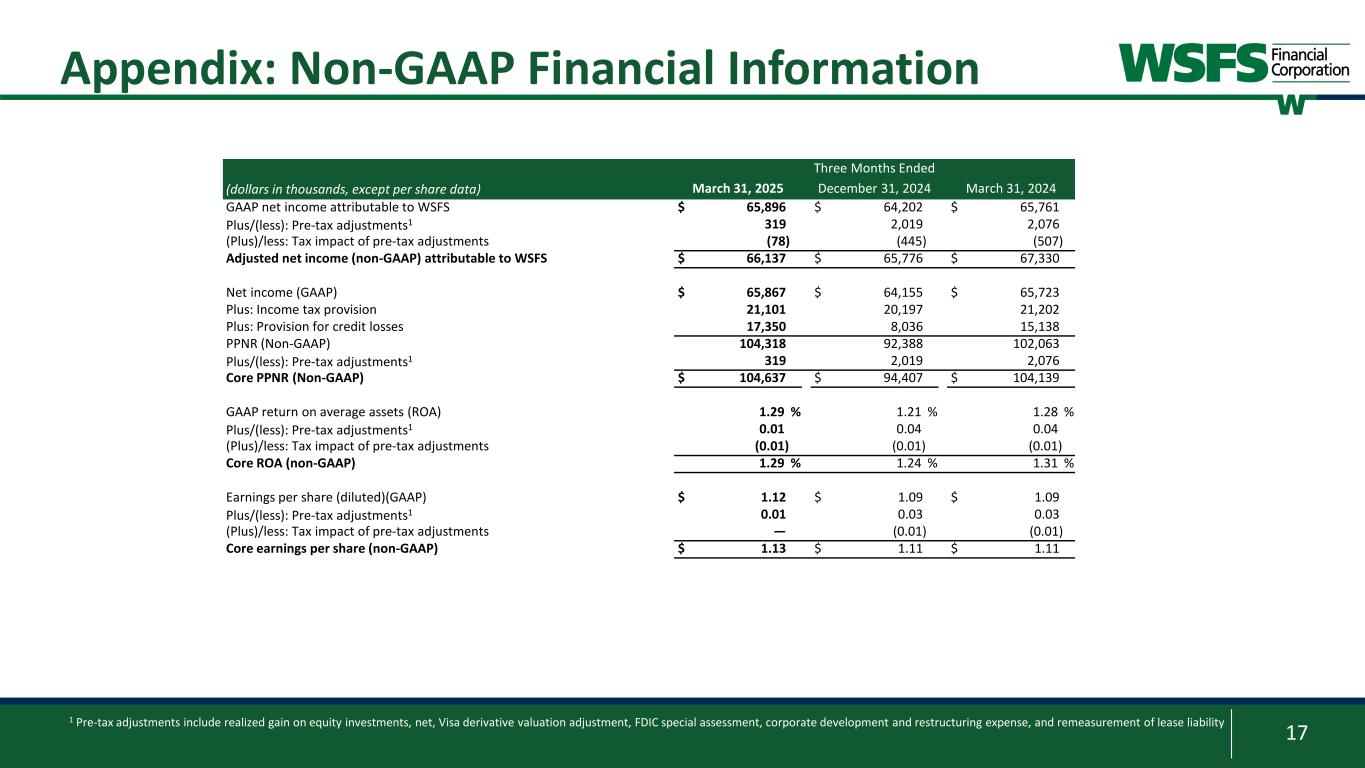
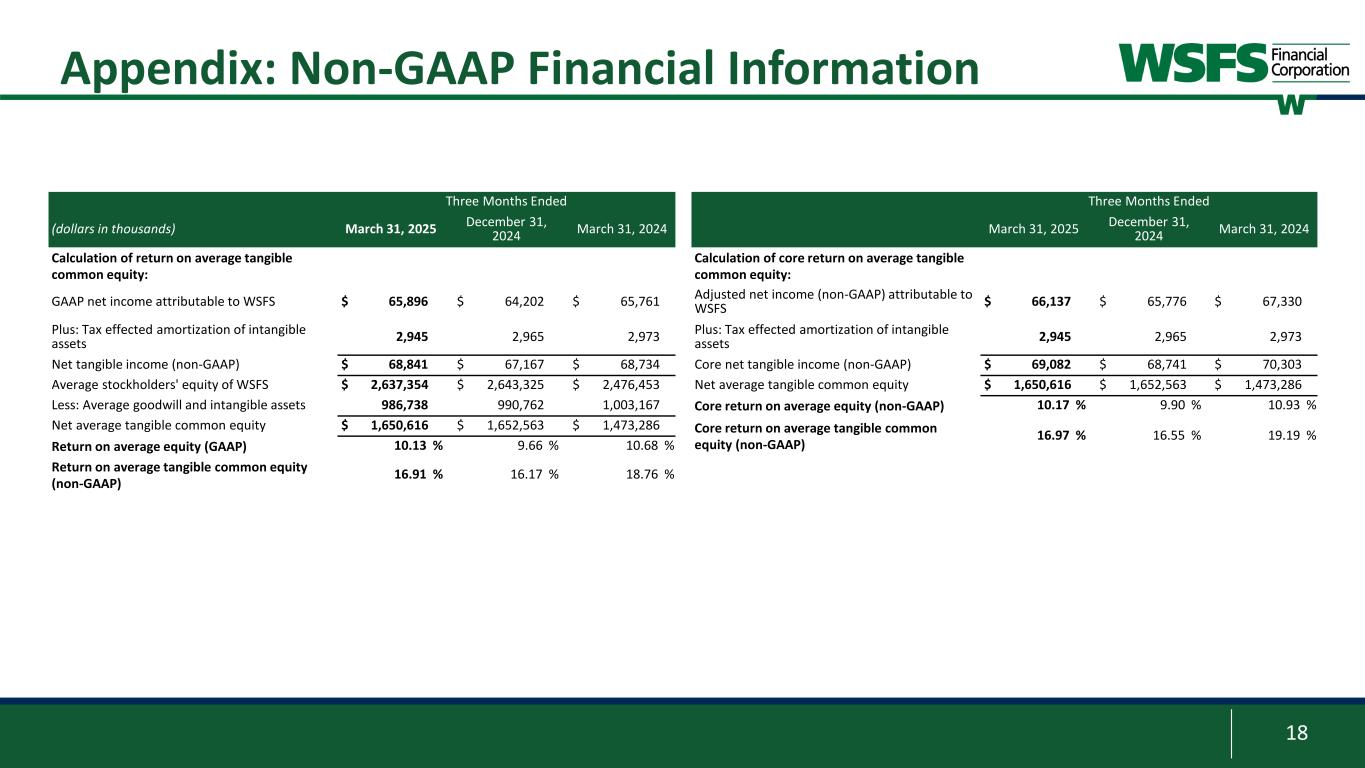
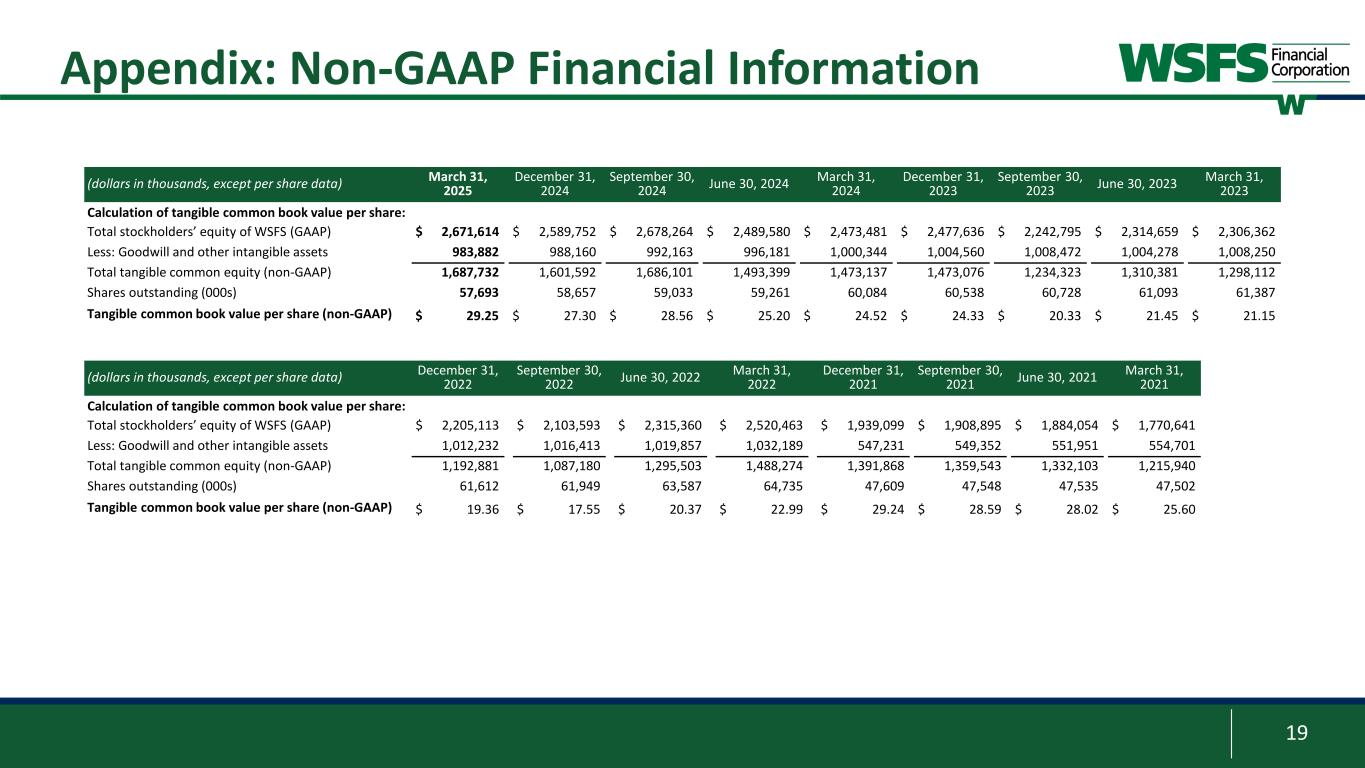
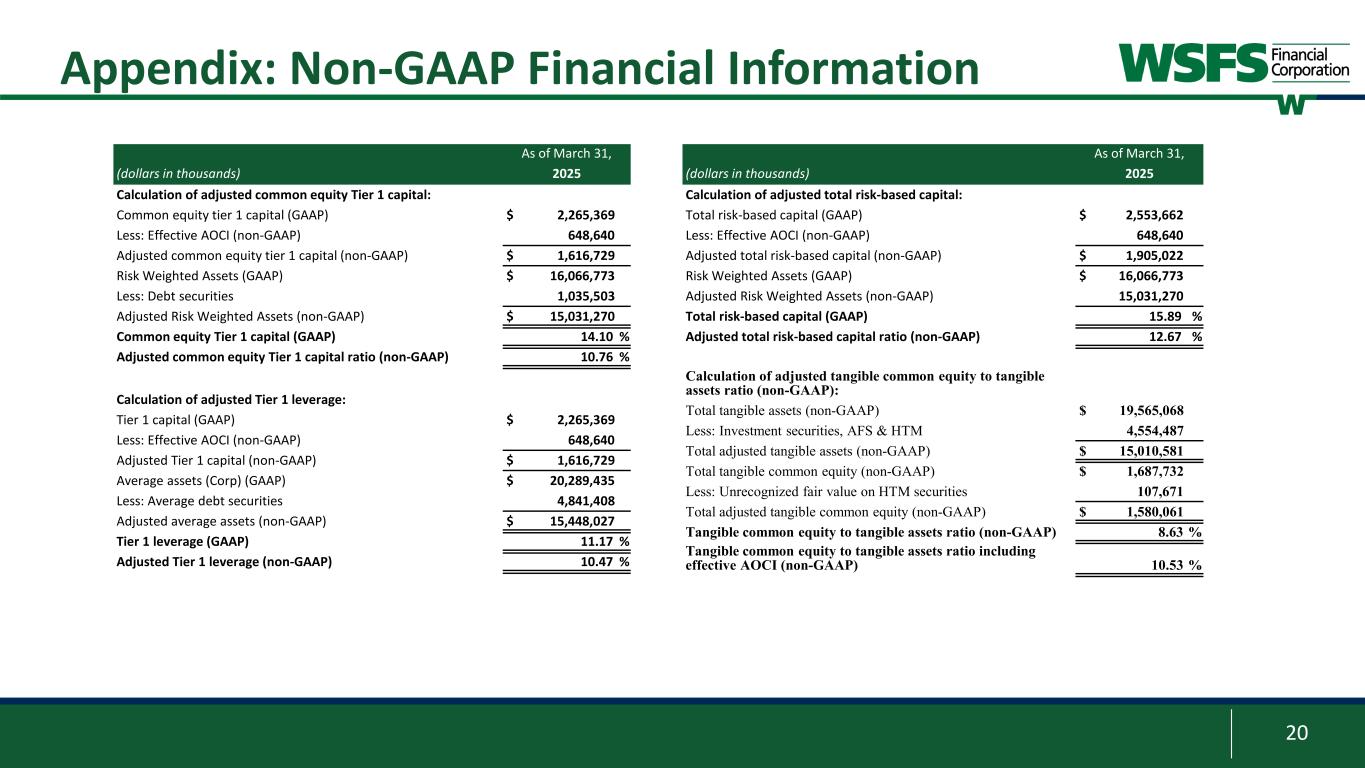
Okay, thank you very much, Operator. Good afternoon, everyone, and thank you for joining our first quarter 2025 earnings call. Our earnings release and earnings release supplement, which we will refer to on today's call, can be found in the investor relations section of our company website. With me on this call is Roger Levinson, our Chairman, President, and CEO. Prior to reviewing our financial results, I would like to read our safe harbor statement. Our discussion today will include information of our management's view of our future expectations, plans, and prospects that constitute forward-looking statements. Actual results may differ materially from historical results or those indicated by these forward-looking statements due to risks and uncertainties including, but not limited to, the risk factors included in an annual report on Form 10-K and the most recent quarterly reports on Form 10-Q, as well as other documents will periodically file with the Securities and Exchange Commission. All comments made during today's call are subject to the safe harbor statement. I will now turn to our financial results. WSF has had a solid start to 2025, continuing to demonstrate the strength of our franchise and diverse business model. Our first quarter results included a core earnings per share of $1.13, core ROA of 1.29%, core PPNR of 104.6 million, and core return on tangible common equity of 16.97%. All of these metrics represented improvements from the prior quarter. Core net interest margin expanded 8 basis points to 3.88%. This reflects a reduction in total funding costs of 15 basis points to 1.77%. Our funding costs benefited from a 12 basis points reduction in total deposit costs from our repricing actions, as well as the redemption of $70 million in higher price sub-debt. On a year-over-year basis, our net interest margin expanded by four basis points despite absorbing 100 basis points of interest rate cuts. Our total deposit cost was 1.71%, with an interest-bearing deposit beta of 38%. Corfee revenue grew 6% year-over-year, powered by Wealth & Trust, which grew 19%. Institutional Services and the Bryn Mawr Trust Company of Delaware both delivered very strong year-over-year growth by driving higher deal flow. As a reminder, Institutional Services provides trustee and agent services on securitization, debt issuance, and corporate bankruptcy transaction, and the business continues to win market share in these areas. While Cash Connect fees declined quarter-over-quarter due to seasonally lower volumes and the impact of lower interest rates, the business delivered higher profit margins through expense and pricing offsets. The core efficiency ratio was 59% this quarter, as expenses declined by 9% quarter to quarter from seasonally high 4Q levels, and were also impacted by some one-timers in this quarter. Gross loans were down less than 1% in the quarter. Commercial loans were generally flat in the quarter, and originations were more muted as clients postponed investments due to the uncertainty in the macroeconomic environment. Our pipeline is at the same level as the past several quarters, and we continue to be actively engaged with our clients as they navigate the current environment. Client deposits declined 1% link order, primarily due to seasonality and expected outflows in trust. Client deposits are up 4% year-over-year, driven by broad-based growth across business lines. Non-interest-bearing deposits continue to be strong, and we're up 6% year-over-year. Our loan-to-deposit ratio remained at 77% and continues to provide ample balance sheet flexibility and capacity to fund future growth. Our total net credit costs were $17.6 million, an increase of $8.9 million from the previous quarter, and our net charge-offs were at $24.6 million. The increase in credit costs and charge-offs was driven by a $15.9 million charge-off of previously identified non-performing office related CNI loan. This loan was acquired as part of the Bryn Mawr Trust acquisition and we don't have similar loans in our portfolio. Excluding this loan, we recorded net charge drops of 27 basis points and 19 basis points without Upstart, which continued to show a decline in losses. Our ACL coverage ratio ended the quarter at 1.43%, which included a small upward adjustment to reflect the recent macro volatility. We continue to monitor the overall environment and will make adjustments as needed going forward. Our capital ratios remain strong and significantly above all capitalized regulatory targets, with a CET1 of 14.1% and a TCE of 8.63%. During the first quarter, WSFIS returned $62.6 million of capital, including $53.8 million in buybacks and $8.8 million in dividends. Our buybacks for the first quarter are over 55% of the total buyback amount completed in 2024. Additionally, we announced a 13% increase in the quarterly dividend to $0.17 per share, along with an additional share repurchase authorization of 10% of our outstanding shares as of quarter end. This brings our total authorization to 14% of our outstanding shares as of the end of the quarter. As part of our annual capital grant process and has seen a slide nine of the earning supplement, we made an update to our capital philosophy where we will be targeting a CET1 ratio of 12% in the medium term. We will execute a gradual multi-year glide path to this target and retain discretion to adjust the pace of buybacks based on the macroeconomic environment, our business performance, as well as potential investment opportunities. Overall, we're pleased with these results to start the year in a difficult macro environment. As part of a normal process, we will provide an updated full-year outlook when we present our 2Q results. We remain committed to delivering high performance and will now open the line for any questions.
Operator
Thank you. We will now begin the question and answer session. If you have dialed in and would like to ask a question, simply press the star 1 on your telephone keypad to raise your hand and join the queue. If you would like to withdraw your question, simply press a star one again. And your first question comes from the line of Russell Gunther with Stevens. Please go ahead.
Hey, good afternoon, guys. Hey, Russell. Hey, Roger. Hey, you guys may have just addressed this, but I know you don't typically give the updated guide until mid-year. It sounds like that's still the plan. I was surprised, though, with the lack of the guidance slides still in the deck. So, you know, as we wait for an update, is there anything to read into any decrease in visibility on the PP&R credit quality front as to why that may not have been in the deck this quarter?
No, Russell, nothing to read into that. You know, typically, as our usual pattern, we will update the guidance, you know, after the second quarter. We don't like to give guidance every quarter or update the guidance, you know, because obviously it's early in the year. and also you can see how volatile the environment is. So I think it's probably more meaningful to give that update after the second quarter, and that's what we'll do. So nothing to read into from that.
I appreciate you taking that question. And then maybe on the net charge off front, and again, I'm not sure what you can say as we await a mid-quarter update or mid-year update, but obviously the one isolated or idiosyncratic credit this quarter pushed you outside of that 35 to 45 basis point guide from the end of the year, does that set you up to reiterate that kind of expectation? Is 35 to 45 still the right way to think about it? Obviously, a lot of increased volatility since that was given. But how should we think about the puts and takes there from a charge-off perspective?
Yeah, Russell, I would say, again, that loan, you know as you alluded to previously identified obviously a one-off item you know as i mentioned in the earlier remarks it was an acquired loan and we don't have another one like that in the portfolio um if you exclude that you know we're about 27 basis points of net charge off so if you exclude that one-time loan um some of the other you know all the other portfolios are behaving you know in line with expectation um some of the places where we've had elevated charge-offs before in terms of upstart, new lane, those continue to decline quarter over quarter and are both below $3 million this quarter. So I think that continues to be a positive story. So I would say other than that, there's really nothing that we're seeing that would cause concern. And I think the portfolio is behaving generally as expected. Thanks, David.
And then just last one for me, if I could please on the expense line, you know, could you give us a sense for how 1Q kind of shapes up relative to the run rate going forward? I know there was some seasonality in Cash Connect. Maybe you could address what I think was a $1.9 million non-recurring Cash Connect item as well. Just how you, again, fold all that together and what we should think about expenses in the coming quarter.
Yeah, absolutely happy to. Yeah, there are a few puts and takes, as you said. Cash Connect, we did have the $1.9 million quarter-over-quarter variance as you mentioned also you know volumes are a bit down this quarter and because of interest rates as you know the top line and cash kind of comes down so you know as you know when you look at cash connect the expenses are very closely correlated to the revenue so when you look at quarter-over-quarter we had about a five million dollar decline due to cash connect including that one million one-time item that you mentioned I would say other than that, we did have kind of a one time item related to incentive accruals this quarter for about $4 million. That just corresponds to our annual, you know, the first quarter we go through our annual review process and and, you know, true up our incentive accruals. So we did have a reversal of $4 million there and, you know, like you said, fourth quarter was seasonally higher with some legal expenses and typical kind of year-end things. So in terms of run rate, you know, I would say this quarter was lower than a run rate quarter. I would say probably 4 million one-timer and maybe 4 million else of timing items. So the run rate is kind of in between, you know, the fourth quarter and this quarter.
You know, we're about 152 million this quarter again there's probably four million of a one-timer and four million of timing items so the run rate is you know that 160 range between the two quarters okay that's very helpful david thank you very much i'll step back yeah thanks russell and your next question comes from the line of frank scheraldi with piper sandler please go ahead hi guys good afternoon just just Just on the – and recognizing that you're not updating Guide until July, you know, just in terms of broad thoughts here on commercial growth, at least in the near term, I guess, over the coming months, just given the macro uncertainty and what we saw in the first quarter.
Yeah, Frank, I would tell you, as I'm out and about with our customers, and as David mentioned, you know, in his remarks, you know, we're seeing customers performing well or, you know, kind of hanging in there, but very cautious around expansion or change because of the volatility and kind of unevenness that's been in the markets. So, you know, we've had a number of situations where we had approved deals and for business expansion or adding a building or things like that. And the customer just called us and said, I'm just going to sit tight for at least 60, 90 days till I get a better visibility. And that's been the tone of the conversations I've had with a lot of our borrowers. So, as David said, the pipeline remains, you know, at consistent levels. we're seeing opportunities take market share but whenever you go through a period of disruption like we've seen over the last couple of months changing banks or adding to existing facilities that kind of stuff gets impacted hopefully as some of the you know the near-term outlook gets a little bit clearer some of that volatility will be reduced and that should hopefully accrue to our benefit and our customers benefit great okay appreciate roger and then um just in terms of uh either problem loans or or delinquent increased delinquencies which i think came on the cni side
any sort of common threads there or or commentary around that link quarter no frank i would just say you know like you like you mentioned um you know the fourth quarter um both of those metrics came down um came up a bit in the first quarter similar to the levels that we saw in the third quarter so there's some you know there's some ins and outs there but um as we look at that delinquency increase um you know there are no you know large loan increases there uh the largest one was five million so it's pretty and there's not a there's not kind of a pattern of a particular vertical or sector. So I would say no kind of red flags go up from looking at that. And obviously, we continue to manage that closely, continue to be very, very closely engaged with our clients in those situations.
Got it. And then, and recognizing that rate moves are going to impact business on both revenues and expenses, if we get some more rate cuts in the back half of the year, should that really have an impact on overall returns at Cash Connect? And kind of what are you thinking in terms of ROA here as we progress through the year on that business specifically?
Yeah, yeah. So on Cash Connect, you know, as you as you refer to, obviously, our focus has been on driving the profitability, you know, in the ROI of that business. Primarily, we're focused on looking at the profitability. And as you can see, you know, the profitability came in a bit above 7%, which is an improvement year over year and quarter over quarter when you normalize for that one time client event. So it is moving in the right direction, but there's more work to do, and we continue to want to drive it higher. With respect to interest rates, interest rates are going to impact the top line of cash connect with an offsetting benefit and expenses. So it does actually improve profitability, and you can think of it at about $400,000 per rate cut on an annualized basis is kind of the profitability improvement from rates. So when you think about the overall profitability equation of Cash Connect, there are a few things that are going on. One is rates, which is accretive. Volumes have been – this is a seasonally low volume quarter, and volumes have been a bit softer in general, so volumes have been a bit of a headwind. But to offset that, we're trying to implement some pricing increase. We actually implemented a pricing increase this quarter, which leverages some of the scale that we have in the market, which fell to the bottom line. And so I think some of those efforts are beginning to bear fruit to offset some of the headwinds that we're seeing with the goal of continuing to drive the profit margin. So, you know, I do expect that business, I do expect that profit margin, you know, to continue to go up with, you know, again, maybe have some volatility quarter to quarter, but to continue to go up. And, you know, I do expect that ROA to be accretive to us.
Operator
Your next question comes from the line of Manuel Navas with DA Davidson. Please go ahead.
Given your strength in deposit betas, are there any updates to deposit beta expectations from here? And just kind of how does that impact your kind of near-term MIM expectations?
Yeah. Good afternoon. So on deposit betas, we had a goal of getting to 40%. Our guide was to get to 40% by the end of the year end, and we've exceeded the pace that we initially set out for ourselves because we basically got to 38% this quarter. So essentially, you know, we're there. We're going to continue to push higher. You know, I think we've squeezed a lot of the juice out of that and have done a good job in repricing. But I think we're going to continue, you know, to push higher to get some additional upside. But I would say, Manuel, with your broader question on net interest margin management, you know, there are a few things that I wanted to point out, which is there are a number of tools that we use to manage NIM. And deposit beta is obviously, you know, the big one, but there are other tools. And for example, we've really done some optimization around our wholesale funding in the last two quarters. We paid off a facility in the fourth quarter. We paid off sub-debt facility in the first quarter. So we've also reduced our wholesale funding, and we did that through cash, you know, through our deposit generation. You know, that's number one. Number two is the hedging program that we have. And just as a reminder, we have a billion and a half of floor options, notional, a billion and a half. Where we sit right now, about 500 million are in the money. And with every successive rate cut, more and more become in the money. so with another rate cut another 350 million hit the strike price the second rate cut another 250 and if we're in a scenario where we have you know three or four rate cuts basically all of that billion and a half will be in the money so every rate cut the impact to our nim of every rate cut is going to be lower as we go through you know through the cycle um and so so i think you know I think we are we do use all of those tools to mitigate net interest net interest margin kind of compression and you know I feel good about our ability to continue to do that.
And at the same time you're having flows that could go from securities in many quarters to loan growth and pick up there as well.
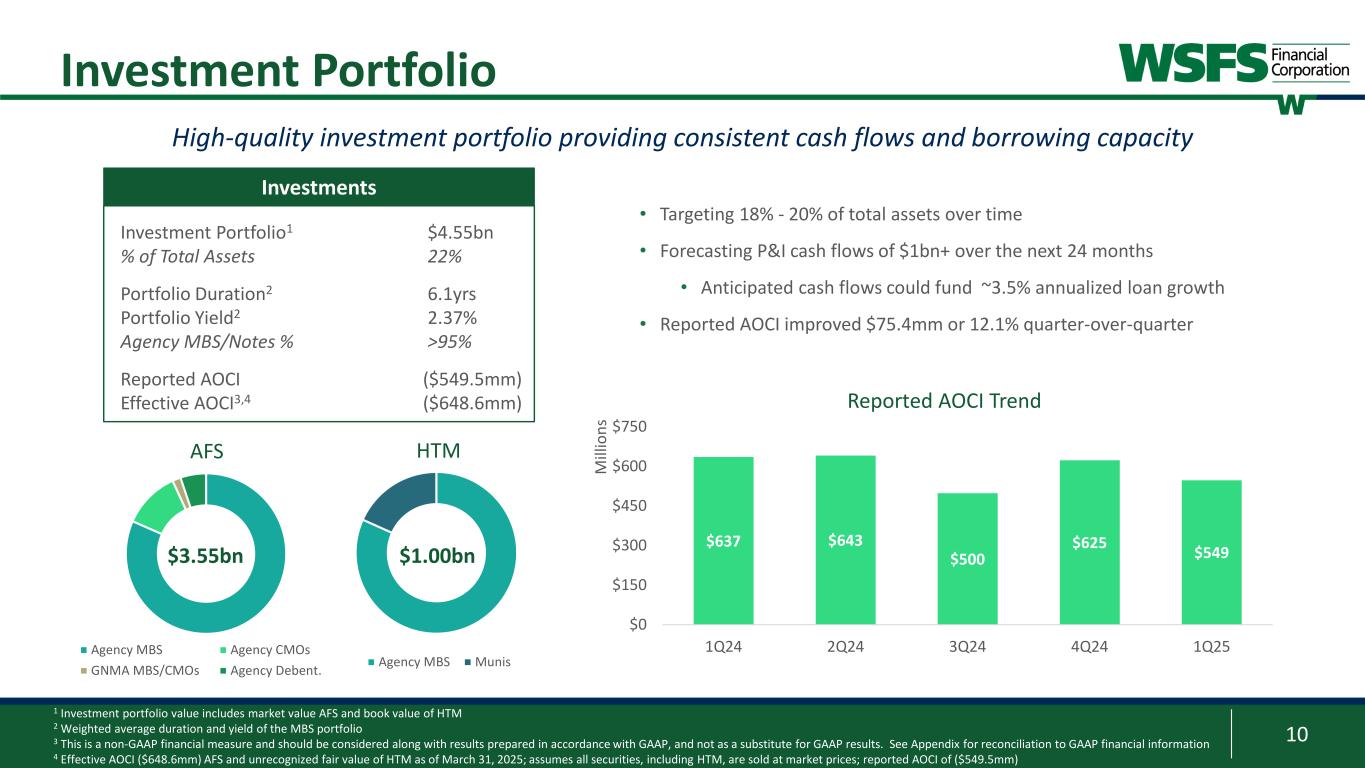
Exactly exactly you know our securities portfolio continues you know the yield is 2.37 this quarter whether we invest you know if we invest in loans at over six percent uh even if we invest in other securities at you know at high fours we're still picking up um you know meaningful amount of of upside there so i think that higher end staying longer provides another another lever you're absolutely right yeah and i would just add minimal as david said i i think we have opportunity on that deposit beta we obviously um got to our goal quicker than we thought but we continue to take actions um you know to drive that higher while maintaining deposit levels.
So I think there's some opportunity there, although it's clearly not as significant as what happened in the back half of last year.
That's really helpful. Just to shift topic a little bit, can we talk about the medium-term time frame on the 12% CET1 target? Is that kind of something you've been contemplating with your last three-year plan?
And how does that kind of compare with, I think you kind of talked about 50 percent total capital payout this year is that still the right level um there's a couple questions there but just thinking about the time frame and then about the 50 this year in terms of buyback preference yeah yeah yeah no gotcha let me try to address both of those um so in terms of the time frame for medium term i would think about it as a two to three year glide path um you know it's hard to be specific because it depends on um the macro environment obviously we want to be careful you know if there's deterioration uh also our business performance and any future investment so we want to retain discretion but think of it as a two to three year glide path uh and you know the way this developed is every at every point in the year at this time in the first quarter we go through a capital planning process where you know based on the fed scenarios we stress our balance sheet we stress our capital and we evaluate you know our capital position as you know we've built some capital over the last few years i think we feel good about our ability to perform you know under those stresses and we wanted to provide some clarity around what that medium term target can be um so you know we in the first quarter we obviously leaned into the buybacks because we thought it was a great opportunity and we returned about 95 of earnings in the first quarter. I don't want to give specific guidance for the rest of the year, but I think the intention of sharing that framework and the path of travel is that we clearly have the ability and want to lean into the buybacks. And so we're going to weigh all of the factors that we talked about, but if everything holds steady, I think we have an opportunity to do more and continue to lean in.
Citing the macro environment as something you're considering, where does that fit in terms of your desire to hit the pedal on buybacks?
Is right now the macro environment make you feel less likely to slow versus where you were in the first quarter? kind of just how how did where does where do you feel with the macro environment currently yeah i think again you know like you said we we leaned in in the first quarter i think we have you know we're very well capitalized at a 14 cut1 um and we feel you know we don't see anything at this point that um you know that would make us change our view um but we said macro environment because of course, we have to watch for further deterioration, but nothing specifically that we're seeing.
How does AOCI impact any of your thought process here? Obviously, you didn't even use it in the determination of this, but there's been swings of it either way. Just kind of initial thoughts on that.
Yeah, good question. On the AOCI, it is a secondary metric. We look at our TCE ratio, tangible common equity ratio which includes the aocis uh and you know even though the primary metric we're targeting is the ct1 the tc is a secondary metric that we also look at and so um you know obviously we take those swings into account um but as that portfolio you know as our overall securities portfolio has come down over the years and you know as you know that aocis has been getting just the, it throws off about 500 million of cash flow a year. The AOCI gets smaller kind of in the same percentage, you know, 8 to 10% a year. So if that becomes a smaller factor, you know, we think that TC is going to be kind of less of an important driver relative to CET1, but it's something we always look at as well.
Thank you. I appreciate the commentary.
Operator
Once again, if you would like to ask a question, seem to press a star one on your telephone keypad. And your next question comes from the line of Kelly Motta with KBW. Please go ahead.
Hi, good afternoon. Thanks for the question. I guess turning to just the loan side of things and the increased uncertainty, just wondering if you've done any, understanding this earlier, preliminary analysis on the portfolio that could be impacted by the new tariff policies. And if you're making, just in light of increased uncertainty, any changes to your underwriting or getting more incrementally more cautious on any areas. Interested to hear your thoughts. Thank you.
Yeah. Thanks, Kelly. It's Roger. So we have looked at the CNI book in particular, potential exposure to both the impact of the federal government contraction the doge projects and separately the tariffs and we looked at all those larger relationships at this point we haven't done anything yet because candidly everything seems to change so frequently it would be hard to change our underwriting criteria based on information that hasn't even really been implemented yet but we know the populations we're watching it we're in close contact you know with the with those clients um but nothing at this point to report in terms of any impact from a
credit or a credit underwriting standard got it that's that's super helpful and then and then just from a net growth perspective i understand that um 1q is kind of challenging across the board a lot of unknowns and you spoke of clients just hitting the pause on projects um what what do you think um needs to occur in order to kind of spur some net growth again is it is it on some greater certainty on some of these policy things just um just just time just trying to piece together kind of the thought process of where you know we could see some net growth picking up and what would have to occur in order to see that.
So, you know, you know, our loan book, it's, you know, primarily, you know, C&I businesses and real estate developers called up to 100, 150 million in annual revenue or projects, you know, things like that. And so there's, these are entrepreneurs. And I would tell you over many, many years, when there's certainty, Even if the certainty isn't all good news, at least if it's not good news, they know how to factor that into their business, and they will continue to move ahead. The challenge that borrowers are expressing to us now is they don't know how to factor it into their business because the numbers keep changing, particularly on the tariffs, and it's very hard then to make business decisions. So people are, like I said, I think generally our customers are doing fine. They're just in a holding pattern until there's a little bit more certainty. And then I think we'll start to see some, you know, movement, you know, going forward. And I just, I would reiterate that that certainty does not have to, does not mean that everything has to be great, but just tell them what the rules of the road are and entrepreneurs have a very strong capability to adjust accordingly.
Great. Thanks for the caller. I'll step back.
Operator
Thank you. And with no further questions in queue, I would like to turn the conference back over to you, David.
Okay. Thank you very much, everyone. If you have any specific follow-up questions, feel free to reach out to Andrew or me. Roger, Art, and I will be attending investor meetings throughout the quarter. We look forward to meeting with many of you. Have a great day.
Operator
Thank you. And ladies and gentlemen, this concludes today's conference call. You may now disconnect.